

See all Online Master's Degrees in Health





See all Master's Degrees in Engineering
Most searched curriculums

Titulación oficial
Train as a top-level veterinarian to acquire the sector’s most demanded skills and abilities. Gain practical clinical experience by treating real patients at our Veterinary Teaching Hospital and receive intense training in the most sought-after areas of the veterinary industry, thanks to our agreements with over 70 leading companies in food safety, public health and animal health. Admissions process for the 2021-22 academic year is now open
Having educated more than 1,400 veterinarians over the course of 20 years, the UAX Veterinary Medicine Degree is renowned in the sector for providing students with comprehensive experience-based training.
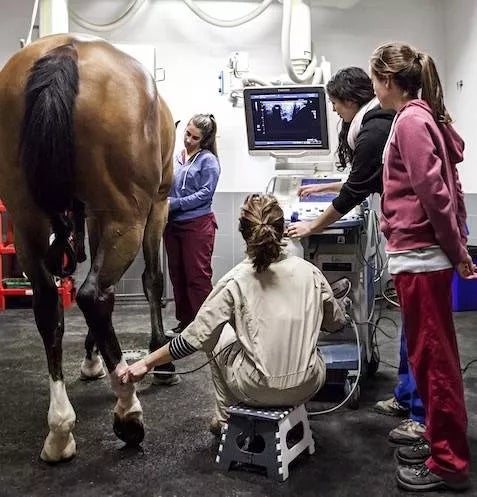
Our students have the advantage of training at the UAX Veterinary Teaching Hospital, a unique 7,000m2 facility where over 9,000 patients are treated every year.
In addition to developing their skills with state-of-the-art simulators and cutting-edge medical technology, they join the veterinary team and have the opportunity to deal with cases in different animal species, obtaining a multidisciplinary approach in the different specialities: surgery, neurology, traumatology, internal medicine, sports medicine, emergencies, etc.
To complete their training, students undertake external internships at food technology companies, different livestock farms and relevant companies and associations such as Faunia, ONCE Guide Dog Foundation, Royal Canin, Colvema (Madrid Veterinary College), Anicura, FAA (Help the Animals Foundation), etc.
Our training is so appropriate to the sector, that 96% of our graduates find work in under 6 months after completing their degree.
Discover one of the five best universities in Spain for veterinary medicine, according to the El Mundo ranking.
At UAX, we aim to develop your full potential so that you can identify, diagnose, prevent and cure diseases in pets, wild and farm animals.
Your training will be based on direct contact with experts who practise on a daily basis, providing you with an up-to-date overview of the day-to-day veterinary profession. As part of your preclinical internships, you will join a real veterinary team at our Veterinary Teaching Hospital, where we treat more than 9,000 patients a year.
You will also gain knowledge of professional values, such as clinical skills, communication skills, animal health, information management, critical analysis and research.
Furthermore, throughout your training you will stay up to date with the most current issues in the veterinary industry, such as gaining an understanding of zoonosis prevention, studying how to achieve maximum performance in agricultural holdings, and mastering the important aspects of food inspections and health checks, among others.
Bachelor’s Degree in Veterinary Medicine
First Year
ANNUAL SUBJECTS
| Code | Subjects | Character* | ECTS | ||||||||||||||||||||||||||||||||||||||||||||||||||||||||||||||||||||||||||||||||||||||||||||||||||||||||||||||||||||||||||||||||||||||||||||||||||||||||||||||||||||||||||||||||||||||||||||||||||||||||||||||||||||||||||||||||||||||||||||||||||||||||||||||||||||||||||||||||||||||||||||||||||||||||||||||||||||||||||||||||||||||||||||||||||||||||||||||||||||||||||||||||||||||||||||||||||||||||||||||||||||||||||||||||||||||||||||||||||||||||||||||||||||||||||||||||||||||||||||||||||||||||||||
|---|---|---|---|---|---|---|---|---|---|---|---|---|---|---|---|---|---|---|---|---|---|---|---|---|---|---|---|---|---|---|---|---|---|---|---|---|---|---|---|---|---|---|---|---|---|---|---|---|---|---|---|---|---|---|---|---|---|---|---|---|---|---|---|---|---|---|---|---|---|---|---|---|---|---|---|---|---|---|---|---|---|---|---|---|---|---|---|---|---|---|---|---|---|---|---|---|---|---|---|---|---|---|---|---|---|---|---|---|---|---|---|---|---|---|---|---|---|---|---|---|---|---|---|---|---|---|---|---|---|---|---|---|---|---|---|---|---|---|---|---|---|---|---|---|---|---|---|---|---|---|---|---|---|---|---|---|---|---|---|---|---|---|---|---|---|---|---|---|---|---|---|---|---|---|---|---|---|---|---|---|---|---|---|---|---|---|---|---|---|---|---|---|---|---|---|---|---|---|---|---|---|---|---|---|---|---|---|---|---|---|---|---|---|---|---|---|---|---|---|---|---|---|---|---|---|---|---|---|---|---|---|---|---|---|---|---|---|---|---|---|---|---|---|---|---|---|---|---|---|---|---|---|---|---|---|---|---|---|---|---|---|---|---|---|---|---|---|---|---|---|---|---|---|---|---|---|---|---|---|---|---|---|---|---|---|---|---|---|---|---|---|---|---|---|---|---|---|---|---|---|---|---|---|---|---|---|---|---|---|---|---|---|---|---|---|---|---|---|---|---|---|---|---|---|---|---|---|---|---|---|---|---|---|---|---|---|---|---|---|---|---|---|---|---|---|---|---|---|---|---|---|---|---|---|---|---|---|---|---|---|---|---|---|---|---|---|---|---|---|---|---|---|---|---|---|---|---|---|---|---|---|---|---|---|---|---|---|---|---|---|---|---|---|---|---|---|---|---|---|---|---|---|---|---|---|---|---|---|---|---|---|---|---|---|---|---|---|---|---|---|---|---|---|---|---|---|---|---|---|---|---|---|---|---|---|---|---|---|---|---|---|---|---|---|---|---|---|---|---|---|---|---|---|---|---|---|---|---|---|---|---|---|---|---|---|---|---|---|---|---|---|---|---|---|---|---|---|---|---|---|---|---|---|---|---|---|---|---|---|---|---|---|---|---|---|
| 0170101 | Animal Anatomy | FB | 15 | ||||||||||||||||||||||||||||||||||||||||||||||||||||||||||||||||||||||||||||||||||||||||||||||||||||||||||||||||||||||||||||||||||||||||||||||||||||||||||||||||||||||||||||||||||||||||||||||||||||||||||||||||||||||||||||||||||||||||||||||||||||||||||||||||||||||||||||||||||||||||||||||||||||||||||||||||||||||||||||||||||||||||||||||||||||||||||||||||||||||||||||||||||||||||||||||||||||||||||||||||||||||||||||||||||||||||||||||||||||||||||||||||||||||||||||||||||||||||||||||||||||||||||||
Animal AnatomyCódigo: 0170101 Imprimir Year 1. Annual module. Foundation-level course. 15 credits. Profesores
Objectives Systematic and comparative anatomy of animal organs and systems. Basic topographical anatomy with a focus on clinical, production, hygiene and food processing applications. Description of embryonic development in species of veterinary interest. Embryo handling. Congenital anomalies. Prerequisites Those required for entry to the Bachelor’s degree in Veterinary Medicine Learning Outcomes Not applicable. Course description adapted to Royal Decree 822/2021. Learning outcomes 1. Distinguish between the stages of embryonic and foetal development, based on the key events occurring in each stage. 2. Learn and apply the concepts of the neuromuscular system and the basic principles of locomotor statics and dynamics. 3. Acquire, in a sequential manner, basic knowledge of osteology, arthrology, myology, innervation, blood supply, lymphatic drainage and synovial and fascial structures of the back, neck, tail and thoracic and pelvic limbs. 4. To acquire a foundation of knowledge in the fields of organogenesis and comparative anatomy of domestic animals, as well as a comprehensive understanding of anatomical organisation in terms of development, function and comparison. 5. To apply dissection techniques to carcasses of the main domestic species. Course content The onset of embryonic development and the origin of life. Description of embryonic development in species of veterinary interest. Guidance on embryo handling and congenital anomalies. Placentation and types of placenta. Topographical anatomy according to the different anatomical regions, in the animal species of greatest veterinary significance. Detailed study of the musculoskeletal system: bones, joints and muscles. Systematic and comparative anatomy of animal organs and systems. Study of the nervous and endocrine systems and the sense organs. Cardiovascular and lymphoid systems. Urogenital system. Guidance on the applications of anatomy in clinical practice, surgery and animal production. Training activities Sessions: Explanation of theoretical principles, using computer-based tools. Practical classes (laboratories) Seminars (assignments): Presentation and discussion of case studies. Lectures E-learning: Interactive distance learning via the virtual campus Individual and group tutorials: Guidance and clarification of queries Independent study: Study. Literature review Examination: Oral and written assessments Assessment system and criteria Assessment of practical activities: 40 per cent Theoretical knowledge tests: 40% Coursework (portfolio): 10% Laboratory assessments: 10% Total: 100% ANIMAL ANATOMY 0170101 The assessment criteria are designed to encourage continuous study of the module throughout the academic year. Given the scope of this module (15 ECTS), all students, including those retaking the module, are advised to endeavour to pass the module through mid-term assessments. Continuous assessment is encouraged. All mid-term assessments are marked on a scale of 0 to 10, with 10 being the highest mark and 5 the minimum pass mark. The course will be divided into 10 mid-term marks, each accounting for 10 per cent of the final mark, with all marks carrying equal weight. The final mark is the arithmetic mean of all the marks, provided that all mid-term marks have been passed (a mark of 5 or above). The continuous assessment model will be used throughout the academic year. In addition to the 9 partial marks on the subject matter covered in class, which are detailed below, there will be an additional mark for Projects (TRAB). Assignments mark (TRAB), which covers the assignments completed and presented orally by students. Each student must complete these in groups during the Assignments (TRAB) classes. Oral presentations are given and will be assessed. This will account for 10 per cent of the final mark, which will be the arithmetic mean of the 10 partial marks. Therefore, a mark of 10 in Assignments (TRAB) will result in a +1 bonus point. All marks carry the same proportional weight. There will be an additional positive mark for practical work (up to +1 point). This will be an additional mark proposed by the lecturers to raise the final mark of students whose participation and interest in the subject have been exceptional. Particular emphasis will be placed on the student’s participation, attitude, interest shown, use of and contribution to the course material, and ability to work in a team. Special consideration will be given to the students’ work and preparation for the rotating practical sessions, organised by each practical group. For each weekly practical session, one student from each practical group, on a rotating basis, will prepare the session to explain it to their classmates. This will be supervised and assessed by the practical tutors. This additional positive mark cannot be used to compensate for failed examinations. The course content will be divided into 9 assessments: 4 theory assessments and 5 practical assessments. To pass the course, students must pass all assessments individually. 4 theoretical assessments: T1 Part 1: Embryology and Arthrology: Embryology + Arthrology T2 Partial Exam 2: Myology I: Musculature, topographical anatomy. The nervous system and its most relevant innervations. T3 Mid-term 3: Myology II: Locomotor System, Cardiovascular System (including the Lymphoid and Venous Systems), Respiratory System. T4 Mid-term 4: Splanchnology: Digestive System, Urogenital System, Endocrine Glands, Mammary Glands. Sense Organs (Eye and Ear). 5 practical assessments: P1 Partial Exam 1: Osteology P2 Partial Exam 2: Head and Jaw (P1 and P2 are held on the same day during practical sessions in November) P3 Partial Exam 3: Myology and Dissection: in March during LB practical sessions P4 Mid-term 4: Skeleton P5: Comprehensive practicals. The P5 exam will cover questions relating to anatomical regions and fundamental concepts of the subject. (P4 and P5 take place on the same day during practical sessions in May) Theoretical mid-term exams are held during lecture sessions, at the usual time and in the usual lecture theatre for each group. The time allowed for continuous assessment exams is 50 minutes, which is the duration of a standard lecture. Practical mid-term assessments are to be held in Room T.201 during each group’s usual practical session timetable. Mid-term assessments P1 and P2 are conducted using real bones, marked with labels, in Room T-201. Mid-term assessments P3 and P4 are conducted using photographs. Passed mid-term exams will be retained throughout the academic year, up to and including the July resit session. Students will only need to sit the final exams for any mid-term exams they have failed. Partial results will not be retained during the academic year; only complete, passed mid-term exams will be retained. The final mark will be the arithmetic mean of all the marks obtained by each student. To calculate the average, all mid-term exams must have been passed. Mid-term exams cannot be used to compensate for others; all must be passed independently. To pass this module, students must: - Pass all theoretical and practical examinations with a mark of 5 or above. - Exams will be marked on a scale of 0 to 10, with 10 being the highest mark. - Marks below 5 will be considered insufficient to pass (fail). - Honours will be awarded to students with the highest average marks over the academic year, calculated as the average of the marks obtained in all mid-term exams for the course throughout the academic year (excluding the ordinary June examination session and the extraordinary July examination session). Under current legislation, the maximum number of Honours must be less than 5 per cent of the enrolled students. To be awarded Honours, a student’s average mark must, according to current legislation, be higher than 9. - In all examinations for the module, to be considered passed and no longer subject to further assessment, a final mark of 5 or above must be obtained. - All mid-term examinations, both theoretical and practical, will be eliminatory. Passed mid-terms will remain valid throughout the academic year. - Each mid-term exam may consist of several components: multiple-choice questions, various essay-style questions, etc. The mark for each mid-term exam will be the arithmetic mean of its components. Each component of the mid-term exam must be passed (mark of 5 or above) independently in order to calculate the average. - Only complete, passed mid-term exams will be taken into account; individual sections or parts of mid-term exams will not be counted. The pass mark is 5. - To pass the module, students must pass all mid-term assessments individually, either in the mid-term exams or in the final exams - If a student fails any mid-term exam for the module, it may only be resat during the Ordinary (June) and/or Extraordinary (July) final examination sessions. There will be no additional resits during the academic year. - If any student who has passed the course, or who has passed some mid-term exams, wishes to sit an exam to improve their mark, they may do so during the Ordinary examination period (June), provided they submit a request to the course coordinator at least 3 days in advance. The mark obtained in the Ordinary examination period will take precedence over any previous marks; therefore, there is also a risk that the mark may be lower. - The improved mark will be reflected in the final average mark, but will not count towards achieving a First Class Honours (MH) grade. Only the marks obtained in the mid-term exams during the academic year are taken into account for this calculation. - An average for the course will only be calculated if you have passed all your mid-term exams. Mid-term results will not be averaged - The final mark for the module will be the average of all the marks obtained by the student throughout the academic year. To calculate the final average, all parts of the module must have been passed - An average of 5 or above does not guarantee a pass for the module unless all parts have been passed. Each mid-term exam for the module must be passed separately - If any part of the module is failed at the end of the academic year, the module must be retaken in its entirety. - Passed practical assignments from previous years will NOT be carried over. We have found that doing so is counterproductive, as students lose touch with the subject, which is eminently practical. - Any examination or part of an examination that does not clearly show the student’s first name and surname, written legibly and in full, the initials ‘NP’ and the student’s signature, will be considered invalid. This will be treated as a ‘NOT SUBMITTED’ = Mark -1 - Students must write their surname(s) on examinations in CAPITAL LETTERS to distinguish it from their first name - In official marksheets, ‘not submitted’ will be represented by a numerical mark of -1 - The Moodle platform may be used to conduct anatomy examinations, utilising all its features and functions, including mechanisms to prevent examination fraud. - In both theoretical and practical examinations, all the functions and features of Moodle may be used to set questions or questionnaires, utilising all the options offered by Moodle’s technology, or other IT platforms that UAX deems appropriate for conducting examinations. - Multiple-choice exams will be marked automatically, using the appropriate technology to prevent errors or fraudulent behaviour. - Incorrect answers may be penalised in examinations, resulting in a deduction from the marks awarded for correct answers. - Exams or essay-type questions may be set, either written on paper or using computer-based methods, to be marked by the lecturer(s). - In essay-type examinations, students may be required to depict anatomical structures through drawings. Therefore, examinations will require students to draw and to answer questions posed in the examination in writing. - Both theoretical and practical examinations may be conducted ORALLY. - Real anatomical specimens may be used during examinations. - We want all students to have a thorough understanding of the subject matter. Leaving an essay question blank or scoring 0 (zero) on an exam may result in failing that part of the course. This cannot be offset by marks from other parts of the course. - In theory mid-term examinations comprising a multiple-choice section and one or more essay sections, each section must be passed independently. The final mark for the examination will be the average (arithmetic mean) of its components (multiple-choice marks and essay marks). - The final mark for a mid-term exam will be the average of its constituent parts, provided that the mark for each part is 5 or above and no essay question has been left blank or marked 0 (zero). - Mid-term examinations held during the course will take place during lecture sessions, which are limited to 50 minutes in duration. The duration of the examination will be adjusted to suit its specific characteristics, the type of questions and the number of questions. - Practical examinations will be based on real bones or photographs of anatomical structures. Students must answer questions relating to the images projected during the examination. - Knowledge of anatomical regions will be required in the examinations. Answering incorrectly, leaving a question blank, or confusing anatomical regions will result in disqualification and will invalidate the answer in that examination. - In the P1 practical examination: Osteology, failing to identify the name of the bone, the side (right or left), the species, or the anatomical region will invalidate the rest of the question relating to that bone. - In the P2 practical exam: Head, failing to identify the species of the head or mandible, or the anatomical region, will result in all questions relating to the head or mandible in question being marked as incorrect. - In the P3: Myology practical examination, failing to correctly identify the name of the muscle, organ, species or anatomical region will invalidate the rest of the questions related to that question. - In the P4 Exam: Splanchnology: getting the name of the organ, the species or the anatomical region wrong will invalidate all other questions related to that question. The P4 exam will cover questions relating to the practical sessions of the module as a whole. - For practical examinations held during the academic term, during practical class times (LB), the examination will be reviewed immediately after the practicals have been marked and the marks published, wherever possible. Students wishing to review these examinations must wait until the same day on which they were held to do so. - For examinations conducted via the Moodle platform, the examination may be reviewed, at the lecturer’s discretion, upon completion of the examination; however, this is not compulsory. For all other examinations, students may review their papers on a single occasion only, on the day and at the time officially published for this purpose, provided that current legislation permits it. - The examination format may include multiple-choice questions, short-answer or matching questions, essay questions, practical exercises, procedures or protocols, to be completed in writing or orally. The coordinator will provide further details on the format prior to the examination, if deemed necessary. - Measures will be put in place to prevent access to examination papers once the examination has been completed. Upon finishing an examination, the student must close the paper completely to prevent it from being consulted at a later date. Students must show the closed examination paper to a lecturer teaching the module before leaving the classroom. - Fraudulent behaviour during assessment tests or examinations will be considered a serious offence. The UAX’s academic discipline regulations will apply in such cases. Failure to attend more than 75 per cent of the course’s teaching activities, which require the student’s physical or virtual presence, will result in the loss of the right to continuous assessment in the standard assessment period. In this case, the examination to be held during the official period set by the University will be the sole assessment criterion, with the weighting corresponding to it as set out in the course syllabus. Missing more than 25 per cent of the theory classes and failing to attend 100 per cent of the practical classes, or being absent without providing a valid reason, will result in the loss of the right to continuous assessment. Timetable Click on this link to view the detailed timetable in Excel
Bibliography Primary: 1. Budras, Klaus-Dieter Atlas of Equine Anatomy Barcelona: Ediciones S, 2005. 2005. ISBN: 8487736580 2. Budras; Fricke; Salazar Atlas of Dog Anatomy Interamericana McGraw-Hill. 1989. ISBN: 8476154542 3. Clayton H.M.; Flood P.F.; Rosestein D. Clinical Anatomy of the Horse Elsevier. 2007. ISBN: 9788480862 4. Dik, Kees J. Atlas of Radiological Diagnosis of the Horse: Osteopathies Barcelona: Ediciones S, 2005. 2005. ISBN: 8487736599 5. Drew M. Noden, Alexander Lahunta Embryology of Domestic Animals Acribia. 2001. ISBN: 8420006777 6. Dyce K.M. Inter-American Veterinary Anatomy Inter-American. McGraw-Hill. 1999. ISBN: 9789701021668 7. DYCE, K. M. VETERINARY ANATOMY Inter-American. McGraw-Hill. 1999. ISBN: 970-10-2166-5 8. GARCÍA MONTERDE, J., GIL CANO, F. Veterinary Embryology Intermédica. 2013. ISBN: 9789505554096 9. GETTY, ROBERT, GROSSMAN, J.D. and SISSON, S. ANATOMY OF DOMESTIC ANIMALS Volumes I and II, 5th Edition Masson. 2001. ISBN: 9788445807224 10. J.S. BOYD CLINICAL ANATOMY OF THE DOG & CAT MOSBY. 1991. 11. JULIO GIL, MIGUEL GIMENO, JESÚS LABORDA, JAVIER NUVIALA DISSECTION PROTOCOLS FOR DOGS MASSON. 2005. ISBN: 84-458-0584-3 12. KONIG-LIEBICH ANATOMY OF DOMESTIC ANIMALS PANAMERICANA. 2004. ISBN: 84-200-0502-9 13. SALAZAR BELOQUI, I Veterinary Embryology University of Santiago de Compostela. Publications Service. 2013. ISBN: 9788415876168 14. Schebitz, H. Atlas of Canine and Feline Radiographic Anatomy Barcelona: Grass-Iatros, 1994. 1994. ISBN: 8477140200 15. VEGA VILLAR SUÁREZ AND FRANCISCO LÓPEZ MARTÍN DE BLAS PROTOCOLS IN VETERINARY ANATOMY BELLISCO. 2004. ISBN: 84-95279-98-3 |
|||||||||||||||||||||||||||||||||||||||||||||||||||||||||||||||||||||||||||||||||||||||||||||||||||||||||||||||||||||||||||||||||||||||||||||||||||||||||||||||||||||||||||||||||||||||||||||||||||||||||||||||||||||||||||||||||||||||||||||||||||||||||||||||||||||||||||||||||||||||||||||||||||||||||||||||||||||||||||||||||||||||||||||||||||||||||||||||||||||||||||||||||||||||||||||||||||||||||||||||||||||||||||||||||||||||||||||||||||||||||||||||||||||||||||||||||||||||||||||||||||||||||||||||
| 0170102 | Biology | FB | 7 | ||||||||||||||||||||||||||||||||||||||||||||||||||||||||||||||||||||||||||||||||||||||||||||||||||||||||||||||||||||||||||||||||||||||||||||||||||||||||||||||||||||||||||||||||||||||||||||||||||||||||||||||||||||||||||||||||||||||||||||||||||||||||||||||||||||||||||||||||||||||||||||||||||||||||||||||||||||||||||||||||||||||||||||||||||||||||||||||||||||||||||||||||||||||||||||||||||||||||||||||||||||||||||||||||||||||||||||||||||||||||||||||||||||||||||||||||||||||||||||||||||||||||||||
BiologyCódigo: 0170102 Imprimir Year 1. Annual module. Foundation course. 7 credits. Profesores
Objectives The aim of the module is for students to acquire basic and advanced knowledge and skills in biology as a fundamental science. Specifically, the objectives for each module are as follows: • Ethology module: to acquire skills relating to animal behaviour, the study, measurement and modification of behaviour, and animal welfare. • Zoology module: to acquire skills relating to the origin, evolution, characteristics and classification of living organisms. • Basic Biology Module: to acquire skills in cellular and molecular biology, the scientific method and scientific communication. Competencies Not applicable. Programme description adapted to Royal Decree 822/2021. Learning Outcomes 1. To understand the limits of objectivity in scientific knowledge and to develop a critical and constructive attitude. 2. Be able to use and understand the variety of terminology available to explain a concept and acquire the foundations for developing an appropriate academic vocabulary. 3. Understand the morphological and functional diversity of life, as well as the conceptual foundations of evolutionary biology and ecology. 4. To understand and represent phylogeny and the diversity of life graphically. 5. To acquire a phylogenetic framework upon which to structure the systematic knowledge that will be acquired in a piecemeal fashion throughout the course of their studies. 6. To develop the ability to formulate one’s own theories using bibliographic and documentary sources. 7. Basic ability to work in a biology laboratory and develop the skills required for handling biological materials in the laboratory. 8. Be able to assess and distinguish animal behaviour across different animal species. 9. Apply techniques for measuring behaviour through direct observation and the design of behavioural experiments. 10. Be able to apply the methodology for the assessment, treatment and prevention of behavioural disorders. 11. Understand the fundamentals of behaviour and its implications for animal welfare. 12. Be able to assess and improve the welfare of animals in various veterinary activities 13. Apply ethological principles to ensure quality in veterinary practice and achieve high professional standards. Course content description The module comprises three general theoretical modules: Ethology, Zoology and Basic Biology. ETHOLOGY Topic 1. Fundamentals of behaviour. Topic 2. Ontogeny. Topic 3. Evolution of behaviour. Topic 4. Feeding behaviour. Topic 5. Reproductive behaviour. Topic 6. Parental behaviour. Topic 7. Social behaviour. Topic 8. Animal communication. Topic 9. Intelligence and cognition. Topic 10. Observational method. ZOOLOGY Topic 11. Aquatic Vertebrates I. Topic 12. Aquatic Vertebrates II. Topic 13. Amphibians. Topic 14. Reptiles. Topic 15. Birds. Topic 16. Mammals. BASIC BIOLOGY Topic 17. Viruses and Bacteria. Topic 18. The scientific method. Topic 19. Molecular bases. Topic 20. Vaccines. Topic 21. Scientific communication. Topic 22. Molecular Biology Techniques I. Topic 23. Molecular biology techniques II. Topic 24. Cancer I. Topic 25. Cancer II. Teaching activities Sessions: Explanation of theoretical principles, using computer-based tools. Assignments: Presentation and completion of practical case studies (exercises). Laboratories and practical workshops E-learning: self-assessment questionnaires Independent study: studying and practising exercises Exams: written and oral assessments Assessment system and criteria Without prejudice to any other requirements that may be specified in the relevant course syllabus, as a general rule, failure to attend more than 75 per cent of the course’s teaching activities—which require the student’s physical or virtual presence—will result in the loss of the right to continuous assessment during the standard examination period. In this case, the examination to be held during the official period set by the University will be the sole assessment criterion, with the weighting specified in the course syllabus. ---- The module comprises two assessable components: theory and practical work. The theory accounts for 60 per cent of the final mark, whilst the practicals account for the remaining 40 per cent. However, to pass the module, it is essential to pass both parts independently. The mark allocation is as follows (it is very important to read the information following the table): THEORY (60%) Final January mark 30% Final mark in May 30% PRACTICAL WORK (30%) Laboratory exam Multiple-choice 20% Navas practicals Assignment 5% Faunia practicals Assignment 5% ASSIGNMENTS (10%) During the course, there will be four theory exams, one for each thematic block: - November: 1st Mid-term Exam (continuous assessment) – Ethology I. Results available from 6/10. - January: 2nd Mid-term Exam (official sitting) – Ethology II. Pass mark: 5/10. - March: 3rd Mid-term Exam (continuous assessment) – Zoology. Available from 6 October. - May: 4th Partial Exam (official sitting) – Molecular Biology. Pass mark: 5/10. The examination format may include multiple-choice questions, short-answer or matching questions, essay questions, clinical cases, practical exercises, procedures or protocols, to be completed in writing or orally. The course coordinator will provide further details on the format prior to the examination, if deemed necessary. To pass the theory component, it is essential to pass each mid-term exam individually (with a mark of 5 marks or more). The November and March mid-term exams are exempted for those scoring 6 marks or more. In other words, anyone who scores more than 6 marks in either of these exams will sit the official examination session (January and/or May) only for the remaining mid-term exam. In the official May sitting, all students will sit the 4th Partial Exam and any partial exams they have not yet passed. The final theory mark will be calculated as a weighted average of all exams, provided they have been passed. In the June supplementary examination session, students will sit resits for any mid-term exams they have not passed during the academic year. To pass the practicals, it is essential to pass the laboratory exam. If this exam is failed, it must be retaken during the ordinary examination period (May). Assignments (interactive classroom activities) may be assessed and will contribute 10 per cent to the final mark. To be eligible for this mark, it is essential to attend all assignment sessions. Timetable Click on this link to view the detailed timetable in Excel
Bibliography Basic: 1. Hickman, C. P. COMPREHENSIVE PRINCIPLES OF ZOOLOGY, 14th ed. McGraw-Hill Interamericana. 2009. ISBN: 9788448168896 2. Alcock, J Animal Behaviour Salvat. 1978. ISBN: 9788424922832 3. Broom, D. M. Stress and Animal Welfare Chapman. 1993. ISBN: 97345678910 4. Carranza, J. Ethology: An Introduction to the Science of Animal Behaviour University of Extremadura. 1997. ISBN: 984591739040 5. Colmenares, F. Ethology, Comparative Psychology and Animal Behaviour Síntesis. 1996. ISBN: 9789681642785 6. Coppinger, R. Dogs KNS and Ateles. 2004. ISBN: 9780606087629 7. Dawkins, M.S. Why Animals Matter: Animal Consciousness, Animal Welfare, and Human Well-being . Oxford University Press. 2012. ISBN: 9780737741476 8. Díaz, José A. Zoology: An Evolutionary Approach to Diversity and Organisation Madrid: Síntesis, 2000. 2000. ISBN: 8477385912 9. Freeman Biology Pearson. 2009. ISBN: 9788478290987 10. Gradin, T. Interpreting Animals RBA. 2005. ISBN: 9788478716722 11. Jensen, P. Ethology of Domestic Animals Acribia. 2004. ISBN: 9788424922832 12. López, C. Cognitive-Emotional Dog Training Díaz de Santos. 2004. ISBN: 9788479786298 13. Mader, S. Biology McGraw Hill. 2008. ISBN: 9701065336 14. Maier, R. Animal Behaviour: An Evolutionary and Ecological Approach McGraw-Hill. 2001. ISBN: 9789589021507 15. Maillet, M Cell Biology Elsevier Masson. 2002. ISBN: 9788445811054 16. Manteca, X. Clinical Veterinary Ethology of Dogs and Cats Multimédica. 1996. ISBN: 9788424639037 17. Manteca, X. Veterinary Ethology Multimédica. 2009. ISBN: 9780101178822 18. Martin, Paul R. The Measurement of Behaviour / Paul Martin, Patrick Bateson / ; Spanish translation by: Fernando Colmenares Madrid: Alianza, reprint. 1991. ISBN: 8420626732 19. Mateos, C. Animal Welfare, Suffering and Consciousness University of Cáceres. 2003. ISBN: 9788496354012 20. Overall, Karen L. Clinical Behavioural Medicine for Small Animals / Karen L. Overall; [contributors: Deidre E. Gannon, Robin Lee Schurr Stawarsz St Louis (Missouri): Mosby, cop. 1997. ISBN: 0801668204 21.- Parker, T. Zoology: Chordates, Volume 2 Barcelona: Reverté. 1991. ISBN: 9788429118391 22. Slater, P. J. B. Animal Behaviour Cambridge University Press. 2000. ISBN: 9788448130145 23. Smith, Robert Leo Ecology. 6th ed. Addison Wesley. 2007. ISBN: 9788428207331 24. Solomon Biology 8th ed. McGraw Hill. 2008. ISBN: 9701063767 25. Storer, T. I. General Zoology Omega. 2003. ISBN: 9788428206839 26. Strasburger, E Treatise on Botany Omega. 2004. ISBN: 9788428204316 Links Spanish Society for Evolutionary Biology – The SESBE is a society whose aim is the cultural promotion of evolutionary biology and its teaching, serving as a centre for information and dissemination amongst those interested. |
|||||||||||||||||||||||||||||||||||||||||||||||||||||||||||||||||||||||||||||||||||||||||||||||||||||||||||||||||||||||||||||||||||||||||||||||||||||||||||||||||||||||||||||||||||||||||||||||||||||||||||||||||||||||||||||||||||||||||||||||||||||||||||||||||||||||||||||||||||||||||||||||||||||||||||||||||||||||||||||||||||||||||||||||||||||||||||||||||||||||||||||||||||||||||||||||||||||||||||||||||||||||||||||||||||||||||||||||||||||||||||||||||||||||||||||||||||||||||||||||||||||||||||||||
| 0170103 | Biochemistry | FB | 6 | ||||||||||||||||||||||||||||||||||||||||||||||||||||||||||||||||||||||||||||||||||||||||||||||||||||||||||||||||||||||||||||||||||||||||||||||||||||||||||||||||||||||||||||||||||||||||||||||||||||||||||||||||||||||||||||||||||||||||||||||||||||||||||||||||||||||||||||||||||||||||||||||||||||||||||||||||||||||||||||||||||||||||||||||||||||||||||||||||||||||||||||||||||||||||||||||||||||||||||||||||||||||||||||||||||||||||||||||||||||||||||||||||||||||||||||||||||||||||||||||||||||||||||||
BiochemistryCódigo: 0170103 Imprimir Year 1. Annual module. Foundation course. 6 credits. Profesores
Objectives • To provide students with a foundation in biochemistry that will enable them to gain a better understanding of the various biomedical aspects of their degree programme. • To equip students with basic knowledge of key topics relevant to the development of new diagnostic and treatment methods. • To distinguish between different organic molecules and their biochemical composition. • To acquire a basic understanding of enzymology and enzyme regulation. • To understand and analyse some of the main metabolic pathways. • To be able to review and properly understand the recommended reading list. • To acquire skills in biochemistry laboratory work. Prerequisites Basic knowledge of the structure and nomenclature of organic and inorganic molecules. Basic knowledge of general chemistry. Competencies -Students must have demonstrated that they possess and understand knowledge in an area of study building on the foundations of general secondary education; this is typically at a level which, whilst drawing on advanced textbooks, also includes certain aspects requiring knowledge from the cutting edge of their field of study. -Students should be able to apply their knowledge to their work or profession in a professional manner and possess the skills typically demonstrated through the formulation and defence of arguments and the resolution of problems within their field of study. -That students have the ability to gather and interpret relevant data (usually within their field of study) in order to form judgements that include reflection on relevant social, scientific or ethical issues. -Students should be able to communicate information, ideas, problems and solutions to both specialist and non-specialist audiences. -Students should have developed the learning skills necessary to undertake further studies with a high degree of autonomy. - Knowledge and application of the physical and chemical principles underpinning biological processes and their applications to veterinary science. - Knowledge and application of cellular excitability and communication. - Knowledge and application of the molecular and genetic bases of biological processes. -To be able to navigate a professional environment for digital information processing that covers the most commonly required aspects of such processing in day-to-day use. -To create presentations that enable students to defend ideas and projects. Learning outcomes -Understanding the molecular basis of the basic functions of living organisms. -Be able to recognise and represent the structure of the main biological molecules. -Be able to formulate and solve basic biochemical problems. -Understand the main catabolic and anabolic pathways. -To integrate the different metabolic pathways, appreciating the relationships between them. -To acquire, develop and practise the skills required for laboratory work and the use of basic biochemistry equipment. -Be able to use the main bibliographic sources in the field of biochemistry, enabling students to find, select and understand information. -To develop experimental skills. -Ability to prepare, present and defend a piece of work. Course content BLOCK I. THEORETICAL FOUNDATIONS. • Topic 1. Carbohydrates. Structure. Monosaccharides, oligosaccharides and polysaccharides. • Topic 2. Lipids. Structure and classification. • Topic 3.- Amino acids. Peptides. Proteins. Structural levels. • Topic 4. Enzymes. Classification. Kinetics. Regulation. Enzyme inhibition. • Topic 5. Carbohydrate breakdown. Glycolysis. The Krebs cycle. Fermentation. • Topic 6. Cellular respiration. Electron transport chain and oxidative phosphorylation. Energy balance. BLOCK II. EXPERIMENTATION. • Practical work on protein purification and quantification. Electrophoresis. • Identification of carbohydrates. • Enzymatic activity. • Biochemical analyses of blood. • Fermentation studies. Acid-base titration. Training activities Lectures. Seminars. Laboratory practicals. Q&A sessions. Working through exercises and problems. Reflective reading. Preparation of assignments. Bibliographic research. Assessment system and criteria Without prejudice to any other requirements that may be specified in the relevant course syllabus, as a general rule, failure to attend more than 75 per cent of the course’s teaching activities (100 per cent in the case of practical sessions), which require the student’s physical or virtual presence, will result in the loss of the right to continuous assessment in the standard examination period. In this case, the examination to be held during the official period set by the University will be the sole assessment criterion, with the weighting specified in the course syllabus. The module is divided into two terms. The mark for each term will be calculated as follows: • First term: 25 per cent of the mark for each of the two term tests (50 per cent in total). 40 per cent of the mark for the term’s practical examination. 10 per cent of the mark for the laboratory notebook. • Second term: 25 per cent of the mark for each of the two term tests (50 per cent in total). 40 per cent of the mark for the term practical examination. 10 per cent of the mark for the laboratory notebook. The final mark for continuous assessment in the module will be calculated as the average of the final marks obtained in each term, provided that both the average mark for the terms and the mark for each exam are 3.5 or above. Practical assessment: Attendance at practical sessions is compulsory. One instance of unauthorised absence will result in the loss of 20 per cent of the practical mark. With two or more instances of absence, the practical mark will be NP (not presented). Students repeating the course who have completed and passed (with a mark of 5 or above) the work placement in the 2024/2025 academic year will retain their mark and will not be required to undertake the work placement or sit the corresponding examination. Students who have undertaken the work placement but have not passed it (a mark below 5) will not have to repeat it, but they must sit the work placement exam in the relevant week. June ordinary examination session: Students who, once the percentages described above have been applied, achieve a mark of 5 or above will have passed the module and will not be required to sit the June ordinary examination. Students whose mark is below 5 must sit an examination covering the entire term or terms in which they have failed: Theory 1Q, Theory 2Q, Practical 1Q and/or Practical 2Q. The mark for this exam will replace the marks obtained in the mid-term assessments (tests 1 and 2 of the first and/or second term and/or practical exams). For these percentages to apply, the mark obtained in each part of the June exam must be 3.5 or higher. Students who have not sat any of the examinations held during the academic year will be marked as NP (did not sit) for the term or terms in which they have this NP. July resit session: In this session, students who failed in the June session must sit an examination covering the entire syllabus of the module, including practical work. The final mark for the module will be the mark obtained in this examination. Important note: The examination format may include multiple-choice questions, short-answer or matching questions, essay questions, clinical case studies, practical exercises, procedures or protocols, to be completed in writing or orally. The course coordinator will provide further details on the format prior to the examination, if deemed necessary. In the case of multiple-choice questions, incorrect answers will result in marks being deducted; generally, a penalty of 25 per cent of the value of a correct answer will apply, unless otherwise stated in the exam. Furthermore, each mid-term exam may include questions relating to content assessed in previous mid-term exams, with the aim of reinforcing cumulative learning in the course. Timetable Click on this link to view the detailed timetable in Excel
Bibliography Core: 1. Feduchi Canosa E, Romero Magdalena C, Yáñez Conde E, García-Hoz Jiménez C. Biochemistry. Essential Concepts. 3rd ed. Médica Panamericana. 2025. ISBN: 9788491106807 Supplementary: 2. Baynes Medical Biochemistry Elsevier Mosby. 2011. ISBN: 9788480867306 3. Benito, Espino Genetics: Essential Concepts Panamericana. 2013. ISBN: 9788498354072 4. D.L. Nelson Lehninger. Principles of Biochemistry. Omega. 2014. ISBN: 978-84-282-16 5. González Hernández, A. Principles of Clinical Biochemistry and Molecular Pathology Elsevier. 2014. ISBN: 9788490224311 6. Mathews Biochemistry Pearson. 2013. ISBN: 9788490353110 7. Stryer Biochemistry Reverté. 2013. ISBN: 9788429176025 Others: 8. Scott Freeman Fundamentals of Biology Pearson. 2013. ISBN: 9788490354773 |
|||||||||||||||||||||||||||||||||||||||||||||||||||||||||||||||||||||||||||||||||||||||||||||||||||||||||||||||||||||||||||||||||||||||||||||||||||||||||||||||||||||||||||||||||||||||||||||||||||||||||||||||||||||||||||||||||||||||||||||||||||||||||||||||||||||||||||||||||||||||||||||||||||||||||||||||||||||||||||||||||||||||||||||||||||||||||||||||||||||||||||||||||||||||||||||||||||||||||||||||||||||||||||||||||||||||||||||||||||||||||||||||||||||||||||||||||||||||||||||||||||||||||||||||
| 0170104 | Physics and Chemistry for Veterinarians | FB | 6 | ||||||||||||||||||||||||||||||||||||||||||||||||||||||||||||||||||||||||||||||||||||||||||||||||||||||||||||||||||||||||||||||||||||||||||||||||||||||||||||||||||||||||||||||||||||||||||||||||||||||||||||||||||||||||||||||||||||||||||||||||||||||||||||||||||||||||||||||||||||||||||||||||||||||||||||||||||||||||||||||||||||||||||||||||||||||||||||||||||||||||||||||||||||||||||||||||||||||||||||||||||||||||||||||||||||||||||||||||||||||||||||||||||||||||||||||||||||||||||||||||||||||||||||
Physics and Chemistry for VeterinariansCódigo: 0170104 Imprimir Year 1. Annual module. Foundation course. 6 credits. Profesores
Objectives By successfully completing this module, students will achieve two objectives: With regard to the chemistry component, the aim is to convey the importance of chemistry within the field of the so-called life sciences, which include veterinary science. Chemistry is a discipline with diverse approaches, all based on the same fundamental concepts. In the field of Health Sciences, it plays an important role, given that life itself unfolds through chemical and biochemical reactions. As for the Physics component, the main aim of this module is to convey to students the importance of physics in the life sciences, providing them with the basic knowledge required to solve physics-related problems they may encounter in their professional lives, at theoretical, practical and instrumental levels. Prerequisites Those required for admission to the Bachelor’s degree in Veterinary Medicine, and a general knowledge of physics and chemistry at A-level. Learning Outcomes Not applicable. Course description adapted to Royal Decree 822/2021. Learning outcomes 1. Ability to analyse, synthesise, organise and plan. 2. Ability to apply knowledge to practice and problem-solving. 3. Ability to work in a team, whether single-disciplinary or multidisciplinary. 4. Understanding and applying the scientific method in professional practice. 5. Ability to analyse and model from a general and fundamental perspective within physics. 6. Understanding of the molecular basis of the basic functions of living organisms and their main implications for biotechnology and veterinary medicine. 7. Acquiring, developing and practising the skills required for laboratory work and the use of basic equipment in physics and chemistry 8. Familiarisation with the main bibliographic sources in the fields of physics and chemistry, enabling students to find, select and understand information. Course content description Topic 0 Introduction • Topic 0.1 The atom • Topic 0.2 Chemical bonding and intermolecular forces • Topic 0.3 Inorganic Nomenclature • Topic 0.4 Chemical Reactions • Topic 0.5 Organic Chemistry Topic 1 Solutions. Precipitation equilibria. Colligative properties. Topic 2 Acid–base equilibria Topic 3 Oxidation/reduction equilibria Topic 4 Waves and radiation Topic 5 Generalised theory of elasticity Topic 6 Bioelectricity Topic 7 Fluid hydrostatics Topic 8 Fluid hydrodynamics Teaching activities 1. Lecture. Explanation of theoretical principles, using computer-based tools. 1.1 ECTS. 2. Laboratory practicals Experimental application of the knowledge acquired. 1.2 ECTS 3. Seminars Presentation and discussion of case studies. Presentations. 0.3 ECTS E-learning. Learning through interactive methodologies 0.1 ECTS 4. Individual and group tutorials Guidance and clarification of queries. 0.2 ECTS 5. Independent study Study. Literature review. 2.8 ECTS 6. Examination Oral and written assessments 0.3 ECTS Assessment system and criteria Without prejudice to any other requirements that may be specified in the relevant course syllabus, as a general rule, failure to attend more than 75 per cent of the course’s teaching activities—which require the student’s physical or virtual presence—will result in the loss of the right to continuous assessment during the standard examination period. In this case, the examination to be held during the official period set by the University will be the sole assessment criterion, with the weighting specified in the course syllabus. ---- To pass this module, students must: 1. Have completed all laboratory practicals. 2. Achieve a mark of 5 out of 10 or higher, as detailed below. REGULAR EXAMINATION PERIOD The course may be passed either through continuous assessment or by sitting a final examination. Continuous Assessment The minimum attendance required for continuous assessment to be taken into account is 75 per cent of the course activities (this includes both theory and practical sessions). To pass the course, you must achieve 5 out of 10. The module is divided into two parts, Chemistry and Physics, both of which use the same assessment system. Both parts must be marked 5 in order to be averaged together to calculate the final mark. Chemistry • Laboratory practicals: 20 per cent of the mark. • Two mid-term exams, each accounting for 30 per cent of the mark. Total: 60 per cent. • Coursework: 20 per cent of the mark. Physics • Laboratory practicals: 20 per cent of the mark. • Two mid-term exams, each accounting for 30 per cent of the mark. Total: 60 per cent. • Coursework: 20 per cent of the mark. The laboratory practicals in both parts will be assessed by means of an exam to be held at the end of each practical session. To be included in the final mark, students must achieve more than 3.5 marks in each exam. Final Exam This will consist of two parts, covering Chemistry and Physics respectively. Students will only be required to sit the full, failed part of either Chemistry or Physics; the mark for the passed part will be retained. Should a student have failed the laboratory examination for either or both parts, this may also be resat in this final examination, whilst retaining the mark for the passed part. The mark obtained in the course activities will be retained for the calculation of the final mark. EXTRAORDINARY EXAMINATION SESSION The criteria will be the same as those set out for the ordinary examination session. It will consist of an exam comprising two parts, corresponding to Chemistry and Physics respectively. Students need only sit the complete, failed part of either Chemistry or Physics; the mark for the passed part will be retained. If a student has failed the laboratory examination for either or both parts, this may also be retaken in this examination, whilst retaining the mark for the passed part. The mark obtained in the course activities will be retained when calculating the final mark. The exam format may include multiple-choice questions, short-answer or matching questions, essay questions, clinical cases, practical exercises, procedures or protocols, to be completed in writing or orally. The coordinator will provide further details on the format prior to the exam, if deemed necessary. Timetable Click on this link to view the detailed timetable in Excel
Bibliography Basic: 1. Chang, Raymond Chemistry 10th ed. Mexico: McGraw-Hill, 2020. 2020. ISBN: 9780073511092 2. Sears, Francis W. University Physics 6th ed. Argentina [etc.]: Addison Wesley, 1988. 2018. ISBN: 0201640139 Supplementary: 3.- Atkins, Jones Principles of Chemistry Panamericana. 2012. ISBN: 9789500602822 Others: 4. Aguilar, J. Physics Problems: Physics Problems for Students Barcelona: Reverté, 1994. 2009. ISBN: 8429140123 Links Fluid behaviour: hydrostatic pressure and communicating vessels – How fluids behave |
|||||||||||||||||||||||||||||||||||||||||||||||||||||||||||||||||||||||||||||||||||||||||||||||||||||||||||||||||||||||||||||||||||||||||||||||||||||||||||||||||||||||||||||||||||||||||||||||||||||||||||||||||||||||||||||||||||||||||||||||||||||||||||||||||||||||||||||||||||||||||||||||||||||||||||||||||||||||||||||||||||||||||||||||||||||||||||||||||||||||||||||||||||||||||||||||||||||||||||||||||||||||||||||||||||||||||||||||||||||||||||||||||||||||||||||||||||||||||||||||||||||||||||||||
| 0170105 | Histology | FB | 8 | ||||||||||||||||||||||||||||||||||||||||||||||||||||||||||||||||||||||||||||||||||||||||||||||||||||||||||||||||||||||||||||||||||||||||||||||||||||||||||||||||||||||||||||||||||||||||||||||||||||||||||||||||||||||||||||||||||||||||||||||||||||||||||||||||||||||||||||||||||||||||||||||||||||||||||||||||||||||||||||||||||||||||||||||||||||||||||||||||||||||||||||||||||||||||||||||||||||||||||||||||||||||||||||||||||||||||||||||||||||||||||||||||||||||||||||||||||||||||||||||||||||||||||||
HistologyCódigo: 0170105 Imprimir Year 1. Annual module. Foundation course. 8 credits. Profesores
Objectives Understanding the structure and ultrastructure of the cell, its integration at different levels of organisation (epithelial, connective, muscular and nervous tissue), how these tissues come together to form organs, and how these organs form the various systems and apparatuses—such as the circulatory, respiratory, lymphoid, digestive, reproductive, nervous and endocrine systems, as well as the skin and its appendages—linking structure to function. Prerequisites Those required for admission to the Bachelor’s degree in Veterinary Medicine. Learning Outcomes Not applicable. Programme description adapted to Royal Decree 822/2021 Learning outcomes 1. Acquiring the skills to use a microscope as a source of diagnostic data. 2. Understanding and applying the scientific method in professional practice. 3. To understand the structural and ultrastructural characteristics of the cells, tissues and organs of different domestic species. 4. To acquire skills in understanding, organising and analysing diagnostic data. 5. To interpret histology as the basis for understanding pathology and histopathological diagnosis. Course content Understanding of the structure and ultrastructure of the cell, its integration at different levels of organisation (epithelial, connective, muscular and nervous tissue), how these tissues come together to form organs, and how these organs form the various systems such as the circulatory, respiratory, lymphoid, digestive, reproductive, nervous and endocrine systems, as well as the skin and its appendages, relating structure to function. Teaching activities Lectures, seminars, microscopy practicals, e-learning, tutorials, independent study and examinations. Assessment system and criteria Without prejudice to any other requirements that may be specified in the relevant course syllabus, as a general rule, failure to attend more than 75 per cent of the course’s teaching activities—which require the student’s physical or virtual presence—will result in the loss of the right to continuous assessment during the standard examination period. In this case, the examination to be held during the official period set by the University will be the sole assessment criterion, with the weighting specified in the course syllabus. ---- To pass this module, students must: Have completed the laboratory practicals. Pass the theory and practical examinations separately. Achieve a mark of five points or higher by adding together the percentages set out below: Final exam: 70% of the final mark Coursework: 30% of the final mark Problems set and solved Continuous assessment tests Bibliographic research assignments and oral presentations Attendance, engagement and collaboration in tutorials and seminars Attitude, skills, knowledge and interaction with the practicals group Bibliography Essential: 1. Bacha Jr., William J. Colour Atlas of Veterinary Histology Buenos Aires: Intermédica, 1998. 1998. ISBN: 9505551134 2. Dellmann, H.-Dieter Cytology and Microscopic Anatomy : Williams. 1995. ISBN: 0683014676 3. Fawcett, Don W. Treatise on Histology Madrid: Interamericana, McGraw-Hill, 1995. 1995. ISBN: 8448601076 4. Gartner, Leslie P. Text and Atlas of Histology Philadelphia: Saunders, 2007. 2007. ISBN: 9701066510 5. GARTNER, HIATT Colour Atlas of Histology Panamericana Publishers. 2005. ISBN: 84-85320-40-9 6. Gazquez - Blanco Treatise on Veterinary Histology Barcelona: Masson, 2004. 2004. ISBN: 8445814133 7. GAZQUEZ ORTIZ, A.; BLANCO, A Treatise on Veterinary Histology Published by Masson. 2005. ISBN: 84-458-1413-3 8. GENESER Histology Panamericana. 2000. ISBN: 84-458-1137-1 9. Geneser, Finn Histology: on the biomolecular basis Buenos Aires [etc.]: Panamericana, 2003. 2003. ISBN: 8479034742 10. Junqueira, L. C. Basic Histology : Masson. 2006. ISBN: 9788445814628 11. KÜHNEL Colour Atlas of Cytology and Histology Panamericana Publishers. 2005. 12. L.C. JUNQUEIRA, JOSE CARNEIRO BASIC HISTOLOGY (13th ed.) PANAMERICANA. 2022. ISBN: 9786078546527 13. Stevens, Alan Human Histology Madrid [etc.]: Harcourt Brace, 1999. 1999. ISBN: 8481742821 |
|||||||||||||||||||||||||||||||||||||||||||||||||||||||||||||||||||||||||||||||||||||||||||||||||||||||||||||||||||||||||||||||||||||||||||||||||||||||||||||||||||||||||||||||||||||||||||||||||||||||||||||||||||||||||||||||||||||||||||||||||||||||||||||||||||||||||||||||||||||||||||||||||||||||||||||||||||||||||||||||||||||||||||||||||||||||||||||||||||||||||||||||||||||||||||||||||||||||||||||||||||||||||||||||||||||||||||||||||||||||||||||||||||||||||||||||||||||||||||||||||||||||||||||||
| TOTAL: | 42 | ||||||||||||||||||||||||||||||||||||||||||||||||||||||||||||||||||||||||||||||||||||||||||||||||||||||||||||||||||||||||||||||||||||||||||||||||||||||||||||||||||||||||||||||||||||||||||||||||||||||||||||||||||||||||||||||||||||||||||||||||||||||||||||||||||||||||||||||||||||||||||||||||||||||||||||||||||||||||||||||||||||||||||||||||||||||||||||||||||||||||||||||||||||||||||||||||||||||||||||||||||||||||||||||||||||||||||||||||||||||||||||||||||||||||||||||||||||||||||||||||||||||||||||||
FIRST FOUR-MONTH PERIOD
| Code | Subjects | Character* | ECTS | ||||||||
|---|---|---|---|---|---|---|---|---|---|---|---|
| 0170107 | Statistics | FB | 6 | ||||||||
StatisticsCódigo: 0170107 Imprimir Course 1: First-term module. Foundation course. 6 credits. Profesores
Objectives This module is designed to establish and consolidate the statistical foundations required by students on the Bachelor’s Degree in Veterinary Medicine. The aim is for students to master the statistical techniques that will assist them in interpreting data and/or research findings. The course also aims to encourage students to use statistical analysis techniques as a useful tool in their professional practice. Furthermore, the course aims to introduce students to the communication of statistical analysis results through the creation and presentation of graphs, tables, etc. Prerequisites Those required for admission to the Bachelor’s Degree in Veterinary Medicine Learning Outcomes Not applicable. Course description adapted to Royal Decree 822/2021. Learning outcomes 1. The ability to carry out statistical and mathematical work as part of a team – whether single- or multidisciplinary – and to demonstrate respect, appreciation and sensitivity towards the work of others. 2. Ability to communicate statistical knowledge fluently, both orally and in writing, with colleagues, authorities and society at large. Course content Chapter 1: Descriptive statistics Chapter 2: Linear regression Chapter 3: Probability Chapter 4: Random variables. Probability distributions. Chapter 5: Confidence Intervals Chapter 6: Hypothesis Testing. Learning activities - Lectures or sessions: in which the lecturer will present the theoretical concepts and demonstrate practical examples. - Seminars or assignments: in which students will complete exercises and develop skills in interpreting the results. - Practical classes: Experimental application of the knowledge acquired. - E-learning - Individual and group tutorials: Guidance and clarification of queries. - Independent study - Knowledge assessments Assessment system and criteria Without prejudice to any other requirements that may be specified in the relevant course syllabus, as a general rule, failure to attend more than 75 per cent of the course’s teaching activities—which require the student’s physical or virtual presence—will result in the loss of the right to continuous assessment during the standard examination period. In this case, the examination to be held during the official period set by the University will be the sole assessment criterion, with the weighting specified in the course syllabus. ---- REGULAR EXAMINATION PERIOD - Practical activities (70%) - Portfolio (10%) - Final exam (20%). IMPORTANT To pass the module through continuous assessment, students must meet or exceed the minimum attendance requirement set by the University (75%). If attendance is below this level, the maximum mark achievable will be 4 out of 10. To pass the module on a course-based basis, students must have sat all examinations and submitted each and every assignment. If this requirement is not met, the mark for continuous assessment will be NP. SPECIAL EXAMINATION SESSION - Final exam. (100%) Bibliography Core: 1. Miguel Ángel Martínez-González, Estefanía A. Toledo Atucha, Amundena Sánchez-Villegas, Javier Faulin Fajardo Biostatistics Made Easy Elsevier. 2020. ISBN: 978-84-9113-4 2. Moncho Vasallo, Joaquín. Statistics Applied to the Health Sciences 2nd ed. Elsevier, 2021. ISBN: 9788491139195 Supplementary: 3.- Guevós, E; García, M.B.; González, A. Applied Mathematics García-Moroto Editores. 2008. ISBN: 9788493629991 4. Macchi, Ricardo Luis Introduction to Statistics in Health Sciences / 3rd ed. Editorial Médica Panamericana, 2020. ISBN: 9789500696371 5. Olarrea Busto, José, Inference : García Maroto. 2012. ISBN: 9788415475309 |
|||||||||||
| TOTAL: | 6 | ||||||||||
Second Year
ANNUAL SUBJECTS
| Code | Subjects | Character* | ECTS | ||||||||||||||||||||||||||||||||||||||||||||||||||||||||||||||||||||||||||||||||||||||||||||||||||||||||||||||||||||||||||||||||||||||||||||||||||||||||||||||||||||||||||||||||||||||||||||||||||||||||||||||||||||||||||||||||||||||||||||||||||||||||||||||||||||||||||||||||||||||||||||||||||||||||||||||||||||||||||||||||||||||||||||||||||||||||||||||||||||||||||||||||||||||||||||||||||||||||||||||||||||||||||||||||||||||||||||||||||||||||||||||||||||||||||||||||||||||||||||||||||||||||||||||||||||||||||||||||||||||||||||||||||||||||||||||||||||||||||||||||||||||
|---|---|---|---|---|---|---|---|---|---|---|---|---|---|---|---|---|---|---|---|---|---|---|---|---|---|---|---|---|---|---|---|---|---|---|---|---|---|---|---|---|---|---|---|---|---|---|---|---|---|---|---|---|---|---|---|---|---|---|---|---|---|---|---|---|---|---|---|---|---|---|---|---|---|---|---|---|---|---|---|---|---|---|---|---|---|---|---|---|---|---|---|---|---|---|---|---|---|---|---|---|---|---|---|---|---|---|---|---|---|---|---|---|---|---|---|---|---|---|---|---|---|---|---|---|---|---|---|---|---|---|---|---|---|---|---|---|---|---|---|---|---|---|---|---|---|---|---|---|---|---|---|---|---|---|---|---|---|---|---|---|---|---|---|---|---|---|---|---|---|---|---|---|---|---|---|---|---|---|---|---|---|---|---|---|---|---|---|---|---|---|---|---|---|---|---|---|---|---|---|---|---|---|---|---|---|---|---|---|---|---|---|---|---|---|---|---|---|---|---|---|---|---|---|---|---|---|---|---|---|---|---|---|---|---|---|---|---|---|---|---|---|---|---|---|---|---|---|---|---|---|---|---|---|---|---|---|---|---|---|---|---|---|---|---|---|---|---|---|---|---|---|---|---|---|---|---|---|---|---|---|---|---|---|---|---|---|---|---|---|---|---|---|---|---|---|---|---|---|---|---|---|---|---|---|---|---|---|---|---|---|---|---|---|---|---|---|---|---|---|---|---|---|---|---|---|---|---|---|---|---|---|---|---|---|---|---|---|---|---|---|---|---|---|---|---|---|---|---|---|---|---|---|---|---|---|---|---|---|---|---|---|---|---|---|---|---|---|---|---|---|---|---|---|---|---|---|---|---|---|---|---|---|---|---|---|---|---|---|---|---|---|---|---|---|---|---|---|---|---|---|---|---|---|---|---|---|---|---|---|---|---|---|---|---|---|---|---|---|---|---|---|---|---|---|---|---|---|---|---|---|---|---|---|---|---|---|---|---|---|---|---|---|---|---|---|---|---|---|---|---|---|---|---|---|---|---|---|---|---|---|---|---|---|---|---|---|---|---|---|---|---|---|---|---|---|---|---|---|---|---|---|---|---|---|---|---|---|---|---|---|---|---|---|---|---|---|---|---|---|---|---|---|---|---|---|---|---|---|---|---|---|---|---|---|---|---|---|---|---|---|---|---|---|---|---|---|---|---|---|---|---|---|---|---|---|---|---|---|---|---|---|---|---|---|---|---|---|---|---|---|---|---|---|---|---|---|---|---|---|---|---|---|---|---|---|---|---|---|---|
| 0270101 | Physiology | FB | 12 | ||||||||||||||||||||||||||||||||||||||||||||||||||||||||||||||||||||||||||||||||||||||||||||||||||||||||||||||||||||||||||||||||||||||||||||||||||||||||||||||||||||||||||||||||||||||||||||||||||||||||||||||||||||||||||||||||||||||||||||||||||||||||||||||||||||||||||||||||||||||||||||||||||||||||||||||||||||||||||||||||||||||||||||||||||||||||||||||||||||||||||||||||||||||||||||||||||||||||||||||||||||||||||||||||||||||||||||||||||||||||||||||||||||||||||||||||||||||||||||||||||||||||||||||||||||||||||||||||||||||||||||||||||||||||||||||||||||||||||||||||||||||
PhysiologyCódigo: 0270101 Imprimir Year 2. Annual module. Foundation-level course. 12 credits. Profesores
Objectives OBJECTIVES To understand how the animal organism functions, not as a collection of isolated organs and systems, but as a coordinated whole subject to numerous regulatory mechanisms, with a particular applied focus on species of veterinary interest GENERAL OBJECTIVES 1. To understand the physical and chemical principles and scientific methods of physiology that relate organic variables, control mechanisms and regulation of the various systems under study: the internal environment, excitable tissues, the respiratory system, the cardiovascular system, the digestive system, the renal system, the endocrine system and the reproductive system. 2. To learn the concepts and characteristics of how the various systems function within the animal organism, integrating knowledge of their structure and function. 3. To understand the fundamentals of the processes and mechanisms that regulate vital functions, as well as the physiological adaptations that enable acclimatisation to variations in the external and internal environment 4. To understand the relevance of the module and its relationship with other modules on the degree programme. 5. To learn how to use the bibliographic information available in this discipline. Prerequisites Basic knowledge of anatomy, embryology, histology, biology, biochemistry, physics and chemistry. Competencies Not applicable. Course description adapted to Royal Decree 822/2021 Learning outcomes 1. To understand the fundamentals of cellular excitability and communication. 2. To be familiar with the scientific principles and methods of physiology. 3. Understand the principles, processes and mechanisms that regulate vital functions 4. Understand homeostasis. 5. To understand and be familiar with the functioning and regulation of the body’s integrated systems in a healthy individual. 6. To be familiar with comparative physiology in domestic animals and its relevance to veterinary practice 7. To understand and be able to carry out and interpret basic analytical techniques to assess an individual’s normal functionality. Course description This module examines the normal functioning of the various organ systems for subsequent application in veterinary medicine and animal production. COMPETENCIES FOR THE FIRST DAY ODC 1.1 Understand the ethical and legal responsibilities of the veterinary surgeon in relation to the animals in their care, the environment, clients, policies and society. ODC 1.4 Communicate effectively with clients, the public, professional colleagues and the relevant authorities, using language appropriate to the audience in question and fully respecting confidentiality and privacy. ODC 1.8 Be able to critically review and evaluate literature and presentations. ODC 1.10 Use their professional skills to contribute to the advancement of veterinary knowledge and the One Health concept, with a view to improving animal health and welfare, the quality of animal care and veterinary public health. ODC 1.12 Demonstrate an awareness of personal and professional limits, and know how to seek professional advice, assistance and support when necessary. ODC 1.17 Carry out a comprehensive clinical examination and demonstrate competence in clinical decision-making. ODC 1.28 Apply biosafety principles correctly Training activities Lectures or classes: Explanation of theoretical principles, using IT tools. Assignments or seminars: Presentation and discussion of the practical application of theoretical principles, using IT tools and group discussion. Practical classes (laboratory): Practical application of the knowledge acquired. E-learning: self-assessment questionnaires Individual and group tutorials Independent study: study and practice of exercises Assessments: written and oral tests Assessment system and criteria Course content: Topic 1: Internal environment. Blood and lymph. Topic 2: Respiratory system Topic 3: Nervous system and excitable tissues Topic 4: Cardiovascular system Topic 5: Digestive system Topic 6: Renal system Topic 7. Endocrine system Topic 8. Reproductive system Assessment system and criteria THEORY AND ASSIGNMENTS CONTINUOUS ASSESSMENT The theory (lectures and assignments) will be assessed by means of a written examination covering the material taught in class. In each term, there will be a first mid-term exam, which counts towards the final mark, held halfway through the term, and a second mid-term exam during the official examination period (January/May). In total, there are four mid-term exams, and students must achieve a mark of 4.5 or higher in each and every one of them to pass this part of the course. REGULAR EXAMINATION PERIOD: During the regular examination period, students who have passed the first term will only be examined on the material covered in the second term. Those who have not passed the first term or did not sit the exam will be examined on the entire course or on one of the terms. Students may average marks across the two terms provided they achieved a mark of 4.5 or above in February. SUPPLEMENTARY EXAMINATION PERIOD: During the supplementary examination period, students who have not passed either of the two terms, or who have not passed the terms in previous examination periods of the academic year, will be examined on the entire subject. Students may carry over marks between the two terms provided they achieved a mark of 4.5 or above in February or in the ordinary examination session. For the July exam, the semesters passed in the February and/or May sessions will be taken into account. PRACTICAL SESSIONS The practicals will consist of laboratory work, work in the simulation centre and work in the computer lab. At the end of the practical sessions, there will be a written examination covering the topics covered during the practical sessions in both the first and second terms. Attendance at practical sessions is COMPULSORY and ESSENTIAL for passing the module. Students may miss one day of practical sessions throughout the term without justification. Failure to attend two days of practical sessions will result in a mark of 0 for the practical component. A minimum score of 5 marks must be achieved in both the theory and practical examinations (*active participation in the continuous assessment process may entitle students to exceptions in examinations where marks are 4.5 or above, at the discretion of the coordinator) To pass this module, students must: 1. Have completed all laboratory practicals. 2. Achieve a minimum score of 5 marks in the theory and practical examinations (*active participation in the continuous assessment process may entitle students to exceptions in examinations where marks are 4.5 or above, at the discretion of the coordinator) Assessment system: - Assessment of practical activities: 30% - Final knowledge test: 70% Timetable Click on this link to view the detailed timetable in Excel
Bibliography Basic: 1. Albino García Sacristán VETERINARY PHYSIOLOGY Tébar Flores Publishers. 2018. ISBN: 8473605713 2. B.G. Klein Cunningham’s Veterinary Physiology Elsevier. Saunders. 2014. ISBN: 9788490223178 3. D. U. Silverthorn, Human Physiology: An Integrated Approach Panamericana. 2013. ISBN: 9786079356149 4. J.E. Guyton Hall Textbook of Medical Physiology 12th ed. Elsevier. 2011. ISBN: 9788480868198 5. S. I. Fox Human Physiology McGraw-Hill. 2008. ISBN: 9788448161736 6. Tony Plant, Anthony Zeleznik Knobil and Neill’s Physiology of Reproduction Academic Press. 2014. ISBN: 9780123971753 |
|||||||||||||||||||||||||||||||||||||||||||||||||||||||||||||||||||||||||||||||||||||||||||||||||||||||||||||||||||||||||||||||||||||||||||||||||||||||||||||||||||||||||||||||||||||||||||||||||||||||||||||||||||||||||||||||||||||||||||||||||||||||||||||||||||||||||||||||||||||||||||||||||||||||||||||||||||||||||||||||||||||||||||||||||||||||||||||||||||||||||||||||||||||||||||||||||||||||||||||||||||||||||||||||||||||||||||||||||||||||||||||||||||||||||||||||||||||||||||||||||||||||||||||||||||||||||||||||||||||||||||||||||||||||||||||||||||||||||||||||||||||||||
| 0270102 | Microbiology | FB | 7 | ||||||||||||||||||||||||||||||||||||||||||||||||||||||||||||||||||||||||||||||||||||||||||||||||||||||||||||||||||||||||||||||||||||||||||||||||||||||||||||||||||||||||||||||||||||||||||||||||||||||||||||||||||||||||||||||||||||||||||||||||||||||||||||||||||||||||||||||||||||||||||||||||||||||||||||||||||||||||||||||||||||||||||||||||||||||||||||||||||||||||||||||||||||||||||||||||||||||||||||||||||||||||||||||||||||||||||||||||||||||||||||||||||||||||||||||||||||||||||||||||||||||||||||||||||||||||||||||||||||||||||||||||||||||||||||||||||||||||||||||||||||||
MicrobiologyCódigo: 0270102 Imprimir Year 2. Annual module. Foundation level. 7 credits. Profesores
Objectives *To gain an understanding of the microorganisms that affect animals and those that have industrial, biotechnological or ecological applications. *To distinguish morphologically between each of the groups of microorganisms of veterinary interest. *To understand the mechanisms of transmission of the main infectious diseases. *Ability to use scientific vocabulary, both orally and in writing, to accurately express knowledge specific to microbiology. *To understand serological and molecular diagnostic methods. *Understand the appropriate sampling procedures and how samples should be preserved. *Understand how to culture, isolate and identify the microorganisms involved in various infectious diseases. *Understand how to carry out an antibiogram and advise on the antibiotic of choice for treatment. *Be able to prepare and interpret a microbiological report. *For students to learn, in the Microbiology laboratory, how to handle the equipment and apply the methods used to identify different microorganisms. *Students should understand the mechanisms of action of antimicrobial agents. *To stimulate curiosity about topics in popular science relating to microbiology and infectious diseases, particularly those concerning new diagnostic methods, emerging and re-emerging pathogens, incidence and prevalence data for various diseases in our community, and antibiotic resistance. *Students should learn to use the main bibliographic sources. Prerequisites Advanced knowledge of the content covered in the core modules, Biology and Anatomy. Competencies Not applicable. Course description adapted to Royal Decree 822/2021. Learning outcomes 1. To distinguish morphologically between each of the groups of microorganisms of veterinary interest. 2. Understand the appropriate sampling procedures and how samples should be preserved. 3. Be able to culture, isolate and identify the microorganisms involved in various infectious diseases. 4. Understand the transmission mechanisms of the main infectious diseases and their significance within the One Health framework. 5. Be able to carry out an antibiotic susceptibility test and advise on the antibiotic of choice for treatment, and understand its importance within the One Health framework. 6. Understand serological and molecular diagnostic methods. 7. To have an interest in topics relating to the popularisation of science in the field of microbiology and infectious diseases, particularly those concerning new diagnostic methods, emerging and re-emerging pathogens, incidence and prevalence data for various diseases in our environment, antibiotic resistance, etc. and their importance in the One Health context. 8. Be able to prepare and interpret a microbiological report. 9. Ability to use scientific vocabulary, both orally and in writing, to accurately express one’s knowledge of microbiology. Course content This module covers: morphology, biochemistry, physiology, genetics, pathogenic mechanisms and taxonomy of viruses, bacteria and fungi that cause infections in animals or are of industrial, biotechnological, ecological and public health interest. BLOCK I: GENERAL BACTERIOLOGY Topic 1. General concepts. Structure and morphology of the prokaryotic cell. Topic 2. Cell wall. Gram-positive and Gram-negative bacteria. Topic 3. Cell membrane. Cytoplasm. Ribosomes. Bacterial genome. Plasmids. Topic 4. Glycocalyx. Flagellum. Fimbriae and pili. Spores. Topic 5. Bacterial metabolism. Topic 6 – Microbial growth. Topic 7. – Bacterial genetics Topic 8. Bacterial infections. Mechanisms of bacterial pathogenicity. Zoonoses Topic 9. Laboratory diagnosis of bacterial diseases Topic 10. – Antibacterial agents Topic 11. Classification of prokaryotes. The Bergey’s Manual BLOCK II: SPECIALISED BACTERIOLOGY Gram-negative bacteria (Phylum BXII. Proteobacteria) Topic 12. – Alphaproteobacteria: Genus Rickettsia, Genus Ehrlichia, Genus Anaplasma, Genus Neorickettsia, Genus Bartonella, Topic 13.- Alphaproteobacteria: Genus Brucella Topic 14. – Betaproteobacteria: Genus Burkholderia, Genus Bordetella, Genus Taylorella. Topic 15. – Gammaproteobacteria: Genus Francisella, Genus Coxiella, Genus Pseudomonas, Genus Moraxella, Genus Vibrio, Genus Listonella, Genus Aeromonas. Topic 16. – Gammaproteobacteria: Genus Actinobacillus, Genus Haemophilus, Genus Pasteurella, Genus Mannheimia, Topic 17. – Gammaproteobacteria: Enterobacteria: General Characteristics. Escherichia coli. Topic 18. – Gammaproteobacteria: Enterobacteria: Genus Salmonella, Genus Yersinia. Opportunistic enterobacteria. Topic 19.- Deltaproteobacteria: Genus Lawsonia. Epsilonproteobacteria: Genus Campylobacter Gram-positive bacteria with low G+C content (Phylum BXIII. Firmicutes) Topic 20. – Class Clostridia: Genus Clostridium. Topic 21. – Class Mollicutes: Genus Mycoplasma, Genus Erysipelothrix. Topic 22. – Class Bacilli: Genus Bacillus, Genus Listeria. Topic 23. – Class Bacilli: Genus Staphylococcus. Topic 24. Class Bacilli: Genus Streptococcus, Genus Enterococcus Gram-positive bacteria with high G+C content (Phylum BXIV. Actinobacteria) Topic 25. – Genus Mycobacterium. Topic 26. – Genus Corynebacterium, Genus Rhodococcus Topic 27.- Actinomycetes: Genus Actinomyces, Genus Actinobaculum, Genus Arcanobacterium, Genus Nocardia, Genus Dermatophilus. Chlamydiae (Phylum BXVI. Chlamydiae) Topic 28. – Genus Chlamydophila Spirochaetes (Phylum BXVII. Spirochaetes) Topic 29. – Genus Borrelia, Genus Brachyspira, Genus Leptospira. BLOCK III: GENERAL VIROLOGY (To be taught in the seminars) Topic 30 (Seminar 1). – Definition and concept of viruses. Morphology and structure of viruses. Classification and main groups. Topic 31 (Seminar 2). – Virus replication. Stages of infection. Topic 32 (Seminar 3). – Methods for identifying and characterising viruses. Mechanisms of viral pathogenicity. BLOCK IV: SPECIALISED VIROLOGY (To be taught in the seminars) Topic 33 (Seminar 4). – Double-stranded DNA viruses: Family Poxviridae and Family Asfaviridae Topic 34 (Seminar 5). Double-stranded DNA viruses: Herpesviridae family, Adenoviridae family, Papillomaviridae family Topic 35 (Seminar 6) – Single-stranded DNA viruses: Circoviridae family, Parvoviridae family. Topic 36 (Seminar 7) – Viruses with reverse transcriptase: Retroviridae family. Topic 37 (Seminar 8) – Double-stranded RNA viruses: Reoviridae family, Birnaviridae family. Topic 38 (Seminar 9) – Single-stranded RNA (-): Paramyxoviridae family, Rhabdoviridae family and Topic 39 (Seminar 10) – Single-stranded RNA (-) viruses: Family Orthomyxoviridae. Topic 40 (Seminar 11). – Single-stranded RNA (-) viruses: Bunyaviridae family, Bornaviridae family, Arenaviridae family. Topic 41 (Seminar 12) – Single-stranded RNA viruses (+): Picornaviridae family, Caliciviridae family. Topic 42 (Seminar 13) – Single-stranded RNA viruses (+): Coronaviridae family, Arteriviridae family. Topic 43 (Seminar 14). – Single-stranded RNA viruses (+): Flaviviridae family, Togaviridae family. BLOCK V: PRIONS Topic 44 (Seminar 15). – Prions. BLOCK VI: MYCOLOGY Topic 45.— General characteristics of fungi: morphology and structure. Metabolism and reproduction. Topic 46.—Taxonomy and identification. Mechanisms of pathogenic action. Mycotoxicosis. Methods of study. Topic 47. – Fungi with coenocytic mycelium: Genus Saprolegnia, Genus Mucor, Genus Rhizopus, Genus Absidia. Topic 48. Fungi with septate mycelium: Genus Ascosphaera, Genus Aspergillus. Dermatophytes: Genus Microsporum, Genus Trichophyton. Topic 49. – Dimorphic fungi: Genus Histoplasma, Genus Coccidioides, Genus Blastomyces, Genus Sporothrix. Yeasts: Genus Candida, Genus Cryptococcus, Genus Malassezia. Training activities Lecture: Explanation of theoretical principles, using computer-based tools. Practical laboratory sessions: Experimental application of the knowledge acquired. Seminars: Presentation and discussion of case studies. Lectures. E-learning: Interactive distance learning via the virtual campus. Individual and group tutorials: Guidance and clarification of queries. Independent study: Study. Literature review. Oral and written assessments Assessment system and criteria Without prejudice to any other requirements that may be specified in the relevant course syllabus, as a general rule, failure to attend more than 75 per cent of the course’s teaching activities—which require the student’s physical or virtual presence—will result in the loss of the right to continuous assessment during the standard examination period. In this case, the examination to be held during the official period set by the University will be the sole assessment criterion, with the weighting specified in the course syllabus. ---- To pass this module, students must: 1. Have completed the laboratory practicals. 2. Achieve a mark of 5.0 or higher in each of the four mid-term exams covering the course syllabus. 3. Achieve a mark of 5.0 or higher by adding together the percentages set out below: Final exam: 70% of the final mark Laboratory practicals: 20 per cent of the final mark Course activities: 10% of the final mark. • Problems set and solved • Continuous assessment tests • Literature review assignments and oral presentations • Attendance, engagement and collaboration in tutorials and seminars • Attitude, skills, knowledge and interpretation within the practical group EXAM TYPE: The examinations will consist of a single section of multiple-choice questions. Students must answer 60 per cent of the questions correctly in order to rule out the statistical probability of answering correctly by chance. Incorrect answers do not result in marks being deducted. In examinations that include essay-style sections, such as practical examinations or oral presentations, any serious conceptual error may be considered grounds for a fail, regardless of the numerical mark obtained. JANUARY EXAM SESSION: The final mark for the first term will be calculated as follows: - Practical sessions (compulsory attendance and exam): 20 per cent of the mark. - Continuous assessment: 10% of the mark. - Average of the two exams (November and January): 70% of the mark. It is an essential requirement to have passed each mid-term exam and to have completed the first four-month period’s practical sessions. If a student has failed any of the mid-term exams, they may retake that part in the ordinary exam in May or June. MAY–JUNE REGULAR EXAM SESSION: Students must sit the fourth mid-term exam and any mid-term exams they have previously failed. The final mark will be calculated as follows: • Average of the practical work marks for the first and second terms (compulsory attendance and exam): 20% of the mark. • Average of the continuous assessment marks for both semesters: 10% of the mark. • Average of the four mid-term exams (all must have a mark of 5 or above): 70 per cent of the mark. SPECIAL EXAMINATION SESSION: Students will only be required to sit the examination for the modules corresponding to the mid-term exams they previously failed. The final mark will be calculated using the same procedure as that described for the standard examination period. Bibliography Essential: 1. P.J. Quinn, B.K. Markey, M.E. Carter, W.J. Donnelly, F.C. Leonard Veterinary Microbiology and Infectious Diseases Zaragoza: Acribia. 2008. ISBN: 8420010499 2. Quinn, P. J. Elements of Veterinary Microbiology Zaragoza: Acribia, 2005. 2005. ISBN: 842001057X 3. Tortora, Gerard J. Introduction to Microbiology Buenos Aires: Médica Panamericana, 2007. 2007. ISBN: 9789500607407 Supplementary: 4.- Fenner, F. Veterinary Virology Zaragoza: Acribia, 1992. 1992. ISBN: 842000720X 5.- Prescott, Lansing M. Microbiology 5th ed. Madrid: McGraw-Hill: Interamericana de España, D. 2004. ISBN: 844860525x 6. Vadillo Machota, Santiago Handbook of Veterinary Microbiology Madrid: McGraw-Hill: Interamericana de España. 2002. ISBN: 8448604709 Links WHO – WHO Food Safety IFST Institute of Food Science and Technology – UK Food Safety Observatory CNTA – National Centre for Food Safety and Technology. AESAN – Spanish Agency for Food Safety and Nutrition EUR-Lex – To consult European legislation MICROBIOLOGICAL STANDARDS FOR FOOD – All microbiological parameters by food type CECT – Spanish Collection of Type Cultures NCBI – Search for scientific publications ELSEVIER – Scientific publications COMBASE – The ComBase browser allows you to search through thousands of microbial growth and survival curves collected from research centres and publications ScienceDirect – Scientific publications Citation guidelines – Guidelines for citing undergraduate dissertations and doctoral theses. |
|||||||||||||||||||||||||||||||||||||||||||||||||||||||||||||||||||||||||||||||||||||||||||||||||||||||||||||||||||||||||||||||||||||||||||||||||||||||||||||||||||||||||||||||||||||||||||||||||||||||||||||||||||||||||||||||||||||||||||||||||||||||||||||||||||||||||||||||||||||||||||||||||||||||||||||||||||||||||||||||||||||||||||||||||||||||||||||||||||||||||||||||||||||||||||||||||||||||||||||||||||||||||||||||||||||||||||||||||||||||||||||||||||||||||||||||||||||||||||||||||||||||||||||||||||||||||||||||||||||||||||||||||||||||||||||||||||||||||||||||||||||||||
| TOTAL: | 19 | ||||||||||||||||||||||||||||||||||||||||||||||||||||||||||||||||||||||||||||||||||||||||||||||||||||||||||||||||||||||||||||||||||||||||||||||||||||||||||||||||||||||||||||||||||||||||||||||||||||||||||||||||||||||||||||||||||||||||||||||||||||||||||||||||||||||||||||||||||||||||||||||||||||||||||||||||||||||||||||||||||||||||||||||||||||||||||||||||||||||||||||||||||||||||||||||||||||||||||||||||||||||||||||||||||||||||||||||||||||||||||||||||||||||||||||||||||||||||||||||||||||||||||||||||||||||||||||||||||||||||||||||||||||||||||||||||||||||||||||||||||||||||
FIRST FOUR-MONTH TERM
| Code | Subjects | Character* | ECTS | ||||||||||||||||||||||||||||||||||||||||||||||||||||||||||||||||||||||||||||||||||||||||||||||||||||||||||||||||||||||||||||||||||||||||||||||||||||||||||||||||||||||||||
|---|---|---|---|---|---|---|---|---|---|---|---|---|---|---|---|---|---|---|---|---|---|---|---|---|---|---|---|---|---|---|---|---|---|---|---|---|---|---|---|---|---|---|---|---|---|---|---|---|---|---|---|---|---|---|---|---|---|---|---|---|---|---|---|---|---|---|---|---|---|---|---|---|---|---|---|---|---|---|---|---|---|---|---|---|---|---|---|---|---|---|---|---|---|---|---|---|---|---|---|---|---|---|---|---|---|---|---|---|---|---|---|---|---|---|---|---|---|---|---|---|---|---|---|---|---|---|---|---|---|---|---|---|---|---|---|---|---|---|---|---|---|---|---|---|---|---|---|---|---|---|---|---|---|---|---|---|---|---|---|---|---|---|---|---|---|---|---|---|---|---|---|---|---|
| 0270103 | Agriculture | OB | 4 | ||||||||||||||||||||||||||||||||||||||||||||||||||||||||||||||||||||||||||||||||||||||||||||||||||||||||||||||||||||||||||||||||||||||||||||||||||||||||||||||||||||||||||
AgricultureCódigo: 0270103 Imprimir Year 2 Course. First term. Compulsory. 4 credits. Profesores
Objectives - To provide the scientific and technical foundations of agricultural production and its interrelationship with livestock production. - To understand and distinguish between the main agricultural crops and their uses in livestock feed. - To define and analyse the main economic and market factors involved in the management of agricultural and livestock holdings. Prerequisites Advanced knowledge of the content of the Common Core Training Module Competencies Not applicable. Course description adapted to Royal Decree 822/2021. Learning outcomes 1. To understand the characteristics of the agricultural environment and the various variables affecting agricultural production. Main agricultural products, and techniques for the conservation and utilisation of those related to livestock production. 2. To examine current issues facing the agricultural and livestock sectors, and the economic factors affecting the profitability of an agricultural holding within the context of the Common Agricultural Policy (CAP). Future prospects. 3. Ability to manage a business in the agri-food sector, including knowledge of the processes and machinery used in animal feed mills, such as the procurement of raw materials and finished feed. 4. To identify the factors influencing the sustainability of a production system. Interactions with the environment and biodiversity. Ability to minimise adverse environmental impacts. 5. Knowledge of production systems within the EU parameters for Organic Farming and Livestock Production. Course content description As part of the agriculture module, this course covers: - The agricultural and livestock sector in Spain and the EU: structure and distribution. - The marketing of agricultural products: stakeholders, channels, examples. - The EU’s Common Agricultural Policy (CAP): origins, development and current situation: CAP 2023–27 - Agricultural accounting: balance sheets and profit and loss accounts of agricultural and livestock enterprises. - Financing of agricultural and livestock enterprises. Return on investment and profitability of livestock production holdings. - The ecological foundations of agricultural production: climate and soil. Soil-plant-animal relationships. Management of agricultural and livestock systems. Sustainable development within the framework of mixed farming operations. - Characteristics and description of the main agricultural crops and their uses in animal feed. - Effects of toxic plants on livestock and animals in general. Possible treatments. Training activities - Lectures. - Seminars. - Practical sessions (workshops). - Individual and group tutorials - Independent study - Exams Assessment system and criteria In the REGULAR EXAMINATION PERIOD, to pass the module it will be essential to achieve a minimum mark of five points in the final module mark, taking the following considerations into account: 1. Students must have completed and attended the practical sessions: seed workshop and laboratory sessions (crops and soils) 2. Students must have completed and submitted on time the practical assignment for the course on agricultural crops. 3. Students must have completed and submitted on time all other assignments and projects (assignment on toxic plants). 4. A minimum mark of 3.5 is required across all examination marks (first mid-term, second mid-term and practical examination, each with its corresponding weighting) in order to calculate the average with the other continuous assessment marks. Below this mark, the final mark will be that of the examination. A mid-term exam (which exempts students from covering that material in the final exam) will be held; if passed, the following percentages will be taken into account to determine the final mark: 1) Final exam: 40 per cent, comprising theoretical and practical multiple-choice questions 2) Mid-term exam: 40 per cent, comprising theoretical and practical multiple-choice questions 3) Crop work: 10 per cent 4) Other assignments and projects: 10% In this case (where the mid-term exam has been waived), the final exam will consist of: 1) An exam with questions relating to the content of workshops and laboratory sessions (10 per cent of the final mark). 2) An exam with questions relating to the content of the subject matter covered in sessions, assignments and projects for the part of the course not covered by the mid-term exam (30% of the final mark). If the material covered in the mid-term exam is not exempted, the following percentages will apply to calculate the final mark: 1) Final exam: 80%, comprising theoretical and practical multiple-choice questions 2) Cultivation assignment: 10 per cent 3) Other assignments and projects: 10% In this case (where the mid-term exam is not exempted), the final exam will consist of three parts, with the following weightings in the final mark for the module: 1) An exam with questions relating to the content covered in workshops and laboratory sessions (10% of the final mark). 2) Exam covering the material from the first mid-term exam (40% of the final mark). 3) An exam with questions relating to the content covered in the second mid-term exam (30% of the final mark). The remaining 20 per cent comprises the mark for the cultivation assignment (10 per cent) and the mark for other assignments and projects (10 per cent). In the EXTRAORDINARY EXAMINATION SESSION, the final mark for the module will consist entirely of the mark obtained in this examination. The exam for the July extraordinary sitting of the module may include questions covering the entire syllabus, including assignments and practical work from workshops and laboratories. Important note: When marking multiple-choice exams, the statistical probability of answering correctly by chance will be taken into account; therefore, incorrect answers will be penalised with a negative mark equivalent to 30 per cent of the positive mark awarded for a correct answer. Assessment of practical sessions: Attendance at practical sessions (workshops and laboratories) is compulsory. If a student fails to attend a practical session for which they have been scheduled, that session cannot be made up at a later date and the absence will be recorded. One absence results in the loss of 25 per cent of the practicals mark. With two or more absences, the practicals will not be marked and the mark will be NP (not presented). Timetable Click on this link to view the detailed timetable in Excel
Bibliography Basic: 1. Alonso Sebastián, Ramón Economics of the agri-food enterprise 2nd ed. Madrid [etc.]: Mundi-Prensa, 2004. 2004. ISBN: 8484761932 2. ANDRES GUERRERO EXTENSIVE HERBACEOUS CROPS MUNDI-PRENSA BOOKS. 1999. ISBN: 9788471147974 3. Ballestero, Enrique Economics of the Agricultural and Food Sector: Production, Co 2nd ed. Madrid; Barcelona; Mexico: Mundi-prensa, 2000. 2000. ISBN: 8471146363 4. David Villar and Juan Javier Otíz Díaz Toxic Plants of Veterinary Interest Masson-Elsevier. 2006. ISBN: 9788445816073 5. JOSE MARÍA MATEO BOX HANDBOOK OF AGRICULTURE: AGRICULTURAL CROPS MUNDI-PRENSA LIBROS. 2005. ISBN: 9788484762485 6. Urbano Terrón, Pedro Plant Science: Engineering of Plant Production Madrid; Barcelona; Mexico: Mundi-prensa, 2002. 2002. ISBN: 8484760375 Supplementary: 7. Porta Casanellas, Jaime Soil Science for Agriculture and the Environment 3rd ed. Madrid [etc.]: Mundi-Prensa, 2003. 2003. ISBN: 8484761487 8. Urbano Terrón, Pedro Phytotechnical Applications Madrid [etc.]: Mundi-Prensa, 1990, 4th reprint 2000. 2000. ISBN: 8471142783 9. Urbano Terrón, Pedro Agricultural Systems with Crop Rotations and Alternatives Madrid: Mundi-Prensa, 1992. 1992. ISBN: 8471143763 |
|||||||||||||||||||||||||||||||||||||||||||||||||||||||||||||||||||||||||||||||||||||||||||||||||||||||||||||||||||||||||||||||||||||||||||||||||||||||||||||||||||||||||||||
| 0270107 | Nutrition I | OB | 3 | ||||||||||||||||||||||||||||||||||||||||||||||||||||||||||||||||||||||||||||||||||||||||||||||||||||||||||||||||||||||||||||||||||||||||||||||||||||||||||||||||||||||||||
Nutrition ICódigo: 0270107 Imprimir Year 2, Course 2. First term. Compulsory. 3 credits. Profesores
Objectives To understand the digestive processes of livestock and companion animal species, as well as the characteristics of plant-based animal feed, through the chemical and nutritional composition of the feed. Prerequisites Advanced knowledge of the content of the Common Core Training Module. Competencies Not applicable. Course description adapted to Royal Decree 822/2021. Learning outcomes - Knowledge and application of raw materials for animal feed: characteristics, production and preservation - Knowledge and application of the fundamentals of animal nutrition, ration formulation and feed production Both learning outcomes lead to an understanding of the importance and impact of animal nutrition on i) farm profitability, ii) animal health and welfare, and iii) production and reproductive performance. To acquire the ability to design nutritional programmes for monogastric animals, ruminants and in aquaculture, to formulate rations using linear programming, and to critically evaluate existing programmes. Course content Topic 1: Introduction to Animal Nutrition in Veterinary Medicine. Topic 2: Digestion, Absorption and Metabolism. General Principles. Topic 3. – Digestion, Absorption and Metabolism II. Specific differences: monogastric and ruminant animals Topic 4. – Digestibility. Concept and definition. Methods used to determine digestibility. Actual and apparent digestibility. Factors affecting digestibility. Topic 5. – Energy I. Gross energy. Digestible energy. Energy loss via urine and gases. Topic 6. – Energy II. Energy loss in the form of heat: the thermal increase. Metabolisable energy and net energy. Topic 7. – Feed. Concept and classification. Databases and feed matrices. Topic 8. Sampling and chemical analysis of feed. Composition, types and quality parameters. Analytical techniques. Topic 9. Water. Requirements in different species. Functions in the body. Regulation of intake. Quality. A biosecurity perspective. Topic 10. Forage: Systems for processing and preserving forage. Hay. Silage. Straw. Leaves and stems of trees and shrubs. Pastures, meadows and pasturelands. Topic 11.- Concentrated feeds. Cereal grains. Cereal by-products. Animal protein concentrates. Dairy products. Fats and oils. By-products from the agri-food industry. Topic 12.- Additives in animal feed. Training activities Sessions: Explanation of theoretical principles, using IT tools. 15 hours Assignments: Presentation and completion of practical case studies (exercises). 7 hours Visit: a visit to an animal feed factory E-learning: self-assessment questionnaires Independent study: studying and practising exercises Exams: written and oral assessments Assessment system and criteria Without prejudice to any other requirements that may be set out in the relevant course syllabus, as a general rule, failure to attend more than 75 per cent of the course’s teaching activities—which require the student’s physical or virtual presence—will result in the loss of the right to continuous assessment in the ordinary examination period (except for students retaking the course). In this case, the examination to be held during the official period established by the University shall be the sole assessment criterion, with the weighting specified in the course syllabus. ---- The assessment for the module consists of: - Assessment of practical activities: 35% - Coursera course 10 per cent, applied exercise 5 per cent - Final knowledge test: 50% Practical activities will be assessed through exercises based on the content of the assignments and the field trip. A mark of 5 or above must be achieved in this assessment in order to be eligible for the course assessment. Completion of the Coursera course accounts for 10 per cent and the applied practical exercise for 5 per cent The final knowledge test is a multiple-choice exam (in which incorrect answers are penalised to negate the effect of chance). This exam covers the content of the sessions and must be passed with a mark of 5 in order for the course assessment to be completed. Timetable Click on this link to view the detailed timetable in Excel
Bibliography Core: 1. McDONALD, P.; EDWARDS, R.; GREENHALGH, J.; MORGAN, C.A. Animal Nutrition 7th ed. Acribia Publishers, Zaragoza. 2013. ISBN: 8420010707 Supplementary: 2. Arturo Anadón Navarro Additives in Animal Feed: A Regulatory Compendium Ministry of Agriculture, Fisheries and Food. 2000. ISBN: 8449104602 3.- J.P.F. D’Mello Farm Animal Metabolism and Nutrition CABI Publishing. 2000. ISBN: 0851993788 4. Michael R Bedford, Gary G Partridge Enzymes in Farm Animal Nutrition CABI Publishing. 2001. ISBN: 0851993931 5. P. C. Garnsworthy, J. Wiseman Recent Advances in Animal Nutrition 2001 Nottingham University Press. 2001. ISBN: 1897676085 Others: 6. Carlos Buxadé Carbó Feed and Rationing Mundi-Prensa. 1995. ISBN: 8471145650 7. Carlos de Blas Beorlegui, Gonzalo G Mateos; Paloma García Rebollar FEDNA Tables on the Composition and Nutritional Value of Feedstuffs for the Manufacture of Compound Feed Madrid: Spanish Foundation for the Development of Animal Nutrition. 2003. ISBN: 846078620X 8. Pond, W. G. Fundamentals of Animal Nutrition and Feeding Limusa Wiley. 2003. ISBN: 9681852990 |
|||||||||||||||||||||||||||||||||||||||||||||||||||||||||||||||||||||||||||||||||||||||||||||||||||||||||||||||||||||||||||||||||||||||||||||||||||||||||||||||||||||||||||||
| 0270115 | Immunology | OB | 3 | ||||||||||||||||||||||||||||||||||||||||||||||||||||||||||||||||||||||||||||||||||||||||||||||||||||||||||||||||||||||||||||||||||||||||||||||||||||||||||||||||||||||||||
| 0270116 | Parasitology | OB | 4 | ||||||||||||||||||||||||||||||||||||||||||||||||||||||||||||||||||||||||||||||||||||||||||||||||||||||||||||||||||||||||||||||||||||||||||||||||||||||||||||||||||||||||||
| 0270117 | General Pathological Anatomy | OB | 4 | ||||||||||||||||||||||||||||||||||||||||||||||||||||||||||||||||||||||||||||||||||||||||||||||||||||||||||||||||||||||||||||||||||||||||||||||||||||||||||||||||||||||||||
| TOTAL: | 18 | ||||||||||||||||||||||||||||||||||||||||||||||||||||||||||||||||||||||||||||||||||||||||||||||||||||||||||||||||||||||||||||||||||||||||||||||||||||||||||||||||||||||||||||
SECOND FOUR-MONTH TERM
| Code | Subjects | Character* | ECTS | ||||||||||||||||||||||||||||||||||||||||||||||||||||||||||||||||||||||||||||||||||||||||||||||||||||||||||||||||||||||||||||||||||||||||||||||||||||||
|---|---|---|---|---|---|---|---|---|---|---|---|---|---|---|---|---|---|---|---|---|---|---|---|---|---|---|---|---|---|---|---|---|---|---|---|---|---|---|---|---|---|---|---|---|---|---|---|---|---|---|---|---|---|---|---|---|---|---|---|---|---|---|---|---|---|---|---|---|---|---|---|---|---|---|---|---|---|---|---|---|---|---|---|---|---|---|---|---|---|---|---|---|---|---|---|---|---|---|---|---|---|---|---|---|---|---|---|---|---|---|---|---|---|---|---|---|---|---|---|---|---|---|---|---|---|---|---|---|---|---|---|---|---|---|---|---|---|---|---|---|---|---|---|---|---|---|---|---|---|---|---|---|---|
| 0270111 | Pharmacology I | OB | 5 | ||||||||||||||||||||||||||||||||||||||||||||||||||||||||||||||||||||||||||||||||||||||||||||||||||||||||||||||||||||||||||||||||||||||||||||||||||||||
Pharmacology ICódigo: 0270111 Imprimir Year 2 Course. Second term module. Compulsory. 5 credits. Profesores
Objectives The Pharmacology module aims to provide students with meaningful learning and an integrated education. It seeks to instil in students the value of continuous professional development in pharmacology throughout their careers and over time, as pharmacology is a constantly evolving science. Successful completion of the module requires active participation in both theoretical and practical learning; consequently, as this is a single-module course, students must pass both components to pass the module. Prerequisites Structure and function of healthy animals. Fundamentals of animal breeding, improvement, management and welfare. Physical, chemical and molecular bases of biological processes, as well as analytical and diagnostic techniques of veterinary interest. Knowledge of the basic aspects of the various biological agents of veterinary interest. Knowledge of alterations in the structure and function of the animal organism. To successfully complete this module, students must have a firm grasp of biochemistry, physiology, microbiology and parasitology. Competencies Not applicable. Course description adapted to Royal Decree 822/2021. Learning outcomes 1. To be able to use the basic terminology of the subjects comprising this course correctly and with confidence. 2. Understand veterinary prescribing and know how to prescribe medicines responsibly. 3. Be able to confidently apply the appropriate dosages and routes of administration throughout the course of treatment, both for individual animals and in groups. 4. Possess the skills to identify clinical interactions that affect the response to pharmacological treatment. 5. Prevent the occurrence of adverse reactions resulting from professional malpractice and minimise the risk of harmful effects inherent in the use of medicines. 6. Be able to lead interdisciplinary teams involved in the study of the safety of medicines in food. Course content In this module, we will study the general principles of pharmacokinetics. We will examine the pharmaceutical forms, pharmacokinetics, mechanism of action and effects of the main pharmacological groups of analgesics and anti-inflammatories, as well as those used to modify behaviour... We will study the physical, physiological and pharmacological foundations of anaesthesiology, as well as the techniques used to administer it (local, regional and general (inhalation or injection)). Teaching activities Lectures: explanation of theoretical principles, using audiovisual aids and IT tools. Seminars and practical sessions: problem-solving, practical scenarios and clinical case studies. Laboratory practicals with content directly related to the theoretical aspects. Consultation sessions: guidance and clarification of queries. Assessment system and criteria Without prejudice to any other requirements that may be specified in the relevant course syllabus, as a general rule, failure to attend more than 75 per cent of the course’s teaching activities requiring the student’s physical or virtual presence will result in the loss of the right to continuous assessment during the standard examination period. In this case, the examination to be held during the official period set by the University will be the sole assessment criterion, with the weighting specified in the course syllabus. With regard to the examination, the format may include multiple-choice questions, short-answer or matching questions, essay questions, clinical cases, practical exercises, procedures or protocols, to be completed in writing or orally. The coordinator will provide further details on the format prior to the examination, if deemed necessary ---- Assessment criteria The module consists of a practical component and a theoretical component. Students must pass both components to pass the module The final mark for the module will be calculated as follows: - Assessment of practical activities: 35% - Laboratory notebook: 15% - Final knowledge test: 50% Pass: a mark of 5 out of 10 or higher in each of the components. THEORY: Includes the syllabus covered in LECTURES and ASSIGNMENTS - Continuous Assessment (CA): if you opt for this method of assessment, you will sit a first CA exam in March covering the theoretical material taught up to that point. If you pass this, you will have completed that section of the syllabus, and you will sit a second CA exam, which will coincide with the Ordinary Examination Period and cover the remainder of the theoretical material. If you fail this second CA exam, you must sit an exam on ALL the theoretical material in the Extraordinary Examination Session. The final theory mark for students who have passed both EC exams with a mark of 5 or above will be the average of those marks. - Ordinary Assessment (EO) and Extraordinary Assessment (EEO): these cover the entire theoretical syllabus. The final theory mark for students sitting these assessments will be the mark obtained in the exam. Theory exam: Each continuous assessment exam will consist of between 10 and 25 varied questions: definition of terms, filling in tables with different sections, multiple-choice questions, matching exercises, problem-solving, drawing up or completing diagrams, short definitions, problem-solving, etc. Any serious conceptual error, significant spelling mistakes or any other factor that the teacher deems appropriate may result in the exam being failed, regardless of the numerical mark obtained. In the ordinary and supplementary examination sessions, students will sit an exam comprising between 10 and 25 questions for each section previously failed, and each of these will be marked out of 10 independently. PRACTICAL WORK: includes material covered in practical sessions. 100 per cent attendance is compulsory. - Practical examination: covers all practical material. This accounts for 35 per cent of the final practical mark. It may be taken during the regular examination period and/or the supplementary examination period. - Practical exercises/assessment: accounts for 15 per cent of the final practical mark. The final practical mark for students who have passed the practical examinations and exercises with a mark of 5 or above will be the average of those marks. Practical exams: A practical examination will be held during the ordinary and supplementary examination periods, consisting of between 1 and 10 varied questions, with a structure similar to the theory examinations described above. Teaching methodology The lecturer will deliver the theoretical module in the allocated classrooms, supported by audiovisual aids. Assignments and laboratory sessions will be held at the relevant locations. Participation in and performance during these sessions will be taken into account in the final mark. Timetable Click on this link to view the detailed timetable in Excel
Bibliography Basic: 1. Botana López, Luis Miguel Veterinary Pharmacology: 2nd ed. Editorial Médica Panamericana. 2022. ISBN: 9788491109402 2. Goodman and Gilman The Pharmacological Basis of Therapeutics McGraw-Hill-Interamericana. 2006. ISBN: 9701057392 3. Jesús Flórez Human Pharmacology, 6th edition 5th ed. Elsevier. 2013. ISBN: 9788445818619 4. Marcelo Raúl Rubio; Juan Carlos Boggio Veterinary Pharmacology Veterinary Chair Series. EDUCC. 2004. ISBN: 9871203039 5. Richard H Adams Veterinary Pharmacology and Therapeutics Acribia. 2003. ISBN: 9788420010007 6. Sumano López, Héctor S. Veterinary Pharmacology 3rd ed.: McGraw-Hill. 2006. ISBN: 9701056965 Links Spanish Agency for Medicines and Health Products – Link to the agency where students can consult technical data sheets for veterinary medicines PubMed – Digital scientific library |
|||||||||||||||||||||||||||||||||||||||||||||||||||||||||||||||||||||||||||||||||||||||||||||||||||||||||||||||||||||||||||||||||||||||||||||||||||||||||
| 0270118 | Pathophysiology | OB | 6 | ||||||||||||||||||||||||||||||||||||||||||||||||||||||||||||||||||||||||||||||||||||||||||||||||||||||||||||||||||||||||||||||||||||||||||||||||||||||
| TOTAL: | 11 | ||||||||||||||||||||||||||||||||||||||||||||||||||||||||||||||||||||||||||||||||||||||||||||||||||||||||||||||||||||||||||||||||||||||||||||||||||||||||
Third Year
ANNUAL SUBJECTS
| Code | Subjects | Character* | ECTS | ||||||||||||||||||||||||||||||||||||||||||||||||||||||||||||||||||||||||||||||||||||||||||||||||||||||||||||||||||||||||||||||||||||||||||||||||||||||||||||||||||||||||||||||||||||||||||||||||||||||||||||||||||||||||||||||||||||||||||||||||||||||||||||||||||||||||||||||||||||||||||||||||||||||||||||||||||||||||||||||||||||||||||||||||||||||||||||||||||||||||||||||||||||||||||
|---|---|---|---|---|---|---|---|---|---|---|---|---|---|---|---|---|---|---|---|---|---|---|---|---|---|---|---|---|---|---|---|---|---|---|---|---|---|---|---|---|---|---|---|---|---|---|---|---|---|---|---|---|---|---|---|---|---|---|---|---|---|---|---|---|---|---|---|---|---|---|---|---|---|---|---|---|---|---|---|---|---|---|---|---|---|---|---|---|---|---|---|---|---|---|---|---|---|---|---|---|---|---|---|---|---|---|---|---|---|---|---|---|---|---|---|---|---|---|---|---|---|---|---|---|---|---|---|---|---|---|---|---|---|---|---|---|---|---|---|---|---|---|---|---|---|---|---|---|---|---|---|---|---|---|---|---|---|---|---|---|---|---|---|---|---|---|---|---|---|---|---|---|---|---|---|---|---|---|---|---|---|---|---|---|---|---|---|---|---|---|---|---|---|---|---|---|---|---|---|---|---|---|---|---|---|---|---|---|---|---|---|---|---|---|---|---|---|---|---|---|---|---|---|---|---|---|---|---|---|---|---|---|---|---|---|---|---|---|---|---|---|---|---|---|---|---|---|---|---|---|---|---|---|---|---|---|---|---|---|---|---|---|---|---|---|---|---|---|---|---|---|---|---|---|---|---|---|---|---|---|---|---|---|---|---|---|---|---|---|---|---|---|---|---|---|---|---|---|---|---|---|---|---|---|---|---|---|---|---|---|---|---|---|---|---|---|---|---|---|---|---|---|---|---|---|---|---|---|---|---|---|---|---|---|---|---|---|---|---|---|---|---|---|---|---|---|---|---|---|---|---|---|---|---|---|---|---|---|---|---|---|---|---|---|---|---|---|---|---|---|---|---|---|---|---|---|---|---|---|---|---|
| 0370101 | Special Pathological Anatomy | OB | 9 | ||||||||||||||||||||||||||||||||||||||||||||||||||||||||||||||||||||||||||||||||||||||||||||||||||||||||||||||||||||||||||||||||||||||||||||||||||||||||||||||||||||||||||||||||||||||||||||||||||||||||||||||||||||||||||||||||||||||||||||||||||||||||||||||||||||||||||||||||||||||||||||||||||||||||||||||||||||||||||||||||||||||||||||||||||||||||||||||||||||||||||||||||||||||||||
Special Pathological AnatomyCódigo: 0370101 Imprimir Year 3. Annual module. Compulsory. 9 credits. Profesores
Objectives 1. To describe, recognise, explain and systematise post-mortem, developmental, circulatory, metabolic, inflammatory, parasitic and neoplastic abnormalities in the various animal organs and systems. 3. Apply knowledge of lesions and their pathogenesis to the most common diseases in domestic animals, learning to make a correct morphopathological diagnosis. 4. To become familiar with post-mortem examination techniques for various animals, particularly those most frequently encountered by veterinarians: mammals, birds and fish, and to draw up the corresponding report. 5. To be familiar with the technique of taking samples for analyses complementary to the post-mortem examination: bacteriological, virological, serological, parasitological, toxicological, etc. 6. To understand the fundamentals and terminology of histopathological techniques so as to be able to interpret the results of sample analysis. 7. Be able to interpret and summarise the results of a morphopathological study, coordinating them with the results of other supplementary analyses, in order to make a correct definitive diagnosis and determine the cause of the animal’s death or illness. 8. To obtain and utilise basic information relating to the subject. ODC Subjects: 1.6 Work effectively as a member of a multidisciplinary team in the provision of services. 1.10 Use their professional skills to contribute to the advancement of veterinary knowledge and the ‘One Health’ concept, with the aim of improving animal health and welfare, the quality of animal welfare and veterinary public health. 1.11 Demonstrate the ability to cope with incomplete information, deal with contingencies and adapt to change. 1.14 Participate in self-assessment and peer review processes to improve performance. 1.22 Communicate clearly and collaborate with referral and diagnostic services, including providing an adequate case history. 1.24 Recognise the signs of potential notifiable and zoonotic diseases, as well as abuse, and take appropriate action, including reporting to the relevant authorities. 1.33 Carry out a thorough and systematic post-mortem examination, record observations, take tissue samples, and store and transport them. 1.34 Carry out ante-mortem inspection of animals intended for the food chain, paying attention to welfare-related aspects; correctly identify conditions affecting the quality and safety of products of animal origin, in order to exclude those animals whose condition renders their products unfit for the food chain. Prerequisites Advanced knowledge of the content of the Common Basic Training Module. Competencies 1. That students have demonstrated that they possess and understand knowledge in a field of study building on the foundations of general secondary education, typically at a level which, whilst drawing on advanced textbooks, also includes certain aspects requiring knowledge from the cutting edge of their field of study. 2. Students should be able to apply their knowledge to their work or profession in a professional manner and possess the competences typically demonstrated through the formulation and defence of arguments and the resolution of problems within their field of study. 3. That students have the ability to gather and interpret relevant data (usually within their field of study) in order to form judgements that include reflection on relevant social, scientific or ethical issues. 4. That students are able to communicate information, ideas, problems and solutions to both specialist and non-specialist audiences. 5. Students should have developed the learning skills necessary to undertake further studies with a high degree of autonomy. 6. The prevention, diagnosis and treatment – whether individual or collective – of animal diseases, and the fight against such diseases, whether considered individually or as a group, particularly zoonoses. 7. The development of professional practice with respect for other health professionals, acquiring skills relating to teamwork, the efficient use of resources and quality management. 8. Identification of emerging risks in all areas of the veterinary profession. 9. Knowledge and application of post-mortem examination techniques. 10. Knowledge and application of the recognition and diagnosis of different types of lesions and their association with pathological processes. Learning outcomes 1. Be able to present clinical cases orally after documenting them. 2. To describe, recognise, explain and systematise post-mortem, developmental, circulatory, metabolic, inflammatory, parasitic and neoplastic abnormalities in the various animal organs and systems. 3. Apply knowledge of lesions and their pathogenesis to the most common diseases in domestic animals, learning to make a correct morphopathological diagnosis. 4. To be familiar with necropsy techniques for various animals, particularly those most commonly encountered by veterinarians: mammals, birds and fish, and to draw up the corresponding report. 5. To be familiar with sampling techniques for carrying out analyses complementary to the post-mortem examination: bacteriological, virological, serological, parasitological, toxicological, etc. 6. To understand the fundamentals and terminology of histopathological techniques, so as to be able to interpret the results of sample analysis. 7. Be able to interpret and summarise the results of a morphopathological study, coordinating them with the results of other supplementary analyses, in order to make a correct definitive diagnosis and determine the cause of the animal’s death or disease. 8. To acquire and utilise basic information relating to the subject. Course description This module covers: Pathological alterations in cells, tissues and organs, grouped into systems for the differential diagnosis of animal diseases. Learning activities Lectures, macroscopic practicals, post-mortem practicals, seminars, e-learning, tutorials, independent study and examinations. Assessment system and criteria Without prejudice to any other requirements that may be specified in the relevant course syllabus, as a general rule, failure to attend more than 75 per cent of the course’s teaching activities—which require the student’s physical or virtual presence—will result in the loss of the right to continuous assessment in the standard examination session. In this case, the examination to be held during the official period set by the University will be the sole assessment criterion, with the weighting specified in the course syllabus. ---- To pass this module, students must: 1. Have completed all scheduled practical sessions. Failure to attend practical sessions in accordance with the University’s criteria may prevent you from sitting the practical examinations in the early May examination session. 2. Have achieved a minimum mark of five in the theoretical and practical examinations. Once each theoretical/practical examination has been passed, the corresponding mark will be retained until the July examination session. 3. The final mark will be calculated by adding together the percentages set out below: Assessment of practical aspects (images): Approximately 35 per cent. Final knowledge test (theory): Approximately 40 per cent. Total: 75% The assessment of practical activities and the final knowledge test will take the form of theoretical-practical examinations: 75 per cent of the final mark will be derived from the four mid-term examinations. The theoretical-practical examinations will consist of multiple-choice questions, with or without associated images. This type of examination is designed to be administered online in the classroom. Should a mandatory switch to a paper-based examination be decided, the appropriate changes will be made to this model, and students will be informed in good time. Laboratory notebook/portfolio: 25 per cent. Completion of clinical case studies for each laboratory session/workshop (10 per cent). This activity will be presented at the start of each laboratory session/workshop. Aspects such as participation and behaviour during practical sessions may also be taken into account in the assessment. In addition, students will be required to sit and pass an exam on clinical cases (15 per cent). Timetable Click on this link to view the detailed timetable in Excel
Bibliography Basic: 1. Dahme, Erwin Special Veterinary Pathological Anatomy Zaragoza: Acribia, 1988. 1988. ISBN: 8420006483 2. J. E. van Dijk, E. Gruys and J. M. V. M. Mouwen. Colour Atlas of Veterinary Pathology. Saunders-Elsevier. 2007. ISBN: 9780702027581 3. James F. Zachary. Pathologic Basis of Veterinary Disease. Elsevier. 2022. ISBN: 9780323713139 4. M. Grant Maxie. Jubb, Kennedy & Palmer’s Pathology of Domestic Animals: Volume 1. Elsevier. 2015. ISBN: 9780702053177 5. M. Grant Maxie. Jubb, Kennedy & Palmer’s Pathology of Domestic Animals: Volume 2. Elsevier. 2015. ISBN: 9780702053184 6. M. Grant Maxie. Jubb, Kennedy & Palmer’s Pathology of Domestic Animals: Volume 3. Elsevier. 2015. ISBN: 9780702053191 7. Vinay Kumar and James A. Perkins. Robbins and Cotran, Structural and Functional Pathology. Elsevier Spain. 2021. ISBN: 9788491139119 Supplementary: 8. Andrés J. Marcaccini Carpio, Noemí López and David Sardón Ruiz. Practical Veterinary Cytology: From Cellular Examination to Diagnosis. La Voz de la Verdad. 2020. ISBN: 9788409178421 9. Blowey, Roger W. A Colour Atlas of Diseases and Disorders of Cattle Madrid: Elsevier, 2004. 2004. ISBN: 8481747270 10. Donald J. Meuten. Tumours in Domestic Animals. Iowa State University Press. 2017. ISBN: 9780813821795 11. Elena Martínez de Merlo. Atlas of Clinical Cytology in Dogs and Cats. Servet. 2022. ISBN: 9788418706684 12. Jason W. Brooks. Veterinary Forensic Pathology. Volume 1. Springer. 2018. ISBN: 9783319671703 13. Jason W. Brooks. Veterinary Forensic Pathology. Volume 2. Springer. 2018. ISBN: 9783319671734 14. Natàlia Majó and Roser Dolz. Atlas of Avian Post-Mortem Examination: Macroscopic Diagnosis: Sample Collection. Servet. 2018. ISBN: 9788417640057 15. Wilkinson, George T. Colour Atlas of Small Animal Dermatology Madrid: Harcourt Brace, 1998. 1998. ISBN: 8481741450 Links Pathological Anatomy Atlas, University of Córdoba. – Macroscopic images. Atlas of Pathological Anatomy, University of Lisbon. – Macroscopic images. In English. |
|||||||||||||||||||||||||||||||||||||||||||||||||||||||||||||||||||||||||||||||||||||||||||||||||||||||||||||||||||||||||||||||||||||||||||||||||||||||||||||||||||||||||||||||||||||||||||||||||||||||||||||||||||||||||||||||||||||||||||||||||||||||||||||||||||||||||||||||||||||||||||||||||||||||||||||||||||||||||||||||||||||||||||||||||||||||||||||||||||||||||||||||||||||||||||||
| 0370102 | Breeding | OB | 7 | ||||||||||||||||||||||||||||||||||||||||||||||||||||||||||||||||||||||||||||||||||||||||||||||||||||||||||||||||||||||||||||||||||||||||||||||||||||||||||||||||||||||||||||||||||||||||||||||||||||||||||||||||||||||||||||||||||||||||||||||||||||||||||||||||||||||||||||||||||||||||||||||||||||||||||||||||||||||||||||||||||||||||||||||||||||||||||||||||||||||||||||||||||||||||||
BreedingCódigo: 0370102 Imprimir Year 3. Annual module. Compulsory. 7 credits. Profesores
Objectives To acquire knowledge of population genetics. To acquire the knowledge necessary for the genetic evaluation of breeding stock and its application in breeding programmes. Use of molecular information in animal breeding. Prerequisites It is recommended that students have taken the genetics module, which provides the necessary knowledge of Mendelian and molecular genetics. Basic knowledge of statistics (regression, variance, etc.) Basic principles of using computers in the Windows and MS-DOS environments Attendance at practical sessions is essential to pass the course. Weekly student consultation hours will be held, during which students will be able to explore in greater depth and/or improve upon the theoretical or practical aspects covered in the lectures. Competencies Not applicable. Course description adapted to Royal Decree 822/2021. Learning outcomes 1. Ability to understand the principles of genetics and their applications in genetic improvement. 2. Ability to understand the principles of a genetic improvement programme, taking into account sustainability, biodiversity and animal welfare. 3. Knowledge of the forces that can cause genetic characteristics within a population to vary. Inheritance model for those traits of productive interest. Course content Topic 1. GENETIC COMPOSITION OF A POPULATION AND CHANGES IN GENE FREQUENCIES Topic 1.1 Gene and genotype frequencies. Hardy–Weinberg principle. Mutation, migration and selection. Genetic drift. Topic 2. QUANTITATIVE GENETICS TOPIC 2.1 Quantitative traits. Phenotype. Mean effect of a gene. Breeding value, dominance and epistatic interaction. TOPIC 2.2 Phenotypic variability: genetic and environmental. Genetic components of variance: additive, dominance and epistatic. TOPIC 2.3 Environmental variance. Repeatability: estimation and applications. Multiple measurements. TOPIC 2.4 Resemblance between relatives. Genetic and environmental causes. TOPIC 2.5 Heritability: Estimation and applications. Response to selection: Selection intensity, prediction and limits. Topic 3 EVALUATION OF BREEDING ANIMALS TOPIC 3.1 Selection for a single trait: Individual, family and intra-family evaluation. TOPIC 3.2 Selection for more than one trait. Correlated traits. Estimation of genetic correlation. Correlated response and applications: Indirect selection. TOPIC 3.3 Selection methods for a single trait: Individual and relative performance. Selection indices. TOPIC 3.4 BLUP methodology for breeding stock selection. TOPIC 3.5 Selection methods for more than one trait: Global Selection Index, tandem selection or selection by independent levels. Topic 4 CROSSING SYSTEMS TOPIC 4.1 The concepts of breed, strain, line and family. Inbreeding and inbreeding depression. Changes in gene and genotype frequencies: Sampling and inbreeding. TOPIC 4.2 Heterosis and crossbreeding. Crossbreeding systems. Topic 5 BREEDING PROGRAMMES TOPIC 5.1 Design of breeding programmes. TOPIC 5.2 Breeding programmes in the main livestock species. Topic 6 Molecular Genetics: 6.1 Genomics: Organisation of DNA: Genic and extragenic DNA, unique and repetitive sequences. 6.2 Mutation and polymorphism. 6.3 Molecular markers. 6.4 Biotechnology: Techniques for the detection and analysis of mutations. 6.5 Gene editing: CRISPR technology. 6.6 Effects of genes. Genes responsible for productive traits. Clinical genetics: Genes responsible for diseases. Training activities THEORY Each thematic block will be accompanied by the necessary resources for its effective delivery, including visual aids (slides, transparencies, etc.) and photocopied materials (exercises, supplementary material, etc.). In addition, there will be weekly student support sessions where students can explore in greater depth and/or improve upon the theoretical or practical aspects covered in the lectures. The theoretical component will be complemented by the course’s practical sessions, the main aim of which will be the practical application of the theoretical concepts. PRACTICAL SESSIONS: DNA manipulation techniques will be carried out in the laboratory, focusing on the diagnosis of hereditary diseases and the study of genes of agricultural interest. Problems relating to parameter estimation, heritability and selection intensity. Computer lab sessions: Genetic evaluation of breeding stock. Searching for and applying molecular information available on the internet and its application to clinical practice. SEMINARS The seminars will reinforce and explore in greater depth the most important aspects covered in the theoretical part, encouraging student participation through the development and/or presentation of projects. SUPPLEMENTARY LECTURES The most important aspects covered in the theoretical section will be reinforced and explored in greater depth Assessment system and criteria THEORY AND ASSIGNMENTS FEBRUARY: The theory (lectures and assignments) will be assessed by means of a written examination on the subject matter covered in class, divided into two parts: a multiple-choice test and long-answer questions. The multiple-choice section will consist of between 12 and 25 questions; each correct answer is worth +1, each unanswered question is worth +0, and each incorrect answer is worth -1/3 of a mark. This section may include short open-ended questions; if answered incorrectly, these will not result in marks being deducted. The final mark for the exam will be the average of the multiple-choice section and the open-ended questions. The final mark for the first term will consist of 90 per cent from the exam taken in February and 10 per cent from continuous assessment. REGULAR EXAM SESSION: In the regular exam session, students who have passed the first term will only be examined on the material covered in the second term. Those who have not passed the first term or did not sit the exam will be examined on the entire course or on one of the terms. Students may average marks across the two terms provided they achieve a mark of 4.5 or above in February. The theory will be assessed via a written examination on the material covered in class, divided into two parts: a multiple-choice section and long-answer questions. The multiple-choice section will consist of between 12 and 25 questions; each correct answer is worth +1, each unanswered question is worth +0, and each incorrect answer is worth -1/3 of a mark. This section may include short open-ended questions; if these are answered incorrectly, no marks will be deducted. The final exam mark will be the average of the multiple-choice section and the open-ended questions. The final mark for each term will consist of 90 per cent from the exam and 10 per cent from continuous assessment. SITTING: In the supplementary sitting, students who have not passed either of the two terms, or who have not passed the terms in previous sittings of the academic year, will be examined on the entire course. Students may average marks across the two terms provided they achieved a mark of 4.5 or above in February or in the ordinary examination session. The theory will be assessed via a written examination on the material covered in class, divided into two parts: a multiple-choice test and long-answer questions. The multiple-choice section will consist of between 12 and 25 questions; each correct answer is worth +1, each unanswered question is worth +0, and each incorrect answer is worth -1/3 of a mark. This section may include short open-ended questions; if these are answered incorrectly, no marks will be deducted. The final exam mark will be the average of the multiple-choice section and the open-ended questions. The final mark for each term will consist of 90 per cent from the exam and 10 per cent from continuous assessment. For the July exam, the semesters passed in the February and/or May examination sessions will be taken into account. PRACTICAL SESSIONS The practicals will consist of laboratory work and external visits to livestock farms. At the end of the practicals, there will be a written examination covering the topics covered during the practicals. Attendance at practical sessions is COMPULSORY and ESSENTIAL for passing the module. Students who miss one day of practicals will have 2 marks deducted from their practicals mark. Failure to attend two days of practicals will result in a mark of 0 for the practical component. CONTINUOUS ASSESSMENT In both terms, there will be a continuous assessment mark accounting for 10 per cent of the term mark; in both terms this will consist of an applied exercise based on the material covered up to the mid-term point (in the first term, an exercise on population genetics; in the second term, the laboratory mark), which will count towards the final mark for all examination sessions. FEBRUARY GRADE The weighting of each component in the final mark will be: Continuous assessment: 10 per cent Exam: 90 per cent Theory test: 45% Open-ended theory questions: 45% REGULAR and EXTRAORDINARY GRADES The weighting of each component in the final mark will be: First term (if sitting the exam in this session): 50 per cent Continuous Assessment – Applied Exercise: 10 per cent Theory test: 45% Open-ended theory question(s): 45 per cent Second term: 50 per cent Continuous Assessment – Practical work: 10 per cent Theory test: 45% Open-ended question(s): 45% In any of the examinations, spelling mistakes will result in marks being deducted. Timetable Click on this link to view the detailed timetable in Excel
Bibliography Essential: 1. Falconer, D. S. Introduction to Quantitative Genetics Zaragoza: ACRIBIA, 2001. 2001. ISBN: 8420009490 2. Fontdevila, Antonio An Introduction to Population Genetics Madrid: Síntesis, 1999. 1999. ISBN: 8477386919 3. Freeman, Scott Evolutionary Analysis Madrid: Prentice Hall, 2002. 2002. ISBN: 013017291X 4. Nicholas, F. W. Introduction to Veterinary Genetics Zaragoza: ACRIBIA, 1998. 1998. ISBN: 8420008621 5. Strachan, Tom Human Genetics Mexico: McGraw-Hill, 2006. 2006. ISBN: 9701051351 |
|||||||||||||||||||||||||||||||||||||||||||||||||||||||||||||||||||||||||||||||||||||||||||||||||||||||||||||||||||||||||||||||||||||||||||||||||||||||||||||||||||||||||||||||||||||||||||||||||||||||||||||||||||||||||||||||||||||||||||||||||||||||||||||||||||||||||||||||||||||||||||||||||||||||||||||||||||||||||||||||||||||||||||||||||||||||||||||||||||||||||||||||||||||||||||||
| 0370103 | Parasitic Diseases | OB | 9 | ||||||||||||||||||||||||||||||||||||||||||||||||||||||||||||||||||||||||||||||||||||||||||||||||||||||||||||||||||||||||||||||||||||||||||||||||||||||||||||||||||||||||||||||||||||||||||||||||||||||||||||||||||||||||||||||||||||||||||||||||||||||||||||||||||||||||||||||||||||||||||||||||||||||||||||||||||||||||||||||||||||||||||||||||||||||||||||||||||||||||||||||||||||||||||
Parasitic DiseasesCódigo: 0370103 Imprimir Year 3. Annual module. Compulsory. 9 credits. Profesores
Objectives The overall objective of this module is for students to acquire the knowledge and skills necessary to recognise, diagnose and control parasitic diseases in the main animal species. This includes the study of their aetiology, epidemiology, pathogenesis, clinical signs and lesions, diagnosis and control. To this end, students must achieve the following specific objectives: a) Recognition and identification of the most important parasitic diseases in domestic animals b) To acquire skills in the techniques of medical history-taking, clinical examination, and clinical and laboratory diagnosis of parasitic diseases. c) Management and interpretation of clinical and epidemiological data, as well as laboratory results relating to these diseases. d) Learning about specific treatments and measures for prophylaxis and control e) Ability to design strategies for the control of parasitic diseases in various circumstances. f) Understanding the significance of parasitic diseases at the individual level, in livestock production and in the context of public health. g) Development of personal skills for data collection and management, including knowledge of information sources and the scientific evaluation of new clinical, diagnostic and therapeutic advances relating to parasitic diseases Prerequisites Students taking this module must have a solid grounding in parasitology. Furthermore, to follow the module effectively, students must have knowledge of pathological anatomy, general pathology, clinical diagnosis and epidemiology. Learning Outcomes Not applicable. Course description adapted to Royal Decree 822/2021. Learning outcomes 1. To be able to recognise, identify and diagnose the main parasitic diseases in animals. 2. Understand the aetiology, epidemiology, pathogenesis, clinical presentations, lesions, diagnostic and treatment methods, and measures for the prevention, eradication and control of parasitic diseases in animals. 3. Understand the principles governing the use of the therapeutic arsenal required for the treatment of parasitic diseases, both at an individual and a collective level. 4. Understand and be able to apply and interpret the laboratory procedures used in the diagnosis of parasitic diseases 5. Be able to draft medical records, protocols and reports relating to parasitic diseases in animals 6. To become familiar with the use of instruments and general techniques of the scientific method 7. Understand the essential safety standards for the collection, transport and processing of biological samples in a clinical laboratory 8. Be able to participate in campaigns and programmes for the control and eradication of parasitic diseases. 9. Identify the main emerging and re-emerging diseases, and their significance within the One Health framework. Course content description The course content will be delivered in modules, each covering the different learning outcomes that students are expected to achieve. MODULE 1: GENERAL OVERVIEW Topic 1: Parasitic disease: concept, nomenclature. Types of parasitic infections: primary and secondary. Significance of parasitic diseases. Aetiology, epidemiology, pathogenesis and pathology of parasitic infections. Topic 2: Diagnosis of parasitic diseases: importance of the clinical history, epidemiological survey, type of livestock holding, parasitological samples, transport, sample processing, results obtained Topic 3: Control of parasitic diseases: interpretation of laboratory results and comprehensive antiparasitic control: importance of the epidemiological triad MODULE 2: PARASITIC DISEASES OF EQUINES Topic 29: Intestinal protozoan infections: eimeriosis. Intestinal cestodosis: anoplocephalosis Topic 30: Gastrointestinal nematodoses: strongyloidiasis, strongyloidosis, parascariasis, oxyuriasis and trichostrongyloidosis Topic 31: Myiasis: gastrophylosis Topic 32: Bronchopulmonary nematodoses: dictyocaulosis. Cutaneous nematodoses: filariasis, habronemiasis. Tissue nematodoses: trichinellosis Topic 33: Haematological protozoan infections: babesiosis, theileriosis Topic 34: Systemic protozoan infections: toxoplasmosis, sarcosporidiosis. Larval cestodoses: hydatid disease Topic 35: Cutaneous arthropod infections: scabies, infections caused by ticks and insects MODULE 3: PARASITIC DISEASES OF CARNIVORES Topic 21: Digestive protozoan infections: coccidiosis, giardiasis, trichomoniasis Topic 22: Intestinal cestodoses Topic 23: Intestinal nematodoses: ascariasis, hookworm infection, strongyloidiasis, trichuriasis, capillariasis Topic 24: Cardio-broncho-pulmonary nematode infections: dirofilariasis, angiostrongyloidosis, aelurostrongyloidosis, crenosomiasis Topic 25: Systemic and vector-borne protozoan infections: toxoplasmosis, neosporosis, babesiosis, hepatozoonosis Topic 26: Protozoan infections of the mononuclear phagocytic system: Leishmaniasis Topic 27: Emerging and zoonotic parasitic diseases: thelaziosis, onchocerciasis, cercopithifilarialosis and other filariasis Topic 28: Cutaneous arthropod infections: mites and insect infestations MODULE 4: PARASITIC DISEASES OF RUMINANTS Topic 4: Digestive protozoan infections: cryptosporidiosis, eimeriosis Topic 5: Intestinal trematodoses: fasciolosis; intestinal cestodoses: monieziasis Topic 6: Gastrointestinal nematode infections: trichostrongyloidiasis, nematodiriasis, chabertiosis, bunostomiasis, oesophagostomiasis, strongyloidiasis, ascariasis, trichuriasis, capillariasis and oxyuriasis Topic 7: Bronchopulmonary nematode infections: Dictyocaulosis and protostrongyloidiasis Topic 8: Haematological protozoan infections: Babesiosis, theileriosis Topic 9: Tissue protozoan infections: toxoplasmosis, neosporosis, sarcocystosis, besnoitiosis Topic 10: Genital protozoan infections: trichomoniasis Topic 11: Larval cestodoses: hydatid disease, cysticercosis and cenurosis Topic 12: Myiasis: oestrosis, hypodermosis Topic 13: Cutaneous arthropod infections: scabies, tick and insect infections MODULE 5: PARASITIC DISEASES OF SUIDES Topic 14: Digestive protozoan infections: cryptosporidiosis, coccidiosis, balantidiasis Topic 15: Digestive nematode infections: ascariasis, hiostrongyliasis, oesophagostomiasis, spiruriasis, strongyloidosis, capillariasis, trichuriasis Topic 16: Bronchopulmonary nematode infections: metastrongyloidosis Topic 17: Systemic nematode infections: trichinellosis Topic 18: Systemic protozoan infections: babesiosis, toxoplasmosis, sarcocystosis. Systemic trematode infections: agamodistomiasis. Larval cestode infections: cysticercosis, hydatid disease Topic 19: Cutaneous arthropod infections: scabies, infections caused by ticks and insects Topic 20: Other parasitic diseases: dictyophimosis, stephanurosis, acanthocephalosis MODULE 6: PARASITIC DISEASES OF BEES Topic 36: Parasitic diseases in bees: varroosis and others Teaching activities The course content will be delivered through the following learning activities: Lectures: in which the theoretical and practical fundamentals will be taught using audiovisual aids and a workbook, which will be used in all the course’s teaching activities. Practical laboratory sessions: where the main techniques for parasitological diagnosis, interpretation of results and decision-making will be applied Supplementary lectures: a summary will be provided of the most important aspects of the main parasitic diseases affecting both farm animals and pets Seminars: these will focus on the main parasitic diseases, emerging diseases and endemic parasitic infections in the Iberian Peninsula, as well as the search for and interpretation of information through the use of popular science journals, scientific articles and specialist books. Workshops: Use of the workbook, resolution of clinical cases and application of the key theoretical and practical concepts that students need to apply the knowledge acquired in their professional practice Assessment system and criteria To achieve the learning outcomes described in the module and pass it successfully, students will be assessed as follows: A theoretical exam on the knowledge covered in the lectures, held at the end of each session, which will account for 70 per cent of the mark. In each term, there will be a first mid-term exam, which counts towards the final mark, held halfway through the term, and a second mid-term exam during the official examination period (January/May). In total, there are four mid-term exams, and students must achieve a mark of 5 or above in each and every one of them to pass this part of the course. As part of their coursework, students will be required to undertake activities to enhance their learning, completing the tasks set in the classroom during the duration of each session, as well as completing the UAX SKILL SCHOOL (Coursera) course, which will be available in the virtual classroom. This accounts for 10 per cent of the mark. The laboratory practicals account for 20 per cent of the final mark, and it is essential to achieve a mark of 5 or above in this section to pass the module. To pass the module, students will sit a theoretical and practical examination at the end of the course covering the skills acquired during the practical sessions, as well as a practical examination in the laboratory involving the resolution of clinical cases and the identification of parasitic aetiological agents. To this end, students must be familiar with the main parasitological diagnostic techniques and their application in each specific case, as well as being able to recognise and identify the parasitic forms that may be detected using these techniques. Attendance at a minimum of 70 per cent of the practical sessions is compulsory. To pass the module, it is essential to have passed the theoretical component (each of the four mid-term exams with a mark of 5 or above) and the practical component (comprising the relevant practical exams with a mark of 5 or above). Please note that a minimum attendance rate of 70 per cent for practical sessions is required in order to sit the examination. Timetable Click on this link to view the detailed timetable in Excel
Bibliography Primary: 1. Aránzazu Meana Mañes, Francisco A. Rojo Vázquez 60 Q&As on Bovine Parasitology Servet. 2013. ISBN: 978-84-941014 2. Bowman, D. D. Georgis: Parasitology for Veterinarians Elsevier. 2011. ISBN: 9788480867054 3. Cordero del Campillo, M. and Rojo Vázquez, F.A. Veterinary Parasitology McGraw-Hill. 1999. ISBN: 8448602366 4. Frontera Carrión, Eva Ma Porcine Parasitic Pathology in Pictures Servet. 2009. ISBN: 9788492569120 5. Meana Mañes, A and Rojo Vázquez, FA 87 Q&As on Equine Parasitology Servet. 2010. ISBN: 9788492569359 6. Valcarcel, F Atlas of Sheep Parasitology Servet. 2009. ISBN: 9788492569052 Supplementary: 7.- Eva María Frontera Carrión Porcine Parasitic Pathology in Pictures Servet. 2009. ISBN: 978-84-92569- 8.- Taylor MA, Coop RL, Wall RL Veterinary Parasitology Blackwell Publishing. 2012. ISBN: 978-1-4051-19 9.- Valcárcel F Atlas of Ovine Parasitology Servet. 2013. ISBN: 978-84-92569- Others: 10. A. Meana, E. Calvo and F.A. Rojo Vázquez Internal parasites of grazing sheep Schering-Plough Animal Health. 2000. 11. Gary R Mullen, Lance A Durden Medical and Veterinary Entomology Academic Press, Elsevier. 2019. ISBN: 978-0-12-8140 12. Leland D. Shapiro Pathology and Parasitology for Veterinary Technicians DELMAR Cengage Learning. 2010. ISBN: 978-1-4354-38 13. Montoya Alonso, José Alberto Heartworm disease: clinical management guidelines Multimédica. 2012. ISBN: 9788496344440 14. Peter Holdsworth AO. Maggie Fisher Epidemiology in small animal parasitology: climate change, economic and political factors Servet. 2020. ISBN: 978-84-18020- |
|||||||||||||||||||||||||||||||||||||||||||||||||||||||||||||||||||||||||||||||||||||||||||||||||||||||||||||||||||||||||||||||||||||||||||||||||||||||||||||||||||||||||||||||||||||||||||||||||||||||||||||||||||||||||||||||||||||||||||||||||||||||||||||||||||||||||||||||||||||||||||||||||||||||||||||||||||||||||||||||||||||||||||||||||||||||||||||||||||||||||||||||||||||||||||||
| 0370104 | Animal Production | OB | 12 | ||||||||||||||||||||||||||||||||||||||||||||||||||||||||||||||||||||||||||||||||||||||||||||||||||||||||||||||||||||||||||||||||||||||||||||||||||||||||||||||||||||||||||||||||||||||||||||||||||||||||||||||||||||||||||||||||||||||||||||||||||||||||||||||||||||||||||||||||||||||||||||||||||||||||||||||||||||||||||||||||||||||||||||||||||||||||||||||||||||||||||||||||||||||||||
Animal ProductionCódigo: 0370104 Imprimir Year 3. Annual module. Compulsory. 12 credits. Profesores
Objectives To study the different production systems for the various animal species and breeds used by humans for food, labour and industrial purposes. The course also covers species and breeds used for sporting, recreational and socio-cultural purposes. Each species is examined comprehensively, looking at its breed base, production and reproductive cycles, farming systems, housing, stock surveys and production structure. Prerequisites Advanced knowledge of the content of the Common Core Training Module, particularly in Ethnology, Anatomy, Physiology, Nutrition, Genetics, Agronomy and Agricultural Economics. Competencies Not applicable. Course description adapted to Royal Decree 822/2021. Learning outcomes 1. To understand the different biological cycles and farming systems of animal species primarily used for food production: pig farming, egg-laying and meat poultry farming, dairy and beef cattle farming, sheep farming, goat farming, rabbit farming and aquaculture. 2. Population, distribution and characteristics of each production subsector worldwide, in the European Union and in Spain 3. To understand the facilities and housing arrangements for each livestock species. 4. Understand the factors influencing animal welfare in each type of production 5. To identify the factors influencing the sustainability of a production system. Interactions with the environment and biodiversity. Ability to minimise adverse environmental effects. 6. Knowledge of production systems within the EU parameters for organic livestock farming. 7. Be able to identify critical points and the source of potential zootechnical, hygiene and animal health problems within the framework of general welfare on livestock farms. 8. Be able to provide advice on achieving the pre-set objectives on a livestock farm, having knowledge of the production indicators to be considered in line with production targets. 9. Detect or predict problems that may arise on a livestock farm by evaluating and analysing the farm’s production data, and propose possible solutions. 10. Be able to provide advice on the appropriate management of animals to reduce their stress and maximise production profitability. Course description This module covers: The fundamentals of livestock farming worldwide, as well as the coordination of various physiological and zootechnical elements in the practical management of animals, livestock facilities, environmental sustainability, and waste and pollutants associated with livestock farming. The fundamentals of agricultural production: climate and soil; soil-plant-animal relationships; the management of agricultural and livestock systems; sustainable development within the context of mixed farming operations. Aquaculture. River and marine farms. Management. Relationship with the environment. The digestive processes of food and companion animal species, as well as those used in sporting and socio-cultural activities, teaching students to design feeding programmes for the species of greatest zootechnical importance. The agricultural and livestock sector in Spain and the EU: structure and distribution. The marketing of agricultural products and the Common Agricultural Policy (CAP). Agricultural accounting: balance sheets and profit and loss accounts of livestock enterprises: the profitability of investments and livestock production operations. The characteristics of plant-based livestock feed. Chemical and nutritional composition of feed. Genetic applications in breeding programmes: Elimination of lethal and sublethal factors to improve productivity and disease resistance. COURSE SYLLABUS: ANIMAL PRODUCTION ACADEMIC YEAR 2016–2017 SYLLABUS MODULE 1. INTRODUCTION. Concepts of Animal Science and Animal Production. Animal husbandry systems. Objectives, determining factors and relationships with other sciences. MODULE 2. CATTLE PRODUCTION. -DAIRY CATTLE PRODUCTION: Anatomical and physiological overview of the udder. Mechanism of lactation. Quantity and composition of milk. Lactation curve. Factors affecting milk production and quality. Dairy cattle production: Geographical distribution. Global significance. Dairy cattle in Spain and the EU. Cattle censuses. Basic concepts in dairy cattle production. Overview of the main dairy breeds. Farming methods and systems. Farm buildings and housing. Milking management. Feeding management. Assessment of body condition. Management of dairy cows. Reproduction in dairy cattle. Rearing and rearing-on techniques for dairy cattle. Animal welfare. Management of dairy farms. Buffalo milk production. -BEEF CATTLE PRODUCTION: Production of beef cattle. Breeds, crossbreeds and hybrids. Protection and promotion of native breeds. Types of production. Feed management during rearing, young stock rearing and fattening. Grazing in beef cattle production. Yields and types of carcass conformation. Official quality standards for beef carcasses and their commercial cuts. Production of white, pink and red meat. -BULLFIGHTING CATTLE PRODUCTION: The bullfighting breed. Breed prototypes. Rearing and management of bullfighting cattle. Selection within the bullfighting breed. Feeding of bullfighting cattle. Production of bullfighting cattle for different types of bullfighting events. Veterinary involvement in the production of fighting bulls and in bullfighting events. The meat-producing suitability of the fighting bull breed. The importance of the fighting bull breed in the conservation of dehesa ecosystems. -PRODUCTION OF WORK CATTLE. Production of oxen for managing bullfighting estates. Production of oxen for draught and hauling work. MODULE 3: SWINE PRODUCTION Population figures and distribution. Breeds, crossbreeds and hybrids. Structure and classification of pig farms. Structure of intensive pig production. Reproductive indices. Management of breeding stock and control of reproduction. Weaning of sows and piglet management. Structure of closed-cycle pig farms and batch management. Management standards for breeding, rearing, fattening and replacement. Technical and economic management of pig farms. Housing. Management systems. Hygiene and health prevention. Manure treatment and legal regulations. Age and weight at slaughter. Carcass grading and valuation. Extensive pig farming. The Iberian pig and its crossbreeds. Management of extensive rearing and fattening systems. Health problems. MODULE 4: SHEEP FARMING: Milk sheep production. Breeds and crossbreeds. Basic concepts in milk sheep production. Buildings and housing. Milking management. Feeding management. Reproduction in dairy sheep. Breeding and rearing techniques for dairy sheep and goats. Sheep meat production. Commercial types. Breeds and crossbreeds. Sheep meat production in Spain. Intensive production. Artificial rearing. Early fattening. Lamb fattening centres. Buildings and facilities. Carcass assessment and grading. Hygiene and disease prevention. Grazing. MODULE 5: GOAT FARMING: Dairy goat production. Main breeds. Basic concepts in dairy goat production. Buildings and housing. Milking and feeding management. Reproduction in goats. Rearing and rearing-on techniques for goats. Goat meat production. Hygiene and disease prevention. Grazing. Utilisation of marginal lands and mountain areas. Goat hair production (mohair and cashmere fibres). MODULE 6: CONVENTIONAL POULTRY FARMING: Structural evolution of poultry farming. Types and production systems. Chicken breeds, crossbreeds and hybrids. Commercial layers and free-range hens. Overview of the reproductive system. Ovulation and oviposition. Structure and characteristics of the egg. Laying curve. Physiology of incubation. Brooding. The incubation process. Types of incubators. Hygiene in rearing. Management of breeding stock. Housing and facilities. Management during breeding and rearing. Management of laying hens. Forced moulting. Control of egg production. Commercial eggs: classification, storage and marketing. Factors affecting egg production. Broiler chickens. Rearing and management. Slaughter, processing and marketing. Disease prevention. MODULE 7: ALTERNATIVE POULTRY FARMING: Production of turkeys, ducks, geese, guinea fowl, pheasants, quails, partridges and ostriches. Other poultry production. MODULE 8: EQUINE SCIENCE: Prospects for equine production. Economic importance. Main breeds and crossbreeds. Types of production. Housing and facilities. Reproduction, rearing and young stock management. Handling, breaking-in and training. Selection of sport horses. Breeding of Purebred Spanish Horses (P.R.E.). Breeding of riding and draught horses, ponies and equine meat production. Breeding of donkeys and hybrids. Hygiene and health standards. MODULE 9: RABBIT FARMING Farming systems and production factors. Breeds used. Structure and zootechnical organisation of farms. Breeding programmes. Mating systems. Pregnancy diagnosis. Management of young rabbits. Fattening. Selection and restocking. Hybrids for meat. Carcass quality. Housing and mechanisation. Control of environmental factors. Lighting management. Production of fur, skin and manure. MODULE 10: AQUACULTURE Current situation and future prospects. Species suitable for farming. Salmonids. Cyprinids. Marine fish farming (gilthead seabream and sea bass). Other marine aquaculture. Farming systems. Pathological aspects. Control of the aquatic environment. Hygiene and prophylaxis. Present and future. MODULE 11: PRODUCTION OF GAME SPECIES Production of big game. Species used. Rearing, housing and facilities. Production of small game. Species used. Rearing, housing and facilities. MODULE 12: COMMUNITY AGRICULTURAL POLICY. History of the CAP. The CAP from its origins to 2013. The 2013 reform of the CAP. The current CAP model. Spain’s position regarding the CAP. MODULE 13: BEEKEEPING AND OTHER PRODUCTION SECTORS: Beekeeping. Study and types of hives. Management. Honey production. Production of laboratory animals. Species and breeds used. Sericulture, earthworm farming and others. RECOMMENDED BIBLIOGRAPHY: ANIMAL PRODUCTION: FUNDAMENTALS OF ANIMAL PRODUCTION. VOLUMES V, VI, VII, VIII, IX, X, XI, XII, XIII, XIV AND XV. PUBLISHED BY MUNDI PRENSA. 1995. VARIOUS AUTHORS. Training activities Lecture: Explanation of theoretical principles, using computer-based tools. Practical sessions: Experimental application of the knowledge acquired. Field visits: Visits to organisations relevant to the subject. Seminars: Presentation and discussion of case studies. Presentations. E-learning: Interactive distance learning via the virtual campus. Individual and group tutorials: Guidance and clarification of queries. Independent study: Study. Direct research into information. Exam: Written tests. Assessment system and criteria To pass the module, students must: 1- Have completed all the compulsory external work placements, laboratory sessions, practical sessions at the experimental farm (LB), lectures and visits to agricultural and livestock holdings scheduled during the academic year. Students who have missed one or more of these activities for any reason not adequately justified must sit a specific practical examination during the ordinary or supplementary examination period. 2- Achieve a mark of 5 points or higher by adding together the percentages set out below: - Final examination in the ordinary examination period: 80% of the final mark (related to the learning outcomes (CB1–CB5, CG3–CG4, CEP1–CEP8)). - Course activities: 20 per cent of the final mark (each activity will be weighted according to the teaching and learning methodology used and the teaching workload involved) (relating to the learning outcomes CB1–CB5, CG3–CG4, CEP1–CEP8). .Formative assessment tasks .Compulsory assignments/projects and oral presentations .Attendance, engagement and collaboration in tutorials and seminars .Attitude, skills, knowledge and interaction with the practical work group. The activities carried out throughout the term, which account for 20 per cent of the mark, comprise scheduled assignments on practical activities and any knowledge assessments carried out during the relevant period In the resit session, the final mark will consist of 80 per cent of the mark obtained by the student in the exam itself and 20 per cent of the average mark for course activities. The mid-term and final theory examinations will consist of a series of short-answer questions and/or a multiple-choice test with penalty marks for incorrect answers (three incorrect answers cancel out one correct one) and/or problem-solving and/or essay questions. In all cases, there is a direct penalty for spelling mistakes and serious errors. In the ordinary examination session, students will only be required to sit the examination on the material covered during the second term, provided they have passed the first-term assessment; the final mark will be the average of both terms. Compensation between the two terms is permitted if the February mark is higher than 4.5. The average mark will only be calculated if the mark obtained in either of the two terms is higher than 4.5. Students will also have the option of sitting the exam for one of the two terms in this sitting and the other in the supplementary sitting. In the supplementary examination period, for those students who have passed a term in either the February or June examination period, the mark will be retained and the results of one of the terms may be averaged provided the mark is 4.5 or above. Timetable Click on this link to view the detailed timetable in Excel
Bibliography Basic: 1. BUXADE CARBO, C. Equine and Fighting Bull Production (Animal Husbandry, Volume XI) Mundi-Prensa. 1996. ISBN: 847114638X 2.- BUXADÉ, CARLOS ANIMAL SCIENCE: FUNDAMENTALS OF ANIMAL PRODUCTION MUNDI PRENSA. 1995. ISBN: 8471145979 3. Caravaca FP et al. Fundamentals of Animal Production University of Córdoba. 2017. ISBN: 9788447207640 |
|||||||||||||||||||||||||||||||||||||||||||||||||||||||||||||||||||||||||||||||||||||||||||||||||||||||||||||||||||||||||||||||||||||||||||||||||||||||||||||||||||||||||||||||||||||||||||||||||||||||||||||||||||||||||||||||||||||||||||||||||||||||||||||||||||||||||||||||||||||||||||||||||||||||||||||||||||||||||||||||||||||||||||||||||||||||||||||||||||||||||||||||||||||||||||||
| TOTAL: | 37 | ||||||||||||||||||||||||||||||||||||||||||||||||||||||||||||||||||||||||||||||||||||||||||||||||||||||||||||||||||||||||||||||||||||||||||||||||||||||||||||||||||||||||||||||||||||||||||||||||||||||||||||||||||||||||||||||||||||||||||||||||||||||||||||||||||||||||||||||||||||||||||||||||||||||||||||||||||||||||||||||||||||||||||||||||||||||||||||||||||||||||||||||||||||||||||||
FIRST FOUR-MONTH PERIOD
| Code | Subjects | Character* | ECTS | ||||||||||||||||||||||||||||||||||||||||||||||||||||||||||||||||||||||||||||||||||||||||||||||||||||||||||||||||||||||||||||||||||||||||||||||||||||||||||||||||||||||||||||||||||||||||||||||||||||||||||||||||||||||||||||||||||||||||||||||||||||||||||||||||||||||||||||||||||||||||
|---|---|---|---|---|---|---|---|---|---|---|---|---|---|---|---|---|---|---|---|---|---|---|---|---|---|---|---|---|---|---|---|---|---|---|---|---|---|---|---|---|---|---|---|---|---|---|---|---|---|---|---|---|---|---|---|---|---|---|---|---|---|---|---|---|---|---|---|---|---|---|---|---|---|---|---|---|---|---|---|---|---|---|---|---|---|---|---|---|---|---|---|---|---|---|---|---|---|---|---|---|---|---|---|---|---|---|---|---|---|---|---|---|---|---|---|---|---|---|---|---|---|---|---|---|---|---|---|---|---|---|---|---|---|---|---|---|---|---|---|---|---|---|---|---|---|---|---|---|---|---|---|---|---|---|---|---|---|---|---|---|---|---|---|---|---|---|---|---|---|---|---|---|---|---|---|---|---|---|---|---|---|---|---|---|---|---|---|---|---|---|---|---|---|---|---|---|---|---|---|---|---|---|---|---|---|---|---|---|---|---|---|---|---|---|---|---|---|---|---|---|---|---|---|---|---|---|---|---|---|---|---|---|---|---|---|---|---|---|---|---|---|---|---|---|---|---|---|---|---|---|---|---|---|---|---|---|---|---|---|---|---|---|---|---|---|---|---|---|---|---|---|---|---|---|---|---|---|---|---|---|---|---|---|
| 0370105 | Pharmacology II | OB | 5 | ||||||||||||||||||||||||||||||||||||||||||||||||||||||||||||||||||||||||||||||||||||||||||||||||||||||||||||||||||||||||||||||||||||||||||||||||||||||||||||||||||||||||||||||||||||||||||||||||||||||||||||||||||||||||||||||||||||||||||||||||||||||||||||||||||||||||||||||||||||||||
Pharmacology IICódigo: 0370105 Imprimir Year 3 Course. First term. Compulsory. 5 credits. Profesores
Objectives The Pharmacology module aims to provide students with meaningful learning and an integrated education. It seeks to instil in students the value of continuous professional development in pharmacology throughout their careers and over time, as pharmacology is a constantly evolving science. Successful completion of the module requires active participation in both theoretical and practical learning. Consequently, as this is a single module, passing it requires students to pass both components. Prerequisites Structure and function of healthy animals. Fundamentals of animal husbandry, breeding, management and welfare. Physical, chemical and molecular bases of biological processes, as well as analytical and diagnostic techniques of veterinary interest. Knowledge of the basic aspects of the various biological agents of veterinary interest. Knowledge of alterations in the structure and function of the animal organism. To successfully complete this module, students must have a sound grasp of biochemistry, physiology, microbiology, parasitology and pharmacology I. Competencies Not applicable. Course description adapted to Royal Decree 822/2021. Learning outcomes 1. Be able to use the basic terminology of the subjects comprising this module correctly and with confidence. 2. Be able to confidently apply the appropriate dosages and routes of administration throughout the course of treatment, both in individual and group settings. 3. Possess the skills to identify clinical interactions that affect the response to pharmacological treatment. 4. Prevent the occurrence of adverse reactions resulting from professional malpractice and reduce the risk of harmful effects inherent in the use of medicines. 5. Be able to lead interdisciplinary teams involved in the study of the safety of medicines in food. 6. Design a treatment plan. 7. Knowledge of medicated premixes as a means of medicating farm animals. Course description In the Pharmacology II module, we will continue to deepen our understanding of the various therapeutic groups. We will explore the pharmacological treatment of infectious diseases in greater depth, through the study of antibiotics, antivirals, antifungals and antiparasitic agents. We will cover the main medicines used to treat diseases affecting the respiratory system, the cardiovascular system, the digestive system and the renal system. We will examine fluid therapy in the management of hydro-electrolytic disorders. We will analyse the management of endocrine disorders and gain an introduction to the treatment of cancer in animals using chemotherapy. We will also begin to explore the medicines used in animal reproduction. Training activities Sessions: explanation of theoretical principles and an update on key concepts Assignments: problem-solving and tackling challenges related to the subject Practical sessions: dose calculations and the design of treatment protocols in practical scenarios, Assessment system and criteria Without prejudice to any other requirements that may be set out in the relevant course syllabus, as a general rule, failure to attend more than 75 per cent of the course’s teaching activities—which require the student’s physical or virtual presence—will result in the loss of the right to continuous assessment during the standard examination period. In this case, the examination to be held during the official period set by the University will be the sole assessment criterion, with the weighting specified in the course syllabus. With regard to the examination, the format may include multiple-choice questions, short-answer or matching questions, essay questions, clinical cases, practical exercises, procedures or protocols, to be completed in writing or orally. The course coordinator will provide further details on the format prior to the examination, if deemed necessary. ---- ASSESSMENT CRITERIA: The module consists of a practical component and a theoretical component. Both components must be passed independently in order to pass the module. The final mark for the module will be calculated as follows: - Assessment of practical activities: 35% - Laboratory notebook: 15% - Final knowledge test: 50% Pass: a mark of 5 out of 10 or higher in each part. THEORY: Includes the syllabus covered in LECTURES and ASSIGNMENTS - Continuous Assessment (CA): if you opt for this method of assessment, you will sit a first CA exam in November covering the theoretical material taught up to that point. If you pass this, you will have completed that section of the syllabus, and you will sit a second CA exam, which will coincide with the Ordinary Examination Period and cover the remainder of the theoretical material. If you fail this second CA exam, you must sit an exam on ALL the theoretical material in the Extraordinary Examination Session. The final theory mark for students who have passed both EC exams with a mark of 5 or above will be the average of those marks. - Ordinary Assessment (EO) and Extraordinary Assessment (EEO): these cover the entire theoretical syllabus. The final theory mark for students sitting these assessments will be the mark obtained in the exam. Theory exam: Each continuous assessment exam will consist of between 10 and 25 varied questions: description of terms, filling in tables with different sections, multiple-choice questions, matching exercises, problem-solving, drawing up or completing diagrams, short definitions, problem-solving, etc. Any serious conceptual error, significant spelling mistakes or any other factor that the teacher deems appropriate may result in the exam being failed, regardless of the numerical mark obtained. In the ordinary and supplementary examination sessions, students will sit an exam comprising between 10 and 25 questions for each section not previously passed, and each of these will be marked out of 10 independently. PRACTICAL WORK: includes material covered in practical sessions. 100 per cent attendance is compulsory. - Practical examination: covers all practical material. This accounts for 35 per cent of the final practical mark. It may be taken during the regular examination period and/or the supplementary examination period. - Practical exercises/assessment: accounts for 15 per cent of the final practical mark. The final practical mark for students who have passed the practical examinations and exercises with a mark of 5 or above will be the average of those marks. Practical exams: A practical examination will be held during the ordinary and supplementary examination periods, consisting of between 1 and 10 varied questions, with a structure similar to the theory examinations described above. Teaching methodology The lecturer will deliver the theoretical module in the allocated classrooms, supported by audiovisual resources. Assignments and laboratory sessions will be held at the relevant locations. Participation in and performance during these sessions will be taken into account in the final mark. Timetable Click on this link to view the detailed timetable in Excel
Bibliography Basic: 1. Bonagura, J.D.; Twedt, D.C. KIRK, CURRENT VETERINARY THERAPY, XIV Elsevier. 2009. ISBN: 9788480864640 2. GOODMAN, L.S. and GILMAN, A The Pharmacological Basis of Therapeutics Published by McGraw-Hill/Interamericana. 2006. ISBN: 9701038797 3. Jesús Flórez Human Pharmacology, 6th edition 5th ed. Elsevier. 2013. ISBN: 9788445818619 4. Manuel San Andrés Larrea Antimicrobials and Antiparasitics in Veterinary Medicine Inter-Médica. 2007. ISBN: 9789505553242 5. Richard H Adams Veterinary pharmacology and therapeutics Acribia. 2003. ISBN: 9788420010007 6. SUMANO, H. and OCAMPO, L. Veterinary Pharmacology McGraw Hill-Interamericana. 2006. ISBN: 9701056965 Supplementary: 7. Botana, L Veterinary Pharmacology and Therapeutics McGraw-Hill/Interamericana Veterinary. 2002. ISBN: 9788448604714 |
|||||||||||||||||||||||||||||||||||||||||||||||||||||||||||||||||||||||||||||||||||||||||||||||||||||||||||||||||||||||||||||||||||||||||||||||||||||||||||||||||||||||||||||||||||||||||||||||||||||||||||||||||||||||||||||||||||||||||||||||||||||||||||||||||||||||||||||||||||||||||||
| 0370106 | Toxicology | OB | 6 | ||||||||||||||||||||||||||||||||||||||||||||||||||||||||||||||||||||||||||||||||||||||||||||||||||||||||||||||||||||||||||||||||||||||||||||||||||||||||||||||||||||||||||||||||||||||||||||||||||||||||||||||||||||||||||||||||||||||||||||||||||||||||||||||||||||||||||||||||||||||||
ToxicologyCódigo: 0370106 Imprimir Year 3, First-term module. Compulsory. 6 credits. Profesores
Objectives SPECIFIC LEARNING OBJECTIVES AND SKILLS - To understand the ethical and legal responsibilities of the veterinary surgeon in relation to the animals in their care, the environment, clients, policies and society. To introduce students to this multidisciplinary science, which is essential for their future development as healthcare professionals. - To acquire skills in the search for, selection, organisation and analysis of information on toxicology. - To promote, monitor and maintain health and safety within the veterinary environment - To communicate effectively with clients, the public, professional colleagues and the relevant authorities, using language appropriate to the audience in question and fully respecting confidentiality and privacy. - To prepare accurate clinical and client records, and case reports where necessary, in a manner that is satisfactory to colleagues and understandable to the public - Be able to critically review and evaluate literature and presentations - Work effectively as a member of a multidisciplinary team in the provision of services - Understand the mechanisms of uptake, transformation and excretion of chemical contaminants, as well as the molecular and cellular mechanisms underlying toxic processes and the methods used to assess toxicity. - To study the risks to animal health arising from exposure to various toxins, and to study the risks to human health arising from the use, production and utilisation of animals and their products, through the completion of assignments and seminars by the student. - To understand and apply the principles of clinical governance and practise evidence-based veterinary medicine - Obtain an accurate and relevant history of an individual animal or group of animals, and their environment - Carry out a comprehensive clinical examination and demonstrate competence in clinical decision-making - Develop appropriate treatment plans and administer treatment in the best interests of the animals in their care, taking into account the resources available - Respond to emergencies and provide first aid to common animal species - Collect, preserve and transport samples; select appropriate diagnostic tests; interpret and understand the limitations of test results - Respond to emergencies and administer first aid to common animal species - Recognise when euthanasia is appropriate and carry it out with respect for the animal, using an appropriate method, showing sensitivity to the feelings of owners and others, whilst taking due account of the safety of those present; advise on the disposal of the carcass - Demonstrate a capacity for lifelong learning and a commitment to professional learning and development. This includes recording and reflecting on professional experience and taking steps to improve performance and competence. - Carry out food and feed inspections, including post-mortem inspection of animals intended for food production and inspection in the field of related food technology - Use their professional skills to contribute to the advancement of veterinary knowledge and the One Health concept, with a view to improving animal health and welfare, the quality of animal care and veterinary public health - Acquire the clinical skills required for the diagnosis and treatment of toxicological conditions. - Acquire skills in oral communication, and the synthesis and analysis of scientific information. Competencies CB1. Students should have demonstrated that they possess and understand knowledge in a field of study building on the foundations of general secondary education; this is typically at a level which, whilst drawing on advanced textbooks, also includes certain aspects requiring knowledge from the cutting edge of their field of study. CB2. Students should be able to apply their knowledge to their work or profession in a professional manner and possess the competences typically demonstrated through the formulation and defence of arguments and the resolution of problems within their field of study. CB3. Students should be able to gather and interpret relevant data (usually within their field of study) in order to make judgements that include reflection on relevant social, scientific or ethical issues. CB4. Students should be able to communicate information, ideas, problems and solutions to both specialist and non-specialist audiences. CB5. Students should have developed the learning skills necessary to undertake further study with a high degree of autonomy. CG2. The prevention, diagnosis and treatment – whether individual or collective – of animal diseases, and the fight against such diseases, whether considered individually or as a group, particularly zoonoses. CG4. The production, under optimal and economically viable conditions, of animal-derived products and the assessment of their environmental impact. CG6. The development of professional practice with respect for other health professionals, acquiring skills relating to teamwork, the efficient use of resources and quality management. CG7. Identification of emerging risks in all areas of the veterinary profession CEC7. Knowledge and application of diagnostics CEC12. Knowledge and application of pharmacotherapy. CEC14. Knowledge and application of animal and environmental toxicology. Prerequisites Advanced knowledge of the content of the Common Core Training Module and of the subject ‘Fundamentals of Diagnosis and Therapeutics’. Learning Outcomes 1. To understand the principles governing the use of the therapeutic arsenal required for the treatment of infectious, toxic and parasitic diseases, at both the individual and population levels. 2. Understand and be able to apply and interpret the laboratory procedures used in the diagnosis of infectious, toxic (poisons, food, environment) and parasitic diseases. 3. Be able to draft clinical records, protocols and reports relating to infectious, toxic and parasitic diseases in animals. 4. To become familiar with the use of instruments and general techniques of the scientific method 5. Understand the essential safety standards for the collection, transport and processing of biological samples in a clinical laboratory 6. Identify the toxic effects resulting from exposure to various toxic substances. 7. Develop the ability to assess such risks with a view to preventing and treating cases of poisoning. 8. Be able to design and interpret basic toxicity tests. Description of the content THEMATIC BLOCK 1. GENERAL PRINCIPLES Unit 1: FUNDAMENTAL CONCEPTS OF TOXICOLOGY - Toxicology as a science. Historical perspective - Basic toxicological concepts. Toxicity assessment - Information on toxicology on the Internet THEMATIC BLOCK 2. STAGES OF TOXIC ACTION Unit 2: TOXICOKINETICS - Definition and concept of toxicokinetics - Phases of the toxicological process. General aspects of toxicokinetics: ADME Unit 3: ABSORPTION AND DISTRIBUTION PROCESSES - Concepts and definitions - Genetic polymorphism Unit 4: METABOLISATION AND ELIMINATION PROCESSES - Concepts and definitions. - Characteristics in different species. Unit 5: TOXICODYNAMICS - Concept. - Types of toxic effects - Mechanisms of toxicity I Unit 6: FACTORS AFFECTING TOXICITY - Mechanisms of toxicity II - Factors affecting toxicity - Dose-response relationship THEMATIC BLOCK 3. TOXICITY ASSESSMENT. Unit 7. TOXICITY STUDIES - Concept, objectives and usefulness - Toxicological legislation - Toxicity studies Unit 8: ALTERNATIVE EXPERIMENTAL METHODS - Genotoxicity studies - Risk assessment of chemicals intended for human consumption THEMATIC BLOCK 4. CLINICAL TOXICOLOGY Unit 9: BASIC ASPECTS OF CLINICAL TOXICOLOGY - Classification of poisonings. - Management of the poisoned patient. THEMATIC BLOCK 5. TOXICITY OF EXTERNAL AGENTS Unit 10: TOXICITY OF EXTERNAL AGENTS: PRACTICAL SESSIONS - Literature review - Dose-response issues and ionisation issues - Drug toxicity - Detection of carbamates - Mycotoxins - Toxins in blood and urine Unit 10: TOXICITY OF EXTERNAL AGENTS: EXPOSURE STUDIES - Lead in cheetahs - Cannabis in ferrets - Naproxen in dogs - Pentobarbital in dogs - Arsenic in a horse - Minoxidil in cats - Rodenticides in otters - Lidocaine in rabbits - Permethrin in quails - Pieris in alpacas - Brodifacoum in tuatara - Strychnine in non-target species - Snake bite in a dog - Saxitoxin in seals - Monensin in buffalo - Methaemoglobinaemia caused by H₂O₂ in dogs - Snake bite in a horse - Potting soil in a dog - Ochratoxin in cattle - Oleandrin in cattle - Amanitin in dogs - Ivermectin in a dog - Amphetamine in dogs - Acetaminophen (paracetamol) poisoning in cats. - Formic acid toxicity at high temperatures in beekeeping. - Heavy metal toxicity in food. - The effect of solanine in potatoes. - Acrylamide toxicity in food - Oleander toxicity in equines - The effect of excessive acorn consumption on equines (tannins) - Toxicity caused by intravenous procaine penicillin salts in equines - Theobromine in dogs - Onion and garlic toxicity in dogs - Grape and raisin toxicity in dogs - Antifreeze poisoning in dogs. - Bleach poisoning in small animals - Mycotoxin poisoning in ruminant feed - Organophosphate poisoning in ruminants - Ragwort toxicity in cattle - Rhododendron poisoning in goats - Poisoning from bathing in Assessment system and criteria Assessment system and criteria ASSESSMENT SYSTEM Assessment of the course content: - Sessions and assignments delivered by the lecturer will be assessed via a multiple-choice exam: The multiple-choice test will consist of questions with multiple answer options, only one of which is correct in accordance with the relevant section of the syllabus: o Each question answered correctly will be awarded a positive mark. o Unanswered questions – that is, where all answer boxes are left blank or more than one option is selected – will not be marked. o An incorrect answer will be penalised by deducting one-third of the marks allocated to the correct answer. - Laboratory practicals: a multiple-choice test to assess the laboratory notebook. - Team presentation: both the content and the presentation and quality of the presentation will be assessed. - Multiple-choice exam for the continuous assessment mark. - There are two examination sessions in accordance with University regulations: Regular sitting in January Supplementary in July. COURSE GRADING To pass the module, students must achieve a mark of 5 out of 10 or higher, independently, in each of the three components: content exam, presentation assignment and laboratory practicals. Only once all three components have been passed with a mark of 5 or above will the weightings for each component be applied and the final mark calculated. Until a mark of 5 is achieved in all three, the course will be recorded as failed. The final mark for the module is calculated as follows: Assessment of practical activities: 35% Continuous assessment multiple-choice test: 10% Presentation: 25% Laboratory practicals (compulsory): 15% January ordinary examination: 50% 1. CONTINUOUS ASSESSMENT TEST (10%) On the date scheduled by UAX, a multiple-choice continuous assessment test will be held, covering the bibliographic review and problem-solving sections. Depending on the mark the student achieves in this test, there are three possible outcomes: Mark of 6 or above: the test is ELIMINATORY. The material covered in the bibliographic review and problem-solving sessions will be excluded and will not form part of the ordinary examination. Furthermore, the mark obtained will count as 10% of the final mark, whilst the ordinary examination will account for 50%. Mark of 5 or above but below 6: the test does not exclude any material (the student will be examined on the full syllabus in the regular examination session), but the mark obtained will count towards 10 per cent of the final mark, with the regular examination session accounting for 50 per cent. Mark below 5: the test does not count towards the final mark and the student will be examined on the entire syllabus in the ordinary examination session, in which the exam will account for 60%. 2. PRESENTATION ASSIGNMENT (25%) The in-class presentation of the project is compulsory. The only students exempted are those who provide a valid reason in writing from the Head of Studies or the Psychopedagogical Office of Alfonso X el Sabio University; these students must present their project to the lecturer individually. Attendance at the presentation sessions is compulsory. The specific assessment criteria for the project, as well as the guidelines for its preparation and presentation, are set out in the project presentation guidelines published on the course’s online platform. Failure to attend the project defence on the designated day, unless duly justified, will result in the project being failed and, consequently, the course. Similarly, a failing mark for the project (a mark lower than five (5)) will result in a fail for the course in the ordinary examination period. 3. LABORATORY PRACTICALS (15%) Attendance at practical sessions is compulsory. In cases of force majeure, absences must be duly justified and documented. Practical sessions will be marked on a scale of 0 to 10, and a mark of at least 5 is required to pass this component. Students repeating the course who passed the laboratory practicals in the previous academic year may choose not to undertake them again, whilst retaining their pass mark for this component. In such cases, the maximum mark that can be awarded for the laboratory practicals will be 5 out of 10. Students must notify the lecturer in writing of this decision at the start of the academic year. Students wishing to aim for a higher mark must retake the laboratory practicals. 4. REGULAR EXAMINATION SESSION The final mark will be calculated as a weighted average, using the percentages indicated and applying the continuous assessment rule set out in section 1, once the student has passed each of the three components independently (with a mark of 5 or above): the content examination, the presentation assignment and the laboratory practicals. The content examination in the ordinary assessment period will consist of a multiple-choice test, with several alternative answers, only one of which is correct; incorrect answers will be penalised by one-third of the value of the correct answer. If any of the three components fails to achieve a mark of 5, no weighted average will be calculated and the module will be recorded as a fail. In such a case, the mark recorded in the academic transcript will be that of the failed component (the exam, the presentation assignment or the laboratory practicals, as applicable); if more than one component scores below 5, the lowest of these will be recorded. 5. EXTRAORDINARY EXAMINATION SESSION In the supplementary examination, no weighted average is calculated. The mark for the module will be that obtained in the supplementary examination. In this examination, the continuous assessment does not count under any circumstances, regardless of the mark the student may have obtained in it during the academic year. In this sitting, NO CONTENT IS EXCLUDED: the exam will cover the entire syllabus taught in lectures and practical sessions, including literature review assignments and problem-solving exercises. The exam will consist of a multiple-choice test, with several alternative answers, only one of which is correct; incorrect answers will be penalised by one-third of the value of the correct answer. Students who have passed the presentation assignment (mark of 5 or above) will not be required to complete or defend it again. Students who have passed the laboratory practicals (mark of 5 or above) will not be required to sit the exam for this part. Students who have failed the laboratory practicals must sit the laboratory practicals examination, which will take place alongside the content examination during the supplementary examination period. The module will not be passed until a mark of 5 or above has been achieved, independently, in the content examination, the presentation assignment and the laboratory practicals. 6. EXAM SESSIONS AND ATTENDANCE There are two examination sessions: the ordinary and the supplementary, on the dates set out in the official calendar of Alfonso X el Sabio University. Students are responsible for familiarising themselves with the University’s requirements regarding the number of examination sessions and the compulsory attendance at the various sessions in which the module is taught, as well as for following the relevant procedures within the stipulated timeframes to avoid forfeiting their right to sit these sessions. Addendum PREREQUISITES Advanced knowledge of the content of the Common Core Training Module and of the subject ‘Fundamentals of Diagnosis and Therapy’. Furthermore, it is essential that students cultivate a critical mindset to be able to distinguish between legal obligations and technical judgement in specific cases. TEACHING METHODOLOGY The lecturer will present the topics in the theoretical section through lectures, aided by audiovisual materials. Practical sessions will take the form of work sessions supervised by the lecturer. The case-based method will be used, working on real or fictitious cases that lead to an understanding of and the ability to carry out tasks specific to the veterinary profession. Teamwork will be encouraged through the presentation of a class project. Training will be provided on how to conduct literature reviews so that students can keep up to date throughout the course and develop a critical perspective. The teaching staff will guide students on how to stay well-informed about current affairs, and Artificial Intelligence will be introduced as a complementary tool during the sessions. Furthermore, at the teaching staff’s discretion, resources may be provided, and the use of new digital tools or other resources may be encouraged to enable students to acquire the competences intended to be achieved in the module. Student attendance is COMPULSORY, as are presentation assignments, laboratory practicals and any activities set by the teaching staff. Timetable Click on this link to view the detailed timetable in Excel
Bibliography Basic: 1. ADAMS, RICHARD H.; INFANTE MIRANDA, FELIX VETERINARY PHARMACOLOGY AND THERAPEUTICS ACRIBIA S.A. 2003. ISBN: 978-84-200-10 2.- BUCK, W.B.; OSWEILER, G.D.; VAN GELDER, G.A. Clinical and Diagnostic Veterinary Toxicology. Acribia. 1981. ISBN: 978-84-200-04 3. Konnie H. Plumlee Clinical Veterinary Toxicology Mosby. 2004. ISBN: 032301125X 4. Poppenga, Robert H.; Gwaltney-Brant, Sharon Fundamentals of Small Animal Toxicology MULTIMEDICA VETERINARY PUBLISHING. 2013. ISBN: 978-84-96344- 5. Puertas Navarro, Dolores; Snijders, Albert Veterinary Acupuncture Mandala Ediciones. 2009. ISBN: 978-84-8352-1 6. Repetto, Manuel Fundamental Toxicology 3rd ed. Madrid: Díaz de Santos, 1997. 1997. ISBN: 8479782633 Supplementary: 7.- JURADO COUTO, RAFAEL INTRODUCTION TO VETERINARY TOXICOLOGY TEBAR FLORES PUBLISHERS. 1983. ISBN: 84-7360-048-7 8.- Melgar Riol, María Julia... [et al.] Clinical management of animal poisoning USC Publications and Scientific Exchange Service. 2012. ISBN: 978-84-9887-8 9. Repetto Jiménez, Manuel Advanced Toxicology Ediciones Díaz de Santos, S.A. 1995. ISBN: 978-84-7978-2 10. RODER, JOSEPH; OLIVER OLIVÉ, ROSA VETERINARY TOXICOLOGY MULTIMEDICA VETERINARY PUBLISHERS. 2002. ISBN: 978-84-923427 11. SAN ANDRES LARREA, MANUEL IGNACIO; JURADO COUTO, RAFAEL; BALLESTEROS MORENO, EMILIO ANIMAL TOXICOLOGY CAUSED BY PLANTS AND SPANISH WILD FLORA EDITORIAL COMPLUTENSE S.A. 2000. ISBN: 978-84-7491-5 |
|||||||||||||||||||||||||||||||||||||||||||||||||||||||||||||||||||||||||||||||||||||||||||||||||||||||||||||||||||||||||||||||||||||||||||||||||||||||||||||||||||||||||||||||||||||||||||||||||||||||||||||||||||||||||||||||||||||||||||||||||||||||||||||||||||||||||||||||||||||||||||
| TOTAL: | 11 | ||||||||||||||||||||||||||||||||||||||||||||||||||||||||||||||||||||||||||||||||||||||||||||||||||||||||||||||||||||||||||||||||||||||||||||||||||||||||||||||||||||||||||||||||||||||||||||||||||||||||||||||||||||||||||||||||||||||||||||||||||||||||||||||||||||||||||||||||||||||||||
SECOND FOUR-MONTH TERM
| Code | Subjects | Character* | ECTS | ||||||||||||||||||||||||||||||||||||||||||||||||||||||||||||||||||||||||||||||||||||||||||||||||||||||||||||||||||||||||||
|---|---|---|---|---|---|---|---|---|---|---|---|---|---|---|---|---|---|---|---|---|---|---|---|---|---|---|---|---|---|---|---|---|---|---|---|---|---|---|---|---|---|---|---|---|---|---|---|---|---|---|---|---|---|---|---|---|---|---|---|---|---|---|---|---|---|---|---|---|---|---|---|---|---|---|---|---|---|---|---|---|---|---|---|---|---|---|---|---|---|---|---|---|---|---|---|---|---|---|---|---|---|---|---|---|---|---|---|---|---|---|---|---|---|---|---|---|---|---|---|---|---|---|---|---|---|
| 0370107 | Nutrition II | OB | 4 | ||||||||||||||||||||||||||||||||||||||||||||||||||||||||||||||||||||||||||||||||||||||||||||||||||||||||||||||||||||||||||
Nutrition IICódigo: 0370107 Imprimir Year 3, Second Term. Compulsory. 4 credits. Profesores
Objectives To gain an understanding of the different feeding systems for various types of animals, including both livestock and pets. Prerequisites Basic knowledge of anatomy, physiology, chemistry and biochemistry. Competencies Not applicable. Course description adapted to Royal Decree 822/2021. Learning outcomes 1. To recognise the importance and impact of animal nutrition on i) farm profitability, ii) animal health and welfare, iii) production and reproductive performance. 2. Ability to design nutritional programmes for monogastric animals, ruminants and in aquaculture. Formulation of rations using linear programming. Ability to critically evaluate existing programmes. 3. Knowledge of the procurement processes for raw materials and finished feed. 4. Ability to link certain pathological conditions to digestive processes. Knowledge of animal feeding as a means of medicating production animals, using medicated premixes. Course content MODULE I. FEEDING SYSTEMS FOR RUMINANTS. Topic 1. Nutritional requirements. Nutritional requirements for maintenance, growth, reproduction and lactation Topic 2. Feeding dairy cattle. Topic 3. Feeding beef cattle or fattening cattle. Cows, bulls and breeding bulls. Nutrition-related diseases. Topic 4. Feeding fighting bulls. Cows, bulls and stud bulls. Nutrition-related diseases. Topic 5. Feeding sheep. Topic 6. Feeding dairy sheep. Topic 7. Feeding of goats. MODULE II. FEEDING SYSTEMS FOR MONOGASTRICS. PIGS. Topic 8. Nutritional requirements. Nutritional requirements for maintenance, growth, reproduction and lactation Topic 9. Feeding of pigs. The breeding sow. Feeding of piglets. Weaning. Intensive rearing of pigs for slaughter: systems used. Free-range fattening. Feeding of boars. POULTRY Topic 10. Nutritional requirements. Nutritional requirements for maintenance, growth, reproduction and egg production. Topic 11. Feeding poultry. DOGS AND CATS Topic 12. Nutritional requirements. Nutritional requirements for maintenance, growth, reproduction and lactation. Topic 13. Feeding dogs. Growth, maintenance, pregnancy, lactation and working dogs. Nutrition-related disorders. Topic 14. Feeding cats. Growth, maintenance, pregnancy and lactation. Nutrition-related disorders. MODULE III. FEEDING SYSTEMS FOR HERBIVOROUS EQUINES. Topic 15. Nutritional requirements. Nutritional requirements for maintenance, growth, reproduction, lactation and physical activity Topic 16. Feeding equine livestock. MODULE IV. FEEDING SYSTEMS IN FISH FARMING FISH Topic 17. Nutritional requirements. Nutritional requirements for maintenance, growth, reproduction and spawning. Topic 18. Fish feeding. Training activities Practical sessions on feed formulation and rationing. External placements. Assessment system and criteria Assessment system and criteria Without prejudice to any other requirements that may be set out in the relevant course syllabus, as a general rule, failure to attend more than 75 per cent of the course’s teaching activities—which require the student’s physical or virtual presence—will result in the loss of the right to continuous assessment in the standard examination session. In this case, the examination to be held during the official period set by the University will be the sole assessment criterion, with the weighting specified in the course syllabus. I have outlined the assessment criteria in general terms. More specific details are provided below REGULAR AND SUPPLEMENTARY EXAM 50% OF THE FINAL MARK. LABORATORY WORK 35% OF THE FINAL MARK. PRACTICAL EXAM 5% OF THE FINAL MARK. CONTINUOUS ASSESSMENT 10% OF THE FINAL GRADE There will be two examinations for this module: • THE FIRST EXAM OR CONTINUOUS ASSESSMENT: This will cover the sessions, assignments and laboratory work completed to date. It will consist of 8–12 multiple-choice questions. Maximum time: 8 minutes. This test is NOT a pass-or-fail assessment. Marking: the exam will be marked on a scale of 0 to 1. The exam date, God willing, is 14 March 25 TEST SCORE = (NUMBER OF CORRECT ANSWERS – (NUMBER OF INCORRECT ANSWERS / 3)) / (NUMBER OF QUESTIONS / 10) • SECOND EXAM OR FINAL EXAM: This will cover the sessions, assignments and laboratory work carried out throughout the course. It will consist of 45 to 60 multiple-choice questions covering the entire subject and 2 problems from the practical sessions carried out throughout the course. MULTIPLE-CHOICE SCORES = (No. OF CORRECT ANSWERS – (No. OF INCORRECT ANSWERS / 3)) / (No. OF QUESTIONS / 10) Marking: the exam will be marked on a scale of 0 to 10 for the multiple-choice questions and 0 to 10 for the practical problems. PRACTICAL SESSIONS Attendance at practical sessions is compulsory. Only one practical session may be resat. The maximum mark for this resit will be half the full mark. Laboratory sessions will be marked out of a maximum of 4 marks, allocated as follows: 3.5 marks for the submission of assignments and 0.5 marks for the final exam. There are plans to hold 5 or 6 laboratory sessions. The problems set will be marked out of a maximum of 0.7 or 0.5833 per problem. These must be submitted within a maximum of 7–10 days after the completion date of the laboratory sessions. The submission deadline for each laboratory session will be announced. Assignments submitted without having completed the corresponding laboratory sessions will be marked as zero. Punctuality, behaviour, interest and participation will be assessed. You must have passed the theory component in order to be awarded marks for the practicals. FINAL COURSE GRADE FINAL MARK = (Mark for multiple-choice questions * 0.5) + (mark for laboratory assignment submission * (0.05833 or 0.07)) + (Mark for practical problems in the exam * 0.05) + mark for the first exam *** *** It is essential to pass the multiple-choice questions in order to apply this formula. If the mark for the multiple-choice questions is below 5, the student fails the course. The assessment system for the Extraordinary Examination Period will be the same. NO EXAMS WILL BE HELD OUTSIDE THE SCHEDULED DATES. Students repeating the course; a file will be uploaded listing the practical sessions attended and the corresponding mark for each session. Please check it. Laboratory results are kept on file for one year. Addendum Please note that attendance at laboratory sessions is compulsory. There are no exemptions. Timetable Click on this link to view the detailed timetable in Excel
Bibliography Core: 1.- - BLAS, C. DE; GONZÁLEZ, G.; ARGAMENTERÍA, A. Nutrition and feeding of livestock. Ediciones Mundi-Prensa, Madrid. 1987. 2.- McDONALD, P.; EDWARDS, R.; GREENHALGH, J.; MORGAN, C.A. Animal Nutrition 7th ed. Editorial Acribia, Zaragoza. 2013. ISBN: 8420010707 Supplementary: 3.- CHAMBERLAIN, A. T. and WILKINSON, J. M. Feeding the Dairy Cow ACRIBIA. 2002. 4.- Subcommittee on Beef Cattle Nutrition, Committee on Animal Nutrition, National Research Council Nutrient Requirements of Beef Cattle: PAPERBACK. 2000. ISBN: 0309069343 5. Subcommittee on Dairy Cattle Nutrition, Committee on Animal Nutrition, National Research Council Nutrient Requirements of Dairy Cattle: PAPERBACK. 2001. ISBN: 0309069971 Others: 6. Ann Wortinger Nutrition for Veterinary Technicians Blackwell Professional Publishing. 2007. ISBN: 0813829135 7. Committee on Nutrient Requirements of Horses, National Research Council Nutrient Requirements of Horses: Paperback. 2007. ISBN: 0-309-03989-4 8.- E. Kebreab, J. France (Editor), E. Kebreab (Editor), J. Dijkstra (Editor), International Workshop on Modelling Nutrient Digestion and Utilisation in Farm Animals: Modelling Approaches, A. Bannink (Editor), W. J. J. Gerrits (Editor) Nutrient Digestion and Utilisation in Farm Animals: Modelling Approaches C A B Intl. 2006. ISBN: 1845930053 9. Subcommittee on Dog and Cat Nutrition, Committee on Animal Nutrition, National Research Council Nutrient Requirements of Dogs and Cats PAPERBACK. 2006. ISBN: 0309086280 10. Subcommittee on Fish Nutrition, National Research Council Nutrient Requirements of Fish Paperback. 1993. ISBN: 0309048915 11. Subcommittee on Laboratory Animal Nutrition, Committee on Animal Nutrition, Board on Agriculture, National Research Council Nutrient Requirements of Laboratory Animals, PAPERBACK. 1995. ISBN: 0309051266 12. Subcommittee on Poultry Nutrition, National Research Council Nutrient Requirements of Poultry: PAPERBACK. 1994. ISBN: 0309048923 13. Subcommittee on Swine Nutrition, Committee on Animal Nutrition, National Research Council Nutrient Requirements of Swine: PAPERBACK. 1998. ISBN: 0309059933 |
|||||||||||||||||||||||||||||||||||||||||||||||||||||||||||||||||||||||||||||||||||||||||||||||||||||||||||||||||||||||||||||
| 0370108 | Introductory Course | OB | 5 | ||||||||||||||||||||||||||||||||||||||||||||||||||||||||||||||||||||||||||||||||||||||||||||||||||||||||||||||||||||||||||
Introductory CourseCódigo: 0370108 Imprimir Year 3, Second Semester Course. Compulsory. 5 credits. Profesores
Objectives Clinical Propaedeutics is a module that teaches methods of examination and interpretation of results; in other words, it introduces the diagnostic process for various pathologies. Through this module, students will begin to gain experience in handling animals, restraint techniques, physical examination, carrying out supplementary tests and taking samples. These are fundamental methods in the practice of veterinary medicine. Therefore, the objectives of this module are: - To understand examination techniques for different species, sample collection methods and the basics of interpreting results. - To gain knowledge of the signs and symptoms of the main syndromes. - To handle animals correctly. - To carry out a proper medical history. - To acquire a basic understanding of animal behaviour. Prerequisites It is advisable to have successfully completed the modules in Anatomy, Physiology and Pathophysiology Learning outcomes Not applicable. Course description adapted to Royal Decree 822/2021. Learning outcomes 1. To be able to examine a patient methodically and correctly carry out a general physical examination and an examination of a specific system, organ or apparatus 2. Be able to handle each of the animal species 3. Know which supplementary examination methods to use depending on the patient’s symptoms or the systems affected 4. Understand the physiological examination of a healthy patient in order to subsequently identify any abnormalities that may be detected during the physical examination of a sick patient 5. Be able to present clinical cases orally after documenting them. 6. To obtain and utilise basic information relating to the subject. Description of the content The content covered in the theory sessions is as follows: Topic 1. Examination of the digestive and genitourinary systems in equines. Topic 2. Examination of the musculoskeletal system in large animals. Examination of the musculoskeletal system (complementary techniques). Lameness. Topic 3. Cardiorespiratory examination of equines. Topic 4. Examination of the neurological system in equines. Topic 5. General examination of ruminants. Topic 6. Examination of the digestive system in ruminants Topic 7. Examination of the digestive and genitourinary systems in small animals. Topic 8. Examination of the cardiorespiratory system in small animals. Topic 9. Examination of the neurological system in small animals. Topic 10. Examination of the musculoskeletal system in small animals. Topic 11. Introduction to exotic animals. Examination of different exotic species. Complementary techniques. Topic 12. Examination of the eyes and ears in small animals. Ophthalmological examination of the various structures of the eye and its appendages. Fundus. Vision. Otological examination (pinna and ear canal). Complementary techniques. Topic 13. Examination of the skin in small animals. Dermatological examination (skin and appendages). Identification of lesions. Complementary tests. Training activities Practical programme Practical Session 1. Handling and general examination. Examination of the head. Small animals. Practical Session 2. Handling and general examination. Large animals. Practical Session 3. Cardiorespiratory examination. Small animals. Practical Session 4. Cardiorespiratory examination. Large animals. Practical Session 5. Examination of the digestive system. Small animals. Practical Session 6. Examination of the digestive and genitourinary systems. Large animals Practical Session 7. Genitourinary examination. Small animals. Practical Session 8. Examination of the musculoskeletal system and neurological examination. Large animals. Practical Session 9. Examination of the musculoskeletal system and neurological examination. Small animals. Practical Session 10. Examination of ruminants. Assessment system and criteria Without prejudice to any other requirements that may be set out in the relevant course syllabus, as a general rule, failure to attend more than 75 per cent of the course’s teaching activities—which require the student’s physical or virtual presence—will result in the loss of the right to continuous assessment during the standard examination period. In this case, the examination to be held during the official period set by the University will be the sole assessment criterion, with the weighting specified in the course syllabus. The module consists of a theoretical part and a practical part. To pass this module, students must: • Assessment of the practical component (35 per cent): via a practical examination. This comprises two parts: large animals and small animals, which must be passed independently with a mark of 5 or above. • Laboratory notebook (15 per cent): this reflects the skills acquired through the practical work sheets. It is assessed by means of an examination, which must be passed with a mark of 5 or above. • Portfolio (10 per cent): Students are required to complete, keep and submit their skills logbooks, duly completed, at the end of the academic year. In addition, an oral or written assessment of the content will be carried out prior to each practical session, which must be passed with a mark of 5 or above. • Final knowledge test (40%): PASSED official and/or supplementary theory examinations: 35% Continuous assessment tests PASSED: 5% These tests will NOT exempt students from the final exams in May and June, but will contribute positively to the final mark if passed independently (5%). Attendance at 70 per cent of the practical sessions is compulsory. Addendum Three practical sessions will be held at the Navas de Rey centre. Practical session: Exotic mammals. Practical sessions: Birds and reptiles. Practical session on suids. Practical sessions at the CVS (Veterinary Simulation Centre) Timetable Click on this link to view the detailed timetable in Excel
Bibliography Supplementary: 1. Beynon et al. Handbook of Exotic Animals BSAVA. 1999. ISBN: 9788487736261 2.- Bichard et al Clinical Manual of Small Animal Procedures McGraw-Hill. 2002. ISBN: 9788448604639 3. Bush Interpretation of Laboratory Tests for Small Animal Practitioners S. 1999. ISBN: 978-84-87736- 4. Carrasco L, del Castillo N, Smit L, Ortiz G Propaedeutics in Small Animals BDS. 2014. ISBN: 9788495277435 5.- Cebrián L., Pastor J., Ramos J., Ferrer L. THE CLINICAL EXAMINATION OF CATTLE. Servet. 2005. ISBN: 9788493292195 6. Coles et al. Veterinary Diagnosis and Pathology. McGraw-Hill. 1980. ISBN: 9789682513992 7. Fernández A., Conde T., Fondevila J THE CLINICAL EXAMINATION OF THE HORSE Servet. 2011. ISBN: 9788492569687 8. Ford et al. Clinical Signs and Diagnosis in Small Animals Panamericana. 1992. ISBN: 9789500607667 9. Lais R.R. Costa (Editor), Mary Rose Paradis Manual of Clinical Procedures in the Horse Wiley-Blackwell. 2017. ISBN: 978-047095927 10. Lippman Urine Analysis and Interpretation Jims. 1982. ISBN: 9788470920080 11. McCurnin et al. Small Animal Physical Diagnosis and Clinical Procedures Saunders. 1990. ISBN: 9780721659312 12. Pastor et al Manual of Veterinary Clinical Propaedeutics and Biopathology Mira. 2006. ISBN: 9788484651963 13. Prieto et al. Veterinary Clinical Examination University of León. 2004. ISBN: 9788445814239 14. Radostits et al Clinical Examination and Diagnosis in Veterinary Medicine Elsevier. 2002. ISBN: 9788481745863 15. Rijnberk Medical History and Physical Examination of Small Animals Acribia. 1997. ISBN: 9788420008332 16. Rose et al Manual of Equine Practice Saunders. 2000. ISBN: 0721686656 17. Rosenberg et al Clinical examination of cattle Hemisferio. 1994. ISBN: 5905045190 18. Rosenthal, K.L. Rapid review of exotic animal medicine 2nd ed. 2005. ISBN: 1840760559 19. Smith et al Rapid Interpretation of Heart Sounds, Murmurs and Arrhythmias Intermedica. 1996. ISBN: 9789505551453 20. Thompson, Mark S Clinical differential diagnosis in small animals Elsevier Masson. 2008. ISBN: 9788445818527 21. Tilley, L.P. Rapid Interpretation of Heart and Lung Sounds. CD-ROM. A Guide to Cardiac and Respiratory Auscultation in Dogs and Cats 2nd ed. 2005. ISBN: 0721604269 22. Wheeler Manual of Small Animal Neurology BSAVA. 1995. ISBN: 978-090521431 23. Willard Clinical Diagnosis of Small Animals by Laboratory Methods Saunders. 2012. ISBN: 9781437706574 |
|||||||||||||||||||||||||||||||||||||||||||||||||||||||||||||||||||||||||||||||||||||||||||||||||||||||||||||||||||||||||||||
| TOTAL: | 9 | ||||||||||||||||||||||||||||||||||||||||||||||||||||||||||||||||||||||||||||||||||||||||||||||||||||||||||||||||||||||||||||
OPTIONAL SUBJECTS
| Code | Subjects | Character* | ECTS |
|---|---|---|---|
| N/A | Elective | OP | 3 |
| TOTAL: | 3 | ||
Year 4
ANNUAL SUBJECTS
| Code | Subjects | Character* | ECTS | ||||||||||||||||||||||||||||||||||||||||||||||||||||||||||||||||||||||||||||||||||||||||||||||||||||||||||||||||||||||||||||||||||||||||||||||||||||||||||||||||||||||||||||||||||||||||||||||||||||||||||||||||||||||||||||||||||||||||||||||||||||||||||||||||||||||||||||||||||||||||||||||||||||||||||||||||||||||||||||||||||||||||||||||||||||||||||||||||||||||||||||||||||||||||||||||||||||||||||||||||||||||||||||||||||||||||||||||||||||||||||||||||||||||||||||||||||||||||||
|---|---|---|---|---|---|---|---|---|---|---|---|---|---|---|---|---|---|---|---|---|---|---|---|---|---|---|---|---|---|---|---|---|---|---|---|---|---|---|---|---|---|---|---|---|---|---|---|---|---|---|---|---|---|---|---|---|---|---|---|---|---|---|---|---|---|---|---|---|---|---|---|---|---|---|---|---|---|---|---|---|---|---|---|---|---|---|---|---|---|---|---|---|---|---|---|---|---|---|---|---|---|---|---|---|---|---|---|---|---|---|---|---|---|---|---|---|---|---|---|---|---|---|---|---|---|---|---|---|---|---|---|---|---|---|---|---|---|---|---|---|---|---|---|---|---|---|---|---|---|---|---|---|---|---|---|---|---|---|---|---|---|---|---|---|---|---|---|---|---|---|---|---|---|---|---|---|---|---|---|---|---|---|---|---|---|---|---|---|---|---|---|---|---|---|---|---|---|---|---|---|---|---|---|---|---|---|---|---|---|---|---|---|---|---|---|---|---|---|---|---|---|---|---|---|---|---|---|---|---|---|---|---|---|---|---|---|---|---|---|---|---|---|---|---|---|---|---|---|---|---|---|---|---|---|---|---|---|---|---|---|---|---|---|---|---|---|---|---|---|---|---|---|---|---|---|---|---|---|---|---|---|---|---|---|---|---|---|---|---|---|---|---|---|---|---|---|---|---|---|---|---|---|---|---|---|---|---|---|---|---|---|---|---|---|---|---|---|---|---|---|---|---|---|---|---|---|---|---|---|---|---|---|---|---|---|---|---|---|---|---|---|---|---|---|---|---|---|---|---|---|---|---|---|---|---|---|---|---|---|---|---|---|---|---|---|---|---|---|---|---|---|---|---|---|---|---|---|---|---|---|---|---|---|---|---|---|---|---|---|---|---|---|---|---|---|---|---|---|---|---|---|---|---|---|---|---|---|---|---|---|---|---|---|---|---|---|---|---|---|---|---|---|---|---|---|---|---|---|---|---|---|---|---|---|---|---|---|---|---|---|---|---|---|---|---|---|---|---|---|---|---|---|---|---|---|---|---|---|---|---|---|---|---|---|---|---|---|---|---|---|---|---|---|---|---|---|---|
| 0470101 | Medical and Nutritional Pathology | OB | 12 | ||||||||||||||||||||||||||||||||||||||||||||||||||||||||||||||||||||||||||||||||||||||||||||||||||||||||||||||||||||||||||||||||||||||||||||||||||||||||||||||||||||||||||||||||||||||||||||||||||||||||||||||||||||||||||||||||||||||||||||||||||||||||||||||||||||||||||||||||||||||||||||||||||||||||||||||||||||||||||||||||||||||||||||||||||||||||||||||||||||||||||||||||||||||||||||||||||||||||||||||||||||||||||||||||||||||||||||||||||||||||||||||||||||||||||||||||||||||||||
Medical and Nutritional PathologyCódigo: 0470101 Imprimir Year 4. Annual module. Compulsory. 12 credits. Profesores
Objectives Medical and Nutritional Pathology is defined as the science that deals with diseases – characterised by their non-contagious nature – affecting domestic animals, which are neither infectious nor parasitic in nature, and which may present either individually or in groups, and which require treatment through hygiene-dietary and/or medicinal treatment. Medical Pathology provides students with a basic understanding of the aetiology, pathogenesis, clinical presentation, diagnostic methods, prognostic assessment and therapeutic and/or prophylactic measures for the diseases under study in small animals, equines and bovines. Practical teaching in Medical Pathology will take place at the Veterinary Teaching Hospital and through outreach clinics. During these sessions, students will take the patients’ medical history, carry out a physical examination, draw up a list of differential diagnoses and recommend further investigations, and devise a treatment plan for each case. The Day One Competencies (DOC) that students must acquire are as follows: - Effective communication with clients, the general public, veterinary and scientific professionals, and the relevant authorities, using language appropriate to each group, whilst maintaining the confidentiality and privacy required in each situation. - Preparing clinical reports that are appropriate and comprehensible to the intended audience. - Working as part of a multidisciplinary team in a clinical setting. - To understand the economic and emotional context to which the clinical veterinarian is exposed in the practice of their profession. - Be able to critically analyse a clinical article or presentation. - Understand and practise evidence-based veterinary medicine. - Recognise professional limitations and actively seek second opinions. - Obtain and summarise a complete clinical history of the patient. - To manage and be familiar with restraint methods for each animal species, ensuring their welfare and safety. - Carry out a comprehensive physical examination and acquire the skills to make informed decisions. - Develop a treatment plan in line with the resources available. - Treat and stabilise a patient during an emergency. - Collect, store and transport key biological fluid samples; select diagnostic tests, interpret the results and understand the limitations of each test. - Understand the usefulness of the available diagnostic imaging techniques and make appropriate use of each one. - Recognise notifiable diseases and the procedures for reporting them. - Access information sources regarding the use of medicines approved for veterinary use. - Prescribe and dispense medicines correctly and responsibly in accordance with current legislation. Report any adverse reactions. - Implement appropriate biosecurity measures in accordance with the requirements of each veterinary practice. - Recognise euthanasia as a recommended procedure when a patient requires it, and carry it out safely and appropriately. Prerequisites Advanced knowledge of the content of the Common Basic Training Module (Anatomy, Physiology, Pharmacology I and Propaedeutics) Competencies Not applicable. Course description adapted to Royal Decree 822/2021. Learning outcomes 1. Be able to use the basic terminology of the subjects comprising the course correctly and with confidence. 2. Be able to compile a relevant medical history. 3. Be able to carry out a physical examination and identify the patient’s symptoms. 4. Be able to formulate and interpret a list of differential diagnoses and diagnostic tests. 5. Be able to design a treatment plan. 6. Be able to write a clinical report. 7. To establish a prognosis and plan for the patient’s follow-up. 8. Be able to recommend and implement preventive measures. Description of the content The theoretical programme has been divided into three thematic blocks: small animals, equines and ruminants (large animals), which are in turn subdivided by diseases affecting the various organs and systems. The final timetable and definitive course content will be published in documents during September. FIRST TERM: Small animals: digestive system, oncology, endocrinology, haematology. Large animals: digestive system (horses and ruminants), metabolic disorders (ruminants), liver disorders (horses), equine neonatology, haematology (horses). SECOND TERM: Small animals: respiratory, urinary, dermatology, neurology, cardiology and ophthalmology. Exotic animals: major medical conditions in mammals, reptiles, birds and wildlife. Large animals: respiratory, endocrine/metabolic disorders in horses, urinary, neurology, dermatology, ophthalmology, cardiology in horses. Training activities Lectures or masterclasses: Explanation of theoretical principles, using IT tools. Assignments or seminars: Presentation and discussion of the clinical application of theoretical principles, using IT tools and group discussion. Practical classes at the Veterinary Teaching Hospital. Clinical application of the knowledge acquired. E-learning: self-assessment questionnaires Individual and group tutorials Independent study: study and practice of exercises Assessments: written and oral examinations Assessment system and criteria The module consists of a theoretical part and a practical part. To pass this module, you must: 1. Have PASSED all the official theoretical and practical examinations individually. 2. Have PASSED all practical placements and the final practical examination in May–June. 3. Achieve a mark of 5 points or higher by adding together the following percentages: - Theoretical examinations in the main and/or resit sessions (multiple-choice questions): 50% - Theoretical examinations (regular and/or resit sessions) (clinical cases): 10% - Practical examinations and hospital rotation marks: 35% PASS = MARK OF 5 OR HIGHER OUT OF 10. The course will only be averaged and considered passed if a mark higher than 5 is obtained in each of the three components comprising the course (theoretical multiple-choice exam, clinical case exam and practicals). THEORETICAL ASSESSMENT: The exam format may include multiple-choice questions, short-answer or matching questions, essay questions, clinical cases, practical exercises, procedures or protocols, to be completed in writing or orally. The course coordinator will provide further details on the format prior to the exam, if deemed necessary. To pass, students must achieve a mark of 5 out of 10 or higher. There are two officially scheduled mid-term theory examinations: - January: first term (if passed, this exempts the student from the June sitting, BUT not the July sitting) - June: second term, and first term for those who failed the January sitting. The final mark for the theory exams will be the average of the two mid-term exams. The average will only be calculated if the mark for each mid-term exam, taken individually, exceeds 5. There is a final exam in the supplementary sitting (July). If a student fails or does not sit any of the mid-term exams in the June sitting, they must sit an exam covering the ENTIRE syllabus in the July sitting, and the result obtained will be the mark for the theory exams in that final sitting. Throughout the academic year, there will be a minimum of two continuous assessment tests, one per term. These assessments will NOT exempt students from material covered in the January, June or July mid-term exams, but will contribute positively (5%) to the THEORETICAL mark if BOTH are passed independently. PASS = MARK OF 5 OR HIGHER OUT OF 10. PRACTICAL ASSESSMENT: Attendance at and successful completion of ALL practical sessions (hospital placements and on-call duties) throughout the year are compulsory and essential for passing the module. Failure to successfully complete any of the practical sessions, placements or on-call duties may, at the lecturer’s discretion, be classified as a failure to attend. Furthermore, the lecturer will assess each week of practical training at the HCV undertaken by the student throughout the academic year. Attendance at practical sessions is COMPULSORY for 100 per cent of sessions; the course will be deemed failed if this percentage is not fully met throughout the academic year. In addition, a practical examination will be held in May–June, which ALL students enrolled on the module must pass, regardless of whether they have passed hospital placements in previous academic years, in the case of students repeating the year. If this practical examination is not passed, the student will have to sit a final practical examination in July and pass it with a mark of more than 5 in order to pass the module. The practical assessment accounts for 35 per cent of the final mark and will be calculated as an average, taking into account the weekly marks and on-call duties (30 per cent) and the practical examination (the remaining 5 per cent). Both parts must be passed independently in order to pass the practical assessment in its entirety. PASS = MARK OF 5 OR HIGHER OUT OF 10. Students are required to complete, keep and submit their clinical activity logbooks at the end of the course for assessment. Failure to submit this logbook will result in a fail for the practical component of the module. Timetable Click on this link to view the detailed timetable in Excel
Bibliography Essential: 1.- BSAVA Manual of Canine and Feline Nephrology and Urology United Kingdom: British Small Animal Veterinary Association, 1996. ISBN: 0905214323 2.- BSAVA Manual of Canine and Feline Neurology Gloucester: British Small Animal Veterinary Association, 2004. ISBN: 0905214749 3. Small Animal Clinical Oncology Philadelphia: Saunders, 2001. 2001. ISBN: 072167755X 4. Patrick T. Colahan Equine Medicine and Surgery 5th ed. St Louis, Missouri: Mosby, 1999. 1999. ISBN: 0815117434 5. Arenas, Bermejo C, Cortés García C, del Castillo Magán N Procedures in emergency medicine. For the small animal clinician Multimédica Veterinary Publications. 2009. ISBN: 9788496344259 6. Brooks, Dennis Equine Ophthalmology for the Equine Practitioner Teton NewMedia. 2002. ISBN: 1893441512 7. Ettinger, Stephen J. Textbook of Veterinary Internal Medicine: Diseases of the D Missouri: Elsevier Saunders, 2005. 2005. ISBN: 0721601170 8. Feldman and Nelson Canine and Feline Endocrinology and Reproduction Saunders: Third Edition. 2004. ISBN: 0-7216-9315-6 9. Knottenbelt, Derek Equine Pathology: Medicine and Surgery Saunders. 2004. ISBN: 0702026921 10. Maddison, Jill E. Clinical Pharmacology in Small Animals Buenos Aires: Intermédica, 2004. 2004. ISBN: 9505552750 11. Melian C, Pérez Alenza MD, Peterson M, Díaz M, Koositra H Handbook of Small Animal Endocrinology Multimédica Veterinary Publications. 2008. ISBN: 9788496344215 12. Mooney, C and Peterson Manual of Endocrinology in Small Animals S. Editions. 2007. ISBN: 8487736661 13. Orsini, James A. Manual of Equine Emergencies: Treatment and Procedures Missouri: Saunders, 2003. 2003. ISBN: 0721692982 14. Reed, Stephen M. Equine Internal Medicine Missouri: Saunders, 2004. 2004. ISBN: 0721697771 15. Rush, Bonnie Equine Respiratory Diseases Blackwell Science. 2004. ISBN: 9780632052622 16. Scott, Danny W. Equine dermatology Missouri: Saunders, 2003. 2003. ISBN: 0721625711 17. Scott, Danny W. Muller & Kirk’s Small Animal Dermatology Philadelphia: Saunders, 2001. 2001. ISBN: 0721676189 18. Thomas, Simpson and Hall Manual of Gastroenterology in Small Animals Ediciones S. 2001. ISBN: 8487736424 Supplementary: 19. Reef, Virginia B. Equine Diagnostic Ultrasound Philadelphia: Saunders. 1998. ISBN: 0-7216-5023-6 |
|||||||||||||||||||||||||||||||||||||||||||||||||||||||||||||||||||||||||||||||||||||||||||||||||||||||||||||||||||||||||||||||||||||||||||||||||||||||||||||||||||||||||||||||||||||||||||||||||||||||||||||||||||||||||||||||||||||||||||||||||||||||||||||||||||||||||||||||||||||||||||||||||||||||||||||||||||||||||||||||||||||||||||||||||||||||||||||||||||||||||||||||||||||||||||||||||||||||||||||||||||||||||||||||||||||||||||||||||||||||||||||||||||||||||||||||||||||||||||||
| 0470102 | Infectious Diseases | OB | 12 | ||||||||||||||||||||||||||||||||||||||||||||||||||||||||||||||||||||||||||||||||||||||||||||||||||||||||||||||||||||||||||||||||||||||||||||||||||||||||||||||||||||||||||||||||||||||||||||||||||||||||||||||||||||||||||||||||||||||||||||||||||||||||||||||||||||||||||||||||||||||||||||||||||||||||||||||||||||||||||||||||||||||||||||||||||||||||||||||||||||||||||||||||||||||||||||||||||||||||||||||||||||||||||||||||||||||||||||||||||||||||||||||||||||||||||||||||||||||||||
Infectious DiseasesCódigo: 0470102 Imprimir Year 4. Annual module. Compulsory. 12 credits. Profesores
Objectives Infectious diseases of general interest affecting ruminants, pigs, equines, carnivores, birds, rabbits, fish and crustaceans, bees, laboratory animals and exotic animals. Distribution and economic, medical and public health significance; diagnostic techniques and interpretation. The foundations for designing and implementing animal health programmes on livestock farms to achieve maximum productivity, and in companion animals to improve and maintain their health, and their importance within the One Health framework. Competencies Not applicable. Course description adapted to Royal Decree 822/2021. Learning outcomes 1. Be able to recognise, identify and diagnose the main infectious diseases in animals. 2. Understand the aetiology, epidemiology, pathogenesis, clinical signs, lesions, diagnostic and treatment methods, and measures for the prevention, eradication and control of infectious animal diseases. 3. Understand the principles governing the use of the therapeutic arsenal required for the treatment of infectious diseases, both at an individual and collective level. 4. To understand, and be able to apply and interpret, the laboratory procedures used in the diagnosis of infectious diseases. 5. Be able to draft medical records, protocols and reports relating to infectious diseases in animals 6. Be able to participate in campaigns and programmes for the control and eradication of infectious diseases. 7. Become familiar with the use of instruments and general techniques of the scientific method 8. Understand the essential safety standards for the collection, transport and processing of biological samples in a clinical laboratory 9. Identify the main emerging and re-emerging diseases, and their significance within the One Health framework. Course content description The course programme is divided into 9 teaching modules, which follow the criteria of the World Organisation for Animal Health (OIE): 1. General aspects of the study of infectious diseases 2. Infectious diseases common to several species 3. Infectious diseases of equines 4. Infectious diseases of ruminants 5. Infectious diseases of pigs 6. Infectious diseases of birds 7. Infectious diseases of canids and felids 8. Infectious diseases of lagomorphs 9. Other infectious diseases The full syllabus is as follows: General aspects of the study of infectious diseases 1. The concept of infectious pathology. Historical development. Economic and public health significance of diseases 2. Infection and infectious disease: patterns and types. Mechanisms of pathogenic action. Spread and transmission 3. Systematic approach to the study. The fight against infectious diseases. Notifiable diseases. Data sources. Criteria for classifying infectious diseases Infectious diseases common to several species: 4. Foot-and-mouth disease 5. Brucellosis 6. Tuberculosis 7. Rabies 8. Anthrax 9. Influenza 10. Leptospirosis 11. Salmonellosis 12. Clostridiosis 13. Pasteurellosis Infectious diseases of equines 14. Equine infectious anaemia 15. Viral arteritis 16. African horse sickness 17. Rhinopneumonitis 18. Equine influenza 19. Contagious equine metritis 20. Equine mumps 21. Rhodococcus equi infections 22. Equine encephalitis 23. Equine glanders Infectious diseases of ruminants 24. Infectious bovine rhinotracheitis 25. Neonatal diarrhoeal syndrome 26. Peste des petits ruminants, Rinderpest 27. Bluetongue 28. Symptomatic anthrax 29. Enterotoxemias 30. Spongiform encephalopathies in ruminants: EBB, scrapie 31. Sheep Border Disease 32. Paratuberculosis 33. Bovine viral diarrhoea / mucosal disease 34. Bovine, ovine and caprine retroviruses 35. Abortive diseases in ruminants 36. Rift Valley fever 37. Mycoplasmosis: Contagious bovine peripneumonia, Contagious pleuropneumonia in goats 38. Rickettsiosis: Bovine anaplasmosis, Q fever, hydropericarditis (Cowdrioss), bovine genital campylobacteriosis 39. Malignant catarrhal fever 40. Bovine mastitis, mastitis in sheep and goats. Contagious agalactia 41. Infectious bovine keratoconjunctivitis 42. Bovine respiratory syncytial virus infection 43. Bovine parainfluenza 44. Nairobi disease 45. Akabane disease 46. Sheep and goat pox 47. Foot rot. Necrobacillosis. Polyarthritis 48. Diseases caused by Corynebacteria: Caseous lymphadenitis in sheep and goats (pseudotuberculosis); Actinomycosis 49. Ovine listeriosis 50. Acute viral encephalitis in sheep (Louping-ill) 51. Contagious bovine nodular dermatosis 52. Contagious ecthyma in sheep and goats (Orf virus) 53. Schmallemberg virus infection Infectious diseases of pigs 54. African swine fever 55. Classical swine fever 56. Swine erysipelas 57. PRRS 58. Porcine circovirus disease 59. Aujeszky’s disease 60. Porcine streptococcal and staphylococcal infections 61. Enzootic swine pneumonia 62. Porcine atrophic rhinitis 63. Glasser’s disease and swine contagious pleuropneumonia 64. Infectious reproductive disorders in pigs 65. Porcine enteric diseases 66. Haemorrhagic dysentery and proliferative enteropathy in pigs 67. Epidemic swine diarrhoea 68. Other infectious diseases of pigs: Teschen disease and Talfan disease, swine pox, Japanese encephalitis, swine encephalomyocarditis Infectious diseases of canids and felids 69. Canine distemper 70. Canine parvovirus 71. Canine borreliosis 72. Canine ehrlichiosis 73. Canine leptospirosis 74. Canine infectious hepatitis, canine respiratory disease (CRD), canine coronavirus 75. Infectious diseases of cats I (Panleucopenia, Feline coronavirus infection (PIF)) 76. Infectious diseases of cats II (CRF, retroviruses) 77. Fungal diseases: dermatophytosis 78. Other emerging diseases in dogs and cats Infectious diseases of birds 79. General overview, Newcastle disease 80. Influenza / Gumboro 81. Infectious bronchitis / Infectious laryngotracheitis 82. Infectious neoplasms in birds 83. CRD, Avian Pox 84. Other diseases Infectious diseases of rabbits 85. Myxomatosis, Shope’s fibroma, Shope’s papilloma 86. Haemorrhagic viral disease, Respiratory syndrome 87. Other rabbit diseases: Pasteurellosis, Bordetellosis, Colibacillosis, Clostridiosis, Epizootic enterocolitis, Tularemia, Ringworm, Other infections Other diseases 88. Infectious diseases of bees 89. Infectious diseases of fish and crustaceans 90. Infectious diseases of wild and zoo animals 91. Infectious diseases of reptiles (aspergillosis, mycobacteriosis, etc.) 92. Infectious diseases of laboratory animals 93. Infectious diseases of camelids: camel pox Training activities Sessions: Explanation of theoretical principles, using IT tools. Assignments: Presentation and analysis of practical case studies (exercises). Practical laboratory sessions E-learning: self-assessment questionnaires Independent study: studying and practising exercises Exams: written and oral assessments Assessment system and criteria Without prejudice to any other requirements that may be specified in the relevant course syllabus, as a general rule, failure to attend more than 85 per cent of the course’s teaching activities—which require the student’s physical or virtual presence—will result in the loss of the right to continuous assessment during the standard examination period. In this case, the examination to be held during the official period set by the University will be the sole assessment criterion, with the weighting specified in the course syllabus. ---- Without prejudice to the provisions of the University’s Academic Assessment Regulations, assessment of the module is carried out as follows: 1- Official examinations: the January sitting, the ordinary May/June sitting and the supplementary July sitting. A minimum mark of 5 out of 10 is required in all of them to pass The January examination will cover the material from the first term and exempts students from the final examination in June; the mark from the January examination will be averaged with the final mark. The June examination will cover the material from the second term and, for those who failed the January session, the material from the first term as well. The result will account for 80 per cent of the examination mark. 2- Continuous assessment exams: at least two non-exemption exams will be held in October/November and March. The results will contribute 20 per cent to the examination mark. If a student does not achieve a minimum attendance rate of 85 per cent for face-to-face classes, they will not be permitted to sit the continuous assessment examination. This requirement applies to both terms. 3- Other assessable components • Writing and/or presentation of course-specific assignments • Attendance and participation in classes and course activities * Solving case studies. Students will be required to identify the most relevant information from 2–3 case studies, present their provisional diagnosis, specify which samples they would analyse, which laboratory tests they would carry out, and what the most appropriate control and treatment measures would be. The maximum mark is 10 points, and a minimum of 5 points is required to pass this section. 4- Practical sessions: Attendance is compulsory. Students who do not achieve a minimum attendance rate of 80% throughout the course will not be permitted to sit the practical examination. Students must pass the practical examination with a mark of over 7 to be eligible to pass the module. The final mark N in the ordinary examination session will be calculated as follows: N = 80% of the examination marks + 10% of the marks for coursework + 10% for the resolution of clinical cases. In the supplementary examination session, the mark will be based solely on the mark obtained in the exam. Timetable Click on this link to view the detailed timetable in Excel
Bibliography Basic: 1. Aitken, ID. Diseases of sheep Oxford: Blackwell, 2007. 2007. ISBN: 1405134143 2. Beer, Joachim Viral diseases, chlamydial infections, rickettsiosis, mycoplasmosis / Joachim Beer Acribia, 1983. ISBN: 8420005169 3. Blood, Douglas C. Manual of Veterinary Medicine / Douglas C. Blood; [translated by Olivia Núñez Fernández and Jacinta Romano] Madrid [etc.]: McGraw-Hill Interamericana, 2002 Physical description: X, [3] pp., 840 pp.; 22 cm Legal Deposit: M, 22.970-2002 ISBN: 84-486-0448-2 Subjects: Veterinary medicine Authors: Núñez Fernández, Olivia, trans. Romano, Jacinta, trans. 2002. ISBN: 8448604482 4. Coetzer, JAW; Tustin, RC Infectious Diseases of Livestock Cape Town [etc.]: Oxford University Press, 2004. 2004. ISBN: 0195761715 5. Contreras de Vera, Antonio Infectious Diseases of Ruminants / Antonio Contreras de Vera, Juan Carlos Corrales Romero, Antonio Sánchez López Murcia : DM, 1997 Physical description: II, 326 p. : ill. ; 29 cm Notes: This publication comprises the section on infectious diseases of ruminants from the ‘Infectious Diseases’ module of the veterinary curriculum at the University of Murcia. ISBN: 84-89820-40-6 Subjects: Ruminants—Infectious diseases; Cattle—Infectious diseases; Sheep—Infectious diseases; Goats—Infectious diseases Authors: Sánchez López, Antonio; Corrales Romero, Juan Carlos. 2005. ISBN: 8489820406 6. Dietz & Wiesner Diseases of the horse: a handbook for science and practice Basel, SWI: Karger, 1984. ISBN: 3805534973 7. Diseases of poultry Diseases of poultry Ames: Iowa State Press, 2003. 2003. ISBN: 081380423X 8. Divers, Thomas J. Rebhun: Diseases of Dairy Cattle [n.p.]: Saunders, 2007. 2007. ISBN: 9781416031376 9. Edited by Ian K. Ramsey and Bryn J. Tennant BSAVA Manual of Canine and Feline Infectious Diseases Quedgeley, Gloucestershire (United Kingdom): BSAVA, repr. 2001. ISBN: 0905214536 10. Frank Jordan … [et al.]. Poultry Diseases London [etc.]: W.B. Saunders, 1996 Physical description: XI, [2] pp., [4] colour plates, 546 pp.: ill. ; 24 cm ISBN: 0-7020-1912-7 Subjects: Veterinary pathology; Poultry diseases; Chickens – Diseases Authors: Jordan, F. T. W., ed.; Pattison, M., ed. 2001. ISBN: 0702019127 11. Greene, Craig E. Infectious Diseases of the Dog and Cat St Louis, Missouri: Saunders Elsevier, cop. 2006. 2006. ISBN: 9781416036005 12. Ignacio García Bocanegra, Rafael Zafra Leva. Infectious and Contagious Diseases of Ruminants: Clinical Veterinary Manuals Elsevier. 2019. ISBN: 978-84-9113-3 13.- J.M. Alonso, A. García Sánchez, R Martínez Pérez Major infectious and parasitic diseases in extensive sheep and goat herds UEx-Sindéresis. 2020. ISBN: 978-84-9127-0 14. Jane E. Sykes Greene’s Infectious Diseases of the Dog and Cat Elsevier. 2021. ISBN: 978-141606130 15. Krauss, H et al. Zoonoses: infectious diseases transmissible from animals to Washington D.C.: ASM, 2003. 2003. ISBN: 1555812368 16. Mertens, P Bluetongue London: Elsevier, 2009. 2009. ISBN: 9780123693686 17. O. M. Radostits, C. C. Gay, D. C. Blood, K. W. Hinchcliff Veterinary Medicine: A Textbook of the Diseases of Cattle, Sheep, Pigs, Goats and Horses London, [etc.]: W. B. Saunders Company Ltd., 2000 Physical description: XXVII, 1877 pp.; 31 cm ISBN: 0-7020-2604-2. 2000. ISBN: 0702026042 18. Okerman L., Moens Y.ieve Diseases of domestic rabbits : Blackwell Scientific, 1994 Physical description: VIII, 152 pp.; 22 cm Series: Library of veterinary practice ISBN: 0632038047 Subjects: Rabbits—Diseases; Veterinary pathology Authors: Moens, Yves. 1994. ISBN: 0632038047 19.- Prusiner, SB Prion biology and diseases Cold Spring Harbor, N.Y.: Cold Spring Harbor Laboratory, 2004. ISBN: 0879696931 20. Quinn, P. J. Elements of Veterinary Microbiology Zaragoza: Acribia, 2005. 2005. ISBN: 842001057X 21. Schmidt, Robert E. Pathology of Pet and Aviary Birds Ames, Iowa: Iowa State Press, 2003. 2003. ISBN: 0813805023 22. Sellon, D.C. Equine infectious diseases St Louis, Mo.: Saunders/Elsevier, 2007. 2007. ISBN: 1416024069 23. Songer, J. Glenn Veterinary microbiology: bacterial and fungal agents of animals St. Louis, Missouri: Elsevier Saunders, 2005. 2005. ISBN: 9780721687179 Supplementary: 24. Barbara E. Straw, editor Diseases of swine Ames (Iowa): Iowa State University, reprinted 2006. ISBN: 081381703X 25. Barrett, T; Pastoret, P.P. et al Rinderpest and Peste des Petits Ruminants: Viral Plagues of the London; Burlington, MA: Academic, 2006. 2006. ISBN: 0120883856 26. Bowman, A.S.; Nuttal, P.A. Ticks: Biology, Disease and Control Cambridge: Cambridge, 2008. 2008. ISBN: 9780521867610 27. Ferrer, Luis Miguel Atlas of Sheep Pathology Zaragoza: Servet, 2007. 2007. ISBN: 9788493292119 28. Hogeveen, H Mastitis in Dairy Production: Current Knowledge and Future S Netherlands: Wageningen Academic Publishers, 2005. 2005. ISBN: 9076998701 29. Jackson, A.C. Rabies Amsterdam; London: Elsevier/Academic, 2007. 2007. ISBN: 0123693667 30. Lefevre, P.C. Major Infectious and Parasitic Diseases of Livestock Paris [etc.]: Tec. 2003. ISBN: 2743004959 31. Morilla, A Emerging viral diseases in pigs Barcelona: Multimédica, 2004. 2004. ISBN: 8496344037 32.- P.J. Quinn...[et al.] Clinical Veterinary Microbiology / Edinburgh [etc.]: Mosby, 2000, 1st ed. 2000. ISBN: 0865425434 33.- Richardson, V.C.G. Diseases of small domestic rodents Oxford [etc.]: Blackwell, 2003. 2003. ISBN: 1405109211 34.- Sánchez Vizcaíno, J.M. Digital course on infectious diseases of pigs [Computer files] / editor and coordinator: J. M. Sánchez Vizcaíno León: Syva Laboratories, 2003. ISBN: 8468815853 35.- Selbitz; Moos Vaccination of domestic animals: indications, procedures Zaragoza: Acribia, 2002. 2002. ISBN: 8420009725 36. Taylor, D. J. Pig Diseases / D. J. Taylor Lennoxtown. 1995. ISBN: 0950693251 Others: 37. Colville, Joann L. Handbook of Zoonoses: Identification and Prevention St Louis, Missouri: Mosby, 2007. 2007. ISBN: 9780323044783 Links WHO Current Situation Report on Avian Influenza – WHO Current Situation Report on Avian Influenza Bluetongue – Ministry of Agriculture, Veterinary Health Alert Network, Bluetongue Manual The 3tres3 Pig Website – This website features numerous articles, monthly clinical case studies, etc., relating to pig production and health Prof. King Necropsy Show & Tell – On this site you will find numerous images of lesions associated with infectious and non-infectious diseases in all domestic animals. NIH (US) Library PUBMED – This is the essential website used worldwide to find scientific papers in the natural and health sciences, where virtually all veterinary scientific journals are indexed. Searches are very quick and easy using keywords (in English), e.g. ‘African swine fever’; or authors’ surnames... International Office of Epizootics – Here you can find up-to-date information on the status of animal diseases, databases, fact sheets and even job vacancies. It is available in Spanish FAO – Website of the Food and Agriculture Organisation of the United Nations. Available in Spanish; you can also find fact sheets on diseases, the current situation and their impact on developing countries. Don’t forget to have a look at the cooperation job vacancies for those interested in this field. ROYAL DECREE 1047/2003, of 1 August – amending Royal Decree 2611/1996, of 20 December, regulating national programmes for the eradication of animal diseases Veterinary Health Alert Network – On this page of the Ministry of Agriculture’s website , you can find all the latest information relating to animal health in Spain. It is well worth checking it regularly Microarray technique animation – Here you can watch a 3-minute animation explaining the basics of the microarray technique (DNA chips) |
|||||||||||||||||||||||||||||||||||||||||||||||||||||||||||||||||||||||||||||||||||||||||||||||||||||||||||||||||||||||||||||||||||||||||||||||||||||||||||||||||||||||||||||||||||||||||||||||||||||||||||||||||||||||||||||||||||||||||||||||||||||||||||||||||||||||||||||||||||||||||||||||||||||||||||||||||||||||||||||||||||||||||||||||||||||||||||||||||||||||||||||||||||||||||||||||||||||||||||||||||||||||||||||||||||||||||||||||||||||||||||||||||||||||||||||||||||||||||||||
| 0470103 | Surgical Pathology and Surgery | OB | 12 | ||||||||||||||||||||||||||||||||||||||||||||||||||||||||||||||||||||||||||||||||||||||||||||||||||||||||||||||||||||||||||||||||||||||||||||||||||||||||||||||||||||||||||||||||||||||||||||||||||||||||||||||||||||||||||||||||||||||||||||||||||||||||||||||||||||||||||||||||||||||||||||||||||||||||||||||||||||||||||||||||||||||||||||||||||||||||||||||||||||||||||||||||||||||||||||||||||||||||||||||||||||||||||||||||||||||||||||||||||||||||||||||||||||||||||||||||||||||||||
Surgical Pathology and SurgeryCódigo: 0470103 Imprimir Year 4. Annual module. Compulsory. 12 credits. Profesores
Objectives Surgical pathology is the study of tissue samples taken from living patients during surgery to aid in the diagnosis of a disease and to determine a treatment plan. This process is used to diagnose a possible disease and to enable the doctor or specialists to determine the treatment to be followed, which in most cases is surgical. Surgery is defined as the practice involving the mechanical manipulation of anatomical structures for a medical purpose, whether diagnostic, therapeutic or prognostic. The Day One DOC competencies are as follows: CB1. Students should have demonstrated that they possess and understand knowledge in an area of study building on the foundations of general secondary education; this is typically at a level which, whilst drawing on advanced textbooks, also includes some aspects requiring knowledge from the cutting edge of their field of study. CB2. Students should be able to apply their knowledge to their work or profession in a professional manner and possess the competences typically demonstrated through the formulation and defence of arguments and the resolution of problems within their field of study. CB3. Students should be able to gather and interpret relevant data (usually within their field of study) in order to make judgements that include reflection on relevant social, scientific or ethical issues. CB4. Students should be able to communicate information, ideas, problems and solutions to both specialist and non-specialist audiences. CB5. Students should have developed the learning skills necessary to undertake further studies with a high degree of autonomy. CG6. Development of professional practice with respect for other healthcare professionals, acquiring skills relating to teamwork, the efficient use of resources and quality management. CG7. Identification of emerging risks in all areas of the veterinary profession CEC1. Knowledge and application of methods and procedures for clinical examination, complementary diagnostic techniques and their interpretation. CEC4. Knowledge and application of the recognition and diagnosis of different types of lesions and their association with pathological processes. CEC5. Knowledge and application of general pharmacological principles and the study of different types of drugs. CEC6. Knowledge and application of the clinical assessment of the sick individual and the medical, surgical or hygienic-dietary treatments required, as well as sporadic diseases affecting groups. CEC7. Knowledge and application of diagnosis. CEC8. Knowledge and application of surgical techniques used in veterinary medicine. CEC9. Knowledge and application of animal anaesthesia and resuscitation. CEC12. Knowledge and application of pharmacotherapy. Prerequisites Advanced knowledge of the content of the Common Core Training Module. Competencies Not applicable. Course description adapted to Royal Decree 822/2021. Learning outcomes 1. To be able to use the basic terminology of the subjects comprising the course correctly and with confidence. 2. Be able to carry out a physical examination and identify the patient’s clinical signs. 3. Be able to draw up and interpret a list of differential diagnoses and diagnostic tests. 4. To design a treatment plan. 5. Be able to write a clinical report. 6. To establish a prognosis and a plan for the patient’s follow-up. 7. Be able to recommend and implement preventive measures. 8. Be able to prepare a surgical field, distinguish between the different areas of an operating theatre and move around it correctly. 9. Be able to carry out routine surgical procedures. Course description The course on surgical pathology and surgery covers conditions that can be treated surgically, as well as the various surgical techniques used on different systems and organs, such as the skin, the digestive system, the urinary system, the eyes, the respiratory system and the cardiovascular system. In the first term, all the pathologies and surgical techniques applicable to small animals will be covered, whilst the second term will focus on equines and ruminants. Teaching activities Sessions: Explanation of theoretical principles, using computer-based tools. Assignments: Presentation and analysis of clinical cases. Workshop and/or laboratory activities (rotational) E-learning: self-assessment questionnaires Independent study: study and practice of exercises Assessments: written and oral examinations Assessment system and criteria The module consists of a theoretical part and a practical part. To pass this module, students must: 1. Have PASSED all the official theoretical and practical examinations individually. 2. Have PASSED all practical placements and the final practical examination in May–June. 3. Achieve a mark of 5 points or higher by adding together the following percentages: - Theoretical examinations in the main and/or resit sessions (multiple-choice questions): 50% - Theoretical examinations (regular and/or resit sessions) (clinical cases): 10% - Practical examinations and hospital rotation marks: 35% PASS = MARK OF 5 OR HIGHER OUT OF 10. The course will only be averaged and considered passed if a mark higher than 5 is obtained in each of the three components comprising the course (theoretical multiple-choice exam, clinical case exam and practicals). THEORETICAL ASSESSMENT: The exam format may include multiple-choice questions, short-answer or matching questions, essay questions, clinical cases, practical exercises, procedures or protocols, to be completed in writing or orally. The course coordinator will provide further details on the format prior to the exam, if deemed necessary. To pass, students must achieve a mark of 5 out of 10 or higher. There are two officially scheduled mid-term theory examinations: - January: first term (if passed, this exempts the student from the June sitting, BUT not the July sitting) - June: second term, and first term for those who failed the January sitting. The final mark for the theory exams will be the average of the two mid-term exams. The average will only be calculated if the mark for each mid-term exam, taken individually, exceeds 5. There is a final exam in the supplementary sitting (July). If a student fails or does not sit any of the mid-term exams in the June sitting, they must sit an exam covering the ENTIRE syllabus in the July sitting, and the result obtained will be the mark for the theory exams in that final sitting. Throughout the academic year, there will be a minimum of two continuous assessment tests, one per term. These assessments will NOT exempt students from material covered in the January, June or July mid-term exams, but will contribute positively (5%) to the THEORETICAL mark if BOTH are passed independently. PASS = MARK OF 5 OR HIGHER OUT OF 10. PRACTICAL ASSESSMENT: Attendance at and successful completion of ALL practical sessions (hospital placements and on-call duties) throughout the year are compulsory and essential for passing the module. Failure to successfully complete any of the practical sessions, placements or on-call duties may, at the lecturer’s discretion, be classified as a failure to attend. Furthermore, the lecturer will assess each week of practical training at the HCV undertaken by the student throughout the academic year. Attendance at practical sessions is COMPULSORY for 100 per cent of sessions; the course will be deemed failed if this percentage is not fully met throughout the academic year. In addition, a practical examination will be held in May–June, which ALL students enrolled on the module must pass, regardless of whether they have passed hospital placements in previous academic years, in the case of students repeating the year. If this practical examination is not passed, the student will have to sit a final practical examination in July and pass it with a mark of more than 5 in order to pass the module. The practical assessment accounts for 35 per cent of the final mark and will be calculated as an average, taking into account the weekly marks and on-call duties (30 per cent) and the practical examination (the remaining 5 per cent). Both parts must be passed independently in order to pass the practical assessment in its entirety. PASS = MARK OF 5 OR HIGHER OUT OF 10. Students are required to complete, keep and submit their clinical activity logbooks at the end of the course for assessment. Failure to submit this logbook will result in a fail for the practical component of the module. Timetable Click on this link to view the detailed timetable in Excel
Bibliography Basic: 1. Brockman Manual of Head, Neck and Thoracic Surgery in Small Animals Barcelona: Ediciones, 2009. 2009. ISBN: 9788497736711 2.- Donald L. Piermatei ATLAS OF SURGICAL APPROACHES TO THE BONES AND JOINTS OF DOGS AND CATS, 4th ed. Multimedica. 2002. ISBN: 0721687075 3. Fossum, Theresa Welch Small Animal Surgery Elsevier. 2013. ISBN: 978-0-323-100 4. J. A. Auer, J. A. Stick Equine Surgery Saunders. 2011. ISBN: 9781437708677 5. Karen M, Tobias Veterinary Surgery: Small Animal Elsevier. 2012. ISBN: 9781437707465 6. Piermattei, Donald L. Atlas of Surgical Approaches to Bones and Joints Barcelona: Multimédica Veterinary Publications, 20. 2006. ISBN: 8496344126 7. Piermattei, Donald L. Brinker, Piermattei, and Flo St Louis: Saunders, 2006. 2006. ISBN: 9780721692142 8. Rodríguez Gómez, José Surgery in small animal practice: surgery in i Zaragoza: Servet, 2005. 2005. ISBN: 9788493292171 9. Rodríguez Gómez, José Surgery in the Small Animal Clinic: Surgery in i Zaragoza: Servet, 2007. 2007. ISBN: 9788493473693 10. Scott, Harry W. Feline orthopaedics London: Manson/The Veterinary Press, 2007. 2007. ISBN: 9781840760569 11. Slatter, Douglas Treatise on Small Animal Surgery Saunder. 2006. ISBN: 9505553099 12. Tams, Todd R. Small Animal Endoscopy St Louis [etc.]: Mosby, 2011. 2011. ISBN: 9780323055789 13. Thrall, Donald E. Manual of Veterinary Radiological Diagnosis Madrid: Elsevier, 2003. 2003. ISBN: 8481746606 14. Thrall, Donald E. Textbook of Veterinary Diagnostic Radiology Philadelphia [etc.]: W. B. Saunders, 2002. 2002. ISBN: 0721688209 15. Tobias, Karen M. Manual of Small Animal Soft Tissue Surgery [n.p.] : Wiley-Blackwell, 2010. 2010. ISBN: 9780813800899 Supplementary: 16. Adams and Stashak Adams and Stashak’s Lameness in Horses, 6th Edition Gary M. Baxter. 2011. ISBN: 9780813815497 17. Bonnie Rush, Tim Mair Equine Respiratory Diseases Wiley-Blackwell. 2008. ISBN: B000VI06J6 18. James Orsini and Thomas J. Divers Equine Emergencies, 4th Edition Saunders. 2014. ISBN: 9781455708925 19. Jessica A. Kidd (Editor), Kristina G. Lu (Editor), Michele L. Frazer (Editor) Atlas of Equine Ultrasonography Wiley-Blackwell. 2014. ISBN: 978-0-470-658 20. Karl H. Kraus EXTERNAL FIXATION IN SMALL ANIMAL PRACTICE Published by Blackwell. 2003. ISBN: 0632059893 21. Michael W. Ross, DVM, DACVS and Sue J. Dyson, MA, VetMB, PhD, DEO, FRCVS Diagnosis and Management of Lameness in the Horse, 2nd Edition Saunders. 2011. ISBN: 9781416060697 22. Raymond R. Ashdown, Stanley H. Done Colour Atlas of Veterinary Anatomy: The Horse Elsevier. 2012. ISBN: B008WUD7XC |
|||||||||||||||||||||||||||||||||||||||||||||||||||||||||||||||||||||||||||||||||||||||||||||||||||||||||||||||||||||||||||||||||||||||||||||||||||||||||||||||||||||||||||||||||||||||||||||||||||||||||||||||||||||||||||||||||||||||||||||||||||||||||||||||||||||||||||||||||||||||||||||||||||||||||||||||||||||||||||||||||||||||||||||||||||||||||||||||||||||||||||||||||||||||||||||||||||||||||||||||||||||||||||||||||||||||||||||||||||||||||||||||||||||||||||||||||||||||||||||
| 0470109 | Food Technology | OB | 8 | ||||||||||||||||||||||||||||||||||||||||||||||||||||||||||||||||||||||||||||||||||||||||||||||||||||||||||||||||||||||||||||||||||||||||||||||||||||||||||||||||||||||||||||||||||||||||||||||||||||||||||||||||||||||||||||||||||||||||||||||||||||||||||||||||||||||||||||||||||||||||||||||||||||||||||||||||||||||||||||||||||||||||||||||||||||||||||||||||||||||||||||||||||||||||||||||||||||||||||||||||||||||||||||||||||||||||||||||||||||||||||||||||||||||||||||||||||||||||||
| TOTAL: | 44 | ||||||||||||||||||||||||||||||||||||||||||||||||||||||||||||||||||||||||||||||||||||||||||||||||||||||||||||||||||||||||||||||||||||||||||||||||||||||||||||||||||||||||||||||||||||||||||||||||||||||||||||||||||||||||||||||||||||||||||||||||||||||||||||||||||||||||||||||||||||||||||||||||||||||||||||||||||||||||||||||||||||||||||||||||||||||||||||||||||||||||||||||||||||||||||||||||||||||||||||||||||||||||||||||||||||||||||||||||||||||||||||||||||||||||||||||||||||||||||||
FIRST FOUR-MONTH PERIOD
| Code | Subjects | Character* | ECTS | ||||||||||||||||||||||||||||||||||||||||||||||||||||||||||||||||||||||||||||||||||||||||||||||||||||||||||||||||||||||||||||||||||||||||||||||||||||||||||||||||||||||||||||||||||||||||||||||||
|---|---|---|---|---|---|---|---|---|---|---|---|---|---|---|---|---|---|---|---|---|---|---|---|---|---|---|---|---|---|---|---|---|---|---|---|---|---|---|---|---|---|---|---|---|---|---|---|---|---|---|---|---|---|---|---|---|---|---|---|---|---|---|---|---|---|---|---|---|---|---|---|---|---|---|---|---|---|---|---|---|---|---|---|---|---|---|---|---|---|---|---|---|---|---|---|---|---|---|---|---|---|---|---|---|---|---|---|---|---|---|---|---|---|---|---|---|---|---|---|---|---|---|---|---|---|---|---|---|---|---|---|---|---|---|---|---|---|---|---|---|---|---|---|---|---|---|---|---|---|---|---|---|---|---|---|---|---|---|---|---|---|---|---|---|---|---|---|---|---|---|---|---|---|---|---|---|---|---|---|---|---|---|---|---|---|---|---|---|---|---|---|---|---|---|---|
| 0470106 | Zoonosis | OB | 3 | ||||||||||||||||||||||||||||||||||||||||||||||||||||||||||||||||||||||||||||||||||||||||||||||||||||||||||||||||||||||||||||||||||||||||||||||||||||||||||||||||||||||||||||||||||||||||||||||||
ZoonosisCódigo: 0470106 Imprimir Course 4. Subject: First term. Compulsory. 3 credits. Profesores
Objectives To understand intervention strategies for the prevention, control and eradication of animal diseases. The networks of the veterinary public health alert system. Notifiable diseases. Zoonoses and public health. Emerging and re-emerging diseases Prerequisites Advanced knowledge of the content of the Common Core Training Module and the subject ‘Fundamentals of Diagnosis and Therapy’ Competencies Not applicable. Course description adapted to Royal Decree 822/2021. Learning outcomes 1. Develop guidelines for action in response to different types of zoonoses: foodborne, vector-borne, etc., within the One Health framework. 2. Identify the main emerging and re-emerging diseases, and their significance within the One Health framework. 3. Understand the local, regional, national and international organisational structure of bodies involved in the control of epizootic diseases and zoonoses. 4. Be able to find and manage information on animal health, notifiable diseases and health surveillance networks. Course content I. GENERAL ASPECTS Topic 1: The Concept of Health. The evolution of the concept of disease. Topic 2. Public Health. Veterinary Public Health. Topic 3. The concept of zoonoses and communicable diseases. Historical aspects of zoonoses. Main agents causing zoonoses. Classification of zoonoses. Their importance in public health. Topic 4. Research and surveillance of zoonoses. The role of the laboratory in the diagnosis and identification of zoonoses. The role of the veterinary surgeon in public health. Topic 5. Animals as reservoirs of zoonotic agents. Topic 6. International health organisations. Spanish and EU legislation on zoonoses. Topic 7.- One Health. Concept. The veterinary perspective on ‘One Health’. Topic 8.- Emerging and re-emerging zoonoses. Current risks. Future prospects. Topic 9. – Urban zoonoses. II BACTERIAL ZOONOSES. Topic 10. – Q fever. Topic 11. – Brucellosis and tularemia. Topic 12. – Salmonellosis. Topic 13. – E. coli infections and yersiniosis. Topic 14. – Campylobacteriosis. Topic 15. – Listeriosis. Topic 16. – Tuberculosis and paratuberculosis. Topic 17. – Chlamydiosis and leptospirosis. Topic 18. – Lyme disease and other rickettsioses. III VIRAL ZOONOSES Topic 19. – Influenza virus. Topic 20. Rabies. Related viruses. Topic 21.- Zoonoses caused by Flaviviruses, Togaviruses and Paramyxoviruses. Topic 22. Zoonoses caused by arenaviruses and bunyaviruses. IV. PARASITIC ZOONOSES Topic 23. – Leishmaniasis Topic 24. – Trichinosis. Topic 25. – Toxoplasmosis. Topic 26. – Hydatid disease. Topic 27. Larva migrans. Topic 28. – Sarcosporidiosis. Cryptosporidiosis. Topic 29. – Fasciolosis and other trematode infections. Topic 30. – Cestodosis and cysticercosis. Topic 31. – Zoonoses transmitted through the consumption of fish. Topic 32. – Arthropod-borne diseases. V. FUNGAL ZOONOSES Topic 33. – Dermatophytosis. Other fungal zoonoses. VI. OTHER ZOONOSES Topic 34. – Spongiform encephalopathies. Seminar preparation: Each student is required to take part in the preparation of a seminar, which may be carried out in groups of up to three students. The topics will be proposed by the lecturers, who will act as tutors throughout the preparation process and authorise the oral presentation. The oral presentation and defence will last 20 minutes and will be followed by a five-minute discussion period. The written presentation must not exceed 10 pages, written in 12-point Times New Roman font, 1.5-spaced and paginated. The deadline for submission is 10 teaching days from the date of the oral presentation. Training activities Explanation of theoretical principles, using IT tools. Experimental application of the knowledge acquired. Presentation and discussion of case studies. Lectures. Work placements at agricultural and livestock businesses to apply the knowledge acquired Interactive distance learning via the virtual campus Guidance and clarification of queries. Study. Literature review. Oral and written examinations Assessment system and criteria Without prejudice to any other requirements that may be specified in the relevant course syllabus, as a general rule, failure to attend more than 85 per cent of the course’s teaching activities—which require the student’s physical or virtual presence—will result in the loss of the right to continuous assessment during the standard examination period. In this case, the examination to be held during the official period set by the University will be the sole assessment criterion, with the weighting specified in the course syllabus. ---- Without prejudice to the provisions of the University’s Academic Assessment Regulations, assessment of the module is carried out as follows: 1- Official examinations: January sitting and a supplementary sitting in July. A minimum mark of 5 out of 10 is required to pass. The examination will be multiple-choice, and marks will be deducted for incorrect answers. 2- Continuous assessment exam: one exam, which does not exempt students from the course, will be held in October/November. A minimum mark of 5 out of 10 is required to pass. The exam will be multiple-choice, and marks will be deducted for incorrect answers. 3. Other assessable components: * Writing and/or presentation of specific assignments for the module. The final mark N in the standard assessment period will be calculated as follows: N = 70% of the average mark from the examinations (continuous assessment exam + final exam, provided that a mark higher than 5 is obtained in both) + 20% mark for coursework + 10% attendance (provided that more than 85% of classes are attended). In the supplementary examination session, the mark will be based solely on the mark obtained in the exam. Addendum During the 2026–2027 academic year, the aim is to carry out a ULAB project in the first term, in collaboration with fellow students on the Pharmacy degree programme. The project will be carried out following the phases of the UAXMaker model, integrating the progressive development of cross-disciplinary skills with the resolution of a real-world Global Health challenge. The aim of the project will be to study rabies and brucellosis, two zoonotic diseases of enormous importance to public health, particularly in rural communities with limited resources. The Ulab challenge will centre on how we can transform scientific knowledge about rabies and brucellosis into useful, accessible and culturally appropriate educational tools to improve the health of rural communities in the Democratic Republic of the Congo. This project will be subject to evaluation. Timetable Click on this link to view the detailed timetable in Excel
Bibliography Essential: 1. Acha, Pedro N. Zoonoses and communicable diseases common to humans and animals / Pedro N. Acha, Boris Szyfres Washington: Pan American Health Organisation, Pan American Sanitary Bureau, 2003 Physical description: vol. : ill. ; 23 cm Series: Scientific and Technical Publications (Pan American Health Organisation); 580 Notes: Bibliography, Index. Contains: Vol. III. Parasitic diseases ISBN: 92-75-31991-X (o.c.) 92-75-31993-6 (vol. 3) Subjects: Zoonoses Infectious diseases Mycoses Authors: Szyfres, Boris. 2003. ISBN: 9275319936 2. Astorga, R. and Fariñas, F. Zoonoses transmitted by pets. A reference guide for healthcare professionals. Amazing Books. 2019. ISBN: 9788417403324 3. Germán Bertrand Baschwitz...[et al.]. Emerging and re-emerging diseases in animal health and zoonoses Tomás Pascual Sanz Institute. 2010. ISBN: 978-84-7867-0 4. Hugh-Jones, Martin E. Zoonoses: recognition, control, and prevention / Martin E. Hugh-Jones, William T. Hubbert, Harry V. Hagstad Ames: Iowa State University, 2000. ISBN: 0813825423 5. Ignacio López-Goñi Viruses and pandemics Glyphos Publishers; (1st ed.). 2015. ISBN: 978-84-943056 6. Luis Carlos Villamil Jiménez; Jaime Ricardo Romero-Prada and Diana Benavides Arias Veterinary Public Health. Human Wellbeing: Challenges and Trends in the 21st Century for the Agricultural and Livestock Sector. Unisalle Publications. 2016. ISBN: 9789588572772 7. Mate Caballero, Tomás Enrique Guide to the most common zoonoses in Spain Madrid: Ministry of Health and Consumer Affairs, Directorate-General for Food Safety and Consumer Protection, Decree-Law. 1990. ISBN: 8476702469 8.- OIE Bulletin / Office International des Epizooties Paris: International Office of Epizootics, 2004–. 2003. ISBN: 1684-3770 9. Office International des Epizooties Emerging zoonoses and pathogens of public health concern = Zoonoses and emerging pathogens of public health importance / coordinated by L.J. King Paris: International Office of Epizootics, 2004. ISBN: 9290446218 10. World Health Organisation Bacterial and viral zoonoses: Report of a Joint WHO Committee, with the participation of the FAO Geneva: World Health Organisation, 1982. ISBN: 9243206826 11. World Health Organisation Parasitic zoonoses / report of a WHO Committee of Experts; with the participation of the FAO Geneva: World Health Organisation, 1979. ISBN: 9243206370 12. PALMER, S. R., Lord SOULSBY, SIMPSON, D. I. H. Zoonoses: biology, clinical practice, and public health control / [edited by] S. R. Palmer, Lord Soulsby, and D. I. H. Simpson Oxford [etc.]: Oxford University Press, 1998. ISBN: 019262380X 13.- Pastoret, P. An Update on Zoonoses = Le point sur les zoonoses = Actualización en el campo de las zoonosis Paris: Office International des Epizooties, 2000. ISBN: 9290445122 14. Piedrola Gil Preventive Medicine and Public Health Elsevier Masson. 2008. ISBN: 9788445819135 Supplementary: 15.- General Council of Veterinary Associations of Spain [Parasitic zoonoses] Madrid: General Council of Veterinary Associations of Spain, 1991. 16.- Hugh-Jones, Martin E. Zoonoses: recognition, control, and prevention Ames: Iowa State University, 2000. 2000. ISBN: 0813818214 17. Maté Caballero, T.E. Guide to the most common zoonoses in Spain Ministry of Health and Consumer Affairs. 1992. ISBN: 8476702469 |
|||||||||||||||||||||||||||||||||||||||||||||||||||||||||||||||||||||||||||||||||||||||||||||||||||||||||||||||||||||||||||||||||||||||||||||||||||||||||||||||||||||||||||||||||||||||||||||||||||
| 0470110 | Anaesthesiology | OB | 5 | ||||||||||||||||||||||||||||||||||||||||||||||||||||||||||||||||||||||||||||||||||||||||||||||||||||||||||||||||||||||||||||||||||||||||||||||||||||||||||||||||||||||||||||||||||||||||||||||||
| TOTAL: | 8 | ||||||||||||||||||||||||||||||||||||||||||||||||||||||||||||||||||||||||||||||||||||||||||||||||||||||||||||||||||||||||||||||||||||||||||||||||||||||||||||||||||||||||||||||||||||||||||||||||||
SECOND FOUR-MONTH TERM
| Code | Subjects | Character* | ECTS | ||||||||||||||||||||||||||||||||||||||||||||||||||||||||||||||||||||||||||||||||||||||||||||||||||||||||||||||
|---|---|---|---|---|---|---|---|---|---|---|---|---|---|---|---|---|---|---|---|---|---|---|---|---|---|---|---|---|---|---|---|---|---|---|---|---|---|---|---|---|---|---|---|---|---|---|---|---|---|---|---|---|---|---|---|---|---|---|---|---|---|---|---|---|---|---|---|---|---|---|---|---|---|---|---|---|---|---|---|---|---|---|---|---|---|---|---|---|---|---|---|---|---|---|---|---|---|---|---|---|---|---|---|---|---|---|---|---|---|---|---|---|---|
| 0470108 | Preventive Medicine | OB | 3 | ||||||||||||||||||||||||||||||||||||||||||||||||||||||||||||||||||||||||||||||||||||||||||||||||||||||||||||||
Preventive MedicineCódigo: 0470108 Imprimir Course 4. Second-term module. Compulsory. 3 credits. Profesores
Objectives To equip students to design and implement health programmes on livestock and pet farms, ensuring health and productivity and their integration into the One Health approach. To develop the skills required to implement biosecurity measures, manage facilities and apply strategies for the prevention, control and eradication of diseases, including notifiable diseases, zoonoses and emerging diseases. Furthermore, the course promotes knowledge of and compliance with current regulations on animal welfare and protection, animal health, environmental health, transport, identification and registration. Prerequisites Advanced knowledge of the content of the Common Basic Training Module and of the subject ‘Fundamentals of Diagnosis and Therapy’. Competencies Not applicable. Course description adapted to Royal Decree 822/2021. Learning outcomes 1. Be able to participate in campaigns and plans for the control and eradication of infectious and parasitic diseases 2. Identify the main emerging and re-emerging diseases, and their significance within the One Health framework. 3. Be familiar with the local, regional, national and international organisational structure of bodies involved in the control of epizootics. 4. Be able to advise on the correct design of facilities to prevent or reduce the spread of diseases and to develop health programmes. 5. Be able to apply basic biosecurity measures on a livestock farm. 6. Be able to advise on waste management on a livestock farm. 7. Be able to apply Spanish and EU legislation on the transport, identification and registration of animals. 8. Be familiar with the protocol for action in the event of a suspected and/or confirmed outbreak of a notifiable disease. 9. Be able to find and handle information on animal health, notifiable diseases and health surveillance networks. Course description The module is divided into two blocks: Preventive Medicine and Animal Health Control. The module will be delivered in the proposed order: ANIMAL HEALTH CONTROL Topic 1. Animal Health Control: concept, purpose and objectives. Topic 2. Intervention strategies for the prevention, control and eradication of diseases. Biosecurity. Border inspection posts Topic 3. Health policy in the European Union and in Spain. National and international organisations relating to animal health. Topic 4. Animal Health Act Topic 5. Epidemiological Surveillance Networks. Topic 6. Notifiable diseases. Topic 7. Identification and registration. Movement and transport. Topic 8. Animal Welfare. PREVENTIVE MEDICINE Topic 9. Preventive medicine in veterinary science: concept, purpose and objectives. Topic 10. Preventive medicine in pigs. Topic 11. Preventive medicine in cattle. Topic 12. Preventive medicine in sheep and goats. Topic 13. Preventive medicine in poultry farming. Topic 14. Preventive medicine in equines. Topic 15. Preventive medicine in other species. PRACTICAL SESSIONS BLOCK 1: ANIMAL HEALTH CONTROL BLOCK 2: PREVENTIVE MEDICINE Training activities Lecture Explanation of theoretical principles, using IT tools. Practical laboratory sessions Experimental application of the knowledge acquired. Seminars Presentation and discussion of case studies. Presentations. Subject-related visits Work placements at agricultural and livestock businesses to apply the knowledge acquired E-learning Interactive distance learning via the virtual campus Individual and group tutorials Guidance and clarification of queries. Independent study Study. Literature review. Exams Oral and written assessments Assessment system and criteria Without prejudice to any other requirements that may be specified in the relevant course syllabus, as a general rule, failure to attend more than 75 per cent of the course’s teaching activities—which require the student’s physical or virtual presence—will result in the loss of the right to continuous assessment during the standard examination period. In this case, the examination to be held during the official period set by the University will be the sole assessment criterion, with the weighting specified in the course syllabus. ---- ASSESSMENT Without prejudice to the provisions of the University’s Academic Assessment Regulations, assessment of the module is carried out as follows: 1- Official examinations: May examination sessions and the supplementary July session. A minimum mark of 5 out of 10 is required to pass. 2- Continuous assessment exam: one exam, which does NOT exempt students from the course, will be held in March/April. A minimum mark of 5 out of 10 is required to pass. 3- Practical work: Completion of a practical case study, an assessment exam covering the content of the two syllabus blocks taught (which must be passed separately), and an infographic relating to one of the blocks taught. The examination format may include multiple-choice questions, short-answer or matching questions, essay questions, clinical cases, practical exercises, procedures or protocols, to be completed in writing or orally. The coordinator will provide further details on the format prior to the examination, if deemed necessary. The final mark for the module will be calculated as follows: - THEORETICAL exam mark (May): 60% of the final mark. - Continuous assessment mark (March/April): 10% of the final mark - Practical work mark: 30% of the final mark. - The practicals mark will be calculated as the AVERAGE of the marks for the two practicals examinations (both marks must be 5 or above). 10% - Completion of a practical case study: 10 per cent - Submission and completion of the practical assignment are essential for the practicals to be taken into account in the FINAL GRADE: 10% Students may only sit the practical examination if they have attended ALL practical sessions, and the passed sections will be retained ONLY for the resit if attendance is 100 per cent. The practical marks will only be added to the theoretical marks if both the theory and the practical sessions have been PASSED with a mark of 5 or above. To pass the module, students must: 1. Have obtained a mark of 5 points or higher in both practical exams, have passed the case study and submitted the assignment. 2. Have achieved a mark of 5 points or higher in the theory examinations. * In the supplementary examination session, the student’s final mark will be 100 per cent of the examination mark. (In the supplementary session, marks for passed practical assessment components are not carried over.) 70% THEORETICAL SECTION 30% PRACTICAL COMPONENT (15% questions + 15% practical case study) Timetable Click on this link to view the detailed timetable in Excel
Bibliography Basic: 1. Committee on the National Needs for Research in Veterinary Science, National Research Council Critical Needs for Research in Veterinary Science National Academies Press. 2005. ISBN: 030909660X 2. Contreras de Vera, A. Veterinary Epidemiology Murcia: DM: University of Murcia, 2004. 2004. ISBN: 8484253422 3. Dohoo, Ian; Martin, W.; Stryhn, H. Veterinary Epidemiological Research AVC Inc., Charlottetown. 2003. ISBN: 0919013414 Supplementary: 4.- Antonio Callejo Ramos Biosecurity in dairy cattle herds Servet. 2016. ISBN: 978-84-16315- 5. Antonio Callejo Ramos Cow Comfort: the welfare of the dairy cow Servet. 2009. ISBN: 978-84-95569- 6. Fernando Forcada Pigs: Design of housing and facilities Servet. 2009. ISBN: 9788492569076 7. Jesús Martín Zúñiga; José Mª Orellana Muriana; Josep Tur Marí Science and Technology of Laboratory Animals Alcalá de Henares: University of Alcalá: Spanish Society for Laboratory Animal Sciences. 2008. ISBN: 9788481387834 8. John Carr Biosecurity and Pathogen Control for Pig Farms Sevet. 2017. ISBN: 978-84-16325- 9. Neville G. Gregory Temple Grandin Animal welfare and meat production Wallingford, UK; Cambridge, MA: CABI Pub. 2007. ISBN: 9781845932152 10.- World Organisation for Animal Health Manual on diagnostic tests and vaccines for terrestrial animals: (mammals, birds and bees) Office International des Epizooties. 2004. ISBN: 9290446323 11. Toma B., Dufour B., Sanaa M., Bénet J.J., Ellis P., Moutou F., Louza A. Applied veterinary epidemiology and the control of disease in populations AEEMA (Maisons-Alfort, France). 1999. 12. Wayne E. Wingfield Veterinary Disaster Response Wiley-Blackwell. 2009. ISBN: 978-0-8138-10 Others: 13. Carlos Buxadé Carbó Traditional and Complementary Poultry Farming Mundi-Prensa. 1995. ISBN: 8471145812 14. German Bertrand Baschwitz Emerging and re-emerging diseases in animal health and zoonoses Royal Academy of Veterinary Sciences. 2010. ISBN: 9788478670581 |
|||||||||||||||||||||||||||||||||||||||||||||||||||||||||||||||||||||||||||||||||||||||||||||||||||||||||||||||||
| 0470111 | Diagnostic Imaging | OB | 5 | ||||||||||||||||||||||||||||||||||||||||||||||||||||||||||||||||||||||||||||||||||||||||||||||||||||||||||||||
| TOTAL: | 8 | ||||||||||||||||||||||||||||||||||||||||||||||||||||||||||||||||||||||||||||||||||||||||||||||||||||||||||||||||
Year 5
ANNUAL SUBJECTS
| Code | Subjects | Character* | ECTS | ||||||||||||||||||||||||||||||||||||||||||||||||||||||||||||||||||||||||||||||||||||||||||||||||||||||||||||||||||||||||||||||||||||||||||||||||||||||||||||||||||||||||||||||||||||||||||||||||||||||||||||||||||||||||||||||||||||||||||||||||||||||||||||||||||||||||||||||||||||||||||||||||||||||||||||||||||||||||||||||||||||||||||||||||||||||||||||||||||||||||||||||||||||||||||||||||||||||||||||||||||||||||||||||||||||||||||||||||||||||||||||||||||||||||||||||||||||||||||||||||||||||||||||||||||||||||||||||||||||||||||||||||||||||||||||
|---|---|---|---|---|---|---|---|---|---|---|---|---|---|---|---|---|---|---|---|---|---|---|---|---|---|---|---|---|---|---|---|---|---|---|---|---|---|---|---|---|---|---|---|---|---|---|---|---|---|---|---|---|---|---|---|---|---|---|---|---|---|---|---|---|---|---|---|---|---|---|---|---|---|---|---|---|---|---|---|---|---|---|---|---|---|---|---|---|---|---|---|---|---|---|---|---|---|---|---|---|---|---|---|---|---|---|---|---|---|---|---|---|---|---|---|---|---|---|---|---|---|---|---|---|---|---|---|---|---|---|---|---|---|---|---|---|---|---|---|---|---|---|---|---|---|---|---|---|---|---|---|---|---|---|---|---|---|---|---|---|---|---|---|---|---|---|---|---|---|---|---|---|---|---|---|---|---|---|---|---|---|---|---|---|---|---|---|---|---|---|---|---|---|---|---|---|---|---|---|---|---|---|---|---|---|---|---|---|---|---|---|---|---|---|---|---|---|---|---|---|---|---|---|---|---|---|---|---|---|---|---|---|---|---|---|---|---|---|---|---|---|---|---|---|---|---|---|---|---|---|---|---|---|---|---|---|---|---|---|---|---|---|---|---|---|---|---|---|---|---|---|---|---|---|---|---|---|---|---|---|---|---|---|---|---|---|---|---|---|---|---|---|---|---|---|---|---|---|---|---|---|---|---|---|---|---|---|---|---|---|---|---|---|---|---|---|---|---|---|---|---|---|---|---|---|---|---|---|---|---|---|---|---|---|---|---|---|---|---|---|---|---|---|---|---|---|---|---|---|---|---|---|---|---|---|---|---|---|---|---|---|---|---|---|---|---|---|---|---|---|---|---|---|---|---|---|---|---|---|---|---|---|---|---|---|---|---|---|---|---|---|---|---|---|---|---|---|---|---|---|---|---|---|---|---|---|---|---|---|---|---|---|---|---|---|---|---|---|---|---|---|---|---|---|---|---|---|---|---|---|---|---|---|---|---|---|---|---|---|---|---|---|---|---|---|---|---|---|---|---|---|---|---|---|---|---|---|---|---|---|---|---|---|---|---|---|---|---|---|---|---|---|---|---|---|---|---|---|---|---|---|---|---|---|---|---|---|---|---|---|---|---|---|---|---|---|---|---|---|---|---|---|---|---|---|---|---|---|---|---|---|---|---|---|---|---|---|---|---|---|---|---|---|---|---|---|---|---|---|---|---|---|---|---|---|---|---|---|---|---|---|---|---|
| 0570101 | Hygiene | OB | 12 | ||||||||||||||||||||||||||||||||||||||||||||||||||||||||||||||||||||||||||||||||||||||||||||||||||||||||||||||||||||||||||||||||||||||||||||||||||||||||||||||||||||||||||||||||||||||||||||||||||||||||||||||||||||||||||||||||||||||||||||||||||||||||||||||||||||||||||||||||||||||||||||||||||||||||||||||||||||||||||||||||||||||||||||||||||||||||||||||||||||||||||||||||||||||||||||||||||||||||||||||||||||||||||||||||||||||||||||||||||||||||||||||||||||||||||||||||||||||||||||||||||||||||||||||||||||||||||||||||||||||||||||||||||||||||||||
HygieneCódigo: 0570101 Imprimir Year 5. Annual module. Compulsory. 12 credits. Profesores
Objectives HYGIENE (ACADEMIC YEAR 2026/2027) Year 5. ANNUAL MODULE. COMPULSORY. 12 CREDITS 0570101 Course Title: Hygiene Coordinator: Nuria Sánchez Junco Lecturers: Dr Nuria Sánchez Junco Mr Ángel Gómez Juárez. Dr Daniel Fernández Moreira. Ms Alba Muñoz Del Salto. Mr José Manuel Vaquero. Dr Aitor González. Dr Daniela Tercero. Objectives: The overall aim of the module is to equip students with the skills to make decisions regarding the use of food and any modifications to it, whilst providing the necessary health guarantees and meeting consumers’ legitimate expectations. Students will be provided with the appropriate knowledge and skills to develop programmes for health and quality supervision and assurance in abattoirs and other businesses within the food sector, particularly those involved in the production of food of animal origin. Competencies: Not applicable. Course description adapted to Royal Decree 822/2021 Learning outcomes: 1. Be able to analyse and evaluate the different mass catering systems. 2. Be able to pass on the knowledge and skills acquired. 3. To develop an understanding of the role of the veterinary surgeon in the food industry and its importance within the One Health framework. 4. Be able to search for and interpret Spanish and EU legislation on food hygiene, inspection and control (BOE and OJEU). 5. Be able to apply food legislation across all agri-food sectors (meat, dairy, fish products, fruit and vegetables, cereals, edible fungi, honey, beverages, retail and catering). 6. Be able to complete reports, certificates and other veterinary documents. 7. Be able to carry out health checks across all agri-food sectors. Description of the course content MODULE 1. GENERAL CONCEPTS OF HYGIENE. Topic 1. HYGIENE, INSPECTION AND FOOD SAFETY. The concepts of hygiene, inspection and food safety. The White Paper on Food Safety. Principles and Requirements of Food Legislation. General principles of food safety. Food hygiene regulations. Topic 2. HYGIENE, INSPECTION AND FOOD SAFETY. The European Food Safety Authority and other bodies with responsibilities in the field of food safety. Topic 3. OFFICIAL CONTROL OF FOOD QUALITY AND SAFETY. Objectives, characteristics and scope of application. Competent EU and national authorities. Powers and administrative coordination. Official controls on EU products and those from third countries. Regulation on official controls and other official activities. National Food Chain Plan. Official control laboratories. EU and national reference laboratories. Actions arising from official controls. BLOCK 2. MEAT HYGIENE AND INSPECTION. Topic 4. INTRODUCTION TO THE HYGIENE AND INSPECTION OF MEAT AND MEAT PRODUCTS. Purposes of inspection. The concept of comprehensive meat inspection and the stages it comprises. Scope and objectives of current legislation. Regulatory framework governing official meat controls. Topic 5. SLAUGHTERHOUSES. Slaughterhouses: concept and functions. Types of slaughterhouses. Slaughterhouses for domestic ungulates: layout of facilities, hygiene conditions and operating authorisation. Current legislation. National Residue Research Plan (PNIR). Topic 6. TRANSPORT OF ANIMALS AND PRE-SLAUGHTER CARE. Identification, registration. Animal welfare during transport: weight loss, stress and transport-related diseases. Preventive measures. Rest period prior to slaughter. Impact of transport on meat quality. Topic 7. DUTIES OF THE OFFICIAL VETERINARIAN AT THE SLAUGHTERHOUSE. Inspection and audit duties at the slaughterhouse. Procedure: Determining the suitability of meat for human consumption. Completing reports, placing animals under quarantine. Taking samples. Legal basis. Topic 8. INSPECTION OF ANIMALS BEFORE SLAUGHTER. Ante-mortem inspection. Requirements relating to ante-mortem inspection at the abattoir. Animal welfare during unloading, handling and lairage. Ante-mortem inspection at the farm of origin. General rules and methodology to be followed. Emergency slaughter: concept and problems arising from its application. Topic 9. SLAUGHTER OF ANIMALS. Operations involved in the slaughter of animals. Slaughter: types and purposes. Animal welfare conditions during stunning and slaughter: authorised stunning methods and their application. Hygienic and humanitarian aspects of animal slaughter. Current legislation. Topic 10. SLAUGHTER OF ANIMALS. Bleeding and hygienic collection of blood. Skinning, scalding and dehairing. Evisceration and related operations. Hygiene and health requirements for the storage of carcasses and offal. Risk analysis and critical control points in meat production. Topic 11. OFFAL AND BY-PRODUCTS. Definition, characteristics and industrial uses. Categorisation and disposal of animal by-products not intended for human consumption (SANDACH). Handling and control of specified risk materials (SRM). Current legislation. Topic 12. POST-MORTEM INSPECTION. Requirements relating to post-mortem inspection. General standards and methodology to be followed in the post-mortem inspection of cattle, sheep, goats, pigs and domestic solipeds. Veterinary certificate and health marking. Microbiological standards for hygiene control of processes and facilities. Decontamination of meat. Topic 13. GENERAL ABNORMALITIES. Most common causes for declaring carcasses and offal unfit for consumption: organoleptic abnormalities, generalised and localised abnormalities. Bacterial, viral and parasitic diseases. Zoonoses and notifiable diseases. Health criteria. Topic 14. COMMERCIAL ASSESSMENT OF CARCASSES. DIFFERENTIATION OF MEAT. Factors affecting meat quality. Categorisation and classification of carcasses and meat. Quality standards for bovine, ovine and porcine carcasses. Cutting of slaughter animals. Nutritional properties of slaughter animal carcasses. Topic 15. CUTTING PLANT AND COLD STORAGE FACILITIES. Technical and health requirements for cutting plants and cold storage facilities. Technical and health requirements for vehicles used to transport meat. Topic 16. POULTRY MEAT. Poultry slaughterhouses and cutting plants: technical and sanitary conditions, ante-mortem inspection. Stunning, slaughter and dressing. Post-mortem inspection. Sanitary criteria and seizures. Grading, marking, cutting and transport. Topic 17. RABBIT AND FARM-RAISED GAME MEAT. Slaughterhouses and cutting plants for rabbits and farm-raised game: technical and health conditions, ante-mortem inspection. Stunning, slaughter and dressing. Post-mortem inspection. Health criteria and seizures. Grading, marking, cutting and transport. Topic 18. HEALTH INSPECTION OF ANIMALS NOT SLAUGHTERED IN SLAUGHTERHOUSES. Emergency slaughter outside the slaughterhouse. Mobile slaughterhouses. Fighting bulls. Wild game. Meat characteristics. Inspection, health criteria, seizures and marketing. Examination of pigs slaughtered for domestic consumption. SECTION 3. HYGIENE AND INSPECTION OF MILK AND DAIRY PRODUCTS. Topic 19. MILK AND DAIRY PRODUCTS. Definitions and classification in accordance with current legislation. Compositional and physico-chemical characteristics of milk. Traceability and quality in the dairy sector: Letter Q. Determination of the hygienic and sanitary quality of raw milk. Other components of interest for inspection. Topic 20. HYGIENE IN THE PRODUCTION, HARVESTING, STORAGE AND TRANSPORT OF RAW MILK (I AND II). Hygiene and health conditions relating to the production, collection, and transport of raw milk. Biological hazards in raw milk. Chemical contaminants in raw milk. Topic 21. HEAT-TREATED MILK FOR CONSUMPTION AND PRESERVED MILK. Pasteurised milk, UHT milk and sterilised milk. Other types of milk. Fully dehydrated milk: Main biological hazards. Topic 22. FERMENTED MILK PRODUCTS. Fermented milk products. Yoghurt: Definition and regulated characteristics of composition and quality. Other fermented dairy products. Adversities and contaminants in fermented milk products. Physical hazards. Labelling. Topic 23. CREAM AND BUTTER. Cream: Designations. Regulated characteristics of composition and quality. Adversities in cream. Microbiological criteria. Butter: Regulated characteristics of composition and quality. Defects, adulterations and adversities. Microbiological criteria. Topic 24. CHEESE. Definition and characteristics. Classification of cheeses. Regulated composition and quality characteristics. Microbial contamination, chemical contaminants and physical hazards. Defects, spoilage and fraud. Microbiological criteria. Topic 25. ICE CREAM, SORBETS AND DAIRY DESSERTS. Definition and classification. Microbiological criteria. Defects, adulterations and alterations. BLOCK 4. HYGIENE AND INSPECTION OF FISHERY PRODUCTS. Topic 26. FISHERY PRODUCTS. Health risks associated with the consumption of fishery products. Assessment of the hygienic quality of fishery products. Main types of fraud relating to fishery products. Topic 27. INSPECTION AND CONTROL OF FISHERY PRODUCTS. Hygiene requirements and health standards applicable to the production and marketing of fishery products and live bivalve molluscs. Classification and control of bivalve mollusc production areas. Organisation of official controls. Identification of fishery products. Current legislation. Microbiological criteria and maximum levels for certain contaminants. Topic 28. PROCESSED FISHERY PRODUCTS. Definition. Frozen fishery products. Seasoned, smoked and marinated fishery products. Heat-treated fishery products. Fermented and gelled fishery products. Main health hazards, spoilage and adulteration. Prevention and control measures. Current legislation. Topic 29. DISTINGUISHING BETWEEN COMMONLY CONSUMED FISH SPECIES. Class Cyclostomes. Class Chondrichthyes (subclass Elasmobranchii). Superorder Pleurotremi. Superorder Hypotremi. Class Osteichthyes. Superorder Chondrostomi. Superorder Teleostomi. Topic 30. IDENTIFICATION OF COMMONLY CONSUMED MOLLUSCS. Commonly consumed bivalves, cephalopods and gastropods. Topic 31. IDENTIFICATION OF COMMONLY CONSUMED CRUSTACEANS. Macruroid decapods, brachiuroid decapods and barnacles commonly consumed. SECTION 5. HYGIENE AND INSPECTION OF FRUIT, VEGETABLES AND EDIBLE MUSHROOMS. Topic 32. HYGIENE AND HEALTH INSPECTION OF FRUIT. Definition and classification. Microbiology. Health risks. Defects and spoilage in fresh fruit. Standards and current legislation. Problems relating to pesticides and their residual effects. Dried and dehydrated fruit. Hygiene requirements for transport and storage. Topic 33. FRUIT PRODUCTS. Juices and nectars. Hygienic processing conditions. Tomato products. Fruit preparations: Classification and processing conditions. TOPIC 34. HYGIENE AND HEALTH INSPECTION OF VEGETABLES. Green vegetables. Definition and classification. Microbiology. Health risks. Defects and spoilage in fresh and minimally processed vegetables. Standards and current legislation. Problems relating to pesticides and their residual effects. Topic 35. OTHER FORMS OF VEGETABLES. Dried, dehydrated and frozen. Canned and semi-preserved vegetables. Pickles. Hygienic conditions for handling, packaging and storage. Hazards, spoilage and adulteration. Prevention and control measures. Legislation. Topic 36. EDIBLE AND POISONOUS MUSHROOMS. Definition. Hazards associated with the consumption of mushrooms. Edible mushrooms: cultivated and wild. Poisonous mushrooms: Poisoning caused by the consumption of mushrooms. Identification of mushrooms. Prevention and control measures. Current legislation. BLOCK 6. HYGIENE AND HEALTH INSPECTION OF MEAT PRODUCTS. Topic 37. PRESERVED MEAT. Definition. Classification. Chilled and frozen meat. Vacuum-packed meat, and meat packed in modified and controlled atmospheres. Matured meat. Hygiene and health controls. Current legislation. Topic 38. MEAT PRODUCTS. Definition. Classification. Sanitary conditions for production and marketing. Differentiation of meat products. Mechanically separated meat. Minced meat. Definition. Classification. Hygiene and health controls. Current legislation. Shelf-life studies on meat products. Topic 39. MEAT PREPARATIONS. Fresh and raw-marinated meat products. Ingredients used in the production of meat preparations. Concept. Legislation. Inspection and control. Topic 40. MEAT PRODUCTS. Raw cured sausages: concept and classification. Most common Spanish varieties. Inspection. Defects and spoilage in raw cured sausages. Adulteration. Topic 41. MEAT PRODUCTS. Heat-treated meat products: definition. Classification. Spanish and EU legislation. Adversities in heat-treated meat products: inspection. Adversities in tinned meat products. Inspection. Alterations in pasteurised products. Topic 42. MEAT PRODUCTS. Brined and air-dried meat products. Salted meats. Definition. Guaranteed Traditional Speciality. Standard for Iberian meat products. Applicable legislation. Adulterations and inspection. Other meat by-products (fats, casings, gelatine, extracts and hydrolysates, etc.). SECTION 7. HYGIENE AND INSPECTION OF EGGS AND EGG PRODUCTS. Topic 43. EGGS. Definition. Microbiology of eggs. Quality parameters. Adverse changes. Classification and labelling. Legislation. Marketing standards. Topic 44. EGG PRODUCTS: Definition and classification. Requirements for egg product processing industries. Packaging and labelling. Current legislation. BLOCK 8. HYGIENE AND HEALTH INSPECTION OF EDIBLE OILS AND FATS. Topic 45. EDIBLE FATS. Olive oils: classification. Fraud. Legal regulations. Seed oils: classification and legal regulations. Topic 46. EDIBLE FATS. Animal fats and other vegetable fats. Hydrogenated fats. Processed fats. Margarine. Adulteration. Legislation. SECTION 9. HYGIENE AND INSPECTION OF HONEY. Topic 47. HONEY AND OTHER BEE PRODUCTS. Honey, pollen and royal jelly. Hazards, spoilage and adulteration. Prevention and control measures. Standardisation and current legislation. SECTION 10. HYGIENE AND INSPECTION OF CEREALS. Topic 48. HYGIENE AND INSPECTION OF CEREALS AND CEREAL-BASED PRODUCTS. Definition. Microbial ecology. Physico-chemical and microbiological control. Prevention and control measures. Legislation. Topic 49. FLOURS. BREAD. PASTA. CONFECTIONERY, CAKES, BISCUITS AND PASTRIES. BREAKFAST CEREALS. Definitions. Main hazards, spoilage and adulteration. Prevention and control measures. Physico-chemical and microbiological control. Legislation. BLOCK 11: HYGIENE AND INSPECTION OF ALCOHOLIC BEVERAGES. Topic 50. Hygiene and inspection of alcoholic beverages. Definition and classification. Beer, wine and spirits. Microbial ecology. Main hazards, spoilage and adulteration. Prevention and control measures. Physico-chemical and microbiological control. Legislation. SECTION 12. HYGIENE AND INSPECTION OF FOOD INDUSTRIES AND ESTABLISHMENTS. Topic 51. Hygiene and inspection of retail establishments. Official control of food establishments. Categorisation of food establishments according to risk. Authorisation and registration of food businesses. Topic 52. Industries engaged in the preparation and distribution of ready-made meals. Food industries and commercial catering. Mass catering. Main associated risks. Topic 53. Food information provided to consumers. General principles and requirements for food information. Mandatory food information. SECTION 13. HYGIENE AND BROMATOLOGICAL STUDY OF FOOD ADDITIVES AND PROCESSING AIDS. Topic 54. FOOD ADDITIVES AND TECHNOLOGICAL AUXILIARIES. General principles governing the use of additives. Toxicological assessment of food additives. General regulations. Characteristics of materials and utensils in contact with food. Residue limits in migration tests for packaging materials. Requirements for coatings. SECTION 14. HYGIENE OF BOTTLED DRINKING WATER. Topic 55. BOTTLED WATER. Natural mineral waters, spring waters and treated waters; edible ice: hazards, adulteration and fraud. Prevention and control measures. Legislation. SECTION 15. FOOD HYGIENE AND SAFETY IN OTHER AREAS OF THE FOOD SECTOR. Topic 56. FOOD ALLERGIES AND INTOLERANCES. Definition of terms. Food allergies. Non-immune-mediated intolerances. Adverse reactions associated with food allergies and intolerances. Labelling. Official controls. Legislation. Topic 57. FUNCTIONAL FOODS. Characteristics of functional foods. Prebiotic and probiotic components. Health and nutritional claims. Topic 58. FOODS FOR SPECIFIC POPULATION GROUPS. Infant formulae, cereal-based foods, foods for special medical purposes and total diet replacements for weight control. Legislation. Composition and labelling. Topic 59. FOOD SUPPLEMENTS. Concept and characteristics. Legislation. Topic 60. FOODS DERIVED FROM GENETICALLY MODIFIED ORGANISMS. Hazards associated with genetically modified foods. Legislation regulating their use, release, labelling and control. COURSE PRACTICAL PROGRAMME: PRACTICAL SESSIONS (LB) ON POST-MORTEM INSPECTION AND IDENTIFICATION OF LESIONS IN FOOD-PRODUCING ANIMALS. FIRST QUARTER. PRACTICAL SESSION 1: POST-MORTEM INSPECTION AND IDENTIFICATION OF LESIONS IN DOMESTIC PIGS Inspection techniques for pigs. Identification of lesions leading to rejection in pig carcasses and offal. PRACTICAL SESSION 2: POST-MORTEM INSPECTION AND IDENTIFICATION OF LESIONS IN DOMESTIC CATTLE Inspection techniques for cattle. Identification of lesions leading to rejection in bovine carcasses and offal. PRACTICAL SESSION 3: POST-MORTEM INSPECTION AND IDENTIFICATION OF LESIONS IN SHEEP AND GOATS. Inspection techniques for sheep and goats. Identification of lesions leading to rejection in sheep carcasses and offal. PRACTICAL SESSION 4: POST-MORTEM INSPECTION AND IDENTIFICATION OF LESIONS IN DOMESTIC SOLIPEDS Veterinary inspection techniques. Most common lesions and causes for rejection. PRACTICAL SESSION 5: POST-MORTEM INSPECTION AND IDENTIFICATION OF LESIONS IN POULTRY AND LAGOMORPHS Veterinary inspection technique. Most common lesions and reasons for rejection. PRACTICAL SESSION 6: POST-MORTEM INSPECTION AND IDENTIFICATION OF LESIONS IN GAME, WILD GAME AND BULLFIGHTING BEAST MEAT PRACTICAL SESSION 7: TRICHINA ANALYSIS IN PORK. Official control method. PRACTICAL PROGRAMME (LB) ON FOOD HYGIENE AND INSPECTION, QUALITY AND FOOD SAFETY. SECOND QUARTER. PRACTICAL SESSION 8. HYGIENE AND INSPECTION OF FRUIT AND VEGETABLES - Review of current applicable regulations. - Determination of commercial quality: o Firmness: use of the penetrometer. o Fibrosity: use of the Wilder fibrometer. o Sizing: use of a loop gauge o Viscosity: using the Bostwick consistometer o Turbidity: using a turbidimeter. o Colour measurement using colour comparison charts. - Determination of sanitary quality by visual inspection. PRACTICAL SESSION 9. HYGIENE AND INSPECTION OF FISHERY PRODUCTS - Review of the applicable current regulations. - Sensory assessment of the freshness of fish and shellfish: o Official method. o Alternative method. - Measurement and grading of fish and shellfish. - Health inspection for the detection of parasites. - Determination of pH in a sample of muscle tissue. PRACTICAL SESSION 10. HYGIENE AND INSPECTION OF EGGS - Review of current applicable regulations. - Determining the commercial grade of eggs: o Interpretation of egg coding and marking. o Weighing. o Assessment of the shell: colour, integrity and surface. Use of the ovoscope. - Determining the external quality of eggs: o Use of the ovoscope to assess the shell and air cell of eggs. o Use of a Wood’s UV lamp to assess the integrity of the eggshell cuticle. o Assessment of egg age using the floatation test. - Determining the freshness of eggs: o Inspection and measurement of the egg white and yolk: o Determining the yolk-to-white ratio o Measuring the resistance index o Determining the pH of the egg white and yolk PRACTICAL SESSION 11. HYGIENE AND INSPECTION OF PROCESSED FOODS, PRESERVES AND SEMI-PRESERVES - Review of applicable current regulations. - Theoretical review: o Preserves and semi-preserves. Storage. o Types of container bulging. o Packaging and labelling. o Monitoring the stability and microbiological sterility of preserved foods. PRACTICAL SESSION 12. HYGIENE AND INSPECTION OF MILK AND DAIRY PRODUCTS - Review of current applicable regulations - Determination of acidity (titratable or valable acidity). - Determination of sodium chloride. PRACTICAL SESSION 13. HYGIENE AND INSPECTION OF OILS AND FATS - Review of the applicable current regulations. - Determination of the acidity level in oils. - Fluorescence test (Wood’s light). - Interpretation of lipid profiles (chromatograms) in different types of oils and food samples. PRACTICAL SESSION 14. HYGIENE AND INSPECTION OF FLOURS AND CEREALS o Review of the applicable regulations. o Structure and chemical composition of cereals. o Flours. o Analytical determinations carried out on cereals and flours. o Determination of the falling number of flours and use of the Chopin alveograph (Videos) EXTERNAL PRACTICAL SESSIONS: External placements for the hygiene module – at the fruit wholesaler in Mercamadrid, the official food safety control laboratory (CEMILVETDEFF) and the hospital kitchen at the Gómez Ulla Central Defence Hospital – are compulsory. Learning activities Sessions, assignments, practical classes (laboratories), e-learning, subject-related visits, individual and group tutorials, independent study and knowledge assessments. Assessment system and criteria Assessment system and criteria To pass the module, students must achieve a final mark of 5 or above in either the ordinary examination session in June or the supplementary examination session in July. In general, the following percentages will be applied: PRACTICAL EXAM 30%. LABORATORY PRACTICAL RESULTS BOOKLET 10%. THEORY EXAM 50 per cent. CONTINUOUS ASSESSMENT 10%. Students must meet the following requirements: 1. Have completed the laboratory practicals for the module in the first and second terms, achieving 100 per cent attendance. 4. Achieve a mark of 5 or above, taking into account the weightings for the theory and practicals in the examination sessions specified below. In each examination session, marks will be awarded as set out below: January assessment period: The aspects listed in the table below will be assessed, each representing the corresponding percentage of the final mark. Aspect to be assessed: percentage of the sitting’s mark 1. Practical examination covering work carried out during the term. 30% 2. Results booklet, case studies, reports and conclusions from laboratory practicals. 10% 3. Theory exam covering the material taught during the term. 50% 4. Continuous assessment throughout the term (exam and set assignments). 10% Clarifications regarding the assessment criteria: 1.- The practicals examination will consist of a ‘UAX multiple-choice test’ covering the content taught during the laboratory practicals. It will be marked on a scale of 0 to 10. All students, including those repeating the module, must sit this exam. This exam will take place on the same day as the theory exam, in accordance with the dates set by the Rector’s Office for the relevant examination session. Students must attend ALL laboratory practicals. Any absence must be duly and appropriately justified (overlaps with practical sessions from other years or modules will not be accepted). Only two absences from laboratory practicals (LB) during the academic year will be accepted, provided they are due to students undertaking the PAES programme. Students repeating the course who have already completed the practical sessions in previous years are exempt from attending laboratory practicals and external placements; however, they may voluntarily attend any sessions they deem appropriate. 2. The results log (LB), case studies, reports and conclusions from practical sessions carried out during the term will be uploaded to the campus as an assignment and assessed in accordance with the marking scheme, which will be made available to students. Where applicable, the relevant instructions will be provided. Any absence from the results log (LB) that is not duly and appropriately justified will result in a total mark of 0 points for this section, regardless of performance in the remaining practical sessions and other aspects. Students repeating the module are exempt from submitting the results log (LB) and practical conclusions if they have already submitted them in a previous academic year, in which case they will automatically be awarded a mark of 5. However, on a voluntary basis, they may submit a new log, which will be assessed according to the relevant marking scheme. 3.- The theory examination covering the subject matter taught (Lectures and Practical Work) during the term will consist of a ‘UAX multiple-choice examination’. It will be marked on a scale of 0 to 10. 4.- As part of the continuous assessment, a mid-term continuous assessment exam will be held covering the theoretical and practical content (LB) taught. Failure to sit this exam (except for a valid and duly justified reason) will result in a mark of 0 points. Furthermore, as part of the continuous assessment, other assignments (essays, oral presentations, etc.) may also be set. Students who, in the January examination session, achieve a mark of 5 or above will be exempt from the first four-month period’s module in the June examination session. June ordinary examination session: To assess both the practical and theoretical material taught during the second term, the same criteria as for the January sitting will be applied, with the same weightings for each aspect to be assessed. This will determine the mark for the second term. Students who did not pass the subject corresponding to the first term in the January examination session must sit a practical examination and a theory examination as a resit, each consisting of a ‘UAX questionnaire-style examination’. These examinations will take place on the same day as the June ordinary examination session, on the dates set by the Vice-Chancellor’s Office. For all other aspects to be assessed (practical results booklets, continuous assessment, assignments, etc.), the mark obtained in the January examination session will stand. In the case of practical work logbooks assessed as ‘very poor’ (except where this is due to lack of attendance), students may voluntarily submit a new version for assessment. The mark for the first term for students who did not pass in January will be calculated using the marks from the resit examinations and the retained marks for the components mentioned above. The mark for the June sitting will be calculated by averaging the marks for the first term (the mark obtained in January if the student passed, or in June following resits) and the second term. To pass the module, a minimum final mark of 5 points must be achieved. Extraordinary July sitting: The aspects listed in the table below will be assessed, with each representing the corresponding percentage of the final mark. Aspect to be assessed. Percentage of the overall mark: 1. Practical assessment covering the entire academic year 30% 2. Practical work logbook containing results and conclusions for LB. 10 % 3. Theory examination covering the entire academic year 50 % 4. Continuous assessment 10 % Clarifications regarding the assessment criteria: 1.- The practicals examination will consist of a ‘multiple-choice questionnaire’ on the content covered in the laboratory practicals. It will be marked on a scale of 0 to 10. All students must sit this exam, regardless of whether they have previously undertaken the laboratory practicals or course visits in earlier years as repeat students. This exam will take place on the same day as the theory exam, in accordance with the dates set by the Rector’s Office for the relevant examination session. 2. Results booklet, practical case studies, reports and conclusions from practical sessions (LB): by default, the average mark from the January and June examination sessions will be recorded. Students may voluntarily submit a new version of the booklet, which will be assessed again. 3. The theory examination covering the subject matter taught throughout the academic year will consist of a ‘multiple-choice questionnaire’. The questionnaire will be marked on a scale of 0 to 10. 4. Continuous assessment: the average of the continuous assessment marks obtained in the January and June examination sessions will be recorded. The re-assessment of work or assignments submitted in previous examination sessions is permitted. SPECIFIC CRITERIA 1.- ‘UAX-style questionnaire’ examinations may be taken on a computer or on paper. As a general rule, they will include multiple-choice questions with four options and a single correct answer, whereby incorrectly answered questions will result in a deduction of 33.33 per cent of the question’s mark. However, subject to prior notice, they may include other types of open-ended questions, case studies or problem-solving tasks. The questions will cover any topic explained in class, in the course materials or in the notes provided. 2.- For the assessment of the results notebook, practical case studies, medical reports and practical placement conclusions (LB), a marking scheme will be used to evaluate the following aspects: - Correct results and conclusions provided. - Neatness and clarity. - Understanding and application of the regulations in force in each case. - Interpretation of the results. - Resolution of all practical cases. - The student’s ability to carry out practical work (LB). - Researching and interpreting Spanish and EU legislation on food hygiene, inspection and control (BOE and OJEU). The results booklet containing the practical cases, technical and health reports, and conclusions from the practical sessions for each four-month term will be assessed as ‘very poor’ (0 marks), ‘average’ (5 marks) or ‘excellent’ (10 marks). This will account for 10 per cent of the mark. NOTE: Any absence from practical sessions that is not duly and appropriately justified will result in the overall mark for the results and conclusions booklet being 0 points, regardless of performance in the remaining practical sessions. The full content of the assessment criteria will be made available to students. PRACTICAL SESSIONS (LB): The course practicals comprise: post-mortem inspection and assessment of lesions in carcasses of food animals, carried out during the first term; and hygiene and inspection of food groups, carried out during the second term. All students are required to complete the laboratory practical workbooks containing the health assessments carried out during the practical sessions in each term. These must be submitted via the ASSIGNMENT created on the virtual campus in PDF format, in a timely and appropriate manner. Attendance at all practical sessions (LB) is compulsory, and 100 per cent attendance is required. A maximum of two absences from practical sessions throughout the academic year (15 per cent) may be excused, exclusively on the grounds of undertaking the External Academic Placement weeks. Absences from practical sessions cannot be justified on the grounds of attending other modules in other years, on-call duties at the veterinary hospital, external placements, practical sessions for other modules in the year, or any other academic circumstance. EXTERNAL PRACTICAL SESSIONS IN THE HYGIENE MODULE: The external placements organised throughout the academic year as part of the Hygiene module at the Official Food Safety Control Laboratory (CEMILVETDEFF), the fruit and vegetable wholesaler at Merca Madrid, or the hospital kitchen at Gómez Ulla Central Hospital are compulsory. Students who fail to meet the compulsory attendance requirements for the external placements or who display inappropriate behaviour whilst carrying out the activity at the organisation will be required to sit a compulsory external placement examination in order to pass the module. Students repeating the module do not need to undertake the module’s external placements or laboratory placements again if they have already completed them in previous years. However, they may undertake them on a voluntary basis. TYPES OF EXAMS: Theory or practical examinations may take the form of multiple-choice questions, essay questions, short-answer questions or a combination of these. Students will be informed of the type of examination prior to the examination session. Multiple-choice exams will consist of questions with four options, of which only one is correct. For every three incorrect answers, one correct answer will be deducted, and a pass mark of 5 is required. During the academic year and throughout the marking process described above, should any unforeseen circumstances arise, these will be dealt with in accordance with academic criteria, by mutual agreement with the students concerned, and with the authorisation of the Head of Studies and the Dean’s Office. Addendum Bibliography Essential: 1. Forsythe, S. J. Food Hygiene, Microbiology and HACCP: Zaragoza: Acribia, 2002 ISBN: 8420009865 2. Gómez, A. and Álvarez, T. Ante-mortem and post-mortem inspection of domestic ungulates: Multimédica Veterinary Publications ISBN: 9788496344518 3. – Hayes, P. R. Food Microbiology and Hygiene: Zaragoza: Acribia, 1993 ISBN: 8420007404 Bibliography Basic: 1. Forsythe, S. J. Food Hygiene, Microbiology and HACCP: Zaragoza: Acribia, 2002 ISBN: 8420009865 2. Gómez, A. and Alvarez, T. Ante-mortem and post-mortem inspection of domestic ungulates: Multimédica Veterinary Publications ISBN: 9788496344518 3. Harrison, Lee Supplement to the Manual of Environmental Auditing, Hygiene and: Madrid: McGraw Hill, 1997 ISBN: 8448111893 4. Hayes, P. R. Food Microbiology and Hygiene: Zaragoza: Acribia, 1993 ISBN: 8420007404 5. Hobbs, Betty C. Food Hygiene and Toxicology: 3rd ed.: Zaragoza: Acribia, 1997 ISBN: 8420008389 Others: 6. Alonso Castaño, Luis Health and Safety in the Hotel and Catering Industry: Madrid: Mundi-Prensa: A. Madrid Vicente, 1995 ISBN: 8487440797 7. Bernal Herrer, Jesús General training in health and safety at work: aspects: Madrid: Tecnos, 1996 ISBN: 8430927794 8. Fikuart, Karl Practical Guide to Animal Transport and Hygiene: Zaragoza: Acribia, 1996 ISBN: 8420008184 9. Hazelwood, D. Hygiene Course for Food Handlers: Zaragoza: Acribia, 1993 ISBN: 8420007536 Links MINISTRY OF AGRICULTURE, FISHERIES, FOOD AND THE ENVIRONMENT Website of the Spanish Ministry of Agriculture, covering food-related topics. It is a very useful resource for consulting legislation, food databases, and scientific and popular science publications. http://www.mapama.gob.es/es/ministerio/ EUROPEAN FOOD SAFETY AUTHORITY The European Food Safety Authority (EFSA) provides independent scientific advice on food-related risks. EFSA advises on existing and emerging food risks. Its advice informs European legislation and policies, thereby helping to protect consumers from risks in the food chain. Its remit covers the following areas: food and feed safety nutrition animal health and welfare plant protection plant health. Its tasks are: to gather scientific data and knowledge to provide independent and up-to-date scientific advice on food safety issues disseminating its scientific work to cooperate with EU countries, international organisations and other stakeholders to build confidence in the EU’s food safety system by providing reliable advice. (summary taken from EFSA’s own website) http://www.efsa.europa.eu/ WORLD HEALTH ORGANISATION Vital for keeping data up to date on the prevention, development and progression of various types of diseases. Knowledge on nutrition and water resource management. Foodborne diseases. http://www.who.int/es/ Addendum SPANISH AGENCY FOR FOOD SAFETY AND NUTRITION (AESAN) https://www.aesan.gob.es/AECOSAN/web/seguridad_alimentaria/subdetalle/leche.htm MINISTRY OF AGRICULTURE, FISHERIES, FOOD AND THE ENVIRONMENT (MAPA) The Spanish Ministry of Agriculture’s website on food-related issues. It is a very useful resource for legislative enquiries, food databases, the list of notifiable diseases (EDO), biosecurity, animal health, and scientific and public information publications. https://www.mapa.gob.es/es/ganaderia/temas/sanidad-animal-higiene-ganadera/sanidad-animal/enfermedades/encefalopatias-espongiformes-transmisibles/eets Madridsalud.es https://madridsalud.es/salud-publica/seguridad-alimentaria/sistemas-gestion-empresas/ THE EUROPEAN FOOD SAFETY AUTHORITY (EFSA) The European Food Safety Authority (EFSA) provides independent scientific advice on food-related risks. EFSA advises on existing and emerging food risks. Its advice is incorporated into European legislation and policies, thereby helping to protect consumers from risks in the food chain. Its remit covers the following areas: food and feed safety, nutrition, animal health and welfare, plant protection and plant health. Its tasks are: to gather scientific data and knowledge; to provide independent and up-to-date scientific advice on food safety issues; to disseminate its scientific work; to cooperate with EU countries, international organisations and other stakeholders; and to foster confidence in the EU’s food safety system by providing reliable advice. http://www.efsa.europa.eu/ EU REGULATORY FRAMEWORK Regulation (EC) No 853/2004 of the European Parliament and of the Council of 29 April 2004 laying down specific hygiene rules for food of animal origin. Regulation (EC) No 852/2004 of the European Parliament and of the Council of 29 April 2004 on the hygiene of foodstuffs. Regulation (EC) No 178/2002 of the European Parliament and of the Council of 28 January 2002 laying down the general principles and requirements of food law, establishing the European Food Safety Authority and laying down procedures in matters of food safety. Regulation (EU) 2017/625 of the European Parliament and of the Council of 15 March 2017, on official controls and other official activities performed to ensure the application of food and feed law, and rules on animal health and welfare, plant health and plant protection products. WORLD HEALTH ORGANISATION Updates on data concerning the prevention, development and progression of various types of diseases. Knowledge on nutrition and water resource management. Foodborne diseases. http://www.who.int/es/ Timetable Click on this link to view the detailed timetable in Excel
Bibliography Essential: 1. Forsythe, S. J. Food Hygiene, Microbiology and HACCP Zaragoza: Acribia, 2002. 2002. ISBN: 8420009865 2. Gómez, A. and Alvarez, T. Ante-mortem and post-mortem inspection of domestic ungulates Multimédica Veterinary Publications. 2013. ISBN: 9788496344518 3. Harrison, Lee Supplement to the Manual of Environmental Auditing, Hygiene and Madrid: McGraw Hill, 1997. 1997. ISBN: 8448111893 4. Hayes, P. R. Food Microbiology and Hygiene Zaragoza: Acribia, 1993. 1993. ISBN: 8420007404 5. Hobbs, Betty C. Food Hygiene and Toxicology 3rd ed. Zaragoza: Acribia, 1997. 1997. ISBN: 8420008389 Others: 6. Alonso Castaño, Luis Health and Safety in the Hotel and Catering Industry Madrid: Mundi-Prensa: A. Madrid Vicente, 1995. 1995. ISBN: 8487440797 7. Bernal Herrer, Jesús General training in occupational health and safety: aspects Madrid: Tecnos, 1996. 1996. ISBN: 8430927794 8. Fikuart, Karl Practical Guide to Animal Transport and Hygiene Zaragoza: Acribia, 1996. 1996. ISBN: 8420008184 9. Hazelwood, D. Hygiene Course for Food Handlers Zaragoza: Acribia, 1993. 1993. ISBN: 8420007536 Links MINISTRY OF AGRICULTURE, FISHERIES, FOOD AND THE ENVIRONMENT – Website of the Spanish Ministry of Agriculture, covering food-related topics. It is a valuable resource for legislative enquiries, food databases, and scientific and popular science publications. EUROPEAN FOOD SAFETY AUTHORITY – The European Food Safety Authority (EFSA) provides independent scientific advice on food-related risks. EFSA advises on existing and emerging food risks. Its advice is incorporated into European legislation and policies, thereby helping to protect consumers from risks in the food chain. Its remit covers the following areas: food and feed safety; nutrition; animal health and welfare; plant protection; and plant health. Its tasks are: to gather scientific data and knowledge; to provide independent and up-to-date scientific advice on food safety issues; to communicate its scientific work; to cooperate with EU countries, international organisations and other stakeholders; and to build confidence in the EU’s food safety system by providing reliable advice. (summary taken from the EFSA’s own website) WORLD HEALTH ORGANISATION – Vital for updating data on the prevention, development and progression of various types of diseases. Expertise in nutrition and water resource management. Foodborne diseases. |
|||||||||||||||||||||||||||||||||||||||||||||||||||||||||||||||||||||||||||||||||||||||||||||||||||||||||||||||||||||||||||||||||||||||||||||||||||||||||||||||||||||||||||||||||||||||||||||||||||||||||||||||||||||||||||||||||||||||||||||||||||||||||||||||||||||||||||||||||||||||||||||||||||||||||||||||||||||||||||||||||||||||||||||||||||||||||||||||||||||||||||||||||||||||||||||||||||||||||||||||||||||||||||||||||||||||||||||||||||||||||||||||||||||||||||||||||||||||||||||||||||||||||||||||||||||||||||||||||||||||||||||||||||||||||||||||
| 0570102 | Obstetrics and Reproductive Pathology | OB | 12 | ||||||||||||||||||||||||||||||||||||||||||||||||||||||||||||||||||||||||||||||||||||||||||||||||||||||||||||||||||||||||||||||||||||||||||||||||||||||||||||||||||||||||||||||||||||||||||||||||||||||||||||||||||||||||||||||||||||||||||||||||||||||||||||||||||||||||||||||||||||||||||||||||||||||||||||||||||||||||||||||||||||||||||||||||||||||||||||||||||||||||||||||||||||||||||||||||||||||||||||||||||||||||||||||||||||||||||||||||||||||||||||||||||||||||||||||||||||||||||||||||||||||||||||||||||||||||||||||||||||||||||||||||||||||||||||
Obstetrics and Reproductive PathologyCódigo: 0570102 Imprimir Year 5. Annual module. Compulsory. 12 credits. Profesores
Objectives Objectives The objectives we have set for the course in Obstetrics and Pathology of Animal Reproduction comprise the body of theoretical and practical knowledge within the field of Animal Reproduction, the aim of which is to master and control all aspects, whether physiological, pathological or technological, that affect the reproductive function of domestic and working animals. - Students must be familiar with the main concepts, principles and terminology underpinning the subject of Obstetrics and Reproduction, and their importance within the veterinary profession. - To recall the anatomical structure and physiological function of all those parts or organ systems in domestic animals which, either directly or indirectly, are involved in reproductive function, in both females and males. - Students will learn about the reproductive techniques that enable the control of reproduction in animals to enhance efficiency in livestock production, as well as the advantages, disadvantages, risks and economic costs involved. - To learn about and understand the biotechnology techniques applicable in the field of animal reproduction to improve, either productively and/or economically, the reproductive performance of domestic and livestock species. - To understand the biological processes that occur before, during and after parturition, as well as situations requiring obstetric intervention. - Students will learn to distinguish between the various pathologies that may affect reproductive capacity, diseases of the reproductive system in males and females, and the possible methods of diagnosis and treatment. - To establish a basic reference bibliography and encourage its use. Prerequisites Advanced knowledge of the content of the Basic Veterinary and Animal Production Training Module, as well as the subjects of Physiology and Animal Health. Competencies Not applicable. Course description adapted to Royal Decree 822/2021. Learning outcomes 1. Identify the anatomical structures of different domestic species and the stage of their life cycle at which they are found 2. Interactions between hormones and their effects on anatomical structures. 3. Management of medication in various reproductive disorders. 4. Methods for carrying out the various reproductive techniques. 5. Understand the methods for isolating, assessing, culturing and coding gametes and embryos. 6. Assessment of reproductive function in females and stallions. 7. Identification and management of pregnant females, obstetric procedures and the prediction of therapeutic applications in veterinary paediatrics. 8. Knowledge of how to implement reproductive programmes and assisted reproduction techniques on livestock farms, for companion animals and in the conservation of endangered species. Course description COURSE CONTENT THEORETICAL SYLLABUS: MODULE 1: INTRODUCTION. EMBRYOLOGICAL AND ANATOMICAL BASICS OF REPRODUCTION. TOPIC 1. INTRODUCTION TO ANIMAL REPRODUCTION. Sexual and asexual reproduction. Types of reproduction in nature. TOPIC 2. EMBRYOLOGY OF THE GENITAL SYSTEM. Indifferentiated period. Gonadal differentiation: testis and ovary. Genital tracts and accessory glands. External genitalia. TOPIC 3. FEMALE GENITAL SYSTEM. Anatomical and physiological principles. Ovary. Oviduct. Uterus. Vagina. Vulva. Comparison across different domestic species. TOPIC 4. MALE REPRODUCTIVE SYSTEM. Anatomical and physiological principles. Testis. Epididymis. Spermatic cord. Urethra. Accessory glands. Copulatory organ. Study across different domestic species. MODULE 2: PHYSIOLOGICAL AND ENDOCRINOLOGICAL BASES OF REPRODUCTION. TOPIC 5. NEUROENDOCRINOLOGY OF REPRODUCTION. Reproductive neuroendocrinology. Hypothalamus and hypothalamic hormones. Hypothalamic neuromodulators: Kisspeptin, PACAP. Pituitary gland. Pineal gland. GnRH and GnIH hormonal activity. Growth factors related to reproduction. TOPIC 6. HORMONES INVOLVED IN REPRODUCTION. Concept and classification of hormones. Pituitary hormones. Gonadal hormones. Placental hormones. Prostaglandins: structure, biosynthesis and metabolism. Biological actions. Synthetic hormones. Local hormones. Synthetic hormones. Extragenital glands involved in reproduction. Regulation of hormonal secretion. TOPIC 7. THE NERVOUS SYSTEM IN REPRODUCTIVE PROCESSES. The nervous system. The neural basis of sexual behaviour in males. The neural basis of sexual behaviour in females. Regulation of the onset of puberty by the nervous system. Effects of hormones on the development and differentiation of the nervous system. Puberty. MODULE 3. BASICS OF THE OESTRAL AND SEXUAL CYCLE IN RUMINANTS. REPRODUCTIVE PATTERNS. TOPIC 8. OESTRAL CYCLE IN DOMESTIC FEMALES. Adult sexuality. Pre-reproductive period. Reproductive period. Oestral cycle. Phases of the oestral cycle. Internal clinical signs during oestrus. Topic 9. SEXUAL CYCLE IN CATTLE. Development of the sexual cycle. The sexual cycle during puberty. Oogenesis and folliculogenesis. Hormonal action in the sexual cycle. Follicular surges. Pathologies of follicular surges. TOPIC 10. THE SEXUAL CYCLE IN SHEEP AND GOATS. Development of the sexual cycle. The sexual cycle at puberty. Oogenesis and folliculogenesis. Hormonal action in the sexual cycle. Follicular surges in sheep and goats. Pathologies of follicular surges. TOPIC 11. REPRODUCTIVE PATTERNS IN RUMINANTS. Reproductive parameters in sheep. Reproductive parameters in goats. Reproductive parameters in cattle. MODULE 4. GAMETOGENESIS AND THE PROCESSES OF FERTILISATION, IMPLANTATION AND PLACENTATION. TOPIC 12. FEMALE GAMETOGENESIS. Ovarian cycle: Follicular phase, ovulation and luteal phase. Follicular growth. Endocrine control of follicular growth. Abnormalities of ovulation. TOPIC 13. MALE GAMETOGENESIS. General characteristics. Sperm maturation. Phases of the seminiferous epithelium cycle. Endocrine control of spermatogenesis. Initiation of spermatogenesis in the young male. TOPIC 14. OVOCYTES. Oocyte growth. Oocyte morphology. TOPIC 15. SPERMATOZOA. Structure of the spermatozoon. Sperm motility. Sperm transport. Acquisition of sperm fertilising capacity. Morphology of normal sperm. Abnormalities in sperm morphology. Semen nomenclature. TOPIC 16. FERTILISATION. Gamete migration. Sperm capacitation. Mechanism of gamete conjugation. Abnormalities of fertilisation. TOPIC 17. EMBRYONIC DEVELOPMENT. Embryonic transport. Environmental conditions of the fallopian tube. Intrauterine migration. Pre-implantation uterine changes. TOPIC 18. IMPLANTATION AND PLACENTATION. Changes in the uterine mucosa during implantation. Cellular changes in the embryo during implantation. Phases and types of implantation. Maternal recognition of pregnancy. Types of placentation in domestic animals. MODULE 5. REPRODUCTION IN PIGS. TOPIC 1. THE OESTRAL AND SEXUAL CYCLE IN SOWS. Phases of the oestrus cycle. Endocrinology and follicular dynamics in sows. TOPIC 2. REPRODUCTIVE PATTERNS. Reproductive parameters in pigs. Reproductive management on pig farms. TOPIC 3. REPRODUCTIVE TECHNOLOGIES IN PIGS. Reproductive technologies in males. Reproductive technologies in females. TOPIC 4. BIOLOGY OF PREGNANCY AND FARROWING. Diagnosis of pregnancy. Farrowing. Postpartum period. MODULE 6. ANATOMY AND PHYSIOLOGY OF DOGS AND CATS. TOPIC 1. REPRODUCTIVE ANATOMY OF MALE AND FEMALE DOGS. Anatomical structures of the female dog’s reproductive system. Anatomical structures of the male dog’s reproductive system. TOPIC 2. REPRODUCTIVE ANATOMY OF MALE AND FEMALE CATS. Anatomical structures of the female cat’s genital tract. Anatomical structures of the male cat’s genital tract. TOPIC 3. THE OESTRAL AND SEXUAL CYCLES IN FEMALE DOGS. Phases of the oestrus cycle in female dogs. The sexual cycle in female dogs. Endocrinology of the sexual cycle in female dogs. TOPIC 4. THE OESTRAL AND SEXUAL CYCLES IN FEMALE CATS. Phases of the oestrus cycle in female cats. The sexual cycle in female cats. Endocrinology of the sexual cycle in female cats. MODULE 7. ASSISTING CANINE AND FELINE REPRODUCTION. TOPIC 5. DETERMINING THE OPTIMAL TIME FOR FERTILISATION IN FEMALE DOGS AND CATS. Determining the reproductive window in females. TOPIC 5.1. VAGINAL CYTOLOGY. TOPIC 5.2. PROGESTERONE LEVELS DURING THE OESTRAL CYCLE IN BITCHES AND CATS. TOPIC 6. NATURAL AND CONTROLLED MATING IN DOGS AND CATS. Preparation of the female. Preparation of the male. Description of the mating process. Types of mating. Management of controlled mating. TOPIC 7. SEMEN COLLECTION IN DOGS AND CATS. Types of semen collection typical of the species. Equipment and technique. TOPIC 8. EVALUATION, PROCESSING AND FREEZING OF CANINE AND FELINE SEMEN. Determination of seminal characteristics in dogs and cats. Dilution and storage of semen. Cryopreservation techniques for canine and feline semen. TOPIC 9. ARTIFICIAL INSEMINATION IN DOGS AND CATS. Insemination with fresh semen. Insemination with chilled semen. Insemination with frozen semen. TOPIC 10. PHARMACOLOGY AND CONTROL OF CANINE AND FELINE REPRODUCTION. Induction of oestrus in anestrous animals. Induction of postpartum ovarian activity. Induction and synchronisation of oestrus. TOPIC 11. PREDICTING THE DATE OF KITTERING IN BITCHES AND CATS. Techniques for predicting the time of kittering in bitches. Techniques for predicting the time of kittering in cats. MODULE 8. ANATOMY AND PHYSIOLOGY OF EQUINES. TOPIC 1. REPRODUCTIVE ANATOMY OF THE MARE AND THE STALLION. Anatomical structures of the mare’s genital tract. Anatomical structures of the stallion’s genital tract. TOPIC 2. THE OESTRAL AND SEXUAL CYCLES IN THE MARE. Phases of the oestrus cycle. The sexual cycle in the mare. Follicular dynamics in the mare. Endocrinology of the sexual cycle in the mare. MODULE 9. GYNAECOLOGY OF THE MARE AND THE STALLION. TOPIC 3. NORMAL GYNAECOLOGICAL ASSESSMENT OF THE MARE. Examination of vulvar conformation. Examination of the vagina. Cervical examination. Uterine examination. Examination of the oviducts. Examination of the ovaries. TOPIC 4. ASSESSMENT OF THE STALLION. Assessment of reproductive capacity. Monitoring of libido. Ability to cover. Reproductive health tests for selection as a stallion. MODULE 10. REPRODUCTIVE DISORDERS IN HORSES TOPIC 5. REPRODUCTIVE DISORDERS IN MARES. Due to congenital and acquired anatomical causes and functional causes. Disorders of the ovary, oviducts, cervix, uterus, vagina and vulva. TOPIC 6. REPRODUCTIVE DISORDERS IN STALLIONS. Classification: anatomical and functional. Disorders of the excretory ducts, the testis, the epididymis, the accessory glands, the penis and the prepuce. MODULE 11. REPRODUCTIVE DISORDERS IN DOGS AND CATS TOPIC 12. REPRODUCTIVE DISORDERS IN DOGS AND CATS. Classification: anatomical and functional. Disorders of the excretory ducts, the testis, the epididymis, the accessory glands, the penis and the prepuce. Orchiectomy. TOPIC 13. REPRODUCTIVE DISORDERS IN BITCHES AND CATS. Disorders of the ovaries and uterus; disorders of the vagina and vulva. Ovariohysterectomy. MODULE 12. REPRODUCTIVE DISORDERS IN RUMINANTS. TOPIC 19. INFERTILITY AND STERILITY. Concepts. Classification. Reproductive disorders of nutritional origin. Hormonal, congenital, psychological, infectious and immunological infertility. TOPIC 20. REPRODUCTIVE DISORDERS IN MALES. Classification: anatomical and functional. Disorders of the excretory ducts, testis, epididymis, accessory glands, penis and prepuce. TOPIC 21. REPRODUCTIVE DISORDERS IN FEMALES. Due to congenital and acquired anatomical causes. Disorders of the ovary, oviducts, cervix, uterus, vagina and vulva. Due to functional disorders. Anaphrodisia, silent oestrus, irregular cycles. Ovarian cystic disease, persistent corpus luteum. MODULE 13. REPRODUCTIVE TECHNOLOGIES IN RUMINANTS. TOPIC 22. REPRODUCTIVE TECHNOLOGIES IN MALE ANIMALS. Assessment of the stallion. Semen collection. Analysis of sperm quality. Semen cryopreservation. TOPIC 23. REPRODUCTIVE TECHNOLOGIES IN FEMALES. Introduction. Types of reproductive techniques developed for female ruminants. TOPIC 24. CONTROL OF THE OESTRAL CYCLE AND SYNCHRONISATION PROTOCOLS. Pharmacological treatments for controlling the oestrus cycle. Control of ovulation. Synchronisation protocols. TOPIC 25. ARTIFICIAL INSEMINATION IN RUMINANTS. Artificial insemination in large ruminants. Artificial insemination in small ruminants. TOPIC 26. EMBRYO TRANSFER. In vivo embryo production. Donor selection. Superovulation. Handling: collection, assessment and storage. Transfer. TOPIC 27. OPU-IVF. OPU. In vitro maturation. IVF/ICSI. Embryo culture and transfer. Hatching. Embryo biopsy. TOPIC 28. NEW REPRODUCTIVE TECHNOLOGIES. Vitrification. Sex selection. Automation. AI. Gene editing. Cloning. TOPIC 29. ARTIFICIAL INSEMINATION IN OTHER SPECIES. Birds, rodents and rabbits. MODULE 14. EQUINE REPRODUCTIVE TECHNOLOGIES. TOPIC 7. NATURAL AND CONTROLLED MATING IN HORSES. Preparation of the mare. Preparation of the stallion. Description of the mating process. Types of mating. Management of controlled mating. TOPIC 8. REPRODUCTIVE TECHNOLOGIES IN STALLIONS. Semen collection. Analysis of sperm quality. Semen processing and storage. TOPIC 9. CONTROL OF THE OESTRAL CYCLE AND SYNCHRONISATION PROTOCOLS. Pharmacological treatments for controlling the oestral cycle. Control of ovulation. Synchronisation protocols. TOPIC 10. THE FOAL’S HEAT. Characteristics of the first postpartum oestrus. The postpartum interval. The decision to utilise the first postpartum oestrus. Assessment procedure for breeding during the foal’s heat. TOPIC 11. ARTIFICIAL INSEMINATION IN HORSES. Artificial insemination with fresh, chilled and frozen semen. TOPIC 12. EMBRYO TRANSFER. In vivo embryo production. Selection of donors. Superovulation – is it possible? Handling: collection, assessment and storage. Transfer. TOPIC 13. OPU-FIV. OPU. In vitro maturation. ICSI. Embryo culture and transfer. MODULE 15. BIOLOGY OF PREGNANCY, OBSTETRICS AND NEONATOLOGY IN DOGS AND CATS. TOPIC 14. PREGNANCY IN BITCHES AND CATS. Progression of normal pregnancy. Monitoring of pregnant bitches and cats. Care of the pregnant female. Endocrinology during pregnancy. Diagnosis of pregnancy in bitches and queens. Embryonic resorption and abortions. TOPIC 15. PHARMACOLOGY DURING GESTATION IN BITCHES AND CATS. Antibiotics for use during gestation. Induction of abortion in unwanted pregnancies. Induction of labour. TOPIC 16. LABOUR IN DOGS AND CATS. Endocrinological principles. Detecting the onset of labour. Stages of labour. Management and hygiene during labour. Monitoring labour. TOPIC 17. CAESAREAN SECTION IN BITCHES AND CATS. Indications. Preparation of the female. Surgical techniques. Post-operative care. Complications. TOPIC 18. CANINE AND FELINE NEONATOLOGY. Neonatal physiology and care of the newborn. Neonatal behaviour. From birth to weaning. Neonatal pathologies. MODULE 16. BIOLOGY OF GESTATION AND OBSTETRICS IN RUMINANTS. TOPIC 30. DIAGNOSIS OF PREGNANCY IN RUMINANTS. Clinical diagnosis. Ultrasound diagnosis. Laboratory diagnosis. TOPIC 31. PARTURITION. Concept. Endocrinological basis. Maternal and foetal mechanisms. Stages of parturition. Management and hygiene during parturition. Monitoring of parturition. TOPIC 32. THE PUERPERIUM. The postpartum period. Puerperal period. Guidelines for puerperal care. TOPIC 33. OBSTETRICS. Introduction. Dystocias. Basic obstetric concepts. Obstetrics of parturition. Obstetric manoeuvres. MODULE 17. BIOLOGY OF PREGNANCY, OBSTETRICS AND NEONATOLOGY IN EQUINES. TOPIC 14. GESTATION IN MARES. Progression of normal gestation. Monitoring of the pregnant mare. Care of the pregnant mare. Endocrinology during gestation. Diagnosis of gestation in mares. TOPIC 15. DISEASES OF PREGNANCY. Types of pregnancy loss. Causes of pregnancy loss. Management, diagnosis and prevention. TOPIC 16. FOALING AND THE POSTNATAL PERIOD IN MARES. Stages of foaling. Management and hygiene during foaling. Monitoring of foaling. The postpartum period. Postnatal period. Guidelines for postnatal monitoring. Postnatal disorders in mares. TOPIC 17. OBSTETRICS. Dystocia. Obstetric manoeuvres. Caesarean section. Foetotomy. TOPIC 18. EQUINE NEONATOLOGY. Foal care. Neonatal physiology. Neonatal complications. PRACTICAL PROGRAMME: Practical sessions to be held at the Spanish Institute of Genetics and Animal Reproduction (IEGRA): • PRACTICAL SESSION 1.- Biosafety in animal reproduction. Anatomical study of the reproductive system using specimens from the abattoir. • PRACTICAL SESSION 2. Collection of bovine and small ruminant semen. Semen evaluation and preparation of commercial semen doses. • PRACTICAL SESSION 3.- Rectal examination, handling and reproductive palpation in cattle. • PRACTICAL 4.- Ultrasound and reproductive diagnosis in ruminants. • PRACTICAL 5.- Embryo transfer in cattle and small ruminants. • PRACTICAL SESSION 6.- Collection, handling and assessment of oocytes from slaughterhouse ovaries. OPU, IVF and new technologies in animal reproduction. Training activities Sessions: Explanation of theoretical principles, using computer-based tools. Practical classes or laboratory sessions: Experimental application of the knowledge acquired. E-learning: self-assessment questionnaires Individual and group tutorials: Guidance and clarification of queries Independent study: studying and practising exercises Assessments: written tests Assessment system and criteria Assessment system and criteria Without prejudice to any other requirements that may be set out in the relevant course syllabus, as a general rule, failure to attend more than 75 per cent of the course’s teaching activities—which require the student’s physical or virtual presence—will result in the loss of the right to continuous assessment during the standard examination period. In this case, the examination to be held during the official period set by the University will be the sole assessment criterion, with the weighting specified in the course syllabus. ---- To pass the module, students must meet the following requirements: 1. Have completed the compulsory practical sessions for the module at the IEGRA reproduction centre, achieving a minimum attendance rate of 95 per cent. Students who have missed one or more of these activities for any reason not deemed adequately justified by the course coordinator must sit a specific practical examination, which is oral and in person at the IEGRA facilities, working directly with the animals, during the ordinary examination period in June. 2. Achieve a mark of 5 points or higher by adding together the percentages set out below: - Theoretical examination: 70 per cent of the final mark (based on two examinations in January and May) Continuous assessment tasks Attendance, engagement and participation in tutorials and seminars - Practical examination: 30% of the final mark (based on attendance and two examinations in January and May) Compulsory attendance at practical sessions. Attitude, skills, knowledge and interaction with the work placement group. 3. Pass each term separately. A continuous assessment test will be held halfway through the first term, accounting for 10 per cent of the term mark for the theoretical component; this test does not result in failure. In the second term, another termly assessment will be held with the same weighting and without the risk of failure. In the July resit session, marks from the continuous assessment tests will not be included in the weighting; for the theoretical component, 70 per cent will be based on the mid-term exam and 30 per cent on the practical exam for each term. The theoretical and practical mid-term exams passed during the academic year will only count towards the final exam in June and the one in July. The termly and final theory examinations will consist of a series of short-answer questions and/or a multiple-choice test with penalty marks for incorrect answers (three incorrect answers cancel out one correct one) and/or essay questions; photographs and/or graphic elements may be included in the questions. Any serious conceptual error, significant spelling mistakes or any other factor that the lecturer deems appropriate may result in the exam being failed, regardless of the numerical mark obtained. The mid-term and final practical examinations will consist of a series of short-answer questions and/or a multiple-choice test with penalty marks for incorrect answers (three incorrect answers count as one correct answer) and/or essay questions; photographs and/or graphic elements may be included in the questions, for the identification and interpretation of images, the resolution of practical case studies, or questions relating to the procedures, materials and content covered during the practical sessions. Any serious conceptual errors, significant spelling mistakes or any other factor that the lecturer deems appropriate may result in the exam being failed, regardless of the numerical mark obtained. All students must sit the practical examination, including those who are missing a practical session in order to pass the module. Students who have missed any practical sessions without adequate justification during the academic year must, in addition to sitting the written examination, attend an oral examination at the IEGRA premises on the date and at the time agreed by the lecturer during the ordinary June examination period, and pass both examinations in order to pass the module. Similarly, students with two duly justified absences from practical sessions must sit this same oral examination at the IEGRA premises. Failure to do so will result in a fail for the practical component of the module. Three absences from practical sessions are not permitted, and the module will be marked as a fail regardless of the theory mark. In the June examination session, students will only be examined on the material covered during the second term, provided they passed the first-term assessment with a mark of 5 or above. The final mark for the module will be the average of the marks obtained in the two terms, provided that both have been passed with a mark of 5 or above. In the July examination session, for those students who have passed any term in the February or June sessions, the mark will be retained, and they will only be required to sit both the practical and theoretical parts of the term they did not pass. Should a student fail either part in this final supplementary sitting, they will fail the ENTIRE theoretical and practical module (the marks for the theory and practical components are not carried over to the following academic year). Practical sessions will not be compulsory for students repeating the course, but it will be compulsory to sit the practical examination in each term; therefore, students repeating the course who are interested in consolidating their knowledge are permitted to attend IEGRA practical sessions on a voluntary basis. Addendum RECOMMENDED READING: W. EDWARD ALLEN. Equine Fertility and Obstetrics. Published by Acribia, Zaragoza L.E. McDONALD. Veterinary Endocrinology and Reproduction. Interamericana G.A. PALMA & G. BREM. Embryo Transfer. Published by Hemisferio Sur J. DERIVAUX AND F. ECTORS. Pathophysiology of Gestation and Veterinary Obstetrics. Published by Acribia, Zaragoza. W. EDWARD ALLEN. Canine Fertility and Obstetrics. Published by Acribia, Zaragoza IAN GORDON. Controlled reproduction in cattle and buffalo. Published by Acribia, Zaragoza CARLOS E. SORRIBAS. Atlas of Canine Reproduction. Published by Intermedica. H.H. COLE and P.T. CUPPS. Reproduction of Domestic Animals. Published by Acribia, Zaragoza LUBOS HOLY. Biological Basis of Bovine Reproduction. Published by Diana MORROW. Current Therapy in Theriogenology. W.B. Saunders Company C. THIBAULT and M.-C. LEVASSEUR. Reproduction in Mammals and Humans. Published by Ellipses. GUSTAVO A. PALMA. Reproductive Biotechnology. INTA. E.S.E. HAFEZ. Reproduction and Artificial Insemination in Animals. Published by Interamericana. ALBERT GÖRLACH. Embryo transfer in cattle. |
|||||||||||||||||||||||||||||||||||||||||||||||||||||||||||||||||||||||||||||||||||||||||||||||||||||||||||||||||||||||||||||||||||||||||||||||||||||||||||||||||||||||||||||||||||||||||||||||||||||||||||||||||||||||||||||||||||||||||||||||||||||||||||||||||||||||||||||||||||||||||||||||||||||||||||||||||||||||||||||||||||||||||||||||||||||||||||||||||||||||||||||||||||||||||||||||||||||||||||||||||||||||||||||||||||||||||||||||||||||||||||||||||||||||||||||||||||||||||||||||||||||||||||||||||||||||||||||||||||||||||||||||||||||||||||||||
| 0570106 | Supervised Work Placements | OB | 14 | ||||||||||||||||||||||||||||||||||||||||||||||||||||||||||||||||||||||||||||||||||||||||||||||||||||||||||||||||||||||||||||||||||||||||||||||||||||||||||||||||||||||||||||||||||||||||||||||||||||||||||||||||||||||||||||||||||||||||||||||||||||||||||||||||||||||||||||||||||||||||||||||||||||||||||||||||||||||||||||||||||||||||||||||||||||||||||||||||||||||||||||||||||||||||||||||||||||||||||||||||||||||||||||||||||||||||||||||||||||||||||||||||||||||||||||||||||||||||||||||||||||||||||||||||||||||||||||||||||||||||||||||||||||||||||||
Supervised Work PlacementsCódigo: 0570106 Imprimir Year 5. Annual module. Compulsory. 14 credits. Profesores
Objectives Veterinary Clinical Hospital Rotation: Pre-professional placements, in the form of a clinical rotation with a final assessment of competencies, within the UAX Veterinary Clinical Hospital and in the mobile veterinary services for large animals Animal Production Rotation: Pre-professional placements based on: the use of livestock management software, carrying out tasks related to these areas, placements in the mobile services for large animals, and a final assessment of competencies. Food Hygiene, Safety and Technology Rotation: Pre-professional placements in abattoirs, cutting plants and centres for the selection, processing and/or distribution of food. Learning outcomes 1. To understand and acquire proficiency in hygiene control, inspection and the technology involved in the production and processing of food for human consumption, from primary production through to the consumer. 2. To understand and acquire proficiency in the prevention, diagnosis and treatment—whether individual or collective—as well as the control of animal diseases, whether considered individually or in groups, particularly zoonoses. 3. To acquire knowledge and proficiency in the control of animal rearing, management, welfare, reproduction, protection and feeding, as well as in improving animal production. 4. To acquire knowledge and skills in the production, under optimal and economically viable conditions, of animal-derived products and the assessment of their environmental impact. 5. To acquire knowledge and proficiency in the application of legal, regulatory and administrative provisions across all areas of the veterinary profession and public health, whilst understanding the ethical implications of health within a changing global context. 6. To understand and acquire proficiency in the practice of the profession with respect for other health professionals, developing skills relating to teamwork, the efficient use of resources and quality management. 7. To understand and become proficient in identifying emerging risks across all areas of the veterinary profession and their significance within the One Health framework. Description of the course content Clinical placements: students will undertake five weeks of placements at the HCV and two weeks of mobile clinical placements. They will also complete two practical TRABs on clinical topics. Seminars on swine clinical practice will also be delivered. Animal production placements: Students will undertake two weeks of field placements in animal production and complete 10 practical TRABs on various topics related to animal production. Hygiene and feeding placements: visits will be made to abattoirs, cutting plants and food distribution centres. Training activities Seminars, practical placements (rotational hospital placements, field placements) Individual and group tutorials Assessment system and criteria Assessment will be divided into three areas: 1. Clinical placements with small animals, exotic animals, equines, cattle, small ruminants and pigs. 72% of the mark 2. Practical work relating to animal production in cattle, small ruminants and pigs. 21% of the mark 3. Practical work relating to food hygiene and inspection. 7% of the mark. Within each topic, 80 per cent of the mark will be based on the practical sessions themselves and 20 per cent on the portfolio (Practicum, clinical reports and assignments submitted via the portal) Upon completion of all scheduled practical sessions and all assignments, an examination will be held, compulsory for all students, which will assess the content covered in seminars and TRABs (except those on livestock management, which have an associated assignment), as well as in the practical sessions at Navas del Marqués and Yunclillos, the abattoir and Mercamadrid. This exam will account for 10 per cent of the total mark. Failing or failing to attend a day of practical sessions, in any of the scheduled weeks, will result in a fail for the entire week. Missed weeks will be made up by means of a written exam on the topic covered that week, on the same day as the compulsory exam is held. Failure to submit the practical assignment, the street traders’ Excel spreadsheet, or the completed and signed case studies and procedures booklet will result in a fail for the module until the deficiencies are rectified in the next examination session. Failing the resit exam for individual weeks in the May sitting will result in a fail for the module until the next sitting, at which point the exam must be passed in order to pass the module. |
|||||||||||||||||||||||||||||||||||||||||||||||||||||||||||||||||||||||||||||||||||||||||||||||||||||||||||||||||||||||||||||||||||||||||||||||||||||||||||||||||||||||||||||||||||||||||||||||||||||||||||||||||||||||||||||||||||||||||||||||||||||||||||||||||||||||||||||||||||||||||||||||||||||||||||||||||||||||||||||||||||||||||||||||||||||||||||||||||||||||||||||||||||||||||||||||||||||||||||||||||||||||||||||||||||||||||||||||||||||||||||||||||||||||||||||||||||||||||||||||||||||||||||||||||||||||||||||||||||||||||||||||||||||||||||||||
| 0570107 | External academic placements | OB | 10 | ||||||||||||||||||||||||||||||||||||||||||||||||||||||||||||||||||||||||||||||||||||||||||||||||||||||||||||||||||||||||||||||||||||||||||||||||||||||||||||||||||||||||||||||||||||||||||||||||||||||||||||||||||||||||||||||||||||||||||||||||||||||||||||||||||||||||||||||||||||||||||||||||||||||||||||||||||||||||||||||||||||||||||||||||||||||||||||||||||||||||||||||||||||||||||||||||||||||||||||||||||||||||||||||||||||||||||||||||||||||||||||||||||||||||||||||||||||||||||||||||||||||||||||||||||||||||||||||||||||||||||||||||||||||||||||
External academic placementsCódigo: 0570107 Imprimir Year 5. Annual module. Compulsory. 10 credits. Profesores
Objectives Pre-professional placements, in the form of an independent clinical rotation with a final assessment of competencies, at university veterinary hospitals, mobile clinics, farms, pilot plants, and departments equipped with facilities for practical teaching on the veterinary degree programme, as well as placements at veterinary practices, abattoirs, companies and external organisations in the veterinary or related fields. Prerequisites It is recommended that students have completed the 240 ECTS comprising the preceding modules. Competencies Not applicable. Programme description adapted to Royal Decree 822/2021. Learning outcomes 1. To understand and acquire proficiency in hygiene control, inspection and the technology involved in the production and processing of food for human consumption, from primary production through to the consumer. 2. To understand and acquire proficiency in the prevention, diagnosis and treatment – whether individual or collective – of animal diseases, and in combating such diseases, whether affecting individual animals or groups, particularly zoonoses. 3. To acquire knowledge and proficiency in the control of animal rearing, management, welfare, reproduction, protection and feeding, as well as the improvement of animal production. 4. To acquire knowledge and skills in the production, under optimal and economically viable conditions, of products of animal origin and the assessment of their environmental impact. 5. To acquire knowledge and proficiency in the application of legal, regulatory and administrative provisions across all areas of the veterinary profession and public health, whilst understanding the ethical implications of health within a changing global context. 6. To acquire knowledge and proficiency in the practice of the profession with respect for other health professionals, developing skills relating to teamwork, the efficient use of resources and quality management. 7. To understand and acquire proficiency in identifying emerging risks across all areas of the veterinary profession and their significance within the One Health framework. Training activities Practical placements (minimum 200 hours) and independent study. Students receive individual and group tutorials Assessment system and criteria Report from the external academic placement tutor: 50 per cent Report by the academic supervisor of the external work placement 50% |
|||||||||||||||||||||||||||||||||||||||||||||||||||||||||||||||||||||||||||||||||||||||||||||||||||||||||||||||||||||||||||||||||||||||||||||||||||||||||||||||||||||||||||||||||||||||||||||||||||||||||||||||||||||||||||||||||||||||||||||||||||||||||||||||||||||||||||||||||||||||||||||||||||||||||||||||||||||||||||||||||||||||||||||||||||||||||||||||||||||||||||||||||||||||||||||||||||||||||||||||||||||||||||||||||||||||||||||||||||||||||||||||||||||||||||||||||||||||||||||||||||||||||||||||||||||||||||||||||||||||||||||||||||||||||||||||
| TOTAL: | 48 | ||||||||||||||||||||||||||||||||||||||||||||||||||||||||||||||||||||||||||||||||||||||||||||||||||||||||||||||||||||||||||||||||||||||||||||||||||||||||||||||||||||||||||||||||||||||||||||||||||||||||||||||||||||||||||||||||||||||||||||||||||||||||||||||||||||||||||||||||||||||||||||||||||||||||||||||||||||||||||||||||||||||||||||||||||||||||||||||||||||||||||||||||||||||||||||||||||||||||||||||||||||||||||||||||||||||||||||||||||||||||||||||||||||||||||||||||||||||||||||||||||||||||||||||||||||||||||||||||||||||||||||||||||||||||||||||
FIRST FOUR-MONTH PERIOD
| Code | Subjects | Character* | ECTS | ||||||||||||||||||||||||||||||||||||||||||||||||||||||||||||||||||||||||||||||||||||||||||||||||||||||||||||||||||||||||||||||||||||||||||||||||||||||||||||||||||||||||||||||||||||||||||||||||||||||||||||||||||||||||||||||||||||||
|---|---|---|---|---|---|---|---|---|---|---|---|---|---|---|---|---|---|---|---|---|---|---|---|---|---|---|---|---|---|---|---|---|---|---|---|---|---|---|---|---|---|---|---|---|---|---|---|---|---|---|---|---|---|---|---|---|---|---|---|---|---|---|---|---|---|---|---|---|---|---|---|---|---|---|---|---|---|---|---|---|---|---|---|---|---|---|---|---|---|---|---|---|---|---|---|---|---|---|---|---|---|---|---|---|---|---|---|---|---|---|---|---|---|---|---|---|---|---|---|---|---|---|---|---|---|---|---|---|---|---|---|---|---|---|---|---|---|---|---|---|---|---|---|---|---|---|---|---|---|---|---|---|---|---|---|---|---|---|---|---|---|---|---|---|---|---|---|---|---|---|---|---|---|---|---|---|---|---|---|---|---|---|---|---|---|---|---|---|---|---|---|---|---|---|---|---|---|---|---|---|---|---|---|---|---|---|---|---|---|---|---|---|---|---|---|---|---|---|---|---|---|---|---|---|---|---|---|---|---|---|---|---|---|
| 0570104 | Food Security | OB | 3 | ||||||||||||||||||||||||||||||||||||||||||||||||||||||||||||||||||||||||||||||||||||||||||||||||||||||||||||||||||||||||||||||||||||||||||||||||||||||||||||||||||||||||||||||||||||||||||||||||||||||||||||||||||||||||||||||||||||||
Food SecurityCódigo: 0570104 Imprimir Course 5. First-term module. Compulsory. 3 credits. Profesores
Objectives To study the various toxic agents and contaminants present in food and their significance as causes of foodborne illnesses. To provide students with knowledge of food safety management systems applied to the agri-food industry, with particular emphasis on the Hazard Analysis and Critical Control Points (HACCP) system. To raise students’ awareness of the importance of the veterinary profession in the field of public health. Competencies Not applicable. Course description adapted to Royal Decree 822/2021. Learning outcomes 1. Be able to convey the knowledge and skills acquired. 2. To develop an understanding of the role of the veterinary surgeon in the food industry and its importance within the One Health approach. 3. Be able to implement and supervise quality management systems in agri-food industries. 4. Be able to structure and carry out hazard analyses and critical control point analyses. 5. Be able to implement certification schemes for agri-food products. Course content THEORY PART I. GENERAL CONCEPTS 1. FOOD QUALITY AND SAFETY (I). Concept and objectives. The food hygiene package. Risk analysis. 2. FOOD QUALITY AND SAFETY (II). Biotic and abiotic hazards associated with food consumption: classification. PART II. TOXIC ASPECTS AND FOOD CONTAMINANTS 3. ABIOTIC FOOD CONTAMINATION (I). Industrial contaminants. Polycyclic aromatic hydrocarbons. Heavy metals and organometallic compounds. Pesticides. Radioactive isotopes. 4. ABIOTIC FOOD CONTAMINATION (II). Contaminants originating from pasture, animal feed and veterinary treatments. Pesticides. Antibiotics, sulphonamides and other chemotherapeutic agents. 5. ABIOTIC FOOD CONTAMINATION (III). Meat growth promoters. Antithyroid substances, hormonal compounds and beta-adrenergic antagonists or beta-agonists. Ataraxics or tranquillisers. 6. NATURAL TOXICITY IN FOOD (I). Toxic substances naturally present in food. Intrinsic components of plant-based foods. 7. NATURAL FOOD TOXICITY (II). Compounds that contaminate food of animal origin. Marine toxins. 8. TOXIC AND UNDESIRABLE COMPOUNDS IN FOOD (I). Biologically active amines. Nitrosamines and other nitroso compounds. Compounds derived from lipid degradation. Mutagenic and carcinogenic compounds in heat-treated foods. 9. TOXIC AND UNDESIRABLE COMPOUNDS IN FOOD (II): Compounds resulting from the pyrolysis of carbohydrates and fats. Compounds resulting from the pyrolysis of amino acids, peptides and proteins. Compounds resulting from moderate heat treatment of food. PART III. FOODBORNE ILLNESSES 10. FOODBORNE ILLNESSES CAUSED BY GRAM-POSITIVE BACTERIA. 11. FOODBORNE ILLNESSES CAUSED BY GRAM-NEGATIVE BACTERIA. 12. FOODBORNE ILLNESSES OF FUNGAL ORIGIN. Mycotoxins and mycotoxicosis. Main food-borne mycotoxins and their mechanism of action, legal limits. Prevention and control. PART IV. FOOD SAFETY MANAGEMENT IN THE FOOD INDUSTRY 13. FOOD SAFETY MANAGEMENT SYSTEMS. Basic concepts. The ISO 22000:2005 series of standards. Main features of the standard. Definition of basic terms. BRC, IFS and other food safety standards. 14. THE HAZARD ANALYSIS AND CRITICAL CONTROL POINTS (HACCP) SYSTEM AS A FOOD SAFETY TOOL. PLANNING AND PREPARATION OF THE HACCP SYSTEM. Origins of HACCP. Terminology and general principles. The seven basic principles of the system. Applicable legislation. Human resources and training. Assessment of the baseline situation. 15. PREREQUISITE PROGRAMMES (I). Control of drinking water. Hygienic design of premises, equipment and facilities. 16. PREREQUISITE PROGRAMMES (II). Maintenance plans. R&D/DD plans. 17. PREREQUISITE PROGRAMMES (III). Staff training plans. Supplier control plan. 18. PREREQUISITE PROGRAMMES (IV). Traceability. Waste management. 19. DEVELOPMENT OF THE HACCP PLAN (I). Components and stages of the HACCP Plan. Product description. Development and verification of the flow chart. Identification of hazards and establishment of preventive measures. The hazard analysis table. 20. DEVELOPMENT OF THE HACCP PLAN (II). Determination of critical control points (CCPs). The decision tree. The HACCP control table. 21. DEVELOPMENT OF THE HACCP PLAN (III): Establishment of critical limits. Critical limits and target levels. Establishment of monitoring procedures for each CCP. Monitoring requirements and types. 22. DEVELOPMENT OF THE HACCP PLAN (IV): Establishing corrective actions. Documentation and records of the HACCP system. Verification of the HACCP plan. PRACTICAL SESSIONS The practical sessions will cover aspects relating to: The design, development and implementation of the Hazard Analysis and Critical Control Points (HACCP) system as a fundamental tool for food safety. Analytical techniques applied to the detection of pathogenic microorganisms and abiotic contaminants in food. Training activities Lecture Practical sessions (laboratory) Seminars E-learning Individual and group tutorials Independent study Knowledge assessments Assessment system and criteria GENERAL CRITERIA: To pass the module, you must: 1. Attend 100 per cent of the practical sessions. 2. Sit the practicals examination and achieve a minimum mark of five. 3. Submit an original monographic assignment on a HACCP system. 4. Achieve a minimum mark of five in the course’s standard examination, which will assess the content covered in the MG, CM and SM classes. 5. Achieve a mark of five or above by adding together the percentages set out below: FINAL MARK = Theory (60%) + Practical Work (40%) Where: Theoretical component (60%): Regular examination (50%) + Continuous assessment (10%) Practical component (40%): Practical examination (30%) + HACCP monographic assignment (10%) ASSESSMENT CRITERIA: The module consists of a theoretical part and a practical part. Both must be passed in order to pass the module. Students must complete all practical sessions and pass both the standard exam and the practical exam independently, achieving a minimum mark of five in each exam. The final mark for the module will consist of 60 per cent from the theory mark and 40 per cent from the practical mark, and a minimum mark of five is required to pass. THEORY: Two theory examinations will be held during the semester: the continuous assessment examination in November and the regular examination in February. Students who do not pass the theoretical part of the module in the regular examination session will sit the examination again in July. Continuous Assessment Exam If a mark of five or above is obtained in the continuous assessment exam, the subject will be deemed passed. This condition applies exclusively to the ordinary exam. If the mark is below five, the subject will not be considered passed for the ordinary examination. In this case, only the mark from the ordinary examination will be taken into account when calculating the mark for the theory component, and this will account for 50 per cent of the final mark for the theory component. If you do not sit the exam, your mark will be 0. January ordinary examination To pass the theory component in the ordinary January examination session, the mark for the ordinary examination must be five or above; otherwise, the module will be failed, and students will be required to sit the examination for the entire module again in the extraordinary July examination session. If the regular exam is not passed, the final mark for the module in this session will be that of this exam. July supplementary examination To pass the theory component in the July supplementary examination session, the mark for the supplementary exam must be five points or higher. In this case, only the mark for the supplementary exam will be taken into account when calculating the mark for the theory component, and this will account for 60 per cent of the final mark. If the student has passed the practical part, 40 per cent of the mark obtained in the theoretical part will be applied, and the final mark must be five or above to pass the module. If the resit examination is not passed, the final mark for the module in this examination period will be the mark obtained in that examination. Type of exam The continuous assessment exam will be a multiple-choice test comprising 20 questions, each with four options, only one of which is correct. The ordinary and resit examinations will be multiple-choice and will consist of 40 questions, each with four options, only one of which is correct. In all cases, for every 3 questions answered incorrectly, 1 correct answer will be deducted. PRACTICAL WORK: To pass the practical component: 1. Attendance at ALL practical sessions is COMPULSORY. 2. You must pass a practical examination with a mark of five points or higher. 3. A group project on the HACCP system must be submitted and must achieve a minimum mark of five points. Practical examination The laboratory practicals will take place over 7 sessions. The practical examination will take place on the same day as the theory examination, in accordance with the dates set by the Rector’s Office for each examination session, and will cover the material from all the practical sessions completed, with the exception of the material covered in the last two sessions, which will be assessed via the group project on the HACCP system. All students must sit the practical examination, including those who have not completed all the practical sessions required to pass the module. Students who fail this examination will be re-examined in the July supplementary examination session. If the mark for the practical examination is five or above, it will be carried over to the extraordinary examination session in July, but under no circumstances will it be carried over to the following academic year. In all cases, the practical component will continue to account for 40 per cent of the final mark. If the practical exam is not passed, the student will fail the ENTIRE module (marks for the theoretical part are not carried over to the following academic year) and the final mark for the module in the relevant examination session will be that of this exam, if it is lower than the mark for the theoretical part. Type of exam The exam will be a multiple-choice test comprising 20 questions, each with four options, only one of which is correct. For every three questions answered incorrectly, one correct answer will be deducted. Monographic assignment on the HACCP system Submission of the group project on the HACCP system is compulsory. It is marked on a scale of 0 to 10. The minimum mark required to pass the practical component is five marks. Projects may be submitted from the day following the end of the practical sessions in the format specified. The deadline for uploading them to the course portal is 00:00 on the day before the January ordinary exam. There will be no option to submit it at a later date. Failure to submit the project will result in a fail for the ENTIRE course. Students repeating the course Students repeating the course will not be required to attend the practical sessions again if they have already passed this part in the previous academic year, but they will still be required to sit the practical examination. Students repeating the course may resubmit the HACCP assignment on a voluntary basis; otherwise, the mark they previously obtained will stand. NOTE: Students who, for special reasons, are unable to sit any of the exams on the scheduled date must provide supporting documentation and contact the course coordinator to arrange a date and sit the ORAL exam with all the course lecturers. Timetable Click on this link to view the detailed timetable in Excel
Bibliography Basic: 1. Denis O. Krause, Stephen Hendrick Zoonotic pathogens in the food chain 1st ed. Wallingford. 2011. ISBN: 9781845936815 2. José Miguel Soriano del Castillo Mycotoxins in food 1st ed. Díaz de Santos. 2007. ISBN: 9788479788087 3. Victoria de las Cuevas Insua Advanced HACCP 1st ed. Ideaspropias Editorial S.L. 2010. ISBN: 9788498392821 4. William H. Sperber, Michael P. Doyle Compendium of the Microbiological Spoilage of Foods and Beverages 1st ed. New York: Springer. 2009. ISBN: 9781441908254 5. Y.H. Hui, David Kitts, Peggy S. Stanfield Handbook of Foodborne Diseases. Vol. 4, Seafood and Environmental Toxins 2nd ed. New York: Marcel Dekker. 2001. ISBN: 0824703448 Supplementary: 6. Marion P. G. Koopmans, Dean O. Cliver and Albert Bosch Foodborne viruses: advances and challenges 1st ed. Acribia. 2010. ISBN: 9788420011547 7. Joint FAO/WHO Expert Committee on Food Additives Evaluation of certain contaminants in food: seventy-third report of the Joint FAO/WHO Expert Committee on Food Additives 1st ed. World Health Organisation. 2011. ISBN: 9789241209595 8. ICMSF Microorganisms in Foods, Vol. 6: Microbial Ecology of Food Commodities 2nd ed. Kluwer Academic / Plenum Publishers. 2010. ISBN: 9781441934659 9. Luis Couto Lorenzo Audit of the HACCP system 1st ed. Ediciones Díaz de Santos. 2011. ISBN: 9788499690353 |
|||||||||||||||||||||||||||||||||||||||||||||||||||||||||||||||||||||||||||||||||||||||||||||||||||||||||||||||||||||||||||||||||||||||||||||||||||||||||||||||||||||||||||||||||||||||||||||||||||||||||||||||||||||||||||||||||||||||||
| TOTAL: | 3 | ||||||||||||||||||||||||||||||||||||||||||||||||||||||||||||||||||||||||||||||||||||||||||||||||||||||||||||||||||||||||||||||||||||||||||||||||||||||||||||||||||||||||||||||||||||||||||||||||||||||||||||||||||||||||||||||||||||||||
SECOND FOUR-MONTH PERIOD
| Code | Subjects | Character* | ECTS | ||
|---|---|---|---|---|---|
| 0570105 | Final Year Project | OB | 6 | ||
Final Year ProjectCódigo: 0570105 Imprimir Course 5. Second-term module. Compulsory. 6 credits. Profesores
Objectives A cross-curricular subject which will be taught in conjunction with various other subjects. Prerequisites To defend the Final-Year Project, students must have passed all other ECTS credits for the degree programme Competencies Not applicable. Thesis adapted to Royal Decree 822/2021. Learning outcomes 1. Demonstrate knowledge in a field of study. 2. Be able to develop and defend arguments and solve problems within their field of study. 3. Be able to interpret data and form judgements that include reflection on relevant social, scientific or ethical issues. 4. Be able to communicate information, ideas, problems and solutions to both specialist and non-specialist audiences. Course description Written presentation of an original piece of work. Once the supervisor has deemed the student ready for the defence, the student must give an oral presentation of their work, which will be assessed by an examination board Learning activities Seminars – Coursera course Individual and group tutorials Independent study Defence of the dissertation Assessment system and criteria The final mark for the Final Year Project is calculated on the basis of the following percentages, provided that each component individually achieves a mark of at least 5 out of 10: - 50% – mark for the thesis and the student’s progress, as assessed by the supervisor - 50% – mark for the presentation and defence awarded by the assessment panel The supervisor must assess the student’s work throughout the term as part of continuous assessment, with the manuscript being merely the final submission. To this end, the supervisor will submit a series of reports throughout the four-month term, and finally a final report with the mark (the assessment rubrics can be found on the course portal) If all the supervisor’s reports are positive, with a final mark of 5 out of 10 or higher, the supervisor indicates that the student is eligible to proceed to the defence stage. To be eligible, the manuscript must be submitted on time and in the correct format. The examination board reviews the manuscript and prepares questions to be asked during the defence. Following the oral presentation and defence of the Final Year Project, each member of the examination board awards a mark (using an assessment rubric available on the course portal) based on the presentation and the student’s answers to the questions. The mark for the defence will be the average of the marks awarded by the members of the examination board and must be 5 out of 10 or higher for the module to be passed in that examination session. If the final-year project defence is not passed, it must be retaken in the next examination session with an examination board comprising at least one member who was present at the failed defence, and the same manuscript (unless the examination board requests a modification to it). The TFG must be an unpublished document, for which the student bears full responsibility as the sole author. The use of artificial intelligence (AI)-based tools in its preparation is restricted to auxiliary functions such as grammar checking, the generation of outlines or the search for general information. Any use of AI must be properly cited, specifying the tool used, its specific function and when it was applied. The use of AI to draft substantial content, carry out critical analysis or interpret results compromises the originality and authorship of the work. Checks for plagiarism and/or the use of AI will be carried out using the tool available on the virtual campus (TAREA) and will be assessed by the tutor to verify the integrity of the work submitted. |
|||||
| TOTAL: | 6 | ||||
OPTIONAL SUBJECTS
| Code | Subjects | Character* | ECTS |
|---|---|---|---|
| N/A | Elective | OP | 3 |
| TOTAL: | 3 | ||
List of Elective Modules
FIRST FOUR-MONTH PERIOD
| Code | Subjects | Character* | ECTS | ||||||||||||||||||||||||||||||||||||||||||||||||||||||||||||||||||||||||||||||||||||||||||||||||||||||
|---|---|---|---|---|---|---|---|---|---|---|---|---|---|---|---|---|---|---|---|---|---|---|---|---|---|---|---|---|---|---|---|---|---|---|---|---|---|---|---|---|---|---|---|---|---|---|---|---|---|---|---|---|---|---|---|---|---|---|---|---|---|---|---|---|---|---|---|---|---|---|---|---|---|---|---|---|---|---|---|---|---|---|---|---|---|---|---|---|---|---|---|---|---|---|---|---|---|---|---|---|---|---|---|---|---|
| 0570131 | Dentistry | OP | 3 | ||||||||||||||||||||||||||||||||||||||||||||||||||||||||||||||||||||||||||||||||||||||||||||||||||||||
DentistryCódigo: 0570131 Imprimir Course 5. Subject: First term. Elective. 3 credits. Profesores
Objectives To demonstrate to students the importance and practical applications of veterinary dentistry as a clinical specialism. To provide students with the basic knowledge required for the diagnosis, treatment and prevention of the most common oral and dental diseases in veterinary dentistry. To provide an update on the most commonly used techniques in the field of veterinary dentistry To introduce veterinary dentistry as a further career option within the veterinary clinical sector. Prerequisites Advanced knowledge of the content of the Common Core Training Module. Competencies Not applicable. Course description adapted to Royal Decree 822/2021. Learning outcomes 1. To have a sufficient understanding of oral and dental anatomy, physiology and pathophysiology. 2. Be able to diagnose and treat oral and dental conditions appropriately. 3. Knowledge and application of dental diseases in various animal species. 4. Knowledge and application of procedures for the treatment and prevention of dental diseases in various animal species. Course description Introduction to veterinary dentistry Dental and head anatomy in veterinary dentistry Instruments and materials in veterinary dentistry Veterinary dental radiology Other diagnostic imaging techniques in veterinary dentistry Animal Periodontology in Veterinary Medicine Tooth extraction in veterinary medicine Endodontics in veterinary medicine Orthodontics in veterinary medicine. The most common oral and dental diseases in small animals. Basic principles of equine dentistry. Basic principles of exotic animal dentistry. Training activities Sessions: Explanation of theoretical principles, using computer-based tools. Assignments: Presentation and analysis of case studies (exercises). Practical laboratories and workshops E-learning: self-assessment questionnaires Independent study: studying and practising exercises Assessments: written and oral tests Assessment system and criteria Without prejudice to any other requirements that may be specified in the relevant course syllabus, as a general rule, failure to attend more than 75 per cent of the course’s teaching activities—which require the student’s physical or virtual presence—will result in the loss of the right to continuous assessment during the standard examination period. In this case, the examination to be held during the official period set by the University will be the sole assessment criterion, with the weighting specified in the course syllabus. ---- The course will be delivered through Lectures (MG) and Seminars (SM) related to and dedicated to each of the topics described above. An eliminatory mid-term exam will be held halfway through the term with the aim of allowing students to cover material in advance of the corresponding ordinary final exam. To cover material in this mid-term exam, students must achieve a mark of 7 out of 10 or higher. Those who pass the mid-term exam will sit the final exam covering only half the theoretical material. In the final exam, a pass requires a mark of 5 out of 10 or above. A practical assignment will be set during the course to supplement the final mark for the module. The final mark for the module will be the average of the two examinations taken, or of the final examination if no content has been cleared beforehand. This mark may be supplemented by the practical assignment. Class attendance (for both MG and SM) will be assessed and given significant weighting in the final mark. Bibliography Essential: 1. AN ROMAN, F et al. ATLAS OF VETERINARY DENTISTRY EDITORS MEDICOS S.A. 1998. ISBN: 9788487054709 2. Cecilia Gorrell, F. Nind SMALL ANIMAL DENTISTRY Elsevier. 2010. ISBN: 9788481747935 3. Whyte Dentistry in Dogs, Cats and Exotic Animals Marban. 2019. ISBN: 9788417184964 Supplementary: 4.- Cedric Tutt Small Animal Dentistry: A Manual of Techniques Blackwell Publishing Ltd. 2006. ISBN: 978-1-4051-23 5. DuPont, Gregg A, Linda J. DeBowes ATLAS OF DENTAL RADIOGRAPHY IN DOGS AND CATS Saunders, Elsevier. 2009. ISBN: 978-1-4160-33 |
|||||||||||||||||||||||||||||||||||||||||||||||||||||||||||||||||||||||||||||||||||||||||||||||||||||||||
| 0570132 | Ophthalmology | OP | 3 | ||||||||||||||||||||||||||||||||||||||||||||||||||||||||||||||||||||||||||||||||||||||||||||||||||||||
OphthalmologyCódigo: 0570132 Imprimir Course 5. Subject: First term. Elective. 3 credits. Profesores
Objectives To enable students to acquire an advanced understanding of veterinary ophthalmology, as well as the ability to deal with clinical cases relating to this field. Prerequisites Advanced knowledge of the content covered in the Common Core Training Module. Competencies Not applicable. Course description adapted to Royal Decree 822/2021 Learning outcomes 1. To have a sufficient understanding of ocular anatomy, physiology and pathophysiology. 2. Be able to diagnose and treat ocular conditions appropriately. Course content 1. VISION IN DOMESTIC ANIMALS 2. ANATOMY OF THE EYEBALL. 3. GENERAL AND DISTANCE EXAMINATION. (SYMMETRY, MUSCLES, REFLEXES 4. CLOSE-UP EXAMINATION (SLIT LAMP, CONTRAST TESTS) 5. INSTRUMENTAL EXAMINATION I (GONIOSCOPY, H-LAMP,... 6. INSTRUMENTAL EXAMINATION II (ERG, AFG, ULTRASOUND). 7. EYELIDS I. ANATOMY. CONGENITAL ABNORMALITIES. 8. EYELIDS II. MEDICAL AND SURGICAL PATHOLOGY. 9. CONJUNCTIVA. ANATOMY. MEDICAL AND SURGICAL PATHOLOGY. 10. LACRIMAL SYSTEM: MEDICAL AND SURGICAL PATHOLOGY. 11. CORNEA I. ANATOMY. CONGENITAL ABNORMALITIES. 12. CORNEA II. MEDICAL PATHOLOGY. 13. CORNEA III. SURGICAL PATHOLOGY 14. CORNEA IV. SURGICAL PATHOLOGY 15. LENS DISEASES. 16. CATARACT SURGERY. 17. Uvea. Anatomy. Congenital Anomalies. 18. UVEITIS. 19. IRIDOCORNEAL ANGLE. ANATOMY. CONGENITAL ABNORMALITIES. 20. GLAUCOMA. 21. GLAUCOMA SURGERY. 22. VITREOUS. ANATOMY. CONGENITAL ABNORMALITIES. ACQUIRED CONDITIONS. 23. VITRECTOMY 24. FUNDUS ANATOMY. PHYSIOLOGICAL VARIATIONS. 25. FUNDUS. CONGENITAL AND HEREDITARY ABNORMALITIES. 26. FUNDUS. ACQUIRED DISEASES. 27. ORBIT. MEDICAL AND SURGICAL PATHOLOGY. 28. SYSTEMIC DISEASES AFFECTING THE EYE. Training activities Lecture Seminars: Presentation and discussion of case studies. E-learning Individual and/or group tutorials Independent study Assessments Assessment system and criteria Without prejudice to any other requirements that may be set out in the relevant course syllabus, as a general rule, failure to attend more than 75 per cent of the course’s teaching activities—which require the student’s physical or virtual presence—will result in the loss of the right to continuous assessment during the standard examination period. In this case, the examination to be held during the official period set by the University will be the sole assessment criterion, with the weighting specified in the course syllabus. ---- Students must have attended all sessions and actively participated in the course’s practical sessions held at the HCV Students’ continuous assessment will take place during the practical sessions on clinical cases held at the HCV Bibliography Supplementary: 1. Barraquer, Rafael. Uveal melanomas Ancora, S.A., 1982. 2. Slatter, Douglas. Fundamentals of Veterinary Ophthalmology . 1992. 3. Walde. I Canine and Feline Ophthalmology Grass Ediciones. 1990. |
|||||||||||||||||||||||||||||||||||||||||||||||||||||||||||||||||||||||||||||||||||||||||||||||||||||||||
| 0570134 | A&E and Intensive Care | OP | 3 | ||||||||||||||||||||||||||||||||||||||||||||||||||||||||||||||||||||||||||||||||||||||||||||||||||||||
A&E and Intensive CareCódigo: 0570134 Imprimir Course 5. Subject: First term. Elective. 3 credits. Profesores
Objectives The aim of this module is to provide the knowledge required to deal with the main emergency situations in small animals competently and effectively. Competencies Not applicable. Course description adapted to Royal Decree 822/2021 Learning Outcomes 1. Be able to prioritise upon the arrival of an emergency case. 2. Be able to make effective decisions. 3. Be able to inform the owner of an animal’s critical condition. 4. Be able to utilise all available resources. 5. Be able to identify and distinguish between an urgent case and a serious case. 6. Be able to select and direct emergency staff. 7. Knowledge and application of the assessment of emergency situations in small and large animals, as well as the treatments and intensive care to be provided in each case. Course content Lectures 1. Introduction to the module. Triage and primary assessment of the critically ill patient. 2. Secondary assessment in emergencies 3. Shock and hypotension. 4. Cardiopulmonary resuscitation 5. Respiratory Emergencies 1 6. Respiratory emergencies 2 7. Management of the multi-trauma patient 8. Fluid therapy 9. Cardiovascular Emergencies 1 10. Cardiovascular Emergencies 2 11. Neurological Emergencies 1 12. Neurological Emergencies 2 13. Haematological Emergencies 1 14. Oncological Emergencies 15. Urinary Emergencies 1 16. Urinary Emergencies 2 17. Gastrointestinal/Abdominal Emergencies 1 18. GI/Abdominal Emergencies 2 19. Endocrine Emergencies 20. Electrolyte and Acid-Base Emergencies 21. Haematological Emergencies 2 22. Infectious Emergencies 23. Reproductive emergencies 24. Neonatal/Paediatric Emergencies 25. Ophthalmological Emergencies 26. Management of the poisoned patient 27. Dermatological Emergencies 28. Miscellaneous (Anaphylaxis, electrocution, heatstroke, hypothermia, CO inhalation) Seminars 1. Emergency department preparation 2. Basic and advanced monitoring 3. POCUS ultrasound a. Chest b. Abdomen c. Ultrasound-guided sampling in A&E 4. Respiratory function assessment and ventilatory support techniques. – Clinical cases of respiratory distress. 5. Clinical cases: triage and haemodynamic stabilisation. 6. Management of severe skin wounds/injuries. 7. Clinical cases in neurology. 8. Emergency procedures 1 9. Decision-making: Is this a medical or surgical emergency? 10. Communication in the A&E department. 11. Euthanasia. 12. Nutritional support for the sick patient. 13. Emergency procedures 2 14. ECG 15. Analgesia and anaesthesia for emergency/ill patients Training activities Sessions: Explanation of theoretical principles, using IT tools. Assignments: Presentation and analysis of practical case studies (exercises). E-learning: self-assessment questionnaires Individual and/or group tutorials Independent study: studying and practising exercises Assessments: written and oral tests Assessment system and criteria Without prejudice to any other requirements that may be set out in the relevant course syllabus, as a general rule, failure to attend more than 75 per cent of the course’s teaching activities—which require the student’s physical or virtual presence—will result in the loss of the right to continuous assessment during the standard examination period. In this case, the examination to be held during the official period set by the University will be the sole assessment criterion, with the weighting specified in the course syllabus. ---- Bibliography Essential: 1. Fragío Arnold, Cristina. Manual of Small Animal Emergency Medicine / Multimédica Veterinary Publications. 2011. ISBN: 9788496344358 2. Karol A Mathews Veterinary Emergency and Critical Care Manual LifeLearn. 2017. ISBN: 189698598X Supplementary: 3.- Richard B Ford, Elisa Mazaferro Veterinary Emergencies, Therapeutic Procedures Elsevier Saunders. 2007. 4.- W.E. Winfield, M.R. Raffe The ICU Book: Emergency and Intensive Care Multimédica. 2005. |
|||||||||||||||||||||||||||||||||||||||||||||||||||||||||||||||||||||||||||||||||||||||||||||||||||||||||
| 0570136 | Precision Animal Production | OP | 3 | ||||||||||||||||||||||||||||||||||||||||||||||||||||||||||||||||||||||||||||||||||||||||||||||||||||||
Precision Animal ProductionCódigo: 0570136 Imprimir Course 5. Subject: First term. Elective. 3 credits. Profesores
Objectives A study of livestock production in Spain continues to rank among the highest. Dairy and beef cattle, sheep, pigs and poultry are some of the national livestock sectors that contribute most to the economy and food supply. Study of precision techniques using high technology Prerequisites Animal production, nutrition and agriculture Learning outcomes Knowledge and application of advanced animal production techniques and their importance within the One Health framework. Course description Theoretical section: 1. Introduction to precision livestock farming and modern livestock farming. 2. Digitalisation of livestock production - Definition and scope of digitalisation in the agricultural context - Impact of digitalisation on production operations and animal health 3. Tools available on the market 4. Precision livestock farming in pig production - Precision livestock farming in pig production - Examples of digitised farms 5. Precision farming in poultry production - Precision farming in poultry production - Example of digitalised farms 6. Precision livestock farming in dairy cattle production - Precision farming in dairy cattle production - Example of digitised farms 7. Precision livestock farming in other livestock species (small ruminants) - Precision livestock farming - Examples of digitised farms 8. Big Data in animal production and health I - Definition and importance in decision-making - Impact on productivity and animal health 9. Precision livestock farming: nutrition and feeding strategies 10.- Precision livestock farming in selection and reproduction 11. Precision livestock farming and environmental control 12. Big Data in animal production and health II - Information management - Data analysis at different levels 13.- Artificial intelligence in animal production and health - Introduction and application in the livestock sector - Use of machine learning algorithms - System for detecting diseases and production losses 14.- Integration of Big Data, artificial intelligence and digitalisation - How these technologies complement each other in animal production - Benefits for production companies - New professional roles 15.- The future of precision livestock farming Practical sessions: 1.- Swine I. Reproduction 2.- Swine II. Transition and finishing 3.- Swine III. Animal Health 4. Swine IV. Process structure and management 5. Poultry Farming I. Laying Poultry 6. Poultry Farming II. Broiler Production 7. Poultry Farming III. Animal Health in Laying 8. Poultry Farming IV. Animal Health in Broiler Production 9.- Cattle I. Reproduction in dairy cattle 10. Cattle II. Lactation Management 11. Cattle III. Animal Health 12. Cattle IV. Calf Management 13. Precision livestock farming and nutrition 14. Precision livestock farming and environmental control 15.- Precision Livestock Farming and the Veterinarian Training activities Theoretical and practical sessions incorporating e-learning and independent study by the student. Assessment system and criteria Without prejudice to any other requirements that may be specified in the relevant course syllabus, as a general rule, failure to attend more than 75 per cent of the course’s teaching activities—which require the student’s physical or virtual presence—will result in the loss of the right to continuous assessment during the standard examination period. In this case, the examination to be held during the official period set by the University will be the sole assessment criterion, with the weighting specified in the course syllabus. ---- Assessment of practical activities 35% Portfolio 15% Final knowledge assessment 50% |
|||||||||||||||||||||||||||||||||||||||||||||||||||||||||||||||||||||||||||||||||||||||||||||||||||||||||
| 0570137 | Small Animal Oncology | OP | 3 | ||||||||||||||||||||||||||||||||||||||||||||||||||||||||||||||||||||||||||||||||||||||||||||||||||||||
Small Animal OncologyCódigo: 0570137 Imprimir Course 5. Subject: First term. Elective. 3 credits. Profesores
Objectives The main objective of the module is to provide students with a comprehensive understanding of the diagnosis and management of the main neoplasms in small animals, as well as the interpretation of imaging tests, blood tests, clinical pathology and specialised tests; so that they can choose the best treatment for their patient: - To identify the presence of a neoplasm and any possible concomitant diseases. - Communication with the client. - Selecting the appropriate diagnostic tests to determine the clinical stage. - Selecting treatment protocols for the most common neoplasms and providing a prognosis. - Management of the main cytotoxic drugs, basic principles of radiotherapy, and basic principles of electrochemotherapy. Learning outcomes Knowledge of diseases such as mastocytoma, lymphoma, sarcomas, melanomas and breast tumours, amongst other oncological conditions. Application of advanced diagnostic imaging techniques. Course content The course programme will focus on diseases such as mastocytoma, lymphoma, sarcomas, melanomas and breast tumours, amongst other oncological conditions, as well as on advanced diagnostic imaging techniques. Learning activities Lectures and practical sessions, including e-learning. Assessment system and criteria Without prejudice to any other requirements that may be set out in the relevant course syllabus, as a general rule, failure to attend more than 75 per cent of the course’s teaching activities—which require the student’s physical or virtual presence—will result in the loss of the right to continuous assessment during the standard examination period. In this case, the examination to be held during the official period set by the University will be the sole assessment criterion, with the weighting specified in the course syllabus. ---- Assessment of practical activities: 35% Portfolio: 15% Final knowledge assessment: 50% Total: 100% Appendix In addition to the bibliography provided, further information can be found at: vin.com (free for students) ivis.org oncologiavet.com vetcancersociety.org esvonc.com Postgraduate training in oncology: https://www.instagram.com/clatovok/p/C--nfFkNzaE/ improveinternational.com ifevet.com Timetable Click on this link to view the detailed timetable in Excel
Bibliography Basic: 1. David M. Vail, Douglas Thamm, Julius Liptak Withrow and MacEwen’s Small Animal Clinical Oncology Elsevier. 2019. ISBN: 978-032359496 2. David M. Vail, Douglas Thamm, Julius Liptak WITHROW AND MACEWEN’S SMALL ANIMAL CLINICAL ONCOLOGY Servet. 2022. ISBN: 978-84-18706- 3. Donald J. Meuten Tumours in Domestic Animals John Wiley & Sons. 2016. ISBN: 9780813821795 Supplementary: 4.- Josep Pastor, Noemí del Castillo, Ricardo Ruano Oncology in Small Animals: A Case-Based Approach Multimédica Veterinary Publications. 2022. ISBN: 9788418636035 5. Kenneth Crump, Douglas H. Thamm Cancer Chemotherapy for the Veterinary Health Team John Wiley & Sons, Inc. 2011. ISBN: 9780813821160 6. Rick L. Cowell, Ronald D. Tyler, James H. Meinkoth, Dennis B. DeNicola Diagnostic Cytology and Haematology of the Dog and Cat Elsevier Health Sciences. 2007. ISBN: 9780323058209 |
|||||||||||||||||||||||||||||||||||||||||||||||||||||||||||||||||||||||||||||||||||||||||||||||||||||||||
| 0570138 | Treatment of Exotic and Wild Animals | OP | 3 | ||||||||||||||||||||||||||||||||||||||||||||||||||||||||||||||||||||||||||||||||||||||||||||||||||||||
Treatment of Exotic and Wild AnimalsCódigo: 0570138 Imprimir Course 5. Subject: First term. Elective. 3 credits. Profesores
Aims The course on the Treatment of Exotic and Wild Animals examines the most common diseases affecting exotic and wild animals and their therapeutic implications. It is aimed at students with a keen interest in the medicine and surgery of exotic animals. As future clinical vets, we will need to treat exotic species that have not been covered in depth in other university modules, hence the importance of this module: 1. To understand the anatomical and physiological characteristics, diet, care, handling and capture of exotic and wild animals 2. To understand the most common diseases affecting exotic and wild animals, and the administration of anaesthesia and routes of medication according to the species. Furthermore, it ensures compliance with the ODC: - Promote, monitor and maintain health and safety in the veterinary setting; demonstrate knowledge of quality assurance systems; apply principles of risk management to their practice. - Promote, monitor and maintain health and safety in the veterinary setting. - Work effectively as a member of a multidisciplinary team in the delivery of services. - Understand the economic and emotional context in which the veterinary surgeon operates. - Be able to critically review and evaluate literature and presentations. - Obtain an accurate and relevant history of the individual animal or group of animals, and its/their environment. - Develop appropriate treatment plans and administer treatment in the best interests of the animals in their care taking into account the resources available. - Assess the physical condition, welfare and nutritional status of an animal or group of animals and advise the client on principles of husbandry and feeding. - Understand the role that imaging and other diagnostic techniques can play in reaching a diagnosis. - Apply biosecurity principles correctly. Course content TOPIC 1: Lagomorphs and rodents. Housing and nutrition. TOPIC 2: Lagomorphs and rodents. Diseases and treatments. TOPIC 3: Lagomorphs and rodents. Oral cavity. TOPIC 4: Mustelids. Housing and nutrition. TOPIC 5: Mustelids. Diseases and treatments. TOPIC 6: Other exotic mammals. TOPIC 7: Avian patients. Housing and nutrition. TOPIC 8: Avian patients. Specialised diets. TOPIC 9: Avian patients. Anatomical review with clinical application. TOPIC 10: Avian patients. Diseases and treatments. TOPIC 11: Reptiles. Housing and nutrition. TOPIC 12: Reptiles. Diseases and treatments. Assessment system and criteria Without prejudice to any other requirements that may be specified in the relevant course syllabus, as a general rule, failure to attend more than 75 per cent of the course’s teaching activities—which require the student’s physical or virtual presence—will result in the loss of the right to continuous assessment in the standard examination session. In this case, the examination to be held during the official examination period set by the University shall be the sole assessment criterion, with the weighting specified in the course syllabus. ---- GENERAL CRITERIA: To pass the module, students must achieve a final mark of 5 or above in either the ordinary or supplementary examination period, as specified in the relevant sections for each examination period. CONTINUOUS ASSESSMENT EXAM: This will consist of an exercise comprising questions on the content covered in the lectures. The continuous assessment exam accounts for 15 per cent of the final mark for the module. REGULAR EXAMINATION PERIOD: It will consist of two exercises, each covering the theory and practical components respectively. SITTING: No marks from previous sittings will be carried forward; in other words, the mark for the Extraordinary Sitting will be the mark obtained in the exam. The exam consists of a single paper covering the entire course, which will include questions on all the material taught throughout the academic year (lectures, supplementary materials, videos, practical sessions undertaken, topics covered during visits, documentation provided, etc.). PRACTICAL WORK: Practical work is assessed separately from the theory, through on-site examinations of the work carried out and an examination in the relevant assessment period. The practical assessment accounts for 35 per cent of the final mark for the module. The minimum compulsory attendance is 60 per cent of the practical sessions. EXAM TYPE: Exams will be multiple-choice. Some questions may involve matching concepts. Oral exams may also be held, subject to prior notice. Where multiple-choice questions are included, they will consist of four options, only one of which is correct. Incorrect answers to multiple-choice questions will result in marks being deducted. |
|||||||||||||||||||||||||||||||||||||||||||||||||||||||||||||||||||||||||||||||||||||||||||||||||||||||||
| TOTAL: | 18 | ||||||||||||||||||||||||||||||||||||||||||||||||||||||||||||||||||||||||||||||||||||||||||||||||||||||||
SECOND FOUR-MONTH TERM
| Code | Subjects | Character* | ECTS | ||||||||||||||||||||||||||||||||||||||||||||||||||||||||||||||||||||||||||||||||||||||||||||||||||||||||||||||||||||||||||
|---|---|---|---|---|---|---|---|---|---|---|---|---|---|---|---|---|---|---|---|---|---|---|---|---|---|---|---|---|---|---|---|---|---|---|---|---|---|---|---|---|---|---|---|---|---|---|---|---|---|---|---|---|---|---|---|---|---|---|---|---|---|---|---|---|---|---|---|---|---|---|---|---|---|---|---|---|---|---|---|---|---|---|---|---|---|---|---|---|---|---|---|---|---|---|---|---|---|---|---|---|---|---|---|---|---|---|---|---|---|---|---|---|---|---|---|---|---|---|---|---|---|---|---|---|---|
| 0370131 | Laboratory Animals | OP | 3 | ||||||||||||||||||||||||||||||||||||||||||||||||||||||||||||||||||||||||||||||||||||||||||||||||||||||||||||||||||||||||||
Laboratory AnimalsCódigo: 0370131 Imprimir Year 3 Course. Second term module. Elective. 3 credits. Profesores
Objectives To understand the principles of laboratory animal biology and management. To understand the most common general and specific experimental procedures used in biomedical research. To understand the existence of alternatives to the use of laboratory animals and their limitations. To understand the ethical criteria and current legal regulations. Prerequisites Advanced knowledge of biology, anatomy, genetics, physiology and pharmacology Competencies Not applicable. Course description adapted to Royal Decree 822/2021. Learning outcomes 1. To recognise the value of animal experimentation in the field of medicine. 2. Be able to carry out standard procedures on the species of greatest interest in animal experimentation. 3. Acquire the fundamentals for the effective management of an animal facility 4. Understanding and applying ethical principles in animal experimentation 5. Understand and apply standard procedures, genetics, breeding, nutrition and feeding practices for the most common laboratory animal strains. 6. Understanding and application of experimental units, biomodels and animal facility management. Course content Topic 1. Ethics of animal experimentation Topic 2. Historical concepts of animal experimentation Topic 3. Legal framework Topic 4. Pain and stereotyped behaviour Topic 5. Rodent genetics Topic 6. Euthanasia Topic 7. Anaesthesia Topic 8. The 3Rs Topic 9. Facility Design Training activities Lectures, practical sessions, and assignment work. Theory classes are delivered by the course lecturers. These are traditional lectures covering fundamental issues such as the existing legal provisions relating to each topic and other basic aspects in accordance with the syllabus Practical sessions involve working with animals at designated centres, during which students are instructed in procedures for working with laboratory animals. Supplementary sessions to the lectures will guide students in completing their end-of-course project and facilitate discussions on specific ethical cases proposed by the lecturers, enabling students to express their views on these cases and analyse the various ethical dimensions they may involve. Assessment system and criteria Without prejudice to any other requirements that may be specified in the relevant course syllabus, as a general rule, failure to attend more than 75 per cent of the course’s teaching activities—which require the student’s physical or virtual presence—will result in the loss of the right to continuous assessment during the standard examination period. In this case, the examination to be held during the official period set by the University will be the sole assessment criterion, with the weighting specified in the course syllabus. ---- Continuous assessment examinations may be held throughout the academic year. In such cases, these examinations will count towards the final mark. Students who have failed any of the continuous assessment examinations may sit the ordinary examination session only for the part they have failed. If a student does not sit either the continuous assessment examinations or the ordinary examination session, they will not be permitted to sit the supplementary examination session. The mark for the ‘exams’ component – not for the course as a whole – will be the average of the exam marks, provided that these have been passed with a mark of 5 or above. During the academic year, students will prepare a project based on a syllabus set by the lecturer and will present it orally in class. The final mark will consist of 50 per cent of the average mark for the examinations and 50 per cent of the mark for the topic presented in class. Bibliography Essential: 1. Martín Zúñiga, Jesús; Nora Milocco, Silvana Science and Technology in Animal Protection and Experimentation: Advanced Postgraduate Training McGraw-Hill / Interamericana de España, S.A. 2000. ISBN: 9788448603106 2. Giráldez Dávila, Alberto A Brief History of Animal Experimentation Royal Academy of Pharmacy. 2008. ISBN: 9788493443085 3. J. Rodriguez, Mª D. - An Introduction to Animal Experimentation Editum. University of Murcia Press. 2001. ISBN: 9788483712313 4.- J.M. ZUÑIGA, J.M. ORELLANA, J.A. TUR, Science and Technology of Laboratory Animals. Vol. II University of Alcalá. Publications Service. 2011. ISBN: 978-84-8138-9 Supplementary: 5.- Bernhard Voelkl, Naomi S. Altman, Anders Forsman, Wolfgang Forstmeier, Jessica Gurevitch, Ivana Jaric, Natasha A. Karp, Martien J. Kas, Holger Schielzeth, Tom Van de Casteele, Hanno Würbel Reproducibility of animal research in light of biological variation *Nature Reviews Neuroscience*, volume 21, pages 384–393 (2020). 2020. ISBN: PMID: 3251410 6. N. Bryce Robinson, Katherine Krieger, Faiza M. Khan, William Huffman, Michelle Chang, Ajita Naik, Ruan Yongle, Irbaz Hameed, Karl Krieger, Leonard N. Girardi, Mario Gaudino The current state of animal models in research: A review International Journal of Surgery, Volume 72, December 2019, pp. 9–13. 2019. ISBN: PMID: 3162701 7.- Sonali K Doke, Shashikant C Dhawale Alternatives to animal testing: A review Saudi Pharm J. July 2015;23(3):223–9. 2015. ISBN: PMID: 2610626 8. Tomasz Pietrzykowski Ethical Review of Animal Research and the Standards of Procedural Justice: A European Perspective J Bioeth Inq. September 2021;18(3):525-534. 2021. ISBN: PMID: 3428334 Links Laboratory Animals – Journal related to the course |
|||||||||||||||||||||||||||||||||||||||||||||||||||||||||||||||||||||||||||||||||||||||||||||||||||||||||||||||||||||||||||||
| 0370132 | History of Veterinary Medicine | OP | 3 | ||||||||||||||||||||||||||||||||||||||||||||||||||||||||||||||||||||||||||||||||||||||||||||||||||||||||||||||||||||||||||
History of Veterinary MedicineCódigo: 0370132 Imprimir Year 3 Course. Second term module. Elective. 3 credits. Profesores
Aims This module aims to provide an introduction to the history of veterinary medicine so that, through the study of the technical aspects of this science from its origins, its developments, the transmission of knowledge, and the evolution of its economic, social and ethical aspects, to enable students to gain a general understanding of the contribution and importance of veterinary science to the history of humanity, whilst also introducing them to the methods of historical research. Prerequisites Advanced knowledge of the content of the Common Core Module. Competencies Not applicable. Course description adapted to Royal Decree 822/2021. Learning outcomes 1. To be able to apply basic knowledge of the history of veterinary medicine to the other subjects comprising the curriculum. 2. To be familiar with the ‘veterinary practices’ that took place prior to the emergence of veterinary medicine as a science and a profession. 3. Ability to work, both independently and as part of a team, on tasks involving the search for information and the interpretation of the bibliographic sources consulted. 4. Ability to convey the knowledge and skills acquired in any professional context. Description of the course content This module will examine all aspects of the interaction between humans and animals throughout history, from its origins to the present day, with the study divided into the following periods - Prehistory -Mesopotamia and Egypt - Greece and Rome - The Middle Ages -Albeitería -One Health milestones Each period will examine the development of all aspects relating to veterinary medicine and its scientific, economic and social role at that time. Particular emphasis will be placed on the history of Spanish veterinary medicine and, in particular, on its most notable aspect: albeitería. The study of each period will be carried out primarily using historiographical techniques typical of disciplines related to history. Teaching activities Lectures: explanation of theoretical foundations, making use of audiovisual media and IT tools. Seminars: learning historical research methodology, analysis of relevant texts and works, discussion and debate on various aspects of specific periods, and the completion of assignments through manual or computerised literature reviews. Consultations: guidance, answering queries and bibliographic advice. Assessment system and criteria The final mark for the module is based on the final examination (50%) and the final mark. Assignments are compulsory (40 per cent). Students must complete assignments that will be set in advance; these will be collaborative, utilising digital tools and promoting innovation. Assignments must achieve a minimum mark of 5, and each student will be assessed individually. Attendance at project sessions accounts for 10 per cent of the final mark. Two examinations will be held during the course: the first around the middle of the term (continuous assessment) and the second during the official examination period. The continuous assessment exam does NOT count towards the final mark. Therefore, all students must sit the main exam, and the minimum mark required in that exam to pass the module is 5. Summary: the final mark will be calculated as 40% from the presentation and final outcome of the assignments, 10% from attendance at sessions, and the remaining 40% from the final multiple-choice exam. Timetable Click on this link to view the detailed timetable in Excel
Bibliography Basic: 1. Cid Díaz, J.M. Topics in the History of Veterinary Medicine University of Murcia. 2001. ISBN: 9788483712061 2.- Dunlop, Robert H., Williams, David J. Veterinary Medicine: An Illustrated History St Louis: Mosby. 1996. ISBN: 0801632099 3. Sanz Egaña, C. History of Spanish Veterinary Medicine Espasa Calpe. 1941. ISBN: 9788423961467 Supplementary: 4.- Cordero del Campillo, M.; Márquez, M.A.; Madariaga de la Campa, B. Albeyteria, Marshal’s Office and Veterinary Medicine: Origins and Literary Perspective University of León. 1996. ISBN: 9788477195665 |
|||||||||||||||||||||||||||||||||||||||||||||||||||||||||||||||||||||||||||||||||||||||||||||||||||||||||||||||||||||||||||||
| 0370133 | Fish Pathology | OP | 3 | ||||||||||||||||||||||||||||||||||||||||||||||||||||||||||||||||||||||||||||||||||||||||||||||||||||||||||||||||||||||||||
Fish PathologyCódigo: 0370133 Imprimir Year 3 Course. Second term module. Elective. 3 credits. Profesores
Objectives This module examines the most common diseases affecting fish reared for production. Prerequisites Advanced knowledge of the content covered in the Common Core Training Module. Competencies Not applicable. Course description adapted to Royal Decree 822/2021. Learning outcomes 1. To understand the importance of aquaculture as a form of livestock farming. 2. Understand the diseases caused by environmental, toxicological and nutritional problems, and management issues 3. Understand the diseases caused by viruses, bacteria, fungi and parasites, including their epidemiology, aetiopathogenesis, clinical presentation, diagnosis, treatment, prevention and control. 4. Understand the importance of fish as vectors of infectious and parasitic diseases and their implications for public health. Course description 1. Introduction to the module 1.1. The importance of aquaculture 1.2. Aquaculture animal production and its challenges 1.3. Diseases and welfare in aquatic species 2. Theoretical programme 2.1. Topic 1 – Introduction, epidemiology and basic concepts 2.2. Topic 2 – Non-infectious diseases 2.3. Topic 3 – Infectious diseases and the legal framework 2.4. Topic 4 – Diagnosis, treatment and prophylaxis 2.5. Topic 5 – Bacterial diseases I 2.6. Topic 6 – Bacterial diseases II 2.7. Topic 7 – Viral diseases I 2.8. Topic 8 – Viral diseases II 2.9. Topic 9 – Fungal diseases I 2.10. Topic 10 – Fungal diseases II 2.11. Topic 11 – Parasitic diseases I 2.12. Topic 12 – Parasitic diseases II 3. Practical programme / workshops 3.1. Applied epizootiology 3.2. Fish post-mortem examination techniques 3.3. Antibiotic resistance 3.4. Biosecurity in aquaculture Training activities Lecture Explanation of theoretical principles, using computer-based tools. Practical sessions at the Experimental Teaching Farm Experimental application of the knowledge acquired Seminars Presentation and discussion of case studies. Presentations. E-learning Interactive distance learning via the virtual campus Individual and group tutorials Guidance and clarification of queries. Independent study Study. Literature search. Assessment system and criteria Without prejudice to any other requirements that may be set out in the relevant course syllabus, as a general rule, failure to attend more than 75 per cent of the course’s teaching activities—which require the student’s physical or virtual presence—will result in the loss of the right to continuous assessment in the standard examination period. In this case, the examination to be held during the official period set by the University will be the sole assessment criterion, with the weighting specified in the course syllabus. ---- 1. To have completed all scheduled practical sessions. 2. Have achieved a minimum mark of five in the theoretical and practical examinations 3. Achieve a mark of five or above by adding together the percentages set out below: • Theoretical and practical examinations: 40 per cent of the final mark • Practical examination: 40 per cent of the final mark. • Coursework: 20 per cent of the final mark. - Set and solved problems - Continuous assessment tests - Literature review assignments and oral presentations - Attendance, engagement and collaboration in tutorials and seminars. - Attitude, skills, knowledge and interaction with the group during practical sessions |
|||||||||||||||||||||||||||||||||||||||||||||||||||||||||||||||||||||||||||||||||||||||||||||||||||||||||||||||||||||||||||||
| 0370135 | Management of Wild Animals | OP | 3 | ||||||||||||||||||||||||||||||||||||||||||||||||||||||||||||||||||||||||||||||||||||||||||||||||||||||||||||||||||||||||||
Management of Wild AnimalsCódigo: 0370135 Imprimir Year 3 Course. Second term module. Elective. 3 credits. Profesores
Objectives The overall aim of the module is to equip students with the technical skills required to understand, analyse and assess the status of wild animal populations, and to propose, implement and evaluate the effectiveness of the measures necessary for their proper management. Prerequisites Students must have successfully completed the following modules and acquired the relevant competences: Biology, Statistics and Genetics. A high level of competence in the following modules is desirable: Biological Agents, Animal Health and Animal Production. Prerequisites Students must have successfully completed and acquired the required competences in the following subjects: Biology, Statistics and Genetics. A high level of competence in the subjects Biological Agents, Animal Health and Animal Production is desirable. Learning outcomes Knowledge and application of wildlife conservation and management techniques and their importance within the One Health framework. Interpretation and analysis of epidemiological data and their importance within the One Health framework. Knowledge of livelihoods and food security and their importance within the One Health framework. Course content Theoretical content: TOPIC 1. Introduction to natural resource management. Types of natural resources; economic, biological and social benefits. One Health. TOPIC 2. Wildlife legislation. IUCN, CITES, Law 42/2007, the Habitats Directive, and national and international organisations and bodies involved in conservation. TOPIC 3. Protected areas. National Parks, Natural Parks, Sites of Community Importance (SCI), Special Areas of Conservation (SAC) and Special Protection Areas (SPA). The Natura 2000 network. International conservation and protection networks. TOPIC 4. Types of wildlife centres. Rehabilitation centres, zoos, sanctuaries, wildlife centres: characteristics and applicable legislation. Act 31/2003. TOPIC 5. Ecology applied to wildlife management. Territory and home range, ecological and effective niche, reproductive value, minimum viable population, inbreeding, source and sink populations, demography. TOPIC 6. Environmental impact. Potential problems, edge effect, ecosystem degradation, connectivity and corridors, interactions in fragmented populations. TOPIC 7. Geographic Information Systems. GIS, use of maps, coordinates, position triangulation, distribution areas, ecological corridors. TOPIC 8. Wildlife utilisation models. Commercial, hunting, agricultural and tourism activities. TOPIC 9. Wildlife rescue operations. Care in rescue and rehabilitation centres, feeding, maintenance in captivity, release, imprinting and conditioning. TOPIC 10. Pressures and threats. Favourable/unfavourable conservation status, analysis of pressures and threats, poaching, human–animal conflict, invasive alien species. TOPIC 11. The most common diseases in wildlife. Traumatic, infectious and parasitic diseases; intoxication and poisoning; droughts and famines; natural disasters. TOPIC 12. Immobilisation and transport of wildlife. Physical and chemical immobilisation, capture techniques, anaesthetics used, tele-injection methods, associated risks, protocols for action and risk prevention, monitoring of anaesthetic levels in wildlife, transport of wild animals. TOPIC 13. Sampling and forensic identification. Identification of environmental crimes, post-mortem techniques, prevention of zoonoses and identification of risks to public health. TOPIC 14. Wildlife monitoring. Conducting censuses and studies of population dynamics of species in protected areas. Direct and indirect methods. Individual identification. Practical content: PRACTICAL SESSION 1. Methods of individual identification, the IUCN Red List and CITES. Techniques for individual identification in wildlife management and use of the IUCN Red List. Knowledge of the CITES Appendices and how they operate. PRACTICAL SESSION 2. Software. Basic statistics applied to research. Creation of graphs and statistics. Applications and use of XLSTAT, GraphPad Prism and simple statistical analysis software. PRACTICAL SESSION 3. Software. Geographic Information Systems (GIS) and camera trapping. Applications and use of QGIS and camera trapping techniques. PRACTICAL 4. Software. Population viability analysis. Applications and use of Vortex and Eddy. PRACTICAL SESSION 5. Tele-injection systems. Preparation and loading of darts. Dart-firing systems. Risks and safety protocols. PRACTICAL SESSION 6. Visit to a wildlife rehabilitation centre. Visit to a wildlife rehabilitation centre. Understanding the work carried out at these centres and the types of tasks performed. Training activities Lectures and practical sessions, including e-learning. Assessment system and criteria Without prejudice to any other requirements that may be specified in the relevant course syllabus, as a general rule, failure to attend more than 75 per cent of the course’s teaching activities—which require the student’s physical or virtual presence—will result in the loss of the right to continuous assessment in the standard examination period. In this case, the examination to be held during the official period set by the University will be the sole assessment criterion, with the weighting specified in the course syllabus. ---- To pass the module, it is essential to pass (with a mark higher than 5.00) both the theoretical and practical assessments. The theoretical assessment will consist of an end-of-term examination, which will account for 50 per cent of the final mark for the module. The practical assessment will consist of a report on the practical activities, which will be marked out of 10 and will account for 50 per cent of the final mark. There may be continuous assessment tests throughout the course. The examination format may include multiple-choice questions, short-answer or matching questions, essay questions, clinical case studies, practical exercises, procedures or protocols, to be completed in writing or orally. The course coordinator will provide further details on the format prior to the examination, if deemed necessary. To be eligible for assessment of the practical component, it is essential to attend 100 per cent of the sessions in person. Attendance at the theoretical classes must be at least 75 per cent. Failure in either or both parts will result in students having to retake them during the June resit session. Bibliography Core: 1. Bowman, Dwight D; Lynn, Randy Carl; Eberhard, Mark L Georgis’ Parasitology for Veterinarians Elsevier. 2004. ISBN: 84-8174-719-x 2. Fowler, Murray E; Miller, R Eric Fowler’s Zoo and Wild Animal Medicine W.B. Saunders. 2015. ISBN: 978-1-4557-73 3. Hickman, Cleveland P; Ober, William C; Garrison, Claire W Comprehensive Principles of Zoology McGraw-Hill Interamericana de España. 2011. ISBN: 9788448197780 4. Sinclair, Anthony Ronald Entrican; Fryxell, John M; Caughley, Graeme Wildlife Ecology, Conservation, and Management Blackwell. 2006. ISBN: 9781405107372 5. West, Gary (Gary Don); Heard, Darryl J; Caulkett, Nigel; Abou-Madi, Noha Immobilisation and Anaesthesia of Zoo Animals and Wildlife Wiley Blackwell. 2014. ISBN: 1-118-79286-6 Supplementary: 6. Kock, Michael D., Burroughs, Richard Chemical and Physical Restraint of Wild Animals IWVS. 2012. ISBN: 9780620358118 7.- Terry J. Kreeger, Jon M. Arnemo, Nigel A. Caulkett, Jordan O. Hampton, Leith C.R. Meyer Handbook of Wildlife Chemical Immobilisation Authors. 2023. ISBN: 9798852889836 Links IUCN Red List – Access to the Red List, which assesses the conservation status of each species and includes relevant information on its taxonomy, geographical range, pressures and threats, etc. |
|||||||||||||||||||||||||||||||||||||||||||||||||||||||||||||||||||||||||||||||||||||||||||||||||||||||||||||||||||||||||||||
| 0370136 | Food Microbiology | OP | 3 | ||||||||||||||||||||||||||||||||||||||||||||||||||||||||||||||||||||||||||||||||||||||||||||||||||||||||||||||||||||||||||
Food MicrobiologyCódigo: 0370136 Imprimir Year 3 Course. Second term module. Elective. 3 credits. Profesores
Objectives This module examines the microorganisms present in food, the hygiene standards of food, and the microorganisms that cause foodborne infections. Competencies Course description adapted to Royal Decree 822/2021. Learning Outcomes 1. To acquire the basic knowledge required for the assessment and control of the microbiological quality of food. 2. To understand the microorganisms that cause foodborne infections, the methods for isolating and identifying them and their toxins in food, and their importance within the One Health framework. Course content UNIT 1. MICROBIAL ECOLOGY OF FOOD. Topic 1. The concept of food microbiology. Topic 2. Food contamination, types of contaminants and mechanisms of microorganism transmission. Topic 3. Microbial ecology of food. Ecological factors. UNIT 2. MICROBIAL SPOILAGE OF FOOD. Topic 4. Microbial spoilage of fish. Initial biota. Microbial contamination. Topic 5. Microbial spoilage of meat. Initial biota. Microbial contamination. Topic 6. Microbial spoilage of milk. Microbiology of milk. Microbial contamination. Topic 7. Microbial spoilage of eggs. Initial biota. Microbial contamination. Topic 8. Spoilage of fruit and vegetables. Initial biota. Microbial contamination. UNIT 3. FOODBORNE MICROBIAL DISEASES. Topic 9. Bacterial infections. Salmonella, Shigella, Yersinia, Escherichia coli, Campylobacter and Listeria monocytogenes. Topic 10. Foodborne infections. Vibrio parahaemolyticus and other vibrios, Clostridium perfringens and Bacillus cereus. Topic 11. Food poisoning. Botulism: Clostridium botulinum; Staphylococcus aureus poisoning; Bacillus cereus poisoning; poisoning caused by filamentous fungi: mycotoxins, aflatoxins, ochratoxins, fusarins and marine biotoxins. Topic 12. Gastrointestinal diseases caused by viruses (infections) and protozoa. The hepatitis virus. Amoebiasis. Cryptosporidiosis. Giardiasis. LABORATORY PRACTICALS. Culture media: classification, preparation, storage and quality control. Sampling techniques. Preparation and dilution of samples. Tube and plate inoculation techniques. Plate counting techniques. Cell staining. Use of PETRIFILM®. Identification of pathogenic microorganisms in food. Basic Bibliography: James M. Jay, Martin J. Loessner, David A. Golden. Modern Food Microbiology: ACRIBIA, S.A. Publishers: ISSN: 978-84-200-11 Training activities Face-to-face teaching activities: Lectures, practical sessions (laboratory), individual and group tutorials, independent study, knowledge assessments. Assessment system and criteria Without prejudice to any other requirements that may be specified in the relevant course syllabus, as a general rule, failure to attend more than 75 per cent of the course’s teaching activities—which require the student’s physical or virtual presence—will result in the loss of the right to continuous assessment during the standard examination period. In this case, the examination to be held during the official period set by the University will be the sole assessment criterion, with the weighting specified in the course syllabus. ---- Assessment criteria: To pass the module, students must: 1. Attend 100 per cent of the laboratory practicals. 2. Pass the laboratory practicals (LB) examination with a mark of 5 points or higher. 3. Achieve a minimum mark of 5 marks in the examination covering the content taught in the theory classes (MG and TRAB). 5. Achieve a mark of 5 points or higher by adding together the percentages set out below: • Theoretical component (60%): Regular examination (50%) + Continuous assessment (10%). • Practical component (40 per cent): Practical examination (20 per cent) + Practical logbook (15 per cent) + Assessment of the student’s attitude and laboratory skills during practical sessions (5 per cent). In other words, FINAL MARK = (Theoretical component) × 0.6 + (Practical component) × 0.4. The module consists of a theoretical part and a practical part. Both must be passed in order to pass the module. Students must complete all practical sessions and pass the theory and practical examinations separately, achieving a minimum mark of 5 in each examination. The final mark for the module will consist of 60 per cent from the theory mark and 40 per cent from the practical mark, and must be at least 5 points to pass. THEORETICAL PART: Throughout the semester, there will be a continuous assessment test and the regular June exam. Continuous assessment exam: If a mark of 5 or above is obtained in the continuous assessment exam, the theory component (TRAB and MG) is deemed to have been passed. This condition applies exclusively to the June ordinary exam. If the mark is lower, no content will be exempted for the ordinary exam. In this case, the mark for the theoretical part will be calculated solely on the basis of the ordinary exam mark, which will account for 50 per cent of the final mark. If a student does not sit the exam, the mark will be 0. A minimum attendance rate of 75 per cent at teaching activities is required for students to be entitled to have their continuous assessment counted towards their final mark or to have content exempted. June ordinary examination: To pass the theory component in the May–June ordinary examination session, the mark for the ordinary examination must be 5 points or higher; otherwise, the student will fail the module and must retake the entire module in the July supplementary examination session. If the ordinary exam is not passed, the final mark for the module in this examination period will be that of this exam. July supplementary examination: To pass the theory component in the July supplementary examination session, the mark for the supplementary examination must be 5 marks or higher. In this case, only the mark for the supplementary examination will be taken into account when calculating the mark for the theory component, and this will account for 50 per cent of the final mark. If the student has passed the practical part, 40 per cent of the mark obtained in the theoretical part will be applied; the final mark must be five or above to pass the module. If the resit examination is not passed, the final mark for the module will be that of this examination. Theory exam: The exam format may include multiple-choice questions, short-answer or matching questions, essay questions, clinical cases, practical exercises, procedures or protocols, to be completed in writing or orally. The coordinator will provide further details on the format prior to the exam, if deemed necessary. Multiple-choice exams will consist of questions with four options, only one of which is correct. For every three incorrect answers, one correct answer will be deducted. Assessment of practical activities: 1. Attendance at 100 per cent of the laboratory practicals is compulsory. 2. Students must submit a practical workbook, which the lecturer must mark as satisfactory (5 marks). This will account for 15 per cent of the practical component. The criteria for assessing the laboratory notebook are: - Quality of presentation. - It sets out the steps required for the isolation and identification of microorganisms. - It accurately describes the methods used in microbiological diagnosis. 3. Students must pass a laboratory practicals examination (LB) with a mark of 5 or above. The laboratory practicals examination (LB) will take place in the laboratory and will cover the material relating to all the practicals carried out. All students must sit the practical examination, including those who are missing a practical session in order to pass the module. Students who fail this examination will be re-examined in the July resit session. If a mark of 5 or above is achieved in the practical examination, this mark will be carried forward to the July resit session but under no circumstances to the following academic year. In all cases, the practical component will continue to account for 20 per cent of the final mark. If the practical exam is not passed, the student will fail the ENTIRE module (marks for the theoretical part will not be carried over to the following academic year). In this case, the final mark for the module in the relevant examination session will be that of this exam if it is lower than the mark for the theoretical part. The practical examination: • The exam will consist of 4 practical tests, each worth a maximum of 2.5 marks. It will account for 20% of the practical component. Attitude, skill, interest, interpretation, reasoning and the student’s understanding of the subject matter in the laboratory will be assessed. It will account for 5 per cent of the practical component. Students retaking the course: Students repeating the course will not be required to attend the laboratory practicals (LB) again if they have already completed and passed them in the previous academic year. In this case, they may undertake them on a voluntary basis. All students repeating the course must sit the laboratory practicals (LB) examination and are required to hand in their laboratory notebook. The following percentages will be applied to the final mark: Theoretical component (60%): Regular exam (50%) + Continuous assessment (10%). Practical component (40%): Practical examination (20%) + Practical workbook (15%) + Attitude, skill and interest (5%) FINAL MARK = (Theoretical component) × 0.6 + (Practical component) × 0.4. |
|||||||||||||||||||||||||||||||||||||||||||||||||||||||||||||||||||||||||||||||||||||||||||||||||||||||||||||||||||||||||||||
| TOTAL: | 15 | ||||||||||||||||||||||||||||||||||||||||||||||||||||||||||||||||||||||||||||||||||||||||||||||||||||||||||||||||||||||||||||
*Character: BT: Basic Training, Ob: Required, Op: Optional
At UAX we train students from day one to be hired by the most relevant companies and clinics in the veterinary sector:
Special facilities for multidisciplinary training:
At UAX we are in constant contact with over 70 of the sector’s leading companies to adapt the academic curriculum of each of our degrees to the needs of the market, and so that our students can apply for internships. Furthermore, our students participate in clinical visits, attend congresses and thematic conferences, etc.
Some of the companies with whom we have agreements:
The team is in constant contact with professional associations and major institutions to adapt the degree to the needs of the market and provide students with an up-to-date overview of the sector:
You will train alongside a prestigious teaching team that includes professors, doctors, veterinary clinicians and researchers, who will provide you with an up-to-date and innovative overview of the profession:
Dean. Head of the Internal Medicine Department at UAX Veterinary Teaching Hospital. Graduate of the American College of Veterinary Internal Medicine.
Head of the Bromatology and Food Safety Department at CEMILVETDEF.
Manager at Aljibe Laboratory. Researcher at the Castille-La Mancha Regional Government Research Centre.
Director of UAX Veterinary Teaching Hospital. Head of the Anatomical Pathology Department.
Head of Anaesthesiology at the Veterinary Teaching Hospital. Graduate of the American College of Anaesthesia and Analgesia.
Head of the Sports Medicine Department at the Veterinary Teaching Hospital. Graduate of the American College of Veterinary Sports Medicine and Rehabilitation.
Surgery Specialist at the Veterinary Teaching Hospital. Graduate of the American College of Veterinary Surgery.

Complete our form, give us a call or request a visit to UAX. We’re excited to show you everything we’ve prepared for you.

A professional from our university will offer guidance and help you select the path that aligns best with your interests.

Apply for admission to our university and take an admission test, either in person or online, whichever suits you best!

We recognise your potential and believe you have the right skills to thrive as a UAX student. Now, proceed with the necessary formalities—reserve your spot!

Enrol in your courses, meet the deadlines and follow the payment procedures to secure your place and fulfil the legal admission requirements.

You’re now part of UAX! Prepare to embark on a unique educational journey where you’ll take centre stage. Welcome to your university!
We need to know a little bit about you so that we can offer you a personalised response.
All fields are required
At UAX we know that studying is an investment, which is why we give you the resources to access our qualifications. Learn about some of our scholarships and grants:
Train with the best professionals

We motivate our students to achieve their goals and become great professionals.

We conduct clinical simulations that provide confidence and safety to students during their practices.
As a veterinary surgeon, you will be able to work in:
The Degree in Veterinary Medicine gives access to a regulated profession according to Order ECI/333/2008, of 13 February, which establishes the requirements for the verification of official university degrees that enable students to exercise the profession of Veterinarian and the respective Royal Decrees, Royal Decree 1393/2007 (now repealed) and Royal Decree 822/2021, of 28 September, which establishes the organisation of university education and the procedure for quality assurance.





You may also be interested in
We boast a very diverse academic offer, so you can be sure to find a programme that suits you.
Bachelor Degree in Physiotherapy
In collaboration with:


Start:
September
Length:
4 years
Bachelor’s Degree in Dentistry*
In collaboration with:


Start:
September
Length:
5 years

Superior Technician in Prosthetic Audiology Online
In collaboration with:


Start:
September
Length:
2 years