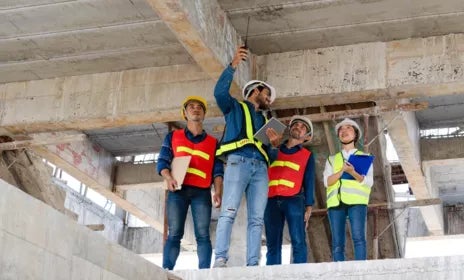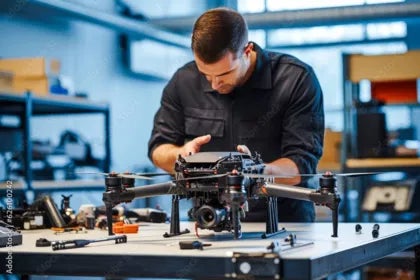
A qualifying master's degree is an official programme that allows students to practise certain regulated professions in Spain. In the case of technical degrees, it is the necessary requirement to obtain full professional attributions in specialities such as industrial engineering, aeronautics, civil engineering, canals and ports or architecture.
Unlike other master's degrees, this is not just a specialisation, but a compulsory training if you want to sign projects, take on technical responsibilities or work as an engineer or architect in certain regulated fields.
Qualifying masters in engineering
In many branches of engineering, the bachelor's degree is not enough to provide all the professional skills. The qualifying master's degree completes the training and allows:
- Access to regulated professions
- Obtain full professional attributions
- Sign technical projects
- Work in positions of greater responsibility
It is, therefore, a key step towards developing a professional career in engineering.
Completing a qualifying master's degree in engineering or a technical qualification such as a master's degree in architecture opens the door to positions of greater responsibility in different sectors, such as:
In addition, they allow you to access functions that require the signing of projects or technical responsibility.
And in the case of the Master's Degree in Architecture , it allows you to access professional practice as an architect, participate in the design and development of building projects, intervene in refurbishment work, take on project management functions and work in architecture studios, construction companies, consultancy firms, public administrations or companies linked to urban planning and sustainability.
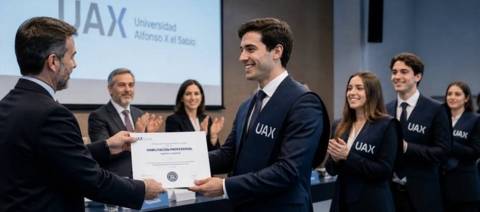
UAX offers training that is practice-oriented and connected to the professional environment, with programmes designed to respond to the real needs of the sector.
The university stands out for its focus on employability, innovation and teaching quality, ranking among the private universities best valued by companies in Spain.
This is an official master's degree that allows students to exercise regulated professions in the field of engineering, granting the necessary professional attributions.
Yes, in certain engineering fields it is compulsory in order to be able to practice with all professional competences and to be able to sign projects.
El máster habilitante permite ejercer una profesión regulada, mientras que un máster no habilitante ofrece especialización, pero no otorga atribuciones profesionales.
Industrial engineering, civil engineering and some specialisations such as aeronautics require this type of master's degree in order to be fully competent.
Yes, but with limitations in terms of professional responsibilities and attributions. For certain positions and functions, a Master's degree is essential.
It depends on the country, but in many cases it facilitates professional recognition and access to international opportunities.