See all Online Master's Degrees in Health
See all Master's Degrees in Engineering
Most searched curriculums
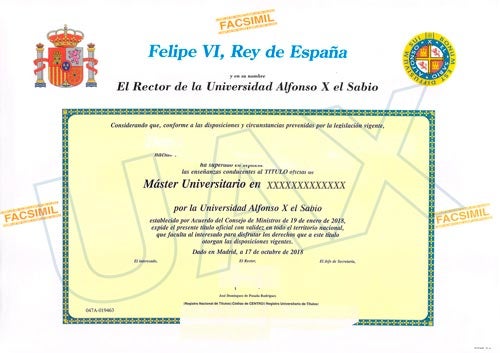
Official qualification
Boost your career with the UAX Master in Financial Management. With a strategic, global and innovative approach, this programme will train you to lead financial management in any type of organisation, integrating advanced M&A techniques, risk analysis, planning and sustainability. Learn with working professionals from TOP companies and access exclusive networking opportunities. Study at Spain's No. 1 University in terms of employability (U-Ranking 2023, BBVA Foundation). Limited places.
All fields are required
The Master’s in Finance is designed to train professionals capable of tackling current and future financial challenges. Throughout the programme, you will develop skills in financial strategy, risk analysis, regulatory compliance and business valuation. You will also gain knowledge of financial innovation, sustainable finance and the use of data analysis and visualisation tools. With a 100% online, flexible approach that fits in with your professional life, this officially recognised master’s degree prepares you to take on leadership roles in the financial sector, in both the public and private spheres.
UAX is a member of AACSB, the world’s largest global alliance for business education. This affiliation with leading institutions in over 100 countries guarantees degrees of excellence that are internationally recognised and offer high employability.

This programme is aligned with international standards and provides an excellent foundation for sitting certifications such as the CFA (Chartered Financial Analyst), particularly Level I and, to some extent, Level II. Its technical focus and its content covering financial analysis, valuation, ethics, risk management and portfolio management make it an ideal complementary preparation for those aspiring to pursue a career in investment banking, asset management or financial analysis.
On our Online Master’s in Finance, you will acquire the key skills to lead innovation and gain essential knowledge for financial decision-making, with a focus on data, sustainability and global trends.
Master the tools to design sound financial strategies, evaluate investments and plan business growth, with forecasts based on predictive models.
Develops a strategic approach to identify, analyse and mitigate financial and non-financial risks, ensuring stability and optimising business profitability.
It uses advanced methodologies to calculate the value of companies, investments and financial assets, providing a solid basis for mergers and acquisitions (M&A) decisions.
Economic and financial analysis tools, interactive dashboards and management control KPIs to improve monitoring and data-driven decision making.
Learn how to integrate ESG (environmental, social and governance) criteria into financial decision-making and sustainable investment management.
Gain in-depth knowledge of international financial regulations, including MiFID II, and learn how to apply best practices in compliance and taxation.
Explore the latest trends in fintech, blockchain and artificial intelligence predictive models applied to multiple sectors, financial institutions, insurers and consultancy.
It understands the functioning of international financial markets, investment banking, venture capital and Value at Risk (VaR) methodologies.
Develops leadership skills to direct the financial strategy of any public or private organisation and achieve the company's financial objectives.
Transform the way you work with generative artificial intelligence. This micro-credential enables you to apply tools such as ChatGPT, Copilot or Gemini in information analysis, content creation and decision-making, integrating innovative solutions in an ethical and responsible way in real professional environments.

Develop your professional potential through leadership and interpersonal skills. This micro-credential provides you with the keys to manage teams, communicate effectively and solve problems in real-world environments, combining personal leadership techniques with practical productivity and collaboration tools.
The online master's degree in finance is designed for professionals looking to take a decisive step towards leadership in the financial sector, from a strategic, global and digital approach. This programme is perfect for those who wish to specialise, innovate and advance their careers, managing the complexity and opportunities of today's financial environment.
Entry requirements:
This official master's degree is open to all those with a university degree related to the financial area or who have a professional career in this field. Degrees that can be taken directly without further training include:
If your degree belongs to other areas, you can access the master's degree with complementary training. These are some examples of degrees that can be accessed with complements:
Degrees from the Legal and Social Sciences branch, such as:
Degrees in Engineering or Architecture or Sciences, such as:
Master's Degree in Financial Management
First Year
FIRST FOUR-MONTH PERIOD
| Code | Subjects | Character* | ECTS | ||||||||||||||||||||||||||||||||||||||||||||||||||||||||||||||||||||||||||||||||||||||||||||||
|---|---|---|---|---|---|---|---|---|---|---|---|---|---|---|---|---|---|---|---|---|---|---|---|---|---|---|---|---|---|---|---|---|---|---|---|---|---|---|---|---|---|---|---|---|---|---|---|---|---|---|---|---|---|---|---|---|---|---|---|---|---|---|---|---|---|---|---|---|---|---|---|---|---|---|---|---|---|---|---|---|---|---|---|---|---|---|---|---|---|---|---|---|---|---|---|---|---|
| SM121900 | Financial Strategy and Long-Term Planning | OB | 6 | ||||||||||||||||||||||||||||||||||||||||||||||||||||||||||||||||||||||||||||||||||||||||||||||
Financial Strategy and Long-Term PlanningCódigo: SM121900 Imprimir Course 1: First-semester module. Compulsory. 6 credits. Profesores
Objectives The aim of this module is to equip students with the skills to design and implement sustainable, long-term financial strategies, integrating economic planning, the evaluation of financing options, risk management, scenario modelling and resource optimisation, with a view to improving strategic decision-making in complex and changing environments. Prerequisites None specified. Learning outcomes Knowledge: RK1: To understand and describe long-term financial strategies, financing alternatives and risk analysis. Skills and competences: RS1: Apply financial forecasting tools and develop future scenarios to support decision-making. Competencies: RC1: Demonstrate the ability to plan and implement financial strategies incorporating risk analysis. Course content • Long-term financial planning and decision-making. • Evaluation of financing alternatives. • Management of financial and non-financial risks in strategic planning. • Financial forecasting models: scenario analysis and financial simulation. • Tax planning and capital structure optimisation. • Evaluation and control: tools and models. Training activities V1. – Lectures. V2. – Interactive classes V3 – Practical activities. V4a. – Self-guided exercises V4b. Course forum V5. – Independent study, working independently on case studies, challenges or problems. V6. – Online tutorial V7. – Knowledge assessments Assessment system and criteria SE1.- Assessment of practical activities 40% SE2.- Final knowledge assessments 60% Timetable Click on this link to view the detailed timetable in Excel
Bibliography Essential: 1. Fernández, P. Business Valuation: How to Measure and Manage Value Creation. Third expanded and updated edition. Gestión 2000. 2007. ISBN: 8480889802 2. Hess, E.D The Road to Organic Growth: How Great Companies Consistently Grow Market Share from Within McGraw-Hill Professional. 2017. ISBN: 9780071475259 3. Jordana, Josep Bertran; Montserrat Casanovas Ramón Josep. Corporate Finance: Profit Editorial. 2015. ISBN: 9788415735021 4. Suárez Suárez, A Optimal Investment and Financing Decisions in Business 22nd ed. Pirámide. 2014. ISBN: 9788436829839 Supplementary: 5.- Martínez Conesa, I and García Meca, E. Valuation of listed companies: main methods, the role of intangibles and a case study Marcial Pons. 2005. ISBN: 9788489959880 |
|||||||||||||||||||||||||||||||||||||||||||||||||||||||||||||||||||||||||||||||||||||||||||||||||
| SM121901 | Sustainable Finance and Corporate Social Responsibility | OB | 6 | ||||||||||||||||||||||||||||||||||||||||||||||||||||||||||||||||||||||||||||||||||||||||||||||
Sustainable Finance and Corporate Social ResponsibilityCódigo: SM121901 Imprimir Course 1: First-semester module. Compulsory. 6 credits. Profesores
Objectives The aim of this module is to equip students with the knowledge and skills necessary to integrate sustainability and social responsibility criteria into financial management, evaluating investments and policies from an ethical, regulatory and strategic perspective, in line with current regulatory frameworks and non-financial reporting standards. Prerequisites None specified. Learning Outcomes Knowledge: RK2: Identify and describe the principles of sustainable finance and ESG regulations. Skills and competences: RS2: Apply ESG criteria to investment projects and prepare EINF reports. Competencies: RC2: Integrate sustainability into strategic business decisions. Course content • Principles of sustainable finance. • Evaluation of projects using ESG criteria. • Socially responsible investment (SRI). • Regulations on non-financial information and ESG reporting. • Non-Financial Information Statement (EINF): requirements, regulatory framework, preparation and submission. • Development and implementation of sustainable finance policies. Training activities V1. – Lectures. V2. – Interactive classes V4a.- Self-guided exercises V4b. Course forum V5. – Independent study, working independently on case studies, challenges or problems. V6. – Online tutoring V7. Knowledge tests Assessment system and criteria SE1.- Assessment of practical activities 40% SE2.- Final knowledge assessments 60% Timetable Click on this link to view the detailed timetable in Excel
Bibliography Essential: 1. Jiménez, J. C Sustainable Finance: A Commitment to the Environment, Society and Good Governance Aranzadi. 2023. ISBN: 978-84-1162-2 2. Navarro García, F. Corporate Social Responsibility: Theory and Practice of Sustainability ESIC. 2024. ISBN: 978-841192020 Supplementary: 3.- Bataller Grau, J. and Boquera Matarredona, J. Social Responsibility and Sustainability: The Scope of Corporate Action Tirant lo Blanc. 2023. ISBN: 978-841169453 4.- García del Junco, J., Espasandín Buistelo, F., Palacios Florencia, B. A Practical Guide to Corporate Social Responsibility Pirámide. 2018. ISBN: 9788436839975 5. López Jiménez, J. M. and Zamarriego Muñoz, A. Sustainability and the New Institutional and Regulatory Framework for Sustainable Finance Aranzadi. 2020. ISBN: 978-84-1390-0 |
|||||||||||||||||||||||||||||||||||||||||||||||||||||||||||||||||||||||||||||||||||||||||||||||||
| SM121902 | Financial and Non-financial Risk Management | OB | 6 | ||||||||||||||||||||||||||||||||||||||||||||||||||||||||||||||||||||||||||||||||||||||||||||||
Financial and Non-financial Risk ManagementCódigo: SM121902 Imprimir Course 1: First-semester module. Compulsory. 6 credits. Profesores
Objectives The aim of this module is to provide students with a comprehensive understanding of the various types of risks affecting organisations, as well as the methodologies and tools required for their identification, assessment, mitigation and control, with a view to developing effective and proactive risk management in financial and strategic decision-making. Prerequisites None specified. Learning Outcomes Knowledge: RK3 Identify and classify financial and non-financial risks. Skills and competences: RS3 Apply risk mitigation techniques and carry out risk audits. Competencies: RC3 Effectively manage financial risks and design internal control systems. Course content • Types of financial risks (market, credit, liquidity). • Non-financial risks: reputational, technological, legal and regulatory. • Risk hedging and mitigation tools. • Assessment of risk exposure in projects and investments. • Risk assessment models and techniques. • Control and audit systems for financial and non-financial risks. Training activities V1. – Lectures. V2. – Interactive classes V4a. – Self-guided exercises V4b. Course forum V5. – Independent study, working independently on case studies, challenges or problems. V6. – Online tutoring V7. Knowledge tests Assessment system and criteria SE1.- Assessment of practical activities 40% SE2.- Final knowledge assessments 60% Timetable Click on this link to view the detailed timetable in Excel
Bibliography Essential: 1. Crouhy, M., Galai, D., & Mark, R The Essentials of Risk Management (3rd ed.) McGraw-Hill Education. 2014. ISBN: 9781264258864 2. Hull, J. C. Risk Management and Financial Institutions (5th ed.) Wiley. 2021. ISBN: 9781119932482 3. Lam, J. Enterprise Risk Management: From Incentives to Controls (2nd ed.) Wiley. 2014. ISBN: 9781118834435 Supplementary: 4.- Alexander, C. Market risk analysis (Vols. 1–4) Wiley. 2008. ISBN: 9780470997994 5. Jorion, P. Value at Risk: The new benchmark for managing financial risk (3rd ed.) McGraw-Hill Education. 2007. ISBN: 9780071355025 6. Moeller, R. R. COSO Enterprise Risk Management: Establishing Effective Governance, Risk, and Compliance (GRC) Processes Wiley. 2011. ISBN: 9780470912881 |
|||||||||||||||||||||||||||||||||||||||||||||||||||||||||||||||||||||||||||||||||||||||||||||||||
| SM121903 | Data Visualisation and Financial Analysis Tools | OB | 6 | ||||||||||||||||||||||||||||||||||||||||||||||||||||||||||||||||||||||||||||||||||||||||||||||
Data Visualisation and Financial Analysis ToolsCódigo: SM121903 Imprimir Course 1: First-semester module. Compulsory. 6 credits. Profesores
Objectives The aim of this module is to equip students with the skills to use strategic management and financial analysis tools, facilitating alignment between a company’s operational and financial objectives through the application of the Balanced Scorecard and data visualisation techniques that improve the interpretation and communication of key information for decision-making. Prerequisites None specified. Learning Outcomes Knowledge: RK4 Understand advanced tools for the analysis and visualisation of financial data Skills and competences: RS4 Apply visualisation techniques for decision-making and create interactive dashboards. Competencies: RC4 Provide technological solutions that improve the monitoring of financial data. Course content • Balanced Scorecard (BSC): translating corporate strategy into action • A strategic management tool for aligning financial objectives with the company’s operational and strategic objectives. • Tools for analysing and visualising financial data Training activities V1. – Lectures. V2. – Interactive classes V3. – Practical activities. V4a.- Self-guided exercises V4b. Course forum V5. – Independent study, working independently on case studies, challenges or problems. V6.- Online tutorial V7.- Knowledge tests Assessment system and criteria SE1.- Assessment of practical activities 40% SE2.- Final knowledge assessments 60% Timetable Click on this link to view the detailed timetable in Excel
Bibliography Essential: 1. Knight, D., Ostrowsky, E., Pearson, M., & Schacht, B. Microsoft Power BI Quick Start Guide. Birmingham Packt Publishing Ltd. 2022. ISBN: 9781804612668 2. Norton, D. P., & Kaplan, R. S. The Balanced Scorecard (3rd revised ed.) 3rd ed. Gestión 2000. 2016. ISBN: 9788498754261 3. Pulipati, S. Data Storytelling with Google Looker Studio Packt Publishing Ltd. 2022. ISBN: 9781800561953 Supplementary: 4.- Knaflic, C. N. Storytelling with Data: A Data Visualisation Guide for Business Professionals John Wiley & Sons, Inc. 2015. ISBN: 9781119002253 5.- Knaflic, C. N. Storytelling with You John Wiley & Sons, Inc. 2022. ISBN: 9781394160303 |
|||||||||||||||||||||||||||||||||||||||||||||||||||||||||||||||||||||||||||||||||||||||||||||||||
| SM121904 | Financial Regulation and Regulatory Compliance | OB | 6 | ||||||||||||||||||||||||||||||||||||||||||||||||||||||||||||||||||||||||||||||||||||||||||||||
Financial Regulation and Regulatory ComplianceCódigo: SM121904 Imprimir Course 1: First-semester module. Compulsory. 6 credits. Profesores
Objectives The aim of this module is to provide students with a thorough understanding of the regulatory environment affecting finance, enabling them to interpret and apply current regulations, manage compliance risks, and ensure integrity and transparency in financial activities, both in traditional contexts and in emerging technological environments. Prerequisites None specified. Learning Outcomes Knowledge: RK5 Understands financial regulations and compliance obligations. Skills and competences: RS5 Carries out audits and applies tools to manage regulatory risks. Competencies: RC5: Manages regulatory compliance in the context of new financial technologies. RODS: To develop effective communication, teamwork, analytical thinking, creativity and ethical leadership from a cross-disciplinary perspective, clearly inspired by democratic principles and values, as well as the Sustainable Development Goals, in order to conduct oneself with integrity in the professional sphere. Course content description • National and international financial regulations. • Regulatory compliance and corporate governance. • Regulation of financial sustainability and non-financial reporting. • Regulatory risk management. • Audit and internal control of regulatory compliance. • Regulatory framework for new financial technologies, including GDPR, MiFID II and PSD2. Training activities V1. – Lectures. V2. – Interactive classes V3. – Practical activities. V4a. – Self-guided exercises V4b. Course forum V5. – Independent study, working independently on case studies, challenges or problems. V6.- Online tutorial V7.- Knowledge tests Assessment system and criteria SE1.- Assessment of practical activities 40% SE2.- Final knowledge assessments 60% Timetable Click on this link to view the detailed timetable in Excel
Bibliography Essential: 1. Freixas, X. & Rochet, J.-C. Microeconomics of Banking MIT PRESS. 2013. ISBN: 9780262062701 2.- Lastra, R. International Financial and Monetary Law Oxford University Press. 2015. ISBN: 9780199663270 3. Moloney, N. EU Securities and Financial Markets Regulation (4th ed.) Oxford University Press. 2023. ISBN: 9780199683698 4. Muñoz Machado, S. and Esteve Pardo, J. (eds.) Law of Economic Regulation. I. Foundations and Institutions of Regulation IUSTEL. 2013. ISBN: 9788498900460 |
|||||||||||||||||||||||||||||||||||||||||||||||||||||||||||||||||||||||||||||||||||||||||||||||||
| SM121950 | Financial Accounting | CM | 4 | ||||||||||||||||||||||||||||||||||||||||||||||||||||||||||||||||||||||||||||||||||||||||||||||
Financial AccountingCódigo: SM121950 Imprimir Course 1: First-semester module. Supplementary module for the Master’s degree. 4 credits. Profesores
Objectives To provide a basic understanding of financial statements, the analysis of key ratios and fundamental financial decisions. Prerequisites None specified Learning outcomes Knowledge: Understand the fundamental elements of finance Skills and abilities: Analyse financial data, identify patterns and make informed decisions. Competencies: Carry out an accounting analysis, interpret financial statements and perform an economic and financial assessment based on a company’s accounting and financial data. Course content Introduction to basic financial statements (balance sheet, profit and loss account and cash flow statement). Key financial ratios. Basic financing decisions. Training activities V1. – Lectures. V2. – Interactive classes V4a. – Self-guided exercises V4b. Course forum V5. – Independent study, working independently on case studies, challenges or problems. V6. – Online tutoring V7. Knowledge tests Assessment system and criteria SE1.- Assessment of practical activities: 40% SE2.- Final knowledge assessments: 60% Timetable Click on this link to view the detailed timetable in Excel
Bibliography Core: 1. González García, V. J. (Ed.) Financial Accounting: The General Chart of Accounts Ediciones Pirámide. 2022. ISBN: 9788436847048 2.- Rivero Romero, J. et al. Financial Accounting Case Studies Edisofer. 2021. ISBN: 9788418493171 Supplementary: 3.- Socías Salvá, A Financial Accounting: The General Accounting Plan. Case Studies Ediciones Pirámide. 2024. ISBN: 9788436849653 |
|||||||||||||||||||||||||||||||||||||||||||||||||||||||||||||||||||||||||||||||||||||||||||||||||
| SM121951 | Descriptive Statistics | CM | 4 | ||||||||||||||||||||||||||||||||||||||||||||||||||||||||||||||||||||||||||||||||||||||||||||||
Descriptive StatisticsCódigo: SM121951 Imprimir Course 1: First-semester module. Supplementary module for the Master’s degree. 4 credits. Profesores
Objectives To develop basic skills in collecting, organising, presenting and analysing data using descriptive statistical tools Prerequisites None specified Learning outcomes Knowledge: Understands the fundamentals of descriptive statistics, inferential statistics and probability theory. Skills: Apply techniques to summarise and describe data in a meaningful and comprehensible way, identifying the mean, median, standard deviation, etc. Course content • Introduction to descriptive statistics: collecting, organising, presenting and analysing data. • Measures of central tendency (mean, median, mode), measures of dispersion (variance, standard deviation), basic graphical representation, introduction to correlation. Training activities V1. – Lectures. V2. – Interactive classes V4a. – Self-guided exercises V4b. Course forum V5. – Independent study, working independently on case studies, challenges or problems. V6. – Online tutoring V7. Knowledge tests Assessment system and criteria SE1.- Assessment of practical activities: 40% SE2.- Final knowledge assessments: 60% Timetable Click on this link to view the detailed timetable in Excel
Bibliography Essential: 1. Casado, J. Basic Handbook of Statistics National Institute of Statistics. 2007. ISBN: 978-84-260-37 https://www.ine.es/ine/oposiciones/temario_2021/manual_basico_estadistica.pdf 2.- Posada Hernández, G. J. Basic Elements of Descriptive Statistics for Data Analysis Luis Amigó University Foundation. 2016. ISBN: 978-958-8943- https://www.funlam.edu.co/uploads/fondoeditorial/120_Ebook-elementos_basicos.pdf 3.- Úbeda Sánchez, Á. M. Handbook of Basic Descriptive Statistics University of Jaén. 2025. ISBN: 0000000000 https://crea.ujaen.es/server/api/core/bitstreams/480bb756-aeb4-4d5d-9ed4-f7804fd47915/content |
|||||||||||||||||||||||||||||||||||||||||||||||||||||||||||||||||||||||||||||||||||||||||||||||||
| SM121952 | Basic Financial Mathematics | CM | 4 | ||||||||||||||||||||||||||||||||||||||||||||||||||||||||||||||||||||||||||||||||||||||||||||||
Basic Financial MathematicsCódigo: SM121952 Imprimir Course 1: First-semester module. Supplementary module for the Master’s degree. 4 credits. Profesores
Objectives For students to understand and apply the basic concepts of financial mathematics used in economic and financial decision-making Prerequisites None specified Learning Outcomes Knowledge: Understands the fundamentals of financial mathematics and numerical methods Skills: Able to correctly apply the calculation of simple and compound interest, net present value (NPV), internal rate of return (IRR) and the time value of money Course content Simple and compound interest, Net Present Value (NPV), Internal Rate of Return (IRR), Time Value of Money. Training activities V1. – Lectures. V2. – Interactive classes V4a. – Self-guided exercises V4b. Course forum V5. – Independent study, working independently on case studies, challenges or problems. V6. – Online tutoring V7. Knowledge tests Assessment system and criteria SE1.- Assessment of practical activities: 40% SE2.- Final knowledge assessments: 60% Timetable Click on this link to view the detailed timetable in Excel
Bibliography Essential: 1. Bonilla Musoles, MA, Ivars Escortell, AN & Ismael Moya CL Mathematics of Financial Operations: Theory and Practice Alfa Centauro. 2006. ISBN: 9788497323734 2. Pablo López, AN Financial Valuation ceura. 2002. ISBN: 9788480045094 Supplementary: 3.- Gil Peláez, LO, Baquero, MJ, Gil, MA & Maestro, ML Mathematics of Financial Operations: Solved Problems AC. 1991. ISBN: 978-847288122 4.- Pablo López, AN Mathematics of Financial Operations I UNED, 2005. ISBN: 9788436246759 |
|||||||||||||||||||||||||||||||||||||||||||||||||||||||||||||||||||||||||||||||||||||||||||||||||
| TOTAL: | 42 | ||||||||||||||||||||||||||||||||||||||||||||||||||||||||||||||||||||||||||||||||||||||||||||||||
SECOND FOUR-MONTH PERIOD
| Code | Subjects | Character* | ECTS | ||||||||||||||||||||||||||||||||||||||||||||||||||||||||||||||||||||||||||||||||||||||||||||||
|---|---|---|---|---|---|---|---|---|---|---|---|---|---|---|---|---|---|---|---|---|---|---|---|---|---|---|---|---|---|---|---|---|---|---|---|---|---|---|---|---|---|---|---|---|---|---|---|---|---|---|---|---|---|---|---|---|---|---|---|---|---|---|---|---|---|---|---|---|---|---|---|---|---|---|---|---|---|---|---|---|---|---|---|---|---|---|---|---|---|---|---|---|---|---|---|---|---|
| SM121905 | Advanced Business Valuation, Mergers and Acquisitions (M&A) | OB | 6 | ||||||||||||||||||||||||||||||||||||||||||||||||||||||||||||||||||||||||||||||||||||||||||||||
Advanced Business Valuation, Mergers and Acquisitions (M&A)Código: SM121905 Imprimir Course 1. Second-term module. Compulsory. 6 credits. Profesores
Objectives This module aims to equip students with the skills to carry out advanced business valuation processes and analyse mergers and acquisitions, incorporating financial, strategic and sustainability criteria, and applying rigorous techniques for diagnosis, integration and value assessment in diverse corporate environments, including start-ups and technology companies. Prerequisites None specified. Learning Outcomes Knowledge: RK6 Understand the main methods of business valuation. Skills: RS6 Prepare due diligence reports for mergers and acquisitions. Competencies: RC6 Lead M&A processes and optimise financial and operational value. Course content • Company valuation methods: DCF, market multiples and asset value. • Financial and non-financial evaluation in M&A • Analysis of synergies and integration costs. • Financial and non-financial due diligence. • Valuation of start-ups and new technology companies. • Impact of sustainability policies on company valuation. Training activities V1. – Lectures. V2. – Interactive classes V3 – Practical activities. V4a. – Self-guided exercises V4b. Course forum V5. – Independent study, working independently on case studies, challenges or problems. V6. – Online tutorial V7. – Knowledge assessments Assessment system and criteria SE1.- Assessment of practical activities 40% SE2.- Final knowledge assessments 60% Timetable Click on this link to view the detailed timetable in Excel
|
|||||||||||||||||||||||||||||||||||||||||||||||||||||||||||||||||||||||||||||||||||||||||||||||||
| SM121906 | Project Finance and Sustainable Investment Assessment | OB | 6 | ||||||||||||||||||||||||||||||||||||||||||||||||||||||||||||||||||||||||||||||||||||||||||||||
Project Finance and Sustainable Investment AssessmentCódigo: SM121906 Imprimir Course 1. Second-term module. Compulsory. 6 credits. Profesores
Objectives The aim of this module is to enable students to structure and analyse complex investment projects, assessing their economic and financial viability and incorporating criteria relating to sustainability, risk management and regulatory impact, through the use of advanced financial modelling techniques applied to the current context of project financing. Prerequisites None specified. Learning Outcomes Knowledge: RK7 Describe the sources of funding and sustainability criteria for investment projects Skills and competences: RS7 Apply advanced financial models and prepare economic feasibility reports. Competencies: RC7 Lead sustainable investment projects by integrating ESG criteria. RODS Develop effective communication, teamwork, analytical thinking, creativity and ethical leadership from a cross-cutting perspective, clearly inspired by democratic principles and values, as well as the Sustainable Development Goals, in order to conduct oneself with integrity in the professional sphere. Course content description • Project structuring and sources of funding. • Economic and financial feasibility analysis. • Sustainability criteria in investments. • Risk management in large-scale projects. • Advanced financial modelling for investment projects. • Impact of ESG policies on project financing. Training activities V1. – Lectures. V2. – Interactive classes V3 – Practical activities. V4a. – Self-guided exercises V4b. Course forum V5. – Independent study, working independently on case studies, challenges or problems. V6. – Online tutorial V7. – Knowledge assessments Assessment system and criteria SE1.- Assessment of practical activities 40% SE2.- Final knowledge assessments 60% Timetable Click on this link to view the detailed timetable in Excel
Bibliography Essential: 1. Brealey, R. A., Myers, S. C., & Allen, F. Principles of Corporate Finance (13th ed.) McGraw-Hill Education. 2020. ISBN: 9781260013900 2.- Gatti, S. Project Finance in Theory and Practice: Designing, Structuring, and Financing Private and Public Projects (3rd ed.) Academic Press. 2018. ISBN: 9780128114740 3. Yescombe, E. R. Principles of Project Finance (2nd ed.) Academic Press. 2017. ISBN: 9780128044092 Supplementary: 4.- Esty, B. C. Modern Project Finance: A Casebook John Wiley & Sons. 2014. ISBN: 9780470567224 5.- Hoffman, S. L. The Law and Business of International Project Finance (4th ed.) Cambridge University Press. 2016. ISBN: 9781107036215 6. Yescombe, E. R., & Farquharson, E. Public-Private Partnerships for Infrastructure: Principles of Policy and Finance (2nd ed.) Butterworth-Heinemann. 2018. ISBN: 9780128130528 |
|||||||||||||||||||||||||||||||||||||||||||||||||||||||||||||||||||||||||||||||||||||||||||||||||
| SM121907 | Financial Innovation and New Trends in the Sector | OB | 6 | ||||||||||||||||||||||||||||||||||||||||||||||||||||||||||||||||||||||||||||||||||||||||||||||
Financial Innovation and New Trends in the SectorCódigo: SM121907 Imprimir Course 1. Second-term module. Compulsory. 6 credits. Profesores
Objectives The aim of this module is to analyse the impact of technological transformation on the financial sector, equipping students to understand and evaluate emerging innovations, new business models and the strategic, operational and regulatory implications associated with the digitalisation and disruption of the financial sector. Prerequisites None specified Learning Outcomes Knowledge: RK8 Understand and describe new technological trends in the financial sector Skills and competences: RS8 Apply artificial intelligence to manage financial risks and develop innovative technological solutions: Competencies RC8 Lead digital transformation projects in the financial sector. Course description • Fintech, blockchain and cryptocurrencies. • Digitalisation of financial services. • Artificial intelligence applied to finance. • Innovations in financial risk management and sustainability. • New forms of financing: crowdfunding, P2P and digital platforms. • The impact of regulatory policies on the development of new financial technologies. Training activities V1. – Keynote sessions V2. – Interactive classes V3 – Practical activities. V4a. – Self-guided exercises V4b. Course forum V5. – Independent study, working independently on case studies, challenges or problems. V6. – Online tutorial V7. – Knowledge assessments Assessment system and criteria SE1.- Assessment of practical activities 40% SE2.- Final knowledge assessments 60% Timetable Click on this link to view the detailed timetable in Excel
|
|||||||||||||||||||||||||||||||||||||||||||||||||||||||||||||||||||||||||||||||||||||||||||||||||
| SM121908 | External Academic Placements | OB | 6 | ||||||||||||||||||||||||||||||||||||||||||||||||||||||||||||||||||||||||||||||||||||||||||||||
External Academic PlacementsCódigo: SM121908 Imprimir Course 1. Second-term module. Compulsory. 6 credits. Profesores
Objectives The aim of this module is to provide students with a supervised professional experience in real-world settings, enabling them to apply the knowledge, skills and tools acquired throughout the programme in an integrated manner, thereby fostering their professional development in the field of financial management and leadership. Prerequisites None specified. Learning Outcomes SDGs. To develop effective communication, teamwork, analytical thinking, creativity and ethical leadership from a cross-cutting perspective, clearly inspired by democratic principles and values, as well as the Sustainable Development Goals, in order to conduct oneself with integrity in the professional sphere. Course content Students will undertake work placements in companies and/or organisations where they can put the knowledge acquired during the degree programme into practice, as well as apply the financial management and leadership tools covered in the programme. Learning activities V4a. – Independent study V4b Course forum V5. Online tutorial V10 – External academic work placement Assessment system and criteria SE6 Report by the external academic placement supervisor: 40% SE7 Report by the academic supervisor of the external academic placement: 40% SE8 External academic placement report: 20% |
|||||||||||||||||||||||||||||||||||||||||||||||||||||||||||||||||||||||||||||||||||||||||||||||||
| SM121909 | Master’s Thesis | OB | 6 | ||||||||||||||||||||||||||||||||||||||||||||||||||||||||||||||||||||||||||||||||||||||||||||||
Master’s ThesisCódigo: SM121909 Imprimir Course 1. Second-term module. Compulsory. 6 credits. Profesores
Objectives The aim of the Master’s Thesis is for students to integrate and apply, independently, the knowledge, skills and competences acquired throughout the programme, by producing a rigorous academic piece of work that demonstrates their ability to analyse, plan, make decisions and propose solutions in the field of financial management, all under the supervision of a tutor and culminating in a public defence before an academic panel. Prerequisites To defend the Master’s Thesis, students must have passed all the modules of the Master’s programme, including those in the supplementary training component, should they have been required to undertake them. Learning outcomes Competencies: RTFM: To prepare, present and defend an original piece of work that synthesises the competences and skills acquired during the degree programme in line with financial direction and management. RODS: To develop effective communication, teamwork, analytical thinking, creativity and ethical leadership from a cross-disciplinary perspective, clearly inspired by democratic principles and values, as well as the Sustainable Development Goals, in order to conduct oneself with integrity in the professional sphere. Description of the content The Master’s Final Project (TFM) consists of applying the content learnt in the programme’s theoretical and practical modules. In the MTh, students must individually demonstrate that they have carried out the entire process characteristic of an academic thesis, under the supervision of a tutor who will guide their work. They must submit a high-quality piece of work that meets the necessary requirements for a literature review, the setting of objectives, planning and an action plan, as well as an analysis of results and a proposal for impact; this will be defended through a public oral presentation before a qualified university examination board. Training activities V2. Interactive classes V6. – Virtual tutorials V8. – Preparation of the Master’s Thesis V9. – Public oral defence of the Master’s Thesis Assessment system and criteria SE4 Master’s Thesis report. (40%–70%) SE5 Defence and presentation of the Master’s Thesis before the assessment panel: (30%–60%) |
|||||||||||||||||||||||||||||||||||||||||||||||||||||||||||||||||||||||||||||||||||||||||||||||||
| TOTAL: | 30 | ||||||||||||||||||||||||||||||||||||||||||||||||||||||||||||||||||||||||||||||||||||||||||||||||
*Character: BT: Basic Training, Ob: Required, Op: Optional
The main reason why at UAX there are students like you is the possibility of making your personal, professional and academic life compatible. Our differential value is a methodology without barriers, focused on you and your desire to learn.
How is our methodology?
Our degree is official, verified by the Council of Universities and fully valid in Spain, as well as in the European Higher Education Area.
It is recognised by the Education Systems of Latin America, being recognised and approved by the different Ministries of Education in Latin America:
SENESCYT, MEN (MinEducation), SEP, Mescyt, among others, automatically.
The external academic internships will allow you to apply the knowledge acquired in a real environment and develop key skills for your professional future. With 6 ECTS and 150 curricular hours, 105 of which will be on-site in the company, these internships take place in the second semester and represent a unique opportunity to boost your career.
If you have related professional experience, you will be able to validate the internship. Contact our advisors for a personalised ECTS recognition study.
The flexibility of online learning, with opportunities to connect
Take your exams online wherever you are or, if you prefer, in person at our designated centres in Spain and Latin America, subject to availability and capacity.
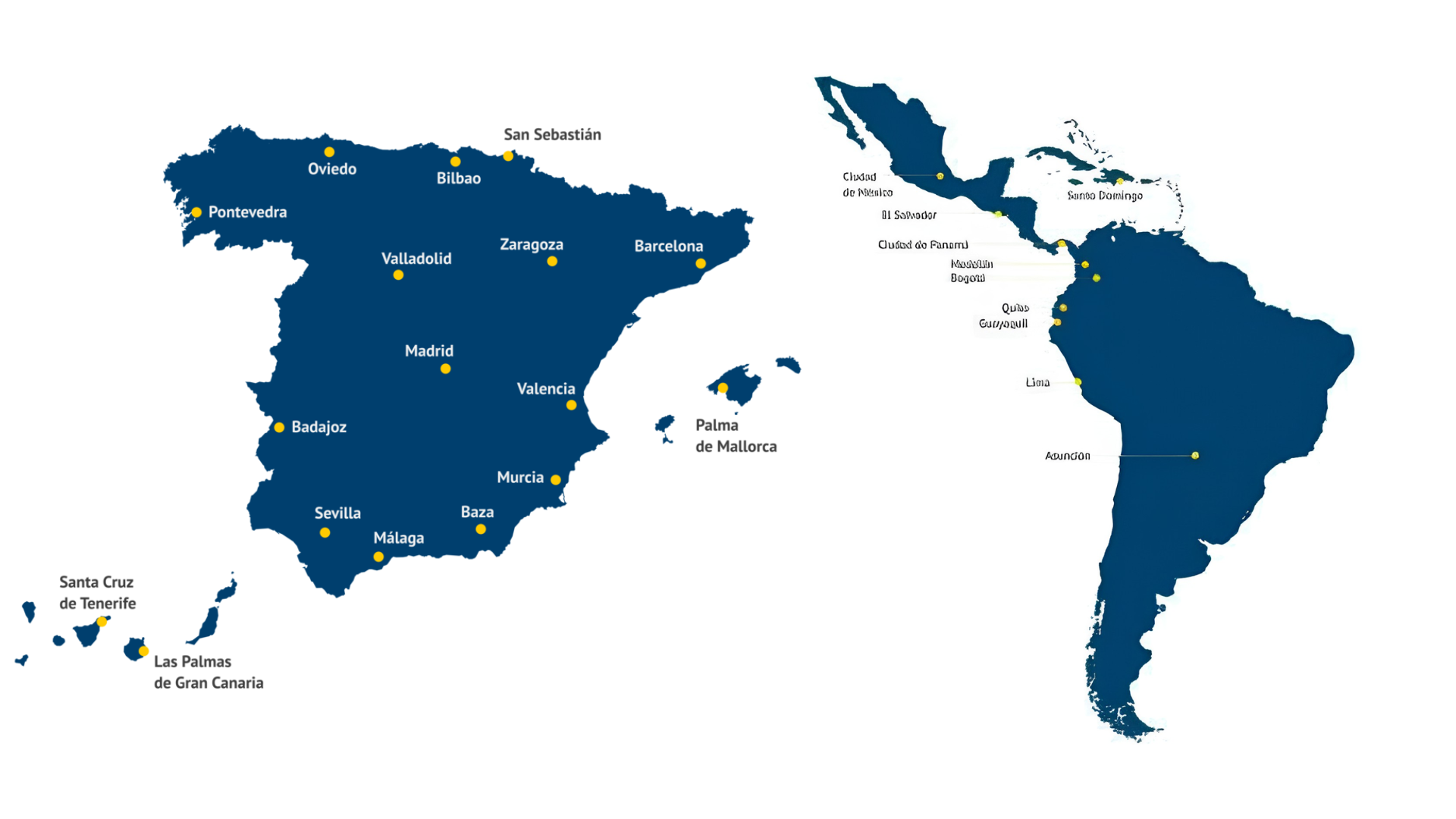
What’s more, as a student at UAX Online, you’ll have access to our Campus Hubs – a network of exclusive physical spaces where you can study, access libraries, work in co-working areas and connect with other students. Because studying online doesn’t mean studying alone.
Campus Hubs available in: Alcobendas, Alcorcón, Valencia San Vicente, Murcia, Barcelona, Málaga, Seville and Arganda.
Access is via your UAX student card, subject to availability and the opening hours of each centre.

Financial markets and risk management
Develop a strategic understanding of financial markets, risk management and investment with this Yale University certification, strengthening your ability to make financial decisions in a global context.
That’s what the rankings say
Alfonso X el Sabio University (UAX) is ranked amongst the best universities in Spain according to the leading rankings.
UAX obtains the highest rating of 5 stars and the overall "Excellent" badge for Employability, Teaching, Academic Development, Facilities, Online Teaching and Good Governance in the prestigious international QS Stars rating.
Forbes ranks UAX as the private university with the most graduates working in its area (nearly 90%), thanks to a unique educational model firmly linked to the labour market through more than 8,800 agreements with companies.
UAX is recognised as the second most innovative university in Spain, the only private university among the top three in the ranking. This recognition highlights our transversal commitment to AI and training in sustainability.
The prestigious ranking of the BBVA Foundation and the IVIE recognises us as the university with the best job placement in Spain in 2023, consolidating our model focused on the real employability of our graduates.

The Coordenadas Institute of Governance and Applied Economics places UAX as the private university of reference in Madrid, highlighting our practical training model aligned with the reality of the market.

At UAX we know that studying is an investment, that's why we provide you with the facilities you need to access our degrees. Find out about some of our scholarships and grants to study a master's degree in financial markets and the stock market:
Financial management in companies and entities
Advisory and Consultancy
Academic and research sector
No es un requisito obligatorio contar con experiencia profesional previa en el sector financiero para acceder al máster. Sin embargo, se recomienda que los estudiantes tengan una formación previa en áreas relacionadas con la economía, administración de empresas o finanzas, ya que esto facilitará el aprendizaje y la aplicación de los conocimientos adquiridos.
The Master's Degree in Financial Management prepares you to lead financial management in companies and institutions. Its objective is to provide knowledge and key tools for strategic financial decision-making, risk analysis, investment optimisation and efficient management of an organisation's economic resources.
On completing the programme, students are awarded a Master's Degree in Financial Management, recognised within the European Higher Education Area (EHEA). This degree allows students to enter the labour market and to continue their studies in the academic or research field.
Yes, the master's degree includes a 105-hour internship (6 ECTS) in the second semester. These internships allow students to specialise in different areas of the financial sector according to their interests and to connect with professionals in the sector, broadening their networking opportunities and access to the labour market.
If you have already worked in the business world, you can validate your previous internship and obtain ECTS credits for your professional experience. Contact our advisors for personalised advice on the ECTS recognition process.
This master's degree focuses exclusively on financial management and governance, providing more specialised training in areas such as financial markets, business valuation, risk management and compliance. In contrast, an MBA with a specialisation in finance offers a more general overview of business management with a specific module in finance.
The master's degree offers various networking opportunities through events, conferences and collaborations with companies in the financial sector. In addition, interaction with professors and peers from different professional fields fosters the creation of a network of contacts that is key to students' future professional development.
The Master's Thesis (TFM) is an individual project in which the student applies the knowledge acquired in the programme. Under the supervision of a lecturer, students must develop an academic project that includes objectives, action plan and analysis of results. The defence is carried out by means of a public oral presentation before a university tribunal in person or virtually.
Other related qualifications
We offer a wide range of academic programmes, so you’re sure to find one that suits you:

Online Master's Degree in Project Organisation and Management
Start:
October
Length:
9 months

Online Master’s Degree in Business Management and Administration (MBA)
Start:
October
Length:
9 months

Online University Master's Degree in Big Data for Business
Start:
October
Length:
9 months

Máster Universitario Online en Marketing Digital
Start:
October
Length:
9 months

Online Master’s Degree in Artificial Intelligence
Start:
October
Length:
9 months

Online Master's Degree in Human Resources Management and Administration
In collaboration with:

Start:
October
Length:
9 months

Online Master’s Degree in Law and Legal Practice + Bar Exam Preparation Course
In collaboration with:

Start:
October
Length:
1½ years
MBA in Sports Management
In collaboration with:

Start:
October
Length:
9 months

Master's Degree in Sports Marketing and Communication
In collaboration with:

Start:
October
Length:
9 months
Master’s Degree in Sports Communication
In collaboration with:

Start:
October
Length:
9 months

Master’s Degree in Integrated Management Systems – SIG (online)
In collaboration with:

Start:
October
Length:
9 months

Online Master’s Degree in Cybersecurity
Start:
October
Length:
9 months

Online Master's Degree in Criminology Applied to Security Management and Crime Prevention
In collaboration with:

Start:
October
Length:
9 months

Master's Degree in Administrative Management (online)
In collaboration with:

Start:
October
Length:
9 months

Bachelor’s Degree in Business Management and Administration
Start:
September
Length:
4 years

Online Degree in Business Administration and Management
Start:
October
Length:
4 years

Bachelor’s Degree in Business Analytics + Business Administration and Management
In collaboration with:

Start:
September
Length:
4.5 years

Degree in Business Administration and Management + Marketing
+ Professional Data Analyst Certificate by

Start:
September
Length:
5 years

Degree in Mathematical Engineering
Start:
September
Length:
5 years
Enquiries, complaints and claims
We respond to the genuine needs of our students and staff, because we believe in the continuous improvement of our results. That is why we always want to hear whatever you have to say.

If you are already part of UAX, please visit the ‘Customer Service: complaints, suggestions and compliments’ section on thevirtual campus , logging in with your username and password.