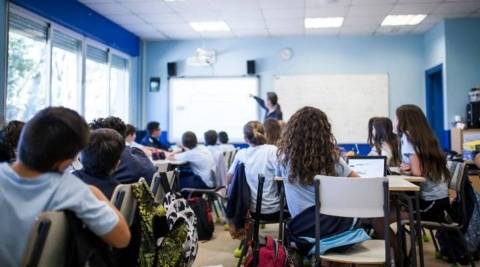
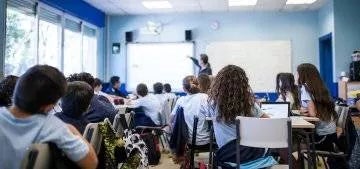
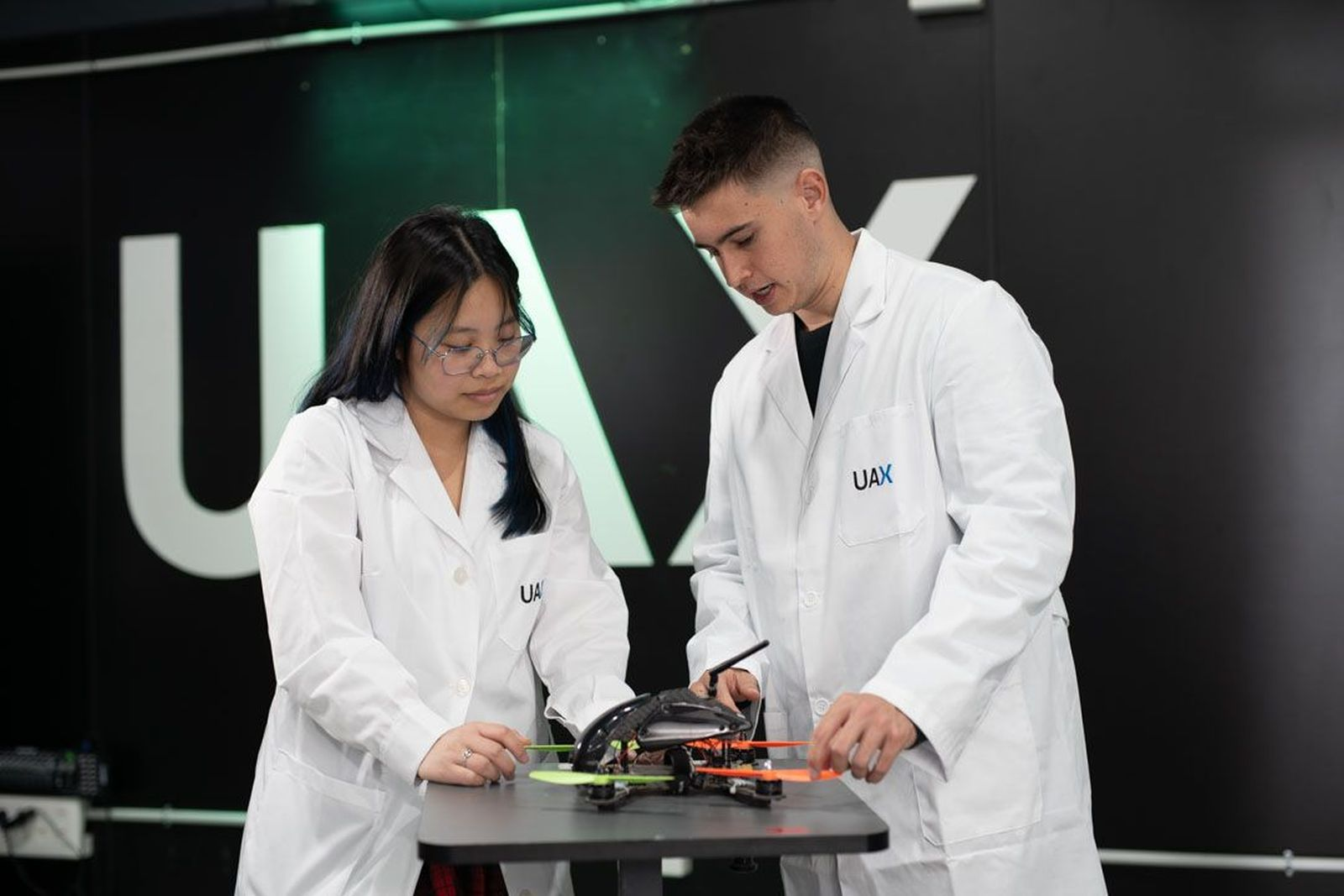
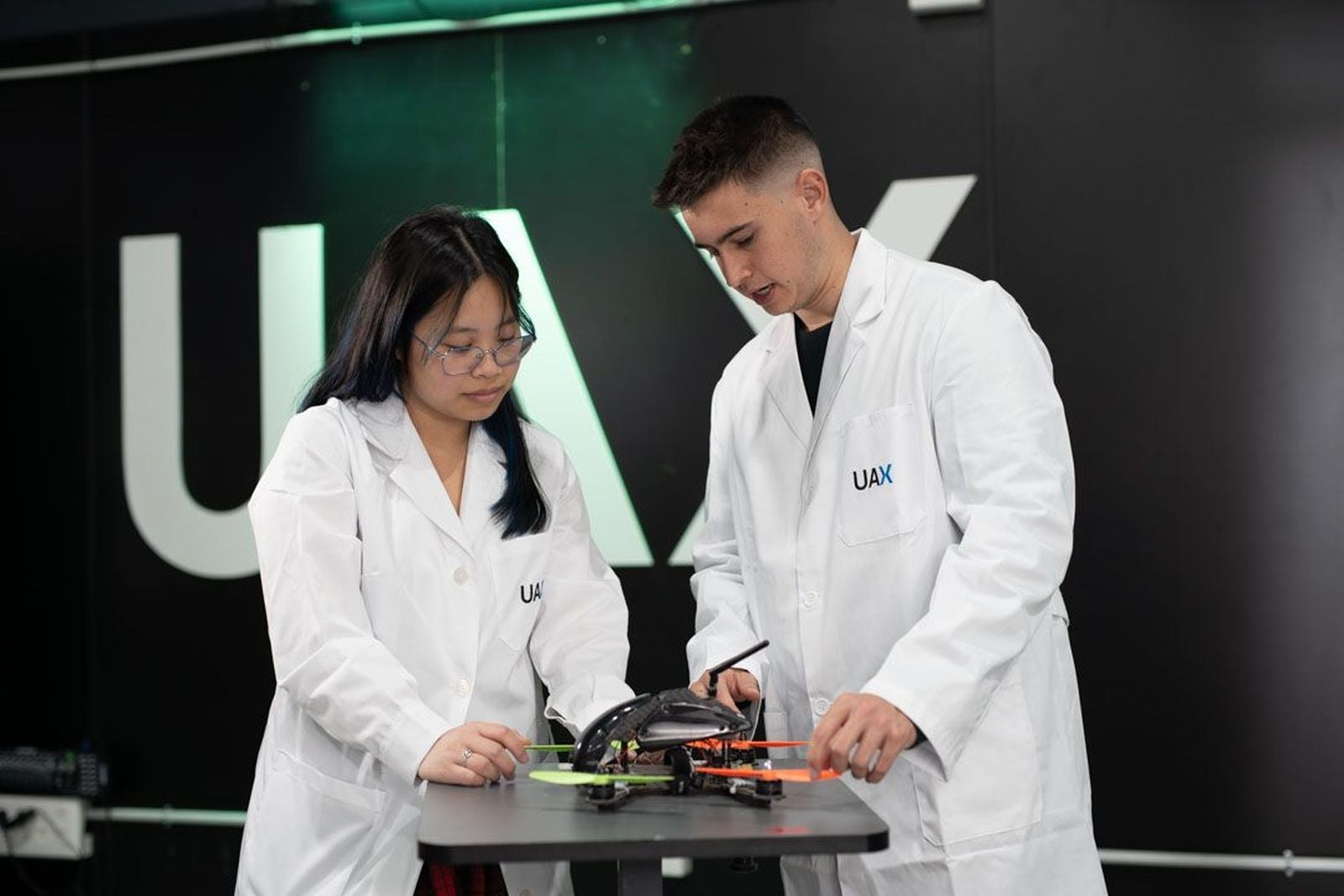
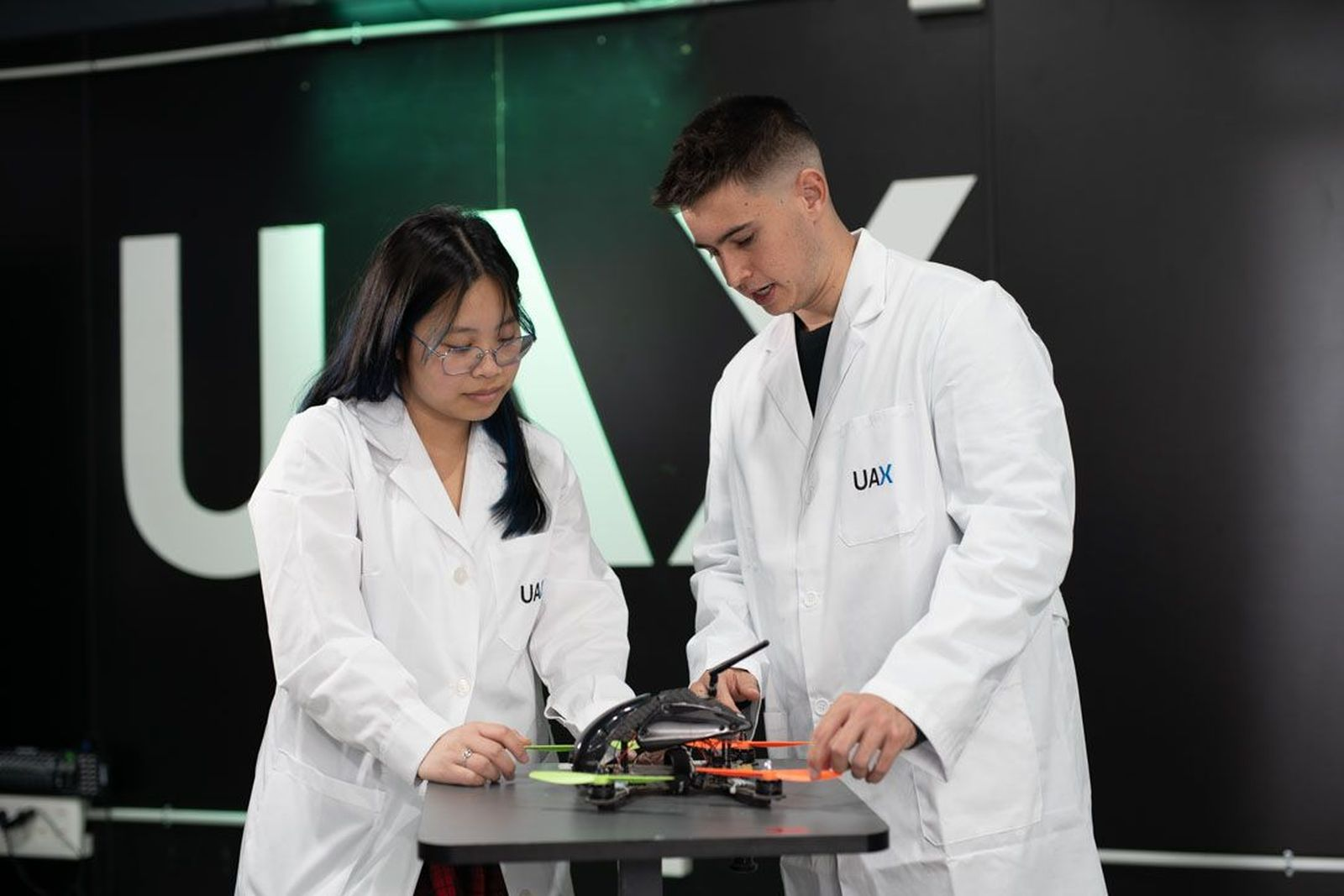
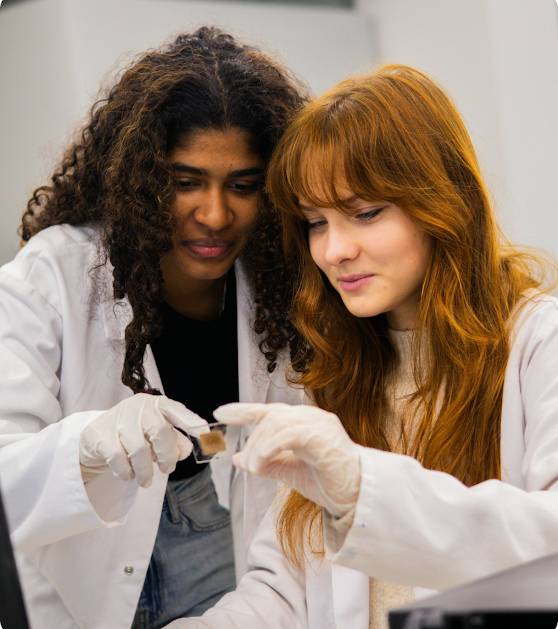
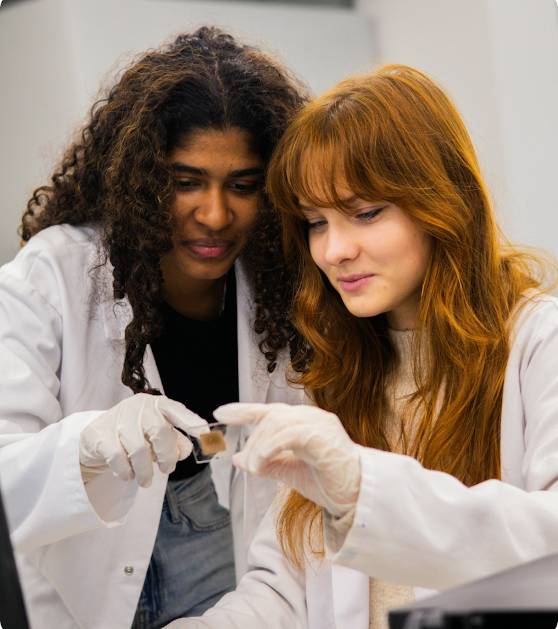
Train as a Primary Education teacher and accompany the development of children from 6 to 12 years of age from a global, innovative and flexible perspective. Study online, at your own pace, with the support of a teaching and pedagogical team that accompanies you every step of the way.
Study at Spain's No. 1 University in terms of employability (U-Ranking 2023, BBVA Foundation). Limited places.
every year who enter the teaching profession or improve their chances of finding the job they are looking for.
83%Employability
thanks to practical training, connected to the reality of the classroom and oriented to your incorporation in the educational environment.
1000training centres
where you will connect with your future professional environment and participate in real projects with educational institutions.
Qualify as a Primary School Teacher
The UAX Online Bachelor’s Degree in Primary Education will equip you with the skills needed to educate the next generation with an innovative, committed and up-to-date approach.
Throughout the programme, you will acquire the skills needed to tackle the challenges of the 21st-century classroom, working with active methodologies such as Agile Learning and gamification, integrated into a curriculum tailored to the real demands of the education system.
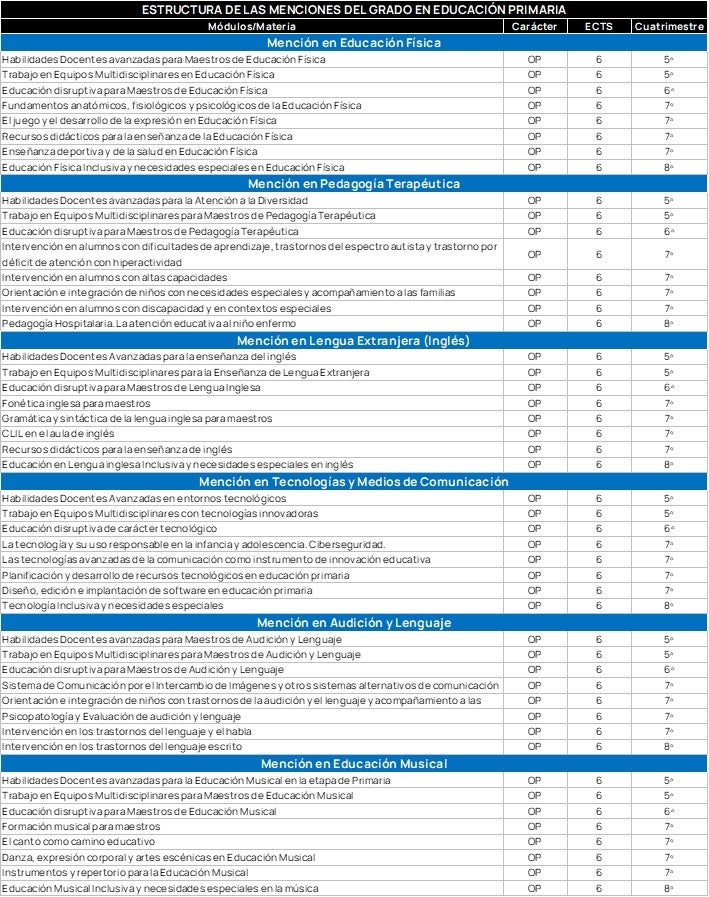
You will have the opportunity to specialise your training through six pathways with specific specialisations, allowing you to tailor your profile to the areas with which you most identify:
Physical Education.
Therapeutic Pedagogy.
Foreign Language: English.
Technology and Media.
Hearing and Language.
Music Education.
Furthermore, you will learn from a teaching staff comprising PhD holders, researchers and practising professionals, who will provide you with teaching that is closely linked to the realities of the classroom.
All of this is delivered online using a flexible approach, allowing you to watch lessons either live or on demand.
What will you learn?
Knowledge of curricular areas
You will learn about the key subjects in Primary Education and how they relate to each other in an interdisciplinary way in the classroom.
Evaluation and applied didactics
You will learn to apply assessment criteria and teaching techniques adapted to the different teaching processes.
Active and innovative methodologies
You will work with approaches such as gamification or agile learning, aligned with the new educational models.
Teaching in multicultural contexts
You will know how to deal with language teaching in diverse, multilingual classrooms with different cultural contexts.
Tutoring and educational guidance
You will be prepared to accompany students and their families through tutoring, with a close and guiding vision.
Teaching design and planning
You will learn to design, plan and evaluate learning processes, both individually and as part of a teaching team.
Boost your career development with micro-credentials
NEUROEDUCATION FOR TEACHERS: IDENTIFICATION AND ASSESSMENT
BOOST YOUR TALENT WITH GENERATIVE AI
LEADERSHIP AND SOFT SKILLS
Neuroeducation for teachers: identification and assessment
Enhance your teaching practice by understanding learning through the lens of neuroeducation. This micro-credential equips you to analyse students’ cognitive, emotional and behavioural processes, identify potential difficulties at an early stage, and apply evidence-based inclusive teaching strategies in the classroom.
Boost your talent with Generative AI
Transform the way you work with generative artificial intelligence. This micro-credential empowers you to apply tools like ChatGPT, Copilot, and Gemini to analyze information, create content, and make decisions in real-world academic contexts, integrating solutions ethically and responsibly within the educational field.
Leadership and Soft Skills
Develop your potential in education through leadership and interpersonal skills. This microcredential provides you with the keys to managing teams, communicating effectively, and solving problems in real-world educational settings, combining personal leadership techniques with practical productivity and collaboration tools.
Information on the online Bachelor’s Degree in Primary Education
Syllabus and subjects Primary Education
You will be able to choose from six pathways depending on the speciality that best suits your professional future:
Bachelor’s Degree in Primary Education
First Year
FIRST FOUR-MONTH PERIOD
Code
Subjects
Character*
ECTS
S0150700
Teaching Methods in Primary Education: the holistic and harmonious development of children
FB
6
Teaching Methods in Primary Education: the holistic and harmonious development of children
PhD in Education accredited by ANECA, with over 12 years’ experience in university teaching. Collaborator and lecturer-researcher at international universities such as Texas A&M University, the University of Arizona and the University of Haifa in Israel, amongst others. She has authored more than 85 scientific publications in prestigious international and national journals, participated in conferences, published four books and managed national and international R&D projects.
Objectives
• To recognise the changes that have taken place in the conception of education in the various laws passed in our country since the 19th century.
• To provide a comprehensive overview of pedagogy, addressing its concept, scope, components and purpose, with a view to understanding its importance in the educational sphere and its application in teaching practice.
• To identify the main roles of the teacher at both the educational and social levels, defining the identity of the primary school teacher today.
• To identify the main elements of the educational process, with particular emphasis on the current competence-based model.
• To recognise and analyse the main elements of the primary education curriculum.
• To understand the importance of reflection and evaluation of teaching practice as tools for improving the quality of education.
Prerequisites
None, apart from those required for admission to the Bachelor’s degree in Primary Education.
Learning outcomes
RK1 – To be familiar with the curricular areas of Primary Education, the interdisciplinary relationships between them, the assessment criteria and the body of pedagogical knowledge relating to the respective teaching and learning procedures (CG01) TYPE: Knowledge or content
RK9 – To be familiar with current proposals and developments based on competence-based learning (CE05) TYPE: Knowledge or content
RK10 – To analyse and understand educational processes both within and outside the classroom relating to the 6–12 age group (CE07) TYPE: Knowledge or content
RK11 – Be familiar with the fundamentals of primary education (CE08) TYPE: Knowledge or content
RK12 – Be familiar with the historical development of the education system in our country and the political and legislative factors influencing educational activity (CE10) TYPE: Knowledge or content
RS11 - Reflect on classroom practices in order to innovate and improve teaching (CG10A) TYPE: Skills or competences
RC1 - To design, plan and evaluate teaching and learning processes, both individually and in collaboration with other teachers and professionals at the school (CG02) TYPE: Competences
RC7 – Monitor and evaluate the educational process, and in particular the teaching-learning process, through mastery of the necessary techniques and strategies (CE64) TYPE: Competences
Description of the content
A brief overview of the evolution of the Spanish education system: from the Constitution of Cádiz to the LOMLOE.
Introduction to didactics: concept, scope, components and purpose.
The role of the teacher in the education system: the teacher’s educational and social functions.
The educational process: models, components and relationships. Competency-based learning.
Elements of the curriculum. The primary education curriculum: a critical analysis.
Areas of decision-making regarding the curriculum.
Evaluation of teaching outcomes. The importance of analysis and reflection for improving teaching practice.
Training activities
Virtual classes
Guided work on the online platform
Practical sessions
Independent study
Group online tutorials
Face-to-face assessments
Assessment system and criteria
For the standard assessment period, you must submit the following:
• Practical activity: 10% of the final mark.
• Portfolio: 30% of the final mark.
• In-person final exam: 60% of the final mark.
To be eligible for the final mark calculated from the above weightings, you must achieve a mark of at least 5 out of 10 in the final in-person exam.
If you have to sit the supplementary assessment, 100% of the final mark will be based on the mark you achieve in the supplementary final exam for the module.
The University uses an anti-plagiarism tool which will automatically analyse all assignments. In the event of plagiarism, the work will be checked both by this tool and qualitatively by the lecturer, and will be subject to the University’s Internal Disciplinary Regulations; should there be evidence of copying or plagiarism, the assignment will be marked as ‘Not Submitted’.
Bibliography
Essential:
1. Bermejo, B.
General Teaching Manual for Early Years and Primary School Teachers.
Pirámide. 2011.
ISBN: 9788436829358
2. De la Herrán, A. and Medina, A.
General Pedagogy: Training to Teach
Octaedro. 2023.
ISBN: 9788419690968
3. Llanos Ceballos, A.L.
General pedagogy in the classroom. Principles and application
University Press. 2014.
ISBN: 9789587623208
4. Quintanal Díaz, J. and Sánchez-Huete, J. C.
Research Methods and Designs in Socio-Educational Contexts.
CCS. 2023.
ISBN: 978-84-1379-1
5. Sánchez-Huete, J. C.
Compendium of General Didactics
CCS. 2008.
ISBN: 978-84-9842-2
6. Sánchez-Huete, J. C.
Organisation, Operation and Management of Educational Processes.
CCS. 2021.
ISBN: 978-84-1379-0
S0150701
Educational innovation for finding answers and solving problems in the classroom
FB
6
Educational innovation for finding answers and solving problems in the classroom
Rubén Amores Marreiros is a PhD candidate in Educational Sciences at the University of Lisbon, specialising in Adult Education and Training. He holds a Master’s degree and a Bachelor’s degree in the same field, and has undertaken study and research at various universities in Portugal, Spain, Italy and Brazil. His main areas of interest focus on the education and training of adults, particularly those with low levels of schooling, adult education and training policies, experiential learning, biographical research and educational biographies. Recognised as a Student of Merit by the Portuguese Government in 2017, he is a member of the management team at AFIRSE Portugal, where he promotes international educational research and academic cooperation. He is currently Head of Studies for the Master’s in Leadership and Management of Educational Institutions at the Faculty of Education, Alfonso X the Wise University (UAX).
Prerequisites
None, apart from those required for admission to the Bachelor’s degree in Primary Education.
Learning outcomes
RS11 – Reflect on classroom practices to innovate and improve teaching (CG10A) TYPE: Skills or competences
RS12 – Acquire habits and skills for independent and collaborative learning and promote these amongst students (CG10B) TYPE: Skills or competences
RS13 – Address and resolve discipline issues (CE12) TYPE: Skills or competences
RS14 – Promote cooperative work and individual effort (CE13) TYPE: Skills or competences
RC7 – Monitor and evaluate the educational process, and in particular the teaching and learning process, through mastery of the necessary techniques and strategies (CE64) TYPE: Competences
RC8 – Design, plan and evaluate teaching activities and learning in the classroom (CE16) TYPE: Competences
RC9 – Understand and apply innovative approaches in primary education (CE17) TYPE: Competences
RC10 – Understand and apply basic methodologies and techniques of educational research and be able to design innovation projects by identifying evaluation indicators (CE19) TYPE: Competences
Description of the course content
Educational research: definition, areas of application, purpose and current trends.
Techniques and tools for data collection.
Fundamentals of quantitative research methodology.
Fundamentals of qualitative research methodology.
Research within educational practice. The use of research for improvement. Educational innovation.
Transfer and communication of research and innovation findings.
Training activities
V1. Online classes
V2. Guided work on the online platform
V3. Practical classes
V4. Independent study
V5. Group online tutorials
V6. Face-to-face assessments
Assessment system and criteria
For the standard assessment period, you must submit the following:
• Practical activity: 10 per cent of the final mark.
• Portfolio: 30% of the final mark.
• Face-to-face final exam: 60% of the final mark.
To have your marks averaged using the above weightings, you must achieve a mark of at least 5 out of 10 in the final face-to-face examination.
If you have to sit the supplementary assessment, 100% of your final mark will be based on the mark you achieve in the supplementary final exam for the module.
The University uses an anti-plagiarism tool which will automatically analyse all assignments. In the event of plagiarism, the work will be checked both by this tool and qualitatively by the lecturer, and will be subject to the University’s Internal Disciplinary Regulations; if there are indications of copying or plagiarism, the assignment will be marked as ‘Not Submitted’.
Bibliography
Essential:
1. Cohen, L., & Morrison, K.
Research Methods in Education.
Routledge. 2018.
ISBN: 1138209880
2. Creswell, J. W.
Educational Research: Planning, Conducting and Evaluating Quantitative and Qualitative Research
Pearson. 2014.
ISBN: 842054163X
3. Hattie, J.
Visible Learning: A Synthesis of Over 800 Meta-Analyses Relating to Achievement
Routledge. 2008.
ISBN: 978-041547618
4. Johnson, B., & Christensen, L.
Educational Research: Quantitative, Qualitative, and Mixed Approaches.
SAGE Publications. 2019.
ISBN: 978-107193468
S0150702
Primary Education: Theory, International Trends and Sustainable Education Policy
FB
6
Primary Education: Theory, International Trends and Sustainable Education Policy
She holds a PhD in Education from the Autonomous University of Madrid and a degree in History from the University of Barcelona. She specialises in subject-specific teaching methods applied to classrooms, museums and natural environments, as well as in Art, Museums and Heritage Management. Her research focuses on the teaching of Social Sciences, living history, landscape and museum audience studies. With pre-doctoral experience in the USA, she is noted for her innovative approach to heritage education. She is the Head of Studies for the Bachelor’s Degree in Primary Education at Alfonso X el Sabio University.
Prerequisites
None, apart from those required for admission to the Bachelor’s degree in Primary Education.
Learning outcomes
RK11 – Understanding the fundamentals of primary education (CE08) TYPE: Knowledge or content
RK34 - To understand and address school situations in multicultural contexts (CE15) TYPE: Knowledge or content
RS9 – Maintain a critical and independent stance towards knowledge, values and public and private social institutions (CG08) TYPE: Skills or competences
RS10 – Value individual and collective responsibility in achieving a sustainable future (CG09) TYPE: Skills or competences
RC6 – Analysing teaching practice and the institutional conditions that frame it (CE9) TYPE: Competences
RC9 – Understand and apply innovative approaches in primary education (CE17) TYPE: Competences
Description of the content
Primary Education: its evolution and current significance. Education as a constitutional right in a democratic and social state.
The meaning and purpose of education. The school and the educational community.
Leading educational theorists, particularly in modern pedagogy.
The institutionalisation of education. Educational institutions and their functions.
Education policies in Spain. The introduction of sustainability criteria into education.
Educational theories and contemporary experiences. Leading international educational trends.
Training activities
V1. Online classes
V2. Guided work on the online platform
V3. Practical sessions
V4. Independent study
V5. Group online tutorials
V6. Face-to-face assessments
Assessment system and criteria
For the standard assessment period, you must submit the following:
• Practical assignment: 10% of the final mark.
• Portfolio: 30% of the final mark.
• Face-to-face final exam: 60% of the final mark.
To have your marks averaged across the above weightings, you must achieve a mark of at least 5 out of 10 in the final in-person exam.
If you have to sit the supplementary assessment, 100 per cent of your final mark will be based on the mark you achieve in the supplementary final exam for the module.
The University uses an anti-plagiarism tool which will automatically analyse all assignments. In the event of plagiarism, the work will be checked both by this tool and qualitatively by the lecturer, and will be subject to the University’s Internal Disciplinary Regulations; if there are indications of copying or plagiarism, the assignment will be marked as ‘Not Submitted’.
Bibliography
Essential:
1. Bernabeu, J. L., Colom, A. J., Domínguez, E., and Sarramona, J.,
Contemporary Theories and Institutions of Education.
2nd ed. Ariel. 2002.
ISBN: 9788497423069
2. Merma Molina, G.
Theory and History of Education: Notes for Initial
Teacher Training.
PhD in Psychology from the Complutense University of Madrid. Bachelor’s degree in Philosophy and Educational Sciences from the University of Oviedo. University Expert in People Management from Bureau Veritas and Camilo José Cela University. Master’s degree in Occupational Health and Safety from Camilo José Cela University and Senior Technician in Occupational Health and Safety (3 specialisms). Honorary Doctorate from Bircham International University and Honorary Doctorate from the Latin American University of Mexico. Extraordinary Antonio Beristain Ipiña Chair in Victimology Award for humanistic and research excellence. He has been a lecturer and has held positions of responsibility within universities. Accredited by ANECA as a tenured lecturer with a six-year research tenure. He has lectured at several universities and has extensive experience in university management.
Objectives
• To identify and analyse the contextual factors that influence children’s development and learning, the importance of the family, school and social environments in child development, and how these factors can be utilised to improve the educational process.
• To learn how to develop teaching strategies tailored to children’s developmental needs, taking into account their individual characteristics and the context in which they live.
• To understand the fundamental concepts of the main theories of developmental psychology.
• To examine the different types of active methodologies applied in primary education and how they align with the stages of cognitive development proposed by developmental psychology.
• To identify how children progress in all aspects of their development.
• To examine emotional development at this stage, focusing on the understanding of complex emotions, emotional regulation and changes in self-esteem.
• To learn how to identify pupils’ difficulties through classroom work.
Prerequisites
None, apart from those required for admission to the Bachelor’s degree in Primary Education.
Learning outcomes
RK4 – Understand the role, potential and limitations of education in today’s society, and the key competencies relevant to primary schools and their professionals (CG12A) TYPE: Knowledge or content
RK6 – To understand the learning processes relating to the 6–12 age group within the family, social and school contexts (CE01) TYPE: Knowledge or content
RK7 – To be familiar with the characteristics of pupils aged 6–12, as well as the characteristics of their motivational and social contexts (CE02) TYPE: Knowledge or content
RK8 – Master the knowledge required to understand the personality development of these pupils and identify any difficulties (CE03) TYPE: Knowledge or content
RS8 - Embrace the educational dimension of the teaching role and promote democratic education for active citizenship (CG07B) TYPE: Skills or competences
RS15 – Promote values-based education aimed at fostering active and democratic citizenship (CE14) TYPE: Skills or competences
Description of the content
Developmental Psychology: concept, field of study, scope and methods
Development in the 6–12 age group: physical-motor, sexual, cognitive, language, emotional, personal, social and moral development
Educational Psychology: field of study, scope and methods. Behaviourist and constructivist approaches to learning
Intrapersonal and interpersonal factors influencing learning
The influence of learning contexts. Learning communities.
The impact of psychology on teachers’ work: relevance to the classroom.
Training activities
V1. Online classes
V2. Guided work on the virtual platform
V3. Practical sessions
V4. Independent study
V5. Group online tutorials
V6. Face-to-face assessments
Assessment system and criteria
For the standard assessment period, you must submit the following:
• Practical activity: 10 per cent of the final mark.
• Portfolio: 30% of the final mark.
• Face-to-face final exam: 60% of the final mark.
To have your marks averaged according to the above weightings, you must achieve a mark of at least 5 out of 10 in the final in-person exam.
If you have to sit the supplementary assessment, 100 per cent of your final mark will be based on the mark you achieve in the supplementary final exam for the module.
The University uses an anti-plagiarism tool which will automatically analyse all assignments. In the event of plagiarism, the work will be checked both by this tool and qualitatively by the lecturer, and will be subject to the University’s Internal Disciplinary Regulations; if there are indications of copying or plagiarism, the assignment will be marked as ‘Not Submitted’.
Bibliography
Essential:
1. García Madruga, J. A
Developmental Psychology I.
UNED. 2019.
ISBN: 8436275306
2. Gutiérrez Martínez, F., Vila Chaves, J.O.
Developmental Psychology II
UNED. 2021.
ISBN: 8436277457
3. Muñiz-Tinoco, V., Muñoz, V.
Handbook of Developmental Psychology Applied to Education.
Pirámide. 2011.
ISBN: 9788436825374
S0150704
Society, family and civic values for harmonious coexistence
FB
6
Society, family and civic values for harmonious coexistence
Rubén Amores Marreiros is a PhD candidate in Educational Sciences at the University of Lisbon, specialising in Adult Education and Training. He holds a Master’s degree and a Bachelor’s degree in the same field, and has undertaken study and research at various universities in Portugal, Spain, Italy and Brazil. His main areas of interest focus on the education and training of adults, particularly those with low levels of schooling, adult education and training policies, experiential learning, biographical research and educational biographies. Recognised as a Student of Merit by the Portuguese Government in 2017, he is a member of the management team at AFIRSE Portugal, where he promotes international educational research and academic cooperation. He is currently Head of Studies for the Master’s in Leadership and Management of Educational Institutions at the Faculty of Education, Alfonso X el Sabio University (UAX).
Prerequisites
None, apart from those required for admission to the Bachelor’s degree in Primary Education.
Learning outcomes
RK14 – To understand the historical evolution of the family, the different types of families, lifestyles and education within the family context (CE24) TYPE: Knowledge or content
RK34 – To understand and address school-related situations in multicultural contexts (CE15) TYPE: Knowledge or content
RS15 – To promote values-based education aimed at fostering active and democratic citizenship (CE14) TYPE: Skills or competences
RS17 – Demonstrate social skills to understand families and make oneself understood by them (CE20) TYPE: Skills or competences
RS18 – Linking education to the wider environment, and cooperating with families and the community (CE22) TYPE: Skills or competences
RS19 – Critically analyse and incorporate the most relevant issues in today’s society that affect family and school education: the social and educational impact of audiovisual media and screens; changes in gender and intergenerational relationships; multiculturalism and interculturalism; discrimination, social inclusion and sustainable development (CE23) TYPE: Skills or competences
Description of the content
Principles of the sociology of education. Main social institutions. The value and social function of education.
The family as a social institution: the evolution of the concept of the family, types of family and lifestyles.
Relationships between school and family. Cooperation in the development and education of children.
Equality: the importance of education on the path towards full equality.
Education in civic and constitutional values at primary school level.
The development of children’s ethics and morals.
Religion in primary education. Respect for diversity of beliefs.
Training activities
V1. Online classes: 15 hours
V2. Guided work on the online platform: 30 hours
V3. Practical classes: 15 hours
V4. Independent study: 84 hours
V5. Group online tutorials: 3 hours
V6. Face-to-face assessments: 3 hours
Assessment system and criteria
For the standard assessment period, you must submit the following:
• Practical activity: 10% of the final mark.
• Portfolio: 30% of the final mark.
• Face-to-face final exam: 60% of the final mark.
To have your marks averaged according to the above weightings, you must achieve a mark of at least 5 out of 10 in the face-to-face final exam.
If you have to sit the supplementary assessment, 100 per cent of your final mark will be based on the mark you achieve in the supplementary final exam for the module.
The University uses an anti-plagiarism tool which will automatically analyse all assignments. In the event of plagiarism, this will be checked both by the tool and qualitatively by the lecturer, and will be subject to the University’s Internal Disciplinary Regulations; should there be evidence of copying or plagiarism, the assignment will be marked as ‘Not Submitted’.
Bibliography
Essential:
1. Aranda, J. C.
Natural
Toromítico. 2013.
ISBN: 9788415943259
2. Dewey, J
Experience and Education.
Paidós. 2007.
ISBN: 9788497421089
3. Freire, P.
Pedagogy of Indignation.
Ediciones Morata. 2010.
ISBN: 9788471124685
4. Freire, P.
Pedagogy of Tolerance.
Regional Centre for Cooperation in Adult Education in Latin America and the Caribbean (CREFAL). 2006.
ISBN: 9789505577347
5.- Martínez Domínguez, L. M., Gómez Gómez, M., and Romero-Iribas, A.
PhD in Psychology, specialising in Neuroscience, from the Complutense University of Madrid. She is currently a lecturer in the departments of Psychology and Education at Alfonso X el Sabio University (Madrid), where she also directs the Master’s degree programme in Psychopedagogy. She is accredited by ANECA as a tenured lecturer/lecturer at a private university and has been recognised for six years of research.
Her training includes studies in Psychology in Madrid and Brussels, as well as a specialisation in Neuropsychology from the University of Essex (United Kingdom) and the Complutense University of Madrid. For eight years, she carried out her research work at the Psychophysiology Laboratory of the Psychiatry Department at the 12 de Octubre University Hospital in Madrid. Her main areas of research focus on learning difficulties, addictions and neurodevelopment. Since 2015, she has taught at various universities, consolidating her academic career in the fields of psychology and education. She currently teaches the History of Psychology on the Bachelor’s degree programme in Psychology.
Objectives
-To develop a comprehensive understanding of learning difficulties, their conceptualisation and psychological approach, equipping future primary school teachers to identify, understand and effectively address these difficulties within the educational context.
-To analyse the historical development and various definitions of learning difficulties, whilst understanding their impact on current educational practice.
-To examine the main theoretical models and psychological approaches that explain learning difficulties, assessing their applicability in the context of primary education.
- To identify and classify the various types of learning difficulties, recognising their distinctive characteristics and how they manifest in the classroom.
-To develop a comprehensive understanding of difficulties arising from learning and behavioural problems, including their conceptualisation, typology, aetiology and psychological characteristics, in order to equip future primary school teachers to identify, intervene and provide effective support to pupils with these difficulties.
-To analyse and distinguish between the concepts, types and manifestations of learning and behavioural difficulties in the context of primary education.
-To examine the various aetiological theories and factors contributing to the development of these difficulties, taking into account neurobiological, cognitive, emotional and environmental aspects.
-To identify and describe the psychological characteristics associated with different types of learning and behavioural difficulties, and their impact on pupils’ academic and socio-emotional development.
-To develop a comprehensive understanding of intellectual disability and autism spectrum disorders, including their concepts, types, aetiology and psychological characteristics, in order to equip future primary school teachers to identify, assess and provide effective support to pupils with these conditions within the educational context.
-To analyse and compare current concepts, diagnostic criteria and classification systems for intellectual disability and autism spectrum disorders, recognising their historical development and implications for educational practice.
-To examine the various aetiological theories and risk factors associated with intellectual disability and autism spectrum disorders, taking into account genetic, neurobiological and environmental factors and their interaction.
-To identify and describe the psychological, cognitive, social and behavioural characteristics associated with intellectual disability and autism spectrum disorders, and their impact on pupils’ learning and overall development within the context of primary education.
-To develop a comprehensive understanding of the special educational needs arising from high intellectual ability, covering its fundamental concepts, classifications and psychological characteristics, in order to equip future primary school teachers to identify and provide appropriate support for these pupils.
-To develop a comprehensive understanding of the difficulties associated with sensory and motor disabilities, covering their concepts, types, aetiology and psychological characteristics, in order to train future primary school teachers to identify and provide appropriate support for the special educational needs of these pupils.
-To analyse the different manifestations of learning difficulties in the primary school classroom and strategies for observation and early detection.
-To examine the importance of early intervention in child development and its impact on the educational process.
-To develop skills to design and implement intervention strategies tailored to the specific needs of pupils with learning difficulties.
Prerequisites
None, apart from those required for admission to the Bachelor’s degree in Primary Education.
Learning outcomes
RK7 – Understand the characteristics of pupils aged 6–12, as well as the characteristics of their motivational and social contexts (CE02) TYPE: Knowledge or content
RK8 – Master the knowledge required to understand the personality development of these pupils and identify dysfunctions (CE03) TYPE: Knowledge or content
RK34 – Understand and address school situations in multicultural contexts (CE15) TYPE: Knowledge or content
RS3 – Foster a sense of community in the classroom and beyond, resolve disciplinary issues and contribute to the peaceful resolution of conflicts (CG05A) TYPE: Skills or competences
RC4 – Identify learning difficulties, report them and collaborate in their management (CE04) TYPE: Competences
RC5 – Identify and plan solutions to educational situations affecting pupils with different abilities and varying learning speeds (CE06) TYPE: Competencies
Description of the content
Learning difficulties: conceptualisation and psychological approach.
Difficulties arising from learning and behavioural problems: concept, types, aetiology and psychological characteristics.
Difficulties associated with intellectual disability and autism spectrum disorders: concept, types, aetiology and psychological characteristics.
Special needs arising from giftedness: concept, types and psychological characteristics.
Difficulties associated with sensory and motor disabilities: concept, types, aetiology and psychological characteristics.
The role of the teacher in identifying learning difficulties. The importance of early intervention.
Training activities
V1. Online classes
V2. Guided work on the online platform
V3. Practical sessions
V4. Independent study
V5. Group online tutorials
V6. Face-to-face assessments
Assessment system and criteria
For the standard assessment period, you must submit the following:
• Practical activity: 10 per cent of the final mark.
• Portfolio: 30% of the final mark.
• Face-to-face final exam: 60% of the final mark.
To have your marks averaged according to the above weightings, you must achieve a mark of at least 5 out of 10 in the final in-person exam.
If you have to sit the supplementary assessment, 100% of your final mark will be based on the mark you achieve in the supplementary final exam for the module.
The University uses an anti-plagiarism tool which will automatically analyse all assignments. In the event of plagiarism, the work will be checked both by this tool and qualitatively by the lecturer, and will be subject to the University’s Internal Disciplinary Regulations; should there be evidence of copying or plagiarism, the assignment will be marked as ‘Not Submitted’.
Bachelor’s degree in Biology and a PhD with an international specialisation in Neuroscience. Master’s degree in Psychopharmacology and Substance Abuse and a Master’s in Teaching. Lecturer in subjects within the field of Life Sciences and Psychobiology on various degree programmes at UAX and on the Bachelor’s degree in Psychology at UCM. Extensive research experience in the field of addictions, the findings of which have been presented at various national and international conferences and published in over 10 scientific articles. Recipient of competitively awarded pre-doctoral and post-doctoral grants and a current collaborator with Riapad: the Primary Care Addiction Research Network.
Objectives
- To understand the historical development of energy and the main types.
-To understand the difference between heat and temperature.
-To describe the characteristics of matter.
-To distinguish the main chemical concepts relating to matter.
-To understand the origin and evolutionary history of living things.
-To identify the characteristics that define living things and to distinguish between different types of organisms.
-Understand and apply the classification of living things into kingdoms, species and other taxonomic levels.
-To study the vital functions that sustain life, and how they are carried out in different organisms.
-To explore the concept of viruses as biological agents and their impact on the biology of living organisms.
-Understand the structure and function of the cell, the basis of biological organisation.
-To learn about the different systems of the human body, focusing on their functions relating to nutrition, excretion and reproduction.
-To study ecosystems, biotopes and biocenoses, understanding how living organisms interact with their environment.
Prerequisites
None, apart from those required for admission to the Bachelor’s degree in Primary Education.
Learning outcomes
RK15 – Understand the basic principles and fundamental laws of the experimental sciences (Physics, Chemistry, Biology and Geology) (CE25) TYPE: Knowledge or content
RS12 – Acquire habits and skills for independent and collaborative learning and promote these amongst students (CG10B) TYPE: Skills or competences
RS20 – Value the sciences as a cultural phenomenon (CE28) TYPE: Skills or competences
RS21 – Recognise the mutual influence between science, society and technological development, as well as the relevant civic behaviours, in order to ensure a sustainable future (CE29) TYPE: Skills or abilities
RC12 – Identify and solve problems associated with science in everyday life (CE27) TYPE: Competences
Description of the content
Basic principles and fundamental laws of Physics for an adequate understanding and teaching of the Primary Education curriculum.
Basic principles and fundamental laws of chemistry for an adequate understanding and teaching of the primary education curriculum.
Fundamentals of Biology for an adequate understanding and teaching of the Primary Education curriculum: living organisms and their classification, evolution and biodiversity, the human body and health, human functions.
Fundamentals of Geology for an adequate understanding and teaching of the Primary Education curriculum: the Earth in space, Earth’s dynamics and materials, water on Earth, the atmosphere.
Training activities
V1. Virtual classes
V2. Guided work on the virtual platform
V3. Practical sessions
V4. Independent study
V5. Group online tutorials
V6. Face-to-face assessments
Assessment system and criteria
For the standard assessment period, you must submit the following:
• Practical activity: 10 per cent of the final mark.
• Portfolio: 30% of the final mark.
• Face-to-face final exam: 60% of the final mark.
To have your marks averaged according to the above weightings, you must achieve a mark of at least 5 out of 10 in the final in-person examination.
If you have to sit the supplementary assessment, 100 per cent of your final mark will be based on the mark you achieve in the course’s supplementary final exam.
The University uses an anti-plagiarism tool that will automatically analyse all assignments. In the event of plagiarism, the work will be checked both by this tool and assessed qualitatively by the lecturer; it will be subject to the University’s Internal Disciplinary Regulations. If there are indications of copying or plagiarism, the assignment will be marked as ‘Not Submitted’.
Bibliography
Core:
1. Cañal, P., García-Carmona, A., Cruz-Guzmán.
Teaching of Experimental Sciences in Primary Education
Praninfo. 2016.
ISBN: 978-84-283-37
2.- Garrido Romero, J.M., Perales Palacios, F.J., Galdón Delgado, M.
Science for Educators
Pearson Prentice Hall. 2008.
ISBN: 978-84-8322-4
3. Jordi Solbes Matarredona, José Cantó
The Teaching of Science in Primary Education: An Analysis of the Current Situation and Teacher Training, and Proposals for Improvement
Tirant Humanidades. 2024.
ISBN: 9788411831390
S0150707
Fundamentals of Language and Literature for Teachers
OB
4
Fundamentals of Language and Literature for Teachers
Headteacher for over 15 years. Lecturer in the Humanities for over 20 years, teaching History, Art History and Geography. PhD candidate at the Faculty of Education, UCM. Master’s degree in Educational Support, Master’s degree in Humanities and Master’s degree in Educational Leadership.
Objectives
- To understand the structure and functions of vocabulary and spelling in the Spanish language.
-To apply teaching strategies for teaching vocabulary and spelling in primary education.
-To understand the importance of teaching grammar in primary education for the development of linguistic and cognitive skills.
-To analyse the fundamental components of Spanish grammar, from grammatical categories to the most complex syntactic structures.
-To develop teaching strategies for the progressive and adapted teaching of grammar in the primary school classroom.
-To apply communicative and contextual approaches to the teaching of grammar in order to promote the appropriate and effective use of language.
- To evaluate and design activities and resources that support grammatical learning among primary school pupils.
-To design and implement teaching strategies that encourage pupils’ active participation in oral and written expression activities.
- To identify and address individual and group needs relating to the development of communication skills.
-To identify and analyse the characteristics of literary language adapted for children.
-To design and implement innovative and effective teaching strategies for the teaching of literary genres.
Prerequisites
None, apart from those required for admission to the Bachelor’s Degree in Primary Education.
Learning outcomes
RK23 – Understand the basic principles of language and communication sciences (CE44) TYPE: Knowledge or content
RK24 – Acquire literary knowledge and familiarise oneself with children’s literature (CE45) TYPE: Knowledge or content.
RK25 – Be familiar with the school curriculum for languages and literature (CE46) TYPE: Knowledge or content
RK31 – Be familiar with the process of learning written language and its teaching (CE48) TYPE: Knowledge or content
RS25 - Speak, read and write correctly and appropriately in the official languages of the relevant Autonomous Community (CE47) TYPE: Skills or competences
Description of the content
Vocabulary and spelling of the Spanish language for an adequate understanding and teaching of the Primary Education curriculum.
Spanish grammar for the proper understanding and teaching of the primary education curriculum.
Oral and written expression. Practical training for primary school teachers.
Spanish literature. Literary language and literary genres. Prose, poetry and drama. A brief historical overview.
Training activities
V1. Online classes
V2. Guided work on the online platform
V3. Practical sessions
V4. Independent study
V5. Group online tutorials
V6. Face-to-face assessments
Assessment system and criteria
For the standard assessment period, you must submit the following:
• Practical activity: 10% of the final mark.
• Portfolio: 30% of the final mark.
• Face-to-face final examination: 60% of the final mark.
In order for the above weightings to be averaged, you must achieve a mark of at least 5 out of 10 in the final face-to-face examination.
If you have to sit the supplementary assessment, 100 per cent of your final mark will be based on the mark you achieve in the supplementary final exam for the module.
The University has an anti-plagiarism tool that will automatically analyse all assignments. In the event of plagiarism, this will be checked both by the tool and qualitatively by the lecturer, and will be subject to the University’s Internal Disciplinary Regulations; if there are indications of copying or plagiarism, the assignment will be marked as ‘Not Submitted’.
She holds a PhD in Biology from the Complutense University of Madrid and a Master’s degree in Theoretical and Practical Philosophy (specialising in Logic and the Philosophy of Science, UNED). On the Master’s in Teacher Training programme, she specialises in supervising Master’s dissertations, combining academic rigour with personalised support. Her areas of supervision include pedagogical innovation, active methodologies, ethical values and environmental education, promoting research and the development of key competences in future teachers.
Objectives
-To learn about natural numbers
-To understand exponentiation
-To learn what root-taking is
-To learn about integers
-To be able to work with fractions
-Understanding proportionality
-Understand measurements
-Understand the different units
-Learning about geometric shapes
-Know how to calculate the area and volume of a shape
-To learn about basic statistics
-Understand descriptive statistical measures
-Understand the different statistical representations
Prerequisites
None, apart from those required for admission to the Bachelor’s degree in Primary Education.
Learning outcomes
RK21 – Understand ways of collaborating with the various sectors of the educational community and the wider society (CE69) TYPE: Knowledge or content
RS12 - Acquire habits and skills for independent and cooperative learning and promote these amongst students (CG10B) TYPE: Skills or competences
RS24 – Appreciate the relationship between mathematics and science as one of the pillars of scientific thinking (CE42) TYPE: Skills or competences
RC16 – To pose and solve problems related to everyday life (CE41) TYPE: Competences
RODS – Develops effective communication, teamwork, analytical thinking, creativity and ethical leadership from a cross-curricular perspective, clearly inspired by democratic principles and values, as well as the Sustainable Development Goals, in order to conduct oneself with integrity in the professional sphere. TYPE: Competences
Description of the content
Natural numbers. Operations with natural numbers. Powers and roots.
Integers. Divisibility. Fractions and operations with fractions. Decimals. Proportionality and percentages.
Measurement and volume. Units of measurement. Geometric shapes. Areas and volumes.
Basic statistics and probability. Basic measures of descriptive statistics. Statistical representation.
Learning activities
V1. Online lessons
V2. Guided work on the online platform
V3. Practical sessions
V4. Independent study
V5. Group online tutorials
V6. Face-to-face assessments
Assessment system and criteria
For the standard assessment period, you must submit the following:
• Practical activity: 10 per cent of the final mark.
• Portfolio: 30% of the final mark.
• Face-to-face final exam: 60% of the final mark.
To have your marks averaged using the above weightings, you must achieve a mark of at least 5 out of 10 in the final in-person exam.
If you have to sit the supplementary assessment, 100 per cent of your final mark will be based on the mark you achieve in the supplementary final exam for the module.
The University uses an anti-plagiarism tool which will automatically analyse all assignments. In the event of plagiarism, the work will be checked both by this tool and qualitatively by the lecturer, and will be subject to the University’s Internal Disciplinary Regulations; if there are indications of copying or plagiarism, the assignment will be marked as ‘Not Submitted’.
Bibliography
Core:
1. Godino, J. D., Batanero, C., & Font, V.
Fundamentals of Mathematics Education.
Akal Publishers. 2007.
ISBN: 978-84-460-28
2. National Council of Teachers of Mathematics
Principles and Standards for School Mathematics
National Council of Teachers of Mathematics. 2000.
ISBN: 0873534808
S0150709
Classroom organisation and teaching skills for primary education
FB
6
Classroom organisation and teaching skills for primary education
She holds a Bachelor’s degree in Early Years Education from the Andrés Bello Catholic University (Venezuela), a Master’s degree in Augmentative and/or Alternative Communication from the La Salle Higher Centre for University Studies (Spain), and an International Mentoring Programme at the Francisco de Vitoria University. A university lecturer and educational coordinator with extensive experience in early years education and teacher training. Specialising in teaching leadership, assertive communication and classroom management, she has dedicated her career to training future teachers and developing innovative educational projects. She currently lectures on the Bachelor’s degree programmes in Early Years Education and Primary Education, as well as on the Master’s in Educational Innovation at Alfonso X el Sabio University (UAX). She is also the Early Years Coordinator at Highlands School Los Fresnos, where she leads the “Caring Together” programme, which supports teachers and families, and is a facilitator for Franklin Covey’s ‘The 7 Habits of Highly Effective People’. She has received several awards and certifications, including Microsoft Innovative Educator (MIE) Expert, Microsoft’s 2024 Best Practice in Early Years Education “Lomloe in Action: Enhancing Early Years Assessment with AI and Excel”, and the Acade Award 2023 for her innovative teaching practice. Her dedication to education is also reflected in her publications and collaborations, notably her article in Éxito Educativo (2024) on the empowerment of teaching teams.
Objectives
-To equip students with the skills to plan and organise a primary school classroom so that it provides a stimulating environment conducive to the children’s holistic development.
-To teach students to design teaching materials that are specifically tailored to the primary education stage and that are suited to the characteristics and needs of children of that age.
-To deepen understanding of how to foster diversity and inclusion in the classroom through the ‘spaces’ methodology, focusing on promoting diversity and inclusion within the classroom environment.
-To design and organise effective learning spaces, equipping us with the skills to plan and organise learning spaces in the primary school classroom effectively.
-To develop skills in planning and sequencing activities.
-To understand the role of whole-school assemblies in primary education.
-Teach pupils to recognise differences in children’s special educational needs.
-To learn how to select, evaluate and adapt suitable resources and materials.
-To analyse and assimilate the theoretical foundations of pedagogical design adapted to primary education, understanding the key principles that guide the creation of effective educational materials, as discussed in previous units.
Prerequisites
None, apart from those required for admission to the Bachelor’s degree in Primary Education.
Learning outcomes
RK5 – Understand quality improvement models applicable to educational establishments (CG12B) TYPE: Knowledge or content
RK10 – Analyse and understand educational processes both within and outside the classroom relating to the 6–12 age group (CE07) TYPE: Knowledge or content
RK13 – Understand the processes of interaction and communication in the classroom (CE11) TYPE: Knowledge or content
RK34 – Understand and address school situations in multicultural contexts (CE15) TYPE: Knowledge or content
RS6 – Recognise that the practice of teaching must be continually refined and adapted to scientific, pedagogical and social changes throughout one’s life (CG06C) TYPE: Skills or competences
RS7 – Collaborate with the various sectors of the educational community and the wider social environment (CG07A) TYPE: Skills or competences
RS16 – Participate in defining the educational project and in the school’s general activities, taking into account quality management criteria (CE18) TYPE: Skills or competences
RC6 – Analyse teaching practice and the institutional conditions within which it takes place (CE9) TYPE: Competences
Description of the content
The organisation of the primary school classroom. New models and trends. Planning space and time in primary education.
Identification of teaching resources and materials.
Design, development and evaluation of teaching materials at primary school level.
The primary school teacher as an education professional: essential skills.
Core skills development for teachers: creativity, imagination, leadership, teamwork and conflict management.
Teachers’ wellbeing: self-care and psychological wellbeing.
Training activities
V1. Online classes
V2. Guided work on the virtual platform
V3. Practical sessions
V4. Independent study
V5. Group online tutorials
V6. Face-to-face assessments
Assessment system and criteria
For the standard assessment period, you must submit the following:
• Practical activity: 10% of the final mark.
• Portfolio: 30% of the final mark.
• Face-to-face final exam: 60% of the final mark.
To have your marks averaged according to the above weightings, you must achieve at least a mark of 5 out of 10 in the final in-person exam.
If you have to sit the supplementary assessment, 100 per cent of the final mark will be based on the mark you achieve in the supplementary final exam for the module.
The University uses an anti-plagiarism tool which will automatically analyse all assignments. In the event of plagiarism, the work will be checked both by this tool and qualitatively by the lecturer, and will be subject to the University’s Internal Disciplinary Regulations; if there are indications of copying or plagiarism, the assignment will be marked as ‘Not Submitted’.
S0150710
School guidance, support and dialogue for conflict resolution
FB
6
School guidance, support and dialogue for conflict resolution
Dr Reyna Guadalupe Euán Ramírez holds a PhD cum laude in Education from the Autonomous University of Madrid. She has over twenty years’ experience in university teaching at undergraduate and postgraduate level, academic coordination and educational management. Her professional career has mainly focused on the areas of educational organisation and management, teacher training, educational guidance, assessment and teaching innovation.
She has taught modules related to educational processes and contexts, supporting diversity, educational guidance and conflict resolution, with a particular focus on the Master’s Degree in Teacher Training, where she has supervised numerous Master’s dissertations. She has also supervised final-year dissertations for various degree programmes in the field of education.
Between 2014 and 2024, she was a full-time lecturer and a member of the academic coordination team at the Faculty of Education, Alfonso X el Sabio University. During this period, her responsibilities included, amongst others, coordinating external work placements for the Faculty’s degree programmes and coordinating the teaching staff for the Master’s in Teacher Training.
She has also taught at the International University of La Rioja and Camilo José Cela University, and has participated as a researcher in R&D&I projects related to social justice and school leadership at the Autonomous University of Madrid. Her main areas of research are educational inclusion, social justice and teacher training.
Prerequisites
None, apart from those required for admission to the Bachelor’s degree in Primary Education.
Learning outcomes
RS5 – To carry out tutoring and guidance roles with pupils and their families, addressing pupils’ individual educational needs (CG06B) TYPE: Skills or competences
RS8 – Embrace the educational dimension of the teaching role and promote democratic education for active citizenship (CG07B) TYPE: Skills or competences
RS13 – Address and resolve disciplinary issues (CE12) TYPE: Skills or competences
RS17 – Demonstrate social skills to understand families and make oneself understood by them (CE20) TYPE: Skills or competences
RC6 – Analyse teaching practice and the institutional conditions within which it takes place (CE9) TYPE: Competences
RC7 – To manage and monitor the educational process, and in particular the teaching and learning process, through mastery of the necessary techniques and strategies (CE64) TYPE: Competences
RC11 - Understand and be able to carry out the roles of tutor and counsellor in relation to family education for children aged 6–12 (CE21) TYPE: Competencies
Description of the content
The teacher’s role in supporting and guiding pupils: concept, objectives, purpose and principles. The teacher as a guide and role model.
Areas, techniques and models of tutorial intervention. The Tutorial Action Plan.
Classroom dynamics in primary education.
Strategies for conflict resolution and prevention within the classroom.
Tutorial work with families: strategies for dialogue and reaching agreements.
Collaboration between education professionals within the tutorial framework.
Training activities
V1. Online lessons
V2. Guided work on the virtual platform
V3. Practical sessions
V4. Independent study
V5. Group online tutorials
V6. Face-to-face assessments
Assessment system and criteria
For the standard assessment period, you must submit the following:
• Practical assignment: 10% of the final mark.
• Portfolio: 30% of the final mark.
• Face-to-face final exam: 60% of the final mark.
To have your marks averaged across the above weightings, you must achieve a mark of at least 5 out of 10 in the final in-person exam.
If you have to sit the supplementary assessment, 100 per cent of your final mark will be based on the mark you achieve in the course’s supplementary final exam.
The University uses an anti-plagiarism tool that will automatically analyse all assignments. In the event of plagiarism, the work will be checked both by this tool and qualitatively by the lecturer, and will be subject to the University’s Internal Disciplinary Regulations; if there are indications of copying or plagiarism, the assignment will be marked as ‘Not Submitted’.
My academic and professional career lies at the intersection of university teaching, research and artistic practice, specialising in the performing arts, dance and education. I hold a PhD in Feminist and Gender Studies and am an ANECA-accredited Associate Professor, with teaching experience at undergraduate and postgraduate levels, as well as in higher arts education.
My research activity centres on practice-based artistic research, arts education with a gender perspective, and the use of the arts as a tool for educational innovation, social impact and knowledge transfer. I have participated in research and teaching innovation projects, published academic articles and book chapters, and presented research findings at national and international conferences; with extensive artistic experience as a performing artist and choreographer, integrating creation, teaching and research into an interdisciplinary profile that is coherent and oriented towards academic and cultural excellence.
Prerequisites
None, apart from those required for admission to the Bachelor’s Degree in Primary Education.
Learning outcomes
RK4 – Understand the role, possibilities and limitations of education in today’s society and the key competencies relevant to primary schools and their staff (CG12A) TYPE: Knowledge or content
RS8 – Embrace the educational dimension of the teaching profession and promote democratic education for active citizenship (CG07B) TYPE: Skills or competences
RS10 – Value individual and collective responsibility in achieving a sustainable future (CG09) TYPE: Skills or competences
RS15 – Promote values-based education initiatives aimed at fostering active and democratic citizenship (CE14) TYPE: Skills or competences
RS19 – Critically analyse and incorporate the most relevant issues in today’s society that affect family and school education: the social and educational impact of audiovisual media and screens; changes in gender and intergenerational relationships; multiculturalism and interculturalism; discrimination, social inclusion and sustainable development (CE23) TYPE: Skills or competences
RC9 – Understand and apply innovative practices in primary education (CE17) TYPE: Competences
RODS – Develops effective communication, teamwork, analytical thinking, creativity and ethical leadership from a cross-curricular perspective, clearly inspired by democratic principles and values, as well as the Sustainable Development Goals, in order to operate with integrity in the professional sphere. TYPE: Competences
Description of the content
The 2030 Agenda. Sustainable Development Goals. Conceptualisation of Education for Sustainable Development (ESD).
Major global challenges. Issues relevant to sustainability. Global citizenship.
The SDGs as part of the primary school curriculum.
Specific teaching and methodological strategies linked to ESD.
Social education: concept, scope and objectives.
Values-based and intercultural education. Fostering solidarity in primary education.
Training activities
V1. Online classes
V2. Guided work on the online platform
V3. Practical sessions
V4. Independent study
V5. Group online tutorials
V6. Face-to-face assessments
Assessment system and criteria
For the standard assessment period, you must submit the following:
• Guided interactive activity: 10% of the final mark.
• Group activity: 30% of the final mark.
• Face-to-face final exam: 60% of the final mark.
In order for the above weightings to be averaged, you must achieve a mark of at least 5 out of 10 in the final in-person exam.
If you have to sit the supplementary examination, 100% of your final mark will be based on the mark you achieve in the supplementary final examination for the module.
The University uses an anti-plagiarism tool which will automatically analyse all assignments. In the event of plagiarism, the work will be checked both by this tool and qualitatively by the lecturer, and will be subject to the University’s Internal Disciplinary Regulations; should there be evidence of copying or plagiarism, the assignment will be marked as ‘Not Submitted’.
Bibliography
Essential:
1. Colom Cañellas, A. J.
Sustainable development and education for development
She holds a PhD in Translation from the University of Salamanca and has many years’ experience in teaching and research at universities and educational institutions in Spain and other countries (Sudan, Israel, Belgium) in fields related to translation, the humanities, international relations and Spanish. She has led several projects on teaching innovation and knowledge transfer, authored textbooks and taken part in outreach activities. Her research has focused on the intersection of translation, feminism and culture, the application of teaching innovations to the teaching and learning of Spanish, and the training of translators. In 2015, she received the Best Translation Award (English to Spanish: poetry and fiction) at the Latin American Book Awards for her translation of *Penélope*, a collection of poems by Tino Villanueva. She has taught Spanish to foreign learners at the Cervantes Institutes in Tel Aviv and Brussels, as well as at the European Commission and various Spanish and international universities.
Objectives
• To understand and apply the Spanish Language content set out in the Primary Education curriculum.
• To reflect on the importance of the Spanish Language subject in the holistic education of primary school pupils.
• To analyse the different teaching methodologies for teaching Spanish in primary education.
• To understand the theoretical foundations of assessment in the educational context.
• To analyse new trends and methodological strategies in the teaching and learning of Spanish in primary education.
• To acquire the pedagogical knowledge and skills necessary for the holistic development of communicative competences (oral and written) in primary school pupils.
Prerequisites
None, apart from those required for admission to the Bachelor’s degree programme in Primary Education.
Learning outcomes
RK1 – Understand the curricular areas of primary education, the interdisciplinary relationships between them, the assessment criteria and the body of pedagogical knowledge relating to the respective teaching and learning procedures (CG01) TYPE: Knowledge or content
RS12 – Acquire habits and skills for independent and cooperative learning and promote these amongst students (CG10B) TYPE: Skills or competences
RS27 – To tackle language-learning situations in multilingual contexts (CE51) TYPE: Skills or competences
RC1 – Design, plan and evaluate teaching and learning processes, both individually and in collaboration with other teachers and professionals at the school (CG02) TYPE: Competences
RC19 – Develop and evaluate curriculum content using appropriate teaching resources and foster the corresponding competences in students [language and communication sciences] (CE53) TYPE: Competences
RODS – Develops effective communication, teamwork, analytical thinking, creativity and ethical leadership from a cross-curricular perspective, clearly inspired by democratic principles and values, as well as the Sustainable Development Goals, in order to conduct oneself with integrity in the professional sphere. TYPE: Competencies
Description of the content
Spanish Language in the Primary Education Curriculum.
Objectives, knowledge and competences of the Spanish Language subject. Criteria for the selection, sequencing and organisation of knowledge.
Teaching methodology, teaching resources and educational experiences for the teaching of the Spanish language. Language teaching for international students.
Assessment in the Spanish Language subject.
New trends and methodological strategies in the teaching and learning of Spanish.
The development of oral and written expression as essential skills for children. Strategies for their development.
Training activities
V1. Online classes
V2. Guided work on the online platform
V3. Practical classes
V4. Independent study
V5. Group online tutorials
V6. Face-to-face assessments
Assessment system and criteria
For the standard assessment period, you must submit the following:
• Practical activity: 10 per cent of the final mark.
• Portfolio: 30% of the final mark.
• Face-to-face final exam: 60% of the final mark.
To have your marks averaged according to the above weightings, you must achieve at least a mark of 5 out of 10 in the final in-person examination.
If you have to sit the supplementary assessment, 100 per cent of your final mark will be based on the mark you achieve in the supplementary final exam for the module.
The University uses an anti-plagiarism tool which will automatically analyse all assignments. In the event of plagiarism, the work will be checked both by this tool and qualitatively by the lecturer, and will be subject to the University’s Internal Disciplinary Regulations; should there be evidence of copying or plagiarism, the assignment will be marked as ‘Not Submitted’.
Bibliography
Essential:
1. Camps, A., & Tusquets, J.
Teaching Spanish Language and Literature.
Ariel Educación. 2015.
ISBN: 9788499800868
2. – Marcos, D.
Teaching Language and Literature in Primary Education.
Síntesis. 2010.
ISBN: 9788490779217
3. Molina Moreno, M. M.
Teaching Children’s and Young Adult Literature. Early Years and Primary Education.
Paraninfo.. 2020.
ISBN: 978-842834371
4. Valor, J. A.
Teaching Language and Literature: Theory and Practice.
Ariel Educación. 2012.
ISBN: 978-84-368-33
S0250702
Inclusive schooling: educational support for pupils with special needs
FB
6
Inclusive schooling: educational support for pupils with special needs
PhD in Education from the UAM. Qualified Teacher in Therapeutic Pedagogy, Master’s in Dependency and Equality in Personal Autonomy, Master’s in Animal-Assisted Intervention, Advanced Technician in Communicative Mediation. Her areas of research include education, vulnerable groups, pupils with special needs, the Roma community, educational inclusion, collaboration and cooperation, and multiculturalism.
Prerequisites
None, apart from those required for admission to the Bachelor’s degree in Primary Education.
Learning outcomes
RK9 – To be familiar with current proposals and developments based on competence-based learning (CE05) TYPE: Knowledge or content
RK34 – To understand and address school situations in multicultural contexts (CE15) TYPE: Knowledge or content
RS10 – Value individual and collective responsibility in achieving a sustainable future (CG09) TYPE: Skills or competences
RS15 – Promote values-based education aimed at fostering active and democratic citizenship (CE14) TYPE: Skills or competences
RC2 – Design and manage learning environments in diverse contexts that promote gender equality, equity and respect for human rights, thereby upholding the values of civic education (CG04) TYPE: Competences
RC5 – Identify and plan solutions to educational situations affecting students with different abilities and varying learning speeds (CE06) TYPE: Competences
RODS – Develops effective communication, teamwork, analytical thinking, creativity and ethical leadership from a cross-curricular perspective, drawing clearly on democratic principles and values as well as the Sustainable Development Goals, in order to conduct oneself with integrity in the professional sphere. TYPE: Competencies
Description of the content
From integration to inclusion. The inclusive school as a place of encounter and equal opportunities.
Inclusive measures to address different learning difficulties.
Methodological strategies and educational responses to special educational needs.
Collaboration between professionals: the roles of hearing and speech therapists and therapeutic pedagogues.
Assessment of outcomes in interventions with children with special educational needs.
Inclusion as a tool for learning and the development of values in primary education.
Training activities
V1. Online classes
V2. Guided work on the virtual platform
V3. Practical sessions
V4. Independent study
V5. Group online tutorials
V6. Face-to-face assessments
Assessment system and criteria
For the standard assessment period, you must submit the following:
• Practical activity: 10 per cent of the final mark.
• Portfolio: 30% of the final mark.
• Face-to-face final exam: 60% of the final mark.
To have your marks averaged according to the above weightings, you must achieve a mark of at least 5 out of 10 in the final in-person exam.
If you have to sit the supplementary assessment, 100% of your final mark will be based on the mark you achieve in the supplementary final exam for the module.
The University uses an anti-plagiarism tool that will automatically analyse all assignments. In the event of plagiarism, this will be checked both by the tool and qualitatively by the lecturer, and will be subject to the University’s Internal Disciplinary Regulations; if there are indications of copying or plagiarism, the assignment will be marked as ‘Not Submitted’.
S0250703
School Management: schools as spaces for meeting, collaboration and exchange
FB
6
School Management: schools as spaces for meeting, collaboration and exchange
PhD in Education accredited by ANECA, with over 12 years’ experience in university teaching. Collaborator and lecturer-researcher at international universities such as Texas A&M University, the University of Arizona and the University of Haifa in Israel, amongst others. She has over 85 scientific publications in prestigious international and national journals, has attended conferences, published four books and managed national and international R&D projects.
Prerequisites
None, apart from those required for admission to the Bachelor’s Degree in Primary Education.
Learning outcomes
RK2 – To understand the organisation of primary schools and the range of activities involved in their operation (CG06A) TYPE: Knowledge or content
RK4 – To understand the role, possibilities and limitations of education in today’s society, and the key competencies relevant to primary schools and their staff (CG12A) TYPE: Knowledge or content
RS9 – Maintain a critical and independent stance towards knowledge, values and public and private social institutions (CG08) TYPE: Skills or competencies
RS16 – Participate in defining the educational project and in the school’s general activities, taking into account quality management criteria (CE18) TYPE: Skills or competences
RC2 – Design and manage learning environments in diverse contexts that promote gender equality, equity and respect for human rights, in line with the values of civic education (CG04) TYPE: Competences
RC7 – Monitor and evaluate the educational process, and in particular the teaching and learning process, through mastery of the necessary techniques and strategies (CE64) TYPE: Competences
RC9 – Understand and apply innovative practices in primary education (CE17) TYPE: Competences
Description of the content
The legislative framework for schools. Autonomy. School documentation.
The managerial role in educational institutions: areas, bodies and scope of management.
The management plan.
Organisation of teaching staff and teaching coordination.
Extracurricular activities and school services as part of the educational work of schools.
Towards a new concept of the school: schools as spaces for meeting, collaboration and exchange.
Evaluation of educational institutions and a culture of continuous improvement. Models of quality and excellence management.
Training activities
V1. Virtual classes
V2. Guided work on the virtual platform
V3. Practical sessions
V4. Independent study
V5. Group online tutorials
V6. Face-to-face assessments
Assessment system and criteria
For the standard assessment period, you must submit the following:
• Practical activity: 10 per cent of the final mark.
• Portfolio: 30% of the final mark.
• Face-to-face final exam: 60% of the final mark.
To have your marks averaged according to the above weightings, you must achieve a mark of at least 5 out of 10 in the final in-person exam.
If you have to sit the supplementary examination, 100 per cent of your final mark will be based on the mark you achieve in the supplementary final examination for the module.
The University uses an anti-plagiarism tool which will automatically analyse all assignments. In the event of plagiarism, this will be checked both by the tool and qualitatively by the lecturer, and will be subject to the University’s Internal Disciplinary Regulations; should there be evidence of copying or plagiarism, the assignment will be marked as ‘Not Submitted’.
Bibliography
Essential reading:
1.- Quintanal Díaz, J. and Sánchez-Huete, J. C.
Research Methods and Designs in Socio-educational Contexts.
CCS. 2023.
ISBN: 978-84-1379-1
2. Sánchez-Huete, J. C.
Compendium of General Didactics
CCS. 2008.
ISBN: 978-84-9842-2
3. Sánchez-Huete, J. C.
Organisation, Operation and Management of Educational Processes.
CCS. 2021.
ISBN: 978-84-1379-0
S0250704
New trends in education: play and projects as means of learning
FB
6
New trends in education: play and projects as means of learning
My academic and professional career lies at the intersection of university teaching, research and artistic practice, specialising in the performing arts, dance and education. I hold a PhD in Feminist and Gender Studies and am an ANECA-accredited tenured lecturer, with teaching experience at undergraduate and postgraduate levels, as well as in higher arts education.
My research activity centres on practice-based artistic research, arts education with a gender perspective, and the use of the arts as a tool for educational innovation, social impact and knowledge transfer. I have participated in research and teaching innovation projects, published academic articles and book chapters, and presented research findings at national and international conferences; with extensive artistic experience as a performing arts creator and choreographer, integrating creation, teaching and research into an interdisciplinary profile that is coherent and geared towards academic and cultural excellence.
Objectives
• To introduce pupils to educational innovations in a comprehensive manner, equipping them with the knowledge to adapt classroom practices and evaluate them.
• To define what play-based learning (PBL) is and what characteristics are necessary for it to take place in primary school lessons.
• To understand the social, emotional and cognitive development of children through play.
• To analyse which elements are essential for implementing project-based learning.
• To learn about techniques and skills for engaging teachers and children in the project-based learning process.
• To recognise which methodologies are most suitable for each child and adapt them to the classroom.
Prerequisites
None, apart from those required for admission to the Bachelor’s degree in Primary Education.
Learning outcomes
RK5 – To be familiar with quality improvement models applicable to educational institutions (CG12B) TYPE: Knowledge or content
RK10 - Analyse and understand educational processes both inside and outside the classroom relating to the 6–12 age group (CE07) TYPE: Knowledge or content
RS11 – Reflect on classroom practices to innovate and improve teaching (CG10A) TYPE: Skills or competences
RS14 – Promote collaborative work and individual effort (CE13) TYPE: Skills or competences
RS15 – Promote values-based education aimed at fostering active and democratic citizenship (CE14) TYPE: Skills or competences
RC1 – Design, plan and evaluate teaching and learning processes, both individually and in collaboration with other teachers and school staff (CG02) TYPE: Competences
RC9 – Understand and apply innovative approaches in primary education (CE17) TYPE: Competencies
RODS – Develops effective communication, teamwork, analytical thinking, creativity and ethical leadership from a cross-curricular perspective, clearly inspired by democratic principles and values, as well as the Sustainable Development Goals, in order to conduct oneself with integrity in the professional sphere. TYPE: Competences
Description of the content
Trends in innovation in educational methodology: a critical analysis from a scientific perspective.
Play-based learning in the primary school classroom. Examples of success.
Implications of play-based learning for the social and cognitive development of children. Selection and design of games.
Project-based learning in primary school classrooms: concept, objectives, advantages and disadvantages. Success stories.
Planning, development and evaluation of project work. Techniques and skills for engaging children.
Adapting methodologies to the needs of the classroom. Teaching practice as a means of experimentation and improvement.
Training activities
V1. Virtual classes
V2. Guided work on the virtual platform
V3. Practical sessions
V4. Independent study
V5. Group online tutorials
V6. Face-to-face assessments
Assessment system and criteria
For the standard assessment period, you must submit the following:
• Practical activity: 10% of the final mark.
• Portfolio: 30% of the final mark.
• Face-to-face final exam: 60% of the final mark.
To have your marks averaged using the above weightings, you must achieve a mark of at least 5 out of 10 in the final in-person examination.
If you have to sit the supplementary assessment, 100 per cent of your final mark will be based on the mark you achieve in the supplementary final exam for the module.
The University uses an anti-plagiarism tool that will automatically analyse all assignments. In the event of plagiarism, this will be checked both by the tool and qualitatively by the lecturer, and will be subject to the University’s Internal Disciplinary Regulations; if there are indications of copying or plagiarism, the assignment will be marked as ‘Not Submitted’.
Bibliography
Essential:
1.- Carlos J. Villagrá Arnedo, Rafael Molina Carmona, Faraón Llorens Largo, Francisco J. Gallego Durán,
Large-scale project-based learning: experience and lessons learnt
Octaedro. 2020.
ISBN: 9788418348181
2. John Dewey
Democracy and Education: An Introduction to the Philosophy of Education
EDICIONES MORATA. 1998.
ISBN: 84-7112-391-6
3. SÁNCHEZ MONTERO, M.
We Do Play in Class. A practical guide to using and creating games in the classroom. Paidós Educación, 2021
Specific Teaching Methods. 2022.
ISBN: 9788449338472
TOTAL:
30
SECOND FOUR-MONTH TERM
Code
Subjects
Character*
ECTS
S0250705
Teaching and Learning in Natural Sciences in Primary Education: Service-Learning in the Natural Environment
OB
6
Teaching and Learning in Natural Sciences in Primary Education: Service-Learning in the Natural Environment
PhD in Biochemistry and Molecular Biology from the Autonomous University of Madrid; Master’s degree in Clinical Chemistry from the Complutense University of Madrid. She currently works as an assistant professor and director of the Master’s degree programme in Educational Neuropsychology at Alfonso X El Sabio University, where she is also a member of the DIATEN research group.Her teaching experience includes collaborations at various universities, such as the International University of La Rioja, the European University of Madrid and Antonio de Nebrija University. Her research focuses on neuropedagogy and emotional well-being in adolescents, with a particular emphasis on teacher training. She has published numerous scientific articles in indexed journals such as *Social Sciences*, *Sustainability*, *Opción* and *Blood*, and has contributed chapters to books on educational innovation and neuroeducation. She is co-editor of the journal *Tecnoeducalem*, which focuses on inclusive education and speech and language therapy. Her career combines biomedical research with university teaching in science and education, bringing an interdisciplinary approach to teacher training and educational innovation.
Objectives
- To understand the curriculum and key competences in the field of Natural Sciences education.
-To explore the key competences approach in greater depth.
-To analyse the fundamental elements of the curriculum (objectives, core knowledge, specific competences and assessment criteria) in order to understand their relevance and applicability in the design and development of the Primary Education curriculum.
-To identify and evaluate the stage-specific objectives set out in the Primary Education curriculum, reflecting on their role in lesson planning and the teaching of Natural Sciences.
- To describe and contextualise the basic knowledge within the curriculum, assessing its importance in the acquisition of essential life skills.
-To relate the basic knowledge to the subject area of Knowledge of the Natural, Social and Cultural Environment, exploring how these are implemented across the different cycles of primary education.
-Identify the core knowledge specific to each educational cycle (first, second and third cycles), analysing its progression and coherence in the development of pupils’ competences.
-To examine the specific competences set out in the curriculum, identifying their relationship with the assessment criteria and their contribution to the achievement of the learning outcomes.
-To establish effective assessment criteria, based on specific competences, to evaluate the extent to which pupils have acquired the expected learning outcomes.
-To define the learning outcomes for primary school pupils, understanding their purpose as an integrating element of the key competences at the end of the stage.
-To analyse the challenges of the stage and the operational descriptors of the key competences, relating them to the design of teaching proposals in the field of natural sciences.
-To reflect on the role of the teacher as a facilitator in the teaching-learning process, taking into account current regulations and pupils’ needs in a changing context.
-To analyse the most relevant teaching methodologies in primary education, highlighting their advantages and how they are applied in the classroom to encourage pupils’ active participation.
-To reflect on the importance of methodological flexibility and the adaptation of teaching strategies to cater for the diversity of pupils in the classroom.
-To research and select innovative teaching resources that facilitate learning in primary education, particularly those that promote the use of technology in the classroom.
-To develop teaching activities by integrating a range of teaching resources, both traditional and digital, to stimulate active and collaborative learning.
-To design and apply effective rubrics to assess various aspects of pupils’ learning in the classroom, taking into account criteria, operational descriptors and levels of achievement.
-Identify the different types of assessment (initial, ongoing, final, formative, summative) and their characteristics, as well as their practical application in assessing educational competences and achievements within the context of primary education.
-Reflect on the use of assessment for pedagogical decision-making, including the adaptation of content, methodologies and lesson planning to improve pupils’ learning outcomes.
-To identify the fundamental principles of cognitivism as an educational approach.
-Understand the theoretical and practical foundations of constructivism in learning.
-To analyse the differences and common ground between cognitivism and constructivism with a view to their application in the classroom.
-To appreciate the importance of research in meaningful learning.
-To encourage critical and contextualised analysis of the relationship between science, technology, society and the environment, highlighting their historical, ethical and practical impacts.
-To facilitate the link between scientific theory and social action, applying knowledge of the natural sciences to real-world problems that are relevant to the community.
Prerequisites
None, apart from those required for admission to the Bachelor’s degree in Primary Education.
Learning outcomes
RK1 – To be familiar with the curricular areas of Primary Education, the interdisciplinary relationship between them, the assessment criteria and the body of pedagogical knowledge relating to the respective teaching and learning procedures (CG01) TYPE: Knowledge or content
RK16 – To be familiar with the school curriculum for these sciences [experimental sciences] (CE26) TYPE: Knowledge or content
RS12 – To acquire habits and skills for independent and collaborative learning and to promote these amongst students (CG10B) TYPE: Skills or competences
RC1 – Design, plan and evaluate teaching and learning processes, both individually and in collaboration with other teachers and school staff (CG02) TYPE: Competences
RC12 – Identify and solve problems associated with the sciences in everyday life (CE27) TYPE: Competences
RC13 – Develop and evaluate curriculum content using appropriate teaching resources and promote the acquisition of basic competences in students [experimental sciences] (CE30) TYPE: Competences
RODS – Develops effective communication, teamwork, analytical thinking, creativity and ethical leadership from a cross-curricular perspective, clearly inspired by democratic principles and values, as well as the Sustainable Development Goals, in order to conduct oneself with integrity in the professional sphere. TYPE: Competences
Description of the content
Natural Sciences in the Primary Education Curriculum.
Objectives, knowledge and competences of the Natural Sciences subject. Criteria for the selection, sequencing and organisation of knowledge.
Teaching methodology, teaching resources and educational experiences for the teaching of Natural Sciences.
Assessment in the Natural Sciences subject. New trends in the teaching and learning of Natural Sciences. Project-based learning and experimentation.
Experiential learning in Natural Sciences. Community service in the natural environment. Developing environmental commitment.
Training activities
V1. Virtual classes
V2. Guided work on the virtual platform
V3. Practical sessions
V4. Independent study
V5. Group online tutorials
V6. Face-to-face assessments
Assessment system and criteria
For the standard assessment period, you must submit the following:
• Practical activity: 10 per cent of the final mark.
• Portfolio: 30% of the final mark.
• Face-to-face final exam: 60% of the final mark.
To have your marks averaged according to the above weightings, you must achieve a mark of at least 5 out of 10 in the final in-person exam.
If you have to sit the supplementary assessment, 100 per cent of your final mark will be based on the mark you achieve in the supplementary final exam for the module.
The University uses an anti-plagiarism tool which will automatically analyse all assignments. In the event of plagiarism, this will be checked both by the tool and qualitatively by the lecturer, and will be subject to the University’s Internal Disciplinary Regulations; if there are indications of copying or plagiarism, the assignment will be marked as ‘Not Submitted’.
S0250706
Teaching and Learning Mathematics in Primary Education
OB
6
Teaching and Learning Mathematics in Primary Education
She holds a PhD in Biology from the Complutense University of Madrid and a Master’s degree in Theoretical and Practical Philosophy (specialising in Logic and the Philosophy of Science, UNED). On the Master’s in Teacher Training programme, she specialises in supervising Master’s dissertations, combining academic rigour with personalised support. Her areas of supervision include pedagogical innovation, active methodologies, ethical values and environmental education, promoting research and the development of key competences in future teachers.
Objectives
- To understand the curriculum approach to mathematics in primary education.
-To analyse the elements of the mathematics curriculum set out in the primary education curriculum.
-To understand how the elements of the curriculum are distributed and progress across the different year groups within this stage.
-To explore fundamental concepts of the mathematics curriculum in greater depth.
-To analyse the mathematical content that best aligns with the specific competences of the primary education curriculum, ensuring its relevance and applicability within the educational context.
-To sequence the selected mathematical content, taking into account its connection to everyday situations and its potential to develop key competences in primary school pupils.
-To develop the competences necessary to apply innovative teaching methodologies, through the use of teaching resources and the design of educational experiences that promote the learning of mathematics among primary school pupils.
-To become familiar with a range of teaching methodologies.
-To select a variety of teaching methods and resources, including hands-on materials, educational technologies and digital resources, which facilitate the teaching and learning of mathematics.
-To develop the ability to design, implement and reflect on assessment strategies in mathematics.
-To conceptualise the theoretical principles underpinning assessment
- Analyse assessment tools and techniques in mathematics
-Design practical assessment tools, such as rubrics, observation scales and contextualised tests
-Understand and apply new methodological trends and the new educational paradigm in the teaching of mathematics to primary school pupils.
-To identify and analyse new methodological trends in the teaching of mathematics, such as problem-based learning (PBL), project-based learning (PBL) and gamification.
- Explore the new educational paradigm in mathematics, including the integration of digital technologies and the STEM (Science, Technology, Engineering and Mathematics) approach.
-To develop teaching strategies for applying basic mathematical concepts to solve problems related to everyday situations, fostering critical thinking, creativity and meaningful learning amongst pupils.
-Identify appropriate mathematical strategies for solving practical problems in everyday contexts, such as resource management, activity planning or data-driven decision-making.
-Design contextualised mathematical problems, promoting collaboration, critical analysis and the transfer of learning to new situations in both school and personal contexts.
Prerequisites
None, apart from those required for admission to the Bachelor’s degree in Primary Education.
Learning outcomes
RK1 – To be familiar with the curricular areas of Primary Education, the interdisciplinary relationships between them, the assessment criteria and the body of pedagogical knowledge relating to the respective teaching and learning procedures (CG01) TYPE: Knowledge or content
RK22 – To be familiar with the school mathematics curriculum (CE39) TYPE: Knowledge or content
RS12 – Acquire habits and skills for independent and collaborative learning and promote these amongst students (CG10B) TYPE: Skills or competences
RC1 – Design, plan and evaluate teaching and learning processes, both individually and in collaboration with other teachers and school staff (CG02) TYPE: Competences
RC15 – Analyse, reason about and communicate mathematical ideas (CE40) TYPE: Competences
RC17 – Develop and evaluate curriculum content using appropriate teaching resources and foster the corresponding competences in pupils [mathematics] (CE43) TYPE: Competences
RODS – Develops effective communication, teamwork, analytical thinking, creativity and ethical leadership from a cross-curricular perspective, clearly inspired by democratic principles and values, as well as the Sustainable Development Goals, in order to conduct oneself with integrity in the professional sphere. TYPE: Competencies
Description of the content
Mathematics in the Primary Education Curriculum.
Objectives, knowledge and competences of the Mathematics subject. Criteria for the selection, sequencing and organisation of knowledge.
Teaching methodology, teaching resources and educational experiences for the teaching of Mathematics.
Assessment in the subject of Mathematics.
New trends and methodological strategies in the teaching and learning of mathematics.
The application of mathematics to everyday life. Problem design and experience-based learning.
Training activities
V1. Virtual classes
V2. Guided work on the virtual platform
V3. Practical sessions
V4. Independent study
V5. Group online tutorials
V6. Face-to-face assessments
Assessment system and criteria
For the standard assessment period, you must submit the following:
• Practical activity: 10 per cent of the final mark.
• Portfolio: 30% of the final mark.
• Face-to-face final exam: 60% of the final mark.
To have your marks averaged according to the above weightings, you must achieve a mark of at least 5 out of 10 in the final in-person exam.
If you have to sit the resit sitting, 100 per cent of the final mark will be based on the mark you achieve in the resit final exam for the module.
The University uses an anti-plagiarism tool which will automatically analyse all assignments. In the event of plagiarism, the work will be checked both by this tool and qualitatively by the lecturer, and will be subject to the University’s Internal Disciplinary Regulations; should there be evidence of copying or plagiarism, the assignment will be marked as ‘Not Submitted’.
Bibliography
Core:
1. Carrillo, J., García, I., & Llorente, A. (Eds.).
Mathematics Teaching for Primary School Teachers.
Paraninfo. 2009.
ISBN: 8428337543
2. Godino, J. D., Batanero, C., & Font, V.
Teaching Mathematics for Teachers. University of Granada.
Department of Mathematics Education, University of Granada. 2010.
ISBN: 84-933517-1-7
3.- Sánchez, L., & Rivas, C.
Mathematics Education for Primary School Teachers.
She holds a PhD in Education from the Autonomous University of Madrid and a degree in History from the University of Barcelona. She specialises in subject-specific teaching methods applied to classrooms, museums and natural environments, as well as in Art, Museums and Heritage Management. Her research focuses on the teaching of Social Sciences, living history, landscape and museum audience studies. With pre-doctoral experience in the USA, she is noted for her innovative approach to heritage education. She is the Head of Studies for the Bachelor’s Degree in Primary Education at Alfonso X el Sabio University.
Objectives
• To examine the subject areas of the primary school curriculum, identifying the interdisciplinary links between them, the assessment criteria and the specific teaching methods for each subject area.
• To analyse the organisation of the school, the professional roles and the range of activities that make up its day-to-day running, whilst gaining an understanding of the institutional dynamics.
• To understand the educational processes that take place both inside and outside the classroom with pupils aged 6 to 12, assessing a range of learning situations and contexts.
• To describe the processes of interaction and communication between teachers and pupils, identifying strategies and resources that foster a positive classroom atmosphere.
• To relate the theoretical knowledge acquired during the degree programme to the systematic observation of actual practice in the classroom and within the school, reflecting on similarities, differences and possible improvements.
• Identify the elements that constitute effective classroom management, the diversity of teaching styles and harmonious school life, distinguishing key actions for the well-being and learning of all pupils.
• To recognise processes and avenues for collaboration between the school, families and the community, valuing the role of school-community interaction in the development of educational experiences.
• To reflect critically on the role of the teacher and the need for continuous adaptation in the face of scientific, pedagogical and social changes, valuing observation as a tool for professional development.
Learning outcomes
RK1 – To understand the curricular areas of Primary Education, the interdisciplinary relationship between them, the assessment criteria and the body of pedagogical knowledge relating to the respective teaching and learning procedures (CG01) TYPE: Knowledge or content
RK2 – Understand the organisation of primary schools and the range of activities involved in their operation (CG06A) TYPE: Knowledge or content
RK10 – Analyse and understand educational processes both inside and outside the classroom relating to the 6–12 age group (CE07) TYPE: Knowledge or content
RK13 – Understand the processes of interaction and communication in the classroom (CE11) TYPE: Knowledge or content
RK32 - Acquire practical knowledge of the classroom and its management (CE62) TYPE: Knowledge or content
RK33 – Relate theory and practice to the reality of the classroom and the school (CE65) TYPE: Knowledge or content
RS6 – Recognise that the practice of teaching must be continually refined and adapted to scientific, pedagogical and social changes throughout one’s life (CG06C) TYPE: Skills or competences
RS7 – Collaborate with the various sectors of the educational community and the wider social environment (CG07A) TYPE: Skills or competences
RS16 – Participate in defining the educational project and the school’s general activities in accordance with quality management criteria (CE18) TYPE: Skills or competences
RS18 – Link education to the wider environment, and cooperate with families and the community (CE22) TYPE: Skills or competences
RS30 – Acquire the resources to encourage lifelong participation in sporting activities both within and outside school (CE60) TYPE: Skills or competences
RS31 – Understand and apply processes of interaction and communication in the classroom and master the social skills and abilities necessary to foster a classroom atmosphere that facilitates learning and harmonious coexistence (CE63) TYPE: Skills or competences
RS32 – Participate in teaching activities and learn practical skills, acting and reflecting on the basis of practical experience (CE66) TYPE: Skills or competences
RS33 – Participate in proposals for improvement in the various areas of activity that may be established within a school (CE67) TYPE: Skills or competences
RS34 – Manage interaction and communication processes within groups of pupils aged 6–12 (CE68) TYPE: Skills or competences
RC1 – Design, plan and evaluate teaching and learning processes, both individually and in collaboration with other teachers and school staff (CG02) TYPE: Competences
RC2 – Design and manage learning environments in diverse contexts that promote gender equality, equity and respect for human rights, in line with the values of citizenship education (CG04) TYPE: Competencies
RC5 – Identify and plan strategies to address educational situations affecting pupils with different abilities and varying learning paces (CE06) TYPE: Competencies
RC6 – Analyse teaching practice and the institutional conditions within which it takes place (CE9) TYPE: Competences
RC8 – Design, plan and evaluate teaching activities and learning in the classroom (CE16) TYPE: Competences
RC9 – Understand and apply innovative practices in primary education (CE17) TYPE: Competences
RODS – Develops effective communication, teamwork, analytical thinking, creativity and ethical leadership from a cross-curricular perspective, clearly inspired by democratic principles and values, as well as the Sustainable Development Goals, in order to conduct oneself with integrity in the professional sphere. TYPE: Competences
Description of the content
External Academic Placements, divided into three periods, will enable students to gain an insight into the reality of a primary school teacher’s role by integrating into classrooms for pupils aged 6–12 in state, private and state-subsidised independent schools with which the University has signed educational cooperation agreements.
During their placement at the school, students will put into practice the knowledge acquired throughout their Bachelor’s degree, and must demonstrate adequate mastery of the learning outcomes set out in the ECI Order applicable to this subject.
Training activities
Independent study and literature review
Virtual group tutorials
Virtual tutorials and individual monitoring of external placements
External placement: 825 hours in total (Placement I: 225 hours; Placement II: 338 hours; Placement III: 262 hours).
Preparation of the external work placement report
Assessment system and criteria
Report by the external academic placement supervisor: 30%
Report by the academic supervisor of the external work placements: 20%
PhD in Philosophy and Educational Sciences from the UCM (Logic and Artificial Intelligence programme). Director of the pedagogical and didactic training course for vocational training and sports education teachers at the UAX. Lecturer in areas such as Educational Technology, Programming, Robotics, App Design and Active Teaching Methods. Researcher specialising in the development of computational thinking in primary and secondary education, and an expert in the development of innovative educational resources and virtual learning environments.
Objectives
- To familiarise oneself with the curriculum governing ICT in primary education.
-To familiarise oneself with the Common Framework for Teachers’ Digital Competence.
- To analyse different models and frameworks for technology integration and the assessment of teachers’ digital competence
-To analyse different technological educational resources in terms of objectives, methodologies and the needs of the school or the teacher.
- To analyse methodologies that enhance teaching and learning processes in digital contexts.
-To be familiar with resources for creating ICT activities for primary education.
-To familiarise oneself with educational platforms and open-source software repositories.
-Understand what digital competence entails within the primary school curriculum.
-To understand the importance of integrating ICT into the classroom.
-To understand the risks associated with the use of ICT by children and how to prevent them.
-To learn about data protection policy in schools.
-To understand what digital identity is and its potential impact on children.
Prerequisites
None, apart from those required for admission to the Bachelor’s Degree in Primary Education.
Learning outcomes
RK3 – To understand and apply information and communication technologies in the classroom (CG11A) TYPE: Knowledge or content
RK5 - Understand models for quality improvement applicable to schools (CG12B) TYPE: Knowledge or content
RS4 - To encourage and value effort, perseverance and personal discipline in students (CG05B) TYPE: Skills or competences
RS14 – To promote collaborative work as well as individual work and effort (CE13) TYPE: Skills or competencies
RS19 – To analyse and critically incorporate the most relevant issues in today’s society that affect family and school education: the social and educational impact of audiovisual media and screens; changes in gender and intergenerational relationships; multiculturalism and interculturalism; discrimination, social inclusion and sustainable development (CE23) TYPE: Skills or competencies
RC3 – Selectively discern audiovisual information that contributes to learning, civic education and cultural enrichment (CG11B) TYPE: Competences
RC9 – Understand and apply innovative practices in primary education (CE17) TYPE: Competences
RODS – Develops effective communication, teamwork, analytical thinking, creativity and ethical leadership from a cross-curricular perspective, clearly inspired by democratic principles and values, as well as the Sustainable Development Goals, in order to operate with integrity in the professional sphere. TYPE: Competencies
Description of the content
ICT as part of the primary education curriculum.
Teaching methodologies based on the use of ICT in the classroom.
Technological resources for the development of teaching materials for the primary school classroom.
The importance of images, audio and video in primary education.
Techniques for teaching basic digital skills to children
Responsible and moderate use of technology by children and adolescents. Main risks and preventive measures.
Training activities
V1. Virtual lessons
V2. Guided work on the virtual platform
V3. Practical sessions
V4. Independent study
V5. Group online tutorials
V6. Face-to-face assessments
Assessment system and criteria
For the standard assessment period, you must submit the following:
• Practical activity: 10% of the final mark.
• Portfolio: 30% of the final mark.
• Face-to-face final exam: 60% of the final mark.
To be eligible for the average of the above weightings, you must achieve a mark of at least 5 out of 10 in the final in-person examination.
If you have to sit the supplementary assessment, 100 per cent of your final mark will be based on the mark you achieve in the supplementary final exam for the module.
The University has an anti-plagiarism tool that will automatically analyse all assignments. In the event of plagiarism, the work will be checked both by this tool and qualitatively by the lecturer, and will be subject to the University’s Internal Disciplinary Regulations; should there be evidence of copying or plagiarism, the assignment will be marked as ‘Not Submitted’.
PhD in Musicology and Master’s degree in Artistic Languages and Expressions in Music. His research focuses on the field of historical musicology, with a particular emphasis on sources, musical instruments and their cultural contexts.
He has been a member of various research groups funded by the Banco Santander Foundation, including Music and Nature in the Hispanic Cultural Context (2016–2018), Musicology and Music Performance in Spain: Dialogues for Disciplinary Integration (2021–2024) and, currently, Sounds of the Past: Exploring Medieval Organology on the St. Louis Bible (since 2023). In these projects, she has contributed to the interdisciplinary study of music, integrating historical, organological and performative perspectives.
Her research combines the analysis of musical sources with the study of performance practice and theoretical reflection, contributing to a better understanding of the Hispanic musical heritage. Her most recent publication is Juan Bermudo. Declaración de los instrumentos musicales (Almuzara, 2025), a critically edited work that represents a significant contribution to our understanding of Renaissance musical treatises.
Objectives
To understand the subject areas of the primary school curriculum, the interdisciplinary links between them, the assessment criteria and the body of pedagogical knowledge relating to the respective teaching and learning processes (CG01)
To understand current proposals and developments based on competence-based learning (CE05)
To understand the school curriculum for arts education, covering its visual arts, audiovisual and musical aspects (CE55)
Skills or competences:
To acquire habits and skills for independent and collaborative learning and to promote these amongst pupils (CG10B)
Acquire resources to encourage lifelong participation in sporting activities both within and outside school (CE60)
Design, plan and evaluate teaching and learning processes, both individually and in collaboration with other teachers and professionals at the school (CG02)
Develop and evaluate curriculum content using appropriate teaching resources and promote the corresponding competences in pupils [artistic, visual and musical education] (CE57)
Develop effective communication, teamwork, analytical thinking, creativity and ethical leadership from a cross-curricular perspective, clearly drawing on democratic principles and values, as well as the Sustainable Development Goals, in order to conduct oneself with integrity in the professional sphere.
Prerequisites
None, apart from those required for admission to the Bachelor’s degree in Primary Education.
Learning outcomes
RK1 – To understand the curricular areas of Primary Education, the interdisciplinary relationships between them, the assessment criteria and the body of pedagogical knowledge relating to the respective teaching and learning procedures (CG01) TYPE: Knowledge or content
RK27 – To understand the principles that contribute to cultural, personal and social development through the arts (CE54) TYPE: Knowledge or content
RK28 – To be familiar with the school curriculum for arts education, in its visual, audiovisual and musical aspects (CE55) TYPE: Knowledge or content
RS12 – Acquire habits and skills for independent and collaborative learning and promote these amongst students (CG10B) TYPE: Skills or competences
RS29 – Acquire resources to encourage lifelong participation in musical and visual arts activities both within and outside school (CE56) TYPE: Skills or competences
RC1 – Design, plan and evaluate teaching and learning processes, both individually and in collaboration with other teachers and school staff (CG02) TYPE: Competences
RC20 – Develop and evaluate curriculum content using appropriate teaching resources and promote the corresponding competences in pupils [artistic, visual arts and musical education] (CE57) TYPE: Competences
RODS – Develops effective communication, teamwork, analytical thinking, creativity and ethical leadership from a cross-curricular perspective, clearly inspired by democratic principles and values, as well as the Sustainable Development Goals, in order to conduct oneself with integrity in the professional sphere. TYPE: Competencies
Description of the content
• Basic principles of music for teachers: rhythm, melody, harmony and form. The voice and musical instruments.
• Music Education in the Primary Education Curriculum.
• Curriculum planning and design for the subject of Music Education.
• Music as a means of developing skills and sensitivity.
Training Activities
V1. Online classes
V2. Guided work on the online platform
V3. Practical classes
V4. Independent study
V5. Group online tutorials
V6. Face-to-face assessments
Assessment system and criteria
For the standard assessment period, you must submit the following:
• Practical activity: 10 per cent of the final mark.
• Portfolio: 30 per cent of the final mark.
• Face-to-face final exam: 60% of the final mark.
To have your marks averaged according to the above weightings, you must achieve a mark of at least 5 out of 10 in the face-to-face final exam.
If you have to sit the supplementary assessment, 100 per cent of your final mark will be based on the mark you achieve in the supplementary final exam for the module.
The University uses an anti-plagiarism tool which will automatically analyse all assignments. In the event of plagiarism, the work will be checked both by this tool and qualitatively by the lecturer, and will be subject to the University’s Internal Disciplinary Regulations; should there be evidence of copying or plagiarism, the assignment will be marked as ‘Not Submitted’.
Bibliography
Essential:
1. Asensio Arjona, Verónica
Music Pedagogy: Practical Application of the Dalcroze, Kodály, Orff, Willems and Martenot Methods
Robinbook. 2022.
ISBN: 978-84-18703-
2. Capitán Díaz, Alfonso.
From the Origins to the General Regulations for Public Education 1821
He holds a PhD in History from the UCM and has worked as a researcher at the CSIC and at various universities (UCM, UNED, Nebrija, Carlos III), both in teaching roles and within various research groups. He is currently the teaching coordinator for the Master’s Degree in Teacher Training and specialises in the teaching of Heritage, within the field of Geography and History, as well as in the History of Education. He is a member of the research group EduPa and has over thirty publications and conference papers to his name, as well as having participated in more than twenty research projects.
Objectives
• To recognise the main principles of physical and human geography, acknowledging the educational importance and value of the discipline.
• To recognise the main principles of history and art history, identifying their value and contribution to understanding the modern world.
• To understand the contributions of the humanities and social sciences to our understanding of social and cultural development, with particular emphasis on the importance of religion.
• To develop a deep and critical understanding of the fundamental concepts of citizenship, the social and democratic rule of law, the powers of the state and the main public institutions, with a view to fostering active and responsible participation in society.
Prerequisites
None, apart from those required for admission to the Bachelor’s degree in Primary Education.
Learning outcomes
RK17 – Understand the basic principles of the social sciences (CE31) TYPE: Knowledge or content
RK19 – Integrate the study of history and geography from an educational and cultural perspective (CE33) TYPE: Knowledge or content
RK20 - Understand the role of religion throughout history and its relationship with culture (CE36) TYPE: Knowledge or content
RS22 – To promote democratic citizenship education and the practice of critical social thinking (CE34) TYPE: Skills or competences
RS23 – Recognise the importance of public and private institutions for peaceful coexistence amongst peoples (CE35) TYPE: Skills or competencies
Description of the content
Fundamentals of Geography for an adequate understanding and teaching of the Primary Education curriculum: physical geography, biological geography and human geography.
Fundamentals of History and Art History for an adequate understanding and teaching of the Primary Education curriculum: key historical concepts and events, major artistic styles and distinctive characteristics.
An introduction to other humanities and social sciences. Religion and its relationship with culture.
The concept of citizenship. The social and democratic rule of law. The branches of government and the main public institutions.
Training activities
V1. Online classes
V2. Guided work on the online platform
V3. Practical sessions
V4. Independent study
V5. Group online tutorials
V6. Face-to-face assessments
Assessment system and criteria
For the standard assessment period, you must submit the following:
• Practical activity: 10 per cent of the final mark.
• Portfolio: 30% of the final mark.
• In-person final exam: 60% of the final mark.
To have your mark calculated based on the above weightings, you must achieve a mark of at least 5 out of 10 in the final in-person exam.
If you have to sit the resit assessment, 100 per cent of your final mark will be based on the mark you achieve in the course’s resit final exam.
The University uses an anti-plagiarism tool which will automatically analyse all assignments. In the event of plagiarism, the work will be checked both by this tool and assessed qualitatively by the lecturer; it will be subject to the University’s Internal Disciplinary Regulations. If there are indications of copying or plagiarism, the assignment will be marked as ‘Not Submitted’.
Bibliography
Core:
1. Echevarría Arsuaga, A. and Donado Vara, J.
Medieval History I (5th–12th Centuries).
Ramón Areces University Press. 2014.
ISBN: 9788499611518
2. Fernández, A., Muguruza Cañas, C., Martín Roda, E., and Pardo Abad, C. J.
Introduction to Geography (2nd edition).
Ramón Areces University Press, Madrid. 2008.
ISBN: 9788480048682
3. Ladero Quesada, M. A.
World History: The Middle Ages.
Vicens Vives Publishers. 2010.
ISBN: 978-843440641
4.- López Barja de Quiroga, P. and Lomas Salmonte, F. J.
PhD in Higher Education from George Mason University, USA, specialising in pedagogical innovation with a focus on the (re)design of courses to integrate affective skills. Master’s degree in Humanities and several postgraduate certificates, including in higher education management, effective online teaching and artificial intelligence in the classroom. Director of the Master’s in Bilingual Education and with extensive experience in management and teaching at various American and Spanish universities. His research focuses on the field of ‘Scholarship of Teaching & Learning’ with the aim of improving student outcomes.
Objectives
• To acquire teaching and methodological resources for the effective teaching of a foreign language at primary school level.
• To learn vocabulary relevant to teachers.
• To learn about the various techniques for listening comprehension in English.
• To learn about concepts related to literacy and culture through speaking.
• To understand the benefits of literacy skills in the classroom.
• To devise and plan writing sessions in English.
Prerequisites
None, apart from those required for admission to the Bachelor’s Degree in Primary Education.
Learning outcomes
RK23 – Understand the basic principles of language and communication sciences (CE44) TYPE: Knowledge or content
RK26 – Be aware of the difficulties faced by students whose first language is not one of the official languages when learning those languages (CE50) TYPE: Knowledge or content
RS1 – Effectively address language learning situations in multicultural and multilingual contexts (CG03A) TYPE: Skills or competences
RS27 - Cope with language learning situations in multilingual contexts (CE51) TYPE: Skills or competences
RS28 – To express oneself, both orally and in writing, in a foreign language (CE52) TYPE: Skills or competences
RC19 – Develop and evaluate curriculum content using appropriate teaching resources and foster the relevant competences in students [language and communication sciences] (CE53) TYPE: Competences
Description of the content
Use of English.
Reading skill.
Listening skill.
Writing skills.
Speaking skills.
Relevant vocabulary for teachers.
Training activities
V1. Online lessons
V2. Guided work on the online platform
V3. Practical lessons
V4. Independent study
V5. Group online tutorials
V6. Face-to-face assessments
Assessment system and criteria
For the standard assessment period, you must submit the following:
• Practical activity: 10% of the final mark.
• Portfolio: 30% of the final mark.
• Face-to-face final exam: 60% of the final mark.
To have your marks averaged using the above weightings, you must achieve at least a mark of 5 out of 10 in the final in-person exam.
If you have to sit the supplementary examination, 100 per cent of your final mark will be based on the mark you achieve in the course’s supplementary final examination.
The University uses an anti-plagiarism tool that will automatically analyse all assignments. In the event of plagiarism, the work will be checked both by this tool and qualitatively by the lecturer, and will be subject to the University’s Internal Disciplinary Regulations; should there be evidence of copying or plagiarism, the assignment will be marked as ‘Not Submitted’.
Bibliography
Core:
1. Bearne, E., and Reedy, D.
Teaching Primary English. Subject Knowledge and Classroom Practice.
Routledge. 2023.
ISBN: 9781138681569
2. Legutke, M., and Schocker, M.
Teaching English in the Primary School. A task-based introduction for pre- and in-service teachers.
Lecturer/Postgraduate Co-ordinator: Training course in pedagogy and teaching methods for Vocational and Sports Education teachers. Supervisor of final-year dissertations. Faculty of Educational Sciences. ALFONSO X EL SABIO UNIVERSITY.
Graduate in Early Years and Primary Education, specialising in foreign languages, from the Francisco de Vitoria University in Madrid, and trained in the development and implementation of methodologies to support students with diverse educational needs by the European University of Madrid.
I have over 10 years’ experience in the field of education, three of which were spent in higher education, and I have academic experience at institutions that follow the US education system, which has given me a deep understanding of its methods, standards and teaching practices. I am familiar with its curriculum structure, assessments and educational approaches.
Objectives
• To learn about the history of literature
• To understand what children’s and young adult literature is
• To recognise all literary genres
• To know how to apply teaching methods in literature
• Understand what a school library is
• Appreciate the importance of fostering a habit of reading
• Discover the different types of libraries
• Learn about the 21st-century library
• Understand the importance of writing in primary education
• Learn about different creative techniques
• Learn tips for creative writing
• Assess creative writing
Prerequisites
None, apart from those required for admission to the Bachelor’s degree in Primary Education.
Learning outcomes
RK24 – Acquire literary knowledge and familiarise oneself with children’s literature (CE45) TYPE: Knowledge or content.
RK25 – Understand the school curriculum for languages and literature (CE46) TYPE: Knowledge or content
RS2 – To promote reading and the critical analysis of texts from the various scientific and cultural fields included in the school curriculum (CG03B) TYPE: Skills or competences
RS26 – To encourage reading and writing (CE49) TYPE: Skills or competences
RODS – Develops effective communication, teamwork, analytical thinking, creativity and ethical leadership from a cross-curricular perspective, clearly inspired by democratic principles and values, as well as the Sustainable Development Goals, in order to conduct oneself with integrity in the professional sphere. TYPE: Competencies
Description of the content
The teaching of literature at primary school level.
Promoting and encouraging reading. The teacher as facilitator. The selection of genres and works. Poetry and theatre.
The school library. The importance of the library in fostering reading habits.
Writing in primary education. Techniques for developing creativity through writing.
Training activities
Online classes
Guided work on the online platform
Practical sessions
Independent work
Group online tutorials
Face-to-face assessments
Assessment system and criteria
For the standard assessment period, you must submit the following:
• Guided interactive activity: 10 per cent of the final mark.
• Group activity: 30% of the final mark.
• Face-to-face final exam: 60% of the final mark.
In order for your marks to be averaged across the above components, you must achieve a mark of at least 5 out of 10 in the face-to-face final exam.
If you have to sit the supplementary assessment, 100 per cent of your final mark will be based on the mark you achieve in the supplementary final exam for the module.
The University uses an anti-plagiarism tool that will automatically analyse all assignments. In the event of plagiarism, the work will be checked both by this tool and qualitatively by the lecturer, and will be subject to the University’s Internal Disciplinary Regulations; if there are indications of copying or plagiarism, the assignment will be marked as ‘Not Submitted’.
Bibliography
Supplementary:
1.- MIGUEL ÁNGE AMAYA HOYOS, GUSTAVO HORACIO BOMBINI, MANUEL JESÚS CARDOSO PULIDO, MARÍA CARREÑO LÓPEZ, SANTIAGO FABREGAT BARRIOS, JUAN GARCÍA ÚNICA, BERTA GUERRERO FERNÁNDEZ, LEOPOLDO MEDINA SÁNCHEZ, TERESA MENDES MENDES, MA MERCEDES MOLINA MORENO, SILVIA BIBIANA MORIÓN SÁNCHEZ, ANA MARÍA PINO RODRÍGUEZ
Teaching Children’s and Young Adult Literature in Early Years and Primary Education
Paraninfo. 2020.
ISBN: 9788428343718
2. PATRICIA GOMEZ HERNANDEZ and JUANA MARIA ANGUITA ACERO
CHILDREN’S LITERATURE: BASIC ELEMENTS FOR TEACHER TRAINING
Sintesis. 2023.
ISBN: 9788413573182
3. RAÚL CREMADES GARCÍA
THE SCHOOL LIBRARY IN DEPTH
Ediciones Trea, S.L. 2015.
ISBN: 9788497048842
TOTAL:
18
SECOND FOUR-MONTH TERM
Code
Subjects
Character*
ECTS
S0350704
Teaching and Learning in the Social Sciences in Primary Education: service-learning in the social and cultural context
OB
6
Teaching and Learning in the Social Sciences in Primary Education: service-learning in the social and cultural context
She holds a PhD in Education from the Autonomous University of Madrid and a degree in History from the University of Barcelona. She specialises in subject-specific teaching methods applied to classrooms, museums and natural environments, as well as in Art, Museums and Heritage Management. Her research focuses on the teaching of Social Sciences, living history, landscape and museum audience studies. With pre-doctoral experience in the USA, she is renowned for her innovative approach to heritage education. She is the Head of Studies for the Bachelor’s Degree in Primary Education at Alfonso X el Sabio University.
Objectives
• To understand the role played by Social Sciences in the Primary Education curriculum.
• To become familiar with the structure of the Social Sciences curriculum and the relationships between its various components.
• To become familiar with the concept of methodology and to identify the main teaching methods used in Social Sciences in primary education.
• To analyse and understand the assessment process in primary education from a competence-based approach, recognising its importance as a fundamental tool for inclusive learning and the holistic development of pupils.
• To understand the concept of educational innovation, recognising the main trends in teaching and learning in Social Sciences, with a particular focus on project-based learning.
• To understand the concept of experiential learning and its applications in the primary school classroom.
Prerequisites
None, apart from those required for admission to the Bachelor’s degree in Primary Education.
Learning outcomes
RK1 – To be familiar with the curricular areas of Primary Education, the interdisciplinary relationships between them, the assessment criteria and the body of pedagogical knowledge relating to the respective teaching and learning procedures (CG01) TYPE: Knowledge or content
RK18 – To be familiar with the social sciences curriculum (CE32) TYPE: Knowledge or content
RS12 – To acquire habits and skills for independent and collaborative learning and to promote these amongst students (CG10B) TYPE: Skills or competences
RC1 – Design, plan and evaluate teaching and learning processes, both individually and in collaboration with other teachers and school staff (CG02) TYPE: Competences
RC14 – Develop and evaluate curriculum content using appropriate teaching resources and promote the corresponding competences in pupils [social sciences] (CE37) TYPE: Competences
RODS – Develops effective communication, teamwork, analytical thinking, creativity and ethical leadership from a cross-curricular perspective, clearly inspired by democratic principles and values, as well as the Sustainable Development Goals, in order to conduct oneself with integrity in the professional sphere. TYPE: Competencies
Description of the content
Social Sciences in the Primary Education Curriculum.
Objectives, knowledge and competences of the Social Sciences subject. Criteria for the selection, sequencing and organisation of knowledge.
Teaching methodology, teaching resources and educational experiences for the teaching of Social Sciences.
Assessment in the Social Sciences subject.
New trends in the teaching and learning of Social Sciences. Project-based learning.
Experiential learning in Social Sciences. Community service within the social and cultural environment. The development of social and civic engagement.
Training activities
V1. Online classes
V2. Guided work on the virtual platform
V3. Practical sessions
V4. Independent study
V5. Group online tutorials
V6. Face-to-face assessments
Assessment system and criteria
For the standard assessment period, you must submit the following:
• Practical activity: 10 per cent of the final mark.
• Portfolio: 30% of the final mark.
• Face-to-face final exam: 60% of the final mark.
To have your marks averaged according to the above weightings, you must achieve at least a mark of 5 out of 10 in the final in-person examination.
If you have to sit the supplementary assessment, 100% of your final mark will be based on your result in the supplementary final exam for the module.
The University uses an anti-plagiarism tool which will automatically analyse all assignments. In the event of plagiarism, the work will be checked both by this tool and qualitatively by the lecturer, and will be subject to the University’s Internal Disciplinary Regulations; if there are indications of copying or plagiarism, the assignment will be marked as ‘Not Submitted’.
She holds a PhD in Education from the Autonomous University of Madrid and a degree in History from the University of Barcelona. She specialises in subject-specific teaching methods applied to classrooms, museums and natural environments, as well as in Art, Museums and Heritage Management. Her research focuses on the teaching of Social Sciences, living history, landscape and museum audience studies. With pre-doctoral experience in the USA, she is noted for her innovative approach to heritage education. She is the Head of Studies for the Bachelor’s Degree in Primary Education at Alfonso X el Sabio University.
Objectives
• To integrate the skills and knowledge acquired during university education, whilst critically reflecting on their application and usefulness in professional teaching practice.
• To effectively link educational theory and practice, establishing connections between theoretical concepts and the reality of the classroom and school environment.
• To acquire practical knowledge of the classroom and its management, progressively developing organisational skills and the ability to adapt to a variety of school situations.
• To understand and apply the processes of interaction and communication in the classroom, mastering the social skills necessary to foster a school environment that facilitates learning and harmonious coexistence.
• Monitor the educational process and the teaching-learning process by mastering and putting into practice techniques and strategies for observation, assessment and improvement.
• To participate actively in teaching, learning how to teach through practice and reflection grounded in practical experience.
• To manage interaction and communication processes within groups of pupils aged 6–12, promoting inclusion and mutual respect.
• Understand procedures for collaboration with the various sectors of the educational community and the wider social environment, developing skills for cooperative work and the school-community link.
Learning outcomes
RK1 – Understand the curricular areas of Primary Education, the interdisciplinary relationships between them, the assessment criteria and the body of pedagogical knowledge relating to the respective teaching and learning procedures (CG01) TYPE: Knowledge or content
RK2 - To understand the organisation of primary schools and the range of activities involved in their operation (CG06A) TYPE: Knowledge or content
RK10 – Analyse and understand educational processes both inside and outside the classroom relating to the 6–12 age group (CE07) TYPE: Knowledge or content
RK13 – Understand the processes of interaction and communication in the classroom (CE11) TYPE: Knowledge or content
RK32 - Acquire practical knowledge of the classroom and its management (CE62) TYPE: Knowledge or content
RK33 – Relate theory and practice to the reality of the classroom and the school (CE65) TYPE: Knowledge or content
RS6 – Recognise that the practice of teaching must be continually refined and adapted to scientific, pedagogical and social changes throughout one’s life (CG06C) TYPE: Skills or competences
RS7 – Collaborate with the various sectors of the educational community and the wider social environment (CG07A) TYPE: Skills or competences
RS16 – Participate in defining the educational project and in the school’s general activities, taking into account quality management criteria (CE18) TYPE: Skills or competences
RS18 – Link education to the wider environment, and cooperate with families and the community (CE22) TYPE: Skills or competences
RS30 – Acquire the resources to encourage lifelong participation in sporting activities both within and outside school (CE60) TYPE: Skills or competences
RS31 – Understand and apply processes of interaction and communication in the classroom and master the social skills and abilities necessary to foster a classroom environment that facilitates learning and harmonious coexistence (CE63) TYPE: Skills or competences
RS32 – Participate in teaching activities and learn practical skills, acting and reflecting on the basis of practical experience (CE66) TYPE: Skills or competences
RS33 – Participate in proposals for improvement in the various areas of activity that may be established within a school (CE67) TYPE: Skills or competences
RS34 – Manage interaction and communication processes within groups of pupils aged 6–12 (CE68) TYPE: Skills or competences
RC1 – Design, plan and evaluate teaching and learning processes, both individually and in collaboration with other teachers and professionals at the school (CG02) TYPE: Competencies
RC2 – Design and manage learning environments in diverse contexts that promote gender equality, equity and respect for human rights, in line with the values of citizenship education (CG04) TYPE: Competences
RC5 – Identify and plan solutions to educational situations affecting pupils with different abilities and varying learning pace (CE06) TYPE: Competencies
RC6 – Analyse teaching practice and the institutional conditions within which it takes place (CE9) TYPE: Competencies
RC8 – Design, plan and evaluate teaching activities and learning in the classroom (CE16) TYPE: Competences
RC9 – Understand and apply innovative approaches in primary education (CE17) TYPE: Competences
RODS – Develops effective communication, teamwork, analytical thinking, creativity and ethical leadership from a cross-curricular perspective, clearly inspired by democratic principles and values, as well as the Sustainable Development Goals, in order to conduct oneself with integrity in the professional sphere. TYPE: Competences
Description of the content
The External Academic Placements, divided into three periods, will enable students to gain an insight into the reality of a primary school teacher’s role by integrating into classrooms for the 6–12 age group in state, private and state-subsidised independent schools with which the University has signed educational cooperation agreements.
During their placement at the school, students will put into practice the knowledge acquired throughout their degree course and must demonstrate an adequate command of the learning outcomes set out in the ECI Order applicable to this subject.
Training activities
Independent study and literature review
Virtual group tutorials
Virtual tutorials and individual monitoring of external placements
External placement: 825 hours in total (Placement I: 225 hours; Placement II: 338 hours; Placement: 262 hours).
Preparation of the external work placement report
Assessment system and criteria
Report by the external academic placement supervisor: 30%
Report by the academic supervisor of the external work placements: 20%
ANECA-accredited Associate Professor with a PhD. PhD Cum Laude in Motor Skills and Human Health from the University of A Coruña (UDC). Her solid academic background is complemented by a Master’s degree in Supporting Diversity and Inclusive Education from the University of Alfonso X the Wise (UAX), a Bachelor’s degree in Biology from the University of A Coruña (UDC) and a Bachelor’s degree in Early Years Education with a specialisation in Physical Education from UAX, providing a holistic perspective that combines Health Sciences with Education. Her teaching is highly regarded, as reflected in her collaboration with prestigious universities, including the International University of La Rioja (UNIR). Her excellence and commitment to educational quality have been recognised with the Teaching Quality Award at UAX for the academic years 2022–2023 and 2024–2025. Her research focuses on the intersection between parenting styles, physical and psychological health, and emotional wellbeing. Her work has been published in high-impact international scientific journals indexed in Journal Citation Reports, with a particular focus on the field of sports neuropsychology. In addition to her academic contributions, she demonstrates a strong commitment to disseminating knowledge, participating in international conferences and authoring four books, notably *A Guide to Effective Parenting in Modern Life: Keys to Creating the Home of Your Dreams* and *The Art of Parenting; A comprehensive guide to assessing, understanding and applying parenting styles”.
Objectives
• To understand the paradigms of Physical Education.
• To examine the specific legislative provisions relating to Physical Education in the LOMLOE.
• To identify the skills and knowledge to be acquired in primary education in the subject of Physical Education in accordance with the curriculum principles.
• To identify various teaching resources that can be used in Physical Education.
• To understand the different assessment tools used in Physical Education.
• To identify the values conveyed by Physical Education.
Prerequisites
None, apart from those required for admission to the Bachelor’s degree in Primary Education.
Learning outcomes
RK1 – To be familiar with the curricular areas of Primary Education, the interdisciplinary relationships between them, the assessment criteria and the body of pedagogical knowledge relating to the respective teaching and learning procedures (CG01) TYPE: Knowledge or content
RK29 – To understand the principles that contribute to cultural, personal and social development through physical education (CE58) TYPE: Knowledge or content
RK30 – To be familiar with the school curriculum for physical education (CE59) TYPE: Knowledge or content
RS12 – Acquire habits and skills for independent and cooperative learning and promote these amongst students (CG10B) TYPE: Skills or competences
RS30 - Acquire resources to encourage lifelong participation in sporting activities both within and outside school (CE60) TYPE: Skills or competences
RC1 – Design, plan and evaluate teaching and learning processes, both individually and in collaboration with other teachers and school staff (CG02) TYPE: Competences
RC18 – Develop and evaluate curriculum content using appropriate teaching resources and promote the corresponding competences in pupils [physical education] (CE61) TYPE: Competences
RODS – Develops effective communication, teamwork, analytical thinking, creativity and ethical leadership from a cross-curricular perspective, clearly drawing on democratic principles and values, as well as the Sustainable Development Goals, in order to conduct oneself with integrity in the professional sphere. TYPE: Competencies
Description of the content
Paradigms of Physical Education.
Physical Education in the Primary Education Curriculum.
Objectives, knowledge and competences of the Physical Education subject. Criteria for the selection, sequencing and organisation of knowledge.
Teaching methodology, teaching resources and educational experiences for teaching Physical Education. The importance of play.
Assessment in the Physical Education subject.
Physical Education as a cross-curricular element: artistic and expressive activities, values education and health promotion.
Training activities
V1. Virtual classes
V2. Guided work on the virtual platform
V3. Practical classes
V4. Independent study
V5. Group online tutorials
V6. Face-to-face assessments
Assessment system and criteria
For the standard assessment period, you must submit the following:
• Practical activity: 10 per cent of the final mark.
• Portfolio: 30% of the final mark.
• Face-to-face final exam: 60% of the final mark.
To have your marks calculated using the above weightings, you must achieve a mark of at least 5 out of 10 in the final face-to-face examination.
If you have to sit the supplementary assessment, 100% of your final mark will be based on your result in the supplementary final exam for the module.
The University uses an anti-plagiarism tool which will automatically analyse all assignments. In the event of plagiarism, the work will be checked both by this tool and qualitatively by the lecturer, and will be subject to the University’s Internal Disciplinary Regulations; should there be evidence of copying or plagiarism, the assignment will be marked as ‘Not Submitted’.
Bibliography
Core:
1. Carlos González Arévalo and Teresa Leixá Arribas
Teaching Methods in Physical Education
Grao. 2010.
ISBN: 9788478279845
2. Josune Rodríguez-Negro
Classroom Management in Physical Education.
ICEBE. 2023.
ISBN: 979-837511050
3. Luis Miguel Ruíz Pérez
Physical Education and Poor Motor Skills
Morata. 2021.
ISBN: 8418381280
4. Vega Díaz, Marta
The Art of Parenting: A Comprehensive Guide to Assessing, Understanding and Applying Parenting Styles
AMAZON. 2025.
ISBN: 979-829318030
5. Vega Díaz, Marta and Higinio González García
Parenting Styles and Children’s Health: The Importance of Encouraging Physical Activity
Primary school, early years and music teacher with 20 years’ experience. Musician and composer. Expert in primary education and head of the humanities department at a private school. He combines his professional work with teaching at university.
Objectives
-To explore the various artistic elements and principles in greater depth.
-To familiarise oneself with some basic analytical tools for the study of a monophonic instrumental repertoire.
-To explore in depth the contemporary visual and audiovisual languages used in art.
-To familiarise oneself with the main artistic genres and techniques that have been used throughout history and are currently in use.
-To understand and be familiar with the Organic Laws, Royal Decrees, Decrees and By-laws that set out the framework for Primary Education and, more specifically, for the subject of Art and Visual Education and its teaching methodology.
-To familiarise oneself with the main objectives, knowledge and skills of Art and Visual Education and to learn how to apply them correctly in lesson plans.
-To understand the components of assessment for the subject of Art and its teaching methods, in order to apply them correctly when assessing pupils, as well as in our own teaching and learning process.
-To understand the role that new educational trends and strategies play in the teaching and learning process during the primary education stage.
-To become familiar with some of the current trends and strategies for teaching the plastic and visual arts.
Prerequisites
None, apart from those required for admission to the Bachelor’s degree in Primary Education.
Learning outcomes
RK1 – To be familiar with the curricular areas of Primary Education, the interdisciplinary relationships between them, the assessment criteria and the body of pedagogical knowledge relating to the respective teaching and learning procedures (CG01) TYPE: Knowledge or content
RK29 – To understand the principles that contribute to cultural, personal and social development through physical education (CE58) TYPE: Knowledge or content
RK30 – To be familiar with the school curriculum for physical education (CE59) TYPE: Knowledge or content
RODS – Develops effective communication, teamwork, analytical thinking, creativity and ethical leadership from a cross-curricular perspective, clearly drawing on democratic principles and values, as well as the Sustainable Development Goals, in order to conduct oneself with integrity in the professional sphere. TYPE: Competences
RS12 – Acquire habits and skills for autonomous and cooperative learning and promote these amongst students (CG10B) TYPE: Skills or competences
RS30 – Acquire the resources to encourage lifelong participation in sporting activities both within and outside school (CE60) TYPE: Skills or abilities
RC1 – Design, plan and evaluate teaching and learning processes, both individually and in collaboration with other teachers and school staff (CG02) TYPE: Competences
RC18 – Develop and evaluate curriculum content using appropriate teaching resources and promote the corresponding competences in pupils [physical education] (CE61) TYPE: Competences
Description of the content
Basic principles of plastic and visual expression for teachers: formal expression and compositional principles, visual and audiovisual languages, art genres and techniques.
Art and Visual Education in the Primary Education Curriculum.
Objectives, knowledge and competences of the Visual and Plastic Arts subject.
Criteria for the selection, sequencing and organisation of knowledge.
Teaching methodology, teaching resources and educational experiences for teaching the arts.
Assessment in the subject of Art and Visual Education.
New trends and methodological strategies in the teaching and learning of the arts. Collaboration with museums and other arts institutions.
Training activities
V1. Online classes
V2. Guided work on the online platform
V3. Practical classes
V4. Independent study
V5. Group online tutorials
V6. Face-to-face assessments
Assessment system and criteria
For the standard assessment period, you must submit the following:
• Practical activity: 10 per cent of the final mark.
• Portfolio: 30% of the final mark.
• Face-to-face final exam: 60% of the final mark.
To be eligible for the final mark calculated from the above weightings, you must achieve a mark of at least 5 out of 10 in the final in-person examination.
If you have to sit the supplementary assessment, 100 per cent of your final mark will be based on the mark you achieve in the course’s supplementary final exam.
The University uses an anti-plagiarism tool which will automatically analyse all assignments. In the event of plagiarism, the work will be checked both by this tool and qualitatively by the lecturer, and will be subject to the University’s Internal Disciplinary Regulations; if there are indications of copying or plagiarism, the assignment will be marked as ‘Not Submitted’.
She holds a PhD in Education from the Autonomous University of Madrid and a degree in History from the University of Barcelona. She specialises in subject-specific teaching methods applied to classrooms, museums and natural environments, as well as in Art, Museums and Heritage Management. Her research focuses on the teaching of Social Sciences, living history, landscape and museum audience studies. With pre-doctoral experience in the USA, she is noted for her innovative approach to heritage education. She is the Head of Studies for the Bachelor’s Degree in Primary Education at Alfonso X el Sabio University.
Objectives
• To integrate curricular and teaching knowledge relating to Primary Education and the chosen specialisation, by planning and developing specific, context-appropriate interventions.
• To deepen their understanding of the organisation, functioning and culture of the school, whilst actively participating in projects, general activities and specific tasks related to their specialism.
• To critically analyse educational processes, including attention to diversity, the use of resources and innovative strategies linked to the chosen specialism.
• To understand processes of professional interaction and communication in the classroom, mastering social skills and methodologies appropriate to the stage and specialisation, within inclusive and participatory environments.
• To link theory and practice, reflecting on the impact of teaching decisions made, and proposing improvements and adaptations based on experience and the specialism.
• Understand the different sectors of the educational community and the wider social environment, promoting a cross-curricular approach that is open to teamwork and school-community links.
• Develop the ability to design, plan, implement and evaluate teaching proposals, both individually and as part of a team, applying ethical, democratic and educational quality principles and values.
• To reflect on personal and professional development, embracing continuous improvement, innovation and ethical responsibility as fundamental elements of the teaching role within the chosen specialism.
Learning outcomes
RK1 – To understand the curricular areas of Primary Education, the interdisciplinary relationships between them, the assessment criteria and the body of pedagogical knowledge relating to the respective teaching and learning procedures (CG01) TYPE: Knowledge or content
RK2 – To understand the organisation of primary schools and the range of activities involved in their operation (CG06A) TYPE: Knowledge or content
RK10 – To analyse and understand educational processes both inside and outside the classroom relating to the 6–12 age group (CE07) TYPE: Knowledge or content
RK13 – Understand the processes of interaction and communication in the classroom (CE11) TYPE: Knowledge or content
RK32 - Acquire practical knowledge of the classroom and its management (CE62) TYPE: Knowledge or content
RK33 – Relate theory and practice to the reality of the classroom and the school (CE65) TYPE: Knowledge or content
RS6 – Recognise that the practice of teaching must be continually refined and adapted to scientific, pedagogical and social changes throughout one’s life (CG06C) TYPE: Skills or competences
RS7 – Collaborate with the various sectors of the educational community and the wider society (CG07A) TYPE: Skills or competences
RS16 – Participate in defining the educational project and in the school’s general activities, taking into account quality management criteria (CE18) TYPE: Skills or competences
RS18 – Link education to the wider environment, and cooperate with families and the community (CE22) TYPE: Skills or competences
RS30 – Acquire the resources to encourage lifelong participation in sporting activities both within and outside school (CE60) TYPE: Skills or competences
RS31 - Understand and apply processes of interaction and communication in the classroom and master the social skills and abilities necessary to foster a classroom atmosphere that facilitates learning and harmonious coexistence (CE63) TYPE: Skills or competences
RS32 – To participate in teaching activities and learn practical skills, acting and reflecting through practice (CE66) TYPE: Skills or competences
RS33 – Participate in proposals for improvement in the various areas of activity that may be established within a school (CE67) TYPE: Skills or competences
RS34 – Manage interaction and communication processes within groups of pupils aged 6–12 (CE68) TYPE: Skills or competences
RC1 – To design, plan and evaluate teaching and learning processes, both individually and in collaboration with other teachers and school staff (CG02) TYPE: Competences
RC2 – Design and manage learning environments in diverse contexts that promote gender equality, equity and respect for human rights, in line with the values of civic education (CG04) TYPE: Competencies
RC5 – Identify and plan solutions to educational situations affecting pupils with different abilities and varying learning paces (CE06) TYPE: Competences
RC6 – Analyse teaching practice and the institutional conditions within which it takes place (CE9) TYPE: Competencies
RC8 – To design, plan and evaluate teaching activities and learning in the classroom (CE16) TYPE: Competences
RC9 – Understand and apply innovative approaches in primary education (CE17) TYPE: Competences
RODS - Develops effective communication, teamwork, analytical thinking, creativity and ethical leadership from a cross-curricular perspective, clearly inspired by democratic principles and values, as well as the Sustainable Development Goals, in order to conduct oneself with integrity in the professional sphere. TYPE: Competences
Description of the content
The External Academic Placements, divided into three periods, will enable students to gain an insight into the reality of a primary school teacher’s role by integrating into classrooms for pupils aged 6–12 in state, private and state-subsidised independent schools with which the University has signed educational cooperation agreements.
During their placement at the school, students will put into practice the knowledge acquired throughout their Bachelor’s degree, and must demonstrate adequate mastery of the learning outcomes set out in the ECI Order applicable to this subject.
Training activities
Independent study and literature review
Virtual group tutorials
Virtual tutorials and individual supervision of external placements
External placement: 825 hours in total (Placement I: 225 hours; Placement II: 338 hours; Placement III: 262 hours).
Preparation of the external work placement report
Assessment system and criteria
Report by the external academic placement supervisor: 30%
Report by the academic supervisor of the external work placements: 20%
She holds a PhD in Education from the Autonomous University of Madrid and a degree in History from the University of Barcelona. She specialises in subject-specific teaching methods applied to classrooms, museums and natural spaces, as well as in Art, Museums and Heritage Management. Her research focuses on the teaching of Social Sciences, living history, landscape and museum audience studies. With pre-doctoral experience in the USA, she is renowned for her innovative approach to heritage education. She is the Head of Studies for the Bachelor’s Degree in Primary Education at Alfonso X el Sabio University.
Objectives
- To produce a final-year dissertation that demonstrates an adequate grasp of the intended learning outcomes of the course.
Prerequisites
A prerequisite for the presentation and defence of the project before the Assessment Panel is having successfully completed all the credits corresponding to the core, compulsory and optional modules, as well as the external academic placements.
Learning outcomes
RK1 – To be familiar with the curricular areas of Primary Education, the interdisciplinary relationships between them, the assessment criteria and the body of pedagogical knowledge relating to the respective teaching and learning procedures (CG01) TYPE: Knowledge or content
RK10 – Analyse and understand educational processes both inside and outside the classroom relating to the 6–12 age group (CE07) TYPE: Knowledge or content
RK11 – To understand the fundamentals of primary education (CE08) TYPE: Knowledge or content
RK33 – Relate theory and practice to the reality of the classroom and the school (CE65) TYPE: Knowledge or content
RS11 – Reflect on classroom practices in order to innovate and improve teaching (CG10A) TYPE: Skills or competences
RC2 – Design and manage learning environments in diverse contexts that promote gender equality, equity and respect for human rights, thereby shaping the values of citizenship education (CG04) TYPE: Competences
RC4 – Identify learning difficulties, report them and collaborate in addressing them (CE04) TYPE: Competences
RC5 – Identify and plan solutions to educational situations affecting students with different abilities and varying learning speeds (CE06) TYPE: Competencies
RC7 – Monitor and evaluate the educational process, and in particular the teaching and learning process, through mastery of the necessary techniques and strategies (CE64) TYPE: Competencies
RC9 - Understand and apply innovative approaches in primary education (CE17) TYPE: Competences
RC10 – Understand and apply basic methodologies and techniques of educational research and be able to design innovation projects by identifying evaluation indicators (CE19) TYPE: Competences
Description of the course content
The Final Year Project marks the completion of the student’s studies, and in it they must demonstrate that they have adequately achieved the intended learning outcomes of the programme.
The project may focus on any of the following three areas:
Design of a comprehensive teaching programme for a primary school classroom.
Development of an educational innovation project focused on the primary education stage.
Development of an introductory research project on one of the topics covered during the degree programme.
Training activities
Methodology workshops to prepare for the Final Year Project
Preparation of the final-year project
Online tutorials and supervision of the final-year project
Presentation and public defence of the Final Year Project
Assessment system and criteria
Assessment of the final year project report: 60%
Defence and presentation of the Final Year Project: 40%
TOTAL:
24
OPTIONAL SUBJECTS
Code
Subjects
Character*
ECTS
N/A
Elective
OP
30
TOTAL:
30
List of Elective Modules
FIRST TERM
Code
Subjects
Character*
ECTS
S0350730
Advanced Teaching Skills for Physical Education Teachers
OP
6
Advanced Teaching Skills for Physical Education Teachers
He holds a degree in Physical Activity and Sports Sciences with a specialisation in Sports Coaching, as well as being a Senior Technician in Physical and Sports Activities. He holds a Master’s Degree in Teacher Training for secondary education (ESO), sixth form (Bachillerato), vocational training (FP) and languages, specialising in Physical Education. He teaches at educational centres offering TSEAS, TSAF and TEGU vocational training programmes, and acts as a tutor for vocational training students both in the classroom and in the workplace. She combines her professional work with university teaching, delivering classes on Physical Education within the Early Years and Primary Education degree programmes.
Objectives
• To define the concept of teacher leadership in the educational context.
• To examine the concept of persuasiveness in the educational context.
• To define the concept and application of ethics in the educational context.
• To enhance the pedagogical competence of Physical Education teachers through the understanding and effective application of storytelling as an educational tool, with the aim of promoting students’ holistic development by strengthening their oral communication skills, active listening, motor skills, creativity and intercultural understanding.
• To recognise the role of the teacher as an effective communicator and their impact on pupils’ learning.
• To develop skills in preparing and selecting appropriate stories.
Prerequisites
None, apart from those required for admission to the Bachelor’s degree in Primary Education.
Learning outcomes
RS3 – Foster a sense of community in and outside the classroom, resolve disciplinary issues and contribute to the peaceful resolution of conflicts (CG05A) TYPE: Skills or competences
RS5 – Carry out mentoring and guidance roles with pupils and their families, addressing pupils’ unique educational needs (CG06B) TYPE: Skills or competences
RS6 – Recognise that the practice of teaching must be continually refined and adapted to scientific, pedagogical and social changes throughout one’s life (CG06C) TYPE: Skills or competences
RS7 – Collaborate with the various sectors of the educational community and the wider society (CG07A) TYPE: Skills
RS10 – Value individual and collective responsibility in achieving a sustainable future (CG09) TYPE: Skills or competences
RS11 – Reflect on classroom practices to innovate and improve teaching (CG10A) TYPE: Skills or competences
RODS – Develops effective communication, teamwork, analytical thinking, creativity and ethical leadership from a cross-curricular perspective, clearly inspired by democratic principles and values, as well as the Sustainable Development Goals, in order to conduct oneself with integrity in the professional sphere. TYPE: Competences
Description of the content
Leadership as a teaching skill. Leadership styles.
Developing the ability to persuade. Applications in the Physical Education classroom.
Ethics for teachers.
Storytelling as a classroom tool. Its usefulness for Physical Education teachers.
Presentations and public speaking skills.
Influencing children through storytelling in the Physical Education classroom
Training activities
V1. Online lessons
V2. Guided work on the virtual platform
V3. Practical classes
V4. Independent study
V5. Group online tutorials
V6. Face-to-face assessments
Assessment system and criteria
For the standard assessment period, you must submit the following:
• Practical activity: 10 per cent of the final mark.
• Portfolio: 30% of the final mark.
• Face-to-face final examination: 60% of the final mark.
To have your marks averaged according to the above weightings, you must obtain a mark of at least 5 out of 10 in the face-to-face final exam.
If you have to sit the supplementary assessment, 100% of your final mark will be based on the mark you achieve in the supplementary final exam for the module.
The University uses an anti-plagiarism tool which will automatically analyse all assignments. In the event of plagiarism, the work will be checked both by this tool and assessed qualitatively by the lecturer; it will be subject to the University’s Internal Disciplinary Regulations. Should there be evidence of copying or plagiarism, the assignment will be marked as ‘Not Submitted’.
Bibliography
Core:
1. Elizondo, A., & Rodríguez, L.
Teachers and Civic and Ethical Education.
REICE: Ibero-American Journal on Quality, Effectiveness and Change in Education. 2009.
ISBN: 1696-4713
2.- Grugeon, E., & Garder, P.
The Art of Storytelling for Teachers and Pupils: Using Stories to Develop Literacy in Primary Classrooms
Routledge. 2013.
ISBN: 1-85346-617-4
S0350731
Working in Multidisciplinary Teams in Physical Education
OP
6
Working in Multidisciplinary Teams in Physical Education
PhD candidate in educational innovation and teacher training at the University of Jaén. She holds a Master’s degree in Inclusive Education and Society and a Bachelor’s degree in Early Years Education. She is a lecturer on the Early Years and Primary Education degree programmes at Alfonso X el Sabio University. She works as head of the pedagogical consultancy department at Opospills. She is involved in various projects related to CIEI, neuroimaging, neuroscience, neuropractices and neuroeducation.
Objectives
• To recognise the role of the Physical Education teacher in schools.
• To promote and facilitate learning in early childhood, from a holistic and integrative perspective encompassing the various cognitive, emotional, psychomotor and developmental dimensions, in order to foster the development of effective communication from an early age.
• To encourage the use of agile methodologies in primary education to improve collaboration, adaptability and efficiency in the educational process, preparing pupils to face the challenges of the future with strong teamwork and critical thinking skills.
• To recognise the importance of values in teaching practice.
• To promote cooperative learning in educational settings, encouraging collaboration amongst pupils to improve their social, academic and personal skills, and to strengthen the inclusion of pupils with special needs.
• Assess how the team contributes to the implementation of organisational strategies.
Prerequisites
None, apart from those required for admission to the Bachelor’s degree in Primary Education.
Learning outcomes
RK5 – Understand quality improvement models applicable to educational institutions (CG12B) TYPE: Knowledge or content
RS3 – Foster a sense of community in and outside the classroom, resolve disciplinary issues and contribute to the peaceful resolution of conflicts (CG05A) TYPE: Skills or competences
RS6 – Recognise that the practice of teaching must be continually refined and adapted to scientific, pedagogical and social changes throughout one’s life (CG06C) TYPE: Skills or competencies
RS7 – Collaborate with the various sectors of the educational community and the wider social environment (CG07A) TYPE: Skills or competences
RS10 – Value individual and collective responsibility in achieving a sustainable future (CG09) TYPE: Skills or competences
RS11 – Reflect on classroom practices to innovate and improve teaching (CG10A) TYPE: Skills or competences
RODS – Develops effective communication, teamwork, analytical thinking, creativity and ethical leadership from a cross-curricular perspective, clearly inspired by democratic principles and values, as well as the Sustainable Development Goals, in order to conduct oneself with integrity in the professional sphere. TYPE: Competences
Description of the content
Teamwork skills. The Physical Education teacher within the teaching staff.
Effective communication within work teams.
Agile teamwork.
Diversity and inclusion as values for the Physical Education teacher.
Continuous improvement as a result of collaborative work.
Evaluation of work teams’ results.
Training activities
V1. Online classes
V2. Guided work on the online platform
V3. Practical sessions
V4. Independent study
V5. Group online tutorials
V6. Face-to-face assessments
Assessment system and criteria
For the standard assessment period, you must submit the following:
• Practical activity: 10 per cent of the final mark.
• Portfolio: 30% of the final mark.
• Face-to-face final exam: 60% of the final mark.
To have your marks averaged according to the above weightings, you must achieve a mark of at least 5 out of 10 in the final in-person examination.
If you have to sit the supplementary assessment, 100% of your final mark will be based on the mark you achieve in the supplementary final exam for the module.
The University uses an anti-plagiarism tool which will automatically analyse all assignments. In the event of plagiarism, the work will be checked both by this tool and qualitatively by the lecturer, and will be subject to the University’s Internal Disciplinary Regulations; should there be evidence of copying or plagiarism, the assignment will be marked as ‘Not Submitted’.
Bibliography
Essential:
1. McCarthy, R.
The Agile Method: What You Need to Know About Agile Project Management, the Kanban Process, Lean Thinking and Scrum.
Primasta. 2020.
ISBN: 9781954029569
2. Pérez Vilar, P. S., and Azzollini, S.
Leadership, Teams and Working Groups: Their Relationship with Job Satisfaction.
Journal of Psychology (PUCP). 2013.
ISBN: 0254-9247
3. Pons, M.
Multidisciplinary educational resources.
Narcea. 2020.
ISBN: 9788427727700
S0350733
Advanced Teaching Skills for Catering for Diversity
OP
6
Advanced Teaching Skills for Catering for Diversity
PhD in Psychology from the Complutense University of Madrid. Bachelor’s degree in Philosophy and Educational Sciences from the University of Oviedo. University Expert in People Management from Bureau Veritas and Camilo José Cela University. Master’s degree in Occupational Health and Safety from Camilo José Cela University and Senior Technician in Occupational Health and Safety (3 specialisms). Honorary Doctorate from Bircham International University and Honorary Doctorate from the Latin American University of Mexico. Extraordinary Award from the Antonio Beristain Ipiña Chair in Victimology for excellence in the humanities and research. He has been a lecturer and has held positions of responsibility within universities. Accredited by ANECA as a tenured lecturer with a six-year research tenure. He has lectured at several universities and has extensive experience in university management.
Objectives
• To define the concept of teacher leadership within the educational context and its application in addressing diversity.
• To examine the concept of persuasiveness in the educational context, analysing its importance in addressing diversity and establishing strategies for developing it in the therapeutic pedagogy classroom.
• To deepen understanding of the concept and application of ethics in the educational context, with the aim of establishing a meaningful framework to guide teaching practice and promote school environments grounded in sound ethical principles.
• To enhance the pedagogical competence of therapeutic pedagogy teachers through the understanding and effective application of storytelling as an educational tool for the holistic development of pupils.
• To develop advanced presentation and public speaking skills, focused on effective oral communication and adapted to the educational and therapeutic context of therapeutic pedagogy, in order to enhance students’ learning and interaction.
• To carry out a comprehensive analysis to determine the influence of storytelling in the classroom context and how it impacts students’ educational experience.
Prerequisites
None, apart from those required for admission to the Bachelor’s degree in Primary Education.
Learning outcomes
RS3 – Foster a sense of community within and outside the classroom, resolve disciplinary issues and contribute to the peaceful resolution of conflicts (CG05A) TYPE: Skills or competencies
RS5 – To carry out tutoring and guidance roles with pupils and their families, addressing pupils’ specific educational needs (CG06B) TYPE: Skills or competences
RS6 – Recognise that the practice of teaching must be continually refined and adapted to scientific, pedagogical and social changes throughout one’s life (CG06C) TYPE: Skills or competences
RS7 – Collaborate with the various sectors of the educational community and the wider society (CG07A) TYPE: Skills or competences
RS10 – Value individual and collective responsibility in achieving a sustainable future (CG09) TYPE: Skills or competences
RS11 – Reflect on classroom practices to innovate and improve teaching (CG10A) TYPE: Skills or competences
RODS – Develops effective communication, teamwork, analytical thinking, creativity and ethical leadership from a cross-curricular perspective, clearly inspired by democratic principles and values, as well as the Sustainable Development Goals, in order to conduct oneself with integrity in the professional sphere. TYPE: Competences
Description of the content
Leadership as a teaching skill. Leadership styles.
Developing the ability to persuade. Applications in the therapeutic pedagogy classroom.
Ethics for teachers.
Storytelling as a classroom tool. Its usefulness for teachers of Remedial Education.
Presentations and public speaking skills.
Influencing children through storytelling in the Therapeutic Pedagogy
.
Training activities
V1. Online classes
V2. Guided work on the online platform
V3. Practical classes
V4. Independent study
V5. Group online tutorials
V6. Face-to-face assessments
Assessment system and criteria
For the standard assessment period, you must submit the following:
• Practical activity: 10 per cent of the final mark.
• Portfolio: 30% of the final mark.
• Face-to-face final exam: 60% of the final mark.
To be eligible for the final mark calculated from the above weightings, you must achieve a mark of at least 5 out of 10 in the face-to-face final exam.
If you have to sit the supplementary assessment, 100 per cent of your final mark will be based on the mark you achieve in the supplementary final exam for the module.
The University uses an anti-plagiarism tool which will automatically analyse all assignments. In the event of plagiarism, the work will be checked both by this tool and qualitatively by the lecturer, and will be subject to the University’s Internal Disciplinary Regulations; if there are indications of copying or plagiarism, the assignment will be marked as ‘Not Submitted’.
Bibliography
Core:
1.- Ibarrola, B.
Exciting Learning.
Ediciones SM. 2013.
ISBN: 978-846756293
2. Villalustre Martínez, L., & Pérez, M. E. D.
Digital storytelling: a new strategy for future teachers to tell stories and acquire skills.
She holds a Bachelor’s degree in Early Years Education from the Andrés Bello Catholic University (Venezuela), a Master’s degree in Augmentative and/or Alternative Communication from the La Salle Higher Centre for University Studies (Spain), and an International Mentoring Programme at Francisco de Vitoria University. A university lecturer and educational coordinator with extensive experience in early years education and teacher training. Specialising in teaching leadership, assertive communication and classroom management, she has dedicated her career to training future teachers and developing innovative educational projects. She currently lectures on the Bachelor’s degrees in Early Years and Primary Education and on the Master’s in Educational Innovation at Alfonso X el Sabio University (UAX), and is the Early Years coordinator at Highlands School Los Fresnos, where she leads the “Caring Together” programme, which supports teachers and families, and is afacilitator of Franklin Covey’s “The 7 Habits of Highly Effective People”. She has received several awards and certifications, including Microsoft Innovative Educator (MIE) Expert, Microsoft’s 2024 Best Practice in Early Years Education “Lomloe in Action: Enhancing Early Years Assessment with AI and Excel”, and the Acade Award 2023 for her innovative teaching practice. Her dedication to education is also reflected in her publications and collaborations, notably her article in Éxito Educativo (2024) on the empowerment of teaching teams.
Objectives
• To recognise the role of the remedial education teacher in schools, identifying the benefits of teamwork for the educational community.
• To understand the definition of effective communication and its key characteristics, recognise its importance, and identify different types of conflict and their causes, whilst seeking effective solutions to resolve them.
• To promote the use of agile methodologies to improve collaboration, adaptability and efficiency in the educational process, preparing students to face the challenges of the future with teamwork and critical thinking skills.
• To recognise the importance of values in teaching practice, identify which values should be emphasised in the educational context, develop teaching strategies that incorporate them and assess their impact on the school environment.
• Achieve the full integration and inclusion of pupils through collaborative processes, helping professionals to identify difficulties and develop cooperative learning methodologies.
• To evaluate the outcomes of multidisciplinary teams in the educational context, identifying areas for improvement, process efficiency, roles, satisfaction and the impact of collaborative work on teaching and organisational outcomes.
Prerequisites
None, apart from those required for admission to the Bachelor’s degree in Primary Education.
Learning outcomes
RK5 – Understand quality improvement models applicable to educational institutions (CG12B) TYPE: Knowledge or content
RS3 – To foster harmonious coexistence in and outside the classroom, resolve disciplinary issues and contribute to the peaceful resolution of conflicts (CG05A) TYPE: Skills or competences
RS6 – Recognise that the teaching profession must be continually refined and adapted to scientific, pedagogical and social changes throughout one’s life (CG06C) TYPE: Skills or competences
RS7 – Collaborate with the various sectors of the educational community and the wider society (CG07A) TYPE: Skills or competences
RS10 – Value individual and collective responsibility in achieving a sustainable future (CG09) TYPE: Skills or competences
RS11 – Reflect on classroom practices to innovate and improve teaching (CG10A) TYPE: Skills or competences
RODS – Develops effective communication, teamwork, analytical thinking, creativity and ethical leadership from a cross-cutting perspective, clearly inspired by democratic principles and values, as well as the Sustainable Development Goals, in order to conduct oneself with integrity in the professional sphere. TYPE: Competences
Description of the content
Teamwork skills. The Therapeutic Pedagogy teacher within the
teaching staff.
Effective communication within work teams.
Agile teamwork.
Diversity and inclusion as core values for the Special Educational Needs teacher.
Continuous improvement as a result of collaborative work.
Evaluation of work teams’ results.
Training activities
V1. Online classes
V2. Guided work on the online platform
V3. Practical sessions
V4. Independent study
V5. Group online tutorials
V6. Face-to-face assessments
Assessment system and criteria
For the standard assessment period, you must submit the following:
• Practical activity: 10 per cent of the final mark.
• Portfolio: 30% of the final mark.
• In-person final exam: 60% of the final mark.
To have your marks averaged according to the above weightings, you must achieve a mark of at least 5 out of 10 in the final in-person exam.
If you have to sit the supplementary assessment, 100 per cent of your final mark will be based on the mark you achieve in the supplementary final exam for the module.
The University uses an anti-plagiarism tool which will automatically analyse all assignments. In the event of plagiarism, this will be checked both by the tool and qualitatively by the lecturer, and will be subject to the University’s Internal Disciplinary Regulations; should there be evidence of copying or plagiarism, the assignment will be marked as ‘Not Submitted’.
Bibliography
Essential:
1. McCarthy, R.
The Agile Method: What You Need to Know About Agile Project Management, the Kanban Process, Lean Thinking and Scrum.
Primasta. 2020.
ISBN: 9781954029569
2. Pérez Vilar, P. S., and Azzollini, S.
Leadership, teams and working groups: their relationship with job satisfaction.
A graduate in English Studies from the University of Málaga and holder of a Master’s degree in Linguistic, Literary and Cultural Studies from the University of Seville. She also holds a Master’s degree in Teaching Spanish as a Foreign Language from the University of Málaga. Extensive teaching experience at IES Pablo Picasso in Seville and at Alfonso X el Sabio University, where she teaches modules on various degree programmes, including the Bachelor’s Degree in Primary Education, the Bachelor’s Degree in Law, and official Master’s programmes such as the Master’s in Teacher Training and the Master’s in Bilingual Education. She also collaborates with other universities on the development of teaching materials and the supervision of Master’s theses.
Objectives
• To identify different styles of teaching leadership in the context of English language teaching, understanding their impact on learning and group dynamics.
• To develop skills to recognise and employ persuasion strategies in the classroom, facilitating communication, motivation and positive influence on students.
• To understand the fundamental principles of teaching ethics in English language teaching, analysing ethical dilemmas and making informed decisions to create a respectful and inclusive learning environment.
• Use storytelling as a methodological resource in English language teaching to encourage active participation, creativity and cultural diversity in the classroom, integrating and adapting stories to the context and educational objectives.
• Acquire the skills to plan, structure and deliver effective oral presentations in English, managing nerves and encouraging student participation and interaction.
• Apply specific storytelling techniques to influence students’ motivation, comprehension and oral expression, facilitating language acquisition and consolidation through meaningful narratives and dynamic activities.
Prerequisites
None, apart from those required for admission to the Bachelor’s degree in Primary Education.
Learning outcomes
RS3 – Foster a positive learning environment both inside and outside the classroom, resolve disciplinary issues and contribute to the peaceful resolution of conflicts (CG05A) TYPE: Skills or competences
RS6 – Recognise that the teaching profession must be continually refined and adapted to scientific, pedagogical and social changes throughout one’s life (CG06C) TYPE: Skills or competences
RS7 – Collaborate with the various sectors of the educational community and the wider society (CG07A) TYPE: Skills or competences
RS10 – Value individual and collective responsibility in achieving a sustainable future (CG09) TYPE: Skills or competences
RS11 – Reflect on classroom practices to innovate and improve teaching (CG10A) TYPE: Skills or competences
RODS - Develops effective communication, teamwork, analytical thinking, creativity and ethical leadership from a cross-cutting perspective, clearly inspired by democratic principles and values, as well as the Sustainable Development Goals, in order to operate with integrity in the professional sphere. TYPE: Competences
Description of the content
Leadership as a teaching skill. Leadership styles.
Developing the ability to persuade. Applications in the English classroom.
Ethics for teachers.
Storytelling as a classroom tool. Its usefulness for foreign language teachers.
Presentations and public speaking skills.
Influencing children through storytelling in the English classroom
Training activities
V1. Online lessons
V2. Guided work on the online platform
V3. Practical lessons
V4. Independent study
V5. Group online tutorials
V6. Face-to-face assessments
Assessment system and criteria
For the standard assessment period, you must submit the following:
• Practical activity: 10 per cent of the final mark.
• Portfolio: 30% of the final mark.
• Face-to-face final exam: 60% of the final mark.
To have your mark calculated using the above weightings, you must achieve at least a mark of 5 out of 10 in the final in-person examination.
If you have to sit the supplementary assessment, 100 per cent of your final mark will be based on the mark you achieve in the supplementary final exam for the module.
The University uses an anti-plagiarism tool which will automatically analyse all assignments. In the event of plagiarism, the work will be checked both by this tool and qualitatively by the lecturer, and will be subject to the University’s Internal Disciplinary Regulations; if there are indications of copying or plagiarism, the assignment will be marked as ‘Not Submitted’.
Bibliography
Core:
1. HORWITZ, Elaine Kolker. 2020.
Becoming a language teacher: A practical guide to second language learning and teaching
Castledown Publishers. 2020.
ISBN: 978-0-6481844
2. Sayyed Rashid Shah
Teachers as Leaders: Equipping English Language Teachers with Leadership Knowledge and Skills in TESOL
Journal of Education in the Black Sea Region. 2019.
ISBN: 2346 8246
S0350737
Working in Multidisciplinary Teams for Foreign Language Teaching
OP
6
Working in Multidisciplinary Teams for Foreign Language Teaching
PhD candidate on the Doctoral Programme in Linguistics, Literature and Translation at the University of Málaga. She holds a Master’s degree in English Studies, Multilingual and Intercultural Communication and another in Secondary School Teacher Training, specialising in Foreign Languages (English). She teaches at Alfonso X el Sabio University, where she delivers classes on the Early Years and Primary Education degree programmes, both with a specialisation in English. She also collaborates with the International University of Valencia, supervising Master’s dissertations on the Master’s in Teacher Training in a Foreign Language. She was a visiting researcher at Birmingham City University (February–May 2026). Her research interests include critical theory, Pre-Raphaelite studies, adaptation studies, intermediality and Shakespeare’s heroines. She is also a member of the Birmingham Pre-Raphaelite Society (PRS).
Objectives
• To recognise the role of the foreign language teacher in schools, as well as to identify and develop the skills required for teamwork, whilst understanding the importance of teacher collaboration for inclusive and effective schooling.
• To analyse the principles, characteristics and key strategies of effective communication within educational teams, developing the ability to resolve conflicts and apply cooperative techniques in the primary school classroom.
• To promote the use of agile and collaborative methodologies in primary education, in order to enhance adaptability, efficiency and critical thinking within teamwork, whilst integrating technological tools and innovative strategies.
• To recognise the importance of values in teaching practice and to develop pedagogical strategies for incorporating them into teamwork and the teaching of values to pupils, promoting inclusion, equity and creativity.
• To promote cooperative learning and continuous improvement in educational settings through innovative and diverse methodologies, fair assessment, inclusion, participation and strategies for conflict prevention in the classroom.
• To evaluate the results and performance of multidisciplinary teaching teams, analysing the fulfilment of objectives, roles, communication and opportunities for improvement, and integrating feedback and professional development tools to achieve high-quality, collaborative teaching.
Prerequisites
None, apart from those required for admission to the Bachelor’s degree in Primary Education.
Learning outcomes
RK5 – Understand models for quality improvement applicable to educational institutions (CG12B) TYPE: Knowledge or content
RS3 – To foster harmonious coexistence in and outside the classroom, resolve disciplinary issues and contribute to the peaceful resolution of conflicts (CG05A) TYPE: Skills or competences
RS6 – Recognise that the teaching profession must be continually refined and adapted to scientific, pedagogical and social changes throughout one’s life (CG06C) TYPE: Skills or competences
RS7 – Collaborate with the various sectors of the educational community and the wider social environment (CG07A) TYPE: Skills or competences
RS10 – Value individual and collective responsibility in achieving a sustainable future (CG09) TYPE: Skills or competences
RS11 – Reflect on classroom practices to innovate and improve teaching (CG10A) TYPE: Skills or competences
RODS – Develops effective communication, teamwork, analytical thinking, creativity and ethical leadership from a cross-cutting perspective, clearly inspired by democratic principles and values, as well as the Sustainable Development Goals, in order to operate with integrity in the professional sphere. TYPE: Competences
Description of the content
Teamwork skills. The Foreign Language teacher within the teaching staff.
Effective communication within work teams.
Agile teamwork.
Diversity and inclusion as values for English teachers.
Continuous improvement as a result of collaborative work.
Evaluation of work teams’ results.
Training activities
V1. Online lessons
V2. Guided work on the virtual platform
V3. Practical sessions
V4. Independent study
V5. Group online tutorials
V6. Face-to-face assessments
Assessment system and criteria
For the standard assessment period, you must submit the following:
• Practical activity: 10 per cent of the final mark.
• Portfolio: 30% of the final mark.
• Face-to-face final exam: 60% of the final mark.
To have your marks averaged according to the above weightings, you must achieve a mark of at least 5 out of 10 in the final in-person exam.
If you have to sit the supplementary assessment, 100 per cent of your final mark will be based on the mark you achieve in the course’s supplementary final exam.
The University uses an anti-plagiarism tool that will automatically analyse all assignments. In the event of plagiarism, the work will be checked both by this tool and qualitatively by the lecturer, and will be subject to the University’s Internal Disciplinary Regulations; if there are indications of copying or plagiarism, the assignment will be marked as ‘Not Submitted’.
Bibliography
Core:
1.- CHACÓN CORZO, María Auxiliadora; CHACÓN, Carmen Teresa; ALCEDO, Yesser Antonio
Interdisciplinary learning projects in teacher training
Mexican Journal of Educational Research, 2012, vol. 17, no. 54, pp. 877–902. 2012.
ISBN: 1405-6666
2.- McCarthy, R.
The Agile Method: What You Need to Know About Agile Project Management, the Kanban Process, Lean Thinking and Scrum.
Primasta. 2020.
ISBN: 9781954029569
3. Pérez Vilar, P. S., and Azzollini, S.
Leadership, teams and work groups: their relationship with job satisfaction.
Journal of Psychology (PUCP). 2013.
ISBN: 0254-9247
4. Pons, M.
Multidisciplinary educational resources.
Narcea. 2020.
ISBN: 9788427727700
5. VILLACAÑAS DE CASTRO, Luis Sebastián. An interdisciplinary approach to teaching children’s literature in English. Didáctica (Language and Literature), 2013.
An interdisciplinary approach to teaching children’s literature in English
Teaching (Language and Literature). 2013.
ISBN: 1130-0531
S0350739
Advanced Teaching Skills in Technological Environments
OP
6
Advanced Teaching Skills in Technological Environments
Silvia Pradas Montilla, a PhD holder accredited by ANECA, holds a PhD in Education and a degree in Educational Psychology, with over 20 years’ experience as a university lecturer and researcher. She has spent over 10 years overseeing the administration of various university degree programmes, having served as director of several master’s programmes, including the Master’s in Psychopedagogy and Educational Neuropsychology, and currently the Master’s in Educational Technology and Digital Skills. She contributes to various research projects, is the author of several publications, and has initiated a line of research into educational neurotechnology
Prerequisites
None, apart from those required for admission to the Bachelor’s Degree in Primary Education.
Learning outcomes
RK3 – To understand and apply information and communication technologies in the classroom (CG11A) TYPE: Knowledge or content
RK4 – To understand the role, potential and limitations of education in today’s society, and the key competencies relevant to primary schools and their staff (CG12A) TYPE: Knowledge or content
RK5 – To be familiar with quality improvement models applicable to educational institutions (CG12B) TYPE: Knowledge or content
RODS – Develops effective communication, teamwork, analytical thinking, creativity and ethical leadership from a cross-curricular perspective, clearly inspired by democratic principles and values, as well as the Sustainable Development Goals, in order to conduct oneself with integrity in the professional sphere. TYPE: Competences
RS11 – Reflect on classroom practices to innovate and improve teaching (CG10A) TYPE: Skills or abilities
RS3 – Foster a sense of community both inside and outside the classroom, resolve disciplinary issues and contribute to the peaceful resolution of conflicts (CG05A) TYPE: Skills or competences
RS6 – Recognise that the practice of teaching must be continually refined and adapted to scientific, pedagogical and social changes throughout one’s life (CG06C) TYPE: Skills or competencies
RS7 – Collaborate with the various sectors of the educational community and the wider society (CG07A) TYPE: Skills or competences
RC1 – Design, plan and evaluate teaching and learning processes, both individually and in collaboration with other teachers and professionals at the school (CG02) TYPE: Competences
Description of the content
• Leadership as a teaching skill. Leadership styles. The impact of ICT on leadership
• Developing the ability to persuade.
• Ethics for teachers. Ethical implications of using ICT.
• Storytelling as a classroom tool. Digital storytelling.
• Presentations and public speaking skills.
• Influencing children through storytelling.
Training activities
V1. Online classes
V2. Guided work on the virtual platform
V3. Practical classes
V4. Independent study
V5. Group online tutorials
V6. Face-to-face assessments
Assessment system and criteria
For the standard assessment period, you must submit the following:
• Practical activity: 10 per cent of the final mark.
• Portfolio: 30% of the final mark.
• In-person final exam: 60% of the final mark.
To have your marks averaged according to the above weightings, you must achieve a mark of at least 5 out of 10 in the final in-person examination.
If you have to sit the resit, 100% of your final mark will be based on the mark you obtain in the resit for the module.
The University uses an anti-plagiarism tool which will automatically analyse all assignments. In the event of plagiarism, the work will be checked both by this tool and qualitatively by the lecturer, and will be subject to the University’s Internal Disciplinary Regulations; should there be evidence of copying or plagiarism, the assignment will be marked as ‘Not Submitted’.
S0350740
I work in multidisciplinary teams using innovative technologies
OP
6
I work in multidisciplinary teams using innovative technologies
Accredited by ANECA as a ‘Contratada Doctora’ and a private university. PhD in Communication from the University of Huelva. Master’s degree in Information and Communication Technologies for Education and Digital Learning from Antonio de Nebrija University. Master’s degree in Communication and Online Education from the National University of Distance Education. Bachelor’s degree in Primary Education with a specialisation in English from Camilo José Cela University. Diploma in Early Years Education from the University of Castilla-La Mancha. Member of the Alfamed Ibero-American Network. Her research focuses on transmedia storytelling and educational television, as well as the use of storytelling on social media, all centred on adolescents and young people.
Prerequisites
None, apart from those required for admission to the Bachelor’s degree in Primary Education.
Learning outcomes
RK3 – To understand and apply information and communication technologies in the classroom (CG11A) TYPE: Knowledge or content
RK4 – To understand the role, potential and limitations of education in today’s society, and the key competencies relevant to primary schools and their staff (CG12A) TYPE: Knowledge or content
RK5 – To be familiar with quality improvement models applicable to educational institutions (CG12B) TYPE: Knowledge or content
RODS – Develops effective communication, teamwork, analytical thinking, creativity and ethical leadership from a cross-curricular perspective, clearly inspired by democratic principles and values, as well as the Sustainable Development Goals, in order to conduct oneself with integrity in the professional sphere. TYPE: Competences
RS11 – Reflect on classroom practices to innovate and improve teaching (CG10A) TYPE: Skills or competences
RS3 - Foster a sense of community in and outside the classroom, resolve disciplinary issues and contribute to the peaceful resolution of conflicts (CG05A) TYPE: Skills or competences
RS6 – Recognise that the practice of teaching must be continually refined and adapted to scientific, pedagogical and social changes throughout one’s life (CG06C) TYPE: Skills or competences
RS7 – Collaborate with the various sectors of the educational community and the wider social environment (CG07A) TYPE: Skills or competences
RC1 - Design, plan and evaluate teaching and learning processes, both individually and in collaboration with other teachers and professionals at the school (CG02) TYPE: Competences
Description of the content
• Teamwork skills. Peer support when working with ICT.
• Effective communication within work teams.
• Agile teamwork.
• Diversity and inclusion in the use of ICT in the classroom.
• Continuous improvement as a result of collaborative work.
• Evaluation of work teams’ results.
Training activities
V1. Virtual classes
V2. Guided work on the virtual platform
V3. Practical classes
V4. Independent study
V5. Group online tutorials
V6. Face-to-face assessments
Assessment system and criteria
For the standard assessment period, you must submit the following:
• Practical activity: 10 per cent of the final mark.
• Portfolio: 30% of the final mark.
• In-person final exam: 60% of the final mark.
To be eligible for the final mark, you must achieve a mark of at least 5 out of 10 in the final in-person exam.
If you have to sit the supplementary assessment, 100 per cent of your final mark will be based on the mark you achieve in the supplementary final exam for the module.
The University uses an anti-plagiarism tool that will automatically analyse all assignments. In the event of plagiarism, the work will be checked both by this tool and assessed qualitatively by the lecturer, and will be subject to the University’s Internal Disciplinary Regulations; if there are indications of copying or plagiarism, the assignment will be marked as ‘Not Submitted’.
S0350742
Advanced Teaching Skills for Speech and Language Teachers
OP
6
Advanced Teaching Skills for Speech and Language Teachers
Researcher specialising in educational innovation, new methodologies and inclusion, with a focus on pupils with ASD and deaf people. Teaching experience on the Master’s in Teacher Training (educational guidance) and the Bachelor’s degree in Primary and Early Years Education (specialising in music, learning difficulties, physical therapy and physical education). He has been nominated twice for the Educa Abanca awards. Furthermore, he has directed a performing arts school thanks to his diploma in classical dance and choreography, integrating creativity and diversity into educational practice.
Objectives
• To explore and understand the role of leadership in the educational setting, analysing how different leadership styles can influence school improvement and the creation of a culture of collaborative working.
• To conduct an in-depth analysis of persuasion in the educational context, studying its main models and strategies, particularly those applied in the Speech and Language classroom.
• To deepen understanding of professional teaching ethics in order to establish a clear framework that guides practice and fosters a school environment based on ethical principles and constructive relationships.
• To foster pedagogical competence through the understanding and effective use of storytelling as an educational resource, enhancing oral communication, creative thinking and reading comprehension.
• To develop advanced skills in giving presentations and public speaking, focusing oral communication within the educational and therapeutic context of Hearing and Speech Therapy to enhance learning and interaction with students.
• To analyse in detail the impact of storytelling on education, identifying its potential to enhance communicative development and student motivation in the hearing and speech therapy classroom.
Prerequisites
None, apart from those required for admission to the Bachelor’s degree in Primary Education.
Learning outcomes
RS3 – Foster a sense of community in and outside the classroom, resolve disciplinary issues and contribute to the peaceful resolution of conflicts (CG05A) TYPE: Skills or competences
RS6 – Recognise that the teaching profession must be continually refined and adapted to scientific, pedagogical and social changes throughout one’s life (CG06C) TYPE: Skills or competences
RS7 – Collaborate with the various sectors of the educational community and the wider social environment (CG07A) TYPE: Skills or competences
RS8 – Recognise the educational dimension of the teaching profession and promote democratic education for active citizenship (CG07B) TYPE: Skills or competences
RS10 – Value individual and collective responsibility in achieving a sustainable future (CG09) TYPE: Skills or competences
RS11 – Reflect on classroom practices to innovate and improve teaching (CG10A) TYPE: Skills or competences
RODS – Develops effective communication, teamwork, analytical thinking, creativity and ethical leadership from a cross-curricular perspective, clearly inspired by democratic principles and values, as well as the Sustainable Development Goals, in order to conduct oneself with integrity in the professional sphere. TYPE: Competences
Description of the content
Leadership as a teaching skill. Leadership styles.
Developing the ability to persuade. Applications in the Hearing and Language classroom.
Ethics for teachers.
Storytelling as a classroom tool. Its usefulness for hearing and language teachers.
Presentations and public speaking skills.
Influencing children through storytelling in the hearing and speech therapy classroom.
Training activities
V1. Online classes
V2. Guided work on the virtual platform
V3. Practical classes
V4. Independent study
V5. Group online tutorials
V6. Face-to-face assessment tests
Assessment system and criteria
For the standard assessment period, you must submit the following:
• Practical assignment: 10% of the final mark.
• Portfolio: 30% of the final mark.
• Face-to-face final exam: 60% of the final mark.
To have your marks averaged according to the above weightings, you must achieve a mark of at least 5 out of 10 in the final in-person exam.
If you have to sit the supplementary assessment, 100% of your final mark will be based on the mark you achieve in the supplementary final exam for the module.
The University uses an anti-plagiarism tool which will automatically analyse all assignments. In the event of plagiarism, the work will be checked both by this tool and qualitatively by the lecturer, and will be subject to the University’s Internal Disciplinary Regulations; should there be evidence of copying or plagiarism, the assignment will be marked as ‘Not Submitted’.
Bibliography
Essential:
1. Ibarrola, B.
Exciting Learning.
Ediciones SM. 2013.
ISBN: 978-846756293
2. Villalustre Martínez, L., & Pérez, M. E. D.
Digital storytelling: a new strategy for future teachers to tell stories and develop skills.
Complutense Journal of Education. 2014.
ISBN: 1130-2496
S0350743
Working in Multidisciplinary Teams for Speech and Language Therapists
OP
6
Working in Multidisciplinary Teams for Speech and Language Therapists
PhD in Education from the Faculty of Teacher Training at the Autonomous University of Madrid, with First Class Honours (Cum Laude).
Bachelor’s degree in Educational Psychology from the National University of Distance Education.
Diploma in Social Education from the National University of Distance Education.
University lecturer.
Her research is recognised by the CNEAI. She has published numerous articles in prestigious scientific journals and publications. She has taken part in research projects and is also a principal investigator on research projects. She has presented more than twenty papers at national and international conferences and has been invited to speak at prestigious universities.
Objectives
• To recognise the role of the hearing and speech therapist in schools and to understand the skills required for teamwork, with a focus on this professional’s role within the teaching staff.
• To understand what constitutes effective communication within educational teams, to identify the forms and causes of conflict, and to seek solutions to resolve them constructively, thereby fostering cooperation amongst team members.
• To describe the fundamental principles of agile teamwork and analyse how these methodologies can be applied in music education to facilitate effective collaboration within multidisciplinary teams.
• To identify the importance of values in teaching practice, recognise the key values that should be fostered in the educational context, and develop pedagogical strategies that integrate them into daily work with pupils.
• To study the methodology of cooperative learning in primary education, investigating how collaboration and the distribution of tasks contribute to continuous improvement and the inclusion of all pupils in the learning process.
• To evaluate the effectiveness of multidisciplinary teams, identifying areas for improvement, the impact on teaching and organisational outcomes, and promoting the optimisation of resources in collaborative work.
Prerequisites
None, apart from those required for admission to the Bachelor’s degree in Primary Education.
Learning outcomes
RS3 – Foster a sense of community in and outside the classroom, resolve disciplinary issues and contribute to the peaceful resolution of conflicts (CG05A) TYPE: Skills or competences
RS6 – Recognise that the teaching profession must be continually refined and adapted to scientific, pedagogical and social changes throughout one’s life (CG06C) TYPE: Skills or competences
RS7 – Collaborate with the various sectors of the educational community and the wider social environment (CG07A) TYPE: Skills or competences
RS8 – Recognise the educational dimension of the teaching role and promote democratic education for active citizenship (CG07B) TYPE: Skills or competences
RS10 – Value individual and collective responsibility in achieving a sustainable future (CG09) TYPE: Skills or competences
RS11 – Reflect on classroom practices to innovate and improve teaching (CG10A) TYPE: Skills or competences
RK5 – Understand quality improvement models applicable to educational institutions (CG12B) TYPE: Knowledge or content
RODS – Develops effective communication, teamwork, analytical thinking, creativity and ethical leadership from a cross-cutting perspective, clearly inspired by democratic principles and values, as well as the Sustainable Development Goals, in order to conduct oneself with integrity in the professional sphere. TYPE: Competences
Description of content
Teamwork skills. The Speech and Language Therapist within the teaching staff.
Effective communication within work teams.
Agile teamwork.
Diversity and inclusion as core values for the Hearing and Speech Therapist.
Continuous improvement as a result of collaborative work.
Evaluation of work teams’ results.
Training activities
V1. Online classes
V2. Guided work on the online platform
V3. Practical sessions
V4. Independent study
V5. Group online tutorials
V6. Face-to-face assessments
Assessment system and criteria
For the standard assessment period, you must submit the following:
• Practical activity: 10 per cent of the final mark.
• Portfolio: 30% of the final mark.
• Face-to-face final exam: 60% of the final mark.
To have your marks averaged according to the above weightings, you must achieve a mark of at least 5 out of 10 in the final in-person exam.
If you have to sit the supplementary assessment, 100 per cent of your final mark will be based on the mark you achieve in the course’s supplementary final examination.
The University uses an anti-plagiarism tool that will automatically analyse all assignments. In the event of plagiarism, the work will be checked both by this tool and qualitatively by the lecturer, and will be subject to the University’s Internal Disciplinary Regulations; should there be evidence of copying or plagiarism, the assignment will be marked as ‘Not Submitted’.
Bibliography
Essential:
1. McCarthy, R.
The Agile Method: What You Need to Know About Agile Project Management, the Kanban Process, Lean Thinking and Scrum.
Primasta. 2020.
ISBN: 9781954029569
2. Pérez Vilar, P. S., and Azzollini, S.
Leadership, Teams and Work Groups: Their Relationship with Job Satisfaction.
Journal of Psychology (PUCP). 2013.
ISBN: 0254-9247
3. Pons, M.
Multidisciplinary educational resources.
Narcea. 2020.
ISBN: 9788427727700
S0350745
Advanced Teaching Skills for Music Education in Primary Schools
OP
6
Advanced Teaching Skills for Music Education in Primary Schools
Primary school, early years and music teacher with 20 years’ experience. Musician and composer. Expert in primary education and head of the humanities department at a private school. He combines his professional work with teaching at university.
Objectives
• To define the concept of teacher leadership in the educational context and analyse its relationship with teamwork and collaboration amongst teachers, emphasising the importance of the teacher as a guide in the educational process and within the working group.
• To examine the concept of persuasion in the educational context, analyse its relevance to music teaching, establish strategies for developing it in the classroom and effectively assess pupils’ persuasive skills.
• To define the concept and application of ethics in the educational context, to distinguish between ethics and morality, to recognise the codes of ethics applicable to teaching, and to identify principles of teacher-pupil interaction based on ethical values and behaviour.
• To foster pedagogical competence through the understanding and effective application of storytelling as an educational tool, particularly in the context of music education, to promote holistic development, creativity and inclusion.
• To enhance proficiency in oral communication and public speaking, identifying techniques to overcome nervousness and structure effective presentations that improve classroom interaction and the development of teachers’ communication skills.
• To understand the fundamentals of school evaluation and the culture of continuous improvement, and to explore the principles and values underpinning sustained educational improvement through the application of quality management and excellence models.
Prerequisites
For students wishing to undertake the Specialisation in Music Education, in order to ensure the achievement of the intended learning outcomes, students will be required to demonstrate a minimum level of musical knowledge. This may be demonstrated in one of two ways:
· By providing a Music Baccalaureate qualification, a Higher Vocational Training qualification in the field, or proof of having successfully completed one of the courses at an elementary, professional or higher conservatoire.
· Passing a basic test of musical knowledge designed for this purpose by the University, at a level equivalent to the first year of elementary conservatoire studies.
Learning outcomes
RK3 – Understanding and applying information and communication technologies in the classroom (CG11A) TYPE: Knowledge or content
RS3 – Foster a positive learning environment both in and outside the classroom, resolve disciplinary issues and contribute to the peaceful resolution of conflicts (CG05A) TYPE: Skills or competences
RS6 – Recognise that the practice of teaching must be continually refined and adapted to scientific, pedagogical and social changes throughout one’s life (CG06C) TYPE: Skills or competences
RS7 – Collaborate with the various sectors of the educational community and the wider social environment (CG07A) TYPE: Skills or competences
RS11 – Reflect on classroom practices to innovate and improve teaching (CG10A) TYPE: Skills or competences
RODS – Develops effective communication, teamwork, analytical thinking, creativity and ethical leadership from a cross-cutting perspective, clearly inspired by democratic principles and values, as well as the Sustainable Development Goals, in order to conduct oneself with integrity in the professional sphere. TYPE: Competencies
Description of the content
• Leadership as a teaching skill. Leadership styles.
• Developing the ability to persuade. Applications in the music classroom.
• Ethics for teachers.
• Storytelling as a classroom tool. Its usefulness for music teachers.
• Presentations and public speaking skills.
• Influencing children through storytelling in the music classroom.
Training activities
V1. Online classes
V2. Guided work on the virtual platform
V3. Practical classes
V4. Independent study
V5. Group online tutorials
V6. Face-to-face assessments
Assessment system and criteria
For the standard assessment period, you must submit the following:
• Practical activity: 10 per cent of the final mark.
• Portfolio: 30% of the final mark.
• Face-to-face final exam: 60% of the final mark.
In order for the above weightings to be averaged, you must achieve a mark of at least 5 out of 10 in the final in-person exam.
If you have to sit the supplementary assessment, 100 per cent of your final mark will be based on the mark you achieve in the supplementary final exam for the module.
The University uses an anti-plagiarism tool which will automatically analyse all assignments. In the event of plagiarism, the work will be checked both by this tool and assessed qualitatively by the lecturer; it will be subject to the University’s Internal Disciplinary Regulations. If there are indications of copying or plagiarism, the assignment will be marked as ‘Not Submitted’.
S0350746
Working in Multidisciplinary Teams for Music Teachers
OP
6
Working in Multidisciplinary Teams for Music Teachers
Qualified teacher with a diploma in Music Education. Holder of an Advanced Degree in Pedagogy, specialising in piano, from the Liceo Conservatoire. She works as a music teacher in state schools and at UAX University, teaching subjects related to music and diversity.
Objectives
• To recognise the role and work of music teachers in schools and the benefits of teamwork for the educational community.
• To promote effective communication and conflict management within multidisciplinary teams to facilitate learning and harmonious coexistence in diverse educational contexts.
• To demonstrate how agile methodologies facilitate collaboration within multidisciplinary teams in primary music education.
• To examine and apply these values in teaching practice to foster a holistic and socially-oriented education within the school environment.
• To analyse continuous improvement in teaching through cooperative work and musical learning in primary education.
• Understand the evaluation of outcomes in multidisciplinary teams to optimise effectiveness, collaboration and the achievement of educational objectives.
Prerequisites
For students wishing to undertake the Specialisation in Music Education, in order to ensure the acquisition of the intended learning outcomes, students will be required to demonstrate a minimum level of musical knowledge. This may be demonstrated in one of two ways:
· By providing a Music Baccalaureate qualification, a Higher Vocational Training qualification in the field, or proof of having successfully completed any of the courses at an elementary, professional or higher conservatoire.
· Passing a basic test of musical knowledge designed for this purpose by the University, at a level equivalent to the first year of elementary conservatoire studies.
Learning outcomes
RK5 – Understanding quality improvement models applicable to educational institutions (CG12B) TYPE: Knowledge or content
RS3 – Fostering a positive learning environment both in and outside the classroom, resolving disciplinary issues and contributing to the peaceful resolution of conflicts (CG05A) TYPE: Skills or competences
RS6 – Recognise that the teaching profession must be continually refined and adapted to scientific, pedagogical and social changes throughout one’s life (CG06C) TYPE: Skills or competences
RS7 – Collaborate with the various sectors of the educational community and the wider social environment (CG07A) TYPE: Skills or competences
RS11 – Reflect on classroom practices to innovate and improve teaching (CG10A) TYPE: Skills or competences
RODS – Develops effective communication, teamwork, analytical thinking, creativity and ethical leadership from a cross-curricular perspective, clearly inspired by democratic principles and values, as well as the Sustainable Development Goals, in order to conduct oneself with integrity in the professional sphere. TYPE: Competences
Description of the content
• Teamwork skills. The music teacher within the teaching staff.
• Effective communication within work teams.
• Agile teamwork.
• Diversity and inclusion as values for the music teacher.
• Continuous improvement as a result of collaborative work.
• Evaluation of work teams’ results.
Training activities
V1. Online classes
V2. Guided work on the online platform
V3. Practical sessions
V4. Independent study
V5. Group online tutorials
V6. Face-to-face assessments
Assessment system and criteria
For the standard assessment period, you must submit the following:
• Practical activity: 10 per cent of the final mark.
• Portfolio: 30% of the final mark.
• Face-to-face final exam: 60% of the final mark.
To have your marks averaged according to the above weightings, you must achieve a mark of at least 5 out of 10 in the final in-person examination.
If you have to sit the supplementary examination, 100 per cent of your final mark will be based on the mark you achieve in the supplementary final examination for the module.
The University uses an anti-plagiarism tool which will automatically analyse all assignments. In the event of plagiarism, the work will be checked both by this tool and qualitatively by the lecturer, and will be subject to the University’s Internal Disciplinary Regulations; if there are indications of copying or plagiarism, the assignment will be marked as ‘Not Submitted’.
Bibliography
Core:
1.- Calvillo Castro, A.J. (ed.)
A World of PBL Music Projects, Volume 1
Procompal. 2019.
ISBN: 9788498816136
2. Calvillo Castro, A.J. (ed.)
A World of Music-Based Project-Based Learning Projects, Volume 2
Procompal. 2019.
ISBN: 9788498816143
S0450730
Anatomical, Physiological and Psychological Foundations of Physical Education
OP
6
Anatomical, Physiological and Psychological Foundations of Physical Education
He holds a Bachelor’s degree in Physical Activity and Sport Sciences from the Polytechnic University and a Master’s degree in Education from the Autonomous University of Madrid. He teaches on both Higher-Level Vocational Training courses in the field of sport and at university level, primarily on the Bachelor’s degree programmes in Physical Activity and Sport Sciences (CAFYD) and Primary Education. His academic work focuses on racket sports, teaching methodology and anatomical principles. He is currently involved in a research project on the teaching methodologies of Mosston and Ashworth.
Objectives
• To identify and describe the different types of cells and tissues.
• Understand how movement affects the proper functioning of cells and tissues at anatomical, physiological and psychological levels.
• To understand the different functions of cells and tissues.
• To identify and describe the structures and functions of the skeletal, joint, muscular, cardiorespiratory and nervous systems, including their impact on movement and body stability.
• To understand how physical activity and exercise influence the health and performance of each of these systems, and to apply this knowledge to design the best possible Physical Education lessons.
• To analyse the role of blood in the transport of nutrients and oxygen, and how these processes affect energy metabolism during different states of physical activity.
• To investigate how the different energy systems (phosphagen, anaerobic and aerobic) contribute to energy metabolism depending on the intensity and duration of physical activity, and their effect on total energy expenditure.
• Examine the influence of energy metabolism and energy systems on body weight control, taking into account factors such as basal metabolic rate, the thermic effect of food and physical activity.
• To understand the training principles followed by coaches and teachers.
• To identify and explain the main anatomical adaptations that occur as a result of regular physical activity, highlighting their impact on students’ health and physical development.
• To explore the physiological adaptations resulting from regular physical activity, emphasising their importance for pupils’ cardiovascular, respiratory and metabolic health.
• To analyse and promote the positive psychological adaptations resulting from physical activity, with a view to improving students’ emotional wellbeing, self-esteem and stress reduction.
• Understand the impact of social media on students’ body image and mental health in the context of Physical Education.
• To investigate how different types of exercise (aerobic, anaerobic, high-intensity, etc.) influence cognitive functions and academic performance.
• To identify how motivation plays a key role in Physical Education lessons.
• To implement teaching strategies based on an understanding of human anatomy and physiology to minimise the risk of injury during physical activities, ensuring a safe environment for all pupils.
• To educate pupils on the importance of physical activity, nutrition and self-care, promoting healthy habits that contribute to their general well-being and an active lifestyle.
• Develop a learning environment in Physical Education that motivates pupils to participate actively, by implementing diverse, challenging activities tailored to their interests and ability levels.
Prerequisites
None, apart from those required for admission to the Bachelor’s degree in Primary Education.
Learning outcomes
RK29 – Understand the principles that contribute to cultural, personal and social development through Physical Education (CE58) TYPE: Knowledge or content
RS6 – Recognise that the teaching profession must be continually refined and adapted to scientific, pedagogical and social changes throughout one’s life (CG06C) TYPE: Skills or competences
RS11 – Reflect on classroom practices to innovate and improve teaching (CG10A) TYPE: Skills or competences
RC1 – Design, plan and evaluate teaching and learning processes, both individually and in collaboration with other teachers and school staff (CG02) TYPE: Competences
RC18 – Develop and evaluate curriculum content using appropriate teaching resources and foster the corresponding competences in pupils [physical education] (CE61) TYPE: Competences
RODS – Develops effective communication, teamwork, analytical thinking, creativity and ethical leadership from a cross-curricular perspective, clearly inspired by democratic principles and values, as well as the Sustainable Development Goals, in order to operate with integrity in the professional sphere. TYPE: Competencies
Description of the content
The human body. Cells and tissues.
The skeletal, joint, muscular, cardiorespiratory and nervous systems of the human body.
Blood and energy metabolism.
The human body’s response to sport and physical activity.
Fundamentals of the psychology of physical activity.
The importance of knowledge of the human body for Physical Education teachers. Implications for curriculum design.
Training activities
V1. Online classes
V2. Guided work on the online platform
V3. Practical sessions
V4. Independent study
V5. Group online tutorials
V6. Face-to-face assessments
Assessment system and criteria
For the standard assessment period, you must submit the following:
• Practical activity: 10 per cent of the final mark.
• Portfolio: 30% of the final mark.
• Face-to-face final exam: 60% of the final mark.
To have your marks averaged according to the above weightings, you must achieve a mark of at least 5 out of 10 in the final in-person exam.
If you have to sit the supplementary assessment, 100% of the final mark will be based on the mark you achieve in the supplementary final exam for the module.
The University has an anti-plagiarism tool that will automatically analyse all assignments. In the event of plagiarism, the work will be checked both by this tool and qualitatively by the lecturer and will be subject to the University’s Internal Disciplinary Regulations; if there are indications of copying or plagiarism, the assignment will be marked as ‘Not Submitted’.
Bibliography
Core:
1. Barbara Young, Geraldine O’Dowd, Phillip Woodford
Wheater’s Functional Histology: A Text and Colour Atlas
Eduardo Villamil Cabello (researcher and lecturer): PhD in Health Sciences from Rey Juan Carlos University (2024), with a degree in Physical Activity and Sports Sciences and a Master’s in Teacher Training and in Sports Training and Nutrition. He is currently a full-time researcher at the URJC within the Motor Control group, focusing on Parkinson’s disease and heading the Gait Assessment Unit, and combines this work with teaching at Alfonso X el Sabio University, where he coordinates the Physical Education specialism within the Master’s in Teacher Training and has supervised numerous Master’s theses and tutorials, accumulating over 1,900 hours of teaching since 2020. His research integrates physical exercise, mobile technologies and neurorehabilitation in populations with dementia and Parkinson’s disease, with publications in the *International Journal of Environmental Research and Public Health* (2023), *Frontiers in Psychology* (2021), Retos (2022) and Nutrición Hospitalaria (2015), as well as an editorial contribution to Tirant on the natural environment and education. She participates in competitive projects such as ExtDCSPARK (2024–2026, Ministry of Science/formerly MEC) and in knowledge transfer initiatives such as the Go Fit-URJC Gait Assessment Unit; she has presented findings at events such as the Exercise for Health Summit 2023 and the National Alzheimer’s Congress. Her career combines applied research and university teaching in education and health sciences, with a strong focus on teaching innovation and the use of mHealth for functional improvement.
Objectives
• To understand the concept of play and sport.
• To conceptualise the terms ‘motor play’, ‘pre-sport’ and ‘sport’.
• To familiarise pupils with body schema and the importance of understanding it in primary education.
• To identify the structural elements of play and sport.
• To internalise the importance of traditional games as an educational resource.
• Introduce pupils to the concept of physical expression.
Prerequisites
None, apart from those required for admission to the Bachelor’s degree in Primary Education.
Learning outcomes
RK29 – Understand the principles that contribute to cultural, personal and social development through physical education (CE58) TYPE: Knowledge or content
RS6 – Recognise that the teaching profession must be continually refined and adapted to scientific, pedagogical and social changes throughout one’s life (CG06C) TYPE: Skills or competences
RS11 – Reflect on classroom practices to innovate and improve teaching (CG10A) TYPE: Skills or competences
RC1 – Design, plan and evaluate teaching and learning processes, both individually and in collaboration with other teachers and school staff (CG02) TYPE: Competences
RC18 – Develop and evaluate curriculum content using appropriate teaching resources and promote the corresponding competences in pupils [physical education] (CE61) TYPE: Competences
RODS – Develops effective communication, teamwork, analytical thinking, creativity and ethical leadership from a cross-curricular perspective, clearly inspired by democratic principles and values, as well as the Sustainable Development Goals, in order to conduct oneself with integrity in the professional sphere. TYPE: Competencies
Description of the content
Play and sport in Primary Education.
Designing games based on body schema in primary education.
Structural elements of play and sport.
The play and sport session: lesson planning. Traditional games as a teaching resource.
Activities for developing self-expression in Physical Education.
Rhythm, dance and drama in Physical Education lessons.
Training activities
V1. Virtual lessons
V2. Guided work on the virtual platform
V3. Practical lessons
V4. Independent study
V5. Group online tutorials
V6. Face-to-face assessments
Assessment system and criteria
For the standard assessment period, you must submit the following:
• Practical activity: 10 per cent of the final mark.
• Portfolio: 30% of the final mark.
• Face-to-face final exam: 60% of the final mark.
To have your marks averaged according to the above weightings, you must achieve a mark of at least 5 out of 10 in the final in-person exam.
If you have to sit the supplementary assessment, 100 per cent of your final mark will be based on the mark you achieve in the course’s supplementary final exam.
The University uses an anti-plagiarism tool that will automatically analyse all assignments. In the event of plagiarism, the work will be checked both by this tool and qualitatively by the lecturer, and will be subject to the University’s Internal Disciplinary Regulations; should there be evidence of copying or plagiarism, the assignment will be marked as ‘Not Submitted’.
Bibliography
Essential:
1. Floren VerdÚ
Physical Education 100% Practical: Games and Introduction to Sport for 6 to 12-Year-Olds
-. 2019.
ISBN: 1070941867
2. Raúl Omeñaca Cilla and Jesús Vicente Ruíz Omeñaca
Cooperative Games and Physical Education
Paidotribo. 1999.
ISBN: 84-8019-433-2
3. Vega Díaz, Marta and Higinio González García
Parental educational styles and children’s health. The importance of encouraging physical activity
Dikinson. 2024.
ISBN: 9791370061104
4. Vicente Martínez Moret
GAMES ADAPTED FOR SPORTS IN PHYSICAL EDUCATION: Over 240 Games for 6 to 15-Year-Olds
Accredited Doctoral Lecturer (ANECA). PhD in Physical Activity and Sport Sciences
University lecturer with over 15 years’ experience in the fields of Education Sciences and Health Sciences
Author of numerous high-impact research articles and academic and popular science books, and a speaker at numerous international and national conferences
Objectives
• To understand the role of Physical Education: to understand how Physical Education contributes to children’s holistic development, addressing motor, cognitive, emotional and social aspects.
• To encourage regular physical activity, improving motor skills, coordination, physical endurance and psychological wellbeing, whilst reducing stress and improving mood and self-esteem.
• To promote cooperation and teamwork through group games.
• To improve coordination and balance through playful activities.
• To identify teaching strategies for incorporating dance and rhythm into the Physical Education classroom.
• To implement assessment-based improvement strategies to maximise pupils’ performance and wellbeing.
Prerequisites
None, apart from those required for admission to the Bachelor’s degree in Primary Education.
Learning outcomes
LR6 – Recognise that the practice of teaching must be continually refined and adapted to scientific, pedagogical and social changes throughout one’s life (CG06C) TYPE: Skills or competences
RS11 – Reflect on classroom practices to innovate and improve teaching (CG10A) TYPE: Skills or competences
RC1 – Design, plan and evaluate teaching and learning processes, both individually and in collaboration with other teachers and school staff (CG02) TYPE: Competences
RC3 – Selectively analyse audiovisual information that contributes to learning, civic education and cultural enrichment (CG11B) TYPE: Competences
RC18 – Develop and evaluate curriculum content using appropriate teaching resources and promote the corresponding competences in pupils [physical education] (CE61) TYPE: Competences
RODS – Develops effective communication, teamwork, analytical thinking, creativity and ethical leadership from a cross-curricular perspective, clearly inspired by democratic principles and values, as well as the Sustainable Development Goals, in order to conduct oneself with integrity in the professional sphere. TYPE: Competencies
Description of the content
Curriculum planning for the teaching of Physical Education in Primary Education.
Physical education in the natural environment: planning activities.
Water-based activities in Physical Education.
Physical Education using alternative materials.
Teaching values in Physical Education: fairness, honesty, self-esteem, humility, tolerance and emotional control. Teaching strategies.
Assessment of outcomes in Physical Education.
Training activities
V1. Online lessons
V2. Guided work on the online platform
V3. Practical classes
V4. Independent study
V5. Group online tutorials
V6. Face-to-face assessments
Assessment system and criteria
For the standard assessment period, you must submit the following:
• Practical activity: 10% of the final mark.
• Portfolio: 30% of the final mark.
• Face-to-face final exam: 60% of the final mark.
To have your marks averaged according to the above weightings, you must achieve a mark of at least 5 out of 10 in the face-to-face final examination.
If you have to sit the supplementary assessment, 100 per cent of your final mark will be based on the mark you achieve in the supplementary final exam for the module.
The University uses an anti-plagiarism tool which will automatically analyse all assignments. In the event of plagiarism, the work will be checked both by this tool and qualitatively by the lecturer, and will be subject to the University’s Internal Disciplinary Regulations; if there are indications of copying or plagiarism, the assignment will be marked as ‘Not Submitted’.
Bibliography
Essential:
1. Blázquez, D.
Discover what Physical Education is like in the 21st century: how the most innovative teachers work
INDE. 2020.
ISBN: 9788497293938
2. Garrido, A.
Curriculum planning for primary schools: physical education under the LOMLOE.
INDE. 2024.
ISBN: 9788497294348
3. Méndez, A.
Self-creation of teaching materials in Physical Education. Linking theory, research and practice.
PhD in Physical Activity and Health from the Miguel Hernández University of Elche (2017), with specialised training in sports performance and health (Master’s in Sports Performance and Health, UMH, 2014) and sports management (Master’s in Sports Management, UMH, 2012), as well as a Bachelor’s degree in Physical Activity and Sport Sciences (University of Alicante, 2013) and a degree in Teacher Training, specialising in Physical Education (University of Alicante, 2001). He has been working as a teacher since 2007 at the Regional Ministry of Education of the Valencian Community, as a permanent civil servant. In the field of educational innovation, he co-directed the ‘¿Lluvia Ascendente?’ project, which received an award from the Mamaterra Foundation, and has promoted and directed ‘INTEGRASANO’, recognised with the National Education Award (2015) and the Vicente Giner de los Ríos Award. In his academic role, he is a lecturer in Exercise Physiology on the UAX Teacher Training degree programme and teaches Physical Education Pedagogy and Curriculum and Disciplinary Complements on the UAX Master’s in Teacher Training. He also teaches postgraduate courses at the UPV/EHU on the design of physical exercise programmes for multiple sclerosis and diabetes mellitus. In addition, he collaborates and co-directs, as an external researcher, the ‘Multiple Sclerosis and Physical Activity’ research line at the UMH. Furthermore, he is a contributor and content creator on exercise and medical conditions for patient associations and organisations such as Esclerosis Múltiple España.
Objectives
• To analyse the importance and impact of teaching individual sports in Physical Education in primary schools in Spain, taking into account their contribution to pupils’ holistic development.
• To explore the history and evolution of various relevant competitive sports within the Spanish educational context.
• To promote the understanding and practice of team sports within the Physical Education curriculum in primary schools in Spain, highlighting their importance for pupils’ physical, social and emotional development.
• To design Physical Education programmes that include adapted sports, ensuring that all activities are accessible and inclusive for pupils with different types of disabilities.
• To understand indicators of human health.
• To foster an understanding of, and appreciation for, sport as a fundamental tool for promoting health, holistic education, gender equality and cultural development within the context of primary education in Spain, in accordance with the LOMLOE.
Prerequisites
None, apart from those required for admission to the Bachelor’s Degree in Primary Education.
Learning outcomes
RS6 – Recognise that the teaching profession must be continually refined and adapted to scientific, pedagogical and social changes throughout one’s life (CG06C) TYPE: Skills or competences
RS7 – Collaborate with the various sectors of the educational community and the wider social environment (CG07A) TYPE: Skills or competences
RS11 – Reflect on classroom practices in order to innovate and improve teaching (CG10A) TYPE: Skills or competences
RC1 – Design, plan and evaluate teaching and learning processes, both individually and in collaboration with other teachers and school staff (CG02) TYPE: Competences
RC18 – Develop and evaluate curriculum content using appropriate teaching resources and promote the corresponding competences in pupils [physical education] (CE61) TYPE: Competences
RODS – Develops effective communication, teamwork, analytical thinking, creativity and ethical leadership from a cross-curricular perspective, clearly inspired by democratic principles and values, as well as the Sustainable Development Goals, in order to conduct oneself with integrity in the professional sphere. TYPE: Competencies
Description of the content
Individual sports: swimming, athletics, cycling, and rhythmic and artistic gymnastics, amongst others.
Rival sports: badminton, tennis, padel and judo, amongst others.
Team sports: football, basketball, handball, volleyball and baseball, amongst others.
Sport as a means of inclusion and integration.
Physical Education and Health. Health indicators. Promoting healthy habits in the Physical Education classroom.
Sport as a measure of health. Promoting sport through the Physical Education classroom.
Training activities
V1. Online lessons
V2. Guided work on the virtual platform
V3. Practical sessions
V4. Independent study
V5. Group online tutorials
V6. Face-to-face assessments
Assessment system and criteria
For the standard assessment period, you must submit the following:
• Practical activity: 10 per cent of the final mark.
• Portfolio: 30% of the final mark.
• Face-to-face final exam: 60% of the final mark.
To be eligible for the final mark calculated from the above weightings, you must achieve a mark of at least 5 out of 10 in the final in-person exam.
If you have to sit the supplementary assessment, 100% of your final mark will be based on the mark you achieve in the supplementary final exam for the module.
The University uses an anti-plagiarism tool which will automatically analyse all assignments. In the event of plagiarism, the work will be checked both by this tool and qualitatively by the lecturer, and will be subject to the University’s Internal Disciplinary Regulations; if there are indications of copying or plagiarism, the assignment will be marked as ‘Not Submitted’.
Bibliography
Essential:
1. JOSE MARIA GONZALEZ RAVE
FUNDAMENTALS OF SPORTS TRAINING
WANCEULEN. 2010.
ISBN: 9788498235203
2. PABLO ESPER
INTRODUCTION, TRAINING AND DEVELOPMENT OF TEAM SPORTS
PUBLISHED BY THE CATHOLIC UNIVERSITY OF SALTA. 2022.
ISBN: 9789506232764
Supplementary:
3.- Dr C. Lázaro de la Paz Arencibia
A new dimension in Matveev’s work *Fundamentals of Sports Training*
Acción. 2021.
ISBN: 1812-5808
S0450735
Interventions for pupils with learning difficulties, autism spectrum disorders and attention-deficit/hyperactivity disorder
OP
6
Interventions for pupils with learning difficulties, autism spectrum disorders and attention-deficit/hyperactivity disorder
Holds a degree in Psychology from the Autonomous University of Madrid and is an expert in childhood and adolescence. She has a Master’s degree in intervention with children and families and is a family coach. She coordinates counselling departments in schools, combining psychological therapy with university teaching. Specialising in emotional intervention and behavioural therapy, she advises state-subsidised and private schools on how to support pupils with specific educational support needs.
Objectives
• To understand, recognise and address learning difficulties in general, paying particular attention to the process of identification, assessment and diagnosis in early years education.
• To understand the fundamental concepts of Autism Spectrum Disorder (ASD), including its characteristics, causes and clinical manifestations.
• To equip primary school teachers with the knowledge and tools necessary to identify, detect and intervene in cases of Attention Deficit Hyperactivity Disorder (ADHD) amongst their pupils, and to apply effective educational intervention strategies.
• To provide training in the understanding, analysis and preparation of effective educational reports for pupils with learning difficulties, ASD and ADHD, using the skills and tools required to improve educational planning and intervention.
• To analyse and develop effective educational intervention strategies through collaboration between class teachers and specialists, focusing on the support of pupils with learning difficulties, ADHD and ASD, in order to promote their inclusion, academic development and emotional wellbeing.
• To analyse and understand the process of evaluating the outcomes of educational interventions aimed at pupils with learning difficulties, ADHD and ASD, with the aim of improving the effectiveness of the strategies implemented and promoting holistic development within the school context.
Prerequisites
None, apart from those required for admission to the Bachelor’s degree in Primary Education.
Learning outcomes
RS6 – Recognise that the practice of teaching must be continually refined and adapted to scientific, pedagogical and social changes throughout one’s life (CG06C) TYPE: Skills or competences
RS7 – Collaborate with the various sectors of the educational community and the wider social environment (CG07A) TYPE: Skills or competences
RS8 – Recognise the educational dimension of the teaching profession and promote democratic education for active citizenship (CG07B) TYPE: Skills or competences
RS11 – Reflect on classroom practices to innovate and improve teaching (CG10A) TYPE: Skills or competences
RC2 – Design and manage learning environments in diverse contexts that promote gender equality, equity and respect for human rights, thereby shaping the values of citizenship education (CG04) TYPE: Competencies
RODS – Develops effective communication, teamwork, analytical thinking, creativity and ethical leadership from a cross-cutting perspective, clearly inspired by democratic principles and values, as well as the Sustainable Development Goals, in order to conduct oneself with integrity in the professional sphere. TYPE: Competences
Description of the content
Identification, assessment and diagnosis of children with learning difficulties.
Identification, assessment and diagnosis of children with autism spectrum disorders.
Identification, assessment and diagnosis of children with attention deficit disorder, with or without hyperactivity.
Analysis and report writing.
Design of specific intervention strategies. Collaboration between teachers and specialists in the educational process.
Evaluation of intervention outcomes.
Training activities
V1. Online classes
V2. Guided work on the online platform
V3. Practical classes
V4. Independent study
V5. Group online tutorials
V6. Face-to-face assessments
Assessment system and criteria
For the standard assessment period, you must submit the following:
• Practical activity: 10 per cent of the final mark.
• Portfolio: 30% of the final mark.
• Face-to-face final exam: 60% of the final mark.
To be eligible for the final mark calculated from the above weightings, you must achieve a mark of at least 5 out of 10 in the final in-person examination.
If you have to sit the supplementary assessment, 100 per cent of the final mark will be based on the mark you achieve in the supplementary final exam for the module.
The University uses an anti-plagiarism tool which will automatically analyse all assignments. In the event of plagiarism, the work will be checked both by this tool and qualitatively by the lecturer, and will be subject to the University’s Internal Disciplinary Regulations; should there be evidence of copying or plagiarism, the assignment will be marked as ‘Not Submitted’.
Teacher specialising in Hearing and Language and Remedial Education, with extensive experience in supporting diversity, educational innovation and educational psychology applied to learning. He currently combines his teaching role at the Colegio Siglo XXI (Puerto de Mazarrón) – a cooperative school where he promotes inclusion projects and active methodologies – with his university work as a lecturer at Nebrija University, Alfonso X el Sabio University (UAX) and the International University of Valencia (VIU), on master’s programmes related to early intervention, educational inclusion and pedagogical innovation.
His career is characterised by the creation of his own teaching materials and resources, such as Visual Mathematics or the PT-AL Workbook, used by numerous teachers nationwide. He has participated in research and innovation projects focusing on psycho-pedagogy, reading comprehension and the use of artificial intelligence in education, as well as having been nominated for Best Teacher in Spain at the 2024 Educa Abanca Awards.
With a solid background in psycho-pedagogy and a practical focus on improving the teaching and learning process, he combines research with direct intervention in the classroom, integrating scientific evidence and digital tools to optimise the educational response for pupils with specific support needs. His profile reflects a constant commitment to innovation, inclusion and professional development in teaching.
Objectives
• To explore and analyse different theoretical models concerning the development of giftedness in primary education, paying particular attention to the factors that influence the development of exceptional abilities and the most effective educational strategies for fostering them.
• To analyse and understand the process of identifying, assessing and diagnosing gifted children in the school context, promoting appropriate educational support that meets their specific needs.
• To propose and evaluate educational enrichment strategies for gifted pupils, distinguishing between enrichment and acceleration, and identifying the benefits for their holistic development and motivation at school.
• To analyse the academic performance and psychosocial aspects of gifted pupils in an educational context, identifying their strengths, weaknesses and emotional challenges, as well as providing guidance on the preparation of reports to facilitate their educational support.
• Design specific, collaborative intervention measures involving form tutors, specialists and families to promote the development and well-being of gifted pupils, whilst constantly evaluating the effectiveness of these measures to optimise educational practice.
• To analyse the role of ICT in the educational development and support of gifted pupils, evaluating digital tools that foster creativity, personalised learning and inclusion in schools.
Prerequisites
None, apart from those required for admission to the Bachelor’s degree in Primary Education.
Learning outcomes
LR6 – Recognise that the practice of teaching must be continually refined and adapted to scientific, pedagogical and social changes throughout one’s life (CG06C) TYPE: Skills or competences
RS7 – Collaborate with the various sectors of the educational community and the wider social environment (CG07A) TYPE: Skills or competences
RS8 – Recognise the educational dimension of the teaching profession and promote democratic education for active citizenship (CG07B) TYPE: Skills or competences
RS11 – Reflect on classroom practices to innovate and improve teaching (CG10A) TYPE: Skills or competences
RC2 – Design and manage learning environments in diverse contexts that promote gender equality, equity and respect for human rights, thereby shaping the values of civic education (CG04) TYPE: Competences
RODS – Develops effective communication, teamwork, analytical thinking, creativity and ethical leadership from a cross-cutting perspective, clearly inspired by democratic principles and values, as well as the Sustainable Development Goals, in order to conduct oneself with integrity in the professional sphere. TYPE: Competences
Description of the content
Models of giftedness. Talent development in primary education
Identification, assessment and diagnosis of gifted children. The
characteristics of gifted children.
Enriching the educational experience of gifted children. Motivating gifted children in primary education.
Analysis and report writing.
Designing specific intervention measures. Collaboration between form teachers and
specialists in the educational process.
ICT as a tool to support the educational development of gifted children.
Training activities
V1. Online lessons
V2. Guided work on the online platform
V3. Practical sessions
V4. Independent study
V5. Group online tutorials
V6. Face-to-face assessments
Assessment system and criteria
For the standard assessment period, you must submit the following:
• Practical activity: 10 per cent of the final mark.
• Portfolio: 30% of the final mark.
• Face-to-face final exam: 60% of the final mark.
To have your marks averaged according to the above weightings, you must achieve a mark of at least 5 out of 10 in the final in-person exam.
If you have to sit the supplementary assessment, 100 per cent of your final mark will be based on the mark you achieve in the supplementary final exam for the module.
The University uses an anti-plagiarism tool which will automatically analyse all assignments. In the event of plagiarism, the work will be checked both by this tool and qualitatively by the lecturer, and will be subject to the University’s Internal Disciplinary Regulations; should there be evidence of copying or plagiarism, the assignment will be marked as ‘Not Submitted’.
Bibliography
Essential:
1. Espejo, P.
How to provide educational support for pupils with high intellectual abilities. A guide for teachers and counsellors.
MAD Publishers. 2012.
ISBN: 978-846766695
2. Martínez, M., and Guirado, A.
Highly Gifted Pupils
Graó. 2015.
ISBN: 9788478279692
3. Ramos, G., and Chiva, I.
Giftedness: identification, detection, diagnosis and intervention
Editorial Brief. 2020.
ISBN: 978-84-15204-
S0450737
Support and integration of children with special needs, and support for their families
OP
6
Support and integration of children with special needs, and support for their families
Silvia Pradas Montilla, a PhD holder accredited by ANECA, holds a PhD in Education and a degree in Educational Psychology, with over 20 years’ experience as a university lecturer and researcher. She has spent over 10 years overseeing the administration of various university degree programmes and has served as director of several master’s programmes, including the Master’s in Psychopedagogy and Educational Neuropsychology, and currently the Master’s in Educational Technology and Digital Skills. She contributes to various research projects, is the author of several publications, and has initiated a line of research into educational neurotechnology
Objectives
• To design and implement inclusive strategies in educational settings that promote the equal participation and full development of all pupils, whilst valuing diversity as a source of enrichment.
• To contribute to the development of an inclusive and equitable educational culture by identifying and analysing teaching and support strategies that facilitate the integration and active participation of children with special educational needs, as well as collaboration with their families.
• To analyse how family acceptance and support, together with appropriate support from the school, can contribute significantly to pupils’ overall well-being and educational success.
• To analyse the influence of cooperation between schools and families in promoting the holistic development of pupils with special educational needs, including effective models and strategies for collaboration.
• To identify the main social factors influencing the lives of families with children who have hearing and language impairments, and to analyse their impact on the educational process and access to support resources.
• To analyse effective strategies for conflict resolution in the school environment, focusing on the differentiated support of children with special educational needs to promote an equitable and inclusive educational environment.
Prerequisites
None, apart from those required for admission to the Bachelor’s degree in Primary Education.
Learning outcomes
RS5 – Carry out mentoring and guidance roles with pupils and their families, addressing pupils’ unique educational needs (CG06B) TYPE: Skills or competences
RS6 – Recognise that the practice of teaching must be continually refined and adapted to scientific, pedagogical and social changes throughout one’s life (CG06C) TYPE: Skills or competences
RS7 – Collaborate with the various sectors of the educational community and the wider society (CG07A) TYPE: Skills or competences
RS8 – Recognise the educational dimension of the teaching profession and promote democratic education for active citizenship (CG07B) TYPE: Skills or competences
RS11 – Reflect on classroom practices to innovate and improve teaching (CG10A) TYPE: Skills or competences
RC2 – Design and manage learning environments in diverse contexts that promote gender equality, equity and respect for human rights, thereby shaping the values of civic education (CG04) TYPE: Competencies
RODS – Develops effective communication, teamwork, analytical thinking, creativity and ethical leadership from a cross-curricular perspective, clearly drawing inspiration from democratic principles and values, as well as the Sustainable Development Goals, in order to conduct oneself with integrity in the professional sphere. TYPE: Competences
Description of the content
Support for children with special educational needs: viewing diversity as a source of richness.
Full inclusion of children with special educational needs. Specific
to promote harmonious coexistence.
Acceptance by families and support from the
.
Cooperation between schools and families in working with children with special educational needs.
Social factors affecting families and their implications for the educational process of children with special educational needs.
Conflict resolution within the context of special educational needs.
Training activities
V1. Online classes
V2. Guided work on the online platform
V3. Practical sessions
V4. Independent study
V5. Group online tutorials
V6. Face-to-face assessments
Assessment system and criteria
For the standard assessment period, you must submit the following:
• Practical activity: 10 per cent of the final mark.
• Portfolio: 30% of the final mark.
• Face-to-face final exam: 60% of the final mark.
To have your marks averaged according to the above weightings, you must achieve a mark of at least 5 out of 10 in the final in-person exam.
If you have to sit the supplementary assessment, 100 per cent of your final mark will be based on the mark you achieve in the supplementary final exam for the module.
The University uses an anti-plagiarism tool which will automatically analyse all assignments. In the event of plagiarism, the work will be checked both by this tool and qualitatively by the lecturer, and will be subject to the University’s Internal Disciplinary Regulations; should there be evidence of copying or plagiarism, the assignment will be marked as ‘Not Submitted’.
Bibliography
Core:
1. Eltink, C. F., Chicanelli, A. C., & de Almeida, T. L.
Family Affection and School Performance in Primary School Children: An Integrative Review.
Prometeica, 2024.
ISBN: 1852-9488
2. Gamboa-Palacios, L. Y.
Creating inclusive classrooms: a proposal for supporting pupils with intellectual disabilities.
Educational Forum, 2020.
ISBN: 0718-0772
3. Garrido, A. L., Barriga-Aravena, E., Cantillana, C., Jaramillo, D., Pizarro, P., Sánchez, M., & Ovando, V.
Education, diversity and inclusion. All voices for the world we dream of.
Published by the National Board of Nursery Schools (JUNJI) of Santiago de Chile. 2020.
ISBN: 56 2 654 50
S0450738
Support for pupils with disabilities and in special contexts
OP
6
Support for pupils with disabilities and in special contexts
PhD in Psychology. Doctor of Medicine. Bachelor’s degree in Psychology. Bachelor’s degree in Speech and Language Therapy. Bachelor’s degree in Education. Specialist in acquired brain injury and neurodevelopmental disorders. Lecturer and researcher. Member of the Governing Board of the Official Association of Speech and Language Therapists of the Valencian Community. His career combines university teaching, clinical practice and academic management, with a focus on promoting health and wellbeing through prevention, interdisciplinary intervention and improving the quality of life for people with neurological and communication needs. She has published numerous research articles on cognitive and linguistic impairments in neurodevelopmental disorders and brain injury.
Objectives
• To understand and explain the fundamental principles of catering for diversity in primary education, recognising the importance of inclusion and equity in the education system.
• To develop a comprehensive approach to identifying and supporting pupils with previously undiagnosed Autism Spectrum Disorder (ASD) in primary education, through the adaptation of classroom strategies and the effective management of disruptive behaviour.
• To analyse and propose effective educational strategies for the intervention and support of children with ADHD in the primary school setting.
• To develop the necessary skills to identify, assess and effectively support pupils with special educational needs, by integrating the results of psycho-educational assessments into lesson planning and teaching practice.
• To analyse the implementation and impact of inclusive education within the Spanish education system, with particular emphasis on the support provided to pupils with special educational needs through the design of specific intervention measures.
• To analyse the importance and methods of assessment in the context of educational interventions for pupils with special educational needs or educational support needs in primary education.
Prerequisites
None, apart from those required for admission to the Bachelor’s degree in Primary Education.
Learning outcomes
RS6 – Recognise that the practice of teaching must be continually refined and adapted to scientific, pedagogical and social changes throughout one’s life (CG06C) TYPE: Skills or competences
RS7 – Collaborate with the various sectors of the educational community and the wider social environment (CG07A) TYPE: Skills or competences
RS8 – Recognise the educational dimension of the teaching role and promote democratic education for active citizenship (CG07B) TYPE: Skills or competences
RS11 – Reflect on classroom practices to innovate and improve teaching (CG10A) TYPE: Skills or competences
RC2 – Design and manage learning environments in diverse contexts that promote gender equality, equity and respect for human rights, thereby shaping the values of citizenship education (CG04) TYPE: Competences
RODS – Develops effective communication, teamwork, analytical thinking, creativity and ethical leadership from a cross-curricular perspective, clearly inspired by democratic principles and values, as well as the Sustainable Development Goals, in order to act with integrity in the professional sphere. TYPE: Competences
Description of the content
Identification, assessment and diagnosis of children with disabilities or developmental difficulties.
Identification, assessment and diagnosis of children with behavioural problems.
Designing specific intervention strategies for children with intellectual, sensory and motor disabilities.
Designing specific intervention strategies for children with
behavioural problems. The implications of these problems for classroom dynamics.
Analysis, report writing and evaluation of results.
Children living in poverty and facing social exclusion: specific measures. Cooperation with other public services.
Training activities
V1. Online classes
V2. Guided work on the online platform
V3. Practical sessions
V4. Independent study
V5. Group online tutorials
V6. Face-to-face assessments
Assessment system and criteria
For the standard assessment period, you must submit the following:
• Practical activity: 10% of the final mark.
• Portfolio: 30% of the final mark.
• Face-to-face final exam: 60% of the final mark.
To have your marks averaged according to the above weightings, you must achieve a mark of at least 5 out of 10 in the final in-person exam.
If you have to sit the supplementary assessment, 100 per cent of the final mark will be based on the mark you achieve in the supplementary final exam for the module.
The University uses an anti-plagiarism tool which will automatically analyse all assignments. In the event of plagiarism, the work will be checked both by this tool and qualitatively by the lecturer and will be subject to the University’s Internal Disciplinary Regulations; should there be evidence of copying or plagiarism, the assignment will be marked as ‘Not Submitted’.
Bibliography
Essential:
1. Fernández-Blázquez, M., Echeita, G., & Simón, C.
Towards more inclusive school cultures, policies and practices. A barometer for inclusion.
Plena Inclusión Publishers. 2022.
ISBN: 978-84-09-289
2. Sandoval Rubilar, P., Maldonado-Fuentes, A. C., & Tapia-Ladino, M
Educational assessment of learning: Basic conceptualisations of a professional language for understanding it.
PhD in Languages and Cultures and a degree in Anglo-Germanic Philology from the Universities of Extremadura, Córdoba, Huelva and Jaén. Accredited as a university lecturer by ANECA and by the Andalusian Agency for Scientific and University Quality. External collaborator with the University of Cambridge, the University of the Basque Country and the University of Extremadura, amongst others.
Supervisor and co-supervisor of bilingual online Master’s programmes and doctoral theses in the social and legal sciences.
Researcher, author and reviewer of academic and scientific articles for high-impact journals.
Entrepreneur in the field of translation and interpreting and in the tourism sector in World Heritage cities.
Objectives
• To understand the fundamental concepts of phonetics and phonology, identifying the mechanisms of sound production, the characteristics of the International Phonetic Alphabet (IPA) and the influence of different accents on the learning and teaching of English.
• To identify and describe the different types of vowel and consonant sounds in English, including monophthongs, diphthongs and triphthongs, as well as to recognise the role of schwa and classify consonants according to their voicing, place and manner of articulation.
• Compare and contrast the phonetic features of English and Spanish, addressing vowel and consonant sounds, stress patterns, vowel reduction, silent letters, homophones and minimal pairs, to improve phonetic accuracy and the teaching of pronunciation to Spanish-speaking learners.
• To analyse and understand the fundamentals of rhythm, stress and intonation in English, identifying stress patterns in nouns, verbs and adjectives, types of intonation and characteristics of natural speech rhythm, including linking between words.
• Understand the role of phonemic transcription in the teaching and learning of pronunciation, recognising the usefulness of the International Phonetic Alphabet (IPA) and practising the writing and reading of phonetic symbols to improve pronunciation and listening comprehension skills.
• Justify the importance of pronunciation in primary education, identifying and applying techniques, practical activities and strategies to integrate systematic phonics work into the curriculum and promote clear and intelligible communication in the classroom.
Prerequisites
None, apart from those required for admission to the Bachelor’s degree programme in Primary Education.
Learning outcomes
RS2 – To encourage the reading and critical analysis of texts from the various scientific and cultural fields covered by the school curriculum (CG03B) TYPE: Skills or competences
RS28 – To express oneself, both orally and in writing, in a foreign language (CE52) TYPE: Skills or competences
RC1 – Design, plan and evaluate teaching and learning processes, both individually and in collaboration with other teachers and professionals at the school (CG02) TYPE: Competences
RC3 – Selectively discern audiovisual information that contributes to learning, civic education and cultural enrichment (CG11B) TYPE: Competences
RC19 – Develop and evaluate curriculum content using appropriate teaching resources and promote the corresponding competences in students [language and communication sciences] (CE53) TYPE: Competences
RODS – Develops effective communication, teamwork, analytical thinking, creativity and ethical leadership from a cross-curricular perspective, clearly inspired by democratic principles and values, as well as the Sustainable Development Goals, in order to conduct oneself with integrity in the professional sphere. TYPE: Competences
Course description
Introduction to phonetics.
Classification of vowels and consonants.
Contrastive pronunciation.
Rhythm, stress and intonation.
Phonemic transcription.
English pronunciation for children.
Training activities
V1. Online lessons
V2. Guided work on the online platform
V3. Practical lessons
V4. Independent study
V5. Group online tutorials
V6. Face-to-face assessment tests
Assessment system and criteria
For the standard assessment period, you must submit the following:
• Practical activity: 10 per cent of the final mark.
• Portfolio: 30% of the final mark.
• Face-to-face final exam: 60% of the final mark.
To have your marks averaged according to the above weightings, you must achieve a mark of at least 5 out of 10 in the final in-person exam.
If you have to sit the supplementary examination, 100 per cent of your final mark will be based on your result in the supplementary final examination for the module.
The University uses an anti-plagiarism tool that will automatically analyse all assignments. In the event of plagiarism, the work will be checked both by this tool and qualitatively by the lecturer, and will be subject to the University’s Internal Disciplinary Regulations; if there are indications of copying or plagiarism, the assignment will be marked as ‘Not Submitted’.
Bibliography
Core:
1. Ladefoged, P., & Johnson, K.
A Course in Phonetics
Cengage Learning. 2015.
ISBN: 1285463404
2. Ogden, R.
An introduction to English phonetics.
Edinburgh University Press. 2009.
ISBN: 978 0 7486 25
3. Zsiga, E. C.
The Sounds of Language: An Introduction to Phonetics and Phonology.
PhD in Higher Education from George Mason University, USA, specialising in pedagogical innovation with a focus on the (re)design of courses incorporating affective skills. Master’s degree in Humanities and several postgraduate certificates, including in higher education management, effective online teaching and artificial intelligence in the classroom. Director of the Master’s in Bilingual Education and with extensive experience in management and teaching at various American and Spanish universities. His research centres on the field of ‘Scholarship of Teaching & Learning’ with the aim of improving student outcomes.
Objectives
• To achieve a command of English equivalent to level B2 of the CEFR and to acquire teaching and methodological resources for the effective teaching of the foreign language in primary education, with a particular focus on oral and written expression and an understanding of the different verb tenses in English.
• To achieve proficiency in and the functional use of relative clauses, reported speech and emphatic structures, as well as their integration into activities and assessments of linguistic competence for the teaching of English in multicultural and multilingual contexts.
• To understand English morphology and word-formation processes, distinguishing between free and bound morphemes, and applying the principles of grammatical categories and changes between parts of speech to ensure the effective development of vocabulary and written expression.
• To identify and use the variety of syntactic structures in English, including simple, compound and complex sentences, the use of clauses and connectors, and the practical analysis of syntax to improve expression and comprehension in academic and everyday communicative situations.
• Recognise and use basic semantic relationships (synonymy, antonymy, meronymy, holonymy, semantic fields) to expand vocabulary and analyse the interrelationship of meanings in the English language; use teaching activities that promote an understanding of semantics amongst primary school pupils.
• Apply the main grammatical and semantic concepts and structures of English, designing teaching sequences and materials for effective teaching, with a focus on diversity and assessment tailored to pupils’ different learning paces and styles.
Prerequisites
None, apart from those required for admission to the Bachelor’s degree in Primary Education.
Learning outcomes
RS2 – To encourage reading and critical commentary on texts from the various scientific and cultural fields contained in the school curriculum (CG03B) TYPE: Skills or competences
RS28 – To express oneself, both orally and in writing, in a foreign language (CE52) TYPE: Skills or competences
RC1 – Design, plan and evaluate teaching and learning processes, both individually and in collaboration with other teachers and professionals at the school (CG02) TYPE: Competences
RC3 – Selectively discern audiovisual information that contributes to learning, civic education and cultural enrichment (CG11B) TYPE: Competences
RC19 – Develop and evaluate curriculum content using appropriate teaching resources and promote the corresponding competences in students [language and communication sciences] (CE53) TYPE: Competences
RODS – Develops effective communication, teamwork, analytical thinking, creativity and ethical leadership from a cross-curricular perspective, clearly inspired by democratic principles and values, as well as the Sustainable Development Goals, in order to operate with integrity in the professional sphere. TYPE: Competencies
Course description
Advanced English Grammar I: tenses.
Advanced English Grammar II: relative clauses, indirect speech and emphasis.
Morphology: word categories and word formation.
Syntax: simple and complex sentences, clauses and linking words.
Semantics: relations and semantic fields.
Applications in English teaching.
Teaching activities
V1. Online classes
V2. Guided work on the virtual platform
V3. Practical sessions
V4. Independent study
V5. Group online tutorials
V6. Face-to-face assessments
Assessment system and criteria
For the standard assessment period, you must submit the following:
• Practical activity: 10 per cent of the final mark.
• Portfolio: 30% of the final mark.
• Face-to-face final exam: 60% of the final mark.
To have your mark calculated using the above weightings, you must achieve a mark of at least 5 out of 10 in the final in-person exam.
If you have to sit the supplementary assessment, 100% of your final mark will be based on the mark you achieve in the course’s supplementary final exam.
The University uses an anti-plagiarism tool which will automatically analyse all assignments. In the event of plagiarism, the work will be checked both by this tool and qualitatively by the lecturer, and will be subject to the University’s Internal Disciplinary Regulations; should there be evidence of copying or plagiarism, the assignment will be marked as ‘Not Submitted’.
PhD in Higher Education from George Mason University, USA, specialising in pedagogical innovation with a focus on the (re)design of courses incorporating affective skills. Master’s degree in Humanities and several postgraduate certificates, including in higher education management, effective online teaching and artificial intelligence in the classroom. Director of the Master’s in Bilingual Education and with extensive experience in management and teaching at various American and Spanish universities. His research focuses on the field of the ‘Scholarship of Teaching & Learning’, with the aim of improving student outcomes.
Objectives
• To analyse the emergence of the CLIL approach, its theoretical foundations, international development and various implementation models, assessing its benefits for the education system, cognitive development and linguistic and intercultural competences.
• To understand and apply the principles of the CLIL approach to foster the development of communicative, cognitive and learning skills (the 4Cs), including vocabulary development, scaffolding, metalinguistic awareness, critical thinking and autonomous learning.
• To identify, design, evaluate and adapt teaching materials suitable for the CLIL model, integrating content and language, whilst ensuring constructive alignment, accessibility, contextualisation, visible learning and the use of visual and interactive resources for high-quality teaching.
• To explore and utilise active methodologies compatible with CLIL, particularly Task-Based Learning (TBL) and Project-Based Learning (PBL), applying practical guidelines for the implementation and assessment of these methodologies in the foreign language classroom.
• Develop integrated and formative assessment strategies and tools specific to the CLIL context, assessing both linguistic and content-related aspects, and incorporating continuous feedback, self-assessment and peer assessment to enhance learning.
• To analyse the practical difficulties involved in implementing the CLIL model in schools, identifying the main challenges for teachers, pupils and families, and proposing solutions through training, collaboration, differentiation and institutional support.
Prerequisites
None, apart from those required for admission to the Bachelor’s degree in Primary Education.
Learning outcomes
LR1 – To effectively address language learning situations in multicultural and plurilingual contexts (CG03A) TYPE: Skills or competences
RS2 – Encourage reading and critical commentary on texts from the various scientific and cultural fields covered by the school curriculum (CG03B) TYPE: Skills or competences
RC1 – Design, plan and evaluate teaching and learning processes, both individually and in collaboration with other teachers and professionals at the school (CG02) TYPE: Competences
RC3 – Selectively discern audiovisual information that contributes to learning, civic education and cultural enrichment (CG11B) TYPE: Competences
RC19 – To develop and assess curriculum content using appropriate teaching resources and to foster the corresponding competences in pupils [language and communication sciences] (CE53) TYPE: Competences
RODS – Develops effective communication, teamwork, analytical thinking, creativity and ethical leadership from a cross-curricular perspective, clearly inspired by democratic principles and values, as well as the Sustainable Development Goals, in order to conduct oneself with integrity in the professional sphere. TYPE: Competencies
Description of the content
An introduction to the CLIL methodology: origins, rationale, development and models.
Principles of CLIL. Communicative, cognitive and learning skills.
Design, assessment and adaptation of materials in accordance with the CLIL model.
Methodological strategies linked to the CLIL model.
Assessment in CLIL: types of assessment, strategies and principles.
Challenges in implementing the CLIL model.
Training activities
V1. Online classes
V2. Guided work on the online platform
V3. Practical lessons
V4. Independent study
V5. Group online tutorials
V6. Face-to-face assessments
Assessment system and criteria
For the standard assessment period, you must submit the following:
• Practical activity: 10% of the final mark.
• Portfolio: 30% of the final mark.
• Face-to-face final exam: 60% of the final mark.
To have your marks averaged across the above components, you must achieve a mark of at least 5 out of 10 in the final in-person exam.
If you have to sit the supplementary assessment, 100 per cent of your final mark will be based on the mark you achieve in the supplementary final exam for the module.
The University uses an anti-plagiarism tool that will automatically analyse all assignments. In the event of plagiarism, the work will be checked both by this tool and qualitatively by the lecturer, and will be subject to the University’s Internal Disciplinary Regulations; if there are indications of copying or plagiarism, the assignment will be marked as ‘Not Submitted’.
Bibliography
Essential:
1. Branden, K.
Task-based language education: From theory to practice.
Cambridge University Press. 2006.
ISBN: 9780511667282
2. Reierstam, H.
Assessment of content and language.
Transnational Approaches to Bilingual and Second Language Teacher Education. 2024.
A graduate in English Studies from the University of Málaga and holder of a Master’s degree in Linguistic, Literary and Cultural Studies from the University of Seville. She also holds a Master’s degree in Teaching Spanish as a Foreign Language from the University of Málaga. Extensive teaching experience at IES Pablo Picasso in Seville and at Alfonso X el Sabio University, where she teaches on various degree programmes, including the Bachelor’s Degree in Primary Education, the Bachelor’s Degree in Law and official Master’s programmes such as the Master’s in Teacher Training and the Master’s in Bilingual Education. She also collaborates with other universities on the development of teaching materials and the supervision of Master’s theses.
Objectives
• To understand the structure and function of lesson planning in the teaching of English at primary level, by analysing the legal framework, educational projects, the specification of competences, the organisation of teaching units and the design of lesson plans adapted to the Spanish and Madrid curricula.
• To explore the value of games, rhymes and songs as teaching resources, recognising their cognitive, social, emotional and linguistic benefits, and learning to select and integrate these elements into teaching and learning activities to facilitate the acquisition of the English language.
• To analyse the design, adaptation and evaluation of teaching materials for English language instruction, paying particular attention to their suitability for pupils’ needs, their consistency with national and regional guidelines, and their ability to promote participation, motivation and educational inclusion.
• Understand and apply criteria and methods for the development and selection of educational resources, both printed and digital, ensuring their suitability for primary school contexts, their adaptation to diversity and their integration into lesson units and sessions.
• To integrate English culture and literature into foreign language teaching through the selection and use of literary texts appropriate to pupils’ proficiency levels and ages, developing strategies to harness their cognitive, linguistic and cultural benefits, and carrying out formative and summative assessment of the learning achieved.
• Understand the fundamentals of the CLIL (Content and Language Integrated Learning) approach and its pedagogical benefits; identify the competencies required of teachers; design activities and strategies for the integrated learning of content and a foreign language; and develop assessment tools appropriate to this model.
Prerequisites
None, apart from those required for admission to the Bachelor’s degree in Primary Education.
Learning outcomes
LR1 – Effectively address language learning situations in multicultural and plurilingual contexts (CG03A) TYPE: Skills or competences
RS2 – Encourage reading and critical commentary on texts from the various scientific and cultural fields included in the school curriculum (CG03B) TYPE: Skills or competences
RS11 – Reflect on classroom practices to innovate and improve teaching (CG10A) TYPE: Skills or competences
RC1 – Design, plan and evaluate teaching and learning processes, both individually and in collaboration with other teachers and school staff (CG02) TYPE: Competences
RC3 – Selectively identify audiovisual information that contributes to learning, civic education and cultural enrichment (CG11B) TYPE: Competences
RC19 – Develop and evaluate curriculum content using appropriate teaching resources and promote the corresponding competences in students [language and communication sciences] (CE53) TYPE: Competences
RODS – Develops effective communication, teamwork, analytical thinking, creativity and ethical leadership from a cross-curricular perspective, clearly inspired by democratic principles and values, as well as the Sustainable Development Goals, in order to conduct oneself with integrity in the professional sphere. TYPE: Competencies
Description of the content
Curriculum planning in English language teaching.
Games, rhymes and songs as educational resources.
Development of teaching materials for English language teaching.
The use of new technologies in the foreign language classroom. Selection of
audiovisual materials.
English literature and its role in the foreign language classroom. Books and other literary resources.
Teaching English culture as a complement to language teaching.
Training activities
V1. Virtual classes
V2. Guided work on the virtual platform
V3. Practical classes
V4. Independent study
V5. Group online tutorials
V6. Face-to-face assessments
Assessment system and criteria
For the standard assessment period, you must submit the following:
• Practical activity: 10% of the final mark.
• Portfolio: 30% of the final mark.
• In-person final exam: 60% of the final mark.
To have your marks averaged according to the above weightings, you must achieve a mark of at least 5 out of 10 in the final in-person exam.
If you have to sit the supplementary assessment, 100 per cent of your final mark will be based on the mark you achieve in the supplementary final exam for the module.
The University uses an anti-plagiarism tool which will automatically analyse all assignments. In the event of plagiarism, the work will be checked both by this tool and qualitatively by the lecturer, and will be subject to the University’s Internal Disciplinary Regulations; if there are indications of copying or plagiarism, the assignment will be marked as ‘Not Submitted’.
Bibliography
Essential:
1. Bautista Vallejo, J. M.
Didactic criteria in the design of materials and games for Early Years and Primary Education.
Self-published. 2001.
ISBN: 1577-9831
2.- Chaves, A., Rodríguez, Á., Albarello, F., & Liró, L.
ICT as a platform for distance learning and educational innovation in the classroom.
Self-published. 2018.
ISBN: 978-84-17270-
3. Garrote Salazar, M.
Teaching Second Languages and Foreign Languages in Early Years and Primary Education.
Paraninfo. 2019.
ISBN: 9788428341233
S0450745
Technology and its responsible use during childhood and adolescence. Cybersecurity.
OP
6
Technology and its responsible use during childhood and adolescence. Cybersecurity.
Course 4. Subject. First term. Elective. 6 credits.
Prerequisites
None, apart from those required for admission to the Bachelor’s degree in Primary Education.
Learning outcomes
RK3 – To understand and apply information and communication technologies in the classroom (CG11A) TYPE: Knowledge or content
RK4 – To understand the role, potential and limitations of education in today’s society, and the key competencies relevant to primary schools and their staff (CG12A) TYPE: Knowledge or content
RK5 – To be familiar with quality improvement models applicable to educational institutions (CG12B) TYPE: Knowledge or content
RODS – Develops effective communication, teamwork, analytical thinking, creativity and ethical leadership from a cross-curricular perspective, clearly inspired by democratic principles and values, as well as the Sustainable Development Goals, in order to conduct oneself with integrity in the professional sphere. TYPE: Competences
RS11 – Reflect on classroom practices to innovate and improve teaching (CG10A) TYPE: Skills or competences
RS3 – Foster a sense of community in the classroom and beyond, resolve disciplinary issues and contribute to the peaceful resolution of conflicts (CG05A) TYPE: Skills or competences
RS6 – Recognise that the practice of teaching must be continually refined and adapted to scientific, pedagogical and social changes throughout one’s life (CG06C) TYPE: Skills or competencies
RS7 – Collaborate with the various sectors of the educational community and the wider society (CG07A) TYPE: Skills or competences
RC1 – Design, plan and evaluate teaching and learning processes, both individually and in collaboration with other teachers and professionals at the school (CG02) TYPE: Competencies
Description of the content
• Changes in educational processes resulting from the information and knowledge society.
• ICT as an educational resource both inside and outside the classroom. Risks and addiction to technology.
• Television and video as educational media.
• Responsible use of ICT by children: setting limits on the use of technology.
• Parental control over the use of technology. Advice for families.
• Principles of cybersecurity and their implications for the use of ICT in the classroom.
Training activities
V1. Virtual classes
V2. Guided work on the virtual platform
V3. Practical sessions
V4. Independent study
V5. Group online tutorials
V6. Face-to-face assessments
Assessment system and criteria
For the standard assessment period, you must submit the following:
• Practical activity: 10 per cent of the final mark.
• Portfolio: 30% of the final mark.
• Face-to-face final exam: 60% of the final mark.
To have your marks averaged according to the above weightings, you must achieve a mark of at least 5 out of 10 in the final in-person exam.
If you have to sit the supplementary assessment, 100 per cent of your final mark will be based on the mark you achieve in the supplementary final exam for the module.
The University uses an anti-plagiarism tool which will automatically analyse all assignments. In the event of plagiarism, the work will be checked both by this tool and qualitatively by the lecturer, and will be subject to the University’s Internal Disciplinary Regulations; if there are indications of copying or plagiarism, the assignment will be marked as ‘Not Submitted’.
S0450746
Advanced communication technologies as a tool for educational innovation
OP
6
Advanced communication technologies as a tool for educational innovation
Course 4. First semester module. Elective. 6 credits.
Prerequisites
None, apart from those required for admission to the Bachelor’s degree in Primary Education.
Learning outcomes
RK3 – To understand and apply information and communication technologies in the classroom (CG11A) TYPE: Knowledge or content
RK4 – To understand the role, potential and limitations of education in today’s society, and the key competencies relevant to primary schools and their staff (CG12A) TYPE: Knowledge or content
RK5 - To be familiar with quality improvement models applicable to educational institutions (CG12B) TYPE: Knowledge or content
RODS – Develops effective communication, teamwork, analytical thinking, creativity and ethical leadership from a cross-curricular perspective, clearly inspired by democratic principles and values, as well as the Sustainable Development Goals, in order to conduct oneself with integrity in the professional sphere. TYPE: Competences
RS11 – Reflect on classroom practices to innovate and improve teaching (CG10A) TYPE: Skills or competences
RS3 – Foster a sense of community in the classroom and beyond, resolve disciplinary issues and contribute to the peaceful resolution of conflicts (CG05A) TYPE: Skills or competences
RS6 – Recognise that the practice of teaching must be continually refined and adapted to scientific, pedagogical and social changes throughout one’s life (CG06C) TYPE: Skills or competences
RS7 – Collaborate with the various sectors of the educational community and the wider social environment (CG07A) TYPE: Skills or competences
RC1 - Design, plan and evaluate teaching and learning processes, both individually and in collaboration with other teachers and professionals at the school (CG02) TYPE: Competences
• Relationships with the educational community facilitated by ICT: communication with families, colleagues and other stakeholders via technology.
• Distance learning. Available technologies. Lessons learnt from the COVID-19 pandemic.
• Teaching and methodological strategies for online education at primary level.
• Evaluation of the use of ICT in the classroom: findings regarding the teaching and learning process.
Training activities
V1. Virtual lessons
V2. Guided work on the virtual platform
V3. Practical sessions
V4. Independent study
V5. Group online tutorials
V6. Face-to-face assessments
Assessment system and criteria
For the standard assessment period, you must submit the following:
• Practical activity: 10 per cent of the final mark.
• Portfolio: 30% of the final mark.
• Face-to-face final exam: 60% of the final mark.
To have your marks averaged across the above components, you must achieve a mark of at least 5 out of 10 in the final in-person examination.
If you have to sit the supplementary examination, 100 per cent of the final mark will be based on the mark you achieve in the supplementary final examination for the module.
The University has an anti-plagiarism tool that will automatically analyse all assignments. In the event of plagiarism, the work will be checked both by this tool and qualitatively by the lecturer, and will be subject to the University’s Internal Disciplinary Regulations; if there are indications of copying or plagiarism, the assignment will be marked as ‘Not Submitted’.
S0450747
Planning and development of technological resources in primary education
OP
6
Planning and development of technological resources in primary education
Course 4. Subject: First term. Elective. 6 credits.
Prerequisites
None, apart from those required for admission to the Bachelor’s degree in Primary Education.
Learning outcomes
RK3 – To understand and apply information and communication technologies in the classroom (CG11A) TYPE: Knowledge or content
RK4 – To understand the role, possibilities and limitations of education in today’s society, and the key competencies relevant to primary schools and their staff (CG12A) TYPE: Knowledge or content
RK5 – To be familiar with quality improvement models applicable to educational institutions (CG12B) TYPE: Knowledge or content
RODS – Develops effective communication, teamwork, analytical thinking, creativity and ethical leadership from a cross-curricular perspective, clearly inspired by democratic principles and values, as well as the Sustainable Development Goals, in order to conduct oneself with integrity in the professional sphere. TYPE: Competences
RS11 – Reflect on classroom practices to innovate and improve teaching (CG10A) TYPE: Skills or abilities
RS3 – Foster a sense of community in the classroom and beyond, resolve disciplinary issues and contribute to the peaceful resolution of conflicts (CG05A) TYPE: Skills or competences
RS6 – Recognise that the teaching profession must be continually refined and adapted to scientific, pedagogical and social changes throughout one’s life (CG06C) TYPE: Skills or competences
RS7 – Collaborate with the various sectors of the educational community and the wider social environment (CG07A) TYPE: Skills or competences
RC1 – Design, plan and evaluate teaching and learning processes, both individually and in collaboration with other teachers and professionals at the school (CG02) TYPE: Competences
Description of the content
• Technological resources for teaching social and natural sciences.
• Technological resources for teaching mathematics.
• Technological resources for the teaching of languages.
• Technological resources for teaching music and the arts.
• Technological resources for teaching physical education.
• ICT as a tool for developing creativity and helping children engage with the world.
Training activities
V1. Virtual lessons
V2. Guided work on the virtual platform
V3. Practical lessons
V4. Independent study
V5. Group online tutorials
V6. Face-to-face assessments
Assessment system and criteria
For the standard assessment period, you must submit the following:
• Practical activity: 10 per cent of the final mark.
• Portfolio: 30% of the final mark.
• Face-to-face final examination: 60% of the final mark.
To have your marks averaged according to the above weightings, you must achieve a mark of at least 5 out of 10 in the final in-person exam.
If you have to sit the supplementary assessment, 100 per cent of your final mark will be based on the mark you achieve in the supplementary final exam for the module.
The University uses an anti-plagiarism tool which will automatically analyse all assignments. In the event of plagiarism, the work will be checked both by this tool and qualitatively by the lecturer, and will be subject to the University’s Internal Disciplinary Regulations; should there be any evidence of copying or plagiarism, the assignment will be marked as ‘Not Submitted’.
S0450748
Design, development and implementation of software in primary education
OP
6
Design, development and implementation of software in primary education
None, apart from those required for admission to the Bachelor’s degree in Primary Education.
Learning outcomes
RK3 – To understand and apply information and communication technologies in the classroom (CG11A) TYPE: Knowledge or content
RK4 – To understand the role, potential and limitations of education in today’s society, and the key competencies relevant to primary schools and their staff (CG12A) TYPE: Knowledge or content
RK5 – To be familiar with quality improvement models applicable to educational institutions (CG12B) TYPE: Knowledge or content
RODS – Develops effective communication, teamwork, analytical thinking, creativity and ethical leadership from a cross-curricular perspective, clearly inspired by democratic principles and values, as well as the Sustainable Development Goals, in order to conduct oneself with integrity in the professional sphere. TYPE: Competences
RS11 – Reflect on classroom practices to innovate and improve teaching (CG10A) TYPE: Skills or competences
RS3 – Foster a sense of community in and outside the classroom, resolve disciplinary issues and contribute to the peaceful resolution of conflicts (CG05A) TYPE: Skills or competencies
RS6 – Recognise that the practice of teaching must be continually refined and adapted to scientific, pedagogical and social changes throughout one’s life (CG06C) TYPE: Skills or competences
RS7 – Collaborate with the various sectors of the educational community and the wider social environment (CG07A) TYPE: Skills or competences
RC1 – Design, plan and evaluate teaching and learning processes, both individually and in collaboration with other teachers and professionals at the school (CG02) TYPE: Competences
Description of the content
• Identifying software and technological resource requirements for the classroom.
• Classification of educational software. Open-source software.
• Evaluation and selection of software.
• Audiovisual and multimedia teaching materials.
• Teaching materials based on web development.
• Robotics as an educational resource in primary education.
Training activities
V1. Virtual classes
V2. Guided work on the virtual platform
V3. Practical sessions
V4. Independent study
V5. Group online tutorials
V6. Face-to-face assessments
Assessment system and criteria
For the standard assessment period, you must submit the following:
• Practical activity: 10 per cent of the final mark.
• Portfolio: 30% of the final mark.
• Face-to-face final exam: 60% of the final mark.
To have your marks averaged according to the above weightings, you must achieve a mark of at least 5 out of 10 in the final in-person exam.
If you have to sit the supplementary assessment, 100% of your final mark will be based on the mark you achieve in the supplementary final exam for the module.
The University uses an anti-plagiarism tool which will automatically analyse all assignments. In the event of plagiarism, the work will be checked both by this tool and qualitatively by the lecturer, and will be subject to the University’s Internal Disciplinary Regulations; if there are indications of copying or plagiarism, the assignment will be marked as ‘Not Submitted’.
S0450750
Picture Exchange Communication System and other alternative communication systems
OP
6
Picture Exchange Communication System and other alternative communication systems
Marta Neira Calama holds a degree in Speech and Language Therapy and a Bachelor’s degree in Primary Education (specialising in Hearing and Language) from the Pontifical University of Salamanca, and a Master’s degree in Clinical Speech and Language Therapy from the Complutense University of Madrid. She is currently studying for a PhD in Humanities and Social Sciences.
She is a lecturer at the CES Don Bosco University Centre, where she teaches subjects related to language, psychobiology and special needs education, as well as being a member of the University Guidance Service (SOU). She also lectures at Alfonso X el Sabio University, where she teaches modules on language acquisition, observation methods and the neuropsychology of communication, both on Teacher Training degree programmes and on Master’s programmes. She works as a tutor at the Open University of Catalonia (UOC) on the Master’s in Learning Disorders.
In the clinical setting, she works with the Centro Comunica, delivering interventions for children with communication and language difficulties and delays, as well as reading and writing difficulties – particularly dyslexia and dysgraphia – whilst also carrying out assessments and diagnoses. She has contributed to publications and conferences, where her work has been recognised, and has published articles in specialist national and international journals.
Objectives
• To analyse the principles, characteristics and classification of augmentative and alternative communication (AAC) systems, understanding their importance in supporting diversity, educational inclusion and pupils’ communicative development in school and family settings.
• To understand the benefits of AAC, its integration into educational intervention plans and its role in enhancing autonomy, cognitive development, socialisation and the adaptation of teaching to different learning styles.
• To examine and apply the different types of AAC (assisted and unassisted), at both a conceptual and operational level, identifying their characteristics, advantages, disadvantages and criteria for their selection and use according to the individual and contextual needs of pupils.
• Develop the ability to select, adapt and evaluate AAC systems in accordance with users’ characteristics and environment, using methods such as questionnaires, interviews and direct observation, and to monitor their use to ensure their effectiveness and relevance.
• To implement teaching methodologies and strategies using AAC in primary education, distinguishing between direct and indirect methods, and integrating these systems into the curriculum, as well as into the training of teachers and family members.
• Design, conduct and analyse case studies on the effectiveness of AAC systems in real educational contexts, promoting self-evaluation, continuous educational adjustment and professional reflection on inclusion and attention to diversity
Prerequisites
None, apart from those required for admission to the Bachelor’s degree in Primary Education.
Learning outcomes
RC2 – Design and manage learning environments in diverse contexts that promote gender equality, equity and respect for human rights, thereby shaping the values of citizenship education (CG04) TYPE: Competences
RS1 – Effectively address language-learning situations in multicultural and multilingual contexts (CG03A) TYPE: Skills or competences
RS2 – To encourage reading and critical commentary on texts from the various scientific and cultural fields included in the school curriculum (CG03B) TYPE: Skills
RS6 – Recognise that the teaching profession must be continually refined and adapted to scientific, pedagogical and social changes throughout one’s life (CG06C) TYPE: Skills or competences
RS7 – Collaborate with the various sectors of the educational community and the wider society (CG07A) TYPE: Skills or competences
RS8 – Recognise the educational dimension of the teaching profession and promote democratic education for active citizenship (CG07B) TYPE: Skills or competences
RS11 – Reflect on classroom practices to innovate and improve teaching (CG10A) TYPE: Skills or competences
RODS – Develops effective communication, teamwork, analytical thinking, creativity and ethical leadership from a cross-cutting perspective and clearly inspired by democratic principles and values, as well as the Sustainable Development Goals, in order to operate with integrity in the professional sphere. TYPE: Competences
Description of the content
Augmentative and alternative communication systems: identification, characteristics and classification.
The use of these systems as tools to facilitate intervention.
Unassisted alternative and augmentative communication systems.
Assisted augmentative and alternative communication systems.
Assessment and selection of each system based on the specific needs of each individual case.
Teaching the system and its use in the educational process.
Training activities
V1. Online classes
V2. Guided work on the virtual platform
V3. Practical classes
V4. Independent study
V5. Group online tutorials
V6. Face-to-face assessments
Assessment system and criteria
For the standard assessment period, you must submit the following:
• Practical activity: 10 per cent of the final mark.
• Portfolio: 30% of the final mark.
• Face-to-face final exam: 60% of the final mark.
To have your marks averaged according to the above weightings, you must achieve a mark of at least 5 out of 10 in the face-to-face final exam.
If you have to sit the supplementary assessment, 100 per cent of your final mark will be based on the mark you achieve in the supplementary final exam for the module.
The University uses an anti-plagiarism tool which will automatically analyse all assignments. In the event of plagiarism, the work will be checked both by this tool and qualitatively by the lecturer, and will be subject to the University’s Internal Disciplinary Regulations; if there are indications of copying or plagiarism, the assignment will be marked as ‘Not Submitted’.
Bibliography
Essential reading:
1. Fernández-Pacheco, B., Peña Ruiz, M.G. and Tercero Cotillas, M.R.
SAAC
Síntesis. 2019.
ISBN: 9788491713470
2. Olivares, R. M., Esteva, M.J., Gómez, M., and Redondo, J.
Augmentative and Alternative Communication Systems.
Altamar. 2023.
ISBN: 9788418843969
3. Segura, A., and Escorcia, C. T.
Implementation and generalisation of AAC in special educational contexts.
Psychology, Childhood and Education, 2. 2019.
ISBN: 0214-9877.
S0450751
Support and integration of children with hearing and language disorders, and support for their families
OP
6
Support and integration of children with hearing and language disorders, and support for their families
PhD in Psychology from the Complutense University of Madrid. Bachelor’s degree in Philosophy and Educational Sciences from the University of Oviedo. University Expert in People Management from Bureau Veritas and Camilo José Cela University. Master’s degree in Occupational Health and Safety from Camilo José Cela University and Senior Technician in Occupational Health and Safety (3 specialisations). Honorary Doctorate from Bircham International University and Honorary Doctorate from the Latin American University of Mexico. Extraordinary Award from the Antonio Beristain Ipiña Chair in Victimology for humanistic and research excellence. He has been a lecturer and has held positions of responsibility at university level. Accredited by ANECA as a tenured lecturer with a six-year research record. He has taught at several universities and has extensive experience in university management.
Objectives
1. To analyse the theoretical, pedagogical and communicative foundations relating to hearing and language disorders, understanding their implications for children’s development and learning.
2. To identify the specific educational needs of children with hearing or language difficulties, applying criteria and procedures for assessment and educational intervention.
3. To design strategies, resources and guidance and inclusion programmes that promote communication, participation and inclusive learning in diverse school settings.
4. To foster equitable, accessible and diversity-sensitive educational environments, promoting equal opportunities and education in democratic values.
5. Develop skills for mentoring, guidance and support for families, strengthening their involvement in the educational process of children with hearing and language disorders.
6. Collaborate with other professionals and stakeholders in the educational community to coordinate joint initiatives to support and cater for diversity.
7. To reflect critically on teaching practice, promoting innovation, professional development and the continuous improvement of teaching and learning processes.
8. To promote attitudes of empathy, ethical commitment and social responsibility in the teaching profession, viewing diversity as a value and an opportunity for personal and collective enrichment.
Prerequisites
None, apart from those required for admission to the Bachelor’s Degree in Primary Education.
Learning outcomes
RC2 – Design and manage learning environments in diverse contexts that promote gender equality, equity and respect for human rights, thereby upholding the values of citizenship education (CG04) TYPE: Competences
RS1 – To effectively address language learning situations in multicultural and plurilingual contexts (CG03A) TYPE: Skills or competences
RS2 – Encourage reading and critical analysis of texts from the various scientific and cultural fields covered by the school curriculum (CG03B) TYPE: Skills or competences
RS5 - Carry out tutoring and guidance roles with pupils and their families, addressing pupils’ individual educational needs (CG06B) TYPE: Skills or competencies
RS6 – Recognise that the practice of teaching must be continually refined and adapted to scientific, pedagogical and social changes throughout one’s life (CG06C) TYPE: Skills or competences
RS7 – Collaborate with the various sectors of the educational community and the wider society (CG07A) TYPE: Skills
RS8 – Recognise the educational dimension of the teaching profession and promote democratic education for active citizenship (CG07B) TYPE: Skills or competences
RS11 – Reflect on classroom practices to innovate and improve teaching (CG10A) TYPE: Skills or competences
RODS – Develops effective communication, teamwork, analytical thinking, creativity and ethical leadership from a cross-curricular perspective, clearly inspired by democratic principles and values, as well as the Sustainable Development Goals, in order to conduct oneself with integrity in the professional sphere. TYPE: Competences
Description of the content
Support for children with hearing and language impairments: viewing diversity as a source of richness.
Full inclusion of children with hearing and language disorders. Specific measures to promote harmonious coexistence.
Acceptance by families and support from the school.
Cooperation between schools and families in working with children with hearing and language disorders.
Social factors affecting families and their implications for the educational process of children with hearing and language disorders.
Conflict resolution in the classroom. Specific measures for children with hearing and language disorders.
Training activities
V1. Online classes
V2. Guided work on the virtual platform
V3. Practical sessions
V4. Independent study
V5. Group online tutorials
V6. Face-to-face assessments
Assessment system and criteria
For the standard assessment period, you must submit the following:
• Practical activity: 10 per cent of the final mark.
• Portfolio: 30% of the final mark.
• In-person final exam: 60% of the final mark.
To have your marks averaged across the above weightings, you must achieve a mark of at least 5 out of 10 in the face-to-face final exam.
If you have to sit the supplementary assessment, 100 per cent of your final mark will be based on the mark you achieve in the supplementary final exam for the module.
The University uses an anti-plagiarism tool that will automatically analyse all assignments. In the event of plagiarism, the work will be checked both by this tool and qualitatively by the lecturer, and will be subject to the University’s Internal Disciplinary Regulations; if there are indications of copying or plagiarism, the assignment will be marked as ‘Not Submitted’.
Bibliography
Core:
1.- Carmona-Sáez, P., Parra-Martínez, J., & Gomariz-Vicente, V. (2021).
Family involvement of pupils with different support and care needs: a study in a multicultural context.
Journal of Educational Research, 39(1), 49–69. 2021.
ISBN: 0212-4068
2.- Echeverria, M. C. C.
Positive Discipline in the Classroom for Conflict Resolution in the School Environment: Educar Bonito, teaching and learning styles.
Self-published. 2019.
ISBN: 1091663580
3. GAMBOA-PALACIOS, L. and
Creating Inclusive Classrooms: A Proposal for Supporting Pupils with Intellectual Disabilities.
PhD candidate in educational innovation and teacher training at the University of Jaén. She holds a Master’s degree in Inclusive Education and Society and a Bachelor’s degree in Early Years Education. She is a lecturer on the Early Years and Primary Education degree programmes at Alfonso X el Sabio University. She works as head of the pedagogical consultancy department at Opospills. She is involved in various projects relating to CIEI, neuroimaging, neuroscience, neuropractices and neuroeducation.
Objectives
• To understand the psychopathology of hearing and language in childhood, identifying the most common disorders, the neuropsychological basis and the mental processes involved, as well as the biological, cognitive and social factors that determine the development of these skills.
• To identify and analyse the dimensions of language (phonological, morphosyntactic, semantic and pragmatic), its stages and developmental progression, applying this knowledge to the detection of changes and potential impairments in early years and primary education.
• To recognise and classify the main speech disorders (dyslalia, dysarthria, dysglossia, dysphemia, dysphonia, tachylalia, etc.), describing their clinical characteristics and the specific assessment tools, and to plan educational and collaborative interventions tailored to each situation.
• Distinguish the most common written language disorders (dyslexia, dysgraphia, dysorthography, dyscalculia), their manifestatihttps://www.perplexity.ai/discoveroness, diagnostic procedures and multidisciplinary intervention methods for the development of literacy and inclusion in schools.
• Recognise the different types of hearing and language difficulties, as well as establish links between these difficulties, ASD and other neurodevelopmental disorders.
• To recognise the different types of reports that a language and communication specialist may produce.
Prerequisites
None, apart from those required for admission to the Bachelor’s Degree in Primary Education.
Learning outcomes
RC2 – Design and manage learning environments in diverse contexts that promote gender equality, equity and respect for human rights, in line with the values of citizenship education (CG04) TYPE: Competences
RS1 – Effectively address language learning situations in multicultural and multilingual contexts (CG03A) TYPE: Skills or competences
RS2 – Encourage reading and critical commentary on texts from the various scientific and cultural fields included in the school curriculum (CG03B) TYPE: Skills or competencies
RS6 – Recognise that the teaching profession must be continually refined and adapted to scientific, pedagogical and social changes throughout one’s life (CG06C) TYPE: Skills or competencies
RS7 – Collaborate with the various sectors of the educational community and the wider society (CG07A) TYPE: Skills or competences
RS8 – Recognise the educational dimension of the teaching profession and promote democratic education for active citizenship (CG07B) TYPE: Skills or competences
RS11 – Reflect on classroom practices to innovate and improve teaching (CG10A) TYPE: Skills or competences
RODS – Develops effective communication, teamwork, analytical thinking, creativity and ethical leadership from a cross-curricular perspective, clearly inspired by democratic principles and values, as well as the Sustainable Development Goals, in order to conduct oneself with integrity in the professional sphere. TYPE: Competences
Description of the content
Neuropsychology and its implications for the development of hearing and language.
Dimensions of language.
Assessment and diagnosis of speech disorders.
Assessment and diagnosis of written language disorders.
Difficulties associated with hearing and language and their relationship to other difficulties: autism spectrum disorder, neurodevelopmental disorders and sensory impairment.
Analysis and report writing.
Training activities
V1. Online classes
V2. Guided work on the online platform
V3. Practical sessions
V4. Independent study
V5. Group online tutorials
V6. Face-to-face assessments
Assessment system and criteria
For the standard assessment period, you must submit the following:
• Practical activity: 10 per cent of the final mark.
• Portfolio: 30% of the final mark.
• Face-to-face final examination: 60% of the final mark.
To have your marks averaged according to the above weightings, you must achieve a mark of at least 5 out of 10 in the final in-person exam.
If you have to sit the supplementary assessment, 100% of the final mark will be based on your result in the supplementary final exam for the module.
The University uses an anti-plagiarism tool which will automatically analyse all assignments. In the event of plagiarism, the work will be checked both by this tool and qualitatively by the lecturer, and will be subject to the University’s Internal Disciplinary Regulations; if there are indications of copying or plagiarism, the assignment will be marked as ‘Not Submitted’.
Bibliography
Essential:
1. Bermúdez de Alvear, R.,
Clinical Assessment of Voice, Speech and Hearing Disorders: Care Guidelines and Protocols
Ediciones Aljibe. 2003.
ISBN: 84-9700-133-8
2. Ortiz, M.
Clinical Psychopathology: Adapted to the DSM-5.
Pirámide. 2019.
ISBN: 9788436840605
3. Trigo, M., Durán, M., and Castro, F.
Specific Inclusive Programmes: Adapted to the LOMLOE.
Course 4. Subject. First term. Elective. 6 credits.
Profesores
Esther
Moraleda
Sepúlveda
- Coordinador
Objectives
• To understand the characteristics, causes and consequences of speech disorders, focusing on dyslalia, dysglossia and dysarthria in primary education.
• To identify and analyse the characteristics and impact of dysphemia (stammering) and tachyphemia, paying attention to triggers, clinical manifestations and consequences for communication and language development in primary school.
• To develop intervention strategies to improve vocal quality and emotional wellbeing, including specific exercises, vocal training and psychological support throughout the therapeutic process.
• To recognise and understand the various language and communication disorders (e.g., SLI, fluency disorders, ASD) in order to provide appropriate interventions in primary education
• Apply principles of accessibility, personalisation and universal design to cater for individual needs in diverse contexts.
• Understand the essential principles and methods of evaluating outcomes in educational intervention in the field of language and speech.
Prerequisites
None, apart from those required for admission to the Bachelor’s degree in Primary Education.
Learning outcomes
RC2 – Design and manage learning environments in diverse contexts that promote gender equality, equity and respect for human rights, in line with the values of citizenship education (CG04) TYPE: Competences
RS1 – Effectively address language learning situations in multicultural and multilingual contexts (CG03A) TYPE: Skills or competences
RS2 – Encourage reading and critical commentary on texts from the various scientific and cultural fields included in the school curriculum (CG03B) TYPE: Skills or competences
RS6 – Recognise that the teaching profession must be continually refined and adapted to scientific, pedagogical and social changes throughout one’s life (CG06C) TYPE: Skills or competences
RS7 – Collaborate with the various sectors of the educational community and the wider society (CG07A) TYPE: Skills or competences
RS8 – Recognise the educational dimension of the teaching profession and promote democratic education for active citizenship (CG07B) TYPE: Skills or competences
RS11 – Reflect on classroom practices to innovate and improve teaching (CG10A) TYPE: Skills or competences
RODS – Develops effective communication, teamwork, analytical thinking, creativity and ethical leadership from a cross-curricular perspective and clearly inspired by democratic principles and values, as well as the Sustainable Development Goals, in order to conduct oneself with integrity in the professional sphere. TYPE: Competences
Description of the content
Specific intervention strategies for children with speech disorders: dyslalia, dysglossia and dysarthria.
Specific intervention strategies for children with speech fluency disorders: dysphemia and tachyphemia.
Specific intervention strategies for children with voice disorders: dysphonia and aphonia.
Specific intervention strategies for children with language and communication disorders.
Design of teaching materials for working with children with speech and language disorders. ICT as a resource.
Evaluation of intervention outcomes.
Training activities
V1. Online classes
V2. Guided work on the virtual platform
V3. Practical sessions
V4. Independent study
V5. Group online tutorials
V6. Face-to-face assessments
Assessment system and criteria
For the standard assessment period, you must submit the following:
• Practical activity: 10 per cent of the final mark.
• Portfolio: 30% of the final mark.
• Face-to-face final exam: 60% of the final mark.
To be eligible for the final mark calculated from the above weightings, you must achieve a mark of at least 5 out of 10 in the final in-person exam.
If you have to sit the supplementary assessment, 100 per cent of your final mark will be based on the mark you achieve in the supplementary final exam for the module.
The University uses an anti-plagiarism tool which will automatically analyse all assignments. In the event of plagiarism, the work will be checked both by this tool and qualitatively by the lecturer, and will be subject to the University’s Internal Disciplinary Regulations; if there are indications of copying or plagiarism, the assignment will be marked as ‘Not Submitted’.
Bibliography
Essential:
1. Jurado, E.
Language Development Disorder: A Review and Practical Guide.
Self-published. 2023.
ISBN: 979-837171172
2. Llorenç, A.
Specific Language Impairment: Diagnosis and Intervention.
UOC. 2013.
ISBN: 8490640343
3. Sanz-Torrent, M., and Llorenç, A.
Language Developmental Disorder. A perspective from research to practice.
Holds a diploma in Teacher Training, specialising in Music. Holds a Higher Degree in Education, specialising in piano, from the Liceo Conservatoire. She works as a music teacher in state schools and at UAX University, teaching subjects related to music and diversity.
Objectives
• To understand the basic elements of musical language—sound, rhythm, melody, harmony, form and texture—and their relevance to music education, thereby fostering the development of musical appreciation and creativity.
• To recognise the benefits and fundamentals of rhythm training and dance in teacher training, developing physical skills, rhythm and expression for educational application.
• To develop the ability to use the voice and hearing as primary teaching tools in music education, fostering healthy vocal expression, creativity and musical analysis.
• To study the essential principles of musical composition, integrating knowledge of harmony, melody and creativity, and to apply them in a practical way within an educational context to stimulate artistic and pedagogical development.
• To acquire instrumental and methodological skills enabling musical performance and teaching accompaniment, promoting inclusion, diversity and collaborative work in the classroom.
• To identify, classify and evaluate different musical genres, exploring their characteristics, evolution and socio-cultural impacts, in order to promote a plural and inclusive music education.
Prerequisites
For students wishing to undertake the Specialisation in Music Education, in order to ensure the achievement of the intended learning outcomes, students will be required to demonstrate a minimum level of musical knowledge. This may be demonstrated in two ways:
· By providing a Music Baccalaureate qualification, a Higher Vocational Training qualification in the field, or proof of having successfully completed any of the courses at an elementary, professional or higher conservatoire.
· Passing a basic test of musical knowledge designed for this purpose by the University, at a level equivalent to the first year of elementary conservatoire studies.
Learning outcomes
RK28 – Be familiar with the school curriculum for arts education, covering its visual arts, audiovisual and musical aspects (CE55) TYPE: Knowledge or content
RS6 – Recognise that the teaching profession must be continually refined and adapted to scientific, pedagogical and social changes throughout one’s life (CG06C) TYPE: Skills or competences
RS11 – To reflect on classroom practices in order to innovate and improve teaching (CG10A) TYPE: Skills or competencies
RC1 – Design, plan and evaluate teaching and learning processes, both individually and in collaboration with other teachers and professionals at the school (CG02) TYPE: Competences
RC20 – Develop and evaluate curriculum content using appropriate teaching resources and foster the relevant competences in students [artistic, visual and musical education] (CE57) TYPE: Competences
RODS – Develops effective communication, teamwork, analytical thinking, creativity and ethical leadership from a cross-curricular perspective, clearly inspired by democratic principles and values, as well as the Sustainable Development Goals, in order to conduct oneself with integrity in the professional sphere. TYPE: Competencies
Description of the content
• Elements of music.
• Rhythm and dance training for teachers.
• Vocal and aural training for teachers.
• Fundamentals of composition for teachers.
• Instrumental training for teachers. Musical performance.
• Musical genres.
Training activities
V1. Online classes
V2. Guided work on the online platform
V3. Practical lessons
V4. Independent study
V5. Group online tutorials
V6. Face-to-face assessments
Assessment system and criteria
For the standard assessment period, you must submit the following:
• Practical activity: 10 per cent of the final mark.
• Portfolio: 30% of the final mark.
• Face-to-face final exam: 60% of the final mark.
To have your marks calculated using the above weightings, you must achieve at least a mark of 5 out of 10 in the in-person final exam.
If you have to sit the supplementary assessment, 100 per cent of your final mark will be based on the mark you achieve in the supplementary final exam for the module.
The University uses an anti-plagiarism tool that will automatically analyse all assignments. In the event of plagiarism, the work will be checked both by this tool and qualitatively by the lecturer and will be subject to the University’s Internal Disciplinary Regulations; if there are indications of copying or plagiarism, the assignment will be marked as ‘Not Submitted’.
PhD in Musicology and Master’s degree in Artistic Languages and Expressions in Music. His research focuses on the field of historical musicology, with a particular emphasis on sources, musical instruments and their cultural contexts.
He has been a member of various research groups funded by the Banco Santander Foundation, including Music and Nature in the Hispanic Cultural Context (2016–2018), Musicology and Music Performance in Spain: Dialogues for Disciplinary Integration (2021–2024) and, currently, Sounds of the Past: Exploring Medieval Organology on the St. Louis Bible (since 2023). In these projects, he has contributed to the interdisciplinary study of music, integrating historical, organological and performative perspectives.
Her research combines the analysis of musical sources with the study of performance practice and theoretical reflection, contributing to a better understanding of the Hispanic musical heritage. Her most recent publication is Juan Bermudo. Declaración de los instrumentos musicales (Almuzara, 2025), a critically edited work that constitutes a significant contribution to our understanding of Renaissance musical treatises.
Objectives
• To understand the importance and principles of vocal education within the primary school curriculum, focusing on vocal practice as a means of artistic, emotional and social development.
• To identify the specific characteristics and challenges of vocal education for pupils with special educational needs, recognising strategies for support, adaptation and inclusion through singing
• To value singing as an educational tool for the development of the voice, creativity, expressiveness and integration within the primary school classroom.
• To apply strategies and playful activities for the progressive development of musical and vocal expression in children.
• To develop pupils’ aural skills through singing and active listening, enhancing perception, memory, discrimination and musical expression.
• To integrate musical instruments into vocal practice to enrich the educational experience, boost creativity and encourage active and collaborative participation in the classroom.
Prerequisites
For students wishing to undertake the Specialisation in Music Education, in order to ensure the attainment of the intended learning outcomes, students will be required to demonstrate a minimum level of musical knowledge. This can be demonstrated in two ways:
· By providing a Music Baccalaureate qualification, a Higher Vocational Training qualification in the field, or proof of having passed one of the courses at an elementary, professional or higher conservatoire.
· Passing a basic test of musical knowledge designed for this purpose by the University, at a level equivalent to the first year of the elementary conservatoire.
Learning outcomes
RK28 – Understand the school curriculum for arts education, covering its visual arts, audiovisual and musical aspects (CE55) TYPE: Knowledge or content
RS6 – Recognise that the practice of teaching must be continually refined and adapted to scientific, pedagogical and social changes throughout one’s life (CG06C) TYPE: Skills or competences
RS11 – To reflect on classroom practices in order to innovate and improve teaching (CG10A) TYPE: Skills or competences
RC1 – Design, plan and evaluate teaching and learning processes, both individually and in collaboration with other teachers and professionals at the school (CG02) TYPE: Competences
RC20 – Develop and evaluate curriculum content using appropriate teaching resources and promote the corresponding competences in students [artistic, visual and musical education] (CE57) TYPE: Competences
RODS – Develops effective communication, teamwork, analytical thinking, creativity and ethical leadership from a cross-curricular perspective, clearly inspired by democratic principles and values, as well as the Sustainable Development Goals, in order to conduct oneself with integrity in the professional sphere. TYPE: Competencies
Description of the content
• Vocal education in the Primary Education curriculum.
• Vocal education and training.
• Singing as a tool for musical education.
• The choir in the classroom: a space for cooperation and community building.
• Aural education and training.
• The integration of musical instruments into vocal education.
Training activities
V1. Online classes
V2. Guided work on the online platform
V3. Practical classes
V4. Independent study
V5. Group online tutorials
V6. Face-to-face assessments
Assessment system and criteria
For the standard assessment period, you must submit the following:
• Practical activity: 10% of the final mark.
• Portfolio: 30% of the final mark.
• Face-to-face final exam: 60% of the final mark.
To have your marks averaged according to the above weightings, you must achieve a mark of at least 5 out of 10 in the final in-person exam.
If you have to sit the supplementary assessment, 100 per cent of your final mark will be based on the mark you achieve in the supplementary final exam for the module.
The University uses an anti-plagiarism tool which will automatically analyse all assignments. In the event of plagiarism, the work will be checked both by this tool and qualitatively by the lecturer, and will be subject to the University’s Internal Disciplinary Regulations; should there be evidence of copying or plagiarism, the assignment will be marked as ‘Not Submitted’.
Bibliography
Essential:
1. Asensio Arjona, Verónica
Music Pedagogy: Practical Application of the Dalcroze, Kodály, Orff, Willems and Martenot Methods
Robin Book. 2022.
ISBN: 978-84-18703-
2. Cerrillo, Torremocha
The Popular Children’s Songbook in Education
Síntesis. 2017.
ISBN: 978-84-9171-0
3.- Díaz, Maravillas; Giráldez, Andrea
Theoretical and methodological contributions to music education. A selection of relevant authors
Grao. 2007.
ISBN: 978-84-7827-5
4. Pascual Mejía, P
Music Pedagogy
2nd ed. Pearson Education. 2010.
ISBN: 9788483227169
5. Villagar, I
How to Teach Children and Teenagers to Sing. Technical and Pedagogical Foundations of the Singing Voice
Ma non Troppo. 2019.
ISBN: 978-84-120812
S0450757
Dance, physical expression and the performing arts in Music Education
OP
6
Dance, physical expression and the performing arts in Music Education
My academic and professional career lies at the intersection of university teaching, research and artistic practice, specialising in the performing arts, dance and education. I hold a PhD in Feminist and Gender Studies and am an ANECA-accredited tenured lecturer, with teaching experience at undergraduate and postgraduate level, as well as in higher arts education.
My research activity centres on practice-based artistic research, arts education with a gender perspective, and the use of the arts as a tool for educational innovation, social impact and knowledge transfer. I have participated in research and teaching innovation projects, published academic articles and book chapters, and presented research findings at national and international conferences; with extensive artistic experience as a performing arts creator and choreographer, integrating creation, teaching and research into an interdisciplinary profile that is coherent and geared towards academic and cultural excellence.
Objectives
• To explore the legislative framework in greater depth and understand the impact of the performing arts on the musical education of primary school pupils.
• To understand the educational potential of theatre and dramatic play as holistic tools for emotional development and inclusion in the primary school classroom.
• To explore the techniques of mime, marionettes and hand puppets as theatrical resources for emotional learning and creativity, as well as inclusive tools in primary education.
• To develop creativity and emotional understanding through the dramatisation of songs, the enactment of stories and the performance of scenes in the classroom.
• To learn about different approaches to working on physical expression through music and to explore the fundamentals of movement as a key process for musical and socio-emotional education.
• To analyse the impact of ICT on the development of physical expression and to equip teachers with technological tools to enrich the learning process in the music classroom.
Prerequisites
For students wishing to undertake the Specialisation in Music Education, in order to ensure the achievement of the intended learning outcomes, students will be required to demonstrate a minimum level of musical knowledge. This can be demonstrated in two ways:
· By providing a Music Baccalaureate qualification, a Higher Vocational Training qualification in the field, or proof of having passed one of the courses at an elementary, professional or higher conservatoire.
· Passing a basic test of musical knowledge designed for this purpose by the University, at a level equivalent to the first year of the elementary conservatoire.
Learning outcomes
RK28 – Be familiar with the school curriculum for arts education, covering its visual arts, audiovisual and musical aspects (CE55) TYPE: Knowledge or content
RS6 – Recognise that the practice of teaching must be continually refined and adapted to scientific, pedagogical and social changes throughout one’s life (CG06C) TYPE: Skills or competences
RS11 – To reflect on classroom practices in order to innovate and improve teaching (CG10A) TYPE: Skills or competences
RC1 – Design, plan and evaluate teaching and learning processes, both individually and in collaboration with other teachers and professionals at the school (CG02) TYPE: Competences
RC20 – Develop and evaluate curriculum content using appropriate teaching resources and foster the corresponding competences in students [artistic, visual and musical education] (CE57) TYPE: Competences
RODS – Develops effective communication, teamwork, analytical thinking, creativity and ethical leadership from a cross-curricular perspective, clearly inspired by democratic principles and values, as well as the Sustainable Development Goals, in order to conduct oneself with integrity in the professional sphere. TYPE: Competences
Description of the content
• The performing arts as part of children’s musical education. Theatre and dramatic play.
• Performing arts resources for teaching children.
• Music as a means of fostering the development of physical expression.
• Dance as an educational resource in the music classroom.
• Creating choreographies.
• Traditional dances and folklore as elements in music learning.
Training activities
V1. Online classes
V2. Guided work on the online platform
V3. Practical classes
V4. Independent study
V5. Group online tutorials
V6. Face-to-face assessments
Assessment system and criteria
For the standard assessment period, you must submit the following:
• Practical activity: 10 per cent of the final mark.
• Portfolio: 30% of the final mark.
• Face-to-face final exam: 60% of the final mark.
To have your marks averaged according to the above weightings, you must achieve a mark of at least 5 out of 10 in the final face-to-face examination.
If you have to sit the supplementary assessment, 100 per cent of your final mark will be based on the mark you achieve in the supplementary final exam for the module.
The University uses an anti-plagiarism tool that will automatically analyse all assignments. In the event of plagiarism, the work will be checked both by this tool and qualitatively by the lecturer, and will be subject to the University’s Internal Disciplinary Regulations; if there are indications of copying or plagiarism, the assignment will be marked as ‘Not Submitted’.
PhD in Musicology. Qualified music teacher, with a degree in History and Musicology. Specialist in early music, medieval codicology and musical palaeography. She has recently carried out the research project ‘Sounds of the Past’ at UAX. Her main areas of research focus on early music, musical iconography, music pedagogy and educational innovation.
Objectives
• To explore the concepts of performance and performativity in the music classroom, fostering creativity, physical, instrumental and vocal expression, and the ability to communicate ideas and emotions through musical practice in a variety of contexts.
• To become familiar with the different types of musical instruments, their classification, history and use in the classroom, promoting teaching strategies, technological resources and an appreciation of music through practising with a variety of instruments.
• To learn about and use everyday objects and recycled materials as resources for creating musical instruments, developing creativity, environmental awareness and the ability to design sustainable and inclusive artistic activities in the classroom.
• To acquire a solid understanding of musical harmonisation and composition, promoting creativity, the application of ICT, and the adaptation of repertoires for music teaching in primary schools.
• To recognise and understand the main musical styles, genres and movements, as well as their integration into education through diverse pedagogical approaches, in order to foster critical analysis, creativity and respect for musical and cultural diversity.
• To understand the importance, benefits and challenges of integrating ICT into music education, analysing its role in learning, resource creation, collaboration and pedagogical management, whilst ensuring its ethical and safe use in the classroom.
Prerequisites
For students wishing to undertake the Specialisation in Music Education, in order to ensure the achievement of the intended learning outcomes, students will be required to demonstrate a minimum level of musical knowledge. This may be demonstrated in one of two ways:
· By providing a Music Baccalaureate qualification, a Higher Vocational Training qualification in the field, or proof of having successfully completed any of the courses at an elementary, professional or higher conservatoire.
· Passing a basic test of musical knowledge designed for this purpose by the University, at a level equivalent to the first year of the elementary conservatoire.
Learning outcomes
RK3 – Understand and apply information and communication technologies in the classroom (CG11A) TYPE: Knowledge or content
RS6 – Recognise that the practice of teaching must be continually refined and adapted to scientific, pedagogical and social changes throughout one’s life (CG06C) TYPE: Skills or competences
RS11 – Reflect on classroom practices in order to innovate and improve teaching (CG10A) TYPE: Skills or competences
RC1 – Design, plan and evaluate teaching and learning processes, both individually and in collaboration with other teachers and professionals at the school (CG02) TYPE: Competences
RC20 – Develop and evaluate curriculum content using appropriate teaching resources and promote the corresponding competences in students [artistic, visual arts and musical education] (CE57) TYPE: Competences
RODS – Develops effective communication, teamwork, analytical thinking, creativity and ethical leadership from a cross-curricular perspective, clearly drawing on democratic principles and values as well as the Sustainable Development Goals, in order to conduct oneself with integrity in the professional sphere. TYPE: Competencies
Description of the content
• Performance and performativity in the music classroom.
• Main instruments for use in the music classroom.
• Everyday objects and waste materials as instrumental resources.
• Creating a musical repertoire for music teaching: harmonic arrangements and composition.
• Musical styles and genres and their use in music teaching.
• ICT in the music classroom.
Training activities
V1. Online classes
V2. Guided work on the virtual platform
V3. Practical lessons
V4. Independent study
V5. Group online tutorials
V6. Face-to-face assessments
Assessment system and criteria
For the standard assessment period, you must submit the following:
• Practical activity: 10% of the final mark.
• Portfolio: 30% of the final mark.
• Face-to-face final exam: 60% of the final mark.
To be eligible for the mark to be calculated using the above weightings, you must achieve at least a mark of 5 out of 10 in the final in-person examination.
If you have to sit the supplementary assessment, 100 per cent of your final mark will be based on the mark you achieve in the supplementary final exam for the module.
The University uses an anti-plagiarism tool which will automatically analyse all assignments. In the event of plagiarism, the work will be checked both by this tool and qualitatively by the lecturer, and will be subject to the University’s Internal Disciplinary Regulations; if there are indications of copying or plagiarism, the assignment will be marked as ‘Not Submitted’.
TOTAL:
216
SECOND FOUR-MONTH PERIOD
Code
Subjects
Character*
ECTS
S0350732
Disruptive Education for Physical Education Teachers
OP
6
Disruptive Education for Physical Education Teachers
He holds a degree in Physical Activity and Sport Sciences with a specialisation in Sports Training, as well as being a Senior Technician in Physical and Sports Activities. He holds a Master’s Degree in Teacher Training for Secondary Education (ESO), Sixth Form, Vocational Training (FP) and Languages, specialising in Physical Education. He teaches at educational institutions offering TSEAS, TSAF and TEGU vocational training programmes, and acts as a tutor for vocational training students both in the classroom and in the workplace. She combines her professional work with university teaching, delivering classes on the Physical Education modules within the Early Years and Primary Education degree programmes.
Objectives
- To understand the importance of critical thinking in teaching from the perspective of Disruptive Education.
- To define critical thinking in an educational context.
-To identify disruptive education methodologies and tools that facilitate the development of critical thinking skills in students.
-To analyse case studies using critical thinking and disruptive education strategies.
- To analyse the process of educational innovation in the Physical Education classroom
-To define the concept of educational innovation.
-To understand the different phases of the educational innovation process.
-To determine the teaching competences required for educational innovation.
-To explore the most characteristic features of innovative schools.
-To identify innovative teaching methodologies and resources that promote educational inclusion.
-Establish a framework for an introduction to research as a pathway to innovation in the work of physical education professionals.
-To identify the scientific fields involved in the educational process.
-To establish the principles and mechanisms of educational research.
-To characterise the relationship between educational research and innovation.
-To present action research as a methodological model for improving teaching practice.
-To identify the main areas of interest in inclusive educational research within the field of primary education.
Prerequisites
None, apart from those required for admission to the Bachelor’s degree in Primary Education.
Learning outcomes
RK5 – Understand quality improvement models applicable to schools (CG12B) TYPE: Knowledge or content
RS3 - Foster a positive learning environment both inside and outside the classroom, resolve disciplinary issues and contribute to the peaceful resolution of conflicts (CG05A) TYPE: Skills or competences
RS5 – To carry out tutoring and guidance roles with students and their families, addressing students’ specific educational needs (CG06B) TYPE: Skills or competencies
RS6 – Recognise that the practice of teaching must be continually refined and adapted to scientific, pedagogical and social changes throughout one’s life (CG06C) TYPE: Skills or competences
RS7 – Collaborate with the various sectors of the educational community and the wider social environment (CG07A) TYPE: Skills or competences
RS11 – Reflect on classroom practices to innovate and improve teaching (CG10A) TYPE: Skills or competences
RODS – Develops effective communication, teamwork, analytical thinking, creativity and ethical leadership from a cross-cutting perspective, clearly inspired by democratic principles and values, as well as the Sustainable Development Goals, in order to conduct oneself with integrity in the professional sphere. TYPE: Competences
Description of the content
Analytical thinking for teachers.
Critical thinking as a path to success.
Problem-solving and decision-making skills. Applications in the Physical Education classroom.
Innovation in the Physical Education classroom.
Research as a means of innovation in Physical Education teaching.
Communicating innovation.
Training activities
V1. Virtual lessons
V2. Guided work on the virtual platform
V3. Practical classes
V4. Independent study
V5. Group online tutorials
V6. Face-to-face assessments
Assessment system and criteria
For the main assessment period, you must submit the following:
• Practical activity: 10 per cent of the final mark.
• Portfolio: 30% of the final mark.
• Face-to-face final exam: 60% of the final mark.
To have your marks averaged across the above components, you must achieve a mark of at least 5 out of 10 in the face-to-face final exam.
If you have to sit the supplementary assessment, 100 per cent of your final mark will be based on the mark you achieve in the supplementary final exam for the module.
The University uses an anti-plagiarism tool that will automatically analyse all assignments. In the event of plagiarism, the work will be checked both by this tool and qualitatively by the lecturer and will be subject to the University’s Internal Disciplinary Regulations; if there are indications of copying or plagiarism, the assignment will be marked as ‘Not Submitted’.
S0350735
Disruptive Education for Teachers of Remedial Education
OP
6
Disruptive Education for Teachers of Remedial Education
Primary school teacher, specialising in Remedial Education and Hearing and Language, as well as holding a Diploma in Social Education and being a Vocational Training Tutor, with various specialist courses under her belt. With over twenty years’ experience in the socio-educational field, she has worked in both schools and at university level. A lecturer at Alfonso X el Sabio University, she teaches the modules Disruptive Behaviour in Education on the Bachelor’s degree programme in Early Years and Primary Education, and Diagnosis and Educational Treatment of Pupils with Sensory Impairments in the Specialisation in Therapeutic Pedagogy. Her teaching focuses on educational innovation, supporting diversity and student inclusion.
Objectives
-To explore the process of pedagogical innovation from the perspective of therapeutic pedagogy.
-To define the term ‘pedagogical innovation’.
-To study the different stages of the innovation process.
-To identify the teaching skills essential for fostering innovation.
-To analyse the main characteristics of innovative schools.
-To identify innovative tools and technological resources that promote educational inclusion.
-To provide a foundation for introducing research as a key tool for innovation in the work of therapeutic pedagogy professionals.
-To analyse the scientific fields involved in the educational process.
-To define the principles and procedures of educational research.
-To describe the link between research and innovation in the field of education.
-To present action research as a methodological approach aimed at improving teaching practice.
-To identify current topics of interest in the field of inclusive research in primary education.
-To understand how to develop effective communication skills in the context of classroom innovation, with the aim of enriching the educational experience and promoting an inclusive learning environment.
-To assess the importance of communication in the field of educational innovation.
- To identify pedagogical strategies that foster the development of communication skills and innovative abilities in inclusive educational settings.
-To analyse the fundamental elements of communication and innovation for inclusive curriculum design.
Prerequisites
None, apart from those required for admission to the Bachelor’s degree in Primary Education.
Learning outcomes
RK5 – Understand quality improvement models applicable to educational institutions (CG12B) TYPE: Knowledge or content
RS3 - To foster a sense of community both inside and outside the classroom, resolve disciplinary issues and contribute to the peaceful resolution of conflicts (CG05A) TYPE: Skills or competences
RS5 – To carry out tutoring and guidance roles with pupils and their families, addressing pupils’ specific educational needs (CG06B) TYPE: Skills or competences
RS6 – Recognise that the practice of teaching must be continually refined and adapted to scientific, pedagogical and social changes throughout one’s life (CG06C) TYPE: Skills or competences
RS7 – Collaborate with the various sectors of the educational community and the wider society (CG07A) TYPE: Skills or competences
RS11 – Reflect on classroom practices in order to innovate and improve teaching (CG10A) TYPE: Skills or competences
RODS – Develops effective communication, teamwork, analytical thinking, creativity and ethical leadership from a cross-cutting perspective, clearly inspired by democratic principles and values, as well as the Sustainable Development Goals, in order to conduct oneself with integrity in the professional sphere. TYPE: Competences
Description of the content
Analytical thinking for teachers.
Critical thinking as a path to success.
Problem-solving and decision-making skills. Applications in the therapeutic pedagogy classroom.
Innovation in the Remedial Education classroom.
Research as a pathway to innovation in the work of the Remedial Education professional.
Communicating innovation.
Training activities
V1. Online classes
V2. Guided work on the virtual platform
V3. Practical sessions
V4. Independent study
V5. Group online tutorials
V6. Face-to-face assessments
Assessment system and criteria
For the standard assessment period, you must submit the following:
• Practical activity: 10 per cent of the final mark.
• Portfolio: 30% of the final mark.
• Face-to-face final exam: 60% of the final mark.
To have your marks averaged according to the above weightings, you must achieve at least a mark of 5 out of 10 in the final in-person exam.
If you have to sit the supplementary assessment, 100 per cent of your final mark will be based on the mark you achieve in the supplementary final exam for the module.
The University uses an anti-plagiarism tool which will automatically analyse all assignments. In the event of plagiarism, the work will be checked both by this tool and qualitatively by the lecturer, and will be subject to the University’s Internal Disciplinary Regulations; if there are indications of copying or plagiarism, the assignment will be marked as ‘Not Submitted’.
Bibliography
Core:
1. Acaso, M., & Manzanera, P.
This Is Not a Class: Investigating Disruptive Education in Formal Educational Contexts.
Planeta Ediciones. 2014.
ISBN: 978-84-08-145
2.- PAREDES-ZAVALETA, E. M.
Inclusive education and school life.
Polo del conocimiento: Scientific and professional journal. 2021.
Teacher and Primary Education Co-ordinator at a private school in Madrid. An expert in educational innovation with a proven track record in transforming learning environments. Her experience combines pedagogical leadership, teacher training and the implementation of disruptive methodologies to improve education.
She is currently a lecturer on the UAX Master’s in Educational Innovation, in the UAX Master’s in Leadership and Management of Educational Institutions, and a lecturer on the UAX Bachelor’s Degree in Primary Education where he contributes to the training of professionals committed to the development of the education system.
Her work has been recognised with the “Ángel Herrera” Award for Excellence in Teaching, a reflection of her commitment to high-quality teaching. Furthermore, she speaks at conferences and educational seminars, and advises schools and families on the implementation of innovative teaching models.
With a vision centred on innovative projects in education, she promotes the development of teachers capable of leading change in the classroom and making a real impact on 21st-century education.
Objectives
- To understand the importance of analytical thinking in teaching.
-To gain an initial understanding of the fundamentals of Disruptive Education.
-To understand the concept and importance of critical thinking in an educational context, identifying how it can enhance students’ success in complex digital environments.
-To become familiar with disruptive education methodologies and tools that facilitate the development of critical thinking skills in students, with an emphasis on the use of advanced technologies.
-To analyse case studies in which the application of critical thinking strategies and disruptive education has improved the learning process.
-To understand the concept of conflict in the school setting and its origins, and to identify the different types of conflict that may arise in an educational context.
-To analyse the reasons why conflicts arise in the classroom.
-To familiarise oneself with various problem-solving strategies for subsequent application in the classroom.
-To recognise the problems that may arise in an English classroom and how to apply the strategies.
- To define the concept of educational innovation.
-To understand the different stages of the educational innovation process.
-Identify the teaching skills required for educational innovation.
-To explore the most characteristic features of innovative schools.
-To identify innovative teaching methodologies and resources that promote educational inclusion.
-Establish a framework for introducing students to research as a means of innovation in foreign language teaching.
-To recognise the importance of communication in educational innovation.
-To develop teaching strategies that utilise new technologies to enrich communication.
Prerequisites
None, apart from those required for admission to the Bachelor’s degree programme in Primary Education.
Learning outcomes
RK5 - Understand quality improvement models applicable to educational institutions (CG12B) TYPE: Knowledge or content
RS3 – To foster harmonious coexistence in and outside the classroom, resolve disciplinary issues and contribute to the peaceful resolution of conflicts (CG05A) TYPE: Skills or competences
RS6 – Recognise that the teaching profession must be continually refined and adapted to scientific, pedagogical and social changes throughout one’s life (CG06C) TYPE: Skills or competences
RS7 – Collaborate with the various sectors of the educational community and the wider social environment (CG07A) TYPE: Skills or competences
RS11 – Reflect on classroom practices to innovate and improve teaching (CG10A) TYPE: Skills or competences
RODS – Develops effective communication, teamwork, analytical thinking, creativity and ethical leadership from a cross-cutting perspective, clearly inspired by democratic principles and values, as well as the Sustainable Development Goals, in order to conduct oneself with integrity in the professional sphere. TYPE: Competences
Description of the content
Analytical thinking for teachers.
Critical thinking as a path to success.
Problem-solving and decision-making skills. Applications in the foreign language classroom.
Innovation in the English classroom.
Research as a means of innovation in English language teaching.
Communicating innovation.
Training activities
V1. Online lessons
V2. Guided work on the virtual platform
V3. Practical classes
V4. Independent study
V5. Group online tutorials
V6. Face-to-face assessments
Assessment system and criteria
For the standard assessment period, you must submit the following:
• Practical activity: 10 per cent of the final mark.
• Portfolio: 30% of the final mark.
• Face-to-face final exam: 60% of the final mark.
To have your marks averaged using the above weightings, you must achieve a mark of at least 5 out of 10 in the final in-person exam.
If you have to sit the supplementary examination, 100 per cent of your final mark will be based on the mark you achieve in the supplementary final examination for the module.
The University uses an anti-plagiarism tool that will automatically analyse all assignments. In the event of plagiarism, the work will be checked both by this tool and qualitatively by the lecturer, and will be subject to the University’s Internal Disciplinary Regulations; if there are indications of copying or plagiarism, the assignment will be marked as ‘Not Submitted’.
Silvia Pradas Montilla, a PhD holder accredited by ANECA, holds a PhD in Education and a degree in Educational Psychology, with over 20 years’ experience as a university lecturer and researcher. She has spent over 10 years overseeing the administration of various university degree programmes and has served as director of several master’s programmes, including the Master’s in Psychopedagogy and Educational Neuropsychology; she is currently director of the Master’s in Educational Technology and Digital Skills. She contributes to various research projects, is the author of several publications, and has initiated a line of research into educational neurotechnology
Unfortunately, I am no longer a member of the teaching staff at UAX, as I am a tenured lecturer at the University of Almería. Since 16 July 2026, I have had no teaching role at Alfonso X el Sabio University.
These have been years of intense work in educational robotics within the MTED, but it is no longer possible to continue teaching there.
Prerequisites
None, apart from those required for admission to the Bachelor’s degree in Primary Education.
Learning outcomes
RK3 – To understand and apply information and communication technologies in the classroom (CG11A) TYPE: Knowledge or content
RK4 – To understand the role, potential and limitations of education in today’s society, and the key competencies relevant to primary schools and their staff (CG12A) TYPE: Knowledge or content
RK5 – To be familiar with quality improvement models applicable to educational institutions (CG12B) TYPE: Knowledge or content
RODS – Develops effective communication, teamwork, analytical thinking, creativity and ethical leadership from a cross-curricular perspective, clearly inspired by democratic principles and values, as well as the Sustainable Development Goals, in order to conduct oneself with integrity in the professional sphere. TYPE: Competencies
RS11 – Reflect on classroom practices to innovate and improve teaching (CG10A) TYPE: Skills or competences
RS3 – Foster a sense of community in and outside the classroom, resolve disciplinary issues and contribute to the peaceful resolution of conflicts (CG05A) TYPE: Skills or competences
RS6 – Recognise that the practice of teaching must be continually refined and adapted to scientific, pedagogical and social changes throughout one’s life (CG06C) TYPE: Skills or competences
RS7 – Collaborate with the various sectors of the educational community and the wider social environment (CG07A) TYPE: Skills or competences
RC1 – Design, plan and evaluate teaching and learning processes, both individually and in collaboration with other teachers and professionals at the school (CG02) TYPE: Competences
Description of the content
• Analytical thinking for teachers.
• Critical thinking as a path to success.
• Problem-solving and decision-making skills.
• Innovation through the use of ICT in the classroom.
• Research as a means of innovation in teaching with the help of ICT.
• Communicating innovation.
Training activities
V1. Virtual classes
V2. Guided work on the virtual platform
V3. Practical classes
V4. Independent study
V5. Group online tutorials
V6. Face-to-face assessments
Assessment system and criteria
For the standard assessment period, you must submit the following:
• Practical activity: 10 per cent of the final mark.
• Portfolio: 30% of the final mark.
• Face-to-face final exam: 60% of the final mark.
To be eligible for the final mark calculated from the above weightings, you must achieve a mark of at least 5 out of 10 in the final in-person exam.
If you have to sit the supplementary assessment, 100% of your final mark will be based on the mark you achieve in the supplementary final exam for the module.
The University uses an anti-plagiarism tool that will automatically analyse all assignments. In the event of plagiarism, this will be checked both by the tool and qualitatively by the lecturer, and will be subject to the University’s Internal Disciplinary Regulations; if there are indications of copying or plagiarism, the assignment will be marked as ‘Not Submitted’.
S0350744
Disruptive Education for Speech and Language Teachers
OP
6
Disruptive Education for Speech and Language Teachers
PhD in Education from the Faculty of Teacher Training at the Autonomous University of Madrid, with distinction (Cum Laude).
Bachelor’s degree in Educational Psychology from the National University of Distance Education.
Diploma in Social Education from the National University of Distance Education.
University lecturer.
She holds a research qualification recognised by the CNEAI. She has published numerous articles in prestigious scientific journals and publications. She has participated in research projects and is also the principal investigator (PI) on research projects. She has presented more than twenty papers at national and international conferences and has been invited to speak at prestigious universities.
Objectives
- To understand the importance of analytical thinking in teaching.
-To gain an initial understanding of the foundations of Disruptive Education.
-To learn what analytical thinking is and its various components.
-To identify the best strategies for fostering analytical thinking in the classroom.
-To recognise the role of the teacher in the development of analytical thinking.
-To employ different strategies for integrating analytical thinking across different subject areas.
-To define critical thinking in an educational context.
-To identify methodologies and tools for disruptive education that facilitate the development of critical thinking skills in pupils.
- Analyse case studies using critical thinking strategies and disruptive education approaches.
-Understand the concept of conflict in the school setting and its origins, and identify the different types of conflict that may arise in an educational context.
-To analyse the reasons why conflicts arise in the classroom.
-To become familiar with various problem-solving strategies for subsequent application in the classroom.
-To recognise the problems that may arise in the Hearing and Language classroom and how to apply the strategies.
-To recognise the importance of communication in educational innovation
- To develop teaching strategies that utilise new technologies to enhance communication.
Prerequisites
None, apart from those required for admission to the Bachelor’s degree in Primary Education.
Learning outcomes
RS3 - Foster a sense of community both inside and outside the classroom, resolve disciplinary issues and contribute to the peaceful resolution of conflicts (CG05A) TYPE: Skills or competences
RS6 – Recognise that the practice of teaching must be continually refined and adapted to scientific, pedagogical and social changes throughout one’s life (CG06C) TYPE: Skills or competences
RS7 – Collaborate with the various sectors of the educational community and the wider social environment (CG07A) TYPE: Skills or competences
RS8 – Recognise the educational dimension of the teaching profession and promote democratic education for active citizenship (CG07B) TYPE: Skills or competences
RS11 – Reflect on classroom practices to innovate and improve teaching (CG10A) TYPE: Skills or competences
RK5 - Understand models for quality improvement applicable to educational institutions (CG12B) TYPE: Knowledge or content
RODS – Develops effective communication, teamwork, analytical thinking, creativity and ethical leadership from a cross-curricular perspective, clearly inspired by democratic principles and values, as well as the Sustainable Development Goals, in order to conduct oneself with integrity in the professional sphere. TYPE: Competences
Description of the content
Analytical thinking for teachers.
Critical thinking as a path to success.
Problem-solving and decision-making skills. Applications in the Speech and Language Therapy classroom.
Innovation in the hearing and speech therapy classroom.
Research as a route to innovation in the work of hearing and speech therapists.
Communicating innovation.
Training activities
V1. Online classes
V2. Guided work on the virtual platform
V3. Practical sessions
V4. Independent study
V5. Group online tutorials
V6. Face-to-face assessments
Assessment system and criteria
For the standard assessment period, you must submit the following:
• Practical activity: 10 per cent of the final mark.
• Portfolio: 30% of the final mark.
• Face-to-face final exam: 60% of the final mark.
To be eligible for the final mark calculated from the above weightings, you must achieve a mark of at least 5 out of 10 in the final in-person examination.
If you have to sit the supplementary assessment, 100% of your final mark will be based on your result in the supplementary final exam for the module.
The University uses an anti-plagiarism tool which will automatically analyse all assignments. In the event of plagiarism, the work will be checked both by this tool and qualitatively by the lecturer, and will be subject to the University’s Internal Disciplinary Regulations; if there are indications of copying or plagiarism, the assignment will be marked as ‘Not Submitted’.
PhD in Musicology. Qualified music teacher, with a degree in History and Musicology. Specialist in early music, medieval codicology and musical palaeography. She has recently carried out the research project ‘Sounds of the Past’ at UAX. Her main areas of research focus on early music, musical iconography, music pedagogy and educational innovation.
Unfortunately, I am no longer part of the teaching staff at UAX, as I am a permanent lecturer at the University of Almería. Since 16 July 2026, I have had no teaching role at the Alfonso X el Sabio University.
These have been years of intense work in educational robotics within the MTED, but it is no longer possible to continue teaching there.
Objectives
• To understand the importance of analytical thinking in teaching.
• To understand the importance of critical thinking in teaching from the perspective of disruptive education.
• To provide students with tools to identify and resolve conflicts constructively within the school environment, and particularly in the music classroom.
• To analyse the process of educational innovation in the primary school music classroom.
• To establish a framework for an introduction to research as a means of innovation in music teaching.
• To understand the development of effective communication skills within the process of classroom innovation, with a view to enhancing the educational experience and fostering an inclusive learning environment.
Prerequisites
For students wishing to undertake the Specialisation in Music Education, in order to ensure the attainment of the intended learning outcomes, students will be required to demonstrate a minimum level of musical knowledge. This may be demonstrated in one of two ways:
· By submitting a Music Baccalaureate qualification, a Higher Vocational Training (FP) qualification in the field, or proof of having successfully completed any of the courses at an elementary, professional or higher conservatoire.
· Passing a basic test of musical knowledge designed for this purpose by the University, at a level equivalent to the first year of the elementary conservatoire.
Learning outcomes
RK5 – Understanding models for quality improvement applicable to educational institutions (CG12B) TYPE: Knowledge or content
RS3 – Fostering a positive learning environment both inside and outside the classroom, resolving disciplinary issues and contributing to the peaceful resolution of conflicts (CG05A) TYPE: Skills or competences
RS6 – Recognise that the teaching profession must be continually refined and adapted to scientific, pedagogical and social changes throughout one’s life (CG06C) TYPE: Skills or competences
RS7 – Collaborate with the various sectors of the educational community and the wider social environment (CG07A) TYPE: Skills or competences
RS11 – Reflect on classroom practices to innovate and improve teaching (CG10A) TYPE: Skills or competences
RODS – Develops effective communication, teamwork, analytical thinking, creativity and ethical leadership from a cross-curricular perspective, clearly inspired by democratic principles and values, as well as the Sustainable Development Goals, in order to conduct oneself with integrity in the professional sphere. TYPE: Competences
Description of the content
• Analytical thinking for teachers.
• Critical thinking as a path to success.
• Problem-solving and decision-making skills. Applications in the music classroom.
• Innovation in the music classroom.
• Research as a means of innovation in music teaching.
• Communicating innovation.
Training activities
V1. Online classes
V2. Guided work on the virtual platform
V3. Practical sessions
V4. Independent study
V5. Group online tutorials
V6. Face-to-face assessments
Assessment system and criteria
For the standard assessment period, you must submit the following:
• Practical activity: 10 per cent of the final mark.
• Portfolio: 30% of the final mark.
• Face-to-face final exam: 60% of the final mark.
To have your marks averaged according to the above weightings, you must achieve a mark of at least 5 out of 10 in the final in-person exam.
If you have to sit the supplementary assessment, 100% of your final mark will be based on the mark you achieve in the supplementary final exam for the module.
The University uses an anti-plagiarism tool which will automatically analyse all assignments. In the event of plagiarism, the work will be checked both by this tool and qualitatively by the lecturer, and will be subject to the University’s Internal Disciplinary Regulations; if there are indications of copying or plagiarism, the assignment will be marked as ‘Not Submitted’.
Bibliography
Core:
1. Calvillo Castro, A.J. (ed.)
A World of PBL Music Projects (2 volumes)
Procompal. 2019.
ISBN: 978-84-9881-6
2. Mauricio Rodríguez López
Musical Games in Primary Schools Implementing the SDGs
GRAO. 2025.
ISBN: 2014-4741
3. Mauricio Rodríguez López
Active methodologies in music teaching in primary education: Game-based learning with boomwhackers.
Tenured Lecturer with a PhD accredited by ANECA. PhD Cum Laude in Motor Skills and Human Health from the University of A Coruña (UDC). Her strong academic background is complemented by a Master’s degree in Support for Diversity and Inclusive Education from the Alfonso X El Sabio University (UAX), a Bachelor’s degree in Biology from the University of A Coruña (UDC) and a Bachelor’s degree in Early Years Teaching with a specialisation in Physical Education from UAX, providing a holistic perspective that combines health sciences with education. Her teaching is highly regarded, as reflected in her collaboration with prestigious universities, including the International University of La Rioja (UNIR). Her excellence and commitment to educational quality have been recognised with the Teaching Quality Award at UAX for the academic years 2022–2023 and 2024–2025. Her research focuses on the intersection between parenting styles, physical and psychological health, and emotional wellbeing. Her work has been published in high-impact international scientific journals indexed in Journal Citation Reports, with a particular focus on the field of sports neuropsychology. In addition to her academic contributions, she demonstrates a strong commitment to disseminating knowledge, participating in international conferences and authoring four books, notably “A Guide to Effective Parenting in Modern Life: Keys to Creating the Home of Your Dreams” and “The Art of Parenting; A Comprehensive Guide to Assessing, Understanding and Applying Parenting Styles”.
Objectives
- To promote the active participation of all children, regardless of their abilities.
-To develop skills to identify pupils’ specific needs.
-To implement inclusive strategies in physical education lessons.
-To foster cooperation and respect amongst pupils.
-To design and implement curricular and pedagogical adaptations that meet the individual needs of children with behavioural difficulties, ensuring their full participation in the educational process.
-To foster effective collaboration between educators, families and external professionals to provide comprehensive and consistent support for children with behavioural difficulties.
-Provide ongoing training and resources to educators so that they can develop skills in identifying, managing and supporting children with behavioural difficulties.
-Establish procedures for the ongoing assessment and monitoring of the progress of children with behavioural difficulties, adjusting intervention strategies as necessary to ensure their academic and emotional success.
-Understand the various motor difficulties that children may experience, including their characteristics, causes and potential implications for development and learning.
-To identify and utilise adaptations and physical resources that facilitate access and participation for children with motor difficulties in the classroom and during physical activities.
-To identify the main sensory difficulties in childhood and understand their impact on children’s motor, social and emotional development in the context of physical education.
-To understand the impact of special educational needs on children’s physical and social development.
Prerequisites
None, apart from those required for admission to the Bachelor’s Degree in Primary Education.
Learning outcomes
RS5 – Carry out mentoring and guidance roles with pupils and their families, addressing pupils’ unique educational needs (CG06B) TYPE: Skills or competences
RS6 - Recognise that the practice of teaching must be continually refined and adapted to scientific, pedagogical and social changes throughout one’s life (CG06C) TYPE: Skills or competences
RS7 – Collaborate with the various sectors of the educational community and the wider society (CG07A) TYPE: Skills or competences
RS11 – Reflect on classroom practices to innovate and improve teaching (CG10A) TYPE: Skills or competences
RC1 – Design, plan and evaluate teaching and learning processes, both individually and in collaboration with other teachers and professionals at the school (CG02) TYPE: Competences
RC2 – Design and manage learning environments in diverse contexts that promote gender equality, equity and respect for human rights, in line with the values of citizenship education (CG04) TYPE: Competences
RODS – Develops effective communication, teamwork, analytical thinking, creativity and ethical leadership from a cross-curricular perspective, clearly drawing on democratic principles and values, as well as the Sustainable Development Goals, in order to conduct oneself with integrity in the professional sphere. TYPE: Competences
Description of the content
Addressing diversity in the Physical Education classroom.
Measures and adaptations for children with difficulties arising from behavioural problems.
Strategies and adaptations for children with intellectual disabilities and autism spectrum disorders.
Measures and adaptations for children with motor difficulties.
Strategies and adaptations for children with sensory difficulties.
Inclusion of children with special educational needs in play within the Physical Education classroom.
Training activities
V1. Online classes
V2. Guided work on the virtual platform
V3. Practical classes
V4. Independent work
V5. Group online tutorials
V6. Face-to-face assessments
Assessment system and criteria
For the main examination session, you must submit the following:
• Practical activity: 10% of the final mark.
• Portfolio: 30% of the final mark.
• Face-to-face final exam: 60% of the final mark.
To be eligible for the final mark calculated from the above weightings, you must achieve a mark of at least 5 out of 10 in the final in-person examination.
If you have to sit the supplementary assessment, 100 per cent of your final mark will be based on the mark you achieve in the supplementary final exam for the module.
The University uses an anti-plagiarism tool that will automatically analyse all assignments. In the event of plagiarism, the work will be checked both by this tool and qualitatively by the lecturer, and will be subject to the University’s Internal Disciplinary Regulations; if there are indications of copying or plagiarism, the assignment will be marked as ‘Not Submitted’.
S0450739
Hospital Education. Educational support for sick children
OP
6
Hospital Education. Educational support for sick children
Researcher specialising in educational innovation, new methodologies and inclusion, with a focus on pupils with ASD and deaf people. Teaching experience on the Master’s in Teacher Training (educational guidance) and the Bachelor’s in Primary and Early Years Education (specialisms in music, learning difficulties, physical therapy and physical education). He has been nominated twice for the Educa Abanca awards. Furthermore, he has directed a performing arts school, drawing on his diploma in classical dance and choreography, and has integrated creativity and diversity into educational practice.
Objectives
-To equip students with the concepts necessary to provide tailored, high-quality educational support to children and young people who, due to health problems, are unable to attend their schools regularly.
-To equip future primary school teachers with the skills and competences required to provide high-quality educational support to pupils with chronic or long-term illnesses, ensuring their inclusion and holistic development within the school environment.
-To develop a comprehensive understanding of how illness impacts not only the psychological well-being of the patient, but also that of the people living with them, and how the family’s resilience can mitigate these adverse effects.
-To equip future primary school teachers with the necessary competences to design and implement effective teaching and methodological strategies for the educational support of unwell children, covering the contexts of hospital classrooms, home-based care and mainstream classrooms, with a differentiated approach for each stage of primary education.
-To develop in future primary school teachers the necessary skills to select, adapt and create teaching resources and materials suitable for hospital-based education, taking into account the specific needs of pupils with health conditions across the different stages of primary education and within the contexts of hospital classrooms, home-based care and mainstream classrooms.
-To develop in future primary school teachers the necessary skills to design, implement and analyse assessment strategies tailored to the specific needs of pupils with illnesses in the contexts of hospital classrooms, home care and mainstream classrooms, taking into account the different stages of primary education and promoting a holistic assessment that encompasses academic, emotional and personal development aspects.
Prerequisites
None, apart from those required for admission to the Bachelor’s degree in Primary Education.
Learning outcomes
RK5 – To be familiar with quality improvement models applicable to educational institutions (CG12B) TYPE: Knowledge or content
RODS – Develops effective communication, teamwork, analytical thinking, creativity and ethical leadership from a cross-curricular perspective and with clear inspiration drawn from democratic principles and values, as well as the Sustainable Development Goals, in order to conduct oneself with integrity in the professional sphere. TYPE: Competences
RS10 – Value individual and collective responsibility in achieving a sustainable future (CG09) TYPE: Skills or competences
RS11 – Reflect on classroom practices to innovate and improve teaching (CG10A) TYPE: Skills or competences
RS3 – Foster a sense of community in and outside the classroom, resolve disciplinary issues and contribute to the peaceful resolution of conflicts (CG05A) TYPE: Skills or competences
RS5 – Carry out mentoring and guidance roles with pupils and their families, addressing pupils’ individual educational needs (CG06B) TYPE: Skills or competences
RS6 – Recognise that teaching practice must be continually refined and adapted to scientific, pedagogical and social changes throughout one’s life (CG06C) TYPE: Skills or competences
RS7 – Collaborate with the various sectors of the educational community and the wider social environment (CG07A) TYPE: Skills
RS8 – Recognise the educational dimension of the teaching profession and promote democratic education for active citizenship (CG07B) TYPE: Skills or competences
RC2 – Design and manage learning environments in diverse contexts that promote gender equality, equity and respect for human rights, thereby shaping the values of citizenship education (CG04) TYPE: Competences
Description of the content
The education of sick children. Requirements and characteristics of hospital-based teaching.
Teaching skills for working with sick children.
Relationships with families and healthcare professionals.
Teaching and methodological strategies for the educational care of sick children.
Teaching resources and materials for hospital-based education.
Assessment of outcomes.
Training activities
V1. Online classes
V2. Guided work on the virtual platform
V3. Practical sessions
V4. Independent study
V5. Group online tutorials
V6. Face-to-face assessments
Assessment system and criteria
For the standard assessment period, you must submit the following:
• Practical assignment: 10 per cent of the final mark.
• Portfolio: 30% of the final mark.
• Face-to-face final exam: 60% of the final mark.
In order for the above weightings to be averaged, you must achieve a mark of at least 5 out of 10 in the final face-to-face examination.
If you have to sit the supplementary assessment, 100 per cent of your final mark will be based on the mark you achieve in the supplementary final exam for the module.
The University uses an anti-plagiarism tool which will automatically analyse all assignments. In the event of plagiarism, this will be checked both by the tool and qualitatively by the lecturer, and will be subject to the University’s Internal Disciplinary Regulations; should there be any evidence of copying or plagiarism, the assignment will be marked as ‘Not Submitted’.
S0450744
Inclusive English Language Education and Special Educational Needs in English
OP
6
Inclusive English Language Education and Special Educational Needs in English
PhD candidate on the Doctoral Programme in Linguistics, Literature and Translation at the University of Málaga. She holds a Master’s degree in English Studies, Multilingual and Intercultural Communication and another in Secondary School Teacher Training, specialising in Foreign Languages (English). She teaches at Alfonso X el Sabio University, where she delivers modules on the Early Years and Primary Education degree programmes, both with a specialisation in English. She also collaborates with the International University of Valencia, supervising Master’s dissertations on the Master’s in Teacher Training in a Foreign Language. She was a visiting researcher at Birmingham City University (February–May 2026). Her research interests include critical theory, Pre-Raphaelite studies, adaptation studies, intermediality and Shakespeare’s heroines. She is also a member of the Birmingham Pre-Raphaelite Society (PRS).
Objectives
- To define the concept of diversity in the English classroom.
-To analyse the various measures and adaptations for children with difficulties arising from learning and behavioural problems.
-To develop the skills required to design and implement inclusive strategies that promote learning and participation amongst pupils with intellectual disabilities and ASD in school settings.
-To implement curricular adaptations for pupils with language and classroom-related difficulties
- To design and apply adapted teaching strategies that enable pupils with language and speech disorders to participate actively in learning English.
-To foster an inclusive and collaborative learning environment.
-To develop the necessary skills to design, produce and evaluate inclusive and effective English-language teaching materials aimed at children with special educational needs, with a view to promoting meaningful, equitable and inclusive learning in the classroom.
-To provide future teachers with practical tools, strategies and approaches to prevent and manage frustration in English language learning amongst children with special educational needs.
Prerequisites
None, apart from those required for admission to the Bachelor’s degree in Primary Education.
Learning outcomes
LR1 – Effectively address language learning situations in multicultural and multilingual contexts (CG03A) TYPE: Skills or competences
RS2 – Encourage the reading and critical analysis of texts from the various scientific and cultural fields covered by the school curriculum (CG03B) TYPE: Skills or competences
RC1 – Design, plan and evaluate teaching and learning processes, both individually and in collaboration with other teachers and professionals at the school (CG02) TYPE: Competences
RC3 – Selectively discern audiovisual information that contributes to learning, civic education and cultural enrichment (CG11B) TYPE: Competences
RC19 – To develop and evaluate curriculum content using appropriate teaching resources and to promote the corresponding competences in pupils [language and communication sciences] (CE53) TYPE: Competences
RODS – Develops effective communication, teamwork, analytical thinking, creativity and ethical leadership from a cross-curricular perspective, clearly inspired by democratic principles and values, as well as the Sustainable Development Goals, in order to conduct oneself with integrity in the professional sphere. TYPE: Competencies
Description of the content
Addressing diversity in the English classroom.
Measures and adaptations for children with difficulties arising from learning and behavioural problems.
Strategies and adaptations for children with intellectual disabilities and autism spectrum disorders.
Specific considerations in teaching English to children with language and speech disorders.
Developing specific teaching materials for children with special educational needs.
How can we prevent frustration in the learning of English by children with special educational needs?
Training activities
V1. Online classes
V2. Guided work on the online platform
V3. Practical lessons
V4. Independent work
V5. Group online tutorials
V6. Face-to-face assessments
Assessment system and criteria
For the standard assessment period, you must submit the following:
• Practical activity: 10% of the final mark.
• Portfolio: 30% of the final mark.
• Face-to-face final exam: 60% of the final mark.
To have your marks averaged according to the above weightings, you must achieve a mark of at least 5 out of 10 in the final in-person exam.
If you have to sit the supplementary assessment, 100 per cent of your final mark will be based on the mark you achieve in the supplementary final exam for the module.
The University uses an anti-plagiarism tool which will automatically analyse all assignments. In the event of plagiarism, the work will be checked both by this tool and qualitatively by the lecturer, and will be subject to the University’s Internal Disciplinary Regulations; should there be any evidence of copying or plagiarism, the assignment will be marked as ‘Not Submitted’.
Bibliography
Core:
1. Elena Martín Ortega, Teresa Mauri Majós
Educational Guidance. Supporting diversity and inclusive education
Gaós. 2011.
ISBN: 978-84-9980-0
2. Juan L. Castejón Costa
Learning and Developmental Difficulties and Disorders in Pre-school and Primary Education
Club Universitario. 2017.
ISBN: 8416966052
3. Mercedes Blanchard Giménez
Methodological proposals for reflective teachers. How to work with diversity in the classroom
Course 4. Second term module. Elective. 6 credits.
Prerequisites
None, apart from those required for admission to the Bachelor’s degree in Primary Education.
Learning outcomes
RK3 – To understand and apply information and communication technologies in the classroom (CG11A) TYPE: Knowledge or content
RK4 – To understand the role, potential and limitations of education in today’s society, and the key competencies relevant to primary schools and their staff (CG12A) TYPE: Knowledge or content
RK5 – To be familiar with quality improvement models applicable to educational institutions (CG12B) TYPE: Knowledge or content
RODS – Develops effective communication, teamwork, analytical thinking, creativity and ethical leadership from a cross-curricular perspective, clearly inspired by democratic principles and values, as well as the Sustainable Development Goals, in order to conduct oneself with integrity in the professional sphere. TYPE: Competences
RS11 – Reflect on classroom practices to innovate and improve teaching (CG10A) TYPE: Skills or competences
RS3 – Foster a sense of community both in and outside the classroom, resolve disciplinary issues and contribute to the peaceful resolution of conflicts (CG05A) TYPE: Skills or competences
RS6 – Recognise that the practice of teaching must be continually refined and adapted to scientific, pedagogical and social changes throughout one’s life (CG06C) TYPE: Skills or competences
RS7 – Collaborate with the various sectors of the educational community and the wider social environment (CG07A) TYPE: Skills or competences
RC1 – Design, plan and evaluate teaching and learning processes, both individually and in collaboration with other teachers and professionals at the school (CG02) TYPE: Competences
Description of the content
• ICT as a key tool in working with children with special educational needs.
• ICT in working with children with difficulties arising from learning and behavioural problems
• ICT in working with children with difficulties associated with intellectual disability and autism spectrum disorders
• ICT for the educational development of gifted children.
• ICT in working with children with difficulties associated with sensory and motor disabilities.
• Evaluation of the outcomes of using ICT with children with special educational needs.
Training activities
V1. Online classes
V2. Guided work on the virtual platform
V3. Practical sessions
V4. Independent study
V5. Group online tutorials
V6. Face-to-face assessments
Assessment system and criteria
For the standard assessment period, you must submit the following:
• Practical activity: 10% of the final mark.
• Portfolio: 30% of the final mark.
• Face-to-face final exam: 60% of the final mark.
To have your marks averaged according to the above weightings, you must achieve a mark of at least 5 out of 10 in the in-person final exam.
If you have to sit the supplementary assessment, 100 per cent of your final mark will be based on the mark you achieve in the supplementary final exam for the module.
The University uses an anti-plagiarism tool which will automatically analyse all assignments. In the event of plagiarism, the work will be checked both by this tool and qualitatively by the lecturer, and will be subject to the University’s Internal Disciplinary Regulations; if there are indications of copying or plagiarism, the assignment will be marked as ‘Not Submitted’.
Holds a degree in Psychology from the Autonomous University of Madrid and is an expert in childhood and adolescence. She has a Master’s degree in intervention with children and families and is a family coach. She coordinates counselling departments in schools, combining psychological therapy with university teaching. Specialising in emotional intervention and behavioural therapy, she advises state-subsidised and private schools on how to support pupils with specific educational needs.
Objectives
-To develop in teacher training students the skills required to identify, assess and design specific educational interventions for primary school children with reading difficulties, based on effective pedagogical approaches tailored to the individual needs of each pupil
-To ensure the acquisition of specific knowledge and strategies for effectively addressing difficulties with written expression in educational contexts, promoting the development of skills that enable pupils to overcome their difficulties, improve their academic performance and strengthen their confidence and self-esteem
-To understand the nature of dysorthographia, its characteristics, assessment and intervention strategies, in order to develop and implement curricular and methodological adaptations that facilitate the learning of spelling rules within an inclusive educational environment.
-To provide primary school teacher training students with the knowledge and tools necessary to identify and apply effective interventions for pupils with dyscalculia, with the aim of improving their mathematical skills and promoting their inclusion within the educational environment.
-To provide future teachers with the tools needed to design and implement effective teaching materials for working with children with written language disorders, using ICT as a key resource to improve their learning in reading and writing.
-To understand the importance of evaluating the outcomes of interventions for written language disorders and to analyse the appropriate strategies, tools and procedures for carrying out effective evaluation within the educational setting.
Prerequisites
None, apart from those required for admission to the Bachelor’s degree in Primary Education.
Learning outcomes
RC2 – Design and manage learning environments in diverse contexts that promote gender equality, equity and respect for human rights, in line with the values of citizenship education (CG04) TYPE: Competences
RS1 – Effectively address language-learning situations in multicultural and multilingual contexts (CG03A) TYPE: Skills or competences
RS6 – Recognise that the teaching profession must be continually refined and adapted to scientific, pedagogical and social changes throughout one’s life (CG06C) TYPE: Skills or competences
RS7 – Collaborate with the various sectors of the educational community and the wider society (CG07A) TYPE: Skills or competences
RS8 - Recognise the educational dimension of the teaching profession and promote democratic education for active citizenship (CG07B) TYPE: Skills or competences
RS11 – Reflect on classroom practices to innovate and improve teaching (CG10A) TYPE: Skills or competences
RODS – Develops effective communication, teamwork, analytical thinking, creativity and ethical leadership from a cross-curricular perspective, clearly inspired by democratic principles and values, as well as the Sustainable Development Goals, in order to conduct oneself with integrity in the professional sphere. TYPE: Competences
Description of the content
Specific intervention strategies for children with reading difficulties.
Specific intervention strategies for children with written expression difficulties.
Specific intervention strategies for children with spelling difficulties (dysorthographia).
Specific intervention strategies for children with numeracy difficulties (dyscalculia).
Design of teaching materials for working with children with written language disorders. ICT as a resource.
Training activities
V1. Online classes
V2. Guided work on the virtual platform
V3. Practical sessions
V4. Independent study
V5. Group online tutorials
V6. Face-to-face assessments
Assessment system and criteria
For the standard assessment period, you must submit the following:
• Practical activity: 10% of the final mark.
• Portfolio: 30% of the final mark.
• Face-to-face final exam: 60% of the final mark.
To have your marks averaged according to the above weightings, you must achieve a mark of at least 5 out of 10 in the face-to-face final exam.
If you have to sit the supplementary assessment, 100 per cent of your final mark will be based on the mark you achieve in the supplementary final exam for the module.
The University uses an anti-plagiarism tool which will automatically analyse all assignments. In the event of plagiarism, the work will be checked both by this tool and qualitatively by the lecturer, and will be subject to the University’s Internal Disciplinary Regulations; if there are indications of copying or plagiarism, the assignment will be marked as ‘Not Submitted’.
S0450759
Inclusive Music Education and Special Educational Needs in Music
OP
6
Inclusive Music Education and Special Educational Needs in Music
Qualified teacher with a diploma in Music Education. Holder of a Higher Degree in Pedagogy, specialising in piano, from the Liceo Conservatoire. She works as a music teacher in state schools and at UAX University, teaching subjects related to music and diversity.
Objectives
• To understand the different forms of diversity in the classroom.
• To integrate the content learnt within the inclusive school.
• To develop adaptations for pupils with ASD.
• To identify key aspects relating to pupils with special educational needs.
• To design activities tailored to this group of pupils.
• To integrate the content of the teaching units covered.
Prerequisites
For students wishing to undertake the Specialisation in Music Education, in order to ensure the achievement of the intended learning outcomes, students will be required to demonstrate a minimum level of musical knowledge. This may be demonstrated in one of two ways:
· By providing a Music A-Level qualification, a Higher Vocational Training qualification in the field, or proof of having successfully completed one of the courses at an elementary, professional or higher conservatoire.
· Passing a basic test of musical knowledge designed for this purpose by the University, at a level equivalent to the first year of the elementary conservatoire.
Learning outcomes
RK3 – Understand and apply information and communication technologies in the classroom (CG11A) TYPE: Knowledge or content
RS6 – Recognise that the practice of teaching must be continually refined and adapted to scientific, pedagogical and social changes throughout one’s life (CG06C) TYPE: Skills or competences
RS11 – Reflect on classroom practices to innovate and improve teaching (CG10A) TYPE: Skills or competencies
RC1 – Design, plan and evaluate teaching and learning processes, both individually and in collaboration with other teachers and professionals at the school (CG02) TYPE: Competences
RC20 – Develop and evaluate curriculum content using appropriate teaching resources and foster the corresponding competences in students [artistic, visual and musical education] (CE57) TYPE: Competences
RODS – Develops effective communication, teamwork, analytical thinking, creativity and ethical leadership from a cross-curricular perspective, clearly inspired by democratic principles and values, as well as the Sustainable Development Goals, in order to conduct oneself with integrity in the professional sphere. TYPE: Competencies
Description of the content
• Addressing diversity in the music classroom.
• Strategies and adaptations for children with difficulties arising from learning and behavioural problems.
• Strategies and adaptations for children with intellectual disabilities and autism spectrum disorders.
• Specific considerations when teaching music to children with sensory and motor disabilities.
• Developing specific teaching materials and resources for children with special educational needs.
• Music as a means of promoting inclusion and well-being for children with special educational needs.
Training activities
V1. Online classes
V2. Guided work on the online platform
V3. Practical sessions
V4. Independent study
V5. Group online tutorials
V6. Face-to-face assessments
Assessment system and criteria
For the standard assessment period, you must submit the following:
• Practical activity: 10 per cent of the final mark.
• Portfolio: 30% of the final mark.
• Face-to-face final exam: 60% of the final mark.
To have your marks averaged across the above components, you must achieve a mark of at least 5 out of 10 in the final in-person examination.
If you have to sit the supplementary assessment, 100 per cent of your final mark will be based on the mark you achieve in the supplementary final exam for the module.
The University uses an anti-plagiarism tool which will automatically analyse all assignments. In the event of plagiarism, this will be checked both by the tool and qualitatively by the lecturer, and will be subject to the University’s Internal Disciplinary Regulations; should there be evidence of copying or plagiarism, the assignment will be marked as ‘Not Submitted’.
Ana Sánchez Rico – Head of Studies for the Bachelor’s Degree Programme: PhD in Education with an international specialisation from the Autonomous University of Madrid. She has taught in various subject areas and specialises in the pedagogy of social sciences. She is currently Head of Studies for the Bachelor’s Degree in Primary School Teaching, as well as a lecturer on the Master’s Degree in Teacher Training. Her research interests include learning in museums, landscape and assessment.
Alejandro Beltrán Ortega: Holder of a PhD in History from the UCM, he has worked as a researcher at the CSIC and at several universities (UCM, UNED, Nebrija, Carlos III), both in teaching roles and within various research groups. He is currently the teaching coordinator for the Master’s in Teacher Training and specialises in heritage education within the field of Geography and History, as well as in the History of Education. He is a member of the GI EduPa research group and has over thirty publications and conference papers to his name, as well as having participated in more than twenty research projects.
Carmen Gallego Domínguez: Holder of a PhD in Education accredited by ANECA, with over 12 years’ experience in university teaching. She is a collaborator and lecturer-researcher at international universities such as Texas A&M University, the University of Arizona and the University of Haifa in Israel, amongst others. She has over 85 scientific publications in prestigious international and national journals, has attended conferences, published four books and managed national and international R&D projects.
Blanca Eizmendi Setuain: A graduate in Early Years Education and Primary Education, specialising in foreign languages, from the Francisco de Vitoria University in Madrid, and trained in the development and implementation of methodologies to support pupils with diverse educational needs by the European University of Madrid. She has over 10 years’ experience in the field of education, three of which were spent in higher education, and has academic experience in institutions that follow the US education system, which has given her a deep understanding of its methods, standards and teaching practices. I am familiar with their curriculum structure, assessments and educational approaches.
Eduardo Villamil Cabello: PhD in Health Sciences from Rey Juan Carlos University (2024), with a degree in Physical Activity and Sport Sciences and a Master’s in Teacher Training and in Sports Training and Nutrition. He is currently a full-time researcher at the URJC within the Motor Control group, focusing on Parkinson’s disease and heading the Gait Assessment Unit, and combines this work with teaching at Alfonso X el Sabio University, where he coordinates the Physical Education specialism within the Master’s in Teacher Training programme and has supervised numerous Master’s theses and tutorials, accumulating over 1,900 hours of teaching since 2020. His career combines applied research and university teaching in education and health sciences, with a strong focus on teaching innovation and the use of mHealth for functional improvement.
Manuel Garzón Albarrán: A career at the intersection of university teaching, research and artistic practice, specialising in the performing arts, dance and education. He holds a PhD in Feminist and Gender Studies and is an ANECA-accredited Associate Professor, with teaching experience in undergraduate and postgraduate degree programmes, as well as in higher arts education. His research activity centres on practice-based artistic research, arts education with a gender perspective, and the use of the arts as a tool for educational innovation, social impact and knowledge transfer.
You can view the full list of lecturers via the following link.
Official qualification
Our degree is official, verified by the Council of Universities and fully valid in Spain, as well as in the European Higher Education Area.
It is recognised by the Education Systems of Latin America, being recognised and approved by the different Ministries of Education in Latin America:
SENESCYT, MEN (MinEducation), SEP, Mescyt, among others, automatically.
Internships
By studying Primary Education at UAX Online, you will be able to benefit from the university's agreements with private, state-subsidised and public schools in the different provinces of Spain.
You will do two types of internships: generic internships and those associated with the chosen specialisation, from the second year of the degree up to the fourth year.
The Bachelor's Degree in Primary Education also has an internship department in the Faculty of Education(practicas_fce@uax.es) where we can manage your internship, with the aim of promoting contact with the world of teaching from the very beginning.
The Online Degree in Primary Education Teaching is an official degree, so you will be able to access it through any of the following options:
PAU (University Entrance Examination)
Formative Cycles (See recognition of credits)
UNED credential for foreign students from the European Union
Foreign students with homologated studies
Entrance exams for students over 25 years of age
University degree
University master's degree
Doctorate
If you already have another degree, you can study the Online Degree in Primary Education Teacher with the possibility of validating ECTS. Apply for your free personalised study in accordance with the recognitions agreed with the Community of Madrid.
In addition, you will need to complete the following tests:
Competence test: based on an Academic Competences Test (verbal reasoning, abstract reasoning, numerical calculation and spatial aptitude) and Personal Competences (social competences, personal autonomy, openness to change and work habits).
Language test: it will correspond to level B1 of the MECR.
Admission criteria for the Mention in Music Education:
Students will be asked to accredit a minimum level of musical knowledge. This accreditation can be done in 2 ways:
Providing the Musical Baccalaureate Diploma, a Higher Vocational Training qualification in the branch or proof of having passed any of the courses of the elementary, professional or higher conservatory.
Pass a basic musical knowledge test designed by the University at a level equivalent to the first year of the elementary conservatory.
Recognition of credits and continuity of university studies
Apply for your personalised credit transfer plan
If you have previously completed another qualification, wish to change institutions, or are planning to study for a bachelor’s degree after completing your vocational course, at UAX we have the perfect plan for you.
Furthermore, if you wish to continue your studies after completing the Higher Technical Diploma in Automation and Industrial Robotics, you can request a personalised credit transfer assessment to gain entry to a university degree in the field of technology. The assessment will be carried out on a case-by-case basis, depending on the courses you have completed and the university degree you have chosen.
Find out about your personalised and free credit recognition plan, designed based on the studies you have completed and those you wish to undertake here.
Alfonso X El Sabio University has approved and published regulations in line with Royal Decree 822/2021 to address the transfer and recognition of credits.
A network of exam centres and spaces to enhance your university experience
Take your in-person exams at our designated centres in Spain and Latin America, so you can choose the location that best suits your needs. Centres are subject to availability and capacity.
Furthermore, as a student at UAX Online, you’ll have access to our Campus Hubs – a network of exclusive physical spaces where you can study, access libraries, work in co-working areas and connect with other students. Because studying online doesn’t mean studying alone.
Campus Hubs available in: Alcobendas, Alcorcón, Valencia San Vicente, Murcia, Barcelona, Málaga, Seville and Arganda.
Access is granted with your UAX student card, subject to availability and the opening hours of each centre.
Real-world innovation projects with businesses
REIMAGINING EDUCATION TOGETHER
Co-creation space for educational excellence based on the UNESCO report, promoting the joint work of the educational community through experiential learning and debate on the axes of transformation.
ENLARGE
An educational project that uses music as a transversal tool for the personal development and emotional wellbeing of young people, promoting musical culture in educational centres, social entities and other spaces.
UAX- TEA AWARENESS
Creation of pictograms and videos for the training and desensitisation of children with ASD, facilitating their communication and understanding of the environment through personalised visual supports.
Career opportunities for the Bachelor's Degree in Primary Education Online
When you finish your degree, you will be able to apply for a job in public education or for a position in private education. In any case, your training will open the doors to different educational fields:
Educational centres that teach Primary Education.
Training companies
Public bodies and social services
Primary Education Teacher specialising in Physical Education.
English teacher at the Primary Education stage.
Primary education teacher specialising in hearing and language.
Online Methodology for the Bachelor’s Degree in Primary Education
Study from wherever you like without missing out on a university experience that is accessible, practical and geared towards your professional development.
Teachers who are currently working and have links to the sector
Training aimed at improving employability
Scholarships and financial support for studying at UAX
We know that studying is an investment. That’s why we want to remove financial barriers and make things easier for you. Fill in the form and let our advisers help you discover the scholarships, agreements and personalised financial support that best suit your situation.
Financial support for students with a disability of 33 per cent or more who are studying at universities or higher education institutions specialising in the arts in the Community of Madrid.
Ministry of Education, Vocational Training and Sport
Find out about the scholarships and grants offered by the Ministry of Education, Vocational Training and Sport, categorised by type and level of education.
Financial support for outstanding students who wish to carry out innovative research and contribute to the advancement of knowledge in their disciplines.
If you’ve already decided to take the plunge, enrol early and benefit from a direct grant. It’s a way of rewarding your commitment and giving you a head start in planning your future.
This programme is aimed at Ibero-American citizens or foreign nationals legally resident in countries within the OEI’s sphere of influence. The scholarship covers a 50% discount on the total tuition fees.
This programme is aimed at citizens with Ecuadorian nationality and/or residence who wish to study an online master’s degree in Spain. The scholarship covers a 50% discount on the total tuition fees.
Santander Scholarships | Work Placement Supplement
2025, 2nd Edition
Grants for students on higher-level vocational training, undergraduate, postgraduate or master’s programmes enrolled at Spanish universities with a Santander agreement. A financial supplement to support you whilst undertaking your work placements.
If you graduated from UAX and are now thinking of studying for a new degree, we want to continue supporting you. That’s why we’re offering you a 10 per cent discount on tuition fees.
Tuition fee assistance for relatives of UAX students
If you have an immediate family member (up to the second degree of kinship) enrolled at UAX, you can benefit from a 5 per cent discount on tuition fees. Because studying as a family is even better.
Support for students undertaking two degree programmes simultaneously
Studying for two degrees at the same time is a challenge, and we want to support you. If you’re already at UAX and enrol on a second degree programme, you’ll be eligible for a grant towards your booking fee and tuition fees.
If you’d like to continue your studies with us and progress from vocational training to a bachelor’s degree, from one bachelor’s degree to another, or from a bachelor’s degree to a postgraduate degree, we’re here to support you with a grant covering up to 25 per cent of your tuition fees.
If you have a strong academic record, we would like to recognise your talent with a scholarship designed for new students. (Excludes the degree in Medicine).
If you’re a high-performance athlete, at UAX we want to help you balance your passion with your studies. We offer specific grants that can cover up to 50% of your tuition fees.
Alfonso X el Sabio University (UAX) is ranked amongst the best universities in Spain according to the leading rankings.
Rating of Excellence
QS Stars
UAX has been awarded the top 5-star rating and the ‘Excellent’ distinction by QS Stars, one of the most prestigious international university ranking systems. This recognition attests to the university’s excellence in key areas such as employability, teaching quality, facilities, online learning and the student experience.
Leader in Employability
Forbes List
Forbes ranks UAX as the private university with the most graduates working in its area (nearly 90%), thanks to a unique educational model firmly linked to the labour market through more than 8,800 agreements with companies.
Benchmarks in Generative AI
Forbes 2025 List
According to the Forbes 2025 List, UAX is positioned in the TOP 2 Spanish Universities in the adoption of Generative AI in the training of its students, developing innovative learning tools and models aligned with technological evolution.
Innovation Leader
Ranking El Confidencial 2025
UAX is recognised as the second most innovative university in Spain, the only private university among the top three in the ranking. This recognition highlights our transversal commitment to AI and training in sustainability.
Magisterio Award 2024
Magisterio Awards to the Protagonists of Education
The 16th edition of these awards has thus recognised the work of the teaching teams and more than 500 students of the degrees in Dentistry and Veterinary Medicine and the Master's Degree in Educational Psychopedagogy of UAX who have been involved.
Online Excellence
Coordinates Institute
UAX is positioned in the TOP 3 Universities in Online Training in Spain, standing out in excellence, new technologies and offering a personalized learning experience focused on a global development of professional skills.
Nº1 in Job Placement
U-Ranking
The prestigious ranking of the BBVA Foundation and the IVIE recognises us as the university with the best job placement in Spain in 2023, consolidating our model focused on the real employability of our graduates.
Any questions? Don’t keep them to yourself – just ask us
We need to know a little bit about you so that we can provide you with a personalised service.
All fields are required
FAQs
Online Bachelor’s Degree in Primary Education
What do you study in the Bachelor's Degree in Primary Education?
With the Bachelor's Degree in Primary Education you will be trained to carry out tutoring and guidance functions for students and their families, you will learn about the curricular areas of primary education and the interdisciplinary relationship between them.
You will be able to design, plan and evaluate teaching and learning processes, in collaboration with other teachers and individually.
The syllabus includes the latest trends and innovative methodologies such as gamification and agile learning.
What do you need to study Primary Education?
To access the Degree in Primary Education you need to meet at least one of these requirements:
People who are eligible in any of the following forms of access: PAU, training cycles, UNED credential, foreign students with approved studies, entrance exams for over 25s.
Holding a Higher Technical Certificate in Vocational Training, Plastic Arts and Design or Sports.
Fulfil the requirements for access to the University for people over 40 and 45 years of age.
People who have a university degree or equivalent.
What specialisations are there in Magisterio Primaria?
The specialisations you can opt for with the Online Primary Education Degree are the following: physical education, therapeutic pedagogy, foreign language, music education, hearing and language, and technology.
Which A-levels should I take to study for a Bachelor’s degree in Primary Education?
The most recommended stream for studying the online Bachelor’s Degree in Primary Education is Humanities and Social Sciences. However, it is possible to enrol from any sixth-form qualification.
What qualifications do I need to teach English in primary school?
To teach English in primary school, you need to obtain a Bachelor's Degree in Primary Education. At the Universidad Alfonso X el Sabio (UAX), this degree qualifies you to teach from 6 to 12 years of age. In addition, you can specialise in foreign language: English, which will allow you to teach English in primary education.
Content relating to the Bachelor’s Degree in Primary Education
22 / 10 / 2026
What is primary education and why should one study it?
21 / 10 / 2026
Guide to the modules on the Bachelor’s Degree in Primary Education
21 / 10 / 2026
What specialisms are available on the online Bachelor’s degree in Primary Education?
22 / 10 / 2026
What career opportunities are there for graduates of the Bachelor’s degree in Primary Education?
08 / 06 / 2026
Todo lo que debes saber para trabajar de maestro de primaria
30 / 09 / 2026
How much does a primary school teacher earn in Spain?
22 / 10 / 2026
What is emotional education? A gateway to in-depth learning
22 / 10 / 2026
What is inclusive education and how can it be implemented in the classroom?
22 / 10 / 2026
Early years education: the foundation for the future of our youngest children
22 / 10 / 2026
Primary School Teaching Placements: A Comprehensive Guide
Other related qualifications
Online
Up to 40% study grant before the 01/11
Online Mentions for the Bachelor's Degree in Primary Education
We respond to the genuine needs of our students and staff, because we believe in the continuous improvement of our results. That is why we always want to hear whatever you have to say.
If you are already part of UAX, please visit the ‘Customer Service: complaints, suggestions and compliments’ section on thevirtual campus , logging in with your username and password.
Information on the main findings of the study
You can view the various indicators via the following links:
Improvement measures implemented for the degree programme during the academic year:
Improvements to work placements, through a review of the range of partner organisations and strengthened coordination with placement providers to ensure a high-quality learning experience.
Updating and improving academic information, including the review of course modules, resources available to students and information published across the programme’s various channels.
Innovation and improvement of teaching activities, strengthening the link between the projects carried out in the modules and the professional competences that students are expected to acquire.
Review of teaching methodologies and assessment systems, with the aim of promoting practical learning, the acquisition of skills and the students’ academic experience.
Strengthening student guidance and support, expanding the information available on academic opportunities, mobility programmes and other resources relevant to their educational development.