What will you learn on the Modern Music Performance course?
The UAX Bachelor’s Degree in Modern Music Performance is the ideal choice for artists seeking to develop their musical skills and specialise within an exciting field that has a significant impact on society.
We offer a multidisciplinary programme focused on performance and the development of instrumental skills, taught by a professional teaching staff comprising performers and composers with extensive teaching experience and a strong reputation.
At UAX, you’ll be supported every step of the way, including one and a half hours a week of one-to-one instrumental tuition with your tutor.
We provide you with an incredible campus, situated in the centre of Madrid and equipped with 11,000 m² of modern, specialised facilities, including more than 40 practice rooms, so that you can develop your talent in a motivating and dynamic environment.
Music knows no borders, which is why we include foreign language tuition in the curriculum and offer our students the opportunity to undertake Erasmus exchanges or study abroad in countries all over the world.
What will you learn on the Modern Music degree?
On the modern music degree programme, you will develop your creative and technical skills in a dynamic and innovative learning environment:
A solid grounding in music theory, harmony and composition.
Mastery of the main styles of modern music, such as jazz, rock, pop and soul.
The ability to improvise and compose original pieces.
Advanced techniques in playing your instrument.
A deep understanding of music production and the use of technology in music.
Teaching staff
Study for a Bachelor’s Degree in Modern Music Performance alongside leading professionals.
Lara Vizuete
Degree Coordinator. Teacher of Singing. Vocal Repertoire.
Singer and composer trained at the New York Jazz Master of Music. She has shared the stage with artists such as Chico Pinheiro, Pablo Martín and Guillermo McGill. In 2018 she won the Concurso Alternativas de La Noche en Vivo.
Naima Acuña
Jazz Drums, Sight-reading and Combo
Naíma Acuña, a versatile percussionist with a distinctive style, has collaborated with Greg Osby, Mark Turner and Jorge Pardo. Trained at the Guildhall School and the Conservatory of A Coruña, she has performed at international festivals and is recognised by Jazzwise and Downbeat. She is sponsored by Vic Firth, DW Drums and Istanbul Agop.
Carlos Gutierrez
Carlos Gutierrez Electric guitar
Carlos Gutiérrez, jazz guitarist, studied with Joaquín Chacón at the Escuela Creativa and completed his training at the Koninklijk Conservatorium in The Hague. He has played with leading musicians in Holland and performed at the North Sea Jazz Festival. He lives in Madrid, working as a session musician and sideman.
Ander García
Teacher of Electric Bass, Double Bass, Advanced Combo Ensemble.
He was a member of the CiTric group, which led him to play at jazz festivals (Ibiza, Getxo and Madrid). He was musical director of Sheilah Cuffy Project. He has 3 albums, two of which have been selected by DistritoJazz as some of the best jazz albums in the country.
Pepe Rivero
Piano
Musical director of the Latin Jazz Festival in Spain. Winner in 2001 and 2002 of the 3rd SGAE prize for Latin Jazz composition. Guest pianist and composer on Paquito D'Rivera's 2015 Latin Grammy winning album.
Juan Robles de la Puente
Piano Teacher, Harmony I, Advanced Listening Training, TFG
Classically and modern trained. And experience as a performer. More than 10 years as a teacher. Doctor in Psychology, specialist in the effects of music on personality, intelligence and emotions.
Trinidad Jiménez
Modern Flute, Combo, Harmony and Reading Teacher
Andalusian flautist and composer. She has performed and composed music for contemporary ensembles, jazz groups and flamenco companies. In recent years she has introduced the bass flute in different dance, flamenco and jazz projects.
Ana Ruiz Rodríguez
Lecturer in Aesthetics and TFG Director
Teacher specialising in Music Education (UGR), Master's degree in Spanish and Latin American Music (UAM) and PhD in Musicology (UCM) with international mention. Editor of the Revista de Musicología (SEdeM). Specialist in early music, medieval codicology and musical palaeography.
Daniel Juarez
Saxophone
A benchmark of young jazz in Spain, with 3 albums as a leader and collaborations with renowned musicians (Adam Nussbaum, Dave Liebman, Rodney Kendrick, Jerry González, Perico Sambeat). He combines being a professional musician with teaching.
Álvaro del Valle
Electric Guitar; Pop Repertoire.
Jazz and modern music guitarist, composer, producer and teacher. He has been part of numerous jazz, electronic, soul and rock bands, playing at festivals. He has also made recordings in New York, Italy and Holland.
Belén Gómez
Canto
Trained in the different currents of modern singing, she has toured the world on national and international tours accompanying different artists and corporations both live and in the studio. Two albums of her own endorse her career as a soloist and composer.
Rodrigo Ballesteros
Battery
He studied in Holland for a master's degree in Music Performance. He has been taught by great masters (Jorge Vistel and Yayo Morales). He has had the opportunity to perform in major cities (London and Amsterdam). Expert in jazz and modern music.
Cristina Mora
Song.
She studied singing, harmony, improvisation and piano with teachers such as Helen Rowson and Luciana Carlevaro. With an extensive discography, she has just released the single "Ayo". She has performed at international and national jazz festivals.
Julio Marín
Julio Marín Modern Clarinet
Julio Marín Díaz, clarinettist, saxophonist and composer, trained at ESMUC and Berklee. He has collaborated with Paquito D'Rivera, Josemi Carmona and Perico Sambeat, among others. As a leader, he has released El retorno de Saturno and Tríptico. He stands out for his versatility and has participated in more than 20 albums.
Information on the Bachelor’s Degree in Modern Music Performance
Syllabus
The academic programme of the Degree in Modern Music Performance at the UAX is organised in 4 courses. Orchestrated by the study of modern harmony and with subjects such as modern instruments, different musical styles, sight-reading, musical notation, and improvisation techniques, together with the best national and international pedagogues, you will reach the highest technical and interpretative level adapted to each musical style.
He holds a PhD in Psychology from the Complutense University of Madrid (UCM) and a Master’s degree in Musical Interpretation and Performance Research from Alfonso X el Sabio University (UAX). His musical training includes a Professional Diploma in Piano from the Majadahonda Professional Conservatoire of Music and further studies in Piano and Composition at the Escuela Creativa de Madrid.
He has extensive teaching experience in the field of modern music, teaching subjects such as Piano, Modern Harmony, Advanced Aural Training, Improvisation Techniques and Basic IT. His research focuses on the effects of music on emotions and personality, as well as on the pedagogy of Latin jazz. He has published several articles on music therapy, stage fright and emotional intelligence in musical performers.
Objectives
1. To understand the theoretical foundations of modern harmony in order to apply them in performance, composition and improvisation.
(Links to CG13, CE5, RCE1, RCE5)
2. To recognise and analyse the characteristic harmonic processes of the main styles of modern music (jazz, pop, rock, soul, funk, R&B, etc.), developing active and critical listening skills. (Relates to CE7, CE20, RCE2, RCE18)
3. Develop the ability to identify and reproduce advanced harmonic progressions through aural training applied to the modern context. (Relates to CE20, RCE18)
4. Apply the harmonic knowledge acquired to artistic creation, devising accompaniments, reharmonisations or harmonic foundations that reflect stylistic understanding and creativity. (Relates to CG7, CE17, RCE4, RCE5, RCE8)
5. Explore the instrument’s sonic and timbral possibilities within the modern harmonic context, fostering a personal, coherent and aesthetically pleasing performance. (Relates to CG8, CE9, RCE9)
6. Develop artistic initiative and autonomy in the application of harmonic concepts, encouraging experimentation and creative decision-making in both individual and group practice. (Relates to CG7, CE17, RCE8)
7. To value harmony as a tool for musical expression and communication, understanding its role within the aesthetic and cultural framework of modern music. (Relates to CE17, RCE8)
Prerequisites
No prerequisites have been established.
Competencies
BASIC AND GENERAL COMPETENCIES:
CG7 – Demonstrate leadership and initiative in launching projects within the context of modern music.
CG8 – Be able to distinguish between indicators of quality in the performance of modern music
CG13 - Understand harmonic processes in the field of modern music
SPECIFIC COMPETENCIES:
CE5 - Be able to apply informed musical criteria when interpreting different types of modern music
CE7 - Recognise the most representative repertoire of modern music
CE9 - To appreciate the sonic and timbral possibilities of the instrument in modern music
CE17 - Be able to approach modern musical performance in a creative and imaginative manner, recognising these aspects as fundamental to the training of a professional in this field
CE20 - To develop the qualities of perception and sensitivity towards the phenomenon of sound in different modern musical styles
through appropriate aural training
Learning outcomes
RCE1 Understands the specific theoretical principles of modern music for application in artistic practice. (Knowledge)
RCE2 Is able to distinguish the melodic, rhythmic, harmonic and textural characteristics of modern musical languages in order to develop a personal and convincing performance. (Knowledge)
RCE4 Applies the knowledge acquired to solve musical and technical problems for use in artistic creation. (Competence)
RCE5 Understands harmonic processes within the field of modern music for application in composition, orchestration or improvisation. (Competence)
RCE8 Understands the importance of modern musical creation as a vehicle for aesthetic thought in order to develop their own artistic and cultural output. (Knowledge)
RCE9 Appraises the sonic and timbral possibilities of the instrument in modern music in order to produce their own compelling musical work. (Competence)
RCE18 Develops the qualities of perception and sensitivity towards the phenomenon of sound in different modern musical styles through appropriate aural training. (Skills)
Course description
This module focuses on the fundamental principles of modern harmony. Solving harmonic problems. The use and application of harmony in different styles and contexts. Aural recognition of harmony. Harmonic analysis.
The fundamentals of modern harmony are studied. Solving harmonic problems.
Content divided into teaching units:
· Unit 1. Elements of music, the harmonic series and tuning systems.
· Unit 2. Intervals and keys.
· Unit 3. Triads and tetrads.
· Unit 4. Major keys
· Unit 5. Cadences
· Unit 6. Harmonic progressions
· Unit 7. Melodic analysis
· Unit 8. Pentatonic scales
· Unit 9. Traditional blues
· Unit 10. Secondary dominants, extended dominants, substitute dominants and II–V progressions
· Unit 11. Minor key
· Unit 12. Modal interchange
Training activities
• Classroom-based presentation of concepts relating to the topics comprising each subject and the resolution of technical, interpretative or theoretical problems, enabling students to learn how to tackle them, as well as other face-to-face sessions. 35 hours
• Activities of increasing difficulty enabling students to gradually develop the ability to work independently in resolving subject-specific problems. 20 hours
• Completion of individual or group assignments outside the classroom. 40 hours
• Personal study, performing in concerts, rehearsals, reading, writing reports, etc., either individually or in groups. 30 hours
• Online activities on the e-learning platform, such as downloading materials, listening exercises, sheet music, self-assessment tests, participation in forums, chat, etc. 20 hours
Assessment system and criteria
A minimum attendance rate of 80 per cent at teaching activities is a requirement for continuous assessment; if this is not met, the final exam will be the sole means of assessment.
Regular assessment period
Throughout the course, the following will take place:
1. Completion of set practical tasks and exercises (20 per cent).
2. Submission of individual and/or group assignments (20 per cent).
3. Examinations testing knowledge of the subject matter, problem-solving, reasoning, analysis of case studies, project implementation, or practical case studies, etc. (60%).
SUPPLEMENTARY ASSESSMENT PERIOD:
Students will sit a final examination for the module on the date set by the University for the July examination session. This examination will account for 100 per cent of the final mark for the module and will be structured as follows:
• Submission of assignments (40 per cent): all tasks, exercises and activities required by the teaching staff throughout the course must be submitted, compiled in a class notebook or in the format specified for the module. These assignments will serve to demonstrate students’ engagement with and consolidation of the content covered during the course. If this component has already been passed as part of continuous assessment, the mark obtained will be retained.
• Theoretical and practical examination on the course content (60 per cent): this will consist of various tests relating to the content covered in the module. This assessment will evaluate the extent to which students have acquired the competences, knowledge and skills covered during the course, in line with the learning objectives and outcomes established for the module.
General objectives for the Complementary Instrument:
1. To acquire technical and interpretative skills on a second instrument.
2. To develop autonomy in instrumental study, using different resources (sheet music, recordings, digital resources) to resolve technical and musical problems. (RCG6, RCE16)
3. To foster aural perception and active listening as a tool for improving intonation, articulation and phrasing on the instrument across various modern styles. (RCE18)
4. To promote expressiveness and creativity in performance, enabling students to begin developing a personal artistic voice through the complementary instrument. (RCE10)
Competencies
Basic and general:
CG6 – Demonstrate the ability to work independently in the process of musical learning
CG9 – Acquire the technical skills required for the performance of modern music
Specific:
CE3 – Acquire the instrumental technique required for professional performance within the context of modern music
CE9 – To appreciate the sonic and timbral possibilities of the instrument in modern music
CE10 - Be able to express one’s own artistic vision in musical performance
CE16 – Through the use of resources familiar from the classroom, be able to search for and select any type of source, score or recording for the study of the repertoire within modern music
CE20 – To develop the qualities of perception and sensitivity towards the phenomenon of sound in different modern musical styles through appropriate aural training
Learning outcomes
RCG5 Possesses the musical knowledge essential for the pursuit of artistic studies. (Knowledge)
RCG6 Demonstrates the ability to work independently in the musical learning process in order to facilitate their professional development as a performer and artist. (Competence)
RCE3 Acquires the instrumental technique necessary for professional performance within the context of modern music. (Skills)
RCE4 Applies the knowledge acquired to solve musical and technical problems for use in artistic creation. (Competence)
RCE10 Expresses their own artistic vision in musical performance in order to develop their artistic and cultural individuality at a professional level. (Competence)
RCE16 Selects appropriately from different types of source material, scores or recordings for the study of repertoire within modern music. (Skills)
RCE18 Develops the qualities of perception and sensitivity towards the phenomenon of sound in different modern musical styles through appropriate aural training. (Skills)
Description of the content
- Knowledge of the technical and theoretical fundamentals associated with the performance of a complementary instrument.
- Application of musical language to the complementary instrument and understanding of its function within a musical context.
Teaching activities
Classroom-based presentation of concepts relating to the topics comprising each subject and the resolution of technical, interpretative or theoretical problems, enabling students to learn how to tackle them, as well as other face-to-face sessions. 12.5 hours
Activities of increasing difficulty enabling students to gradually develop the ability to work independently in resolving subject-specific problems. 47.5 hours
Completion of individual or group assignments outside the classroom. 5 hours
Personal study, performing in concerts, rehearsals, reading, writing reports, etc., either individually or in groups. 80 hours
Online activities on the e-learning platform, such as downloading materials, listening to recordings, accessing sheet music, completing self-assessment tests, participating in forums and chats, etc. 5 hours
Assessment system and criteria
A minimum attendance rate of 80 per cent at teaching activities is a requirement for continuous assessment; if this is not met, the final exam will be the sole means of assessment.
REGULAR EXAM SESSION
1. Practical musical performance exercises carried out in small groups or individually (30 per cent)
2. Instrumental technique and/or sight-reading exercises (30 per cent)
3. Final examination in the form of a musical audition and/or written tests (40 per cent)
EXTRAORDINARY EXAMINATION SESSION
The Extraordinary Examination consists of three parts:
- Performance of a selection from the repertoire studied during the course (60 per cent)
Singer, songwriter and creator. She holds a Higher Diploma in Jazz Singing from Musikene, a New York Jazz Master of Music from Hanze University, and a University-specific Master’s in Voice Pathologies and the Professional Voice from the University of Alcalá. She has collaborated with musicians such as Chico Pinheiro, Perico Sambeat, Antonio Serrano and Pablo Martín Caminero, and is currently working on her new project Cuando no quede nada. In the audiovisual field, she has provided vocals for film and television soundtracks and for international cultural projects.
Objectives
To explore the specific aspects of ensemble playing in greater depth. To understand the role of one’s own instrument, as well as that of others, within the musical ensemble. To develop the ability to participate actively in the group’s creative process and the skills required for playing in an ensemble.
Specific objectives for Year 1:
1. To recognise and apply the basic harmonic, melodic and rhythmic structures of the blues and ballads, understanding their significance in modern music.
2. To integrate into the ensemble by adjusting pitch, tempo and sound balance, following the instructions of the teacher or group leader.
3. To develop initial skills in musical communication within a group, fostering coordination and mutual listening.
4. Apply basic techniques for reading and transcribing simple repertoire.
5. To begin improvising using melodic patterns and basic scales in guided contexts.
6. To participate actively in rehearsals and performances with a collaborative, receptive and respectful attitude.
7. Begin to develop autonomy in the study of repertoire through analytical listening and the use of accessible resources.
8. Demonstrate a willingness to take on different roles within the group, understanding their function in the collective outcome.
The main aim of this course is to consolidate the technical, aural and collaborative foundations necessary to perform confidently in a modern group music setting.
Competencies
1. BASIC AND GENERAL
· CG7 – Demonstrate leadership and initiative in launching projects within the context of modern music.
· CG11 – Develop teamwork skills, with the aim of adapting effectively to the various interdisciplinary contexts typical of the fields of modern music production, performance and dissemination.
2. SPECIFIC
· CE13 – Apply the necessary knowledge in orchestral work and in small instrumental ensembles.
· CE14 – Understand the main stylistic conventions and their application within a modern music ensemble, valuing flexibility, critical thinking and empathy when considering differing opinions within the group.
· CE16 – Through the use of resources familiar from the classroom context, be able to search for and select any type of source, score or recording for the study of the modern music repertoire.
· CE20 – To develop the qualities of perception and sensitivity towards the phenomenon of sound in different modern musical styles through appropriate aural training.
Learning outcomes
· RCG04. Recognises the value of diversity and multiculturalism in contemporary musical styles in order to engage with the breadth of current artistic, cultural and musical expressions (Knowledge)
· RCG7. Demonstrates leadership and initiative in launching projects within the context of modern music (Competence)
· RCG11. Develops teamwork skills, with the aim of adapting effectively to the various interdisciplinary contexts characteristic of the fields of modern music production, performance and dissemination (Skills)
· RCE4. Applies the knowledge acquired to solve musical and technical problems for use in artistic creation (Competence)
· RCE7. Performs a broad and varied repertoire of modern music as a vehicle for artistic expression, with a view to developing a professional career (Knowledge)
· RCE9. Assesses the sonic and timbral possibilities of the instrument in modern music in order to produce original and compelling musical compositions (Competence)
· RCE11. Demonstrates the ability to improvise through mastery of melodic and rhythmic tools and concepts, enabling them to perform effectively in the various performance situations typical of the field of modern music (Competence)
· RCE13. Applies the skills associated with musical performance when playing in different ensembles and groups (Skills)
· RCE14. Recognises the main stylistic conventions and their application within a modern music ensemble, with the aim of fostering flexibility, critical thinking and empathy when dealing with differing opinions within the ensemble (Knowledge)
· RCE15. Acquires the technical and psychological skills required for giving concerts (Skills)
· RCE16. Selects appropriately from different types of source material, such as sheet music or recordings, for the study of the modern music repertoire (Skills)
· RCE18. Develops the qualities of perception and sensitivity towards the phenomenon of sound in different modern musical styles through appropriate aural training (Skills)
· RVODS. Is able to develop effective communication, teamwork, analytical thinking, creativity and ethical leadership from a cross-disciplinary perspective, clearly inspired by democratic principles and values, as well as the Sustainable Development Goals, in order to thrive in a professional environment with integrity (Competence)
Course content description
In-depth study of the specific aspects of ensemble performance. Development of skills relating to the understanding and execution of the gestures necessary for ensemble coordination, and the ability to control not only one’s own part but also the overall result of the ensemble through an exploration of the repertoire. Development of rehearsal habits and techniques. Cooperation in establishing interpretative criteria, rapport and collective work. Knowledge of the modern ensemble repertoire.
Content divided into Teaching Units:
· Unit 1. Repertoire and styles
· Unit 2. Interaction and group dynamics
· Unit 3. Improvisation.
· Unit 4. Sight-reading.
· Unit 5. Transcription
· Unit 6. Original arrangements (compulsory in Year 3)
· Unit 7. Applied composition (compulsory in Year 4)
· Unit 8. Advanced musical languages and styles
· Unit 9. Artistic project and concerts
Training activities
· Classroom-based presentation of concepts relating to the topics covered in each subject and the resolution of technical, interpretative or theoretical problems, enabling students to learn how to tackle them, as well as other face-to-face sessions. 37.5 hours
· Activities of increasing difficulty enabling students to gradually develop the ability to work independently in resolving subject-specific problems. 87.5 hours
· Completion of individual or group assignments outside the classroom. 12.5 hours
· Personal study, performing in concerts, rehearsals, reading, writing reports, etc., either individually or in groups. 75 hours
· Online activities on the e-learning platform, such as downloading materials, listening to recordings, accessing sheet music, completing self-assessment tests, participating in forums and chat sessions, etc. 12.5 hours
Assessment system and criteria
A minimum attendance rate of 80 per cent at teaching activities is a requirement for continuous assessment; if this is not met, the final exam will be the sole means of assessment.
REGULAR EXAM SESSION
Throughout the course, the following will take place:
1. Practical musical performance exercises in small groups or individually (30 per cent).
2. Exercises in instrumental technique and/or sight-reading (30%)
3. Final examination in the form of a musical audition and/or written tests (40 per cent)
EXTRAORDINARY EXAMINATION SESSION
Students will sit a final examination for the module on the date set by the University for the July examination session, during which they will be assessed on the module’s content and will be required to give a convincing performance of a selection from the repertoire studied throughout the course. This assessment will account for 100 per cent of the final mark for the extraordinary examination session.
Composer, sound artist and advocate of musical composition aided by new technologies. His creative research into the use of contemporary technologies has been applied to symphonic works, mixed media works, interactive sound installations, site-specific works, performances and experimental operas.
He holds a PhD in electroacoustic composition from the NOVARS music research centre at the University of Manchester (UK), with a thesis entitled Spectral Diffusion and Spectral Energy in Computer-Aided Composition.
He is currently a tenured professor of Music Technology at the Royal Conservatoire of Music in Madrid, where he teaches on the Sonology and Composition degree programmes. He is a member of the UPM-RCSMM doctoral programme. He is an adjunct lecturer at Alfonso X el Sabio University, where he is the principal investigator for the project AI Tools Applied to the Creative Process, funded by Fuax.
Objectives
1. To use IT tools applied to the field of music competently, demonstrating autonomy in specialised technological environments. (CG4, CE12, RCE12)
2. To create, edit and present musical scores using professional notation software (Sibelius), applying appropriate technical and aesthetic criteria. (CG4, CE12, RCE4)
3. Develop basic music production projects using Logic Pro, utilising MIDI sequencing, audio editing and mixing resources. (CG4, CE12, RCE4, RCE12)
4. Apply technological knowledge to the resolution of musical and technical problems, integrating digital tools into various creative processes. (CB2, CE12, RCE4)
5. Manage and organise musical information and materials in digital format, using appropriate procedures for their storage, classification and retrieval. (CG5, RCE12)
6. Analyse the potential of musical technologies in the creation, performance and production of contemporary music, relating them to the artistic and professional context. (CB1, RCG5, CE12)
7. Communicate and present musical projects created using technological tools, employing appropriate technical language adapted to different contexts. (CB4, RCE4)
8. Develop skills in independent work, collaboration and creative thinking within digital musical environments, acting with ethical and professional responsibility. (CB5, RVODS)
Competencies
1 BASIC AND GENERAL
CG4 – Master the IT tools specific to the field of music
CG5 – Be familiar with the tools associated with the management and organisation of musical information
CB1 - Students must have demonstrated that they possess and understand knowledge in an area of study building on the foundations of general secondary education; this is typically at a level which, whilst drawing on advanced textbooks, also includes certain aspects requiring knowledge from the cutting edge of their field of study
CB2 – Students should be able to apply their knowledge to their work or vocation in a professional manner and possess the
skills typically demonstrated through the formulation and defence of arguments and the resolution of problems within their field of study
CB3 – Students should have the ability to gather and interpret relevant data (usually within their field of study) in order to form judgements that include reflection on relevant social, scientific or ethical issues
CB4 – Students should be able to communicate information, ideas, problems and solutions to both specialist and non-specialist audiences
CB5 – Students should have developed the learning skills necessary to undertake further study with a high degree of autonomy
2 SPECIFIC
CE12 – To acquire sufficient knowledge to utilise multimedia musical technology in
modern music.
Learning outcomes
RCG5 Possesses the musical culture essential for the pursuit of artistic studies. Knowledge
RCE4 Applies the knowledge acquired to solve musical and technical problems for use in artistic creation. Competence
RCE12 Acquires IT skills for the use of multimedia musical technology in modern music. Knowledge
RVODS Is able to develop effective communication, teamwork, analytical thinking, creativity and ethical leadership from a cross-disciplinary perspective, clearly inspired by democratic principles and values, as well as the Sustainable Development Goals, in order to thrive in a professional environment with integrity. Competence
Course description
This is a core and foundational module that facilitates learning in:
- Information systems, data analysis and retrieval, etc.
- Basic concepts of multimedia elements for professional use.
- Document management.
- Recording techniques.
- Recording software (DAW).
- Music notation software.
Training activities
- Activities of increasing difficulty that enable students to gradually develop the ability to work independently in solving subject-specific problems. 35 hours
- Completion of individual or group assignments outside the classroom. 35 hours
- Personal study, organising concerts, rehearsals, recitals, reports, etc., either individually or in groups. 80 hours
Assessment system and criteria
Without prejudice to any other requirements that may be specified in the relevant course syllabus, as a general rule, failure to attend more than 70 per cent of the course’s teaching activities—which require the student’s physical or virtual presence—will result in the loss of the right to continuous assessment in the ordinary examination session. In this case, the examination to be held during the official period set by the University will be the sole assessment criterion, with the corresponding weighting as specified in the course syllabus.
----
Ordinary examination period:
1. Completion of practical work and set exercises (30 per cent).
2. Submission of individual and/or group assignments for the course (30 per cent).
3. Exams testing knowledge of the subject matter, problem-solving, reasoning, analysis of case studies, and the completion of projects or case studies, etc. (40%).
Supplementary assessment:
1. Submission of individual coursework (50 per cent).
2. Examination covering subject knowledge, problem-solving, reasoning, analysis of case studies, and the completion of projects or case studies, etc. (50%).
PhD in Musicology and Advanced Flamenco Studies from the UCM and the US. A flautist, musicologist and researcher specialising in flamenco, jazz and urban popular music, she also holds a Master’s degree in Spanish and Latin American Music and has trained in the transverse flute and jazz.
With six years’ experience at Alfonso X el Sabio University, she teaches courses in Harmony, Aural Training, Sight-Reading, Chamber Music and Combo, as well as supervising final-year dissertations. Her teaching and research career also encompasses music pedagogy, improvisation and interdisciplinarity in music.
She has published research on instrumental flamenco, the works of Falla and Zuloaga, and the teaching of flamenco and jazz, as well as supervising research projects and doctoral theses.
Objectives
1. To develop aural perception as a fundamental tool for the performance, creation and understanding of modern music, strengthening the connection between the inner ear and instrumental or vocal practice.
2. To recognise and reproduce intervals, scales, chords and rhythmic patterns characteristic of different styles of modern music, applying active listening and aural analysis as a basis for tuning, intonation and rhythmic precision.
3. To acquire skills in the aural identification of melodic, harmonic and rhythmic elements in both written works and recordings, fostering critical and conscious listening.
4. To distinguish the melodic, harmonic, rhythmic and textural characteristics specific to various modern musical genres (pop, jazz, rock, soul, funk, etc.), in order to develop a solid stylistic understanding.
5. To apply aural knowledge in the context of artistic practice, integrating aural perception and memory into performance, improvisation and composition.
6. To foster sensitivity to the phenomenon of sound in all its dimensions — timbre, dynamics, space and expression — as the basis for a more conscious and creative performance.
7. To develop critical thinking skills regarding modern musical productions and performances, accurately identifying the technical, expressive and aesthetic aspects that define sound quality.
8. To promote teamwork and cooperative listening in dictation, intonation and collective aural practice exercises, whilst valuing the diversity of musical approaches and styles.
9. To understand the value of multiculturalism and stylistic diversity in modern music, using comparative listening as a means of broadening the student’s musical culture.
10. To foster the modern musician’s aural autonomy, developing personal strategies for ear training and self-assessment aimed at continuous improvement.
Prerequisites
None specified.
Competencies
1. GENERAL AND BASIC COMPETENCIES:
· CG11 – Develop teamwork skills, with the aim of adapting effectively to the various
characteristic of the field of modern music production, performance and dissemination.
2. SPECIFIC COMPETENCIES:
· CE18 – Be able to initiate musical projects and carry them out by applying the appropriate methodologies to achieve their objectives
· SC20 – Develop the ability to perceive and appreciate the phenomenon of sound in different modern musical styles
through appropriate aural training.
Learning outcomes
RCG4 Recognises the value of diversity and multiculturalism in contemporary musical styles in order to engage with the breadth of current artistic, cultural and musical expressions (Knowledge)
RCG5 Possesses the musical knowledge essential for the pursuit of artistic studies. (Knowledge)
RCG8 Develops critical skills regarding modern musical productions and performances to enhance their creative, interpretative and teaching abilities (Skills)
· RCE1 Understands the specific theoretical principles of modern music for application in artistic practice (Knowledge)
· RCE2 Is able to distinguish the melodic, rhythmic, harmonic and textural characteristics of modern musical languages in order to develop a personal and convincing interpretation. (Knowledge)
· RCE18 Develops the qualities of perception and sensitivity towards the phenomenon of sound in different modern musical styles through appropriate aural training. (Skills)
Course description
This module is fundamental to training in the specific development of the ear.
Recognition and study of a wide repertoire, including accompaniment patterns from different periods and styles. Complementary activities linked to the practical performance of the instrument and its recognition. Recognition of patterns, melodies, harmonies and different musical styles. Development of the ear, concentration whilst listening, memory and musical intelligence.
Analysis of repertoire and applied harmony. Aural training through the aural analysis of repertoire across different styles.
Content divided into teaching units:
· Unit 1. Active listening and sound perception
· Unit 2. Recognition of intervals and modal/tonal intonation
· Unit 3. Rhythmic patterns and metre in modern music
· Unit 4. Melodic dictation and motivic construction
· Unit 5. Basic harmonic listening
· Unit 6. Introduction to texture and aural analysis
· Unit 7. Aural training applied to ensemble playing
· Unit 8. Integrative aural project
Training activities
Classroom-based presentation of concepts relating to the topics comprising each subject and the resolution of technical, interpretative or theoretical problems, enabling students to learn how to tackle them, as well as other face-to-face sessions. 35 hours
Activities of increasing difficulty enabling students to gradually develop the ability to work independently in resolving subject-specific problems. 25 hours
Completion of individual or group assignments outside the classroom. 40 hours
Personal study, performing in concerts, rehearsals, reading, writing reports, etc., either individually or in groups. 30 hours
Online activities on the e-learning platform, such as downloading materials, listening to recordings, accessing sheet music,
, participation in forums, chat, etc. 20 hours
Assessment system and criteria
A minimum attendance of 80 per cent at teaching activities is a requirement for continuous assessment; if this is not met, the final exam will be the sole means of assessment.
REGULAR EXAM SESSION
1. Completion of set practical tasks and exercises (25 per cent)
2. Submission of individual and/or group assignments (25 per cent)
3. Examinations testing knowledge of the subject matter, problem-solving, reasoning, analysis of case studies, and the completion of projects or case studies, etc. (50%)
SUPPLEMENTARY EXAMINATION SESSION
The supplementary assessment consists of two assessment components on a date to be determined by the university:
- Written exam: melodic and harmonic dictation (50%)
The concept of pulse, simple and compound time signatures, and recognising time signatures in musical pieces
3
MG
The concept of rhythm, simple and compound subdivisions, and recognising time signatures in musical pieces
4
SM
2nd and 3rd intervals: recognition and intonation
5
MG
2nd and 3rd intervals: recognition and intonation
6
SM
4th and 5th intervals: recognition and intonation/Rhythmic reading in 2/4, 3/4 and 4/4 time signatures
7
MG
4th and 5th intervals: recognition and intonation/Rhythmic reading in 2/4, 3/4 and 4/4 time signatures
8
SM
6th, 7th and 8th intervals: recognition and intonation/Rhythmic reading in 2/4, 3/4 and 4/4 time signatures
9
EV
Completion of set exercises and tasks – assessment
10
SM
Recognition of triad chords / Melodic dictation (single voice)
11
MG
Recognition of triad chords / Single-voice melodic dictation
12
SM
Recognition of triad chords / Single-voice melodic dictation
13
MG
Recognition of triad chords / Single-voice melodic dictation
14
SM
Recognition of four-note chords / Intonation exercises in major keys
15
MG
Recognition of four-note chords / Intonation exercises in major keys
16
SM
Recognition of four-note chords / Intonation exercises in major keys
17
MG
Recognition of four-note chords / Intonation exercises in minor keys
18
EV
Completing dictations and transcriptions – assessment
12.5
19
MG
Recognition of four-note chords / Intonation exercises in minor keys
20
SM
Recognition of diatonic progressions in major keys / Intonation exercises in minor keys
21
MG
Recognising diatonic progressions in major keys / Intonation exercises in minor keys
22
SM
Recognising diatonic progressions in major keys / Intonation exercises in minor keys
23
MG
Recognising diatonic progressions in major keys / Intonation exercises in minor keys
24
SM
Recognising diatonic progressions in the minor key / Intonation exercises in the minor key
25
MG
Recognising diatonic progressions in minor keys / Intonation exercises in minor keys
26
SM
Recognising diatonic progressions in minor keys / Intonation exercises in minor keys
27
MG
Recognising diatonic progressions in minor keys / Intonation exercises in minor keys
28
SM
Rhythm reading exercises in 6/8, 9/8 and 12/8 time / Rhythm dictation
29
MG
Revision of the material covered / Submission of theoretical and practical assignment
12.5
30
EV
Perception exam (melodic and harmonic dictation) and performance exam (sight-reading and intonation) – assessment
25
31
MG
Rhythmic sight-reading exercises in 6/8, 9/8 and 12/8 time signatures / Rhythmic dictation
32
MG
Rhythmic reading exercises in 6/8, 9/8 and 12/8 time signatures / Rhythmic dictation
33
SM
Rhythmic reading exercises in 6/8, 9/8 and 12/8 time signatures / Rhythmic dictation
34
SM
Rhythmic reading exercises in 6/8, 9/8 and 12/8 time signatures / Rhythmic dictation
35
MG
Work on jazz standards: melodic intonation and singing guide notes / Recognition of harmonic intervals
36
SM
Work on a jazz standard: melodic intonation and singing guide notes / Recognition of harmonic intervals
37
MG
Work on a jazz standard: melodic intonation and singing guide notes / Recognition of harmonic intervals
38
SM
Work on a jazz standard: melodic intonation and singing guide notes / Recognition of harmonic intervals
39
EV
Completion of set practical tasks and exercises – assessment
40
SM
Assignment on jazz standards: melodic intonation and singing guide notes / Recognition of diatonic progressions in major keys with secondary dominants
41
MG
Work on a jazz standard: melodic intonation and singing guide notes / Recognition of diatonic progressions in major keys with secondary dominants
42
SM
Work on a jazz standard: melodic intonation and singing guide notes / Recognition of diatonic progressions in major keys with secondary dominants
43
MG
Sight-reading melodies / Recognising diatonic progressions in minor keys with secondary dominants
44
SM
Sight-reading melodies / Recognising diatonic progressions in a minor key with secondary dominants
45
EV
Sight-reading of melodies / Recognition of diatonic progressions in minor keys with secondary dominants / Submission of a theoretical and practical assignment
12.5
46
SM
Sight-reading of melodies / Recognition of diatonic progressions in minor keys with secondary dominants
47
MG
Sight-reading of melodies / Recognition of diatonic progressions in minor keys with secondary dominants
48
EV
Completing dictations and transcriptions – assessment
49
MG
Polyrhythm exercises / Recognition of rhythmic patterns with exceptional timing figures
50
MG
Polyrhythm exercises / Recognising rhythmic patterns with irregular time signatures
51
SM
Polyrhythm exercises / Recognising rhythmic patterns with irregular time signatures
52
MG
Polyrhythm exercises / Recognising rhythmic patterns with irregular time signatures
53
MG
Melodic improvisation over diatonic progressions in major keys / Melodic dictation with exceptional value figures
54
SM
Melodic improvisation on diatonic progressions in a major key / Melodic dictation with exceptional ornamental figures
55
EV
Melodic improvisation on diatonic progressions in a major key / Melodic dictation with exceptional ornamental figures
56
SM
Melodic improvisation over diatonic progressions in a minor key / Melodic dictation with exceptional ornamental figures
57
SM
Melodic improvisation over diatonic progressions in a major key / Melodic dictation with exceptional ornamental figures
58
SM
Melodic improvisation over diatonic progressions in a major key / Melodic dictation with exceptional ornamental figures
59
EV
Review of course content / Clarification of queries / Submission of theoretical and practical assignments
12.5
60
EV
Examination of musical perception (melodic and harmonic dictation) and performance (sight-reading and intonation) – assessment
Year 1. Annual module. Foundation course. 6 credits.
Objectives
1. To analyse the main movements, currents and trends in the history of jazz and modern music, understanding their evolution in relation to the artistic, cultural and social contexts of each era. (CG1, CB1, RCE6, RCG5)
2. To relate modern musical expressions to the aesthetic, cultural and historical principles underpinning them, developing a comprehensive understanding of the musical phenomenon. (CG1, CB3, RCE6, RCG5)
3. To appreciate the cultural diversity and multiculturalism present in modern music, recognising their contribution to contemporary artistic and musical heritage. (CG12, RCG4, RCE17)
4. Develop a well-founded critical approach to different musical expressions and productions, assessing their artistic, cultural and social relevance. (CG8, CB2, CB3, RCG8, RCE17)
5. Locate, select, organise and communicate historical and musical information using specialist sources, employing appropriate academic language in both oral and written presentations. (CG2, CG5, CB4, CB5)
Prerequisites
No prerequisites have been established.
Competencies
BASIC AND GENERAL
CG1 – Acquire the skills of analysis, synthesis and critical judgement in the field of modern music
CG2 – To develop interpersonal skills in oral and written communication for the presentation of programmes, knowledge and work in the field of modern music.
CG5 - To be familiar with the tools associated with the management and organisation of musical information
CG8 - Be able to identify indicators of quality in the performance of modern music
CG12 - To appreciate the diversity and multicultural nature of contemporary musical styles
CB1 – Students should have demonstrated that they possess and understand knowledge in an area of study building on the foundations of general secondary education; this is typically at a level which, whilst drawing on advanced textbooks, also includes certain aspects requiring knowledge from the cutting edge of their field of study
CB2 – Students are able to apply their knowledge to their work or vocation in a professional manner and possess the
skills typically demonstrated through the development and defence of arguments and the resolution of problems within their field of study
CB3 – Students should be able to gather and interpret relevant data (usually within their field of study) in order to form judgements that include reflection on relevant social, scientific or ethical issues
CB4 – Students should be able to communicate information, ideas, problems and solutions to both specialist and non-specialist audiences
CB5 – Students should have developed the learning skills necessary to undertake further study with a high degree of autonomy
Learning outcomes
RCG4 Recognises the value of diversity and multiculturalism in contemporary musical styles in order to engage with the breadth of current artistic, cultural and musical expressions (Knowledge)
RCG5 Possesses the musical knowledge essential for the development of artistic studies (Knowledge)
RCG8 Develops critical skills regarding modern musical productions and performances to enhance their creative, interpretative and teaching abilities (Skills)
RCE6 Relates musical history to the aesthetic principles and cultural movements of each era to gain an understanding of the music they perform (Knowledge)
RCE17 Evaluates the various artistic expressions of modern music as musical and cultural heritage possessing indisputable and essential social value, with the aim of developing a well-founded critical attitude (Competence)
Description of the course content
Knowledge of the fundamental movements and trends in the history of jazz and modern music: artistic, cultural and social aspects. Fundamental knowledge of the musical phenomenon in relation to culture, from a historical and systematic perspective. Analysis and interpretation of the social contexts in which this phenomenon occurs. Integration of research and interpretation with a view to gaining a comprehensive understanding of the phenomenon of modern musical creation.
Teaching activities
Classroom presentation of concepts related to the topics comprising each subject and the resolution
of technical, interpretative or theoretical problems, enabling students to learn how to tackle them, as well as other
face-to-face sessions. 15 hours
Activities of increasing difficulty enabling students to gradually acquire the ability to work independently in solving
specific problems within the subject. 45 hours
Completion of individual or group assignments outside the classroom. 10h
Self-study, preparing for concerts, rehearsals, reading, writing reports, etc., either individually or in groups. 65h
Online activities on the e-learning platform, such as downloading materials, listening exercises, sheet music, self-assessment tests, participation in forums, chat, etc. 15 hours
Assessment system and criteria
A minimum attendance rate of 80 per cent at teaching activities is a requirement for continuous assessment; if this is not met, the final exam will be the sole means of assessment.
REGULAR EXAM SESSION
1. Completion of set practical tasks and exercises (20%)
2. Submission of individual and/or group assignments (20%)
3. Exams testing knowledge of the subject matter, problem-solving, reasoning, analysis of case studies, and the completion of projects or case studies, etc. (60%)
Assessment variables:
- The final mark will be the sum of all weighted components (1, 2, 3). A minimum mark of 4 out of 10 must be obtained in each assessment to be included in the weighting and final calculation.
SPECIAL EXAMINATION SESSION:
The extraordinary sitting examination consists of two assessment components on a date to be determined by the university:
- Exam (50%)
- Practical work, exercises and assignments (50%)
Variables in the assessment for the supplementary examination session:
- The marks for assessment criteria 1 and 2 will be retained for the extraordinary sitting in the event that the student fails or decides not to sit the theoretical exam in the ordinary sitting.
- If the above does not apply, students sitting the extraordinary examination session must submit the assignments relating to assessment criteria 1 and 2 one week before the exam.
Year 1. Annual module. Foundation course. 6 credits.
Objectives
The main aim of the ‘Professional Communication Techniques’ module is to develop the communication skills of musicians who will need to communicate in various professional contexts. By taking this module, students will be able to introduce themselves, conduct an interview, present their work individually or as part of a team, describe a musical work and use a range of linguistic registers.
Competencies
1. BASIC AND GENERAL
CG1 – To acquire the skills of analysis, synthesis and critical judgement in the field of modern music
CG2 – To develop interpersonal skills in oral and written communication for the presentation of programmes, knowledge and work in the field of modern music.
· CB1 – Students should have demonstrated that they possess and understand knowledge in an area of study building on the foundations of general secondary education; this is typically at a level which, whilst drawing on advanced textbooks, also includes certain aspects requiring knowledge from the cutting edge of their field of study
· CB2 – Students should be able to apply their knowledge to their work or profession in a professional manner and possess the competences typically demonstrated through the formulation and defence of arguments and problem-solving within their field of study
· CB3 – Students should be able to gather and interpret relevant data (usually within their field of study) in order to make judgements that include reflection on relevant social, scientific or ethical issues
· CB4 – Students should be able to communicate information, ideas, problems and solutions to both specialist and non-specialist audiences
· CB5 – Students should have developed the learning skills necessary to undertake further study with a high degree of autonomy
Learning outcomes
· RCG2. Develops interpersonal skills in oral and written communication for the presentation of programmes, knowledge and group work in the field of modern music. Skills
· RCG11. Develops teamwork skills, with the aim of adapting appropriately to various interdisciplinary contexts typical of the field of modern music production, performance and dissemination. Skills
· RVODS. Is able to develop effective communication, teamwork, analytical thinking, creativity and ethical leadership from a cross-disciplinary perspective, clearly inspired by democratic principles and values, as well as the Sustainable Development Goals, in order to thrive in a professional environment with integrity. Competence
Course content description
The course focuses on developing students’ interpersonal communication skills, analytical and synthesis abilities, and basic communication and information management techniques. Students acquire the skills and competences in reading comprehension, listening comprehension, oral expression and written expression that will enable them to function effectively in a professional context.
Learning Activities
Activities of increasing difficulty that enable students to gradually develop the ability to work independently in solving subject-specific problems. 80 hours
Completion of individual or group assignments outside the classroom. 70 hours
Assessment system and criteria
Without prejudice to any other requirements that may be specified in the relevant course syllabus, as a general rule, failure to attend more than 70 per cent of the course’s teaching activities—which require the student’s physical or virtual presence—will result in the loss of the right to continuous assessment during the standard examination period. In this case, the examination to be held during the official period set by the University will be the sole assessment criterion, with the weighting specified in the course syllabus.
----
ASSESSMENT CRITERIA:
Completion of set practicals and exercises (30%)
Submission of individual and/or group assignments (30%)
Exams testing knowledge of the subject matter, problem-solving, reasoning, analysis of case studies, and the completion of projects or case studies, etc. (40%)
SPECIAL EXAMINATION SESSION
The supplementary examination will consist of two parts and will take place on a date to be determined by the university:
Singer, songwriter and creator. She holds a Higher Diploma in Jazz Singing from Musikene, a New York Jazz Master of Music from Hanze University, and a University-specific Master’s in Voice Pathologies and the Professional Voice from the University of Alcalá. She has collaborated with musicians such as Chico Pinheiro, Perico Sambeat, Antonio Serrano and Pablo Martín Caminero, and is currently working on her new project Cuando no quede nada. In the audiovisual field, she has provided vocals for film and television soundtracks and for international cultural projects.
Objectives
To introduce students to the technical, stylistic and expressive study of the instrument, familiarising them with the foundational genres of modern music (blues and ballads), whilst fostering independent study and the development of aural perception.
General objectives for Year 1
1. To perform a blues piece and a ballad with formal and expressive proficiency, recognising their value within the diversity of modern styles. (RCG4, RCE7)
2. To develop basic instrumental technique in order to tackle simple repertoire with precision, control and musicality. (RCG9, RCE3)
3. Apply knowledge of the instrument’s anatomy and acoustics to develop healthy and effective study habits. (RCE15)
4. Use the class notebook as a tool for self-organisation, critical reflection and monitoring of study progress. (RCG6, RCE4)
5. Begin to read chord symbols and simple melodies, and to improvise using pentatonic and blues scales, with an awareness of style. (RCE11, RCE18)
6. Take part in guided performance practice, beginning to work on emotional control and stage presence. (RCE15)
7. Listen to, analyse and imitate basic modern repertoire, developing aural training applied to the instrument. (RCE18)
Competencies
1. Basic and General Competencies:
· CG6 – Demonstrate the ability to work independently in the musical learning process
· CG7 – Demonstrate leadership and initiative in launching projects within the context of modern music.
· CG9 – Acquire the technical skills required for the performance of modern music
2. Specific Competencies:
· CE3 – Acquire the instrumental technique required for professional performance within the context of modern music
· CE9 – Appreciate the sonic and timbral possibilities of the instrument in modern music
· SC10 – Be able to express one’s own artistic vision in musical performance
· CE15 – Acquire the technical and psychological skills required for concert performance
· CE16 – Using resources familiar from the classroom, be able to search for and select any type of source, score or recording for the study of repertoire within modern music
· CE20 - Develop the qualities of perception and sensitivity towards the phenomenon of sound in different modern musical styles through appropriate aural training
Learning outcomes
· RCG4 Recognises the value of diversity and multiculturalism in contemporary musical styles in order to engage with the breadth of current artistic, cultural and musical expressions (Knowledge)
· RCG5 Possesses the musical knowledge essential for the development of artistic studies (Knowledge)
· RCG6 Demonstrates the ability to work independently in the musical learning process in order to facilitate their professional development as a performer and artist (Competence)
· RCG8 Develops critical skills regarding modern musical productions and performances to enhance their creative, interpretative and teaching abilities (Skills)
· RCG9 Possesses the technical skill required for the performance of modern music at a professional level (Skills)
· RCG10 Resolves technical and stylistic problems in instrumental or vocal performance and music theory related to the field of modern music in order to achieve a professional-level performance (Competence)
· RCE3 Acquires the instrumental technique required for professional performance within the context of modern music (Skills)
· RCE4 Applies the knowledge acquired to resolve musical and technical problems for use in artistic creation (Competence)
· RCE7 Performs a broad and varied repertoire of modern music as a vehicle for artistic expression, with a view to developing a professional career (Knowledge)
· RCE9 Appraises the sonic and timbral possibilities of the instrument in modern music in order to produce their own compelling musical creations (Competence)
· RCE10 Expresses their own artistic vision in musical performance with the aim of developing their artistic and cultural individuality at a professional level (Competence)
· RCE11 Demonstrates the ability to improvise, through mastery of tools and melodic and rhythmic concepts, in order to perform effectively in the various performance situations typical of the field of modern music (Competence)
· RCE15 Acquires the technical and psychological skills required for concert performance (Skills)
· RCE16 Selects appropriately from different types of source material, such as scores or recordings, for the study of repertoire within modern music. (Skills)
· RCE18 Develops the qualities of perception and sensitivity towards the phenomenon of sound in different modern musical styles through appropriate aural training (Skills)
Description of course content
Cross-curricular content for the degree.
- Refinement of artistic, musical and technical abilities, enabling students to tackle the performance of the instrument’s repertoire at the level required to complete the Bachelor’s degree in performance.
- Knowledge of the interpretative criteria applicable to this repertoire, in accordance with its stylistic evolution.
- Stage presence.
- Synthesis and mastery of the fundamental aspects of professional musical performance.
- Development of a personal style as a performer and of creative maturity.
- Basic knowledge of the construction, maintenance, acoustic behaviour and characteristics of the instrument itself.
First-year content by unit:
Unit 1. Introduction to the workbook and study routines
Unit 2. Basic technique: acoustics, posture, warm-up, maintenance, anatomy and physiology. (depending on the instrument)
Unit 3. 12-bar blues: major and minor.
Unit 4. Ballads: phrasing, dynamic control, expression, diction (depending on the instrument).
Unit 5. Reading simple chord symbols and straightforward melodies.
Unit 6. Improvisation using pentatonic and blues scales.
Unit 7. Aural training applied to the instrument: analysis and transcription of solos, grooves or accompaniments.
Unit 8. Performance practice.
Training activities
1 – Classroom-based presentation of concepts relating to the topics covered in each subject and the resolution of technical, interpretative or theoretical problems, enabling students to learn how to tackle them, as well as other face-to-face sessions. 17.5 hours
2 – Activities of increasing difficulty enabling students to gradually develop the ability to independently resolve subject-specific problems. 27.5 hours
3 – Completion of individual or group assignments outside the classroom. 60 hours
4 – Personal study, performing in concerts, rehearsals, reading, writing reports, etc., either individually or in groups. 100 hours
5 – Online activities on the e-learning platform, such as downloading materials, listening to recordings, accessing sheet music, completing self-assessment tests, participating in forums and chats, etc. 20 hours
Assessment system and criteria
A minimum attendance of 80 per cent at teaching activities is a requirement for continuous assessment; if this is not met, the final exam will be the sole means of assessment.
REGULAR EXAM SESSION
1. Practical musical performance exercises carried out in small groups or individually (30 per cent): a recital-style assessment will take place during the January mid-term assessment period, in which the student must present:
a) Perform a repertoire consisting of two pieces (20 per cent of the final mark).
b) Perform a piece or applied technique exercises (10% of the final mark).
2. Instrumental technique and/or sight-reading exercises (20 per cent): assessments will be carried out in the classroom to evaluate aspects such as:
- Technique applied to the instrument.
- Transcription.
- Sight-reading: notation, rhythm and/or melody.
3. Final examination in the form of a musical audition and/or written tests (50 per cent): a final examination will be held during the ordinary examination session in May, consisting of three parts:
a) A recital-style test in which the student will present a repertoire of three pieces, one of which must include a prepared solo (30 per cent).
b) Performance of a piece or technical exercises (10 per cent).
c) Submission of the class notebook (10%).
EXTRAORDINARY EXAMINATION SESSION
Students will sit a final examination for the module on the date set by the University for the July examination session. This examination will account for 100 per cent of the final mark for the module and will be structured as follows:
Holder of a PhD in English Language and Linguistics and a Master’s degree in Translation and Intercultural Studies, he focuses his academic work on the study and teaching of specialised translation and the acquisition of language skills in interdisciplinary contexts.
He has taught courses at Nankai University, focusing on developing skills for understanding seminars on subjects outside the scope of Spanish grammar, combining linguistic practice with theoretical analysis.
Among his main publications is Technical Translation, Spanish–English/English-Spanish (BA-AB), a teaching resource designed to facilitate learning in the subject of Technical Translation from both a theoretical and practical perspective, contributing to students’ comprehensive training in the professional handling of specialised languages and contexts.
Objectives
To acquire the necessary skills using existing methods to achieve a B2 level in English, with particular emphasis on individual expression (spoken and written), the communicative process (speaking and listening), the correct use of spoken and written language (accuracy, coherence and appropriateness, lexical accuracy, spelling, vocabulary, pronunciation and creativity), and reading texts (reading, comprehension and critical thinking).
1. To acquire a general command of the English language equivalent to level B2 of the Common European Framework of Reference for Languages, with particular emphasis on oral and written expression in academic and professional contexts related to modern music.
2. To develop oral and written communication skills in order to participate effectively in conversations, debates, presentations and group work within the artistic and academic spheres.
3. To apply the principles of correctness, coherence and linguistic appropriateness in oral and written production, improving grammatical accuracy, lexical appropriateness, pronunciation, spelling and expressive fluency.
4. To understand and analyse written texts in English of various types (academic, journalistic, artistic or musical), demonstrating critical and reflective thinking regarding their content.
5. To use the specific terminology of modern music in English correctly, both in musical performance and analysis and in the preparation of assignments, presentations and critical commentaries.
6. Develop reading and active listening strategies that enable students to grasp essential information, main ideas and expressive nuances in real and specialised communicative contexts.
7. Foster autonomy in learning English, promoting the use of digital tools, audiovisual resources and active methodologies for the continuous improvement of language skills.
8. To integrate language skills into professional musical practice, thereby facilitating international mobility, participation in collaborative projects and access to sources and materials in English.
9. To promote ethical, creative and collaborative communication, applying language skills in situations requiring leadership, critical thinking and a commitment to democratic values and the Sustainable Development Goals.
10. To develop an open, reflective and critical attitude towards the English language and Anglo-Saxon culture, understanding their significance in the globalisation of the contemporary music scene.
Competencies
1. BASIC AND GENERAL
· CG3 – To express oneself correctly in a foreign language: English (level B2)
· CB1 – Students have demonstrated that they possess and understand knowledge in a field of study building on the foundations of general secondary education; this is typically at a level which, whilst drawing on advanced textbooks, also includes some aspects requiring knowledge from the cutting edge of their field of study
· CB2 – Students are able to apply their knowledge to their work or profession in a professional manner and possess the competences typically demonstrated through the formulation and defence of arguments and the resolution of problems within their field of study
· CB3 – Students should be able to gather and interpret relevant data (usually within their field of study) in order to make judgements that include reflection on relevant social, scientific or ethical issues
· CB4 – Students should be able to communicate information, ideas, problems and solutions to both specialist and non-specialist audiences
· CB5 – Students should have developed the learning skills necessary to undertake further study with a high degree of autonomy
2. SPECIFIC
· CE21 – To have a command of the specific terminology of modern music in English
Learning outcomes
RCG2 Develops interpersonal skills in oral and written communication for the presentation of programmes, knowledge and group work in the field of modern music (Skills)
RCG3 Expresses themselves correctly in English to facilitate their professional development in an international context (Skills)
RCE19 Has a command of the specific terminology of modern music in English for the use and understanding of various bibliographic sources (Skills)
RVODS Is able to communicate effectively, teamwork, analytical thinking, creativity and ethical leadership from a cross-disciplinary perspective, clearly inspired by democratic principles and values, as well as the Sustainable Development Goals, in order to thrive in a professional environment with integrity (Competence)
Course description
The content of this module is designed to enable students to acquire the skills and competences in reading comprehension, listening comprehension, oral production and written production that will allow them to function effectively in a professional context in a foreign language. Specifically, the aim is to develop reading comprehension, listening comprehension, oral production and written production in English within the field of modern music.
Teaching activities
Classroom-based presentation of concepts related to the topics comprising each module and the resolution of technical, interpretative or theoretical problems, enabling students to learn how to tackle them, as well as other face-to-face sessions. 30 hours.
Activities of increasing difficulty enabling students to gradually develop the ability to work independently in solving subject-specific problems. 45 hours.
Completion of individual or group assignments outside the classroom. 45 hours
Online activities on the e-learning platform, such as downloading documentation, listening to audio recordings, accessing sheet music, completing self-assessment tests, participating in forums and using chat functions, etc. 30 hours.
Assessment system and criteria
Without prejudice to any other requirements that may be specified in the relevant course syllabus, as a general rule, failure to attend more than 70 per cent of the course’s teaching activities—which require the student’s physical or virtual presence—will result in the loss of the right to continuous assessment during the standard examination period. In this case, the examination to be held during the official period set by the University will be the sole assessment criterion, with the weighting specified in the course syllabus.
----
REGULAR EXAMINATION PERIOD
1. Completion of practical work and set exercises (30%)
2. Submission of individual and/or group assignments (30%)
3. Examinations testing knowledge of the subject matter, problem-solving, reasoning, analysis of case studies, and the completion of projects or case studies, etc. (40%)
IMPORTANT:
Should a student have not sat any of the mid-term assessments or have failed them, the May ordinary assessment will count for 100 per cent. In this case, students will be assessed as follows:
EXTRA SESSION.
- Test assessing various skills 50%
- Oral presentation: 50 per cent
Reading list
Core:
1. Paul Dummett, Helen Stephenson & Lewis Lansford
- To recognise the graphical representation of sound and its notation in Western musical notation.
- To identify and use each of the basic rhythmic symbols.
- To understand the role of melody within a musical work.
- To recognise and interpret the importance of harmony within the tonal system.
Prerequisites
None
Learning outcomes
RCE3. Understands the theoretical and practical principles of musical expression, such as melody, rhythm, harmony, counterpoint and texture, in order to analyse musical scores correctly.
PhD in Musicology and Advanced Flamenco Studies from the UCM and the US. A flautist, musicologist and researcher specialising in flamenco, jazz and urban popular music, she also holds a Master’s degree in Spanish and Latin American Music and has trained in the transverse flute and jazz.
With six years’ experience at Alfonso X el Sabio University, she teaches courses in Harmony, Aural Training, Sight-Reading, Chamber Music and Combo, as well as supervising final-year dissertations. Her teaching and research career also encompasses music pedagogy, improvisation and interdisciplinarity in music.
She has published research on instrumental flamenco, the works of Falla and Zuloaga, and the teaching of flamenco and jazz, as well as supervising research projects and doctoral theses.
Objectives
1. To deepen understanding of the harmonic processes in modern music, building on the knowledge acquired in Modern Harmony I through the study of diminished chords, substitute dominants and II–V progressions. (Links to CG13, CE5, RCE1, RCE5)
2. To analyse and apply advanced reharmonisation techniques — including substitutions, modal exchanges and higher triad structures — to enrich one’s personal harmonic language. (Relates to CG7, CE17, RCE4, RCE5, RCE8)
3. Understand the tonal and non-tonal functions of dominant chords and their relationship to the associated scales, developing a flexible and modern understanding of the harmonic system. (Relates to CE5, CE9, RCE5, RCE9)
4. Recognise and utilise the harmonic resources characteristic of jazz forms, applying them to analysis, composition and improvisation in various modern styles. (Relates to CE7, CE17, RCE2, RCE5)
5. Develop the ability to modulate between keys and modes using functional and modal devices, applying this to the creation and adaptation of modern works or arrangements. (Relates to CG13, CE17, RCE4, RCE5)
6. Explore the expressive use of pedals, ostinatos and harmonic tensions as elements of cohesion, contrast and texture in modern music. (Relates to CE9, CE20, RCE9, RCE18)
7. Apply advanced aural training to the identification of complex harmonic progressions, improving the perception of tensions, resolutions and modal relationships. (Relates to CE20, RCE18)
8. Integrate harmonic knowledge into performance and creative practice, developing individual or group projects that reflect stylistic understanding and artistic originality. (Relates to CG7, CG8, CE17, RCE4, RCE8)
9. Appreciate modern harmony as a means of aesthetic expression and contemporary musical thought, understanding its role in the evolution of jazz and other modern genres. (Relates to CG8, CE7, RCE8)
Prerequisites
To be eligible to take Modern Harmony II (221110), students must have successfully completed Modern Harmony I (121110).
Competencies
1. BASIC AND GENERAL COMPETENCIES:
· CG7 – Demonstrate leadership and initiative in launching projects within the context of modern music.
· CG8 – Be able to identify indicators of quality in the performance of modern music
· CG13 – Understand harmonic processes within the field of modern music
2. SPECIFIC COMPETENCIES:
· CE5 – Be able to apply informed musical criteria when interpreting different types of modern music
· CE7 – Recognise the most representative repertoire of modern music
· CE9 – To appreciate the sonic and timbral possibilities of the instrument in modern music
· CE17 – Be able to approach modern musical performance in a creative and imaginative manner, recognising these aspects as fundamental to the training of a professional in this field
· CE20 - To develop the qualities of perception and sensitivity towards the phenomenon of sound in different modern musical styles
through appropriate aural training
Learning outcomes
· RCE1 Understands the specific theoretical principles of modern music for application in artistic practice. (Knowledge)
· RCE2 Is able to distinguish the melodic, rhythmic, harmonic and textural characteristics of modern musical languages in order to develop a personal and compelling interpretation. (Knowledge)
· RCE4 Applies the knowledge acquired to solve musical and technical problems for use in artistic creation. (Competence)
· RCE5 Understands harmonic processes within the field of modern music for application in composition, orchestration or improvisation. (Competence)
· RCE8 Understands the importance of modern musical creation as a vehicle for aesthetic thought in order to develop their own artistic and cultural output. (Knowledge)
· RCE9 Appraises the sonic and timbral possibilities of the instrument in modern music in order to produce their own compelling musical work. (Competence)
· RCE18 Develops the qualities of perception and sensitivity towards the phenomenon of sound in different modern musical styles through appropriate aural training. (Skills)
Course description
This module focuses on the fundamental principles of modern harmony. Solving harmonic problems. The use and application of harmony in different styles and contexts. Aural recognition of harmony. Harmonic analysis.
The fundamentals of modern harmony are studied. Solving harmonic problems.
Content divided into teaching units:
Unit 1. Diminished passing chords
Unit 2. Substitute dominants
Unit 3. II–V progressions
Unit 4. Reharmonisation techniques
Unit 5. Modal interchange
Unit 6. Jazz forms
Unit 7. Modulation
Unit 8. Dominant Chords and Associated Scales
Unit 9. Dominant chords without a dominant function
Unit 10. Higher triad structures
Unit 11. Pedals and ostinatos
Training activities
• Classroom-based presentation of concepts relating to the topics comprising each subject and the resolution of technical, interpretative or theoretical problems, enabling students to learn how to tackle them, as well as other face-to-face sessions. 35 hours
• Activities of increasing difficulty enabling students to gradually develop the ability to work independently in solving subject-specific problems. 20 hours
• Completion of individual or group assignments outside the classroom. 40 hours
• Personal study, performing in concerts, rehearsals, reading, writing reports, etc., either individually or in groups. 30 hours
• Online activities on the e-learning platform, such as downloading materials, listening exercises, sheet music, self-assessment tests, participation in forums and chat rooms, etc. 20 hours
Assessment system and criteria
A minimum attendance rate of 80 per cent at teaching activities is a requirement for continuous assessment; if this is not met, the final exam will be the sole means of assessment.
Regular assessment period
Throughout the course, the following will take place:
1. Completion of set practical tasks and exercises (20 per cent).
2. Submission of individual and/or group assignments (20 per cent).
3. Examinations testing knowledge of the subject matter, problem-solving, reasoning, analysis of case studies, project implementation, or practical case studies, etc. (60%).
SUPPLEMENTARY ASSESSMENT PERIOD:
Students will sit a final examination for the module on the date set by the University for the July examination session. This examination will account for 100 per cent of the final mark for the module and will be structured as follows:
• Submission of assignments (40 per cent): all tasks, exercises and activities required by the teaching staff throughout the course must be submitted, compiled in a class notebook or in the format specified for the module. These assignments will serve to demonstrate the student’s engagement with and consolidation of the content covered during the course. If this component has already been passed as part of continuous assessment, the mark obtained will stand.
• Theoretical and practical examination on the course content (60 per cent): this will consist of various tests relating to the content covered in the module. This assessment will evaluate the extent to which students have acquired the competences, knowledge and skills covered during the course, in line with the learning objectives and outcomes established for the module.
General objectives for the Complementary Instrument:
1. To acquire technical and interpretative skills on a second instrument.
2. To develop autonomy in instrumental study, using different resources (sheet music, recordings, digital resources) to resolve technical and musical problems. (RCG6, RCE16)
3. To foster aural perception and active listening as a tool for improving intonation, articulation and phrasing on the instrument across various modern styles. (RCE18)
4. To promote expressiveness and creativity in performance, enabling students to begin developing a personal artistic voice through the complementary instrument. (RCE10)
Prerequisites
To enrol on the Complementary Instrument course (221111), you must have previously taken Complementary Instrument (121111).
Competencies
Basic and general:
CG6 – Demonstrate the ability to work independently in the process of musical learning
CG9 – Acquire the technical skills required for the performance of modern music
Specific:
CE3 – Acquire the instrumental technique required for professional performance within the context of modern music
CE9 – To appreciate the sonic and timbral possibilities of the instrument in modern music
CE10 - Be able to express one’s own artistic vision in musical performance
CE16 – Through the use of resources familiar from the classroom, be able to search for and select any type of source, score or recording for the study of repertoire within modern music
CE20 – To develop the qualities of perception and sensitivity towards the phenomenon of sound in different modern musical styles through appropriate aural training
Learning outcomes
RCG5 Possesses the musical knowledge essential for the pursuit of artistic studies. (Knowledge)
RCG6 Demonstrates the ability to work independently in the musical learning process in order to facilitate their professional development as a performer and artist. (Competence)
RCE3 Acquires the instrumental technique necessary for professional performance within the context of modern music. (Skills)
RCE4 Applies the knowledge acquired to solve musical and technical problems for use in artistic creation. (Competence)
RCE10 Expresses their own artistic vision in musical performance with a view to developing their artistic and cultural individuality at a professional level. (Competence)
RCE16 Selects appropriately from different types of source material, scores or recordings for the study of repertoire within modern music. (Skills)
RCE18 Develops the qualities of perception and sensitivity towards the phenomenon of sound in different modern musical styles through appropriate aural training. (Skills)
Description of the content
General content as per the programme specification:
- Knowledge of the technical and theoretical fundamentals associated with the performance of a complementary instrument.
- Application of musical language to the complementary instrument and understanding of its function within a musical context.
Teaching activities
Classroom-based presentation of concepts relating to the topics comprising each subject and the resolution of technical, interpretative or theoretical problems, enabling students to learn how to tackle them, as well as other face-to-face sessions. 12.5 hours
Activities of increasing difficulty enabling students to gradually develop the ability to work independently in resolving subject-specific problems. 45 hours
Completion of individual or group assignments outside the classroom. 5 hours
Personal study, performing in concerts, rehearsals, reading, writing reports, etc., either individually or in groups. 80 hours
Online activities on the e-learning platform, such as downloading materials, listening to recordings, accessing sheet music, completing self-assessment tests, participating in forums and chats, etc. 5 hours
Assessment system and criteria
A minimum attendance rate of 80 per cent at teaching activities is a requirement for continuous assessment; if this is not met, the final exam will be the sole means of assessment.
REGULAR EXAM SESSION
1. Practical musical performance exercises carried out in small groups or individually (30 per cent)
2. Instrumental technique and/or sight-reading exercises (30 per cent)
3. Final examination in the form of a musical audition and/or written tests (40 per cent)
EXTRAORDINARY EXAMINATION SESSION
The Extraordinary Examination consists of three parts:
- Performance of a selection from the repertoire studied during the course. (60 per cent)
Singer, songwriter and creator. She holds a Higher Diploma in Jazz Singing from Musikene, a New York Jazz Master of Music from Hanze University, and a University-specific Master’s in Voice Pathologies and the Professional Voice from the University of Alcalá. She has collaborated with musicians such as Chico Pinheiro, Perico Sambeat, Antonio Serrano and Pablo Martín Caminero, and is currently working on her new project Cuando no quede nada. In the audiovisual field, she has provided vocals for film and television soundtracks and for international cultural projects.
Objectives
To explore the specific aspects of ensemble playing in greater depth. To understand the role of one’s own instrument, as well as that of others, within the musical ensemble. To develop the ability to participate actively in the group’s creative process and the skills required for playing in an ensemble.
Specific content for Year 2:
1. Analyse and perform repertoire incorporating more advanced structures such as rhythm changes, African-American grooves or modal forms.
2. Develop greater precision in intonation, rhythmic control and collective dynamics.
3. Independently apply strategies for sight-reading, transcription and improvisation across a variety of tempos and styles.
4. Explore the relationship between scales and static harmonies, promoting melodic coherence and expressive phrasing.
5. Employ group interaction techniques that promote a balance between sections and soloists.
6. Participate in shaping the group’s musical discourse, contributing one’s own interpretative ideas with stylistic discernment.
7. Demonstrate leadership when organising rehearsals or performances, fostering initiative and artistic responsibility.
8. Maintain a critical and collaborative attitude when working together, valuing a diversity of approaches and styles.
At this level, the ability to improvise with artistic intent is consolidated, enabling students to tackle more complex structures and actively contribute to the group’s interpretative direction.
Prerequisites
To take the course Combo 0221112, students must have previously passed Combo 0121112, as the content and skills covered in the second year involve the consolidation and practical application of the interpretative, rhythmic and collaborative foundations worked on in the first year.
Competencies
1. BASIC AND GENERAL
CG7 – Demonstrate leadership and initiative in launching projects within the context of modern music.
CG11 – Develop teamwork skills, with the aim of adapting effectively to the various interdisciplinary contexts typical of the fields of modern music production, performance and dissemination.
2. SPECIFIC
· CE13 – Apply the necessary knowledge in orchestral work and in small instrumental ensembles.
· CE14 – Understand the main stylistic conventions and their application within a modern music ensemble, demonstrating flexibility, critical thinking and empathy when considering differing opinions within the group.
· CE16 – Through the use of resources familiar from the classroom context, be able to search for and select any type of source, score or recording for the study of the modern music repertoire.
· CE20 – To develop the qualities of perception and sensitivity towards the phenomenon of sound in different modern musical styles through appropriate aural training.
Learning outcomes
· RCG04. Recognises the value of diversity and multiculturalism in contemporary musical styles in order to engage with the breadth of current artistic, cultural and musical expressions (Knowledge)
· RCG7. Demonstrates leadership and initiative in launching projects within the context of modern music (Competence)
· RCG11. Develops teamwork skills, with the aim of adapting effectively to the various interdisciplinary contexts characteristic of the fields of modern music production, performance and dissemination (Skills)
· RCE4. Applies the knowledge acquired to solve musical and technical problems for use in artistic creation (Competence)
· RCE7. Performs a broad and varied repertoire of modern music as a vehicle for artistic expression, with a view to developing a professional career (Knowledge)
· RCE9. Assesses the sonic and timbral possibilities of the instrument in modern music in order to produce their own compelling musical compositions (Competence)
· RCE11. Demonstrates the ability to improvise through mastery of melodic and rhythmic tools and concepts, enabling them to perform effectively in the various performance situations typical of the field of modern music (Competence)
· RCE13. Applies the skills associated with musical performance when practising in different ensembles and groups (Skills)
· RCE14. Recognises the main stylistic conventions and their application within a modern music ensemble, with the aim of fostering flexibility, critical thinking and empathy when dealing with differing opinions within the ensemble (Knowledge)
· RCE15. Acquires the technical and psychological skills required for performing in concerts (Skills)
· RCE16. Selects appropriately from different types of source material, such as scores or recordings, for the study of the modern music repertoire (Skills)
· RCE18. Develops the qualities of perception and sensitivity towards the phenomenon of sound in different modern musical styles through appropriate aural training (Skills)
· RVODS. Is able to develop effective communication, teamwork, analytical thinking, creativity and ethical leadership from a cross-disciplinary perspective, clearly inspired by democratic principles and values, as well as the Sustainable Development Goals, in order to thrive in a professional environment with integrity (Competence)
Course content description
In-depth study of the specific aspects of ensemble performance. Development of skills relating to the understanding and execution of the gestures necessary for ensemble coordination, and the ability to control not only one’s own part but also the overall result of the ensemble through an exploration of the repertoire. Development of rehearsal habits and techniques. Cooperation in establishing interpretative criteria, rapport and collective work. Knowledge of the modern ensemble repertoire.
Content divided into Teaching Units:
· Unit 1. Repertoire and styles
· Unit 2. Interaction and group dynamics
· Unit 3. Improvisation.
· Unit 4. Sight-reading.
· Unit 5. Transcription
· Unit 6. Original arrangements (compulsory in Year 3)
· Unit 7. Applied Composition (compulsory in Year 4)
· Unit 8. Advanced musical languages and styles
· Unit 9. Artistic project and concerts
Training activities
· Classroom-based presentation of concepts relating to the topics covered in each subject and the resolution of technical, interpretative or theoretical problems, enabling students to learn how to tackle them, as well as other face-to-face sessions. 37.5 hours
· Activities of increasing difficulty enabling students to gradually develop the ability to work independently in resolving subject-specific problems. 87.5 hours
· Completion of individual or group assignments outside the classroom. 12.5 hours
· Personal study, performing in concerts, rehearsals, reading, writing reports, etc., either individually or in groups. 75 hours
· Online activities on the e-learning platform, such as downloading materials, listening to recordings, accessing sheet music, completing self-assessment tests, participating in forums and chat sessions, etc. 12.5 hours
Assessment system and criteria
A minimum attendance rate of 80 per cent at teaching activities is a requirement for continuous assessment; if this is not met, the final exam will be the sole means of assessment.
REGULAR EXAM SESSION
Throughout the course, the following will take place:
1. Practical musical performance exercises in small groups or individually (30 per cent)
2. Exercises in instrumental technique and/or sight-reading (30 per cent)
3. Final examination in the form of a musical audition and/or written tests (40 per cent)
EXTRAORDINARY EXAMINATION SESSION
Students will sit a final examination for the module on the date set by the University for the July examination session, during which they will be assessed on the module’s content and will be required to give a convincing performance of a selection from the repertoire studied throughout the course. This assessment will account for 100 per cent of the final mark for the special examination session.
Singer, songwriter and creator. She holds a Higher Diploma in Jazz Singing from Musikene, a New York Jazz Master of Music from Hanze University, and a University-specific Master’s in Voice Pathologies and the Professional Voice from the University of Alcalá. She has collaborated with musicians such as Chico Pinheiro, Perico Sambeat, Antonio Serrano and Pablo Martín Caminero, and is currently working on her new project Cuando no quede nada. In the audiovisual field, she has provided vocals for film and television soundtracks and for international cultural projects.
Objectives
1. To identify and perform choral repertoire representative of different styles of modern music, demonstrating an understanding of its aesthetic, cultural and stylistic diversity. (RCG4)
2. Participate actively, respectfully and collaboratively in the choir’s rehearsals and performances, demonstrating teamwork skills in musical contexts. (RCG11)
3. Perform vocal works competently as part of a group, fulfilling one’s role within the choir and applying technical skills relating to intonation, rhythm, blend and dynamics. (RCE13)
4. Apply stylistic conventions of jazz and other genres of modern music in choral performance, adapting to the musical language of the style being performed. (RCE14)
5. Demonstrate aural awareness of the choral ensemble, correcting its intonation, rhythm and balance in accordance with the collective result. (RCE18)
6. Communicate musical ideas clearly within the group, show initiative and responsibility, and contribute to the ensemble’s artistic development with a critical, creative and ethical attitude. (RVODS)
Note:
These objectives are common to students in the 2nd and 3rd years. In the case of 2nd-year students, the development of these competences is expected at a foundational level, focusing on the acquisition of choral working habits, an understanding of group dynamics and the progressive application of vocal technique and choral sight-reading. Particular emphasis will be placed on a participatory attitude, receptiveness to direction and the ability to integrate within the ensemble as a foundation for more autonomous artistic performance in subsequent years.
Skills
Basic and General Competencies:
CG7 – Demonstrate leadership and initiative in launching projects within the context of modern music.
CG11 – Develop teamwork skills, with the aim of adapting effectively to the various interdisciplinary contexts characteristic of the field of modern music production, performance and dissemination
CG12 – Appreciate the diversity and multicultural nature of contemporary musical styles
Specific Competencies:
CE13 – Apply the necessary knowledge to orchestral work and small instrumental ensembles
CE14 – Understand the main stylistic conventions and their application within a modern music ensemble, demonstrating flexibility, critical thinking and empathy when considering differing opinions within the group.
SC16 – Through the use of resources familiar from the classroom context, be able to search for and select any type of source, score or recording for the study of the repertoire within modern music
CE20 – To develop the qualities of perception and sensitivity towards the phenomenon of sound in different modern musical styles through appropriate aural training
Learning outcomes
RCG4 Recognises the value of diversity and multiculturalism in contemporary musical styles in order to engage with the breadth of current artistic, cultural and musical expressions (Knowledge)
RCG11 Develops teamwork skills, with the aim of adapting effectively to the various interdisciplinary contexts characteristic of the field of modern music production, performance and dissemination. (Skills)
RCE13 Applies the skills associated with musical performance in practice within different ensembles and groups. (Skills)
RCE14 Recognises the main stylistic conventions and their application within a modern music ensemble, with a view to fostering flexibility, critical thinking and empathy when dealing with differing opinions within the ensemble. (Knowledge)
RCE18 Develops the qualities of perception and sensitivity towards the phenomenon of sound in different modern musical styles through appropriate aural training. (Skills)
RVODS Is able to develop effective communication, teamwork, analytical thinking, creativity and ethical leadership from a cross-disciplinary perspective, clearly inspired by democratic principles and values, as well as the Sustainable Development Goals, in order to thrive in a professional environment with integrity. (Competence)
Description of course content
Practical experience in vocal and mixed ensembles. Appropriate development of skills relating to understanding and responding to the conductor’s instructions, and integration into the ensemble, through an exploration of the modern choral repertoire. Development of rehearsal habits and techniques. Cooperation in establishing interpretative criteria, rapport and collective work. Work in vocal sections.
Course content:
· Unit 1. Repertoire: performance of choral repertoire in various styles associated with modern music: jazz, bossa nova, pop, rock, soul and funk, amongst others, with a focus on their stylistic and vocal conventions.
· Unit 2. Sight-reading and sight-singing: sight-reading and sight-singing of choral works, aimed at developing musical autonomy and integration within the ensemble.
· Unit 3. Vocal improvisation: an introduction to collective vocal improvisation techniques through Circle Singing, fostering creativity, active listening and group musical creation.
· Unit 4. Vocal technique: basic principles of vocal technique applied to choral singing: anatomy and physiology of the voice, vocal qualities, specific terminology and criteria for use in the context of modern music.
Training activities
1 – Classroom-based presentation of concepts relating to the topics comprising each subject and the resolution of technical, interpretative or theoretical problems, enabling students to learn how to tackle them, as well as other face-to-face sessions. 25 hours.
2 – Activities of increasing difficulty enabling students to gradually develop the ability to work independently in resolving subject-specific problems. 35 hours.
3 – Completion of individual or group assignments outside the classroom. 30 hours.
4 – Personal study, performing in concerts, rehearsals, reading, writing reports, etc., either individually or in groups. 50 hours.
5 – Online activities on the e-learning platform, such as downloading materials, listening exercises, sheet music, self-assessment tests, participation in forums and chat rooms, etc. 10 hours.
Assessment system and criteria
Attendance requirement: a minimum attendance of 80 per cent at teaching activities is a prerequisite for continuous assessment; if this is not met, the final examination will be the sole means of assessment.
REGULAR EXAM SESSION
Throughout the course, the following will take place:
1. Practical musical performance exercises carried out in small groups or individually (30 per cent): a test will be held in January to assess the student’s ability to sing as part of a vocal ensemble.
2. Instrumental technique and/or sight-reading exercises (20 per cent): one assessment per term will be held in the classroom to evaluate the student’s theoretical and practical abilities when singing in a choir, with each assessment accounting for 10 per cent of the final mark for the module. The assessment will consist of an individual performance of a piece and/or excerpts selected by the teacher from the repertoire studied or new material relating to sight-reading.
3. Final examination in the form of a musical recital (50 per cent): a final end-of-year performance will take place, showcasing the repertoire studied throughout the academic year.
EXTRAORDINARY EXAMINATION SESSION
Students will sit a final examination for the module on the date set by the University for the July examination session, during which they will be examined on a selection of the repertoire studied during the academic year; this examination will account for 100 per cent of the module mark. This examination will follow a similar structure to the final examination in May–June.
He holds a PhD in Psychology from the Complutense University of Madrid (UCM) and a Master’s degree in Musical Interpretation and Performance Research from Alfonso X el Sabio University (UAX). His musical training includes a Professional Diploma in Piano from the Majadahonda Professional Conservatoire of Music and further studies in Piano and Composition at the Escuela Creativa de Madrid.
He has extensive teaching experience in the field of modern music, teaching subjects such as Piano, Modern Harmony, Advanced Aural Training, Improvisation Techniques and Basic IT. His research focuses on the effects of music on emotions and personality, as well as on the pedagogy of Latin jazz. He has published several articles on music therapy, stage fright and emotional intelligence in musical performers.
Objectives
1. To develop aural perception through the identification and discrimination of melodic, rhythmic, harmonic and timbral elements present in different styles of modern music. (CE20, RCE18, RCE2)
2. To recognise, by ear, musical structures, accompaniment patterns and compositional techniques characteristic of different genres and stylistic contexts. (RCE2, RCG4, RCG5)
3. Apply active listening and aural analysis strategies that promote an understanding of musical language and its application to artistic practice. (CE20, RCE1, RCE18)
4. Develop aural memory and concentration whilst listening as fundamental tools for musical performance, learning and creation. (CE20, RCE18)
5. Analyse, through listening, a representative repertoire of modern music, identifying its formal, harmonic, melodic and rhythmic characteristics. (RCE1, RCE2, RCG5)
6. To relate the theoretical content of modern music to its sonic manifestation, integrating aural analysis into performance practice. (RCE1, CE18, RCE18)
7. Appreciate the cultural and stylistic diversity of contemporary musical expressions through listening, recognition and the comparative study of diverse repertoires. (RCG4, CE20)
8. Develop critical skills to evaluate and interpret musical works, using analytical listening as a tool for artistic improvement. (RCG8, RCE18)
9. Apply the knowledge acquired in individual and group activities involving aural recognition, dictation and musical analysis, collaborating effectively in shared learning environments. (CG11, CE18, RCE18)
10. Use auditory perception, analysis and sensitivity to tackle new repertoires and musical projects independently. (CE18, CE20, CB5 implicit, RCE18)
Prerequisites
It is an essential requirement to have successfully completed the credits for the course ‘Advanced Aural Training I’ (121114) in order to undertake the course ‘Advanced Aural Training II’ (221114).
Competencies
GENERAL AND BASIC COMPETENCIES:
CG11 – Develop teamwork skills, with the aim of adapting effectively to the various
interdisciplinary contexts typical of the field of modern music production, performance and dissemination.
SPECIFIC COMPETENCIES:
CE18 – Be able to initiate musical projects and develop them by applying the appropriate methodologies to achieve their objectives
CE20 – To develop the ability to perceive and appreciate the phenomenon of sound in different
through appropriate aural training.
Learning outcomes
RCG4 Recognises the value of diversity and multiculturalism in contemporary musical styles in order to engage with the breadth of current artistic, cultural and musical expressions (Knowledge)
RCG5 Possesses the musical knowledge essential for the pursuit of artistic studies. (Knowledge)
RCG8 Develops critical skills regarding modern musical productions and performances to enhance their creative, interpretative and teaching abilities (Skills)
RCE1 Is familiar with the specific theoretical principles of modern music for application in artistic practice (Knowledge)
RCE2 Is able to distinguish the melodic, rhythmic, harmonic and textural characteristics of modern musical languages in order to develop a personal and convincing interpretation. (Knowledge)
RCE18 Develops the qualities of perception and sensitivity towards the phenomenon of sound in different modern musical styles through appropriate aural training. (Skills)
Course description
This module is fundamental to training in the specific development of the ear.
Recognition and study of a wide repertoire, including accompaniment patterns from different periods and styles. Complementary activities linked to the practical performance of the instrument and its recognition. Recognition of patterns, melodies, harmonies and different musical styles. Development of the ear, concentration whilst listening, memory and musical intelligence.
Analysis of repertoire and applied harmony. Aural training through the aural analysis of repertoire across different styles.
Content divided into Teaching Units:
- Unit 1. Aural recognition.
- Unit 2. Development of harmonic and formal outlines of themes.
- Unit 3. Rhythmic reading.
- Unit 4. Intonation
Training activities
Classroom-based presentation of concepts relating to the components of each subject and the resolution of technical, interpretative or theoretical problems, enabling students to learn how to tackle them, as well as other face-to-face sessions. 35 hours
Activities of increasing difficulty enabling students to gradually develop the ability to work independently in resolving subject-specific problems. 25 hours
Completion of individual or group assignments outside the classroom. 40 hours
Personal study, performing in concerts, rehearsals, reading, writing reports, etc., either individually or in groups. 30 hours
Online activities on the e-learning platform, such as downloading materials, listening to recordings, accessing sheet music,
, participation in forums, chat, etc. 20 hours
Assessment system and criteria
A minimum attendance of 80 per cent at teaching activities is a requirement for continuous assessment; if this is not met, the final exam will be the sole means of assessment.
REGULAR EXAM SESSION
- Completion of practical work and exercises set in class (25 per cent)
- Submission of individual and/or group assignments (25 per cent)
- Examinations testing knowledge of the subject matter, problem-solving, reasoning, analysis of case studies, and the completion of projects or case studies, etc. (50%)
SUPPLEMENTARY EXAMINATION
The supplementary assessment consists of two assessment components on a date to be determined by the university:
- Written exam: melodic and harmonic dictation (50%)
PhD in Musicology. Master’s degree in Spanish and Latin American Music. Qualified pianist. Member of the research project MadMusic-CM. Spaces, genres and audiences in Madrid’s music scene, 17th–20th centuries. Main areas of research: 18th-century Spanish musical theatre; Women and Music in the 18th century.
Objectives
1. To acquire a general understanding of aesthetics.
2. To understand the historical, artistic and social context of philosophical and artistic movements.
3. To become familiar with and understand different musical genres and their most representative works.
Skills
1. BASIC AND GENERAL
· CG2 – Develop interpersonal skills in oral and written communication for the presentation of programmes, knowledge and work in the field of modern music.
· CG8 – Be able to identify indicators of quality in the performance of modern music
2. SPECIFIC
· CE6 – Relate music history to the aesthetic principles and cultural movements of each period
· CE19 – To appreciate the various artistic expressions of modern music as a musical and cultural heritage with
and essential
Learning outcomes
· RCG4 Recognises the value of diversity and multiculturalism in contemporary musical styles in order to engage with the breadth of current artistic, cultural and musical expressions (Knowledge)
· RCG5 Possesses the musical knowledge essential for the development of artistic studies (Knowledge)
· RCG8 Develops critical skills regarding modern musical productions and performances to enhance their creative, interpretative and teaching abilities (Skills)
· RCE6 Relates musical history to the aesthetic principles and cultural movements of each era to gain an understanding of the music they perform (Knowledge)
· RCE17 Evaluates the various artistic expressions of modern music as musical and cultural heritage possessing indisputable and essential social value, with the aim of developing a well-founded critical attitude (Competence)
Description of the content
- Knowledge of general aesthetics.
- Historical, artistic and social context.
- Schools of thought.
- Philosophy of Art.
- Knowledge and understanding of the various musical genres and their most representative works.
- Historical knowledge and critical assessment of the various trends and movements relating to musical aesthetics.
- Fundamental knowledge of music in relation to culture, from an aesthetic perspective.
- Analysis and interpretation of the social contexts in which this phenomenon occurs.
- Stylistic approaches and requirements associated with performance.
Teaching activities
Classroom-based presentation of concepts related to the topics comprising each subject and the resolution of technical, interpretative or theoretical problems, enabling students to learn how to tackle them, as well as other face-to-face sessions. 40 hours
Activities of increasing difficulty enabling students to gradually develop the ability to work independently in resolving subject-specific problems. 40 hours
Completion of individual or group assignments outside the classroom. 30 hours
Personal study, performing in concerts, rehearsals, reading, writing reports, etc., either individually or in groups. 30 hours
Online activities on the e-learning platform, such as downloading materials, listening to recordings, accessing sheet music, completing self-assessment tests, participating in forums and chats, etc. 10 hours
Assessment system and criteria
Without prejudice to any other requirements that may be set out in the relevant course syllabus, as a general rule, failure to attend more than 70 per cent of the course’s teaching activities—which require the student’s physical or virtual presence—will result in the loss of the right to continuous assessment during the standard examination period. In this case, the examination to be held during the official period set by the University will be the sole assessment criterion, with the weighting specified in the course syllabus.
----
REGULAR EXAMINATION PERIOD
1. Completion of set practicals and exercises (30%)
2. Submission of individual and/or group assignments (30%)
3. Exams testing knowledge of the subject matter, problem-solving and reasoning (February mid-term exam 20% and May mid-term exam 20%. Total 40%)
RE-SIT EXAM
Should a student fail to pass the module in the Ordinary Assessment Period, they may sit the Extraordinary Assessment Period solely for those sections in which they have failed, whilst retaining the marks for the sections in which they have passed and maintaining the weightings applied in the Ordinary Assessment Period.
If a student has not completed any of the assignments set during the course, the exam mark will account for 100 per cent of the final mark (only in the Extraordinary Examination Period).
1. To consolidate the basic melodic and harmonic foundations of modern improvisation through mastery of pentatonic scales, triads and major modes, applying them in practice to simple chord progressions.
(Linked to RCG10, RCE1, RCE5, RCE11)
2. To understand and apply the scale-chord relationship in functional contexts, developing the ability to improvise over typical blues and rhythm change progressions.
(Linked to RCG1, RCG10, RCE5, RCE11)
3. Develop the technique and aural awareness necessary to solve melodic, rhythmic and harmonic problems typical of modern music.
(Linked to RCG10, RCE18)
4. To introduce transcription and aural analysis as tools for internalising the language of jazz and improving understanding of phrases, motifs and melodic structures.
(Linked to RCG8, RCE11, RCE18)
5. To explore phrasing and rhythmic interpretation techniques, such as rhythmic cells, anticipations, off-beats and shifts, fostering expressiveness and a sense of swing.
(Linked to RCG1, RCG10, RCE11, RCE18)
6. Foster autonomy and initiative in the musical learning process, applying the technical and theoretical skills acquired to construct coherent and personal improvisations.
(Linked to RCG6, RCG8, RCE11)
7. To develop a critical and reflective attitude towards one’s own instrumental practice, learning to assess technical, aural and expressive progress throughout the course.
(Linked to RCG1, RCG8, RCE18)
Competencies
1. General and Basic Competencies:
· CG7 – Demonstrate leadership and initiative in launching projects within the context of modern music.
· CG10 – Solve problems related to the field of modern music
2. Specific Competencies:
· CE11 – Demonstrate the ability to improvise through mastery of sight-reading techniques and the recognition of melodic and rhythmic patterns
· SC17 – Be able to approach modern musical performance in a creative and imaginative manner, recognising these aspects as fundamental to the training of a professional in this field
· CE20 – Develop perceptual skills and sensitivity to the phenomenon of sound across different modern musical styles through appropriate aural training
Learning outcomes
· RCG1 Acquires the skills of analysis, synthesis and critical judgement in the field of modern music in order to develop a personal and convincing interpretation (Competence)
· RCG6 Demonstrates the ability to work independently in the musical learning process in order to facilitate their professional development as a performer and artist (Competence)
· RCG8 Develops critical skills regarding modern musical productions and performances to enhance their creative, interpretative and teaching abilities (Skills)
· RCG10 Solves technical and stylistic problems in instrumental performance and music theory related to the modern musical sphere in order to achieve a professional-level performance (Competence)
· RCE1 Understands the specific theoretical principles of modern music for application in artistic practice (Knowledge)
· RCE5 Understands harmonic processes in the field of modern music for application in composition, orchestration or improvisation (Competence)
· RCE11 Demonstrates the ability to improvise through mastery of melodic and rhythmic tools and concepts, enabling them to perform effectively in the various performance situations typical of the field of modern music (Competence)
· RCE18 Develops the qualities of perception and sensitivity towards the phenomenon of sound in different modern musical styles through appropriate aural training (Skills)
Description of the content
Improvisation as a means of expression. Improvisation based on musical elements derived from analysis (harmonic-formal, melodic and rhythmic structures, whether tonal or atonal). Application of improvisation to accompaniment practice. Improvisation, creation, experimentation and creativity through the instrument. Improvisation in different styles. Standards. Repertoire and standards.
Content by teaching units:
- Unit 1. Melodic and harmonic fundamentals
- Unit 2. Basic forms and structures
- Unit 3. Scale-chord relationships
- Unit 4. Jazz language and phrasing
- Unit 5. Rhythm and expression.
- Unit 6. Introduction to advanced techniques
Training activities
1 - Classroom-based presentation of concepts relating to the topics covered in each subject and the resolution of technical, interpretative or theoretical problems, enabling students to learn how to tackle them, as well as other face-to-face sessions. 30 hours
2 - Activities of increasing difficulty enabling students to gradually develop the ability to work independently in resolving subject-specific problems. 30 hours
3 - Completion of individual or group assignments outside the classroom. 15 hours
4 – Personal study, performing in concerts, rehearsals, reading, writing reports, etc., either individually or in groups. 60 hours
5 – Online activities on the e-learning platform, such as downloading materials, listening exercises, sheet music, self-assessment tests, participation in forums and chat rooms, etc. 15 hours
Assessment system and criteria
A minimum attendance of 80 per cent at teaching activities is a requirement for continuous assessment; if this is not met, the final exam will be the sole means of assessment.
REGULAR EXAM SESSION
Throughout the course, the following will take place:
1. Practical musical performance exercises carried out in small groups or individually (30 per cent)
(*) It is compulsory to submit and complete all assessments in order to be eligible for this part of the assessment.
3. Final examination in the form of a musical audition and/or written tests (40 per cent)
EXTRAORDINARY EXAMINATION SESSION
Students must sit a final examination on the date set by the University for the extraordinary July sitting. This examination will account for 100% of the final mark and will cover all the material studied during the course.
The examination will be divided into the following sections:
1. Performance of a transcribed solo (30 per cent)
- 10% for the written submission of the solo.
- 20% for the instrumental performance.
2. Applied technique exercise (20%)
- Practical application of technical resources to harmonic progressions set in the exam, relating to the course content.
3. Improvisation on repertoire (50 per cent): guided free improvisation on a selection of works studied during the course, in which the conscious application of melodic, harmonic and rhythmic techniques covered in class will be assessed.
To pass the module in the supplementary examination, students must achieve a minimum mark of 4 in each of the three sections.
Singer, songwriter and creator. She holds a Higher Diploma in Jazz Singing from Musikene, a New York Jazz Master of Music from Hanze University, and a University-specific Master’s in Voice Pathologies and the Professional Voice from the University of Alcalá. She has collaborated with musicians such as Chico Pinheiro, Perico Sambeat, Antonio Serrano and Pablo Martín Caminero, and is currently working on her new project Cuando no quede nada. In the audiovisual field, she has provided vocals for film and television soundtracks and for international cultural projects.
Objectives
To deepen students’ understanding of the fundamental styles of modern jazz and other popular urban music genres, whilst developing greater technical, interpretative and musical interaction skills, and progressively integrating modal improvisation and ternary form.
General objectives for Year 2:
1. To perform at least one jazz standard and one duet piece, consolidating formal analysis, harmonic understanding and the development of musical dialogue. (RCE7, RCE10, RCE11)
2. To tackle a repertoire of styles such as Afro, ternary swing, modal and Rhythm Changes, demonstrating cultural knowledge and stylistic adaptation. (RCG4, RCG5, RCE7)
3. To advance in the functional reading of modern chord symbols and real-time melodic interpretation. (RCE16)
4. Develop intermediate-level technical skills to tackle more complex passages with confidence. (RCG9, RCE3)
5. Apply melodic and rhythmic tools when improvising over more demanding forms. (RCE11)
6. Strengthen independent study and the ability to resolve technical difficulties progressively. (RCG6, RCG10)
7. Consolidate the use of the notebook as a space for critical thinking, planning and self-assessment of artistic progress. (RCG8, RCE4)
Prerequisites
To undertake the Modern Instrument II module, students must have previously passed Modern Instrument I, as the second-year content is based on technical consolidation, the expansion of the repertoire and the practical application of the stylistic foundations covered in the first year.
Competencies
1. Basic and General Competences:
· CG6 – Demonstrate the ability to work independently in the process of musical learning
· CG7 – Demonstrate leadership and initiative in launching projects within the context of modern music.
· CG9 – Acquire the technical skills required for the performance of modern music
2. Specific Competencies:
· CE3 – Acquire the instrumental technique required for professional performance within the context of modern music
· SC9 – Appreciate the sonic and timbral possibilities of the instrument in modern music
· SC10 – Be able to express one’s own artistic vision in musical performance
· CE15 – Acquire the technical and psychological skills required for concert performance
· CE16 – Through the use of resources familiar from the classroom setting, be able to search for and select any type of source, score or recording for the study of repertoire within modern music
· CE20 - Develop the qualities of perception and sensitivity towards the phenomenon of sound in different modern musical styles through appropriate aural training
Learning outcomes
· RCG4 Recognises the value of diversity and multiculturalism in contemporary musical styles in order to engage with the breadth of current artistic, cultural and musical expressions (Knowledge)
· RCG5 Possesses the musical knowledge essential for the development of artistic studies (Knowledge)
· RCG6 Demonstrates the ability to work independently in the musical learning process in order to facilitate their professional development as a performer and artist (Competence)
· RCG8 Develops critical skills regarding modern musical productions and performances to enhance their creative, interpretative and teaching abilities (Skills)
· RCG9 Possesses the technical skill required for the performance of modern music at a professional level (Skills)
· RCG10 Resolves technical and stylistic problems in instrumental or vocal performance and music theory related to the modern musical context in order to achieve a professional-level performance (Competence)
· RCE3 Acquires the instrumental technique required for professional performance within the context of modern music (Skills)
· RCE4 Applies the knowledge acquired to resolve musical and technical problems for use in artistic creation (Competence)
· RCE7 Performs a broad and varied repertoire of modern music as a vehicle for artistic expression, with a view to developing a professional career (Knowledge)
· RCE9 Appraises the sonic and timbral possibilities of the instrument in modern music in order to produce their own compelling musical creations (Competence)
· RCE10 Expresses their own artistic vision in musical performance with the aim of developing their artistic and cultural individuality at a professional level (Competence)
· RCE11 Demonstrates the ability to improvise, through mastery of tools and melodic and rhythmic concepts, in order to perform effectively in the various performance situations typical of the field of modern music (Competence)
· RCE15 Acquires the technical and psychological skills required for concert performance (Skills)
· RCE16 Selects appropriately from different types of source material, such as scores or recordings, for the study of repertoire within modern music. (Skills)
· RCE18 Develops the qualities of perception and sensitivity towards the phenomenon of sound in different modern musical styles through appropriate aural training (Skills)
Description of course content
Cross-curricular content for the degree.
- Refinement of artistic, musical and technical abilities, enabling students to tackle the performance of the instrument’s repertoire at the level required to complete the Bachelor’s degree in performance.
- Knowledge of the interpretative criteria applicable to this repertoire, in accordance with its stylistic evolution.
- Stage presence.
- Synthesis and mastery of the fundamental aspects of professional musical performance.
- Development of a personal style as a performer and of creative maturity.
- Basic knowledge of the construction, maintenance, acoustic behaviour and characteristics of the instrument itself.
General content for Year 2, by unit:
Unit 1. Consolidation of the classroom workbook and artistic planning
Unit 2. Intermediate instrumental technique: expressive and stylistic resources
Unit 3. Intermediate music reading: complex time signatures and swing melodies
Unit 4. Styles and repertoire
Unit 5. Intermediate improvisation
Unit 6. Aural training applied to style
Unit 7. Small-group work
Unit 8. Stage practice and repertoire preparation
Training activities
1 – Classroom-based presentation of concepts relating to the topics covered in each subject and the resolution of technical, interpretative or theoretical problems, enabling students to learn how to tackle them, as well as other face-to-face sessions. 17.5 hours
2 – Activities of increasing difficulty enabling students to gradually develop the ability to work independently in resolving subject-specific problems. 27.5 hours
3 – Completion of individual or group assignments outside the classroom. 60 hours
4 – Personal study, performing in concerts, rehearsals, reading, writing reports, etc., either individually or in groups. 100 hours
5 – Online activities on the e-learning platform, such as downloading materials, listening exercises, sheet music, self-assessment tests, participation in forums and chat rooms, etc. 20 hours
Assessment system and criteria
A minimum attendance of 80 per cent at teaching activities is a requirement for continuous assessment; if this is not met, the final exam will be the sole means of assessment.
REGULAR EXAM SESSION
1. Practical musical performance exercises carried out in small groups or individually (30 per cent): a recital-style assessment will take place during the January mid-term assessment period, in which the student must present:
a) Perform a repertoire consisting of two pieces (20 per cent of the final mark).
b) Perform a piece or applied technique exercises (10% of the final mark).
2. Instrumental technique and/or sight-reading exercises (20 per cent): assessments will be carried out in the classroom to evaluate aspects such as:
- Technique applied to the instrument.
- Transcription.
- Sight-reading: notation, rhythm and/or melody.
3. Final examination in the form of a musical audition and/or written tests (50 per cent): a final examination will be held during the ordinary examination session in May, consisting of three parts:
a) A recital-style test in which the student will present a repertoire of three pieces, one of which must include a prepared solo (30 per cent).
b) Performance of a piece or technical exercises (10 per cent).
c) Submission of the class notebook (10%).
EXTRAORDINARY EXAMINATION SESSION
Students will sit a final examination for the module on the date set by the University for the July examination session. This examination will account for 100 per cent of the final mark for the module and will be structured as follows:
An internationally trained composer and pianist. He holds an MPhil in Composition from the University of Cambridge, where he developed a portfolio of original works and conducted research into musical cognition and psychoacoustics, and a degree in Music from the University of Nottingham, specialising in 20th-century musicology and piano repertoire. He combines his creative work with a solid teaching career, giving lessons in piano, music theory and general music in Spain and the United Kingdom, in both academic and specialist teaching contexts.
Objectives
To acquire the necessary skills using existing methods to achieve a B2 level in English, with particular emphasis on individual expression (spoken and written), the communicative process (speaking and listening), the correct use of spoken and written language (accuracy, coherence and appropriateness, lexical accuracy, spelling, vocabulary, pronunciation and creativity);; as well as the reading of texts (reading, comprehension and critical thinking).
Prerequisites
Students must have taken the module ‘Communication Techniques in a Foreign Language I’ in order to enrol on ‘Communication Techniques in a Foreign Language II’. (It is not necessary to have passed the module.)
Competencies
BASIC AND GENERAL COMPETENCES
CG3 – To express oneself correctly in a foreign language: English (level B2)
CB1 - Students have demonstrated that they possess and understand knowledge in a field of study building on the foundations of general secondary education; this is typically at a level which, whilst drawing on advanced textbooks, also includes some aspects requiring knowledge from the cutting edge of their field of study.
CB2 – Students should be able to apply their knowledge to their work or vocation in a professional manner and possess the
skills typically demonstrated through the development and defence of arguments and the resolution of problems within their field of study.
CB3 – Students should be able to gather and interpret relevant data (usually within their field of study) in order to form judgements that include reflection on relevant social, scientific or ethical issues.
CB4 – Students should be able to communicate information, ideas, problems and solutions to both specialist and non-specialist audiences.
CB5 – Students should have developed the learning skills necessary to undertake further study with a high degree of autonomy.
SPECIFIC COMPETENCIES
CE21 - To have a command of the specific terminology of modern music in English
Learning outcomes
RCG2 Develops interpersonal skills in oral and written communication for the presentation of programmes, knowledge and group work in the field of modern music (Skills)
RCG3 Expresses themselves correctly in English to facilitate their professional development in an international context (Skills)
RCE19 Has a command of the specific terminology of modern music in English for the use and understanding of various bibliographic sources (Skills)
RVODS Is able to communicate effectively, teamwork, analytical thinking, creativity and ethical leadership from a cross-disciplinary perspective, clearly inspired by democratic principles and values, as well as the Sustainable Development Goals, in order to thrive in a professional environment with integrity (Competence)
Course description
The content of this module is designed to enable students to acquire competences and skills in reading comprehension, listening comprehension, oral production and written production, allowing them to function effectively in a professional context in a foreign language. Specifically, the aim is to develop reading comprehension, listening comprehension, oral production and written production in English within the field of modern music.
Teaching activities
Classroom-based presentation of concepts related to the topics comprising each module and the resolution of technical, interpretative or theoretical problems, enabling students to learn how to tackle them, as well as other face-to-face sessions. 30 hours.
Activities of increasing difficulty designed to enable students to gradually develop the ability to work independently in solving subject-specific problems. 45 hours.
Completion of individual or group assignments outside the classroom. 45 hours
Online activities on the e-learning platform, such as downloading materials, listening exercises, sheet music, self-assessment tests, participation in forums, chat, etc. 30 hours.
Assessment system and criteria
Without prejudice to any other requirements that may be specified in the relevant course syllabus, as a general rule, failure to attend more than 70 per cent of the course’s teaching activities—which require the student’s physical or virtual presence—will result in the loss of the right to continuous assessment during the standard examination period. In this case, the examination to be held during the official period set by the University will be the sole assessment criterion, with the weighting specified in the course syllabus.
----
REGULAR EXAMINATION PERIOD
1. Completion of practical work and set exercises (30%)
2. Submission of individual and/or group assignments (30%)
3. Examinations testing knowledge of the subject matter, problem-solving, reasoning, analysis of case studies, and the completion of projects or case studies, etc. (40%)
IMPORTANT:
Should a student have not sat any of the mid-term assessments or have failed them, the ordinary assessment in May will count for 100 per cent. In this case, students will be assessed as follows:
1. To understand the theoretical and practical foundations of diatonic modal construction and to recognise the characteristic notes of each mode for application in modern musical performance and composition.
2. To analyse and utilise diatonic four-note chords and chords derived from diatonic modes, identifying their function and use in different types of pieces from the modern repertoire.
3. To apply methods for constructing diatonic modal chords in compositional, improvisational and accompaniment contexts.
4. To develop harmonisation techniques that enable a creative approach to modern music, expanding the harmonic and timbral possibilities of different instruments.
5. To explore and utilise hybrid chords as a technical resource to enrich musical arrangements.
6. Understand and apply modal transposition as a tool for tonal and expressive expansion within modern harmony.
7. Experiment with polychords and reharmonisation techniques to develop advanced and flexible harmonic thinking.
8. Use pentatonic scales in modal contexts for melodic, improvisational and compositional purposes, appreciating their versatility across different styles of modern music.
9. To understand and apply synthetic, chromatic and exotic scales and modes, exploring their expressive possibilities and their integration into modern music.
10. Analyse the harmonic principles of flamenco, incorporating its elements into artistic adaptation or creation.
11. To investigate and employ chords built on fourths and fifths as the basis of contemporary modalism, developing an advanced understanding of non-functional harmony.
12. Develop aural skills and sensitivity to the phenomenon of sound, identifying the timbral and harmonic characteristics specific to modern music.
13. To foster creativity and personal initiative in performance, composition or improvisation, applying the acquired harmonic knowledge in an original and critical manner.
Prerequisites
To enrol on Modern Harmony III (321109), students must have successfully completed the credits for the course Modern Harmony II (221110).
Competencies
BASIC AND GENERAL COMPETENCES:
CG7 – Demonstrate leadership and initiative in launching projects within the context of modern music.
CG8 – Be able to identify indicators of quality in the performance of modern music
CG13 – Understand harmonic processes within the field of modern music
SPECIFIC COMPETENCIES:
CE5 - Be able to apply informed musical criteria when interpreting different types of modern music
CE7 - Recognise the most representative repertoire of modern music
CE9 - To appreciate the sonic and timbral possibilities of the instrument in modern music
CE17 - Be able to approach modern musical performance in a creative and imaginative manner, recognising these aspects as fundamental to the training of a professional in this field
CE20 - To develop the qualities of perception and sensitivity towards the phenomenon of sound in different modern musical styles
through appropriate aural training
Learning outcomes
RCE1 Understands the specific theoretical principles of modern music for application in artistic practice. (Knowledge)
RCE2 Is able to distinguish the melodic, rhythmic, harmonic and textural characteristics of modern musical languages in order to develop a personal and convincing performance. (Knowledge)
RCE4 Applies the knowledge acquired to solve musical and technical problems for use in artistic creation. (Competence)
RCE5 Understands harmonic processes within the field of modern music for application in composition, orchestration or improvisation. (Competence)
RCE8 Understands the importance of modern musical creation as a vehicle for aesthetic thought in order to develop their own artistic and cultural output. (Knowledge)
RCE9 Appraises the sonic and timbral possibilities of the instrument in modern music in order to produce their own compelling musical work. (Competence)
RCE18 Develops the qualities of perception and sensitivity towards the phenomenon of sound in different modern musical styles through appropriate aural training. (Skills)
Course description
This module focuses on the fundamental principles of modern harmony. Solving harmonic problems. The use and application of harmony in different styles and contexts. Aural recognition of harmony. Harmonic analysis.
The fundamentals of modern harmony are studied. Solving harmonic problems.
Content divided into teaching units:
· Unit 1. Construction of diatonic modes. Characteristic notes
· Unit 2. Diatonic four-note chords of the diatonic modes. Types of chords. Types of themes
· Unit 3. Construction of diatonic modal chords
· Unit 4. Modal harmonisation techniques
· Unit 5. Hybrid chords
· Unit 6. Modal substitution
· Unit 7. Polychords. Reharmonisation with polychords
· Unit 8. Pentatonic scales applied to modal music
· Unit 9. Chromatically altered diatonic chords. Synthetic scales and modes. Exotic scales
· Unit 10. Flamenco harmony
· Unit 11. Ambiguous harmonic progressions
· Unit 12. Chords in fourths and fifths. Modalism using chords in fourths and fifths
Training activities
• Classroom-based presentation of concepts relating to the topics comprising each subject and the resolution of technical, interpretative or theoretical problems, enabling students to learn how to tackle them, as well as other face-to-face sessions. 35 hours
• Activities of increasing difficulty enabling students to gradually develop the ability to work independently in resolving subject-specific problems. 20 hours
• Completion of individual or group assignments outside the classroom. 40 hours
• Personal study, performing in concerts, rehearsals, reading, writing reports, etc., either individually or in groups. 30 hours
• Online activities on the e-learning platform, such as downloading materials, listening exercises, sheet music, self-assessment tests, participation in forums and chat rooms, etc. 20 hours
Assessment system and criteria
A minimum attendance rate of 80 per cent at teaching activities is a requirement for continuous assessment; if this is not met, the final exam will be the sole means of assessment.
Regular assessment period
Throughout the course, the following will take place:
1. Completion of set practical tasks and exercises (20 per cent).
2. Submission of individual and/or group assignments (20 per cent).
3. Examinations testing knowledge of the subject matter, problem-solving, reasoning, analysis of case studies, project implementation, or practical case studies, etc. (60%).
SUPPLEMENTARY ASSESSMENT PERIOD:
Students will sit a final examination for the module on the date set by the University for the supplementary examination session. This examination will account for 100 per cent of the final mark and will be structured as follows:
• Submission of assignments (40 per cent): all tasks, exercises and activities required by the teaching staff throughout the course must be submitted, compiled in a class notebook or in the format specified for the module. These assignments will serve to demonstrate the student’s engagement with and consolidation of the course content. If this component has already been passed as part of continuous assessment, the mark obtained will stand.
• Theoretical and practical examination on the course content (60 per cent): this will consist of various tests relating to the content covered in the module, including sight-reading exercises and applied technique activities. This assessment will evaluate the extent to which students have acquired the competences, knowledge and skills covered during the course, in line with the learning objectives and outcomes established for the module.
1. To develop the skills required to understand and respond to the conductor’s instructions.
2. To work on a repertoire representative of the modern repertoire.
3. To develop effective rehearsal habits and techniques.
4. To work as part of a section.
5. To develop the ability to cooperate in the creative process
Specific objectives for Year 3:
1. To develop the ability to work in a group within a large modern music ensemble, fostering cooperation and integration within the ensemble.
2. To improve the reading, performance and memorisation of a varied repertoire of jazz and modern music, as a means of artistic expression and musical communication.
3. Apply advanced improvisation techniques, integrating melodic, harmonic and rhythmic resources appropriate to the repertoire.
4. To recognise and respect the main stylistic conventions of each genre studied, developing interpretative flexibility.
5. To begin developing personal autonomy in the preparation and management of rehearsals and concerts, cultivating efficient habits and techniques.
6. Foster empathy, critical thinking and active listening within the ensemble to integrate different artistic viewpoints and improve interaction.
Competencies
BASIC AND GENERAL COMPETENCIES:
CG7 – Demonstrate leadership and initiative in launching projects within the context of modern music.
CG8 – Be able to identify indicators of quality in the performance of modern music
CG11 – Develop teamwork skills, with the aim of adapting effectively to the various interdisciplinary contexts typical of the fields of production, performance and dissemination of modern music
SPECIFIC COMPETENCIES:
CE13 – Apply the necessary knowledge in orchestral work and in small instrumental ensembles
CE14 - Understand the main stylistic conventions and their application within a modern music ensemble, whilst valuing
flexibility, critical thinking and empathy when considering differing opinions within the ensemble.
CE16 – Through the use of resources familiar from the classroom, be able to search for and select any type of
source, score or recording for the study of the modern music repertoire
CE20 – To develop the qualities of perception and sensitivity towards the phenomenon of sound in different modern musical styles
through appropriate aural training
Learning outcomes
· RCG7 Demonstrates leadership and initiative in launching projects within the context of modern music (Competence)
· RCG11 Develops teamwork skills, with the aim of adapting effectively to various interdisciplinary contexts typical of the fields of production, performance and dissemination of modern music (Skills)
· RCE7 Performs a broad and varied repertoire of modern music as a vehicle for artistic expression, with a view to developing a professional career (Knowledge)
· RCE11 Demonstrates the ability to improvise through mastery of melodic and rhythmic tools and concepts, enabling them to perform effectively in the various performance situations typical of the field of modern music (Competence)
· RCE13 Applies the skills associated with musical performance to practise in different ensembles and groups (Skills)
· RCE14 Recognises the main stylistic conventions and their application within a modern music ensemble, with a view to valuing flexibility, critical thinking and empathy when dealing with differing opinions within the ensemble (Knowledge)
· RCE15 Acquires the technical and psychological skills required for giving concerts (Skills)
Description of the content
Practical experience in various types of jazz and modern music ensembles. In-depth study of the skills involved in understanding and responding to the conductor’s instructions, and integrating into the ensemble, through an exploration of the modern repertoire. Development of rehearsal habits and techniques. Collaboration in establishing interpretative criteria, rapport and collective work. Knowledge of the jazz and modern music repertoire.
Content divided into teaching units:
The content is divided into 8 teaching units, common to both years, but covered in greater depth in Year 4.
· Unit 1. Integration into the Modern Ensemble
· Unit 2. Jazz and Modern Music Repertoire
· Unit 3. Sight-reading, memorisation and rehearsal dynamics
· Unit 4. Applied improvisation
· Unit 5. Stylistic conventions and analysis
· Unit 6. Conducting and communication techniques
· Unit 7. Stage Psychology and Concert Performance
· Unit 8. Critical evaluation and feedback
Training activities
- Classroom-based presentation of concepts relating to the topics covered in each subject and the resolution of technical, interpretative or theoretical problems, enabling students to learn how to tackle them, as well as other face-to-face sessions. 22.5 hours
- Activities of increasing difficulty, enabling students to gradually develop the ability to work independently in resolving subject-specific problems. 37.5 hours
- Completion of individual or group assignments outside the classroom. 25 hours
- Personal study, preparing for concerts, rehearsals, reading, writing reports, etc., either individually or in groups. 50 hours
- Online activities on the e-learning platform, such as downloading materials, listening exercises, sheet music, self-assessment tests, participation in forums and chat rooms, etc. 15 hours
Assessment system and criteria
A minimum attendance rate of 80 per cent at teaching activities is a requirement for continuous assessment; if this is not met, the final exam will be the sole means of assessment.
REGULAR EXAM SESSION
Throughout the course, the following will take place:
1. Practical musical performance exercises carried out in small groups or individually (30 per cent)
2. Instrumental technique and/or sight-reading exercises (30 per cent)
3. Final examination in the form of a musical audition and/or written tests (40 per cent)
EXTRA ASSESSMENT SESSION
Students will sit a final examination for the module on the date set by the University for the July examination session, during which they will be assessed on the module’s content, accounting for 100 per cent of the final mark for the special examination session, and will be required to give a convincing performance of a selection from the repertoire studied throughout the course by the class.
Singer, songwriter and creator. She holds a Higher Diploma in Jazz Singing from Musikene, a New York Jazz Master of Music from Hanze University, and a University-specific Master’s in Voice Pathologies and the Professional Voice from the University of Alcalá. She has collaborated with musicians such as Chico Pinheiro, Perico Sambeat, Antonio Serrano and Pablo Martín Caminero, and is currently working on her new project Cuando no quede nada. In the audiovisual field, she has provided vocals for film and television soundtracks and for international cultural projects.
Objectives
To explore the specific aspects of ensemble playing. To understand the role of one’s own instrument, as well as that of others, within the musical ensemble. To develop the ability to participate actively in the group’s creative process and the skills required for playing in an ensemble.
Specific objectives for Year 3
1. The third year focuses on consolidating advanced modern musical language and the creative application of the skills learnt in previous years.
2. To perform repertoire in irregular time signatures and at fast tempos with technical precision and rhythmic control.
3. To compose and present an original arrangement for the ensemble, applying knowledge of harmony, instrumentation and the allocation of roles.
4. To develop a coherent and expressive improvised performance, using advanced melodic, rhythmic and harmonic techniques.
5. Assume leadership responsibilities in the preparation, direction and coordination of the group.
6. Demonstrate artistic maturity by integrating stylistic elements from jazz, funk, pop or Latin music within a single programme.
7. Independently manage the preparation of the repertoire and the working dynamics within the combo.
The course focuses on creativity, musical leadership and interpretative independence, preparing students for real-world professional situations.
Prerequisites
To take the course Combo 0321111, students must have previously passed Combo 0221112, as the content of the third-year course requires a well-established command of group work, improvisation and an understanding of more complex structures.
Competencies
1. BASIC AND GENERAL
CG7 – Demonstrate leadership skills and initiative to launch projects within the context of modern music.
CG11 – Develop teamwork skills, with the aim of adapting effectively to the various interdisciplinary contexts typical of the fields of modern music production, performance and dissemination.
2. SPECIFIC
· CE13 – Apply the necessary knowledge in orchestral work and in small instrumental ensembles.
· CE14 – Understand the main stylistic conventions and their application within a modern music ensemble, demonstrating flexibility, critical thinking and empathy when considering differing opinions within the ensemble.
· CE16 – Through the use of resources familiar from the classroom context, be able to search for and select any type of source, score or recording for the study of the modern music repertoire.
· CE20 – To develop the qualities of perception and sensitivity towards the phenomenon of sound in different modern musical styles through appropriate aural training.
Learning outcomes
· RCG04. Recognises the value of diversity and multiculturalism in contemporary musical styles in order to engage with the breadth of current artistic, cultural and musical expressions (Knowledge)
· RCG7. Demonstrates leadership and initiative in launching projects within the context of modern music (Competence)
· RCG11. Develops teamwork skills, with the aim of adapting effectively to the various interdisciplinary contexts characteristic of the fields of modern music production, performance and dissemination (Skills)
· RCE4. Applies the knowledge acquired to solve musical and technical problems for use in artistic creation (Competence)
· RCE7. Performs a broad and varied repertoire of modern music as a vehicle for artistic expression, with a view to developing a professional career (Knowledge)
· RCE9. Assesses the sonic and timbral possibilities of the instrument in modern music in order to produce their own compelling musical creations (Competence)
· RCE11. Demonstrates the ability to improvise through mastery of melodic and rhythmic tools and concepts, enabling them to perform effectively in the various performance situations typical of the field of modern music (Competence)
· RCE13. Applies the skills associated with musical performance when playing in different ensembles and groups (Skills)
· RCE14. Recognises the main stylistic conventions and their application within a modern music ensemble, with the aim of fostering flexibility, critical thinking and empathy when considering differing opinions within the ensemble (Knowledge)
· RCE15. Acquires the technical and psychological skills required for giving concerts (Skills)
· RCE16. Selects appropriately from different types of source material, such as scores or recordings, for the study of the modern music repertoire (Skills)
· RCE18. Develops the qualities of perception and sensitivity towards the phenomenon of sound in different modern musical styles through appropriate aural training (Skills)
· RVODS. Is able to develop effective communication, teamwork, analytical thinking, creativity and ethical leadership from a cross-disciplinary perspective, clearly inspired by democratic principles and values, as well as the Sustainable Development Goals, in order to thrive in a professional environment with integrity (Competence)
Course content description
In-depth study of the specific aspects of ensemble performance. Development of skills relating to the understanding and execution of the gestures necessary for ensemble coordination, and the ability to control not only one’s own part but also the overall result of the ensemble through an exploration of the repertoire. Development of rehearsal habits and techniques. Cooperation in establishing interpretative criteria, rapport and collective work. Knowledge of the modern ensemble repertoire.
Content divided into Teaching Units:
· Unit 1. Repertoire and styles
· Unit 2. Interaction and group dynamics
· Unit 3. Improvisation.
· Unit 4. Sight-reading.
· Unit 5. Transcription
· Unit 6. Original arrangements (compulsory in Year 3)
· Unit 7. Applied composition (compulsory in Year 4)
· Unit 8. Advanced musical languages and styles
· Unit 9. Artistic project and concerts
Training activities
· Classroom-based presentation of concepts relating to the topics covered in each subject and the resolution of technical, interpretative or theoretical problems, enabling students to learn how to tackle them, as well as other face-to-face sessions. 37.5 hours
· Activities of increasing difficulty enabling students to gradually develop the ability to work independently in resolving subject-specific problems. 87.5 hours
· Completion of individual or group assignments outside the classroom. 12.5 hours
· Personal study, performing in concerts, rehearsals, reading, writing reports, etc., either individually or in groups. 75 hours
· Online activities on the e-learning platform, such as downloading materials, listening to recordings, accessing sheet music, completing self-assessment tests, participating in forums and chat sessions, etc. 12.5 hours
Assessment system and criteria
A minimum attendance rate of 80 per cent at teaching activities is a requirement for continuous assessment; if this is not met, the final exam will be the sole means of assessment.
REGULAR EXAM SESSION
Throughout the course, the following will take place:
1. Practical musical performance exercises in small groups or individually (30 per cent)
2. Exercises in instrumental technique and/or sight-reading (30 per cent)
3. Final examination in the form of a musical audition and/or written tests (40 per cent)
EXTRAORDINARY EXAMINATION SESSION
Students will sit a final examination for the module on the date set by the University for the July examination session, during which they will be assessed on the module’s content and will be required to give a convincing performance of a selection from the repertoire studied throughout the course. This assessment will account for 100 per cent of the final mark for the special examination session.
1. To analyse and apply the theoretical, harmonic, formal and stylistic principles of modern music in the creation of original compositions and arrangements. (CG1, CE1, CE4, RCG1, RCE1)
2. To design and develop short musical compositions and original songs, using formal construction methods, motivic development and compositional techniques characteristic of modern music. (CG7, CE1, RCE8, RCE4)
3. Distinguish between and integrate melodic, rhythmic, harmonic, contrapuntal and textural resources characteristic of different styles of modern music into their own creative projects. (CE2, CE4, RCE2, RCE4)
4. Apply techniques of instrumentation, harmonisation and arrangement to different modern music ensembles, assessing the sonic and timbral possibilities of instruments in accordance with artistic intent. (CG10, CE2, RCE9, RCE4)
5. Develop criteria for analysis, synthesis and critical judgement that enable the evaluation, review and communication of one’s own and others’ compositional proposals within the field of modern musical creation. (CG1, CG2, CE4, RCG1, RCE8)
Competencies
1. BASIC AND GENERAL
· CG1 – Acquire the skills of analysis, synthesis and critical judgement in the field of modern music
· CG2 – Develop interpersonal skills in oral and written communication for the presentation of programmes, knowledge and work in the field of modern music.
· CG7 – Demonstrate leadership and initiative in launching projects within the context of modern music
.
· CG10 – Solve problems related to the field of modern music
2. SPECIFIC
· CE1 – Understand the specific theoretical and historical principles of modern music
· CE2 – Be able to distinguish the melodic, rhythmic, harmonic and textural characteristics of modern musical languages from a performance perspective
· CE4 – Apply the methodologies of musical analysis to the different musical styles of modern music
Learning outcomes
RCG1 Acquire the skills of analysis, synthesis and critical judgement in the field of modern music in order to develop a personal and convincing interpretation (Competence)
RCE1 Understands the specific theoretical principles of modern music for application in artistic practice (Knowledge)
RCE2 Is able to distinguish the melodic, rhythmic, harmonic and textural characteristics of modern musical languages in order to develop a personal and convincing interpretation (Knowledge)
RCE4 Applies the knowledge acquired to solve musical and technical problems for use in artistic creation (Competence)
RCE8 Understands the importance of modern musical creation as a channel for aesthetic thought in order to develop their own artistic and cultural output (Knowledge)
RCE9 Appraises the sonic and timbral possibilities of the instrument in modern music in order to produce their own compelling musical creation (Competence)
Course content
Knowledge of music theory; fundamentals of applied harmony. Repertoire analysis. Development of skills and acquisition of knowledge to facilitate students’ musical perception, creation, performance, reflection and documentation. Composition techniques. Arrangement techniques. Notation techniques for modern music.
Content divided into teaching units.
Unit 1. General concepts of composition / Introduction to arrangement
Unit 2. Musical form: cells, motifs and phrases. Sections / Modern instrumentation. Drums and percussion
Unit 3. Songwriting I / Modern instrumentation. Drums and percussion
Unit 4. Songwriting II / The bass
Unit 5. Songwriting III / The guitar. The piano and keyboards
Unit 6. Development. Motivic development. Climax / Arrangements for the rhythm section
Unit 7. Instrumentation: brass and saxophones / Melody. Writing for a single voice
Unit 8. Counterpoint I / Writing for two voices. Harmonising ‘soli’ for two voices
Unit 9. Counterpoint II / Writing for three voices. Harmonising ‘soli’ for three voices
Unit 10. Counterpoint III / Theme / Musical form: ostinatos, intros and ‘vamps’. Three-part ‘spread’ harmonisation (Rock and Rhythm & Blues)
Unit 11. Counterpoint IV / Harmonisation of approach notes
Unit 12. Counterpoint V / Four-part writing. ‘Soli’ harmonisation for three and four voices
Training activities
Classroom-based presentation of concepts relating to the topics covered in each subject and the resolution of technical, interpretative or theoretical problems, enabling students to learn how to tackle them, as well as other face-to-face sessions. 27.5 hours
Activities of increasing difficulty enabling students to gradually develop the ability to work independently in resolving subject-specific problems. 15 hours
Completion of individual or group assignments outside the classroom. 12.5 hours
Personal study, performing in concerts, rehearsals, reading, writing reports, etc., either individually or in groups. 12.5 hours
Online activities on the e-learning platform, such as downloading materials, listening to recordings, accessing sheet music, completing self-assessment tests, participating in forums and chats, etc. 7.5 hours
Assessment system and criteria
A minimum attendance rate of 80 per cent at teaching activities is a requirement for continuous assessment; if this is not met, the final exam will be the sole means of assessment.
REGULAR EXAM SESSION
Throughout the course, the following will take place:
1. Completion of set practical tasks and exercises (20 per cent).
2. Submission of individual and/or group assignments (20%)
3. Examinations testing knowledge of the subject matter, problem-solving, reasoning, analysis of case studies, project implementation, or practical case studies, etc. (60 per cent)
SUPPLEMENTARY EXAMINATION PERIOD
Students will sit a final examination for the module on the date set by the University for the July examination session. This examination will account for 100 per cent of the final mark for the module and will be structured as follows:
• Submission of coursework (40 per cent): all assignments, exercises and activities required by the teaching staff throughout the course must be submitted, compiled in a class notebook or in the format specified for the module. These assignments will serve to demonstrate the student’s engagement with and consolidation of the content covered during the course. If this component has already been passed as part of the continuous assessment, the mark obtained will stand.
• Theoretical and practical examination on the course content (60 per cent): this will consist of various tests relating to the content covered in the module. This assessment will evaluate the extent to which students have acquired the competences, knowledge and skills covered during the course, in line with the learning objectives and outcomes established for the module.
Singer, songwriter and creator. She holds a Higher Diploma in Jazz Singing from Musikene, a New York Jazz Master of Music from Hanze University, and a University-specific Master’s in Voice Pathologies and the Professional Voice from the University of Alcalá. She has collaborated with musicians such as Chico Pinheiro, Perico Sambeat, Antonio Serrano and Pablo Martín Caminero, and is currently working on her new project Cuando no quede nada. In the audiovisual field, she has provided vocals for film and television soundtracks and for international cultural projects.
Objectives
1. To identify and perform choral repertoire representative of different styles of modern music, demonstrating an understanding of its aesthetic, cultural and stylistic diversity. (RCG4)
2. Participate actively, respectfully and collaboratively in the choral ensemble’s rehearsals and performances, demonstrating teamwork skills in musical contexts. (RCG11)
3. Perform vocal works competently as part of a group, fulfilling one’s role within the choir and applying technical skills relating to intonation, rhythm, blend and dynamics. (RCE13)
4. Apply stylistic conventions of jazz and other genres of modern music in choral performance, adapting to the musical language of the style being performed. (RCE14)
5. Demonstrate aural awareness of the choral ensemble, correcting its intonation, rhythm and balance in accordance with the collective result. (RCE18)
6. Communicate musical ideas clearly within the group, show initiative and responsibility, and contribute to the ensemble’s artistic development with a critical, creative and ethical attitude. (RVODS)
Note:
These objectives are common to students in the 2nd and 3rd years. However, a higher degree of autonomy, technical precision, stylistic awareness and interpretative responsibility will be required of 3rd-year students, in accordance with their level of training and experience within the ensemble.
Prerequisites
To enrol on the Jazz, Pop and Gospel Choir 0321113 module, students must have previously passed Jazz, Pop and Gospel Choir 0221113, as the content, skills and objectives of the second-year module build progressively upon those acquired in the first year.
Competencies
Basic and General Competencies:
CG7 – Demonstrate leadership and initiative in launching projects within the context of modern music.
CG11 – Develop teamwork skills, with the aim of adapting effectively to the various interdisciplinary contexts characteristic of the field of modern music production, performance and dissemination
CG12 – Appreciate the diversity and multicultural nature of contemporary musical styles
Specific Competencies:
CE13 – Apply the necessary knowledge to orchestral work and small instrumental ensembles
CE14 – Understand the main stylistic conventions and their application within a modern music ensemble, demonstrating flexibility, critical thinking and empathy when considering differing opinions within the group.
SC16 – Through the use of resources familiar from the classroom context, be able to search for and select any type of source, score or recording for the study of the repertoire within modern music
CE20 – To develop the qualities of perception and sensitivity towards the phenomenon of sound in different modern musical styles through appropriate aural training
Learning outcomes
RCG4 Recognises the value of diversity and multiculturalism in contemporary musical styles in order to engage with the breadth of current artistic, cultural and musical expressions (Knowledge)
RCG11 Develops teamwork skills, with the aim of adapting effectively to the various interdisciplinary contexts characteristic of the field of modern music production, performance and dissemination. (Skills)
RCE13 Applies the skills associated with musical performance in practice within different ensembles and groups. (Skills)
RCE14 Recognises the main stylistic conventions and their application within a modern music ensemble, with a view to fostering flexibility, critical thinking and empathy when dealing with differing opinions within the ensemble. (Knowledge)
RCE18 Develops the qualities of perception and sensitivity towards the phenomenon of sound in different modern musical styles through appropriate aural training. (Skills)
RVODS Is able to develop effective communication, teamwork, analytical thinking, creativity and ethical leadership from a cross-disciplinary perspective, clearly inspired by democratic principles and values, as well as the Sustainable Development Goals, in order to thrive in a professional environment with integrity. (Competence)
Description of course content
Practical experience in vocal and mixed ensembles. Appropriate development of skills relating to understanding and responding to the conductor’s instructions, and integration into the ensemble, through an exploration of the modern choral repertoire. Development of rehearsal habits and techniques. Cooperation in establishing interpretative criteria, rapport and collective work. Work in vocal sections.
Course content:
· Unit 1. Repertoire: performance of choral repertoire in various styles linked to modern music: jazz, bossa nova, pop, rock, soul and funk, amongst others, with a focus on their stylistic and vocal conventions.
· Unit 2. Sight-reading and sight-singing: sight-reading and sight-singing of choral works, aimed at developing musical autonomy and integration within the ensemble.
· Unit 3. Vocal improvisation: an introduction to collective vocal improvisation techniques through Circle Singing, fostering creativity, active listening and group musical creation.
· Unit 4. Vocal technique: basic principles of vocal technique applied to choral singing: anatomy and physiology of the voice, vocal qualities, specific terminology and criteria for use in the context of modern music.
Training activities
1 – Classroom-based presentation of concepts relating to the topics comprising each subject and the resolution of technical, interpretative or theoretical problems, enabling students to learn how to tackle them, as well as other face-to-face sessions. 25 hours (100% face-to-face).
2 – Activities of increasing difficulty enabling students to gradually develop the ability to work independently in resolving subject-specific problems. 35 hours (100% face-to-face).
3 – Completion of individual or group assignments outside the classroom. 30 hours (0% face-to-face).
4 – Personal study, performing in concerts, rehearsals, reading, writing reports, etc., either individually or in groups. 50 hours (0% face-to-face).
5 – Online activities on the e-learning platform, such as downloading materials, listening exercises, sheet music, self-assessment tests, participation in forums and chat rooms, etc. 10 hours (0% face-to-face).
Assessment system and criteria
Attendance requirement: a minimum attendance of 80 per cent at teaching activities is a prerequisite for continuous assessment; if this is not met, the final examination will be the sole means of assessment.
REGULAR EXAM SESSION
Throughout the course, the following will take place:
1. Practical musical performance exercises carried out in small groups or individually (30 per cent): a test will be held in January to assess the student’s ability to sing as part of a vocal ensemble.
2. Instrumental technique and/or sight-reading exercises (20 per cent): one classroom assessment per term will be held to evaluate the student’s theoretical and practical abilities when singing in a choir, with each assessment accounting for 10 per cent of the final mark for the module. The assessment will consist of an individual performance of a piece and/or excerpts selected by the teacher from the repertoire studied or new material relating to sight-reading.
3. Final examination in the form of a musical recital (50 per cent): a final end-of-year performance will be held, showcasing the repertoire studied throughout the academic year.
EXTRAORDINARY EXAMINATION SESSION
Students will sit a final examination for the module on the date set by the University for the July examination session, during which a selection of the repertoire studied in the module will be assessed; this examination will account for 100 per cent of the module mark. This examination will follow a similar structure to the final examination in May–June.
Singer, songwriter and creator. She holds a Higher Diploma in Jazz Singing from Musikene, a New York Jazz Master of Music from Hanze University, and a University-specific Master’s in Voice Pathologies and the Professional Voice from the University of Alcalá. She has collaborated with musicians such as Chico Pinheiro, Perico Sambeat, Antonio Serrano and Pablo Martín Caminero, and is currently working on her new project Cuando no quede nada. In the audiovisual field, she has provided vocals for film and television soundtracks and for international cultural projects.
Objectives
To enhance interpretative maturity, the ability to synthesise technical and creative elements, and the development of a distinctive artistic voice, through the study of irregular metres, fast tempos, original arrangements and a repertoire of intermediate to advanced difficulty.
General objectives for Year 3
1. To play in irregular time signatures such as 5/4 and 7/8, developing metrical perception and rhythmic precision. (RCE9, RCE18)
2. Perform at least one piece as a duet, fostering complex musical interaction and adaptation to the group context. (RCE7, RCE10)
3. To present and perform an original arrangement, demonstrating creativity, harmonic knowledge and personal aesthetic judgement. (RCG8, RCE4, RCE10)
4. Tackle an up-tempo repertoire, demonstrating technical control, stability and the ability to improvise fluently. (RCE3, RCE11, RCE15)
5. Use the notebook to document creative processes, arrangement criteria, self-assessment of performance and technical decisions. (RCG6, RCE4)
6. Critically analyse one’s own performances, developing aesthetic judgement and artistic awareness. (RCG8, RCE10)
Prerequisites
To undertake the Modern Instrument III module, students must have previously passed Modern Instrument II, as the third year involves an intermediate–advanced level of technical, expressive and interpretative development.
Competencies
1. Basic and General Competences:
· CG6 – Demonstrate the ability to work independently in the process of musical learning
· CG7 – Demonstrate leadership and initiative in launching projects within the context of modern music.
· CG9 – Acquire the technical skills required for the performance of modern music
2. Specific Competencies:
· CE3 – Acquire the instrumental technique required for professional performance within the context of modern music
· SC9 – Appreciate the sonic and timbral possibilities of the instrument in modern music
· SC10 – Be able to express one’s own artistic vision in musical performance
· CE15 – Acquire the technical and psychological skills required for concert performance
· CE16 – Through the use of resources familiar from the classroom setting, be able to search for and select any type of source, score or recording for the study of repertoire within modern music
· CE20 - Develop the qualities of perception and sensitivity towards the phenomenon of sound in different modern musical styles through appropriate aural training
Learning outcomes
· RCG4 Recognises the value of diversity and multiculturalism in contemporary musical styles in order to engage with the breadth of current artistic, cultural and musical expressions (Knowledge)
· RCG5 Possesses the musical knowledge essential for the pursuit of artistic studies (Knowledge)
· RCG6 Demonstrates the ability to work independently in the musical learning process in order to facilitate their professional development as a performer and artist (Competence)
· RCG8 Develops critical skills regarding modern musical productions and performances to enhance their creative, interpretative and teaching abilities (Skills)
· RCG9 Possesses the technical skill required for the performance of modern music at a professional level (Skills)
· RCG10 Resolves technical and stylistic problems in instrumental or vocal performance and music theory related to the modern musical context in order to achieve a professional-level performance (Competence)
· RCE3 Acquires the instrumental technique required for professional performance within the context of modern music (Skills)
· RCE4 Applies the knowledge acquired to resolve musical and technical problems for use in artistic creation (Competence)
· RCE7 Performs a broad and varied repertoire of modern music as a vehicle for artistic expression, with a view to developing a professional career (Knowledge)
· RCE9 Appraises the sonic and timbral possibilities of the instrument in modern music in order to produce their own compelling musical creations (Competence)
· RCE10 Expresses their own artistic vision in musical performance with the aim of developing their artistic and cultural individuality at a professional level (Competence)
· RCE11 Demonstrates the ability to improvise, through mastery of tools and melodic and rhythmic concepts, in order to perform effectively in the various performance situations typical of the field of modern music (Competence)
· RCE15 Acquires the technical and psychological skills required for concert performance (Skills)
· RCE16 Selects appropriately from different types of source material, such as scores or recordings, for the study of repertoire within modern music. (Skills)
· RCE18 Develops the qualities of perception and sensitivity towards the phenomenon of sound in different modern musical styles through appropriate aural training (Skills)
Description of course content
Cross-curricular content for the degree.
- Refinement of artistic, musical and technical abilities, enabling students to perform the instrument’s repertoire at the level required to complete the Bachelor’s degree in performance.
- Knowledge of the interpretative criteria applicable to this repertoire, in accordance with its stylistic evolution.
- Stage presence.
- Synthesis and mastery of the fundamental aspects of professional musical performance.
- Development of a personal style as a performer and of creative maturity.
- Basic knowledge of the construction, maintenance, acoustic behaviour and characteristics of the instrument itself.
Third-year content by unit:
Unit 1. Study planning and individual artistic objectives
Unit 2. Advanced instrumental technique
Unit 3. Advanced sight-reading and complex structures
Unit 4. Study of irregular metres
Unit 5. Individual instrumental arrangement: design, analysis and performance
Unit 6. Advanced repertoire
Unit 7. Working in small ensembles
Unit 8. Stage practice and preparation for public recitals
Training activities
1 – Classroom-based presentation of concepts relating to the topics covered in each subject and the resolution of technical, interpretative or theoretical problems, enabling students to learn how to tackle them, as well as other face-to-face sessions. 17.5 hours
2 – Activities of increasing difficulty enabling students to gradually develop the ability to work independently in resolving subject-specific problems. 27.5 hours
3 – Completion of individual or group assignments outside the classroom. 60 hours
4 – Personal study, performing in concerts, rehearsals, reading, writing reports, etc., either individually or in groups. 100 hours
5 – Online activities on the e-learning platform, such as downloading materials, listening exercises, sheet music, self-assessment tests, participation in forums and chat rooms, etc. 20 hours
Assessment system and criteria
A minimum attendance of 80 per cent at teaching activities is a requirement for continuous assessment; if this is not met, the final exam will be the sole means of assessment.
REGULAR EXAM SESSION
1. Practical musical performance exercises carried out in small groups or individually (30 per cent): a recital-style assessment will take place during the January mid-term assessment period, in which the student must present:
a) Perform a repertoire consisting of two pieces (20 per cent of the final mark).
b) Perform a piece or applied technique exercises (10% of the final mark).
2. Instrumental technique and/or sight-reading exercises (20 per cent): assessments will be carried out in the classroom to evaluate aspects such as:
- Technique applied to the instrument.
- Transcription.
- Sight-reading: notation, rhythm and/or melody.
3. Final examination in the form of a musical audition and/or written tests (50 per cent): a final examination will be held during the ordinary examination session in May, consisting of three parts:
a) A recital-style test in which the student will present a repertoire of three pieces, one of which must include a prepared solo (30 per cent).
b) Performance of a piece or technical exercises (10 per cent).
c) Submission of the class notebook (10%).
EXTRAORDINARY EXAMINATION SESSION
Students will sit a final examination for the module on the date set by the University for the July examination session. This examination will account for 100 per cent of the final mark for the module and will be structured as follows:
PhD in Musicology and Advanced Flamenco Studies from the UCM and the US. A flautist, musicologist and researcher specialising in flamenco, jazz and urban popular music, she also holds a Master’s degree in Spanish and Latin American Music and has trained in the transverse flute and jazz.
With six years’ experience at Alfonso X el Sabio University, she teaches courses in Harmony, Aural Training, Sight-Reading, Chamber Music and Combo, as well as supervising final-year dissertations. Her teaching and research career also encompasses music pedagogy, improvisation and interdisciplinarity in music.
She has published research on instrumental flamenco, the works of Falla and Zuloaga, and the teaching of flamenco and jazz, as well as supervising research projects and doctoral theses.
Objectives
1. To develop the ability to sight-read scores and musical materials characteristic of different styles of modern music, fluently translating the written notation into instrumental performance. (CE11, RCE11)
2. To identify and recognise melodic, rhythmic, harmonic and formal patterns that facilitate a rapid, accurate and stylistically appropriate performance. (CG1, CE11, RCG1, RCE11)
3. Apply techniques of analysis, simplification and anticipation of musical information as tools to optimise the process of sight-reading and immediate performance. (CG1, CG5, RCG1, RCG10)
4. Correctly interpret the various systems of musical notation and key signatures used in modern music, employing them effectively in diverse performance contexts. (CG5, CE11, RCG10)
5. Independently resolve technical, musical and stylistic problems arising during sight-reading and sight-performance, demonstrating flexibility and the ability to adapt to different musical situations. (CG1, CE11, RCG10, RCE11)
Competencies
1 BASIC AND GENERAL
· CG1 – Acquire the skills of analysis, synthesis and critical judgement in the field of modern music
· CG5 – To be familiar with the tools associated with the management and organisation of musical information
2 SPECIFIC
· CE11 - Demonstrate the ability to improvise through mastery of sight-reading techniques and the recognition of
melodic and rhythmic patterns
Learning outcomes
RCG1 Acquires the skills of analysis, synthesis and critical judgement in the field of modern music to develop a personal and convincing interpretation (Competence)
RCG10 Resolves technical and stylistic problems in instrumental performance and music theory related to the field of modern music in order to achieve a professional-level performance (Competence)
RCE11 Demonstrates the ability to improvise through mastery of melodic and rhythmic tools and concepts, enabling them to perform effectively in the various performance situations typical of the field of modern music (Competence)
Course content
Sight-reading of repertoire specific to the instrument across different styles. Development of the agility required to translate written notation into musical language via an instrument. Knowledge of systems of analysis and reduction. Reading methods for efficient study. Musical notation and key signatures.
Training activities
Classroom-based presentation of concepts relating to the topics comprising each subject and the resolution of technical, performance-related or theoretical problems, enabling students to learn how to tackle them, as well as other face-to-face sessions. 30 hours
Activities of increasing difficulty enabling students to gradually acquire the ability to work independently in solving subject-specific problems. 60 hours
Completion of individual or group assignments outside the classroom. 20 hours
Personal study, performing in concerts, rehearsals, reading, writing reports, etc., either individually or in groups. 30 hours
Online activities on the e-learning platform, such as downloading materials, listening exercises, sheet music, self-assessment tests, participation in forums and chat rooms, etc. 10 hours
Assessment system and criteria
A minimum attendance rate of 80 per cent at teaching activities is a requirement for continuous assessment; if this is not met, the final examination will be the sole means of assessment.
REGULAR EXAM SESSION
Throughout the course, the following will take place:
1. Practical musical performance exercises carried out in small groups or individually (30 per cent)
2. Instrumental technique and/or sight-reading exercises (30 per cent)
3. Final examination in the form of a musical audition and/or written tests (40 per cent)
EXTRAORDINARY EXAMINATION SESSION
Students will sit a final examination for the module on the date set by the University for the July examination session, covering the entire syllabus; this examination will account for 80% of the module’s mark. If the student has passed the transcription submission component, that mark will be retained and will account for 20 per cent of the final mark. Otherwise, these assignments must be submitted on the day of the exam.
Singer, songwriter and creator. She holds a Higher Diploma in Jazz Singing from Musikene, a New York Jazz Master of Music from Hanze University, and a University-specific Master’s in Voice Pathologies and the Professional Voice from the University of Alcalá. She has collaborated with musicians such as Chico Pinheiro, Perico Sambeat, Antonio Serrano and Pablo Martín Caminero, and is currently working on her new project Cuando no quede nada. In the audiovisual field, she has provided vocals for film and television soundtracks and for international cultural projects.
Objectives
1. To apply improvisational techniques within tonal and modal harmonic contexts, developing a coherent musical discourse based on the analysis of the melodic, harmonic and formal relationships within each piece. (Linked to RCG10, RCE1, RCE5, RCE11)
2. To develop the ability to improvise and perform a repertoire representative of different styles of modern music and jazz, including bossa nova, Latin jazz, groove, ballad and bebop, adapting the language of improvisation to the characteristics of each stylistic context. (Linked to RCG1, RCG10, RCE5, RCE11)
3. To understand and apply advanced melodic and harmonic resources characteristic of the jazz idiom. (Linked to RCG10, RCE5, RCE11)
4. Develop the instrumental technique and aural awareness necessary to competently tackle complex formal structures, fast tempos and different harmonic and rhythmic contexts. (Linked to RCG10, RCE18)
5. Apply improvisation strategies based on melody as the driving force behind improvised discourse, using techniques of development, variation and motivic elaboration. (Linked to RCG1, RCG8, RCE11)
6. Perform and improvise in triple metre, triple-subdivided metres, hybrid metres and irregular forms, developing rhythmic precision, interpretative flexibility and mastery of the pulse. (Linked to RCG1, RCG10, RCE11, RCE18)
7. To foster autonomy, creativity and the capacity for critical analysis by applying the technical, aural and improvisational skills acquired to diverse musical situations and to the development of a personal musical language. (Linked to RCG6, RCG8, RCE11, RCE18)
Prerequisites
To undertake the module ‘Improvisation Techniques and Standards’ (0321116), students must have previously passed ‘Improvisation Techniques and Standards’ (0221116), as the content and learning outcomes of the third year involve the consolidation and practical application of the fundamentals covered in the second-year module.
Competencies
1. General and Basic Competencies:
· CG7 – Demonstrate leadership and initiative in launching projects within the context of modern music.
· CG10 – Solve problems related to the field of modern music
2. Specific Competencies:
· CE11 – Demonstrate the ability to improvise through mastery of sight-reading techniques and the recognition of melodic and rhythmic patterns
· SC17 – Be able to approach modern musical performance in a creative and imaginative manner, recognising these aspects as fundamental to the training of a professional in this field
· CE20 – Develop perceptual skills and sensitivity to the phenomenon of sound across different modern musical styles through appropriate aural training
Learning outcomes
· RCG1 Acquires the skills of analysis, synthesis and critical judgement in the field of modern music in order to develop a personal and convincing interpretation (Competence)
· RCG6 Demonstrates the ability to work independently in the musical learning process in order to facilitate their professional development as a performer and artist (Competence)
· RCG8 Develops critical skills regarding modern musical productions and performances to enhance their creative, interpretative and teaching abilities (Skills)
· RCG10 Solves technical and stylistic problems in instrumental performance and music theory related to the modern musical sphere in order to achieve a professional-level performance (Competence)
· RCE1 Understands the specific theoretical principles of modern music for application in artistic practice (Knowledge)
· RCE5 Understands harmonic processes in the field of modern music for application in composition, orchestration or improvisation (Competence)
· RCE11 Demonstrates the ability to improvise through mastery of melodic and rhythmic tools and concepts, enabling them to perform effectively in the various performance situations characteristic of modern music (Competence)
· RCE18 Develops the qualities of perception and sensitivity towards the phenomenon of sound in different modern musical styles through appropriate aural training (Skills)
Description of the content
Improvisation as a means of expression. Improvisation based on musical elements derived from analysis (harmonic-formal, melodic and rhythmic structures, whether tonal or atonal). Application of improvisation to accompaniment practice. Improvisation, creation, experimentation and creativity through the instrument. Improvisation in different styles. Standards. Repertoire and standards.
Content by teaching units:
- Unit 1. Melodic and harmonic fundamentals
- Unit 2. Basic forms and structures
- Unit 3. Scale-chord relationships
- Unit 4. Jazz language and phrasing
- Unit 5. Rhythm and expression.
- Unit 6. Introduction to advanced techniques
Training activities
1 - Classroom-based presentation of concepts relating to the topics covered in each subject and the resolution of technical, interpretative or theoretical problems, enabling students to learn how to tackle them, as well as other face-to-face sessions. 30 hours
2 - Activities of increasing difficulty, enabling students to gradually develop the ability to work independently in resolving subject-specific problems. 30 hours
3 – Completion of individual or group assignments outside the classroom. 15 hours
4 – Personal study, performing in concerts, rehearsals, reading, writing reports, etc., either individually or in groups. 60 hours
5 – Online activities on the e-learning platform, such as downloading materials, listening exercises, sheet music, self-assessment tests, participation in forums and chat rooms, etc. 15 hours
Assessment system and criteria
A minimum attendance of 80 per cent at teaching activities is a requirement for continuous assessment; if this is not met, the final exam will be the sole means of assessment.
REGULAR EXAM SESSION
Throughout the course, the following will take place:
1. Practical musical performance exercises carried out in small groups or individually (30 per cent)
(*) It is compulsory to submit and complete all assessments in order to be eligible for this part of the assessment.
3. Final examination in the form of a musical audition and/or written tests (40 per cent)
EXTRAORDINARY EXAMINATION SESSION
Students must sit a final examination on the date set by the University for the extraordinary July sitting. This examination will account for 100 per cent of the final mark and will cover all the material studied during the course.
The examination will be divided into the following sections:
1. Performance of a transcribed solo (30 per cent)
- 10% for the written submission of the solo.
- 20% for the instrumental performance.
2. Applied technique exercise (20%)
- Practical application of technical techniques to harmonic progressions set in the exam, relating to the course content.
3. Improvisation on repertoire (50 per cent): guided free improvisation on a selection of pieces studied during the course, in which the conscious application of melodic, harmonic and rhythmic techniques covered in class will be assessed.
To pass the module in the supplementary examination, students must achieve a minimum mark of 4 in each of the three sections.
Applied technique practice: revision of the major and minor pentatonic scales, major blues and minor blues.
5
MG
Unit 1. Melodic and harmonic fundamentals
6
SM
Applied technique practice: revision of major, minor, diminished and augmented triads.
7
MG
Unit 2. Basic forms and structures
8
SM
Practical application of technique: review of the blues form: structure, phrasing, variations and turnarounds.
9
MG
Unit 2. Review of rhythm changes: AABA form, phrasing in blocks, use of patterns.
10
EV
Test 1 (Q1)
5%
11
MG
Unit 2. Basic shapes and structures
12
SM
Practical application of technique: work on standard forms: AABA and ABAC
13
MG
Unit 3. The relationship between scales and chords
14
SM
Practical application of technique: revision in diatonic contexts: Ionian, Dorian and Mixolydian modes. Mixolydian b9 b13
15
MG
Unit 3. Scale-chord relationship
16
SM
Practical application of technique: working with diminished and augmented arpeggios as melodic elements over dominant chords.
17
MG
Unit 4. Jazz language and phrasing
18
SM
Applied technique practice: introduction to bebop language: chromaticism, approach notes.
19
MG
Unit 4. Scat: work on syllables and diction.
20
EV
Test 2 (Q1)
5%
21
MG
Unit 4. Jazz Language and Phrasing
22
SM
Practical work: constructing melodic phrases: use of motifs, thematic development, rhetorical structure.
23
MG
Unit 4. Jazz language and phrasing
24
SM
Practical work: one transcription per term, including analysis and practical application.
25
MG
Unit 4. Jazz language and phrasing: continuation of bebop language
26
SM
Unit 5. Rhythm and expression: Working with rhythmic cells, anticipations, syncopation and shifts.
27
MG
Unit 4. Jazz language and phrasing: continuation of bebop language
28
SM
Unit 5. Rhythm and expression: the use of silence and space in improvisation as an expressive device.
29
MG
Revision
30
EV
Control 3 (Q1)
5%
31
CN
Clarification of queries
32
EV
January ordinary examination session: interpretation of a single text
30%
33
MG
Unit 2. Basic forms and structures
34
SM
Practical application of technique: introduction to amalgam time signatures: work on a repertoire of jazz standards in 5/4 and 7/4 as a means of adapting to irregular metres.
35
MG
Unit 2. Basic Forms and Structures
36
SM
Practical application of technique: amalgam time signatures: work on a repertoire of jazz standards in 5/4 and 7/4 as a means of adapting to irregular metres.
37
MG
Unit 3. Scale-chord relationship: an introduction to modal language
38
SM
Applied technique practice: the modes of the major scale.
39
MG
Unit 3. Scale-chord relationship: an introduction to modal language
40
EV
Test 1 (Q2)
5%
41
MG
Unit 3. Scale-chord relationship: an introduction to modal language
42
SM
Unit 5. Rhythm and expression: Working with rhythmic cells, anticipations, syncopations and shifts.
43
MG
Unit 6. Introduction to advanced techniques: the concept of superstructure: melodic and harmonic use of chords with extensions and substitutions.
44
SM
Unit 5. Rhythm and expression: the use of silence and space in improvisation as an expressive device.
45
MG
Unit 6. Introduction to advanced techniques: the concept of superstructure: melodic and harmonic use of chords with extensions and substitutions.
46
SM
Unit 5. Rhythm and expression: free rhythmic improvisation over ostinatos or simple progressions.
47
MG
Unit 6. Introduction to advanced techniques: application of modes derived from the melodic minor scale
48
EV
Assessment 2 (Q2)
5%
49
MG
Unit 6. Introduction to advanced tools: application of modes derived from the melodic minor scale
50
SM
Unit 4. Jazz vocabulary and phrasing. Inclusion of one transcription per term, with analysis and practical application.
51
MG
Unit 6. Introduction to advanced techniques: application of modes derived from the melodic minor scale
52
SM
Unit 5. Rhythm and expression: the use of silence and space in improvisation as an expressive device.
53
MG
Revision of Units 1, 3 and 4
54
SM
Practical application of techniques: revision of units 2 and 5
55
MG
Revision of Units 4 and 6.
56
EV
Test 3 (Q2)
5%
57
MG
Review of course content
58
SM
Practical application of techniques
59
CN
Clarification of queries
60
EV
Final Exam
40%
Reading list
Core:
1. Bergonz, Jerry
Inside Improvisation Series, Vol. 6: Developing a Jazz Language
1. To apply advanced techniques of composition, arrangement and orchestration for large instrumental ensembles, particularly big bands and symphony orchestras, in accordance with the stylistic, technical and artistic criteria characteristic of modern music. (CG7, CE1, CE4, RCE4, RCE8)
2. To skilfully employ techniques of orchestral writing and advanced harmonisation in the creation of original arrangements and compositions. (CE2, CE4, RCE2, RCE4)
3. Critically analyse representative works and arrangements for large ensembles, identifying compositional, textural and orchestration techniques applicable to one’s own musical creation. (CG1, CE4, RCG1, RCE8)
4. Effectively utilise the timbral, expressive and technical possibilities of the various instrumental families of the big band and the symphony orchestra in composition and arrangement projects. (CE1, CE2, RCE1, RCE9)
5. Resolve issues relating to musical writing, instrumental distribution, sonic balance and the organisation of scores and parts, developing coherent, creative and professionally viable musical proposals. (CG10, CG2, CE4, RCE4, RCE9)
Prerequisites
To be eligible to take the module ‘Composition, Arrangement and Writing Techniques II’, students must have successfully passed the module ‘Composition, Arrangement and Writing Techniques I’.
Competencies
1. BASIC AND GENERAL
· CG1 – Acquire the skills of analysis, synthesis and critical judgement in the field of modern music
· CG2 – Develop interpersonal skills in oral and written communication for the presentation of programmes, knowledge and work in the field of modern music.
· CG7 – Demonstrate leadership and initiative in launching projects within the context of modern music.
· CG10 – Solve problems related to the field of modern music
2. SPECIFIC COMPETENCES
· CE1 – Understand the specific theoretical and historical principles of modern music
· CE2 – Be able to distinguish the melodic, rhythmic, harmonic and textural characteristics of modern musical languages from an interpretative perspective
· CE4 - Apply methods of musical analysis to the various musical styles of modern music
Learning outcomes
RCG1 Acquire the skills of analysis, synthesis and critical judgement in the field of modern music in order to develop a personal and convincing interpretation (Competence)
RCE1 Understands the specific theoretical principles of modern music for application in artistic practice (Knowledge)
RCE2 Is able to distinguish the melodic, rhythmic, harmonic and textural characteristics of modern musical languages in order to develop a personal and convincing interpretation (Knowledge)
RCE4 Applies the knowledge acquired to solve musical and technical problems for use in artistic creation (Competence)
RCE8 Understands the importance of modern musical creation as a channel for aesthetic thought in order to develop their own artistic and cultural output (Knowledge)
RCE9 Appraises the sonic and timbral possibilities of the instrument in modern music in order to produce their own compelling musical creation (Competence)
Course content
Knowledge of music theory; fundamentals of applied harmony. Repertoire analysis. Development of skills and acquisition of knowledge to facilitate the student’s musical perception, creation, performance, reflection and documentation. Composition techniques. Arrangement techniques. Notation techniques for modern music.
Content divided into teaching units.
Part A. Large jazz orchestra – Big Band.
LU1. Preliminary information.
LU2. Orchestral writing in unison and octaves.
LU3. Concertante writing with mechanical ‘voicings’.
LU4. Phrasing of spread voicings.
Unit 5. Voicings in fourths for large ensembles.
Unit 6. Clusters, parts in seconds.
UD7. ‘Line writing’.
Unit 8. ‘Background Writing’.
Unit 9. Analysis of a musical work.
Part B. Symphonic orchestra.
Unit 10. Different Templates: Full Score and Parts.
Unit 11. String section, orchestration for strings.
Unit 12. Brass section, orchestration for brass instruments.
UD13. Woodwind section, orchestration for woodwind instruments.
UD14. Percussion section, orchestration for percussion instruments.
Training activities
Classroom-based presentation of concepts relating to the subjects comprising each module and the resolution of technical, interpretative or theoretical problems, enabling students to learn how to tackle them, as well as other face-to-face sessions. 27.5 hours
Activities of increasing difficulty enabling students to gradually develop the ability to work independently in resolving subject-specific problems. 15 hours
Completion of individual or group assignments outside the classroom. 12.5 hours
Personal study, performing in concerts, rehearsals, reading, writing reports, etc., either individually or in groups. 12.5 hours
Online activities on the e-learning platform, such as downloading materials, listening exercises, sheet music, self-assessment tests, participation in forums and chat rooms, etc. 7.5 hours
Assessment system and criteria
A minimum attendance of 80 per cent at teaching activities is a requirement for continuous assessment; if this is not met, the final exam will be the sole means of assessment.
REGULAR EXAM SESSION
Throughout the course, the following will take place:
1. Practical work and set exercises (20 per cent)
2. Presentation of individual and/or group assignments (20 per cent)
3. Exams testing knowledge of the subject matter, problem-solving, reasoning, analysis of case studies, project implementation, or practical case studies, etc. (60 per cent)
SUPPLEMENTARY ASSESSMENT
This resit will consist of two parts:
- An examination covering the content studied during the course (60%)
- Partial submissions from the regular assessment period, relating to criteria 1 and 2 of the Assessment System (40%). The marks for assignments and exercises submitted and passed during the regular assessment period will be retained, unless the student decides to resubmit them.
To develop skills relating to understanding and responding to the conductor’s instructions.
To work on a repertoire representative of the modern repertoire. To develop effective rehearsal habits and techniques.
Work as part of a section. Develop the ability to cooperate in the creative process.
OBJECTIVES BY YEAR GROUP:
Year 4
1. Achieve a high level of integration in ensemble playing, applying technical and artistic independence.
2. Refine improvisational skills, broadening expressive resources and adopting a more personal musical voice.
3. To develop one’s own interpretative criteria based on a thorough understanding of the styles and repertoires studied.
4. To manage the organisation and preparation of rehearsals independently, whilst actively contributing to the group’s artistic decision-making.
5. Demonstrate leadership skills and a sense of responsibility in collective musical contexts, proposing creative and technical solutions.
6. To gain confidence and control when performing in concerts, managing technical, expressive and psychological aspects.
Prerequisites
To be eligible to take the 4th-year Modern Ensemble course (421108), students must have successfully passed the 3rd-year Modern Ensemble course (321110).
Competencies
1. BASIC AND GENERAL
· CG7 – Demonstrate leadership and initiative in launching projects within the context of modern music
modern music.
· CG8 – Be able to identify indicators of quality in the performance of modern music.
· CG11 – Develop teamwork skills, with the aim of adapting effectively to the various interdisciplinary contexts typical of the field of modern music production, performance and dissemination.
2. SPECIFIC
· CE13 – Apply the necessary knowledge in orchestral work and in small instrumental ensembles.
· CE14 – Understand the main stylistic conventions and their application within a modern music ensemble, demonstrating flexibility, critical thinking and empathy when considering differing opinions within the group.
· CE16 – Through the use of resources familiar from the classroom, be able to search for and select any type of source, score or recording for the study of the modern music repertoire.
· CE20 – To develop the qualities of perception and sensitivity towards the phenomenon of sound in different modern musical styles
through appropriate aural training.
Learning outcomes
· RCG7 Demonstrates leadership and initiative in launching projects within the context of modern music (Competence)
· RCG11 Develops teamwork skills, with the aim of adapting effectively to various interdisciplinary contexts typical of the field of modern music production, performance and dissemination (Skills)
· RCE7 Performs a broad and varied repertoire of modern music as a vehicle for artistic expression, with a view to developing a professional career (Knowledge)
· RCE11 Demonstrates the ability to improvise through mastery of melodic and rhythmic tools and concepts, enabling them to perform effectively in the various performance situations typical of the field of modern music (Competence)
· RCE13 Applies the skills associated with musical performance to practise in different ensembles and groups (Skills)
· RCE14 Recognises the main stylistic conventions and their application within a modern music ensemble, with a view to valuing flexibility, critical thinking and empathy when considering differing opinions within the ensemble (Knowledge)
· RCE15 Acquires the technical and psychological skills required for giving concerts (Skills)
Description of the content
Practical experience in various types of jazz and modern music ensembles. In-depth study of the skills involved in understanding and responding to the conductor’s instructions, and integrating into the ensemble, through an exploration of the modern repertoire. Development of rehearsal habits and techniques. Cooperation in establishing interpretative criteria, rapport and collective work. Knowledge of the jazz and modern music repertoire.
CONTENT DIVIDED INTO TEACHING UNITS
The content is divided into 8 teaching units, common to both years, but covered in greater depth in Year 4.
- Unit 1. Integration into the Modern Ensemble
- Unit 2. Jazz and Modern Music Repertoire
- Unit 3. Sight-reading, memorisation and rehearsal dynamics
- Unit 4. Applied improvisation
- Unit 5. Stylistic conventions and analysis
- Unit 6. Conducting and communication techniques
- Unit 7. Stage Psychology and Concert Performance
- Unit 8. Critical evaluation and feedback
Training activities
- Classroom-based presentation of concepts relating to the topics covered in each subject and the resolution of technical, interpretative or theoretical problems, enabling students to learn how to tackle them, as well as other face-to-face sessions. 22.5 hours
- Activities of increasing difficulty, enabling students to gradually develop the ability to work independently in resolving subject-specific problems. 37.5 hours
- Completion of individual or group assignments outside the classroom. 25 hours
- Personal study, preparing for concerts, rehearsals, reading, writing reports, etc., either individually or in groups. 50 hours
- Online activities on the e-learning platform, such as downloading materials, listening exercises, sheet music, self-assessment tests, participation in forums and chat rooms, etc. 15 hours
Assessment system and criteria
A minimum attendance rate of 80 per cent at teaching activities is a requirement for continuous assessment; if this is not met, the final exam will be the sole means of assessment.
REGULAR EXAM SESSION
Throughout the course, the following will take place:
1. Practical musical performance exercises carried out in small groups or individually (30 per cent)
2. Instrumental technique and/or sight-reading exercises (30 per cent)
3. Final examination in the form of a musical audition and/or written tests (40 per cent)
EXTRA ASSESSMENT SESSION
Students will sit a final examination for the module on the date set by the University for the July examination session, during which they will be assessed on the module’s content, accounting for 100 per cent of the final mark for the special examination session, and will be required to give a convincing performance of a selection from the repertoire studied throughout the course by the class.
Singer, songwriter and creator. She holds a Higher Diploma in Jazz Singing from Musikene, a New York Jazz Master of Music from Hanze University, and a University-specific Master’s in Voice Pathologies and the Professional Voice from the University of Alcalá. She has collaborated with musicians such as Chico Pinheiro, Perico Sambeat, Antonio Serrano and Pablo Martín Caminero, and is currently working on her new project Cuando no quede nada. In the audiovisual field, she has provided vocals for film and television soundtracks and for international cultural projects.
PhD in Musicology and Advanced Flamenco Studies from the UCM and the US. A flautist, musicologist and researcher specialising in flamenco, jazz and urban popular music, she also holds a Master’s degree in Spanish and Latin American Music and has trained in the transverse flute and jazz.
With six years’ experience at Alfonso X el Sabio University, she teaches courses in Harmony, Aural Training, Sight-Reading, Chamber Music and Combo, as well as supervising final-year dissertations. Her teaching and research career also encompasses music pedagogy, improvisation and interdisciplinarity in music.
She has published research on instrumental flamenco, the works of Falla and Zuloaga, and the teaching of flamenco and jazz, as well as supervising research projects and doctoral theses.
Objectives
To explore the specific aspects of ensemble playing. To understand the role of one’s own instrument, as well as that of others, within the musical ensemble. To develop the ability to participate actively in the group’s creative process and the skills required for playing in an ensemble.
Specific objectives for Year 4:
1. To compose and perform an original piece in collaboration with the ensemble, demonstrating expressive maturity and artistic coherence.
2. To tackle a repertoire of high technical and stylistic complexity, including amalgamations, Coltrane changes or elements of flamenco and Latin American music.
3. Apply rhythmic, harmonic and timbral elements from different musical languages with fluency and versatility.
4. To lead rehearsal, recording or concert processes, demonstrating initiative, musical judgement and ensemble management.
5. Integrate knowledge acquired in complementary subjects (Composition, Arrangement, Improvisation, etc.) into an original artistic project.
6. Demonstrate autonomy, responsibility and critical thinking in the planning and execution of the final-year programme.
7. This course culminates the student’s training in the field of ensemble playing, guiding them towards professional practice, artistic research and personal creative identity.
Prerequisites
To enrol on the Combo 0421109 module, students must have previously passed Combo 0321111, as the fourth year is designed to integrate all the knowledge acquired throughout the degree programme and to enable students to assume artistic and professional responsibilities within the group.
Competencies
1. BASIC AND GENERAL
· CG7 – Demonstrate leadership and initiative in launching projects within the context of modern music.
· CG11 – Develop teamwork skills, with the aim of adapting effectively to the various interdisciplinary contexts typical of the fields of production, performance and dissemination of modern music.
2. SPECIFIC
· CE13 – Apply the necessary knowledge in orchestral work and in small instrumental ensembles.
· CE14 – Understand the main stylistic conventions and their application within a modern music ensemble, valuing flexibility, critical thinking and empathy when considering differing opinions within the ensemble.
· CE16 – Through the use of resources familiar from the classroom context, be able to search for and select any type of source, score or recording for the study of the modern music repertoire.
· CE20 – To develop the qualities of perception and sensitivity towards the phenomenon of sound in different modern musical styles through appropriate aural training.
Learning outcomes
· RCG04. Recognises the value of diversity and multiculturalism in contemporary musical styles in order to engage with the breadth of current artistic, cultural and musical expressions (Knowledge)
· RCG7. Demonstrates leadership and initiative in launching projects within the context of modern music (Competence)
· RCG11. Develops teamwork skills, with the aim of adapting effectively to the various interdisciplinary contexts characteristic of the fields of modern music production, performance and dissemination (Skills)
· RCE4. Applies the knowledge acquired to solve musical and technical problems for use in artistic creation (Competence)
· RCE7. Performs a broad and varied repertoire of modern music as a vehicle for artistic expression, with a view to developing a professional career (Knowledge)
· RCE9. Assesses the sonic and timbral possibilities of the instrument in modern music in order to produce original and compelling musical compositions (Competence)
· RCE11. Demonstrates the ability to improvise through mastery of melodic and rhythmic tools and concepts, enabling them to perform effectively in the various performance situations typical of the field of modern music (Competence)
· RCE13. Applies the skills associated with musical performance when playing in different ensembles and groups (Skills)
· RCE14. Recognises the main stylistic conventions and their application within a modern music ensemble, with a view to fostering flexibility, critical thinking and empathy when dealing with differing opinions within the ensemble (Knowledge)
· RCE15. Acquires the technical and psychological skills required for giving concerts (Skills)
· RCE16. Selects appropriately from different types of source material, such as scores or recordings, for the study of the modern music repertoire (Skills)
· RCE18. Develops the qualities of perception and sensitivity towards the phenomenon of sound in different modern musical styles through appropriate aural training (Skills)
· RVODS. Is able to develop effective communication, teamwork, analytical thinking, creativity and ethical leadership from a cross-disciplinary perspective, clearly inspired by democratic principles and values, as well as the Sustainable Development Goals, in order to thrive in a professional environment with integrity (Competence)
Course content description
In-depth study of the specific aspects of ensemble performance. Development of skills relating to the understanding and execution of the gestures necessary for ensemble coordination, and the ability to control not only one’s own part but also the overall result of the ensemble through an exploration of the repertoire. Development of rehearsal habits and techniques. Cooperation in establishing interpretative criteria, rapport and collective work. Knowledge of the modern ensemble repertoire.
Content divided into Teaching Units:
· Unit 1. Repertoire and styles
· Unit 2. Interaction and group dynamics
· Unit 3. Improvisation.
· Unit 4. Sight-reading.
· Unit 5. Transcription
· Unit 6. Original arrangements (compulsory in Year 3)
· Unit 7. Applied composition (compulsory in Year 4)
· Unit 8. Advanced musical languages and styles
· Unit 9. Artistic project and concerts
Training activities
· Classroom-based presentation of concepts relating to the topics covered in each subject and the resolution of technical, interpretative or theoretical problems, enabling students to learn how to tackle them, as well as other face-to-face sessions. 37.5 hours
· Activities of increasing difficulty enabling students to gradually develop the ability to work independently in resolving subject-specific problems. 87.5 hours
· Completion of individual or group assignments outside the classroom. 12.5 hours
· Personal study, performing in concerts, rehearsals, reading, writing reports, etc., either individually or in groups. 75 hours
· Online activities on the e-learning platform, such as downloading materials, listening to recordings, accessing sheet music, completing self-assessment tests, participating in forums and chats, etc. 12.5 hours
Assessment system and criteria
A minimum attendance rate of 80 per cent at teaching activities is a requirement for continuous assessment; if this is not met, the final exam will be the sole means of assessment.
REGULAR EXAM SESSION
Throughout the course, the following will take place:
1. Practical musical performance exercises in small groups or individually (30 per cent)
2. Exercises in instrumental technique and/or sight-reading (30 per cent)
3. Final examination in the form of a musical audition and/or written tests (40 per cent)
EXTRAORDINARY EXAMINATION SESSION
Students will sit a final examination for the module on the date set by the University for the July examination session, during which they will be assessed on the module’s content and will be required to give a convincing performance of a selection from the repertoire studied throughout the course. This assessment will account for 100 per cent of the final mark for the special examination session.
Singer, songwriter and creator. She holds a Higher Diploma in Jazz Singing from Musikene, a New York Jazz Master of Music from Hanze University, and a University-specific Master’s in Voice Pathologies and the Professional Voice from the University of Alcalá. She has collaborated with musicians such as Chico Pinheiro, Perico Sambeat, Antonio Serrano and Pablo Martín Caminero, and is currently working on her new project Cuando no quede nada. In the audiovisual field, she has provided vocals for film and television soundtracks and for international cultural projects.
Objectives
To integrate all the technical, stylistic and creative skills developed throughout the degree programme in order to work independently, with maturity and originality as a professional performer, with a strong sense of artistic and cultural identity.
General objectives for Year 4
1. To perform a piece or excerpt a cappella (as a soloist), demonstrating rhythmic control, intonation and expression without accompaniment. (RCE15, RCE10)
2. Perform at least one duet that demonstrates musical leadership, tonal balance and expressive dialogue. (RCE7, RCE9)
3. To compose, present and perform an original work that combines aesthetic intent, technical mastery and a personal musical language. (RCG8, RCE4, RCE10)
4. Perform a piece in a complex time signature (11/8, 13/8, 7+5, etc.) with rhythmic and stylistic precision. (RCE9, RCE18)
5. Apply rhythmic and harmonic elements from modern flamenco and Latin American music, appreciating their cultural richness. (RCG4, RCE9)
6. Master complex progressions such as Coltrane Changes, applying advanced harmonic concepts to improvisation. (RCG5, RCE11)
7. Perform a professional up-tempo repertoire, maintaining technical precision, structural coherence and artistic maturity. (RCG9, RCE3, RCE7)
8. Compile a course portfolio containing analyses of the works, biographies of the composers, technical and artistic reflections, and documentation of the process. (RCG6, RCG8, RCE4, RCE16)
Prerequisites
To undertake the Modern Instrument IV module, students must have previously passed Modern Instrument III, as the fourth year is geared towards integrating the knowledge acquired throughout the degree and preparing students for professional practice.
Competencies
1. Basic and General Competences:
· CG6 – Demonstrate the ability to work independently in the process of musical learning
· CG7 – Demonstrate leadership and initiative in launching projects within the context of modern music.
· CG9 – Acquire the technical skills required for the performance of modern music
2. Specific Competencies:
· CE3 – Acquire the instrumental technique required for professional performance within the context of modern music
· CE9 – Appreciate the sonic and timbral possibilities of the instrument in modern music
· CE10 – Be able to express one’s own artistic vision in musical performance
· CE15 – Acquire the technical and psychological skills required for concert performance
· CE16 – Through the use of resources familiar from the classroom, be able to search for and select any type of source, score or recording for the study of repertoire within modern music
· CE20 - Develop the qualities of perception and sensitivity towards the phenomenon of sound in different modern musical styles through appropriate aural training
Learning outcomes
· RCG4 Recognises the value of diversity and multiculturalism in contemporary musical styles in order to engage with the breadth of current artistic, cultural and musical expressions (Knowledge)
· RCG5 Possesses the musical knowledge essential for the pursuit of artistic studies (Knowledge)
· RCG6 Demonstrates the ability to work independently in the musical learning process in order to facilitate their professional development as a performer and artist (Competence)
· RCG8 Develops critical skills regarding modern musical productions and performances to enhance their creative, interpretative and teaching abilities (Skills)
· RCG9 Possesses the technical skill required for the performance of modern music at a professional level (Skills)
· RCG10 Resolves technical and stylistic problems in instrumental or vocal performance and music theory related to the modern musical context in order to achieve a professional-level performance (Competence)
· RCE3 Acquires the instrumental technique required for professional performance within the context of modern music (Skills)
· RCE4 Applies the knowledge acquired to resolve musical and technical problems for use in artistic creation (Competence)
· RCE7 Performs a broad and varied repertoire of modern music as a vehicle for artistic expression, with a view to developing a professional career (Knowledge)
· RCE9 Appraises the sonic and timbral possibilities of the instrument in modern music in order to produce their own compelling musical creations (Competence)
· RCE10 Expresses their own artistic vision in musical performance with the aim of developing their artistic and cultural individuality at a professional level (Competence)
· RCE11 Demonstrates the ability to improvise, through mastery of tools and melodic and rhythmic concepts, in order to perform effectively in the various performance situations typical of the field of modern music (Competence)
· RCE15 Acquires the technical and psychological skills required for concert performance (Skills)
· RCE16 Selects appropriately from different types of source material, such as scores or recordings, for the study of repertoire within modern music. (Skills)
· RCE18 Develops the qualities of perception and sensitivity towards the phenomenon of sound in different modern musical styles through appropriate aural training (Skills)
Description of course content
Cross-curricular content for the Bachelor’s degree.
- Refinement of artistic, musical and technical abilities, enabling students to tackle the performance of the instrument’s repertoire at the level required to complete the Bachelor’s degree in performance.
- Knowledge of the interpretative criteria applicable to this repertoire, in accordance with its stylistic evolution.
- Stage presence.
- Synthesis and mastery of the fundamental aspects of professional musical performance.
- Development of a personal style as a performer and of creative maturity.
- Basic knowledge of the construction, maintenance, acoustic behaviour and characteristics of the instrument itself.
4th-year syllabus by module:
Unit 1. Artistic project and personal composition
Unit 2. Professional instrumental technique
Unit 3. Repertoire and advanced structures
Unit 4. Critical analysis of the repertoire and compilation of the workbook
Unit 5. Development of personal style
Unit 6. A cappella performance and solo performances
Unit 7. Duets and Advanced Collaborative Work
Unit 8. Preparation for the Final-Year Recital
Teaching activities
1 – Classroom-based presentation of concepts relating to the topics covered in each subject and the resolution of technical, interpretative or theoretical problems, enabling students to learn how to tackle them, as well as other face-to-face sessions. 17.5 hours
2 – Activities of increasing difficulty enabling students to gradually develop the ability to work independently in resolving subject-specific problems. 27.5 hours
3 – Completion of individual or group assignments outside the classroom. 60 hours
4 – Personal study, performing in concerts, rehearsals, reading, writing reports, etc., either individually or in groups. 100 hours
5 – Online activities on the e-learning platform, such as downloading materials, listening exercises, sheet music, self-assessment tests, participation in forums and chat rooms, etc. 20 hours
Assessment system and criteria
A minimum attendance of 80 per cent at teaching activities is a requirement for continuous assessment; if this is not met, the final exam will be the sole means of assessment.
REGULAR EXAM SESSION
1. Practical musical performance exercises carried out in small groups or individually (30 per cent): a recital-style assessment will take place during the January sitting, in which the student must present:
a) Perform a repertoire consisting of two pieces (20 per cent of the final mark).
b) Perform a piece or applied technique exercises (10% of the final mark).
2. Instrumental technique and/or sight-reading exercises (20 per cent): assessments will be carried out in the classroom to evaluate aspects such as:
- Technique applied to the instrument.
- Transcription.
- Sight-reading: notation, rhythm and/or melody.
3. Final examination in the form of a musical audition and/or written tests (50 per cent): a final examination will be held during the ordinary examination session in May, consisting of three parts:
a) A recital in which the student will perform a repertoire of three pieces, one of which must include a prepared solo (30 per cent).
b) Performance of a piece or technical exercises (10 per cent).
c) Submission of the class notebook (10%).
EXTRAORDINARY EXAMINATION SESSION
Students will sit a final examination for the module on the date set by the University for the July examination session. This examination will account for 100 per cent of the final mark for the module and will be structured as follows:
Singer, songwriter and creator. She holds a Higher Diploma in Jazz Singing from Musikene, a New York Jazz Master of Music from Hanze University, and a University-specific Master’s in Voice Pathologies and the Professional Voice from the University of Alcalá. She has collaborated with musicians such as Chico Pinheiro, Perico Sambeat, Antonio Serrano and Pablo Martín Caminero, and is currently working on her new project Cuando no quede nada. In the audiovisual field, she has provided vocals for film and television soundtracks and for international cultural projects.
Objectives
1. To consciously integrate the melodic, harmonic and rhythmic resources acquired in previous courses in order to develop mature, coherent and stylistically informed improvisation, applicable to various modern musical contexts.
(Linked to RCG1, RCG10, RCE1, RCE5, RCE11)
2. To explore in greater depth the analysis and application of complex harmonic and formal structures, using resources such as tritone substitutions, diminished chords, modal exchanges or harmonic superimpositions, and to apply these creatively in improvisation.
(Linked to RCG10, RCE1, RCE5, CE17)
3. Demonstrate artistic autonomy and leadership through individual and collective improvisation, taking responsibility for interpretative decision-making and creative direction in personal or group musical projects.
(Linked to CG7, RCG6, CE17)
4. Master improvisation applied to accompaniment in different styles, adapting the rhythmic and harmonic language to each musical context.
(Linked to RCG10, RCE11, RCE18, CE20)
5. Use improvisation as a tool for creation, experimentation and personal expression, fostering originality and the capacity for artistic communication.
(Linked to CG10, RCG1, RCG8, CE17)
6. Analyse and transcribe solos and melodic-rhythmic patterns representative of different performers and styles of modern music, with the aim of assimilating and reinterpreting their language in instrumental practice.
(Linked to RCG8, RCE11, CE11)
7. Explore unconventional rhythmic and metrical contexts (fusions, irregular time signatures, polyrhythms), applying them in improvisation with technical precision and musical sensitivity.
(Linked to RCG10, RCE18, CE20)
8. Develop a critical and reflective attitude towards one’s own performance, identifying strengths and areas for improvement in improvisation through aural and comparative analysis.
(Linked to RCG1, RCG8, RCE18, CE20)
Prerequisites
To undertake the module ‘Improvisation Techniques and Standards’ (0421111), students must have previously passed ‘Improvisation Techniques and Standards’ (0321116), as the third-year content and competencies involve the consolidation and practical application of the fundamentals covered in the second-year module.
Competencies
1. General and Basic Competencies:
· CG7 – Demonstrate leadership and initiative in launching projects within the context of modern music.
· CG10 – Solve problems related to the field of modern music
2. Specific Competencies:
· CE11 – Demonstrate the ability to improvise through mastery of sight-reading techniques and the recognition of melodic and rhythmic patterns
· SC17 – Be able to approach modern musical performance in a creative and imaginative manner, recognising these aspects as fundamental to the training of a professional in this field
· CE20 – Develop perceptual skills and sensitivity to the phenomenon of sound across different modern musical styles through appropriate aural training
Learning outcomes
· RCG1 Acquires the skills of analysis, synthesis and critical judgement in the field of modern music in order to develop a personal and convincing performance (Competence)
· RCG6 Demonstrates the ability to work independently in the musical learning process in order to facilitate their professional development as a performer and artist (Competence)
· RCG8 Develops critical skills regarding modern musical productions and performances to enhance their creative, interpretative and teaching abilities (Skills)
· RCG10 Solves technical and stylistic problems in instrumental performance and music theory related to the modern musical sphere in order to achieve a professional-level performance (Competence)
· RCE1 Understands the specific theoretical principles of modern music for application in artistic practice (Knowledge)
· RCE5 Understands harmonic processes in the field of modern music for application in composition, orchestration or improvisation (Competence)
· RCE11 Demonstrates the ability to improvise through mastery of melodic and rhythmic tools and concepts, enabling them to perform effectively in the various performance situations typical of the field of modern music (Competence)
· RCE18 Develops the qualities of perception and sensitivity towards the phenomenon of sound in different modern musical styles through appropriate aural training (Skills)
Description of the content
Improvisation as a means of expression. Improvisation based on musical elements derived from analysis (harmonic-formal, melodic and rhythmic structures, whether tonal or atonal). Application of improvisation to accompaniment practice. Improvisation, creation, experimentation and creativity through the instrument. Improvisation in different styles. Standards. Repertoire and standards.
Content by teaching units:
- Unit 1. Melodic and harmonic fundamentals
- Unit 2. Basic forms and structures
- Unit 3. Scale-chord relationships
- Unit 4. Jazz language and phrasing
- Unit 5. Rhythm and expression.
- Unit 6. Introduction to advanced techniques
Training activities
1 - Classroom-based presentation of concepts relating to the topics covered in each subject and the resolution of technical, interpretative or theoretical problems, enabling students to learn how to tackle them, as well as other face-to-face sessions. 30 hours
2 - Activities of increasing difficulty enabling students to gradually develop the ability to work independently in resolving subject-specific problems. 30 hours
3 - Completion of individual or group assignments outside the classroom. 15 hours
4 – Personal study, performing in concerts, rehearsals, reading, writing reports, etc., either individually or in groups. 60 hours
5 – Online activities on the e-learning platform, such as downloading materials, listening exercises, sheet music, self-assessment tests, participation in forums and chat rooms, etc. 15 hours
Assessment system and criteria
A minimum attendance of 80 per cent at teaching activities is a requirement for continuous assessment; if this is not met, the final exam will be the sole means of assessment.
REGULAR EXAM SESSION
Throughout the course, the following will take place:
1. Practical musical performance exercises carried out in small groups or individually (30 per cent)
(*) It is compulsory to submit and complete all assessments in order to be eligible for this part of the assessment.
3. Final examination in the form of a musical audition and/or written tests (40 per cent)
EXTRAORDINARY EXAMINATION SESSION
Students must sit a final examination on the date set by the University for the extraordinary July sitting. This examination will account for 100 per cent of the final mark and will cover all the material studied during the course.
The examination will be divided into the following sections:
1. Performance of a transcribed solo (30 per cent)
- 10% for the written submission of the solo.
- 20% for the instrumental performance.
2. Applied technique exercise (20%)
- Practical application of technical techniques to harmonic progressions set in the exam, relating to the course content.
3. Improvisation on repertoire (50 per cent): guided free improvisation on a selection of pieces studied during the course, in which the conscious application of melodic, harmonic and rhythmic techniques covered in class will be assessed.
To pass the module in the supplementary examination, students must achieve a minimum mark of 4 in each of the three sections.
Applied technique practice: review of major and minor pentatonic scales, major and minor blues scales.
5
MG
Unit 1. Melodic and harmonic fundamentals
6
SM
Applied technique practice: revision of major, minor, diminished and augmented triads.
7
MG
Unit 2. Basic forms and structures
8
SM
Practical application of technique: review of the blues form: structure, phrasing, variations and turnarounds.
9
MG
Unit 2. Review of rhythm changes: AABA form, phrasing in blocks, use of patterns.
10
EV
Test 1 (Q1)
11
MG
Unit 2. Basic shapes and structures
12
SM
Practical application of technique: work on standard forms: AABA and ABAC
0.05
13
MG
Unit 3. The relationship between scales and chords
14
SM
Practical application of technique: revision in diatonic contexts: Ionian, Dorian and Mixolydian modes. Mixolydian b9 b13
15
MG
Unit 3. Scale-chord relationship
16
SM
Practical application of technique: working with diminished and augmented arpeggios as melodic elements over dominant chords.
17
MG
Unit 4. Jazz language and phrasing
18
SM
Applied technique practice: introduction to bebop language: chromaticism, approach notes.
19
MG
Unit 4. Scat: work on syllables and diction.
20
EV
Test 2 (Q1)
5%
21
MG
Unit 4. Jazz Language and Phrasing
22
SM
Practical work: constructing melodic phrases: use of motifs, thematic development, rhetorical structure.
23
MG
Unit 4. Jazz language and phrasing
24
SM
Practical work: one transcription per term, including analysis and practical application.
25
MG
Unit 4. Jazz language and phrasing: continuation of bebop language
26
SM
Unit 5. Rhythm and expression: Working with rhythmic cells, anticipations, syncopation and shifts.
27
MG
Unit 4. Jazz language and phrasing: continuation of bebop language
28
SM
Unit 5. Rhythm and expression: the use of silence and space in improvisation as an expressive device.
29
MG
Revision
30
EV
Control 3 (Q1)
5%
31
CN
Clarification of queries
32
EV
January ordinary examination session: interpretation of a single text
30%
33
MG
Unit 2. Basic forms and structures
34
SM
Practical application of technique: introduction to amalgam time signatures: work on a repertoire of jazz standards in 5/4 and 7/4 as a means of adapting to irregular metres.
35
MG
Unit 2. Basic Forms and Structures
36
SM
Practical application of technique: amalgam time signatures: work on a repertoire of jazz standards in 5/4 and 7/4 as a means of adapting to irregular time signatures.
37
MG
Unit 3. Scale-chord relationship: an introduction to modal language
38
SM
Applied technique practice: the modes of the major scale.
39
MG
Unit 3. Scale-chord relationship: an introduction to modal language
40
EV
Test 1 (Q2)
5%
41
MG
Unit 3. Scale-chord relationship: an introduction to modal language
42
SM
Unit 5. Rhythm and expression: Working with rhythmic cells, anticipations, syncopations and shifts.
43
MG
Unit 6. Introduction to advanced techniques: the concept of superstructure; melodic and harmonic use of chords with extensions and substitutions.
44
SM
Unit 5. Rhythm and expression: the use of silence and space in improvisation as an expressive device.
45
MG
Unit 6. Introduction to advanced techniques: the concept of superstructure: melodic and harmonic use of chords with extensions and substitutions.
46
SM
Unit 5. Rhythm and expression: free rhythmic improvisation over ostinatos or simple progressions.
47
MG
Unit 6. Introduction to advanced techniques: application of modes derived from the melodic minor scale
48
EV
Assessment 2 (Q2)
5%
49
MG
Unit 6. Introduction to advanced tools: application of modes derived from the melodic minor scale
50
SM
Unit 4. Jazz vocabulary and phrasing. Inclusion of one transcription per term with analysis and practical application.
51
MG
Unit 6. Introduction to advanced techniques: application of modes derived from the melodic minor scale
52
SM
Unit 5. Rhythm and expression: the use of silence and space in improvisation as an expressive device.
53
MG
Revision of Units 1, 3 and 4
54
SM
Practical application of techniques: revision of units 2 and 5
55
MG
Revision of Units 4 and 6.
56
EV
Test 3 (Q2)
5%
57
MG
Review of course content
58
SM
Practical application of techniques
59
CN
Clarification of queries
60
EV
Final Exam
40%
Reading list
Core:
1. Bergonz, Jerry
Inside Improvisation Series, Vol. 6: Developing a Jazz Language
Singer, songwriter and creator. She holds a Higher Diploma in Jazz Singing from Musikene, a New York Jazz Master of Music from Hanze University, and a University-specific Master’s in Voice Pathologies and the Professional Voice from the University of Alcalá. She has collaborated with musicians such as Chico Pinheiro, Perico Sambeat, Antonio Serrano and Pablo Martín Caminero, and is currently working on her new project Cuando no quede nada. In the audiovisual field, she has provided vocals for film and television soundtracks and for international cultural projects.
Objectives
1. To design, develop and present an original artistic-research project in the field of modern music, coherently integrating the written dissertation and the final-year recital as inseparable parts of a single piece of work. (CG1, CG10, CE8, RTFG)
2. To analyse, synthesise and apply the theoretical, artistic and interpretative knowledge acquired during the degree programme to underpin an original and academically substantiated musical proposal. (CG1, CE5, CE8, CE19, RTFG)
3. Demonstrate a professional level of technical, interpretative, expressive and improvisational competence by performing a recital directly linked to the subject of study developed in the written dissertation. (CE3, CE5, CE10, CE15, RTFG)
4. Rigorously manage, organise and utilise the documentary, bibliographical and musical sources necessary for the preparation of an academic piece of work in accordance with methodological and scientific criteria. (CG5, CG10, RTFG)
5. To communicate and defend orally, before a specialist examination board, both the research findings and the artistic decisions taken, using critical, reflective and well-founded discourse. (CG2, CG1, RTFG, RVODS)
6. To develop an academic and artistic project with autonomy, creativity, analytical thinking and professional responsibility, demonstrating the level of competence attained upon completion of the undergraduate degree. (CG10, CE10, CE19, RVODS, RTFG)
Competencies
1. BASIC AND GENERAL
CG1 – Acquire the skills of analysis, synthesis and critical judgement in the field of modern music
CG2 – Develop interpersonal skills in oral and written communication for the presentation of programmes, knowledge and work in the field of modern music.
CG5 – To be familiar with the tools associated with the management and organisation of musical information
CG10 – Solve problems related to the field of modern music
2. SPECIFIC
CE3 – Acquire the instrumental technique required for professional performance within the context of modern music
CE5 – Be able to apply informed musical criteria when performing various forms of modern music
CE8 - To understand the importance of modern musical creation as a vehicle for aesthetic thought
CE10 - Be able to express one’s own artistic vision in musical performance
CE15 – Acquire the technical and psychological skills required for concert performance
CE19 – To appreciate the various artistic expressions of modern music as a musical and cultural heritage of
indisputable and essential
Learning outcomes
RTFG Produces a final project which, through the writing of an academic paper and a modern musical performance, enables its presentation and defence before a specialist panel, with the aim of synthesising all the knowledge, skills and competences acquired during the degree programme (Competence)
RVODS Is able to develop effective communication, teamwork, analytical thinking, creativity and ethical leadership from a cross-disciplinary perspective, clearly inspired by democratic principles and values, as well as the Sustainable Development Goals, in order to thrive in a professional environment with integrity (Competence)
Description of the content
This module is divided into two parts. The first part will consist of the submission of a written report for the Final-Year Project, comprising a detailed account of all the work carried out during the time devoted to the project, including, amongst other sections, the background to the problem, a selection of alternative solutions, a detailed presentation of the solution implemented, a technical and economic feasibility study, conclusions and a bibliography. In all cases, the report submitted by the student must be defended by the student themselves before an academic panel comprising designated lecturers associated with the degree programme.
The second part of this module will take the form of a final-year recital, in which the student must demonstrate the level of improvisation, technical skill and interpretative ability acquired during their years of study. This final-year recital will be assessed by an academic panel similarly composed of lecturers associated with the degree programme.
To assist students with the methodological, documentation and communication aspects of their final-year projects, suitable workspaces will be made available to them.
Training activities
Classroom-based presentation of concepts relating to the topics covered in each module and the resolution of technical, interpretative or theoretical problems, enabling students to learn how to tackle them, as well as other face-to-face sessions. 50 hours
Independent study, organising concerts, rehearsals, readings, reports, etc., either individually or in groups. 340 hours
Personalised supervision of the final-year project, providing students with the information needed to complete
it in accordance with the objectives set out at the start of the project. 30 hours
Assessment system and criteria
1. Practical musical performance exercises carried out in small groups or individually (20 per cent): supervision by the final-year project tutor, as well as assessment of the various stages of the work.
2. Assessment of the final-year project report (30 per cent)
3. Oral and practical defence and assessment of the final-year project by the examination board (50 per cent):
- Oral defence of the final-year project (10 per cent)
- Final Year Project recital (40 per cent)
Important notes:
- Assessment of the Final Year Project requires the student to have previously passed all Basic, Compulsory and Optional modules corresponding to the degree programme’s curriculum. It will not be possible to complete the module partially during the ordinary examination period, leaving the remainder for the supplementary examination period.
- The deadlines specified for each stage of the process in each examination period are non-extendable. Submissions must be made in the correct format and by the deadline via the virtual campus. If a submission is not made correctly, it will be considered ‘unsatisfactory’ by the director.
- It is essential to have submitted the written dissertation in order to undertake the oral presentation. To book a date for the oral presentation, you must contact the Head of Studies and the TFG course coordinator at least 15
school days’ notice and receive the relevant confirmation.
- The final mark for the module will only be calculated if a minimum mark of 4 (out of 10) is achieved in each of the assessed components (progress, dissertation, defence and recital).
- It is recommended that you read carefully all the information provided in the course’s virtual classroom regarding each of these processes.
To learn about the main musical and stylistic characteristics of different world music genres and apply them to musical performance. To understand the historical and social context of different world music genres.
Skills
1 BASIC AND GENERAL
· CG1 – To acquire the skills of analysis, synthesis and critical judgement in the field of modern music
· CG12 – Appreciate the diversity and multicultural nature of contemporary musical styles
2 SPECIFIC
· CE4 – Apply the methodologies of musical analysis to the different styles of modern music
· CE6 – Relate music history to the aesthetic principles and cultural movements of each period
· CE7 – Recognise the most representative repertoire of modern music
Learning outcomes
RCG4 Recognises the value of diversity and multiculturalism in contemporary musical styles in order to engage with the breadth of current artistic, cultural and musical expressions (Knowledge)
RCE6 Relates music history to the aesthetic principles and cultural movements of each period in order to understand the music they perform (Knowledge)
RCE8 Understands the importance of modern musical creation as a channel for aesthetic thought in order to develop their own artistic and cultural output (Knowledge)
Course description
An optional module aimed at teaching the evolution of music in the rest of the world.
Learning activities
Classroom-based presentation of concepts related to the subjects comprising each module and the resolution of technical, interpretative or theoretical problems, enabling students to learn how to tackle them, as well as other face-to-face sessions. 50 hours
Activities of increasing difficulty, enabling students to gradually develop the ability to work independently in resolving subject-specific problems. 30 hours
Completion of individual or group assignments outside the classroom. 30 hours
Personal study, performing in concerts, rehearsals, reading, writing reports, etc., either individually or in groups. 30 hours
Online activities on the e-learning platform, such as downloading materials, listening to recordings, accessing sheet music, completing self-assessment tests, participating in forums and chats, etc. 10 hours
Assessment system and criteria
A minimum attendance rate of 80 per cent at teaching activities is a requirement for continuous assessment; if this is not met, the final exam will be the sole means of assessment.
Regular assessment period
1. Practical musical performance exercises carried out in small groups or individually (30 per cent).
2. Instrumental technique and/or sight-reading exercises (30 per cent).
3. Final examination in the form of a musical audition and/or written tests (40 per cent).
SUPPLEMENTARY EXAMINATION PERIOD
Students will sit a final examination for the module on the date set by the University for the July examination period, during which they will be assessed on the entire syllabus of the module; this will account for 100 per cent of the module’s mark.
PhD in Musicology and Advanced Flamenco Studies from the UCM and the US. A flautist, musicologist and researcher specialising in flamenco, jazz and urban popular music, she also holds a Master’s degree in Spanish and Latin American Music and has trained in the transverse flute and jazz.
With six years’ experience at Alfonso X el Sabio University, she teaches courses in Harmony, Aural Training, Sight-Reading, Chamber Music and Combo, as well as supervising final-year dissertations. Her teaching and research career also encompasses music pedagogy, improvisation and interdisciplinarity in music.
She has published research on instrumental flamenco, the works of Falla and Zuloaga, and the teaching of flamenco and jazz, as well as supervising research projects and doctoral theses.
Objectives
To learn about the main musical and stylistic characteristics of flamenco and apply them in musical performance. To understand the historical and social context of flamenco.
Skills
1 BASIC AND GENERAL
· CG5 - To be familiar with the tools associated with the management and organisation of musical information
· CG11 – Develop teamwork skills, with the aim of adapting effectively to the various interdisciplinary contexts typical of the field of modern music production, performance and dissemination
· CG12 - Appreciate the diversity and multicultural nature of contemporary musical styles
2 SPECIFIC
· CE4 – Apply the methodologies of musical analysis to the different styles of modern music
· CE13 - Apply the necessary knowledge to orchestral work and small instrumental ensembles
Learning outcomes
RCG6 Demonstrates the ability to work independently in the musical learning process in order to facilitate their professional development as a performer and artist (Competence)
RCG8 Develops critical skills regarding modern musical productions and performances to enhance their creative, interpretative and teaching abilities (Skills)
RCG11 Develops teamwork skills, with the aim of adapting effectively to the various interdisciplinary contexts characteristic of the field of modern music production, performance and dissemination. (Skills)
RCE4 Applies the knowledge acquired to solve musical and technical problems for use in artistic creation. (Competence)
RCE7 Performs a broad and varied repertoire of modern music as a vehicle for artistic expression, with a view to developing a professional career. (Knowledge)
RCE8 Understands the importance of modern musical creation as a channel for aesthetic thought in order to develop their own artistic and cultural output. (Knowledge)
RCE13 Applies the skills associated with musical performance to practise in different ensembles and groups. (Skills)
Course description
The module will consist primarily of practical classes in the performance of the flamenco repertoire, involving both individual and group work. However, activities such as mock auditions and sessions dedicated to analysing the process of entering the professional world of flamenco musicians will be included: which repertoire must be mastered, the score and its editions, the process of registering for an audition, how to approach the audition, and aspects of the professional life of a flamenco performer.
Teaching activities
Classroom-based presentation of concepts related to the subjects comprising each module and the resolution of technical, interpretative or theoretical problems, enabling students to learn how to tackle them, as well as other face-to-face sessions. 15 hours
Activities of increasing difficulty that enable students to gradually develop the ability to independently resolve
specific problems within the subject. 65 hours
Personal study, giving concerts, rehearsals, readings, reports, etc., either as individual or group work. 65h
Online activities on the e-learning platform, such as downloading materials, listening exercises, sheet music, self-assessment tests, participation in forums, chat, etc. 5h
Assessment system and criteria
A minimum attendance of 80 per cent at teaching activities is a requirement for continuous assessment; if this is not met, the final exam will be the sole means of assessment.
REGULAR EXAM SESSION
1. Practical musical performance exercises carried out in small groups or
individually (25 per cent).
2. Instrumental technique and/or sight-reading exercises (30 per cent).
3. Final examination in the form of a musical audition and/or written tests (45%).
SUPPLEMENTARY EXAMINATION
Students will sit a final examination for the module on the date set by the University for the July examination session, which will account for 70 per cent of the mark. If the student has passed the component relating to the assignments completed in each term, they will retain that mark; otherwise, they must submit the assignments before the date of the supplementary examination, which will account for 30% of the final mark for the supplementary examination session.
He holds a PhD in Psychology from the Complutense University of Madrid (UCM) and a Master’s degree in Musical Interpretation and Performance Research from Alfonso X el Sabio University (UAX). His musical training includes a Professional Diploma in Piano from the Majadahonda Professional Conservatoire of Music and further studies in Piano and Composition at the Escuela Creativa de Madrid.
He has extensive teaching experience in the field of modern music, teaching subjects such as Piano, Modern Harmony, Advanced Aural Training, Improvisation Techniques and Basic IT. His research focuses on the effects of music on emotions and personality, as well as on the pedagogy of Latin jazz. He has published several articles on music therapy, stage fright and emotional intelligence in musical performers.
Objectives
To develop a deeper understanding of the interpretation of a jazz repertoire.
Skills
SKILLS
Basic and General
· CG5 – To be familiar with the tools associated with the management and organisation of musical information.
· CG11 – Develop teamwork skills, with the aim of adapting effectively to the various interdisciplinary contexts typical of the field of modern music production, performance and dissemination.
· CG12 – To appreciate the diversity and multicultural nature of contemporary musical styles.
Specific
· CE4 – Apply the methodologies of musical analysis to the different musical styles of modern music.
· CE13 – Apply the necessary knowledge to orchestral work and small instrumental ensembles.
Learning outcomes
RCG6 Demonstrates the ability to work independently in the musical learning process in order to facilitate their professional development as a performer and artist (Competence)
RCG8 Develops critical skills regarding modern musical productions and performances to enhance their creative, interpretative and teaching abilities (Skills)
RCG11 Develops teamwork skills, with the aim of adapting appropriately to the various
interdisciplinary contexts typical of the field of modern music production, performance and dissemination. (Skills)
RCE4 Applies the knowledge acquired to solve musical and technical problems for use in artistic creation. (Competence)
RCE7 Performs a broad and varied repertoire of modern music as a vehicle for artistic expression, with a view to developing a professional career. (Knowledge)
RCE8 Understands the importance of modern musical creation as a channel for aesthetic thought in order to develop their own artistic and cultural output. (Knowledge)
RCE13 Applies the skills associated with musical performance to practise in different ensembles and groups. (Skills)
Course description
The module will consist primarily of practical classes in the performance of the jazz repertoire, involving both individual and group work. However, the course will also include activities such as mock auditions and sessions dedicated to analysing the process of entering the professional world of the jazz musician: which repertoire needs to be mastered, sheet music and its editions, the process of registering for an audition, how to approach an audition, and aspects of the professional life of a jazz performer.
Teaching Activities
Classroom-based presentation of concepts related to the modules comprising each subject and the resolution of technical, interpretative or theoretical problems, enabling students to learn how to tackle them, as well as other face-to-face sessions. 15 hours
Activities of increasing difficulty enabling students to gradually develop the ability to work independently in resolving subject-specific problems. 65 hours
Personal study, performing in concerts, rehearsals, reading, writing reports, etc., either individually or in groups. 65h
Online activities on the e-learning platform, such as downloading materials, listening to recordings, accessing sheet music, completing self-assessment tests, participating in forums and using chat functions, etc. 5h
Assessment system and criteria
A minimum attendance rate of 80 per cent at teaching sessions is a requirement for continuous assessment; if this is not met, the final exam will be the sole means of assessment.
Regular assessment period
Throughout the course, the following will take place:
1. Practical musical performance exercises carried out in small groups or individually (30 per cent).
- Theoretical test (10%)
- Practical assessment (20 per cent)
2. Exercises in instrumental technique and/or sight-reading (30 per cent).
3. Final examination in the form of a musical audition and/or written tests (40%).
SPECIAL EXAMINATION SESSION
Students must sit an examination consisting of a performance of a piece chosen at random from those studied during the course. This examination will account for 50 per cent of the final mark for the module. They must also complete two applied technique exercises. The first will consist of transposing the harmony of a jazz blues piece to any of the 12 keys on their instrument. In the second, they must do the same with the harmonic structure of a rhythm changes piece. Each of these exercises will account for 15 per cent of the final mark for the module. Finally, students must sit a multiple-choice exam on the stylistic characteristics of jazz. This exam will account for 20 per cent of the final mark for the module. Should the student sit the June examination session, the mark obtained in this final assessment will be retained, provided the student has passed it.
He holds a PhD in Psychology from the Complutense University of Madrid (UCM) and a Master’s degree in Musical Interpretation and Performance Research from Alfonso X el Sabio University (UAX). His musical training includes a Professional Diploma in Piano from the Majadahonda Professional Conservatoire of Music and further studies in Piano and Composition at the Escuela Creativa in Madrid.
He has extensive teaching experience in the field of modern music, teaching subjects such as Piano, Modern Harmony, Advanced Aural Training, Improvisation Techniques and Basic IT. His research focuses on the effects of music on emotions and personality, as well as on the pedagogy of Latin jazz. He has published several articles on music therapy, stage fright and emotional intelligence in musical performers.
Objectives
To understand and apply the main musical and stylistic characteristics of pop music, whilst understanding the musical and social context from which the various key musical expressions and genres of pop music emerge.
Skills
1 BASIC AND GENERAL
· CG5 – To be familiar with the tools associated with the management and organisation of musical information
· CG11 – Develop teamwork skills, with the aim of adapting effectively to the various
interdisciplinary contexts typical of the field of modern music production, performance and dissemination
· CG12 - To appreciate the diversity and multicultural nature of contemporary musical styles.
2 SPECIFIC
· CE13 - Apply the necessary knowledge in orchestral work and in small instrumental ensembles
Learning outcomes
RCG6 Demonstrates the ability to work independently in the musical learning process in order to facilitate their professional development as a performer and artist (Competence)
RCG8 Develops critical skills regarding modern musical productions and performances to enhance their creative, interpretative and teaching abilities (Skills)
RCG11 Develops teamwork skills, with the aim of adapting appropriately to various
interdisciplinary contexts typical of the field of modern music production, performance and dissemination. (Skills)
RCE4 Applies the knowledge acquired to solve musical and technical problems for use in artistic creation. (Competence)
RCE7 Performs a broad and varied repertoire of modern music as a vehicle for artistic expression, with a view to developing a professional career. (Knowledge)
RCE8 Understands the importance of modern musical creation as a channel for aesthetic thought in order to develop their own artistic and cultural output. (Knowledge)
RCE13 Applies the skills associated with musical performance to practise in different ensembles and groups. (Skills)
Course description
The course will consist primarily of practical classes in performing pop repertoire, involving both individual and group work. However, the course will also include activities such as mock auditions and sessions dedicated to analysing the process of entering the professional world of pop music: which repertoire must be mastered, sheet music and its editions, the process of registering for an audition, how to approach an audition, and aspects of the professional life of a pop performer.
Training activities
Classroom-based presentation of concepts related to the topics comprising each subject and the resolution of technical, interpretative or theoretical problems, enabling students to learn how to tackle them, as well as other face-to-face sessions. 15 hours
Activities of increasing difficulty that enable students to gradually develop the ability to work independently in resolving subject-specific problems. 65 hours
Personal study, performing in concerts, rehearsals, reading through pieces, writing reports, etc., either individually or in groups. 65h
Online activities on the e-learning platform, such as downloading materials, listening exercises, sheet music,
, participation in forums, chat, etc. 5h
Assessment system and criteria
A minimum attendance of 80 per cent at teaching activities is a requirement for continuous assessment; if this is not met, the final exam will be the sole means of assessment.
Regular assessment period
1. Practical musical performance exercises carried out in small groups or individually (30 per cent).
2. Exercises in instrumental technique and/or sight-reading (30 per cent).
3. Final examination in the form of an aural test and/or written tests (40 per cent).
SUPPLEMENTARY EXAMINATION SESSION
Students will sit a final examination for the module on the date set by the University for the July examination period, during which they will be assessed on the entire syllabus of the module; this will account for 100 per cent of the module’s mark.
PhD in Education. Singer, music therapist and researcher specialising in stage fright. Bachelor’s degree in Jazz Singing and Master’s degree in Music Therapy. With over 20 years’ teaching experience in schools and institutions such as Alfonso X El Sabio University and the Centro Superior Creativa, she has taught singing, choir, music theory and improvisation at various centres. An active performer with over 20 years’ experience, she has taken part in national and international tours, accompanying leading Spanish pop artists (such as Rosana, Marta Sánchez, Lali Espósito, Camilo Sesto, Los Pecos, etc.) and leading figures in the Spanish jazz scene (such as Pedro Iturralde, Pedro Rui-Blas, etc.). At the same time, Belén has built up her own discography and career as a songwriter, composer, instrumentalist and singer on her three solo albums. Also worthy of note is her work in the recording studio, where she has recorded for artists such as Lagarto Amarillo and Presuntos Implicados, as well as for major corporations such as Disney (Hannah Montana, Johnny and the Fairies, etc.) and Movistar. Her research focuses on educational psychology and stage anxiety in musicians, with publications in high-impact scientific journals and participation in international conferences.
Objectives
The course ‘Managing Stage Anxiety’ aims to explore in depth the psychological aspects of the performer in order to manage and overcome stage anxiety. By taking this module, students will learn about the cognitive and emotional mechanisms associated with successful public performances, enabling them to realise their full potential whilst performing.
Objectives:
1. To understand the psychological and physiological mechanisms involved in stage anxiety and their impact on musical performance.
2. To identify one’s own emotional responses to situations of public exposure and recognise the factors that trigger them.
3. To acquire practical tools and strategies for managing performance-related stress before, during and after a performance.
4. To develop emotional and mental self-regulation skills, fostering a more mindful, focused and free-flowing performance.
5. To foster a positive and constructive attitude towards musical practice, self-discipline and one’s relationship with mistakes or criticism.
Competencies
No data available
Learning outcomes
· RCG6 Demonstrates the ability to work independently in the musical learning process in order to facilitate their professional development as a performer and artist. (Competency)
· RCE4 Applies the knowledge acquired to solve musical and technical problems for use in artistic creation. (Competence)
· RCE15 Acquires the technical and psychological skills required for giving concerts. (Skills)
Course description
An optional module aimed at exploring the psychological aspects of the performer in order to manage and overcome stage fright during instrumental practice.
Teaching activities
Classroom-based presentation of concepts related to the topics comprising each subject and the resolution of technical, interpretative or theoretical problems, enabling students to understand how to tackle them, as well as other face-to-face sessions. 75 hours
Activities of increasing difficulty enabling students to gradually develop the ability to work independently in resolving subject-specific problems. 45 hours
Completion of individual or group assignments outside the classroom. 45 hours
Personal study, preparing for concerts, rehearsals, reading, writing reports, etc., either individually or in groups. 45 hours
Online activities on the e-learning platform, such as downloading materials, listening to recordings, accessing sheet music, completing self-assessment tests, participating in forums and chats, etc. 15h
Assessment system and criteria
Without prejudice to any other requirements that may be specified in the relevant course syllabus, as a general rule, failure to attend more than 70 per cent of the course’s teaching activities—which require the student’s physical or virtual presence—will result in the loss of the right to continuous assessment in the standard examination session. In this case, the examination to be held during the official period set by the University will be the sole assessment criterion, with the weighting specified in the course syllabus.
----
REGULAR EXAMINATION PERIOD
1. Completion of practical work and set exercises (30 per cent).
2. Submission of individual and/or group assignments (30 per cent).
3. Examinations testing knowledge of the subject matter, problem-solving, reasoning, analysis of case studies, and the completion of projects or case studies, etc. (40%).
SUPPLEMENTARY EXAMINATION SESSION
Students will sit a final examination for the module on the date set by the University for the July examination period, during which they will be assessed on the entire syllabus. The examination will consist of a written component (40%). If the student has passed the part of the module relating to the completion of assignments (points 1 and 2 of the assessment system), that mark will be retained, accounting for 60 per cent of the final mark. Otherwise, these assignments must be submitted on the day of the exam.
Singer, songwriter and creator. She holds a Higher Diploma in Jazz Singing from Musikene, a New York Jazz Master of Music from Hanze University, and a University-specific Master’s in Voice Pathologies and the Professional Voice from the University of Alcalá. She has collaborated with musicians such as Chico Pinheiro, Perico Sambeat, Antonio Serrano and Pablo Martín Caminero, and is currently working on her new project Cuando no quede nada. In the audiovisual field, she has provided vocals for film and television soundtracks and for international cultural projects.
Objectives
1. To develop a solid vocal technique based on an understanding of the anatomy and physiology of the systems that make up the voice, applying techniques specific to modern music.
2. To master the vocal qualities characteristic of different styles of modern music, adapting performance to their aesthetics, registers and timbral qualities.
3. To understand the tools of vocal improvisation, such as scat and melodic and rhythmic variation, fostering creativity, spontaneity and freedom of expression within a coherent stylistic framework.
4. To analyse and contextualise modern vocal genres historically, understanding their origins, evolution and leading performers, in order to enrich performance from a critical and well-informed perspective.
5. To work independently and collaboratively on repertoire preparation, integrating personal study techniques, vocal training planning and active participation in group sessions.
6. To develop stage presence and live performance skills, including the use of the microphone, management of the stage space and communication with the audience and other musicians.
7. Simulate and prepare for professional entrance examinations (auditions, castings, recordings), taking into account the criteria for repertoire selection, stage presentation, functional reading of scores and the development of an artistic identity.
8. Foster a critical, reflective attitude that is open to continuous learning, valuing the diversity of vocal approaches and musical styles from an inclusive and up-to-date perspective.
Prerequisites
None have been established.
Competencies
Basic and general:
o CG1 – Acquire the skills of analysis, synthesis and critical judgement in the field of modern music
o CG6 – Demonstrate the ability to work independently in the process of musical learning
o CG8 – Be able to distinguish between indicators of quality in the performance of modern music
o CG9 – Acquire the technical skills required for the performance of modern music
o CG11 - Develop teamwork skills, with a view to adapting effectively to the various interdisciplinary contexts inherent in the production, performance and dissemination of modern music
Specific:
o CE2 - Be able to distinguish the melodic, rhythmic, harmonic and textural characteristics of modern musical languages from a performance perspective.
o CE3 - Acquire the instrumental technique required for professional performance within the context of modern music
o CE7 - Recognise the most representative repertoire of modern music
o CE8 – Understand the importance of modern musical creation as a vehicle for aesthetic thought
o CE10 – Be able to express one’s own artistic vision in musical performance
o CE13 - Apply the necessary knowledge in orchestral work and in small instrumental ensembles
o CE15 - Acquire the technical and psychological skills required for concert performance
o CE18 - Be able to initiate musical projects and develop them by applying the appropriate methodologies to achieve their objectives.
Learning outcomes
· RCG6 Demonstrates the ability to work independently in the musical learning process in order to facilitate their professional development as a performer and artist. (Competence)
· RCG8 Develops critical skills regarding modern musical productions and performances to enhance their creative, interpretative and teaching abilities. (Skills)
· RCG11 Develops teamwork skills, with the aim of adapting effectively to various interdisciplinary contexts typical of the field of modern music production, performance and dissemination. (Skills)
· RCE2 Is able to distinguish the melodic, rhythmic, harmonic and textural characteristics of modern musical languages in order to develop a personal and compelling performance. (Knowledge)
· RCE3 Acquires the instrumental or vocal technique required for professional performance within the context of
modern music. (Skills)
· RCE4 Applies the knowledge acquired to solve musical and technical problems for use in artistic creation. (Competence)
· RCE7 Performs a broad and varied repertoire of modern music as a vehicle for their artistic expression, with a view to developing a professional career. (Knowledge)
· RCE8 Understands the importance of modern musical creation as a channel for aesthetic thought in order to develop their own artistic and cultural output. (Knowledge)
· RCE13 Applies the skills associated with musical performance to practise in different ensembles and groups. (Skills)
Course description
The module will consist primarily of practical classes in the performance of the vocal music repertoire, involving individual and group work on its different musical periods, styles, composers and vocal techniques. However, the course will also include activities such as mock auditions and sessions dedicated to analysing the process of entering the professional world of the modern musician: which repertoire needs to be mastered, the score and its editions, the process of registering for an audition, how to approach the audition, and aspects of the professional life of a modern music performer.
Training activities
- Classroom-based presentation of concepts related to the topics comprising each subject and the resolution of technical, interpretative or theoretical problems, enabling students to learn how to tackle them, as well as other face-to-face sessions. 75 hours.
- Activities of increasing difficulty, enabling students to gradually develop the ability to work independently in resolving subject-specific problems. 30 hours.
- Completion of individual or group assignments outside the classroom. 45 hours.
- Personal study, preparing for concerts, rehearsals, reading, writing reports, etc., either individually or in groups. 45 hours
- Online activities on the e-learning platform, such as downloading materials, listening to recordings, accessing sheet music, completing self-assessment tests, participating in forums and chats, etc. 15 hours
Assessment system and criteria
Without prejudice to any other requirements that may be specified in the relevant course syllabus, as a general rule, failure to attend more than 70 per cent of the course’s teaching activities—which require the student’s physical or virtual presence—will result in the loss of the right to continuous assessment during the standard examination period. In this case, the examination to be held during the official period set by the University will be the sole assessment criterion, with the weighting specified in the course syllabus.
----
REGULAR EXAMINATION PERIOD
1. Practical musical performance exercises carried out in small groups or individually (20 per cent)
2. Instrumental technique and/or sight-reading exercises (30 per cent)
3. Final examination in the form of a musical audition and/or written tests (50 per cent)
SUPPLEMENTARY EXAMINATION
Students will sit a final examination for the module on the date set by the University for the supplementary examination. This examination will assess all the content, skills and learning outcomes covered throughout the course and will account for 100 per cent of the final mark.
The examination will consist of two parts:
- Practical test (60 per cent): this will consist of performing a vocal repertoire and/or carrying out technical exercises designed to assess the practical application of the content covered during the module.
- Theoretical test (40 per cent): this will consist of an examination on the theoretical content of the module, including aspects relating to vocal technique, the anatomy and physiology of the voice, the evolution of vocal styles in modern music, and the historical and stylistic content covered during the course.
She holds a PhD in Economics and Business Studies from the UCM. She has undertaken research stays at Harvard, UC Berkeley and the LSE. Trained in the Alexander Technique in London and Madrid, she is researching its application in education. She presents her work at conferences and in academic publications. She is accredited by ANECA as an Assistant Lecturer with a PhD, a Senior Lecturer with a PhD and a Lecturer at a private university. She has nearly 30 years’ teaching experience.
Objectives
The aim of the Alexander Technique course is for students to develop body awareness with a view to optimising their musical performance. At the same time, the practice of this method is intended to enable students to minimise the occurrence of discomfort, injuries and similar problems commonly associated with musical performance.
Competencies
1 BASIC AND GENERAL
· CG1 – To acquire the skills of analysis, synthesis and critical judgement in the field of modern music
· CG6 – Demonstrate the ability to work independently in the process of musical learning
· CG10 – Solve problems related to the field of modern music
· CG11 – Develop teamwork skills, with the aim of adapting effectively to the various interdisciplinary contexts characteristic of the fields of production, performance and dissemination of modern music
2 SPECIFIC COMPETENCIES
· CE3 – Acquire the instrumental technique required for professional performance within the context of modern music
Learning outcomes
RCG6 Demonstrates the ability to work independently in the musical learning process in order to facilitate their professional development as a performer and artist
(Competence)
RCE3 Acquires the instrumental technique required for professional performance within the context of modern music
(Skills)
RCE15 Acquires the technical and psychological skills required for concert performance
(Skills)
Course description
The Alexander Technique will be developed in a theoretical and practical classroom setting to help prevent tension and poor posture that cause pain. Potential general muscular problems.
Training activities
Classroom-based presentation of concepts relating to the topics covered in each subject and the resolution of technical, interpretative or theoretical problems, enabling students to learn how to tackle them, as well as other face-to-face sessions. 75 hours
Activities of increasing difficulty, enabling students to gradually develop the ability to work independently in resolving subject-specific problems. 45 hours
Completion of individual or group work outside the classroom. 45 hours
Personal study, preparing for concerts, rehearsals, reading, writing reports, etc., either individually or in groups. 45 hours
Online activities on the e-learning platform, such as downloading materials, listening to recordings, accessing sheet music, completing self-assessment tests, participating in forums and chats, etc. 15h
Assessment system and criteria
A minimum attendance of 80 per cent at teaching activities is a requirement for continuous assessment; if this is not met, the final exam will be the sole means of assessment.
REGULAR EXAM SESSION
Throughout the course, the following will take place:
1. Completion of set practical tasks and exercises (30 per cent).
2. Submission of individual and/or group assignments (30 per cent).
3. Exams testing knowledge of the subject matter, problem-solving, reasoning, analysis of case studies, and the completion of projects or case studies, etc. (40%).
SUPPLEMENTARY EXAMINATION SESSION
Students will sit a final examination for the module on the date set by the University for the July examination session, during which they will be assessed on the entire syllabus. The examination will consist of a written component (30%). If the student has passed the section of the module relating to the completion of assignments (points 1 and 2), that mark will be retained, accounting for 70 per cent of the final mark. Otherwise, these assignments must be submitted on the day of the exam.
Bibliography
Essential:
1. Brennan, Richard
The Alexander Technique Manual
: Paidotribo. 2001.
2. Dimon, Ted
Anatomy of the Musculoskeletal System
8th ed. Ediciones Obelisco S.L. 2014.
ISBN: 9788487403842
3. Esther Sardá Rico
Fitness: Exercises for Musicians.
Paidós. 2003.
ISBN: 84-493-1444-5
4. García Martínez, R
Optimise your musical performance. The Alexander Technique in music
If you have no previous experience in the field of music, as a student at UAX and through this 2 ECTS ‘Introduction to Musical Language’ course, you’ll have access to theoretical material for each unit, recorded webinars and practical reinforcement exercises. In addition, a tutor will support you throughout the course via messaging and live consultations, answering any questions that may arise during the course.
Lecturer: Ana Ruiz Rodríguez
Course objectives:
To recognise the graphical representation of sound and its encoding in Western musical notation.
To identify and use each of the basic rhythmic symbols.
To understand the role of melody within a musical work.
To recognise and interpret the importance of harmony within the tonal system.
Course content:
Fundamentals of music theory: basic elements.
Rhythm. Rhythmic figures and time signatures.
Melody (I). Scales.
Melody (II). Key.
Harmony.
Faculty
The Bachelor's Degree in Modern Music Performance has an exceptional teaching staff with a high level of performance and teaching skills.
Meet some of the professionals who will be your teachers during your degree:
Naima Acuña: teacher of Drums, Combo/Groups and Sight-reading.
Julián Ávila: teacher of Computer Science and Music Production.
Rodrigo Ballesteros: teacher of Drums, Improvisation Techniques and Combo/Groupings.
Belén Gómez: teacher of Voice and Anxiety Control.
Ander García: teacher of Electric Bass/Contrabass, Modern Ensemble, Combo/Groupings and Improvisation Techniques.
Carlos Gutiérrez: teacher of Electric Guitar, Combo/Groupings and Improvisation Techniques.
Trinidad Jiménez: teacher of Flute, Combo/Arrangements, Flamenco Repertoire, Modern Harmony I, Advanced Ear Training I and Sight-reading.
Jorge Justo: teacher of Communication Techniques in Foreign Language I.
Daniel Juárez: teacher of Saxophone, Modern Ensemble, Combo/Grouping and Improvisation Techniques.
Sara Martínez: teacher of Professional Communication Techniques.
Cristina Mora: teacher of Voice and Improvisation Techniques.
Rodrigo Muñoz: teacher of Communication Techniques in Foreign Language I.
Ramón Paus: teacher of Modern Harmony III and Composition, Arranging and Writing Techniques I and II.
Petko Petkov: teacher of Piano and Complementary Instrument I and II.
Pepe Rivero: teacher of Piano and Combo/Arrangements.
Juan Robles: teacher of Piano, Modern Harmony I, Advanced Ear Training II, Pop Repertoire, Jazz Repertoire and TFG.
Daniel Román: teacher of History of Jazz and Modern Music, World Music and TFG tutor.
Ana Ruiz: TFG tutor.
Susana Sousa: Alexander Technique teacher.
Antonio Soriano: teacher of Aesthetics.
Álvaro del Valle: teacher of Electric Guitar.
Lara Vizuete: Head of Studies of the Degree in Modern Music Performance. Teacher of Voice, Vocal Repertoire, Improvisation Techniques and Jazz Choir.
Large Ensembles Classroom: This classroom has the necessary backline for rehearsals and group classes: grand piano, amplifiers, drums, sound equipment.
Large classroom with the possibility of rehearsing with large ensembles. Also for group classes, Improvisation Techniques classes, Instrumental practices, etc...
Auditorium: you will have at your disposal 150 seats and a grand piano. In this facility you will have the opportunity to take instrumental exams, recitals and auditions to improve your instrumental skills.
Combo classrooms: you will have all the necessary tools (grand piano, amplifiers, drums and sound equipment) for combo lessons and rehearsals of student ensembles.
Studio booths: equipped with wall-mounted piano and amplifiers for personal use.
Computer room: iMacs with Logic and Sibelius installed for music production. You will develop your computer and production skills.
Specialised music classrooms: More than 40 specialised classrooms for instrumental practice.
Discover for yourself how music is experienced at UAX.
Our facilities are open for you to come and visit our classrooms, rehearsals, studios and the environment where our students are trained. You will be able to walk around the campus, see how we work on a daily basis and talk to the faculty and students to answer your questions.
If you want to experience it in person, fill in the form and request your visit, we will accompany you on a personalised tour so that you can experience everything that awaits you at UAX.
Shall we see it in action?
Hear first-hand accounts of students’ and lecturers’ experiences, be inspired by the creativity and ingenuity of our maker projects, and discover the career opportunities offered by the Bachelor’s Degree in Modern Music Performance.
Get ready for some unique experiences
Masterclass with renowned musicians
You will attend exclusive sessions with internationally renowned performers and teachers. In one of them, jazz pianist Monika Herzig shared techniques, interpretative keys and her professional vision with our students.
Competitions and festivals
You will have the opportunity to perform in competitions and festivals where you will test your skills. An ensemble from the Degree in Modern Music won the Malvasía Medinaceli Jazz Competition and performed at the VI MALVASÍA Festival.
Meetings and Round Tables
You will participate in meetings with artists, educators and organisations such as the Botín Foundation and Orquestra Geração to explore the impact of music on education, inclusion and social leadership.
Music Summer Camp
You can join the UAX Summer Music Course, an intensive experience with workshops, rehearsals and masterclasses in modern and classical music. A way to grow as a performer and experience the musical atmosphere of the campus in summer.
UAX Music Club
At the UAX Music Club you can take part in artistic projects, participate in rehearsals and performances, and collaborate with students from different backgrounds. An environment that boosts your creativity, broadens your connections and offers you real opportunities to grow as a performer.
Access and admission
You can enrol on the Bachelor’s Degree in Modern Music Performance by following the steps set out below.
Alfonso X El Sabio University complies with the provisions of Royal Decree 822/2021 of 28 September, which establishes the organisation of university education and the procedure for ensuring its quality, as set out in Article 15, and to the successful completion of the examination referred to in Article 42 of Organic Law 6/2001 on Universities, as amended by Law 4/2007 of 12 April, without prejudice to the other admission mechanisms provided for by current legislation.
Entry requirements
Admission to university shall be granted on the basis of one of the following requirements:
Having passed the University Entrance Examination
Having passed the Entrance Examinations for those aged 25 and over and those aged 45 and over.
Hold a Higher Technical Diploma, a Higher Technical Diploma in Fine Arts and Design, or a Higher Technical Diploma in Sports.
Hold a Diploma, Bachelor’s Degree, Technical Engineer’s Degree, Engineer’s Degree, Architect’s Degree or Graduate Degree.
Students holding a Baccalaureate qualification from the education systems of European Union Member States or from other countries with which international agreements have been signed in this regard may be admitted to the Bachelor’s degree programme provided that their education system grants access to university
Students from other countries with which no international agreement has been signed must have their qualifications recognised and sit the university entrance examination(s) if required
Applicants with work and professional experience relevant to the degree programme, who do not hold an academic qualification entitling them to university entry through other routes and who are aged 40 or over
Admission Criteria and Examinations:
The admission tests last approximately 1.5 hours and consist of:
Estimated duration of the online test: 60 minutes.
LANGUAGE TEST:
The admissions department conducts a language proficiency test for guidance purposes:
English test for candidates whose mother tongue is Spanish. This test is diagnostic in nature and does not constitute an admission requirement, as proof of English language proficiency is not required for entry to the degree programme. The necessary language skills are acquired during the programme.
Spanish test for candidates whose mother tongue is not Spanish.
In addition, students whose mother tongue is not Spanish must provide proof of a B2 level of the Common European Framework of Reference for Languages (CEFR) by means of an official certificate. The following official certificates, amongst others, listed by the CRUE and set out below, will be accepted:
Certificates issued by the Instituto Cervantes (DELE)
SIELE
Official Language School
ACLES
UNIcert BULATS
Linguaskill Business
The European Language Certificates (TELC)
CLES
LanguageCert USAL esPro
CELU
CELA
In addition, the following specific tests are required; these may be waived if the selection panel considers that the candidate’s level is sufficient to commence the Bachelor’s Degree in Modern Music Performance. These may be taken in person or online:
Part A(70%): Performance on the main instrument comprising a programme lasting at least fifteen minutes. A technical study of the instrument is compulsory. The student must demonstrate the ability to perform in a controlled and convincing manner. They must demonstrate an understanding of the aesthetics of the music they are playing and be able to improvise with defined and coherent rhythmic and melodic ideas.
Assessment criteria:
Instrumental mastery (Sound; Execution; Tempo)
Improvisation (harmonic and structural awareness; construction and development; rhythmic and melodic vocabulary)
Performance (Communication; Stylistic awareness)
For rhythm section instruments: Accompaniment (rhythmic and harmonic vocabulary; stylistic appropriateness)
Part B (15%): Harmonic analysis of a piece or excerpt set by the examination board.
Music theory test. The student must answer various questions on music theory, such as identifying intervals or analysing harmonic progressions, in which they must demonstrate an understanding of tonal functions, scales and American notation.
Part C (15%): Sight-reading of a piece or musical excerpt with American key signatures. The student must demonstrate the ability to read with rhythmic and melodic precision, maintaining a steady tempo, with musicality and good tone. Assessment criteria:
Melodic and rhythmic accuracy
Fluency
Interpretation
Each part will be marked on a scale of 0 to 10. To pass the test, a minimum final mark of 5 is required, which will be calculated as the weighted average (as indicated above) of the three parts. No average can be calculated, and therefore the test cannot be passed, if a minimum of 5 is not obtained in Part A.
Candidates will be excluded from the course if the examination board considers that their level is not sufficient to commence the Bachelor’s degree programme.
In the event that demand exceeds supply, the allocation of available places will be made on the basis of the final mark in the specific admission test, amongst those candidates who have passed it
For students with special educational needs arising from a disability, Alfonso X el Sabio University will provide appropriate support and advisory services, which will assess the need for any curricular adaptations, alternative study pathways or programmes.
Performance on the principal instrument from a programme lasting at least fifteen minutes. A technical study of the instrument is compulsory.
The repertoire must include at least three pieces in contrasting styles, one of which must be selected from a list proposed by the examination board (relating to the compulsory technical study).
Each of the pieces making up the repertoire to be performed must include melody and improvisation.
Please consult the regulations for the entrance examinations
Number of places available for new students
50 places
Credit Transfer Scheme
Request your personalised credit transfer plan
Whether you’ve already completed another degree, want to switch universities, or are planning to study for a bachelor’s degree after your current course, at UAX we have the perfect plan for you.
Find out about your personalised, free credit transfer plan, tailored to the courses you’ve already completed and those you wish to study here.
Contact us
Complete our form, give us a call or request a visit to UAX. We’re excited to show you everything we’ve prepared for you.
Get guidance from an advisor
A professional from our university will offer guidance and help you select the path that aligns best with your interests.
Complete your admission process
Apply for admission to our university and take an admission test, either in person or online, whichever suits you best!
RECEIVE YOUR ADMISSION
We recognise your potential and believe you have the right skills to thrive as a UAX student. Now, proceed with the necessary formalities—reserve your spot!
RESERVE YOUR SPOT AND ENROL
Enrol in your courses, meet the deadlines and follow the payment procedures to secure your place and fulfil the legal admission requirements.
Congratulations!
You’re now part of UAX! Prepare to embark on a unique educational journey where you’ll take centre stage. Welcome to your university!
Any questions? Don’t keep them to yourself – just ask us
We need to know a little bit about you so that we can provide you with a personalised service.
All fields are required
Career opportunities in modern music performance
Upon completing the modern music degree, you will be able to work in a variety of fields and on different projects, as well as pursue a wide range of careers, including:
Professional performer, both as a soloist and in ensembles.
Composer and arranger for various formats and styles.
Teacher at conservatoires, music schools, academies and other educational programmes.
Session musician in recording studios.
Music producer for television, radio and audiovisual media.
Not sure which one’s right for you? We’ll help you find the programme that best suits your profile.
Scholarships and Financial Aid for Studying at UAX
We know that studying is an investment. That’s why we want to remove financial barriers and make things easier for you. Fill in the form and let our advisers help you discover the scholarships, agreements and personalised financial support that best suit your situation.
Tuition fee assistance for relatives of UAX students
If you have an immediate family member (up to the second degree of kinship) enrolled at UAX, you can benefit from a 5 per cent discount on tuition fees. Because studying as a family is even better.
If you graduated from UAX and are now thinking of studying for a new degree, we want to continue supporting you. That’s why we’re offering you a 10 per cent discount on tuition fees.
If you’re a high-performance athlete, at UAX we want to help you balance your passion with your studies. We offer specific grants that can cover up to 50% of your tuition fees.
If you’d like to continue your studies with us and progress from vocational training to a bachelor’s degree, from one bachelor’s degree to another, or from a bachelor’s degree to a postgraduate degree, we’re here to support you with a grant covering up to 25 per cent of your tuition fees.
If you’ve already decided to take the plunge, enrol early and benefit from a direct grant. It’s a way of rewarding your commitment and giving you a head start in planning your future.
Support for students undertaking two degree programmes simultaneously
Studying for two degrees at the same time is a challenge, and we want to support you. If you’re already at UAX and enrol on a second degree programme, you’ll be eligible for a grant towards your booking fee and tuition fees.
If you have a strong academic record, we would like to recognise your talent with a scholarship designed for new students. (Excludes the degree in Medicine).
Financial support for students with a disability of 33 per cent or more who are studying at universities or higher education institutions specialising in the arts in the Community of Madrid.
Ministry of Education, Vocational Training and Sport
Find out about the scholarships and grants offered by the Ministry of Education, Vocational Training and Sport, categorised by type and level of education.
This programme is aimed at Ibero-American citizens or foreign nationals legally resident in countries within the OEI’s sphere of influence. The scholarship covers a 50% discount on the total tuition fees.
Financial support for outstanding students who wish to carry out innovative research and contribute to the advancement of knowledge in their disciplines.
Santander Scholarships | Work Placement Supplement
2025, 2nd Edition
Grants for students on higher-level vocational training, undergraduate, postgraduate or master’s programmes enrolled at Spanish universities with a Santander agreement. A financial supplement to support you whilst undertaking your work placements.
This programme is aimed at citizens with Ecuadorian nationality and/or residence who wish to study an online master’s degree in Spain. The scholarship covers a 50% discount on the total tuition fees.
The rankings place UAX amongst the best universities in Spain for graduate employability, innovation and an educational model closely linked to the world of work.
Leader in Employability
Forbes List
Forbes ranks UAX as the private university with the most graduates working in its area (nearly 90%), thanks to a unique educational model firmly linked to the labour market through more than 8,800 agreements with companies.
Nº1 in Job Placement
U-Ranking
The prestigious ranking of the BBVA Foundation and the IVIE recognises us as the university with the best job placement in Spain in 2023, consolidating our model focused on the real employability of our graduates.
Nº1 Private University
Coordinates Institute
The Coordenadas Institute of Governance and Applied Economics places UAX as the private university of reference in Madrid, highlighting our practical training model aligned with the reality of the market.
Rating of Excellence
QS Stars
UAX has been awarded the top 5-star rating and the ‘Excellent’ distinction by QS Stars, one of the most prestigious international university ranking systems. This recognition attests to the university’s excellence in key areas such as employability, teaching quality, facilities, online learning and the student experience.
Innovation Leader
Ranking El Confidencial 2025
UAX is recognised as the second most innovative university in Spain, the only private university among the top three in the ranking. This recognition highlights our transversal commitment to AI and training in sustainability.
Benchmarks in Generative AI
Forbes 2025 List
According to the Forbes 2025 List, UAX is positioned in the TOP 2 Spanish Universities in the adoption of Generative AI in the training of its students, developing innovative learning tools and models aligned with technological evolution.
FAQs: Bachelor’s Degree in Modern Music Performance
What is the interpretation of modern music?
The performance of modern music refers to the playing of musical works in contemporary styles, such as jazz, rock, pop, soul and other modern genres. This discipline involves not only technical mastery of an instrument or the voice, but also the ability to express the composer’s emotional and creative intent, as well as adapting to the distinctive characteristics of each musical style.
In the performance of modern music, musicians must develop specific skills such as improvisation, the use of music technology and the ability to adapt their performances to different contexts and formats, ranging from live concerts to studio recordings. This form of performance also involves understanding and applying current trends and influences from other genres in contemporary music.
Differences between modern and classical music
Modern music encompasses contemporary styles such as jazz, rock, pop or soul, often incorporating improvisation and the use of technology in music production. Classical music, on the other hand, is characterised by a more structured approach based on traditional compositions dating back centuries, such as baroque, romanticism and classicism.
If you are interested in training in classical styles, you can consult the degree in classical music performance we offer.
What do you study in the Degree in Modern Music Performance at UAX?
In the Bachelor's Degree in Modern Music Performance at UAX, you will be trained in the following musical fundamentals:
Music theory and harmony adapted to contemporary styles.
Improvisation and composition techniques in modern music.
Mastery of various modern genres such as jazz, rock, pop, blues and soul.
Instrumental or vocal performance techniques specific to each style.
Music production and technology applied to music, including recording and editing software.
Which bachelor's degree do I have to study for modern music performance?
It is not compulsory to follow a specific baccalaureate, but it is recommended to opt for the Bachillerato de Artes with a musical itinerary or subjects related to music. It may also be useful to have studied humanities subjects, history of art, or to have complemented this with studies at music schools or conservatories.
What do I need to study modern music and performance?
To access the Bachelor's Degree in Modern Music Performance, you must meet one of the following requirements:
You must have obtained a pass mark in the University Entrance Examination (PAU).
You must have obtained a pass mark in the Entrance Exams for students over 25 years of age or over 45 years of age.
Hold a Higher Technician, Higher Technician in Plastic Arts and Design, or Higher Sports Technician qualification.
Hold a Diploma, Degree, Technical Engineer, Engineer, Architect or Graduate.
What opportunities does the Degree in Modern Music Performance offer?
The Bachelor's Degree in Modern Music Performance offers a wide variety of career opportunities, such as:
Session musician or in live bands.
Composer or arranger in musical projects.
Music producer in recording studios.
Music teacher in music academies and specialised schools.
Cultural management and production of musical events.
In addition, this degree prepares you to undertake an independent artistic career as a soloist or leader of your own musical project.
Content relating to the Bachelor’s Degree in Modern Music Performance
30 / 09 / 2026
What is musical performance?
19 / 10 / 2026
Why study musical performance? Importance and benefits
19 / 10 / 2026
Music-related professions
30 / 09 / 2026
Instrumental pedagogy and its value in the current system of competitive examinations
30 / 09 / 2026
Exploring the Paths of Musical Creativity
Other related degree programmes
We offer a wide range of academic programmes, so you’re sure to find one that suits you.
Online
Up to 25 per cent towards study costs before 01/11
Degree in Composition and Applied Music Creation (Online)
The UAX promotes the culture of quality among the university community through the UAX Quality System (SIUAX), for which the University Management is ultimately responsible, ensuring that the planning of the system is implemented to effectively meet the quality objectives, the satisfaction of needs, requirements and expectations of customers and interested parties.
The responsible bodies are:
Governing Council: the highest decision-making body in the academic sphere and responsible for the deployment of improvement in academic processes. It is made up of the Rector, the Vice-Rectors, the Deans, the Secretary General and the Directorate of Student Services. Those responsible for the areas of Talent and Technology also participate.
Faculty/Centre Board: body for monitoring the deployment of academic processes at faculty level. It is made up of the head of the faculty, the heads of studies of the degree programmes and the quality coordinator.
Degree Monitoring and Improvement Committee (SIM): responsible for ensuring academic quality and compliance with the commitments made in the programme report. It is made up of the head of studies, at least one lecturer representative and one student representative, and the quality coordinator, and may include other guests. It meets periodically during the academic year in accordance with the IQAS.
This organisational structure channels two-way communication of the different improvement actions and ensures the construction of a quality culture at the University.
Information on the programme’s key outcomes
You can view the various indicators via the following links:
Improvement measures implemented on the degree programme during the academic year:
Improvement of the degree programme’s resources, services and infrastructure, through measures aimed at strengthening teaching and artistic spaces, the services offered to the university community and the technological resources available for academic activities.
Strengthening academic and teaching quality by promoting initiatives aimed at the development and professional development of teaching staff, teaching innovation, research activity and the continuous improvement of teaching and learning processes.
Improvement of academic planning and coordination, by reviewing various procedures relating to assessment, final-year projects, external work placements and the organisation of training activities to foster a more integrated and efficient academic experience.
Strengthening student information and guidance, by improving communication regarding relevant academic matters, admission procedures, entry requirements, opportunities for collaboration with external organisations, and the resources available to support students’ academic and professional development.
Checking the degree in the Register of Universities, Institutions and Degrees
We respond to the genuine needs of our students and staff, because we believe in the continuous improvement of our results. That is why we always want to hear whatever you have to say.
If you’re already part of UAX, you can do this viathe virtual campus under the ‘Customer Service: complaints, suggestions and compliments’ section, by entering your username and password.
Internal Degree Assurance System (SIGC)
The Degree Programme Monitoring and Improvement Committee for the 2025–26 academic year comprises:
Dean of the Faculty of Education: Elena Zubiaurre Ibáñez.
Head of the Faculty of Music and Performing Arts: Carla Fernández Benedicto
Head of Studies for the degree programme: Lara Vizuete Llorente
Lecturer and Programme Coordinator: Daniel Nicolás Román. Juan Robles de la Puente
In accordance with Royal Decree 822/2021 (Article 34), this degree programme must undergo the accreditation renewal process. During the process, an evaluation team from the Madrimasd Knowledge Foundation will meet with various stakeholders associated with the degree programme. In addition, they have provideda form so that anyone interested can inform the Foundation of any aspects they consider relevant to the development of this programme.



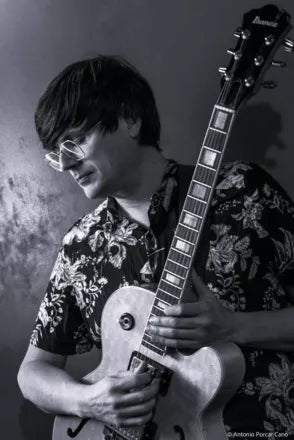
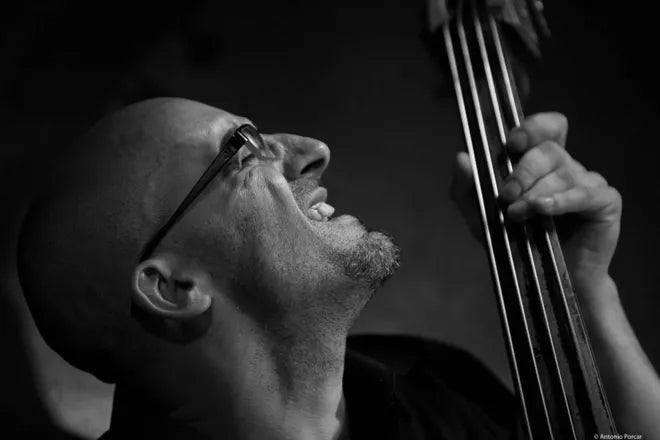
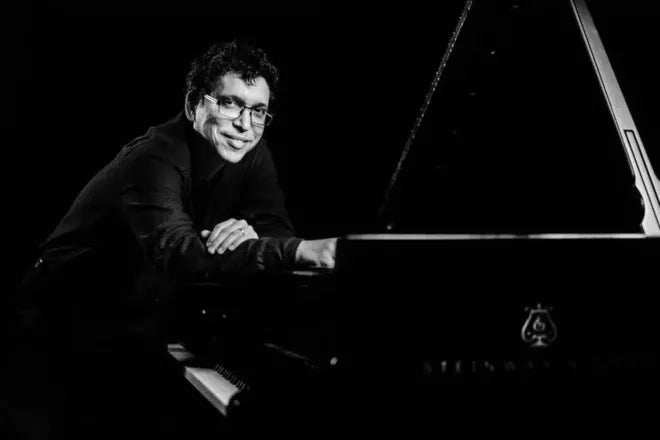
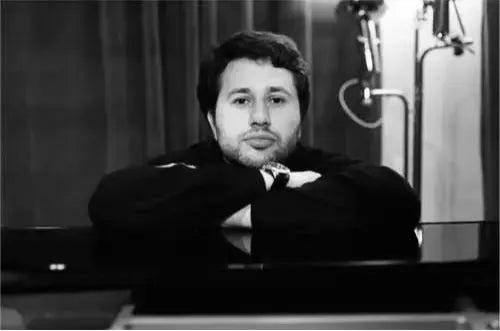
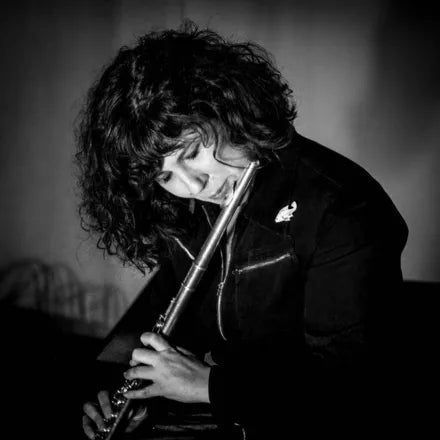

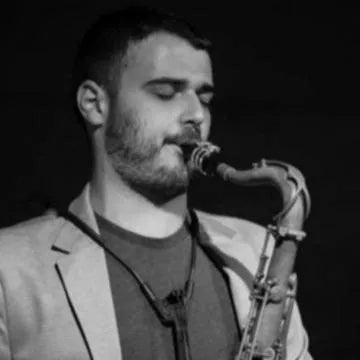
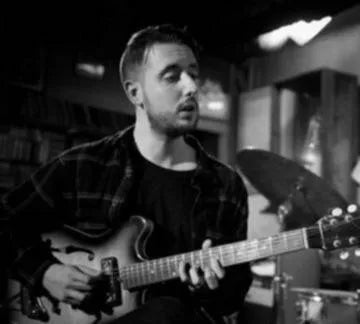



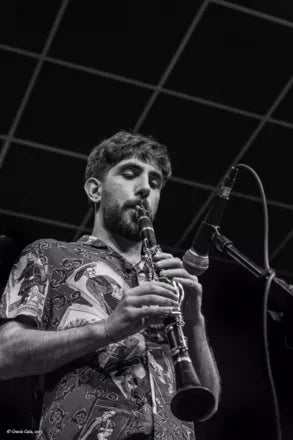
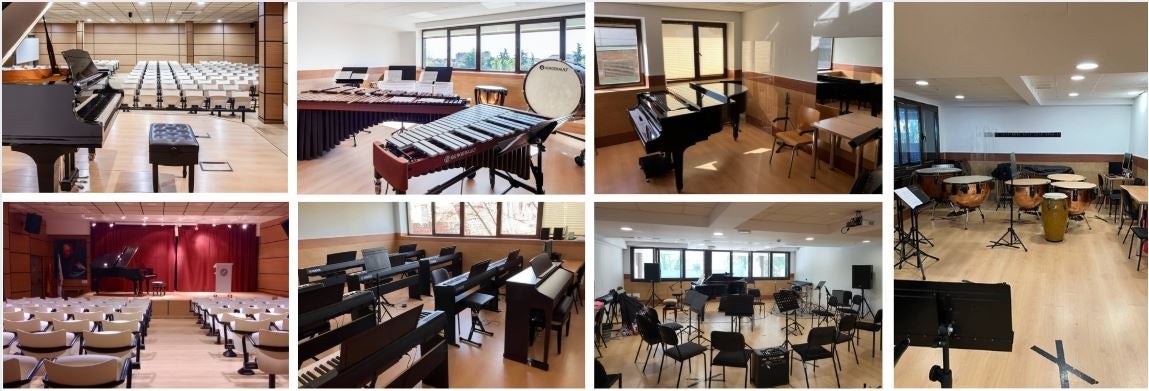
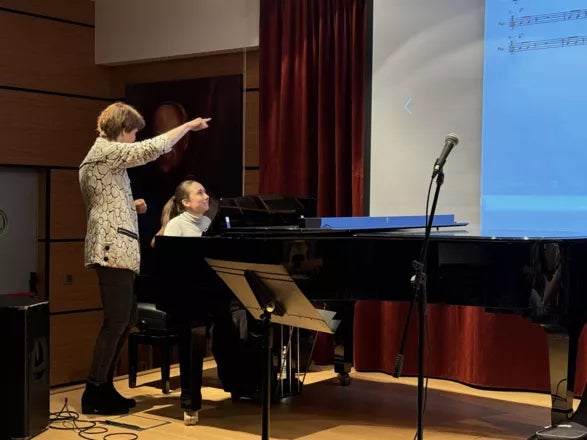
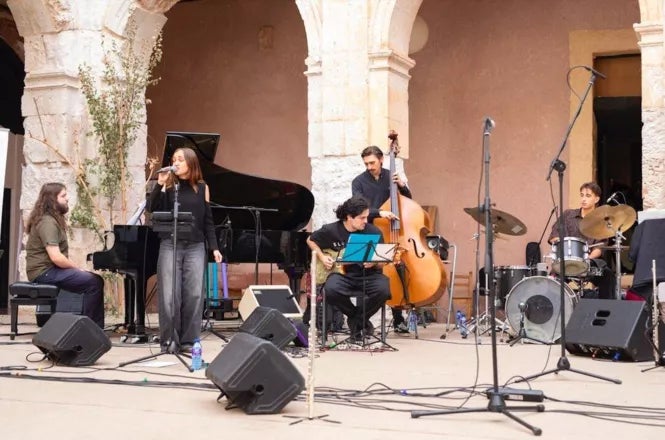
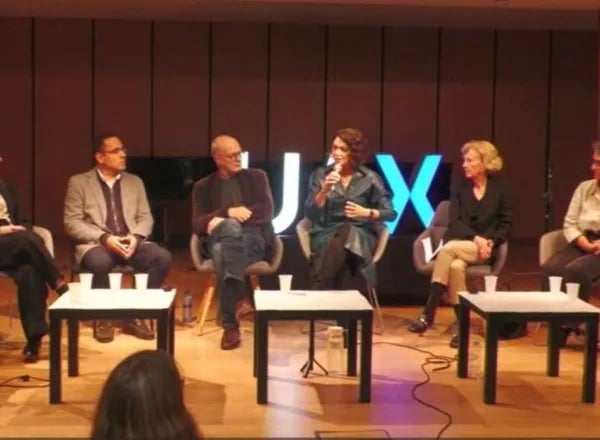
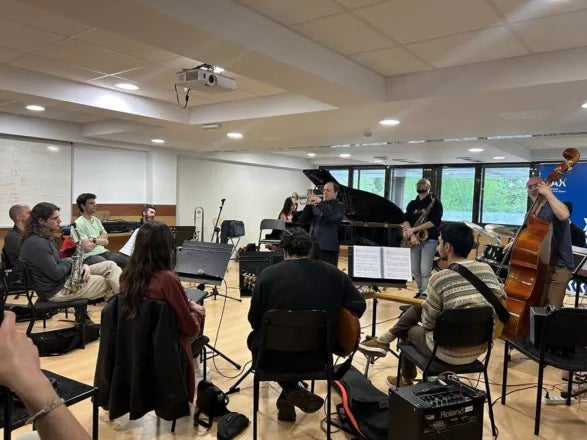
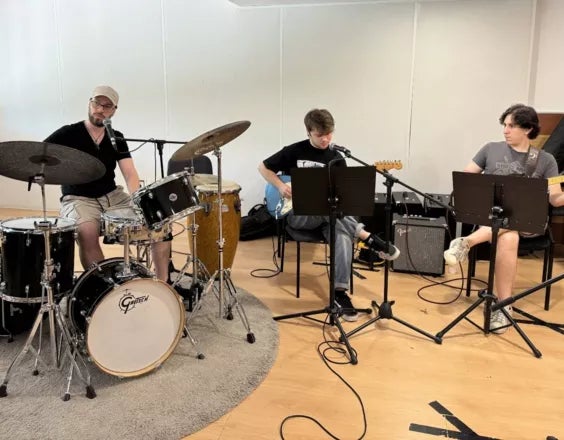

















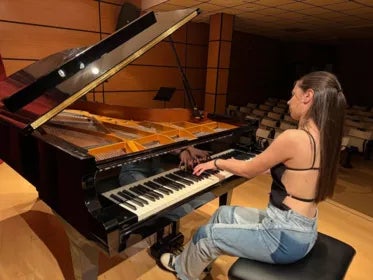



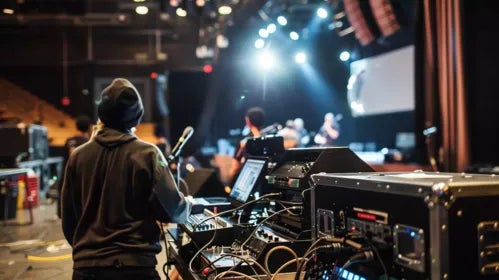

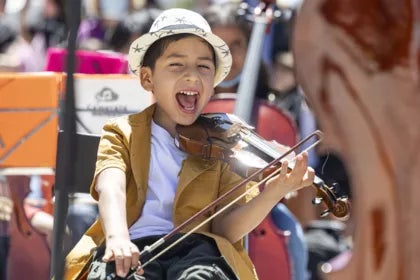





















































.jpg.webp)