See all Online Master's Degrees in Health
See all Master's Degrees in Engineering
Most searched curriculums
Study the Access to Medicine Programme to acquire the knowledge and skills necessary to secure your place in the Bachelor's Degree in Medicine. Alfonso X el Sabio University is firmly committed to providing students with excellent training in Medicine.
To this end, you will be provided with practical training from day one, the best facilities and lecturers who are active professionals and researchers. In return, we look for a high level of demand from our students. Therefore, we have designed this programme in order to facilitate your access to the degree with guaranteed success.
During this course, you will carry out different activities in order to get closer to your vocation from the first day:
If you are an international student, you will be reinforced in the language you will have to use during your university years and in the specific terminology of the degree. Mastering this language to a good level is an essential requirement, it will help you to pass your exams, it will open the doors to work experience in hospitals and clinics and it will also allow you to communicate with your future patients fluently.
Alfonso X el Sabio University is firmly committed to providing students with the excellent training required to gain access to the degree. In return, we look for a level of demand in our students that is in line with the practice of medicine.
You will gain the necessary knowledge to face your first year at university. If you successfully complete this course we guarantee you access to the Degree in Medicine.
Access to Medicine Programme
Year 1
ANNUAL SUBJECTS
| Code | Subjects | Character* | ECTS | ||||||||||||||
|---|---|---|---|---|---|---|---|---|---|---|---|---|---|---|---|---|---|
| 80323 | Anatomía Humana | OB | 12 | ||||||||||||||
Anatomía HumanaCódigo: 80323 Imprimir Curso 1 Asignatura Anual. Obligatoria. 12 Créditos. Profesores
Objetivos Adquirir los conocimientos y aspectos fundamentales de la anatomía humana como preparación para acceder al Grado en Medicina. Criterios de Evaluación Los exámenes serán tipo test, con 30 preguntas. Cada pregunta tendrá 4 respuestas posibles y una sola verdadera. LAS RESPUESTAS MAL CONTESTADAS RESTAN. (3 mal contestadas restan 1 bien o su parte proporcional). Habrá una 5ª respuesta que figura “respuesta en blanco” que se debe elegir cuando no se sabe y esa opción no tiene ningún valor numérico, es decir, que ni suma ni resta. Se realizaran 2 controles: -Cada control tendrá un valor del 80% de los temas que se evalúen. -Un 20% corresponde a la presentación del Cuaderno de Anatomía presentado correctamente realizado y subido en las fechas establecidas y en el apartado de “Tareas” de cada uno de los temas (una vez pasada la fecha se cierra este apartado y no se recogerán cuadernos fuera de plazo). Los cuadernos deben estar realizados de forma manuscrita (no a ordenador). NO se te tendrán en cuenta los trabajos mandados al apartado “mensajes”, al “email”, etc. SÓLO EN ELAPARTADO TAREAS Y EN LA FECHA ESTABLECIDA. Se puntuarán de forma individual, es decir, la nota corresponderá al número de tareas bien entregadas (si no se quiere no hace falta copiar el enunciado de la pregunta). Los alumnos que obtengan una nota igual o superior a 5,0 en uno de los controles habrán liberado los temas correspondientes a esa parte, tanto para la convocatoria ordinaria como para la extraordinaria. Los alumnos cuya nota esté comprendida entre 4,0 y 4,9, tendrán la posibilidad de compensar con el otro control y si con la suma de ambas notas y dividiéndola entre dos se alcanza el 5,0,habrá conseguido liberar la materia de ambos controles. Si con dicha suma, no se alcanza la media de 5,0 antes mencionado, deberá acudir a la convocatoria ordinaria o extraordinaria, únicamente con los temas del control cuya calificación sea inferior al 5. Los alumnos que en un examen tengan una nota inferior a 4,0 no podrán hacer media con el otro control, ya que se considera no compensable. Contenidos del Calendario 1. Generalidades de anatomía. 2. Conceptos generales de la histología. 3. Tejido epitelial. 4. Tejido conjuntivo. 5. Tejido muscular. 6. Tejido nervioso. 7. Sistema tegumentario. 8. Sistema esquelético. 9. Estructura del músculo esquelético. Tipos de músculos y funciones. 10. Sistema nervioso. 11. Aparato circulatorio, corazón y vasos. 12. Aparato respiratorio. 13. Aparato digestivo 14. Aparato urinario. 15. Aparato genital masculino. 16. Aparato genital femenino. Requisitos previos No hay prerrequisitos. |
|||||||||||||||||
| 80325 | Técnicas de Estudio | OB | 2 | ||||||||||||||
Técnicas de EstudioCódigo: 80325 Imprimir Curso 1 Asignatura Anual. Obligatoria. 2 Créditos. Profesores
|
|||||||||||||||||
| 80327 | English | OB | 8 | ||||||||||||||
EnglishCódigo: 80327 Imprimir Course 1 Annual subject. Compulsory. 8 credits. Profesores
Objectives -Learning and practice of the different linguistic skills in Spanish: grammar, oral expression and comprehension, written expression and reading comprehension. -Expansion of vocabulary. -Mastery of formal and informal registers. -Knowledge of cultural aspects necessary for good communication in Spanish. -Writing simple texts. Evaluation Criteria -Continuous assessment: Written and oral tests. -Ordinary exams: Final exams (oral and written) -Extraordinary exams: Final exams (oral and written) Teaching Methodology Presentation of content by subject, with outlines and exercises provided by the teacher and expanded in class. Compulsory use of a manual and exercise book. Support of audiovisual material Oral presentations by the student Contents of the Calendar -Introducing oneself, asking for and giving personal information. -Greeting and saying goodbye -Describing people, things and places -Expressing likes and preferences -Expressing possession and relationship -Expressing obligation Expressing past experiences and narrating past events -Expressing expected or unaccomplished actions Expressing expected actions accomplished or not -Expressing symptoms of an illness Expressing symptoms of a disease -Expressing agreement and disagreement -Expressing agreement and disagreement Talking about the future and plans -Taking predictions and making plans -Making predictions -Giving orders and instructions -Proposing appointments, invitations -Giving advice -Asking and giving an opinion -Talking about general topics in a simple way. Pre-requisites Foreign students whose mother tongue is not Spanish. Requirements Foreign students whose mother tongue is not Spanish. Evaluation CONTINUOUS ASSESSMENT The evaluation process will consist of the verification and assessment of the student's acquisition of the competences. The following assessment activities will be used to obtain the degree of assimilation of each of the competences listed: First four-month period o Test 1: listening and reading comprehension (10%) o Test 2: written exam (20%) If you have not passed any of these tests, you will be able to sit each of the tests in the ordinary sitting in January. Second term: o Test 3: written exam (10%) o Exam 4: oral exam (30%) o Exam 5: written exam (30%) Students must obtain at least a 5 in Test 4 and Test 5 in order to pass the subject by continuous assessment. If the student does not achieve this, he/she must sit the ordinary and/or extraordinary exams. Likewise, it is compulsory to take ALL the tests corresponding to the continuous assessment. Lastly, in order to be eligible for the continuous assessment, students must have a minimum attendance of 80% in each term. ORDINARY EXAMS o Oral exam: 40%. o Written exam: 60%. Students must sit both exams and obtain at least a 5 in both the oral exam and the written exam (which will also include reading comprehension, listening comprehension and written expression). If the student does not achieve this, he/she must sit the extraordinary exam. EXTRAORDINARY EXAM o Oral exam: 40%. o Written exam: 60%. The student must sit both exams and obtain at least a 5 in both the oral and written exams (reading comprehension, listening comprehension and written expression will also be included). |
|||||||||||||||||
| 80329 | Scientific English | OB | 8 | ||||||||||||||
Scientific EnglishCódigo: 80329 Imprimir Course 1 Annual subject. Compulsory. 8 credits. Profesores
Objectives To provide students with an approach to English specific to the Health Sciences that will enable them to communicate and participate successfully in contexts and situations related to the performance of their future profession in which English is the vehicle. Competences to be acquired: - Ability to communicate in English, orally and in writing, both with patients and/or carers and with professional colleagues, adapting the register to that required by the situation and purpose of the communication. - Ability to create safe and comfortable environments for the patient and/or carer through language. - Ability to search for contents related to Health Sciences, their understanding and processing for the elaboration of others, their oral and/or written presentation, with the mediation of technology, both individually and in groups, and always in a responsible manner. - Ability to explore, select and use technological tools for searching, processing and sharing contents, as well as for their responsible use and content management respectful of authorship. - Ability to participate in collaborative work with responsibility. Learning Outcomes - Comprehension and production of texts in English, oral and written, with contents related to Health Sciences, written in professional language (e.g.: descriptions of: professions in the field of Health Sciences in terms of roles and responsibilities; diseases, their symptoms and signs; histories; etc.). - Efficient verbal interaction with patients and/or carers and colleagues through different channels (face-to-face, telephone, e-mail, etc.). - Taking relevant and accurate notes on the spot, knowing how to identify vital information and to collect it with abbreviations. - Writing texts with appropriate use of format and language (e.g. referral letters, histories, abstracts, etc.) necessary for medical, dental and veterinary work. - Adaptation of register and pragmatic strategies to communicative situations involving patients and/or carers and/or colleagues, so as to optimise efficiency in the collection and transmission of information relevant to the diagnosis and treatment of patients and their welfare. Assessment Criteria For the assessment of student learning and their achievement of the proposed objectives, the following aspects will be taken into account for each of the three blocks into which the subject is divided, in the proportions indicated in brackets: - Attitude (10%): punctuality, responsibility, participation, initiative, willingness to collaborate, etc. of the students in the development of each block will be evaluated. - Assigned tasks (30%): individual and group. - Examination (60%). It is important to note that, in order to be eligible for the exam, the student must have attended at least 80% of the teaching hours in each block. Teaching Methodology Communicative and interactive, aimed at achieving the following learning outcomes: - Comprehension and production of texts in English, oral and written, with contents related to Health Sciences, written in professional language (e.g.: descriptions of: professions in the field of Health Sciences in terms of roles and responsibilities; diseases, their symptoms and signs; histories; etc.). - Efficient verbal interaction with patients and/or carers and colleagues through different channels (face-to-face, telephone, e-mail, etc.). - Taking relevant and accurate notes on the spot, knowing how to identify vital information and to collect it with abbreviations. - Writing texts with appropriate use of format and language (e.g. referral letters, histories, abstracts, etc.) necessary for medical, dental and veterinary work. - Adaptation of register and pragmatic strategies to communicative situations involving patients and/or carers and/or colleagues, so as to optimise efficiency in the collection and transmission of information relevant to the diagnosis and treatment of patients and their well-being. Contents of the Timetable The course is divided into three thematic blocks: Block 1 : Terminology specific to Health Sciences. Block 2: In the consultation room Block 3: Clinical records and other scientific texts Description of the contents Lexicons - Vocabulary referring to: professions in the health sciences; human and animal anatomy; diseases, symptoms and signs; treatments; etc.) - Lexicon to describe patients in terms relevant to their diagnosis and treatment (age, gender, chronic conditions, etc.). - Latin and/or classical Greek affixes for the formation of technical lexis in the field of health sciences. - Irregular plural forms of technical terms specific to the health sciences. - Units of measurement (e.g. time, volume, dose, etc.). Grammatical - Present Simple: with descriptive and historical value. - Present Perfect and Past Simple for narration of events. - Interrogative structures: open and closed; direct and indirect. - Question tags. - Expression of intention (I'd like, I'm going to). - Instructions and recommendations (imperative, should, etc.). - Expression of time: beginning; duration; frequency; etc. - Expression of quantity: dosage. - Pragmatics - Presentations. - Small talk. - Create a safe and comfortable environment. - Checking for good understanding of information given/received. - Making polite requests. - Asking for favours. - Resolving communication difficulties. Bibliography Basic: 1.- Milner, M. English for Health Sciences. Heinle. Cengage Learning. 2006. ISBN: 9781413020892 |
|||||||||||||||||
| TOTAL: | 30 | ||||||||||||||||
FIRST FOUR-MONTH PERIOD
| Code | Subjects | Character* | ECTS | ||||||
|---|---|---|---|---|---|---|---|---|---|
| 80326 | Biología | OB | 6 | ||||||
BiologíaCódigo: 80326 Imprimir Curso 1 Asignatura Primer cuatrimestre. Obligatoria. 6 Créditos. Profesores
Objetivos Conocer las distintas formas de organización celular (organización procariota y eucariota). Conocer la estructura y organización de la célula procariota. Conocer la estructura y organización de la célula eucariota, sus orgánulos y la función de cada uno de ellos. Entender el ciclo celular, los procesos de división y muerte celular. Conocer la estructura del genoma en la célula, la organización del ADN. Conocer las bases moleculares de los procesos de replicación, transcripción y traducción. Entender la transmisión de los caracteres hereditarios, la genética mendeliana y los procesos de recombinación genética. Criterios de Evaluación RITERIOS DE EVALUACIÓN GENERALES DE LA ASIGNATURA DE BIOLOGÍA 1. Exámenes: 75% de la nota. 2. Evaluación continua: 25% de la nota. FORMATO DE EXAMEN 1. Durante el curso, se realizarán dos exámenes parciales eliminatorios. 2. Las fechas de dichos exámenes serán anunciadas por el/la coordinador/a de la asignatura mediante un aviso a través del campus virtual:3. 3. Los exámenes consistirán en un test de 30 preguntas con 5 opciones siendo sólo una la correcta. Sin puntos negativos pero con un mínimo de 12 preguntas correctas para calificar con un 5 sobre 10. 4. Una nota inferior a 5 en alguno de los parciales podrá ser compensada con la nota del otro parcial y/o la nota de seminario siempre y cuando la nota de cada examen será del al menos un 3 sobre 10 5. En caso de que la nota final sea inferior a 5, habrá que repetir el o los exámenes parciales suspensos en la convocatoria de enero. 6. Si la nota final es inferior a 5 pero los parciales están aprobados, el alumno deberá examinarse de ambos parciales en la convocatoria de enero para subir la nota de los mismos. 7. Durante la realización de los exámenes NO se permitirá la utilización de ningún tipo de material de consulta ni calculadoras ni móviles. EVALUACIÓN CONTINUA Consistirá en un trabajo de exposición durante los seminarios (que sería de carácter OBLIGATORIO) y/o trabajos de revisión bibliográfica con entregas desde el Campus Virtual, así como la asistencia y participación del alumno. CONVOCATORIA ORDINARIA (ENERO): A esta convocatoria deben acudir los alumnos cuya nota global del curso es inferior a 5. Habrá un examen por cada parte (parciales) suspensa. La nota final tendrá en cuenta, aplicando los porcentajes correspondientes y la nota de la Evaluación Continua. Si la nota final es superior o igual a 5, el alumno habrá aprobado la asignatura. En caso de suspender (o no presentarse) al examen de enero, el alumno tendrá que examinarse en la Convocatoria Extraordinaria de mayo. CONVOCATORIA EXTRAORDINARIA (MAYO/JUNIO): A esta convocatoria deben acudir los alumnos cuya nota, tras la Convocatoria Ordinaria, es inferior a 5. Habrá un examen por cada parte (parcial) suspensa. La nota final tendrá en cuenta, aplicando los porcentajes correspondientes y la nota de la Evaluación Continua. Si la nota final es superior o igual a 5, el alumno habrá aprobado la asignatura. Metodología Docente Clases magistrales Seminarios con grupos reducidos Trabajos de exposición Trabajos de revisión bibliográfica Contenidos del Calendario Tema 1. Composición química de la célula. Organización celular. Tema 2. Principales macromoléculas. Tema 3. Membranas biológicas. Tema 4. Transporte de membrana. Tema 5. Matriz extracelular y uniones celulares. Tema 6. Citoesqueleto. Tema 7. Retículo endoplasmático, aparato de Golgi y peroxisomas. Tema 8. Mitocondrias y cloroplastos. Tema 9. Núcleo. Ciclo celular. Genes y herencia. Tema 10. Replicación, transcripción y traducción. Ribosomas. Requisitos previos No son necesarios Requisitos Realización de los exámenes obligatorios. Entrega de los trabajos que se consideren obligatorios Asistencia a las clases presenciales Evaluación EVALUACIÓN CONTINUA Consistirá en un trabajo de exposición durante los seminarios (que sería de carácter OBLIGATORIO) y/o trabajos de revisión bibliográfica con entregas desde el Campus Virtual, así como la asistencia y participación del alumno. Bibliografía Básica: 1.- Alberts y col. Introducción a la Biología Celular Panamericana. 2023. ISBN: 978-607-8546- 2.- Cooper y col. La célula Marbán. 2021. ISBN: 9788471019479 Complementaria: 3.- Feduchi Canosa E, Romero Magdalena C, Yáñez Conde E, García-Hoz Jiménez C. Bioquímica. Conceptos esenciales. 3 ed.. Médica Panamericana. 2025. ISBN: 9788491106807 |
|||||||||
| 80328 | Estadística | OB | 6 | ||||||
EstadísticaCódigo: 80328 Imprimir Curso 1 Asignatura Primer cuatrimestre. Obligatoria. 6 Créditos. Profesores
Objetivos La asignatura pretende introducir al alumno en los conceptos básicos de la estadística, orientada a las ciencias de la salud para que estos puedan afrontar con garantías el primer curso universitario. Criterios de Evaluación La evaluación de la asignatura se realizará a través de diversos ejercicios prácticos en los que los alumnos habrán de demostrar su capacidad para resolver problemas estadísticos aplicando los conceptos teóricos abordados durante las clases. Metodología Docente Las clases consistirán en lecciones magistrales en las que el profesor expondrá la teoría, ilustrándola con ejemplos y el seminarios en los que los alumnos resolverán problemas propuestos por el profesor con la ayuda de este cuando sea necesario. Contenidos del Calendario Tema 1: Estadística descriptiva (3 semanas) Tema 2: Probabilidad (3 semanas) Tema 3: Distribuciones de probabilidad (3 semanas) Tema 4: Regresión Lineal (2 semanas) Requisitos previos Calculo básico Requisitos Ninguno Evaluación CONVOCATORIA ORDINARIA Durante el curso se realizarán las siguientes pruebas de evaluación: - Control 1 (20% de la nota final) - Control 2 (20% de la nota final) - Entrega de trabajos y ejercicios de clase (20% de la nota final) - Examen final de la asignatura (40% de la nota final) CONVOCATORIA EXTRAORDINARIA El 100% de la nota se obtendrá del examen final de la asignatura., |
|||||||||
| 80572 | Inmunología | OB | 6 | ||||||
InmunologíaCódigo: 80572 Imprimir Curso 1 Asignatura Primer cuatrimestre. Obligatoria. 6 Créditos. Profesores
Objetivos El objetivo general que persigue la asignatura es integrar la información relativa al campo de la Inmunología en el ámbito del curso preuniversitario del grado de Veterinaria. Para ello, se han estructurado 3 bloques temáticos, cuyos objetivos son: - Familiarizar al alumno con los elementos constituyentes del sistema inmune y su interacción en el desarrollo de una respuesta inmunológica. - Adquirir un conocimiento de la base molecular y celular de las patologías inmunológicas de mayor relevancia en el mundo animal. - Analizar los métodos más eficaces de prevención (inmunización pasiva, vacunas) y tratamiento (inmunomodulación) de enfermedades. Criterios de Evaluación Calificación global de convocatoria ordinaria: - La calificación final de la asignatura, obtenida durante la evaluación continua, se plantea de la siguiente manera: Exámenes de teoría: dos exámenes parciales liberatorios (nota superior a 5 para liberar), que cuentan un total del 65% de la nota final (cada examen de teoría representa el 50% de la nota de teoría) Nota de seminarios: 30% de la nota final: 15% trabajo de investigación grupal, 15% ejercicios de evaluación continua, 5% asistencia. Es necesario sacar al menos un 4 en la parte de teoría para que la evaluación continua cuente. - Examen de convocatoria ordinaria de enero: en caso de no liberar la materia en cualquiera de los parciales, el estudiante deberá presentarse a la ordinaria de enero para examinarse de las partes no liberadas. - Convocatoria extraordinaria: Aquellos alumnos que no hayan aprobado en convocatoria ordinaria, deberán realizar un examen de las partes de teoría no aprobadas. Metodología Docente La asignatura está dividida en dos partes: Clases magistrales: Durante las clases magistrales, se impartirá la docencia teórica del temario de la asignatura (ver siguiente apartado). Para la impartición de las clases magistrales se emplearán medios audiovisuales, utilizándose diversos programas (Microsoft Office, programas de visionado de videos, wooclap) Seminarios: Durante esta parte de la asignatura, los alumnos quedarán divididos en grupos de trabajo, donde desarrollarán un tema relacionado con la asignatura. Estos trabajos serán expuestos al resto de alumnos. Contenidos del Calendario FISIOLOGIA DE LA RESPUESTA INMUNE Tema 1 INTRODUCCION A LA INMUNOLOGIA. Conceptos básicos en Inmunología. Concepto de antigenicidad, inmunogenicidad y especificidad. Células y tejidos del sistema inmune. Inmunidad innata: fagocitos y complemento. Inmunidad adaptativa: los linfocitos. Tema 2 COMPOSICIÓN DEL SISTEMA INMUNE. Células que componen el sistema inmune: células responsables de la inmunidad innata y de la inmunidad adaptativa. Órganos que componen el sistema inmune: primarios y secundarios. Bases de la respuesta inmune. Tema 3 y 4 LA RESPUESTA INMUNE INNATA. Características de la respuesta inmune innata. Componentes fundamentales de la respuesta inmune innata: fagocitos y complemento. Características y función de las células fagocíticas. Características y mecanismos de activación del complemento: Vía clásica, vía alternativa, vía de las lectinas. Funciones del sistema del complemento. Regulación del sistema del complemento. Respuesta inflamatoria: características, componentes y función dentro de la respuesta inmune innata. Concepto de opsonización. Tema 5 LAS MOLECULAS DE HISTOCOMPATIBILIDAD. Tipos de antígenos de histocompatibilidad: Clase I y II. Estructura de las moléculas MHC. Expresión tisular de las moléculas MHC Características genéticas: organización y polimorfismo. Función: concepto de restricción de MHC. Procesamiento de antígenos exógenos y endógenos. Tema 6 LOS LINFOCITOS B Y T Y SUS RECEPTORES DE ANTÍGENO. Origen y desarrollo: cambios fenotípicos durante el desarrollo. Fenotipo: los receptores para antígeno de linfocitos T y B y otros marcadores de diferenciación. Generación del receptores BCR y TCR: mecanismos de reordenamiento y expresión de los genes del receptor para antígeno. Diferenciación: selección negativa y positiva de linfocitos. Función de linfocitos T y B. Tema 7 ANTICUERPOS Y SUS RECEPTORES. Estructura de los anticuerpos: tipo y función de los distintos dominios. Variaciones estructurales de la molécula de inmunoglobulina: isotipos, alotipos e idiotipos. Clases de inmunoglobulinas: función, caracteres y distribución de cada clase. Síntesis de anticuerpos: generación de la diversidad del repertorio de anticuerpos. Receptores de las inmunoglobulinas: estructura y función. Tema 8 ACTIVACION LINFOCITARIA Y RESPUESTA INMUNE ADAPTATIVA. Reconocimiento y mecanismos efectores de la inmunidad adaptativa. Activación del linfocito T. Señales de activación para linfocito B: generación de células plasmáticas y de memoria. Superantígenos. Inmunidad celular: Tipos y desarrollo de la citotoxicidad: papel de los linfocitos T y de las células NK. Apoptosis. Tráfico leucocitario. Tema 9 CITOQUINAS Y QUIMIOQUINAS. Concepto de citoquinas. Efecto de las Citoquinas en la activación de la respuesta inmune innata y adaptativa. Clasificación de las citoquinas y función de las diferentes familias. Concepto de quimioquina y de atracción quimiotáxica. Papel de la quimiotaxis en el desarrollo de la respuesta inmune. Papel de la quimiotaxis en el desarrollo de enfermedades inmunes. INMUNOPATOLOGIA: BASES CELULARES Y MOLECULARES Tema 10 ERRORES DE LA INMUNIDAD: LA AUTOINMUNIDAD. Concepto de tolerancia inmunológica. Adquisición de la autotolerancia. Concepto de autoinmunidad: características generales. Tipos de autoinmunidad. Modelos animales. Tema 11 EXCESOS DE LA INMUNIDAD: HIPERSENSIBILIDADES. Hipersensibilidad. Concepto, y clasificación. Hipersensibilidad inmediata (Tipo I). Concepto de anafilaxis y alergia atópica. Hipersensibilidad de tipo II: citotoxicidad dependiente de anticuerpo. Hipersensibilidad de tipo III: formación de inmunocomplejos y reacción de Arthus. Hipersensibilidad de tipo IV: Hipersensibilidad retardada. Tema 12. INMUNIZACION Y CONTROL DE ENFERMEDADES: INMUNIZACIÓN PASIVA Y VACUNAS. Concepto y características de la inmunización pasiva. Generación de antisueros terapéuticos. Preparación, conservación y administración de antisueros. Concepto de vacuna. Naturaleza de las vacunas. Vacunas bacterianas y de toxinas. Autovacunas. Adyuvantes. Preparación, valoración y control de vacunas. Vacunas víricas. Vacunas vivas atenuadas. Métodos de atenuación. Producción y control de vacunas vivas. Potencia y seguridad. Vacunas inactivadas. Producción y métodos de inactivación. Vacunas de nueva generación: vacunas sintéticas y vacunas de ADN Requisitos previos Conocimientos de biología de 2º de bachillerato. Requisitos La asistencia mínima será de un 80% para puntuar el apartado de asistencia. Evaluación Se realizarán 2 exámenes parciales liberatorios (examen tipo test de 30 preguntas). Las fechas de los exámenes están prevista para el 12/11/23 (1er parcial) y para el 17/12/23 (2º parcial). Estos exámenes se realizarán en horario de la clase magistral, y se aprueban con una nota igual o superior a 5. Aquellos alumnos que hayan aprobado estos exámenes parciales no se examinarán de la parte aprobada en la convocatoria de enero. A su vez, los alumnos deberán preparar un trabajo de investigación que presentarán en clase y realizarán ejercicios en casa como parte de la evaluación continua. |
|||||||||
| TOTAL: | 18 | ||||||||
SECOND FOUR-MONTH PERIOD
| Code | Subjects | Character* | ECTS | ||||||
|---|---|---|---|---|---|---|---|---|---|
| 80330 | Bioquímica | OB | 6 | ||||||
BioquímicaCódigo: 80330 Imprimir Curso 1 Asignatura Segundo cuatrimestre. Obligatoria. 6 Créditos. Profesores
Objetivos 1. Conocer las estructuras de las biomoléculas y sus transformaciones en la célula. 2. Adquirir conocimientos básicos de la biología molecular. 3. Conocer la estructura y las propiedades de las membranas celulares. 4. Conocer la estructura y las propiedades de las Enzimas. 5. Conocer procesos de laboratorio básicos utilizados en la bioquímica y biología molecular, incluyendo el uso de equipos científicos. 6. Estimar los riesgos biológicos asociados a la utilización de sustancias y procesos de laboratorios implicados. 7. Entender la relación entre biomoléculas, fármacos y medicamentos, así como otros productos y materias primas de interés sanitario de uso humano o veterinario Criterios de Evaluación EVALUACIÓN POR CURSO. A lo largo del curso los alumnos realizaran un total de dos exámenes. la nota de teoría corresponderá a la media de dichos controles. Se calculara la nota del alumno teniendo en cuenta: 80% Nota media de los controles 20% Evaluación de las actividades durante el curso, actividades practicas, y asistencia. Si el alumno obtiene un cinco o más habrá superado la asignatura y no tendrá que examinarse más, la nota resultante será la que aparezca como nota definitiva. CONVOCATORIA ORDINARIA En caso de no haber superado la materia por curso, el alumno dispondrá de una convocatoria ordinaria, en la que será examinado de la parte o partes suspensas de la asignatura. La calificación final será el 100% la nota del examen (se hará media con las posibles partes superadas previamente) de la convocatoria ordinaria. CONVOCATORIA EXTRAORDINARIA. En caso de no haber superado la materia en la convocatoria ordinaria, el alumno dispondrá de una convocatoria extraordinaria, en la que será examinado de la parte o partes suspensas de la asignatura. La calificación final será el 100% la nota del examen (se hará media con las posibles partes superadas previamente) de la convocatoria extraordinaria. Metodología Docente Actividades formativas: Clases magistrales. Seminarios. Consultas. Contenidos del Calendario PROGRAMA DE BIOQUÍMICA I.- INTRODUCCIÓN A LA BIOQUÍMICA 1. Concepto de Bioquímica. Desarrollo histórico y panorama actual. 2. Composición molecular de los seres vivos. Organización de la materia viva. Orgánulos celulares. Biomoléculas. El agua. Interacciones moleculares II.- HIDRATOS DE CARBONO 3. Glúcidos: concepto y clasificación. Monosacáridos: estructura y propiedades físicas y químicas. Derivados de monosacáridos. Disacáridos de interés biológico. 4. Polisacáridos: homopolisacáridos y heteropolisacáridos. Proteoglicanos. III.- LÍPIDOS 5. Lípidos: concepto y clasificación. Ácidos grasos: estructura y propiedades. 6. Estructura y propiedades de acilglicéridos, fosfoacilglicéridos, esfingolípidos y ceras. 7. Prostaglandinas y derivados. Derivados del isopreno: terpenos, carotenos, vitaminas A, E y K. Esteroles y derivados: colesterol, ácidos biliares, hormonas esteroideas y vitamina D. IV.- ÁCIDOS NUCLEICOS 8. Bases nitrogenadas. Nucleósidos y nucleótidos: estructura y función. 9. Ácido desoxirribonucleico (ADN): estructura y propiedades. Ácido ribonucleico (ARN): clases, estructura y propiedades. V.- PROTEÍNAS 10. Aminoácidos: estructura general, clasificación y propiedades. 11. Enlace peptídico: Estructura y propiedades. Péptidos de interés biológico. 12. Niveles estructurales de proteínas. Estructura primaria. Métodos de secuenciación. Estructura secundaria: estructuras helicoidales y de hoja plegada. Niveles estructurales de proteínas (III). Estructura terciaria. Estructura cuaternaria. 13. Propiedades, purificación y clasificación de proteínas. Requisitos previos Se requiere bachillerato de Ciencias o al menos conocimientos básicos de Química y Biología. Requisitos No son necesarios requisitos específicos. Evaluación EVALUACIÓN POR CURSO. A lo largo del curso los alumnos realizaran un total de dos exámenes. la nota de teoría corresponderá a la media de dichos controles. Se calculara la nota del alumno teniendo en cuenta: 70% Nota media de los controles 30% Evaluación de las actividades durante el curso, actividades practicas, trabajo y asistencia. Si el alumno obtiene un cinco o más habrá superado la asignatura y no tendrá que examinarse más, la nota resultante será la que aparezca como nota definitiva. |
|||||||||
| 80333 | Human Pathology | OB | 8 | ||||||
Human PathologyCódigo: 80333 Imprimir Course 1 Subject Second four-month period. Compulsory. 8 credits. Profesores
Objectives The aim of this course is to introduce students to the general concepts of Human Pathology, introducing them to the knowledge of the different systems and apparatus of the human body, how they fall ill, and the different most relevant clinical pictures. Evaluation Criteria EVALUATION SYSTEM: 1. Theoretical exam: 60% of the final mark. 2. CONTINUOUS EVALUATION: will consist of a seminar work and the student's participation. It accounts for 40% of the mark. Criteria in relation to the exam: - EXAM There will be a single multiple-choice exam with 30 questions. Questions answered incorrectly will be deducted 0.15 points each. A 6 is required to pass the test. Students who fail the exam in the ORDINARY exam will have to sit the EXTRAORDINARY exam. - FINAL MARKS The course will be passed if both the continuous training and the exams are passed, being necessary to get a 6 in both parts. - EXTRA POSITIVE POINTS These are points that students will get for their attendance to classes, their attitude during the whole course, their attitude, work and effort. In those students who have passed the course and who have obtained them, they will be taken into account to raise the mark. They are not used to go from a fail to a pass, but once passed they will be taken into account. Teaching Methodology Classroom lectures Activities outside class time (homework). Seminars Forums Personal study Face-to-face assessment Contents of the timetable SYLLABUS TOPIC 1. INTRODUCTION TO HUMAN PATHOLOGY TOPIC 2. INFLAMMATION, REPAIR AND CELL DEATH. SUBJECT 3. PATHOLOGY OF THE BLOOD. SUBJECT 4. PATHOLOGY OF THE DIGESTIVE SYSTEM. SUBJECT 5. PATHOLOGY OF THE CARDIOVASCULAR SYSTEM. SUBJECT 6. PATHOLOGY OF THE RESPIRATORY SYSTEM. SUBJECT 7. PATHOLOGY OF THE KIDNEY AND URINARY APPARATUS SUBJECT 8. PATHOLOGY OF THE ENDOCRINE SYSTEM. BIBLIOGRAPHY: 1.- Pérez Arellano, José Luis. Sisinio de Castro. Manual de Patología general, 8th edition 2020 Elsevier Spain, S.L.U. Anand, Atul, BSc (MedSci) Hons. Essentials of Pathology, 3rd edition. 2011 Elsevier España, S.L.U. Requirements Bachelor of Science or at least basic knowledge of Chemistry, Biochemistry and Cell Biology is required. Knowledge of English is an asset to read a review article or access a web page written in English. Basic computer skills are required to use word processors, databases, create Powerpoint presentations and access data on the Internet. Assessment Activities as they are presented in class, seminars and participation in forums. They will be graded from 0-10 based on the following criteria: appropriate presentation, vocabulary, originality, effort, and meeting the objectives. Weight of the final mark: 40%. Activities that must be handed in outside class hours must be sent to the virtual campus in the space provided for this purpose. Each activity will have a period of 1 week to be delivered. If it is not received within this period, the activity will be considered suspended, unless there is a justified cause for this. In the case of a justified cause, the student will be informed of the new deadline. |
|||||||||
| 80573 | Genética | OB | 6 | ||||||
GenéticaCódigo: 80573 Imprimir Curso 1 Asignatura Segundo cuatrimestre. Obligatoria. 6 Créditos. Profesores
Contenidos del Calendario TEMA 1: Terminología genética. TEMA 2: Los experimentos de Mendel TEMA 3: Modificaciones de los principios mendelianos: Interacciones, variaciones, penetrancia y genes letales TEMA 4: Ligamiento y recombinación. TEMA 5: Teoría cromosómica de la herencia. TEMA 6: Naturaleza, estructura y organización del material hereditario. TEMA 7: Replicación TEMA 8: Transcripción. TEMA 9: Traducción. Evaluación Realización de un Control a la mitad del cuatrimestre Realización de un Control al final de curso Resolución de problemas Asistencia con actitud respetuosa y participación |
|||||||||
| TOTAL: | 20 | ||||||||
*Character: BT: Basic Training, Ob: Required, Op: Optional
The objective of the Access to Medicine Programme is to guarantee the necessary training to be able to take the degree. Through the subjects we have designed for your training, in addition to acquiring knowledge, you will begin to live the university experience. During the course, you will receive constant guidance from the teaching and professional team of the UAX.
If your mother tongue is Spanish, you will have the subject of Scientific English, which will allow you to reach the appropriate level for the analysis of technical texts in your future professional field in this language.
On the other hand, if your mother tongue is not Spanish, in addition to the training hours of all the subjects in this language, you will have Spanish as an additional subject. The aim is for you to achieve a communicative level that will enable you to get by in the theory classes and in the external internships of your future degree.
Complete our form, give us a call or request a visit to UAX. We’re excited to show you everything we’ve prepared for you.
A professional from our university will offer guidance and help you select the path that aligns best with your interests.
Enrol in your courses, meet the deadlines and follow the payment procedures to secure your place and fulfil the legal admission requirements.
You’re now part of UAX! Prepare to embark on a unique educational journey where you’ll take centre stage. Welcome to your university!
We need to know a little about you so that we can give you a personalised service.
All fields are required
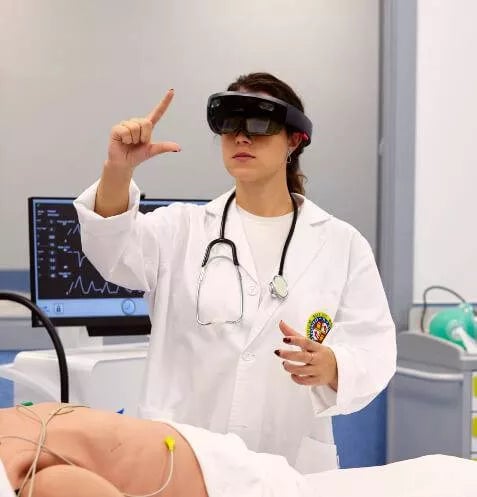
At UAX we know that studying is an investment, which is why we give you the resources to access our qualifications. Learn about some of our scholarships and grants:
A unique centre in Spain to complete your training in the most innovative, well-rounded way. Find out more

First healthcare facility created by UAX to provide you with the most comprehensive training focused on real-world practice. Find out more
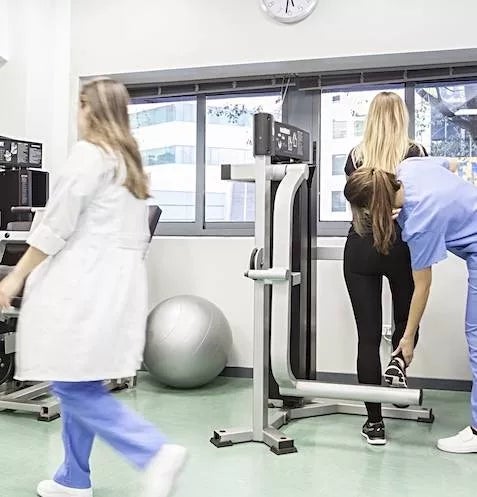
Using the most innovative medical resources, it aims to offer the best diagnosis and treatment of real patients. Find out more
You may also be interested in
Degree in Medicine

In collaboration with:

Start:
September
Length:
6 years