See all Online Master's Degrees in Health
See all Master's Degrees in Engineering
Most searched curriculums
Official qualification
Study at the first faculty of music in Spain and understand music as art, language and cultural engine. Train with a multidisciplinary curriculum and a faculty of internationally renowned researchers, composers and performers. All this in an online and flexible format, compatible with your vocation and your pace of life. Study at Spain's No. 1 University in terms of employability (U-Ranking 2023, BBVA Foundation). Limited places.
As Spain’s first faculty of music, UAX offers you a unique education that combines academic rigour, a multidisciplinary approach and professional application. With over six years’ experience and a teaching staff comprising internationally renowned researchers, composers and performers, our programme integrates the academic and scientific study of music from its historical, analytical and cultural perspectives. You will learn to research musical sources, analyse works within their context and develop projects that connect musical heritage with contemporary creation.
Develop your career with a comprehensive, interdisciplinary curriculum that allows you to specialise in different areas of the music sector. The flexible online approach, combined with support from technical and academic advisers and access to real-world research projects, enables you to balance your passion for music with your professional development, specialising in the areas most in demand within the cultural and music sectors.
You will gain a comprehensive education in musicology with direct professional application.
Master music theory and practice through all historical periods.
Analyses pieces harmonically and aesthetically in their historical context.
Locates and studies musical sources in archives and specialised libraries.
Apply music documentation to musicological research.
Develops skills in music teaching and cultural journalism.
Specialise in cultural management, music cataloguing and research
The teaching staff of the Bachelor's Degree in Musicology is an innovative, motivated and committed team, in contact with the world of work and highly qualified. Classes are taught by musicologists with a doctorate degree and extensive teaching and research experience.
Link to the Academic Calendar for the current academic year.
Degree in Musicology
First Year
ANNUAL SUBJECTS
| Code | Subjects | Character* | ECTS |
|---|---|---|---|
| 80990 | Introduction to Music Theory Course | N/A | 0 |
Introduction to Music Theory CourseCódigo: 80990 Imprimir Course 1: Annual module. Non-graded. Credits. Objectives - To recognise the graphical representation of sound and its notation in Western musical notation. - To identify and use each of the basic rhythmic symbols. - To understand the role of melody within a musical work. - To recognise and interpret the importance of harmony within the tonal system. Prerequisites None Learning outcomes RCE3. Understands the theoretical and practical principles of musical expression, such as melody, rhythm, harmony, counterpoint and texture, in order to analyse musical scores correctly. Course content - Fundamentals of music theory: basic elements. - Rhythm. Note values and time signatures. - Melody (I). Scales. - Melody (II). Key. - Harmony. Learning activities Theoretical content and supplementary activities. - Online classes via the OpenUAX platform. - Practical exercises. - Tutoring and answering queries. |
|||
| TOTAL: | 0 | ||
FIRST FOUR-MONTH PERIOD
| Code | Subjects | Character* | ECTS | ||||||||||||||||||||||||||||||||||||||||||||||||||||||||||||||||||||||||||||||||||||||||||||||||||||||||||||||||||||||||||||||||||||||||||||||||||||||||||||||||||||||||||||||||||||||||||||||||||||||||||||||||||||||||||||||||||||||||||||||||||||||
|---|---|---|---|---|---|---|---|---|---|---|---|---|---|---|---|---|---|---|---|---|---|---|---|---|---|---|---|---|---|---|---|---|---|---|---|---|---|---|---|---|---|---|---|---|---|---|---|---|---|---|---|---|---|---|---|---|---|---|---|---|---|---|---|---|---|---|---|---|---|---|---|---|---|---|---|---|---|---|---|---|---|---|---|---|---|---|---|---|---|---|---|---|---|---|---|---|---|---|---|---|---|---|---|---|---|---|---|---|---|---|---|---|---|---|---|---|---|---|---|---|---|---|---|---|---|---|---|---|---|---|---|---|---|---|---|---|---|---|---|---|---|---|---|---|---|---|---|---|---|---|---|---|---|---|---|---|---|---|---|---|---|---|---|---|---|---|---|---|---|---|---|---|---|---|---|---|---|---|---|---|---|---|---|---|---|---|---|---|---|---|---|---|---|---|---|---|---|---|---|---|---|---|---|---|---|---|---|---|---|---|---|---|---|---|---|---|---|---|---|---|---|---|---|---|---|---|---|---|---|---|---|---|---|---|---|---|---|---|---|---|---|---|---|---|---|---|---|---|---|
| S0181200 | Communication in a Foreign Language I | FB | 6 | ||||||||||||||||||||||||||||||||||||||||||||||||||||||||||||||||||||||||||||||||||||||||||||||||||||||||||||||||||||||||||||||||||||||||||||||||||||||||||||||||||||||||||||||||||||||||||||||||||||||||||||||||||||||||||||||||||||||||||||||||||||||
Communication in a Foreign Language ICódigo: S0181200 Imprimir Course 1: First-term module. Basic training. 6 credits. Profesores
Objectives To acquire the necessary skills, with particular emphasis on individual expression (spoken and written). To understand and apply the communication process (speaking and listening). To use the spoken and written language correctly (accuracy, coherence and appropriateness, lexical accuracy, spelling, vocabulary, pronunciation and creativity). To read, understand and develop critical thinking skills regarding texts in a foreign language. Prerequisites None have been established. Learning outcomes RCG1. Possesses adequate communication skills in English, including the vocabulary specific to musicology, in order to write musicological texts in this language. RCG2. Acquires the IT skills relevant to the field of music in order to carry out musicological projects, including the editing of scores and texts in various formats. RCG3. Is familiar with the tools associated with the management and organisation of musicological information in order to study music in all its forms. RCG4. Recognises diversity and multiculturalism in the field of musicology with the aim of gaining a comprehensive understanding of the musical phenomenon. RCG5. Develops critical thinking and creativity to solve problems in the field of musicology. RCG6. Applies theoretical knowledge to musicological practice for professional engagement with musicology in its various aspects. RCG7. Is able to communicate effectively to disseminate musical knowledge in various social and musicological contexts RCE17. Acquires a command of the specific terminology of musicological scholarship in English to enable the comprehension of musicological texts in that language. Course content description 1. UNIT 1: Families and homes. Oral expression about different family members, different types of families, types of households and daily routines. Revision of the present simple and continuous tenses, time expressions and articles. Listening comprehension of personal information in radio programme interviews. Writing and reading informal letters and emails containing personal information. 2. UNIT 2: Crimes. Revision of the past simple. Listening and reading comprehension of reports and news items on crimes and similar incidents. Speaking and writing about different types of crimes, criminals and punishments. Speaking and writing about past events and incidents using the simple past and past continuous tenses. Pronunciation of regular simple past verbs. 3. UNIT 3: Countries, languages and cultures. Countries and languages of the world, and their corresponding national epithets. Reading and listening comprehension of texts relating to travel, language-learning activities, cultural differences, traditions, practices, customs, gestures, superstitions, beliefs, symbols and metaphors in different countries, with a particular focus on English idioms. Oral and written expression regarding nationality, the countries in which one has lived and the languages one has learnt (linguistic background). Oral and written expression of information about people, places, objects, periods, causes, etc., using relative clauses. Oral and written expression of quantity using quantifiers for countable and uncountable nouns. Oral and written comprehension and expression regarding typical dishes from different countries, as well as different flavours. Oral and written comprehension and expression concerning World Heritage Sites and their description. 4. UNIT 4: Health Problems and Illnesses. Oral and written description and comprehension of the different parts of the body, organs, symptoms and illnesses. Oral and written description and comprehension of the factors involved in a healthy lifestyle. Distinguishing between the present perfect and the simple past when describing events that took place or began to take place in the past, and the corresponding adverbs and prepositions used to form time expressions. 5. UNIT 5: TV and Entertainment. Oral and written comprehension and expression regarding television programmes, television genres, series, themes, episodes, seasons, networks, channels and adverts, as well as television viewing habits. Oral and written comprehension and expression regarding other forms of entertainment such as theatre, cinema, the circus, concerts, ballet and other types of performances and shows. Future time expressions for discussing programmes and timetables. Oral and written expression and comprehension of comparisons of equality and superiority. 6. UNIT 6: Music, the Art of Life. Oral and written comprehension and expression regarding words related to music, specifically tessitura, musical ensembles, families of musicians, musical genres, their differences and similarities, activities on International Music Day, the various instruments and families of instruments in an orchestra, the profession of composer, different musical periods, biographies of musicians, as well as idiomatic expressions related to music. Formulating and understanding different types of questions to obtain different types of information. Connectors for organising and expressing opinions, agreement, disagreement and some contrasting ideas. In summary: A) Functional content: Listening to and commenting on radio and television programmes dealing with current affairs Listening to and commenting on matters of personal interest Describing events Describe feelings Write personal letters Express yourself orally whilst travelling Talk about family, hobbies, travel and current events Describe experiences, dreams and plans Express an opinion Retell a story or tale (from a book or film) Writing simple texts related to the student’s interests B) Grammar topics: Present tenses Different types of past tenses (simple and perfect). Different types of future tenses Modes Conditionals Nouns and adjectives used to describe personality and places Comparative phrases Quantifiers Relative clauses The passive voice Indirect speech C) Vocabulary Expressions for showing agreement and disagreement Adjectives and nouns to describe experiences and feelings Adjectives describing personality Restaurants and food Holiday destinations, scenery and the weather Vocabulary related to sport and leisure activities Vocabulary related to books, films and music Vocabulary relating to current affairs and the media Vocabulary relating to jobs and timetables Family vocabulary Learning activities - Theoretical content and supplementary activities. - Online classes via the UAX Online platform. - Assessment tests - Practical exercises, both individual and in pairs, including various feedback exercises, which will be returned corrected and with comments from the tutor. - Participation in discussion forums. - Completion of a final assessment test. Assessment system and criteria The assessment system will be as follows: In the standard assessment period: 1. Continuous assessment (50 per cent): completion of the activities set on the virtual campus, in each of the teaching modules: · Completion of assignments (feedback exercises): 30% · Problem-solving and case studies (assessment tests): 10% · Activities and other forms of participation: 5% · Attendance and participation in online classes (webinars): 5% 2. Final examination (50%): A final assessment to be taken in person (written examination) at the Faculty of Music and Performing Arts (Madrid) or at venues designated for this purpose. Passing this final examination is essential to pass the module. In the resit period: 1. Continuous assessment (40%): · Completion of assignments (feedback exercises): 30% · Problem-solving and case studies (assessment tests): 10% 2. Final examination (60%): A face-to-face final assessment (written examination), held at the Faculty of Music and Performing Arts (Madrid) or at venues designated for this purpose. Passing this final examination is essential to pass the module. This assessment will be carried out in accordance with the following criteria: • Knowledge of the vocabulary, grammatical structures and essential pragmatic resources required for oral and written expression and comprehension of general and personal topics, as well as basic notions of music in the foreign language. • Ability to produce and comprehend text types such as informal letters, radio and television programmes, interviews, narratives, expositions, reviews and biographies, on general, personal and musical topics. • Critical analysis of texts on general, personal and musical topics; expression and comprehension of opinion, contrast and comparison; and the ability to interpret texts. • Correct use and citation of resources such as dictionaries, glossaries, articles and monographs. • Participation in the proposed collaborative activities, and the ability to discuss issues and concepts with others. Assignments are marked out of 10 and have a submission deadline. If an assignment is submitted after the deadline indicated in the virtual classroom, a 10 per cent penalty will be applied to the mark awarded for that assignment. Assignments must be original, and must at all times cite bibliographical references or acknowledge the use of AI, where applicable. In cases of plagiarism or misuse of information, the assignment will not be assessed and the degree programme co-ordinators will be notified. If the average mark for the module is 5 or above but the final exam has not been passed, the final mark will be that of the exam. Timetable Click on this link to view the detailed timetable in Excel
Reading list Essential: 1. Burkholder, J. Peter Study and listening guide for a history of Western music : W. W. Norton. 1996. ISBN: 0393969053 2. Carter, Ronald Cambridge Grammar of English Cambridge University Press. 2006. ISBN: 0521588464 3. Collins Collins Cobuild Idioms Dictionary : Collins. 2006. ISBN: 9780007134014 4. Courtney, Rosemary Longman Dictionary of Phrasal Verbs Essex: Longman, 1983. 1983. ISBN: 0582555302 5. Murphy, Raymond. English Grammar in Use: A Self-Study Reference and Practice Cambridge University Press, 2012. ISBN: 9780521189392 6. Oxford Music Online Grove Music Online Oxford [etc.]: Oxford University Press, 2007–. 0. 7. Redman, Stuart English Vocabulary in Use : Cambridge University Press. 2003. ISBN: 9780521614658 8.- Swan, Michael How English Works: A Practical Grammar Book [n.p.]: Oxford University Press, 1997. 1997. ISBN: 0194314561 9. Swan, Michael Practical English Usage Oxford: Oxford University Press, 2007. 2007. ISBN: 9780194420990 Supplementary: 10. Benson, Morton The BBI Dictionary of English Word Combinations Amsterdam: John Benjamins Publishing Company, 199. 1997. ISBN: 9027221677 11. Benward, B. and Saker, M. Music in Theory and Practice, Vol. 1 McGraw-Hill Education, 2014. ISBN: 9780078025150 12. Benward, B. and Saker, M. Music in Theory and Practice, Vol. 2 McGraw-Hill. 2008. ISBN: 978-007310188 13. Bosewittz, René Penguin Students’ Grammar of English Penguin Books. 1987. ISBN: 0140808396 14. CROCKER, Richard, A A History of Musical Style Dover. 1986. ISBN: 9780486250298 15. Forrest Kelly, Thomas Capturing Music: The Story of Notation W. W. Norton. 2014. ISBN: 978-0-393-064 16. Levitin, Daniel J. This is your brain on music: Atlantic Books, 2008. ISBN: 9781843547167 17. May, E. (Ed.) Music of Many Cultures: An Introduction University of California Press. 1983. ISBN: 9780520047785 18. Miller, Terry E. World Music: Routledge; 2017. ISBN: 9781138911277 19. NEGUS, K. Popular Music in Theory Polity. 1996. ISBN: 9780745613185 20. Paliska, C. V. Norton Anthology of Western Music : W.W. Norton. 1996–2001. ISBN: 0393969061 21. Schmidt-Jones, C. Understanding Basic Music Theory 12th ed., Media Services. 2018. ISBN: 978-168092154 22. Spencer, David. Gateway. Student’s Book Macmillan. 2011. ISBN: 9780230417601 |
|||||||||||||||||||||||||||||||||||||||||||||||||||||||||||||||||||||||||||||||||||||||||||||||||||||||||||||||||||||||||||||||||||||||||||||||||||||||||||||||||||||||||||||||||||||||||||||||||||||||||||||||||||||||||||||||||||||||||||||||||||||||||
| S0181201 | Fundamentals of Musical Language I | FB | 6 | ||||||||||||||||||||||||||||||||||||||||||||||||||||||||||||||||||||||||||||||||||||||||||||||||||||||||||||||||||||||||||||||||||||||||||||||||||||||||||||||||||||||||||||||||||||||||||||||||||||||||||||||||||||||||||||||||||||||||||||||||||||||
Fundamentals of Musical Language ICódigo: S0181201 Imprimir Course 1: First-term module. Foundation course. 6 credits. Profesores
Objectives - To recognise the graphical representation of sound and its notation in Western musical notation, identifying the role played by each of the notation symbols. - To be able to identify and use each of the basic rhythmic symbols. - To understand the function of melody within a musical work, relating the concepts of dynamics and agogics within the melodic discourse. - To recognise and interpret the importance of harmony within the tonal system. To identify different musical textures and recognise the richness and contribution of the various timbres of voices and instruments. - To identify and understand the main musical forms throughout the history of Western music. Prerequisites None Learning outcomes RCG1. Possesses adequate communication skills in English, including the vocabulary specific to musicology, in order to write musicological texts in this language. RCG2. Acquires the IT skills relevant to the field of music to carry out musicological projects, including the editing of scores and texts in various formats. RCG3. Is familiar with the tools associated with the management and organisation of musicological information in order to study music in all its forms. RCG4. Recognises diversity and multiculturalism in the field of musicology with the aim of gaining a comprehensive understanding of the musical phenomenon. RCG5. Develops critical thinking and creativity to solve problems in the field of musicology. RCG6. Applies theoretical knowledge to musicological practice for professional engagement with musicology in its various aspects. RCG7. Is able to communicate effectively to disseminate musical knowledge in various social and musicological contexts. RCE3. Understands the theoretical and practical principles of musical expression, such as melody, rhythm, harmony, counterpoint and texture, in order to analyse musical scores correctly. RCE4. Recognises the stylistic features of different musical genres and forms, in order to identify their structure, function and historical and cultural context. RCE5. Has a command of specific analytical methodologies relating to musical documents from particular periods, in order to characterise their formal, thematic, rhythmic or harmonic parameters. RCE6. Applies historical-musical and sociological interpretation to understand the musical phenomenon in different spheres of application: local, regional, national, European and global. RCE8. Has a command of the specific terminology and approaches of music historiography, with a view to selecting the most appropriate methodological approach for each field of musicology. RCE9. Effectively uses IT resources for data processing and retrieval in order to carry out musicological projects. RCE 10. Relates the various languages, procedures and techniques of musical production throughout history in order to understand the evolution of the musical phenomenon from a diachronic perspective. Description of the course content - Development of the concepts of rhythm, pulse and metre, as well as the elements representing the duration of sound. - Concept and classification of melodic structure through the horizontal representation of sound. - Definition of harmony within the tonal system and its most characteristic elements that make up the vertical representation of sound. - Identification and classification of the different types of musical textures throughout history and the evolution of the timbre of voices and instruments. - Development of formal principles and identification of the most important musical forms in Western music. Learning activities - Theoretical content and supplementary activities. - Online classes via the UAX Online platform. - Assessment tests - Practical exercises, both individual and in pairs, including various feedback exercises, which will be returned corrected and annotated by the tutor. - Participation in discussion forums. - Completion of a final assessment test. Assessment system and criteria The assessment system will be as follows: In the standard assessment period: 1. Continuous assessment (60 per cent): completion of the activities set on the virtual campus, in each of the teaching modules: • Participation in forums and other forms of engagement: 5% • Completion of assignments (feedback exercises): 40% • Problem-solving and case studies (assessment tests): 10% • Attendance and participation in online classes (webinars): 5% 2. Final assessment (40%): Final assessment to be taken in person (written exam) at the Faculty of Music and Performing Arts (Madrid) or at venues designated for this purpose. Passing this final assessment is essential to pass the module. In the resit session: 1. Continuous assessment (50%): completion of the activities set on the virtual campus (feedback exercises: 40% and assessment tests: 10%), in each of the teaching units. 2. Final assessment (50%): a face-to-face final assessment (written exam), held at the Faculty of Music and Performing Arts (Madrid) or at venues designated for this purpose. Passing this final assessment is essential to pass the module. This assessment will be conducted in accordance with the following criteria: • Knowledge of the fundamental elements of Western musical language. • Ability to use musical notation correctly. • Critical analysis and understanding of the scores, audio recordings and texts provided. • Correct reference to and citation of musical works characteristic of each period. • Accuracy in the drafting and editing of musicological texts. • Participation in the proposed collaborative activities, and the ability to discuss issues and concepts with others. Assignments are marked out of 10 and have a submission deadline. If an assignment is submitted after the deadline indicated in the virtual classroom, a 10% penalty will be applied to the mark awarded for that assignment. Assignments must be original, and must at all times cite bibliographical references or acknowledge the use of AI, where applicable. In cases of plagiarism or misuse of information, the assignment will not be assessed and the degree programme co-ordinators will be notified. If the average mark for the module is 5 or above but the final exam has not been passed, the final mark will be that of the exam. Timetable Click on this link to view the detailed timetable in Excel
Reading list Essential: 1. Various authors Gran Vox, Dictionary of Music Spes Editorial. 2005. ISBN: 9788471537379 2. Blanquer Ponsoda Analysis of Musical Form Piles. 1989. ISBN: 8486106524 3. Braccini, R. International Vocabulary of Musical Terms Barcelona: EMEC. 1994. ISBN: 8488120214 4. Grabner, H. General Theory of Music Madrid: Akal. 2001. ISBN: 8446010917 5. Grout, Donald Jay A History of Western Music Madrid: Alianza, 1997. 1997. ISBN: 8420685151 6. Grout, Donald Jay A History of Western Music Madrid: Alianza, 1997. 1997. 7. Jofré i Fradera, J. The Language of Music Barcelona: Robinbook. 2003. ISBN: 8495601567 8. Kün, C. A Treatise on Musical Form Barcelona: Idea Books. 2003. ISBN: 848236281X 9. Langeveld, J. Listening and Looking: A Theory of Music Madrid: Akal. 2002. ISBN: 8446015994 10. MOTTE, DIETHER DE LA HARMONY IDEA BOOKS. 2008. ISBN: 9788493663131 11. Nickol, P. Learn to Read Music: Practical Guides to Music Theory Barcelona: Idea Books. 2011. ISBN: 9788496746558 12. Pedro, D. de A Comprehensive Theory of Music, Vol. 1 Madrid: Real Musical. 2014. ISBN: 9788438712573 13. Pedro, D. de A Comprehensive Theory of Music, vol. 2 Madrid: Real Musical. 2014. ISBN: 9788438712580 14. Pérez, M. Dictionary of Music and Musicians Madrid: Istmo. 2000. ISBN: 9788470901393 15. Randel, D. Harvard Dictionary of Music Madrid: Alianza. 2009. ISBN: 9788420697659 16. Remnant, M. A History of Musical Instruments Barcelona: Ma non Troppo. 2002. ISBN: 8495601524 17. Riemann, H. General Theory of Music Barcelona: Idea Books. 2004. ISBN: 8482363247 18. Rosen, Charles Sonata Forms Madrid: Mundimúsica Ediciones, 2010. 2010. ISBN: 8482363204 19. Schenker, H. Treatise on Harmony Madrid: Real Musical. 1990. ISBN: 8438703135 20. Schoenberg, Arnold Principles of Musical Composition Madrid: Real Musical. 1994. ISBN: 8438703631 21. Toch, E. Melody Barcelona: Idea Books. 2004. ISBN: 8482362933 22. Zamacois, Joaquín A Course in Musical Forms Barcelona: Idea Books. 2002. ISBN: 8482362356 23. Zamacois, Joaquín Theory of Music, Vol. I Barcelona: Idea Books. 2006. ISBN: 8482362534 24. Zamacois, Joaquín Theory of Music, Vol. II Barcelona: Idea Books. 2003. ISBN: 8482362542 Supplementary: 25.- Amat Cunnington, Carmen Pentagrama : Boileau. 2010. ISBN: 9788480202930 26. Amat Cunnington, Carmen Pentagrama: Boileau, 2003. ISBN: 9788480207430 27. Gil Pérez, Manuel Rhythmic Musical Language I / Ediciones Si bemol, 1998. ISBN: 8492220716 28. HERRERA, ENRIC MUSICAL THEORY AND MODERN HARMONY (VOLUME 2) ANTONI BOSCH. 2009. ISBN: 8485855450 29. Iglesias González, José Advanced Musical Language: Ediciones Si bemol, 2010. ISBN: 9788495262981 30. LaRue, Jan Analysis of Musical Style: Guidelines for Contributions to : SpanPress Universitaria. 1998. ISBN: 1580459374 31. Robles Ojeda, Gabriel New Musical Language I / Ediciones Si bemol, 2013. ISBN: 9788492530472 32. Roncero, Vicente Andante: Piles, 2014. ISBN: 9788415928065 33. Sadie, S.; Tyrrell, J. The New Grove Dictionary of Music and Musicians London: Macmillan. 2001. ISBN: 0333608003 34. Vega Sestelo, Pilar de la Theory of Musical Language and Exercise Sheets: Ediciones Si bemol, 2007. ISBN: 8495262657 |
|||||||||||||||||||||||||||||||||||||||||||||||||||||||||||||||||||||||||||||||||||||||||||||||||||||||||||||||||||||||||||||||||||||||||||||||||||||||||||||||||||||||||||||||||||||||||||||||||||||||||||||||||||||||||||||||||||||||||||||||||||||||||
| S0181202 | Musical Genres and Forms I | FB | 6 | ||||||||||||||||||||||||||||||||||||||||||||||||||||||||||||||||||||||||||||||||||||||||||||||||||||||||||||||||||||||||||||||||||||||||||||||||||||||||||||||||||||||||||||||||||||||||||||||||||||||||||||||||||||||||||||||||||||||||||||||||||||||
Musical Genres and Forms ICódigo: S0181202 Imprimir Course 1: First-term module. Foundation course. 6 credits. Profesores
Objectives To provide an overview of the development of the main musical genres and forms in Western culture from the Middle Ages to the first half of the 18th century, covering the general historical progression of each and identifying their key defining features. Prerequisites • An understanding of the basic concepts of musical language: rhythm and metre, dynamics, tempo, melody, harmony, etc. • Ability to read musical scores for the purpose of analysis. • Fundamental notions of harmony: the concept of tonality, chord functions (tonic, dominant, subdominant), and the main cadences. Learning outcomes RCG1. Possesses adequate communication skills in English, including the vocabulary specific to musicology, in order to write musicological texts in this language. RCG2. Acquires the IT skills relevant to the field of music in order to carry out musicological projects, including the editing of scores and texts in various formats. RCG3. Is familiar with the tools associated with the management and organisation of musicological information in order to study music in all its forms. RCG4. Recognises diversity and multiculturalism in the field of musicology with the aim of gaining a comprehensive understanding of the musical phenomenon. RCG5. Develops critical thinking and creativity to solve problems in the field of musicology. RCG6. Applies theoretical knowledge to musicological practice for professional engagement with musicology in its various aspects. RCG7. Is able to communicate effectively to disseminate musical knowledge in various social and musicological contexts. RCE3. Understands the theoretical and practical principles of musical expression, such as melody, rhythm, harmony, counterpoint and texture, in order to analyse musical scores correctly. RCE4. Recognises the stylistic features of different musical genres and forms, in order to identify their structure, function and historical and cultural context. RCE5. Has a command of specific analytical methodologies relating to musical documents from particular periods, in order to characterise their formal, thematic, rhythmic or harmonic parameters. RCE6. Applies historical-musical and sociological interpretation to understand the musical phenomenon in different contexts: local, regional, national, European and global. RCE8. Has a command of the specific terminology and approaches of music historiography, with a view to selecting the most appropriate methodological approach for each field of musicology. RCE9. Effectively uses IT resources for data processing and retrieval in order to carry out musicological projects. RCE 10. Relates the various languages, procedures and techniques of musical production throughout history in order to understand the evolution of the musical phenomenon from a diachronic perspective. Course content 1. From plainchant to the oratorio: types of sacred music I: Medieval monodic sacred music (plainchant, octoechos, Mass, the Hours, cantica nova) and polyphonic sacred music (organum, conductus, motets, Ars Nova: isorhythmic motets, polyphonic Mass) 2. From plainchant to oratorio: types of sacred music II: Renaissance sacred music (motets, masses, Magnificats and hymns) and Baroque sacred music (Passion, oratorio, cantata, psalms, mass, requiem, Lutheran chorale, Christmas carol). 3. Poetry in music. Genres and forms of secular vocal music II: medieval secular monody (in Latin and the vernacular: trouvères and troubadours) and medieval polyphonic song (Ars Antiqua, Ars Nova, Italian Trecento). 4. Poetry in music. Genres and forms of secular vocal music II: Renaissance polyphonic song (fixed forms, national styles: chanson, frottola, madrigal, villancicos and romances, English and German songs) and ‘seconda prattica’ (accompanied monodic genres: madrigal and opera). 5. Instrumental music. Origins and heyday. The concerto and the Baroque sonata: Renaissance instrumental music (ricercare, tiento, fantasia, canzona, variation, prelude and toccata) and Baroque instrumental music (sonata, concerto, suite, fugue, overture). 6. Music for dance: from the virelai to the Baroque suite: medieval forms (carol, ballad and rondo; dança and virelai: the estampida; dance and theatre); Renaissance dances (branle, pavane, galliard, allemande, courante); dance in the Baroque period (court ballet; the suite: bourrée and gavotte, chaconne and passacaglia, gigue, minuet, zarabanda). Educational activities • Theoretical content and supplementary activities: o Reading of historical and analytical descriptions, with recommendations for supplementary sources to broaden knowledge. o Selection of representative examples from each genre for students to listen to. • Online classes via the OpenUAX platform. • Assessment tests • Practical exercises, both individual and in pairs, including various feedback exercises, which will be returned corrected and annotated by the teacher: o Analysis of examples, both aural and from the score. o Exercises in analysis and historical research on various works. • Participation in discussion forums. • Completion of a final assessment test. Assessment system and criteria The assessment system will be as follows: For the standard assessment period: 1. Continuous assessment (50 per cent): completion of the activities set on the virtual campus, in each of the teaching modules: • Participation in forums and other forms of engagement: 5% • Completion of assignments (feedback exercises): 30% • Problem-solving and case studies (assessment tests): 10% • Attendance and participation in online classes (webinars): 5% 2. Final assessment (50%): Final assessment to be taken in person (written exam) at the Faculty of Music and Performing Arts (Madrid) or at venues designated for this purpose. Passing this final assessment is essential to pass the module. In the resit period: 1. Continuous assessment (40 per cent): completion of the activities set on the virtual campus (feedback exercises: 30 per cent and assessment tests: 10 per cent), in each of the teaching units. 2. Final assessment (60%): a face-to-face final assessment (written exam), held at the Faculty of Music and Performing Arts (Madrid) or at venues designated for this purpose. Passing this final assessment is essential to pass the module. The assessment criteria will focus on the following aspects: • Understanding of the topics covered • Application of the concepts studied • Accuracy in the use of terminology • Analytical skills. • Writing and style, with correct use of technical terminology. • Participation in the proposed collaborative activities, and the ability to discuss issues and concepts with others Assignments are marked out of 10 and have a submission deadline. If an assignment is submitted after the deadline indicated in the virtual classroom, a 10% penalty will be applied to the mark obtained for that assignment. If the average mark for the module is 5 or above, but the final exam has not been passed, the final mark will be that of the exam. Timetable Click on this link to view the detailed timetable in Excel
Reading list Essential: 1. Asensio, Juan Carlos Gregorian Chant: History, Liturgy, Form Madrid: Alianza Música. 2008. ISBN: 9788420687940 2. Blume, F. Renaissance and Baroque Music: A Comprehensive Survey New York: Norton. 1967. ISBN: 9780393097108 3. Brown, Howard M.; Stein, Louise K Music in the Renaissance Englewood Cliffs, NJ: Prentice Hall. 1999. ISBN: 0134000455 4. Bukofzer, Manfred F. Music in the Baroque Period. Madrid: Alianza, 1994. 1994. ISBN: 8420685305 5. Denizeau, G. Musical Genres: A Different Perspective on the History of Music Barcelona: Ma Non Troppo. 2008. ISBN: 9788496924468 6. FUBINI, Enrico Musical Aesthetics from Antiquity to the 20th Century ALIAZA. 2010. ISBN: 9788420690711 7. Grout, Donald Jay A History of Western Music Madrid: Alianza, 1997. 1997. ISBN: 8420685151 8. Hoppin, Richard H. Medieval Music Madrid: Akal, 1991. 1991. ISBN: 978-84-7600-6 9. Michels, Ulrich Atlas of Music. Madrid: Alianza. 2009. ISBN: 8420669997 10. Reese, Gustave Music in the Renaissance Madrid: Alianza, 1995. 1995. ISBN: 8420685372 11. Reese, Gustave Music in the Middle Ages: Madrid: Alianza, 1989. 1989. ISBN: 8420685437 12. Zamacois, Joaquín A Course in Musical Forms Barcelona: Idea Books. 2002. ISBN: 8482362356 Supplementary: 13.- Atlas, Allan W. Renaissance Music Madrid: Akal. 2002. ISBN: 9788446012085 14. Burkholder, Peter J. A History of Western Music / Norton. 2014. ISBN: 9780393937114 15. Camino, F. Baroque. History, composers, works, musical forms, discography and performers of Baroque music Ollero. 2002. 16. FALLOWS, D. The Contenance angloise: English Influence on Continental Composers of the Fifteenth Century Renaissance Studies. 1987. 17. GAUNT, S. and KAY, S. The Troubadours: An Introduction Cambridge University Press. 1999. 18. HAINES, John Eight Centuries of Troubadours and Trouvères: The Changing Identity of Medieval Music Cambridge University Press. 2004. 19. ROTHENBERG, David J The Flower of Paradise: Marian Devotion and Secular Song in Medieval and Renaissance Music Oxford University Press. 2011. 20. Sadie, S. Grove Music Online Oxford. 2007. Links Spotify – Regular access to Spotify is recommended for the audio examples Petrucci Music Library – It is recommended that you maintain access to the Petrucci Music Library for the sheet music. |
|||||||||||||||||||||||||||||||||||||||||||||||||||||||||||||||||||||||||||||||||||||||||||||||||||||||||||||||||||||||||||||||||||||||||||||||||||||||||||||||||||||||||||||||||||||||||||||||||||||||||||||||||||||||||||||||||||||||||||||||||||||||||
| S0181203 | Art History I | FB | 6 | ||||||||||||||||||||||||||||||||||||||||||||||||||||||||||||||||||||||||||||||||||||||||||||||||||||||||||||||||||||||||||||||||||||||||||||||||||||||||||||||||||||||||||||||||||||||||||||||||||||||||||||||||||||||||||||||||||||||||||||||||||||||
Art History ICódigo: S0181203 Imprimir Course 1: First-term module. Foundation course. 6 credits. Profesores
Objectives To introduce students to the basic concepts of the history of art from its origins to the Baroque period. To acquire an understanding of art analysis applicable to any historical period. To analyse changes in the representation of concepts through art, and the different motivations, inspirations and philosophies underlying the various artistic styles. To place artistic movements within their social context. Prerequisites None. Learning outcomes RCG1. Possesses adequate communication skills in English, including the vocabulary specific to musicology, in order to write musicological texts in this language. RCG2. Acquires the IT skills relevant to the field of music in order to carry out musicological projects, including the editing of scores and texts in various formats. RCG3. Is familiar with the tools associated with the management and organisation of musicological information in order to study music in all its forms. RCG4. Recognises diversity and multiculturalism in the field of musicology with the aim of gaining a comprehensive understanding of the musical phenomenon. RCG5. Develops critical thinking and creativity to solve problems in the field of musicology. RCG6. Applies theoretical knowledge to musicological practice for professional engagement with musicology in its various aspects. RCG7. Is able to communicate effectively to disseminate musical knowledge in various social and musicological contexts. RCE1. Understands the main stylistic characteristics of the different periods in the history of art and culture in order to interpret the historical significance of musical works and their value in relation to the canon. RCE2. Is able to relate the history of music to the artistic phenomena, aesthetic principles and cultural movements of each era in order to understand its significance within the history of culture and ideas. RCE12. Critically interprets the cultural value of music in order to understand the uses, functions and meanings of musical expression within its social, cultural, political and economic context. Description of the content Teaching Unit 1: The Beginnings of Art: From Prehistory to Ancient Egypt Teaching Unit 2: Classical Art: Greece and Rome Teaching Unit 3: The Transition to the Middle Ages Teaching Unit 4: Medieval Art: Romanesque and Gothic Teaching Unit 5: The Renaissance: Origins and Development Teaching Unit 6: Baroque Art Learning Activities - Theoretical content and supplementary activities. - Online classes via the UAX Online platform. - Assessment tests - Practical exercises, both individual and in pairs, including various feedback exercises, which will be returned corrected and annotated by the tutor. - Participation in discussion forums. - Completion of a final assessment test. Assessment system and criteria The assessment system will be as follows: In the standard assessment period: 1. Continuous assessment (50 per cent): completion of the activities set on the virtual campus, in each of the teaching modules: • Participation in forums and other forms of engagement: 5% • Attendance at webinars: 5% • Completion of assignments (feedback exercises): 30% • Problem-solving and case studies (assessment tests): 10% 2. Final assessment (50%): Final assessment to be taken in person (written exam) at the Faculty of Music and Performing Arts (Madrid) or at venues designated for this purpose. Passing this final assessment is essential to pass the module. In the resit session: 1. Continuous assessment (40 per cent): completion of the activities set on the virtual campus (feedback exercises + self-assessment tests) for each of the teaching units. 2. Final assessment (60%): a face-to-face final assessment (written exam), held at the Faculty of Music and Performing Arts (Madrid) or at venues designated for this purpose. Passing this final assessment is essential to pass the module. This assessment will be marked according to the following criteria: • Knowledge of the different styles, schools and chronologies of artistic production, from Prehistory to the Baroque period. • Development of the ability to analyse the various works studied. • Development of the ability to compare different styles and the different functions of works of art. • Participation in the proposed collaborative activities, such as forums. • Completion of the proposed activities. • Use and citation of the recommended reading list. • Accuracy in the drafting and editing of musicological texts. Assignments are marked out of 10 and have a submission deadline. If an assignment is submitted after the deadline indicated in the virtual classroom, a 10 per cent penalty will be applied to the mark awarded for that assignment. If the average mark for the module is 5 or above but the final exam has not been passed, the final mark will be that of the exam. Timetable Click on this link to view the detailed timetable in Excel
Reading list Essential: 1. Bendala Galán, Manuel The Keys to Greek Art Barcelona: Planeta, 1991. 1991. ISBN: 8432096938 2. Bianchi Bandinelli, Ranuccio From Hellenism to the Middle Ages Madrid: Akal, 1981. 1981. ISBN: 8473392525 3. CASTEX, Jean Renaissance, Baroque and Classicism: A History of Architecture Akal. 1990. ISBN: 8446003171 4. Duby, Georges Europe in the Middle Ages. / Barcelona: Paidós, 2007. 2007. ISBN: 9788449319587 5. Durliat, Marcel Romanesque Art Madrid: Akal, D.L. 1992. 1992. 6. Erlande-Brandenburg, Alain Gothic Art Madrid: Akal, 1992. 1992. 7. Erlande-Brandenburg, Alain The Cathedral Madrid: Akal, 1993. 1993. ISBN: 8446002191 8. Finley, M. I. Ancient Greece Madrid: Critica, 1984. 1984. ISBN: 8474232465 9. Frankfort, Henri Art and Architecture of the Ancient East Cátedra. 1970. ISBN: 8437603420 10. Giedion, Sigfried The Eternal Present: The Beginnings of Architecture Madrid: Alianza Forma, 1993. 1993. ISBN: 8420670227 11. Gombrich, Ernst H. A History of Art Madrid: Alianza, 1992. 1992. ISBN: 8420670057 12. Goodman, Nelson The Languages of Art Paidós. 2010. ISBN: 9788449324451 13. Martindale, William Gothic Art Barcelona: Destino, 1994. 1994. ISBN: 8423323471 14. Piquero López, María Ángeles Blanca Gothic Painting of the 13th and 14th Centuries Barcelona: Vicens-Vives, 1989. 1989. ISBN: 8431627255 15. Sebastian, Santiago The Symbolic Message of Medieval Art: Madrid: Encuentro, 1994. 1994. ISBN: 8474903467 16. Smith, W. Stevenson Art and Architecture of Ancient Egypt Madrid: Cátedra, 2008. 2008. ISBN: 9788437625218 17. White, John A. Art and Architecture in Italy Madrid: Cátedra, 1989. 0. ISBN: 8437608643 18. Wittkower, R. Art and Architecture in Italy, 1600–1750 Cátedra. 1995. ISBN: 8437601770 19. Wölfflin, Heinrich Fundamental Concepts of Art History. / Madrid: Espasa, 2011. 2011. ISBN: 9788467037845 20. WÖLFFLIN, Heinrich Renaissance and Baroque Paidós Ibérica. 2002. ISBN: 8475093507 Links Prado Museum – Prado Museum website National Archaeological Museum – National Archaeological Museum website Reina Sofía Art Centre Museum – Website of the Reina Sofía Art Centre Museum Louvre Museum – Louvre Museum website British Museum: - British Museum website: The Metropolitan Museum of Art, New York – The Metropolitan Museum of Art, New York website Uffizi Gallery – Uffizi Gallery website Archaeological Museum of Naples – Website of the Archaeological Museum of Naples Acropolis Museum – Acropolis Museum website Links and Museums in Spain and Around the World - Links and Museums in Spain and Around the World |
|||||||||||||||||||||||||||||||||||||||||||||||||||||||||||||||||||||||||||||||||||||||||||||||||||||||||||||||||||||||||||||||||||||||||||||||||||||||||||||||||||||||||||||||||||||||||||||||||||||||||||||||||||||||||||||||||||||||||||||||||||||||||
| S0181204 | Introduction to Musicology | OB | 6 | ||||||||||||||||||||||||||||||||||||||||||||||||||||||||||||||||||||||||||||||||||||||||||||||||||||||||||||||||||||||||||||||||||||||||||||||||||||||||||||||||||||||||||||||||||||||||||||||||||||||||||||||||||||||||||||||||||||||||||||||||||||||
Introduction to MusicologyCódigo: S0181204 Imprimir Course 1: First-semester module. Compulsory. 6 credits. Objectives To reflect on the challenges posed by music as a subject of study. To appreciate musical heritage as a substantial part of cultural heritage. To familiarise oneself with the different types of musical sources. To learn about the main institutions dedicated to the preservation and promotion of musical heritage. To provide the tools for understanding musical heritage and its management. To become familiar with the leading historians, musicologists and intellectuals who have studied the history of music. To learn about the origins and development of historiography and musicology as fields of knowledge and research. To learn about the cultural and ideological currents that have given rise to musicology and its leading figures. To distinguish between the different areas of musicology, their subjects of study, their methods, and their relationships with one another and with other fields of knowledge. To assess the scope and impact of the fields derived from historical musicology to the present day. Prerequisites None. Learning outcomes RCG1. Possesses adequate communication skills in English, including the specialist vocabulary of musicology, in order to write musicological texts in this language. RCG2. Acquires the IT skills relevant to the field of music in order to carry out musicological projects, including the editing of scores and texts in various formats. RCG3. Is familiar with the tools associated with the management and organisation of musicological information in order to study music in all its forms. RCG4. Recognises diversity and multiculturalism in the field of musicology with the aim of gaining a comprehensive understanding of the musical phenomenon. RCG5. Develops critical thinking and creativity to solve problems in the field of musicology. RCG6. Applies theoretical knowledge to musicological practice for professional engagement with musicology in its various aspects. RCG7. Is able to communicate effectively to disseminate musical knowledge in various social and musicological contexts. RCE1. Understands the main stylistic characteristics of the different periods in the history of art and culture in order to interpret the historical significance of musical works and their value in relation to the canon. RCE2. Is able to relate the history of music to the artistic phenomena, aesthetic principles and cultural movements of each era in order to understand its significance within the history of culture and ideas. RCE6. Applies historical-musical and sociological interpretation to understand musical phenomena in different spheres of application: local, regional, national, European and global. RCE7. They evaluate information from the main documentary sources of music history with the aim of providing a well-founded interpretation within the field of musicology. RCE8. Has a command of the specific terminology and approaches of music historiography, in order to select the most appropriate methodological approach for each field of musicology. RCE 10. Relates the various languages, procedures and techniques of musical production throughout history in order to understand the evolution of the musical phenomenon from a diachronic perspective. RCE12. Critically interprets the cultural value of music in order to understand the uses, functions and meanings of the musical phenomenon within its social, cultural, political and economic context. RCE18. Is familiar with the key historical and stylistic periods of Hispanic music from antiquity to the early 21st century, in order to identify the distinctive characteristics of this repertoire in relation to the historical and social context in which they developed. RCE19. Analyses music theory from antiquity to the present day, taking into account the aesthetic implications that have shaped the history of musical thought in order to assess them correctly. RCE20. Understand the organological and acoustic characteristics of different musical instruments in order to identify and catalogue them. RCE21. Recognises the musical, literary, scenic and performative characteristics of the operatic repertoire in order to characterise the different genres of opera and zarzuela. Description of the course content 1. The subject of study: music. 2. Musicology as a science. Methods and working techniques. 3. Areas of musicology I: historical musicology and its scope 4. Areas of musicology I: developments in comparative musicology 5. Contemporary Spanish musicology 6. Professional applications of musicology. Learning activities - Theoretical content and self-assessment exercises. - Online classes via the UAX Online platform. - Assessment tests - Practical exercises, both individual and in groups, including various feedback exercises, which will be returned corrected and annotated by the tutor. - Participation in discussion forums. - Completion of a final assessment test. Assessment system and criteria The assessment system will be as follows: In the main examination period: 1. Continuous assessment (50 per cent): completion of the activities set on the virtual campus, in each of the teaching modules: • Completion of assignments (feedback exercises): 30% • Problem-solving and case studies (assessment tests): 10% • Activities and other forms of participation: 5% • Attendance and participation in online classes (webinars): 5% 2. Final examination (50%): A final assessment to be taken in person (written examination) at the Faculty of Music and Performing Arts (Madrid) or at venues designated for this purpose. Passing this final examination is essential to pass the module. In the resit session: 1. Continuous assessment (40%): • Completion of assignments (feedback exercises): 30% • Problem-solving and case studies (assessment tests): 10% 2. Final examination (60%): A face-to-face final assessment (written examination), held at the Faculty of Music and Performing Arts (Madrid) or at venues designated for this purpose. Passing this final examination is essential to pass the module. This assessment will be carried out in accordance with the following criteria: • Knowledge of the main authors, methodological approaches and areas of study within musicology. • Ability to reflect on the central concepts of musicological discourse. • Critical analysis and understanding of the assigned texts. • Correct use and citation of specialist bibliography. • Accuracy in the drafting and editing of musicological texts. • Participation in the proposed collaborative activities, and the ability to discuss issues and concepts with others. Assignments are marked out of 10 and have a submission deadline. If an assignment is submitted after the deadline indicated in the virtual classroom, a 10 per cent penalty will be applied to the mark awarded for that assignment. Assignments must be original, and must at all times cite bibliographical references or, where applicable, acknowledge the use of AI. In cases of plagiarism or misuse of information, the assignment will not be assessed and the degree programme co-ordinators will be notified. If the average mark for the module is 5 or above but the final exam has not been passed, the final mark will be that of the exam. Timetable Click on this link to view the detailed timetable in Excel
Reading list Essential: 1. Alex Ross The Eternal Noise: Listening to the 20th Century through its Music Seix Barral. 2009. ISBN: 8432209139 2. Blacking, J. Is There Music in Man? Madrid: Alianza. 2015. ISBN: 9788420687810 3. Bordas, Cristina Musical instruments in Spanish collections. Vol. I. State-owned museums Madrid: INAEM, CDMD. 2008. ISBN: 9788487731709 4. Burke, Peter Ways of Writing History Madrid: Alianza. 2014. ISBN: 9788420641560 5. Cámara de Landa, Enrique Ethnomusicology Madrid: ICCMU. 2003. ISBN: 9788489457294 6. Cook, N. From Madonna to Gregorian chant. A very brief introduction to music Madrid: Alianza. 2001. ISBN: 9788420672076 7. Dahlhaus, Carl Aesthetics of Music Madrid: Antonio Machado. 2002. ISBN: 9788477746164 8. Dahlhaus, Carl Fundamentals of the History of Music Barcelona: Gedisa. 1997. ISBN: 9788474326208 9. Dahlhaus, Carl The Idea of Absolute Music Madrid: Idea Books. 1999. ISBN: 9788482361376 10. Gosálvez Lara, Carlos Spanish Music Publishing up to 1936: A Guide to the Dating of Scores Madrid: AEDOM. 1995. ISBN: 9788460532941 11. Lolo Herranz, Begoña (ed.) Interdisciplinary Fields of Musicology, 2 vols. Madrid: SEdeM. 2001. ISBN: 9788486878788 12. PANOFSKY, ERWIN Studies in Iconology Madrid: Alianza. 2011. ISBN: 9788420620121 13. Ramos López, Pilar Feminism and Music: A Critical Introduction Madrid: Narcea. 2003. ISBN: 9788493309206 14. Rink, J. Musical Performance Alianza. 2011. ISBN: 9788420664958 15. RODRÍGUEZ SUSO, C. Handbook of Musicology: Music, Sound and Society Barcelona: Clivis. 2002. ISBN: 9788489813885 16. Torres Mulas, Jacinto Musical Periodicals in Spain Madrid: Institute of Musical Bibliography. 1991. ISBN: 9788460400417 |
|||||||||||||||||||||||||||||||||||||||||||||||||||||||||||||||||||||||||||||||||||||||||||||||||||||||||||||||||||||||||||||||||||||||||||||||||||||||||||||||||||||||||||||||||||||||||||||||||||||||||||||||||||||||||||||||||||||||||||||||||||||||||
| TOTAL: | 30 | ||||||||||||||||||||||||||||||||||||||||||||||||||||||||||||||||||||||||||||||||||||||||||||||||||||||||||||||||||||||||||||||||||||||||||||||||||||||||||||||||||||||||||||||||||||||||||||||||||||||||||||||||||||||||||||||||||||||||||||||||||||||||
SECOND FOUR-MONTH PERIOD
| Code | Subjects | Character* | ECTS | ||||||||||||||||||||||||||||||||||||||||||||||||||||||||||||||||||||||||||||||||||||||||||||||||||||||||||||||||||||||||||||||||||||||||||||||||||||||||||||||||||||||||||||||||||||||||||||||||||||||||||||||||||||||||||||||||||||||||||||||||||||||||
|---|---|---|---|---|---|---|---|---|---|---|---|---|---|---|---|---|---|---|---|---|---|---|---|---|---|---|---|---|---|---|---|---|---|---|---|---|---|---|---|---|---|---|---|---|---|---|---|---|---|---|---|---|---|---|---|---|---|---|---|---|---|---|---|---|---|---|---|---|---|---|---|---|---|---|---|---|---|---|---|---|---|---|---|---|---|---|---|---|---|---|---|---|---|---|---|---|---|---|---|---|---|---|---|---|---|---|---|---|---|---|---|---|---|---|---|---|---|---|---|---|---|---|---|---|---|---|---|---|---|---|---|---|---|---|---|---|---|---|---|---|---|---|---|---|---|---|---|---|---|---|---|---|---|---|---|---|---|---|---|---|---|---|---|---|---|---|---|---|---|---|---|---|---|---|---|---|---|---|---|---|---|---|---|---|---|---|---|---|---|---|---|---|---|---|---|---|---|---|---|---|---|---|---|---|---|---|---|---|---|---|---|---|---|---|---|---|---|---|---|---|---|---|---|---|---|---|---|---|---|---|---|---|---|---|---|---|---|---|---|---|---|---|---|---|---|---|---|---|---|---|---|
| S0181205 | Aesthetics | FB | 6 | ||||||||||||||||||||||||||||||||||||||||||||||||||||||||||||||||||||||||||||||||||||||||||||||||||||||||||||||||||||||||||||||||||||||||||||||||||||||||||||||||||||||||||||||||||||||||||||||||||||||||||||||||||||||||||||||||||||||||||||||||||||||||
AestheticsCódigo: S0181205 Imprimir Course 1. Second-term module. Foundation course. 6 credits. Profesores
Objectives To explore, study and discuss the main schools of thought in aesthetics, as well as the most significant authors. To familiarise students with the cross-cutting themes that form the subject of aesthetic reflection and the approaches taken to them by key thinkers in the field. To understand the different perspectives on artistic matters. Prerequisites Basic knowledge of Art History. Learning Outcomes RCG1. Possesses adequate communication skills in English, including the vocabulary specific to musicology, in order to write musicological texts in this language. RCG2. Acquires the IT skills relevant to the field of music to carry out musicological projects, including the editing of scores and texts in various formats. RCG3. Is familiar with the tools associated with the management and organisation of musicological information in order to study music in all its forms. RCG4. Recognises diversity and multiculturalism in the field of musicology with the aim of gaining a comprehensive understanding of the musical phenomenon. RCG5. Develops critical thinking and creativity to solve problems in the field of musicology. RCG6. Applies theoretical knowledge to musicological practice for professional engagement with musicology in its various aspects. RCG7. Is able to communicate effectively to disseminate musical knowledge in various social and musicological contexts. RCE1. Understands the main stylistic characteristics of the different periods in the history of art and culture in order to interpret the historical significance of musical works and their value in relation to the canon. RCE2. Is able to relate the history of music to the artistic phenomena, aesthetic principles and cultural movements of each era in order to understand its significance within the history of culture and ideas. RCE12. Critically interprets the cultural value of music in order to understand the uses, functions and meanings of musical expression within its social, cultural, political and economic context. Description of the content Teaching Unit 1: On the concept of Aesthetics: origins and development in Antiquity and the Middle Ages Teaching Unit 2: The Enlightenment: Debates surrounding aesthetic concepts Teaching Unit 3: The Idea of Modernity: New Dichotomies Teaching Unit 4: Philosophy of Art in German Idealism and the experience of the tragic in Nietzsche Teaching Unit 5: A critique of aesthetic modernity from the perspective of Critical Theory Teaching Unit 6: Art and Aesthetic Approaches during the 20th Century Learning Activities - Theoretical content and supplementary activities. - Online classes via the UAX Online platform. - Assessment tests - Practical exercises, both individual and in pairs, including various feedback exercises, which will be returned corrected and annotated by the lecturer. - Participation in discussion forums. - Completion of a final assessment test. Assessment system and criteria The assessment system will be as follows: In the standard assessment period: 1. Continuous assessment (50 per cent): completion of the activities set on the virtual campus, in each of the teaching modules: • Participation in forums and other forms of engagement: 5% • Attendance at webinars: 5% • Completion of assignments (feedback exercises): 30% • Solving problems and case studies (assessment tests): 10% 2. Final assessment (50%): Final assessment to be taken in person (written exam) at the Faculty of Music and Performing Arts (Madrid) or at venues designated for this purpose. Passing this final assessment is essential to pass the module. In the supplementary examination session: 1. Continuous assessment (40 per cent): completion of the activities set on the virtual campus (feedback exercises + self-assessment tests) for each of the teaching units. 2. Final assessment (60%): a face-to-face final assessment (written exam), held at the Faculty of Music and Performing Arts (Madrid) or at venues designated for this purpose. Passing this final assessment is essential to pass the module. This assessment will be carried out in accordance with the following criteria: • Knowledge of the main authors, methodological approaches and areas of study within Aesthetics. • Critical commentary on a selection of proposed texts. • Active participation in the course forums and in the assigned activities. • Demonstration that the suggested bibliography has been consulted when completing assignments. • Accuracy in the drafting and editing of musicological texts. • Completion of the supplementary and reflective activities set for the course. Assignments are marked out of 10 and have a submission deadline. If an assignment is submitted after the deadline indicated in the virtual classroom, a 10% penalty will be applied to the mark awarded for that assignment. Assignments must be original, and must at all times cite bibliographical references or acknowledge the use of AI, where applicable. In cases of plagiarism or misuse of information, the assignment will not be assessed and the degree programme co-ordinators will be notified. If the average mark for the module is 5 or above but the final exam has not been passed, the final mark will be that of the exam. Timetable Click on this link to view the detailed timetable in Excel
Reading list Essential: 1. Adorno, Th. Aesthetic Theory (Trans. J. Navarro). Madrid: Akal. 978-84-460-1670-0 Akal. 2004. ISBN: 9788446016700 2. Beardsley, M.C. Aesthetics, History and Foundations Cátedra. 1990. ISBN: 9788437600857 3. Bozal, V. A History of Aesthetic Ideas and Contemporary Artistic Theories, Vol. I Antonio Machado. 2010. ISBN: 9788477745808 4. Bozal, V. History of Aesthetic Ideas and Contemporary Artistic Theories, Vol. II Madrid: Antonio Machado. 2010. ISBN: 9788477745815 5. Burke, E. A Philosophical Enquiry into the Origin of Our Ideas of the Sublime and the Beautiful Alianza. 2014. ISBN: 9788420684505 6. Chipp, Herschel Theories of Contemporary Art Akal Ediciones. 1995. ISBN: 8446005972 7. Gombrich, Ernst H. Art and Illusion London: Phaidon Press Limited, 2002. 2002–2008. ISBN: 9780714896465 8. Kant Critique of Judgement Espasa-Calpe. 2005. ISBN: 9788423919673 9. Lyotard, Jean-François The Postmodern Condition Madrid: Cátedra, 1998. 1998. ISBN: 8437604664 10. Marchán Fiz, Simón Aesthetics in Modern Culture Madrid: Alianza, 1996. 1996. ISBN: 8420670642 11. Panofsky Perspective as a Symbolic Form Tusquets. 1999. ISBN: 9788483106488 12. Perniola, M. The Aesthetics of the Twentieth Century Visor. 2001. ISBN: 9788477746119 13. Tatarkiewicz, Władysław A History of Six Ideas: Madrid: Tecnos, 2015. 2015. ISBN: 9788430965052 14. Tatarkiewicz, Władysław A History of Aesthetics, Vol. 3: Modern Aesthetics 1400–1700 Madrid: Akal, 1990. 1990. ISBN: 8476006691 15. Venturi A History of Art Criticism Gustavo Gili. 2004. ISBN: 9788497933018 Links Critique of Judgement, I. Kant - Critique of Judgement, I. Kant The Work of Art in the Age of Mechanical Reproduction, W. Benjamin - The Work of Art in the Age of Mechanical Reproduction, W. Benjamin Lectures on Aesthetics, Hegel – Lectures on Aesthetics, Hegel The Birth of Tragedy, F. Nietzsche - The Birth of Tragedy, F. Nietzsche |
|||||||||||||||||||||||||||||||||||||||||||||||||||||||||||||||||||||||||||||||||||||||||||||||||||||||||||||||||||||||||||||||||||||||||||||||||||||||||||||||||||||||||||||||||||||||||||||||||||||||||||||||||||||||||||||||||||||||||||||||||||||||||||
| S0181206 | Fundamentals of Musical Language II | FB | 6 | ||||||||||||||||||||||||||||||||||||||||||||||||||||||||||||||||||||||||||||||||||||||||||||||||||||||||||||||||||||||||||||||||||||||||||||||||||||||||||||||||||||||||||||||||||||||||||||||||||||||||||||||||||||||||||||||||||||||||||||||||||||||||
Fundamentals of Musical Language IICódigo: S0181206 Imprimir Course 1. Second-term module. Foundation course. 6 credits. Profesores
Objectives To understand the basic principles of tonal harmony and counterpoint, as well as their characteristics, rules and functions. To apply the basic elements and procedures of tonal harmony and counterpoint in the proposed musical exercises. To develop analytical skills through the harmonic, formal and aesthetic study of various works from the musical repertoire up to the Baroque period. To understand the interrelationship between harmonic processes and musical form. To stimulate creative ability by applying the knowledge acquired to the composition of simple musical works. To master the course content and objectives with proficiency and artistic skill. Prerequisites To have completed Fundamentals of Musical Language I or, failing that, to be familiar with the content of that module: music theory and fundamental parameters of musical language: elements of melody, harmony, timbre, texture, form… Learning outcomes RCG1. Possesses adequate communication skills in English, including the vocabulary specific to musicology, in order to write musicological texts in this language. RCG2. Acquires the IT skills relevant to the field of music in order to carry out musicological projects, including the editing of scores and texts in various formats. RCG3. Is familiar with the tools associated with the management and organisation of musicological information in order to study music in all its forms. RCG4. Recognises diversity and multiculturalism in the field of musicology with the aim of gaining a comprehensive understanding of the musical phenomenon. RCG5. Develops critical thinking and creativity to solve problems in the field of musicology. RCG6. Applies theoretical knowledge to musicological practice for professional engagement with musicology in its various aspects. RCG7. Is able to communicate effectively to disseminate musical knowledge in various social and musicological contexts. RCE3. Understands the theoretical and practical principles of musical expression, such as melody, rhythm, harmony, counterpoint and texture, in order to analyse musical scores correctly. RCE4. Recognises the stylistic features of different musical genres and forms, in order to identify their structure, function and historical and cultural context. RCE5. Has a command of specific analytical methodologies relating to musical documents from particular periods, in order to characterise their formal, thematic, rhythmic or harmonic parameters. RCE6. Applies historical-musical and sociological interpretation to understand the musical phenomenon in different spheres of application: local, regional, national, European and global. RCE8. Has a command of the specific terminology and approaches of music historiography, with a view to selecting the most appropriate methodological approach for each field of musicology. RCE9. Effectively uses IT resources for data processing and retrieval in order to carry out musicological projects. RCE 10. Relates the various languages, procedures and techniques of musical production throughout history in order to understand the evolution of the musical phenomenon from a diachronic perspective. Course content Unit 1. Introduction to tonal harmony: The main triad chords, their formation and inversions. Practical rules for chord connections, cadences and the most common progressions. Unit 2. Secondary chords and their notation: Formation of four-note chords and their inversions (chords with added sixths or sevenths). Formation of five-note chords and their inversions (chords with added ninths). Functional notation of chords. Unit 3. Harmonisation: Distinguishing between primary and secondary notes in a musical work. Carrying out modulations to another key within a musical work. Musical texture. Unit 4. Introduction to counterpoint: Preliminary concepts and an introduction to the term. Main contrapuntal forms. The rules of counterpoint up to the 16th century. Unit 5. Simple two-voice counterpoint: Fux’s system of species: Introduction to species-based counterpoint. Study and composition of two-voice counterpoint using species. Unit 6. Instrumental composition in the era of J. S. Bach: Main contrapuntal forms: The small ternary form, the canon, the invention and the fugue. Learning activities Assessment tests Musical exercises in which students must - Theoretical content and supplementary activities. - Online classes via the UAX Online platform. - Assessment tests - Practical exercises, both individual and in pairs, including various feedback exercises, which will be returned corrected and annotated by the tutor: • Musical exercises in which students must apply the basic elements and procedures of tonal harmony and counterpoint. • Musical analysis exercises in which the harmonic, formal and aesthetic characteristics of the work must be detailed. • Application of the above elements and procedures in the completion of practical composition assignments. - Participation in discussion forums on the main topics of the module. - Completion of a final assessment. Assessment system and criteria The assessment system will be as follows: In the standard assessment period: 1. Continuous assessment (60 per cent): completion of the activities set on the virtual campus, in each of the teaching units: · Completion of assignments (feedback exercises): 40% · Problem-solving and case studies (assessment tests): 10% · Forums and other forms of participation: 5% · Attendance and participation in online classes (webinars): 5% 2. Final examination (40%): A final assessment to be taken in person (written examination) at the Faculty of Music and Performing Arts (Madrid) or at venues designated for this purpose. Passing this final examination is essential to pass the module. In the resit session: 1. Continuous assessment (50%): · Completion of assignments (feedback exercises): 30% · Problem-solving and case studies (assessment tests): 10% 2. Final examination (50%): A face-to-face final assessment (written examination), held at the Faculty of Music and Performing Arts (Madrid) or at venues designated for this purpose. Passing this final examination is essential to pass the module. Assessment criteria: • Understanding of the topics covered. • Application of the concepts studied. • Completion of the assigned tasks and submission by the set deadlines. • Accuracy in the drafting and editing of musicological texts. • Participation in the proposed collaborative activities, and the ability to discuss issues and concepts with others. Students’ progress from their starting point will be assessed. Assignments are marked out of 10 and have a submission deadline. If an assignment is submitted after the deadline indicated in the virtual classroom, a 10% penalty will be applied to the mark awarded for that assignment. Assignments must be original, and students must cite bibliographical references or the use of AI, where applicable, at all times. In cases of plagiarism or misuse of information, the assignment will not be assessed and the degree programme co-ordinators will be notified. If the average mark for the module is 5 or above but the final exam has not been passed, the final mark will be that of the exam. Timetable Click on this link to view the detailed timetable in Excel
Reading list Essential: 1. Arnold Schoenberg Preliminary Exercises in Counterpoint Idea Books. 2002. ISBN: 9788482362496 2. Fernández Mateu, M.A. Practical Harmony Fernández Mateu, M.A. 2010. ISBN: 9788461438327 3. Ficher, J. and Ficher, M. Creative Counterpoint Labor. 1993. ISBN: 9788482362922 4. Grabner, H. General Theory of Music Madrid: Akal. 2001. ISBN: 8446010917 5. Herrera, E. Music Theory and Modern Harmony Antoni Bosch. 1990. ISBN: 9788485855315 6. Motte, D. de la Counterpoint Idea Books. 2002. ISBN: 9788482361048 7. MOTTE, DIETHER DE LA HARMONY IDEA BOOKS. 2008. ISBN: 9788493663131 8. Piston, W. Counterpoint Idea Books. 2001. ISBN: 9788482362236 9. PISTON, WALTER HARMONY IDEA MÚSICA. 2008. ISBN: 9788493663117 10. Schenker, H. Treatise on Harmony Madrid: Real Musical. 1990. ISBN: 8438703135 11. Zamacois, J. Treatise on Harmony, Vol. 1 Idea Books. 2006. ISBN: 9788482362328 |
|||||||||||||||||||||||||||||||||||||||||||||||||||||||||||||||||||||||||||||||||||||||||||||||||||||||||||||||||||||||||||||||||||||||||||||||||||||||||||||||||||||||||||||||||||||||||||||||||||||||||||||||||||||||||||||||||||||||||||||||||||||||||||
| S0181207 | Musical Genres and Forms II | FB | 6 | ||||||||||||||||||||||||||||||||||||||||||||||||||||||||||||||||||||||||||||||||||||||||||||||||||||||||||||||||||||||||||||||||||||||||||||||||||||||||||||||||||||||||||||||||||||||||||||||||||||||||||||||||||||||||||||||||||||||||||||||||||||||||
Musical Genres and Forms IICódigo: S0181207 Imprimir Course 1. Second-term module. Foundation course. 6 credits. Profesores
Objectives To provide an overview of the development of the main musical genres and forms in Western culture from the second half of the 18th century onwards. To understand the evolution and general historical development of the genres and forms of the period. To identify the main defining characteristics of the genres and forms studied. Prerequisites • An understanding of the basic concepts of musical language: rhythm and metre, dynamics, tempo, melody, harmony, etc. • Ability to read musical scores for the purpose of analysis. • Fundamental knowledge of harmony: the concept of tonality, chord functions (tonic, dominant, subdominant), and the main cadences. It is also recommended that students have previously taken the course ‘Musical Genres and Forms I’. Learning outcomes RCG1. Possesses adequate communication skills in English, including the vocabulary specific to musicology, in order to write musicological texts in this language. RCG2. Acquires the IT skills relevant to the field of music to carry out musicological projects, including the editing of scores and texts in various formats. RCG3. Is familiar with the tools associated with the management and organisation of musicological information in order to study music in all its forms. RCG4. Recognises diversity and multiculturalism in the field of musicology in order to gain a comprehensive understanding of the musical phenomenon. RCG5. Develops critical thinking and creativity to solve problems in the field of musicology. RCG6. Applies theoretical knowledge to musicological practice for professional engagement with musicology in its various aspects. RCG7. Is able to communicate effectively to disseminate musical knowledge in various social and musicological contexts. RCE3. Understands the theoretical and practical principles of musical expression, such as melody, rhythm, harmony, counterpoint and texture, in order to analyse musical scores correctly. RCE4. Recognises the stylistic features of different musical genres and forms, in order to identify their structure, function and historical and cultural context. RCE5. Has a command of specific analytical methodologies relating to musical documents from particular periods, in order to characterise their formal, thematic, rhythmic or harmonic parameters. RCE6. Applies historical-musical and sociological interpretation to understand the musical phenomenon in different spheres of application: local, regional, national, European and global. RCE8. Has a command of the specific terminology and approaches of music historiography, with a view to selecting the most appropriate methodological approach for each field of musicology. RCE9. Effectively uses IT resources for data processing and retrieval in order to carry out musicological projects. RCE 10. Relates the various languages, procedures and techniques of musical production throughout history in order to understand the evolution of the musical phenomenon from a diachronic perspective. Course content 1. Instrumental genres and forms from the 18th century onwards: Instrumental genres with a simple structure (etude, theme with variations, rondo, rhapsody); Dance genres and folk tunes (minuet, waltz, cuadrilla, polka, galop, polonaise, mazurka, verbunkos, zarda, tarantella, barcarolle, Spanish dances, march, lullaby); Free-form genres (fantasy, nocturne, prelude, scherzo, ballad, impromptu, serenade, casación, divertimento, suite). 2. The sonata and the string quartet: The sonata in the 18th, 19th and 20th centuries; The string quartet in the 18th, 19th and 20th centuries; Other chamber music genres. 3. The major orchestral genres: The symphony in the 18th, 19th and 20th centuries; The concerto in the 18th, 19th and 20th centuries; The overture and the symphonic poem. 4. Vocal and stage genres I: Vocal concert genres (the lied, the mélodie, the part-song, the cantata, the oratorio, the mass); ballet and incidental music. 5. Vocal and stage genres II: Opera during the Classical and Romantic periods; the zarzuela and the musical. 6. Other genres and forms of the 20th and 21st centuries: Genres and forms associated with new languages and technologies (serialism and other techniques, new timbres and sonorities, electroacoustic music, redefinitions of the dynamics of creation, performance and listening); Genres of popular culture (genres of African-American origin, popular genres of recent decades, genres of audiovisual cultures). Learning activities • Theoretical content and supplementary activities: o Reading of historical and analytical descriptions, with recommendations for supplementary sources to broaden knowledge. o Selection of representative examples from each genre for students to listen to. • Online classes via the UAX Online platform. • Assessment tests • Practical exercises, both individual and in pairs, including various feedback exercises, which will be returned corrected and annotated by the teacher: o Analysis of examples, both aural and from the score. o Exercises in analysis and historical research on various works. • Participation in discussion forums. • Completion of a final assessment test. Assessment system and criteria The assessment system will be as follows: For the standard assessment period: 1. Continuous assessment (50 per cent): completion of the activities set on the virtual campus, in each of the teaching modules: • Participation in forums and other forms of engagement: 5% • Completion of assignments (feedback exercises): 30% • Problem-solving and case studies (assessment tests): 10% • Attendance and participation in online classes (webinars): 5% 2. Final assessment (50%): Final assessment to be taken in person (written exam) at the Faculty of Music and Performing Arts (Madrid) or at venues designated for this purpose. Passing this final assessment is essential to pass the module. In the resit period: 1. Continuous assessment (40%): completion of the activities set on the virtual campus (feedback exercises + self-assessment tests) for each of the teaching units. 2. Final assessment (60%): a face-to-face final assessment (written exam), held at the Faculty of Music and Performing Arts (Madrid) or at venues designated for this purpose. Passing this final assessment is essential to pass the module. The assessment criteria will focus on the following aspects: - Knowledge of the main characteristics and milestones in the history of each genre. - Ability to identify the main distinguishing features of genres and forms in the works analysed. - Understanding of the position occupied by each work within the historical development of the corresponding genre and its main variants. - Mastery of the basic terminology specific to the analytical and historical description associated with each genre. - The ability to communicate the results of musical analysis in a technical and effective manner, with accuracy in the drafting and editing of musicological texts. - Participation in the proposed collaborative activities, and the ability to reflect on issues and concepts. Assignments are marked out of 10 and have a submission deadline. If an assignment is submitted after the deadline indicated in the virtual classroom, a 10 per cent penalty will be applied to the mark awarded for that assignment. Assignments must be original, and must at all times cite bibliographical references or, where applicable, acknowledge the use of AI. In cases of plagiarism or misuse of information, the assignment will not be assessed and the degree programme co-ordinators will be notified. If the average mark for the module is 5 or above but the final exam has not been passed, the final mark will be that of the exam. Timetable Click on this link to view the detailed timetable in Excel
Reading list Essential: 1. Bennett, R.; Zitman, B. A Dictionary of Music. Madrid: Akal. 2003. ISBN: 9788446011293 2. Denizeau, G. Musical Genres: A Different Perspective on the History of Music Barcelona: Ma Non Troppo. 2008. ISBN: 9788496924468 3. Pajares Alonso, R. A History of Music in 6 Sections. Section 2: Musical Genres Madrid: Visión Libros. 2010. ISBN: 9788492927340 4. Sadie, S.; Tyrrell, J. The New Grove Dictionary of Music and Musicians London: Macmillan. 2001. ISBN: 0333608003 Links Spotify – Regular access to Spotify is recommended for the audio examples. Petrucci Music Library – It is recommended that you maintain access to the Petrucci Music Library for sheet music. |
|||||||||||||||||||||||||||||||||||||||||||||||||||||||||||||||||||||||||||||||||||||||||||||||||||||||||||||||||||||||||||||||||||||||||||||||||||||||||||||||||||||||||||||||||||||||||||||||||||||||||||||||||||||||||||||||||||||||||||||||||||||||||||
| S0181208 | Art History II | FB | 6 | ||||||||||||||||||||||||||||||||||||||||||||||||||||||||||||||||||||||||||||||||||||||||||||||||||||||||||||||||||||||||||||||||||||||||||||||||||||||||||||||||||||||||||||||||||||||||||||||||||||||||||||||||||||||||||||||||||||||||||||||||||||||||
Art History IICódigo: S0181208 Imprimir Course 1. Second-term module. Foundation course. 6 credits. Profesores
Objectives To introduce students to the basic concepts of the history of art from the 18th century to the present day. To acquire an understanding of art analysis applicable to any historical period. To analyse changes in the representation of concepts through art, and the different motivations, inspirations and philosophies underlying various artistic styles. To situate artistic movements within their social context. To analyse paradigm shifts in the visual arts, architecture and urban planning. Prerequisites Knowledge of art history prior to the 18th century. Learning outcomes RCG1. Possesses adequate communication skills in English, including the vocabulary specific to musicology, in order to write musicological texts in this language. RCG2. Acquires the IT skills relevant to the field of music to carry out musicological projects, including the editing of scores and texts in various formats. RCG3. Is familiar with the tools associated with the management and organisation of musicological information in order to study music in all its forms. RCG4. Recognises diversity and multiculturalism in the field of musicology with the aim of gaining a comprehensive understanding of the musical phenomenon. RCG5. Develops critical thinking and creativity to solve problems in the field of musicology. RCG6. Applies theoretical knowledge to musicological practice for professional engagement with musicology in its various aspects. RCG7. Is able to communicate effectively to disseminate musical knowledge in various social and musicological contexts. RCE1. Understands the main stylistic characteristics of the different periods in the history of art and culture in order to interpret the historical significance of musical works and their value in relation to the canon. RCE2. Is able to relate the history of music to the artistic phenomena, aesthetic principles and cultural movements of each era in order to understand its significance within the history of culture and ideas. RCE12. Critically interprets the cultural value of music in order to understand the uses, functions and meanings of musical expression within its social, cultural, political and economic context. Description of the content Teaching Unit 1: The visual arts after the Age of Enlightenment: Neoclassicism and Romanticism Teaching Unit 2: The 19th Century: From Romanticism to Plein Air Teaching Unit 3: The 19th Century: Impressionism and Fin de Siècle Teaching Unit 4: The 20th Century: From the Avant-garde to Postmodernism Teaching Unit 5: Architecture and Space in the 18th and 19th Centuries Teaching Unit 6: 20th-Century Urban Planning and Architecture Learning Activities - Theoretical content and self-assessment exercises. - Assessment test. - Practical exercises, both individual and in groups. - Participation in a discussion forum. - Completion of a final assessment test. Assessment system and criteria The assessment system will be as follows: In the standard assessment period: 1. Continuous assessment (50 per cent): completion of the activities set on the virtual campus, in each of the teaching modules: • Participation in forums and other forms of engagement: 5% • Attendance at webinars: 5% • Completion of assignments (feedback exercises): 30% • Solving problems and case studies (assessment tests): 10% 2. Final assessment (50%): Final assessment to be taken in person (written exam) at the Faculty of Music and Performing Arts (Madrid) or at venues designated for this purpose. Passing this final assessment is essential to pass the module. In the supplementary examination session: 1. Continuous assessment (40 per cent): completion of the activities set on the virtual campus (feedback exercises + self-assessment tests) for each of the teaching units. 2. Final assessment (60%): a face-to-face final assessment (written exam), held at the Faculty of Music and Performing Arts (Madrid) or at venues designated for this purpose. Passing this final assessment is essential to pass the module. This assessment will be marked according to the following criteria: • Knowledge of the different styles, schools and chronological periods of artistic production, from the Enlightenment to the present day. • Development of the ability to analyse the various works studied. • Development of the ability to compare different styles and the various functions of works of art. • Participation in the proposed collaborative activities, such as forums. • Completion of the proposed activities. • Use and citation of the recommended reading list. • Accuracy in the drafting and editing of musicological texts. Assignments are marked out of 10 and have a submission deadline. If an assignment is submitted after the deadline indicated in the virtual classroom, a 10% penalty will be applied to the mark awarded for that assignment. Assignments must be original, and must at all times cite bibliographical references or acknowledge the use of AI, where applicable. In cases of plagiarism or misuse of information, the assignment will not be assessed and the degree programme co-ordinators will be notified. If the average mark for the module is 5 or above but the final exam has not been passed, the final mark will be that of the exam. Timetable Click on this link to view the detailed timetable in Excel
Reading list Essential: 1. International Conference ‘Goya 250 Years On, 1746–1996’: : Museum of Contemporary Spanish Prints. 1996. ISBN: 84-606-2743-8 2.- Caz Enjuto, Rosario del Civilised Cities : Higher Technical School of Architecture of Valencia. 1999. ISBN: 84-7762-979-X 3. Coll i Mirabent, Isabel The Keys to Neoclassical Art Planeta. 1991. ISBN: 8432096962 4. Elger The Abstraction of Landscape [exhibition]: Madrid: Juan March Foundation, 2007. 2007. ISBN: 9788470755484 5. Navascués Palacio, Pedro From Neoclassicism to Modernism Madrid: Alhambra, 1989. 1989. ISBN: 8420506222 6. Perry, Gill Primitivism, Cubism and Abstraction: The Early Years of the 20th Century Akal. 1998. ISBN: 9788446008682 7. Reyero, Carlos From Romanticism to Impressionism Planeta. 1991. ISBN: 8432097004 8. Ruiz Picasso, Pablo Picasso and Books: : Bancaja Foundation. 2005. ISBN: 84-8471-081-5 9. Stein, Gertrude Picasso : La Esfera de los Libros. 2002. ISBN: 84-9734-052-3 10. Sureda Pons, Joan, ed. From Neoclassicism to Impressionism Akal. 1998. ISBN: 8446008548 Links Prado Museum – Prado Museum website National Archaeological Museum – National Archaeological Museum website Reina Sofía Art Centre Museum – Website of the Reina Sofía Art Centre Museum Louvre Museum – Louvre Museum website British Museum: - British Museum website: The Metropolitan Museum of Art, New York – The Metropolitan Museum of Art, New York website Uffizi Gallery – Uffizi Gallery website Archaeological Museum of Naples – Website of the Archaeological Museum of Naples Acropolis Museum – Acropolis Museum website Links and Museums in Spain and Around the World - Links and Museums in Spain and Around the World |
|||||||||||||||||||||||||||||||||||||||||||||||||||||||||||||||||||||||||||||||||||||||||||||||||||||||||||||||||||||||||||||||||||||||||||||||||||||||||||||||||||||||||||||||||||||||||||||||||||||||||||||||||||||||||||||||||||||||||||||||||||||||||||
| S0181209 | Introduction to Music Analysis | OB | 6 | ||||||||||||||||||||||||||||||||||||||||||||||||||||||||||||||||||||||||||||||||||||||||||||||||||||||||||||||||||||||||||||||||||||||||||||||||||||||||||||||||||||||||||||||||||||||||||||||||||||||||||||||||||||||||||||||||||||||||||||||||||||||||
Introduction to Music AnalysisCódigo: S0181209 Imprimir Course 1. Second-term module. Compulsory. 6 credits. Profesores
Objectives To become familiar with the various analytical approaches used to study musical works. To understand the methodological foundations of each school of analysis, as well as to understand and use correctly the technical terminology associated with the different analytical approaches. To understand the potential of the different methodologies and the ranges of musical works to which they may be applied. To analyse musical examples, focusing on formal, melodic, harmonic, rhythmic, perceptual or acoustic aspects, To acquire skills in identifying, collecting and organising data or characteristics resulting from the analysis; to communicate the results of the analysis effectively; and to develop technical listening skills. Prerequisites None. Learning outcomes RCG1. Possesses adequate communication skills in English, including the vocabulary specific to musicology, in order to write musicological texts in this language. RCG2. Acquires the IT skills relevant to the field of music to carry out musicological projects, including the editing of scores and texts in various formats. RCG3. Is familiar with the tools associated with the management and organisation of musicological information in order to study music in all its forms. RCG4. Recognises diversity and multiculturalism in the field of musicology with the aim of gaining a comprehensive understanding of the musical phenomenon. RCG5. Develops critical thinking and creativity to solve problems in the field of musicology. RCG6. Applies theoretical knowledge to musicological practice for professional engagement with musicology in its various aspects. RCG7. Is able to communicate effectively to disseminate musical knowledge in various social and musicological contexts. RCE1. Understands the main stylistic characteristics of the different periods in the history of art and culture in order to interpret the historical significance of musical works and their value in relation to the canon. RCE3. Understands the theoretical and practical principles of musical expression, such as melody, rhythm, harmony, counterpoint and texture, in order to analyse musical scores correctly. RCE4. Recognises the stylistic features of different musical genres and forms, in order to identify their structure, function and historical and cultural context. RCE5. Has a command of specific analytical methodologies relating to musical documents from particular periods, in order to characterise their formal, thematic, rhythmic or harmonic parameters. RCE8. Has a command of the specific terminology and approaches of music historiography, in order to select the most appropriate methodological approach for each field of musicology. RCE 10. Relates the various languages, procedures and techniques of musical production throughout history in order to understand the evolution of music from a diachronic perspective. Course description Introduction to the history and development of musical analysis. Schenkerian and harmonic-functional analysis. Motif-thematic and phraseological-structural analysis. Semiotic-linguistic and psychological (Gestalt) methodologies. Pitch Class Set. Type-morphological method, methods applied to dodecaphonic and serial repertoire, the golden ratio, Hindemith’s method and physico-acoustic methodologies. Training activities - Theoretical content and supplementary activities: downloading supplementary materials, audio recordings, sheet music, etc. - Online classes via the OpenUAX platform. - Assessment tests - Practical exercises, both individual and in pairs, including various feedback exercises, which will be returned corrected and annotated by the tutor: o Exercises to learn the basic operations and procedures involved in applying each methodology. o Analysis of excerpts from musical works of various styles or periods, focusing on different aspects (formal, harmonic, structural, etc.). - Participation in discussion forums. - Completion of a final assessment test. Assessment system and criteria The assessment system will be as follows: For the standard assessment period: 1. Continuous assessment (60 per cent): completion of the activities set on the virtual campus, in each of the teaching modules: • Participation in forums and other forms of engagement: 5% • Completion of assignments (feedback exercises): 40% • Problem-solving and case studies (assessment tests): 10% • Attendance and participation in online classes (webinars): 5% 2. Final assessment (40%): Final assessment to be taken in person (written exam) at the Faculty of Music and Performing Arts (Madrid) or at venues designated for this purpose. Passing this final assessment is essential to pass the module. In the resit period: 1. Continuous assessment (50%): completion of the activities set on the virtual campus (feedback exercises + self-assessment tests) for each of the teaching units. 2. Final assessment (50%): a face-to-face final assessment (written exam), held at the Faculty of Music and Performing Arts (Madrid) or at venues designated for this purpose. Passing this final assessment is essential to pass the module. The assessment criteria focus on the following aspects: - Ability to gather and interpret data relevant to musical analysis, as well as to make critical judgements about it. - Adequate knowledge and use of the terminology, notation and representational conventions applied to musical analysis, as well as those specific to each method of analysis. - Correct use of the necessary IT tools or those commonly used in the field of musical analysis. - Recognition of the methodological diversity of musical analysis, as well as the ability to make a critical judgement regarding its limitations and contributions. - Technical and effective communication of the results of musical analysis, with accuracy in the drafting and editing of musicological texts. - Knowledge of the main characteristics and foundations of the various methodological approaches to musical analysis, as well as their correct and systematic application. - The ability to discern which specific methodologies are appropriate for certain repertoires, based on their suitability. - Participation in the proposed collaborative activities, and the ability to reflect on issues and concepts. - Accuracy in the drafting and editing of musicological texts. Assignments are marked out of 10 and have a submission deadline. If an assignment is submitted after the deadline indicated in the virtual classroom, a 10 per cent penalty will be applied to the mark awarded for that assignment. Assignments must be original, and must at all times cite bibliographical references or acknowledge the use of AI, where applicable. In cases of plagiarism or misuse of information, the assignment will not be assessed and the degree programme co-ordinators will be notified. If the average mark for the module is 5 or above but the final exam has not been passed, the final mark will be that of the exam. Timetable Click on this link to view the detailed timetable in Excel
Reading list Core: 1. AGAWU, Kofi Playing with Signs Princeton University Press. 1991. ISBN: 9780691601922 2. COOK, Nicholas A Guide to Musical Analysis London: J.M. Dent. 1987. ISBN: 9780460031882 3. Cooper, Grosvenor and Meyer, Leonard B. Rhythmic Structure of Music Idea Books. 2000. ISBN: 9788482361840 4. Forte, Allen and Gilbert, Steven An Introduction to Schenkerian Analysis Idea Books. 2003. ISBN: 9788482362557 5. LaRue, Jan Analysis of Musical Style Idea Books. 2004. ISBN: 9788482362915 6. Lendvai, Ernö Béla Bartók: An Analysis of His Music Idea Books. 2003. ISBN: 9788482362571 7. Lerdahl, Fred and Jackendoff, Ray Generative Theory of Tonal Music Akal. 2003. ISBN: 9788446015987 8. Lester, Joel Analytical Approaches to 20th-Century Music Akal. 2005. ISBN: 9788446016922 9. Meyer, Leonard B. Emotion and Meaning in Music Alianza. 2005. ISBN: 9788420671475 10. Nattiez, Jean Jacques Music and Discourse: Towards a Semiology of Music Princeton University Press. 1990. ISBN: 9780691027142 11. Riemann, H. General Theory of Music Barcelona: Idea Books. 2004. ISBN: 8482363247 12. Schaeffer, Pierre Treatise on Musical Objects Madrid: Alianza, 1996. 1996. ISBN: 8420685402 Links Allen Forte Electronic Archive (AFEA) - Allen Forte Electronic Archive (AFEA) Spanish Electroacoustic Music Association - Spanish Electroacoustic Music Association Centre for Studies on Musical Meaning - Centre for Studies on Musical Meaning INA-GRM - INA-GRM IRCAM - IRCAM JSTOR Digital Library - JSTOR Digital Library Music Theory Online - Music Theory Online Musical Signification Project - Musical Signification Project Quodlibet: a specialist music journal: - Quodlibet: a specialist music journal: Spanish Society of Musicology - Spanish Society of Musicology Society for Musical Analysis - Society for Musical Analysis The New Grove Dictionary of Music and Musicians: - The New Grove Dictionary of Music and Musicians: |
|||||||||||||||||||||||||||||||||||||||||||||||||||||||||||||||||||||||||||||||||||||||||||||||||||||||||||||||||||||||||||||||||||||||||||||||||||||||||||||||||||||||||||||||||||||||||||||||||||||||||||||||||||||||||||||||||||||||||||||||||||||||||||
| TOTAL: | 30 | ||||||||||||||||||||||||||||||||||||||||||||||||||||||||||||||||||||||||||||||||||||||||||||||||||||||||||||||||||||||||||||||||||||||||||||||||||||||||||||||||||||||||||||||||||||||||||||||||||||||||||||||||||||||||||||||||||||||||||||||||||||||||||
Second Year
FIRST FOUR-MONTH PERIOD
| Code | Subjects | Character* | ECTS | ||||||||||||||||||||||||||||||||||||||||||||||||||||||||||||||||||||||||||||||||||||||||||||||||||||||||||||||||||||||||||||||||||||||||||||||||||||||||||||||||||||||||||||||||||||||||||||||||||||||||||||||||||||||||||||||||||||||||||||||||||||||
|---|---|---|---|---|---|---|---|---|---|---|---|---|---|---|---|---|---|---|---|---|---|---|---|---|---|---|---|---|---|---|---|---|---|---|---|---|---|---|---|---|---|---|---|---|---|---|---|---|---|---|---|---|---|---|---|---|---|---|---|---|---|---|---|---|---|---|---|---|---|---|---|---|---|---|---|---|---|---|---|---|---|---|---|---|---|---|---|---|---|---|---|---|---|---|---|---|---|---|---|---|---|---|---|---|---|---|---|---|---|---|---|---|---|---|---|---|---|---|---|---|---|---|---|---|---|---|---|---|---|---|---|---|---|---|---|---|---|---|---|---|---|---|---|---|---|---|---|---|---|---|---|---|---|---|---|---|---|---|---|---|---|---|---|---|---|---|---|---|---|---|---|---|---|---|---|---|---|---|---|---|---|---|---|---|---|---|---|---|---|---|---|---|---|---|---|---|---|---|---|---|---|---|---|---|---|---|---|---|---|---|---|---|---|---|---|---|---|---|---|---|---|---|---|---|---|---|---|---|---|---|---|---|---|---|---|---|---|---|---|---|---|---|---|---|---|---|---|---|---|
| S0281200 | Communication in a Foreign Language II | FB | 6 | ||||||||||||||||||||||||||||||||||||||||||||||||||||||||||||||||||||||||||||||||||||||||||||||||||||||||||||||||||||||||||||||||||||||||||||||||||||||||||||||||||||||||||||||||||||||||||||||||||||||||||||||||||||||||||||||||||||||||||||||||||||||
Communication in a Foreign Language IICódigo: S0281200 Imprimir Year 2, Course 2. First term. Foundation module. 6 credits. Profesores
Objectives To acquire the necessary skills, with particular emphasis on individual expression (spoken and written). To understand and apply the communication process (speaking and listening). To use the spoken and written language correctly (accuracy, coherence and appropriateness, lexical accuracy, spelling, vocabulary, pronunciation and creativity). To read, understand and develop critical thinking skills regarding texts in a foreign language. Prerequisites To have completed ‘Communication in a Foreign Language I’ or have the equivalent recognised. Learning outcomes RCG1. Possesses adequate communication skills in English, including the vocabulary specific to musicology, in order to write musicological texts in this language. RCG2. Acquires the IT skills relevant to the field of music to carry out musicological projects, including the editing of scores and texts in various formats. RCG3. Is familiar with the tools associated with the management and organisation of musicological information in order to study music in all its forms. RCG4. Recognises diversity and multiculturalism in the field of musicology with the aim of gaining a comprehensive understanding of the musical phenomenon. RCG5. Develops critical thinking and creativity to solve problems in the field of musicology. RCG6. Applies theoretical knowledge to musicological practice for professional engagement with musicology in its various aspects. RCG7. Is able to communicate effectively to disseminate musical knowledge in various social and musicological contexts RCE17. Acquires a command of the specific terminology of musicological scholarship in English to enable the comprehension of musicological texts in that language. Course content 1. UNIT 1: Environment. Oral and written expression and comprehension regarding the various elements of the environment, its main problems and possible solutions. The different future tenses for making plans and predictions. Type 0 and Type 1 conditionals. Speaking, writing, reading and discussing Earth Hour. Textual connectors. Informal and formal letters and emails. 2. UNIT 2: Jobs. Oral and written expression and comprehension regarding the world of work, organisation, the various departments and activities within a company, job hunting, job interviews, cover letters, CVs and working hours. Giving and receiving suggestions and recommendations. Expressing and understanding obligation. Writing CVs and cover letters. 3. UNIT 3: Relationships. Oral and written expression and comprehension relating to relationships, moods, phrasal verbs and idiomatic expressions related to relationships, immediate and extended family, and describing personality traits. Narration in the past tense using the simple past and past perfect tenses, and corresponding time expressions. 4. UNIT 4: Fiction and non-fiction. Oral and written expression and comprehension regarding the various genres of fiction and non-fiction, and films. Use of direct and indirect speech and the various verbs of speech and thought. Review of a novel. 5. UNIT 5: Internet Today. Oral and written comprehension and expression regarding the world of the internet, online shopping compared with shopping in a physical shop, online payment methods, social media, technology and its advantages and disadvantages, computers, mobile phones and the language of text messages, and other technological devices and components. Textual markers for listing advantages and disadvantages, showing contrast, reasons and results, and introducing a conclusion. The passive and active voices. 6. UNIT 6: Sounds of Music. Oral and written comprehension and expression on concepts such as musical scores, staves, the names of musical notes according to their different pitches, the names of notes according to their duration, accidentals, clefs, key signatures, bar lines, articulation marks (slur, fermata, accent, etc.), trills, repeated endings, triplets, rehearsals, arrangements, different vocal ranges, musical ensembles, a complete description of a musical piece, comparisons between genres, traditional and folk music, and one’s own musical history. The most common phrasal verbs. In summary: A) Functional content: Listening to and discussing current affairs Listening to and commenting on matters of personal interest Describing events Describing feelings Write personal and informal texts, as well as technical and/or formal texts Write relatively complex texts on general and specific topics, as well as on personal interests Express yourself orally in everyday, informal, professional and formal situations Talk about family, hobbies, travel, preferences, reasons for studying abroad, the environment, jobs, adventure sports, health, shopping, animals, places to live, festivals, technology and current affairs Express and defend an opinion;;;;, make suggestions, express agreement and disagreement, ask for opinions: introduce an opinion, explanation or example;;;;, speculate B) Grammar Topics: Present tenses (simple present, present continuous, simple past, past continuous) Past tenses (simple past, past perfect, simple past perfect and past perfect) Used to Different ways of expressing the future Conditionals Modal verbs Wish, if only, hope Look, seem, appear The passive voice Verbs followed by the infinitive and/or -ing Adjectives ending in –ed / -ing Comparative forms of adjectives and adverbs As / like So / Such;;;; Too / Enough Questions;;;; indirect questions Countable and uncountable nouns Articles Pronouns and relative clauses Reported speech Words expressing contrast: when, if, in case, even if, even though, whether C) Vocabulary Collocations Phrasal verbs Expressions to show agreement and disagreement Adjectives and nouns to describe experiences and feelings Adjectives describing personality Vocabulary related to: the environment, work, personal relationships, literature, technology and the Internet, music. Learning activities - Theoretical content and supplementary activities. - Online classes via the UAX Online platform. - Assessment tests - Practical exercises, both individual and in pairs, including various feedback exercises, which will be returned corrected and with comments from the tutor. - Participation in discussion forums. - Completion of a final assessment test. Assessment system and criteria The assessment system will be as follows: In the standard assessment period: 1. Continuous assessment (50 per cent): completion of the activities set on the virtual campus, in each of the teaching modules: · Completion of assignments (feedback exercises): 30% · Problem-solving and case studies (assessment tests): 10% · Activities and other forms of participation: 5% · Attendance and participation in virtual classes (webinars): 5% 2. Final examination (50%): A final assessment to be taken in person (written examination) at the Faculty of Music and Performing Arts (Madrid) or at venues designated for this purpose. Passing this final examination is essential to pass the module. In the resit period: 1. Continuous assessment (40%): · Completion of assignments (feedback exercises): 30% · Problem-solving and case studies (assessment tests): 10% 2. Final examination (60%): A face-to-face final assessment (written examination), held at the Faculty of Music and Performing Arts (Madrid) or at venues designated for this purpose. Passing this final examination is essential to pass the module. This assessment will be carried out in accordance with the following criteria: • Knowledge of the vocabulary, grammatical structures and essential pragmatic resources required for oral and written expression and comprehension of general, current affairs, technical, formal, specialised and professional topics, as well as an understanding of musical language in the foreign language. • Ability to produce and comprehend text genres or types such as formal and informal letters, radio and television programmes, podcasts, interviews, narratives, expositions, arguments, articles, reviews and biographies, on topics ranging from general to more technical and professional subjects, and relating to music. • Interpretation and critical analysis of texts on general, personal, technical, professional and music-related topics; expression and comprehension of opinion, contrast and comparison; and the ability to express suggestions and speculations. • Correct use and citation of resources such as dictionaries, glossaries, articles and monographs. • Participation in the proposed collaborative activities, and the ability to discuss issues and concepts with others, putting forward opinions, supporting them, challenging them and providing examples. Assignments are marked out of 10 and have a submission deadline. If an assignment is submitted after the deadline indicated in the virtual classroom, a 10 per cent penalty will be applied to the mark awarded for that assignment. Assignments must be original, and must at all times cite bibliographical references or acknowledge the use of AI, where applicable. In cases of plagiarism or misuse of information, the assignment will not be assessed and the degree programme co-ordinators will be notified. If the average mark for the module is 5 or above but the final exam has not been passed, the final mark will be that of the exam. Timetable Click on this link to view the detailed timetable in Excel
Reading list Essential: 1. Burkholder, J. Peter Study and listening guide for a history of Western music : W. W. Norton. 1996. ISBN: 0393969053 2. Carter, Ronald Cambridge Grammar of English Cambridge University Press. 2006. ISBN: 0521588464 3. Collins Collins Cobuild Idioms Dictionary : Collins. 2006. ISBN: 9780007134014 4. Courtney, Rosemary Longman Dictionary of Phrasal Verbs Essex: Longman, 1983. 1983. ISBN: 0582555302 5. Murphy, Raymond English Grammar in Use Cambridge: Cambridge University Press, 1995. 1995. 6. Murphy, Raymond. English Grammar in Use: A Self-Study Reference and Practice Cambridge University Press, 2012. ISBN: 9780521189392 7. Oxford Music Online Grove Music Online Oxford [etc.]: Oxford University Press, 2007–. 0. 8. Redman, Stuart English Vocabulary in Use : Cambridge University Press. 2003. ISBN: 9780521614658 9.- Spencer, David. Gateway: Student’s Book Macmillan. 2011. ISBN: 9780230417601 10. Swan, Michael How English Works: A Practical Grammar Book [n.p.]: Oxford University Press, 1997. 1997. ISBN: 0194314561 11. Swan, Michael Practical English Usage Oxford: Oxford University Press, 2007. 2007. ISBN: 9780194420990 Supplementary: 12. Benson, Morton The BBI Dictionary of English Word Combinations Amsterdam: John Benjamins Publishing Company, 199. 1997. ISBN: 9027221677 13. Benward, B. and Saker, M. Music in Theory and Practice, Vol. 1 McGraw-Hill Education, 2014. ISBN: 9780078025150 14. Benward, B. and Saker, M. Music in Theory and Practice, Vol. 2 McGraw-Hill. 2008. ISBN: 978-007310188 15. CROCKER, Richard A. A History of Musical Style Dover. 1986. ISBN: 9780486250298 16. Forrest Kelly, Thomas Capturing Music: The Story of Notation W. W. Norton. 2014. ISBN: 978-0-393-064 17. Levitin, Daniel J. This is your brain on music: Atlantic Books, 2008. ISBN: 9781843547167 18. May, E. (Ed.) Music of Many Cultures: An Introduction University of California Press. 1983. ISBN: 9780520047785 19. Miller, Terry E. World Music: Routledge; 2017. ISBN: 9781138911277 20. NEGUS, K. Popular Music in Theory Polity. 1996. ISBN: 9780745613185 21. Paliska, C. V. Norton Anthology of Western Music : W.W. Norton. 1996–2001. ISBN: 0393969061 22. Schmidt-Jones, C. Understanding Basic Music Theory 12th ed., Media Services. 2018. ISBN: 978-168092154 Others: 23.- Bosewittz, René Penguin Students’ Grammar of English Penguin Books. 1987. ISBN: 0140808396 |
|||||||||||||||||||||||||||||||||||||||||||||||||||||||||||||||||||||||||||||||||||||||||||||||||||||||||||||||||||||||||||||||||||||||||||||||||||||||||||||||||||||||||||||||||||||||||||||||||||||||||||||||||||||||||||||||||||||||||||||||||||||||||
| S0281201 | History of Music I: Antiquity and the Middle Ages | OB | 6 | ||||||||||||||||||||||||||||||||||||||||||||||||||||||||||||||||||||||||||||||||||||||||||||||||||||||||||||||||||||||||||||||||||||||||||||||||||||||||||||||||||||||||||||||||||||||||||||||||||||||||||||||||||||||||||||||||||||||||||||||||||||||
History of Music I: Antiquity and the Middle AgesCódigo: S0281201 Imprimir Year 2 Course. First semester module. Compulsory. 6 credits. Profesores
Objectives • To become familiar with the main genres, composers and locations associated with the history of music in the Middle Ages. • To develop the ability to reflect on the most important concepts used when referring to different aspects of the history of medieval music across the various sub-periods into which it is divided. • To critically analyse the various texts and works covered. • To develop the ability to read, understand and summarise texts from different sources and cite them correctly. Prerequisites None. Learning outcomes RCG1. Possesses adequate communication skills in English, including the vocabulary specific to musicology, in order to write musicological texts in this language. RCG2. Acquires the IT skills relevant to the field of music in order to carry out musicological projects, including the editing of scores and texts in various formats. RCG3. Is familiar with the tools associated with the management and organisation of musicological information in order to study music in all its forms. RCG4. Recognises diversity and multiculturalism in the field of musicology with the aim of gaining a comprehensive understanding of the musical phenomenon. RCG5. Develops critical thinking and creativity to solve problems in the field of musicology. RCG6. Applies theoretical knowledge to musicological practice for professional engagement with musicology in its various aspects. RCG7. Is able to communicate effectively to disseminate musical knowledge in various social and musicological contexts. RCE1. Understands the main stylistic characteristics of the different periods in the history of art and culture in order to interpret the historical significance of musical works and their value in relation to the canon. RCE2. Is able to relate the history of music to the artistic phenomena, aesthetic principles and cultural movements of each era in order to understand its significance within the history of culture and ideas. RCE6. Applies historical-musical and sociological interpretation to understand musical phenomena in different spheres of application: local, regional, national, European and global. RCE7. They evaluate information from the main documentary sources of music history with the aim of providing a well-founded interpretation within the field of musicology. RCE8. Has a command of the specific terminology and approaches of music historiography, in order to select the most appropriate methodological approach for each field of musicology. RCE 10. Relates the various languages, procedures and techniques of musical production throughout history in order to understand the evolution of the musical phenomenon from a diachronic perspective. RCE12. Critically interprets the cultural value of music in order to understand the uses, functions and meanings of the musical phenomenon within its social, cultural, political and economic context. RCE18. Is familiar with the key historical and stylistic periods of Hispanic music from antiquity to the early 21st century, in order to identify the distinctive characteristics of this repertoire in relation to the historical and social context in which they developed. RCE19. Analyses music theory from antiquity to the present day, taking into account the aesthetic implications that have shaped the history of musical thought in order to assess them correctly. RCE20. Understand the organological and acoustic characteristics of different musical instruments in order to identify and catalogue them. Description of the course content 1. Music in ancient Greece and Rome. 2. Religious chant in the Middle Ages. 3. Secular monophonic song. 4. The emergence of polyphony. 5. The Italian Ars Nova. 6. Fourteenth-century French music and the transition to the fifteenth century. Learning activities • Theoretical content and supplementary activities. • Online classes via the UAX Online platform. • Assessment tests • Practical exercises, both individual and in pairs, including various feedback exercises, which will be returned corrected and annotated by the tutor. • Participation in discussion forums. • Completion of a final assessment test. Assessment system and criteria The assessment system will be as follows: In the standard assessment period: 1. Continuous assessment (50 per cent): completion of the activities set on the virtual campus, in each of the teaching modules: • Participation in forums and other forms of engagement: 5% • Completion of assignments (feedback exercises): 30% • Problem-solving and case studies (assessment tests): 10% • Attendance and participation in online classes (webinars): 5% 2. Final assessment (50%): Final assessment to be taken in person (written exam) at the Faculty of Music and Performing Arts (Madrid) or at venues designated for this purpose. Passing this final assessment is essential to pass the module. In the resit period: 1. Continuous assessment (40 per cent): completion of the activities set on the virtual campus (feedback exercises: 30 per cent and self-assessment tests: 10 per cent), in each of the teaching units. 2. Final assessment (60%): a face-to-face final assessment (written exam), held at the Faculty of Music and Performing Arts (Madrid) or at venues designated for this purpose. Passing this final assessment is essential to pass the module. This assessment will be marked according to the following criteria: • Knowledge of the main genres, composers and locations associated with the history of music in the Middle Ages. • Ability to reflect on the most important concepts relating to the history of music in each period under consideration. • Critical analysis of the texts or works assigned. • Correct use and citation of specialist bibliography. • Accuracy in the drafting and editing of musicological texts. • Participation in the proposed collaborative activities, and the ability to discuss issues and concepts with others. Assignments are marked out of 10 and have a submission deadline. If an assignment is submitted after the deadline indicated in the virtual classroom, a 10 per cent penalty will be applied to the mark awarded for that assignment. Assignments must be original, and must at all times cite bibliographical references or acknowledge the use of AI, where applicable. In cases of plagiarism or misuse of information, the assignment will not be assessed and the degree programme co-ordinators will be notified. If the average mark for the module is 5 or above but the final exam has not been passed, the final mark will be that of the exam. Timetable Click on this link to view the detailed timetable in Excel
Reading list Essential: 1. Asensio, Juan Carlos Gregorian Chant: History, Liturgy, Form Madrid: Alianza Música. 2008. ISBN: 9788420687940 2. – Burkholder, Peter J. A History of Western Music / Norton. 2014. ISBN: 9780393937114 3. BUSSE BERGER, A.M. Medieval Music and the Art of Memory University of California Press. 2005. ISBN: 9786612357312 4. Caldwell, John Medieval Music Madrid: Alianza. 1984. ISBN: 8420685186 5. Comorri, Giovanni History of Music, Vol. 1: Music in Greek and Roman Culture Madrid: Turner. 1977. ISBN: 8475061818 6. Fubini, E. Music and Aesthetics in the Medieval Period EUNSA. 2007. ISBN: 9788431325268 7. Grout, Donald Jay A History of Western Music Madrid: Alianza, 1997. 1997. ISBN: 8420685151 8. Hoppin, Richard H. Medieval Music Madrid: Akal, 1991. 1991. ISBN: 978-84-7600-6 9. JOHNSTON, Ian Measured Tones: The Interplay of Physics and Music CRC Press. 2009. ISBN: 042918459X 10. PETERS, Gretchen The Musical Sounds of Medieval French Cities: Players, Patrons, and Politics Cambridge University Press. 2012. ISBN: 1139888382 Supplementary: 11.- ANDRÉS-FERNÁNDEZ, David In *Die Purificatione Beata Maria Virginis. Liturgy and Music in Medieval Aragon* Anuario Musical. 2013. ISBN: 02113538 12.- CASAS FIGUEROA, M.V. Music in Religious Practice. The Endurance of Plainchant History and Space. 201. ISBN: 01204661 13. EPSTEIN, Marcia Prions En Chantant: Devotional Songs of the Trouvères University of Toronto Press. 2015. ISBN: 1442659955 14. KAYLOR, Noel Harold A Companion to Boethius in the Middle Ages. Brill’s Companions to the Christian Tradition Brill. 2012. ISBN: 1280495847 15. KUSUKAWA, Sachiko Science, Optics and Music in Medieval and Early Modern Thought Medical History. 1992. ISBN: 00257273 16. LOEWEN, Peter Victor Music in Early Franciscan Thought: Medieval Franciscans Vol. 9 Brill. 2013. ISBN: 900424817X 17. Parrish, Carl The Notation of Medieval Music. Pendragon Press. 2009. ISBN: 9780918728081 18. ROSSELLÓ BORDOY, G. Musical instruments made of fired clay: a medieval tradition Música Oral del Sur. 1996. ISBN: 11388579 19. TAMMEN, Björn Renko and RAUSCH, Alexander Musical Repertoires in Central Europe Böhlau. 2014. ISBN: 9783205795629 20. WITKOWSKA-ZAREMBA, Elzbieta The Medieval Concept of Music Perception: Hearing, Calculating and Contemplating Scripta Instituti Donneriani Aboensis. 1996. ISBN: 05823226 |
|||||||||||||||||||||||||||||||||||||||||||||||||||||||||||||||||||||||||||||||||||||||||||||||||||||||||||||||||||||||||||||||||||||||||||||||||||||||||||||||||||||||||||||||||||||||||||||||||||||||||||||||||||||||||||||||||||||||||||||||||||||||||
| S0281202 | Musical Notation and Editing Techniques I | OB | 6 | ||||||||||||||||||||||||||||||||||||||||||||||||||||||||||||||||||||||||||||||||||||||||||||||||||||||||||||||||||||||||||||||||||||||||||||||||||||||||||||||||||||||||||||||||||||||||||||||||||||||||||||||||||||||||||||||||||||||||||||||||||||||
Musical Notation and Editing Techniques ICódigo: S0281202 Imprimir Year 2 Course. First semester module. Compulsory. 6 credits. Profesores
Objectives • To learn about the most characteristic features of a manuscript. • To learn about the main systems of musical notation that existed throughout the Middle Ages. • To develop the ability to compare different systems of musical notation. • To develop the ability to read a medieval score written in its original notation and to transcribe it into our current system of musical notation. • To develop the ability to read, understand and summarise different sources, and to cite them correctly. Prerequisites None. Learning outcomes RCG1. Possesses adequate communication skills in English, including the vocabulary specific to musicology, in order to write musicological texts in this language. RCG2. Acquires the IT skills relevant to the field of music in order to carry out musicological projects, including the editing of scores and texts in various formats. RCG3. Is familiar with the tools associated with the management and organisation of musicological information in order to study music in all its forms. RCG4. Recognises diversity and multiculturalism in the field of musicology with the aim of gaining a comprehensive understanding of the musical phenomenon. RCG5. Develops critical thinking and creativity to solve problems in the field of musicology. RCG6. Applies theoretical knowledge to musicological practice for professional engagement with musicology in its various aspects. RCG7. Is able to communicate effectively to disseminate musical knowledge in various social and musicological contexts. RCE7. Evaluates information from the main documentary sources of the history of music with the aim of providing a well-founded interpretation within the field of musicology. RCE9. Effectively uses IT resources in data processing and retrieval in order to carry out musicological projects. RCE15. Has a command of palaeographic transcription techniques and the criteria for critical editing in the field of musicology, with the aim of producing transcriptions of historical musical texts. Course content 1. Origins of Western musical notation. Codicology applied to musicology. 2. Medieval neumatic notations and the modern notation of Gregorian chant. 3. From early polyphony to modal notation. 4. Principles of pre-Franconian notation: the Montpellier Codex and the Bamberg Codex. 5. Frankonian notation. The innovations of Petrus de Cruce. The Roman de Fauvel. 6. From the Ars Nova to the Ars Subtilior. Learning activities • Theoretical content and supplementary activities. • Online classes via the UAX Online platform. • Assessment tests • Practical exercises, both individual and in pairs, including various feedback exercises, which will be returned corrected and annotated by the tutor. • Participation in discussion forums. • Completion of a final assessment test. Assessment system and criteria The assessment system will be as follows: For the standard assessment period: 1. Continuous assessment (60 per cent): completion of the activities set on the virtual campus, in each of the teaching modules: • Completion of assignments (feedback exercises): 40% • Problem-solving and case studies (assessment tests): 10% • Forums and other forms of participation: 5% • Attendance and participation in online classes (webinars): 5% 2. Final examination (40%): A final assessment to be taken in person (written examination) at the Faculty of Music and Performing Arts (Madrid) or at venues designated for this purpose. Passing this final examination is essential to pass the module. In the resit session: 1. Continuous assessment (50%): • Completion of assignments (feedback exercises): 40% • Problem-solving and case studies (assessment test): 10% 2. Final exam (50%): Final assessment to be taken in person (written exam) at the Faculty of Music and Performing Arts (Madrid) or at venues designated for this purpose. Passing this final exam is essential to pass the module. This assessment will be carried out in accordance with the following criteria: • Knowledge of the most characteristic features of a manuscript. • Knowledge of the main systems of musical notation that existed throughout the Middle Ages. • Ability to compare different systems of musical notation. • Ability to transcribe scores into our current musical notation system. • Correct use of and citation from specialist literature. • Participation in the proposed collaborative activities and the ability to discuss issues and concepts with others. Assignments are marked out of 10 and have a submission deadline. If an assignment is submitted after the deadline indicated in the virtual classroom, a 10 per cent penalty will be applied to the mark awarded for that assignment. Assignments must be original, and must at all times cite bibliographical references or acknowledge the use of AI, where applicable. In cases of plagiarism or misuse of information, the assignment will not be assessed and the degree programme co-ordination team will be notified. If the average mark for the module is 5 or above but the final exam has not been passed, the final mark will be that of the exam. Timetable Click on this link to view the detailed timetable in Excel
Reading list Essential: 1. Apel, Willi The Notation of Polyphonic Music 900–1600 Benediction Classics. 2010. ISBN: 9781849028059 2. Asensio, Juan Carlos Gregorian Chant: History, Liturgy, Form Alianza. 2008. ISBN: 978-84-206-87 3. Cardine, Eugène Gregorian Semiology Silos. 2005. ISBN: 978-84-300-73 4. Forrest Kelly, Thomas Capturing Music: The Story of Notation W. W. Norton. 2014. ISBN: 978-0-393-064 5. Grier, James Critical Music Edition: History, Method and Practice Akal Editions. 2008. ISBN: 978-84-460-23 6. Hiley, David Western Plainchant: A Handbook Clarendon Press. 1995. ISBN: 978-0-19-8165 7. Hoppin, Richard Medieval Music Akal Editions. 1991. ISBN: 978-84-7600-6 8. Parrish, Carl The Notation of Medieval Music. Pendragon Press. 2009. ISBN: 9780918728081 9. Ruiz, Elisa Manual of Codicology Madrid: Ediciones Pirámides. 1988. ISBN: 9788486168339 Supplementary: 10. Haines, John; Rosenfed, Randal Music and Medieval Manuscripts: Palaeography and Performance: Essays Dedicated to Andrew Hughes Ashgate. 2016. ISBN: 9781138256651 |
|||||||||||||||||||||||||||||||||||||||||||||||||||||||||||||||||||||||||||||||||||||||||||||||||||||||||||||||||||||||||||||||||||||||||||||||||||||||||||||||||||||||||||||||||||||||||||||||||||||||||||||||||||||||||||||||||||||||||||||||||||||||||
| S0281203 | Organology | OB | 6 | ||||||||||||||||||||||||||||||||||||||||||||||||||||||||||||||||||||||||||||||||||||||||||||||||||||||||||||||||||||||||||||||||||||||||||||||||||||||||||||||||||||||||||||||||||||||||||||||||||||||||||||||||||||||||||||||||||||||||||||||||||||||
OrganologyCódigo: S0281203 Imprimir Year 2 Course. First semester module. Compulsory. 6 credits. Profesores
Objectives • To become aware of and reflect on the challenges involved in the study of musical instruments. • To become familiar with the leading researchers who have contributed to the development of organology. • To understand the evolution of the study of musical instruments throughout history, whilst being able to distinguish between the different approaches to this field. • To understand the main classification systems for musical instruments. • To apply current classification systems for musical instruments correctly. • Be able to catalogue musical instruments correctly, understanding the associated concepts and carrying out the process systematically. • To make effective use of the various documentary and information sources that form the basis of organology. • To make use of the various historical treatises on musical instruments that have appeared throughout history. • Produce critical and reasoned analyses of the characteristics of musical instruments, as well as aspects of their history and evolution. Prerequisites None. Learning outcomes RCG1. Possesses adequate communication skills in English, including the vocabulary specific to musicology, in order to write musicological texts in this language. RCG2. Acquires the IT skills relevant to the field of music in order to carry out musicological projects, including the editing of scores and texts in various formats. RCG3. Is familiar with the tools associated with the management and organisation of musicological information in order to study music in all its forms. RCG4. Recognises diversity and multiculturalism in the field of musicology with the aim of gaining a comprehensive understanding of the musical phenomenon. RCG5. Develops critical thinking and creativity to solve problems in the field of musicology. RCG6. Applies theoretical knowledge to musicological practice for professional engagement with musicology in its various aspects. RCG7. Is able to communicate effectively to disseminate musical knowledge in various social and musicological contexts. RCE1. Understands the main stylistic characteristics of the different periods in the history of art and culture in order to interpret the historical significance of musical works and their value in relation to the canon. RCE2. Is able to relate the history of music to the artistic phenomena, aesthetic principles and cultural movements of each era in order to understand its significance within the history of culture and ideas. RCE6. Applies historical-musical and sociological interpretation to understand musical phenomena in different spheres of application: local, regional, national, European and global. RCE7. They evaluate information from the main documentary sources of music history with the aim of providing a well-founded interpretation within the field of musicology. RCE8. Has a command of the specific terminology and approaches of music historiography, in order to select the most appropriate methodological approach for each field of musicology. RCE 10. Relates the various languages, procedures and techniques of musical production throughout history in order to understand the evolution of the musical phenomenon from a diachronic perspective. RCE12. Critically interprets the cultural value of music in order to understand the uses, functions and meanings of the musical phenomenon within its social, cultural, political and economic context. RCE18. Is familiar with the key historical and stylistic periods of Hispanic music from antiquity to the early 21st century, in order to identify the distinctive characteristics of this repertoire in relation to the historical and social context in which they developed. RCE19. Analyses music theory from antiquity to the present day, taking into account the aesthetic implications that have shaped the history of musical thought in order to assess them correctly. RCE20. Understand the organological and acoustic characteristics of different musical instruments in order to identify and catalogue them. RCE21. Recognises the musical, literary, scenic and performative characteristics of the operatic repertoire in order to characterise the different genres of opera and zarzuela. Description of the content 1. Organology: definition, scope, history and development. 2. Classification of musical instruments. 3. Historical systems and approaches to the classification and study of musical instruments. 4. Musical instruments as a documentary source: collecting and cataloguing. 5. Sources for the study of musical instruments: archaeology, iconography and written sources. 6. The use of musical instruments: instrumental practice and ensembles. Learning activities - Theoretical content and supplementary activities. - Online classes via the UAX Online platform. - Assessment tests - Practical exercises, both individual and in pairs, including various feedback exercises, which will be returned corrected and with comments from the tutor. - Participation in discussion forums. - Completion of a final assessment test. Assessment system and criteria Assessment will be based on the following criteria: • Knowledge of the fundamental elements of Western musical language. • Ability to use musical notation correctly. • Critical analysis and understanding of the provided sheet music, audio recordings and texts. • Correct reference to and citation of musical works characteristic of each period. • Accuracy in the drafting and editing of musicological texts. • Participation in the collaborative activities set, and the ability to discuss issues and concepts with others. Assignments are marked out of 10 and have a submission deadline. If an assignment is submitted after the deadline indicated in the virtual classroom, a 10 per cent penalty will be applied to the mark obtained for that assignment. If the average mark for the module is 5 or above, but the final exam has not been passed, the final mark will be that of the exam. In the standard assessment period: 1. Continuous assessment (50 per cent): completion of the activities set on the virtual campus, in each of the teaching units: • Completion of assignments (feedback exercises): 30% • Problem-solving and case studies (assessment tests): 10% • Forums and other forms of participation: 5% • Attendance and participation in online classes (webinars): 5% 2. Final examination (50%): A final assessment to be taken in person (written examination) at the Faculty of Music and Performing Arts (Madrid) or at venues designated for this purpose. Passing this final examination is essential to pass the module. In the resit session: 1. Continuous assessment (40%): • Completion of assignments (feedback exercises): 30% • Problem-solving and case studies (assessment tests): 10% 2. Final exam (60%): A face-to-face final assessment (written exam), held at the Faculty of Music and Performing Arts (Madrid) or at venues designated for this purpose. Passing this final exam is essential to pass the module. Assignments are marked out of 10 and have a submission deadline. If an assignment is submitted after the deadline indicated in the virtual classroom, a 10% penalty will be applied to the mark awarded for that assignment. Assignments must be original, and must at all times cite any bibliographical references or the use of AI, where applicable. In cases of plagiarism or misuse of information, the assignment will not be assessed and the degree programme co-ordinators will be notified. If the average mark for the module is 5 or above but the final exam has not been passed, the final mark will be that of the exam. Timetable Click on this link to view the detailed timetable in Excel
Reading list Essential: 1. Andrés, Ramón Dictionary of Musical Instruments. Barcelona: Bibliograf. 2000. ISBN: 9788483079010 2. Baines, Anthony The Oxford Companion to Musical Instruments Oxford University Press. 2002. ISBN: 9780193113343 3. Bordas Ibáñez, Cristina Musical Instruments in Spanish Collections Madrid: INAEM Centre for Music and Dance Documentation. 1999. ISBN: 8487583288 4. Campbell, Murray Musical Instruments: History, Technology and Performance of Instruments of Western Music Oxford: Oxford University Press. 2004. ISBN: 9780199211852 5. Crivillé i Bargalló, Josep History of Spanish Music 7. Musical Folklore Madrid: Alianza. 2004. ISBN: 8420665711 6. Díaz, Joaquín Folk Instruments Valladolid: Castilla Ediciones. 1997. ISBN: 9788486097585 7. Donington, Robert Music and its Instruments Alianza. 1986. ISBN: 8420601926 8. Goldáraz Gaínza, José Javier Tuning and Historical Temperaments Madrid: Alianza. 2004. ISBN: 8420665460 9. Maersch, Klaus Atlas of Musical Instruments Madrid: Alianza. 1994. ISBN: 8420662119 10. Michels, Ulrich Atlas of Music. Madrid: Alianza. 2009. ISBN: 8420669997 11. Remnant, Mary A History of Musical Instruments Barcelona: Ma Non Troppo. 2002. ISBN: 0713405708 12. Sadie, Stanley (ed.) The New Grove Dictionary of Musical Instruments London: Macmillan Press. 1984. ISBN: 0333378784 13. Tranchefort, François René Musical Instruments of the World Madrid: Alianza. 1985. ISBN: 8420685208 Supplementary: 14.- WINTERNITZ, E. The Iconology of Music: Potential and Pitfalls. Perspectives in Musicology 80–90 Norton. 1972. ISBN: 0300023243 Links RIDIM – International Repertory of Musical Iconography INSTRUMENTA – Spanish Association for the Study of Musical Instruments and their Collections Andalusian Centre for Musical Documentation - Andalusian Centre for Musical Documentation Luís Delgado’s Collections - Luís Delgado’s Collections Centre for Music and Dance Documentation (Madrid) - Centre for Music and Dance Documentation (Madrid) Digital Image Archive of Medieval Music - Digital Image Archive of Medieval Music Musical Iconography Directory: - Musical Iconography Directory: Joaquín Díaz Foundation - Joaquín Díaz Foundation Complutense Group for Musical Iconography - Complutense Group for Musical Iconography Medieval Illuminated Manuscripts - Medieval Illuminated Manuscripts Medieval Music Database - Medieval Music Database Barcelona Music Museum - Barcelona Music Museum Málaga Interactive Museum of Music - Málaga Interactive Museum of Music Research Centre for Music Iconography (RCMI) - Research Centre for Music Iconography (RCMI) National Heritage - National Heritage Royal Conservatoire of Music, Madrid - Royal Conservatoire of Music, Madrid Music to See (Instruments of the World): - Music to See (Instruments of the World): La Fontana Foundation (Barcelona) - La Fontana Foundation (Barcelona) Europeana Project - Europeana Project MIMO – MIMO: online museum of musical instruments Digital Network of Spanish Museum Collections - Digital Network of Spanish Museum Collections |
|||||||||||||||||||||||||||||||||||||||||||||||||||||||||||||||||||||||||||||||||||||||||||||||||||||||||||||||||||||||||||||||||||||||||||||||||||||||||||||||||||||||||||||||||||||||||||||||||||||||||||||||||||||||||||||||||||||||||||||||||||||||||
| S0281204 | Professional Communication Skills | FB | 6 | ||||||||||||||||||||||||||||||||||||||||||||||||||||||||||||||||||||||||||||||||||||||||||||||||||||||||||||||||||||||||||||||||||||||||||||||||||||||||||||||||||||||||||||||||||||||||||||||||||||||||||||||||||||||||||||||||||||||||||||||||||||||
Professional Communication SkillsCódigo: S0281204 Imprimir Year 2, Course 2. First term. Foundation module. 6 credits. Profesores
Objectives To understand and develop the skills needed to communicate effectively. To acquire the skills needed to handle any public speaking engagement. To understand the processes involved in producing a text (planning, drafting, revising) and to produce texts by applying these processes. To use expressive, textual, contextual and documentary resources effectively. To use both verbal and non-verbal language correctly. Adopt responsible attitudes towards written culture and the written language. Be competent in the use of current means of communication, whether electronic, verbal or written. Acquire introductory research skills. Learning outcomes RCG1. Possesses adequate communication skills in English, including the vocabulary specific to musicology, in order to write musicological texts in this language. RCG2. Acquires the IT skills relevant to the field of music to carry out musicological projects, including the editing of scores and texts in various formats. RCG3. Is familiar with the tools associated with the management and organisation of musicological information in order to study music in all its forms. RCG4. Recognises diversity and multiculturalism in the field of musicology with the aim of gaining a comprehensive understanding of the musical phenomenon. RCG5. Develops critical thinking and creativity to solve problems in the field of musicology. RCG6. Applies theoretical knowledge to musicological practice for professional engagement with musicology in its various aspects. RCG7. Is able to communicate effectively to disseminate musical knowledge in various social and musicological contexts. RCE9. Effectively uses IT resources for data processing and retrieval in order to carry out musicological projects. RCE16. Is able to produce well-reasoned documents to convey ideas and knowledge in various musicological fields. Description of the content 1. Communication 2. Oral presentation 3. General Writing I 4. General Writing II 5. Communication in other contexts 6. Communication and documentation Training activities - Theoretical content and supplementary activities. - Online classes via the UAX Online platform. - Assessment tests - Practical exercises, both individual and in pairs, including various feedback exercises, which will be returned corrected and annotated by the tutor. - Participation in discussion forums. - Completion of a final assessment test. Assessment system and criteria The assessment system will be as follows: In the standard assessment period: 1. Continuous assessment (50 per cent): completion of the activities set on the virtual campus, in each of the teaching modules: • Completion of assignments (feedback exercises): 30% • Problem-solving and case studies (assessment tests): 10% • Activities and other forms of participation: 5% • Attendance and participation in virtual classes (webinars): 5% 2. Final examination (50%): A final assessment to be taken in person (written examination) at the Faculty of Music and Performing Arts (Madrid) or at venues designated for this purpose. Passing this final examination is essential to pass the module. In the resit session: 1. Continuous assessment (40%): • Completion of assignments (feedback exercises): 30% • Problem-solving and case studies (assessment tests): 10% 2. Final exam (60%): A face-to-face final assessment (written exam), held at the Faculty of Music and Performing Arts (Madrid) or at venues designated for this purpose. Passing this final exam is essential to pass the module. This assessment will be carried out in accordance with the following criteria: • Knowledge of the main concepts and authors in Communication Theory. • Analysis of the course content and its correct application. • Ability to produce effective and accurate texts for various purposes, both oral and written. • Participation in the activities proposed during the course. • Reflection, the ability to make connections, and critical analysis and debate regarding the course content. • Proper consultation and citation of the recommended reading list. Assignments are marked out of 10 and have a submission deadline. If an assignment is submitted after the deadline indicated in the virtual classroom, a 10 per cent penalty will be applied to the mark awarded for that assignment. Assignments must be original, and must at all times cite bibliographical references or, where applicable, acknowledge the use of AI. In cases of plagiarism or misuse of information, the assignment will not be assessed and the degree programme co-ordinators will be notified. If the average mark for the module is 5 or above but the final exam has not been passed, the final mark will be that of the exam. Timetable Click on this link to view the detailed timetable in Excel
Reading list Essential: 1. Davis, Flora Non-verbal Communication Madrid: Alianza, reprinted 1995. 1995. ISBN: 8420616168 2. Escandell Vidal, María Victoria Communication 1st ed. Madrid: Gredos, 2005. 2005. ISBN: 8424927397 3. Fernández de la Torriente, Gastón How to Write Correctly : Playor. 1997. ISBN: 8435901262 4. León, Orfelio G. How to Write Scientific Texts and Follow the APA 6th Edition Guidelines Garceta. 2016. ISBN: 9788416228515 5. López Aranguren, José Luis Human Communication Madrid: Tecnos, 1992. 1992. ISBN: 8430912800 6. Pérez González, Rafael Alberto Communication Strategies. / Ariel, 2008. ISBN: 9788434413085 7. Poyatos, Fernando Non-verbal Communication : Istmo. 1994. ISBN: 8470902792 8. Royal Spanish Academy Dictionary of the Spanish Language [Madrid]: Royal Spanish Academy, 2001. 2001. ISBN: 8423968146 9. Rodrigo Alsina, Miquel Models of Communication : Tecnos, D.L.. 2007. ISBN: 8430927107 10. Sierra, Javier Communication Science Studies in the EHEA : Fragua. 2010. ISBN: 9788470743962 11. Watzlawick, Paul Theory of Human Communication: Barcelona: Herder, 2002. 2002. ISBN: 84-254-1205-6 Supplementary: 12.- Hernández Herrate, María Non-verbal Communication and Leadership : Netbiblo. 2010. ISBN: 978849745491 13. Reyes, Graciela How to Write Well in Spanish: A Writing Guide Madrid: Arco Libros, 1999. 1999. ISBN: 8476353278 14.- Rosa, A. Speaking Well in Public Is Possible. Make an Impact, Captivate Your Audience and Make a Difference with Your Public Speaking Madrid: Paidós. 2013. ISBN: 9788449328992 15. Serafini, Maria Teresa How to Write an Essay : Paidós. 2002. ISBN: 8475095127 Others: 16. Gómez Torrego, Leonardo Speaking and Writing Correctly : Arco/Libros. 2009. ISBN: 9788476356548 Links CREA – Resource Centre for Academic Writing Spanish. Blog by El Norte de Castilla - Spanish. Blog by El Norte de Castilla Lázaro Carreter, F. The Dart in the Word. - Lázaro Carreter, F. The Dart in the Word. Royal Spanish Academy - Royal Spanish Academy |
|||||||||||||||||||||||||||||||||||||||||||||||||||||||||||||||||||||||||||||||||||||||||||||||||||||||||||||||||||||||||||||||||||||||||||||||||||||||||||||||||||||||||||||||||||||||||||||||||||||||||||||||||||||||||||||||||||||||||||||||||||||||||
| TOTAL: | 30 | ||||||||||||||||||||||||||||||||||||||||||||||||||||||||||||||||||||||||||||||||||||||||||||||||||||||||||||||||||||||||||||||||||||||||||||||||||||||||||||||||||||||||||||||||||||||||||||||||||||||||||||||||||||||||||||||||||||||||||||||||||||||||
SECOND FOUR-MONTH PERIOD
| Code | Subjects | Character* | ECTS | ||||||||||||||||||||||||||||||||||||||||||||||||||||||||||||||||||||||||||||||||||||||||||||||||||||||||||||||||||||||||||||||||||||||||||||||||||||||||||||||||||||||||||||||||||||||||||||||||||||||||||||||||||||||||||||||||||||||||||||||||||||||
|---|---|---|---|---|---|---|---|---|---|---|---|---|---|---|---|---|---|---|---|---|---|---|---|---|---|---|---|---|---|---|---|---|---|---|---|---|---|---|---|---|---|---|---|---|---|---|---|---|---|---|---|---|---|---|---|---|---|---|---|---|---|---|---|---|---|---|---|---|---|---|---|---|---|---|---|---|---|---|---|---|---|---|---|---|---|---|---|---|---|---|---|---|---|---|---|---|---|---|---|---|---|---|---|---|---|---|---|---|---|---|---|---|---|---|---|---|---|---|---|---|---|---|---|---|---|---|---|---|---|---|---|---|---|---|---|---|---|---|---|---|---|---|---|---|---|---|---|---|---|---|---|---|---|---|---|---|---|---|---|---|---|---|---|---|---|---|---|---|---|---|---|---|---|---|---|---|---|---|---|---|---|---|---|---|---|---|---|---|---|---|---|---|---|---|---|---|---|---|---|---|---|---|---|---|---|---|---|---|---|---|---|---|---|---|---|---|---|---|---|---|---|---|---|---|---|---|---|---|---|---|---|---|---|---|---|---|---|---|---|---|---|---|---|---|---|---|---|---|---|
| S0281205 | Music Analysis I | OB | 6 | ||||||||||||||||||||||||||||||||||||||||||||||||||||||||||||||||||||||||||||||||||||||||||||||||||||||||||||||||||||||||||||||||||||||||||||||||||||||||||||||||||||||||||||||||||||||||||||||||||||||||||||||||||||||||||||||||||||||||||||||||||||||
Music Analysis ICódigo: S0281205 Imprimir Year 2 Course. Second term module. Compulsory. 6 credits. Profesores
Objectives To provide a general overview of musical analysis from the Middle Ages to the Baroque period. To understand the most significant stylistic characteristics and compositional innovations of the Middle Ages, the Renaissance and the Baroque period, through the analytical study of the most important works in the historical canon of European music. To become familiar with the analytical tools required to examine the music and practical performance of repertoires composed from the Middle Ages to the Baroque period. To cultivate an understanding of medieval, Renaissance and Baroque compositions in order to recognise the various aspects of the musical language used and to be able to unpack their historical context. To apply the technical terminology of musical analysis to the repertoires from the Middle Ages to the Baroque period. To demonstrate a critical analytical ability regarding the main characteristics of music from the Middle Ages, the Renaissance and the Baroque period, based on scores, recordings or audiovisual productions. Prerequisites It is recommended that students have previously taken the module ‘History of Music I: Antiquity and the Middle Ages’, and that they also enrol in ‘History of Music II: Renaissance’. Learning outcomes RCG1. Possesses adequate communication skills in English, including the vocabulary specific to musicology, in order to write musicological texts in this language. RCG2. Acquires the IT skills relevant to the field of music in order to carry out musicological projects, including the editing of scores and texts in various formats. RCG3. Is familiar with the tools associated with the management and organisation of musicological information in order to study music in all its forms. RCG4. Recognises diversity and multiculturalism in the field of musicology with the aim of gaining a comprehensive understanding of the musical phenomenon. RCG5. Develops critical thinking and creativity to solve problems in the field of musicology. RCG6. Applies theoretical knowledge to musicological practice for professional engagement with musicology in its various aspects. RCG7. Is able to communicate effectively to disseminate musical knowledge in various social and musicological contexts. RCE1. Understands the main stylistic characteristics of the different periods in the history of art and culture in order to interpret the historical significance of musical works and their value in relation to the canon. RCE3. Understands the theoretical and practical principles of musical expression, such as melody, rhythm, harmony, counterpoint and texture, in order to analyse musical scores correctly. RCE4. Recognises the stylistic features of different musical genres and forms, in order to identify their structure, function and historical and cultural context. RCE5. Has a command of specific analytical methodologies relating to musical documents from particular periods, in order to characterise their formal, thematic, rhythmic or harmonic parameters. RCE8. Has a command of the specific terminology and approaches of music historiography, in order to select the most appropriate methodological approach for each field of musicology. RCE10. Relates the various languages, procedures and techniques of musical production throughout history in order to understand the evolution of music from a diachronic perspective. Course description 1. Analysis of early music from the Middle Ages to the Baroque period 2. The Middle Ages (I): Monody 3. Middle Ages (II): Early polyphony 4. Renaissance (II): Polyphony of the 15th and 16th centuries 5. Baroque (I): Transition from the Renaissance to the Early Baroque 6. Baroque (II): Middle and late Baroque Learning activities - Theoretical content and supplementary activities. - Online classes via the UAX Online platform. - Assessment tests - Practical exercises, both individual and in pairs, including various feedback exercises, which will be returned corrected and annotated by the lecturer. - Participation in discussion forums. - Completion of a final assessment test. Assessment system and criteria The assessment system will be as follows: In the standard assessment period: 1. Continuous assessment (60 per cent): completion of the activities set on the virtual campus, in each of the teaching modules: • Participation in forums and other forms of engagement: 5% • Completion of assignments (feedback exercises): 40% • Problem-solving and case studies (assessment tests): 10% • Attendance and participation in online classes (webinars): 5% 2. Final assessment (40%): Final assessment to be taken in person (written exam) at the Faculty of Music and Performing Arts (Madrid) or at venues designated for this purpose. Passing this final assessment is essential to pass the module. In the resit period: 1. Continuous assessment (50%): completion of the activities set on the virtual campus (feedback exercises + self-assessment tests) for each of the teaching units. 2. Final assessment (50%): a face-to-face final assessment (written exam), held at the Faculty of Music and Performing Arts (Madrid) or at venues designated for this purpose. Passing this final assessment is essential to pass the module. This assessment will be marked according to the following criteria: • Knowledge of the basic analytical tools for examining written music from the Middle Ages to the Baroque period. • Understanding of the most significant stylistic features and compositional innovations of the Middle Ages, the Renaissance and the Baroque period, in order to comprehend the aspects of the musical language used in each era. • Identification of the main characteristics of music from the Middle Ages, the Renaissance and the Baroque period, based on scores, recordings or audiovisual productions. • Apply the technical terminology of musical analysis to the historical musical heritage. • Critical analysis and understanding of the texts provided. • Consulting and correctly citing specialist bibliography. • Accurate writing and editing of musicological texts. • Participation in the proposed individual and collaborative activities, and the ability to discuss issues and concepts with others. Assignments are marked out of 10 and have a submission deadline. If an assignment is submitted after the deadline indicated in the virtual classroom, a 10 per cent penalty will be applied to the mark awarded for that assignment. Assignments must be original, and must at all times cite bibliographical references or, where applicable, acknowledge the use of AI. In cases of plagiarism or misuse of information, the assignment will not be assessed and the degree programme co-ordinators will be notified. If the average mark for the module is 5 or above but the final exam has not been passed, the final mark will be that of the exam. Timetable Click on this link to view the detailed timetable in Excel
Reading list Essential: 1. Asensio, Juan Carlos Gregorian Chant: History, Liturgy, Form Madrid: Alianza Música. 2008. ISBN: 9788420687940 2. Atlas, A. W. Anthology of Renaissance Music Madrid: Akal. 2002. ISBN: 9788446016151 3. Blume, F. Renaissance and Baroque Music: A Comprehensive Survey New York: Norton. 1967. ISBN: 9780393097108 4. Bukofzer, Manfred F. Music in the Baroque Era. Madrid: Alianza, 1994. 1994. ISBN: 8420685305 5. COOK, Nicholas A Guide to Musical Analysis London: J.M. Dent. 1987. ISBN: 9780460031882 6. Everist, M. Music before 1600 Oxford: Basil Blackwell. 1992. ISBN: 9780631156765 7. Hill, John Walter Baroque Music: Music in Western Europe, 1580–1750 Akal. 2008. ISBN: 9788446025153 8. Hoppin, Richard Medieval Music Akal. 2000. ISBN: 84-7600-683-7 9. Michels, Ulrich Atlas of Music, Vol. I Alianza. 1998. ISBN: 84-206-6201-1 10. Michels, Ulrich Atlas of Music, Vol. II Alianza. 1998. ISBN: 84-206-6210-0 11. Palisca, C.V. Norton Anthology of Western Music New York: Norton. 2014. ISBN: 9780393918298 12. Reese, Gustave Music in the Renaissance, Vol. I Alianza Música. 1995. ISBN: 84-206-8537-2 Links Latham, A. The Oxford Dictionary of Music. - Latham, A. The Oxford Dictionary of Music. |
|||||||||||||||||||||||||||||||||||||||||||||||||||||||||||||||||||||||||||||||||||||||||||||||||||||||||||||||||||||||||||||||||||||||||||||||||||||||||||||||||||||||||||||||||||||||||||||||||||||||||||||||||||||||||||||||||||||||||||||||||||||||||
| S0281206 | Sources and Music Historiography | OB | 6 | ||||||||||||||||||||||||||||||||||||||||||||||||||||||||||||||||||||||||||||||||||||||||||||||||||||||||||||||||||||||||||||||||||||||||||||||||||||||||||||||||||||||||||||||||||||||||||||||||||||||||||||||||||||||||||||||||||||||||||||||||||||||
Sources and Music HistoriographyCódigo: S0281206 Imprimir Year 2 Course. Second term module. Compulsory. 6 credits. Profesores
Objectives To recognise musical heritage as a key part of cultural heritage. To identify the different types of musical sources. To familiarise oneself with the main institutions dedicated to the preservation and dissemination of musical heritage. To use the tools required to understand musical heritage and its management. To become familiar with the leading historians, musicologists and intellectuals who have studied the history of music. To understand the origins and development of historiography and musicology as fields of knowledge and research. Prerequisites None. Learning outcomes RCG1. Possesses adequate communication skills in English, including the vocabulary specific to musicology, in order to write musicological texts in this language. RCG2. Acquires the IT skills relevant to the field of music to carry out musicological projects, including the editing of scores and texts in various formats. RCG3. Is familiar with the tools associated with the management and organisation of musicological information in order to study music in all its forms. RCG4. Recognises diversity and multiculturalism in the field of musicology with the aim of gaining a comprehensive understanding of the musical phenomenon. RCG5. Develops critical thinking and creativity to solve problems in the field of musicology. RCG6. Applies theoretical knowledge to musicological practice for professional engagement with musicology in its various aspects. RCG7. Is able to communicate effectively to disseminate musical knowledge in various social and musicological contexts. RCE1. Understands the main stylistic characteristics of the different periods in the history of art and culture in order to interpret the historical significance of musical works and their value in relation to the canon. RCE2. Is able to relate the history of music to the artistic phenomena, aesthetic principles and cultural movements of each era in order to understand its significance within the history of culture and ideas. RCE6. Applies historical-musical and sociological interpretation to understand musical phenomena in different spheres of application: local, regional, national, European and global. RCE7. They evaluate information from the main documentary sources of music history with the aim of providing a well-founded interpretation within the field of musicology. RCE8. Has a command of the specific terminology and approaches of music historiography, in order to select the most appropriate methodological approach for each field of musicology. RCE 10. Relates the various languages, procedures and techniques of musical production throughout history in order to understand the evolution of the musical phenomenon from a diachronic perspective. RCE12. Critically interprets the cultural value of music in order to understand the uses, functions and meanings of the musical phenomenon within its social, cultural, political and economic context. RCE18. Is familiar with the key historical and stylistic periods of Hispanic music from antiquity to the early 21st century, in order to identify the distinctive characteristics of this repertoire in relation to the historical and social context in which they developed. RCE19. Analyses music theory from antiquity to the present day, taking into account the aesthetic implications that have shaped the history of musical thought in order to assess them correctly. RCE20. Understand the organological and acoustic characteristics of different musical instruments in order to identify and catalogue them. RCE21. Recognises the musical, literary, scenic and performative characteristics of the operatic repertoire in order to characterise the different genres of opera and zarzuela. Course description 1. Music Historiography I: The Origins of Musicology 2. Music Historiography II: from comparative musicology to new musicology 3. Music historiography in Spain 4. Documentary sources for musicology 5. Management of Musical Heritage 6. The dissemination of musicological research Training activities - Theoretical content and supplementary activities. - Online classes via the UAX Online platform. - Assessment tests - Practical exercises, both individual and in pairs, including various feedback exercises, which will be returned corrected and annotated by the tutor. - Participation in discussion forums. - Completion of a final assessment test. Assessment system and criteria The assessment system will be as follows: For the standard assessment period: 1. Continuous assessment (50 per cent): completion of the activities set on the virtual campus, in each of the teaching modules: • Completion of assignments (feedback exercises): 30% • Problem-solving and case studies (assessment tests): 10% • Forums and other forms of participation: 5% • Attendance and participation in online classes (webinars): 5% 2. Final examination (50%): A final assessment to be taken in person (written examination) at the Faculty of Music and Performing Arts (Madrid) or at venues designated for this purpose. Passing this final examination is essential to pass the module. In the resit session: 1. Continuous assessment (40%): • Completion of assignments (feedback exercises): 30% • Problem-solving and case studies (assessment tests): 10% 2. Final examination (60%): A face-to-face final assessment (written examination), held at the Faculty of Music and Performing Arts (Madrid) or at venues designated for this purpose. Passing this final examination is essential to pass the module. This assessment will be carried out in accordance with the following criteria: • Knowledge of the main authors, methodological approaches and areas of research in music historiography. • Ability to reflect on the central concepts of historiographical debate. • Critical analysis and understanding of the assigned texts. • Correct use and citation of specialist bibliography. • Accuracy in the drafting and editing of musicological texts. • Participation in the proposed collaborative activities, and the ability to discuss issues and concepts with others. Assignments are marked out of 10 and have a submission deadline. If an assignment is submitted after the deadline indicated in the virtual classroom, a 10% penalty will be applied to the mark awarded for that assignment. Assignments must be original, and must at all times cite bibliographical references or, where applicable, acknowledge the use of AI. In cases of plagiarism or misuse of information, the assignment will not be assessed and the degree programme co-ordinators will be notified. If the average mark for the module is 5 or above but the final exam has not been passed, the final mark will be that of the exam. Timetable Click on this link to view the detailed timetable in Excel
Reading list Essential: 1. Blacking, J. Is There Music in Man? Madrid: Alianza. 2015. ISBN: 9788420687810 2. Bordas, Cristina Musical instruments in Spanish collections. Vol. I. State-owned museums Madrid: INAEM, CDMD. 2008. ISBN: 9788487731709 3. Burke, Peter Ways of Writing History Madrid: Alianza. 2014. ISBN: 9788420641560 4. Cámara de Landa, Enrique Ethnomusicology Madrid: ICCMU. 2003. ISBN: 9788489457294 5. Casares Rodicio, Emilio Dictionary of Spanish and Latin American Music [Madrid]: General Society of Authors and Publishers. 1999. ISBN: 8480483032 6. Cook, N. From Madonna to Gregorian chant. A very brief introduction to music Madrid: Alianza. 2001. ISBN: 9788420672076 7. Dahlhaus, Carl Aesthetics of Music Madrid: Antonio Machado. 2002. ISBN: 9788477746164 8. Dahlhaus, Carl Fundamentals of the History of Music Barcelona: Gedisa. 1997. ISBN: 9788474326208 9. Dahlhaus, Carl The Idea of Absolute Music Madrid: Idea Books. 1999. ISBN: 9788482361376 10. Gosálvez Lara, Carlos Spanish Music Publishing up to 1936: A Guide to the Dating of Scores Madrid: AEDOM. 1995. ISBN: 9788460532941 11. Lolo Herranz, Begoña (ed.) Interdisciplinary Fields of Musicology, 2 vols. Madrid: SEdeM. 2001. ISBN: 9788486878788 12. PANOFSKY, ERWIN Studies in Iconology Madrid: Alianza. 2011. ISBN: 9788420620121 13. Ramos López, Pilar Feminism and Music: A Critical Introduction Madrid: Narcea. 2003. ISBN: 9788493309206 14. Rink, J. Musical Performance Alianza. 2011. ISBN: 9788420664958 15. RODRÍGUEZ SUSO, C. Handbook of Musicology: Music, Sound and Society Barcelona: Clivis. 2002. ISBN: 9788489813885 16. Torres Mulas, Jacinto Musical Periodicals in Spain Madrid: Institute of Musical Bibliography. 1991. ISBN: 9788460400417 Links Álvarez Cañibano, A. (ed.) (2014). The Management of Musical Heritage. Current Situation and Future Prospects – Full text of the proceedings of the symposium ‘The Management of Musical Heritage. Current Situation and Future Prospects’ (Madrid, 19–21 November 2014). Madrid: Centre for Music and Dance Documentation. Databases of the Centre for Music and Dance Documentation – Databases of the Centre for Music and Dance Documentation Grove Music Online – Access via login from the UAX library website Stanley G. (2001). Historiography. In The New Grove Dictionary of Music and Musicians. 2nd ed. Oxford: Oxford University Press. – Access via login only via the UAX library website. Torres Mulas, J. (1991). Music documentation: lights and shadows. Newsletter of the Juan March Foundation, 122, 3–18: – Full text of the essay: Torres Mulas, J. (1991). Music Documentation: Lights and Shadows. Newsletter of the Juan March Foundation, 122, 3–18. |
|||||||||||||||||||||||||||||||||||||||||||||||||||||||||||||||||||||||||||||||||||||||||||||||||||||||||||||||||||||||||||||||||||||||||||||||||||||||||||||||||||||||||||||||||||||||||||||||||||||||||||||||||||||||||||||||||||||||||||||||||||||||||
| S0281207 | History of Spanish and Latin American Music I | OB | 6 | ||||||||||||||||||||||||||||||||||||||||||||||||||||||||||||||||||||||||||||||||||||||||||||||||||||||||||||||||||||||||||||||||||||||||||||||||||||||||||||||||||||||||||||||||||||||||||||||||||||||||||||||||||||||||||||||||||||||||||||||||||||||
History of Spanish and Latin American Music ICódigo: S0281207 Imprimir Year 2 Course. Second term module. Compulsory. 6 credits. Profesores
Objectives To gain an understanding of the history and historiography of music on the Iberian Peninsula from antiquity to the 17th century. To understand artistic styles and relate them to the aesthetics of each period. To compare and evaluate the musical development of the Iberian Peninsula in relation to other cultures, taking into account the influences it has both contributed and absorbed. To apply theoretical knowledge to musical practice. Prerequisites None. Learning outcomes RCG1. Possesses adequate communication skills in English, including the vocabulary specific to musicology, in order to write musicological texts in this language. RCG2. Acquires the IT skills relevant to the field of music to carry out musicological projects, including the editing of scores and texts in various formats. RCG3. Is familiar with the tools associated with the management and organisation of musicological information in order to study music in all its forms. RCG4. Recognises diversity and multiculturalism in the field of musicology with the aim of gaining a comprehensive understanding of the musical phenomenon. RCG5. Develops critical thinking and creativity to solve problems in the field of musicology. RCG6. Applies theoretical knowledge to musicological practice for professional engagement with musicology in its various aspects. RCG7. Is able to communicate effectively to disseminate musical knowledge in various social and musicological contexts. RCE1. Understands the main stylistic characteristics of the different periods in the history of art and culture in order to interpret the historical significance of musical works and their value in relation to the canon. RCE2. Is able to relate the history of music to the artistic phenomena, aesthetic principles and cultural movements of each era in order to understand its significance within the history of culture and ideas. RCE6. Applies historical-musical and sociological interpretation to understand musical phenomena in different spheres of application: local, regional, national, European and global. RCE7. They evaluate information from the main documentary sources of music history with the aim of providing a well-founded interpretation within the field of musicology. RCE8. Has a command of the specific terminology and approaches of music historiography, in order to select the most appropriate methodological approach for each field of musicology. RCE 10. Relates the various languages, procedures and techniques of musical production throughout history in order to understand the evolution of the musical phenomenon from a diachronic perspective. RCE12. Critically interprets the cultural value of music in order to understand the uses, functions and meanings of the musical phenomenon within its social, cultural, political and economic context. RCE18. Is familiar with the key historical and stylistic periods of Hispanic music from antiquity to the early 21st century, in order to identify the distinctive characteristics of this repertoire in relation to the historical and social context in which they developed. RCE19. Analyses music theory from antiquity to the present day, taking into account the aesthetic implications that have shaped the history of musical thought in order to assess them correctly. RCE20. Understand the organological and acoustic characteristics of different musical instruments in order to identify and catalogue them. RCE21. Recognises the musical, literary, scenic and performative characteristics of the operatic repertoire in order to characterise the different genres of opera and zarzuela. Description of the content 1. Origins of musical art on the Iberian Peninsula. 2. Medieval music in Spain: Christian music. 3. Medieval music in Spain: Muslim music. 4. Renaissance music in Spain: contexts, genres and sources. 5. Renaissance music in Spain: organology, iconography and analysis. 6. Baroque music in Spain. Learning activities - Theoretical content and supplementary activities. - Online classes via the UAX Online platform. - Assessment tests - Practical exercises, both individual and in pairs, including various feedback exercises, which will be returned corrected and annotated by the tutor. - Participation in discussion forums. - Completion of a final assessment test. Assessment system and criteria The assessment system will be as follows: In the standard assessment period: 1. Continuous assessment (50 per cent): completion of the activities set on the virtual campus, in each of the teaching modules: • Participation in forums and other forms of engagement: 5% • Completion of assignments (feedback exercises): 30% • Problem-solving and case studies (assessment tests): 10% • Attendance and participation in online classes (webinars): 5% 2. Final assessment (50%): Final assessment to be taken in person (written exam) at the Faculty of Music and Performing Arts (Madrid) or at venues designated for this purpose. Passing this final assessment is essential to pass the module. In the resit period: 1. Continuous assessment (40 per cent): completion of the activities set on the virtual campus (feedback exercises: 30 per cent and self-assessment tests: 10 per cent), in each of the teaching units. 2. Final assessment (60%): a face-to-face final assessment (written exam), held at the Faculty of Music and Performing Arts (Madrid) or at venues designated for this purpose. Passing this final assessment is essential to pass the module. This assessment will be marked according to the following criteria: • Knowledge of the main periods, and the significance of the most important composers and styles within each of them. • Ability to reflect on the most important concepts relating to the history of Spanish and Latin American music in each period in question. • Ability to reflect upon and critically analyse the texts and works studied. • Correct use and citation of specialist bibliography. • Accuracy in the drafting and editing of musicological texts. • Participation in the proposed collaborative activities, and the ability to discuss issues and concepts with others. Assignments are marked out of 10 and have a submission deadline. If an assignment is submitted after the deadline indicated in the virtual classroom, a 10 per cent penalty will be applied to the mark awarded for that assignment. Assignments must be original, and must at all times cite bibliographical references or acknowledge the use of AI, where applicable. In cases of plagiarism or misuse of information, the assignment will not be assessed and the degree programme co-ordinators will be notified. If the average mark for the module is 5 or above but the final exam has not been passed, the final mark will be that of the exam. Timetable Click on this link to view the detailed timetable in Excel
Reading list Essential: 1. Asensio, Juan Carlos Gregorian Chant: History, Liturgy, Form Madrid: Alianza Música. 2008. ISBN: 9788420687940 2. Atlas, Allan W. Renaissance Music Madrid: Akal. 2002. ISBN: 9788446012085 3. Blume, F. Renaissance and Baroque Music: A Comprehensive Survey New York: Norton. 1967. ISBN: 9780393097108 4. Carredano, Consuelo; Eli, Victoria History of Music in Spain and Latin America 6: Music in Latin America in the 19th Century Fondo de Cultura Económica de España. 2010. ISBN: 9788437506463 5. Fernández de la Cuesta, Ismael A History of Spanish Music Madrid: Alianza, 1998. 1998. ISBN: 8420685011 6. FUBINI, Enrico Musical Aesthetics from Antiquity to the 20th Century ALIAZA. 2010. ISBN: 9788420690711 7. Gómez, Maricarmen A History of Music in Spain and Latin America. 2. From the Catholic Monarchs to Philip II Madrid: Fondo de Cultura Económica. 2012. ISBN: 9788437506777 8. Grout, Donald Jay A History of Western Music Madrid: Alianza, 1997. 1997. ISBN: 8420685151 9. Hoppin, Richard H. Medieval Music : Akal, 1991. ISBN: 8476006837 10. López-Calo, José A History of Spanish Music Madrid: Alianza, 1988. 1988. ISBN: 8420685038 11. Michels, Ulrich Atlas of Music. Madrid: Alianza. 2009. ISBN: 8420669997 12. Reese, Gustave Music in the Renaissance Madrid: Alianza, 1995. 1995. ISBN: 8420685372 13. Reese, Gustave Music in the Middle Ages: Madrid: Alianza, 1989. 1989. ISBN: 8420685437 14. Rubio, Samuel A History of Spanish Music. Vol. 2: From the Ars Nova to 1600 Madrid: Alianza Música. 2004. ISBN: 9788420664743 15. Walter Hill, J. Baroque Music. Music in Western Europe, 1580–1750 Madrid: Akal. 2008. ISBN: 9788446025153 Supplementary reading: 16. ANDRÉS-FERNÁNDEZ, David In Die Purificatione Beata Maria Virginis. Liturgy and Music in Medieval Aragon Anuario Musical. 2013. ISBN: 02113538 17.- Casares Rodicio, Emilio Dictionary of Spanish and Latin American Music [Madrid]: General Society of Authors and Publishers. 1999. ISBN: 8480483032 18. CORTÉS GARCÍA, Manuela Women and Music in Arab-Muslim Society and its Influence on Medieval Christian Society Música Oral Del Sur. 1996. 19. FERNÁNDEZ MANZANO, Reynaldo Arabic musical theory within the framework of classical and medieval culture Música Oral Del Sur. 2013. 20. FERNÁNDEZ RODRÍGUEZ-ESCALONA, Guillermo and BRÍO CARRETERO, Clara del On the Metrics of *El Cantar de Mio Cid*. Music and Epic Poetry: The Chanting of the *Gestas* Lemir: Journal of Medieval and Renaissance Spanish Literature. 2004. ISBN: 1579-735X 21. GARCÍA BENITO, Carlos and JIMÉNEZ PASALODOS, Raquel Buried Music: Historiography and Methodology of Musical Archaeology Ethnomusicology Notebooks. 2011. 22. PALACIOS SANZ, José Ignacio Evolution, Spaces and Contents of the Archive and Music Library of Burgo de Osma Cathedral Yearbook of Church History. 2018. ISBN: 1133-0104 23.- SHANNON, Jonathan Holt Performing Al-Andalus: Music and Nostalgia across the Mediterranean Indiana University Press. 2015. ISBN: 0253017564 |
|||||||||||||||||||||||||||||||||||||||||||||||||||||||||||||||||||||||||||||||||||||||||||||||||||||||||||||||||||||||||||||||||||||||||||||||||||||||||||||||||||||||||||||||||||||||||||||||||||||||||||||||||||||||||||||||||||||||||||||||||||||||||
| S0281208 | History of Music II: The Renaissance | OB | 6 | ||||||||||||||||||||||||||||||||||||||||||||||||||||||||||||||||||||||||||||||||||||||||||||||||||||||||||||||||||||||||||||||||||||||||||||||||||||||||||||||||||||||||||||||||||||||||||||||||||||||||||||||||||||||||||||||||||||||||||||||||||||||
History of Music II: The RenaissanceCódigo: S0281208 Imprimir Year 2 Course. Second term module. Compulsory. 6 credits. Profesores
Objectives To provide a general overview of the key aspects of the history of music during the Renaissance period: contexts, phases, composers and repertoires. To understand the transition from monodic to polyphonic music from the Middle Ages to the Renaissance, and the spread of the international style through the various generations of Franco-Flemish polyphonists. To become familiar with the leading figures in Renaissance religious and secular polyphony in France, Italy, Spain, Germany and England through the most important vocal and instrumental works of this period. To use the specialist terminology relating to musical techniques and defining concepts within the monodic and polyphonic corpus of the 15th and 16th centuries. To demonstrate a critical analytical ability regarding the musical characteristics of the Renaissance, based on scores, recordings or audiovisual productions. Prerequisites None. Learning outcomes RCG1. Possesses adequate communication skills in English, including the vocabulary specific to musicology, in order to write musicological texts in this language. RCG2. Acquires the IT skills relevant to the field of music to carry out musicological projects, including the editing of scores and texts in various formats. RCG3. Is familiar with the tools associated with the management and organisation of musicological information in order to study music in all its forms. RCG4. Recognises diversity and multiculturalism in the field of musicology with the aim of gaining a comprehensive understanding of the musical phenomenon. RCG5. Develops critical thinking and creativity to solve problems in the field of musicology. RCG6. Applies theoretical knowledge to musicological practice for professional engagement with musicology in its various aspects. RCG7. Is able to communicate effectively to disseminate musical knowledge in various social and musicological contexts. RCE1. Understands the main stylistic characteristics of the different periods in the history of art and culture in order to interpret the historical significance of musical works and their value in relation to the canon. RCE2. Is able to relate the history of music to the artistic phenomena, aesthetic principles and cultural movements of each era in order to understand its significance within the history of culture and ideas. RCE6. Applies historical-musical and sociological interpretation to understand musical phenomena in different spheres of application: local, regional, national, European and global. RCE7. They evaluate information from the main documentary sources of music history with the aim of providing a well-founded interpretation within the field of musicology. RCE8. Has a command of the specific terminology and approaches of music historiography, in order to select the most appropriate methodological approach for each field of musicology. RCE 10. Relates the various languages, procedures and techniques of musical production throughout history in order to understand the evolution of the musical phenomenon from a diachronic perspective. RCE12. Critically interprets the cultural value of music in order to understand the uses, functions and meanings of the musical phenomenon within its social, cultural, political and economic context. RCE18. Is familiar with the key historical and stylistic periods of Hispanic music from antiquity to the early 21st century, in order to identify the distinctive characteristics of this repertoire in relation to the historical and social context in which they developed. RCE19. Analyses music theory from antiquity to the present day, taking into account the aesthetic implications that have shaped the history of musical thought in order to assess them correctly. RCE20. Understand the organological and acoustic characteristics of different musical instruments in order to identify and catalogue them. RCE21. Recognises the musical, literary, scenic and performative characteristics of the operatic repertoire in order to characterise the different genres of opera and zarzuela. Course description 1. Introduction to Renaissance music 2. Sacred music: Early period (1430–1521) 3. Sacred music: Second period (1521–1600) 4. Sacred music in Spain and Latin America 5. Secular music 6. Instrumental music Educational activities - Theoretical content and supplementary activities. - Online classes via the UAX Online platform. - Assessment tests - Practical exercises, either individually or in pairs, including various feedback exercises, which will be returned corrected and annotated by the tutor. - Participation in discussion forums. - Completion of a final assessment test. Assessment system and criteria The assessment system will be as follows: In the standard assessment period: 1. Continuous assessment (50 per cent): completion of the activities set on the virtual campus, in each of the teaching modules: • Participation in forums and other forms of engagement: 5% • Completion of assignments (feedback exercises): 30% • Problem-solving and case studies (assessment tests): 10% • Attendance and participation in online classes (webinars): 5% 2. Final assessment (50%): Final assessment to be taken in person (written exam) at the Faculty of Music and Performing Arts (Madrid) or at venues designated for this purpose. In the supplementary examination session: 1. Continuous assessment (40%): completion of the activities set on the virtual campus (feedback exercises: 30% and self-assessment tests: 10%), in each of the teaching modules. 2. Final assessment (60%): face-to-face final assessment (written exam), at the Faculty of Music and Performing Arts (Madrid) or at venues designated for this purpose. This assessment will be carried out in accordance with the following criteria: • Knowledge of the composers and repertoires of sacred and secular Renaissance polyphony, through the most important vocal and instrumental works of this period. • Ability to connect diverse musical realities within the history of Renaissance music, identifying their common characteristics and differences, patterns and purposes, causes and consequences, based on specific examples and individual works. • Able to recognise, by ear, the essential musical aspects of polyphonic language, forms, genres and musical styles of vocal and instrumental music from the 15th and 16th centuries, as well as being able to describe them in writing. • Applies the technical terminology of Renaissance music in both spoken and written expression. • Reflects on the historical and aesthetic concepts of Renaissance music. • Critical analysis and understanding of the texts provided. • Correctly consults and cites specialist bibliography. • Accuracy in the drafting and editing of musicological texts. • Participation in the individual and collaborative activities set, and the ability to discuss issues and concepts with others. Assignments are marked out of 10 and have a submission deadline. If an assignment is submitted after the deadline indicated in the virtual classroom, a 10 per cent penalty will be applied to the mark awarded for that assignment. Assignments must be original, and must at all times cite bibliographical references or, where applicable, acknowledge the use of AI. In cases of plagiarism or misuse of information, the assignment will not be assessed and the degree programme co-ordinators will be notified. If the average mark for the module is 5 or above but the final exam has not been passed, the final mark will be that of the exam. Timetable Click on this link to view the detailed timetable in Excel
Reading list Essential: 1. Atlas, Allan W. Renaissance Music Madrid: Akal. 2002. ISBN: 9788446012085 2. Brown, Howard M.; Stein, Louise K Music in the Renaissance Englewood Cliffs, NJ: Prentice Hall. 1999. ISBN: 0134000455 3. Gómez, Maricarmen A History of Music in Spain and Latin America. 2. From the Catholic Monarchs to Philip II Madrid: Fondo de Cultura Económica. 2012. ISBN: 9788437506777 4. Grout, Donald Jay A History of Western Music Madrid: Alianza, 1997. 1997. ISBN: 8420685151 5. López-Calo, José A History of Spanish Music Madrid: Alianza, 1988. 1988. ISBN: 8420685038 6. Reese, Gustave Music in the Renaissance, 2 vols Madrid: Alianza Música, 1988. ISBN: 8420689432 7. Rubio, Samuel History of Spanish Music. Vol. 2: From the Ars Nova to 1600 Madrid: Alianza Música. 2004. ISBN: 9788420664743 8. Stevenson, Robert Music in Spanish Cathedrals during the Golden Age Madrid: Alianza Música. 1993. ISBN: 9788420685625 9. Strohm, Reinhard The Rise of European Music, 1380–1500 Cambridge: Cambridge University Press. 1996. ISBN: 9780521619349 10. ULRICH, Michels Atlas of Music 1 Alianza. 1998. ISBN: 9788420662015 11. Various authors Grove Music Online Oxford [etc.] : : Oxford University Press, , 2007–. 0. Links Online Music Scores - Online Music Scores |
|||||||||||||||||||||||||||||||||||||||||||||||||||||||||||||||||||||||||||||||||||||||||||||||||||||||||||||||||||||||||||||||||||||||||||||||||||||||||||||||||||||||||||||||||||||||||||||||||||||||||||||||||||||||||||||||||||||||||||||||||||||||||
| S0281209 | Musical Notation and Editing Techniques II | OB | 6 | ||||||||||||||||||||||||||||||||||||||||||||||||||||||||||||||||||||||||||||||||||||||||||||||||||||||||||||||||||||||||||||||||||||||||||||||||||||||||||||||||||||||||||||||||||||||||||||||||||||||||||||||||||||||||||||||||||||||||||||||||||||||
Musical Notation and Editing Techniques IICódigo: S0281209 Imprimir Year 2 Course. Second term module. Compulsory. 6 credits. Profesores
Objectives To become familiar with the main methods and techniques of early music editing. To understand, with analytical skills and a critical eye, the different types of modern edition of historical musical heritage from the 15th to the 18th centuries. To read, interpret and transcribe the symbols of white mensural notation and the various types of tablature from the Early Modern period. To apply the basic tools of modern transcription to a vocal or instrumental work written in early notation from the Renaissance to the Baroque period. Use the terminology characteristic of music written after 1600 (17th and 18th centuries). Understand and appreciate the importance and main technical uses of printing and music publishing in the Early Modern period as a subject of musicological research. Prerequisites It is advisable to have first taken the module ‘Musical Notation and Publication Techniques I’. Learning outcomes RCG1. Possesses adequate communication skills in English, including the vocabulary specific to musicology, in order to write musicological texts in this language. RCG2. Acquires the IT skills relevant to the field of music to carry out musicological projects, including the editing of scores and texts in various formats. RCG3. Is familiar with the tools associated with the management and organisation of musicological information in order to study music in all its forms. RCG4. Recognises diversity and multiculturalism in the field of musicology with the aim of gaining a comprehensive understanding of the musical phenomenon. RCG5. Develops critical thinking and creativity to solve problems in the field of musicology. RCG6. Applies theoretical knowledge to musicological practice for professional engagement with musicology in its various aspects. RCG7. Is able to communicate effectively to disseminate musical knowledge in various social and musicological contexts. RCE7. Evaluates information from the main documentary sources of the history of music with the aim of providing a well-founded interpretation within the field of musicology. RCE9. Effectively uses IT resources in data processing and retrieval in order to carry out musicological projects. RCE15. Has a command of palaeographic transcription techniques and the criteria for critical editing in the field of musicology, with the aim of producing transcriptions of historical musical texts. Description of the course content 1. Transcription and editorial criteria for musical sources 2. White mensural notation (I): Symbols and the mensural system 3. White mensural notation (II): Colouring and proportions 4. Instrumental notation: Tablature 5. Musical notation after 1600 (17th and 18th centuries) 6. Printing and music publishing in the Modern Age Learning activities - Theoretical content and supplementary activities. - Online classes via the UAX Online platform. - Assessment tests - Practical exercises, both individual and in pairs, including various feedback exercises, which will be returned corrected and annotated by the lecturer. - Participation in discussion forums. - Completion of a final assessment test. Assessment system and criteria The assessment system will be as follows: In the standard assessment period: 1. Continuous assessment (60 per cent): completion of the activities set on the virtual campus, in each of the teaching modules: • Participation in forums and other forms of engagement: 5% • Completion of assignments (feedback exercises): 40% • Problem-solving and case studies (assessment tests): 10% • Attendance and participation in online classes (webinars): 5% 2. Final assessment (40%): Final assessment to be taken in person (written exam) at the Faculty of Music and Performing Arts (Madrid) or at venues designated for this purpose. Passing this final assessment is essential to pass the module. In the resit period: 1. Continuous assessment (50%): completion of the activities set on the virtual campus (feedback exercises + self-assessment tests) for each of the teaching units. 2. Final assessment (50%): a face-to-face final assessment (written exam), held at the Faculty of Music and Performing Arts (Madrid) or at venues designated for this purpose. Passing this final assessment is essential to pass the module. This assessment will be carried out in accordance with the following criteria: • Knowledge of the graphic representation of the mensural system of standard musical notation, the main types of tablature for the keyboard, lute and vihuela, 17th-century musical notation, as well as the performance of the basso continuo, and the technical processes of music printing and publishing from its origins in 1498 to 1800. • Transcribes musical examples and original works of vocal and instrumental music from the 15th and 18th centuries into modern notation, in accordance with the criteria and techniques of modern transcription. • Critically addresses the fundamental issues of notation and performance of early music in the modern transcription of vocal and instrumental repertoires from the Early Modern period. • Applies the technical terminology of early music notation and editing from the 15th to the 18th centuries. • Critical analysis and understanding of the texts provided. • Correctly consults and cites specialist bibliography. • Participation in the individual and collaborative activities set, and the ability to discuss issues and concepts with others. Assignments are marked out of 10 and have a submission deadline. If an assignment is submitted after the deadline indicated in the virtual classroom, a 10% penalty will be applied to the mark awarded for that assignment. Assignments must be original, and must at all times cite bibliographical references or acknowledge the use of AI, where applicable. In cases of plagiarism or misuse of information, the assignment will not be assessed and the degree programme co-ordinators will be notified. If the average mark for the module is 5 or above but the final exam has not been passed, the final mark will be that of the exam. Timetable Click on this link to view the detailed timetable in Excel
Reading list Essential: 1. Apel, Willi The Notation of Polyphonic Music: 900–1600. Fifth Edition 4th ed. Cambridge, Massachusetts: The Medieval Academy of America. 1961. ISBN: 9781849028059 2. Busse Berger, A.M. Mensuration and Proportion Signs: Origins and Evolution Oxford: Clarendon Press. 1993. ISBN: 9780198162308 3. Caldwell, John Editing Early Music 2nd ed. Oxford University Press. 1995. ISBN: 9780198165446 4. Fenlon, Iain (ed.) Cambridge Music Manuscripts, 900–1700 Cambridge University Press. 1982. ISBN: 0521244528 5. Forrest Kelly, Thomas Capturing Music: The Story of Notation W. W. Norton. 2014. ISBN: 978-0-393-064 6. Freedman, Richard Music in the Renaissance Akal Editions. 2018. ISBN: 978-84-460-46 7. Grier, James Critical Music Edition: History, Method and Practice Akal Editions. 2008. ISBN: 978-84-460-23 8. Krummel, D. W. Music Printing and Publishing Houndmills: Macmillan Press. 1990. ISBN: 9780393028096 9. Querol, Miguel Transcription and Interpretation of Spanish Polyphony of the 15th and 16th Centuries Madrid: Ministry of Education and Science. 1975. ISBN: 9788436904413 10. Ruiz, Elena Manual of Codicology Madrid: Ediciones Pirámides. 1988. ISBN: 9788486168339 Links DIAMM – Digital Image Archive of Medieval Music SEMM – Spanish Early Music Manuscripts PEM – Portuguese Early Music Database Original Sources from the Renaissance and Baroque Periods - Original Sources from the Renaissance and Baroque Periods |
|||||||||||||||||||||||||||||||||||||||||||||||||||||||||||||||||||||||||||||||||||||||||||||||||||||||||||||||||||||||||||||||||||||||||||||||||||||||||||||||||||||||||||||||||||||||||||||||||||||||||||||||||||||||||||||||||||||||||||||||||||||||||
| TOTAL: | 30 | ||||||||||||||||||||||||||||||||||||||||||||||||||||||||||||||||||||||||||||||||||||||||||||||||||||||||||||||||||||||||||||||||||||||||||||||||||||||||||||||||||||||||||||||||||||||||||||||||||||||||||||||||||||||||||||||||||||||||||||||||||||||||
Third Year
FIRST FOUR-MONTH PERIOD
| Code | Subjects | Character* | ECTS | ||||||||||||||||||||||||||||||||||||||||||||||||||||||||||||||||||||||||||||||||||||||||||||||||||||||||||||||||||||||||||||||||||||||||||||||||||||||||||||||||||||||||||||||||||||||||||||||||||||||||||||||||||||||||||||||||||||||||||||||||||||||
|---|---|---|---|---|---|---|---|---|---|---|---|---|---|---|---|---|---|---|---|---|---|---|---|---|---|---|---|---|---|---|---|---|---|---|---|---|---|---|---|---|---|---|---|---|---|---|---|---|---|---|---|---|---|---|---|---|---|---|---|---|---|---|---|---|---|---|---|---|---|---|---|---|---|---|---|---|---|---|---|---|---|---|---|---|---|---|---|---|---|---|---|---|---|---|---|---|---|---|---|---|---|---|---|---|---|---|---|---|---|---|---|---|---|---|---|---|---|---|---|---|---|---|---|---|---|---|---|---|---|---|---|---|---|---|---|---|---|---|---|---|---|---|---|---|---|---|---|---|---|---|---|---|---|---|---|---|---|---|---|---|---|---|---|---|---|---|---|---|---|---|---|---|---|---|---|---|---|---|---|---|---|---|---|---|---|---|---|---|---|---|---|---|---|---|---|---|---|---|---|---|---|---|---|---|---|---|---|---|---|---|---|---|---|---|---|---|---|---|---|---|---|---|---|---|---|---|---|---|---|---|---|---|---|---|---|---|---|---|---|---|---|---|---|---|---|---|---|---|---|
| S0381200 | History of Music III: The Baroque Period | OB | 6 | ||||||||||||||||||||||||||||||||||||||||||||||||||||||||||||||||||||||||||||||||||||||||||||||||||||||||||||||||||||||||||||||||||||||||||||||||||||||||||||||||||||||||||||||||||||||||||||||||||||||||||||||||||||||||||||||||||||||||||||||||||||||
History of Music III: The Baroque PeriodCódigo: S0381200 Imprimir Course 3. First-semester module. Compulsory. 6 credits. Profesores
Objectives • To recognise the formal and aesthetic characteristics of the main musical genres of the 17th century and the early decades of the 18th century. • To become familiar with the main composers and works of the Baroque period. • To relate the formal characteristics of musical works from the 17th century and the early decades of the 18th century to their social functions and the historical, social, artistic and cultural contexts in which they were created and performed. • To reflect on the philosophical and ideological motivations behind musical creations and their links with those of other arts. Prerequisites None. Learning outcomes RCG1. Possesses adequate communication skills in English, including the vocabulary specific to musicology, in order to write musicological texts in this language. RCG2. Acquires the IT skills relevant to the field of music to carry out musicological projects, including the editing of scores and texts in various formats. RCG3. Is familiar with the tools associated with the management and organisation of musicological information in order to study music in all its forms. RCG4. Recognises diversity and multiculturalism in the field of musicology with the aim of gaining a comprehensive understanding of the musical phenomenon. RCG5. Develops critical thinking and creativity to solve problems in the field of musicology. RCG6. Applies theoretical knowledge to musicological practice for professional engagement with musicology in its various aspects. RCG7. Is able to communicate effectively to disseminate musical knowledge in various social and musicological contexts. RCE1. Understands the main stylistic characteristics of the different periods in the history of art and culture in order to interpret the historical significance of musical works and their value in relation to the canon. RCE2. Is able to relate the history of music to the artistic phenomena, aesthetic principles and cultural movements of each era in order to understand its significance within the history of culture and ideas. RCE6. Applies historical-musical and sociological interpretation to understand musical phenomena in different spheres of application: local, regional, national, European and global. RCE7. They evaluate information from the main documentary sources of music history with the aim of providing a well-founded interpretation within the field of musicology. RCE8. Has a command of the specific terminology and approaches of music historiography, in order to select the most appropriate methodological approach for each field of musicology. RCE 10. Relates the various languages, procedures and techniques of musical production throughout history in order to understand the evolution of the musical phenomenon from a diachronic perspective. RCE12. Critically interprets the cultural value of music in order to understand the uses, functions and meanings of the musical phenomenon within its social, cultural, political and economic context. RCE18. Is familiar with the key historical and stylistic periods of Hispanic music from antiquity to the early 21st century, in order to identify the distinctive characteristics of this repertoire in relation to the historical and social context in which they developed. RCE19. Analyses music theory from antiquity to the present day, taking into account the aesthetic implications that have shaped the history of musical thought in order to assess them correctly. RCE20. Understand the organological and acoustic characteristics of different musical instruments in order to identify and catalogue them. RCE21. Recognises the musical, literary, scenic and performative characteristics of the operatic repertoire in order to characterise the different genres of opera and zarzuela. Description of the content 1. Fundamental concepts and characteristics of the Baroque: the definition of musical genres in the era of the basso continuo. 2. The art of singing: the emergence of opera and the development of vocal chamber and sacred music. 3. The emancipation of instrumental music: from the nascent ‘modern style’ to the emergence of the ‘concerto’ on the Italian peninsula. 4. The distinctive features of Baroque musical art on the Iberian Peninsula: between archaic practices and forms and ‘concerti all’italiana’. 5. The establishment of a distinctive and constantly evolving style: Vivaldi, Bach and Handel. 6. The twilight of the late Baroque in Europe: An eclectic transition towards Classicism. Educational activities • Theoretical content and supplementary activities. • Online classes via the UAX Online platform. • Assessment tests. • Practical exercises, both individual and in groups, including various feedback exercises, which will be returned corrected and annotated by the lecturer. • Participation in a discussion forum. • Completion of a final assessment test. Assessment system and criteria The assessment system will be as follows: In the standard assessment period: 1. Continuous assessment (50 per cent): completion of the activities set on the virtual campus, in each of the teaching modules: • Participation in forums and other forms of engagement: 5% • Completion of assignments (feedback exercises): 30% • Problem-solving and case studies (assessment tests): 10% • Attendance and participation in online classes (webinars): 5% 2. Final assessment (50%): Final assessment to be taken in person (written exam) at the Faculty of Music and Performing Arts (Madrid) or at venues designated for this purpose. Passing this final assessment is essential to pass the module. In the resit session: 1. Continuous assessment (40%): completion of the activities set on the virtual campus (feedback exercises) for each of the teaching units. 2. Final assessment (60%): a face-to-face final assessment (written exam), held at the Faculty of Music and Performing Arts (Madrid) or at venues designated for this purpose. Passing this final assessment is essential to pass the module. This assessment will be marked according to the following criteria: • Knowledge of the main stylistic characteristics of music from the 17th century and the early decades of the 18th century • Identification of composers and their output within the cultural context and artistic phenomena of the Baroque period. • Ability to reflect on the concepts of Baroque music. • Correct use and citation of specialist literature. • Critical analysis and understanding of the assigned texts. • Accuracy in the drafting and editing of musicological texts. • Participation in activities and the ability to critically assess the content covered. Assignments are marked out of 10 and have a submission deadline. If an assignment is submitted after the deadline indicated in the virtual classroom, a 10 per cent penalty will be applied to the mark awarded for that assignment. Assignments must be original, and must at all times cite bibliographical references or, where applicable, acknowledge the use of AI. In cases of plagiarism or misuse of information, the assignment will not be assessed and the degree programme co-ordinators will be notified. If the average mark for the module is 5 or above but the final exam has not been passed, the final mark will be that of the exam. Timetable Click on this link to view the detailed timetable in Excel
Reading list Essential: 1. Allen, W. D. Philosophies of Music History: A Study of General Histories of Music 1600–1960 Dover. 1962. ISBN: 9780486202822 2. Allsop, P. Arcangelo Corelli: New Orpheus of Our Times Oxford University Press. 1999. ISBN: 9780198165620 3. Barbier, P. Vivaldi’s Venice: Baroque Music and Festivals Paidós. 2005. ISBN: 9788449318214 4. Basso, A. History of Music VI: The Age of Bach and Handel. Turner. 1986. ISBN: 9788475061641 5. Bianconi, L. History of Music V: Music in the 17th Century Turner. 1986. ISBN: 9788475061825 6. Bukofzer, Manfred F. Music in the Baroque Era. Madrid: Alianza, 1994. 1994. ISBN: 8420685305 7. Burkholder, Peter J. A History of Western Music / Norton. 2014. ISBN: 9780393937114 8. Carter, T. and Butt, J. The Cambridge History of Seventeenth-Century Music Cambridge University Press. 2008. ISBN: 9781139053860 9. FUBINI, Enrico Musical Aesthetics from Antiquity to the Twentieth Century ALIAZA. 2010. ISBN: 9788420690711 10. Hogwood, C. Handel Alianza. 1988. ISBN: 9788420685335 11. Lawson, C. and Stowell, R. Historical Performance Practice Alianza. 2005. ISBN: 9788420682075 12. López Calo, J. History of Spanish Music: The 17th Century Alianza. 1984. ISBN: 9788420664750 13. Martín Moreno, A. History of Spanish Music. 18th Century Alianza. 1986. ISBN: 9788420664767 14. Newman, W. S. The Sonata in the Classical Era, New York: W.W. Norton. 1983. ISBN: 9780393952865 15. Talbot, M. Albinoni. The Venetian Composer and His World Alianza. 1995. ISBN: 9788420685694 16. Talbot, M. Vivaldi Alianza. 2000. ISBN: 9788420685472 17. Walter Hill, J. Baroque Music: Music in Western Europe, 1580–1750 Madrid: Akal. 2008. ISBN: 9788446025153 18. Wolf, C. Bach. The Wise Musician Ma non troppo. 2008. ISBN: 9788496924406 |
|||||||||||||||||||||||||||||||||||||||||||||||||||||||||||||||||||||||||||||||||||||||||||||||||||||||||||||||||||||||||||||||||||||||||||||||||||||||||||||||||||||||||||||||||||||||||||||||||||||||||||||||||||||||||||||||||||||||||||||||||||||||||
| S0381201 | World Music | OB | 6 | ||||||||||||||||||||||||||||||||||||||||||||||||||||||||||||||||||||||||||||||||||||||||||||||||||||||||||||||||||||||||||||||||||||||||||||||||||||||||||||||||||||||||||||||||||||||||||||||||||||||||||||||||||||||||||||||||||||||||||||||||||||||
World MusicCódigo: S0381201 Imprimir Course 3. First-semester module. Compulsory. 6 credits. Profesores
Objectives To gain a general understanding of the schools of thought that have given rise to the categories used to refer to the world’s different musical cultures. To use the concepts learnt in an ethical, respectful and responsible manner when discussing the world’s musical cultures. To gain a general understanding of various musical cultures around the world, taking into account their historical development, cultural characteristics and musical features. To identify musical genres and instrumental ensembles associated with various musical cultures around the world. To recognise the diversity of uses, functions and meanings that music can have in different musical cultures around the world. Develop a critical perspective on texts that discuss musical diversity. Prerequisites None. Learning outcomes RCG1. Possesses adequate communication skills in English, including the vocabulary specific to musicology, in order to write musicological texts in this language. RCG2. Acquires the IT skills relevant to the field of music to carry out musicological projects, including the editing of scores and texts in various formats. RCG3. Is familiar with the tools associated with the management and organisation of musicological information in order to study music in all its forms. RCG4. Recognises diversity and multiculturalism in the field of musicology in order to gain a comprehensive understanding of the musical phenomenon. RCG5. Develops critical thinking and creativity to solve problems in the field of musicology. RCG6. Applies theoretical knowledge to musicological practice for professional engagement with musicology in its various aspects. RCG7. Is able to communicate effectively to disseminate musical knowledge in various social and musicological contexts. RCE6. Applies historical-musical and sociological interpretation to understand the musical phenomenon in various spheres of application: local, regional, national, European and global. RCE12. Critically interprets the cultural value of music in order to understand the uses, functions and meanings of the musical phenomenon within its social, cultural, political and economic context. RCE14. Is familiar with the conceptual and procedural foundations of ethnic music with a view to analysing works from this repertoire appropriately. Course description 1. Introduction: Theoretical aspects and review of concepts 2. Musical cultures of Latin America 3. Musical cultures of Asia 4. Musical cultures of Africa 5. Musical cultures of Europe and North America 6. Musical cultures of Oceania Learning activities - Theoretical content and supplementary activities. - Online classes via the UAX Online platform. - Assessment tests - Practical exercises, both individual and in pairs, including various feedback exercises, which will be returned corrected and with comments from the lecturer. - Participation in discussion forums. - Completion of a final assessment test. Assessment system and criteria The assessment system will be as follows: In the standard assessment period: 1. Continuous assessment (50 per cent): completion of the activities set on the virtual campus, in each of the teaching modules: • Completion of assignments (feedback exercises): 30% • Problem-solving and case studies (assessment tests): 10% • Forums and other forms of participation: 5% • Attendance and participation in online classes (webinars): 5% 2. Final examination (50%): A final assessment to be taken in person (written examination) at the Faculty of Music and Performing Arts (Madrid) or at venues designated for this purpose. Passing this final examination is essential to pass the module. In the resit session: 1. Continuous assessment (40%): • Completion of assignments (feedback exercises): 30% • Problem-solving and case studies (assessment tests): 10% 2. Final exam (60%): A face-to-face final assessment (written exam), held at the Faculty of Music and Performing Arts (Madrid) or at venues designated for this purpose. Passing this final exam is essential to pass the module. This assessment will be carried out in accordance with the following criteria: • A respectful approach to musical diversity, that is, without prejudice when studying musical cultures other than Western academic music. • A critical reading of the texts assigned for the module. • A critical attitude towards the categories traditionally used to describe musical diversity. • Knowledge of and ability to identify different genres, instrumental ensembles, types of singing, etc., associated with specific musical cultures. • Participation in the proposed collaborative activities, and the ability to discuss issues and concepts with others. • Ability to summarise and identify key ideas in the activities. • Correct use of and citation from the bibliography. • Accuracy in the drafting and editing of musicological texts. Assignments are marked out of 10 and have a submission deadline. If an assignment is submitted after the deadline indicated in the virtual classroom, a 10 per cent penalty will be applied to the mark awarded for that assignment. Assignments must be original, and must at all times cite bibliographical references or, where applicable, acknowledge the use of AI. In cases of plagiarism or misuse of information, the assignment will not be assessed and the degree programme co-ordinators will be notified. If the average mark for the module is 5 or above but the final exam has not been passed, the final mark will be that of the exam. Timetable Click on this link to view the detailed timetable in Excel
Reading list Essential: 1. Bohlman, P. World Music: A Very Short Introduction Oxford University Press. 2002. ISBN: 9780192854292 2. Cruces, F. (Ed.) Musical Cultures. Readings in Ethnomusicology Trotta. 2001. ISBN: 9788481644746 3. May, E. (Ed.) Music of Many Cultures: An Introduction University of California Press. 1983. ISBN: 9780520047785 4. Miller, Terry E. and Williams, S. World Music: A Global Journey Routledge. 2012. ISBN: 9780415808248 5. Todd, J. Titton (ed.) Worlds of Music Schirmer Cengage Learning. 2009. ISBN: 9780534595395 |
|||||||||||||||||||||||||||||||||||||||||||||||||||||||||||||||||||||||||||||||||||||||||||||||||||||||||||||||||||||||||||||||||||||||||||||||||||||||||||||||||||||||||||||||||||||||||||||||||||||||||||||||||||||||||||||||||||||||||||||||||||||||||
| S0381202 | Musical Thought I | OB | 6 | ||||||||||||||||||||||||||||||||||||||||||||||||||||||||||||||||||||||||||||||||||||||||||||||||||||||||||||||||||||||||||||||||||||||||||||||||||||||||||||||||||||||||||||||||||||||||||||||||||||||||||||||||||||||||||||||||||||||||||||||||||||||
Musical Thought ICódigo: S0381202 Imprimir Course 3. First-semester module. Compulsory. 6 credits. Profesores
Objectives To understand the philosophical principles that define the artistic expressions characteristic of each historical period from Antiquity to the Baroque. To identify the basic concepts and most significant figures associated with the musical thought of each period. To work with the sources that shape Western musical thought. To apply theory, together with philosophical and aesthetic thought, to the analysis of specific musical works. To link music to other artistic expressions and the dominant schools of thought in each era. Prerequisites None. Learning outcomes RCG1. Possesses adequate communication skills in English, including the vocabulary specific to musicology, in order to write musicological texts in this language. RCG2. Acquires the IT skills relevant to the field of music to carry out musicological projects, including the editing of scores and texts in various formats. RCG3. Is familiar with the tools associated with the management and organisation of musicological information in order to study music in all its forms. RCG4. Recognises diversity and multiculturalism in the field of musicology with the aim of gaining a comprehensive understanding of the musical phenomenon. RCG5. Develops critical thinking and creativity to solve problems in the field of musicology. RCG6. Applies theoretical knowledge to musicological practice for professional engagement with musicology in its various aspects. RCG7. Is able to communicate effectively to disseminate musical knowledge in various social and musicological contexts. RCE1. Understands the main stylistic characteristics of the different periods in the history of art and culture in order to interpret the historical significance of musical works and their value in relation to the canon. RCE2. Is able to relate the history of music to the artistic phenomena, aesthetic principles and cultural movements of each era in order to understand its significance within the history of culture and ideas. RCE6. Applies historical-musical and sociological interpretation to understand the musical phenomenon in different spheres of application: local, regional, national, European and global. RCE11. Applies theory and aesthetic thought to interpret musical works from the social and philosophical perspective of each period. RCE12. Critically interprets the cultural value of music in order to understand the uses, functions and meanings of the musical phenomenon within its social, cultural, political and economic context. RCE19. Analyses music theory from antiquity to the present day, taking into account the aesthetic implications that have shaped the history of musical thought in order to assess them correctly. Description of the course content 1. Epistemological framework: Between musical thought, the aesthetics of music and music theory. 2. From Homer to the decline of the Pythagoreans. 3. Christian realms. The musical thought of the Church Fathers in the Middle Ages. 4. The development of polyphony 5. Man at the centre of the universe. 6. From metre to the heart, and from the heart to reason. Educational activities - Theoretical content and supplementary activities. - Online classes via the UAX Online platform. - Assessment tests - Practical exercises, both individual and in pairs, including various feedback exercises, which will be returned corrected and annotated by the lecturer. - Participation in discussion forums. - Completion of a final assessment test. Assessment system and criteria The assessment system will be as follows: In the standard assessment period: 1. Continuous assessment (50 per cent): completion of the activities set on the virtual campus, in each of the teaching modules: • Participation in forums and other forms of engagement: 5% • Completion of assignments (feedback exercises): 30% • Problem-solving and case studies (assessment tests): 10% • Attendance and participation in online classes (webinars): 5% 2. Final assessment (50%): Final assessment to be taken in person (written exam) at the Faculty of Music and Performing Arts (Madrid) or at venues designated for this purpose. Passing this final assessment is essential to pass the module. In the resit period: 1. Continuous assessment (40%): completion of the activities set on the virtual campus (feedback exercises + self-assessment tests) for each of the teaching units. 2. Final assessment (60%): a face-to-face final assessment (written exam), held at the Faculty of Music and Performing Arts (Madrid) or at venues designated for this purpose. Passing this final assessment is essential to pass the module. This assessment will be marked according to the following criteria: • Knowledge of the main schools of thought in music from Antiquity to the Baroque period. • Identification of composers and their works within the cultural context and artistic phenomena of the period covered. • Ability to reflect on the philosophical and musical concepts presented. • Critical analysis and understanding of the texts provided. • Correct use and citation of specialist literature. • Accuracy in the drafting and editing of musicological texts. • Participation in collaborative activities and the ability to think critically about the issues raised. Assignments are marked out of 10 and have a submission deadline. If an assignment is submitted after the deadline indicated in the virtual classroom, a 10% penalty will be applied to the mark awarded for that assignment. Assignments must be original, and must at all times cite bibliographical references or, where applicable, acknowledge the use of AI. In cases of plagiarism or misuse of information, the assignment will not be assessed and the degree programme co-ordinators will be notified. If the average mark for the module is 5 or above but the final exam has not been passed, the final mark will be that of the exam. Timetable Click on this link to view the detailed timetable in Excel
Reading list Essential: 1. Christensen, T. The Cambridge History of Western Music Theory Cambridge University Press. 2002. ISBN: 9780521623711 2. Fubini, E. Encyclopaedists and Music University of Valencia. 2002. ISBN: 9788437053820 3. Fubini, E. Music and Aesthetics in the Medieval Period EUNSA. 2007. ISBN: 9788431325268 4. FUBINI, Enrico Musical Aesthetics from Antiquity to the 20th Century ALIAZA. 2010. ISBN: 9788420690711 5. Hoppin, Richard H. Medieval Music : Akal. 1991. ISBN: 8476006837 6. León Tello, F. J. Studies in the History of Music Theory CSIC. 1991. ISBN: 9788400072018 7. Rowell, L. An Introduction to the Philosophy of Music Gedisa. 2009. ISBN: 9788474322675 8. Strunk, O. Source Readings in Music History Faber. 1981. ISBN: 9780571116508 9. Trías, E. The Song of the Sirens: Musical Arguments Galaxia Gutenberg / Círculo de lectores. 2007. ISBN: 9788481097016 Further reading: 10. Caldwell, John Medieval Music Alianza. 1984. 11. Cattin, Giulio History of Music: The Middle Ages I Turner. 1987. 12. Comotti, Giovanni Music in Greek and Roman Culture Turner. 1987. 13. Dahlhaus, Carl Aesthetics of Music Reichenberger. 1996. 14. Gallo, F. Alberto History of Music: The Middle Ages II Turner. 1987. 15. Hanslick, Eduard On the Beautiful in Music Ricordi Americana. 1947. 16. – Hurtado, Leopoldo An Introduction to the Aesthetics of Music Paidós (Buenos Aires). 1971. Links Latham, A. Encyclopaedic Dictionary of Music - Latham, A. Encyclopaedic Dictionary of Music Lexicon Musicum Latinum Medii Aevi – Lexicon Musicum Latinum Medii Aevi Perseus Digital Library – Perseus Digital Library The Internet Classics Archive - The Internet Classics Archive |
|||||||||||||||||||||||||||||||||||||||||||||||||||||||||||||||||||||||||||||||||||||||||||||||||||||||||||||||||||||||||||||||||||||||||||||||||||||||||||||||||||||||||||||||||||||||||||||||||||||||||||||||||||||||||||||||||||||||||||||||||||||||||
| S0381204 | Sociology of Music | OB | 6 | ||||||||||||||||||||||||||||||||||||||||||||||||||||||||||||||||||||||||||||||||||||||||||||||||||||||||||||||||||||||||||||||||||||||||||||||||||||||||||||||||||||||||||||||||||||||||||||||||||||||||||||||||||||||||||||||||||||||||||||||||||||||
Sociology of MusicCódigo: S0381204 Imprimir Course 3. First-semester module. Compulsory. 6 credits. Profesores
Objectives To introduce students to sociology and the sociology of music, familiarising them with the main theoretical approaches and exploring their history and concepts in depth. To understand the main research methodologies in the social sciences and their application to the study of music. To develop students’ ability to interpret music as the result of a social process of interaction over time between individuals, objects and institutions. To analyse the connections between music, society and culture, and their impact on the individual. Prerequisites None. Learning outcomes RCG1. Possesses adequate communication skills in English, including the vocabulary specific to musicology, in order to write musicological texts in this language. RCG2. Acquires the IT skills relevant to the field of music to carry out musicological projects, including the editing of scores and texts in various formats. RCG3. Is familiar with the tools associated with the management and organisation of musicological information in order to study music in all its forms. RCG4. Recognises diversity and multiculturalism in the field of musicology with the aim of gaining a comprehensive understanding of the musical phenomenon. RCG5. Develops critical thinking and creativity to solve problems in the field of musicology. RCG6. Applies theoretical knowledge to musicological practice for professional engagement with musicology in its various aspects. RCG7. Is able to communicate effectively to disseminate musical knowledge in various social and musicological contexts. RCE1. Understands the main stylistic characteristics of the different periods in the history of art and culture in order to interpret the historical significance of musical works and their value in relation to the canon. RCE2. Is able to relate the history of music to the artistic phenomena, aesthetic principles and cultural movements of each era in order to understand its significance within the history of culture and ideas. RCE6. Applies historical-musical and sociological interpretation to understand the musical phenomenon in different spheres of application: local, regional, national, European and global. RCE11. Applies theory and aesthetic thought to interpret musical works from the social and philosophical perspective of each period. RCE12. Critically interprets the cultural value of music to understand the uses, functions and meanings of the musical phenomenon within its social, cultural, political and economic context. RCE19. Analyses music theory from antiquity to the present day, taking into account the aesthetic implications that have shaped the history of musical thought in order to assess them correctly. Course content 1. Introduction to the sociology of music. Explanation of the main currents of sociological thought. Introduction to the sociology of music: origins, development and current status. 2. Research methodologies. Main research methodologies in the social sciences. Uses and applications in the study of music. 3. Creation, production and ideologies (I). Main schools of thought on musical creation and production. Social factors related to musical creativity. 4. Creation, production and ideologies (II). The role of the recording industry in music production. Artistic ideologies and music: authenticity and the canon. 5. Mediation. The media and music (radio, cinema, television). Music and technology. 6. Music consumption. Main schools of thought on music consumption: omnivorism and distinction. Music and identity. Music and everyday life. Learning activities - Theoretical content and supplementary activities. - Online classes via the UAX Online platform. - Assessment tests - Practical exercises, both individual and in pairs, including various feedback exercises, which will be returned corrected and annotated by the lecturer. - Participation in discussion forums. - Completion of a final assessment test. Assessment system and criteria The assessment system will be as follows: In the standard assessment period: 1. Continuous assessment (50 per cent): completion of the activities set on the virtual campus, in each of the teaching modules: • Completion of assignments (feedback exercises): 30% • Problem-solving and case studies (assessment tests): 10% • Forums and other forms of participation: 5% • Attendance and participation in online classes (webinars): 5% 2. Final examination (50%): A final assessment to be taken in person (written examination) at the Faculty of Music and Performing Arts (Madrid) or at venues designated for this purpose. Passing this final examination is essential to pass the module. In the resit session: 1. Continuous assessment (40%): • Completion of assignments (feedback exercises): 30% • Problem-solving and case studies (assessment tests): 10% 2. Final exam (60%): A face-to-face final assessment (written exam), held at the Faculty of Music and Performing Arts (Madrid) or at venues designated for this purpose. Passing this final exam is essential to pass the module. This assessment will be carried out in accordance with the following criteria: • Knowledge of the main authors, methodological approaches and areas of research within the sociology of music. • Ability to reflect on the central concepts of sociological discourse. • Critical analysis and understanding of the assigned texts. • Correct use and citation of specialist literature. • Accuracy in the drafting and editing of texts. • Participation in the proposed collaborative activities, and the ability to discuss issues and concepts with others. Assignments are marked out of 10 and have a submission deadline. If an assignment is submitted after the deadline indicated in the virtual classroom, a 10 per cent penalty will be applied to the mark awarded for that assignment. Assignments must be original, and must at all times cite bibliographical references or acknowledge the use of AI, where applicable. In cases of plagiarism or misuse of information, the assignment will not be assessed and the degree programme co-ordinators will be notified. If the average mark for the module is 5 or above but the final exam has not been passed, the final mark will be that of the exam. Timetable Click on this link to view the detailed timetable in Excel
Reading list Essential: 1. Adorno, T. W Dissonances: An Introduction to the Sociology of Music Akal. 2009. ISBN: 9788446016823 2. Antoine Hennion Musical Passion Paidós. 2002. ISBN: 9788449312908 3. Dick Hedbige Subculture: The Meaning of Style Paidós. 2004. ISBN: 844931609X 4. FRITH, S Performing Rites: On the Value of Popular Music Oxford University Press. 1996. ISBN: 9780674661967 5. FRITH, S., STRAW, W. and STREET, J. The Other History of Rock: Key Aspects of the Development of Popular Music: From New Technologies to Politics and Globalisation Robinbook. 2006. ISBN: 9788496222526 6. HORMIGOS, J. Music and Society: A Sociological Analysis of Postmodern Musical Culture Fundación Autor. 2008. ISBN: 9788480487566 7. Howard Becker The Worlds of Art: A Sociology of Artistic Work. National University of Quilmes. 2008. ISBN: 9789875581470 8. Javier Noya, Martín Pérez Cólman and Fernán del Val Musyca. Music, Society and Artistic Creation Biblioteca Nueva. 2010. ISBN: 9788499401713 9. Max Weber The Rational and Sociological Foundations of Music Tecnos. 2015. ISBN: 9788430961900 10. Pierre Bourdieu The Rules of Art Anagrama. 1995. ISBN: 9788433913975 |
|||||||||||||||||||||||||||||||||||||||||||||||||||||||||||||||||||||||||||||||||||||||||||||||||||||||||||||||||||||||||||||||||||||||||||||||||||||||||||||||||||||||||||||||||||||||||||||||||||||||||||||||||||||||||||||||||||||||||||||||||||||||||
| TOTAL: | 24 | ||||||||||||||||||||||||||||||||||||||||||||||||||||||||||||||||||||||||||||||||||||||||||||||||||||||||||||||||||||||||||||||||||||||||||||||||||||||||||||||||||||||||||||||||||||||||||||||||||||||||||||||||||||||||||||||||||||||||||||||||||||||||
SECOND FOUR-MONTH PERIOD
| Code | Subjects | Character* | ECTS | ||||||||||||||||||||||||||||||||||||||||||||||||||||||||||||||||||||||||||||||||||||||||||||||||||||||||||||||||||||||||||||||||||||||||||||||||||||||||||||||||||||||||||||||||||||||||||||||||||||||||||||||||||||||||||||||||||||||||||||||||||||||||
|---|---|---|---|---|---|---|---|---|---|---|---|---|---|---|---|---|---|---|---|---|---|---|---|---|---|---|---|---|---|---|---|---|---|---|---|---|---|---|---|---|---|---|---|---|---|---|---|---|---|---|---|---|---|---|---|---|---|---|---|---|---|---|---|---|---|---|---|---|---|---|---|---|---|---|---|---|---|---|---|---|---|---|---|---|---|---|---|---|---|---|---|---|---|---|---|---|---|---|---|---|---|---|---|---|---|---|---|---|---|---|---|---|---|---|---|---|---|---|---|---|---|---|---|---|---|---|---|---|---|---|---|---|---|---|---|---|---|---|---|---|---|---|---|---|---|---|---|---|---|---|---|---|---|---|---|---|---|---|---|---|---|---|---|---|---|---|---|---|---|---|---|---|---|---|---|---|---|---|---|---|---|---|---|---|---|---|---|---|---|---|---|---|---|---|---|---|---|---|---|---|---|---|---|---|---|---|---|---|---|---|---|---|---|---|---|---|---|---|---|---|---|---|---|---|---|---|---|---|---|---|---|---|---|---|---|---|---|---|---|---|---|---|---|---|---|---|---|---|---|---|---|
| S0381205 | Music Analysis II | OB | 6 | ||||||||||||||||||||||||||||||||||||||||||||||||||||||||||||||||||||||||||||||||||||||||||||||||||||||||||||||||||||||||||||||||||||||||||||||||||||||||||||||||||||||||||||||||||||||||||||||||||||||||||||||||||||||||||||||||||||||||||||||||||||||||
Music Analysis IICódigo: S0381205 Imprimir Course 3. Second-term module. Compulsory. 6 credits. Profesores
Objectives • To understand the structural elements that define the stylistic characteristics of the Classical and Romantic repertoire. • To understand the evolution and transformation of musical works throughout the Classical and Romantic periods. • To use correctly the terminology specific to the analytical methods applicable to the Classical and Romantic repertoire. • To identify which analytical methodologies are best suited to the study of Classical and Romantic musical works. • To effectively analyse and study the various musical parameters suitable for analytical evaluation (motifs, harmony, rhythm, etc.). • Be able to analyse Classical and Romantic works effectively and to communicate the results of their study in a clear and organised manner. Prerequisites None. Learning outcomes RCG1. Possesses adequate communication skills in English, including the vocabulary specific to musicology, in order to write musicological texts in this language. RCG2. Acquires the IT skills relevant to the field of music to carry out musicological projects, including the editing of scores and texts in various formats. RCG3. Is familiar with the tools associated with the management and organisation of musicological information in order to study music in all its forms. RCG4. Recognises diversity and multiculturalism in the field of musicology with the aim of gaining a comprehensive understanding of the musical phenomenon. RCG5. Develops critical thinking and creativity to solve problems in the field of musicology. RCG6. Applies theoretical knowledge to musicological practice for professional engagement with musicology in its various aspects. RCG7. Is able to communicate effectively to disseminate musical knowledge in various social and musicological contexts. RCE1. Understands the main stylistic characteristics of the different periods in the history of art and culture in order to interpret the historical significance of musical works and their value in relation to the canon. RCE3. Understands the theoretical and practical principles of musical expression, such as melody, rhythm, harmony, counterpoint and texture, in order to analyse musical scores correctly. RCE4. Recognises the stylistic features of different musical genres and forms, in order to identify their structure, function and historical and cultural context. RCE5. Has a command of specific analytical methodologies relating to musical documents from particular periods, in order to characterise their formal, thematic, rhythmic or harmonic parameters. RCE8. Has a command of the specific terminology and approaches of music historiography, in order to select the most appropriate methodological approach for each field of musicology. RCE10. Relates the various languages, procedures and techniques of musical production throughout history in order to understand the evolution of music from a diachronic perspective. Description of the content 1. Teaching unit 1: Sonata forms I 2. Teaching unit 2: Sonata forms II 3. Teaching unit 3: Song forms 4. Teaching Unit 4: Free Forms 5. Teaching Unit 5: Theatre Music 6. Teaching Unit 6: Sacred Music Learning activities • Theoretical content and supplementary activities: downloading supplementary materials, audio recordings, sheet music, etc. • Online classes via the UAX Online platform. • Assessment tests • Practical exercises, both individual and in pairs, including various feedback exercises, which will be returned corrected and annotated by the tutor: - Exercises to learn the basic operations and procedures involved in applying each methodology. - Analysis of excerpts from musical works of various styles or periods, focusing on different aspects (formal, harmonic, structural, etc.). • Participation in discussion forums. • Completion of a final assessment test. Assessment system and criteria The assessment system will be as follows: For the standard assessment period: 1. Continuous assessment (60 per cent): completion of the activities set on the virtual campus, in each of the teaching modules: • Participation in forums and other forms of engagement: 5% • Completion of assignments (feedback exercises): 40% • Problem-solving and case studies (assessment tests): 10% • Attendance and participation in online classes (webinars): 5% 2. Final assessment (40%): Final assessment to be taken in person (written exam) at the Faculty of Music and Performing Arts (Madrid) or at venues designated for this purpose. Passing this final assessment is essential to pass the module. In the resit period: 1. Continuous assessment (50%): completion of the activities set on the virtual campus (feedback exercises + self-assessment tests) for each of the teaching units. 2. Final assessment (50%): a face-to-face final assessment (written exam), held at the Faculty of Music and Performing Arts (Madrid) or at venues designated for this purpose. Passing this final assessment is essential to pass the module. This assessment will be carried out in accordance with the following criteria: • Ability to reflect on the central concepts of the analytical discussion. • Correct use and citation of specialist literature and any other type of information source. • A systematic approach to the study and analysis of classical and Romantic works. • Ability to apply different analytical methodologies. • Participation in the proposed collaborative activities, and the ability to discuss issues and concepts with others. • Ability to gather and interpret data relevant to musical analysis, and to form judgements that include reflection on the evolution of the Classical and Romantic repertoires. • Understand and correctly apply the terminology, notation and representative conventions used in musical analysis, as well as those specific to each method of analysis. • To communicate the results of musical analysis technically and effectively, with accuracy in the drafting and editing of musicological texts. Assignments are marked out of 10 and have a submission deadline. If an assignment is submitted after the deadline indicated in the virtual classroom, a 10% penalty will be applied to the mark obtained for that assignment. Assignments must be original, and must at all times cite bibliographical references or acknowledge the use of AI, where applicable. In cases of plagiarism or misuse of information, the assignment will not be assessed and the degree programme co-ordinators will be notified. If the average mark for the module is 5 or above but the final exam has not been passed, the final mark will be that of the exam. Timetable Click on this link to view the detailed timetable in Excel
Reading list Core: 1. AGAWU, Kofi Playing with Signs Princeton University Press. 1991. ISBN: 9780691601922 2. BENEDETTO, Renato di History of Music 8: The Nineteenth Century, Part One Turner. 1987. ISBN: 9788475062051 3. BENT, Ian and DRABKIN, William The New Grove Handbook of Music Analysis Macmillan. 1987. ISBN: 9780333417324 4. CAPLIN, William E. Classical Form: A Theory of Formal Functions for the Instrumental Music of Haydn, Mozart, and Beethoven Oxford University Press. 2000. ISBN: 9780195143997 5. CASSINI, Claudio History of Music 9, The Nineteenth Century, Part Two Turner. 1986. ISBN: 9788475062068 6. Cook, Nicholas A Guide to Musical Analysis. / Norton. 1987. ISBN: 9780393962550 7. Cooper, Grosvenor and Meyer, Leonard B. Rhythmic Structure of Music Idea Books. 2000. ISBN: 9788482361840 8. CROCKER, Richard A. A History of Musical Style Dover. 1986. ISBN: 9780486250298 9. DOWNS, Philip G. Anthology of Classical Music Akal. 2006. ISBN: 9788446016137 10. Downs, Philip G. Classical Music: The Age of Haydn, Mozart and Beethoven Madrid: Akal, 1998. 1998. ISBN: 8446007347 11. DUNSBY, Jonathan; WHITAL, Arnold Music Analysis in Theory and Practice Faber. 1988. ISBN: 9780571100699 12. Kühn, Clemens A Treatise on Musical Form. / Mundimusica, 2009. 13. LaRue, Jan Analysis of Musical Style: Guidelines for Contributions to : SpanPress Universitaria. 1998. ISBN: 1580459374 14. Meyer, Leonard B. Emotion and Meaning in Music Alianza. 2005. ISBN: 9788420671475 15. Motte, D. de la Counterpoint Idea Books. 2002. ISBN: 9788482361048 16. Nattiez, Jean Jacques Music and Discourse: Toward a Semiology of Music Princeton University Press. 1990. ISBN: 9780691027142 17. Pestelli, Giorgio The Age of Mozart and Beethoven / Turner Música, 1977. ISBN: 9788475061634 18. Piston, Walter HARMONY IDEA MÚSICA. 2008. ISBN: 9788493663117 19. PLANTINGA, Leon Anthology of Romantic Music Akal. 2008. ISBN: 9788446016144 20. Plantinga, Leon Romantic Music: : Akal. 1992. ISBN: 8446000407 21. Riemann, H. General Theory of Music Barcelona: Idea Books. 2004. ISBN: 8482363247 22. Rosen, Charles The Classical Style. : Alianza. 1994. ISBN: 8420685291 23. Rosen, Charles Sonata Forms Madrid: Mundimúsica Ediciones, 2010. 2010. ISBN: 8482363204 24. SCHOENBERG, ARNOLD STRUCTURAL FUNCTIONS OF HARMONY IDEA BOOKS. 1999. ISBN: 9788482361345 25. Tarasti, Eero. A Theory of Musical Semiotics. / Indiana University Press. 1994. ISBN: 9780253356499 Links Allen Forte Electronic Archive (AFEA) - Allen Forte Electronic Archive (AFEA) Spanish Electroacoustic Music Association - Spanish Electroacoustic Music Association Centre for Studies on Musical Meaning - Centre for Studies on Musical Meaning INA-GRM - INA-GRM IRCAM - IRCAM JSTOR Digital Library - JSTOR Digital Library Music Theory Online - Music Theory Online Musical Signification Project - Musical Signification Project Quodlibet: a specialist music journal - Quodlibet: a specialist music journal Spanish Society of Musicology: - Spanish Society of Musicology Society for Musical Analysis - Society for Musical Analysis The New Grove Dictionary of Music and Musicians - The New Grove Dictionary of Music and Musicians |
|||||||||||||||||||||||||||||||||||||||||||||||||||||||||||||||||||||||||||||||||||||||||||||||||||||||||||||||||||||||||||||||||||||||||||||||||||||||||||||||||||||||||||||||||||||||||||||||||||||||||||||||||||||||||||||||||||||||||||||||||||||||||||
| S0381206 | History of Music IV: Classical Period | OB | 6 | ||||||||||||||||||||||||||||||||||||||||||||||||||||||||||||||||||||||||||||||||||||||||||||||||||||||||||||||||||||||||||||||||||||||||||||||||||||||||||||||||||||||||||||||||||||||||||||||||||||||||||||||||||||||||||||||||||||||||||||||||||||||||
History of Music IV: Classical PeriodCódigo: S0381206 Imprimir Course 3. Second-term module. Compulsory. 6 credits. Profesores
Objectives To understand Classical music within its historical and political context. To become familiar with and enjoy a wide repertoire of music from the second half of the 18th century. To be able to analyse, using a variety of methodologies, the music that characterised the period. To produce informative and academic texts that accurately address the key factors of Classical music. To familiarise oneself with the musical literature of the period and its reflection in composition, delving into aesthetic issues. Prerequisites None. Learning outcomes RCG1. Possesses adequate communication skills in English, including the vocabulary specific to musicology, in order to write musicological texts in this language. RCG2. Acquires the IT skills relevant to the field of music to carry out musicological projects, including the editing of scores and texts in various formats. RCG3. Is familiar with the tools associated with the management and organisation of musicological information in order to study music in all its forms. RCG4. Recognises diversity and multiculturalism in the field of musicology with the aim of gaining a comprehensive understanding of the musical phenomenon. RCG5. Develops critical thinking and creativity to solve problems in the field of musicology. RCG6. Applies theoretical knowledge to musicological practice for professional engagement with musicology in its various aspects. RCG7. Is able to communicate effectively to disseminate musical knowledge in various social and musicological contexts. RCE1. Understands the main stylistic characteristics of the different periods in the history of art and culture in order to interpret the historical significance of musical works and their value in relation to the canon. RCE2. Is able to relate the history of music to the artistic phenomena, aesthetic principles and cultural movements of each era in order to understand its significance within the history of culture and ideas. RCE6. Applies historical-musical and sociological interpretation to understand musical phenomena in different spheres of application: local, regional, national, European and global. RCE7. They evaluate information from the main documentary sources of music history with the aim of providing a well-founded interpretation within the field of musicology. RCE8. Has a command of the specific terminology and approaches of music historiography, in order to select the most appropriate methodological approach for each field of musicology. RCE 10. Relates the various languages, procedures and techniques of musical production throughout history in order to understand the evolution of the musical phenomenon from a diachronic perspective. RCE12. Critically interprets the cultural value of music in order to understand the uses, functions and meanings of the musical phenomenon within its social, cultural, political and economic context. RCE18. Is familiar with the key historical and stylistic periods of Hispanic music from antiquity to the early 21st century, in order to identify the distinctive characteristics of this repertoire in relation to the historical and social context in which they developed. RCE19. Analyses music theory from antiquity to the present day, taking into account the aesthetic implications that have shaped the history of musical thought in order to assess them correctly. RCE20. Understand the organological and acoustic characteristics of different musical instruments in order to identify and catalogue them. RCE21. Recognises the musical, literary, scenic and performative characteristics of the operatic repertoire in order to characterise the different genres of opera and zarzuela. Course content 1. The Classical era: the age of revolutions 2. From Rococo to the ‘style galant’ 3. One form to rule them all: the sonata form 4. Concertos and the birth of the symphony 5. Haydn and Mozart: symbols of an era 6. Sturm und Drang: early Beethoven and the path to Romanticism Educational activities Theoretical content and supplementary activities. Online classes via the UAX Online platform. Assessment tests Practical exercises, both individual and in pairs, including various feedback exercises, which will be returned corrected and annotated by the lecturer. Participation in discussion forums. Completion of a final assessment test. Assessment system and criteria The assessment system will be as follows: In the main assessment period: 1. Continuous assessment (50 per cent): completion of the activities set on the virtual campus, in each of the teaching modules: • Participation in forums and other forms of engagement: 5% • Completion of assignments (feedback exercises): 30% • Problem-solving and case studies (assessment tests): 10% • Attendance and participation in online classes (webinars): 5% 2. Final assessment (50%): Final assessment to be taken in person (written exam) at the Faculty of Music and Performing Arts (Madrid) or at venues designated for this purpose. Passing this final assessment is essential to pass the module. In the resit period: 1. Continuous assessment (40%): completion of the activities set on the virtual campus (feedback exercises + self-assessment tests) for each of the teaching units. 2. Final assessment (60%): a face-to-face final assessment (written exam), held at the Faculty of Music and Performing Arts (Madrid) or at venues designated for this purpose. Passing this final assessment is essential to pass the module. This assessment will be marked according to the following criteria: • Knowledge of the main composers, methodological trends and areas of work of the Classical period. • Ability to reflect on the fundamental aesthetic concepts of Classicism. • Reasoned and contextual analysis of the music of the Classical period. • Correct use of and citation from specialist literature. • Accuracy in the drafting and editing of musicological texts. • Participation in the proposed collaborative activities, and the ability to discuss issues and concepts with others. Assignments are marked out of 10 and have a submission deadline. If an assignment is submitted after the deadline indicated in the virtual classroom, a 10 per cent penalty will be applied to the mark awarded for that assignment. Assignments must be original, and must at all times cite bibliographical references or acknowledge the use of AI, where applicable. In cases of plagiarism or misuse of information, the assignment will not be assessed and the degree programme co-ordinators will be notified. If the average mark for the module is 5 or above but the final exam has not been passed, the final mark will be that of the exam. Timetable Click on this link to view the detailed timetable in Excel
Reading list Essential: 1. Downs, Philip G. Classical Music: The Age of Haydn, Mozart and Beethoven Madrid: Akal, 1998. 1998. ISBN: 8446007347 2. Holmes, Richard The Age of Wonders Turner. 2012. ISBN: 9788475065458 3. Keefe, S. P. (ed.) The Cambridge History of Eighteenth-Century Music Cambridge: Cambridge University Press. 2009. ISBN: 9780521663199 4. Newman, W. S. The Sonata in the Classic Era, New York: W.W. Norton. 1983. ISBN: 9780393952865 5. Pestelli, G. History of Music. Vol. 7, The Age of Mozart and Beethoven Madrid: Turner. 1986. ISBN: 9788475061658 6. Rosen, Charles Sonata Forms Madrid: Mundimúsica Ediciones, 2010. 2010. ISBN: 8482363204 7. Taruskin, Richard. Music in the Seventeenth and Eighteenth Centuries: The Oxford History of Western Music Oxford University Press. 2006. ISBN: 9780195384826 Links Bernstein and Mozart’s Symphony No. 40 – Bernstein and Mozart’s Symphony No. 40 Mozart Letters. Gutenberg Project – Project to digitise Mozart’s letters E. J. Rodríguez, ‘The Trials and Tribulations of Mozart’, Jotdown, - E. J. Rodríguez, ‘The Trials and Tribulations of Mozart’, Jotdown, Vásquez Rocha, Hernán. “Music as a matter of state: the Haydn–Esterházy relationship”. Scielo, vol. 16, no. 22 – Vásquez Rocha, Hernán. “Music as a Matter of State: the Haydn–Esterházy Relationship”. Scielo, vol. 16, no. 22 |
|||||||||||||||||||||||||||||||||||||||||||||||||||||||||||||||||||||||||||||||||||||||||||||||||||||||||||||||||||||||||||||||||||||||||||||||||||||||||||||||||||||||||||||||||||||||||||||||||||||||||||||||||||||||||||||||||||||||||||||||||||||||||||
| S0381207 | History of Spanish and Latin American Music II | OB | 6 | ||||||||||||||||||||||||||||||||||||||||||||||||||||||||||||||||||||||||||||||||||||||||||||||||||||||||||||||||||||||||||||||||||||||||||||||||||||||||||||||||||||||||||||||||||||||||||||||||||||||||||||||||||||||||||||||||||||||||||||||||||||||||
History of Spanish and Latin American Music IICódigo: S0381207 Imprimir Course 3. Second-term module. Compulsory. 6 credits. Profesores
Objectives To become familiar with the main composers, styles and trends in Spanish and Latin American music from the pre-classical period to the present day. To reflect on the main features that characterise Hispanic musical expressions, including those that influence the construction of identity, within their historical and cultural context. To analyse the musical works and texts provided in a critical and comprehensive manner. To make rigorous use of historical and musical sources to construct sound arguments on the history of Spanish and Latin American music. To critically evaluate the place occupied by the Hispanic repertoire within the history of music. Prerequisites None. Learning outcomes RCG1. Possesses adequate communication skills in English, including the vocabulary specific to musicology, in order to write musicological texts in this language. RCG2. Acquires the IT skills relevant to the field of music in order to carry out musicological projects, including the editing of scores and texts in various formats. RCG3. Is familiar with the tools associated with the management and organisation of musicological information in order to study music in all its forms. RCG4. Recognises diversity and multiculturalism in the field of musicology with the aim of gaining a comprehensive understanding of the musical phenomenon. RCG5. Develops critical thinking and creativity to solve problems in the field of musicology. RCG6. Applies theoretical knowledge to musicological practice for professional engagement with musicology in its various aspects. RCG7. Is able to communicate effectively to disseminate musical knowledge in various social and musicological contexts. RCE1. Understands the main stylistic characteristics of the different periods in the history of art and culture in order to interpret the historical significance of musical works and their value in relation to the canon. RCE2. Is able to relate the history of music to the artistic phenomena, aesthetic principles and cultural movements of each era in order to understand its significance within the history of culture and ideas. RCE6. Applies historical-musical and sociological interpretation to understand the musical phenomenon in different spheres of application: local, regional, national, European and global. RCE7. They evaluate information from the main documentary sources of music history with the aim of providing a well-founded interpretation within the field of musicology. RCE8. Has a command of the specific terminology and approaches of music historiography, in order to select the most appropriate methodological approach for each field of musicology. RCE 10. Relates the various languages, procedures and techniques of musical production throughout history in order to understand the evolution of the musical phenomenon from a diachronic perspective. RCE12. Critically interprets the cultural value of music in order to understand the uses, functions and meanings of the musical phenomenon within its social, cultural, political and economic context. RCE18. Is familiar with the key historical and stylistic periods of Hispanic music from antiquity to the early 21st century, in order to identify the distinctive characteristics of this repertoire in relation to the historical and social context in which they developed. RCE19. Analyses music theory from antiquity to the present day, taking into account the aesthetic implications that have shaped the history of musical thought in order to assess them correctly. RCE20. Understand the organological and acoustic characteristics of different musical instruments in order to identify and catalogue them. RCE21. Recognises the musical, literary, scenic and performative characteristics of the operatic repertoire in order to characterise the different genres of opera and zarzuela. Course content 1. Pre-Classical and Classical periods in the Hispanic world. Vocal and instrumental genres. 2. Spain and Latin America in 19th-century music: Romanticism and society. 3. Musical nationalism and the Silver Age (1898–1936). 4. Music and politics in Spain (1936–1975). 5. The 20th century in Latin America. 6. Recent trends in Spanish music. Learning activities - Theoretical content and supplementary activities. - Online classes via the UAX Online platform. - Assessment tests - Practical exercises, both individual and in pairs, including various feedback exercises, which will be returned corrected and annotated by the lecturer. - Participation in discussion forums. - Completion of a final assessment test. Assessment system and criteria The assessment system will be as follows: In the standard assessment period: 1. Continuous assessment (50 per cent): completion of the activities set on the virtual campus, in each of the teaching modules: • Completion of assignments (feedback exercises): 30% • Problem-solving and case studies (assessment tests): 10% • Forums and other forms of participation: 5% • Attendance and participation in online classes (webinars): 5% 2. Final examination (50%): A final assessment to be taken in person (written examination) at the Faculty of Music and Performing Arts (Madrid) or at venues designated for this purpose. Passing this final examination is essential to pass the module. In the resit session: 1. Continuous assessment (40%): • Completion of assignments (feedback exercises): 30% • Problem-solving and case studies (assessment tests): 10% 2. Final exam (60%): A face-to-face final assessment (written exam), held at the Faculty of Music and Performing Arts (Madrid) or at venues designated for this purpose. Passing this final exam is essential to pass the module. This assessment will be carried out in accordance with the following criteria: • Knowledge of the main composers, styles and trends in Spanish and Latin American music from the pre-classical period to the present day. • Ability to reflect on the main characteristics of Hispanic musical expressions. • Critical analysis and understanding of the musical works and texts provided. • Correct use and citation of specialist bibliography. • Accuracy in the drafting and editing of musicological texts. • Participation in the proposed collaborative activities, and the ability to discuss issues and concepts with others Assignments are marked out of 10 and have a submission deadline. If an assignment is submitted after the deadline indicated in the virtual classroom, a 10 per cent penalty will be applied to the mark awarded for that assignment. Assignments must be original, and must at all times cite bibliographical references or acknowledge the use of AI, where applicable. In cases of plagiarism or misuse of information, the assignment will not be assessed and the degree programme co-ordinators will be notified. If the average mark for the module is 5 or above but the final exam has not been passed, the final mark will be that of the exam. Timetable Click on this link to view the detailed timetable in Excel
Reading list Essential: 1. Boyd, Malcolm / Carreras, Juan José (eds.). Music in Spain in the 18th Century Cambridge University Press. 1998. ISBN: 9788483230954 2. Carredano, Consuelo; Eli, Victoria History of Music in Spain and Latin America 6: Music in Latin America in the 19th Century Fondo de Cultura Económica de España. 2010. ISBN: 9788437506463 3. Carredano, Consuelo; Eli, Victoria History of Music in Spain and Latin America 8: Music in Latin America in the 20th Century Fondo de Cultura Económica, Spain. 2015. ISBN: 9788437507132 4. Casares Rodicio, E. and Torrente, A. (eds.) Opera in Spain and Latin America ICCMU. 2002. ISBN: 9788489457195 5. Casares Rodicio, Emilio and Alonso González, Celsa (eds.) Spanish Music in the 19th Century University of Oviedo. 1995. ISBN: 8474688809 6. González Lapuente, Alberto (ed.) History of Music in Spain and Latin America (vol. 7) Music in Spain in the 20th Century Fondo de Cultura Económica de España. 2013. ISBN: 9788437506753 7. Leza, José Máximo (ed.) Music in the 18th Century. History of Music in Spain and Latin America, 4 Fondo de Cultura Económica. 2014. ISBN: 9788437507118 8. Marco, Tomás History of Spanish Music: The 20th Century. 6 Alianza Música. 1985. ISBN: 9788420685069 9. Martín Moreno, A. History of Spanish Music: 18th Century Alianza. 1986. ISBN: 9788420664767 10. Nagore, María, Sánchez, Leticia and Torres, Elena (eds.) Music and Culture in the Silver Age 1915–1939 Complutense Institute of Musical Sciences. 2009. ISBN: 9788489457423 11. Suárez-Pajares, Javier (ed.) Spanish Music Between Two Wars, 1914–1945 Manuel de Falla Archive Foundation. 2002. ISBN: 8493194239 |
|||||||||||||||||||||||||||||||||||||||||||||||||||||||||||||||||||||||||||||||||||||||||||||||||||||||||||||||||||||||||||||||||||||||||||||||||||||||||||||||||||||||||||||||||||||||||||||||||||||||||||||||||||||||||||||||||||||||||||||||||||||||||||
| S0381209 | Opera and Zarzuela | OB | 6 | ||||||||||||||||||||||||||||||||||||||||||||||||||||||||||||||||||||||||||||||||||||||||||||||||||||||||||||||||||||||||||||||||||||||||||||||||||||||||||||||||||||||||||||||||||||||||||||||||||||||||||||||||||||||||||||||||||||||||||||||||||||||||
Opera and ZarzuelaCódigo: S0381209 Imprimir Course 3. Second-term module. Compulsory. 6 credits. Profesores
Objectives To understand opera as a socio-cultural phenomenon. To enjoy and become familiar with a wide repertoire of opera and zarzuela. To be able to analyse music within a dramatic context. To situate the Spanish opera scene within a global context. To learn about the different vocal ranges and types and how they are adapted to the music. Prerequisites None. Learning outcomes RCG1. Possesses adequate communication skills in English, including the vocabulary specific to musicology, in order to write musicological texts in this language. RCG2. Acquires the IT skills relevant to the field of music to carry out musicological projects, including the editing of scores and texts in various formats. RCG3. Is familiar with the tools associated with the management and organisation of musicological information in order to study music in all its forms. RCG4. Recognises diversity and multiculturalism in the field of musicology with the aim of gaining a comprehensive understanding of the musical phenomenon. RCG5. Develops critical thinking and creativity to solve problems in the field of musicology. RCG6. Applies theoretical knowledge to musicological practice for professional engagement with musicology in its various aspects. RCG7. Is able to communicate effectively to disseminate musical knowledge in various social and musicological contexts. RCE1. Understands the main stylistic characteristics of the different periods in the history of art and culture in order to interpret the historical significance of musical works and their value in relation to the canon. RCE2. Is able to relate the history of music to the artistic phenomena, aesthetic principles and cultural movements of each era in order to understand its significance within the history of culture and ideas. RCE6. Applies historical-musical and sociological interpretation to understand musical phenomena in different spheres of application: local, regional, national, European and global. RCE7. They evaluate information from the main documentary sources of music history with the aim of providing a well-founded interpretation within the field of musicology. RCE8. Has a command of the specific terminology and approaches of music historiography, in order to select the most appropriate methodological approach for each field of musicology. RCE 10. Relates the various languages, procedures and techniques of musical production throughout history in order to understand the evolution of the musical phenomenon from a diachronic perspective. RCE12. Critically interprets the cultural value of music in order to understand the uses, functions and meanings of the musical phenomenon within its social, cultural, political and economic context. RCE18. Is familiar with the key historical and stylistic periods of Hispanic music from antiquity to the early 21st century, in order to identify the distinctive characteristics of this repertoire in relation to the historical and social context in which they developed. RCE19. Analyses music theory from antiquity to the present day, taking into account the aesthetic implications that have shaped the history of musical thought in order to assess them correctly. RCE20. Understand the organological and acoustic characteristics of different musical instruments in order to identify and catalogue them. RCE21. Recognises the musical, literary, scenic and performative characteristics of the operatic repertoire in order to characterise the different genres of opera and zarzuela. Course description 1. The birth of stage music: from the court to Venetian theatre. 2. 18th-century operas and zarzuelas: separation, conflict and reconciliation between comic and serious genres. 3. Performing arts and the new bourgeoisie. Rossini, the Paris Opera and the ‘zarzuela grande’. 4. Opera and nationalism: languages, nations and stage music. The quest for ‘total drama’. 5. Beyond Wagner: verismo, impressionism and ragtime on stage. 6. Other strands of stage music in the 20th century: heritage and renewal. Educational activities - Theoretical content and supplementary activities. - Online classes via the UAX Online platform. - Assessment tests - Practical exercises, both individual and in pairs, including various feedback exercises, which will be returned corrected and annotated by the lecturer. - Participation in discussion forums. - Completion of a final assessment test. Assessment system and criteria The assessment system will be as follows: In the main assessment period: 1. Continuous assessment (50 per cent): completion of the activities set on the virtual campus, in each of the teaching modules: • Participation in forums and other forms of engagement: 5% • Completion of assignments (feedback exercises): 30% • Problem-solving and case studies (assessment tests): 10% • Attendance and participation in online classes (webinars): 5% 2. Final assessment (50%): Final assessment to be taken in person (written exam) at the Faculty of Music and Performing Arts (Madrid) or at venues designated for this purpose. Passing this final assessment is essential to pass the module. In the resit period: 1. Continuous assessment (40%): completion of the activities set on the virtual campus (feedback exercises + self-assessment tests) for each of the teaching units. 2. Final assessment (60%): a face-to-face final assessment (written exam), held at the Faculty of Music and Performing Arts (Madrid) or at venues designated for this purpose. Passing this final assessment is essential to pass the module. This assessment will be carried out in accordance with the following criteria: • Knowledge of the main composers, methodological approaches and areas of work within the field of performing arts music. • Ability to analyse the dramaturgical, musical (particularly vocal) and literary features of opera and zarzuela. • Critical analysis and understanding of the texts, opera excerpts and musical scores provided. • Correct use of and citation from specialist bibliography. • Accuracy in the drafting and editing of musicological texts. • Participation in the proposed collaborative activities, and the ability to discuss issues and concepts with others. Assignments are marked out of 10 and have a submission deadline. If an assignment is submitted after the deadline indicated in the virtual classroom, a 10 per cent penalty will be applied to the mark awarded for that assignment. Assignments must be original, and must at all times cite bibliographical references or acknowledge the use of AI, where applicable. In cases of plagiarism or misuse of information, the assignment will not be assessed and the degree programme co-ordinators will be notified. If the average mark for the module is 5 or above but the final exam has not been passed, the final mark will be that of the exam. Timetable Click on this link to view the detailed timetable in Excel
Reading list Core: 1. Abbate, C.; Parker, R A History of Opera: The Last Four Hundred Years Penguin. 2012. ISBN: 9780713996333 2. Menéndez Torrellas, G History of Opera Akal. 2013. ISBN: 9788446042372 3. Parker, R An Illustrated History of Opera Planeta. 1998. ISBN: 9788449306334 4. Snowman, D Opera: A Social History Siruela. 2012. ISBN: 9788498415803 |
|||||||||||||||||||||||||||||||||||||||||||||||||||||||||||||||||||||||||||||||||||||||||||||||||||||||||||||||||||||||||||||||||||||||||||||||||||||||||||||||||||||||||||||||||||||||||||||||||||||||||||||||||||||||||||||||||||||||||||||||||||||||||||
| TOTAL: | 24 | ||||||||||||||||||||||||||||||||||||||||||||||||||||||||||||||||||||||||||||||||||||||||||||||||||||||||||||||||||||||||||||||||||||||||||||||||||||||||||||||||||||||||||||||||||||||||||||||||||||||||||||||||||||||||||||||||||||||||||||||||||||||||||
ELECTIVE COURSES
| Code | Subjects | Character* | ECTS |
|---|---|---|---|
| N/A | Elective | OP | 12 |
| TOTAL: | 12 | ||
Year 4
FIRST FOUR-MONTH PERIOD
| Code | Subjects | Character* | ECTS | ||||||||||||||||||||||||||||||||||||||||||||||||||||||||||||||||||||||||||||||||||||||||||||||||||||||||||||||||||||||||||||||||||||||||||||||||||||||||||||||||||||||||||||||||||||||||||||||||||||||||||||||||||||||||||||||||||||||||||||||||||||||||
|---|---|---|---|---|---|---|---|---|---|---|---|---|---|---|---|---|---|---|---|---|---|---|---|---|---|---|---|---|---|---|---|---|---|---|---|---|---|---|---|---|---|---|---|---|---|---|---|---|---|---|---|---|---|---|---|---|---|---|---|---|---|---|---|---|---|---|---|---|---|---|---|---|---|---|---|---|---|---|---|---|---|---|---|---|---|---|---|---|---|---|---|---|---|---|---|---|---|---|---|---|---|---|---|---|---|---|---|---|---|---|---|---|---|---|---|---|---|---|---|---|---|---|---|---|---|---|---|---|---|---|---|---|---|---|---|---|---|---|---|---|---|---|---|---|---|---|---|---|---|---|---|---|---|---|---|---|---|---|---|---|---|---|---|---|---|---|---|---|---|---|---|---|---|---|---|---|---|---|---|---|---|---|---|---|---|---|---|---|---|---|---|---|---|---|---|---|---|---|---|---|---|---|---|---|---|---|---|---|---|---|---|---|---|---|---|---|---|---|---|---|---|---|---|---|---|---|---|---|---|---|---|---|---|---|---|---|---|---|---|---|---|---|---|---|---|---|---|---|---|---|---|
| S0481200 | Ethnomusicology | OB | 6 | ||||||||||||||||||||||||||||||||||||||||||||||||||||||||||||||||||||||||||||||||||||||||||||||||||||||||||||||||||||||||||||||||||||||||||||||||||||||||||||||||||||||||||||||||||||||||||||||||||||||||||||||||||||||||||||||||||||||||||||||||||||||||
EthnomusicologyCódigo: S0481200 Imprimir Course 4. First-semester module. Compulsory. 6 credits. Profesores
Objectives To provide students with an introduction to ethnomusicology through a critical examination of the main issues faced by scholars throughout the discipline’s history and through direct experience of conducting research with an ethnomusicological approach. To familiarise students with the challenges involved in studying diverse musical cultures. To learn about the leading researchers who have contributed to the development of ethnomusicology. To facilitate students’ access to the main sources (bibliographic, audio and multimedia), as well as their understanding and use of documentary resources in the subject To foster in students a love of human expression in relation to the development of musical cultures, an understanding of different peoples, and intercultural tolerance. Prerequisites None. Learning outcomes RCG1. Possesses adequate communication skills in English, including the vocabulary specific to musicology, in order to write musicological texts in this language. RCG2. Acquires the IT skills relevant to the field of music to carry out musicological projects, including the editing of scores and texts in various formats. RCG3. Is familiar with the tools associated with the management and organisation of musicological information in order to study music in all its forms. RCG4. Recognises diversity and multiculturalism in the field of musicology with the aim of gaining a comprehensive understanding of the musical phenomenon. RCG5. Develops critical thinking and creativity to solve problems in the field of musicology. RCG6. Applies theoretical knowledge to musicological practice for professional engagement with musicology in its various aspects. RCG7. Is able to communicate effectively to disseminate musical knowledge in various social and musicological contexts. RCE6. Applies historical-musical and sociological interpretation to understand the musical phenomenon in various spheres of application: local, regional, national, European and global. RCE12. Critically interprets the cultural value of music in order to understand the uses, functions and meanings of the musical phenomenon within its social, cultural, political and economic context. RCE14. Is familiar with the conceptual and procedural foundations of ethnic music with a view to analysing works from this repertoire appropriately. Course description 1. Introduction to anthropology and musicological studies of otherness. 2. Culture and sound: the sound field. 3. Ethnomusicological methodology I. 4. Ethnomusicological methodology II. 5. Flamenco as a sound field. 6. Issues in contemporary ethnomusicology. Learning activities Theoretical content and supplementary activities. Online classes via the UAX Online platform. Assessment tests. Practical exercises, both individual and in groups. Participation in discussion forums. Assessment system and criteria The assessment system will be as follows: In the standard assessment period: 1. Continuous assessment (50 per cent): completion of the activities set on the virtual campus, in each of the teaching units: • Completion of assignments (feedback exercises): 30% • Problem-solving and case studies (assessment tests): 10% • Forums and other forms of participation: 5% • Attendance and participation in online classes (webinars): 5% 2. Final examination (50%): A final assessment to be taken in person (written examination) at the Faculty of Music and Performing Arts (Madrid) or at venues designated for this purpose. Passing this final examination is essential to pass the module. In the resit session: 1. Continuous assessment (40%): • Completion of assignments (feedback exercises): 30% • Problem-solving and case studies (assessment tests): 10% 2. Final exam (60%): A face-to-face final assessment (written exam), held at the Faculty of Music and Performing Arts (Madrid) or at venues designated for this purpose. Passing this final exam is essential to pass the module. Assessment will be based on the following criteria: • A respectful approach to musical diversity and the study of music from an anthropological perspective. • Critical reading of the texts assigned for the module. • Ability to reflect on the central concepts of ethnomusicological discourse. • Knowledge of the main authors, methodological approaches and areas of research in ethnomusicology. • Participation in the proposed collaborative activities, and the ability to discuss issues and concepts with others. • Ability to summarise and identify the main ideas in the activities. • Correct use of and citation from the bibliography. • Accuracy in the drafting and editing of musicological texts. Assignments are marked out of 10 and have a submission deadline. If an assignment is submitted after the deadline indicated in the virtual classroom, a 10% penalty will be applied to the mark awarded for that assignment. Assignments must be original, and must at all times cite bibliographical references or acknowledge the use of AI, where applicable. In cases of plagiarism or misuse of information, the assignment will not be assessed and the degree programme co-ordinators will be notified. If the average mark for the module is 5 or above but the final exam has not been passed, the final mark will be that of the exam. Timetable Click on this link to view the detailed timetable in Excel
Reading list Core: 1. Cámara de Landa, Enrique Ethnomusicology ICCMU. 2016. ISBN: 9788489457539 2. Criville i Bargallo, Josep Musical Folklore Alianza. 1983. ISBN: 9788420664873 3. Cruces, F. (Ed.) Musical Cultures: Readings in Ethnomusicology Trotta. 2001. ISBN: 9788481644746 4. Pelinski, Ramón An Introduction to Ethnomusicology: Fifteen Fragments and a Tango Akal. 2000. ISBN: 9788446015178 5. Reynoso, Carlos Anthropology of Music: From Tribal Genres to Globalisation SB. 2006. ISBN: 9789871256068 Supplementary: 6. Blacking, John How Musical Is Man? University of Washington Press. 1974. ISBN: 9780295953380 7. Guber, Rosana Ethnography: Method, Fieldwork and Reflexivity Siglo XXI. 2011. ISBN: 9789876291576 8. Kottak, Conrad Phillip Cultural Anthropology: A Mirror for Humanity McGraw-Hill. 2011. ISBN: 9786071505552 9. Nettl, Bruno Folk and Traditional Music of the Western Continents Alianza. 1985. ISBN: 9788420685229 10. Steingress, Gerhard On Flamenco and Flamencology Signatura. 1998. ISBN: 849512202297 Links Trans Journal, journal of the Iberian Society of Ethnomusicology - Journal of the Iberian Society of Ethnomusicology: http://www.sibetrans.com/trans/ IASPM: Website of the International Association for the Study of Popular Music - IASPM: Website of the International Association for the Study of Popular Music http://www.iaspm.net/ ICTM (International Council for Traditional Music) – ICTM (International Council for Traditional Music): http://www.ictmusic.org/ICTM/index.php Yearbook for Traditional Musics - Yearbook for Traditional Musics: http://www.ictmusic.org/ICTM/jstor.php Website of Professor Manuel Lafarga, from the Oscar Esplá Higher Conservatoire of Music, Alicante, with a link to his YouTube channel - Website of Professor Manuel Lafarga, of the Oscar Esplá Higher Conservatoire of Music, Alicante, with a link to his YouTube channel: http://www.musiclanguagefrontiers.com/antropologia-musical.html |
|||||||||||||||||||||||||||||||||||||||||||||||||||||||||||||||||||||||||||||||||||||||||||||||||||||||||||||||||||||||||||||||||||||||||||||||||||||||||||||||||||||||||||||||||||||||||||||||||||||||||||||||||||||||||||||||||||||||||||||||||||||||||||
| S0481201 | History of Music V: Romanticism | OB | 6 | ||||||||||||||||||||||||||||||||||||||||||||||||||||||||||||||||||||||||||||||||||||||||||||||||||||||||||||||||||||||||||||||||||||||||||||||||||||||||||||||||||||||||||||||||||||||||||||||||||||||||||||||||||||||||||||||||||||||||||||||||||||||||
History of Music V: RomanticismCódigo: S0481201 Imprimir Course 4. First-semester module. Compulsory. 6 credits. Objectives To understand the main characteristics of 19th-century European music and to gain an awareness of the distinctive features of this period. To be able to situate the development of 19th-century European music within a social, historical and cultural context. To become familiar with and assimilate a basic repertoire representative of 19th-century music. To acquire the necessary skills to analyse any musical work from this period in the history of music in all its dimensions, whilst paying particular attention to the historical aspect. To explore 19th-century music in depth and become familiar with the key texts and authors conducting research on this period. To produce critical essays that offer appropriate and in-depth assessments in terms of content and knowledge of the subject under study. Prerequisites None. Learning outcomes RCG1. Possesses adequate communication skills in English, including the vocabulary specific to musicology, in order to write musicological texts in this language. RCG2. Acquires the IT skills relevant to the field of music to carry out musicological projects, including the editing of scores and texts in various formats. RCG3. Is familiar with the tools associated with the management and organisation of musicological information in order to study music in all its forms. RCG4. Recognises diversity and multiculturalism in the field of musicology with the aim of gaining a comprehensive understanding of the musical phenomenon. RCG5. Develops critical thinking and creativity to solve problems in the field of musicology. RCG6. Applies theoretical knowledge to musicological practice for professional engagement with musicology in its various aspects. RCG7. Is able to communicate effectively to disseminate musical knowledge in various social and musicological contexts. RCE1. Understands the main stylistic characteristics of the different periods in the history of art and culture in order to interpret the historical significance of musical works and their value in relation to the canon. RCE2. Is able to relate the history of music to the artistic phenomena, aesthetic principles and cultural movements of each era in order to understand its significance within the history of culture and ideas. RCE6. Applies historical-musical and sociological interpretation to understand the musical phenomenon in different spheres of application: local, regional, national, European and global. RCE7. They evaluate information from the main documentary sources of music history with the aim of providing a well-founded interpretation within the field of musicology. RCE8. Has a command of the specific terminology and approaches of music historiography, in order to select the most appropriate methodological approach for each field of musicology. RCE 10. Relates the various languages, procedures and techniques of musical production throughout history in order to understand the evolution of the musical phenomenon from a diachronic perspective. RCE12. Critically interprets the cultural value of music in order to understand the uses, functions and meanings of the musical phenomenon within its social, cultural, political and economic context. RCE18. Is familiar with the key historical and stylistic periods of Hispanic music from antiquity to the early 21st century, in order to identify the distinctive characteristics of this repertoire in relation to the historical and social context in which they developed. RCE19. Analyses music theory from antiquity to the present day, taking into account the aesthetic implications that have shaped the history of musical thought in order to assess them correctly. RCE20. Understand the organological and acoustic characteristics of different musical instruments in order to identify and catalogue them. RCE21. Recognises the musical, literary, scenic and performative characteristics of the operatic repertoire in order to characterise the different genres of opera and zarzuela. Description of the course content 1. Music and Romanticism. 2. Beethoven, a composer straddling two centuries. 3. Romanticism and instrumental and vocal music. 4. Romanticism in opera and drama. Italy, France and Germany. 5. The End of an Era: Nationalism and New Movements. 6. From a female perspective: Music and Romanticism. Educational activities Theoretical content and supplementary activities. Online classes via the UAX Online platform. Assessment tests. Practical exercises, both individual and in groups. Participation in discussion forums. Completion of a final assessment test. Assessment system and criteria The assessment system will be as follows: In the standard assessment period: 1. Continuous assessment (50 per cent): completion of the activities set on the virtual campus, in each of the teaching modules: • Participation in forums and other forms of engagement: 5% • Completion of assignments (feedback exercises): 30% • Problem-solving and case studies (assessment tests): 10% • Attendance and participation in online classes (webinars): 5% 2. Final assessment (50%): Final assessment to be taken in person (written exam) at the Faculty of Music and Performing Arts (Madrid) or at venues designated for this purpose. Passing this final assessment is essential to pass the module. In the resit period: 1. Continuous assessment (40%): completion of the activities set on the virtual campus (feedback exercises + self-assessment tests) for each of the teaching units. 2. Final assessment (60%): a face-to-face final assessment (written exam), held at the Faculty of Music and Performing Arts (Madrid) or at venues designated for this purpose. Passing this final assessment is essential to pass the module. This assessment will be marked according to the following criteria: • Knowledge of the main stylistic characteristics of 19th-century music. • Identification of composers and their output within the cultural context and artistic phenomena of Romanticism. • Ability to reflect on the concepts of musical Romanticism. • Correct use and citation of specialist literature. • Critical analysis and understanding of the assigned texts. • Accuracy in the drafting and editing of musicological texts. • Participation in collaborative activities and the ability to critically assess the content provided. Assignments are marked out of 10 and have a submission deadline. If an assignment is submitted after the deadline indicated in the virtual classroom, a 10 per cent penalty will be applied to the mark awarded for that assignment. Assignments must be original, and must at all times cite bibliographical references or, where applicable, acknowledge the use of AI. In cases of plagiarism or misuse of information, the assignment will not be assessed and the degree programme co-ordinators will be notified. If the average mark for the module is 5 or above but the final exam has not been passed, the final mark will be that of the exam. Timetable Click on this link to view the detailed timetable in Excel
Reading list Essential: 1. BENEDETTO, Renato di History of Music 8, The Nineteenth Century, Part One Turner. 1987. ISBN: 9788475062051 2. Brown, Clive Classical and Romantic Performing Practice 1750–1900 Oxford University Press. 2000. ISBN: 9780195166651 3. Carredano, Consuelo; Eli Rodríguez, Victoria History of Music in Spain and Latin America. Vol. 6 Fondo de Cultura Económica. 2015. ISBN: 978-84-375-06 4. Carreras, Juan José (ed.) History of Music in Spain and Latin America. Fondo de Cultura Económica. 2018. ISBN: 978-84-375-07 5. Cassini, Claudio History of Music 9: The Nineteenth Century, Part Two Turner. 1986. ISBN: 9788475062068 6. FUBINI, Enrico Musical Aesthetics from Antiquity to the 20th Century ALIAZA. 2010. ISBN: 9788420690711 7. PLANTINGA, Leon Romantic Music Akal. 1992. ISBN: 9788446041696 Supplementary: 8.- PLANTINGA, Leon An Anthology of Romantic Music Akal. 2008. ISBN: 9788446016144 Links Víctor Espinós Music Library – Víctor Espinós Music Library (Madrid): http://bibliotecas.madrid.es/portales/bibliotecas/es/Bibliotecas-especializadas/Biblioteca-Musical-Victor-Espinos?vgnextfmt=default&vgnextoid=b61d477a243c7510VgnVCM2000001f4a900aRCRD&vgnextchannel=f8e8fb71fe924510VgnVCM1000008a4a900aRCRD National Library of Spain - National Library of Spain: http://www.bne.es/es/Inicio/index.html National Newspaper Library - National Newspaper Library: http://www.bne.es/es/Catalogos/HemerotecaDigital Spanish Archives Portal - Spanish Archives Portal: http://pares.mcu.es |
|||||||||||||||||||||||||||||||||||||||||||||||||||||||||||||||||||||||||||||||||||||||||||||||||||||||||||||||||||||||||||||||||||||||||||||||||||||||||||||||||||||||||||||||||||||||||||||||||||||||||||||||||||||||||||||||||||||||||||||||||||||||||||
| S0481202 | Music computing | OB | 6 | ||||||||||||||||||||||||||||||||||||||||||||||||||||||||||||||||||||||||||||||||||||||||||||||||||||||||||||||||||||||||||||||||||||||||||||||||||||||||||||||||||||||||||||||||||||||||||||||||||||||||||||||||||||||||||||||||||||||||||||||||||||||||
Music computingCódigo: S0481202 Imprimir Course 4. First-semester module. Compulsory. 6 credits. Profesores
Objectives To understand the foundations underpinning the state of the art in music computing research. To understand the different types of paradigms in the retrieval, analysis and modelling of music through computing. To distinguish between the functionalities and formats of symbolic computational representation of music To distinguish between the functionalities and formats of the computational representation of audio To make effective use of the various documentary and information sources that inform computational musicology. Prerequisites Access to MuseScore and Sonic Visualiser (both free and available on Windows and OS X). Competencies BASIC COMPETENCIES CB-1 Students have demonstrated that they possess and understand knowledge in an area of study building on the foundations of general secondary education, typically at a level which, whilst drawing on advanced textbooks, also includes some aspects requiring knowledge from the cutting edge of their field of study. CB-2 Students should be able to apply their knowledge to their work or profession in a professional manner and possess the skills typically demonstrated through the development and defence of arguments and the resolution of problems within their field of study. CB-3 Students should be able to gather and interpret relevant data (usually within their field of study) in order to make judgements that include reflection on relevant social, scientific or ethical issues. CB-4 Students should be able to communicate information, ideas, problems and solutions to both specialist and non-specialist audiences. CB-5 Students should have developed the learning skills necessary to undertake further study with a high degree of autonomy. GENERAL COMPETENCIES: CG1 To achieve communicative competence in English (level B2), including the vocabulary specific to musicology. CG2 Acquire IT skills relevant to the field of musicology. CG4 To recognise diversity and multiculturalism within the field of musicology. CG5 To develop critical thinking and creativity when examining issues in musicology. CG6 Ability to apply theoretical knowledge to musicological practice. CG7 Communicate effectively in various social and musicological contexts. CG8 Adopt a systematic and precise approach to musicological work. SPECIFIC COMPETENCIES CE9 Develop the ability to use IT resources for data processing and retrieval in order to carry out musicological projects. CE15 Master palaeographic transcription techniques and the criteria for critical editing in the field of musicology. Learning outcomes Demonstrates a critical awareness of the reasons that have led a musicologist to approach a study from one perspective or another within the field of computer-assisted musicology. Is able to recognise the merits and limitations of research that utilises IT resources. Is able to identify tools that facilitate the analysis and retrieval of information based on musical scores and audio files. Is able to identify the resources required to carry out research using IT and computational tools. They critically identify and apply different approaches to computational modelling. Is able to approach the study of musical scores or audio resources using appropriate methods They are able to select audio or symbolic retrieval methods for computational processing. Is able to interpret the results obtained using computer-based analysis and modelling tools Is able to communicate research findings coherently and appropriately. Approaches the study of computer music by engaging with the necessary sources of information in a critical, reflective and reasoned manner. Course content Unit 1. Introduction: State of the art in music informatics and computational musicology. Unit 2. Computational representations of music based on audio formats. Unit 3. Computational representations of music based on symbolic formats. Unit 4. Music editing using software. Unit 5. Music generation and documentation using software (1). Unit 6. Music generation and documentation using software (2). Learning activities Theoretical content and supplementary activities. Online classes via the UAX Online platform. Assessment tests. Practical exercises, both individual and in groups. Participation in discussion forums. Completion of a final assessment test. Assessment system and criteria The assessment system will be as follows: In the standard assessment period: 1. Continuous assessment (60 per cent): completion of the activities set on the virtual campus, in each of the teaching modules: • Participation in forums and other forms of engagement: 5% • Completion of assignments (feedback exercises): 40% • Problem-solving and case studies (assessment tests): 10% • Attendance and participation in online classes (webinars): 5% 2. Final assessment (40%): Final assessment to be taken in person (written exam) at the Faculty of Music and Performing Arts (Madrid) or at venues designated for this purpose. Passing this final assessment is essential to pass the module. In the resit period: 1. Continuous assessment (50%): completion of the activities set on the virtual campus (feedback exercises + self-assessment tests) for each of the teaching units. 2. Final assessment (50%): a face-to-face final assessment (written exam), held at the Faculty of Music and Performing Arts (Madrid) or at venues designated for this purpose. Passing this final assessment is essential to pass the module. This assessment will be carried out in accordance with the following criteria: • Knowledge of the methodological approaches and areas of research within computational musicology. • Ability to reflect on the central concepts of computational modelling. • Critical analysis and understanding of information extracted from various documentary sources and/or computational tools. • Correct use and citation of specialist literature and any other type of information source. • Accuracy in the drafting and editing of musicological texts • Participation in the proposed collaborative activities and the ability to discuss issues and concepts with others. Assignments are marked out of 10 and have a submission deadline. If an assignment is submitted after the deadline indicated in the virtual classroom, a 10 per cent penalty will be applied to the mark awarded for that assignment. Assignments must be original, and must at all times cite bibliographical references or acknowledge the use of AI, where applicable. In cases of plagiarism or misuse of information, the assignment will not be assessed and the degree programme co-ordinators will be notified. If the average mark for the module is 5 or above but the final exam has not been passed, the final mark will be that of the exam. Timetable Click on this link to view the detailed timetable in Excel
Reading list Supplementary: 1. Goto, M Computational Auditory Scene Analysis: Principles, Algorithms and Applications DeLiang Wang and Guy J. Brown. 2006. ISBN: 9780471741091 2.- Temperley, D Music and Probability MIT Press. 2010. ISBN: 9780262515191 3. Van Balen, J., Burgoyne, J. A., Bountouridis, D., Müllensiefen, D., & Veltkamp, R. Corpus Analysis Tools for Computational Hook Discovery ISMIR. 2015. ISBN: 9878460688532 Links Video tutorials – Tutorials on using music computing tools. Computational and Comparative Musicology – Cook, N. (2006). Computational and Comparative Musicology. Music cognition and the cognitive sciences - Pearce, M., & Rohrmeier, M. (2012). Music cognition and the cognitive sciences. |
|||||||||||||||||||||||||||||||||||||||||||||||||||||||||||||||||||||||||||||||||||||||||||||||||||||||||||||||||||||||||||||||||||||||||||||||||||||||||||||||||||||||||||||||||||||||||||||||||||||||||||||||||||||||||||||||||||||||||||||||||||||||||||
| S0481203 | Musical Thought II | OB | 6 | ||||||||||||||||||||||||||||||||||||||||||||||||||||||||||||||||||||||||||||||||||||||||||||||||||||||||||||||||||||||||||||||||||||||||||||||||||||||||||||||||||||||||||||||||||||||||||||||||||||||||||||||||||||||||||||||||||||||||||||||||||||||||
Musical Thought IICódigo: S0481203 Imprimir Course 4. First-semester module. Compulsory. 6 credits. Profesores
Objectives 1. To provide students with a rational and critical understanding of musical thought from the 18th to the 21st centuries, and to enable them to relate this to its cultural context and to contemporary musical output. 2. To acquire the skills necessary to understand, comment on and analyse sources relating to musical thought from this period (particularly texts); and to be able to make use of the relevant bibliography. 3. To be able to form critical judgements appropriate to the in-depth study of this subject. 4. To be able to apply the knowledge acquired within the context of various future academic and/or professional pathways, whilst also laying the foundations for subsequent postgraduate, international, specialised and/or multidisciplinary studies. 5. To understand and be able to apply the necessary teaching methodology. 6. To possess a high degree of personal autonomy, enabling them to continue developing their skills and to begin working in a professional context, through self-directed learning and self-discipline. Prerequisites None. Learning outcomes RCG1. Possesses adequate communication skills in English, including the vocabulary specific to musicology, in order to write musicological texts in this language. RCG2. Acquires the IT skills relevant to the field of music to carry out musicological projects, including the editing of scores and texts in various formats. RCG3. Is familiar with the tools associated with the management and organisation of musicological information in order to study music in all its forms. RCG4. Recognises diversity and multiculturalism in the field of musicology with the aim of gaining a comprehensive understanding of the musical phenomenon. RCG5. Develops critical thinking and creativity to solve problems in the field of musicology. RCG6. Applies theoretical knowledge to musicological practice for professional engagement with musicology in its various aspects. RCG7. Is able to communicate effectively to disseminate musical knowledge in various social and musicological contexts. RCE1. Understands the main stylistic characteristics of the different periods in the history of art and culture in order to interpret the historical significance of musical works and their value in relation to the canon. RCE2. Is able to relate the history of music to the artistic phenomena, aesthetic principles and cultural movements of each era in order to understand its significance within the history of culture and ideas. RCE6. Applies historical-musical and sociological interpretation to understand the musical phenomenon in different spheres of application: local, regional, national, European and global. RCE11. Applies theory and aesthetic thought to interpret musical works from the social and philosophical perspective of each period. RCE12. Critically interprets the cultural value of music in order to understand the uses, functions and meanings of the musical phenomenon within its social, cultural, political and economic context. RCE19. Analyses music theory from antiquity to the present day, taking into account the aesthetic implications that have shaped the history of musical thought in order to assess them correctly. Course content description 1. Music and the Enlightenment 2. Musical thought in the Romantic period 3. Positivism and Formalism 4. 20th-century modernities (1): progress and society 5. 20th-Century Modernities (2): Formalism, Structuralism and Phenomenology 6. The Postmodern Era Learning activities - Theoretical content and supplementary activities. - Online classes via the UAX Online platform. - Assessment tests. - Practical exercises, both individual and in groups. - Participation in discussion forums. - Completion of a final assessment test. Assessment system and criteria The assessment system will be as follows: In the standard assessment period: 1. Continuous assessment (50 per cent): completion of the activities set on the virtual campus, in each of the teaching modules: • Participation in forums and other forms of engagement: 5% • Completion of assignments (feedback exercises): 30% • Problem-solving and case studies (assessment tests): 10% • Attendance and participation in online classes (webinars): 5% 2. Final assessment (50%): Final assessment to be taken in person (written exam) at the Faculty of Music and Performing Arts (Madrid) or at venues designated for this purpose. Passing this final assessment is essential to pass the module. In the resit period: 1. Continuous assessment (40%): completion of the activities set on the virtual campus (feedback exercises + self-assessment tests) for each of the teaching units. 2. Final assessment (60%): a face-to-face final assessment (written exam), held at the Faculty of Music and Performing Arts (Madrid) or at venues designated for this purpose. Passing this final assessment is essential to pass the module. This assessment will be marked according to the following criteria: · Knowledge of the main authors and schools of thought in musical thought, the philosophy of music and musical aesthetics from the 18th century to the present day, and the ability to situate them within their social, cultural and ideological context. · Ability to reflect on the central concepts of musical thought from the 18th to the 21st centuries, from a historical perspective and taking into account their impact on contemporary musical creation. · Critical analysis and understanding of the assigned texts. · Correct use of and citation from specialist bibliography. · Accuracy in the drafting and editing of musicological texts. · Participation in the proposed collaborative activities, the ability to work in a team and to engage in discussion with others on issues and concepts specific to the subject. Assignments are marked out of 10 and have a submission deadline. If an assignment is submitted after the deadline indicated in the virtual classroom, a 10 per cent penalty will be applied to the mark awarded for that assignment. Assignments must be original, and must at all times cite bibliographical references or acknowledge the use of AI, where applicable. In cases of plagiarism or misuse of information, the assignment will not be assessed and the degree programme co-ordinators will be notified. If the average mark for the module is 5 or above but the final exam has not been passed, the final mark will be that of the exam. Timetable Click on this link to view the detailed timetable in Excel
Reading list Essential: 1. Dahlhaus, Carl Aesthetics of Music Reichenberger. 1996. ISBN: 9783930700578 2. Fubini, Enrico The Aesthetics of Music from Antiquity to the 20th Century / 2nd ed. Alianza, 2010. ISBN: 9788420690711 3. Marco, Tomás Musical Thought and the 20th Century Author’s Foundation. 2002. ISBN: 8480484691 4. Neubauer, J. The Emancipation of Music: The Departure from Mimesis in 18th-Century Aesthetics Visor. 1992. ISBN: 9788477745570 5. Polo, M. The Aesthetics of Music UOC. 2008. ISBN: 9788497887427 |
|||||||||||||||||||||||||||||||||||||||||||||||||||||||||||||||||||||||||||||||||||||||||||||||||||||||||||||||||||||||||||||||||||||||||||||||||||||||||||||||||||||||||||||||||||||||||||||||||||||||||||||||||||||||||||||||||||||||||||||||||||||||||||
| TOTAL: | 24 | ||||||||||||||||||||||||||||||||||||||||||||||||||||||||||||||||||||||||||||||||||||||||||||||||||||||||||||||||||||||||||||||||||||||||||||||||||||||||||||||||||||||||||||||||||||||||||||||||||||||||||||||||||||||||||||||||||||||||||||||||||||||||||
SECOND FOUR-MONTH PERIOD
| Code | Subjects | Character* | ECTS | ||||||||||||||||||||||||||||||||||||||||||||||||||||||||||||||||||||||||||||||||||||||||||||||||||||||||||||||||||||||||||||||||||||||||||||||||||||||||||||||||||||||||||||||||||||||||||||||||||||||||||||||||||||||||||||||||||||||||||||||||||||||
|---|---|---|---|---|---|---|---|---|---|---|---|---|---|---|---|---|---|---|---|---|---|---|---|---|---|---|---|---|---|---|---|---|---|---|---|---|---|---|---|---|---|---|---|---|---|---|---|---|---|---|---|---|---|---|---|---|---|---|---|---|---|---|---|---|---|---|---|---|---|---|---|---|---|---|---|---|---|---|---|---|---|---|---|---|---|---|---|---|---|---|---|---|---|---|---|---|---|---|---|---|---|---|---|---|---|---|---|---|---|---|---|---|---|---|---|---|---|---|---|---|---|---|---|---|---|---|---|---|---|---|---|---|---|---|---|---|---|---|---|---|---|---|---|---|---|---|---|---|---|---|---|---|---|---|---|---|---|---|---|---|---|---|---|---|---|---|---|---|---|---|---|---|---|---|---|---|---|---|---|---|---|---|---|---|---|---|---|---|---|---|---|---|---|---|---|---|---|---|---|---|---|---|---|---|---|---|---|---|---|---|---|---|---|---|---|---|---|---|---|---|---|---|---|---|---|---|---|---|---|---|---|---|---|---|---|---|---|---|---|---|---|---|---|---|---|---|---|---|---|
| S0481204 | Musical Analysis III | OB | 6 | ||||||||||||||||||||||||||||||||||||||||||||||||||||||||||||||||||||||||||||||||||||||||||||||||||||||||||||||||||||||||||||||||||||||||||||||||||||||||||||||||||||||||||||||||||||||||||||||||||||||||||||||||||||||||||||||||||||||||||||||||||||||
Musical Analysis IIICódigo: S0481204 Imprimir Course 4. Second-term module. Compulsory. 6 credits. Profesores
Objectives To identify and understand the main compositional elements and techniques in 20th-century musical scores. To recognise styles, formal approaches and morphological devices. To recognise the compositional techniques characteristic of the most representative musical languages of the 20th century and to be able to apply the most appropriate analytical techniques to these compositional aesthetics. To propose analytical interpretations of works from the repertoire based on an understanding of the compositional techniques and formal approaches of the work. To express, both verbally and in writing, using the appropriate terminology, notation and language, both an understanding of the various dimensions of works in the repertoire and analytical interpretations of them. To become familiar with the repertoire of the main musical aesthetics of the 20th century. Produce critical and reasoned essays on the evolution of compositional aesthetics and techniques throughout the 20th century, understanding the wide diversity of approaches and the possible similarities or contradictions between aesthetic and compositional principles. Prerequisites None Learning outcomes RCG1. Possesses adequate communication skills in English, including the vocabulary specific to musicology, in order to write musicological texts in this language. RCG2. Acquires the IT skills relevant to the field of music to carry out musicological projects, including the editing of scores and texts in various formats. RCG3. Is familiar with the tools associated with the management and organisation of musicological information in order to study music in all its forms. RCG4. Recognises diversity and multiculturalism in the field of musicology with the aim of gaining a comprehensive understanding of the musical phenomenon. RCG5. Develops critical thinking and creativity to solve problems in the field of musicology. RCG6. Applies theoretical knowledge to musicological practice for professional engagement with musicology in its various aspects. RCG7. Is able to communicate effectively to disseminate musical knowledge in various social and musicological contexts. RCE1. Understands the main stylistic characteristics of the different periods in the history of art and culture in order to interpret the historical significance of musical works and their value in relation to the canon. RCE3. Understands the theoretical and practical principles of musical expression, such as melody, rhythm, harmony, counterpoint and texture, in order to analyse musical scores correctly. RCE4. Recognises the stylistic features of different musical genres and forms, in order to identify their structure, function and historical and cultural context. RCE5. Has a command of specific analytical methodologies relating to musical documents from particular periods in order to characterise their formal, thematic, rhythmic or harmonic parameters. RCE8. Has a command of the specific terminology and approaches of music historiography, in order to select the most appropriate methodological approach for each field of musicology. RCE10. Relates the various languages, procedures and techniques of musical production throughout history in order to understand the evolution of music from a diachronic perspective. Course description 1. Modality: new scales, harmony and polarisation. 2. The use of modality in Impressionism. 3. Modality and rhythmic developments in Bartók and Stravinsky. 4. Atonality and Expressionism. 5. Twelve-tone technique. 6. The work of Messiaen, serialism and new directions. Learning activities - Theoretical content and supplementary activities. - Online classes via the UAX Online platform. - Assessment tests - Practical exercises, both individual and in groups. - Participation in discussion forums. - Completion of a final assessment test. Assessment system and criteria The assessment system will be as follows: In the standard assessment period: 1. Continuous assessment (60 per cent): completion of the activities set on the virtual campus, in each of the teaching modules: • Participation in forums and other platforms: 5% • Completion of assignments (feedback exercises): 40% • Problem-solving and case studies (assessment tests): 10% • Attendance and participation in online classes (webinars): 5% 2. Final assessment (40%): Final assessment to be taken in person (written exam) at the Faculty of Music and Performing Arts (Madrid) or at venues designated for this purpose. Passing this final assessment is essential to pass the module. In the resit period: 1. Continuous assessment (50%): completion of the activities set on the virtual campus (feedback exercises + self-assessment tests) for each of the teaching units. 2. Final assessment (50%): a face-to-face final assessment (written exam), held at the Faculty of Music and Performing Arts (Madrid) or at venues designated for this purpose. Passing this final assessment is essential to pass the module. This assessment will be carried out in accordance with the following criteria: - Knowledge of the main aesthetic approaches, compositional techniques and analytical methods in 20th-century music. - Knowledge of the theoretical concepts specific to each aesthetic. - Ability to reflect on the central concepts relating to the treatment of pitch, rhythm, timbre and form. - Critical analysis and understanding of the information drawn from the analyses used as models in each unit. - Correct use and citation of bibliographical sources. - Accuracy in the drafting and editing of musicological texts. - Participation in the proposed collaborative activities, and the ability to discuss issues and concepts with others, using appropriate vocabulary and terminology. - Musical analysis of scores, recognising the theoretical elements of each aesthetic and applying the analytical methodologies studied in practice. Assignments are marked out of 10 and have a submission deadline. If an assignment is submitted after the deadline indicated in the virtual classroom, a 10 per cent penalty will be applied to the mark awarded for that assignment. Assignments must be original, and must at all times cite any bibliographical references or the use of AI, where applicable. In cases of plagiarism or misuse of information, the assignment will not be assessed and the degree programme co-ordinators will be notified. If the average mark for the module is 5 or above but the final exam has not been passed, the final mark will be that of the exam. Timetable Click on this link to view the detailed timetable in Excel
Reading list Core: 1. Delius, U. Contemporary Music since 1945 Akal. 2004. ISBN: 84-460-1291-X 2. Karolyi, O. An Introduction to 20th-Century Music Alianza. 2018. ISBN: 978-84-9104-9 3. Kostka, S. Materials and Techniques of 20th-Century Music Pearson. 2006. ISBN: 0-13-193080-X 4. Lester, Joel Analytical Approaches to 20th-Century Music Akal. 2005. ISBN: 9788446016922 5. Locatelli, A. M. Annotation of Contemporary Music Melos. 2020. ISBN: 979-866295748 6. Morgan, R. P. Anthology of 20th-Century Music Akal. 2000. ISBN: 84-860-0638-3 7. Morgan, Robert P 20th-Century Music Akal. 1994. ISBN: 9788446003687 8. Persichetti, Vincent 20th-Century Harmony REal Musical. 1985. ISBN: 9788438701416 Supplementary: 9. Burkholder, J. P., Palisca, C. Norton Anthology of Western Music Norton. 2014. ISBN: 978-0-393-921 10. Vadillo, E. Symphonic Music in the 20th and 21st Centuries Visión Libros. 2020. ISBN: 978-84-18158- Links Journal of Music Theory - Journal of Music Theory https://www.dukeupress.edu/journal-of-music-theory Journals of musical analysis - Journals of musical analysis: https://goldenpages.jpehs.co.uk/golden-pages/online-journals-for-musicians-musicologists-and-music-theorists/ Popularisation of 20th-century music - Popularisation of 20th-century music: http://www.sequenza21.com/ Society for Musical Analysis - Society for Musical Analysis Quodlibet: a specialist music journal - Quodlibet: a specialist music journal: Music Theory Online – Explanation of technical elements of harmonic language, forms, etc. |
|||||||||||||||||||||||||||||||||||||||||||||||||||||||||||||||||||||||||||||||||||||||||||||||||||||||||||||||||||||||||||||||||||||||||||||||||||||||||||||||||||||||||||||||||||||||||||||||||||||||||||||||||||||||||||||||||||||||||||||||||||||||||
| S0481205 | History of Music VI: the 20th century | OB | 6 | ||||||||||||||||||||||||||||||||||||||||||||||||||||||||||||||||||||||||||||||||||||||||||||||||||||||||||||||||||||||||||||||||||||||||||||||||||||||||||||||||||||||||||||||||||||||||||||||||||||||||||||||||||||||||||||||||||||||||||||||||||||||
History of Music VI: the 20th centuryCódigo: S0481205 Imprimir Course 4. Second-term module. Compulsory. 6 credits. Profesores
Objectives To analyse musical works and their cultural and aesthetic contexts. To develop the skills required to gather, recognise, analyse and interpret relevant musical, historical or artistic information. To develop a comprehensive understanding of the evolution of classical music in the 20th century, which will serve as a foundation for future postgraduate studies and for teaching at conservatoires. To develop techniques for critical analysis and active learning that will enable students to continue their education through research, understood both as a professional activity and as an example of lifelong learning. Prerequisites None Learning outcomes RCG1. Possesses adequate communication skills in English, including the vocabulary specific to musicology, in order to write musicological texts in this language. RCG2. Acquires the IT skills relevant to the field of music to carry out musicological projects, including the editing of scores and texts in various formats. RCG3. Is familiar with the tools associated with the management and organisation of musicological information in order to study music in all its forms. RCG4. Recognises diversity and multiculturalism in the field of musicology with the aim of gaining a comprehensive understanding of the musical phenomenon. RCG5. Develops critical thinking and creativity to solve problems in the field of musicology. RCG6. Applies theoretical knowledge to musicological practice for professional engagement with musicology in its various aspects. RCG7. Is able to communicate effectively to disseminate musical knowledge in various social and musicological contexts. RCE1. Understands the main stylistic characteristics of the different periods in the history of art and culture in order to interpret the historical significance of musical works and their value in relation to the canon. RCE2. Is able to relate the history of music to the artistic phenomena, aesthetic principles and cultural movements of each era in order to understand its significance within the history of culture and ideas. RCE6. Applies historical-musical and sociological interpretation to understand musical phenomena in different spheres of application: local, regional, national, European and global. RCE7. They evaluate information from the main documentary sources of music history with the aim of providing a well-founded interpretation within the field of musicology. RCE8. Has a command of the specific terminology and approaches of music historiography, in order to select the most appropriate methodological approach for each field of musicology. RCE 10. Relates the various languages, procedures and techniques of musical production throughout history in order to understand the evolution of the musical phenomenon from a diachronic perspective. RCE12. Critically interprets the cultural value of music in order to understand the uses, functions and meanings of the musical phenomenon within its social, cultural, political and economic context. RCE18. Is familiar with the key historical and stylistic periods of Hispanic music from antiquity to the early 21st century, in order to identify the distinctive characteristics of this repertoire in relation to the historical and social context in which they developed. RCE19. Analyses music theory from antiquity to the present day, taking into account the aesthetic implications that have shaped the history of musical thought in order to assess them correctly. RCE20. Understand the organological and acoustic characteristics of different musical instruments in order to identify and catalogue them. RCE21. Recognises the musical, literary, scenic and performative characteristics of the operatic repertoire in order to characterise the different genres of opera and zarzuela. Description of the content 1: Liminal tonality, Expressionism and the Second Viennese School. 2: New national musical languages. 3: Neoclassicism, Gebrauchsmusik, New Tonality and music in the Soviet Union. 4: Dodecaphonism beyond the Vienna School, integral serialism and American dodecaphonism. 5: Concrete music, electronic music, aleatoric music, minimalism. 6: New ‘isms’ and Spanish music from 1960 onwards. Educational activities Theoretical content and supplementary activities. Online classes via the UAX Online platform. Assessment tests. Practical exercises, both individual and in groups. Participation in discussion forums. Completion of a final assessment test. Assessment system and criteria The assessment system will be as follows: In the standard assessment period: 1. Continuous assessment (50 per cent): completion of the activities set on the virtual campus, in each of the teaching modules: · Completion of assignments (feedback exercises): 30% · Problem-solving and case studies (assessment tests): 10% · Forums and other forms of participation: 5% · Attendance and participation in online classes (webinars): 5% 2. Final examination (50%): A final assessment to be taken in person (written examination) at the Faculty of Music and Performing Arts (Madrid) or at venues designated for this purpose. Passing this final examination is essential to pass the module. In the resit session: 1. Continuous assessment (40%): · Completion of assignments (feedback exercises): 30% · Problem-solving and case studies (assessment tests): 10% 2. Final examination (60%): A face-to-face final assessment (written examination), held at the Faculty of Music and Performing Arts (Madrid) or at venues designated for this purpose. Passing this final examination is essential to pass the module. This assessment will be carried out in accordance with the following criteria: • Knowledge of the main stylistic characteristics of 20th-century music. • Identification of composers and their output within the cultural context and artistic phenomena of the 20th century. • Ability to reflect on the concepts of music from that period. • Correct use of and citation from specialist literature. • Accuracy in the drafting and editing of musicological texts. • Critical analysis and understanding of the assigned texts. • Participation in activities and the ability to critically assess the content covered. Assignments are marked out of 10 and have a submission deadline. If an assignment is submitted after the deadline indicated in the virtual classroom, a 10 per cent penalty will be applied to the mark awarded for that assignment. Assignments must be original, and must at all times cite bibliographical references or acknowledge the use of AI, where applicable. In cases of plagiarism or misuse of information, the assignment will not be assessed and the degree programme co-ordinators will be notified. If the average mark for the module is 5 or above but the final exam has not been passed, the final mark will be that of the exam. Timetable Click on this link to view the detailed timetable in Excel
Reading list Essential: 1. Alex Ross The Eternal Noise: Listening to the 20th Century through its Music Seix Barral. 2009. ISBN: 8432209139 2. Dibelius, U. Contemporary Music since 1945 Akal. 2004. ISBN: 84-460-1291-X 3. GROUT, Donald G. and PALISCA A History of Western Music, Vol. 2 Alianza. 2004. ISBN: 9788420664927 4. Karolyi, O. An Introduction to 20th-Century Music Alianza Editorial. 2018. ISBN: 978-84-9104-9 5. Morgan, Robert P 20th-Century Music Akal. 1994. ISBN: 9788446003687 6. Morgan, Robert P. An Anthology of 20th-Century Music Akal. 1998. ISBN: 9788446006381 7. Persichetti, Vincent 20th-Century Harmony REal Musical. 1985. ISBN: 9788438701416 Supplementary: 8. Cage, John Silence: Lectures and Writings. Árdora Ediciones. 2013. ISBN: 9788488020345 9. Hindemith, Paul The Craft of Musical Composition. I: Theory Schott Musik International. 1970. ISBN: 978-0-901938- 10. Kurt Stone Music Notation in the Twentieth Century WW Norton. 1980. ISBN: 0393950530 11. Lester, Joel Analytical Approaches to Twentieth-Century Music Akal. 2005. ISBN: 9788446016922 12. Richard H. Brown Jr Through The Looking Glass: John Cage and Avant-Garde Film Oxford University Press. 2019. ISBN: 0190628081 13. Richard Taruskin The Oxford History of Western Music: Music in the Early Twentieth The Oxford University Press. 2009. ISBN: 0195384849 14. Tomás Marco Listening to the Music of the 20th and 21st Centuries BBVA Foundation. 2017. ISBN: 978-84-92937- 15. Vadillo, E. Symphonic Music in the 20th and 21st Centuries Vision Libros. 2020. ISBN: 978-84-18158- 16. Villa Rojo, Jesús Musical Notation and Notation Systems of the 20th Century Fundación Autor – General Society of Authors and Publishers. 2003. ISBN: 9788480484961 Links Open University - An Open University initiative exploring the connections between the most important composers of the 20th century: https://www.open.edu/openlearn/history-the-arts/culture/music/20th-century-composers-making-the-connections?in_menu=33049 |
|||||||||||||||||||||||||||||||||||||||||||||||||||||||||||||||||||||||||||||||||||||||||||||||||||||||||||||||||||||||||||||||||||||||||||||||||||||||||||||||||||||||||||||||||||||||||||||||||||||||||||||||||||||||||||||||||||||||||||||||||||||||||
| S0481206 | Final-Year Project | OB | 6 | ||||||||||||||||||||||||||||||||||||||||||||||||||||||||||||||||||||||||||||||||||||||||||||||||||||||||||||||||||||||||||||||||||||||||||||||||||||||||||||||||||||||||||||||||||||||||||||||||||||||||||||||||||||||||||||||||||||||||||||||||||||||
Final-Year ProjectCódigo: S0481206 Imprimir Course 4. Second-term module. Compulsory. 6 credits. Profesores
Objectives To provide students with a rational and critical understanding of musicology throughout the history of music, as well as of different musical languages, techniques and societies. To analyse musical phenomena by applying musicological criteria. To acquire and develop the skills required to search for, gather and organise the information necessary for any scientific research. To be able to apply the knowledge and skills acquired in an academic context to research tasks. To develop professional autonomy as a researcher by facilitating the use of analytical tools and active learning. Contribute to the acquisition and development of the professional and personal competences characteristic of the musicologist’s role. Acquire communication skills that enable the effective dissemination of research findings. To develop reflections and form judgements in a logical and critical manner, using musicological terminology. To recognise the diversity of information sources, with particular attention to musical heritage, as well as the artistic expressions of other eras or societies, whilst being aware of their social and cultural implications. Prerequisites None Learning outcomes RCG1. Possesses adequate communication skills in English, including the vocabulary specific to musicology, in order to write musicological texts in this language. RCG2. Acquires the IT skills relevant to the field of music to carry out musicological projects, including the editing of scores and texts in various formats. RCG3. Is familiar with the tools associated with the management and organisation of musicological information in order to study music in all its forms. RCG4. Recognises diversity and multiculturalism in the field of musicology with the aim of gaining a comprehensive understanding of the musical phenomenon. RCG5. Develops critical thinking and creativity to solve problems in the field of musicology. RCG6. Applies theoretical knowledge to musicological practice for professional engagement with musicology in its various aspects. RCG7. Is able to communicate effectively to disseminate musical knowledge in various social and musicological contexts. RCE1. Understands the main stylistic characteristics of the different periods in the history of art and culture in order to interpret the historical significance of musical works and their value in relation to the canon. RCE2. Is able to relate the history of music to the artistic phenomena, aesthetic principles and cultural movements of each era in order to understand its significance within the history of culture and ideas. RCE3. Understands the theoretical and practical principles of musical expression, such as melody, rhythm, harmony, counterpoint and texture, in order to analyse musical scores correctly. RCE4. Recognises the stylistic features of different musical genres and forms, in order to identify their structure, function and historical and cultural context. RCE6. Applies historical-musical and sociological interpretation to understand musical phenomena in different contexts: local, regional, national, European and global. RCE7. Evaluates information from the main documentary sources of the history of music with the aim of providing a well-founded interpretation within the field of musicology. RCE8. Has a command of the specific terminology and approaches of music historiography, with a view to selecting the most appropriate methodological approach for each field of musicology. RCE9. Effectively uses IT resources for data processing and retrieval in order to carry out musicological projects. RCE 10. Relates the various languages, procedures and techniques of musical production throughout history in order to understand the evolution of music from a diachronic perspective. RCE11. Applies theory and aesthetic thought to interpret musical works from the social and philosophical perspective of each period. RCE12. Critically interprets the cultural value of music in order to understand the uses, functions and meanings of music within its social, cultural, political and economic context. RCE13. Acquires practical knowledge of the basic processes of scientific musicological methodology (state of the art, comprehensive analysis of musical works, searching for unpublished information, formulating hypotheses, critical synthesis processes, and the systematic formulation of conclusions) in order to carry out a rigorous study of the musical phenomenon. RCE16. Is able to produce well-founded documents with the aim of conveying ideas and knowledge in various fields of musicology. Course description Proposal for a project whose subject matter is related to the theme of the Bachelor’s degree. Individual preparation of the dissertation, under the supervision of the supervisor. Assessment and approval of the project by the Final Year Project supervisor. Submission of the dissertation within the deadlines and in the manner specified by the university for assessment by a university examination board. Presentation and oral defence of the project before a university examination board in a public session. Educational activities Personalised support. Independent work. Preparation of the Final Year Project report. Final assessment: public presentation in the form of an oral defence of the dissertation before a university examination board. Assessment system and criteria The assessment system for the Final-Year Project includes the following aspects: 1. Content of the Final-Year Project: 40% 2. Presentation and defence of the Final-Year Project: 30% 3. Structure of the Final Year Project: 30% The assessment rubric for the Final Year Project is available for consultation in the course’s virtual classroom. Timetable Click on this link to view the detailed timetable in Excel
Bibliography Core: 1. BLAXTER, L., HUGHES, C. and TIGHT, M How to Conduct Research Gedisa. 2002. ISBN: 9788474327267 2.- Chiantore, Luca; Domínguez Moreno, Áurea; Martínez, Silvia Writing about Music Musikeon Books. 2018. ISBN: 9788494511721 3. CUNHA, Iria da The Bachelor’s and Master’s Thesis UOC. 2016. ISBN: 9788490643907 4. Ferrer, Virginia The Final-Year Project: A Guide for Students MCGRAW-HILL. 2012. ISBN: 9788448182670 5. GONZÁLEZ GARCÍA, Jesús María How to Write a Final-Year Project Síntesis. 2014. ISBN: 9788490770481 6. López-Cano, Rubén; San Cristóbal Opazo, Úrsula Artistic Research in Music: Problems, Methods, Experiences and Models Conaculta/ESMUC. 2014. ISBN: 9788469719480 7. MELENDO GRANADOS, T How to choose, develop and produce a research project: To succeed under the ‘Bologna Process’ Ediciones Internacionales Universitarias. 2012. ISBN: 9788484693130 Links How to write a research paper (University of La Laguna) – procedures for writing a research paper Resources for academic papers (Complutense University of Madrid) – UCM: resources for writing academic papers The Final-Year Project – University of Seville guide to writing a Final-Year Project UAM Library Guides – UAM resources to assist with research papers University of Extremadura Library Guides – Resources to help with academic work How to cite and reference sources in APA format? – How to cite and reference sources in APA format? (National Autonomous University of Mexico): Resources for academic work (Alfonso X el Sabio University) – UAX resources for academic work Final-Year Project Regulations in the Academic Assessment Regulations (Alfonso X el Sabio University). – Final-Year Project Regulations in the Academic Assessment Regulations (Alfonso X el Sabio University). |
|||||||||||||||||||||||||||||||||||||||||||||||||||||||||||||||||||||||||||||||||||||||||||||||||||||||||||||||||||||||||||||||||||||||||||||||||||||||||||||||||||||||||||||||||||||||||||||||||||||||||||||||||||||||||||||||||||||||||||||||||||||||||
| TOTAL: | 18 | ||||||||||||||||||||||||||||||||||||||||||||||||||||||||||||||||||||||||||||||||||||||||||||||||||||||||||||||||||||||||||||||||||||||||||||||||||||||||||||||||||||||||||||||||||||||||||||||||||||||||||||||||||||||||||||||||||||||||||||||||||||||||
ELECTIVE COURSES
| Code | Subjects | Character* | ECTS |
|---|---|---|---|
| N/A | Elective | OP | 18 |
| TOTAL: | 18 | ||
List of Elective Modules
FIRST FOUR-MONTH PERIOD
| Code | Subjects | Character* | ECTS | ||||||||||||||||||||||||||||||||||||||||||||||||||||||||||||||||||||||||||||||||||||||||||||||||||||||||||||||||||||||||||||||||||||||||||||||||||||||||||||||||||||||||||||||||||||||||||||||||||||||||||||||||||||||||||||||||||||||||||||||||||||||||
|---|---|---|---|---|---|---|---|---|---|---|---|---|---|---|---|---|---|---|---|---|---|---|---|---|---|---|---|---|---|---|---|---|---|---|---|---|---|---|---|---|---|---|---|---|---|---|---|---|---|---|---|---|---|---|---|---|---|---|---|---|---|---|---|---|---|---|---|---|---|---|---|---|---|---|---|---|---|---|---|---|---|---|---|---|---|---|---|---|---|---|---|---|---|---|---|---|---|---|---|---|---|---|---|---|---|---|---|---|---|---|---|---|---|---|---|---|---|---|---|---|---|---|---|---|---|---|---|---|---|---|---|---|---|---|---|---|---|---|---|---|---|---|---|---|---|---|---|---|---|---|---|---|---|---|---|---|---|---|---|---|---|---|---|---|---|---|---|---|---|---|---|---|---|---|---|---|---|---|---|---|---|---|---|---|---|---|---|---|---|---|---|---|---|---|---|---|---|---|---|---|---|---|---|---|---|---|---|---|---|---|---|---|---|---|---|---|---|---|---|---|---|---|---|---|---|---|---|---|---|---|---|---|---|---|---|---|---|---|---|---|---|---|---|---|---|---|---|---|---|---|---|
| S0381230 | Management, music and entertainment | OP | 6 | ||||||||||||||||||||||||||||||||||||||||||||||||||||||||||||||||||||||||||||||||||||||||||||||||||||||||||||||||||||||||||||||||||||||||||||||||||||||||||||||||||||||||||||||||||||||||||||||||||||||||||||||||||||||||||||||||||||||||||||||||||||||||
Management, music and entertainmentCódigo: S0381230 Imprimir Course 3. First-semester module. Elective. 6 credits. Profesores
Objectives To gain an understanding of the tools and sectors associated with cultural and musical management. To develop and evaluate cultural and musical management projects. To apply this knowledge to the organisation and promotion of musical events. To develop critical thinking and creativity when working on practical case studies. Prerequisites None. Learning outcomes RCG1. Possesses adequate communication skills in English, including the vocabulary specific to musicology, in order to write musicological texts in this language. RCG2. Acquires the IT skills relevant to the field of music in order to carry out musicological projects, including the editing of scores and texts in various formats. RCG3. Is familiar with the tools associated with the management and organisation of musicological information in order to study music in all its forms. RCG4. Recognises diversity and multiculturalism in the field of musicology with the aim of gaining a comprehensive understanding of the musical phenomenon. RCG5. Develops critical thinking and creativity to solve problems in the field of musicology. RCG6. Applies theoretical knowledge to musicological practice for professional engagement with musicology in its various aspects. RCG7. Is able to communicate effectively to disseminate musical knowledge in various social and musicological contexts. RCE1. Understands the main stylistic characteristics of the different periods in the history of art and culture in order to interpret the historical significance of musical works and their value in relation to the canon. RCE2. Is able to relate the history of music to the artistic phenomena, aesthetic principles and cultural movements of each era in order to understand its significance within the history of culture and ideas. RCE4. Recognises the stylistic features of different musical genres and forms, with a view to identifying their structure, function and historical-cultural context. RCE7. Evaluates information from the main documentary sources of the history of music with the aim of providing a well-founded interpretation within the field of musicology. RCE 10. Relates the various languages, procedures and techniques of musical production throughout history in order to understand the evolution of music from a diachronic perspective. RCE12. Critically interprets the cultural value of music in order to understand the uses, functions and meanings of the musical phenomenon within its social, cultural, political and economic context. RCEMPM1. Applies the knowledge acquired regarding musical heritage to professional practice in the preservation and documentation of its sources. RCEMPM2. Acquires the musical documentation techniques necessary to catalogue musical sources in accordance with RISM (Répertoire International des Sources Musicales) standards. RCEMPM3. Understands the historical development of the art of dance and ballet, as well as their main genres, works and composers, in order to comprehend their evolution in relation to the history of music. RCEMPM4. Understands the tasks and skills required for music management, programming and promotion, for professional application within the music industry and the performing arts. RCEMPM5. Apply the principles of iconography to the analysis of images relating to organology, the history of performance and composers, with a view to extracting useful information from these images for musicological work. Course content 1. Introduction to Music Management In this module, we introduce the basic aspects of management in terms of its history and the fundamental management frameworks. At the same time, we will analyse a series of fundamental issues in the world of management. 2. Building an Artist’s Career In this module, we will explore the artist’s perspective. We will define the specific characteristics of an artist’s role and examine the factors that shape artists’ careers today. 3. The Agent In this unit, we will analyse the role of the agent, the difference between local and international agents, and the different types of agencies 4. Music Production In this unit, we will examine the role of the music producer, focusing particularly on the financial aspects. We will look at the different types of concert funding models and analyse the various types of promoters. 5. The Record Industry In this unit, we will examine the causes of the crisis facing record companies and study the new business model. 6. The publishing industry In this unit, we focus on publishing houses and the management of copyright. Learning activities - Theoretical content and supplementary activities. - Online classes via the OpenUAX platform. - Assessment tests - Practical exercises, both individual and in pairs, including various feedback exercises, which will be returned corrected and with comments from the lecturer. - Participation in discussion forums. - Completion of a final assessment test. Assessment system and criteria The assessment system will be as follows: In the standard assessment period: 1. Continuous assessment (50 per cent): completion of the activities set on the virtual campus, in each of the teaching modules: • Participation in forums and other forms of engagement: 5% • Completion of assignments (feedback exercises): 30% • Problem-solving and case studies (assessment tests): 10% • Attendance and participation in online classes (webinars): 5% 2. Final assessment (50%): Final assessment to be taken in person (written exam) at the Faculty of Music and Performing Arts (Madrid) or at venues designated for this purpose. Passing this final assessment is essential to pass the module. In the resit period: 1. Continuous assessment (40%): completion of the activities set on the virtual campus (feedback exercises + self-assessment tests) for each of the teaching units. 2. Final assessment (60%): a face-to-face final assessment (written exam), held at the Faculty of Music and Performing Arts (Madrid) or at venues designated for this purpose. Passing this final assessment is essential to pass the module. Assessment will be based on the following criteria: • Knowledge of the main stakeholders involved in music management. • Ability to reflect on the central concepts of music management. • Critical analysis and understanding of the assigned texts. • Correct use and citation of specialist literature. • Accuracy in the drafting and editing of musicological texts. • Participation in the proposed collaborative activities, and the ability to discuss issues and concepts with others. Assignments are marked out of 10 and have a submission deadline. If an assignment is submitted after the deadline indicated in the virtual classroom, a 10 per cent penalty will be applied to the mark awarded for that assignment. Assignments must be original, and must at all times cite bibliographical references or acknowledge the use of AI, where applicable. In cases of plagiarism or misuse of information, the assignment will not be assessed and the degree programme co-ordinators will be notified. If the average mark for the module is 5 or above but the final exam has not been passed, the final mark will be that of the exam. Timetable Click on this link to view the detailed timetable in Excel
Reading list Essential: 1. Chris Bilton Cultural Management: A Research Overview Taylor & Francis. 2023. ISBN: 9781000878455 2. Margarita Maass Moreno Cultural Management, Communication and Development Conaculta. 2006. ISBN: 9789684846616 3.- Paola de la Vega Velastegui Genealogies for Critical Cultural Management RGC Ediciones. 2024. ISBN: 9789878488752 4. Uriel Bustamante, José Mariscal, Carlos Canal Cultural policy: a methodological approach from the perspective of cultural management Joint Fund for the Promotion of Culture and the Arts in Atlántico. 2016. ISBN: 9789587754995 |
|||||||||||||||||||||||||||||||||||||||||||||||||||||||||||||||||||||||||||||||||||||||||||||||||||||||||||||||||||||||||||||||||||||||||||||||||||||||||||||||||||||||||||||||||||||||||||||||||||||||||||||||||||||||||||||||||||||||||||||||||||||||||||
| S0381231 | Music and Film | OP | 6 | ||||||||||||||||||||||||||||||||||||||||||||||||||||||||||||||||||||||||||||||||||||||||||||||||||||||||||||||||||||||||||||||||||||||||||||||||||||||||||||||||||||||||||||||||||||||||||||||||||||||||||||||||||||||||||||||||||||||||||||||||||||||||
Music and FilmCódigo: S0381231 Imprimir Course 3. First-semester module. Elective. 6 credits. Profesores
Objectives 1. To understand the origins and development of cinema as an art form and as a means of cultural expression 2. To reflect on the role of music in the audiovisual media and its development within cinema 3. To become familiar with the technical and specialist vocabulary of the film industry. 4. To reflect on the function of cinema as a vehicle for cultural expression and as a form of entertainment. 5. To learn about the distinctive features of audiovisual language as a means of communication. 6. To explore in depth the evolution of sound technology in the audiovisual media 7. To explore music in Spanish cinema and its canonical composers. Prerequisites None. Learning outcomes RCG1. Possesses adequate communication skills in English, including the vocabulary specific to musicology, in order to write musicological texts in this language. RCG2. Acquires the IT skills relevant to the field of music in order to carry out musicological projects, including the editing of scores and texts in various formats. RCG3. Is familiar with the tools associated with the management and organisation of musicological information in order to study music in all its forms. RCG4. Recognises diversity and multiculturalism in the field of musicology with the aim of gaining a comprehensive understanding of the musical phenomenon. RCG5. Develops critical thinking and creativity to solve problems in the field of musicology. RCG6. Applies theoretical knowledge to musicological practice for professional engagement with musicology in its various aspects. RCG7. Is able to communicate effectively to disseminate musical knowledge in various social and musicological contexts. RCE4. Recognises the stylistic features of different musical genres and forms, with a view to identifying their structure, function and historical-cultural context. RCE5. Has a command of specific analytical methodologies relating to musical documents from particular periods, in order to characterise their formal, thematic, rhythmic or harmonic parameters. RCE6. Applies historical-musical and sociological interpretation to understand the musical phenomenon in various spheres of application: local, regional, national, European and global. RCE9. Effectively uses IT resources for data processing and retrieval in order to carry out musicological projects. RCE12. Critically interprets the cultural value of music to understand the uses, functions and meanings of the musical phenomenon within its social, cultural, political and economic context. RCEMMUC1. Recognises the value of the popular music genres that make up the current scene, their distinctive features, challenges and social impact, in order to understand their importance in relation to processes of identity formation and the functioning of the cultural industry. RCEMMUC2. Is familiar with the main trends in urban music and their socio-cultural impact on the professional development of musicology in fields other than academic music. RCEMMUC3. Applies musicological techniques and knowledge to music criticism in order to communicate findings effectively to different audiences. RCEMMUC4. Appreciate the importance of the musical element in the audiovisual media with a view to promoting the appropriate use of music in film, advertising and other media. RCEMMUC5. Understands the economic and business implications of different musical expressions in contemporary society for the professional practice of music management. Course content 1. The evolution and history of music in visual media: From the origins of sound cinema to the transformation of the industry. 2. Acoustics, types of listening and technical terminology. 3. Narratology, communication and meaning. 4. Audiovisual language: the relationship between music and image. 5. Style and genre in film soundtracks. 6. Film music, composition and context in Spain. Learning activities - Theoretical content and supplementary activities. - Online classes via the UAX Online platform. - Assessment tests - Practical exercises, both individual and in pairs, including various feedback exercises, which will be returned corrected and annotated by the lecturer. - Participation in discussion forums. - Completion of a final assessment test. Assessment system and criteria The assessment system will be as follows: In the standard assessment period: 1. Continuous assessment (50 per cent): completion of the activities set on the virtual campus, in each of the teaching modules: · Completion of assignments (feedback exercises): 30% · Problem-solving and case studies (assessment tests): 10% · Forums and other forms of participation: 5% · Attendance and participation in online classes (webinars): 5% 2. Final examination (50%): A final assessment to be taken in person (written examination) at the Faculty of Music and Performing Arts (Madrid) or at venues designated for this purpose. Passing this final examination is essential to pass the module. In the resit session: 1. Continuous assessment (40%): · Completion of assignments (feedback exercises): 30% · Problem-solving and case studies (assessment tests): 10% 2. Final examination (60%): A face-to-face final assessment (written examination), held at the Faculty of Music and Performing Arts (Madrid) or at venues designated for this purpose. Passing this final examination is essential to pass the module. This assessment will be carried out in accordance with the following criteria: • Knowledge of the main methodological approaches. • Ability to reflect on the concepts studied. • Critical analysis and understanding of audiovisual texts and the exercises set. • Correct use and citation of specialist literature. • Accuracy in the drafting and editing of musicological texts. • Participation in the proposed collaborative activities, and the ability to discuss issues and concepts with others • Creative and analytical ability to assess the relationship between music and image. Assignments are marked out of 10 and have a submission deadline. If an assignment is submitted after the deadline indicated in the virtual classroom, a 10% penalty will be applied to the mark awarded for that assignment. Assignments must be original, and must at all times cite any bibliographical references or the use of AI, where applicable. In cases of plagiarism or misuse of information, the assignment will not be assessed and the degree programme co-ordinators will be notified. If the average mark for the module is 5 or above but the final exam has not been passed, the final mark will be that of the exam. Timetable Click on this link to view the detailed timetable in Excel
Reading list Essential: 1. AUMONT, J., BERGALA, A. and MARIE, M. The Aesthetics of Cinema: Cinematic Space, Editing, Narrative, Language Paidós. 1996. ISBN: 9788475093307 2. BORDWELL, D. and THOMPSON, K. The Art of Cinema Paidós. 1995. ISBN: 9788449301292 3. CAMPOS, J. L. When Music Crossed the Digital Frontier: An Approach to Technological and Cultural Change in Musical Communication Biblioteca nueva. 2008. ISBN: 9788497427753 4. CHION, M. Music in Cinema Paidós. 1997. ISBN: 8449304474 5. FERNÁNDEZ, F. and MARTÍNEZ, J. A Basic Handbook of Audiovisual Language and Narrative Paidós. 1999. ISBN: 9788449306044 6. Polo, M. The Aesthetics of Music UOC. 2008. ISBN: 9788497887427 7. Román, Alejandro The Musivisual Language: Semiotics and Aesthetics of Film Music Visión Libros. 2008. ISBN: 9788498861778 8. STAM, R., BURGOYNE, R. and FLITTERMAN-LEWIS, S. New Concepts in Film Theory Paidós Comunicación. 1999. ISBN: 844930699X 9. TAGG, PH. Music Meanings: A Modern Musicology for Non-Musicians The Mass Media Music Scholars Press. 2012. ISBN: 9780970168481 10. VERNALLIS, C. Unruly Media. YouTube, Music Video, and the New Digital Cinema Oxford University Press. 2013. ISBN: 9780199766994 |
|||||||||||||||||||||||||||||||||||||||||||||||||||||||||||||||||||||||||||||||||||||||||||||||||||||||||||||||||||||||||||||||||||||||||||||||||||||||||||||||||||||||||||||||||||||||||||||||||||||||||||||||||||||||||||||||||||||||||||||||||||||||||||
| S0381234 | Music Education and Teaching Methodology | OP | 6 | ||||||||||||||||||||||||||||||||||||||||||||||||||||||||||||||||||||||||||||||||||||||||||||||||||||||||||||||||||||||||||||||||||||||||||||||||||||||||||||||||||||||||||||||||||||||||||||||||||||||||||||||||||||||||||||||||||||||||||||||||||||||||
Music Education and Teaching MethodologyCódigo: S0381234 Imprimir Course 3. First-semester module. Elective. 6 credits. Profesores
Objectives To provide rational and critical insights into the various music teaching methodologies. To evaluate the various teaching approaches and integrate them with one’s own in an independent manner, enabling the learner to continue developing their skills. To analyse the various teaching criteria, forming appropriate critical judgements. To acquire the skills necessary to plan different teaching and methodological approaches. To be able to apply and implement the teaching and methodological knowledge acquired in an educational context. To be familiar with and know how to apply the necessary teaching methodologies. Prerequisites None Learning outcomes RCG1. Possesses adequate communication skills in English, including the vocabulary specific to musicology, in order to write musicological texts in this language. RCG2. Acquires the IT skills relevant to the field of music in order to carry out musicological projects, including the editing of scores and texts in various formats. RCG3. Is familiar with the tools associated with the management and organisation of musicological information in order to study music in all its forms. RCG4. Recognises diversity and multiculturalism in the field of musicology with the aim of gaining a comprehensive understanding of the musical phenomenon. RCG5. Develops critical thinking and creativity to solve problems in the field of musicology. RCG6. Applies theoretical knowledge to musicological practice for professional engagement with musicology in its various aspects. RCG7. Is able to communicate effectively to disseminate musical knowledge in various social and musicological contexts. RCE3. Understands the theoretical and practical principles of musical expression, such as melody, rhythm, harmony, counterpoint and texture, in order to analyse musical scores correctly. RCE9. Effectively uses IT resources for data processing and retrieval in order to carry out musicological projects. RCEMPeM1. Applies various teaching methods to convey the musical knowledge acquired to students at professional and higher conservatoires. RCEMPeM2. Is familiar with the main pedagogical approaches in order to apply their teaching strategies when conveying historical and musical facts. RCEMPeM3. Understands the neurocognitive foundations of musical cognition processes in order to apply their playful and creative elements to the practice of music teaching. RCEMPeM4. Is familiar with the legal framework governing formal and non-formal music education, enabling them to develop teaching programmes in accordance with the conservatoires’ educational curriculum. Description of the content 1. The historical development of music education. Legislation governing music conservatoires. 2. Musical teaching methods. 3. Musical ear. Aural training 4. Rhythmic and vocal education. 5. Instrumental practice and body expression. 6. Musical expression in the classroom. ICT. Training activities - Theoretical content and supplementary activities. - Online classes via the UAX Online platform. - Assessment tests - Practical exercises, both individual and in pairs, including various feedback exercises, which will be returned corrected and with comments from the tutor. - Participation in discussion forums. - Completion of a final assessment test. Assessment system and criteria The assessment system will be as follows: In the standard assessment period: 1. Continuous assessment (60 per cent): completion of the activities set on the virtual campus, in each of the teaching modules: · Completion of assignments (feedback exercises): 40% · Problem-solving and case studies (assessment tests): 10% · Forums and other forms of participation: 5% · Attendance and participation in online classes (webinars): 5% 2. Final examination (40%): A final assessment to be taken in person (written examination) at the Faculty of Music and Performing Arts (Madrid) or at venues designated for this purpose. Passing this final examination is essential to pass the module. In the resit session: 1. Continuous assessment (40%): · Completion of assignments (feedback exercises): 30% · Problem-solving and case studies (assessment tests): 10% 2. Final exam (60%): A face-to-face final assessment (written exam), held at the Faculty of Music and Performing Arts (Madrid) or at venues designated for this purpose. Passing this final exam is essential to pass the module. Assessment will be based on the following criteria: - Critical analysis and understanding of legislation relating to education, particularly that concerning music - Mastery of and knowledge regarding the main pedagogical-musical methods and their authors - Correct organisation of a lesson in accordance with the needs and characteristics of the pupils - Critical analysis of specific situations that may affect a class and problem-solving skills - Correct citation and selection of references when producing academic papers and research studies - Accuracy in the drafting and editing of musicological texts - Active participation in all proposed activities and online sessions, as well as the ability to engage in critical and appropriate debate Assignments are marked out of 10 and have a submission deadline. If an assignment is submitted after the deadline indicated in the virtual classroom, a 10% penalty will be applied to the mark awarded for that assignment. Assignments must be original, and must at all times cite bibliographical references or acknowledge the use of AI, where applicable. In cases of plagiarism or misuse of information, the assignment will not be assessed and the degree programme co-ordinators will be notified. If the average mark for the module is 5 or above but the final exam has not been passed, the final mark will be that of the exam. Timetable Click on this link to view the detailed timetable in Excel
Reading list Core: 1. Dalcroze, Emile Jaques Rhythm and Creation La pajarita de papel editions. 2017. ISBN: 9788494338250 2. Hemsy de Gainza, Violeta Fundamentals, Materials and Techniques of Music Education Ricordi Americana. 2019. ISBN: 9789876112499 3. López de Arenosa, Encarnación Notes on Music Pedagogy Enclave Creativa Ediciones S.L. 2004. ISBN: 9788496350335 4. Martí, Joan María Music Learning for Children: Methodologies and Pedagogical Systems in Music Education Robinbook, Ediciones. 2016. ISBN: 9788415256908 5. Pascual Mejía, Pilar Music Teaching for Early Years Education : Pearson Prentice Hall. 2006. ISBN: 8483223031 6. Pascual Mejía, Pilar Music Teaching for Primary Education Pearson Educación. 2002. ISBN: 9788483227169 7. Pilar Pascual Mejía Music Teaching Pearson Publishing. 2008. ISBN: 9788483223031 8. Edgar Willems The Human Value of Music Education Paidós. 2002. ISBN: 9788449312649 Supplementary: 9. Copland, Aaron How to Listen to Music Fondo de Cultura Económica de México. 1995. ISBN: 9789681641511 10. Schafer, Murray R. When Words Sing Ricordi Americana. 1998. ISBN: 9789502202419 11. Schafer, Murray R. EAR CLEANING: NOTES FOR A COURSE IN EXPERIMENTAL MUSIC Ricordi Americana. 1998. ISBN: 9789502202389 12. Various Topics in Music Theory, Vol. 1: Theoretical Foundations Piles. 1995. ISBN: 978-84-88548- |
|||||||||||||||||||||||||||||||||||||||||||||||||||||||||||||||||||||||||||||||||||||||||||||||||||||||||||||||||||||||||||||||||||||||||||||||||||||||||||||||||||||||||||||||||||||||||||||||||||||||||||||||||||||||||||||||||||||||||||||||||||||||||||
| S0481230 | Music criticism and journalism | OP | 6 | ||||||||||||||||||||||||||||||||||||||||||||||||||||||||||||||||||||||||||||||||||||||||||||||||||||||||||||||||||||||||||||||||||||||||||||||||||||||||||||||||||||||||||||||||||||||||||||||||||||||||||||||||||||||||||||||||||||||||||||||||||||||||
Music criticism and journalismCódigo: S0481230 Imprimir Course 4. First semester module. Elective. 6 credits. Profesores
Objectives To analyse musical performances, whether live or recorded. To summarise content with a critical eye. To convey content and develop communication strategies relating to these events. To distinguish between a critic and a journalist, or between criticism and specialist journalism. Become familiar with the language and tools of specialised journalism and criticism. Understand journalistic genres and be able to distinguish between them. Analyse published specialised music content in order to identify its characteristics. Acquire basic journalistic communication skills to produce specialised music content that is accessible to a wider audience. Understand the specific characteristics of each type of music in terms of communication. Identify the stages of a communicative process and know how to carry them out. Be able to apply the basic knowledge acquired in music criticism and journalism to develop and apply it in their work in a professional manner. Prerequisites None. Learning outcomes RCG1. Possesses adequate communication skills in English, including the vocabulary specific to musicology, in order to write musicological texts in this language. RCG2. Acquires the IT skills relevant to the field of music to carry out musicological projects, including the editing of scores and texts in various formats. RCG3. Is familiar with the tools associated with the management and organisation of musicological information in order to study music in all its forms. RCG4. Recognises diversity and multiculturalism in the field of musicology in order to gain a comprehensive understanding of the musical phenomenon. RCG5. Develops critical thinking and creativity to solve problems in the field of musicology. RCG6. Applies theoretical knowledge to musicological practice for professional engagement with musicology in its various aspects. RCG7. Is able to communicate effectively to disseminate musical knowledge in various social and musicological contexts. RCE4. Recognises the stylistic features of different musical genres and forms, with a view to identifying their structure, function and historical-cultural context. RCE5. Has a command of specific analytical methodologies relating to musical documents from particular periods, in order to characterise their formal, thematic, rhythmic or harmonic parameters. RCE6. Applies historical-musical and sociological interpretation to understand the musical phenomenon in various spheres of application: local, regional, national, European and global. RCE9. Effectively uses IT resources for data processing and retrieval in order to carry out musicological projects. RCE12. Critically interprets the cultural value of music to understand the uses, functions and meanings of the musical phenomenon within its social, cultural, political and economic context. RCEMMUC1. Recognises the value of the popular music genres that make up the current scene, their distinctive features, challenges and social impact, in order to understand their importance in relation to processes of identity formation and the functioning of the cultural industry. RCEMMUC2. Is familiar with the main trends in urban music and their socio-cultural impact on the professional development of musicology in fields other than academic music. RCEMMUC3. Applies musicological techniques and knowledge to music criticism in order to communicate findings effectively to different audiences. RCEMMUC4. Appreciate the importance of the musical element in the audiovisual media with a view to promoting the appropriate use of music in film, advertising and other media. RCEMMUC5. Understands the economic and business implications of different musical expressions in contemporary society for the professional practice of music management. Description of the content UNIT 1: SPECIALISED MUSIC JOURNALISM. Specialised journalism in classical music is a developing professional field. The 21st century has seen significant developments in traditional communications and has given rise to new models. It is essential to understand this journalistic approach in order to properly understand the role of the music journalist. UNIT 2: MUSIC CRITICISM. Music criticism is a long-standing tradition in Spain and Europe. In this unit, we will learn about its origins and historical development, the leading figures in music journalism, and how to define and identify it. UNIT 3: JOURNALISTIC GENRES. This unit will introduce the different genres used to report on musical events, which are essential for producing high-quality journalism. Opinion, news and interpretative genres are the three main categories that journalists work within when producing their content. We will learn to recognise them and will write our own texts. UNIT 4: LIVE MUSIC AND RECORDED MUSIC. From the immediacy required when reporting on a live concert to the detailed analysis of a work recorded on CD, there is a wide range of journalistic approaches that we will explore in two key areas: identifying our target audiences and selecting the journalistic genres through which we will convey the information to them. UNIT 5: COMMUNICATING ABOUT DIFFERENT MUSICAL STYLES. Through examples, this unit will teach you something fundamental: the differences and similarities in communication across musical genres. In this way, we will learn to distinguish what sets them apart from one another, in terms of communication, with a view to capturing the audience’s immediate attention. UNIT 6: COMMUNICATIVE ACTIONS. Drawing on the knowledge acquired, we will develop various communicative actions relating to musical events in the broadest sense. Training activities Theoretical content and supplementary activities. Online classes via the UAX Online platform. Assessment tests. Practical exercises, both individual and in groups. Participation in discussion forums. Completion of a final assessment test. Assessment system and criteria The assessment system for the module will be as follows: In the main examination session: 1. Continuous assessment (50 per cent): completion of the activities set on the virtual campus, in each of the teaching units: • Participation in forums and other forms of engagement: 5% • Completion of assignments (feedback exercises): 30% • Solving problems and case studies (assessment tests): 10% • Attendance and participation in online classes (webinars): 5% 2. Final assessment (50%): Final assessment to be taken in person (written exam) at the Faculty of Music and Performing Arts (Madrid) or at venues designated for this purpose. Passing this final assessment is essential to pass the module. In the resit period: 1. Continuous assessment (40%): completion of the activities set on the virtual campus (feedback exercises + self-assessment tests) for each of the teaching units. 2. Final assessment (60%): a face-to-face final assessment (written exam), held at the Faculty of Music and Performing Arts (Madrid) or at venues designated for this purpose. Passing this final assessment is essential to pass the module. This assessment will be carried out in accordance with the following criteria: - Ability to summarise, structure and write up content relating to musical phenomena correctly. - Fluent and confident use of journalistic concepts. - Knowledge of publications, platforms and media, and their specific characteristics in relation to communication. - Systematic and appropriate use of journalistic genres. - Distinction between different communication tasks. - Correct application of communication tasks, with accuracy in the writing and editing of music criticism. - Knowledge of key figures in music journalism from the 20th and 21st centuries. - Participation in the proposed collaborative activities, and the ability to discuss issues and concepts with others. Assignments are marked out of 10 and have a submission deadline. If an assignment is submitted after the deadline indicated in the virtual classroom, a 10% penalty will be applied to the mark awarded for that assignment. Assignments must be original, and must at all times cite any bibliographical references or the use of AI, where applicable. In cases of plagiarism or misuse of information, the assignment will not be assessed and the degree programme co-ordinators will be notified. If the average mark for the module is 5 or above but the final exam has not been passed, the final mark will be that of the exam. Timetable Click on this link to view the detailed timetable in Excel
Reading list Essential: 1. Adorno, T. W Dissonances: An Introduction to the Sociology of Music Akal. 2009. ISBN: 9788446016823 2. Bardin, L Content Analysis Akal. 1996. ISBN: 9788476000939 3. Fernández del Moral, J. and Esteve Ramírez, F Fundamentals of Specialised Journalistic Information Síntesis. 1996. ISBN: 9788477382126 4. Núñez Ladevéze, L An Introduction to Written Journalism Ariel Comunicación. 1995. ISBN: 9788434412644 5. Rodríguez Pastoriza, F Cultural Journalism Síntesis. 2006. ISBN: 9788497563567 6. Ruíz Mantilla, J Telling the Story of Music Galaxia Gutenberg. 2015. ISBN: 9788416495238 7. Valera Cases, A The Cross and the Drama of Music Alpuerto. 1985. ISBN: 9788438100905 8. Wimmer, R. D. Scientific Research into the Media: An Introduction to its Methods Bosch. 1996. ISBN: 9788476763599 Links General Media Study – General Media Study The Evolution of Roles and Attitudes. Culture and Professional Models in Journalism – Humanes, María Luisa (2003): “The Evolution of Roles and Attitudes. Culture and Professional Models in Journalism”. Telos Journal. Madrid: Fundación Telefónica. Survey of Cultural Habits and Practices in Spain - Survey of Cultural Habits and Practices in Spain SGAE Yearbooks – SGAE Yearbooks (home and 2010) The Construction of a New Culture of Books and Printed Matter in the 19th Century - Botrel, Jean-François (1993): The Construction of a New Culture of Books and Printed Matter in the 19th Century. Alicante: Miguel de Cervantes Virtual Library. IECE, Spanish Institute of Specialised Communication - IECE, Spanish Institute of Specialised Communication Interview with Fernando Argenta conducted by Pascual Vera - Interview with Fernando Argenta conducted by Pascual Vera for the University of Murcia’s website on 7 May 2008: |
|||||||||||||||||||||||||||||||||||||||||||||||||||||||||||||||||||||||||||||||||||||||||||||||||||||||||||||||||||||||||||||||||||||||||||||||||||||||||||||||||||||||||||||||||||||||||||||||||||||||||||||||||||||||||||||||||||||||||||||||||||||||||||
| S0481231 | Spanish and Latin American musical heritage | OP | 6 | ||||||||||||||||||||||||||||||||||||||||||||||||||||||||||||||||||||||||||||||||||||||||||||||||||||||||||||||||||||||||||||||||||||||||||||||||||||||||||||||||||||||||||||||||||||||||||||||||||||||||||||||||||||||||||||||||||||||||||||||||||||||||
Spanish and Latin American musical heritageCódigo: S0481231 Imprimir Course 4. First semester module. Elective. 6 credits. Profesores
Objectives To understand the different formats in which musical sources may be presented. To learn how to apply the various methodologies and techniques used in research into musical heritage, depending on the type of musical artefact. To learn how to locate the different types of musical sources. To understand the functioning and organisation of libraries, archives, institutions and music documentation centres in order to make appropriate and effective use of the services they offer. To learn the standards (particularly the RISM standard) governing the cataloguing and research of different types of historical musical material. To learn the basic standards governing the management, editing, production and dissemination of music. Gain a concise overview of Ibero-American musical heritage, as well as its management and the most important centres and institutions for musical documentation. Prerequisites None. Learning outcomes RCG1. Possesses adequate communication skills in English, including the vocabulary specific to musicology, in order to write musicological texts in this language. RCG2. Acquires the IT skills relevant to the field of music to carry out musicological projects, including the editing of scores and texts in various formats. RCG3. Is familiar with the tools associated with the management and organisation of musicological information in order to study music in all its forms. RCG4. Recognises diversity and multiculturalism in the field of musicology with the aim of gaining a comprehensive understanding of the musical phenomenon. RCG5. Develops critical thinking and creativity to solve problems in the field of musicology. RCG6. Applies theoretical knowledge to musicological practice for professional engagement with musicology in its various aspects. RCG7. Is able to communicate effectively to disseminate musical knowledge in various social and musicological contexts. RCE1. Understands the main stylistic characteristics of the different periods in the history of art and culture in order to interpret the historical significance of musical works and their value in relation to the canon. RCE2. Is able to relate the history of music to the artistic phenomena, aesthetic principles and cultural movements of each era in order to understand its significance within the history of culture and ideas. RCE4. Recognises the stylistic features of different musical genres and forms, with a view to identifying their structure, function and historical-cultural context. RCE7. Evaluates information from the main documentary sources of the history of music with the aim of providing a well-founded interpretation within the field of musicology. RCE 10. Relates the various languages, procedures and techniques of musical production throughout history in order to understand the evolution of music from a diachronic perspective. RCE12. Critically interprets the cultural value of music in order to understand the uses, functions and meanings of the musical phenomenon within its social, cultural, political and economic context. RCEMPM1. Applies the knowledge acquired regarding musical heritage to professional practice in the preservation and documentation of its sources. RCEMPM2. Acquires the musical documentation techniques necessary to catalogue musical sources in accordance with RISM (Répertoire International des Sources Musicales) standards. RCEMPM3. Understands the historical development of the art of dance and ballet, as well as their main genres, works and composers, in order to comprehend their evolution in relation to the history of music. RCEMPM4. Understands the tasks and skills required for music management, programming and promotion, for professional application within the music industry and the performing arts. RCEMPM5. Apply the principles of iconography to the analysis of images relating to organology, the history of performance and composers, with a view to extracting useful information from these images for musicological work. Description of the content UNIT 1: Introduction. Types of musical heritage. Research methods and techniques. UNIT 2: Locating sources. Archives, libraries and research and documentation centres for Spanish musical heritage. UNIT 3: International standards for the cataloguing and critical study of historical musical sources. The Répertoire International des Sources Musicales (RISM). UNIT 4: Organisation and management of musical heritage in Spain. Overview of the historical development (taking into account different aesthetics and identities) of the various musical repertoires and their influence on nationalism. UNIT 5: Musical heritage in Ibero-America. Overview of the historical development (taking into account different aesthetics and identities) of the various musical repertoires. UNIT 6: Music management. Programming and promotion. Music publishing and production. Training activities Theoretical content and supplementary activities. Online classes via the UAX Online platform. Assessment tests. Practical exercises, both individual and in groups. Participation in discussion forums. Completion of a final assessment test. Assessment system and criteria The assessment system will be as follows: In the standard assessment period: 1. Continuous assessment (50 per cent): completion of the activities set on the virtual campus, in each of the teaching modules: · Completion of assignments (feedback exercises): 30% · Problem-solving and case studies (assessment tests): 10% · Forums and other forms of participation: 5% · Attendance and participation in online classes (webinars): 5% 2. Final examination (50%): A final assessment to be taken in person (written examination) at the Faculty of Music and Performing Arts (Madrid) or at venues designated for this purpose. Passing this final examination is essential to pass the module. In the resit session: 1. Continuous assessment (40%): · Completion of assignments (feedback exercises): 30% · Problem-solving and case studies (assessment tests): 10% 2. Final exam (60%): A face-to-face final assessment (written exam), held at the Faculty of Music and Performing Arts (Madrid) or at venues designated for this purpose. Passing this final exam is essential to pass the module. Assessment will be based on the following criteria: - Knowledge of the main musical heritage assets and their research centres in Spain and Ibero-America. - Ability to select the research methods required for the preparation of a musicological study. - Understanding of the basic elements required for effective cultural management that helps to promote musical heritage. - Critical analysis of texts, including legislative documents. - Correct citation and selection of bibliographical sources. - Accuracy in the drafting and editing of musicological texts. - Active participation in all proposed collaborative activities, as well as the ability to engage in critical and appropriate debate. Assignments are marked out of 10 and have a submission deadline. If an assignment is submitted after the deadline indicated in the virtual classroom, a 10 per cent penalty will be applied to the mark awarded for that assignment. Assignments must be original, and must at all times cite bibliographical references or, where applicable, acknowledge the use of AI. In cases of plagiarism or misuse of information, the assignment will not be assessed and the degree programme co-ordinators will be notified. If the average mark for the module is 5 or above but the final exam has not been passed, the final mark will be that of the exam. Timetable Click on this link to view the detailed timetable in Excel
Reading list Essential: 1. Álvaro Torrente History of Music in Spain and Latin America 3: Music in the 17th Century Fondo de Cultura Económica. 2016. ISBN: 978-84-375-07 2. CAMPILLO GARRIGÓS, Rosa The Management and Managers of Cultural Heritage Editorial KR. 1998. ISBN: 9788488551382 3. Carredano, Consuelo; Eli, Victoria History of Music in Spain and Latin America 6: Music in Latin America in the 19th Century Fondo de Cultura Económica. 2010. ISBN: 978-84-375-06 4. Carredano, Consuelo; Eli, Victoria History of Music in Spain and Latin America 8: Music in Latin America in the 20th Century Fondo de Cultura Económica de España. 2015. ISBN: 9788437507132 5. Casares Rodicio, Emilio Dictionary of Spanish and Latin American Music [Madrid]: Sociedad General de Autores y Editores. 1999. ISBN: 8480483032 6. Gómez, Maricarmen History of Music in Spain and Latin America. 2. From the Catholic Monarchs to Philip II Madrid: Fondo de Cultura Económica. 2012. ISBN: 9788437506777 7. González Lapuente, Alberto (ed.) History of Music in Spain and Latin America (vol. 7) Music in Spain in the 20th Century Fondo de Cultura Económica de España. 2013. ISBN: 9788437506753 8. Juan José Carreras History of Music in Spain and Latin America 5: Music in Spain in the 19th Century Fondo de Cultura Económica. 2018. ISBN: 978-84-375-07 9. Leza, José Máximo (ed.) Music in the 18th Century. History of Music in Spain and Latin America, 4 Fondo de Cultura Económica. 2014. ISBN: 9788437507118 10. Maricarmen Gómez A History of Music in Spain and Latin America 2: From the Catholic Monarchs to Philip II Fondo de Cultura Económica. 2012. ISBN: 978-84-375-06 11. Maricarmen Gómez A History of Music in Spain and Latin America I: From its Origins to c. 1470 Fondo de Cultura Económica. 2009. ISBN: 9788437506388 12. Martín Moreno, Antonio History of Spanish Music : Alianza. 1996. ISBN: 8420685046 Supplementary reading: 13.- ARETZ, Isabel Latin America through its music Siglo Veintiuno Editores. 1977. ISBN: 9789682305375 14.- Gosálvez Lara, Carlos Spanish Music Publishing up to 1936: A Guide to the Dating of Sheet Music Madrid: AEDOM. 1995. ISBN: 9788460532941 15. Hernández Sampieri, Roberto. Research Methodology/ McGraw-Hill, 2018. ISBN: 9781456260965 16. TORRES MULAS, Jacinto Musical Periodicals in Spain (1812–1990) Complutense University. 1991. ISBN: 9788660400415 Links Spanish Association for Music Documentation – Spanish Association for Music Documentation Manuel de Falla Archive - Manuel de Falla Archive. Virtual Library of Historical Press – Virtual Library of Historical Press: Catalogue of Spanish Musical Iconography – Catalogue of Spanish Musical Iconography: Digital Image Archive of Medieval Music – Digital Image Archive of Medieval Music Complutense Group for Musical Iconography - Complutense Group for Musical Iconography Historical Legislation of Spain - Historical Legislation of Spain National Heritage - National Heritage Medieval Illuminated Manuscripts - Medieval Illuminated Manuscripts Medieval Music Database - Medieval Music Database RILM (Repertoire International de Littérature Musicale) - RILM (Repertoire International de Littérature Musicale) RIPM (Repertoire International de la Presse Musicale) - RIPM (Repertoire International de la Presse Musicale) |
|||||||||||||||||||||||||||||||||||||||||||||||||||||||||||||||||||||||||||||||||||||||||||||||||||||||||||||||||||||||||||||||||||||||||||||||||||||||||||||||||||||||||||||||||||||||||||||||||||||||||||||||||||||||||||||||||||||||||||||||||||||||||||
| S0481232 | Musical perception and expression | OP | 6 | ||||||||||||||||||||||||||||||||||||||||||||||||||||||||||||||||||||||||||||||||||||||||||||||||||||||||||||||||||||||||||||||||||||||||||||||||||||||||||||||||||||||||||||||||||||||||||||||||||||||||||||||||||||||||||||||||||||||||||||||||||||||||
Musical perception and expressionCódigo: S0481232 Imprimir Course 4. First semester module. Elective. 6 credits. Profesores
Objectives To provide rational and critical understanding of the psychological implications of music in general, and of its perceptual and expressive aspects in particular. To recognise and promote recognition of musical expression as a factor of outstanding importance in society and for the individual. To analyse the various approaches proposed by the sciences to explain the elements that constitute musical perception, whilst forming judgements and making critical assessments of them. To acquire the necessary skills to gather, recognise, analyse and interpret relevant musical information. To develop and apply teaching methodologies that foster cognitive development as well as emotional sensitivity and expressiveness. To acquire knowledge of musical cognition that enables the development of teaching practice in the field of music education. Prerequisites None Learning outcomes RCG1. Possesses adequate communication skills in English, including the vocabulary specific to musicology, in order to write musicological texts in this language. RCG2. Acquires the IT skills relevant to the field of music to carry out musicological projects, including the editing of scores and texts in various formats. RCG3. Is familiar with the tools associated with the management and organisation of musicological information in order to study music in all its forms. RCG4. Recognises diversity and multiculturalism in the field of musicology with the aim of gaining a comprehensive understanding of the musical phenomenon. RCG5. Develops critical thinking and creativity to solve problems in the field of musicology. RCG6. Applies theoretical knowledge to musicological practice for professional engagement with musicology in its various aspects. RCG7. Is able to communicate effectively to disseminate musical knowledge in various social and musicological contexts. RCE3. Understands the theoretical and practical principles of musical expression, such as melody, rhythm, harmony, counterpoint and texture, in order to analyse musical scores correctly. RCE9. Effectively uses IT resources for data processing and retrieval in order to carry out musicological projects. RCEMPeM1. Applies various teaching methods to convey the musical knowledge acquired to students at professional and higher conservatoires. RCEMPeM2. Is familiar with the main pedagogical approaches in order to apply their teaching strategies when conveying historical and musical facts. RCEMPeM3. Understands the neurocognitive foundations of musical cognition processes in order to apply their playful and creative elements to the practice of music teaching. RCEMPeM4. Is familiar with the legal framework governing formal and non-formal music education, enabling them to develop teaching programmes in accordance with the conservatoires’ educational curriculum. Description of the content 1. The importance of neuroscience and neuroeducation in musical learning processes. 2. Neurolearning and neurotalent. The role of the teacher in fostering musical improvisation and creativity. 3. Psycho-pedagogical foundations of music education. Music as part of the individual’s holistic development. 4. The development of musical abilities and skills. The educational value of music. 5. Musical competences acquired through the practice of musical performance. 6. Music as a tool for educational intervention. Teaching resources for musical production in the classroom. Training activities Theoretical content and supplementary activities. Online classes via the UAX Online platform. Assessment tests. Practical exercises, both individual and in groups. Participation in discussion forums. Completion of a final assessment test. Assessment system and criteria The assessment system will be as follows: In the standard assessment period: 1. Continuous assessment (50 per cent): completion of the activities set on the virtual campus, in each of the teaching modules: · Completion of assignments (feedback exercises): 30% · Problem-solving and case studies (assessment tests): 10% · Forums and other forms of participation: 5% · Attendance and participation in virtual classes (webinars): 5% 2. Final examination (50%): A final assessment to be taken in person (written examination) at the Faculty of Music and Performing Arts (Madrid) or at venues designated for this purpose. Passing this final examination is essential to pass the module. In the resit session: 1. Continuous assessment (40%): · Completion of assignments (feedback exercises): 30% · Problem-solving and case studies (assessment tests): 10% 2. Final exam (60%): A face-to-face final assessment (written exam), held at the Faculty of Music and Performing Arts (Madrid) or at venues designated for this purpose. Passing this final exam is essential to pass the module. Assessment will be based on the following criteria: • Application of the necessary knowledge of the subject, establishing a link between the conceptual content and neuroscience and neuroeducation, given their importance in musical learning processes. • Knowledge of the educational intervention tools required to understand the educational value of music in a holistic manner. • Knowledge of the elements that make up the musical experience and the development of musical abilities and competences designed to promote the holistic education of pupils. • The ability to develop teaching resources and activities that foster musical perception, expression and creativity. • Knowledge of and ability to use songs and musical pieces to promote aural, rhythmic and vocal education. • Use of various technological resources to enhance creativity and musical improvisation. • Accuracy in writing and editing texts. Assignments are marked out of 10 and have a submission deadline. If an assignment is submitted after the deadline indicated in the virtual classroom, a 10% penalty will be applied to the mark awarded for that assignment. Assignments must be original, and must at all times cite any bibliographical references or the use of AI, where applicable. In cases of plagiarism or misuse of information, the assignment will not be assessed and the degree programme co-ordinators will be notified. If the average mark for the module is 5 or above but the final exam has not been passed, the final mark will be that of the exam. Timetable Click on this link to view the detailed timetable in Excel
Reading list Essential: 1. Camila F. Pfeiffer, Cristina Zamani Exploring the Musical Brain: Music Therapy, Music and Neuroscience Kier. 2019. ISBN: 8417581634 2. Daniel J. Levitin Your Brain and Music RBA Libros. 2024. ISBN: 8491870024 3. Díaz, M. and Giráldez, A. Theoretical and Methodological Contributions to Music Education Graó. 2007. ISBN: 9788478275 4. Don Campbell The Mozart Effect for Children: Using Music to Stimulate Children’s Minds, Health and Creativity Urano. 2001. ISBN: 8479534826 |
|||||||||||||||||||||||||||||||||||||||||||||||||||||||||||||||||||||||||||||||||||||||||||||||||||||||||||||||||||||||||||||||||||||||||||||||||||||||||||||||||||||||||||||||||||||||||||||||||||||||||||||||||||||||||||||||||||||||||||||||||||||||||||
| TOTAL: | 36 | ||||||||||||||||||||||||||||||||||||||||||||||||||||||||||||||||||||||||||||||||||||||||||||||||||||||||||||||||||||||||||||||||||||||||||||||||||||||||||||||||||||||||||||||||||||||||||||||||||||||||||||||||||||||||||||||||||||||||||||||||||||||||||
SECOND FOUR-MONTH PERIOD
| Code | Subjects | Character* | ECTS | ||||||||||||||||||||||||||||||||||||||||||||||||||||||||||||||||||||||||||||||||||||||||||||||||||||||||||||||||||||||||||||||||||||||||||||||||||||||||||||||||||||||||||||||||||||||||||||||||||||||||||||||||||||||||||||||||||||||||||||||||||||||||
|---|---|---|---|---|---|---|---|---|---|---|---|---|---|---|---|---|---|---|---|---|---|---|---|---|---|---|---|---|---|---|---|---|---|---|---|---|---|---|---|---|---|---|---|---|---|---|---|---|---|---|---|---|---|---|---|---|---|---|---|---|---|---|---|---|---|---|---|---|---|---|---|---|---|---|---|---|---|---|---|---|---|---|---|---|---|---|---|---|---|---|---|---|---|---|---|---|---|---|---|---|---|---|---|---|---|---|---|---|---|---|---|---|---|---|---|---|---|---|---|---|---|---|---|---|---|---|---|---|---|---|---|---|---|---|---|---|---|---|---|---|---|---|---|---|---|---|---|---|---|---|---|---|---|---|---|---|---|---|---|---|---|---|---|---|---|---|---|---|---|---|---|---|---|---|---|---|---|---|---|---|---|---|---|---|---|---|---|---|---|---|---|---|---|---|---|---|---|---|---|---|---|---|---|---|---|---|---|---|---|---|---|---|---|---|---|---|---|---|---|---|---|---|---|---|---|---|---|---|---|---|---|---|---|---|---|---|---|---|---|---|---|---|---|---|---|---|---|---|---|---|---|
| S0381232 | Music Cataloguing and Documentation | OP | 6 | ||||||||||||||||||||||||||||||||||||||||||||||||||||||||||||||||||||||||||||||||||||||||||||||||||||||||||||||||||||||||||||||||||||||||||||||||||||||||||||||||||||||||||||||||||||||||||||||||||||||||||||||||||||||||||||||||||||||||||||||||||||||||
Music Cataloguing and DocumentationCódigo: S0381232 Imprimir Course 3. Second-term module. Elective. 6 credits. Profesores
Objectives 1. To understand the role of music documentation as a guardian and promoter of humanity’s cultural heritage. 2. To familiarise oneself with institutions of documentary heritage: the categories to which they belong, the specific characteristics of each type, the variations relevant to the world of musical documents, and the most significant examples found within the Spanish music scene. 3. To grasp the similarities and differences between the principles and processes of document management specific to libraries, as compared with those characteristic of archives; particularly with regard to the types of documents specific to each type of institution, and the analytical tasks applied to those documents. 4. With regard to libraries: To familiarise oneself with their processes and the resulting reference tools; and, in particular, to understand the purpose of the specific document analysis operations carried out in these libraries, distinguishing between two main groups of operations: descriptive cataloguing and subject cataloguing. 5. With regard to document analysis operations in libraries: Understand the regulatory frameworks governing them, and the tools that facilitate the cataloguing tasks carried out in these institutions. 6. With regard to music archives, and in a similar vein to that outlined for libraries: To familiarise oneself with their processes and the reference tools resulting from them; and, in particular, to understand the purpose of the document analysis operations carried out in these archives, and more specifically their descriptive cataloguing tasks. 7. With regard to documentary analysis operations in archives: Be familiar with the regulatory frameworks governing them and the tools that facilitate the cataloguing tasks to be carried out in these institutions. Prerequisites None. Learning outcomes RCG1. Possesses adequate communication skills in English, including the vocabulary specific to musicology, in order to write musicological texts in this language. RCG2. Acquires the IT skills relevant to the field of music to carry out musicological projects, including the editing of scores and texts in various formats. RCG3. Is familiar with the tools associated with the management and organisation of musicological information in order to study music in all its forms. RCG4. Recognises diversity and multiculturalism in the field of musicology with the aim of gaining a comprehensive understanding of the musical phenomenon. RCG5. Develops critical thinking and creativity to solve problems in the field of musicology. RCG6. Applies theoretical knowledge to musicological practice for professional engagement with musicology in its various aspects. RCG7. Is able to communicate effectively to disseminate musical knowledge in various social and musicological contexts. RCE1. Understands the main stylistic characteristics of the different periods in the history of art and culture in order to interpret the historical significance of musical works and their value in relation to the canon. RCE2. Is able to relate the history of music to the artistic phenomena, aesthetic principles and cultural movements of each era in order to understand its significance within the history of culture and ideas. RCE4. Recognises the stylistic features of different musical genres and forms, with a view to identifying their structure, function and historical-cultural context. RCE7. Evaluates information from the main documentary sources of the history of music with the aim of providing a well-founded interpretation within the field of musicology. RCE 10. Relates the various languages, procedures and techniques of musical production throughout history in order to understand the evolution of music from a diachronic perspective. RCE12. Critically interprets the cultural value of music in order to understand the uses, functions and meanings of the musical phenomenon within its social, cultural, political and economic context. RCEMPM1. Applies the knowledge acquired regarding musical heritage to professional practice in the preservation and documentation of its sources. RCEMPM2. Acquires the musical documentation techniques necessary to catalogue musical sources in accordance with RISM (Répertoire International des Sources Musicales) standards. RCEMPM3. Understands the historical development of the art of dance and ballet, as well as their main genres, works and composers, in order to comprehend their evolution in relation to the history of music. RCEMPM4. Understands the tasks and skills required for music management, programming and promotion, for professional application within the music industry and the performing arts. RCEMPM5. Apply the principles of iconography to the analysis of images relating to organology, the history of performance and composers, with a view to extracting useful information from these images for musicological work. Description of the content 1. Documentary Heritage: Context, Definition, Types and Institutions. I. Cultural Heritage as the Context for Documentary Heritage II. Definition of Documentary Heritage III. Main Types of Documentary Heritage. Musical Documents. IV. Institutions of Documentary Heritage V. Specific Features of Archives and Libraries, particularly those specialising in music 2. Documentary Processing in Libraries (I): Concepts, Processes and Reference Tools. Contents: I. Fundamental Concepts II. Document processing procedures III. Reference tools in libraries, particularly music libraries. IV. The process of compiling a catalogue: The structure of bibliographic information. 3. Document Processing in Libraries (II): Descriptive Cataloguing or Formal Analysis of Documents. Contents: I. Normative frameworks for cataloguing II. Principles or Foundations of Cataloguing. IFLA-ICP. III. Conceptual Models of Cataloguing for Libraries. FRBR and others. IV. Cataloguing Standards in Libraries. International ISBD and RISM standards for music documents. AACR2 and RDA standards. Standards in Spain. The Cataloguing Rules. V. Bibliographic encoding formats. MARC21. IBERMARC. BIBFRAME. VI. Software for descriptive cataloguing in libraries. 4. Document Processing in Libraries (and III): Subject Cataloguing or Analysis of Document Content. Contents: I. Internal document analysis as a complement to external analysis II. Document Classification Systems. Definition and typology III. Alphabetical classifications: Indexing IV. Systematic classifications. Cutter Classification, US Library of Congress Classification, Dewey Decimal Classification, Universal Decimal Classification. International Book Industry Category System (IBIC). Colon Classification. V. The [documentary] abstract. Concept, purpose and requirements 5. Document Processing in Archives (I): Concepts, Processes and Reference Tools. Contents: I. Fundamental concepts relating to documentation in archives. The life cycle of archival records. Types of records and groupings. Archival entities. II. Document Processing Procedures in Archives III. Reference tools. Control tools and reference tools. The specific case of music archives. 6. Document Processing in Archives (Part II): Formal Analysis. Contents: I. Regulatory frameworks for cataloguing in archives II. Fundamental Principles of Archival Science III. Conceptual Models for Archives. ‘Records in Context’ and NEDA-MC. CIDOC-CRM Conceptual Model for Museums. IV. Cataloguing Standards in Archives. ISAD(G). ISAAR(CPF), ISDF. ISDIAH. DACS and NEDA Standards. V. Encoding formats in archives. EAD and others. VI. Software for archival cataloguing. The ICA’s ATOM application Training activities - Theoretical content and supplementary activities. - Online classes via the UAX Online platform. - Assessment tests - Practical exercises, both individual and in pairs, including several feedback exercises, which will be returned corrected and with comments from the tutor. - Participation in discussion forums. - Completion of a final assessment test. Assessment system and criteria The assessment system will be as follows: In the standard assessment period: 1. Continuous assessment (50 per cent): completion of the activities set on the virtual campus, in each of the teaching modules: • Participation in forums and other forms of engagement: 5% • Completion of assignments (feedback exercises): 30% • Problem-solving and case studies (assessment tests): 10% • Attendance and participation in online classes (webinars): 5% 2. Final assessment (50%): Final assessment to be taken in person (written exam) at the Faculty of Music and Performing Arts (Madrid) or at venues designated for this purpose. Passing this final assessment is essential to pass the module. In the resit period: 1. Continuous assessment (40 per cent): completion of the activities set on the virtual campus (feedback exercises + self-assessment tests) for each of the teaching units. 2. Final assessment (60%): a face-to-face final assessment (written exam), held at the Faculty of Music and Performing Arts (Madrid) or at venues designated for this purpose. Passing this final assessment is essential to pass the module. This assessment will be marked according to the following criteria: • Explanation of the importance of library and information science in safeguarding cultural heritage. • Understanding of the main concepts, processes and reference tools related to music cataloguing. • Ability to reflect on the challenges involved in identifying and representing musical documents through bibliographic records. • Critical analysis and understanding of the texts provided. • Correct use and citation of specialist bibliography. • Accuracy in the drafting and editing of musicological texts. • Participation in the proposed collaborative activities, and the ability to discuss issues and concepts with others. Assignments are marked out of 10 and have a submission deadline. If an assignment is submitted after the deadline indicated in the virtual classroom, a 10 per cent penalty will be applied to the mark awarded for that assignment. Assignments must be original, and must at all times cite bibliographical references or acknowledge the use of AI, where applicable. In cases of plagiarism or misuse of information, the assignment will not be assessed and the degree programme co-ordinators will be notified. If the average mark for the module is 5 or above but the final exam has not been passed, the final mark will be that of the exam. Timetable Click on this link to view the detailed timetable in Excel
Reading list Essential: 1. BARBADILLO ALONSO, J Archival Description Standards: What They Are and How They Are Applied Trea. 2011. ISBN: 9788497045636 2.- CLAUSÓ GARCÍA, A Manual of Documentary Analysis: Bibliographic Description EUNSA. 2007. ISBN: 9788431322427 3.- CLAUSÓ GARCÍA, A. and OTERO GONZÁLEZ, M.L Cataloguing of Musical Documents, Films and Video Recordings: Workbook Faculty of Information Science. 2012. ISBN: 9788469525098 4.- CRUZ MUNDET, J.R . Archival Science: Document Management and Records Management Alianza. 2012. ISBN: 9788420609522 5. GIL URDICIAIN, B Handbook of Documentary Languages Trea. Library and Cultural Management. 2004. ISBN: 9788497041386 6. GÓMEZ-GONZÁLEZ, P.J The Sound Archive: Managing Musical Collections Association of Archivists of Castile and León. 2008. ISBN: 9788461229338 7.- GONZÁLEZ VALLE, J.V. and RÉPERTOIRE INTERNATIONAL DES SOURCES MUSICALES International Standards for the Cataloguing of Historical Musical Sources: (Series A/II, Musical Manuscripts, 1600–1850) Arco Libros. 1996. ISBN: 9788476352380 8. MONTESI, M. and GIL URDICIAIN Documentary languages, thesaurus, indexing and abstracting Complutense University of Madrid. Faculty of Information Sciences. 2012. ISBN: 9788469541449 9. PEÑA HUERTAS, M.J Practical Catalogue Manual: Sound Recordings, Video Recordings, Electronic Resources: ISBD, Consolidated Edition Study of Documentation Techniques – Publications. 2012. ISBN: 9788496552531 Links Spanish Cataloguing Rules (Ministry of Culture) – Spanish Cataloguing Rules, Ministry of Culture, 1999 |
|||||||||||||||||||||||||||||||||||||||||||||||||||||||||||||||||||||||||||||||||||||||||||||||||||||||||||||||||||||||||||||||||||||||||||||||||||||||||||||||||||||||||||||||||||||||||||||||||||||||||||||||||||||||||||||||||||||||||||||||||||||||||||
| S0381233 | History of Rock and Pop | OP | 6 | ||||||||||||||||||||||||||||||||||||||||||||||||||||||||||||||||||||||||||||||||||||||||||||||||||||||||||||||||||||||||||||||||||||||||||||||||||||||||||||||||||||||||||||||||||||||||||||||||||||||||||||||||||||||||||||||||||||||||||||||||||||||||
History of Rock and PopCódigo: S0381233 Imprimir Course 3. Second-term module. Elective. 6 credits. Profesores
Objectives 1. To gain an understanding of the field of popular music within the study of musicology. 2. To understand the background and origins of rock music and analyse its stylistic evolution. 3. To study the history of pop music and its historical development. 4. To distinguish the main subgenres of rock and pop. 5. To recognise the main rock and pop artists and bands, and the different historical periods of the 20th century. 6. To analyse the rock and pop scene in Spain and its leading figures. Prerequisites None. Learning outcomes RCG1. Possesses adequate communication skills in English, including the vocabulary specific to musicology, in order to write musicological texts in this language. RCG2. Acquires the IT skills relevant to the field of music to carry out musicological projects, including the editing of scores and texts in various formats. RCG3. Is familiar with the tools associated with the management and organisation of musicological information in order to study music in all its forms. RCG4. Recognises diversity and multiculturalism in the field of musicology with the aim of gaining a comprehensive understanding of the musical phenomenon. RCG5. Develops critical thinking and creativity to solve problems in the field of musicology. RCG6. Applies theoretical knowledge to musicological practice for professional engagement with musicology in its various aspects. RCG7. Is able to communicate effectively to disseminate musical knowledge in various social and musicological contexts. RCE4. Recognises the stylistic features of different musical genres and forms, with a view to identifying their structure, function and historical-cultural context. RCE5. Has a command of specific analytical methodologies relating to musical documents from particular periods, in order to characterise their formal, thematic, rhythmic or harmonic parameters. RCE6. Applies historical-musical and sociological interpretation to understand the musical phenomenon in various spheres of application: local, regional, national, European and global. RCE9. Effectively uses IT resources for data processing and retrieval in order to carry out musicological projects. RCE12. Critically interprets the cultural value of music to understand the uses, functions and meanings of the musical phenomenon within its social, cultural, political and economic context. RCEMMUC1. Recognises the value of the popular music genres that make up the current scene, their distinctive features, challenges and social impact, in order to understand their importance in relation to processes of identity formation and the functioning of the cultural industry. RCEMMUC2. Is familiar with the main trends in urban music and their socio-cultural impact on the professional development of musicology in fields other than academic music. RCEMMUC3. Applies musicological techniques and knowledge to music criticism in order to communicate findings effectively to different audiences. RCEMMUC4. Appreciate the importance of the musical element in the audiovisual media with a view to promoting the appropriate use of music in film, advertising and other media. RCEMMUC5. Understands the economic and business implications of different musical expressions in contemporary society for the professional practice of music management. Course content description 1. Popular music and Cultural Studies: definition, value and aesthetics. 2. The social value of popular music and the history of rock. 3. A historical overview of the origins of rock. 4. The 1960s in international rock and pop. 5. Diversification of the genre and new trends: the 1970s and 1980s. 6. History of rock and pop in Spain. Reception and evolution. Learning activities - Theoretical content and supplementary activities. - Online classes via the UAX Online platform. - Assessment tests - Practical exercises, both individual and in pairs, including various feedback exercises, which will be returned corrected and annotated by the lecturer. - Participation in discussion forums. - Completion of a final assessment test. Assessment system and criteria The assessment system will be as follows: In the standard assessment period: 1. Continuous assessment (50 per cent): completion of the activities set on the virtual campus, in each of the teaching modules: • Completion of assignments (feedback exercises): 30% • Problem-solving and case studies (assessment tests): 10% • Forums and other forms of participation: 5% • Attendance and participation in online classes (webinars): 5% 2. Final examination (50%): A final assessment to be taken in person (written examination) at the Faculty of Music and Performing Arts (Madrid) or at venues designated for this purpose. Passing this final examination is essential to pass the module. In the resit session: 1. Continuous assessment (40%): • Completion of assignments (feedback exercises): 30% • Problem-solving and case studies (assessment tests): 10% 2. Final exam (60%): A face-to-face final assessment (written exam), held at the Faculty of Music and Performing Arts (Madrid) or at venues designated for this purpose. Passing this final exam is essential to pass the module. This assessment will be carried out in accordance with the following criteria: • Knowledge of the main milestones in the history of international rock. • Ability to recognise the sub-genres derived from rock and pop. • Critical reflection and understanding of the value of popular music studies for musicology. • Ability to analyse, using the assigned texts, the social impact of rock and pop on the history of 20th-century music. • Correct use and citation of specialist literature. • Accuracy in the drafting and editing of musicological texts. • Participation in the proposed collaborative activities, and the ability to discuss issues and concepts with others. Assignments are marked out of 10 and have a submission deadline. If an assignment is submitted after the deadline indicated in the virtual classroom, a 10% penalty will be applied to the mark awarded for that assignment. Assignments must be original, and must at all times cite bibliographical references or acknowledge the use of AI, where applicable. In cases of plagiarism or misuse of information, the assignment will not be assessed and the degree programme co-ordinators will be notified. If the average mark for the module is 5 or above but the final exam has not been passed, the final mark will be that of the exam. Timetable Click on this link to view the detailed timetable in Excel
Reading list Essential: 1. Antoine Hennion Musical Passion Paidós. 2002. ISBN: 9788449312908 2. CAMPOS, J. L. When Music Crossed the Digital Frontier. An Approach to Technological and Cultural Change in Musical Communication Biblioteca nueva. 2008. ISBN: 9788497427753 3. Dick Hedbige Subculture. The Meaning of Style Paidós. 2004. ISBN: 844931609X 4. FRITH, S Performing Rites: On the Value of Popular Music Oxford University Press. 1996. ISBN: 9780674661967 5. FRITH, S. Music for Pleasure. Essays in the Sociology of Pop Routledge. 1988. ISBN: 9780745604930 6. FRITH, S., STRAW, W. and STREET, J. The Other History of Rock. Key Aspects of the Development of Popular Music: from New Technologies to Politics and Globalisation Robinbook. 2006. ISBN: 9788496222526 7. HESMONDHALGH, D., NEGUS, K. Popular Music Studies Arnold. 2002. ISBN: 9780340762486 8. HORMIGOS, J. Music and Society: A Sociological Analysis of Postmodern Musical Culture Fundación Autor. 2008. ISBN: 9788480487566 9. Howard Becker The Worlds of Art: A Sociology of Artistic Labour. National University of Quilmes. 2008. ISBN: 9789875581470 10. Javier Noya, Martín Pérez Cólman and Fernán del Val Musyca. Music, Society and Artistic Creation Biblioteca Nueva. 2010. ISBN: 9788499401713 11. KAPLAN, A. Rocking around the Clock: Music Television, Postmodernism and Consumer Culture Methuen. 1987. ISBN: 9780416333701 12. KLEIN, B. As Heard on TV: Popular Music in Advertising Ashgate. 2009. ISBN: 9781409407645 13. MARTÍN-CABELLO, A. The Birmingham School. The Centre for Contemporary Cultural Studies and the origins of cultural studies Rey Juan Carlos University, Publications Service. 2006. ISBN: 9788497728362 14. MIDDLETON, R. Reading Pop: Approaches to Textual Analysis in Popular Music Oxford University Press. 2000. ISBN: 9780198166115 15. MIDDLETON, R. Studying Popular Music. Buckingham Open University Press. 1990. ISBN: 9780335152759 16. MOORE, A. Rock: The Primary Text. Developing a Musicology of Rock Ashgate. 2001. ISBN: 9780754602996 17. NEGUS, K. Musical Genres and the Culture of Multinationals Paidós. 2005. ISBN: 9788449317880 18. NEGUS, K. Popular Music in Theory Polity. 1996. ISBN: 9780745613185 19. Pierre Bourdieu The Rules of Art Anagrama. 1995. ISBN: 9788433913975 20. REGUEV, M. Pop-Rock Music: Aesthetic Cosmopolitanism in Late Modernity Polity. 2013. ISBN: 9780745661735 21. TOYNBEE, J. Making Popular Music: Musicians, Creativity and Institutions Arnold. 2000. ISBN: 9780340652237 22. VIÑUELA, E. The Music Video in Spain (1980–1995). Audiovisual Expression, Discourse and the Market ICCMU. 2009. ISBN: 9788489457409 23.- WICKE, B. Rock Music: Culture, Aesthetics and Sociology Cambridge University Press. 1990. ISBN: 9780521399142 |
|||||||||||||||||||||||||||||||||||||||||||||||||||||||||||||||||||||||||||||||||||||||||||||||||||||||||||||||||||||||||||||||||||||||||||||||||||||||||||||||||||||||||||||||||||||||||||||||||||||||||||||||||||||||||||||||||||||||||||||||||||||||||||
| S0381235 | History of Music Education | OP | 6 | ||||||||||||||||||||||||||||||||||||||||||||||||||||||||||||||||||||||||||||||||||||||||||||||||||||||||||||||||||||||||||||||||||||||||||||||||||||||||||||||||||||||||||||||||||||||||||||||||||||||||||||||||||||||||||||||||||||||||||||||||||||||||
History of Music EducationCódigo: S0381235 Imprimir Course 3. Second-term module. Elective. 6 credits. Profesores
Objectives To gain a rational understanding of music education throughout history and its expression through different languages, across various cultures and/or cultural groups. To recognise music education as a phenomenon of outstanding importance in the cultural structuring of societies, both past and present. To analyse the various criteria proposed by the different approaches to music education that have emerged throughout history. To recognise the significant formative potential of music education, not only at an intellectual level, but also at a personal and emotional level. Be able to apply the knowledge acquired on the history of music education in future academic and/or professional contexts, whilst also laying the foundations for subsequent postgraduate, international, specialised and/or multidisciplinary studies. To form appropriate critical judgements that deepen understanding of the history of music education, using the appropriate musical terminology. Acquire the necessary skills to gather, analyse and interpret relevant historical information relating to music education. Prerequisites None Learning outcomes RCG1. Possesses adequate communication skills in English, including the vocabulary specific to musicology, in order to write musicological texts in this language. RCG2. Acquires the IT skills relevant to the field of music to carry out musicological projects, including the editing of scores and texts in various formats. RCG3. Is familiar with the tools associated with the management and organisation of musicological information in order to study music in all its forms. RCG4. Recognises diversity and multiculturalism in the field of musicology with the aim of gaining a comprehensive understanding of the musical phenomenon. RCG5. Develops critical thinking and creativity to solve problems in the field of musicology. RCG6. Applies theoretical knowledge to musicological practice for professional engagement with musicology in its various aspects. RCG7. Is able to communicate effectively to disseminate musical knowledge in various social and musicological contexts. RCE3. Understands the theoretical and practical principles of musical expression, such as melody, rhythm, harmony, counterpoint and texture, in order to analyse musical scores correctly. RCE9. Effectively uses IT resources for data processing and retrieval in order to carry out musicological projects. RCEMPeM1. Applies various teaching methods to convey the musical knowledge acquired to students at professional and higher conservatoires. RCEMPeM2. Is familiar with the main pedagogical approaches in order to apply their teaching strategies when conveying historical and musical facts. RCEMPeM3. Understands the neurocognitive foundations of musical cognition processes in order to apply their playful and creative elements to the practice of music teaching. RCEMPeM4. Is familiar with the legal framework governing formal and non-formal music education, enabling them to develop teaching programmes in accordance with the conservatoires’ educational curriculum. Description of the content Unit 1. Educational legislation on music in Spain Unit 2. Music education within the Spanish education system Unit 3. Music education from a diachronic perspective Unit 4. Music education, folklore and the rise of nationalism Unit 5. Principles and foundations of active methodologies in music education Unit 6. Music Education in the 21st Century Training activities - Theoretical content and supplementary activities. - Online classes via the UAX Online platform. - Assessment tests - Practical exercises, both individual and in pairs, including various feedback exercises, which will be returned corrected and with comments from the tutor. - Participation in discussion forums. - Completion of a final assessment test. Assessment system and criteria The assessment system will be as follows: In the standard assessment period: 1. Continuous assessment (50 per cent): completion of the activities set on the virtual campus, in each of the teaching modules: · Completion of assignments (feedback exercises): 30% · Problem-solving and case studies (assessment tests): 10% · Forums and other forms of participation: 5% · Attendance and participation in online classes (webinars): 5% 2. Final examination (50%): A final assessment to be taken in person (written examination) at the Faculty of Music and Performing Arts (Madrid) or at venues designated for this purpose. Passing this final examination is essential to pass the module. In the resit session: 1. Continuous assessment (40%): · Completion of assignments (feedback exercises): 30% · Problem-solving and case studies (assessment tests): 10% 2. Final exam (60%): A face-to-face final assessment (written exam), held at the Faculty of Music and Performing Arts (Madrid) or at venues designated for this purpose. Passing this final exam is essential to pass the module. Assessment will be based on the following criteria: • Knowledge of the main authors and methodological trends in Music Education from a diachronic perspective. • Knowledge of the basic concepts of music education legislation in Spain. • Use of creativity and folklore to enrich music education processes. • Ability to make critical judgements appropriate to an in-depth understanding of the subject, using the correct musical terminology. • Correct consultation and citation of specialist literature. • Accuracy in the drafting and editing of musicological texts. • Participation in the proposed collaborative activities, and the ability to discuss issues and concepts with others. Assignments are marked out of 10 and have a submission deadline. If an assignment is submitted after the deadline indicated in the virtual classroom, a 10 per cent penalty will be applied to the mark awarded for that assignment. Assignments must be original, and must at all times cite bibliographical references or acknowledge the use of AI, where applicable. In cases of plagiarism or misuse of information, the assignment will not be assessed and the degree programme co-ordinators will be notified. If the average mark for the module is 5 or above but the final exam has not been passed, the final mark will be that of the exam. Timetable Click on this link to view the detailed timetable in Excel
Reading list Essential: 1. Christian Roith, Victoria Figueredo Canosa 22nd Colloquium on the History of Education. Transnationality and Transculturality in the History of Education during the Modern and Contemporary Periods University of Almería Press. 2024. ISBN: 9788413513232 2. Lorenzo Serrallach A History of Music Education, Preceded by a Summary of the History of General Education Ricordi Americana. 1953. ISBN: 1003776707 3. Pío Tur Mayans Reflections on Music Education: A History of Philosophical Thought on Music Publicacions i Edicions de la Universitat de Barcelona. 1992. ISBN: 978-84-7875-7 Supplementary: 4.- Henry-Irenee Marrou History of Education in Antiquity Akal. 2004. ISBN: 9788476000526 |
|||||||||||||||||||||||||||||||||||||||||||||||||||||||||||||||||||||||||||||||||||||||||||||||||||||||||||||||||||||||||||||||||||||||||||||||||||||||||||||||||||||||||||||||||||||||||||||||||||||||||||||||||||||||||||||||||||||||||||||||||||||||||||
| S0481233 | Music Education: Foundations and Curricular Principles | OP | 6 | ||||||||||||||||||||||||||||||||||||||||||||||||||||||||||||||||||||||||||||||||||||||||||||||||||||||||||||||||||||||||||||||||||||||||||||||||||||||||||||||||||||||||||||||||||||||||||||||||||||||||||||||||||||||||||||||||||||||||||||||||||||||||
Music Education: Foundations and Curricular PrinciplesCódigo: S0481233 Imprimir Course 4. Second-term module. Elective. 6 credits. Objectives To understand the curricular principles and criteria that underpin and shape music education in different educational institutions and organisations. To value, and encourage others to value, music education as a key curricular component in the acquisition of values, the development of intelligence and personality, and the integration and development of people with disabilities. To acquire the necessary skills to analyse and interpret curricular information, as well as the legal and regulatory frameworks within each context that shape the development of music education. To understand the assessment process and apply it correctly within a specific curricular framework. To be able to develop an appropriate planning process within the field of music education. Prerequisites None Learning outcomes RCG1. Possesses adequate communication skills in English, including the vocabulary specific to musicology, in order to write musicological texts in this language. RCG2. Acquires the IT skills relevant to the field of music in order to carry out musicological projects, including the editing of scores and texts in various formats. RCG3. Is familiar with the tools associated with the management and organisation of musicological information in order to study music in all its forms. RCG4. Recognises diversity and multiculturalism in the field of musicology in order to gain a comprehensive understanding of the musical phenomenon. RCG5. Develops critical thinking and creativity to solve problems in the field of musicology. RCG6. Applies theoretical knowledge to musicological practice for professional engagement with musicology in its various aspects. RCG7. Is able to communicate effectively to disseminate musical knowledge in various social and musicological contexts. RCE3. Understands the theoretical and practical principles of musical expression, such as melody, rhythm, harmony, counterpoint and texture, in order to analyse musical scores correctly. RCE9. Effectively uses IT resources for data processing and retrieval in order to carry out musicological projects. RCEMPeM1. Applies various teaching methods to convey the musical knowledge acquired to students at professional and higher conservatoires. RCEMPeM2. Is familiar with the main pedagogical approaches in order to apply their teaching strategies when conveying historical and musical facts. RCEMPeM3. Understands the neurocognitive foundations of musical cognition processes in order to apply their playful and creative elements to the practice of music teaching. RCEMPeM4. Is familiar with the legal framework governing formal and non-formal music education, enabling them to develop teaching programmes in accordance with the conservatoires’ educational curriculum. Description of the content 1. Music education. Key concepts 2. The curriculum: definition and components 3. The curriculum in music education 4. Lesson planning 5. The teaching unit 6. Assessment Training activities Theoretical content and supplementary activities. Online classes via the UAX Online platform. Assessment tests. Practical exercises, both individual and in groups. Participation in discussion forums. Completion of a final assessment test. Assessment system and criteria The assessment system will be as follows: In the standard assessment period: 1. Continuous assessment (50 per cent): completion of the activities set on the virtual campus, in each of the teaching modules: • Participation in forums and other forms of engagement: 5% • Completion of assignments (feedback exercises): 30% • Problem-solving and case studies (assessment tests): 10% • Attendance and participation in online classes (webinars): 5% 2. Final assessment (50%): Final assessment to be taken in person (written exam) at the Faculty of Music and Performing Arts (Madrid) or at venues designated for this purpose. Passing this final assessment is essential to pass the module. In the resit period: 1. Continuous assessment (40%): completion of the activities set on the virtual campus (feedback exercises + self-assessment tests) for each of the teaching units. 2. Final assessment (60%): a face-to-face final assessment (written exam), held at the Faculty of Music and Performing Arts (Madrid) or at venues designated for this purpose. Passing this final assessment is essential to pass the module. This assessment will be carried out in accordance with the following criteria: · Knowledge of the main concepts relating to music education. · Ability to reflect on the basic elements of the curriculum for the main stages of education. · Critical analysis and understanding of the assigned texts. · Correct use and citation of specialist literature. · Accuracy in the drafting and editing of musicological texts. · Participation in the proposed collaborative activities, and the ability to discuss issues and concepts with others. Assignments are marked out of 10 and have a submission deadline. If an assignment is submitted after the deadline indicated in the virtual classroom, a 10% penalty will be applied to the mark awarded for that assignment. Assignments must be original, and must at all times cite bibliographical references or acknowledge the use of AI, where applicable. In cases of plagiarism or misuse of information, the assignment will not be assessed and the degree programme co-ordinators will be notified. If the average mark for the module is 5 or above but the final exam has not been passed, the final mark will be that of the exam. Timetable Click on this link to view the detailed timetable in Excel
Reading list Core: 1. Enrico Fubini Aesthetics of Music Antonio Machado Libros. 2015. ISBN: 8491140298 Supplementary: 2.- Camila F. Pfeiffer, Cristina Zamani Exploring the Musical Brain: Music Therapy, Music and Neuroscience Kier. 2019. ISBN: 8417581634 3. Daniel J. Levitin Your Brain and Music. RBA Libros. 2018. ISBN: 8491870024 4. Díaz, M. and Giráldez, A. (Eds.) Theoretical and Methodological Contributions to Music Education. Graó. 2007. ISBN: 978-84-7827-5 5. Don Campbell The Mozart Effect for Children: Using Music to Stimulate Children’s Minds, Health and Creativity Urano. 2002. ISBN: 8479534826 6. Howard Gardner Structures of the Mind: The Theory of Multiple Intelligences Fondo de Cultura Económica. 2016. ISBN: 6071634571 7. Howard Gardner Research as a Project for the Future: Research into Musical Abilities Paidós. 2000. ISBN: 9788449308789 8. José Antonio Marina Learning Creativity Grupo Planeta. 2013. ISBN: 8434406357 9. Mabel Carminati de Limongelli Integrating Neuroeducation into the Classroom Bonum Publishing. 2012. ISBN: 9789876670616 Others: 10. Thomas Armstrong Multiple Intelligences in the Classroom: A Practical Guide for Educators Grupo Planeta. 2012. ISBN: 8449327741 |
|||||||||||||||||||||||||||||||||||||||||||||||||||||||||||||||||||||||||||||||||||||||||||||||||||||||||||||||||||||||||||||||||||||||||||||||||||||||||||||||||||||||||||||||||||||||||||||||||||||||||||||||||||||||||||||||||||||||||||||||||||||||||||
| S0481234 | History of dance | OP | 6 | ||||||||||||||||||||||||||||||||||||||||||||||||||||||||||||||||||||||||||||||||||||||||||||||||||||||||||||||||||||||||||||||||||||||||||||||||||||||||||||||||||||||||||||||||||||||||||||||||||||||||||||||||||||||||||||||||||||||||||||||||||||||||
History of danceCódigo: S0481234 Imprimir Course 4. Second-term module. Elective. 6 credits. Profesores
Objectives To learn about and understand dance from each historical period in relation to the prevailing aesthetic concepts, and to apply this knowledge to the performance of the study repertoire. To study the key figures in dance throughout history and their contributions to its development, with particular attention to the development of European classical dance. To appreciate physical expression as a cultural manifestation and to relate artistic expression to the socio-cultural phenomena within which it develops. To develop the habit of visualising choreographies and to take an interest in broadening and diversifying personal preferences. Through observation, identify the various aesthetic trends in order to situate artistic creations within their historical context and relate them to the history of music. To understand and use specific dance terminology correctly. To develop an awareness of and critical appreciation for dance through active observation. Prerequisites None. Learning outcomes RCG1. Possesses adequate communication skills in English, including the vocabulary specific to musicology, in order to write musicological texts in this language. RCG2. Acquires the IT skills relevant to the field of music to carry out musicological projects, including the editing of scores and texts in various formats. RCG3. Is familiar with the tools associated with the management and organisation of musicological information in order to study music in all its forms. RCG4. Recognises diversity and multiculturalism in the field of musicology with the aim of gaining a comprehensive understanding of the musical phenomenon. RCG5. Develops critical thinking and creativity to solve problems in the field of musicology. RCG6. Applies theoretical knowledge to musicological practice for professional engagement with musicology in its various aspects. RCG7. Is able to communicate effectively to disseminate musical knowledge in various social and musicological contexts. RCE1. Understands the main stylistic characteristics of the different periods in the history of art and culture in order to interpret the historical significance of musical works and their value in relation to the canon. RCE2. Is able to relate the history of music to the artistic phenomena, aesthetic principles and cultural movements of each era in order to understand its significance within the history of culture and ideas. RCE4. Recognises the stylistic features of different musical genres and forms, with a view to identifying their structure, function and historical-cultural context. RCE7. Evaluates information from the main documentary sources of the history of music with the aim of providing a well-founded interpretation within the field of musicology. RCE 10. Relates the various languages, procedures and techniques of musical production throughout history in order to understand the evolution of music from a diachronic perspective. RCE12. Critically interprets the cultural value of music in order to understand the uses, functions and meanings of the musical phenomenon within its social, cultural, political and economic context. RCEMPM1. Applies the knowledge acquired regarding musical heritage to professional practice in the preservation and documentation of its sources. RCEMPM2. Acquires the musical documentation techniques necessary to catalogue musical sources in accordance with RISM (Répertoire International des Sources Musicales) standards. RCEMPM3. Understands the historical development of the art of dance and ballet, as well as their main genres, works and composers, in order to comprehend their evolution in relation to the history of music. RCEMPM4. Understands the tasks and skills required for music management, programming and promotion, with a view to their professional application within the music industry and the performing arts. RCEMPM5. Apply the principles of iconography to the analysis of images relating to organology, the history of performance and composers, with a view to extracting useful information from these images for musicological work. Course content description UNIT 1: DANCE IN ANTIQUITY. Origins from biblical sources to other non-Western cultures. Dance in Greece and Rome. The Middle Ages. UNIT 2: DANCE IN THE RENAISSANCE. High and low dances. The court of Catherine de’ Medici and the Ballet de Cour. Treatises on dance. UNIT 3: DANCE IN THE BAROQUE PERIOD. Ballet at the French court. Louis XIII and Louis XIV. La Belle Danse. Other performing arts genres: FRANCE: Comédie-ballet, Tragicomédie-ballet, Opéra-ballet; ENGLAND: Masque and Antimasque; and dance in the Baroque period. UNIT 4: DANCE IN THE CLASSICAL PERIOD. Fundamental principles of classical dance. The great choreographers and creators of ballet: Rameau, Gluck, Noverre and others. The evolution of ballet. UNIT 5: DANCE IN THE ROMANTIC PERIOD. Changes and social aspects in the production of dance and ballet. The heyday of Romantic ballet, led by the most influential artists. UNIT 6: DANCE IN THE 20TH AND 21ST CENTURIES. Artistic transformations at the turn of the century. Modern dance. Diaghilev’s Company and its choreographers: Fokine, Nijinsky, Nijinska, Balanchine, etc. New companies and leading figures: Isadora Duncan, Loie Fuller, Mary Wigman, Martha Graham, etc. Educational activities Theoretical content and supplementary activities. Virtual classes via the UAX Online platform. Assessment tests. Practical exercises, both individual and in groups. Participation in discussion forums. Completion of a final assessment test. Assessment system and criteria In the standard assessment period: 1. Continuous assessment (50 per cent): completion of the activities set on the virtual campus, in each of the teaching units: • Participation in forums and other forms of engagement: 5% • Completion of assignments (feedback exercises): 30% • Problem-solving and case studies (assessment tests): 10% • Attendance and participation in online classes (webinars): 5% 2. Final assessment (50%): Final assessment to be taken in person (written exam) at the Faculty of Music and Performing Arts (Madrid) or at venues designated for this purpose. Passing this final assessment is essential to pass the module. In the resit period: 1. Continuous assessment (40%): completion of the activities set on the virtual campus (feedback exercises + self-assessment tests) for each of the teaching units. 2. Final assessment (60%): a face-to-face final assessment (written exam), held at the Faculty of Music and Performing Arts (Madrid) or at venues designated for this purpose. Passing this final assessment is essential to pass the module. This assessment will be carried out in accordance with the following criteria: - Ability to identify, through observation, works from different eras and to describe their basic and characteristic features across the various historical periods. - Critical analysis and application of information drawn from various documentary sources when viewing dance works. - Clear and well-organised communication of the results of the analysis of dance works, using the specific and appropriate terminology for this purpose. - Ability to relate the history of dance to other aspects of the history of music. - Knowledge of the contextual aspects of culture and thought relating to artistic events. - Correct consultation and citation of specialist literature, as well as any other type of information source. - Accuracy in the drafting and editing of musicological texts - Participation in the proposed collaborative activities, and the ability to discuss issues and concepts with others. Assignments are marked out of 10 and have a submission deadline. If an assignment is submitted after the deadline indicated in the virtual classroom, a 10 per cent penalty will be applied to the mark awarded for that assignment. Assignments must be original, and must at all times cite bibliographical references or acknowledge the use of AI, where applicable. In cases of plagiarism or misuse of information, the assignment will not be assessed and the degree programme co-ordinators will be notified. If the average mark for the module is 5 or above but the final exam has not been passed, the final mark will be that of the exam. Timetable Click on this link to view the detailed timetable in Excel
Reading list Essential: 1. ABAD CARLÉS, A Choreographers, Educators and Directors I ISBN Agency Spain. 2017. ISBN: 8469743627 2.- ABAD CARLÉS, A History of Ballet and Modern Dance Alianza. 2004. ISBN: 8420656666 3. Alemany Lázaro History of Dance I Piles. 2013. ISBN: 8494072773 4. Alemany Lázaro History of Dance II Piles. 2013. ISBN: 8494072765 5. ESPADA Spanish Dance Sports Bookshops. 1997. ISBN: 8485977653 6. ESTEBAN Ballet: The Birth of an Art Form Sports Bookshops. 1993. ISBN: 8485977556 7. IRIARTE History of Dance Alas Peruanas University. 2007. ISBN: 9972210235 8. MARKESSINIS, A. A History of Dance from its Origins Esteban Sanz Martínez Sports Bookshops. 1995. ISBN: 8485977580 9. PARTSCH-BERGSOHN, I. Modern Dance in Germany and the United States: Crosscurrents and Influences Routledge. 1997. ISBN: 3718655586 10. PRITCHARD, J. Diaghilev and the Golden Age of the Ballets Russes Victoria. 2015. ISBN: 1851778357 Links Alexander Street Database – A database with extensive resources in the fields of dance and music |
|||||||||||||||||||||||||||||||||||||||||||||||||||||||||||||||||||||||||||||||||||||||||||||||||||||||||||||||||||||||||||||||||||||||||||||||||||||||||||||||||||||||||||||||||||||||||||||||||||||||||||||||||||||||||||||||||||||||||||||||||||||||||||
| S0481235 | History of Black Music | OP | 6 | ||||||||||||||||||||||||||||||||||||||||||||||||||||||||||||||||||||||||||||||||||||||||||||||||||||||||||||||||||||||||||||||||||||||||||||||||||||||||||||||||||||||||||||||||||||||||||||||||||||||||||||||||||||||||||||||||||||||||||||||||||||||||
History of Black MusicCódigo: S0481235 Imprimir Course 4. Second-term module. Elective. 6 credits. Profesores
Objectives 1. To understand the origins and development of African-American music as a musical, artistic, socio-cultural and communicative expression. 2. To reflect on the role of African-American music in the development of the history of popular music. 3. To become familiar with the variety of styles and the technical and genre-specific vocabulary. 4. To critically reflect on the relationship between popular music, society, cultural industries and production models. 5. To understand the interrelationships, similarities and differences between the main musical genres characteristic of Black music. Prerequisites None. Learning outcomes RCG1. Possesses adequate communication skills in English, including the vocabulary specific to musicology, in order to write musicological texts in this language. RCG2. Acquires the IT skills relevant to the field of music in order to carry out musicological projects, including the editing of scores and texts in various formats. RCG3. Is familiar with the tools associated with the management and organisation of musicological information in order to study music in all its forms. RCG4. Recognises diversity and multiculturalism in the field of musicology with the aim of gaining a comprehensive understanding of the musical phenomenon. RCG5. Develops critical thinking and creativity to solve problems in the field of musicology. RCG6. Applies theoretical knowledge to musicological practice for professional engagement with musicology in its various aspects. RCG7. Is able to communicate effectively to disseminate musical knowledge in various social and musicological contexts. RCE4. Recognises the stylistic features of different musical genres and forms, with a view to identifying their structure, function and historical-cultural context. RCE5. Has a command of specific analytical methodologies relating to musical documents from particular periods, in order to characterise their formal, thematic, rhythmic or harmonic parameters. RCE6. Applies historical-musical and sociological interpretation to understand the musical phenomenon in various spheres of application: local, regional, national, European and global. RCE9. Effectively uses IT resources for data processing and retrieval in order to carry out musicological projects. RCE12. Critically interprets the cultural value of music to understand the uses, functions and meanings of the musical phenomenon within its social, cultural, political and economic context. RCEMMUC1. Recognises the value of the popular music genres that make up the current scene, their distinctive features, challenges and social impact, in order to understand their importance in relation to processes of identity formation and the functioning of the cultural industry. RCEMMUC2. Is familiar with the main trends in urban music and their socio-cultural impact on the professional development of musicology in fields other than academic music. RCEMMUC3. Applies musicological techniques and knowledge to music criticism in order to communicate findings effectively to different audiences. RCEMMUC4. Appreciate the importance of the musical element in the audiovisual media with a view to promoting the appropriate use of music in film, advertising and other media. RCEMMUC5. Understands the economic and business implications of different musical expressions in contemporary society for the professional practice of music management. Description of the course content 1. Origins and development of Black music Slavery and post-slavery in the USA. Hybridisation. Work songs, spirituals, blues, gospel. The musical language of the blues. The blues continuum – diachronic evolution. Forms of performance and improvisation. 2. Blues People: forms and cultures of the blues. The people of the blues and the Great Migration. Sub-genres: classic, Mississippi, Texas, New Orleans, Chicago, California… Ways of being and the globalisation of the blues: rural, urban, transatlantic. Forms of performance and improvisation. 3. Traditional jazz Hot jazz – New Orleans. The swing era and the big bands: Chicago, New York… Jazz diaspora: the reception of jazz in Europe and Spain. Louis Armstrong, Sidney Bechet, Lionel Hampton. Forms of performance and improvisation. 4. Modern jazz The bebop revolution: Charlie Parker, Dizzy Gillespie… Sub-genres of modern jazz: cool jazz, hard bop, modal jazz, soul-jazz, jazz-rock, free jazz. Miles Davis. Forms of performance and improvisation. The politics of representation. 5. Soul-funk Race records and rhythm & blues. Origins and development of soul and funk. The different facets of soul. Record labels: Duke-Peacock Records, Stax Records and Motown Records. Soul revivals. Forms of performance and improvisation. Unit 6. Hip-hop cultures Origins and dimensions of hip-hop. Music and the post-industrial era. Urban and media contexts and representations. Dialogues and hybridisations with other genres. Mass culture. Forms of performance and improvisation. Learning activities Theoretical content and supplementary activities. Online classes via the UAX Online platform. Assessment tests. Practical exercises, both individual and in groups. Participation in discussion forums. Completion of a final assessment test. Assessment system and criteria The assessment system will be as follows: In the standard assessment period: 1. Continuous assessment (50 per cent): completion of the activities set on the virtual campus, in each of the teaching modules: • Participation in forums and other forms of engagement: 5% • Completion of assignments (feedback exercises): 30% • Problem-solving and case studies (assessment tests): 10% • Attendance and participation in online classes (webinars): 5% 2. Final assessment (50%): Final assessment to be taken in person (written exam) at the Faculty of Music and Performing Arts (Madrid) or at venues designated for this purpose. Passing this final assessment is essential to pass the module. In the resit period: 1. Continuous assessment (40%): completion of the activities set on the virtual campus (feedback exercises – 30%; tests – 10%) for each of the teaching units. 2. Final assessment (60%): face-to-face final assessment (written exam), at the Faculty of Music and Performing Arts (Madrid) or at venues designated for this purpose. Passing this final assessment is essential to pass the module. This assessment will be carried out in accordance with the following criteria: • Knowledge of the main genres and sub-genres, as well as the most representative composers and works. • Ability to reflect on African-American music and the history of popular music. • Critical analysis and understanding of the assigned texts. • Correct use and citation of specialist bibliography. • Accuracy in writing and expression. • Participation in the collaborative activities set, and the ability to discuss issues and concepts with others. Assignments are marked out of 10 and have a submission deadline. If an assignment is submitted after the deadline indicated in the virtual classroom, a 10 per cent penalty will be applied to the mark awarded for that assignment. Assignments must be original, and must at all times cite bibliographical references or, where applicable, acknowledge the use of AI. In cases of plagiarism or misuse of information, the assignment will not be assessed and the degree programme co-ordinators will be notified. If the average mark for the module is 5 or above but the final exam has not been passed, the final mark will be that of the exam. Timetable Click on this link to view the detailed timetable in Excel
Reading list Core: 1. David G. Whiteis Southern Soul-Blues University of Illinois Press. 2013. ISBN: 9780252034794 2. Eddie S. Meadows Blues, Funk, Rhythm and Blues, Soul, Hip Hop, and Rap Routledge. 2010. ISBN: 0415973198 3. Jas Obrecht Early Blues University of Minnesota Press. 2015. ISBN: 9780816698042 4. Joel Rudinow Soul Music University of Michigan. 2010. ISBN: 9780472071081 5. Marc Myers Why Jazz Happened University of California. 2012. ISBN: 9780520268784 6. Reiland Rabaka The Hip Hop Movement: From R&B and the Civil Rights Movement to Rap and the Hip Hop Generation. Blue Ridge Summit: The Rowman & Littlefield Publishing Group. 2013. ISBN: 0739181165 7. Rickey Vincent Party Music Chicago Review. 2013. ISBN: 9781613744925 8. Robert J. Patterson Destructive Desires Rutgers UP. 2019. ISBN: 9781978803596 9. Stuart L. Goosman Group Harmony University of Pennsylvania. 2011. ISBN: 0217-4561 10. William G Roy Reds, Whites, and Blues Princeton University Press. 2010. ISBN: 9780691162089 |
|||||||||||||||||||||||||||||||||||||||||||||||||||||||||||||||||||||||||||||||||||||||||||||||||||||||||||||||||||||||||||||||||||||||||||||||||||||||||||||||||||||||||||||||||||||||||||||||||||||||||||||||||||||||||||||||||||||||||||||||||||||||||||
| S0481236 | Musical iconography | OP | 6 | ||||||||||||||||||||||||||||||||||||||||||||||||||||||||||||||||||||||||||||||||||||||||||||||||||||||||||||||||||||||||||||||||||||||||||||||||||||||||||||||||||||||||||||||||||||||||||||||||||||||||||||||||||||||||||||||||||||||||||||||||||||||||
Musical iconographyCódigo: S0481236 Imprimir Course 4. Second-term module. Elective. 6 credits. Profesores
Objectives 1. To understand the fundamentals and main strands of research in iconography as a discipline. 2. To understand and apply the content and methodology of iconography as a scientific subject. 3. To analyse and interpret iconographic representations, drawing on historical and artistic evidence. 4. To integrate images as sources for musicological study. 5. To approach historical iconographic interpretation from critical perspectives that distinguish between different periods of history. Prerequisites None Learning outcomes RCG1. Possesses adequate communication skills in English, including the vocabulary specific to musicology, in order to write musicological texts in this language. RCG2. Acquires the IT skills relevant to the field of music in order to carry out musicological projects, including the editing of scores and texts in various formats. RCG3. Is familiar with the tools associated with the management and organisation of musicological information in order to study music in all its forms. RCG4. Recognises diversity and multiculturalism in the field of musicology with the aim of gaining a comprehensive understanding of the musical phenomenon. RCG5. Develops critical thinking and creativity to solve problems in the field of musicology. RCG6. Applies theoretical knowledge to musicological practice for professional engagement with musicology in its various aspects. RCG7. Is able to communicate effectively to disseminate musical knowledge in various social and musicological contexts. RCE1. Understands the main stylistic characteristics of the different periods in the history of art and culture in order to interpret the historical significance of musical works and their value in relation to the canon. RCE2. Is able to relate the history of music to the artistic phenomena, aesthetic principles and cultural movements of each era in order to understand its significance within the history of culture and ideas. RCE4. Recognises the stylistic features of different musical genres and forms, with a view to identifying their structure, function and historical-cultural context. RCE7. Evaluates information from the main documentary sources of the history of music with the aim of providing a well-founded interpretation within the field of musicology. RCE 10. Relates the various languages, procedures and techniques of musical production throughout history in order to understand the evolution of music from a diachronic perspective. RCE12. Critically interprets the cultural value of music in order to understand the uses, functions and meanings of the musical phenomenon within its social, cultural, political and economic context. RCEMPM1. Applies the knowledge acquired regarding musical heritage to professional practice in the preservation and documentation of its sources. RCEMPM2. Acquires the musical documentation techniques necessary to catalogue musical sources in accordance with RISM (Répertoire International des Sources Musicales) standards. RCEMPM3. Understands the historical development of the art of dance and ballet, as well as their main genres, works and composers, in order to comprehend their evolution in relation to the history of music. RCEMPM4. Understands the tasks and skills required for music management, programming and promotion, for professional application within the music industry and the performing arts. RCEMPM5. Apply the principles of iconography to the analysis of images relating to organology, the history of performance and composers, in order to extract useful information from these images for musicological work. Description of the content 1. Definition and fundamentals of musical iconography. 2. The emerging methodology of musical iconography. 3. Methodological application: pros and cons. 4. Insights from other disciplines. 5. Dance through images. 6. Iconography in the contemporary world. Training activities Theoretical content and supplementary activities. Online classes via the UAX Online platform. Assessment tests. Practical exercises, both individual and in groups. Participation in discussion forums. Completion of a final assessment test. Assessment system and criteria The assessment system will be as follows: In the standard assessment period: 1. Continuous assessment (50 per cent): completion of the activities set on the virtual campus, in each of the teaching modules: • Participation in forums and other forms of engagement: 5% • Completion of assignments (feedback exercises): 30% • Problem-solving and case studies (assessment tests): 10% • Attendance and participation in online classes (webinars): 5% 2. Final assessment (50%): Final assessment to be taken in person (written exam) at the Faculty of Music and Performing Arts (Madrid) or at venues designated for this purpose. Passing this final assessment is essential to pass the module. In the resit period: 1. Continuous assessment (40%): completion of the activities set on the virtual campus (feedback exercises + self-assessment tests) for each of the teaching units. 2. Final assessment (60%): a face-to-face final assessment (written exam), held at the Faculty of Music and Performing Arts (Madrid) or at venues designated for this purpose. Passing this final assessment is essential to pass the module. This assessment will be carried out in accordance with the following criteria: 1. Knowledge of the various existing iconographic sources and the methodologies and techniques used to study them. 2. Ability to apply different methodological approaches to the study and interpretation of iconographic sources, depending on their type, and to adapt these to their specific characteristics and requirements. 3. Understanding of the discipline as a fundamental tool for musicology. 4. Application of general musicological knowledge to the study of images. 5. Critical analysis and understanding of the information extracted from the various iconographic sources. 6. Correct consultation and citation of specialist literature, as well as any other type of information source. 7. Participation in the proposed collaborative activities, and the ability to discuss issues and concepts with others. 8. Appropriate and well-organised communication of the results of iconographic analysis, using the correct terminology and ensuring accuracy in the drafting and editing of the text. Assignments are marked out of 10 and have a submission deadline. If an assignment is submitted after the deadline indicated in the virtual classroom, a 10% penalty will be applied to the mark awarded for that assignment. Assignments must be original, and must at all times cite any bibliographical references or the use of AI, where applicable. In cases of plagiarism or misuse of information, the assignment will not be assessed and the degree programme co-ordinators will be notified. If the average mark for the module is 5 or above but the final exam has not been passed, the final mark will be that of the exam. Timetable Click on this link to view the detailed timetable in Excel
Reading list Essential: 1. BARBE, M. Music and Visual Arts PUF. 2016. ISBN: 284050393X 2. BROWN, H. M. Musical Iconography: A Manual for Cataloguing Musical Subjects in Western Art before 1800 Harvard University Press. 1973. ISBN: 0674592204 3. CASTIÑEIRAS GONZÁLEZ, M. A An Introduction to the Iconographic Method Ariel. 1998. ISBN: 9788434466029 4. Dondis, D. The Syntax of the Image Gustavo Gil. 2017. ISBN: 8425229294 5. Gombrich, E. H. What Images Tell Us Elba. 2013. ISBN: 8494085581 6. HALL, James Dictionary of Symbolic and Artistic Themes Alianza. 2003. ISBN: 9788420656182 7. PANOFSKY, ERWIN Studies in Iconology Madrid: Alianza. 2011. ISBN: 9788420620121 8. RIPA, C. ICONOLOGY I–II AKAL. 2007. ISBN: 8476002084 9. STRATEN, R. van An Introduction to Iconography Gordon. 1994. ISBN: 288124601X 10. WINTERNITZ, E. The Iconology of Music: Potential and Pitfalls. Perspectives in Musicology 80–90 Norton. 1972. ISBN: 0300023243 Links Resources for the cataloguing and study of sources of musical iconography in Spain and Portugal - Resources for the cataloguing and study of sources of musical iconography in Spain and Portugal |
|||||||||||||||||||||||||||||||||||||||||||||||||||||||||||||||||||||||||||||||||||||||||||||||||||||||||||||||||||||||||||||||||||||||||||||||||||||||||||||||||||||||||||||||||||||||||||||||||||||||||||||||||||||||||||||||||||||||||||||||||||||||||||
| S0481237 | Music and creativity: cognitive elements | OP | 6 | ||||||||||||||||||||||||||||||||||||||||||||||||||||||||||||||||||||||||||||||||||||||||||||||||||||||||||||||||||||||||||||||||||||||||||||||||||||||||||||||||||||||||||||||||||||||||||||||||||||||||||||||||||||||||||||||||||||||||||||||||||||||||
Music and creativity: cognitive elementsCódigo: S0481237 Imprimir Course 4. Second-term module. Elective. 6 credits. Profesores
Objectives To provide critical insights into the cognitive theories that explain musical creativity. To assess and understand musical creativity within its socio-cultural context. To make reasoned and critical judgements on musical cognition and creativity, using the appropriate terminology. To recognise creativity as a fundamental educational factor, particularly in the acquisition of values, personal development, and the integration and development of people with disabilities. To develop the skills necessary to gather, recognise, analyse and interpret relevant information concerning theories of cognition that underpin the explanation of musical phenomena and creativity. To plan teaching strategies that enable the promotion and fostering of factors contributing to creativity. Prerequisites None Learning outcomes RCG1. Possesses adequate communication skills in English, including the vocabulary specific to musicology, in order to write musicological texts in this language. RCG2. Acquires the IT skills relevant to the field of music to carry out musicological projects, including the editing of scores and texts in various formats. RCG3. Is familiar with the tools associated with the management and organisation of musicological information in order to study music in all its forms. RCG4. Recognises diversity and multiculturalism in the field of musicology in order to gain a comprehensive understanding of the musical phenomenon. RCG5. Develops critical thinking and creativity to solve problems in the field of musicology. RCG6. Applies theoretical knowledge to musicological practice for professional engagement with musicology in its various aspects. RCG7. Is able to communicate effectively to disseminate musical knowledge in various social and musicological contexts. RCE3. Understands the theoretical and practical principles of musical expression, such as melody, rhythm, harmony, counterpoint and texture, in order to analyse musical scores correctly. RCE9. Effectively uses IT resources for data processing and retrieval in order to carry out musicological projects. RCEMPeM1. Applies various teaching methods to convey the musical knowledge acquired to students at professional and higher conservatoires. RCEMPeM2. Is familiar with the main pedagogical approaches in order to apply their teaching strategies when conveying historical and musical facts. RCEMPeM3. Understands the neurocognitive foundations of musical cognition processes in order to apply their playful and creative elements to the practice of music teaching. RCEMPeM4. Is familiar with the legal framework governing formal and non-formal music education, enabling them to develop teaching programmes in accordance with the conservatoires’ educational curriculum. Description of the content Unit 1. What is creativity? Unit 2. How does creativity work? Unit 3. Neurology, creativity and science Unit 4. Creativity in everyday life Unit 5. Creativity and education Unit 6. Art, music and creativity Learning activities - Theoretical content and supplementary activities. - Online classes via the OpenUAX platform. - Assessment tests - Practical exercises, both individual and in pairs, including various feedback exercises, which will be returned corrected and with comments from the tutor. - Participation in discussion forums. - Completion of a final assessment test. Assessment system and criteria The assessment system will be as follows: In the standard assessment period: 1. Continuous assessment (50 per cent): completion of the activities set on the virtual campus, in each of the teaching modules: · Completion of assignments (feedback exercises): 30% · Problem-solving and case studies (assessment tests): 10% · Activities and other forms of participation: 5% · Attendance and participation in online classes (webinars): 5% 2. Final examination (50%): A final assessment to be taken in person (written examination) at the Faculty of Music and Performing Arts (Madrid) or at venues designated for this purpose. Passing this final examination is essential to pass the module. In the resit period: 1. Continuous assessment (40%): · Completion of assignments (feedback exercises): 30% · Problem-solving and case studies (assessment tests): 10% 2. Final exam (60%): A face-to-face final assessment (written exam), held at the Faculty of Music and Performing Arts (Madrid) or at venues designated for this purpose. Passing this final exam is essential to pass the module. Assessment will be based on the following criteria: • Knowledge of the main composers and movements studied in the module. • Ability to reflect on concepts and ideas relating to musical creativity. • Critical analysis and understanding of the assigned texts. • Correct use and citation of specialist bibliography. • Accuracy in the drafting and editing of texts. • Participation in the collaborative activities set, and the ability to discuss issues and concepts with others. Assignments are marked out of 10 and have a submission deadline. If an assignment is submitted after the deadline indicated in the virtual classroom, a 10 per cent penalty will be applied to the mark awarded for that assignment. Assignments must be original, and must at all times cite bibliographical references or acknowledge the use of AI, where applicable. In cases of plagiarism or misuse of information, the assignment will not be assessed and the degree programme co-ordinators will be notified. If the average mark for the module is 5 or above but the final exam has not been passed, the final mark will be that of the exam. Timetable Click on this link to view the detailed timetable in Excel
Reading list Essential: 1. Bono, E. de Lateral Thinking: Creativity Step by Step HarperCollins. 2010. ISBN: 978-006090325 2. Bono, E. de Six Thinking Hats Paidós. 2012. ISBN: 978-844933537 3. Csikszentmihalyi, M Creativity: Flow and the Psychology of Discovery and Invention HarperCollins. 1996. ISBN: 978-006228325 4. Gardner, Howard Multiple Intelligences: Theory in Practice Paidós Educación. 2019. ISBN: 978-844933625 5. Gardner, Howard The Structures of the Mind: The Theory of Multiple Intelligences. Fondo Cultura Económica. 2017. ISBN: 978-607164428 6. Gelb, M. J. How to Think Like Leonardo da Vinci Reissue. 1998. ISBN: 978-044050827 7. Goleman, Daniel Emotional Intelligence 68th ed. Editorial Kairós SA. 1996. ISBN: 9788472453715 8. GUILFORD, Joy P. The Nature of Human Intelligence Paidós. 1986. ISBN: 978-847509381 9. Rifkin, Jeremy The Empathic Civilisation Paidós. 2010. ISBN: 9788449323560 10. Rifkin, Jeremy The Third Industrial Revolution Paidós. 2011. ISBN: 978-844932603 11. Sautoy, Marcus de Symmetry: A Journey Through the Patterns of Nature Acantilado. 2009. ISBN: 9788492649174 12. STERNBERG, R. J. and LUBART, T Creativity in a Conformist Culture: A Challenge to the Masses Paidós Ibérica. 1997. ISBN: 978-844930340 13.- Torrance, E. P. Torrance Tests of Creative Thinking: Directions Manual and Scoring Guide, Figural Test Booklet B Personnel Press. 1974. ISBN: 9780663310371 |
|||||||||||||||||||||||||||||||||||||||||||||||||||||||||||||||||||||||||||||||||||||||||||||||||||||||||||||||||||||||||||||||||||||||||||||||||||||||||||||||||||||||||||||||||||||||||||||||||||||||||||||||||||||||||||||||||||||||||||||||||||||||||||
| S0481238 | Music, advertising and audiovisual media | OP | 6 | ||||||||||||||||||||||||||||||||||||||||||||||||||||||||||||||||||||||||||||||||||||||||||||||||||||||||||||||||||||||||||||||||||||||||||||||||||||||||||||||||||||||||||||||||||||||||||||||||||||||||||||||||||||||||||||||||||||||||||||||||||||||||
Music, advertising and audiovisual mediaCódigo: S0481238 Imprimir Course 4. Second-term module. Elective. 6 credits. Profesores
Objectives 1. To lay the foundations for the planning and development of scientific research in music related to the audiovisual media. 2. To understand the audiovisual production process in all its phases, the professionals involved and the specific terminology used. 3. To analyse the functions of sound and musical elements in the audiovisual media and apply this knowledge to analytical models. 4. To gain a diachronic and synchronic understanding of the development of the use of music in the audiovisual media. 5. To establish the relationship between music and the various audiovisual media, particularly television and radio, as well as music videos, advertising and video games. 6. To understand the legal principles affecting the musical heritage generated in the audiovisual media and the ways in which it is preserved. Prerequisites None. Learning outcomes RCG1. Possesses adequate communication skills in English, including the vocabulary specific to musicology, in order to write musicological texts in this language. RCG2. Acquires the IT skills relevant to the field of music to carry out musicological projects, including the editing of scores and texts in various formats. RCG3. Is familiar with the tools associated with the management and organisation of musicological information in order to study music in all its forms. RCG4. Recognises diversity and multiculturalism in the field of musicology in order to gain a comprehensive understanding of the musical phenomenon. RCG5. Develops critical thinking and creativity to solve problems in the field of musicology. RCG6. Applies theoretical knowledge to musicological practice for professional engagement with musicology in its various aspects. RCG7. Is able to communicate effectively to disseminate musical knowledge in various social and musicological contexts. RCE4. Recognises the stylistic features of different musical genres and forms, with a view to identifying their structure, function and historical-cultural context. RCE5. Has a command of specific analytical methodologies relating to musical documents from particular periods, in order to characterise their formal, thematic, rhythmic or harmonic parameters. RCE6. Applies historical-musical and sociological interpretation to understand the musical phenomenon in various spheres of application: local, regional, national, European and global. RCE9. Effectively uses IT resources for data processing and retrieval in order to carry out musicological projects. RCE12. Critically interprets the cultural value of music to understand the uses, functions and meanings of the musical phenomenon within its social, cultural, political and economic context. RCEMMUC1. Recognises the value of the popular music genres that make up the current scene, their distinctive features, challenges and social impact, in order to understand their importance in relation to the processes of identity construction and the functioning of the cultural industry. RCEMMUC2. Is familiar with the main trends in urban music and their socio-cultural impact on the professional development of musicology in fields other than academic music. RCEMMUC3. Applies musicological techniques and knowledge to music criticism in order to communicate findings effectively to different audiences. RCEMMUC4. Appreciate the importance of the musical element in the audiovisual media with a view to promoting the appropriate use of music in film, advertising and other media. RCEMMUC5. Understands the economic and business implications of different musical expressions in contemporary society for the professional practice of music management. Course content 1. Musicological research into music for audiovisual media. 2. Production systems for music in audiovisual media. 3. The sonic dimension of audiovisual language. 4. Music on radio and TV. Music in advertising. Music videos. Music in video games. 5. Consumption and reception of music produced for the audiovisual media and its distribution channels. 6. Heritage and conservation aspects of audiovisual works. Learning activities Theoretical content and supplementary activities. Online classes via the UAX Online platform. Assessment tests. Practical exercises, both individual and in groups. Participation in discussion forums. Completion of a final assessment test. Assessment system and criteria The assessment system will be as follows: In the standard assessment period: 1. Continuous assessment (60 per cent): completion of the activities set on the virtual campus, in each of the teaching modules: · Completion of assignments (feedback exercises): 40% · Problem-solving and case studies (assessment tests): 10% · Forums and other forms of participation: 5% · Attendance and participation in online classes (webinars): 5% 2. Final examination (40%): A final assessment to be taken in person (written examination) at the Faculty of Music and Performing Arts (Madrid) or at venues designated for this purpose. Passing this final examination is essential to pass the module. In the resit session: 1. Continuous assessment (50%): · Completion of assignments (feedback exercises): 40% · Problem-solving and case studies (assessment tests): 10% 2. Final exam (50%): A face-to-face final assessment (written exam), held at the Faculty of Music and Performing Arts (Madrid) or at venues designated for this purpose. Passing this final exam is essential to pass the module. This assessment will be carried out in accordance with the following criteria: · Knowledge of the main authors and areas of research in audiovisual music. · Ability to reflect on key concepts of audiovisual language. · Critical analysis of texts and audiovisual material. · Correct use of and citation from bibliographies and audiovisual references. · Use of technical audiovisual vocabulary and correct writing when producing analytical texts. · Participation in group activities, and the ability to debate and reflect, using reasoned arguments, on concepts relating to music in the media. Assignments are marked out of 10 and have a submission deadline. If an assignment is submitted after the deadline indicated in the virtual classroom, a 10 per cent penalty will be applied to the mark awarded for that assignment. Assignments must be original, and must at all times cite any bibliographical references or the use of AI, where applicable. In cases of plagiarism or misuse of information, the assignment will not be assessed and the degree programme co-ordinators will be notified. If the average mark for the module is 5 or above but the final exam has not been passed, the final mark will be that of the exam. Timetable Click on this link to view the detailed timetable in Excel
Reading list Essential: 1. ALCALDE DE ISLA, Jesús Music and Communication: Basic Points of Convergence Fragua. 2007. ISBN: 978-84-7074-2 2. ARCE, Julio Musical creation, popular culture and nation-building in contemporary Spain. ICCMU. 2010. ISBN: 978-84-89457- 3. BELTRÁN MONER, Rafael Musical Scoring: Selection, Editing and Sound Design. Madrid: Official Institute of Radio and Television, 1991 (2nd edition) Official Institute of Radio and Television. 1991. ISBN: 978-84-88788- 4.- CHION, Michel Audiovisual Media: An Introduction to the Joint Analysis of Image and Sound Paidós. 2008. ISBN: 978-84-7509-8 5. COOK, Nicholas Analysing Musical Multimedia. Oxford University Press. 1998. ISBN: 0-19-816737-7 6. FRAILE PRIETO, Teresa / VIÑUELA SUÁREZ, Eduardo (Eds.) Music in Audiovisual Language: Multidisciplinary Approaches to Media Communication Arcibel Editores. 2012. ISBN: 9788415335245 7. GERTRUDIX BARRIO, Manuel Music and Narrative in the Audiovisual Media Ediciones del Laberinto. 2003. ISBN: 978-84-8483-0 8. OLARTE MARTÍNEZ, Matilde (ed.). Music in the Audiovisual Media. Salamanca: Plaza Universitaria Salamanca, Plaza Universitaria. 2009. ISBN: 978-84-86759- 9. PEDRERO, Luis Miguel (et al.) Music Radio in Spain: History and Analysis. Madrid: Official Institute of Radio and Television. 2002. ISBN: 978-84-88788- 10.- REBOLLO ENA, Álvaro Music Distribution on the Internet: Technological Analysis, Regulatory Framework and Business Models Madrid: General Society of Authors of Spain. 2003. ISBN: 84-8048-483-7 |
|||||||||||||||||||||||||||||||||||||||||||||||||||||||||||||||||||||||||||||||||||||||||||||||||||||||||||||||||||||||||||||||||||||||||||||||||||||||||||||||||||||||||||||||||||||||||||||||||||||||||||||||||||||||||||||||||||||||||||||||||||||||||||
| TOTAL: | 54 | ||||||||||||||||||||||||||||||||||||||||||||||||||||||||||||||||||||||||||||||||||||||||||||||||||||||||||||||||||||||||||||||||||||||||||||||||||||||||||||||||||||||||||||||||||||||||||||||||||||||||||||||||||||||||||||||||||||||||||||||||||||||||||
*Character: BT: Basic Training, Ob: Required, Op: Optional
If you have no previous experience in the field of music, as a student at UAX and through this 2 ECTS ‘Introduction to Musical Language’ course, you’ll have access to theoretical material for each unit, recorded webinars and practical reinforcement exercises. In addition, a tutor will support you throughout the course via messaging and live consultations, answering any questions that may arise during the course.
Lecturer: Ana Ruiz Rodríguez
Course objectives:
Course content:
The main reason why at UAX there are students like you is the possibility of making your personal, professional and academic life compatible. Our differential value is a methodology without barriers, focused on you and your desire to learn.
How is our methodology?
In addition, you will have the full availability of our campus in Madrid, to carry out your formalities, solve your doubts and enjoy the facilities it has to offer.
Number of places for new students: 100 places
Entry requirements:
Alfonso X El Sabio University complies with the provisions of Article 15 of Royal Decree 822/2021 of 28 September, which establishes the organisation of university education and the procedure for ensuring its quality.
Admission to Alfonso X el Sabio University will depend on the places offered and available on the degree programme, provided that the legal requirements for admission to the University, as set out in current legislation, are met.
The University reserves the right not to offer a degree programme if the minimum number of applications set by the University for its delivery is not reached; in such cases, it will duly inform prospective students.
Entry requirements:
Admission to the university will be granted on the basis of one of the following requirements:
The UAX regulations regarding admission criteria are available via the following link.
These regulations set out the documentation required to apply for admission to the degree programme, the enrolment procedure and a description of the general admission tests.
The following will be taken into account when considering candidates for admission:
Academic record: 70%.
Admission tests: 30%.
a. TCAP© Academic and Personal Competencies Test
b. Language test.
LANGUAGE TEST
In the case of students with specific educational needs arising from a disability, Alfonso X el Sabio University will provide appropriate support and advisory services, which will assess the need for any curricular adaptations, alternative study pathways or programmes.
You can apply to have credits from previous qualifications recognised easily and free of charge.
If you wish to have credits from a Bachelor’s degree recognised , click here.
If you wish to have credits from a Higher-Level Vocational Training Course recognised, please email info@uax.es or call 918 109 999.
View the Alfonso X el Sabio University Regulations on Credit Transfer and Recognition, adapted to Royal Decree 822/2021, here.
The recognition of credits within the official curriculum of this degree programme will be carried out by assessing the alignment between the skills and knowledge acquired through the courses undertaken and those set out in the curriculum of the corresponding programmes.
Recognition for university-specific qualifications: Maximum of 15 ECTS
Credits from the university’s own degree programmes may be recognised for core modules belonging to the degree’s field of study, the module ‘Communication in a Foreign Language (English)’ and the module ‘Communication and New Technologies’, as well as modules from the optional module, provided that the skills covered by these modules correspond to those acquired through the non-accredited university courses undertaken by the applicant.
Recognition based on professional or work experience: Maximum of 36 ECTS
Accredited professional or work experience may be recognised for the purposes of the Bachelor’s Degree in Musicology. This experience must be related to the competences inherent to the degree programme. Credits may be recognised on the basis of professional or work experience for core modules belonging to the degree programme’s field of knowledge, the module ‘Communication in a Foreign Language (English)’ and the module ‘Communication and New Technologies’, as well as modules from the optional module, provided that the requirements described below are met: Where accredited professional or work experience covers all the competences associated with a specific subject or module, the credits corresponding to that subject or module may be recognised. Subjects may not be recognised on a partial basis. The recognition of credits for work experience may apply to the following areas of professional practice: music teaching, musical performance, music management and production, music criticism, music documentation, composition, etc.
Six ECTS credits will be awarded for each year of full-time professional or work experience, or the equivalent in part-time experience. This duration refers to the professional or work activity carried out to acquire the competences for which recognition is sought.
The documents to be provided by the applicant are as follows:
Certificate of employment history, issued by the Social Security authorities.
Certificates from employers.
Other documents (for example: certificate of membership of a professional body, approved projects and registration for Business Tax), which, in the opinion of the panel member, may be considered valid to support the recognition.
The application may be supplemented by an interview with the applicant, during which a teaching team will assess whether the skills required for the subjects or modules for which recognition is sought have been acquired.
Only the following subjects may be considered for recognition:
Musical Artistic Expression (24 ECTS)
Art and Philosophy (18 ECTS)
Modern Language (12 ECTS)
Communication (6 ECTS)
Music Technology (6 ECTS)
Musical Heritage (30 ECTS)
Music Education (30 ECTS)
Contemporary Urban Music (30 ECTS)
Apply for your personalised credit transfer plan
Whether you’ve already completed another degree, want to switch universities, or are planning to study for a bachelor’s degree after your current course, at UAX we have the perfect plan for you.
Find out about your personalised and free credit transfer plan, designed based on the studies you’ve already completed and those you wish to study here.
Alfonso X El Sabio University has approved and published regulations in line with Royal Decree 822/2021 to govern the transfer and recognition of credits.
A network of exam centres and spaces to enhance your university experience
Take your in-person exams at our designated centres in Spain and Latin America, so you can choose the location that best suits your needs. Centres are subject to availability and capacity.

Furthermore, as a student at UAX Online, you’ll have access to our Campus Hubs – a network of exclusive physical spaces where you can study, access libraries, work in co-working areas and connect with other students. Because studying online doesn’t mean studying alone.
Campus Hubs available in: Alcobendas, Alcorcón, Valencia San Vicente, Murcia, Barcelona, Málaga, Seville and Arganda.
Access is granted with your UAX student card, subject to availability and the opening hours of each centre.

Co-creation space for educational excellence based on the UNESCO report, promoting the joint work of the educational community through experiential learning and debate on the axes of transformation.
Collaborative research and performance project to recover the repertoire of women composers and performers as part of the national and international artistic heritage.
Creation of Wikipedia entries on women related to zarzuela to make visible their contribution to Spanish lyrical heritage and reduce the gender gap in the free encyclopaedia.
Teaching Staff
Study for a degree in Musicology with the best professionals

Teacher specialising in Music Education, graduate in Music History and Science, Master's degree in Spanish and Latin American Music and PhD in Musicology with an international mention. Editor of the Revista de Musicología (SEdeM). Specialist in early music, medieval codicology and musical palaeography. Principal researcher in the group "Musicology and artistic research" at UAX.

Graduated in Artistic Education, Musical Composition at the Stuttgart University of Music. PhD in Humanities with a thesis on the construction of perception in Peter Ablinger and Gérard Grisey. Master in Creation in Music Performance and in Cultural Management and Leadership. Articles in the publishing houses Dykensen, Doce Notas, Reia, Constelaciones, etc. Specialist in 20th and 21st Century Musical Composition.

Music journalist with 25 years of experience. He is currently part of the Culture section of the online newspaper infoLibre, which he joined after almost twenty years at Europa Press. He has also been a contributor to El País and El Independiente, as well as editor of the Spanish edition of Rolling Stone magazine. He is also the founder of the website specialising in music, Mercadeo Pop, which has now been running for more than fifteen years.

Doctor in Musicology and Master in Spanish and Latin American Music (UCM). He has carried out research stays at the Institut de Recherche en Musicologie, at the University of Salamanca and at the University of Nottingham. His main lines of research are Musical Theatre in Spain (17th-18th centuries) and Musical Theory and Treatises in the Modern Age. He was awarded the Prize of the Spanish Society for Eighteenth-Century Studies and the Extraordinary Doctorate Prize of the Complutense University of Madrid.
Graduate in education and professor of musical arts, Master in Latin American musicology, and in Hispanic music. Doctoral candidate in musicology. In 2013 he created the jazz-fusion group MECHA with which he participated in the festival "Sonamos Latinoamérica". PULSAR Award for the best jazz and fusion album, as a composer. He is currently part of the Spanish jazz scene and shares the stage with great musicians such as the drummer Naíma Acuña, the saxophonist César Filiú and the double bass player Mario Carrillo.

PhD in Literary, Linguistic and Theatre Studies with a Master's Degree in Training Teachers of Spanish as a Foreign Language and CAP. Degree in Hispanic Philology. She collaborates with the GIELEN research group and has been part of the TICELE project. In addition, she continues with her lines of research focused on linguistic awareness, specialised languages and corpus linguistics.

Graduate in Musicology (RCSMM) and Master in Spanish and Hispano-American Music (UCM). He has focused his research on the study of Spanish music from the 17th and 19th centuries, with special attention to zarzuela, symphonic music and religious music, from multiple perspectives (genre, analysis, history, culture, iconography).

Graduate in Musicology, Master's degree in Spanish and Latin American Music. He began his doctoral thesis "El concierto público en el Madrid de Fernando VII". Between 2020 and 2023 he was part of the ERC DIDONE research project (ICCMU-UCM), editing eighteenth-century opera seria scores. Currently, he combines his teaching work at the UAX with his work as an editor in the REPERTORIUM project (ICCMU). He is the author of the critical edition of the Concerto in D major for cello and orchestra by Francisco Brunetti, published by ICCMU.

PhD in Languages and Artistic and Literary Manifestations, Master in Management and Direction of Cultural and Creative Industries and Graduate in Musicology. She teaches at the Conservatorio Profesional de Música "Adolfo Salazar" in Madrid. Her main lines of research focus on the music of the 18th and 19th centuries, music education and the work of the Segovian composer María de Pablos.

Ethnomusicologist and singer specialising in the oral tradition repertoires of the Eastern Mediterranean. Graduate in Philosophy and Master in Arts du Spectacle. Doctoral thesis where she analyses from an ethnographic perspective the halay community dances and their musical accompaniment. Her current research work is in the field of ethno-choreology, music of oral tradition, heritage processes, and the theory of performativity applied to ethnomusicology.

PhD in History of Art and Musicology, Degree in Geography and History (specialising in History of Art and Musicology), Master's Degree in Management of Cultural and Creative Industries. His main lines of research are music industries, symphony orchestras, orchestra conducting, music reception, professional ethics, music lexicography. TEIMUS and LEXIMUS research groups.

Graduate in Composition, Graduate in Audiovisual Communication and Doctorate from the University of Valladolid. Researcher of music in the audiovisual world, having obtained the Diploma of Advanced Studies. Composer of the soundtrack for the series "Justicia Sangrienta".

Graduate in Musicology from the Conservatorio Superior de Música de Alicante and Master's Degree in Spanish and Latin American Music from the Universidad Complutense de Madrid. He focuses his research on the Spanish Musical Theatre of the 18th century and the relationship between Women and Music in the 18th century.

Graduate in Musicology and Master in Spanish and Hispano-American Music. He is working on his doctoral thesis on the Rioja sources of Hispanic chant. Member of the research group "Early Music" and with experience as Research Staff, he has collaborated in the SEMM and Cantus Index databases. She has carried out a pre-doctoral stay at the University of Bristol and participates in the SEMM and ERC-RESOUND research projects.

PhD in Ethnomusicology with International mention and Cum Laude. Cultural manager and director of Más Jazz Magazine. Editor at DOXA Comunicación and Jazz Hitz, and external researcher at Organistrum. Specialist in jazz and sociology of music.
AmplificARTE is an educational project developed by the Princess of Girona Foundation that uses music as a transversal discipline and tool to work on the personal development and emotional well-being of young people, while promoting musical culture in educational centres, social entities and other spaces. At UAX, students of Musicology, Psychology and the Master's Degree in Teacher Training collaborate in interdisciplinary projects applied to Higher Education.
Collaboration with the Ellas Crean festival, a benchmark in Madrid in the recovery of women's cultural heritage and the promotion of new artists. Students from the Faculty of Music and Performing Arts have participated in researching historical female composers and promoting their inclusion in the academic repertoire. In addition, the students have worked on writing press releases for the festival. The results were reflected in concerts available on YouTube.
Hear first-hand accounts of the experiences of students at the UAX School of Music, be inspired by the creativity and ingenuity of our maker projects, and discover the career opportunities offered by the Online Bachelor’s Degree in Musicology.
We need to know a little bit about you so that we can provide you with a personalised service.
All fields are required
At UAX we know that studying is an investment, that's why we provide you with the facilities you need to access our degrees. Find out about some of our scholarships and grants:
At the end of your studies you will be able to work in different areas and projects related to music:
Not sure?
We'll help you find the programme that best suits your profile.
To study the Bachelor's Degree in Musicology Online you need to have one of the following requirements:
Other related qualifications

Degree in Composition and Applied Music Creation (Online)
In collaboration with:

Start:
October
Length:
4 years
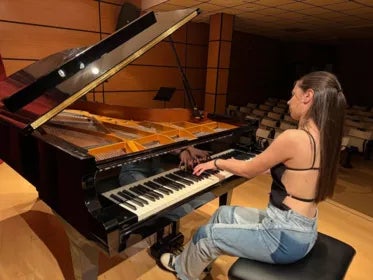
Degree in Music Performance
Start:
September
Length:
4 years

Bachelor’s Degree in Modern Music Performance
Start:
September
Length:
4 years

Master’s Degree in Instrumental Pedagogy (Online)
Start:
October
Length:
9 months

MBA Music Business
In collaboration with:

Start:
October
Length:
9 months

Master’s Degree in Live Music Management
In collaboration with:

Start:
October
Length:
9 months

Master in Music for Development
In collaboration with:

Start:
October
Length:
1 year
Academic calendar : Calendars and Timetables | Transparency Portal – UAX
Course timetables : Public timetable viewer by group
UAX promotes a culture of quality within the university community through the UAX Quality System (SIUAX), for which the University Management bears ultimate responsibility, ensuring that the system’s planning is implemented to effectively meet quality objectives and satisfy the needs, requirements and expectations of customers and stakeholders.
The bodies responsible are:
This organisational structure facilitates two-way communication regarding the various improvement initiatives, thereby enabling and ensuring the development of a culture of quality within the University.
The Degree Programme Monitoring and Improvement Committee for the 2025–26 academic year is composed of:
You can view the various indicators via the following links:
Employability: View
Satisfaction results: View
Rates and indicators: View
Improvement measures implemented for the degree programme during the academic year:
We respond to the genuine needs of our students and staff, because we believe in the continuous improvement of our results. That is why we are always keen to hear anything you wish to tell us.
Link to the complaints and suggestions inbox.
If you’re already part of UAX, go to the ‘Customer Service: complaints, suggestions and compliments’ section on thevirtual campus and log in with your username and password.
In accordance with Royal Decree 822/2021 (Article 34), this degree programme must undergo the accreditation renewal process. During the process, an evaluation team from the Madrimasd Knowledge Foundation will meet with various stakeholders associated with the degree programme. In addition, they have provided aform so that anyone interested can highlight to the Foundation any aspects they consider relevant to the development of this programme.