See all Online Master's Degrees in Health
See all Master's Degrees in Engineering
Most searched curriculums
Official Qualification
Study for the Master’s Degree in Supporting Diversity and Inclusive Education (Online) and gain the skills you need to understand the specific needs of each pupil and prevent the risk of social exclusion. Earn credits that will add points to your mark in the competitive examinations for primary and secondary school teaching posts. Study at Spain’s number one university for employability (U-Ranking 2023, BBVA Foundation). Places are limited.
In collaboration with:

The Master’s Degree in Supporting Diversity and Inclusive Education (Online) is designed to address the current challenges facing inclusive education. Its curriculum combines a solid theoretical foundation with a practical approach, covering support for special educational needs, giftedness, psycho-educational intervention and mediation in multicultural contexts.
Furthermore, the programme incorporates a strong digital and innovative component, which will enable you to apply ICT resources, active methodologies and maker culture in the creation of educational projects tailored to diversity.
In Spain, it is estimated that around 800,000 pupils (approximately 15 per cent of the student population) have some form of neurodevelopmental disorder that affects their learning, highlighting the growing need for professionals specialising in inclusive education.
By completing this Master’s degree, you will earn weighted merit points worth one mark in the public competitive examinations for primary and secondary school teachers.
Thanks to its cross-disciplinary and up-to-date approach, you will develop key skills to identify needs, design intervention plans and apply evidence-based inclusive strategies. Throughout the Master’s programme, you will work on applied research projects and co-creation experiences that foster pedagogical innovation.
The programme is complemented by the UAX Skill School, where you will acquire the skills most in demand within the education sector and strengthen your profile as a teacher capable of driving change towards a more inclusive education.
Remember that you’ll be able to benefit from the university’s partnerships and undertake your work placement at over 700 educational institutions, specialist organisations and foundations.
A multidisciplinary programme designed to identify educational needs, design inclusive solutions and apply innovative methodologies supported by ICT.
Understands how development and learning influence attention to diversity.
It addresses cognitive, sensory and motor diversity from a holistic perspective.
Designs intervention strategies in different educational contexts.
Develops innovative projects with an impact on educational transformation.
Improve your scale by adding points in the Teacher or Secondary School Examinations.
Enhance your teaching practice by understanding learning through the lens of neuroeducation. This micro-credential equips you to analyse students’ cognitive, emotional and behavioural processes, identify potential difficulties at an early stage, and apply evidence-based inclusive teaching strategies in the classroom.

Transform the way you work with generative artificial intelligence. This micro-credential empowers you to apply tools like ChatGPT, Copilot, and Gemini to analyze information, create content, and make decisions in real-world academic contexts, integrating solutions ethically and responsibly within the educational field.

Develop your potential in education through leadership and interpersonal skills. This microcredential provides you with the keys to managing teams, communicating effectively, and solving problems in real-world educational settings, combining personal leadership techniques with practical productivity and collaboration tools.
Master's Degree in Attention to Diversity and Inclusive Education
First Year
FIRST FOUR-MONTH PERIOD
| Code | Subjects | Character* | ECTS | ||
|---|---|---|---|---|---|
| SM121300 | Neuropsychological Foundations of Development and Learning | OB | 6 | ||
Neuropsychological Foundations of Development and LearningCódigo: SM121300 Imprimir Course 1: First-semester module. Compulsory. 6 credits. Profesores
Objectives Conceptual objectives: To understand the neuropsychological foundations of human behaviour, linking the structures and functions of the nervous system to the cognitive, affective and motor processes involved in learning. The brain, brain functions and brain plasticity relevant to learning. To recognise the stages of psychomotor development from infancy through to adolescence, identifying signs of typical development and possible disorders requiring specific educational support. Neuropsychological assessment tools and observation guidelines applicable during the school years. Analyse the main motor skills and body schema, assessing their importance in school learning, personal autonomy and social interaction. Resources and sources of information. Identify and describe basic cognitive processes such as attention, memory and learning, explaining how they function and their role in pupils’ academic performance and behaviour. Detect difficulties or abnormalities in developmental maturation through observation and the application of basic psycho-educational assessment tools. Assess specific educational support needs, drawing up initial intervention proposals tailored to pupils’ individual characteristics. Link socio-emotional factors to the learning process, understanding how emotions, self-esteem, motivation and the classroom atmosphere influence performance and behaviour. Develop attitudes of respect, inclusion and proactive support towards the diversity of the student body, recognising the importance of early identification and appropriate educational intervention. Apply basic strategies to promote attention, memory and motivation in the classroom, using techniques adapted to different learning paces. Interpret pupils’ behaviour from a holistic perspective, taking into account neurological, cognitive, emotional, motor and social factors to ensure more effective teaching practice. Prerequisites Entry Profile Graduate in Early Years Education Graduate in Primary Education Bachelor’s Degree in Pedagogy Bachelor’s Degree in Psychology Bachelor’s Degree in Educational Psychology Graduate in Social Education Graduate in Speech and Language Therapy Master’s Degree in Teacher Training for Secondary Education (ESO), Sixth Form (Bachillerato), Vocational Training (FP) and Language Teaching Graduates who have completed a Pedagogical Adaptation Course, or graduates or engineers from education systems outside the European Higher Education Area who are qualified to teach in their country of origin; or with accredited teaching experience at pre-school, primary, secondary, sixth-form or vocational training levels. Competencies RC0 – Assesses pupils’ specific educational support needs in order to establish intervention measures tailored to individual requirements. Knowledge: RK1 – Identifies abnormalities in developmental maturation, as well as the main tools for their assessment. RK2 – Defines the neuropsychological and developmental foundations of sensorimotor functions and cognitive processes (perception, attention, memory, executive functions, emotion) and their relationship with behaviour and learning, in order to adapt educational practice. Description of the content It is essential for teachers who are equipped to cater for the diversity of their pupils to understand the maturation process and the neuropsychological foundations of sensorimotor functions and complex cognitive processes (perception, attention, memory, executive functions, emotion), and their relationship with behaviour and learning. This is the main objective of this module. A further objective is to learn the criteria for identifying possible impairments in the development of these functions and to familiarise students with the main tools of neuropsychological assessment. Learning activities Virtual face-to-face sessions Lectures Study of core material Reading of supplementary material Assignments, case studies and self-assessment Tutorials Collaborative work (forums) In-person final exam Assessment system and criteria • The final exam for the module will account for: 50% of the final mark. The exam mark must be 5.0 out of 10.0 or higher to be included in the overall mark. • The remaining 50 per cent of the mark will be based on your continuous assessment. The following will be taken into account: - Activity 1 (10% of the mark). - Activity 2 (15%) - Portfolio (25 per cent) 5.2. Extraordinary examination session To pass the module in the resit, students must sit the final examination for the module and achieve a final mark of 5.0 or above out of 10.0. In the resit, the activities will NOT count towards the mark The final exam for the resit will always include a practical component, either in the form of a case study or open-ended questions. |
|||||
| SM121301 | Cognitive, Sensory and Motor Disabilities: Aspects | OB | 6 | ||
Cognitive, Sensory and Motor Disabilities: AspectsCódigo: SM121301 Imprimir Course 1: First-semester module. Compulsory. 6 credits. Profesores
Objectives Conceptual objectives: • To understand the definition of high ability and the different profiles that talented or gifted pupils may exhibit. • To be familiar with current legislation and the educational measures associated with supporting diversity and high ability. • To analyse the main theoretical models for the study of high ability and their contribution to the field of education. • To identify the criteria, processes and tools used in the psycho-educational assessment of high ability. • Recognise the specific educational needs of these pupils and the implications for their academic, social and emotional development. • To understand the principles underpinning the design of enrichment programmes and other intervention measures. To this end, we aim to achieve: Learning objectives: -Apply strategies for curriculum enrichment, extension or flexibility to cater for academic and creative talent. -Select and use observation and early identification tools to identify pupils showing signs of high ability. -Develop, at a basic level, individual or group intervention plans aimed at enhancing cognitive and socio-emotional abilities. - To coordinate educational initiatives with other professionals and families to support the holistic development of gifted pupils. -To recognise the teacher’s role as a source of motivation, emotional support and a facilitator of advanced learning. Prerequisites Entry Profile Graduate in Early Years Education Graduate in Primary Education Bachelor’s Degree in Pedagogy Bachelor’s Degree in Psychology Bachelor’s Degree in Educational Psychology Graduate in Social Education Graduate in Speech and Language Therapy Master’s in Teacher Training for Secondary Education (ESO), Sixth Form (Bachillerato), Vocational Training (FP) and Language Teaching Graduates who have completed a Pedagogical Adaptation Course, or graduates or engineers from education systems outside the European Higher Education Area who are qualified to teach in their country of origin; or with accredited teaching experience at pre-school, primary, secondary, sixth-form or vocational training levels. Competencies Competencies: RC5 Develops procedures to enable the development and expression of the full potential of gifted and talented pupils Learning outcomes Skills or competences: RS0 Designs programmes and intervention measures to promote the inclusion of all pupils RS6 Applies tools to identify pupils who are intellectually gifted or highly able. Course description The aim of this module is to understand the main characteristics of cognitive, sensory and motor disabilities. It will examine the etiological, neuropsychological, educational, behavioural and emotional aspects of the various conditions associated with these limitations. Students will also learn about the most appropriate psycho-educational and neuropsychological assessment tools, depending on the objectives of the assessment, the type of pupil and the nature of the deficit. Attention will also be paid to the social components of the different types of disability and how the affected child’s condition impacts family dynamics. The aim is for students to be equipped to advise and support the family environment. Training activities Lecture sessions (asynchronous) 15 hours Interactive lectures (synchronous) 12 hours Interactive practical sessions (synchronous) 22 hours Independent study, case studies or problem-solving, literature reviews (self-directed work). 91 hours Online tutorials (synchronous/asynchronous). 7 hours Completion of knowledge tests (face-to-face). 3 hours Assessment system and criteria Grading system In the course’s virtual classroom and during the first session, you will be able to view in detail the activities you are required to complete, as well as the submission dates, assessment criteria and marking schemes for each one. Your final mark will be determined according to the following assessment system: Regular assessment The marking criteria are: • The final exam for the module will account for: 50 per cent of the final mark. Your exam mark must be 5.0 out of 10.0 or higher to be included in the overall mark. • 50 per cent of your mark will be based on your continuous assessment. The following will be taken into account: - Activity 1 (10% of the mark). - Activity 2 (15%) - Portfolio (25%) Submissions made after the deadline will NOT be accepted, except in cases of force majeure To pass the module in the standard assessment period, you must achieve a mark of 5.0 out of 10.0 or higher in the final mark (weighted average) for the module.
Extraordinary examination session To pass the module in the supplementary examination period, you must sit the final examination for the module and achieve a mark of 5.0 or above out of 10.0 in the final mark. In the supplementary examination, activities will NOT count towards your mark The final exam in the supplementary sitting will always include a practical component, either in the form of a case study or open-ended questions. IMPORTANT: Passing the module is conditional upon passing the final exam (achieving a mark of 5 out of 10 or higher), so that the marks obtained in the other assessed activities can be included in the overall average. Bibliography Core: 1. Vega Díaz, Marta "Become a Master of Parenting”: Overcome the challenge of being a mother or father by answering 100 essential questions Amazon. 2025. ISBN: 979-828611684 https://www.amazon.es/Convi%C3%A9rtete-maestro-crianza-respondiendo-esenciales/dp/B0FBRJRKKF 2.- Vega Díaz, Marta and Higinio González García A Guide to Effective Parenting in Modern Life: Keys to Creating the Home of Your Dreams AMAZON. 2025. ISBN: 979-831588721 |
|||||
| SM121302 | Research Methodology in Education and Inclusive Education. | OB | 6 | ||
Research Methodology in Education and Inclusive Education.Código: SM121302 Imprimir Course 1: First-semester module. Compulsory. 6 credits. Profesores
Objectives Conceptual objectives: To understand the conceptual foundations of educational research and its importance for improving teaching practice. To be familiar with the main approaches to educational research, distinguishing between quantitative, qualitative and mixed methods. To design basic educational research projects, formulating research problems, objectives and research questions. To select and apply appropriate techniques and instruments for collecting information in educational contexts. To analyse and interpret data obtained from educational research using basic qualitative and quantitative analysis methods. To value scientific dissemination as a tool for sharing results and contributing to the advancement of educational knowledge. To achieve the objectives of this module, we need you to participate in classes, in the proposed discussions and in the activities we set, as this will ensure a more comprehensive and enriching learning experience. We do not want passive students who simply receive and process information; we want students with their own opinions who are keen to learn and contribute different perspectives. To this end, we aim to achieve: Learning objectives: That you participate actively, contributing your knowledge and experiences. That you work on the assessed activities we set and submit them within the specified timeframe. That the non-assessed activities serve as a point of reflection for you, enabling you to become aware of your own learning process. That you use any points of uncertainty as an opportunity to seek clarification, so that you can fully understand all the content covered in this module. Prerequisites Entry Profile Graduate in Early Years Education Graduate in Primary Education Bachelor’s Degree in Pedagogy Bachelor’s Degree in Psychology Bachelor’s Degree in Educational Psychology Graduate in Social Education Graduate in Speech and Language Therapy Master’s Degree in Teacher Training for Secondary Education (ESO), Sixth Form (Bachillerato), Vocational Training (FP) and Language Teaching Graduates who have completed a Pedagogical Adaptation Course, or graduates or engineers from education systems outside the European Higher Education Area who are qualified to teach in their country of origin; or with accredited teaching experience at pre-school, primary, secondary, sixth-form or vocational training levels. Competencies Competence RC1 – Carries out research projects in the field of education, adopting an inclusive approach, in order to share the results of their research with the scientific community. RC3 – Rigorously interprets academic literature and research findings in education and inclusive education, in order to apply scientific knowledge to their professional practice. Learning outcomes Skill: RS3 – Applies the knowledge and tools required to collect and analyse information within the context of an educational research project. Course description The overall aim of the module is for students to learn how to propose and design a research project. To this end, the tools of the scientific method are defined and the different phases of the research process used in Psychology and Education are addressed, focusing on the specific characteristics of the population and the contexts inherent to education, with a view to diversity and inclusive education. The course can be divided into three distinct sections: the first introduces aspects and concepts related to research and the scientific method. The second addresses the stages to be considered in the research process (problem identification, literature review, selection of a design from among different types and instruments for data collection). The third section focuses on the analysis and interpretation of results and their dissemination through the channels commonly used in research. Training activities Lecture sessions (asynchronous) 15 hours Interactive lectures (synchronous) 12 hours Interactive practical sessions (synchronous) 22 hours Self-study, case studies or problem-solving, literature searches (independent work). 91 hours Online tutorials (synchronous/asynchronous). 7 hours Completion of knowledge tests (face-to-face). 3 hours Assessment system and criteria Grading system In the course’s virtual classroom and during the first session, you will be able to view in detail the activities you are required to complete, as well as the submission dates, assessment criteria and marking schemes for each one. Your final mark will be determined according to the following assessment system: 5.1. Regular assessment period The marking criteria are: • The final exam for the module will account for: 50 per cent of the final mark. The exam mark must be 5.0 out of 10.0 or higher to be included in the overall mark. • 50 per cent of the mark will be based on your continuous assessment. The following will be taken into account: - Activity 1 (10% of the mark). - Activity 2 (15%) - Portfolio (25%) Submissions made after the deadline will NOT be accepted, except in cases of force majeure To pass the module in the ordinary examination session, you must achieve a mark of 5.0 out of 10.0 or higher in the final mark (weighted average) for the module. 5.2. Supplementary examination period To pass the module in the supplementary examination period, you must sit the final examination for the module and achieve a mark of 5.0 or above out of 10.0 in the final mark. In the supplementary examination, coursework will NOT count towards your mark The final exam for the supplementary sitting will always include a practical component, either in the form of a case study or open-ended questions. |
|||||
| SM121303 | Psychoeducational Response to Diversity | OB | 6 | ||
Psychoeducational Response to DiversityCódigo: SM121303 Imprimir Course 1: First-semester module. Compulsory. 6 credits. Profesores
Objectives Conceptual objectives: To recognise the importance of collaboration with families and guidance teams in optimising the personal and educational development of pupils with SEN. To understand the theoretical foundations of catering for diversity and the principles underpinning educational inclusion at different levels and in different contexts. Understand the neuropsychological, pedagogical and psychological foundations of human development, as well as the factors that influence learning and learning difficulties. To identify the different types of special educational needs (SEN) —sensory, motor, cognitive, linguistic or emotional— and their implications for development and teaching. To analyse the theoretical and methodological models of educational assessment and intervention, evaluating their application in the identification and support of SEN. Understand the main language and communication disorders in pupils with sensorimotor or cognitive disabilities, and the strategies for addressing them effectively. To recognise the role of motivational, social and family factors in the learning of pupils with SEN and in their educational response. Understand the potential of Information and Communication Technologies (ICT) as tools to support inclusion, communication and pupils’ autonomy. Appreciate the importance of interdisciplinary collaboration and joint working between teachers, counsellors, therapists and families to ensure a comprehensive and coherent approach to support. To reflect on the ethical and social implications of inclusive educational practice, from a perspective of equity, justice and respect for diversity. To achieve the objectives of this module, we need you to participate in classes, in the proposed discussions and in the activities we set, as this will enable you to gain a more comprehensive and enriching learning experience. We do not want passive students who simply receive and process information; we want students with their own opinions who are keen to learn and contribute different perspectives. To this end, we aim to achieve: Learning objectives: To assess and identify students’ special educational needs through observation, the use of appropriate tools and the analysis of diverse educational contexts. To design and implement educational intervention programmes tailored to the characteristics, interests and potential of each student, in both formal and non-formal settings. To develop preventive and support strategies aimed at maximising learning abilities and preventing the emergence of difficulties associated with special educational needs. To use ICT as a resource to facilitate communication, independence and learning for pupils with functional diversity or specific needs. Intervene in language and communication processes, implementing strategies that integrate cognitive, emotional and social aspects. To coordinate and collaborate with multidisciplinary teams and families, offering guidance and advice to improve the educational provision and well-being of pupils. Integrate active and inclusive methodologies, fostering participation, motivation and meaningful learning within the classroom. Entry requirements Entry Profile Graduate in Early Years Education Graduate in Primary Education Bachelor’s degree in Pedagogy Bachelor’s Degree in Psychology Bachelor’s Degree in Educational Psychology Graduate in Social Education Graduate in Speech and Language Therapy Master’s Degree in Teacher Training for Secondary Education (ESO), Sixth Form (Bachillerato), Vocational Training (FP) and Language Teaching Graduates who have completed a Pedagogical Adaptation Course, or graduates or engineers from education systems outside the European Higher Education Area who are qualified to teach in their country of origin; or with accredited teaching experience at the pre-school, primary, secondary, sixth-form or vocational training levels. Competencies RC4 – Provides guidance to other professionals in the education sector, as well as to students’ families, on the specific needs of each pupil and the recommended guidelines for successful inclusion. Learning outcomes Skills: RS1 – Acquires the skills to provide guidance on the principles of equality, both to other professionals in the education sector and to other social stakeholders, with a view to achieving an inclusive society. RS4 - Adapts the educational response to the needs and circumstances of each pupil, in order to enhance and support their learning process. Course description Addressing diversity is the main objective of this Master’s degree. In this module, students will learn to adapt educational provision (including curricular adaptations) to the demands imposed by the specific characteristics and needs of each pupil. Students will acquire the tools necessary to provide the educational and psychosocial support required by pupils with SEN, and to adopt the specific measures needed to address motor, sensory and intellectual disabilities, developmental disorders, behavioural difficulties or specific learning difficulties learning difficulties, as well as high intellectual ability. The course also covers guidance for teaching staff and members of the multidisciplinary team who caring for the child, and support for the family environment. Training activities This module comprises the following material: Lectures (asynchronous) 15 hours Interactive lectures (synchronous) 12 hours Interactive practical sessions (synchronous) 22 hours Self-study, case studies or problem-solving, literature reviews (independent work). 91 hours Online tutorials (synchronous/asynchronous). 7 hours Completion of knowledge tests (face-to-face). 3 hours Assessment system and criteria 5. Grading system In the course’s virtual classroom and during the first session, you will be able to view in detail the activities you are required to complete, as well as the submission dates, assessment criteria and marking schemes for each one. Your final mark will be determined according to the following assessment system: 5.1. Standard assessment period The marking criteria are: • The final exam for the module will account for: 50% of the final mark. The exam mark must be 5.0 out of 10.0 or higher to be included in the overall mark. • 50 per cent of the mark will be based on your continuous assessment. The following will be taken into account: - Activity 1 (10%) - Activity 2 (15%) - Portfolio (25% of the mark). Late submission of core activities will NOT be accepted, except in cases of force majeure To pass the module in the ordinary examination period, you must achieve a mark of 5.0 out of 10.0 or higher in the final mark (weighted average) for the module. 5.2. Supplementary examination period To pass the module in the supplementary examination period, you must sit the final examination for the module and achieve a mark of 5.0 out of 10.0 or higher in the final mark. In the supplementary examination, coursework will NOT count towards your mark The final exam for the supplementary sitting will always include a practical component, either in the form of a case study or open-ended questions. Bibliography Core: 1. Vega Díaz, Marta The Art of Parenting: A Comprehensive Guide to Assessing, Understanding and Applying Parenting Styles AMAZON. 2025. ISBN: 979-829315996 |
|||||
| SM121304 | Pervasive Developmental Disorders and Behavioural Disorders: Developmental, Educational, Social and Family Aspects | OB | 6 | ||
Pervasive Developmental Disorders and Behavioural Disorders: Developmental, Educational, Social and Family AspectsCódigo: SM121304 Imprimir Course 1: First-semester module. Compulsory. 6 credits. Profesores
Objectives Conceptual objectives: To understand the fundamental concepts of pervasive developmental disorders and behavioural disorders in school-age children. To identify the clinical and neuropsychological characteristics of ASD, ADHD, PDD, Intermittent Explosive Disorder and Conduct Disorder. To distinguish between the main disorders, recognising their symptoms, progression and implications in educational and social contexts. To understand the family, emotional and environmental factors that influence the onset and persistence of these difficulties. To analyse the educational implications of these disorders, including difficulties with learning, communication and social interaction. To understand the importance of an inclusive approach and interdisciplinary work for the holistic support of pupils with specific needs. To achieve the objectives of this module, we need you to participate in classes, in the proposed discussions and in the activities we set, as this will enable you to gain a more comprehensive and enriching learning experience. We do not want passive students who simply receive and process information; we want students with their own opinions who are keen to learn and contribute different perspectives. To this end, we aim to achieve: Learning objectives: That you participate actively, contributing your knowledge and experiences. That you work on the assessed activities we set and submit them within the specified timeframe. That the non-assessed activities serve as a point of reflection for you, enabling you to become aware of your own learning process. That you use any points of uncertainty as an opportunity to seek clarification, so that you can fully understand all the content covered in this module. Prerequisites Entry Profile Graduate in Early Years Education Graduate in Primary Education Bachelor’s Degree in Pedagogy Bachelor’s Degree in Psychology Bachelor’s Degree in Educational Psychology Graduate in Social Education Graduate in Speech and Language Therapy Master’s Degree in Teacher Training for Secondary Education (ESO), Sixth Form (Bachillerato), Vocational Training (FP) and Language Teaching Graduates who have completed a Pedagogical Adaptation Course, or graduates or engineers from education systems outside the European Higher Education Area who are qualified to teach in their country of origin; or with accredited teaching experience at pre-school, primary, secondary, sixth-form or vocational training levels. Competencies Competency RC2 – Advises family members and other teaching or education professionals regarding pupils with pervasive developmental disorders and behavioural disorders, to support the work of all educational stakeholders involved in pupils’ learning. Learning outcomes Knowledge RK0 – Understands the importance of meeting pupils’ educational needs in order to contribute to the process of achieving an inclusive society. RK4 – Identifies the main pervasive developmental and behavioural disorders, as well as their neuropsychological and educational characteristics, and their social and family implications, in order to adapt educational practice. Course description The aim of this module is to understand the main characteristics of pervasive developmental disorders (autism spectrum disorders): neurobiological bases, neuropsychological characteristics and explanatory models. It also addresses the issue of behavioural disorders in children and adolescents (aggressive behaviours, oppositional defiant disorder, ADHD, etc.), their main characteristics and their implications in the classroom. The aetiological, neuropsychological, educational, behavioural and emotional aspects of the various conditions associated with these limitations will be studied. Attention will be paid to the social components of these disorders and how the child affected by these problems into family dynamics. The aim is also to equip students to advise and provide support to those close to the child. Training activities - Lectures (asynchronous) 15 hours .- Interactive lectures (synchronous) 12 hours - Interactive practical sessions (synchronous) 22 hours - Independent study, case studies or problem-solving, literature reviews (self-directed work). 91 hours - Online tutorials (synchronous/asynchronous). 7 hours - Knowledge assessment tests (face-to-face). 3 hours Assessment system and criteria Grading System In the course’s virtual classroom and during the first session, you will be able to view in detail the activities you are required to complete, as well as the submission dates, assessment criteria and marking schemes for each one. Your final mark will be determined according to the following assessment system: Regular assessment The marking criteria are: • The final exam for the module will account for: 50% of the final mark. Your exam mark must be 5.0 out of 10.0 or higher to be included in the overall mark. • 50 per cent of the mark will be based on your continuous assessment. The following will be taken into account: - Activity 1 (10% of the mark). - Activity 2 (15%) - Portfolio (25%) Submissions made after the deadline will NOT be accepted, except in cases of force majeure To pass the module in the ordinary examination period, you must achieve a mark of 5.0 out of 10.0 or higher in the final mark (weighted average) for the module. Extraordinary examination session To pass the module in the supplementary examination period, you must sit the final examination for the module and achieve a mark of 5.0 or above out of 10.0 in the final mark. In the supplementary examination period, activities will NOT count towards your mark The final exam in the supplementary sitting will always include a practical component, either in the form of a case study or open-ended questions. |
|||||
| TOTAL: | 30 | ||||
SECOND FOUR-MONTH PERIOD
| Code | Subjects | Character* | ECTS | ||||
|---|---|---|---|---|---|---|---|
| SM121305 | Neuropsychological Intervention in Disability and Learning Disorders | OB | 6 | ||||
Neuropsychological Intervention in Disability and Learning DisordersCódigo: SM121305 Imprimir Course 1. Second-term module. Compulsory. 6 credits. Profesores
Objectives Conceptual objectives: To understand the basic principles of neuropsychological intervention, its purpose and its application in educational and clinical settings. To identify the neuropsychological characteristics associated with motor, intellectual development, language and learning disorders, autism spectrum disorders and attention deficit disorders. • Analyse the specific needs of pupils with these difficulties, recognising the cognitive, behavioural, emotional and environmental factors involved. Select and apply basic neuropsychological intervention strategies aimed at promoting pupils’ cognitive, motor, linguistic and socio-emotional development. Design tailored intervention plans, taking into account the neuropsychological profile and individual abilities of each student. To recognise the importance of interdisciplinary coordination between teachers, psychologists, therapists and families as a key factor in the success of interventions. Prerequisites Entry Requirements Graduate in Early Years Education Graduate in Primary Education Bachelor’s degree in Pedagogy Bachelor’s Degree in Psychology Bachelor’s Degree in Educational Psychology Graduate in Social Education Graduate in Speech and Language Therapy Master’s Degree in Teacher Training for Secondary Education (ESO), Sixth Form (Bachillerato), Vocational Training (FP) and Language Teaching Graduates who have completed a Pedagogical Adaptation Course, or graduates or engineers from education systems outside the European Higher Education Area who are qualified to teach in their country of origin; or with accredited teaching experience at pre-school, primary, secondary, sixth-form or vocational training levels. Competencies Competencies: RODS Develops effective communication, teamwork, analytical thinking, creativity and ethical leadership from a cross-curricular perspective, clearly inspired by democratic principles and values, as well as the Sustainable Development Goals, in order to operate with integrity within a professional environment. Learning outcomes Knowledge: RK5 Identifies the tools needed to optimise students’ learning capacity and their performance in everyday life. Skills: RS5 Applies intervention programmes to improve affected neuropsychological aspects in pupils with special educational needs. Description of the content Neuropsychology, and in particular child neuropsychology, is a rapidly growing discipline, and the usefulness of applying the knowledge developed in this field has been demonstrated in addressing learning difficulties arising from sensorimotor and/or intellectual and developmental disorders. During the first term, students have acquired an understanding of the neuropsychological foundations of sensorimotor functions and complex cognitive processes, and their relationship with behaviour and learning (Neuropsychological Bases of Development and Learning), and is now in a position to acquire the necessary tools to design, implement and evaluate intervention programmes developed from a neuropsychological perspective. This approach is necessary to optimise abilities and the educational process, and can also be used for preventive purposes. Training activities Face-to-face and online sessions Lectures Study of core material Reading of supplementary material Assignments, case studies and self-assessment Tutorials Collaborative work (forums) In-person final exam Assessment system and criteria 4. Assessment system and criteria In the course’s virtual classroom and during the first session, you will be able to view in detail the activities you are required to complete, as well as the submission dates, assessment criteria and marking schemes for each one. Your final mark will be determined according to the following assessment system: Regular assessment The marking criteria are: • The final exam for the module will account for: 50% of the final mark. Your exam mark must be 5.0 out of 10.0 or higher to be included in the overall mark. • 50 per cent of your mark will be based on your continuous assessment. The following will be taken into account: - Activity 1 (10%) - Activity 2 (15%) - Portfolio (25% of the mark). Late submission of core activities will NOT be accepted, except in cases of force majeure To pass the module in the standard assessment period, you must achieve a mark of 5.0 out of 10.0 or higher in the final mark (weighted average) for the module. Extraordinary examination session To pass the module in the supplementary examination period, you must sit the final examination for the module and achieve a mark of 5.0 or above out of 10.0 in the final mark. In the supplementary examination period, activities will NOT count towards your mark The final exam in the supplementary sitting will always include a practical component, either in the form of a case study or open-ended questions. |
|||||||
| SM121307 | Research Project on Education for Diversity and Inclusive Education | OB | 6 | ||||
Research Project on Education for Diversity and Inclusive EducationCódigo: SM121307 Imprimir Course 1. Second-term module. Compulsory. 6 credits. Profesores
Objectives Conceptual objectives (related to theoretical knowledge) To understand what a Master’s Thesis is, its scientific and professional purpose, and its role within the Master’s programme. To be familiar with the formal structure of a Master’s Thesis (introduction, objectives, theoretical framework, methodology, analysis, conclusions, bibliography and appendices). To identify the research skills specific to the field of education (searching for scientific information, critical review, analysis and writing with academic rigour). Understand the institutional regulations: credits, stages of the process, submission, assessment and defence before an examination board. Understand and apply the scientific format and APA citation guidelines. Understand the importance of academic originality and anti-plagiarism requirements. Learning objectives (related to practical application and student learning) To produce an original Master’s thesis, applying the theoretical knowledge acquired during the Master’s programme. To design and develop a piece of work of academic quality: literature review, formulation of objectives, methodology, data analysis and conclusions. To write an academic document structured in accordance with the official Master’s thesis format. Use reliable, up-to-date and correctly cited academic sources. To manage the research process independently, maintaining consistency and adhering to a timetable. Defend the thesis publicly, developing scientific communication and argumentation skills before an examination board. Prerequisites In order to defend the Master’s Thesis before the assessment panel, the student must have passed the 60 credits relating to the modules and external placements of the programme. Furthermore, they must have received approval from their supervisor, who must consider that their thesis has followed the necessary guidelines to be defended and to complete their postgraduate studies. Competencies RC0 – Assesses specific educational support needs among students in order to establish intervention measures tailored to individual needs. RC1 – Carries out research projects in the field of education, adopting an inclusive approach, in order to share the results of their research with the scientific community. RC6 - Critically reviews specific educational situations, as well as scientific studies related to the field of education, to draw conclusions applicable to their professional practice. RC7 - Rigorously defends their own research and projects in the field of education in order to share the results of their research with the scientific community RODS – Develops effective communication, teamwork, analytical thinking, creativity and ethical leadership from a cross-cutting perspective, clearly inspired by democratic principles and values, as well as the Sustainable Development Goals, in order to operate with integrity within a professional environment. Learning outcomes Skills or competences: RS0 – Designs programmes and intervention measures to promote the inclusion of all pupils RS1 – Acquires the skills to provide guidance on the principles of equality, both to other professionals in the field of education and to other social actors, in order to achieve an inclusive society Course content · The Master’s Final Project (MFP) involves applying the knowledge gained in the theoretical and practical modules and during the external placements undertaken as part of the programme. In the MTh, the student must demonstrate that they have carried out the full research process under the supervision of a tutor who will guide their work. They must submit a high-quality piece of work that meets the necessary requirements for a literature review, the setting of objectives, intervention planning and an action plan, and hypotheses, as well as an analysis of results and a proposal for intervention, which will be defended through a public oral presentation before a panel qualified to assess it. · The Master’s Thesis must be original and unpublished, and must be carried out either individually or in a group, under the supervision and guidance of the relevant academic supervisor. In both cases, the defence and assessment of the thesis will be conducted on an individual basis Training activities Training seminars Introductory presentation session (Master’s Thesis) Reading of material in the virtual classroom Presentation and defence of the Master’s Thesis Individual and group tutorials (Master’s Thesis) Preparation of the Master’s Thesis report Assessment system and criteria 5. Assessment system and criteria Each student’s final mark will be the sum of the Academic Tutor’s assessment (40%) and the remaining percentage (60%), as decided and announced by the Master’s Thesis defence panel during the defence, just before it concludes. In order to proceed to the defence, the student must have received a favourable assessment from the programme directors, allowing them to defend their project and ensuring that it meets the minimum quality standards required for the Master’s degree. The mark will be awarded using a rubric, divided into different sections, each carrying a different weighting towards the final mark. The defence session will take place online. It begins with a formal introduction by the chair of the university examination board, outlining the session, its procedure and the members of the board. The student will then be given the floor to deliver their presentation, using the materials prepared in advance (maximum 12 minutes). This will be followed by a session of questions and comments from the members of the examination board, followed by the student’s turn to respond to the questions raised by the board (optional, but recommended). Finally, the panel deliberates on the final mark (the student will, of course, be absent from the deliberation process). The examination board will consist of three members (a Member, a Secretary and a Chair). All will have experience in the field. The members of the examination board will have read the Master’s Thesis in advance and will assess the student using the rubric corresponding to the chosen Master’s Thesis format. |
|||||||
| SM121308 | Support for Gifted and Talented Children | OB | 6 | ||||
Support for Gifted and Talented ChildrenCódigo: SM121308 Imprimir Course 1. Second-term module. Compulsory. 6 credits. Profesores
Objectives Conceptual objectives: • To understand the definition of high ability and the different profiles that talented or gifted pupils may exhibit. • To be familiar with current legislation and the educational measures associated with supporting diversity and high ability. • To analyse the main theoretical models for the study of high ability and their contribution to the field of education. • To identify the criteria, processes and tools used in the psycho-educational assessment of high ability. • Recognise the specific educational needs of these pupils and the implications for their academic, social and emotional development. • To understand the principles underpinning the design of enrichment programmes and other intervention measures. To this end, we aim to achieve: Learning objectives: -Apply strategies for curriculum enrichment, extension or flexibility to cater for academic and creative talent. -Select and use observation and early identification tools to identify pupils showing signs of high ability. -Develop, at a basic level, individual or group intervention plans aimed at enhancing cognitive and socio-emotional abilities. - To coordinate educational initiatives with other professionals and families to support the holistic development of gifted pupils. -To recognise the teacher’s role as a source of motivation, emotional support and a facilitator of advanced learning. Prerequisites Entry Profile Graduate in Early Years Education Graduate in Primary Education Bachelor’s Degree in Pedagogy Bachelor’s Degree in Psychology Bachelor’s Degree in Educational Psychology Graduate in Social Education Graduate in Speech and Language Therapy Master’s Degree in Teacher Training for Secondary Education (ESO), Sixth Form (Bachillerato), Vocational Training (FP) and Language Teaching Graduates who have completed a Pedagogical Adaptation Course, or graduates or engineers from education systems outside the European Higher Education Area who are qualified to teach in their country of origin; or with accredited teaching experience at pre-school, primary, secondary, sixth-form or vocational training levels. Competencies RC5 Develops procedures to enable gifted pupils to realise and express their full potential Learning outcomes Skills or competences: RS0 Designs programmes and intervention measures to promote the inclusion of all pupils RS6 Applies tools to identify pupils who are intellectually gifted or have high abilities. Course description The aim of this module is to identify gifted and highly capable pupils, understand their characteristics and needs; to learn different procedures for providing educational support in the classroom and through personal guidance; and to provide observation guidelines and resources for curriculum enrichment, the development of creative projects, and the development of social and cooperative skills. In addition, the course includes guidance for families on developing their children’s talents and for teachers on providing effective support in the classroom. It comprises 6 ECTS credits. It is a compulsory module and will be taught in the second semester of the academic year. Training activities Lecture sessions (asynchronous) 15 hours Interactive lectures (synchronous) 12 hours Interactive practical sessions (synchronous) 22 hours Self-study, case studies or problem-solving, literature reviews (independent work). 91 hours Online tutorials (synchronous/asynchronous). 7 hours Completion of knowledge tests (face-to-face). 3 hours Assessment system and criteria Grading system In the course’s virtual classroom and during the first session, you will be able to view in detail the activities you are required to complete, as well as the submission dates, assessment criteria and marking schemes for each one. Your final mark will be determined according to the following assessment system: Regular assessment The marking criteria are: • The final exam for the module will account for: 50% of the final mark. Your exam mark must be 5.0 out of 10.0 or higher to be included in the overall average with the coursework. • 50 per cent of the mark will be based on your continuous assessment. The following will be taken into account: - Activity 1 (10% of the mark). - Activity 2 (15%) - Portfolio (25%) Submissions made after the deadline will NOT be accepted, except in cases of force majeure To pass the module in the standard assessment period, you must achieve a mark of 5.0 out of 10.0 or higher in the final mark (weighted average) for the module.
Extraordinary examination session To pass the module in the supplementary examination period, you must sit the final examination for the module and achieve a mark of 5.0 or above out of 10.0 in the final mark. In the supplementary examination period, activities will NOT count towards your mark The final exam for the resit will always include a practical component, either in the form of a case study or open-ended questions. |
|||||||
| SM121309 | Work Placements | OB | 6 | ||||
Work PlacementsCódigo: SM121309 Imprimir Course 1. Second-term module. Compulsory. 6 credits. Profesores
Objectives Students must undertake a placement in an educational setting that includes pupils with special educational needs and additional educational requirements (ACNEAE), where they can apply the knowledge they have acquired in an educational context and assess the outcomes of their teaching interventions. To undertake a period of supervised practical training in an educational establishment, a psycho-educational centre, or an organisation and/or foundation, based on the identification of difficulties and disorders through professional observation. Students must undertake a placement in an educational setting that includes pupils with special educational needs and additional educational requirements (ACNEAE), where they can apply the knowledge they have acquired in an educational context and assess the outcomes of their teaching interventions. Prerequisites Entry Profile Graduate in Early Years Education Graduate in Primary Education Degree in Pedagogy Bachelor’s Degree in Psychology Bachelor’s Degree in Educational Psychology Graduate in Social Education Graduate in Speech and Language Therapy Master’s Degree in Teacher Training for Secondary Education (ESO), Sixth Form (Bachillerato), Vocational Training (FP) and Language Teaching Graduates who have completed a Pedagogical Adaptation Course, or graduates or engineers from education systems outside the European Higher Education Area who are qualified to teach in their country of origin; or with accredited teaching experience at pre-school, primary, secondary, sixth-form or vocational training levels. Competencies RODS Develops effective communication, teamwork, analytical thinking, creativity and ethical leadership from a cross-curricular perspective, clearly inspired by democratic principles and values, as well as the Sustainable Development Goals, in order to operate with integrity in a professional environment. RC0 Assesses specific educational support needs among pupils in order to establish intervention measures tailored to individual needs. RC2 Advises family members and other teaching or educational professionals regarding pupils with pervasive developmental disorders and behavioural disorders, to support the work of all educational stakeholders involved in pupils’ learning Learning outcomes Knowledge: RK0 Understands the importance of addressing pupils’ educational needs in order to contribute to the process of achieving an inclusive society Skills: RS0 Designs programmes and intervention measures to promote the inclusion of all pupils RS1 Acquires the skills to provide guidance on the principles of equality, both to other professionals in the education sector and to other social stakeholders, with a view to achieving an inclusive society RC0 - Assesses pupils’ specific educational support needs in order to establish intervention measures tailored to individual needs Description of the content The placement comprises an on-site period at the school, during which classroom hours and other activities such as meetings, preparation of activities and materials, tutorials and observation of other lessons are counted. This module is worth 6 credits. External placements are a fundamental part of professional training. They require systematic planning, implementation and evaluation, as well as clarification of basic issues relating to their procedure. They are carried out in person. The recording of hours will depend on the centre’s schedule, and students must adhere to the arrangements proposed by the centre. In the placement report, we have specified: 115 hours spent at the centre + 10 hours spent preparing the report. Students must undertake placements in an educational setting that includes pupils with special educational needs (ACNEAE), where they can put the knowledge they have acquired into practice in an educational context and assess the outcomes of their teaching interventions. Training activities AV2. Interactive lectures (synchronous) 12 hours AV4. Independent study, case studies or problem-solving, literature reviews (independent work). 91 hours AV5. Online tutorials (synchronous/asynchronous). 7 hours AV7. External academic placements (face-to-face). 115 hours Assessment system and criteria You can find detailed information in the course’s virtual classroom and during the first session. For both the standard and supplementary assessment periods, the marking criteria are: • Report from the external academic placement tutor (30%) • Report from the academic tutor for the external academic placement (30%) • External academic placement report (40%) |
|||||||
| TOTAL: | 24 | ||||||
ELECTIVE COURSES
| Code | Subjects | Character* | ECTS |
|---|---|---|---|
| N/A | Elective | OP | 6 |
| TOTAL: | 6 | ||
List of Elective Modules
SECOND FOUR-MONTH PERIOD
| Code | Subjects | Character* | ECTS | ||
|---|---|---|---|---|---|
| SM121331 | Assistive Technologies and ICT in Inclusive Education | OP | 6 | ||
Assistive Technologies and ICT in Inclusive EducationCódigo: SM121331 Imprimir Course 1. Second-term module. Elective. 6 credits. Profesores
Objectives Conceptual objectives: • To understand the principles of cooperative learning and how educational technologies can facilitate collaboration amongst students. • To identify the fundamentals of gamification and its usefulness in increasing motivation and participation in an inclusive classroom. • To analyse the flipped classroom model and its contribution to accommodating different learning paces and styles. • To recognise various ICT tools designed to support pupils with physical and sensory disabilities. • To understand technological resources aimed at students with cognitive and behavioural difficulties and their impact on learning. Learning objectives: • To select and apply ICT tools that promote the inclusion of pupils with different educational needs. • To design activities based on technology-mediated cooperative learning, promoting teamwork and active participation. • Integrate gamification strategies into the classroom using educational platforms and applications to improve motivation and engagement. • To plan sessions using the flipped classroom model, utilising digital resources that cater for different learning paces. • Use ICT tools adapted for pupils with sensory or physical disabilities (screen readers, adapted keyboards, communication aids, etc.). • Implement technological resources to support the learning and self-regulation of pupils with cognitive and behavioural difficulties. Prerequisites Entry Profile Graduate in Early Years Education Graduate in Primary Education Bachelor’s degree in Pedagogy Bachelor’s Degree in Psychology Bachelor’s Degree in Educational Psychology Graduate in Social Education Graduate in Speech and Language Therapy Master’s Degree in Teacher Training for Secondary Education (ESO), Sixth Form (Bachillerato), Vocational Training (FP) and Language Teaching Graduates who have completed a Pedagogical Adaptation Course, or graduates or engineers from education systems outside the European Higher Education Area who are qualified to teach in their country of origin; or with accredited teaching experience at pre-school, primary, secondary, sixth-form or vocational training levels. Learning outcomes Skills: RS0 Designs programmes and intervention measures to promote the inclusion of all pupils. Course Content New Information and Communication Technologies are becoming increasingly prevalent in today’s society. In the field of education, with a focus on diversity and inclusive education, ICT helps to make educational contexts more inclusive, serving as a tool that enables the optimisation educational support for the diversity of the student body. Technology enables the provision of support, and helps to promote and facilitate learning for pupils with difficulties to use conventional channels. Furthermore, knowledge of technological resources helps children with SEN not only in school activities, but also in their interaction with their environment and in their daily lives. Students will learn about the application of digital environments to learning across various subjects, as well as adaptive software and resources for children with specific difficulties Training activities • Lecture sessions (asynchronous) 15 hours • Interactive lectures (synchronous) 12 hours • Interactive practical sessions (synchronous) 22 hours • Self-study, case studies or problem-solving, literature reviews (independent work). 91 hours • Online tutorials (synchronous/asynchronous). 7 hours • Completion of knowledge assessments (face-to-face). 3 hours Assessment system and criteria 5 Marking system In the course’s virtual classroom and during the first session, you will be able to view in detail the activities you are required to complete, as well as the submission dates, assessment criteria and marking schemes for each one. Your final mark will be determined according to the following assessment system: 5.1. Regular assessment period The marking criteria are: • The final exam for the module will account for: 50% of the final mark. The exam mark must be 5.0 out of 10.0 or higher to be included in the overall mark. • 50 per cent of the mark will be based on your continuous assessment. The following will be taken into account: - Activity 1 (10%) - Activity 2 (15%) - Portfolio (25% of the mark). Late submission of core activities will NOT be accepted, except in cases of force majeure To pass the module in the ordinary examination period, you must achieve a mark of 5.0 out of 10.0 or higher in the final mark (weighted average) for the module. 5.2. Supplementary examination period To pass the module in the supplementary examination period, you must sit the final examination for the module and achieve a mark of 5.0 out of 10.0 or higher in the final mark. In the supplementary examination, coursework will NOT count towards your mark The final exam for the supplementary sitting will always include a practical component, either in the form of a case study or open-ended questions. |
|||||
| SM121332 | Intervention in Language and Communication Disorders | OP | 6 | ||
Intervention in Language and Communication DisordersCódigo: SM121332 Imprimir Course 1. Second-term module. Elective. 6 credits. Profesores
Objectives Conceptual objectives: • To understand the concept of language and its evolution throughout human development, as well as the main theories explaining its acquisition. • To understand the neurological basis involved in the production and comprehension of language, both spoken and written. • To analyse the process of spoken and written language acquisition, identifying the biological, cognitive and sociocultural factors that influence it. • To recognise and distinguish between the main disorders of spoken language, voice, speech and written language. • To identify the principles of language and communication assessment through testing, observation and analytical methods. • To understand the principles and models of intervention applied to language, speech and communication disorders in an educational setting. • We do not want passive students who simply receive and process information; we want students who form their own opinions and are keen to learn and contribute different perspectives. To this end, we aim to achieve: Learning objectives: • To apply basic observation and recording techniques to identify difficulties with spoken and written language, as well as voice and speech, in the school context. • To select and use appropriate assessment tools to analyse pupils’ linguistic and communicative abilities. • To design individual and group intervention plans aimed at improving language, communication and literacy. • To implement language support strategies within the classroom, tailored to the specific needs of each pupil. • Develop teaching materials and activities that promote the development of spoken and written language. • Collaborate with families and other professionals in planning interventions and monitoring the progress of pupils with language disorders. Prerequisites Entry Profile Graduate in Early Years Education Graduate in Primary Education Degree in Pedagogy Bachelor’s Degree in Psychology Bachelor’s Degree in Educational Psychology Graduate in Social Education Graduate in Speech and Language Therapy Master’s Degree in Teacher Training for Secondary Education (ESO), Sixth Form (Bachillerato), Vocational Training (FP) and Language Teaching Graduates who have completed a Pedagogical Adaptation Course, or graduates or engineers from education systems outside the European Higher Education Area who are qualified to teach in their country of origin; or with accredited teaching experience at pre-school, primary, secondary, sixth-form or vocational training levels. Competencies Competencies: RC6 Critically reviews specific educational situations, as well as scientific studies related to the field of education, to draw conclusions applicable to their professional practice RC7 Rigorously defends their own research and projects in the field of education in order to share the results of their research with the scientific community Learning outcomes Skills or competences: RS0 Designs programmes and intervention measures to promote the inclusion of all pupils Course description This module examines communication problems and language disorders, and their academic and psychosocial implications. Furthermore students will acquire knowledge enabling them to assess the extent of difficulties in this area, and to plan and implement intervention programmes for various language and communication disorders (problems with articulation, fluency and voice; linguistic processing; hearing disorders, or communication difficulties in people on the autism spectrum or with severe physical or intellectual disabilities). It will also guidance for the family environment to improve communication skills in everyday settings will be addressed. Training activities AV1. – Lectures. A lecture-based activity (asynchronous) in which the theoretical content of the module is presented by lecturers who are experts in the field, enabling the topics to be contextualised and addressed from a holistic perspective. AV2. Interactive lectures Synchronous class sessions designed to contextualise the syllabus and explore its key aspects in greater depth from an applied perspective. These complement activity AV1. They encourage interaction with students, allow questions to be answered, and help to illustrate examples to illustrate the content. AV3. Interactive practical sessions V3a. Critical analysis sessions Taking a holistic approach, students, guided synchronously by the lecturer, will reflect on the course content, contextualising it, identifying its applicability to professional practice and critically analysing it. V3b. Case studies and/or projects Students, guided synchronously by the lecturer, will tackle, using the case study method or other methodologies, various practical cases contextualised within the field of education. Projects with an applied research focus, centred on identifying improvements, may also be undertaken. The lecturer divides the class into groups so that they can prepare the documentary elements of the case study or project, working asynchronously, before subsequently work on them as a team and present them to the class. V3c Oral presentations, discussions and/or debates In these synchronous sessions, the lecturer will encourage students’ active participation and the development of their communication skills. To this purpose, students will give oral presentations on projects they have carried out, and debates or discussions will be organised in which students must compare their views with those of their peers on a topic related to the course content. AV4. Independent study, case studies or problem-solving, and literature reviews. Individual or group learning activities based on the materials, case studies, problems and recommended reading for the modules. This includes reading and reviewing of texts to#deepen and broaden knowledge in the various fields of#study, as well as activities complementary to such reading, such as#comparing authors or critiquing articles. It also involves solving cases, problems and/or challenges deliberately designed to enable students to carry out an in-depth and comprehensive analysis of a#real#or hypothetical#situation,#with the aim of understanding it, interpreting it, resolving it, generating hypotheses, comparing data, reflecting, expanding their knowledge, diagnosing it#and, on occasions, practising possible alternative solution strategies. AV5. – Online tutoring The teacher, as a facilitator of the learning process, guides and advises students by addressing theoretical or practical queries, monitoring the methods used by students on the course and providing meaningful feedback through various tools and media: · Synchronous online sessions in which the teacher is available at a scheduled time communicated to the students, and students may log in at their own discretion, according to their needs. · Personalised support via email or the virtual campus messaging system. · A forum for addressing queries regarding specific teaching units or general aspects of the course. AV6.—Completion of assessment tests An assessable learning activity designed to objectively determine the knowledge acquired by each student in a specific subject. This includes various formats (continuous and final assessment). In other words, it allows for the continuous assessment of the acquisition of learning outcomes throughout the course duration, as well as a comprehensive final assessment. Furthermore, it involves the time spent by both the lecturer and the student on carrying out these types of classroom activities. At the end of the module, a face-to-face final knowledge test is held on the University’s campuses or at the various venues designated for this purpose. AV7. External Academic Placements Curricular placements involving a period spent at a company or institution where the student deepens their understanding of and applies, within a professional context relevant to their degree programme. AV8. – Preparation of the Master’s Thesis Design, preparation and drafting of the Master’s Thesis, which will be submitted to an Examination Board prior to the oral defence. AV9.- Public oral defence of the Master’s Thesis Oral presentation of the Master’s Thesis prepared by the student, followed by a session to address any queries raised by the examination board. Tutorials Collaborative work Final in-person examination Assessment system and criteria In the course’s virtual classroom and during the first session, you will be able to view in detail the activities you are required to complete, as well as the submission dates, assessment criteria and marking schemes for each one. Your final mark will be determined according to the following assessment system: 5.1. Standard assessment period The marking criteria are: • The final exam for the module will account for: 50% of the final mark. Your exam mark must be 5.0 out of 10.0 or higher to be included in the overall mark. • 50 per cent of the mark will be based on your continuous assessment. The following will be taken into account: - Activity 1 (10% of the mark). - Activity 2 (15%) - Portfolio (25%) Submissions made after the deadline will NOT be accepted, except in cases of force majeure To pass the module in the ordinary examination session, you must achieve a mark of 5.0 out of 10.0 or higher in the final mark (weighted average) for the module. 5.2. Extraordinary examination session To pass the module in the supplementary examination period, you must sit the final examination for the module and achieve a mark of 5.0 or above out of 10.0 in the final mark. In the supplementary examination, coursework will NOT count towards your mark The final exam for the supplementary sitting will always include a practical component, either in the form of a case study or open-ended questions. |
|||||
| TOTAL: | 12 | ||||
*Character: BT: Basic Training, Ob: Required, Op: Optional
The main reason why at UAX there are students like you is the possibility of making your personal, professional and academic life compatible. Our differential value is a methodology without barriers, focused on you and your desire to learn.
How is our methodology?
In addition, you will have the full availability of our campus in Madrid, to carry out your formalities, solve your doubts and enjoy the facilities it offers.
On the Master’s Degree in Supporting Diversity and Inclusive Education, you will be able to undertake work placements in a variety of organisations and businesses: educational institutions, social services organisations or specialist consultancies
This master’s programme includes 115 hours of placement at the centre, where you will be able to put the knowledge you have gained into practice in an educational setting and assess the outcomes of your teaching interventions
You will be able to benefit from our network of over 700 agreements signed with state, private and state-subsidised schools throughout Spain and undertake work placements at institutions such as the British School, Waldorf Schools, Montessori Schools or the Sagrada Familia Vocational Schools, amongst others.
Furthermore, you can have part of your work placement recognised by providing evidence of at least one year’s demonstrable professional experience in the field.
In addition, the Master’s Degree in Supporting Diversity and Inclusive Education requires the following for admission:
Alfonso X El Sabio University has approved and published regulations brought into line with Royal Decree 822/2021 to address the transfer and recognition of credits.
https://www.uax.com/download/9959/file/Normativa-TRC.pdf
The Master’s Degree in Supporting Diversity and Inclusive Education allows for the recognition of up to 6 ECTS credits. If you already have prior professional experience, this may be recognised in the form of credits. You may have part of your work placement recognised by providing evidence of at least one year of demonstrable professional experience in the field.
The recognition of credits for professional experience will require a personalised and detailed assessment to advise the student on which activities within the workplace ensure the acquisition of the set of competences specific to the degree; this assessment will be carried out by the degree’s credit recognition committee and the UAX admissions department.
A network of exam centres and spaces to enhance your university experience
Take your in-person exams at our designated centres in Spain and Latin America, so you can choose the location that best suits your needs. Centres are subject to availability and capacity.
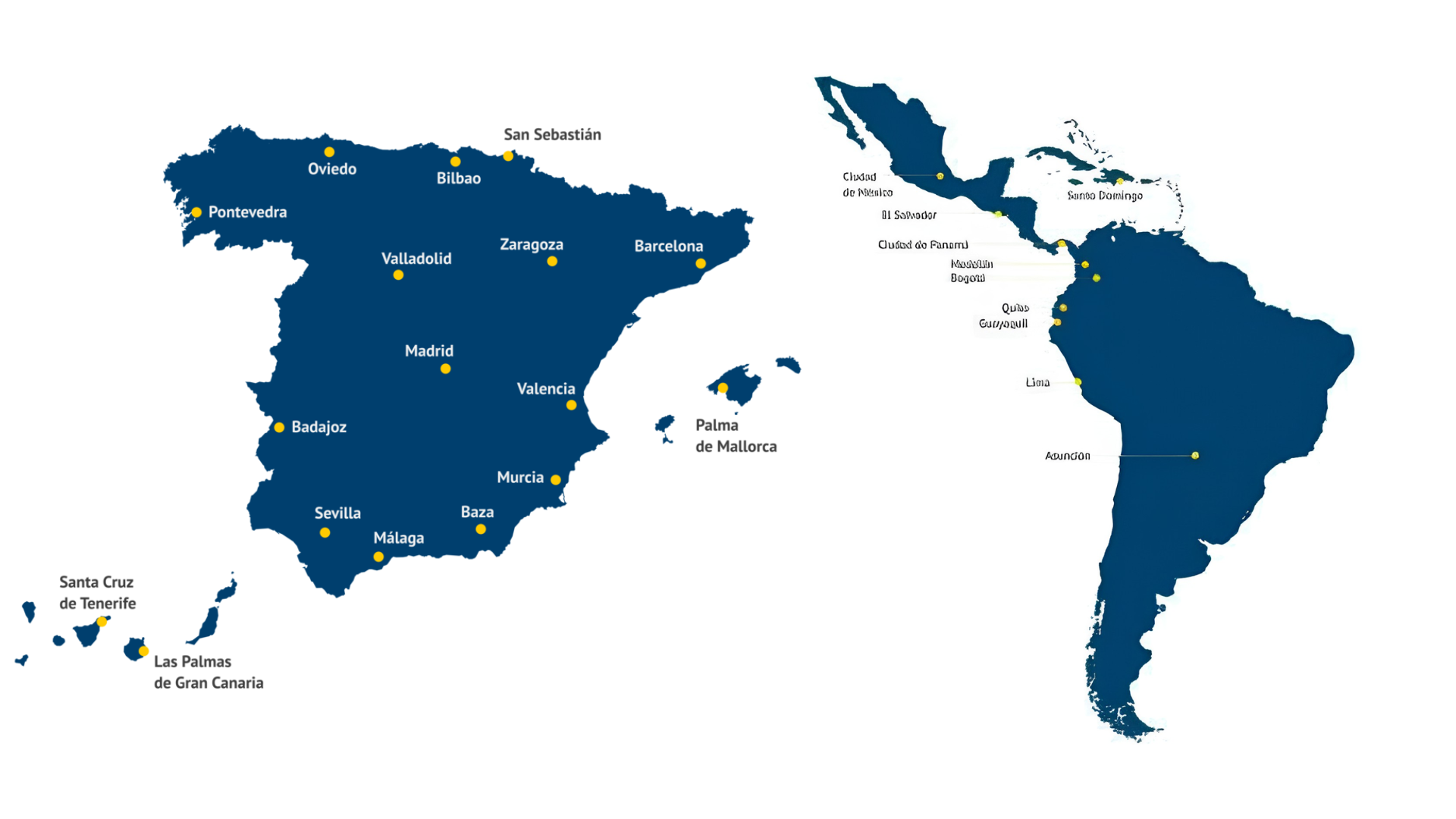
Furthermore, as a student at UAX Online, you’ll have access to our Campus Hubs – a network of exclusive physical spaces where you can study, access libraries, work in co-working areas and connect with other students. Because studying online doesn’t mean studying alone.
Campus Hubs available in: Alcobendas, Alcorcón, Valencia San Vicente, Murcia, Barcelona, Málaga, Seville and Arganda.
Access is granted with your UAX student card, subject to availability and the opening hours of each centre.
We need to know a little bit about you so that we can provide you with a personalised service.
All fields are required

Boost your career with the skills the job market demands
Master Microsoft 365 Copilot and boost your productivity with AI. Learn how to automate tasks, create content, analyse data and optimise your work in Word, Excel, PowerPoint, Outlook and Teams to work more efficiently with this official Microsoft certification.
Scholarships and financial support for studying at UAX
We know that studying is an investment. That’s why we want to remove financial barriers and make things easier for you. Fill in the form and let our advisers help you discover the scholarships, agreements and personalised financial support that best suit your situation.

Ministry of Education, Vocational Training and Sport
Find out about the scholarships and grants offered by the Ministry of Education, Vocational Training and Sport, categorised by type and level of education.

Attracting Pre-doctoral Research Talent
Financial support for outstanding students who wish to carry out innovative research and contribute to the advancement of knowledge in their disciplines.
If you’ve already decided to take the plunge, enrol early and benefit from a direct grant. It’s a way of rewarding your commitment and giving you a head start in planning your future.
Students from Ibero-America
This programme is aimed at Ibero-American citizens or foreign nationals legally resident in countries within the OEI’s sphere of influence. The scholarship covers a 50 per cent discount on the total tuition fees.

Students from Ecuador
This programme is aimed at citizens with Ecuadorian nationality and/or residence who wish to undertake an online master’s degree in Spain. The scholarship covers a 50 per cent discount on the total tuition fees.

2025, 2nd Edition
Grants for students on higher-level vocational training, undergraduate, postgraduate or master’s programmes enrolled at Spanish universities with a Santander agreement. A financial supplement to support you whilst undertaking your work placements.
If you graduated from UAX and are now thinking of studying for a new degree, we want to continue supporting you. That’s why we’re offering you a 10% discount on tuition fees.
If you have an immediate family member (up to second degree of kinship) enrolled at UAX, you can benefit from a 5 per cent discount on tuition fees. Because studying as a family is even better.
Studying for two degrees at the same time is a challenge, and we want to support you. If you’re already at UAX and enrol on a second degree programme, you’ll receive a grant towards your booking fee and tuition fees.
If you’d like to continue your studies with us and progress from vocational training to a bachelor’s degree, from one bachelor’s degree to another, or from a bachelor’s degree to a postgraduate degree, we’re here to support you with a grant covering up to 25 per cent of your tuition fees.
If you have a strong academic record, we would like to recognise your talent with a scholarship designed for new students. (Excludes the degree in Medicine).
*Terms and conditions to be published
If you’re a high-performance athlete, at UAX we want to help you balance your passion with your studies. We offer specific grants that can cover up to 50 per cent of your tuition fees.
You will be able to pursue a career in a wide range of fields and develop a specialised profile that will open up a wealth of career opportunities in roles such as:
To become a special education teacher, you need to meet certain educational requirements and obtain the necessary training and certifications to work with students with special educational needs. The UAX Online Master's Degree in Attention to Diversity and Inclusive Education prepares you to understand the specific needs of each student and prevent the risk of social exclusion.
A special education teacher may work in a variety of educational and support settings that require care and assistance for students with special educational needs. Some of the places where a special education teacher may work include: public and public schools, special education centres, early childhood centres, intervention and therapy centres or educational inclusion and support programmes.
The UAX Online Master's Degree in Attention to Diversity and Inclusive Education lasts 9 months and is an official qualification with 60 ECTS credits.
The master's degree in special education is an official postgraduate programme that offers advanced and specialised training in the field of inclusive education and support for students with special educational needs. This master's degree is aimed at professionals who wish to acquire knowledge, skills and strategies for working with students with functional diversity, disabilities or learning difficulties. In addition, by taking this master's degree, you will obtain merits that can be weighted with points in the public competitive examinations for teachers and secondary school teachers.
The aim is to enhance the development of the abilities of students with special educational needs, promoting their inclusion in the educational and social environment. It seeks to provide resources to adapt and improve their learning process.
The duties of the special education teacher include assessing the child's abilities and learning requirements, designing personalised education plans (PEP) and working with parents and school staff to monitor the student's progress.
In the master's degree in special educational needs, students have the opportunity to carry out internships in a variety of centres and companies, including educational centres, social services and specialised offices.
This practical experience is complemented by the teaching of fundamental knowledge and techniques so that students acquire the necessary skills and are able to face a variety of challenges in the field.
Students can take advantage of the more than 700 agreements we have with public, private and state-subsidised schools throughout Spain, allowing them to carry out internships in institutions such as the British School, Waldorf Schools, Montessori Schools and the Sagrada Familia Professional Schools, among others.
Additionally, there is the possibility of validating part of the internship if you have demonstrable professional experience in the area.
Other related qualifications
We offer a wide range of courses, so you’re sure to find a programme that suits you.
Master's Degree in Educational Technology and Digital Competences for Teachers - ICT (online)
In collaboration with:
Start:
October
Length:
9 months

Master’s Degree in Teacher Training for Compulsory Secondary Education and Sixth Form
In collaboration with:
Start:
October
Length:
1 year

Master's Degree in Psychopedagogy (online)
In collaboration with:
Start:
October
Length:
9 months

Master’s Degree in Teaching Spanish as a Foreign Language (Online)
In collaboration with:

Start:
October
Length:
9 months

Master’s Degree in Instrumental Pedagogy (Online)
Start:
October
Length:
9 months

Master’s Degree in Educational Neuropsychology (Online)
In collaboration with:

Start:
October
Length:
9 months

Online Master's Degree in Leadership and Management of Educational Centres
In collaboration with:
Start:
October
Length:
9 months

Online Master's Degree in Didactics in Mathematics
Start:
October
Length:
9 months

Online Master's Degree in Educational Innovation
Start:
October
Length:
9 months

Online Master's Degree in Conflict Prevention and Mediation in Educational Settings
Start:
October
Length:
9 months

Online Master's Degree in Emotional Education and Pedagogical Accompaniment
Start:
October
Length:
9 months

Online Master's Degree in Research Methodologies in Education
Start:
October
Length:
9 months

Online Course in Pedagogical and Didactic Training for Vocational Training Teachers
Start:
October
Length:
9 months
Access to regulations: https://www.uax.com/portal-de-transparencia/normativa
UAX promotes a culture of quality within the university community through the UAX Quality System (SIUAX), for which the University Management bears ultimate responsibility, ensuring that the system’s planning is implemented to effectively meet quality objectives and satisfy the needs, requirements and expectations of customers and stakeholders.
The bodies responsible are:
The Degree Programme Monitoring and Improvement Committee for the 2025–26 academic year is composed of:
Improvement measures implemented on the course during the academic year:
Enquiries, complaints and claims
We respond to the genuine needs of our students and staff, because we believe in the continuous improvement of our results. That is why we always want to hear whatever you have to say.
If you are already part of UAX, please visit the ‘Customer Service: complaints, suggestions and compliments’ section on thevirtual campus , logging in with your username and password.
In accordance with Royal Decree 822/2021 (Article 34), this degree programme must undergo the accreditation renewal process. During the process, an evaluation team from the Madrimasd Knowledge Foundation will meet with various stakeholders associated with the degree programme. In addition, they have provided aform so that anyone interested can inform the Foundation of any aspects they consider relevant to the development of this programme.
You can view the various indicators via the following links:
Employability: View
Satisfaction results: View
Rates and indicators: View
Improvement measures implemented for the degree programme during the academic year: