See all Online Master's Degrees in Health
See all Master's Degrees in Engineering
Most searched curriculums
Official qualification
Madrid
Become an expert in data analysis and business management with UAX’s Bachelor’s Degree in Business Analytics + Business Administration, designed in collaboration with leading professionals and companies in the sector. You’ll earn two degrees in 4.5 years, with practical training and excellent career prospects.
In collaboration with:

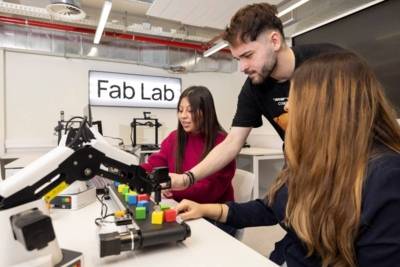
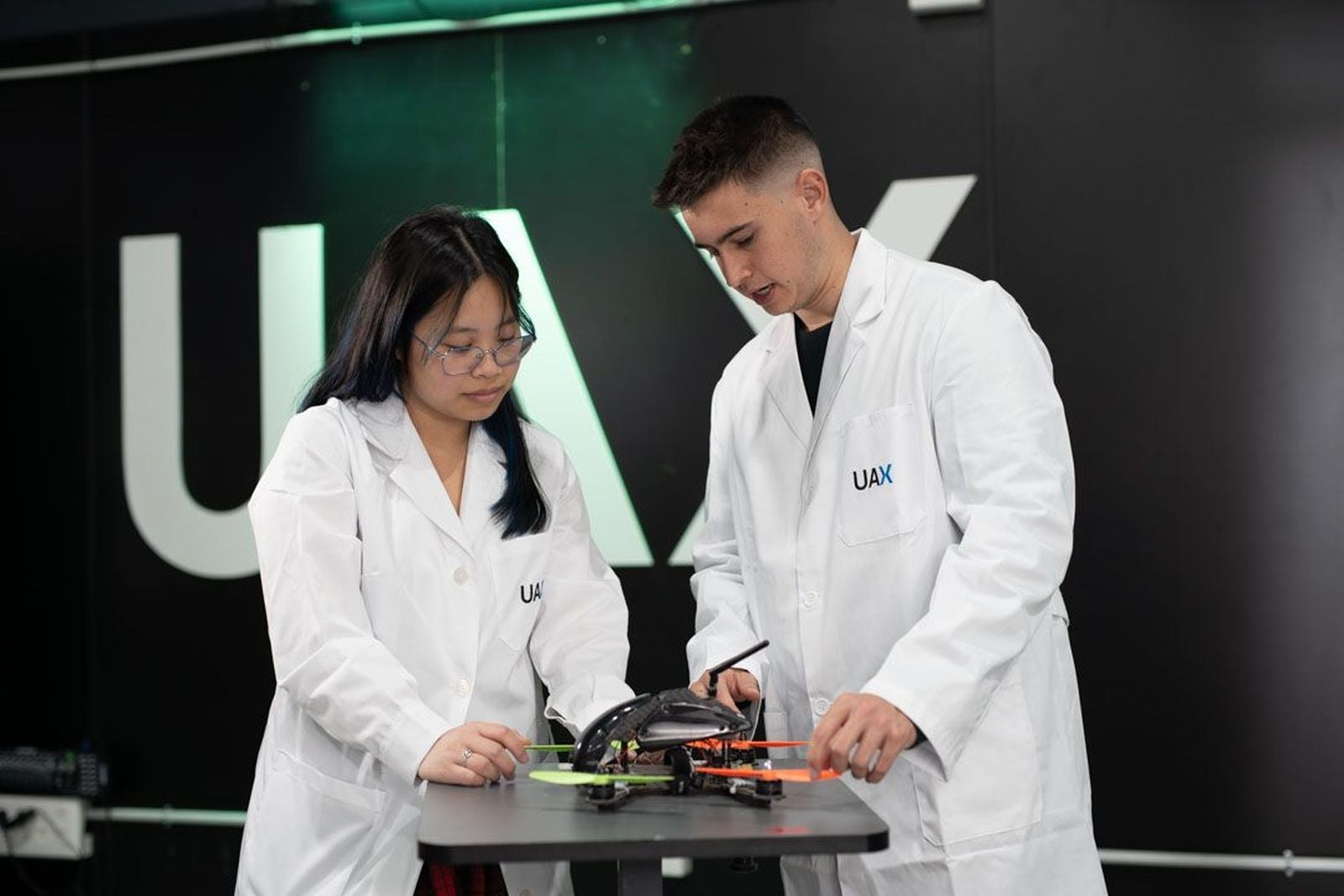
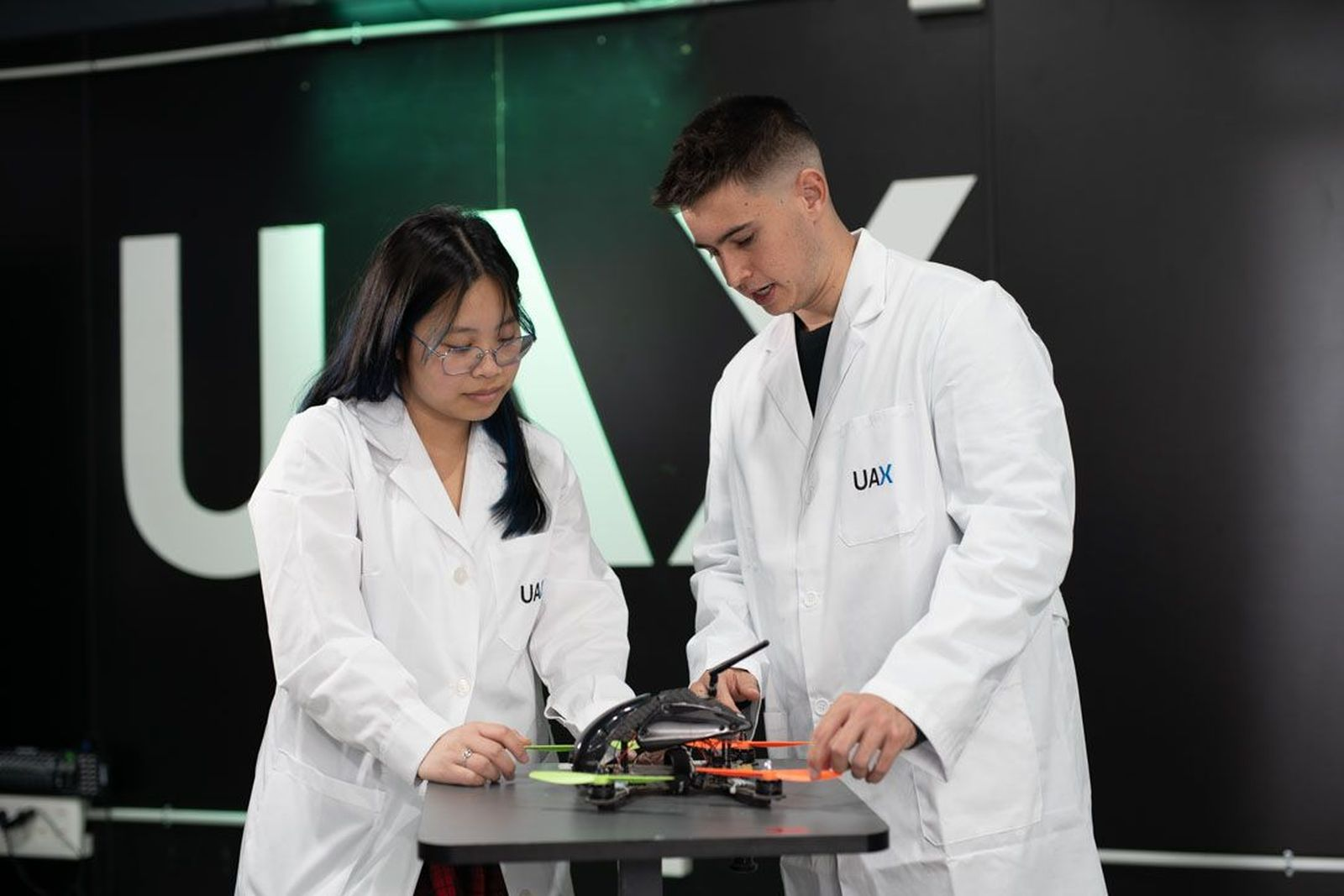
Because it combines business acumen and data analysis through practical UAX Makers projects.
98% EMPLOYABILITY
98% of our graduates get their first job after completing their degree.
8800 CONVENTIONS
Collaboration so that you can do your internship in the best companies in the sector.
95% ACTIVE TEACHERS
Your training, aligned with professional reality
UAX’s Double Degree in Business Analytics + Business Administration and Management prepares you to meet the latest demands of leading companies, thanks to a curriculum developed in collaboration with the Big 4. This programme trains professionals to combine data visualisation and analysis with a solid grounding in business management, enabling you to design data-driven strategies and successfully achieve business objectives.
An innovative university experience that views business and technology as a unified whole, preparing you for a transition towards a professional future that makes a real impact on the business world.
The degree includes:

UAX is a member of AACSB, the world’s largest global alliance for business education. This affiliation with leading institutions in over 100 countries guarantees degrees of the highest quality, which are internationally recognised and lead to excellent employability.

All fields are required
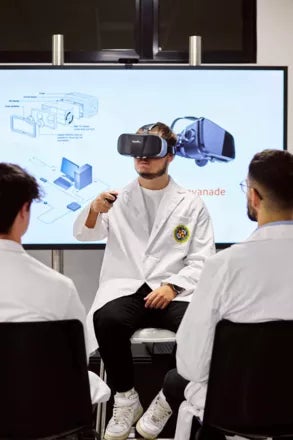
Companies are an integral part of your day-to-day life on campus. You’ll take part in innovation projects, have your skills certified, and be offered work placements from your first year onwards. Companies such as Avanade, CIMPA and Sener are already developing talent and working on projects alongside our students.

You will develop the digital skills most in demand by companies and an additional 450 hours of internships. All of this with the aim of expanding your professional opportunities by taking part of your training directly at the Big Four.
Bachelor’s Degree in Business Analytics + Bachelor’s Degree in Business Administration and Management
First Year
FIRST FOUR-MONTH PERIOD
| Code | Subjects | Character* | ECTS | ||||||||||||||||||||||||||||||||||||||||||||||||||||||||||||||||||||||||||||||||||||||||||||||||||||||||||||||||||||||||||||||||||||||||||||||||||||||||||||||||||||||||||||||||||||||||||||||||||||||||||||||||||||||||||||||||||||||||||||||||||||||
|---|---|---|---|---|---|---|---|---|---|---|---|---|---|---|---|---|---|---|---|---|---|---|---|---|---|---|---|---|---|---|---|---|---|---|---|---|---|---|---|---|---|---|---|---|---|---|---|---|---|---|---|---|---|---|---|---|---|---|---|---|---|---|---|---|---|---|---|---|---|---|---|---|---|---|---|---|---|---|---|---|---|---|---|---|---|---|---|---|---|---|---|---|---|---|---|---|---|---|---|---|---|---|---|---|---|---|---|---|---|---|---|---|---|---|---|---|---|---|---|---|---|---|---|---|---|---|---|---|---|---|---|---|---|---|---|---|---|---|---|---|---|---|---|---|---|---|---|---|---|---|---|---|---|---|---|---|---|---|---|---|---|---|---|---|---|---|---|---|---|---|---|---|---|---|---|---|---|---|---|---|---|---|---|---|---|---|---|---|---|---|---|---|---|---|---|---|---|---|---|---|---|---|---|---|---|---|---|---|---|---|---|---|---|---|---|---|---|---|---|---|---|---|---|---|---|---|---|---|---|---|---|---|---|---|---|---|---|---|---|---|---|---|---|---|---|---|---|---|---|
| C0120112 | Ecosystem and Digital Transformation | FB | 6 | ||||||||||||||||||||||||||||||||||||||||||||||||||||||||||||||||||||||||||||||||||||||||||||||||||||||||||||||||||||||||||||||||||||||||||||||||||||||||||||||||||||||||||||||||||||||||||||||||||||||||||||||||||||||||||||||||||||||||||||||||||||||
Ecosystem and Digital TransformationCódigo: C0120112 Imprimir Course 1: First-term module. Foundation course. 6 credits. Profesores
Objectives To provide students with an in-depth understanding of the digital society and the smart society, as well as the technological and industrial revolution. Furthermore, the module aims to explore the concept and evolution of digital transformation, analyse emerging disruptive business models and understand the impact that digital transformation has on contemporary business strategy. Prerequisites None specified Learning Outcomes Degree programme adapted to Royal Decree 822/2021 of 28 September, which establishes the organisation of university education and the procedure for ensuring its quality. Learning outcomes Knowledge: RK2. Understands the function, organisation and management of the company and its key variables. RK8. Understands the various tools offered by the fields of computing and digital technology as a basis for implementing strategies within the organisation Skills: RS1. Prepares projects and reports, both orally and in writing, in a business context. Competence: RODS. Develops effective communication, teamwork, analytical thinking, creativity and ethical leadership from a and clearly drawing on democratic principles and values, as well as the Sustainable Development Goals, in order to conduct oneself with integrity in the professional sphere. Description of the content 1. The digital society and the knowledge society 2. Technological and industrial revolution 3. Concept and evolution of digital transformation 4. Disruptive business models 5. Impact of digital transformation on corporate strategy Training activities P1. Lectures P2. Interactive classes P5. Independent study, case studies or problem-solving, literature reviews. P6. Tutoring P7. Knowledge tests Assessment system and criteria Without prejudice to any other requirements that may be set out in the relevant course syllabus, as a general rule, failure to attend more than 70 per cent of the course’s teaching activities—which require the student’s physical or virtual presence—will result in the loss of the right to continuous assessment during the standard examination period. In this case, the examination to be held during the official period established by the University will be the sole assessment criterion, with the weighting specified in the course syllabus. ---- Minimum compulsory attendance: To be eligible for continuous assessment, students must achieve a minimum attendance rate of 70 per cent; if this percentage is not met, they will only be eligible for the mark stipulated for the final examination REGULAR EXAM SESSION: S1.- Practical activities (case studies, problem-solving and challenges, oral presentations, debates, etc.). Weighting: 50%. S2. Final knowledge assessments. Percentage: 50 per cent. SUPPLEMENTARY EXAMINATION PERIOD: Students will sit a final examination for the module on a date to be determined by the University. The final mark will be the mark obtained in the examination. |
|||||||||||||||||||||||||||||||||||||||||||||||||||||||||||||||||||||||||||||||||||||||||||||||||||||||||||||||||||||||||||||||||||||||||||||||||||||||||||||||||||||||||||||||||||||||||||||||||||||||||||||||||||||||||||||||||||||||||||||||||||||||||
| C0121300 | Financial Accounting | FB | 6 | ||||||||||||||||||||||||||||||||||||||||||||||||||||||||||||||||||||||||||||||||||||||||||||||||||||||||||||||||||||||||||||||||||||||||||||||||||||||||||||||||||||||||||||||||||||||||||||||||||||||||||||||||||||||||||||||||||||||||||||||||||||||
Financial AccountingCódigo: C0121300 Imprimir Course 1: First-term module. Foundation course. 6 credits. Profesores
Objectives By the end of the module, students will have a thorough understanding of all aspects of business accounting; they will be able to examine, measure and analyse a company’s assets and financial position, thereby facilitating decision-making and ensuring the proper management and recording of all a company’s accounting information. Prerequisites None specified. Competencies Degree programme adapted to Royal Decree 822/2021 of 28 September, which establishes the organisation of university education and the procedure for ensuring its quality. Learning outcomes RK19: Understand the functioning of the accounting system and accounting regulations in Spain RK20: To identify accounting principles, valuation criteria and the components of annual accounts, as well as the double-entry bookkeeping method RS8: Use accounting as a system for providing information on a company’s assets and financial performance RS9: Apply accounting principles when recording accounting transactions, in accordance with the regulatory framework and taking into account the impact on a company’s assets RC1: Master strategies for organisation, planning and effective time management in order to present a clear and well-founded report RC2: Produce projects and reports, both orally and in writing, in a business context Course content Accounting as an information system for a company’s assets and financial performance. Accounting regulations in Spain. Double-entry bookkeeping methodology. Recording accounting transactions: tools and procedures. Application of accounting principles and valuation criteria. Annual Accounts. Use of computerised accounting management tools for analysis and decision-making. Training activities LA 1. Lectures: Theoretical and practical classes, in which concepts related to the subject matter are presented. This activity is 100% face-to-face TA 2. Problem-solving or case studies and other cooperative learning activities. This activity is 100% face-to-face TA 3. Independent student work. This activity is not face-to-face AF.4 Assessment activities. This activity is 100% face-to-face Assessment system and criteria Without prejudice to any other requirements that may be specified in the relevant course syllabus, as a general rule, failure to attend more than 70 per cent of the course’s teaching activities—which require the student’s physical or virtual presence—will result in the loss of the right to continuous assessment during the standard examination period. In this case, the examination to be held during the official period set by the University will be the sole assessment criterion, with the corresponding weighting as specified in the course syllabus. Assessment system: EV.1 Completion of set practicals and exercises 30% EV.2 Submission of individual and/or group assignments 25% EV.3 Course examinations and problem-solving 45% Timetable Click on this link to view the detailed timetable in Excel
Bibliography Core: 1. Besteiro, M.A. Advanced Financial Accounting Pirámide. 2016. ISBN: 9788436835502 2. Campo, P. Financial Accounting: Recording and Valuation Standards Sanz y Torres. 2023. ISBN: 9788419433657 3. Mallo, C. and Pulido, A. Financial Accounting: A Contemporary Approach Paraninfo Cengage Learning. 2008. ISBN: 9788428330244 Supplementary: 4.- Muñoz, R., Lazcano, L. and Márquez, J. Financial Accounting McGraw-Hill. 2021. ISBN: 9788448631185 5. Omeñaca, J. General Accounting Deusto. 2017. ISBN: 9788423427574 6. Rivero, J. Financial Accounting Edisofer. 2021. ISBN: 9788418493157 |
|||||||||||||||||||||||||||||||||||||||||||||||||||||||||||||||||||||||||||||||||||||||||||||||||||||||||||||||||||||||||||||||||||||||||||||||||||||||||||||||||||||||||||||||||||||||||||||||||||||||||||||||||||||||||||||||||||||||||||||||||||||||||
| C0121301 | Fundamentals of Business / Principles of Business | FB | 6 | ||||||||||||||||||||||||||||||||||||||||||||||||||||||||||||||||||||||||||||||||||||||||||||||||||||||||||||||||||||||||||||||||||||||||||||||||||||||||||||||||||||||||||||||||||||||||||||||||||||||||||||||||||||||||||||||||||||||||||||||||||||||
Fundamentals of Business / Principles of BusinessCódigo: C0121301 Imprimir Course 1: First-term module. Basic training. 6 credits. Profesores
Objectives By the end of the course, the student will: Have a broad understanding of various aspects related to the reality of business. Specifically: economic and social objectives, organisational structure, the role of management, and the function of the entrepreneur. Be familiar with the main decisions a company must make in relation to: Human resource management Financial management Commercial management Operations management Competencies Degree programme adapted to Royal Decree 822/2021 of 28 September, which establishes the organisation of university education and the procedure for ensuring its quality / Degree programme in accordance with Royal Decree 822/2021 of 28 September, which establishes the organisation of university education and the procedures for ensuring its quality. Learning outcomes RK11: Understand the nature of the company and economic systems / Know the nature of the company and economic systems. RK12: To understand the main functional areas of a company: organisation and people development, production, finance, accounting, taxation and marketing / Know the main functional areas of the company: organisation and people development, production, finance, accounting, taxation and marketing. RS3: Analyse the separation between ownership and control in modern companies. RC1: Master organisational, planning and effective time management strategies to present a clear and well-substantiated report / Master organisational, planning and effective time management strategies to present a clear and well-substantiated report. RC3: Solve problems and make decisions with initiative in the current business context. RODS: Develop effective communication, teamwork, analytical thinking, creativity and ethical leadership from a cross-disciplinary perspective, drawing clearly on democratic principles and values as well as the Sustainable Development Goals, in order to operate with integrity in a professional environment / Develops effective communication, teamwork, analytical thinking, creativity and ethical leadership from a cross-disciplinary perspective and with clear inspiration drawn from democratic principles and values, as well as the Sustainable Development Goals, in order to operate with integrity in a professional environment. Course description The nature and concept of the enterprise. The enterprise and economic systems. The entrepreneur in economic thought. The separation of ownership and control in modern enterprises. The entrepreneur in the 21st century. Corporate culture. Business strategy. Fundamental rights and equal opportunities, a culture of peace and democratic values. Introduction to the functional areas of a business: organisation and human resources development, production, finance, accounting and taxation, and marketing. Nature and concept of business. Business and economic systems. The entrepreneur in economic thought. The separation between ownership and control of modern enterprises. The entrepreneur facing the 21st century. Business culture. Company strategy. Fundamental rights and equal opportunities, a culture of peace and democratic values. Introduction to the company’s functional areas: organisation and development of people; production; financing, accounting and taxation; and marketing Teaching activities AF 1. Lectures: Theoretical and practical teaching sessions in which concepts related to the subjects are presented. This activity is 100% face-to-face / AF 1. Lectures: Theoretical and practical teaching sessions in which concepts related to the subjects are presented. This activity is 100 per cent face-to-face. AF 2. Problem-solving, case studies and other cooperative learning activities: This activity is 100% in-person. AF.3. Independent student work. This activity is not in-person / AF 3. Independent student work: This activity is not in-person. AF.4. Assessment activities. This activity is 100% in-person / AF 4. Assessment activities: This activity is 100% in-person. Assessment system and criteria Without prejudice to any other requirements that may be specified in the relevant course syllabus, as a general rule, failure to attend more than 70 per cent of the course’s teaching activities—which require the student’s physical or virtual presence—will result in the loss of the right to continuous assessment during the standard examination period. In this case, the examination to be held during the official period set by the University shall be the sole assessment criterion, with the corresponding weighting as specified in the course syllabus / Without prejudice to any additional requirements that may be set out in the relevant course syllabus, as a general rule, failure to attend more than 70 per cent of the course’s learning activities that require the student’s physical or virtual presence will result in the loss of the right to continuous assessment during the regular examination session. In this case, the exam held during the official period established by the University will be the sole assessment criterion, with the weighting assigned in the course syllabus. ---- Assessment System / Assessment System EV.1 Completion of practical activities and assigned exercises 30% / EV.1 Completion of practical activities and assigned exercises 30% EV.2 Submission of individual and/or group assignments 30% / EV.2 Submission of individual and/or group assignments 30% EV.3 Subject exams and problem-solving 40% / EV.3 Subject exams and problem-solving 40% Timetable Click on this link to view the detailed timetable in Excel
Reading list Core: 1. Javier Fernández Aguado and José Aguilar Fundamentals of Business Organisation: A Strategic Approach CEF Publications. 2019. ISBN: 978-84-454-39 2. Paul G. Keat, Philip K. Y. Young, Stephen E. Erfle Managerial Economics: Economic Tools for Today’s Decision-Makers Pearson Education. 2017. ISBN: 978-1-292-215 Supplementary: 3.- Charles W. L. Hill and Gareth R. Jones Strategic Management: Theory: An Integrated Approach Cengage Learning. 2020. ISBN: 978-0-357-129 4. Richard L. Daft Management Cengage Learning. 2021. ISBN: 978-0-357-509 |
|||||||||||||||||||||||||||||||||||||||||||||||||||||||||||||||||||||||||||||||||||||||||||||||||||||||||||||||||||||||||||||||||||||||||||||||||||||||||||||||||||||||||||||||||||||||||||||||||||||||||||||||||||||||||||||||||||||||||||||||||||||||||
| C0121302 | Management Information Systems/Business Computing | FB | 6 | ||||||||||||||||||||||||||||||||||||||||||||||||||||||||||||||||||||||||||||||||||||||||||||||||||||||||||||||||||||||||||||||||||||||||||||||||||||||||||||||||||||||||||||||||||||||||||||||||||||||||||||||||||||||||||||||||||||||||||||||||||||||
Management Information Systems/Business ComputingCódigo: C0121302 Imprimir Course 1: First-term module. Foundation course. 6 credits. Profesores
Objectives By the end of the course, the student will: Be familiar with various tools and techniques for data processing and analysis, primarily Excel. The student will be able to: Work with spreadsheets Create different types of data visualisations tailored to the characteristics of each problem Write reports that provide value to their audience Deliver oral presentations explaining results based on the data analysis carried out / Deliver oral presentations explaining results based on the conducted data analysis Prerequisites None described / No descriptions provided. Competencies Degree programme adapted to Royal Decree 822/2021 of 28 September, which establishes the organisation of university education and the procedure for ensuring its quality / Degree programme adapted to Royal Decree 822/2021 of 28 September, which establishes the organisation of university education and the procedure for ensuring its quality. Learning outcomes RK37: Have an in-depth understanding of the computer tools used to analyse a company’s economic data / Know in depth the computer tools for analysing the company’s economic data. RS24: Use spreadsheets, as well as tables and dynamic graphs / Use spreadsheets, as well as tables and dynamic graphs. RS25: Use data efficiently in management reporting / Use data efficiently in management reporting RC1: Master organisational, planning and effective time management strategies to present a clear and well-founded report / Master organisational, planning and effective time management strategies to present a clear and well-founded report. RC2: “Prepare projects and reports orally and in writing in a business context / Ability to prepare projects and reports orally and in writing in the business field”. Course content IT tools for analysing a company’s financial data. Spreadsheet processing. Dynamic tables and graphs. Reporting. IT tools for analysing the company’s economic data. Spreadsheet processing. Dynamic tables and graphs. Reporting. Teaching activities AF 1. Lectures: Theoretical and practical teaching sessions in which concepts related to the subjects are presented. This activity is 100% face-to-face / AF 1. Lectures: Theoretical and practical teaching sessions in which concepts related to the subjects are presented. This activity is 100% face-to-face. AF 2. Problem-solving, case studies and other cooperative learning activities: This activity is 100% face-to-face / AF 2. Problem-solving, case studies and other cooperative learning activities: This activity is 100% face-to-face. AF.3 Independent student work. This activity is not in-person / AF 3. Independent student work: This activity is not in-person. AF.4 Assessment activities. This activity is 100% in-person / AF 4. Assessment activities: This activity is 100% in-person. Assessment system and criteria Without prejudice to any other requirements that may be set out in the relevant course syllabus, as a general rule, failure to attend more than 70 per cent of the course’s teaching activities requiring the student’s physical presence will result in the loss of the right to continuous assessment during the standard examination period. In this case, the examination to be held during the official period set by the University will be the sole assessment criterion, with the corresponding weighting as set out in the course syllabus / Without prejudice to any additional requirements that may be set out in the relevant course syllabus, as a general rule, failure to attend more than 70 per cent of the course’s learning activities that require the student’s physical or virtual presence will result in the loss of the right to continuous assessment in the regular examination session. In this case, the exam held during the official period established by the University will be the sole assessment criterion, with the weighting specified in the course syllabus. ---- Assessment system EV.1 Completion of practical activities and assigned exercises 20% / EV.1 Completion of practical activities and assigned exercises 20% EV.2 Submission of individual and/or group assignments (U-LABS) 30% / EV.2 Submission of individual and/or group assignments (U-LABS) 30% EV.3 Subject exams, problem-solving, etc. 50% / EV.3 Subject exams and problem-solving, etc. 50% Timetable Click on this link to view the detailed timetable in Excel
Bibliography Core: 1. Michael Alexander Excel Bible John Wiley & Sons Inc. 2018. ISBN: 9781119514787 2. Wayne Winston Microsoft Excel 2019 Data Analysis and Business Modelling (Business Skills) Pearson. 2019. ISBN: 1509305882 |
|||||||||||||||||||||||||||||||||||||||||||||||||||||||||||||||||||||||||||||||||||||||||||||||||||||||||||||||||||||||||||||||||||||||||||||||||||||||||||||||||||||||||||||||||||||||||||||||||||||||||||||||||||||||||||||||||||||||||||||||||||||||||
| C0121303 | Macroeconomics | FB | 6 | ||||||||||||||||||||||||||||||||||||||||||||||||||||||||||||||||||||||||||||||||||||||||||||||||||||||||||||||||||||||||||||||||||||||||||||||||||||||||||||||||||||||||||||||||||||||||||||||||||||||||||||||||||||||||||||||||||||||||||||||||||||||
MacroeconomicsCódigo: C0121303 Imprimir Course 1. First-term module. Foundational studies. 6 credits. Profesores
Objectives 1. To introduce students to the fundamental concepts and theories of macroeconomics. / 1. To introduce students to the foundational concepts and theories of macroeconomics 2. To develop students’ ability to analyse and interpret macroeconomic data and indicators / 2. To develop students’ ability to analyse and interpret macroeconomic data and indicators 3. To examine the role of macroeconomic policies in promoting economic stability and growth / 3. To examine the role of macroeconomic policies in promoting economic stability and growth / 4. Explore the connections between macroeconomics and other fields such as finance, international trade and sustainable development / 4. Explore the connections between macroeconomics and other fields such as finance, international trade and sustainable development 5. Foster critical thinking and problem-solving skills through the application of macroeconomic principles to real-world scenarios / 5. Foster critical thinking and problem-solving skills through the application of macroeconomic principles to real-world scenarios 6. To broaden students’ awareness of the global dimensions of macroeconomics and its implications for policy coordination and international relations / 6. To broaden students’ awareness of the global dimensions of macroeconomics and its implications for policy coordination and international relations Prerequisites None provided / No descriptions provided. Learning outcomes Degree programme adapted to Royal Decree 822/2021 of 28 September, which establishes the organisation of university education and the procedure for ensuring its quality / Degree programme adapted to Royal Decree 822/2021 of 28 September, which establishes the organisation of university education and the procedure for ensuring its quality. Learning outcomes RK1: To be familiar with the principles of economic theory and to analyse the behaviour of economic agents. / To be familiar with the principles of economic theory and to analyse the behaviour of economic agents. RK2: To understand the objectives and basic instruments of macroeconomics in global economic policy / To understand the objectives and basic instruments of macroeconomics in global economic policy RK3: To understand the main characteristics of economic activity, the labour market and prices, as well as monetary and fiscal policy, the external sector and socio-economic development / Understand the main characteristics of economic activity, the labour market and prices, as well as monetary and fiscal policy, the external sector and socio-economic development RS1: Analyse data from different sources and their influence on the establishment and improvement of indicators and macroeconomic models / Analyse data from different sources and their influence on the establishment and improvement of indicators and macroeconomic models RC1: Master organisational, planning and effective time management strategies to present a clear and well-founded report / Master organisational, planning and effective time management strategies to present a clear and well-founded report RODS: Develops effective communication, teamwork, analytical thinking, creativity and ethical leadership from a cross-cutting perspective, clearly drawing on democratic principles and values as well as the Sustainable Development Goals, in order to operate with integrity in a professional environment / Develops effective communication, teamwork, analytical thinking, creativity and ethical leadership from a cross-disciplinary perspective and with clear inspiration drawn from democratic principles and values, as well as the Sustainable Development Goals, to operate with integrity in a professional environment Course description Introduction to Macroeconomics. Basic objectives and instruments of macroeconomics and their application in global economic policy. Main characteristics of economic activity. The labour market and prices. Monetary and fiscal policy. The external sector and socio-economic development. The course will examine how data analysis can influence the establishment and improvement of macroeconomic indicators and models. Introduction to Macroeconomics. Core macroeconomic objectives and instruments and their implementation in global economic policies. Main characteristics of economic activity. Labour and price markets. Monetary and fiscal policy. The external sector and socio-economic development. Consideration will be given to how data analysis can influence the establishment and improvement of macroeconomic indicators and models. Teaching activities AF 1. Lectures: Theoretical and practical teaching sessions in which concepts related to the subjects are presented. This activity is 100% face-to-face / AF 1. Lectures: Theoretical and practical teaching sessions in which concepts related to the subjects are presented. This activity is 100 per cent face-to-face. AF 2. Problem-solving, case studies and other cooperative learning activities. This activity is 100% face-to-face / AF 2. Problem-solving, case studies and other cooperative learning activities: This activity is 100% face-to-face. AF.3 Independent student work. This activity is not in-person / AF 3. Independent student work: This activity is not in-person. AF.4 Assessment activities. This activity is 100% in-person / AF 4. Assessment activities: This activity is 100% in-person. Assessment system and criteria Without prejudice to any other requirements that may be specified in the relevant course syllabus, as a general rule, failure to attend more than 70 per cent of the course’s teaching activities—which require the student’s physical or virtual presence—will result in the loss of the right to continuous assessment during the ordinary examination period. In this case, the examination to be held during the official period set by the University will be the sole assessment criterion, with the corresponding weighting as set out in the course syllabus / Without prejudice to any additional requirements that may be set out in the relevant course syllabus, as a general rule, failure to attend more than 70 per cent of the course’s learning activities that require the student’s physical or virtual presence will result in the loss of the right to continuous assessment in the regular examination session. In this case, the exam held during the official period set by the University will be the sole assessment criterion, with the weighting specified in the course syllabus. ---- Assessment System: EV.1 Completion of practical activities and assigned exercises 20% / EV.1 Completion of practical activities and assigned exercises 20% EV.2 Submission of individual and/or group assignments 30% / EV.2 Submission of individual and/or group assignments 30% EV.3 Subject exams and problem-solving 50% / EV.3 Subject exams and problem-solving 50% Methodology: MD.1. Masterclass MD.2. Case studies MD.3. Problem-based learning MD.4. Collaborative learning Timetable Click on this link to view the detailed timetable in Excel
Bibliography Core: 1. Mankiw, Gregory Brief Principles of Macroeconomics Cengage Learning, Inc. 2021. ISBN: 9780357133736 Supplementary: 2.- Tirole, Jean Economics for the Common Good Princeton University Press. 2017. ISBN: 0691175160 |
|||||||||||||||||||||||||||||||||||||||||||||||||||||||||||||||||||||||||||||||||||||||||||||||||||||||||||||||||||||||||||||||||||||||||||||||||||||||||||||||||||||||||||||||||||||||||||||||||||||||||||||||||||||||||||||||||||||||||||||||||||||||||
| TOTAL: | 30 | ||||||||||||||||||||||||||||||||||||||||||||||||||||||||||||||||||||||||||||||||||||||||||||||||||||||||||||||||||||||||||||||||||||||||||||||||||||||||||||||||||||||||||||||||||||||||||||||||||||||||||||||||||||||||||||||||||||||||||||||||||||||||
SECOND FOUR-MONTH TERM
| Code | Subjects | Character* | ECTS | ||||||||||||||||||||||||||||||||||||||||||||||||||||||||||||||||||||||||||||||||||||||||||||||||||||||||||||||||||||||||||||||||||||||||||||||||||||||||||||||||||||||||||||||||||||||||||||||||||||||||||||||||||||||||||||||||||||||||||||||||||||||||||||||||||||||||||||||||||
|---|---|---|---|---|---|---|---|---|---|---|---|---|---|---|---|---|---|---|---|---|---|---|---|---|---|---|---|---|---|---|---|---|---|---|---|---|---|---|---|---|---|---|---|---|---|---|---|---|---|---|---|---|---|---|---|---|---|---|---|---|---|---|---|---|---|---|---|---|---|---|---|---|---|---|---|---|---|---|---|---|---|---|---|---|---|---|---|---|---|---|---|---|---|---|---|---|---|---|---|---|---|---|---|---|---|---|---|---|---|---|---|---|---|---|---|---|---|---|---|---|---|---|---|---|---|---|---|---|---|---|---|---|---|---|---|---|---|---|---|---|---|---|---|---|---|---|---|---|---|---|---|---|---|---|---|---|---|---|---|---|---|---|---|---|---|---|---|---|---|---|---|---|---|---|---|---|---|---|---|---|---|---|---|---|---|---|---|---|---|---|---|---|---|---|---|---|---|---|---|---|---|---|---|---|---|---|---|---|---|---|---|---|---|---|---|---|---|---|---|---|---|---|---|---|---|---|---|---|---|---|---|---|---|---|---|---|---|---|---|---|---|---|---|---|---|---|---|---|---|---|---|---|---|---|---|---|---|---|---|---|---|---|---|---|---|---|---|---|---|---|---|---|---|---|---|---|---|
| C0120116 | Fundamentals of Business Intelligence | OB | 6 | ||||||||||||||||||||||||||||||||||||||||||||||||||||||||||||||||||||||||||||||||||||||||||||||||||||||||||||||||||||||||||||||||||||||||||||||||||||||||||||||||||||||||||||||||||||||||||||||||||||||||||||||||||||||||||||||||||||||||||||||||||||||||||||||||||||||||||||||||||
Fundamentals of Business IntelligenceCódigo: C0120116 Imprimir Course 1: Second-term module. Compulsory. 6 credits. Profesores
Objectives To understand the fundamentals of business intelligence and apply its tools and techniques, including data mining and artificial intelligence, for analysis and strategic decision-making within the organisation. Prerequisites None specified Competencies Qualification in accordance with Royal Decree 822/2021 of 28 September, which establishes the organisation of university education and the procedure for ensuring its quality. Learning outcomes Knowledge: RK2. Understands the function, organisation and management of a business and its key variables. RK8. Understands the various tools offered by the fields of computing and digital technology as a basis for implementing strategies within the organisation. Course content 1. The concept and evolution of Business Intelligence. 2. Functions of Business Intelligence and its application within the company. 3. Application of Business Intelligence by sector 4. Data mining 5. Artificial intelligence and machine learning 6. Business intelligence tools and platforms Training activities P1. Lectures P2. Interactive classes P4. Assignment work and problem-solving P5. Independent study, solving case studies or problems, and literature reviews. P6. Tutoring P7. Knowledge assessments Assessment system and criteria Without prejudice to any other requirements that may be set out in the relevant course syllabus, as a general rule, failure to attend more than 70 per cent of the course’s teaching activities—which require the student’s physical or virtual presence—will result in the loss of the right to continuous assessment during the standard examination period. In this case, the examination to be held during the official period established by the University shall be the sole assessment criterion, with the corresponding weighting as set out in the course syllabus. ---- Minimum compulsory attendance: To be eligible for continuous assessment, students must achieve a minimum attendance rate of 70 per cent; if this percentage is not met, they will only be eligible for the mark stipulated for the final examination. REGULAR EXAMINATION PERIOD: S1.- Practical activities (case studies, problem-solving and challenges, oral presentations, debates, etc.). Weighting: 40 per cent. S2. Final knowledge assessments. Percentage: 60 per cent. SESSION OUTSIDE THE REGULAR EXAM PERIOD: Students will sit a final examination for the module on a date to be determined by the University. The final mark will be the mark obtained in the examination. |
|||||||||||||||||||||||||||||||||||||||||||||||||||||||||||||||||||||||||||||||||||||||||||||||||||||||||||||||||||||||||||||||||||||||||||||||||||||||||||||||||||||||||||||||||||||||||||||||||||||||||||||||||||||||||||||||||||||||||||||||||||||||||||||||||||||||||||||||||||||
| C0120117 | Fundamentals of Law | FB | 6 | ||||||||||||||||||||||||||||||||||||||||||||||||||||||||||||||||||||||||||||||||||||||||||||||||||||||||||||||||||||||||||||||||||||||||||||||||||||||||||||||||||||||||||||||||||||||||||||||||||||||||||||||||||||||||||||||||||||||||||||||||||||||||||||||||||||||||||||||||||
Fundamentals of LawCódigo: C0120117 Imprimir Course 1. Second-term module. Foundation course. 6 credits. Profesores
Objectives To understand the fundamentals of law, its structure and functioning, as well as the essential legal rules and concepts required for its correct interpretation and application. Prerequisites None specified Learning Outcomes Degree programme adapted to Royal Decree 822/2021 of 28 September, which establishes the organisation of university education and the procedure for ensuring its quality. Learning outcomes Knowledge: RK9. Understands the specific fundamentals of the legal system, the regulatory framework and professional ethics in the business sector. Course content 1. Law as a form of organisation and as an educational system. 2. The science of law. 3. Theory of Law: the legal norm and 4. Theory of Law: the legal system. 5. Interpretation and application of the law. 6. Legal concepts. Teaching activities P1. Lectures P2. Interactive classes P5. Independent study, case or problem-solving, and literature reviews. P6. Tutoring P7. Knowledge tests Assessment system and criteria Without prejudice to any other requirements that may be specified in the relevant course syllabus, as a general rule, failure to attend more than 70 per cent of the course’s teaching activities—which require the student’s physical or virtual presence—will result in the loss of the right to continuous assessment in the standard examination session. In this case, the examination to be held during the official period established by the University will be the sole assessment criterion, with the weighting specified in the course syllabus. ---- Minimum compulsory attendance: To be eligible for continuous assessment, students must achieve a minimum attendance rate of 70 per cent; if this percentage is not met, they will only be eligible for the mark stipulated for the final examination. REGULAR EXAMINATION PERIOD: S1.- Practical activities (case studies, problem-solving and challenges, oral presentations, debates, etc.). Weighting: 40% S2. Final knowledge assessments. Percentage: 60% SUPPLEMENTARY EXAMINATION SESSION: Students will sit a final examination for the module on a date set by the University. The final mark will be the mark obtained in the examination. Timetable Click on this link to view the detailed timetable in Excel
|
|||||||||||||||||||||||||||||||||||||||||||||||||||||||||||||||||||||||||||||||||||||||||||||||||||||||||||||||||||||||||||||||||||||||||||||||||||||||||||||||||||||||||||||||||||||||||||||||||||||||||||||||||||||||||||||||||||||||||||||||||||||||||||||||||||||||||||||||||||||
| C0120120 | Business Mathematics | OB | 6 | ||||||||||||||||||||||||||||||||||||||||||||||||||||||||||||||||||||||||||||||||||||||||||||||||||||||||||||||||||||||||||||||||||||||||||||||||||||||||||||||||||||||||||||||||||||||||||||||||||||||||||||||||||||||||||||||||||||||||||||||||||||||||||||||||||||||||||||||||||
Business MathematicsCódigo: C0120120 Imprimir Course 1: Second-term module. Compulsory. 6 credits. Profesores
Objectives To analyse prior mathematical knowledge and develop new concepts, methods and techniques of analysis, with the aim of bringing mathematical reasoning closer to economic analysis. Prerequisites None specified. Competencies Degree programme adapted to Royal Decree 822/2021 of 28 September, which establishes the organisation of university education and the procedure for ensuring its quality. Learning outcomes Knowledge: RK6. Identifies the various mathematical functions and concepts relating to the solution of systems of equations, optimisation problems and matrix analysis. Course content 1. Basic linear algebra. Matrices and determinants. 2. Solving systems of linear equations. 3. Real functions of one and several variables: continuity and differentiability. 4. Calculus and applications of indefinite, definite and improper integrals. 5. Unconstrained and constrained optimisation. 6. Numerical sequences and series. Teaching activities P1. Lectures P2. Interactive classes P4. Completing assignments and solving challenges or problems P5. Independent study, solving case studies or problems, and conducting literature searches. P6. Tutoring P7. Knowledge assessments Assessment system and criteria Without prejudice to any other requirements that may be specified in the relevant course syllabus, as a general rule, failure to attend more than 70 per cent of the course’s teaching activities—which require the student’s physical or virtual presence—will result in the loss of the right to continuous assessment during the standard examination period. In this case, the examination to be held during the official examination period established by the University shall be the sole assessment criterion, with the weighting specified in the course syllabus. ---- Minimum compulsory attendance: To be eligible for continuous assessment, students must achieve a minimum attendance rate of 70%; if this percentage is not met, they will only be eligible for the mark stipulated for the final examination. REGULAR EXAMINATION PERIOD: S1.- Practical activities (case studies, problem-solving and challenges, oral presentations, debates, etc.). Weighting: 40%. S2. Final knowledge assessments. Percentage: 60 per cent. SITTING FOR FAILED STUDENTS: Students will sit a final examination for the module on a date set by the University. The final mark will be that obtained in the examination. |
|||||||||||||||||||||||||||||||||||||||||||||||||||||||||||||||||||||||||||||||||||||||||||||||||||||||||||||||||||||||||||||||||||||||||||||||||||||||||||||||||||||||||||||||||||||||||||||||||||||||||||||||||||||||||||||||||||||||||||||||||||||||||||||||||||||||||||||||||||||
| C0121305 | Economics for Decision-Making | FB | 6 | ||||||||||||||||||||||||||||||||||||||||||||||||||||||||||||||||||||||||||||||||||||||||||||||||||||||||||||||||||||||||||||||||||||||||||||||||||||||||||||||||||||||||||||||||||||||||||||||||||||||||||||||||||||||||||||||||||||||||||||||||||||||||||||||||||||||||||||||||||
Economics for Decision-MakingCódigo: C0121305 Imprimir Course 1. Second-term module. Foundation course. 6 credits. Objectives By the end of the course, students should be able to analyse the various economic scenarios they may encounter when solving a problem. To this end, they will need to acquire knowledge of consumer, production and market theory, so that, based on this information, they can analyse various alternatives and choose the best course of action for resolving a business problem. Competencies Qualification in accordance with Royal Decree 822/2021 of 28 September, which establishes the organisation of university education and the procedure for ensuring its quality Learning outcomes RK4: Understand consumer theory and its validity in economic analysis RK5: Understand production and cost theory and its implications RK6: Recognise the types of competitive and non-competitive markets RK7: Understand the fundamentals of game theory RC3: Solve problems and make decisions proactively within the current business context RODS: To develop effective communication, teamwork, analytical thinking, creativity and ethical leadership from a cross-disciplinary perspective, drawing clearly on democratic principles and values as well as the Sustainable Development Goals, in order to conduct oneself with integrity in a professional environment Course content description Consumer theory: preferences, budget constraints, equilibrium, demand functions, choice under uncertainty and the effects of taxation. Production and cost theory: short- and long-run production, short- and long-run costs, supply functions, and the effects of taxation. Competitive and non-competitive markets (monopoly and oligopoly). Introduction to game theory. Teaching activities Learning activity No. of hours % face-to-face TA.1 Lecture 30 100% TA.2 Case studies 30 100% Learning Activity 3: Problem-based learning 84 0% TA.4 Cooperative learning 6 100% Assessment system and criteria Without prejudice to any other requirements that may be specified in the relevant course syllabus, as a general rule, failure to attend more than 70 per cent of the course’s teaching activities—which require the student’s physical or virtual presence—will result in the loss of the right to continuous assessment in the standard examination period. In this case, the examination to be held during the official period set by the University shall be the sole assessment criterion, with the weighting specified in the course syllabus. ---- Assessment system EV.1 Completion of set practicals and exercises 30% EV.2 Submission of individual and/or group assignments 30% EV.3 Course examinations and problem-solving 40% Timetable Click on this link to view the detailed timetable in Excel
Reading list Core: 1. Krugman, P. & Wells, R. Microeconomics Reverté. 2013. ISBN: 9781319108595 2. Pindyck, R., Rubinfeld, D. Microeconomics, 9th edition 9th ed. Pearson. 2019. ISBN: 9788490355749 3. Salas Velasco, M Microeconomics with Microsoft Excel Avicam Technical Publishing. 2017. ISBN: 8416535868 Supplementary: 4.- Andrés González-Moralejo, A, Estruch Sanchis, De Borja, F. Case Studies in Microeconomics: Production and Consumption Activities and Their Coordination through the Market UPV. 2013. ISBN: 978-84-9048-1 5.- Castillo Manzano, J.I. & Roman Collado, R. Microeconomics through Case Studies Pirámide. 2013. ISBN: 9788436828924 6. Manuel Salas Velasco, M. Mathematics for the Study of Microeconomics Comares. 2017. ISBN: 9788490454909 |
|||||||||||||||||||||||||||||||||||||||||||||||||||||||||||||||||||||||||||||||||||||||||||||||||||||||||||||||||||||||||||||||||||||||||||||||||||||||||||||||||||||||||||||||||||||||||||||||||||||||||||||||||||||||||||||||||||||||||||||||||||||||||||||||||||||||||||||||||||||
| C0121306 | Business Statistics 1 | OB | 6 | ||||||||||||||||||||||||||||||||||||||||||||||||||||||||||||||||||||||||||||||||||||||||||||||||||||||||||||||||||||||||||||||||||||||||||||||||||||||||||||||||||||||||||||||||||||||||||||||||||||||||||||||||||||||||||||||||||||||||||||||||||||||||||||||||||||||||||||||||||
Business Statistics 1Código: C0121306 Imprimir Course 1: Subject, second term. Compulsory. 6 credits. Profesores
Objectives The main objective of the module is to lay the statistical foundations that students will need to undertake the other modules relating to data analytics and the development of complex models. To this end, students must master topics relating to: Methods for organising and describing data. Probability theory. Random variables. Main one-dimensional and two-dimensional distributions. Competencies Degree programme in accordance with Royal Decree 822/2021 of 28 September, which establishes the organisation of university education and the procedure for ensuring its quality. Learning Outcomes RC3 – Solve problems and make decisions proactively within the current business context RC5 - Analyse information relating to the business environment and numerical data through the application of statistical or mathematical tools in order to develop optimised solutions RC6 – Analyse information from the business environment and numerical data through the application of statistical or mathematical tools in order to provide optimised solutions RK52 – Understand the function and structure of probability theory, as well as its applications in decision-making RK53 – Recognise random variables and the main one-dimensional and two-dimensional distributions RK54 – Understand the theory of statistical inference: point estimation, interval estimation and hypothesis testing RS38 – Apply the methodology for organising and describing data, covering both one-dimensional and two-dimensional variables, to problem-solving RS39 – Use software for statistical data analysis Course description Firstly, students are introduced to the methodology for organising and describing data, covering both unidimensional and bidimensional variables. This is followed by an introduction to the Theory of Probability. Next, random variables are examined and the main unidimensional and bidimensional distributions are analysed. Finally, the theory of statistical inference is covered: point estimation, interval estimation and hypothesis testing. Course activities AF.1 Lectures 30 100% AF.2 Problem-solving and case studies 30 100% AF.3 Independent study 84 0% AF.4 Assessment activities 6 100% Assessment system and criteria Without prejudice to any other requirements that may be set out in the relevant course syllabus, as a general rule, failure to attend more than 70 per cent of the course’s teaching activities requiring the student’s physical or virtual presence will result in the loss of the right to continuous assessment in the regular examination session. In this case, the examination to be held during the official period set by the University shall be the sole assessment criterion, with the weighting corresponding to it as set out in the course syllabus. ---- EV.1 Completion of practical work and set exercises 30% EV.2 Submission of individual and/or group assignments 20% EV.3 Course examinations, problem-solving 50% The assessment criteria mentioned above are detailed on the course portal Timetable Click on this link to view the detailed timetable in Excel
Bibliography Core: 1. D. Wackerly, W. Mendenhall III, R. Scheaffer Mathematical Statistics with Applications Thomson. 2010. ISBN: 9708300101 2. Paul Newbold, William L. Carlson, Betty M. Thorne Statistics for Business and Economics Pearson, 8th edition. 2013. ISBN: 978-84-8322-4 |
|||||||||||||||||||||||||||||||||||||||||||||||||||||||||||||||||||||||||||||||||||||||||||||||||||||||||||||||||||||||||||||||||||||||||||||||||||||||||||||||||||||||||||||||||||||||||||||||||||||||||||||||||||||||||||||||||||||||||||||||||||||||||||||||||||||||||||||||||||||
| C0121307 | Database Management | FB | 6 | ||||||||||||||||||||||||||||||||||||||||||||||||||||||||||||||||||||||||||||||||||||||||||||||||||||||||||||||||||||||||||||||||||||||||||||||||||||||||||||||||||||||||||||||||||||||||||||||||||||||||||||||||||||||||||||||||||||||||||||||||||||||||||||||||||||||||||||||||||
Database ManagementCódigo: C0121307 Imprimir Course 1. Second-term module. Basic training. 6 credits. Profesores
Objectives By the end of the course, students should be able to work with different databases. Given that one of the main objectives of the degree programme is information analysis, it is essential that students are familiar with different types of databases, both SQL and NoSQL, so that they are aware of the advantages and disadvantages of each model and are able to determine when to use one type or the other, or a combination of both, depending on the problem at hand. To this end, the following topics will be covered: - Introduction to databases. - Types of databases. - Tools for database management and administration Prerequisites None specified Learning outcomes Qualification in accordance with Royal Decree 822/2021 of 28 September, which establishes the organisation of university education and the procedure for ensuring its quality. Learning outcomes RK55: Describe the various types of databases and their management processes RS40: Use database management tools in processes to collect and organise information RS41: Use tools for managing large volumes of information in an organised and accessible manner for data management purposes RC3: Solve problems and make decisions proactively within the current business context RC5: Analyse big data from various sources with the aim of providing solutions for digital business RC6: Analyse information relating to the business environment and numerical data through the application of statistical or mathematical tools, with the aim of improving and providing optimised solutions Course content Introduction to databases. Types of databases. Tools for database management and administration. Learning activities LA.1 Lectures AF.2 Problem-solving and case studies AF.3 Independent student work AF.4 Assessment activities Assessment system and criteria Without prejudice to any other requirements that may be specified in the relevant course syllabus, as a general rule, failure to attend more than 70 per cent of the course’s teaching activities—which require the student’s physical or virtual presence—will result in the loss of the right to continuous assessment during the standard assessment period. In this case, the examination to be held during the official period set by the University shall be the sole assessment criterion, with the weighting specified in the course syllabus. ---- EV.1 Completion of set practicals and exercises 30% EV.2 Submission of individual and/or group assignments 30% EV.3 Course examinations, problem-solving 40% Timetable Click on this link to view the detailed timetable in Excel
Reading list Core: 1. Abraham Silberschatz, Henry Korth, S. Sudarshan Database Fundamentals McGraw-Hill. 2014. ISBN: 9786071503545 2. ANTONIO POSTIGO PALACIOS Database Management Paraninfo. 2022. ISBN: 8413665302 3. Rafael Núñez Database Management RA-MA EDITORIAL. 2023. ISBN: 8419857475 Supplementary: 4.- Kristina Chodorow MongoDB: The Definitive Guide O’Reilly Media. 2020. ISBN: 9781491954461 5. Rick F. van der Lans SQL for MySQL Developers Addison-Wesley. 2007. ISBN: 9780137081899 |
|||||||||||||||||||||||||||||||||||||||||||||||||||||||||||||||||||||||||||||||||||||||||||||||||||||||||||||||||||||||||||||||||||||||||||||||||||||||||||||||||||||||||||||||||||||||||||||||||||||||||||||||||||||||||||||||||||||||||||||||||||||||||||||||||||||||||||||||||||||
| C0121309 | Business Communication Techniques | FB | 6 | ||||||||||||||||||||||||||||||||||||||||||||||||||||||||||||||||||||||||||||||||||||||||||||||||||||||||||||||||||||||||||||||||||||||||||||||||||||||||||||||||||||||||||||||||||||||||||||||||||||||||||||||||||||||||||||||||||||||||||||||||||||||||||||||||||||||||||||||||||
Business Communication TechniquesCódigo: C0121309 Imprimir Course 1. Subject. Second term. Basic training. 6 credits. Profesores
Objectives The main objective of this module is to enable students to master various techniques of oral and written expression, which are necessary to produce briefings, reports and presentations that offer significant added value to their audience, so that students are able to make a positive impact when drafting and/or presenting reports or studies relating to their areas of responsibility. To this end, students will study various techniques, develop their oral and written communication skills, and undertake a range of assignments that require them to put what they have learnt into practice. Prerequisites None specified Learning Outcomes Qualification in accordance with Royal Decree 822/2021 of 28 September, which establishes the organisation of university education and the procedure for ensuring its quality. Learning outcomes RK62: Identify different techniques of oral and written expression, aiming for assertiveness and effectiveness whilst adding value to the message RS50: Use communication techniques in business presentations and when presenting reports RC1: Master strategies for organisation, planning and effective time management in order to present a clear and well-founded report RC2: Produce projects and reports, both orally and in writing, in a business context RODS: Develop effective communication, teamwork, analytical thinking, creativity and ethical leadership from a cross-disciplinary perspective, drawing clearly on democratic principles and values as well as the Sustainable Development Goals, in order to conduct oneself with integrity in a professional environment Course content Introduction to Communication in Business. Written communication: the most commonly used types of written communication in business, and electronic communication. How to generate ideas, organise them and draft them to ensure better understanding. Oral communication: the most common types of oral communication in business; new forms of oral communication adapted to new technologies Effective communication. Documentation. Reports. Presentations. Training activities AF 1. Lectures: Theoretical and practical classes in which concepts related to the subject areas are presented. This activity is 100% face-to-face. TA 2. Problem-solving or case studies and other cooperative learning activities. This activity is 100% face-to-face. TA 3. Students’ independent work. This activity is not face-to-face. TA 4. Assessment activities. This activity is 100% face-to-face. Assessment system and criteria Without prejudice to any other requirements that may be specified in the relevant course syllabus, as a general rule, failure to attend more than 70 per cent of the course’s teaching activities—which require the student’s physical or virtual presence—will result in the loss of the right to continuous assessment during the standard examination period. In this case, the examination to be held during the official period set by the University will be the sole assessment criterion, with the weighting specified in the course syllabus. ---- ASSESSMENT CRITERIA: The assessment process will consist of verifying and evaluating the student’s acquisition of the learning outcomes. To this end, the following assessment activities will be used to determine the extent to which each of the listed learning outcomes has been mastered: Coursera (10%): Q2 (EV1) o Continuous assessment test (10 per cent): Test (EV1) o Continuous assessment (30%): podcast (EV2) To be eligible for continuous assessment, attendance must be 70 per cent or higher. o Regular examination (50%). Written exam. Minimum mark: 5 (EV3) o Supplementary sitting (100%). Students who are required to sit the supplementary sitting must take both parts: oral and written. Oral (40%). Minimum mark: 5 Written (60%). Minimum mark: 5 Timetable Click on this link to view the detailed timetable in Excel
Reading list Core: 1. David V. Feliciano Correct Rules and Usage of Contemporary Spanish Tirant Humanidades. 2011. ISBN: 9788493931605 2. Felipe Portocarrero Profitable Writing SM. 2001. ISBN: 9788434876026 3. Fernando Martínez Written Communication Centre for Financial Studies. 2012. ISBN: 9788445421468 4. Flora Davis Non-verbal Communication Alianza Editorial. 2010. ISBN: 9788420664248 5. Jesús Mesanza How to Write Well: Spelling and Related Topics Editorial Esceual Española. 1995. ISBN: 9788433106582 6. Jesús Sánchez Lobato How to Write Madrid: Aguilar, 2006. 2006. ISBN: 8403097239 7. Josefa Gómez de Enterría Business Correspondence in Spanish SGEL. 2002. ISBN: 9788471434265 8. RICARDO MARIA JIMENEZ YAÑEZ COMMUNICATION AT UNIVERSITY AND IN PROFESSIONAL LIFE EUNSA. UNIVERSITY OF NAVARRE PUBLISHING. 2021. ISBN: 9788431336479 9. Various Authors THE 21ST-CENTURY PROFESSIONAL: COMMUNICATION AND LEARNING TOOLS FOR CAREER SUCCESS MCGRAW-HILL. 2022. ISBN: 9788419187192 10. Various authors How to Speak Aguilar. 2008. ISBN: 9788403098060 Supplementary: 11. Beatriz Lucía Communication Skills. Training Programme Autonomous University of Madrid. 2008. ISBN: 9788483441190 12. Gómez de Enterría and Sánchez, Josefa Oral Communication in the Workplace Madrid: Arco Libros, [2008]. 2008. ISBN: 9788476357095 13. Jesús Mesanza Speaking and Writing Correctly: Blunders, Incorrect Usage and Doubts in Spoken and Written Spanish WOLTERS KLUWER EDUCACION. 2009. ISBN: 9788471979100 14. Miles Paterson More than just words: the power of verbal communication UOC. 2011. ISBN: 9788497889179 15. Various authors Non-verbal Communication and Leadership Netbiblo. 2010. ISBN: 9788497454971 Others: 16. Gaspar González Telephone Conversation Techniques Edelsa. 2008. ISBN: 9788477115595 17. Manuel Campo Vidal Why Don’t Professionals Communicate Better? Plaza. 2008. ISBN: 9788401379857 18. Manuel Campo Vidal Why don’t professionals communicate better? RBA Libros. 2011. ISBN: 9788490061244 19. Manuel Cifo Oral Communication and Writing in Spanish Diego Marin. 2012. ISBN: 9788415429326 20. Marcus Tullius Cicero The Perfect Orator Autonomous University of Mexico. 1991. ISBN: 9789683669841 21. Margarita Recasens Oral Comprehension and Expression CEAC. 2003. ISBN: 9788432986598 |
|||||||||||||||||||||||||||||||||||||||||||||||||||||||||||||||||||||||||||||||||||||||||||||||||||||||||||||||||||||||||||||||||||||||||||||||||||||||||||||||||||||||||||||||||||||||||||||||||||||||||||||||||||||||||||||||||||||||||||||||||||||||||||||||||||||||||||||||||||||
| TOTAL: | 42 | ||||||||||||||||||||||||||||||||||||||||||||||||||||||||||||||||||||||||||||||||||||||||||||||||||||||||||||||||||||||||||||||||||||||||||||||||||||||||||||||||||||||||||||||||||||||||||||||||||||||||||||||||||||||||||||||||||||||||||||||||||||||||||||||||||||||||||||||||||||
Second Year
FIRST FOUR-MONTH PERIOD
| Code | Subjects | Character* | ECTS | ||||||||||||||||||||||||||||||||||||||||||||||||||||||||||||||||||||||||||||||||||||||||||||||||||||||||||||||||||||||||||||||||||||||||||||||||||||||||||||||||||||||||||||||||||||||||||||||||||||||||||||||||||||||||||||||||||||||||||||||||||||||||||||||||||||||||||||||
|---|---|---|---|---|---|---|---|---|---|---|---|---|---|---|---|---|---|---|---|---|---|---|---|---|---|---|---|---|---|---|---|---|---|---|---|---|---|---|---|---|---|---|---|---|---|---|---|---|---|---|---|---|---|---|---|---|---|---|---|---|---|---|---|---|---|---|---|---|---|---|---|---|---|---|---|---|---|---|---|---|---|---|---|---|---|---|---|---|---|---|---|---|---|---|---|---|---|---|---|---|---|---|---|---|---|---|---|---|---|---|---|---|---|---|---|---|---|---|---|---|---|---|---|---|---|---|---|---|---|---|---|---|---|---|---|---|---|---|---|---|---|---|---|---|---|---|---|---|---|---|---|---|---|---|---|---|---|---|---|---|---|---|---|---|---|---|---|---|---|---|---|---|---|---|---|---|---|---|---|---|---|---|---|---|---|---|---|---|---|---|---|---|---|---|---|---|---|---|---|---|---|---|---|---|---|---|---|---|---|---|---|---|---|---|---|---|---|---|---|---|---|---|---|---|---|---|---|---|---|---|---|---|---|---|---|---|---|---|---|---|---|---|---|---|---|---|---|---|---|---|---|---|---|---|---|---|---|---|---|---|---|---|---|---|---|---|---|---|---|---|---|---|---|
| C0220113 | Financial Mathematics | OB | 6 | ||||||||||||||||||||||||||||||||||||||||||||||||||||||||||||||||||||||||||||||||||||||||||||||||||||||||||||||||||||||||||||||||||||||||||||||||||||||||||||||||||||||||||||||||||||||||||||||||||||||||||||||||||||||||||||||||||||||||||||||||||||||||||||||||||||||||||||||
Financial MathematicsCódigo: C0220113 Imprimir Year 2, Subject, First term. Compulsory. 6 credits. Profesores
Objectives To introduce the basic concepts of mathematics and financial valuation, to understand financial laws, to analyse short-term transactions, to value annuities and to evaluate long-term financing operations. Prerequisites No prerequisites have been set. Competencies Qualification in accordance with Royal Decree 822/2021 of 28 September, which establishes the organisation of university education and the procedure for ensuring its quality. Learning outcomes Knowledge: RK6. Identifies the various mathematical functions and concepts related to solving systems of equations, optimisation problems and matrix analysis. Skills: RS7. Applies knowledge of financial markets and products to the company’s investment and/or financing plan. Course content 1. Introduction to financial valuation. 2. Financial laws 3. Short-term transactions. 4. Income valuation. 5. Long-term financing transactions. Training activities P1. Lectures P2. Interactive classes P4. Completing assignments and solving challenges or problems P5. Independent study, case studies or problem-solving, and literature reviews. P6. Tutoring P7. Knowledge assessments Assessment system and criteria REGULAR EXAM SESSION: S1. Practical activities (case studies, problem-solving and challenges, oral presentations, debates, etc.). Weighting: 50 per cent. S2. Final knowledge assessments. Percentage: 50 per cent. SUPPLEMENTARY EXAMINATION PERIOD: The student will sit a final examination for the module on a date set by the University. The final mark will be the mark obtained in the examination. Bibliography Supplementary: 1. Elices López, M., Fernández Ruiz, A. J., Ricote Gil, F. & Blanco Hernández, M. T. The Logic of Finance Complutense University of Madrid. 2025. ISBN: 978-84-09-621 2.- Lozano Gutiérrez, M. C. & Ramón Llorens, M. C. Financial Mathematics: Fundamental Concepts UPCT Publications. 2017. ISBN: 978-84-16325- |
|||||||||||||||||||||||||||||||||||||||||||||||||||||||||||||||||||||||||||||||||||||||||||||||||||||||||||||||||||||||||||||||||||||||||||||||||||||||||||||||||||||||||||||||||||||||||||||||||||||||||||||||||||||||||||||||||||||||||||||||||||||||||||||||||||||||||||||||||
| C0221301 | Business Statistics 2 | OB | 3 | ||||||||||||||||||||||||||||||||||||||||||||||||||||||||||||||||||||||||||||||||||||||||||||||||||||||||||||||||||||||||||||||||||||||||||||||||||||||||||||||||||||||||||||||||||||||||||||||||||||||||||||||||||||||||||||||||||||||||||||||||||||||||||||||||||||||||||||||
Business Statistics 2Código: C0221301 Imprimir Year 2, Course 2. First term. Compulsory. 3 credits. Profesores
Objectives To train outstanding professionals in decision-making geared towards the common good, enabling them to adopt a approach that integrates all dimensions of the individual and does not limit the explanation of reality to a single source of knowledge. The specific aims of the module are: To be able to distinguish between different types of variables and data. To be able to summarise statistical information correctly in tabular or graphical form, in both one-dimensional and multidimensional contexts. To be able to summarise and interpret, using numerical measures, the statistical information contained in data, in both one-dimensional and multidimensional cases To be able to select and apply statistical inference techniques and tools that enable the characteristics of a population to be determined from the information provided by a sample Develop rigour and critical thinking in the search for, processing, analysis and interpretation of statistical information. Be able to handle and understand the various statistical methods and approaches, recognising their applicability to real-world problems To develop a comprehensive and integrated perspective as decision-makers, with the common good as the guiding framework Prerequisites None. Prior knowledge of Business Statistics I is recommended. Competencies Degree programme in accordance with Royal Decree 822/2021 of 28 September, which establishes the organisation of university education and the procedure for ensuring its quality. Learning outcomes RC3 – Solve problems and make decisions proactively within the current business context RC5 – Analyse information on the business environment and numerical data through the application of statistical or mathematical tools in order to provide optimised solutions RC6 – Analyse information from the business environment and numerical data through the application of statistical or mathematical tools in order to provide optimised solutions RK52 – Understand the function and structure of probability theory, as well as its applications to decision-making RK53 – Recognise random variables and the main one-dimensional and two-dimensional distributions RK54 – Understand the theory of statistical inference: point estimation, interval estimation and hypothesis testing RS38 – Apply the methodology for organising and describing data, for both unidimensional and two-dimensional variables in problem-solving RS39 – Use computer software for statistical data analysis Course content Topic 1: Sampling Theory 1.1 Random sample 1.2 Sample statistic. Mean and variance of some sample statistics 1.3 Central limit theorem. Sampling distribution of statistics. 1.4 Distributions of the sample mean and sample proportion 1.5 Exercises Topic 2: Statistical inference. Estimation 2.1 Introduction. Estimation 2.2 Point estimation and estimation using confidence intervals (mean, proportion and difference in means) 2.3 Sampling from finite populations 2.4 Determining sample size 2.5 Exercises Topic 3: Statistical inference: Hypothesis testing 3.1 Hypothesis testing: Consequences of the decision regarding a hypothesis. Types of errors. 3.2 P-value and significance level 3.3 Parametric hypothesis testing: mean, proportion and difference in means 3.4 Non-parametric Hypothesis Testing: Goodness of fit and contingency tables. 3.5 Exercises Training activities LA.1. Lectures. TA.2. Problem-solving or case studies and other . AF.3. Independent student work. AF.4. Assessment activities. Assessment system and criteria EV.1. Mid-term Assessment 1 – 30 per cent. EV.2. Mid-term Assessment 2 – 30 per cent. EV.3. Exams testing subject knowledge, problem-solving, reasoning, analysis of case studies, completion of projects or case studies, etc. 40% The assessment criteria mentioned above are set out in detail on the course portal Timetable Click on this link to view the detailed timetable in Excel
Reading list Core: 1. Newbold, P.; Carlson, W. and Thorne, B. Statistics for Business and Economics Pearson Higher Education. 2013. ISBN: L519.2/07/NEW 2. Ruiz-Maya, L. and Martín-Pliego Fundamentals of Statistical Inference Thomson-Paraninfo. 2005. ISBN: S519.2RUI/M51 |
|||||||||||||||||||||||||||||||||||||||||||||||||||||||||||||||||||||||||||||||||||||||||||||||||||||||||||||||||||||||||||||||||||||||||||||||||||||||||||||||||||||||||||||||||||||||||||||||||||||||||||||||||||||||||||||||||||||||||||||||||||||||||||||||||||||||||||||||||
| C0221302 | Digital Finance / Digital Finance | OB | 6 | ||||||||||||||||||||||||||||||||||||||||||||||||||||||||||||||||||||||||||||||||||||||||||||||||||||||||||||||||||||||||||||||||||||||||||||||||||||||||||||||||||||||||||||||||||||||||||||||||||||||||||||||||||||||||||||||||||||||||||||||||||||||||||||||||||||||||||||||
Digital Finance / Digital FinanceCódigo: C0221302 Imprimir Year 2, Course 2. First term. Compulsory. 6 credits. Profesores
Objectives - Describe how digitalisation changes the rules of competition in financial services - Formulate an approach for addressing the challenge of digital transformation in a real-world situation / Formulate an approach for addressing the challenge of digital transformation in a real-world situation - Examine competitive relations in digital business ecosystems / Examine competitive relations in digital business ecosystems - Assess the role of digital business ecosystems for a financial services provider / Assess the role of digital business ecosystems for a financial services provider Prerequisites None described / No descriptions provided. Competencies Degree programme adapted to Royal Decree 822/2021 of 28 September, which establishes the organisation of university education and the procedure for ensuring its quality / Degree programme adapted to Royal Decree 822/2021 of 28 September, which establishes the organisation of university education and the procedure for ensuring its quality. Learning outcomes RK42: Explain business financing models in the digital context RK43: Identify crowdfunding, crowdequity and crowdlending / Identify crowdfunding, crowdequity and crowdlending RK44: Recognise digital payment systems, blockchain technology and cryptocurrencies / Recognise digital payment systems, blockchain technology and cryptocurrencies RK45: Understand how the fintech market works and its main players / Know how the fintech market works and its main agents RS30: Apply EU regulations on digital payment services (PSD2) and the use of data in the digital financial ecosystem / Manage EU regulations on digital payment services (PSD2) and the use of data in the digital financial ecosystem RS31: Apply, in the decision-making process, the dynamics of how the fintech market operates / Apply, in the decision-making process, the dynamics of the functioning of the fintech market RC1: Master organisational, planning and effective time management strategies to present a clear and well-substantiated report / Master organisational, planning and effective time management strategies to present a clear and well-substantiated report RC2: Ability to prepare projects and reports, both orally and in writing, in a business context RC3: Solve problems and make decisions proactively within the current business context / Solve problems and make decisions with initiative in the current business context Course content Fundamentals of financial digitalisation. Crowdfunding, crowd equity and crowdlending. Digital payment systems. Blockchain technology. Cryptocurrencies. The fintech market and its main players. EU regulation on digital payment services (PSD2) and the use of data in the digital financial ecosystem. Fundamentals of financial digitalisation. Crowdfunding, crowd equity and crowdlending. Digital payment systems. Blockchain technology. Cryptocurrencies. The fintech market and its main players. EU regulation on digital payment services (PSD2) and the use of data in the digital financial ecosystem. Teaching activities AF 1. Lectures: Theoretical and practical teaching sessions in which concepts related to the subjects are presented. This activity is 100% face-to-face / AF 1. Lectures: Theoretical and practical teaching sessions in which concepts related to the subjects are presented. This activity is 100 per cent face-to-face. AF 2. Problem-solving, case studies and other cooperative learning activities: This activity is 100% in-person. AF.3 Independent student work: This activity is not in-person / AF 3. Independent student work: This activity is not in-person. AF.4 Assessment activities. This activity is 100% in-person / AF 4. Assessment activities: This activity is 100% in-person. Assessment system and criteria EV.1. Completion of practical assignments and proposed exercises. 30% / EV.1. Completion of practical assignments and proposed exercises. 30% EV.2. Presentation of individual and/or group projects. 20 per cent / EV.2. Presentation of individual and/or group projects. 20 per cent EV.3. Examinations assessing subject knowledge, problem-solving skills, reasoning, case analysis, project execution or practical case resolution, etc. 50% / EV.3. Examinations assessing subject knowledge, problem-solving skills, reasoning, case analysis, project execution, or practical case resolution, etc. 50% Timetable Click on this link to view the detailed timetable in Excel
Reading list Core: 1. Chishti, S., & Barberis, J. The FINTECH Book: The Financial Technology Handbook for Investors, Entrepreneurs, and Visionaries West Sussex: John Wiley & Sons. 2016. ISBN: 9781119218875 2. Schueffel, P. The Financial Innovation Handbook: Tackling the Biggest Challenges Facing Banks and FinTechs Palgrave Macmillan. 2021. ISBN: 9781119218876 Supplementary: 3.- Gomber, P., Koch, J. A., & Siering, M. Digital Finance and FinTech: Current Research and Future Research Directions. Journal of Business Economics. 2017. ISBN: 0044-2372 4.- Philippon, T. The Great Reversal: How America Gave Up on Free Markets Harvard University Press. 2019. ISBN: 9780674237544 |
|||||||||||||||||||||||||||||||||||||||||||||||||||||||||||||||||||||||||||||||||||||||||||||||||||||||||||||||||||||||||||||||||||||||||||||||||||||||||||||||||||||||||||||||||||||||||||||||||||||||||||||||||||||||||||||||||||||||||||||||||||||||||||||||||||||||||||||||||
| C0221303 | Fundamentals of Marketing / Principles of Marketing | OB | 6 | ||||||||||||||||||||||||||||||||||||||||||||||||||||||||||||||||||||||||||||||||||||||||||||||||||||||||||||||||||||||||||||||||||||||||||||||||||||||||||||||||||||||||||||||||||||||||||||||||||||||||||||||||||||||||||||||||||||||||||||||||||||||||||||||||||||||||||||||
Fundamentals of Marketing / Principles of MarketingCódigo: C0221303 Imprimir Year 2, Module 2. First term. Compulsory. 6 credits. Profesores
Objectives By the end of the module, students will have mastered the fundamental concepts of traditional and digital marketing. They will also be able to analyse the market environment in order to design a marketing campaign of any kind. They will acquire the basic knowledge required to develop a marketing campaign, measure its impact and establish customer relationship management. At the end of the module, students will have mastered the key concepts of digital and traditional marketing. Furthermore, they will be able to analyse the market environment in order to design a marketing campaign of any kind. They will acquire the basic skills to develop a marketing campaign, measure its impact and set up a customer relationship management system. Prerequisites None specified / No descriptions provided. Learning Outcomes Degree programme adapted to Royal Decree 822/2021 of 28 September, which establishes the organisation of university education and the procedure for ensuring its quality / Degree programme adapted to Royal Decree 822/2021 of 28 September, which establishes the organisation of university education and the procedure for ensuring its quality. Learning outcomes RK13: Understand the fundamentals and basic elements of marketing, as well as how the market functions and its various agents / Know the fundamentals and basic elements of marketing, as well as the functioning of the market and its various agents RK14: Recognise the various strategic marketing policies regarding: price, product, distribution and promotion / Recognise the various strategic marketing policies regarding: price, product, distribution and promotion RS4: Apply different approaches to marketing management within organisations / Use different approaches in marketing management in companies RS5: Effectively utilise the interpretation of market and competitive analysis, as well as consumer behaviour, market segmentation and product positioning / Effectively utilise the interpretation of market and competitive analysis, as well as consumer behaviour, market segmentation and product positioning RC1: Master organisational, planning and effective time management strategies to present a clear and well-founded report / Master organisational, planning and effective time management strategies to present a clear and well-founded report RC4: Develop marketing plans focused on digital businesses / Develop marketing plans focused on digital businesses Course description The fundamentals of marketing. The nature and scope of marketing. Basic elements of marketing. Different approaches to marketing management. The marketing environment. Consumer purchasing behaviour. Market and competition analysis. Market segmentation and positioning. The marketing information system and research. Pricing, product, distribution and promotion policies. Basics of marketing. Nature and scope of marketing. Basic principles of marketing. Different approaches to marketing management. The marketing environment. Consumer purchasing behaviour. Market and competition analysis. Market segmentation and positioning. The marketing information system and research. Pricing, product, distribution and promotion policies. Teaching activities AF 1. Lectures: Theoretical and practical teaching sessions in which concepts related to the subjects are presented. This activity is 100% face-to-face / AF 1. Lectures: Theoretical and practical teaching sessions in which concepts related to the subjects are presented. This activity is 100 per cent face-to-face. AF 2. Problem-solving, case studies and other cooperative learning activities: This activity is 100% in-person. AF.3 Independent student work: This activity is not in-person / AF 3. Independent student work: This activity is not in-person. AF.4 Assessment activities. This activity is 100% in-person / AF 4. Assessment activities: This activity is 100% in-person. Assessment system and criteria EV.1 Completion of practical activities and assigned exercises 20 per cent / EV.1 Completion of practical activities and assigned exercises 20 per cent EV.2 Submission of individual and/or group assignments 30% / EV.2 Submission of individual and/or group assignments 30% EV.3 Subject exams and problem-solving 50% / EV.3 Subject exams and problem-solving 50% Timetable Click on this link to view the detailed timetable in Excel
Bibliography Core: 1. Ivana Beveridge Intercultural Marketing: Theory and Practice Routledge. 2020. ISBN: 0367902540 2. Kotler, Armstrong Principles of Marketing, 18th edition Pearson. 2020. ISBN: 978-0-13-2167 Supplementary: 3.- Clayton M. Christensen HBRS 10 MUST READS ON STRATEGIC MARKETING (WITH FEATURED ARTICLE ‘MARKETING MYOPIA’, BY THEODORE LEVITT) PERSEUS DISTRIBUTION SERVICES. 2013. ISBN: 9781422189887 4. Ilan Alon, Eugene Jaffe, Christiane Prange, Donata Vianelli Global Marketing Strategy, Practice, and Cases, 3rd Edition Routledge. 2021. ISBN: 978-0-367-694 |
|||||||||||||||||||||||||||||||||||||||||||||||||||||||||||||||||||||||||||||||||||||||||||||||||||||||||||||||||||||||||||||||||||||||||||||||||||||||||||||||||||||||||||||||||||||||||||||||||||||||||||||||||||||||||||||||||||||||||||||||||||||||||||||||||||||||||||||||||
| C0221304 | Techniques and Skills for Working in Professional Teams/Techniques for Working in Professional Teams | FB | 6 | ||||||||||||||||||||||||||||||||||||||||||||||||||||||||||||||||||||||||||||||||||||||||||||||||||||||||||||||||||||||||||||||||||||||||||||||||||||||||||||||||||||||||||||||||||||||||||||||||||||||||||||||||||||||||||||||||||||||||||||||||||||||||||||||||||||||||||||||
Techniques and Skills for Working in Professional Teams/Techniques for Working in Professional TeamsCódigo: C0221304 Imprimir Year 2, Course 2. First semester. Foundation module. 6 credits. Profesores
Prerequisites None specified / No descriptions provided. Competencies Degree programme adapted to Royal Decree 822/2021 of 28 September, which establishes the organisation of university education and the procedure for ensuring its quality / Degree programme adapted to Royal Decree 822/2021 of 28 September, which establishes the organisation of university education and the procedure for ensuring its quality. Learning outcomes RK63: Identify the importance of teams in organisations and understand the management of emotional intelligence within teams / Identify the importance of teams in organisations and understand the management of emotional intelligence within teams RK64: Identify various negotiation strategies and tactics / Identify various negotiation strategies and tactics RS51: Use time effectively in a professional context by employing optimal planning and eliminating time-wasters / Use time effectively in a professional context by employing optimal planning and eliminating time-wasters RS52: Apply effective negotiation techniques, as well as the various strategies that enable the achievement of appropriate results / Apply effective negotiation techniques, as well as the various strategies that enable the achievement of appropriate results RS53: Manage digital team collaboration tools: Yammer, Teams, Sites, Trello / Manage digital team collaboration tools: Yammer, Teams, Sites, Trello RC1: Master organisational, planning and effective time management strategies to present a clear and well-substantiated report / Master organisational, planning and effective time management strategies to present a clear and well-substantiated report RC2: Ability to prepare projects and reports, both orally and in writing, in a business context RODS: Develop effective communication, teamwork, analytical thinking, creativity and ethical leadership from a cross-disciplinary perspective, drawing clearly on democratic principles and values as well as the Sustainable Development Goals, in order to operate with integrity in a professional environment / Develops effective communication, teamwork, analytical thinking, creativity and ethical leadership from a cross-disciplinary perspective and with clear inspiration drawn from democratic principles and values, as well as the Sustainable Development Goals, to operate with integrity in a professional environment Course content The importance of teams in organisations. Advanced interpersonal communication. Effective time management. Emotional intelligence in teams. Managing meetings and public speaking. Team idea generation. Negotiation strategies and tactics. Tools for working in digital teams: Yammer, Teams, Sites, Trello. The importance of teams in organisations. Advanced interpersonal communication. Effective time management. Emotional intelligence in teams. Managing meetings and public speaking. Team idea generation. Negotiation strategies and tactics. Tools for working in digital teams: Yammer, Teams, Sites, Trello. Training activities TA 1. Lectures: Theoretical and practical teaching sessions in which concepts related to the subjects are presented. This activity is 100% face-to-face / TA 1. Lectures: Theoretical and practical teaching sessions in which concepts related to the subjects are presented. This activity is 100 per cent face-to-face. AF 2. Problem-solving, case studies and other cooperative learning activities: This activity is 100% in-person. AF.3 Independent student work. This activity is not in-person / AF 3. Independent student work: This activity is not in-person. AF.4 Assessment activities. This activity is 100% in-person / AF 4. Assessment activities: This activity is 100% in-person. Assessment system and criteria EV.1 Completion of practical activities and assigned exercises 30 per cent / EV.1 Completion of practical activities and assigned exercises 30 per cent EV.2 Submission of individual and/or group assignments 30% / EV.2 Submission of individual and/or group assignments 30% EV.3 Subject exams and problem-solving 40% / EV.3 Subject exams and problem-solving 40% Timetable Click on this link to view the detailed timetable in Excel
Reading list Core: 1. Carnegie, D. Listen!: The Art of Effective Communication: The Art of Effective Communication Gildan Media LLC (also known as G&D Media). 2018. ISBN: 9781722520441 2. Edmondson, A. C Teaming: How organisations learn, innovate, and compete in the knowledge economy John Wiley & Sons. (Harvard Business School). 2012. ISBN: 9780787970932 3. Neale, M. A., & Lys, T. Z. Getting (more of) what you want: How the secrets of economics and psychology can help you negotiate anything, in business and in life Basic Books. (Stanford Business School). 2015. ISBN: 978-046505072 |
|||||||||||||||||||||||||||||||||||||||||||||||||||||||||||||||||||||||||||||||||||||||||||||||||||||||||||||||||||||||||||||||||||||||||||||||||||||||||||||||||||||||||||||||||||||||||||||||||||||||||||||||||||||||||||||||||||||||||||||||||||||||||||||||||||||||||||||||||
| C0221305 | Data Visualisation and Presentation | OB | 3 | ||||||||||||||||||||||||||||||||||||||||||||||||||||||||||||||||||||||||||||||||||||||||||||||||||||||||||||||||||||||||||||||||||||||||||||||||||||||||||||||||||||||||||||||||||||||||||||||||||||||||||||||||||||||||||||||||||||||||||||||||||||||||||||||||||||||||||||||
Data Visualisation and PresentationCódigo: C0221305 Imprimir Year 2 Course. First term module. Compulsory. 3 credits. Profesores
Objectives Course objectives: Students will gain theoretical and practical knowledge of best practice in the extraction, cleaning, processing, modelling and utilisation of data, using flowcharts that will enable them to adapt to any programming tool. Furthermore, they will understand how to use visualisation tools in order to make the most informed business decisions. Students will acquire key skills to enable them to participate in discussions about this type of initiative within their professional environment and will gain an understanding of a constantly expanding technology market. Course Objectives: Students will acquire theoretical and practical knowledge of best practices for data acquisition, cleaning, processing, modelling and analysis using flowcharts, enabling them to adapt to any programming tool. Additionally, they will understand how to use visualisation tools to make informed business decisions effectively. Students will develop key competencies to engage in discussions on these initiatives within their professional environment and gain insight into a rapidly expanding technology market. Prerequisites None specified / No descriptions provided. Competencies Degree programme adapted to Royal Decree 822/2021 of 28 September, which establishes the organisation of university education and the procedure for ensuring its quality / Degree programme adapted to Royal Decree 822/2021 of 28 September, which establishes the organisation of university education and the procedure for ensuring its quality. Learning outcomes RK56: Identify the concept of an algorithm and understand the different algorithmic techniques / Identify the concept of an algorithm and understand the different algorithmic techniques RK57: Recognise structural equation models and neural networks / Recognise structural equation models and neural networks RS42: Use data structures that store the values necessary for an algorithm, as instructions that allow different operations to be performed and solved / Use data structures that store the values necessary for an algorithm, as instructions that allow different operations to be performed and solved RS43: Manage information from statistical graphs and use the main data visualisation tools / Manage information from statistical graphs and use the main data visualisation tools RS44: Apply principal component and factor analysis, correspondence analysis, discriminant analysis, cluster analysis and association measures to data mining / Apply principal component and factor analysis, correspondence analysis, discriminant analysis, cluster analysis and association measures to data mining RS45: Use, within the process of exploring large data sets, conjoint analysis, decision trees and loglinear models: logit and probit / Use, within the process of exploring large data sets, conjoint analysis, decision trees and loglinear models: logit and probit RC1: Master organisational, planning and effective time management strategies to present a clear and well-founded report / Master organisational, planning and effective time management strategies to present a clear and well-founded report RC2: Prepare projects and reports, both orally and in writing, in a business context / Ability to prepare projects and reports orally and in writing in the business field RC6: Analyse information relating to the business environment and numerical data through the application of statistical or mathematical tools with a view to providing optimised solutions Course content Data visualisation and statistical data graphs; interpretation of information from statistical charts; and practical experience with leading data visualisation tools / Data visualisation and statistical data graphs, interpretation of information from statistical charts, and practice with leading data visualisation tools. Learning activities AF 1. Lectures: Theoretical and practical teaching sessions in which concepts related to the subjects are presented. This activity is 100% face-to-face / AF 1. Lectures: Theoretical and practical teaching sessions in which concepts related to the subjects are presented. This activity is 100 per cent face-to-face. AF 2. Problem-solving, case studies and other cooperative learning activities: This activity is 100% face-to-face. AF.3 Independent student work. This activity is not in-person / AF 3. Independent student work: This activity is not in-person. AF.4 Assessment activities. This activity is 100% in-person / AF 4. Assessment activities: This activity is 100% in-person. Assessment system and criteria EV.1 Completion of practical activities and assigned exercises 20 per cent / EV.1 Completion of practical activities and assigned exercises 20 per cent EV.2 Submission of individual and/or group assignments 30% / EV.2 Submission of individual and/or group assignments 30% EV.3 Subject exams and problem-solving 50% / EV.3 Subject exams and problem-solving 50% Timetable Click on this link to view the detailed timetable in Excel
Bibliography Core: 1. Claus O. Wilke Fundamentals of Data Visualisation O’Reilly Media. 2019. ISBN: 9781492031086 2. Cole Nussbaumer Knaflic Storytelling with Data ANAYA MULTIMEDIA. 2017. ISBN: 9788449335022 3. Wes McKinney Python for Data Analysis (3rd ed.) O’Reilly Media. 2022. ISBN: 9781098104030 Supplementary: 4. Alberto Cairo The Truthful Art: Data, Charts, and Maps for Communication New Riders. 2016. ISBN: 9780321934079 5. Andy Kirk Data Visualisation: A Handbook for Data-Driven Design SAGE Publications Ltd. 2019. ISBN: 9781526468925 |
|||||||||||||||||||||||||||||||||||||||||||||||||||||||||||||||||||||||||||||||||||||||||||||||||||||||||||||||||||||||||||||||||||||||||||||||||||||||||||||||||||||||||||||||||||||||||||||||||||||||||||||||||||||||||||||||||||||||||||||||||||||||||||||||||||||||||||||||||
| C0221311 | Programming Tools for Data Analysis / Data Analysis Programming Tools | OB | 6 | ||||||||||||||||||||||||||||||||||||||||||||||||||||||||||||||||||||||||||||||||||||||||||||||||||||||||||||||||||||||||||||||||||||||||||||||||||||||||||||||||||||||||||||||||||||||||||||||||||||||||||||||||||||||||||||||||||||||||||||||||||||||||||||||||||||||||||||||
Programming Tools for Data Analysis / Data Analysis Programming ToolsCódigo: C0221311 Imprimir Year 2, Course 2. First term. Compulsory. 6 credits. Profesores
Objectives The aim of this course is to introduce students to the main programming tools used in the fields of data analysis and data science. Prerequisites None specified / No descriptions provided.. Competencies Degree programme adapted to Royal Decree 822/2021 of 28 September, which establishes the organisation of university education and the procedure for ensuring its quality / Degree programme adapted to Royal Decree 822/2021 of 28 September, which establishes the organisation of university education and the procedure for ensuring its quality. Learning outcomes RK61: Understand the fundamental concepts of data programming and programming in SQL databases / Know the fundamental concepts of data programming and programming in SQL databases RS49: Be able to programme in SQL databases, R, Python and Hadoop / Be able to programme in SQL databases, R, Python and Hadoop. RC1: Master organisational, planning and effective time management strategies to present a clear and correctly substantiated report RC2: Ability to prepare projects and reports, both orally and in writing, in a business context / Ability to prepare projects and reports orally and in writing in the business field Course description The course begins with an introduction to data programming, followed by an examination of the main languages used in data programming: SQL (learning to transform and structure data using logic); Python (a widely used programming language); R (a modelling language for machine learning) and Hadoop (data processing). Introduction to data programming, and the main data programming languages: SQL (for logical data transformation and organisation), Python (a widely used programming language), R (a modelling language for machine learning) and Hadoop (data processing). Teaching activities AF 1. Lectures: Theoretical and practical teaching sessions in which concepts related to the subjects are presented. This activity is 100% face-to-face / AF 1. Lectures: Theoretical and practical teaching sessions in which concepts related to the subjects are presented. This activity is 100 per cent in-person. AF 2. Problem-solving, case studies and other cooperative learning activities: This activity is 100 per cent in-person. AF.3 Independent student work. This activity is not in-person / AF 3. Independent student work: This activity is not in-person. AF.4 Assessment activities. This activity is 100% in-person / AF 4. Assessment activities: This activity is 100% in-person. Assessment system and criteria EV1 Completion of assigned practicals and exercises. / Projects and exercises. 30% EV2 Individual and/or group presentations. 30% EV3 Exams testing knowledge of the subject, problem-solving, reasoning, analysis of case studies, project execution or case studies, etc. / Exams testing knowledge of the subject, problem-solving, reasoning, analysis of case studies, project execution or case studies, etc. 40% Timetable Click on this link to view the detailed timetable in Excel
Bibliography Core: 1. Jake VanderPlas Python Data Science Handbook: Essential Tools for Working with Data O’Reilly Media. 2016. ISBN: 978-1-491-912 2. Wes McKinney Python for Data Analysis: Data Wrangling with pandas, NumPy, and Jupyter O’Reilly Media. 2022. ISBN: 978-1-098-103 Supplementary: 3. Allen B. Downey Think Python: How to Think Like a Computer Scientist O’Reilly Media. 2015. ISBN: 978-1-491-927 4. Joel Grus Data Science from Scratch: First Principles with Python O’Reilly Media. 2019. ISBN: 978-1-492-034 |
|||||||||||||||||||||||||||||||||||||||||||||||||||||||||||||||||||||||||||||||||||||||||||||||||||||||||||||||||||||||||||||||||||||||||||||||||||||||||||||||||||||||||||||||||||||||||||||||||||||||||||||||||||||||||||||||||||||||||||||||||||||||||||||||||||||||||||||||||
| TOTAL: | 36 | ||||||||||||||||||||||||||||||||||||||||||||||||||||||||||||||||||||||||||||||||||||||||||||||||||||||||||||||||||||||||||||||||||||||||||||||||||||||||||||||||||||||||||||||||||||||||||||||||||||||||||||||||||||||||||||||||||||||||||||||||||||||||||||||||||||||||||||||||
SECOND FOUR-MONTH PERIOD
| Code | Subjects | Character* | ECTS | ||||||||||||||||||||||||||||||||||||||||||||||||||||||||||||||||||||||||||||||||||||||||||||||||||||||||||||||||||||||||||||||||||||||||||||||||||||||||||||||||||||||||||||||||||||||||||||||||||||||||||||||||||||||||||||||||||||||||||||||||||||||||||||||||||||||||||||||||||||||||||
|---|---|---|---|---|---|---|---|---|---|---|---|---|---|---|---|---|---|---|---|---|---|---|---|---|---|---|---|---|---|---|---|---|---|---|---|---|---|---|---|---|---|---|---|---|---|---|---|---|---|---|---|---|---|---|---|---|---|---|---|---|---|---|---|---|---|---|---|---|---|---|---|---|---|---|---|---|---|---|---|---|---|---|---|---|---|---|---|---|---|---|---|---|---|---|---|---|---|---|---|---|---|---|---|---|---|---|---|---|---|---|---|---|---|---|---|---|---|---|---|---|---|---|---|---|---|---|---|---|---|---|---|---|---|---|---|---|---|---|---|---|---|---|---|---|---|---|---|---|---|---|---|---|---|---|---|---|---|---|---|---|---|---|---|---|---|---|---|---|---|---|---|---|---|---|---|---|---|---|---|---|---|---|---|---|---|---|---|---|---|---|---|---|---|---|---|---|---|---|---|---|---|---|---|---|---|---|---|---|---|---|---|---|---|---|---|---|---|---|---|---|---|---|---|---|---|---|---|---|---|---|---|---|---|---|---|---|---|---|---|---|---|---|---|---|---|---|---|---|---|---|---|---|---|---|---|---|---|---|---|---|---|---|---|---|---|---|---|---|---|---|---|---|---|---|---|---|---|---|---|---|---|---|---|---|---|
| C0220116 | The Spanish and Global Economy | OB | 6 | ||||||||||||||||||||||||||||||||||||||||||||||||||||||||||||||||||||||||||||||||||||||||||||||||||||||||||||||||||||||||||||||||||||||||||||||||||||||||||||||||||||||||||||||||||||||||||||||||||||||||||||||||||||||||||||||||||||||||||||||||||||||||||||||||||||||||||||||||||||||||||
The Spanish and Global EconomyCódigo: C0220116 Imprimir Year 2 Course. Second term. Compulsory. 6 credits. Profesores
Objectives To understand the structure and development of the Spanish and global economies, analysing their main challenges, sectors, labour market and international economic relations. Prerequisites No prerequisites have been set. Learning Outcomes This degree programme complies with Royal Decree 822/2021 of 28 September, which sets out the organisation of university education and the procedures for ensuring its quality. Learning outcomes Knowledge: RK4. Understands the fundamental concepts and theories of economics, as well as their implications for economic policies at national and international level. Course content 1. Fundamentals of Economic Structure. Economic systems. 2. Economic integration. International finance. 3. Major global economic issues. 4. The Spanish economy in the 20th century. The economic sectors of the Spanish economy. 5. The labour market in the Spanish economy. Income distribution in the Spanish economy 6. The external sector of the Spanish economy. Learning activities P1. Lectures P2. Interactive classes P4. Completing assignments and solving challenges or problems P5. Independent study, case studies or problem-solving, and literature reviews. P6. Tutoring P7. Knowledge assessments Assessment system and criteria REGULAR EXAM SESSION: S1. Practical activities (case studies, problem-solving and challenges, oral presentations, debates, etc.). Percentage: 40%. S2. Final knowledge assessments. Percentage: 60%. SUPPLEMENTARY EXAMINATION PERIOD: Students will sit a final examination for the module on a date to be determined by the University. The final mark will be the mark obtained in the examination. |
|||||||||||||||||||||||||||||||||||||||||||||||||||||||||||||||||||||||||||||||||||||||||||||||||||||||||||||||||||||||||||||||||||||||||||||||||||||||||||||||||||||||||||||||||||||||||||||||||||||||||||||||||||||||||||||||||||||||||||||||||||||||||||||||||||||||||||||||||||||||||||||
| C0220119 | Business English/English for Business | FB | 6 | ||||||||||||||||||||||||||||||||||||||||||||||||||||||||||||||||||||||||||||||||||||||||||||||||||||||||||||||||||||||||||||||||||||||||||||||||||||||||||||||||||||||||||||||||||||||||||||||||||||||||||||||||||||||||||||||||||||||||||||||||||||||||||||||||||||||||||||||||||||||||||
Business English/English for BusinessCódigo: C0220119 Imprimir Year 2, Course 2. Second term. Foundation module. 6 credits. Profesores
Objectives To develop communicative competence in English in business contexts, applying oral and written expression skills to interact effectively in professional situations. Prerequisites No prerequisites have been set. Competencies Qualification in accordance with Royal Decree 822/2021 of 28 September, which sets out the organisation of university education and the procedure for ensuring its quality. Learning outcomes Knowledge: RK1. Understands the techniques of oral and written communication in a business context. Course content 1. Customer Engagement 2. The Business of Tourism 3. Finance and investment 4. Disruptors 5. Innovation 6. Life Cycle Training activities P1. Keynote sessions P2. Interactive classes P4. Project work and problem-solving P5. Independent study, case studies or problem-solving, and literature reviews. P6. Tutoring P7. Knowledge assessments Assessment system and criteria REGULAR EXAMINATION PERIOD: S1. Practical activities (case studies, problem-solving and challenges, oral presentations, debates, etc.). Percentage: 40 per cent. First assessed test (20 per cent) and second oral test (20 per cent) during the term. S2. Final knowledge assessments. Percentage: 60% SUPPLEMENTARY SESSION: Students will sit a final examination for the module on a date to be determined by the University. The final mark will be the mark obtained in the examination. Timetable Click on this link to view the detailed timetable in Excel
|
|||||||||||||||||||||||||||||||||||||||||||||||||||||||||||||||||||||||||||||||||||||||||||||||||||||||||||||||||||||||||||||||||||||||||||||||||||||||||||||||||||||||||||||||||||||||||||||||||||||||||||||||||||||||||||||||||||||||||||||||||||||||||||||||||||||||||||||||||||||||||||||
| C0220120 | Investment and Financing | OB | 6 | ||||||||||||||||||||||||||||||||||||||||||||||||||||||||||||||||||||||||||||||||||||||||||||||||||||||||||||||||||||||||||||||||||||||||||||||||||||||||||||||||||||||||||||||||||||||||||||||||||||||||||||||||||||||||||||||||||||||||||||||||||||||||||||||||||||||||||||||||||||||||||
Investment and FinancingCódigo: C0220120 Imprimir Year 2 Course, Second Term. Compulsory. 6 credits. Profesores
Objectives To understand investment and financing decisions within a company, applying valuation criteria and analysing the various sources and structures of finance to optimise value creation. Prerequisites No prerequisites have been set. Competencies Qualification in accordance with Royal Decree 822/2021 of 28 September, which establishes the organisation of university education and the procedure for ensuring its quality. Learning outcomes Knowledge: RK2. Understands the function, organisation and management of the company and its key variables. Skills: RS7. Applies knowledge of financial markets and products to the company’s investment and/or financing plan. Course content 1. The company’s financial structure. 2. Methods of investment valuation and selection. 3. Internal financing. 4. External financing. 5. Special forms of financing. Training activities P1. Lectures P2. Interactive classes P4. Completing assignments and solving challenges or problems P5. Independent study, case studies or problem-solving, and literature reviews. P6. Tutoring P7. Knowledge assessments Assessment system and criteria REGULAR EXAM SESSION: S1. Practical activities (case studies, problem-solving and challenges, oral presentations, debates, etc.). Percentage: 40 per cent. S2. Final knowledge assessments. Percentage: 60%. SUPPLEMENTARY EXAMINATION PERIOD: Students will sit a final examination for the module on a date set by the University. The final mark will be the mark obtained in the examination. |
|||||||||||||||||||||||||||||||||||||||||||||||||||||||||||||||||||||||||||||||||||||||||||||||||||||||||||||||||||||||||||||||||||||||||||||||||||||||||||||||||||||||||||||||||||||||||||||||||||||||||||||||||||||||||||||||||||||||||||||||||||||||||||||||||||||||||||||||||||||||||||||
| C0221300 | Algorithms and Data Structures | OB | 6 | ||||||||||||||||||||||||||||||||||||||||||||||||||||||||||||||||||||||||||||||||||||||||||||||||||||||||||||||||||||||||||||||||||||||||||||||||||||||||||||||||||||||||||||||||||||||||||||||||||||||||||||||||||||||||||||||||||||||||||||||||||||||||||||||||||||||||||||||||||||||||||
Algorithms and Data StructuresCódigo: C0221300 Imprimir Year 2 Course. Second term module. Compulsory. 6 credits. Profesores
Objectives To learn how to specify, implement and analyse the complexity of algorithms. To distinguish between data types, abstract data types and data structures. To specify the main abstract data types. Implement and manage basic data structures. Become familiar with programming in Python, particularly object-oriented programming. Learn to specify, implement and analyse the complexity of algorithms. Distinguish between data types, abstract data types (ADTs) and data structures. Specify the main ADTs. Implement and manage basic data structures. Become familiar with programming in Python, particularly object-oriented programming. Prerequisites None. Competencies Degree programme adapted to Royal Decree 822/2021 of 28 September, which establishes the organisation of university education and the procedure for ensuring its quality / Degree programme adapted to Royal Decree 822/2021 of 28 September, which establishes the organisation of university education and the procedure for ensuring its quality. Learning outcomes RK56: Identify the concept of an algorithm and understand the different algorithmic techniques / Identify the concept of an algorithm and understand the different algorithmic techniques RK57: Recognise structural equation models and neural networks / Recognise structural equation models and neural networks RS42: Use data structures that store the values necessary for an algorithm, as instructions that enable different operations to be performed and solved / Use data structures that store the values necessary for an algorithm, as instructions that allow different operations to be performed and solved RS43: Manage information from statistical graphs and use the main data visualisation tools / Manage information from statistical graphs and use the main data visualisation tools RS44: Apply principal component and factor analysis, correspondence analysis, discriminant analysis, cluster analysis and association measures to data mining / Apply principal component and factor analysis, correspondence analysis, discriminant analysis, cluster analysis and association measures to data mining RS45: Use, as part of the process of exploring large data sets, conjoint analysis, decision trees and loglinear models: logit and probit / Use, as part of the process of exploring large data sets, conjoint analysis, decision trees and loglinear models: logit and probit RC1: Master organisational, planning and effective time management strategies to present a clear and well-founded report / Master organisational, planning and effective time management strategies to present a clear and well-founded report RC2: Prepare projects and reports both orally and in writing in a business context / Ability to prepare projects and reports orally and in writing in the business field RC6: Analyse information relating to the business environment and numerical data through the application of statistical or mathematical tools in order to develop optimised solutions Course content Concept of algorithms and different algorithmic techniques. Analysis of algorithm complexity. Teaching activities AF 1. Lectures: Theoretical and practical teaching sessions in which concepts related to the subjects are presented. This activity is 100% face-to-face / AF 1. Lectures: Theoretical and practical teaching sessions in which concepts related to the subjects are presented. This activity is 100 per cent face-to-face. AF 2. Problem-solving, case studies and other cooperative learning activities. This activity is 100% face-to-face / AF 2. Problem-solving, case studies and other cooperative learning activities: This activity is 100% face-to-face. AF.3 Independent student work. This activity is not in-person / AF 3. Independent student work: This activity is not in-person. AF.4 Assessment activities. This activity is 100% in-person / AF 4. Assessment activities: This activity is 100% in-person. Assessment system and criteria EV.1 Completion of practical activities and assigned exercises 20 per cent / EV.1 Completion of practical activities and assigned exercises 20 per cent EV.2 Submission of individual and/or group assignments 30% / EV.2 Submission of individual and/or group assignments 30% EV.3 Subject exams and problem-solving 50% / EV.3 Subject exams and problem-solving 50% Timetable Click on this link to view the detailed timetable in Excel
Reading list Core: 1. Bradley N. Miller & David L. Ranum Problem Solving with Algorithms and Data Structures Using Python 9781590282571. 2011. ISBN: 9781590282571 2. Eric Matthes Python Crash Course No Starch Press. 2019. ISBN: 9781593279288 3. Michael T. Goodrich, Roberto Tamassia, Michael H. Goldwasser Data Structures and Algorithms in Python John Wiley & Sons Inc. 2013. ISBN: 9786070501740 Supplementary: 4. Aditya Bhargava Grokking Algorithms: An Illustrated Guide Manning. 2016. ISBN: 9781617292231 5. Robert Lafore Data Structures & Algorithms in Python Addison-Wesley Professional. 2022. ISBN: 9780134855684 |
|||||||||||||||||||||||||||||||||||||||||||||||||||||||||||||||||||||||||||||||||||||||||||||||||||||||||||||||||||||||||||||||||||||||||||||||||||||||||||||||||||||||||||||||||||||||||||||||||||||||||||||||||||||||||||||||||||||||||||||||||||||||||||||||||||||||||||||||||||||||||||||
| C0221307 | Digital Law | FB | 6 | ||||||||||||||||||||||||||||||||||||||||||||||||||||||||||||||||||||||||||||||||||||||||||||||||||||||||||||||||||||||||||||||||||||||||||||||||||||||||||||||||||||||||||||||||||||||||||||||||||||||||||||||||||||||||||||||||||||||||||||||||||||||||||||||||||||||||||||||||||||||||||
Digital LawCódigo: C0221307 Imprimir Year 2, Course 2. Second term. Foundation module. 6 credits. Profesores
Prerequisites None have been described. Competencies Degree programme in accordance with Royal Decree 822/2021 of 28 September, which establishes the organisation of university education and the procedure for ensuring its quality. Learning outcomes RK49: To understand the legal aspects and specific terminology of digital business relations, identifying fundamental rights and the protection of personal data in the digital environment RK50: Understand fundamental concepts of cybersecurity RK51: Explain how intellectual and industrial property works in the digital environment, as well as copyright and property rights on the web RS34: Apply legal terminology relating to the NIS Directive, legal classification, legal actions and electronic evidence RC1: Master strategies for organisation, planning and effective time management in order to present a clear and well-reasoned report RC2: “Prepare projects and reports, both orally and in writing, in a business context” RODS: Develop effective communication, teamwork, analytical thinking, creativity and ethical leadership from a cross-cutting perspective, clearly inspired by democratic principles and values, as well as the Sustainable Development Goals, in order to operate with integrity in a professional environment Course content Legal framework of digital business relations: e-commerce and electronic contracting, consumer and online user rights. Cybersecurity: the NIS Directive, legal classification, legal actions, electronic evidence. Intellectual property and industrial property in the digital environment: copyright and the internet, web content exploration, infringement of property rights on the web. Fundamental rights and the protection of personal data in the digital sphere. Teaching activities TA 1. Lectures: Theoretical and practical classes covering concepts related to the course topics. This activity is 100% face-to-face. TA 2. Problem-solving or case studies and other cooperative learning activities. This activity is 100% face-to-face. TA 3. Independent student work. This activity is not face-to-face. TA 4. Assessment activities. This activity is 100% face-to-face. Assessment system and criteria EV.1 Completion of practical work and set exercises 30% EV.2 Submission of individual and/or group assignments 20% EV.3 Course examinations and problem-solving 50% Timetable Click on this link to view the detailed timetable in Excel
Reading list Core: 1. Borja Adsuara Varela Digital Law Tecnos. 2022. ISBN: 978-84-309-86 2. Ricard Martínez Martínez Data Protection and Digital Rights Tirant lo Blanch. 2021. ISBN: 978-84-1355-3 Supplementary: 3.- Paloma Llaneza Security and regulatory compliance in the digital environment Aranzadi (Thomson Reuters). 2020. ISBN: 978-84-1309-3 4.- Xavier Ribas; Mònica Vilasau Legal Aspects of the Digital Economy UOC. 2021. ISBN: 978-84-9180-3 |
|||||||||||||||||||||||||||||||||||||||||||||||||||||||||||||||||||||||||||||||||||||||||||||||||||||||||||||||||||||||||||||||||||||||||||||||||||||||||||||||||||||||||||||||||||||||||||||||||||||||||||||||||||||||||||||||||||||||||||||||||||||||||||||||||||||||||||||||||||||||||||||
| C0221309 | Data Mining 1 | OB | 6 | ||||||||||||||||||||||||||||||||||||||||||||||||||||||||||||||||||||||||||||||||||||||||||||||||||||||||||||||||||||||||||||||||||||||||||||||||||||||||||||||||||||||||||||||||||||||||||||||||||||||||||||||||||||||||||||||||||||||||||||||||||||||||||||||||||||||||||||||||||||||||||
Data Mining 1Código: C0221309 Imprimir Year 2 Course. Second term module. Compulsory. 6 credits. Profesores
Objectives To train professionals capable of understanding the information contained in data stored by organisations, with a view to identifying patterns or rules which, once validated, can be incorporated into companies’ information analysis systems. By the end of the course, students should be familiar with the advanced analysis and prediction techniques used in data mining to obtain results that facilitate decision-making. To this end, the main supervised and unsupervised algorithms will be reviewed using various analysis programmes. To train professionals capable of understanding the information contained in the data stored by organisations, in order to identify patterns or rules which, once validated, can be incorporated into companies’ information analysis systems. By the end of the course, students should be familiar with the advanced analysis and prediction techniques used in data mining to obtain results that facilitate decision-making. To this end, we will review the main supervised and unsupervised algorithms using various analysis software programmes. Prerequisites None specified / No descriptions provided. Competencies Degree programme adapted to Royal Decree 822/2021 of 28 September, which establishes the organisation of university education and the procedure for ensuring its quality / Degree programme adapted to Royal Decree 822/2021 of 28 September, which establishes the organisation of university education and the procedure for ensuring its quality. Learning outcomes RK56: Identify the concept of an algorithm and understand the different algorithmic techniques / Identify the concept of an algorithm and understand the different algorithmic techniques RK57: Recognise structural equation models and neural networks / Recognise structural equation models and neural networks RS42: Use data structures that store the values necessary for an algorithm, as instructions that allow different operations to be performed and resolved / Use data structures that store the values necessary for an algorithm, as instructions that allow different operations to be performed and resolved RS43: Manage information from statistical graphs and use the main data visualisation tools / Manage information from statistical graphs and use the main data visualisation tools RS44: Apply principal component and factor analysis, correspondence analysis, discriminant analysis, cluster analysis and association measures to data mining / Apply principal component and factor analysis, correspondence analysis, discriminant analysis, cluster analysis and association measures to data mining RS45: Use, as part of the process of exploring large data sets, conjoint analysis, decision trees and loglinear models: logit and probit / Use, within the process of exploring large data sets, conjoint analysis, decision trees and loglinear models: logit and probit RC1: Master organisational, planning and effective time management strategies to present a clear and well-founded report / Master organisational, planning and effective time management strategies to present a clear and well-founded report RC2: Prepare projects and reports, both orally and in writing, in a business context / Ability to prepare projects and reports orally and in writing in the business field RC6: Analyse information relating to the business environment and numerical data through the application of statistical or mathematical tools in order to develop optimised solutions Course content Introduction to data mining. Applications of data mining. Data mining techniques and methodologies. Introduction to experimental design. Principal component and factorial analysis. Correspondence analysis. Discriminant analysis. Cluster analysis. Measures of association. Joint analysis. Multiple linear regression. Decision trees. Log-linear models: logit and probit. Time series. Introduction to structural equation modelling. Introduction to neural networks. New trends in data mining. Introduction to data mining. Data mining applications. Data mining techniques and methodologies. Introduction to the design of experiments. Principal component analysis (PCA) and multiple factor analysis (MFA). Correspondence analysis. Discriminant analysis. Cluster analysis. Measures of association. Joint analysis. Multiple linear regression. Decision trees. Log-linear models: logit and probit. Time series. Introduction to structural equation modelling (SEM). Introduction to neural networks. New trends in data mining. Teaching activities LA 1. Lectures: Theoretical and practical teaching sessions in which concepts related to the subjects are presented. This activity is 100% face-to-face / LA 1. Lectures: Theoretical and practical teaching sessions in which concepts related to the subjects are presented. This activity is 100 per cent face-to-face. AF 2. Problem-solving, case studies and other cooperative learning activities: This activity is 100% in-person. AF.3 Independent student work. This activity is not in-person / AF 3. Independent student work: This activity is not in-person. AF.4 Assessment activities. This activity is 100% in-person / AF 4. Assessment activities: This activity is 100% in-person. Assessment system and criteria Assessment System EV.1 Completion of practical activities and assigned exercises 20% / EV.1 Completion of practical activities and assigned exercises 20% EV.2 Submission of individual and/or group assignments 30% / EV.2 Submission of individual and/or group assignments 30% EV.3 Subject exams and problem-solving 50% / EV.3 Subject exams and problem-solving 50% Timetable Click on this link to view the detailed timetable in Excel
Bibliography Core: 1. Han, Jiawei; Pei, Jian; Kamber, Micheline Data Mining: Concepts and Techniques St Louis: Elsevier Science & Technology. 2011. ISBN: 0123814790 2.- Larose, Daniel T Discovering Knowledge in Data: An Introduction to Data Mining 2nd ed. Hoboken, N.J: Wiley. 2014. ISBN: 9780470908747 |
|||||||||||||||||||||||||||||||||||||||||||||||||||||||||||||||||||||||||||||||||||||||||||||||||||||||||||||||||||||||||||||||||||||||||||||||||||||||||||||||||||||||||||||||||||||||||||||||||||||||||||||||||||||||||||||||||||||||||||||||||||||||||||||||||||||||||||||||||||||||||||||
| C0221310 | New Business Models | FB | 6 | ||||||||||||||||||||||||||||||||||||||||||||||||||||||||||||||||||||||||||||||||||||||||||||||||||||||||||||||||||||||||||||||||||||||||||||||||||||||||||||||||||||||||||||||||||||||||||||||||||||||||||||||||||||||||||||||||||||||||||||||||||||||||||||||||||||||||||||||||||||||||||
New Business ModelsCódigo: C0221310 Imprimir Year 2, Course 2. Second term. Foundation module. 6 credits. Profesores
Prerequisites None specified / No descriptions provided. Competencies Degree programme adapted to Royal Decree 822/2021 of 28 September, which establishes the organisation of university education and the procedure for ensuring its quality / Degree programme adapted to Royal Decree 822/2021 of 28 September, which establishes the organisation of university education and the procedure for ensuring its quality. Learning outcomes RK34: Identify the foundations of technological innovation, the types of innovation and their relationship with digital transformation and Industry 4.0 / Identify the foundations of technological innovation, the types of innovation and their relationship with digital transformation and Industry 4.0 RK35: Recognise the importance of the Design Thinking method in the development of new business models / Recognise the importance of the Design Thinking method in the development of new business models RK36: Identify new market opportunities related to analytics and data mining, the machine-to-machine relationship or user experience RS22: Employ creativity and innovation in the development of new business models in the context of Industry 4.0 RS23: Apply new methodologies to the digitalisation of business models and their preparation for digital transformation / Apply new methodologies in the digitalisation of business models and their preparation for digital transformation RC1: Master organisational, planning and effective time management strategies to present a clear and well-founded report / Master organisational, planning and effective time management strategies to present a clear and well-founded report RC2: Ability to prepare projects and reports, both orally and in writing, in a business context RC3: Solve problems and make decisions with initiative within the current business context / Solve problems and make decisions with initiative within the current business context Course content Fundamentals of technological innovation. Types of innovation and their relationship with Industry 4.0. Technological innovation strategies associated with digital transformation. Creativity and innovation in the context of Industry 4.0. The importance of the Design Thinking method. The level of digitalisation in businesses and their readiness for digital transformation. Proposing solutions to digital transformation challenges. New market opportunities related to analytics and data mining, machine-to-machine interaction and the user experience. Fundamentals of technological innovation. Types of innovation and their relationship with Industry 4.0. Technological innovation strategies associated with digital transformation. Creativity and innovation in the context of Industry 4.0. The importance of the Design Thinking method. The level of digitalisation of businesses and their readiness for digital transformation. Solutions to digital transformation challenges. New market opportunities related to analytics and data mining, machine-to-machine interactions and user experience. Teaching activities AF 1. Lectures: Theoretical and practical teaching sessions in which concepts related to the subjects are presented. This activity is 100% face-to-face / AF 1. Lectures: Theoretical and practical teaching sessions in which concepts related to the subjects are presented. This activity is 100 per cent face-to-face. AF 2. Problem-solving, case studies and other cooperative learning activities: This activity is 100% in-person. AF.3 Independent student work. This activity is not in-person / AF 3. Independent student work: This activity is not in-person. AF.4 Assessment activities. This activity is 100% in-person / AF 4. Assessment activities: This activity is 100% in-person. Assessment system and criteria EV.1 Completion of practical activities and assigned exercises 30% / EV.1 Completion of practical activities and assigned exercises 30% EV.2 Submission of individual and/or group assignments 20 per cent / EV.2 Submission of individual and/or group assignments 20 per cent EV.3 Subject exams and problem-solving 50% / EV.3 Subject exams and problem-solving 50% Timetable Click on this link to view the detailed timetable in Excel
Reading list Core: 1. Lewrick M, Link P, Leifer L The Design Thinking Playbook: Mindful Digital Transformation of Teams, Products, Services, Businesses and Ecosystems John Wiley & Sons. 2018. ISBN: 9781119467472 2. Osterwalder A, Pigneur Y Business Model Generation John Wiley & Sons. 2010. ISBN: 9780470876411 3. Trott P Innovation Management and New Product Development 7th ed. Pearson. 2021. ISBN: 9781292251523 Supplementary: 4.- Anderson C Free: The Future of a Radical Price Grand Central Publishing. 2009. ISBN: 978-140139451 5. Anderson, C The Long Tail: Why the Future of Business Is Selling Less of More Hyperion. 2006. ISBN: 9781401302375 6. Aulet B Disciplined Entrepreneurship: 24 Steps to a Successful Start-up John Wiley & Sons. 2013. ISBN: 978-111869228 7. Christensen, C et al HBR’s 10 Must-Reads on Business Model Innovation Harvard Business Review Press. 2019. ISBN: 978-163369689 8. Evans, D., & Schmalensee, D. Matchmakers: The New Economics of Multisided Platforms Harvard Business Review Press. 2016. ISBN: 978-163369172 9. Moore GA Crossing the Chasm: Marketing and Selling Disruptive Products to Mainstream Customers HarperCollins. 2014. ISBN: 978-006229298 10. Prahalad, CK The Fortune at the Bottom of the Pyramid: Eradicating Poverty Through Profits Pearson. 2004. ISBN: 9780137009275 11. Ries, E. The Lean Startup: The Million-Copy Bestseller Driving Entrepreneurs to Success Penguin. 2011. ISBN: 978-067092160 |
|||||||||||||||||||||||||||||||||||||||||||||||||||||||||||||||||||||||||||||||||||||||||||||||||||||||||||||||||||||||||||||||||||||||||||||||||||||||||||||||||||||||||||||||||||||||||||||||||||||||||||||||||||||||||||||||||||||||||||||||||||||||||||||||||||||||||||||||||||||||||||||
| TOTAL: | 42 | ||||||||||||||||||||||||||||||||||||||||||||||||||||||||||||||||||||||||||||||||||||||||||||||||||||||||||||||||||||||||||||||||||||||||||||||||||||||||||||||||||||||||||||||||||||||||||||||||||||||||||||||||||||||||||||||||||||||||||||||||||||||||||||||||||||||||||||||||||||||||||||
Third Year
FIRST FOUR-MONTH PERIOD
| Code | Subjects | Character* | ECTS | ||||||||||||||||||||||||||||||||||||||||||||||||||||||||||||||||||||||||||||||||||||||||||||||||||||||||||||||||||||||||||||||||||||||||||||||||||||||||||||||||||||||||||||||||||||||||||||||||||||||||||||||||||||||||||||||||||||||||||||||||||||||
|---|---|---|---|---|---|---|---|---|---|---|---|---|---|---|---|---|---|---|---|---|---|---|---|---|---|---|---|---|---|---|---|---|---|---|---|---|---|---|---|---|---|---|---|---|---|---|---|---|---|---|---|---|---|---|---|---|---|---|---|---|---|---|---|---|---|---|---|---|---|---|---|---|---|---|---|---|---|---|---|---|---|---|---|---|---|---|---|---|---|---|---|---|---|---|---|---|---|---|---|---|---|---|---|---|---|---|---|---|---|---|---|---|---|---|---|---|---|---|---|---|---|---|---|---|---|---|---|---|---|---|---|---|---|---|---|---|---|---|---|---|---|---|---|---|---|---|---|---|---|---|---|---|---|---|---|---|---|---|---|---|---|---|---|---|---|---|---|---|---|---|---|---|---|---|---|---|---|---|---|---|---|---|---|---|---|---|---|---|---|---|---|---|---|---|---|---|---|---|---|---|---|---|---|---|---|---|---|---|---|---|---|---|---|---|---|---|---|---|---|---|---|---|---|---|---|---|---|---|---|---|---|---|---|---|---|---|---|---|---|---|---|---|---|---|---|---|---|---|---|
| C0220111 | Corporate and Cost Accounting | OB | 6 | ||||||||||||||||||||||||||||||||||||||||||||||||||||||||||||||||||||||||||||||||||||||||||||||||||||||||||||||||||||||||||||||||||||||||||||||||||||||||||||||||||||||||||||||||||||||||||||||||||||||||||||||||||||||||||||||||||||||||||||||||||||||
Corporate and Cost AccountingCódigo: C0220111 Imprimir Course 3. First-term module. Compulsory. 6 credits. Profesores
Objectives To provide students with a comprehensive and practical understanding of the accounting, tax and legal processes relating to the dissolution, merger, liquidation and winding-up of companies, as well as to explore in depth the different types of companies and cost allocation models. Furthermore, the course aims to develop skills in Cost-Volume-Profit analysis and in business decision-making based on specific cost models. Prerequisites No prerequisites have been set. Learning Outcomes Qualification in accordance with Royal Decree 822/2021 of 28 September, which establishes the organisation of university education and the procedure for ensuring its quality. Learning outcomes Knowledge: RK5. Understands the accounting regulations governing the financial transactions of business organisations. Skills: RS4. Applies accounting information, using various technical tools, to analyse the situation of companies. Course content 1. The process of carrying out dissolutions, mergers, liquidations and wound-ups from an accounting perspective. 2. The process of carrying out dissolutions, mergers, liquidations and wound-ups from a tax and legal perspective. 3. Study of public limited companies, limited liability companies and sole traders. 4. Cost accounting models: Full-cost accounting, Rational allocation, Direct costing, ABC. 5. Cost-volume-profit analysis: 6. Business management decisions based on the cost model. Training activities P1. Lectures P2. Interactive classes P4. Completing assignments and solving challenges or problems P5. Independent study, solving case studies or problems, and literature reviews. P6. Tutoring P7. Knowledge assessments Assessment system and criteria REGULAR EXAMINATION PERIOD: S1. Practical activities (case studies, problem-solving and challenges, oral presentations, debates, etc.). Percentage: 50 per cent. S2. Final knowledge assessments. Percentage: 50 per cent. SUPPLEMENTARY EXAMINATION PERIOD: Students will sit a final examination for the module on a date set by the University. The final mark will be the mark obtained in the examination. |
|||||||||||||||||||||||||||||||||||||||||||||||||||||||||||||||||||||||||||||||||||||||||||||||||||||||||||||||||||||||||||||||||||||||||||||||||||||||||||||||||||||||||||||||||||||||||||||||||||||||||||||||||||||||||||||||||||||||||||||||||||||||||
| C0320111 | Commercial Management | OB | 6 | ||||||||||||||||||||||||||||||||||||||||||||||||||||||||||||||||||||||||||||||||||||||||||||||||||||||||||||||||||||||||||||||||||||||||||||||||||||||||||||||||||||||||||||||||||||||||||||||||||||||||||||||||||||||||||||||||||||||||||||||||||||||
Commercial ManagementCódigo: C0320111 Imprimir Course 3. First-term module. Compulsory. 6 credits. Profesores
Objectives To introduce students to the business perspective of a company so that they can understand the evolution of business communication and its impacts, the value chain of goods and services, as well as how new products are positioned and customer relationships are managed. Prerequisites None specified Learning Outcomes Degree programme adapted to Royal Decree 822/2021 of 28 September, which establishes the organisation of university education and the procedure for ensuring its quality. Learning outcomes Knowledge: RK11. Understands the role of marketing within a company and its key variables. Skills: RS8. Applies leadership, motivation and team organisation techniques. Course content 1. The marketing plan within the overall planning process. 2. The marketing plan. 3. SWOT analysis. Selection of strategies. 4. Product policy. 5. Pricing policy. 6. Promotion policy. Distribution policy Training activities P1. Lectures P2. Interactive classes P4. Assignment work and solving challenges or problems P5. Independent study, case studies or problem-solving, and literature reviews. P6. Tutoring P7. Knowledge assessments Assessment system and criteria REGULAR EXAM SESSION: S1. Practical activities (case studies, problem-solving and challenges, oral presentations, debates, etc.). Weighting: 50 per cent. S2. Final knowledge assessments. Weighting: 50 per cent. SUPPLEMENTARY EXAMINATION PERIOD: Students will sit a final examination for the module on a date to be determined by the University. The final mark will be the mark obtained in the examination. |
|||||||||||||||||||||||||||||||||||||||||||||||||||||||||||||||||||||||||||||||||||||||||||||||||||||||||||||||||||||||||||||||||||||||||||||||||||||||||||||||||||||||||||||||||||||||||||||||||||||||||||||||||||||||||||||||||||||||||||||||||||||||||
| C0321300 | Digital Marketing Strategies / / Digital Marketing Strategies | OB | 6 | ||||||||||||||||||||||||||||||||||||||||||||||||||||||||||||||||||||||||||||||||||||||||||||||||||||||||||||||||||||||||||||||||||||||||||||||||||||||||||||||||||||||||||||||||||||||||||||||||||||||||||||||||||||||||||||||||||||||||||||||||||||||
Digital Marketing Strategies / / Digital Marketing StrategiesCódigo: C0321300 Imprimir Course 3. First-term module. Compulsory. 6 credits. Profesores
Objectives By the end of the module, students will have gained an understanding of the digital landscape and the opportunities it presents for modern businesses. They will also become familiar with strategies to achieve 21st-century marketing objectives within their organisations. Upon completion of the course, students will gain an understanding of the digital landscape and the opportunities it presents for modern businesses. They will also become familiar with strategies to achieve 21st-century marketing objectives within their organisations. Prerequisites None specified / No descriptions provided. Competencies Degree programme adapted to Royal Decree 822/2021 of 28 September, which establishes the organisation of university education and the procedure for ensuring its quality / Degree programme adapted to Royal Decree 822/2021 of 28 September, which establishes the organisation of university education and the procedure for ensuring its quality. Learning outcomes RK39: Recognise the new digital reality, the opportunities and the competitive and strategic factors / Recognise the new digital reality, the opportunities and the competitive and strategic factors RK40: Understand the conceptual framework of digital marketing and new digital media / Know the conceptual framework of digital marketing and new digital media RK41: Identify digital platforms, social media management and the importance of digital reputation RS28: Use data analytics for Instagram, Facebook, Twitter or TikTok RS29: Manage data analytics using: Google Analytics, Adobe Analytics, Woopra or Clicky / Manage data analytics using: Google Analytics, Adobe Analytics, Woopra or Clicky RC1: Master organisational, planning and effective time management strategies to present a clear and well-substantiated report / Master organisational, planning and effective time management strategies to present a clear and well-substantiated report RC2: Prepare projects and reports both orally and in writing in a business context / Ability to prepare projects and reports orally and in writing in the business field RC3: Solve problems and make decisions proactively within the current business context / Solve problems and make decisions with initiative in the current business context Course content description Digital reality, opportunities, competitive factors and strategy. New digital media. The conceptual framework of digital marketing. Development and management of digital platforms: websites, e-commerce, online shops. Social media and digital reputation management: Instagram, Facebook, Twitter and TikTok. Tools for web analytics: Google Analytics, Adobe Analytics, Woopra or Clicky. Digital reality, opportunities, competitive factors and strategy. New digital media. The conceptual framework of digital marketing. Development and management of digital platforms: websites, e-commerce, online shops. Management of social media and digital reputation: Instagram, Facebook, Twitter or TikTok. Tools for web analytics: Google Analytics, Adobe Analytics, Woopra or Clicky. Teaching activities AF 1. Lectures: Theoretical and practical teaching sessions in which concepts related to the subjects are presented. This activity is 100% face-to-face / AF 1. Lectures: Theoretical and practical teaching sessions in which concepts related to the subjects are presented. This activity is 100 per cent face-to-face. AF 2. Problem-solving, case studies and other cooperative learning activities. This activity is 100% in-person / AF 2. Problem-solving, case studies and other cooperative learning activities: This activity is 100% in-person. AF.3 Independent student work. This activity is not in-person / AF 3. Independent student work: This activity is not in-person. AF.4 Assessment activities. This activity is 100% in-person / AF 4. Assessment activities: This activity is 100% in-person. Assessment system and criteria EV.1 Completion of practical activities and assigned exercises 30 per cent / EV.1 Completion of practical activities and assigned exercises 30 per cent EV.2 Submission of individual and/or group assignments 20% / EV.2 Submission of individual and/or group assignments 20% EV.3 Subject exams and problem-solving 50% / EV.3 Subject exams and problem-solving 50% Timetable Click on this link to view the detailed timetable in Excel
Reading list Essential reading: 1. David Aaker Strategic Market Management Wiley. 2004. ISBN: 978-1-119-585 2. Philip Kotler, Kevin Lane Keller Marketing Management Pearson Education. 2015. ISBN: 978-84-9035-3 Supplementary: 3.- Paul W. Farris, Neil T. Bendle, Phillip E. Pfeifer, David J. Reibstein Marketing Metrics: The Definitive Guide to Measuring Marketing Performance Pearson FT Press. 2023. ISBN: 978-0-13-4855 4. W. Chan Kim, Renée Mauborgne Blue Ocean Strategy: How to Create New Market Space Where Competition Is Irrelevant Profit Editorial. 1998. ISBN: 978-84-17963 |
|||||||||||||||||||||||||||||||||||||||||||||||||||||||||||||||||||||||||||||||||||||||||||||||||||||||||||||||||||||||||||||||||||||||||||||||||||||||||||||||||||||||||||||||||||||||||||||||||||||||||||||||||||||||||||||||||||||||||||||||||||||||||
| C0321301 | Corporate Finance | OB | 6 | ||||||||||||||||||||||||||||||||||||||||||||||||||||||||||||||||||||||||||||||||||||||||||||||||||||||||||||||||||||||||||||||||||||||||||||||||||||||||||||||||||||||||||||||||||||||||||||||||||||||||||||||||||||||||||||||||||||||||||||||||||||||
Corporate FinanceCódigo: C0321301 Imprimir Course 3. First-term module. Compulsory. 6 credits. Profesores
Objectives By the end of the module, students will have a very sound understanding of all aspects of corporate finance, including the financial system and its products. They will be able to establish a short- and long-term corporate financing strategy by integrating financing and investment decisions. They will be able to assess, from a financial perspective, which investments the company should make. They will gain an understanding of fixed-income securities and derivatives. Finally, they will acquire knowledge of financial data analysis for decision-making. Upon completion of the course, students will have a solid understanding of corporate finance, including the financial system and its products. They will be able to develop both short-term and long-term business financing strategies, integrating financing and investment decisions. Additionally, they will be able to financially evaluate which investments the company should undertake. Students will acquire knowledge of fixed-income securities and derivative products. Finally, they will gain expertise in financial data analytics to support decision-making. Prerequisites None described / No descriptions provided. Competencies Degree programme adapted to Royal Decree 822/2021 of 28 September, which establishes the organisation of university education and the procedure for ensuring its quality / Degree programme adapted to Royal Decree 822/2021 of 28 September, which establishes the organisation of university education and the procedure for ensuring its quality. Learning outcomes RK29: Understand how the financial system, financial markets and financial products work / Know how the financial system, financial markets and financial products work RK30: Identify short- and long-term business financing strategies / Identify short- and long-term business financing strategies RK31: Explain business investment and financing decisions, using a range of financial products / Explain business investment and financing decisions, using a range of financial products RS18: Apply, in the decision-making process, the dynamics of how markets and financial products function / Apply, in the decision-making process, the dynamics of the functioning of markets and financial products RS19: Use short- and long-term business financing strategies / Use short- and long-term business financing strategies RC1: Master organisational, planning and effective time management strategies to present a clear and well-founded report / Master organisational, planning and effective time management strategies to present a clear and well-founded report RC2: Prepare projects and reports, both orally and in writing, in a business context / Ability to prepare projects and reports orally and in writing in the business field Course description Introduction to corporate finance. The financial system. Financial markets and products. Short- and long-term business financing strategies. Investment decisions. Investment valuation. Fixed-income securities. Derivatives. Integration of financing and investment decisions. Buying and selling shares in a virtual environment. Financial data analytics for decision-making. Introduction to corporate finance. The financial system. Financial markets and products. Short- and long-term business financing strategies. Investment decisions. Valuation of investments. Fixed-income securities. Derivatives. Integration of financing and investment decisions. Financial data analytics for decision-making. Teaching activities AF 1. Lectures: Theoretical and practical teaching sessions in which concepts related to the subjects are presented. This activity is 100% face-to-face / AF 1. Lectures: Theoretical and practical teaching sessions in which concepts related to the subjects are presented. This activity is 100 per cent face-to-face. AF 2. Problem-solving, case studies and other cooperative learning activities: This activity is 100% in-person. AF.3 Independent student work. This activity is not in-person / AF 3. Independent student work: This activity is not in-person. AF.4 Assessment activities. This activity is 100% in-person / AF 4. Assessment activities: This activity is 100% in-person. Assessment system and criteria EV.1 Completion of practical activities and assigned exercises 30 per cent / EV.1 Completion of practical activities and assigned exercises 30 per cent EV.2 Submission of individual and/or group assignments 20% / EV.2 Submission of individual and/or group assignments 20% EV.3 Subject exams and problem-solving 50% / EV.3 Subject exams and problem-solving 50% Timetable Click on this link to view the detailed timetable in Excel
Reading list Core: 1. Brealey, R. A., Myers, S. C., & Allen, F. Principles of Corporate Finance 13th ed. McGraw-Hill Education. 2020. ISBN: 9781260565553 2. Damodaran, A. Applied Corporate Finance Wiley. 2011. ISBN: 978-111880893 Supplementary: 3.- Berk, J., & DeMarzo, P. Corporate Finance Pearson. 2020. ISBN: 9781265533199 4. Ross, S. A., Westerfield, R. W., & Jaffe, J Corporate Finance McGraw-Hill Education. 2022. ISBN: 978-126077238 |
|||||||||||||||||||||||||||||||||||||||||||||||||||||||||||||||||||||||||||||||||||||||||||||||||||||||||||||||||||||||||||||||||||||||||||||||||||||||||||||||||||||||||||||||||||||||||||||||||||||||||||||||||||||||||||||||||||||||||||||||||||||||||
| C0321302 | Project Management | OB | 6 | ||||||||||||||||||||||||||||||||||||||||||||||||||||||||||||||||||||||||||||||||||||||||||||||||||||||||||||||||||||||||||||||||||||||||||||||||||||||||||||||||||||||||||||||||||||||||||||||||||||||||||||||||||||||||||||||||||||||||||||||||||||||
Project ManagementCódigo: C0321302 Imprimir Year 3, First-term module. Compulsory. 6 credits. Profesores
Objectives The aim of this module is to provide undergraduate students with an introductory overview of a general method applicable to the management of small, medium or large-scale projects. This method must be supplemented in each case with other specific methods for the production (execution) of the product or service that the student wishes to design, build, install and implement. By the end of the module, students should understand and be familiar with the most important concepts, processes and techniques used in a project. Prerequisites None specified / No descriptions provided. Learning outcomes Degree programme adapted to Royal Decree 822/2021 of 28 September, which establishes the organisation of university education and the procedure for ensuring its quality / Degree programme adapted to Royal Decree 822/2021 of 28 September, which establishes the organisation of university education and the procedure for ensuring its quality. Learning outcomes RK15: Understand the basic principles of project management / Know the basic fundamentals of project management RK16: Understand agile methodologies and their role within project management / Know agile methodologies and their role within project management RK17: Identify adaptive planning, roadmaps and release plans / Identify adaptive planning, roadmaps and release plans RK18: Understand the planning, execution, control and closure of each iteration / Know the planning, execution, control and closure of each iteration RS6: Apply the elements of the Agile Manifesto – values and principles – to projects / Apply the elements of the Agile Manifesto in projects: values and principles RS7: Plan delivery driven by business value / Plan delivery driven by business value RC1: Master organisational, planning and effective time management strategies to present a clear and properly substantiated report / Master organisational, planning and effective time management strategies to present a clear and properly substantiated report RC2: Ability to prepare projects and reports orally and in writing in a business context / Ability to prepare projects and reports orally and in writing in the business field Course content Fundamentals of project management. Predictive management and agile management. The Agile Manifesto: values and principles. Agile methodologies. Business value-driven delivery. Adaptive planning. Launching the Agile model. Roadmap and Release Plan. Planning, execution, control and closure of each iteration. Application of an Agile model to digital projects. Basics of Project Management. Predictive management and Agile management. Agile Manifesto: values and principles. Agile methodologies. Value-driven approach to business. Adaptive planning. Agile model start-up. Roadmap and Release Plan. Planning, execution, control and closure of each iteration. Application of the Agile model in digital projects. Training activities AF 1. Lectures: Theoretical and practical teaching sessions in which concepts related to the subjects are presented. This activity is 100% face-to-face / AF 1. Lectures: Theoretical and practical teaching sessions in which concepts related to the subjects are presented. This activity is 100% face-to-face. AF 2. Problem-solving, case studies and other cooperative learning activities: This activity is 100% in-person. AF.3 Independent student work. This activity is not in-person / AF 3. Independent student work: This activity is not in-person. AF.4 Assessment activities. This activity is 100% in-person / AF 4. Assessment activities: This activity is 100% in-person. Assessment system and criteria EV.1 Completion of practical activities and assigned exercises 30% / EV.1 Completion of practical activities and assigned exercises 30% EV.2 Submission of individual and/or group assignments 20 per cent / EV.2 Submission of individual and/or group assignments 20 per cent EV.3 Subject exams and problem-solving 50% / EV.3 Subject exams and problem-solving 50% Timetable Click on this link to view the detailed timetable in Excel
Bibliography Primary: 1. Harold Kerzner Project Management 2.0: Leveraging Tools, Distributed Collaboration, and Metrics for Project Success Wiley. 2014. ISBN: 978-1-118-991 2. Project Management Institute (PMI) A Guide to the Project Management Body of Knowledge (PMBOK® Guide) Project Management Institute. 2004. ISBN: 978-1-62825-6 Supplementary: 3.- Eric Verzuh The Fast Forward MBA in Project Management Wiley. 2007. ISBN: 978-1-119-707 4. Klaus Nielsen Agile Project Management Academic Press (Elsevier). 2009. ISBN: 978-0-323-911 |
|||||||||||||||||||||||||||||||||||||||||||||||||||||||||||||||||||||||||||||||||||||||||||||||||||||||||||||||||||||||||||||||||||||||||||||||||||||||||||||||||||||||||||||||||||||||||||||||||||||||||||||||||||||||||||||||||||||||||||||||||||||||||
| C0321303 | Machine learning | OB | 6 | ||||||||||||||||||||||||||||||||||||||||||||||||||||||||||||||||||||||||||||||||||||||||||||||||||||||||||||||||||||||||||||||||||||||||||||||||||||||||||||||||||||||||||||||||||||||||||||||||||||||||||||||||||||||||||||||||||||||||||||||||||||||
Machine learningCódigo: C0321303 Imprimir Course 3. First-term module. Compulsory. 6 credits. Profesores
Objectives By the end of the module, students will be able to identify and solve business-related problems in which machine learning techniques are used to classify and recognise current data and predict new values. Upon completion of the course, students will be able to identify and solve business-related problems where machine learning techniques are used to classify and recognise current data and predict new values. Prerequisites None specified / No descriptions provided. Competencies Degree programme adapted to Royal Decree 822/2021 of 28 September, which establishes the organisation of university education and the procedure for ensuring its quality / Degree programme adapted to Royal Decree 822/2021 of 28 September, which establishes the organisation of university education and the procedure for ensuring its quality. Learning outcomes RK58: Understand the evolution of Machine Learning and its main concepts and platforms / Learn about the evolution of Machine Learning and its main concepts and platforms RK59: Understand unsupervised learning / Know unsupervised learning RK60: Understand Supervised Learning RS46: Use machine learning as a tool to identify patterns in big data and make predictions RS47: Use supervised learning as an algorithm that enables you to make decisions or predictions / Use supervised learning as an algorithm that allows you to make decisions or make predictions RS48: Manage unsupervised learning as an algorithm capable of identifying patterns that enable data to be organised / Manage unsupervised learning as an algorithm that can find patterns that allow data to be organised RC1: Master organisational, planning and effective time management strategies to present a clear and well-founded report / Master organisational, planning and effective time management strategies to present a clear and well-founded report RC2: Ability to prepare projects and reports, both orally and in writing, in a business context Course content Introduction to Machine Learning. Unsupervised learning. Supervised learning. Machine learning platforms. Introduction to Machine Learning. Unsupervised learning. Supervised learning. Machine learning platforms Learning activities AF 1. Lectures: Theoretical and practical teaching sessions in which concepts related to the subjects are presented. This activity is 100% face-to-face / AF 1. Lectures: Theoretical and practical teaching sessions in which concepts related to the subjects are presented. This activity is 100 per cent face-to-face. AF 2. Problem-solving, case studies and other cooperative learning activities: This activity is 100% in-person. AF.3 Independent student work. This activity is not in-person / AF 3. Independent student work: This activity is not in-person. AF.4 Assessment activities. This activity is 100% in-person / AF 4. Assessment activities: This activity is 100% in-person. Assessment system and criteria EV.1 Completion of practical activities and assigned exercises 20 per cent / EV.1 Completion of practical activities and assigned exercises 20 per cent EV.2 Submission of individual and/or group assignments 30% / EV.2 Submission of individual and/or group assignments 30% EV.3 Subject exams and problem-solving 50% / EV.3 Subject exams and problem-solving 50% Timetable Click on this link to view the detailed timetable in Excel
Bibliography Core: 1. Aurélien Géron Hands-On Machine Learning with Scikit-Learn, Keras, and TensorFlow O’Reilly Media. 1993. ISBN: 978-1-098-103 2. Christopher M. Bishop Pattern Recognition and Machine Learning Springer. 2007. ISBN: 978-0-387-310 Supplementary: 3.- Tom M. Mitchell Machine Learning McGraw-Hill. 2016. ISBN: 978-0-07-0428 4. Trevor Hastie, Robert Tibshirani, Jerome Friedman The Elements of Statistical Learning: Data Mining, Inference, and Prediction Springer. 2016. ISBN: 978-0-387-848 |
|||||||||||||||||||||||||||||||||||||||||||||||||||||||||||||||||||||||||||||||||||||||||||||||||||||||||||||||||||||||||||||||||||||||||||||||||||||||||||||||||||||||||||||||||||||||||||||||||||||||||||||||||||||||||||||||||||||||||||||||||||||||||
| C0321304 | Data Mining 2 | OB | 6 | ||||||||||||||||||||||||||||||||||||||||||||||||||||||||||||||||||||||||||||||||||||||||||||||||||||||||||||||||||||||||||||||||||||||||||||||||||||||||||||||||||||||||||||||||||||||||||||||||||||||||||||||||||||||||||||||||||||||||||||||||||||||
Data Mining 2Código: C0321304 Imprimir Course 3. First-semester module. Compulsory. 6 credits. Profesores
Objectives To train professionals capable of understanding the information contained in the data stored by organisations, in order to identify patterns or rules which, once validated, can be incorporated into companies’ information analysis systems. By the end of the module, students should be familiar with the advanced analysis and prediction techniques used in data mining to obtain results that support decision-making. To this end, we will review the main supervised and unsupervised learning techniques using various analytical software packages. To train professionals capable of understanding the information contained in the data stored by organisations, in order to identify patterns or rules which, once validated, can be incorporated into companies’ information analysis systems. Upon completion of the course, students should be familiar with advanced analysis and prediction techniques used in data mining to obtain results that facilitate decision-making. To this end, we will review the main supervised and unsupervised learning techniques using various analysis software programmes. Prerequisites None specified / No descriptions provided. Competencies Degree programme adapted to Royal Decree 822/2021 of 28 September, which establishes the organisation of university education and the procedure for ensuring its quality / Degree programme adapted to Royal Decree 822/2021, of 28 September, which establishes the organisation of university education and the procedure for ensuring its quality. Learning outcomes RK56: Identify the concept of an algorithm and understand the different algorithmic techniques / Identify the concept of an algorithm and understand the different algorithmic techniques RK57: Recognise structural equation models and neural networks / Recognise structural equation models and neural networks RS42: Use data structures that store the values necessary for an algorithm, as instructions that allow different operations to be performed and solved / Use data structures that store the values necessary for an algorithm, as instructions that allow different operations to be performed and solved RS43: Manage information from statistical graphs and use the main data visualisation tools / Manage information from statistical graphs and use the main data visualisation tools RS44: Apply principal component and factor analysis, correspondence analysis, discriminant analysis, cluster analysis and association measures to data mining / Apply principal component and factor analysis, correspondence analysis, discriminant analysis, cluster analysis and association measures to data mining RS45: Use, within the process of exploring large data sets, conjoint analysis, decision trees and loglinear models: logit and probit / Use, within the process of exploring large data sets, conjoint analysis, decision trees and loglinear models: logit and probit RC1: Master organisational, planning and effective time management strategies to present a clear and well-founded report / Master organisational, planning and effective time management strategies to present a clear and well-founded report RC2: Prepare projects and reports both orally and in writing in a business context / Ability to prepare projects and reports orally and in writing in the business field RC6: Analyse information relating to the business environment and numerical data through the application of statistical or mathematical tools in order to develop optimised solutions Course description The Data Mining II module builds on the work begun in Data Mining I, enabling students to expand their knowledge and application of advanced data mining techniques to extract key information. We will examine how to set up a data mining department within a company, covering all stages (from the department’s role within the business ecosystem, through to considerations prior to its launch, the design of projects using CRISP-DM and their subsequent management). We will analyse applications of data mining in the business environment, reviewing the use of different algorithms depending on the objective to be achieved (segmentation, scoring, forecasting, text mining, GIS, etc.). The course “Data Mining II” builds upon the foundation established in “Data Mining I”, enabling students to expand their knowledge and application of advanced data mining techniques to extract key information. We will explore how to set up a Data Mining department within a company, covering all phases—from the department’s role in the business ecosystem and preliminary considerations prior to its launch to project design using the CRISP-DM methodology and subsequent management. In addition, we will analyse applications of data mining in the business environment, reviewing the use of various algorithms based on the objectives to be achieved (segmentation, scoring, forecasting, text mining, GIS, etc.). Course activities AF 1. Lectures: Theoretical and practical teaching sessions in which concepts related to the subjects are presented. This activity is 100% face-to-face / AF 1. Lectures: Theoretical and practical instructional sessions in which concepts related to the subjects are presented. This activity is 100 per cent face-to-face. AF 2. Problem-solving, case studies and other cooperative learning activities: This activity is 100 per cent face-to-face / AF 2. Problem-solving, case studies and other cooperative learning activities: This activity is 100 per cent face-to-face. AF.3 Independent student work. This activity is not in-person / AF 3. Independent student work: This activity is not in-person. AF.4 Assessment activities. This activity is 100% in-person / AF 4. Assessment activities: This activity is 100% in-person. Assessment system and criteria EV.1 Completion of practical activities and assigned exercises 20% / EV.1 Completion of practical activities and assigned exercises 20% EV.2 Submission of individual and/or group assignments 30% / EV.2 Submission of individual and/or group assignments 30% EV.3 Subject exams and problem-solving 50% / EV.3 Subject exams and problem-solving 50% Timetable Click on this link to view the detailed timetable in Excel
Bibliography Core: 1. Hall, Mark A; Frank, Eibe; Witten, Ian H Data Mining: Practical Machine Learning Tools and Techniques Morgan Kaufmann. 2016. ISBN: 9780123748560 2. Rokach, Lior; Maimon, Oded Data Mining With Decision Trees: Theory and Applications Singapore: World Scientific Publishing Company. 2007. ISBN: 9812771719 |
|||||||||||||||||||||||||||||||||||||||||||||||||||||||||||||||||||||||||||||||||||||||||||||||||||||||||||||||||||||||||||||||||||||||||||||||||||||||||||||||||||||||||||||||||||||||||||||||||||||||||||||||||||||||||||||||||||||||||||||||||||||||||
| TOTAL: | 42 | ||||||||||||||||||||||||||||||||||||||||||||||||||||||||||||||||||||||||||||||||||||||||||||||||||||||||||||||||||||||||||||||||||||||||||||||||||||||||||||||||||||||||||||||||||||||||||||||||||||||||||||||||||||||||||||||||||||||||||||||||||||||||
SECOND FOUR-MONTH TERM
| Code | Subjects | Character* | ECTS | ||||||||||||||||||||||||||||||||||||||||||||||||||||||||||||||||||||||||||||||||||||||||||||||||||||||||||||||||||||||||||||||||||||||||||||||||||||||||||||||||||||||||||||||||||||||||||||||||||||||||||||||||||||||||||||||||||||||||||||||||||||||||||||||||||||||||||||||||||||||||||
|---|---|---|---|---|---|---|---|---|---|---|---|---|---|---|---|---|---|---|---|---|---|---|---|---|---|---|---|---|---|---|---|---|---|---|---|---|---|---|---|---|---|---|---|---|---|---|---|---|---|---|---|---|---|---|---|---|---|---|---|---|---|---|---|---|---|---|---|---|---|---|---|---|---|---|---|---|---|---|---|---|---|---|---|---|---|---|---|---|---|---|---|---|---|---|---|---|---|---|---|---|---|---|---|---|---|---|---|---|---|---|---|---|---|---|---|---|---|---|---|---|---|---|---|---|---|---|---|---|---|---|---|---|---|---|---|---|---|---|---|---|---|---|---|---|---|---|---|---|---|---|---|---|---|---|---|---|---|---|---|---|---|---|---|---|---|---|---|---|---|---|---|---|---|---|---|---|---|---|---|---|---|---|---|---|---|---|---|---|---|---|---|---|---|---|---|---|---|---|---|---|---|---|---|---|---|---|---|---|---|---|---|---|---|---|---|---|---|---|---|---|---|---|---|---|---|---|---|---|---|---|---|---|---|---|---|---|---|---|---|---|---|---|---|---|---|---|---|---|---|---|---|---|---|---|---|---|---|---|---|---|---|---|---|---|---|---|---|---|---|---|---|---|---|---|---|---|---|---|---|---|---|---|---|---|---|
| C0320118 | Operations and Innovation Management | OB | 6 | ||||||||||||||||||||||||||||||||||||||||||||||||||||||||||||||||||||||||||||||||||||||||||||||||||||||||||||||||||||||||||||||||||||||||||||||||||||||||||||||||||||||||||||||||||||||||||||||||||||||||||||||||||||||||||||||||||||||||||||||||||||||||||||||||||||||||||||||||||||||||||
Operations and Innovation ManagementCódigo: C0320118 Imprimir Year 3, Second Term. Compulsory. 6 credits. Profesores
Objectives To understand the role of innovation in business competitiveness and to acquire tools for its effective management within the organisation. Prerequisites None specified / Not described. Competencies Degree adapted to Royal Decree 822/2021 of 28 September, which establishes the organisation of university education and the procedure for quality assurance / Degree adapted to Royal Decree 822/2021 of 28 September, which establishes the organisation of university education and the procedure for quality assurance. Learning outcomes Knowledge: RK12. Understands innovation and development as a strategic key to modern companies / RK12. Learn about innovation and development as a strategic key to modern companies. Course content 1. Innovation / 1. Innovation. 2. Innovation management in the company / 2. Innovation management in the company. 3. The innovation system / 3. The innovation system. 4. Economic effects of innovation and indicators / 4. Economic effects of innovation and indicators. 5. Leadership and management of business innovation / 5. Leadership and management of business innovation. 6. Technological innovation and competitiveness / 6. Technological innovation and competitiveness. Training activities P1. Masterclasses / P1. Master Sessions. P2. Dynamic classes / P2. Dynamic classes. P4. Assignment preparation and problem-solving / P4. Assignment preparation and problem-solving. P5. Independent study, solving case studies or problems, and bibliographic research / P5. Independent study, solving case studies or problems, and bibliographic research. P6. Tutoring / P6. Tutoring P7. Knowledge tests / P7. Knowledge tests. Assessment system and criteria ORDINARY SESSION: S1.- Practical activities (solving cases, problems and challenges, oral presentations, debates, etc.). Percentage: 40% / S1.- Practical activities (solving cases, problems and challenges, oral presentations, debates, etc.). Percentage: 40%. S2. Final knowledge tests. Percentage: 60% / S2. Final knowledge tests. Percentage: 60%. EXTRAORDINARY SESSION: The student will sit a final examination for the module on the date set by the University. The final mark will be the mark obtained in the examination. |
|||||||||||||||||||||||||||||||||||||||||||||||||||||||||||||||||||||||||||||||||||||||||||||||||||||||||||||||||||||||||||||||||||||||||||||||||||||||||||||||||||||||||||||||||||||||||||||||||||||||||||||||||||||||||||||||||||||||||||||||||||||||||||||||||||||||||||||||||||||||||||||
| C0321305 | Analysis of Financial Statements | OB | 6 | ||||||||||||||||||||||||||||||||||||||||||||||||||||||||||||||||||||||||||||||||||||||||||||||||||||||||||||||||||||||||||||||||||||||||||||||||||||||||||||||||||||||||||||||||||||||||||||||||||||||||||||||||||||||||||||||||||||||||||||||||||||||||||||||||||||||||||||||||||||||||||
Analysis of Financial StatementsCódigo: C0321305 Imprimir Year 3, Second Term. Compulsory. 6 credits. Profesores
Objectives The fundamental purpose of analysing financial statements is to interpret the accounting and non-accounting information provided by the company and its relationship with the environment in which it operates, in order to gain a comprehensive overview of the company that enables improved decision-making. This module aims to equip students with sufficient knowledge so that, through the study of financial statements, they are able to understand, evaluate and report clearly and accurately on a company’s economic and financial position. Prerequisites None specified. Learning Outcomes Degree programme adapted to Royal Decree 822/2021 of 28 September, which establishes the organisation of university education and the procedure for ensuring its quality. Learning outcomes RK24: Identify the aims and methods of accounting analysis, as well as the structure and function of financial statement analysis RK25: Understand the analysis of results and profitability, as well as the structure and function of the company’s annual report RS14: Use financial information and the results of its analysis to prepare reports and support the decision-making process RS15: Apply financial analysis to companies through the use of financial ratios RC1: Master strategies for organisation, planning and effective time management in order to present a clear and well-founded report RC2: Produce projects and reports, both orally and in writing, in a business context Course content Aims and methods of accounting analysis. Financial information and analysis of financial statements. Analysis of financial statements using ratios. Analysis of the balance sheet. Analysis of results and profitability. Directors’ report. Teaching activities LA 1. Lectures: Theoretical and practical classes covering concepts related to the subject matter. This activity is 100% face-to-face. AF.2 Problem-solving or case studies and other cooperative learning activities. This activity is 100% face-to-face. TA 3. Independent study. This activity is not face-to-face. TA 4. Assessment activities. This activity is 100% face-to-face. Assessment system and criteria EV.1 Completion of practical work and set exercises 30% EV.2 Presentation of individual and/or group assignments 30% EV.3 Course examinations and problem-solving 40% Timetable Click on this link to view the detailed timetable in Excel
Bibliography Core: 1. Muñoz Merchante, Ángel; Ibáñaez Jiménez, E. M.; Parte Esteban, Laura Analysis of Financial Statements Sanz y Torres. 2006. ISBN: 9788417765309 2. Muñoz Merchante, Ángel; Ibáñaez Jiménez, E. M.; Parte Esteban, Laura Practical Financial Statement Analysis Sanz y Torres. 2009. ISBN: 9788417765316 Supplementary: 3.- José de Jaime Eslava The Keys to Economic and Financial Analysis of a Company ESIC. 2004. ISBN: 9788473565790 4. José Rivero Analysis of Financial Statements Trivium. 2018. ISBN: 8478558950 5. Julián González Pascual Analysis of a company through its economic and financial information Pirámide. 2009. ISBN: 9788436821741 |
|||||||||||||||||||||||||||||||||||||||||||||||||||||||||||||||||||||||||||||||||||||||||||||||||||||||||||||||||||||||||||||||||||||||||||||||||||||||||||||||||||||||||||||||||||||||||||||||||||||||||||||||||||||||||||||||||||||||||||||||||||||||||||||||||||||||||||||||||||||||||||||
| C0321306 | Analysis of Economic Sectors | OB | 6 | ||||||||||||||||||||||||||||||||||||||||||||||||||||||||||||||||||||||||||||||||||||||||||||||||||||||||||||||||||||||||||||||||||||||||||||||||||||||||||||||||||||||||||||||||||||||||||||||||||||||||||||||||||||||||||||||||||||||||||||||||||||||||||||||||||||||||||||||||||||||||||
Analysis of Economic SectorsCódigo: C0321306 Imprimir Year 3, Second Term. Compulsory. 6 credits. Profesores
Objectives Students will develop analytical and synthesis skills. They will acquire the ability to organise, plan and manage their time effectively. They will develop the ability to deliver projects and produce reports in the business sector, both orally and in writing. They will develop the ability to analyse large volumes of data from various sources. They will be able to learn, be flexible and adapt to the professional environment. They will be able to think strategically with a focus on results. You will know how to collect and analyse relevant data. You will be able to produce studies and reports on economic sectors. You will know and understand the nature and influence of the economic environment. They will be able to solve problems in various economic sectors. The student will develop analytical and synthesis skills. The student will acquire the ability to organise, plan and manage their time effectively.The student will develop the ability to deliver projects and produce reports in the business sector, both orally and in writing. The student will develop the ability to analyse large volumes of data from various sources. The student will be able to learn, be flexible and adapt to the professional environment. The student will be able to think strategically in a results-oriented manner. Students will know how to collect and analyse relevant data. Students will be able to produce studies and reports on economic sectors. Students will know and understand the nature and influence of the economic environment. Students will be able to solve problems in the various economic sectors. Competencies Degree programme adapted to Royal Decree 822/2021 of 28 September, which establishes the organisation of university education and the procedure for ensuring its quality / Degree programme adapted to Royal Decree 822/2021 of 28 September, which establishes the organisation of university education and the procedure for ensuring its quality. Learning outcomes RK8: Understand the different economic sectors and the factors that explain their development / Know the different economic sectors and the factors that explain their evolution RK9: To be familiar with the Spanish productive structure and international trends / Know the Spanish productive structure and international trends RK10: Identify international trends in the comparison of sectors and companies / Identify international trends when comparing sectors and companies RS2: Apply practical regulations affecting certain economic activities / Apply practical regulations affecting certain economic activities RC1: Master organisational, planning and effective time management strategies to present a clear and well-substantiated report / Master organisational, planning and effective time management strategies to present a clear and well-substantiated report RC2: Prepare projects and reports, both orally and in writing, in the business context / Ability to prepare projects and reports orally and in writing in the business context RODS: Develop effective communication, teamwork, analytical thinking, creativity and ethical leadership from a cross-disciplinary perspective, drawing clearly on democratic principles and values, as well as the Sustainable Development Goals, to operate with integrity in a professional environment / Develops effective communication, teamwork, analytical thinking, creativity and ethical leadership from a cross-disciplinary perspective and with clear inspiration drawn from democratic principles and values, as well as the Sustainable Development Goals, to operate with integrity in a professional environment Course description Study of the different economic sectors and the factors that explain their evolution. Analysis of the Spanish production structure and international trends in relation to the behaviour of companies and sectors. Competitiveness and regulatory practices affecting specific economic activities. Study of the various economic sectors and the factors that explain their evolution. Analysis of the Spanish production structure and international trends in relation to the behaviour of companies and sectors. Competitiveness and regulatory practices affecting certain economic activities. Teaching activities AF 1. Lectures: Theoretical and practical teaching sessions in which concepts related to the subjects are presented. This activity is 100% face-to-face / AF 1. Lectures: Theoretical and practical teaching sessions in which concepts related to the subjects are presented. This activity is 100 per cent face-to-face. AF 2. Problem-solving, case studies and other cooperative learning activities: This activity is 100% in-person. AF.3 Independent student work. This activity is not in-person / AF 3. Independent student work: This activity is not in-person. AF.4 Assessment activities. This activity is 100% in-person / AF 4. Assessment activities: This activity is 100% in-person. Assessment system and criteria EV.1 Completion of practical activities and assigned exercises 30 per cent / EV.1 Completion of practical activities and assigned exercises 30 per cent EV.2 Submission of individual and/or group assignments 30% / EV.2 Submission of individual and/or group assignments 30% EV.3 Subject exams and problem-solving 40% / EV.3 Subject exams and problem-solving 40% Timetable Click on this link to view the detailed timetable in Excel
Reading list Core: 1. Porter, M.E. The Competitive Advantage of Nations Jossey Bass. 1998. ISBN: 9780029253618 2. Todaro, M. Smith, S Economic Development 12th ed. The Pearson Series in Economics. 2014. ISBN: 9781292002972 |
|||||||||||||||||||||||||||||||||||||||||||||||||||||||||||||||||||||||||||||||||||||||||||||||||||||||||||||||||||||||||||||||||||||||||||||||||||||||||||||||||||||||||||||||||||||||||||||||||||||||||||||||||||||||||||||||||||||||||||||||||||||||||||||||||||||||||||||||||||||||||||||
| C0321307 | Corporate Taxation | OB | 6 | ||||||||||||||||||||||||||||||||||||||||||||||||||||||||||||||||||||||||||||||||||||||||||||||||||||||||||||||||||||||||||||||||||||||||||||||||||||||||||||||||||||||||||||||||||||||||||||||||||||||||||||||||||||||||||||||||||||||||||||||||||||||||||||||||||||||||||||||||||||||||||
Corporate TaxationCódigo: C0321307 Imprimir Year 3, Second Term. Compulsory. 6 credits. Profesores
Objectives By the end of the module, students will understand the impact of taxation on business activity and the role that taxes play in economic decision-making. They will discover a company’s main tax obligations and learn about tools and strategies for optimising tax planning within the legal framework, integrating this information into data analysis and decision-making specific to 21st-century businesses. Prerequisites None specified. Competencies Qualification in accordance with Royal Decree 822/2021 of 28 September, which establishes the organisation of university education and the procedure for ensuring its quality. Learning outcomes RK26: Identify basic and fundamental aspects of taxation, including companies’ tax obligations RK27: Understand corporate tax procedures in a digital environment RS16: Use digital tools and software to carry out tax procedures in accordance with the regulatory framework RC1: Master strategies for organisation, planning and effective time management in order to present a clear and well-reasoned report RC2: Produce projects and reports, both orally and in writing, in a business context Course content Basic corporate tax concepts. Economic aspects of taxation. Tax obligations and procedures relating to a company’s activities in a digital environment. Training activities AF 1. Lectures: Theoretical and practical classes covering concepts related to the subject matter. This activity is 100% face-to-face. AF.2 Problem-solving or case studies and other cooperative learning activities. This activity is 100% face-to-face. TA 3. Independent student work. This activity is not face-to-face. AF.4 Assessment activities. This activity is 100% face-to-face. Assessment system and criteria EV1. Completion of practical work and set exercises. 30% EV2. Submission of individual and/or group assignments. 20% EV3. Exams testing knowledge of the subject matter, problem-solving, reasoning, analysis of case studies, and the completion of projects or case studies, etc. 50% Timetable Click on this link to view the detailed timetable in Excel
Reading list Core: 1. José Manuel Almudí Cid and Pedro Herrera Molina Corporate Taxation Thomson Reuters Aranzadi. 2009. ISBN: 978-84-1124-6 2. Juan Calvo Vérgez et al. Handbook of Corporate Taxation Tecnos. 1993. ISBN: 978-84-309-86 Supplementary: 3.- Antonio Durán-Sindreu Tax Planning: How to Reduce Your Company’s Tax Burden Profit Editorial. 2008. ISBN: 978-84-17963 4. Emilio Albi and Carlos Monasterio The Spanish tax system Civitas (Thomson Reuters). 2015. ISBN: 978-84-1390-1 |
|||||||||||||||||||||||||||||||||||||||||||||||||||||||||||||||||||||||||||||||||||||||||||||||||||||||||||||||||||||||||||||||||||||||||||||||||||||||||||||||||||||||||||||||||||||||||||||||||||||||||||||||||||||||||||||||||||||||||||||||||||||||||||||||||||||||||||||||||||||||||||||
| C0321309 | Artificial Intelligence / Artificial intelligence | OB | 6 | ||||||||||||||||||||||||||||||||||||||||||||||||||||||||||||||||||||||||||||||||||||||||||||||||||||||||||||||||||||||||||||||||||||||||||||||||||||||||||||||||||||||||||||||||||||||||||||||||||||||||||||||||||||||||||||||||||||||||||||||||||||||||||||||||||||||||||||||||||||||||||
Artificial Intelligence / Artificial intelligenceCódigo: C0321309 Imprimir Year 3, Second Term. Compulsory. 6 credits. Profesores
Prerequisites None specified / No descriptions provided.. Competences Degree programme adapted to Royal Decree 822/2021 of 28 September, which establishes the organisation of university education and the procedure for ensuring its quality / Degree programme adapted to Royal Decree 822/2021 of 28 September, which establishes the organisation of university education and the procedure for ensuring its quality. Learning outcomes RK46: Identify the evolution of Artificial Intelligence and its main concepts / Identify the evolution of Artificial Intelligence and its main concepts RK47: Distinguish between the practical applications of Artificial Intelligence in the business world / Differentiate the practical applications of Artificial Intelligence in the business world RK48: Recognise the implementation phases of an Artificial Intelligence project RS32: Apply Artificial Intelligence to the customer experience / Apply Artificial Intelligence in the customer experience RS33: Use Artificial Intelligence in project development RC1: Master organisational, planning and effective time management strategies to present a clear and well-substantiated report RC2: “Prepare projects and reports orally and in writing in a business context / Ability to prepare projects and reports orally and in writing in the business field” Course content Historical development of Artificial Intelligence. Key concepts of Artificial Intelligence. The use of Artificial Intelligence in Customer Experience Strategy. Practical applications of Artificial Intelligence in the business world. Artificial Intelligence and Big Data. Implementation stages of an Artificial Intelligence project. Analysis of global investment in Artificial Intelligence. Historical development of Artificial Intelligence. Key concepts of Artificial Intelligence. The use of Artificial Intelligence in Customer Experience Strategy. Practical applications of Artificial Intelligence in the business world. Artificial Intelligence and Big Data. Implementation stages of an Artificial Intelligence project. Analysis of global investment in Artificial Intelligence. Teaching activities AF 1. Lectures: Theoretical and practical teaching sessions in which concepts related to the subjects are presented. This activity is 100% face-to-face / AF 1. Lectures: Theoretical and practical teaching sessions in which concepts related to the subjects are presented. This activity is 100 per cent face-to-face. AF 2. Problem-solving, case studies and other cooperative learning activities: This activity is 100% in-person. AF.3 Independent student work. This activity is not in-person / AF 3. Independent student work: This activity is not in-person. AF.4 Assessment activities. This activity is 100% face-to-face / AF 4. Assessment activities: This activity is 100% face-to-face. Assessment system and criteria EV.1 Completion of practical activities and assigned exercises 30 per cent / EV.1 Completion of practical activities and assigned exercises 30 per cent EV.2 Submission of individual and/or group assignments 20 per cent / EV.2 Submission of individual and/or group assignments 20 per cent EV.3 Subject exams and problem-solving 50% / EV.3 Subject exams and problem-solving 50% Timetable Click on this link to view the detailed timetable in Excel
Reading list Core: 1. Goodfellow, I., Bengio, Y., & Courville, A. Deep Learning MIT Press. 2016. ISBN: 978-026203561 2. Russell, S., & Norvig, P. Artificial Intelligence: A Modern Approach Pearson. 2020. ISBN: 9781292401133 Supplementary: 3.- Rose, D. Artificial intelligence for business: A roadmap for getting started with AI Pearson. 2021. ISBN: 978-111965173 4. Russell, S. Human-compatible: Artificial intelligence and the problem of control Viking. 2019. ISBN: 978-014198750 |
|||||||||||||||||||||||||||||||||||||||||||||||||||||||||||||||||||||||||||||||||||||||||||||||||||||||||||||||||||||||||||||||||||||||||||||||||||||||||||||||||||||||||||||||||||||||||||||||||||||||||||||||||||||||||||||||||||||||||||||||||||||||||||||||||||||||||||||||||||||||||||||
| C0321310 | Leadership and Change Management | OB | 6 | ||||||||||||||||||||||||||||||||||||||||||||||||||||||||||||||||||||||||||||||||||||||||||||||||||||||||||||||||||||||||||||||||||||||||||||||||||||||||||||||||||||||||||||||||||||||||||||||||||||||||||||||||||||||||||||||||||||||||||||||||||||||||||||||||||||||||||||||||||||||||||
Leadership and Change ManagementCódigo: C0321310 Imprimir Year 3, Second Term. Compulsory. 6 credits. Profesores
Objectives By the end of the module, students will understand the strategic role of leadership within organisations and its influence on change processes. They will discover the main approaches and styles of leadership, as well as the tools for managing change effectively, promoting adaptation, innovation and organisational resilience in dynamic business environments. Prerequisites None specified Competencies Degree programme adapted to Royal Decree 822/2021 of 28 September, which establishes the organisation of university education and the procedure for ensuring its quality. Learning outcomes RK65: Critically understand the importance of organisational climate, culture and development RK66: Identify different leadership styles and managerial roles RK67: Recognise the importance of motivation within work teams, as well as the identification and resolution of conflicts within organisations RS54: Use conflict resolution as a process for the effective development of work teams RS55: Apply, within the context of business organisations, the tools that enable the structuring of organisational change RC1: Master strategies for organisation, planning and effective time management in order to present a clear and well-reasoned report RC2: Produce projects and reports, both orally and in writing, in a business context RODS: Develop effective communication, teamwork, analytical thinking, creativity and ethical leadership from a cross-cutting perspective, clearly inspired by democratic principles and values, as well as the Sustainable Development Goals, in order to conduct oneself with integrity in a professional environment Course content Organisational climate, culture and development. Leadership styles and managerial roles. Motivation applied to work teams. Tools for organisational change. Conflict identification and resolution. Training activities TA 1. Lectures: Theoretical and practical sessions in which concepts related to the course content are presented. This activity is 100% face-to-face. TA 2. Problem-solving or case studies and other cooperative learning activities. This activity is 100% face-to-face. TA 3. Independent student work. This activity is not face-to-face. TA 4. Assessment activities. This activity is 100% face-to-face. Assessment system and criteria EV1. Completion of set practicals and exercises. 30% EV2. Presentation of individual and/or group assignments. 20% EV3. Exams testing knowledge of the subject matter, problem-solving, reasoning, analysis of case studies, completion of projects or case studies, etc. 50% Timetable Click on this link to view the detailed timetable in Excel
Reading list Core: 1. John P. Kotter Leadership: Transforming the Organisation McGraw-Hill. 2005. ISBN: 978-84-481-97 2. Peter G. Northouse Leadership: Theory and Practice Sage Publications. 2008. ISBN: 978-1-5063-80 Supplementary: 3.- Jim Collins Good to Great: Why Some Companies Make the Leap... and Others Don’t HarperBusiness. 2010. ISBN: 978-0-06-6620 4. William Bridges Managing Transitions: Making the Most of Change Da Capo Lifelong Books. 2004. ISBN: 978-0-7382-06 |
|||||||||||||||||||||||||||||||||||||||||||||||||||||||||||||||||||||||||||||||||||||||||||||||||||||||||||||||||||||||||||||||||||||||||||||||||||||||||||||||||||||||||||||||||||||||||||||||||||||||||||||||||||||||||||||||||||||||||||||||||||||||||||||||||||||||||||||||||||||||||||||
| TOTAL: | 36 | ||||||||||||||||||||||||||||||||||||||||||||||||||||||||||||||||||||||||||||||||||||||||||||||||||||||||||||||||||||||||||||||||||||||||||||||||||||||||||||||||||||||||||||||||||||||||||||||||||||||||||||||||||||||||||||||||||||||||||||||||||||||||||||||||||||||||||||||||||||||||||||
Year 4
FIRST FOUR-MONTH PERIOD
| Code | Subjects | Character* | ECTS | ||||||||||||||||||||||||||||||||||||||||||||||||||||||||||||||||||||||||||||||||||||||||||||||||||||||||||||||||||||||||||||||||||||||||||||||||||||||||||||||||||||||||||||||||||||||||||||||||||||||||||||||||||||||||||||||||||||||||||||||||||||||||||||||||||||||||||||||||||||||||||
|---|---|---|---|---|---|---|---|---|---|---|---|---|---|---|---|---|---|---|---|---|---|---|---|---|---|---|---|---|---|---|---|---|---|---|---|---|---|---|---|---|---|---|---|---|---|---|---|---|---|---|---|---|---|---|---|---|---|---|---|---|---|---|---|---|---|---|---|---|---|---|---|---|---|---|---|---|---|---|---|---|---|---|---|---|---|---|---|---|---|---|---|---|---|---|---|---|---|---|---|---|---|---|---|---|---|---|---|---|---|---|---|---|---|---|---|---|---|---|---|---|---|---|---|---|---|---|---|---|---|---|---|---|---|---|---|---|---|---|---|---|---|---|---|---|---|---|---|---|---|---|---|---|---|---|---|---|---|---|---|---|---|---|---|---|---|---|---|---|---|---|---|---|---|---|---|---|---|---|---|---|---|---|---|---|---|---|---|---|---|---|---|---|---|---|---|---|---|---|---|---|---|---|---|---|---|---|---|---|---|---|---|---|---|---|---|---|---|---|---|---|---|---|---|---|---|---|---|---|---|---|---|---|---|---|---|---|---|---|---|---|---|---|---|---|---|---|---|---|---|---|---|---|---|---|---|---|---|---|---|---|---|---|---|---|---|---|---|---|---|---|---|---|---|---|---|---|---|---|---|---|---|---|---|---|---|
| C0420107 | Corporate Financial Control / Management Control Systems | OB | 6 | ||||||||||||||||||||||||||||||||||||||||||||||||||||||||||||||||||||||||||||||||||||||||||||||||||||||||||||||||||||||||||||||||||||||||||||||||||||||||||||||||||||||||||||||||||||||||||||||||||||||||||||||||||||||||||||||||||||||||||||||||||||||||||||||||||||||||||||||||||||||||||
Corporate Financial Control / Management Control SystemsCódigo: C0420107 Imprimir Course 4. First-semester module. Compulsory. 6 credits. Profesores
Objectives To analyse and effectively apply planning, budgeting and control systems within a company. This includes understanding the role of financial control, implementing budgetary control, and managing control across different types of cost, revenue and operational centres, as well as treasury management, in order to optimise the organisation’s financial and operational efficiency. This includes understanding the role of management control, implementing budgetary control systems, and managing control across different types of cost, revenue and operational centres, as well as treasury management, in order to optimise the organisation’s financial and operational efficiency. Prerequisites None Competencies This programme complies with Royal Decree 822/2021 of 28 September, which establishes the organisation of university education and the quality assurance framework for higher education in Spain. / This programme has been designed in accordance with Royal Decree 822/2021 of 28 September, which establishes the organisation of university education and the quality assurance framework for higher education in Spain. Learning outcomes Knowledge: RK2. Understands the function, organisation and administration of a business and its key variables. RK5. Understands the accounting regulations governing the financial transactions of business organisations. Skills: RS4. Applies accounting information, using various technical tools to analyse the company’s situation. Competence: RC1. Evaluate relevant data relating to business and accounting management for decision-making in business contexts. / Knowledge RK2. Demonstrate knowledge of the functions, organisation and management of a business, together with its key underlying variables. RK5. Demonstrate knowledge of accounting regulations governing the economic transactions of business organisations. Skills RS4. Apply accounting information using a range of technical tools to analyse the financial and economic position of business organisations. Competence RC1. Evaluate relevant business and accounting information to support decision-making in organisational contexts. Course content 1. Analysis of the general framework of the planning, budgeting and control system implemented within the company 2. The role of financial control. 3. Budgetary control. 4. Management control in revenue centres, operational centres and other cost centres. 5. Management control 6. Cash flow control. / Analysis of the general framework for planning, budgeting and control systems within organisations. The role of management control. Budgetary control. Management control in revenue centres, operational centres and other cost centres. Management control systems. Treasury control. Training activities P1. Lectures P2. Interactive classes P4. Assignment work and problem-solving P5. Independent study, case studies or problem-solving, literature reviews. P6. Tutoring P7. Knowledge tests / P1. Lectures. P2. Interactive classes. P4. Preparation of coursework and the resolution of practical challenges and problems. P5. Independent study, case studies and problem-solving activities, and literature searches. P6. Tutorials. P7. Knowledge assessments. Assessment system and criteria REGULAR EXAM SESSION: S1. Practical activities (case studies, problem-solving and challenges, oral presentations, debates, etc.). Weighting: 50 per cent. S2. Final knowledge test. Percentage: 50 per cent. SITTING OUTSIDE THE REGULAR EXAMINATION PERIOD: Students will sit a final exam for the module on a date set by the University. The final mark will be the mark obtained in the exam. / First Assessment Period S1. Practical assessment (including case studies, problem-solving and challenge-based activities, oral presentations, debates, etc.). Weighting: 50%. S2. Final examination. Weighting: 50%. Resit Assessment Period Students will be required to sit a final examination on the date specified by the University. The final module mark will be the mark obtained in this examination. |
|||||||||||||||||||||||||||||||||||||||||||||||||||||||||||||||||||||||||||||||||||||||||||||||||||||||||||||||||||||||||||||||||||||||||||||||||||||||||||||||||||||||||||||||||||||||||||||||||||||||||||||||||||||||||||||||||||||||||||||||||||||||||||||||||||||||||||||||||||||||||||||
| C0421300 | Business Creation and Digital Entrepreneurship | OB | 6 | ||||||||||||||||||||||||||||||||||||||||||||||||||||||||||||||||||||||||||||||||||||||||||||||||||||||||||||||||||||||||||||||||||||||||||||||||||||||||||||||||||||||||||||||||||||||||||||||||||||||||||||||||||||||||||||||||||||||||||||||||||||||||||||||||||||||||||||||||||||||||||
Business Creation and Digital EntrepreneurshipCódigo: C0421300 Imprimir Course 4. First-semester module. Compulsory. 6 credits. Profesores
Objectives By the end of the module, students will understand the key stages of the business creation process, from identifying opportunities to launching the project. They will discover the fundamental elements of digital entrepreneurship, including the business model, the value proposition and the technological tools required to develop innovative initiatives in the digital environment / At the end of the course, students will understand the key stages of the business creation process, from identifying opportunities to launching a new venture. They will explore the fundamental components of digital entrepreneurship, including business models, value propositions and the technological tools required to develop innovative initiatives in the digital environment. Prerequisites None provided / No descriptions provided. Learning outcomes Degree programme adapted to Royal Decree 822/2021 of 28 September, which establishes the organisation of university education and the procedure for ensuring its quality / Degree programme adapted to Royal Decree 822/2021 of 28 September, which establishes the organisation of university education and the procedure for ensuring its quality. Learning outcomes RK32: Understand entrepreneurship in the digital environment and the trends in digital business models, identifying their advantages and disadvantages RK33: Recognise strategic analysis and the objectives of the business model / Recognise strategic analysis and the objectives of the business model RS20: Apply strategic analysis and critical thinking to the development of digital business models RS21: Manage the marketing, production, organisational and financial planning of the digital company RC1: Master organisational, planning and effective time management strategies to present a clear and well-substantiated report RC2: Prepare projects and reports both orally and in writing in a business context / Ability to prepare projects and reports orally and in writing in the business field RODS: Develop effective communication, teamwork, analytical thinking, creativity and ethical leadership from a cross-cutting perspective, drawing clear inspiration from democratic principles and values as well as the Sustainable Development Goals, in order to operate with integrity in a professional environment / Develops effective communication, teamwork, analytical thinking, creativity and ethical leadership from a cross-disciplinary perspective and with clear inspiration drawn from democratic principles and values, as well as the Sustainable Development Goals, to operate with integrity in a professional environment Course description Entrepreneurship in the digital environment. Historical evolution and trends in digital business models. Identifying and analysing digital business models. The entrepreneurial spirit. Creativity and business ideas. The business model. Strategic analysis and objectives. The company’s marketing, production, organisational and financial plans. Steps involved in setting up the company. Advantages and disadvantages of launching a digital business. Entrepreneurship in the digital environment. Historical development and trends in digital business models. How to identify and analyse digital business models. Entrepreneurship. Creativity and business ideas. The business model. Strategic analysis and objectives. The company’s marketing, production, organisational and financial plans. Steps to set up a business. Advantages and disadvantages of starting a digital business. Learning activities AF 1. Lectures: Theoretical and practical teaching sessions in which concepts related to the subjects are presented. This activity is 100% face-to-face / AF 1. Lectures: Theoretical and practical instructional sessions in which concepts related to the subjects are presented. This activity is 100 per cent face-to-face. AF 2. Problem-solving, case studies and other cooperative learning activities: This activity is 100% in-person. AF.3 Independent student work. This activity is not in-person / AF 3. Independent student work: This activity is not in-person. AF.4 Assessment activities. This activity is 100% in-person / AF 4. Assessment activities: This activity is 100% in-person. Assessment system and criteria EV.1 Completion of practical activities and assigned exercises 30 per cent / EV.1 Completion of practical activities and assigned exercises 30 per cent EV.2 Submission of individual and/or group assignments 20% / EV.2 Submission of individual and/or group assignments 20% EV.3 Subject exams and problem-solving 50% / EV.3 Subject exams and problem-solving 50% Timetable Click on this link to view the detailed timetable in Excel
Reading list Core: 1. José Manuel Salas Fumás Business Start-ups: A Learning-Based Approach Civitas (Thomson Reuters). 2017. ISBN: 978-84-1390-1 2. Thomas W. Zimmerer, Norman M. Scarborough Entrepreneurship and business creation Pearson Education. 2016. ISBN: 978-84-9035-0 Supplementary: 3.- Alexander Osterwalder, Yves Pigneur Business Model Generation Deusto. 2019. ISBN: 978-84-234-63 4. Eric Ries The Lean Startup: How to Build Successful Companies Using Continuous Innovation Deusto. 2004. ISBN: 978-84-234-26 |
|||||||||||||||||||||||||||||||||||||||||||||||||||||||||||||||||||||||||||||||||||||||||||||||||||||||||||||||||||||||||||||||||||||||||||||||||||||||||||||||||||||||||||||||||||||||||||||||||||||||||||||||||||||||||||||||||||||||||||||||||||||||||||||||||||||||||||||||||||||||||||||
| C0421301 | Business Management Systems | OB | 6 | ||||||||||||||||||||||||||||||||||||||||||||||||||||||||||||||||||||||||||||||||||||||||||||||||||||||||||||||||||||||||||||||||||||||||||||||||||||||||||||||||||||||||||||||||||||||||||||||||||||||||||||||||||||||||||||||||||||||||||||||||||||||||||||||||||||||||||||||||||||||||||
Business Management SystemsCódigo: C0421301 Imprimir Course 4. First-semester module. Compulsory. 6 credits. Profesores
Objectives By the end of the course, students will understand the role of business management systems as a key support for decision-making and the integration of organisational processes. They will discover how ERP, CRM and other technological solutions enable the optimisation of resource management, improve operational efficiency and provide a comprehensive, strategic view of the company. They will explore how ERP, CRM and other technological solutions contribute to optimising resource management, improving operational efficiency and enabling a comprehensive, strategic view of the company. Prerequisites None specified / No descriptions provided. Learning outcomes Degree programme adapted to Royal Decree 822/2021 of 28 September, which establishes the organisation of university education and the procedure for ensuring its quality / Degree programme in accordance with Royal Decree 822/2021 of 28 September, which establishes the organisation of university education and the procedure for ensuring its quality. Learning outcomes RK38: Understand how business management tools work / Know how business management tools work RS26: Manage integrated and modular business management software (ERP) / Manage integrated and modular business management software (ERP) RS27: Manage Customer Relationship Management (CRM) software RC1: Master organisational, planning and effective time management strategies to present a clear and well-substantiated report / Master organisational, planning and effective time management strategies to present a clear and well-substantiated report RC2: Ability to prepare projects and reports, both orally and in writing, in a business context Course content Business management tools. Use of integrated and modular enterprise resource planning (ERP) software, designed for both small and medium-sized enterprises and larger organisations. Customer relationship management (CRM) Business management tools. Use of integrated and modular enterprise resource planning (ERP) software, designed for both small and medium-sized enterprises and large companies. Customer relationship management (CRM). Teaching activities AF 1. Lectures: Theoretical and practical teaching sessions in which concepts related to the subjects are presented. This activity is 100% face-to-face / AF 1. Lectures: Theoretical and practical teaching sessions in which concepts related to the subjects are presented. This activity is 100 per cent face-to-face. AF 2. Problem-solving, case studies and other cooperative learning activities: This activity is 100% in-person. AF.3 Independent student work. This activity is not in-person / AF 3. Independent student work: This activity is not in-person. AF.4 Assessment activities. This activity is 100% in-person / AF 4. Assessment activities: This activity is 100% in-person. Assessment system and criteria EV.1 Completion of practical activities and assigned exercises 30 per cent / EV.1 Completion of practical activities and assigned exercises 30 per cent EV.2 Submission of individual and/or group assignments 20% / EV.2 Submission of individual and/or group assignments 20% EV.3 Subject exams and problem-solving 50% / EV.3 Subject exams and problem-solving 50% Timetable Click on this link to view the detailed timetable in Excel
Reading list Core: 1. Ellen F. Monk, Bret J. Wagner Concepts in Enterprise Resource Planning Cengage Learning. 2005. ISBN: 978-0-357-020 2. Mary Sumner Enterprise Resource Planning Pearson Education. 2017. ISBN: 978-81-317-60 Supplementary: 3.- José Antonio Alfaro Tanco Enterprise Resource Planning Systems: A View from Operations Management Pirámide. 2004. ISBN: 978-84-368-39 4. Marianne Bradford Modern ERP: Select, Implement, and Use Today’s Advanced Business Systems Epistemy Press. 2013. ISBN: 978-1-73456-5 |
|||||||||||||||||||||||||||||||||||||||||||||||||||||||||||||||||||||||||||||||||||||||||||||||||||||||||||||||||||||||||||||||||||||||||||||||||||||||||||||||||||||||||||||||||||||||||||||||||||||||||||||||||||||||||||||||||||||||||||||||||||||||||||||||||||||||||||||||||||||||||||||
| TOTAL: | 18 | ||||||||||||||||||||||||||||||||||||||||||||||||||||||||||||||||||||||||||||||||||||||||||||||||||||||||||||||||||||||||||||||||||||||||||||||||||||||||||||||||||||||||||||||||||||||||||||||||||||||||||||||||||||||||||||||||||||||||||||||||||||||||||||||||||||||||||||||||||||||||||||
SECOND FOUR-MONTH TERM
| Code | Subjects | Character* | ECTS | ||
|---|---|---|---|---|---|
| C0421302 | Work Placements | OB | 24 | ||
Work PlacementsCódigo: C0421302 Imprimir Course 4. Second-term module. Compulsory. 24 credits. Profesores
Skills CG2 Ability to organise, plan and manage time effectively. CG3 Ability to prepare projects and reports, both orally and in writing, in a business context. CG5 Ability to learn, be flexible and adapt to the professional environment CG6 Ability to make decisions and solve problems with initiative, autonomy and creativity. CG8 Ability to demonstrate ethical commitment and awareness of social, economic and environmental issues. CG9 Leadership and teamwork skills in high-pressure environments. CG10 Developing interpersonal skills. CG11 Strategic thinking and a results-oriented approach. CE14 Ability to develop self-awareness and personal growth within the professional environment. CE16 Entrepreneurial initiative and the ability to recognise social problems in diverse contexts and multicultural settings Learning outcomes RA-1 Students should have the ability to organise, plan and manage their time effectively. RA-2 Students should be able to prepare projects and reports, both orally and in writing, within a business context. LA-3 Students should possess the capacity for learning, flexibility and the ability to adapt to the professional environment LR-4 Students should have the ability to make decisions and solve problems with initiative, autonomy and creativity. LR-5 Students should be able to demonstrate an ethical commitment and awareness of social, economic and environmental issues. RA-6 Students should possess leadership skills and the ability to work as part of a team in high-pressure environments. RA-7 Students should develop interpersonal skills. RA-8 Students should be able to think strategically and in a results-oriented manner. RA-9 Students should have the capacity for self-awareness and personal growth within the professional environment. RA-10 Students should possess the capacity for entrepreneurial initiative and develop the ability to recognise social problems in diverse contexts and multicultural settings Description of the content The content of the external work placement to be undertaken by the student will be based on work experience at a centre that is already linked to the University through an agreement which expressly sets out the external work placement activities to be carried out at that centre. The chosen topic will be finalised before the student’s placement begins and may relate to various professional aspects. Training activities AF.3 Student’s independent work. This activity is not face-to-face. AF.4 Assessment activities. This activity is 100% face-to-face. AF.6. Professional placement activities: Planning, monitoring and guidance of the external placements; carrying out the tasks assigned by the external tutor, who is employed by the institution where the external placements take place, under the guidance and supervision of the University’s placement tutor. This activity is 100 per cent face-to-face. Assessment system and criteria EV4. Assessment by the external supervisor and the university supervisor of the performance of the tasks assigned during the external work placements. 60% EV5. Assessment by the university supervisor of the external placement report. 40% |
|||||
| C0421303 | Final Year Project | OB | 6 | ||
Final Year ProjectCódigo: C0421303 Imprimir Course 4. Second-term module. Compulsory. 6 credits. Profesores
Prerequisites In order to defend their Final Year Project, students must have passed all the modules in the degree programme’s curriculum (compulsory, optional and optional-plus modules) Competencies CE21 Independently carry out, present and defend before a university examination board a project in the field of Business Intelligence of a professional nature, which synthesises and integrates the competences required throughout the programme. Learning outcomes RA-1 The student must independently carry out, present and defend before a university examination board a professional project in the field of Business Intelligence that synthesises and integrates the competences required by the programme Description of the content The Final-Year Project must demonstrate the student’s acquisition of the general and specific competences of the degree programme, synthesising the competences acquired throughout the course, or through an innovative piece of work in one of the programme’s areas of expertise, of sufficient complexity, in a setting as close as possible to real-world conditions. The student must produce a coherent piece of work, of a realistic duration in relation to the intended objectives. The aim is to produce an original piece of work, through the student’s own research and personal contribution. Learning activities AF.3 Student’s individual project. This activity is not face-to-face. AF.4 Assessment activities. This activity is 100% face-to-face. AF.5. Planning, supervision and guidance for the Final Year Project Assessment system and criteria EV6. Assessment by the supervisor of the progress made during the various stages of the Final-Year Project. 5% EV7. Assessment of the Final-Year Project report by an examination board. 50% EV8. Defence of the Final Year Project before an examination board. 45% |
|||||
| TOTAL: | 30 | ||||
OPTIONAL SUBJECTS
| Code | Subjects | Character* | ECTS |
|---|---|---|---|
| N/A | Elective | OP | 18 |
| TOTAL: | 18 | ||
Year 5
FIRST FOUR-MONTH PERIOD
| Code | Subjects | Character* | ECTS | ||
|---|---|---|---|---|---|
| C0220115 | Corporate Social Responsibility | FB | 6 | ||
Corporate Social ResponsibilityCódigo: C0220115 Imprimir Course 5. First-term module. Foundation course. 6 credits. Profesores
Objectives To develop skills in responsible business management: to design and evaluate corporate social responsibility plans and social marketing campaigns; to understand new corporate responsibilities; to manage stakeholder relations; to implement responsibility standards; and to promote business ethics as a fundamental basis. Prerequisites No prerequisites have been set. Competencies Qualification in accordance with Royal Decree 822/2021 of 28 September, which establishes the organisation of university education and the procedure for ensuring its quality. Learning outcomes Knowledge: RK9. Understands the specific fundamentals of the legal system, the regulatory framework and professional ethics in the business sector. Skills: RS1. Prepares projects and reports, both orally and in writing, in the business sector. Competence: RODS. Develops effective communication, teamwork, analytical thinking, creativity and ethical leadership from a cross-cutting perspective, clearly inspired by democratic principles and values, as well as the Sustainable Development Goals, in order to conduct oneself with integrity in the professional sphere. Course content 1. Responsible business management. Designing corporate social responsibility plans. Models of excellence. 2. New corporate responsibilities. Sustainability reports. 3. Social marketing. Social communication campaigns. 4. Stakeholder relations. 5. Responsibility standards. 6. Ethical considerations as the basis for a company’s CSR. Training activities P1. Lectures P2. Interactive classes P4. Assignment work and solving challenges or problems P5. Independent study, case studies or problem-solving, and literature reviews. P6. Tutoring P7. Knowledge assessments Assessment system and criteria REGULAR EXAMINATION SESSION: S1. Practical activities (solving cases, problems and challenges, oral presentations, debates, etc.). Percentage: 50 per cent. S2. Final knowledge tests. Percentage: 50 per cent. SUPPLEMENTARY EXAMINATION PERIOD: Students will sit a final examination for the module on a date to be determined by the University. The final mark will be the mark obtained in the examination. |
|||||
| C0320110 | Company Law | OB | 6 | ||
Company LawCódigo: C0320110 Imprimir Course 5. First-term module. Compulsory. 6 credits. Profesores
Objectives To provide students with essential knowledge of the legal framework governing business, including basic law, types of business entities, employment relations, civil law, securities, contracting and crisis management, in order to facilitate a practical and applied understanding of the business environment. Prerequisites None specified Competencies This degree programme complies with Royal Decree 822/2021 of 28 September, which establishes the organisation of university education and the procedure for ensuring its quality. Learning outcomes Knowledge: RK9. Understands the specific fundamentals of the legal system, the regulatory framework and professional ethics in the business sector Course content 1. Basic concepts of law. 2. The sole trader and the company. 3. The employment relationship and Social Security. 4. Basic concepts of civil law. 5. Securities. 6. Business contracts and corporate crises. Training activities P1. Lectures P2. Interactive classes P5. Independent study, case studies or problem-solving, literature reviews. P6. Tutoring P7. Knowledge assessments Assessment system and criteria REGULAR EXAM SESSION: S1. Practical activities (case studies, problem-solving and challenges, oral presentations, debates, etc.). Percentage: 50 per cent. S2. Final knowledge assessments. Percentage: 50 per cent. SUPPLEMENTARY EXAMINATION PERIOD: Students will sit a final examination for the module on a date to be determined by the University. The final mark will be that obtained in the examination. |
|||||
| C0320112 | Strategic Direction | OB | 6 | ||
Strategic DirectionCódigo: C0320112 Imprimir Course 5. First-term module. Compulsory. 6 credits. Profesores
Objectives To provide students with the foundations and key tools to analyse, formulate, implement and monitor business strategies that enable effective competitive positioning in different contexts. Prerequisites None specified Learning Outcomes Degree programme adapted to Royal Decree 822/2021 of 28 September, which establishes the organisation of university education and the procedure for ensuring its quality. Learning outcomes Knowledge: RK2. Understands the function, organisation and management of the company and its key variables. Skills: RS2. Designs a strategic plan taking into account the specific characteristics of the organisation. Course content 1. Basic elements of strategy: concept, vision and mission. 2. Strategic segmentation. 3. External analysis. The value chain. SWOT analysis. The PIMS method. 4. Strategic analysis matrices. New information technologies. 5. Generic competitive strategies, based on the company’s life cycle; sector-specific strategies; development strategies; cooperation strategies; and internationalisation strategies. 6. Evaluation, implementation and monitoring of strategies. Training activities P1. Lectures P2. Interactive classes P4. Assignment work and solving challenges or problems P5. Independent study, case studies or problem-solving, and literature reviews. P6. Tutoring P7. Knowledge assessments Assessment system and criteria REGULAR EXAM SESSION: S1.- Practical activities (case studies, problem-solving and challenges, oral presentations, debates, etc.). Percentage: 50%. S2. Final knowledge assessments. Percentage: 50 per cent. SUPPLEMENTARY EXAM SESSION: Students will sit a final examination for the module on a date to be determined by the University. The final mark will be the mark obtained in the examination. |
|||||
| C0320113 | Human Resources Leadership and Management | OB | 6 | ||
Human Resources Leadership and ManagementCódigo: C0320113 Imprimir Course 5. Subject. First semester. Compulsory. 6 credits. Profesores
Objectives To provide students with a basic understanding of human resources management, from planning and recruitment to training and remuneration policies, in order to improve talent management within organisations. Prerequisites None specified Competencies Qualification in accordance with Royal Decree 822/2021 of 28 September, which establishes the organisation of university education and the procedure for ensuring its quality. Learning outcomes Knowledge: RK2. Understands the function, organisation and administration of a business and its key variables. RK3. Identifies the fundamental theories of management and the principles of managing resources and people. Skills: RS8. Applies leadership, motivation and team organisation techniques. Course content 1. The evolution and concept of human resources. 2. Planning, development and job analysis. 3. Recruitment, selection and assessment techniques, and induction. 4. Training and career development. 5. Remuneration policies. Redundancy policies. Training activities P1. Lectures P2. Interactive classes P4. Assignment work and problem-solving P5. Independent study, case studies or problem-solving, literature reviews. P6. Tutoring P7. Knowledge assessments Assessment system and criteria REGULAR EXAMINATION PERIOD: S1. Practical activities (case studies, problem-solving and challenges, oral presentations, debates, etc.). Percentage: 50 per cent. S2. Final knowledge assessments. Percentage: 50 per cent. SUPPLEMENTARY EXAMINATION PERIOD: Students will sit a final examination for the module on a date to be determined by the University. The final mark will be the mark obtained in the examination. |
|||||
| C0420110 | Market Research | OB | 6 | ||
Market ResearchCódigo: C0420110 Imprimir Course 5. First-semester module. Compulsory. 6 credits. Profesores
Objectives To equip students with the methods and techniques of business research, both qualitative and quantitative. Students will learn to conceptualise and apply univariate, bivariate and multivariate analytical methods, as well as to conduct business experiments to obtain and analyse information relevant to decision-making in the business environment / To equip students with the methods and techniques of marketing research, encompassing both qualitative and quantitative approaches. Students will learn to conceptualise and apply univariate, bivariate and multivariate analytical methods, as well as to design and conduct marketing research experiments in order to obtain and analyse information that supports commercial decision-making. Prerequisites None / None Learning Outcomes Degree programme adapted to Royal Decree 822/2021 of 28 September, which establishes the organisation of university education and the procedure for ensuring its quality. / This programme has been designed in accordance with Royal Decree 822/2021 of 28 September, which establishes the organisation of university education and the quality assurance framework for higher education in Spain. Learning outcomes Knowledge: RK6. Identifies the various mathematical functions and concepts related to solving systems of equations, optimisation problems and matrix analysis. RK7. Understands the fundamentals of descriptive statistics, inferential statistics and probability theory. RK11. Understands the role of marketing within a company and its key variables. Skills: RS6. Applies statistical methods and databases as essential tools in market research. Course content 1. Market Research Methods: conceptualisation. 2. Qualitative and Quantitative Market Research Methods. 3. Univariate data analysis methods. 4. Bivariate data analysis methods. 5. Multivariate data analysis methods. 6. Marketing experimentation. / Knowledge RK6. Demonstrate knowledge of mathematical functions and the concepts underpinning the solution of systems of equations, optimisation problems and matrix analysis. RK7. Demonstrate knowledge of the principles of descriptive statistics, statistical inference and probability theory. RK11. Demonstrate knowledge of the marketing function within an organisation and its key underlying variables. Skills RS6. Apply statistical methods and databases as essential tools in marketing research. Teaching activities P1. Lectures P2. Interactive classes P4. Completing assignments and solving challenges or problems P5. Independent study, case studies or problem-solving, and literature reviews. P6. Tutoring P7. Knowledge assessments / P1. Lectures. P2. Interactive classes. P4. Preparation of coursework and the resolution of practical challenges and problems. P5. Independent study, case studies and problem-solving activities, and literature searches. P6. Tutorials. P7. Knowledge assessments. Assessment system and criteria REGULAR EXAMINATION PERIOD: S1. Practical activities (case studies, problem-solving and challenges, oral presentations, debates, etc.). Percentage: 50 per cent. S2. Final knowledge test. Percentage: 50 per cent. SITTING OUTSIDE THE REGULAR EXAM PERIOD: Students will sit a final examination for the module on a date set by the University. The final mark will be the mark obtained in the examination. / Assessment Methods and Criteria First Assessment Period S1. Practical assessment (including case studies, problem-solving exercises, challenge-based activities, oral presentations, debates and related tasks). Percentage: 50%. S2. Final examination. Percentage: 50%. Resit Assessment Period Students will be required to sit a final examination on the date specified by the University. The final module mark will be based solely on the mark achieved in this examination. |
|||||
| TOTAL: | 30 | ||||
SECOND FOUR-MONTH TERM
| Code | Subjects | Character* | ECTS | ||
|---|---|---|---|---|---|
| C0420111 | External Academic Placements I/Internships | OB | 12 | ||
External Academic Placements I/InternshipsCódigo: C0420111 Imprimir Course 5. Second term module. Compulsory. 12 credits. Profesores
Prerequisites None have been described Competencies This degree programme complies with Royal Decree 822/2021 of 28 September, which establishes the organisation of university education and the procedure for ensuring its quality. Learning outcomes Knowledge: RK1. Understands the techniques of oral and written communication in a business context. RK2. Understands the function, organisation and administration of a business and its key variables. RK3. Identifies the fundamental theories of management and the principles of human resource and team management. RK4. Understands the fundamental concepts and theories of economics in order to comprehend their implications for economic policies at national and international levels. RK5. Understands accounting regulations governing the financial operations of business organisations. RK6. Identify the various mathematical functions and concepts relating to the solution of systems of equations, optimisation problems and matrix analysis. RK7. Understands the fundamentals of descriptive statistics, inferential statistics and probability theory. RK8. Understands the various tools offered by the fields of computing and digital technology as a basis for implementing business strategies. RK9. Understands the specific fundamentals of the legal system, the regulatory framework and professional ethics in the business world. Skill: RS1. Prepares projects and reports, both orally and in writing, in a business context. RS2. Design a strategic plan tailored to the specific characteristics of the organisation. RS3. Use economic analysis tools and techniques in a business context. RS4. Apply accounting information, using various technical tools to analyse the organisation’s situation. RS5. Applies IT management tools within a business organisation. RS6. Applies statistical methods and databases as essential tools for market research. RS7. Apply knowledge of financial markets and products to the company’s investment and/or financing plan. RS8. Uses leadership, motivation and team organisation techniques. Competence: RC1. Evaluates relevant data relating to business management and accounting for decision-making in business contexts. RC2. Applies the theoretical and practical knowledge acquired throughout the course to provide solutions within the company. RODS. Develops effective communication, teamwork, analytical thinking, creativity and ethical leadership from a and drawing clearly on principles and values. Description of the content 1. The content of the external work placement to be undertaken by the student will be based on work experience at a centre with a Human Resources department, which must already have an agreement with the University expressly setting out the external work placement activities to be carried out at that organisation. 2. The placement will be finalised before the student’s placement begins and will relate to the various professional aspects carried out in the business departments covered throughout the degree programme. Training activities P2. Interactive classes P5. Independent study, case studies or problem-solving, and literature reviews. P6. Tutoring P10. Placement at the external academic placement centre Assessment system and criteria Without prejudice to any other requirements that may be specified in the relevant course syllabus, as a general rule, failure to attend more than 70 per cent of the course’s teaching activities – which require the student’s physical or virtual presence – will result in the loss of the right to continuous assessment in the standard examination session. In this case, the examination to be held during the official period set by the University shall be the sole assessment criterion, with the weighting specified in the course syllabus. ---- S6.- Report by the external academic placement tutor. Weighting: 40% S7.- Report by the academic tutor for external academic placements. Percentage: 30% S8.- Assessment of the external academic placement report. Percentage: 30% |
|||||
| C0420112 | Final-Year Project | OB | 6 | ||
Final-Year ProjectCódigo: C0420112 Imprimir Course 5. Second-term module. Compulsory. 6 credits. Prerequisites To sit the final examination, students must have passed all the modules on the degree programme (FB, OB and OP) Competencies Degree programme adapted to Royal Decree 822/2021 of 28 September, which establishes the organisation of university education and the procedure for ensuring its quality. Learning outcomes Knowledge: RK1. Understands the techniques of oral and written communication in a business context. RK2. Understands the function, organisation and administration of a business and its key variables. RK3. Identifies the fundamental theories of management and the principles of human resource and team management. RK4. Understands the fundamental concepts and theories of economics in order to understand their implications for economic policies at national and international levels. RK5. Understands accounting regulations governing the financial operations of business organisations. RK6. Identify the various mathematical functions and concepts relating to the solution of systems of equations, optimisation problems and matrix analysis. RK7. Understand the fundamentals of descriptive statistics, inferential statistics and probability theory. RK8. Understands the various tools offered by the fields of computing and digital technology as a basis for implementing business strategies. RK9. Understand the specific fundamentals of the legal system, the regulatory framework and professional ethics in the business sector. Skill: RS1. Prepares projects and reports, both orally and in writing, in a business context. RS2. Design a strategic plan tailored to the specific characteristics of the organisation. RS3. Use economic analysis tools and techniques in a business context. RS4. Applies accounting information, using various technical tools to analyse the organisation’s situation. RS5. Applies IT management tools within a business organisation. RS6. Applies statistical methods and databases as essential tools for market research. RS7. Apply knowledge of financial markets and products to the company’s investment and/or financing plan. RS8. Uses leadership, motivation and team organisation techniques. Competence: RC1. Evaluates relevant data relating to business management and accounting for decision-making in business contexts. RC3. Independently carries out, presents and defends an economic and business project that synthesises and integrates the knowledge, skills and competencies of the degree programme. RODS. Develops effective communication, teamwork, Learning activities P2. Interactive classes P6. Tutoring P8. Preparation of the Final Year Project 134 P9. Public oral defence of the final-year project Assessment system and criteria Without prejudice to any other requirements that may be specified in the relevant course syllabus, as a general rule, failure to attend more than 70 per cent of the course’s teaching activities—which require the student’s physical or virtual presence—will result in the loss of the right to continuous assessment in the standard examination period. In this case, the examination to be held during the official period set by the University shall be the sole assessment criterion, with the weighting specified in the course syllabus. ---- S4.- Assessment of the Final Year Project (TFG) report. Weighting: 50–60% S5.- Defence and presentation of the Final Year Project before the assessment panel. Weighting: 40–50 per cent |
|||||
| TOTAL: | 18 | ||||
OPTIONAL SUBJECTS
| Code | Subjects | Character* | ECTS |
|---|---|---|---|
| N/A | Elective | OP | 24 |
| TOTAL: | 24 | ||
List of Elective Modules
ANNUAL SUBJECTS
| Code | Subjects | Character* | ECTS |
|---|---|---|---|
| C0320140 | Labour and Social Security Law | OP | 12 |
Labour and Social Security LawCódigo: C0320140 Imprimir Year 5. Annual module. Elective. 12 credits. Prerequisites None have been described Competencies This degree programme complies with Royal Decree 822/2021 of 28 September, which establishes the organisation of university education and the procedure for ensuring its quality. Learning outcomes RO26. Has knowledge of the specialisms within Labour Law, the legal regulation of trade unions, employers’ organisations and the representation of workers within the company, the employment contract and its variations and the scope of the employment relationship, as well as social security. Description of the content 1. Employment contracts. 2. Wages: documentary evidence and administration. 3. Equality Act. 4. Social Security: cover and benefits. 5. Administrative procedures: registration, enrolment and deregistration, contribution documents. 6. Institutions and managing bodies. Training activities P1. Lectures P2. Interactive classes P5. Independent study, case studies or problem-solving, literature reviews. P6. Tutoring P7. Knowledge tests Assessment system and criteria Without prejudice to any other requirements that may be specified in the relevant course syllabus, as a general rule, failure to attend more than 70 per cent of the course’s teaching activities – which require the student’s physical or virtual presence – will result in the loss of the right to continuous assessment during the standard examination period. In this case, the examination to be held during the official examination period set by the University will be the sole assessment criterion, with the weighting corresponding to it as set out in the course syllabus. ---- S1.- Practical activities (case studies, problem-solving and challenges, oral presentations, debates, etc.). Weighting: 10–20% S2. Final knowledge assessments. Weighting: 50–60% S3.- Portfolio. Percentage: 20–40% |
|||
| C0420158 | Communication in a second foreign language (German) | OP | 12 |
Communication in a second foreign language (German)Código: C0420158 Imprimir Year 5. Annual module. Elective. 12 credits. Prerequisites None have been described Competencies This degree programme complies with Royal Decree 822/2021 of 28 September, which sets out the organisation of university education and the procedures for ensuring its quality. Learning outcomes RO23. Acquires the linguistic skills in German required to communicate in a professional context. Course description 1. Simple interaction with others. 2. Asking and answering questions about oneself, the place where one lives, the people one knows and the things one owns. 3. Make simple statements and answer questions on topics of immediate need and relating to everyday matters. 4. Carry out simple transactions in shops, post offices or banks; obtain basic travel information; ask for basic details; and enquire and buy tickets. 5. Understand clear, standard-language texts on familiar topics, whether in work, study or leisure contexts 6. Produce simple, coherent texts on topics that are familiar to them or in which they have a personal interest, and describe experiences, events, wishes and aspirations, as well as briefly justifying their opinions or explaining their plans Training activities P1. Lectures P2. Interactive lessons P3. Workshop activities P4. Completing assignments and solving challenges or problems P5. Independent study, case studies or problem-solving, literature reviews. P6. Tutoring P7. Knowledge assessments Assessment system and criteria Without prejudice to any other requirements that may be set out in the relevant course syllabus, as a general rule, failure to attend more than 70 per cent of the course’s teaching activities—which require the student’s physical or virtual presence—will result in the loss of the right to continuous assessment during the standard examination period. In this case, the examination to be held during the official period established by the University shall be the sole assessment criterion, with the weighting specified in the course syllabus. ---- S1.- Practical activities (case studies, problem-solving and challenges, oral presentations, debates, etc.). Weighting: 20–40% S2. Final knowledge assessments. Weighting: 50–60% S3.- Portfolio. Weighting: 10–20% |
|||
| TOTAL: | 24 | ||
FIRST FOUR-MONTH PERIOD
| Code | Subjects | Character* | ECTS | ||||||||||||||||||||||||||||||||||||||||||||||||||||||||||||||||||||||||||||||||||||||||||||||||||||||||||||||||||||||||||||||||||||||||||||||||||||||||||||||||||||||||||||||||||||||||||||||||||||||||||||||||||||||||||||||||||||||||||||||||||||||||||||||||||||||||||||||||||||||||||
|---|---|---|---|---|---|---|---|---|---|---|---|---|---|---|---|---|---|---|---|---|---|---|---|---|---|---|---|---|---|---|---|---|---|---|---|---|---|---|---|---|---|---|---|---|---|---|---|---|---|---|---|---|---|---|---|---|---|---|---|---|---|---|---|---|---|---|---|---|---|---|---|---|---|---|---|---|---|---|---|---|---|---|---|---|---|---|---|---|---|---|---|---|---|---|---|---|---|---|---|---|---|---|---|---|---|---|---|---|---|---|---|---|---|---|---|---|---|---|---|---|---|---|---|---|---|---|---|---|---|---|---|---|---|---|---|---|---|---|---|---|---|---|---|---|---|---|---|---|---|---|---|---|---|---|---|---|---|---|---|---|---|---|---|---|---|---|---|---|---|---|---|---|---|---|---|---|---|---|---|---|---|---|---|---|---|---|---|---|---|---|---|---|---|---|---|---|---|---|---|---|---|---|---|---|---|---|---|---|---|---|---|---|---|---|---|---|---|---|---|---|---|---|---|---|---|---|---|---|---|---|---|---|---|---|---|---|---|---|---|---|---|---|---|---|---|---|---|---|---|---|---|---|---|---|---|---|---|---|---|---|---|---|---|---|---|---|---|---|---|---|---|---|---|---|---|---|---|---|---|---|---|---|---|---|---|
| C0420145 | Audit/Auditing | OP | 6 | ||||||||||||||||||||||||||||||||||||||||||||||||||||||||||||||||||||||||||||||||||||||||||||||||||||||||||||||||||||||||||||||||||||||||||||||||||||||||||||||||||||||||||||||||||||||||||||||||||||||||||||||||||||||||||||||||||||||||||||||||||||||||||||||||||||||||||||||||||||||||||
Audit/AuditingCódigo: C0420145 Imprimir Course 5. First-term module. Elective. 6 credits. Objectives To understand the fundamentals, regulations and processes of auditing, applying its methods to evaluate business information and prepare reliable and relevant reports. Prerequisites None have been specified / None have been reported. Competencies Degree programme adapted to Royal Decree 822/2021 of 28 September, which establishes the organisation of university education and the procedures for quality assurance in higher education. / Degree programme adapted to Royal Decree 822/2021 of 28 September, which establishes the organisation of university education and the procedures for quality assurance in higher education. Learning outcomes RO8. Applies accounting information, using various technical tools, to analyse the company’s situation. RO9. Understands the regulations and methods of accounting auditing. RO10. Prepares accounting audit reports / Prepare accounting audit reports. Course content 1. Fundamental concepts of auditing. 2. Technical standards for auditing. 3. Legal standards for auditing. 4. The audit process. 5. Audit methods. 6. Reports. Training activities P1. Lectures. P2. Interactive classes. P4. Assignments and problem-solving. P5. Independent study, case studies and literature research. P6. Tutoring P7. Knowledge assessments Assessment system and criteria REGULAR EXAM: S1.- Practical activities (case studies, problems and challenges, oral presentations, debates, etc.). Percentage: 40%. S2. Final knowledge assessment. Percentage: 60%. / Final knowledge assessment. Percentage: 60%. EXTRAORDINARY EXAM SESSION: The student will sit a final exam for the module on a date set by the University. The final mark will be the mark obtained in the exam. |
|||||||||||||||||||||||||||||||||||||||||||||||||||||||||||||||||||||||||||||||||||||||||||||||||||||||||||||||||||||||||||||||||||||||||||||||||||||||||||||||||||||||||||||||||||||||||||||||||||||||||||||||||||||||||||||||||||||||||||||||||||||||||||||||||||||||||||||||||||||||||||||
| C0420146 | Quality Control | OP | 6 | ||||||||||||||||||||||||||||||||||||||||||||||||||||||||||||||||||||||||||||||||||||||||||||||||||||||||||||||||||||||||||||||||||||||||||||||||||||||||||||||||||||||||||||||||||||||||||||||||||||||||||||||||||||||||||||||||||||||||||||||||||||||||||||||||||||||||||||||||||||||||||
Quality ControlCódigo: C0420146 Imprimir Course 5. First-term module. Elective. 6 credits. Objectives To understand and apply the fundamentals of quality, by designing and implementing integrated control systems and using statistical tools to measure and improve quality within the organisation. Prerequisites None specified. Competencies Qualification in line with Royal Decree 822/2021 of 28 September, which establishes the organisation of university education and the procedure for ensuring its quality. Learning outcomes RO13. Understands the fundamental concepts of quality and their implementation in the business world. Course content 1. Basic concepts of quality. 2. The evolution of the concept of quality. 3. Quality measures. Establishing a quality control system. 4. Implementation of the quality system. 5. Business standardisation. Integration of Quality, Environmental and Occupational Health and Safety Management Systems. 6. Applications of statistics in business quality control, with an emphasis on control charts for both variables and attributes. Training activities P1. Lectures P2. Interactive classes P4. Completing assignments and solving challenges or problems P5. Self-study, case studies or problem-solving, and literature reviews. P6. Tutorials P7. Knowledge tests Assessment system and criteria REGULAR EXAMINATION PERIOD: S1. Practical activities (case studies, problem-solving and challenges, oral presentations, debates, etc.). Weighting: 40 per cent. S2. Final knowledge assessment. Percentage: 60%. RE-SIT EXAMINATION PERIOD: Students will sit a final examination for the module on a date set by the University. The final mark will be that obtained in the examination. |
|||||||||||||||||||||||||||||||||||||||||||||||||||||||||||||||||||||||||||||||||||||||||||||||||||||||||||||||||||||||||||||||||||||||||||||||||||||||||||||||||||||||||||||||||||||||||||||||||||||||||||||||||||||||||||||||||||||||||||||||||||||||||||||||||||||||||||||||||||||||||||||
| C0420147 | Constitutional Law | OP | 6 | ||||||||||||||||||||||||||||||||||||||||||||||||||||||||||||||||||||||||||||||||||||||||||||||||||||||||||||||||||||||||||||||||||||||||||||||||||||||||||||||||||||||||||||||||||||||||||||||||||||||||||||||||||||||||||||||||||||||||||||||||||||||||||||||||||||||||||||||||||||||||||
Constitutional LawCódigo: C0420147 Imprimir Course 5. First-term module. Elective. 6 credits. Prerequisites None have been described Competencies This degree programme complies with Royal Decree 822/2021 of 28 September, which sets out the organisation of university education and the procedures for ensuring its quality. Learning outcomes RO24. Understands the sources of the legal system, the constitution and its reform, rights and duties, the system for the protection and suspension of rights and freedoms, as well as the constitutional organisation of the State and the role of the Constitutional Court. Description of the content 1. The sources of law and the Constitution. 2. Constitutional reform. 3. The European Union and the constitutional system. 4. Rights, duties and freedoms. 5. The constitutional organisation of the state 6. The Constitutional Court Training activities P1. Lectures P2. Interactive classes P5. Independent study, case or problem-solving, and literature reviews. P6. Tutoring P7. Knowledge assessments Assessment system and criteria Without prejudice to any other requirements that may be specified in the relevant course syllabus, as a general rule, failure to attend more than 70 per cent of the course’s teaching activities—which require the student’s physical or virtual presence—will result in the loss of the right to continuous assessment during the standard examination period. In this case, the examination to be held during the official period set by the University will be the sole assessment criterion, with the weighting specified in the course syllabus. ---- S1.- Practical activities (case studies, problem-solving and challenges, oral presentations, debates, etc.). Weighting: 10–20% S2.- Final knowledge assessments. Weighting: 50–60% S3.- Portfolio. Weighting: 20–40% |
|||||||||||||||||||||||||||||||||||||||||||||||||||||||||||||||||||||||||||||||||||||||||||||||||||||||||||||||||||||||||||||||||||||||||||||||||||||||||||||||||||||||||||||||||||||||||||||||||||||||||||||||||||||||||||||||||||||||||||||||||||||||||||||||||||||||||||||||||||||||||||||
| C0420148 | Design and Organisational Behaviour/Design and Organisational Behaviour | OP | 6 | ||||||||||||||||||||||||||||||||||||||||||||||||||||||||||||||||||||||||||||||||||||||||||||||||||||||||||||||||||||||||||||||||||||||||||||||||||||||||||||||||||||||||||||||||||||||||||||||||||||||||||||||||||||||||||||||||||||||||||||||||||||||||||||||||||||||||||||||||||||||||||
Design and Organisational Behaviour/Design and Organisational BehaviourCódigo: C0420148 Imprimir Course 5. First-term module. Elective. 6 credits. Objectives To understand and analyse organisational design and human behaviour within the organisation, identifying structures, contingency factors and dynamics of change that influence organisational effectiveness. Prerequisites None specified. Competencies Qualification in accordance with Royal Decree 822/2021 of 28 September, which establishes the organisation of university education and the procedure for ensuring its quality. Learning outcomes LO1. Understands the role of a business and its key variables. LO2. Observes the behaviour of economic agents in the business sphere LO3. Applies concepts relating to business and its influence on different sectors of the economy Course content description 1. Key design parameters. 2. Contingency factors and structural variables. Types of structures; applications. 3. Organisational change. 4. Study of human behaviour within organisations. 5. Fundamentals of organisational behaviour. 6. Values and attitudes at work. Training activities P1. Lectures P2. Interactive classes P4. Assignment work and problem-solving P5. Independent study, case studies or problem-solving, literature reviews. P6. Tutoring P7. Knowledge assessments Assessment system and criteria REGULAR EXAM SESSION: S1. Practical activities (case studies, problem-solving and challenges, oral presentations, debates, etc.). Weighting: 40 per cent. S2.- Final knowledge test. Percentage: 60%. RE-SIT EXAM: Students will sit a final examination for the module on a date to be determined by the University. The final mark will be the mark obtained in the examination. |
|||||||||||||||||||||||||||||||||||||||||||||||||||||||||||||||||||||||||||||||||||||||||||||||||||||||||||||||||||||||||||||||||||||||||||||||||||||||||||||||||||||||||||||||||||||||||||||||||||||||||||||||||||||||||||||||||||||||||||||||||||||||||||||||||||||||||||||||||||||||||||||
| C0420149 | Distribution and Logistics | OP | 6 | ||||||||||||||||||||||||||||||||||||||||||||||||||||||||||||||||||||||||||||||||||||||||||||||||||||||||||||||||||||||||||||||||||||||||||||||||||||||||||||||||||||||||||||||||||||||||||||||||||||||||||||||||||||||||||||||||||||||||||||||||||||||||||||||||||||||||||||||||||||||||||
Distribution and LogisticsCódigo: C0420149 Imprimir Course 5. First-term module. Elective. 6 credits. Objectives To analyse the importance of logistics and distribution as a competitive advantage for businesses in both the national and international contexts. To understand and explore in depth the key players in distribution, from the perspective of both the manufacturer and the distributor. Prerequisites None specified. Competencies Qualification in accordance with Royal Decree 822/2021 of 28 September, which establishes the organisation of university education and the procedure for ensuring its quality. Learning outcomes RO18. Understands the role of commercial distribution in the economy Course description 1. The commercial distribution system: forms and structures of distribution. 2. Organisation and management of distribution channels. 3. Nature, functions and types of wholesale and retail businesses. 4. Retail business strategies and the design of marketing activities (location, product range and branding, pricing and merchandising). 5. Strategic and operational overview of supply chains and procurement management. 6. Warehouse organisation. Stock management. Logistics in the context of returns management. Training activities P1. Lectures P2. Interactive classes P5. Independent study, case studies or problem-solving, literature reviews. P6. Tutoring P7. Knowledge tests Assessment system and criteria REGULAR EXAM SESSION: S1. Practical activities (case studies, problem-solving and challenges, oral presentations, debates, etc.). Weighting: 40 per cent. S2. Final assessment. Percentage: 60 per cent. RE-SIT EXAMINATION: Students will sit a final examination for the module on a date to be determined by the University. The final mark will be the mark obtained in the examination. |
|||||||||||||||||||||||||||||||||||||||||||||||||||||||||||||||||||||||||||||||||||||||||||||||||||||||||||||||||||||||||||||||||||||||||||||||||||||||||||||||||||||||||||||||||||||||||||||||||||||||||||||||||||||||||||||||||||||||||||||||||||||||||||||||||||||||||||||||||||||||||||||
| C0420150 | Risk Management and Insurance | OP | 6 | ||||||||||||||||||||||||||||||||||||||||||||||||||||||||||||||||||||||||||||||||||||||||||||||||||||||||||||||||||||||||||||||||||||||||||||||||||||||||||||||||||||||||||||||||||||||||||||||||||||||||||||||||||||||||||||||||||||||||||||||||||||||||||||||||||||||||||||||||||||||||||
Risk Management and InsuranceCódigo: C0420150 Imprimir Course 5. First-semester module. Elective. 6 credits. Objectives To understand and manage business risks, assessing their impact and applying risk management mechanisms, as well as gaining an understanding of how insurance works and the different types of cover available at national and international level. Prerequisites None specified. Competencies Qualification in accordance with Royal Decree 822/2021 of 28 September, which establishes the organisation of university education and the procedure for ensuring its quality. Learning outcomes RO12. Understands the various factors and indicators of business risk, the different types of risk and the methods used to manage them. Course content 1. Business risk. Types of risk. Methods of risk management. 2. Introduction to credit risk. Risk and credit quality. 3. Insurance: its economic function. 4. Types of insurance. 5. Key considerations for insurance companies. 6. Insurance in an international context. Training activities P1. Lectures P2. Interactive classes P4. Assignment work and problem-solving P5. Independent study, case studies or problem-solving, and literature reviews. P6. Tutoring P7. Knowledge assessments Assessment system and criteria REGULAR EXAM SESSION: S1. Practical activities (case studies, problem-solving and challenges, oral presentations, debates, etc.). Weighting: 40 per cent. S2. Final knowledge test. Percentage: 60%. RE-SIT EXAM: Students will sit a final examination for the module on a date to be determined by the University. The final mark will be the mark obtained in the examination. |
|||||||||||||||||||||||||||||||||||||||||||||||||||||||||||||||||||||||||||||||||||||||||||||||||||||||||||||||||||||||||||||||||||||||||||||||||||||||||||||||||||||||||||||||||||||||||||||||||||||||||||||||||||||||||||||||||||||||||||||||||||||||||||||||||||||||||||||||||||||||||||||
| C0420152 | Company Valuation and Acquisition / Valuation and Acquisition of Companies | OP | 6 | ||||||||||||||||||||||||||||||||||||||||||||||||||||||||||||||||||||||||||||||||||||||||||||||||||||||||||||||||||||||||||||||||||||||||||||||||||||||||||||||||||||||||||||||||||||||||||||||||||||||||||||||||||||||||||||||||||||||||||||||||||||||||||||||||||||||||||||||||||||||||||
Company Valuation and Acquisition / Valuation and Acquisition of CompaniesCódigo: C0420152 Imprimir Course 5. Subject: First term. Elective. 6 credits. Profesores
Objectives To understand and apply business valuation methods and acquisition processes, analysing corporate strategies, mergers and acquisitions, and their implications for the creation or destruction of value. / To understand and apply business valuation methods and acquisition processes, analysing corporate strategies, mergers and acquisitions, and their implications for value creation or destruction. Prerequisites None specified. / Not described. Competencies Degree programme in accordance with Royal Decree 822/2021 of 28 September, which establishes the organisation of university education and the procedure for ensuring its quality. / Degree adapted to Royal Decree 822/2021, of 28 September, which establishes the organisation of university education and the procedures for ensuring its quality. Learning outcomes RO11. Assesses the main problems arising in the financial system and in corporate financial management with a view to proposing solutions in the business context. / RO11. Evaluate the main problems that arise in the financial system and in corporate financial management in order to provide solutions in the business sector. Course description 1. Financial valuation of companies; methods. 2. Access to ownership. 3. Negotiated and hostile takeovers. Takeover bids. LBOs. 4. Mergers and takeovers. 5. Defence and attack strategies. 6. Business failure. / 1. Financial valuation of companies; methods. 2. Access to ownership. 3. Negotiated and hostile takeovers. Takeover bids. Leveraged buyouts. 4. Mergers and acquisitions. 5. Defensive and offensive strategies. 6. Business failure. Learning activities P1. Lectures P2. Interactive classes P4. Completing assignments and solving challenges or problems P5. Independent study, case studies or problem-solving, and literature reviews. P6. Tutoring P7. Knowledge assessments / P1. Lectures P2. Interactive classes P4. Assignments and problem-solving P5. Independent Study, Case Studies and Literature Research P6. Tutoring P7. Knowledge Assessments Assessment system and criteria REGULAR EXAM SESSION: S1. Practical activities (case studies, problem-solving and challenges, oral presentations, debates, etc.). Weighting: 50 per cent. S2. Final knowledge test. Percentage: 50%. RE-SIT EXAMINATION: Students will sit a final examination for the module on a date to be determined by the University. The final mark will be that obtained in the examination. / REGULAR EXAM: S1.- Practical activities (case studies, problems and challenges, oral presentations, debates, etc.). Percentage: 50%. S2. Final knowledge test. Percentage: 50%. SPECIAL EXAM SESSION: Students will sit a final exam for the module on a date set by the University. The final mark will be the mark obtained in the exam. |
|||||||||||||||||||||||||||||||||||||||||||||||||||||||||||||||||||||||||||||||||||||||||||||||||||||||||||||||||||||||||||||||||||||||||||||||||||||||||||||||||||||||||||||||||||||||||||||||||||||||||||||||||||||||||||||||||||||||||||||||||||||||||||||||||||||||||||||||||||||||||||||
| C0421339 | International Trade | OP | 6 | ||||||||||||||||||||||||||||||||||||||||||||||||||||||||||||||||||||||||||||||||||||||||||||||||||||||||||||||||||||||||||||||||||||||||||||||||||||||||||||||||||||||||||||||||||||||||||||||||||||||||||||||||||||||||||||||||||||||||||||||||||||||||||||||||||||||||||||||||||||||||||
International TradeCódigo: C0421339 Imprimir Course 4. Subject. First term. Elective. 6 credits. Profesores
Objectives By the end of the module, students will understand the fundamentals of international trade and its significance in the global economy. They will explore the main theories, institutions and agreements that govern trade between countries, as well as the strategies companies use to internationalise, adapt to different markets and manage risks in a globalised environment. They will explore key theories, institutions and agreements that govern cross-border trade, as well as the strategies companies use to expand internationally, adapt to diverse markets and manage risks in a globalised environment. Prerequisites None specified / No descriptions provided. Learning Outcomes Degree programme adapted to Royal Decree 822/2021 of 28 September, which establishes the organisation of university education and the procedure for ensuring its quality / Degree programme adapted to Royal Decree 822/2021 of 28 September, which establishes the organisation of university education and the procedure for ensuring its quality. Learning outcomes RK77 Understand how the economy functions at an international level, the typology of exchange rates and the foreign exchange market in an open economy, as well as international macroeconomic policy / Know how the economy works at an international level, the exchange rate typology and the foreign exchange market of an open economy, as well as international macroeconomic policy RK78 Understand the evolution of international trade, the main organisations involved in international trade and the strategies for international trade agreements / Know the evolution of international trade, the main organisations in international trade and the strategies for agreements in international trade RK79 Understand the fundamentals of globalisation, techniques for analysing international markets and the international marketing mix / Understand the fundamentals of globalisation, techniques for analysing international markets and the international marketing mix RS65 Understand the fundamental concepts of the international economy and the main variables and policies of international macroeconomics / Understand the fundamental concepts of the international economy and the main variables and policies of international macroeconomics RS66 Understand the main business rules in international trade (Incoterms), the different customs regimes and the strategic framework for international trade agreements / Understand the main business rules in international trade (Incoterms), the different customs regimes and the strategic framework for international trade agreements RS67 Understand the techniques for analysing international markets, as well as market entry methods and business strategies in the international market / Understand the techniques for analysing international markets, as well as market entry methods and business strategies in the international market Course description The evolution of international trade. Major international trade organisations. Business rules in international trade (Incoterms). Customs procedures. Strategies for international trade agreements. Evolution of international trade. Main international trade organisations. International trade business rules (Incoterms). Customs procedures. Strategies for international trade agreements. Teaching activities AF 1. Lectures: Theoretical and practical teaching sessions in which concepts related to the subjects are presented. This activity is 100% face-to-face / AF 1. Lectures: Theoretical and practical teaching sessions in which concepts related to the subjects are presented. This activity is 100% face-to-face. AF 2. Problem-solving, case studies and other cooperative learning activities: This activity is 100% in-person. AF.3 Independent student work. This activity is not in-person / AF 3. Independent student work: This activity is not in-person. AF.4 Assessment activities. This activity is 100 per cent in-person / AF 4. Assessment activities: This activity is 100 per cent in-person. Assessment system and criteria EV.1 Completion of practical activities and assigned exercises 30 per cent / EV.1 Completion of practical activities and assigned exercises 30 per cent EV.2 Submission of individual and/or group assignments 20% / EV.2 Submission of individual and/or group assignments 20% EV.3 Subject exams and problem-solving 50% / EV.3 Subject exams and problem-solving 50% Timetable Click on this link to view the detailed timetable in Excel
Reading list Core: 1. Feenstra, R. C. Advanced International Trade: Theory and Evidence Princeton University Press. 2015. ISBN: 978-069111410 2. Krugman, P. R., Obstfeld, M., & Melitz, M. J. International economics: Theory and policy 12th ed. Pearson. 2022. ISBN: 9781292409719 Supplementary: 3.- Baldwin, R. The Great Convergence: Information Technology and the New Globalisation Harvard University Press. 2016. ISBN: 9780674237841 4. Dornbusch, R., Fischer, S., & Samuelson, P. A Comparative Advantage, Trade, and Payments in a Ricardian Model with a Continuum of Goods The American Economic Review. 1977. ISBN: 2007-3496 |
|||||||||||||||||||||||||||||||||||||||||||||||||||||||||||||||||||||||||||||||||||||||||||||||||||||||||||||||||||||||||||||||||||||||||||||||||||||||||||||||||||||||||||||||||||||||||||||||||||||||||||||||||||||||||||||||||||||||||||||||||||||||||||||||||||||||||||||||||||||||||||||
| C0421340 | International Economics | OP | 6 | ||||||||||||||||||||||||||||||||||||||||||||||||||||||||||||||||||||||||||||||||||||||||||||||||||||||||||||||||||||||||||||||||||||||||||||||||||||||||||||||||||||||||||||||||||||||||||||||||||||||||||||||||||||||||||||||||||||||||||||||||||||||||||||||||||||||||||||||||||||||||||
International EconomicsCódigo: C0421340 Imprimir Course 4. Subject: First semester. Elective. 6 credits. Profesores
Objectives By the end of the course, students will understand the main models and theories that explain international flows of goods, services and capital. They will analyse the functioning of international markets, the effects of trade and monetary policies, and the role of global economic institutions. Furthermore, they will acquire tools to interpret current economic challenges from an international perspective / By the end of the course, students will understand the main models and theories that explain international flows of goods, services and capital. They will analyse the functioning of international markets, the impact of trade and monetary policies, and the role of global economic institutions. In addition, they will gain tools to interpret current economic challenges from an international perspective. Prerequisites None specified / No descriptions provided. Learning outcomes Degree programme adapted to Royal Decree 822/2021 of 28 September, which establishes the organisation of university education and the procedure for ensuring its quality / Degree programme adapted to Royal Decree 822/2021 of 28 September, which establishes the organisation of university education and the procedure for ensuring its quality. Learning outcomes RK77 Understand how the economy functions at an international level, the typology of exchange rates and the foreign exchange market in an open economy, as well as international macroeconomic policy / Know how the economy works at an international level, the exchange rate typology and the foreign exchange market of an open economy, as well as international macroeconomic policy RK78 Understand the evolution of international trade, the main organisations in international trade and the strategies for international trade agreements / Know the evolution of international trade, the main organisations in international trade and the strategies for international trade agreements RK79 Understand the fundamentals of international globalisation, techniques for analysing international markets and the international marketing mix / Understand the fundamentals of international globalisation, techniques for analysing international markets and the international marketing mix RS65 Understand the fundamental concepts of the international economy and the main variables and policies of international macroeconomics / Understand the fundamental concepts of the international economy and the main variables and policies of international macroeconomics RS66 Understand the main business rules in international trade (Incoterms), the different customs regimes and the strategic framework for international trade agreements / Understand the main business rules in international trade (Incoterms), the different customs regimes and the strategic framework for international trade agreements RS67 Understand the techniques for analysing international markets, as well as market entry methods and business strategies in the international market / Understand the techniques for analysing international markets, as well as market entry methods and business strategies in the international market Course description Introduction to International Economics. Exchange rates and the foreign exchange market in an open economy. International macroeconomic policy. Introduction to International Economics. Exchange rates and the foreign exchange market in an open economy. International macroeconomic policy. Teaching activities AF 1. Lectures: Theoretical and practical teaching sessions in which concepts related to the subjects are presented. This activity is 100% face-to-face / AF 1. Lectures: Theoretical and practical teaching sessions in which concepts related to the subjects are presented. This activity is 100% face-to-face. AF 2. Problem-solving, case studies and other cooperative learning activities: This activity is 100% face-to-face. AF.3 Independent student work. This activity is not in-person / AF 3. Independent student work: This activity is not in-person. AF.4 Assessment activities. This activity is 100% in-person / AF 4. Assessment activities: This activity is 100% in-person. Assessment system and criteria EV.1 Completion of practical activities and assigned exercises 30 per cent / EV.1 Completion of practical activities and assigned exercises 30 per cent EV.2 Submission of individual and/or group assignments 20% / EV.2 Submission of individual and/or group assignments 20% EV.3 Subject exams and problem-solving 50% / EV.3 Subject exams and problem-solving 50% Timetable Click on this link to view the detailed timetable in Excel
Reading list Core: 1. Krugman, Paul; M. Obstfeld & M. Melitz International Economics: Theory and Policy (12th Edition, Global Edition) Pearson. 2017. ISBN: 1-292-40971-1 2. Nigar Hashimzade, Gareth Myles, John Black A Dictionary of Economics 5th ed. Oxford University Press. 2004. ISBN: 9780198759430 Supplementary: 3. Elhanan Helpman Understanding Global Trade Harvard University Press. 2018. ISBN: 978-0-674-060 4.- Krugman, Paul Pop Internationalism The MIT Press. 2016. ISBN: 9780262611336 |
|||||||||||||||||||||||||||||||||||||||||||||||||||||||||||||||||||||||||||||||||||||||||||||||||||||||||||||||||||||||||||||||||||||||||||||||||||||||||||||||||||||||||||||||||||||||||||||||||||||||||||||||||||||||||||||||||||||||||||||||||||||||||||||||||||||||||||||||||||||||||||||
| C0421341 | International Marketing | OP | 6 | ||||||||||||||||||||||||||||||||||||||||||||||||||||||||||||||||||||||||||||||||||||||||||||||||||||||||||||||||||||||||||||||||||||||||||||||||||||||||||||||||||||||||||||||||||||||||||||||||||||||||||||||||||||||||||||||||||||||||||||||||||||||||||||||||||||||||||||||||||||||||||
International MarketingCódigo: C0421341 Imprimir Course 4. Subject. First term. Elective. 6 credits. Profesores
Objectives By the end of the module, students will understand the key principles and strategies of marketing in international contexts. They will be familiar with the cultural, legal and economic factors that influence global markets and will know how to adapt products, pricing, distribution channels and communications to different environments. They will also develop a strategic perspective for positioning brands and managing campaigns in international markets. They will gain insight into the cultural, legal and economic factors that influence global markets and will learn how to adapt products, pricing, distribution channels and communication strategies to diverse environments. In addition, they will develop a strategic perspective for brand positioning and campaign management in international markets. Prerequisites None specified / No descriptions provided. Learning outcomes Degree programme adapted to Royal Decree 822/2021 of 28 September, which establishes the organisation of university education and the procedure for ensuring its quality / Degree programme adapted to Royal Decree 822/2021 of 28 September, which establishes the organisation of university education and the procedure for ensuring its quality. Learning outcomes RK77 Understand how the economy functions at an international level, the typology of exchange rates and the foreign exchange market in an open economy, as well as international macroeconomic policy / Know how the economy works at an international level, the exchange rate typology and the foreign exchange market of an open economy, as well as international macroeconomic policy RK78 Understand the evolution of international trade, the main organisations involved in international trade and the strategies for international trade agreements / Understand the evolution of international trade, the main organisations involved in international trade and the strategies for international trade agreements RK79 Understand the fundamentals of international globalisation, techniques for analysing international markets and the international marketing mix / Know the fundamentals of international globalisation, the techniques for analysing international markets and the international marketing mix RS65 Understand the fundamental concepts of the international economy and the main variables and policies of international macroeconomics / Handle the fundamental notions of the economy at an international level and the main variables and policies of international macroeconomics RS66 Understand the main business rules in international trade (Incoterms), the various customs regimes and the strategic framework for international trade agreements / Understand the main business rules in international trade (Incoterms), the various customs regimes and the strategic framework for international trade agreements RS67 Understand the techniques for analysing international markets, as well as market entry methods and business strategies in the international market / Understand the techniques for analysing international markets, as well as market entry methods and business strategies in the international market Course description Introduction to international globalisation. Techniques for analysing international markets. Market entry strategies and business strategies in the international market. International marketing mix. Introduction to international globalisation. Techniques for analysing international markets. Market entry strategies and business strategies in the international market. International marketing mix. Teaching activities AF 1. Lectures: Theoretical and practical teaching sessions in which concepts related to the subjects are presented. This activity is 100% face-to-face / AF 1. Lectures: Theoretical and practical teaching sessions in which concepts related to the subjects are presented. This activity is 100 per cent face-to-face. AF 2. Problem-solving, case studies and other cooperative learning activities: This activity is 100% in-person. AF.3 Independent student work. This activity is not in-person / AF 3. Independent student work: This activity is not in-person. AF.4 Assessment activities. This activity is 100% in-person / AF 4. Assessment activities: This activity is 100% in-person. Assessment system and criteria EV.1 Completion of practical activities and assigned exercises 30% / EV.1 Completion of practical activities and assigned exercises 30% EV.2 Submission of individual and/or group assignments 20% / EV.2 Submission of individual and/or group assignments 20% EV.3 Subject exams and problem-solving 50% / EV.3 Subject exams and problem-solving 50% Timetable Click on this link to view the detailed timetable in Excel
Reading list Core: 1. Cateora, P. R., Money, B., Gilly, M. C., & Graham, J. International Marketing McGraw-Hill Education. 2023. ISBN: 9788428339049 2. Cateora, Philip R. and John L. Graham International Marketing Boston: McGraw-Hill. 2005. ISBN: 0072934956 Supplementary: 3.- Solberg, C. A., & Huse, H. Strategic International Marketing: Strategy Development and Implementation (2nd ed.) Routledge. 2024. ISBN: 978-1-032-467 # 4.- Turnbull, Peter W, and Stanley Paliwoda. Research in International Marketing United Kingdom: Routledge. 2013. ISBN: 978-0-07-3529 |
|||||||||||||||||||||||||||||||||||||||||||||||||||||||||||||||||||||||||||||||||||||||||||||||||||||||||||||||||||||||||||||||||||||||||||||||||||||||||||||||||||||||||||||||||||||||||||||||||||||||||||||||||||||||||||||||||||||||||||||||||||||||||||||||||||||||||||||||||||||||||||||
| TOTAL: | 60 | ||||||||||||||||||||||||||||||||||||||||||||||||||||||||||||||||||||||||||||||||||||||||||||||||||||||||||||||||||||||||||||||||||||||||||||||||||||||||||||||||||||||||||||||||||||||||||||||||||||||||||||||||||||||||||||||||||||||||||||||||||||||||||||||||||||||||||||||||||||||||||||
SECOND QUARTER
| Code | Subjects | Character* | ECTS | ||||||||||||||||||||||||||||||||||||||||||||||||||||||||||||||||||||||||||||||||||||||||||||||||||||||||||||||||||||||||||||||||||||||||||||||||||||||||||||||||||||||||||||||||||||||||||||||||||||||||||||||||||||||||||||||||||||||||||||||||||||||
|---|---|---|---|---|---|---|---|---|---|---|---|---|---|---|---|---|---|---|---|---|---|---|---|---|---|---|---|---|---|---|---|---|---|---|---|---|---|---|---|---|---|---|---|---|---|---|---|---|---|---|---|---|---|---|---|---|---|---|---|---|---|---|---|---|---|---|---|---|---|---|---|---|---|---|---|---|---|---|---|---|---|---|---|---|---|---|---|---|---|---|---|---|---|---|---|---|---|---|---|---|---|---|---|---|---|---|---|---|---|---|---|---|---|---|---|---|---|---|---|---|---|---|---|---|---|---|---|---|---|---|---|---|---|---|---|---|---|---|---|---|---|---|---|---|---|---|---|---|---|---|---|---|---|---|---|---|---|---|---|---|---|---|---|---|---|---|---|---|---|---|---|---|---|---|---|---|---|---|---|---|---|---|---|---|---|---|---|---|---|---|---|---|---|---|---|---|---|---|---|---|---|---|---|---|---|---|---|---|---|---|---|---|---|---|---|---|---|---|---|---|---|---|---|---|---|---|---|---|---|---|---|---|---|---|---|---|---|---|---|---|---|---|---|---|---|---|---|---|---|
| C0320135 | Coaching and Professional Development / Coaching and Professional Development | OP | 6 | ||||||||||||||||||||||||||||||||||||||||||||||||||||||||||||||||||||||||||||||||||||||||||||||||||||||||||||||||||||||||||||||||||||||||||||||||||||||||||||||||||||||||||||||||||||||||||||||||||||||||||||||||||||||||||||||||||||||||||||||||||||||
Coaching and Professional Development / Coaching and Professional DevelopmentCódigo: C0320135 Imprimir Course 5. Second term module. Elective. 6 credits. Objectives To introduce students to the fundamentals and tools of coaching in order to enhance personal, professional and leadership development through conversation, motivation and support for change. Prerequisites None specified / Not described. Competencies Degree adapted to Royal Decree 822/2021 of 28 September, which establishes the organisation of university education and the procedure for quality assurance / Degree adapted to Royal Decree 822/2021 of 28 September, which establishes the organisation of university education and the procedure for quality assurance. Learning outcomes RO21. Understands the fundamentals of management skills and professional coaching for people management within the business environment / RO21. Knows the fundamentals of management skills and professional coaching for the management of people within the business environment. RO22. Experiences leadership and teamwork in high-pressure environments through the analysis of self-awareness techniques and personal growth within the professional environment / RO22. Experiences the capacity for leadership and teamwork in pressurised environments through the analysis of self-knowledge techniques and personal growth within the professional environment. Course content 1. Origins of Coaching. Coaching and Learning. Coaching and Language / 1. Origins of Coaching. Coaching and Learning. Coaching and Language. 2. The coaching conversation: powerful questions. Recognition: the emotional wage / 2. The coaching conversation: powerful questions. Recognition: the emotional wage. 3. Personal and professional development. Motivating people to change / 3. Personal and professional development. Motivating people to change. 4. Profile and competencies of the Leader-Coach / 4. Leader-Coach profile and competencies. 5. Managing progress: the coaching session / 5. Managing progress: the coaching session. 6. Tools for coaching. Live coaching / 6. Tools for coaching. Live coaching. Training activities P1. Master Sessions / P1. Master Sessions. P2. Dynamic classes / P2. Dynamic classes. P4. Assignment work and solving challenges or problems / P4. Assignment work and solving challenges or problems. P5. Personal study, solving cases or problems, bibliographic research / P5. Personal study, solving cases or problems, bibliographic research. P6. Tutoring / P6. Tutoring P7. Knowledge tests / P7. Knowledge tests. Assessment system and criteria ORDINARY SESSION: S1.- Practical activities (solving cases, problems and challenges, oral presentations, debates, etc.). Percentage: 40% / S1.- Practical activities (solving cases, problems and challenges, oral presentations, debates, etc.). Percentage: 40%. S2.- Final knowledge tests. Percentage: 60% / S2.- Final knowledge tests. Percentage: 60%. EXTRAORDINARY SESSION: The student will sit a final examination for the module on the date set by the University. The final mark will be the mark obtained in the examination. |
|||||||||||||||||||||||||||||||||||||||||||||||||||||||||||||||||||||||||||||||||||||||||||||||||||||||||||||||||||||||||||||||||||||||||||||||||||||||||||||||||||||||||||||||||||||||||||||||||||||||||||||||||||||||||||||||||||||||||||||||||||||||||
| C0320136 | Sales and Negotiation Management | OP | 6 | ||||||||||||||||||||||||||||||||||||||||||||||||||||||||||||||||||||||||||||||||||||||||||||||||||||||||||||||||||||||||||||||||||||||||||||||||||||||||||||||||||||||||||||||||||||||||||||||||||||||||||||||||||||||||||||||||||||||||||||||||||||||
Sales and Negotiation ManagementCódigo: C0320136 Imprimir Course 5. Second term module. Elective. 6 credits. Profesores
Objectives To understand and apply the fundamentals of Sales Management, from the organisation of the sales team and territory planning, to the development of the personal sales process, negotiation and customer relationship management / To understand and apply the fundamentals of Sales Management, ranging from the organisation of the sales team and territory planning to the development of the personal sales process, negotiation and customer relationship management. Prerequisites None specified / Not described. Competencies Degree adapted to Royal Decree 822/2021 of 28 September, which establishes the organisation of university education and the procedure for quality assurance / Degree in accordance with Royal Decree 822/2021 of 28 September, which establishes the organisation of university education and the procedure for quality assurance. Learning outcomes RO16. Distinguishes between the meaning of commercial distribution, how it operates, the agents involved and the different distribution strategies, as well as its role in the economy / RO16. Distinguishes between the meaning of commercial distribution, how it operates, the agents involved and the different distribution strategies, as well as its role in the economy. RO17. Understands the meaning of commercial distribution, how it operates, the agents involved and the different distribution strategies / RO17. Knows the meaning of commercial distribution, how it works, the agents involved and the different distribution strategies. Course content 1. Overview of Sales Management and the organisation of the sales structure / 1. Overview of Sales Management and the organisation of the sales structure. 2. Sales forecasts and quotas for the organisation of the territory and routes / 2. Sales forecasts and quotas for the organisation of the territory and routes. 3. Organisation of internal sales communication / 3. Organisation of internal sales communication. 4. The personal selling process: stages of personal selling, preparation, presentation and closing / 4. The personal selling process: stages of personal selling, preparation, presentation and closing. 5. Negotiation. The negotiation process, conflict resolution / 5. Negotiation. The negotiation process, conflict resolution. 6. Maintaining and expanding the relationship / 6. Maintaining and expanding the relationship. Training activities P1. Master sessions / P1. Master Sessions. P2. Dynamic classes / P2. Dynamic classes. P4. Project work and solving challenges or problems / P4. Project work and solving challenges or problems. P5. Personal study, case or problem-solving, and bibliographic research / P5. Personal study, solving cases or problems, bibliographic research. P6. Tutoring / P6. Tutoring P7. Knowledge tests / P7. Knowledge tests. Assessment system and criteria ORDINARY SESSION: S1.- Practical activities (solving cases, problems and challenges, oral presentations, debates, etc.). Percentage: 20% / S1.- Practical activities (solving cases, problems and challenges, oral presentations, debates, etc.). Percentage: 20%. S2.- Final knowledge tests. Percentage: 50% / S2.- Final knowledge tests. Percentage: 50%. S3.- Portfolio. Percentage: 30% / S3.- Portfolio. Percentage: 30%. EXTRAORDINARY SESSION: The student will sit a final exam for the module on the date set by the University. The final mark will be the mark obtained in the exam. |
|||||||||||||||||||||||||||||||||||||||||||||||||||||||||||||||||||||||||||||||||||||||||||||||||||||||||||||||||||||||||||||||||||||||||||||||||||||||||||||||||||||||||||||||||||||||||||||||||||||||||||||||||||||||||||||||||||||||||||||||||||||||||
| C0320137 | International Financing | OP | 6 | ||||||||||||||||||||||||||||||||||||||||||||||||||||||||||||||||||||||||||||||||||||||||||||||||||||||||||||||||||||||||||||||||||||||||||||||||||||||||||||||||||||||||||||||||||||||||||||||||||||||||||||||||||||||||||||||||||||||||||||||||||||||
International FinancingCódigo: C0320137 Imprimir Course 5. Second-term module. Elective. 6 credits. Profesores
Objectives To introduce students to international financial dynamics, covering the workings of the foreign exchange market, financing and investment in global markets, and the management of risk associated with international operations. Prerequisites None specified / Not described. Learning Outcomes Degree adapted to Royal Decree 822/2021, of 28 September, which establishes the organisation of university education and the procedure for quality assurance / Degree programme adapted to Royal Decree 822/2021 of 28 September, which establishes the organisation of university education and the procedure for quality assurance. Learning outcomes RO4. Understands the financial system, financial markets and investment products / RO4. Knows the financial system, financial markets and investment products. RO5. Observes the behaviour of economic agents in the business environment / RO5. Observes the behaviour of economic agents in the business environment. RO6. Examines the international financial system, financial markets and investment products to facilitate investment and financing in the business environment / RO6. Examines the international financial system, financial markets and investment products to facilitate investment and financing in the business environment. Course content 1. International financial activity / 1. International financial activity. 2. Foreign exchange market operations and exchange rate determination / 2. Foreign exchange market operations and exchange rate determination. 3. Financing through international markets / 3. Financing through international markets. 4. Hedging and management of exchange rate risk / 4. Hedging and management of exchange rate risk. 5. Strategy and evaluation of international investments / 5. Strategy and evaluation of international investments. 6. International operations / 6. International operations. Training activities P1. Masterclasses / P1. Master Sessions. P2. Interactive classes / P2. Interactive classes. P4. Project work and problem-solving / P4. Project work and problem-solving. P5. Independent study, case studies or problem-solving, and literature reviews / P5. Independent study, case studies or problem-solving, and literature reviews. P6. Tutoring / P6. Tutoring P7. Knowledge tests / P7. Knowledge tests. Assessment system and criteria ORDINARY SESSION: S1.- Practical activities (solving cases, problems and challenges, oral presentations, debates, etc.). Percentage: 20% / S1.- Practical activities (solving cases, problems and challenges, oral presentations, debates, etc.). Percentage: 20%. S2.- Final knowledge tests. Percentage: 50% / S2.- Final knowledge tests. Percentage: 50%. S3.- Portfolio. Percentage: 30% / S3.- Portfolio. Percentage: 30%. EXTRAORDINARY SESSION: The student will sit a final examination for the module on the date set by the University. The final mark will be the mark obtained in the examination. Timetable Click on this link to view the detailed timetable in Excel
Bibliography Core: 1. Eun, C. S., Resnick, B. G., & Chuluun, T. (2024) International Financial Management (10th ed.). McGraw-Hill Higher Education. 2024. ISBN: 9781266224058 2. Jeff Madura International Financial Management Cengage Logo. 2021. ISBN: 9780357130544 |
|||||||||||||||||||||||||||||||||||||||||||||||||||||||||||||||||||||||||||||||||||||||||||||||||||||||||||||||||||||||||||||||||||||||||||||||||||||||||||||||||||||||||||||||||||||||||||||||||||||||||||||||||||||||||||||||||||||||||||||||||||||||||
| C0320138 | International Marketing | OP | 6 | ||||||||||||||||||||||||||||||||||||||||||||||||||||||||||||||||||||||||||||||||||||||||||||||||||||||||||||||||||||||||||||||||||||||||||||||||||||||||||||||||||||||||||||||||||||||||||||||||||||||||||||||||||||||||||||||||||||||||||||||||||||||
International MarketingCódigo: C0320138 Imprimir Course 5. Second term module. Elective. 6 credits. Objectives To introduce students to the fundamentals of international marketing and the design of strategies and operations to compete effectively in global markets. Prerequisites Not specified / Not described. Learning Outcomes Degree adapted to Royal Decree 822/2021 of 28 September, which establishes the organisation of university education and the procedure for quality assurance / Degree adapted to Royal Decree 822/2021, of 28 September, which establishes the organisation of university education and the procedure for quality assurance. Learning outcomes RO19. Understands the role of international marketing within a company and its key variables / RO19. Knows the function of international marketing of the company and its fundamental variables. RO20. Develops brand strategies in line with an international context / RO20. Develops brand strategies in line with an international context Course description 1. Scope of the international marketing strategy / 1. Scope of the international marketing strategy. 2. International marketing environment / 2. International marketing environment. 3. Product and brand strategies in international markets / 3. Product and brand strategies in international markets. 4. Marketing strategies in foreign markets / 4. Marketing strategies in foreign markets. 5. International marketing operations / 5. International marketing operations. 6. International Marketing Plan / 6. International Marketing Plan. Teaching activities P1. Masterclasses / P1. Master Sessions. P2. Interactive classes / P2. Interactive classes. P4. Assignment preparation and solving challenges or problems / P4. Assignment preparation and solving challenges or problems. P5. Personal study, solving cases or problems, and bibliographic research / P5. Personal study, solving cases or problems, and bibliographic research. P6. Tutoring / P6. Tutoring P7. Knowledge tests / P7. Knowledge tests. Assessment system and criteria ORDINARY SESSION: S1.- Practical activities (solving cases, problems and challenges, oral presentations, debates, etc.). Percentage: 20% / S1.- Practical activities (solving cases, problems and challenges, oral presentations, debates, etc.). Percentage: 20%. S2.- Final knowledge tests. Percentage: 50% / S2.- Final knowledge tests. Percentage: 50%. S3.- Portfolio. Percentage: 30% / S3.- Portfolio. Percentage: 30%. EXTRAORDINARY SESSION: The student will sit a final examination for the module on the date set by the University. The final mark will be the mark obtained in the examination. |
|||||||||||||||||||||||||||||||||||||||||||||||||||||||||||||||||||||||||||||||||||||||||||||||||||||||||||||||||||||||||||||||||||||||||||||||||||||||||||||||||||||||||||||||||||||||||||||||||||||||||||||||||||||||||||||||||||||||||||||||||||||||||
| C0320139 | Decision-Making Methods / Decision Methods | OP | 6 | ||||||||||||||||||||||||||||||||||||||||||||||||||||||||||||||||||||||||||||||||||||||||||||||||||||||||||||||||||||||||||||||||||||||||||||||||||||||||||||||||||||||||||||||||||||||||||||||||||||||||||||||||||||||||||||||||||||||||||||||||||||||
Decision-Making Methods / Decision MethodsCódigo: C0320139 Imprimir Course 5. Second term module. Elective. 6 credits. Prerequisites None specified Competencies This degree programme complies with Royal Decree 822/2021 of 28 September, which establishes the organisation of university education and the procedure for ensuring its quality. Learning outcomes RO7. Understands the fundamental aspects of mathematics, statistics and databases as essential tools for market research and decision-making. Course content 1. Decision-making in environments of certainty, risk and uncertainty. 2. Utility under risk. 3. Bayesian decision-making. 4. Strategy games. 5. Operational methods for management. Training activities P1. Lectures P2. Interactive classes P4. Completing assignments and solving challenges or problems P5. Independent study, case studies or problem-solving, literature reviews. P6. Tutoring P7. Knowledge assessments Assessment system and criteria Without prejudice to any other requirements that may be specified in the relevant course syllabus, as a general rule, failure to attend more than 70 per cent of the course’s teaching activities—which require the student’s physical or virtual presence—will result in the loss of the right to continuous assessment during the standard examination period. In this case, the examination to be held during the official period established by the University shall be the sole assessment criterion, with the weighting specified in the course syllabus. ---- S1.- Practical activities (case studies, problem-solving and challenges, oral presentations, debates, etc.). Weighting: 20–40% S2. Final knowledge assessments. Weighting: 50–60 per cent S3.- Portfolio. Weighting: 10–30 per cent |
|||||||||||||||||||||||||||||||||||||||||||||||||||||||||||||||||||||||||||||||||||||||||||||||||||||||||||||||||||||||||||||||||||||||||||||||||||||||||||||||||||||||||||||||||||||||||||||||||||||||||||||||||||||||||||||||||||||||||||||||||||||||||
| C0420153 | Stock Market Analysis | OP | 6 | ||||||||||||||||||||||||||||||||||||||||||||||||||||||||||||||||||||||||||||||||||||||||||||||||||||||||||||||||||||||||||||||||||||||||||||||||||||||||||||||||||||||||||||||||||||||||||||||||||||||||||||||||||||||||||||||||||||||||||||||||||||||
Stock Market AnalysisCódigo: C0420153 Imprimir Course 5. Second semester module. Elective. 6 credits. Profesores
Objectives To understand how stock markets operate and to apply fundamental and technical analysis techniques to company valuation and investment decision-making. / To understand the operation of financial markets and apply fundamental and technical analysis techniques to company valuation and investment decision-making. Prerequisites Not specified. Competencies Degree programme adapted to Royal Decree 822/2021 of 28 September, establishing the organisation of university education and the quality assurance procedures applicable to higher education. / Degree programme adapted to Royal Decree 822/2021 of 28 September, establishing the organisation of university education and the quality assurance procedures applicable to higher education. Learning outcomes RO11 Assesses the main issues arising in the financial system and in corporate financial management with the aim of proposing solutions in the business context. / LO11 Evaluates the main issues affecting the financial system and corporate financial management in order to propose effective solutions to business-related challenges. Course description 1. The stock market and fundamental analysis as a basis for investment decisions 2. Fundamental analysis 3. Financial ratios and stock market multiples 4. Company valuation (i) 4. Company valuation (ii) 6. Technical analysis / The stock market and fundamental analysis as a tool for investment decision-making Fundamental analysis Financial ratios and market multiples Company valuation (I) Company valuation (II) Technical analysis Training activities Training activities P1. Lectures P2. Interactive classes P5. Independent study, case studies or problem-solving, literature reviews. P6. Tutoring P7. Knowledge assessments / Learning Activities LA1. Lectures LA2. Interactive classes LA5. Independent study, case studies/problem-solving activities, and literature searches LA6. Tutorials LA7. Knowledge assessments Assessment system and criteria REGULAR EXAM SESSION: S1. Practical activities (case studies, problem-solving and challenges, oral presentations, debates, etc.). Percentage: 40%. S2. Final knowledge test. Percentage: 60 per cent. SESSION FOR STUDENTS WHO MISSED THE REGULAR ASSESSMENT: Students will sit a final examination for the module on a date to be determined by the University. The final mark will be the mark obtained in the examination. / Ordinary Assessment Period A1. Practical assessment activities (case studies, problem-solving exercises, challenges, oral presentations, debates, etc.): 40% A2. Final written examination: 60% Resit Assessment Period Students will sit a final examination for the module on the date specified by the University. The final module mark will be the mark obtained in this examination. |
|||||||||||||||||||||||||||||||||||||||||||||||||||||||||||||||||||||||||||||||||||||||||||||||||||||||||||||||||||||||||||||||||||||||||||||||||||||||||||||||||||||||||||||||||||||||||||||||||||||||||||||||||||||||||||||||||||||||||||||||||||||||||
| C0420157 | External Academic Placements II | OP | 12 | ||||||||||||||||||||||||||||||||||||||||||||||||||||||||||||||||||||||||||||||||||||||||||||||||||||||||||||||||||||||||||||||||||||||||||||||||||||||||||||||||||||||||||||||||||||||||||||||||||||||||||||||||||||||||||||||||||||||||||||||||||||||
External Academic Placements IICódigo: C0420157 Imprimir Course 5. Second-term module. Elective. 12 credits. Prerequisites None have been described Learning outcomes This degree programme complies with Royal Decree 822/2021 of 28 September, which sets out the organisation of university education and the procedures for ensuring its quality. Learning outcomes RO27. Applies and builds upon the theoretical and practical knowledge acquired throughout the course in order to provide solutions within the company. Description of the content 1. The content of the external work placements to be undertaken by the student will be based on work experience at an organisation with a Human Resources, which is already linked to the University through an agreement that expressly sets out the external work placement activities at that centre. 2. The placement will be finalised before the student’s placement begins and will relate to the various professional aspects carried out in the business departments covered during the degree programme. Training activities P2. Interactive classes P5. Independent study, case studies or problem-solving, literature reviews. P6. Tutoring P10. Placement at the external academic placement centre Assessment system and criteria Without prejudice to any other requirements that may be specified in the relevant course syllabus, as a general rule, failure to attend more than 70 per cent of the course’s teaching activities—which require the student’s physical or virtual presence—will result in the loss of the right to continuous assessment during the regular examination period. In this case, the examination to be held during the official period set by the University shall be the sole assessment criterion, carrying the weighting specified in the course syllabus. ---- S6.- Report from the external academic placement tutor. Weighting: 40% S7. Report from the academic supervisor of the external academic placement. Weighting: 30% S8.- Assessment of the external academic placement report. Weighting: 30% |
|||||||||||||||||||||||||||||||||||||||||||||||||||||||||||||||||||||||||||||||||||||||||||||||||||||||||||||||||||||||||||||||||||||||||||||||||||||||||||||||||||||||||||||||||||||||||||||||||||||||||||||||||||||||||||||||||||||||||||||||||||||||||
| C0420159 | Integrated Marketing Communication | OP | 6 | ||||||||||||||||||||||||||||||||||||||||||||||||||||||||||||||||||||||||||||||||||||||||||||||||||||||||||||||||||||||||||||||||||||||||||||||||||||||||||||||||||||||||||||||||||||||||||||||||||||||||||||||||||||||||||||||||||||||||||||||||||||||
Integrated Marketing CommunicationCódigo: C0420159 Imprimir Course 5. Second term module. Elective. 6 credits. Objectives To understand and apply the tools of integrated marketing communication, designing advertising and promotional strategies that contribute to brand image building and the development of lasting relationships with customers. Prerequisites None specified. Competencies Qualification in accordance with Royal Decree 822/2021 of 28 September, which establishes the organisation of university education and the procedure for ensuring its quality. Learning outcomes RO14. Recognises the importance of planning communication strategy, designing corporate identity and image, and advertising in the current online and offline context. RO15. Develops a marketing communications plan, recognising the importance of a comprehensive plan that assesses strategies for managing various types of communication disciplines. Course content 1. Concept and characteristics of advertising. 2. Classification and functions of advertising agencies and advertisers. 3. Creation of an advertising campaign and media plan. 4. Sales promotion. 5. Public relations. 6. Corporate image. Relationship and viral marketing. Training activities P1. Lectures P2. Interactive classes P5. Independent study, case studies or problem-solving, literature reviews. P6. Tutoring P7. Knowledge tests Assessment system and criteria REGULAR EXAM SESSION: S1. Practical activities (case studies, problem-solving and challenges, oral presentations, debates, etc.). Percentage: 40 per cent. S2. Final knowledge assessment. Percentage: 60 per cent. RE-SIT EXAM: Students will sit a final examination for the module on a date to be determined by the University. The final mark will be the mark obtained in the examination. |
|||||||||||||||||||||||||||||||||||||||||||||||||||||||||||||||||||||||||||||||||||||||||||||||||||||||||||||||||||||||||||||||||||||||||||||||||||||||||||||||||||||||||||||||||||||||||||||||||||||||||||||||||||||||||||||||||||||||||||||||||||||||||
| C0420160 | Institutions of Community Law | OP | 6 | ||||||||||||||||||||||||||||||||||||||||||||||||||||||||||||||||||||||||||||||||||||||||||||||||||||||||||||||||||||||||||||||||||||||||||||||||||||||||||||||||||||||||||||||||||||||||||||||||||||||||||||||||||||||||||||||||||||||||||||||||||||||
Institutions of Community LawCódigo: C0420160 Imprimir Course 5. Second term module. Elective. 6 credits. Objectives To understand how EU law works, its institutional structure and its relationship with national legal systems, as well as the mechanisms for judicial protection within the European Union. Prerequisites None specified. Learning Outcomes Degree programme in accordance with Royal Decree 822/2021 of 28 September, which establishes the organisation of university education and the procedure for ensuring its quality. Learning outcomes RO25. Has knowledge of the European Union’s regulatory and judicial system, international treaties, their protection mechanisms and the various forms of dispute resolution. Course content 1. The European Communities and the European Union. 2. Community legal order. 3. Relations with the legal systems of the Member States. 4. Structure, institutions and powers of the Communities. 5. Judicial protection of rights. Teaching activities P1. Lectures P2. Interactive classes P5. Independent study, case studies or problem-solving, literature reviews. P6. Tutoring P7. Knowledge tests Assessment system and criteria REGULAR EXAMINATION SESSION: S1. Practical activities (case studies, problem-solving and challenges, oral presentations, debates, etc.). Weighting: 40 per cent. S2. Final knowledge test. Percentage: 60%. RE-SIT EXAMINATION: Students will sit a final examination for the module on a date set by the University. The final mark will be the mark obtained in the examination. |
|||||||||||||||||||||||||||||||||||||||||||||||||||||||||||||||||||||||||||||||||||||||||||||||||||||||||||||||||||||||||||||||||||||||||||||||||||||||||||||||||||||||||||||||||||||||||||||||||||||||||||||||||||||||||||||||||||||||||||||||||||||||||
| TOTAL: | 60 | ||||||||||||||||||||||||||||||||||||||||||||||||||||||||||||||||||||||||||||||||||||||||||||||||||||||||||||||||||||||||||||||||||||||||||||||||||||||||||||||||||||||||||||||||||||||||||||||||||||||||||||||||||||||||||||||||||||||||||||||||||||||||
*Character: BT: Basic Training, Ob: Required, Op: Optional
International placements: As a student at UAX Business and Tech you will have the opportunity to undertake international placements at leading universities in key destinations such as the USA, London, China, Germany and Canada, among others.
These are some of the international universities where you will be able to do international placements:
International Internships: Students of the double degree in Business Intelligence + ADE will be able to carry out international internships in countries such as the USA, UK, Germany or Asian countries such as China, South Korea or Japan, among others.
With the UAX Bachelor's Degree in Business Analytics you will be connected to the business world from day one through:
In addition, you will have the support of the Career Services Office where we provide you with everything you need to carry out your internships and institutions, to encourage contact with the professional world right from the start.

Studying the degree in Business Analytics + ADE, you will be trained by more than 70% of professors who combine teaching with professional activity in leading companies such as; Telefónica, Banco Santander or 5th Element:
See the complete list of the faculty of the Bachelor's Degree in Business Analytics + Business Administration and Management
Raúl Millán - Head of Talent Acquisition PwC:
"Business Intelligence & Analytics technology allows us to improve data visualization, turning it into very valuable information and facilitating decision-making. At PwC we trust and are committed to young talent, incorporating more than 400 recent graduates, mainly with STEM degrees. These types of profiles have enormous potential and hiring has been exponential in recent years".
Alvaro Moreno de Carlos - Manager at EY Consulting:
"In recent years there has been a growing need for Business Analytics & Intelligence skills among our professionals to be able to help our clients. This knowledge has traditionally belonged to more technical profiles, but today it has become a fundamental requirement to help companies extract value from their data and improve business performance".
Sofía Kuhnel Torno - Manager at KPMG
"At KPMG, there is no doubt that data analytics is present in everything we do. Increasingly, mixed profiles in business administration, law and other areas that have the specialised vision and understanding of data in their university education are very useful and attractive.
Luis López Sanchez - Human Resources Director Deloitte España
"Leading in the knowledge era requires new strategies that leverage data to make business decisions. Deloitte's business analytics specialists use data-driven methods and tools to help organisations apply insights at the point of action and then connect those insights for greater value."
UAX MAKERS
Work on real-world projects with companies. The UAX Makers model is based on collaborative work between students who coordinate their efforts to tackle a real-world project. To this end, we bring together students from different degree programmes, fostering a diversity of approaches and teamwork as key to achieving the best possible solution.
Use of Industry 5.0 techniques to build an analytical environment for real-time image processing and offer a unique user experience in the sector.
Development of a virtual twin of the Madrid Chamberí campus for the automation of tasks together with the company Avanade by Microsoft.
Collaboration in the design and development of an analytical architecture to derive patterns in global cybersecurity-related data.
Development of innovative solutions to optimise customer operations at CaixaBank, through the use of predictive models, AI and data analysis.
Find out what it’s like to study your dual degree in Business Analytics and Business Administration at UAX Business & Tech, be inspired by the creativity and ingenuity of our maker projects, and discover what life is like on our campus, which is brimming with activities and events to suit all tastes.
Where technology, business and students come together in the heart of Madrid
Everything you need to excel in your future career
At both the Faculty of Business & Tech and the UAX School of Engineering, Architecture and Design, we offer students the opportunity to enter the job market with certifications such as: IBM Data Professional Analyst Certificate, Technology for Driving Transformation Certificate, Altair: HyperWorks OptiStruct and MotionSolve, and Google UX Design Professional Certificate
Get certified in the skills most in demand by companies:
At UAX you will be able to work on real challenges with students from other degrees and companies such as: Caixabank, SeventyTwo Motorsports, Avanade, Renault, De Nexus, B2B Space, Quirón Salud, KPMG, Deloitte, Telefónica, Acciona, Repsol... and many more.
The dual degree in Business Analytics and Business Administration will create 3,000 new jobs in Spain.
What sort of jobs could you do once you’ve finished your studies?
Not sure which one’s right for you?
We’ll help you find the programme that best suits your profile.
Professionals’ Council
Meet some of your teachers
University professor, manager and entrepreneur with more than 25 years of experience in teaching, academic management and business consultancy. PhD in Business Administration and Management, specialist in accounting, financial planning and business development. He has led both teams and projects in universities and companies.
She has 20 years of professional experience in the field of international development cooperation, coordinating projects and public funding agreements in Latin America, Central America and Africa. She has also worked as an independent evaluator of official development aid projects and speaks four languages: Spanish, English, French and Portuguese.
Business leader and entrepreneur. He founded iDoctus, the leading app for healthcare professionals in Spain and Latin America. Former partner at McKinsey & Company. A passionate lecturer, he holds a degree in Telecommunications Engineering from the University of the Basque Country, a Master’s in Electrical Engineering from Stanford and an MBA from MIT, and is a lecturer at ESCP and CESIF.
He holds a degree in Business Administration and Management from Alfonso X el Sabio University. He is an associate lecturer on the Master’s in Auditing and Management Development at the Pontifical University of Comillas. He has a strong track record in financial consultancy and auditing; he is currently a Partner in Transactions and Corporate Finance at EY (Spain), and has held senior management positions at Banco Sabadell, KPMG and Deloitte.
In shared spaces on campus, in joint innovation projects and through internships from the first years.
Academic and professional mentoring programme that focuses your efforts and achievements towards your best profile.
You will be trained through innovation projects with real companies and students from other degrees, developing products and solutions based on technology.
+700h of certified training in new technologies, advanced analytics and professional skills.
Internships and placements in strategic markets such as Asia, Europe or the USA and a progressive bilingual model.
Innovative Campus as a reference meeting point between technology, business and students.
Scholarships and Financial Support for Studying at UAX
We know that studying is an investment. That’s why we want to remove financial barriers and make things easier for you. Fill in the form and let our advisers help you discover the scholarships, agreements and personalised financial support that best suit your situation.

Community of Madrid
Financial support for students with a disability of 33 per cent or more who are studying at universities or higher education institutions specialising in the arts in the Community of Madrid.

Ministry of Education, Vocational Training and Sport
Find out about the scholarships and grants offered by the Ministry of Education, Vocational Training and Sport, categorised by type and level of education.
If you’ve already decided to take the plunge, enrol early and benefit from a direct grant. It’s a way of rewarding your commitment and giving you a head start in planning your future.

Students from Ibero-America
This programme is aimed at Ibero-American citizens or foreign nationals legally resident in countries within the OEI’s sphere of influence. The scholarship covers a 50% discount on the total tuition fees.

Students from Ecuador
This programme is aimed at citizens with Ecuadorian nationality and/or residence who wish to study an online master’s degree in Spain. The scholarship covers a 50% discount on the total tuition fees.

2025, 2nd Edition
Grants for students on higher-level vocational training, undergraduate, postgraduate or master’s programmes enrolled at Spanish universities with a Santander agreement. A financial supplement to support you whilst undertaking your work placements.
If you graduated from UAX and are now thinking of studying for a new degree, we want to continue supporting you. That’s why we’re offering you a 10 per cent discount on tuition fees.
If you have an immediate family member (up to the second degree of kinship) enrolled at UAX, you can benefit from a 5 per cent discount on tuition fees. Because studying as a family is even better.
Studying for two degrees at the same time is a challenge, and we want to support you. If you’re already at UAX and enrol on a second degree programme, you’ll be eligible for a grant towards your booking fee and tuition fees.
If you’d like to continue your studies with us and progress from vocational training to a bachelor’s degree, from one bachelor’s degree to another, or from a bachelor’s degree to a postgraduate degree, we’re here to support you with a grant covering up to 25 per cent of your tuition fees.
If you have a strong academic record, we would like to recognise your talent with a scholarship designed for new students. (Excludes the degree in Medicine).
If you’re a high-performance athlete, at UAX we want to help you balance your passion with your studies. We offer specific grants that can cover up to 50% of your tuition fees.
Recognised for helping to shape your career
The rankings place UAX amongst the best universities in Spain for graduate employability, innovation and an educational model that is closely linked to the world of work.

Forbes ranks UAX as the private university with the most graduates working in its area (nearly 90%), thanks to a unique educational model firmly linked to the labour market through more than 8,800 agreements with companies.

The prestigious ranking of the BBVA Foundation and the IVIE recognises us as the university with the best job placement in Spain 2023, consolidating our model focused on the real employability of our graduates.

The Coordenadas Institute of Governance and Applied Economics places UAX as the private university of reference in Madrid, highlighting our practical training model aligned with the reality of the market.

UAX has been awarded the top 5-star rating and the ‘Excellent’ distinction by QS Stars, one of the most prestigious international university ranking systems. This recognition attests to the university’s excellence in key areas such as employability, teaching quality, facilities, online learning and the student experience.

UAX is recognised as the second most innovative university in Spain, the only private university among the top three in the ranking. This recognition highlights our transversal commitment to AI and training in sustainability.
Según la Lista Forbes 2025, UAX se sitúa en el TOP 2 Universidades españolas referentes en la adopción de IA Generativa en la formación de sus estudiantes, desarrollando herramientas y modelos de aprendizaje innovadores alineados con la evolución tecnológica.
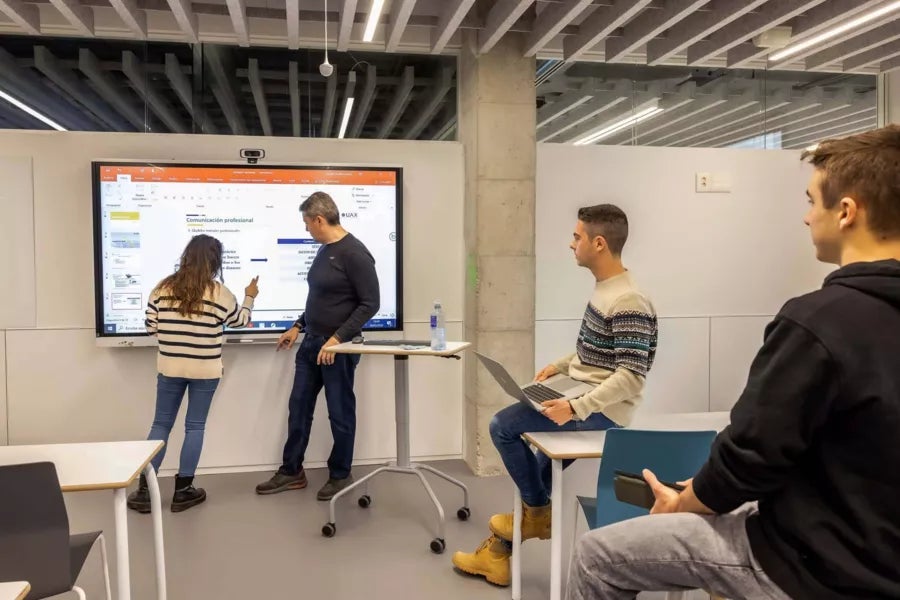
El Doble Grado en Business Analytics + Administración y Dirección de Empresas de UAX te prepara para responder a las necesidades más actuales de empresas referentes como las big 4, Microsoft, Telefónica, IBM, EY, Deloitte o Banco Santander. Ya que necesitan expertos en Business Analytics que combinen la visualización y el análisis de datos con la formación en dirección empresarial para establecer estrategias basadas en los datos y cumplir así, sus objetivos de negocio.
Te formarás a través de metodologías Agile, recibirás formación estratégica para la gestión de negocios digitales y trabajarás en proyectos interdisciplinares con estudiantes de otras facultades y empresas como Avanade, Ecoalf, Quirónsalud o Caixabank entre otras.
ADE provides an understanding of how a company works: its finances, its strategy, its operations and its relationship with the market. Business Analytics brings the ability to draw rigorous conclusions from complex data and to design predictive models. The combination creates a profile that can both talk to the board in business terms and design the dashboard that measures whether the strategy is working. In practice, professionals who master both dimensions are scarce and highly valued, especially in companies undergoing digital transformation.
La carga académica es mayor, ya que estás cursando en paralelo dos titulaciones con demandas distintas: la parte de Business Analytics exige capacidad analítica y matemática, mientras que ADE requiere visión estratégica y habilidades de gestión. Dicho esto, los planes de estudio de los dobles grados están diseñados para evitar duplicidades y hacer el recorrido eficiente. Si te gustan tanto los números como el mundo empresarial, la dificultad añadida se compensa con creces con el valor diferencial que obtienes al terminar. Muchos estudiantes describen la combinación como estimulante precisamente por esa variedad.
La duración habitual oscila entre 5 y 6 años, dependiendo del plan de estudios de cada universidad. En ese tiempo obtienes dos títulos oficiales de grado. Muchos programas incluyen un período de prácticas obligatorio en empresa y posibilidad de intercambio internacional, lo que puede añadir algún semestre adicional pero enriquece significativamente el perfil del egresado. La inversión de tiempo se justifica ampliamente dado el retorno en términos de empleabilidad y salario.
The plan combines subjects from both disciplines. From Business Analytics: Advanced Statistics, Machine Learning, Data Mining, Python/R, Data Visualisation and Big Data. From Business Administration: Accounting, Corporate Finance, Marketing, Operations Management, Human Resources and Business Strategy. In addition, many programmes include integrative subjects such as Business Intelligence, Analytics for Business Decision Making or Data Strategy, which directly connect both areas and prepare students for real professional practice.
It is a particularly good fit for students who are curious about both the world of data and how companies work. If you like mathematics and statistics, but are also interested in business strategy, entrepreneurship or financial markets, this double degree is probably your best option. It is also a good choice for those who want to be prepared for the challenges of the digital economy without losing sight of the human and organisational dimension of business.
Sí, y es uno de los perfiles más completos para emprender en el contexto actual. Tendrás la formación para diseñar el modelo de negocio (ADE), validarlo con datos (Business Analytics), gestionar las finanzas y los equipos, y tomar decisiones estratégicas basadas en métricas reales. Muchos emprendedores en tecnología o en negocios digitales fracasan por no entender bien alguna de estas dos dimensiones. El doble grado elimina esa brecha y te pone en una posición de partida mucho más sólida si tu objetivo es crear tu propia empresa.
Es uno de los perfiles con mayor potencial salarial en España. Un perfil junior puede comenzar entre 28.000 y 38.000 € brutos anuales en sectores como consultoría, banca o tecnología. Con experiencia y especialización, los salarios pueden superar fácilmente los 60.000 € en posiciones de liderazgo analítico o dirección estratégica. En empresas tecnológicas de escala global o en fondos de inversión con foco cuantitativo, los techos son considerablemente más altos. La escasez de perfiles que combinen negocio y analítica hace que la negociación salarial sea favorable desde el inicio de la carrera.
El doble grado es una formación de base completa de 5-6 años que cubre tanto la gestión empresarial como la analítica de datos desde cero. Un máster en Data Science es una especialización de postgrado (1-2 años) para quienes ya tienen una base universitaria y quieren profundizar en la parte técnica. Ambos son complementarios: muchos graduados en Business Analytics + ADE hacen después un máster técnico o un MBA para reforzar alguna de las dos dimensiones. Pero el doble grado por sí solo ya es un perfil muy completo y competitivo en el mercado laboral actual.
Other related qualifications
We offer a wide range of courses, so you’re sure to find a programme that suits you.
Degree in Business Administration and Management + Marketing
+ Professional Data Analyst Certificate by
Start:
September
Length:
5 years
Degree in Marketing
+ Google Project Management Certificate
Start:
September
Length:
4 years
Bachelor's Degree in Business Administration and Management + Law
+ Professional Data Analyst Certificate by
Start:
September
Length:
5 years
Degree in Business Administration and Management + International Relations
+ Professional Data Analyst Certificate by
Start:
September
Length:
5 years