Bachelor’s Degree in Industrial Design and Product Development Engineering
Official qualification
Madrid
Bachelor's Degree in Industrial Design Engineering and Product Development
Become an industrial design and product development engineer at UAX, where you will learn to combine design, functionality and efficiency backed by cutting-edge technology and real projects in leading companies, helping you stand out in a competitive market.
Why study Industrial Design Engineering and Product Development?
Because it equips you to create innovative, user-centred products, combining creativity, design and technology to transform ideas into functional and competitive solutions.
25,000 M²from actual installations
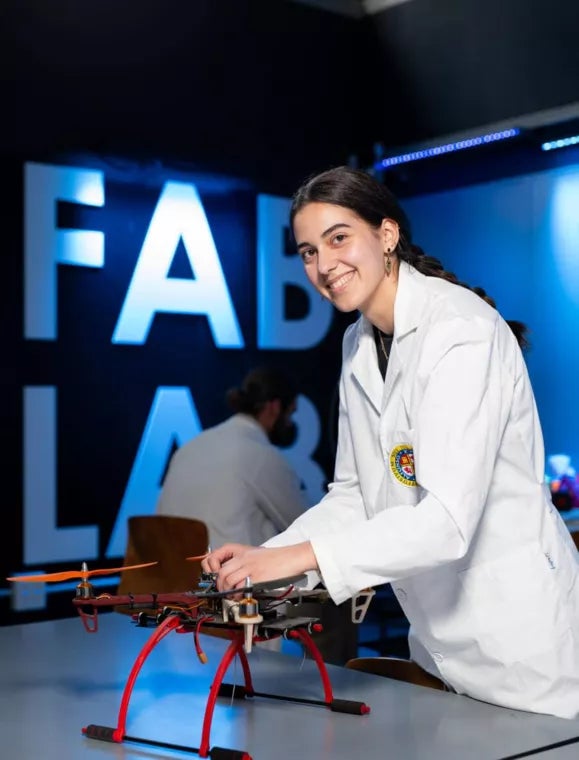
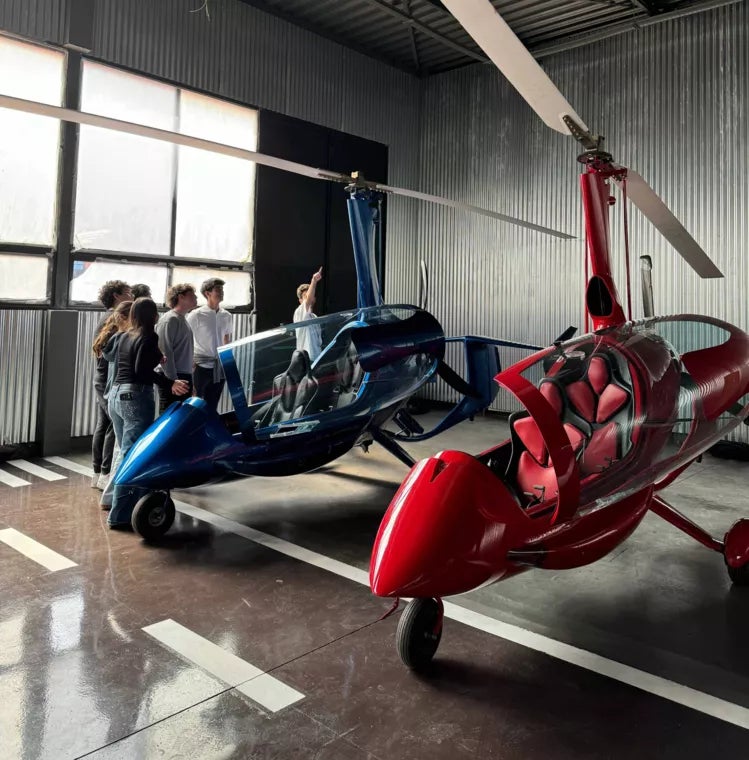
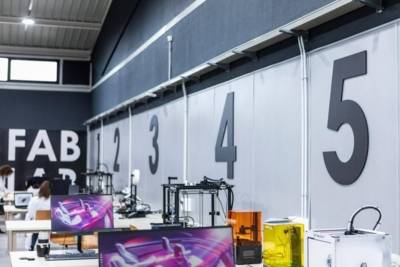
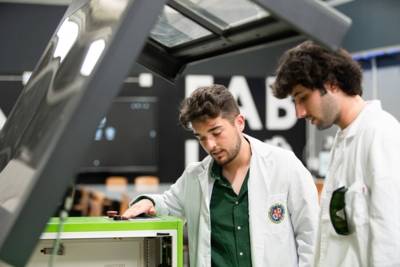
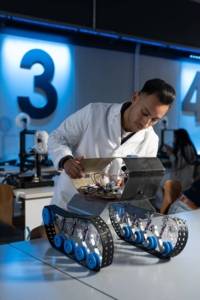
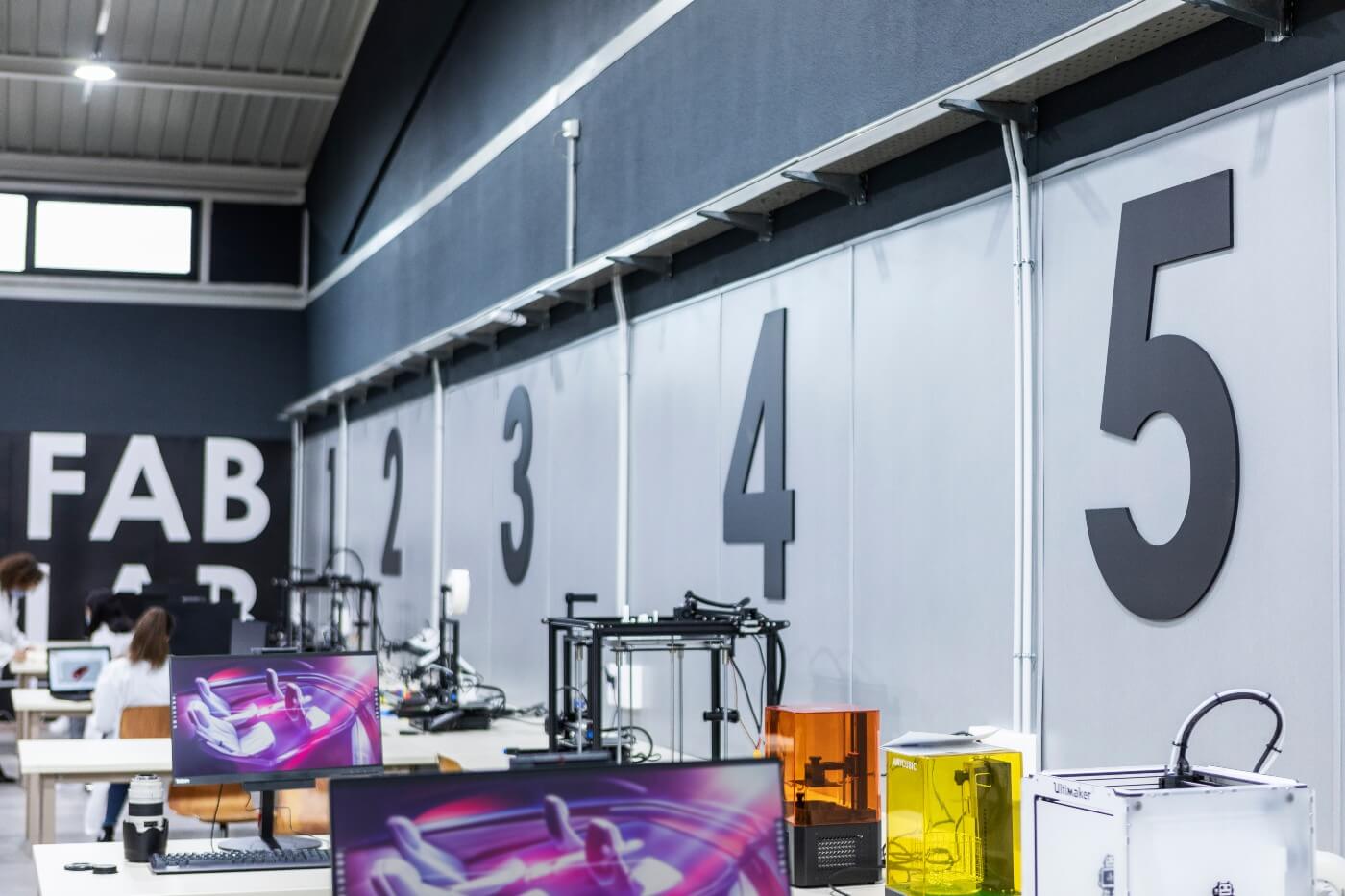
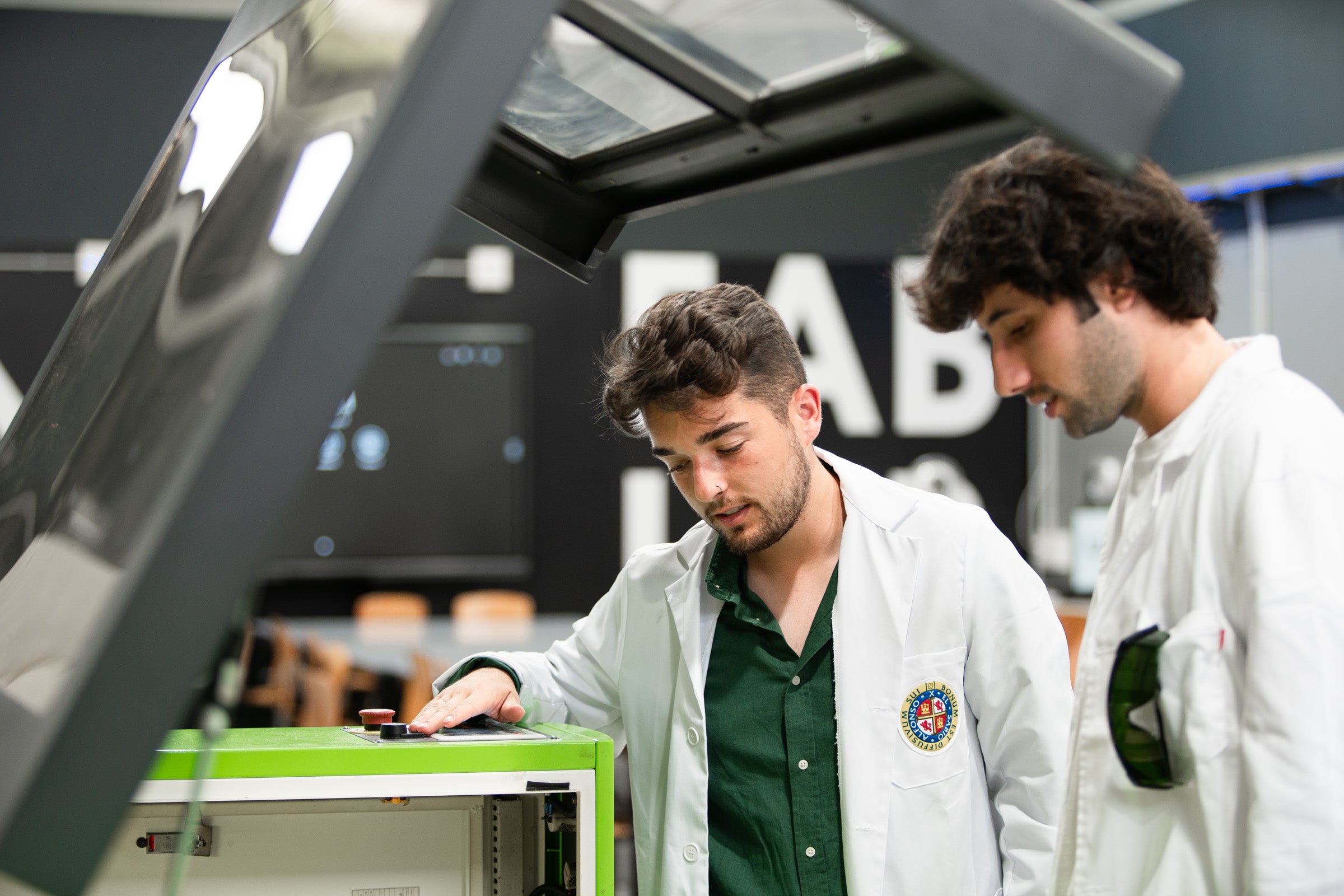
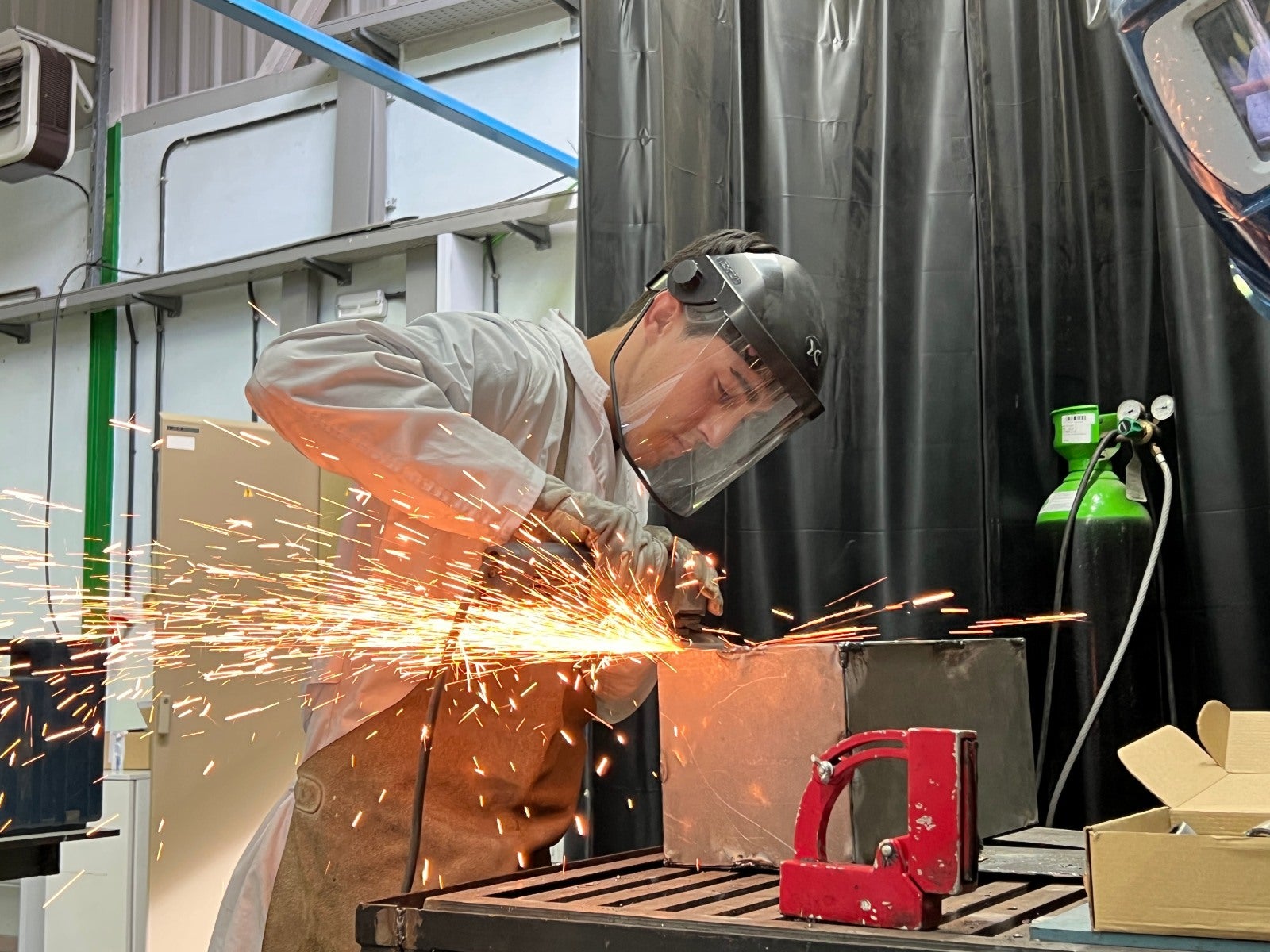
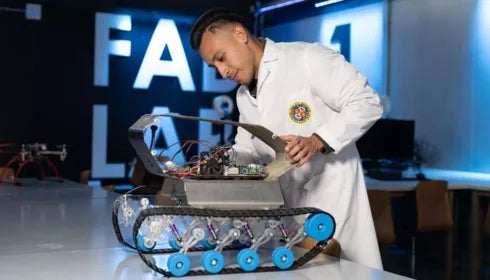
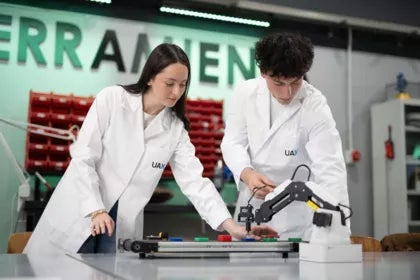
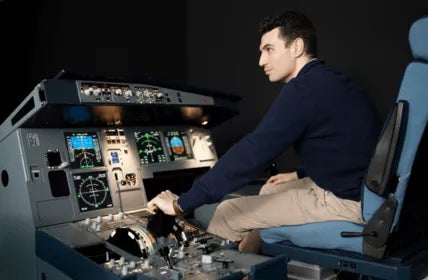
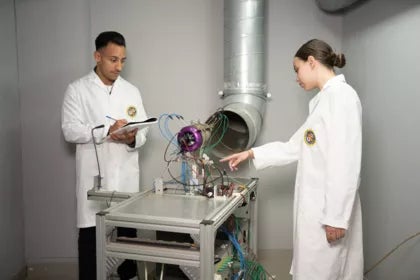
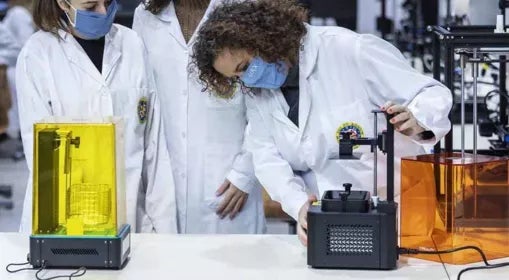
A wind tunnel, a turbojet test rig, an Airbus A320 flight simulator, AeroLab and a FABLAB equipped with 3D printing, laser cutting and robotic arms.
99%EMPLOYABILITY
99 per cent of our students are in employment upon graduation
+ 100REAL PROJECTS
Take part in the development and actual launch of a microsatellite alongside the aerospace company B2Space, as part of the UAX FABLAB Makers programme.
1000AGREEMENTS
Airbus Defence & Space, Iberia, Hispasat, Indra, Thales Alenia Space, INECO, Sacyr, Accenture, Capgemini, GMV, Swiftair, Air Europa and ELA Aviación, amongst others
90%CURRENTLY WORKING TEACHERS
This provides students with an education that is more closely aligned with the realities of the workplace.
What will you learn on the Industrial Design and Product Development Engineering course?
By studying for a Bachelor’s degree in Industrial Design and Product Development Engineering in Madrid, you will be trained to meet the high demand for industrialised products and will become responsible for determining the characteristics of objects.
In addition, you will be able to specialise in one of three specialisation pathways, with a specific focus on automotive engineering, bioengineering, integrated products and innovation, or thermodynamics.
You will be trained to create innovative and functional products that combine design, technology and sustainability, making a difference in the market.
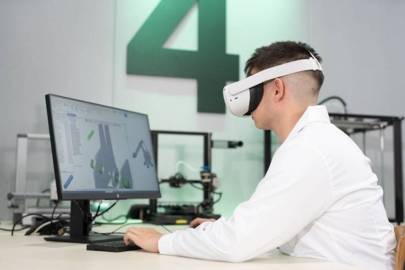
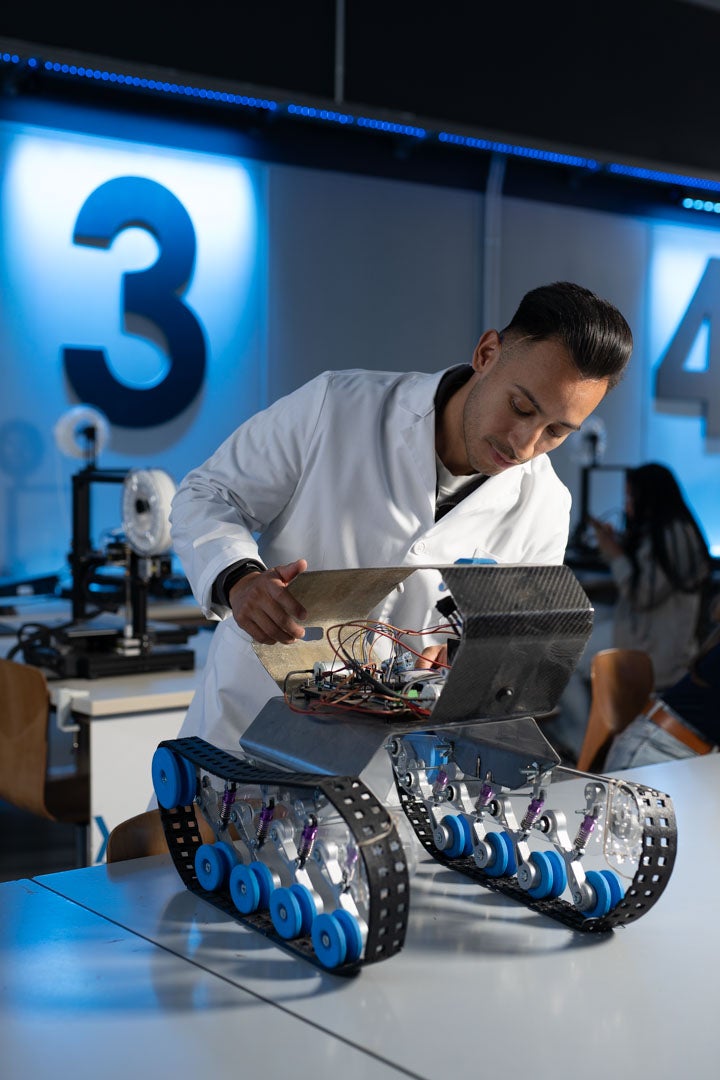
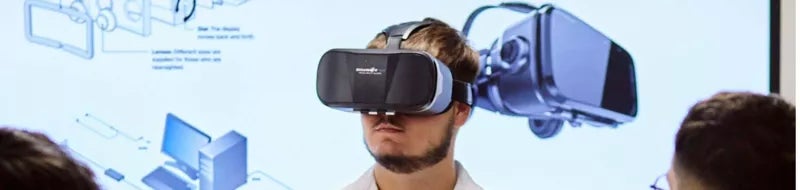
You will design solutions using advanced digital tools and emerging technologies such as 3D printing and virtual reality.
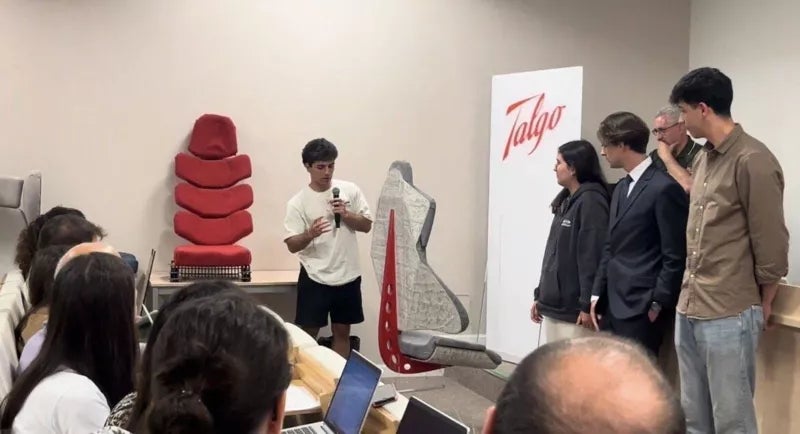
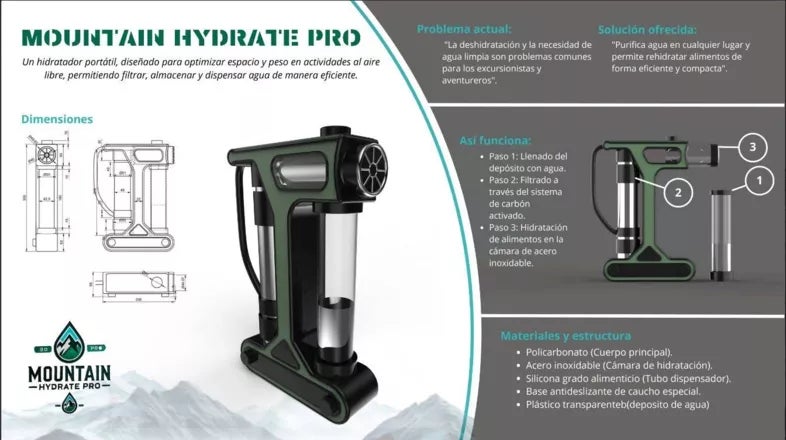
You will develop a portfolio of maker projects, working from day one with leading companies in the sector.
You’ll undertake work placements at leading companies such as Indra, Acciona, Sacyr, Telefónica or Renault, boosting your professional experience.
You’ll gain digital certifications and essential skills such as programming, user experience and Big Data, with support from Google and Datahack.
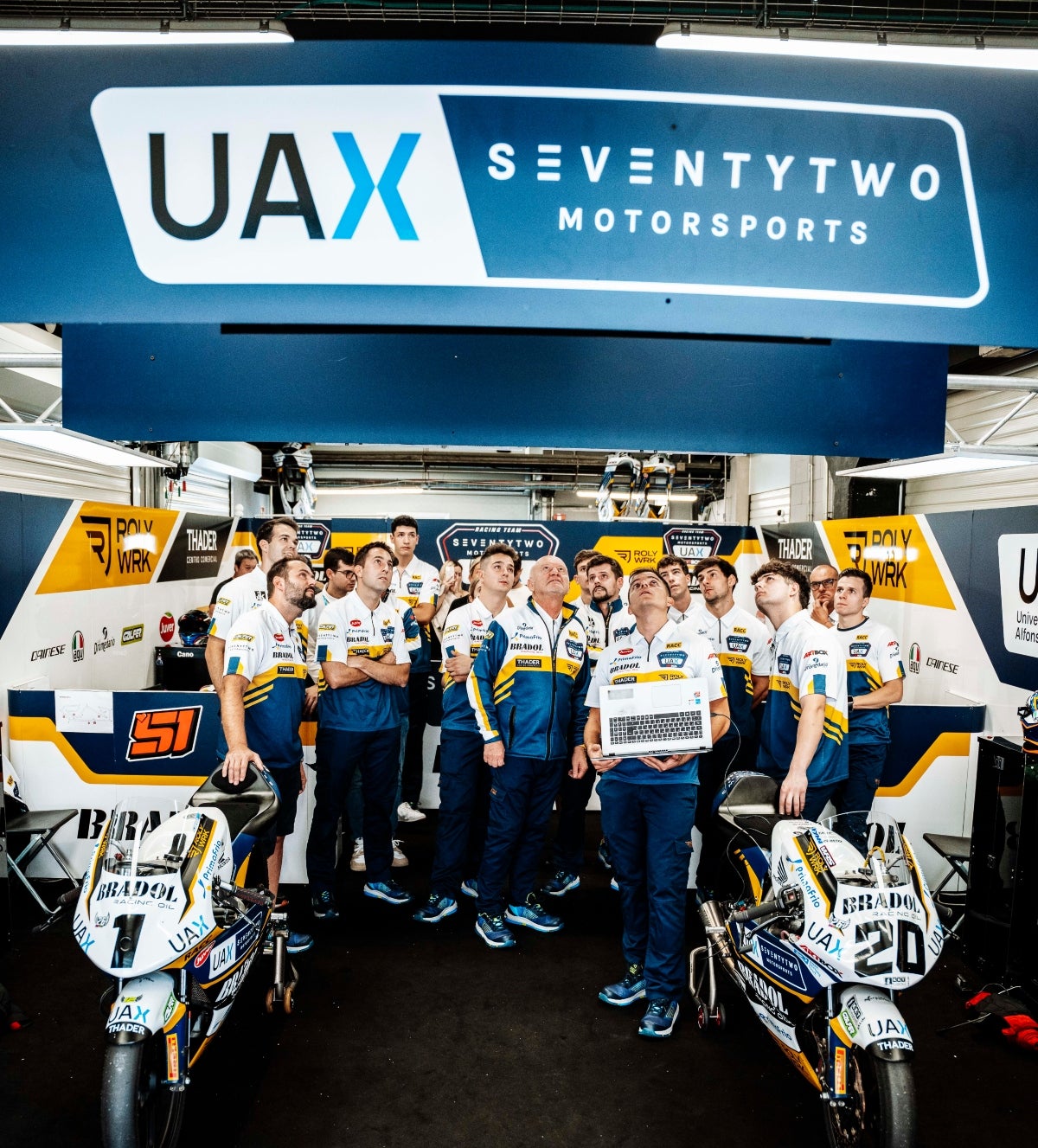
Experience top-flight motorsport engineering from the pit lane
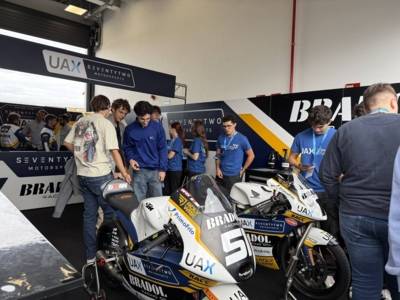
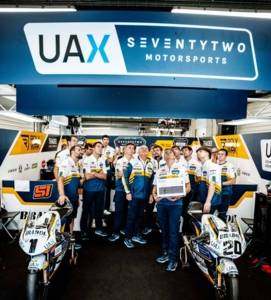
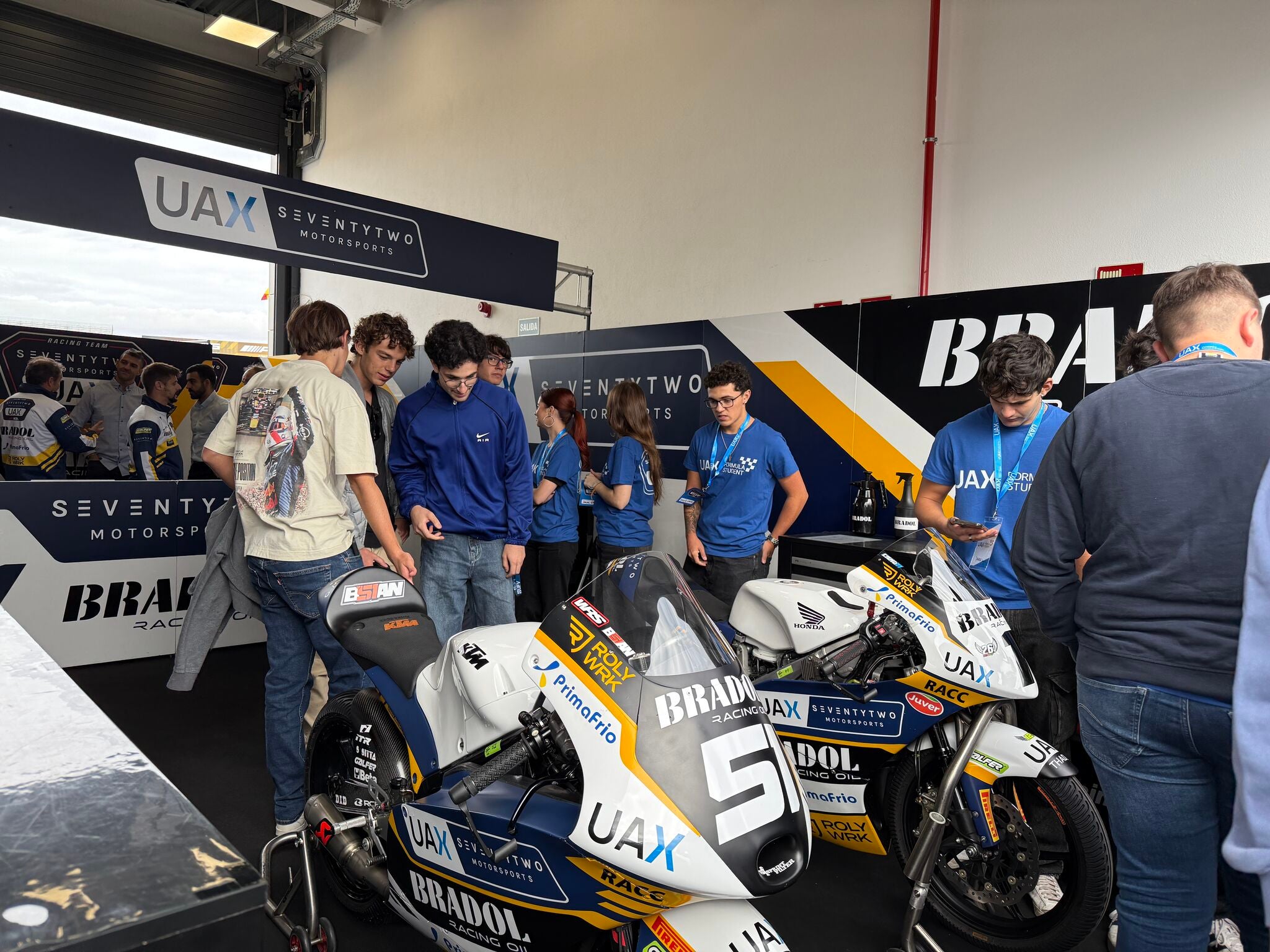
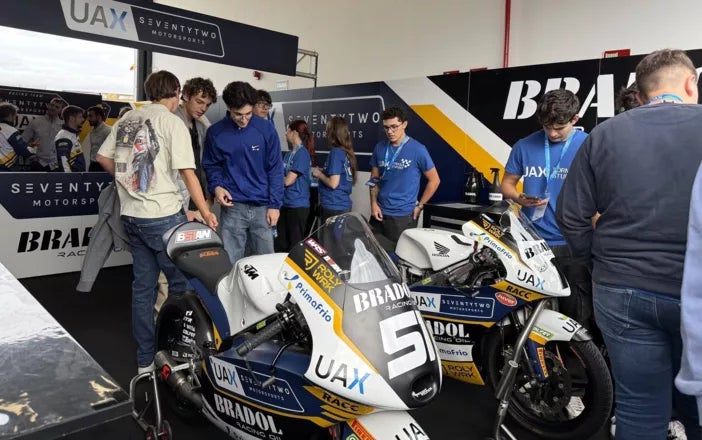
UAX is partnering with SeventyTwo Artbox Racing Team, a leading JuniorGP team renowned for its innovation and talent development. Thanks to this partnership, students take part in real-world engine engineering tasks within a professional pit.
JuniorGP from the inside
Experience the competition from the pit
Be part of the UAX SeventyTwo Artbox team in JuniorGP races like Montmeló or Valencia. Participate in real data, simulation and technical support tasks while you discover how a professional motorbike racing team works.
Moto3 Project Makers
Design, simulate and manufacture real components
Participates in the development of aerodynamic parts for racing motorbikes: CAD design, simulation, prototyping and wind tunnel validation. An interdisciplinary experience where engineering comes to life.
Formula Student UAX
Student Club
Be part of a team working on engineering projects linked to the design, analysis, validation and optimisation of technical solutions inspired by the automotive and racing industry. You will learn to conceptualise, justify and implement ideas that respond to real challenges in the sector.
Entry and admission to the Bachelor’s degree in Industrial Design Engineering
Subjects industrial design engineering and product development
Bachelor’s Degree in Industrial Design and Product Development Engineering
A graduate in Graphic Design from the University of Buenos Aires and co-founder of the magazine Sapos y Princesas. With thirty years’ experience in product design, packaging and creative direction, she has led projects for international brands such as Disney, Nestlé and Coca-Cola, building her career in agencies in Argentina and Spain.
A specialist in illustration, textile design and art direction, she was an art teacher on the Art A-Level programme at the Kolbe International School in Villanueva de la Cañada and runs creative workshops for companies and groups.
Her career combines high-level professional practice with a well-established commitment to teaching, providing her students with a comprehensive view of design that integrates creativity, visual communication and product development.
Objectives
The main aim of this module is to teach students how to represent three-dimensional reality in two dimensions and to understand it, as well as how to use colour as a fundamental element in the creation of forms and sensations.
The analysis of colour and form is an extremely important subject, as the more tools you acquire in this subject, the easier it will be for you to tackle the subsequent graphic design modules, given that freehand drawing and its various graphic expressions—whether outlined or infographic—form the cornerstones of any design exercise.
Any student who fully grasps the graphic subjects finds it easier to progress through the rest of the course, as they possess a richer and more expressive visual language.
The very act of creating any work of art requires intellectual effort. The process of ideation and its subsequent realisation as an artistic object is, in part, an attempt at communication. The creator, in giving form to the object, is constructing a message. The meaning contained within a work of art is, to a certain extent, a mystery to the recipient of that message. To uncover it, the recipient must ‘deconstruct’ or decode the elements that make up the message. They need to interpret the artwork and, to do so, must answer a series of questions: how was it made? Why does it have this shape and not another? What does it mean? This process is, in essence, the analysis of forms.
Any work of art worth its salt must be governed by an indispensable principle: internal coherence. To achieve this, the creator must strike a balance between what they wish to express, the manner of expressing it, and the form that such expression must take. This is what we call artistic synthesis: harmony between meaning, expression and composition.
The central objective will be the combination of different tools in a coherent work that fulfils the conditions set out above—aesthetics and the creation of space—using media appropriate to artistic expression.
Prerequisites
None
Competencies
1. Practical knowledge of visual language.
2. Developing the ability to perceive the environment.
3. Understanding the basic elements of space (lines and planes) and how they interrelate to create more complex elements (structures) as a preliminary step to design.
4. Understand the principles of colour, basic theories of harmony and colour relationships, and their applications in relation to light and pigments.
Learning outcomes
KNOWLEDGE AND CONTENT
RK1 Understands the graphic and visual language and the tools of expression and representation in order to communicate and test designs. The tools mentioned will offer a broad scope for the fluid communication of concepts and designs. These tools encompass all the classic tools of artistic drawing, technical drawing and standardisation, preliminary models, scale models, as well as computer-aided graphic and industrial design.
SKILLS AND ABILITIES
RS1 Takes a holistic view of the various dimensions that come together in products: aesthetic, semiotic, functional, typological and technological, in order to make ideas tangible and bring product design concepts to life.
RS2 Applies their knowledge to product design solutions by using drawing tools and specialised software to determine the most appropriate way to communicate their work to third parties, whether or not they are experts in the field, using conceptual or visual skills to communicate ideas and concepts in a clear and effective manner, whilst selecting the most appropriate media and content.
COMPETENCIES
RC1 Possesses the ability to create new products and services, drawing on engineering knowledge of the materials that make up the technological environment as a source of value, and the relationship between emotion and product to create the optimal experience in the product-human-society interaction and to respond to society’s demand for products, concepts and services. This involves the ability to analyse, synthesise and make appropriate decisions in order to identify and resolve problems or practical cases based on given specifications.
Description of the content
Perception of the environment.
Form: Basic elements of form.
Visual and artistic language.
Colour and chromatic harmonies.
Light and colour.
Surface and volume.
Representational techniques.
Artistic techniques.
Analytical drawing.
FORM
Basic elements of art: Point, line.
Form and colour: Analysis of the old masters
Form and colour: modular grids.
The module. Composition and enlargement.
Grids and systems.
Shape and balance.
COLOUR
Introduction to colour Colour harmonies
Colour wheel
Value
Tone Value Scales
Saturation
Colour harmonies II.
SURFACE AND VOLUME
Surface and Volume
Representation of objects: Analytical drawing.
Material and process.
Representation of volume, Form and Colour workshop.
Grid systems and transformations.
Analytical drawing.
Different stages from sketch to final drawing
Representation of colour and light.
Analytical drawing. Basic compositions.
Artistic techniques:
Graphite in various shades
coloured pencils, pen and ink/calligraphy,
watercolours, acrylics and brushwork
Engraving and printing using mixed media
Mobiles/wire, acetate and card
Assessments:
These involve student-teacher interaction not only for the final assessment of the module, but, above all, throughout the continuous assessment process. The format of the assessment tests may include practical case studies and, above all, drawing workshops and/or models to be created using the techniques studied in face-to-face sessions.
The course coordinator will provide details of the types of assessment to be undertaken prior to the assessments taking place.
Training activities
AP2. Interactive classes
AP3. Workshops/Laboratories
AP4. Project development and problem-solving
AP5. Independent study, case studies, problem-solving and literature review.
AP6. Tutoring
AP7. Knowledge assessments
Assessment system and criteria
Assessment will be continuous and will include mechanisms for students to make up for any knowledge and skills not acquired during the period in which the module is taught.
General ordinary assessment
40% First assessment
50% Second assessment
10% Final exam/Class participation/Weekly drawing
The percentage for each part of the module is approximate
20–40% Colour module
30–40% Shape module
30–40% Surface and Volume module
Active, inquisitive, responsible and respectful participation; this percentage may increase depending on overall behaviour, with failure to use the space and time appropriately putting the student’s pass in the course at risk.
-During the lesson, if the lecturer repeatedly draws attention to a student’s misbehaviour and the student persists in their disruptive behaviour, they will be expelled from the lesson, resulting in a ‘mark of absence’ for that session.
Assignments must be submitted by the relevant deadline; under no circumstances will work submitted after the deadline be accepted, except in justified cases. As this is a practical subject, class sessions are workshop-based, and students are required to work on the practical exercises set. To pass the course, students must submit a portfolio containing 100 per cent of the exercises completed correctly, all freehand sketches, the weekly sketchbook (A5), and achieve an average mark of at least 5 out of 10.
Students who have not submitted all the exercises, or who, having submitted them, have not achieved an average of 5 marks, must sit the standard/supplementary examination set by the university. The exam will cover the entire syllabus of the module, provided that students have complied with the provisions of the Student Assessment Regulations.
-REGULAR examination session for students who have not passed via continuous assessment. ALL practical assignments must be submitted, and a PRACTICAL EXAMINATION will be held, in which students will be set a design exercise similar in nature to those proposed during the course, to be completed within TWO hours. Students must attend the exam with the necessary materials to be able to carry out any exercise of this nature.
-EXTRAORDINARY EXAMINATION SESSION: All students without exception who have NOT passed the module through continuous assessment or in the ordinary examination session may sit the FINAL EXAMINATION in the extraordinary examination session, following the same procedure as for the ordinary examination session.
In both examinations, students will be required to submit 100 per cent of the practical exercises correctly, applying the concepts explained in class, along with their sketches and weekly sketchbook; and, if necessary, additional practical work may be required.
ALL assigned exercises must be submitted with complete headers (without these, they will NOT be accepted nor can they be passed). A HIGH standard of execution and graphic content is required.
If the attendance rate falls below 70 per cent, the continuous assessment will be forfeited.
He/she is a lecturer in the Faculty of Veterinary Medicine and Engineering at UAX. He/she holds a Bachelor’s degree in Physics. His areas of expertise are Biophysics and Physical Fundamentals for Engineering. He has two years’ teaching experience, during which he has taught the following subjects: Physics for Veterinary Students and Physics for Engineering Students. He has 25 years’ professional experience. His professional experience includes: 4 years as an IT consultant
and 21 years at a telecommunications company specialising in the development and manufacture of GPS trackers.
Civil Engineer, holder of a PhD in Civil Engineering from Alfonso X el Sabio University and a Master’s degree in Environmental Engineering from the same university.
He has over 35 years’ experience in university teaching, of which the last 25 have been spent teaching engineering at Alfonso X el Sabio University.
He specialises in Strength of Materials, Mechanics of Continuous Media and other related subjects.
Objectives
Physics forms the basis of a large number of the technical subjects covered throughout any engineering degree programme.
In this module, and throughout the course, we will establish the fundamental principles of physics, illustrating them with a variety of examples of their applications, with the aim of establishing a logical sequence between the laws of physics and their applications.
The aim is therefore to develop students’ ability to analyse any physics problem related to engineering in a logical and straightforward manner, applying the basic principles they have learnt to solve such problems.
Prerequisites
No prerequisites have been set.
Competencies
COMPETENCIES Order CIN 311/2009
KNOWLEDGE AND CONTENT
C3 Knowledge of basic and technological subjects, enabling students to learn new methods and theories, and equipping them with the flexibility to adapt to new situations.
C13 Understanding and mastery of the basic concepts relating to the general laws of mechanics, thermodynamics, fields and waves, and electromagnetism, and their application to solving engineering problems.
Learning Outcomes
KNOWLEDGE AND CONTENT
RK1 Understands and has a firm grasp of the basic concepts relating to the general laws of mechanics, thermodynamics, fields and waves, and electromagnetism, and their application to solving engineering problems.
SKILLS AND ABILITIES
RFS1 Has a firm grasp of the fundamentals of basic scientific and technical subjects necessary for solving problems that may arise in engineering within Industrial Design and Product Development.
RS1 Solves problems by demonstrating initiative, decision-making, creativity and critical thinking, and is able to communicate and convey knowledge, skills and competences in the field of Industrial Engineering.
COMPETENCIES
RC1 Links mechanical problems to the physical phenomena that explain them in order to describe them in detail.
Description of the course content
Modules into which the course is divided.
1. Vector quantities.
2. Kinematics and dynamics of a particle.
3. Particle statics. Equilibrium of forces.
4. Work and energy.
5. Equilibrium of a rigid body. Geometry of masses. Centres of gravity. Statics.
6. Dynamics of rigid bodies. Moments of inertia.
7. Deformable solids. Elasticity.
8. Deformable solids. Introduction to the strength of materials.
9. Fluid mechanics.
10. Principles of thermodynamics. Heat transfer.
11. Wave motion.
12. Electrostatic fields.
13. Magnetic fields.
Teaching activities
AP 1. Lectures
AP2. Interactive classes
AP3. Workshops/Laboratories
AP4. Project development and problem-solving
AP5. Independent study, case studies, problem-solving and literature review.
AP6. Tutoring
AP7. Knowledge assessments
Assessment system and criteria
Without prejudice to any other requirements that may be specified in the relevant course syllabus, as a general rule, failure to attend more than 60 per cent of the course’s teaching activities—which require the student’s physical or virtual presence—will result in the loss of the right to continuous assessment during the standard examination period. In this case, the examination to be held during the official period set by the University shall be the sole assessment criterion, with the weighting specified in the course syllabus.
----
To pass this module through continuous assessment, students must:
1. Have completed the laboratory practicals.
2. Have sat the continuous assessment examinations.
3. Achieve a mark of five points or higher by adding together the percentages set out below:
Laboratory practicals: 20 per cent of the final mark
Exams: 80%
Divided into two four-month terms. In each term, students must sit two assessment tests, the content of which will be specified in due course prior to the tests. The percentage contribution to the final mark is set out in the course timetable.
4. If this mark is not five or more out of ten, the student must sit a final exam, which will be predominantly practical and cover the content of the entire course.
This exam will account for 100% of the mark. Students will have two opportunities to sit this exam: one during the regular examination period and another during the supplementary examination period, if necessary.
The module may be passed either through continuous assessment or through a final examination (in the event that the student has not passed via continuous assessment).
CONTINUOUS ASSESSMENT:
The final mark for continuous assessment will be based on the marks obtained in the tests, questionnaires, seminars and laboratory practicals carried out during the course. The weightings are set out in the Timetable.
REGULAR EXAMINATION PERIOD
In the ordinary examination session, the entire syllabus of the module will be assessed, with the final mark being that obtained in the examination (weighting 100%). The examination will cover all the course content.
If students have passed either the first or second term, they may be exempt from that part.
SUPPLEMENTARY EXAMINATION PERIOD:
In the supplementary examination, the entire syllabus of the module will be assessed, with the final mark being that obtained in the examination (accounting for 100%). The examination will cover all course content.
Hugo Galindo Beleña is a mathematician and economist. He holds a PhD in Mathematics from the University of Seville and a Master’s degree in Mathematical Engineering from Carlos III University in Madrid, and conducts his research in the fields of game theory and operational research. His work focuses on cooperative games with fuzzy characteristic functions, providing new solutions of interest for applications in industrial settings, such as the real Shapley value for cooperative games with fuzzy characteristic functions, and proposing axiomatisations for these solutions. He has published in high-impact scientific journals such as Fuzzy Sets and Systems,International Journal of General Systems and Annals of Operations Research, amongst others.
He has extensive teaching experience at university level, delivering courses in statistics, optimisation and stochastic calculus, amongst others, on degree programmes such as Mathematical Engineering, Physics and Mechanical Engineering. He is currently a lecturer at Alfonso X el Sabio University, where he also holds academic management roles as coordinator of the Master’s Degree in Big Data Analysis for Business and coordinator of the Master’s Dissertation module.
Beatriz Rico Jiménez holds a degree in Civil Engineering (Roads, Canals and Ports) from Alfonso X el Sabio University, having previously completed a course in Technical Engineering for Public Works and a degree in Civil Engineering at the Polytechnic University of Madrid. Her specialisation focuses on civil engineering, transport and urban services.
She complements her technical profile with solid additional training in engineering software, the design of linear structures and the refurbishment of buildings.
Graduate in Civil Engineering from the Polytechnic University of Madrid.
He has over 20 years’ teaching experience at Camilo José Cela University and UAX, as well as 30 years’ professional experience in engineering and business administration
Objectives
The aim of this module is to provide the necessary mathematical foundations to enable graduates in Industrial Design and Product Development to interpret, select, evaluate and create new concepts, theories, applications and technological developments relating to Industrial Design and Product Development.
Prerequisites
No prerequisites have been set
Competencies
COMPETENCIES Order CIN 311/2009
KNOWLEDGE AND CONTENT
C3 Knowledge of basic and technological subjects, enabling students to learn new methods and theories, and equipping them with the flexibility to adapt to new situations.
SKILLS AND ABILITIES
C12 Ability to solve mathematical problems that may arise in engineering. Ability to apply knowledge of: linear algebra; geometry; differential geometry; differential and integral calculus; differential and partial differential equations; numerical methods; numerical algorithms; statistics and optimisation.
Learning outcomes
KNOWLEDGE AND CONTENT
RK2 Is able to apply knowledge of: linear algebra, geometry, differential geometry, differential and integral calculus, differential equations, numerical methods and numerical algorithms.
SKILLS AND ABILITIES
RFS1 Has a firm grasp of the fundamentals of basic scientific and technical subjects, necessary for solving problems that may arise in engineering within Industrial Design and Product Development.
COMPETENCES
RK2 Possesses applied knowledge of: linear algebra, geometry, differential geometry, differential and integral calculus, differential equations, numerical methods, numerical algorithms; statistics and optimisation for solving the mathematical problems that may arise in engineering.
Course content
Derivation of functions of one and several variables. Integration of functions of one variable. Matrices. Vector spaces. Linear applications. Algebraic structures. ODE (ordinary differential equations). Sequences. Series.
Teaching activities
AP1. Lectures
AP2. Interactive classes
AP3. Workshops/Laboratories
AP4. Project work and problem-solving
AP5. Independent study, case studies, problem-solving and literature review.
AP6. Tutoring
AP7. Knowledge assessments
Assessment system and criteria
Assessment system and criteria:
Without prejudice to any other requirements that may be specified in the relevant course syllabus, as a general rule, failure to attend more than 60 per cent of the course’s teaching activities—which require the student’s physical or virtual presence—will result in the loss of the right to continuous assessment during the standard examination period. In this case, the examination to be held during the official period set by the University shall be the sole assessment criterion, with the weighting specified in the course syllabus.
The assessment process will consist of verifying and evaluating the student’s acquisition of the learning outcomes. To this end, the following assessment activities will be used to determine the extent to which each of the listed learning outcomes has been mastered, and these will consist of:
- Carrying out a project through problem-solving activities, assignments, small-group presentations and the preparation of case studies.
- Written examinations covering the content covered in the classroom-based learning activities.
The results obtained by students in the modules will be graded according to the following numerical scale from 0 to 10, expressed to one decimal place, to which the corresponding qualitative grade may be added:
a. 0–4.9: Fail (SS).
b. 5.0–6.9: Pass (AP).
c. 7.0–8.9: Good (NT).
d. 9.0–10: Distinction (SB).
The distinction ‘Honours’ shall be awarded to students who have obtained a mark of 9.0 or higher. The number of students awarded this distinction may not exceed five per cent of those enrolled on the course in the relevant academic year, unless the number of enrolled students is fewer than 20, in which case only one ‘First Class Honours’ may be awarded.
CONTINUOUS ASSESSMENT
Four mid-term examinations will be held, two in each term, in which students’ competencies will be assessed in a way that reflects the learning activities undertaken. In addition, a series of assessments (assignments, questionnaires, activities, projects) will be set throughout the two terms to be completed individually and/or in groups.
The final mark for continuous assessment will be calculated by applying the percentage weights to all the continuous assessment tasks carried out during the academic year, as set out in the timetable. The marks for the four mid-term exams will account for 80% (4 mid-term exams × 20 per cent each) of the continuous assessment mark, whilst the mark for the assessments (assignments, questionnaires, activities, project) will account for 20 per cent (4 assessments × 5 per cent each).
The module may be passed BY CONTINUOUS ASSESSMENT if a mark of 5 out of 10 or higher is achieved. Students who pass by continuous assessment will not sit the exam in the ordinary examination session.
JUNE REGULAR EXAM SESSION:
This examination, which will assess students’ competencies in line with the learning activities undertaken, will consist of two parts, one for each of the two terms: the first part covering mid-term exams 1 and 2 of the first four-month term, and the second part covering mid-term exams 3 and 4 of the second four-month term.
Students who have failed on the basis of continuous assessment but who have a mark of four or above in either of the two four-month terms may choose to sit the entire exam or only one part of the exam (one of the two four-month terms) if they wish to retain the continuous assessment mark obtained in the other part (the other of the two terms). Students who have failed due to continuous assessment and who do not have a mark of four or above in either of the two terms must sit the full examination for the module, and the mark recorded in the academic transcript will be that obtained in the examination, as continuous assessment will not be taken into account.
Under no circumstances will any part of the course be exempted for the July sitting; if a student fails in the ordinary sitting, the entire course remains outstanding for the supplementary sitting.
JULY EXTRAORDINARY EXAMINATION PERIOD:
A single examination covering the entire syllabus will be held, in which students’ competencies will be assessed in a manner that reflects the learning activities undertaken. The mark for this examination will be the one recorded in the academic records
PhD in Environmental Engineering, Master’s in Environmental Engineering, Bachelor’s in Industrial Design and Technical Engineer in Industrial Design, with over twenty years’ experience in university teaching, academic management and the coordination of degree programmes in the industrial sector. Extensive professional experience as Design Director at Nuzzi Industrial S.A. and as the founder of her own design studio, developing projects in furniture, packaging, corporate identity, graphic design, technical and commercial catalogues, exhibition stands and display spaces for companies in the industrial and commercial sectors. She has participated in applied research and knowledge transfer projects linked to sustainable design and environmental acoustics, with various scientific and popular science publications to her name. She has demonstrated leadership in educational innovation and the creation of specialised laboratories focused on experiential learning and university-industry collaboration, characterised by a multidisciplinary, strategic approach committed to academic excellence.
Degree in Industrial Engineering. He also teaches on other degree programmes at UAX, such as the Master’s Degree in Industrial Engineering, the Master’s Degree in Teaching for Compulsory Secondary Education and Sixth Form, Vocational Training and Language Teaching, Bachelor’s Degree in Industrial Systems Engineering, and Bachelor’s Degree in Mechanical Engineering. His areas of expertise include Statistics, Mechanics, Plant Engineering and Industrial Transport. He has 20 years’ teaching experience and 7 years’ professional experience. He spent several years working in the family business, designing and installing electrical systems.
Objectives
The most significant features of the course in Metric Technical Drawing are its educational nature and the body of knowledge it provides, designed to develop a mental framework which, together with Mathematics and Physics, enables students to approach the study of the degree programme’s technology-related subjects with a solid foundation. Furthermore, it provides students with the basic knowledge to define any geometric element, or interpret any representation of it, in accordance with existing standards and using the drafting tools employed in industry.
Through this course, students will be able to:
- Build a knowledge base founded on spatial concepts and constructions.
- Enhance their reasoning skills.
- Improve their spatial visualisation skills.
- Facilitate the calculation of areas and volumes of all types of solids.
- Be introduced to the procedures of projective geometry for the subsequent study of conic sections and surfaces.
Prerequisites
None required.
Competencies
COMPETENCIES Order CIN 311/2009
KNOWLEDGE AND CONTENT
C3 Knowledge of basic and technological subjects, enabling students to learn new methods and theories, and equipping them with the flexibility to adapt to new situations.
SKILLS AND ABILITIES
C6 Ability to handle specifications, regulations and mandatory standards.
COMPETENCIES
C16 Spatial awareness and knowledge of graphic representation techniques, both through traditional methods of metric and descriptive geometry, and through computer-aided design applications.
Learning outcomes
KNOWLEDGE AND CONTENT
RK4 Knowledge of graphic representation techniques using traditional methods of metric geometry and descriptive geometry, as well as computer-aided design applications, to correctly produce, read, interpret and implement industrial technical drawings in a standardised, clear and precise manner, based on graphic representation systems as tools for spatial thinking.
SKILLS AND ABILITIES
RFS1 Has a firm grasp of the fundamentals of basic scientific and technical subjects necessary for solving problems that may arise in engineering within Industrial Design and Product Development.
RS2 Uses systems of graphical representation, as well as the conventions and standards commonly used in industrial design engineering, to draw, on the appropriate medium, using both traditional methods of metric geometry and descriptive geometry, as well as computer-aided design applications, to produce manufacturing drawings, incorporating the technical information required for subsequent manufacture.
Description of the content
Graphical representation systems in engineering
Geometric constructions on a plane
Spatial geometry
Descriptive geometry
Standardisation
Computer-Aided Design (CAD)
1. Introduction to graphical representation in engineering and technical drawing.
- Geometric constructions on a plane.
- Introduction to representation systems.
- Elements of Descriptive Geometry.
BLOCK A: DIEDRIC SYSTEM.
2. DIEDRIC SYSTEM:
- Point.
- Line.
- Plane.
- Intersections.
- Projections.
- Parallelism and perpendicularity.
- Distance.
- Polyhedra.
- Prisms.
BLOCK B: STANDARDISATION AND VISUALISATION (Conventional representation of isolated parts with ideal geometry)
3. STANDARDISATION.
- Standardised formats.
- Scales.
- Standardised views.
- Projection methods.
- Sections.
- Dimensioning.
4. AXONOMETRIC PROJECTION.
5. HORSE-SHOE PERSPECTIVE.
6. CONICAL PERSPECTIVE.
BLOCK C: COMPUTER-AIDED DRAWING.
7. COMPUTER-AIDED DRAWING: AutoCAD software.
Training activities
AP1. Lectures
AP2. Interactive classes
AP3. Workshops/Laboratories
AP4. Project development and problem-solving
AP5. Independent study, case studies, problem-solving and literature review.
AP6. Tutoring
AP7. Knowledge assessments
Assessment system and criteria
Without prejudice to any other requirements that may be specified in the relevant course syllabus, as a general rule, failure to attend more than 60 per cent of the course’s teaching activities—which require the student’s physical or virtual presence—will result in the loss of the right to continuous assessment during the standard examination period. In this case, the examination to be held during the official period set by the University shall be the sole assessment criterion, with the weighting specified in the course syllabus.
----
Students will be assessed on the basis of:
Completion of practical work, the preparation of reports on the work carried out, the dedication and interest shown whilst undertaking it, as well as written tests relating to the experimental work.
Solving set problems, submission and presentation of group projects. Preparation of case studies.
Practical examinations covering the content covered in the classroom-based learning activities.
Assessment Methods
The format of the assessment tests may include multiple-choice questions, short-answer questions, essay questions, problem-solving tasks, practical case studies, laboratory tests or workshops, or the design of prototypes, products or models, to be completed in writing or orally. Where applicable, the course coordinator will provide details of the assessment format to be used prior to the assessments taking place.
Students’ results in the modules will be graded according to the following numerical scale from 0 to 10, expressed to one decimal place, to which the corresponding qualitative grade may be added:
a. 0–4.9: Fail (SS).
b. 5.0–6.9: Pass (AP).
c. 7.0–8.9: Good (NT).
d. 9.0–10: Very Good (SB).
The distinction ‘Honours’ shall be awarded to students who have obtained a mark of 9.0 or higher. The number of students awarded this distinction may not exceed five per cent of those enrolled on the course in the relevant academic year, unless the number of enrolled students is fewer than 20, in which case only one ‘First Class Honours’ may be awarded.
Assessment systems
SE1 Practical activities MINIMUM 25% MAXIMUM 30%
SE2 Final knowledge assessments MINIMUM 40% MAXIMUM 50%
SE3 Laboratory notebooks MINIMUM 30% MAXIMUM 40%
CONTINUOUS ASSESSMENT:
To calculate the student’s mark for continuous assessment, each block will be weighted as follows:
40% BLOCK A: DIHEDRAL SYSTEM:
15% FIRST DIHEDRAL MID-TERM EXAM.
20% SECOND DIHEDRAL MID-TERM.
5% SUBMISSION OF EXERCISES.
40% SECTION B: NORMALISATION AND VISUALISATION.
15% FIRST NORMALISATION MID-TERM EXAM.
20% SECOND MID-TERM EXAM ON STANDARDISATION.
5% SUBMISSION OF EXERCISES.
20% BLOCK C: COMPUTER-AIDED DRAWING.
15% AutoCAD ASSESSMENT.
5% SUBMISSION OF ASSIGNMENTS.
In order to calculate an average across the different modules and pass via continuous assessment, students must achieve a mark of at least 3.5 in each module.
If the mark obtained through this procedure is 5 or above, the student will have passed the module through continuous assessment.
REGULAR EXAMINATION PERIOD:
In the ordinary examination period, students have the following options:
A. They may retain the marks for the modules in which they have achieved a mark of 5 or above through continuous assessment and sit an examination in the subject(s) of the modules in which they have achieved a mark below 5. In order to average the marks across the different modules and pass in the ordinary examination period, students must obtain at least 3.5 in each module.
B. Sit an examination for the entire subject; in this case, no minimum mark applies to any of the blocks in order to pass the subject.
To calculate the mark for the ordinary examination session, each block will be weighted as follows:
40% BLOCK A: DIEDRIC SYSTEM.
40% SECTION B: STANDARDISATION AND VISUALISATION.
20% SECTION C: COMPUTER-AIDED DRAWING.
EXTRA SESSION:
In the ordinary examination session, students have the following options:
A. They may retain the marks for those Modules in which they have achieved a mark of 5 or above in the continuous assessment and sit the examination for the subject(s) in the Modules in which they have achieved a mark below 5. In order to average the marks across the different Blocks and pass in the ordinary examination session, students must obtain at least a 3.5 in each of the Blocks.
B. Sit an examination for the entire subject; in this case, no minimum mark is required in any of the blocks to pass the subject.
To calculate the mark for the supplementary examination, each block will be weighted as follows:
A graduate in Graphic Design from the University of Buenos Aires and co-founder of the magazine Sapos y Princesas. With thirty years’ experience in product design, packaging and creative direction, she has led projects for international brands such as Disney, Nestlé and Coca-Cola, building her career at agencies in Argentina and Spain.
A specialist in illustration, textile design and art direction, she was an art teacher on the Art A-Level programme at the Kolbe International School in Villanueva de la Cañada and runs creative workshops for companies and groups.
Her career combines high-level professional practice with a well-established commitment to teaching, providing her students with a comprehensive view of design that integrates creativity, visual communication and product development.
Objectives
To understand the origins and development of the profession, both as an academic subject and as a potential source of inspiration for design projects.
To explore the evolution of the discipline in a broadly chronological order, analysing the various theories and movements that have emerged from the Industrial Revolution to the present day.
To gain an understanding of each period, with an emphasis on the development of these movements in the countries where they have flourished most and been most influential.
To familiarise oneself with the most important theorists, designers and works of each period.
To understand the history of art.
Prerequisites
None
Learning outcomes
1: To understand the origins and evolution of the profession, both as an academic discipline and as a potential source of inspiration for design projects.
2: To understand the evolution of the discipline in a roughly chronological order, analysing the different theories and movements that have emerged from the Industrial Revolution to the present day.
3: To gain an understanding of each period, with an emphasis on the development of these movements in the countries where they have been most prominent and influential.
4: To be familiar with the most important theorists, designers and works of each period.
Learning outcomes
KNOWLEDGE AND CONTENT
RK2 Understands the Fundamentals and Supporting Techniques of Design: Methodology of Industrial Design Engineering; Design thinking, Ergonomics, Anthropometry and Biomechanics; Fundamental Elements of Graphic Design; History of Design; Strategic and Operational Marketing, enabling students to make and justify decisions, communicate effectively and draw conclusions in the field of industrial design engineering in order to achieve optimal designs.
SKILLS AND COMPETENCIES
RS1 Takes a holistic view of the various dimensions that converge in products: aesthetic, semiotic, functional, typological and technological, in order to make ideas tangible and bring product design concepts to life.
RS2 Applies their knowledge to product design solutions by using drawing tools and specialised software to determine the most appropriate way to communicate their work to third parties, whether or not they are experts in the field, using conceptual or visual skills to communicate ideas and concepts in a flexible and effective manner, whilst selecting the most appropriate media and content.
RS4 Identifies specific opportunities based on an analysis of users’ actual needs, signals and trends, transforming them into new solutions that deliver value in a sustainable and systematic manner.
RS5 Possesses the tools, skills and knowledge necessary to transform relevant problems or opportunities into solutions that add value for users, businesses and society.
COMPETENCIES
RC1 Possesses the ability to create new products and services, drawing on engineering knowledge of the materials that make up the technological environment as a source of value, and the relationship between emotion and product to create the optimal experience in the product-human-society interaction and to respond to society’s demand for products, concepts and services. This involves the ability to analyse, synthesise and make appropriate decisions in order to identify and resolve problems or practical cases based on given specifications.
Course content description
Aesthetic ideas and their evolution.
History of design.
Aesthetics and functionality.
Analysis of aesthetic ideas and categories and their evolution
Products and cultural diversity.
Training activities
AP1 – Lecture sessions
Lecture-based sessions in which the theoretical content of the module is presented by lecturers who are experts in the field, enabling the topics to be contextualised and addressed from a comprehensive perspective.
AP4: Preparation of assignments or projects and problem-solving
This is a teacher-guided activity in which students must complete an assignment or project within a set timeframe to address real-world complex situations or problems through the planning, design and implementation of a series of interrelated and coordinated activities, based on the development and application of acquired knowledge and the effective use of resources. In addition, the teacher may organise the presentation of results and conclusions through an oral presentation.
AP5. Independent study, case studies or problem-solving, and literature reviews.
Individual or group learning activities based on the course materials, case studies, problems and recommended reading for the modules. This includes reading and reviewing texts to deepen and broaden knowledge in the various fields of study, as well as activities complementary to such reading, such as comparing authors or critiquing articles. It also involves solving cases, problems and/or challenges deliberately designed to enable students to carry out an in-depth and comprehensive analysis of a real or hypothetical situation, with the aim of understanding it, interpreting it, resolving it, generating hypotheses, comparing data, reflecting, expanding their knowledge, diagnosing it and, on occasions, practising possible alternative solutions.
AP6. – Tutoring
Sessions in which the teacher guides and advises students throughout their learning process. The teacher addresses theoretical or practical queries, monitors the approaches adopted by students in the course and provides meaningful feedback. The lecturer is available at scheduled times, which are communicated to the students, and students may attend voluntarily, according to their needs.
AP7. – Knowledge assessments
An assessable learning activity designed to objectively determine the knowledge acquired by each student in a specific subject. It includes different formats (continuous and final assessment). In other words, it allows for the continuous assessment of the acquisition of learning outcomes throughout the duration of the course, as well as a comprehensive final assessment. Furthermore, it involves calculating the time spent by both the teacher and the student on carrying out this type of activity in class.
Assessment system and criteria
Without prejudice to any other requirements that may be set out in the relevant course syllabus, as a general rule, failure to attend more than 60 per cent of the course’s teaching activities—which require the student’s physical or virtual presence—will result in the loss of the right to continuous assessment during the standard assessment period. In this case, the examination to be held during the official period established by the University shall be the sole assessment criterion, with the weighting specified in the course syllabus.
Assessment systems
SE1 Practical activities MINIMUM 10% MAXIMUM 50%
SE2 Final knowledge assessments MINIMUM 40% MAXIMUM 70%
Assessment of the level of achievement of the learning outcomes (in terms of knowledge, skills and attitude) attained through the completion of individual and group practical activities (case studies, problem-solving and challenges, project work, oral presentations, debates, etc.) based on assessment rubrics and observation tools previously designed and published by the lecturer.
All practical activities utilise resources provided by the virtual campus, which enables real-time interaction between students and the lecturer. Furthermore, this platform allows assignments and/or exercises to be submitted via a dedicated inbox, facilitating the use of anti-plagiarism software. Furthermore, for each submission, students must attach a sworn statement or declaration of responsibility in which they guarantee the authenticity and authorship of the documentation/files submitted for assessment.
Lecturers are allocated time to mark the submitted work and will ask follow-up questions, as well as engage with students to verify the attainment of learning outcomes, the development and authorship of each piece of work and/or exercise. Finally, face-to-face assessment activities involve student-teacher interaction not only for the final assessment of the subject, but also for continuous assessment.
SE2. – Final knowledge assessments
Objective knowledge assessments. These may be written or oral, essay-based, short-answer or multiple-choice, etc.
SE4. – Portfolio
Evidence of the student’s learning (in terms of knowledge, performance or output), compiled in a dossier, folder or portfolio throughout the course, is assessed with the aim of explaining and reflecting on the learning that has taken place.
The course is passed on an annual basis through continuous assessment or by sitting the supplementary examination session organised by the university for this purpose. The continuous assessment system consists of three mid-term exams, each accounting for 25 per cent of the total mark. The final mid-term exam corresponds to the regular February examination.
The remaining 25 per cent corresponds to the assignments set during the course.
Students who do not pass the course on a continuous assessment basis must sit the resit examinations set by the university. This resit examination will cover the entire syllabus of the course, and none of the marks obtained during the course will be taken into account.
Publication of the article " Correlation of the Number of African American Congresswomen and Their Higher Educational Attainment", published in "Open Journal of Social Sciences.
Bilingual economist with over 20 years’ experience in financial consultancy and brokerage in international markets, including London, Frankfurt, Amsterdam and Zurich.
Brokerage of government debt, debt derivatives and corporate bonds.
Proficient in German and French.
Objectives
To provide an introduction to engineering-specific English, particularly within the field of engineering, at a starting level of B1 and a target level of B2. To familiarise students with and expand their English vocabulary, particularly technical vocabulary related to their degree programme. To familiarise students with potential situations and texts related to engineering, with the aim of developing their comprehension and expression skills (both oral and written).
Learning Outcomes
KNOWLEDGE AND CONTENT
RK17 Understands the elements necessary to communicate and comprehend the English language. Through the development of reading and listening comprehension, as well as oral and written expression.
SKILLS
RC14 Handles negotiations in professional settings by employing strategies of verbal courtesy and argumentation to add value to teams.
RC15 Acquires the necessary linguistic skills in technical English to read and write engineering documentation.
RODS Develops effective communication, teamwork, analytical thinking, creativity and ethical leadership from a cross-disciplinary perspective, clearly inspired by democratic principles and values, as well as the Sustainable Development Goals, in order to conduct oneself with integrity in the professional sphere.
Course description
The content of this module is designed to enable students to acquire the skills in reading comprehension, listening comprehension, oral production and written production that will allow them to function effectively in a professional context in English.
The course will cover a combination of basic English language skills, including the study and refinement of language use in various everyday contexts, and technical English, involving the study of vocabulary and concepts specific to different fields of specialisation.
Contents:
Unit 1 Systems
Vocabulary / Technology
1.1: Safety equipment • telecoms
1.2: Telecoms • satellites
1.3: Instruction verbs • marine • mechanics
Grammar / Discourse
1.1: Cohesion
1.2: Relative pronouns
1.3: Present simple • imperative
Unit 2 Processes
Vocabulary / Technology
2.1: Applications of plastics
2.2: Process verbs
2.3: Process verbs, related nouns • gerunds
Grammar / Discourse
2.1: ‘will’ for predictions
2.2: Present simple passive
2.3: Phrases used to refer to a visual
Unit 3 Events
Vocabulary / Technology
3.1: Aerospace • mechanics
3.2: Spacecraft LAS system
3.3: Noun suffixes • semi-technical vocabulary
Grammar / Discourse
3.1: Present perfect v past simple • First and second conditional
3.2: Time clauses
3.3: Sequence markers
Unit 4 Careers
Vocabulary / Technology
4.1: Terms used in a CV
4.2: Semi-technical vocabulary • biomedical
4.3: Employment
Grammar / Discourse
4.1: Present continuous for present and future • going to
4.2: Comparative • conjunctions
4.3: Present perfect v past simple • for, since, ago
6.2: due to, owing to, because (of), as a result of, caused by
6.3: Section markers in a talk
Learning activities
AP2. – Dynamic lessons
Classroom activities with a practical and applied focus, in which students undertake an in-depth study of a specific subject. These activities encourage students to engage in reflective and inquisitive participation. Depending on the objective, they may be used, amongst other things, to:
• Contextualising, explaining and clarifying key content to ensure the successful acquisition of the competences for each subject. A critical approach is encouraged through reflection and the discovery of relationships between various concepts.
• Presenting problems, case studies, challenges, projects or research questions.
• Reviewing practical scenarios.
• Oral presentations: presenting the results and conclusions of a research project; analysing and resolving case studies, results and problem-solving or challenges; presenting a project; presenting a prototype, etc.
• Debates: structured discussions in which different opinions and viewpoints on a specific topic are presented and shared. Opinions must be properly substantiated, based on empirical data, studies, theories, etc., which enable the establishment of criteria for participation, the search for and presentation of information and data, in order to foster a dynamic and engaging dialogue.
AP4: -Preparation of assignments or projects and resolution of challenges
This is a teacher-guided activity in which students must carry out a project or assignment within a set timeframe to address real-life complex situations or problems through the planning, design and implementation of a series of interrelated and coordinated activities, based on the development and application of acquired learning and the effective use of resources. In addition, the teacher may organise the presentation of results and conclusions through an oral presentation.
AP5. Independent study, case studies or problem-solving, and literature reviews.
Individual or group learning activities based on the course materials, case studies, problems and recommended reading for the modules. This includes reading and reviewing texts to deepen and broaden knowledge in the various fields of study, as well as activities complementary to such reading, such as comparing authors or critiquing articles. It also involves solving cases, problems and/or challenges deliberately designed to enable students to carry out an in-depth and comprehensive analysis of a real or hypothetical situation, with the aim of understanding it, interpreting it, resolving it, generating hypotheses, comparing data, reflecting, expanding their knowledge, diagnosing it and, on occasions, practising possible alternative solutions.
AP6. – Tutoring
Sessions in which the teacher guides and advises students throughout their learning process. The teacher addresses theoretical or practical queries, monitors the approaches adopted by students in the module and provides meaningful feedback. The lecturer is available at scheduled times, which are communicated to the students, and students may attend voluntarily, according to their needs.
AP7. – Knowledge assessments
An assessable learning activity designed to objectively determine the knowledge acquired by each student in a specific subject. It includes different forms of assessment (continuous and final). In other words, it allows for the continuous assessment of the achievement of learning outcomes throughout the duration of the course, as well as a comprehensive final assessment. Furthermore, it involves calculating the time spent by the teacher and student on carrying out this type of activity in class.
Assessment system and criteria
Without prejudice to any other requirements that may be set out in the relevant course syllabus, as a general rule, failure to attend more than 60 per cent of the course’s teaching activities—which require the student’s physical or virtual presence—will result in the loss of the right to sit the continuous assessment during the standard examination period. In this case, the examination to be held during the official period set by the University will be the sole assessment criterion, with the weighting specified in the course syllabus.
----
The assessment process will consist of verifying and evaluating the student’s achievement of the learning outcomes. To this end, the following assessment activities will be used to determine the extent to which each of the listed competences has been mastered, and these will consist of:
Assessment of the level of achievement of the learning outcomes (in terms of knowledge, skills and attitude) attained through the completion of individual and group practical activities (case studies, problem-solving and challenges, project work, oral presentations, debates, etc.) based on assessment rubrics and observation tools previously designed and published by the lecturer.
All practical activities utilise resources provided by the virtual campus, which enables real-time interaction between students and the lecturer. Furthermore, this platform allows for the submission of assignments and/or exercises via a dedicated inbox, facilitating the use of anti-plagiarism software. Furthermore, for each submission, students must attach a sworn statement or declaration of responsibility in which they guarantee the authenticity and authorship of the documentation/files submitted for assessment.
Lecturers are allocated time to mark the submitted work and will ask follow-up questions, as well as engage with students to verify the attainment of learning outcomes, the development and authorship of each piece of work and/or exercise. Finally, face-to-face assessment activities involve student-teacher interaction not only for the final assessment of the subject, but also for continuous assessment.
SE2. – Final knowledge assessments
Objective knowledge tests. These may be written or oral, essay-based, short-answer or multiple-choice, etc.
1. CONTINUOUS ASSESSMENT
Two written assessments and one oral assessment, both at the end of the academic term. The continuous assessment scheme is supplemented by each student’s classwork and the teacher’s assessment.
1 written test throughout the academic year.
a. A first mid-term exam: 30%
b. A second mid-term test: 30%
f. An oral examination (a presentation on a topic of the student’s choice related to engineering) at the end of the academic term: 20%
The topic of the oral presentation will be agreed in advance with the lecturer.
g. Coursera course: 10%
h. Class participation and attitude: 10%
Each of the mid-term assessments will consist of exercises in:
Listening
Vocabulary/Terminology
Reading Comprehension
Grammar or Linguistic Structures (Grammar)
Writing
The dates of these tests will be announced in advance by the teacher. They will take place in the usual classroom, unless the teacher specifies otherwise at the time.
IMPORTANT
1) It is compulsory to sit ALL the assessment tests scheduled during the continuous assessment period. It follows that any student who fails to sit any of the mid-term tests, WILL LOSE THE RIGHT TO CONTINUOUS ASSESSMENT AND WILL BE REQUIRED TO SIT THE REGULAR EXAMINATION COVERING 100 PER CENT OF THE COURSE, subject to the assessment criteria set out for that examination session.
2) If a minimum mark of 5 has been achieved in the oral presentation assessment as part of the continuous assessment, this mark will be retained for the ordinary and/or supplementary examination sessions.
3) The mark for the written examination will not be carried over in either case.
4) The final mark will be calculated according to the percentages mentioned above. The continuous assessment may be failed if the result of the calculation, when combined with the other assessments, is below 5. In this case, the student would have to sit the course examination in the January ordinary examination period, with the mark counting for 75 per cent (if they have a mark of at least 5 in the oral component of the continuous assessment and decide to carry it over to June) or for 100 per cent of the course mark.
5) If the mark for any of the skills (Listening, Vocabulary, Reading, Grammar) is below 3.5 at the end of the academic year, no average can be calculated. In this case, the final mark will be a maximum of 3. It follows from this that, if any skill remains unmarked – either because the student did not complete it (in the case of the written exam) or because they did not sit the exam (in the case of the written and/or oral exam) – no average will be calculated from the other skills, and the final mark will be a maximum of 3.
6) Students with a final average mark of 5 or above in continuous assessment will pass the module through the continuous assessment system.
7) Students must have an attendance rate of 70 per cent to be eligible for this assessment option.
2. REGULAR EXAMINATION PERIOD WITHOUT CONTINUOUS ASSESSMENT AND SUPPLEMENTARY EXAMINATION PERIOD
2.1 Exams:
Students who are to be assessed on 100 per cent of the course content must sit the ordinary examination in February or the supplementary examination in June and/or July. The assessment criteria in this case will be as follows:
Written exam: 75%
Oral examination: 25%
The written examination will cover the same skills as those outlined above for students on the continuous assessment scheme.
The oral examination will consist of an individual presentation, as specified by the lecturer in due course, on engineering topics covered throughout the course. Details regarding the format of the presentation will be provided during the academic year.
If the mark for any of the skills (Listening, Vocabulary, Reading, Grammar, Writing) is below 3.5, it cannot be included in the average. In this case, the final mark will be a maximum of 3. It follows that if any skill is left unmarked – either because the student did not complete it (in the case of the written exam) or because they did not sit the exam (in the case of the written and/or oral exam) – no average will be calculated from the other skills, and the final mark will be a maximum of 3.
If a minimum mark of 5 has been obtained in the oral examination, this mark will be retained for the supplementary examination, if necessary, should the student so request.
It is the student’s responsibility to find out about classrooms, dates and times.
Type of examination
2.1.1 Written exam
The written exam will consist of questions on listening comprehension, vocabulary, reading comprehension and grammar.
The mark for the written exam will not be carried over to the resit session under any circumstances.
2.1.2 Oral exam
This may be conducted individually or in pairs, as indicated at the time. It will consist of an oral presentation or a dialogue on a given topic related to engineering. Each student will prepare their dialogue or presentation in advance, following the guidelines provided in class or via the course portal.
On the day of the written exam, information regarding the dates, times and classrooms for the oral exams will be provided at the latest. Students will be asked to book a slot at the date and time that suits them best from those set by the Faculty of Applied Languages. The oral exams may be recorded.
Bilingual economist with over 20 years’ experience in financial consultancy and brokerage in international markets, including London, Frankfurt, Amsterdam and Zurich.
Brokerage of government debt, debt derivatives and corporate bonds.
Proficient in German and French.
Objectives
The module ‘Communication for Success’ is taught during the first-year term and is worth 3 credits. This module aims to equip students with the necessary tools to communicate successfully in spoken English within a professional and academic context. To this end, it will explore in depth the correct use of spoken language (accuracy, coherence and appropriateness, lexical accuracy, vocabulary, and pronunciation, prosody), non-verbal language (gestures, posture, eye contact, etc.), as well as other aspects relating to cultural differences and sociolinguistics.
Prerequisites
Not applicable
Learning Outcomes
COMPETENCIES Order CIN 311/2009
COMPETENCIES
C4 Ability to solve problems with initiative, decision-making, creativity and critical thinking, and to communicate and convey knowledge, skills and competences in the field of Industrial Engineering.
C10 Ability to work in a multilingual and multidisciplinary environment.
Learning Outcomes
KNOWLEDGE AND CONTENT
RK17 Understands the elements necessary to communicate in and understand the English language, through the development of reading and listening comprehension, as well as oral and written expression.
COMPETENCIES
RC14 Handles negotiations in professional settings by employing strategies of verbal courtesy and reasoning to add value to teams.
RODS Develops effective communication, teamwork, analytical thinking, creativity and ethical leadership from a cross-disciplinary perspective, clearly inspired by democratic principles and values, as well as the Sustainable Development Goals, in order to conduct oneself with integrity in the professional sphere.
Course content description
The course will cover a combination of English language content, focusing on the study and refinement of language use in a communicative context, and technical-academic English, with a focus on vocabulary and concepts specific to the following areas of specialisation:
Unit 1 – Business
Unit 2 – Behavioural Science
Unit 3 – Developmental Psychology
Unit 4 – Science – How do the laws of science affect our lives?
Unit 5 – Nutritional Science – How has science changed the food we eat?
Unit 6 – Education – Is one path to success better than another?
Unit 7 – Anthropology – How can accidental discoveries affect our lives?
Unit 8 – Engineering – What are the consequences of progress?
Learning activities
AP2 – Interactive lessons
Classroom activities with a practical and applied focus, in which students undertake an in-depth study of a specific subject. They encourage students to engage in reflective and inquisitive participation. Depending on the objective, they may be used, amongst other things, to:
• Contextualising, explaining and clarifying key content to ensure the successful acquisition of the competences required for each subject. A critical approach is encouraged through reflection and the discovery of relationships between various concepts.
• Presenting problems, case studies, challenges, projects or research questions.
• Reviewing practical scenarios.
• Oral presentations: presenting research findings and conclusions; analysing and resolving case studies, results and problem-solving or challenges; presenting a project; presenting a prototype, etc.
• Debates: structured discussions in which different opinions and viewpoints on a specific topic are presented and shared. Opinions must be properly substantiated, based on empirical data, studies, theories, etc., which enable the establishment of criteria for participation, the search for and presentation of information and data, in order to foster a dynamic and engaging dialogue.
AP4- : Preparation of assignments or projects and resolution of challenges
This is a teacher-guided activity in which students must carry out an assignment or project within a set timeframe to address real-life complex situations or problems through the planning, design and implementation of a series of interrelated and coordinated activities, based on the development and application of acquired learning and the effective use of resources. In addition, the teacher may organise the presentation of results and conclusions through an oral presentation.
AP5. Independent study, case studies or problem-solving, and literature reviews.
Individual or group learning activities based on the course materials, case studies, problems and recommended reading for the modules. This includes reading and reviewing texts to deepen and broaden knowledge in the various fields of study, as well as activities complementary to such reading, such as comparing authors or critiquing articles. It also involves solving cases, problems and/or challenges deliberately designed to enable students to carry out an in-depth and comprehensive analysis of a real or hypothetical situation, with the aim of understanding it, interpreting it, resolving it, generating hypotheses, comparing data, reflecting, expanding their knowledge, diagnosing it and, on occasions, practising possible alternative solutions.
AP6. – Tutoring
Sessions in which the teacher guides and advises students throughout their learning process. The teacher addresses theoretical or practical queries, monitors the approaches adopted by students in the module and provides meaningful feedback. The lecturer is available at scheduled times, which are communicated to the students, and students may attend voluntarily, according to their needs.
AP7. – Knowledge assessments
An assessable learning activity designed to objectively determine the knowledge acquired by each student in a specific subject. It includes different forms of assessment (continuous and final). In other words, it allows for the continuous assessment of the acquisition of learning outcomes throughout the duration of the course, as well as a comprehensive final assessment. Furthermore, it involves calculating the time spent by the teacher and student on carrying out this type of activity in class.
Assessment system and criteria
Without prejudice to any other requirements that may be set out in the relevant course syllabus, as a general rule, failure to attend more than 60 per cent of the course’s teaching activities—which require the student’s physical or virtual presence—will result in the loss of the right to sit the continuous assessment during the standard examination period. In this case, the examination to be held during the official period set by the University will be the sole assessment criterion, with the weighting specified in the course syllabus.
Assessment of the level of achievement of the learning outcomes (in terms of knowledge, skills and attitude) attained through the completion of individual and group practical activities (case studies, problem-solving and challenges, project work, oral presentations, debates, etc.) based on assessment rubrics and observation tools previously designed and published by the lecturer.
All practical activities utilise resources provided by the virtual campus, which enables real-time interaction between students and the lecturer. Furthermore, this platform allows assignments and/or exercises to be submitted via a designated inbox, facilitating the use of anti-plagiarism software. Furthermore, for each submission, students must attach a sworn statement or declaration of responsibility in which they guarantee the authenticity and authorship of the documentation/files submitted for assessment.
Lecturers are allocated time to mark the submitted work and will ask follow-up questions, as well as engage with students to verify the achievement of learning outcomes, the development and authorship of each piece of work and/or exercise. Finally, face-to-face assessment activities involve student-teacher interaction not only for the final assessment of the subject, but also for continuous assessment.
SE2. – Final knowledge assessments
Objective knowledge assessments. These may be written or oral, open-ended, short-answer or multiple-choice, etc.
SE4. – Portfolio
Evidence of the student’s learning (in terms of knowledge, performance or output) collected in a dossier, folder or portfolio throughout the course is assessed, with the aim of explaining and reflecting on the learning that has taken place.
SE1 Practical activities MINIMUM 30% MAXIMUM 50%
SE2 Final knowledge assessments MINIMUM 40% MAXIMUM 75%
SE4 Portfolio MINIMUM 10% MAXIMUM 20%
The assessment process will be carried out with the aim of achieving the learning outcomes set out in the course description.
The assessments carried out will primarily evaluate two language skills (listening comprehension and oral expression).
To assess these skills, the following tests will be set:
• Vocabulary exercises (applied to oral presentation).
• Preparation and delivery of presentations on topics relating to the workplace and academia.
• Listening comprehension tests.
• Speaking tests.
CONTINUOUS ASSESSMENT
Students will be assessed through continuous assessment, as follows:
Mid-term test 1 (listening and vocabulary tests) (Total 25%):
Final exam (listening and vocabulary tests) (25 per cent):
Oral presentations (40%) (If a student passes the oral test with a minimum mark of 5 in class, this mark will be carried forward to the main examination session)
Completion of the UAX Skill School course: 10%
IMPORTANT:
Should a student have not sat any of the mid-term tests or fail them, the final exam in the ordinary examination session will account for 100% of the mark. In this case, students will be assessed as follows:
Listening comprehension and vocabulary test 50%
Oral presentation 50%
Once all continuous assessment tests have been completed, if the overall average mark in any of these tests is below 2.5, no average will be calculated. In this case, the final mark will be a maximum of 3 and, therefore, the student must sit the corresponding ordinary examination session.
FINAL EXAM: REGULAR EXAM SESSION WITHOUT CONTINUOUS ASSESSMENT AND/OR SUPPLEMENTARY EXAM SESSION.
Industrial Design and Product Development Engineer with a Master’s degree in Teacher Training. Lecturer and Coordinator of Pedagogical Innovation at the School of Engineering, Architecture and Design, Alfonso X el Sabio University. Technical manager of the engineering laboratories, with previous experience at SIMALGA as a project technician specialising in air conditioning and solar thermal energy. He teaches modules focused on innovation, creativity and practical learning in design and engineering.
Objectives
The module ‘Creativity and Basic Design’ provides students with a theoretical foundation that will enable them to apply the principles and laws of composition and design in a practical and rational manner when creating industrial design products.
The main objective of the module is for students to recognise and accept that creativity is not an innate human trait, but rather something that can be developed, practised and learnt as just another methodology within the design process, in the same way as sketching or three-dimensional modelling. To this end, various processes for stimulating creativity and their potential applications to a design project will be demonstrated. The link to other project-based modules is key to students’ proper understanding of the different processes for stimulating creativity.
Prerequisites
Students must have completed the following modules:
• Technical Drawing.
• Analysis of Colour and Form.
Competencies
This module forms part of the ‘Product Design and Development’ course. The main competences related to the course that students will acquire are as follows:
1: Acquisition of knowledge and skills to combine:
- aesthetic, relating to form,
- functional aspects, relating to use,
- constructional, relating to manufacture,
- logistical, relating to the distribution and disposal
of those objects that can be manufactured industrially.
2: Be able to communicate and adequately express the progress of their work to third parties, whether or not they are experts in the field. To this end, they must possess qualities such as the ability to summarise, the skill to structure their communication, and the capacity to defend their ideas and give public presentations.
3: To stimulate creativity.
4: Develop critical thinking skills, which will help them to select and discern, using sound judgement and arguments, possible solutions or alternatives to a ‘design problem’.
5: Acquire management and decision-making skills that will equip them to:
• Decision-making.
• Teamwork.
• Leadership.
• Initiative and entrepreneurial spirit.
6: Acquire knowledge of tools for expression and representation in order to communicate and test designs. These tools will offer a broad scope for the fluid communication of concepts and designs. These tools encompass all the traditional methods of artistic drawing, technical drawing and standardisation, pre-prototypes, models, etc. Within the most up-to-date disciplines of expression, graduates must be proficient in computer-aided modelling tools, rapid prototyping techniques, etc.
7: Acquires the ability to observe and evaluate different solutions to design problems.
Learning outcomes
This module forms part of the subject ‘Product Design and Development’. The main learning outcomes related to the subject are as follows:
1. Design and redesign of products that can be manufactured industrially, combining:
- aesthetic aspects, relating to form,
- functional aspects, relating to use,
- constructional aspects relating to manufacturing
- logistical aspects, relating to the distribution and disposal of items that can be manufactured industrially.
2. Possesses the capacity for original creation, to respond to society’s demand for products, concepts and services. To this end, the graduate must possess the ability to synthesise, enabling them to combine conceptual thinking with tangible, formal solutions.
3. They are able to communicate and adequately express the progress of their work to third parties, whether or not they are experts in the field. To this end, they must possess qualities such as the ability to synthesise information, the skill to structure their communication, and the capacity to defend their ideas and present them publicly.
4. They possess creativity.
5. They possess critical thinking skills, enabling them to select and discern, using sound judgement and reasoning, possible solutions or alternatives to a ‘design problem’.
6. Possesses management and decision-making skills that will equip them to
• decision-making.
• teamwork.
• Leadership.
• initiative and an entrepreneurial spirit.
7. The ability to observe and evaluate different solutions to design problems.
8. Proficiency in tools for expression and representation in order to communicate and test designs. These tools encompass all the traditional methods of artistic drawing, technical drawing and standardisation, pre-models, scale models, etc. Within the most up-to-date disciplines of expression, graduates must be proficient in computer-aided modelling tools, rapid prototyping techniques, etc.
Description of the course content
A. PRESENTATION TECHNIQUES:
1. Basic theory.
2. Ideation.
3. Explanatory drawing.
4. Surfaces and textures.
5. Light.
6. Context.
B. TWO-DIMENSIONAL AND THREE-DIMENSIONAL DESIGN
1. Three-dimensional form.
2. The elements of three-dimensional design
4. Variations in design elements
3. Three-dimensional structure
5. Variations in structure
4. Three-dimensional texture
C. APPLIED DESIGN
1. Introduction to basic and industrial design: concepts.
2. Creativity techniques.
Learning activities
The learning activities to be carried out to ensure that students acquire the intended competences during this module and are able to achieve the expected outcomes of the work undertaken will be:
Type 1: Classroom presentations on concepts related to the modules comprising each subject and problem-solving exercises that enable students to learn how to tackle these concepts, as well as other face-to-face group sessions such as discussion classes, group discussions, etc.
Type 2: Laboratory activities of increasing difficulty, enabling students to gradually develop the ability to solve problems independently.
Type 3: Carrying out work in small groups outside the classroom.
Type 4: Independent study, report writing, practical work, etc., carried out by individual students or groups of students.
Type 5: Assessment tests.
Assessment system and criteria
Without prejudice to any other requirements that may be specified in the relevant course syllabus, as a general rule, failure to attend more than 60 per cent of the course’s teaching activities—which require the student’s physical or virtual presence—will result in the loss of the right to continuous assessment during the standard examination period. In this case, the examination to be held during the official period set by the University shall be the sole assessment criterion, with the weighting specified in the course syllabus.
----
In order to indicate the relative weighting of the assessment activities described, these can be categorised into two types:
Type B: Reports on the progress of laboratory practicals to assess the acquisition of the skills developed.
Type C: Problem-solving, completing assignments, drafting reports, and presenting and defending case studies or projects (individually or in small groups).
CONTINUOUS ASSESSMENT:
33.33% BLOCK A: PRESENTATION TECHNIQUES.
33.33% BLOCK B: TWO- AND THREE-DIMENSIONAL DESIGN.
33.33% SECTION C: APPLIED DESIGN
In order to have marks averaged across the different areas and pass via continuous assessment, students must achieve a mark of at least 3.5 in each area.
If the mark obtained through this procedure is 5 or above, the student will have passed the module in the ordinary assessment period.
REGULAR EXAMINATION PERIOD:
In the ordinary examination period, the marks for those blocks in which the student has obtained a mark of 5 or above during the academic year will be retained, and the student will have to sit an examination in the subject(s) from the blocks in which they obtained a mark below 5. In order to calculate an average across the different subject areas and pass via continuous assessment, students must achieve at least a 3.5 in each subject area.
Students who have not been able to pass through continuous assessment may sit the EXAM in the ordinary examination period, provided they have complied with the provisions of the Student Assessment Regulations.
A practical examination will be held; for this purpose, students will be required to complete exercises similar in nature to those set during the course, to be carried out within the three-hour duration of the examination. For this reason, students must bring the necessary materials to the examination to be able to complete any exercise of this nature.
To calculate the mark for the supplementary examination, each part will be weighted as follows:
33.33% SECTION A: PRESENTATION TECHNIQUES.
33.33% SECTION B: TWO- AND THREE-DIMENSIONAL DESIGN.
33.33% SECTION C: APPLIED DESIGN.
EXTRAORDINARY EXAMINATION SESSION:
In the resit session, the marks for those sections in which the student has achieved a mark of 5 or above during the academic year will be retained, and the student will be required to sit an examination in the subject(s) within the sections for which they have achieved a mark below 5. In order to calculate an average across the different subject areas and pass via continuous assessment, students must achieve at least a 3.5 in each subject area.
A practical examination will be held; for this, students will be asked to complete exercises similar in nature to those set during the academic year, to be carried out within the three-hour duration of the examination. For this reason, students must bring the necessary materials to the examination to be able to complete any such exercises.
To calculate the mark for the resit, each section will be weighted as follows:
Course 1. Second-term module. Foundation course. 6 credits.
Profesores
Raúl
Montero
Rivero
- Coordinador
Objectives
• To build a foundation of knowledge and skills based on the optimised use of IT resources and tools designed for academic, educational and professional purposes.
• To foster information and knowledge management skills.
• To establish a useful foundation for management and learning based on independent research using IT tools.
• The ability to apply general knowledge of office automation and new information technologies in current practice and in future professional contexts.
Prerequisites
No prerequisites have been established
Competencies
COMPETENCIES Order CIN 311/2009
KNOWLEDGE AND CONTENT
C3 Knowledge of basic and technological subjects, enabling students to learn new methods and theories, and equipping them with the flexibility to adapt to new situations.
C14 Basic knowledge of the use and programming of computers, operating systems, databases and software applications in engineering.
Learning Outcomes
KNOWLEDGE AND CONTENT
RFK2 Possesses the foundations to begin exploring, organising and analysing data in order to extract knowledge from it and make predictions with the aim of identifying new business areas which, aided by this type of decision-support technology, may lead to innovative products and services that enhance the competitiveness of businesses.
RK3 Basic knowledge of the use and programming of computers, operating systems, databases and software applications relevant to engineering.
SKILLS AND ABILITIES
RFS1 Has a firm grasp of the fundamentals of basic scientific and technical subjects, necessary for solving problems that may arise in engineering within Industrial Design and Product Development.
COMPETENCIES
RC3 Links the resources offered by programming languages with the requirements expressed in natural language to develop simple programmes.
Description of the content
Computer Architecture
Programming
Operating systems
Classes and objects
Control statements. Exceptions
Arrays
Files
Information systems, data analysis and retrieval, etc. Document
Documents. Document layout using applications and
creation of templates and styles. Data entry, handling, organisation and
filters on data. Types of charts, options and features of
data charts. Creation and configuration of a
. Integration and manipulation of digital images.
Training activities
AP1. – Lectures
Lectures in which the theoretical content of the module is presented by lecturers who are experts in the subject, enabling the topics to be contextualised and addressed from a comprehensive perspective.
AP2. – Interactive classes
Classroom activities with a practical and applied focus, providing an in-depth study of a specific subject. They encourage reflective and inquisitive participation from students. Depending on the objective, they may be used, amongst other things, to:
• Contextualising, explaining and clarifying key content to ensure the successful acquisition of the competences for each course. A critical approach is encouraged through reflection and the discovery of relationships between various concepts.
• Presenting problems, case studies, challenges, projects or research questions.
• Reviewing practical scenarios.
• Oral presentations: presenting research findings and conclusions; analysing and resolving case studies, results and problem-solving or challenges; presenting a project; presenting a prototype, etc.
• Debates: structured discussions in which different opinions and viewpoints on a specific topic are presented and shared. Opinions must be properly substantiated, based on empirical data, studies, theories, etc., which enable the establishment of criteria for participation, the search for, and the presentation of information and data, in order to foster a dynamic and engaging dialogue.
AP3 – Workshop and/or laboratory activities
Guided practical activities in which students learn by doing, with the aim of acquiring instrumental and practical skills and abilities relating to a specific subject area.
AP4: Development of assignments or projects and problem-solving
This is a teacher-guided activity in which students must carry out a piece of work or a project within a set timeframe to address real-life complex situations or problems through the planning, design and implementation of a series of interrelated and coordinated activities, based on the development and application of acquired learning and the effective use of resources. In addition, the teacher may organise the presentation of results and conclusions through an oral presentation.
AP5. Independent study, case studies or problem-solving, and literature reviews.
Individual or group learning activities based on the course materials, case studies, problems and recommended reading for the modules. This includes reading and reviewing texts to deepen and broaden knowledge in the various fields of study, as well as activities complementary to such reading, such as comparing authors or critiquing articles. It also involves solving cases, problems and/or challenges deliberately designed to enable students to carry out an in-depth and comprehensive analysis of a real or hypothetical situation, with the aim of understanding it, interpreting it, resolving it, generating hypotheses, comparing data, reflecting, expanding their knowledge, diagnosing it and, on occasions, practising possible alternative solutions.
AP6. – Tutoring
Sessions in which the teacher guides and advises students throughout their learning process. The teacher addresses theoretical or practical queries, monitors the approaches adopted by students in the module and provides meaningful feedback. The lecturer is available at scheduled times, which are communicated to the students, and students may attend voluntarily, according to their needs.
AP7. – Knowledge assessments
An assessable learning activity designed to objectively determine the knowledge acquired by each student in a specific subject. It includes different forms of assessment (continuous and final). In other words, it allows for the continuous assessment of the acquisition of learning outcomes throughout the duration of the course, as well as a comprehensive final assessment. Furthermore, it involves calculating the time spent by both the teacher and the student on carrying out this type of activity in class.
Assessment system and criteria
Without prejudice to any other requirements that may be set out in the relevant course syllabus, as a general rule, failure to attend more than 60 per cent of the course’s teaching activities—which require the student’s physical or virtual presence—will result in the loss of the right to sit the continuous assessment during the standard examination period. In this case, the examination to be held during the official period set by the University will be the sole assessment criterion, with the weighting specified in the course syllabus.
Assessment of the level of achievement of the learning outcomes (in terms of knowledge, skills and attitude) attained through the completion of individual and group practical activities (case studies, problem-solving and challenges, project work, oral presentations, debates, etc.) based on assessment rubrics and observation tools previously designed and published by the lecturer.
All practical activities utilise resources provided by the virtual campus, which enables real-time interaction between students and the lecturer. Furthermore, this platform allows for the submission of assignments and/or exercises via a dedicated inbox, facilitating the use of anti-plagiarism software. Furthermore, for each submission, students must attach a sworn statement or declaration of responsibility in which they guarantee the authenticity and authorship of the documentation/files submitted for assessment.
Lecturers are allocated time to mark the submitted work and will ask follow-up questions, as well as engage with students to verify the attainment of learning outcomes and the development and authorship of each piece of work and/or exercise. Finally, face-to-face assessment activities involve student-teacher interaction not only for the final assessment of the module/subject, but also for continuous assessment.
SE2. – Final knowledge assessments
Objective knowledge assessments. These may be written or oral, essay-based, short-answer or multiple-choice, etc.
SE3. – Laboratory practical workbook
This assesses scientific and procedural knowledge. In the laboratory workbook, students record all relevant data from their research work in real time: questions, hypotheses, objectives, methods and materials, results and conclusions. Completing the workbook enables students not only to gather information about their research but also about their learning process.
SE4. – Portfolio
Evidence of the student’s learning (in terms of knowledge, performance or output) is assessed; this evidence is compiled in a dossier, folder or portfolio throughout the course with the aim of explaining and reflecting on the learning that has taken place.
Assessment systems
SE1 Practical activities MINIMUM 25% MAXIMUM 35%
SE2 Final knowledge assessments MINIMUM 40% MAXIMUM 60%
AS3 Laboratory notebooks MINIMUM 15% MAXIMUM 30%
Continuous assessment
For the continuous assessment of the Computer Science module, various computer-based exercises and practical case studies will be carried out; a class attendance rate of over 60 per cent will be required; and the following practical examinations will be held (for which a minimum mark of 4 is required):
- Applied Computing, 50% (25%+25%)
- Programming concepts: 50% (20%+30%)
Students who meet the attendance and minimum mark requirements will have the percentages indicated for each part applied to their marks, and their final course mark will be calculated accordingly. Students who ultimately achieve a mark of 5 or above in the continuous assessment will have passed the course and will not be required to sit the final exam in the ordinary examination session.
Ordinary Examination
Students who have not passed the course will be required to sit the final exam in the ordinary examination session, for which there are two options:
- Students who have met the continuous assessment requirements but have not passed the course may sit an exam in June for only one of the course components (Basic Computing or Programming, in which they must achieve a minimum mark of 4), so that, by reapplying the relevant weightings together with the mark for the resat part, they may achieve a final pass (a mark of 5 or above) in the ordinary examination session.
- Students who do not fall into the above category will have to sit an exam covering the entire syllabus of the module during the ordinary examination period.
Extraordinary Examination
In the supplementary examination session, students must be examined on the entire syllabus of the module.
Chemical Engineer and holder of a PhD in Chemical Engineering from the Complutense University of Madrid.
He has teaching experience in the fields of chemical engineering, sustainability and the environmental assessment of processes, as well as an extensive professional career (spanning more than 20 years) in applied research, project management and sustainability consultancy, gained at institutions such as Tecnalia, IMDEA Energía, the European Commission and the University of Aberdeen.
His research focuses on the environmental assessment of industrial systems, with particular emphasis on life-cycle analysis, the circular economy in the construction sector and the decarbonisation of industrial processes.
Objectives
Materials Science and Engineering is a module taught in the second year of the Bachelor’s degree in Industrial Design and Product Development. Its aim is to provide students with the theoretical and practical knowledge required to study and evaluate the composition and internal structure of materials, as well as the relationship between these characteristics and their properties and applications. The course will therefore cover aspects relating to the identification of the microstructure, properties, applications and in-service behaviour of metallic materials, polymers and plastics, ceramic materials and composites. It will also foster students’ ability to work independently. This is an essential module for the development of students’ professional profile in the field of engineering and design.
Prerequisites
No prerequisites have been established
Competencies
COMPETENCIES Order CIN 311/2009
KNOWLEDGE AND CONTENT
C3 Knowledge of basic and technological subjects, enabling students to learn new methods and theories, and equipping them with the flexibility to adapt to new situations.
C20 Knowledge of the fundamentals of science, technology and materials chemistry. Understanding the relationship between microstructure, synthesis or processing, and the properties of materials.
SKILLS AND COMPETENCES
C6 Ability to handle specifications, regulations and mandatory standards.
C8 Ability to apply quality principles and methods.
COMPETENCIES
C36 Knowledge and skills for the application of materials engineering.
Learning outcomes
KNOWLEDGE AND CONTENT
RK8 Understands the scientific fundamentals of materials science, technology and chemistry, and the relationship between microstructure, synthesis or processing and the properties of materials, for subsequent application to the selection of materials.
SKILLS AND ABILITIES
RFS2 Selects existing or emerging industrial technologies, manufacturing processes and materials that add value to the proposed products, taking into account optimisation, sustainable production and economic viability.
COMPETENCIES
RC6 Selects materials for the design of components and products to meet specifications and processing requirements by applying the appropriate methodology.
Description of the content
The content focuses on three main modules:
BLOCK 1
Topic 1. Introduction to Materials Science and Engineering.
Topic 3. Properties of materials. Alloys. Phase diagrams.
SECTION 2
Topic 4. Ferritic Alloys.
Topic 5. Non-ferrous alloys.
Topic 6. Polymeric, ceramic and composite materials.
BLOCK 3: PRACTICAL SESSIONS
Training activities
AP1. Lecture sessions
Lecture-based sessions in which the theoretical content of the module is presented by lecturers who are experts in the field, enabling the topics to be contextualised and addressed from a comprehensive perspective.
AP2. Interactive classes
Classroom activities with a practical and applied focus, in which an in-depth study of a specific subject is carried out. They encourage reflective and inquisitive participation from students. Depending on the objective, they may be used, amongst other things, to:
• Contextualising, explaining and clarifying key content to ensure the successful acquisition of the competences for each course. A critical approach is encouraged through reflection and the discovery of relationships between various concepts.
• Presenting problems, case studies, challenges, projects or research questions.
• Reviewing practical scenarios.
• Oral presentations: presenting research findings and conclusions; analysing and resolving case studies, results and problem-solving or challenges; presenting a project; presenting a prototype, etc.
• Debates: structured discussions in which different opinions and viewpoints on a specific topic are presented and shared. Opinions must be properly substantiated, based on empirical data, studies, theories, etc., which enable the establishment of criteria for participation, the search for and presentation of information and data, in order to foster a dynamic and engaging dialogue.
AP3 – Workshop and/or laboratory activities
Guided practical activities in which students learn by doing, with the aim of acquiring instrumental and practical skills and abilities relating to a specific subject area.
AP4: Development of assignments or projects and problem-solving
This is a teacher-guided activity in which students must carry out a piece of work or a project within a set timeframe to address real-life complex situations or problems through the planning, design and implementation of a series of interrelated and coordinated activities, based on the development and application of acquired learning and the effective use of resources. In addition, the teacher may organise the presentation of results and conclusions through an oral presentation.
AP5. Independent study, case studies or problem-solving, and literature reviews.
Individual or group learning activities based on the course materials, case studies, problems and recommended reading for the modules. This includes reading and reviewing texts to deepen and broaden knowledge in the various fields of study, as well as activities complementary to such reading, such as comparing authors or critiquing articles. It also involves solving cases, problems and/or challenges deliberately designed to enable students to carry out an in-depth and comprehensive analysis of a real or hypothetical situation, with the aim of understanding it, interpreting it, resolving it, generating hypotheses, comparing data, reflecting, expanding their knowledge, diagnosing it and, on occasions, practising possible alternative solutions.
AP6. – Tutoring
Sessions in which the teacher guides and advises students throughout their learning process. The teacher addresses theoretical or practical queries, monitors the approaches adopted by students in the module and provides meaningful feedback. The lecturer is available at scheduled times, which are communicated to the students, and students may attend voluntarily, according to their needs.
AP7. – Knowledge assessments
An assessable learning activity designed to objectively determine the knowledge acquired by each student in a specific subject. It includes different forms of assessment (continuous and final). In other words, it allows for the continuous assessment of the acquisition of learning outcomes throughout the duration of the course, as well as a comprehensive final assessment. Furthermore, it involves calculating the time spent by both the teacher and the student on carrying out this type of activity in class.
Assessment of the level of achievement of learning outcomes (in terms of knowledge, skills and attitude) attained through the completion of individual and group practical activities (case studies, problem-solving and challenges, project work, oral presentations, debates, etc.) based on assessment rubrics and observation tools previously designed and published by the lecturer.
All practical activities utilise resources provided by the virtual campus, which enables real-time interaction between students and the lecturer. Furthermore, this platform allows assignments and/or exercises to be submitted via a designated inbox, facilitating the use of anti-plagiarism software. Furthermore, for each submission, students must attach a sworn statement or declaration of responsibility in which they guarantee the authenticity and authorship of the documentation/files submitted for assessment.
Lecturers are allocated time to mark the submitted work and will ask follow-up questions, as well as engage with students to verify the achievement of learning outcomes, the development and authorship of each piece of work and/or exercise. Finally, face-to-face assessment activities involve student-teacher interaction not only for the final assessment of the module/subject, but also for continuous assessment.
SE2. – Final knowledge assessments
Objective knowledge assessments. These may be written or oral, essay-based, short-answer or multiple-choice, etc.
SE3. – Laboratory practical workbook
This assesses scientific and procedural knowledge. In the laboratory workbook, students record all relevant data from their research work in real time: questions, hypotheses, objectives, methods and materials, results and conclusions. Completing the workbook enables students not only to gather information about their research but also about their learning process.
CONTINUOUS ASSESSMENT
The assessment process will be carried out taking into account the various competences. To this end, the following assessment activities will be used to determine the extent to which each of the listed competences has been mastered:
• Assessment of reports on various practical case studies set for students to solve by applying the knowledge acquired in the different subjects.
• Completion of laboratory practicals, submission of detailed reports, participation and performance in the laboratory, and an assessment examination.
• Oral and written tests designed to assess the learning process, in order of increasing difficulty, which progressively assess the competences the student has acquired as the course progresses.
• Written examinations that comprehensively assess the skills, knowledge and competences acquired by the student.
Students may pass through continuous assessment, for which it is compulsory to undertake the practical sessions; marks will be awarded based on the following criteria:
Theoretical component: 75 per cent.
First mid-term exam: 37.5 per cent.
Second mid-term exam: 37.5 per cent.
The module will be passed on the basis of the mid-term exams if the weighted average is above 5 (provided that the mark for each mid-term exam is higher than 3.5). If the mark for any one mid-term exam is below 3.5 and the overall average is less than 5, the module will be regarded as failed and the student must sit the ordinary resit to pass.
Laboratory sessions: 25%:
- Practical examination: 15%
- Practical report: 10%
The student’s final mark will be the weighted average of the continuous assessment and the mark for the practical laboratory course.
To pass via continuous assessment, students must achieve a minimum mark of 3.5 in any of the assessed components.
In the final examination for the ordinary examination session, students are assessed on the entire course (questions and exercises from the theoretical syllabus, seminar assignments and laboratory practicals); the practicals mark is only retained if the practicals have been passed.
REGULAR EXAMINATION SESSION (100%)
Students who fail the continuous assessment will have to pass the module by sitting a final examination covering the entire syllabus: lectures, seminars and practicals. If they have passed the practicals assessment, their practicals mark will be retained and they will not have to sit this part of the final examination.
SESSION EXAM (100%)
During the ordinary examination period, an exam will be held covering the content of the entire module: lectures, seminars and practical sessions. If the student has passed the practical assessment, their practical mark will be retained and they will not be required to sit this part of the final exam.
She holds a PhD in Economics and Business Studies from the Complutense University of Madrid and specialises in Quantitative Methods. She has extensive experience in university teaching and academic management, as well as in statistics, quantitative analysis, educational innovation and participation in research projects. Her profile combines academic rigour, analytical skills and teaching experience in university settings.
Objectives
To understand the basic concepts, principles and techniques of statistics.
To apply statistical techniques to problem-solving.
To become familiar with the terminology specific to statistics.
To analyse the relationships between statistics and other branches of science and technology
Prerequisites
Differential and integral calculus
Competencies
COMPETENCIES Order CIN 311/2009
KNOWLEDGE AND CONTENT
C3 Knowledge of basic and technological subjects, enabling students to learn new methods and theories, and equipping them with the flexibility to adapt to new situations.
SKILLS AND ABILITIES
C12 Ability to solve mathematical problems that may arise in engineering. Ability to apply knowledge of: linear algebra; geometry; differential geometry; differential and integral calculus; differential and partial differential equations; numerical methods; numerical algorithms; statistics and optimisation.
COMPETENCIES
C4 Ability to solve problems with initiative, decision-making and creativity, using critical reasoning, and to communicate and convey knowledge, skills and competences in the field of Industrial Engineering.
Learning Outcomes
KNOWLEDGE AND CONTENT
RFK2 Possesses the foundations to begin exploring, organising and analysing data in order to extract knowledge from it and make predictions with the aim of identifying new business areas which, aided by this type of decision-support technology, may lead to innovative products and services that enhance the competitiveness of businesses.
RK2 Possesses applied knowledge of: linear algebra, geometry, differential geometry, differential and integral calculus, differential equations, numerical methods, numerical algorithms; statistics and optimisation for solving the mathematical problems that may arise in engineering.
SKILLS AND COMPETENCIES
RFS1 Has a firm grasp of the fundamentals of basic scientific and technical subjects necessary for solving problems that may arise in engineering within the fields of Industrial Design and Product Development.
COMPETENCIES
RC2 Uses the appropriate mathematical methods to solve every type of problem that may arise in industrial design engineering, for decision-making, communication and drawing conclusions in the field of engineering
Course description
Probability theory.
One-dimensional random variables
Parametric estimation. Regression and correlation. Sampling. Analysis of variance. Confidence intervals. Hypothesis testing. Introduction to multivariate analysis.
ANOVA
Hypothesis testing.
Computer applications related to statistics.
Training activities
AP1. – Lectures
Lectures in which the theoretical content of the module is presented by lecturers who are experts in the subject, enabling the topics to be contextualised and addressed from a comprehensive perspective.
AP2. – Interactive classes
Classroom activities with a practical and applied focus, in which an in-depth study of a specific subject is carried out. These encourage reflective and inquisitive participation from students. Depending on the objective, they may be used, amongst other things, to:
• Contextualising, explaining and clarifying key content to ensure the successful acquisition of the competences for each course. A critical approach is encouraged through reflection and the discovery of relationships between various concepts.
• Presenting problems, case studies, challenges, projects or research questions.
• Reviewing practical scenarios.
• Oral presentations: presenting research findings and conclusions; analysing and resolving case studies, results and problem-solving or challenges; presenting a project; presenting a prototype, etc.
• Debates: structured discussions in which different opinions and viewpoints on a specific topic are exchanged and debated. Opinions must be properly substantiated, based on empirical data, studies, theories, etc., which enable the establishment of criteria for participation, the search for, and the presentation of information and data, in order to foster a dynamic and engaging dialogue.
AP3 – Workshop and/or laboratory activities
Guided practical activities in which students learn by doing, with the aim of acquiring instrumental and practical skills and abilities relating to a specific subject area.
AP4: Development of assignments or projects and problem-solving
This is a teacher-guided activity in which students must carry out a piece of work or a project within a set timeframe to address real-life complex situations or problems through the planning, design and implementation of a series of interrelated and coordinated activities, based on the development and application of acquired learning and the effective use of resources. In addition, the teacher may organise the presentation of results and conclusions through an oral presentation.
AP5. Independent study, case studies or problem-solving, and literature reviews.
Individual or group learning activities based on the course materials, case studies, problems and recommended reading for the modules. This includes reading and reviewing texts to deepen and broaden knowledge in the various fields of study, as well as activities complementary to such reading, such as comparing authors or critiquing articles. It also involves solving cases, problems and/or challenges deliberately designed to enable students to carry out an in-depth and comprehensive analysis of a real or hypothetical situation, with the aim of understanding it, interpreting it, resolving it, generating hypotheses, comparing data, reflecting, expanding their knowledge, diagnosing it and, on occasions, practising possible alternative solutions.
AP6. – Tutoring
Sessions in which the teacher guides and advises students throughout their learning process. The teacher addresses theoretical or practical queries, monitors the approaches adopted by students in the module and provides meaningful feedback. The lecturer is available at scheduled times, which are communicated to the students, and students may attend voluntarily, according to their needs.
AP7. – Knowledge assessments
An assessable learning activity designed to objectively determine the knowledge acquired by each student in a specific subject. It includes different forms of assessment (continuous and final). In other words, it allows for the continuous assessment of the acquisition of learning outcomes throughout the duration of the course, as well as a comprehensive final assessment. Furthermore, it involves calculating the time spent by both the teacher and the student on carrying out this type of activity in class.
Assessment system and criteria
The assessment process will consist of verifying and evaluating the student’s achievement of the learning outcomes. To this end, the following assessment activities will be used to determine the degree to which each of the listed competences has been mastered, and these will consist of:
Assessment of the level of achievement of the learning outcomes (in terms of knowledge, skills and attitude) attained through the completion of individual and group practical activities (case studies, problem-solving and challenges, project work, oral presentations, debates, etc.) based on assessment rubrics and observation tools previously designed and published by the lecturer.
All practical activities utilise resources provided by the virtual campus, which enables real-time interaction between students and the lecturer. Furthermore, this platform allows for the submission of assignments and/or exercises via a dedicated inbox, facilitating the use of anti-plagiarism software. Furthermore, for each submission, students must attach a sworn statement or declaration of responsibility in which they guarantee the authenticity and authorship of the documentation/files submitted for assessment.
Lecturers are allocated time to mark the submitted work and will ask follow-up questions, as well as engage with students to verify the achievement of learning outcomes, the development and authorship of each piece of work and/or exercise. Finally, face-to-face assessment activities involve student-teacher interaction not only for the final assessment of the subject, but also for continuous assessment.
SE2. – Final knowledge assessments
Objective knowledge assessments. These may be written or oral, essay-based, short-answer or multiple-choice, etc.
SE3. – Laboratory practical workbook
This assesses scientific and procedural knowledge. In the laboratory workbook, students record all relevant data from their research work in real time: questions, hypotheses, objectives, methods and materials, results and conclusions. Completing the workbook enables students not only to gather information about their research but also about their learning process.
The format of the assessment tests may include multiple-choice questions, short-answer questions, essay-style questions, problem-solving tasks, case studies, laboratory tests or workshops, or the design of prototypes, products or models, to be completed in written or oral form. Where applicable, the coordinator will provide details of the type of assessment to be undertaken prior to the assessments taking place.
REGULAR EXAMINATION SESSION
Two written theoretical and practical assessments will be held during the term. In order to pass the module through continuous assessment (without sitting the official examination in the ordinary examination session), students must meet three requirements:
1. Achieve a mark of 5 or above in both assessments.
2. Complete the required practical work.
3. Attend classes regularly (attendance of over 70 per cent).
If the student meets the three requirements set out above, the final mark for the module will be calculated as follows:
1. The results of the written theoretical and practical tests, each carrying a weighting of 45 per cent.
2. The practical work carried out, accounting for 10%.
If the student fails to meet at least one of the three requirements, they will sit an examination covering the entire syllabus on the official date set for the final examination in the ordinary examination session. In this case, the final mark will be that obtained in the examination during the ordinary examination session.
EXTRAORDINARY EXAMINATION SESSION
Only the mark from the examination in the extraordinary examination period will be taken into account.
Graduate in Industrial Design Engineering and holder of a Master’s degree in Product and Service Design from Alfonso X el Sabio University.
He has over 4 years’ teaching experience in Industrial Design Engineering and Computer-Aided Design (CAD), as well as over 6 years’ professional experience in spatial architecture and industrial design.
Objectives
Proficiency in tools for generating 3D models and creating designs.
Development of a general understanding of the computer systems integrated into the process of
design and development of a product.
Students will acquire the technical knowledge required for the correct creation, interpretation,
basic analysis and optimisation of a design from the perspective of model generation
and drawings for development and manufacture, with the aim of meeting the requirements of the
application.
PREREQUISITES
Knowledge of the following subjects: Technical Drawing and Computer-Aided Design.
SKILLS
Proficiency in using computer software enabling the candidate to work with a
CAD programme.
Knowledge of and proficiency in using a computer programme for the graphical representation of the design, as well as
the formal documentation of the analysis and graphical representation of the project.
Knowledge and proficiency in using current tools specifically designed for 2D and 3D representation.
Ability to identify and resolve mechanical design problems based on specifications provided by
the client, and translating these into a design drawing.
Teamwork
LEARNING OUTCOMES
1. Proficiency in 2D and 3D CAD systems. Proficiency in a computer-aided design tool for the graphical representation of the design, as well as the formal documentation of the analysis and graphical representation of the project.
2. Production of detailed product drawings using CAD systems.
3. Creation of virtual product models.
4. Creation of realistic aesthetic renderings of the designed products and their intended environment.
5. Solving mechanical design problems based on specifications provided by the client, and translating these into a design drawing.
6. Proficiency in CAD/CAM systems.
7. Generating computer-generated imagery in the fields of material modelling, lighting and rendering.
8. Effectively communicating the added value of the designed product through photorealistic renders.
9. The ability to work independently on any project, adapting to the constant software updates that
occur in the market.
Course content
Introduction to Fusion 360:
• Familiarisation with the user interface and basic commands.
• Configuring the workspace and managing projects in the cloud.
• Navigating and customising the environment.
Basic 3D Modelling:
• Creating 2D sketches and using geometric constraints.
• Extrusion, revolution and basic solid modelling operations.
• Using modification tools such as fillet, chamfer and shell.
Parametric and Direct Modelling:
• Parameter-based design and the importance of relationships in designs.
• Modifying models using direct modelling techniques.
Surfaces and Shape Modelling:
• Creating and editing complex surfaces.
• Using T-Splines for modelling organic shapes.
Assemblies and Motion:
• Creating and managing assemblies.
• Defining relationships between components and simulating motion.
Generating Technical Drawings:
• Creating detailed drawings from 3D models.
• Annotations, dimensions and exploded views.
Rendering and Visualisation:
• Configuring materials, lighting and cameras for realistic renderings.
• Exporting images and videos for presentations.
3D Printing and Rapid Prototyping:
• Preparing models for 3D printing.
• Exporting STL files
Assessment system and criteria
In implementing this section, technical instruction IT059 (Regulations for undergraduate degree programmes) of the Quality Management System has been taken into account.
The learning activities to be carried out to ensure that students acquire the intended competences during this module and are able to achieve the expected outcomes of the work undertaken will be
Type 1: Classroom presentation of concepts related to the subjects comprising each
subject and problem-solving exercises that enable students to understand how to tackle these issues, as well as other
face-to-face group sessions such as discussion classes, group discussions, etc.
Type 2: Laboratory activities of increasing difficulty that enable students to gradually acquire the
ability to solve problems independently.
Type 3: Carrying out group work in small groups outside the classroom.
Type 4: Independent study, report writing, practical work, etc., carried out
carried out independently by a student or group of students.
Type 5: Assessment tests.
Practical activities 70%
Practical work 40%
Final project 30%
Final knowledge tests 30%
First mid-term exam 15%
Second mid-term exam 15%
Assessment will be continuous and will include opportunities for students to make up for any knowledge and skills not acquired during the course.
To pass the module, students must achieve a mark of 5 or above, and no lower than 3, in each component.
In the REGULAR EXAM SESSION, students may choose to sit examinations only for those sections in which they do not meet the above requirements.
In the EXTRAORDINARY EXAMINATION SESSION, students must sit an examination covering the entire syllabus.
The format of the assessment tests may include multiple-choice questions, short-answer questions, essay questions, problem-solving tasks, case studies, laboratory tests or workshops, or the design of prototypes, products or models, to be completed in writing or orally. Where applicable, the coordinator will provide details of the assessment format prior to the examinations taking place.
Industrial Technical Engineer and Industrial Engineer from the UPM; PhD from the University of Salamanca.
Professionally, I have always been involved in R&D work, and since 2008 I have also served as managing director and founder of the company atta Solutios.
I have worked on the design of hospital systems, primarily X-ray imaging applications, the development of integration systems for aircraft assembly (for Airbus and Boeing), and the development and supervision of products for the railway sector.
Expert in structural calculations using FEM.
Aims
The aim of this module is to provide students with the knowledge required to produce and interpret technical drawings specific to engineering, with an emphasis on the technical drawing of mechanical parts and assemblies. To this end, and as specific objectives, throughout the course, students will...
- Develop their ability to visualise ideal geometric shapes and mentally relate them to one another.
- Learn the elements of standardisation and the principles of representation commonly used in engineering.
- Acquire the skills required to produce graphical representations, ranging from quick sketches to detailed manufacturing drawings.
- Understand the role of graphic expression within the broader context of technical communication in engineering.
- Understand the difference between the ideal and actual geometry of objects.
- They will practise the skills acquired as a means of realising and communicating their own spatial creativity.
Prerequisites
No prerequisites have been set.
Competencies
COMPETENCIES Order CIN 311/2009
KNOWLEDGE AND CONTENT
C6 Ability to deal with specifications, regulations and mandatory standards.
COMPETENCIES
C16 Spatial awareness and knowledge of graphic representation techniques, both through traditional methods of metric geometry and descriptive geometry, and through computer-aided design applications.
C30 Knowledge and skills to apply graphic engineering techniques.
Learning outcomes
KNOWLEDGE AND CONTENT
RK4 Knowledge of graphic representation techniques using traditional methods of metric geometry and descriptive geometry, as well as computer-aided design applications, to correctly produce, read, interpret and implement industrial technical drawings in a standardised, clear and precise manner, based on graphic representation systems as tools for spatial thinking.
SKILLS AND ABILITIES
RS2 Uses graphic representation systems, as well as the conventions and standards commonly used in industrial design engineering, to draw and on the appropriate medium, using both traditional methods of metric geometry and descriptive geometry, as well as computer-aided design applications, to produce manufacturing drawings, incorporating the technical information required for subsequent manufacture.
COMPETENCIES
RFC3 Possesses the principles of engineering design and analysis, as well as the scientific methodology for solving engineering problems in industrial design and product development, enabling them to innovate in the field of industrial design in real-world situations.
Course content
Standardisation in industry and industrial draughting
Assembly drawings, exploded perspective views and dimensioned exploded views
Threaded joints
Shafts and axles. Keys and splines. Bearings. Gears
Welding: types of joints, representation and designation
Surface conditions
Dimensional tolerances and fits. Geometric tolerances.
1. Standardisation in industry and in technical drawing. Standard paper sizes and the presentation of graphic elements on drawing sheets.
2. General arrangement drawings, exploded perspective views and dimensioned exploded views.
3. Manufacturing processes.
4. Threaded joints. Elements of a thread. Profiles, representation and dimensioning.
5. Shafts. Keyways and splines.
6. Bearings. Types, assembly and fixing.
7. Lubrication. Sealing rings.
8. Gears: calculation, types, representation and dimensioning.
9. Tension, compression and torsion springs.
10. Welding: types of joints, representation and designation.
11. Dimensional tolerances and fits. Geometric tolerances. Surface finishes.
Learning activities
The learning activities designed to enable students to acquire the intended competences throughout this module and to achieve the expected outcomes of the work undertaken will be:
AP1. – Lectures
Lectures in which the theoretical content of the module is presented by lecturers who are experts in the subject, enabling the topics to be contextualised and addressed from a comprehensive perspective.
AP2. Interactive classes
Classroom activities with a practical and applied focus, in which students undertake an in-depth study of a specific subject. These encourage reflective and inquisitive participation from students. Depending on the objective, they may be used, amongst other things, to:
• Contextualising, explaining and clarifying key content to ensure the successful acquisition of the competences for each module. A critical approach is encouraged through reflection and the discovery of relationships between various concepts.
• Presenting problems, case studies, challenges, projects or research questions.
• Reviewing practical scenarios.
• Oral presentations: presenting research findings and conclusions; analysing and resolving case studies, results and problem-solving or challenges; presenting a project; presenting a prototype, etc.
• Debates: structured discussions in which different opinions and viewpoints on a specific topic are presented and shared. Opinions must be properly substantiated, based on empirical data, studies, theories, etc., which enable the establishment of criteria for participation, the search for, and the presentation of information and data, in order to foster a dynamic and engaging dialogue.
AP3 – Workshop and/or laboratory activities
Guided practical activities in which students learn by doing, with the aim of acquiring instrumental and practical skills and abilities relating to a specific topic.
AP4: Development of assignments or projects and problem-solving
This is a teacher-guided activity in which students must carry out a piece of work or a project within a set timeframe to address real-life complex situations or problems through the planning, design and implementation of a series of interrelated and coordinated activities, based on the development and application of acquired learning and the effective use of resources. In addition, the teacher may organise the presentation of results and conclusions through an oral presentation.
AP5. Independent study, case studies or problem-solving, and literature reviews.
Individual or group learning activities based on the course materials, case studies, problems and recommended reading for the modules. This includes reading and reviewing texts to deepen and broaden knowledge in the various fields of study, as well as activities complementary to such reading, such as comparing authors or critiquing articles. It also involves solving cases, problems and/or challenges deliberately designed to enable students to carry out an in-depth and comprehensive analysis of a real or hypothetical situation, with the aim of understanding it, interpreting it, resolving it, generating hypotheses, comparing data, reflecting, expanding their knowledge, diagnosing it and, on occasions, practising possible alternative solutions.
AP6. – Tutoring
Sessions in which the teacher guides and advises students throughout their learning process. The teacher addresses theoretical or practical queries, monitors the approaches adopted by students in the module and provides meaningful feedback. The lecturer is available at scheduled times, which are communicated to the students, and students may attend voluntarily, according to their needs.
AP7. – Knowledge assessments
An assessable learning activity designed to objectively determine the knowledge acquired by each student in a particular subject. It includes different forms of assessment (continuous and final). In other words, it allows for the continuous assessment of the acquisition of learning outcomes throughout the duration of the subject, as well as a summary final assessment. Furthermore, it involves calculating the time spent by both the teacher and the student on carrying out this type of activity in class.
Assessment system and criteria
Without prejudice to any other requirements that may be specified in the relevant course syllabus, as a general rule, failure to attend more than 60 per cent of the course’s teaching activities—which require the student’s physical or virtual presence—will result in the loss of the right to continuous assessment during the standard assessment period. In this case, the examination to be held during the official period set by the University will be the sole assessment criterion, with the weighting specified in the course syllabus.
----
To obtain the credits corresponding to the modules, students must have passed the relevant examinations or assessment tests.
The level of learning achieved by students will be expressed as numerical marks.
Students’ results in courses will be graded according to the following numerical scale from 0 to 10, expressed to one decimal place, to which the corresponding qualitative grade may be added:
a. 0–4.9: Fail (SS).
b. 5.0–6.9: Pass (AP).
c. 7.0–8.9: Good (NT).
d. 9.0–10: Distinction (SB).
The distinction of ‘Honours’ shall be awarded to students who have obtained a mark of 9.0 or higher. The number of students awarded this distinction may not exceed five per cent of those enrolled on the course in the relevant academic year, unless the number of enrolled students is fewer than 20, in which case only one ‘First Class Honours’ may be awarded.
Assessment of the level of achievement of the learning outcomes (in terms of knowledge, skills and attitude) attained through the completion of individual and group practical activities (case studies, problem-solving and challenges, project work, oral presentations, debates, etc.) based on assessment rubrics and observation tools previously designed and published by the lecturer.
All practical activities utilise resources provided by the virtual campus, which enables synchronous interaction between students and the lecturer. Furthermore, this platform allows for the submission of assignments and/or exercises via a designated inbox, facilitating the use of anti-plagiarism software. Furthermore, for each submission, students must attach a sworn statement or declaration of responsibility in which they guarantee the authenticity and authorship of the documentation/files submitted for assessment.
Lecturers are allocated time to mark the submitted work and will ask follow-up questions, as well as engage with students to verify the attainment of learning outcomes, the development and authorship of each piece of work and/or exercise. Finally, face-to-face assessment activities involve student-teacher interaction not only for the final assessment of the module/subject, but also for continuous assessment.
SE2. – Final knowledge assessments
Objective knowledge assessments. These may be written or oral, essay-based, short-answer or multiple-choice, etc.
SE3. – Laboratory practical workbook
This assesses scientific and procedural knowledge. In the laboratory workbook, students record all relevant data from their research work in real time: questions, hypotheses, objectives, methods and materials, results and conclusions. Completing the workbook enables students not only to gather information about their research but also about their learning process.
Assessment systems
SE1 Practical activities MINIMUM 25% MAXIMUM 30%
SE2 Final knowledge tests MINIMUM 40% MAXIMUM 50%
SE3 Laboratory notebooks MINIMUM 30% MAXIMUM 40%
• Assessment will be continuous and will include mechanisms for students to make up for any knowledge and skills not acquired during the course period.
Assessment Criteria:
1). Continuous Assessment:
A). Theoretical/Practical Component
Test 1: 25%
Test 2: 25%
Test 3: 25%
Test 4: 25%
Minimum mark for each test: 3
Classwork/exercises:
The average mark obtained will count towards an extra 1 mark on top of the weighted mark for the tests
The mark obtained from the tests and in-class exercises will account for 100 per cent of the total mark for the module
2) Regular Assessment Period:
Students who do not pass the course through continuous assessment will sit a final examination covering the theoretical and practical aspects of the course, which will account for 100 per cent of the final mark.
3) Supplementary sitting:
Students who do not pass the course through continuous assessment will sit a final examination covering the theoretical and practical aspects of the course, which will account for 100 per cent of the final mark.
Year 2, Course 2. First term. Compulsory. 6 credits.
Profesores
Mariano
Ramírez
García
- Coordinador
Objectives
Design Methodology provides a range of techniques aimed at honing the designer’s creative abilities. It is intended to provide the design specialist with criteria, structure and common sense in their professional activities throughout the various stages of the design process.
Prerequisites
No prerequisites have been set.
Competencies
The Design Methodology module forms part of the subject ‘Methodological Techniques in Support of Design’. The following learning outcomes are envisaged for this subject:
1: To understand the working methodology that provides criteria, structure and common sense to the professional activities of the industrial design specialist.
2: To understand the techniques aimed at refining the designer’s creative ability.
3: To understand the process of perception, as well as the tools related to perception.
4: To understand the tools required for problem-solving.
5: To acquire knowledge enabling students to observe and make judgements about different solutions to design problems.
6: To understand human behaviour in relation to the material environment surrounding them.
7: Understand the ethical and environmental commitments involved in practising the profession.
Learning outcomes
KNOWLEDGE AND CONTENT
RK2 Understands the Fundamentals and Techniques Supporting Design: Methodology of Industrial Design Engineering; Design thinking, Ergonomics, Anthropometry and Biomechanics; Fundamental Elements of Graphic Design; History of Design; Strategic and Operational Marketing, enabling students to make and justify decisions, communicate effectively and draw conclusions in the field of industrial design engineering in order to achieve optimal designs.
SKILLS AND COMPETENCIES
RS1 Takes a holistic view of the various dimensions that converge in products: aesthetic, semiotic, functional, typological and technological, in order to make ideas tangible and bring product design concepts to life.
RS3 Applies the fundamentals of social innovation and user-centred design through user analysis in industrial design engineering projects to support the professional development of the industrial design engineer.
RS4 Identifies current and future opportunities for the various stakeholders (users, clients, suppliers) in order to define the specifications for new products and services or to launch new businesses.
RS5 Possesses the tools, skills and knowledge necessary to transform relevant problems or opportunities into solutions that add value for users, businesses and society.
COMPETENCIES
RC1 Possesses the ability to create new products and services, drawing on engineering knowledge of the materials that make up the technological environment as a source of value, the relationship between emotion and the product to create the optimal experience in the product-human-society interaction and to respond to society’s demand for products, concepts and services. This involves the ability to analyse, synthesise and make appropriate decisions in order to identify and resolve problems or practical cases based on given specifications.
RC3 Possesses the principles of engineering design and analysis, as well as the scientific methodology for solving engineering problems in industrial design and product development, enabling them to innovate in the field of industrial design in real-world situations.
RODS Develops effective communication, teamwork, analytical thinking, creativity and ethical leadership from a cross-disciplinary perspective, clearly inspired by democratic principles and values, as well as the Sustainable Development Goals, in order to conduct oneself with integrity in the professional sphere.
Course content description
Design methodology.
Methodological tools: Agile methodologies
Creativity techniques applied to the methodological
in design engineering: Design Thinking, Visual Thinking.
Double Diamond
Collaborative UX methodologies
Techniques to support the design process
1. General concepts. Description of the nature of design in engineering. Areas of design. Methodology as a strategy in product design.
2. The creative process. Agile methodologies.
3. Problem analysis techniques.
3.1 – Interviews and questionnaires.
3.2 – Visual and functional inconsistencies.
3.3.- Literature review.
3.4- Usage requirements.
4. – Solution-finding techniques.
4.1 – Mental unblocking.
4.2 – Brainstorming.
4.3. Synectics.
4.4 – Controlled creation of form.
4.5. Functional analysis.
4.6. – Morphological charts.
5. – Evaluation techniques.
5.5.- Economic analysis and single-criterion evaluation.
5.6. Multi-criteria decision-making.
6. Reliability techniques.
6.1.- Preliminary risk analysis.
6.2.- Failure modes and effects analysis.
Training activities
The training activities to be carried out to ensure that students acquire the intended competences during this module and are able to achieve the expected outcomes of the work undertaken will be:
AP1. Lectures
Lectures in which the theoretical content of the module is presented by lecturers who are experts in the subject, enabling the topics to be contextualised and addressed from a comprehensive perspective.
AP2.- Interactive classes
Classroom activities with a practical and applied focus, in which students undertake an in-depth study of a specific subject. These activities encourage reflective and inquisitive participation from students. Depending on the objective, they may be used, amongst other things, to:
• Contextualising, explaining and clarifying key content to ensure the successful acquisition of the competences for each module. A critical approach is encouraged through reflection and the discovery of relationships between various concepts.
• Presenting problems, case studies, challenges, projects or research questions.
• Reviewing practical scenarios.
• Oral presentations: presenting the results and conclusions of a research project; analysing and resolving case studies, results and problem-solving or challenges; presenting a project; presenting a prototype, etc.
• Debates: structured discussions in which different opinions and viewpoints on a specific topic are presented and shared. Opinions must be properly substantiated, based on empirical data, studies, theories, etc., which enable the establishment of criteria for participation, the search for and presentation of information and data, in order to foster a dynamic and engaging dialogue.
AP4: -Preparation of assignments or projects and resolution of challenges
This is a teacher-guided activity in which students must carry out a project or assignment within a set timeframe to address real-life complex situations or problems through the planning, design and implementation of a series of interrelated and coordinated activities, based on the development and application of acquired learning and the effective use of resources. In addition, the teacher may organise the presentation of results and conclusions through an oral presentation.
AP5. Independent study, case studies or problem-solving, and literature reviews.
Individual or group learning activities based on the course materials, case studies, problems and recommended reading for the modules. This includes reading and reviewing texts to deepen and broaden knowledge in the various fields of study, as well as activities complementary to such reading, such as comparing authors or critiquing articles. It also involves solving cases, problems and/or challenges deliberately designed to enable students to carry out an in-depth and comprehensive analysis of a real or hypothetical situation, with the aim of understanding it, interpreting it, resolving it, generating hypotheses, comparing data, reflecting, expanding their knowledge, diagnosing it and, on occasions, practising possible alternative solutions.
AP6. – Tutoring
Sessions in which the teacher guides and advises students throughout their learning process. The teacher addresses theoretical or practical queries, monitors the approaches adopted by students in the module and provides meaningful feedback. The lecturer is available at scheduled times, which are communicated to the students, and students may attend voluntarily, depending on their needs.
AP7. – Knowledge assessments
An assessable learning activity designed to objectively determine the knowledge acquired by each student in a specific subject. It includes different forms of assessment (continuous and final). In other words, it allows for the continuous assessment of the acquisition of learning outcomes throughout the duration of the course, as well as a comprehensive final assessment. Furthermore, it involves calculating the time spent by both the teacher and the student on carrying out this type of activity in class.
Assessment system and criteria
Without prejudice to any other requirements that may be specified in the relevant course syllabus, as a general rule, failure to attend more than 60 per cent of the course’s teaching activities—which require the student’s physical or virtual presence—will result in the loss of the right to continuous assessment during the standard assessment period. In this case, the examination to be held during the official period set by the University will be the sole assessment criterion, with the weighting specified in the course syllabus.
----
The assessment process will consist of verifying and evaluating the student’s achievement of the learning outcomes. To this end, the following assessment activities will be used to determine the extent to which each of the listed competences has been mastered, and these will consist of:
Assessment of the level of achievement of the learning outcomes (in terms of knowledge, skills and attitude) attained through the completion of individual and group practical activities (case studies, problem-solving and challenges, project work, oral presentations, debates, etc.) based on assessment rubrics and observation tools previously designed and published by the lecturer.
All practical activities utilise resources provided by the virtual campus, which enables real-time interaction between students and the lecturer. Furthermore, this platform allows for the submission of assignments and/or exercises via a dedicated inbox, facilitating the use of anti-plagiarism software. Furthermore, for each submission, students must attach a sworn statement or declaration of responsibility in which they guarantee the authenticity and authorship of the documentation/files submitted for assessment.
Lecturers are allocated time to mark the submitted work and will ask follow-up questions, as well as engage with students to verify the attainment of learning outcomes, the development and authorship of each piece of work and/or exercise. Finally, face-to-face assessment activities involve student-teacher interaction not only for the final assessment of the subject, but also for continuous assessment.
SE2. – Final knowledge assessments
Objective knowledge assessments. These may be written or oral, essay-based, short-answer or multiple-choice, etc.
SE4. – Portfolio
Evidence of the student’s learning (in terms of knowledge, performance or output) collected in a dossier, folder or portfolio throughout the course is assessed, with the aim of explaining and reflecting on the learning that has taken place.
Assessment systems
SE1 Practical activities MINIMUM 20% MAXIMUM 40%
SE2 Final knowledge assessments MINIMUM 30% MAXIMUM 50%
SE4 Portfolio MINIMUM 20% MAXIMUM 40%
Continuous Assessment
Throughout the course, students’ progress will be monitored in the following areas:
40% THEORETICAL SECTION: To assess this part of the module, two mid-term exams will be held, weighted as follows:
20% corresponds to the first mid-term exam.
20% corresponds to the second mid-term exam.
For these percentages to apply, students must sit all the theory examinations.
The final examination will include a theoretical component for those students who have failed the THEORETICAL SECTION.
60% PRACTICAL SECTION: Throughout the course syllabus, students will undertake several practical exercises and a project involving the practical application of the techniques explained in class.
30% 3D Cardio Project
20% Practical assignments (challenges)
10% Class participation and submission of in-class exercises
Exercises must be submitted by the relevant deadline. Under no circumstances will work submitted after the deadline be accepted, except in justified cases.
TO PASS THE COURSE, STUDENTS MUST ACHIEVE 5 OUT OF 10 POINTS AND OBTAIN AT LEAST 3.5 POINTS IN EACH OF THE ASSESSMENT AREAS.
Students who have not been able to pass the course through CONTINUOUS ASSESSMENT may sit the REGULAR and SUPPLEMENTARY EXAMS, provided they have complied with the provisions of the Student Assessment Regulations.
If a student fails the module in the continuous assessment, any student who has achieved a mark of 5 out of 10 or higher in any of the AREAS will be exempt from that AREA for the ordinary or extraordinary examination sessions.
In the ordinary and extraordinary examination sessions, students who fail the PRACTICAL AREA must improve their practical assignments and project, taking into account the feedback provided, and resubmit them to be eligible for a pass in that area on the day of the THEORETICAL AREA examination.
Master’s degree in Teacher Training (VIU) and lecturer in Economics and Business at Alfonso X el Sabio University. Previous experience in teaching at secondary and sixth-form level and as CEO of VA (2006–2022), managing finance, marketing, HR and operations. I have taken part in outreach projects and conferences on politics, culture, economics and society, with an interest in applied research in business and educational management.
Objectives
To understand the concept of a business, its environment and the role of the entrepreneur in economic activity.
To analyse the organisational structure of businesses and the main models of business leadership and management.
To identify the functions of business management, recognising the importance of planning, organisation, leadership and control in decision-making.
To understand the fundamentals of people management and human resource management as a strategic element of the organisation.
Apply basic techniques of planning, scheduling and control for the efficient management of organisations.
To analyse business risk and use tools that facilitate decision-making in different organisational contexts.
To understand the fundamental principles of financial management, evaluating investment and financing alternatives using basic profitability and cost criteria.
Understand the fundamentals of operations management, production capacity management and business logistics.
Identify the main tools of marketing, market research and the management of marketing variables for the design of commercial strategies.
Integrate the knowledge acquired to analyse business problems and propose well-founded solutions that contribute to improving competitiveness and creating value within organisations.
Course description
The Business Administration module is a comprehensive exploration of the business world, structured into two main thematic blocks comprising a total of twelve teaching units.
This curriculum is designed to provide students with a thorough understanding of the various aspects involved in the management and operation of modern businesses.
First Block: Teaching Units 1 to 6 (Part I) (1st Mid-Term Exam)
This block focuses on the Concept and Management of the Organisation, as well as the field of Human Resources. Through these units, students gain a solid understanding of the fundamentals of organisations, including their definition, types, and the importance of an appropriate organisational structure. The roles of business management are studied in detail, with an emphasis on strategic decision-making, planning and the importance of effective leadership.
1- The business, the entrepreneur and their environment
2 – Management, strategies and growth
3 – Designing the organisational structure and communication
4 – People management and human behaviour at work
5 – Risk and decision-making
6- Practical techniques for planning, scheduling and control
Second Block: Teaching Units 7 to 12 (2nd Mid-Term Exam)
The second block explores Financial Management, Operations Management and Marketing in greater depth. These units are designed to provide practical and theoretical knowledge of financial management, operational strategies and marketing techniques, both traditional and digital. Students learn to apply financial concepts to decision-making, to optimise operations to improve efficiency, and to design effective marketing strategies that drive growth and competitiveness in the market.
7- Introduction to financial decision-making
8 – Investment Selection and the Analysis of Investment Returns
9 – Selection of sources of finance and analysis of their cost
10. Introduction to production decisions, the human factor, production capacity and logistics
11. Introduction to marketing decisions, market research and marketing variables
12. Risk and business valuation
Assessment system and criteria
1. Continuous assessment (2 mid-term exams 60% and 1 Business Plan and other assignments 40%): 100% of the total mark for the module
- Two multiple-choice exams, each comprising 20 questions with four possible answers; correct answers count as 100 per cent and incorrect answers deduct
25 per cent from the mark for that question; the first will cover (LUs 1–6) and take place approximately in mid-April, and the second will cover
(Lecture Units 7–12) around mid-May (Weighting of the 1st and 2nd mid-term exams: 20 per cent and 40 per cent); a minimum mark of 4 is required to be included in the average with the other mid-term exam.
Practical assignments (TRAB) (40 per cent): These include the preparation and presentation of a Business Plan, as well as the other practical assignments set during the course. Assignments may be carried out individually or in groups of up to five students, as determined by the lecturer. A specific guide will be provided for the Business Plan to ensure it is prepared correctly, and the expected submission date will be at the end of May.
Completion and successful completion of all practical assignments is compulsory in order to pass the module through continuous assessment.
In the assessment of the practical assignments, the following aspects will be taken into account in addition to the final result:
Attendance and active participation in the work sessions.
Commitment and collaboration in individual and group assignments.
The quality, rigour and completion of the assigned tasks.
The ability to work as part of a team.
Attitude, interest and participation in class.
Respect for fellow students, teaching staff and the normal conduct of teaching activities.
Appropriate behaviour and adherence to classroom rules.
Requirements for passing the continuous assessment
A minimum mark of 4.0 out of 10 must be obtained in each of the two mid-term exams in order for them to be weighted alongside the other assessed activities.
It will not be possible to pass the module through continuous assessment if both mid-term exams are failed (a mark below 5.0 in both), even if the weighted average of all assessed activities is 5.0 or higher.
If a mark of less than 4.0 is obtained in either of the two mid-term exams, the module cannot be passed through continuous assessment, regardless of the mark obtained in the other assessed activities.
Provided these requirements are met, the final mark will be calculated by applying the weighting established for each assessment method.
If, in either of the two mid-term examinations, a student achieves a mark lower than 5 but equal to or higher than 4, the lecturer may require the student to complete a short handwritten assignment on the general concepts of the section that has not been passed.
2. Ordinary final examination: 100 per cent of the total mark for the module
- Students who have not passed the continuous assessment with a minimum mark of 5, or who have not submitted the business plan
must sit the final exam, which covers the entire syllabus (LUs 1–12).
3. Resit examination: 100% of the course mark
- Students who have not passed the ordinary final exam must sit a supplementary final exam covering (Units 1–12)
0241517
Big Data & Analytics Fundamentals / Fundamentals of Data Analysis
OB
6
Big Data & Analytics Fundamentals / Fundamentals of Data Analysis
Bachelor’s degree in Physical Sciences from the UAM.
Master’s degree in Nuclear Physics from the University of Manchester
Technical Engineer in Computer Systems from the UNED.
20 years at Aelis, as Head of Data Analysis.
Publications:
High-spin spectroscopy and quasiparticle alignments in 124,125Ce Phys. Rev. C 69, 034339 (2004)
Identification of Excited States in 117Cs: Systematics of the nu( h11/2)2 Alignment Phys.Rev. C 63, 024319 (2001)
Backpropagation in Decision Trees for Regression, Lecture Notes in Computer Science; Vol. 2167, Proceedings of the 12th European Conference on Machine Learning, pp. 348–359, 2001
Objectives
The primary aim of the module is to equip students with the basic theoretical and practical knowledge required for big data analysis. Furthermore, it aims to introduce students to the applications of data analysis within the field of Industrial Design and Product Development Engineering.
Prerequisites
Basic knowledge of calculus and statistics.
Competencies
COMPETENCIES Order CIN 311/2009
KNOWLEDGE AND CONTENT
C3 Knowledge of basic and technological subjects, enabling students to learn new methods and theories, and equipping them with the flexibility to adapt to new situations.
C14 Basic knowledge of the use and programming of computers, operating systems, databases and software with applications in engineering.
C5 Knowledge required to carry out measurements, calculations, assessments, valuations, expert reports, studies, reports, work plans and other similar tasks.
SKILLS AND ABILITIES
C8 Ability to apply quality principles and methods
C12 Ability to solve mathematical problems that may arise in engineering. Ability to apply knowledge of: linear algebra; geometry; differential geometry; differential and integral calculus; differential and partial differential equations; numerical methods; numerical algorithms; statistics and optimisation
COMPETENCIES
C1 Ability to draft, sign off on and carry out projects in the field of industrial engineering which are aimed at, in accordance with the knowledge acquired as set out in section 5 of this order, the construction, refurbishment, repair, maintenance, demolition, manufacture, installation, assembly or operation of: structures, mechanical equipment, energy systems, electrical and electronic systems, industrial facilities and plants, and manufacturing and automation processes.
C4 Ability to solve problems through initiative, decision-making and creativity, to think critically, and to communicate and convey knowledge, skills and competences in the field of Industrial Engineering.
Learning outcomes
KNOWLEDGE AND CONTENT
RFK2 Possesses the foundations to begin exploring, organising and analysing data in order to extract knowledge from it and make predictions with the aim of identifying new business areas which, aided by this type of decision-support technology, may lead to innovative products and services that enhance the competitiveness of companies.
RK3 Identifies the commands available in programming systems, the input and output parameters, and the correlation between them for application in complex routines.
RK20 Is familiar with the most common IT tools for word processing, using spreadsheets with macros, creating presentations, project planning, and the analysis and processing of complex datasets.
SKILLS AND ABILITIES
RFS3 Applies appropriate methodologies and techniques for design innovation, maintaining a strategic and innovative vision throughout the product design project development process.
RS7 Manages information and documentation relating to product development projects in a comprehensive and future-proof manner, expanding available knowledge from an innovation perspective to produce project documentation, propose alternatives, justify proposals and draw conclusions.
RS15 Applies theories on the analysis and processing of complex data sets to extract relevant information, organise data to establish strategies, and analyse trends.
Course content
MS Excel: Basic concepts, templates, visualisation, use of formulas and introduction to macros
Basic concepts of data analysis: mode, quartiles, histograms.
Hypothesis testing: Student’s t-test, chi-square test
Simple regression and ANOVA
Multiple regression
Logistic regression
Survival analysis
Data optimisation
Predictive models
Training activities
AP1. – Lecture sessions
Lecture-based sessions in which the theoretical content of the module is presented by lecturers who are experts in the subject, enabling the topics to be contextualised and addressed from a comprehensive perspective.
AP2. – Interactive classes
Classroom activities with a practical and applied focus, in which an in-depth study of a specific subject is carried out. They encourage reflective and inquisitive participation from students. Depending on the objective, they may be used, amongst other things, to:
• Contextualising, explaining and clarifying key content to ensure the successful acquisition of the competences for each course. A critical approach is encouraged through reflection and the discovery of relationships between various concepts.
• Presenting problems, case studies, challenges, projects or research questions.
• Reviewing practical scenarios.
• Oral presentations: presenting research findings and conclusions; analysing and resolving case studies, results and problem-solving or challenges; presenting a project; presenting a prototype, etc.
• Debates: structured discussions in which different opinions and viewpoints on a specific topic are presented and shared. Opinions must be properly substantiated, based on empirical data, studies, theories, etc., which enable the establishment of criteria for participation, the search for, and the presentation of information and data, in order to foster a dynamic and engaging dialogue.
AP3 – Workshop and/or laboratory activities
Guided practical activities in which students learn by doing, with the aim of acquiring instrumental and practical skills and abilities relating to a specific subject area.
AP4: -Preparation of assignments or projects and problem-solving
This is a teacher-guided activity in which students must carry out a piece of work or a project within a set timeframe to address real-life complex situations or problems through the planning, design and implementation of a series of interrelated and coordinated activities, based on the development and application of acquired learning and the effective use of resources. In addition, the teacher may organise the presentation of results and conclusions through an oral presentation.
AP5. Independent study, case studies or problem-solving, and literature reviews.
Individual or group learning activities based on the course materials, case studies, problems and recommended reading for the modules. This includes reading and reviewing texts to deepen and broaden knowledge in the various fields of study, as well as activities complementary to such reading, such as comparing authors or critiquing articles. It also involves solving cases, problems and/or challenges deliberately designed to enable students to carry out an in-depth and comprehensive analysis of a real or hypothetical situation, with the aim of understanding it, interpreting it, resolving it, generating hypotheses, comparing data, reflecting, expanding their knowledge, diagnosing it and, on occasions, practising possible alternative solutions.
AP6. – Tutoring
Sessions in which the teacher guides and advises students throughout their learning process. The teacher addresses theoretical or practical queries, monitors the approaches adopted by students in the module and provides meaningful feedback. The lecturer is available at scheduled times, which are communicated to the students, and students may attend voluntarily, according to their needs.
AP7. – Knowledge assessments
An assessable learning activity designed to objectively determine the knowledge acquired by each student in a specific subject. It includes different forms of assessment (continuous and final). In other words, it allows for the continuous assessment of the acquisition of learning outcomes throughout the duration of the course, as well as a comprehensive final assessment. Furthermore, it involves calculating the time spent by both the teacher and the student on carrying out this type of activity in class.
Assessment system and criteria
Without prejudice to any other requirements that may be set out in the relevant course syllabus, as a general rule, failure to attend more than 60 per cent of the course’s teaching activities—which require the student’s physical or virtual presence—will result in the loss of the right to sit the continuous assessment during the standard examination period. In this case, the examination to be held during the official period set by the University will be the sole assessment criterion, with the weighting specified in the course syllabus.
----
The assessment process will consist of verifying and evaluating the student’s achievement of the learning outcomes. To this end, the following assessment activities will be used to determine the extent to which each of the listed competences has been mastered, and these will consist of:
SE2.- Final knowledge assessments
Objective knowledge tests. These may be written or oral, essay-based, short-answer or multiple-choice, etc.
Two mid-term exams will be held during the four-month term, each accounting for 40 per cent of the final course mark. A practical assignment will be set, accounting for 20 per cent of the total course mark.
In order to pass the module for the academic year, students must achieve a mark of 4 or above in each mid-term exam, and a weighted average of 5 or above out of 10; otherwise, their mark for the academic year will be NP (not presented).
If a student fails to pass the course, they must sit the ordinary examination, which will cover the parts of the subject in which they failed; the mark obtained in this examination will be the final mark for the course in the ordinary examination session. If a student fails to pass the course during the term and also fails in the ordinary examination session, they must sit the extraordinary examination session, which will cover the entire syllabus; the mark obtained in this examination will be the final mark for the course in the extraordinary examination session.
PhD candidate at the UPM and an engineer with professional and teaching experience, with a track record in academic management and the coordination of degree programmes in the field of technology. Lecturer on a Master’s programme at the University of Vigo and Head of Studies for the Bachelor’s degree in Biomedical Engineering at Alfonso X el Sabio University, where he promotes the implementation of innovative methodologies focused on practical, applied and multidisciplinary learning. A specialist in manufacturing processes and in product design and development technologies, he holds a Master’s in CAD, a Master’s in CAM, a Master’s in CAE, a Master’s in Teaching, as well as training in Industry 4.0 and Lean Manufacturing. He has extensive experience teaching modules related to prototyping and computer-aided manufacturing. He has designed and coordinated courses based on the use of advanced tools such as CATIA V5 across its various modules, as well as on the application of digital manufacturing technologies, computer-aided manufacturing, 3D printing and technical prototyping. Committed to innovation in teaching and experiential learning, he promotes projects that integrate design, research, engineering and simulation, aimed at bringing students closer to professional practice and university-industry collaboration. His approach is characterised by a combination of technical rigour, applied creativity and a strategic vision of product development and engineering.
Objectives
Proficiency in using tools for generating 3D models and creating designs.
Development of a general understanding of the computer systems integrated into the product design and development process.
Students will acquire the technical knowledge required for the correct creation, interpretation, basic analysis and optimisation of a design from the perspective of generating models and drawings for development and manufacture, with the aim of meeting the application’s requirements.
Prerequisites
Knowledge of Technical Drawing and Computer-Aided Design.
Competencies
COMPETENCIES Order CIN 311/2009
KNOWLEDGE AND CONTENT
C5 Knowledge required to carry out measurements, calculations, assessments, valuations, expert reports, studies, reports, work plans and other similar tasks.
C14 Basic knowledge of the use and programming of computers, operating systems, databases and software applications in engineering.
C24 Knowledge of the principles of the theory of machines and mechanisms.
C26 Basic knowledge of production and manufacturing systems
SKILLS AND ABILITIES
C6 Ability to handle specifications, regulations and mandatory standards.
C8 Ability to apply the principles and methods of quality management
COMPETENCIES Order CIN 311/2009
COMPETENCIES
C4 Ability to solve problems with initiative, decision-making and creativity, to use critical reasoning, and to communicate and convey knowledge, skills and competences in the field of Industrial Engineering.
C16 Ability to visualise in three dimensions and knowledge of graphic representation techniques, both through traditional methods of metric geometry and descriptive geometry, and through computer-aided design applications.
C30 Knowledge and skills to apply engineering graphics techniques.
C37 Applied knowledge of manufacturing systems and processes, metrology and quality control.
Learning outcomes
KNOWLEDGE AND CONTENT
RK4 Understands graphic representation techniques using traditional methods of metric geometry and descriptive geometry, as well as computer-aided design applications, to correctly produce, read, interpret and implement industrial technical drawings in a standardised, clear and precise manner, based on graphic representation systems as tools for spatial thinking.
RK16 Possesses the knowledge required to use computer software, enabling them to work with existing computer-aided design (CAD), computer-aided manufacturing (CAM) and computer-aided engineering (CAE) tools, and to integrate these into industrial design and product development.
SKILLS AND ABILITIES
RFS5 Has a command of various 2D and 3D design and drafting tools and programmes, including CAD, CAM and CAE, which help students to integrate this language, equipping them with the digital skills essential for their professional future, enabling them to communicate and test their designs.
RS2 Uses graphic representation systems, as well as the conventions and standards commonly used in engineering, to draw manufacturing drawings on the appropriate medium—using both traditional methods of metric geometry and descriptive geometry, as well as computer-aided design applications—thereby compiling the technical information necessary for subsequent manufacturing.
RS7 Manages information and documentation relating to product development projects in a comprehensive and future-oriented manner, expanding available knowledge from an innovation perspective to produce project documentation, proposing alternatives, justifying the proposal and drawing conclusions.
COMPETENCIES
RC12 Is proficient in CAD/CAM software for the graphical representation of designs, as well as the formal organisation of the analysis and graphical representation of the project.
RODS Develops effective communication, teamwork, analytical thinking, creativity and ethical leadership from a cross-disciplinary perspective, clearly inspired by democratic principles and values, as well as the Sustainable Development Goals, in order to conduct oneself with integrity in the professional sphere.
Course content
Introduction to CATIA or similar software
Sketcher, Part Design
Assembly
Motion studies
Analysis of manufacturing processes
Computer-aided simulation
Training activities
AP3 – Workshop and/or laboratory activities
Guided practical activities in which students learn by doing, with the aim of acquiring instrumental and practical skills and abilities relating to a specific subject area.
AP4: -Preparation of assignments or projects and problem-solving
This is a teacher-guided activity in which students must carry out an assignment or project within a set timeframe to address real-life complex situations or problems through the planning, design and implementation of a series of interrelated and coordinated activities, based on the development and application of acquired learning and the effective use of resources. In addition, the teacher may organise the presentation of results and conclusions through an oral presentation.
AP5. Independent study, case studies or problem-solving, and literature reviews.
Individual or group learning activities based on the course materials, case studies, problems and recommended reading for the modules. This includes reading and reviewing texts to deepen and broaden knowledge in the various fields of study, as well as activities complementary to such reading, such as comparing authors or critiquing articles. It also involves solving cases, problems and/or challenges deliberately designed to enable students to carry out an in-depth and comprehensive analysis of a real or hypothetical situation, with the aim of understanding it, interpreting it, resolving it, generating hypotheses, comparing data, reflecting, expanding their knowledge, diagnosing it and, on occasions, practising possible alternative solutions.
AP6. – Tutoring
Sessions in which the teacher guides and advises students throughout their learning process. The teacher addresses theoretical or practical queries, monitors the approaches adopted by students in the module and provides meaningful feedback. The lecturer is available at scheduled times, which are communicated to the students, and students may attend voluntarily, according to their needs.
AP7. – Knowledge assessments
An assessable learning activity designed to objectively determine the knowledge acquired by each student in a specific subject. It includes different forms of assessment (continuous and final). In other words, it allows for the continuous assessment of the acquisition of learning outcomes throughout the duration of the course, as well as a comprehensive final assessment. Furthermore, it involves calculating the time spent by the teacher and student on carrying out this type of activity in class.
Assessment system and criteria
Without prejudice to any other requirements that may be set out in the relevant course syllabus, as a general rule, failure to attend more than 60 per cent of the course’s teaching activities—which require the student’s physical or virtual presence—will result in the loss of the right to sit the continuous assessment during the regular examination period. In this case, the examination to be held during the official period set by the University will be the sole assessment criterion, with the weighting specified in the course syllabus.
----
The assessment process will consist of verifying and evaluating the student’s achievement of the learning outcomes. To this end, the following assessment activities will be used to determine the extent to which each of the listed competences has been mastered, and these will consist of:
Assessment of the level of achievement of the learning outcomes (in terms of knowledge, skills and attitude) attained through the completion of individual and group practical activities (case studies, problem-solving and challenges, project work, oral presentations, debates, etc.) based on assessment rubrics and observation tools previously designed and published by the lecturer.
All practical activities utilise resources provided by the virtual campus, which enables real-time interaction between students and the lecturer. Furthermore, this platform allows assignments and/or exercises to be submitted via a designated inbox, facilitating the use of anti-plagiarism software. Furthermore, for each submission, students must attach a sworn statement or declaration of responsibility in which they guarantee the authenticity and authorship of the documentation/files submitted for assessment.
Lecturers are allocated time to mark the submitted work and will ask follow-up questions, as well as engage with students to verify the achievement of learning outcomes, the development and authorship of each piece of work and/or exercise. Finally, face-to-face assessment activities involve student-teacher interaction not only for the final assessment of the subject, but also for continuous assessment.
SE2. – Final knowledge assessments
Objective knowledge assessments. These may be written or oral, essay-based, short-answer or multiple-choice, etc.
SE3. – Laboratory practical booklet
This assesses scientific and procedural knowledge. In the laboratory workbook, students record all relevant data from their research work in real time: questions, hypotheses, objectives, methods and materials, results and conclusions. Completing the workbook enables students not only to gather information about their research but also about their learning process.
SE4. Portfolio
Evidence of the student’s learning (in terms of knowledge, performance or output) is assessed; this evidence is compiled in a dossier, folder or portfolio throughout the course with the aim of explaining and reflecting on the learning that has taken place
Assessment systems
SE1 Practical activities MINIMUM 30% MAXIMUM 60%
SE2 Final knowledge assessments MINIMUM 30% MAXIMUM 60%
AS3 Laboratory notebooks MINIMUM 0% MAXIMUM 30%
AS4 Portfolio MINIMUM 10% MAXIMUM 30%
- Assessment will be continuous and will include arrangements for students to make up for any knowledge and skills not acquired during the course period.
PhD candidate at the UPM and an engineer with professional and teaching experience, with a track record in academic management and the coordination of degree programmes in the field of technology. Lecturer on a Master’s programme at the University of Vigo and Head of Studies for the Bachelor’s degree in Biomedical Engineering at Alfonso X el Sabio University, where he promotes the implementation of innovative methodologies focused on practical, applied and multidisciplinary learning. A specialist in manufacturing processes and in product design and development technologies, he holds a Master’s in CAD, a Master’s in CAM, a Master’s in CAE, a Master’s in Teaching, as well as training in Industry 4.0 and Lean Manufacturing. He has extensive experience teaching modules related to prototyping and computer-aided manufacturing. He has designed and coordinated courses based on the use of advanced tools such as CATIA V5 across its various modules, as well as on the application of digital manufacturing technologies, computer-aided manufacturing, 3D printing and technical prototyping. Committed to innovation in teaching and experiential learning, he promotes projects that integrate design, research, engineering and simulation, aimed at bringing students closer to professional practice and university-industry collaboration. His approach is characterised by a combination of technical rigour, applied creativity and a strategic vision of product development and engineering.
Master’s degree in Industrial Engineering from Alfonso X el Sabio University. Bachelor’s degree in Mechanical Engineering from Alfonso X el Sabio University.
Lecturer in the Materials Engineering and Testing department at UAX.
Coordinator of Aerospace Engineering at UAX.
Currently Head of General Procurement at Thales Alenia Space Spain.
Professional experience at Airbus Operations S.L. in the procurement department for construction and building engineering services, both in Spain and internationally.
Teaching experience since 2024 in the fields of thermodynamics and heat transfer, and materials engineering.
Objectives
To understand the characteristics of the main manufacturing processes, ranging from the processing of raw materials to the study of continuous processes in large-scale industry, including specific processes for small production runs or design objects.
The course will cover machining, forming and casting processes. Fundamentals of computer-aided manufacturing and numerically controlled machines. Dimensional control of manufactured parts.
Knowledge of metal part manufacturing processes should be geared towards the design of parts that can be manufactured at an acceptable cost (facilitating their manufacture).
Prerequisites
Knowledge of technical drawing
Fundamentals of Physics
Fundamentals of materials.
Competencies
COMPETENCIES Order CIN 311/2009
KNOWLEDGE AND CONTENT
C3 Knowledge of basic and technological subjects, enabling students to learn new methods and theories, and equipping them with the flexibility to adapt to new situations.
C26 Basic knowledge of production and manufacturing systems
SKILLS AND ABILITIES
C6 Ability to handle specifications, regulations and mandatory standards.
C8 Ability to apply quality principles and methods.
COMPETENCIES
C37 Applied knowledge of manufacturing systems and processes, metrology and quality control.
Learning outcomes
KNOWLEDGE AND CONTENT
RK7 Understands manufacturing systems and processes, metrology and quality control in order to determine the most suitable manufacturing process for any type of component, based on technical and economic criteria. Optimises the parameters of the manufacturing process with the aim of achieving efficient production.
SKILLS AND ABILITIES
RFS2 Selects existing or emerging industrial technologies, transformation processes and materials that add value to the proposed products, taking into account optimisation, sustainable production and economic viability.
COMPETENCIES
RC5 Determines the most suitable manufacturing process for any type of part, based on technical and economic criteria. Optimises the parameters of the manufacturing process to ensure efficient production.
Description of the content
Manufacturing systems and processes
Conventional machining processes
Casting
Forming.
Fundamentals of computer-aided manufacturing. Numerical control machines.
Economics, design and optimisation of machining. Quality Control
Topic 1. Manufacturing processes.
Topic 2. Dimensional control.
Topic 3. Machining.
Topic 4. Casting.
Topic 5. Deformation.
Practical sessions on casting, dimensional control and CNC machining
Training activities
AP1. Lecture sessions
Lecture-based sessions in which the theoretical content of the module is presented by lecturers who are experts in the field, enabling the topics to be contextualised and addressed from a comprehensive perspective.
AP2. Interactive classes
Classroom activities with a practical and applied focus, in which an in-depth study of a specific subject is carried out. They encourage reflective and inquisitive participation from students. Depending on the objective, they may be used, amongst other things, to:
• Contextualising, explaining and clarifying key content to ensure the successful acquisition of the competences for each course. A critical approach is encouraged through reflection and the discovery of relationships between various concepts.
• Presenting problems, case studies, challenges, projects or research questions.
• Reviewing practical scenarios.
• Oral presentations: presenting the results and conclusions of a research project; analysing and resolving case studies, results and problem-solving or challenges; presenting a project; presenting a prototype, etc.
• Debates: structured discussions in which different opinions and viewpoints on a specific topic are exchanged and debated. Opinions must be properly substantiated, based on empirical data, studies, theories, etc., which enable the establishment of criteria for participation, the search for and presentation of information and data, in order to foster a dynamic and engaging dialogue.
AP3 – Workshop and/or laboratory activities
Guided practical activities in which students learn by doing, with the aim of acquiring instrumental and practical skills and abilities relating to a specific topic.
AP4: -Preparation of assignments or projects and problem-solving
This is a teacher-guided activity in which students must carry out a piece of work or a project within a set timeframe to address real-life complex situations or problems through the planning, design and implementation of a series of interrelated and coordinated activities, based on the development and application of acquired learning and the effective use of resources. In addition, the teacher may organise the presentation of results and conclusions through an oral presentation.
AP5. Independent study, case studies or problem-solving, and literature reviews.
Individual or group learning activities based on the course materials, case studies, problems and recommended reading for the modules. This includes reading and reviewing texts to deepen and broaden knowledge in the various fields of study, as well as activities complementary to such reading, such as comparing authors or critiquing articles. It also involves solving cases, problems and/or challenges deliberately designed to enable students to carry out an in-depth and comprehensive analysis of a real or hypothetical situation, with the aim of understanding it, interpreting it, resolving it, generating hypotheses, comparing data, reflecting, expanding their knowledge, diagnosing it and, on occasions, practising possible alternative solutions.
AP6. – Tutoring
Sessions in which the teacher guides and advises students throughout their learning process. The teacher addresses theoretical or practical queries, monitors the approaches adopted by students in the module and provides meaningful feedback. The lecturer is available at scheduled times, which are communicated to the students, and students may attend voluntarily, according to their needs.
AP7. – Knowledge assessments
An assessable learning activity designed to objectively determine the knowledge acquired by each student in a specific subject. It includes different forms of assessment (continuous and final). In other words, it allows for the continuous assessment of the achievement of learning outcomes throughout the duration of the course, as well as a comprehensive final assessment. Furthermore, it involves calculating the time spent by both the teacher and the student on carrying out this type of activity in class.
Assessment system and criteria
Without prejudice to any other requirements that may be set out in the relevant course syllabus, as a general rule, failure to attend more than 60 per cent of the course’s teaching activities—which require the student’s physical or virtual presence—will result in the loss of the right to sit the continuous assessment during the standard examination period. In this case, the examination to be held during the official period set by the University will be the sole assessment criterion, with the weighting specified in the course syllabus.
----
The assessment process will consist of verifying and evaluating the student’s achievement of the learning outcomes. To this end, the following assessment activities will be used to determine the extent to which each of the listed competences has been mastered, and these will consist of:
Assessment of the level of achievement of the learning outcomes (in terms of knowledge, skills and attitude) attained through the completion of individual and group practical activities (case studies, problem-solving and challenges, project work, oral presentations, debates, etc.) based on assessment rubrics and observation tools previously designed and published by the lecturer.
All practical activities utilise resources provided by the virtual campus, which enables real-time interaction between students and the lecturer. Furthermore, this platform allows for the submission of assignments and/or exercises via a dedicated inbox, facilitating the use of anti-plagiarism software. Furthermore, for each submission, students must attach a sworn statement or declaration of responsibility in which they guarantee the authenticity and authorship of the documentation/files submitted for assessment.
Lecturers are allocated time to mark the submitted work and will ask follow-up questions, as well as engage with students to verify the achievement of learning outcomes, the development and authorship of each piece of work and/or exercise. Finally, face-to-face assessment activities involve student-teacher interaction not only for the final assessment of the module/subject, but also for continuous assessment.
SE2. – Final knowledge assessments
Objective knowledge assessments. These may be written or oral, essay-based, short-answer or multiple-choice, etc.
SE3. – Laboratory practical workbook
This assesses scientific and procedural knowledge. In the laboratory workbook, students record all relevant data from their research work in real time: questions, hypotheses, objectives, methods and materials, results and conclusions. Completing the workbook enables students not only to record information about their research but also about their learning process.
SE1 Practical activities MINIMUM 40% MAXIMUM 50%
SE2 Final knowledge assessments MINIMUM 40% MAXIMUM 50%
SE3 Laboratory notebooks MINIMUM 20% MAXIMUM 30%
Continuous assessment mark per course:
Test 1 10% of the final mark
Test 2 (Official January exam) 15% of the final mark
Test 3 10% of the final mark
Test 4 (Official May–June exam) 15% of the final mark
Assignment and presentation: 20 per cent of the final mark
Practical work and exercises: 20% of the final mark
* There is no minimum mark for any of the components
* No components are carried over to the supplementary examination session
PhD in Environmental Engineering, Master’s in Environmental Engineering, Bachelor’s in Industrial Design and Technical Engineer in Industrial Design, with over twenty years’ experience in university teaching, academic management and the running of degree programmes in the industrial sector. Extensive professional experience as Design Director at Nuzzi Industrial S.A. and as founder of her own design studio, developing projects in furniture, packaging, corporate identity, graphic design, technical and commercial catalogues, exhibition stands and exhibition spaces for companies in the industrial and commercial sectors. She has participated in applied research and knowledge transfer projects linked to sustainable design and environmental acoustics, with various scientific and popular science publications to her name. She has demonstrated leadership in educational innovation and the creation of specialised laboratories focused on experiential learning and university-industry collaboration, characterised by a multidisciplinary, strategic approach committed to academic excellence.
Objectives
This module aims to establish a theoretical and practical foundation for the completion of an industrial design project.
The course will begin by developing a basic design exercise, and students will progress by undertaking increasingly complex design exercises.
Prerequisites
Students must have completed the following modules:
• Graphic Expression.
• Artistic Expression.
Learning outcomes
KNOWLEDGE AND CONTENT
RK1 Understands graphic and visual language and the tools of expression and representation in order to communicate and develop designs. The tools mentioned will offer a broad scope for the fluid communication of concepts and designs. These tools encompass all the traditional methods of artistic drawing, technical drawing and standardisation, preliminary models and scale models, as well as computer-aided graphic and industrial design.
SKILLS AND ABILITIES
RS1 Takes a holistic view of the various dimensions that come together in products: aesthetic, semiotic, functional, typological and technological, in order to make ideas tangible and bring product design concepts to life.
RS2 Applies their knowledge to product design solutions by using drawing tools and specialised software to determine the most appropriate way to communicate their work to third parties, whether or not they are experts in the field, using conceptual or visual skills to communicate ideas and concepts in a clear and effective manner, whilst selecting the most appropriate media and content.
COMPETENCIES
RC1 Possesses the ability to create new products and services, drawing on engineering knowledge of the materials that make up the technological environment as a source of value, and the relationship between emotion and product to create the optimal experience in the product-human-society interaction and to respond to society’s demand for products, concepts and services. This involves the ability to analyse, synthesise and make appropriate decisions in order to identify and resolve problems or practical cases based on given specifications.
RC2 Designs innovative new products, systems, services and experiences, guiding them through their various phases to ensure objectives are met, whilst integrating aspects relating to the emotional, social and cultural spheres into their specifications, in line with business strategy.
RODS Develops effective communication, teamwork, analytical thinking, creativity and ethical leadership from a cross-disciplinary perspective, clearly drawing inspiration from democratic principles and values, as well as the Sustainable Development Goals, in order to conduct oneself with integrity in the professional sphere.
Description of the content
Solving basic problems through experimentation and creativity.
Gaining knowledge through trial and error to improve the proposed solution.
Planning the design process.
Design and planning of three-dimensional models.
Construction techniques.
Functional, aesthetic and ingenious evaluation.
Training activities
AP3 – Workshop and/or laboratory activities
Guided practical activities in which students learn by doing, with the aim of acquiring instrumental and manipulative skills and abilities relating to a specific subject area.
AP5 – Independent study, case studies or problem-solving, and literature reviews.
Individual or group learning activities based on the course materials, case studies, problems and recommended reading for the modules. This includes reading and reviewing texts to deepen and broaden knowledge in the various fields of study, as well as activities complementary to such reading, such as comparing authors or critiquing articles. It also involves solving cases, problems and/or challenges deliberately designed to enable students to carry out an in-depth and comprehensive analysis of a real or hypothetical situation, with the aim of understanding it, interpreting it, resolving it, generating hypotheses, comparing data, reflecting, expanding their knowledge, diagnosing it and, on occasions, practising possible alternative solutions.
AP6. – Tutoring
Sessions in which the teacher guides and advises students throughout their learning process. The teacher addresses theoretical or practical queries, monitors the approaches adopted by students in the module and provides meaningful feedback. The lecturer is available at scheduled times, which are communicated to the students, and students may attend voluntarily, according to their needs.
AP7. – Knowledge assessments
An assessable learning activity designed to objectively determine the knowledge acquired by each student in a specific subject. It includes different forms of assessment (continuous and final). In other words, it allows for the continuous assessment of the achievement of learning outcomes throughout the duration of the course, as well as a comprehensive final assessment. Furthermore, it involves calculating the time spent by both the teacher and the student on carrying out this type of activity in class.
Assessment system and criteria
Without prejudice to any other requirements that may be specified in the relevant course syllabus, as a general rule, failure to attend more than 60 per cent of the course’s teaching activities—which require the student’s physical or virtual presence—will result in the loss of the right to sit the continuous assessment during the standard examination period. In this case, the examination to be held during the official period set by the University will be the sole assessment criterion, with the weighting specified in the course syllabus.
----
The assessment process will consist of verifying and evaluating the student’s achievement of the learning outcomes. To this end, the following assessment activities will be used to determine the extent to which each of the listed competences has been mastered, and these will consist of:
Assessment of the level of achievement of the learning outcomes (in terms of knowledge, skills and attitude) attained through the completion of individual and group practical activities (case studies, problem-solving and challenges, project work, oral presentations, debates, etc.) based on assessment rubrics and observation tools previously designed and published by the lecturer.
All practical activities utilise resources provided by the virtual campus, which enables real-time interaction between students and the lecturer. Furthermore, this platform allows for the submission of assignments and/or exercises via a dedicated inbox, facilitating the use of anti-plagiarism software. Furthermore, for each submission, students must attach a sworn statement or declaration of responsibility in which they guarantee the authenticity and authorship of the documentation/files submitted for assessment.
Lecturers are allocated time to mark the submitted work and will ask follow-up questions, as well as engage with students to verify the achievement of learning outcomes, the development and authorship of each piece of work and/or exercise. Finally, face-to-face assessment activities involve student-teacher interaction not only for the final assessment of the subject, but also for continuous assessment.
SE2. – Final knowledge assessments
Objective knowledge assessments. These may be written or oral, essay-based, short-answer or multiple-choice, etc.
SE3. – Laboratory practical workbook
This assesses scientific and procedural knowledge. In the laboratory workbook, students record all relevant data from their research work in real time: questions, hypotheses, objectives, methods and materials, results and conclusions. Completing the workbook enables students not only to gather information about their research but also about their learning process.
CONTINUOUS ASSESSMENT:
15 per cent corresponds to the first project-based assignment.
25% corresponds to the second project assignment.
25% corresponds to the third project-based assignment.
35% corresponds to the fourth project assignment.
For these percentages to apply, all
project assignments must be submitted.
The mark for the project assignments will be based on the marks for the various project submissions, together with the marks for any presentations and oral defences that take place. Furthermore, when assessing the project stages, the student’s attendance and participation in class will be taken into account when marking the stages, accounting for 5 per cent of the final mark for the stage.
Assignments must be submitted by the relevant deadline. Under no circumstances will work be accepted after the deadline, except in justified cases.
TO PASS THE COURSE, A MARK OF 5/10 IS REQUIRED.
REGULAR EXAM SESSION:
Students who have not been able to pass through continuous assessment may sit the FINAL EXAMINATION in the ordinary examination period, provided they have complied with the provisions of the Student Assessment Regulations.
A practical examination will be held; for this purpose, students will be required to complete a project-based exercise similar in nature to those set during the course, to be carried out within the three-hour duration of the examination. For this reason, students must bring to the examination any materials they deem necessary to complete such an exercise.
EXTRAORDINARY EXAMINATION SESSION:
All students, without exception, who have not passed the module through
continuous assessment or in the ordinary sitting, may sit the FINAL EXAMINATION in the extraordinary sitting, following the same procedure as for the ordinary sitting.
NOTE: In both examinations, a HIGH standard of execution and graphical content
graphics, as it is possible to pass the course.
ASSESSMENT CRITERIA:
The following assessment criteria apply to the project-based exercises:
Four design exercises will be set throughout the course, with a
increasing levels of difficulty.
The criteria governing the assessment of the knowledge acquired by the
students through the completion of the project-based exercises set during the course will be as follows:
Analytical and critical thinking skills
Appropriateness of the proposal to the problem posed
Proactive ability
Ability to develop proposals to the required standard.
Proficiency in the use of tools
Appropriateness of the graphic expression
To this end, the following aspects will be assessed in each design exercise:
Adherence to the design methodology taught in class
A graduate in Graphic Design from the University of Buenos Aires and co-founder of the magazine Sapos y Princesas. With thirty years’ experience in product design, packaging and creative direction, she has led projects for international brands such as Disney, Nestlé and Coca-Cola, building her career in agencies in Argentina and Spain.
A specialist in illustration, textile design and art direction, she was an art teacher on the Art A-Level programme at the Kolbe International School in Villanueva de la Cañada and runs creative workshops for companies and groups.
Her career combines high-level professional practice with a well-established commitment to teaching, providing her students with a comprehensive view of design that integrates creativity, visual communication and product development.
A graduate in Graphic Design from the University of Buenos Aires and co-founder of the magazine Sapos y Princesas. With thirty years’ experience in product design, packaging and creative direction, she has led projects for international brands such as Disney, Nestlé and Coca-Cola, building her career in agencies in Argentina and Spain.
A specialist in illustration, textile design and art direction, she was an art teacher on the Art A-Level programme at the Kolbe International School in Villanueva de la Cañada and runs creative workshops for companies and groups.
Her career combines high-level professional practice with a well-established commitment to teaching, providing her students with a comprehensive view of design that integrates creativity, visual communication and product development.
Aims
The Graphic Design and Communication module focuses on the study, process, methodology, creation, organisation, production and evaluation of visual elements that serve as a vehicle for communication within a professional and socio-cultural context, imparting aesthetic and functional value to messages, formats and media. In light of this, the course aims to prepare professionals capable of applying the knowledge they have acquired, as well as developing problem-solving skills in new environments within multidisciplinary contexts related to their field of study, thereby contributing to the enrichment of the visual realm and cultural identity.
The Graphic Design module enables students to develop technical skills by applying design methodology, and to learn to express themselves using various tools to visually communicate social, cultural, aesthetic and technological information. In this way, it enables the communication of conclusions – and the knowledge and underlying reasons that support them – to both specialist and non-specialist audiences.
This discipline requires qualities such as the ability to synthesise, critical thinking, decision-making, observation and the ability to form judgements on design problems, as well as a command of the tools of expression and representation in order to communicate designs, ideas and values that are useful to society. Similarly, students develop the ability to determine the use of the necessary technological tools and resources at the various stages of the creation and presentation of design projects, as well as during their production and implementation.
Prerequisites
Knowledge of: Colour and Form Analysis, Creativity, Basic Design and Design Methodology
Learning Outcomes
KNOWLEDGE AND CONTENT
RK1 Understands the graphic and visual language and the tools of expression and representation in order to communicate and test designs. The tools mentioned will offer a broad scope for the fluid communication of concepts and designs. These tools encompass all the classic tools of artistic drawing, technical drawing and standardisation, preliminary models, scale models, as well as computer-aided graphic and industrial design.
RK2 Understand the Fundamentals and Supporting Techniques of Design: Ergonomics, Anthropometry and Biomechanics; Fundamental Elements of Graphic Design; History of Design, enabling students to make and justify decisions, communicate effectively and draw conclusions in the field of industrial design engineering in order to achieve optimal designs.
SKILLS AND ABILITIES
RS2 Applies their knowledge to product design solutions by using drawing tools and specialised software to determine the appropriate way to convey their ideas to third parties, whether or not they are experts in the field, making use of conceptual or visual skills that communicate ideas and concepts in a fluid and effective manner, whilst selecting the most appropriate media and content.
RODS Develops effective communication, teamwork, analytical thinking, creativity and ethical leadership from a cross-disciplinary perspective, clearly inspired by democratic principles and values, as well as the Sustainable Development Goals, in order to conduct oneself with integrity in the professional sphere.
Course Content Description
Fundamentals of Graphic Design
Branding
Applications of graphic design
Product and Project Communication
Packaging: Packaging Design
Technological Tools and Resources in Graphic Design and Communication
Training activities
AP1 – Lecture sessions
Lecture-based sessions in which the theoretical content of the module is presented by lecturers who are experts in the field, enabling the topics to be contextualised and addressed from a comprehensive perspective.
AP3 – Workshop and/or laboratory activities
Guided practical activities in which students learn by doing, with the aim of acquiring instrumental and practical skills and abilities relating to a specific topic.
AP4: - Preparation of assignments or projects and problem-solving
This is a teacher-guided activity in which students must complete an assignment or project within a set timeframe to address real-world complex situations or problems through the planning, design and implementation of a series of interrelated and coordinated activities, based on the development and application of acquired knowledge and the effective use of resources. In addition, the teacher may organise the presentation of results and conclusions through an oral presentation.
AP5. Independent study, case studies or problem-solving, and literature reviews.
Individual or group learning activities based on the course materials, case studies, problems and recommended reading for the modules. This includes reading and reviewing texts to deepen and broaden knowledge in the various fields of study, as well as activities complementary to such reading, such as comparing authors or critiquing articles. It also involves solving cases, problems and/or challenges deliberately designed to enable students to carry out an in-depth and comprehensive analysis of a real or hypothetical situation, with the aim of understanding it, interpreting it, resolving it, generating hypotheses, comparing data, reflecting, expanding their knowledge, diagnosing it and, on occasions, practising possible alternative solutions.
AP6. – Tutoring
Sessions in which the teacher guides and advises students throughout their learning process. The teacher addresses theoretical or practical queries, monitors the approaches adopted by students in the module and provides meaningful feedback. The lecturer is available at scheduled times, which are communicated to the students, and students may attend voluntarily, according to their needs.
AP7. – Knowledge assessments
An assessable learning activity designed to objectively determine the knowledge acquired by each student in a specific subject. It includes different forms of assessment (continuous and final). In other words, it allows for the continuous assessment of the acquisition of learning outcomes throughout the duration of the course, as well as a comprehensive final assessment. Furthermore, it involves calculating the time spent by both the teacher and the student on carrying out this type of activity in class.
Assessment system and criteria
Assessment will be continuous and will include mechanisms for students to make up for any knowledge and skills not acquired during the period in which the module is taught.
The final mark will be the sum of Design (50 per cent) and Packaging (50 per cent).
The following will be assessed: design thinking, the learning and correct use of digital and analogue tools, attitude, attendance and participation in class.
-REGULAR ASSESSMENT PERIOD:
20% First Project
30% Second Project
50% Final Project
Some projects may consist of several exercises, the marks for which will be combined to give the final mark; as this is a practical subject, it requires work in class and daily interaction between the lecturer and students. In all cases, the submission of freehand sketches is required and compulsory.
Assignments must be submitted by the relevant deadline. Under no circumstances will work submitted after the deadline be accepted, except in justified cases. To pass the module, students must achieve 5 out of 10 marks, obtain at least 4 marks in each of the sections, and have submitted 100% of the class exercises correctly.
Students who have not been able to pass through continuous assessment may sit the REGULAR and EXTRAORDINARY EXAMINATION SESSIONS.
They must improve their practical assignments and final project, taking into account the feedback provided by the lecturer in charge, and resubmit them to be eligible for a pass in that area on the final submission date. Students must submit 100 per cent of the practical exercises CORRECTLY, applying the concepts explained in class; if necessary, additional practical work may be required.
- Ordinary assessment period: Students may submit their work during the ORDINARY assessment period, provided they have complied with the provisions of the Student Assessment Regulations.
-Extraordinary assessment period All students, without exception, who have not passed the module through continuous assessment or in the ordinary assessment period, may sit a FINAL SUBMISSION following the same procedure as in the ordinary assessment period. Important: In both cases, a HIGH standard of execution and graphic content is required. A PRACTICAL EXAM will be held, in which students will be set a design exercise similar in nature to those proposed during the course, lasting TWO hours. The format of the assessment tests may include multiple-choice questions, short-answer questions, essay questions, problem-solving, case studies, workshops, or the design of prototypes, products or models. The coordinator will provide details of the assessment format prior to the tests taking place.
Students will NOT be able to pass unless they submit ALL sketches and practical assignments.
If the attendance rate falls below 60 per cent, the continuous assessment will be forfeited.
Bibliography
Essential:
1. Josef Müller-Brockmann
Grid Systems
3rd ed. Gustavo Gili. 2012.
ISBN: 9788425225147
2. López, A. M.
Graphic Design Course: Fundamentals and Techniques
Civil Engineer (Polytechnic University of Madrid – 1995) &
Official Master’s Degree in Environmental Engineering for Professionals in the Civil Engineering and Industrial Sectors. (Alfonso X El Sabio University – 2009)
Co-ordinator and associate lecturer in Structural Analysis, Strength of Materials, Mechanics and Physics.
Project director for the Master’s Degree in Civil Engineering (Master’s Thesis), Civil Engineering, Industrial Engineering, Bachelor’s Degrees in Civil Engineering (Final Year Project) and the Bachelor’s Degree in Mechanical Engineering (Final Year Project).
Design Engineer and Site Manager for Intecsa-Inarsa. As a self-employed professional, deformation analyst and structural designer.
She holds a PhD in Industrial Technologies from Rey Juan Carlos University, a Master’s degree in Industrial Engineering (specialising in Mechanical Engineering) from the UNED, and a dual degree in Chemical Engineering and Industrial Organisation Engineering from Rey Juan Carlos University.
She has over 4 years’ teaching experience on engineering degree programmes, as well as over 6 years’ research experience in the field of heterogeneous catalysis and the treatment of waste such as biomass.
Civil Engineer, holder of a PhD in Civil Engineering from Alfonso X el Sabio University and a Master’s degree in Environmental Engineering from the same university.
He has over 35 years’ experience in university teaching, of which the last 25 have been spent teaching engineering at Alfonso X el Sabio University.
He specialises in Strength of Materials, Mechanics of Continuous Media and other related subjects.
Objectives
The aim of this module is to study the behaviour of deformable solids and to establish the criteria that enable us to determine the most suitable material, shape and dimensions for these solids when they are used as components of a machine or structure, so that they can withstand external forces.
Prerequisites
No prerequisites have been set
Learning Outcomes
In addition to the Guaranteed Minimum Basic Competencies, the module will contribute to the development of the following General Competencies:
CG1: The ability to draft, approve and develop projects in the field of mechanical technology within industrial engineering, aimed at, in accordance with the knowledge acquired as set out in section 5 of this order, the construction, refurbishment, repair, maintenance, demolition, manufacture, installation, assembly or operation of: structures, mechanical equipment, energy systems, electrical and electronic systems, industrial facilities and plants, and manufacturing and automation processes.
CG2: The ability to manage the activities covered by the engineering projects described in the previous section.
CG3: Knowledge of basic and technological subjects, enabling them to learn new methods and theories, and equipping them with the versatility to adapt to new situations.
CG4: The ability to solve problems with initiative, decision-making, creativity and critical thinking, and to communicate and convey knowledge, skills and competences in the field of Industrial Engineering.
CG5: Knowledge required to carry out measurements, calculations, assessments, valuations, expert reports, studies, reports, work plans and other similar tasks.
CG6: The ability to handle specifications, regulations and mandatory standards.
CG7: The ability to analyse and assess the social and environmental impact of technical solutions.
CG8: The ability to organise and plan within the context of a company, and other institutions and organisations.
CG9: Ability to work in a multilingual and multidisciplinary environment
CG10: Knowledge, understanding and ability to apply the legislation required for practising as an Industrial Technical Engineer.
CG11: Ability to apply quality principles and methods.
More specifically, the module aims to ensure that students acquire the following Common Competence for the Industrial Branch:
CCRI8: Knowledge and application of the principles of strength of materials.
Learning outcomes
- Understands and analyses the concepts of stress.
- Identifies and evaluates the stresses and stress states to which mechanical systems are subjected.
- Understands the mechanisms by which loads and stresses are transmitted in mechanical systems.
- Understands the principles and assumptions applied to the various calculation methods.
- Calculate and design mechanical components subjected to static loads.
- Develops skills for evaluating the results obtained from calculations.
- Carries out experimental stress analyses.
- Draft calculation and test reports, justifying the results.
- Pose and solve problems as part of a team.
Course content
General study of the behaviour of structural solids: Concepts of stress and strain. Plane elasticity. Analysis of structural elements subjected to forces: axial, shear, bending and torsional. Deformations of beams. Failure theories and equivalent stresses. Experimental methods for analysing stresses and deformations: photoelasticity.
Analysis of the elastic behaviour of materials
1. Equations of elastic equilibrium and the concept of stress.
1.1. Elastic behaviour of solids.
1.2. The concept of stress. Normal and shear stress.
1.3. Relationship between forces and stresses. Physical significance.
2. Stress state in elastic solids.
2.1. Matrix representation of the elastic problem. Stress tensor.
2.2. Equations of internal equilibrium.
2.3. Stresses and principal directions.
2.4. Stress ellipsoid.
2.5. Octahedral stresses.
2.6. Mohr’s circle
3. Analysis of deformations in a continuous medium.
3.1. Concepts of displacement and deformation. Longitudinal and transverse deformation.
3.2. Matrix formulation of the elastic problem in terms of strains. Strain tensor.
3.3. Strains and principal directions.
3.4. Rotation matrix and deformation matrix.
3.5. Spherical matrix and deviator matrix.
4. Relationships between stresses and strains.
4.1. Generalised Hooke’s law.
4.2. Lamé’s equations.
4.3. Compatibility between stresses and strains.
5. General formulation of the elastic problem.
6. Two-dimensional elasticity.
6.1. Plane stress.
6.2. Plane strain.
6.3. Graphical methods for calculating stresses and strains. Mohr’s circle.
6.4. Singular lines.
Mechanics of materials
7. Fundamental assumptions regarding the strength of materials.
7.1. Theorem of static equilibrium.
7.2. Theorem of elastic equilibrium.
8. Determination of internal forces. Equilibrium of an elastic solid.
8.1. Prismatic beams.
8.2. Axial stress. Tension and compression.
8.3. Shear stress.
8.4. Bending moment. Bending
8.5. Torsional stress.
9. Stresses and strains. Section analysis.
9.1. Normal stresses. Navier–Bernoulli’s hypothesis.
9.2. Tangential stresses. Colignon’s theorem.
10. Deformations and movements.
Teaching activities
Type 1: Classroom presentation of concepts relating to the topics covered in each subject and problem-solving exercises designed to enable students to understand how to tackle these problems, as well as other face-to-face group sessions such as discussion classes, group work, etc.
Type 2: Laboratory activities of increasing difficulty, enabling students to gradually develop the ability to solve problems independently.
Type 3: Carrying out projects in small groups outside the classroom.
Type 4: Independent study, report writing, practical work, etc., carried out by an individual student or a group of students.
Type 5: Assessment tests
Assessment system and criteria
Type A: Written tests throughout the semester to assess the technical skills associated with the subject matter acquired through students’ individual study.
Type B: Reports on laboratory practicals to verify the acquisition of the skills developed.
Type C: Problem-solving, carrying out assignments, preparing reports, and presenting and defending case studies or projects (individually or in small groups).
Assessment Criteria:
The syllabus covered in each assessment will be based on the material explained up to that point. The dates of these assessments are specified in the relevant timetable.
1) Continuous Assessment:
- Test 1. Strength of materials: 45 per cent.
- Test 2: General elasticity: 40 per cent.
- Laboratory practical test: 15 per cent.
Therefore, to pass the module through continuous assessment, students must obtain 5 marks or more according to the formula: (C1 × 0.45) + (C2 × 0.40) + (Lb × 0.15). Furthermore, they must achieve a minimum mark of 3.50 out of a possible 10 in each component.
As an essential requirement, students must have submitted their laboratory practical workbook, duly completed, and must have attended all the practical sessions.
The laboratory mark will be awarded following a test worth 10 marks, to be held on the agreed date once all practical sessions have been completed.
If a student does not sit the continuous assessment and has passed one of the sections (elasticity or strength), this mark will be retained for subsequent examination sessions, but never carried over from one academic year to the next. A pass is defined as a mark of 5.00 or above.
2) Ordinary Examination Session:
Students who do not pass the module through continuous assessment will sit a final examination for the module, which will account for 100 per cent of the final mark.
(0.5 × Elasticity) + (0.5 × Strength), provided the minimum marks are met.
3) Supplementary Examination Period:
Students who do not pass the module in the Ordinary Examination Period will sit a final examination for the module, which will account for 100 per cent of the final mark.
(0.5 × Flexibility) + (0.5 × Resistance), provided the minimum marks are met.
PhD in Environmental Engineering, Master’s in Environmental Engineering, Bachelor’s in Industrial Design and Technical Engineer in Industrial Design, with over twenty years’ experience in university teaching, academic management and the coordination of degree programmes in the industrial sector. Extensive professional experience as Design Director at Nuzzi Industrial S.A. and as the founder of her own design studio, developing projects in furniture, packaging, corporate identity, graphic design, technical and commercial catalogues, exhibition stands and exhibition spaces for companies in the industrial and commercial sectors. She has participated in applied research and knowledge transfer projects linked to sustainable design and environmental acoustics, with various scientific and popular science publications to her name. She has demonstrated leadership in educational innovation and the creation of specialised laboratories focused on experiential learning and university-industry collaboration, characterised by a multidisciplinary, strategic approach committed to academic excellence.
A graduate in Graphic Design from the University of Buenos Aires and co-founder of the magazine Sapos y Princesas. With thirty years’ experience in product design, packaging and creative direction, she has led projects for international brands such as Disney, Nestlé and Coca-Cola, building her career in agencies in Argentina and Spain.
A specialist in illustration, textile design and art direction, she was an art teacher on the Art A-Level programme at the Kolbe International School in Villanueva de la Cañada and runs creative workshops for companies and groups.
Her career combines high-level professional practice with a well-established commitment to teaching, providing her students with a comprehensive view of design that integrates creativity, visual communication and product development.
Industrial Design and Product Development Engineer with a Master’s degree in Teacher Training. Lecturer and Coordinator of Pedagogical Innovation at the School of Engineering, Architecture and Design, Alfonso X el Sabio University. Technical manager of the engineering laboratories, with previous experience at SIMALGA as a project technician specialising in air conditioning and solar thermal energy. He teaches modules focused on innovation, creativity and practical learning in design and engineering.
Industrial Design and Product Development Engineer with a Master’s degree in Teacher Training. Lecturer and Coordinator of Pedagogical Innovation at the School of Engineering, Architecture and Design, Alfonso X el Sabio University. Technical manager of the engineering laboratories, with previous experience at SIMALGA as a project technician specialising in air conditioning and solar thermal energy. He teaches modules focused on innovation, creativity and practical learning in design and engineering.
Objectives
The objectives of the module essentially consist of describing the methods and aims of generating and testing models and prototypes in the design process, as well as enabling students to learn and practise the common manufacturing and testing techniques associated with models and prototypes.
Prerequisites
Students must have completed the following modules:
• Graphic Expression.
• Artistic Expression.
Competencies
COMPETENCIES Order CIN 311/2009
KNOWLEDGE AND CONTENT
C5 Knowledge required to carry out measurements, calculations, assessments, valuations, expert reports, studies, reports, work plans and other similar tasks.
C26 Basic knowledge of production and manufacturing systems
COMPETENCIES
C1 Ability to draft, sign off and carry out projects in the field of industrial engineering aimed at, in accordance with the knowledge acquired as set out in section 5 of this Order, the construction, refurbishment, repair, maintenance, demolition, manufacture, installation, assembly or operation of: structures, mechanical equipment, energy systems, electrical and electronic systems, industrial facilities and plants, and manufacturing and automation processes.
C4 Ability to solve problems through initiative, decision-making and creativity, using critical thinking, and to communicate and convey knowledge, skills and competences in the field of Industrial Engineering.
C37 Applied knowledge of manufacturing systems and processes, metrology and quality control.
Learning outcomes
KNOWLEDGE AND CONTENT
RK5 Understands graphic and visual language and the tools of expression and representation in order to communicate and test designs. The tools mentioned will have a broad scope to facilitate the fluid communication of concepts and designs. These tools encompass all the classic tools of artistic drawing, technical drawing and standardisation, preliminary models, scale models, as well as computer-aided graphic and industrial design.
SKILLS AND COMPETENCIES
RS1 Solves problems through initiative, decision-making, creativity and critical thinking, whilst communicating and conveying knowledge, skills and competences in the field of Industrial Engineering.
RS3 Takes a holistic view of the various dimensions that come together in products: aesthetic, semiotic, functional, typological and technological, in order to make ideas tangible and bring product design concepts to life.
RS8 Uses visual language and representation techniques appropriately in product design solutions
COMPETENCIES
RFC1 Designs innovative new products, systems, services and experiences through their various phases to ensure the fulfilment of objectives, integrating aspects relating to the emotional, social and cultural spheres into their specifications, in line with business strategy.
RFC2 Possesses the capacity for original creation to respond to society’s demand for products, concepts and services, which entails the ability to analyse, synthesise and make appropriate decisions in order to identify and resolve problems or practical cases based on given specifications.
RFC3 Possesses the principles of engineering design and analysis, as well as the scientific methodology for solving engineering problems in industrial design and product development, enabling them to innovate in the field of industrial design in real-world situations.
RFC4 Co-ordinates projects in the field of industrial design engineering and product development thanks to their knowledge of the concept, structure and various phases of an industrial design engineering and product development project, as well as the knowledge required for its economic evaluation, the planning and control of activities and the necessary technical, financial and human resources.
RC4 Designs new products by developing guiding concepts through sketches, drawings, volumetric studies, models and prototypes to verify whether the product meets the specified requirements.
Description of the content
Solving problems of medium complexity, based on prototyping as part of the design project process
Design and planning of three-dimensional models. Traditional techniques
Design and planning of three-dimensional models. Digital techniques
Ideation: Rapid, low-fidelity models
Development: Formal models
Evaluation: Functional models
1. Introduction. Solving problems of medium complexity, based on prototyping as part of the design project process.
2. Design and planning of three-dimensional models. Traditional techniques.
A1. – Clay and polymer-based clay.
A2. Rigid foams: Polystyrene.
A3. Plastic sheets.
A4. Moulds.
A5. Resins.
A6. Surface finishing.
Training activities
AP3 – Workshop and/or laboratory activities
Guided practical activities in which students learn by doing, with the aim of acquiring instrumental and manual skills and abilities relating to a specific subject area.
AP5. Independent study, case studies or problem-solving, and literature reviews.
Individual or group learning activities based on the course materials, case studies, problems and recommended reading for the modules. This includes reading and reviewing texts to deepen and broaden knowledge in the various fields of study, as well as activities complementary to such reading, such as comparing authors or critiquing articles. It also involves solving cases, problems and/or challenges deliberately designed to enable students to carry out an in-depth and comprehensive analysis of a real or hypothetical situation, with the aim of understanding it, interpreting it, resolving it, generating hypotheses, comparing data, reflecting, expanding their knowledge, diagnosing it and, on occasions, practising possible alternative solutions.
AP6. – Tutoring
Sessions in which the teacher guides and advises students throughout their learning process. The teacher addresses theoretical or practical queries, monitors the approaches adopted by students in the module and provides meaningful feedback. The lecturer is available at scheduled times, which are communicated to the students, and students may attend voluntarily, according to their needs.
AP7. – Knowledge assessments
An assessable learning activity designed to objectively determine the knowledge acquired by each student in a specific subject. It includes different forms of assessment (continuous and final). In other words, it allows for the continuous assessment of the acquisition of learning outcomes throughout the duration of the course, as well as a comprehensive final assessment. Furthermore, it involves calculating the time spent by the teacher and student on carrying out this type of activity in class.
Assessment system and criteria
Without prejudice to any other requirements that may be specified in the relevant course syllabus, as a general rule, failure to attend more than 60 per cent of the course’s teaching activities—which require the student’s physical or virtual presence—will result in the loss of the right to continuous assessment during the standard assessment period. In this case, the examination to be held during the official period set by the University will be the sole assessment criterion, with the weighting specified in the course syllabus.
----
The assessment process will consist of verifying and evaluating the student’s achievement of the learning outcomes. To this end, the following assessment activities will be used to determine the extent to which each of the listed competences has been mastered, and these will consist of:
Assessment of the level of achievement of the learning outcomes (in terms of knowledge, skills and attitude) attained through the completion of individual and group practical activities (case studies, problem-solving and challenges, project work, oral presentations, debates, etc.) based on assessment rubrics and observation tools previously designed and published by the lecturer.
All practical activities utilise resources provided by the virtual campus, which enables real-time interaction between students and the lecturer. Furthermore, this platform allows assignments and/or exercises to be submitted via a dedicated inbox, facilitating the use of anti-plagiarism software. Furthermore, for each submission, students must attach a sworn statement or declaration of responsibility in which they guarantee the authenticity and authorship of the documentation/files submitted for assessment.
Lecturers are allocated time to mark the submitted work and will ask follow-up questions, as well as engage with students to verify the achievement of learning outcomes, the development and authorship of each piece of work and/or exercise. Finally, face-to-face assessment activities involve student-teacher interaction not only for the final assessment of the module/subject, but also for continuous assessment.
SE2. – Final knowledge assessments
Objective knowledge assessments. These may be written or oral, open-ended, short-answer or multiple-choice, etc.
SE4. – Portfolio
Evidence of the student’s learning (in terms of knowledge, performance or output) collected in a dossier, folder or portfolio throughout the course is assessed, with the aim of explaining and reflecting on the learning that has taken place
Assessment systems
SE1 Practical activities MINIMUM 0% MAXIMUM 30%
SE2 Final knowledge assessments MINIMUM 10% MAXIMUM 40%
SE4 Portfolio MINIMUM 30% MAXIMUM 90%
CONTINUOUS ASSESSMENT
100% corresponds to assignments applying the techniques described in class; the relative weighting of the exercises is set out in the course schedule.
Passing the course is conditional upon completing all practical work for the module with a minimum mark of 3 out of 10.
Assignments must be submitted by the relevant deadline.
In the marking of assignments assessed through continuous assessment, the student’s attendance and participation in class will be taken into account when grading the assignments, accounting for 20 per cent of the final mark for the assignment.
Regular Assessment Period:
In May–June, a FINAL ORAL/PRACTICAL EXAM will be held for all students who have not passed via continuous assessment.
Supplementary sitting:
An ORAL/PRACTICAL FINAL EXAM will be held during the supplementary examination period.
PhD in Industrial Technologies Specialisation (Field/Specialisation): Construction Engineering, Structural Mechanics and Seismic Engineering.UNED. DOCTORATE IN INDUSTRIAL TECHNOLOGIES (CUM LAUDE)
MASTER’S DEGREE IN INDUSTRIAL ENGINEERING, European University of Madrid (UEM), 2017
MASTER’S IN ORGANISATIONAL ENGINEERING, PROJECT MANAGEMENT AND BUSINESS, UEM, 2017
TECHNICAL ENGINEER IN INDUSTRIAL CHEMISTRY, Polytechnic University of Madrid, 1987
MASTER’S IN SYSTEMS AND CONTROL ENGINEERING, Complutense University (Master’s Thesis pending), 2017
Professional experience
EMPRESARIOS AGRUPADOS INTERNACIONAL SA
April 2021/ Project Manager
TECNICAS REUNIDAS SA.
2021/2025 Project Manager.
2017/2021 Head of the Instrumentation and Control Department, Energy and Water Division
ISOLUX CORSAN (Energy Business Unit)
2015/ 2017 Engineering Director
2013/2015 Deputy Engineering Director, Head of the Electrical and Instrumentation & Control Department
2011/2013 Head of the Electrical and Instrumentation & Control Department
ABEINSA (Industrial Plants Business Unit)
2010/2011 Technical Director, IP Business Unit.
COBRA INSTALACIONES Y SERVICIOS (Cobra Industrial Plants)
2005/2010 EPC Project Manager
EMPRESARIOS AGRUPADOS (TRSA)
1997/2005 Head of I&C Projects. Detailed and Basic
PUBLICATIONS
Sánchez Colmenarejo JI, Camprubí FM, González-Gaya C, Sánchez-Lite A. Power Plant Construction Projects Risk Assessment: A Proposed Method for Temporary Systems of Commissioning. Buildings. 2022; 12(8):1260. https://doi.org/10.3390/buildings12081260
José Ignacio, S.C.; Cristina, G.-G.; Felipe, M.C. Risk analysis in power plant construction projects. In Proceedings of the 25th International Congress on Project Management and Engineering. Available online: http://dspace.aeipro.com/xmlui/handle/123456789/3031.
José Ignacio Sánchez Colmenarejo, Cristina Gonzalez-Gaya, F.M.C. Hazards and risk identification during the commissioning of installations. In Proceedings of the 6th International Conference on Technological Innovation in Building (CITE 2021), Madrid, Spain, 24–26 March 2021.
Available online: https://www.edificacion.upm.es/images/Congresos/Libro_de_Abstracts_CITE2021.pdf .
Objectives
One of the main areas of work for industrial engineers is logistics. Today, it is one of the three key areas for the competitiveness of Spanish companies. Students must understand the components of an MPCS (manufacturing planning and control system), where an MPCS fits within the logistics chain, and, in greater detail, production planning and control systems such as MRP, MRP II and JIT.
Finally, to complete the supply chain cycle, students must be able to assess performance using key performance indicators (KPIs).
Prerequisites
Basic knowledge of mathematics. Calculus.
Competencies
In addition to the Guaranteed Minimum Basic Competencies, the module will contribute to the development of the following General Competencies:
CG1: The ability to draft, sign off on and carry out projects in the field of mechanical technology within industrial engineering, aimed at, in accordance with the knowledge acquired as set out in section 5 of this order, the construction, refurbishment, repair, maintenance, demolition, manufacture, installation, assembly or operation of: structures, mechanical equipment, energy systems, electrical and electronic systems, industrial facilities and plants, and manufacturing and automation processes.
CG2: The ability to manage the activities covered by the engineering projects described in the previous section.
CG3: Knowledge of basic and technological subjects, enabling them to learn new methods and theories, and equipping them with the versatility to adapt to new situations.
CG4: The ability to solve problems with initiative, decision-making, creativity and critical thinking, and to communicate and convey knowledge, skills and competences in the field of Industrial Engineering.
CG5: Knowledge required to carry out measurements, calculations, assessments, valuations, expert reports, studies, reports, work plans and other similar tasks.
CG6: The ability to handle specifications, regulations and mandatory standards.
CG7: The ability to analyse and assess the social and environmental impact of technical solutions.
CG8: The ability to organise and plan within the context of a company, and other institutions and organisations.
CG9: Ability to work in a multilingual and multidisciplinary environment
CG10: Knowledge, understanding and ability to apply the relevant legislation in the practice of the profession of Industrial Technical Engineer.
CG11: Ability to apply quality principles and methods.
More specifically, the module aims to ensure that students acquire the following competence common to the Industrial Branch:
CCRI9: Basic knowledge of production and manufacturing systems.
CCRI11: Applied knowledge of business organisation.
Learning outcomes
Uses the most advanced techniques to organise the production process.
Uses the most advanced techniques to achieve zero defects in production facilities.
Understands the techniques and tools for implementing continuous improvement in industrial facilities.
Understands existing manufacturing systems and their scope of application.
Applies knowledge of the company’s structures and resources to their organisation.
Course description
1. Introduction to the course, students and lecturer
2. Introduction to logistics
3. Production planning: Stock management
4. Production planning: MRP, MRPII, CRP
5. Production planning: JIT
6. KPIs
Learning Activities
A1 Classroom-based presentation of concepts relating to the topics covered in each module and problem-solving exercises designed to enable students to understand how to tackle these concepts, as well as other face-to-face group sessions such as discussion classes, group work, etc.
A2 Laboratory activities of increasing difficulty, enabling students to gradually develop the ability to solve problems independently.
A3 Carrying out projects in small groups.
A4 Independent study, report writing, practical work, etc., carried out by individual students or groups of students.
A5 Assessment tests.
Assessment system and criteria
Without prejudice to any other requirements that may be specified in the relevant course syllabus, as a general rule, failure to attend more than 60 per cent of the course’s teaching activities—which require the student’s physical or virtual presence—will result in the loss of the right to continuous assessment during the standard examination period. In this case, the examination to be held during the official period set by the University shall be the sole assessment criterion, with the weighting specified in the course syllabus.
----
The assessment systems used to verify and evaluate students’ acquisition of learning outcomes can be categorised into three types:
- Type A: Written tests throughout the semester, to assess the technical competences associated with the module acquired through the student’s individual study.
- Type B: Reports on laboratory practicals to verify the acquisition of the skills developed.
- Type C: Problem-solving, completing assignments, drafting reports, and presenting and defending case studies or projects (either individually or in small groups).
There will be two mid-term exams, each accounting for 40 per cent of the final mark. In addition, class participation, board work and practical assignments submitted in Excel will account for 20 per cent.
If the weighted average of the marks obtained in the assessments described above is more than five out of ten, the student passes the module. Otherwise, they must sit the final exam in the ordinary examination session, in which the mark obtained will account for 100 per cent of the final mark.
If the student does not pass the module in the ordinary examination session, they may sit the final examination in the supplementary examination session, in which the mark obtained will account for 100 per cent of the final mark.
PhD candidate at the UPM and an engineer with professional and teaching experience, with a track record in academic management and the coordination of degree programmes in the field of technology. Lecturer on a Master’s programme at the University of Vigo and Head of Studies for the Bachelor’s degree in Biomedical Engineering at Alfonso X el Sabio University, where he promotes the implementation of innovative methodologies focused on practical, applied and multidisciplinary learning. A specialist in manufacturing processes and in product design and development technologies, he holds a Master’s in CAD, a Master’s in CAM, a Master’s in CAE, a Master’s in Teaching, as well as training in Industry 4.0 and Lean Manufacturing. He has extensive experience teaching modules related to prototyping and computer-aided manufacturing. He has designed and coordinated courses based on the use of advanced tools such as CATIA V5 across its various modules, as well as on the application of digital manufacturing technologies, computer-aided manufacturing, 3D printing and technical prototyping. Committed to innovation in teaching and experiential learning, he promotes projects that integrate design, research, engineering and simulation, aimed at bringing students closer to professional practice and fostering university-industry collaboration. His approach is characterised by a combination of technical rigour, applied creativity and a strategic vision of product development and engineering.
She holds a PhD in Industrial Technologies from Rey Juan Carlos University, a Master’s degree in Industrial Engineering (specialising in Mechanical Engineering) from the UNED, and a dual degree in Chemical Engineering and Industrial Organisation Engineering from Rey Juan Carlos University.
She has over 4 years’ teaching experience on engineering degree programmes, as well as over 6 years’ research experience in the field of heterogeneous catalysis and the treatment of waste such as biomass.
Objectives
To understand the characteristics of the main manufacturing processes, ranging from the production of raw materials to the study of continuous processes in large-scale industry, including specific processes for small-batch production or design objects.
The course will cover processes involving the following materials: polymers, ceramics and glass, wood, polymer matrix composites and joining processes.
Prerequisites
No prerequisites have been set.
Knowledge of manufacturing engineering.
Competencies
COMPETENCIES Order CIN 311/2009
KNOWLEDGE AND CONTENT
CM25 Knowledge and application of the principles of strength of materials.
CM31 Knowledge and skills for the calculation, design and testing of machines.
Learning Outcomes
KNOWLEDGE AND CONTENT
RK7 Understands the manufacturing systems and processes, metrology and quality control required to determine the most suitable manufacturing process for any type of component, based on technical and economic criteria. Optimises the parameters of the manufacturing process with a view to achieving efficient production.
SKILLS
RC5 Determines the most suitable manufacturing process for any type of part, based on technical and economic criteria. Optimises the manufacturing process parameters to ensure efficient production.
Description of the content
Polymer material processing
Processes for the transformation of composite materials
Processes for the transformation of glass and ceramic materials
Processes for the transformation of powdered materials
Wood processing.
Documentation and manufacturing costs
Joining processes (welding and adhesives)
0 Introduction (Documentation and manufacturing costs)
1 Polymer processes
2 Composite materials and timber processes
3 Glass processes
4 Powder-based processes
5 Joining processes (welding and adhesives)
Training activities
AP1. Lecture sessions
Lecture-based sessions in which the theoretical content of the module is presented by lecturers who are experts in the field, enabling the topics to be contextualised and addressed from a comprehensive perspective.
AP2. – Interactive classes
Classroom activities with a practical and applied focus, in which an in-depth study of a specific subject is carried out. These encourage reflective and inquisitive participation from students. Depending on the objective, they may be used, amongst other things, to:
• Contextualising, explaining and clarifying key content to ensure the successful acquisition of the competences for each course. A critical approach is encouraged through reflection and the discovery of relationships between various concepts.
• Presenting problems, case studies, challenges, projects or research questions.
• Reviewing practical scenarios.
• Oral presentations: presenting research findings and conclusions; analysing and resolving case studies, results and problem-solving or challenges; presenting a project; presenting a prototype, etc.
• Debates: structured discussions in which different opinions and viewpoints on a specific topic are presented and shared. Opinions must be properly substantiated, based on empirical data, studies, theories, etc., which enable the establishment of criteria for participation, the search for, and the presentation of information and data, in order to foster a dynamic and engaging dialogue.
AP3 – Workshop and/or laboratory activities
Guided practical activities in which students learn by doing, with the aim of acquiring instrumental and practical skills and abilities relating to a specific subject area.
AP4: -Preparation of assignments or projects and problem-solving
This is a teacher-guided activity in which students must carry out a piece of work or a project within a set timeframe to address real-life complex situations or problems through the planning, design and implementation of a series of interrelated and coordinated activities, based on the development and application of acquired learning and the effective use of resources. In addition, the teacher may organise the presentation of results and conclusions through an oral presentation.
AP5. Independent study, case studies or problem-solving, and literature reviews.
Individual or group learning activities based on the course materials, case studies, problems and recommended reading for the modules. This includes reading and reviewing texts to deepen and broaden knowledge in the various fields of study, as well as activities complementary to such reading, such as comparing authors or critiquing articles. It also involves solving cases, problems and/or challenges deliberately designed to enable students to carry out an in-depth and comprehensive analysis of a real or hypothetical situation, with the aim of understanding it, interpreting it, resolving it, generating hypotheses, comparing data, reflecting, expanding their knowledge, diagnosing it and, on occasions, practising possible alternative solutions.
AP6. – Tutoring
Sessions in which the teacher guides and advises students throughout their learning process. The teacher addresses theoretical or practical queries, monitors the approaches adopted by students in the course and provides meaningful feedback. The lecturer is available at scheduled times, which are communicated to the students, and students may attend voluntarily, according to their needs.
AP7. – Knowledge assessments
An assessable learning activity designed to objectively determine the knowledge acquired by each student in a specific subject. It includes different forms of assessment (continuous and final). In other words, it allows for the continuous assessment of the acquisition of learning outcomes throughout the duration of the course, as well as a comprehensive final assessment. Furthermore, it involves calculating the time spent by both the teacher and the student on carrying out this type of activity in class.
Assessment system and criteria
* “The format of assessment tests may include multiple-choice questions, short-answer questions, essay questions, problem-solving tasks, case studies, laboratory tests or workshops, or the design of prototypes, products or models, to be completed in writing or orally. Where applicable, the course coordinator will provide details of the assessment format to be used prior to the assessments taking place.”
Without prejudice to any other requirements that may be specified in the relevant course syllabus, as a general rule, failure to attend more than 60 per cent of the course’s teaching activities—which require the student’s physical or virtual presence—will result in the loss of the right to continuous assessment during the standard examination period. In this case, the examination to be held during the official period set by the University shall be the sole assessment criterion, with the weighting specified in the course syllabus.
----
The assessment process will consist of verifying and evaluating the student’s achievement of the learning outcomes. To this end, the following assessment activities will be used to determine the extent to which each of the listed competences has been mastered, and these will consist of:
Assessment of the level of achievement of the learning outcomes (in terms of knowledge, skills and attitude) attained through the completion of individual and group practical activities (case studies, problem-solving and challenges, project work, oral presentations, debates, etc.) based on assessment rubrics and observation tools previously designed and published by the lecturer.
All practical activities utilise resources provided by the virtual campus, which enables real-time interaction between students and the lecturer. Furthermore, this platform allows for the submission of assignments and/or exercises via a dedicated inbox, facilitating the use of anti-plagiarism software. Furthermore, for each submission, students must attach a sworn statement or declaration of responsibility in which they guarantee the authenticity and authorship of the documentation/files submitted for assessment.
Lecturers are allocated time to mark the submitted work and will ask follow-up questions, as well as engage with students to verify the attainment of learning outcomes, the development and authorship of each piece of work and/or exercise. Finally, face-to-face assessment activities involve student-teacher interaction not only for the final assessment of the subject, but also for continuous assessment.
SE2. – Final knowledge assessment
Objective knowledge assessment. These may be written or oral, essay-based, short-answer or multiple-choice, etc.
SE3. – Laboratory practical booklet
This assesses scientific and procedural knowledge. In the laboratory workbook, students record all relevant data from their research work in real time: questions, hypotheses, objectives, methods and materials, results and conclusions. Completing the workbook enables students not only to gather information about their research but also about their learning process.
TFA. End-of-course project, normally part of a ULab and always compulsory in order to be eligible for continuous assessment.
Assessment systems
SE1 Practical activities MINIMUM 30% MAXIMUM 50%
SE2 Final knowledge test MINIMUM 30% MAXIMUM 60%
SE3 Laboratory notebooks
TFA Compulsory Course Final Assignment: MINIMUM 10% MAXIMUM 20% (TFA + UAXSKILLSHOOL)
The assessment process will consist of verifying and evaluating the student’s acquisition of the learning outcomes. To this end, the following assessment activities will be used to determine the extent to which each of the listed learning outcomes has been mastered:
• Learning activities involving the demonstration of technical skills and independent study will be assessed through written tests throughout the course.
• Reports on the progress of laboratory practicals will be assessed to verify the acquisition of the relevant skills.
• Technical proficiency in problem-solving and case studies will be assessed through the presentation and defence of practical case studies. This will be assessed against a specific competence profile that takes into account the documentation submitted, the work carried out, and the skills and attitudes demonstrated by the student and the working group.
• Assessment will be continuous and will include mechanisms for students to make up for any knowledge and skills not acquired during the period in which the module is taught.
In order to indicate the relative weighting of the assessment activities described (see attached table), these can be categorised into three types:
Type A: Written tests throughout the course, to assess the technical competences associated with the subject acquired through the student’s individual study.
Type B: Reports on laboratory practicals to verify the acquisition of the skills developed.
Type C: Problem-solving, completing assignments, drafting reports, and presenting and defending case studies or projects (either individually or in small groups).
Type A: Written assessments throughout the semester to assess the technical skills associated with the subjects, acquired through the student’s independent study. These may be replaced by a final assessment prior to the regular examination.
Type B: Reports on the progress of laboratory practicals to assess the acquisition of the skills developed.
Type C: Problem-solving, completing assignments, drafting reports, and presenting and defending case studies or projects (either individually or in small groups).
Continuous assessment mark per year:
Fewer than 10 students:
Assessment 1 (and presentations) 10% of the final mark
Assessment 2 (and presentations) 10% of the final mark
Assignment and presentation: 50% of the final mark
Exercises for Test 3 A and B (exercises and presentations) 10% of the final mark
Practical sessions 20% of the final mark
10 students or more:
Single assessment in the final class of the course 30% of the final mark
End-of-course project and defence: 10% of the final mark
Exercises, assignments, seminars, presentations, weighted average of these: 30% of the final mark
Practical sessions: 30% of the final mark
* There is no minimum mark for any of the components
* No components are carried over to the ordinary or supplementary examination sessions
Graduate in Industrial Design and Product Development Engineering from Alfonso X el Sabio University.
He has half a year’s teaching experience on the Bachelor’s degree programmes in Mechanical Engineering and Industrial Design and Product Development Engineering, as well as one and a half years’ professional experience at ELA Aviation as a design engineer.
Objectives
The course aims to train students in the main techniques of Computer-Aided Design (CAD). Students will learn the general principles common to all CAD applications available on the market, with a selection of the most representative ones being chosen; the practical part of the course will focus on these, and students will learn how to use them.
The module introduces students to the generation of computer-generated imagery in the following fields:
Materials
Lighting
Rendering
Prerequisites
Students must have completed the modules corresponding to the subject ‘Graphic Expression’.
Learning outcomes
KNOWLEDGE AND CONTENT
RK1 Understands graphic and visual language and the tools of expression and representation in order to communicate and test designs. The tools mentioned will cover a broad range to enable the fluid communication of concepts and designs. These tools encompass all the classic tools of artistic drawing, technical drawing and standardisation, preliminary models, scale models, as well as computer-aided graphic and industrial design.
SKILLS AND ABILITIES
RS2 Applies their knowledge to product design solutions by using drawing tools and specialised software to determine the most appropriate way to convey their ideas to third parties, whether or not they are experts in the field, making use of conceptual or visual skills that communicate ideas and concepts in a clear and effective manner, whilst selecting the most appropriate media and content.
COMPETENCIES
RC4 Has a command of computer-based simulation tools, Computer-Aided Design (CAD), Computer-Aided Manufacturing (CAM) and Computer-Aided Engineering (CAE) that enable them to visualise products, analyse the behaviour of parts, sub-assemblies or mechanical systems in order to verify results and draw conclusions, automatically manufacture prototypes to communicate, produce and test their designs, and programme simulation tools for manufacturing processes to optimise them.
RODS Develops effective communication, teamwork, analytical thinking, creativity and ethical leadership from a cross-disciplinary perspective, clearly inspired by democratic principles and values, as well as the Sustainable Development Goals, to enable students to conduct themselves with integrity in the professional sphere.
Course content description
Creation and application of digital materials
Lighting and cameras
Rendering and animations
MATERIALS
1 Materials module
2 Standard materials
3 Map assignment
4 Map Types
5 Multi-sub-object material and polygon IDs
LIGHTING
1 Types of lighting
1.1 General Lighting
1.2 Omnidirectional Light
1.3 Directional Light
CAMERAS
1 Types of cameras
1.1 Camera parameters
1.2 Camera placement
1.3 Camera configuration
1 4 Camera transformation
1 5 Camera alignment
1 6 Camera translation
RENDERING
Training activities
AP3 – Workshop and/or laboratory activities
Guided practical activities in which students learn by doing, with the aim of acquiring instrumental and practical skills and abilities relating to a specific subject area.
AP5 – Independent study, case studies or problem-solving, and literature reviews.
Individual or group learning activities based on the course materials, case studies, problems and recommended reading for the modules. This includes reading and reviewing texts to deepen and broaden knowledge in the various fields of study, as well as activities complementary to such reading, such as comparing authors or critiquing articles. It also involves solving cases, problems and/or challenges deliberately designed to enable students to carry out an in-depth and comprehensive analysis of a real or hypothetical situation, with the aim of understanding it, interpreting it, resolving it, generating hypotheses, comparing data, reflecting, expanding their knowledge, diagnosing it and, on occasions, practising possible alternative solutions.
AP6. – Tutoring
Sessions in which the teacher guides and advises students throughout their learning process. The teacher addresses theoretical or practical queries, monitors the approaches adopted by students in the module and provides meaningful feedback. The lecturer is available at scheduled times, which are communicated to the students, and students may attend voluntarily, according to their needs.
AP7. – Knowledge assessments
An assessable learning activity designed to objectively determine the knowledge acquired by each student in a specific subject. It includes different forms of assessment (continuous and final). In other words, it allows for the continuous assessment of the acquisition of learning outcomes throughout the duration of the course, as well as a comprehensive final assessment. Furthermore, it involves calculating the time spent by both the teacher and the student on carrying out this type of activity in class.
Assessment system and criteria
Without prejudice to any other requirements that may be set out in the relevant course syllabus, as a general rule, failure to attend more than 60 per cent of the course’s teaching activities—which require the student’s physical or virtual presence—will result in the loss of the right to sit the continuous assessment during the standard examination period. In this case, the examination to be held during the official period set by the University will be the sole assessment criterion, with the weighting specified in the course syllabus.
----
The assessment process will consist of verifying and evaluating the student’s achievement of the learning outcomes. To this end, the following assessment activities will be used to determine the extent to which each of the listed competences has been mastered, and these will consist of:
Assessment of the level of achievement of the learning outcomes (in terms of knowledge, skills and attitude) attained through the completion of individual and group practical activities (case studies, problem-solving and challenges, project work, oral presentations, debates, etc.) based on assessment rubrics and observation tools previously designed and published by the lecturer.
All practical activities utilise resources provided by the virtual campus, which enables real-time interaction between students and the lecturer. Furthermore, this platform allows for the submission of assignments and/or exercises via a dedicated inbox, facilitating the use of anti-plagiarism software. Furthermore, for each submission, students must attach a sworn statement or declaration of responsibility in which they guarantee the authenticity and authorship of the documentation/files submitted for assessment.
Lecturers are allocated time to mark the submitted work and will ask follow-up questions, as well as engage with students to verify the achievement of learning outcomes, the development and authorship of each piece of work and/or exercise. Finally, face-to-face knowledge assessment activities involve student-teacher interaction not only for the final assessment of the module/subject, but also for continuous assessment.
SE2. – Final knowledge assessments
Objective knowledge tests. These may be written or oral, essay-based, short-answer or multiple-choice, etc.
SE3. – Laboratory practical workbook
This assesses scientific and procedural knowledge. In the laboratory workbook, students record all relevant data from their research work in real time: questions, hypotheses, objectives, methods and materials, results and conclusions. Completing the workbook enables students not only to gather information about their research but also about their learning process.
SE4. Portfolio
Evidence of the student’s learning (in terms of knowledge, performance or output) is assessed; this evidence is compiled in a dossier, folder or portfolio throughout the course with the aim of explaining and reflecting on the learning that has taken place
Assessment systems
SE1 Practical activities MINIMUM 30% MAXIMUM 60%
SE2 Final knowledge assessments MINIMUM 30% MAXIMUM 60%
AS3 Laboratory notebooks MINIMUM 0% MAXIMUM 30%
AS4 Portfolio MINIMUM 10% MAXIMUM 30%
CONTINUOUS ASSESSMENT:
25 per cent corresponds to the submission of exercises relating to specific course modules.
25% is based on the submission of a final project.
25% is based on the first mid-term exam (problem-solving).
25% is based on the second mid-term exam (problem-solving).
For these percentages to apply, all set exercises must be submitted; failure to submit any of the mid-term exercises will result in a mark of 0 for that section.
When marking the exercises, the student’s attendance and participation in class will be taken into account, accounting for 5 per cent of the final mark for the exercise.
Assignments must be submitted by the relevant deadline. Under no circumstances will late submissions be accepted, except in justified cases.
TO PASS THE COURSE, A MARK OF 5/10 IS REQUIRED.
REGULAR EXAM SESSION:
Students who have not been able to pass through continuous assessment may sit the FINAL EXAMINATION in the ordinary examination period, provided they have complied with the provisions of the Student Assessment Regulations.
A practical examination will be held; to this end, students will be required to complete exercises similar in nature to those set
during the course, covering all the topics studied, to be completed within the three-hour duration of the exam.
SUPPLEMENTARY SESSION:
All students, without exception, who have not passed the module through continuous assessment or in the ordinary examination session, may sit the FINAL EXAMINATION in the extraordinary examination session, following the same procedure.
Building on the principles that promote the creation, management and implementation of inclusive and integrative design processes, we will proceed to define an
interdisciplinary proposal that goes beyond design, to establish links between
various disciplines such as ergonomics, multisensory perception, economics,
the social sciences… with the primary aim of designing objects, environments and systems centred on human beings as physical, psychological, social and emotional entities in relation to environmental, instrumental and organisational conditions.
Prerequisites
No prior requirements are necessary.
Learning outcomes
KNOWLEDGE AND CONTENT
RK1 Understands the graphic and visual language and the tools of expression and representation in order to communicate and test designs. These tools will have a broad scope for the development of guiding ideas and the fluid communication of concepts and designs. These tools encompass all the traditional methods of artistic drawing, technical drawing and standardisation, volumetric studies, models and prototypes, as well as computer-aided graphic and industrial design, to verify whether the product meets the specified requirements.
SKILLS AND ABILITIES
RS1 Takes a holistic view of the various dimensions that come together in products: aesthetic, semiotic, functional, typological and technological, in order to make ideas tangible and bring product design concepts to life.
RS2 Applies their knowledge to product design solutions by using drawing tools and specialised software to determine the most appropriate way to communicate their work to others, whether or not they are experts in the field, using conceptual or visual skills to communicate ideas and concepts in a clear and effective manner, whilst selecting the most appropriate media and content.
RS3 Applies the fundamentals of social innovation and user-centred design through user analysis in industrial design engineering projects to support the professional development of the Industrial Design Engineer.
RS4 Identifies specific opportunities based on an analysis of users’ real needs, signals and trends, transforming these into new solutions that deliver value in a sustainable and systematic manner.
RS5 Possesses the tools, skills and knowledge necessary to transform relevant problems or opportunities into solutions that add value for users, businesses and society.
COMPETENCIES
RC1 Possesses the ability to create new products and services, drawing on engineering knowledge of the materials that make up the technological environment as a source of value, the relationship between emotion and product to create the optimal experience in the product-human-society interaction and to respond to society’s demand for products, concepts and services. This involves the ability to analyse, synthesise and make appropriate decisions in order to identify and resolve problems or practical cases based on given specifications.
RC2 Designs innovative new products, systems, services and experiences, guiding them through their various phases to ensure objectives are met, whilst integrating aspects relating to the emotional, social and cultural spheres into their specifications, in line with business strategy.
RC3 Possesses the principles of engineering design and analysis, as well as the scientific methodology for solving engineering problems in industrial design and product development, enabling them to innovate in the field of industrial design in real-world situations.
Course content
Solving moderately complex problems based on user-centred design
User analysis.
Emotional design.
Design for all.
Service design
Design for social innovation
Training activities
AP3 – Workshop and/or laboratory activities
Guided practical activities in which students learn by doing, with the aim of acquiring instrumental and practical skills and abilities relating to a specific topic.
AP5 – Independent study, case studies or problem-solving, and literature reviews.
Individual or group learning activities based on the course materials, case studies, problems and recommended reading for the modules. This includes reading and reviewing texts to deepen and broaden knowledge in the various fields of study, as well as activities complementary to such reading, such as comparing authors or critiquing articles. It also involves solving cases, problems and/or challenges deliberately designed to enable students to carry out an in-depth and comprehensive analysis of a real or hypothetical situation, with the aim of understanding it, interpreting it, resolving it, generating hypotheses, comparing data, reflecting, expanding their knowledge, diagnosing it and, on occasions, practising possible alternative solutions.
AP6. – Tutoring
Sessions in which the teacher guides and advises students throughout their learning process. The teacher addresses theoretical or practical queries, monitors the approaches adopted by students in the module and provides meaningful feedback. The lecturer is available at scheduled times, which are communicated to the students, and students may attend voluntarily, according to their needs.
AP7. – Knowledge assessments
An assessable learning activity designed to objectively determine the knowledge acquired by each student in a specific subject. It includes different forms of assessment (continuous and final). In other words, it allows for the continuous assessment of the acquisition of learning outcomes throughout the duration of the course, as well as a comprehensive final assessment. Furthermore, it involves calculating the time spent by the teacher and student on carrying out this type of activity in class.
Assessment system and criteria
Without prejudice to any other requirements that may be set out in the relevant course syllabus, as a general rule, failure to attend more than 60 per cent of the course’s teaching activities—which require the student’s physical or virtual presence—will result in the loss of the right to sit the continuous assessment during the regular examination period. In this case, the examination to be held during the official period set by the University will be the sole assessment criterion, with the weighting specified in the course syllabus.
----
The assessment process will consist of verifying and evaluating the student’s achievement of the learning outcomes. To this end, the following assessment activities will be used to determine the extent to which each of the listed competences has been mastered, and these will consist of:
Assessment of the level of achievement of the learning outcomes (in terms of knowledge, skills and attitude) attained through the completion of individual and group practical activities (case studies, problem-solving and challenges, project work, oral presentations, debates, etc.) based on assessment rubrics and observation tools previously designed and published by the lecturer.
All practical activities utilise resources provided by the virtual campus, which enables real-time interaction between students and the lecturer. Furthermore, this platform allows for the submission of assignments and/or exercises via a dedicated inbox, which facilitates the use of anti-plagiarism software. Furthermore, for each submission, students must attach a sworn statement or declaration of responsibility in which they guarantee the authenticity and authorship of the documentation/files submitted for assessment.
Lecturers are allocated time to mark the submitted work and will ask follow-up questions, as well as engage with students to verify the achievement of learning outcomes, the development and authorship of each piece of work and/or exercise. Finally, face-to-face assessment activities involve student-teacher interaction not only for the final assessment of the module/subject, but also for continuous assessment.
SE2. – Final knowledge assessments
Objective knowledge assessments. These may be written or oral, essay-based, short-answer or multiple-choice, etc.
SE4. – Portfolio
Evidence of the student’s learning (in terms of knowledge, performance or output) collected in a dossier, folder or portfolio throughout the course is assessed, with the aim of explaining and reflecting on the learning that has taken place
Assessment systems MINIMUM MAXIMUM
SE1 Practical activities MINIMUM 0% MAXIMUM 30%
SE2 Final knowledge assessments MINIMUM 10% MAXIMUM 40%
SE4 Portfolio MINIMUM 30% MAXIMUM 90%
Assessment criteria:
The module is assessed either on a per-term basis or during the examination sessions organised by the university for this purpose.
By term: students may pass the course by sitting the three mid-term exams held during the term, each accounting for 25 per cent of the final mark; the minimum mark required for each mid-term exam to be included in the average with the other two is 3 marks. The remaining 25 per cent will be based on a research project set during the first few weeks of the term, which students must submit by the end of the term. Therefore, the assessment percentages for the course are as follows:
PhD in Environmental Engineering, Master’s in Environmental Engineering, Bachelor’s in Industrial Design and Technical Engineer in Industrial Design, with over twenty years’ experience in university teaching, academic management and the coordination of degree programmes in the industrial sector. Extensive professional experience as Design Director at Nuzzi Industrial S.A. and as the founder of her own design studio, developing projects in furniture, packaging, corporate identity, graphic design, technical and commercial catalogues, exhibition stands and exhibition spaces for companies in the industrial and commercial sectors. She has participated in applied research and knowledge transfer projects linked to sustainable design and environmental acoustics, with various scientific and popular science publications to her name. She has demonstrated leadership in educational innovation and the creation of specialised laboratories focused on experiential learning and university-industry collaboration, characterised by a multidisciplinary, strategic approach committed to academic excellence.
Objectives
The main objectives are to provide students with the necessary basic knowledge, both scientific and experimental, to integrate ergonomics into product design and to apply this knowledge to the design of a specific product using an appropriate methodology. The aim is not only to raise students’ awareness so that they always take the human factor into account in their designs, but also to provide them with a clear understanding of how this factor affects the design of products or environments, and to ensure that they themselves are aware of the need to consider these factors and are able to apply these concepts.
Prerequisites
No prerequisites have been set.
Learning outcomes
KNOWLEDGE AND CONTENT
RK2 Understands the Fundamentals and Techniques Supporting Design: Methodology of Industrial Design Engineering; Design thinking, Ergonomics, Anthropometry and Biomechanics; Fundamental elements of graphic design; history of design; strategic and operational marketing, enabling students to make and justify decisions, communicate effectively and draw conclusions in the field of industrial design engineering in order to achieve optimal designs.
SKILLS AND COMPETENCIES
RS5 Possesses the tools, skills and knowledge necessary to transform relevant problems or opportunities into solutions that add value for users, businesses and society.
COMPETENCIES
RC1 Possesses the ability to create new products and services, drawing on engineering knowledge of the materials that make up the technological environment and the relationship between emotion and product to create the optimal experience in human-product interaction-society, with a view to responding to society’s demand for products, concepts and services. This involves the ability to analyse, synthesise and make sound decisions in order to identify and resolve problems or practical cases based on given specifications.
RODS Develops effective communication, teamwork, analytical thinking, creativity and ethical leadership from a cross-disciplinary perspective, clearly inspired by democratic principles and values, as well as the Sustainable Development Goals, in order to operate with integrity in the professional sphere.
Description of the course content
Concept and fields of application of Ergonomics.
Anthropometry.
Biomechanics and Physiology.
Ergonomics and Design
Ergonomics and design methodology.
Ergonomic assessment methods
TOPIC 1. Ergonomics. General overview.
Concept and fields of application of Ergonomics.
Regulations.
TOPIC 2. Anthropometry.
Concept.
Anthropometric data: statistical distribution, types of data, data management and handling, factors relating to human diversity.
Anthropometric design: types of constraints and criteria, fit tests and the limits method, manikins and models
Static anthropometry: accuracy, corrections, standard postures, data
Functional anthropometry: reach and access data.
TOPIC 3. Biomechanics and Physiology.
Concept.
Basic concepts of human physiology applicable to ergonomics: musculoskeletal structure, vision, hearing, thermoregulation, metabolic rate.
Anthropometry for biomechanics: ranges of motion, muscle strength.
Biomechanics of seated posture.
Biomechanics of the hand.
TOPIC 4. Ergonomics and Furniture Design.
TOPIC 5. Ergonomics and the design of tools and equipment.
TOPIC 6. Ergonomics and workplace design.
TOPIC 7. Ergonomics and design methodology.
Integrating Ergonomics into Product Design.
Stages of product design and development
Product planning
Product design based on ergonomic design criteria
Training activities
AP1 – Lectures
Lectures in which the theoretical content of the module is presented by lecturers who are experts in the field, enabling the topics to be contextualised and addressed from a comprehensive perspective.
AP2. – Interactive classes
Classroom activities with a practical and applied focus, in which an in-depth study of a specific subject is carried out. These encourage reflective and inquisitive participation from students. Depending on the objective, they may be used, amongst other things, to:
• Contextualising, explaining and clarifying key content to ensure the successful acquisition of the competences for each course. A critical approach is encouraged through reflection and the discovery of relationships between various concepts.
• Presenting problems, case studies, challenges, projects or research questions.
• Reviewing practical scenarios.
• Oral presentations: presenting research findings and conclusions; analysing and resolving case studies, results and problem-solving or challenges; presenting a project; presenting a prototype, etc.
• Debates: structured discussions in which different opinions and viewpoints on a specific topic are presented and shared. Opinions must be properly substantiated, based on empirical data, studies, theories, etc., which enable the establishment of criteria for participation, the search for and presentation of information and data, in order to foster a dynamic and engaging dialogue.
AP4: -Preparation of assignments or projects and resolution of challenges
This is a teacher-guided activity in which students must carry out a project or assignment within a set timeframe to address real-life complex situations or problems through the planning, design and implementation of a series of interrelated and coordinated activities, based on the development and application of acquired knowledge and the effective use of resources. In addition, the teacher may organise the presentation of results and conclusions through an oral presentation.
AP5. Independent study, case studies or problem-solving, and literature reviews.
Individual or group learning activities based on the course materials, case studies, problems and recommended reading for the modules. This includes reading and reviewing texts to deepen and broaden knowledge in the various fields of study, as well as activities complementary to such reading, such as comparing authors or critiquing articles. It also involves solving cases, problems and/or challenges deliberately designed to enable students to carry out an in-depth and comprehensive analysis of a real or hypothetical situation, with the aim of understanding it, interpreting it, resolving it, generating hypotheses, comparing data, reflecting, expanding their knowledge, diagnosing it and, on occasions, practising possible alternative solutions.
AP6. – Tutoring
Sessions in which the teacher guides and advises students throughout their learning process. The teacher addresses theoretical or practical queries, monitors the approaches adopted by students in the course and provides meaningful feedback. The lecturer is available at scheduled times, which are communicated to the students, and students may attend voluntarily, according to their needs.
AP7. – Knowledge assessments
An assessable learning activity designed to objectively determine the knowledge acquired by each student in a specific subject. It includes different forms of assessment (continuous and final). In other words, it allows for the continuous assessment of the acquisition of learning outcomes throughout the duration of the course, as well as a comprehensive final assessment. Furthermore, it involves calculating the time spent by both the teacher and the student on carrying out this type of activity in class.
Assessment system and criteria
Without prejudice to any other requirements that may be set out in the relevant course syllabus, as a general rule, failure to attend more than 60 per cent of the course’s teaching activities—which require the student’s physical or virtual presence—will result in the loss of the right to continuous assessment during the standard assessment period. In this case, the examination to be held during the official period set by the University will be the sole assessment criterion, with the weighting specified in the course syllabus.
----
The assessment process will consist of verifying and evaluating the student’s achievement of the learning outcomes. To this end, the following assessment activities will be used to determine the extent to which each of the listed competences has been mastered, and these will consist of:
Assessment of the level of achievement of the learning outcomes (in terms of knowledge, skills and attitude) attained through the completion of individual and group practical activities (case studies, problem-solving and challenges, project work, oral presentations, debates, etc.) based on assessment rubrics and observation tools previously designed and published by the lecturer.
All practical activities utilise resources provided by the virtual campus, which enables real-time interaction between students and the lecturer. Furthermore, this platform allows for the submission of assignments and/or exercises via a dedicated inbox, facilitating the use of anti-plagiarism software. Furthermore, for each submission, students must attach a sworn statement or declaration of responsibility in which they guarantee the authenticity and authorship of the documentation/files submitted for assessment.
Lecturers are allocated time to mark the submitted work and will ask follow-up questions, as well as engage with students to verify the achievement of learning outcomes, the development and authorship of each piece of work and/or exercise. Finally, face-to-face assessment activities involve student-teacher interaction not only for the final assessment of the subject, but also for continuous assessment.
SE2. – Final knowledge assessments
Objective knowledge assessments. These may be written or oral, essay-based, short-answer or multiple-choice, etc.
SE3. – Laboratory practical workbook
This assesses scientific and procedural knowledge. In the laboratory workbook, students record all relevant data from their research work in real time: questions, hypotheses, objectives, methods and materials, results and conclusions. Completing the workbook enables students not only to gather information about their research but also about their learning process.
Assessment systems MAXIMUM
SE1 Practical activities MINIMUM 10% MAXIMUM 30%
SE2 Final knowledge assessments MINIMUM 40% MAXIMUM 60%
SE3 Laboratory workbooks MINIMUM 10% MAXIMUM 30%
The relative weights indicated take into account the number of ECTS credits for the learning activities through which the assessed competences are acquired.
Student assessment will be carried out through continuous assessment; to this end, the lecturer will set three eliminatory mid-term exams to enable students to demonstrate the level of knowledge they have acquired.
Furthermore, as knowledge acquired without proper
practical application is of no value whatsoever, two practical application exercises will be set throughout the semester. Consequently, the percentages to be applied in the continuous assessment are as follows:
40 per cent: practical exercises and laboratory reports.
70 per cent: 2 theoretical mid-term exams.
The exercises must be submitted by the relevant deadline.
To pass the module, students must achieve 5 out of 10.
These percentages will only apply to those students who have
submitted all practical exercises by the relevant deadline and have sat both theoretical mid-term exams.
REGULAR EXAM SESSION
All other students will only be eligible for assessment via the final exam in the
ordinary examination period; late submissions will not be taken into account to improve the final mark, nor will any other assessment marks during the academic year.
The mark for the ordinary examination period will be based entirely on the final exam. No other assessment marks during the academic year will be taken into account.
EXTRAORDINARY SESSION
The mark for the supplementary examination will be based entirely on the final exam. No other assessment marks from the academic year will be taken into account.
PhD in Environmental Engineering, Master’s in Environmental Engineering, Bachelor’s in Industrial Design and Technical Engineer in Industrial Design, with over twenty years’ experience in university teaching, academic management and the coordination of degree programmes in the industrial sector. Extensive professional experience as Design Director at Nuzzi Industrial S.A. and founder of her own studio, developing projects in furniture, packaging, corporate identity, graphic design, technical and commercial catalogues, exhibition stands and exhibition spaces for companies in the industrial and commercial sectors. She has participated in applied research and knowledge transfer projects linked to sustainable design and environmental acoustics, with various scientific and popular science publications to her name. She has demonstrated leadership in educational innovation and the creation of specialised laboratories focused on experiential learning and university-industry collaboration, characterised by a multidisciplinary, strategic approach committed to academic excellence.
Objectives
The aim of the module is to identify the points of contact between the design process and finance. It involves:
• Defining a business plan for the implementation of the product and service proposal
• Analysing the design process within organisations
• Understanding the tools for measuring the return on investment in design
• Measuring the economic impact of design
• Developing an economic and financial feasibility study for a product and service
• Align the company’s strategy, the user experience and the economic context of design.
Prerequisites
There are no prerequisites.
Learning outcomes
KNOWLEDGE AND CONTENT
RS3 Applies the fundamentals of social innovation and user-centred design through user analysis in industrial design engineering projects to support the professional development of industrial design engineers.
RS4 Identifies current and future opportunities for various stakeholders (users, clients, suppliers) in order to define the specifications for new products and services or to launch a new business.
RS5 Possesses the tools, skills and knowledge necessary to transform relevant problems or opportunities into solutions that add value for users, businesses and society.
COMPETENCIES
RC1 Possesses the ability to create new products and services, drawing on engineering knowledge of the materials that make up the technological environment as a source of value, and the relationship between emotion and the product to create the optimal experience in the product-human-society interaction and to respond to society’s demand for products, concepts and services. This involves the ability to analyse, synthesise and make appropriate decisions in order to identify and resolve problems or practical cases based on given specifications.
Course description
Fundamentals of design project leadership and management
Agile methodologies for design project management
Strategic design management within organisations
Entrepreneurship and new business models
Economic and financial feasibility study of a product.
Feasibility of a product launch.
Drawing up a business plan. Fundamentals of accounting and financial management.
Defining and launching a new product or business.
The economic impact of design.
Return on investment in design. Ways and means of financing.
Training activities
AP2 – Interactive classes
Classroom activities with a practical and applied focus, in which students undertake an in-depth study of a specific subject. These activities encourage students to engage in reflective and inquisitive participation. Depending on the objective, they may be used, amongst other things, to:
• Contextualising, explaining and clarifying key content to ensure the successful acquisition of the competences required for each subject. A critical approach is encouraged through reflection and the discovery of relationships between various concepts.
• Presenting problems, case studies, challenges, projects or research questions.
• Reviewing practical scenarios.
• Oral presentations: presenting the results and conclusions of a research project; analysing and resolving case studies, results and problem-solving or challenges; presenting a project; presenting a prototype, etc.
• Debates: structured discussions in which different opinions and viewpoints on a specific topic are presented and shared. Opinions must be properly substantiated, based on empirical data, studies, theories, etc., which enable the establishment of criteria for participation, the search for and presentation of information and data, in order to foster a dynamic and engaging dialogue.
AP4: -Preparation of assignments or projects and resolution of challenges
This is a teacher-guided activity in which students must carry out a project or assignment within a set timeframe to address real-life complex situations or problems through the planning, design and implementation of a series of interrelated and coordinated activities, based on the development and application of acquired knowledge and the effective use of resources. In addition, the teacher may organise the presentation of results and conclusions through an oral presentation.
AP5. – Independent study, case or problem-solving, and literature reviews.
Individual or group learning activities based on the course materials, case studies, problems and recommended reading for the modules. This includes reading and reviewing texts to deepen and broaden knowledge in the various fields of study, as well as activities complementary to such reading, such as comparing authors or critiquing articles. It also involves solving cases, problems and/or challenges deliberately designed to enable students to carry out an in-depth and comprehensive analysis of a real or hypothetical situation, with the aim of understanding it, interpreting it, resolving it, generating hypotheses, comparing data, reflecting, expanding their knowledge, diagnosing it and, on occasions, practising possible alternative solutions.
AP6. – Tutoring
Sessions in which the teacher guides and advises students throughout their learning process. The teacher addresses theoretical or practical queries, monitors the approaches adopted by students in the module and provides meaningful feedback. The lecturer is available at scheduled times, which are communicated to the students, and students may attend voluntarily, according to their needs.
AP7. – Knowledge assessments
An assessable learning activity designed to objectively determine the knowledge acquired by each student in a specific subject. It includes different forms of assessment (continuous and final). In other words, it allows for the continuous assessment of the acquisition of learning outcomes throughout the duration of the course, as well as a comprehensive final assessment. Furthermore, it involves calculating the time spent by both the teacher and the student on carrying out this type of activity in class.
Assessment system and criteria
Without prejudice to any other requirements that may be set out in the relevant course syllabus, as a general rule, failure to attend more than 60 per cent of the course’s teaching activities—which require the student’s physical or virtual presence—will result in the loss of the right to sit the continuous assessment during the standard examination period. In this case, the examination to be held during the official period set by the University will be the sole assessment criterion, with the weighting specified in the course syllabus.
----
The assessment process will consist of verifying and evaluating the student’s achievement of the learning outcomes. To this end, the following assessment activities will be used to determine the extent to which each of the listed competences has been mastered, and these will consist of:
Assessment of the level of achievement of the learning outcomes (in terms of knowledge, skills and attitude) attained through the completion of individual and group practical activities (case studies, problem-solving and challenges, project work, oral presentations, debates, etc.) based on assessment rubrics and observation tools previously designed and published by the lecturer.
All practical activities utilise resources provided by the virtual campus, which enables real-time interaction between students and the lecturer. Furthermore, this platform allows assignments and/or exercises to be submitted via a dedicated inbox, facilitating the use of anti-plagiarism software. Furthermore, for each submission, students must attach a sworn statement or declaration of responsibility in which they guarantee the authenticity and authorship of the documentation/files submitted for assessment.
Lecturers are allocated time to mark the submitted work and will ask follow-up questions, as well as engage with students to verify the attainment of learning outcomes, the development and authorship of each piece of work and/or exercise. Finally, face-to-face assessment activities involve student-teacher interaction not only for the final assessment of the subject, but also for continuous assessment.
SE2. – Final knowledge assessments
Objective knowledge assessments. These may be written or oral, essay-based, short-answer or multiple-choice, etc.
SE4. – Portfolio
Evidence of the student’s learning (in terms of knowledge, performance or output), compiled in a dossier, folder or portfolio throughout the course, is assessed with the aim of explaining and reflecting on the learning that has taken place
SE1 Practical activities MINIMUM 20% MAXIMUM 50%
SE2 Final knowledge assessments MINIMUM 20% MAXIMUM 50%
He holds a PhD in Engineering from the Polytechnic University of Madrid; and a Master’s degree in Management, Economic Management and Project Profitability Analysis (with a specialisation in R&D&I, Quality and Innovation in Products and Services). He currently combines his work as a consultant in agri-food engineering and environmental sustainability with his role as a lecturer at the Polytechnic School of Alfonso X el Sabio University (UAX), accredited by ANECA as a PAD, PCD and PUP. Extensive research experience, including seven JCR articles, two patents, presentations at international conferences and collaboration on research projects...
Professional career, with over 12 years’ experience, in the private sector (consultancy, integrated water cycle, mechanics, agro-industrial projects, production cycles, training and outreach…), combined with university teaching and research in the field of engineering.
Objectives
This module highlights the environmental issues arising from the industrial sector. It presents the technologies available for minimising the impact caused by human activity in general and by industry in particular.
The overall objective of the proposed programme is for students to gain an understanding of the management methods currently used for the treatment and disposal of waste.
Students will be equipped with the ability to:
- Analyse environmental problems through the application of state-of-the-art technologies specifically applied to the industrial sector.
- Identify and classify all types of waste generated by human activity.
- Assess the environmental impacts across all industrial sectors using an integrated approach.
- Analyse, characterise, manage, minimise and treat both industrial waste water and hazardous waste.
- Understand the legislation applicable to each type of waste, particularly hazardous waste.
- Presentation of a report detailing, for a given industrial sector and its geographical location: the facility’s compliance with the legal framework; a description of treatment processes for hazardous waste management; available technologies; and a description of internal management measures to minimise hazardous waste and improve its management
Prerequisites
No prerequisites have been set
Competencies
COMPETENCIES Order CIN 311/2009
KNOWLEDGE AND CONTENT
C27 Basic knowledge and application of environmental technologies and sustainability.
COMPETENCIES
C7 Ability to analyse and assess the social and environmental impact of technical solutions.
Learning outcomes
KNOWLEDGE AND CONTENT
RK9 Has a basic understanding of environmental and sustainability technologies for their application in sustainable development.
SKILLS AND ABILITIES
RFS2 Selects existing or emerging industrial technologies, transformation processes and materials that add value to the proposed products, taking into account optimisation, sustainable production and economic viability.
RS4 Applies criteria relating to the energy transition, environmental impact and the circular economy to develop design proposals aligned with environmental commitments
Description of the content
Definition of Environmental Impact.
Definition of Environmental Aspects
Life Cycle Analysis. Carbon Footprint.
Environmental Product Legislation.
SECTION A: WATER POLLUTION
Topic 1: Introduction
Topic 2: Wastewater
Topic 3: Wastewater Treatment
Topic 4: Pre-treatment
Topic 5: Primary Treatment
Topic 6: Secondary Treatment
BLOCK B: WASTE
Topic 1: Environmental Management in Business
Topic 2: Waste: classifications, legal framework and management.
Topic 3: Municipal Solid Waste (MSW) and its management.
Topic 4: Toxic and Hazardous Waste. Waste minimisation
Topic 5: Specific types of waste
Training activities
AP1 – Lectures
Lectures in which the theoretical content of the module is presented by lecturers who are experts in the field, enabling the topics to be contextualised and addressed from a comprehensive perspective.
AP2. – Interactive classes
Classroom activities with a practical and applied focus, providing an in-depth study of a specific subject. They encourage students to engage in reflective and inquisitive participation. Depending on the objective, they may be used, amongst other things, to:
• Contextualising, explaining and clarifying key content to ensure the successful acquisition of the competences for each course. A critical approach is encouraged through reflection and the discovery of relationships between various concepts.
• Presenting problems, case studies, challenges, projects or research questions.
• Reviewing practical scenarios.
• Oral presentations: presenting the results and conclusions of a research project; analysing and resolving case studies, results and problem-solving or challenges; presenting a project; presenting a prototype, etc.
• Debates: structured discussions in which different opinions and viewpoints on a specific topic are presented and shared. Opinions must be properly substantiated, based on empirical data, studies, theories, etc., which enable the establishment of criteria for participation, the search for and presentation of information and data, in order to foster a dynamic and engaging dialogue.
AP4: -Preparation of assignments or projects and resolution of challenges
This is a teacher-guided activity in which students must carry out a project or assignment within a set timeframe to address real-life complex situations or problems through the planning, design and implementation of a series of interrelated and coordinated activities, based on the development and application of acquired knowledge and the effective use of resources. In addition, the teacher may organise the presentation of results and conclusions through an oral presentation.
AP5. Independent study, case studies or problem-solving, and literature reviews.
Individual or group learning activities based on the course materials, case studies, problems and recommended reading for the modules. This includes reading and reviewing texts to deepen and broaden knowledge in the various fields of study, as well as activities complementary to such reading, such as comparing authors or critiquing articles. It also involves solving cases, problems and/or challenges deliberately designed to enable students to carry out an in-depth and comprehensive analysis of a real or hypothetical situation, with the aim of understanding it, interpreting it, resolving it, generating hypotheses, comparing data, reflecting, expanding their knowledge, diagnosing it and, on occasions, practising possible alternative solutions.
AP6. – Tutoring
Sessions in which the teacher guides and advises students throughout their learning process. The teacher addresses theoretical or practical queries, monitors the approaches adopted by students in the course and provides meaningful feedback. The lecturer is available at scheduled times, which are communicated to the students, and students may attend voluntarily, according to their needs.
AP7. – Knowledge assessments
An assessable learning activity designed to objectively determine the knowledge acquired by each student in a specific subject. It includes different forms of assessment (continuous and final). In other words, it allows for the continuous assessment of the acquisition of learning outcomes throughout the duration of the course, as well as a comprehensive final assessment. Furthermore, it involves calculating the time spent by both the teacher and the student on carrying out this type of activity in class.
Assessment system and criteria
Without prejudice to any other requirements that may be set out in the relevant course syllabus, as a general rule, failure to attend more than 60 per cent of the course’s teaching activities—which require the student’s physical or virtual presence—will result in the loss of the right to sit the continuous assessment during the standard examination period. In this case, the examination to be held during the official period set by the University will be the sole assessment criterion, with the weighting specified in the course syllabus.
----
The assessment process will consist of verifying and evaluating the student’s achievement of the learning outcomes. To this end, the following assessment activities will be used to determine the extent to which each of the listed competences has been mastered, and these will consist of:
Assessment of the level of achievement of the learning outcomes (in terms of knowledge, skills and attitude) attained through the completion of individual and group practical activities (case studies, problem-solving and challenges, project work, oral presentations, debates, etc.) based on assessment rubrics and observation tools previously designed and published by the lecturer.
All practical activities utilise resources provided by the virtual campus, which enables real-time interaction between students and the lecturer. Furthermore, this platform allows for the submission of assignments and/or exercises via a dedicated inbox, facilitating the use of anti-plagiarism software. Furthermore, for each submission, students must attach a sworn statement or declaration of responsibility in which they guarantee the authenticity and authorship of the documentation/files submitted for assessment.
Lecturers are allocated time to mark the submitted work and will ask follow-up questions, as well as engage with students to verify the attainment of learning outcomes, the development and authorship of each piece of work and/or exercise. Finally, face-to-face assessment activities involve student-teacher interaction not only for the final assessment of the module/subject, but also for continuous assessment.
SE2. – Final knowledge assessments
Objective knowledge assessments. These may be written or oral, essay-based, short-answer or multiple-choice, etc.
SE4. – Portfolio
Evidence of the student’s learning (in terms of knowledge, performance or output) collected in a dossier, folder or portfolio throughout the course is assessed, with the aim of explaining and reflecting on the learning that has taken place.
Assessment systems
SE1 Practical activities MINIMUM 20% MAXIMUM 30%
SE2 Final knowledge assessments MINIMUM 40% MAXIMUM 50%
SE4 Portfolio MINIMUM 30% MAXIMUM 40%
BLOCK A. WATER POLLUTION
PP1a (mid-term exam 1): 45% of the final mark for the block
PP2a (mid-term exam 2): 45% of the block’s final mark
SMa (Block A seminars): 10% of the mark
Students may be exempted from the content of each of the mid-term exams (PP1a and PP2a), provided they achieve a minimum mark of 4 marks in each. If a student’s mark in one of the mid-term exams is below 4 marks, they must sit that exam as part of the ordinary examination session.
BLOCK B. WASTE
PP1b (mid-term test 1): 45% of the final mark for the module
PP2b (partial exam 2): 45% of the final mark for the block
SMb (Block B seminars): 10 per cent of the mark
Students may be exempted from each of the partial examinations (PP1b and PP2b), provided they achieve a minimum mark of 4 marks in each. If a student’s mark in one of the mid-term tests is below 4 marks, they must sit an examination on that material during the ordinary examination session.
REGULAR EXAMINATION SESSION: students who have scored less than 4 marks in PP1a, PP1b, PP2a or PP2b must sit the examination covering the content of that partial assessment during this session, whilst retaining the marks obtained in the seminars for each of the blocks. To pass in this sitting, students must have obtained a minimum mark of 3 points in each PP they sit.
EXTRAORDINARY EXAMINATION SESSION: In this session, none of the previously passed or compensated parts will be carried forward; consequently, only the seminar marks will be retained (in the same proportion as in the ordinary examination session). If no seminars have been attended, the examination mark will account for 100 per cent of the course mark.
Holds a degree and a PhD in journalism from the Complutense University of Madrid
She has over 3 years’ teaching experience in communication and marketing, as well as over 10 years’ professional experience in the media as a journalist and marketing manager.
Research activity in the fields of marketing, journalism and teaching innovation.
Learning outcomes
KNOWLEDGE AND CONTENT
RFK1 Understands the behaviour of businesses and markets, and the importance of integrating engineering into industrial design within industry and the local, national and international economies.
RK19 Possesses knowledge relating to: the professional development of Industrial Design and Product Development Engineers, in both the public and private sectors; industrial and intellectual property; trade mark law, utility models and patents; Registration of industrial designs. Product liability. Legal aspects of safety. EU marking. Strategic and operational marketing.
SKILLS AND COMPETENCIES
RS13 Possesses the tools, skills and knowledge necessary to transform relevant problems or opportunities into solutions that add value for users, businesses and society.
COMPETENCIES
RFC3 Possesses the principles of engineering design and analysis, as well as the scientific methodology for solving engineering problems in industrial design and product development, enabling them to innovate in the field of industrial design in real-world situations.
RC16 Identifies current and future opportunities for various stakeholders (users, customers, suppliers) in order to define the specifications for new products and services or to launch new businesses.
Course description
Concept and scope of marketing. Strategic and operational functions.
Market research techniques.
Operational marketing tools: product, price, distribution and communication.
Brand and product communication: advertising.
Teaching activities
AP2 – Interactive classes
Classroom activities with a practical and applied focus, in which students undertake an in-depth study of a specific subject. These activities encourage students to engage in reflective and inquisitive participation. Depending on the objective, they may be used, amongst other things, to:
• Contextualising, explaining and clarifying key content to ensure the successful acquisition of the competences for each module. A critical approach is encouraged through reflection and the discovery of relationships between various concepts.
• Presenting problems, case studies, challenges, projects or research questions.
• Reviewing practical scenarios.
• Oral presentations: presenting research findings and conclusions; analysing and resolving case studies, results and problem-solving or challenges; presenting a project; presenting a prototype, etc.
• Debates: structured discussions in which different opinions and viewpoints on a specific topic are presented and shared. Opinions must be properly substantiated, based on empirical data, studies, theories, etc., which enable the establishment of criteria for participation, the search for and presentation of information and data, in order to foster a dynamic and engaging dialogue.
AP4: -Preparation of assignments or projects and resolution of challenges
This is a teacher-guided activity in which students must carry out a project or assignment within a set timeframe to address real-life complex situations or problems through the planning, design and implementation of a series of interrelated and coordinated activities, based on the development and application of acquired learning and the effective use of resources. In addition, the teacher may organise the presentation of results and conclusions through an oral presentation.
AP5. Independent study, case studies or problem-solving, and literature reviews.
Individual or group learning activities based on the course materials, case studies, problems and recommended reading for the modules. This includes reading and reviewing texts to deepen and broaden knowledge in the various fields of study, as well as activities complementary to such reading, such as comparing authors or critiquing articles. It also involves solving cases, problems and/or challenges deliberately designed to enable students to carry out an in-depth and comprehensive analysis of a real or hypothetical situation, with the aim of understanding it, interpreting it, resolving it, generating hypotheses, comparing data, reflecting, expanding their knowledge, diagnosing it and, on occasions, practising possible alternative solutions.
AP6. – Tutoring
Sessions in which the teacher guides and advises students throughout their learning process. The teacher addresses theoretical or practical queries, monitors the approaches adopted by students in the course and provides meaningful feedback. The lecturer is available at scheduled times, which are communicated to the students, and students may attend voluntarily, according to their needs.
AP7. – Knowledge assessments
An assessable learning activity designed to objectively determine the knowledge acquired by each student in a specific subject. It includes different forms of assessment (continuous and final). In other words, it allows for the continuous assessment of the acquisition of learning outcomes throughout the duration of the course, as well as a comprehensive final assessment. Furthermore, it involves calculating the time spent by both the teacher and the student on carrying out this type of activity in class.
Assessment system and criteria
Without prejudice to any other requirements that may be set out in the relevant course syllabus, as a general rule, failure to attend more than 60 per cent of the course’s teaching activities—which require the student’s physical or virtual presence—will result in the loss of the right to sit the continuous assessment during the standard examination period. In this case, the examination to be held during the official period set by the University will be the sole assessment criterion, with the weighting specified in the course syllabus.
----
The assessment process will consist of verifying and evaluating the student’s achievement of the learning outcomes. To this end, the following assessment activities will be used to determine the extent to which each of the listed competences has been mastered, and these will consist of:
Assessment of the level of achievement of the learning outcomes (in terms of knowledge, skills and attitude) attained through the completion of individual and group practical activities (case studies, problem-solving and challenges, project work, oral presentations, debates, etc.) based on assessment rubrics and observation tools previously designed and published by the lecturer.
All practical activities utilise resources provided by the virtual campus, which enables real-time interaction between students and the lecturer. Furthermore, this platform allows for the submission of assignments and/or exercises via a dedicated inbox, which facilitates the use of anti-plagiarism software. Furthermore, for each submission, students must attach a sworn statement or declaration of responsibility in which they guarantee the authenticity and authorship of the documentation/files submitted for assessment.
Lecturers are allocated time to mark the submitted work and will ask follow-up questions, as well as engage with students to verify the achievement of learning outcomes, the development and authorship of each piece of work and/or exercise. Finally, face-to-face assessment activities involve student-teacher interaction not only for the final assessment of the subject, but also for continuous assessment.
SE2. – Final knowledge assessments
Objective knowledge assessments. These may be written or oral, essay-based, short-answer or multiple-choice, etc.
SE4. – Portfolio
Evidence of the student’s learning (in terms of knowledge, performance or output) collected in a dossier, folder or portfolio throughout the course is assessed, with the aim of explaining and reflecting on the learning that has taken place.
Assessment systems
SE1 Practical activities MINIMUM 20% MAXIMUM 50%
SE2 Final knowledge assessments MINIMUM 20% MAXIMUM 50%
Bachelor’s and Master’s degree (qualifying) in Aerospace Engineering, Master’s in Railway Systems, Master’s in Teacher Training (currently studying)
Design Engineer at Iveco, Sales Engineer at Man Truck and Bus, Product Development Engineer at Siemens, Innovation Engineer at Talgo
Sports driving instructor at BMW
Participated in Formula Student with the UPM for 3 years
Objectives
The aim of this module is to introduce students to the field of manufacturing process automation and CNC programming for the machining of complex parts, and to the use of CAD/CAM technologies.
Prerequisites
No prerequisites have been set
Competencies
COMPETENCIES Order CIN 311/2009
KNOWLEDGE AND CONTENT
C5 Knowledge required to carry out measurements, calculations, assessments, valuations, expert reports, studies, reports, work plans and other similar tasks.
C26 Basic knowledge of production and manufacturing systems
SKILLS AND ABILITIES
C6 Ability to handle specifications, regulations and mandatory standards.
C8 Ability to apply quality principles and methods.
COMPETENCIES
C1 Ability to draft, sign off on and carry out projects in the field of industrial engineering aimed at, in accordance with the knowledge acquired as set out in section 5 of this order, the construction, refurbishment, repair, maintenance, demolition, manufacture, installation, assembly or operation of: structures, mechanical equipment, energy systems, electrical and electronic systems, industrial facilities and plants, and manufacturing and automation processes.
C4 Ability to solve problems with initiative, decision-making and creativity, and to use critical thinking; and to communicate and convey knowledge, skills and competences in the field of Industrial Engineering.
C16 Ability to visualise in three dimensions and knowledge of graphic representation techniques, both through traditional methods of metric geometry and descriptive geometry, and through computer-aided design applications.
C30 Knowledge and skills to apply engineering graphics techniques.
C36 Knowledge and skills for the application of materials engineering.
C37 Applied knowledge of manufacturing systems and processes, metrology and quality control.
Learning outcomes
KNOWLEDGE AND CONTENT
RK16 Possesses knowledge of IT tools enabling them to work with existing Computer-Aided Design (CAD), Computer-Aided Manufacturing (CAM) and Computer-Aided Engineering (CAE) software, and to integrate these into industrial design and product development.
SKILLS AND ABILITIES
RFS5 Has a command of various 2D and 3D design and drafting tools and programmes, including CAD, CAM and CAE, which help students to integrate this language, equipping them with the digital skills essential for their future careers, enabling them to communicate and test their designs.
COMPETENCIES
RFC3 Possesses an understanding of the principles of engineering design and analysis, as well as the scientific methodology for solving engineering problems in industrial design and product development, enabling them to innovate in the field of industrial design in real-world situations.
RC13 Has a command of computer-aided simulation, CAD/CAM/CAE tools that enable them to analyse the behaviour of parts, sub-assemblies or mechanical systems in order to analyse the results and draw conclusions; to automatically manufacture prototypes so as to be able to communicate, manufacture and test their designs; and to programme simulation tools for manufacturing processes in order to optimise them.
Course content description
Concurrent engineering
Computer-Integrated Manufacturing (CIM)
Computer-aided manufacturing process simulation
Rapid prototyping
Introduction to CAM systems. Simulation, analysis and calculation of manufacturing processes involving forming, plastic deformation and material removal. Automated prototype manufacturing.
Course syllabus:
3. Topic 1: Computer-Aided Manufacturing
1.1. CAD/CAM systems
1.2. CAM software: pre-processing
1.3. CAM software: processing
1.4. CAM programming
2. Topic 2: Computer-Aided Manufacturing (CAM)
2.1. 2D and 3D CAD/CAM software.
2.1.1. SolidWorks
2.1.2. CamWorks
2.2. Machining strategies: Pre-processing.
2.3. 3D post-processing.
Training activities
AP1. – Lectures
Lecture-based sessions in which the theoretical content of the module is presented by lecturers who are experts in the field, enabling the topics to be contextualised and addressed from a comprehensive perspective.
AP3 – Workshop and/or laboratory activities
Guided practical activities in which students learn by doing, with the aim of acquiring instrumental and practical skills and abilities relating to a specific topic.
AP5 – Independent study, case studies or problem-solving, and literature reviews.
Individual or group learning activities based on the course materials, case studies, problems and recommended reading for the modules. This includes reading and reviewing texts to deepen and broaden knowledge in the various fields of study, as well as activities complementary to such reading, such as comparing authors or critiquing articles. It also involves solving cases, problems and/or challenges deliberately designed to enable students to carry out an in-depth and comprehensive analysis of a real or hypothetical situation, with the aim of understanding it, interpreting it, resolving it, generating hypotheses, comparing data, reflecting, expanding their knowledge, diagnosing it and, on occasions, practising possible alternative solutions.
AP6. – Tutoring
Sessions in which the teacher guides and advises students throughout their learning process. The teacher addresses theoretical or practical queries, monitors the approaches adopted by students in the course and provides meaningful feedback. The lecturer is available at scheduled times, which are communicated to the students, and students may attend voluntarily, according to their needs.
AP7. – Knowledge assessments
An assessable learning activity designed to objectively determine the knowledge acquired by each student in a specific subject. It includes different forms of assessment (continuous and final). In other words, it allows for the continuous assessment of the achievement of learning outcomes throughout the duration of the course, as well as a comprehensive final assessment. Furthermore, it involves calculating the time spent by both the teacher and the student on carrying out this type of activity in class.
Assessment system and criteria
Without prejudice to any other requirements that may be set out in the relevant course syllabus, as a general rule, failure to attend more than 60 per cent of the course’s teaching activities—which require the student’s physical or virtual presence—will result in the loss of the right to sit the continuous assessment during the regular examination period. In this case, the examination to be held during the official period set by the University will be the sole assessment criterion, with the weighting specified in the course syllabus.
----
The assessment process will consist of verifying and evaluating the student’s achievement of the learning outcomes. To this end, the following assessment activities will be used to determine the extent to which each of the listed competences has been mastered, and these will consist of:
Assessment of the level of achievement of the learning outcomes (in terms of knowledge, skills and attitude) attained through the completion of individual and group practical activities (case studies, problem-solving and challenges, project work, oral presentations, debates, etc.) based on assessment rubrics and observation tools previously designed and published by the lecturer.
All practical activities utilise resources provided by the virtual campus, which enables real-time interaction between students and the lecturer. Furthermore, this platform allows for the submission of assignments and/or exercises via a dedicated inbox, facilitating the use of anti-plagiarism software. Furthermore, for each submission, students must attach a sworn statement or declaration of responsibility in which they guarantee the authenticity and authorship of the documentation/files submitted for assessment.
Lecturers are allocated time to mark the submitted work and will ask follow-up questions, as well as engage with students to verify the achievement of learning outcomes, the development and authorship of each piece of work and/or exercise. Finally, face-to-face assessment activities involve student-teacher interaction not only for the final assessment of the module/subject, but also for continuous assessment.
SE2. – Final knowledge assessments
Objective knowledge assessments. These may be written or oral, essay-based, short-answer or multiple-choice, etc.
SE3. – Laboratory practical workbook
This assesses scientific and procedural knowledge. In the laboratory workbook, students record all relevant data from their research work in real time: questions, hypotheses, objectives, methods and materials, results and conclusions. Completing the workbook enables students not only to gather information about their research but also about their learning process.
SE4. Portfolio
Evidence of the student’s learning (in terms of knowledge, performance or output) collected in a dossier, folder or portfolio throughout the course is assessed, with the aim of explaining and reflecting on the learning that has taken place
SE1 Practical activities MINIMUM 30% MAXIMUM 60%
SE2 Final knowledge assessments MINIMUM 30% MAXIMUM 60%
SE3 Laboratory notebooks MINIMUM 0% MAXIMUM 30%
SE4 Portfolio 10% 30%
Assessment criteria:
The mark for continuous assessment consists of a laboratory mark and an examination mark.
− LABORATORY MARK: Average mark of the 9 laboratory sessions carried out throughout the course. THE LABORATORY SESSIONS ARE COMPULSORY and for each one, the student must submit a report which will be assessed.
− EXAM MARK: The average mark from two exams:
− Exam 1 (Topics 1 and 2)
− Exam 2 (Topics 3 and 4)
The final mark is weighted as follows: 35% for the exam mark and 65% for the laboratory mark.
REGULAR AND SUPPLEMENTARY ASSESSMENT
The LABORATORY MARK will be retained if it is 5 or above. Otherwise, the student will have to sit the laboratory section of the final exam.
The EXAM MARK is NOT carried over, and students who fail the continuous assessment will sit the final exam covering the entire syllabus.
PhD in Industrial Engineering, with teaching and research experience in the fields of materials, concrete technology and applied engineering. She has contributed to scientific publications, research activities and academic work linked to university-level engineering education. Her profile combines technical expertise, teaching experience and research activity.
Objectives
1) To identify the most common machine components in industrial plant, and to understand their characteristics and applications.
2) Select or size machine components for industrial plant.
3) Computer-based kinematic and dynamic simulation of mechanisms. Select and size machine components for industrial plant.
Prerequisites
Knowledge of the following subjects: Physics, Mathematics, Materials and Technical Drawing.
Competencies
COMPETENCIES Order CIN 311/2009
KNOWLEDGE AND CONTENT
C5 Knowledge required to carry out measurements, calculations, assessments, valuations, expert reports, studies, reports, work plans and other similar tasks.
C24 Knowledge of the principles of the theory of machines and mechanisms.
SKILLS AND ABILITIES
C6 Ability to handle specifications, regulations and mandatory standards.
C8 Ability to apply the principles and methods of quality management.
COMPETENCIES
C1 Ability to draft, sign off on and carry out projects in the field of industrial engineering which are intended, in accordance with the knowledge acquired as set out in section 5 of this order, the construction, refurbishment, repair, maintenance, demolition, manufacture, installation, assembly or operation of: structures, mechanical equipment, energy systems, electrical and electronic systems, industrial facilities and plants, and manufacturing and automation processes.
C4 Ability to solve problems through initiative, decision-making and creativity, to think critically, and to communicate and convey knowledge, skills and competences in the field of Industrial Engineering.
Learning outcomes
KNOWLEDGE AND CONTENT
RK10 Possesses knowledge of the principles of strength of materials.
RK25 Understands the principles of the theory of machines and mechanisms.
SKILLS AND COMPETENCIES
RFS2 Selects existing or emerging industrial technologies, manufacturing processes and materials that add value to the proposed products, taking into account optimisation, sustainable production and economic viability.
RS5 Identifies the technical principles associated with the processes resulting from the application of loads to solid bodies: tension, bending and torsion, and their effects on materials for the design and modelling of mechanical components.
COMPETENCIES
RFC3 Possesses the principles of engineering design and analysis, as well as the scientific methodology for solving engineering problems in industrial design and product development, enabling them to innovate in the field of industrial design in real-world situations.
Course description
Kinematic Analysis of Articulated Mechanisms
Cam and eccentric mechanisms.
Temporary couplings: Clutches and brakes.
Gears
Kinematic Simulation of Mechanisms
The topics are organised as follows:
Topic 1: Kinematic analysis of articulated mechanisms.
1.1 Description of simple articulated mechanisms: articulated quadrilateral, crank-connecting rod and slide.
1.2 Graphical methods for the analysis of simple articulated mechanisms:
- Determination of trajectories.
- Velocity analysis.
- Analysis of accelerations.
Topic 2: Cam and Eccentric Mechanisms.
2.1 Types of cams, depending on the motion of the cam and the follower.
2.2 Cam motion: displacement diagram.
2.3 Upstroke and return strokes.
Topic 3: Temporary couplings: Clutches and Brakes.
3.1 Drum Clutches and Brakes
3.2 Axial-connection clutches and brakes.
3.3 Belt clutches and brakes.
Topic 4: Gears.
4.1 Straight-toothed cylindrical gears.
4.2 Helical cylindrical gears.
4.3 Transmission of forces in gears.
4.4 Gear trains.
Laboratory practicals:
- Laboratory practicals on articulated mechanisms, cams, timing couplings and gears will be carried out in the workshop.
- A practical session on the kinematic simulation of mechanisms will be held in the Computer Laboratory.
Teaching activities
AP1. Lecture sessions
Lectures in which the theoretical content of the module is presented by lecturers who are experts in the subject, enabling the topics to be contextualised and addressed from a comprehensive perspective.
AP2. – Interactive classes
Classroom activities with a practical and applied focus, providing an in-depth study of a specific subject. They encourage students to participate in a reflective and inquisitive manner. Depending on the objective, they may be used, amongst other things, to:
• Contextualising, explaining and clarifying key content to ensure the successful acquisition of the competences for each course. A critical approach is encouraged through reflection and the discovery of relationships between various concepts.
• Presenting problems, case studies, challenges, projects or research questions.
• Reviewing practical scenarios.
• Oral presentations: presenting the results and conclusions of a research project; analysing and resolving case studies, results and problem-solving or challenges; presenting a project; presenting a prototype, etc.
• Debates: structured discussions in which different opinions and viewpoints on a specific topic are presented and shared. Opinions must be properly substantiated, based on empirical data, studies, theories, etc., which enable the establishment of criteria for participation, the search for, and the presentation of information and data, in order to foster a dynamic and engaging dialogue.
AP3 – Workshop and/or laboratory activities
Guided practical activities in which students learn by doing, with the aim of acquiring instrumental and practical skills and abilities relating to a specific subject area.
AP4: -Preparation of assignments or projects and problem-solving
This is a teacher-guided activity in which students must carry out a piece of work or a project within a set timeframe to address real-life complex situations or problems through the planning, design and implementation of a series of interrelated and coordinated activities, based on the development and application of acquired learning and the effective use of resources. In addition, the teacher may organise the presentation of results and conclusions through an oral presentation.
AP5. Independent study, case studies or problem-solving, and literature reviews.
Individual or group learning activities based on the course materials, case studies, problems and recommended reading for the modules. This includes reading and reviewing texts to deepen and broaden knowledge in the various fields of study, as well as activities complementary to such reading, such as comparing authors or critiquing articles. It also involves solving cases, problems and/or challenges deliberately designed to enable students to carry out an in-depth and comprehensive analysis of a real or hypothetical situation, with the aim of understanding it, interpreting it, resolving it, generating hypotheses, comparing data, reflecting, expanding their knowledge, diagnosing it and, on occasions, practising possible alternative solutions.
AP6. – Tutoring
Sessions in which the teacher guides and advises students throughout their learning process. The teacher addresses theoretical or practical queries, monitors the approaches adopted by students in the course and provides meaningful feedback. The lecturer is available at scheduled times, which are communicated to the students, and students may attend voluntarily, according to their needs.
AP7. – Knowledge assessments
An assessable learning activity designed to objectively determine the knowledge acquired by each student in a specific subject. It includes different forms of assessment (continuous and final). In other words, it allows for the continuous assessment of the acquisition of learning outcomes throughout the duration of the course, as well as a comprehensive final assessment. Furthermore, it involves calculating the time spent by both the teacher and the student on carrying out this type of activity in class.
Assessment system and criteria
Without prejudice to any other requirements that may be set out in the relevant course syllabus, as a general rule, failure to attend more than 60 per cent of the course’s teaching activities—which require the student’s physical or virtual presence—will result in the loss of the right to sit the continuous assessment during the standard examination period. In this case, the examination to be held during the official period set by the University will be the sole assessment criterion, with the weighting specified in the course syllabus.
----
The assessment process will consist of verifying and evaluating the student’s achievement of the learning outcomes. To this end, the following assessment activities will be used to determine the extent to which each of the listed competences has been mastered, and these will consist of:
Assessment of the level of achievement of the learning outcomes (in terms of knowledge, skills and attitude) attained through the completion of individual and group practical activities (case studies, problem-solving and challenges, project work, oral presentations, debates, etc.) based on assessment rubrics and observation tools previously designed and published by the lecturer.
All practical activities utilise resources provided by the virtual campus, which enables real-time interaction between students and the lecturer. Furthermore, this platform allows assignments and/or exercises to be submitted via a dedicated inbox, facilitating the use of anti-plagiarism software. Furthermore, for each submission, students must attach a sworn statement or declaration of responsibility in which they guarantee the authenticity and authorship of the documentation/files submitted for assessment.
Lecturers are allocated time to mark the submitted work and will ask follow-up questions, as well as engage with students to verify the achievement of learning outcomes, the development and authorship of each piece of work and/or exercise. Finally, face-to-face assessment activities involve student-teacher interaction not only for the final assessment of the module/subject, but also for continuous assessment.
SE2. – Final knowledge assessments
Objective knowledge assessments. These may be written or oral, essay-based, short-answer or multiple-choice, etc.
SE3. – Laboratory practical workbook
This assesses scientific and procedural knowledge. In the laboratory workbook, students record all relevant data from their research work in real time: questions, hypotheses, objectives, methods and materials, results and conclusions. Completing the workbook enables students not only to gather information about their research but also about their learning process.
Assessment systems
SE1 Practical activities MINIMUM 30% MAXIMUM 50%
SE2 Final knowledge assessments MINIMUM 40% MAXIMUM 60%
AS3 Laboratory notebooks MINIMUM 20% MAXIMUM 40%
Assessment Criteria:
1) Continuous Assessment:
- Test 1 (Topics 1 and 2): 20 per cent.
- Test 2 (Topic 3): 20 per cent.
- Test 3 (Topic 4): 20 per cent.
- Laboratory practicals: 40 per cent.
2) Regular Assessment:
Students who do not pass the course through continuous assessment will sit a final examination, which will account for 60 per cent of the final mark. The remaining 40 per cent corresponds to the laboratory mark obtained through continuous assessment.
3) Resit:
Students who do not pass the course in the Ordinary Assessment Period will sit a final examination for the course, which will account for 60 per cent of the final mark. The remaining 40 per cent corresponds to the laboratory mark obtained through continuous assessment.
Alejandro Alonso Puig holds a Master’s degree in Artificial Intelligence from the University of Murcia and a degree in Computer Science from the Polytechnic University of Madrid, a qualification corresponding to Level 2 of the Spanish Qualifications Framework for Higher Education, equivalent to a Bachelor’s degree.
He is a lecturer at the School of Engineering, Architecture and Design at Alfonso X el Sabio University, where he teaches subjects such as Artificial Intelligence, Industrial Electronics, Programming, Medical Robotics, Biomedical Instrumentation, Industry 4.0, Sensors, Robots and Data Communications. Previously, he was an associate lecturer at Antonio de Nebrija University on the Computer Engineering degree programme, teaching Advanced Programming in Java and Technology Project Management.
He has over 30 years’ professional experience in national and international technology companies, working in the fields of robotics, industrial automation, embedded systems, software development, professional drones, AGVs/AMRs and complex technological systems. He has worked for companies such as Honeywell, IBM, ABB/ASTI, IXION Industria y Aeroespacio, Infinium Robotics and Kivnon, and was the founder of Quark Robotics.
He has held senior positions including Director of Engineering, Director of R&D, CTO, Head of Software, Product Manager and Technology Consultant, leading multidisciplinary and international teams and participating in innovation and technology transfer projects.
He is the author of books on electronics, professional drones and ROS, and is active as a public speaker on robotics, artificial intelligence, innovation and applied technology
Course 4. Subject: First term. Compulsory. 3 credits.
Profesores
Ana Carmen
Larrañaga
Pastor
- Coordinador
Objectives
The aim of the module is for students to acquire an in-depth understanding of the legal framework governing industrial property law and how this legal framework provides the rights holder with effective protection against third parties in respect of their creative works. The aim of acquiring this knowledge is to equip students with the necessary skills to apply it and resolve real-world problems and situations, for which the following is required:
- An understanding of the basic legal concepts relating to industrial property.
- Practical application of the regulations to initiate and complete a patent application process.
- An analysis of the procedures used by the Spanish Patent and Trade Mark Office (OEPM).
- Monitoring of case studies relating to design registration.
- Analysis of unfair competition and the protection of creations.
- Knowledge of the legal aspects relevant to the practice of the profession: types and categories of companies and the process of setting them up.
Prerequisites
No prerequisites have been established.
Competencies
COMPETENCIES Order CIN 311/2009
SKILLS AND ABILITIES
C6 Ability to handle specifications, regulations and mandatory standards.
C8 Ability to apply quality principles and methods.
COMPETENCIES
C11 Knowledge, understanding and ability to apply the legislation required for practising as an Industrial Technical Engineer.
Learning outcomes
KNOWLEDGE AND CONTENT
RFK1 Understands the behaviour of businesses and markets, and the importance of integrating engineering into industrial design within industry and the local, national and international economy.
RK19 Possesses knowledge relating to: the professional development of Industrial Design and Product Development Engineers, in both the public and private sectors; industrial and intellectual property; the law on trade marks, utility models and patents; Registration of industrial designs. Product liability. Legal aspects of safety. EU marking. Strategic and operational marketing
COMPETENCIES
RFC3 Possesses an understanding of the principles of engineering design and analysis, as well as the scientific methodology for solving engineering problems in industrial design and product development, enabling them to innovate in the field of industrial design in real-world situations.
Course content
Product liability.
EU marking.
Legal aspects of professional practice.
The programme is structured in five parts:
The first part, which is introductory in nature, introduces students to industrial property law, its legal nature and the various elements that comprise it. The second part deals with those industrial property rights aimed at protecting inventions, analysing the types of protection available for industrial creations: patents, utility models and industrial designs. The third part examines so-called distinctive signs, such as: Trademarks, trade names, business names, domain names and geographical indications; and, fourthly, we focus on what are known as industrial design protection rights, analysing their legal protection. Finally, the analysis of the subject matter concludes by introducing students to the law on unfair competition as a tool provided by our legal system, alongside industrial property law, for the protection of various creations
Thematic Unit 1
Topic 1: Industrial Property Law. Legal nature and constituent elements.
Topic 2: Industrial and intellectual property. The Law on Trade Marks, Utility Models and Patents. Registration of industrial designs. Industrial Inventions.— 1. Patent Law, 1.2. Concept and requirements for patentability.— 1.3 Procedure for obtaining a patent.— 1.4 Scope of patent rights.— 1.5 Assignment and licences.- 1.6 Invalidity and expiry. – 1.7 International patents. – 2. Utility models. – 3. Industrial designs. – 3.1 Legal framework. – 3.2 The industrial design as an object of protection.- 3.3 Requirements for protection. – 3.4 Registration procedure. – 3.5 Duration and scope of the right. – 3.6 Invalidity and expiry of the design. – 3.7 Community designs.
Topic 3: Distinctive Signs: Trade Marks, Shop Signs, Trade Names, Domain Names and Geographical Indications. 1. Trade marks.- 1.1. Concept and classes of trade marks.- 1.2 Application procedure.- 1.3 Registration procedure.- 1.4 Duration and scope of the trade mark right.- 1.5 Assignment and licensing of trade marks.- 1.6 Termination of trade mark rights: invalidity and revocation. – 1.7 Community trade marks and international trade marks. – 2. Business signs. – 3. Trade names. – 4. Domain names. – 5. Geographical indications.
Topic 6: EU Marking. 1. Definition. 2. Characteristics of the Directives. 3. Main stages for affixing the ‘CE’ marking.
Topic 7: Unfair competition. 1. Concept and prerequisites. – 2. Unfair Competition Act. Subjective, objective and territorial scope. – 3. Specific cases: Acts contrary to the interests of competitors, acts contrary to the interests of consumers, acts contrary to the market. – 4. Legal actions arising from unfair competition.
Thematic Unit 4
Topic 8: Legal aspects of professional practice. 1. Obligations and contracts: civil, commercial and employment.- 2. The business: types.- 3. Ways of setting up a business.- 4. Contractual arrangements in civil, commercial and employment law.- 5. Types of businesses.- 6. Business internationalisation.
Training activities
AP1 – Lectures
Lecture-based sessions in which the theoretical content of the module is presented by lecturers who are experts in the field, enabling the topics to be contextualised and addressed from a comprehensive perspective.
AP2.- Interactive classes
Classroom activities with a practical and applied focus, providing an in-depth study of a specific subject. They encourage reflective and inquisitive participation from students. Depending on the objective, they may be used, amongst other things, to:
• Contextualising, explaining and clarifying key content to ensure the successful acquisition of the competences for each course. A critical approach is encouraged through reflection and the discovery of relationships between various concepts.
• Presenting problems, case studies, challenges, projects or research questions.
• Reviewing practical scenarios.
• Oral presentations: presenting the results and conclusions of a research project; analysing and resolving case studies, results and problem-solving or challenges; presenting a project; presenting a prototype, etc.
• Debates: structured discussions in which different opinions and viewpoints on a specific topic are presented and shared. Opinions must be properly substantiated, based on empirical data, studies, theories, etc., which enable the establishment of criteria for participation, the search for and presentation of information and data, in order to foster a dynamic and engaging dialogue.
AP4: -Preparation of assignments or projects and resolution of challenges
This is a teacher-guided activity in which students must carry out a project or assignment within a set timeframe to address real-life complex situations or problems through the planning, design and implementation of a series of interrelated and coordinated activities, based on the development and application of acquired knowledge and the effective use of resources. In addition, the teacher may organise the presentation of results and conclusions through an oral presentation.
AP5. – Independent study, case studies or problem-solving, and literature reviews.
Individual or group learning activities based on the course materials, case studies, problems and recommended reading for the modules. This includes reading and reviewing texts to deepen and broaden knowledge in the various fields of study, as well as activities complementary to such reading, such as comparing authors or critiquing articles. It also involves solving cases, problems and/or challenges deliberately designed to enable students to carry out an in-depth and comprehensive analysis of a real or hypothetical situation, with the aim of understanding it, interpreting it, resolving it, generating hypotheses, comparing data, reflecting, expanding their knowledge, diagnosing it and, on occasions, practising possible alternative solutions.
AP6. – Tutoring
Sessions in which the teacher guides and advises students throughout their learning process. The teacher addresses theoretical or practical queries, monitors the approaches adopted by students in the module and provides meaningful feedback. The lecturer is available at scheduled times, which are communicated to the students, and students may attend voluntarily, according to their needs.
AP7. – Knowledge assessments
An assessable learning activity designed to objectively determine the knowledge acquired by each student in a specific subject. It includes different forms of assessment (continuous and final). In other words, it allows for the continuous assessment of the acquisition of learning outcomes throughout the duration of the course, as well as a comprehensive final assessment. Furthermore, it involves calculating the time spent by both the teacher and the student on carrying out this type of activity in class.
Assessment system and criteria
Without prejudice to any other requirements that may be set out in the relevant course syllabus, as a general rule, failure to attend more than 60 per cent of the course’s teaching activities—which require the student’s physical or virtual presence—will result in the loss of the right to sit the continuous assessment during the standard examination period. In this case, the examination to be held during the official period set by the University will be the sole assessment criterion, with the weighting specified in the course syllabus.
----
The assessment process will consist of verifying and evaluating the student’s achievement of the learning outcomes. To this end, the following assessment activities will be used to determine the extent to which each of the listed competences has been mastered, and these will consist of:
Assessment of the level of achievement of the learning outcomes (in terms of knowledge, skills and attitude) attained through the completion of individual and group practical activities (case studies, problem-solving and challenges, project work, oral presentations, debates, etc.) based on assessment rubrics and observation tools previously designed and published by the lecturer.
All practical activities utilise resources provided by the virtual campus, which facilitates real-time interaction between students and the lecturer. Furthermore, this platform allows for the submission of assignments and/or exercises via a dedicated inbox, which facilitates the use of anti-plagiarism software. Furthermore, for each submission, students must attach a sworn statement or declaration of responsibility in which they guarantee the authenticity and authorship of the documentation/files submitted for assessment.
Lecturers are allocated time to mark the submitted work and will ask follow-up questions, as well as engage with students to verify the attainment of learning outcomes, the development and authorship of each piece of work and/or exercise. Finally, face-to-face assessment activities involve student-teacher interaction not only for the final assessment of the subject, but also for continuous assessment.
SE2. – Final knowledge assessments
Objective knowledge assessments. These may be written or oral, essay-based, short-answer or multiple-choice, etc.
SE4. – Portfolio
Evidence of the student’s learning (in terms of knowledge, performance or output) collected in a dossier, folder or portfolio throughout the course is assessed, with the aim of explaining and reflecting on the learning that has taken place
Assessment systems
SE1 Practical activities MINIMUM 20% MAXIMUM 50%
SE2 Final knowledge assessments MINIMUM 20% MAXIMUM 50%
SE4 Portfolio MINIMUM 10% MAXIMUM 30%
Two examinations on the course content, each accounting for 30 per cent of the mark; three practical exercises to be submitted in class, each accounting for 10 per cent of the mark.
10 per cent of the practical assessment will be based on: attendance, participation in class and respect for the lecturer and fellow students.
0441509
Technology Project Management. Technical Department
OB
6
Technology Project Management. Technical Department
I am an Industrial Engineer with an MBA and more than twelve years’ experience in engineering education, innovation management, and international R&D+i projects. My career combines a strong technical foundation with leadership in academic programme development and applied industry collaborations.
I have taught a wide range of engineering and technology-related subjects, including Project Management Methods, Engineering Project Planning, Cybersecurity Project Planning, Computer Science, and Data Science, always integrating real-world applications, industry tools, and case-based learning. My teaching approach emphasises problem-solving, innovation and professional readiness, equipping students with both technical and cross-disciplinary skills.
As an Innovation Consultant and Project Manager, I have coordinated large-scale EU-funded consortium projects in the ICT, energy and industrial sectors, aligned with the European Sustainable Development Goals (SDGs). I have designed and implemented incubators, hackathons and demo days, mentoring 25–30 projects per edition and supporting the transfer of technology and knowledge to industry.
In leadership roles, I have managed multicultural academic teams comprising over 60 educators and over 300 students, and built partnerships with more than 15 international universities and corporate stakeholders, ensuring alignment between academic programmes and industry needs. Recognised as a judge and mentor in national robotics and technology competitions, I am committed to preparing the next generation of engineers to innovate and lead in a global context.
Since January 2026, I have been studying for a PhD in Project Engineering at the University of the Basque Country (UPV/EHU). My research focuses on social impact indicators and frameworks in innovation projects.
Industrial Engineer, with a P.D.D. in management from IESE Business School, and a lecturer in the field of energy technology. His professional career has been linked to the energy sector and to business and technology organisations involved in energy, renewables and industrial innovation. He combines teaching experience, managerial vision and applied knowledge of the sector.
Objectives
• To provide students with the necessary theoretical and practical knowledge regarding the concept of a project: its definition, planning, presentation (documents) and monitoring and control.
• To introduce students to the standard tools and techniques used in the overall management of a project, including IT management tools
• To enable students to carry out a preliminary economic and financial assessment of the project, as well as its monitoring and final evaluation.
• To provide guidance on the professional role of the Industrial Design and Product Development Engineer within a company, in relation to the implementation of projects.
Prerequisites
No prerequisites have been established.
Competencies
COMPETENCIES Order CIN 311/2009
KNOWLEDGE AND CONTENT
C5 Knowledge required to carry out measurements, calculations, assessments, valuations, expert reports, studies, reports, work plans and other similar tasks.
SKILLS AND ABILITIES
C6 Ability to handle specifications, regulations and mandatory standards.
C8 Ability to apply quality principles and methods.
COMPETENCIES
C1 Ability to draft, sign off on and carry out projects in the field of industrial engineering which are intended, in accordance with the knowledge acquired as set out in section 5 of this Order, the construction, refurbishment, repair, maintenance, demolition, manufacture, installation, assembly or operation of: structures, mechanical equipment, energy systems, electrical and electronic systems, industrial facilities and plants, and manufacturing and automation processes.
C2 The ability to manage the activities covered by the engineering projects described in the previous section.
C4 Ability to solve problems through initiative, decision-making, creativity and critical thinking, and to communicate and convey knowledge, skills and competences in the field of Industrial Engineering.
C9 Ability to organise and plan within a business context, and in other institutions and organisations.
C10 Ability to work in a multilingual and multidisciplinary environment.
C11 Knowledge, understanding and ability to apply the relevant legislation in the practice of the profession of Industrial Technical Engineer.
C29 Knowledge and skills to organise and manage projects. Understanding the organisational structure and functions of a project office.
Learning outcomes
KNOWLEDGE AND CONTENT
RK14 Knows the organisational structure and functions of a Technical Office
SKILLS AND ABILITIES
RS7 Manages information and documentation relating to product development projects in a comprehensive and future-proof manner, expanding on existing knowledge from an innovation perspective to prepare project documentation, propose alternatives, justify proposals and draw conclusions.
COMPETENCIES
RFC1 Designs innovative new products, systems, services and experiences, guiding them through their various phases to ensure objectives are met, whilst integrating aspects relating to the emotional, social and cultural spheres into their specifications, in line with business strategy.
RFC3
Possesses the principles of engineering design and analysis, as well as the scientific methodology for solving engineering problems in industrial design and product development, enabling them to innovate in the field of industrial design in real-world situations.
RFC4 Co-ordinates projects in the field of industrial design engineering and product development thanks to their knowledge of the concept, structure and various phases of an industrial design engineering and product development project, as well as the knowledge required for its economic evaluation, the planning and control of activities and the necessary technical, financial and human resources.
RC7 Develops projects in the field of industrial engineering through the organisation and management of projects, taking into account current standards, legislation and regulations to support the professional development of the industrial design engineer.
Course content description
Projects: General theory. Phases and planning of project activities
Project documentation
Economic and financial analysis of projects
Technical office and company
Independent practice of the profession.
Drawing up estimates and technical specifications
TOPIC 1: Projects: General theory.
• Definition of a project. Types of project
• Project participants.
• Phases and planning of project activities.
TOPIC 2: Project documents
• Design brief: aspects to include
• Project report
• Graphic representations and visual aids: sketches, conceptual designs, plans, prototypes, etc.
TOPIC 3: Economic and financial analysis of projects.
• Project budgeting
• Economic aspects: types of expenditure, revenue, profits.
• Financial aspects: types of financing, cash flow.
• Introduction to profitability analysis ratios
TOPIC 4: Technical department and the company.
• Organisational structures of companies.
• The role of the Design Engineer within the company
TOPIC 5: Independent practice of the profession: general aspects to bear in mind
Training activities
AP1.- Lectures
Lecture-based sessions in which the theoretical content of the module is presented by lecturers who are experts in the field, enabling the topics to be contextualised and addressed from a comprehensive perspective.
AP2. – Interactive classes
Classroom activities with a practical and applied focus, providing an in-depth study of a specific subject. They encourage students to engage in reflective and inquisitive participation. Depending on the objective, they may be used, amongst other things, to:
• Contextualising, explaining and clarifying key content to ensure the successful acquisition of the competences for each course. A critical approach is encouraged through reflection and the discovery of relationships between various concepts.
• Presenting problems, case studies, challenges, projects or research questions.
• Reviewing practical scenarios.
• Oral presentations: presenting the results and conclusions of a research project; analysing and resolving case studies, results and problem-solving or challenges; presenting a project; presenting a prototype, etc.
• Debates: structured discussions in which different opinions and viewpoints on a specific topic are presented and shared. Opinions must be properly substantiated, based on empirical data, studies, theories, etc., which enable the establishment of criteria for participation, the search for and presentation of information and data, in order to foster a dynamic and engaging dialogue.
AP4: -Preparation of assignments or projects and resolution of challenges
This is a teacher-guided activity in which students must carry out a project or assignment within a set timeframe to address real-life complex situations or problems through the planning, design and implementation of a series of interrelated and coordinated activities, based on the development and application of acquired knowledge and the effective use of resources. In addition, the teacher may organise the presentation of results and conclusions through an oral presentation.
AP5. Independent study, case studies or problem-solving, and literature reviews.
Individual or group learning activities based on the course materials, case studies, problems and recommended reading for the modules. This includes reading and reviewing texts to deepen and broaden knowledge in the various fields of study, as well as activities complementary to such reading, such as comparing authors or critiquing articles. It also involves solving cases, problems and/or challenges deliberately designed to enable students to carry out an in-depth and comprehensive analysis of a real or hypothetical situation, with the aim of understanding it, interpreting it, resolving it, generating hypotheses, comparing data, reflecting, expanding their knowledge, diagnosing it and, on occasions, practising possible alternative solutions.
AP6. – Tutorials
Sessions in which the teacher guides and advises students throughout their learning process. The teacher addresses theoretical or practical queries, monitors the approaches adopted by students in the module and provides meaningful feedback. The lecturer is available at scheduled times, which are communicated to the students, and students may attend voluntarily, according to their needs.
AP7. – Knowledge assessments
An assessable learning activity designed to objectively determine the knowledge acquired by each student in a specific subject. It includes different forms of assessment (continuous and final). In other words, it allows for the continuous assessment of the acquisition of learning outcomes throughout the duration of the course, as well as a comprehensive final assessment. Furthermore, it involves calculating the time spent by both the teacher and the student on carrying out this type of activity in class.
Assessment system and criteria
Without prejudice to any other requirements that may be specified in the relevant course syllabus, as a general rule, failure to attend more than 60 per cent of the course’s teaching activities—which require the student’s physical or virtual presence—will result in the loss of the right to continuous assessment in the standard assessment period. In this case, the examination to be held during the official period set by the University will be the sole assessment criterion, with the weighting specified in the course syllabus.
----
The assessment process will consist of verifying and evaluating the student’s achievement of the learning outcomes. To this end, the following assessment activities will be used to determine the extent to which each of the listed competences has been mastered, and these will consist of:
Assessment of the level of achievement of the learning outcomes (in terms of knowledge, skills and attitude) attained through the completion of individual and group practical activities (case studies, problem-solving and challenges, project work, oral presentations, debates, etc.) based on assessment rubrics and observation tools previously designed and published by the lecturer.
All practical activities utilise resources provided by the virtual campus, which enables real-time interaction between students and the lecturer. Furthermore, this platform allows assignments and/or exercises to be submitted via a dedicated inbox, facilitating the use of anti-plagiarism software. Furthermore, for each submission, students must attach a sworn statement or declaration of responsibility in which they guarantee the authenticity and authorship of the documentation/files submitted for assessment.
Lecturers are allocated time to mark the submitted work and will ask follow-up questions, as well as engage with students to verify the attainment of learning outcomes, the development and authorship of each piece of work and/or exercise. Finally, face-to-face assessment activities involve student-teacher interaction not only for the final assessment of the subject, but also for continuous assessment.
SE2. – Final knowledge assessments
Objective knowledge assessments. These may be written or oral, essay-based, short-answer or multiple-choice, etc.
SE3. – Laboratory practical booklet
This assesses scientific and procedural knowledge. In the laboratory workbook, students record all relevant data from their research work in real time: questions, hypotheses, objectives, methods and materials, results and conclusions. Completing the workbook enables students not only to gather information about their research but also about their learning process.
SE4. – Portfolio
Evidence of the student’s learning (in terms of knowledge, performance or output) collected in a dossier, folder or portfolio throughout the course is assessed, with the aim of explaining and reflecting on the learning that has taken place.
SE1 Practical activities MINIMUM 20% MAXIMUM 40%
SE2 Final knowledge assessments MINIMUM 40% MAXIMUM 50%
SE3 Laboratory notebooks MINIMUM 20% MAXIMUM 40%
CONTINUOUS ASSESSMENT:
* ASSIGNMENTS:
-Presentation 1: Partial development in the form of a preliminary project........... Weighting 10%
* SM Assignments:.................................................. Weighting 7.5%
To pass the module, students must achieve 5 out of 10 marks.
There are no minimum marks, but students who do not achieve 5 marks must sit the entire course in the supplementary examination session. Under no circumstances will parts of the course be carried over from one examination session to the next.
REGULAR JANUARY SESSION OR EXTRAORDINARY JULY SESSION: STUDENTS WHO DO NOT PASS THE MODULE THROUGH CONTINUOUS ASSESSMENT WILL BE REQUIRED TO TAKE A FINAL EXAM, WHICH WILL ACCOUNT FOR 70% OF THE MARK. THE REMAINING 30 PER CENT WILL BE BASED ON THE AVERAGE MARK FOR THE ASSIGNMENTS COMPLETED
PhD in Environmental Engineering, Master’s in Environmental Engineering, Bachelor’s in Industrial Design and Technical Engineer in Industrial Design, with over twenty years’ experience in university teaching, academic management and the coordination of degree programmes in the industrial sector. Extensive professional experience as Design Director at Nuzzi Industrial S.A. and as the founder of her own design studio, developing projects in furniture, packaging, corporate identity, graphic design, technical and commercial catalogues, exhibition stands and exhibition spaces for companies in the industrial and commercial sectors. She has participated in applied research and knowledge transfer projects linked to sustainable design and environmental acoustics, with various scientific and popular science publications to her name. She has demonstrated leadership in educational innovation and the creation of specialised laboratories focused on experiential learning and university-industry collaboration, characterised by a multidisciplinary, strategic approach committed to academic excellence.
Graduate in Medicine from the Complutense University of Madrid (UCM). Junior Resident in Paediatrics 2008–2012. Specialist in Paediatric Gastroenterology and Nutrition. PhD in Nutrition from the Complutense University of Madrid (UCM).
Member of the research team at the Department of Nutrition, Faculty of Pharmacy, Complutense University of Madrid, responsible for the nutritional assessment of individuals and groups. Methodology and applications. VALORNUT Group (Group No. 920030).
https://orcid.org/0000-0002-9868-1013 h: 9
52 scientific and technical publications
Co-ordinator of 8 supplements for the journal *Nutrición Hospitalaria*
Industrial Design and Product Development Engineer with a Master’s degree in Teacher Training. Lecturer and Coordinator of Pedagogical Innovation at the School of Engineering, Architecture and Design, Alfonso X el Sabio University. Technical manager of the engineering laboratories, with previous experience at SIMALGA as a project technician specialising in air conditioning and solar thermal energy. He teaches modules focused on innovation, creativity and practical learning in design and engineering.
Industrial Design and Product Development Engineer with a Master’s degree in Teacher Training. Lecturer and Coordinator of Pedagogical Innovation at the School of Engineering, Architecture and Design, Alfonso X el Sabio University. Technical manager of the engineering laboratories, with previous experience at SIMALGA as a project technician specialising in air conditioning and solar thermal energy. He teaches modules focused on innovation, creativity and practical learning in design and engineering.
A graduate in Graphic Design from the University of Buenos Aires and co-founder of the magazine Sapos y Princesas. With thirty years’ experience in product design, packaging and creative direction, she has led projects for international brands such as Disney, Nestlé and Coca-Cola, building her career in agencies in Argentina and Spain.
A specialist in illustration, textile design and art direction, she was an art teacher on the Art A-Level programme at the Kolbe International School in Villanueva de la Cañada and runs creative workshops for companies and groups.
Her career combines high-level professional practice with a well-established commitment to teaching, providing her students with a comprehensive view of design that integrates creativity, visual communication and product development.
Objectives
To improve skills relating to conceptual design.
Enhance creativity and project presentation skills
Prerequisites
Students must have completed the following modules:
• Graphic Expression.
• Artistic Expression.
Competencies
COMPETENCIES Order CIN 311/2009
SKILLS AND ABILITIES
C6 Ability to handle specifications, regulations and mandatory standards.
C8 Ability to apply quality principles and methods
COMPETENCIES
C1 Ability to draft, approve and carry out projects in the field of industrial engineering aimed at, in accordance with the knowledge acquired as set out in section 5 of this Order, the construction, refurbishment, repair, maintenance, demolition, manufacture, installation, assembly or operation of: structures, mechanical equipment, energy systems, electrical and electronic systems, industrial facilities and plants, and manufacturing and automation processes.
C2 Ability to manage the activities covered by the engineering projects described in the previous section.
C4 Ability to solve problems through initiative, decision-making, creativity and critical thinking, and to communicate and convey knowledge, skills and competences in the field of Industrial Engineering.
C7 Ability to analyse and assess the social and environmental impact of technical solutions.
C9 Knowledge and skills to organise and manage projects. Understanding the organisational structure and functions of a project office.
Learning outcomes
KNOWLEDGE AND CONTENT
RK6 Understands the basic elements of systems analysis and the scientific method required to investigate and reason through a product design and development process.
SKILLS AND ABILITIES
RS3 Takes a holistic view of the various dimensions that converge in products: aesthetic, semiotic, functional, typological and technological, in order to make ideas tangible and bring product design concepts to life.
RS11 Uses technology as a source of inspiration for creative proposals and for shaping new scenarios that foster more connected, efficient and sustainable societies, thereby shaping the future user experience.
RS14 Uses technology as a source of inspiration for creative proposals, in shaping new scenarios that foster more connected, efficient and sustainable societies, and which in turn shape the future user experience.
COMPETENCIES
RFC1 Designs innovative new products, systems, services and experiences through their various phases to ensure that objectives are met, integrating aspects relating to the emotional, social and cultural spheres into their specifications, in line with business strategy.
RFC2 Possesses the capacity for original creation to respond to society’s demand for products, concepts and services, which entails the ability to analyse, synthesise and make appropriate decisions in order to identify and resolve problems or practical cases based on given specifications.
RFC3
Possesses the principles of engineering design and analysis, as well as the scientific methodology for solving engineering problems in industrial design and product development, enabling them to innovate in the field of industrial design in real-world situations.
RFC4 They coordinate projects in the field of industrial design engineering and product development thanks to their knowledge of the concept, structure and various phases of an industrial design engineering and product development project, as well as the knowledge required for its economic evaluation, the planning and control of activities and the necessary technical, economic and human resources.
RC5 Determines the most suitable manufacturing process for any type of part, based on technical and economic criteria. Optimises the parameters of the manufacturing process with the aim of achieving efficient production.
RC7 Develops projects in the field of industrial engineering through project organisation and management, taking into account current standards, legislation and regulations to support the professional development of the industrial design engineer.
RC8 Possesses the ability to create new products, services and environments—whether real or conceptualised and designed—by drawing on engineering knowledge of the materials that make up the technological environment, and the relationship between emotion and product, to create the optimal experience in the product-human-society interaction
RC10 Applies a comprehensive product development methodology from an engineering perspective to support the professional development of industrial design engineers.
RC11 Applies their knowledge to product design solutions through the use of drawing tools and specialised design software to determine the most appropriate way to communicate their work to third parties, whether or not they are experts in the field, making use of visual skills that communicate ideas and concepts in a clear and effective manner, whilst selecting the most appropriate media and content.
Course description
Technological product design.
Product engineering in the new digital context
New products: technology and innovation
Technology and feasibility in product design
Detailed design of new products
Completion of two projects.
1st: Train Interiors:
Students must apply all the knowledge acquired over previous years by carrying out a large-scale project.
2. Micro-design project for mass-market consumer goods
Training activities
AP3 – Workshop and/or laboratory activities
Guided practical activities in which students learn by doing, with the aim of acquiring instrumental and practical skills and abilities relating to a specific subject area.
AP5 – Independent study, case studies or problem-solving, and literature reviews.
Individual or group learning activities based on the materials, case studies, problems and recommended reading for the modules. This includes reading and reviewing texts to deepen and broaden knowledge in the various fields of study, as well as activities complementary to such reading, such as comparing authors or critiquing articles. It also involves solving cases, problems and/or challenges deliberately designed to enable students to carry out an in-depth and comprehensive analysis of a real or hypothetical situation, with the aim of understanding it, interpreting it, resolving it, generating hypotheses, comparing data, reflecting, expanding their knowledge, diagnosing it and, on occasions, practising possible alternative solutions.
AP6. – Tutorials
Sessions in which the teacher guides and advises students throughout their learning process. The teacher addresses theoretical or practical queries, monitors the approaches adopted by students in the course and provides meaningful feedback. The lecturer is available at scheduled times, which are communicated to the students, and students may attend voluntarily, according to their needs.
AP7. – Knowledge assessments
An assessable learning activity designed to objectively determine the knowledge acquired by each student in a specific subject. It includes different forms of assessment (continuous and final). In other words, it allows for the continuous assessment of the acquisition of learning outcomes throughout the duration of the course, as well as a comprehensive final assessment. Furthermore, it involves calculating the time spent by both the teacher and the student on carrying out this type of activity in class.
Assessment system and criteria
Without prejudice to any other requirements that may be set out in the relevant course syllabus, as a general rule, failure to attend more than 60 per cent of the course’s teaching activities—which require the student’s physical or virtual presence—will result in the loss of the right to sit the continuous assessment during the standard examination period. In this case, the examination to be held during the official period set by the University will be the sole assessment criterion, with the weighting specified in the course syllabus.
----
The assessment process will consist of verifying and evaluating the student’s achievement of the learning outcomes. To this end, the following assessment activities will be used to determine the extent to which each of the listed competences has been mastered, and these will consist of:
Assessment of the level of achievement of the learning outcomes (in terms of knowledge, skills and attitude) attained through the completion of individual and group practical activities (case studies, problem-solving and challenges, project work, oral presentations, debates, etc.) based on assessment rubrics and observation tools previously designed and published by the lecturer.
All practical activities utilise resources provided by the virtual campus, which enables real-time interaction between students and the lecturer. Furthermore, this platform allows for the submission of assignments and/or exercises via a dedicated inbox, facilitating the use of anti-plagiarism software. Furthermore, for each submission, students must attach a sworn statement or declaration of responsibility in which they guarantee the authenticity and authorship of the documentation/files submitted for assessment.
Lecturers are allocated time to mark the submitted work and will ask follow-up questions, as well as engage with students to verify the achievement of learning outcomes, the development and authorship of each piece of work and/or exercise. Finally, face-to-face assessment activities involve student-teacher interaction not only for the final assessment of the module/subject, but also for continuous assessment.
SE2. – Final knowledge assessments
Objective knowledge assessments. These may be written or oral, essay-based, short-answer or multiple-choice, etc.
SE4. – Portfolio
Evidence of the student’s learning (in terms of knowledge, performance or output) collected in a dossier, folder or portfolio throughout the course is assessed, with the aim of explaining and reflecting on the learning that has taken place
Assessment systems
SE1 Practical activities MINIMUM 0% MAXIMUM 30%
SE2 Final knowledge assessments MINIMUM 10% MAXIMUM 40%
SE4 Portfolio MINIMUM 30% MAXIMUM 90%
The assessment criteria are:
50% First Assignment
50% Second Assignment
To pass via continuous assessment, students must pass both assignments.
Alejandro Alonso Puig holds a Master’s degree in Artificial Intelligence from the University of Murcia and a degree in Computer Science from the Polytechnic University of Madrid, a qualification corresponding to Level 2 of the Spanish Qualifications Framework for Higher Education, equivalent to a Bachelor’s degree.
He is a lecturer at the School of Engineering, Architecture and Design at Alfonso X el Sabio University, where he teaches subjects such as Artificial Intelligence, Industrial Electronics, Programming, Medical Robotics, Biomedical Instrumentation, Industry 4.0, Sensors, Robots and Data Communications. Previously, he was an associate lecturer at Antonio de Nebrija University on the Computer Engineering degree programme, teaching Advanced Programming in Java and Technology Project Management.
He has over 30 years’ professional experience in national and international technology companies, working in the fields of robotics, industrial automation, embedded systems, software development, professional drones, AGVs/AMRs and complex technological systems. He has worked for companies such as Honeywell, IBM, ABB/ASTI, IXION Industria y Aeroespacio, Infinium Robotics and Kivnon, and was the founder of Quark Robotics.
He has held senior positions including Director of Engineering, Director of R&D, CTO, Head of Software, Product Manager and Technology Consultant, leading multidisciplinary and international teams and participating in innovation and technology transfer projects.
He is the author of books on electronics, professional drones and ROS, and is active as a public speaker on robotics, artificial intelligence, innovation and applied technology
Objectives
This module provides an initial introduction to the core content of Circuit Theory. The aim is to provide students with a broad and in-depth understanding of electrical engineering in general.
Prerequisites
Knowledge of physics and mathematics
Competencies
COMPETENCIES Order CIN 311/2009
KNOWLEDGE AND CONTENT
C5 Knowledge required to carry out measurements, calculations, assessments, valuations, expert reports, studies, reports, work plans and other similar tasks.
C21 Knowledge and application of the principles of circuit theory and electrical machinery.
C22 Knowledge of the fundamentals of electronics.
SKILLS AND ABILITIES
CM6 Ability to handle specifications, regulations and mandatory standards.
CM8 Ability to apply the principles and methods of quality management.
COMPETENCIES
C4 Ability to solve problems through initiative, decision-making, creativity and critical thinking, and to communicate and convey knowledge, skills and competences in the field of Industrial Engineering.
Learning outcomes
KNOWLEDGE AND CONTENT
RK11 Understands the fundamental laws of electrical engineering, circuit composition, and possesses sufficient technical resources to design electrical circuits and integrate electrical components for various applications.
RK12 Understands the fundamentals of industrial electronics, the electronic components available, and how to combine them to create electronic circuits.
SKILLS AND ABILITIES
RFS2 Selects existing or emerging industrial technologies, manufacturing processes and materials that add value to the proposed products, taking into account optimisation, sustainable production and economic viability.
Course content
Circuit theory
Sinusoidal alternating current circuits
Three-phase systems
Semiconductors
Diodes
Bipolar transistor
BLOCK 1: Introduction to the Theory of Electrical Circuits.
Introduction. Variables involved in the study of electrical circuits. Conventions for symbols. - Electric current. Voltage. Potential difference. Electric power. - Passive components. - Resistance. Coil. Inductance. Capacitor. - Impedance and admittance. Active components: Sources or generators. Types of excitation and waveforms. - Classification of waves. Periodic waves: associated values. - Network topology: fundamental concepts. - Definitions. Properties. - Kirchhoff’s laws. - Kirchhoff’s first law. Kirchhoff’s second law. Selection of independent equations for the application of Kirchhoff’s laws. - Combination of passive elements. - Series connection. Parallel connection. Star-delta equivalence. - Combination and transformation of sources. Circuit analysis using the mesh method. - General formulation. Mesh method with current generators. - Circuit analysis using the node method. - General formulation. Node method with voltage sources. - Superposition principle. Thévenin’s and Norton’s theorems.
BLOCK 2: Sinusoidal alternating current circuits.
Introduction. Sinusoidal wave: generation and associated values. Complex representation of a sinusoidal quantity. Derivative and integral of a sinusoidal quantity. The time domain and the frequency domain. Sinusoidal response of passive elements. Complex impedance and admittance. Circuit analysis in steady-state sinusoidal conditions. General principles. Combination of passive elements. Mesh current method. Node voltage method. Superposition principle. Thévenin’s and Norton’s theorems. Power in a circuit operating under sinusoidal alternating current conditions. Complex power. Power factor: its practical importance. Power factor correction. Measurement of power in AC. Maximum power transfer. Resonance in AC. Introduction to three-phase systems
BLOCK 3: The Diode
Introduction to Electronics. How a diode works, its characteristic curve, types of diodes, rectifier circuits.
BLOCK 4: The Bipolar Transistor
Fundamentals of the bipolar transistor; types; characteristic curves. Operating regions. Biasing. Equivalent circuit of the transistor at intermediate frequencies. Calculation of the gain of a circuit at intermediate frequencies.
Training activities
AP1. – Lectures
Lecture-based sessions in which the theoretical content of the module is presented by lecturers who are experts in the field, enabling the topics to be contextualised and addressed from a comprehensive perspective.
AP2. – Interactive classes
Classroom activities with a practical and applied focus, providing an in-depth study of a specific subject. They encourage reflective and inquisitive participation from students. Depending on the objective, they may be used, amongst other things, to:
• Contextualising, explaining and clarifying key content to ensure the successful acquisition of the competences for each course. A critical approach is encouraged through reflection and the discovery of relationships between various concepts.
• Presenting problems, case studies, challenges, projects or research questions.
• Reviewing practical scenarios.
• Oral presentations: presenting research findings and conclusions; analysing and resolving case studies, results and problem-solving or challenges; presenting a project; presenting a prototype, etc.
• Debates: structured discussions in which different opinions and viewpoints on a specific topic are presented and shared. Opinions must be properly substantiated, based on empirical data, studies, theories, etc., which enable the establishment of criteria for participation, the search for, and the presentation of information and data, in order to foster a dynamic and engaging dialogue.
AP3 – Workshop and/or laboratory activities
Guided practical activities in which students learn by doing, with the aim of acquiring instrumental and practical skills and abilities relating to a specific subject area.
AP4: -Preparation of assignments or projects and problem-solving
This is a teacher-guided activity in which students must carry out a piece of work or a project within a set timeframe to address real-life complex situations or problems through the planning, design and implementation of a series of interrelated and coordinated activities, based on the development and application of acquired learning and the effective use of resources. In addition, the teacher may organise the presentation of results and conclusions through an oral presentation.
AP5. Independent study, case studies or problem-solving, and literature reviews.
Individual or group learning activities based on the course materials, case studies, problems and recommended reading for the modules. This includes reading and reviewing texts to deepen and broaden knowledge in the various fields of study, as well as activities complementary to such reading, such as comparing authors or critiquing articles. It also involves solving cases, problems and/or challenges deliberately designed to enable students to carry out an in-depth and comprehensive analysis of a real or hypothetical situation, with the aim of understanding it, interpreting it, resolving it, generating hypotheses, comparing data, reflecting, expanding their knowledge, diagnosing it and, on occasions, practising possible alternative solutions.
AP6. – Tutoring
Sessions in which the teacher guides and advises students throughout their learning process. The teacher addresses theoretical or practical queries, monitors the approaches adopted by students in the course and provides meaningful feedback. The lecturer is available at scheduled times, which are communicated to the students, and students may attend voluntarily, according to their needs.
AP7. – Knowledge assessments
An assessable learning activity designed to objectively determine the knowledge acquired by each student in a specific subject. It includes different forms of assessment (continuous and final). In other words, it allows for the continuous assessment of the acquisition of learning outcomes throughout the duration of the course, as well as a comprehensive final assessment. Furthermore, it involves calculating the time spent by both the teacher and the student on carrying out this type of activity in class.
Assessment system and criteria
Without prejudice to any other requirements that may be set out in the relevant course syllabus, as a general rule, failure to attend more than 60 per cent of the course’s teaching activities—which require the student’s physical or virtual presence—will result in the loss of the right to sit the continuous assessment during the standard examination period. In this case, the examination to be held during the official period set by the University will be the sole assessment criterion, with the weighting specified in the course syllabus.
----
The assessment process will consist of verifying and evaluating the student’s achievement of the learning outcomes. To this end, the following assessment activities will be used to determine the extent to which each of the listed competences has been mastered, and these will consist of:
Assessment of the level of achievement of the learning outcomes (in terms of knowledge, skills and attitude) attained through the completion of individual and group practical activities (case studies, problem-solving and challenges, project work, oral presentations, debates, etc.) based on assessment rubrics and observation tools previously designed and published by the lecturer.
All practical activities utilise resources provided by the virtual campus, which enables real-time interaction between students and the lecturer. Furthermore, this platform allows for the submission of assignments and/or exercises via a dedicated inbox, facilitating the use of anti-plagiarism software. Furthermore, for each submission, students must attach a sworn statement or declaration of responsibility in which they guarantee the authenticity and authorship of the documentation/files submitted for assessment.
Lecturers are allocated time to mark the submitted work and will ask follow-up questions, as well as engage with students to verify the achievement of learning outcomes, the development and authorship of each piece of work and/or exercise. Finally, face-to-face assessment activities involve student-teacher interaction not only for the final assessment of the subject, but also for continuous assessment.
SE2. – Final knowledge assessments
Objective knowledge assessments. These may be written or oral, essay-based, short-answer or multiple-choice, etc.
SE3. – Laboratory practical workbook
This assesses scientific and procedural knowledge. In the laboratory workbook, students record all relevant data from their research work in real time: questions, hypotheses, objectives, methods and materials, results and conclusions. Completing the workbook enables students not only to gather information about their research but also about their learning process.
Assessment systems MAXIMUM
SE1 Practical activities MINIMUM 30% MAXIMUM 40%
SE2 Final knowledge assessments MINIMUM 40% MAXIMUM 60%
SE3 Laboratory notebooks MINIMUM 30% MAXIMUM 40%
Continuous assessment will consist of:
10% for the completion of assignments, practicals and 1 exam relating to Block 1.
15% for assignments, practicals and one exam relating to Block 2.
20% for the completion of assignments, practicals and one exam at the end of the first term.
5% for the completion and defence, at the end of the first term, of a project relating to Blocks 1 and 2.
20% for assignments, practicals and one exam relating to Block 3.
25% for assignments, practicals and one exam relating to Block 4.
5 per cent for the completion and defence, at the end of the first term, of a project relating to Blocks 3 and 4.
A minimum mark of 3 will be required in the examinations corresponding to:
- End of the first four-month term
-Block 3
-Block 4:
Both the regular and resit examination sessions will consist of an examination covering the full syllabus of the module
PhD in Mechanical Engineering from Alfonso X el Sabio University (UAX), specialising in simulation, mechanical vibrations, instrumentation and testing. Master’s degree in Theory and Application of Advanced Finite Element Simulation Techniques from the UNED; Senior Industrial Engineer in Energy Technologies and Technical Engineer in Mechanical Engineering from Carlos III University of Madrid.
With 19 years’ experience as a tenured lecturer at a private university and 16 years’ professional experience at Airbus Defence and Space and Airbus Operations, carrying out engineering, simulation and analysis work applied to the aerospace sector.
He has participated in projects of particular significance, such as the Advanced Refuelling in Flight System (ARBS), the prediction of material behaviour under fire as part of a European Horizon 2020 project, the Thermal Management System for the ZEROe hydrogen-powered aircraft, and currently on the SIRTAP and Eurodrone programmes.
In the field of research, he holds a six-year research accreditation recognised by ANECA and has extensive experience in supervising final-year undergraduate and postgraduate theses. Among his accolades is a Honourable Mention from the University of Alcalá for the Design, Calculation and Manufacture of a Mechanically-Driven Respirator.
Objectives
To provide future engineers with a comprehensive and professional overview of the technological tools at their disposal to assist them in the design, calculation and simulation (CAD-CAE TOOLS) of mechanical assemblies, as well as specific training in some of these tools.
Prerequisites
Knowledge of the following subjects: Technical Drawing and Computer-Aided Design.
Competencies
COMPETENCIES Order CIN 311/2009
KNOWLEDGE AND CONTENT
C5 Knowledge required to carry out measurements, calculations, assessments, valuations, expert reports, studies, reports, work plans and other similar tasks.
SKILLS AND ABILITIES
C6 Ability to handle specifications, regulations and mandatory standards.
C8 Ability to apply quality principles and methods
COMPETENCIES
C1 Ability to draft, sign off on and carry out projects in the field of industrial engineering which are intended, in accordance with the knowledge acquired as set out in section 5 of this order, the construction, refurbishment, repair, maintenance, demolition, manufacture, installation, assembly or operation of: structures, mechanical equipment, energy systems, electrical and electronic systems, industrial facilities and plants, and manufacturing and automation processes.
C4 Ability to solve problems with initiative, decision-making and creativity, to think critically, and to communicate and convey knowledge, skills and competences in the field of Industrial Engineering.
C16 Ability to visualise in three dimensions and knowledge of graphic representation techniques, both through traditional methods of metric geometry and descriptive geometry, and through computer-aided design applications.
C30 Knowledge and skills to apply engineering graphics techniques.
C31 Knowledge and skills in the calculation, design and testing of machines.
C33 Knowledge and skills to apply the fundamentals of elasticity and strength of materials to the behaviour of real solids.
C36 Knowledge and skills in the application of materials engineering.
C37 Applied knowledge of manufacturing systems and processes, metrology and quality control.
Learning outcomes
KNOWLEDGE AND CONTENT
RK16 Possesses knowledge of IT tools enabling them to work with existing Computer-Aided Design (CAD), Computer-Aided Manufacturing (CAM) and Computer-Aided Engineering (CAE) software, and to integrate these into industrial design and product development.
SKILLS AND ABILITIES
RFS5 Has a command of various 2D and 3D design and drafting tools and programmes, including CAD, CAM and CAE, which help students to integrate this digital language, equipping them with the digital skills essential for their future careers, enabling them to communicate and test their designs.
COMPETENCIES
RFC3 Possesses an understanding of the principles of engineering design and analysis, as well as the scientific methodology for solving engineering problems in industrial design and product development, enabling them to innovate in the field of industrial design in real-world situations.
RC13 Has a command of computer-aided simulation, CAD/CAM/CAE tools that enable them to analyse the behaviour of parts, sub-assemblies or mechanical systems in order to analyse the results and draw conclusions; to carry out automated prototyping so as to be able to communicate, manufacture and test their designs; and to programme simulation tools for manufacturing processes in order to optimise them.
Course content
Modelling of material behaviour. Simulation of mechanical components based on the application of the finite element method (CAE)
Analysis of static problems.
Analysis of solid models and prototypes – data processing and interpretation
Determination of stresses, diagrams, deformations and rotations. Kinematic and dynamic simulation of mechanisms.
Topic 1:
-MODELLING OF MATERIAL BEHAVIOUR. SIMULATION OF MECHANICAL ELEMENTS BASED ON THE APPLICATION OF THE FINITE ELEMENT METHOD (CAE).
Topic 2:
-ANALYSIS OF STATIC PROBLEMS.
Topic 3:
-DYNAMIC ANALYSIS OF ASSEMBLIES.
-ANALYSIS AND MODELLING OF REAL STRUCTURES USING THE FINITE ELEMENT METHOD.
Topic 4:
-ANALYSED SOLID MODELS AND PROTOTYPES -DATA PROCESSING AND INTERPRETATION.
Topic 5:
-DETERMINATION OF STRESSES, DIAGRAMS, DEFORMATIONS AND ROTATIONS. KINEMATIC AND DYNAMIC SIMULATION OF MECHANISMS.
Training activities
AP1.- Lectures
Lecture-based sessions in which the theoretical content of the module is presented by lecturers who are experts in the subject, enabling the topics to be contextualised and addressed from a comprehensive perspective.
AP3 – Workshop and/or laboratory activities
Guided practical activities in which students learn by doing, with the aim of acquiring instrumental and hands-on skills and abilities relating to a specific topic.
AP5 – Independent study, case studies or problem-solving, and literature reviews.
Individual or group learning activities based on the course materials, case studies, problems and recommended reading for the modules. This includes reading and reviewing texts to deepen and broaden knowledge in the various fields of study, as well as activities complementary to such reading, such as comparing authors or critiquing articles. It also involves solving cases, problems and/or challenges deliberately designed to enable students to carry out an in-depth and comprehensive analysis of a real or hypothetical situation, with the aim of understanding it, interpreting it, resolving it, generating hypotheses, comparing data, reflecting, expanding their knowledge, diagnosing it and, on occasions, practising possible alternative solutions.
AP6. – Tutoring
Sessions in which the teacher guides and advises students throughout their learning process. The teacher addresses theoretical or practical queries, monitors the approaches adopted by students in the module and provides meaningful feedback. The lecturer is available at scheduled times, which are communicated to the students, and students may attend voluntarily, according to their needs.
AP7. – Knowledge assessments
An assessable learning activity designed to objectively determine the knowledge acquired by each student in a specific subject. It includes different forms of assessment (continuous and final). In other words, it allows for the continuous assessment of the acquisition of learning outcomes throughout the duration of the course, as well as a comprehensive final assessment. Furthermore, it involves calculating the time spent by both the teacher and the student on carrying out this type of activity in class.
Assessment system and criteria
Without prejudice to any other requirements that may be set out in the relevant course syllabus, as a general rule, failure to attend more than 60 per cent of the course’s teaching activities—which require the student’s physical or virtual presence—will result in the loss of the right to sit the continuous assessment during the standard examination period. In this case, the examination to be held during the official period set by the University will be the sole assessment criterion, with the weighting specified in the course syllabus.
----
The assessment process will consist of verifying and evaluating the student’s achievement of the learning outcomes. To this end, the following assessment activities will be used to determine the extent to which each of the listed competences has been mastered, and these will consist of:
Assessment of the level of achievement of the learning outcomes (in terms of knowledge, skills and attitude) attained through the completion of individual and group practical activities (case studies, problem-solving and challenges, project work, oral presentations, debates, etc.) based on assessment rubrics and observation tools previously designed and published by the lecturer.
All practical activities utilise resources provided by the virtual campus, which enables real-time interaction between students and the lecturer. Furthermore, this platform allows for the submission of assignments and/or exercises via a dedicated inbox, which facilitates the use of anti-plagiarism software. Furthermore, for each submission, students must attach a sworn statement or declaration of responsibility in which they guarantee the authenticity and authorship of the documentation/files submitted for assessment.
Lecturers are allocated time to mark the submitted work and will ask follow-up questions, as well as engage with students to verify the attainment of learning outcomes, the development and authorship of each piece of work and/or exercise. Finally, face-to-face assessment activities involve student-teacher interaction not only for the final assessment of the module/subject, but also for continuous assessment.
SE2. – Final knowledge assessments
Objective knowledge assessments. These may be written or oral, essay-based, short-answer or multiple-choice, etc.
SE3. – Laboratory practical workbook
This assesses scientific and procedural knowledge. In the laboratory workbook, students record all relevant data from their research work in real time: questions, hypotheses, objectives, methods and materials, results and conclusions. Completing the workbook enables students not only to gather information about their research but also about their learning process.
SE4. Portfolio
Evidence of the student’s learning (in terms of knowledge, performance or output) collected in a dossier, folder or portfolio throughout the course is assessed, with the aim of explaining and reflecting on the learning that has taken place
Assessment systems MINIMUM MAXIMUM
SE1 Practical activities MINIMUM 30% MAXIMUM 60%
SE2 Final knowledge assessments MINIMUM 30% MAXIMUM 60%
SE3 Laboratory notebooks MINIMUM 0% MAXIMUM 30%
SE4 Portfolio MINIMUM 10% MAXIMUM 30%
To pass the module by sitting the continuous assessment tests, students must achieve a minimum of 3.5 marks in each one; otherwise, these marks cannot be averaged with the other marks obtained.
PhD in Environmental Engineering, Master’s in Environmental Engineering, Bachelor’s in Industrial Design and Technical Engineer in Industrial Design, with over twenty years’ experience in university teaching, academic management and the coordination of degree programmes in the industrial sector. Extensive professional experience as Design Director at Nuzzi Industrial S.A. and as the founder of her own design studio, developing projects in furniture, packaging, corporate identity, graphic design, technical and commercial catalogues, exhibition stands and exhibition spaces for companies in the industrial and commercial sectors. She has participated in applied research and knowledge transfer projects linked to sustainable design and environmental acoustics, with various scientific and popular science publications to her name. She has demonstrated leadership in educational innovation and the creation of specialised laboratories focused on experiential learning and university-industry collaboration, characterised by a multidisciplinary, strategic approach committed to academic excellence.
Objectives
To undertake a Final-Year Project/Dissertation, as a comprehensive or synthesising exercise, under the academic supervision of a Supervisor or Tutor.
Prerequisites
To undertake the final-year project, students must have enrolled in all other modules of the degree programme.
Competencies
1. To acquire the general skills and competences described in the degree objectives, together with specific career-oriented skills.
2. Independently acquire new knowledge and techniques suitable for the conception and development of a product in the field of industrial design.
3. To conceive and carry out projects in the field of industrial design, using the principles and methodologies specific to engineering.
4. To propose, analyse, validate, interpret, install and maintain industrially manufactured products in real-world situations.
Learning outcomes
COMPETENCIES
RC6 Produce a final-year project report which is subsequently defended in detail, discussing all the work carried out during the time devoted to the project, including, amongst other sections, the background to the problem, the selection of alternative solutions, a detailed presentation of the solution implemented, conclusions and a bibliography.
Description of the content
Final-Year Project The Final-Year Project must demonstrate the student’s acquisition of the general and specific competences of the degree programme, summarising the competences acquired through the course, or through an innovative project in one of the programme’s areas of competence, of sufficient complexity, in an environment as close as possible to real-world conditions. The student must produce a coherent piece of work, with a duration that is realistic in relation to the intended objectives. The aim is to produce an original piece of work, based on the student’s own research and personal contribution. If the project is of an experimental nature, analytical methods must form the core of the work, rather than a review of the literature, although the latter must never be omitted.
Teaching activities
P2. – Interactive classes
Classroom activities with a practical and applied focus, in which students undertake an in-depth study of a specific subject. These activities encourage reflective and inquisitive participation from students. Depending on the objective being pursued, they may be used, amongst other things, to:
• Contextualising, explaining and clarifying key content to ensure the successful acquisition of the competences required for each subject. A critical approach is encouraged through reflection and the discovery of relationships between various concepts.
• Presenting problems, case studies, challenges, projects or research questions.
• Reviewing practical scenarios.
• Oral presentations: presenting the results and conclusions of a research project; analysing and resolving case studies, results and problem-solving or challenges; presenting a project; presenting a prototype, etc.
• Debates: structured discussions in which different opinions and viewpoints on a specific topic are presented and debated. Opinions must be properly substantiated, based on empirical data, studies, theories, etc., which enable the establishment of criteria for participation, the search for and presentation of information and data, in order to foster a dynamic and engaging dialogue.
P6. Tutorials
Sessions in which the teacher guides and advises students throughout their learning process. The teacher addresses theoretical or practical queries, monitors the methods used by students in the course and provides meaningful feedback. The lecturer is available at scheduled times, which are communicated to the students, and students may attend voluntarily, according to their needs.
Q8. Preparation of the Final Year Project
Design, preparation and drafting of the Final Year Project report to be submitted to an Examination Board prior to the oral defence.
P9. – Public oral defence of the Final Year Project
Oral presentation of the Final Year Project prepared by the student, followed by a session to address any queries raised by the examination board.
Assessment system and criteria
SE5.- Assessment of the Final Year Project Report
Assessment of the student’s written work based on a previously designed and published assessment rubric.
The Final Year Project is an individual assignment on a topic chosen by each student, which may be theoretical, experimental or practical in nature. The aim of this project is to demonstrate a certain level of maturity in independently addressing a topic relevant to the degree programme.
The project must be carried out under the supervision of an academic tutor from the University.
The assessment concludes with a recognition of the level of learning achieved by the student and is expressed in numerical marks, in accordance with current legislation.
SE6. – Defence and presentation of the Final Year Project before the assessment panel
Assessment of the oral presentation of the final-year project prepared by each student, as well as their responses to and explanations of questions or clarifications raised by the examination board, based on a previously designed and published assessment rubric.
This project will be presented and defended individually, orally and in public, before a University Examination Board. Lecturers from other departments, degree programmes and schools within the same university, or from other universities, may be invited.
- Assessment of the project’s stages by the project supervisor (2 progress reports)
- Defence and assessment of the project before a panel of lecturers with expertise in the discipline in which it was carried out, in accordance with an assessment rubric:
Course 4. Subject: First term. Elective. 6 credits.
Profesores
Estela
Gómez
Larrén
- Coordinador
Objectives
The main objective of the module is to train industrial design engineers capable of working in multidisciplinary teams throughout the entire development process of biotechnological devices (implants, ergonomic aids, surgical devices, etc.) from conception and design through to manufacture and testing, and to acquire the appropriate knowledge and skills to work in the field of biomedical design.
Learning Outcomes
Knowledge and content
RFK2 Possesses the foundations to begin exploring, organising and analysing data in order to extract knowledge from it and make predictions with the aim of identifying new business areas which, aided by this type of decision-support technology, may lead to innovative products and services that enhance the competitiveness of companies.
RK21 Understands the theoretical, practical and technological aspects relating to innovation in industrial design applied to the creation of products designed to solve engineering problems in applied industrial design.
Competencies
RFC3 Possesses the principles of engineering design and analysis, as well as the scientific methodology for solving engineering problems in industrial design and product development, enabling them to innovate in the field of industrial design in real-world situations.
Course content
Innovation in medical devices
Bioethics, regulation
Technological and scientific trajectories
Case studies
Commercial viability of new medical devices
Commercialisation process
Training activities
WP2. Interactive classes
AP4. Project development and problem-solving
AP5. Independent study, case studies, problem-solving and literature review.
AP6. Tutoring
AP7. Knowledge assessments
Assessment system and criteria
Without prejudice to any other requirements that may be specified in the relevant course syllabus, as a general rule, failure to attend more than 60 per cent of the course’s teaching activities—which require the student’s physical or virtual presence—will result in the loss of the right to continuous assessment during the standard examination period. In this case, the examination to be held during the official period set by the University will be the sole assessment criterion, with the weighting specified in the course syllabus.
----
The assessment process will consist of verifying and evaluating the student’s acquisition of the learning outcomes. To this end, the following assessment activities will be used to determine the extent to which each of the listed learning outcomes has been mastered, and these will consist of:
Assessment of the level of achievement of the learning outcomes (in terms of knowledge, skills and attitude) attained through the completion of individual and group practical activities (case studies, problem-solving and challenges, project work,
oral presentations, debates, etc.) based on assessment rubrics and observation tools previously designed and published by the lecturer. All practical activities utilise resources provided by the virtual learning platform, which facilitates real-time interaction
between students and the lecturer. Furthermore, this platform enables the submission of assignments and/or exercises via a designated inbox, which facilitates the use of anti-plagiarism software. In addition, for each submission, students must attach a sworn statement or declaration of
in which they guarantee the authenticity and authorship of the documentation/files submitted for assessment.
Lecturers are allocated time to mark the submitted work and will ask follow-up questions, as well as engage with students to verify the attainment of learning outcomes, and the development and authorship of each piece of work and/or
exercise. Finally, face-to-face assessment activities involve student-teacher interaction not only for the final assessment of the subject, but also for continuous assessment.
SE2. – Final knowledge assessments
Objective knowledge assessments. These may be written or oral, essay-based, short-answer or multiple-choice, etc.
SE3. – Laboratory practical booklet
This assesses scientific and procedural knowledge. In the laboratory workbook, students record all relevant data from their research work in real time: questions, hypotheses, objectives, methods and materials, results and conclusions. Completing the workbook enables students not only to gather information about their research but also about their learning process.
Assessment systems
SE1 Practical activities MINIMUM 20% MAXIMUM 40%
SE2 Final knowledge tests MINIMUM 30% MAXIMUM 60%
SE3 Laboratory notebooks MINIMUM 20% MAXIMUM 40%
Students’ results in the modules will be graded according to the following numerical scale from 0 to 10, expressed to one decimal place, to which the corresponding qualitative grade may be added:
a. 0–4.9: Fail (SS).
b. 5.0–6.9: Pass (AP).
c. 7.0–8.9: Good (NT).
d. 9.0–10: Very Good (SB).
The distinction ‘Honours’ shall be awarded to students who have obtained a mark of 9.0 or higher. The number of such honours may not exceed five per cent of the students enrolled on the course in the relevant academic year, unless the number of enrolled students is fewer than 20, in which case only one ‘Honours’ may be awarded.
PhD in Environmental Engineering, Master’s in Environmental Engineering, Bachelor’s in Industrial Design and Technical Engineer in Industrial Design, with over twenty years’ experience in university teaching, academic management and the coordination of degree programmes in the industrial sector. Extensive professional experience as Design Director at Nuzzi Industrial S.A. and as the founder of her own design studio, developing projects in furniture, packaging, corporate identity, graphic design, technical and commercial catalogues, exhibition stands and display spaces for companies in the industrial and commercial sectors. She has participated in applied research and knowledge transfer projects linked to sustainable design and environmental acoustics, with various scientific and popular science publications to her name. She has demonstrated leadership in educational innovation and the creation of specialised laboratories focused on experiential learning and university-industry collaboration, characterised by a multidisciplinary, strategic approach committed to academic excellence.
She holds a degree in Industrial Design and Product Development Engineering from Alfonso X El Sabio University and an MBA specialising in Project Management.
She has over five years’ teaching experience at UAX, as well as eleven years’ professional experience as a Customer Experience specialist in Trade, Retail and Experiential Marketing departments at companies such as L’Oréal, Samsung and Mahou-San Miguel.
Objectives
This module takes a comprehensive and systemic approach to the discipline of Product Design, with a strong cultural focus. Against a backdrop of rapid social and technical progress, products are progressively evolving into complex systems that blend tangible and intangible aspects. Consequently, the boundaries of the discipline of product design are expanding to incorporate various facets, such as the relationship between design and technology and the need for new, enhanced functions; strategic and market-related actions; a focus on social and environmental issues; and a clear understanding of the processes involved in defining product qualities.
Learning outcomes
KNOWLEDGE AND CONTENT
RFK2 Possesses the foundations to begin exploring, organising and analysing data in order to extract knowledge from it and make predictions with the aim of identifying new business areas which, aided by this type of decision-support technology, may lead to innovative products and services that enhance the competitiveness of businesses.
RK21 Understands the theoretical, practical and technological aspects relating to innovation in industrial design applied to the creation of products designed to solve engineering problems in applied industrial design.
SKILLS AND COMPETENCIES
RFS2 Selects industrial technologies, manufacturing processes and materials—whether existing or emerging—that add value to the proposed products, taking into account optimisation, sustainable production and economic viability.
RFS5 Master various 2D and 3D design and drafting tools and software, including CAD-CAM-CAE, which help students to integrate this language, equipping them with the digital skills essential for their professional future, enabling them to communicate and test their designs.
RS13 Possesses the tools, skills and knowledge required to transform relevant problems or opportunities into solutions that add value for users, businesses and society.
RS10 Identifies specific opportunities based on an analysis of users’ real needs, signals and trends, transforming them into new solutions that deliver value in a sustainable and systematic way.
COMPETENCIES
RFC1 Designs innovative new products, systems, services and experiences, guiding them through their various phases to ensure objectives are met, whilst integrating emotional, social and cultural aspects into their specifications in line with business strategy.
RC13 Is proficient in computer-aided simulation, CAD/CAM/CAE tools, enabling them to analyse the behaviour of parts, sub-assemblies or mechanical systems in order to analyse results and draw conclusions; to automatically manufacture prototypes so as to communicate, produce and test their designs; and to programme simulation tools for manufacturing processes in order to optimise them.
RC13 Has a command of computer-based simulation, CAD/CAM/CAE tools that enable them to analyse the behaviour of mechanical parts, sub-assemblies or systems in order to analyse the results and draw conclusions; to automatically manufacture prototypes so as to be able to communicate, manufacture and test their designs; and to programme manufacturing process simulation tools to optimise them.
Course content description
UX/UI Design
Eco-design
Identifying trends
Future design
Innovation models
Training activities
AP1. Lectures
Lecture-based sessions in which the theoretical content of the module is presented by lecturers who are experts in the field, enabling the topics to be contextualised and addressed from a holistic perspective.
AP2. Dynamic Classes
Classroom activities with a practical and applied focus, in which an in-depth study of a specific subject is carried out. They encourage reflective and inquisitive participation from students. Depending on the objective, they may be used, amongst other things, to:
• Contextualising, explaining and clarifying key content to ensure the successful acquisition of the competences for each module. A critical approach is encouraged through reflection and the discovery of relationships between various concepts.
• Presenting problems, case studies, challenges, projects or research questions.
• Reviewing practical scenarios.
• Oral presentations: presenting the results and conclusions of a research project; analysing and resolving case studies, results and problem-solving or challenges; presenting a project; presenting a prototype, etc.
• Debates: structured discussions in which different opinions and viewpoints on a specific topic are presented and shared. Opinions must be properly substantiated, based on empirical data, studies, theories, etc., which enable the establishment of criteria for participation, the search for and presentation of information and data, in order to foster a dynamic and engaging dialogue.
AP3. Workshops/Laboratories
Guided practical activities in which learning takes place through doing, with the aim of acquiring instrumental and practical skills and abilities relating to a specific subject area.
AP4. Project work and problem-solving.
This is a teacher-guided activity in which students must carry out a piece of work or project within a set timeframe to address real-life complex situations or problems through the planning, design and implementation of a series of interrelated and coordinated activities, based on the development and application of acquired learning and the effective use of resources. In addition, the teacher may organise the presentation of results and conclusions through an oral presentation.
AP5. Independent study, case studies, problem-solving and literature review.
Individual or group learning activities based on the materials, case studies, problems and recommended reading for the modules. This includes reading and reviewing texts to deepen and broaden knowledge in the various fields of study, as well as activities complementary to such reading, such as comparing authors or critiquing articles. It also involves solving cases, problems and/or challenges deliberately designed to enable students to carry out an in-depth and comprehensive analysis of a real or hypothetical situation, with the aim of understanding it, interpreting it, resolving it, generating hypotheses, comparing data, reflecting, expanding their knowledge, diagnosing it and, on occasions, practising possible alternative solutions.
AP6. Tutoring
Sessions in which the teacher guides and advises students throughout their learning process. The teacher addresses theoretical or practical queries, monitors the approaches adopted by students in the course and provides meaningful feedback. The lecturer is available at scheduled times, which are communicated to the students, and students may attend voluntarily, according to their needs.
AP7. Knowledge assessments
An assessable learning activity designed to objectively determine the knowledge acquired by each student in a specific subject. It includes different assessment methods (continuous and final). In other words, it allows for the continuous assessment of the acquisition of learning outcomes throughout the duration of the course, as well as a comprehensive final assessment. Furthermore, it involves calculating the time spent by both the teacher and the student on carrying out this type of activity in class.
Assessment system and criteria
Without prejudice to any other requirements that may be set out in the relevant course syllabus, as a general rule, failure to attend more than 60 per cent of the course’s teaching activities—which require the student’s physical or virtual presence—will result in the loss of the right to sit the continuous assessment during the standard assessment period. In this case, the examination to be held during the official period set by the University will be the sole assessment criterion, with the weighting specified in the course syllabus.
----
The assessment process will consist of verifying and evaluating the student’s achievement of the learning outcomes. To this end, the following assessment activities will be used to determine the extent to which each of the listed competences has been mastered, and these will consist of:
Assessment of the level of achievement of the learning outcomes (in terms of knowledge, skills and attitude) attained through the completion of individual and group practical activities (case studies, problem-solving and challenges, project work, oral presentations, debates, etc.) based on assessment rubrics and observation tools previously designed and published by the lecturer.
All practical activities utilise resources provided by the virtual campus, which enables real-time interaction between students and the lecturer. Furthermore, this platform allows for the submission of assignments and/or exercises via a dedicated inbox, facilitating the use of anti-plagiarism software. Furthermore, for each submission, students must attach a sworn statement or declaration of responsibility in which they guarantee the authenticity and authorship of the documentation/files submitted for assessment.
Lecturers are allocated time to mark the submitted work and will ask follow-up questions, as well as engage with students to verify the achievement of learning outcomes, the development and authorship of each piece of work and/or exercise. Finally, face-to-face assessment activities involve student-teacher interaction not only for the final assessment of the module/subject, but also for continuous assessment.
SE2. – Final knowledge assessments
Objective knowledge assessments. These may be written or oral, essay-based, short-answer or multiple-choice, etc.
SE3. – Laboratory practical workbook
This assesses scientific and procedural knowledge. In the laboratory workbook, students record all relevant data from their research work in real time: questions, hypotheses, objectives, methods and materials, results and conclusions. Completing the workbook enables students not only to record information about their research but also about their learning process.
Assessment systems
SE1 Practical activities MINIMUM 20% MAXIMUM 40%
SE2 Final knowledge assessments MINIMUM 30% MAXIMUM 60%
Industrial Technical Engineer and Industrial Engineer from the UPM; PhD from the University of Salamanca.
Professionally, he has always been involved in R&D work, and since 2008 has also served as managing director and founder of the company atta Solutios.
I have worked on the design of hospital systems, primarily X-ray imaging applications, the development of integration systems for aircraft assembly (for Airbus and Boeing), and the development and supervision of products for the railway sector.
Expert in structural calculations using FEM.
Objectives
The course aims to provide students with a basic understanding of vehicles, in terms of their dynamic behaviour, structural components and regulations. This basic knowledge may prove useful in carrying out any type of work related to the automotive sector.
Learning Outcomes
KNOWLEDGE AND CONTENT
RK21 Understands the theoretical, practical and technological aspects relating to innovation in industrial design applied to the creation of products to solve engineering problems in applied industrial design.
SKILLS AND ABILITIES
RFS2 Selects existing or emerging industrial technologies, manufacturing processes and materials that add value to the proposed products, taking into account optimisation, sustainable production and economic viability.
Description of the content
The Motor Vehicle: Concept, classification, requirements, main components.
Human-Vehicle-Environment System.
Engine characteristics.
Characteristics of the transmission system.
Interaction between tyres, road surface and suspension
Longitudinal dynamics
Steering system.
Training activities
AP1. Lectures
Lecture-based sessions in which the theoretical content of the module is presented by lecturers who are experts in the field, enabling the topics to be contextualised and addressed from a comprehensive perspective.
AP2. Interactive classes
Classroom activities with a practical and applied focus, in which an in-depth study of a specific subject is carried out. They encourage reflective and inquisitive participation from students. Depending on the objective, they may be used, amongst other things, to:
• Contextualising, explaining and clarifying key content to ensure the successful acquisition of the competences for each module. A critical approach is encouraged through reflection and the discovery of relationships between various concepts.
• Presenting problems, case studies, challenges, projects or research questions.
• Reviewing practical scenarios.
• Oral presentations: presenting the results and conclusions of a research project; analysing and resolving case studies, results and problem-solving or challenges; presenting a project; presenting a prototype, etc.
• Debates: structured discussions in which different opinions and viewpoints on a specific topic are presented and shared. Opinions must be properly substantiated, based on empirical data, studies, theories, etc., which enable the establishment of criteria for participation, the search for and presentation of information and data, in order to foster a dynamic and engaging dialogue.
AP3. Workshops/Laboratories
Guided practical activities in which learning takes place through doing, with the aim of acquiring instrumental and practical skills and abilities relating to a specific subject area.
AP4. Project work and problem-solving.
This is a teacher-guided activity in which students must carry out a piece of work or project within a set timeframe to address real-life complex situations or problems through the planning, design and implementation of a series of interrelated and coordinated activities, based on the development and application of acquired learning and the effective use of resources. In addition, the teacher may organise the presentation of results and conclusions through an oral presentation.
AP5. Independent study, case studies, problem-solving and literature review.
Individual or group learning activities based on the materials, case studies, problems and recommended reading for the modules. This includes reading and reviewing texts to deepen and broaden knowledge in the various fields of study, as well as activities complementary to such reading, such as comparing authors or critiquing articles. It also involves solving cases, problems and/or challenges deliberately designed to enable students to carry out an in-depth and comprehensive analysis of a real or hypothetical situation, with the aim of understanding it, interpreting it, resolving it, generating hypotheses, comparing data, reflecting, expanding their knowledge, diagnosing it and, on occasions, practising possible alternative solutions.
AP6. Tutoring
Sessions in which the teacher guides and advises students throughout their learning process. The teacher addresses theoretical or practical queries, monitors the approaches adopted by students in the course and provides meaningful feedback. The lecturer is available at scheduled times, which are communicated to the students, and students may attend voluntarily, according to their needs.
AP7. Knowledge assessments
An assessable learning activity designed to objectively determine the knowledge acquired by each student in a specific subject. It includes different assessment methods (continuous and final). In other words, it allows for the continuous assessment of the acquisition of learning outcomes throughout the duration of the course, as well as a comprehensive final assessment. Furthermore, it involves calculating the time spent by both the teacher and the student on carrying out this type of activity in class.
Assessment system and criteria
Without prejudice to any other requirements that may be set out in the relevant course syllabus, as a general rule, failure to attend more than 60 per cent of the course’s teaching activities—which require the student’s physical or virtual presence—will result in the loss of the right to sit the continuous assessment during the standard examination period. In this case, the examination to be held during the official period set by the University will be the sole assessment criterion, with the weighting specified in the course syllabus.
----
The assessment process will consist of verifying and evaluating the student’s achievement of the learning outcomes. To this end, the following assessment activities will be used to determine the extent to which each of the listed competences has been mastered, and these will consist of:
Assessment of the level of achievement of the learning outcomes (in terms of knowledge, skills and attitude) attained through the completion of individual and group practical activities (case studies, problem-solving and challenges, project work, oral presentations, debates, etc.) based on assessment rubrics and observation tools previously designed and published by the lecturer.
All practical activities utilise resources provided by the virtual campus, which enables real-time interaction between students and the lecturer. Furthermore, this platform allows for the submission of assignments and/or exercises via a dedicated inbox, facilitating the use of anti-plagiarism software. Furthermore, for each submission, students must attach a sworn statement or declaration of responsibility in which they guarantee the authenticity and authorship of the documentation/files submitted for assessment.
Lecturers are allocated time to mark the submitted work and will ask follow-up questions, as well as engage with students to verify the achievement of learning outcomes, the development and authorship of each piece of work and/or exercise. Finally, face-to-face assessment activities involve student-teacher interaction not only for the final assessment of the subject, but also for continuous assessment.
SE2. – Final knowledge assessments
Objective knowledge assessments. These may be written or oral, essay-based, short-answer or multiple-choice, etc.
SE3. – Laboratory practical workbook
This assesses scientific and procedural knowledge. In the laboratory workbook, students record all relevant data from their research work in real time: questions, hypotheses, objectives, methods and materials, results and conclusions. Completing the workbook enables students not only to gather information about their research but also about their learning process.
Assessment systems
SE1 Practical activities MINIMUM 20% MAXIMUM 40%
SE2 Final knowledge assessments MINIMUM 30% MAXIMUM 60%
Industrial Engineer. 15 years’ teaching experience at UAX in the fields of Mechanical, Thermal and Fluid Engineering. His research focuses on tribology and machinery dynamics. Head of the Signalling and Energy Engineering Service, Engineering and Maintenance Division at Metro de Madrid.
Objectives
Students will be provided with a basic understanding of the variables, processes and principles governing thermodynamic processes. Furthermore, the various mechanisms of heat transfer will be analysed and, from a practical perspective, problems commonly encountered in engineering will be studied.
Learning Outcomes
KNOWLEDGE AND CONTENT
RK22 Understands the principles of thermodynamics in order to be able to calculate enthalpies, entropies and thermodynamic parameters
SKILLS AND ABILITIES
RFS2 Selects existing or emerging industrial technologies, transformation processes and materials that add value to the proposed products, taking into account optimisation, sustainable production and economic viability.
COMPETENCIES
RC18 Identify the concept of energy exchange and its fundamental parameters for calculating heat transfer, as well as the fundamental parameters for calculating work and heat exchange.
Description of the content
First law. Enthalpy
Second law. Entropy
Open systems
Conduction
Convection
Radiation
Educational activities
AP1. – Lectures
Lectures in which the theoretical content of the module is presented by lecturers who are experts in the subject, enabling the topics to be contextualised and addressed from a comprehensive perspective.
AP2. – Interactive classes
Classroom activities with a practical and applied focus, in which an in-depth study of a specific subject is carried out. They encourage reflective and inquisitive participation from students. Depending on the objective, they may be used, amongst other things, to:
• Contextualising, explaining and clarifying key content to ensure the successful acquisition of the competences for each course. A critical approach is encouraged through reflection and the discovery of relationships between various concepts.
• Presenting problems, case studies, challenges, projects or research questions.
• Reviewing practical scenarios.
• Oral presentations: presenting the results and conclusions of a research project; analysing and resolving case studies, results and problem-solving or challenges; presenting a project; presenting a prototype, etc.
• Debates: structured discussions in which different opinions and viewpoints on a specific topic are presented and shared. Opinions must be properly substantiated, based on empirical data, studies, theories, etc., which enable the establishment of criteria for participation, the search for, and the presentation of information and data, in order to foster a dynamic and engaging dialogue.
AP3 – Workshop and/or laboratory activities
Guided practical activities in which students learn by doing, with the aim of acquiring instrumental and practical skills and abilities relating to a specific subject area.
AP4: -Preparation of assignments or projects and problem-solving
This is a teacher-guided activity in which students must carry out a piece of work or a project within a set timeframe to address real-life complex situations or problems through the planning, design and implementation of a series of interrelated and coordinated activities, based on the development and application of acquired learning and the effective use of resources. In addition, the teacher may organise the presentation of results and conclusions through an oral presentation.
AP5. Independent study, case studies or problem-solving, and literature reviews.
Individual or group learning activities based on the course materials, case studies, problems and recommended reading for the modules. This includes reading and reviewing texts to deepen and broaden knowledge in the various fields of study, as well as activities complementary to such reading, such as comparing authors or critiquing articles. It also involves solving cases, problems and/or challenges deliberately designed to enable students to carry out an in-depth and comprehensive analysis of a real or hypothetical situation, with the aim of understanding it, interpreting it, resolving it, generating hypotheses, comparing data, reflecting, expanding their knowledge, diagnosing it and, on occasions, practising possible alternative solutions.
AP6. – Tutoring
Sessions in which the teacher guides and advises students throughout their learning process. The teacher addresses theoretical or practical queries, monitors the approaches adopted by students in the module and provides meaningful feedback. The tutor is available during scheduled hours, which are communicated to the students, and students may attend voluntarily, according to their needs.
AP7. – Knowledge assessments
An assessable learning activity designed to objectively determine the knowledge acquired by each student in a specific subject. It includes different forms of assessment (continuous and final). In other words, it allows for the continuous assessment of the acquisition of learning outcomes throughout the duration of the course, as well as a comprehensive final assessment. Furthermore, it involves calculating the time spent by both the teacher and the student on carrying out this type of activity in class.
Assessment system and criteria
Without prejudice to any other requirements that may be set out in the relevant course syllabus, as a general rule, failure to attend more than 60 per cent of the course’s teaching activities—which require the student’s physical or virtual presence—will result in the loss of the right to sit the continuous assessment during the standard examination period. In this case, the examination to be held during the official period set by the University will be the sole assessment criterion, with the weighting specified in the course syllabus.
----
The assessment process will consist of verifying and evaluating the student’s achievement of the learning outcomes. To this end, the following assessment activities will be used to determine the extent to which each of the listed competences has been mastered, and these will consist of:
Assessment of the level of achievement of the learning outcomes (in terms of knowledge, skills and attitude) attained through the completion of individual and group practical activities (case studies, problem-solving and challenges, project work, oral presentations, debates, etc.) based on assessment rubrics and observation tools previously designed and published by the lecturer.
All practical activities utilise resources provided by the virtual campus, which enables real-time interaction between students and the lecturer. Furthermore, this platform allows for the submission of assignments and/or exercises via a dedicated inbox, facilitating the use of anti-plagiarism software. Furthermore, for each submission, students must attach a sworn statement or declaration of responsibility in which they guarantee the authenticity and authorship of the documentation/files submitted for assessment.
Lecturers are allocated time to mark the submitted work and will ask follow-up questions, as well as engage with students to verify the attainment of learning outcomes, the development and authorship of each piece of work and/or exercise. Finally, face-to-face assessment activities involve student-teacher interaction not only for the final assessment of the subject, but also for continuous assessment.
SE2. – Final knowledge assessments
Objective knowledge assessments. These may be written or oral, essay-based, short-answer or multiple-choice, etc.
SE3. – Laboratory practical workbook
This assesses scientific and procedural knowledge. In the laboratory workbook, students record all relevant data from their research work in real time: questions, hypotheses, objectives, methods and materials, results and conclusions. Completing the workbook enables students not only to gather information about their research but also about their learning process.
Assessment systems
SE1 Practical activities MINIMUM 20% MAXIMUM 40%
SE2 Final knowledge assessments MINIMUM 30% MAXIMUM 60%
SE3 Laboratory notebooks MINIMUM 20% MAXIMUM 40%
TOTAL:
24
SECOND FOUR-MONTH TERM
Code
Subjects
Character*
ECTS
0441558
Technological Aspects: Aerodynamics, Comfort and the Environment
OP
6
Technological Aspects: Aerodynamics, Comfort and the Environment
PhD in Environmental Engineering, Master’s in Environmental Engineering, Bachelor’s in Industrial Design and Technical Engineer in Industrial Design, with over twenty years’ experience in university teaching, academic management and the coordination of degree programmes in the industrial sector. Extensive professional experience as Design Director at Nuzzi Industrial S.A. and as founder of her own design studio, developing projects in furniture, packaging, corporate identity, graphic design, technical and commercial catalogues, exhibition stands and display spaces for companies in the industrial and commercial sectors. She has participated in applied research and knowledge transfer projects linked to sustainable design and environmental acoustics, with various scientific and popular science publications to her name. She has demonstrated leadership in educational innovation and the creation of specialised laboratories focused on experiential learning and university-industry collaboration, characterised by a multidisciplinary, strategic approach committed to academic excellence.
Objectives
This module aims to provide students with a comprehensive understanding of the main issues associated with the dynamic behaviour of vehicles in interaction with the air.
Students are provided with the fundamental knowledge required to understand the main factors involved in vehicle aerodynamics.
Learning outcomes
Knowledge and content:
RK16 Possesses the knowledge to use computer software that enables them to work with existing computer-aided design (CAD), computer-aided manufacturing (CAM) and computer-aided engineering (CAE) tools, and to integrate these into industrial design and product development.
RK21 Understands the theoretical, practical and technological aspects relating to innovation in industrial design, applied to the creation of products to solve engineering problems in applied industrial design.
Skills and competences:
RFS2 Selects industrial technologies, manufacturing processes and materials – whether existing or emerging – that add value to the proposed products, taking into account optimisation, sustainable production and economic viability.
RFS5 Master various 2D and 3D design and drafting tools and software, including CAD-CAM-CAE, which help students to integrate this language, equipping them with the digital skills essential for their professional future, enabling them to communicate and test their designs.
Description of the content
Basic concepts of aerodynamics
Aerodynamics tools.
Fundamental fluid dynamics principles in competition aerodynamics
Aerodynamic elements of a vehicle
Car impact: safety and comfort
The impact of the car: the environment
Training activities
P1. – Lectures
Lectures in which the theoretical content of the module is presented by lecturers who are experts in the field, enabling the topics to be contextualised and addressed from a comprehensive perspective.
P2. – Interactive classes
Classroom activities with a practical and applied focus, in which an in-depth study of a specific subject is carried out. These encourage reflective and inquisitive participation from students. Depending on the objective, they may be used, amongst other things, to:
• Contextualising, explaining and clarifying key content to ensure the successful acquisition of the competences required for each course. A critical approach is encouraged through reflection and the discovery of relationships between various concepts.
• Presenting problems, case studies, challenges, projects or research questions.
• Reviewing practical scenarios.
• Oral presentations: presenting the results and conclusions of a research project; analysing and resolving case studies, results and problem-solving or challenges; presenting a project; presenting a prototype, etc.
• Debates: structured discussions in which different opinions and viewpoints on a specific topic are presented and shared. Opinions must be properly substantiated, based on empirical data, studies, theories, etc., which enable the establishment of criteria for participation, the search for and presentation of information and data, in order to foster a dynamic and engaging dialogue.
P3 – Workshop and/or laboratory activities
Guided practical activities in which students learn by doing, with the aim of acquiring instrumental and practical skills and abilities relating to a specific topic.
P4: Preparation of assignments or projects and problem-solving
This is a teacher-guided activity in which students must carry out a piece of work or a project within a set timeframe to address real-life complex situations or problems through the planning, design and implementation of a series of interrelated and coordinated activities, based on the development and application of acquired knowledge and the effective use of resources. In addition, the teacher may organise the presentation of results and conclusions through an oral presentation.
P5. – Independent study, case studies or problem-solving, and literature reviews.
Individual or group learning activities based on the course materials, case studies, problems and recommended reading for the modules. This includes reading and reviewing texts to deepen and broaden knowledge in the various fields of study, as well as activities complementary to such reading, such as comparing authors or critiquing articles. It also involves solving cases, problems and/or challenges deliberately designed to enable students to carry out an in-depth and comprehensive analysis of a real or hypothetical situation, with the aim of understanding it, interpreting it, resolving it, generating hypotheses, comparing data, reflecting, expanding their knowledge, diagnosing it and, on occasion, practising possible alternative solutions.
P6. Tutorials
Sessions in which the teacher guides and advises students throughout their learning process. The teacher addresses theoretical or practical queries, monitors the approaches adopted by students in the course and provides meaningful feedback. The lecturer is available at scheduled times, which are communicated to the students, and students may attend voluntarily, according to their needs.
Q7. – Knowledge assessments
An assessable learning activity designed to objectively determine the knowledge acquired by each student in a specific subject. It includes different formats (continuous and final assessment). In other words, it allows for the continuous assessment of the acquisition of learning outcomes throughout the duration of the course, as well as a comprehensive final assessment. Furthermore, it involves calculating the time spent by both the teacher and the student on carrying out this type of activity in class.
Assessment system and criteria
Without prejudice to any other requirements that may be set out in the relevant course syllabus, as a general rule, failure to attend more than 60 per cent of the course’s teaching activities—which require the student’s physical or virtual presence—will result in the loss of the right to sit the continuous assessment during the regular examination period. In this case, the examination to be held during the official period set by the University will be the sole assessment criterion, with the weighting specified in the course syllabus.
----
The assessment process will consist of verifying and evaluating the student’s acquisition of the learning outcomes. To this end, the following assessment activities will be used to determine the extent to which each of the listed learning outcomes has been mastered, and these will consist of:
Assessment of the level of achievement of the learning outcomes (in terms of knowledge, skills and attitude) attained through the completion of individual and group practical activities (case studies, problem-solving and challenges, project work, oral presentations, debates, etc.) based on assessment rubrics and observation tools previously designed and published by the lecturer.
All practical activities utilise resources provided by the virtual campus, which enables real-time interaction between students and the lecturer. Furthermore, this platform allows for the submission of assignments and/or exercises via a dedicated inbox, facilitating the use of anti-plagiarism software. Furthermore, for each submission, students must attach a sworn statement or declaration of responsibility in which they guarantee the authenticity and authorship of the documentation/files submitted for assessment.
Lecturers are allocated time to mark the submitted work and will ask follow-up questions, as well as engage with students to verify the attainment of learning outcomes and the development and authorship of each piece of work and/or exercise. Finally, face-to-face assessment activities involve student-teacher interaction not only for the final assessment of the module/subject, but also for continuous assessment.
SE2. – Final knowledge assessments
Objective knowledge assessments. These may be written or oral, essay-based, short-answer or multiple-choice, etc.
SE3. – Laboratory practical booklet
This assesses scientific and procedural knowledge. In the laboratory workbook, students record all relevant data from their research work in real time: questions, hypotheses, objectives, methods and materials, results and conclusions. Completing the workbook enables students not only to gather information about their research but also about their learning process.
Assessment systems
SE1 Practical activities MINIMUM 30% MAXIMUM 60%
SE2 Final knowledge assessments MINIMUM 30% MAXIMUM 60%
SE3 Laboratory notebooks MINIMUM 0% MAXIMUM 30%
SE4 Portfolio MINIMUM 0% MAXIMUM 30%
Students’ results in the modules will be marked according to the following numerical scale from 0 to 10, expressed to one decimal place, to which the corresponding qualitative grade may be added:
a. 0–4.9: Fail (SS).
b. 5.0–6.9: Pass (AP).
c. 7.0–8.9: Good (NT).
d. 9.0–10: Distinction (SB).
The distinction ‘Honours’ shall be awarded to students who have obtained a mark of 9.0 or higher. The number of students awarded this distinction may not exceed five per cent of those enrolled on the course in the relevant academic year, unless the number of enrolled students is fewer than 20, in which case only one ‘Honours’ may be awarded.
PhD in Environmental Engineering, Master’s in Environmental Engineering, Bachelor’s in Industrial Design and Technical Engineer in Industrial Design, with over twenty years’ experience in university teaching, academic management and the coordination of degree programmes in the industrial sector. Extensive professional experience as Design Director at Nuzzi Industrial S.A. and as the founder of her own design studio, developing projects in furniture, packaging, corporate identity, graphic design, technical and commercial catalogues, exhibition stands and exhibition spaces for companies in the industrial and commercial sectors. She has participated in applied research and knowledge transfer projects linked to sustainable design and environmental acoustics, with various scientific and popular science publications to her name. She has demonstrated leadership in educational innovation and the creation of specialised laboratories focused on experiential learning and university-industry collaboration, characterised by a multidisciplinary, strategic approach committed to academic excellence.
Objectives
In detail, the student will:
Learn to move beyond formal product archetypes, exploring the various possibilities relating to form and function and identifying the most appropriate solution to the problem presented, in relation to different social, cultural and economic contexts;
Will be able to identify people’s behaviours and trends, with a view to understanding the relationships that are established between them and products, thereby encouraging the creation of future scenarios;
Learning Outcomes
KNOWLEDGE AND CONTENT
RFK2 Possesses the foundations to begin exploring, organising and analysing data in order to extract knowledge from it and make predictions with the aim of identifying new business areas which, supported by this type of decision-support technology, may lead to innovative products and services that enhance the competitiveness of businesses.
RK21 Understands the theoretical, practical and technological aspects relating to innovation in industrial design applied to the creation of products designed to solve engineering problems in applied industrial design.
SKILLS AND COMPETENCIES
RFS2 Selects industrial technologies, manufacturing processes and materials—whether existing or emerging—that add value to the proposed products, taking into account optimisation, sustainable production and economic viability.
RFS5 Master various 2D and 3D design and drafting tools and software, including CAD-CAM-CAE, which help students to integrate this language, equipping them with the digital skills essential for their professional future, enabling them to communicate and test their designs.
RS13 Possesses the tools, skills and knowledge required to transform relevant problems or opportunities into solutions that add value for users, businesses and society.
RS10 Identifies specific opportunities based on an analysis of users’ real needs, signals and trends, transforming them into new solutions that deliver value in a sustainable and systematic way.
COMPETENCIES
RFC1 Designs innovative new products, systems, services and experiences, guiding them through their various phases to ensure objectives are met, whilst integrating aspects relating to the emotional, social and cultural spheres into their specifications, in line with business strategy.
RC8 Possesses the ability to create new products, services and environments – whether real or conceptualised and designed – drawing on engineering knowledge of the elements that make up the technological environment, as well as the relationship between emotion and product, to create the optimal experience in the product-human-society interaction
RC10 Applies a comprehensive product development methodology from an engineering perspective to support the professional development of the industrial design engineer.
RC13 Has a command of computer-aided simulation, CAD/CAM/CAE tools, enabling them to analyse the behaviour of parts, sub-assemblies or mechanical systems in order to analyse the results and draw conclusions; to carry out automated prototype manufacturing in order to communicate, manufacture and test their designs; and to programme simulation tools for manufacturing processes in order to optimise them.
RODS Develops effective communication, teamwork, analytical thinking, creativity and ethical leadership from a cross-disciplinary perspective, clearly inspired by democratic principles and values, as well as the Sustainable Development Goals, in order to conduct themselves with integrity in the professional sphere.
Course content description
Creative Process in Integrated Product Design Engineering
Research to identify insights in innovative projects
Disruptive product proposals in a technology-driven society
Creativity techniques using advanced technology for the ideation of new future scenarios.
Study and application of technological trends to enhance creative capabilities.
Design and definition of the value proposition
Training activities
AP3 – Workshop and/or laboratory activities
Guided practical activities based on learning by doing, with the aim of acquiring instrumental and hands-on skills and abilities relating to a specific topic.
AP5 – Independent study, case studies or problem-solving, and literature reviews.
Individual or group learning activities based on the course materials, case studies, problems and recommended reading for the modules. This includes reading and reviewing texts to deepen and broaden knowledge in the various fields of study, as well as activities complementary to such reading, such as comparing authors or critiquing articles. It also involves solving cases, problems and/or challenges deliberately designed to enable students to carry out an in-depth and comprehensive analysis of a real or hypothetical situation, with the aim of understanding it, interpreting it, resolving it, generating hypotheses, comparing data, reflecting, expanding their knowledge, diagnosing it and, on occasions, practising possible alternative solutions.
AP6. – Tutoring
Sessions in which the teacher guides and advises students throughout their learning process. The teacher addresses theoretical or practical queries, monitors the approaches adopted by students in the module and provides meaningful feedback. The lecturer is available at scheduled times, which are communicated to the students, and students may attend voluntarily, according to their needs.
AP7. – Knowledge assessments
An assessable learning activity designed to objectively determine the knowledge acquired by each student in a specific subject. It includes different forms of assessment (continuous and final). In other words, it allows for the continuous assessment of the acquisition of learning outcomes throughout the duration of the course, as well as a comprehensive final assessment. Furthermore, it involves the calculation of the time spent by the teacher and the student on carrying out this type of activity in class.
Assessment system and criteria
Without prejudice to any other requirements that may be set out in the relevant course syllabus, as a general rule, failure to attend more than 60 per cent of the course’s teaching activities—which require the student’s physical or virtual presence—will result in the loss of the right to sit the continuous assessment during the standard examination period. In this case, the examination to be held during the official period set by the University will be the sole assessment criterion, with the weighting specified in the course syllabus.
----
The assessment process will consist of verifying and evaluating the student’s achievement of the learning outcomes. To this end, the following assessment activities will be used to determine the extent to which each of the listed competences has been mastered, and these will consist of:
Assessment of the level of achievement of the learning outcomes (in terms of knowledge, skills and attitude) attained through the completion of individual and group practical activities (case studies, problem-solving and challenges, project work, oral presentations, debates, etc.) based on assessment rubrics and observation tools previously designed and published by the lecturer.
All practical activities utilise resources provided by the virtual campus, which enables real-time interaction between students and the lecturer. Furthermore, this platform allows for the submission of assignments and/or exercises via a dedicated inbox, facilitating the use of anti-plagiarism software. Furthermore, for each submission, students must attach a sworn statement or declaration of responsibility in which they guarantee the authenticity and authorship of the documentation/files submitted for assessment.
Lecturers are allocated time to mark the submitted work and will ask follow-up questions, as well as engage with students to verify the attainment of learning outcomes, the development and authorship of each piece of work and/or exercise. Finally, face-to-face assessment activities involve student-teacher interaction not only for the final assessment of the subject, but also for continuous assessment.
SE2. – Final knowledge assessments
Objective knowledge assessments. These may be written or oral, essay-based, short-answer or multiple-choice, etc.
SE3. – Laboratory practical workbook
This assesses scientific and procedural knowledge. In the laboratory workbook, students record all relevant data from their research work in real time: questions, hypotheses, objectives, methods and materials, results and conclusions. Completing the workbook enables students not only to gather information about their research but also about their learning process.
Assessment systems
SE1 Practical activities MINIMUM 20% MAXIMUM 60%
SE2 Final knowledge assessments MINIMUM 20% MAXIMUM 60%
SE3 Laboratory notebooks MINIMUM 0% MAXIMUM 30%
SE3 Portfolio MINIMUM 20% MAXIMUM 60%
0441560
Identification, Regulation and Validation of Medical Devices
OP
6
Identification, Regulation and Validation of Medical Devices
PhD in Environmental Engineering, Master’s in Environmental Engineering, Bachelor’s in Industrial Design and Technical Engineer in Industrial Design, with over twenty years’ experience in university teaching, academic management and the coordination of degree programmes in the industrial sector. Extensive professional experience as Design Director at Nuzzi Industrial S.A. and as the founder of her own design studio, developing projects in furniture, packaging, corporate identity, graphic design, technical and commercial catalogues, exhibition stands and exhibition spaces for companies in the industrial and commercial sectors. She has participated in applied research and knowledge transfer projects linked to sustainable design and environmental acoustics, with various scientific and popular science publications to her name. She has demonstrated leadership in educational innovation and the creation of specialised laboratories focused on experiential learning and university-industry collaboration, characterised by a multidisciplinary, strategic approach committed to academic excellence.
Objectives
Medical device manufacturers must follow design control guidelines, as regulatory bodies such as the FDA, the European Commission, Health Canada and others wish to ensure that medical devices are safe for potential users before manufacturers begin to market them.
Learning Outcomes
KNOWLEDGE AND CONTENT
RFK2 Possesses the foundations to begin exploring, organising and analysing data in order to extract knowledge from it and make predictions with the aim of identifying new business areas which, aided by this type of decision-support technology, may lead to innovative products and services that enhance companies’ competitiveness.
RK21 Understands the theoretical, practical and technological aspects relating to innovation in industrial design applied to the creation of products designed to solve engineering problems in applied industrial design.
SKILLS AND COMPETENCIES
RFS2 Selects industrial technologies, manufacturing processes and materials—whether existing or emerging—that add value to the proposed products, taking into account optimisation, sustainable production and economic viability.
RFS5 Master various 2D and 3D design and drafting tools and software, including CAD-CAM-CAE, which help students to integrate this language, equipping them with the digital skills essential for their professional future, enabling them to communicate and test their designs.
RS13 Possesses the tools, skills and knowledge required to transform relevant problems or opportunities into solutions that add value for users, businesses and society.
RS10 Identifies specific opportunities based on an analysis of users’ real needs, signals and trends, transforming them into new solutions that deliver value in a sustainable and systematic manner.
COMPETENCIES
RFC3 Possesses the principles of engineering design and analysis, as well as the scientific methodology for solving engineering problems in industrial design and product development, enabling them to innovate in the field of industrial design in real-world situations.
RC8 Possesses the ability to create new products, services and environments—whether real or conceptualised and designed—by harnessing the value of engineering knowledge regarding the materials that make up the technological environment, and the relationship between emotion and product, to create the optimal experience in the product-human-society interaction
RC13 Has a command of computer-aided simulation, CAD/CAM/CAE tools, enabling them to analyse the behaviour of parts, sub-assemblies or mechanical systems in order to analyse the results and draw conclusions; to carry out automated prototype manufacturing in order to communicate, manufacture and test their designs; and to programme simulation tools for manufacturing processes in order to optimise them.
RODS Develops effective communication, teamwork, analytical thinking, creativity and ethical leadership from a cross-disciplinary perspective, clearly inspired by democratic principles and values, as well as the Sustainable Development Goals, in order to conduct oneself with integrity in the professional sphere.
Course content
Introduction to custom-made medical devices
Methods and formats for acquiring patient data. The 3D patient model
Surgical planning
Design of customised products
Mechanical and functional simulation
Materials and manufacturing processes for custom-made medical devices
Standards and regulations affecting the requirements for custom-made products
Training activities
AP2. – Interactive classes
Classroom activities with a practical and applied focus, in which students undertake an in-depth study of a specific subject. These activities encourage reflective and inquisitive participation from students. Depending on the objective, they may be used, amongst other things, to:
• Contextualising, explaining and clarifying key content to ensure the successful acquisition of the competences for each subject. A critical approach is encouraged through reflection and the discovery of relationships between various concepts.
• Presenting problems, case studies, challenges, projects or research questions.
• Reviewing practical scenarios.
• Oral presentations: presenting the results and conclusions of a research project; analysing and resolving case studies, results and problem-solving or challenges; presenting a project; presenting a prototype, etc.
• Debates: structured discussions in which different opinions and viewpoints on a specific topic are presented and shared. Opinions must be properly substantiated, based on empirical data, studies, theories, etc., which enable the establishment of criteria for participation, the search for, and the presentation of information and data, in order to foster a dynamic and engaging dialogue.
AP3 – Workshop and/or laboratory activities
Guided practical activities in which students learn by doing, with the aim of acquiring instrumental and practical skills and abilities relating to a specific topic
AP4: -Preparation of assignments or projects and problem-solving
This is a teacher-guided activity in which students must carry out an assignment or project within a set timeframe to address real-life complex situations or problems through the planning, design and implementation of a series of interrelated and coordinated activities, based on the development and application of acquired learning and the effective use of resources. In addition, the teacher may organise the presentation of results and conclusions through an oral presentation.
AP5. Independent study, case studies or problem-solving, and literature reviews.
Individual or group learning activities based on the course materials, case studies, problems and recommended reading for the modules. This includes reading and reviewing texts to deepen and broaden knowledge in the various fields of study, as well as activities complementary to such reading, such as comparing authors or critiquing articles. It also involves solving cases, problems and/or challenges deliberately designed to enable students to carry out an in-depth and comprehensive analysis of a real or hypothetical situation, with the aim of understanding it, interpreting it, resolving it, generating hypotheses, comparing data, reflecting, expanding their knowledge, diagnosing it and, on occasions, practising possible alternative solutions.
AP6. – Tutoring
Sessions in which the teacher guides and advises students throughout their learning process. The teacher addresses theoretical or practical queries, monitors the approaches adopted by students in the course and provides meaningful feedback. The lecturer is available at scheduled times, which are communicated to the students, and students may attend voluntarily, according to their needs.
AP7. – Knowledge assessments
An assessable learning activity designed to objectively determine the knowledge acquired by each student in a specific subject. It includes different forms of assessment (continuous and final). In other words, it allows for the continuous assessment of the acquisition of learning outcomes throughout the duration of the course, as well as a comprehensive final assessment. Furthermore, it involves calculating the time spent by both the teacher and the student on carrying out this type of activity in class.
Assessment system and criteria
Without prejudice to any other requirements that may be set out in the relevant course syllabus, as a general rule, failure to attend more than 60 per cent of the course’s teaching activities—which require the student’s physical or virtual presence—will result in the loss of the right to sit the continuous assessment during the standard examination period. In this case, the examination to be held during the official period set by the University will be the sole assessment criterion, with the weighting specified in the course syllabus.
----
The assessment process will consist of verifying and evaluating the student’s achievement of the learning outcomes. To this end, the following assessment activities will be used to determine the extent to which each of the listed competences has been mastered, and these will consist of:
Assessment of the level of achievement of the learning outcomes (in terms of knowledge, skills and attitude) attained through the completion of individual and group practical activities (case studies, problem-solving and challenges, project work, oral presentations, debates, etc.) based on assessment rubrics and observation tools previously designed and published by the lecturer.
All practical activities utilise resources provided by the virtual campus, which enables real-time interaction between students and the lecturer. Furthermore, this platform allows for the submission of assignments and/or exercises via a dedicated inbox, facilitating the use of anti-plagiarism software. Furthermore, for each submission, students must attach a sworn statement or declaration of responsibility in which they guarantee the authenticity and authorship of the documentation/files submitted for assessment.
Lecturers are allocated time to mark the submitted work and will ask follow-up questions, as well as engage with students to verify the attainment of learning outcomes, the development and authorship of each piece of work and/or exercise. Finally, face-to-face assessment activities involve student-teacher interaction not only for the final assessment of the module/subject, but also for continuous assessment.
SE2. – Final knowledge assessments
Objective knowledge assessments. These may be written or oral, essay-based, short-answer or multiple-choice, etc.
SE3. – Laboratory practical booklet
This assesses scientific and procedural knowledge. In the laboratory workbook, students record all relevant data from their research work in real time: questions, hypotheses, objectives, methods and materials, results and conclusions. Completing the workbook enables students not only to gather information about their research but also about their learning process.
SE4. – Portfolio
Evidence of the student’s learning (in terms of knowledge, performance or output) is assessed; this evidence is compiled in a dossier, folder or portfolio throughout the course with the aim of explaining and reflecting on the learning that has taken place.
Assessment systems
SE1 Practical activities MINIMUM 20% MAXIMUM 60%
SE2 Final knowledge assessments MINIMUM 10% MAXIMUM 30%
PhD in Environmental Engineering, Master’s in Environmental Engineering, Bachelor’s in Industrial Design and Technical Engineer in Industrial Design, with over twenty years’ experience in university teaching, academic management and the coordination of degree programmes in the industrial sector. Extensive professional experience as Design Director at Nuzzi Industrial S.A. and as founder of her own design studio, developing projects in furniture, packaging, corporate identity, graphic design, technical and commercial catalogues, exhibition stands and exhibition spaces for companies in the industrial and commercial sectors. She has participated in applied research and knowledge transfer projects linked to sustainable design and environmental acoustics, with various scientific and popular science publications to her name. She has demonstrated leadership in educational innovation and the creation of specialised laboratories focused on experiential learning and university-industry collaboration, characterised by a multidisciplinary, strategic approach committed to academic excellence.
Objectives
The process of designing, developing or innovating medical devices consists of a series of stages or phases. This process begins with a series of ideas and ends with the specification of a product, service or process.
In the field of medical devices, according to the World Health Organisation (WHO), innovation refers not only to the invention of new devices, but also to adjustments and incremental improvements to existing devices and clinical practices. In the field of medical devices, innovation must demonstrate that it leads to an improvement in patients’ health.
Learning outcomes
KNOWLEDGE AND CONTENT
RFK2 Possesses the foundations to begin exploring, organising and analysing data in order to extract knowledge from it and make predictions with the aim of identifying new business areas which, aided by this type of decision-support technology, may lead to innovative products and services that improve the competitiveness of companies.
RK21 Understands the theoretical, practical and technological aspects relating to innovation in industrial design applied to the creation of products designed to solve engineering problems in applied industrial design.
SKILLS AND COMPETENCIES
RFS2 Selects industrial technologies, manufacturing processes and materials—whether existing or emerging—that add value to the proposed products, taking into account optimisation, sustainable production and economic viability.
RFS5 Master various 2D and 3D design and drafting tools and software, including CAD-CAM-CAE, which help students to integrate this language, equipping them with the digital skills essential for their professional future, enabling them to communicate and test their designs.
RS13 Possesses the tools, skills and knowledge required to transform relevant problems or opportunities into solutions that add value for users, businesses and society.
RS10 Identifies specific opportunities based on an analysis of users’ real needs, signals and trends, transforming them into new solutions that deliver value in a sustainable and systematic way.
COMPETENCIES
RFC3 Possesses the principles of engineering design and analysis, as well as the scientific methodology for solving engineering problems in industrial design and product development, enabling them to innovate in the field of industrial design in real-world situations.
RC8 Possesses the ability to create new products, services and environments—whether real or conceptualised and designed—by drawing on engineering knowledge of the materials that make up the technological environment, and the relationship between emotion and product, to create the optimal experience in the interaction between product, human and society
RC13 Has a command of computer-aided simulation, CAD/CAM/CAE tools, enabling them to analyse the behaviour of parts, sub-assemblies or mechanical systems in order to analyse the results and draw conclusions; to carry out automated prototype manufacturing in order to communicate, manufacture and test their designs; and to programme simulation tools for manufacturing processes in order to optimise them.
Description of the content
Product development methodology for medical devices
CAD Technologies
Medical nanotechnology
Design of micro- and nano-products
Diagnostic and surgical devices
Biomodels and instruments manufactured using 3D printing
Biomechanical devices
Training activities
AP2. – Interactive classes
Classroom activities with a practical and applied focus, in which students undertake an in-depth study of a specific subject. These activities encourage students to engage in reflective and inquisitive learning. Depending on the objective, they may be used, amongst other things, to:
• Contextualising, explaining and clarifying key content to ensure the successful acquisition of the competences required for each subject. A critical approach is encouraged through reflection and the discovery of relationships between various concepts.
• Presenting problems, case studies, challenges, projects or research questions.
• Reviewing practical scenarios.
• Oral presentations: presenting the results and conclusions of a research project; analysing and resolving case studies, results and problem-solving or challenges; presenting a project; presenting a prototype, etc.
• Debates: structured discussions in which different opinions and viewpoints on a specific topic are presented and shared. Opinions must be properly substantiated, based on empirical data, studies, theories, etc., which enable the establishment of criteria for participation, the search for, and the presentation of information and data, in order to foster a dynamic and engaging dialogue.
AP3 – Workshop and/or laboratory activities
Guided practical activities in which students learn by doing, with the aim of acquiring instrumental and practical skills and abilities relating to a specific subject area.
AP4: -Preparation of assignments or projects and problem-solving
This is a teacher-guided activity in which students must carry out a piece of work or a project within a set timeframe to address real-life complex situations or problems through the planning, design and implementation of a series of interrelated and coordinated activities, based on the development and application of acquired learning and the effective use of resources. In addition, the teacher may organise the presentation of results and conclusions through an oral presentation.
AP5. Independent study, case studies or problem-solving, and literature reviews.
Individual or group learning activities based on the course materials, case studies, problems and recommended reading for the modules. This includes reading and reviewing texts to deepen and broaden knowledge in the various fields of study, as well as activities complementary to such reading, such as comparing authors or critiquing articles. It also involves solving cases, problems and/or challenges deliberately designed to enable students to carry out an in-depth and comprehensive analysis of a real or hypothetical situation, with the aim of understanding it, interpreting it, resolving it, generating hypotheses, comparing data, reflecting, expanding their knowledge, diagnosing it and, on occasions, practising possible alternative solutions.
AP6. – Tutoring
Sessions in which the teacher guides and advises students throughout their learning process. The teacher addresses theoretical or practical queries, monitors the approaches adopted by students in the course and provides meaningful feedback. The lecturer is available at scheduled times, which are communicated to the students, and students may attend voluntarily, according to their needs.
AP7. – Knowledge assessments
An assessable learning activity designed to objectively determine the knowledge acquired by each student in a specific subject. It includes different forms of assessment (continuous and final). In other words, it allows for the continuous assessment of the acquisition of learning outcomes throughout the duration of the course, as well as a comprehensive final assessment. Furthermore, it involves calculating the time spent by both the teacher and the student on carrying out this type of activity in class.
Assessment system and criteria
Without prejudice to any other requirements that may be set out in the relevant course syllabus, as a general rule, failure to attend more than 60 per cent of the course’s teaching activities—which require the student’s physical or virtual presence—will result in the loss of the right to sit the continuous assessment during the standard examination period. In this case, the examination to be held during the official period set by the University will be the sole assessment criterion, with the weighting specified in the course syllabus.
----
The assessment process will consist of verifying and evaluating the student’s achievement of the learning outcomes. To this end, the following assessment activities will be used to determine the extent to which each of the listed competences has been mastered, and these will consist of:
Assessment of the level of achievement of the learning outcomes (in terms of knowledge, skills and attitude) attained through the completion of individual and group practical activities (case studies, problem-solving and challenges, project work, oral presentations, debates, etc.) based on assessment rubrics and observation tools previously designed and published by the lecturer.
All practical activities utilise resources provided by the virtual campus, which enables real-time interaction between students and the lecturer. Furthermore, this platform allows for the submission of assignments and/or exercises via a dedicated inbox, facilitating the use of anti-plagiarism software. Furthermore, for each submission, students must attach a sworn statement or declaration of responsibility in which they guarantee the authenticity and authorship of the documentation/files submitted for assessment.
Lecturers are allocated time to mark the submitted work and will ask follow-up questions, as well as engage with students to verify the attainment of learning outcomes, the development and authorship of each piece of work and/or exercise. Finally, face-to-face assessment activities involve student-teacher interaction not only for the final assessment of the subject, but also for continuous assessment.
SE2. – Final knowledge assessments
Objective knowledge assessments. These may be written or oral, essay-based, short-answer or multiple-choice, etc.
SE3. – Laboratory practical workbook
This assesses scientific and procedural knowledge. In the laboratory workbook, students record all relevant data from their research work in real time: questions, hypotheses, objectives, methods and materials, results and conclusions. Completing the workbook enables students not only to gather information about their research but also about their learning process.
Assessment systems
SE1 Practical activities MINIMUM 20% MAXIMUM 60%
SE2 Final knowledge assessments MINIMUM 20% MAXIMUM 60%
She holds a PhD in Engineering from the Polytechnic University of Madrid, having been awarded an exceptional doctoral prize and ANECA accreditation. She has teaching experience across various engineering degree programmes and has participated in conferences, scientific publications and research and innovation projects. Her academic profile combines teaching, research and applied work in the field of engineering and technological innovation.
Objectives
As an introductory course in Fluid Mechanics, it has three objectives: the first is to apply the principles of mechanics and thermodynamics to fluid systems, deriving the equations that govern their motion and introducing the concepts and tools necessary for their physical understanding; the second objective is to study, from a practical perspective, problems that commonly arise in engineering; and the third is to reinforce the most relevant concepts from an applied perspective through experimental work in the laboratory
Learning outcomes
KNOWLEDGE AND CONTENT
RK22 Understands the principles of thermodynamics in order to be able to calculate enthalpies, entropies and associated thermodynamic parameters
SKILLS AND ABILITIES
RFS2 Selects existing or emerging industrial technologies, transformation processes and materials that add value to the proposed products, taking into account optimisation, sustainable production and economic viability.
COMPETENCIES
RC18 Identify the concept of energy exchange and its fundamental parameters for calculating heat transfer, as well as the fundamental parameters for calculating work and heat exchange.
Description of the content
1. Boundary layer
2. Pressure drop
3. Networks
4. Water hammer
5. Hydroelectric power stations
6. Industrial applications
Training activities
AP1.- Lectures
Lecture-style sessions in which the theoretical content of the module is presented by lecturers who are experts in the field, enabling the topics to be contextualised and addressed from a comprehensive perspective.
AP2. – Interactive classes
Classroom activities with a practical and applied focus, in which an in-depth study of a specific subject is carried out. They encourage reflective and inquisitive participation from students. Depending on the objective, they may be used, amongst other things, to:
• Contextualising, explaining and clarifying key content to ensure the successful acquisition of the competences for each course. A critical approach is encouraged through reflection and the discovery of relationships between various concepts.
• Presenting problems, case studies, challenges, projects or research questions.
• Reviewing practical scenarios.
• Oral presentations: presenting the results and conclusions of a research project; analysing and resolving case studies, results and problem-solving or challenges; presenting a project; presenting a prototype, etc.
• Debates: structured discussions in which different opinions and viewpoints on a specific topic are presented and shared. Opinions must be properly substantiated, based on empirical data, studies, theories, etc., which enable the establishment of criteria for participation, the search for and presentation of information and data, in order to foster a dynamic and engaging dialogue.
AP3 – Workshop and/or laboratory activities
Guided practical activities in which students learn by doing, with the aim of acquiring instrumental and practical skills and abilities relating to a specific subject area.
AP4: -Preparation of assignments or projects and problem-solving
This is a teacher-guided activity in which students must carry out a piece of work or a project within a set timeframe to address real-life complex situations or problems through the planning, design and implementation of a series of interrelated and coordinated activities, based on the development and application of acquired learning and the effective use of resources. In addition, the teacher may organise the presentation of results and conclusions through an oral presentation.
AP5. Independent study, case studies or problem-solving, and literature reviews.
Individual or group learning activities based on the course materials, case studies, problems and recommended reading for the modules. This includes reading and reviewing texts to deepen and broaden knowledge in the various fields of study, as well as activities complementary to such reading, such as comparing authors or critiquing articles. It also involves solving cases, problems and/or challenges deliberately designed to enable students to carry out an in-depth and comprehensive analysis of a real or hypothetical situation, with the aim of understanding it, interpreting it, resolving it, generating hypotheses, comparing data, reflecting, expanding their knowledge, diagnosing it and, on occasions, practising possible alternative solutions.
AP6. – Tutoring
Sessions in which the teacher guides and advises students throughout their learning process. The teacher addresses theoretical or practical queries, monitors the approaches adopted by students in the module and provides meaningful feedback. The lecturer is available at scheduled times, which are communicated to the students, and students may attend voluntarily, according to their needs.
AP7. – Knowledge assessments
An assessable learning activity designed to objectively determine the knowledge acquired by each student in a specific subject. It includes different forms of assessment (continuous and final). In other words, it allows for the continuous assessment of the acquisition of learning outcomes throughout the duration of the course, as well as a comprehensive final assessment. Furthermore, it involves calculating the time spent by both the teacher and the student on carrying out this type of activity in class.
Assessment system and criteria
Without prejudice to any other requirements that may be specified in the relevant course syllabus, as a general rule, failure to attend more than 60 per cent of the course’s teaching activities—which require the student’s physical or virtual presence—will result in the loss of the right to sit the continuous assessment during the standard examination period. In this case, the examination to be held during the official period set by the University will be the sole assessment criterion, with the weighting specified in the course syllabus.
----
The assessment process will consist of verifying and evaluating the student’s achievement of the learning outcomes. To this end, the following assessment activities will be used to determine the extent to which each of the listed competences has been mastered, and these will consist of:
Assessment of the level of achievement of the learning outcomes (in terms of knowledge, skills and attitude) attained through the completion of individual and group practical activities (case studies, problem-solving and challenges, project work, oral presentations, debates, etc.) based on assessment rubrics and observation tools previously designed and published by the lecturer.
All practical activities utilise resources provided by the virtual campus, which enables real-time interaction between students and the lecturer. Furthermore, this platform allows for the submission of assignments and/or exercises via a dedicated inbox, facilitating the use of anti-plagiarism software. Furthermore, for each submission, students must attach a sworn statement or declaration of responsibility in which they guarantee the authenticity and authorship of the documentation/files submitted for assessment.
Lecturers are allocated time to mark the submitted work and will ask follow-up questions, as well as engage with students to verify the achievement of learning outcomes, the development and authorship of each piece of work and/or exercise. Finally, face-to-face assessment activities involve student-teacher interaction not only for the final assessment of the subject, but also for continuous assessment.
SE2. – Final knowledge assessments
Objective knowledge assessments. These may be written or oral, essay-based, short-answer or multiple-choice, etc.
SE3. – Laboratory practical workbook
This assesses scientific and procedural knowledge. In the laboratory workbook, students record all relevant data from their research work in real time: questions, hypotheses, objectives, methods and materials, results and conclusions. Completing the workbook enables students not only to gather information about their research but also about their learning process.
Assessment systems
SE1 Practical activities MINIMUM 20% MAXIMUM 40%
SE2 Final knowledge assessments MINIMUM 30% MAXIMUM 60%
A lecturer specialising in industrial engineering and automation, with teaching experience in subjects relating to automatic control and industrial systems. His background combines technical training with professional experience in applied engineering and technological development.
Objectives
The aim of this module is to focus on the study, analysis and design of continuous control systems. Systems theory stems from the idea that the reality around us consists not of isolated entities but of interrelated sets or systems, and that the study of these can be approached in a unified manner, whether they are mechanical, electrical or chemical systems.
Learning Outcomes
KNOWLEDGE AND CONTENT
RK24 Recognises the fundamental parameters of automatic control to solve problems and configure processes that require automatic control.
SKILLS AND ABILITIES
RFS2 Selects existing or emerging industrial technologies, manufacturing processes and materials that add value to the proposed products, taking into account optimisation, sustainable production and economic viability.
COMPETENCIES
RC20 Proposes solutions to the design requirements of automatic control and regulation systems based on control strategies.
Description of the content
1. Boundary layer
2. Pressure drop
3. Networks
4. Water hammer
5. Hydroelectric power stations
6. Industrial applications
Training activities
AP1. Lecture sessions
Lectures in which the theoretical content of the module is presented by lecturers who are experts in the subject, enabling the topics to be contextualised and addressed from a comprehensive perspective.
AP2. – Interactive classes
Classroom activities with a practical and applied focus, in which an in-depth study of a specific subject is carried out. These encourage reflective and inquisitive participation from students. Depending on the objective, they may be used, amongst other things, to:
• Contextualising, explaining and clarifying key content to ensure the successful acquisition of the competences for each module. A critical approach is encouraged through reflection and the discovery of relationships between various concepts.
• Presenting problems, case studies, challenges, projects or research questions.
• Reviewing practical scenarios.
• Oral presentations: presenting the results and conclusions of a research project; analysing and resolving case studies, results and problem-solving or challenges; presenting a project; presenting a prototype, etc.
• Debates: structured discussions in which different opinions and viewpoints on a specific topic are presented and shared. Opinions must be properly substantiated, based on empirical data, studies, theories, etc., which enable the establishment of criteria for contribution, participation, research and presentation of information and data, in order to foster a dynamic and engaging dialogue.
AP3 – Workshop and/or laboratory activities
Guided practical activities in which students learn by doing, with the aim of acquiring instrumental and practical skills and abilities relating to a specific subject area.
AP4: -Preparation of assignments or projects and problem-solving
This is a teacher-guided activity in which students must carry out a piece of work or a project within a set timeframe to address real-life complex situations or problems through the planning, design and implementation of a series of interrelated and coordinated activities, based on the development and application of acquired learning and the effective use of resources. In addition, the teacher may organise the presentation of results and conclusions through an oral presentation.
AP5. Independent study, case studies or problem-solving, and literature reviews.
Individual or group learning activities based on the course materials, case studies, problems and recommended reading for the modules. This includes reading and reviewing texts to deepen and broaden knowledge in the various fields of study, as well as activities complementary to such reading, such as comparing authors or critiquing articles. It also involves solving cases, problems and/or challenges deliberately designed to enable students to carry out an in-depth and comprehensive analysis of a real or hypothetical situation, with the aim of understanding it, interpreting it, resolving it, generating hypotheses, comparing data, reflecting, expanding their knowledge, diagnosing it and, on occasions, practising possible alternative solutions.
AP6. – Tutoring
Sessions in which the teacher guides and advises students throughout their learning process. The teacher addresses theoretical or practical queries, monitors the approaches adopted by students in the course and provides meaningful feedback. The lecturer is available at scheduled times, which are communicated to the students, and students may attend voluntarily, according to their needs.
AP7. – Knowledge assessments
An assessable learning activity designed to objectively determine the knowledge acquired by each student in a specific subject. It includes different forms of assessment (continuous and final). In other words, it allows for the continuous assessment of the acquisition of learning outcomes throughout the duration of the course, as well as a comprehensive final assessment. Furthermore, it involves calculating the time spent by both the teacher and the student on carrying out this type of activity in class.
Assessment system and criteria
Without prejudice to any other requirements that may be specified in the relevant course syllabus, as a general rule, failure to attend more than 60 per cent of the course’s teaching activities—which require the student’s physical or virtual presence—will result in the loss of the right to sit the continuous assessment during the regular examination period. In this case, the examination to be held during the official period set by the University will be the sole assessment criterion, with the weighting specified in the course syllabus.
----
The assessment process will consist of verifying and evaluating the student’s achievement of the learning outcomes. To this end, the following assessment activities will be used to determine the extent to which each of the listed competences has been mastered, and these will consist of:
Assessment of the level of achievement of the learning outcomes (in terms of knowledge, skills and attitude) attained through the completion of individual and group practical activities (case studies, problem-solving and challenges, project work, oral presentations, debates, etc.) based on assessment rubrics and observation tools previously designed and published by the lecturer.
All practical activities utilise resources provided by the virtual campus, which enables real-time interaction between students and the lecturer. Furthermore, this platform allows for the submission of assignments and/or exercises via a dedicated inbox, facilitating the use of anti-plagiarism software. Furthermore, for each submission, students must attach a sworn statement or declaration of responsibility in which they guarantee the authenticity and authorship of the documentation/files submitted for assessment.
Lecturers are allocated time to mark the submitted work and will ask follow-up questions, as well as engage with students to verify the attainment of learning outcomes, the development and authorship of each piece of work and/or exercise. Finally, face-to-face assessment activities involve student-teacher interaction not only for the final assessment of the subject, but also for continuous assessment.
SE2. – Final knowledge assessments
Objective knowledge assessments. These may be written or oral, essay-based, short-answer or multiple-choice, etc.
SE3. – Laboratory practical workbook
This assesses scientific and procedural knowledge. In the laboratory workbook, students record all relevant data from their research work in real time: questions, hypotheses, objectives, methods and materials, results and conclusions. Completing the workbook enables students not only to gather information about their research but also about their learning process.
Assessment systems
SE1 Practical activities MINIMUM 20% MAXIMUM 40%
SE2 Final knowledge assessments MINIMUM 30% MAXIMUM 60%
Graduate in Industrial Design and Product Development Engineering from Alfonso X el Sabio University.
He has half a year’s teaching experience on the Bachelor’s degree programmes in Mechanical Engineering and Industrial Design and Product Development Engineering, as well as one and a half years’ professional experience at ELA Aviación as a design engineer.
Objectives
To develop the skills and knowledge required to design new vehicles based on a clear understanding of the design principles of proportions, volumes and surfaces.
Learning outcomes
KNOWLEDGE AND CONTENT
RK21 Understands the theoretical, practical and technological aspects relating to innovation in industrial design, applied to the creation of products to solve engineering problems in applied industrial design.
SKILLS AND COMPETENCIES
RFS2 Selects industrial technologies, manufacturing processes and materials – both existing and emerging – that add value to the proposed products, taking into account optimisation, sustainable production and economic viability.
RFS5 Master various 2D and 3D design and drafting tools and software, including CAD-CAM-CAE, which help students to integrate this language, equipping them with the digital skills essential for their professional future, enabling them to communicate and test their designs.
RS10 Identifies specific opportunities based on an analysis of users’ actual needs, signals and trends, transforming them into new solutions that deliver value in a sustainable and systematic manner.
COMPETENCIES
RFC1 Designs innovative new products, systems, services and experiences, guiding them through their various phases to ensure objectives are met, whilst integrating aspects relating to the emotional, social and cultural spheres into their specifications, in line with business strategy.
RFC3 Possesses the principles of engineering design and analysis, as well as the scientific methodology for solving engineering problems in industrial design and product development, enabling them to innovate in the field of industrial design in real-world situations.
RC8 Possesses the ability to create new products, services and environments—whether real or conceptualised and designed—drawing on engineering knowledge of the materials that make up the technological environment, as well as the relationship between emotion and product, to create the optimal experience in the product-human-society interaction
RC11 Applies their knowledge to product design solutions by using drawing tools and specialised design software to determine the most appropriate way to communicate their work to third parties, whether or not they are experts in the field, making use of visual skills that communicate ideas and concepts in a clear and effective manner, whilst selecting the most appropriate media and content.
RC13 Has a command of computer-based simulation, CAD/CAM/CAE tools that enable them to analyse the behaviour of parts, sub-assemblies or mechanical systems in order to analyse the results and draw conclusions; to carry out automated prototype manufacturing in order to communicate, manufacture and test their designs; and to programme simulation tools for manufacturing processes in order to optimise them.
Course content description
Basic sketch (2D) and initial three-dimensional design
Advanced automotive design using CAD, CAM and CAE
Surface design and modelling for the automotive sector using CAD
Aerodynamic simulation
Analysis and simulation
Methodologies, standards and technical specifications in automotive design
Training activities
AP1. – Lectures
Lecture-based sessions in which the theoretical content of the module is presented by lecturers who are experts in the field, enabling the topics to be contextualised and addressed from a comprehensive perspective.
AP2. – Interactive classes
Classroom activities with a practical and applied focus, in which an in-depth study of a specific subject is carried out. They encourage reflective and inquisitive participation from students. Depending on the objective, they may be used, amongst other things, to:
• Contextualising, explaining and clarifying key content to ensure the successful acquisition of the competences for each course. A critical approach is encouraged through reflection and the discovery of relationships between various concepts.
• Presenting problems, case studies, challenges, projects or research questions.
• Reviewing practical scenarios.
• Oral presentations: presenting the results and conclusions of a research project; analysing and resolving case studies, results and problem-solving or challenges; presenting a project; presenting a prototype, etc.
• Debates: structured discussions in which different opinions and viewpoints on a specific topic are presented and shared. Opinions must be properly substantiated, based on empirical data, studies, theories, etc., which enable the establishment of criteria for participation, the search for, and the presentation of information and data, in order to foster a dynamic and engaging dialogue.
AP3 – Workshop and/or laboratory activities
Guided practical activities in which students learn by doing, with the aim of acquiring instrumental and practical skills and abilities relating to a specific subject area.
AP4: -Preparation of assignments or projects and problem-solving
This is a teacher-guided activity in which students must carry out a piece of work or a project within a set timeframe to address real-life complex situations or problems through the planning, design and implementation of a series of interrelated and coordinated activities, based on the development and application of acquired learning and the effective use of resources. In addition, the teacher may organise the presentation of results and conclusions through an oral presentation.
AP5. Independent study, case studies or problem-solving, and literature reviews.
Individual or group learning activities based on the course materials, case studies, problems and recommended reading for the modules. This includes reading and reviewing texts to deepen and broaden knowledge in the various fields of study, as well as activities complementary to such reading, such as comparing authors or critiquing articles. It also involves solving cases, problems and/or challenges deliberately designed to enable students to carry out an in-depth and comprehensive analysis of a real or hypothetical situation, with the aim of understanding it, interpreting it, resolving it, generating hypotheses, comparing data, reflecting, expanding their knowledge, diagnosing it and, on occasions, practising possible alternative solutions.
AP6. – Tutoring
Sessions in which the teacher guides and advises students throughout their learning process. The teacher addresses theoretical or practical queries, monitors the approaches adopted by students in the course and provides meaningful feedback. The lecturer is available at scheduled times, which are communicated to the students, and students may attend voluntarily, according to their needs.
AP7. – Knowledge assessments
An assessable learning activity designed to objectively determine the knowledge acquired by each student in a specific subject. It includes different forms of assessment (continuous and final). In other words, it allows for the continuous assessment of the acquisition of learning outcomes throughout the duration of the course, as well as a comprehensive final assessment. Furthermore, it involves calculating the time spent by both the teacher and the student on carrying out this type of activity in class.
Assessment system and criteria
Without prejudice to any other requirements that may be set out in the relevant course syllabus, as a general rule, failure to attend more than 60 per cent of the course’s teaching activities—which require the student’s physical or virtual presence—will result in the loss of the right to sit the continuous assessment during the standard examination period. In this case, the examination to be held during the official period set by the University will be the sole assessment criterion, with the weighting specified in the course syllabus.
----
The assessment process will consist of verifying and evaluating the student’s achievement of the learning outcomes. To this end, the following assessment activities will be used to determine the extent to which each of the listed competences has been mastered, and these will consist of:
Assessment of the level of achievement of the learning outcomes (in terms of knowledge, skills and attitude) attained through the completion of individual and group practical activities (case studies, problem-solving and challenges, project work, oral presentations, debates, etc.) based on assessment rubrics and observation tools previously designed and published by the lecturer.
All practical activities utilise resources provided by the virtual campus, which enables real-time interaction between students and the lecturer. Furthermore, this platform allows for the submission of assignments and/or exercises via a dedicated inbox, facilitating the use of anti-plagiarism software. Furthermore, for each submission, students must attach a sworn statement or declaration of responsibility in which they guarantee the authenticity and authorship of the documentation/files submitted for assessment.
Lecturers are allocated time to mark the submitted work and will ask follow-up questions, as well as engage with students to verify the attainment of learning outcomes, the development and authorship of each piece of work and/or exercise. Finally, face-to-face assessment activities involve student-teacher interaction not only for the final assessment of the subject, but also for continuous assessment.
SE2. – Final knowledge assessments
Objective knowledge assessments. These may be written or oral, essay-based, short-answer or multiple-choice, etc.
SE3. – Laboratory practical workbook
This assesses scientific and procedural knowledge. In the laboratory workbook, students record all relevant data from their research work in real time: questions, hypotheses, objectives, methods and materials, results and conclusions. Completing the workbook enables students not only to gather information about their research but also about their learning process.
Assessment systems
SE1 Practical activities MINIMUM 30% MAXIMUM 60%
SE2 Final knowledge assessments MINIMUM 30% MAXIMUM 60%
PhD in Environmental Engineering, Master’s in Environmental Engineering, Bachelor’s in Industrial Design and Technical Engineer in Industrial Design, with over twenty years’ experience in university teaching, academic management and the coordination of degree programmes in the industrial sector. Extensive professional experience as Design Director at Nuzzi Industrial S.A. and as founder of her own design studio, developing projects in furniture, packaging, corporate identity, graphic design, technical and commercial catalogues, exhibition stands and exhibition spaces for companies in the industrial and commercial sectors. She has participated in applied research and knowledge transfer projects linked to sustainable design and environmental acoustics, with various scientific and popular science publications to her name. She has demonstrated leadership in educational innovation and the creation of specialised laboratories focused on experiential learning and university-industry collaboration, characterised by a multidisciplinary, strategic approach committed to academic excellence.
Objectives
To study all applications relating to the materials and technologies that define the quality and expressive language of products.
Learning outcomes
KNOWLEDGE AND CONTENT
RFK2 Possesses the foundations to begin exploring, organising and analysing data in order to extract knowledge from it and make predictions with the aim of identifying new business areas which, aided by this type of decision-support technology, may lead to innovative products and services that enhance the competitiveness of businesses.
RK21 Understands the theoretical, practical and technological aspects relating to innovation in industrial design applied to the creation of products designed to solve engineering problems in applied industrial design.
Course description
Basic principles of electronics applied to integration
Sensors and biosensors
Internet of Things (IoT), Internet of People (IoP)
Smart materials and objects
Artificial Intelligence
Nanomaterials and nanotechnology
Training activities
AP1. – Lectures
Lecture-based sessions in which the theoretical content of the module is presented by lecturers who are experts in the field, enabling the topics to be contextualised and addressed from a comprehensive perspective.
AP2. – Interactive classes
Classroom activities with a practical and applied focus, in which an in-depth study of a specific subject is carried out. They encourage reflective and inquisitive participation from students. Depending on the objective, they may be used, amongst other things, to:
• Contextualising, explaining and clarifying key content to ensure the successful acquisition of the competences for each course. A critical approach is encouraged through reflection and the discovery of relationships between various concepts.
• Presenting problems, case studies, challenges, projects or research questions.
• Reviewing practical scenarios.
• Oral presentations: presenting research findings and conclusions; analysing and resolving case studies, results and problem-solving or challenges; presenting a project; presenting a prototype, etc.
• Debates: structured discussions in which different opinions and viewpoints on a specific topic are presented and shared. Opinions must be properly substantiated, based on empirical data, studies, theories, etc., which enable the establishment of criteria for participation, the search for, and the presentation of information and data, in order to foster a dynamic and engaging dialogue.
AP3 – Workshop and/or laboratory activities
Guided practical activities in which students learn by doing, with the aim of acquiring instrumental and practical skills and abilities relating to a specific subject area.
AP4: -Preparation of assignments or projects and problem-solving
This is a teacher-guided activity in which students must carry out a piece of work or a project within a set timeframe to address real-life complex situations or problems through the planning, design and execution of a series of interrelated and coordinated activities, based on the development and application of acquired learning and the effective use of resources. In addition, the teacher may organise the presentation of results and conclusions through an oral presentation.
AP5. Independent study, case studies or problem-solving, and literature reviews.
Individual or group learning activities based on the course materials, case studies, problems and recommended reading for the modules. This includes reading and reviewing texts to deepen and broaden knowledge in the various fields of study, as well as activities complementary to such reading, such as comparing authors or critiquing articles. It also involves solving cases, problems and/or challenges deliberately designed to enable students to carry out an in-depth and comprehensive analysis of a real or hypothetical situation, with the aim of understanding it, interpreting it, resolving it, generating hypotheses, comparing data, reflecting, expanding their knowledge, diagnosing it and, on occasions, practising possible alternative solutions.
AP6. – Tutoring
Sessions in which the teacher guides and advises students throughout their learning process. The teacher addresses theoretical or practical queries, monitors the approaches adopted by students in the course and provides meaningful feedback. The lecturer is available at scheduled times, which are communicated to the students, and students may attend voluntarily, according to their needs.
AP7. – Knowledge assessments
An assessable learning activity designed to objectively determine the knowledge acquired by each student in a specific subject. It includes different forms of assessment (continuous and final). In other words, it allows for the continuous assessment of the acquisition of learning outcomes throughout the duration of the course, as well as a comprehensive final assessment. Furthermore, it involves calculating the time spent by both the teacher and the student on carrying out this type of activity in class.
Assessment system and criteria
Without prejudice to any other requirements that may be set out in the relevant course syllabus, as a general rule, failure to attend more than 60 per cent of the course’s teaching activities—which require the student’s physical or virtual presence—will result in the loss of the right to sit the continuous assessment during the standard examination period. In this case, the examination to be held during the official period set by the University will be the sole assessment criterion, with the weighting specified in the course syllabus.
----
The assessment process will consist of verifying and evaluating the student’s achievement of the learning outcomes. To this end, the following assessment activities will be used to determine the extent to which each of the listed competences has been mastered, and these will consist of:
Assessment of the level of achievement of the learning outcomes (in terms of knowledge, skills and attitude) attained through the completion of individual and group practical activities (case studies, problem-solving and challenges, project work, oral presentations, debates, etc.) based on assessment rubrics and observation tools previously designed and published by the lecturer.
All practical activities utilise resources provided by the virtual campus, which enables real-time interaction between students and the lecturer. Furthermore, this platform allows for the submission of assignments and/or exercises via a dedicated inbox, facilitating the use of anti-plagiarism software. Furthermore, for each submission, students must attach a sworn statement or declaration of responsibility in which they guarantee the authenticity and authorship of the documentation/files submitted for assessment.
Lecturers are allocated time to mark the submitted work and will ask follow-up questions, as well as engage with students to verify the attainment of learning outcomes, the development and authorship of each piece of work and/or exercise. Finally, face-to-face assessment activities involve student-teacher interaction not only for the final assessment of the subject, but also for continuous assessment.
SE2. – Final knowledge assessments
Objective knowledge assessments. These may be written or oral, essay-based, short-answer or multiple-choice, etc.
SE3. – Laboratory practical workbook
This assesses scientific and procedural knowledge. In the laboratory workbook, students record all relevant data from their research work in real time: questions, hypotheses, objectives, methods and materials, results and conclusions. Completing the workbook enables students not only to gather information about their research but also about their learning process.
Assessment systems
SE1 Practical activities MINIMUM 20% MAXIMUM 40%
SE2 Final knowledge assessments MINIMUM 30% MAXIMUM 60%
You will be trained through the UAX Makers educational model, developed based on the needs of more than 50 leading companies from different sectors and which incorporates:
UAX Skill School: Certified training in skills demanded by companies such as Analytical Thinking, Disruptive Thinking, Storytelling, Leadership & Ethics and Agile methodology & Diverse Teams.
UAX Digital Garage: You will be certified with Google or DataHack in Coding for the industry, Data Analysis & Visualization, UX and Google Ads.
UAX FABLAB Makers: You will participate in real innovation projects with companies such as the launch of a satellite into space or the design and development of a lunar rover.
You will get a specialised profile in the use of software such as CATIA, Adobe Photoshop, Adobe Illustrator, Fusion 360, Keyshoot, Autocad... among many others and you will have at your disposal an incredible university campus with more than 25.000m2 of laboratories and specialised facilities.
Facilities and laboratories
Studying at UAX, you will have at your disposal 25.000m2 of specialised laboratories, equipped with the latest technology and where companies such as TALGO, SACYR, Renault or Avanade carry out their own research projects in collaboration with students and professors.
These are some of the most outstanding facilities in the industrial area:
FABLAB: A laboratory for 3D Printing, robotics, laser cutting and co-working areas where students participate in real projects with companies such as the development of an electric autonomous vehicle for the company Renault.
RoadLab SACYR UAX: An innovation laboratory in collaboration with the company SACYR where materials testing and pavement research are carried out.
Materials laboratory: laboratories equipped with the range of equipment necessary to carry out a wide variety of characterisations: microscopic, mechanical and chemical characterisation of metallic materials, thermal, physical, chemical and mechanical characterisation of polymeric materials, among others.
Motor Laboratory: An innovation laboratory where the company TALGO carries out research together with professors and UAX students. It has a virtual reality area, electric motors, an automotive section and a railway space.
Wind Tunnel: A space for testing the resistance of materials to wind forces.
Virtual Reality Zone Applied to Engineering: Equipped with virtual reality glasses and controllers, it allows students to explore detailed 3D models of their designs.
Robotics Lab: A space equipped with advanced tools and technologies for designing, building, testing and programming robots. It includes electronic components, sensors, actuators, microcontrollers and specialised software.
TALGO Lab: An area where students work with prototypes and real TALGO machinery, collaborating on the interior design of their new line of train cars.
Internships and company connection
Connect with industry from day one
Studying the Bachelor's Degree in Product Development Engineering at UAX means training in an environment connected to the professional reality from the very beginning. Through master classes, practical workshops and seminars taught by experts in the sector, you will live a university experience aligned with the needs of the industry.
From the first year, you will have the opportunity to participate in real innovation projects with companies such as B2Space, internationally renowned for its work in launching microsatellites into space.
In addition, you will be able to carry out external internships in leading companies, complementing your training with technical visits, professional conferences and experiences that will put you in direct contact with leaders in the sector.
Some of the companies we collaborate with:
Talgo
Steelcase
72MotorSport
Loewe
Avanade
Mahou
Bosch
LG Electronics España S.A.U.
All this is possible thanks to the Career Services Department, which supports you in the management of your internship and connects you with a network of companies and institutions in the industrial sector.
Shall we see it in action?
Find out what it’s like to study for a degree in Industrial Design Engineering at UAX; be inspired by the creativity and ingenuity of our maker projects, and discover what life is like on our campus, which is full of activities and events to suit all tastes.
UAX MAKERS
Carry out real-world projects with companies. The UAX Makers model is based on collaborative work between students who work together to tackle a real-world project. To this end, we bring together students from different degree programmes, fostering a diversity of approaches and teamwork as key to achieving the best possible solution.
RoboDK
You will simulate and program robotic arms to validate automation processes before their real application with the professional industrial robotics simulator RoboDK.
En colaboración con estudiantes de Farmacia, hemos desarrollado propuestas de reforma y mobiliario específico para farmacias, mejorando la experiencia del cliente y la rentabilidad del negocio.
Moto3: Aerodynamics
It designs and manufactures aerodynamic winglets for 3-wheel motorbikes, following the actual MotoGP process of simulation, development and testing in a wind tunnel.
Prototype design
Research and design of bodywork with sustainable materials for Renault
Virtual Twin
Development of a virtual twin of the Villanueva de la cañada campus.
Electric Vehicle
Creation of an autonomous electric vehicle for data collection from the virtual twin
An innovative digital fabrication workshop aimed at expanding the learning of architecture, engineering and design students.
Find out more
ELAb UAX
A space for innovation and advanced prototyping, designed to enhance applied learning amongst engineering students by fostering the development of real-world aeronautical solutions through experimentation, technology and collaborative work in multidisciplinary environments.
Find out more
Sports Facilities
25 indoor and outdoor sports facilities for practicing more than 20 different sports.
Find out more
UAX Digital Garage
A further step in the training of 360° engineers
Find out more
Campus Villanueva
Formula Student Padock 72
Virtual Lab
FabLab Corte Laser
UAX 72motorsport
Materials Laboratory
Madrid Motor Student
Proyecto Vehículo Eléctrico Autónomo
Emilio Alzamora - 72 motorsport
Campus Villanueva
Formula Student Padock 72
Virtual Lab
FabLab Corte Laser
UAX 72motorsport
Materials Laboratory
Madrid Motor Student
Proyecto Vehículo Eléctrico Autónomo
Emilio Alzamora - 72 motorsport
Career opportunities for industrial design engineering graduates
Industrial Design and Product Development Engineering offers you ample job opportunities in sectors such as automotive, electronics, interior design and manufacturing. You will be able to apply your knowledge in areas such as ergonomics, sustainability and digital manufacturing, making you a highly sought-after professional.
Where can you work?
Product designer and developer in various sectors.
As a member of design, R&D, manufacturing, quality or marketing departments.
Freelance designer with your own studio, managing projects in an integrated manner.
R&D specialist, focused on eco-design, biomimicry, UX and ergonomics.
Industrial design and product development consultant.
Not sure? We'll help you find the right programme for you.
Professionals’ Council
Ricardo Atienza
Director of the School of Engineering, Architecture and Design
D. from the Polytechnic University of Madrid, with more than 15 years of experience at UAX, where he combines teaching, research and academic management in the field of engineering.
Eva Bernardos
Lecturer in Emerging Renewable Energy and Storage.
PhD in Industrial Engineering from the ETSII-UPM in Thermodynamics in the field of energy. FPI grant in R&D project at INSIA, and stay at the INRETS research centre (France). Lecturer in Master's and Degree courses in Thermal Engineering related to energy and combustion engines. Lecturer in the Master's Degree in Renewable Energies in Thermodynamics and Heat Transmission and Emerging Renewable Energies and Storage.
Luis Couceiro
Director General of Universities UAX
Rector of UAX Mare Nostrum. Director of the School of Engineering, Architecture and Design. PhD in Civil Engineering. Degree in Environmental Sciences and Official Master's Degree in Environmental Engineering for professionals related to civil engineering and Industry. Consultant specialising in Civil Engineering and Environmental Engineering.
Óscar Rebollo
Teacher
Extensive experience in public and private media. Teacher of Spanish for foreign learners, English, and communication skills.
Víctor Rodríguez
Lecturer in Management
Global Learning Manager at Telefónica, where she leads the global learning and AI strategy for more than 100,000 employees. A specialist in digital transformation, talent development and reskilling, she combines her international experience with teaching and leading innovation and corporate learning projects.
Student projects
TALGO
Project Maker
They develop prototypes and machinery for the Talgo company, collaborating in the design of the interior of the company's new line of train carriages.
ZOPEBAG
Lucía Palomino, Inés Mateus, Enrique de Lucas García and Borja Ruiz
Improve the passenger experience by facilitating efficient, safe and ergonomic baggage storage.
ergonomics.
LUXO Dispenser
An elegant gravitational dispenser inspired by the ethereal structure of the Phallus indusiatus mushroom.
ALFA ROMEO
Borja Ruiz Robledo
This project proposes to reinvent the future of the brand without losing its essence, exploring the balance between design, sustainability and sportiness.
ZIPPY
Because your child deserves an ally that gives them confidence in the most critical moments. With Zippy, transforming fear into safety is possible. Safe, easy and designed to protect the most important thing: their well-being.
Mountain Hydrate PRO
A portable hydrator, designed to optimise space and weight for outdoor activities, allowing water to be filtered, stored and dispensed efficiently.
YatY
Lara Lupi González
YatY is an infant automatic adrenaline injection device, used in the emergency treatment of anaphylactic reactions.
Sensory Table
Lorenzo Palazzetti Crosby
Each meal becomes a sensory spectacle where light, steam and design amplify the emotions, transforming the act of eating into a multi-sensory experience that surprises and captivates.
The all-round engineer that companies are looking for
We have met with more than 50 leading companies to understand their needs and develop an industrial design engineering programme that ensures the employability and success of all our students at a crucial stage.
Experience
Real projects with companies. You will work on innovation projects such as the design of the bodywork of a prototype in collaboration with Renault.
Digital Garage
Google and Datahack certifications. You will receive official certifications in User Experience, Google Ads and Coding For the Industry.
Skills
UAX Skill School.
You will be trained in analytical thinking, disruptive thinking, leadership, ethics and storytelling.
Villanueva Campus Shuttle
Start date: 21 September
Timetable: The route will operate four times a day: two journeys to the campus and two back.
Arrivals at the campus: 08:15 and 14:30.
Departures from the campus: 2.40 pm and 8.30 pm.
Stops on the route:
Nuevos Ministerios
UAX Chamberí
Pozuelo
Villanueva de la Cañada
Villanueva Campus
BUSUP App Manage your journeys and view all service information via the BUSUP app or its web version. Coming soon with direct access from the Virtual Campus.
Scholarships and Financial Support for Studying at UAX
We know that studying is an investment. That’s why we want to remove financial barriers and make it easy for you. Fill in the form and let our advisers help you discover the scholarships, agreements and personalised financial support that best suit your situation.
Financial support for students with a disability of 33 per cent or more who are studying at universities or higher education institutions specialising in the arts in the Community of Madrid.
Ministry of Education, Vocational Training and Sport
Find out about the scholarships and grants offered by the Ministry of Education, Vocational Training and Sport, categorised by type and level of education.
If you’ve already decided to take the plunge, enrol early and benefit from a direct grant. It’s a way of rewarding your commitment and giving you a head start in planning your future.
This programme is aimed at Ibero-American citizens or foreign nationals legally resident in countries within the OEI’s sphere of influence. The scholarship covers a 50% discount on the total tuition fees.
This programme is aimed at citizens with Ecuadorian nationality and/or residence who wish to study an online master’s degree in Spain. The scholarship covers a 50% discount on the total tuition fees.
Santander Scholarships | Work Placement Supplement
2025, 2nd Edition
Grants for students on higher-level vocational training, undergraduate, postgraduate or master’s programmes enrolled at Spanish universities with a Santander agreement. A financial supplement to support you whilst undertaking your work placements.
If you graduated from UAX and are now thinking of studying for a new degree, we want to continue supporting you. That’s why we’re offering you a 10 per cent discount on tuition fees.
Tuition fee assistance for relatives of UAX students
If you have an immediate family member (up to the second degree of kinship) enrolled at UAX, you can benefit from a 5 per cent discount on tuition fees. Because studying as a family is even better.
Support for students undertaking two degree programmes simultaneously
Studying for two degrees at the same time is a challenge, and we want to support you. If you’re already at UAX and enrol on a second degree programme, you’ll be eligible for a grant towards your booking fee and tuition fees.
If you’d like to continue your studies with us and progress from vocational training to a bachelor’s degree, from one bachelor’s degree to another, or from a bachelor’s degree to a postgraduate degree, we’re here to support you with a grant covering up to 25 per cent of your tuition fees.
If you have a strong academic record, we would like to recognise your talent with a scholarship designed for new students. (Excludes the degree in Medicine).
If you’re a high-performance athlete, at UAX we want to help you balance your passion with your studies. We offer specific grants that can cover up to 50% of your tuition fees.
The rankings place UAX amongst the best universities in Spain for graduate employability, innovation and an educational model that is closely linked to the world of work.
Leader in Employability
Forbes List
Forbes ranks UAX as the private university with the most graduates working in its area (nearly 90%), thanks to a unique educational model firmly linked to the labour market through more than 8,800 agreements with companies.
Nº1 in Job Placement
U-Ranking
The prestigious ranking of the BBVA Foundation and the IVIE recognises us as the university with the best job placement in Spain 2023, consolidating our model focused on the real employability of our graduates.
Nº1 Private University
Coordinates Institute
The Coordenadas Institute of Governance and Applied Economics places UAX as the private university of reference in Madrid, highlighting our practical training model aligned with the reality of the market.
Rating of Excellence
QS Stars
UAX has been awarded the top 5-star rating and the ‘Excellent’ distinction by QS Stars, one of the most prestigious international university ranking systems. This recognition attests to the university’s excellence in key areas such as employability, teaching quality, facilities, online learning and the student experience.
Innovation Leader
Ranking El Confidencial 2025
UAX is recognised as the second most innovative university in Spain, the only private university among the top three in the ranking. This recognition highlights our transversal commitment to AI and training in sustainability.
Referentes en IA Generativa
Lista Forbes 2025
Según la Lista Forbes 2025, UAX se sitúa en el TOP 2 Universidades españolas referentes en la adopción de IA Generativa en la formación de sus estudiantes, desarrollando herramientas y modelos de aprendizaje innovadores alineados con la evolución tecnológica.
Any questions? Don’t keep them to yourself – just ask us
We need to know a little bit about you so that we can provide you with a personalised service.
All fields are required
FAQ: Bachelor’s Degree in Industrial Design and Product Development Engineering
What is industrial design?
Industrial design is a discipline that combines technique with creativity and focuses on the creation and development of products that will be mass-produced. It consists of combining aesthetic, functional and ergonomic aspects to create objects that are useful and attractive to users.
What is product development?
Product development is the complete process of taking an idea from conception to market launch. This process includes several stages, such as market research, conceptual design, prototyping, testing and production. The goal is to create products that meet market needs and are technically and economically feasible.
What is industrial design engineering and product development?
The UAX Bachelor's Degree in Industrial Design Engineering and Product Development is a degree that combines knowledge of design, engineering and project management. Throughout this degree, skills are developed in areas such as:
Computer Aided Design (CAD).
Manufacturing and materials.
Ergonomics.
Project management.
Graduates are trained to design and develop innovative products, considering both their functionality and production feasibility.
What are the entry requirements for Industrial Design Engineering?
You can access the Degree in Industrial Design Engineering by fulfilling one of the following options: having passed the university entrance exams (EVAU), vocational training, foreign students with recognised studies, entrance exams for over 25s, university degree, university master's degree, doctorate. In addition, it is advisable to have knowledge in areas such as mathematics, physics and technical drawing, as these are essential for the development of the degree.
What does an industrial design and product development engineer do?
An industrial design and product development engineer is involved in all phases of a product's life cycle. Their functions include:
Market research and analysis: Identifying needs and opportunities.
Conceptual design: Create initial sketches and models.
Prototyping: Developing prototypes for testing and evaluation.
Testing and validation: Ensuring that the product meets quality and safety standards.
Production: Oversee the manufacturing process.
Launch and follow-up: Coordinate product launch and make continuous improvements based on market feedback.
Industrial design and product development engineering careers
Graduates in Industrial Design and Product Development Engineering have a wide range of career opportunities in various sectors. Some of the main areas where they can work include:
Automotive: Design and development of vehicle components and systems.
Household appliances: Creation of innovative and efficient products for the home.
Urban elements: Design of street furniture, signage and other elements for public spaces.
Decoration: Development of decorative and functional products for interiors.
Utensils: Design of tools and utensils for domestic and professional use.
Furniture: Creation of ergonomic and aesthetically attractive furniture.
Packaging: Design of packaging that effectively protects and presents products.
Electronic equipment: Development of innovative electronic devices.
Toys: Design of safe and educational toys for different age groups.
Discover in depth the job market in the Industrial Engineering area and all the details about its professional opportunities.
Content relating to the Bachelor’s Degree in Industrial Design and Product Development Engineering
30 / 09 / 2026
What is product and service design? What does a product designer do?
26 / 05 / 2026
¿Cómo se diseña y desarrolla un producto industrial?
29 / 05 / 2026
¿Cuáles son las salidas de Ingeniería Industrial?
07 / 07 / 2026
Tendencias en diseño industrial: Innovación y sostenibilidad
30 / 09 / 2026
What is RPA and what is industrial automation used for? – UAX
27 / 05 / 2026
¿Qué es la Industria 4.0 y en qué consiste su "Revolución"?
Other related qualifications
Madrid
30 per cent subsidy until 09/10
Bachelor's Degree in Industrial Design and Product Development Engineering + Mechanical Engineering
Improving teaching infrastructure and resources by modernising laboratories, introducing new equipment and developing specialised technology facilities.
Promoting practical and applied training through the inclusion of professional certifications.
Strengthening links with the professional world through real-world challenges, collaborations with institutions and complementary activities, such as technical and training visits.
Verificación del título en el Registro de Universidades, Centros y Títulos
Laura Abad Toribio. PhD in Physical Sciences (UCM-CSIC). Accredited. Six-year research period. Member of the Doctorate Commission. Member of the Academic Organisation and Teaching Planning Team. UNESCO evaluator for R&D&I certification and verification agencies (EQA and Axencia Galega de Investigación) in the area of acoustics and construction technology (urban planning). Collaboration in research projects with the Institute of Structure of Matter (CSIC) and universities. Contracts with city councils and engineering companies. Direction of doctoral theses.
APARICIO-ORDÁS GONZÁLEZ-GARCÍA, Luis Ángel
Principal Researcher in the Terrorist Risks and Threats Group and collaborator with the Centro Superior de Estudios de la Defensa Nacional (CESEDEN) of the Ministry of Defence. Director of the Working Group on Geostrategy in the International Relations and Political Science Network of the School of Advanced Military Studies. Member of the Scientific Committee of the Universidad Militar de Nueva Granada, Bogotá (Colombia).
ATIENZA PASCUAL, Ricardo
Aeronautical Engineer, specialising in Aircraft, Missiles and Motor Propellants, Universidad Politécnica de Madrid. Master's Degree in Advanced Specialisation in Theory and Practical Application of the Finite Element Method. PhD in Aeronautical Engineering from the Polytechnic University of Madrid. 1 year as a mission calculation engineer at GMV, 9 years as a structural analysis engineer at INTA, Head of the Ariane Programme Test Centre at INTA for 15 years. Currently Head of the Structures Test Area at INTA.
BERNARDOS RODRÍGUEZ, Eva
Eva Bernardos Rodríguez. PhD in Industrial Engineering from the Polytechnic University of Madrid. More than 12 years of teaching experience at both undergraduate and master's level in subjects related to thermal and energy engineering. Several publications, research projects with universities and conference attendance.
CANTÓN GONZÁLEZ, Alberto
Alberto Cantón González, Graduate and Master's degree in mechanical engineering specialising in machine design from the Polytechnic School of Madrid. Head of production at Inntegra, a technological innovation company focused on medical products. He offers a space for collaboration between Engineering and Medicine.
CLAVERÍA IBAÑEZ, Diana
Degree in Architecture from the University of Westminster. Postgraduate, Architecture. Postgraduate Diploma in Architecture. Royal Institute of British Architects, University of Westminster. Freelance translator and proofreader (ES-EN, EN-ES). Certified member of the ProZ.com PRO network.
COUCEIRO MARTÍNEZ, Luis
Director of the Polytechnic School of the UAX. PhD in Civil Engineering. Degree in Environmental Sciences and Official Master's Degree in Environmental Engineering for professionals related to Civil Engineering and Industry. Consultant specialising in civil engineering and environmental engineering. He has more than 10 years of experience in academic management and has participated in several research projects in the field of roads.MWCC and Global Shappers "35 under 35" award (2021), of the most influential engineers and architects in Spain.
DE LA GUERRA OCHOA, Eduardo
Industrial Engineer. P.D.D. IESE Business School. 7 years of teaching experience at UAX in the area of energy technology. Renewable energies is his line of research. Manager in companies in the sector such as ENDESA, LAXTRON, ASIF, UNEF, - KAISERWETTER ENERGY ASSET MANAGEMENT.
DÍAZ REDONDO, Manuel
Graduate in Industrial Design and Product Development Engineering from the Alfonso X El Sabio University. Master's Degree in Industrial Design from the CEU - UCH University (Valencia). Head of the Interior Design Department at Patentes Talgo S.L. (Madrid). Product designer at Jorge Goval, multidisciplinary creative space. Product designer at Lavernia & Cienfuegos Design, a studio that won the National Design Award in 2012.
DÍAZ-GUERRA LÓPEZ, Héctor
Graduate in Industrial Design and Product Development Engineering from the Alfonso X El Sabio University. Master's Degree in Product and Service Design from the Alfonso X El Sabio University. Master in BIM Manager by The factory school. Designer of commercial spaces at Moinsa.
DÍAZ-MAROTO FERNÁNDEZ, Patricia
Aeronautical Engineer specialising in Space Vehicles from the Polytechnic University of Madrid. Master in Composite Materials. International PhD cum laude in Aeronautical Engineering from the Universidad Politécnica de Madrid. 5 years researcher at the Universidad Politécnica de Madrid (stays at Japan Aerospace Exploration Agency and Stanford University) and currently working at Airbus Operations in the development of fibre optic aircraft systems.
Díaz-Plaza Sanz, Enrique
Industrial Engineer. 12 years of teaching experience at UAX in the area of electronic and automatic engineering. Smart Cities, Smart and Electric Mobility, among others, are his lines of research. Head of Development and Smart Cities | IBM Spain.
FERRÍN REY, Javier
Industrial Design and Product Development Engineer with 12 years of professional experience in different sectors: naval, industrial, automotive, furniture, ceramics, household appliances.... Expert designer in 3D modelling of nurbs surfaces and virtual product presentation. Regular collaborator of important industrial design studios such as DOT S.coop and LKS Diara Design among others. Interest in advancing my career as a designer participating in new and interesting projects. Interest in meeting and working with other professionals in order to exchange knowledge and experiences.
Graduate in English Philology and holds an MA in Hispanic and Comparative Literature from the University of Kent. D. in Comparative Literature from the Universidad Autónoma de Madrid, obtaining the International Distinction Award. He has taught at ESCP Business School, Universidad Europea de Madrid, ESNE Design School and Universidad Complutense de Madrid, teaching and coordinating a variety of courses ranging from English for Specific Purposes (ESP) to literary courses. theory.
As part of her PhD, she undertook a long-term research stay at the University of Cape Town in South Africa, where she studied post-apartheid literary production and collaborated in some seminars and courses at the School of African Studies and Modern Languages. He has published in several national and international journals, such as Research in African Literatures (USA), Forum of World Literature Studies (China), Castilla. Estudios de Literatura (Spain), and is interested in the study of English literature and world literature studies from an interdisciplinary and cross-disciplinary perspective. More specifically, his current research focuses on the concepts of resistance, identity, immigration, racial issues, borders and cross-cultural connections in the 21st century English short story.
GARCÍA GARCÍA, Enrique
Enrique García García. Industrial Engineer and graduate in Aerospace Engineering, with more than 20 years of experience in the aeronautical world, he has worked as site manager at the new terminal at Barcelona Airport with FCC for 5 years, and has been Head of the Equipment and Rescue Section in the Operations Division at Malaga Airport and belongs to the State Aeronautical Technical Engineers Corps where he has carried out his duties in the Aircraft Safety Directorate.
GUERVÓS SÁNCHEZ, Esther
PhD in Industrial Engineering from the UNED. Master's degree in renewable energies and energy market by the EOI. Degree in Physics from the USAL. More 20 years of experience as a research professor at UAX in the area of mathematics in engineering and engineering mathematics and health sciences, with accreditation by the ACAP as a ACAP as a contract professor and doctor of private university. Active participation in national and international conferences and publications, and in research projects on virtual reality applied to education, in collaboration with Nokia Bell Labs and the collaboration with Nokia Bell Labs and the UAX Foundation.
HERMOSO GIL, Javier
Technical Engineer in Industrial Design from the Alfonso X el Sabio University, Master's Degree in Advanced Design Processes and Mechanical Manufacturing from the Polytechnic University of Vigo, currently also teaching on this Master's Degree. Research Master in Computer Aided Design by the Nebrija University, Master in CAD/CAM/CAE and expert in Lean Manufacturing, Master in teaching staff by the CEU-UCH University, PhD student at the Polytechnic University of Madrid.
HUERTA FOMBELLA, Marta Luisa
Degree in Chemical Sciences, specialising in Chemical Engineering from the University of Oviedo, Industrial Engineer specialising in Industrial Organisation from the University of Oviedo, Degree in Economic and Business Sciences, Business Sciences Section, National University of Distance Education. Teaching experience in different areas of industrial engineering and training levels.
MARTÍN HERRERO, José Manuel
Social Media Manager at Ilunion, he has carried out functions related to communication in a multitude of companies such as Almaraz City Council, among others.
MARTÍN SÁNCHEZ-CANTALEJO, Yolanda
PhD in Chemistry. Positive accreditation from ANECA for the positions of Associate Professor and Private University Lecturer. Director of the Department of Chemistry. Vice-rector of Research and Third Cycle UEM. President of the General Foundation of the UEM. Director of the UEM Science Area Polytechnic School. Director of the Department of Aeronautical and Space Engineering UEM Escuela Politécnica. Fulbright postdoctoral researcher, Stanford University, California. USA. Assistant Professor LRU of 1st and 2nd cycle UCM.
MARTÍNEZ OSORIO CHANA, Juan Manuel
PhD in Civil Engineering. Official Master's Degree in Environmental Engineering for professionals related to Civil Engineering and Industry. With more than 15 years of teaching and research experience in the field of engineering, he is the author of numerous publications in the field of strength of materials.
MIÑANO NÚÑEZ, María del Mar
Mar Miñano Ñúñez. Extraordinary Doctorate Award in Industrial Engineering. More than 10 years of teaching experience in various degrees and master's degrees in the areas of Engineering and Innovation. Active participation in national and international conferences and publications, both in the field of Mechanics of the continuous medium and Educational Innovation. Collaboration in various projects of the National Plan of the Ministry of Science and Innovation.
MOLINA BLÁZQUEZ, Juan Manuel
Graduate in Mathematics. Lecturer with more than 25 years of teaching experience in the area of Applied Mathematics. Head of Studies of the Degree in Mathematical Engineering at the UAX.
MORENO BALBOA, María de la O
María de la O Moreno Balboa. Head of Studies of the Industrial Area Degrees at the Universidad Alfonso X El Sabio. PhD from the Universidad Alfonso X El Sabio, Official Master's Degree in Environmental Engineering for Professionals Related to Civil Works and Industry (UAX), Technical Engineer in Industrial Design from the Universidad Cardenal Herrera CEU (CEU-UCH). Degree in Industrial Design from San Pablo CEU University. Product Manager. Product Manager at Nuzzi Industrial SA.
MORENO PÉREZ, Rosalía
Rosalía Moreno Pérez. Graduate in Environmental Sciences, PhD from the UAX and accredited as assistant lecturer. Head of the Chemistry and Environmental Engineering and Fluid Mechanics Laboratories and coordinator of Environment at the UAX. She has more than 10 years of teaching experience. She has supervised two doctoral theses and has participated in numerous national and international conferences related to environmental research.
PAJARES ENRIQUEZ, María del Carmen
Civil Engineer from the Polytechnic University of Madrid. Her main activity is as a bridge and structure designer on her own account, as well as carrying out projects for the assessment and rehabilitation of structures with pathologies (researching and innovating the use of new materials in concrete). Project Manager at BCP Ingenieros.
PALACIOS MADRID, Alejandro
PhD in Mechanical Engineering, 13 years working at Airbus; Airbus General Systems Laboratories, Stress Methods and Optimisation Department at Airbus Defence and Space and in the ZERO Emission Aircraft Project led by Airbus Operations. Collaboration in various technological and research projects related to Fire Safety and hydrogen engine main systems.
PANTOJA LÓPEZ, José
Graduate in Fine Arts by the UCM, Expert in Fashion Design by the UCM, University Master in Museology by the UCM. Plastic Artist. Professor coordinator of the subjects of Art of today, History of design, History of cinema, Museology, and Museums and collections in the degree of History of Art of the University Alfonso X, Professor coordinator of Analysis of colour and signature, History of industrial design, Creativity and basic design, and Fundamentals of anthropology and aesthetics of the Degree in Industrial Design and product development of the University Alfonso X. Deputy Director of Revista de Museologia. Curatorial work and exhibition design at the Huerta de Vnos Cultural Centre. Design and layout of different publications for Huerta de Vnos Town Hall.
REBOLLO PULIDO, Óscar
Graduate in Information Sciences. Advanced course in Artificial Intelligence by ESIC, 2020. More than 20 years of teaching experience in different areas -Spanish for foreigners, English, computer science...- Currently, PhD student at the Universidad Autónoma de Madrid in the area of Modern Literature.
REICHARDT MOYA, Susana
Susana Reichardt Moya. PhD in Economics and Business Studies. Complutense University of Madrid. Specialist in Quantitative Methods. Participation in congresses. National and international publications.
REINOSO PEINADO, Antonio
Computer Engineer and PhD from the Universidad Rey Juan Carlos. Master's degree in Free Software. University lecturer in the field of Computer Engineering and Telecommunication Systems Engineering. Head of Studies of the ICT cycles at the Alfonso X Training Centre. Researcher at the Universidad Rey Juan Juan Carlos University and the Alfonso X University Foundation. He has participated in national and international projects related to platforms for free knowledge systems and the application of information and communication technologies in university teaching. He is also author of several books and other scientific communications related to the field of his research.
RODRÍGUEZ DE LA CRUZ, Víctor
PhD in Industrial Engineering accredited by ANECA with a highly multidisciplinary profile and international experience. He currently works as Project Manager in the Business Development Department of Talgo, a leading manufacturer of rolling stock in the railway sector. He is actively involved in R&D&I, leading the development of innovative solutions within Talgo and acting as Technical Coordinator in the international research projects Roll2Rail and Shift2Rail, within the EU-funded H2020 programme.
RODRÍGUEZ HEVIA, Luisa Fernanda
Accredited Doctor. Degree in Economics and Business Studies, specialising in Economic Analysis and Quantitative Economics from the Complutense University of Madrid. PhD from the Complutense University of Madrid in the programme Risk and Uncertainty. Statistical Analysis and Decisional Approach. Dean of the Faculty of Social Studies and Applied Languages at the Universidad Alfonso X el Sabio. More than 25 years of university teaching experience in subjects in the field of economics and business, with special emphasis on economic modelling for analysis and decision making. Participation in various research and educational innovation groups. Member of the Digital Economy and Innovation in the European Union Research Group led by the UNED. His publications focus on the Digital Economy in the EU, digital public policies in the EU and Smarth cities and digital rural.
RODRÍGUEZ LANDABURU, Marina Soledad
Graduate in Industrial Design and Product Development Engineering from the Universidad Alfonso X El Sabio. Master's Degree in Industrial Design Engineering from the Polytechnic University of Madrid. MBA, specialising in Project Management from the European Graduate Institute. Shopping Experience Manager at Mahou-San Miguel, previously Retail Manager at Cheil Spain, partner of Samsung and previously Retail Designer & Visual Merchandiser at L'Oreal.
ROLDÁN BLANCO, Marcelo
Industrial Engineer and Materials Engineer from the University of Navarra. Master's Degree in Research in Industrial Technologies from the UNED. PhD in Materials Science and Engineering from the Universidad Rey Juan Carlos (Extraordinary Thesis Award and prize for the best nuclear thesis by the SNE). International Master's in Theoretical and Practical Application of Finite Element Method and CAE Simulation. 10 years as a researcher in the Fusion Technologies Unit of the National Nuclear Fusion Laboratory (CIEMAT). Specifically in the study of the effects of ion irradiation on the properties of structural materials, especially steels, by electron microscopy (FIB, EBSD, TEM and SEM) and characterisation of micro- and nano-mechanical properties.
SÁNCHEZ BLANCO, Diego
Industrial Design Engineer and Master in Interior Architecture from the Politecnico di Milano. He works in different design and architecture studios in Italy and Spain. Creative Director in different agencies specialised in retail and experiential marketing, Kilika and Cheil in Madrid, George P. Johnson in London among others. Interior architecture, Shopper marketing, Stands and ephemeral architecture and Events and Experiences.
SARDÓN DE TABOADA, María Isabel
María Isabel Sardón de Taboada. Doctor of Architecture. Practising Architect and Heritage Consultant. Master's Degree in Environmental Engineering from the UAX and Master's Degree in Heritage Conservation and Restoration from the UPM. Director of the Master in Building Rehabilitation at UAX and member of ICOMOS-Spain and several Scientific Committees. Extensive teaching and research experience in the fields of Graphic Expression, Materials, Heritage Intervention and Building Rehabilitation in Europe and Latin America.
TERROBA RAMÍREZ, Félix
PhD in Mechanical Engineering and Aerospace Engineering. 20 years of experience in the development of aerospace and naval projects at the National Institute for Aerospace Technology (INTA), specialising mainly in the design, calculation and production of structures and mechanical systems. Active participation in conferences and with national and international publications in the areas of Unmanned Systems and Structural Health Monitoring. Participation in a multitude of national and European research projects with universities and research organisations.
VALOR SAN ROMÁN, Luis
PhD in Telecommunications Engineering (UPM) and Master's Degree in Management of Information and Communications Systems and Technologies (UPM). (UPM). Accredited as Associate Professor. Research experience in the area of high frequency passive embedded elements in several CICYT projects with national results CICYT projects with national and international results in papers and publications at national and international publications at national and international level. Extensive experience as systems analyst and design, planning, management and implementation of electronic administration. Teaching experience: 26 years.
VIVAS URIAS, María Dolores
PhD in Advanced Construction Techniques. Her main area of study is educational innovation, more specifically gamification and digital competence in teaching. For the last two years, she has been the Director of Pedagogical Innovation, whose mission is to promote and facilitate the deployment of the #UAXMaker Educational Model. Learning Consultant at the Learning Unit of the Francisco de Vitoria University. Co-director of the XRLab at UEM, a learning resources laboratory based on virtual and augmented reality for the improvement of learning. Head of Digital Teaching and Learning at the Educational Innovation and Teaching Development Unit of the Vice-Rectorate for Teaching and Research at the UEM. Expert in design, implementation and evaluation of educational innovation projects.
YUBERO DELGADO, Carlos
Carlos Yubero Delgado. Graduate in Video Game Design and Development. Several years of experience in the creation of 2D and 3D content, as well as the programming of video games and games for mobile devices, for companies such as 5Th Element and working as a freelancer. Collaboration with 3D modelling companies for the creation of parts.
ZEAITER ZEAITER, Hussein
Degree in Physics, Master in Renewable Energies from the Polytechnic University of Madrid. Accredited Doctor in Physical Sciences. Since 2016 Present Managing Director HMH SOLAR (Mexico). Associate Professor Doctor at numerous Universities: Qatar University, Polytechnic University of Madrid, among others. Scientific Advisor at Laser Tech-Med. Member of the Lasers and Molecular Beams Research Group. Pluridisciplinary Institute. Complutense University of Madrid. Member of the Research Group Institute IMDEA Energy.
Additional Information
Specific equipment for the degree
At present, and given that the degree in Technical Engineering in Industrial Design is already taught at the University, the material resources necessary to teach the proposed degree in the current conditions are adequate. These means can be detailed as follows:
a) Spaces
94 teaching classrooms for a maximum of 50 students, of which 6 classrooms will be assigned for the morning shift and 6 classrooms for the afternoon shift, specifically for this degree course; with the equipment of blackboard, overhead projector, white screen and 50% of the classrooms of the University with computer and projector. There are also 5 audiovisual classrooms, where in addition to the projector there is a television, CD and DVD player, amplifiers, sound system, etc.
b) Virtual computer classrooms
There is a Virtual Computer Laboratory that allows access to the user profile for students of Industrial Design Engineering. It has a wide range of software programmes applicable to their training related to CAD-CAM-CAE (programme developed to provide support from design conception -CAD-, to production -CAM- and analysis -CAE- of products), software for modelling, animation, rendering and 3D effects, software for environmental evaluation, simulators for waste minimisation techniques, updated software for documentation in environmental management systems, and emergency plans, etc. There is an annual software update plan that allows the equipment to be sufficiently up to date. The software available for the development of the degree programme is shown below:
NAME SOFTWARE OR SIMILAR
PARTNER
TYPE
3ds Max
AUTODESK
Creation of 3D graphics and animation
Fusion 360
AUTODESK
Cloud-based 3D modelling, CAD, CAM, CAE and PCB for product design and manufacturing.
Keyshot
LUXION
Rendering and lighting to produce photographic images from 3D models.
Autocad
AUTODESK
Computer-aided design used for 2D drawing and 3D modelling
Meshmixer
AUTODESK
Edit STL files and enhance your 3D models
Hyperworks
ALTAIR
Unified CAE environment for product development
Inspire
ALTAIR
Collaborative creation, optimisation and study of innovative, structurally efficient parts and assemblies
NX
SIEMENS
Design. Analysis for engineering. Digital manufacturing for the machine industry.
Unity
UNITY
Implement AR and VR applications
Cura
ULTIMAKER-CURA
Application designed for 3D printers, in which printing parameters can be modified and then transformed into GCODE code.
Adobe Indesign
ADOBE
Digital page layout
Adobe Illustrator
ADOBE
Vector graphics editor
Adobe Photoshop
ADOBE
Photo and graphics retouching
Adobe Acrobat
ADOBE
Viewing, creating and modifying files in PDF format
Ansys 11
ANSYS
Multiphysics CAE simulation for finite element analysis and simulation
Catia
DASSAULT SYSTÈMES
Computer aided design, manufacturing and engineering
Chitubox
CHITUBOX.
3D printing pre-processing
Microsoft Word.
MICROSOFT
Word processing
Microsoft Excel.
MICROSOFT
Spreadsheet
Microsoft Powerpoint.
MICROSOFT
Creation of presentations
Microsoft Powerpoint.
MICROSOFT
Unified communication and collaboration platform
c) Laboratories.
The following laboratories are associated with the Graduate Degree in Industrial Design and Product Development Engineering:
Additive manufacturing, prototyping and robotics laboratory, FAB LAB UAX: With capacity for 30 students. With a surface area of 188 m2, located in the Workshops I Building. Ground floor in Workshop T104 and equipped with CAD-CAM stations, FDM additive 3D printers, SLA 3D printers, 3D scanner, robotic systems, cutting station.PC13/90 ENGRAVING AND CUTTING LASER with Vacuum Cleaner with Filter for PC Laser Model AD-ORACLE-PC", 6 Creality 3D Ender-3 Pro 3D Printer with Upgrade Cmagnet Construction Surface Plate and UL Certified Power Supply, 5 Creality 3D Printer Ender 5 Plus 3D Printer with BLTouch, Glass Plate and Colour Touch Screen, Large Print Size 350X350X400mm, 2 ELEGOO MARS UV Light Cured 3D Printer with 3.5" Color Smart Touch Screen Off-Line Printing 115mm(L) x 65mm(W) x 150mm(H) Print Size-Black, 10 ELEGOO Most Complete and Advanced Arduino IDE Mega 2560 Starter Set with Spanish Tutorial Guides and Set with Mega 2560 R3 Controller Board, Servo Motor, Stepper Motor, 1Android speechitouch 75" 4 K UHD Interactive Touch Screen with Multitouch System, 2 DOBOT MAGICIAN ROBOT.
Physics Laboratory. Two laboratories with capacity for 25 students each. It has the usual basic equipment for general physics practices, the main equipment being the following: wire bridges, oscilloscopes, sound level meters, teslometers, teslas, boards and beams, He-Ne lasers, microwaves, electromagnets, Coulomb balance, viscometers, spring pendulums, optical benches, spherometers, torsion pendulums, calorimeters, dilatation equipment, and all the accessories necessary for the performance of laboratory practices.
Materials Laboratory. With capacity for 30 students, it has the specific means for the study of the mechanical behaviour of metallic materials (tensile and compression tests, tenacity, hardness, flexion, fatigue and torsion). Welding processes (SMAW and GTAW), metal casting and the manufacture of composite materials can be carried out. Heat treatments can also be carried out (muffle, tubular and Jominy furnaces) and subsequent metallographic study by means of optical microscopy with image processing. Equipment is available for manufacturing and testing construction materials. The laboratory is also equipped with a climatic chamber, salt spray chamber, potentiostat, etc., which enable the corrosion behaviour of metallic materials and the degradation of polymers and ceramics to be evaluated.
Manufacturing and Mechanics Laboratory. The laboratory is divided into 4 areas: Metrology Area, with capacity for 10 students and equipped with sets of length and angle patterns, profile projector, flatness table and a multitude of digital and analogue measuring instruments. Manufacturing Area, with capacity for 10 students and equipped with 4 computers with numerical control simulation software, an NC milling machine, an NC lathe, a column drill and a band saw and a multitude of hand tools. Mechanisms Area, with capacity for 20 students and equipped with various motors and models of automotive elements and other articulated mechanisms. Area of Elasticity and Strength of Materials, with capacity for 20 students and equipped with deformation recording equipment, load models and photoelasticity equipment.
Shape Analysis Laboratory. Computer with projector, audio equipment, 81 vertical drawing stations (easels), 20 drawing stations on horizontal surfaces, static models, 6 spotlights for illumination of models, 204 lockers for storage of student material, shelves, hygiene space (3 toilets and space for waste disposal).
Graphic Design Room. Overhead projector, 2 screens, 3 blackboards, 1 panel for pinning work, 92 workstations with tilting drawing table.
Motors Laboratory. With capacity for 6 students and equipped with an internal combustion engine test bench for determining power curves and testing turbos and engine assembly/disassembly equipment. It also has car parts with faults for study, as well as all the necessary tools for laboratory practice.
Models and Prototypes Laboratory. Capacity for 20 students. It has the appropriate basic equipment to carry out the learning of the basic techniques that allow the student to make working models that serve as support within the design process. The main equipment is as follows: plate sander, orbital sander, mini-lathe, jig saw, column drill, and all the necessary accessories for carrying out laboratory practices.
Motor skills laboratory. With capacity for 20 students, it is equipped with a walking platform, a platform for the study of balance, a platform for the study of movement, ramps, ladders and all the accessories necessary for laboratory practice.
Biomechanics and Sports Physiology Laboratory. With capacity for 15 students, it is equipped with a 3D movement analysis system, portable force platform, load cell, 3 computers, as well as human physiology material.
Laboratory of Electrical Engineering and Electrical Machines. With a capacity for 16 students, it carries out practices in basic electrical engineering, testing of electric motors, starting, changing and operation of motors, testing of protections, operating curves, generation control, design of basic low-power installations and computer simulation.
Chemistry and Environmental Engineering Laboratory: With capacity for 25 students, it includes the areas of General and Inorganic Chemistry, Organic Chemistry and Biochemistry, Analytical Chemistry, Pharmaceutical Chemistry, Physical Chemistry, Bromatology and Environmental Laboratory. Equipment: spectrophotometers, chromatographs, centrifugal evaporators, calorimeters, Mettler balances, Parr pumps, dosing pumps, etc.
Computer laboratories. The number of computer laboratories is sufficient, with a total of 8 laboratories on campus with 30 computers each. There is an annual equipment update plan that allows for sufficiently up-to-date equipment.