See all Online Master's Degrees in Health
See all Master's Degrees in Engineering
Most searched curriculums
Official qualification
Madrid
The UAX Master’s Degree in Aeronautical Engineering is an official, qualifying degree programme lasting 12 months and worth 90 ECTS credits, which enables you to practise the regulated profession of Aeronautical Engineer. The programme is delivered face-to-face in Madrid and combines advanced technical training, applied projects, specialised laboratories and links with the aeronautical and aerospace industries. Enrolment now open
An officially recognised Master’s degree that qualifies you to practise as an Aeronautical Engineer and sign off on projects, through face-to-face, technical and applied training, in close collaboration with the aeronautical and aerospace industries.
25,000 M² from actual installations
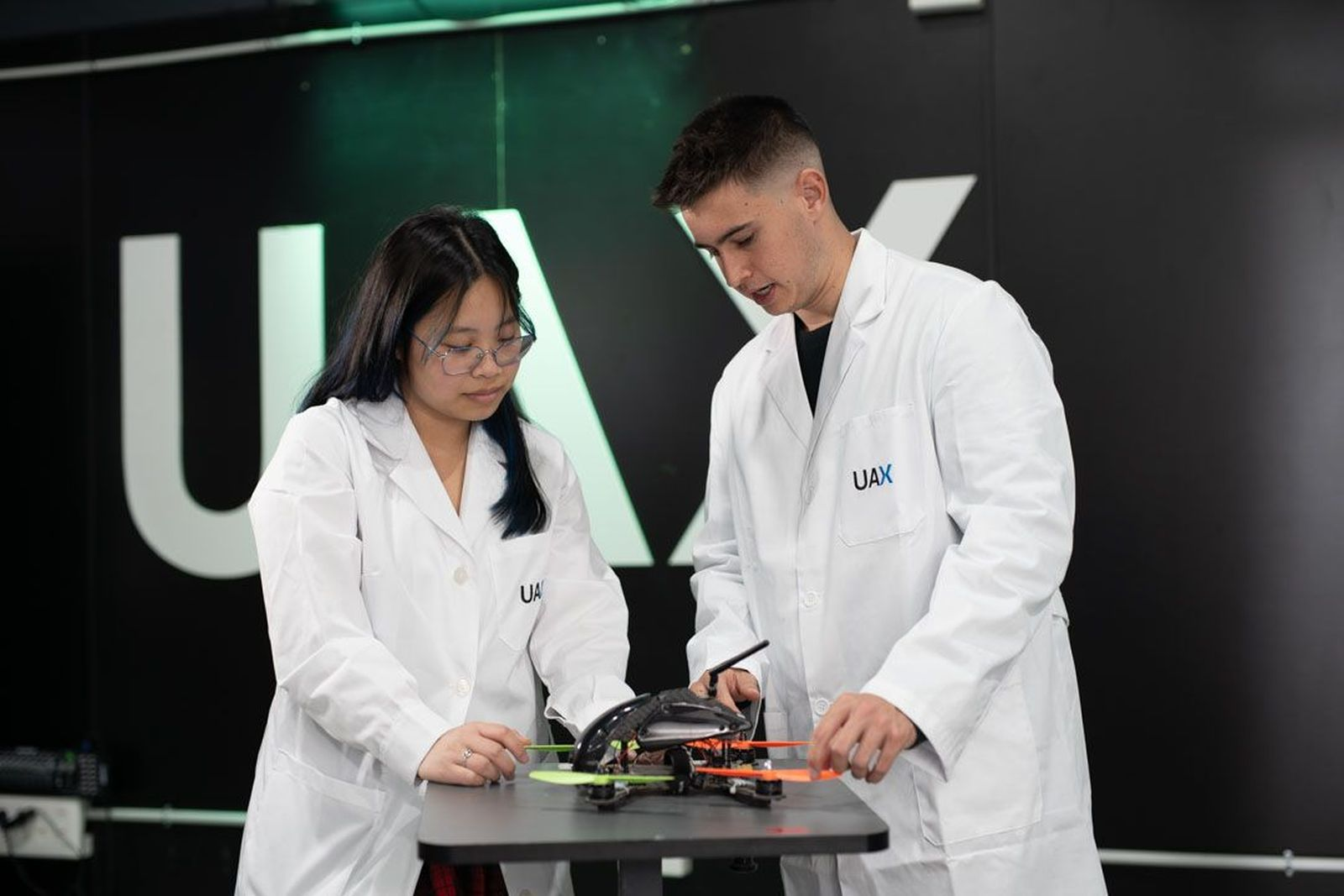
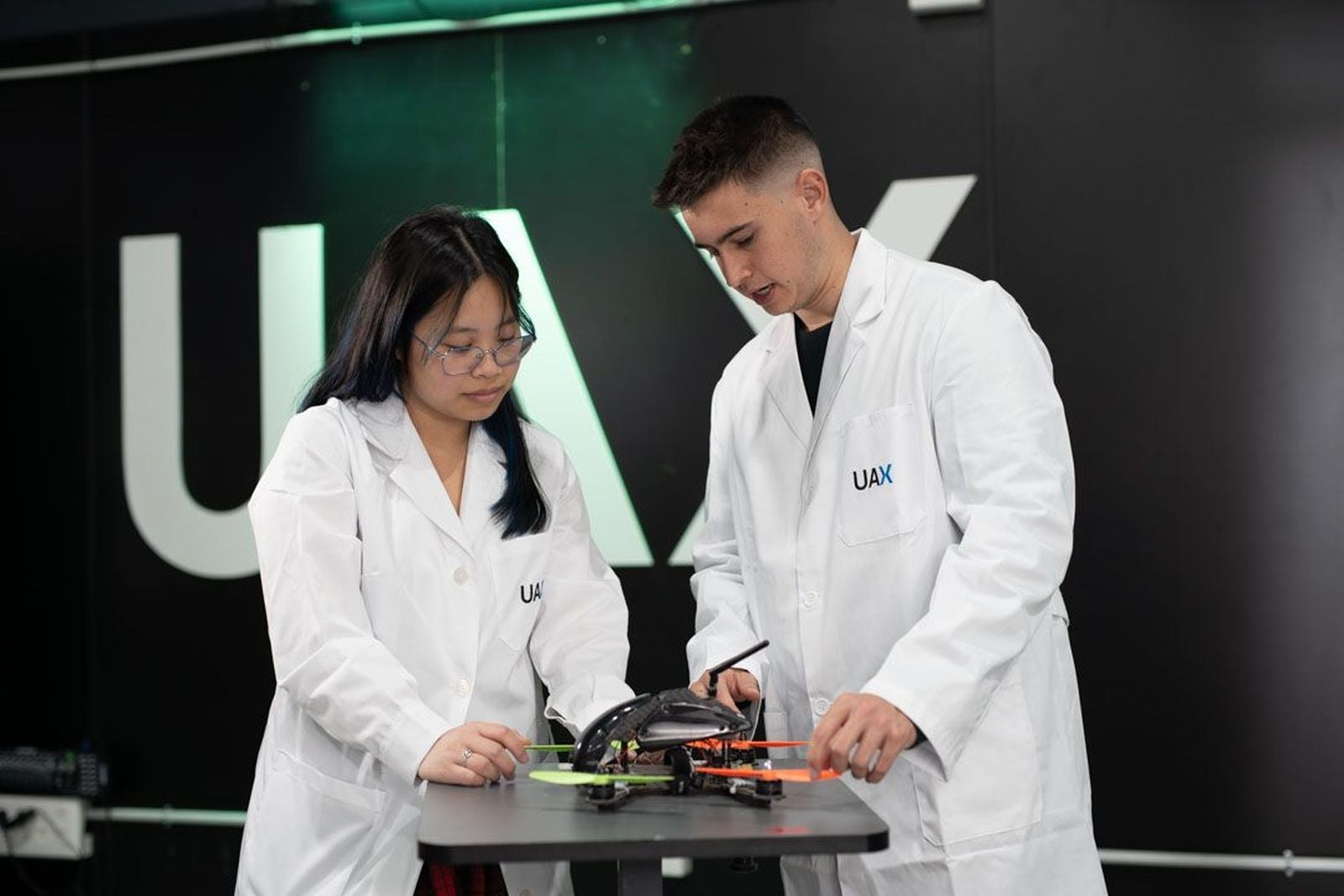
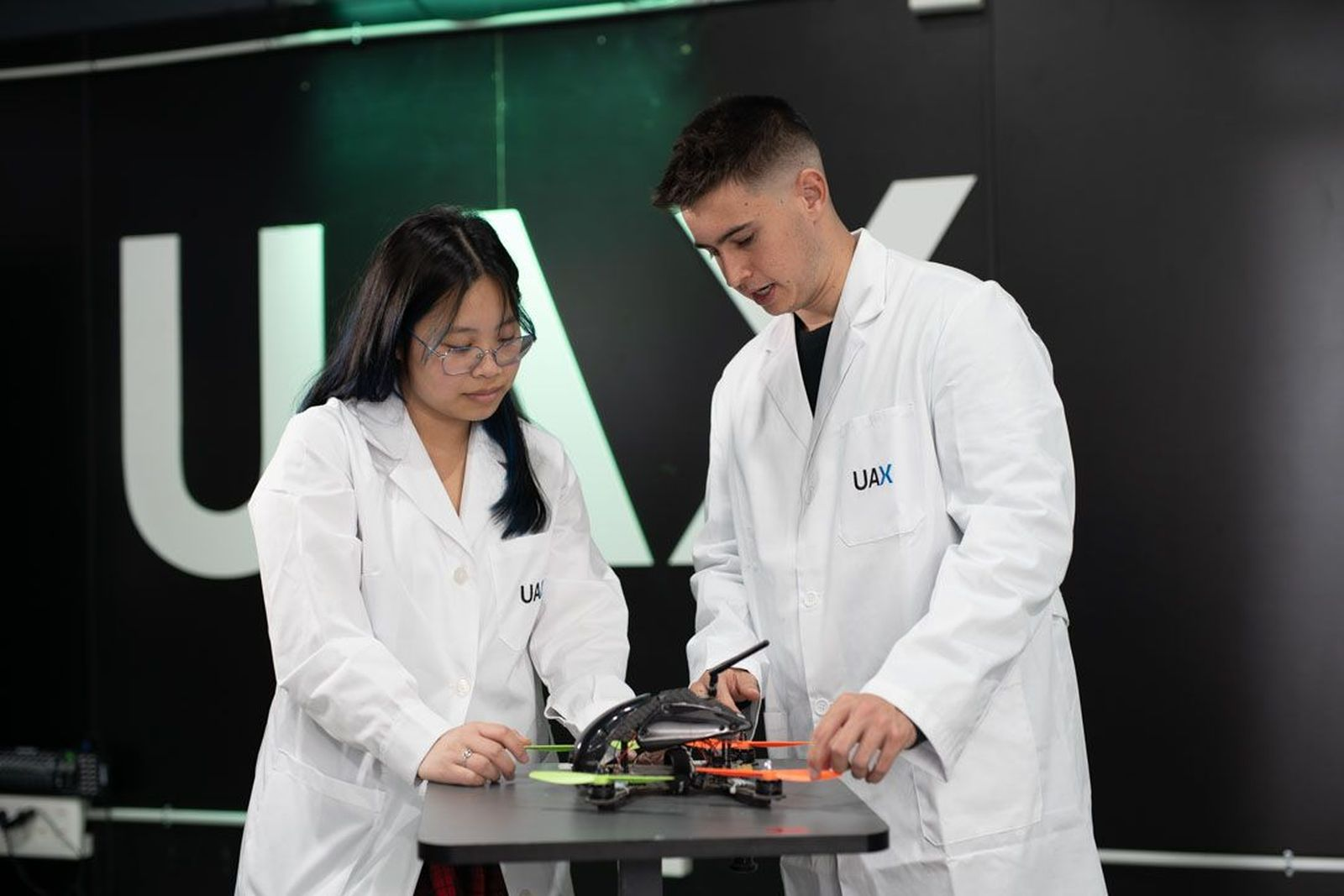
A wind tunnel, a turbojet test rig, an Airbus A320 flight simulator, AeroLab and a FABLAB equipped with 3D printing, laser cutting and robotic arms.
99 % EMPLOYABILITY
99 per cent of our students are in employment upon graduation
1000 AGREEMENTS
Airbus Defence & Space, Iberia, Hispasat, Indra, Thales Alenia Space, INECO, Sacyr, Accenture, Capgemini, GMV, Swiftair, Air Europa and ELA Aviación, amongst others
90 % ACTIVE TEACHERS
This offers the student a training that is closer to professional reality.
+ 100 REAL PROJECTS
Take part in the development and actual launch of a microsatellite alongside the aerospace company B2Space, as part of the UAX FABLAB Makers programme.
The UAX Master’s Degree in Aeronautical Engineering offers a wide range of opportunities for research, collaboration, study and, of course, enjoyment. It also qualifies you to practise the profession and sign off on projects as an Aeronautical Engineer.
On the Qualifying Master’s in Aeronautical Engineering, you will use Agile methodologies that encourage experimentation and simulate the realities of the industry, with a programme that takes a predominantly practical approach.
Companies will be an integral part of your day-to-day life, proposing innovation projects, certifying your skills and preparing you through work placements so that you can develop the best possible skills.

You will learn through a methodology adapted to the European Higher Education Area, which will allow you to acquire the learning outcomes required in the degree.
Our programme is focused on developing a series of skills that will help you to integrate emerging technologies in different technological fields, with the aim of developing your professional activity in the aeronautical and space sector, for which you will have personalised monitoring by tutors who will offer you up-to-date and practical teaching.
Master's Degree in Aeronautical Engineering
First Year
FIRST FOUR-MONTH PERIOD
| Code | Subjects | Character* | ECTS | ||||||||||||||||||||||||||||||||||||||||||||||||||||||||||||||||||||||||||||||||||||||||||||||||||||||||||||||||||||||||||||||||||||||||||||||||||||||||||||||||||||||||||||||||||||||||||||||||||||||||||||||||||||||||||||||||||||||||||||||||||||||
|---|---|---|---|---|---|---|---|---|---|---|---|---|---|---|---|---|---|---|---|---|---|---|---|---|---|---|---|---|---|---|---|---|---|---|---|---|---|---|---|---|---|---|---|---|---|---|---|---|---|---|---|---|---|---|---|---|---|---|---|---|---|---|---|---|---|---|---|---|---|---|---|---|---|---|---|---|---|---|---|---|---|---|---|---|---|---|---|---|---|---|---|---|---|---|---|---|---|---|---|---|---|---|---|---|---|---|---|---|---|---|---|---|---|---|---|---|---|---|---|---|---|---|---|---|---|---|---|---|---|---|---|---|---|---|---|---|---|---|---|---|---|---|---|---|---|---|---|---|---|---|---|---|---|---|---|---|---|---|---|---|---|---|---|---|---|---|---|---|---|---|---|---|---|---|---|---|---|---|---|---|---|---|---|---|---|---|---|---|---|---|---|---|---|---|---|---|---|---|---|---|---|---|---|---|---|---|---|---|---|---|---|---|---|---|---|---|---|---|---|---|---|---|---|---|---|---|---|---|---|---|---|---|---|---|---|---|---|---|---|---|---|---|---|---|---|---|---|---|---|
| M140900 | Advanced Aerodynamics | OB | 3 | ||||||||||||||||||||||||||||||||||||||||||||||||||||||||||||||||||||||||||||||||||||||||||||||||||||||||||||||||||||||||||||||||||||||||||||||||||||||||||||||||||||||||||||||||||||||||||||||||||||||||||||||||||||||||||||||||||||||||||||||||||||||
Advanced AerodynamicsCódigo: M140900 Imprimir Course 1: First-semester module. Compulsory. 3 credits. Profesores
Objectives For students to acquire advanced knowledge of both external and internal aerodynamics, as well as the computational and experimental techniques used in this discipline. Prerequisites No prerequisites have been set. Learning Outcomes Understanding and mastery of the laws of external aerodynamics across different flight regimes, and their application to numerical and experimental aerodynamics. Understanding and mastery of the laws of internal aerodynamics. Application of these, together with other disciplines, to the resolution of complex aeroelasticity problems in propulsion systems. Ability to analyse and solve aerospace problems in new or unfamiliar environments, within broad and complex contexts. Learning outcomes Possesses knowledge of Advanced Fluid Mechanics and Aerodynamics, and is able to obtain results using computational techniques. Is able to apply the laws of Internal Aerodynamics, together with other disciplines, to the resolution of complex aeroelasticity problems in propulsion systems. Course content Advanced Aerodynamics: Advanced external aerodynamics across different flight regimes (subsonic, transonic and supersonic), computational numerical methods. Transonic phenomena in airfoils and wings. Unsteady aerodynamics (Theodorsen, Garrick, Sears, etc.). Experimental techniques used in aerodynamics. Teaching activities Classroom presentations of concepts related to the topics covered in each subject and problem-solving exercises designed to help students understand how to tackle these problems, as well as other face-to-face group sessions such as discussion classes, group work, etc. Laboratory activities of increasing difficulty, enabling students to gradually develop the ability to solve problems independently. Carrying out projects in small groups outside the classroom. Independent study, report writing, practical work, etc., carried out by individual students or groups of students. Assessment tests. Assessment system and criteria Technical competence in problem-solving and case studies will be assessed through the presentation and defence of practical case studies. This will be assessed against a specific competence profile that takes into account the documentation submitted, the work carried out, and the skills and attitudes demonstrated by the student and the working group. Reports on the progress of laboratory practicals will be assessed to verify the acquisition of the competencies developed. For competences involving knowledge of course content, a series of written examinations will be set to cover all the classroom-based learning activities, as well as the student’s independent study. CONTINUOUS ASSESSMENT: The final mark for continuous assessment will be the average of the tests taken during the term. The mark for a test will be the weighted average of the marks obtained up to that test in the submission of assigned work, laboratory practicals and face-to-face assessment of the course content, the weightings for which are set out in the Timetable. In order to have marks from the various assessments averaged and to pass via continuous assessment, students must achieve at least a 3.5 in each one. REGULAR EXAMINATION PERIOD: In the ordinary examination session, the entire syllabus of the module will be assessed; the final mark will be that obtained in the examination, and continuous assessment will not be taken into account. SUPPLEMENTARY EXAMINATION PERIOD: In the supplementary examination, the entire syllabus of the module will be assessed; the final mark will be that obtained in the examination, and continuous assessment will not be taken into account. Students’ results in the modules will be graded according to the following numerical scale from 0 to 10, expressed to one decimal place, to which the corresponding qualitative grade may be added: a. 0–4.9: Fail (SS). b. 5.0–6.9: Pass (AP). c. 7.0–8.9: Good (NT). d. 9.0–10: Distinction (SB). The distinction of ‘Honours’ shall be awarded to students who have obtained a mark of 9.0 or higher. The number of students awarded this distinction may not exceed five per cent of those enrolled on the course in the relevant academic year, unless the number of students enrolled is fewer than 20, in which case only one ‘First Class Honours’ may be awarded. Timetable Click on this link to view the detailed timetable in Excel
Further reading Supplementary: 1. José Meseguer / Antonio Barrero High-Speed Aerodynamics Garceta. 2011. ISBN: 9788492812943 2. Anderson J. D. Computational Fluid Dynamics McGraw Hill. 2010. ISBN: 0071132104 3. Anderson, J. D. Modern Compressible Flow McGraw Hill. 2003. ISBN: 1259027422 4. J. Katz, A. Plotkin Low-Speed Aerodynamics Cambridge University Press. 2001. ISBN: 0521665523 5. Meseguer, Montañes, Sanz Aerodynamics of Aircraft Air Intakes Garceta. 2012. ISBN: 9788415452256 |
|||||||||||||||||||||||||||||||||||||||||||||||||||||||||||||||||||||||||||||||||||||||||||||||||||||||||||||||||||||||||||||||||||||||||||||||||||||||||||||||||||||||||||||||||||||||||||||||||||||||||||||||||||||||||||||||||||||||||||||||||||||||||
| M140901 | Development of Aviation Infrastructure | OB | 6 | ||||||||||||||||||||||||||||||||||||||||||||||||||||||||||||||||||||||||||||||||||||||||||||||||||||||||||||||||||||||||||||||||||||||||||||||||||||||||||||||||||||||||||||||||||||||||||||||||||||||||||||||||||||||||||||||||||||||||||||||||||||||
Development of Aviation InfrastructureCódigo: M140901 Imprimir Course 1: First-semester module. Compulsory. 6 credits. Profesores
Objectives To provide students with an advanced understanding of the aeronautical infrastructure involved in the development of air transport, particularly the systems comprising the various elements of the airport system. The aim is to enhance students’ employability through practical experience and by encouraging them to give public presentations on the technical reports they have produced. Prerequisites No prerequisites have been set. Competencies Ability to draw up master plans for airports and to manage the design and construction of airport infrastructure, buildings and facilities. Ability to plan, design, construct and manage airports, and to design their electrical installations. Adequate knowledge of the disciplines of cartography, geodesy, topography and geotechnics, as applied to the design of airports and their infrastructure. Ability to carry out airport certification. Ability to plan, design and oversee the construction processes for airport infrastructure, buildings and facilities, as well as their maintenance, upkeep and operation. Ability to integrate complex aerospace systems and multidisciplinary teams. Ability to analyse and mitigate the environmental and social impact of technical solutions for any aerospace system. Competence in planning, designing, managing and certifying the procedures, infrastructure and systems that support aerospace activity, including air navigation systems. Competence in the design of aeronautical and space-related structures and facilities which require an integrated, holistic approach, owing to the diversity of the technologies involved, their complexity or the extensive technical knowledge required. Competence in all areas relating to airport, aeronautical or space technologies which, by their nature, are not exclusive to other branches of engineering. Learning outcomes Is able to draw up master plans for airports and to design and manage the construction of airport infrastructure, buildings and facilities. Possesses the ability to plan, design, construct and manage airports, as well as the ability to design their electrical installations. Possesses a sound understanding of the disciplines of cartography, geodesy, topography and geotechnics, as applied to the design of airports and their infrastructure. They are capable of carrying out airport certification. Description of the course content Concept of an airport Airport system Classification of airports Spanish airport network Civil aviation organisation in Spain International Civil Aviation Organisation Characteristics of commercial aircraft Commercial aircraft operations Impact of aircraft on the airport Development of civil transport aircraft Air traffic variables Historical data series Demand forecasts Application of forecasts to the airfield Application of forecasts to passenger terminals Capacity and demand Airport system capacity Factors influencing capacity Operational capacity of the airside area Reference capacities Geometric configuration of airports Aerodrome topographical information Study of the movement area configuration Soil mechanics and pavements Geotechnics Cartography, Geodesy and Topography Impact of aircraft operations on infrastructure Obstacle restrictions Obstacle limitation surfaces Study of runway run-up distances Visual aids Obstacle marking Markings Lighting and electrical installations Terminal building design Passenger terminal services Passenger flows Space design Terminal structure and installations Handling services Communications and access Aircraft maintenance services Airport maintenance services Other services Airport projects Master Plan and Management of Airport Construction Works Airport certification Regulations and safety Environment and environmental impact Management models. Costs and funding Training Activities Classroom-based presentation of concepts relating to the topics covered in each subject and problem-solving exercises designed to enable students to understand how to tackle these issues, as well as other face-to-face group sessions such as discussion classes, group work, etc. Laboratory activities of increasing difficulty, enabling students to gradually develop the ability to solve problems independently. Project work in small groups outside the classroom. Independent study, report writing, practical work, etc., carried out by individual students or groups of students. Assessment tests. Assessment system and criteria The format of the assessment tests may include multiple-choice questions, short-answer questions, essay questions, problem-solving tasks, case studies, laboratory tests or workshops, or the design of prototypes, products or models, to be completed in writing or orally. Where applicable, the coordinator will provide details of the assessment format to be used prior to the assessments taking place. CONTINUOUS ASSESSMENT: The final mark for continuous assessment will be the average of the assessments carried out during the term. The mark will be the weighted average of the marks obtained for the submission of assigned assignments, laboratory practicals and/or assessment of knowledge of the course content, the weightings for which are set out in the Timetable. REGULAR EXAMINATION PERIOD: In the ordinary examination session, the entire syllabus of the module will be assessed, with the final mark being that obtained in the examination; continuous assessment will not be taken into account. SESSION EXTRAORDINARY: In the supplementary examination, the entire syllabus of the course will be assessed, with the final mark being that obtained in the examination; continuous assessment will not be taken into account. Students’ results in the modules will be graded according to the following numerical scale from 0 to 10, expressed to one decimal place, to which the corresponding qualitative grade may be added: a. 0–4.9: Fail (SS). b. 5.0–6.9: Pass (AP). c. 7.0–8.9: Good (NT). d. 9.0–10: Distinction (SB). The distinction of ‘Honours’ shall be awarded to students who have obtained a mark of 9.0 or higher. The number of students awarded this distinction may not exceed five per cent of those enrolled on the course in the relevant academic year, unless the number of students enrolled is fewer than 20, in which case only one ‘First Class Honours’ may be awarded. Timetable Click on this link to view the detailed timetable in Excel
Bibliography Core: 1. Marcos García Cruzado Airport Engineering AENA Foundation. 2013. ISBN: 9788495567765 2. Vicente Cudós Samblancat Airport Engineering Notebooks Creaciones Europa Empresarial. 2004. ISBN: 9788460796732 Supplementary: 3.- ICAO Convention on International Civil Aviation ICAO. 1944. |
|||||||||||||||||||||||||||||||||||||||||||||||||||||||||||||||||||||||||||||||||||||||||||||||||||||||||||||||||||||||||||||||||||||||||||||||||||||||||||||||||||||||||||||||||||||||||||||||||||||||||||||||||||||||||||||||||||||||||||||||||||||||||
| M140902 | Flight Dynamics | OB | 4,5 | ||||||||||||||||||||||||||||||||||||||||||||||||||||||||||||||||||||||||||||||||||||||||||||||||||||||||||||||||||||||||||||||||||||||||||||||||||||||||||||||||||||||||||||||||||||||||||||||||||||||||||||||||||||||||||||||||||||||||||||||||||||||
Flight DynamicsCódigo: M140902 Imprimir Course 1: First-semester module. Compulsory. 4.5 credits. Profesores
Objectives For students to acquire an advanced understanding of flight dynamics, stability and control of atmospheric and space-based aeronautical vehicles. To acquire practical and theoretical knowledge of the dynamic stability of aeronautical systems. Prerequisites No prerequisites have been set. Competencies Understanding and mastery of Atmospheric Flight Mechanics (Manöuvres, Static and Dynamic Stability and Control), and of Orbital Mechanics and Attitude Dynamics. Learning outcomes Understands and is able to analyse the performance, stability and static and dynamic control relating to the atmospheric flight of aircraft. Is familiar with and able to apply the laws of Orbital Mechanics and Attitude Dynamics. Course content The content of the Advanced Flight Dynamics section, which constitutes 90 per cent of the module, is as follows: - Performance and Stability - Static and Dynamic Control of the aircraft - Stability Derivatives - Longitudinal and Lateral Dynamic Modes - Aircraft Response to Aerodynamic Control Inputs - Dynamic Stability and Controllability in Closed-Loop - Flight Characteristics and Flight Control Systems The contents of the Orbital Mechanics and Attitude Dynamics module, which constitute the remaining 10 per cent of the course, are: - Perturbations - Equations of Motion (rigid bodies, deformable bodies) - Attitude Dynamics of Solids - Stability in Space Systems Teaching activities Classroom-based presentation of concepts relating to the topics covered in each subject and problem-solving exercises designed to enable students to understand how to tackle these problems, as well as other face-to-face group sessions such as discussion classes, group work, etc. Laboratory activities of increasing difficulty, enabling students to gradually develop the ability to solve problems independently. Carrying out projects in small groups outside the classroom. Independent study, report writing, practical work, etc., carried out by individual students or groups of students. Assessment tests. Assessment system and criteria Technical competence in solving theoretical and practical problems relating to dynamic flight stability will be assessed through a final examination and the presentation of a practical problem. The profile of skills acquired by the student will be assessed on the basis of the documentation submitted, the work carried out, and the skills and attitudes demonstrated by the student and the working group. For competences involving knowledge of the course content, a series of written examinations will be set to cover the range of learning activities carried out in the classroom, as well as the student’s independent study. The final mark for the module will be the result of weighting the continuous assessment or final exam (70 per cent) and the practical work (30 per cent). CONTINUOUS ASSESSMENT: - Students who sit the various assessment tests in person throughout the term will be eligible to pass the module through continuous assessment - The final mark for continuous assessment will be the average of the tests taken during the term - In order to have marks averaged across the various tests and to pass via continuous assessment, students must achieve at least a 3 in each one. REGULAR EXAM SESSION: - The ordinary examination will cover the entire syllabus of the module; the final mark will be that obtained in the final exam, and continuous assessment will not be taken into account. SUPPLEMENTARY EXAMINATION PERIOD: - In the supplementary examination, the entire syllabus of the module will be assessed; the final mark will be that obtained in the final examination, and continuous assessment will not be taken into account. Students’ results in the modules will be graded according to the following numerical scale from 0 to 10, expressed to one decimal place, to which the corresponding qualitative grade may be added: a. 0–4.9: Fail (SS). b. 5.0–6.9: Pass (AP). c. 7.0–8.9: Good (NT). d. 9.0–10: Distinction (SB). The distinction of ‘Honours’ may be awarded to students who have achieved a mark of 9.0 or higher. The number of students awarded this distinction may not exceed five per cent of those enrolled on the course in the relevant academic year, unless the number of enrolled students is fewer than 20, in which case only one ‘First Class Honours’ may be awarded. Bibliography Essential: 1. Gómez Tierno, Miguel Ángel Mechanics of Flight Madrid: Ibergarceta, 2012. 2012. ISBN: 9788415452010 Supplementary: 2.- Cook, Michel V. Principles of Flight Dynamics Elsevier. 2007. ISBN: 9780750669276 |
|||||||||||||||||||||||||||||||||||||||||||||||||||||||||||||||||||||||||||||||||||||||||||||||||||||||||||||||||||||||||||||||||||||||||||||||||||||||||||||||||||||||||||||||||||||||||||||||||||||||||||||||||||||||||||||||||||||||||||||||||||||||||
| M140903 | Advanced Materials and Manufacturing | OB | 6 | ||||||||||||||||||||||||||||||||||||||||||||||||||||||||||||||||||||||||||||||||||||||||||||||||||||||||||||||||||||||||||||||||||||||||||||||||||||||||||||||||||||||||||||||||||||||||||||||||||||||||||||||||||||||||||||||||||||||||||||||||||||||
Advanced Materials and ManufacturingCódigo: M140903 Imprimir Course 1: First-semester module. Compulsory. 6 credits. Profesores
Objectives The objectives of the module are based on three key aspects: To gain an in-depth understanding of manufacturing processes currently used or expected to be used in the aeronautical industry. To gain an in-depth understanding of materials currently used or expected to be used in the aeronautical industry. To be able to solve real-world problems relating to the selection of materials and production processes in the aeronautical industry. Prerequisites No prerequisites have been set. Competencies Adequate knowledge of metallic and composite materials used in the manufacture of aerospace vehicles. Knowledge and skills enabling students to understand and carry out the manufacturing processes for aerospace vehicles. Adequate knowledge of the materials and manufacturing processes used in propulsion systems. Ability to analyse and solve aerospace problems in new or unfamiliar environments, within broad and complex contexts. Learning outcomes Possesses adequate knowledge of metallic materials and composite materials to undertake the design and production engineering processes for aerospace vehicles. Possesses adequate knowledge of materials and manufacturing processes used in propulsion systems. Course content Advanced Materials and Production: Advanced studies on metallic and composite materials used in aeronautics. Advanced non-conventional manufacturing processes for aeronautical components (non-conventional machining processes, Surface Finishes, Composite Manufacturing Processes, Automation of Manufacturing Processes, Metrological Organisation and Implementation in Production Systems). Advanced production management, operations management and multidisciplinary teams, with particular attention to the processes involved. Advanced Materials and Production: Selection criteria and behaviour of advanced materials for aeronautical and space propulsion systems (ablative materials, refractory materials, thermal protection in rocket engines). Advanced non-conventional manufacturing processes for aerospace propulsion system components: solid propellants, machining of grain geometries, moulding, tooling, etc. Blades, nozzles, combustion chambers, etc. Teaching activities Classroom-based presentation of concepts related to the topics covered in each module and problem-solving exercises designed to enable students to understand how to tackle these issues, as well as other face-to-face group sessions such as discussion classes, group work, etc. Laboratory activities of increasing difficulty, enabling students to gradually develop the ability to solve problems independently. Carrying out projects in small groups outside the classroom. Independent study, report writing, practical work, etc., carried out by individual students or groups of students. Assessment tests. Assessment system and criteria Technical competence in problem-solving and case studies will be assessed through the presentation and defence of practical case studies. This will be assessed against a specific competence profile that takes into account the documentation submitted, the work carried out, and the skills and attitudes demonstrated by the student and the working group. Reports on the progress of laboratory practicals will be assessed to verify the acquisition of the competencies developed. For competences involving knowledge of course content, a series of written examinations will be set to cover all the classroom-based learning activities, as well as the student’s independent study. CONTINUOUS ASSESSMENT: The final mark for continuous assessment will be the average of the tests taken during the term. The mark for a test will be the weighted average of the marks obtained up to that test in the submission of assigned assignments, laboratory practicals and face-to-face assessment of the course content, the weightings for which are set out in the Timetable. In order to have marks from the various assessments averaged and to pass via continuous assessment, students must achieve at least a 3.5 in each one. REGULAR EXAMINATION PERIOD: In the ordinary examination session, the entire syllabus of the module will be assessed; the final mark will be that obtained in the examination, and continuous assessment will not be taken into account. SUPPLEMENTARY EXAMINATION PERIOD: In the supplementary examination, the entire syllabus of the module will be assessed; the final mark will be that obtained in the examination, and continuous assessment will not be taken into account. Students’ results in the modules will be graded according to the following numerical scale from 0 to 10, expressed to one decimal place, to which the corresponding qualitative grade may be added: a. 0–4.9: Fail (SS). b. 5.0–6.9: Pass (AP). c. 7.0–8.9: Good (NT). d. 9.0–10: Distinction (SB). The distinction of ‘Honours’ shall be awarded to students who have obtained a mark of 9.0 or higher. The number of students awarded this distinction may not exceed five per cent of those enrolled on the course in the relevant academic year, unless the number of enrolled students is fewer than 20, in which case only one ‘First Class Honours’ may be awarded. Bibliography Essential: 1. Ian Gibson, David Wrosen and Brent Stucker. Additive Manufacturing Technologies: Rapid Prototyping to Direct Digital Manufacturing. Springer, Boston, MA. 2010. ISBN: 9781441911193 Supplementary: 2. Steve Krar, Arthur Gill Exploring Advanced Manufacturing Technologies Industrial Press. 2008. |
|||||||||||||||||||||||||||||||||||||||||||||||||||||||||||||||||||||||||||||||||||||||||||||||||||||||||||||||||||||||||||||||||||||||||||||||||||||||||||||||||||||||||||||||||||||||||||||||||||||||||||||||||||||||||||||||||||||||||||||||||||||||||
| M140904 | Aerospace Electronic Systems | OB | 4,5 | ||||||||||||||||||||||||||||||||||||||||||||||||||||||||||||||||||||||||||||||||||||||||||||||||||||||||||||||||||||||||||||||||||||||||||||||||||||||||||||||||||||||||||||||||||||||||||||||||||||||||||||||||||||||||||||||||||||||||||||||||||||||
Aerospace Electronic SystemsCódigo: M140904 Imprimir Course 1: First-semester module. Compulsory. 4.5 credits. Profesores
Objectives The aim is to ensure that students acquire the knowledge necessary to understand what aerospace electronic systems are, what components they consist of, which other components they interact with, how they communicate, and what distinctive features aerospace electronic systems have compared to electronic systems in other fields. Prerequisites No prerequisites have been set. Competencies Adequate knowledge of avionics and embedded software, and of the simulation and control techniques used in air navigation. Learning Outcomes To have an adequate understanding of avionics and embedded software, and of the simulation and control techniques used in air navigation. Course description Aerospace Electronic Systems: Avionics and Embedded Software, Autopilot, Instrumentation and Sensors, Communication Buses, Embedded Software Requirements, Operating System Architecture, Process Management, Autonomous Systems Software, Reasoning, Optimisation and Decision-Making Methodologies. Wave Propagation and Issues Relating to Links with Ground Stations, Aeronautical Information and Communications Technologies, Electromagnetic Compatibility. New Data Transfer and Communication Solutions (Optical, Optoelectronic). Teaching Activities Classroom-based presentation of concepts related to the topics covered in each subject and problem-solving exercises designed to enable students to understand how to tackle these issues, as well as other face-to-face group sessions such as discussion classes, group work, etc. Laboratory activities of increasing difficulty, enabling students to gradually develop the ability to solve problems independently. Carrying out projects in small groups outside the classroom. Independent study, report writing, practical work, etc., carried out by individual students or groups of students. Assessment tests. Assessment system and criteria Technical competence in problem-solving and case studies will be assessed through the presentation and defence of practical case studies. This will be assessed against a specific competence profile that takes into account the documentation submitted, the work carried out, and the skills and attitudes demonstrated by the student and the working group. Reports on the progress of laboratory practicals will be assessed to verify the acquisition of the competencies developed. For competences involving knowledge of course content, a series of written examinations will be set to cover all the classroom-based learning activities, as well as the student’s independent study. CONTINUOUS ASSESSMENT: The final mark for continuous assessment will be the average of the tests taken during the term. The mark for a test will be the weighted average of the marks obtained up to that test in the submission of assigned work, laboratory practicals and face-to-face assessment of the course content, the weightings for which are set out in the Timetable. In order to have marks from the various assessments averaged and to pass via continuous assessment, students must achieve at least a 3.5 in each one. REGULAR EXAMINATION PERIOD: In the ordinary examination session, the entire syllabus of the module will be assessed; the final mark will be that obtained in the examination, and continuous assessment will not be taken into account. SUPPLEMENTARY EXAMINATION PERIOD: In the supplementary examination, the entire syllabus of the module will be assessed; the final mark will be that obtained in the examination, and continuous assessment will not be taken into account. Students’ results in the modules will be graded according to the following numerical scale from 0 to 10, expressed to one decimal place, to which the corresponding qualitative grade may be added: a. 0–4.9: Fail (SS). b. 5.0–6.9: Pass (AP). c. 7.0–8.9: Good (NT). d. 9.0–10: Distinction (SB). The distinction of ‘Honours’ shall be awarded to students who have obtained a mark of 9.0 or higher. The number of students awarded this distinction may not exceed five per cent of those enrolled on the course in the relevant academic year, unless the number of enrolled students is fewer than 20, in which case only one ‘First Class Honours’ may be awarded. Bibliography Essential: 1. Ali Zolghadri Fault Diagnosis and Fault-Tolerant Control and Guidance for Aerospace Vehicles Springer. 2014. ISBN: 9781447153122 2. Jens Eickhoff Onboard Computers, Onboard Software and Satellite Operations Springer. 2012. ISBN: 9783642251696 3. Miguel R. Aguirre Introduction to Space Systems Springer. 2013. ISBN: 9781461437574 |
|||||||||||||||||||||||||||||||||||||||||||||||||||||||||||||||||||||||||||||||||||||||||||||||||||||||||||||||||||||||||||||||||||||||||||||||||||||||||||||||||||||||||||||||||||||||||||||||||||||||||||||||||||||||||||||||||||||||||||||||||||||||||
| M140905 | Thermofluid dynamics | OB | 6 | ||||||||||||||||||||||||||||||||||||||||||||||||||||||||||||||||||||||||||||||||||||||||||||||||||||||||||||||||||||||||||||||||||||||||||||||||||||||||||||||||||||||||||||||||||||||||||||||||||||||||||||||||||||||||||||||||||||||||||||||||||||||
Thermofluid dynamicsCódigo: M140905 Imprimir Course 1: First-semester module. Compulsory. 6 credits. Profesores
Objectives For students to acquire advanced knowledge of thermofluid dynamics, including, in particular, phenomena associated with combustion and heat and mass transfer, as well as computational fluid dynamics and turbulence. Prerequisites No prerequisites have been set. Competencies Adequate knowledge of Advanced Fluid Mechanics, with particular emphasis on Computational Fluid Dynamics and turbulence phenomena. Adequate knowledge of Advanced Fluid Mechanics, with particular emphasis on the experimental and numerical techniques used in Fluid Mechanics. Understanding and mastery of the phenomena associated with combustion and heat and mass transfer. Ability to analyse and solve aerospace problems in new or unfamiliar environments, within broad and complex contexts. Learning outcomes Possesses knowledge of Advanced Fluid Mechanics and Aerodynamics, and is able to obtain results using computational techniques. Possesses adequate knowledge of Advanced Fluid Mechanics, with particular emphasis on the Experimental and Numerical Techniques used in Fluid Mechanics. Understands and has a firm grasp of the phenomena associated with combustion and heat and mass transfer. Course description Advanced Fluid Mechanics: Laminar and turbulent boundary layers in compressible and incompressible flow, Turbulence, Experimental Methods, Advanced Numerical Calculation in Fluid Mechanics. Combustion and Heat and Mass Transfer: Combustion: Conservation equations for reactive flows; reaction rates; chemical kinetics; combustion of premixed reactants; homogeneous combustion; Rankine relations‐;;;;;;;;;;;;;;;;;;Hugoniot. Deflagrations. Detonations. Combustion instabilities. Diffusion flames. Droplet combustion. Heat and mass transfer. Forced convection and natural convection. Space Thermal Control: Thermal Control Requirements, Thermal Control Systems (Active and Passive). Design of the Thermal Control Subsystem for Satellites and Re-entry of Space Vehicles. Teaching Activities Classroom-based presentation of concepts related to the topics covered in each subject and problem-solving exercises designed to enable students to understand how to tackle these issues, as well as other face-to-face group sessions such as discussion classes, group work, etc. Laboratory activities of increasing difficulty, enabling students to gradually develop the ability to solve problems independently. Project work in small groups outside the classroom. Independent study, report writing, practical work, etc., carried out by individual students or groups of students. Assessment tests. Assessment system and criteria Technical competence in problem-solving and case studies will be assessed through the presentation and defence of practical case studies. This will be assessed against a specific competence profile that takes into account the documentation submitted, the work carried out, and the skills and attitudes demonstrated by the student and the working group. Reports on the progress of laboratory practicals will be assessed to verify the acquisition of the competencies developed. For competences involving knowledge of course content, a series of written examinations will be set to cover all the classroom-based learning activities, as well as the student’s independent study. "CONTINUOUS ASSESSMENT: The final mark for continuous assessment will be the average of the tests taken during the four-month term. The mark for a test will be the weighted average of the marks obtained up to that test in the submission of assigned work, laboratory practicals and face-to-face assessment of the course content, the weightings for which are set out in the Timetable. In order to have marks from the various assessments averaged and to pass via continuous assessment, students must achieve at least a 3.5 in each assessment. REGULAR EXAMINATION PERIOD: A term may be waived for the ordinary assessment period of the module provided that the average mark for the term is 5 or above. SUPPLEMENTARY EXAMINATION PERIOD: In the supplementary examination, the entire syllabus of the module will be assessed, with the final mark being that obtained in the examination; continuous assessment will not be taken into account. Students’ results in the modules will be graded according to the following numerical scale from 0 to 10, expressed to one decimal place, to which the corresponding qualitative grade may be added: a. 0–4.9: Fail (SS). b. 5.0–6.9: Pass (AP). c. 7.0–8.9: Good (NT). d. 9.0–10: Distinction (SB). The distinction of ‘Honours’ shall be awarded to students who have obtained a mark of 9.0 or higher. The number of students awarded this distinction may not exceed five per cent of those enrolled on the course in the relevant academic year, unless the number of enrolled students is fewer than 20, in which case only one ‘Honours’ may be awarded. " Bibliography Essential: 1. Chapman, A. J. Heat Transfer 3rd ed. Madrid: Bellisco, 1990. 1990. ISBN: 8485198425 2. F.P. Incropera, T.L. Bergman Introduction to Heat Transfer John Wiley. 2011. ISBN: 0470917865 3. Fernández-Pello, A. Carlos Fundamentals of Combustion Processes Springer. 2011. ISBN: 9781441979421 |
|||||||||||||||||||||||||||||||||||||||||||||||||||||||||||||||||||||||||||||||||||||||||||||||||||||||||||||||||||||||||||||||||||||||||||||||||||||||||||||||||||||||||||||||||||||||||||||||||||||||||||||||||||||||||||||||||||||||||||||||||||||||||
| TOTAL: | 30 | ||||||||||||||||||||||||||||||||||||||||||||||||||||||||||||||||||||||||||||||||||||||||||||||||||||||||||||||||||||||||||||||||||||||||||||||||||||||||||||||||||||||||||||||||||||||||||||||||||||||||||||||||||||||||||||||||||||||||||||||||||||||||
SECOND FOUR-MONTH PERIOD
| Code | Subjects | Character* | ECTS | ||||||||||||||||||||||||||||||||||||||||||||||||||||||||||||||||||||||||||||||||||||||||||||||||||||||||||||||||||||||||||||||||||||||||||||||||||||||||||||||||||||||||||||||||||||||||||
|---|---|---|---|---|---|---|---|---|---|---|---|---|---|---|---|---|---|---|---|---|---|---|---|---|---|---|---|---|---|---|---|---|---|---|---|---|---|---|---|---|---|---|---|---|---|---|---|---|---|---|---|---|---|---|---|---|---|---|---|---|---|---|---|---|---|---|---|---|---|---|---|---|---|---|---|---|---|---|---|---|---|---|---|---|---|---|---|---|---|---|---|---|---|---|---|---|---|---|---|---|---|---|---|---|---|---|---|---|---|---|---|---|---|---|---|---|---|---|---|---|---|---|---|---|---|---|---|---|---|---|---|---|---|---|---|---|---|---|---|---|---|---|---|---|---|---|---|---|---|---|---|---|---|---|---|---|---|---|---|---|---|---|---|---|---|---|---|---|---|---|---|---|---|---|---|---|---|---|---|---|---|---|---|---|---|---|---|---|---|
| M140906 | Performance, Design and Control of Propulsion Systems | OB | 4,5 | ||||||||||||||||||||||||||||||||||||||||||||||||||||||||||||||||||||||||||||||||||||||||||||||||||||||||||||||||||||||||||||||||||||||||||||||||||||||||||||||||||||||||||||||||||||||||||
Performance, Design and Control of Propulsion SystemsCódigo: M140906 Imprimir Course 1. Second-term module. Compulsory. 4.5 credits. Profesores
Objectives To evaluate the thermodynamic properties, thermodynamic cycle and performance of a jet engine. To explore different power plants according to requirements. Simulation of the performance of turbojets, turbofans and turboprops (advanced performance calculations, analysis of transient performance, operating regimes and control). Alternative power systems for aerospace propulsion (fuel cells). Prerequisites No prerequisites have been set. Competencies Ability to design, build and select the most suitable power plant for an aerospace vehicle, including aeroderivative power plants. Adequate knowledge of the various subsystems of aerospace vehicle propulsion systems. Ability to integrate complex aerospace systems and work within multidisciplinary teams. Ability to analyse and solve aerospace problems in new or unfamiliar environments, within broad and complex contexts. Learning outcomes Is able to design, build and select the most suitable power plant for an aerospace vehicle, including aero-derivative power plants. Has a sound understanding of the various subsystems of aerospace vehicle propulsion systems. Course content Performance, Design and Control of Propulsion Systems: Advanced criteria for the selection, design and optimisation of propulsion systems for aerospace systems. "Aircraft Propulsion: Jet Engines, Turbofans, Turboprops (Advanced performance calculations, analysis of transient performance, operating regimes and control). Alternative power systems for aerospace propulsion (fuel cells).” "Space Propulsion: Chemical Propulsion (Solid- and liquid-propellant rocket engines). Electric Propulsion (Electrothermal, electrostatic and electromagnetic rocket engines). Plasma Acceleration Propulsion. Satellite Attitude Control Systems (Cold-gas rocket engines). Alternative power systems for aerospace propulsion (fuel cells)." Teaching activities Classroom-based presentation of concepts related to the topics covered in each subject and problem-solving exercises designed to enable students to understand how to tackle these concepts, as well as other face-to-face group sessions such as discussion classes, group work, etc. Laboratory activities of increasing difficulty, enabling students to gradually develop the ability to solve problems independently. Project work in small groups outside the classroom. Independent study, report writing, practical work, etc., carried out by individual students or groups of students. Assessment tests. Assessment system and criteria Technical competence in problem-solving and case studies will be assessed through the presentation and defence of practical case studies. This will be assessed against a specific competence profile that takes into account the documentation submitted, the work carried out, and the skills and attitudes demonstrated by the student and the working group. Reports on the progress of laboratory practicals will be assessed to verify the acquisition of the competencies developed. For competences involving knowledge of course content, a series of written examinations will be set to cover all the classroom-based learning activities, as well as the student’s independent study. CONTINUOUS ASSESSMENT: The final mark for continuous assessment will be the average of the tests taken during the term. The mark for a test will be the weighted average of the marks obtained up to that test in the submission of assigned work, laboratory practicals and face-to-face assessment of the course content, the weightings for which are set out in the Timetable. In order to have marks from the various assessments averaged and to pass via continuous assessment, students must achieve at least a 3.5 in each one. REGULAR EXAMINATION PERIOD: A term may be waived for the ordinary assessment period of the module provided that the average mark for the term is 5 or above. SUPPLEMENTARY EXAMINATION PERIOD: In the supplementary examination, the entire syllabus of the module will be assessed, with the final mark being that obtained in the examination; continuous assessment will not be taken into account. Students’ results in the modules will be graded according to the following numerical scale from 0 to 10, expressed to one decimal place, to which the corresponding qualitative grade may be added: a. 0–4.9: Fail (SS). b. 5.0–6.9: Pass (AP). c. 7.0–8.9: Good (NT). d. 9.0–10: Distinction (SB). The distinction of ‘Honours’ shall be awarded to students who have obtained a mark of 9.0 or higher. The number of students awarded this distinction may not exceed five per cent of those enrolled on the course in the relevant academic year, unless the number of enrolled students is fewer than 20, in which case only one ‘First Class Honours’ may be awarded. |
|||||||||||||||||||||||||||||||||||||||||||||||||||||||||||||||||||||||||||||||||||||||||||||||||||||||||||||||||||||||||||||||||||||||||||||||||||||||||||||||||||||||||||||||||||||||||||||
| M140907 | Advanced Aeroelasticity | OB | 3 | ||||||||||||||||||||||||||||||||||||||||||||||||||||||||||||||||||||||||||||||||||||||||||||||||||||||||||||||||||||||||||||||||||||||||||||||||||||||||||||||||||||||||||||||||||||||||||
Advanced AeroelasticityCódigo: M140907 Imprimir Course 1. Second-term module. Compulsory. 3 credits. Profesores
Objectives To study in depth the aeroelastic phenomena that occur during aircraft flight, as well as in aerospace propulsion systems. Prerequisites No prerequisites have been set. Skills Application of knowledge acquired in various disciplines to the resolution of complex aeroelasticity problems. Understanding and mastery of the laws of internal aerodynamics. Application of these laws, together with other disciplines, to the resolution of complex aeroelasticity problems in propulsion systems. Ability to analyse and solve aerospace problems in new or unfamiliar environments, within broad and complex contexts. Learning Outcomes The student is able to analyse aeroelastic problems relating to aircraft flight. The student is able to solve complex aeroelasticity problems in propulsion systems. Course content Advanced study of aeroelastic phenomena in aircraft (dynamic landing, gusts, atmospheric turbulence, impacts, ditching, etc.) and their computational analysis using numerical codes. Aeroelasticity of turbomachinery, periodic flow separation in turbomachinery, blockage flutter, transonic flutter, supersonic torsional flutter, Thermoelastic effects, incompressible flow around an oscillating blade cascade. Aeroelastic design of compressor and turbine stages. Teaching activities Classroom presentation of concepts related to the topics comprising each subject and problem-solving exercises that enable students to learn how to tackle them, as well as other face-to-face group sessions such as discussion classes, group work, etc. Carrying out work in small groups outside the classroom. Independent study, report writing, practical work, etc., carried out by individual students or groups of students. Assessment tests. Assessment system and criteria Technical skills in problem-solving and case study analysis will be assessed through the presentation and defence of practical case studies. This will be evaluated against a specific competency profile that takes into account the documentation submitted, the work carried out, and the skills and attitudes demonstrated by the student and the working group. For competencies involving knowledge of the subject content, a series of written examinations will be set to cover the range of learning activities carried out in the classroom, as well as the student’s independent study. CONTINUOUS ASSESSMENT: The final mark for continuous assessment will be the average of the assessments carried out during the term. The mark for a test will be the weighted average of the marks obtained up to that test in the submission of assigned work, laboratory practicals and face-to-face assessment of the course content, the weightings for which are set out in the Timetable. In order to have marks from the various assessments averaged and to pass via continuous assessment, students must achieve a mark of at least 3.5 in each assessment. REGULAR EXAMINATION PERIOD: In the ordinary examination session, the entire syllabus of the module will be assessed; the final mark will be that obtained in the examination, and continuous assessment will not be taken into account. SUPPLEMENTARY EXAMINATION PERIOD: In the supplementary examination, the entire syllabus of the module will be assessed; the final mark will be that obtained in the examination, and continuous assessment will not be taken into account. Students’ results in the modules will be graded according to the following numerical scale from 0 to 10, expressed to one decimal place, to which the corresponding qualitative grade may be added: a. 0–4.9: Fail (SS). b. 5.0–6.9: Pass (AP). c. 7.0–8.9: Good (NT). d. 9.0–10: Distinction (SB). The distinction of ‘Honours’ shall be awarded to students who have obtained a mark of 9.0 or higher. The number of students awarded this distinction may not exceed five per cent of those enrolled on the course in the relevant academic year, unless the number of enrolled students is fewer than 20, in which case only one ‘First Class Honours’ may be awarded. Bibliography Essential: 1.- Bielawa R.L. Rotary Wing Structural Dynamics and Aeroelasticity 2nd ed. AIAA Education Series. 2006. ISBN: 9781563476983 2. Dowell E.H., Curtiss H.C., Scanlan R., Sisto F., Hall K.C. et al A Modern Course in Aeroelasticity 5th ed. Springer Science. 2015. ISBN: 9783319094 3. Earl H. Dowell A Modern Course in Aeroelasticity. / Springer Science & Business Media. 1995. ISBN: 9780792327899 4. Fung, Y. C. An Introduction to the Theory of Aeroelasticity : Dover Publications. 1969. ISBN: 9780486469362 5. García-Fogeda Núñez, Pablo An Introduction to Aeroelasticity: Ibergarceta Publications, 2014. ISBN: 9788416228379 6. Rodden W. P., Johnson E. H MSC/NASTRAN Aeroelastic Analysis User’s Guide MSC Software Corporation. 1994. ISBN: 9781585240067 |
|||||||||||||||||||||||||||||||||||||||||||||||||||||||||||||||||||||||||||||||||||||||||||||||||||||||||||||||||||||||||||||||||||||||||||||||||||||||||||||||||||||||||||||||||||||||||||||
| M140908 | Advanced Structural Analysis | OB | 3 | ||||||||||||||||||||||||||||||||||||||||||||||||||||||||||||||||||||||||||||||||||||||||||||||||||||||||||||||||||||||||||||||||||||||||||||||||||||||||||||||||||||||||||||||||||||||||||
Advanced Structural AnalysisCódigo: M140908 Imprimir Course 1. Second-term module. Compulsory. 3 credits. Profesores
Objectives To study in depth the structural analysis of structures that form part of aerospace systems. Prerequisites No prerequisites have been set. Competencies Knowledge and skills in the structural analysis and design of aircraft and spacecraft, including the application of advanced structural calculation and design software. Ability to analyse and solve aerospace problems in new or unfamiliar environments, within broad and complex contexts. Learning outcomes Possesses advanced knowledge relating to the structural analysis and design of aircraft and spacecraft, and is able to obtain results using computational techniques. Course content Linear and Non-linear Static Analysis, Dynamic Behaviour, Wave Propagation in Solid Continuous Media, Instabilities. Structural Dynamics in Aircraft, Dynamic Loads on Aerospace Structures and Aircraft Behaviour Structural Design of Complex Aerospace Components. Computational Methods for Structural Analysis. Teaching Activities Classroom-based presentation of concepts related to the topics covered in each module and problem-solving exercises designed to enable students to understand how to tackle these problems, as well as other face-to-face group sessions such as discussion classes, group work, etc. Laboratory activities of increasing difficulty, enabling students to gradually develop the ability to solve problems independently. Carrying out group work in small groups outside the classroom. Independent study, report writing, practical work, etc., carried out by individual students or groups of students. Assessment Tests. Assessment system and criteria Technical competence in problem-solving and case studies will be assessed through the presentation and defence of practical case studies. This will be assessed against a specific competence profile that takes into account the documentation submitted, the work carried out, and the skills and attitudes demonstrated by the student and the working group. Reports on the progress of laboratory practicals will be assessed to verify the acquisition of the competencies developed. For competencies involving knowledge of course content, a series of written examinations will be set to cover the range of classroom-based learning activities, as well as the student’s independent study. CONTINUOUS ASSESSMENT: The final mark for continuous assessment will be the average of the tests taken during the term. The mark for a test will be the weighted average of the marks obtained up to that test in the submission of assigned work, laboratory practicals and face-to-face assessment of the course content, the weightings for which are set out in the Timetable. In order to have marks from the various assessments averaged and to pass via continuous assessment, students must achieve at least a 3.5 in each one. REGULAR EXAMINATION PERIOD: In the ordinary examination session, the entire syllabus of the module will be assessed; the final mark will be that obtained in the examination, and continuous assessment will not be taken into account. SUPPLEMENTARY EXAMINATION PERIOD: In the supplementary examination, the entire syllabus of the module will be assessed; the final mark will be that obtained in the examination, and continuous assessment will not be taken into account. Students’ results in the modules will be graded according to the following numerical scale from 0 to 10, expressed to one decimal place, to which the corresponding qualitative grade may be added: a. 0–4.9: Fail (SS). b. 5.0–6.9: Pass (AP). c. 7.0–8.9: Good (NT). d. 9.0–10: Distinction (SB). The distinction of ‘Honours’ shall be awarded to students who have obtained a mark of 9.0 or higher. The number of students awarded this distinction may not exceed five per cent of those enrolled on the course in the relevant academic year, unless the number of enrolled students is fewer than 20, in which case only one ‘First Class Honours’ may be awarded. Bibliography Essential: 1. Ashby, Michael F. Engineering Materials : Butterworth Heinemann. 1996. ISBN: 0750630817 2. Michael C. Y. Niu Airframe Stress Analysis and Sizing Technical Book Company. 2005. ISBN: 9627128082 3. Wijker, Jacob Job Spacecraft Structures: Springer, 2008. ISBN: 9783540755524 Supplementary: 4.- Bruhn, E. F. Analysis and Design of Flight Vehicle Structures Tri-State Offset Company. 1973. ISBN: 9780961523404 |
|||||||||||||||||||||||||||||||||||||||||||||||||||||||||||||||||||||||||||||||||||||||||||||||||||||||||||||||||||||||||||||||||||||||||||||||||||||||||||||||||||||||||||||||||||||||||||||
| M140909 | Advanced Aerospace Vehicle Design | OB | 6 | ||||||||||||||||||||||||||||||||||||||||||||||||||||||||||||||||||||||||||||||||||||||||||||||||||||||||||||||||||||||||||||||||||||||||||||||||||||||||||||||||||||||||||||||||||||||||||
Advanced Aerospace Vehicle DesignCódigo: M140909 Imprimir Course 1. Second-term module. Compulsory. 6 credits. Profesores
Objectives The objectives of the module are to explore unconventional configurations of aerospace vehicles and aerospace propulsion systems in greater depth. The course will cover aerostats, missiles, drones, electronic warfare subsystems, surveillance, new propulsion systems and advanced turbomachinery design. The course aims to ensure that students are familiar with all these configurations and are able to solve problems associated with them. Prerequisites No prerequisites have been set. Competencies Ability to design, build, inspect, certify and maintain all types of aircraft and space vehicles. Adequate knowledge of the various subsystems of aircraft and spacecraft. Adequate knowledge of jet engines, gas turbines, rocket engines and turbomachinery. Ability to undertake the mechanical design of the various components of a propulsion system, as well as the propulsion system as a whole. Ability to design, build, inspect, certify and maintain all types of aircraft and spacecraft, including their corresponding subsystems. Ability to provide general and technical management of research, development and innovation projects in aeronautical and space companies and technology centres. Ability to integrate complex aerospace systems and multidisciplinary teams. Ability to analyse and mitigate the environmental and social impact of technical solutions for any aerospace system. Ability to analyse and solve aerospace problems in new or unfamiliar environments, within broad and complex contexts. Learning outcomes Is able to design, build, maintain and inspect systems and subsystems for all types of aircraft and space vehicles. Understands the various subsystems of aircraft and space vehicles. Possesses adequate knowledge of jet engines, gas turbines, rocket engines and turbomachinery. Is able to undertake the mechanical design of the various components of a propulsion system, as well as the propulsion system as a whole. Course description "Advanced design of aircraft and spacecraft: unconventional configurations, actuators, in-depth study of the various concepts of aerospace systems architecture and their subsystems. In-depth study of mechanical design, tribological problems, deployment and extension mechanisms, separation systems, planning and design of aerospace vehicle projects with practical application to real-world cases.” Advanced Propulsion Systems Design: Advanced Aerospace Propulsion Systems, Unconventional Configurations (Combined Cycles, RBCC, PDE, etc.), Operations, Geometric Parameterisation, Modelling and Simulation, In-depth study of the design of conventional and self-adaptive nozzles. Mechanical Design of Turbomachinery. Study of Thermo-Structural Problems in Propulsion Systems, Deformations, Clearances and Expansion Joints, Sealing and Leakage Control, Lubrication Systems. Teaching Activities Classroom-based presentation of concepts related to the topics comprising each subject, and problem-solving exercises enabling students to learn how to tackle these problems, as well as other face-to-face group sessions such as discussion classes, group work, etc. Laboratory activities of increasing difficulty, enabling students to gradually develop the ability to solve problems independently. Carrying out projects in small groups outside the classroom. Independent study, report writing, practical work, etc., carried out by individual students or groups of students. Assessment tests. Assessment system and criteria Technical competence in problem-solving and case studies will be assessed through the presentation and defence of practical case studies. This will be assessed against a specific competence profile that takes into account the documentation submitted, the work carried out, and the skills and attitudes demonstrated by the student and the working group. Reports on the progress of laboratory practicals will be assessed to verify the acquisition of the competencies developed. For competences involving knowledge of course content, a series of written examinations will be set to cover all the classroom-based learning activities, as well as the student’s independent study. CONTINUOUS ASSESSMENT: The final mark for continuous assessment will be the average of the tests taken during the term. The mark for a test will be the weighted average of the marks obtained up to that test in the submission of assigned work, laboratory practicals and face-to-face assessment of the course content, the weightings for which are set out in the Timetable. In order to have marks from the various assessments averaged and to pass via continuous assessment, students must achieve at least a 3.5 in each one. REGULAR EXAMINATION PERIOD: A term may be waived for the ordinary assessment period of the module provided that the average mark for the term is 5 or above. SUPPLEMENTARY EXAMINATION PERIOD: In the supplementary examination, the entire syllabus of the module will be assessed, with the final mark being that obtained in the examination; continuous assessment will not be taken into account. Students’ results in the modules will be graded according to the following numerical scale from 0 to 10, expressed to one decimal place, to which the corresponding qualitative grade may be added: a. 0–4.9: Fail (SS). b. 5.0–6.9: Pass (AP). c. 7.0–8.9: Good (NT). d. 9.0–10: Distinction (SB). The distinction of ‘Honours’ shall be awarded to students who have obtained a mark of 9.0 or higher. The number of students awarded this distinction may not exceed five per cent of those enrolled on the course in the relevant academic year, unless the number of enrolled students is fewer than 20, in which case only one ‘First Class Honours’ may be awarded. Bibliography Essential: 1. David Jenn, Naval Postgraduate School Radar and Laser Cross Section Engineering, Second Edition AIAA Education Series. 2005. ISBN: 9781563477027 2. Eugene Fleeman Missile Design and System Engineering AIAA Education Series. 2012. ISBN: 9781600869082 3. Grant E. Carichner; Leland M. Nicolai Fundamentals of Aircraft and Airship Design, Volume 2: Airship Design and Case Studies AIAA Education Series. 2013. ISBN: 9781600868986 4. Jay Gundlach Civil and Commercial Unmanned Aircraft Systems AIAA Education Series. 2016. ISBN: 9781624103544 5. Jay Gundlach Designing Unmanned Aircraft Systems: A Comprehensive Approach, Second Edition AIAA Education Series. 2014. ISBN: 9781624102615 6. Morris R. Driels Weaponeering, Second Edition AIAA Education Series. 2013. ISBN: 9781600869259 |
|||||||||||||||||||||||||||||||||||||||||||||||||||||||||||||||||||||||||||||||||||||||||||||||||||||||||||||||||||||||||||||||||||||||||||||||||||||||||||||||||||||||||||||||||||||||||||||
| M140910 | Aircraft Testing and Certification | OB | 4,5 | ||||||||||||||||||||||||||||||||||||||||||||||||||||||||||||||||||||||||||||||||||||||||||||||||||||||||||||||||||||||||||||||||||||||||||||||||||||||||||||||||||||||||||||||||||||||||||
Aircraft Testing and CertificationCódigo: M140910 Imprimir Course 1. Second-term module. Compulsory. 4.5 credits. Profesores
Objectives To acquire the knowledge and ‘technical’ aspects involved in the certification and qualification of civil or military aerial platforms and their constituent systems, and to be able to carry out the procedures followed in an aeronautical systems certification programme. To understand the various methods used to verify compliance with the requirements set out in certification programmes. Prerequisites No prerequisites have been set. Competencies Ability to design, build, inspect, certify and maintain all types of aircraft and space vehicles. Ability to design, carry out and analyse ground and flight tests on aerospace vehicles, and to carry out the full certification process for such vehicles. Ability to design, build, inspect, certify and maintain all types of aircraft and space vehicles, including their corresponding subsystems. Learning outcomes The student is able to design, build, maintain and inspect systems and subsystems for all types of aircraft and space vehicles. Has the ability to design, carry out and analyse ground and flight tests of aerospace vehicles, and is able to undertake the complete certification process for these vehicles. Course content "Aircraft Certification: Regulations applicable to the certification of aircraft and their subsystems. Analysis of the aspects involved in the certification (civil and military) and airworthiness (achievement and maintenance) processes for aircraft and their relationship with the design tools and production methods used in their development. Design Changes to Aircraft, Aircraft Maintenance Plans. Aviation accident investigation procedures and their impact on airworthiness. Aircraft Inspection and Maintenance Plans." Aircraft Testing: Tests used to verify compliance with certification requirements for aircraft and their subsystems (GVT ground tests, Flight Tests, Environmental Tests, Induced and Conducted Electromagnetic Compatibility Tests, etc.) and the systems involved (Excitation Techniques, Data Acquisition Systems, Measurement Chain, Sensors, etc.). Teaching activities Classroom-based presentation of concepts related to the topics covered in each subject and problem-solving exercises that enable students to learn how to tackle these issues, as well as other face-to-face group sessions such as discussion classes, group work, etc. Laboratory activities of increasing difficulty, enabling students to gradually develop the ability to solve problems independently. Carrying out projects in small groups outside the classroom. Independent study, report writing, practical work, etc., carried out by individual students or groups of students. Assessment tests. Assessment system and criteria Technical competence in problem-solving and case studies will be assessed through the presentation and defence of practical case studies. This will be assessed against a specific competence profile that takes into account the documentation submitted, the work carried out, and the skills and attitudes demonstrated by the student and the working group. Reports on the progress of laboratory practicals will be assessed to verify the acquisition of the competencies developed. For competences involving knowledge of course content, a series of written examinations will be set to cover all the classroom-based learning activities, as well as the student’s independent study. CONTINUOUS ASSESSMENT: The final mark for continuous assessment will be the average of the tests taken during the term. The mark for a test will be the weighted average of the marks obtained up to that test in the submission of assigned work, laboratory practicals and face-to-face assessment of the course content, the weightings for which are set out in the Timetable. In order to have marks from the various assessments averaged and to pass via continuous assessment, students must achieve at least a 3.5 in each one. REGULAR EXAMINATION PERIOD: A term may be waived for the ordinary assessment period of the module provided that the average mark for the term is 5 or above. SUPPLEMENTARY EXAMINATION PERIOD: In the supplementary examination, the entire syllabus of the module will be assessed, with the final mark being that obtained in the examination; continuous assessment will not be taken into account. Students’ results in the modules will be graded according to the following numerical scale from 0 to 10, expressed to one decimal place, to which the corresponding qualitative grade may be added: a. 0–4.9: Fail (SS). b. 5.0–6.9: Pass (AP). c. 7.0–8.9: Good (NT). d. 9.0–10: Distinction (SB). The distinction of ‘Honours’ shall be awarded to students who have obtained a mark of 9.0 or higher. The number of students awarded this distinction may not exceed five per cent of those enrolled on the course in the relevant academic year, unless the number of enrolled students is fewer than 20, in which case only one ‘First Class Honours’ may be awarded. Bibliography Essential: 1. Filippo de Florio Airworthiness: An Introduction to Aircraft Certification. ELSEVIER. 2006. ISBN: 9780750669481 Supplementary: 2. EASA Certification Specifications. EASA. 2017. |
|||||||||||||||||||||||||||||||||||||||||||||||||||||||||||||||||||||||||||||||||||||||||||||||||||||||||||||||||||||||||||||||||||||||||||||||||||||||||||||||||||||||||||||||||||||||||||||
| M140911 | Testing and Certification of Propulsion Systems | OB | 4,5 | ||||||||||||||||||||||||||||||||||||||||||||||||||||||||||||||||||||||||||||||||||||||||||||||||||||||||||||||||||||||||||||||||||||||||||||||||||||||||||||||||||||||||||||||||||||||||||
Testing and Certification of Propulsion SystemsCódigo: M140911 Imprimir Course 1. Second-term module. Compulsory. 4.5 credits. Profesores
Objectives The aim of this module is twofold: 1. Firstly, to demonstrate the certification process for the propulsion systems of modern aircraft, together with the tests carried out to ensure compliance with airworthiness standards. 2. Secondly, to provide an overview of the complexity of the dynamic tests carried out on propulsion systems, laying the foundations for digital signal analysis and the post-processing required following data acquisition. Prerequisites No prerequisites have been set. Competencies Ability to design, carry out and analyse propulsion system tests, and to undertake the complete certification process for such systems. Ability to design, build, inspect, certify and maintain all types of aircraft and space vehicles, together with their corresponding subsystems. Learning outcomes Possesses adequate knowledge to design, carry out and analyse propulsion system tests, and to undertake the full certification process for such systems. Course content The course content is essentially as follows: 1. Regulations applicable to the certification of current propulsion systems. Engine certification programmes. 2. Specific features, characteristics and procedures of dynamic qualification/certification tests, as opposed to those of static tests. Overview of sensors and data acquisition systems, and load application systems. 3. Digital signal processing: fundamentals, mathematical operations, linear systems, behaviour and design of digital filters, discrete Fourier transform. 4. Metrology and calculation of measurement uncertainty. Teaching activities Classroom-based presentation of concepts related to the topics comprising each subject and problem-solving exercises designed to enable students to understand how to tackle these topics, as well as other face-to-face group sessions such as discussion classes, group work, etc. Laboratory activities of increasing difficulty, enabling students to gradually develop the ability to solve problems independently. Project work in small groups outside the classroom. Independent study, report writing, practical work, etc., carried out by individual students or groups of students. Assessment tests. Assessment system and criteria Throughout the course, students will be required to complete a series of assignments/presentations and sit examinations as part of the continuous assessment process, thereby verifying whether they have grasped the relevant technical concepts. Exams will consist of a series of exercises varying in number and level of difficulty. Students must bring a calculator. Unless otherwise stated, the use of lecture notes, handwritten notes or any other aids is not permitted during the examination. The dates for the publication and submission of assignments depend on the progress made through the syllabus, but will be announced in good time (see the provisional course calendar section). The mark for a continuous assessment assignment that has not been submitted will be 0.0. Below is a description of the various assignments and examinations to be undertaken during the course: Continuous assessment ------------------------ [Experimentation] Exam 1 (70%): Exam covering Topics 1, 2, 3, 4 and 5. (Multiple-choice, problems and short-answer questions). [Certification] Assignment 1 (30%): Dynamic analysis assignment using CAD and finite elements. The module is considered passed via continuous assessment if the average mark for all the assessments is 5.0 or above, with a minimum mark of 4.0 in each part. Ordinary resit (in the event of failing the continuous assessment) ------------------------------------------------------------------------------- If a student fails to pass the module through continuous assessment, they must sit the examination in the ordinary examination session. This examination will assess only those sections in which the student obtained less than 5.0 marks in the continuous assessment, and the marks previously obtained for those sections in the continuous assessment will not be taken into account. Each section will be weighted in the same way as in the continuous assessment. The final mark will be calculated by weighting the sections exempted through continuous assessment and those completed in the ordinary examination session. As with continuous assessment, a minimum mark of 4.0 is required in each component assessed in this exam in order to pass the module. Extraordinary examination session (in the event of failing both the continuous assessment and the ordinary examination session) -------------------------------------------------------------------------------------------------------------- In the final supplementary examination, the entire syllabus of the module will be assessed; the final mark for the module will be the mark obtained in this examination, and no marks prior to this examination will be taken into account. The module is considered passed if the mark for this exam is 5.0 or above. In this case, it is not necessary to achieve a minimum mark in each of the sections. |
|||||||||||||||||||||||||||||||||||||||||||||||||||||||||||||||||||||||||||||||||||||||||||||||||||||||||||||||||||||||||||||||||||||||||||||||||||||||||||||||||||||||||||||||||||||||||||||
| M140912 | Air Transport Operations | OB | 4,5 | ||||||||||||||||||||||||||||||||||||||||||||||||||||||||||||||||||||||||||||||||||||||||||||||||||||||||||||||||||||||||||||||||||||||||||||||||||||||||||||||||||||||||||||||||||||||||||
Air Transport OperationsCódigo: M140912 Imprimir Course 1. Second-term module. Compulsory. 4.5 credits. Profesores
Objectives To provide students with a basic and general understanding of the development of air transport, particularly the operation and functioning of airlines. The aim is to enhance students’ employability through practical experience and by encouraging them to give public presentations on the technical reports they have produced. Prerequisites No prerequisites have been set. Competencies Adequate knowledge of air transport operations. Understanding and mastery of national and international aviation organisations and the functioning of the various modes of the global transport system, with particular emphasis on air transport. Ability to analyse and solve aerospace problems in new or unfamiliar environments, within broad and complex contexts. Knowledge, understanding and ability to apply the relevant legislation in the practice of the profession of Aeronautical Engineer. Learning outcomes Possesses a sound understanding of air transport operations. Understands and has a firm grasp of national and international aeronautical organisation and the functioning of the various modes of the global transport system, with particular emphasis on air transport. Description of the course content Description of the air transport sector Characteristics of Air Transport Competition between modes of transport Aviation activities Air Transport Companies Professional roles related to Air Transport Elements of Air Transport: the flight, the crew, passengers and cargo Types of air transport Formalisation and management of air transport operations Passenger transport documentation Cargo transport documentation Stages of Transport Transport control and tracking Characteristics of commercial aviation Air transport costs Structure of air transport companies Operational strategies Business models National carriers, low-cost carriers, alliances and airline groups Profitability Competition between airlines Air Transport Infrastructure Single European Sky. Airport expenditure and revenue Infrastructure management models Air law The Chicago Convention and a description of the content of its technical annexes Other international conventions and agreements International aviation policy Legal framework in Spain Organisation of civil aviation in Spain International Civil Aviation Organisation Assessment of transport aircraft Description of transport aircraft subsystems Design and construction process for transport aircraft Operation of transport aircraft Life cycle of a transport aircraft Aircraft certification Operating costs of transport aircraft Transport aircraft manufacturers Aviation engine manufacturers Flight modes Route planning Fleet utilisation function Procedure for the allocation and use of slots Reliability and punctuality The human factor in operations Safety in flight operations Security against unlawful acts Energy efficiency and environmental impact Training activities Classroom-based presentation of concepts relating to the topics covered in each subject and problem-solving exercises that enable students to learn how to tackle these issues, as well as other face-to-face group sessions such as discussion classes, group work, etc. Laboratory activities of increasing difficulty, enabling students to gradually develop the ability to solve problems independently. Carrying out projects in small groups outside the classroom. Independent study, report writing, practical work, etc., carried out by individual students or groups of students. Assessment Assessment system and criteria The format of the assessment tests may include multiple-choice questions, short-answer questions, essay questions, problem-solving tasks, case studies, laboratory tests or workshops, or the design of prototypes, products or models, to be completed in writing or orally. Where applicable, the coordinator will provide details of the assessment format to be used prior to the assessments taking place. CONTINUOUS ASSESSMENT: The final mark for continuous assessment will be the average of the assessments carried out during the term. The mark will be the weighted average of the marks obtained for the submission of assigned assignments, laboratory practicals and/or assessment of knowledge of the course content, the weightings for which are set out in the Timetable. REGULAR EXAM SESSION: In the ordinary examination session, the entire syllabus of the module will be assessed, with the final mark being that obtained in the examination; continuous assessment will not be taken into account. SESSION EXTRAORDINARY: In the supplementary assessment, the entire syllabus of the course will be assessed, with the final mark being that obtained in the examination; continuous assessment will not be taken into account. Students’ results in the modules will be graded according to the following numerical scale from 0 to 10, expressed to one decimal place, to which the corresponding qualitative grade may be added: a. 0–4.9: Fail (SS). b. 5.0–6.9: Pass (AP). c. 7.0–8.9: Good (NT). d. 9.0–10: Distinction (SB). The distinction of ‘Honours’ shall be awarded to students who have obtained a mark of 9.0 or higher. The number of students awarded this distinction may not exceed five per cent of those enrolled on the course in the relevant academic year, unless the number of enrolled students is fewer than 20, in which case only one ‘First Class Honours’ may be awarded. Timetable Click on this link to view the detailed timetable in Excel
Bibliography Core: 1. Arturo Benito Airports in the transport system AENA Foundation. 2008. ISBN: 9788495567451 Supplementary: 2.- AECA Management Accounting in Air Transport Companies AECA. 2011. ISBN: 978-84-96648- |
|||||||||||||||||||||||||||||||||||||||||||||||||||||||||||||||||||||||||||||||||||||||||||||||||||||||||||||||||||||||||||||||||||||||||||||||||||||||||||||||||||||||||||||||||||||||||||||
| TOTAL: | 30 | ||||||||||||||||||||||||||||||||||||||||||||||||||||||||||||||||||||||||||||||||||||||||||||||||||||||||||||||||||||||||||||||||||||||||||||||||||||||||||||||||||||||||||||||||||||||||||||
Second Year
FIRST FOUR-MONTH PERIOD
| Code | Subjects | Character* | ECTS | ||||||||||||||||||||||||||||||||||||||||||||||||||||||||||||||||||||||
|---|---|---|---|---|---|---|---|---|---|---|---|---|---|---|---|---|---|---|---|---|---|---|---|---|---|---|---|---|---|---|---|---|---|---|---|---|---|---|---|---|---|---|---|---|---|---|---|---|---|---|---|---|---|---|---|---|---|---|---|---|---|---|---|---|---|---|---|---|---|---|---|---|---|
| M240900 | Development of the Air Navigation System | OB | 6 | ||||||||||||||||||||||||||||||||||||||||||||||||||||||||||||||||||||||
Development of the Air Navigation SystemCódigo: M240900 Imprimir Year 2 Course. First semester module. Compulsory. 6 credits. Profesores
Objectives To gain an in-depth understanding of, and be able to develop, the various components of the air navigation system. Prerequisites No prerequisites have been set. Competencies Ability to define and plan air navigation and air traffic management systems, and to design airspace, manoeuvres and aeronautical rights of way. Adequate knowledge of wave propagation and the issues surrounding links with ground stations. Ability to design radar systems and air navigation aids. Adequate knowledge of aeronautical information and communications technologies. Adequate knowledge of the various regulations applicable to air navigation and air traffic, and the ability to certify air navigation systems. Ability to provide general and technical management of research, development and innovation projects in aeronautical and space companies and technology centres. Ability to integrate complex aerospace systems and lead multidisciplinary teams. Ability to analyse and mitigate the environmental and social impact of technical solutions for any aerospace system. Ability to analyse and resolve aerospace problems in new or unfamiliar environments, within broad and complex contexts. Competence in planning, designing, managing and certifying the procedures, infrastructure and systems that support aerospace activity, including air navigation systems. Competence in all areas relating to airport, aeronautical or space technologies which, by their nature, are not exclusive to other branches of engineering. Knowledge, understanding and the ability to apply the legislation required for practising as an Aeronautical Engineer. Learning outcomes Be able to define and design air navigation and air traffic management systems, as well as systems relating to airspace, manoeuvres and aeronautical rights of way. Possess adequate knowledge of wave propagation and the issues surrounding links with ground stations. Be able to design radar systems and air navigation aids. Have an adequate understanding of aeronautical information and communications technologies. Be familiar with the various regulations applicable to air navigation and air traffic, and have the ability to certify air navigation systems. Course content "Air Navigation and Control Systems: Air Navigation Aids, Systems, Types and Classification, Autonomous Aerospace Systems, Navigation Systems (GPS, Inertial, Radio). Simulation and Control Techniques used in air navigation. Regulations applicable to air navigation and air traffic, and the certification and design of Air Navigation Systems. ATM Services: ATC, ATFM, ASM, CNS/ATM Strategies, Air Traffic Management System, Control Services, Airspace Organisation, Visual and Instrument Flight Operations, AFIS, Flight Planning, Air Traffic Flow Management, Airport Slot Management, Aeronautical Information Service. Eurocontrol Organisation. ATM Support Systems and Technologies, Air Traffic Control Automation Systems, Information Processing and Surveillance, Flight Plan Processing, Flight Path Prediction. Air Traffic Management Evaluation and Optimisation Techniques, Analysis and Modelling Methods." Teaching Activities Classroom-based presentation of concepts related to the topics covered in each module and problem-solving exercises designed to enable students to understand how to tackle these issues, as well as other face-to-face group sessions such as discussion classes, group work, etc. Laboratory activities of increasing difficulty, enabling students to gradually develop the ability to solve problems independently. Project work in small groups outside the classroom. Independent study, report writing, practical work, etc., carried out by individual students or groups of students. Assessment tests. Assessment system and criteria Technical competence in problem-solving and case studies will be assessed through the presentation and defence of practical case studies. This will be assessed against a specific competence profile that takes into account the documentation submitted, the work carried out, and the skills and attitudes demonstrated by the student and the working group. Reports on the progress of laboratory practicals will be assessed to verify the acquisition of the competencies developed. For competences involving knowledge of course content, a series of written examinations will be set to cover all the classroom-based learning activities, as well as the student’s independent study. "CONTINUOUS ASSESSMENT: The final mark for continuous assessment will be the average of the tests taken during the four-month term. The mark for a test will be the weighted average of the marks obtained up to that test in the submission of set assignments, laboratory practicals and face-to-face assessment of the course content, the weightings for which are set out in the Timetable. In order to have marks from the various assessments averaged and to pass via continuous assessment, students must achieve at least a 3.5 in each one. REGULAR EXAMINATION PERIOD: A term may be waived for the ordinary assessment period of the module provided that the average mark for the term is 5 or above. SUPPLEMENTARY EXAMINATION PERIOD: In the supplementary examination, the entire syllabus of the module will be assessed, with the final mark being that obtained in the examination; continuous assessment will not be taken into account. Students’ results in the modules will be graded according to the following numerical scale from 0 to 10, expressed to one decimal place, to which the corresponding qualitative grade may be added: a. 0–4.9: Fail (SS). b. 5.0–6.9: Pass (AP). c. 7.0–8.9: Good (NT). d. 9.0–10: Distinction (SB). The distinction of ‘Honours’ shall be awarded to students who have obtained a mark of 9.0 or higher. The number of students awarded this distinction may not exceed five per cent of those enrolled on the course in the relevant academic year, unless the number of enrolled students is fewer than 20, in which case only one ‘First Class Honours’ may be awarded. " Bibliography Essential: 1.- Adsuar, Joaquín Air Navigation PARANINFO. 2008. ISBN: 9788428329477 2. González Bernaldo de Quirós, J. Radar and Air Navigation Aids : Bellisco. 1999. ISBN: 8495279010 |
|||||||||||||||||||||||||||||||||||||||||||||||||||||||||||||||||||||||||
| M240901 | Work Placements in Companies | OB | 6 | ||||||||||||||||||||||||||||||||||||||||||||||||||||||||||||||||||||||
Work Placements in CompaniesCódigo: M240901 Imprimir Year 2 Course. First semester module. Compulsory. 6 credits. Profesores
Objectives Work experience at a centre affiliated with the University through an external work placement agreement. Prerequisites To have completed at least 45 ECTS credits from the proposed study programme. Skills External work placements will take place in companies, public or private organisations or research centres, always under the supervision of an external supervisor (from the organisation where the placement is carried out) and an internal tutor, who must be a lecturer affiliated with the degree programme. These placements must demonstrate that the student has acquired the general skills and competences described in the objectives of this degree programme, alongside specific skills, preferably of a professional nature. These competences include the following: Ability to integrate complex aerospace systems and work within multidisciplinary teams. The ability to analyse and solve aerospace problems in new or unfamiliar environments, within broad and complex contexts. Knowledge, understanding and the ability to apply the necessary legislation in the practice of the profession of Aeronautical Engineer. Students should be able to apply the knowledge they have acquired and their problem-solving skills in new or unfamiliar environments within broader (or multidisciplinary) contexts related to their field of study. Students should be able to integrate knowledge and tackle the complexity of forming judgements based on information which, whilst incomplete or limited, includes reflections on the social and ethical responsibilities associated with the application of their knowledge and judgements. Students should be able to communicate their conclusions, and the underlying knowledge and reasoning that support them, to specialist and non-specialist audiences clearly and unambiguously. Students should possess the learning skills that enable them to continue their studies in a manner that will be largely self-directed or autonomous. Possess and understand knowledge that provides a basis or opportunity for originality in the development and/or application of ideas, often in a research context. Learning outcomes The outcome of the student’s work carried out during the work placement will consist of the submission of a written report on the work undertaken at the external organisation. This report will set out in detail the work carried out during the time spent on the placement. Description of the content The content of the external work placement to be undertaken by the student will be based on work carried out at an organisation that is already linked to the University through an agreement which expressly includes external work placement activities at that organisation. The chosen topic will be finalised before the student’s placement begins and may relate to various professional aspects within the scope of the subjects comprising the Master’s degree programme. The aim of the training activities is to enable the student to undertake work within the professional field of Aeronautical Engineering in any of its specialisms, through integration into multidisciplinary working groups at aeronautical and space companies and technology centres engaged in research, development and innovation projects within the national and international aeronautical legal framework. Training activities The aim of the training activities is to enable students to undertake work within the professional field of Aeronautical Engineering in any of its specialisms, by integrating them into multidisciplinary working groups within aeronautical and space companies and technology centres engaged in research, development and innovation projects within the national and international aeronautical legal framework. These activities will always be carried out under the supervision of an external tutor from the organisation where the work is being carried out and under the supervision of a placement tutor, the latter being one of the lecturers associated with the degree programme. Assessment system and criteria The assessment process will involve the continuous monitoring of the student throughout the entire work placement period. The assessment system will therefore include the following activities: • Assessment by the external supervisor regarding the work carried out at the external organisation: punctuality, commitment, work ethic, relationships with colleagues, relationships with superiors, level of engagement, etc., with a weighting of between 10% and 30%. • Assessment by the academic tutor, taking into account the external tutor’s comments and evaluating the final report submitted, the student’s organisational skills and the level of maturity demonstrated throughout the monitoring process during the work placement, with a weighting of between 70% and 90%. |
|||||||||||||||||||||||||||||||||||||||||||||||||||||||||||||||||||||||||
| M240902 | Master’s Thesis | OB | 18 | ||||||||||||||||||||||||||||||||||||||||||||||||||||||||||||||||||||||
Master’s ThesisCódigo: M240902 Imprimir Year 2, Subject, First term. Compulsory. 18 credits. Profesores
Objectives For students to acquire the general skills and competences associated with the degree programme, alongside specific skills relating to academic or professional guidance. Prerequisites To undertake the Master’s dissertation, students must have enrolled in all other modules of the degree programme. Students enrolled on this module may not present or defend their Master’s final project until they have passed the stipulated 72 ECTS credits, which are compulsory for the award of the degree. Competencies Once all the credits in the curriculum have been obtained, the completion, presentation and defence before a university examination board of an original piece of work carried out individually, consisting of a comprehensive, professionally-oriented aeronautical engineering project that synthesises the competences acquired during the course. Learning Outcomes Submission of a Master’s Thesis report consisting of a detailed account of all the work carried out during the time devoted to the project, including, amongst other sections, the background to the problem, a selection of alternative solutions, a detailed presentation of the solution implemented, conclusions and a bibliography. Description of the course content This module is designed to assess the student’s acquisition of the general and specific competences of the degree programme through the design and development of a sufficiently complex, professionally oriented project in any field of aeronautical engineering. Learning activities The learning activities to be carried out to ensure that the student acquires the intended competences during this module and is able to achieve the expected outcomes of the work undertaken, as well as the associated competences. Assessment system and criteria Assessment of the Master’s Final Project takes place once the project report has been submitted, following its defence before a panel of lecturers. For this assessment, the following will be taken into account: the objective and scope of the project; a favourable assessment by the supervisor of the progress made during its various phases; the report submitted; and the student’s oral defence before the panel of lecturers, using the following assessment criteria and weightings: - Overall assessment of the project: 20%. - State of the art and theoretical framework: 10%. - Methodology used: 10 per cent. - Development of the work: 20 per cent. - Formal aspects: 15 per cent. - Master’s thesis defence: 15%. - Impact of the Master’s thesis 10%. Timetable Click on this link to view the detailed timetable in Excel
|
|||||||||||||||||||||||||||||||||||||||||||||||||||||||||||||||||||||||||
| M240903 | Work Placements in Companies | OB | 9 | ||||||||||||||||||||||||||||||||||||||||||||||||||||||||||||||||||||||
Work Placements in CompaniesCódigo: M240903 Imprimir Year 2 Course. First semester module. Compulsory. 9 credits. Profesores
|
|||||||||||||||||||||||||||||||||||||||||||||||||||||||||||||||||||||||||
| M240904 | Master’s Thesis | OB | 15 | ||||||||||||||||||||||||||||||||||||||||||||||||||||||||||||||||||||||
Master’s ThesisCódigo: M240904 Imprimir Year 2 Course. First term. Compulsory. 15 credits. Profesores
|
|||||||||||||||||||||||||||||||||||||||||||||||||||||||||||||||||||||||||
| TOTAL: | 54 | ||||||||||||||||||||||||||||||||||||||||||||||||||||||||||||||||||||||||
*Character: BT: Basic Training, Ob: Required, Op: Optional
We created and adapted this innovative programme that qualifies you to work as an Aeronautical Engineer. This course is oriented towards the design, construction and production of aerospace systems, as well as the management and design of infrastructures that serve the aerospace sector.
You will acquire skills with a solid scientific basis and you will learn how to get by with the latest generation technologies such as ALTAIR, CATIA or FLUENT, which are used on a daily basis by professionals in the sector. In addition, you will learn basic training related to the performance of professional practice in business organisation and economics, which will allow you to be in direct contact with the labour market.
We have modern facilities equipped with state-of-the-art material for you to develop your theoretical knowledge:
At UAX you will feel connected to the industry from day one, doing internships in leading companies such as INDRA, Hispasat, Tecniberia or Acciona among others.
You will be able to benefit from our more than 8,000 collaboration agreements with leading companies in many sectors and you will have the advice of professional advisors who are experts in the sector to help you choose your professional path with the best guarantees.
COURSE DESCRIPTION
Course oriented towards training in advanced knowledge in the design and analysis of aerospace structures. The course has been developed in collaboration with ALTAIR, a world leading company and global provider of simulation technology and engineering services.
COURSE OBJECTIVES
To train engineers in the use of Altair HyperWorks, today's most complete CAE multiphysics simulation platform, which will allow them to deepen their understanding of the methodology of structural analysis and finite element optimisation with Altair solutions (the most complete CAE simulation platform on the market) that provide a complete set of solutions for the aerospace industry including efficient simulation modelling, design optimisation and leading solutions for implicit, explicit and multibody dynamics analysis, designing faster and more economical and more innovative products.
WHO IS IT INTENDED FOR?
This course is aimed at all those students of the Master's Degree in Aeronautical Engineering who wish to obtain the expert certificate in aerospace structures analysis endorsed by the company Altair, developer of the tool, and the UAX.
ACCESS REQUIREMENTS
Students must be enrolled in the Master's Degree in Aeronautical Engineering.
DURATION
60 hours, of which:
- 48 hours of e-learning training
- 12 hours of classroom training
The e-learning training allows students to access the course contents as many times as they need, all they need is a computer and an Internet connection. In order to take the final exam, the student must have completed the study of all the modules of the e-learning training and have attended the face-to-face classes.
Aerospace Structures Analysis Expert Course Registration Form
In the Master's Degree in Aeronautical Engineering we have an exceptional teaching staff with a high professional and teaching level.
Meet some of the professionals who will be your teachers during your degree:
Ricardo Atienza Pascual. Dr. Aeronautical Engineer by the UPM, specialist in Calculation and Testing of Structures and Aircraft Certification Programmes. Professor of Aircraft Certification and Experimentation in the Master's Degree in Aeronautical Engineering. He is also Head of Studies of the Aeronautics and Space area degrees.
Fernando Cabrerizo García PhD in Aerospace Engineering by the UPM and Master in the Finite Element Method, is Professor of Fluid Mechanics and Flight Mechanics and Dynamics of the Degree and Master in Aerospace Engineering. He is also the Head of the Laboratory of Mechanical Characterisation of Composite Materials at the National Institute for Aerospace Technology - INTA.
Óscar Valencia Rey: Aeronautical Engineer from the Polytechnic University of Madrid. PhD in Aerospace Engineering from the Polytechnic University of Madrid. MBA from CFE. Specialist in Aerospace Structures Calculation and Numerical Methods for the resolution of Partial Derivative Equations at AIRBUS.
Marcos Antonio Rodríguez Jiménez: Aeronautical Engineer from the Polytechnic University of Madrid. Flight Test Analyst at AIRBUS Defence and Space.
Find out what it’s like to study for your Master’s in Aerospace Engineering at UAX, be inspired by the creativity and ingenuity of our maker projects, and discover what life is like on our campus, which is brimming with activities and events to suit all tastes.
Still not sure?
We’ll help you find the programme that best suits your profile.
Complete our form, give us a call or request a visit to UAX. We’re excited to show you everything we’ve prepared for you.
A professional from our university will offer guidance and help you select the path that aligns best with your interests.
Enrol in your courses, meet the deadlines and follow the payment procedures to secure your place and fulfil the legal admission requirements.
You’re now part of UAX! Prepare to embark on a unique educational journey where you’ll take centre stage. Welcome to your university!
Students will be admitted to the Master’s Degree in Aeronautical Engineering in accordance with the specific requirements set out in Ministerial Order CIN/312/2009 of 9 February, which sets out the requirements for the verification of official university qualifications qualifying holders to practise as Aeronautical Engineers.
In the event that demand exceeds the number of places available, academic records and work experience will be assessed using the following weighting:
• 80% Academic record
• 20% Previous professional experience in the relevant sector.
You can enrol on the Master’s Degree in Aeronautical Engineering by following the steps detailed below.
We need to know a little bit about you so that we can provide you with a personalised service.
All fields are required
Scholarships and Financial Support for Studying at UAX
We know that studying is an investment. That’s why we want to remove financial barriers and make things easier for you. Fill in the form and let our advisers help you discover the scholarships, agreements and personalised financial support that best suit your situation.
If you have an immediate family member (up to the second degree of kinship) enrolled at UAX, you can benefit from a 5 per cent discount on tuition fees. Because studying as a family is even better.
If you graduated from UAX and are now thinking of studying for a new degree, we want to continue supporting you. That’s why we’re offering you a 10 per cent discount on tuition fees.
If you’re a high-performance athlete, at UAX we want to help you balance your passion with your studies. We offer specific grants that can cover up to 50% of your tuition fees.
If you’d like to continue your studies with us and progress from vocational training to a bachelor’s degree, from one bachelor’s degree to another, or from a bachelor’s degree to a postgraduate degree, we’re here to support you with a grant covering up to 25 per cent of your tuition fees.
If you’ve already decided to take the plunge, enrol early and benefit from a direct grant. It’s a way of rewarding your commitment and giving you a head start in planning your future.
Studying for two degrees at the same time is a challenge, and we want to support you. If you’re already at UAX and enrol on a second degree programme, you’ll be eligible for a grant towards your booking fee and tuition fees.
If you have a strong academic record, we would like to recognise your talent with a scholarship designed for new students. (Excludes the degree in Medicine).

Community of Madrid
Financial support for students with a disability of 33 per cent or more who are studying at universities or higher education institutions specialising in the arts in the Community of Madrid.

Ministry of Education, Vocational Training and Sport
Find out about the scholarships and grants offered by the Ministry of Education, Vocational Training and Sport, categorised by type and level of education.

Students from Ibero-America
This programme is aimed at Ibero-American citizens or foreign nationals legally resident in countries within the OEI’s sphere of influence. The scholarship covers a 50% discount on the total tuition fees.

Attracting Pre-doctoral Research Talent
Financial support for outstanding students who wish to carry out innovative research and contribute to the advancement of knowledge in their disciplines.

2025, 2nd Edition
Grants for students on higher-level vocational training, undergraduate, postgraduate or master’s programmes enrolled at Spanish universities with a Santander agreement. A financial supplement to support you whilst undertaking your work placements.

Students from Ecuador
This programme is aimed at citizens with Ecuadorian nationality and/or residence who wish to study an online master’s degree in Spain. The scholarship covers a 50% discount on the total tuition fees.
Recognised for helping to shape your career
The rankings place UAX amongst the best universities in Spain for graduate employability, innovation and an educational model that is closely linked to the world of work.

Forbes ranks UAX as the private university with the most graduates working in its area (nearly 90%), thanks to a unique educational model firmly linked to the labour market through more than 8,800 agreements with companies.

The prestigious ranking of the BBVA Foundation and the IVIE recognises us as the university with the best job placement in Spain in 2023, consolidating our model focused on the real employability of our graduates.

The Coordenadas Institute of Governance and Applied Economics places UAX as the private university of reference in Madrid, highlighting our practical training model aligned with the reality of the market.

UAX obtains the highest rating of 5 stars and the overall "Excellent" badge for Employability, Teaching, Academic Development, Facilities, Online Teaching and Good Governance in the prestigious international QS Stars rating.
UAX is recognised as the second most innovative university in Spain, the only private university among the top three in the ranking. This recognition highlights our transversal commitment to AI and training in sustainability.

According to the Forbes 2025 List, UAX is positioned in the TOP 2 Spanish Universities in the adoption of Generative AI in the training of its students, developing innovative learning tools and models aligned with technological evolution.
The UAX Master’s Degree in Aeronautical Engineering is an official, qualifying degree worth 90 ECTS credits which, in just 12 months, enables you to acquire the skills required to practise as a registered aeronautical engineer. Delivered as a face-to-face programme in Madrid, it combines advanced technical training, real-world projects, specialised laboratories and close links with the aeronautical and aerospace industries to prepare you for the challenges of the sector.
Yes. The UAX Master’s Degree in Aeronautical Engineering is an officially recognised qualification that enables graduates to practise as a regulated Aeronautical Engineer in Spain, provided they meet the entry requirements set out in current legislation. During the programme, you will acquire the technical and professional skills necessary to pursue a career in the aeronautical and aerospace sector.
The main difference lies in the area of specialisation. Aeronautical Engineering focuses on the design, development, manufacture, certification and maintenance of aircraft operating within the Earth’s atmosphere, whilst Aerospace Engineering also encompasses the study and development of space vehicles and systems, such as satellites, launch vehicles and spacecraft. The UAX Master’s Degree in Aeronautical Engineering is designed to provide the training required to practise as an Aeronautical Engineer, with a solid grounding in technologies applied to both the aeronautical and aerospace sectors.
Graduates who meet the requirements set out for the degrees qualifying them for the regulated profession of Aeronautical Engineer may enrol on the Master’s Degree in Aeronautical Engineering. It is generally aimed at graduates in Aerospace Engineering or equivalent degrees that provide the necessary skills to enter the master’s programme. The admissions process includes a review of the applicant’s academic profile to verify that they meet the entry requirements set out in current regulations.
Yes. If you have completed a Bachelor’s degree in Aerospace Engineering and meet the entry requirements set out in current regulations, you will be eligible to enrol on the UAX Master’s degree in Aeronautical Engineering. This master’s degree is the route to practising the regulated profession of Aeronautical Engineer, enabling you to complete your training with advanced skills in the design, development, certification and management of aeronautical systems.
Other related qualifications

Online Master's Degree in Renewable Energies
Start:
October
Length:
9 months
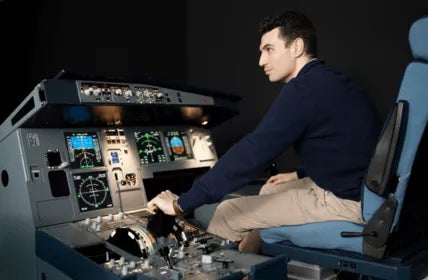
Degree in Aerospace Engineering
In collaboration with:

Start:
September
Length:
4 years
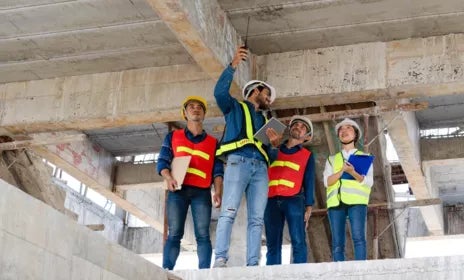
Master’s Degree in Civil Engineering
Start:
October
Length:
18 months

Bachelor's Degree in Computer Engineering
Start:
September
Length:
4 years

Master’s Degree in Integrated Management Systems – SIG (online)
In collaboration with:

Start:
October
Length:
9 months
The Degree Monitoring and Improvement Committee is made up of the master's degree management, a representative of the degree's teaching staff, a student representative and a representative of the Vice-Rector's Office for Studies and Quality Assurance (to be completed). In addition, guest members may be invited to deal with specific issues that need to be monitored.
Scale 0-10 | Year 22/23 | Year 21/22 | Year 20/21 |
Graduation rate | 78,1% | 73,3%% | 92,3% |
Rate of return | 89,39% | 88,95% | 97,76% |
Drop-out rate | 0,0% | 0,0% | 7,69% |
Student satisfaction with the teacher | 8,7 | 8,2 | 4,4* Scale (1-5) |

Student satisfaction with the programme (syllabus) | 7,9 | 7,7 | 3,9 Scale (1-5) |
Satisfaction of the teaching staff | 9,2 | 9,5 | -- |
Satisfaction of the administrative and service staff | 7,8 | 7,1 | -- |
Employability | -- | 100% | 100% |
Aimed at graduates in aerospace engineering who wish to acquire the specific attributes of an aeronautical engineer.
Students will obtain scientific, technological and socio-economic training of excellence, preparing them for professional practice in the development and application of the skills acquired related to the aeronautical and space field, reaching the level that enables them to carry out the profession of Aeronautical Engineer, in accordance with the provisions of Order CIN/312/2009.
We respond to the genuine needs of our students and staff, because we believe in the continuous improvement of our results. That is why we are always keen to hear anything you wish to tell us.
Link to the complaints and suggestions inbox.
If you’re already part of UAX, go to the ‘Customer Service: complaints, suggestions and compliments’ section on the virtual campus and log in with your username and password.
Telephone: 91 810 94 00
Email: paramejorar@uax.es
Opening hours: Monday to Friday, 9.00 am to 6.00 pm (no lunch break)