See all Online Master's Degrees in Health
See all Master's Degrees in Engineering
Most searched curriculums
Official qualification
The first qualification in Spain to certify ISO 14001:2026.
Take the leap to the most sought-after roles with TÜV Rheinland certification and training tailored to the real demands of the market.
In collaboration with:

The Master’s in Integrated Management Systems (IMS) prepares you to lead strategic transformation within organisations, enabling you to master the key standards relating to Quality, the Environment and Occupational Health and Safety. With a curriculum based on sustainability and aligned with market demands, you will develop advanced knowledge that will enable you to work as a specialist in Management Systems, either as a self-employed professional or in an employed role, positioning yourself in sectors experiencing the highest growth worldwide.
Furthermore, the programme anticipates regulatory developments, incorporating the new ISO 14001:2026 from the moment of its publication. This makes it a pioneering master’s programme, as it is among the first to adapt its curriculum to this update and to integrate official certification as an internal auditor, reinforcing its innovative nature and its focus on environmental management systems.
Upon completion of this Master’s in management systems, you will receive three internal auditor certificates from TÜV Rheinland for the ISO 9001, ISO 14001 and ISO 45001 standards, which accredit your professional competencies at an international level.
Of particular note is the certification in the new ISO 14001:2026 standard, which positions you with an up-to-date and distinctive profile, aligned with current requirements for sustainability and regulatory compliance.
Learn from expert lecturers from leading companies and gain access to sought-after career opportunities such as quality manager, occupational health and safety officer or environmental consultant. A flexible, 100% online programme designed for working professionals.
You will acquire the technical and strategic skills to implement, audit and improve Integrated Management Systems in any organisation.
Master ISO 9001 to optimise industrial, logistics and healthcare processes
Apply ISO 14001 in energy life cycles, carbon footprint, renewables and circular economy.
Implements ISO 45001 to improve working conditions and reduce accidents.
Become an internal auditor of integrated systems according to ISO 19011.
Transform the way you work with generative artificial intelligence. This micro-credential enables you to apply tools such as ChatGPT, Copilot or Gemini in information analysis, content creation and decision-making, integrating innovative solutions in an ethical and responsible way in real professional environments.

Develop your professional potential through leadership and interpersonal skills. This micro-credential provides you with the keys to manage teams, communicate effectively and solve problems in real-world environments, combining personal leadership techniques with practical productivity and collaboration tools.
Master's Degree in Integrated Management Systems
First Year
FIRST FOUR-MONTH PERIOD
| Code | Subjects | Character* | ECTS | ||||||||||||||||||||||||||||||||||||||||||||||||||||||||||||||||||||||||||||||||||||||||||||||||||||||||||||||||||||||||||||||||||||||||||||||||||||||||||||||||||||||||||
|---|---|---|---|---|---|---|---|---|---|---|---|---|---|---|---|---|---|---|---|---|---|---|---|---|---|---|---|---|---|---|---|---|---|---|---|---|---|---|---|---|---|---|---|---|---|---|---|---|---|---|---|---|---|---|---|---|---|---|---|---|---|---|---|---|---|---|---|---|---|---|---|---|---|---|---|---|---|---|---|---|---|---|---|---|---|---|---|---|---|---|---|---|---|---|---|---|---|---|---|---|---|---|---|---|---|---|---|---|---|---|---|---|---|---|---|---|---|---|---|---|---|---|---|---|---|---|---|---|---|---|---|---|---|---|---|---|---|---|---|---|---|---|---|---|---|---|---|---|---|---|---|---|---|---|---|---|---|---|---|---|---|---|---|---|---|---|---|---|---|---|---|---|---|
| M141207 | Quality management in organisations | OB | 3 | ||||||||||||||||||||||||||||||||||||||||||||||||||||||||||||||||||||||||||||||||||||||||||||||||||||||||||||||||||||||||||||||||||||||||||||||||||||||||||||||||||||||||||
Quality management in organisationsCódigo: M141207 Imprimir Course 1: First-semester module. Compulsory. 3 credits. Profesores
Objectives For students to gain an understanding of the historical development of quality and the experts who have contributed to its definition and advancement, as well as the distinct stages in quality management. To acquire knowledge of quality management: concepts of quality and Total Quality Management, a process-based approach, and the costs of quality and non-quality. Introduction to quality management models and standards: management models, the EFQM model, the ISO 9000 series, and quality tools. Prerequisites No prerequisites have been set. Learning outcomes Knowledge • To be familiar with the ISO 9001 standard for managing quality management systems. Skills and competences • Students’ ability to present ideas, processes, procedures or improvement reports relating to processes and management in public, to convey emotions, or to advise individuals and organisations in the field of quality management and improvement, the environment, and health and safety at work. Course description This module addresses current national regulations governing compliance with legal requirements, as well as industry-specific and voluntary regulations – those to which the organisation subscribes in order to meet the demands of the market, customers or society – such as the ISO 9001 standard. It describes, amongst other things, the infrastructure for industrial quality and safety, as set out in Law 21/1992 of 16 July on Industry and Royal Decree 2200/1995 of 28 December, which approves the Regulations on the Infrastructure for Quality and Industrial Safety, as well as the bodies that make up this infrastructure, such as standardisation bodies, accreditation bodies and conformity assessment bodies; their functions, their responsibilities and the means by which they are monitored by the Administration, as well as the relationships they have with one another and with businesses. The ISO 9001 standard is thus taken as a reference, as it is the quality management system standard most widely adopted by organisations worldwide. This management system is based on eight principles covering various disciplines related to business management, such as marketing, production organisation, human resources management, financial management and management control. It also provides a comprehensive description and analysis of the requirements set out in the ISO 9001 standard, enabling students to acquire the knowledge, skills and attitudes necessary to successfully implement this management system in various organisations, whilst fostering the development of the ability to interpret and apply the specifications, rules and guidelines set out by the ISO 9001 standard across the various types of organisations that may be encountered. Lifesaving and first aid. The theoretical content of the module is divided into 3 units: 1. Unit 1 – The evolution of quality 2. Unit 2 – Quality Management in Organisations 3. Unit 3 – Models and standards for quality management Training activities 1. Theoretical lectures. 2. Interactive sessions. 3. Forums. 4. Individual assignments. 5. Self-study, independent work on case studies, challenges, projects or problems. 6. Online tutoring. 7. Knowledge tests. Assessment system and criteria The overall mark for the module will be allocated as follows: SE1. Final knowledge assessments: 60% SE2. Assessment of practical activities: 40% The weightings for each type of activity will be as follows: 1. Self-assessment tests for each teaching unit of the module (15%). 2. Feedback exercises for the course (15%). 3. Discussion forum (2 posts) (10%). 4. Final exam: Theoretical and practical test (a minimum mark of 5.00 out of 10 is required for the result to be valid) (60%). Timetable Click on this link to view the detailed timetable in Excel
Bibliography Supplementary: 1. Francisco Javier Lloréns Montes and María del Mar Fuentes Fuentes BUSINESS QUALITY MANAGEMENT: FUNDAMENTALS AND IMPLEMENTATION Ediciones Pirámide. 2005. ISBN: 9788436819786 2.- Lluís Cuatrecasas and JESUS GONZALEZ COMPREHENSIVE QUALITY MANAGEMENT Profit Editorial. 2017. ISBN: 9788416904785 3. Pablo Alcalde San Miguel Quality, 3rd edition: Fundamentals, tools and quality management (Administration and Management) Ediciones Paraninfo, S.A.; 3rd edition. 2019. ISBN: 8428342830 |
|||||||||||||||||||||||||||||||||||||||||||||||||||||||||||||||||||||||||||||||||||||||||||||||||||||||||||||||||||||||||||||||||||||||||||||||||||||||||||||||||||||||||||||
| M141208 | Occupational health and safety management in organisations | OB | 5 | ||||||||||||||||||||||||||||||||||||||||||||||||||||||||||||||||||||||||||||||||||||||||||||||||||||||||||||||||||||||||||||||||||||||||||||||||||||||||||||||||||||||||||
Occupational health and safety management in organisationsCódigo: M141208 Imprimir Course 1: First-semester module. Compulsory. 5 credits. Profesores
Objectives This module introduces the basic concepts required to understand what a Management System is, such as: Prevention Policy, Prevention Plan, Standard, Audit, Certification, current Occupational Health and Safety (OHS) regulations, etc. Students will understand how various aspects of work affect workers’ health and safety, which can have both a positive and a negative impact on their wellbeing. Learning Outcomes • Analyse and interpret the legal requirements applicable to organisations (particularly in the areas of the environment and occupational health and safety), and establish procedures for implementing preventive measures, identifying environmental aspects and workplace hazards, and making updates and improvements within the framework of the environment and occupational health and safety. • Master safety techniques, as well as the assessment and control of risks arising from safety conditions, the working environment, organisational factors and workload. • Identify, analyse and define risks within a company in order to eliminate or minimise them judiciously and effectively through preventive measures appropriate to the types of risks detected in the workplace, relating to facilities, work equipment, fire and explosion risks, working environment conditions, workload and work organisation. • Develop techniques for balancing work demands with workers’ capabilities to achieve the best possible match between the worker and their role. • Promote a corporate culture focused on identifying and understanding customers’ needs, meeting their requirements and striving to exceed their expectations. • Carry out risk assessments relating to organisation, workload, fatigue, discomfort or other relevant ergonomic or psychosocial factors. • Identify psychosocial problems such as burnout, stress, workplace harassment, etc.; and develop action plans to prevent them, whilst monitoring the effectiveness of these plans. Learning outcomes Knowledge • Understand the conceptual basis of occupational health and safety management • Understand the legislative framework for occupational health and safety management within organisations. • Understand the rules for establishing and implementing occupational health and safety management systems. • Understand the ISO 45001 standard for managing occupational health and safety management systems. Skills and competences • Apply various communication, information and negotiation techniques to educate, train and advise workers on all aspects of risk prevention. • To analyse, assess and control risks associated with machinery, work equipment, facilities, tools, workplaces, handling, storage and transport, electricity, fire, etc. Course content Technological advances and fierce market competition have triggered profound changes in working conditions, processes and organisation, meaning that existing legislation on occupational health and safety alone is unable to keep pace with these developments. All of this has led to the need to establish dynamic management strategies so that organisations can tackle the ongoing challenges of health and safety at work. Protecting the health and safety of workers has become an added value for any organisation. Within this framework, Occupational Health and Safety Management Systems have been developed for companies to implement. This module introduces the basic concepts required to understand what a management system is, such as: prevention policy, prevention plan, standard, audit, certification, current OSH legislation, etc. The course is divided into 5 units, which are: Unit 1 – Work and Health Unit 2: Work-related injuries Unit 3: Basic legislative framework for Occupational Health and Safety Unit 4: Organisations involved in occupational health and safety Unit 5: Occupational Risk Prevention Management Systems Training activities 1. Theoretical lessons. 2. Interactive sessions. 3. Forums. 4. Individual assignments. 5. Self-study, independent work on case studies, challenges, projects or problems. 6. Online tutoring. 7. Knowledge tests. Assessment system and criteria Assessment system and criteria The overall mark for the module will be allocated as follows: SE1.- Final knowledge tests 60% SE2. Assessment of practical activities: 40% The weightings for each type of activity will be as follows: 1. Self-assessment tests in each teaching unit of the course (15%). 2. Feedback exercises for the course (15%). 3. Discussion forum (1 post) (10%). 4. Final exam: Theoretical and practical test (a minimum mark of 5.00 out of 10 is required for the result to be valid) (60%). Timetable Click on this link to view the detailed timetable in Excel
Bibliography Core: 1. BESTRATÉN BELLOVI, Manuel; GUARDINO SOLÁ, Xavier; IRANZO GARCÍA, Yolanda et al. Health and Safety at Work National Institute for Occupational Safety and Health. 2011. ISBN: 978-84-7425-7 2.- Jiménez García, Juan Knowledge of harmonisation and the fundamentals of improving working conditions UNIVERSITY OF LAS PALMAS. 2008. ISBN: 978-84-96971- 3. Romero, J. C. R. Methods for assessing occupational risks Ediciones Díaz de Santos. 2011. ISBN: 9788479786335 |
|||||||||||||||||||||||||||||||||||||||||||||||||||||||||||||||||||||||||||||||||||||||||||||||||||||||||||||||||||||||||||||||||||||||||||||||||||||||||||||||||||||||||||||
| M141210 | ISO 9001 Quality Management Systems | OB | 5 | ||||||||||||||||||||||||||||||||||||||||||||||||||||||||||||||||||||||||||||||||||||||||||||||||||||||||||||||||||||||||||||||||||||||||||||||||||||||||||||||||||||||||||
ISO 9001 Quality Management SystemsCódigo: M141210 Imprimir Course 1: First-semester module. Compulsory. 5 credits. Profesores
Objectives The aim of the module is to cover all the aspects that any quality management system based on the ISO 9001 standard should encompass, as well as its application within any organisation. Learning outcomes Knowledge • To understand the ISO 9001 standard for managing quality management systems. Skills and competences • Students’ ability to present ideas, processes, procedures or improvement reports relating to processes and management in public; to convey emotions; and to advise individuals and organisations in the field of quality management and improvement, the environment, and health and safety at work. Course description This module addresses current national regulations governing compliance with legal requirements, as well as industry-specific and voluntary regulations – those to which the organisation subscribes in order to meet the demands of the market, customers or society – such as the ISO 9001 standard. It describes, amongst other things, the infrastructure for industrial quality and safety, as set out in Law 21/1992 of 16 July on Industry and Royal Decree 2200/1995 of 28 December, which approves the Regulations on the Infrastructure for Quality and Industrial Safety, as well as the bodies that make up this infrastructure, such as standardisation bodies, accreditation bodies and conformity assessment bodies; their functions, their responsibilities and the means by which they are monitored by the Administration, as well as the relationships they have with one another and with businesses. The ISO 9001 standard is thus taken as a reference, as it is the quality management system standard most widely adopted by organisations worldwide. This management system is based on eight principles covering various disciplines related to business management, such as marketing, production organisation, human resources management, financial management and management control. It also provides a comprehensive description and analysis of the requirements set out in the ISO 9001 standard, enabling students to acquire the knowledge, skills and attitudes necessary to successfully implement this management system in various organisations, whilst fostering the development of the ability to interpret and apply the specifications, rules and guidelines set out by the ISO 9001 standard across the various types of organisations that may be encountered. First aid and emergency response. This module addresses the current national regulations governing compliance with legal requirements, industry regulations and voluntary standards—those to which the organisation subscribes in order to meet the demands of the market, customers or society, such as the ISO 9001 standard. This module is divided into five teaching units. These units are as follows: Unit 1: Quality management systems. Unit 2: ISO 9000:2015. Quality management systems. Fundamentals and terminology. LU3: Introduction to ISO 9001. LU4: ISO 9001:2005. Part I. Unit 5: ISO 9001:2015. Part II. Training activities 1. Theoretical classes. 2. Interactive sessions. 3. Forums. 4. Individual assignments. 5. Self-study, independent work on case studies, challenges, projects or problems. 6. Online tutoring. 7. Knowledge tests. Assessment system and criteria The overall mark for the module will be allocated as follows: SE1. Final knowledge assessments: 60% SE2. Assessment of practical activities: 40% The weightings for each type of activity will be as follows: 1. Self-assessment tests for each teaching unit of the module (15%). 2. Feedback exercises for the course (15%). 3. Discussion forum (2 posts) (10%). 4. Final exam: Theoretical and practical test (a minimum mark of 5.00 out of 10 is required for the result to be valid) (60%). Timetable Click on this link to view the detailed timetable in Excel
Bibliography Core: 1. Natalia Calso Morales and José Manuel Pardo Álvarez Practical Guide to the Integration of ISO 9001, ISO 14001 and ISO 45001 Management Systems AENOR CONOCIMIENTO, S.L.U. 2018. ISBN: 978-84-8143-9 Supplementary: 2.- Carlos H Hernández Understanding the ISO 9001:2015 Standard: Management Systems CreateSpace Independent Publishing Platform; 1st edition. 2018. ISBN: 1983552348 3.- Ivan Torres How to Implement ISO 9001:2015 Step by Step: Understanding Each Requirement. Procedures and Records to Meet the Requirements. Scorecard to Keep the Standard Up to Date Self-published. 2017. ISBN: 1521136602 4. José Antonio Gómez Martínez Guide to the implementation of UNE-EN ISO 9001:2015 AENOR CONOCIMIENTO, S.L.U. 2015. ISBN: 978-84-8143-9 |
|||||||||||||||||||||||||||||||||||||||||||||||||||||||||||||||||||||||||||||||||||||||||||||||||||||||||||||||||||||||||||||||||||||||||||||||||||||||||||||||||||||||||||||
| M141211 | Occupational Health and Safety Management Systems – ISO 45001 | OB | 5 | ||||||||||||||||||||||||||||||||||||||||||||||||||||||||||||||||||||||||||||||||||||||||||||||||||||||||||||||||||||||||||||||||||||||||||||||||||||||||||||||||||||||||||
Occupational Health and Safety Management Systems – ISO 45001Código: M141211 Imprimir Course 1: First-semester module. Compulsory. 5 credits. Profesores
Objectives The aim of the ISO 45001 Occupational Health and Safety Management System (OHSMS) course is to ensure that students acquire knowledge of this occupational health and safety management model, and also to provide examples of how to meet the requirements of this management system, thereby enabling them to understand how to implement it within an organisation. Skills • To analyse and interpret the legal requirements applicable to organisations (particularly in the areas of the environment and occupational health and safety), and establish procedures for adopting preventive measures, identifying environmental aspects and workplace hazards, and making updates and improvements within the framework of the environment and occupational health and safety. • Master safety techniques, as well as the assessment and control of risks arising from safety conditions, the working environment, the organisation and workload. • Identify, analyse and define risks within a company in order to eliminate or minimise them judiciously and effectively through preventive measures appropriate to the types of risks detected in the workplace, relating to facilities, work equipment, fire and explosion risks, working environment conditions, workload and work organisation. • Develop techniques for balancing work demands with workers’ capabilities to achieve the best possible fit between the worker and their role. • Promote a corporate culture focused on identifying and understanding customers’ needs, meeting their requirements and striving to exceed their expectations. • Carry out risk assessments relating to organisation, workload, fatigue, discomfort or other relevant ergonomic or psychosocial factors. • Identify psychosocial problems such as burnout, stress, workplace harassment, etc.; and develop action plans to prevent them, whilst monitoring the effectiveness of these plans. Learning outcomes Knowledge • Understand the conceptual basis of occupational health and safety management • Understand the legislative framework for occupational health and safety management within organisations. • Understand the rules for establishing and implementing occupational health and safety management systems. • Understand the ISO 45001 standard for managing occupational health and safety management systems. Skills and competences • Apply various communication, information and negotiation techniques to educate, train and advise workers on all aspects of risk prevention. • To analyse, assess and control risks associated with machinery, work equipment, facilities, tools, workplaces, handling, storage and transport, electricity, fire, etc. Course content Technological advances and fierce market competition have triggered profound changes in working conditions, processes and organisation, meaning that existing legislation on occupational health and safety alone is unable to keep pace with these developments. All of this has led to the need to establish dynamic management strategies so that organisations can tackle the ongoing challenges of health and safety at work. As a result, protecting workers’ health and safety has become an added value for organisations, based on the benefits that a healthy workforce brings to the company. Within this framework, the international standard ISO 45001 has been developed as a voluntary standard to be followed in pursuit of excellence in occupational health and safety, exceeding the minimum requirements of current legislation and enabling organisations to achieve higher performance in occupational health and safety management. ISO 45001 is the first international standard developed by ISO relating to occupational health and safety management. The methodology for continuous improvement on which this standard is based is characterised by the four stages of the Deming cycle: plan, do, check and act, with the aim of achieving robust occupational health and safety performance by controlling the risks specific to each organisation and involving the commitment of all levels and functions, particularly that of top management. The topics to be covered are: Module 1: OHSMS Models, Structure of ISO Standards and Introduction to ISO 45001 Unit 2. Requirements of clauses 4 and 5 of ISO 45001: 4. Context of the organisation and 5. Leadership and worker participation Unit 3. Requirements of Clause 6 of ISO 45001: Planning Module 4. Requirements of Clause 7 of ISO 45001: Support Module 5. Requirements of clauses 8 and 9 of ISO 45001: 8. Operation and 9. Performance evaluation Training activities 1. Theoretical lessons. 2. Interactive sessions. 3. Forums. 4. Individual assignments. 5. Self-study, independent work on case studies, challenges, projects or problems. 6. Online tutoring. 7. Knowledge tests. Assessment system and criteria The overall mark for the module will be allocated as follows: SE1. Final knowledge assessments: 60% SE2. Assessment of practical activities: 40% The weightings for each type of activity will be as follows: 1. Self-assessment tests for each teaching unit of the module (15%). 2. Feedback exercises for the course (15%). 3. Discussion forum (2 posts) (10%). 4. Final exam: Theoretical and practical test (a minimum mark of 5.00 out of 10 is required for the result to be valid) (60%). Timetable Click on this link to view the detailed timetable in Excel
Bibliography Supplementary: 1. Campos Sánchez, Federico López Aranda, Miguel Ángel Martínez Castellanos, Mario Ossorio Martín, Juan Ramón Pérez García, Juan Francisco Rodríguez Díaz, María Dolores Tato Vila, María Dolores Guide to the implementation of the ISO 45001 standard “Occupational health and safety management systems” FREMAP, Social Security Partner Mutual Insurance Organisation No. 61. 2018. ISBN: 1521136602 2. Icontec Internacional ISO 45001:2018 Occupational health and safety management systems. ICONTEC. 2020. ISBN: 9789588585871 3. Various authors GUIDE TO THE IMPLEMENTATION OF ISO 45001:2018 Aenor. 2018. ISBN: 9788481439625 |
|||||||||||||||||||||||||||||||||||||||||||||||||||||||||||||||||||||||||||||||||||||||||||||||||||||||||||||||||||||||||||||||||||||||||||||||||||||||||||||||||||||||||||||
| M141219 | Environmental management in organisations | OB | 6 | ||||||||||||||||||||||||||||||||||||||||||||||||||||||||||||||||||||||||||||||||||||||||||||||||||||||||||||||||||||||||||||||||||||||||||||||||||||||||||||||||||||||||||
Environmental management in organisationsCódigo: M141219 Imprimir Course 1: First-semester module. Compulsory. 6 credits. Profesores
Objectives This module covers all aspects of the concept of environmental sustainability, with a view to its application within organisations of all kinds (businesses, public administrations, universities, etc.), taking into account the added value this can bring both to the organisation itself and to society as a whole. It then describes the strategic and regulatory framework that will shape environmental sustainability throughout the 21st century, at least during its first half, with the main environmental challenges and strategies being climate change, the Sustainable Development Goals (SDGs) and the circular economy. More specifically, the module analyses the main developments in environmental planning and regulation in Spain, in relation to these 21st-century environmental strategies, some of which are currently under review. This module focuses on specific aspects and parameters that organisations must take into account to ensure compliance and demonstrate this within their sustainability strategies, capitalising on the added value this can bring to any company in a world where sustainability criteria are becoming increasingly important and universal. Organisations’ consideration of environmental sustainability has become a necessity, as it is one of the key factors in the organisation’s long-term survival. Skills • Analyse and interpret the legal requirements applicable to companies (particularly in the areas of the environment and occupational health and safety), and establish procedures for implementing preventive measures, identifying environmental aspects and workplace hazards, and carrying out updates and improvements within the framework of environmental protection and occupational health and safety. Learning Outcomes Knowledge • Understand the conceptual basis of environmental management. • Understand the legislative framework governing environmental management and businesses. • Understand the rules for establishing and implementing environmental management systems. • Understand the ISO 14001 standard for managing environmental management systems. • Understand the tools for the effective management of environmental management system audits. • To understand the tools for the effective management of environmental management system audits. Course description Environmental management can be understood as the set of activities carried out within an organisation with the aim of controlling its operations in relation to the environment. These activities must begin with ensuring compliance with legal requirements, which are extensive in the environmental field. Environmental protection is a constant feature of current European and international policy. Its particular focus on creating a framework for environmental protection that ensures a healthy environment has made it a driving force behind Member States’ establishment of legal requirements that companies must take into account in order to manage their environmental aspects appropriately. Knowledge of environmental legislation is now an essential component of the skills required of professionals involved in the implementation and maintenance of environmental management systems, consultancy and inspection. The module reviews the main legal instruments and their scope of application within organisations, analyses and interprets the requirements, and outlines the administrative procedures relating to the environment, including the legal framework concerning the responsibility of companies and industrial facilities to prevent, avoid and remedy environmental damage. Furthermore, the current understanding of environmental management is inextricably linked to the implementation of an Environmental Management System, which enables the organisation to achieve the level of environmental performance it has set for itself and to respond to the increasingly demanding social pressure to conserve the environment. The theoretical content of the module is divided into the following six units: Teaching Unit 1. General concepts of sustainability. Teaching Unit 2. Strategic framework for environmental sustainability. Teaching Unit 3. Environmental legislation in Spain. Teaching Unit 4. Environmental sustainability in organisations. Teaching Unit 5. Case studies in environmental management. Teaching Unit 6. ESG criteria. Training activities 1. Theoretical classes. 2. Interactive classes. 3. Forums. 4. Individual assignments. 5. Self-study, independent work on case studies, challenges, projects or problems. 6. Online tutoring. 7. Knowledge tests. Assessment system and criteria The format of the assessment tests may include multiple-choice questions, short-answer questions, essay questions, problem-solving tasks, case studies, laboratory tests or workshops, or the design of prototypes, products or models, to be completed in writing or orally. Where applicable, the course coordinator will provide details of the assessment format to be used prior to the assessments taking place. The overall mark distribution for the module will be as follows: SE1. Final knowledge assessments: 60% SE2. Assessment of practical activities: 40% The weightings for each type of activity will be as follows: 1. Self-assessment tests (6) in each teaching unit of the module (15%). 2. Feedback exercises (3) for the course (15%). 3. Discussion forum (1 post) (10%). 4. Final exam: Theoretical and practical test (a minimum mark of 5.00 out of 10.00 is required for the result to be valid) (60%). Timetable Click on this link to view the detailed timetable in Excel
Bibliography Supplementary: 1. MARIA ANTONIA CALVO HORNERO ENVIRONMENTAL STRATEGY AND SUSTAINABLE DEVELOPMENT Ramón Areces University Press. 2022. ISBN: 9788499614229 2. Various authors ENVIRONMENTAL MANAGEMENT IN BUSINESS Jaume I University Press. 2013. ISBN: 9788480218672 3. Various authors Environmental Management in Business. 2nd Edition University Press. 2023. ISBN: 9789587924718 4. Various authors Implementation of an environmental management system Eduforma. 2013. ISBN: 9788467695656 |
|||||||||||||||||||||||||||||||||||||||||||||||||||||||||||||||||||||||||||||||||||||||||||||||||||||||||||||||||||||||||||||||||||||||||||||||||||||||||||||||||||||||||||||
| M141220 | ISO 14001 environmental management systems | OB | 6 | ||||||||||||||||||||||||||||||||||||||||||||||||||||||||||||||||||||||||||||||||||||||||||||||||||||||||||||||||||||||||||||||||||||||||||||||||||||||||||||||||||||||||||
ISO 14001 environmental management systemsCódigo: M141220 Imprimir Course 1: First-semester module. Compulsory. 6 credits. Profesores
Objectives The course ‘Environmental Management Systems: ISO 14001’ aims to provide students with the necessary foundations for establishing an environmental management system within an organisation based on the ISO 14001 standard. Competencies • To analyse and interpret the legal requirements applicable to businesses (particularly in the areas of the environment and occupational health and safety), and to establish procedures for adopting preventive measures, identifying environmental aspects and workplace hazards, and implementing updates and improvements within the framework of environmental protection and occupational health and safety. Learning outcomes Knowledge • Understand the conceptual basis of environmental management. • Understand the legislative framework governing environmental management and businesses. • Understand the rules for establishing and implementing environmental management systems. • Understand the ISO 14001 standard for managing environmental management systems. • Understand the tools for the effective management of environmental management system audits. • To understand the tools for the effective management of environmental management system audits. Course description Environmental management can be understood as the set of activities carried out within an organisation with the aim of controlling its operations in relation to the environment. These activities must begin with ensuring compliance with legal requirements, which are extensive in the environmental field. Environmental protection is a constant feature of current European and international policy. Its particular focus on creating a framework for environmental protection that ensures a healthy environment has made it a driving force behind member states’ establishment of legal requirements that companies must take into account in order to manage their environmental aspects appropriately. Knowledge of environmental legislation is now an essential component of the skills required of professionals involved in the implementation and maintenance of environmental management systems, consultancy and inspection. The module reviews the main legal instruments and their scope of application within organisations, analyses and interprets the requirements, and outlines the administrative procedures relating to the environment, including the legal framework concerning the responsibility of companies and industrial facilities to prevent, avoid and remedy environmental damage. Furthermore, the current understanding of environmental management is inextricably linked to the implementation of an Environmental Management System, which enables the organisation to achieve the level of environmental performance it has set for itself and to respond to the increasingly demanding social pressure to conserve the environment. The course content is therefore structured as follows: Unit 1. Environmental management Unit 2. Organisational Context and Leadership Unit 3. Planning Unit 4. Support and Operations Unit 5. Performance Evaluation and Improvement Unit 6. About Environmental Management Training activities 1. Theoretical classes. 2. Interactive classes. 3. Forums. 4. Individual assignments. 5. Self-study, independent work on case studies, challenges, projects or problems. 6. Online tutoring. 7. Knowledge tests. Assessment system and criteria The overall mark for the module will be allocated as follows: SE1. Final knowledge assessments: 60% SE2. Assessment of practical activities: 40% The weightings for each type of activity will be as follows: 1. Self-assessment tests for each teaching unit of the module (15%). 2. Feedback exercises for the course (15%). 3. Discussion forum (2 posts) (10%). 4. Final exam: Theoretical and practical test (a minimum mark of 5.00 out of 10 is required for the result to be valid) (60%). Timetable Click on this link to view the detailed timetable in Excel
Bibliography Supplementary: 1. ANTONIO ENRIQUEZ PALOMINO ISO 14001: 2015 IMPLEMENTATION OF ENVIRONMENTAL MANAGEMENT SYSTEMS CONFEMETAL FOUNDATION. 2018. ISBN: 9788416671960 2.- HEWITTS ROBERTS, GARY ROBINSON ISO 14001 EMS: A Manual on Environmental Management Systems Paraninfo. 1999. ISBN: 9788428325349 3.- José Luis Valdés Fernández, María Cristina Alonso García, Natalia Calso Morales and Marisa Novo Soto Guide to the Implementation of UNE-EN ISO 14001:2015 AENOR (Spanish Association for Standardisation and Certification), 2016. 2016. ISBN: 978-84-8143-9 |
|||||||||||||||||||||||||||||||||||||||||||||||||||||||||||||||||||||||||||||||||||||||||||||||||||||||||||||||||||||||||||||||||||||||||||||||||||||||||||||||||||||||||||||
| TOTAL: | 30 | ||||||||||||||||||||||||||||||||||||||||||||||||||||||||||||||||||||||||||||||||||||||||||||||||||||||||||||||||||||||||||||||||||||||||||||||||||||||||||||||||||||||||||||
SECOND FOUR-MONTH PERIOD
| Code | Subjects | Character* | ECTS | ||||||||||||||||||||||||||||||||||||||||||||||||||||||||||||||||||||||||||||||||||||||||||||||||||||||||||||||||||||||||||||||||||||||
|---|---|---|---|---|---|---|---|---|---|---|---|---|---|---|---|---|---|---|---|---|---|---|---|---|---|---|---|---|---|---|---|---|---|---|---|---|---|---|---|---|---|---|---|---|---|---|---|---|---|---|---|---|---|---|---|---|---|---|---|---|---|---|---|---|---|---|---|---|---|---|---|---|---|---|---|---|---|---|---|---|---|---|---|---|---|---|---|---|---|---|---|---|---|---|---|---|---|---|---|---|---|---|---|---|---|---|---|---|---|---|---|---|---|---|---|---|---|---|---|---|---|---|---|---|---|---|---|---|---|---|---|---|---|---|---|---|---|
| M141213 | Audits of integrated management systems based on the ISO 19011 standard | OB | 4 | ||||||||||||||||||||||||||||||||||||||||||||||||||||||||||||||||||||||||||||||||||||||||||||||||||||||||||||||||||||||||||||||||||||||
Audits of integrated management systems based on the ISO 19011 standardCódigo: M141213 Imprimir Course 1. Second-term module. Compulsory. 4 credits. Profesores
Objectives The UNE-EN-ISO 19011:2018 standard provides guidance on the auditing of management systems, which is applicable to all organisations that need to plan and carry out internal or external audits of management systems, or manage an audit programme. The aim is therefore for students to understand how an audit based on ISO 19011 is conducted, with a thorough understanding of the requirements set out in the standard. Furthermore, students should be able to both conduct and undergo audits of integrated management systems in accordance with ISO 19011. Competencies • To develop effective communication, teamwork, analytical thinking, creativity and ethical leadership from a cross-cutting perspective, clearly inspired by democratic principles and values, as well as the Sustainable Development Goals, in order to conduct oneself with integrity in the professional sphere. • Students’ ability to make value judgements based on criteria, external standards or personal reflections in the fields of management and quality improvement, the environment, and occupational health and safety. Learning outcomes Knowledge • To be familiar with the tools for the effective management of quality management system audits • Understand the tools for the effective management of environmental management system audits • Understand the tools for the effective management of environmental management system audits Skills and competences • Students’ ability to present ideas, processes, procedures or improvement reports relating to processes and management in public, to convey emotions, or to advise individuals and organisations in the field of quality management and improvement, the environment, and health and safety at work. • Apply various communication, information and negotiation techniques to educate, train and advise workers on all aspects of risk prevention. Description of the content Organisations of all kinds are increasingly keen to achieve and demonstrate strong performance in social responsibility, in line with their policies and objectives. They do so against a backdrop of increasingly stringent legislation, the development of economic policies and other measures to promote best practice, and growing concern expressed by stakeholders in this area. Audits constitute the final stage of the management systems cycle, forming the necessary feedback loop that enables organisations to develop their capabilities, as they allow the strengths and weaknesses of current management systems to be identified. An audit provides an assessment of the validity and effectiveness of the management planning and control systems in use. It also provides information on the extent to which plans, procedures and instructions have been implemented, as well as the effectiveness achieved in meeting objectives and carrying out actions. Consequently, it enables the organisation to review and evaluate the performance and effectiveness of its management systems. In this regard, standardised management systems emphasise the importance of audits as a management tool, as well as the monitoring and verification of the effective implementation of the organisation’s social responsibility policy. In this way, we will obtain a conformity assessment, such as certification of a management system. The module is divided into the following units: Unit 1. Introduction to management system audits Unit 2. Managing an audit programme Unit 3. Conducting an audit Unit 4. Competence and assessment of auditors Training activities 1. Theoretical classes. 2. Interactive sessions. 3. Forums. 4. Individual assignments. 5. Self-study, independent work on case studies, challenges, projects or problems. 6. Online tutoring. 7. Knowledge tests. Assessment system and criteria The overall mark for the module will be allocated as follows: SE1. Final knowledge assessments: 60% SE2. Assessment of practical activities: 40% The weightings for each type of activity will be as follows: 1. Self-assessment tests for each teaching unit of the module (15%). 2. Feedback exercises for the course (15%). 3. Discussion forum (2 posts) (10%). 4. Final exam: Theoretical and practical test (a minimum mark of 5.00 out of 10 is required for the result to be valid) (60%). Timetable Click on this link to view the detailed timetable in Excel
Bibliography Supplementary: 1. JORDI NINOT AUDIT OF INTEGRATED MANAGEMENT SYSTEMS CONFEMETAL FOUNDATION (FC EDITORIAL). 2019. ISBN: 9788417701062 2.- José Luis Navarro Bordonaba Management Systems Audit: A Step-by-Step Guide Self-published. 2022. ISBN: 9798644234615 3. Paloma López Lemos Auditing Quality Management Systems Fc Editorial. 2015. ISBN: 9788415781561 |
|||||||||||||||||||||||||||||||||||||||||||||||||||||||||||||||||||||||||||||||||||||||||||||||||||||||||||||||||||||||||||||||||||||||||
| M141214 | Integration of management systems in accordance with the UNE 66177 standard | OB | 4 | ||||||||||||||||||||||||||||||||||||||||||||||||||||||||||||||||||||||||||||||||||||||||||||||||||||||||||||||||||||||||||||||||||||||
Integration of management systems in accordance with the UNE 66177 standardCódigo: M141214 Imprimir Course 1. Second-term module. Compulsory. 4 credits. Profesores
Objectives AENOR published the UNE 66177:2005 standard, which provides guidance on the integration of different management systems. The UNE 66177 standard itself sets out different levels of integration based on factors such as the maturity of the systems and the scope of the various management systems. This module aims to teach participants how to carry out an initial assessment of the maturity of the systems and the scope of an organisation’s various management systems from the perspective of their integration. Following the assessment, we will learn how to draw up a plan for the integration of management systems and their subsequent implementation. Learning Outcomes • To develop effective communication, teamwork, analytical thinking, creativity and ethical leadership from a cross-disciplinary perspective, clearly inspired by democratic principles and values, as well as the Sustainable Development Goals, in order to conduct oneself with integrity in the professional sphere. • Integrate knowledge of the various standards in order to form judgements based on specific information, including reflections on social and ethical responsibilities. • Students’ ability to make value judgements based on criteria, external standards or personal reflections in the fields of quality management and improvement, the environment, and health and safety at work. • To identify, analyse and define risks within a company in order to eliminate or minimise them judiciously and effectively through preventive measures appropriate to the types of risks detected in the workplace, relating to facilities, work equipment, fire and explosion risks, working environment conditions, workload and work organisation. • To promote a corporate culture focused on identifying and understanding customers’ needs, meeting their requirements and striving to exceed their expectations. • Students’ ability to base their approaches on a code of professional ethics that incorporates respect for quality, the environment and workers’ health and safety. • Students’ ability to assess the social impact of their decisions and to commit to defending and promoting quality, the environment and workers’ health and safety. Learning outcomes Knowledge • To understand the rules for establishing and implementing environmental management systems. • Understand the rules for establishing and implementing occupational health and safety management systems. • Understand the tools that facilitate the integration of these systems within a business context. • Understand the UNE 66177 standard as a framework for the integration of these systems. Course description The implementation of management systems based on international standards is now a widespread practice amongst organisations, in an effort to ensure the satisfaction of the various stakeholders with whom they interact. In this context, the success achieved by the ISO 9000 (Quality Management), ISO 14000 (Environmental Management) and ISO 45001 (Occupational Health and Safety Management) families of standards has been particularly significant. A detailed analysis of these standards reveals that they are based on the same management principles (continuous improvement, process-based management, strong management commitment, etc.) and share similar frameworks and requirements (staff training, internal audits, setting of objectives, etc.), which immediately raises the question: why maintain separate management systems, thereby creating the resulting duplication of resources? It is at this point that the need to integrate management systems arises. However, this need has not been accompanied by the publication of an international standard setting out the requirements that any integrated management system (IMS) should meet and which would therefore serve as a model for implementing an IMS. This means that when an organisation decides to undertake a project to integrate its management systems, it must devise an ad hoc design and apply its own methodological principles. In short: there are as many roadmaps used in the integration process as there are organisations deciding to integrate their systems. In the past, AENRO published the UNE 66177:2005 standard, which enables and provides guidelines on the integration of different management systems. The UNE 66177 standard itself establishes different levels of integration based on factors such as the maturity of the systems and the scope… of the various management systems. The module is delivered across the following units: Unit 1. Initial assessment for systems integration Unit 2. Development of the Integration Plan. Part I Unit 3. Development of the Integration Plan. Part II Unit 4. Implementation of the Integration Plan. Review and improvement of the Integrated Management System Course activities 1. Theoretical classes. 2. Interactive sessions. 3. Forums. 4. Individual assignments. 5. Self-study, independent work on case studies, challenges, projects or problems. 6. Online tutoring. 7. Knowledge tests. Assessment system and criteria The overall mark for the module will be allocated as follows: SE1. Final knowledge assessments: 60% SE2. Assessment of practical activities: 40% The weightings for each type of activity will be as follows: 1. Self-assessment tests for each teaching unit of the module (15%). 2. Feedback exercises for the course (15%). 3. Discussion forum (2 posts) (10%). 4. Final exam: Theoretical and practical test (a minimum mark of 5.00 out of 10 is required for the result to be valid) (60%). Timetable Click on this link to view the detailed timetable in Excel
Bibliography Supplementary: 1.- AENOR UNE 66177:2005 Management systems. Guidance on the integration of management systems AENOR. 2005. ISBN: 978848143X210 2.- Jenaro Romero Pastor Integrated management system: Quality, occupational health and safety, and environment AENOR, 2005. 2005. ISBN: 9788498213119 3. Jesús Abad Puente; Agustín Sánchez-Toledo Ledesma KEY ASPECTS OF THE INTEGRATION OF MANAGEMENT SYSTEMS AENOR (Publications). 2012. ISBN: 9788481437690 |
|||||||||||||||||||||||||||||||||||||||||||||||||||||||||||||||||||||||||||||||||||||||||||||||||||||||||||||||||||||||||||||||||||||||||
| M141215 | Systems integration in organisations | OB | 3 | ||||||||||||||||||||||||||||||||||||||||||||||||||||||||||||||||||||||||||||||||||||||||||||||||||||||||||||||||||||||||||||||||||||||
Systems integration in organisationsCódigo: M141215 Imprimir Course 1. Second-term module. Compulsory. 3 credits. Profesores
Objectives This module introduces the basic concepts required to understand what a Management System and an Integrated Management System are, as well as the principles and benefits of such systems. Skills • To develop effective communication, teamwork, analytical thinking, creativity and ethical leadership from a cross-disciplinary perspective, clearly inspired by democratic principles and values, as well as the Sustainable Development Goals, in order to conduct oneself with integrity in a professional context. • To integrate knowledge of the various standards in order to form judgements based on specific information, including reflections on social and ethical responsibilities. • Students’ ability to make value judgements based on criteria, external standards or personal reflections in the fields of quality management and improvement, the environment, and health and safety at work. • To identify, analyse and define risks within a company in order to eliminate or minimise them judiciously and effectively through preventive measures appropriate to the types of risks detected in the workplace, relating to facilities, work equipment, fire and explosion risks, working environment conditions, workload and work organisation. • To promote a corporate culture focused on identifying and understanding customers’ needs, meeting their requirements and striving to exceed their expectations. • Students’ ability to base their approaches on a code of professional ethics that incorporates respect for quality, the environment and workers’ health and safety. • Students’ ability to assess the social impact of their decisions and to commit to defending and promoting quality, the environment and workers’ health and safety. Learning outcomes Knowledge • To understand the rules for establishing and implementing environmental management systems. • Understand the rules for establishing and implementing occupational health and safety management systems. • Understand the tools that facilitate the integration of these systems within a business context. • Understand the UNE 66177 standard as a framework for the integration of these systems. Course description The implementation of management systems based on international standards is now a widespread practice amongst organisations, in an effort to ensure the satisfaction of the various stakeholders with whom they interact. In this context, the success achieved by the ISO 9000 (Quality Management), ISO 14000 (Environmental Management) and ISO 45001 (Occupational Health and Safety Management) families of standards has been particularly significant. A detailed analysis of these standards reveals that they are based on the same management principles (continuous improvement, process-based management, strong management commitment, etc.) and share similar frameworks and requirements (staff training, internal audits, setting of objectives, etc.), which immediately raises the question: why maintain separate management systems, thereby creating the resulting duplication of resources? It is at this point that the need to integrate management systems arises. However, this need has not been accompanied by the publication of an international standard setting out the requirements that any integrated management system (IMS) should meet and which would therefore serve as a model for implementing an IMS. This means that when an organisation decides to undertake a project to integrate its management systems, it must devise an ad hoc design and apply its own methodological principles. In short: there are as many roadmaps used in the integration process as there are organisations deciding to integrate their systems. AENOR previously published the UNE 66177:2005 standard, which enables and provides guidelines on the integration of different management systems. The UNE 66177 standard itself establishes different levels of integration based on factors such as the maturity of the systems and the scope of the various management systems. The module is delivered across the following units: Unit 1 – Introduction to the Integration of Management Systems Unit 2: Management System Integration Processes Unit 3: Types of Integrated Management Systems Training activities 1. Lectures. 2. Interactive sessions. 3. Forums. 4. Individual assignments. 5. Self-study, independent work on case studies, challenges, projects or problems. 6. Online tutoring. 7. Knowledge tests. Assessment system and criteria The overall mark for the module will be allocated as follows: SE1. Final knowledge assessments: 60% SE2. Assessment of practical activities: 40% The weightings for each type of activity will be as follows: 1. Self-assessment tests for each teaching unit of the module (15%). 2. Feedback exercises for the course (15%). 3. Discussion forum (2 posts) (10%). 4. Final exam: Theoretical and practical test (a minimum mark of 5.00 out of 10 is required for the result to be valid) (60%). Timetable Click on this link to view the detailed timetable in Excel
Bibliography Supplementary: 1. Abad Puente, Jesús Sánchez-Toledo Ledesma, Agustín Key Aspects of the Integration of Management Systems Abad Puente, Jesús Sánchez-Toledo Ledesma, Agustín AENOR Ediciones (Spanish Association for Standardisation). 2012. ISBN: 9788481437690 2. César Gómez Palacios Systems Integration Sintesis. 2024. ISBN: 9788413573649 3. José Manuel Pardo Álvarez; Natalia Calso Morales A Practical Guide to the Integration of ISO 9001, ISO 14001 and ISO 45001 Management Systems AENOR. 2018. ISBN: 9788481439694 |
|||||||||||||||||||||||||||||||||||||||||||||||||||||||||||||||||||||||||||||||||||||||||||||||||||||||||||||||||||||||||||||||||||||||||
| M141216 | Audits of management systems in organisations | OB | 3 | ||||||||||||||||||||||||||||||||||||||||||||||||||||||||||||||||||||||||||||||||||||||||||||||||||||||||||||||||||||||||||||||||||||||
Audits of management systems in organisationsCódigo: M141216 Imprimir Course 1. Second-term module. Compulsory. 3 credits. Profesores
Objectives In this module, students will learn why audits constitute the final stage of the management systems cycle, acting as the necessary feedback loop that enables organisations to develop their capabilities by identifying the strengths and weaknesses of current management systems. Students will learn how an audit provides an assessment of the validity and effectiveness of the management planning and control systems in use. It also provides information on the extent to which plans, procedures and instructions have been implemented, as well as the effectiveness achieved in meeting objectives and carrying out actions. Consequently, we will see how it enables the organisation to review and evaluate the performance and effectiveness of its management systems. Guidance will be provided on how to carry out audits as a management tool, as well as on monitoring and verifying the effective implementation of the organisation’s policy. This will result in a conformity assessment, such as certification of a management system. Competencies • To develop effective communication, teamwork, analytical thinking, creativity and ethical leadership from a cross-cutting perspective, clearly inspired by democratic principles and values, as well as the Sustainable Development Goals, in order to operate with integrity in the professional sphere. • Students’ ability to make value judgements based on criteria, external standards or personal reflections in the fields of management and quality improvement, the environment, and health and safety at work. Learning outcomes Knowledge • To be familiar with the tools for the effective management of quality management system audits • Understand the tools for the effective management of environmental management system audits • Understand the tools for the effective management of environmental management system audits Skills and competences • Students’ ability to present ideas, processes, procedures or improvement reports relating to processes and management in public, to convey emotions, or to advise individuals and organisations in the field of quality management and improvement, the environment, and health and safety at work. • Apply various communication, information and negotiation techniques to educate, train and advise workers on all aspects of risk prevention. Description of the content Organisations of all kinds are increasingly keen to achieve and demonstrate strong performance in social responsibility, in line with their policies and objectives. They do so against a backdrop of increasingly stringent legislation, the development of economic policies and other measures to promote best practice, and growing concern expressed by stakeholders on this issue. Audits constitute the final stage of the management systems cycle, forming the necessary feedback loop that enables organisations to develop their capabilities, as they allow the strengths and weaknesses of current management systems to be identified. An audit provides an assessment of the validity and effectiveness of the management planning and control systems in use. It also provides information on the extent to which plans, procedures and instructions have been implemented, as well as the effectiveness achieved in meeting objectives and carrying out actions. Consequently, it enables the organisation to review and evaluate the performance and effectiveness of its management systems. In this regard, standardised management systems emphasise the importance of audits as a management tool, as well as the monitoring and verification of the effective implementation of the organisation’s social responsibility policy. In this way, we will obtain a conformity assessment, such as certification of a management system. The module is divided into the following units: Unit 1. Background. Audit team Unit 2. Types of audit. Planning and conducting the audit Unit 3. Records, reporting and follow-up on audit findings Training activities 1. Lectures. 2. Interactive sessions. 3. Forums. 4. Individual assignments. 5. Self-study, independent work on case studies, challenges, projects or problems. 6. Online tutoring. 7. Knowledge tests. Assessment system and criteria The overall mark for the module will be allocated as follows: SE1. Final knowledge assessments: 60% SE2. Assessment of practical activities: 40% The weightings for each type of activity will be as follows: 1. Self-assessment tests for each teaching unit of the module (15%). 2. Feedback exercises for the course (15%). 3. Discussion forum (2 posts) (10%). 4. Final exam: Theoretical and practical test (a minimum mark of 5.00 out of 10 is required for the result to be valid) (60%). Timetable Click on this link to view the detailed timetable in Excel
Bibliography Supplementary: 1. Juan Carlos Bajo Audit of Management Systems. Compliance. Aranzadi. 2017. ISBN: 978-849152096 2. Marcelo Carrillo Olivier The Art of Auditing Management Systems: The Essence of the Auditor Self-published. 2024. ISBN: 979-832761045 3. José Sevilla Tendero Auditing Integrated Management Systems Confemetal Foundation. 2019. ISBN: 9788417701062 |
|||||||||||||||||||||||||||||||||||||||||||||||||||||||||||||||||||||||||||||||||||||||||||||||||||||||||||||||||||||||||||||||||||||||||
| M141221 | Work placements | OB | 9 | ||||||||||||||||||||||||||||||||||||||||||||||||||||||||||||||||||||||||||||||||||||||||||||||||||||||||||||||||||||||||||||||||||||||
Work placementsCódigo: M141221 Imprimir Course 1. Second-term module. Compulsory. 9 credits. Profesores
Objectives To provide students with work experience by complementing theoretical learning with the necessary practical training, which will help them integrate more successfully into the business world, ensuring they acquire the appropriate skills. Skills • To develop techniques for matching job demands with employees’ capabilities in order to achieve the best possible fit between the employee and the role. • To promote a corporate culture focused on identifying and understanding customers’ needs, meeting their requirements and striving to exceed their expectations. • Carry out risk assessments relating to the organisation, workload, fatigue, discomfort or other relevant ergonomic or psychosocial factors. • Identify psychosocial problems such as burnout, stress, workplace harassment, etc.; and develop action plans to prevent them, whilst monitoring the effectiveness of these plans. • Students’ ability to base their approaches on a code of professional ethics that incorporates respect for quality, the environment and workers’ health and safety. • Students’ ability to assess the social impact of their decisions and to commit to defending and promoting quality, the environment and workers’ health and safety. • Students’ ability to maintain an attitude that enables them to study independently and to promote continuous professional development in their future careers. • To apply the knowledge, skills and competences acquired in the field of integrated management systems within a real-world workplace environment. Learning outcomes Knowledge • To understand the rules for establishing and implementing occupational health and safety management systems. • Understand the tools that facilitate the integration of such systems within a business context Course Content The content of the external work placements to be undertaken by the student will be based on supervised work experience at a placement centre that is already linked to the University through an agreement which expressly sets out the external work placement activities to be carried out at that centre. As regards the activities to be carried out, which are always linked to the field of Integrated Management Systems, these may include: • Identifying, analysing and defining risks within a company in order to eliminate or minimise them judiciously and effectively; • Analysing, assessing and controlling risks associated with machinery, work equipment, facilities, tools, workplaces, handling, storage and transport, electricity, fire, etc.; • Establishing and implementing occupational health and safety management systems. Managing occupational health and safety; • Use the tools required for the effective management of environmental management system audits; • Establish and implement environmental management systems; • Develop techniques to align work demands with workers’ capabilities in order to achieve the best possible match between worker and job; • Use the tools required for the effective management of quality management system audits. External academic placements are face-to-face. They may only be undertaken remotely if the host organisation offers some form of remote working, whilst ensuring the acquisition of the intended competences and learning outcomes. Training activities 1. Interactive classes 2. Independent study, working autonomously on case studies, challenges, projects or problems 3. Online tutoring 4. External academic placement Assessment system and criteria Students must undertake a placement in a company comprising a minimum of 225 hours and a maximum of 270 hours of on-site work. The following will be taken into account for the assessment of the External Academic Placement module: • Assessment of the External Academic Placement Report: students must submit a report on their placement at the company. This will account for 20% of the final mark for the module. • Report by the external academic placement tutor: an assessment report on the student’s placement at the company, prepared by the professional tutor. This will account for 50% of the final mark for the module. • Academic tutor’s report: an assessment by the academic tutor based on the above aspects. This accounts for 30% of the final mark. Timetable Click on this link to view the detailed timetable in Excel
|
|||||||||||||||||||||||||||||||||||||||||||||||||||||||||||||||||||||||||||||||||||||||||||||||||||||||||||||||||||||||||||||||||||||||||
| M141222 | Master’s Thesis | OB | 7 | ||||||||||||||||||||||||||||||||||||||||||||||||||||||||||||||||||||||||||||||||||||||||||||||||||||||||||||||||||||||||||||||||||||||
Master’s ThesisCódigo: M141222 Imprimir Course 1. Second-term module. Compulsory. 7 credits. Profesores
Objectives The Master’s Thesis must demonstrate that the student has acquired the general and specific competences of the degree programme by producing a comprehensive, professionally-oriented Management Systems project that synthesises the competences acquired during the course. Prerequisites Students enrolled on this module may not submit or defend their Master’s Thesis unless they have successfully completed the 53 ECTS credits corresponding to the remaining compulsory modules required to obtain the degree. Competencies • To develop effective communication, teamwork, analytical thinking, creativity and ethical leadership from a cross-disciplinary perspective, clearly inspired by democratic principles and values, as well as the Sustainable Development Goals, in order to operate with integrity in the professional sphere. • Integrate knowledge of different regulations in order to form judgements based on specific information, including reflections on social and ethical responsibilities. • Students’ ability to maintain an attitude that enables them to study independently and to promote continuous professional development in their future careers. • To produce, present and defend an original individual piece of work in the field of integrated management systems, summarising the skills acquired during the degree programme. Learning outcomes Knowledge • Understanding the rules for establishing and implementing occupational health and safety management systems. Skills and competences • Students’ ability to present ideas, processes, procedures or improvement reports relating to processes and management in public; to convey emotions; and to advise individuals and organisations in the field of management and improvement of quality, the environment, and occupational health and safety. Course content DESCRIPTION OF OBJECTIVES An independent and original piece of work on a topic related to the course, following a predetermined methodology. The Master’s Thesis consists of the submission of a written report which may take one of the following forms: 1. Analytical and monographic study: An analytical study on a topic of interest within the field of integrated management systems. 2. Comparative analytical study: A study whose main objective is to compare two aspects of interest to the profession. 3. Applied cross-disciplinary project: The development of a project applied to professional practice. 4. Corporate studies and analyses: The development of work on aspects directly related to the subject matter of the Master’s programme or of interest to the practice of professions within this field Teaching activities 1. Interactive classes. 2. Online tutorials. 3. Preparation of the Master’s Thesis (TFM). 4. Public oral defence of the Master’s Thesis (TFM). Assessment system and criteria SE3. Assessment of the Master’s Thesis (60%). SE4. Defence and presentation of the Master’s Thesis before the assessment panel (40%). Students may submit and defend their Master’s Thesis once they have passed all the modules in the Master’s programme. The dates for the Master’s Thesis (TFM) assessment sessions for the 2024/2025 academic year will be as follows: - December 2024 session. Submission and defence during the week of 9–13 December 2024. The exact dates will be set in advance on the course portal (only for students who still have their Master’s Thesis to complete, as they passed all other modules in the previous academic year). - March 2025 examination session. Submission and defence during the week of 12–20 March 2025. The exact dates will be announced in advance on the course portal. -June 2025 examination session. Submission and defence during the week of 30 June to 3 July 2025. The exact dates will be announced in advance on the course portal. -September 2025 examination session. Submission and defence from 28 August to 3 September 2025. The exact dates will be announced in advance on the course portal. Timetable Click on this link to view the detailed timetable in Excel
|
|||||||||||||||||||||||||||||||||||||||||||||||||||||||||||||||||||||||||||||||||||||||||||||||||||||||||||||||||||||||||||||||||||||||||
| TOTAL: | 30 | ||||||||||||||||||||||||||||||||||||||||||||||||||||||||||||||||||||||||||||||||||||||||||||||||||||||||||||||||||||||||||||||||||||||||
*Character: BT: Basic Training, Ob: Required, Op: Optional
The main reason why there are students like you at UAX is the possibility of making your personal, professional and academic life compatible.
Our differential value is a methodology without barriers, focused on you and your desire to learn. What is our methodology like?
In addition, you will have the complete availability of our campus in Madrid, to carry out your formalities, solve your doubts and enjoy the facilities it offers.
Company internships are essential for you to learn first-hand about the reality of the sector, which is why we have agreements with the main companies, institutions and associations:

You can also take part in international internships, meet new colleagues from all over the world and boost your career in the international sector. For more information, please contact the international relations office.
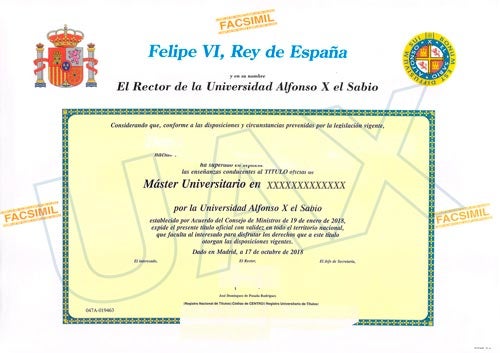
Our degree is official, verified by the Council of Universities and fully valid in Spain, as well as in the European Higher Education Area.
It is recognised by the Education Systems of Latin America, being recognised and approved by the different Ministries of Education in Latin America:
SENESCYT, MEN (MinEducation), SEP, Mescyt, among others, automatically.
We have 63.64% of PhD professors in the Master. You can consult the complete faculty here
Link to Admission Process and Admission Test Regulations: Admissions Regulations UAX Online 2023-2024
In the event that there are more applications than places offered, priority will be given to applications based on the following scale:
Number of places available for new students: 120
If you already have another degree, you can study the Master's with the possibility of validating ECTS credits. Request your free personalised study in accordance with the recognition agreed with the Autonomous Community of Madrid.
You can consult the credit recognition regulations at the following link.
The flexibility of online learning, with opportunities to connect
Take your exams online wherever you are or, if you prefer, in person at our designated centres in Spain and Latin America, subject to availability and capacity.
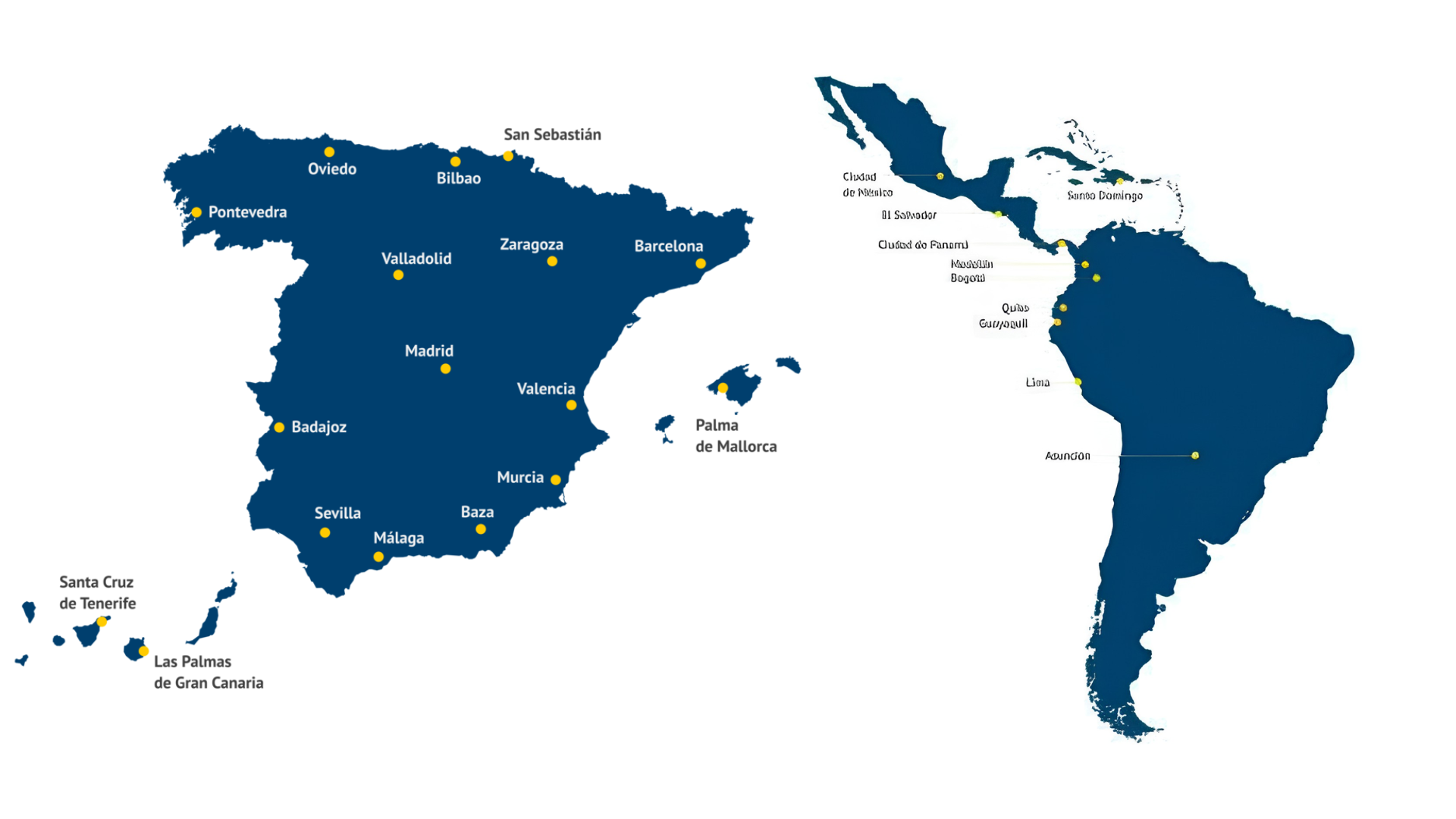
What’s more, as a student at UAX Online, you’ll have access to our Campus Hubs – a network of exclusive physical spaces where you can study, access libraries, work in co-working areas and connect with other students. Because studying online doesn’t mean studying alone.
Campus Hubs available in: Alcobendas, Alcorcón, Valencia San Vicente, Murcia, Barcelona, Málaga, Seville and Arganda.
Access is via your UAX student card, subject to availability and the opening hours of each centre.

The Online Master’s in Integrated Management Systems is an officially recognised master’s degree, so you will be eligible to enrol if you have:
To begin the admissions process, you will need to provide the following documentation:
Furthermore, if you already have prior professional experience related to the skills inherent to this degree, this may be recognised in the form of credits. ECTS recognition will require a free personalised assessment, which you can request here.

You can view the regulations on credit recognition via the following link.

We need to know a little bit about you so that we can provide you with a personalised service.
All fields are required
At UAX we know that studying is an investment, that's why we provide you with the facilities you need to access our degrees. Find out about some of our scholarships and grants:
Este máster te habilita profesionalmente para ejercer como Especialista en Sistemas de Gestión, tanto de forma autónoma como por cuenta ajena en empresas privadas o públicas de multitud de sectores. Estas son algunas de las funciones que desempeñan los egresados del máster:
Integrated Management Systems (IMS) are organisational approaches that seek to unify and coordinate different management systems within a company or institution. These systems bring together and synchronise processes, procedures and practices related to quality, environment, occupational safety, social responsibility, and other aspects relevant to the organisation's operation and performance. The main objective of an Integrated Management System is to improve the efficiency and effectiveness of the company by avoiding duplication of efforts and resources, and by fostering a holistic approach to decision making. By unifying multiple management systems into one, organisations can benefit from a more holistic and coherent view of their operations, which can lead to greater synergy and better overall results.
The Master in Integrated Management Systems (IMS) is an official master's degree that focuses on training professionals in the implementation, management and improvement of integrated systems that cover different areas of the organisation. These systems integrate various management systems, such as quality, environment, occupational health and safety, social responsibility and other aspects relevant to the operation of the company.
The Online Master's Degree in Integrated Management Systems is an official master's degree that accepts the following qualifications to access it: Graduate, Bachelor's Degree, architect, engineer, diploma, technical architect or technical engineer.
The UAX Master in GIS lasts 9 months and is an official qualification with 60 ECTS credits.
Other related qualifications
We offer a wide range of courses, so you’re sure to find a programme that suits you.
Master's Degree in Occupational Risk Prevention (online)
In collaboration with:
Start:
October
Length:
9 months
Online Master's Degree in Renewable Energies
Start:
October
Length:
9 months
Online Master’s Degree in Cybersecurity
Start:
October
Length:
9 months
Online Master’s Degree in Big Data for Business
Start:
October
Length:
9 months
Link to UAX Regulations.
You can consult your academic calendar and timetables in the following link.
The Degree Monitoring and Improvement Committee is made up of the master's degree management, a representative of the degree's teaching staff, a student representative and a representative of the Vice-Rector's Office for Studies and Quality Assurance. In addition, guest members may be invited to deal with specific issues that need to be monitored.
https://www.uax.com/sistema-de-garantia-interna-de-calidad
In the Register of Universities, Centres and Degrees: https: //www.educacion.gob.es/ruct/solicitud/detalles.action?cod=43172152019101101&sit=A&actual=menu.solicitud.basicos
This degree, according to RD 822/2021 (art. 34) must undergo the process of accreditation renewal. During the development of the process, an evaluation team of the Foundation for Knowledge Madrimasd will meet with different stakeholders of the degree. In addition, they provide us with a form so that any interested party can indicate to the Foundation those aspects they consider relevant to the development of this programme.