See all Online Master's Degrees in Health
See all Master's Degrees in Engineering
Most searched curriculums
Official qualification
Madrid
Become the professional you’ve always dreamed of being with the Master’s degree in Civil Engineering. 97% of graduates find work within two months of completing their studies. Entry requirement: a degree in Civil Engineering or equivalent
Because it qualifies you to practise as a Civil Engineer, combining advanced technical training, a practical approach and a direct link to the industry and the development of major infrastructure projects.
25,000 M² from actual installations
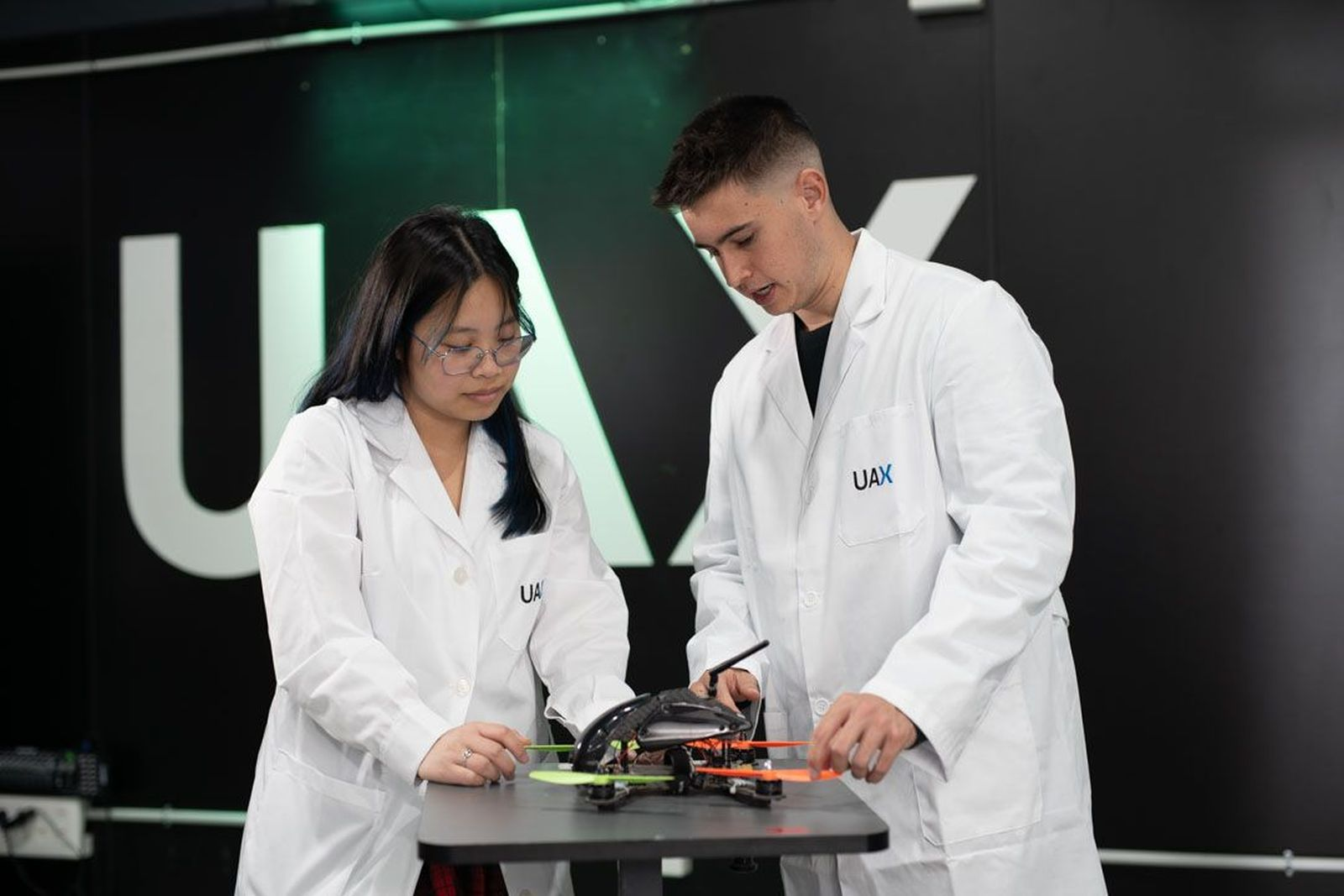
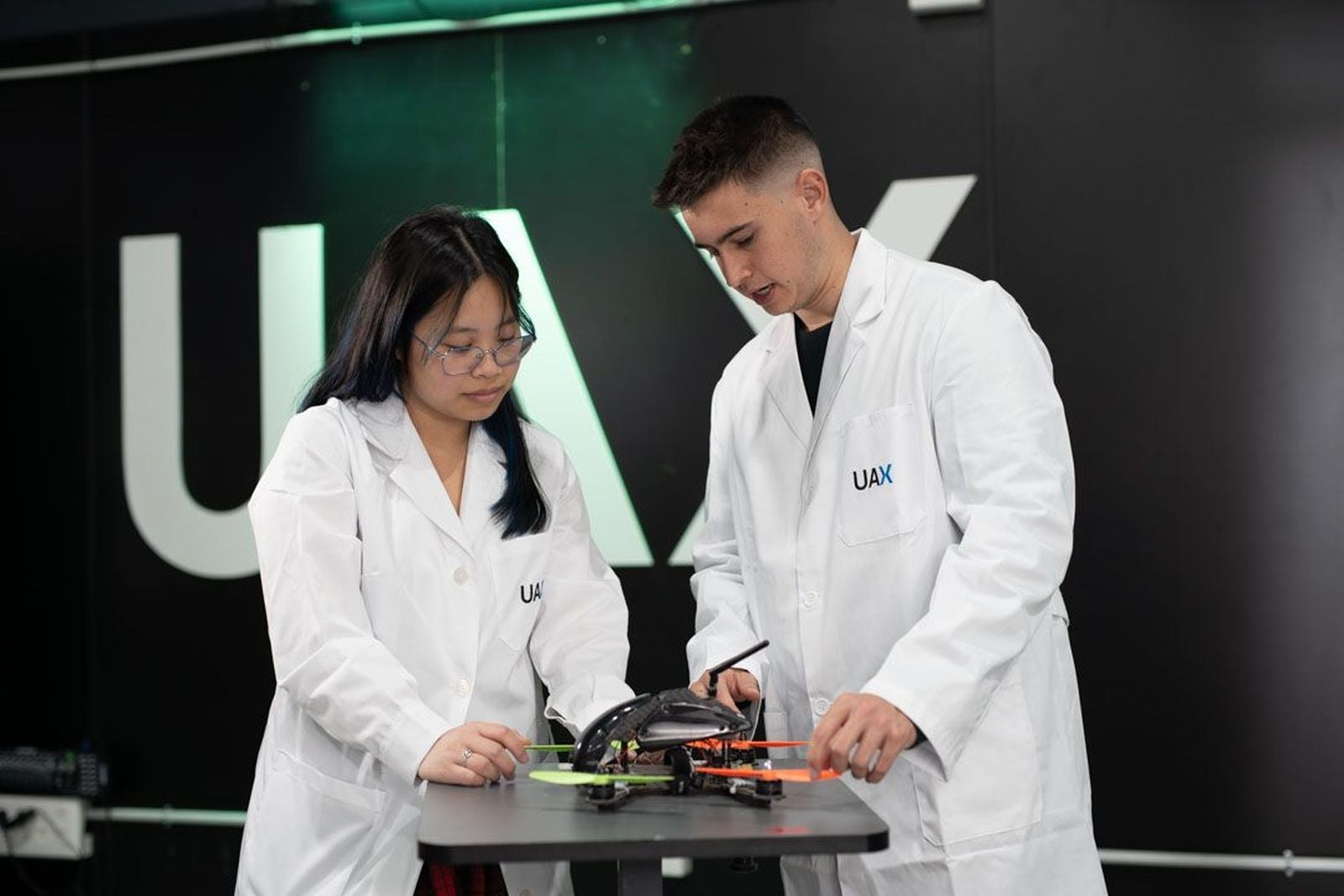
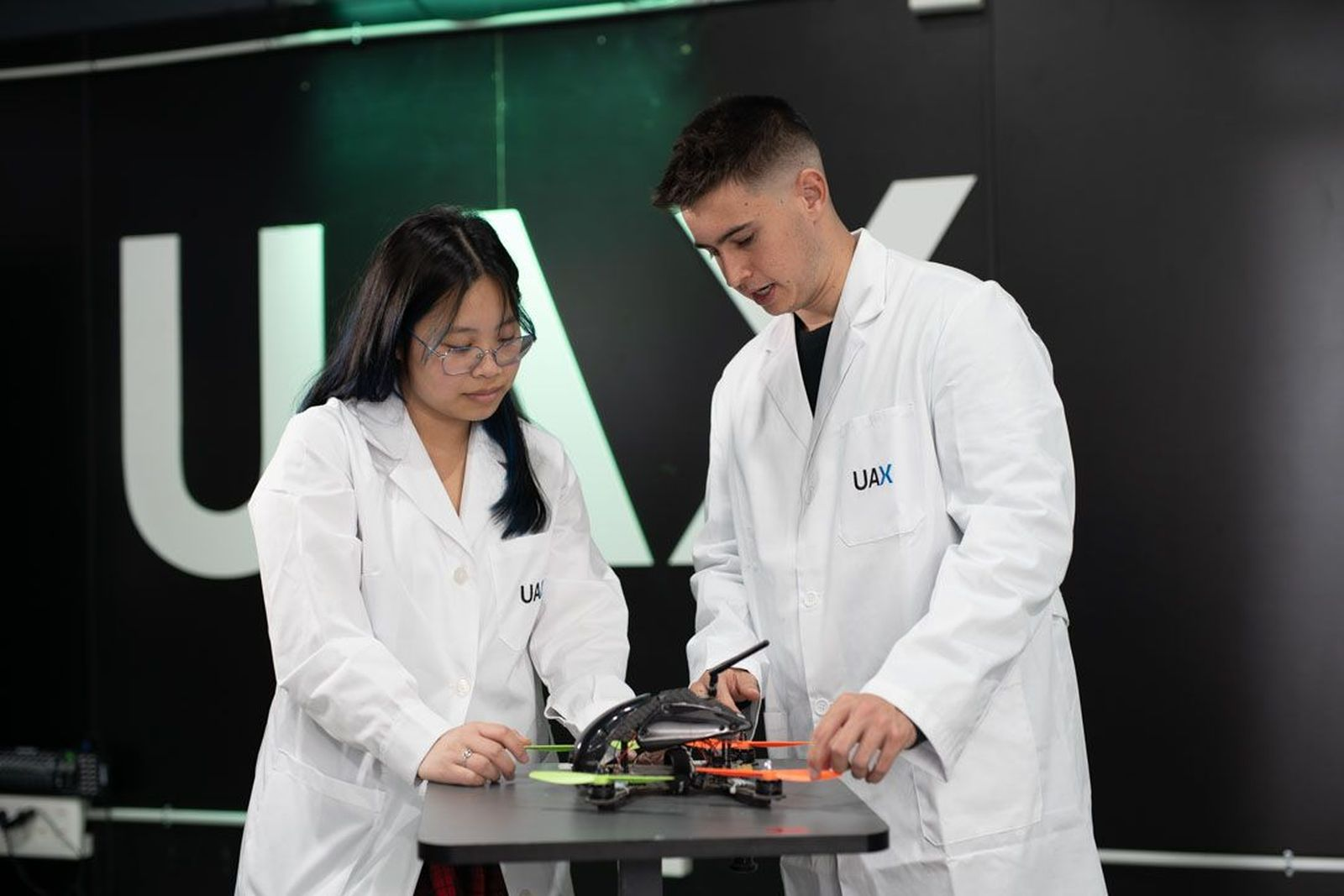
A wind tunnel, a turbojet test rig, an Airbus A320 flight simulator, AeroLab and a FABLAB equipped with 3D printing, laser cutting and robotic arms.
99 % EMPLOYABILITY
99 per cent of our students are in employment upon graduation
90 % ACTIVE TEACHERS
This offers the student a training that is closer to professional reality.
1000 AGREEMENTS
Airbus Defence & Space, Iberia, Hispasat, Indra, Thales Alenia Space, INECO, Sacyr, Accenture, Capgemini, GMV, Swiftair, Air Europa and ELA Aviación, amongst others
+ 100 REAL PROJECTS
Take part in the development and actual launch of a microsatellite alongside the aerospace company B2Space, as part of the UAX FABLAB Makers programme.
Studying the Master’s Degree in Civil Engineering in Madrid offers you comprehensive training in the field of civil engineering. Upon completion, you will be qualified to work as a civil engineer.
With the Qualifying Master’s programme, you’ll study in inspiring facilities shared with leading companies such as the SACYR-UAX RoadLab; in these research laboratories, you’ll work alongside real professionals on joint innovation projects.
If you’re looking to balance your academic and professional life, we offer an innovative format for working professionals, allowing you to study at weekends and access course content via our digital platform.
You can also request a personalised modular enrolment plan tailored to your needs. Find out more!
Master’s Degree in collaboration with:

Companies will be an integral part of your day-to-day life, proposing innovation projects, certifying your skills and preparing you through work placements so that you can develop the best possible skills.

You will have an eminently practical programme, with small groups, external internships in companies, lectures by leading figures in the field of civil engineering, visits to construction sites and you will learn how to use computer programmes for road layout, structural calculations and simulation of hydraulic networks.
University Master's Degree in Civil Engineering
First Year
FIRST FOUR-MONTH PERIOD
| Code | Subjects | Character* | ECTS | ||||||||||||||||||||||||||||||||||||||||||||||||||||||||||||||||||||||||||||||||||||||||||||||||||||||||||||||||||||||||||||||||||||||||||||||||||||||||||||||||||||||||||||||||||||||||||||||||||||||||||||||||||||||||||||||||||||||||||||||||||||||||||||||||||||||||||||||||||||||||||||||||||||||||||||||||||||||||||||||||||||||||||||||||||||||||||||||||||||||||||||||||||||||||||||||||||||||||||||||||||||||||||||||||||||||||||||||||||||||||
|---|---|---|---|---|---|---|---|---|---|---|---|---|---|---|---|---|---|---|---|---|---|---|---|---|---|---|---|---|---|---|---|---|---|---|---|---|---|---|---|---|---|---|---|---|---|---|---|---|---|---|---|---|---|---|---|---|---|---|---|---|---|---|---|---|---|---|---|---|---|---|---|---|---|---|---|---|---|---|---|---|---|---|---|---|---|---|---|---|---|---|---|---|---|---|---|---|---|---|---|---|---|---|---|---|---|---|---|---|---|---|---|---|---|---|---|---|---|---|---|---|---|---|---|---|---|---|---|---|---|---|---|---|---|---|---|---|---|---|---|---|---|---|---|---|---|---|---|---|---|---|---|---|---|---|---|---|---|---|---|---|---|---|---|---|---|---|---|---|---|---|---|---|---|---|---|---|---|---|---|---|---|---|---|---|---|---|---|---|---|---|---|---|---|---|---|---|---|---|---|---|---|---|---|---|---|---|---|---|---|---|---|---|---|---|---|---|---|---|---|---|---|---|---|---|---|---|---|---|---|---|---|---|---|---|---|---|---|---|---|---|---|---|---|---|---|---|---|---|---|---|---|---|---|---|---|---|---|---|---|---|---|---|---|---|---|---|---|---|---|---|---|---|---|---|---|---|---|---|---|---|---|---|---|---|---|---|---|---|---|---|---|---|---|---|---|---|---|---|---|---|---|---|---|---|---|---|---|---|---|---|---|---|---|---|---|---|---|---|---|---|---|---|---|---|---|---|---|---|---|---|---|---|---|---|---|---|---|---|---|---|---|---|---|---|---|---|---|---|---|---|---|---|---|---|---|---|---|---|---|---|---|---|---|---|---|---|---|---|---|---|---|---|---|---|---|---|---|---|---|---|---|---|---|---|---|---|---|---|---|---|---|---|---|---|---|---|---|---|---|---|---|---|---|---|---|---|---|---|---|---|---|---|---|---|---|---|---|---|---|---|---|---|---|---|---|---|---|---|---|---|---|---|---|---|---|---|---|---|---|---|---|---|---|
| M140501 | Foundations, Retaining Structures and Tunnels | OB | 6 | ||||||||||||||||||||||||||||||||||||||||||||||||||||||||||||||||||||||||||||||||||||||||||||||||||||||||||||||||||||||||||||||||||||||||||||||||||||||||||||||||||||||||||||||||||||||||||||||||||||||||||||||||||||||||||||||||||||||||||||||||||||||||||||||||||||||||||||||||||||||||||||||||||||||||||||||||||||||||||||||||||||||||||||||||||||||||||||||||||||||||||||||||||||||||||||||||||||||||||||||||||||||||||||||||||||||||||||||||||||||||
Foundations, Retaining Structures and TunnelsCódigo: M140501 Imprimir Course 1: First-semester module. Compulsory. 6 credits. Profesores
Objectives The aim of the course is to equip students with the technical skills required for the analysis, design, planning, construction and operation of geotechnical works. The module provides an in-depth understanding of current regulations governing the design of foundations, as well as the fundamental principles associated with the design of shallow foundations, deep foundations, retaining walls, walls and tunnels. Prerequisites No prerequisites have been set Learning Outcomes Not applicable, as the degree programme has been adapted to Royal Decree 822/202. Learning outcomes -Knowledge • Knowledge of the history of civil engineering and the ability to analyse and evaluate public works in particular and construction in general. • Knowledge of the profession of Civil Engineer and of the activities that can be carried out within the field of civil engineering. -Skills and competences • Ability to carry out calculations, assessments, planning and regulation of water resources, both surface and groundwater. • Knowledge of the profession of Civil Engineer and the activities that can be carried out within the field of civil engineering. -Competencies • Scientific, technical and methodological training for the continuous updating of knowledge and the performance of professional duties relating to consultancy, analysis, design, calculation, project development, planning, supervision, management, construction, maintenance, conservation and operation in the fields of civil engineering. • Knowledge, understanding and the ability to apply the relevant legislation in the practice of the profession of Civil Engineer. • Application of knowledge of soil and rock mechanics to the study, design, construction and operation of foundations, cuttings, embankments, tunnels and other structures built on or through the ground, whatever the nature and condition of the ground, and whatever the purpose of the works in question. • Ability to plan, manage and operate civil engineering infrastructure. Course content The content to be covered throughout the course is organised as follows: • MODULE 1: Shallow foundations • MODULE 2: Deep foundations • MODULE 3: Retaining Structures: Walls, Screens and Anchors • MODULE 4: Slopes • MODULE 5: Tunnels and underground works • MODULE 6: Rock Mechanics • LABORATORIES: Basic tests for identification, characterisation, strength, etc., of soils and rocks, and computer applications. Training activities -Lectures -Interactive classes -Workshop/laboratory activities -Completion of assignments, case studies, projects and/or problem-solving -Independent study and preparation -Assessments -Tutorials Assessment system and criteria COURSE ASSESSMENT SYSTEM The format of the assessment tests may include multiple-choice questions, short-answer questions, essay questions, problem-solving exercises, case studies, laboratory tests or workshops, or the design of prototypes, products or models, to be completed in writing or orally. Where applicable, the course coordinator will provide details of the assessment format to be used prior to the assessments taking place. The course will be assessed through the evaluation of the following activities: 1. CONTINUOUS ASSESSMENT OF PRACTICAL ACTIVITIES: To assess the extent to which students have achieved the learning outcomes, an individual practical activity will be carried out, consisting of solving case studies and problems, and demonstrating theoretical knowledge based on the content covered during the course. To this end, during December/January, a Continuous Assessment Test on Practical Activities (PEC) will be held covering the material taught up to that point. Students who achieve a mark of 4 or above (out of a possible 10) in this test will be exempt from the corresponding module, except for the final exam in the ordinary examination session (PFO), which means that in that final examination they will be assessed solely on the remainder of the course content (approximately 50 per cent of the course). Furthermore, if the mark is 5 points or higher (out of a possible 10), they may be exempted from this part in the extraordinary examination session (PFE) as well, should they need to sit that session. If the mark in this continuous assessment test is less than 4 marks (out of a possible 10), exemption from this part will not be granted; therefore, the student must sit the examination on the full course content in the final examination during the ordinary examination period, and, if applicable, during the supplementary examination period. 2. FINAL EXAMS Two final examinations will be held during the official examination periods: • Final exam in the ordinary examination period (PFO), to be held around January • Final exam in the supplementary sitting (PFE), to be held in late June or early July The mark obtained in the exam during the official examination periods will be out of 10 and must be 4 or above to pass the module. 3. LABORATORY PRACTICAL BOOK This will consist of two types of activities, namely: • A compulsory final practical assignment relating to the topics included in the course syllabus. This assignment will be marked out of 10 • Laboratory work, which will consist of attending classes and analysing and practising computer programmes or applications related to the topics included in the course syllabus. This will carry a maximum mark of 10 points FINAL ASSESSMENT CRITERIA: The mark obtained from the assessment tests (continuous assessment plus final exams in the ordinary or supplementary examination sessions) will be out of 10 marks and must be 4 marks or higher to pass the course. Once the condition set out in the previous point has been met, the final marks for the official examination sessions will be the sum of the marks obtained for the following components of the course, weighted (as a percentage of the final mark) as indicated below: Total mark for the examination session: o a maximum of 20 per cent from the course’s final practical assignment. o A maximum of 80 per cent from assessment tests (continuous assessment and final exams). Provided that the Total Mark for the Examination Session is 4 marks out of 10 or higher, a maximum of 10 per cent (1 mark out of 10) may be added by completing laboratory work (computer applications). Finally, to pass the module, a minimum of 5 marks out of a possible 10 must be obtained Timetable Click on this link to view the detailed timetable in Excel
Bibliography Essential: 1. Gonzalez Vallejo Geological Engineering Pretince Hall. 2002. ISBN: 8420531049 2. Ministry of Public Works Guide to foundations in road construction Ministry of Public Works. 2011. ISBN: 9788449808623 3. Ministry of Public Works Guide to the design of foundations for road works in accordance with Eurocode 7: Fundamentals of geotechnical design Ministry of Public Works. 2019. ISBN: 9788449808625 4. Ministry of Public Works Guide to the design of foundations for road works in accordance with Eurocode 7: Shallow foundations Ministry of Public Works. 2019. ISBN: 9788449808621 Others: 5.- Ministry of Public Works Guide to the design of foundations for road works in accordance with Eurocode 7: Examples of application to shallow foundations Ministry of Public Works. 2019. ISBN: 9788449808629 |
|||||||||||||||||||||||||||||||||||||||||||||||||||||||||||||||||||||||||||||||||||||||||||||||||||||||||||||||||||||||||||||||||||||||||||||||||||||||||||||||||||||||||||||||||||||||||||||||||||||||||||||||||||||||||||||||||||||||||||||||||||||||||||||||||||||||||||||||||||||||||||||||||||||||||||||||||||||||||||||||||||||||||||||||||||||||||||||||||||||||||||||||||||||||||||||||||||||||||||||||||||||||||||||||||||||||||||||||||||||||||||
| M140502 | Design, Operation and Maintenance of Hydraulic Structures | OB | 6 | ||||||||||||||||||||||||||||||||||||||||||||||||||||||||||||||||||||||||||||||||||||||||||||||||||||||||||||||||||||||||||||||||||||||||||||||||||||||||||||||||||||||||||||||||||||||||||||||||||||||||||||||||||||||||||||||||||||||||||||||||||||||||||||||||||||||||||||||||||||||||||||||||||||||||||||||||||||||||||||||||||||||||||||||||||||||||||||||||||||||||||||||||||||||||||||||||||||||||||||||||||||||||||||||||||||||||||||||||||||||||
Design, Operation and Maintenance of Hydraulic StructuresCódigo: M140502 Imprimir Course 1: First-semester module. Compulsory. 6 credits. Profesores
Objectives The aim of this module is to equip students with the skills required for the analysis, design, planning and comprehensive operation of hydraulic infrastructure, as well as for the efficient management of water resources. To this end, students will acquire the necessary skills to plan and carry out hydrological and hydraulic studies and to design surface and groundwater abstraction schemes — including dams, penstocks and pumping systems —; to design, dimension, construct and maintain hydraulic works in accordance with current technical, regulatory and environmental criteria; and to carry out the calculation, assessment, planning and regulation of water resources, both surface and groundwater, incorporating criteria of sustainability and efficiency into their management. Prerequisites No prerequisites have been established. Competencies Not applicable, as the qualification has been adapted to Royal Decree 822/2021. Learning outcomes -Skills and competences • Ability to plan and manage water and energy resources, including the integrated management of the water cycle. • Ability to plan, carry out studies and design surface water or groundwater abstraction schemes (dams, pipelines, pumping stations). • Ability to design, dimension, construct and maintain hydraulic works. • Ability to carry out calculations, assessments, planning and regulation of water resources, both surface and groundwater. -Competencies • Scientific, technical and methodological training for the continuous updating of knowledge and the performance of professional duties relating to consultancy, analysis, design, calculation, project development, planning, supervision, management, construction, maintenance, conservation and operation in the fields of civil engineering. • An understanding of the multiple technical, legal and property-related constraints that arise in the planning of a public works project, and the ability to identify various valid alternatives, select the optimal one and implement it appropriately, anticipating construction problems, and employing the most suitable methods and technologies—both traditional and innovative—with the aim of achieving maximum efficiency and promoting progress and the development of a sustainable and environmentally friendly society. Course Content The content to be covered throughout the course is organised as follows: • MODULE 0 – GENERAL REVIEW OF HYDRAULICS. HYDROLOGICAL PLANNING • MODULE 1 – PROJECT, DESIGN AND DIMENSIONING OF DAMS A. General issues B. Regulation Studies C. Hydraulic systems of dams D. Stability of gravity dams • MODULE 2 – PLANNING, DESIGN AND DIMENSIONING OF PIPELINES A. Pressurised pipelines B. Water storage tanks C. Open-channel conduits: Canals D. River hydraulics. Protection and channelisation works • MODULE 3 – PUMPING STATIONS • MODULE 4 – HYDROELECTRIC POWER GENERATION. HYDROPOWER STATIONS • MODULE 5 – ECONOMIC EVALUATION OF HYDRAULIC WORKS PROJECTS Training activities - Lectures - Interactive classes - Workshop/laboratory activities - Completion of assignments, case studies, projects and/or problem-solving - Self-study and preparation - Assessments - Tutorials Assessment system and criteria COURSE ASSESSMENT SYSTEM The format of the assessment tests may include multiple-choice questions, short-answer questions, essay questions, problem-solving exercises, case studies, laboratory tests or workshops, or the design of prototypes, products or models, to be completed in writing or orally. Where applicable, the course coordinator will provide details of the assessment format to be used prior to the assessments taking place. The course will be assessed through the evaluation of the following activities: 1. CONTINUOUS ASSESSMENT OF PRACTICAL ACTIVITIES: To assess the extent to which students have achieved the learning outcomes, an individual practical activity will be carried out, consisting of solving case studies and problems, and demonstrating theoretical knowledge based on the content covered during the course. To this end, during December/January, a Continuous Assessment Test for Practical Activities (PEC) will be held on the material covered up to that point. Students who achieve a mark of 4 or above (out of a possible 10) in this test will be exempt from the corresponding module, except for the final exam in the ordinary examination session (PFO), which means that in that final examination they will be assessed solely on the remainder of the course content (approximately 50 per cent of the course). Furthermore, if the mark is 5 points or higher (out of a possible 10), they may be exempted from this part in the extraordinary examination session (PFE) as well, should they need to sit that session. If the mark in this continuous assessment test is less than 4 marks (out of a possible 10), exemption from this part will not be granted; therefore, the student must sit the examination on the full course content in the final examination during the ordinary examination period, and, if applicable, during the supplementary examination period. 2. FINAL EXAMS Two final examinations will be held during the official examination periods: • Final exam in the ordinary examination period (PFO), to be held around January • Final exam in the supplementary sitting (PFE), to be held in late June or early July The mark obtained in the exam during the official examination periods will be out of 10 and must be 4 or above to pass the module. 3. LABORATORY PRACTICAL BOOK This will consist of two types of activities, namely: • A compulsory final practical assignment relating to the topics included in the course syllabus. This assignment will be marked out of 10 • Laboratory work, which will consist of attending classes and analysing and practising computer programmes or applications related to the topics included in the course syllabus. This will be marked out of 10 FINAL ASSESSMENT CRITERIA: The mark obtained from the assessment tests (continuous assessment plus final exams in the ordinary or supplementary examination sessions) will be out of 10 marks and must be 4 marks or higher to pass the course. Once the condition set out in the previous point has been met, the final marks for the official examination sessions will be the sum of the marks obtained for the following components of the course, weighted (as a percentage of the final mark) as indicated below: Total mark for the examination session: o a maximum of 20 per cent from the course’s final practical assignment. o A maximum of 80 per cent from assessment tests (continuous assessment and final exams). Provided that the Total Mark for the Examination Session is 4 marks out of 10 or higher, a maximum of 10 per cent (1 mark out of 10) may be added by completing laboratory work (computer applications). Finally, to pass the module, a minimum of 5 marks out of a possible 10 must be obtained Timetable Click on this link to view the detailed timetable in Excel
Reading list Core: 1. Alfredo Granados Problems in Hydraulic Engineering 3rd ed. Madrid: School of Civil Engineering. 1999. ISBN: 8438000908 2. Cástor J García Alarcón PIPING AND PUMPING. Theoretical Concepts and Exercises Bellisco. 2011. ISBN: 8495277091 3. Cástor J García Alarcón / Jose Ignacio Sarasua Moreno ECONOMIC EVALUATION OF HYDRAULIC WORKS PROJECTS DELTA PUBLICACIONES. 2011. ISBN: 8492954971 4.- Cástor J García Alarcón / Jose Ignacio Sarasua Moreno / Tomas Garcia Martin HYDROELECTRIC POWER STATIONS. BASIC CONCEPTS AND APPLICATIONS DELTA PUBLICACIONES. 2011. ISBN: 8492954964 5.- Francisco Javier Martín Carrasco / Luis Garrote de Marcos DESIGN AND OPTIMISATION OF HYDRAULIC STRUCTURES Madrid: Publications Service of the Association of Engineers, Canals and Ports. 2013. ISBN: 8415452546 Supplementary: 6.- ATHA – Various MANUAL FOR THE CALCULATION, DESIGN AND INSTALLATION OF REINFORCED CONCRETE PIPES ATHA – Association of Reinforced Concrete Pipe Manufacturers. 2010. ISBN: 0000000000 https://civilarq.com/libro/manual-calculo-diseno-e-instalacion-tubos-concreto-armado-atha-libro-pdf/ 7.- CEDEX TECHNICAL GUIDE ON PIPES FOR THE TRANSPORT OF PRESSURISED WATER. 3rd edition CEDEX. 2007. ISBN: 847790409X 8.- Spanish National Committee on Large Dams MONOGRAPHS OF THE SPANISH COMMITTEE ON LARGE DAMS Madrid: Publications Service of the Association of Engineers, Canals and Ports. 2012. ISBN: 8438004579 https://www.spancold.org/la-biblioteca-de-spancold/ 9.- Eduardo Martínez Marín RIVER HYDRAULICS. PRINCIPLES AND PRACTICE Bellisco. 2001. ISBN: 8495279446 10. Eugenio Vallarino BASIC TREATISE ON DAMS Madrid: Association of Civil Engineers, Publications Service of the Madrid School of Civil Engineering (U.P.M.). 1991. ISBN: 8438000444 https://www.academia.edu/32098204/Tomo_I_Tratado_Basico_de_Presas_Eugenio_Villarino 11. Eugenio Vallarino / Luis Cuesta Diego HYDROELECTRIC POWER PROJECTS GARCETA PUBLISHING GROUP – Association of Civil Engineers. 2014. ISBN: 8416228089 http://www.tecno-libro.es/libros/aprovechamientos-hidroelectricos-2-edicion_88413 12. José Maria Mayol Mallorquí PIPING – ECONOMICS OF INSTALLATIONS, ASSEMBLY, APPENDICES AND TABLES Bellisco. 1992. ISBN: 0000000003 13. José Maria Mayol Mallorquí PIPES – MATERIALS, HYDRAULIC CALCULATIONS, MECHANICAL CALCULATIONS Bellisco. 1997. ISBN: 0000000001 14. Manuel Mateos de Vicente PIPING SYSTEMS – ELEMENTS OF PRACTICAL HYDRAULICS 1st ed. Bellisco. 2002. ISBN: 8485198743 15.- Manuel Mateos de Vicente VALVES FOR WATER SUPPLY Bellisco. 1992. ISBN: 8495279460 Others: 16. Miscellaneous – ASETUB TECHNICAL MANUALS AND CALCULATION PROGRAMMES FOR FLEXIBLE PIPES (PE, PVC and GRP) Spanish Association of Manufacturers of Plastic Pipes and Fittings (ASETUB) – CEDEX. 2012. ISBN: 0000000010 https://es.scribd.com/document/372763423/Asetub-Manual-Tecnico |
|||||||||||||||||||||||||||||||||||||||||||||||||||||||||||||||||||||||||||||||||||||||||||||||||||||||||||||||||||||||||||||||||||||||||||||||||||||||||||||||||||||||||||||||||||||||||||||||||||||||||||||||||||||||||||||||||||||||||||||||||||||||||||||||||||||||||||||||||||||||||||||||||||||||||||||||||||||||||||||||||||||||||||||||||||||||||||||||||||||||||||||||||||||||||||||||||||||||||||||||||||||||||||||||||||||||||||||||||||||||||||
| M140503 | Mechanics of Continuous Media | OB | 6 | ||||||||||||||||||||||||||||||||||||||||||||||||||||||||||||||||||||||||||||||||||||||||||||||||||||||||||||||||||||||||||||||||||||||||||||||||||||||||||||||||||||||||||||||||||||||||||||||||||||||||||||||||||||||||||||||||||||||||||||||||||||||||||||||||||||||||||||||||||||||||||||||||||||||||||||||||||||||||||||||||||||||||||||||||||||||||||||||||||||||||||||||||||||||||||||||||||||||||||||||||||||||||||||||||||||||||||||||||||||||||
Mechanics of Continuous MediaCódigo: M140503 Imprimir Course 1: First-semester module. Compulsory. 6 credits. Profesores
Objectives The aim of the course ‘Mechanics of Continuous Media’ is to provide students with the theoretical and methodological framework necessary for modelling and analysing the mechanical behaviour of deformable solids, under the assumption of media continuity. The aim is for students to be able to formulate and solve problems relating to stress and strain states, using fundamental equations of equilibrium, compatibility and constitutive laws. Furthermore, the course aims to enable students to characterise the mechanical response of structures under elastic and elastoplastic conditions, determining stress and strain fields at both local and global levels. This includes the calculation of internal forces in cross-sections subjected to systems of external loads in equilibrium, with direct application to the analysis, design and verification of structures typical of civil engineering. Prerequisites No prerequisites have been established. Competencies Not applicable, as the degree programme has been adapted to Royal Decree 822/2021. Learning outcomes -Knowledge Adequate knowledge of the scientific and technological aspects of mathematical, analytical and numerical methods in engineering, fluid mechanics, continuum mechanics, structural analysis, geotechnical engineering, marine engineering, hydraulic works and water resources management, and linear infrastructure. -Competencies Understanding and mastery of the laws of thermomechanics of continuous media and the ability to apply them in engineering fields such as fluid mechanics, mechanics of materials, structural theory, etc. Course content The course content comprises: Basic mathematical concepts. Stress analysis. Motion and deformation. Measures of deformation. Linear elasticity. Plane elasticity. Laws of conservation of mass and momentum. Dynamic analysis. Waves and vibrations. Plasticity. Inelastic behaviour. Damage models. Viscoelasticity and viscoplasticity. Fracture mechanics. These are organised into the following topics: 1. Mathematical foundations of stress analysis. 1.1 Index notation. 1.2 Curvilinear coordinates. 1.3 Tensors and tensor calculus. 2. Continuum kinematics. Description of motion. 2.1 Conservation of mass. Continuity equation. 2.2 Principle of momentum. Equations of motion. Equations of equilibrium. 2.3 Principle of angular momentum. 2.4 Conservation of energy. 2.5 Constitutive equations. Thermodynamic and mechanical continuous media. 3. Stress analysis. 3.1 Volume forces and surface forces. 3.2 Cauchy’s principle of internal forces. 3.3 The stress tensor. 3.4 Principal stresses and maximum shear stresses. 4. Deformation analysis. 4.1 Deformation of a continuous medium. Lagrangian and Eulerian functions. 4.2 Deformation tensor. 4.3 Displacement vector. 4.4 Relationship between stress-strain gradients. 5. Fundamental laws of continuum mechanics. Conservation and balance equations. 5.1 Global balance equations. 5.2 Local balance equations. 5.3 Constitutive equations. 6. Linear elasticity. 6.1 Constitutive equations for solids. 6.2 Stress state. Elastic statics. 6.3 State of deformation. Stress–strain relationships. 7. Linear-planar elasticity. 7.1 Plane deformations. Elastic statics. 7.2 Plane stresses. Stress-strain relationships. 7.3 Stress functions. Airy’s equation. Rayleigh–Ritz. 7.4 Elastic problems in polar coordinates. 8. – Plasticity. 8.1 Plastic behaviour of materials. 8.2 Yield criteria. Treska and von Mises. Equivalent stresses. 8.3 Yield surfaces. 8.4 Plastic work. Formation of plastic hinges. Principle of virtual work. 8.5 Plane plasticity. Applications. 9. Linear viscoelasticity. 9.1 Linear viscoelastic behaviour. Creep. 9.2 Simple viscoelastic models. 9.3 Stress analysis. Training activities - Lectures - Interactive classes - Workshop/laboratory activities - Completion of assignments, case studies, projects and/or problem-solving - Self-study and preparation - Assessments - Tutorials Assessment system and criteria The weekly classroom sessions will consist, firstly, of a theoretical presentation of the concepts required to solve the practical case studies and, secondly, of solving problems in class that focus on the topic in question, so that students are able to reason, assimilate and solve the problems set in the successive assessment tests that will form part of the course, which we will detail later. During these sessions, to ensure that students acquire the necessary proficiency in applying the basic concepts and methods so that they can tackle any problem related to this subject, exercises of a similar level to those in the assessment tests will be set. Assessment of the module will be divided into two clearly distinct sections. - The first section will essentially cover the overall mathematical approach to the theory of continuum mechanics, together with the elastic behaviour of materials and the various principles and theorems used in their study. - The second section will focus on the plastic behaviour of materials, viscoelasticity and the various principles and theorems used to study them. ASSESSMENT SYSTEM FOR THE COURSE Assessment of the module will be based on the following components: 1. CONTINUOUS ASSESSMENT TEST ON PRACTICAL ACTIVITIES In order to assess the extent to which students have achieved the learning outcomes, a series of assessments will be carried out with the aim of evaluating and grading the knowledge acquired by students through the completion of the activities set throughout the course. These practical activities will be carried out individually and will consist of solving a practical case study presented as a problem, in which students can demonstrate the knowledge acquired in line with the content covered during the weekly sessions. These assessments will form part of the student’s final mark; a minimum mark of three points (3.00) will be required in order to average the marks across the assessments and achieve a pass in the module. If the student being assessed also achieves a mark of five points (5.00) or higher out of a possible ten (10.00), that is, if they achieve a pass mark in either of these two assessments, they may be exempted from the corresponding subject for the final examination, whether ordinary or supplementary, should they need to sit one of these. This means that, in that final examination—whether ordinary or supplementary—they will only be required to be examined on the remainder of the syllabus for the ‘Mechanics of Continuous Media’ course. 2. FINAL EXAMS Two individual final examinations will be held during the official examination periods: • The final examination during the ordinary examination period, which will take place approximately in mid-February, as determined by the university’s rectorate. • Final examination in the supplementary sitting, to be held approximately at the end of July or the beginning of July, as determined by the university’s rectorate. In this case, the student’s mark will be calculated by averaging the marks obtained in the two parts into which the course has been divided; therefore, in order to calculate this average, as with the continuous assessment mark, that the student must have obtained at least three marks (3.00) out of a possible ten (10.00) in one of the aforementioned parts. 3. MONITORING OF THE STUDENT’S PROGRESS In order to monitor the student’s progressive learning in detail for assessment purposes, throughout the academic year and on a weekly basis, practical problems relating to the material covered in class will be set so that the student, first of all, can assess themselves individually and, subsequently, be assessed by the lecturer after submitting these problems via the virtual learning platform. This also achieves the objective of gauging, on a weekly basis, the students’ understanding of the concepts covered in the weekly sessions. These submissions will be marked appropriately, accounting for a maximum of ten per cent (10%) of the final mark for continuous assessment. FINAL ASSESSMENT CRITERIA • Continuous assessment: Concepts: - First assessment of the practical activities relating to the section entitled ‘Theory of continuous media mechanics and elastic behaviour of materials’ (EAAPP 1) (40% of the final mark) - Second assessment of practical activities relating to the section entitled ‘Theoretical behaviour of materials in fatigue, plasticity and viscoelasticity’ (EAAPP 2) (40% of the final mark) - Assessment of the student’s learning progress (EFE) (20% of the final mark) Provided that all prerequisites are met, the final mark will be calculated using the following formula: (0.40 × EAAPP 1) + (0.40 × EAAPP 2) + (0.20 × EFE) • Final examination in the standard examination session: Topics: - Module 1 of the course, corresponding to ‘Theory of Continuum Mechanics and Elastic Behaviour of Materials’ (CEM) (40% of the final mark) - Module 2 of the course, corresponding to ‘Theoretical behaviour of materials in fatigue, plasticity and viscoelasticity’ (PV) (40% of the final assessment) - Assessment of the student’s progress (EFE) (20% of the final mark) Provided that all prerequisites are met, the final mark will be calculated using the following formula: (0.40 × EAAPP 1) + (0.40 × EAAPP 2) + (0.20 × EFE) • Final examination in the supplementary sitting: Topics: - Module 1 of the course, corresponding to ‘Theory of Continuum Mechanics and Elastic Behaviour of Materials’ (CEM) (50% of the final mark) - Module 2 of the course, corresponding to ‘Theoretical Behaviour of Materials in Fatigue, Plasticity and Viscoelasticity’ (PV) (50% of the final assessment) Provided that all prerequisites are met, the final mark will be calculated using the following formula: (0.50 × CEM) + (0.50 × PV) For this examination session, only the mark for the relevant examination will be taken into account. MINIMUM MARKS AND PERCENTAGES FOR THE OVERALL ASSESSMENT In summary, to pass the module for the academic year, students must achieve a minimum mark of three (3.00) in each of the sections into which the module has been divided, either through the assessment of practical activities or in any of the final examinations. In the event that a student fails the ordinary assessment period (either because the weighted average, calculated according to the established percentages, is less than five points, or because they do not meet a minimum requirement) they may carry forward the passed sections with the mark obtained to the supplementary examination period, provided they have not previously passed the module, with ‘pass’ being defined as a mark of five (5.00) or higher. Under no circumstances will any marks be carried forward to subsequent academic years. Any student who does not meet this minimum mark requirement, even if their weighted average results in a pass mark, must sit the examination in the supplementary sitting for those parts they have not passed (each part is passed with a mark of five points (5.00)). It is also important to note that students may sit a final examination – whether in the ordinary or extraordinary examination period – for just one of the components into which the module is divided, as explained above. FINAL PROVISIONS It is important to note that students will not be permitted to use programmable calculators in any examination. Any student wishing to exercise their right to be assessed in the designated examination room must present valid identification in the form of their National Identity Card; otherwise, they will not be permitted entry. Furthermore, no student will be permitted to enter the examination room carrying ‘smart devices’ such as mobile phones, smartwatches, laptops or similar items. Timetable Click on this link to view the detailed timetable in Excel
Reading list Core: 1. Alloza Cerda, Leandro Mechanics of Continuous Media Editorial Club Universitario. 1995. ISBN: 84-89522-06-5 2. Hernández Ibañez, Santiago; Fontán Pérez, Arturo Norberto Mechanics of Continuous Media: The Deformable Solid Andavira Editores. 2016. ISBN: 84-8408-904-9 3. Murray S. Spiegel Theory and Problems of Vector Analysis and an Introduction to Tensor Analysis McGraw-Hill. 1970. ISBN: 968-451-068-3 4. Oliver Olivella, Xavier Continuum Mechanics for Engineers UPC Press. 2002. ISBN: 84-8301-582-X 5. Sokolnikoff, J. S. Tensor Analysis: Theory and Applications to Geometry and Continuum Mechanics Index. 1979. ISBN: 84-7087-050-5 6. Vicente Ortiz, Antonio Plastic methods ETSI Publications Service. Caminos, Madrid. 1970. ISBN: 84-600-0488-0 Supplementary: 7.- Benito, Carlos Plastic Analysis Eduardo Torroja Institute of Construction and Cement. 1960. ISBN: 84-600-1726-5 8.- CH. Massonet - M. Save Plastic Analysis of Structures Montaner y Simon SL. 1966. ISBN: 0202961966 9. Gordon, John E. Structures, or Why Things Don’t Fall Over Calamar. 2015. ISBN: 84-96235-06-8 10. Timoshenko, Stephen; Goodier, J. N. Theory of Elasticity Urmo. 1983. ISBN: 84-314-0081-1 11. Torroja, Eduardo Elementary Lessons in Elasticity with Applications to Construction Engineering Dossat Publishers. 1967. ISBN: 84-237-0296-0 Others: 12.- Argüelles Álvarez, Ramón Structural Analysis, Volume I Madrid: Higher Technical School of Engineering. 1985. ISBN: 84-60024-11-3 13.- Argüelles Álvarez, Ramón Structural Analysis, Volume II Madrid: Higher Technical School of Civil Engineering. 1985. ISBN: 84-60024-12-1 14. Fernández Díaz-Munio, Rafael Handbook of Elasticity Madrid: Polytechnic University of Madrid, School of Engineering. 1996. ISBN: 8438001114 15. Fernández Díaz-Munio, Rafael A Brief Introduction to Plasticity 2000 Madrid: College of Civil Engineers. 0. ISBN: 8474931924 16. Gere-Timoshenko Mechanics of Materials Ibero-American Publishing Group. 1996. ISBN: 0534030998 17. Herman, Jacques The Science of Structures Juan de Herrera Institute. 2001. ISBN: 84-95365-98-7 18. Martínez-Osorio Chana, Juan Manuel Strength of Materials Madrid: García-Maroto Editores, 2008. 2008. ISBN: 84-936299-1-5 19. Ortiz Berrocal, Luis Elasticity McGraw Hill. 1998. ISBN: 84-48120-46-9 20. Peña Bouef, Alfonso Elastic Mechanics ETSI Caminos, Madrid. 1947. ISBN: 9203886141 21. Torroja, Eduardo The Reason and Nature of Structural Types CSIC. 1984. ISBN: 84-00-05745-7 |
|||||||||||||||||||||||||||||||||||||||||||||||||||||||||||||||||||||||||||||||||||||||||||||||||||||||||||||||||||||||||||||||||||||||||||||||||||||||||||||||||||||||||||||||||||||||||||||||||||||||||||||||||||||||||||||||||||||||||||||||||||||||||||||||||||||||||||||||||||||||||||||||||||||||||||||||||||||||||||||||||||||||||||||||||||||||||||||||||||||||||||||||||||||||||||||||||||||||||||||||||||||||||||||||||||||||||||||||||||||||||||
| M140504 | Advanced Numerical Methods | OB | 6 | ||||||||||||||||||||||||||||||||||||||||||||||||||||||||||||||||||||||||||||||||||||||||||||||||||||||||||||||||||||||||||||||||||||||||||||||||||||||||||||||||||||||||||||||||||||||||||||||||||||||||||||||||||||||||||||||||||||||||||||||||||||||||||||||||||||||||||||||||||||||||||||||||||||||||||||||||||||||||||||||||||||||||||||||||||||||||||||||||||||||||||||||||||||||||||||||||||||||||||||||||||||||||||||||||||||||||||||||||||||||||
Advanced Numerical MethodsCódigo: M140504 Imprimir Course 1: First-semester module. Compulsory. 6 credits. Profesores
Objectives This module aims to equip students with knowledge of various methods of calculation, ranging from classical to state-of-the-art techniques. These range from solving differential equations using the method of separation of variables and finite differences to solving engineering problems using the finite element method. Prerequisites No prerequisites have been set. Competencies Not applicable, as the degree programme has been adapted to Royal Decree 822/2021. Learning outcomes -Knowledge Adequate knowledge of the scientific and technological aspects of mathematical, analytical and numerical methods in engineering, fluid mechanics, continuum mechanics, structural analysis, geotechnical engineering, marine engineering, hydraulic works and water resources management, and linear structures -Skills and competences. -Competencies Ability to tackle and solve advanced mathematical engineering problems, from problem formulation through to the development of the model and its implementation in a computer programme. In particular, the ability to formulate, programme and apply advanced analytical and numerical models for calculation, design, planning and management, as well as the ability to interpret the results obtained, within the context of civil engineering. Description of the content The course content is divided into: • Module I: Methods for solving large systems of linear equations. Direct methods. Iterative methods. • Block II. Analytical modelling methods (Transient problems. Hyperbolic and parabolic problems). II.1. Basic concepts. Analytical approach versus numerical approximation. Preliminary examples. Review of ordinary differential equations (ODEs). Review of numerical methods for ODEs. Classification of partial differential equations (PDEs). II.2. Modelling problems with first-order PDEs. Transport equation under different configurations. II.3. Modelling steady-state problems (elliptic PDEs). Two-dimensional Laplace equation. II.4. Modelling second-order transient problems (parabolic and hyperbolic PDEs). Heat equation. Wave equation. • Module III. Numerical modelling methods (Steady-state problems. Basic concepts. Variational formulation of one-dimensional problems. Finite element method). III.1. Finite difference methods. Discretisation and difference equations. Solving problems for first- and second-order ODE and PDE. Suggested exercises. III.2. Finite element methods. The principle of virtual work. Variational formulation in infinite-dimensional spaces. Discretised spaces and the finite element method. Examples for one-dimensional problems. General formulation of the two-dimensional elasticity problem using the finite element method. Teaching activities - Lectures - Interactive classes - Workshop/laboratory activities - Preparation of assignments, case studies, projects and/or problem-solving - Self-study and preparation - Assessments - Tutorials Assessment system and criteria The format of the assessment tests may include multiple-choice questions, short-answer questions, essay questions, problem-solving tasks, case studies, laboratory tests or workshops, or the design of prototypes, products or models, to be completed in writing or orally. Where applicable, the coordinator will provide details of the type of assessment to be undertaken prior to the tests taking place. 1. Assessment of practical activities: To assess the level of achievement of the learning outcomes, two individual practical activities will be carried out, consisting of case studies and problem-solving, based on the content covered during the course. To this end, during the term, there will be a mid-term test on the subject matter of Block II (20 per cent) and a MATLAB practical (10 per cent), accounting for a total of 30 per cent of the course mark. 2. Compulsory course assignment (TA): Evidence of the student’s learning (in terms of knowledge, performance or output), gathered in the form of an assignment completed throughout the course, is assessed with the aim of explaining and reflecting on the learning achieved. This assignment accounts for 20 per cent of the course mark. 3. February Ordinary Examination Session: In this sitting, students must sit examinations on Parts I and II, which account for 50% of the course, as well as any other parts not covered in the mid-term examinations. 4. July Supplementary Examination Session: In this sitting, students must sit the examination for all sections in which they have not previously achieved the minimum pass mark. Furthermore, in this sitting, students who have not achieved the pass mark for the course assignment must submit an improved version of it, and those who have not yet submitted it must do so. The minimum pass mark for each and every one of the components described is 4.0 marks, with the exception of the Matlab practical and the course assignment, which. Furthermore, this is also the minimum mark that must be achieved in each and every part of the module in order to pass in any of the examination sessions, for which a minimum average mark of 5.0 points must be obtained. In any of the examination sessions, the weighting of each component of the course is as follows: Final mark = 0.20 × TA + 0.10 × PM + 0.30 × BI + 0.20 × BII + 0.20 × BIII. To pass the module, students must achieve a final mark of 5 out of 10. Timetable Click on this link to view the detailed timetable in Excel
Reading List Core: 1. Burden, R.; Faires, J. Numerical Analysis Cengage Learning. 2015. ISBN: 978-053873351 2. Celigüeta Lizarza, Juan Tomás Finite Element Method for Structural Analysis Tecnun, University of Navarra Technology Campus. 2011. ISBN: 84-921970-2-1 3. Chapra, S.; Canale, R. Numerical Methods for Engineers McGraw-Hill. 2010. ISBN: 978-007340106 4. Ferziger, J.; Perić, M. Computational Methods for Fluid Dynamics Springer. 2001. ISBN: 978-354042074 5. Galán García, José Luis Complex Variables and Partial Differential Equations for l Madrid: Bellisco, 2000. 2000. ISBN: 8495279347 6. García Mañés Problems in Partial Differential Equations ETSI Civil Engineering. 1993. ISBN: 8460465497 7. Golub, G.; Van Loan, C. Matrix Computations Johns Hopkins University Press. 2013. ISBN: 978-080183739 8. Reddy, J.N. An Introduction to the Finite Element Method McGraw-Hill. 2005. ISBN: 978-007246685 9. Vázquez Fernández, Manuel The Finite Element Method Applied to Structural Analysis Noela. 2001. ISBN: 9788488012067 10. Zienkiewicz, O.; Taylor, R. The Finite Element Method Butterworth-Heinemann. 2013. ISBN: 978-185617633 |
|||||||||||||||||||||||||||||||||||||||||||||||||||||||||||||||||||||||||||||||||||||||||||||||||||||||||||||||||||||||||||||||||||||||||||||||||||||||||||||||||||||||||||||||||||||||||||||||||||||||||||||||||||||||||||||||||||||||||||||||||||||||||||||||||||||||||||||||||||||||||||||||||||||||||||||||||||||||||||||||||||||||||||||||||||||||||||||||||||||||||||||||||||||||||||||||||||||||||||||||||||||||||||||||||||||||||||||||||||||||||||
| M140505 | Modelling | OB | 6 | ||||||||||||||||||||||||||||||||||||||||||||||||||||||||||||||||||||||||||||||||||||||||||||||||||||||||||||||||||||||||||||||||||||||||||||||||||||||||||||||||||||||||||||||||||||||||||||||||||||||||||||||||||||||||||||||||||||||||||||||||||||||||||||||||||||||||||||||||||||||||||||||||||||||||||||||||||||||||||||||||||||||||||||||||||||||||||||||||||||||||||||||||||||||||||||||||||||||||||||||||||||||||||||||||||||||||||||||||||||||||
ModellingCódigo: M140505 Imprimir Course 1: First-semester module. Compulsory. 6 credits. Profesores
Objectives The aim of this module is to enable students to formulate, programme and apply advanced analytical and numerical models for calculation, design, planning and management, as well as to interpret the results obtained, within the context of civil engineering. Prerequisites No prerequisites have been set. Competencies Not applicable, as the degree programme has been adapted to Royal Decree 822/2021. Learning outcomes -Knowledge Adequate knowledge of the scientific and technological aspects of mathematical, analytical and numerical methods in engineering, fluid mechanics, continuum mechanics, structural analysis, geotechnical engineering, marine engineering, hydraulic works and water resources management, and linear infrastructure. -Competences Ability to tackle and solve advanced mathematical engineering problems, from problem formulation through to the development of the solution and its implementation in a computer programme. In particular, the ability to formulate, programme and apply advanced analytical and numerical models for calculation, design, planning and management, as well as the ability to interpret the results obtained, within the context of civil engineering. Course content Initial problem statement. Types of models. Statistical models. Empirical models. Stochastic models. Real-world-based models. Comparative models. ANOVA. Modelling strategies. Model reliability. The course will be divided into two main modules and a third complementary module: Module 1_ Hydraulic modelling. Modelling using IBER software Two-dimensional flow in rivers and estuaries 1.1. Introduction 1.2. Hydrodynamic conditions: initial conditions, inlet boundary conditions, outlet boundary conditions and internal conditions 1.3. Roughness 1.4. Hydrological processes 1.5. Sediment transport 1.6. Wind 1.7. Turbulence model 1.8. Intensive drainage route 1.9. Mesh calculation: calculation parameters, results 1.10. Post-processing: visualisation of results, creation of graphs, etc. Module 2_ Modelling urban catchments with InfoWorks ICM A. Theoretical content A.1. Database and network creation A.2. Verification of connections A.3. Creating sub-catchments B: Practical content. InfoWorks ICM B.1. Network creation and MDT import B.2. 2D area calculation B.3. Simulation Module 3_ Fundamentals of BIM and its application in civil engineering A. BIM Fundamentals B. Current situation C. Applications in Civil Engineering Training activities - Lectures - Interactive classes - Workshop/laboratory activities - Preparation of assignments, case studies, projects and/or problem-solving - Self-study and preparation - Assessments - Tutorials Assessment system and criteria The format of assessment tests may include multiple-choice questions, short-answer questions, essay questions, problem-solving tasks, case studies, laboratory tests or workshops, or the design of prototypes, products or models, to be completed in writing or orally. Where applicable, the coordinator will provide details of the type of assessment to be undertaken prior to the tests taking place. 1. Assessment of practical activities: To assess the level of achievement of the learning outcomes, the following individual practical activities will be carried out, consisting of case studies and problem-solving, in line with the content covered during the course. - Practical activities for Module I: IBER (15%) of the module and Module II (20%), accounting for a total of 30% of the module mark. - To this end, during the term, there will be mid-term tests on the topics covered in Module I and Module II, accounting for a total of 30 per cent of the course mark. 2. Laboratory practical booklet assessing scientific and procedural knowledge: this corresponds to Module I and accounts for 10% of the course mark. 3. February Ordinary Examination Session: In this sitting, students must sit the examination for Module III (20%), as well as any other sections not covered in the mid-term exams. 4. July supplementary examination session: In this sitting, students must sit the examination for all sections in which they have not previously achieved the minimum pass mark. The minimum pass mark for each and every one of the components described is 4.0 marks. Furthermore, this is also the minimum mark that must be achieved in each and every part of the module in order to pass in any of the examination sessions, for which a minimum average mark of 5.0 marks must be obtained. In any sitting, the weighting of each component of the module is as follows: Final mark = MI × (0.15 (practical) + 0.10 (lab booklet) + 0.15 (exam)) + MII × (0.20 (practical) + 0.20 (exam) + 0.20 × MII. Timetable Click on this link to view the detailed timetable in Excel
Reading list Essential: 1. Butler, D. Urban Drainage 2018. 0. ISBN: 978-104022906 2. Chow, V. T. Open-Channel Hydraulics 1959. 0. ISBN: 978-007010776 3. Eastman, C. BIM Handbook 2018. 0. ISBN: 978-047054137 4. Montgomery, D. C. Design and Analysis of Experiments 2017. 2015. ISBN: 978-047152994 5. Saltelli, A. Global Sensitivity Analysis 2008. 2013. ISBN: 978-047005997 Supplementary: 6.- CEDEX IBER 2.0 Model. User’s Manual Publications Centre, Ministry of Public Works. 2016. ISBN: 978-84-7790-5 7.- Cobo Parra, Pedro Active Noise Control: Principles and Applications Madrid: Spanish National Research Council. 1997. ISBN: 8400076877 8. Harris, Cyril M. Handbook of Acoustic Measurements and Noise Control 3rd ed. Madrid: McGraw Hill, 1998. 1998. ISBN: 8448116194 |
|||||||||||||||||||||||||||||||||||||||||||||||||||||||||||||||||||||||||||||||||||||||||||||||||||||||||||||||||||||||||||||||||||||||||||||||||||||||||||||||||||||||||||||||||||||||||||||||||||||||||||||||||||||||||||||||||||||||||||||||||||||||||||||||||||||||||||||||||||||||||||||||||||||||||||||||||||||||||||||||||||||||||||||||||||||||||||||||||||||||||||||||||||||||||||||||||||||||||||||||||||||||||||||||||||||||||||||||||||||||||||
| TOTAL: | 30 | ||||||||||||||||||||||||||||||||||||||||||||||||||||||||||||||||||||||||||||||||||||||||||||||||||||||||||||||||||||||||||||||||||||||||||||||||||||||||||||||||||||||||||||||||||||||||||||||||||||||||||||||||||||||||||||||||||||||||||||||||||||||||||||||||||||||||||||||||||||||||||||||||||||||||||||||||||||||||||||||||||||||||||||||||||||||||||||||||||||||||||||||||||||||||||||||||||||||||||||||||||||||||||||||||||||||||||||||||||||||||||
SECOND FOUR-MONTH PERIOD
| Code | Subjects | Character* | ECTS | ||||||||||||||||||||||||||||||||||||||||||||||||||||||||||||||||||||||||||||||||||||||||||||||||||||||||||||||||||||||||||||||||||||||||||||||||||||||||||||||||||||||||||||||||||||||||||||||||||||||||||||||||||||||||||||||||||||||||||||||||||||||||||||||||||||||||||||||||||||||||||||||||||||||||||||||||||||||||||||||||||||||||||||||||||||||||||||||||||||||||||||||||||||||||||||
|---|---|---|---|---|---|---|---|---|---|---|---|---|---|---|---|---|---|---|---|---|---|---|---|---|---|---|---|---|---|---|---|---|---|---|---|---|---|---|---|---|---|---|---|---|---|---|---|---|---|---|---|---|---|---|---|---|---|---|---|---|---|---|---|---|---|---|---|---|---|---|---|---|---|---|---|---|---|---|---|---|---|---|---|---|---|---|---|---|---|---|---|---|---|---|---|---|---|---|---|---|---|---|---|---|---|---|---|---|---|---|---|---|---|---|---|---|---|---|---|---|---|---|---|---|---|---|---|---|---|---|---|---|---|---|---|---|---|---|---|---|---|---|---|---|---|---|---|---|---|---|---|---|---|---|---|---|---|---|---|---|---|---|---|---|---|---|---|---|---|---|---|---|---|---|---|---|---|---|---|---|---|---|---|---|---|---|---|---|---|---|---|---|---|---|---|---|---|---|---|---|---|---|---|---|---|---|---|---|---|---|---|---|---|---|---|---|---|---|---|---|---|---|---|---|---|---|---|---|---|---|---|---|---|---|---|---|---|---|---|---|---|---|---|---|---|---|---|---|---|---|---|---|---|---|---|---|---|---|---|---|---|---|---|---|---|---|---|---|---|---|---|---|---|---|---|---|---|---|---|---|---|---|---|---|---|---|---|---|---|---|---|---|---|---|---|---|---|---|---|---|---|---|---|---|---|---|---|---|---|---|---|---|---|---|---|---|---|---|---|---|---|---|---|---|---|---|---|---|---|---|---|---|---|---|---|---|---|---|---|---|---|---|---|---|---|---|---|---|---|---|---|---|---|---|---|---|---|---|---|---|---|---|---|---|---|---|---|---|---|---|---|---|---|---|---|---|---|---|---|---|---|---|---|
| M140506 | Advanced Structural Analysis | OB | 6 | ||||||||||||||||||||||||||||||||||||||||||||||||||||||||||||||||||||||||||||||||||||||||||||||||||||||||||||||||||||||||||||||||||||||||||||||||||||||||||||||||||||||||||||||||||||||||||||||||||||||||||||||||||||||||||||||||||||||||||||||||||||||||||||||||||||||||||||||||||||||||||||||||||||||||||||||||||||||||||||||||||||||||||||||||||||||||||||||||||||||||||||||||||||||||||||
Advanced Structural AnalysisCódigo: M140506 Imprimir Course 1. Second-term module. Compulsory. 6 credits. Profesores
Aims The aim of this module is to provide a comprehensive study of structures of various types — steel, composite, concrete and other structural systems — delving deeper into modelling methods and consolidating the knowledge acquired in previous modules to equip students with the necessary skills to analyse, design, calculate, plan and manage structural projects within the field of Civil Engineering; in this context, the Laboratory serves as a space for practical application where students engage with the realities of a project, highlighting the value of their prior technical training and the overall interconnection of the knowledge that comes together in the design process. Prerequisites - No prerequisites have been set. Competencies Not applicable, as the degree programme has been adapted to Royal Decree 822/2021. Learning Outcomes - Knowledge Adequate knowledge of the scientific and technological aspects of mathematical, analytical and numerical methods in engineering, fluid mechanics, continuum mechanics, structural analysis, geotechnical engineering, marine engineering, hydraulic works and linear structures. Knowledge of all types of structures and their materials, and the ability to design, plan, construct and maintain civil engineering structures and buildings. –Skills and competences Knowledge of and ability to carry out structural analysis through the application of advanced structural design and calculation methods and software, based on knowledge and understanding of structural loads and their application to the various structural types found in civil engineering. Ability to carry out structural integrity assessments. -Competencies Scientific, technical and methodological training for the continuous updating of knowledge and the performance of professional duties relating to consultancy, analysis, design, calculation, planning, supervision, management, construction, maintenance, upkeep and operation in the fields of civil engineering. Ability to plan, manage and operate civil engineering infrastructure. Course content Concepts of structural modelling. Introduction to and use of computer software. Design of special structures. Specific cases. Design and calculation of components. Design and calculation of structural elements. Design of special structures. Specific cases. Design and calculation of components. Design and calculation of structural elements. The course content is organised into the following modules: SECTION I: Design and calculation of structural elements. SECTION II: Structural modelling and the design of special structures. SECTION III: Structural defects, rehabilitation and inspection of structures. Monitoring. Training activities - Lectures - Interactive classes - Workshop/laboratory activities - Preparation of assignments, case studies, projects and/or problem-solving - Self-study and preparation - Assessments - Tutorials Assessment system and criteria The format of the assessment tests may include multiple-choice questions, short-answer questions, essay questions, problem-solving tasks, case studies, laboratory tests or workshops, or the design of prototypes, products or models, to be completed in writing or orally. Where applicable, the course coordinator will provide details of the assessment format to be used prior to the assessments taking place. Continuous assessment: 1. Assessment of practical activities: To assess the level of achievement of the learning outcomes, two individual practical activities will be carried out, consisting of case studies and problem-solving, based on the content covered during the course. To this end, during the term, a mid-term test will be held on the subject matter of Block I (30%), accounting for a total of 30% of the course mark. 2. Laboratory practical booklet: This assesses the student’s procedural and scientific knowledge. This work accounts for 10 per cent of the course mark. 3. Final Exam: In this examination session, students must sit exams covering Block I (10%), Block II (30%) and Block III (20%), which together account for 60% of the course mark. The minimum pass mark for each and every one of the components described is 4.0 marks, with the exception of the laboratory practical, for which the minimum mark must be 5. In this assessment period, the weighting of each component of the module is as follows: Final mark = 0.40 × PBI + 0.30 × BII + 0.10 × LB + 0.20 × BIII To pass the module, students must achieve a final mark of 5 out of 10. June Ordinary Examination Session: In this sitting, students must sit examinations for those parts of the module they have not passed. The minimum pass mark for each and every one of the components described is 4.0 marks, with the exception of the laboratory practical mark, which must be at least 5. In any of the examination sessions, the weighting of each component of the module, for those who have passed any of them, is as follows: Final mark = 0.40 × PBI + 0.30 × BII + 0.10 × LB + 0.20 × BIII. To pass the module, students must achieve a final mark of 5 out of 10. For students sitting the entire module without having passed any part of it, the weighting of each part of the module is as follows: Final mark = 0.40 × PBI + 0.40 × BII + 0.20 × BIII. To pass the module, students must achieve a final mark of 5 out of 10. July Extraordinary Examination Session: In this sitting, students must sit examinations for all the parts they have not passed. For students sitting the entire module, the weighting of each part of the module is as follows: Final mark = 0.40 × PBI + 0.40 × BII + 0.20 × BIII. To pass the module, students must achieve a mark of 5 out of 10 in the final mark. Timetable Click on this link to view the detailed timetable in Excel
Bibliography Essential: 1.- AENOR Fastening elements. Bolted structural connections. Spanish Standard. UNE Standards. AENOR. 2011. ISBN: 8481437247 2.- Argüelles Álvarez, Ramón; Argüelles Bustillo, Ramón; Arriaga Martitegui, Francisco Steel Structures 1: Fundamentals and Design in accordance with CTE, EAE and EC3 Bellisco. 2013. ISBN: 8492970520 3. Argüelles Álvarez, Ramón; Argüelles Bustillo, Ramón; Atienza Reales, J. R. Steel Structures: Design, Basic Standards and Eurocode (Complete Edition) Bellisco. 2013. ISBN: 8495279163 4. Argüelles Álvarez, Ramón; Fernández Lavandera, Jorge; Argüelles Bustillo, Ramón Steel Structures 3: Composite Beams in Building Construction Bellisco Ediciones. 2014. ISBN: 8492970674 5. Argüelles Bustillo, Ramón; Arriaga Maritegui, Francisco; Argüelles Álvarez, Ramón Steel Structures 4: Instability: Fundamentals, Calculations and Software Bellisco. 2016. ISBN: 8492970940 6. Cervera Bravo, Jaime... [et al.] Handbook of connections: concrete slabs with steel supports 1: conventional solutions Aznar López, Antonio. 2019. ISBN: 8409180059 7. Spain. Ministry of the Presidency Structural Steel Code (EAE) State Agency for the Official State Gazette. 2011. ISBN: 8434019809 8. Estévez Cimadevila, Francisco Javier Steel Structures: Exercises and Structures Workshop Repronor. 2017. ISBN: 8416294442 9. Estévez Cimadevila, Francisco Javier; Martín Gutiérrez, Emilio (1964–); Otero Chans, M. Dolores Steel Structures: Projects and Representation (2020) Repronor. 2020. ISBN: 8416294961 10. Jesús Luís Benito Olmeda, Justo Carretero Pérez Basic Principles of Steel Structures Bellisco. 2012. ISBN: 8490115312 11. Madrid: General Technical Secretariat Guideline on Structural Steel (EAE-11). Standing Committee on Steel Structures | Spain Ministry of Public Works Technical General Secretariat. Standards Series. 2012. ISBN: 8449809125 12.- María Luisa Gil Martín; Enrique Hernández Montes STEEL AND COMPOSITE STRUCTURES Bellisco. 2020. ISBN: 8417289171 13. UNE Standards Eurocodes for the design of steel and composite structures AENOR. 2012. ISBN: 8481437744 14. Puertolas Broto, Sergio; Ibarz Montaner, Elena; Más Val, Yolanda Steel Structures: Solved Exercises Elías Goicoechea Chavarri (Copycenter Digital). 2013. ISBN: 8415515371 15.- ZIENKIEWICZ, O.C. The Finite Element Method McGraw Hill. 1995. ISBN: 8448101782 Supplementary: 16.- CHAJES, A. Principles of Structural Stability Theory Prentice Hall. 2004. ISBN: 0137099641 17.- Estévez Cimadevila, Francisco Javier. Steel Structures: Exercises and Structures Workshop Repronor. 2014. ISBN: 8416294039 Others: 18. Jack C. McCormac Design of Steel Structures: the ASD Method (No. 624.1821 M33 1999.). Marcombo; No.: 4th edition (1 July 1999). 1999. ISBN: 9701502228 |
|||||||||||||||||||||||||||||||||||||||||||||||||||||||||||||||||||||||||||||||||||||||||||||||||||||||||||||||||||||||||||||||||||||||||||||||||||||||||||||||||||||||||||||||||||||||||||||||||||||||||||||||||||||||||||||||||||||||||||||||||||||||||||||||||||||||||||||||||||||||||||||||||||||||||||||||||||||||||||||||||||||||||||||||||||||||||||||||||||||||||||||||||||||||||||||||
| M140507 | Design and Operation of Marine Structures | OB | 6 | ||||||||||||||||||||||||||||||||||||||||||||||||||||||||||||||||||||||||||||||||||||||||||||||||||||||||||||||||||||||||||||||||||||||||||||||||||||||||||||||||||||||||||||||||||||||||||||||||||||||||||||||||||||||||||||||||||||||||||||||||||||||||||||||||||||||||||||||||||||||||||||||||||||||||||||||||||||||||||||||||||||||||||||||||||||||||||||||||||||||||||||||||||||||||||||
Design and Operation of Marine StructuresCódigo: M140507 Imprimir Course 1. Second-term module. Compulsory. 6 credits. Objectives The aim of this module is to equip students with the knowledge and skills required for the analysis, design, planning and operation of maritime and port infrastructure, based on the study of the physical processes of wave action, coastal dynamics and morphology, the behaviour and interaction of structures with the marine environment, as well as the planning, management and efficient operation of port facilities. Prerequisites No prerequisites have been set. Competencies Not applicable, as the degree programme has been adapted to Royal Decree 822/2021. Learning outcomes -Knowledge Knowledge of the history of civil engineering and the ability to analyse and evaluate public works in particular and the construction sector in general. Knowledge and skills enabling an understanding of the dynamic phenomena of the ocean-atmosphere-coastal environment and the ability to address the challenges posed by the coastline, ports and coastal areas, including the impact of interventions on the coastline. Ability to carry out studies and projects relating to marine works. –Skills and competences Ability to plan, design and manage infrastructure, as well as its maintenance, upkeep and operation. -Competencies Scientific, technical and methodological training for the continuous updating of knowledge and the performance of professional duties relating to consultancy, analysis, design, calculation, project development, planning, supervision, management, construction, maintenance, conservation and operation in the fields of civil engineering. Description of the course content The module will be divided into three modules: Module I: Wind and Waves Topic 1. Wind and wave generation. Topic 2. Wave mechanics. Topic 3. Wave modifications. Topic 4. Description of waves: statistical and spectral methods. Module II: Coasts Topic 1. Coastal geomorphology and hydrodynamics. Topic 2. Sediment transport. Topic 3. Coastal protection. Module III: Breakwaters and Port Modelling Topic 1. Sloped breakwaters. Introduction to sloped breakwaters. Reflection, transmission and overtopping. Protective mat. Filter and core layers. Foot berm. Backfill. Construction process. Topic 2. Vertical breakwaters. Introduction to vertical breakwaters. Reflection and overtopping. Hydrodynamic actions: Linear theory. Hydrodynamic actions: Goda, Takahashi and Sainflou formulas. Stability calculations. Protective berm and fender block. Construction process. Topic 3. Port layout design. Port operations. Port capacity. Module IV: Berthing Structures and Port Operations Topic 1. Berthing Structures 1. Elements of a port. 2. Types and classification of berthing facilities: By use and cargo; by structural type. 3. Construction works. Foundations. Stability calculations. 4. Fenders and mooring systems. 5. Construction procedures. Topic 2 – Port operations 1. Organisation of maritime transport and traffic infrastructure. 2. Port costs. The freight market. 3. Port organisation, management and financing. Terminal management. 4. Marketing and strategic alliances. Training activities - Lectures - Interactive classes - Workshops/laboratory activities - Assignments, case studies, projects and/or problem-solving - Self-study and preparation - Assessments - Tutoring - Assessment tests Assessment system and criteria The format of the assessment tests may include multiple-choice questions, short-answer questions, essay questions, problem-solving tasks, case studies, laboratory tests or workshops, or the design of prototypes, products or models, to be completed in writing or orally. Where applicable, the course coordinator will provide details of the assessment format to be used prior to the assessments taking place. The weightings for each part of the module will be as follows: Module I: 25% Module II: 25% Module III: 30% Module IV: 20% 1. Assessment for the module will consist of: - Assessment of practical activities: To assess the level of achievement of the learning outcomes, two individual practical activities will be carried out, consisting of case studies and problem-solving, based on the content covered during the course. To this end, during the term, a mid-term test will be held covering the topics of Module I (20%) and Module IV (20%), accounting for a total of 40% of the course mark. -.Submission of set exercises (Portfolio): Evidence of the student’s learning (in terms of knowledge, performance or output) is assessed through the submission of a series of set exercises or assignments (MI, MII and MIII) throughout the course, with the aim of explaining and reflecting on the learning that has taken place. This work accounts for 20% of the course mark. 3. June Ordinary Examination Session: In this sitting, students must sit examinations on the sections of Module II and Module III, which account for 50% of the course, as well as any other sections not covered in the mid-term examinations. 4. July Supplementary Examination Session: In this sitting, students must sit examinations on all sections for which they have not previously achieved the minimum pass mark. Furthermore, in this session, students who have not achieved the pass mark for the Teaching Assignment (TA) must submit an improved version of it, and those who have not yet submitted it must do so. The minimum pass mark for each and every one of the components described is 4.0 marks. Furthermore, this is also the minimum mark that must be achieved in each and every part of the module in order to pass in any of the examination sessions, for which a minimum average mark of 5.0 marks must be obtained. In any sitting, the weighting of each part of the module is as follows: Final mark = 0.20 × MI + 0.05 × PMI + 0.20 × MII + 0.05 × PMII + 0.20 × MIII + 0.10 × PMIII + 0.20 × MIV. To pass the module, students must achieve 5 out of 10 in the final mark. Timetable Click on this link to view the detailed timetable in Excel
Reading list Essential: 1. José Manuel de la Peña Olivas Technical Guide to Coastal Studies CICCP. 2007. ISBN: 9788438003428 2. State Ports Guide to Good Practice for the Execution of Maritime Works Madrid: State Ports Authority, 2008. 2008. ISBN: 9788488975686 3. Transport and the Environment, Ministry of Public Works ROM 0.3-91 Climate-related Actions I: Wave Action Transport and Environment, Ministry of Public Works. 1995. ISBN: 9788488975300 4. Vicente Negro Valdecantos. Design of Vertical Dikes. Association of Civil Engineers. 2001. ISBN: 8438003745 5. Vicente Negro Valdecantos. Design of Breakwaters Association of Civil Engineers. 2002. ISBN: 9788438002162 Supplementary: 6.- Dean and Dalrymple. Water Wave Mechanics for Engineers and Scientists: 2 (Advanced Series on Ocean Engineering) Prentice-Hall Inc. 1997. ISBN: 9810204213 7.- Jose Manuel de la Peña Olivas Technical Guide to Coastal Studies, Coastal Engineering Manual. Association of Civil Engineers. 200. ISBN: 8438003427 8.- Ministry of Public Works, Ministry of the Environment, CEDEX, Directorate-General for Coasts MASTER’S DEGREE IN PORT AND COASTAL ENGINEERING, Volume I. Port Foundation. 2007. ISBN: 8438002161 |
|||||||||||||||||||||||||||||||||||||||||||||||||||||||||||||||||||||||||||||||||||||||||||||||||||||||||||||||||||||||||||||||||||||||||||||||||||||||||||||||||||||||||||||||||||||||||||||||||||||||||||||||||||||||||||||||||||||||||||||||||||||||||||||||||||||||||||||||||||||||||||||||||||||||||||||||||||||||||||||||||||||||||||||||||||||||||||||||||||||||||||||||||||||||||||||||
| M140508 | Land Use Planning and Urban Planning | OB | 6 | ||||||||||||||||||||||||||||||||||||||||||||||||||||||||||||||||||||||||||||||||||||||||||||||||||||||||||||||||||||||||||||||||||||||||||||||||||||||||||||||||||||||||||||||||||||||||||||||||||||||||||||||||||||||||||||||||||||||||||||||||||||||||||||||||||||||||||||||||||||||||||||||||||||||||||||||||||||||||||||||||||||||||||||||||||||||||||||||||||||||||||||||||||||||||||||
Land Use Planning and Urban PlanningCódigo: M140508 Imprimir Course 1. Second-term module. Compulsory. 6 credits. Objectives The aim of the module is for students to gain a thorough understanding of the principles, models and regulatory frameworks governing spatial planning and urban planning, analysing their historical development, the instruments of spatial and urban planning, and their practical application in the Spanish and European contexts, with particular attention to current regional legislation. Prerequisites No prerequisites have been set. Learning Outcomes Not applicable, as the degree programme has been adapted to Royal Decree 822/2021 Learning outcomes -Knowledge Knowledge of the profession of Civil Engineer and of the activities that can be carried out within the field of civil engineering. –Skills and competences Ability to carry out studies, land-use and town-planning schemes, and urban development projects. -Competences Knowledge, understanding and the ability to apply the relevant legislation in the practice of the profession of Civil Engineer. Ability to analyse and assess the social, cultural, environmental and economic factors affecting a territory, as well as to carry out land-use and town-planning projects from the perspective of sustainable development. Course content Spatial planning. Historical development. Territorial planning. Models. The concept of territorial planning. Definition. Differences between urban planning and territorial planning. The physical environment. Elements. The physical environment. The human environment. Territorial planning. Models. Instruments of territorial planning. Rural planning. Instruments of urban planning. Application to the Urban Planning Act of the Community of Madrid. Regional urban and spatial planning laws. Regulatory framework. Town and country planning and territorial legislation. Sectoral and regional legislation. European regulations. Laws. Decrees. European Union Directives. Orders. Circulars. By-laws. Regulations up to the 1956 Land Act. The 1956 Land Act. The 1976 consolidated text of the 1975 Act. Powers of the Autonomous Communities in urban planning matters. Land Act 2007. Structural and Cohesion Funds. EU Directives. European territorial policies. These topics are organised as follows: Block I: Spatial Planning. Topics 1 to 5. Spatial planning, territorial policy. Town and country planning. Land classification. Implementation of planning. Elements of spatial planning (residential, commercial, industrial, public facilities). Urban planning instruments (General Urban Development Plan (PGOU), partial plan, urbanisation project, etc.). Block II: Urban Sustainability. Topics 6 to 9. Environmental strategies. Urban planning and sustainability. Sustainable urban planning. City planning. Sustainability criteria. Urban and local sustainability indicators. Calculating the carbon footprint. Block III: City Models Topics 10–13. History of the city from the perspective of urban systems engineering. Functional structure of non-residential urban land. Territorial dynamics and strategies to tackle depopulation. Urban transport system and territorial logistics. Training activities - Lectures. - Interactive classes. - Workshop/laboratory activities. - Completion of assignments, case studies, projects and/or problem-solving exercises. - Personal study and preparation. - Knowledge assessments. - Tutorials. Assessment system and criteria The format of the assessment tests may include multiple-choice questions, short-answer questions, essay questions, problem-solving tasks, case studies, laboratory tests or workshops, or the design of prototypes, products or models, to be completed in writing or orally. Where applicable, the course coordinator will provide details of the assessment format to be used prior to the assessments taking place. Students may pass the module through continuous assessment; to do so, they must complete the following activities: -T1: To assess the extent to which learning outcomes have been achieved, students will carry out a group project (max. 3 people). This project will be presented in class. This project will account for 25% of the final mark for the module. -T2: To assess evidence of the student’s learning throughout the course, compiled in a technical report, with the aim of explaining and reflecting on various aspects of the learning undertaken. This report will account for 15 per cent of the course mark. -Final Exam: A written, multiple-choice final exam will be held. It will account for 60% of the course mark. Each module of the course will account for 20%. 3. Ordinary June Examination Session: In this sitting, students must sit the parts that were not covered in the mid-term exams. To be exempt from sections T1 and T2, students must have achieved a mark of 5 or above. To be exempt from the PF section, students must achieve a mark of 4 or above. Students who do not achieve a mark of 5 or above in their assignments must submit an improved version of the work. To pass the module, the mark obtained must be 5 or above, taking into account the following weightings: Final mark = 0.25 × T1 + 0.15 × T2 + 0.60 × PF 4. July Extraordinary Examination Session: In this sitting, students must sit the parts that were not passed in the mid-term exams. To be exempt from sections T1 and T2, students must have achieved a mark of 5 or above. To be exempt from the PF section, students must achieve a mark of 4 or above. Students who do not achieve a mark of 5 or above in their assignments must submit an improved version of their work. To pass the module, the mark obtained must be 5 or above, taking into account the following weightings: Final mark = 0.25 × T1 + 0.15 × T2 + 0.60 × PF Timetable Click on this link to view the detailed timetable in Excel
Bibliography Essential: 1. Andrés Precedo Land-use planning Summary. 2004. ISBN: 9788497562386 2. CALDERÓN BALANZATEGUI, E.; Lessons in Spatial Planning: Policy ; Publications Service of the Higher Technical School of Civil Engineering. 1998. ISBN: 9703702619 3. Edward Glaeser The Triumph of Cities Taurus. 2011. ISBN: 9788430608221 4. Fernando de Terán A History of Urban Planning in Spain Cátedra. 1999. ISBN: 9788437616896 5. Jane Jacobs The Death and Life of Great American Cities Capitán Swing. 2011. ISBN: 9788493914332 6. Jordi Borja Local and Global: City Management Taurus. 2003. ISBN: 9788430605121 7. José Fariña Tojo The City and the Natural Environment Akal. 2001. ISBN: 9788446014183 8. Manuel Herce Infrastructure and the Environment UPC. 2010. ISBN: 9788483018655 9. UN-Habitat Urban Planning for Sustainable Cities UN. 2015. ISBN: 9789211326697 10. Peter Hall Cities of Tomorrow Blackwell. 2002. ISBN: 9780631232520 11. Ramón López de Lucio Urban Planning in Spain Síntesis. 1993. ISBN: 9788477381204 12. SANTAMERA, J.A. An Introduction to Urban Planning Association of Civil Engineers, Madrid. 1998. ISBN: 8446010240 |
|||||||||||||||||||||||||||||||||||||||||||||||||||||||||||||||||||||||||||||||||||||||||||||||||||||||||||||||||||||||||||||||||||||||||||||||||||||||||||||||||||||||||||||||||||||||||||||||||||||||||||||||||||||||||||||||||||||||||||||||||||||||||||||||||||||||||||||||||||||||||||||||||||||||||||||||||||||||||||||||||||||||||||||||||||||||||||||||||||||||||||||||||||||||||||||||
| M140509 | Planning, Management and Operation of Transport and Infrastructure | OB | 6 | ||||||||||||||||||||||||||||||||||||||||||||||||||||||||||||||||||||||||||||||||||||||||||||||||||||||||||||||||||||||||||||||||||||||||||||||||||||||||||||||||||||||||||||||||||||||||||||||||||||||||||||||||||||||||||||||||||||||||||||||||||||||||||||||||||||||||||||||||||||||||||||||||||||||||||||||||||||||||||||||||||||||||||||||||||||||||||||||||||||||||||||||||||||||||||||
Planning, Management and Operation of Transport and InfrastructureCódigo: M140509 Imprimir Course 1. Second-term module. Compulsory. 6 credits. Objectives The aim of the module is to provide students with a comprehensive overview of the transport system, covering the engineering and planning of roads and railways, modes and functions of transport, as well as its urban dimension. The aim is for students to understand the demand, costs, logistics and financing of infrastructure and services, and to be able to apply methods and models for the planning, evaluation and formulation of transport policies in national and European contexts. Prerequisites No prerequisites have been set. Competencies Not applicable, as the degree programme has been adapted to Royal Decree 822/2021. Learning outcomes -Knowledge Knowledge of the issues involved in the design and construction of the various elements of an airport, and of methods of maintenance and operation. Knowledge of transport engineering and planning, transport functions and modes, urban transport, the management of public transport services, demand, costs, logistics and the financing of transport infrastructure and services. –Skills and competences Ability to plan, design, inspect and manage transport infrastructure projects, whether land-based (roads, railways, bridges, tunnels and urban transport networks) or maritime (port works and facilities). Ability to carry out studies on spatial planning, the coastal environment, coastal management and protection, and environmental aspects related to infrastructure. -Competencies Scientific, technical and methodological training for the continuous updating of knowledge and the performance of professional duties relating to consultancy, analysis, design, calculation, project development, planning, supervision, management, construction, maintenance, upkeep and operation in the fields of civil engineering. Course Content General overview of transport. Transport networks and services throughout Spanish history. The economic importance of transport. Basic aspects of the sector. The transport market. State intervention in transport. Current supply and demand in the sector. Basic elements of the transport system. Systems for evaluating transport policies. Territorial analysis of transport. General aspects of transport planning. Models. Concept and structure. General four-stage model. Generation and distribution models. Modal split and network assignment models. Direct model. Theory, formulation, calibration and data. Stated preference surveys (SPS). Scope of application. Stated preference surveys (SPS). Modelling Transport policies. Road policy. Rail policy. Public transport policy. Urban transport policy. Freight transport policy. Transport policy evaluation systems. CBA and multi-criteria analysis. White Paper; European transport policy. The module is divided into the following parts: I. Road transport and logistics (TL). II. Urban railways (FU). III. Rail transport (TF). IV. Infrastructure maintenance and operation (CI). V. Supervised work (TD). Training activities - Lectures. - Interactive classes. - Workshop/laboratory activities. - Completion of assignments, case studies, projects and/or problem-solving. - Personal study and preparation. - Knowledge assessments. - Tutorials. Assessment system and criteria The format of the assessment tests may include multiple-choice questions, short-answer questions, essay questions, problem-solving tasks, case studies, laboratory tests or workshops, or the design of prototypes, products or models, to be completed in writing or orally. Where applicable, the coordinator will provide details of the assessment format to be used prior to the assessments taking place. 1. Assessment of practical activities: To assess the level of achievement of the learning outcomes, two individual practical activities will be carried out, consisting of case studies and problem-solving, based on the content covered during the course. To this end, on Friday 12 December 2025, a mid-term exam will take place covering the MS and ME sections, which together account for 40 per cent of the course mark. 2. Supervised assignment: During the course, students must complete a supervised assignment (TD), the procedure and submission deadlines for which will be set out in the relevant section, and which accounts for 20 per cent of the course mark. The purpose of this assignment is to assess evidence of the student’s learning throughout the course, set out in a technical report, with the aim of explaining and reflecting on various aspects of the learning achieved. 3. February Ordinary Examination Session: In this examination session, students must sit examinations on the IT and FI sections, as well as any other sections not previously covered in mid-term examinations. For this sitting, the technical report must be the one previously submitted on the date set for that purpose. 4. July Supplementary Examination Session: In this sitting, students must sit examinations for all sections in which they have not previously achieved the minimum pass mark. Furthermore, students who did not achieve the pass mark in their course assignment must submit an improved version of it. The minimum pass mark for each and every one of the components described is 4.0 marks. Furthermore, this is also the minimum mark that must be achieved in each and every part of the module in order to pass in any of the examination sessions, for which a minimum average mark of 5.0 marks must be obtained. In any of the examination sessions, the weighting of each component of the module is as follows: Final mark = 0.20 × MS + 0.20 × ME + 0.20 × FI + 0.20 × IT + 0.20 × TD. Timetable Click on this link to view the detailed timetable in Excel
Bibliography Supplementary: 1. Ministry of Public Works Standard 3.1-IC Route Design MFOM. 2000. 2. Ministry of Public Works Standard 6.1-IC Pavement Cross-Sections MFOM. 2002. 3. Ministry of Public Works Standard 6.3-IC Pavement Rehabilitation MFOM. 2003. 4. Ministry of Public Works PG-3 MFOM. 2011. |
|||||||||||||||||||||||||||||||||||||||||||||||||||||||||||||||||||||||||||||||||||||||||||||||||||||||||||||||||||||||||||||||||||||||||||||||||||||||||||||||||||||||||||||||||||||||||||||||||||||||||||||||||||||||||||||||||||||||||||||||||||||||||||||||||||||||||||||||||||||||||||||||||||||||||||||||||||||||||||||||||||||||||||||||||||||||||||||||||||||||||||||||||||||||||||||||
| M140510 | Waste, Water Purification and Treatment | OB | 6 | ||||||||||||||||||||||||||||||||||||||||||||||||||||||||||||||||||||||||||||||||||||||||||||||||||||||||||||||||||||||||||||||||||||||||||||||||||||||||||||||||||||||||||||||||||||||||||||||||||||||||||||||||||||||||||||||||||||||||||||||||||||||||||||||||||||||||||||||||||||||||||||||||||||||||||||||||||||||||||||||||||||||||||||||||||||||||||||||||||||||||||||||||||||||||||||
Waste, Water Purification and TreatmentCódigo: M140510 Imprimir Course 1. Second-term module. Compulsory. 6 credits. Objectives To provide students with the technical and regulatory knowledge required for the planning, management, operation and maintenance of the integrated water and waste cycle, covering the processes of desalination, reuse, purification, treatment and waste disposal, as well as the associated design, operational and environmental control criteria. Prerequisites No prior requirements are necessary. Competencies Not applicable, as the degree programme has been adapted to Royal Decree 822/2021. Learning outcomes -Knowledge Knowledge of the history of civil engineering and the ability to analyse and evaluate public works in particular and the construction sector in general. Knowledge and skills enabling an understanding of the dynamic phenomena of the ocean-atmosphere-coastal environment and the ability to address the challenges posed by the coastline, ports and coastal areas, including the impact of interventions on the coastline. Ability to carry out studies and projects relating to marine works. –Skills and competences Ability to carry out studies on spatial planning, the coastal environment, coastal management and defence, and environmental aspects related to infrastructure. Ability to design and implement water treatment processes, including desalination and purification. Collection and treatment of waste (urban, industrial or even hazardous). Ability to carry out studies on spatial planning, the coastal environment, coastal management and protection, and environmental aspects related to infrastructure. Ability to design and size water treatment and purification systems, as well as waste treatment systems. -Competencies Knowledge, understanding and ability to apply the necessary legislation in the practice of the profession of Civil Engineer. Course content Seawater desalination. Wastewater reuse: applications and technical aspects. Water legislation. Classification of waste into inert, non-hazardous and hazardous categories. Characterisation and generation of municipal solid waste. Municipal solid waste storage systems. Transport technology. Transport systems. Transfer stations. Siting models. Calculation of transport routes. Waste treatment technology. Waste disposal in landfills. Landfill design. Calculation of emissions. Closure, capping and rehabilitation of landfills. Waste management master plans. Self-purification of rivers. Pre-treatment processes at a wastewater treatment plant. Physical treatment: settling. Biological treatment: bacterial filters. Biological treatment: activated sludge. Advanced unit processes. Sludge treatment and disposal. Seawater desalination. Reuse of wastewater: applications and technical aspects. Water legislation. Classification of waste into inert, non-hazardous and hazardous categories. Characterisation and generation of municipal solid waste. Municipal solid waste storage systems. Transport technology. Transport systems. Transfer stations. Siting models. Calculation of transport routes. Waste treatment technology. Waste disposal in landfills. Landfill design. Calculation of emissions. Closure, capping and reclamation of landfills. Waste management master plans. Self-purification of rivers. Pre-treatment processes at a wastewater treatment plant. Physical treatment: settling. Biological treatment: bacterial filters. Biological treatment: activated sludge. Advanced unit processes. Sludge treatment and disposal. This content is divided into the following sections: WASTEWATER TREATMENT: 20% MSW (WASTE): 15% TAP (TREATMENT): 20% ABA (REGULATION AND DISTRIBUTION): 15% SAN (SEWERAGE): 15% TRAB-LAB (MODEL-ASSIGNED WORK): 15% Training activities - Lectures. - Interactive classes. - Workshop/laboratory activities. - Completion of assignments, case studies, projects and/or problem-solving. - Personal study and preparation. - Knowledge assessments. - Tutorials. Assessment system and criteria The format of the assessment tests may include multiple-choice questions, short-answer questions, essay questions, problem-solving tasks, case studies, laboratory tests or workshops, or the design of prototypes, products or models, to be completed in writing or orally. Where applicable, the coordinator will provide details of the assessment format to be used prior to the assessments taking place. 1. Assessment of practical activities: To assess the level of achievement of the learning outcomes, two individual practical activities will be carried out, consisting of case studies and problem-solving, based on the content covered during the course. To this end, during the term, a mid-term test will be held covering the DAR and RSU sections, which together account for 35 per cent of the course mark. 2. Laboratory practical booklet, which assesses scientific and procedural knowledge and accounts for 15 per cent of the course mark. This is an assignment in which students record all relevant data from their research work in real time: questions, hypotheses, objectives, methods and materials, results and conclusions. 3. June Ordinary Examination Session: In this sitting, students must sit examinations on the TAP (TREATMENT), ABA (REGULATION AND DISTRIBUTION) and SAN (SEWERAGE) sections, as well as any other sections not covered in the mid-term examinations. This part accounts for 50 per cent of the course’s total mark. 4. July Supplementary Examination Session: In this sitting, students must sit examinations for all sections in which they have not previously achieved the minimum pass mark. The minimum pass mark for each and every one of the components described is 3.0 marks. Furthermore, this is also the minimum mark that must be achieved in each and every part of the module in order to pass in any of the examination sessions, for which a minimum average mark of 5.0 marks must be obtained. In any sitting, the weighting of each component of the module is as follows: Final mark = 0.2 × DAR + 0.15 × RSU + 0.2 × TAP + 0.15 × ABA + 0.15 × SAN + 0.15 × LAB WORK Timetable Click on this link to view the detailed timetable in Excel
Reading list Core: 1. C. Kiely Environmental Engineering McGraw-Hill. 1998. ISBN: 9780077091279 2. Frank R. Spellman Handbook of Water and Wastewater Treatment Plant Operations CRC Press. 2013. ISBN: 9781466553385 3. George Tchobanoglous Integrated Solid Waste Management McGraw-Hill. 1993. ISBN: 9780070632370 4. Gilbert M. Masters Introduction to Environmental Engineering and Science Prentice Hall. 2007. ISBN: 9780132339346 5. IPCC Waste Management Report IPCC. 2006. ISBN: 9789291691043 6. Mahmoud M. El-Halwagi Sustainable Design Through Process Integration Elsevier. 2017. ISBN: 9780128244685 7. Metcalf & Eddy Wastewater Engineering: Treatment and Resource Recovery McGraw-Hill. 2014. ISBN: 9780073401188 8. Nicholas P. Cheremisinoff Handbook of Water Treatment Technologies Butterworth-Heinemann. 2002. ISBN: 9780750674928 9. Syed R. Qasim Wastewater Treatment Plants CRC Press. 1999. ISBN: 9781587161834 Supplementary: 10.- ALEJANDRO RODRIGUEZ MARTIN ANALYSIS AND ASSESSMENT OF TRANSPARENCY IN SPANISH MUNICIPALITIES IN THE MANAGEMENT OF URBAN SOLID WASTE Aranzadi Publishers. 2022. ISBN: 9788411255172 11.- AURELIO HERNANDEZ MUÑOZ WATER SUPPLY AND DISTRIBUTION 6th ed. COLLEGE OF CIVIL ENGINEERS. 2016. ISBN: 9788416228331 12. AURELIO HERNANDEZ MUÑOZ WASTEWATER TREATMENT AND DISINFECTION COLLEGE OF CIVIL ENGINEERS. 2015. ISBN: 9788416228263 |
|||||||||||||||||||||||||||||||||||||||||||||||||||||||||||||||||||||||||||||||||||||||||||||||||||||||||||||||||||||||||||||||||||||||||||||||||||||||||||||||||||||||||||||||||||||||||||||||||||||||||||||||||||||||||||||||||||||||||||||||||||||||||||||||||||||||||||||||||||||||||||||||||||||||||||||||||||||||||||||||||||||||||||||||||||||||||||||||||||||||||||||||||||||||||||||||
| TOTAL: | 30 | ||||||||||||||||||||||||||||||||||||||||||||||||||||||||||||||||||||||||||||||||||||||||||||||||||||||||||||||||||||||||||||||||||||||||||||||||||||||||||||||||||||||||||||||||||||||||||||||||||||||||||||||||||||||||||||||||||||||||||||||||||||||||||||||||||||||||||||||||||||||||||||||||||||||||||||||||||||||||||||||||||||||||||||||||||||||||||||||||||||||||||||||||||||||||||||||
Second Year
FIRST FOUR-MONTH PERIOD
| Code | Subjects | Character* | ECTS | ||||||||||||||||||||||||||||||||||||||||||||||||||||||||||||||||||||||||||||||||||||||||||||||||||||||||||||||||||||||||||||||||||||||||||||||||||||||||||||||||||||||||||||||||||||||||||||||||||||||||||||||||||||||||||||||||||||||||||||||||||||||||||||||||||||||||||||||||||||||||||||||||||||||||||||||||||||||||||||||||||||||||||||||||||||||||||||||||||||||||||||||||||||
|---|---|---|---|---|---|---|---|---|---|---|---|---|---|---|---|---|---|---|---|---|---|---|---|---|---|---|---|---|---|---|---|---|---|---|---|---|---|---|---|---|---|---|---|---|---|---|---|---|---|---|---|---|---|---|---|---|---|---|---|---|---|---|---|---|---|---|---|---|---|---|---|---|---|---|---|---|---|---|---|---|---|---|---|---|---|---|---|---|---|---|---|---|---|---|---|---|---|---|---|---|---|---|---|---|---|---|---|---|---|---|---|---|---|---|---|---|---|---|---|---|---|---|---|---|---|---|---|---|---|---|---|---|---|---|---|---|---|---|---|---|---|---|---|---|---|---|---|---|---|---|---|---|---|---|---|---|---|---|---|---|---|---|---|---|---|---|---|---|---|---|---|---|---|---|---|---|---|---|---|---|---|---|---|---|---|---|---|---|---|---|---|---|---|---|---|---|---|---|---|---|---|---|---|---|---|---|---|---|---|---|---|---|---|---|---|---|---|---|---|---|---|---|---|---|---|---|---|---|---|---|---|---|---|---|---|---|---|---|---|---|---|---|---|---|---|---|---|---|---|---|---|---|---|---|---|---|---|---|---|---|---|---|---|---|---|---|---|---|---|---|---|---|---|---|---|---|---|---|---|---|---|---|---|---|---|---|---|---|---|---|---|---|---|---|---|---|---|---|---|---|---|---|---|---|---|---|---|---|---|---|---|---|---|---|---|---|---|---|---|---|---|---|---|---|---|---|---|---|---|---|---|---|---|---|---|---|---|---|---|---|---|---|---|---|---|---|---|---|---|---|---|---|---|---|---|---|---|---|---|---|---|---|---|---|---|---|---|---|---|---|---|---|---|---|---|
| M240501 | Infrastructure Planning, Management and Operation | OB | 6 | ||||||||||||||||||||||||||||||||||||||||||||||||||||||||||||||||||||||||||||||||||||||||||||||||||||||||||||||||||||||||||||||||||||||||||||||||||||||||||||||||||||||||||||||||||||||||||||||||||||||||||||||||||||||||||||||||||||||||||||||||||||||||||||||||||||||||||||||||||||||||||||||||||||||||||||||||||||||||||||||||||||||||||||||||||||||||||||||||||||||||||||||||||||
Infrastructure Planning, Management and OperationCódigo: M240501 Imprimir Year 2 Course. First semester module. Compulsory. 6 credits. Profesores
Objectives The aim of the module is for students to acquire a sound understanding of transport engineering and planning, including roads, railways, modes and functions of transport, urban transport, the management of public transport services, demand, costs, logistics and the financing of infrastructure and services. It also aims to enable students to integrate sustainability criteria into the planning, management and operation of infrastructure, analysing its economic, financial, environmental and social dimensions, with particular attention to the resilience and adaptation of transport systems in the face of climate change. Prerequisites No prerequisites have been set. Competencies Not applicable, as the degree programme has been adapted to Royal Decree 822/2021. Learning outcomes -Knowledge Knowledge of the history of civil engineering and the ability to analyse and evaluate public works in particular and construction in general. Knowledge of the profession of Civil Engineer and of the activities that can be carried out within the field of civil engineering. –Skills and competences Ability to assess and ensure the environmental suitability of infrastructure works in projects, construction, refurbishment and maintenance. Ability to apply business management techniques and labour legislation. -Competencies Scientific, technical and methodological training for the continuous updating of knowledge and the performance of professional duties relating to consultancy, analysis, design, calculation, project development, planning, supervision, management, construction, maintenance, conservation and operation in the fields of civil engineering. Understanding of the multiple technical, legal and ownership constraints that arise in public works projects, and the ability to identify various valid alternatives, select the optimal one and implement it appropriately, anticipating construction problems, and employing the most appropriate methods and technologies, both traditional and innovative, with the aim of achieving maximum efficiency and promoting progress and the development of a sustainable and environmentally friendly society. Ability to plan, manage and operate civil engineering infrastructure. Develops effective communication, teamwork, analytical thinking, creativity and ethical leadership from a cross-disciplinary perspective, clearly inspired by democratic principles and values, as well as the Sustainable Development Goals, in order to conduct oneself with integrity in the professional sphere. Course description The course content is as follows: - Project Management. Investment Appraisal. Innovation Management. Spatial Planning. Management of Construction and Consultancy Firms. - Construction Site Administration and Management. Project Supervision. Urban Planning and the Land Market. Railway Operations and Maintenance. Property Management and Development. Quality Assurance. Health and Safety in Construction. - Traffic Control Centre Management. E-Business and Information Systems. - The Research Project and the Construction Project Process. Fundamentals of advanced operational systems. Advanced traffic management systems. Techniques for analysing road accident data. Foundations for the development of measures. Factors influencing port operations. Strategic management of port operations. Transport and logistics. Integrated transport chains. - Infrastructure inventory. Assessment of infrastructure and the quality of service provided by infrastructure. Studies on infrastructure refurbishment and rehabilitation. Training activities - Lectures - Interactive classes - Workshop/laboratory activities - Completion of assignments, case studies, projects and/or problem-solving - Self-study and preparation - Assessments - Tutorials Assessment system and criteria The format of the assessment tests may include multiple-choice questions, short-answer questions, essay questions, problem-solving tasks, case studies, laboratory tests or workshops, or the design of prototypes, products or models, to be completed in writing or orally. Where applicable, the coordinator will provide details of the type of assessment to be undertaken prior to the tests taking place. 1. Assessment of practical activities: To assess the level of achievement of the learning outcomes, two individual practical activities will be carried out, consisting of case studies and problem-solving, based on the content covered during the course. To this end, during the term, there will be a mid-term test covering the MS and ME sections, which together account for 40 per cent of the course mark. 2. Supervised assignment: During the course, students must complete a supervised assignment (TD), the procedure and submission deadlines for which will be set out in the relevant section, and which accounts for 20 per cent of the course mark. The aim of this assignment is to assess evidence of the student’s learning throughout the course, set out in a technical report, with the intention of explaining and reflecting on various aspects of the learning that has taken place. 3. February Ordinary Examination Session: In this examination session, students must sit examinations on the IT and FI sections, as well as any other sections not previously covered in mid-term examinations. For this sitting, the technical report must be the one previously submitted on the date set for that purpose. 4. July Supplementary Examination Session: In this sitting, students must sit examinations for all sections in which they have not previously achieved the minimum pass mark. Furthermore, students who did not achieve the pass mark in their course assignment must submit an improved version of it. The minimum pass mark for each and every one of the components described is 4.0 marks. Furthermore, this is also the minimum mark that must be achieved in each and every part of the module in order to pass in any of the examination sessions, for which a minimum average mark of 5.0 marks must be obtained. In any of the examination sessions, the weighting of each component of the module is as follows: Final mark = 0.20 × MS + 0.20 × ME + 0.20 × FI + 0.20 × IT + 0.20 × TD. Timetable Click on this link to view the detailed timetable in Excel
|
|||||||||||||||||||||||||||||||||||||||||||||||||||||||||||||||||||||||||||||||||||||||||||||||||||||||||||||||||||||||||||||||||||||||||||||||||||||||||||||||||||||||||||||||||||||||||||||||||||||||||||||||||||||||||||||||||||||||||||||||||||||||||||||||||||||||||||||||||||||||||||||||||||||||||||||||||||||||||||||||||||||||||||||||||||||||||||||||||||||||||||||||||||||||
| M240502 | Work Placements | OB | 6 | ||||||||||||||||||||||||||||||||||||||||||||||||||||||||||||||||||||||||||||||||||||||||||||||||||||||||||||||||||||||||||||||||||||||||||||||||||||||||||||||||||||||||||||||||||||||||||||||||||||||||||||||||||||||||||||||||||||||||||||||||||||||||||||||||||||||||||||||||||||||||||||||||||||||||||||||||||||||||||||||||||||||||||||||||||||||||||||||||||||||||||||||||||||
Work PlacementsCódigo: M240502 Imprimir Year 2 Course. First semester module. Compulsory. 6 credits. Profesores
Objectives To provide students with work experience in areas related to their profession, which will help them integrate more successfully into the business world, ensuring they acquire the appropriate skills. Prerequisites To have completed at least 42 ECTS credits from the proposed curriculum. Competences • CBMG1: Students should be able to apply the knowledge they have acquired and their problem-solving skills in new or unfamiliar environments within broader (or multidisciplinary) contexts related to their field of study. • CBMG2: Students should be able to integrate knowledge and address the complexity of making judgements based on information which, whilst incomplete or limited, includes reflections on the social and ethical responsibilities associated with the application of their knowledge and judgements. • CBMG3: Students should be able to communicate their conclusions – and the knowledge and underlying reasoning that support them – to specialist and non-specialist audiences clearly and unambiguously. • CBMG4: Students should possess the learning skills that enable them to continue their studies in a manner that will be largely self-directed or autonomous. • CG1: Scientific, technical and methodological training for the continuous updating of knowledge and the performance of professional functions relating to consultancy, analysis, design, calculation, project development, planning, supervision, management, construction, maintenance, conservation and operation in the fields of civil engineering. • CG2 An understanding of the multiple technical, legal and property-related constraints that arise in the design of a public works project, and the ability to identify various valid alternatives, select the optimal one and implement it appropriately, anticipating construction problems, and using the most appropriate methods and technologies, both traditional and innovative, with the aim of achieving maximum efficiency and promoting progress and the development of a sustainable and environmentally friendly society. • CG3 Knowledge, understanding and the ability to apply the legislation required for practising as a Civil Engineer. • CG4 Knowledge of the history of civil engineering and the ability to analyse and evaluate public works in particular and the construction sector in general. • CG5 Knowledge of the profession of Civil Engineer and of the activities that can be carried out within the field of civil engineering. • CG6 Knowledge required to apply technical and managerial skills in R&D&I activities within the field of civil engineering. • CG7 Ability to plan, design, inspect and supervise transport infrastructure works, whether land-based (roads, railways, bridges, tunnels and urban transport networks) or maritime (port works and facilities). • CG8 Knowledge of the design and construction challenges associated with the various elements of an airport, and of methods for their maintenance and operation. • CG9 Ability to plan and manage water and energy resources, including the integrated management of the water cycle. • CG10 Ability to carry out studies on spatial planning, the coastal environment, coastal management and protection, and environmental aspects related to infrastructure. • CG11 Ability to design, construct and inspect structures (bridges, buildings, etc.), foundation works and civil engineering underground works (tunnels, car parks), and to assess their structural integrity. • CG12 Ability to plan, design and manage infrastructure, as well as its maintenance, upkeep and operation. • CG13 Ability to plan, carry out studies and design surface water or groundwater abstraction schemes (dams, pipelines, pumping stations). • CG14 Ability to carry out studies, draw up land-use and town-planning schemes, and develop urban development projects. • CG15 Ability to assess and ensure the environmental suitability of infrastructure works in projects, construction, refurbishment and maintenance. • CG16 Ability to design and implement water treatment processes, including desalination and purification. Collection and treatment of urban, industrial and even hazardous waste. • CG17 Ability to apply business management techniques and labour legislation. • CG18 Adequate knowledge of the scientific and technological aspects of mathematical, analytical and numerical methods in engineering, fluid mechanics, continuum mechanics, structural analysis, geotechnical engineering, marine engineering, hydraulic works and developments, and linear structures. The work placements will take place in companies, public or private organisations, or research centres, always under the supervision of an external supervisor (from the organisation where the placement is carried out) and an internal tutor, who must be a lecturer associated with the degree programme. These placements must demonstrate that the student has acquired the general skills and competences described in the objectives of this degree programme, alongside specific skills with a predominantly professional focus. These competences include the following: 1) Acquisition of basic knowledge relating to business and regulations on environmental and occupational risk prevention. 2) The ability to analyse and summarise the work carried out, as well as the ability to communicate through the presentation of written professional reports and oral presentations of the same. 3) Skills relating to information management. 4) The ability to offer constructive criticism and analysis whilst demonstrating environmental awareness. 5) Motivation to work and pursue high-quality professional development. 6) The ability to learn independently and to self-assess. 7) Ethical and personal commitment and engagement. Given the eminently practical nature of the external placements, the student’s work during these placements relates to the set of competences defined for the Master’s degree, particularly those relating to their professional development skills. Learning outcomes The outcome of the student’s work will consist of the submission of a written report on the work carried out at the external organisation. This report will set out in detail the work undertaken during the time spent on the placement. Description of the content The content of the external placements to be undertaken by the student will be based on work carried out at an organisation that is already linked to the University through an agreement which expressly sets out the external placement activities to be undertaken at that organisation. The chosen topic will be finalised before the student’s placement begins and may relate to various professional aspects. Training activities Personalised supervision of the external work placement to ensure effective guidance for the student by both the company supervisor and the academic tutor, so that the objectives set at the start of the placement are met Personal work and professional development at the workplace Assessment methods Assessment system and criteria The assessment of the Work Placement will be carried out through the submission and defence of the work placement report. |
|||||||||||||||||||||||||||||||||||||||||||||||||||||||||||||||||||||||||||||||||||||||||||||||||||||||||||||||||||||||||||||||||||||||||||||||||||||||||||||||||||||||||||||||||||||||||||||||||||||||||||||||||||||||||||||||||||||||||||||||||||||||||||||||||||||||||||||||||||||||||||||||||||||||||||||||||||||||||||||||||||||||||||||||||||||||||||||||||||||||||||||||||||||||
| M240503 | Master’s Thesis | OB | 18 | ||||||||||||||||||||||||||||||||||||||||||||||||||||||||||||||||||||||||||||||||||||||||||||||||||||||||||||||||||||||||||||||||||||||||||||||||||||||||||||||||||||||||||||||||||||||||||||||||||||||||||||||||||||||||||||||||||||||||||||||||||||||||||||||||||||||||||||||||||||||||||||||||||||||||||||||||||||||||||||||||||||||||||||||||||||||||||||||||||||||||||||||||||||
Master’s ThesisCódigo: M240503 Imprimir Year 2, Course 2. First term. Compulsory. 18 credits. Profesores
Objectives The Master’s Thesis must demonstrate that the student has acquired the general and specific competences of the degree programme by producing a comprehensive, professional civil engineering project that synthesises the competences acquired during the course. Prerequisites Students enrolled on this module may not present or defend their Master’s Thesis until they have successfully completed the 72 ECTS credits required to obtain the degree. Competencies • CBMG1: Students should be able to apply the knowledge they have acquired and their problem-solving skills in new or unfamiliar environments within broader (or multidisciplinary) contexts related to their field of study. • CBMG2: Students should be able to integrate knowledge and tackle the complexity of forming judgements based on information which, whilst incomplete or limited, includes reflections on the social and ethical responsibilities associated with the application of their knowledge and judgements. • CBMG3: Students should be able to communicate their conclusions – and the knowledge and underlying reasoning that support them – to specialist and non-specialist audiences clearly and unambiguously. • CBMG4: Students should possess the learning skills that enable them to continue their studies in a manner that will be largely self-directed or autonomous. • CG1 Scientific, technical and methodological training for the continuous updating of knowledge and the performance of professional functions relating to consultancy, analysis, design, calculation, project development, planning, supervision, management, construction, maintenance, conservation and operation in the fields of civil engineering. • CG2 An understanding of the multiple technical, legal and property-related constraints that arise in the design of a public works project, and the ability to identify various valid alternatives, select the optimal one and implement it appropriately, anticipating construction problems, and employing the most appropriate methods and technologies, both traditional and innovative, with the aim of achieving maximum efficiency and promoting progress and the development of a sustainable and environmentally friendly society. • CG3 Knowledge, understanding and the ability to apply the legislation required for practising as a Civil Engineer. • CG4 Knowledge of the history of civil engineering and the ability to analyse and evaluate public works in particular and the construction sector in general. • CG5 Knowledge of the profession of Civil Engineer and of the activities that can be carried out within the field of civil engineering. • CG6 Knowledge to apply technical and managerial skills in R&D&I activities within the field of civil engineering. • CG7 The ability to plan, design, inspect and supervise transport infrastructure works, whether land-based (roads, railways, bridges, tunnels and urban transport networks) or maritime (port works and facilities). • CG8 Knowledge of the design and construction challenges associated with the various elements of an airport, and of methods for their maintenance and operation. • CG9 Ability to plan and manage water and energy resources, including the integrated management of the water cycle. • CG10 Ability to carry out studies on spatial planning, the coastal environment, coastal management and defence, and environmental aspects related to infrastructure. • CG11 Ability to design, construct and inspect structures (bridges, buildings, etc.), foundation works and civil engineering underground works (tunnels, car parks), and to assess their structural integrity. • CG12 Ability to plan, design and manage infrastructure, as well as its maintenance, upkeep and operation. • CG13 Ability to plan, carry out studies and design surface or groundwater abstraction schemes (dams, pipelines, pumping stations). • CG14 Ability to carry out studies, draw up land-use and town-planning schemes, and develop urban development projects. • CG15 Ability to assess and ensure the environmental suitability of infrastructure works in projects, construction, refurbishment and maintenance. • CG16 Ability to design and implement water treatment processes, including desalination and purification. Collection and treatment of waste (municipal, industrial or even hazardous). • CG17 Ability to apply business management techniques and labour legislation. • CG18 Adequate knowledge of the scientific and technological aspects of mathematical, analytical and numerical methods in engineering, fluid mechanics, continuum mechanics, structural analysis, geotechnical engineering, marine engineering, hydraulic works and water resources management, and linear structures. • CFC1: Ability to tackle and solve advanced mathematical engineering problems, from problem formulation through to the development of the solution and its implementation in a computer programme. In particular, the ability to formulate, programme and apply advanced analytical and numerical models for calculation, design, planning and management, as well as the ability to interpret the results obtained, within the context of civil engineering. • CFC2: Understanding and mastery of the laws of thermomechanics of continuous media and the ability to apply them in engineering fields such as fluid mechanics, mechanics of materials, structural theory, etc. • CTE1 Application of knowledge of soil and rock mechanics to the study, design, construction and operation of foundations, cuttings, embankments, tunnels and other structures built on or through the ground, whatever the nature and condition of the ground, and whatever the purpose of the works in question. • CTE2 Knowledge of and ability to carry out structural analysis through the application of advanced structural design and calculation methods and software, based on knowledge and understanding of structural loads and their application to civil engineering structural types. Ability to carry out structural integrity assessments. • CTE3 Knowledge of all types of structures and their materials, and the ability to design, plan, construct and maintain civil engineering structures and buildings. • CTE4 Ability to plan, dimension, construct and maintain hydraulic works. • CTE5 Ability to carry out the calculation, assessment, planning and regulation of water resources, both surface and groundwater. • CTE6 Ability to design and dimension water purification and treatment systems, as well as waste management systems. • CTE7 Knowledge and skills enabling an understanding of the dynamic phenomena of the ocean-atmosphere-coastal environment and the ability to address problems relating to the coastline, ports and coasts, including the impact of interventions on the coastline. Ability to carry out studies and projects relating to marine works. • CTE8 Knowledge of transport engineering and planning, transport functions and modes, urban transport, the management of public transport services, demand, costs, logistics and the financing of transport infrastructure and services. • CTE9 Ability to analyse and diagnose the social, cultural, environmental and economic factors affecting a territory, as well as to carry out land-use and urban planning projects from the perspective of sustainable development. • CTE10 Ability to plan, manage and operate civil engineering-related infrastructure. • CTFM. Once all credits in the curriculum have been obtained, the completion, presentation and defence before a university examination board of an original piece of work carried out individually, consisting of a comprehensive professional civil engineering project that synthesises the competences acquired during the course. The main competences that students will acquire, in addition to the guaranteed minimum core competences, upon successful completion of their Master’s final project, will be as follows: - The completion, presentation and defence, once all credits in the curriculum have been obtained, of an original piece of work carried out individually before a university examination board, consisting of a comprehensive Civil Engineering project of a professional nature that synthesises the skills acquired during the course. Learning outcomes - Submission of a Master’s final project report consisting of a detailed account of all the work carried out during the time devoted to the project, including, amongst other sections, the background to the problem, a selection of alternative solutions, a detailed presentation of the solution implemented, conclusions and a bibliography. Description of the content The content of the thesis to be produced will be based on the development of an original project agreed upon with the supervisor. This project must be original, not be of a purely bibliographic nature, be designed such that the time invested by the student corresponds to 18 ECTS credits, and be distinct from any other work the student may have previously undertaken and which has already been academically assessed (Supervised Academic Projects, Final-Year Projects, etc.). The final report submitted must be defended before a university examination board in accordance with the assessment criteria outlined, and shall consist of a comprehensive Civil Engineering project of a professional nature. This project must demonstrate that the student has acquired the general and specific competences described in the general report of this document. The minimum content to be covered in this project is as follows: •Introduction (reasons for choosing the topic, hypothesis adopted for practical development) •Methodology employed •Development of the solution adopted •Conclusions •Appendix •Bibliography Training activities Personalised supervision of the project to provide students with the information they need to complete it in line with the objectives set at the outset. Independent work, research, writing, etc. Presentation to the Examination Board Assessment system and criteria In general, the grading system for the acquisition of competences will be expressed as a numerical mark in accordance with the provisions of Article 5 of Royal Decree 1125/2003 of 5 September (Official State Gazette, 18 September), which establishes the European Credit Transfer System and the grading system for official university degrees valid throughout the national territory. The award of credits for modules will be contingent upon students having passed the corresponding examinations or assessment tests. The level of learning achieved by students shall be expressed using numerical marks. In accordance with the provisions of the aforementioned article, the results obtained by the student in each of the subjects in the curriculum shall be graded according to the following numerical scale from 0 to 10, expressed to one decimal place, to which the corresponding qualitative grade may be added: 0 – 4.9 FAIL (SS) 5.0 – 6.9 PASS (AP) 7.0 – 8.9 GOOD (NT) 9.0 – 10 DISTINCT (SB) Timetable Click on this link to view the detailed timetable in Excel
|
|||||||||||||||||||||||||||||||||||||||||||||||||||||||||||||||||||||||||||||||||||||||||||||||||||||||||||||||||||||||||||||||||||||||||||||||||||||||||||||||||||||||||||||||||||||||||||||||||||||||||||||||||||||||||||||||||||||||||||||||||||||||||||||||||||||||||||||||||||||||||||||||||||||||||||||||||||||||||||||||||||||||||||||||||||||||||||||||||||||||||||||||||||||||
| M240504 | Work Placements | OB | 9 | ||||||||||||||||||||||||||||||||||||||||||||||||||||||||||||||||||||||||||||||||||||||||||||||||||||||||||||||||||||||||||||||||||||||||||||||||||||||||||||||||||||||||||||||||||||||||||||||||||||||||||||||||||||||||||||||||||||||||||||||||||||||||||||||||||||||||||||||||||||||||||||||||||||||||||||||||||||||||||||||||||||||||||||||||||||||||||||||||||||||||||||||||||||
Work PlacementsCódigo: M240504 Imprimir Year 2 Course. First semester module. Compulsory. 9 credits. Profesores
Objectives The aim of the module is to provide students with learning experiences in work environments relevant to their discipline, facilitating a smooth transition into the professional world and ensuring they acquire the specific skills required for their future professional practice. Prerequisites Students must have completed at least 42 ECTS credits from the curriculum. Competencies Not applicable, as the degree programme has been adapted to Royal Decree 822/2021 Learning outcomes LEARNING OUTCOMES -Knowledge Knowledge of the profession of Civil Engineer and of the activities that can be carried out within the field of civil engineering. –Skills and competences Ability to plan, design, inspect and supervise transport infrastructure projects, whether land-based (roads, railways, bridges, tunnels and urban transport networks) or maritime (port works and facilities). Knowledge and ability to carry out structural analysis through the application of advanced structural design and calculation methods and software, based on knowledge and understanding of structural loads and their application to civil engineering structures. Ability to carry out structural integrity assessments. Ability to carry out the calculation, assessment, planning and regulation of water resources, both surface and groundwater. Ability to design and dimension water purification and treatment systems, as well as waste treatment systems. Ability to plan and manage water and energy resources, including the integrated management of the water cycle. Ability to carry out studies on spatial planning, the coastal environment, coastal management and defence, and environmental aspects related to infrastructure. Ability to plan, design and manage infrastructure, as well as its maintenance, upkeep and operation. Ability to plan, carry out studies and design surface or groundwater abstraction schemes (dams, pipelines, pumping stations). Ability to apply business management techniques and labour legislation. Ability to carry out studies, spatial planning and town planning schemes, and urban development projects. Ability to design, dimension, construct and maintain hydraulic works. Ability to assess and ensure the environmental suitability of infrastructure works in projects, construction, refurbishment and maintenance. Ability to design and implement water treatment processes, including desalination and purification. Waste collection and treatment (municipal, industrial or even hazardous). -Competencies Scientific, technical and methodological training for the continuous updating of knowledge and the performance of professional functions relating to consultancy, analysis, design, calculation, project development, planning, supervision, management, construction, maintenance, conservation and operation in the fields of civil engineering. Develops effective communication, teamwork, analytical thinking, creativity and ethical leadership from a cross-disciplinary perspective, clearly inspired by democratic principles and values, as well as the Sustainable Development Goals, in order to operate with integrity within the professional sphere. Description of the content The content of the external academic placements to be undertaken by the student will be based on work experience at a centre that is already linked to the University through an agreement which expressly includes external placement activities at that centre. The chosen topic will be finalised before the student’s placement begins and may relate to various professional aspects. Training activities - Interactive classes. - Personal study and preparation. - Tutoring. - External academic work placement. Assessment system and criteria The final mark for the external work placement is determined by weighting two sources of assessment: the academic tutor’s assessment report, based on the work placement report submitted and prepared by the student, and the assessment report completed by the external tutor from the company. Both assessments carry equal weight in the final mark, ensuring that a balanced assessment is made of both the learning demonstrated by the student and the company’s objective evaluation of their performance. - Academic tutor’s report (Placement Report): 50% of the total mark for the module. - External placement tutor’s report (Tutor satisfaction survey regarding the student): 50% of the total mark for the module. |
|||||||||||||||||||||||||||||||||||||||||||||||||||||||||||||||||||||||||||||||||||||||||||||||||||||||||||||||||||||||||||||||||||||||||||||||||||||||||||||||||||||||||||||||||||||||||||||||||||||||||||||||||||||||||||||||||||||||||||||||||||||||||||||||||||||||||||||||||||||||||||||||||||||||||||||||||||||||||||||||||||||||||||||||||||||||||||||||||||||||||||||||||||||||
| M240505 | Master’s Thesis | OB | 15 | ||||||||||||||||||||||||||||||||||||||||||||||||||||||||||||||||||||||||||||||||||||||||||||||||||||||||||||||||||||||||||||||||||||||||||||||||||||||||||||||||||||||||||||||||||||||||||||||||||||||||||||||||||||||||||||||||||||||||||||||||||||||||||||||||||||||||||||||||||||||||||||||||||||||||||||||||||||||||||||||||||||||||||||||||||||||||||||||||||||||||||||||||||||
Master’s ThesisCódigo: M240505 Imprimir Year 2 Course. First semester module. Compulsory. 15 credits. Profesores
Objectives The aim of the Master’s Thesis is to demonstrate that the student has acquired the general and specific competences associated with the degree programme. To this end, the student must undertake a comprehensive project or a piece of research in the field of Civil Engineering, in which they integrate and demonstrate the synthesis of the skills acquired throughout the programme, applying the knowledge and skills acquired independently and rigorously. Prerequisites To submit and defend the Master’s Final Project, students must have completed and passed the 75 compulsory ECTS credits required to obtain the degree. Competencies Not applicable, as the degree programme has been adapted to Royal Decree 822/2021. Learning outcomes -Knowledge Knowledge of the profession of Civil Engineer and of the activities that can be carried out within the field of civil engineering. -Competencies Once all credits in the curriculum have been obtained, the completion, presentation and defence before a university examination board of an original piece of work carried out individually, consisting of a comprehensive professional civil engineering project that synthesises the skills acquired during the course. Develops effective communication, teamwork, analytical thinking, creativity and ethical leadership from a cross-disciplinary perspective, clearly inspired by democratic principles and values, as well as the Sustainable Development Goals, in order to operate with integrity in the professional sphere. Description of the content The content of the project to be carried out will be based on the development of an original exercise agreed upon with the supervisor. This project must be original, not be of a purely bibliographic nature, be designed so that the time invested by the student corresponds to 15 ECTS credits, and be distinct from any other work the student may have previously undertaken that has already been academically assessed (Academically Supervised Projects, Final-Year Projects, etc.). The final report submitted must be defended before a university examination board in accordance with the assessment criteria outlined, and shall consist of a comprehensive Civil Engineering project of a professional nature. This project must demonstrate that the student has acquired the general and specific competences described in the general report of this document. The minimum content to be covered in this project is as follows: •Introduction (reasons for choosing the topic, hypothesis adopted for practical development) •Methodology employed •Development of the solution adopted •Conclusions •Appendix •Bibliography Training activities - Interactive lessons - Tutorials - Preparation of the Master’s Thesis - Public oral defence of the Master’s Thesis Assessment system and criteria Once the Master’s Thesis has been submitted by the student and approved by the supervisor, the assessment process will begin, consisting of two phases: - An initial assessment by the degree programme management. - A public defence before a university examination board. The final mark for the student’s thesis will be determined using the following criteria: - Assessment of the Master’s Thesis (50% of the mark) Overall assessment of the thesis 10% State of the art and theoretical framework 10% Methodology used 10% Development of the project 15% Formal aspects of the thesis 5% -Defence of the Master’s Thesis before an Examination Board (50% of the mark) Supporting material for the defence 10% Proficiency in technical communication 20% Mastery of the subject matter 20% |
|||||||||||||||||||||||||||||||||||||||||||||||||||||||||||||||||||||||||||||||||||||||||||||||||||||||||||||||||||||||||||||||||||||||||||||||||||||||||||||||||||||||||||||||||||||||||||||||||||||||||||||||||||||||||||||||||||||||||||||||||||||||||||||||||||||||||||||||||||||||||||||||||||||||||||||||||||||||||||||||||||||||||||||||||||||||||||||||||||||||||||||||||||||||
| TOTAL: | 54 | ||||||||||||||||||||||||||||||||||||||||||||||||||||||||||||||||||||||||||||||||||||||||||||||||||||||||||||||||||||||||||||||||||||||||||||||||||||||||||||||||||||||||||||||||||||||||||||||||||||||||||||||||||||||||||||||||||||||||||||||||||||||||||||||||||||||||||||||||||||||||||||||||||||||||||||||||||||||||||||||||||||||||||||||||||||||||||||||||||||||||||||||||||||||
*Character: BT: Basic Training, Ob: Required, Op: Optional
We have created and adapted this innovative programme to equip you to practise as a Civil Engineer. The course is underpinned by a solid scientific and technological foundation.
You will develop the ability to undertake the design and implementation of any infrastructure project, and to design and oversee the construction of civil engineering infrastructure. You will be able to make decisions regarding the planning and management of services and resources in environmental, urban and rural contexts, as well as in land-use planning.
We have modern facilities equipped with state-of-the-art equipment to help you develop your theoretical knowledge:
The Master's Degree in Civil Engineering has Career Services, where we provide you with everything you need to carry out your internship, with the aim of promoting contact with industry from the very beginning.
External internships will allow you to acquire basic knowledge related to the company, information management, the capacity for constructive criticism or autonomous learning and self-evaluation.
Some of the companies where you will be able to do your internship:
| Spanish Road Association (AEC). |
| Spanish Road Technological Platform (PTC) |
| Asefma - Spanish Association of Asphalt Mix Manufacturers (Asefma) |
| Sacyr |
| Valoriza |
| San José Group |
| Tecniberia - Association of Civil Engineering Companies |
| Acex - Association of Infrastructure Conservation Companies |
| OHL |
| Joca |
| Indra |
| Repsol |
| Trabit |
| Prointec |
| Acciona |
| Inneco |
| Dragados |
The Master’s Degree in Civil Engineering at Alfonso X el Sabio University is taught by a teaching staff comprising lecturers with a solid combination of academic experience, professional background and technical specialisation in the main fields of civil engineering. View the full list of teaching staff for the Master’s programme
When determining the entry requirements for the Master’s Degree in Civil Engineering, the provisions of Article 18 of Royal Decree 822/2021 of 28 September, relating to access to and admission to official university Master’s degree programmes, shall be taken into account.
As this is a degree that qualifies holders to practise the regulated profession of Civil Engineer, admission to the Master’s programme is open to those who have previously acquired the competences set out in Ministerial Order CIN/307/2009 of 9 February, and hold a Bachelor’s degree in Civil Engineering or an equivalent qualification.
The admissions process is set out in the university’s Admissions Regulations. Each candidate’s profile will be assessed individually on the basis of a personal interview, their curriculum vitae and the academic record of the previous qualifications that grant access to the Master’s programme.
Where the number of applicants exceeds the number of places available, the following weighting will apply: personal interview (30 per cent), academic record (60 per cent) and curriculum vitae (10 per cent).
Credit Recognition
Alfonso X el Sabio University will recognise credits in accordance with current university regulations and the criteria established for the degree. You can consult the credit recognition regulations via the following link.
Number of places available for new students: 120

The fragranced asphalts project of UAX and partners has been awarded among the 100 Best Ideas of 2025, is already applied in Madrid and was presented at the TRA2024 congress.
Award-winning project! Civil Engineering students investigated the feasibility of implementing ZBEs throughout Spain, improving the existing ones in Madrid and Barcelona.
Study of the environmental impacts of the different materials and work units used in civil engineering infrastructures, with a life cycle analysis perspective.
Development of recycled asphalt with ashes from the volcano of La Palma, in collaboration with the company Padecasa, to develop more sustainable infrastructures.
Study of Piperack design optimisation structures (with STAAD) and of metallic structure utilisation ratios.
The professional opportunities of the Master in Roads, Canals and Ports range from the design, construction and management of large infrastructures to roles in consultancies, engineering companies, public administration or the free practice of the profession.
Complete our form, give us a call or request a visit to UAX. We’re excited to show you everything we’ve prepared for you.
A professional from our university will offer guidance and help you select the path that aligns best with your interests.
Enrol in your courses, meet the deadlines and follow the payment procedures to secure your place and fulfil the legal admission requirements.
You’re now part of UAX! Prepare to embark on a unique educational journey where you’ll take centre stage. Welcome to your university!
We need to know a little bit about you so that we can provide you with a personalised service.
All fields are required
Scholarships and Financial Support for Studying at UAX
We know that studying is an investment. That’s why we want to remove financial barriers and make things easier for you. Fill in the form and let our advisers help you discover the scholarships, agreements and personalised financial support that best suit your situation.
If you have an immediate family member (up to the second degree of kinship) enrolled at UAX, you can benefit from a 5 per cent discount on tuition fees. Because studying as a family is even better.
If you graduated from UAX and are now thinking of studying for a new degree, we want to continue supporting you. That’s why we’re offering you a 10 per cent discount on tuition fees.
If you’re a high-performance athlete, at UAX we want to help you balance your passion with your studies. We offer specific grants that can cover up to 50% of your tuition fees.
If you’d like to continue your studies with us and progress from vocational training to a bachelor’s degree, from one bachelor’s degree to another, or from a bachelor’s degree to a postgraduate degree, we’re here to support you with a grant covering up to 25 per cent of your tuition fees.
If you’ve already decided to take the plunge, enrol early and benefit from a direct grant. It’s a way of rewarding your commitment and giving you a head start in planning your future.
Studying for two degrees at the same time is a challenge, and we want to support you. If you’re already at UAX and enrol on a second degree programme, you’ll be eligible for a grant towards your booking fee and tuition fees.
If you have a strong academic record, we would like to recognise your talent with a scholarship designed for new students. (Excludes the degree in Medicine).

Community of Madrid
Financial support for students with a disability of 33 per cent or more who are studying at universities or higher education institutions specialising in the arts in the Community of Madrid.

Ministry of Education, Vocational Training and Sport
Find out about the scholarships and grants offered by the Ministry of Education, Vocational Training and Sport, categorised by type and level of education.

Students from Ibero-America
This programme is aimed at Ibero-American citizens or foreign nationals legally resident in countries within the OEI’s sphere of influence. The scholarship covers a 50% discount on the total tuition fees.

Attracting Pre-doctoral Research Talent
Financial support for outstanding students who wish to carry out innovative research and contribute to the advancement of knowledge in their disciplines.
2025, 2nd Edition
Grants for students on higher-level vocational training, undergraduate, postgraduate or master’s programmes enrolled at Spanish universities with a Santander agreement. A financial supplement to support you whilst undertaking your work placements.

Students from Ecuador
This programme is aimed at citizens with Ecuadorian nationality and/or residence who wish to study an online master’s degree in Spain. The scholarship covers a 50% discount on the total tuition fees.
Recognised for helping to shape your career
The rankings place UAX amongst the best universities in Spain for graduate employability, innovation and an educational model that is closely linked to the world of work.

Forbes ranks UAX as the private university with the most graduates working in its area (nearly 90%), thanks to a unique educational model firmly linked to the labour market through more than 8,800 agreements with companies.

The prestigious ranking of the BBVA Foundation and the IVIE recognises us as the university with the best job placement in Spain 2023, consolidating our model focused on the real employability of our graduates.

The Coordenadas Institute of Governance and Applied Economics places UAX as the private university of reference in Madrid, highlighting our practical training model aligned with the reality of the market.

UAX obtains the highest rating of 5 stars and the overall "Excellent" badge for Employability, Teaching, Academic Development, Facilities, Online Teaching and Good Governance in the prestigious international QS Stars rating.
UAX is recognised as the second most innovative university in Spain, the only private university among the top three in the ranking. This recognition highlights our transversal commitment to AI and training in sustainability.

Según la Lista Forbes 2025, UAX se sitúa en el TOP 2 Universidades españolas referentes en la adopción de IA Generativa en la formación de sus estudiantes, desarrollando herramientas y modelos de aprendizaje innovadores alineados con la evolución tecnológica.
Other related qualifications
Online Master's Degree in Renewable Energies
Start:
October
Length:
9 months
Master's Degree in Occupational Risk Prevention (online)

In collaboration with:
Start:
October
Length:
9 months
Máster Universitario en Sistemas Integrados de Gestión - SIG (online)
In collaboration with:
Start:
October
Length:
9 months
Online Master's Degree in Criminology Applied to Security Management and Crime Prevention
In collaboration with:
Start:
October
Length:
9 months
You can view your timetable and indicative timings via the following link .
The Programme Monitoring and Improvement Committee is made up of:
Director of the Master’s programme: Esther Pérez Arellano
Programme lecturers: Ángel Sampedro Rodríguez, Anselmo César Soto Pérez and Juan Manuel Martínez Osorio
Student representatives
Quality Coordinator: Marta Alonso Blanco
Quality Manager: Itziar Fernández Blanco
We respond to the genuine needs of our students and staff, because we believe in the continuous improvement of our results. That is why we are always keen to hear anything you wish to tell us.
Link to the complaints and suggestions inbox.
If you’re already part of UAX, go to the ‘Customer Service: complaints, suggestions and compliments’ section on the virtual campus and log in with your username and password.
Telephone: 91 810 94 00
Email: paramejorar@uax.es
Opening hours: Monday to Friday, 9.00 am to 6.00 pm (no lunch break)