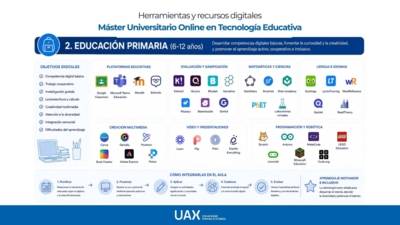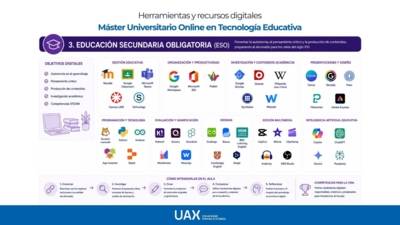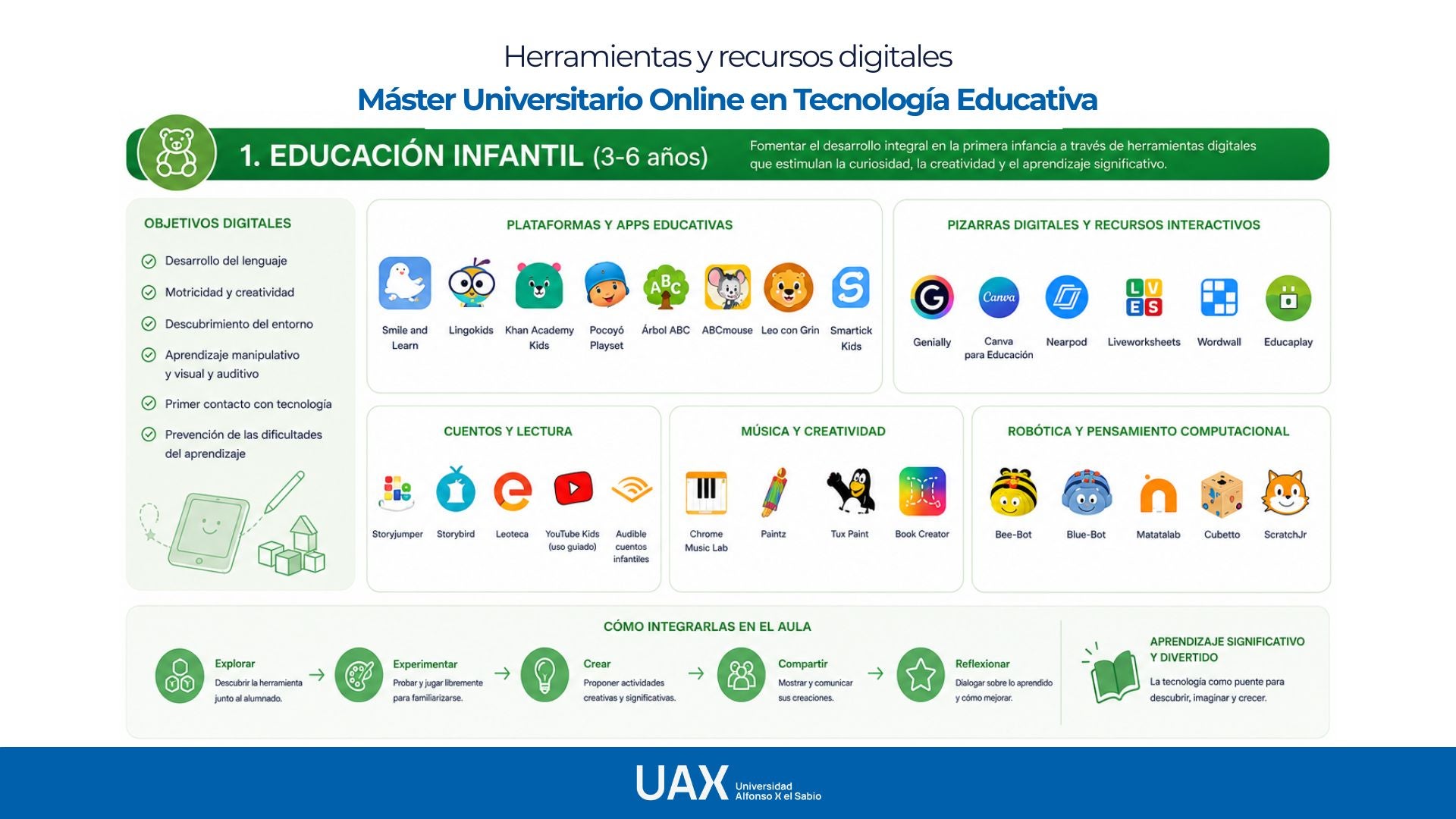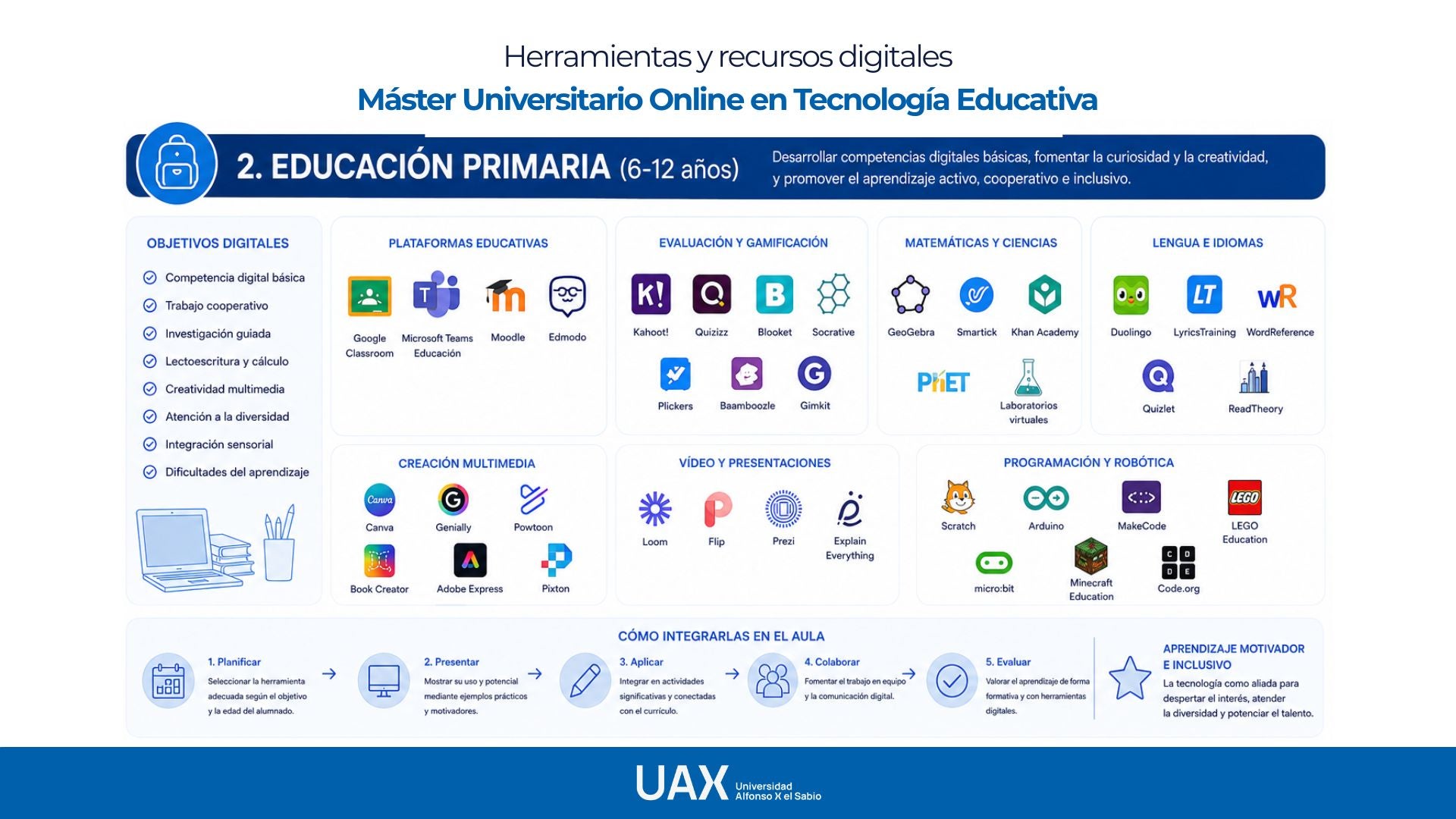
See all Online Master's Degrees in Health
See all Master's Degrees in Engineering
Most searched curriculums
Official qualification
Train 100% online and at your own pace with a master's degree designed for teachers who want to lead educational innovation. Learn how to integrate new technologies in the classroom and transform your students' learning experience. In addition, you will earn points that will add up to points in the Teacher and Secondary School Competitive Examinations. TOP 2 Best Master in Educational Technology in Spain, according to the Ranking 2025 of Mundo Postgrado. Our students rate it with a 9/10.
In collaboration with:
The UAX Master’s Degree in Educational Technology and Digital Teaching Skills prepares you to integrate ICT into the classroom in a pedagogical, strategic and practical way.
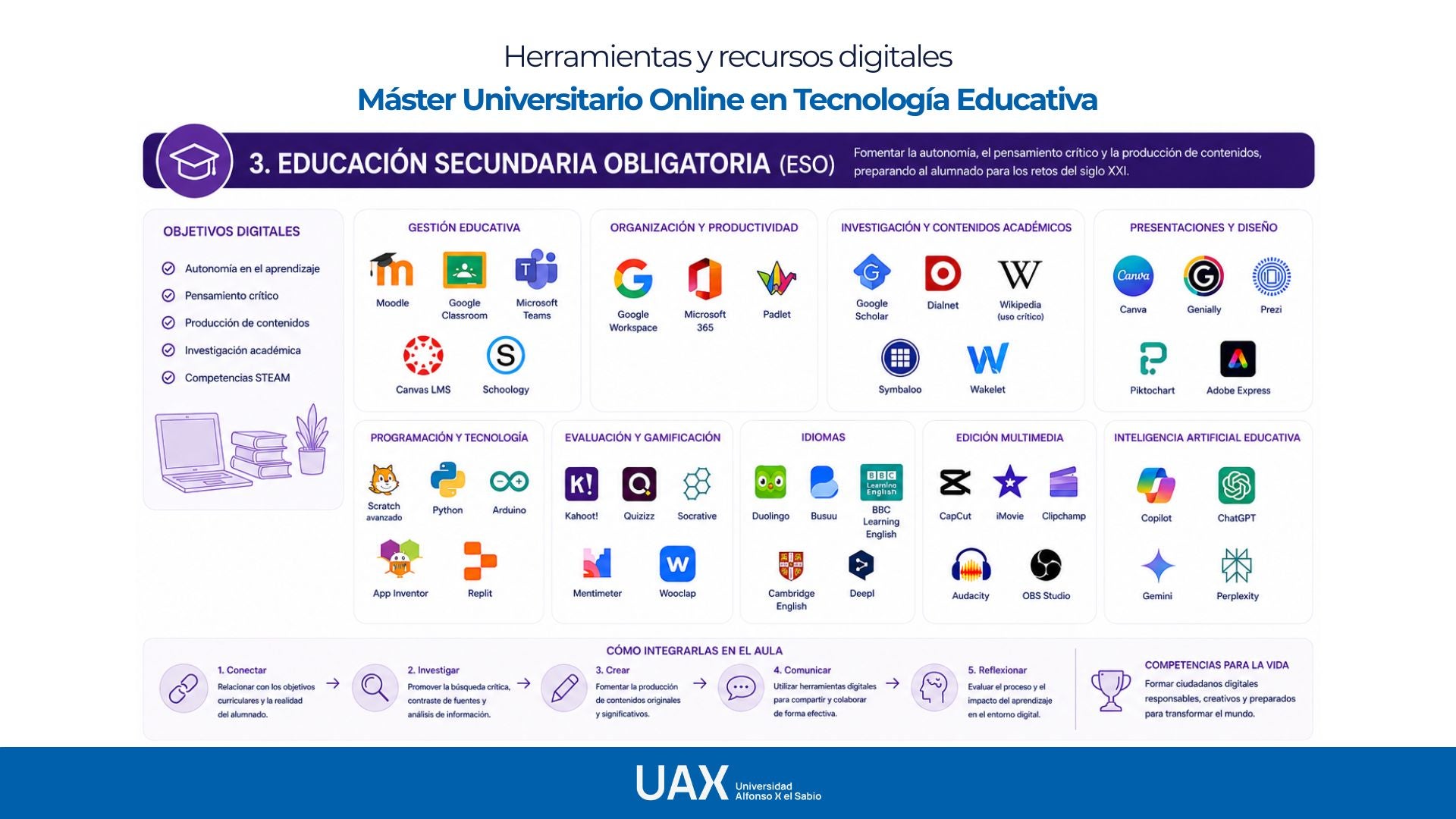
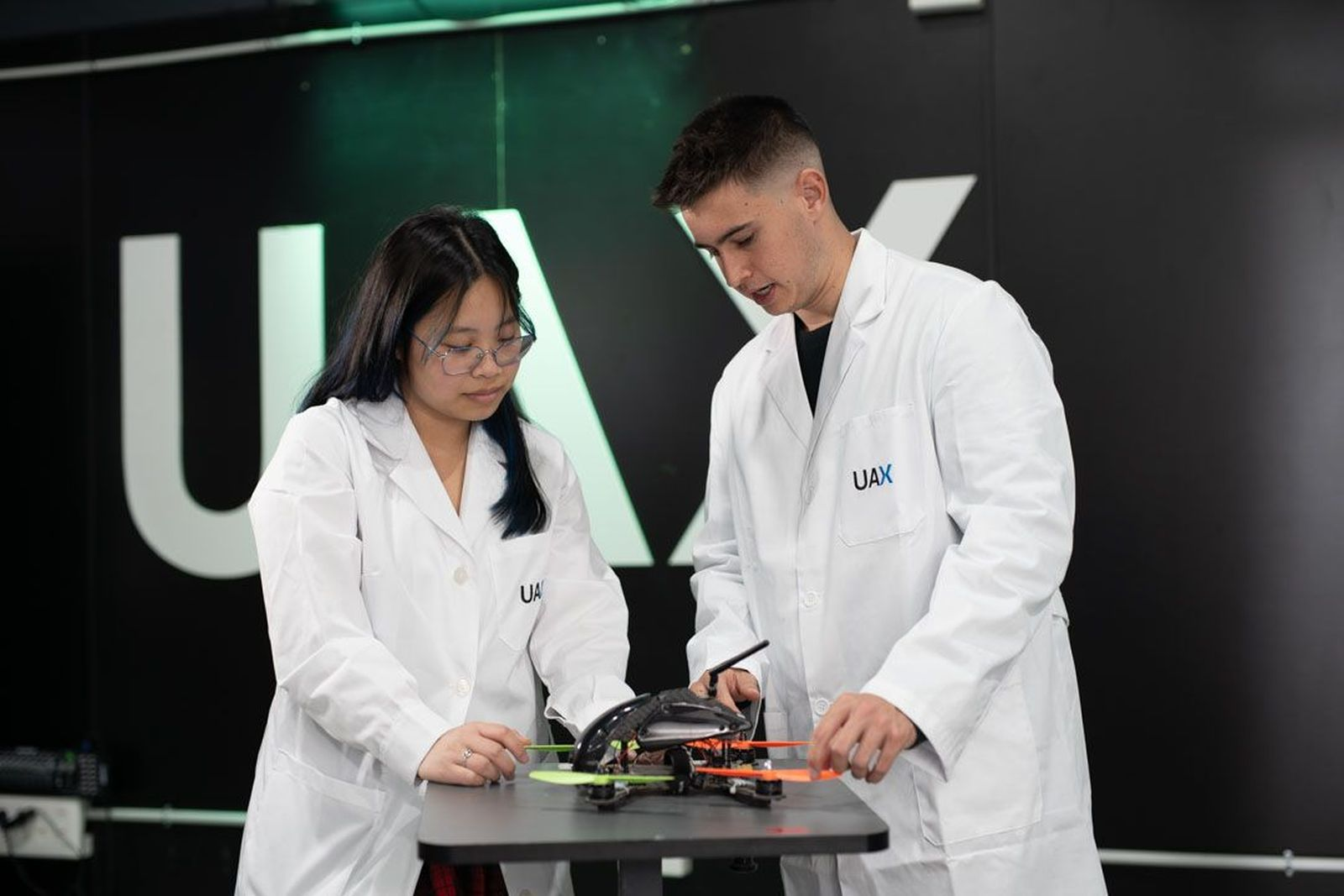
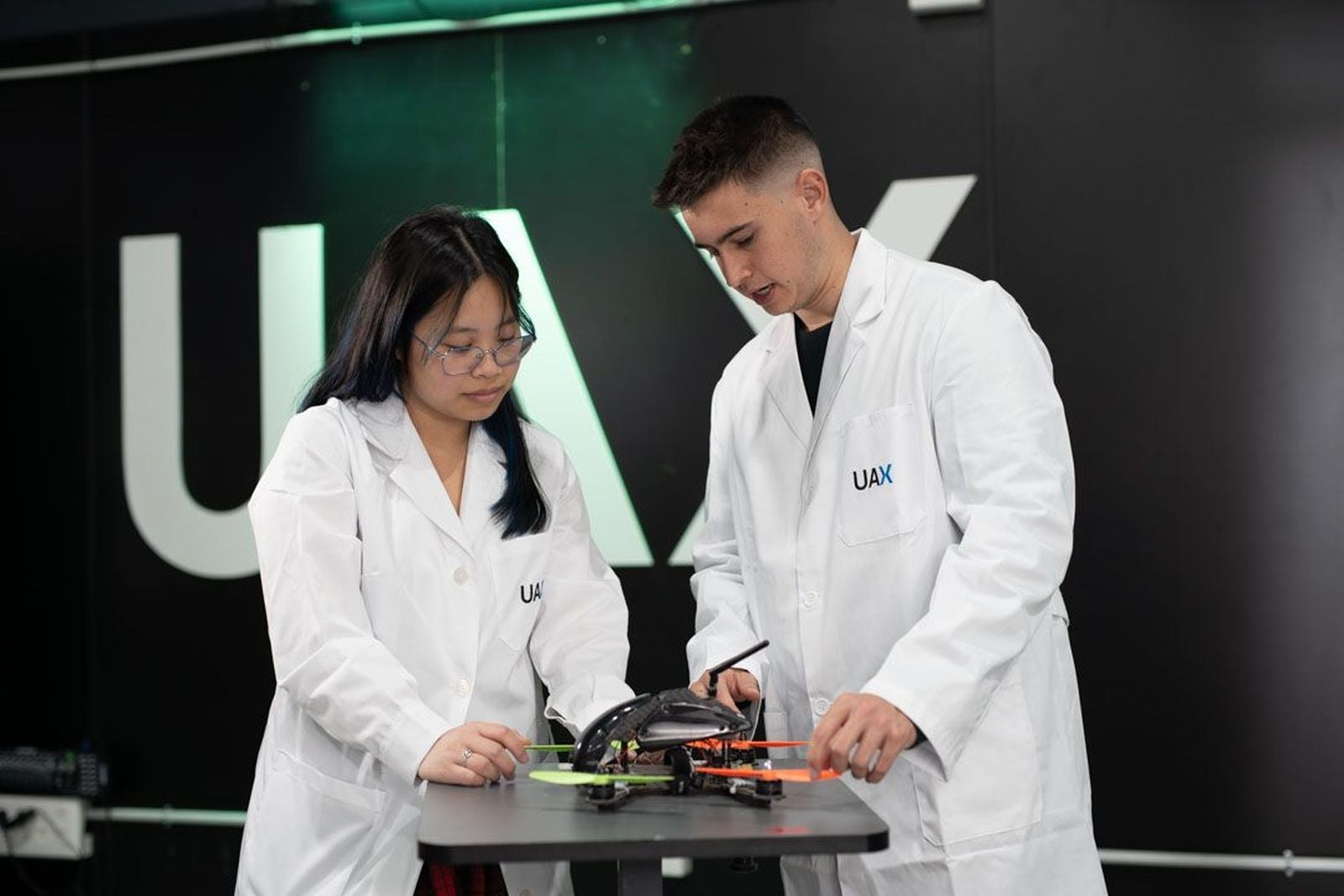
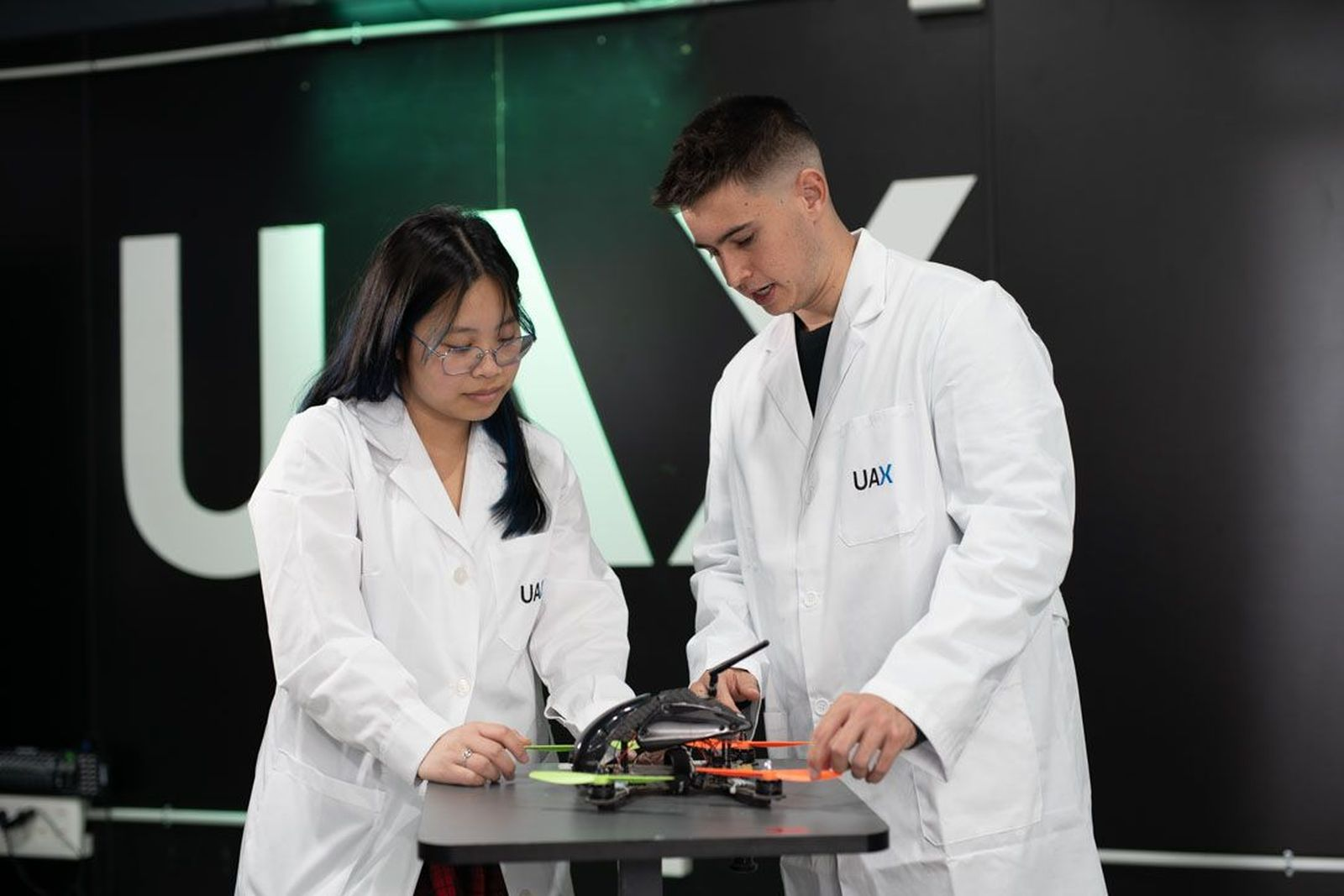
Unlike other master’s programmes on the market, here you don’t just learn how to use technology: you learn how to create it. During the programme, you’ll be able to code, develop your own educational apps and build robotics projects, providing you with a thoroughly practical and distinctive learning experience. What’s more, you’ll develop your own educational apps that you can use directly on your mobile, ready to be applied in a real classroom from day one.
In an educational context where digitalisation is advancing at a rapid pace, this Master’s programme prepares you to personalise teaching, motivate pupils and apply technology judiciously, whilst also understanding its impact on the brain and on learning processes.
Throughout the programme, you will approach all subjects from the perspective of Generative Artificial Intelligence, integrating the latest tools into your teaching practice.
This officially recognised Master’s programme will enable you to update your teaching profile with a practical approach aligned with the real needs of the classroom. Its curriculum combines advanced digital skills, innovative methodologies (gamification, microlearning and the flipped classroom) and applied technological development (apps, robotics and AI).
Thanks to its flexible format, you’ll be able to balance your studies with your professional commitments, progress at your own pace and apply what you’ve learnt right from the start. Furthermore, you’ll build your own portfolio featuring the projects and resources developed during the master’s programme, strengthening your teaching profile, whilst gaining access to over 700 work placement agreements and earning points that count towards competitive examinations.
Profile adapted to UNESCO and INTEF digital teaching competences, aligned with international standards such as DigCompEdu and MRCDD 2022.
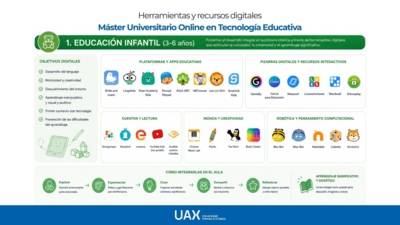
You will learn how to program and develop your own educational applications, which you can use directly in the classroom and take with you on your mobile phone.
You will be trained in educational robotics and good cybersecurity practices to protect school digital environments.
You will develop your ability to teach logic, problem solving and algorithmic thinking from an early stage.
You will discover how to integrate tools such as augmented reality, social media and online platforms to enrich the educational experience.
You will explore the potential of AI and big data analytics applied to education to anticipate needs and improve decision-making.
You will master strategies such as gamification, microlearning, roleplay, flipped classroom, agile learning or SCRUM to motivate and personalise learning.
Learn how to use technology to energise your classes and increase your students' motivation, creating more engaging and participative educational experiences.
Improve your scale by adding points in the Teacher or Secondary School Examinations.
All fields are required

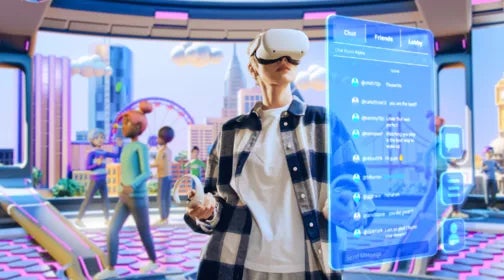
Enhance your teaching practice by understanding learning through the lens of neuroeducation. This micro-credential equips you to analyse students’ cognitive, emotional and behavioural processes, identify potential difficulties at an early stage, and apply evidence-based inclusive teaching strategies in the classroom.
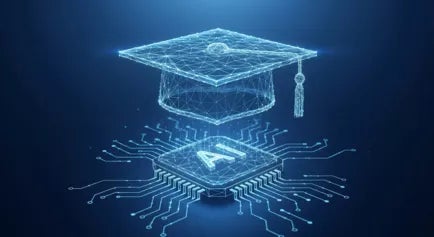
Transform the way you work with generative artificial intelligence. This micro-credential empowers you to apply tools like ChatGPT, Copilot, and Gemini to analyze information, create content, and make decisions in real-world academic contexts, integrating solutions ethically and responsibly within the educational field.
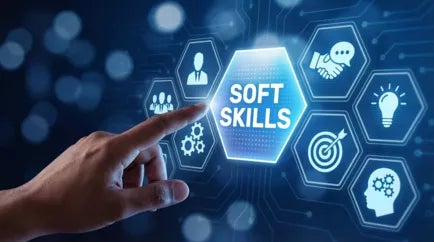
Develop your potential in education through leadership and interpersonal skills. This microcredential provides you with the keys to managing teams, communicating effectively, and solving problems in real-world educational settings, combining personal leadership techniques with practical productivity and collaboration tools.
All teachers include in their timetable one hour of tutoring per week. Interested students should request a meeting date in advance.
Master's Degree in Educational Technology and Digital Teaching Competences
First Year
FIRST FOUR-MONTH PERIOD
| Code | Subjects | Character* | ECTS | ||||||||||||||||||||||||||||||
|---|---|---|---|---|---|---|---|---|---|---|---|---|---|---|---|---|---|---|---|---|---|---|---|---|---|---|---|---|---|---|---|---|---|
| M120800 | Digital learning and education | OB | 4 | ||||||||||||||||||||||||||||||
Digital learning and educationCódigo: M120800 Imprimir Course 1: First-semester module. Compulsory. 4 credits. Profesores
Objectives - To gain an in-depth understanding of the application of technology in the learning process - To be able to distinguish between and apply ICT, CAT and E-learning - To harness the full potential of Web 2.0 Prerequisites No prior requirements have been established, apart from those set out in current legislation governing access to postgraduate studies. Learning outcomes NOT APPLICABLE Learning outcomes RCG7. Identifies the risk factors involved in an ICT-mediated learning process RCE1. Identifies the value and pedagogical potential of Information and Communication Technologies RCE8. Is familiar with the communication channels that enable students to express themselves and communicate efficiently and securely through new technologies applied to teaching RCG2. Applies the skills required to work in digital educational environments and to promote the creation of innovative teaching projects RCE6. Identifies, designs and implements training activities that develop digital competence and apply technology, helping their pupils to acquire and develop the key competences of the Common European Framework of Reference for Languages RCE2. Analyses specific situations within the teaching-learning process, identifies the most appropriate technological resources at any given time, and is able to design assessment activities for that process RCG5. Is able to adapt to change in new pedagogical processes, whilst remaining aware of the education system’s needs in the development of new digital contexts RCG6. Understands both technological changes and the new challenges posed by the knowledge society, as well as the need to adapt their teaching practice through new methodologies and the use of educational technology RCE7. Leads technology-based working teams in both face-to-face and distance learning contexts, learning to manage and lead a virtual classroom RCE11. Is able to recognise the importance of online security, school security and digital footprints, both as a teacher and in order to convey this to their pupils RCE5. Identifies special educational needs and designs methodological approaches that integrate technology and specific, appropriate digital content, thereby facilitating inclusion and addressing diversity in the classroom Description of the content "• The evolution of technology in society and education: the concepts of ICT, TAC and TEPs and their pedagogical implications • Digital natives or users? The personal, social, moral and emotional development of pupils aged 6 to 18. • Key psycho-developmental theories and their link to learning and technology • Digital transformation in education • Student diversity from a psycho-pedagogical perspective and technological opportunities for personalisation • The keys to Learning 2.0 • New educational formats for digital transformation Training activities AF1 Masterclass AF2 Seminars and workshops AF3 Synchronous tutorials AF4 Online tutorials AF5 Online forums AF6 Completion/resolution of open-ended assignments AF7 Project work and e-portfolio submission AF8 Independent study AF9 Knowledge assessments Assessment system and criteria "1 Final exam: 60% An online or face-to-face exam will be held to assess the student’s ability to relate and apply the main content, skills and competences acquired through the module. This is compulsory for passing the module. To safeguard students’ data protection rights, the final exam may be taken in person provided the student requests this. The protocol for conducting the final exam online or via digital means complies with the provisions of Annex VIII: guidelines on assessment systems including remote assessments, from the guide for the verification and modification of official bachelor’s and master’s degrees (June 2023), which can be viewed via the following link: Protocol for Online Assessment 2 E-portfolio: 40% At the end of each module, an assessment will be carried out consisting of the creation of a digital e-portfolio to ensure that students have acquired the course content and digital skills. The choice of this assessment method is particularly appropriate given the nature of the programme and the skills to be acquired. This e-portfolio will be designed to include the necessary evidence to ensure the acquisition of the skills required for the modules. It also includes, within the portfolio, a summary of the activities that demonstrate the student’s ongoing engagement and consistent work in assimilating the course content, as well as their level of interaction and communication with the tutor and the rest of the group in forums and on the learning platform. This includes an assessment of their attendance at the synchronous learning activities organised by their lecturers. Furthermore, the use of ICT tools, text commentary and essay writing—including the construction of supporting arguments that incorporate theoretical underpinnings into the assigned work—is assessed, duly referenced in accordance with APA style, and the completion of educational technology projects related to the subjects (robotics, programming, apps, etc.)." Timetable Click on this link to view the detailed timetable in Excel
Bibliography Supplementary: 1. Manuel Area Moreira Education in the Technological Labyrinth: From Writing to Digital Machines Octaedro, S.L. 2005. ISBN: 8480637404 2. Sir Ken Robinson Creative Schools: The Revolution That Is Transforming Education Vintage Español. 2015. ISBN: 1101910801 3. Fernando Trujillo Sáez Digital Artefacts Graó. 2014. ISBN: B00Y0OR4LU 4. Silvia Pradas Montilla Educational Neurotechnology: Technology at the Service of Pupils and Teachers Technical General Secretariat. Publications Centre. Ministry of Education, Culture and Sport. 2017. ISBN: 9788436957419 |
|||||||||||||||||||||||||||||||||
| M120801 | Design and creation of digital teaching materials | OB | 6 | ||||||||||||||||||||||||||||||
Design and creation of digital teaching materialsCódigo: M120801 Imprimir Course 1: First-semester module. Compulsory. 6 credits. Profesores
Entry requirements No prerequisites have been established, apart from those set out in current legislation governing admission to postgraduate studies. Competencies NOT APPLICABLE Learning Outcomes RCG3. Understands and applies Web 2.0 teaching methods, is able to teach in digital environments, and utilises the benefits of current and future technologies in the practice of teaching RCE1. Identifies the value and pedagogical potential of Information and Communication Technologies RCE8. Is familiar with the communication channels that enable them to express themselves and communicate efficiently and securely through new technologies applied to teaching RCE10. Identifies the different ways of sharing resources on the internet, using online resources, linking to others and collaborating via digital tools. RCG1. Undertakes processes to foster innovation which, on the one hand, enable a broader analysis of needs and, on the other, facilitate the development and implementation of new digital projects that enhance the quality of the education system RCG2. Applies the skills required to work in digital educational environments and to promote the creation of teaching innovation projects RCG4. Produces and exchanges information to communicate and participate in collaborative and learning networks RCE6. Identifies, designs and implements training activities to develop digital competence and apply technology, helping their pupils to acquire and develop the key competences of the Common European Framework of Reference for Languages RCE13. Designs innovative teaching activities within the curriculum, making informed decisions about the most appropriate digital tools RCG8. Is able to work and integrate into the interdisciplinary teams required for the development of learning projects that incorporate new technological tools and create collaborative and networked environments RCE2. Analyses specific situations within the teaching-learning process, identifies the most suitable technological resources at any given time, and is able to design assessment activities for that process RCE5. Identifies special educational needs and designs methodological approaches that integrate technology and specific, appropriate digital content, thereby facilitating inclusion and addressing diversity in the classroom RCE7. Leads technology-based working teams in both face-to-face and distance learning contexts, learning to manage and lead a virtual classroom RCE11. Is able to recognise the importance of online security, school security and digital footprints, both as a teacher and in order to convey this to their pupils RCE12. Designs, produces and compiles educational content and resources for sharing on virtual learning networks Course content description "• Digital video: characteristics, formats, conversion, codecs and playback. The recording process: tools and applications. The production process: synopsis, script, storyboard, shots, takes, effects and sound • The distribution process: physical media, streaming and the Internet (YouTube, Vimeo, etc.). Distribution via video blogs and podcasts • Analogue and digital sound: characteristics and differences. Digital sound recording: MIDI, sequencers and virtual instruments • Sound capture: conditioning and sound design. Sound post-production: editing, mixing and mastering • Multimedia resources as a teaching strategy: integration into teaching practice. Developing educational content in SCORM digital formats • The process of developing multimedia learning resources: tutorial videos, podcasts, advertising, single-concept programmes, subtitling, dubbing, stop-motion, etc." Training activities AF1 Lecture AF2 Seminars and workshops AF3 Synchronous tutorials AF4 Online tutorials AF5 Online forums AF6 Completion/resolution of open-ended assignments AF7 Project work and e-portfolio submission AF8 Independent study AF9 Knowledge assessments Assessment system and criteria "1 Final exam: 60% An online or face-to-face exam will be held to assess the student’s ability to relate and apply the main content, skills and competences acquired through the module. This is compulsory for passing the module. To safeguard students’ data protection rights, the final exam may be taken in person provided the student requests this. The protocol for conducting the final exam online or via digital means complies with the provisions of Annex VIII – guidelines on assessment systems including remote assessments – of the guide for the verification and modification of official bachelor’s and master’s degrees (June 2023), which can be viewed via the following link: Protocol for Online Assessment 2 E-portfolio: 40% At the end of each module, an assessment will be carried out consisting of the creation of a digital e-portfolio to ensure that students have acquired the course content and digital skills. The choice of this assessment method is particularly appropriate given the nature of the programme and the skills to be acquired. This e-portfolio will be designed to include the necessary evidence to ensure the acquisition of the skills required for the modules. It also includes, within the portfolio, a summary of the activities that demonstrate the student’s ongoing engagement and consistent work in assimilating the course content, as well as their level of interaction and communication with the tutor and the rest of the group in forums and on the learning platform. This includes an assessment of their attendance at the synchronous learning activities organised by their lecturers. Furthermore, the use of ICT tools, text commentary and essay writing—including the construction of supporting arguments that incorporate theoretical underpinnings into the assigned work—is assessed, duly referenced in accordance with APA style, and the completion of educational technology projects related to the subjects (robotics, programming, apps, etc.)." Bibliography Supplementary: 1. Manuel Area Moreira Education in the Technological Labyrinth: From Writing to Digital Machines Octaedro, S.L. 2005. ISBN: 8480637404 2. Sir Ken Robinson Creative Schools: The Revolution That Is Transforming Education Vintage Español. 2015. ISBN: 1101910801 3. Christian Leborg VISUAL GRAMMAR Editorial Gg, Sl. 2013. ISBN: 9788425226458 4. Esteban Vázquez Cano Media, Teaching Resources and Educational Technology UNED Publishing. 2021. ISBN: 9788436277371 5. Fernando Trujillo Sáez Digital artefacts Graó. 2014. ISBN: B00Y0OR4LU 6. García-Beltrán, A., Publishing Content in SCORM Format Polytechnic University of Madrid. 2007. ISBN: 978-84-690-85 7. Jon Yablonski The Laws of UX (Multimedia Design) Parramón; 2022. ISBN: 978-84-342-43 8. Jordi Musons Reinventing School: A Compass for Families and Educators to Understand 21st-Century Education UNED Press. 2021. ISBN: 9788417623760 9. José Ignacio Aguaded Gómez; Julio Cabero Almenara (eds.) Technologies and Media for Education in the e-Society UNED Press. 2020. ISBN: 9788420678573 10. Juan Silva Quiroz Design and moderation of virtual learning environments UOC Press. 2012. ISBN: 9788490290903 11. Katie Novak UDL Now! A teacher’s guide to implementing Universal Design for Learning CAST, Inc. 2023. ISBN: 9781943085163 12. Miguel Ángel Carretero Díaz Conventional and Technological Materials for the Educational Management of Diversity UNED Press. 2020. ISBN: 9788436272109 13. Román-Mendoza, E. Learning to Learn: Critical Technopedagogy for Teaching Spanish as a Foreign or Second Language Routledge. 2018. ISBN: 9781138954632 14. Rudolf Arnheim Visual Thinking Paidós. 1986. ISBN: 9788475093772 15. Silvia Pradas Montilla Educational Neurotechnology: Technology at the Service of Pupils and Teachers General Technical Secretariat. Publications Centre. Ministry of Education, Culture and Sport. 2017. ISBN: 9788436957419 |
|||||||||||||||||||||||||||||||||
| M120802 | The E-learning Centre: digital transformation | OB | 4 | ||||||||||||||||||||||||||||||
The E-learning Centre: digital transformationCódigo: M120802 Imprimir Course 1: First-term module. Compulsory. 4 credits. Profesores
Entry requirements No prerequisites have been established, apart from those set out in current legislation governing admission to postgraduate studies. Competencies NOT APPLICABLE Learning Outcomes RCG7. Identifies the risk factors involved in an ICT-mediated learning process RCE1. Identifies the value and pedagogical potential of Information and Communication Technologies RCE8. Is familiar with the communication channels that enable them to express themselves and communicate efficiently and securely through new technologies applied to teaching RCG1. Carries out processes to introduce innovation which, on the one hand, enable a broader analysis of needs and, on the other, facilitate the development and implementation of new digital projects that enhance the quality of the education system RCG2. Applies the skills required to work in digital educational environments and to promote the creation of teaching innovation projects RCG4. Generates and shares information to communicate and participate in collaborative and learning networks RCE3. Understands and is able to apply, within the school, the technological trends having the greatest impact on the classroom and on the teaching and learning process RCE6. Identifies, designs and implements training activities to develop digital competence and apply technology, helping their pupils to acquire and develop the key competences of the Common European Framework of Reference for Languages RCE13. Designs innovative teaching activities within the curriculum, making informed decisions about the most appropriate digital tools RCG5. Is able to adapt to change in new pedagogical processes, whilst being aware of the needs of the education system in the development of new digital contexts RCG6. Understands both technological changes and the new challenges posed by the knowledge society, as well as the need to adapt their teaching practice through new methodologies and the use of educational technology RCE4. Carries out practical innovation projects in the pedagogical field of Information and Communication Technology and digital competence RCE5. Identifies special educational needs and designs methodological approaches that integrate technology with specific and appropriate digital content, thereby facilitating inclusion and addressing diversity in the classroom RCE7. Leads technology-based working groups in both face-to-face and distance learning contexts, learning to manage and lead a virtual classroom RCE11. Is able to recognise the importance of online security, school security and digital footprints, both as a teacher and in order to convey this to their pupils RCE12. Designs, produces and compiles educational content and resources for sharing on virtual learning networks Course description "• The evolution of technology in society and education: the concepts of ICT, TAC and TEPs and their pedagogical implications. The digital educational community and its management • Cybersecurity and the protection of the school. The secure e-school • Digital transformation in education and change management. The role of the headteacher • Innovation and technology in education as drivers of change • Digital transformation of the school: how to develop a proposal for change, and Digital Professional Learning Communities • Student diversity from a psycho-pedagogical perspective and for personalisation • The keys to change for a digital school • New educational formats for digital transformation" Training activities AF1 Masterclass AF2 Seminars and workshops AF3 Synchronous tutorials AF4 Online tutorials AF5 Online forums AF6 Completion/resolution of open-ended assignments AF7 Project work and e-portfolio submission AF8 Independent study AF9 Knowledge assessments Assessment system and criteria "1 Final exam: 60% An online or face-to-face exam will be held to assess the student’s ability to relate and apply the main content, skills and competences acquired through the module. This is compulsory for passing the module. To safeguard students’ data protection rights, the final exam may be taken in person provided the student requests this. The protocol for conducting the final exam online or via digital means complies with the provisions of Annex VIII – guidelines on assessment systems including remote assessments – of the guide for the verification and modification of official bachelor’s and master’s degrees (June 2023), which can be viewed via the following link: Protocol for Online Assessment 2 E-portfolio: 40% At the end of each module, an assessment will be carried out consisting of the creation of a digital e-portfolio to ensure that students have acquired the course content and digital skills. The choice of this assessment method is particularly appropriate given the nature of the programme and the skills to be acquired. This e-portfolio will be designed to include the necessary evidence to ensure the acquisition of the skills required for the modules. It also includes, within the portfolio, a summary of the activities that demonstrate the student’s ongoing engagement and consistent work in assimilating the course content, as well as their level of interaction and communication with the tutor and the rest of the group in forums and on the learning platform. This includes an assessment of their attendance at the synchronous learning activities organised by their lecturers. Furthermore, the use of ICT tools, text commentary and essay writing—including the construction of supporting arguments that incorporate theoretical underpinnings into the assigned work—is assessed, duly referenced in accordance with APA style, and the completion of educational technology projects related to the subjects (robotics, programming, apps, etc.)." Bibliography Supplementary: 1. Manuel Area Moreira Education in the Technological Labyrinth: From Writing to Digital Machines Octaedro, S.L. 2005. ISBN: 8480637404 2. Sir Ken Robinson Creative Schools: The Revolution That Is Transforming Education Vintage Español. 2015. ISBN: 1101910801 3. Fernando Trujillo Sáez Digital Artefacts Graó. 2014. ISBN: B00Y0OR4LU 4. Silvia Pradas Montilla Educational Neurotechnology: Technology at the Service of Pupils and Teachers Technical General Secretariat. Publications Centre. Ministry of Education, Culture and Sport. 2017. ISBN: 9788436957419 |
|||||||||||||||||||||||||||||||||
| M120803 | Educational tools and resources for learning in digital environments | OB | 6 | ||||||||||||||||||||||||||||||
Educational tools and resources for learning in digital environmentsCódigo: M120803 Imprimir Course 1: First-semester module. Compulsory. 6 credits. Profesores
Entry requirements No prior requirements have been established, apart from those set out in current legislation governing access to postgraduate studies. Learning outcomes RCG3. Understands and applies Web 2.0 teaching methods, is able to teach in digital environments, and makes the most of the benefits of current and future technologies in the practice of teaching RCE8. Is familiar with the communication channels that enable them to express themselves and communicate efficiently and securely through new technologies applied to teaching RCE10. Identifies the different ways of sharing resources on the internet, using online resources, linking to others and collaborating via digital tools. RCG1. Carries out processes to introduce innovation which, on the one hand, enable a broader analysis of needs and, on the other, facilitate the development and implementation of new digital projects that enhance the quality of the education system RCG2. Applies the skills required to work in digital educational environments and to promote the creation of teaching innovation projects RCG4. Produces and exchanges information to communicate and participate in collaborative and learning networks RCE3. Understands and is able to apply, within the school, the technological trends having the greatest impact on the classroom and on the teaching and learning process RCE6. Identifies, designs and implements training activities to develop digital competence and apply technology, thereby helping their pupils to acquire and develop the key competences of the Common European Framework of Reference for Languages RCE13. Designs innovative teaching activities within the curriculum, making informed decisions about the most appropriate digital tools RCG8. Is able to work and integrate into the interdisciplinary teams required to develop learning projects that incorporate new technological tools and create collaborative and networked environments RCE2. Analyses specific situations within the teaching-learning process, identifies the most suitable technological resources at any given time, and is able to design assessment activities for that process RCE5. Identifies special educational needs and designs methodological approaches that integrate technology and specific, appropriate digital content, thereby facilitating inclusion and addressing diversity in the classroom RCE7. Leads technology-based working teams in both face-to-face and distance learning contexts, learning to manage and lead a virtual classroom RCE11. Is able to recognise the importance of online security, school security and digital footprints, both as a teacher and in order to convey this to their pupils RCE12. Designs, produces and compiles educational content and resources for sharing on virtual learning networks Description of the content "• LMS platforms: definition, main platforms and examples of use • Online resources: classification and educational uses • Catering for diversity and online resources • TAC tools: educational applications • ICT tools: OER (open educational resources) • Educational and non-educational social media. Social learning • The teacher as a ‘curator’ of content. Networks and virtual environments for the curation educational content" Training activities AF1 Masterclass AF2 Seminars and workshops AF3 Synchronous tutorials AF4 Online tutorials AF5 Online forums AF6 Completion/resolution of open-ended assignments AF7 Project work and e-portfolio submission AF8 Independent study AF9 Knowledge assessments Assessment system and criteria "1 Final exam: 60% An online or face-to-face exam will be held to assess the student’s ability to relate and apply the main content, skills and competences acquired through the module. This is compulsory for passing the module. To safeguard students’ data protection rights, the final exam may be taken in person provided the student requests this. The protocol for conducting the final exam online or via remote means complies with the provisions of Annex VIII: guidelines on assessment systems including remote assessments, from the guide for the verification and modification of official bachelor’s and master’s degrees (June 2023), which can be viewed via the following link: Protocol for Online Assessment 2 E-portfolio: 40% At the end of each module, an assessment will be carried out consisting of the creation of a digital e-portfolio to ensure that students have acquired the course content and digital skills. The choice of this assessment method is particularly appropriate given the nature of the programme and the skills to be acquired. This e-portfolio will be designed to include the necessary evidence to ensure the acquisition of the skills required for the modules. It also includes, within the portfolio, a summary of the activities that demonstrate the student’s ongoing engagement and consistent work in assimilating the course content, as well as their level of interaction and communication with the tutor and the rest of the group in forums and on the learning platform. This includes an assessment of their attendance at the synchronous learning activities organised by their lecturers. Furthermore, the use of ICT tools, text commentary and essay writing—including the construction of supporting arguments that incorporate theoretical underpinnings into the assigned work—is assessed, duly referenced in accordance with APA style, and the completion of educational technology projects related to the subjects (robotics, programming, apps, etc.)." Bibliography Supplementary: 1. Manuel Area Moreira Education in the Technological Labyrinth: From Writing to Digital Machines Octaedro, S.L. 2005. ISBN: 8480637404 2. Sir Ken Robinson Creative Schools: The Revolution That Is Transforming Education Vintage Español. 2015. ISBN: 1101910801 3. Fernando Trujillo Sáez Digital Artefacts Graó. 2014. ISBN: B00Y0OR4LU 4. Silvia Pradas Montilla Educational Neurotechnology: Technology at the Service of Pupils and Teachers Technical General Secretariat. Publications Centre. Ministry of Education, Culture and Sport. 2017. ISBN: 9788436957419 |
|||||||||||||||||||||||||||||||||
| M120804 | Programming and robotics in education | OB | 6 | ||||||||||||||||||||||||||||||
Programming and robotics in educationCódigo: M120804 Imprimir Course 1: First-semester module. Compulsory. 6 credits. Profesores
Entry requirements No prerequisites have been established, apart from those set out in current legislation governing admission to postgraduate studies. Competencies NOT APPLICABLE Learning Outcomes RCG3. Understands and applies Web 2.0 teaching methods, is able to teach in digital environments, and utilises the benefits of current and future technologies in the practice of teaching RCG7. Identifies the risk factors involved in an ICT-mediated learning process RCE1. Identifies the value and pedagogical potential of Information and Communication Technologies RCG2. Applies the skills required to work in digital educational environments and to promote the creation of innovative teaching projects RCG4. Produces and exchanges information to communicate and participate in collaborative and learning networks RCE3. Understands and is able to apply, within the school, the technological trends having the greatest impact on the classroom and on the teaching and learning process RCE6. Identifies, designs and implements training activities to develop digital competence and apply technology, thereby helping their pupils to acquire and develop the key competences of the Common European Framework of Reference for Languages RCE13. Designs innovative teaching activities within the curriculum, making informed decisions about the most appropriate digital tools RCG5. Is able to adapt to change in new pedagogical processes, whilst being aware of the needs of the education system in the development of new digital contexts RCG6. Understands both technological changes and the new challenges posed by the knowledge society, as well as the need to adapt their teaching practice through new methodologies and the use of educational technology RCE2. Analyses specific situations within the teaching-learning process, identifies the most suitable technological resources at any given time, and is able to design assessment activities for that process RCE4. Carries out practical innovation projects in the pedagogical field of Information and Communication Technology and digital competence RCE5. Identifies special educational needs and designs methodological approaches that integrate technology with specific and appropriate digital content, thereby facilitating inclusion and addressing diversity in the classroom RCE7. Leads technology-based working groups in both face-to-face and distance learning contexts, learning to manage and lead a virtual classroom Course content "• Programming with Bitbloq and Arduino • • Bitbloq – Programming controller boards with Bitbloq. - Declaring variables and functions in Bitbloq. - Programming conditional statements and loops. - Programming serial port communications in Bitbloq. • Arduino – Declaring functions and variables. – Writing to and reading from digital pins: digital sensors and actuators. - Reading analogue pins: analogue sensors. - Programming conditional statements and loops. • Robotics applications and electronic inventions in the classroom • Assembling a printable robot. • Programming a line-following robot. • Programming a ‘light-avoidance’ robot Training activities AF1 Masterclass AF2 Seminars and workshops AF3 Synchronous tutorials AF4 Online tutorials AF5 Online forums AF6 Completion/resolution of open-ended assignments AF7 Project work and e-portfolio submission AF8 Independent study AF9 Knowledge assessments Assessment system and criteria "1 Final exam: 60% An online or face-to-face exam will be held to assess the student’s ability to relate and apply the main content, skills and competences acquired through the module. This is compulsory for passing the module. To safeguard students’ data protection rights, the final exam may be taken in person provided the student requests this. The protocol for conducting the final exam online or via digital means complies with the provisions of Annex VIII: guidelines on assessment systems including remote assessments, from the guide for the verification and modification of official bachelor’s and master’s degrees (June 2023), which can be viewed via the following link: Protocol for Online Assessment 2 E-portfolio: 40% At the end of each module, an assessment will be carried out consisting of the creation of a digital e-portfolio to ensure that students have acquired the course content and digital skills. The choice of this assessment method is particularly appropriate given the nature of the programme and the skills to be acquired. This e-portfolio will be designed to include the necessary evidence to ensure the acquisition of the skills required for the modules. It also includes, within the portfolio, a summary of the activities that demonstrate the student’s ongoing engagement and consistent work in assimilating the course content, as well as their level of interaction and communication with the tutor and the rest of the group in forums and on the learning platform. This includes an assessment of their attendance at the synchronous learning activities organised by their lecturers. Furthermore, the use of ICT tools, text commentary and essay writing—including the construction of supporting arguments that incorporate theoretical underpinnings into the assigned work—is assessed, duly referenced in accordance with APA style, and the completion of educational technology projects related to the subjects (robotics, programming, apps, etc.)." Bibliography Supplementary: 1. Manuel Area Moreira Education in the Technological Labyrinth: From Writing to Digital Machines Octaedro, S.L. 2005. ISBN: 8480637404 2. Sir Ken Robinson Creative Schools: The Revolution That Is Transforming Education Vintage Español. 2015. ISBN: 1101910801 3. Fernando Trujillo Sáez Digital Artefacts Graó. 2014. ISBN: B00Y0OR4LU 4. Silvia Pradas Montilla Educational Neurotechnology: Technology at the Service of Pupils and Teachers Technical General Secretariat. Publications Centre. Ministry of Education, Culture and Sport. 2017. ISBN: 9788436957419 |
|||||||||||||||||||||||||||||||||
| M120805 | Online security, data protection and privacy | OB | 4 | ||||||||||||||||||||||||||||||
Online security, data protection and privacyCódigo: M120805 Imprimir Course 1: First-semester module. Compulsory. 4 credits. Profesores
Entry requirements No prerequisites have been established, apart from those set out in current legislation governing admission to postgraduate studies. Competencies NOT APPLICABLE Learning Outcomes RCG3. Understands and applies Web 2.0 teaching methods, is able to teach in digital environments, and utilises the benefits of current and future technologies in the practice of teaching RCG7. Identifies the risk factors involved in an ICT-mediated learning process RCE1. Identifies the value and pedagogical potential of Information and Communication Technologies RCE8. Is familiar with the communication channels that enable them to express themselves and communicate efficiently and securely through new technologies applied to teaching RCG2. Applies the skills required to work in digital educational environments and to promote the creation of innovative teaching projects RCE3. Is familiar with, and knows how to apply within the school, the technological trends having the greatest impact on the classroom and on the teaching and learning process RCE6. Identifies, designs and implements training activities to develop digital competence and apply technology, thereby helping their pupils to acquire and develop the key competences of the Common European Framework of Reference for Languages RCE9. Uses social media for pedagogical and didactic purposes, interacting and participating in networks whilst demonstrating intercultural awareness RCG5. Is able to adapt to change in new pedagogical processes, whilst being aware of the needs of the education system in the development of new digital contexts RCG6. Understands both technological changes and the new challenges posed by the knowledge society, as well as the need to adapt their teaching practice through new methodologies and the use of educational technology RCG8. Is able to work and integrate into the interdisciplinary teams required for the development of learning projects that incorporate new technological tools and create collaborative and networked environments RCE4. Carries out practical innovation projects in the pedagogical field of Information and Communication Technology and digital competence RCE7. Leads technology-based teams in both face-to-face and distance learning contexts, learning to manage and lead a virtual classroom RCE11. Is able to recognise the importance of online security, school security and digital footprints, both as a teacher and in order to convey this to their pupils Description of the content "• Main technological threats relating to security and privacy in the educational sector • Digital transformation in education. Privacy and cybersecurity • Cybersecurity and privacy: legislation • The keys to Learning 2.0 in secure environments. Designing activities using secure ICT tools. • Awareness programmes and projects for children • Pupils: privacy and cybersecurity • The e-centre and the teacher in secure learning environments" Training activities AF1 Masterclass AF2 Seminars and workshops AF3 Synchronous tutorials AF4 Online tutorials AF5 Online forums AF6 Completion/resolution of open-ended assignments AF7 Project work and e-portfolio submission AF8 Independent study AF9 Knowledge assessments Assessment system and criteria "1 Final exam: 60% An online or face-to-face exam will be held to assess the student’s ability to relate and apply the main content, skills and competences acquired through the module. This is compulsory for passing the module. To safeguard students’ data protection rights, the final exam may be taken in person provided the student requests this. The protocol for conducting the final exam online or via digital means complies with the provisions of Annex VIII – guidelines on assessment systems including remote assessments – of the guide for the verification and modification of official bachelor’s and master’s degrees (June 2023), which can be viewed via the following link: Protocol for Online Assessment 2 E-portfolio: 40% At the end of each module, an assessment will be carried out consisting of the creation of a digital e-portfolio to ensure that students have acquired the course content and digital skills. The choice of this assessment method is particularly appropriate given the nature of the programme and the skills to be acquired. This e-portfolio will be designed to include the necessary evidence to ensure the acquisition of the skills required for the modules. It also includes, within the portfolio, a summary of the activities that demonstrate the student’s ongoing engagement and consistent work in assimilating the course content, as well as their level of interaction and communication with the tutor and the rest of the group in forums and on the learning platform. This includes an assessment of their attendance at the synchronous learning activities organised by their lecturers. Furthermore, the use of ICT tools, text commentary and essay writing—including the construction of supporting arguments that incorporate theoretical underpinnings into the assigned work—is assessed, duly referenced in accordance with APA style, and the completion of educational technology projects related to the subjects (robotics, programming, apps, etc.)." Bibliography Supplementary: 1. Manuel Area Moreira Education in the Technological Labyrinth: From Writing to Digital Machines Octaedro, S.L. 2005. ISBN: 8480637404 2. Sir Ken Robinson Creative Schools: The Revolution That Is Transforming Education Vintage Español. 2015. ISBN: 1101910801 3. Fernando Trujillo Sáez Digital Artefacts Graó. 2014. ISBN: B00Y0OR4LU 4. Silvia Pradas Montilla Educational Neurotechnology: Technology at the Service of Pupils and Teachers Technical General Secretariat. Publications Centre. Ministry of Education, Culture and Sport. 2017. ISBN: 9788436957419 |
|||||||||||||||||||||||||||||||||
| TOTAL: | 30 | ||||||||||||||||||||||||||||||||
SECOND FOUR-MONTH PERIOD
| Code | Subjects | Character* | ECTS | ||||||||||||||
|---|---|---|---|---|---|---|---|---|---|---|---|---|---|---|---|---|---|
| M120807 | Virtual environments and e-learning | OB | 4 | ||||||||||||||
Virtual environments and e-learningCódigo: M120807 Imprimir Course 1. Second-term module. Compulsory. 4 credits. Profesores
Entry requirements No prerequisites have been established, apart from those set out in current legislation governing admission to postgraduate studies. Competencies NOT APPLICABLE Learning Outcomes RCG3. Understands and applies Web 2.0 teaching methods, is able to teach in digital environments, and makes the most of the benefits of current and future technologies in the practice of teaching RCE1. Identifies the value and pedagogical potential of Information and Communication Technologies RCE8. Is familiar with the communication channels that enable them to express themselves and communicate efficiently and securely through new technologies applied to teaching RCE10. Identifies the different ways of sharing resources on the internet, using online resources, linking to others and collaborating via digital tools. RCG1. Undertakes processes to foster innovation which, on the one hand, enable a broader analysis of needs and, on the other, facilitate the development and implementation of new digital projects that enhance the quality of the education system RCG2. Applies the skills required to work in digital educational environments and to promote the creation of teaching innovation projects RCG4. Produces and exchanges information to communicate and participate in collaborative and learning networks RCE3. Understands and is able to apply, within the school, the technological trends having the greatest impact on the classroom and on the teaching and learning process RCE6. Identifies, designs and implements training activities to develop digital competence and apply technology, thereby helping their pupils to acquire and develop the key competences of the Common European Framework of Reference for Languages RCE13. Designs innovative teaching activities within the curriculum, making informed decisions about the most appropriate digital tools RCG5. Is able to adapt to change in new pedagogical processes, whilst being aware of the needs of the education system in the development of new digital contexts RCG6. Understands both technological changes and the new challenges posed by the knowledge society, as well as the need to adapt their teaching practice through new methodologies and the use of educational technology RCG8. Is able to work and integrate into the interdisciplinary teams required for the development of learning projects that incorporate new technological tools, and to create collaborative and networked environments RCE2. Analyses specific situations within the teaching-learning process, identifies the most appropriate technological resources at any given time, and is able to design assessment activities for that process RCE4. Carries out practical innovation projects in the pedagogical field of Information and Communication Technology and digital competence RCE5. Identifies special educational needs and designs methodological approaches that integrate technology with specific and appropriate digital content, thereby facilitating inclusion and addressing diversity in the classroom RCE7. Leads technology-based working groups in both face-to-face and distance learning contexts, learning to manage and lead a virtual classroom RCE11. Is able to recognise the importance of online security, school security and digital footprints, both as a teacher and in order to convey this to their pupils RCE12. Designs, produces and compiles educational content and resources for sharing on virtual learning networks Course content description "• The evolution of technology in society and education. From distance learning distance learning to e-learning • Pedagogy and personal learning environments • Digital transformation in education: personal learning environments (PLEs), the teacher as a facilitator • Learning as the focus of the teaching process, personal learning environments and the design of activities and assessment • Creating educational personal learning environments • Assessment of personal learning environments • Student diversity from a psycho-pedagogical perspective, and the use and design of e-learning as a tool for personalisation • E-learning and Learning 2.0 • LMS and learning: main platforms and criteria for selection • Taxonomies and instructional design in e-learning • How to create an e-learning project. " Training activities AF1 Lecture AF2 Seminars and workshops AF3 Synchronous tutorials AF4 Platform-based tutorials AF5 Online forums AF6 Completion/resolution of open-ended assignments AF7 Project work and e-portfolio submission AF8 Independent study Assessment system and criteria "1 Final exam: 60% An online or face-to-face exam will be held to assess the student’s ability to relate and apply the main content, skills and competences acquired through the module. This is compulsory for passing the module. To safeguard students’ data protection rights, the final exam may be taken in person provided the student requests this. The protocol for conducting the final exam online or via remote means complies with the provisions of Annex VIII – guidelines on assessment systems including remote examinations – of the guide for the verification and modification of official bachelor’s and master’s degrees (June 2023), which can be viewed via the following link: Protocol for Online Assessment 2 E-portfolio: 40% At the end of each module, an assessment will be carried out consisting of the creation of a digital e-portfolio to ensure that students have acquired the course content and digital skills. The choice of this assessment method is particularly appropriate given the nature of the programme and the skills to be acquired. This e-portfolio will be designed to include the necessary evidence to ensure the acquisition of the skills required for the modules. It also includes, within the portfolio, a summary of the activities that demonstrate the student’s ongoing engagement and consistent work in assimilating the course content, as well as their level of interaction and communication with the tutor and the rest of the group in forums and on the learning platform. This includes an assessment of their attendance at the synchronous learning activities organised by their lecturers. Furthermore, the use of ICT tools, text commentary and essay writing—including the construction of supporting arguments that incorporate theoretical underpinnings into the assigned work—is assessed, duly referenced in accordance with APA style, and the completion of educational technology projects related to the subjects (robotics, programming, apps, etc.)." Bibliography Supplementary: 1. Manuel Area Moreira Education in the Technological Labyrinth: From Writing to Digital Machines Octaedro, S.L. 2005. ISBN: 8480637404 2. Sir Ken Robinson Creative Schools: The Revolution That Is Transforming Education Vintage Español. 2015. ISBN: 1101910801 3. Fernando Trujillo Sáez Digital Artefacts Graó. 2014. ISBN: B00Y0OR4LU 4. Silvia Pradas Montilla Educational Neurotechnology: Technology at the Service of Pupils and Teachers Technical General Secretariat. Publications Centre. Ministry of Education, Culture and Sport. 2017. ISBN: 9788436957419 |
|||||||||||||||||
| M120808 | Gamification and educational video games | OB | 6 | ||||||||||||||
Gamification and educational video gamesCódigo: M120808 Imprimir Course 1. Second-term module. Compulsory. 6 credits. Profesores
Entry requirements No prerequisites have been established, apart from those set out in current legislation governing admission to postgraduate studies. Competencies NOT APPLICABLE Learning Outcomes RCG3. Understands and applies Web 2.0 teaching methods, is able to teach in digital environments, and utilises the benefits of current and future technologies in the practice of teaching RCG7. Identifies the risk factors involved in an ICT-mediated learning process RCE1. Identifies the value and pedagogical potential of Information and Communication Technologies RCG1. Undertakes processes to foster innovation which, on the one hand, enable a broader analysis of needs and, on the other, facilitate the development and implementation of new digital projects that enhance the quality of the education system RCG2. Applies the skills required to work in digital educational environments and to facilitate the creation of teaching innovation projects RCG4. Produces and exchanges information to communicate and participate in collaborative and learning networks RCE6. Identifies, designs and implements training activities to develop digital competence and apply technology, thereby helping their pupils to acquire and develop the key competences of the Common European Framework of Reference for Languages RCE13. Designs innovative teaching activities within the curriculum, making informed decisions about the most appropriate digital tools RCG6. Understands both technological changes and the new challenges posed by the knowledge society, as well as the need to adapt their teaching practice through new methodologies and the use of educational technology RCG8. Is able to work and integrate into the interdisciplinary teams required for the development of learning projects that incorporate new technological tools, and to create collaborative and networked environments RCE2. Analyses specific situations within the teaching-learning process, identifies the most suitable technological resources at any given time, and is able to design assessment activities for that process RCE4. Carries out practical innovation projects in the pedagogical field of Information and Communication Technology and digital competence RCE5. Identifies special educational needs and designs methodological approaches that integrate technology with specific and appropriate digital content, thereby facilitating inclusion and addressing diversity in the classroom RCE7. Leads technology-based working groups in both face-to-face and distance learning contexts, learning to manage and lead a virtual classroom RCE11. Is able to recognise the importance of online security, school security and digital footprints, both as a teacher and in order to convey this to their pupils RCE12. Designs, produces and compiles educational content and resources for sharing on virtual learning networks Course content description "• Key psycho-evolutionary theories and their link to game-based learning • Play as a learning tool • Educational video games • Educational projects based on video games • Play and Web 2.0 teaching methods: gamification as a concept • Student diversity from a psycho-pedagogical perspective and for personalisation through gamification • The keys to Learning 2.0 and storytelling • Carrying out projects using agile methodologies in education • Similarities and differences compared with other related concepts: advergaming, game-based learning, serious games… • Fundamentals of game design: tools, mechanics and aesthetics • Assessment and gamification " Training activities AF1 Masterclass AF2 Seminars and workshops AF3 Synchronous tutorials AF4 Online tutorials AF5 Online forums AF6 Completion/resolution of open-ended assignments AF7 Project work and e-portfolio submission AF8 Independent study Assessment system and criteria "1. Assessment of participation in training activities and completed exercises (feedback): Min 0% and Max 10% 2. Final exam: 60% An online or face-to-face exam will be held to assess whether students can relate and apply the main content, abilities and skills they have acquired through the module. This is compulsory for passing the module. To safeguard students’ data protection rights, the final exam may be taken in person provided the student requests this. The protocol for sitting the final exam online or via remote means complies with the provisions of Annex VIII: guidelines on assessment systems including remote examinations, from the guide for the verification and modification of official bachelor’s and master’s degrees (June 2023), which can be viewed via the following link: Protocol for Online Assessment 3. E-portfolio: Min. 30% and Max. 40% At the end of each module, an assessment will be carried out consisting of the creation of a digital e-portfolio to ensure that students have acquired the course content and digital skills. The choice of this assessment method is particularly appropriate given the nature of the programme and the skills to be acquired. This e-portfolio will be designed to include the necessary evidence to ensure the acquisition of the skills required for the modules. It also includes, within the portfolio, a summary of the activities demonstrating the student’s ongoing engagement and consistent work in assimilating the course content, as well as their level of interaction and communication with the tutor and the rest of the group in forums and on the learning platform. This includes an assessment of their attendance at the synchronous learning activities organised by their lecturers. Furthermore, the use of ICT tools, text commentary and essay writing—including the construction of supporting arguments that incorporate theoretical underpinnings into the assigned work—is assessed, duly referenced in accordance with APA style, and the completion of educational technology projects related to the subjects (robotics, programming, apps, etc.)." Bibliography Supplementary: 1. Manuel Area Moreira Education in the Technological Labyrinth: From Writing to Digital Machines Octaedro, S.L. 2005. ISBN: 8480637404 2. Sir Ken Robinson Creative Schools: The Revolution That Is Transforming Education Vintage Español. 2015. ISBN: 1101910801 3. Fernando Trujillo Sáez Digital Artefacts Graó. 2014. ISBN: B00Y0OR4LU 4. Silvia Pradas Montilla Educational Neurotechnology: Technology at the Service of Pupils and Teachers Technical General Secretariat. Publications Centre. Ministry of Education, Culture and Sport. 2017. ISBN: 9788436957419 |
|||||||||||||||||
| M120809 | Educational innovation in the digital sphere | OB | 4 | ||||||||||||||
Educational innovation in the digital sphereCódigo: M120809 Imprimir Course 1. Second-term module. Compulsory. 4 credits. Profesores
Entry requirements No prerequisites have been established, apart from those set out in current legislation governing admission to postgraduate studies. Competencies NOT APPLICABLE Learning Outcomes RCG3. Understands and applies Web 2.0 teaching methods, is able to teach in digital environments, and makes the most of the benefits of current and future technologies in the practice of teaching RCE1. Identifies the value and pedagogical potential of Information and Communication Technologies RCE10. Identifies the different ways of sharing resources on the internet, using online resources, linking to others and collaborating via digital tools. RCG1. Carries out processes to foster innovation which, on the one hand, enable a broader analysis of needs and, on the other, facilitate the development and implementation of new digital projects that enhance the quality of the education system RCG2. Applies the skills required to work in digital educational environments and to promote the creation of teaching innovation projects RCE3. Understands and is able to apply, within the school, the technological trends having the greatest impact on the classroom and on the teaching and learning process. RCE6. Identifies, designs and implements training activities to develop digital competence and apply technology, thereby helping their pupils to acquire and develop the key competences of the Common European Framework of Reference for Languages RCE13. Designs innovative teaching activities within the curriculum, making informed decisions about the most appropriate digital tools RCG8. Is able to work and integrate into the interdisciplinary teams required for the development of learning projects that incorporate new technological tools and create collaborative and networked environments RCE4. Carries out practical innovation projects in the pedagogical field of Information and Communication Technology and digital competence RCE5. Identifies special educational needs and designs methodological approaches that integrate technology and specific, appropriate digital content, thereby facilitating inclusion and addressing diversity in the classroom RCE11. Is able to recognise the importance of online safety, school safety and digital footprints, both as a teacher and in order to convey this to their pupils RCE12. Designs, produces and compiles educational content and resources for sharing on virtual learning networks RODS. Develops effective communication, teamwork, analytical thinking, creativity and ethical leadership from a cross-curricular perspective, clearly inspired by democratic principles and values, as well as the Sustainable Development Goals Description of the content "• The evolution of technology in society and education: concepts, ICT, TAC and TEPs, and their pedagogical implications and main lines of research and innovation • Digital transformation in education • Innovation and research in technology-based teaching and learning: history and current situation. • Educational research methods (Basic) • An introduction to innovation based on teaching practice. Innovation in education: definitions and the development of innovation projects in digital education • Analysis of educational innovation • Innovation based on ICT resources. Project methodology • Development, implementation and evaluation of educational innovation projects" Training activities AF1 Masterclass AF2 Seminars and workshops AF3 Synchronous tutorials AF4 Online tutorials AF5 Online forums AF6 Completion/resolution of open-ended assignments AF7 Project work and e-portfolio submission AF8 Independent study Assessment system and criteria "1 Final exam: 60% An online or face-to-face exam will be held to assess the student’s ability to relate and apply the main content, skills and competences acquired through the module. This is compulsory for passing the module. To safeguard students’ data protection rights, the final exam may be taken in person provided the student requests this. The protocol for conducting the final exam online or via remote means complies with the provisions of Annex VIII – guidelines on assessment systems including remote examinations – of the guide for the verification and modification of official bachelor’s and master’s degrees (June 2023), which can be viewed via the following link: Protocol for Online Assessment 2 E-portfolio: 40% At the end of each module, an assessment will be carried out consisting of the creation of a digital e-portfolio to ensure that students have acquired the course content and digital skills. The choice of this assessment method is particularly appropriate given the nature of the programme and the skills to be acquired. This e-portfolio will be designed to include the necessary evidence to ensure the acquisition of the skills required for the modules. It also includes, within the portfolio, a summary of the activities that demonstrate the student’s ongoing engagement and consistent work in assimilating the course content, as well as their level of interaction and communication with the tutor and the rest of the group in forums and on the learning platform. This includes an assessment of their attendance at the synchronous learning activities organised by their lecturers. Furthermore, the use of ICT tools, text commentary and essay writing—including the construction of supporting arguments that incorporate theoretical underpinnings into the assigned work—is assessed, duly referenced in accordance with APA style, and the completion of educational technology projects related to the subjects (robotics, programming, apps, etc.)." Bibliography Supplementary: 1. Manuel Area Moreira Education in the Technological Labyrinth: From Writing to Digital Machines Octaedro, S.L. 2005. ISBN: 8480637404 2. Sir Ken Robinson Creative Schools: The Revolution That Is Transforming Education Vintage Español. 2015. ISBN: 1101910801 3. Fernando Trujillo Sáez Digital Artefacts Graó. 2014. ISBN: B00Y0OR4LU 4. Silvia Pradas Montilla Educational Neurotechnology: Technology at the Service of Pupils and Teachers Technical General Secretariat. Publications Centre. Ministry of Education, Culture and Sport. 2017. ISBN: 9788436957419 |
|||||||||||||||||
| M120811 | Master’s Thesis | OB | 6 | ||||||||||||||
Master’s ThesisCódigo: M120811 Imprimir Course 1. Second-term module. Compulsory. 6 credits. Profesores
Prerequisites Must have previously passed the ‘Generic Skills’ and ‘Innovation’ modules, as well as the work placement Learning Outcomes NOT APPLICABLE Learning outcomes RCE1. Identifies the value and pedagogical potential of Information and Communication Technologies RCE10. Identifies the different ways of sharing resources on the internet, using online resources, linking to others and collaborating via digital tools. RCE8. Is familiar with the communication channels that enable them to express themselves and communicate efficiently and securely through new technologies applied to teaching RCG3. Is familiar with and applies Web 2.0 teaching methods, is able to teach in digital environments, and makes the most of the benefits of current and future technologies in the practice of teaching RCG7. Identifies the risk factors involved in an ICT-mediated learning process RCE13. Designs innovative teaching activities within the curriculum, making informed decisions about the most appropriate digital tools RCE14. Creates and edits digital content that integrates knowledge of a subject area, and is able to produce creative expressions and innovative products RCE3. Is familiar with, and knows how to apply within the school, the technological trends having the greatest impact on the classroom and on the teaching and learning process RCE6. Identifies, designs and implements training activities that develop digital competence and apply technology, helping their pupils to acquire and develop the key competences of the Common European Framework of Reference for Languages RCE9. Uses social media for pedagogical and didactic purposes, interacting and participating in networks whilst demonstrating intercultural awareness RCG1. Carries out introductory processes to innovation which, on the one hand, enable a broader analysis of needs and, on the other, facilitate the development and implementation of new digital projects that enhance the quality of the education system RCG2. Applies the skills required to work in digital educational environments and to facilitate the creation of innovative teaching projects RCG4. Produces and exchanges information to communicate and participate in collaborative and learning networks RCE11. Is able to recognise the importance of online security, school security and digital footprints, both as a teacher and in order to convey this to their pupils RCE12. Designs, produces and compiles educational content and resources for sharing on virtual learning networks RCE2. Analyses specific situations within the teaching-learning process, identifies the most appropriate technological resources at any given time, and is able to design assessment activities for that process RCE4. Carries out practical innovation projects in the pedagogical field of Information and Communication Technology and digital competence RCE5. Identifies special educational needs and designs methodological approaches that integrate technology and specific, appropriate digital content, thereby facilitating inclusion and addressing diversity in the classroom RCE7. Leads technology-based working teams in both face-to-face and distance learning contexts, learning to manage and lead a virtual classroom RCG5. Is able to adapt to change in new pedagogical processes, whilst remaining aware of the needs of the education system in the development of new digital contexts RCG6. Understands both technological changes and the new challenges posed by the knowledge society, as well as the need to adapt their teaching practice through new methodologies and the use of educational technology RCG8. Is able to work and integrate into the interdisciplinary teams required for the development of learning projects that incorporate new technological tools and create collaborative and networked environments RODS. Develops effective communication, teamwork, analytical thinking, creativity and ethical leadership from a cross-curricular perspective, clearly inspired by democratic principles and values, as well as the Sustainable Development Goals Description of the course content "• Master’s final project: definition, structure and its relationship with the competences acquired in the other modules of the programme. • Innovation and research: from theory to practice, producing a project in one of the two options. • Bibliographic resources: guidance on how to search for them. • How to write a Master’s thesis. Examples. • How to present a Master’s thesis. Key points for an effective presentation. " Training activities - Tutorials - Seminars - Workshop sessions Assessment system and criteria "1. Assessment of the Master’s Thesis: For the assessment of the Master’s Final Project module, students, under the guidance of a university tutor, must carry out an educational innovation project through the integration of ICT. Assessment consists of marking both the final report, which accounts for 60 per cent, and the oral defence before an examination board, which accounts for 40 per cent. The examination board is responsible for the overall mark for the Master’s Thesis. The student presents their project and explains its development, drawing on the teaching skills acquired throughout their course of study. The following aspects will be taken into account when assessing the Master’s Thesis report: · Overall assessment of the project: coherence between objectives, methodology, development and results. Originality and innovation. · Justification and relevance of the proposed innovation within the global and local context. · State of the art and theoretical framework. · Methodology employed: suitability for the objectives and results. · Development of the work: suitability of the methodologies and justification of the decisions taken. · Formal aspects: appropriate clarity, precision and organisation. · Impact of the Master’s Thesis. Degree of educational innovation and scalability of the proposal. The criteria to be considered for the assessment of the public defence of the Master’s Thesis are: · Clarity of the presentation. · Use of presentation technologies. · Adherence to the time limit set for the presentation. · Interaction with the examination board and communication skills demonstrated during the discussion with the board. The Master’s Thesis defence may be conducted via videoconference. In that case: · UAX will verify the student’s identity. · The defence shall be open to the public, with attendees granted access to the venue where the examination board is present. · The student and the examination board shall be able to interact, ensuring at all times that the discussion between the student and the examination board takes place as required." |
|||||||||||||||||
| M120812 | App Design | OB | 4 | ||||||||||||||
App DesignCódigo: M120812 Imprimir Course 1. Second-term module. Compulsory. 4 credits. Profesores
Objectives To explore the possibilities of programming To learn how to programme Design educational apps Prerequisites No prior requirements have been established, apart from those set out in current legislation governing access to postgraduate studies. Competencies NOT APPLICABLE Learning Outcomes RCG3. Understands and applies Web 2.0 teaching methods, is able to teach in digital environments, and makes the most of the benefits of current and future technologies in the practice of teaching RCE1. Identifies the value and pedagogical potential of Information and Communication Technologies RCE8. Is familiar with the communication channels that enable them to express themselves and communicate efficiently and securely through new technologies applied to teaching RCE10. Identifies the different ways of sharing resources on the internet, using online resources, linking to others and collaborating via digital tools. RCG1. Undertakes processes to foster innovation which, on the one hand, enable a broader analysis of needs and, on the other, facilitate the development and implementation of new digital projects that enhance the quality of the education system RCG2. Applies the skills required to work in digital educational environments and to promote the creation of teaching innovation projects RCE6. Identifies, designs and implements training activities to develop digital competence and apply technology, helping their pupils to acquire and develop the key competences of the Common European Framework of Reference for Languages RCE9. Uses social media for pedagogical and teaching purposes, interacting and participating in networks whilst demonstrating intercultural awareness RCE13. Designs innovative teaching activities within the curriculum, making informed decisions about the most appropriate digital tools RCG8. Is able to work and integrate into the interdisciplinary teams required for the development of learning projects that incorporate new technological tools, and to create collaborative and networked environments RCE2. Analyses specific situations within the teaching and learning process, identifies the most suitable technological resources at any given time, and is able to design assessment activities for that process RCE4. Carries out practical innovation projects in the pedagogical field of Information and Communication Technology and digital competence RCE5. Identifies special educational needs and designs methodological approaches that integrate technology with specific and appropriate digital content, thereby facilitating inclusion and addressing diversity in the classroom RCE7. Leads technology-based working teams in both face-to-face and distance learning contexts, learning to manage and lead a virtual classroom RCE11. Is able to recognise the importance of online security, school security and digital footprints, both as a teacher and in order to convey this to their pupils RCE12. Designs, produces and compiles educational content and resources for sharing on virtual learning networks Course content description "• Apps and education. The use of apps as a learning tool. and app design. • Agile methodologies, education and apps • Apps: the concept. Design and development of an app. Rapid prototyping on Android using App Inventor • On-screen design: buttons, text boxes, etc. • Access to and audio playback. • Access to video and image playback. • Access to the device’s sensors: GPS, accelerometers, light sensor, etc. • • Educational apps: Choosing the right apps. Criteria for the use and design of educational mobile applications" Training activities AF1 Lecture AF2 Seminars and workshops AF3 Synchronous tutorials AF4 Online tutorials AF5 Online forums AF6 Completion/resolution of open-ended assignments AF7 Project work and e-portfolio submission AF8 Independent study AF9 Knowledge assessments Assessment system and criteria "1 Final exam: 60% An online or face-to-face exam will be held to assess the student’s ability to relate and apply the main content, skills and competences acquired through the module. This is compulsory for passing the module. To safeguard students’ data protection rights, the final exam may be taken in person provided the student requests this. The protocol for conducting the final exam online or via digital means complies with the provisions of Annex VIII – guidelines on assessment systems including remote assessments – of the guide for the verification and modification of official bachelor’s and master’s degrees (June 2023), which can be viewed via the following link: Protocol for Online Assessment 2 E-portfolio: 40% At the end of each module, an assessment will be carried out consisting of the creation of a digital e-portfolio to ensure that students have acquired the course content and digital skills. The choice of this assessment method is particularly appropriate given the nature of the programme and the skills to be acquired. This e-portfolio will be designed to include the necessary evidence to ensure the acquisition of the skills required for the modules. It also includes, within the portfolio, a summary of the activities that demonstrate the student’s ongoing engagement and consistent work in assimilating the course content, as well as their level of interaction and communication with the tutor and the rest of the group in forums and on the learning platform. This includes an assessment of their attendance at the synchronous learning activities organised by their lecturers. Furthermore, the use of ICT tools, text commentary and essay writing—including the construction of supporting arguments that incorporate theoretical underpinnings into the assigned work—is assessed, duly referenced in accordance with APA style, and the completion of educational technology projects related to the subjects (robotics, programming, apps, etc.)." |
|||||||||||||||||
| M120813 | Work placements | OB | 6 | ||||||||||||||
Work placementsCódigo: M120813 Imprimir Course 1. Second-term module. Compulsory. 6 credits. Profesores
Entry requirements No prerequisites have been established, apart from those set out in current legislation governing admission to postgraduate studies. Competencies NOT APPLICABLE Learning Outcomes RCG3. Understands and applies Web 2.0 teaching methods, is able to teach in digital environments, and makes the most of the benefits of current and future technologies in the practice of teaching RCG7. Identifies the risk factors involved in an ICT-mediated learning process RCE1. Identifies the value and pedagogical potential of Information and Communication Technologies RCE8. Is familiar with the communication channels that enable them to express themselves and communicate efficiently and securely through new technologies applied to teaching RCE10. Identifies the different ways of sharing resources on the internet, using online resources, linking to others and collaborating via digital tools. RCE13. Designs innovative teaching activities within the curriculum, making informed decisions about the most appropriate digital tools RCE14. Creates and edits digital content that integrates knowledge of a subject area, demonstrating the ability to produce creative expressions and innovative outputs RCE3. Is familiar with, and knows how to apply within the school, the technological trends having the greatest impact on the classroom and on the teaching and learning process RCE6. Identifies, designs and implements training activities to develop digital competence and apply technology, helping their pupils to acquire and develop the key competences of the Common European Framework of Reference for Languages RCE9. Uses social media for pedagogical and didactic purposes, interacting and participating in networks whilst demonstrating intercultural awareness RCG1. Carries out introductory processes to innovation which, on the one hand, enable a broader analysis of needs and, on the other, facilitate the development and implementation of new digital projects that enhance the quality of the education system RCG2. Applies the skills required to work in digital educational environments and to facilitate the creation of innovative teaching projects RCG4. Produces and exchanges information to communicate and participate in collaborative and learning networks RCE11. Is able to recognise the importance of online security, school security and digital footprints, both as a teacher and in order to convey this to their pupils RCE12. Designs, produces and compiles educational content and resources for sharing on virtual learning networks RCE2. Analyses specific situations within the teaching-learning process, identifies the most appropriate technological resources at any given time, and is able to design assessment activities for that process RCE4. Carries out practical innovation projects in the pedagogical field of Information and Communication Technology and digital competence RCE5. Identifies special educational needs and designs methodological approaches that integrate technology with specific and appropriate digital content, thereby facilitating inclusion and addressing diversity in the classroom RCE7. Leads technology-based working teams in both face-to-face and distance learning contexts, learning to manage and lead a virtual classroom RCG5. Is able to adapt to change in new pedagogical processes, whilst remaining aware of the needs of the education system in the development of new digital contexts RCG6. Understands both technological changes and the new challenges posed by the knowledge society, as well as the need to adapt their teaching practice through new methodologies and the use of educational technology RCG8. Is able to work and integrate into the interdisciplinary teams required for the development of learning projects that incorporate new technological tools and create collaborative and networked environments RODS. Develops effective communication, teamwork, analytical thinking, creativity and ethical leadership from a cross-curricular perspective, clearly inspired by democratic principles and values, as well as the Sustainable Development Goals Description of the course content "• Seminar phase: 1. Theoretical and practical teacher training at the educational centre or organisation. 2. Supplementary training seminars on activities and strategies to be implemented during the external work placement. • Guided observation and needs analysis phase at the educational institution/company: 3. Analysis and key tools for identifying educational ICT needs • Supervised proposal phase: 4. Key points for drawing up an improvement or innovation proposal" Training activities AF2 Seminars and workshops AF3 Synchronous tutorials AF4 Online tutorials AF6 Preparation of the final report AF8 Independent study Assessment system and criteria "1 Assessment of the work placement: Assessment by the centre’s tutor. 50% This includes the assessment provided by external placement tutors at the educational centres or institutions where the placements take place. The placement mark will consist of the average of the assessment included in the report by the centre’s external placement tutor (50 per cent) and that obtained from the assessment of the placement report submitted by the student and assessed by the university tutor (50 per cent) The criteria to be considered when assessing the placement report are: - Scope and depth - Development and working methodology - Analysis and proposals for improvement Degree of innovation in the proposal, integrating ICT skills and tools. 2 Assessment of the Work Placement. Assessment by the university tutor. 50% This includes the assessment by the UAX tutor, who evaluates the students’ final reports and accounts for 50 per cent of the final mark for the module. |
|||||||||||||||||
| TOTAL: | 30 | ||||||||||||||||
*Character: BT: Basic Training, Ob: Required, Op: Optional
The main reason why at UAX there are students like you is the possibility of making your personal, professional and academic life compatible. Our differential value is a methodology without barriers, focused on you and your desire to learn.
How is our methodology?
In addition, you will have the complete availability of our campus in Madrid, to carry out your formalities, solve your doubts and enjoy the facilities it offers.
Discover the official status of your degree and official recognition in your country:
Once you have completed your studies in the Master's Degree in Educational Technology and Digital Teaching Skills you will receive your official European degree issued by the Alfonso X el Sabio University, the first private university in Spain with more than 30 years of experience. Its official programmes are degrees verified by the Council of Universities and are fully valid in Spain, as well as in the European Higher Education Area. It has the homologation and automatic recognition by the Educational Systems of Latin America and their corresponding Ministries of Education.
- SENESCYT -SEP
-MEN (MinEducation) -Mescyt
-Others
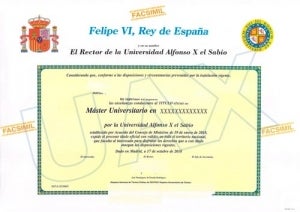
At UAX, we offer you the opportunity to do an internship in projects related to the digital transformation of education, these internships can be either in an educational centre or in a company.
The internships for the university master's degree in educational technology and digital competences will be carried out in 3 phases:
You will be able to benefit from our more than 700 agreements with public, private and state-subsidised schools throughout Spain and carry out internships in centres such as the British School, Waldorf Schools, Montessori Schools or the Sagrada Familia Professional Schools, among others.
You can also take part in international placements, meet new colleagues from all over the world and boost your career in the international sector. For more information, please contact the international relations office.
If you have related professional experience, you will be able to validate your internship. Contact our advisors for a personalised study of ECTS recognition.
Access route and requirements
In order to establish the conditions for access, the provisions of article 18 of Royal Decree 822/2021 of 28 September will be taken into account, indicating the correspondence of the field of studies that the student must have completed in order to be able to study this Master's Degree.
The Master's Degree in Educational Technology and Digital Teaching Skills is designed for professionals in the teaching profession (graduates in the different degrees in the area of Early Childhood Education, Primary Education, Pedagogy or graduates, graduates/engineers with the Master's Degree in Secondary Teacher Training, Vocational Training and Languages) who wish to train in this area as teaching professionals, as well as graduates in other master's degrees in education.
Admission profile
The Master's Degree in Educational Technology and Digital Teaching Skills (master's degree in ICT) is an official master's degree, so you will be able to access it if you are:
If you already have another qualification, you can study the Master's with the possibility of validating ECTS. Request your free personalised study in accordance with the recognitions agreed with the Community of Madrid.
Admission Test Regulations
https://www.uax.com/portal-de-transparencia/normativa
ADMISSION TESTS
The following criteria will be taken into account for the admission of candidates, which will only be applied in the event that demand exceeds supply:
To start the admission process you must provide the following documentation:
Number of places offered for new students: 240
Alfonso X El Sabio University has approved and published a regulation adapted to Royal Decree 822/2021 to deal with the transfer and recognition of credits.
You can consult the regulations on credit recognition at the following link.
The recognition of credits in the official courses of this degree will be carried out taking into account the adequacy between the competences and knowledge derived from the courses taken and those foreseen in the syllabus of the corresponding courses.
With regard to the credit recognition system for this master's degree, if you already have previous professional experience related to the competences inherent to this degree, it may be recognised in the form of credits, up to a maximum of 6 ECTS. This recognition will require a personalised study. Contact our advisors and they will inform you personally.
The flexibility of online learning, with opportunities to connect
Take your exams online wherever you are or, if you prefer, in person at our designated centres in Spain and Latin America, subject to availability and capacity.
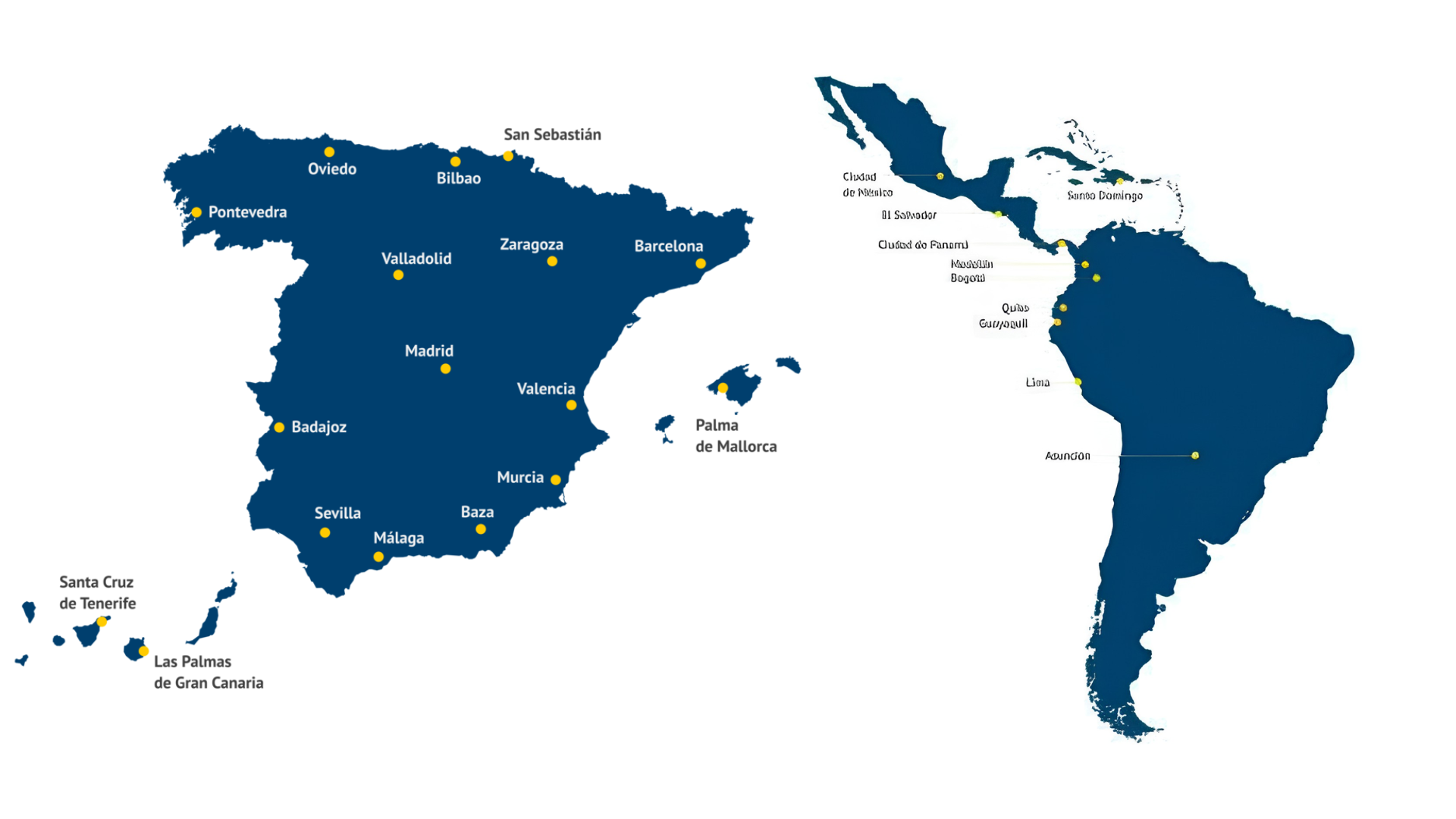
What’s more, as a student at UAX Online, you’ll have access to our Campus Hubs – a network of exclusive physical spaces where you can study, access libraries, work in co-working areas and connect with other students. Because studying online doesn’t mean studying alone.
Campus Hubs available in: Alcobendas, Alcorcón, Valencia San Vicente, Murcia, Barcelona, Málaga, Seville and Arganda.
Access is via your UAX student card, subject to availability and the opening hours of each centre.

Boost your career with the skills the job market demands
Master Microsoft 365 Copilot and boost your productivity with AI. Learn how to automate tasks, create content, analyse data and optimise your work in Word, Excel, PowerPoint, Outlook and Teams to work more efficiently with this official Microsoft certification.
Co-creation space for educational excellence based on the UNESCO report, promoting the joint work of the educational community through experiential learning and debate on the axes of transformation.
Development of a model for assessing computational thinking through the direct measurement of 16 soft skills or professional competencies.
Hear first-hand about our education students’ experiences, be inspired, and discover what life is like as a student at UAX and all the opportunities that await you.
Teaching staff on the Master’s degree in ICT
Doctor in Education, accredited by ANECA, psychopedagogical teacher and specialist in Educational Neurotechnology, with extensive experience as a university lecturer. She combines her work with other activities such as teacher training, conferences and publications in different media.

Educational consultant and designer of learning experiences, specialising in e-learning, gamification, narrative design and active methodologies. She trains teachers, leads projects and collaborates with educational institutions in the development of innovative proposals. Founder of Ágora Virtual and creator of the GAUBI app.

Specialist in educational technology and digitalisation, with experience in Microsoft Education, Aonia and Santillana. He has led trainings, events and technological deployments in educational centres. Certified Google and Microsoft trainer, he combines his background in teaching and new technologies with a strong vocation for transforming education.

Specialist in educational digital transformation with more than a decade of experience in the field of pedagogical innovation, educational technology and management of learning communities. He leads digital projects at HedIA, and his career includes collaborations with Microsoft, Telefónica Educación Digital and several universities.

PhD in Philosophy and Educational Sciences, expert in logic, artificial intelligence and educational technology. She has developed her career leading digital innovation projects and teacher training in the pedagogical use of technological platforms and resources.

PhD in Human and Social Sciences, university professor and specialist in educational technology, digital competences and active methodologies. He has experience in teacher training, digital content design and leadership of educational projects. Editor at Procompa.
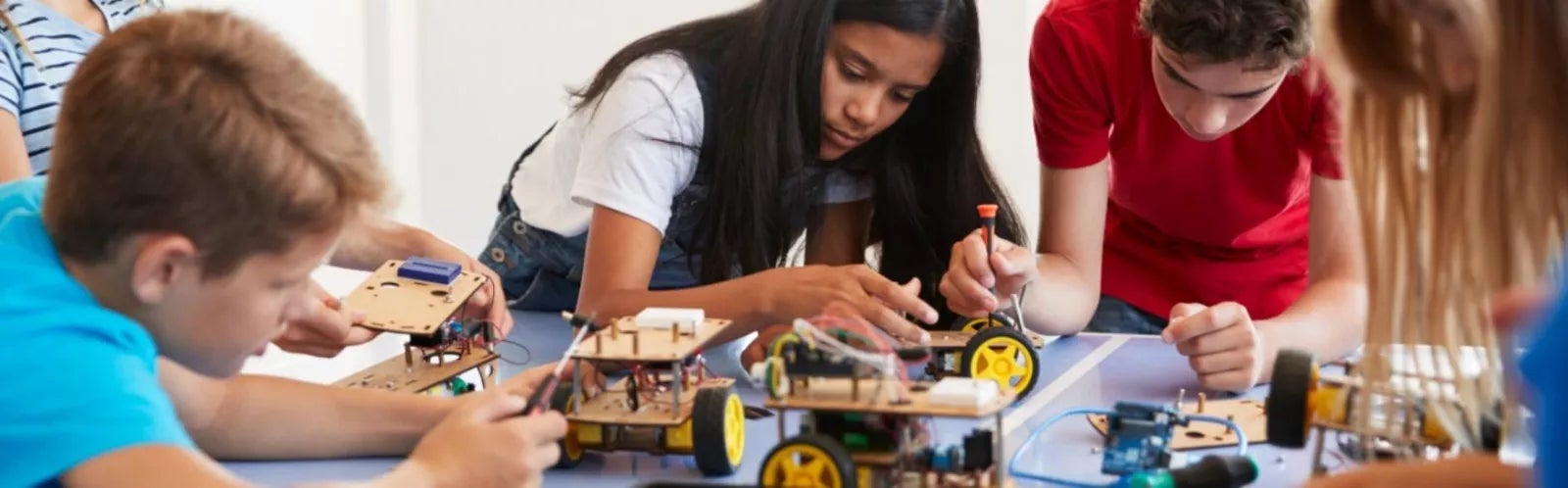
At UAX we know that studying is an investment, that's why we provide you with the facilities you need to access our degrees. Find out about some of our scholarships and grants to study the master's degree in ICT:
With the distance learning Master's Degree in Educational Technology and Digital Competences for Teachers you will be able to adapt to the prevailing technological changes in the field of education and you will be able to bring everything you have learnt to the classroom. You will be able to develop your professional career in different positions, for example:
Not sure?
We can help you find the right programme for you.
The Master’s degree in Educational Technology provides professionals with specialised training in the use of digital technologies and tools applied to the field of education. This training opens up a range of career opportunities in the fields of education and technology, in both the public and private sectors. Some of the career opportunities offered by the Master’s in Educational Technology include: educational technology specialist, digital educational resource design, educational technology project management, educational technology consultancy, research in educational technology, educational software development, consultancy for educational technology companies, e-learning specialist, etc. Furthermore, this Master’s degree improves your score in competitive examinations for primary and secondary school teaching posts.
The university master's degree in educational technology (ICT) is an official qualification with 60 ECTS credits and lasts 9 months. Furthermore, by taking this accredited Master's degree in Educational Technology, you will obtain specific merits that will add points to your marks in the competitive examinations for teachers and secondary school teachers.
At the Universidad Alfonso X el Sabio (UAX), we offer the opportunity to carry out internships in projects related to digital transformation in education. These internships can be carried out either in an educational centre or in a company.
The internship programme is divided into three phases:
The Master's Degree in Educational Technology and Digital Teaching Skills (ICT Master's Degree) is an official postgraduate programme that offers the possibility of access to different academic profiles, such as:
In the Master in ICT you will be trained through an innovative curriculum that incorporates essential subjects such as Robotics, Cybersecurity, Gamification, microlearning and application design, among other disciplines. In addition, you will use and master active methodologies such as Agile learning, SCRUM, gamification and roleplay as they play a crucial role in modern education.
Mastering educational technologies is essential to face the constant technological changes and the demands of the labour market.
It has continuous assessment, with 40% activities and 60% exams in all subjects.
Other related qualifications
We offer a wide range of courses, so you’re sure to find a programme that suits you.
Master’s Degree in Teacher Training for Compulsory Secondary Education and Sixth Form
In collaboration with:
Start:
October
Length:
1 year

Online Master's Degree in Educational Innovation
Start:
October
Length:
9 months

Master's Degree in Psychopedagogy (online)
In collaboration with:
Start:
October
Length:
9 months

Master’s Degree in Teaching Spanish as a Foreign Language (Online)
In collaboration with:

Start:
October
Length:
9 months

Master’s Degree in Instrumental Pedagogy (Online)
Start:
October
Length:
9 months

Online Course in Pedagogical and Didactic Training for Vocational Training Teachers
Start:
October
Length:
9 months

Master’s Degree in Supporting Diversity and Inclusive Education (Online)
In collaboration with:

Start:
October
Length:
9 months

Master’s Degree in Educational Neuropsychology (Online)
In collaboration with:

Start:
October
Length:
9 months

Online Master's Degree in Leadership and Management of Educational Centres
In collaboration with:
Start:
October
Length:
9 months

Online Master's Degree in Didactics in Mathematics
Start:
October
Length:
9 months

Online Master's Degree in Conflict Prevention and Mediation in Educational Settings
Start:
October
Length:
9 months

Online Master's Degree in Emotional Education and Pedagogical Accompaniment
Start:
October
Length:
9 months

Online Master's Degree in Research Methodologies in Education
Start:

October
Length:
9 months
You can consult the academic calendar and timetables at the following link.
The UAX promotes the culture of quality among the university community through the UAX Quality System (SIUAX), for which the University Management is ultimately responsible, ensuring that the planning of the system is implemented to effectively meet the quality objectives, the satisfaction of needs, requirements and expectations of customers and interested parties.
The responsible bodies are:
This organisational structure channels a bidirectional communication of the different improvement actions that allow and ensure the construction of the quality culture in the University.
This degree, according to RD 822/2021 (art. 34) must undergo the process of accreditation renewal. During the development of the process, an evaluation team of the Foundation for Knowledge Madrimasd will meet with different stakeholders of the degree. In addition, they provide us with a form so that any interested party can indicate to the Foundation those aspects they consider relevant to the development of this programme.
You can view the various indicators via the following links:
Employability: View
Satisfaction results: View
Rates and indicators: View
Improvement measures implemented for the degree programme during the academic year: