See all Online Master's Degrees in Health
See all Master's Degrees in Engineering
Most searched curriculums
Official qualification
A programme that is committed to innovation to become an Occupational Risk Prevention Technician. Flexibility, practical learning and expert teaching staff. Boost your professional career by studying at UAX. TOP 4 Best Masters in Occupational Risk Prevention in Spain, according to the Ranking 2024 of Mundo Postgrado. Limited places.
In collaboration with:

The distance-learning Master’s Degree in Occupational Health and Safety prepares you to work as an Occupational Health and Safety Technician, offering comprehensive training that covers all aspects of health and safety in the workplace. Developed in line with Spain’s new Health and Safety Strategy for 2023–2027, this programme combines academic rigour with practical application to ensure your professional success in a sector where there is high demand for specialists.
UAX is a member of AACSB, the world’s largest global alliance for business education. This affiliation with leading institutions in over 100 countries guarantees degrees of the highest quality, which are internationally recognised and offer excellent employability prospects.

Obtain, at no extra cost, TÜV Rheinland’s certification as an Internal Auditor in Occupational Health and Safety Management Systems (ISO 45001:2018), valid in over 140 countries, and gain access to a network of over 8,800 agreements for work placements. Learn from practising professionals at companies such as FREMAP and master innovative methodologies such as gamification and agile learning.
All this is delivered online using a flexible approach that fits in with your personal and professional life, with tutors and advisers on hand at all times to help you get the most out of your studies, thanks to the flexibility of the 100% online format.
You’ll acquire technical and management skills to develop your career in occupational health and safety.
Develops skills in the three preventive disciplines: safety, hygiene and ergonomics.
Master the most innovative methodologies for integrated risk management.
Learn how to audit occupational health and safety management systems
Knows the legal and regulatory framework that regulates the prevention of occupational risks.
Learn about real protocols of action with teachers from companies such as FREMAP.
Get certified by TÜV Rheinland in ISO 45001 as an Internal Auditor
Transform the way you work with generative artificial intelligence. This micro-credential enables you to apply tools such as ChatGPT, Copilot or Gemini in information analysis, content creation and decision-making, integrating innovative solutions in an ethical and responsible way in real professional environments.

Develop your professional potential through leadership and interpersonal skills. This micro-credential provides you with the keys to manage teams, communicate effectively and solve problems in real-world environments, combining personal leadership techniques with practical productivity and collaboration tools.
University Master's Degree in Occupational Risk Prevention
First Year
FIRST FOUR-MONTH PERIOD
| Code | Subjects | Character* | ECTS | ||||||||||||||||||||||||||||||||||||||||||||||||||||||||||||||||||||||||||||||||||||||||||||||||||||||||||
|---|---|---|---|---|---|---|---|---|---|---|---|---|---|---|---|---|---|---|---|---|---|---|---|---|---|---|---|---|---|---|---|---|---|---|---|---|---|---|---|---|---|---|---|---|---|---|---|---|---|---|---|---|---|---|---|---|---|---|---|---|---|---|---|---|---|---|---|---|---|---|---|---|---|---|---|---|---|---|---|---|---|---|---|---|---|---|---|---|---|---|---|---|---|---|---|---|---|---|---|---|---|---|---|---|---|---|---|---|---|
| M141109 | Fundamentals of techniques for improving working conditions, and training in communication and negotiation techniques | OB | 3 | ||||||||||||||||||||||||||||||||||||||||||||||||||||||||||||||||||||||||||||||||||||||||||||||||||||||||||
Fundamentals of techniques for improving working conditions, and training in communication and negotiation techniquesCódigo: M141109 Imprimir Course 1: First-semester module. Compulsory. 3 credits. Profesores
Objectives The UAX Master’s Degree in Occupational Risk Prevention has been designed as a natural progression towards the MECES Level 3 competency standard for graduates of any of the undergraduate programmes offered by the University or other universities, given the cross-disciplinary nature of the subject matter covered and its application in businesses and organisations. As such, its general objectives are highly cross-cutting and multidisciplinary, focusing on equipping individuals who already possess the knowledge to contribute to improving preventive practices within organisations and to help ensure workers’ health and safety, the optimisation of resources and in accordance with current regulations in the field of occupational risk prevention and in line with the Spanish occupational health and safety strategy for 2023–2027. Furthermore, the Master’s Degree in Occupational Risk Prevention includes in its curriculum the training programme set out in Annex VI of Royal Decree 39/1997 (RSP), which must be completed to obtain the Higher Level Qualification in Occupational Risk Prevention. Furthermore, it is worth noting that Alfonso X El Sabio University educates all its graduates through an educational approach that emphasises effective communication, teamwork, analytical thinking, creativity and ethical leadership, whilst promoting the Sustainable Development Goals. All of this takes place within the framework of democratic values and respect for human rights and the social inclusion of all people, regardless of their race, gender or functional diversity. This approach is based on the acquisition of cross-cutting skills that are essential for 21st-century professionals and which are geared towards fulfilling the objectives for university education set out in Article 4 of Royal Decree 822/2021 and paragraphs 1 and 2 of Article 35 of Law 7/2021 of 20 May on climate change and the energy transition. Prerequisites Candidates must comply with the provisions of Article 18 of Royal Decree 822/2021 of 29 September, which establishes the organisation of university education and the procedure for ensuring its quality. Candidates who do not demonstrate the legal knowledge required to underpin their ability to acquire the specialised skills specific to this Master’s degree (MUST HAVE SUCCESSFULLY COMPLETED THE SUPPLEMENTARY TRAINING COURSE). Competencies This degree programme complies with Royal Decree 822/2021 of 28 September, which establishes the organisation of university education and the procedures for ensuring its quality. Learning Outcomes RC21 – To base their approaches to occupational risk prevention on a code of professional ethics that incorporates respect for workers’ health and safety. RC11 - Identify training needs within the organisation and develop training plans to ensure staff acquire the skills necessary for the proper performance of their duties with a view to preventing workplace accidents. RC15 - Plan occupational risk prevention management systems in accordance with the specific characteristics of organisations RK1 – Understand the interrelationship between working conditions and health, and be able to analyse the main health problems that may arise in the workplace. Description of the content Occupational health and safety primarily concerns the workplace and is addressed within the business context. The Occupational Risk Prevention Act recognises workers’ right to effective protection in matters of health and safety at work and, in turn, imposes on employers the duty to protect workers against occupational risks. This module introduces basic concepts such as: risk and risk factors, and the difference between an incident, an accident and an occupational disease; highlighting the challenges and the importance of occupational health and safety in the workplace. The following aspects are covered: • Working conditions and health. • Risks. • Work-related injuries. • Prevention and protection. • Statistical principles applied to prevention. • Analysis of training needs. • Plans and programmes. • Teaching techniques. • Monitoring and evaluation. • Communication in prevention: channels and types. • Information: conditions for effectiveness. • Negotiation techniques. Training activities Asynchronous theoretical activities. Interactive lessons. Self-guided exercises. Independent study. Online tutoring. Knowledge tests. Assessment system and criteria The overall breakdown of the course mark will be as follows: Assessment of practical activities: 40 per cent of the mark. Final knowledge assessments: 60% of the total mark. To this end, the weightings for each type of activity will be as follows: 1. The mark for the self-assessment tests accounts for (20 per cent) of the (Assessment of Practical Activities). 2. The mark for the feedback exercises accounts for 20 per cent of the ‘Assessment of Assignments or Projects’. Timetable Click on this link to view the detailed timetable in Excel
Reading list Essential: 1. García González, Guillermo. Origins and Foundations of Occupational Risk Prevention in Spain (1873–1907) Bomarzo. 2008. ISBN: 9788496721463 2. Llacuna Morera, Jaume / Baraza Sánchez, Xavier / Bernal Rapela, Àngel / de la Fuente Romero, Juan Francisco TRAINING, COMMUNICATION AND NEGOTIATION: APPLICATION TO OCCUPATIONAL RISK PREVENTION UOC. 2019. ISBN: 9788490298169 3.- Manuel Bestratén Belloví Fundamentals of Occupational Risk Prevention National Institute for Occupational Safety and Health (INSHT). 2017. ISBN: 978-84-7425-8 4. MOLINA BENITO, J.A. History of Occupational Safety in Spain Regional Government of Castile and León, Regional Ministry of Economy and Employment, Directorate-General for Labour and Occupational Risk Prevention. 2006. ISBN: 84-689-8477- 5.- Ovejero Bernal, Anastasio Negotiation Techniques: How to Negotiate Effectively and Successfully McGraw-Hill Interamericana. 2004. ISBN: 9788448140700 Supplementary: 6. Office of the Head of State Law 54/2003 of 12 December on the reform of the regulatory framework for the prevention of occupational risks. Official State Gazette (BOE). 2003. ISBN: BOE-A-2003-22 7.- Ministry of Employment and Social Security Royal Legislative Decree 8/2015 of 30 October, approving the consolidated text of the General Social Security Act. BOE. 2015. ISBN: BOE-A-2015-11 |
|||||||||||||||||||||||||||||||||||||||||||||||||||||||||||||||||||||||||||||||||||||||||||||||||||||||||||||
| M141110 | The legal framework for prevention | OB | 3 | ||||||||||||||||||||||||||||||||||||||||||||||||||||||||||||||||||||||||||||||||||||||||||||||||||||||||||
The legal framework for preventionCódigo: M141110 Imprimir Course 1: First-semester module. Compulsory. 3 credits. Profesores
Objectives The UAX Master’s Degree in Occupational Risk Prevention has been designed as a natural progression towards the MECES Level 3 competency standard for graduates of any of the undergraduate programmes offered by the University or other universities, given the cross-disciplinary nature of the subject matter covered and its application within companies and organisations. As such, its general objectives are highly cross-cutting and multidisciplinary, focusing on equipping individuals who already possess the knowledge to contribute to improving preventive practices within organisations and to help ensure workers’ health and safety, the optimisation of resources and in accordance with current regulations in the field of occupational risk prevention and in line with the Spanish occupational health and safety strategy for 2023–2027. Furthermore, the Master’s Degree in Occupational Risk Prevention includes in its curriculum the training programme set out in Annex VI of Royal Decree 39/1997 (RSP), which must be completed to obtain the Higher Level Qualification in Occupational Risk Prevention. Furthermore, it is worth noting that Alfonso X El Sabio University educates all its graduates through an educational approach that emphasises effective communication, teamwork, analytical thinking, creativity and ethical leadership, whilst promoting the Sustainable Development Goals. All of this takes place within the framework of democratic values and respect for human rights and the social inclusion of all people, regardless of their race, gender or functional diversity. This approach is based on the acquisition of cross-cutting skills that are essential for 21st-century professionals and which are geared towards meeting the objectives for university education set out in Article 4 of Royal Decree 822/2021 and paragraphs 1 and 2 of Article 35 of Law 7/2021 of 20 May on climate change and the energy transition. Prerequisites Candidates must comply with the provisions of Article 18 of Royal Decree 822/2021 of 29 September, which establishes the organisation of university education and the procedure for ensuring its quality. Candidates who do not demonstrate the legal knowledge required to underpin their ability to acquire the specialised skills specific to this Master’s degree (MUST HAVE SUCCESSFULLY COMPLETED THE SUPPLEMENTARY TRAINING COURSE). Competencies This degree programme complies with Royal Decree 822/2021 of 28 September, which establishes the organisation of university education and the procedures for ensuring its quality. Learning Outcomes RC23 – Convey information relating to the liabilities and penalties arising from breaches of occupational risk prevention RK7 – Understand the legal framework and regulatory environment for occupational risk prevention, from both a national and EU RK8 - Understand the Spanish social security system and the basic legislation governing labour relations RK4 – Understand the specific legislation and technical regulations relating to psychological health and safety at work Course content • Legislation on occupational risk prevention. Labour law and the Spanish social security system. • Rights and obligations regarding risk prevention. • Prevention services. • Representative bodies and participation in occupational health and safety matters. • Responsibilities and penalties in relation to health and safety. • Organisation of health and safety in Spain; health and safety policy and promotion. Training activities Asynchronous theoretical activities. Interactive lessons. Self-guided exercises. Independent study. Online tutoring. Knowledge tests. Assessment system and criteria The overall breakdown of the course mark will be as follows: Assessment of practical activities: 40 per cent of the mark. Final knowledge assessments: 60% of the total mark. To this end, the weightings for each type of activity will be: 1. The mark for the self-assessment tests accounts for (20 per cent) of the (Assessment of Practical Activities). 2. The mark for the feedback exercises accounts for 20 per cent of the ‘Assessment of Assignments or Projects’. Timetable Click on this link to view the detailed timetable in Excel
Reading list Core: 1.- BESTRATÉN BELLOVÍ, M., ET AL. Fundamentals of occupational risk prevention. Madrid: National Institute of Safety and Hygiene. 2017. ISBN: 1886-6123 https://issuu.com/lamina/docs/sst_92_br 2.- GARCÍA GONZÁLEZ, G., GARRIGUES GIMÉNEZ, A Handbook on Occupational Risk Prevention Law. Valencia: Tirant lo Blanch. 2022. ISBN: 9788490869055 3.- IGARTÚA MIRÓ, M.T. Occupational Health and Safety Prevention System Madrid: Tecnos. 2023. ISBN: 9788430988037 4. Juan López Gandía and José Francisco Blasco Lahoz Occupational Risk Prevention Course, 21st Edition Tirant Lo Blanch Publishers. 2023. ISBN: 9788411690232 5.- Sala Franco, Tomás. Law on Occupational Risk Prevention Tirant Lo Blanch. 2022. ISBN: 9788411303132 |
|||||||||||||||||||||||||||||||||||||||||||||||||||||||||||||||||||||||||||||||||||||||||||||||||||||||||||||
| M141111 | Occupational Health and Safety Techniques: safety at work | OB | 6 | ||||||||||||||||||||||||||||||||||||||||||||||||||||||||||||||||||||||||||||||||||||||||||||||||||||||||||
Occupational Health and Safety Techniques: safety at workCódigo: M141111 Imprimir Course 1: First-semester module. Compulsory. 6 credits. Profesores
Objectives The UAX Master’s Degree in Occupational Risk Prevention has been designed as a natural progression towards the MECES Level 3 competency standard for graduates of any of the undergraduate programmes offered by the University or other universities, given the cross-disciplinary nature of the subject matter covered and its application within companies and organisations. As such, its general objectives are highly cross-cutting and multidisciplinary, focusing on equipping individuals who already possess the knowledge to contribute to improving preventive practices within organisations and to help ensure workers’ health and safety, the optimisation of resources and in accordance with current regulations in the field of occupational risk prevention and in line with the Spanish occupational health and safety strategy for 2023–2027. Furthermore, the Master’s Degree in Occupational Risk Prevention includes in its curriculum the training programme set out in Annex VI of Royal Decree 39/1997 (RSP), which must be completed to obtain the Higher Level Qualification in Occupational Risk Prevention. Furthermore, it is worth noting that Alfonso X El Sabio University educates all its graduates through an educational approach that emphasises effective communication, teamwork, analytical thinking, creativity and ethical leadership, whilst promoting the Sustainable Development Goals. All of this takes place within the framework of democratic values and respect for human rights and the social inclusion of all people, regardless of their race, gender or functional diversity. This approach is based on the acquisition of cross-cutting skills that are essential for 21st-century professionals and which are geared towards fulfilling the objectives for university education set out in Article 4 of Royal Decree 822/2021 and paragraphs 1 and 2 of Article 35 of Law 7/2021 of 20 May on climate change and the energy transition. Prerequisites Candidates must comply with the provisions of Article 18 of Royal Decree 822/2021 of 29 September, which establishes the organisation of university education and the procedure for ensuring its quality. Candidates who do not demonstrate the legal knowledge required to underpin their ability to acquire the specialised skills specific to this Master’s degree (MUST HAVE SUCCESSFULLY COMPLETED THE SUPPLEMENTARY TRAINING COURSE). Competencies This degree programme complies with Royal Decree 822/2021 of 28 September, which establishes the organisation of university education and the procedures for ensuring its quality. Learning Outcomes LR1 – Assess risks likely to cause workplace accidents, applying techniques to identify and evaluate such risks and to plan preventive measures within the company that may have a negative impact on its operations. RC10 – Analyse the negative effects of inadequate working conditions on workers’ psychological health and well-being in order to draw up psychosocial intervention plans. RC4 – Plan and carry out safety inspections and accident investigations, in accordance with the procedures established in the applicable occupational health and safety management system. RC5 – Design risk assessment programmes and propose corrective measures to address general hazards associated with workplaces, based on the relevant standards RK2 – Understand the concepts of prevention and safety, and the techniques applied in the prevention of occupational risks. RS1 – Identify risk factors, formulate preventive measures and design action plans to investigate them Description of the content • Concept and definition of safety: safety techniques. • Workplace accidents. • Statistical analysis of accidents. • General analysis and assessment of accident risk. • Health and safety regulations and signage. • Collective and individual protection. • Statistical analysis of accidents. • Emergency and self-protection plans. • Analysis, assessment and control of specific risks: machinery; equipment, installations and tools; workplaces and work areas; handling, storage and transport; electricity; fires; chemicals. • Safety inspections. • Toxic and hazardous waste. • Preventive measures to eliminate and reduce risks. Training activities Asynchronous theoretical activities. Interactive lessons. Self-guided exercises. Independent study. Online tutoring. Knowledge tests. Assessment system and criteria The overall breakdown of the course mark will be as follows: Assessment of practical activities: 40 per cent of the mark. Final knowledge assessments: 60% of the total mark. To this end, the weightings for each type of activity will be as follows: 1. The mark for the self-assessment tests accounts for (20 per cent) of the (Assessment of Practical Activities). 2. The mark for the feedback exercises accounts for 20 per cent of the ‘Assessment of Assignments or Projects’. Timetable Click on this link to view the detailed timetable in Excel
Reading list Essential: 1. Agustín González Ruiz Safety inspections and workplace observations FC EDITORIAL. 2014. ISBN: 9788415781127 2. Antonio Enríquez Palomino Workplace Road Safety Manual FC EDITORIAL. 2014. ISBN: 9788415781264 3. Antonio Enríquez Palomino, Juana María González Barriga, Nuria Pizarro Garrido, José Manuel Sánchez Rivero Safety at Work FC EDITORIAL. 2011. ISBN: 9788492735976 4. Diego González Maestre Machine Safety FC EDITORIAL. 2009. ISBN: 9788496743779 5. Juan Ramón Martínez Pascual, HCV Formación y Prevención S.L. Working at Height FC EDITORIAL. 2012. ISBN: 9788415683551 6. Juana María González Barriga, Teresa Palomino Márquez, José Manuel Sánchez Rivero, Javier Tejeda Montesinos The Health and Safety Coordinator FC EDITORIAL. 2012. ISBN: 9788492735921 |
|||||||||||||||||||||||||||||||||||||||||||||||||||||||||||||||||||||||||||||||||||||||||||||||||||||||||||||
| M141112 | Occupational Health and Safety Techniques: industrial hygiene | OB | 6 | ||||||||||||||||||||||||||||||||||||||||||||||||||||||||||||||||||||||||||||||||||||||||||||||||||||||||||
Occupational Health and Safety Techniques: industrial hygieneCódigo: M141112 Imprimir Course 1: First-semester module. Compulsory. 6 credits. Profesores
Objectives The UAX Master’s Degree in Occupational Risk Prevention has been designed as a natural progression towards the MECES Level 3 competency standard for graduates of any of the undergraduate programmes offered by the University or other universities, given the cross-disciplinary nature of the subject matter covered and its application within companies and organisations. As such, its general objectives are highly cross-cutting and multidisciplinary, focusing on equipping individuals who already possess the knowledge to contribute to improving preventive practices within organisations and to help ensure workers’ health and safety, the optimisation of resources and in accordance with current regulations in the field of occupational risk prevention and in line with the Spanish occupational health and safety strategy for 2023–2027. Furthermore, the Master’s Degree in Occupational Risk Prevention includes in its curriculum the training programme set out in Annex VI of Royal Decree 39/1997 (RSP), which must be completed to obtain the Higher Level Qualification in Occupational Risk Prevention. Furthermore, it is worth noting that Alfonso X El Sabio University educates all its graduates through an educational approach that emphasises effective communication, teamwork, analytical thinking, creativity and ethical leadership, whilst supporting the Sustainable Development Goals. All of this takes place within the framework of democratic values and respect for human rights and the social inclusion of all people, regardless of their race, gender or functional diversity. This approach is based on the acquisition of cross-cutting skills that are essential for 21st-century professionals and which are geared towards fulfilling the objectives for university education set out in Article 4 of Royal Decree 822/2021 and paragraphs 1 and 2 of Article 35 of Law 7/2021 of 20 May on climate change and the energy transition. Prerequisites Candidates must comply with the provisions of Article 18 of Royal Decree 822/2021 of 29 September, which establishes the organisation of university education and the procedure for ensuring its quality. Candidates who do not demonstrate the legal knowledge required to underpin their ability to acquire the specialised skills specific to this Master’s degree (MUST HAVE SUCCESSFULLY COMPLETED THE SUPPLEMENTARY TRAINING COURSE). Competencies This degree programme complies with Royal Decree 822/2021 of 28 September, which establishes the organisation of university education and the procedures for ensuring its quality. Learning Outcomes RC6 – Assess chemical, physical and biological risks and draw up action plans to mitigate their effects on workers. RK3 – Understand industrial hygiene techniques relating to the analysis, identification and control of hygiene risks of physical, chemical and biological nature. Course description • Industrial hygiene. Concepts and objectives. • Chemical agents. Occupational toxicology. • Chemical agents. Exposure assessment. • Chemical agents. Exposure control: general principles; measures targeting the source of contamination; measures targeting the means of transmission. Ventilation; measures targeting the individual: personal protective equipment: classification. • Specific legal regulations. • Physical agents: characteristics, effects, assessment and control: noise, vibrations, thermal environment, non-ionising radiation, ionising radiation. • Biological agents. Effects, assessment and control. Training activities Asynchronous theoretical activities. Interactive lessons. Self-guided exercises. Independent study. Online tutoring. Knowledge tests. Assessment system and criteria The overall breakdown of the course mark will be as follows: Assessment of practical activities: 40 per cent of the mark. Final knowledge assessments: 60% of the total mark. To this end, the weightings for each type of activity will be: 1. The mark for the self-assessment tests accounts for (20 per cent) of the (Assessment of Practical Activities). 2. The mark for the feedback exercises accounts for 20 per cent of the ‘Assessment of Assignments or Projects’. Timetable Click on this link to view the detailed timetable in Excel
Reading list Core: 1. Félix BERNAL DOMINGUEZ, Emilio CASTEJÓN VILELLA, Nuria CAVALLÉ OLLER, Ana HERNANDEZ CALLEJA, National Centre for Working Conditions – INSHT Industrial Hygiene National Institute for Safety and Hygiene at Work. 2008. ISBN: 978-84-7425-7 2.- Javier Granero Castro Industrial Safety Fc Editorial. 2015. ISBN: 9788415781646 3. Pedro Mateo Florida MANAGEMENT OF OCCUPATIONAL HEALTH IN THE WORKPLACE Confemetal Foundation. 2009. ISBN: 9788496743908 4.- Truchado Torrejón, Javier, ed. Martínez Martín, Mariano, ed. Vega Ramiro, María Pilar, coll. Fundación MAPFRE Industrial Hygiene Manual MAPFRE Foundation. 2015. ISBN: 978-84-9844-5 Supplementary: 5.- Félix Berna, Emilio Domínguez, Castejón Vilella, Núria Cavallé Oller, Xavier Guardino Sola, Juan Guasch Farras, Ana Hernández Calleja, Pablo Luna Mendaza, Lluís Pujo, Senovilla, National Centre for Working Conditions – INSHT INDUSTRIAL HYGIENE: SOLVED PROBLEMS National Institute for Safety and Hygiene at Work. 2006. ISBN: 84-7425-717-4 6. José Jaime Sadhwani Alonso; Noemí Melián Martel INDUSTRIAL HYGIENE IN THE FACE OF SPECIFIC RISKS Publications and Scientific Dissemination Service of the University of the Canary Islands (ULPGC). 2018. ISBN: 9788490423141 |
|||||||||||||||||||||||||||||||||||||||||||||||||||||||||||||||||||||||||||||||||||||||||||||||||||||||||||||
| M141113 | Occupational Health and Safety Techniques: Ergonomics, Applied Psychosociology and Occupational Medicine | OB | 6 | ||||||||||||||||||||||||||||||||||||||||||||||||||||||||||||||||||||||||||||||||||||||||||||||||||||||||||
Occupational Health and Safety Techniques: Ergonomics, Applied Psychosociology and Occupational MedicineCódigo: M141113 Imprimir Course 1: First-semester module. Compulsory. 6 credits. Profesores
Objectives The UAX Master’s Degree in Occupational Risk Prevention has been designed as a natural progression towards the MECES Level 3 competency standard for graduates of any of the undergraduate programmes offered by the University or other universities, given the cross-disciplinary nature of the subject matter covered and its application within companies and organisations. As such, its general objectives are highly cross-cutting and multidisciplinary, focusing on equipping individuals who already possess the knowledge to contribute to improving preventive practices within organisations and to help ensure workers’ health and safety, the optimisation of resources and in accordance with current regulations in the field of occupational risk prevention and in line with the Spanish occupational health and safety strategy for 2023–2027. Furthermore, the Master’s Degree in Occupational Risk Prevention includes in its curriculum the training programme set out in Annex VI of Royal Decree 39/1997 (RSP), which must be completed to obtain the Higher Level Qualification in Occupational Risk Prevention. Furthermore, it is worth noting that Alfonso X El Sabio University educates all its graduates through an educational approach that emphasises effective communication, teamwork, analytical thinking, creativity and ethical leadership, whilst promoting the Sustainable Development Goals. All of this takes place within the framework of democratic values and respect for human rights and the social inclusion of all people, regardless of their race, gender or functional diversity. This approach is based on the acquisition of cross-cutting skills that are essential for 21st-century professionals and which are geared towards fulfilling the objectives for university education set out in Article 4 of Royal Decree 822/2021 and paragraphs 1 and 2 of Article 35 of Law 7/2021 of 20 May on climate change and the energy transition. Prerequisites Candidates must comply with the provisions of Article 18 of Royal Decree 822/2021 of 29 September, which establishes the organisation of university education and the procedure for ensuring its quality. Candidates who do not demonstrate the legal knowledge required to underpin their ability to acquire the specialised skills specific to this Master’s degree (MUST HAVE SUCCESSFULLY COMPLETED THE SUPPLEMENTARY TRAINING COURSE). Competencies This degree programme complies with Royal Decree 822/2021 of 28 September, which establishes the organisation of university education and the procedures for ensuring its quality. Learning Outcomes RC10 – Analyse the negative effects of inadequate working conditions on the psychological health and well-being of workers, in order to draw up psychosocial intervention plans. LC8 – Develop and participate in the company’s preventive planning and in first-aid and emergency response procedures RC9 – Identify, assess and control ergonomic and psychosocial risk factors in different socio-occupational contexts. RK4 – Be familiar with the specific legislation and technical regulations relating to occupational psychological health and safety. Description of the content Applied ergonomics and psychosociology • Ergonomics: concepts and objectives. • Business management and occupational health and safety. Workplace accident rates. • Current legislation and commentary on ergonomic and psychosocial risks • Assessment of ergonomic and psychosocial conditions: the LEST method and the job profile method. • Assessment of ergonomic and psychosocial conditions: the ANACT method and the Ergonomic Job Analysis method. • Physical strain: manual handling of loads. The NIOSH equation. Repetitive strain injuries. • Environmental working conditions: lighting. • Display screens. Teleworking. Acoustic ‘comfort’: noise in offices. • Indoor environments: air quality. • Mental strain: factors and prevention. • Prevention of work-related stress. • Psychological harassment at work (‘mobbing’). Sexual harassment at work. Occupational medicine • Basic concepts, objectives and functions of occupational medicine. • Work-related health conditions. • Health promotion in the workplace. • Health surveillance. • Occupational epidemiology and epidemiological research. • Health planning and information. • First aid and emergency response. Training activities Asynchronous theoretical activities. Interactive classes. Self-guided exercises. Independent study. Online tutoring. Knowledge tests. Assessment system and criteria The overall breakdown of the course mark will be as follows: Assessment of practical activities: 40 per cent of the mark. Final knowledge assessments: 60% of the total mark. To this end, the weightings for each type of activity will be as follows: 1. The mark for the self-assessment tests accounts for (20 %) of the (Assessment of Practical Activities). 2. The mark for the feedback exercises accounts for 20 per cent of the ‘Assessment of Assignments or Projects’. Timetable Click on this link to view the detailed timetable in Excel
Reading list Core: 1. Ciro Martínez Oropesa; Giovanni De Jesús Arias Castro; Ricardo De La Caridad Montero Martínez Ergonomics: productivity, quality and safety Ecoe Ediciones. 2020. ISBN: 9789587718560 2. Edited by George Delclòs Clanchet, Elena Ronda Pérez, Ana María García García and Fernando García Benavides Occupational Health Elsevier. 2022. ISBN: 9788491136590 3. Fernando Gil Hernández Treatise on Occupational Medicine Elsevier. 2024. ISBN: 9788413824956 4. García-Izquierdo, A. L. Ergonomics and Psychosociology Applied to the Prevention of Occupational Risks University of Oviedo. 2017. ISBN: 978-84-16664- 5. Jairo Estrada Muñoz Basic Ergonomics University Press. 2016. ISBN: 9789587624533 6. José Luis Llorca Rubio; Luis Llorca Pellicer; Marta Llorca Pellicer Manual on Ergonomics Applied to Occupational Risk Prevention Pirámide. 2015. ISBN: 9788436833294 7. Nuria Ayerra Duesca and Natalia Herrero Tomás Occupational Risk Prevention and the Gender Perspective ARANZADI. 2024. ISBN: 978-84-1162-6 Supplementary: 8.- MIRIAN SANTAMARÍA PELÁEZ MANUAL ON ERGONOMICS AND ACCESSIBILITY. UNIVERSITY DEGREE IN OCCUPATIONAL THERAPY University of Burgos. 2024. ISBN: 9788418465772 |
|||||||||||||||||||||||||||||||||||||||||||||||||||||||||||||||||||||||||||||||||||||||||||||||||||||||||||||
| M141114 | Techniques relating to the prevention of occupational risks | OB | 3 | ||||||||||||||||||||||||||||||||||||||||||||||||||||||||||||||||||||||||||||||||||||||||||||||||||||||||||
Techniques relating to the prevention of occupational risksCódigo: M141114 Imprimir Course 1: First-semester module. Compulsory. 3 credits. Profesores
Objectives The UAX Master’s Degree in Occupational Risk Prevention has been designed as a natural progression towards the MECES Level 3 competency standard for graduates of any of the undergraduate programmes offered by the University or other universities, given the cross-disciplinary nature of the subject matter covered and its application in businesses and organisations. As such, its general objectives are highly cross-cutting and multidisciplinary, focusing on equipping individuals who already possess the knowledge to contribute to improving preventive practices within organisations and to help ensure workers’ health and safety, the optimisation of resources and in accordance with current regulations in the field of occupational risk prevention and in line with the Spanish occupational health and safety strategy for 2023–2027. Furthermore, the Master’s Degree in Occupational Risk Prevention includes in its curriculum the training programme set out in Annex VI of Royal Decree 39/1997 (RSP), which must be completed to obtain the Higher Level Qualification in Occupational Risk Prevention. Furthermore, it is worth noting that Alfonso X El Sabio University educates all its graduates through an educational approach that emphasises effective communication, teamwork, analytical thinking, creativity and ethical leadership, whilst supporting the Sustainable Development Goals. All of this takes place within the framework of democratic values and respect for human rights and the social inclusion of all people, regardless of their race, gender or functional diversity. This approach is based on the acquisition of cross-cutting skills that are essential for 21st-century professionals and which are geared towards fulfilling the objectives for university education set out in Article 4 of Royal Decree 822/2021 and paragraphs 1 and 2 of Article 35 of Law 7/2021 of 20 May on climate change and the energy transition. Prerequisites Candidates must comply with the provisions of Article 18 of Royal Decree 822/2021 of 29 September, which establishes the organisation of university education and the procedure for ensuring its quality. Candidates who do not demonstrate the legal knowledge required to underpin their ability to acquire the specialised skills specific to this Master’s degree (MUST HAVE SUCCESSFULLY COMPLETED THE SUPPLEMENTARY TRAINING COURSE). Competencies This degree programme complies with Royal Decree 822/2021 of 28 September, which establishes the organisation of university education and the procedures for ensuring its quality. Learning Outcomes RK6 – Understand the principles of environmental management and quality management systems. RS2 – Analyse data and carry out research leading to the identification of risks arising from non-compliance with regulations in the field of occupational risk prevention. RC17 – Integrate knowledge derived from related techniques concerning occupational risk prevention, such as product quality product quality, environmental management, industrial safety, road safety, etc., into the design of occupational risk prevention processes and plans . Description of the content Product safety and quality management systems. • Environmental management. • Regulation 1221/2009 on environmental management and auditing (EMAS). • ISO 9001: Quality Management. • ISO 14001: Environmental management. • Road safety. Industrial safety and prevention of property risks. • ISO 45001:2018 Occupational Health and Safety Management System. Training activities Asynchronous theoretical activities. Interactive lessons. Self-guided exercises. Independent study. Online tutoring. Knowledge tests. Assessment system and criteria The overall breakdown of the course mark will be as follows: Assessment of practical activities: 40 per cent of the mark. Final knowledge assessments: 60% of the total mark. To this end, the weightings for each type of activity will be as follows: 1. The mark for the self-assessment tests accounts for (20 per cent) of the (Assessment of Practical Activities). 2. The mark for the feedback exercises accounts for 20 per cent of the ‘Assessment of Assignments or Projects’. Timetable Click on this link to view the detailed timetable in Excel
Reading list Core: 1. José Manuel Sánchez Rivero ISO 45001: 2018. OCCUPATIONAL HEALTH AND SAFETY MANAGEMENT SYSTEMS. GUIDANCE AND PRACTICAL COMMENTS FOR PROPER IMPLEMENTATION AND CERTIFICATION FC EDITORIAL. 2020. ISBN: 9788417701284 2.- Marifé Montes Luna INTERPRETATION OF THE ISO 9001:2015 STANDARD Quality Managers’ Club. 2015. ISBN: 978-84-8326-4 3.- Sánchez Rivero, José Manuel / Enríquez Palomino, Antonio Implementation of Quality Management Systems: The ISO 9001:2015 Standard FC. 2016. ISBN: 9788416671113 4. European Union Royal Decree 239/2013 of 5 April, laying down rules for the application of Regulation (EC) No 1221/2009 of the European Parliament and of the Council of 25 November 2009 on the voluntary participation of organisations in a Community eco-management and audit scheme (EMAS), and repealing Regulation (EC) No 761/2001 and Commission Decisions 2001/681/EC and 2006/193/EC. BOE. 2013. ISBN: ISSN: 0212-03 5. European Union Regulation (EC) No 1221/2009 of the European Parliament and of the Council of 25 November 2009 on the voluntary participation of organisations in a Community eco-management and audit scheme (EMAS), and repealing Regulation (EC) No 761/2001 and Commission Decisions 2001/681/EC and 2006/193/EC. BOE. 2009. ISBN: ISSN: 0212-03 |
|||||||||||||||||||||||||||||||||||||||||||||||||||||||||||||||||||||||||||||||||||||||||||||||||||||||||||||
| M141115 | Audits of occupational health and safety management systems | OB | 3 | ||||||||||||||||||||||||||||||||||||||||||||||||||||||||||||||||||||||||||||||||||||||||||||||||||||||||||
Audits of occupational health and safety management systemsCódigo: M141115 Imprimir Course 1: First-semester module. Compulsory. 3 credits. Profesores
Objectives The UAX Master’s Degree in Occupational Risk Prevention has been designed as a natural progression towards the MECES Level 3 competency standard for graduates of any of the undergraduate programmes offered by the University or other universities, given the cross-disciplinary nature of the subject matter covered and its application within companies and organisations. As such, its general objectives are highly cross-cutting and multidisciplinary, focusing on equipping individuals who already possess the knowledge to contribute to improving preventive practices within organisations and to help ensure workers’ health and safety, the optimisation of resources and in accordance with current regulations in the field of occupational risk prevention and in line with the Spanish occupational health and safety strategy for 2023–2027. Furthermore, the Master’s Degree in Occupational Risk Prevention includes in its curriculum the training programme set out in Annex VI of Royal Decree 39/1997 (RSP), which must be completed to obtain the Higher Level Qualification in Occupational Risk Prevention. Furthermore, it is worth noting that Alfonso X El Sabio University educates all its graduates through an educational approach that emphasises effective communication, teamwork, analytical thinking, creativity and ethical leadership, whilst promoting the Sustainable Development Goals. All of this takes place within the framework of democratic values and respect for human rights and the social inclusion of all people, regardless of their race, gender or functional diversity. This approach is based on the acquisition of cross-cutting skills that are essential for 21st-century professionals and which are geared towards meeting the objectives for university education set out in Article 4 of Royal Decree 822/2021 and paragraphs 1 and 2 of Article 35 of Law 7/2021 of 20 May on climate change and the energy transition. Prerequisites Candidates must comply with the provisions of Article 18 of Royal Decree 822/2021 of 29 September, which establishes the organisation of university education and the procedure for ensuring its quality. Candidates who do not demonstrate the legal knowledge required to underpin their ability to acquire the specialised skills specific to this Master’s degree (MUST HAVE SUCCESSFULLY COMPLETED THE SUPPLEMENTARY TRAINING COURSE). Competencies This degree programme complies with Royal Decree 822/2021 of 28 September, which sets out the organisation of university education and the procedures for ensuring its quality. Learning Outcomes RC22 – Compile accident rates and identify the organisation’s strengths and weaknesses in accordance with the procedures set out in the applicable occupational health and safety management system. RC13 – Understand information, and be able to select, interpret and apply it to new contexts and within a business context. RC14 – Assess the social impact of decision-making in order to safeguard and promote workers’ health and safety. RC3 – Analyse, evaluate and communicate statistics on the occurrence of work-related injuries. RK5 – Understand general concepts of business administration and management in order to plan, organise and implement programmes for occupational risk prevention programmes. RODS – Develop effective communication, teamwork, analytical thinking, creativity and ethical leadership from a cross-cutting perspective, clearly inspired by democratic principles and values, as well as the Sustainable Development Goals, in order to conduct oneself with integrity in the professional sphere. RS1 – Identify risk factors, formulate preventive measures and design action plans to address them. RC17 – Integrate knowledge derived from related techniques concerning occupational risk prevention, such as product quality product quality, environmental management, industrial safety, road safety, etc., into the design of occupational risk prevention processes and plans . RC18 – Carry out occupational risk prevention management audits. Course content • General aspects of business administration and management. Business management and occupational health and safety. Workplace accident rates. • Product safety and quality management systems. • Organisation of risk prevention. • Planning for prevention. ISO 19011. Audit concepts and scheduling • The economics of prevention. • Application to specific sectors: construction, extractive industries, transport, fisheries and agriculture. Training activities Asynchronous theoretical activities. Interactive classes. Self-guided exercises. Independent study. Online tutoring. Knowledge tests. Assessment system and criteria The overall breakdown of the course mark will be as follows: Assessment of practical activities: 40 per cent of the mark. Final knowledge assessments: 60% of the total mark. To this end, the weightings for each type of activity will be as follows: 1. The mark for the self-assessment tests accounts for (20 per cent) of the (Assessment of Practical Activities). 2. The mark for the feedback exercises accounts for 20 per cent of the ‘Assessment of Assignments or Projects’. Timetable Click on this link to view the detailed timetable in Excel
Reading list Core: 1. Agustín Sánchez Toledo Ledesma OHSAS 18001:2008. GUIDANCE ON AUDITING OCCUPATIONAL HEALTH AND SAFETY MANAGEMENT SYSTEMS AENOR. Spanish Association for Standardisation and Certification. 2008. ISBN: 9788481435788 2.- Andrés González García, José María Riveira Rico, Mariano Bárcena Miguel, Elías Parga Landa, José Manuel Yebra Valdés, Daniel Tarín Egoscozábal, Alfonso Gutiérrez Atienza Audit of Occupational Risk Prevention Systems FC EDITORIAL. 2015. ISBN: 978-84-92735- 3. Fernández Zapico, Florentino; Fernández Muñiz, Beatriz; Llaneza Álvarez, F. Javier; Iglesias Pastrana, Daniel. Training Manual for Occupational Health and Safety Auditors Lex Nova. 2010. ISBN: 9788498981551 4. Hernández Paterna, José Auditor’s Manual for the Occupational Risk Prevention Management System FREMAP. 2010. ISBN: 978-84-607-33 5. Pedro Pérez Olmedo Audit of the Occupational Health and Safety Management System IC EDITORIAL. 2016. ISBN: 978-84-16758- |
|||||||||||||||||||||||||||||||||||||||||||||||||||||||||||||||||||||||||||||||||||||||||||||||||||||||||||||
| TOTAL: | 30 | ||||||||||||||||||||||||||||||||||||||||||||||||||||||||||||||||||||||||||||||||||||||||||||||||||||||||||||
SECOND FOUR-MONTH PERIOD
| Code | Subjects | Character* | ECTS | ||||||||||||||||||||||||||||||||||||||||||||||||||||||||||||||||||||||||||||||||||||||||||||||||||||||||||||||||||||||||||||||||||||||||||||||||||||||||||||||||||||||||||||||||||||||||||||||||||||||||||||||||||||||||||||||||||||||||||||||||||||||||||||||||||||||||||||||||||||||||||||||||||||||||||||||
|---|---|---|---|---|---|---|---|---|---|---|---|---|---|---|---|---|---|---|---|---|---|---|---|---|---|---|---|---|---|---|---|---|---|---|---|---|---|---|---|---|---|---|---|---|---|---|---|---|---|---|---|---|---|---|---|---|---|---|---|---|---|---|---|---|---|---|---|---|---|---|---|---|---|---|---|---|---|---|---|---|---|---|---|---|---|---|---|---|---|---|---|---|---|---|---|---|---|---|---|---|---|---|---|---|---|---|---|---|---|---|---|---|---|---|---|---|---|---|---|---|---|---|---|---|---|---|---|---|---|---|---|---|---|---|---|---|---|---|---|---|---|---|---|---|---|---|---|---|---|---|---|---|---|---|---|---|---|---|---|---|---|---|---|---|---|---|---|---|---|---|---|---|---|---|---|---|---|---|---|---|---|---|---|---|---|---|---|---|---|---|---|---|---|---|---|---|---|---|---|---|---|---|---|---|---|---|---|---|---|---|---|---|---|---|---|---|---|---|---|---|---|---|---|---|---|---|---|---|---|---|---|---|---|---|---|---|---|---|---|---|---|---|---|---|---|---|---|---|---|---|---|---|---|---|---|---|---|---|---|---|---|---|---|---|---|---|---|---|---|---|---|---|---|---|---|---|---|---|---|---|---|---|---|---|---|---|---|---|---|---|---|---|---|---|---|---|---|---|---|---|---|---|---|---|---|
| M141116 | Specialisation in Occupational Safety | OB | 6 | ||||||||||||||||||||||||||||||||||||||||||||||||||||||||||||||||||||||||||||||||||||||||||||||||||||||||||||||||||||||||||||||||||||||||||||||||||||||||||||||||||||||||||||||||||||||||||||||||||||||||||||||||||||||||||||||||||||||||||||||||||||||||||||||||||||||||||||||||||||||||||||||||||||||||||||||
Specialisation in Occupational SafetyCódigo: M141116 Imprimir Course 1. Second-term module. Compulsory. 6 credits. Profesores
Objectives The UAX Master’s Degree in Occupational Risk Prevention has been designed as a natural progression towards the MECES Level 3 competency standard for graduates of any of the undergraduate programmes offered by the University or other universities, given the cross-disciplinary nature of the subject matter covered and its application within companies and organisations. As such, its general objectives are highly cross-cutting and multidisciplinary, focusing on equipping individuals who already possess the knowledge to contribute to improving preventive practices within organisations and to help ensure workers’ health and safety, the optimisation of resources and in accordance with current regulations in the field of occupational risk prevention and in line with the Spanish occupational health and safety strategy for 2023–2027. Furthermore, the Master’s Degree in Occupational Risk Prevention includes in its curriculum the training programme set out in Annex VI of Royal Decree 39/1997 (RSP), which must be completed to obtain the Higher Level Qualification in Occupational Risk Prevention. Furthermore, it is worth noting that Alfonso X El Sabio University educates all its graduates through an educational approach that emphasises effective communication, teamwork, analytical thinking, creativity and ethical leadership, whilst promoting the Sustainable Development Goals. All of this takes place within the framework of democratic values and respect for human rights and the social inclusion of all people, regardless of their race, gender or functional diversity. This approach is based on the acquisition of cross-cutting skills that are essential for 21st-century professionals and which are geared towards fulfilling the objectives for university education set out in Article 4 of Royal Decree 822/2021 and paragraphs 1 and 2 of Article 35 of Law 7/2021 of 20 May on climate change and the energy transition. Prerequisites Candidates must comply with the provisions of Article 18 of Royal Decree 822/2021 of 29 September, which establishes the organisation of university education and the procedure for ensuring its quality. Candidates who do not demonstrate the legal knowledge required to underpin their ability to acquire the specialised skills specific to this Master’s degree (MUST HAVE SUCCESSFULLY COMPLETED THE SUPPLEMENTARY TRAINING COURSE). Competencies This degree programme complies with Royal Decree 822/2021 of 28 September, which establishes the organisation of university education and the procedures for ensuring its quality. Learning Outcomes LR1 – Assess risks likely to cause workplace accidents, applying techniques to identify and evaluate such risks and to plan preventive measures within the company that may have a negative impact on its operations. RC10 – Analyse the negative effects of inadequate working conditions on workers’ psychological health and well-being in order to draw up psychosocial intervention plans. RC4 – Plan and carry out safety inspections and accident investigations, in accordance with the procedures established in the applicable occupational health and safety management system. RC5 – Design risk assessment programmes and propose corrective measures for general hazards related to workplaces in accordance with regulations. RK2 - Understand the concepts of prevention and safety, and the techniques applied in the prevention of occupational risks. RS1 – Identify risk factors, formulate preventive measures and design action plans to investigate them Description of the content In-depth study of the topics covered in the section on Occupational Risk Prevention Techniques and Safety at Work. Training activities Asynchronous theoretical activities. Interactive lessons. Self-guided exercises. Independent study. Online tutoring. Knowledge tests. Assessment system and criteria The overall breakdown of the course mark will be as follows: Assessment of practical activities: 40 per cent of the mark. Final knowledge assessments: 60% of the total mark. To this end, the weightings for each type of activity will be as follows: 1. The mark for the self-assessment tests accounts for (20 per cent) of the (Assessment of Practical Activities). 2. The mark for the feedback exercises accounts for 20 per cent of the ‘Assessment of Assignments or Projects’. Timetable Click on this link to view the detailed timetable in Excel
Reading list Essential: 1. Agustín González Ruiz Safety Inspections and Workplace Observations FC EDITORIAL. 2014. ISBN: 9788415781127 2. Antonio Enríquez Palomino Workplace Road Safety Manual FC EDITORIAL. 2014. ISBN: 9788415781264 3. Antonio Enríquez Palomino, Juana María González Barriga, Nuria Pizarro Garrido, José Manuel Sánchez Rivero Safety at Work FC EDITORIAL. 2011. ISBN: 9788492735976 4. Diego González Maestre Machine Safety FC EDITORIAL. 2009. ISBN: 9788496743779 5. Juan Ramón Martínez Pascual, HCV Formación y Prevención S.L. Working at Height FC EDITORIAL. 2012. ISBN: 9788415683551 6. Juana María González Barriga, Teresa Palomino Márquez, José Manuel Sánchez Rivero, Javier Tejeda Montesinos The Health and Safety Coordinator FC EDITORIAL. 2012. ISBN: 9788492735921 |
|||||||||||||||||||||||||||||||||||||||||||||||||||||||||||||||||||||||||||||||||||||||||||||||||||||||||||||||||||||||||||||||||||||||||||||||||||||||||||||||||||||||||||||||||||||||||||||||||||||||||||||||||||||||||||||||||||||||||||||||||||||||||||||||||||||||||||||||||||||||||||||||||||||||||||||||||
| M141117 | Specialisation in Industrial Hygiene | OB | 6 | ||||||||||||||||||||||||||||||||||||||||||||||||||||||||||||||||||||||||||||||||||||||||||||||||||||||||||||||||||||||||||||||||||||||||||||||||||||||||||||||||||||||||||||||||||||||||||||||||||||||||||||||||||||||||||||||||||||||||||||||||||||||||||||||||||||||||||||||||||||||||||||||||||||||||||||||
Specialisation in Industrial HygieneCódigo: M141117 Imprimir Course 1. Second-term module. Compulsory. 6 credits. Profesores
Objectives The UAX Master’s Degree in Occupational Risk Prevention has been designed as a natural progression towards the MECES Level 3 competency standard for graduates of any of the undergraduate programmes offered by the University or other universities, given the cross-disciplinary nature of the subject matter covered and its application in businesses and organisations. As such, its general objectives are highly cross-cutting and multidisciplinary, focusing on equipping individuals who already possess the knowledge to contribute to improving preventive practices within organisations and to help ensure workers’ health and safety, the optimisation of resources and in accordance with current regulations in the field of occupational risk prevention and in line with the Spanish occupational health and safety strategy for 2023–2027. Furthermore, the Master’s Degree in Occupational Risk Prevention includes in its curriculum the training programme set out in Annex VI of Royal Decree 39/1997 (RSP), which must be completed to obtain the Higher Level Qualification in Occupational Risk Prevention. Furthermore, it is worth noting that Alfonso X El Sabio University educates all its graduates through an educational approach that emphasises effective communication, teamwork, analytical thinking, creativity and ethical leadership, whilst promoting the Sustainable Development Goals. All of this takes place within the framework of democratic values and respect for human rights and the social inclusion of all people, regardless of their race, gender or functional diversity. This approach is based on the acquisition of cross-cutting skills that are essential for 21st-century professionals and which are geared towards fulfilling the objectives for university education set out in Article 4 of Royal Decree 822/2021 and paragraphs 1 and 2 of Article 35 of Law 7/2021 of 20 May on climate change and the energy transition. Prerequisites Candidates must comply with the provisions of Article 18 of Royal Decree 822/2021 of 29 September, which establishes the organisation of university education and the procedure for ensuring its quality. Candidates who do not demonstrate the legal knowledge required to underpin their ability to acquire the specialised skills specific to this Master’s degree (MUST HAVE SUCCESSFULLY COMPLETED THE SUPPLEMENTARY TRAINING COURSE). Competencies This degree programme complies with Royal Decree 822/2021 of 28 September, which establishes the organisation of university education and the procedures for ensuring its quality. Learning Outcomes RC6 – Assess chemical, physical and biological risks and draw up action plans to mitigate their effects on workers. RK3 – Understand industrial hygiene techniques relating to the analysis, identification and control of hygiene risks of physical, chemical and biological nature. Description of the content In-depth study of the topics covered in the section on Occupational Risk Prevention Techniques and Industrial Hygiene. Training activities Asynchronous theoretical activities. Interactive lessons. Self-guided exercises. Independent study. Online tutoring. Knowledge tests. Assessment system and criteria The overall breakdown of the course mark will be as follows: Assessment of practical activities: 40 per cent of the mark. Final knowledge assessments: 60% of the total mark. To this end, the weightings for each type of activity will be as follows: 1. The mark for the self-assessment tests accounts for (20 per cent) of the (Assessment of Practical Activities). 2. The mark for the feedback exercises accounts for 20 per cent of the ‘Assessment of Assignments or Projects’. Timetable Click on this link to view the detailed timetable in Excel
Reading list Core: 1. Félix BERNAL DOMINGUEZ, Emilio CASTEJÓN VILELLA, Nuria CAVALLÉ OLLER, Ana HERNANDEZ CALLEJA, National Centre for Working Conditions – INSHT Industrial Hygiene National Institute for Safety and Hygiene at Work. 2008. ISBN: 978-84-7425-7 2.- Javier Granero Castro Industrial Safety Fc Editorial. 2015. ISBN: 9788415781646 3. Pedro Mateo Florida MANAGEMENT OF OCCUPATIONAL HEALTH IN THE WORKPLACE Confemetal Foundation. 2009. ISBN: 9788496743908 4.- Truchado Torrejón, Javier, ed. Martínez Martín, Mariano, ed. Vega Ramiro, María Pilar, coll. Fundación MAPFRE Industrial Hygiene Manual MAPFRE Foundation. 2015. ISBN: 978-84-9844-5 Supplementary: 5.- Félix Berna, Emilio Domínguez, Castejón Vilella, Núria Cavallé Oller, Xavier Guardino Sola, Juan Guasch Farras, Ana Hernández Calleja, Pablo Luna Mendaza, Lluís Pujo, Senovilla, National Centre for Working Conditions – INSHT INDUSTRIAL HYGIENE: SOLVED PROBLEMS National Institute for Safety and Hygiene at Work. 2006. ISBN: 84-7425-717-4 6. José Jaime Sadhwani Alonso; Noemí Melián Martel INDUSTRIAL HYGIENE IN THE FACE OF SPECIFIC RISKS Publications and Scientific Dissemination Service of the University of the Canary Islands (ULPGC). 2018. ISBN: 9788490423141 |
|||||||||||||||||||||||||||||||||||||||||||||||||||||||||||||||||||||||||||||||||||||||||||||||||||||||||||||||||||||||||||||||||||||||||||||||||||||||||||||||||||||||||||||||||||||||||||||||||||||||||||||||||||||||||||||||||||||||||||||||||||||||||||||||||||||||||||||||||||||||||||||||||||||||||||||||||
| M141118 | Specialisation in Ergonomics and Applied Psychosociology | OB | 6 | ||||||||||||||||||||||||||||||||||||||||||||||||||||||||||||||||||||||||||||||||||||||||||||||||||||||||||||||||||||||||||||||||||||||||||||||||||||||||||||||||||||||||||||||||||||||||||||||||||||||||||||||||||||||||||||||||||||||||||||||||||||||||||||||||||||||||||||||||||||||||||||||||||||||||||||||
Specialisation in Ergonomics and Applied PsychosociologyCódigo: M141118 Imprimir Course 1. Second-term module. Compulsory. 6 credits. Profesores
Objectives The UAX Master’s Degree in Occupational Risk Prevention has been designed as a natural progression towards the MECES Level 3 competency standard for graduates of any of the undergraduate programmes offered by the University or other universities, given the cross-disciplinary nature of the subject matter covered and its application within companies and organisations. As such, its general objectives are highly cross-cutting and multidisciplinary, focusing on equipping individuals who already possess the knowledge to contribute to improving preventive practices within organisations and to help ensure workers’ health and safety, the optimisation of resources and in accordance with current regulations in the field of occupational risk prevention and in line with the Spanish occupational health and safety strategy for 2023–2027. Furthermore, the Master’s Degree in Occupational Risk Prevention includes in its curriculum the training programme set out in Annex VI of Royal Decree 39/1997 (RSP), which must be completed to obtain the Higher Level Qualification in Occupational Risk Prevention. Furthermore, it is worth noting that Alfonso X El Sabio University educates all its graduates through an educational approach that emphasises effective communication, teamwork, analytical thinking, creativity and ethical leadership, whilst promoting the Sustainable Development Goals. All of this takes place within the framework of democratic values and respect for human rights and the social inclusion of all people, regardless of their race, gender or functional diversity. This approach is based on the acquisition of cross-cutting skills that are essential for 21st-century professionals and which are geared towards fulfilling the objectives for university education set out in Article 4 of Royal Decree 822/2021 and paragraphs 1 and 2 of Article 35 of Law 7/2021 of 20 May on climate change and the energy transition. Prerequisites Candidates must comply with the provisions of Article 18 of Royal Decree 822/2021 of 29 September, which establishes the organisation of university education and the procedure for ensuring its quality. Candidates who do not demonstrate the legal knowledge required to underpin their ability to acquire the specialised skills specific to this Master’s degree (MUST HAVE SUCCESSFULLY COMPLETED THE SUPPLEMENTARY TRAINING COURSE). Competencies This degree programme complies with Royal Decree 822/2021 of 28 September, which establishes the organisation of university education and the procedures for ensuring its quality. Learning Outcomes RC10 – Analyse the negative effects of inadequate working conditions on the psychological health and well-being of workers in order to draw up psychosocial intervention plans. RC9 – Identify, assess and manage ergonomic and psychosocial risk factors in different socio-occupational contexts. RK4 – Understand the specific legislation and technical regulations relating to psychological health and safety at work. Course content In-depth study of the topics covered in the section on Occupational Risk Prevention Techniques, Ergonomics and Applied Psychosociology. Training activities Asynchronous theoretical activities. Interactive lessons. Self-guided exercises. Independent study. Online tutoring. Knowledge tests. Assessment system and criteria The overall breakdown of the course mark will be as follows: Assessment of practical activities: 40 per cent of the mark. Final knowledge assessments: 60% of the total mark. To this end, the weightings for each type of activity will be: 1. The mark for the self-assessment tests accounts for (20 %) of the (Assessment of Practical Activities). 2. The mark for the feedback exercises accounts for 20 per cent of the ‘Assessment of Assignments or Projects’. Timetable Click on this link to view the detailed timetable in Excel
Reading list Core: 1. Ciro Martínez Oropesa; Giovanni De Jesús Arias Castro; Ricardo De La Caridad Montero Martínez Ergonomics: productivity, quality and safety Ecoe Ediciones. 2020. ISBN: 9789587718560 2.- Edited by George Delclòs Clanchet, Elena Ronda Pérez, Ana María García García and Fernando García Benavides Occupational Health Elsevier. 2022. ISBN: 9788491136590 3. Fernando Gil Hernández Treatise on Occupational Medicine Elsevier. 2024. ISBN: 9788413824956 4. García-Izquierdo, A. L. Ergonomics and Psychosociology Applied to the Prevention of Occupational Risks University of Oviedo. 2017. ISBN: 978-84-16664- 5. Jairo Estrada Muñoz Basic Ergonomics University Press. 2016. ISBN: 9789587624533 6. José Luis Llorca Rubio; Luis Llorca Pellicer; Marta Llorca Pellicer Manual on Ergonomics Applied to Occupational Risk Prevention Pirámide. 2015. ISBN: 9788436833294 7. Nuria Ayerra Duesca and Natalia Herrero Tomás Occupational Risk Prevention and the Gender Perspective ARANZADI. 2024. ISBN: 978-84-1162-6 Supplementary: 8.- MIRIAN SANTAMARÍA PELÁEZ MANUAL ON ERGONOMICS AND ACCESSIBILITY. UNIVERSITY DEGREE IN OCCUPATIONAL THERAPY University of Burgos. 2024. ISBN: 9788418465772 |
|||||||||||||||||||||||||||||||||||||||||||||||||||||||||||||||||||||||||||||||||||||||||||||||||||||||||||||||||||||||||||||||||||||||||||||||||||||||||||||||||||||||||||||||||||||||||||||||||||||||||||||||||||||||||||||||||||||||||||||||||||||||||||||||||||||||||||||||||||||||||||||||||||||||||||||||||
| M141119 | External academic placements | OB | 6 | ||||||||||||||||||||||||||||||||||||||||||||||||||||||||||||||||||||||||||||||||||||||||||||||||||||||||||||||||||||||||||||||||||||||||||||||||||||||||||||||||||||||||||||||||||||||||||||||||||||||||||||||||||||||||||||||||||||||||||||||||||||||||||||||||||||||||||||||||||||||||||||||||||||||||||||||
External academic placementsCódigo: M141119 Imprimir Course 1. Second-term module. Compulsory. 6 credits. Profesores
Objectives The UAX Master’s Degree in Occupational Risk Prevention has been designed as a natural progression towards the MECES Level 3 competency standard for graduates of any of the undergraduate programmes offered by the University or other universities, given the cross-disciplinary nature of the subject matter covered and its application within companies and organisations. As such, its general objectives are highly cross-cutting and multidisciplinary, focusing on equipping individuals who already possess the knowledge to contribute to improving preventive practices within organisations and to help ensure workers’ health and safety, the optimisation of resources and in accordance with current regulations in the field of occupational risk prevention and in line with the Spanish occupational health and safety strategy for 2023–2027. Furthermore, the Master’s Degree in Occupational Risk Prevention includes in its curriculum the training programme set out in Annex VI of Royal Decree 39/1997 (RSP), which must be completed to obtain the Higher Level Qualification in Occupational Risk Prevention. Furthermore, it is worth noting that Alfonso X El Sabio University educates all its graduates through an educational approach that emphasises effective communication, teamwork, analytical thinking, creativity and ethical leadership, whilst promoting the Sustainable Development Goals. All of this takes place within the framework of democratic values and respect for human rights and the social inclusion of all people, regardless of their race, gender or functional diversity. This approach is based on the acquisition of cross-cutting skills that are essential for 21st-century professionals and which are geared towards fulfilling the objectives for university education set out in Article 4 of Royal Decree 822/2021 and paragraphs 1 and 2 of Article 35 of Law 7/2021 of 20 May on climate change and the energy transition. Prerequisites Candidates must comply with the provisions of Article 18 of Royal Decree 822/2021 of 29 September, which establishes the organisation of university education and the procedure for ensuring its quality. Candidates who do not demonstrate the legal knowledge required to underpin their ability to acquire the specialised competences specific to this Master’s degree (MUST HAVE SUCCESSFULLY COMPLETED THE SUPPLEMENTARY TRAINING COURSE). Competencies This degree programme complies with Royal Decree 822/2021 of 28 September, which establishes the organisation of university education and the procedures for ensuring its quality. Learning Outcomes RC22 – Compile accident rates and identify the organisation’s strengths and weaknesses in accordance with the procedures set out in the applicable occupational health and safety management system. RC1 – Assess risks likely to cause workplace accidents, applying techniques to identify and evaluate such risks and plan preventative measures within the company that may have a negative impact on its operations. RC13 – Understand information, and be able to select, interpret and apply it to new contexts and within the business. RC14 – Assess the social impact of decision-making in order to safeguard and promote workers’ health and safety. RC15 - Plan occupational risk prevention management systems in accordance with the specific characteristics of organisations. RC16 – Develop systems for reporting and investigating workplace accidents. RC4 – Plan and carry out safety inspections and accident investigations in accordance with the procedures set out in the applicable risk prevention management system. RC5 - Design risk assessment programmes and propose corrective measures to address general hazards associated with workplaces in accordance with regulations. RK1 - Understand the interrelationship between working conditions and health, and be able to analyse the main health problems that may arise in the workplace. RK2 – Understand the concepts of prevention and safety, and the techniques applied in the prevention of occupational risks. RODS – Develop effective communication, teamwork, analytical thinking, creativity and ethical leadership from a cross-cutting perspective, clearly inspired by democratic principles and values, as well as the Sustainable Development Goals Sustainable Development, in order to conduct oneself with integrity in the professional sphere. RC20 – Take corrective and preventive action in response to deviations from established criteria, investigating the underlying causes in order to eliminate them and prevent their recurrence, or to minimise as far as possible any harmful effects on workers’ health and safety. RC19 – Be able to apply criminological knowledge across the various existing career paths and possess the skills to formulate, summarise and defend one’s own arguments for resolving the various problems that health and safety field through the study of real-life case studies. Description of the course content These will consist of students carrying out projects or studies based on real-life cases presented by companies. Students must apply the knowledge expected of a technical and/or managerial professional in the field of occupational risk prevention within one of the specialisations. They will be supervised by the course tutor, who will provide the necessary instructions and guidelines in each case. Students will work in a semi-professional environment, as the cases presented and their solutions will be sent to the relevant companies to facilitate an exchange of theoretical ideas and real-world professional insights between students and industry professionals. Training activities Interactive classes. Self-guided exercises. Online tutoring. External academic placement Assessment system and criteria The overall mark for the module will be allocated as follows: Report from the external academic placement tutor: 45 per cent of the mark. Report from the academic supervisor of the external academic placement: 30% of the total mark. Assessment of the external academic placement report: 25% of the total mark. Timetable Click on this link to view the detailed timetable in Excel
|
|||||||||||||||||||||||||||||||||||||||||||||||||||||||||||||||||||||||||||||||||||||||||||||||||||||||||||||||||||||||||||||||||||||||||||||||||||||||||||||||||||||||||||||||||||||||||||||||||||||||||||||||||||||||||||||||||||||||||||||||||||||||||||||||||||||||||||||||||||||||||||||||||||||||||||||||||
| M141120 | Master’s thesis | OB | 6 | ||||||||||||||||||||||||||||||||||||||||||||||||||||||||||||||||||||||||||||||||||||||||||||||||||||||||||||||||||||||||||||||||||||||||||||||||||||||||||||||||||||||||||||||||||||||||||||||||||||||||||||||||||||||||||||||||||||||||||||||||||||||||||||||||||||||||||||||||||||||||||||||||||||||||||||||
Master’s thesisCódigo: M141120 Imprimir Course 1. Second-term module. Compulsory. 6 credits. Profesores
Objectives The UAX Master’s Degree in Occupational Risk Prevention has been designed as a natural progression towards the MECES Level 3 competency standard for graduates of any of the undergraduate programmes offered by the University or other universities, given the cross-disciplinary nature of the subject matter covered and its application within companies and organisations. As such, its general objectives are highly cross-cutting and multidisciplinary, focusing on equipping individuals who already possess the knowledge to contribute to improving preventive practices within organisations and to help ensure workers’ health and safety, the optimisation of resources and in accordance with current regulations in the field of occupational risk prevention and in line with the Spanish occupational health and safety strategy for 2023–2027. Furthermore, the Master’s Degree in Occupational Risk Prevention includes in its curriculum the training programme set out in Annex VI of Royal Decree 39/1997 (RSP), which must be completed to obtain the Higher Level Qualification in Occupational Risk Prevention. Furthermore, it is worth noting that Alfonso X El Sabio University educates all its graduates through an educational approach that emphasises effective communication, teamwork, analytical thinking, creativity and ethical leadership, whilst promoting the Sustainable Development Goals. All of this takes place within the framework of democratic values and respect for human rights and the social inclusion of all people, regardless of their race, gender or functional diversity. This approach is based on the acquisition of cross-cutting skills that are essential for 21st-century professionals and which are geared towards meeting the objectives for university education set out in Article 4 of Royal Decree 822/2021 and paragraphs 1 and 2 of Article 35 of Law 7/2021 of 20 May on climate change and the energy transition. Prerequisites Candidates must comply with the provisions of Article 18 of Royal Decree 822/2021 of 29 September, which establishes the organisation of university education and the procedure for ensuring its quality. Candidates who do not demonstrate the legal knowledge required to underpin their ability to acquire the specialised skills specific to this Master’s degree (MUST HAVE SUCCESSFULLY COMPLETED THE SUPPLEMENTARY TRAINING COURSE). Competencies This degree programme complies with Royal Decree 822/2021 of 28 September, which establishes the organisation of university education and the procedures for ensuring its quality. Learning Outcomes RC23 – Convey information relating to the liabilities and penalties arising from breaches of occupational risk prevention. RK7 – Understand the legal framework and regulatory environment for occupational risk prevention, from both a national and EU perspective. RK9 – Understand systematic literature search techniques for carrying out original and reflective research projects RC2 - Identify hazards and the risk factors associated with the occupational safety specialism, and understand their assessment and control. RK4 – To understand the specific legislation and technical regulations relating to occupational safety, health and psychological wellbeing. RK1 – Understand the interrelationship between working conditions and health, and be able to analyse the main health problems that may arise in the workplace. RK2 – Understand the concepts of prevention and safety, and the techniques applied in the prevention of occupational risks. RODS – To develop effective communication, teamwork, analytical thinking, creativity and ethical leadership from a cross-cutting perspective, clearly inspired by democratic principles and values, as well as the Sustainable Development Goals Sustainable Development, in order to conduct oneself with integrity in the professional sphere. RS2 – Analyse data and carry out research leading to the identification of risks arising from non-compliance in the field of occupational risk prevention. Course description An original piece of independent work on a topic linked to one of the specialisms of the degree programme, following a predetermined methodology. The Master’s Thesis consists of the submission of a written report which may take one of the following forms: 1. Analytical and monographic study: An analytical study on a topic of interest within the field of integrated management systems. 2. Comparative analytical study: A study whose main objective is to compare two aspects of interest to the profession. 3. Applied cross-disciplinary project: The development of a project applied to professional practice. 4. Corporate studies and analyses: The development of work on aspects directly related to the subject matter of the Master’s programme or of interest to the practice of professions within this field. Learning activities Preparation of the Master’s Thesis. Online tutorial. Public oral defence of the Master’s Thesis. Assessment system and criteria The overall mark for the module will be allocated as follows: Assessment of the Master’s Thesis: 80 per cent of the mark. Defence and presentation of the Master’s Thesis before the assessment panel: 20% of the mark. Timetable Click on this link to view the detailed timetable in Excel
|
|||||||||||||||||||||||||||||||||||||||||||||||||||||||||||||||||||||||||||||||||||||||||||||||||||||||||||||||||||||||||||||||||||||||||||||||||||||||||||||||||||||||||||||||||||||||||||||||||||||||||||||||||||||||||||||||||||||||||||||||||||||||||||||||||||||||||||||||||||||||||||||||||||||||||||||||||
| TOTAL: | 30 | ||||||||||||||||||||||||||||||||||||||||||||||||||||||||||||||||||||||||||||||||||||||||||||||||||||||||||||||||||||||||||||||||||||||||||||||||||||||||||||||||||||||||||||||||||||||||||||||||||||||||||||||||||||||||||||||||||||||||||||||||||||||||||||||||||||||||||||||||||||||||||||||||||||||||||||||||
*Character: BT: Basic Training, Ob: Required, Op: Optional
The main reason why at UAX there are students like you is the possibility of making your personal, professional and academic life compatible. Our differential value is a methodology without barriers, focused on you and your desire to learn.
How is our methodology?
In addition, you will have the full availability of our campus in Madrid, to carry out your formalities, solve your doubts and enjoy the facilities it offers you.
This master's degree is verified by the Council of Universities and is fully valid in Spain, as well as in the European Higher Education Area.
It is recognised by the Education Systems of Latin America, being recognised and approved by the different Ministries of Education in Latin America:
SENESCYT, MEN (MinEducacion), SEP, Mescyt , among others, automatically.
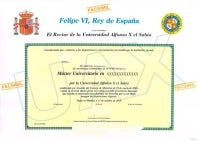
We believe that work placements are essential for a complete and quality training, so we have educational cooperation agreements with major companies, institutions and associations, so that students can complete their theoretical studies with the acquisition of the necessary practice for the performance of their duties related to the prevention of occupational hazards.
You can consult the complete list of companies here.
You can also take part in international placements, meet new colleagues from all over the world and boost your career in the international sector. For more information you can contact the international relations office.
A network of exam centres and spaces to enhance your university experience
Take your in-person exams at our designated centres in Spain and Latin America, so you can choose the location that best suits your needs. Centres are subject to availability and capacity.
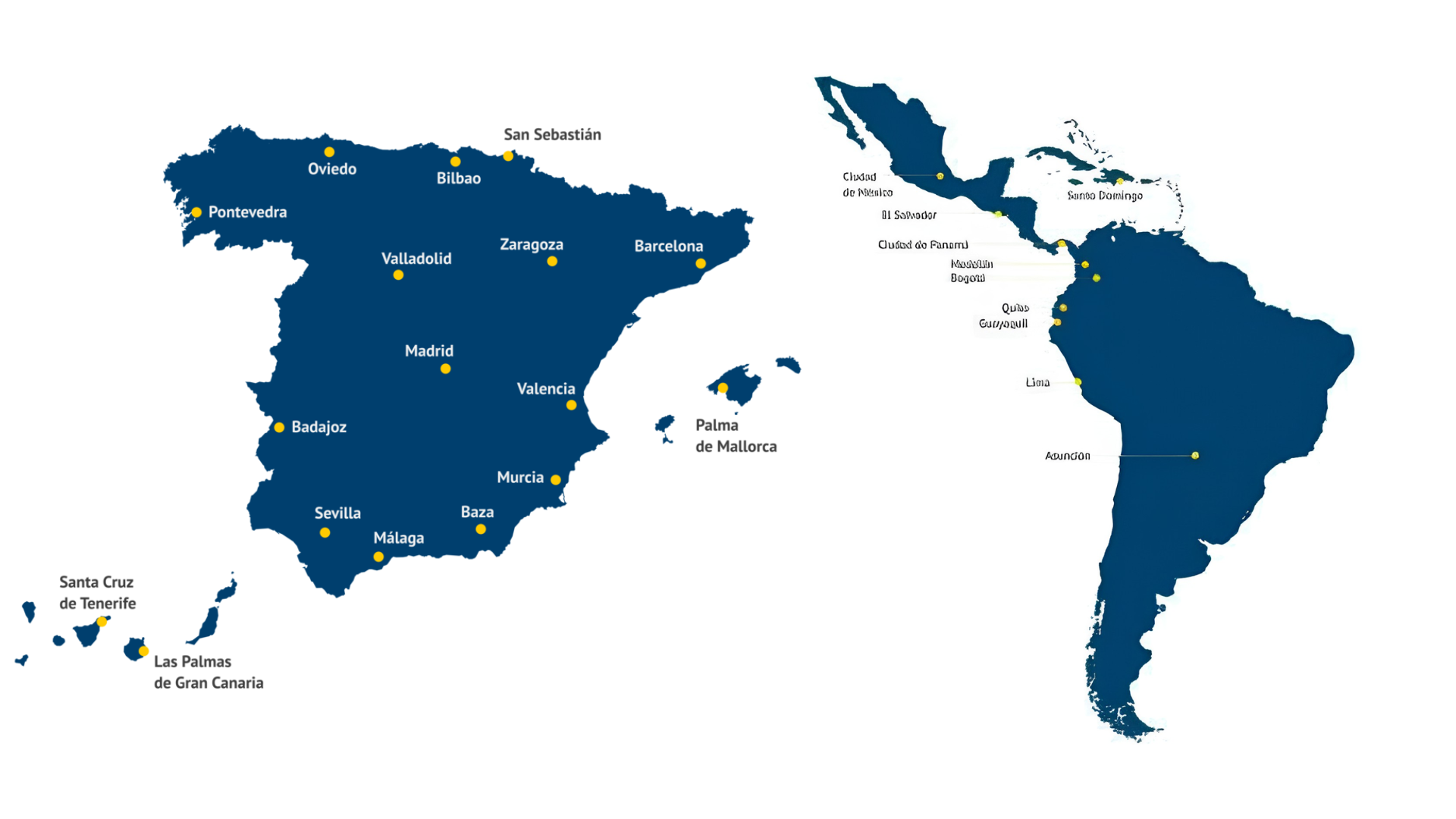
Furthermore, as a student at UAX Online, you’ll have access to our Campus Hubs – a network of exclusive physical spaces where you can study, access libraries, work in co-working areas and connect with other students. Because studying online doesn’t mean studying alone.
Campus Hubs available in: Alcobendas, Alcorcón, Valencia San Vicente, Murcia, Barcelona, Málaga, Seville and Arganda.
Access is granted with your UAX student card, subject to availability and the opening hours of each centre.

Teaching staff
These are some of the lecturers on the Master’s programme
Doctorate in Civil Engineering with extensive experience in international hydraulic, underground and high-speed railway projects. He has held senior management positions in technical services and has been a municipal councillor. He combines his professional career with university teaching and the supervision of doctoral theses.

Chemical Engineer, Technician in Occupational Risk Prevention and ATEX Specialist, with more than 13 years of experience in risk management in explosive atmospheres. He currently works at FREMAP, where he is part of the team specialising in explosion protection and carries out training and technical consultancy tasks. He also holds various certifications in the design, installation and maintenance of installations in ATEX zones.

PhD in Social and Legal Sciences, specialist in Labour Law and Social Security, accredited by ANECA. He has supervised doctoral theses, led research projects on labour law and new technologies, and participated as a lecturer in Erasmus+ programmes. His career combines legal research with a strong international vocation.

Civil Engineer with a solid background in PRL, especially in the construction and transport sectors. He has more than a decade of experience as a consultant and coordinator of technical teams, combining his professional work with university teaching. His approach combines technical vision, leadership and commitment to safety in the field of infrastructures.

PhD in Geology and Environment, specialised in hydrogeology and water resources, with more than 8 years of experience leading groundwater studies, modelling and mapping. Expert in GIS (ArcGIS), remote sensing and numerical modelling (MODFLOW, GMS). He has developed projects in Spain, Africa and America, combining work as a senior hydrogeologist in the public sector and university lecturer.

PhD in Civil Engineering with a solid technical background in the field of transport, railway infrastructures and environmental engineering. A specialist in occupational risk prevention and technical consultancy, he has focused his career on the preparation of technical bids for civil works projects at national level.
To access an official university master's degree in Spain, it is necessary to meet at least one of the following requirements (as stipulated in article 18 of Royal Decree 822/2021):
In accordance with the first additional provision of the same Royal Decree, the following may access the Master's Degree:
Likewise, in compliance with the provisions of the aforementioned Royal Decree, the UAX will reserve 5% of the places offered in official university Master's degrees for students with a recognised degree of disability equal to or greater than 33%, as well as for students with permanent educational support needs associated with personal circumstances of disability, who in their previous studies have required resources and support for their full educational inclusion. In the event that the reserve places have not been demanded in the period provided for the reservation of places on the degree, this number of places may be filled by any other applicant who meets the conditions of access and admission to the degree.
ADMISSION TESTS:
The following criteria will be taken into account for the admission of candidates:
Admission criteria:
Number of new admission places offered: 120
Given that the field of knowledge to which the Master's Degree belongs, the entry profile is multidisciplinary.
Admission profile:
Those candidates who do not accredit the legal knowledge that supports the viability of acquiring the specialised competences of this master's degree will have to take the Complementary Training Course (CCF).
Students who pass the CCF can join the Master's Degree in Occupational Risk Prevention, in accordance with the general academic regulations of the University.
Admission to the Alfonso X el Sabio University will depend on the places offered and available in the degree programme, once the legal requirements for access to the University as set out in current legislation have been met. Students enrolling for the first time at the UAX follow the procedure established by the University as described in the admission regulations published on the university website. The process consists of the following steps:
The University reserves the right not to open a degree course when the minimum number of applications established by the University is not reached. Potential students will be informed accordingly.
Candidates who do not accredit the legal knowledge that supports the viability of acquiring the specialised competences of this Master's Degree must take 6 ECTS of the Complementary Training Course (CCF), with the following syllabus:
Those students who pass the CCF can join the Master's Degree in Occupational Risk Prevention, in accordance with the general academic organisation of the University.
Alfonso X El Sabio University has approved and published regulations adapted to Royal Decree 822/2021 to deal with the transfer and recognition of credits.
If you already have previous professional experience related to the skills inherent in this degree, it may be recognised in the form of credits, up to a maximum of 6 ECTS, for the External Work Placement course. This recognition will require a personalised study. Contact our advisors and they will inform you personally.
You can consult the credit recognition regulations at the following link.
We need to know a little bit about you so that we can provide you with a personalised service.
All fields are required
En UAX sabemos que estudiar es una inversión, por eso, te damos facilidades para que accedas a nuestras titulaciones. Conoce algunas de nuestras becas y ayudas para estudiar el Máster Universitario en Prevención Riesgos Laborales (online):
With the Official Master's Degree in Occupational Risk Prevention, you will have the knowledge and skills necessary to protect the health and safety of workers. After this master's degree, you will be able to develop your professional career in roles such as:
Not sure?
We'll help you find the right programme for you.
The Master's Degree in ORP refers to the Master's Degree in Occupational Risk Prevention. It is a postgraduate programme which provides specialised training in the field of occupational risk prevention with the aim of training professionals to identify, evaluate and control the risks present in the work environment and promote a safe and healthy work environment.
El Máster en Prevención de Riesgos Laborales (PRL) ofrece diversas salidas profesionales en el ámbito de la seguridad y salud en el trabajo, ya que capacita a los graduados para desempeñarse en diferentes roles y sectores relacionados con la prevención de riesgos laborales. Algunas de las salidas profesionales comunes para quienes completan un Máster en PRL incluyen: Responsable de prevención de empresas, organizaciones o instituciones públicas o privadas; Consultor externo en sistemas que gestionan la seguridad y la salud en las organizaciones; Director de departamento; Director de responsabilidad social corporativa; Auditor de Prevención de Riesgos Laborales.
Si dispones de una titulación universitaria relacionada, tienes la posibilidad de acceder al Máster Online en Prevención de Riesgos Laborales.
Por ejemplo, si has estudiado el Grado en ADE y realizas el máster online en PRL podrás tener una visión más detallada y ocupar cargos como responsable de prevención de empresas o auditor de prevención de riesgos laborales. Los graduados en marketing que realizan el máster online en PRL podrán ocupar cargos de director de responsabilidad social corporativa.
The Master in PRL of UAX, has a duration of 9 months and is an official qualification of 60 ECTS credits.
If you are looking where to study a Master in Occupational Risk Prevention (ORP), the Universidad Alfonso X el Sabio (UAX) is an excellent choice, being the TOP 4 Best Master in Occupational Risk Prevention in Spain, according to the Ranking 2024 of Mundo Postgrado. Open Enrolment.
If you want to know more about PRL training, you can consult this article.
Other related qualifications
We offer a wide range of courses, so you’re sure to find a programme that suits you.
Online Master's Degree in Human Resources Management and Administration
In collaboration with:

Start:
October
Length:
9 months

Online Master’s Degree in Law and Legal Practice + Bar Exam Preparation Course
In collaboration with:

Start:
October
Length:
1½ years
Online Master's Degree in Renewable Energies
Start:
October
Length:
9 months

Online Master's Degree in Criminology Applied to Security Management and Crime Prevention
In collaboration with:
Start:
October
Length:
9 months

Máster Universitario en Sistemas Integrados de Gestión - SIG (online)
In collaboration with:
Start:
October
Length:
9 months

Master's Degree in Administrative Management (online)
In collaboration with:

Start:
October
Length:
9 months
Link to UAX Regulations:
You can consult the academic calendar and timetables at the following link.
This degree, according to RD 822/2021 (art. 34) must undergo the process of accreditation renewal. During the development of the process, an evaluation team of the Foundation for Knowledge Madrimasd will meet with different stakeholders of the degree. In addition, they provide us with a form so that any interested party can indicate to the Foundation those aspects they consider relevant to the development of this programme.
The UAX promotes the culture of quality among the university community through the UAX Quality System (SIUAX), for which the University Management is ultimately responsible, ensuring that the planning of the system is implemented to effectively meet the quality objectives, the satisfaction of needs, requirements and expectations of customers and interested parties.
The responsible bodies are:
- Governing Council: the highest decision-making body in the academic field and responsible for the deployment of improvement in academic processes. It is made up of the Rector, the Vice-Rectors, the Deans, the Secretary General and the Directorate of Student Services. Those responsible for the areas of Talent and Technology also participate.
- Faculty/Centre Board: body for monitoring the deployment of academic processes at faculty level. It is made up of the head of the faculty, the heads of studies of the degree programmes and the quality coordinator.
- Centre Management and Quality Committee: centre management body, made up of the Dean, Vice-Dean/s, the Centre Quality Coordinator, the coordinators of research, mobility, innovation, internships, internationalisation, and the Head of Quality of the Vice-Rector's Office for Studies and Quality. The main objective of these meetings is to monitor the development of the centre's strategic plan, as well as the needs of each of the areas and degrees.


- Degree Monitoring and Improvement Committee (SIM): responsible for ensuring academic quality and compliance with the commitments made in the programme report. It meets twice a year. Composition: Head of Studies, two lecturers, student representative, degree quality coordinator, VREC quality manager, other guests.
This organisational structure channels a bidirectional communication of the different improvement actions that allow and ensure the construction of the quality culture in the University.