See all Online Master's Degrees in Health
See all Master's Degrees in Engineering
Most searched curriculums
Study the Veterinary Access Programme to acquire the knowledge and skills necessary to secure your place on the Veterinary Degree, a qualification that has an up-to-date programme and more than 25 years of experience.
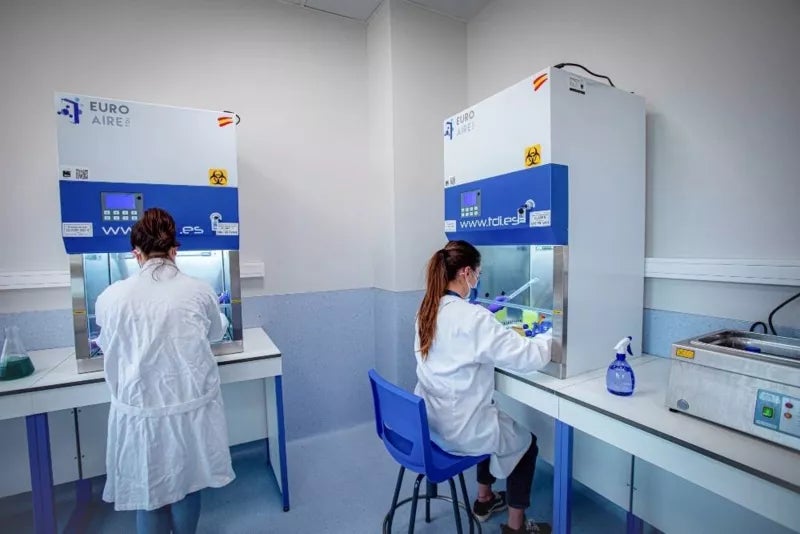
To do this, you will have the help of teachers from the same Degree in Veterinary Medicine who are also active professionals. You will be able to get to know and start using the same facilities as the students of the degree. Among others, and in order to get closer to your vocation from the first day, throughout the course you will do:
If you are an international student, you will be reinforced in the language you will have to use during your university years and in the specific terminology of the degree. Mastering this language to a good level is an essential requirement, it will help you to pass your exams, it will open the doors to work experience in hospitals and clinics and it will also allow you to communicate with your future patients fluently.
Alfonso X el Sabio University is firmly committed to providing students with the excellent training required to gain access to the degree. In return, we seek in our students a level of demand in line with the veterinary profession.
You will gain the necessary knowledge to face your first year at university. If you successfully complete this course we guarantee you access to the Veterinary Degree.
Veterinary Access Programme
First Year
ANNUAL SUBJECTS
| Code | Subjects | Character* | ECTS | ||||||||||||||
|---|---|---|---|---|---|---|---|---|---|---|---|---|---|---|---|---|---|
| 80311 | Veterinary Anatomy | OB | 12 | ||||||||||||||
Veterinary AnatomyCódigo: 80311 Imprimir Year 1. Annual module. Compulsory. 12 credits. Profesores
Objectives Introduction to Veterinary Anatomy aims to familiarise students with scientific nomenclature by studying each of the most significant elements that make up animal organisms. Furthermore, students must understand and recognise the spatial, structural and topographical organisation of each bodily component, as well as the organisation of the organs and other components of an animal into systems. They must be able to compare and distinguish the anatomical structures of the most representative domestic animal species from a veterinary perspective. Anatomy will be compared across carnivores, ruminants, equids, suids and birds. The aim of Embryology is for veterinary students to understand the developmental process of the living animal at the start of its life cycle, highlighting its relevance to the final organisation of the adult animal. In short, the knowledge provided by this module will introduce students to the anatomy of the main domestic animals. This module will serve as a foundation for students interested in studying veterinary medicine, helping them to prepare for the start of such studies in the future. Assessment Criteria Two multiple-choice tests will be set to assess students individually. The test will have four options and only one correct answer. Incorrect answers will not result in marks being deducted. Grades will range from 0 to 10. Each student’s final assessment will take into account their attendance, participation, engagement and interest shown during lectures and practical sessions. The final mark will be the arithmetic mean of the marks awarded by each lecturer. Teaching Methodology Lectures in the classroom. Diagrams will be drawn on the blackboard and presentations will be used. Student involvement and participation in class will be encouraged. Practical sessions will take place in the Anatomy Laboratory (T-201) and the Anatomical Museum, using bones, joints and skeletons. Dissection practicals will be carried out on animal carcasses. Students must bring their own dissection materials to these practicals. A white lab coat is compulsory for all practical sessions Course Schedule Two-hour lectures (MG): Theory lectures (MG) will take place on Mondays and Fridays from 9.30 am to 11.30 am Practical sessions (LB) will take place on Tuesdays from 15:30 to 17:30 in T-201, which is the Veterinary Anatomy dissection room in the T building. INTRODUCTION TO VETERINARY ANATOMY. PREU (PRE-UNIVERSITY COURSE) LECTURES TOPIC 1 – Introduction. Concepts of Anatomy and Embryology. Objectives and content of Anatomy. Comparative Veterinary Anatomy. Assessment system. Class rules Anatomical regions. Anatomical position: axes, planes and reference points of the head, trunk and limbs. Anatomical nomenclature and terminology. The origin of life. The evolution of living organisms EMBRYOLOGY TOPIC 2.- Concept of embryology. Life cycle. Stages of prenatal development: germinal, embryonic (or organogenic) and foetal periods. Gametogenesis: general concepts. Oogenesis and spermatogenesis. Oocyte and sperm. Ovarian cycle. TOPIC 3.- Fertilisation. Acrosomal and cortical reactions. Stages of fertilisation. Mechanisms to prevent polyspermy. Fertilisation in birds. The avian egg. Differences between birds/reptiles and mammals TOPIC 4.- Segmentation, morula stage and blastula stage in vertebrates, with particular reference to mammals and birds. Blastocyst hatching. Gastrulation in vertebrates, with particular emphasis on mammals and birds. Movements and folds during gastrulation. Derivatives of the germ layers: ectoderm, mesoderm and endoderm. TOPIC 5.- Placentation. Nidation and implantation. Embryonic appendages: yolk sac, amnion, allantois and chorion. Embryonic circulation: intra-embryonic, yolk and umbilical. Morphological and histological classification of placentas. Decidual and adecidual placentas. Umbilical cord and chorionic sac. Evolution and characteristics of the chorionic sac in different domestic species. LOCOMOTOR SYSTEM: OSTEOLOGY AND ARTHROLOGY TOPIC 6. – Osteology: structure of bones. Most significant bones. Spine. Upper limbs and lower limbs. Types of bones: classification. TOPIC 7.- Arthrology. Types of joints. Joint structure and mechanics. Main joints. Nomenclature. Joints of the vertebral column. Comprehensive study of the vertebral column: functional characteristics in domestic animals. The thorax as a whole. The most important joints of the limbs. Forelimb and hindlimb NERVOUS SYSTEM, ENDOCRINE SYSTEM AND HEAD TOPIC 8. Introduction to the study of the nervous system. Organisation of the nervous system. Division of the Nervous System. Central, peripheral and autonomic nervous systems. Brain and spinal cord. Meninges and cerebral ventricles. Cerebrospinal fluid and epidural fat. TOPIC 9.- Peripheral Nervous System. Main nerves. Cranial nerves at the level of the head. Foramen magnum. Spinal nerves. Brachial and lumbosacral nerve plexuses. Main nerves TOPIC 10.—Neuroendocrine system: Pituitary gland. Adenohypophysis and neurohypophysis. Hypothalamic-pituitary axis. Hormonal regulation. Endocrine glands. Thyroid gland. Parathyroid glands. Adrenal glands. Structure, morphology, location and relationships of the glands with the nervous system. The hypothalamic-pituitary axis. CARDIOVASCULAR SYSTEM TOPIC 11.- Vascular system: characteristics of the arterial, venous and lymphatic systems. Blood circulation. Circulatory changes at birth. Heart. Cardiac chambers and valvular structures. Pericardium. Cardiac conduction system. TOPIC 12.- Heart. Cardiac chambers and valvular structures. Myocardium. Endocardium. Pericardium. The cardiac conduction system. Coronary arteries and veins. The heart’s relationships within the thorax. Mediastinum. Major blood vessels. Large arterial trunks. Abdominal aorta and its branches. Major vessels of the organs and extremities. Venous system. Major veins and exceptions LIVER. LYMPHOID AND HAEMATOPOIETIC SYSTEMS TOPIC 13. Liver and gallbladder. Bile ducts and the common bile duct. Circulation in the liver. Hepatic portal vein. Spleen, thymus, bursa of Fabricius (birds), lymph nodes. Morphology and structural organisation. Location and anatomical relationships. Lymphatic circulatory system: Lymphatic vessels and lymphatic circulation. Main lymph nodes, topographical position 2nd QUARTER RESPIRATORY SYSTEM TOPIC 14. Structure of the respiratory system. Nasal cavities and paranasal sinuses. Pharynx and larynx. Trachea and lungs. Bronchial tree and respiratory portion. Mediastinum and pleura. Pulmonary blood circulation. Respiratory system of birds: trachea, syrinx, lungs. Air sacs of birds. DIGESTIVE SYSTEM TOPIC 15.- The digestive system of mammals and birds. Components. Oral cavity: lips, cheeks and palate. Tongue. Teeth. Salivary glands: parotid, mandibular and sublingual. Mechanism of swallowing at the level of the pharynx and larynx. Oesophagus. Stomach. Stomach of ruminants. Comparative anatomy of the digestive system in different animal species. TOPIC 16.- Intestine: general arrangement. Small intestine: duodenum, jejunum and ileum. Pancreas: description and associated ducts. Large intestine: caecum, colon and rectum. Characteristics. Comparative study in domestic species and differences. Vascularisation and innervation of the intestine in domestic animals. UROGENITAL SYSTEM TOPIC 17.- Kidneys: morphology and relationships. Urinary tract. Renal pelvis, ureters, urinary bladder and urethra. TOPIC 18.- Male reproductive system. Urinary tract. Renal pelvis, ureters, urinary bladder and urethra. Testis: Testicular descent. Epididymis. Vas deferens, spermatic cord, accessory glands of the male genital system and male urethra. Penis and foreskin. TOPIC 19.- Female reproductive system. Ovary: structure in domestic females. Fallopian tubes. Ovarian bursa. Uterus. Vagina, vaginal vestibule and vulva. Gestation. Comparative anatomy across species. Evolution of the uterus. TOPIC 20.- Mammary glands. Morphology and differences between species. The cow’s udder SENSORY ORGANS TOPIC 21.- Organ of vision. Eye. Internal structure of the eye. Parts and associated structures. Optic nerve. Accessory organs of the eyeball: muscles, orbital fasciae, conjunctiva, lacrimal apparatus. Optic pathways. TOPIC 22. – The ear. Vestibulocochlear organ. The auricle, external auditory meatus. Middle ear: tympanic membrane, tympanic cavity, Eustachian tube, ossicles. Inner ear: bony labyrinth, membranous labyrinth. Vestibular and cochlear pathways. Pharyngotympanic tube and laryngeal sacs. MUSCULOSKELETAL SYSTEM: TOPOGRAPHICAL ANATOMY AND MUSCULATURE TOPIC 23. – General overview of the musculoskeletal system. Components of the musculoskeletal system: bones, joints, muscles, connective tissue, fasciae, ligaments, tendons, synovial bursae. Nomenclature. Origins and insertions. Function. Myology. Types of muscles: structure, attachment and function. Classification. Flexion and extension. Innervation of the muscles. TOPIC 24.- Main muscle groups according to topographical distribution. Musculature of the dorsal and ventral neck Muscular system of the back region TOPIC 25.- Main muscle groups according to topographical distribution. Muscles of the upper limb Muscles of the thorax and abdomen TOPIC 26. – Main muscle groups according to their anatomical distribution. Muscles of the gluteal region Muscles of the lower limb Muscles of birds PREU PRACTICAL TRAINING PROGRAMME – VETERINARY ANATOMY 1st Term: OSTEOLOGY: PRACTICAL 1 – Planes and directions. Main body regions. Nomenclature. Spatial position of the bones. Joints. Comparative anatomy of skeletons of different species from the Anatomical Museum. The vertebral column: cervical, thoracic and lumbar vertebrae, the sacrum and caudal vertebrae. Comparative study. Ribs and sternum. PRACTICAL SESSION 2. Upper limb: scapula, humerus, ulna and radius. Comparative anatomy. Hand and foot: comparative anatomy. Carpal and tarsal bones. Hoof. Arthrology of the upper limb. Pelvic limb. Pelvis, femur, tibia and fibula. Comparative study. Artrology of the pelvic limb. Study of the head. Study of the facial skeleton and skull. Comparative anatomy. Study of the jawbone and hyoid bone. Major foramina. Sagittal sections of the head. Sinuses. Meninges. Facial musculature. Hyoid apparatus. Pharynx and larynx 2nd Term: DISSECTION: PRACTICAL 3: ORGANS. Opening of the thoracic and abdominal cavities in domestic animals (mammals and birds). Comparative study. Diaphragm. Structure and function of the diaphragm. Position of organs. Liver, spleen, pancreas, stomach, intestine. Urogenital system. Major arteries, veins and nerves. PRACTICAL 4: DISSECTION OF THE MUSCULATURE. Fundamental dissection techniques. Dissection of the skin. Musculature. Tendons, ligaments and fasciae. Dissection of the dorsal and ventral regions of the neck. Main muscle groups of the thoracic and pelvic limbs. Musculature of the thorax and abdomen. Arteries, veins and nerves. Prerequisites Knowledge of basic biology High school-level knowledge of science Requirements A white lab coat is compulsory for all practical sessions. Students must bring dissection materials to dissection practicals. Assessment Class attendance, participation, engagement and the interest shown by each student in lectures and practical sessions will be taken into account. Computer programmes authorised by UAX will be used to conduct examinations, making full use of the possibilities offered by technology, including the Moodle platform. Examinations may take the form of multiple-choice tests to assess students’ understanding. Multiple-choice examinations will have several options and a single correct answer. A mark of at least 5 out of 10 is required to pass each exam. To pass the module, students must pass all mid-term exams individually; that is, they must achieve a mark of at least 5 out of 10 in each one. Failed mid-term exams cannot be offset by the overall average; to calculate the average, all mid-term exams must have been passed. In the event of exam misconduct, the UAX’s academic discipline regulations will apply. Attempts at exam misconduct may be considered very serious offences. |
|||||||||||||||||
| 80313 | Study Techniques | OB | 2 | ||||||||||||||
Study TechniquesCódigo: 80313 Imprimir Year 1. Annual module. Compulsory. 2 credits. Profesores
|
|||||||||||||||||
| 80315 | Spanish | OB | 8 | ||||||||||||||
SpanishCódigo: 80315 Imprimir Year 1. Annual module. Compulsory. 8 credits. Profesores
Objectives •Learning and practising the various language skills in Spanish: grammar, speaking and listening, writing and reading comprehension. •Expanding vocabulary and learning expressions and idioms. •Mastery of formal and informal registers. •Understanding the cultural aspects necessary for effective communication in Spanish. •Text composition. Assessment Criteria •Class attendance and participation. •Exercises to be completed in class and at home. •Continuous assessment tests. REGULAR EXAM SESSION o Oral exam: 40% o Written exam: 60% Students must sit both exams and achieve a mark of at least 5 in both the oral and written exams. If they fail to do so, they must sit the supplementary sitting. SUPPLEMENTARY EXAMINATION SESSION o Oral exam: 40% o Written exam: 60% Students must sit both examinations and achieve a mark of at least 5 in both the oral and written examinations. Teaching Methodology • Use of the COMPULSORY textbook and supplementary material covering additional topics, which will be made available via the Virtual Campus. Students must bring the textbook to the first class of the course. David Isa and Amelia Guerrero. Nuevo Prisma. Level B1. Student’s Book, Madrid: Edinumen, 2015. ISBN 978-84-9848-636-0 David Isa and Amelia Guerrero. Nuevo Prisma. Level B1. Workbook, Madrid: Edinumen, 2015. ISBN 9788498486391. All students who purchase the textbooks via the publisher’s website will receive a 10% discount. How to do this: 1. Go to the website, select the level and the material: https://edinumen.es/metodos-jovenes-y-adultos/nuevo-prisma 2. Once you have selected the books, at the checkout, enter the following promotional code: UAX2022NPB1B2C1 •Support with audiovisual materials. •Oral presentations by students. Course Content Introduction To be Revision of past tenses Simple future Simple conditional Present subjunctive Expressing agreement and disagreement Imperative Giving advice or recommendations Prepositions Expressing wishes and requests To like, to love, to annoy Expressing feelings Time clauses Causal clauses Expressing thanks and apologies Independent clauses Expressing certainty Past perfect subjunctive By and for Final clauses Verbal periphrases Prerequisites International students whose mother tongue is not Spanish. Requirements International students whose mother tongue is not Spanish. Assessment CONTINUOUS ASSESSMENT PROCESS The assessment process will consist of verifying and evaluating the student’s acquisition of the competences. To this end, the following assessment activities will be used to determine the extent to which each of the listed competences has been mastered: First term o Test 1: listening and reading comprehension (10%) o Test 2: written exam (20%) If students have failed any of these tests, they may sit each of the tests during the ordinary January examination session. Second term: o Assessment 3: written exam (10%) o Test 4: oral exam (30%) o Assessment 5: written exam (30%) Students must achieve a minimum mark of 5 in both Assessment 3 and Assessment 4 to pass the module through continuous assessment. If they do not achieve this, they must sit the exams in the ordinary examination session and/or the supplementary examination session. Furthermore, students are required to sit ALL the assessments forming part of the continuous assessment. Finally, in order for the continuous assessment to count, students must have a minimum attendance rate of 80 per cent in each term (no more than 6 absences, whether justified or not, are permitted in each term). |

|||||||||||||||||
| 80317 | Scientific English | OB | 8 | ||||||||||||||
Scientific EnglishCódigo: 80317 Imprimir Year 1. Annual module. Compulsory. 8 credits. Profesores
Objectives To provide an introduction to the specialist English used in the Health Sciences, enabling students to communicate and participate successfully in contexts and situations related to their future profession where English is the language of communication. Skills acquired - The ability to communicate in English, both orally and in writing, with patients and/or carers as well as with fellow professionals, adapting the register to suit the situation and purpose of the communication. - The ability to create safe and comfortable environments for patients and/or carers through the use of language. - The ability to search for, understand and process content related to the Health Sciences in order to produce further content, and to present this orally and/or in writing, using technology, both individually and in groups, and always in a responsible manner. - Ability to explore, select and use technological tools for searching for, processing and sharing content, as well as to use them responsibly and manage content in a manner that respects authorship. - Ability to participate responsibly in collaborative work. Assessment Criteria To assess students’ learning and their achievement of the proposed objectives, the following aspects will be taken into account in the proportions indicated in brackets, at the end of each of the modules into which the course is divided: - Attitude (10 per cent): in each module, students’ punctuality, responsibility, participation, initiative, willingness to collaborate, etc., will be assessed throughout the module. - Assigned tasks (20 per cent): individual and/or group work. - Mid-term exams (70%). It is important to note that, in order to be eligible to sit these exams, students must have attended at least 80 per cent of the teaching hours for each block. The result of the assessment for each module will account for one third of the final mark. Students’ performance will be assessed in the following areas: - Comprehension and production of texts in English, both spoken and written, covering content related to Health Sciences, written in professional language (e.g. descriptions of: professions in the field of Health Sciences in terms of roles and responsibilities; ‘diseases, their symptoms and signs’, ‘medical records’, etc.). - Effective verbal interaction with patients and/or carers and fellow students through various channels (face-to-face, by telephone, by email, amongst others). - Taking relevant and accurate notes on the spot, being able to identify vital information and record it using abbreviations. - Drafting texts with appropriate use of format and language (e.g. referral letters, case histories, abstracts, etc.) necessary for carrying out medical, dental and veterinary work. - Adapting register and pragmatic strategies to communicative situations involving patients and/or carers and/or professional colleagues, so as to optimise the effectiveness of gathering and conveying information relevant to patients’ diagnosis, treatment and well-being. Teaching Methodology The methodology to be used in this module will be based on the constructivist model, to which a communicative approach will be applied, supported by the use of ICT. The focus will be on the learner, whose skills in independent learning and collaborative work will be fostered through each proposed activity. The course will be predominantly practical in nature and will be conducted in the target language. Below is a list of the types of learning activities that will be proposed: Motivation/Information Phase - Contextualisation activities: verbal (through questions, audio clips, sounds, etc.) or non-verbal (images) evocation of a topic. - Brainstorming: similar to contextualisation, although it involves free, unstructured contributions from students on the suggested topic. - Purposeful conversations: genuine and authentic verbal interactions between teachers and pupils on real-life topics and situations. Input/Content Phase - Demonstrations by the teacher of the procedures to follow, the content to be covered and the language to be used, as well as how to use specific tools to search for, process, present and share knowledge. - Language modelling: presentation of linguistic aspects through isolated but contextualised examples. - Presentation of dialogues: audio recordings designed to familiarise learners with specific linguistic aspects (vocabulary, structures, pronunciation, etc.). - Closed-ended questions and answers: these emphasise the correct use of the linguistic aspects being worked on, rather than the content. - Revision activities, developed jointly by the teacher and the students. Practice Phase - Mechanical structural exercises: based on repetition, substitution or other types of alterations, these focus on the correctness of form rather than content, although an attempt will be made to redress this imbalance. - Activities to prepare for subsequent tasks, including note-taking or drafting. - Activities to identify relevant aspects of information presented through oral or visual media, which may involve note-taking, completing tables, etc., and may be carried out individually or in groups. - Games. - Role-plays. - Open-ended questions and answers, which encourage more authentic interactions. - Assessment activities, which enable the teacher to evaluate the student’s learning and provide them with feedback. Transfer/Application Phase - Information transfer activities: these involve extracting and subsequently applying information to complete a task. - Information-sharing activities: pupils gather the necessary information not only through their own work but also through the contributions of their classmates. - Reports: presentations of work previously carried out (e.g. oral presentations or fact sheets). - Written composition. - Simulations of real-life situations and experiences (e.g. job interviews). In addition to the above, assessment tests will also be included. Course Schedule The module is divided into three blocks, with the duration and topics set out below: Block 1: Terminology specific to the Health Sciences (1 October – 29 October) Block 2: Consultation care (interview and examination) (30 October – 28 November) Block 3: Medical records and referral letters (29 November – 11 January) The content is broken down as follows: Vocabulary - Vocabulary relating to: professions within the field of Health Sciences; human and animal anatomy; diseases, symptoms and signs; treatments; etc. - Vocabulary for describing patients in terms relevant to their diagnosis and treatment (age, gender, chronic conditions, etc.). - Affixes of Latin and/or Classical Greek origin, for the formation of technical vocabulary in the field of Health Sciences. - Irregular plural forms of technical terms specific to the Health Sciences. - Units of measurement (e.g. time, volume, dose, etc.). Grammatical - Present Simple: used for descriptive and historical purposes. - Present Perfect and Simple Past for narrating events. - Interrogative structures: open and closed, direct and indirect. - Question tags. - Expressing intention (I’d like, I’m going to). - Instructions and recommendations (imperative, ‘should’, etc.) - Expressing time: start, duration, frequency, etc. - Expressing quantity: amounts. Pragmatics - Defining and describing. - Presenting content orally. - Introducing oneself. - Small talk. - Create a safe and comfortable atmosphere. - Check that the information provided/received has been properly understood. - Making polite requests. - Asking for favours. - Resolve communication difficulties. - Write case histories and letters of reference. Prerequisites On the first day of the course, placement tests will be held in order to organise students into groups of similar proficiency levels (Basic, Intermediate and Advanced). Requirements To pass this module, students must, on the one hand, have submitted each of the assignments set during the module within the specified deadlines and, on the other hand, have passed the final test for each block, which may only be taken if they have attended at least 80 per cent of the classes. Assessment In each session, the teacher will observe and assess students in terms of their punctuality, participation, initiative, willingness to collaborate, respect towards their classmates and teachers, and responsibility for their own learning process, etc., which, as specified in the assessment criteria, will account for 10 per cent of the mark. Furthermore, throughout each of the modules into which the course is divided, assignments will be set to help students prepare for the exam to be held at the end of each module. These will account for 20 per cent of the mark. |





|||||||||||||||||
| TOTAL: | 30 | ||||||||||||||||
FIRST FOUR-MONTH PERIOD
| Code | Subjects | Character* | ECTS | ||||||||
|---|---|---|---|---|---|---|---|---|---|---|---|
| 80314 | Biology | OB | 6 | ||||||||
BiologyCódigo: 80314 Imprimir Course 1: First-semester module. Compulsory. 6 credits. Profesores
Objectives The objectives of the module are as follows: 1. To understand the different forms of cellular organisation (prokaryotic and eukaryotic organisation). 2. To understand the structure and organisation of the prokaryotic cell. 3. To understand the structure and organisation of the eukaryotic cell, its organelles and the function of each one. 4. To understand the cell cycle, the processes of cell division and cell death. 5. To understand the structure of the genome within the cell and the organisation of DNA. 6. To understand the molecular basis of the processes of replication, transcription and translation. 7. To understand the transmission of hereditary traits, Mendelian genetics and the processes of genetic recombination. Assessment Criteria ASSESSMENT SYSTEM 1. Exams: 75% of the mark. 2. Continuous assessment: this will consist of a seminar paper (COMPULSORY) and student participation. This accounts for 25% of the mark. EXAM FORMAT 1. During the course, there will be two eliminatory mid-term exams. 2. The dates of these exams are: First mid-term exam: Monday 6 November 2023. Second mid-term exam: Monday 8 January 2024. 3. The exams will consist of a multiple-choice test of 20 questions, each with five options, only one of which is correct. There will be no negative marking, but a minimum of 12 correct answers is required to achieve a mark of 5 out of 10. 4. A mark below 5 in either mid-term exam may be offset by the mark from the other mid-term exam and/or the seminar mark, provided that the overall mark is at least 3.5. 5. If the final mark is below 5, the failed mid-term exam(s) must be retaken in the January examination session. 6. If the final mark is below 5 but the mid-term exams have been passed, the student must sit both mid-term exams in the January examination session to improve their marks in those exams. 7. During the examinations, the use of any reference materials, calculators or mobile phones will NOT be permitted. JANUARY EXAM SESSION: 1. There will be one exam for each failed part (mid-term exams). The final mark will be the sum of the average of the marks from the January exams and the mark for Continuous Assessment. 2. If the final mark is 5 or above, the student will have passed the module. 3. If a student fails (or does not sit) the January exam, they will have to sit an exam covering the entire course during the extraordinary examination session in July. MAY–JUNE REGULAR EXAMINATION SESSION: 1. The final mark will be the sum of the mark for the exam in this sitting and the mark for continuous assessment. 2. If the final mark is 5 or above, the student will have passed the module. 3. If a student fails (or does not sit) the exam, they will have to sit the exam for the entire module during the July supplementary exam session. JULY EXTRAORDINARY EXAMINATION SESSION: 1. Students will be examined on the entire syllabus for the module. 2. Continuous Assessment will not be taken into account. 3. The only element of assessment will be the mark obtained in the relevant examination; in other words, the examination mark will account for 100 per cent of the course mark. Teaching Methodology Teaching activities: Lectures. Seminars. Consultation sessions. Skills acquired: • Students should have demonstrated that they possess and understand knowledge in a field of study building on the foundations of general secondary education; this is typically at a level which, whilst drawing on advanced textbooks, also includes certain aspects requiring knowledge from the cutting edge of their field of study. • Students should be able to apply their knowledge to their work or vocation in a professional manner and possess the skills typically demonstrated through the development and defence of arguments and the resolution of problems within their field of study. • Students should be able to gather and interpret relevant data (usually within their field of study) in order to form judgements that include reflection on relevant social, scientific or ethical issues. • Students should be able to communicate information, ideas, problems and solutions to both specialist and non-specialist audiences. • Students should have developed the learning skills necessary to undertake further study with a high degree of autonomy. • To practise their profession with respect for other healthcare professionals, whilst acquiring teamwork skills. • To communicate effectively, both orally and in writing, with members of the public, health professionals, industry representatives and the media, whilst being able to use information and communication technologies, particularly those related to the health sciences. • To understand, critically evaluate, and know how to use and apply sources of information relating to lifestyles and health issues. • Acquire the basic training required for research activity, being able to formulate hypotheses, collect and interpret information to solve problems using the scientific method, and understand the importance and limitations of scientific thinking in the field of health. • Understand the chemical, biochemical and biological principles applicable to the Health Sciences. • Understand the various educational methods used in the Health Sciences. • To acquire teamwork skills within a unit in which professionals and other staff involved in diagnostic assessment and treatment in the Health Sciences are organised in a mono-, multi- or interdisciplinary manner. Learning outcomes: • Be able to produce, either orally or in writing, reports, ideas and/or summaries on a specific area of study. These documents must contain logical arguments and conclusions, as well as employing a sound logical structure and appropriate language. • Be able to resolve issues or problems and form judgements on an area of study, by gathering and interpreting relevant data, following the scientific method. • Be able to critically evaluate, utilise and apply sources of information relating to lifestyles and health issues. • Understand the chemical, biochemical and biological principles applicable to the Health Sciences. • Demonstrate teamwork skills. • Be able to communicate (gathering, analysing and synthesising information, negotiating, managing conflicts, conveying news and prescriptions, etc.) with laypeople and with experts from other fields. • Distinguish between the characteristics of spoken and written expression, and be able to define a topic and organise ideas appropriately. • Be able to conduct effective research and use the main databases in the Health Sciences. Course Syllabus The course syllabus according to the chosen degree programme: Syllabus for prospective Medicine and Dentistry students Topic 1. Chemical composition of the cell. Cellular organisation. Topic 2. Major macromolecules. Topic 3. Biological membranes. Topic 4. Membrane transport. Topic 5. Extracellular matrix and cell junctions. Topic 6. Cytoskeleton. Topic 7. Endoplasmic reticulum, Golgi apparatus and peroxisomes. Topic 8. Mitochondria and chloroplasts. Topic 9. The nucleus. The cell cycle. Genes and inheritance. Topic 10. Replication, transcription and translation. Ribosomes. Syllabus for prospective veterinary students: 1. History of Biology. 2. Evolution. 3. Classification of living organisms. 4. Chordates. 5. Parazoa – Diblastica Eumetazoa. 6. Acoelomates and Pseudocoelomates. 7–9. Protostomes. 10. Deuterostomes. Prerequisites In general, a basic understanding of physics, chemistry and biology: 1. A science A-level or at least a basic understanding of physics, chemistry and cell biology is required. 2. Knowledge of English is required to read popular science articles and review papers, as well as to access websites written in that language. 3. Basic computer skills are required to use word processors, databases, create presentations and access the Internet to search for information. Requirements No specific requirements are necessary. Assessment Continuous assessment will consist of a seminar assignment (COMPULSORY) and student participation. This accounts for 25% of the mark. |
|||||||||||
| 80316 | Statistics | OB | 6 | ||||||||
StatisticsCódigo: 80316 Imprimir Course 1: First-semester module. Compulsory. 6 credits. Profesores
Objectives The course aims to introduce students to the basic concepts of statistics, with a focus on health sciences, so that they can successfully complete their first year at university. Assessment Criteria Assessment of the module will be based on a range of practical exercises in which students will be required to demonstrate their ability to solve statistical problems by applying the theoretical concepts covered in class. Teaching Methodology Classes will consist of lectures in which the lecturer will present the theory, illustrating it with examples, and seminars in which students will solve problems set by the lecturer, with the lecturer’s assistance where necessary. Course Schedule Topic 1: Descriptive statistics (3 weeks) Topic 2: Probability (3 weeks) Topic 3: Probability distributions (3 weeks) Topic 4: Linear regression (2 weeks) Prerequisites Basic calculus Requirements None Assessment REGULAR EXAM SESSION The following assessment tests will be held during the course: - Test 1 (20% of the final mark) - Test 2 (20% of the final mark) - Submission of assignments and class exercises (20% of the final mark) - Final course examination (40% of the final mark) SUPPLEMENTARY EXAM SESSION 100% of the mark will be based on the final course exam. |
|||||||||||
| 80571 | Immunology | OB | 6 | ||||||||
ImmunologyCódigo: 80571 Imprimir Course 1: First-semester module. Compulsory. 6 credits. Profesores
Objectives The overall objective of this module is to integrate information relating to the field of immunology into the pre-university veterinary degree programme. To this end, the module has been structured into three thematic blocks, the objectives of which are: - To familiarise students with the constituent elements of the immune system and their interaction in the development of an immune response. - To acquire an understanding of the molecular and cellular basis of the most significant immunological disorders in the animal world. - To analyse the most effective methods of prevention (passive immunisation, vaccines) and treatment (immunomodulation) of diseases. Assessment Criteria Without prejudice to any other requirements that may be specified in the relevant course syllabus, as a general rule, failure to attend more than 80 per cent of the course’s teaching activities—which require the student’s physical or virtual presence—will result in the loss of the right to continuous assessment during the standard examination period. In this case, the examination to be held during the official period set by the University will be the sole assessment criterion, with the weighting specified in the course syllabus. February exam: a multiple-choice exam comprising 50 questions (30 questions for students who have passed a mid-term exam). To pass the module, students must achieve a mark of 5 or above in this ordinary examination session. Overall mark for the ordinary examination session: The final mark for the module, provided the February ordinary session exam has been passed, will be determined as follows: Seminar mark: 30% of the final mark Theory exam: 70% of the final mark (each part of the theory accounts for 50% of the theory mark) Supplementary examination session: Students who have not passed the ordinary examination session must sit an examination covering the entire syllabus of the module during the supplementary examination session. The examination will consist of 50 multiple-choice questions. The mark for the supplementary assessment will be 100 per cent of the mark obtained in the supplementary exam. Teaching Methodology The module is divided into two parts: Lectures: During the lectures, the theoretical content of the course syllabus will be taught (see the following section). Audiovisual aids will be used during the lectures, including various software programmes (Microsoft Office, video-playing software, Wooclap) Seminars: During this part of the module, students will be divided into working groups, where they will develop a topic related to the module. These projects will be presented to the rest of the students. Course Schedule Contents PHYSIOLOGY OF THE IMMUNE RESPONSE Topic 1 INTRODUCTION TO IMMUNOLOGY. Basic concepts in immunology. The concepts of antigenicity, immunogenicity and specificity. Cells and tissues of the immune system. Innate immunity: phagocytes and complement. Adaptive immunity: lymphocytes. Topic 2 THE INNATE IMMUNE RESPONSE. Characteristics of the innate immune response. Key components of the innate immune response: phagocytes and the complement system. Characteristics and function of phagocytic cells. Characteristics and activation mechanisms of the complement system: classical pathway, alternative pathway, lectin pathway. Functions of the complement system. Regulation of the complement system. Inflammatory response: characteristics, components and function within the innate immune response. Topic 3 B LYMPHOCYTES AND THEIR ANTIGEN RECEPTOR. Origin and development: phenotypic changes during development. Phenotype: the B-lymphocyte antigen receptor and other markers of differentiation. BCR generation: genetic mechanisms involved in receptor diversity. Differentiation: negative selection of immature B lymphocytes. Function: antigen recognition and antibody production. Cell activation. Topic 4 ANTIBODIES AND THEIR RECEPTORS. Structure of antibodies: type and function of the different domains. Structural variations in the immunoglobulin molecule: isotypes, allotypes and idiotypes. Classes of immunoglobulins: function, characteristics and distribution of each class. Antibody synthesis: generation of diversity in the antibody repertoire. Immunoglobulin receptors: structure and function. Topic 5 T LYMPHOCYTES AND THEIR ANTIGEN RECEPTOR. Origin and development: phenotypic changes during development. Phenotype: the T lymphocyte antigen receptor and other markers of differentiation. TCR generation: mechanisms of rearrangement and expression of antigen receptor genes. Function: cell-mediated immunity and cytotoxicity. Differentiation: positive and negative selection of immature T lymphocytes. Topic 6 HISTOCOMPATIBILITY MOLECULES. Types of histocompatibility antigens: Class I and II. Structure of MHC molecules. Tissue expression of MHC molecules. Genetic characteristics: organisation and polymorphism. Function: the concept of MHC restriction. Processing of exogenous and endogenous antigens. Topic 7 LYMPHOCYTE ACTIVATION. Recognition and effector mechanisms of adaptive immunity. T-lymphocyte activation. Activation signals for B-lymphocytes: generation of plasma cells and memory cells. Superantigens. Cellular immunity: types and development of cytotoxicity: the role of T-lymphocytes and NK cells. Apoptosis. Leukocyte trafficking IMMUNOPATHOLOGY: CELLULAR AND MOLECULAR BASES Topic 8 IMMUNE DYSFUNCTION: AUTOIMMUNITY. The concept of immunological tolerance. Acquisition of self-tolerance. The concept of autoimmunity: general characteristics. Types of autoimmunity. Animal models. Topic 9 IMMUNE EXCESSES: ALLERGIES. Hypersensitivity. Concept and classification. Immediate hypersensitivity (Type I). Concept of anaphylaxis and atopic allergy. Type II hypersensitivity: antibody-dependent cytotoxicity. Type III hypersensitivity: immune complex formation and the Arthus reaction. Type IV hypersensitivity: delayed hypersensitivity. Topic 10. IMMUNISATION AND DISEASE CONTROL: PASSIVE IMMUNISATION AND VACCINES. Concept and characteristics of passive immunisation. Production of therapeutic antisera. Preparation, storage and administration of antisera. Concept of a vaccine. Nature of vaccines. Bacterial and toxin vaccines. Autovaccines. Adjuvants. Preparation, evaluation and control of vaccines. Viral vaccines. Live attenuated vaccines. Methods of attenuation. Production and control of live vaccines. Potency and safety. Inactivated vaccines. Production and methods of inactivation. New-generation vaccines: synthetic vaccines and DNA vaccines Assessment There will be two mid-term exams (30-question multiple-choice tests). The exam dates are scheduled for mid-November (1st mid-term) and for late December or the first week of January, following the Christmas holidays (2nd mid-term). These exams will take place during lecture times, and a mark of 5 or above is required to pass. Students who have passed these mid-term exams will not be required to sit the exam for the section they have already passed in the February examination session. |
|||||||||||
| TOTAL: | 18 | ||||||||||
SECOND FOUR-MONTH PERIOD
| Code | Subjects | Character* | ECTS | ||||||
|---|---|---|---|---|---|---|---|---|---|
| 80318 | Biochemistry | OB | 6 | ||||||
BiochemistryCódigo: 80318 Imprimir Course 1. Second-term module. Compulsory. 6 credits. Profesores
Objectives 1. To understand the structures of biomolecules and their transformations within the cell. 2. To acquire a basic understanding of molecular biology. 3. To understand the structure and properties of cell membranes. 4. To understand the structure and properties of enzymes. 5. To understand basic laboratory procedures used in biochemistry and molecular biology, including the use of scientific equipment. 6. To assess the biological risks associated with the use of substances and laboratory processes involved. 7. To understand the relationship between biomolecules, drugs and medicines, as well as other products and raw materials of health-related interest for human or veterinary use Assessment Criteria ASSESSMENT THROUGHOUT THE COURSE. Throughout the course, students will sit a total of two examinations. The theory mark will correspond to the average of these examinations. The student’s mark will be calculated taking into account: 80% Average mark from the exams 20% Assessment of activities during the course, practical work and attendance. If a student achieves a mark of five or above, they will have passed the module and will not need to sit any further examinations; the resulting mark will be their final mark. REGULAR EXAM SESSION If a student has not passed the module during the academic year, they will be eligible for a regular resit, during which they will be examined on the part or parts of the module in which they failed. The final mark will consist of 100% of the exam mark (averaged with any parts previously passed) from the ordinary examination session. EXTRAORDINARY EXAMINATION SESSION If a student has not passed the module in the ordinary resit, they will be entitled to an extraordinary resit, in which they will be examined on the part or parts of the module in which they failed. The final mark will consist entirely of the exam mark (which will be averaged with any parts previously passed) from the supplementary examination session. Teaching Methodology Teaching activities: Lectures. Seminars. Consultations. Course Content BIOCHEMISTRY PROGRAMME I. – INTRODUCTION TO BIOCHEMISTRY 1. The concept of biochemistry. Historical development and current overview. 2. Molecular composition of living organisms. Organisation of living matter. Cell organelles. Biomolecules. Water. Molecular interactions II. CARBOHYDRATES 3. Carbohydrates: concept and classification. Monosaccharides: structure and physical and chemical properties. Monosaccharide derivatives. Disaccharides of biological interest. 4. Polysaccharides: homopolysaccharides and heteropolysaccharides. Proteoglycans. III. LIPIDS 5. Lipids: concept and classification. Fatty acids: structure and properties. 6. Structure and properties of acylglycerides, phosphoacylglycerides, sphingolipids and waxes. 7. Prostaglandins and derivatives. Isoprene derivatives: terpenes, carotenes, vitamins A, E and K. Sterols and derivatives: cholesterol, bile acids, steroid hormones and vitamin D. IV. – NUCLEIC ACIDS 8. Nitrogenous bases. Nucleosides and nucleotides: structure and function. 9. Deoxyribonucleic acid (DNA): structure and properties. Ribonucleic acid (RNA): types, structure and properties. V. – PROTEINS 10. Amino acids: general structure, classification and properties. 11. Peptide bond: structure and properties. Peptides of biological interest. 12. Structural levels of proteins. Primary structure. Sequencing methods. Secondary structure: helical and sheet-folded structures. Structural levels of proteins (III). Tertiary structure. Quaternary structure. 13. Properties, purification and classification of proteins. VI. ENZYMOLOGY 14. Enzymes: concept and classification. General characteristics of enzymes. Active site. Specificity. Chemical catalysis. Activation energy. Mechanism of enzymatic catalysis. Isoenzymes. Holoenzymes: Water-soluble vitamins. 15. Enzymatic kinetics. Michaelis–Menten model. Linear transformations. Quantification of enzymatic activity. Effect of pH and temperature on enzymatic activity. 16. Enzyme inhibition. Types. Kinetics. 17. Regulatory enzymes: Allosterism. Enzymes regulated by covalent modification. Prerequisites A Science A-level or at least a basic knowledge of Chemistry and Biology is required. Requirements No specific requirements are necessary. Assessment ASSESSMENT BY COURSE. Throughout the course, students will sit a total of two exams. The theory mark will be the average of these exams. The student’s mark will be calculated taking into account: 70% Average mark from the exams 30% Assessment of activities during the course, including practical work, assignments and attendance. If a student achieves a mark of five or above, they will have passed the module and will not need to sit any further examinations; the resulting mark will be their final mark. |
|||||||||
| 80319 | Physics and Chemistry | OB | 6 | ||||||
Physics and ChemistryCódigo: 80319 Imprimir Course 1. Second-term module. Compulsory. 6 credits. Profesores
|
|||||||||
| 80320 | Genetics | OB | 4 | ||||||
GeneticsCódigo: 80320 Imprimir Course 1. Second-term module. Compulsory. 4 credits. Profesores
Calendar Contents TOPIC 1: Genetic terminology. TOPIC 2: Mendel’s experiments TOPIC 3: Modifications to Mendelian principles: Interactions, variations, penetrance and lethal genes TOPIC 4: Linkage and recombination. TOPIC 5: Chromosomal theory of inheritance. TOPIC 6: Nature, structure and organisation of hereditary material. TOPIC 7: Replication TOPIC 8: Transcription. TOPIC 9: Translation. Assessment Mid-term test End-of-course exam Problem-solving Attendance with a respectful attitude and active participation |
|||||||||
| 80321 | Histology | OB | 4 | ||||||
HistologyCódigo: 80321 Imprimir Course 1. Second-term module. Compulsory. 4 credits. Profesores
Objectives Study of the cells and tissues that make up the main systems. Assessment Criteria Two continuous assessment tests, each comprising 30 multiple-choice questions with five possible answers. Pass marks for individual sections will be carried over to the supplementary examination, with the option to average them, provided the mark is 4.00 or above. Regular examination period Extraordinary examination session Teaching Methodology Lectures with the opportunity to undertake practical work in the laboratory. Revision activities (such as Kahoot or similar) provided that the syllabus is covered as planned. Course Schedule Week 1: Introduction to histology T.2 The Cell T.3 Epithelia I T.4 Epithelial Tissues II T.5 Connective Tissue I T.6 Connective Tissue II T.7 Cartilaginous T.8 Bone T.9 Muscle T.10 Nervous T.11 Blood Requirements Class attendance Participation in the course Assessment 2 mid-term exams, multiple-choice with 30 questions each, 5 possible options. Duration: 30 minutes. |
|||||||||
| TOTAL: | 20 | ||||||||
*Character: BT: Basic Training, Ob: Required, Op: Optional
We created this modern programme to ensure our student’s seamless progression into university. You will have a professional team that will guide you in the next steps of your university studies and ensure optimal and unique academic performance.
Three different itineraries are available based on your interests:
Your study of two discipline-specific subjects will be complemented with generalist training in statistics, biochemistry, study techniques or language.
If your native language is Spanish, you’ll have 10 hours a week of scientific English, allowing you to reach the adequate level for analysing specific texts and developing your career.
Instead, if your native language is not Spanish, you will have 13 hours of training in this language in order for you to achieve the communication level required of you during theoretical classes and practical placements of your chosen course.
Complete our form, give us a call or request a visit to UAX. We’re excited to show you everything we’ve prepared for you.
A professional from our university will offer guidance and help you select the path that aligns best with your interests.
Enrol in your courses, meet the deadlines and follow the payment procedures to secure your place and fulfil the legal admission requirements.
You’re now part of UAX! Prepare to embark on a unique educational journey where you’ll take centre stage. Welcome to your university!
We need to know a little about you so that we can give you a personalised service.
All fields are required
At UAX we know that studying is an investment, which is why we give you the resources to access our qualifications. Learn about some of our scholarships and grants:
A unique centre in Spain to complete your training in the most innovative, well-rounded way. Find out more
First healthcare facility created by UAX to provide you with the most comprehensive training focused on real-world practice. Find out more
Using the most innovative medical resources, it aims to offer the best diagnosis and treatment of real patients. Find out more