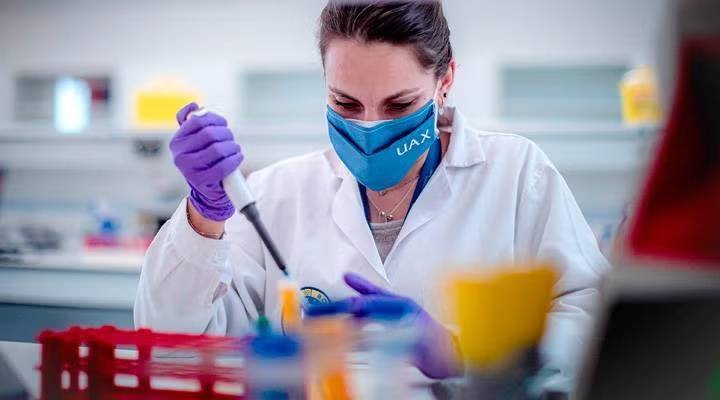
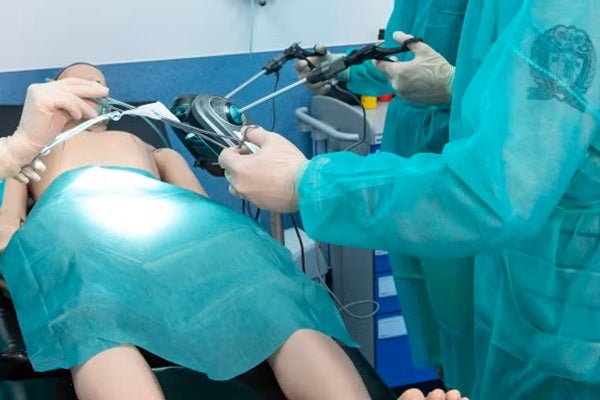
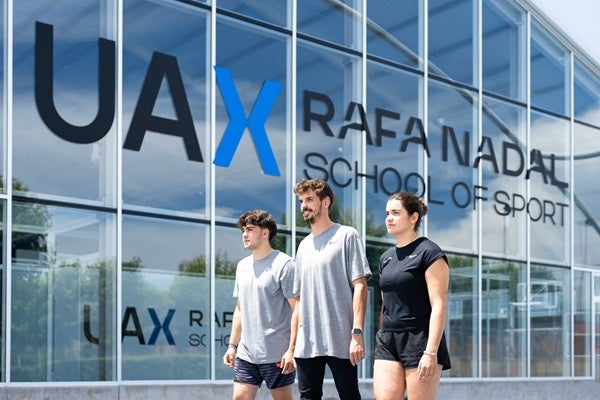
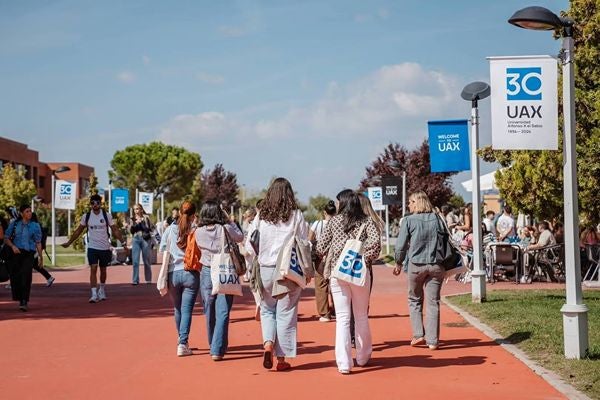
Choosing a degree course is a key decision for launching your career. At UAX, we offer a wide range of officially recognised degree courses designed to prepare professionals to thrive in constantly evolving sectors, combining academic training, practical learning and links with the professional world to develop practical skills and tackle the challenges of today’s job market.


Bachelor’s Degree in Sports Management
In collaboration with:


Start:
September
Length:
4 años

Degree in Medicine*.
In collaboration with:
Start:
September
Length:
6 years

Degree in Human Nutrition and Dietetics
Start:
September
Length:
4 years

Online Degree in Early Childhood Education
Start:
October
Length:
4 years

Double Degree in Pharmacy + Human Nutrition and Dietetics
Start:
September
Length:
6 years

Degree in Dentistry
Start:
September
Length:
5 years

Double Degree in Mathematical Engineering + Physics
Start:
September
Length:
5 years
Degree in Nursing
Start:
September
Length:
4 years

Online Degree in Business Administration and Management
Start:
October
Length:
4 years

Double Degree in CAFYD + Human Nutrition and Dietetics
Start:
September
Length:
5 years

Degree in Biomedicine
Start:
September
Length:
4 years
University degrees are official qualifications that form part of the European higher education system and constitute the first level of university studies. Their aim is to provide academic and professional training that enables students to develop specialist knowledge in a specific field and to prepare them to practise a profession or continue with postgraduate studies.
In Spain, undergraduate degrees usually last four years and are structured around ECTS credits, combining theoretical and practical training with independent study. During the degree, students develop specific knowledge of their field, professional skills and transferable skills that are essential for their future careers.
Choosing a university degree course requires analysing various factors relating to personal interests, career opportunities and the characteristics of each academic programme. Making an informed decision allows you to make the most of your university experience and tailor your studies to your career goals.
Some aspects that may help you choose a university degree are:
Reflecting on these aspects makes it easier to choose a degree programme that aligns with your interests and the opportunities offered by the job market.
Undergraduate programmes are designed to provide a comprehensive education that combines academic knowledge with the development of professional skills. During an undergraduate degree, students typically develop skills related to:
This programme prepares students to tackle professional challenges and adapt to a constantly changing work environment.
University degrees open the door to a range of career opportunities depending on the chosen field of study. Each degree programme prepares students to pursue a career in specific sectors, ranging from technology to healthcare, education, the creative industries and business.
Notable career prospects include:
The aim of university degrees is to provide a solid foundation enabling students to enter the labour market or continue advancing their academic studies.
At UAX, we have extensive experience in university education and design our degree programmes with a focus on our students’ professional development. Our undergraduate degrees combine academic training, practical learning and links to the professional world.
Furthermore, our degree programmes are designed to help students develop practical skills and understand how the professional sectors in which they will pursue their careers operate. This approach enables our students to acquire a qualification that is aligned with the needs of the labour market and the challenges faced by different professional sectors.
Most degree programmes last four years, although some, such as double degrees or those linked to healthcare qualifications, may last five or six years.
A bachelor’s degree is the first level of university study and provides a general education in a particular field of knowledge. A master’s degree is a postgraduate programme that allows students to specialise in a specific field after completing their bachelor’s degree.
After completing a bachelor’s degree, it is possible to continue your studies with master’s degrees, specialisation programmes or doctoral studies, which enable you to explore a specific area of knowledge in greater depth.
It is the European system used to measure a student’s workload. A degree typically comprises 240 ECTS credits, which reflect hours spent on study, lectures, work placements and independent study.
It is an academic programme that combines two degree programmes simultaneously. It enables students to obtain two degrees through an integrated course of study in less time than it would take to complete them separately.
You can study on a full-time, blended or 100 % online basis, depending on the programme. Some degree programmes also offer international experiences or integrated work placements.
You must have passed the EvAU or be eligible for entry via vocational training (FP), other qualifications or international education systems. Each degree programme may have specific admission criteria.
Yes, most degree programmes include compulsory work placements, which allow you to put what you have learnt into practice in a real professional environment before you graduate.
You can enter the labour market, continue with postgraduate studies such as official master’s degrees, sit civil service exams or enrol on international specialisation programmes.
Can't find the degree you want to study in our educational offer?
There is nothing to worry about! Tell us what degree you are looking for and we will contact you as soon as possible. We want to help you choose an academic career that suits you and boost your future career.