























What are occupational risks and what types exist?
Occupational risks are situations or conditions present in the workplace that may cause harm to workers or affect their health. Understanding these risks is essential, as it provides the basis for implementing an occupational risk prevention plan , which is mandatory under the Occupational Risk Prevention Act (Act 31/1995) , and to create a safe working environment. Early identification of risks enables corrective action to be taken, reducing the likelihood of accidents and work-related illnesses.
Types of occupational risks
There are various ways of classifying occupational risks, and one of them is to divide them into specific categories. According to the National Institute for Health and Safety at Work ( INSST ), risks can be classified as follows:
- Safety risks: these can lead to traumatic workplace accidents due to the physical conditions of the environment, such as falls, blows, cuts or burns.
- Physical risks: those arising from the presence of different forms of energy in the workplace, such as noise, vibrations or extreme temperatures.
- Chemical risks: these relate to exposure to chemical contaminants that can enter the body and cause poisoning or illness.
- Biological risks: caused by exposure to microorganisms such as viruses, bacteria or fungi, capable of causing infectious diseases, allergies or toxicity.
- Ergonomic risks: arising from the workplace not being properly adapted to the individual, mainly leading to musculoskeletal disorders caused by physical strain.
- Psychosocial risks : these arise from the organisation of work and social relationships, affecting the worker’s mental and physical health due to mental strain.
Occupational risk factors
Identifying the specific risk factors in each workplace is the fundamental step towards addressing them and ensuring a safe environment. A risk factor is a specific condition or element that has the potential to cause harm. Below, we explore the most common ones for each major risk category.
Safety risks
Safety risks are the ones that first spring to mind and cause the most direct accidents. We are talking about such common hazards as falls on slippery floors, cuts from poorly maintained tools, or becoming trapped in machinery that lacks adequate safeguards. This category also includes fire hazards and electrical shocks.
Preventing them involves taking direct action on these physical conditions: ensuring tidiness and cleanliness, carrying out preventive maintenance on all equipment, and correctly signposting hazardous areas so that everyone knows what to expect.
Physical risks
The working environment itself can be a source of physical risk. Continued exposure to noise from industrial machinery, for example, can lead to occupational hearing loss if no measures are taken. The same applies to vibrations from pneumatic tools, which affect the joints, or extreme temperatures in kitchens and ovens, which can cause heat stress.
The best way to tackle these is to address the source, for example, by soundproofing machinery. Where this is not possible, exposure times should be limited and, as a last resort, workers should be provided with suitable PPE such as hearing protectors or anti-vibration gloves.
Chemical risks
Many jobs involve contact with substances that can be hazardous if not handled correctly. Inhaling solvent vapours in a workshop, dust generated on a building site or skin contact with corrosive cleaning products are very common chemical risk factors. These can cause anything from mild irritation to serious chronic illnesses.
The most effective form of prevention is always to replace the hazardous product with a non-hazardous alternative. If this is not feasible, it is essential to ensure good ventilation, preferably with localised extraction systems, and to protect workers with masks and gloves specifically designed for the product they are handling.
Biological risks
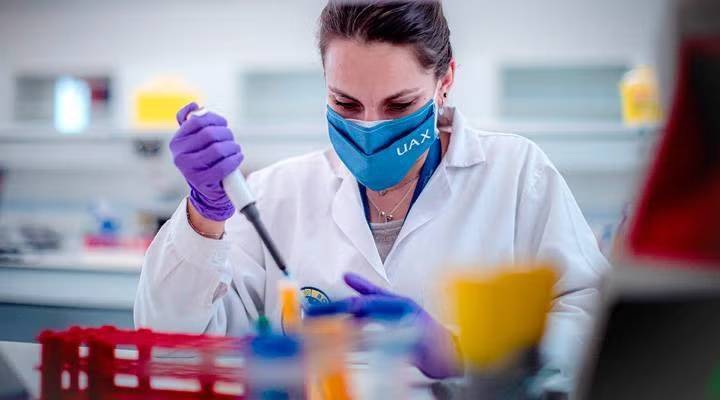
In sectors such as healthcare, laboratories or livestock farming, workers face the risk of exposure to microorganisms such as viruses, bacteria or fungi. Contact with bodily fluids, contaminated samples or animals can lead to serious infectious diseases.
Consequently, prevention in these cases is extremely rigorous and is based on the implementation of very strict working protocols, which include constant disinfection, safe waste management, vaccination as an immunological measure, and the use of protective barriers such as gloves, lab coats and face masks.
Ergonomic risks
Often, the risk does not lie in an external agent, but in how our body interacts with the workplace. Manually handling heavy loads, maintaining awkward postures for hours on end, or constantly repeating the same movement are ergonomic risk factors that ultimately lead to musculoskeletal disorders such as lower back pain or tendinitis.
The solution to these problems lies in adapting the work to the individual: using mechanical aids to lift weights, designing chairs and desks that allow for a neutral and healthy posture, and organising tasks to include breaks and job rotation.
Psychosocial risks
Health is not just physical, and the working environment has a direct impact on our mental wellbeing. An excessive workload, a lack of autonomy in decision-making, poor communication, or an atmosphere of conflict or harassment are highly damaging psychosocial risk factors. They can cause stress, anxiety or burnout.
Tackling these is a complex task that falls to the organisation. It involves clearly defining tasks, setting realistic objectives, fostering transparent communication and positive leadership, and having clear protocols for conflict resolution.
How are workplace risks assessed?
Once the risk factors have been identified, the next technical and legal step is the occupational risk assessment. This task is one of the main responsibilities of the occupational risk prevention technician , and consists of a systematic process to estimate the magnitude of those risks that cannot be avoided. To do this, the probability of harm occurring and the severity of its consequences are assessed together.
The result enables the risk to be classified and a hierarchy to be established for prioritising action.
The ability to carry out complex assessments and propose effective solutions is one of the most highly valued skills in these professionals, which is reflected in their career prospects and their salary , which varies according to experience and specialisation.
What tools do we use if we cannot eliminate them?
When the assessed risks cannot be eliminated through collective protective measures, Personal Protective Equipment (PPE) come into play as the final barrier between the worker and the hazard.
The range is vast, extending from head protection with safety helmets, eye protection with goggles, respiratory protection with face masks, and hearing protection with earplugs, to hand and foot protection with specific safety gloves and footwear. Added to this is body protection equipment, such as high-visibility clothing, and complex systems such as harnesses for working at height.
It is essential to remember that PPE is for personal use and that its effectiveness depends not only on correct selection by the health and safety officer, but also on proper training and the worker’s commitment to using it, looking after it and checking its condition at all times.
Summary
Occupational risk prevention is an active process ranging from the identification of risk factors — whether safety-related, physical or psychosocial — to their proper assessment and control. The implementation of preventive measures, culminating in the proper use of Personal Protective Equipment (PPE) when the risk cannot be eliminated, is key to protecting the health, safety and wellbeing of all workers.
Sources consulted
- Law 31/1995 of 8 November , on the Prevention of Occupational Risks. Official State Gazette.
- Royal Decree 39/1997, of 17 January , approving the Regulations on Prevention Services. Official State Gazette.
- National Institute for Occupational Safety and Health (INSST).
- Royal Decree 773/1997, of 30 May , regulates the minimum health and safety requirements relating to the use of Personal Protective Equipment (PPE).
- Royal Decree 486/1997, of 14 April , lays down the minimum health and safety requirements in the workplace.