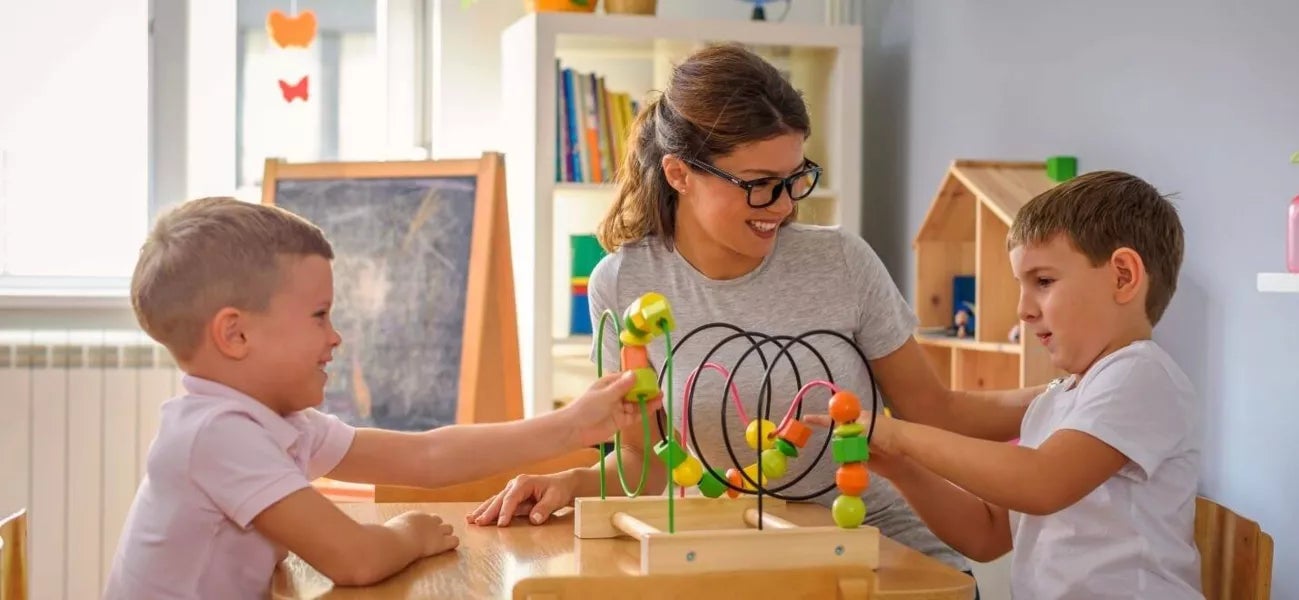
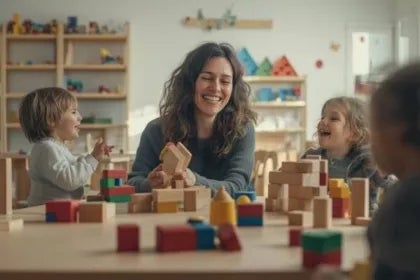
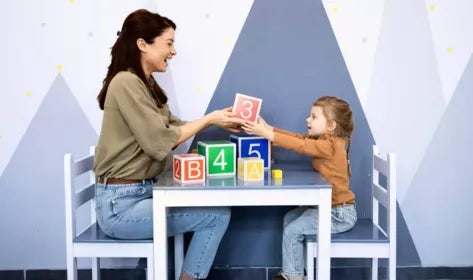
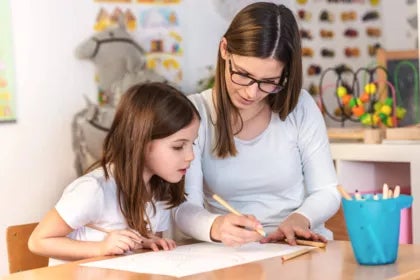
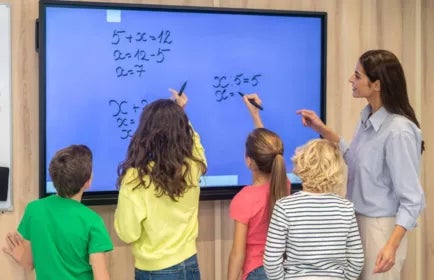
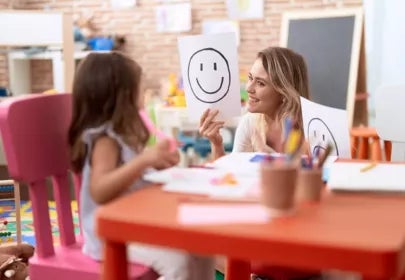
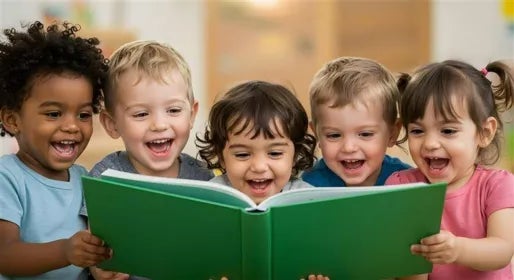
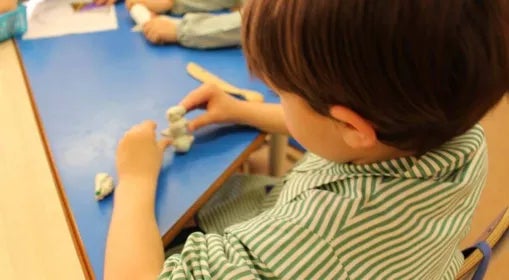
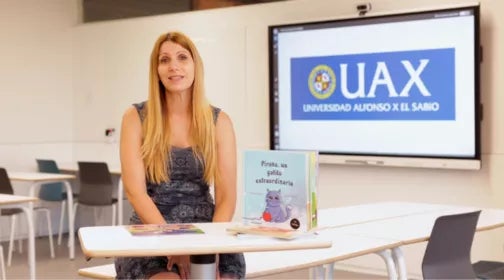
Train at your own pace with the distance learning degree in Early Childhood Education to promote and facilitate learning in children from 0 to 6 years of age from a global and inclusive perspective. You will be able to choose up to 6 different specialisation itineraries to become the teacher you want to be.
Study at Spain's No. 1 University in terms of employability (U-Ranking 2023, BBVA Foundation). Limited places.
Train to become a nursery school teacher with a modern and innovative programme
With the Online Bachelor’s Degree in Early Years Education, you will be prepared to lead educational transformation for children aged 0 to 6. Develop the skills to promote learning from a holistic and inclusive perspective, with an innovative curriculum that incorporates the most sought-after methodologies: Montessori, Waldorf and Reggio Emilia. Learn from a team of practising teachers and expert researchers who will connect you with the realities of the classroom and the latest pedagogical trends.
Specialise your profile with 6 specialisations and access to over 700 educational institutions
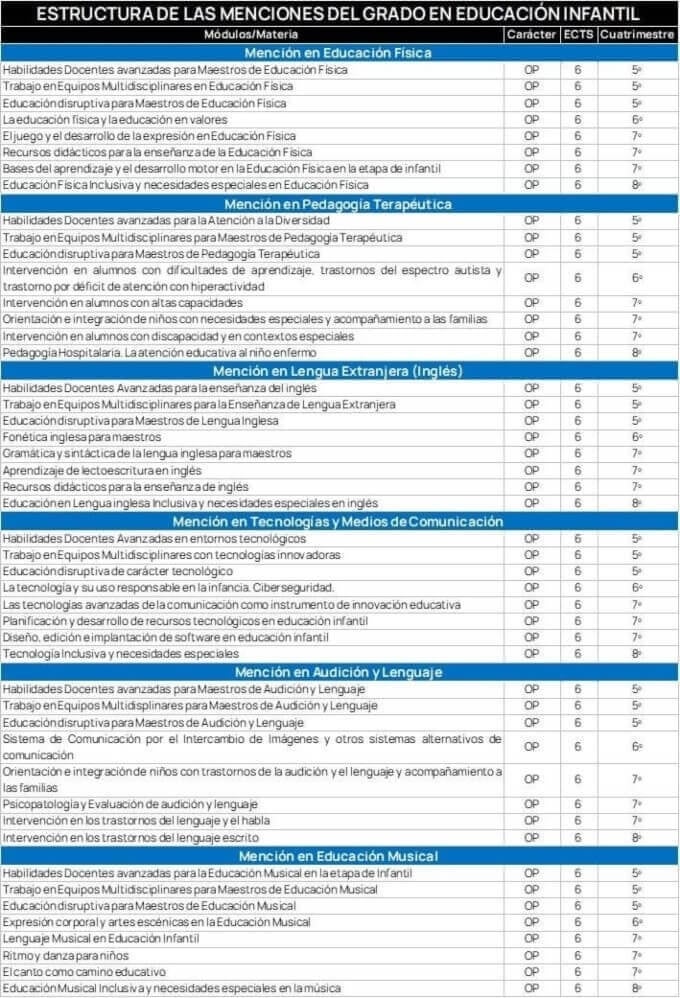
Choose from six pathways with specific specialisations to tailor your training to your career aspirations: Physical Education, Therapeutic Pedagogy, English, Educational Technology, Hearing and Language, or Music Education. Benefit from over 700 partnerships with prestigious schools such as Greenwich School, Montessori School and Waldorf School, which facilitate your work placements. With a flexible, 100% online programme, 24/7 access and ongoing support from personal tutors, gain the training you need to excel in state, private and state-subsidised schools.
What will you learn?
You’ll develop the digital, emotional and pedagogical skills most highly valued in today’s educational institutions.
Integral Development
Promotes cognitive development, emotional intelligence and cooperative learning in early childhood.
Educational Technology
Integrate gamification, digital resources and interactive environments in the early childhood classroom.
Pedagogical Methods
She masters innovative methodologies such as Montessori, Waldorf and disruptive education.
Multilingualism
Specialise in bilingual teaching with the English and language training pathway.
Active Learning
It incorporates play, projects and multidisciplinary teamwork as key learning tools.
Sustainable Education
Applying Education for Sustainable Development (ESD) in educational projects
Boost your career development with micro-credentials
NEUROEDUCATION FOR TEACHERS: IDENTIFICATION AND ASSESSMENT
BOOST YOUR TALENT WITH GENERATIVE AI
LEADERSHIP AND SOFT SKILLS
Neuroeducation for teachers: identification and assessment
Enhance your teaching practice by understanding learning through the lens of neuroeducation. This micro-credential equips you to analyse students’ cognitive, emotional and behavioural processes, identify potential difficulties at an early stage, and apply evidence-based inclusive teaching strategies in the classroom.
Boost your talent with Generative AI
Transform the way you work with generative artificial intelligence. This micro-credential empowers you to apply tools like ChatGPT, Copilot, and Gemini to analyze information, create content, and make decisions in real-world academic contexts, integrating solutions ethically and responsibly within the educational field.
Leadership and Soft Skills
Develop your potential in education through leadership and interpersonal skills. This microcredential provides you with the keys to managing teams, communicating effectively, and solving problems in real-world educational settings, combining personal leadership techniques with practical productivity and collaboration tools.
Information on the online early years education programme
Plan de estudios
Con el Grado en Educación Infantil de UAX obtendrás una titulación 100% oficial que te habilita para impartir docencia a niños entre 0 y 6 años de edad y que podrás convalidar en cualquier país de la UE.
Podrás elegir entre seis itinerarios en función de la especialidad que más se adecue a tu futuro profesional:
- Itinerario de Mención en Inglés
- Itinerario de Mención en Educación Física
- Itinerario de Mención en audición y lenguaje
- Itinerario de Mención en Educación Musical
- Itinerario de Mención en Pedagogía Terapéutica
- Itinerario de Mención en Tecnología y Medios de Comunicación
*Las asignaturas optativas estas asociadas a las diferentes menciones
Con el Grado en Educación Infantil de UAX obtendrás una titulación 100% oficial que te habilita para impartir docencia a niños entre 0 y 6 años de edad y que podrás convalidar en cualquier país de la UE.
Podrás elegir entre seis itinerarios en función de la especialidad que más se adecue a tu futuro profesional:
- Itinerario de Mención en Inglés - Itinerario de Mención en Educación Física - Itinerario de Mención en audición y lenguaje - Itinerario de Mención en Educación Musical - Itinerario de Mención en Pedagogía Terapéutica - Itinerario de Mención en Tecnología y Medios de Comunicación
*Las asignaturas optativas estas asociadas a las diferentes menciones
Bachelor’s Degree in Early Years Education
First Year
FIRST FOUR-MONTH PERIOD
Code
Subjects
Character*
ECTS
0150600
Teaching Methods in Early Years Education: the holistic and harmonious development of children
FB
6
Teaching Methods in Early Years Education: the holistic and harmonious development of children
Graduate in Primary Education, PhD candidate in Educational Sciences, Master’s in Educational Innovation, Master’s in Teacher Training, Master’s in School Management, Postgraduate qualification in Academic Organisation, Expert in teaching methodologies. Teaching experience in primary education, vocational training and at university (in the field of education). He has worked as a project manager for educational initiatives at institutions such as the University of Salamanca and ISEP, amongst others, as well as a teaching collaborator at UDIMA, the CIESE-Comillas Foundation and Nebrija University. He is currently Head of Studies (Bachelor’s Degree in Early Years Education and Bachelor’s Degree in Pedagogy), Coordinator of the Educational Community and a lecturer (undergraduate and postgraduate) at UAX. He is a member of the DIPA (Didactics and Landscape) and IAFP (Artificial Intelligence in Teacher Training: digital skills and ethical literacy for responsible pedagogical integration) research groups.
Objectives
To understand the concept of didactics and its relationship with education, identifying its main characteristics and how it differs from other pedagogical disciplines.
To analyse the various components that make up didactics, such as learning objectives, content, strategies and teaching resources, in order to plan and carry out teaching and learning activities effectively.
To reflect on the importance of didactic planning and its influence on the quality of teaching, identifying the main stages and elements that must be taken into account to carry out effective planning.
To understand the role and responsibilities of the teacher within the education system, as well as the competencies and skills required to be an effective teacher.
To recognise the importance of the teacher as an agent of change, a promoter of students’ holistic development, and their influence on the educational process.
To reflect on the teaching profession, its challenges and its impact on society.
To understand the different educational models and theories underpinning the educational process, analysing their main characteristics and their influence on educational practice.
To identify and analyse the key components of the educational process, such as the roles of the pupil and the teacher, curriculum design, the educational environment and assessment, whilst understanding how these interrelate and their impact on learning.
To explore and understand the relationships established within the educational process, such as the pupil-teacher relationship, the school-family relationship, the education-community relationship and the education-work relationship, analysing their importance and their influence on the quality and effectiveness of the educational process.
Understand the key elements of the Early Years curriculum.
To critically analyse the Early Years curriculum.
Reflect on the importance of adapting the curriculum to children’s needs and interests.
To identify the key components involved in curriculum decision-making in early years education. This involves understanding the different areas, such as learning objectives, curriculum content, methodology and teaching-learning strategies, as well as assessment.
To critically analyse the theoretical foundations underpinning curriculum planning in early years education. This includes exploring the various pedagogical theories and educational approaches and understanding how they are applied in curriculum practice.
To assess the influence of contextual and regulatory factors on curriculum decision-making. This involves examining the regulatory framework and educational policies that guide curriculum design, as well as considering the social, cultural and economic context in which early years education takes place.
To understand the principles and key concepts relating to the assessment of outcomes in teaching practice, including the assessment approaches and methods used in early years education.
To analyse the importance of analysing assessment results in order to gain meaningful insights into children’s learning and development, as well as to make informed decisions and adapt teaching to their individual needs.
To recognise the crucial role of reflection as a tool for improving teaching practice, through both self-reflection and external feedback, and to understand how reflection contributes to professional development and the achievement of educational objectives.
Prerequisites
None, apart from those required for admission to the Bachelor’s degree in Early Years Education.
Competencies
Core and general competences:
02 – To promote and facilitate learning in early childhood, from a holistic and integrative perspective encompassing the different cognitive, emotional, psychomotor and volitional dimensions.
01 – To understand the objectives, curriculum content and assessment criteria of Early Years Education.
03 - To design and manage learning environments in diverse contexts that cater for pupils’ unique educational needs, gender equality, equity and respect for human rights.
05A – Reflect as a group on the acceptance of rules and respect for others.
05B - To promote the autonomy and individuality of each pupil as factors in the education of emotions, feelings and values in early childhood.
08B – Understand the fundamentals of early intervention and the principles and developments that enable an understanding of psychological, learning and personality-building processes in early childhood.
11B – Acquire habits and skills for independent and cooperative learning and promote these among students.
Specific competences:
01 – To understand educational and learning processes in the 0–6 age group, within the family, social and school contexts.
02 – To understand developments in the psychology of child development during the 0–3 and 3–6 age ranges.
03 – Understand the fundamentals of early intervention.
04 - Recognise the characteristics of this stage and its cognitive, psychomotor, communicative, social and emotional features.
05 - Know how to encourage the development of habits relating to autonomy, freedom, curiosity, observation, experimentation, imitation, acceptance of rules and boundaries, and symbolic and heuristic play.
06 - Understand the educational dimension of interaction with peers and adults, and know how to encourage participation in group activities, cooperative work and individual effort.
Learning outcomes
Key learning outcomes:
A4. Incorporates the principles of inclusion, equality, diversity, equity, human rights, sustainability and democratic values into their teaching practice.
C1. Easily identifies the objectives, curriculum content and assessment criteria for Early Years Education.
SDGs. Develops effective communication, teamwork, analytical thinking, creativity and ethical leadership from a cross-curricular perspective, clearly inspired by democratic principles and values, as well as the Sustainable Development Goals, in order to conduct themselves with integrity in the professional sphere.
Subject-specific learning outcomes:
RC3. Designs specific educational activities aimed at fostering habits relating to autonomy, freedom, curiosity, observation, experimentation, imitation, acceptance of rules and boundaries, and symbolic and heuristic play.
RC4. Designs teaching strategies to promote, through collective action and cooperative work, appropriate interaction between children and their peers and with adults.
Description of the content
1. Introduction to teaching methodology: concept, scope, components and purpose.
2. The role of the teacher in the education system: the teacher’s educational and social functions.
3. The educational process: models, components and relationships.
4. Elements of the curriculum. The Early Years curriculum: a critical analysis.
5. Areas of decision-making regarding the curriculum.
6. Evaluation of teaching outcomes. The importance of analysis and reflection for improving teaching practice.
Training activities
V1a Online classes 15 hours
V2a Viewing of audiovisual material 15 hours
V2b Guided interactive activities on the platform 15h
V3e Project work in an educational context 7 hours
V3f Analysis and preparation of teaching plans 8 hours
V4a Preparation of the course portfolio 34 hours
V4b Independent study and literature review 50 hours
V5 Group online tutorial 3 hours
V6 Face-to-face assessments 3h
Assessment system and criteria
REGULAR EXAM SESSION:
40 per cent of your mark will be based on your continuous assessment. The following will be taken into account:
SE1. Problem-solving and challenges 10%
SE2. Portfolio 30%
SE3. Final knowledge assessments 60%
RE-SIT EXAM:
The student’s final mark will be based entirely on a theoretical and/or practical examination.
Bibliography
Core:
1. Cecilia García Torres and María Luisa Arranz Martín
DIDACTICS OF EARLY CHILDHOOD EDUCATION (HIGHER NATIONAL DIPLOMA COURSES)
PARANINFO Publishers. 2011.
ISBN: 9788497327886
2. Miguel Ángel Zabalza Beraza
Teaching Methods in Early Years Education
5th ed. NARCEA. 1987.
ISBN: 9788427707719
3.- Oriol Comas i Coma, Maite Garaigordobil Landazábal, Michi Garzón Pérez, Teresa Hernàndez Morlans, Ma Jesús Marrón Gaite, Joan Ortí Ferreres, Gabriel Pubill Soler, Ángeles Ruiz de Velasco Galvez, M. Pilar Soler Gordils, Tere Vida Mombiela, Domènec Bañeres Codina, Alan J. Bishop, Claustre Cardona Pera
Play as a teaching strategy
Grao. 2008.
ISBN: 978-84-7827-6
0150601
Educational innovation for finding answers and solving problems in the classroom
FB
6
Educational innovation for finding answers and solving problems in the classroom
Lecturer on the ‘Educational Processes and Contexts’ module on the Master’s in Teacher Training, and lecturer on the ‘Educational Innovation for Finding Answers and Solving Problems in the Classroom’ module on the Early Years and Primary Education degree programmes
PhD in Education from the Complutense University of Madrid. Master’s degree in School Leadership and Management and a Master’s degree in Psychopathology of Language and its Rehabilitation (Speech and Language Therapy), a Bachelor’s degree in Pedagogy and a Diploma in Teaching (science stream)
He has over twenty-five years’ experience in the field of leadership and team management across various university departments, as well as fifteen years’ teaching experience in Higher-Level Vocational Training, seventeen years’ teaching experience in Primary and Early Years Education degree programmes, and in the Master’s in Teacher Training. She has served as Director of a university innovation institute with the aim of identifying talent amongst teaching staff and implementing methodological changes in teaching and learning processes at the university.
Her areas of interest and research relate to the social responsibility of educational institutions, as well as processes of teaching and institutional innovation.
He currently combines his teaching with his role as Headteacher at Highlands School Los Fresnos.
Objectives
To understand the organisation of pre-school education centres and the range of activities relating to educational research.
To learn about models of educational research applicable to schools.
To understand the main techniques for collecting data in early years classrooms.
To understand the fundamentals of quantitative research methodology in early years classrooms.
To understand the fundamentals of qualitative research methodology in early years classrooms.
To understand practices for improvement in early years classrooms.
To reflect on classroom practices with a view to innovating and improving teaching.
To understand the key aspects of disseminating and publicising the results of research and educational innovation.
Prerequisites
None, apart from those required for admission to the Bachelor’s degree in Early Years Education.
Competencies
Basic and general competences:
09A – Understand the organisation of early years education schools and the range of activities involved in their operation.
11A – To reflect on classroom practices in order to innovate and improve teaching.
11B - Acquire habits and skills for independent and collaborative learning and promote these among students.
12A - To understand the role, potential and limitations of education in today’s society, and the
that affect early years education centres and their professionals.
12B – To be familiar with quality improvement models applicable to educational institutions.
Specific competences:
27 – Position early years education within the Spanish education system, in the European context and in the international context.
28 – Be familiar with international experiences and examples of innovative practices in early years education.
29 – Recognise the importance of teamwork.
30 - Participate in the development and monitoring of early years education projects within the framework of school-based initiatives and in collaboration with the local community and other professionals and social stakeholders.
31 - Be familiar with the legislation governing nursery schools and their organisation.
32 - Recognise the personal relationship with each pupil and their family as a key factor in the quality of education.
Learning outcomes
Key learning outcomes:
E1. Identifies areas for improvement in educational practice within schools, applying proven models of innovation and quality improvement.
F2. Engages in independent and/or collaborative learning based on identifying their own learning needs.
Subject-specific learning outcomes:
RK8. Is familiar with the key methodologies for developing pedagogical innovation projects.
RS10. Is familiar with the key methodologies for developing pedagogical innovation projects.
RC16. Designs innovative projects to introduce new learning methodologies into early years education.
Description of the course content
1. Educational research: definition, areas of application, purpose and current trends.
2. Techniques and tools for data collection.
3. Fundamentals of quantitative research methodology.
4. Fundamentals of qualitative research methodology.
5. Research within educational practice. The use of research for improvement. Educational innovation.
6. Transfer and communication of research and innovation findings.
Training activities
V1a Online classes 15 hours
V2a Viewing of audiovisual material 15 hours
V2b Guided interactive activities on the platform 15 hours
V3e Project work in an educational context 15 hours
V4a Preparation of the course portfolio 34 hours
V4b Independent study and literature review 50 hours
V5 Group online tutorial 3 hours
V6 Face-to-face assessments 3 hours
Assessment system and criteria
REGULAR EXAM SESSION:
40 per cent of your mark will be based on your continuous assessment. The following will be taken into account:
SE1. Problem-solving and challenges 10%
SE2. Portfolio 30%
SE3. Final knowledge assessments 60%
RE-SIT EXAM:
The student’s final mark will be based entirely on the results of a theoretical and/or practical examination.
0150602
Early Years Education: Theory, International Trends and Sustainable Education Policies
FB
6
Early Years Education: Theory, International Trends and Sustainable Education Policies
She holds a Bachelor’s degree in Early Years Education from the Andrés Bello Catholic University (Venezuela), a Master’s degree in Augmentative and/or Alternative Communication from the La Salle Higher Centre for University Studies (Spain), and an International Mentoring Programme at Francisco de Vitoria University. A university lecturer and educational coordinator with extensive experience in early years education and teacher training. Specialising in teaching leadership, assertive communication and classroom management, she has dedicated her career to training future teachers and developing innovative educational projects. She currently lectures on the Bachelor’s degree programmes in Early Years Education and Primary Education, as well as on the Master’s in Educational Innovation at Alfonso X el Sabio University (UAX), and is the Early Years Coordinator at Highlands School Los Fresnos, where she leads the “Caring Together” programme, which supports teachers and families, and is a facilitator for Franklin Covey’s “The 7 Habits of Highly Effective People”. She has received several awards and certifications, including Microsoft Innovative Educator (MIE) Expert, Microsoft’s 2024 Best Practice in Early Years “Lomloe in Action: Enhancing Early Years Assessment with AI and Excel”, and the Acade Award 2023 for her innovative teaching practice. Her dedication to education is also reflected in her publications and contributions, notably her article in Éxito Educativo (2024) on the empowerment of teaching teams.
Objectives
To understand the historical, social, pedagogical and didactic processes that have shaped the development of early years education to the present day.
To lay the theoretical foundations of contemporary early years education.
To identify and recognise the processes of institutionalisation in early years education.
To understand the educational policies for this stage, as well as the criteria and standards that define it.
To recognise the main trends and initiatives that shape the educational landscape at this stage.
To understand the concept of learning difficulties.
To understand the characteristics, risk factors and manifestations of learning difficulties in pre-school children.
To identify and assess learning difficulties in early years education through systematic observation, the collection of information and the use of appropriate assessment tools.
To analyse the individual, family and environmental factors that may influence the development and learning of pre-school children.
Understand the characteristics of intellectual disability.
To understand the characteristics of autism spectrum disorder.
To learn how to manage disability in the classroom and understand the inclusion model.
Understand how to provide the appropriate support for diversity in early years education.
To learn about the Response to Intervention model.
To understand the concept of sensory and motor disabilities and their impact on individuals’ development and learning.
Identify and classify the different types of sensory and motor disabilities, such as visual, hearing and motor impairments.
To analyse the possible causes or aetiologies of these disabilities, including genetic, congenital or acquired factors.
To describe the common psychological characteristics associated with sensory and motor disabilities, such as difficulties with communication, mobility and sensory perception.
To explore support strategies and curricular adaptations to facilitate the inclusion and optimal development of people with sensory and motor disabilities.
Understand the crucial role of the teacher in identifying learning difficulties in pupils.
Become familiar with the various indicators and warning signs that may point to the presence of learning difficulties.
To learn strategies and tools for the early identification of learning difficulties in the classroom.
To understand the importance of early intervention and the impact it can have on pupils’ academic and emotional development.
Prerequisites
None, apart from those required for admission to the Bachelor’s degree in Early Years Education.
Competencies
Basic and general competences:
09A – Understand the organisation of early years education settings and the range of activities involved in their operation.
11A – To reflect on classroom practices in order to innovate and improve teaching.
11B - To acquire habits and skills for independent and collaborative learning and to promote these among students.
12A - To understand the role, potential and limitations of education in today’s society, and the key competencies relevant to early years education settings and their professionals.
12B – To be familiar with quality improvement models applicable to educational establishments.
Cross-curricular competences:
No data available.
Specific competences:
27 – Position early years education within the Spanish education system, in the European context and in the international context.
28 - Understand international experiences and examples of innovative practices in early years education.
29 - Recognise the importance of teamwork.
30 - Participate in the development and monitoring of early years education projects within the framework of school-based initiatives and in collaboration with the local community and other professionals and social stakeholders.
31 - Be familiar with the legislation governing nursery schools and their organisation.
32 - Recognise the personal relationship with each pupil and their family as a key factor in the quality of education.
Learning outcomes
Key learning outcomes:
A1. Identifies the social function of education, its potential to transform reality, its limitations in the current context and the role played by teachers.
Subject-specific learning outcomes:
RK7. Recognises the main theories of education, as well as the importance of early years education within the Spanish, European and international education systems, with a view to applying this knowledge in their work as teachers.
Course content
1. A brief historical overview of the development of early years education.
2. The meaning and purpose of education. The school and the educational community.
3. Leading educational theorists, particularly in modern pedagogy.
4. The institutionalisation of education. Educational institutions and their functions.
5. Education policies in Spain. The introduction of sustainability criteria into education.
6. Educational theories and contemporary practices. Leading international educational trends.
Learning activities
V1a Online classes 15 hours
V2a Viewing of audiovisual material 15 hours
V2b Guided interactive activities on the platform 15 hours
V3b Case studies from the field of education 5 hours
V3e Project development in an educational context 10 hours
V4a Preparation of the course portfolio 50 hours
V4b Independent study and literature review 34 hours
V5 Group online tutorial 3 hours
V6 Face-to-face assessments 3h
Assessment system and criteria
REGULAR EXAM SESSION:
40 per cent of your mark will be based on your continuous assessment. The following will be taken into account:
SE1. Problem-solving and challenges 10%
SE2. Portfolio 30%
SE3. Final knowledge assessments 60%
RE-SIT EXAM:
The student’s final mark will be based entirely on their performance in a theoretical and/or practical examination.
I hold a degree in Psychology and Education from the National Pedagogical University of Colombia, specialising in career and vocational guidance. After completing my undergraduate studies, I began my professional career at the Nuestra Señora del Pilar Girls’ School, where I worked as an educational counsellor for 8 years. I subsequently gained 3 years’ experience at Sergio Arboleda University in Bogotá, supporting the student wellbeing department. Following this, I began my Master’s degree in Psychopedagogy at the University of Seville. This training has been complemented by diploma courses in educational marketing, neurodidactics, teaching competence in virtual learning environments, and professional development counselling.
I am currently working as a university lecturer at Alfonso X el Sabio University, supporting the undergraduate degree programmes in Early Years and Primary Education and the Master’s in Psychopedagogy
Objectives
To understand the stages of child development.
To identify developmental milestones.
Observe children’s behaviour.
To design effective educational strategies.
To facilitate learning.
Understand how human development occurs.
Identify patterns of behaviour.
Set realistic expectations.
Develop intervention strategies.
Understand the different methodological approaches used in the field of development, both in research and in educational practice.
Critically analyse the advantages and disadvantages of different methodological approaches used in the study of development, considering their validity, reliability and relevance.
Become familiar with the theoretical foundations underpinning the various methodological approaches, such as longitudinal, cross-sectional, experimental and observational studies, amongst others.
Consider the various ways of assessing children’s skills and abilities, taking into account their stage of development. Appropriately evaluate and select the most suitable methodological approach to address a specific research question in the field of development.
To understand what early childhood development entails for children aged 0 to 3 and 3 to 6.
Identify the components of early childhood development.
Be familiar with developments across all areas of development.
Understand the importance of attachment in children aged 0 to 3 and 3 to 6.
To be aware of the interventions that can be carried out in the early years classroom.
To know what aspects early years educators need to be aware of regarding the development of children aged 0 to 3 and 3 to 6.
Understand the warning signs that should alert teachers in both the 0–3 and 3–6 year-old classrooms.
To understand the educational implications.
Prerequisites
None, apart from those required for admission to the Bachelor’s degree in Early Years Education.
Competencies
Basic and general competences:
02 – To promote and facilitate learning in early childhood, from a holistic and integrative perspective encompassing the different cognitive, emotional, psychomotor and volitional dimensions.
01 – To understand the objectives, curriculum content and assessment criteria of Early Years Education.
03 - To design and manage learning environments in diverse contexts that cater to pupils’ unique educational needs, gender equality, equity and respect for human rights.
05A – Reflect as a group on the acceptance of rules and respect for others.
05B - To promote the autonomy and individuality of each pupil as factors in the education of emotions, feelings and values in early childhood.
08B – Understand the fundamentals of early intervention and the principles and developments that enable an understanding of psychological, learning and personality-building processes in early childhood.
11B – Acquire habits and skills for independent and cooperative learning and promote these among students.
Specific competences:
01 – To understand educational and learning processes in the 0–6 age group, within the family, social and school contexts.
02 – To understand developments in the psychology of child development during the 0–3 and 3–6 age ranges.
03 – Understand the fundamentals of early intervention.
04 - Recognise the characteristics of this stage and its cognitive, psychomotor, communicative, social and emotional features.
05 - Know how to encourage the development of habits relating to autonomy, freedom, curiosity, observation, experimentation, imitation, acceptance of rules and boundaries, and symbolic and heuristic play.
06 - Understand the educational dimension of interaction with peers and adults, and know how to encourage participation in group activities, cooperative work and individual effort.
Learning outcomes
Key learning outcomes:
B3. Identifies the psychological, learning and personality-building processes involved in early childhood.
B2. Integrates the cognitive, emotional, psychomotor and volitional dimensions of children’s development in a holistic manner when designing teaching and learning processes for the early years.
Subject-specific learning outcomes:
RK1. Identifies the characteristics and stages of motor, cognitive, emotional, social and personality development in children aged 0 to 6 years, for consideration in teaching practice.
RC1. Critically assesses children’s psychological development in order to incorporate the findings into the development of teaching strategies
Description of course content
1. Developmental Psychology: concept, field of study, scope and methods.
2. Human development: main theories.
3. Advantages, disadvantages and limitations of methodological approaches relating to development.
4. Early childhood development
children (0–3 years): motor, cognitive, emotional and social development.
5. Development during childhood (3–6 years). The importance of
development of personality and social relationships.
6. The relevance of knowledge of child development to education and the work of teachers. Assessment of development.
Training activities
V1a Online classes 15 hours
V2a Viewing of audiovisual material 15 hours
V2b Guided interactive activities on the platform 15h
V3b Case studies from the field of education 15h
V4a Preparation of the course portfolio 34 hours
V4b Independent study and literature review 50 hours
V5 Group online tutorial 3 hours
V6 Face-to-face knowledge assessments 3h
Assessment system and criteria
REGULAR EXAM SESSION:
40 per cent of your mark will be based on your continuous assessment. The following will be taken into account:
SE1. Problem-solving and challenges 10%
SE2. Portfolio 30%
SE3. Final knowledge assessments 60%
RE-SIT EXAM:
The student’s final mark will be based entirely on a theoretical and/or practical examination.
Bibliography
Core:
1. García Madruga, J. A
Developmental Psychology I.
UNED. 2019.
ISBN: 8436275306
2. Gutiérrez Martínez, F., Vila Chaves, J.O.
Developmental Psychology II
UNED. 2021.
ISBN: 8436277457
Supplementary:
3.- Diz-Casal, Javier
Violence and exclusion in educational contexts: keys to the ‘integration’ of the non-normative. In Delgado, J. J. (ed.). Intervention with populations vulnerable to violence and exclusion.
Dykinson. 2024.
ISBN: 9788411708708
0150604
Society, family and civic values for harmonious coexistence
FB
6
Society, family and civic values for harmonious coexistence
Pilar Santolaya Estefanía holds a PhD in Sociology of Public and Social Policy from the University of Zaragoza, a degree in Sociology (UPNA) and a diploma in Social Work (UZ). She has a well-established track record in university teaching spanning more than two decades, having taught at the University of La Rioja (where she was recognised for Teaching Excellence), the University of Zaragoza and Nebrija University, where she also held positions of academic leadership and coordination. She currently teaches on the Early Years Education degree programme at Alfonso X el Sabio University. Her research and professional profile, enriched by a sustained career in the socio-educational field and cultural management at the Ibercaja Foundation, focuses on social inclusion, cultural diversity and the analysis of public policy. With a pedagogical approach that combines socio-educational intervention with a profound sociological perspective, she directs her teaching practice towards collaborative work with families and the local community. She has taken part in numerous teaching innovation projects, conferences and research contracts on e-inclusion and gender, and is the author of various academic publications on the digital divide and socio-educational perspectives in social intervention.
Objectives
To understand the interaction between the main social institutions and education.
To analyse the value and social function of education in contemporary society.
To understand the evolution of the concept of the family and to assess the significance of this evolution for the current perception and definition of the family as a social institution.
To explore the diversity of family types and analyse how this diversity impacts daily life and social relationships.
To analyse family lifestyles and assess the impact of different lifestyles on family dynamics, intergenerational relationships and society in general.
To analyse the relevance and social impact of the evolution of the concept of the family, the diversity of family types and family lifestyles.
Enable students to foster open and effective communication, and to establish open and effective channels of communication between school and family.
To promote the importance of active parental involvement, so as to actively engage parents in their children’s school life.
To learn how to create an environment in which the school and the family collaborate in identifying and resolving academic and emotional problems that may arise in children’s lives.
To recognise diversity as a positive value and to become aware of the factors that drive diversity: cultural, genetic and sociological.
To recognise the challenges of inclusive education in terms of equality and to familiarise yourself with inclusive teaching methods.
To understand the consequences of segregation, abuse and social isolation.
To foster ethical awareness.
To instil democratic values.
Promote civic participation.
To promote religious tolerance and cultural diversity, and to foster an understanding that there are different religious beliefs and philosophies of life within society, in order to help children respect and value the religious and cultural differences of their peers.
To foster an inclusive environment where every child feels accepted, regardless of their religious background or secular beliefs; to encourage open communication and dialogue, thereby stimulating open discussion and respectful dialogue on religious and philosophical topics in the classroom.
To encourage children to ask questions and express their own beliefs and curiosities without fear of discrimination or prejudice; to develop active listening skills and empathy in order to understand others’ perspectives.
Prerequisites
None, apart from those required for admission to the Bachelor’s degree in Early Years Education.
Competencies
Basic and general competences:
03 – Design and manage learning environments in diverse contexts that cater to students’ unique educational needs, promote gender equality, equity and respect for human rights.
04A – Foster a sense of community both inside and outside the classroom and promote the peaceful resolution of conflicts.
10 – Act as a guide for parents regarding family education for children aged 0–6 and demonstrate proficiency in social skills when interacting with the family of each pupil and with the wider community of families.
Specific competences:
10 – Establish and maintain lines of communication with families to influence the educational process effectively.
11 – Understand and be able to carry out the roles of form tutor and counsellor in relation to family education.
12 - Promote and collaborate on initiatives both within and outside school, organised by families, local councils and other institutions with an impact on citizenship education.
13 - Analyse and critically incorporate the most relevant issues in today’s society that affect family and school education: the social and educational impact of audiovisual media and screens; changes in gender and intergenerational relationships; multiculturalism and interculturalism; discrimination, social inclusion and sustainable development.
14 - Understand the historical evolution of the family, the different types of families, lifestyles and education within the family context.
Learning outcomes
Key learning outcomes:
A2. Interacts effectively with families in order to foster a climate of cooperation, understanding and support for children’s education.
A4. Incorporates the principles of inclusion, equality, diversity, equity, human rights, sustainability and democratic values into their teaching practice.
Subject-specific learning outcomes:
RK5. Understands the social value of the family, its evolution, the different types of families that exist today and the parenting styles practised within them, in order to ensure children receive an appropriate upbringing and families are given the right support.
RC11. Establishes specific educational strategies focused on fostering respect for equality, civic and constitutional values, and diversity amongst children.
RODS. Develops effective communication, teamwork, analytical thinking, creativity and ethical leadership from a cross-curricular perspective, clearly inspired by democratic principles and values, as well as the Sustainable Development Goals, in order to conduct oneself with integrity in the professional sphere.
Course content
1. Principles of the sociology of education. Main social institutions. The value and social function of education.
2. The family as a social institution: the evolution of the concept of the family, types of families and lifestyles.
3. Relations between school and family. Cooperation in the development and education of children.
4. Equality: the importance of education on the path towards full equality.
5. Education in civic and constitutional values in early childhood. The development of children’s ethics and morals.
6. Religion in early years education. Respect for diversity of belief.
Training activities
V1a Online classes 15 hours
V2a Viewing of audiovisual material 15 hours
V2b Guided interactive activities on the platform 15h
V3b Case studies from the educational sector 7 hours
V3e Project development in an educational context 8 hours
V4a Preparation of the course portfolio 50 hours
V4b Independent study and literature review 34 hours
V5 Group online tutorial 3 hours
V6 Face-to-face assessments 3h
Assessment system and criteria
REGULAR EXAM SESSION:
40 per cent of your mark will be based on your continuous assessment. The following will be taken into account:
SE1. Problem-solving and challenges 10%
SE2. Portfolio 30%
SE3. Final knowledge assessments 60%
RE-SIT EXAM:
The student’s final mark will be based entirely on their performance in a theoretical and/or practical examination.
TOTAL:
30
SECOND FOUR-MONTH TERM
Code
Subjects
Character*
ECTS
0150605
School Management: schools as spaces for meeting, collaboration and exchange
FB
6
School Management: schools as spaces for meeting, collaboration and exchange
PhD in Education accredited by ANECA, with over 12 years’ experience in university teaching. Collaborator and lecturer-researcher at international universities such as Texas A&M University, the University of Arizona and the University of Haifa in Israel, amongst others. She has authored more than 85 scientific publications in prestigious international and national journals, attended conferences, published four books and managed national and international R&D projects.
Objectives
To understand and analyse the legal framework governing institutional autonomy in educational establishments.
To apply legal principles to records management in educational institutions.
Develop effective leadership skills: Foster the development of leadership skills amongst students, providing them with the tools and strategies necessary to lead teams, make effective decisions and motivate the educational community towards the achievement of shared goals.
To analyse and apply educational management theories: To provide a solid understanding of educational management theories and models, enabling students to critically analyse different approaches and apply relevant concepts in practical situations within a school setting.
Designing and Implementing Continuous Improvement Strategies: To train students in the formulation, implementation and evaluation of continuous improvement strategies in educational institutions. This includes identifying areas for improvement, designing action plans and measuring the impact of interventions on educational quality.
Understanding the organisational structure of the teaching staff, including roles, responsibilities and hierarchies within an educational institution.
Develop practical skills for teaching coordination and effective collaboration amongst teaching professionals.
To enable participants to identify common challenges in teaching coordination and apply effective strategies to resolve them.
To foster an understanding of the importance of active and varied participation in extracurricular activities
To understand the importance of school services for holistic well-being.
Design a School Service Project
To foster awareness of the role of the school: to develop students’ understanding and awareness of the transformative role of schools as spaces for meeting, collaboration and exchange.
Promote collaboration and active participation: Provide opportunities for students to experience and practise collaboration and active participation within the educational environment.
Understanding the fundamentals of school evaluation and the culture of continuous improvement.
To explore the principles and values underpinning a culture of continuous improvement in an educational setting, highlighting the importance of adaptability, innovation and the active participation of all members of the school community.
Apply models of quality management and excellence in the evaluation and continuous improvement of educational institutions.
Prerequisites
None, apart from those required for admission to the Bachelor’s degree in Early Years Education.
Competencies
BASIC AND GENERAL
09A – Understand the organisation of early years education schools and the range of activities involved in their operation.
11A - To reflect on classroom practices in order to innovate and improve teaching.
11B - To acquire habits and skills for independent and collaborative learning and to promote these among students.
12A - To understand the role, potential and limitations of education in today’s society, and the
that affect early years education centres and their professionals.
12B – To be familiar with quality improvement models applicable to educational institutions.
CROSS-CURRICULAR
No data available
SPECIFIC
27 – To situate early years education within the Spanish education system, in the European context and in the international context.
28 – To be familiar with international experiences and examples of innovative practices in early years education.
29 - Recognise the importance of teamwork.
30 - To participate in the development and monitoring of early years education projects within the framework of school-based initiatives and in collaboration with the local community and other professionals and social stakeholders.
31 - To be familiar with the legislation governing nursery schools and their organisation.
32 - Recognise the personal relationship with each pupil and their family as a key factor in the quality of education.
Learning outcomes
Key learning outcomes:
E1. Identifies areas for improvement in educational practice within schools, applying proven models of innovation and quality improvement.
F3. Recognises the organisational principles and functions of educational establishments, integrating them into their teaching work as a teacher.
Subject-specific learning outcomes:
RK9. Understands the legal framework governing the operation of early years education centres and the work of teachers, taking this into account in their day-to-day work.
RS11. Builds fruitful relationships with the various stakeholders linked to their teaching work, particularly colleagues at the school and families, recognising this aspect as a factor in educational quality.
RC17. Designs, in collaboration with other professionals, innovative projects to improve the school, drawing on leading international examples in the field of early years education.
Description of the content
1. The legislative framework for educational establishments. Autonomy. School documentation.
2. The management function in educational institutions: areas, bodies and scope of management. The management plan.
3. Organisation of teaching staff and teaching coordination.
4. Extracurricular activities and school services as part of the educational work of schools.
5. Towards a new concept of the school: schools as spaces for meeting, collaboration and exchange.
6. Evaluation of educational institutions and a culture of continuous improvement. Models of quality and excellence management.
Training activities
V1a Online classes 15 hours
V2a Viewing of audiovisual material 15 hours
V2b Guided interactive activities on the platform 15h
V3b Case studies from the education sector 12 hours
V3c Practical work using simulations and virtual laboratories 3 hours
V4a Preparation of the course portfolio 50 hours
V4b Independent study and literature review 34 hours
V5 Group online tutorial 3 hours
V6 Face-to-face assessments 3h
Assessment system and criteria
REGULAR EXAM SESSION:
40 per cent of your mark will be based on your continuous assessment. The following will be taken into account:
SE1. Problem-solving and challenges 10%
SE2. Portfolio 30%
SE3. Final knowledge assessments 60%
RE-SIT EXAM:
The student’s final mark will be based entirely on a theoretical and/or practical examination.
Bibliography
Core:
1. Fullan, Michael
Leading in a Culture of Change.
Ediciones Morata. 2002.
ISBN: 978-84-18381-
2. González, M.T. (ed.)
Organisation and Management of Schools: Dimensions and Processes.
Pearson Educación. 2003.
ISBN: 978-970-26-15
0150606
Observation, assessment and analysis in the Early Years classroom to promote continuous improvement
FB
6
Observation, assessment and analysis in the Early Years classroom to promote continuous improvement
Marta Neira Calama holds a degree in Speech and Language Therapy and a Bachelor’s degree in Primary Education (specialising in Hearing and Language) from the Pontifical University of Salamanca, and has a Master’s degree in Clinical Speech and Language Therapy from the Complutense University of Madrid. She is currently studying for a PhD in Humanities and Social Sciences.
She is a lecturer at the CES Don Bosco University Centre, where she teaches subjects related to language, psychobiology and special needs education, as well as being a member of the University Guidance Service (SOU). She also teaches at Alfonso X el Sabio University, where she delivers modules on language acquisition, observation methods and the neuropsychology of communication, both on teacher training degree programmes and on Master’s programmes. She works as a tutor at the Open University of Catalonia (UOC) on the Master’s in Learning Disorders.
In the clinical setting, she works with the Centro Comunica, developing interventions for children with communication and language difficulties and delays, as well as reading and writing difficulties – particularly dyslexia and dysgraphia – whilst also carrying out assessments and diagnoses. She has contributed to publications and conferences, where her work has been recognised, and has published articles in specialist national and international journals.
Objectives
- To provide future educators with the tools and skills needed to understand and improve the teaching and learning process.
- To explore various observation strategies to better understand classroom dynamics, identify effective teaching styles and assess pupils’ progress.
- To address formative and summative assessment methods, enabling participants to develop the ability to assess student performance comprehensively.
- Critically analysing the data collected during observation and assessment will play a key role in making informed decisions to improve the quality of education.
- To train reflective educators who are equipped to adapt to the changing needs of the classroom, fostering an enriching and effective learning environment.
Prerequisites
None, apart from those required for admission to the Bachelor’s degree in Early Years Education.
Competencies
BASIC AND GENERAL
04B - The ability to systematically observe contexts of learning and social interaction and to reflect on them.
11A - To reflect on classroom practices in order to innovate and improve teaching.
CROSS-CURRICULAR
No data available
SPECIFIC
23 – To understand that systematic observation is a fundamental tool for reflecting on practice and reality, as well as for contributing to innovation and improvement in early years education.
24 – Master observation and recording techniques.
25 - Undertake field analysis using observational methodology, drawing on information technology, documentation and audiovisual resources.
26 - Be able to analyse the data obtained, critically understand reality and draw up a report of conclusions.
Learning outcomes
Key learning outcomes:
E2. Carries out systematic observation processes, drawing relevant conclusions about learning and classroom dynamics.
Subject-specific learning outcomes:
RS9. Applies information, documentation and audiovisual technologies to the development of observation, assessment and analysis processes
in the early years classroom.
RC15. Critically evaluates the data obtained through the application of observation and recording techniques, setting out the analysis and conclusions in a detailed report with a view to achieving improvements and innovative actions in the context of early years education.
Description of the course content
1. Observation in the early years classroom and its areas of application. The importance of data collection.
2. Observation techniques and their application in the classroom.
3. Validity of results and critical analysis.
4. Evaluation of the early years education curriculum.
5. Observation as a basis for generating innovation and improvements.
6. Drafting assessment reports and communicating them to families
Training activities
V1a Online classes 15 hours
V2a Viewing of audiovisual material 15 hours
V2b Guided interactive activities on the platform 15h
V3b Case studies from the field of education 15h
V4a Preparation of the course portfolio 34 hours
V4b Independent study and literature review 50 hours
V5 Group online tutorial 3 hours
V6 Face-to-face knowledge assessments 3h
Assessment system and criteria
REGULAR EXAM SESSION:
40 per cent of your mark will be based on your continuous assessment. The following will be taken into account:
SE1. Problem-solving and challenges 10%
SE2. Portfolio 30%
SE3. Final knowledge assessments 60%
RE-SIT EXAM:
The student’s final mark will be based entirely on a theoretical and/or practical examination.
She holds a Bachelor’s degree in Early Years Education from the Andrés Bello Catholic University (Venezuela), a Master’s degree in Augmentative and/or Alternative Communication from the La Salle Higher Centre for University Studies (Spain), and an International Mentoring Programme at Francisco de Vitoria University. A university lecturer and educational coordinator with extensive experience in early years education and teacher training. Specialising in teaching leadership, assertive communication and classroom management, she has dedicated her career to training future teachers and developing innovative educational projects. She currently lectures on the Bachelor’s degree programmes in Early Years Education and Primary Education, as well as on the Master’s in Educational Innovation at Alfonso X el Sabio University (UAX), and is the Early Years Coordinator at Highlands School Los Fresnos, where she leads the “Caring Together”, which provides support for teachers and families, and is a facilitator for Franklin Covey’s “The 7 Habits of Highly Effective People”. She has received several awards and certifications, including Microsoft Innovative Educator (MIE) Expert, Microsoft’s 2024 Best Practice in Early Years Education “Lomloe in Action: Enhancing Early Years Assessment with AI and Excel”, and the Acade Award 2023 for her innovative teaching practice. Her dedication to education is also reflected in her publications and contributions, notably her article in Éxito Educativo (2024) on the empowerment of teaching teams.
Objectives
To design an effective learning environment
To create teaching materials tailored to children’s needs
To deepen our understanding of how to foster diversity and inclusion in the classroom through the ‘learning corners’ methodology, focusing on promoting diversity and inclusion within the classroom’s learning corners.
To design and organise effective learning corners, equipping us with the skills to plan and organise learning corners in the early years classroom effectively.
To understand and apply key routines and moments within the context of early years education.
To develop skills in planning and sequencing activities.
To understand the role of whole-class assemblies in early years education.
To identify children’s individual needs during the settling-in period.
Design an effective settling-in plan.
Understand the specific needs of children of pre-school age and in the early years of primary school.
Learn to select, evaluate and adapt suitable resources and materials.
Understand the principles of pedagogical design for early childhood education.
Develop practical skills in creating teaching materials.
Prerequisites
None, apart from those required for admission to the Bachelor’s degree in Early Years Education.
Competencies
BASIC AND GENERAL
03 – Design and manage learning environments in diverse contexts that cater to students’ unique educational needs, promote gender equality, equity and respect for human rights.
05A – Reflect as a group on the acceptance of rules and respect for others.
06C - Express oneself orally and in writing and master the use of different techniques of expression.
07 - Understand the educational implications of information and communication technologies and, in particular, of television in early childhood.
09B - Recognise that the teaching profession must be continually refined and adapted to scientific, pedagogical and social changes throughout one’s life.
11B – Acquire habits and skills for independent and collaborative learning and promote these among students.
CROSS-CURRICULAR
No data available
SPECIFIC
19 – Understand that the day-to-day dynamics of early years education vary depending on each pupil, group and situation, and know how to be flexible in the teaching profession.
20 - Recognise the importance of stability and consistency in the school environment, timetables and teachers’ moods as factors contributing to the harmonious and holistic development of pupils.
21 - Be able to work as part of a team with other professionals both within and outside the school in supporting each pupil, as well as in planning learning sequences and organising classroom and play area activities, recognising the specific characteristics of the 0–3 and 3–6 age groups.
22 - To meet pupils’ needs and convey a sense of security, calm and affection.
Learning outcomes
Key learning outcomes:
C2. Designs activities that promote independent and cooperative learning amongst children.
E3. Adapts their teaching practice to current scientific, pedagogical and social developments from a reflective and critical perspective.
Subject-specific learning outcomes:
RS5. Applies, where necessary and in a flexible manner, changes to educational planning to adapt to the needs of the pupils and the class, and to the different situations that arise in the classroom.
RC13. Designs educational routines and spaces to foster the harmonious and holistic progress of the educational process in early childhood education.
Description of the content
1. The organisation of the early years classroom. Methodological approaches. Resources and materials.
2. Planning and organising the space. Activity corners in the early years classroom.
3. Planning the school day: routines, key moments and the sequencing of activities. The Assembly as a routine.
4. The settling-in period as a key element in early years education: scope, objectives and planning.
5. Identifying requirements for teaching resources and materials.
6. Design, development and evaluation of teaching materials for the early years.
Training activities
V1a Online classes 15 hours
V2a Viewing of audiovisual material 15 hours
V2b Guided interactive activities on the platform 15 hours
V3b Case studies in the field of education 5 hours
V3d Design and development of teaching materials 10 hours
V4a Preparation of the course portfolio 50 hours
V4b Independent study and literature review 34 hours
V5 Group online tutorial 3h
V6 Face-to-face assessments 3h
Assessment system and criteria
REGULAR EXAM SESSION:
40 per cent of your mark will be based on your continuous assessment. The following will be taken into account:
SE1. Problem-solving and challenges 10%
SE2. Portfolio 30%
SE3. Final knowledge assessments 60%
RE-SIT EXAM:
The student’s final mark will be based entirely on a theoretical and/or practical examination.
Bibliography
Core:
1. Belloso, AG, Esteban, PG, & del Puerto, D
A teaching proposal for an introduction to programming in early years education, taking the DUA into account.
Journal of Childhood, Education and Learning. 2022.
ISBN: 0719-6202
2.- Fernández Iglesias, R., Pereiro González, M. D. C., Cores Torres, A., & Gonçalves, D. A. R.
Digital teaching material platforms in early years education: are they adapted to pupils’ characteristics?
Innoeduca: International Journal of Technology and Educational Innovation. 2021.
ISBN: 2444-2925
0150608
School guidance, support and dialogue for conflict resolution
FB
6
School guidance, support and dialogue for conflict resolution
Lecturer/Postgraduate Co-ordinator: Training course in pedagogy and didactics for Vocational and Sports Education teachers. Supervisor of final-year projects. Faculty of Educational Sciences. ALFONSO X EL SABIO UNIVERSITY.
Graduate in Early Years and Primary Education, specialising in foreign languages, from the Francisco de Vitoria University in Madrid, and trained in the development and implementation of methodologies to support students with diverse educational needs by the European University of Madrid.
I have over 10 years’ experience in the field of education, three of which were spent in higher education, and I have academic experience in institutions that follow the US education system, which has given me a deep understanding of its methods, standards and teaching practices. I am familiar with their curriculum structure, assessments and educational approaches.
Objectives
- To understand the historical evolution of the teacher’s role.
- To define the concept of a teacher’s support and guidance.
- To explore the guiding principles of a teacher’s intervention.
- To analyse the historical role of the teacher
- To identify specific objectives of the role of support and guidance.
- To recognise the teacher’s role as a role model and guide.
- To promote effective communication in the educational context.
- Explore in depth the areas of tutorial intervention.
- Understand the steps involved in drawing up a Tutorial Action Plan.
- Understand the theoretical foundations underpinning school cohesion and their application in the school context.
- Analyse the factors influencing school community life, ranging from interactions between pupils to the role of teachers in creating positive environments.
- To be familiar with and apply relevant standards relating to the subject.
- Design a comprehensive plan to improve harmonious coexistence in the early years classroom.
- To be familiar with strategies for resolving and preventing potential conflicts in the classroom.
- Define what a conflict is and its significance in education.
- To identify the main forms and patterns of bullying.
- Promote key strategies for fostering a positive classroom atmosphere.
- Develop communication strategies, acquiring effective skills and approaches that facilitate open and constructive dialogue between the teacher and families.
- To explore intervention techniques that promote an understanding of each pupil’s needs, whilst encouraging the adaptability of teaching strategies at school and at home.
- Encourage active participation from families.
- To develop teaching strategies that help promote collaboration amongst educational professionals.
- To analyse the importance of establishing practices that improve communication amongst different educational professionals.
- Get to know the various teaching teams
Prerequisites
None, apart from those required for admission to the Bachelor’s degree in Early Years Education.
Competencies
BASIC AND GENERAL
03 - Design and manage learning environments in diverse contexts that cater for students’ unique educational needs, gender equality, equity and respect for human rights.
04A - Foster a sense of community both inside and outside the classroom and promote the peaceful resolution of conflicts.
10 – Act as a guide for parents regarding family education for children aged 0–6 and demonstrate proficiency in social skills when interacting with the family of each pupil and with the wider community of families.
CROSS-CURRICULAR
No data available
SPECIFIC
10 – Establish and maintain lines of communication with families to influence the educational process effectively.
11 - Understand and be able to carry out the duties of a form tutor and counsellor in relation to family education.
12 - Promote and collaborate in activities both within and outside school, organised by families, local councils and other institutions with an impact on citizenship education.
13 - Analyse and critically incorporate the most relevant issues in today’s society that affect family and school education: the social and educational impact of audiovisual media and screens; changes in gender and intergenerational relationships; multiculturalism and interculturalism; discrimination, social inclusion and sustainable development.
14 - Understand the historical evolution of the family, the different types of families, lifestyles and education within the family context.
Learning outcomes
Key learning outcomes:
A4. Incorporates the principles of inclusion, equality, diversity, equity, human rights, sustainability and democratic values into their teaching practice.
F1. Designs strategies to ensure harmonious coexistence both inside and outside the classroom, applying, where necessary, appropriate conflict resolution techniques.
RODS. Develops effective communication, teamwork, analytical thinking, creativity and ethical leadership from a cross-curricular perspective, clearly inspired by democratic principles and values, as well as the Sustainable Development Goals, in order to conduct oneself with integrity in the professional sphere.
Subject-specific learning outcomes:
RS3. Builds collaborative and supportive relationships with families to promote the education of children in early years.
RC9. Designs tutorial guidance activities focused on supporting children and fostering a positive atmosphere of coexistence in the classroom.
Description of the content
1. The teacher’s role in support and guidance: concept, objectives, purpose and principles. The teacher as a guide and role model.
2. Areas, techniques and models of tutorial intervention. The Tutorial Action Plan.
3. Coexistence in the early years classroom.
4. Strategies for resolving and preventing conflicts within the classroom.
5. Tutorial work with families: strategies for dialogue and reaching agreements.
6. Collaboration between education professionals in tutorial support.
Training activities
V1a Online classes 15 hours
V2a Viewing of audiovisual material 15 hours
V2b Guided interactive activities on the platform 15 hours
V3b Case studies in the field of education 7 hours
V3c Practical work using simulations and virtual laboratories 8 hours
V4a Preparation of the course portfolio 34 hours
V4b Independent study and literature review 50 hours
V5 Group online tutorial 3 hours
V6 Face-to-face assessments 3h
Assessment system and criteria
REGULAR EXAM SESSION:
40 per cent of your mark will be based on your continuous assessment. The following will be taken into account:
SE1. Problem-solving and challenges 10%
SE2. Portfolio 30%
SE3. Final knowledge assessments 60%
RE-SIT EXAM:
The student’s final mark will be based entirely on a theoretical and/or practical examination.
Bibliography
Supplementary:
1. L. S. Vygotsky
Mind in Society: The Development of Higher Psychological Processes
I hold a degree in Psychology and Education from the National Pedagogical University of Colombia, specialising in career and vocational guidance. After completing my undergraduate studies, I began my professional career at the Nuestra Señora del Pilar Girls’ School, where I worked as an educational counsellor for 8 years. I subsequently gained 3 years’ experience at Sergio Arboleda University in Bogotá, supporting the student wellbeing department. Following this, I began my Master’s degree in Psychopedagogy at the University of Seville. This training has been complemented by diploma courses in educational marketing, neurodidactics, teaching competence in virtual learning environments, and professional development counselling.
I am currently working as a university lecturer at Alfonso X el Sabio University, supporting the undergraduate degree programmes in Early Years and Primary Education and the Master’s in Psychopedagogy
Objectives
To be able to identify the psychological, learning and personality-development processes that take place in early childhood.
To be able to holistically integrate children’s cognitive, emotional, psychomotor and volitional dimensions into the design of teaching and learning processes in early childhood.
To be able to identify the intrapersonal and interpersonal factors that influence learning in early childhood (0–6 years) in order to intervene at an early stage in the event of any difficulties.
To be able to link specific learning difficulties in children to particular psychological processes and factors in order to ensure appropriate educational support.
Prerequisites
None, apart from those required for admission to the Bachelor’s degree in Early Years Education.
Competencies
BASIC AND GENERAL
02 - To promote and facilitate learning in early childhood, from a holistic and inclusive perspective that encompasses the different cognitive, emotional, psychomotor and volitional dimensions.
01 - To understand the objectives, curriculum content and assessment criteria of Early Years Education.
03 - To design and manage learning environments in diverse contexts that cater to pupils’ unique educational needs, gender equality, equity and respect for human rights.
05A – Reflect as a group on the acceptance of rules and respect for others.
05B - To promote the autonomy and individuality of each pupil as factors in the education of emotions, feelings and values in early childhood.
08B – Understand the fundamentals of early intervention and the principles and developments that enable an understanding of psychological, learning and personality-building processes in early childhood.
11B – Acquire habits and skills for independent and cooperative learning and promote these among students.
CROSS-CURRICULAR
No data available
SPECIFIC
01 – To understand educational and learning processes in the 0–6 age group, within the family, social and school contexts.
02 - Understand developments in the psychology of child development for the 0–3 and 3–6 age ranges.
03 - Understand the principles of early intervention.
04 - Recognise the characteristics of this stage and its cognitive, psychomotor, communicative, social and emotional features.
05 - Know how to encourage the development of habits relating to autonomy, freedom, curiosity, observation, experimentation, imitation, acceptance of rules and boundaries, and symbolic and heuristic play.
06 - Understand the educational dimension of interaction with peers and adults, and know how to encourage participation in group activities, cooperative work and individual effort.
Learning outcomes
Key learning outcomes:
B3. Identifies the psychological, learning and personality-building processes involved in early childhood.
B2. Comprehensively integrates the cognitive, emotional, psychomotor and volitional dimensions of children into the design of teaching and learning processes in early childhood.
Subject-specific learning outcomes:
RK2. Identifies the intrapersonal and interpersonal factors that influence learning in early childhood (0–6 years) in order to
take early action in the event of any difficulties.
RC2. Links specific learning difficulties in children to particular psychological processes and factors in order to ensure appropriate educational support.
Description of course content
1. Educational psychology: concept, field of study, scope and methods.
2. Behaviourist and constructivist approaches to learning.
5. The influence of learning contexts. Learning communities.
6. The importance of understanding the learning process in children for education and the work of teachers. An approach to the assessment of the teaching-learning process.
Training activities
V1a Online classes 15 hours
V2a Viewing of audiovisual material 15 hours
V2b Guided interactive activities on the platform 15h
V3b Case studies from the field of education 15h
V4a Preparation of the course portfolio 34 hours
V4b Independent study and literature review 50 hours
V5 Group online tutorial 3h
V6 Face-to-face knowledge assessments 3
Assessment system and criteria
REGULAR EXAM SESSION:
40 per cent of your mark will be based on your continuous assessment. The following will be taken into account:
SE1. Problem-solving and challenges 10%
SE2. Portfolio 30%
SE3. Final knowledge assessments 60%
RE-SIT EXAM:
The student’s final mark will be based entirely on a theoretical and/or practical examination.
5. The influence of learning contexts. Learning communities
7
MG
6. The relevance of understanding the child’s learning process to education and the work of teachers. An approach to the evaluation of the teaching-learning process
8
SESSION
Presentations Group activity
9
SESSION
Presentations Group activity
10
SESSION
Presentations Group activity
11
SESSION
Revision and mock exam
Bibliography
Core:
1. Castro, J., Lafuente, E., Loredo, J. C., & Pizarroso, N.
History of Psychology.
UNED Press. 2017.
ISBN: 9788436269635
2. Diz-Casal, Javier
A NOVICE ETHNOGRAPHER: NOTES FROM A CHILDREN’S MENTORING CENTRE IN TETUAN
Ibero-American Network of Research Academies A.C. 2020.
PhD in Languages and Cultures and a degree in Anglo-Germanic Philology from the Universities of Extremadura, Córdoba, Huelva and Jaén. Accredited as a university lecturer by ANECA and the Andalusian Agency for Scientific and University Quality. External collaborator with the University of Cambridge, the University of the Basque Country and the University of Extremadura, amongst others.
Supervisor and co-supervisor of bilingual online Master’s programmes and doctoral theses in the social and legal sciences.
Researcher, writer and reviewer of academic and scientific articles for high-impact journals.
Entrepreneur in the field of translation and interpreting and in the tourism sector in World Heritage cities.
Objectives
To learn the basic English verb tenses: present, past and future.
To learn how to assess ‘Use of English’ in the classroom.
To learn vocabulary related to the academic environment.
To learn about the different techniques for listening comprehension in English.
To learn about the various activities for developing and teaching speaking skills.
Understand the benefits of literacy skills in the classroom.
Understand the advantages of learning writing skills.
Prerequisites
None, apart from those required for admission to the Bachelor’s degree in Early Years Education.
Competencies
BASIC AND GENERAL:
01 – To understand the objectives, curriculum content and assessment criteria for Early Years Education
05A - Reflect as a group on the acceptance of rules and respect for others
06B - Effectively address language-learning situations in multicultural and multilingual contexts
06C - Express oneself orally and in writing and master the use of different techniques of expression.
11B - Acquire habits and skills for independent and cooperative learning and promote these among pupils
CROSS-CURRICULAR
No data available
SPECIFIC
42 – Be familiar with the language and literacy curriculum for this stage, as well as theories on the acquisition and development of the relevant learning
43 – Foster speaking and writing skills
44 - To understand and master techniques of oral and written expression
45 - Be familiar with oral tradition and folklore
46 - Understand the transition from oral to written language and be familiar with the different registers and uses of language
47 - Understand the process of learning to read and write and how these skills are taught
48 - Deal with language learning situations in multilingual contexts
49 - Recognise and appreciate the appropriate use of verbal and non-verbal language
50 - To understand and make appropriate use of resources to encourage reading and writing
51 - Acquire literary knowledge, with a particular focus on children’s literature
52 - Be able to facilitate a child’s first exposure to a foreign language
Learning outcomes
Key learning outcomes:
F4. Expresses themselves satisfactorily both orally and in writing, using techniques that capture the audience’s attention.
Subject-specific learning outcomes:
RS16. Expresses themselves adequately in English, both orally and in writing. RC22. Develops appropriate teaching strategies to introduce children to the basic elements of the English language.
Description of the content
Use of English.
Reading skills.
Listening skills.
Writing skills.
Speaking skills.
Relevant vocabulary for teachers.
Training activities
V1a Online classes 15 hours
V2a Viewing of audiovisual material 15 hours
V2b Guided interactive activities on the platform 15 hours
V3g Virtual language sessions 15 hours
V4a Preparation of the course portfolio 34 hours
V4b Independent study and literature review 50 hours
V5 Group online tutorial 3 hours
V6 Face-to-face assessment tests 3h
Assessment system and criteria
REGULAR EXAM SESSION:
40 per cent of your mark will be based on your continuous assessment. The following will be taken into account:
SE1. Problem-solving and challenges 10%
SE2. Portfolio 30%
SE3. Final knowledge assessments 60%
RE-SIT EXAM:
The student’s final mark will be based entirely on a theoretical and/or practical examination.
Bibliography
Core:
1. Cortina Perez, Beatriz and Andúgar Soto, Ana
Teaching of Foreign Languages in Early Years Education
I hold a Diploma in Early Years Education from the University of Cádiz and have focused my studies on the field of supporting diversity, having completed a Master’s degree in Child Psychology and Early Intervention and another in Neuropsychology and Education, as well as various other courses in the same field.
I am a full-time PhD student on the Doctorate in Education programme at the Complutense University of Madrid. My thesis focuses on the knowledge and attitudes of practising teachers in Early Years and Primary Education.
I am currently involved in teaching students on the LICEO Diploma programme run by the Achalay organisation in collaboration with the UCM.
Objectives
To understand the concept of learning difficulties
To understand the characteristics, risk factors and manifestations of learning difficulties in pre-school children.
To identify and assess learning difficulties in early years education through systematic observation, information gathering and the use of appropriate assessment tools.
To analyse the individual, family and environmental factors that may influence the development and learning of pre-school children.
To understand the concept of learning difficulties.
To understand the characteristics, risk factors and manifestations of learning difficulties in pre-school children.
To identify and assess learning difficulties in early years education through systematic observation, the collection of information and the use of appropriate assessment tools.
To analyse the individual, family and environmental factors that may influence the development and learning of pre-school children.
To understand the characteristics of intellectual disability.
To understand the characteristics of autism spectrum disorder.
To learn how to manage disability in the classroom and understand the inclusion model.
Understand how to provide the appropriate support for diversity in early years education.
To learn about the Response to Intervention model.
To understand the concept of sensory and motor disabilities and their impact on individuals’ development and learning.
Identify and classify the different types of sensory and motor disabilities, such as visual, hearing and motor impairments.
To analyse the possible causes or aetiologies of these disabilities, including genetic, congenital or acquired factors.
To describe the common psychological characteristics associated with sensory and motor disabilities, such as difficulties with communication, mobility and sensory perception.
To explore support strategies and curricular adaptations to facilitate the inclusion and optimal development of people with sensory and motor disabilities.
Understand the crucial role of the teacher in identifying learning difficulties in pupils.
Become familiar with the various indicators and warning signs that may point to the presence of learning difficulties.
To learn strategies and tools for the early identification of learning difficulties in the classroom.
To understand the importance of early intervention and the impact it can have on pupils’ academic and emotional development.
Prerequisites
None, apart from those required for admission to the Bachelor’s degree in Early Years Education.
Competencies
Basic and general competences:
03 – Design and manage learning environments in diverse contexts that cater for students’ unique educational needs, gender equality, equity and respect for human rights.
06A – Understand language development in early childhood, be able to identify potential difficulties and ensure its healthy development.
08B – Understand the principles of early intervention and the foundations and developments that enable an understanding of psychological, learning and personality-building processes in early childhood.
Specific competences:
07 – Identify learning difficulties, cognitive impairments and those related to attention.
08 – Be able to inform other specialist professionals to facilitate collaboration between the school and the teacher in addressing any special educational needs that arise.
09 – Acquire resources to promote the educational integration of pupils with difficulties.
Learning outcomes
Key learning outcomes:
D1. Design specific intervention strategies for children with special educational needs.
Subject-specific learning outcomes:
RK4. Identifies, for the purpose of carrying out an appropriate assessment, the main learning difficulties, as well as their aetiology and psychological characteristics.
RC7. Correctly interprets reports from professionals on children’s learning difficulties for subsequent integration into educational intervention strategies.
Description of the course content
1. Learning difficulties: conceptualisation and psychological approach.
2. Difficulties arising from learning and behavioural problems: concept, types, aetiology and psychological characteristics.
3. Difficulties associated with intellectual disability and autism spectrum disorders: concept, types, aetiology and psychological characteristics.
4. Special needs arising from giftedness: concept, types and psychological characteristics.
5. Difficulties associated with sensory and motor disabilities: concept, types, aetiology and psychological characteristics.
6. The teacher’s role in identifying learning difficulties. The importance of early intervention.
Training activities
V1a Online classes 15 hours
V2a Viewing of audiovisual material 15 hours
V2b Guided interactive activities on the platform 15 hours
V3b Case studies from the educational sector 15 hours
V4a Preparation of the course portfolio 34 hours
V4b Independent study and literature review 50 hours
V5 Group online tutorial 3h
V6 Face-to-face knowledge assessments 3
Assessment system and criteria
REGULAR EXAM SESSION:
40 per cent of your mark will be based on your continuous assessment. The following will be taken into account:
SE1. Problem-solving and challenges 10%
SE2. Portfolio 30%
SE3. Final knowledge assessments 60%
RE-SIT EXAM:
The student’s final mark will be based entirely on the results of a theoretical and/or practical examination.
0250602
New trends in education: play and projects as means of learning
FB
6
New trends in education: play and projects as means of learning
My academic and professional career lies at the intersection of university teaching, research and artistic practice, specialising in the performing arts, dance and education. I hold a PhD in Feminist and Gender Studies and am an ANECA-accredited Senior Lecturer, with teaching experience at undergraduate and postgraduate levels, as well as in higher arts education.
My research activity centres on practice-based artistic research, arts education with a gender perspective, and the use of the arts as a tool for educational innovation, social impact and knowledge transfer. I have participated in research and teaching innovation projects, published academic articles and book chapters, and presented research findings at national and international conferences; with extensive artistic experience as a performing arts creator and choreographer, integrating creation, teaching and research into an interdisciplinary profile that is coherent and geared towards academic and cultural excellence.
Objectives
To introduce students to educational innovations in a comprehensive manner, enabling them to acquire the knowledge needed to adapt classroom practices and evaluate them.
To understand the concept of play and its importance.
Key theories on the development of play.
Social, emotional and cognitive development in children through play.
To reflect on Project-Based Learning (PBL) and its relevance to early years education.
To explore in depth the principles that underpin the development of a project in an early years classroom.
Recognise which methodologies are most suitable for each child and adapt them to the classroom.
Prerequisites
None, apart from those required for admission to the Bachelor’s degree in Early Years Education.
Competencies
BASIC AND GENERAL:
02 – To promote and facilitate learning in early childhood, from a holistic and inclusive perspective that encompasses the different cognitive, emotional, psychomotor and volitional dimensions.
01 – To understand the objectives, curriculum content and assessment criteria of Early Years Education.
03 - To design and manage learning environments in diverse contexts that cater for pupils’ unique educational needs, gender equality, equity and respect for human rights
05A – Reflect as a group on the acceptance of rules and respect for others.
05B – To promote the autonomy and individuality of each pupil as factors in the education of emotions, feelings and values in early childhood.
08B – Understand the principles of early intervention and the foundations and developments that enable an understanding of psychological, learning and personality-building processes in early childhood.
11B – Acquire habits and skills for independent and collaborative learning and promote these among students.
CROSS-CURRICULAR
No data available
SPECIFIC
01 – To understand educational and learning processes in the 0–6 age group, within the family, social and school contexts
02 - Understand developments in the psychology of child development for the 0–3 and 3–6 age ranges
03 - Understand the fundamentals of early intervention
04 - Recognise the characteristics of this stage and its cognitive, psychomotor, communicative, social and emotional features
05 - Know how to promote the development of habits relating to autonomy, freedom, curiosity, observation, experimentation, imitation, acceptance of rules and boundaries, and symbolic and heuristic play
06 - Understand the educational aspects of interaction with peers and adults, and know how to encourage participation in group activities, cooperative work and individual effort
Learning outcomes
Key learning outcomes:
C2. Designs activities that promote autonomous and cooperative learning amongst children.
RC5. Designs methodological strategies based on play and/or project-based learning, tailored to children’s educational needs and the learning objectives set out in the curriculum.
Description of the course content
1. Trends in innovation in educational methodology: a critical analysis from a scientific perspective.
2. Play-based learning in the Early Years classroom. Examples of success.
3. Implications of play-based learning for children’s social and cognitive development. Selection and design of games.
4. Project-based learning in the early years classroom: concept, objectives, advantages and disadvantages. Examples
of success.
5. Planning, development and evaluation of project-based work. Techniques and skills for engaging children. 6. Adapting methodologies to the needs of the classroom. Teaching practice as a means of experimentation and improvement.
Training activities
V1a Online classes 15 hours
V2a Viewing of audiovisual material 15 hours
V2b Guided interactive activities on the platform 15h
V3e Development of projects in an educational context 15 hours
V4a Preparation of the course portfolio 34 hours
V4b Independent study and literature review 50 hours
V5 Group online tutorial 3 hours
V6 Face-to-face assessments 3h
Assessment system and criteria
REGULAR EXAM SESSION:
40 per cent of your mark will be based on your continuous assessment. The following will be taken into account:
SE1. Problem-solving and challenges 10%
SE2. Portfolio 30%
SE3. Final knowledge assessments 60%
RE-SIT EXAM:
The student’s final mark will be based entirely on a theoretical and/or practical examination.
Bibliography
Core:
1. Huberman, Allen Michael
How Change Happens in Education: A Contribution to the Study of Innovation
UNESCO. 1973.
ISBN: 92-3-301116-X
2. Manu Sánchez Montero
We Do Play in Class: A Practical Guide to Creating Your Own Classroom Games
Paidós Publishers. 2021.
ISBN: 9788449338472
3. Rosa Pilar Esteve Faubel
New Trends in Educational Research
Octaedro. 2020.
ISBN: 9788418819988
0250603
Teaching and communication skills for Early Years Education
FB
6
Teaching and communication skills for Early Years Education
She holds a Bachelor’s degree in Early Years Education from the Andrés Bello Catholic University (Venezuela), a Master’s degree in Augmentative and/or Alternative Communication from the La Salle Higher Centre for University Studies (Spain), and an International Mentoring Programme at Francisco de Vitoria University. A university lecturer and educational coordinator with extensive experience in early years education and teacher training. Specialising in teaching leadership, assertive communication and classroom management, she has dedicated her career to training future teachers and developing innovative educational projects. She currently lectures on the Bachelor’s degree programmes in Early Years Education and Primary Education, as well as on the Master’s in Educational Innovation at Alfonso X el Sabio University (UAX), and is the Early Years Coordinator at Highlands School Los Fresnos, where she leads the “Caring Together” programme, which supports teachers and families, and is a facilitator for Franklin Covey’s “The 7 Habits of Highly Effective People”. She has received several awards and accreditations, including Microsoft Innovative Educator (MIE) Expert, Microsoft’s 2024 Early Years Best Practice award for “Lomloe in Action: Enhancing Early Years Assessment with AI and Excel”, and the Acade Award 2023 for her innovative teaching practice. Her dedication to education is also reflected in her publications and contributions, notably her article in Éxito Educativo (2024) on the empowerment of teaching teams.
Objectives
To understand and explore in greater depth the social and communication skills required of a teacher in Early Years Education.
To present some strategies for developing these skills in early years education.
To explore in greater depth the role of creativity and imagination in education as a tool for fostering innovative thinking in the classroom.
To explore leadership skills in teachers as a tool for fostering teamwork.
To understand why it is important to develop problem-solving skills from an early age.
To understand and explore the communication skills and strategies that a teacher in early years education should possess.
To promote awareness of, and the importance of, teachers’ wellbeing in early years education.
Prerequisites
None, apart from those required for admission to the Bachelor’s degree in Early Years Education.
Competencies
BASIC AND GENERAL
To design and manage learning environments in diverse contexts that cater for pupils’ unique educational needs, gender equality, equity and respect for human rights.
Reflect as a group on the acceptance of rules and respect for others.
Express oneself orally and in writing and master the use of different techniques of expression.
Understand the educational implications of information and communication technologies and, in particular, of television in early childhood.
Recognise that the teaching profession must be continually refined and adapted to scientific, pedagogical and social changes throughout one’s life.
Acquire habits and skills for independent and collaborative learning and promote these among students.
CROSS-CURRICULAR
No data available.
SPECIFIC
Understand that the day-to-day dynamics of early years education vary depending on each pupil, group and situation, and know how to be flexible in the teaching profession.
Recognise the importance of stability and consistency in the school environment, timetables and teachers’ moods as factors that contribute to the harmonious and holistic development of pupils.
Be able to work as part of a team with other professionals both within and outside the school in supporting each pupil, as well as in planning learning sequences and organising classroom and play area activities, recognising the specific characteristics of the 0–3 and 3–6 age groups.
To meet pupils’ needs and convey a sense of security, calm and affection.
Learning outcomes
Key learning outcomes:
A4. Incorporates the principles of inclusion, equality, diversity, equity, human rights, sustainability and democratic values into their teaching practice.
E3. Adapts their teaching practice to current scientific, pedagogical and social developments from a reflective and critical perspective.
F4. Expresses themselves effectively both orally and in writing, using techniques that capture the audience’s attention.
RODS. Develops effective communication, teamwork, analytical thinking, creativity and ethical leadership from a cross-curricular perspective, clearly inspired by democratic principles and values, as well as the Sustainable Development Goals, in order to conduct themselves with integrity in the professional sphere.
Subject-specific learning outcomes:
RS7. Conveys a sense of security, calm and affection to children in their teaching practice in order to demonstrate concern for their needs.
RS8. Collaborates effectively with other professionals both within and outside the school to ensure children receive appropriate care and that the learning process in early childhood is properly planned.
Description of the content
1. The early years teacher as an education professional: essential skills.
2. Creativity and imagination as tools for educational activity.
3. Leadership and teamwork skills for the early years teacher.
4. Conflict management and negotiation inside and outside the classroom.
5. Developing communication skills for teachers.
6. Teachers’ wellbeing: self-care and psychological wellbeing.
Training activities
V1a Online classes 15 hours
V2a Viewing of audiovisual material 15 hours
V2b Guided interactive activities on the platform 15h
V3b Case studies from the educational sector 5 hours
V3c Practical work using simulations and virtual laboratories 10 hours
V4a Preparation of the course portfolio 50 hours
V4b Independent study and literature review 34 hours
V5 Group online tutorial 3 hours
V6 Face-to-face knowledge assessments 3h
Assessment system and criteria
REGULAR EXAM SESSION:
40 per cent of your mark will be based on your continuous assessment. The following will be taken into account:
SE1. Problem-solving and challenges 10%
SE2. Portfolio 30%
SE3. Final knowledge assessments 60%
RE-SIT EXAM:
The student’s final mark will be based entirely on a theoretical and/or practical examination.
Bibliography
Core:
1. Adele Faber and Elaine Mazlish
How to Talk So Kids Will Listen & Listen So Kids Will Talk.
PhD in Philosophy and Educational Sciences from the UCM (Logic and Artificial Intelligence programme). Director of the pedagogical and didactic training course for vocational training and sports education teachers at the UAX. Lecturer in areas such as Educational Technology, Programming, Robotics, App Design and Active Teaching Methods. Researcher into the development of computational thinking in primary and secondary education and an expert in the development of innovative educational resources and virtual learning environments.
Objectives
To familiarise oneself with the curriculum governing ICT in early years education.
To familiarise oneself with the Common Framework for Teachers’ Digital Competence.
To familiarise oneself with the ICT resources available for early years education.
To learn about the most appropriate methodologies for introducing ICT into the classroom.
To learn about resources for creating ICT activities for early years education.
To familiarise oneself with educational platforms and open-source software repositories.
To become familiar with Web 2.0 tools for sharing and communicating.
To understand the fundamentals of audiovisual language.
To understand the impact of television and advertising on young children.
To learn about some strategies for working on audiovisual language in the classroom.
Understand what digital competence is within the pre-school curriculum.
To understand the importance of integrating ICT into the classroom.
Understand the risks associated with the use of ICT in childhood and how to prevent them.
To understand the policy on data protection in schools.
To understand what digital identity is and its potential impact on children.
Prerequisites
None, apart from those required for admission to the Bachelor’s degree in Early Years Education.
Competencies
Basic and general competences:
03 – Design and manage learning environments in diverse contexts that cater for pupils’ unique educational needs, gender equality, equity and respect for human rights.
05A – Reflect as a group on the acceptance of rules and respect for others.
07 – Understand the educational implications of information and communication technologies and, in particular, of television in early childhood.
08A – Understand the fundamentals of child nutrition and hygiene.
09B – Recognise that the teaching profession must be continually refined and adapted to scientific, pedagogical and social changes throughout one’s life.
11B - Acquire habits and skills for independent and collaborative learning and promote these among students.
Specific competences:
19 – Understand that the day-to-day dynamics of early years education vary depending on each pupil, group and situation, and know how to be flexible in the teaching profession.
20 – Recognise the importance of stability and consistency in the school environment, timetables and teachers’ moods as factors contributing to the harmonious and holistic development of pupils.
21 - Be able to work as part of a team with other professionals both within and outside the school in supporting each pupil, as well as in planning learning sequences and organising classroom and play area activities, recognising the specific characteristics of the 0–3 and 3–6 age groups.
22 - To meet pupils’ needs and convey a sense of security, calm and affection.
Learning outcomes
Key learning outcomes:
A3. Identifies the benefits and risks of ICT in children’s development and teaching-learning processes.
Subject-specific learning outcomes:
RS6. Correctly uses the main technological tools applicable in the early years classroom to complement their teaching work.
RC14. Integrates ICT into the design of teaching and methodological strategies, promoting both the appropriate use of technology by children and their acquisition of basic technological skills.
Description of the course content
1. ICT as part of the Early Years Education curriculum
2. Teaching methodologies based on the use of ICT in the classroom.
3. Technological resources for the development of teaching materials for the early years classroom.
4. The importance of images, audio and video in Early Years Education
5. Techniques for teaching basic digital skills to children.
6. Responsible and moderate use of technology in early childhood. Main risks and preventive measures.
Training activities
V1a Online classes 15 hours
V2a Viewing of audiovisual material 15 hours
V2b Guided interactive activities on the platform 15h
V3d Design and development of teaching materials 7 hours
V3e Project development in an educational context 8 hours
V4a Preparation of the course portfolio 50 hours
V4b Independent study and literature review 34 hours
V5 Group online tutorial 3h
V6 Face-to-face assessments 3h
Assessment system and criteria
REGULAR EXAM SESSION:
40 per cent of your mark will be based on your continuous assessment. The following will be taken into account:
SE1. Problem-solving and challenges 10%
SE2. Portfolio 30%
SE3. Final knowledge assessments 60%
RE-SIT EXAM:
The student’s final mark will be based entirely on a theoretical and/or practical examination.
TOTAL:
30
SECOND FOUR-MONTH TERM
Code
Subjects
Character*
ECTS
0250605
Health, emotional well-being and psychological wellbeing in Early Years Education
FB
6
Health, emotional well-being and psychological wellbeing in Early Years Education
I hold a degree in Psychology and Education from the National Pedagogical University of Colombia, specialising in career and vocational guidance. After completing my undergraduate studies, I began my professional career at the Nuestra Señora del Pilar Girls’ School, where I worked as an educational counsellor for 8 years. I subsequently gained 3 years’ experience at Sergio Arboleda University in Bogotá, supporting the student wellbeing department. Following this, I began my Master’s degree in Psychopedagogy at the University of Seville. This training has been complemented by diploma courses in educational marketing, neurodidactics, teaching effectively in virtual learning environments, and professional development counselling.
I am currently working as a university lecturer at Alfonso X el Sabio University, teaching on the undergraduate degree programmes in Early Years and Primary Education and on the Master’s in Psychopedagogy
Objectives
To explore the principles and foundations of health promotion, examining the concept, determinants and types of interventions.
To present nutrition as an element of health promotion.
To present hygiene and water management as a component of health promotion.
To present physical activity and sport as a component of health promotion.
To present emotions as an element of health promotion.
To present knowledge of first aid, basic life-saving techniques and basic life support as a component of health promotion.
Prerequisites
None, apart from those required for admission to the Bachelor’s degree in Early Years Education.
Competencies
BASIC AND GENERAL
08A – Understanding the fundamentals of child nutrition and hygiene.
CROSS-CURRICULAR
No data available
SPECIFIC
15 – Understand the basic principles of healthy development and behaviour.
16 – Identify disorders relating to sleep, feeding, psychomotor development, attention, and auditory and visual perception.
17 - Collaborate with specialist professionals to address these disorders.
18 - Detect emotional, nutritional and wellbeing deficiencies that disrupt pupils’ proper physical and psychological development.
Learning outcomes
Key learning outcomes:
C3. Identify key aspects of child nutrition and hygiene and communicate these to children.
Subject-specific learning outcomes:
RK3. Recognises the principles of emotional education and their areas of application in the nursery classroom, with a view to their subsequent integration into the design of educational strategies.
RK6. Understands the foundations of healthy development and behaviour in children, as well as the main disorders associated with sleep, nutrition, psychomotor development, attention, and auditory and visual perception, in order to promote positive behaviours.
RC12. Develops, in collaboration with specialist professionals, specific intervention measures to address emotional, nutritional and wellbeing needs in children, to ensure their holistic development.
Description of the content
1. Health promotion: concept, determinants and types of interventions. The school as an institution promoting health.
2. The importance of a healthy diet.
3. Developing hygiene habits in children in early years education.
4. Physical activity and sport as indicators of children’s wellbeing.
5. Emotional health and psychological wellbeing in early years education. Main risks. Emotional education and strategies for developing emotional competence.
6. Basic emergency procedures and first aid.
Training activities
V1a Online classes 15 hours
V2a Viewing of audiovisual material 15 hours
V2b Guided interactive activities on the platform 15h
V3a Design of educational intervention proposals 8 hours
V3b Case studies in the field of education 7 hours
V4a Preparation of the course portfolio 50 hours
V4b Independent study and literature review 34 hours
V5 Group online tutorial 3 hours
V6 Face-to-face knowledge assessments 3h
Assessment system and criteria
REGULAR EXAM SESSION:
40 per cent of your mark will be based on your continuous assessment. The following will be taken into account:
SE1. Problem-solving and challenges 10%
SE2. Portfolio 30%
SE3. Final knowledge assessments 60%
RE-SIT EXAM:
The student’s final mark will be based entirely on their performance in a theoretical and/or practical examination.
My academic and professional career lies at the intersection of university teaching, research and artistic practice, specialising in the performing arts, dance and education. I hold a PhD in Feminist and Gender Studies and am an ANECA-accredited tenured lecturer, with teaching experience at undergraduate and postgraduate level, as well as in higher arts education.
My research activity centres on practice-based artistic research, arts education with a gender perspective, and the use of the arts as a tool for educational innovation, social impact and knowledge transfer. I have participated in research and teaching innovation projects, published academic articles and book chapters, and presented research findings at national and international conferences; I have extensive artistic experience as a performing arts creator and choreographer, integrating creation, teaching and research into an interdisciplinary profile that is coherent and geared towards academic and cultural excellence.
Objectives
1. To enable them to incorporate the principles of inclusion, equality, diversity, equity, human rights, sustainability and democratic values into their teaching practice.
2. To develop educational strategies that foster children’s social development, promoting the acquisition of values relevant to their holistic education.
3. To integrate the principles of sustainable development into the educational process for children in early years, with a view to developing methodological and teaching strategies that encourage sustainable behaviour.
Prerequisites
None, apart from those required for admission to the Bachelor’s degree in Early Years Education.
Competencies
BASIC AND GENERAL
03 - Design and manage learning environments in diverse contexts that cater to pupils’ unique educational needs, promote gender equality, equity and respect for human rights.
04A - Foster harmonious coexistence in and outside the classroom and promote the peaceful resolution of conflicts.
10 - Act as a guide for parents regarding family education for children aged 0–6 and demonstrate proficiency in social skills when interacting with the family of each pupil and with the wider community of families.
CROSS-CURRICULAR
No data available
SPECIFIC
10 – Establish and maintain lines of communication with families to influence the educational process effectively.
11 - Understand and be able to carry out the duties of a form tutor and counsellor in relation to family education.
12 - Promote and collaborate in activities both within and outside school, organised by families, local councils and other institutions with an impact on citizenship education.
13 - Analyse and critically incorporate the most relevant issues in today’s society that affect family and school education: the social and educational impact of audiovisual media and screens; changes in gender and intergenerational relationships; multiculturalism and interculturalism; discrimination, social inclusion and sustainable development.
14 - Understand the historical evolution of the family, the different types of families, lifestyles and education within the family context.
Learning outcomes
Key learning outcomes:
A4. Incorporates the principles of inclusion, equality, diversity, equity, human rights, sustainability and democratic values into their teaching practice.
RODS. Develops effective communication, teamwork, analytical thinking, creativity and ethical leadership from a cross-cutting perspective, clearly inspired by democratic principles and values
, as well as the Sustainable Development Goals, in order to conduct themselves with integrity in the professional sphere.
Subject-specific learning outcomes:
RS4. Promotes the development of collaborative initiatives with families, local councils and other organisations to foster children’s civic engagement.
RC6. Develops educational strategies that foster children’s social development, promoting the acquisition of values relevant to their holistic education.
RC10. Integrates the principles of sustainable development into the educational process for children in early childhood, with a view to developing methodological and teaching strategies that encourage sustainable behaviour.
Description of the content
1. The 2030 Agenda. Sustainable Development Goals. Conceptualisation of Education for Sustainable Development (ESD)
2. The main global challenges. Issues relevant to sustainability. Global citizenship.
3. The SDGs as part of the early years curriculum.
4. Specific teaching and methodological strategies linked to ESD.
5. Social education: concept, scope and objectives.
6. Values-based and intercultural education. Fostering solidarity in early years education.
Training activities
V1a Online classes 15 hours
V2a Viewing of audiovisual material 15 hours
V2b Guided interactive activities on the platform 15 hours
V3b Case studies from the educational sector 5 hours
V3e Project development in an educational context 10 hours
V4a Preparation of the course portfolio 50 hours
V4b Independent study and literature review 34 hours
V5 Group online tutorial 3 hours
V6 Face-to-face knowledge assessments 3
Assessment system and criteria
REGULAR EXAM SESSION:
40 per cent of your mark will be based on your continuous assessment. The following will be taken into account:
SE1. Problem-solving and challenges 10%
SE2. Portfolio 30%
SE3. Final knowledge assessments 60%
RE-SIT EXAM:
The student’s final mark will be based entirely on a theoretical and/or practical examination.
Bibliography
Core:
1. World Commission on Environment and Development
Our Common Future
Alianza Editorial. 1992.
ISBN: 978-84-206-95
2. UNESCO
Reimagining our future together: a new social contract for education.
UN & SM Foundation. 2022.
ISBN: 978-92-3-4000
0250607
Inclusive schooling: educational support for pupils with special needs
FB
6
Inclusive schooling: educational support for pupils with special needs
Lecturer and Graduate in Educational Psychology, PhD in Social Psychology, Postdoctoral Fellow in Psychology. University lecturer (UFLO and UAX), with professional experience in educational psychology clinics and vocational and occupational guidance. Supervisor and examiner for undergraduate and postgraduate theses. Member of Ibero-American research teams. Author of chapters and articles in Psychology, Neuropsychology, Educational Psychology and Education
Objectives
To understand the evolution of the terms from exclusion to inclusion.
To promote schools as places of development based on equal opportunities, with a view to fostering social equity.
To analyse the characteristics of inclusive schools and their benefits.
To understand the inclusive measures that can be implemented in the nursery classroom.
To learn about inclusive teaching strategies
To analyse the differences between inclusive teaching strategies in order to learn how to apply them appropriately depending on the pupils and the activity
To understand the measures that should be taken as an educational response to pupils’ special educational needs (SEN).
To understand and appreciate collaboration between professionals, based on the collaborative teaching partnership between teachers and their relationships with other educational stakeholders involved.
To learn about the roles of special needs and learning support teachers and their functions in today’s education system.
To learn about aspects relating to the psycho-educational assessment of pupils.
Explain how outcomes are assessed within the Early Years curriculum.
Understand the influence of inclusion on learning.
To reflect on the teaching of values for inclusion in Early Years Education.
Prerequisites
None, apart from those required for admission to the Bachelor’s degree in Early Years Education.
Competencies
BASIC AND GENERAL
03 - Design and manage learning environments in diverse contexts that cater for pupils’ unique educational needs, gender equality, equity and respect for human rights.
06A – Understand language development in early childhood, be able to identify potential difficulties and ensure its healthy development.
08B - Understand the principles of early intervention and the foundations and developments that enable an understanding of psychological processes, learning and personality development in early childhood.
CROSS-CURRICULAR
No data available
SPECIFIC
07 – Identify learning difficulties, cognitive impairments and those related to attention.
08 – Know how to liaise with other specialist professionals to facilitate collaboration between the school and the teacher in addressing any special educational needs that may arise.
09 - Acquire resources to promote the educational integration of pupils with difficulties.
Learning outcomes
Key learning outcomes:
A4. Incorporates the principles of inclusion, equality, diversity, equity, human rights, sustainability and democratic values into their teaching practice.
D1. Designs specific intervention strategies for children with special educational needs.
RODS. Develops effective communication, teamwork, analytical thinking, creativity and ethical leadership from a cross-curricular perspective, clearly inspired by democratic principles and values, as well as the Sustainable Development Goals, in order to conduct oneself with integrity in the professional sphere.
Subject-specific learning outcomes:
RS2. Collaborates with other professionals at the school to identify special educational needs and design specific intervention strategies.
RC8. Applies intervention strategies with children with special educational needs from an inclusive, collaborative and supportive perspective to improve their performance.
Description of the course content
1. From integration to inclusion. The inclusive school as a place of encounter and equal opportunities.
2. Inclusive measures to address different learning difficulties.
3. Methodological strategies and educational responses to special educational needs
4. Collaboration between professionals: the roles of hearing and speech therapists and therapeutic pedagogues
5. Evaluation of outcomes in interventions with children with special educational needs
6. Inclusion as a tool for learning and the development of values in early childhood.
Training activities
V1a Online classes 15 hours
V2a Viewing of audiovisual material 15 hours
V2b Guided interactive activities on the platform 15h
V3a Design of educational intervention proposals 15 hours
V4a Preparation of the course portfolio 34 hours
V4b Independent study and literature review 50 hours
V5 Group online tutorial 3 hours
V6 Face-to-face assessments 3 hours
Assessment system and criteria
REGULAR EXAM SESSION:
40 per cent of your mark will be based on your continuous assessment. The following will be taken into account:
SE1. Problem-solving and challenges 10%
SE2. Portfolio 30%
SE3. Final knowledge assessments 60%
RE-SIT EXAM:
The student’s final mark will be based entirely on the results of a theoretical and/or practical examination.
Graduate in Primary Education, PhD candidate in Educational Sciences, Master’s degree in Educational Innovation, Master’s degree in Teacher Training, Master’s degree in School Management, Postgraduate qualification in Academic Organisation, Expert in teaching methodologies. Teaching experience in primary education, vocational training and at university (in the field of education). He has worked as a project manager for educational initiatives at institutions such as the University of Salamanca and ISEP, amongst others, as well as a teaching collaborator at UDIMA, the CIESE-Comillas Foundation and Nebrija University. He is currently Head of Studies (Bachelor’s Degree in Early Years Education and Bachelor’s Degree in Pedagogy), Coordinator of the Educational Community and a lecturer (undergraduate and postgraduate) at UAX. He is a member of the DIPA (Didactics and Landscape) and IAFP (Artificial Intelligence in Teacher Training: digital skills and ethical literacy for responsible pedagogical integration) research groups.
Skills
General competences:
02 To promote and facilitate learning in early childhood, from a holistic and integrative perspective encompassing the various cognitive, emotional, psychomotor and volitional dimensions
01 To be familiar with the objectives, curriculum content and assessment criteria for Early Years Education
03 Design and manage learning environments in diverse contexts that cater to pupils’ unique educational needs, promote gender equality, equity and respect for human rights
04A Foster harmonious coexistence both inside and outside the classroom and address the peaceful resolution of conflicts
04B Be able to systematically observe contexts of learning and coexistence and reflect on them
05A Reflect as a group on the acceptance of rules and respect for others
05B To promote each pupil’s autonomy and individuality as factors in the education of emotions, feelings and values in early childhood
06A Understand language development in early childhood, be able to identify potential difficulties and ensure its healthy development
06B Effectively address language-learning situations in multicultural and multilingual contexts
06C To express oneself orally and in writing and to master the use of different techniques of expression.
07 Understand the educational implications of information and communication technologies and, in particular, of television in early childhood
08A Understand the fundamentals of child nutrition and hygiene
08B Understand the fundamentals of early intervention and the principles and developments that enable an understanding of psychological, learning and personality-building processes in early childhood
09A Understand the organisation of pre-school institutions and the range of activities involved in their operation
09B Recognise that the practice of teaching must be continually refined and adapted to scientific, pedagogical and social changes throughout one’s life
10 To act as a guide for parents regarding family education for children aged 0–6 and to master the social skills required when interacting with and building relationships with the family of each pupil and with the wider community of families
11A To reflect on classroom practices in order to innovate and improve teaching
11B Acquire habits and skills for independent and collaborative learning and promote these among pupils
12A Understand the role, potential and limitations of education in today’s society, and the key competencies relevant to pre-school settings and their professionals
12B To be familiar with quality improvement models applicable to educational establishments
Specific competences:
01 Understand educational and learning processes in the 0–6 age group, within the family, social and school contexts
02 Be familiar with developments in the psychology of child development for the 0–3 and 3–6 age groups
04 Recognise the characteristics of this developmental stage, including its cognitive, psychomotor, communicative, social and emotional features
05 Know how to promote the development of habits relating to autonomy, freedom, curiosity, observation, experimentation, imitation, acceptance of rules and boundaries, and symbolic and heuristic play
06 Understand the educational aspects of interaction with peers and adults, and know how to encourage participation in group activities, cooperative work and individual effort
07 To identify learning difficulties, cognitive impairments and those related to attention
08 Be able to inform other specialist professionals in order to facilitate collaboration between the school and the teacher in addressing any special educational needs that may arise
09 Acquire resources to promote the educational inclusion of pupils with difficulties
10 Establish and maintain lines of communication with families to influence the educational process effectively
11 Understand and be able to carry out the roles of tutor and counsellor in relation to family education
12 Promote and collaborate in activities both within and outside school, organised by families, local councils and other institutions with an impact on citizenship education
13 To analyse and critically incorporate the most relevant issues in today’s society that affect family and school education: the social and educational impact of audiovisual media and screen use; changes in gender and intergenerational relationships; multiculturalism and interculturalism; discrimination, social inclusion and sustainable development
14 Understand the historical evolution of the family, the different types of families, lifestyles and education within the family context
15 Understand the basic principles of healthy development and behaviour
16 Identify disorders relating to sleep, eating, psychomotor development, attention, and auditory and visual perception
17 Collaborate with specialist professionals to address these disorders.
18 Detect emotional, nutritional and wellbeing deficiencies that disrupt pupils’ proper physical and psychological development
19 Understand that daily dynamics in early years education vary depending on each pupil, group and situation, and know how to be flexible in the role of a teacher
20 Recognise the importance of stability and consistency in the school environment, timetables and teachers’ moods as factors contributing to pupils’ harmonious and holistic progress
21 Be able to work as part of a team with other professionals both within and outside the school in supporting each pupil, as well as in planning learning sequences and organising classroom and play area activities, recognising the specific characteristics of the 0–3 and 3–6 age groups.
Learning outcomes
Key learning outcomes:
A1. Identifies the social function of education, its potential to transform reality, its limitations in the current context and the role played by teachers.
A2. Interacts appropriately with families in order to foster a climate of cooperation, understanding and support for the children’s education.
A3. Identifies the benefits and risks of ICT in children’s development and teaching-learning processes.
A4. Incorporates the principles of inclusion, equality, diversity, equity, human rights, sustainability and democratic values into their teaching practice.
B1. Designs educational processes tailored to the individuality of each child, taking into account factors relating to the education of emotions, feelings and values.
B2. Integrates the cognitive, emotional, psychomotor and volitional dimensions of children’s development in a holistic manner when designing teaching and learning processes for the early years.
B3. Identifies the psychological, learning and personality-building processes at work in early childhood.
C1. Easily identifies the objectives, curriculum content and assessment criteria for Early Years Education.
C2. Designs activities that promote independent and cooperative learning amongst children.
C3. Identifies key aspects of children’s nutrition and hygiene and knows how to convey these to children.
C4. Designs activities for language learning in multicultural and/or multilingual contexts.
D1. Designs specific intervention strategies for children with special educational needs.
E1. Identifies areas for improvement in educational practice within schools, applying proven models of innovation and quality improvement.
E2. Carries out systematic observation processes, drawing relevant conclusions about learning and classroom dynamics.
E3. Adapts their teaching practice to current scientific, pedagogical and social developments from a reflective and critical perspective.
F1. Designs strategies to ensure a positive learning environment both inside and outside the classroom, applying, where necessary, appropriate conflict resolution techniques.
F2. Engages in independent and/or cooperative learning based on identifying their own learning needs.
F3. Recognises the organisational principles and functions of educational institutions, integrating them into their teaching practice as a teacher.
F4. Expresses themselves effectively both orally and in writing, using techniques that capture the audience’s attention.
RODS. Develops effective communication, teamwork, analytical thinking, creativity and ethical leadership from a cross-curricular perspective, clearly drawing on democratic principles and values, as well as the Sustainable Development Goals, in order to conduct themselves with integrity in the professional sphere.
Subject-specific learning outcomes:
RS47. Demonstrates an ability to communicate with children, exercising educational leadership that promotes their learning and development.
RS48. Demonstrates an ability to integrate into the daily life of an educational establishment, adapting to its characteristics and organisational and operational routines.
RS49. Demonstrates confidence in managing the teaching and learning process within the early years classroom.
RC66. Applies techniques and strategies to foster a suitable environment for learning and social interaction.
RC67. Assesses the outcomes of the educational process by applying appropriate techniques and strategies.
RC68. Proposes collaborative projects with sectors of the educational community and with the school’s wider community.
RC69. Suggests measures for improvement in the school’s various areas of activity, based on their own experience and proven best practices.
Description of the content
"To be completed with:
External placements, divided into three periods, will enable students to gain an insight into the reality of working as an early years teacher, by integrating into classrooms for the 0–3 and/or 3–6 age groups in state, private and state-subsidised schools with which the University has signed educational cooperation agreements.
During their placement at the centre, students will put into practice the knowledge acquired throughout the Bachelor’s degree, and must demonstrate an adequate command of the learning outcomes set out in the ECI Order applicable to this subject.
School Placement I will consist of observation, whilst during the other two periods the student will take on a more active role, playing a direct part in working with the children, always under the supervision of a mentor who is an early years teacher. School Placement III will, as far as possible, be linked to the specialisation being studied.
To facilitate the acquisition of the practical learning outcomes for each specialisation, within the context of the External Placements, students will be asked to develop a teaching unit linked to the specialisation they are studying, so that they can apply their knowledge and translate it into practical classroom activities.
Training activities
V4b Independent study and literature review 170h
V5 Group online tutorials 20h
V7a Online tutoring and individual monitoring of external placements 15h
V7b External placement 825 hours
V7c Preparation of the External Placement Report 70h
PhD in Psychology. Doctor of Medicine. Bachelor’s degree in Psychology. Bachelor’s degree in Speech and Language Therapy. Bachelor’s degree in Education. Specialist in acquired brain injury and neurodevelopmental disorders. Lecturer and researcher. Member of the Governing Board of the Official Association of Speech and Language Therapists of the Valencian Community. His career combines university teaching, clinical practice and academic management, with a focus on promoting health and wellbeing through prevention, interdisciplinary intervention and improving the quality of life for people with neurological and communication needs. She has published numerous research articles relating to cognitive and linguistic impairments in neurodevelopmental disorders and brain injury.
Objectives
To understand the main theories on language development in early childhood, from the perspectives of Piaget, Vygotsky, Whorf and Chomsky.
To explore the relationship between sensorimotor development and the process of language acquisition in the early years of life.
To analyse the crucial role of the carer in children’s linguistic and cognitive development, as well as the techniques they use to encourage interaction and language learning.
To identify the key stages of sensorimotor development and their influence on children’s language acquisition and use.
To highlight the importance of understanding how early experiences shape language and communication development in childhood.
To recognise the importance of literacy as an essential tool for accessing knowledge and culture, highlighting its role in social inclusion and effective communication.
To analyse the development of language acquisition in bilingual children.
To understand the development of oral and written skills in children.
Prerequisites
None, apart from those required for admission to the Bachelor’s degree in Early Years Education.
Competencies
BASIC AND GENERAL
01 - To be familiar with the objectives, curriculum content and assessment criteria for Early Years Education.
05A - To reflect in a group setting on the acceptance of rules and respect for others.
06B - Effectively tackle language learning situations in multicultural and multilingual contexts.
06C - Express oneself orally and in writing and master the use of different techniques of expression.
11B - Acquire habits and skills for independent and cooperative learning and promote these among students.
CROSS-CURRICULAR
No data available.
SPECIFIC
42 – To be familiar with the language and literacy curriculum for this stage, as well as the theories regarding the acquisition and development of the relevant learning.
43 – To foster speaking and writing skills.
44 - To understand and master techniques of oral and written expression.
45 - Be familiar with oral tradition and folklore.
46 - To understand the transition from oral to written language and to be familiar with the different registers and uses of language.
47 - Understand the process of learning to read and write and how these skills are taught.
48 - Deal with language-learning situations in multilingual contexts.
49 - Recognise and appreciate the appropriate use of verbal and non-verbal language.
50 - To be familiar with and make appropriate use of resources to encourage reading and writing.
51 - Acquire literary knowledge, with a particular focus on children’s literature.
Learning outcomes
Key learning outcomes:
C2. Designs activities that promote independent and cooperative learning amongst children.
C4. Designs activities for language learning in multicultural and/or multilingual contexts.
Subject-specific learning outcomes:
RK15. Identifies the psycho-pedagogical processes involved in learning to read and write, as well as theories regarding their acquisition and development.
RS15. Identifies inappropriate uses of language by children in order to promote the correct use of spoken and written language.
RC21. Develops specific educational activities aimed at learning written language based on spoken language, in order to facilitate language acquisition by children.
Description of the content
1. Psychopedagogical processes associated with language acquisition and development.
2. Methodologies for learning to read and write.
3. Language learning in multilingual contexts.
4. Children’s oral skills. The development of comprehension and listening skills
Training activities
V1a Online classes 10 hours
V2a Viewing of audiovisual material 10 hours
V2b Guided interactive activities on the platform 10 hours
V3b Case studies from the field of education 10 hours
V4a Preparation of the course portfolio 33 hours
V4b Independent study and literature review 23 hours
V5 Group online tutorial 2h
V6 Face-to-face knowledge assessments 2h
Assessment system and criteria
REGULAR EXAM SESSION:
40 per cent of your mark will be based on your continuous assessment. The following will be taken into account:
SE1. Problem-solving and challenges 10%
SE2. Portfolio 30%
SE3. Final knowledge assessments 60%
RE-SIT EXAM:
The student’s final mark will be based entirely on a theoretical and/or practical examination.
My academic and professional career lies at the intersection of university teaching, research and artistic practice, specialising in the performing arts, dance and education. I hold a PhD in Feminist and Gender Studies and am an ANECA-accredited Associate Professor, with teaching experience at undergraduate and postgraduate level, as well as in higher arts education.
My research activity centres on practice-based artistic research, arts education with a gender perspective, and the use of the arts as a tool for educational innovation, social impact and knowledge transfer. I have participated in research and teaching innovation projects, published academic articles and book chapters, and presented research findings at national and international conferences; I have extensive artistic experience as a performing arts creator and choreographer, integrating creation, teaching and research into an interdisciplinary profile that is coherent and geared towards academic and cultural excellence.
Objectives
To understand the importance and benefits of art in early years classrooms.
To explore art and music education within the early years curriculum in greater depth.
To analyse the importance of creativity in the field of education.
To understand the components of a teaching unit.
To explore in greater depth each section that makes up a teaching unit.
To design teaching units in art and music.
Highlight successful models in arts education that can serve as inspiration for creating teaching units in art and music.
Systematise teaching resources and materials using methods for art and music education in early childhood.
Prerequisites
None, apart from those required for admission to the Bachelor’s degree in Early Years Education.
Competencies
BASIC AND GENERAL
01 - To understand the objectives, curriculum content and assessment criteria for Early Years Education.
05A - To reflect as a group on the acceptance of rules and respect for others.
11B – Acquire habits and skills for independent and collaborative learning and promote these among students.
CROSS-CURRICULAR
No data available.
SPECIFIC
53 – To understand the musical, visual arts and physical expression foundations of the curriculum for this stage, as well as the theories regarding the acquisition and development of the corresponding learning outcomes.
54 – To understand and use songs to promote aural, rhythmic and vocal education.
55 - Be able to use play as a teaching resource, as well as to design learning activities based on playful principles.
56 - Develop teaching proposals that foster musical perception and expression, motor skills, drawing and creativity.
57 - Analyse audiovisual languages and their educational implications.
58 - To foster an appreciation of visual arts and artistic creation.
Learning outcomes
Key learning outcomes:
C1. Easily identifies the objectives, curriculum content and assessment criteria for Early Years Education.
C2. Designs activities that promote independent and cooperative learning amongst children.
Subject-specific learning outcomes:
RK16. Is familiar with the Early Years curriculum in relation to art and music education, as well as theories regarding children’s acquisition of this knowledge, for application in their teaching practice.
RC23. Develops specific teaching proposals for art education to foster motor skills, drawing, creativity and artistic sensitivity.
RC24. Develops specific teaching proposals for music education, using appropriate resources to promote aural, rhythmic and vocal education, as well as musical expression.
Description of the content
1. Art and music education in the Early Years curriculum. The importance of fostering creativity.
2. Creation of teaching units for the teaching of art and music.
3. Teaching resources and materials for teaching art and music. The workshop and other methodological approaches.
4. Assessment of the acquisition of visual arts and music skills in early childhood education.
Training activities
V1a Online classes 10 hours
V2a Viewing of audiovisual material 10 hours
V2b Guided interactive activities on the platform 10 hours
V3e Development of projects in an educational context 5 hours
V3f Analysis and preparation of teaching plans 5 hours
V4a Preparation of the course portfolio 33 hours
V4b Independent study and literature review 23 hours
V5 Group online tutorial 2 hours
V6 Face-to-face assessments 2h
Assessment system and criteria
REGULAR EXAM SESSION:
40 per cent of your mark will be based on your continuous assessment. The following will be taken into account:
SE1. Problem-solving and challenges 10%
SE2. Portfolio 30%
SE3. Final knowledge assessments 60%
RE-SIT EXAM:
The student’s final mark will be based entirely on a theoretical and/or practical examination.
Bibliography
Core:
1. Efland, A.
A History of Art Education: Intellectual and Social Trends in the Teaching of the Visual Arts
Paidós. 2002.
ISBN: 844931237X
2. María Acaso and Clara Megías
Art Thinking: How Art Can Transform Education
Paidos. 2017.
ISBN: 8449333709
3. Mihaly Csikszentmihalyi
Creativity: Flow and the Psychology of Discovery and Invention
She holds a PhD in Biology from the Complutense University of Madrid and a Master’s degree in Theoretical and Practical Philosophy (specialising in Logic and the Philosophy of Science, UNED). On the Master’s in Teacher Training programme, she specialises in supervising Master’s dissertations, combining academic rigour with personalised support. Her areas of supervision include pedagogical innovation, active methodologies, ethical values and environmental education, promoting research and the development of key competences in future teachers.
Objectives
To develop children’s logical and mathematical thinking skills through practical activities and games.
To introduce young children to basic numerical concepts and fundamental mathematical operations.
To introduce children to basic concepts of space and geometry through hands-on and exploratory experiences.
To introduce children to basic concepts of quantities and measurements through sensory and hands-on experiences.
Prerequisites
None, apart from those required for admission to the Bachelor’s degree in Early Years Education.
Competencies
BASIC AND GENERAL
01 – To be familiar with the objectives, curriculum content and assessment criteria for Early Years Education.
05A - To reflect in a group setting on the acceptance of rules and respect for others
11B – Acquire habits and skills for independent and collaborative learning and promote these amongst students
CROSS-CURRICULAR
No data available
SPECIFIC
33 – Understand the scientific, mathematical and technological foundations of the curriculum for this stage, as well as the theories regarding the
acquisition and development of the relevant learning.
34 – To be familiar with teaching strategies for developing numerical representations and spatial, geometric and logical reasoning skills.
35 - To understand mathematics as sociocultural knowledge.
36 - To be familiar with the scientific method and to promote scientific thinking and experimentation.
37 - Acquire knowledge of the evolution of thought, customs, beliefs, and social and
political movements throughout history.
38 - To be familiar with the most significant milestones in the history of science and technology and their significance.
39 - Develop teaching proposals relating to the interaction between science, technology, society and sustainable development.
40 - To foster an interest in and respect for the natural, social and cultural environment through appropriate educational projects.
41 - Encourage introductory experiences with information and communication technologies.
Learning outcomes
Key learning outcomes:
C2. Designs activities that promote independent and cooperative learning amongst children.
Subject-specific learning outcomes:
RK12. Has a thorough grasp of the mathematical fundamentals relevant to the early years, as well as theories on children’s acquisition of mathematical knowledge, in order to apply this to the teaching of mathematics.
RK13. Recognises mathematics as socio-cultural knowledge relevant to the development of children’s learning processes.
Description of the course content
1. Logic and logical-mathematical thinking in children.
2. Introduction to numbers and operations.
3. An introduction to space and geometry in early years education.
4. Quantities and their measurement: an introduction to the context of early years education.
Training activities
V1a Online classes 10 hours
V2a Viewing of audiovisual material 10 hours
V2b Guided interactive activities on the platform 10 hours
V3b Case studies from the educational sector 10 hours
V4a Preparation of the course portfolio 33 hours
V4b Independent study and literature review 23 hours
V5 Group online tutorial 2h
V6 Face-to-face assessment tests 2h
Addendum
REGULAR EXAM SESSION:
40 per cent of your mark will be based on your continuous assessment. The following will be taken into account:
SE1. Problem-solving and challenges 10%
SE2. Portfolio 30%
SE3. Final knowledge assessments 60%
RE-SIT EXAM:
The student’s final mark will be based entirely on a theoretical and/or practical examination.
TOTAL:
12
SECOND FOUR-MONTH TERM
Code
Subjects
Character*
ECTS
0350603
Teaching Language and Literature in Early Years Education
OB
6
Teaching Language and Literature in Early Years Education
She holds a PhD in Translation from the University of Salamanca and has many years’ experience in teaching and research at universities and educational institutions in Spain and other countries (Sudan, Israel, Belgium) in fields related to translation, the humanities, international relations and Spanish. She has led several projects on teaching innovation and knowledge transfer, authored textbooks and taken part in outreach activities. Her research has focused on the intersection of translation, feminism and culture, the application of teaching innovations to the teaching and learning of Spanish, and the training of translators. In 2015, she received the Best Translation Award (English to Spanish: poetry and fiction) at the Latin American Book Awards for her translation of *Penélope*, a collection of poems by Tino Villanueva. She has taught Spanish to foreign learners at the Cervantes Institutes in Tel Aviv and Brussels, as well as at the European Commission and various Spanish and international universities.
Objectives
1. To be aware of the methodologies that transformed early years education and which continue to shape the most innovative education in the country, as well as those currently being implemented.
2. To understand the evolution of early years education through the lens of language and literature teaching.
3. To understand the importance of language and literature in societies, both past and present.
4. To review the various educational reforms and how they have affected early years education.
5. To familiarise oneself with current legislation.
Prerequisites
None, apart from those required for admission to the Bachelor’s degree in Early Years Education.
Learning Outcomes
BASIC AND GENERAL
01 – Understand the objectives, curriculum content and assessment criteria for Early Years Education.
05A - To reflect in a group setting on the acceptance of rules and respect for others.
06B - Effectively address language learning situations in multicultural and multilingual contexts.
06C - Express oneself orally and in writing and master the use of different techniques of expression.
11B - Acquire habits and skills for independent and cooperative learning and promote these among pupils.
CROSS-CURRICULAR
No data available.
SPECIFIC
42 – To be familiar with the language and literacy curriculum for this stage, as well as the theories regarding the acquisition and development of the relevant learning.
43 – To foster speaking and writing skills.
44 - To understand and master techniques of oral and written expression.
45 - Be familiar with oral tradition and folklore.
46 - To understand the transition from oral to written language and to be familiar with the different registers and uses of language.
47 - Understand the process of learning to read and write and how these skills are taught.
48 - Deal with language-learning situations in multilingual contexts.
49 - Recognise and appreciate the appropriate use of verbal and non-verbal language.
50 - To be familiar with and make appropriate use of resources to encourage reading and writing.
51 - Acquire literary knowledge, with a particular focus on children’s literature.
52 - Be able to facilitate a child’s first exposure to a foreign language.
Learning outcomes
Key learning outcomes:
C1. Easily identifies the objectives, curriculum content and assessment criteria for Early Years Education.
C4. Designs activities for language learning in multicultural and/or multilingual contexts.
Subject-specific learning outcomes:
RK14. Is familiar with the Early Years curriculum in relation to language and literature, as well as oral tradition, folklore and the most relevant literary resources, in order to incorporate this knowledge into the teaching of children.
RS14. Adapts their teaching resources to multilingual contexts with the aim of improving children’s language acquisition.
RC20. Develops specific teaching proposals for the teaching of language and literature adapted to the early years, drawing on resources to encourage reading and writing.
Description of the content
1. The Spanish language and literature in the Early Years Education curriculum.
2. Creation of teaching units for the teaching of language and literature.
3. The transition from spoken to written language in early childhood education. Vocabulary acquisition in early childhood education.
4. The teaching of literature and the promotion of reading.
5. Teaching resources and materials for the teaching of language and literature.
6. Assessment of the acquisition of language skills in early childhood education.
Training activities
V1a Online classes 15 hours
V2a Viewing of audiovisual material 15 hours
V2b Guided interactive activities on the platform 15 hours
V3f Analysis and development of teaching plans 15 hours
V4a Preparation of the course portfolio 34 hours
V4b Independent study and literature review 50 hours
V5 Group online tutorial 3 hours
V6 Face-to-face assessments 3 hours
Assessment system and criteria
REGULAR EXAM SESSION:
40 per cent of your mark will be based on your continuous assessment. The following will be taken into account:
SE1. Problem-solving and challenges 10%
SE2. Portfolio 30%
SE3. Final knowledge assessments 60%
RE-SIT EXAM:
The student’s final mark will be based entirely on their performance in a theoretical and/or practical examination.
Degree in Primary Education, PhD candidate in Educational Sciences, Master’s in Educational Innovation, Master’s in Teacher Training, Master’s in School Management, Postgraduate qualification in Academic Organisation, Expert in teaching methodologies. Teaching experience in primary education, vocational training and at university (in the field of education). He has worked as a project manager for educational initiatives at institutions such as the University of Salamanca and ISEP, amongst others, as well as a teaching collaborator at UDIMA, the CIESE-Comillas Foundation and Nebrija University. He is currently Head of Studies (Bachelor’s Degree in Early Years Education and Bachelor’s Degree in Pedagogy), Coordinator of the Educational Community and a lecturer (undergraduate and postgraduate) at UAX. He is a member of the DIPA (Didactics and Landscape) and IAFP (Artificial Intelligence in Teacher Training: digital skills and ethical literacy for responsible pedagogical integration) research groups.
Prerequisites
To have completed or had recognised as equivalent in Practicum I
Competencies
General competences:
02 To promote and facilitate learning in early childhood, from a holistic and integrative perspective encompassing the various cognitive, emotional, psychomotor and volitional dimensions
01 To be familiar with the objectives, curriculum content and assessment criteria for Early Years Education
03 To design and manage learning environments in diverse contexts that address pupils’ unique educational needs, gender equality, equity and respect for human rights
04A Foster harmonious coexistence both inside and outside the classroom and address the peaceful resolution of conflicts
04B Be able to systematically observe contexts of learning and coexistence and reflect on them
05A Reflect as a group on the acceptance of rules and respect for others
05B To promote each pupil’s autonomy and individuality as factors in the education of emotions, feelings and values in early childhood
06A Understand language development in early childhood, be able to identify potential difficulties and ensure its healthy development
06B Effectively address language-learning situations in multicultural and multilingual contexts
06C To express oneself orally and in writing and to master the use of different techniques of expression.
07 Understand the educational implications of information and communication technologies and, in particular, of television in early childhood
08A Understand the fundamentals of child nutrition and hygiene
08B Understand the fundamentals of early intervention and the principles and developments that enable an understanding of psychological, learning and personality-building processes in early childhood
09A Understand the organisation of pre-school settings and the range of activities involved in their operation
09B Recognise that the practice of teaching must be continually refined and adapted to scientific, pedagogical and social changes throughout one’s life
10 To act as a guide for parents regarding family education for children aged 0–6 and to master the social skills required when dealing with and building relationships with each pupil’s family and with the wider community of families
11A To reflect on classroom practices in order to innovate and improve teaching
11B Acquire habits and skills for independent and collaborative learning and promote these among pupils
12A Understand the role, potential and limitations of education in today’s society, and the key competencies relevant to pre-school settings and their staff
12B To be familiar with quality improvement models applicable to educational establishments
Specific competences:
01 Understand educational and learning processes in the 0–6 age group, within the family, social and school contexts
02 Be familiar with developments in the psychology of child development for the 0–3 and 3–6 age groups
04 Recognise the characteristics of this stage and its cognitive, psychomotor, communicative, social and emotional features
05 Know how to promote the development of habits relating to autonomy, freedom, curiosity, observation, experimentation, imitation, acceptance of rules and boundaries, and symbolic and heuristic play
06 Understand the educational aspects of interaction with peers and adults, and know how to encourage participation in group activities, cooperative work and individual effort
07 To identify learning difficulties, cognitive impairments and those related to attention
08 Know how to inform other specialist professionals in order to facilitate collaboration between the school and the teacher in addressing any special educational needs that may arise
09 Acquire resources to promote the educational inclusion of pupils with difficulties
10 Establish and maintain lines of communication with families to influence the educational process effectively
11 Understand and be able to carry out the roles of tutor and counsellor in relation to family education
12 Promote and collaborate in activities both within and outside school, organised by families, local councils and other institutions with an impact on citizenship education
13 To analyse and critically incorporate the most relevant issues in contemporary society that affect family and school education: the social and educational impact of audiovisual media and screens; changes in gender and intergenerational relationships; multiculturalism and interculturalism; discrimination, social inclusion and sustainable development
14 Understand the historical evolution of the family, the different types of families, lifestyles and education within the family context
15 Understand the basic principles of healthy development and behaviour
16 Identify disorders relating to sleep, eating, psychomotor development, attention, and auditory and visual perception
17 Collaborate with specialist professionals to address these disorders.
18 Detect emotional, nutritional and wellbeing deficiencies that disrupt pupils’ proper physical and psychological development
19 Understand that daily dynamics in early years education vary depending on each pupil, group and situation, and know how to be flexible in the role of a teacher
20 Recognise the importance of stability and consistency in the school environment, timetables and teachers’ moods as factors contributing to pupils’ harmonious and holistic progress
21 Be able to work as part of a team with other professionals both within and outside the school in supporting each pupil, as well as in planning learning sequences and organising classroom and play area activities, recognising the specific characteristics of the 0–3 and 3–6 age groups.
Learning outcomes
Key learning outcomes:
A1. Identifies the social function of education, its potential to transform reality, its limitations in the current context and the role played by teachers.
A2. Interacts effectively with families in order to foster a climate of cooperation, understanding and support for children’s education.
A3. Identifies the benefits and risks of ICT in children’s development and teaching-learning processes.
A4. Incorporates the principles of inclusion, equality, diversity, equity, human rights, sustainability and democratic values into their teaching practice.
B1. Designs educational processes tailored to the individuality of each child, taking into account factors relating to the education of emotions, feelings and values.
B2. Integrates the cognitive, emotional, psychomotor and volitional dimensions of children’s development in a holistic manner when designing teaching and learning processes for the early years.
B3. Identifies the psychological, learning and personality-building processes at work in early childhood.
C1. Easily identifies the objectives, curriculum content and assessment criteria for Early Years Education.
C2. Designs activities that promote independent and cooperative learning amongst children.
C3. Identifies key aspects of children’s nutrition and hygiene and knows how to convey these to children.
C4. Designs activities for language learning in multicultural and/or multilingual contexts.
D1. Designs specific intervention strategies for children with special educational needs.
E1. Identifies areas for improvement in educational practice within schools, applying proven models of innovation and quality improvement.
E2. Carries out systematic observation processes, drawing relevant conclusions about learning and classroom dynamics.
E3. Adapts their teaching practice to current scientific, pedagogical and social developments from a reflective and critical perspective.
F1. Designs strategies to ensure a positive learning environment both inside and outside the classroom, applying, where necessary, appropriate conflict resolution techniques.
F2. Engages in independent and/or cooperative learning based on identifying their own learning needs.
F3. Recognises the organisational principles and functions of educational institutions, integrating them into their teaching practice as a teacher.
F4. Expresses themselves effectively both orally and in writing, using techniques that capture the audience’s attention.
RODS. Develops effective communication, teamwork, analytical thinking, creativity and ethical leadership from a cross-curricular perspective, clearly inspired by democratic principles and values, as well as the Sustainable Development Goals, in order to conduct themselves with integrity in the professional sphere.
Subject-specific learning outcomes:
RS47. Demonstrates an ability to communicate with children, exercising educational leadership that promotes their learning and development.
RS48. Demonstrates an ability to integrate into the daily life of an educational establishment, adapting to its characteristics and organisational and operational routines.
RS49. Demonstrates confidence in managing the teaching and learning process within the early years classroom.
RC66. Applies techniques and strategies to foster a suitable environment for learning and social interaction.
RC67. Assesses the outcomes of the educational process by applying appropriate techniques and strategies.
RC68. Proposes collaborative projects with sectors of the educational community and with the school’s wider community.
RC69. Suggests measures for improvement in the school’s various areas of activity, based on their own experience and proven best practices.
Description of the course content
The External Placements, divided into three periods, will enable students to gain an insight into the reality of working as an early years teacher, by integrating into classrooms for the 0–3 and/or 3–6 age groups in state, private and state-subsidised schools with which the University has signed educational cooperation agreements.
During their placement at the school, students will put into practice the knowledge acquired throughout the Bachelor’s degree programme and must demonstrate an adequate command of the learning outcomes set out in the ECI Order applicable to this subject.
School Placement II involves taking a direct leading role in working with children, always under the supervision of a tutor who is an early years teacher. School Placement III will, as far as possible, be linked to the specialisation being studied.
To facilitate the acquisition of the practical learning outcomes for each specialisation, within the context of the External Placements, students will be required to develop a teaching unit linked to the specialisation they are studying, so that they can apply their knowledge and translate it into practical classroom activities.
Training activities
V4b Independent study and literature review 170h
V5 Group online tutorials 20h
V7a Online tutoring and individual monitoring of external placements 15h
V7b External placement 825 hours
V7c Preparation of the External Placement Report 70h
Assessment system and criteria
Work placement report – 30%
Assessment by the placement supervisor - 70%
TOTAL:
24
OPTIONAL SUBJECTS
Code
Subjects
Character*
ECTS
N/A
Elective
OP
24
TOTAL:
24
Year 4
FIRST FOUR-MONTH PERIOD
Code
Subjects
Character*
ECTS
0450600
Science Teaching for Early Years Education: learning and service in the natural, social and cultural environment
OB
6
Science Teaching for Early Years Education: learning and service in the natural, social and cultural environment
She holds a PhD in Education from the Autonomous University of Madrid and a degree in History from the University of Barcelona. She specialises in subject-specific teaching methods applied to classrooms, museums and natural environments, as well as in Art, Museums and Heritage Management. Her research focuses on the teaching of social sciences, living history, landscape and museum audience studies. With pre-doctoral experience in the USA, she is noted for her innovative approach to heritage education. She is the Head of Studies for the Bachelor’s Degree in Primary Education at Alfonso X el Sabio University.
PhD in Biochemistry and Molecular Biology from the Autonomous University of Madrid; Master’s degree in Clinical Chemistry from the Complutense University of Madrid. She currently works as an assistant professor and director of the Master’s in Educational Neuropsychology at Alfonso X El Sabio University, where she is also a member of the DIATEN research group.Her teaching experience includes collaborations with various universities, such as the International University of La Rioja, the European University of Madrid and Antonio de Nebrija University. Her research focuses on neuropedagogy and emotional wellbeing in adolescents, with a particular emphasis on teacher training. She has published numerous scientific articles in indexed journals such as *Social Sciences*, *Sustainability*, *Opción* and *Blood*, and has contributed chapters to books on educational innovation and neuroeducation. She is co-editor of the journal *Tecnoeducalem*, which focuses on inclusive education and speech and language therapy. Her career combines biomedical research with university teaching in science and education, bringing an interdisciplinary approach to teacher training and educational innovation.
Objectives
To understand the difference between the natural sciences and the social sciences.
To identify which aspects of the natural sciences are incorporated into the Early Years curriculum.
To identify which aspects of the social sciences are incorporated into the Early Years curriculum.
To define what teaching resources are and to distinguish them from teaching materials.
To identify how we can address the Sustainable Development Goals in science learning for early years pupils.
Prerequisites
None, apart from those required for admission to the Bachelor’s degree in Early Years Education.
Competencies
BASIC AND GENERAL
01 – To be familiar with the objectives, curriculum content and assessment criteria for Early Years Education
05A - Reflect as a group on the acceptance of rules and respect for others
11B - Acquire habits and skills for independent and cooperative learning and promote these amongst students
CROSS-CURRICULAR
No data available.
SPECIFIC
33 – To understand the scientific, mathematical and technological foundations of the curriculum for this stage, as well as the theories regarding the acquisition and development of the relevant learning.
34 – To be familiar with teaching strategies for developing numerical representations and spatial, geometric and logical reasoning concepts.
35 - To understand mathematics as sociocultural knowledge.
36 - Understand the scientific method and promote scientific thinking and experimentation
37 - Acquire knowledge of the evolution of thought, customs, beliefs and social and political movements throughout history.
38 - To be familiar with the most significant milestones in the history of science and technology and their significance.
39 - Develop teaching proposals relating to the interaction between science, technology, society and sustainable development.
40 - To foster an interest in and respect for the natural, social and cultural environment through appropriate teaching projects.
41 - Encourage introductory experiences with information and communication technologies.
Learning outcomes
Key learning outcomes:
C1. Easily identifies the objectives, curriculum content and assessment criteria for Early Years Education.
C2. Designs activities that promote independent and cooperative learning amongst children.
Subject-specific learning outcomes:
RK10. Has a thorough understanding of the scientific and technological foundations relevant to early childhood education, as well as the principles of the scientific method and the history of science, for application in the teaching of natural sciences.
RK11. Has a thorough understanding of the evolution of thought, customs, beliefs and social and political movements throughout history, for application in the teaching of social sciences.
RS12. Instils in children a respect for the natural, social and cultural environment, as well as an interest in experimentation and scientific thinking, with a view to fostering individual and collective awareness regarding care for the environment.
RC18. Develops specific teaching proposals for the teaching of natural and social sciences tailored to the early years, appropriately integrating the use of new technologies.
Description of the content
1. Natural sciences in the Early Years curriculum.
2. Teaching resources for the teaching of natural sciences. Experimentation and the teaching of the scientific method.
3. Social sciences in the Early Years curriculum.
4. Teaching resources for the teaching of social sciences. Understanding time and the social and cultural environment.
5. Project-based learning in science education.
6. Developing children’s social and environmental engagement through science learning.
Training activities
V1a Online classes 15 hours
V2a Viewing of audiovisual material 15 hours
V2b Guided interactive activities on the platform 15h
V3f Analysis and development of teaching plans 15 hours
V4a Preparation of the course portfolio 34 hours
V4b Independent study and literature review 50 hours
V5 Group online tutorial 3 hours
V6 Face-to-face assessments 3 hours
Assessment system and criteria
REGULAR EXAM SESSION:
40 per cent of your mark will be based on your continuous assessment. The following will be taken into account:
SE1. Problem-solving and challenges 10%
SE2. Portfolio 30%
SE3. Final knowledge assessments 60%
RE-SIT EXAM:
The student’s final mark will be based entirely on the results of a theoretical and/or practical examination.
Lecturer/Postgraduate Co-ordinator: Training course in pedagogy and didactics for Vocational and Sports Education teachers. Supervisor of final-year projects. Faculty of Education. ALFONSO X EL SABIO UNIVERSITY.
Graduate in Early Years and Primary Education, specialising in foreign languages, from the Francisco de Vitoria University in Madrid, and trained in the development and implementation of methodologies to support students with diverse educational needs by the European University of Madrid.
I have over 10 years’ experience in the education sector, including 3 years in higher education, and academic experience in institutions that follow the US education system, which has given me a deep understanding of its methods, standards and teaching practices. I am familiar with their curriculum structure, assessments and educational approaches.
Prerequisites
None, apart from those required for admission to the Bachelor’s degree in Early Years Education.
Competencies
BASIC AND GENERAL
01 – To understand the objectives, curriculum content and assessment criteria of Early Years Education.
05A - To reflect as a group on the acceptance of rules and respect for others.
11B – Acquire habits and skills for independent and collaborative learning and promote these among students.
CROSS-CURRICULAR
No data available.
SPECIFIC
33 – To understand the scientific, mathematical and technological foundations of the curriculum for this stage, as well as the theories regarding the acquisition and development of the relevant learning.
34 – To be familiar with teaching strategies for developing numerical representations and spatial, geometric and logical reasoning concepts.
35 - To understand mathematics as sociocultural knowledge.
36 - Understand the scientific method and promote scientific thinking and experimentation.
37 - Acquire knowledge of the evolution of thought, customs, beliefs and social and political movements throughout history.
38 - To be familiar with the most significant milestones in the history of science and technology and their significance.
39 - Develop teaching proposals relating to the interaction between science, technology, society and sustainable development.
40 - To foster an interest in and respect for the natural, social and cultural environment through appropriate teaching projects.
41 - Encourage introductory experiences with information and communication technologies.
Learning outcomes
Key learning outcomes:
C1. Easily identifies the objectives, curriculum content and assessment criteria for Early Years Education.
C2. Designs activities that promote independent and cooperative learning amongst children.
Subject-specific learning outcomes:
RS13. Demonstrates an ability to convey mathematical concepts to children, utilising alternative teaching methods where necessary.
RC19. Develops specific teaching proposals for the teaching of mathematics adapted to the early years stage.
Description of the content
1. Mathematics in the Early Years Education curriculum.
2. Designing teaching units for the teaching of mathematics.
3. Current teaching approaches to mathematics.
4. Problem-solving as a methodological tool in the early years classroom.
5. Teaching resources and materials for teaching mathematics.
6. Assessment of the acquisition of mathematical skills in early years education.
Training activities
V1a Online classes 15 hours
V2a Viewing of audiovisual material 15 hours
V2b Guided interactive activities on the platform 15h
V3f Analysis and development of teaching plans 15 hours
V4a Preparation of the course portfolio 34 hours
V4b Independent study and literature review 50 hours
V5 Group online tutorial 3 hours
V6 Face-to-face assessments 3 hours
Assessment system and criteria
REGULAR EXAM SESSION:
40 per cent of your mark will be based on your continuous assessment. The following will be taken into account:
SE1. Problem-solving and challenges 10%
SE2. Portfolio 30%
SE3. Final knowledge assessments 60%
RE-SIT EXAM:
The student’s final mark will be based entirely on a theoretical and/or practical examination.
Bibliography
Core:
1. ANGEL ALSINA I PASTELLS
HOW TO DEVELOP MATHEMATICAL THINKING (AGES 0 TO 6)
Editorial Octaedro, S.L. 2006.
ISBN: 9788480638395
2.- FRANCISCO SECADAS MARCOS
COUNTING IS EASY: PSYCHOPEDAGOGICAL FOUNDATIONS OF LEARNING TO COUNT
CEPE. SCIENCES OF PRE-SCHOOL AND SPECIAL EDUCATION. 2004.
ISBN: 9788478694389
Supplementary:
3.- Xiana Saénz Sánchez-Puga, César Sáenz Castro
Mathematics for life or mathematics for school in early years education?
Tarbiya: Journal of Educational Research and Innovation. 2011.
ISBN: ISSN 1132-623
TOTAL:
12
SECOND FOUR-MONTH TERM
Code
Subjects
Character*
ECTS
0450602
Body expression, psychomotor skills and the performing arts for Early Years Education
OB
4
Body expression, psychomotor skills and the performing arts for Early Years Education
My academic and professional career lies at the intersection of university teaching, research and artistic practice, specialising in the performing arts, dance and education. I hold a PhD in Feminist and Gender Studies and am an ANECA-accredited Senior Lecturer, with teaching experience at undergraduate and postgraduate levels, as well as in higher arts education.
My research activity centres on practice-based artistic research, arts education with a gender perspective, and the use of the arts as a tool for educational innovation, social impact and knowledge transfer. I have participated in research and teaching innovation projects, published academic articles and book chapters, and presented research findings at national and international conferences; I have extensive artistic experience as a performing arts creator and choreographer, integrating creation, teaching and research into an interdisciplinary profile that is coherent and geared towards academic and cultural excellence.
Objectives
1. To explore in depth the concept and development of physical expression, psychomotor skills and the performing arts.
2. To familiarise oneself with the curriculum content within Early Years Education relating to physical expression, psychomotor skills and the performing arts.
3. To explore psychomotor development from 0 to 6 years of age.
4. To familiarise oneself with the general principles and theories of motor development.
5. To observe and understand the essential elements of motor development in early childhood.
6. To explore in depth the importance of Physical Education in Early Years Education.
7. To analyse the content and objectives relating to psychomotor skills and physical expression that need to be included in teaching units.
8. To design teaching units and provide practical examples that comply with the Royal Decree.
9. To explore in greater depth the games played in early years education and how these evolve with age.
10. To become familiar with certain tools from the performing arts, such as theatre and dance, so as to be able to introduce them into the classroom.
11. To assess children’s development in the Physical Education classroom through psychomotor skills and physical expression, as well as through sessions and projects.
Prerequisites
None, apart from those required for admission to the Bachelor’s Degree in Early Years Education.
Competencies
BASIC AND GENERAL
01 - Understand the objectives, curriculum content and assessment criteria for Early Years Education.
05A - To reflect as a group on the acceptance of rules and respect for others.
11B – Acquire habits and skills for independent and collaborative learning and promote these among students.
CROSS-CURRICULAR
No data available.
SPECIFIC
53 – To understand the musical, visual arts and physical expression foundations of the curriculum for this stage, as well as the theories regarding the acquisition and development of the corresponding learning outcomes.
54 – To understand and use songs to promote aural, rhythmic and vocal education.
55 - Be able to use play as a teaching resource, as well as to design learning activities based on playful principles.
56 - Develop teaching proposals that foster musical perception and expression, motor skills, drawing and creativity.
57 - Analyse audiovisual languages and their educational implications.
58 - To foster an appreciation of visual arts and artistic creation.
Learning outcomes
Key learning outcomes:
C1. Easily identifies the objectives, curriculum content and assessment criteria for Early Years Education.
C2. Designs activities that promote independent and cooperative learning amongst children
Subject-specific learning outcomes:
RK17. Is familiar with the Early Years curriculum in relation to physical expression and psychomotor skills, as well as theories on how children acquire this knowledge, for application in their teaching practice.
RC25. Develops specific teaching proposals relating to psychomotor skills in order to encourage physical expression, using play and the performing arts as educational resources.
Description of the content
1. Physical expression, psychomotor skills and the performing arts in the Early Years Education curriculum.
2. Children’s psychomotor development.
3. Creation of teaching units for physical education.
4. Resources for teaching physical education: play and the performing arts
5. Assessment of skills acquisition in the teaching of psychomotor skills.
Training activities
V1a Online classes 10 hours
V2a Viewing of audiovisual material 10 hours
V2b Guided interactive activities on the platform 10 hours
V3e Project work in an educational context 5 hours
V3f Analysis and preparation of teaching plans 5 hours
V4a Preparation of the course portfolio 33 hours
V4b Independent study and literature review 23 hours
V5 Group online tutorial 2 hours
V6 Face-to-face assessments 2h
Assessment system and criteria
REGULAR EXAM SESSION:
40 per cent of your mark will be based on your continuous assessment. The following will be taken into account:
SE1. Problem-solving and challenges 10%
SE2. Portfolio 30%
SE3. Final knowledge assessments 60%
RE-SIT EXAM:
The student’s final mark will be based entirely on their performance in a theoretical and/or practical examination.
Graduate in Primary Education, PhD candidate in Educational Sciences, Master’s degree in Educational Innovation, Master’s degree in Teacher Training, Master’s degree in School Management, Postgraduate qualification in Academic Organisation, Expert in teaching methodologies. Teaching experience in primary education, vocational training and at university (in the field of education). He has worked as a project manager for educational initiatives at institutions such as the University of Salamanca and ISEP, amongst others, as well as a teaching collaborator at UDIMA, the CIESE-Comillas Foundation and Nebrija University. He is currently Head of Studies (Bachelor’s Degree in Early Years Education and Bachelor’s Degree in Pedagogy), Coordinator of the Educational Community and a lecturer (undergraduate and postgraduate) at UAX. He is a member of the DIPA (Didactics and Landscape) and IAFP (Artificial Intelligence in Teacher Training: digital skills and ethical literacy for responsible pedagogical integration) research groups.
Prerequisites
To have completed or had recognised credit for Practicum I and Practicum II
Competencies
General competences:
02 To promote and facilitate learning in early childhood, from a holistic and integrative perspective encompassing the various cognitive, emotional, psychomotor and volitional dimensions
01 To be familiar with the objectives, curriculum content and assessment criteria for Early Years Education
03 To design and manage learning environments in diverse contexts that address pupils’ unique educational needs, gender equality, equity and respect for human rights
04A Foster harmonious coexistence both inside and outside the classroom and address the peaceful resolution of conflicts
04B Be able to systematically observe contexts of learning and coexistence and reflect on them
05A Reflect as a group on the acceptance of rules and respect for others
05B Promote each pupil’s autonomy and individuality as factors in the development of emotions, feelings and values in early childhood
06A Understand language development in early childhood, be able to identify potential difficulties and ensure its healthy development
06B Effectively address language-learning situations in multicultural and multilingual contexts
06C To express oneself orally and in writing and to master the use of different techniques of expression.
07 Understand the educational implications of information and communication technologies and, in particular, of television in early childhood
08A Understand the fundamentals of child nutrition and hygiene
08B Understand the fundamentals of early intervention and the principles and developments that enable an understanding of psychological, learning and personality-building processes in early childhood
09A Understand the organisation of pre-school settings and the range of activities involved in their day-to-day running
09B Recognise that the practice of teaching must be continually refined and adapted to scientific, pedagogical and social changes throughout one’s life
10 To act as a guide for parents regarding family education for children aged 0–6 and to master the social skills required when dealing with and relating to the family of each pupil and to the wider community of families
11A To reflect on classroom practices in order to innovate and improve teaching
11B Acquire habits and skills for independent and cooperative learning and promote these among pupils
12A Understand the role, potential and limitations of education in today’s society, and the key competencies relevant to pre-school settings and their professionals
12B To be familiar with quality improvement models applicable to educational establishments
Specific competences:
01 Understand educational and learning processes in the 0–6 age group, within the family, social and school contexts
02 Be familiar with developments in the psychology of child development for the 0–3 and 3–6 age groups
04 Recognise the characteristics of this developmental stage, including its cognitive, psychomotor, communicative, social and emotional features
05 Know how to promote the development of habits relating to autonomy, freedom, curiosity, observation, experimentation, imitation, acceptance of rules and boundaries, and symbolic and heuristic play
06 Understand the educational aspects of interaction with peers and adults, and know how to encourage participation in group activities, cooperative work and individual effort
07 To identify learning difficulties, cognitive impairments and those related to attention
08 Be able to inform other specialist professionals in order to facilitate collaboration between the school and the teacher in addressing any special educational needs that may arise
09 Acquire resources to promote the educational inclusion of pupils with difficulties
10 Establish and maintain lines of communication with families to influence the educational process effectively
11 Understand and be able to carry out the roles of tutor and counsellor in relation to family education
12 Promote and collaborate in activities both within and outside school, organised by families, local councils and other institutions with an impact on citizenship education
13 To analyse and critically incorporate the most relevant issues in today’s society that affect family and school education: the social and educational impact of audiovisual media and screen use; changes in gender and intergenerational relationships; multiculturalism and interculturalism; discrimination, social inclusion and sustainable development
14 Understand the historical evolution of the family, the different types of families, lifestyles and education within the family context
15 Understand the basic principles of healthy development and behaviour
16 Identify disorders relating to sleep, eating, psychomotor development, attention, and auditory and visual perception
17 Collaborate with specialist professionals to address these disorders.
18 Detect emotional, nutritional and wellbeing deficiencies that disrupt pupils’ proper physical and psychological development
19 Understand that daily dynamics in early years education vary depending on each pupil, group and situation, and know how to be flexible in the role of a teacher
20 Recognise the importance of stability and consistency in the school environment, timetables and teachers’ moods as factors contributing to pupils’ harmonious and holistic progress
21 Be able to work as part of a team with other professionals both within and outside the school in supporting each pupil, as well as in planning learning sequences and organising classroom and play area activities, recognising the specific characteristics of the 0–3 and 3–6 age groups.
Learning outcomes
Key learning outcomes:
A1. Identifies the social function of education, its potential to transform reality, its limitations in the current context and the role played by teachers.
A2. Interacts effectively with families in order to foster a climate of cooperation, understanding and support for children’s education.
A3. Identifies the benefits and risks of ICT in children’s development and teaching-learning processes.
A4. Incorporates the principles of inclusion, equality, diversity, equity, human rights, sustainability and democratic values into their teaching practice.
B1. Designs educational processes tailored to the individuality of each child, taking into account factors relating to the education of emotions, feelings and values.
B2. Integrates the cognitive, emotional, psychomotor and volitional dimensions of children’s development in a holistic manner when designing teaching and learning processes for the early years.
B3. Identifies the psychological, learning and personality-building processes at work in early childhood.
C1. Easily identifies the objectives, curriculum content and assessment criteria for Early Years Education.
C2. Designs activities that promote independent and cooperative learning amongst children.
C3. Identifies key aspects of children’s nutrition and hygiene and knows how to convey these to children.
C4. Designs activities for language learning in multicultural and/or multilingual contexts.
D1. Designs specific intervention strategies for children with special educational needs.
E1. Identifies areas for improvement in educational practice within schools, applying proven models of innovation and quality improvement.
E2. Carries out systematic observation processes, drawing relevant conclusions about learning and classroom dynamics.
E3. Adapts their teaching practice to current scientific, pedagogical and social developments from a reflective and critical perspective.
F1. Designs strategies to ensure a positive learning environment both inside and outside the classroom, applying, where necessary, appropriate conflict resolution techniques.
F2. Engages in independent and/or cooperative learning based on identifying their own learning needs.
F3. Recognises the organisational principles and functions of educational institutions, integrating them into their teaching practice as a teacher.
F4. Expresses themselves effectively both orally and in writing, using techniques that capture the audience’s attention.
RODS. Develops effective communication, teamwork, analytical thinking, creativity and ethical leadership from a cross-curricular perspective, clearly inspired by democratic principles and values, as well as the Sustainable Development Goals, in order to conduct themselves with integrity in the professional sphere.
Subject-specific learning outcomes:
RS47. Demonstrates an ability to communicate with children, exercising educational leadership that promotes their learning and development.
RS48. Demonstrates an ability to integrate into the daily life of an educational establishment, adapting to its characteristics and organisational and operational routines.
RS49. Demonstrates confidence in managing the teaching and learning process within the early years classroom.
RC66. Applies techniques and strategies to foster a suitable environment for learning and social interaction.
RC67. Assesses the outcomes of the educational process by applying appropriate techniques and strategies.
RC68. Proposes collaborative projects with sectors of the educational community and with the school’s wider community.
RC69. Suggests measures for improvement in the school’s various areas of activity, based on their own experience and proven best practices.
Description of the course content
The External Placements, divided into three periods, will enable students to gain an insight into the reality of working as an early years teacher, by integrating into classrooms for the 0–3 and/or 3–6 age groups in state, private and state-subsidised schools with which the University has signed educational cooperation agreements.
During their placement at the school, students will put into practice the knowledge acquired throughout the Bachelor’s degree programme and must demonstrate adequate mastery of the learning outcomes set out in the ECI Order applicable to this subject.
School Placement III involves taking a direct leading role in working with children, always under the supervision of a tutor who is an early years teacher. Wherever possible, School Placement III will be linked to the specialisation being studied.
To facilitate the acquisition of the practical learning outcomes for each specialisation, within the context of the External Placements, students will be asked to develop a teaching unit linked to the specialisation they are studying, so that they can apply their knowledge and translate it into practical actions applicable in the classroom.
Training activities
V4b Independent study and literature review 170h
V5 Group online tutorials 20h
V7a Online tutoring and individual monitoring of external placements 15h
V7b External placement 825 hours
V7c Preparation of the External Placement Report 70h
Graduate in Primary Education, PhD candidate in Educational Sciences, Master’s in Educational Innovation, Master’s in Teacher Training, Master’s in School Management, Postgraduate qualification in Academic Organisation, Expert in teaching methodologies. Teaching experience in primary education, vocational training and at university (in the field of education). He has worked as a project manager for educational initiatives at institutions such as the University of Salamanca and ISEP, amongst others, as well as a teaching collaborator at UDIMA, the CIESE-Comillas Foundation and Nebrija University. He is currently Head of Studies (Bachelor’s Degree in Early Years Education and Bachelor’s Degree in Pedagogy), Coordinator of the Educational Community and a lecturer (undergraduate and postgraduate) at UAX. He is a member of the DIPA (Didactics and Landscape) and IAFP (Artificial Intelligence in Teacher Training: digital skills and ethical literacy for responsible pedagogical integration) research groups.
Objectives
1. To design a comprehensive teaching programme for the Early Years classroom.
2. To develop an educational innovation project focused on the early years education stage.
3. To develop an introductory research project on one of the topics covered during the degree programme.
Competences
General competences:
02 To promote and facilitate learning in early childhood, from a holistic and integrative perspective encompassing the cognitive, emotional, psychomotor and volitional dimensions
01 Understand the objectives, curriculum content and assessment criteria for early years education
03 Design and manage learning environments in diverse contexts that cater for pupils’ individual educational needs, gender equality, equity and respect for human rights
04A Foster harmonious coexistence both inside and outside the classroom and address the peaceful resolution of conflicts
04B Be able to systematically observe contexts of learning and coexistence and reflect on them
05A Reflect as a group on the acceptance of rules and respect for others
05B Promote each pupil’s autonomy and individuality as factors in the development of emotions, feelings and values in early childhood
06A Understand language development in early childhood, be able to identify potential difficulties and ensure its healthy development
06B Effectively address language-learning situations in multicultural and multilingual contexts
06C To express oneself orally and in writing and to master the use of different techniques of expression.
07 Understand the educational implications of information and communication technologies and, in particular, of television in early childhood
08A Understand the fundamentals of child nutrition and hygiene
08B Understand the fundamentals of early intervention and the principles and developments that enable an understanding of psychological, learning and personality-building processes in early childhood
09A Understand the organisation of pre-school settings and the range of activities involved in their day-to-day running
09B Recognise that the practice of teaching must be continually refined and adapted to scientific, pedagogical and social changes throughout one’s life
10 To act as a guide for parents regarding family education for children aged 0–6 and to master the social skills required when dealing with and relating to the family of each pupil and to the wider community of families
11A To reflect on classroom practices in order to innovate and improve teaching
11B Acquire habits and skills for independent and cooperative learning and promote these amongst pupils
12A Understand the role, potential and limitations of education in today’s society, and the key competencies relevant to pre-school settings and their professionals
12B To be familiar with quality improvement models applicable to educational establishments
Specific competences:
01 Understand educational and learning processes in the 0–6 age group, within the family, social and school contexts Specific
02 Be familiar with developments in the psychology of child development during the 0–3 and 3–6 age ranges Specific
03 Understand the fundamentals of early intervention Specific
04 Recognise the characteristics of this stage and its cognitive, psychomotor, communicative, social and emotional features Specific
05 To know how to promote the acquisition of habits relating to autonomy, freedom, curiosity, observation, experimentation, imitation, acceptance of rules and boundaries, and symbolic and heuristic play Specific
06 Understand the educational aspects of interaction with peers and adults, and know how to encourage participation in group activities, cooperative work and individual effort Specific
07 To identify learning difficulties, cognitive impairments and attention-related difficulties Specific
08 Be able to inform other specialist professionals to facilitate collaboration between the school and the teacher in addressing any special educational needs that arise Specific
09 Acquire resources to support the educational inclusion of pupils with difficulties Specific
10 Establish and maintain lines of communication with families to influence the educational process effectively Specific
11 Understand and be able to carry out the roles of tutor and counsellor in relation to family education Specific
12 Promote and collaborate in activities both within and outside school, organised by families, local councils and other institutions with an impact on citizenship education Specific
13 Critically analyse and incorporate the most relevant issues in contemporary society that affect family and school education: the social and educational impact of audiovisual media and screens; changes in gender and intergenerational relationships; multiculturalism and interculturalism; discrimination, social inclusion and sustainable development Specific
14 Understand the historical evolution of the family, the different types of families, lifestyles and education within the family context Specific
15 Understand the basic principles of healthy development and behaviour Specific
16 To identify disorders relating to sleep, eating, psychomotor development, attention, and auditory and visual perception Specific
17 Collaborate with specialist professionals to address these disorders. Specific
18 Detect emotional, nutritional and wellbeing deficiencies that disrupt pupils’ proper physical and psychological development Specific
19 Understand that daily dynamics in early years education vary depending on each pupil, group and situation, and know how to be flexible in the exercise of the teaching role Specific
20 Recognise the importance of stability and consistency in the school environment, timetables and teachers’ moods as factors contributing to pupils’ harmonious and holistic development.
Learning outcomes
Key learning outcomes of the degree programme:
A1. Identifies the social function of education, its potential to transform reality, its limitations in the current context and the role played by teachers.
A2. Interacts appropriately with families in order to foster a climate of cooperation, understanding and support for children’s education.
A3. Identifies the benefits and risks of ICT in children’s development and teaching-learning processes.
A4. Incorporates the principles of inclusion, equality, diversity, equity, human rights, sustainability and democratic values into their teaching practice.
B1. Designs educational processes tailored to the individuality of each child, taking into account factors relating to the education of emotions, feelings and values.
B2. Integrates the cognitive, emotional, psychomotor and volitional dimensions of children’s development in a holistic manner when designing teaching and learning processes for the early years.
B3. Identifies the psychological, learning and personality-building processes at work in early childhood.
C1. Easily identifies the objectives, curriculum content and assessment criteria for Early Years Education.
C2. Designs activities that promote independent and cooperative learning amongst children.
C3. Identifies key aspects of children’s nutrition and hygiene and knows how to convey these to children.
C4. Designs activities for language learning in multicultural and/or multilingual contexts.
D1. Designs specific intervention strategies for children with special educational needs.
E1. Identifies areas for improvement in educational practice within schools, applying proven models of innovation and quality improvement.
E2. Carries out systematic observation processes, drawing relevant conclusions about learning and classroom dynamics.
E3. Adapts their teaching practice to current scientific, pedagogical and social developments from a reflective and critical perspective.
F1. Designs strategies to ensure a positive learning environment both inside and outside the classroom, applying, where necessary, appropriate conflict resolution techniques.
F2. Engages in independent and/or cooperative learning based on identifying their own learning needs.
F3. Recognises the organisational principles and functions of educational institutions, integrating them into their teaching practice as a teacher.
F4. Expresses themselves effectively both orally and in writing, using techniques that capture the audience’s attention.
RODS. Develops effective communication, teamwork, analytical thinking, creativity and ethical leadership from a cross-curricular perspective, clearly inspired by democratic principles and values, as well as the Sustainable Development Goals, in order to conduct themselves with integrity in the professional sphere.
Specific learning outcomes for the module:
RC70. Produces a comprehensive piece of work demonstrating adequate mastery of the learning outcomes defined for the degree programme."
Description of the course content
The Final Year Project marks the completion of the student’s studies, and in it they must demonstrate an adequate grasp of the intended learning outcomes of the degree programme.
The project may focus on any of the following three areas:
- Designing a comprehensive teaching programme for the early years classroom.
- Development of an educational innovation project focused on the early years education stage.
- The development of an introductory research project on one of the topics covered throughout the degree programme.
Training activities
V8a Methodology workshops for preparing the Final Year Project 6h
V8b Preparation of the Final Year Project 132h
V8c Online tutorials and supervision of the final-year project 10h
V8d Presentation and public defence of the final-year project 2h
Assessment system and criteria
SE4 Assessment of the Final Year Project report
SE5 Defence and presentation of the Final Year Project before the assessment panel
TOTAL:
24
OPTIONAL SUBJECTS
Code
Subjects
Character*
ECTS
N/A
Elective
OP
24
TOTAL:
24
List of Elective Modules
FIRST FOUR-MONTH TERM
Code
Subjects
Character*
ECTS
0350630
Disruptive technology-driven education
OP
6
0350631
Disruptive Education for Speech and Language Teachers
OP
6
Disruptive Education for Speech and Language Teachers
PhD in Education from the Faculty of Teacher Training at the Autonomous University of Madrid, with distinction (Cum Laude).
Bachelor’s degree in Educational Psychology from the National University of Distance Education.
Diploma in Social Education from the National University of Distance Education.
University lecturer.
She holds a research grade recognised by the CNEAI. She has published numerous articles in prestigious scientific journals and publications. She has participated in research projects and is also a principal investigator on research projects. She has presented more than twenty papers at national and international conferences and has been invited to speak at prestigious universities.
Objectives
To understand the importance of analytical thinking in teaching.
To understand the importance of critical thinking in teaching.
To understand the concept of conflict in the school setting and its origins, and to identify the different types of conflict that may arise in an educational context.
To enhance the pedagogical competence of Speech and Language teachers through the understanding and effective application of storytelling as an educational tool, with the aim of promoting students’ holistic development by strengthening their oral communication skills, reading comprehension, creativity and intercultural understanding.
To develop advanced presentation and public speaking skills, focused on effective oral communication and adapted to the educational and therapeutic context of hearing and speech, in order to improve students’ learning and interaction.
To analyse children’s verbal and non-verbal communication skills in different situations.
Prerequisites
None, apart from those required for admission to the Bachelor’s degree in Early Years Education.
Learning Outcomes
02 To promote and facilitate learning in early childhood, from a holistic and integrative perspective encompassing the various cognitive, emotional, psychomotor and volitional dimensions
06A Understand language development in early childhood, be able to identify potential difficulties and ensure its healthy development
06C To express oneself orally and in writing and to master the use of various techniques of expression.
08B Understand the principles of early intervention and the foundations and developments that enable an understanding of psychological processes, learning and personality development in early childhood
09B Recognise that the practice of teaching must be continually refined and adapted to scientific, pedagogical and social changes throughout one’s life
10 Act as a guide for parents regarding family education for children aged 0–6 and master the social skills required when dealing with and relating to the family of each pupil and with the wider community of families
11B Acquire habits and skills for independent and collaborative learning and promote these among students
Learning outcomes
Core learning outcomes of the degree programme:
E3. Adapts their teaching practice to current scientific, pedagogical and social changes from a reflective and critical perspective.
RODS. Develops effective communication, teamwork, analytical thinking, creativity and ethical leadership from a cross-curricular perspective, clearly inspired by democratic principles and values, as well as the Sustainable Development Goals, in order to conduct oneself with integrity in the professional sphere.
Specific learning outcomes for the module:
RS40. Demonstrates the ability to analyse reality, critically identifying areas for improvement in hearing and language, as well as within the school.
RC53. Proposes disruptive improvement measures to tackle complex problems and situations within the context of their work as a hearing and language teacher.
Description of course content
1. Analytical thinking for teachers.
2. Critical thinking as a path to success.
3. Problem-solving and decision-making skills. Applications in the hearing and language classroom.
4. Innovation in the hearing and speech therapy classroom.
5. Research as a means of innovation in the work of hearing and speech therapists.
6. Communicating innovation.
Training activities
V1a Online classes 15 hours
V2a Viewing of audiovisual material 15 hours
V2b Guided interactive activities on the platform 15 hours
V3c Practical work using simulations and virtual laboratories 5 hours
V3e Project work in an educational context 10 hours
V4a Preparation of the course portfolio 50 hours
V4b Independent study and literature review 34 hours
V5 Group online tutorial 3 hours
V6 Face-to-face assessments 3h
Assessment system and criteria
REGULAR EXAM SESSION:
40 per cent of your mark will be based on your continuous assessment. The following will be taken into account:
SE1. Problem-solving and challenges 10%
SE2. Portfolio 30%
SE3. Final knowledge assessments 60%
RE-SIT EXAM:
The student’s final mark will be based entirely on their performance in a theoretical and/or practical examination.
Eduardo Villamil Cabello (researcher and lecturer): PhD in Health Sciences from Rey Juan Carlos University (2024), with a degree in Physical Activity and Sport Sciences and a Master’s in Teacher Training and in Sports Training and Nutrition. He is currently a full-time researcher at the URJC within the Motor Control group, focusing on Parkinson’s disease, and is head of the Gait Assessment Unit, and combines this work with teaching at Alfonso X el Sabio University, where he coordinates the Physical Education specialism within the Master’s in Teacher Training programme and has supervised numerous Master’s theses and tutorials, accumulating over 1,900 hours of teaching since 2020. His research integrates physical exercise, mobile technologies and neurorehabilitation in populations with dementia and Parkinson’s disease, with publications in the *International Journal of Environmental Research and Public Health* (2023), *Frontiers in Psychology* (2021), Retos (2022) and Nutrición Hospitalaria (2015), as well as an editorial contribution to Tirant on the natural environment and education. She participates in competitive projects such as ExtDCSPARK (2024–2026, Ministry of Science/formerly MEC) and in knowledge transfer initiatives such as the Go Fit-URJC Gait Assessment Unit; she has presented findings at events such as the Exercise for Health Summit 2023 and the National Alzheimer’s Congress. Her career combines applied research and university teaching in education and health sciences, with a strong focus on teaching innovation and the use of mHealth for functional improvement.
Objectives
1. To understand the objectives, content and assessment criteria for the Early Years stage, and to promote learning from a holistic perspective that integrates the cognitive, emotional, psychomotor and volitional dimensions.
2. To create and manage inclusive learning environments that meet pupils’ individual needs, promoting gender equality, equity, respect for human rights and reflection on social norms and coexistence.
3. To understand language development, identify potential difficulties and ensure appropriate progression, fostering effective communication from an early age.
Competencies
02 To promote and facilitate learning in early childhood, from a holistic and integrative perspective that encompasses the different cognitive, emotional, psychomotor and volitional dimensions
01 Understand the objectives, curriculum content and assessment criteria for Early Years Education
03 Design and manage learning environments in diverse contexts that cater for pupils’ unique educational needs, gender equality, equity and respect for human rights
05A Reflect as a group on the acceptance of rules and respect for others
06A Understand language development in early childhood, be able to identify potential difficulties and ensure its healthy development
06C Express oneself orally and in writing and master the use of different techniques of expression.
08B Understand the principles of early intervention and the foundations and developments that enable an understanding of psychological, learning and personality-building processes in early childhood
09B Recognise that the practice of teaching must be continually refined and adapted to scientific, pedagogical and social changes throughout one’s life
11B Acquire habits and skills for independent and collaborative learning and promote these among students
Learning outcomes
E3. Adapts their teaching practice to current scientific, pedagogical and social changes from a reflective and critical perspective.
RODS. Develops effective communication, teamwork, analytical thinking, creativity and ethical leadership from a cross-curricular perspective, clearly inspired by democratic principles and values, as well as the Sustainable Development Goals, in order to conduct oneself with integrity in the professional sphere.
Specific learning outcomes for the module:
RC27. Demonstrates the ability to analyse reality, critically identifying areas for improvement in physical education and in early years education settings.
RC28. Proposes disruptive improvement measures to address complex problems and situations in the context of the physical education classroom."
Description of course content
1. Analytical thinking for teachers.
2. Critical thinking as a path to success.
3. Problem-solving and decision-making skills. Applications in the physical education classroom.
4. Innovation in the Physical Education classroom.
5. Research as a means of innovation in Physical Education teaching.
6. Communicating innovation.
Training activities
V1a Online classes 15 hours
V2a Viewing of audiovisual material 15 hours
V2b Guided interactive activities on the platform 15 hours
V3c Practical work using simulations and virtual laboratories 5 hours
V3e Project work in an educational context 10 hours
V4a Preparation of the course portfolio 50 hours
V4b Independent study and literature review 34 hours
V5 Group online tutorial 3 hours
V6 Face-to-face assessments 3h
Assessment system and criteria
REGULAR EXAM SESSION:
40 per cent of your mark will be based on your continuous assessment. The following will be taken into account:
SE1. Problem-solving and challenges 10%
SE2. Portfolio 30%
SE3. Final knowledge assessments 60%
RE-SIT EXAM:
The student’s final mark will depend entirely on their performance in a theoretical and/or practical examination.”
0350633
Disruptive Education for Music Teachers
OP
6
0350634
Disruptive Education for English Language Teachers
OP
6
Disruptive Education for English Language Teachers
Graduate in Translation and Interpreting (Pablo de Olavide University, Seville) and holder of a Master’s degree in Audiovisual Translation: Localisation, Subtitling and Dubbing (ISTRAD). University expert in video game translation and localisation. She works as a primary school teacher, teaching English, combining English language instruction with innovative strategies to develop communicative competence. She has professional experience in audiovisual translation, the creation of educational content and the coordination of training programmes.
Objectives
To understand the importance of analytical thinking in teaching.
To understand the importance of critical thinking in teaching.
To understand the concept of conflict in the school setting and its origins, and to identify the different types of conflict that may arise in an educational context.
To analyse the process of educational innovation in the English classroom.
To establish a framework for an introduction to research as a means of innovation in foreign language teaching.
Demonstrate the ability to create new forms of teaching and learning.
Prerequisites
To take this module, students must have previously passed the compulsory module ‘English for Teachers’.
Competencies
BASIC AND GENERAL
06A – Understand the development of language in early childhood, be able to identify potential difficulties and ensure its healthy development.
06B - To deal effectively with language learning situations in multicultural and multilingual contexts.
06C - To express oneself orally and in writing and to master the use of different techniques of expression.
08B - Understand the principles of early intervention and the foundations and developments that enable an understanding of psychological, learning and personality-building processes in early childhood.
09B - Recognise that the practice of teaching must be continually refined and adapted to scientific, pedagogical and social changes throughout one’s life.
11B – Acquire habits and skills for independent and collaborative learning and promote these among students.
CROSS-CURRICULAR
No data available.
SPECIFIC
No data available.
Learning outcomes
Key learning outcomes of the degree programme:
E3. Adapts their teaching practice to current scientific, pedagogical and social changes from a reflective and critical perspective.
RODS. Develops effective communication, teamwork, analytical thinking, creativity and ethical leadership from a cross-disciplinary perspective, clearly inspired by democratic principles and values, as well as the Sustainable Development Goals, in order to operate with integrity in the professional sphere.
Subject-specific learning outcomes:
RS27. Demonstrates the ability to analyse reality, critically identifying areas for improvement in English language learning and within the school.
RC42. Proposes disruptive improvement measures to tackle complex problems and situations in the context of the English classroom.
Description of course content
1. Analytical thinking for teachers.
2. Critical thinking as a path to success.
3. Problem-solving and decision-making skills. Applications in the foreign language classroom.
4. Innovation in the English classroom.
5. Research as a means of innovation in English language teaching.
6. Communicating innovation.
Training activities
Online classes
Guided work on the online platform
Practical sessions
Independent study
Group online tutorials
Face-to-face assessments
Assessment system and criteria
REGULAR EXAM SESSION:
40 per cent of your mark will be based on your continuous assessment. The following will be taken into account:
SE1. Solving case studies and challenges 10%
SE2. Portfolio 30%
SE3. Final knowledge assessments 60%
RE-SIT EXAM:
The student’s final mark will be based entirely on a theoretical and/or practical examination.
Bibliography
Other:
1. Acaso, M., and Manzanera, P.
This Is Not a Class: Investigating Disruptive Education in Formal Educational Contexts
Ariel. 2015.
ISBN: 978-84-08-145
2. Buzan, T., and Buzan, B.
The Mind Map Book: Unlock your creativity, boost your memory and change your life
Pearson Education. 2006.
ISBN: 978-84-7953-9
3. Nosich, G. M.
Learning to Think: Analytical Thinking for Students.
Pearson Education. 2003.
ISBN: 9788420537146
0350635
Disruptive Education for Teachers of Remedial Education
OP
6
Disruptive Education for Teachers of Remedial Education
Primary school teacher, specialising in Remedial Education and Hearing and Language, as well as holding a Diploma in Social Education and being a Vocational Training Tutor, with various specialist courses under her belt. With over twenty years’ experience in the socio-educational field, she has worked in both schools and at university level. A lecturer at Alfonso X el Sabio University, she teaches the modules Disruptive Behaviour in Education on the Bachelor’s degree programme in Early Years and Primary Education, and Diagnosis and Educational Treatment of Pupils with Sensory Impairments on the Therapeutic Pedagogy specialisation. Her teaching focuses on educational innovation, supporting diversity and student inclusion.
Objectives
To understand the importance of analytical thinking in teaching from the perspective of Disruptive Education.
To understand the importance of critical thinking in teaching from the perspective of Disruptive Education.
To understand the importance of conflict resolution in the teaching profession.
To analyse the process of educational innovation in the Remedial Education classroom.
To establish a framework for introducing research as a means of innovation in the work of therapeutic pedagogy professionals.
To understand the development of effective communication skills within the process of classroom innovation to enhance the educational experience and foster an inclusive learning environment.
Prerequisites
None, apart from those required for admission to the Bachelor’s degree in Early Years Education.
Competencies
BASIC AND GENERAL
02 - To promote and facilitate learning in early childhood, from a holistic and integrative perspective encompassing the different cognitive, emotional, psychomotor and volitional dimensions.
06A - Understand language development in early childhood, be able to identify potential difficulties and ensure its healthy development.
06C - To express oneself orally and in writing and to master the use of various techniques of expression.
08B - Understand the principles of early intervention and the foundations and developments that enable an understanding of psychological processes, learning and personality development in early childhood.
09B - Recognise that the practice of teaching must be continually refined and adapted to scientific, pedagogical and social changes throughout one’s life.
10 – Act as a guide for parents regarding family education for children aged 0–6 and master the social skills required when interacting with and building relationships with each pupil’s family and with families as a whole.
11B – Acquire habits and skills for independent and cooperative learning and promote these among students.
CROSS-CURRICULAR
No data available.
SPECIFIC
No data available.
Learning outcomes
Key learning outcomes:
E3. Adapts their teaching practice to current scientific, pedagogical and social changes from a reflective and critical perspective.
RODS. Develops effective communication, teamwork, analytical thinking, creativity and ethical leadership from a cross-curricular perspective, clearly inspired by democratic principles and values, as well as the Sustainable Development Goals, in order to conduct themselves with integrity in the professional sphere.
Subject-specific learning outcomes:
RS23. Demonstrates the ability to analyse reality, critically identifying areas for improvement in therapeutic pedagogy and within the school.
RC35. Proposes disruptive improvement measures to address complex problems and situations within the context of their work as a therapeutic pedagogy teacher.
Description of course content
1. Analytical thinking for teachers.
2. Critical thinking as a path to success.
3. Problem-solving and decision-making skills. Applications in the therapeutic pedagogy classroom.
4. Innovation in the therapeutic pedagogy classroom.
5. Research as a means of innovation in the work of therapeutic education professionals.
6. Communicating innovation.
Training activities
"Adjust to reflect the provisions of the RUCT, specifying the number of hours:
V1a Online classes 15 hours
V2a Viewing of audiovisual material 15h
V2b Guided interactive activities on the platform 15h
V3c Practical work using simulation and virtual laboratories 5 hours
V3e Project work in an educational context 10 hours
V4a Preparation of the course portfolio 50 hours
V4b Independent study and literature review 34 hours
V5 Group online tutorial 3 hours
V6 Face-to-face assessments 3h
Assessment system and criteria
REGULAR EXAM SESSION:
40 per cent of your mark will be based on your continuous assessment. The following will be taken into account:
SE1. Problem-solving and challenges 10%
SE2. Portfolio 30%
SE3. Final knowledge assessments 60%
RE-SIT EXAM:
The student’s final mark will be based entirely on a theoretical and/or practical examination.
0350636
Advanced Teaching Skills in Technological Environments
Silvia Pradas Montilla, a PhD holder accredited by ANECA, holds a PhD in Education and a degree in Educational Psychology, with over 20 years’ experience as a university lecturer and researcher. She has spent over 10 years overseeing the administration of various university degree programmes and has served as director of several master’s programmes, including the Master’s in Psychopedagogy and Educational Neuropsychology, and currently the Master’s in Educational Technology and Digital Skills. She contributes to various research projects, is the author of several publications, and has initiated a line of research into educational neurotechnology
Objectives
To define the concept of teacher leadership in the educational context and its application in addressing diversity.
To examine the concept of persuasiveness in the educational context.
To deepen understanding of the concept and application of ethics in the educational context, with the aim of establishing a clear and meaningful framework to guide teaching practice and promote a school environment based on sound and consistent ethical principles.
To enhance the pedagogical competence of teachers of Therapeutic Pedagogy through the understanding and effective application of storytelling as an educational tool, with the aim of promoting the holistic development of students, strengthening their oral communication skills, reading comprehension, creativity and intercultural understanding.
To develop advanced presentation and public speaking skills, focused on effective oral communication and adapted to the educational and therapeutic context of Therapeutic Pedagogy, in order to enhance students’ learning and interaction.
To carry out a comprehensive analysis to determine the influence of storytelling in the classroom context.
Prerequisites
None, apart from those required for admission to the Bachelor’s degree in Early Years Education.
Competencies
BASIC AND GENERAL
02 - To promote and facilitate learning in early childhood, from a holistic and integrative perspective encompassing the various cognitive, emotional, psychomotor and volitional dimensions.
06A - Understand language development in early childhood, be able to identify potential difficulties and ensure its healthy development.
06C – To express oneself orally and in writing and to master the use of different techniques of expression.
08B - Understand the principles of early intervention and the foundations and developments that enable an understanding of psychological processes, learning and personality development in early childhood.
09B - Recognise that the practice of teaching must be continually refined and adapted to scientific, pedagogical and social changes throughout one’s life.
10 – Act as a guide for parents regarding family education for children aged 0–6 and master the social skills required when dealing with and relating to the family of each pupil and with families as a whole.
11B – Acquire habits and skills for independent and cooperative learning and promote these among students.
CROSS-CURRICULAR
No data available.
SPECIFIC
No data available.
Learning outcomes
Key learning outcomes:
F2. Engages in independent and/or collaborative learning based on identifying their own learning needs.
RODS. Develops effective communication, teamwork, analytical thinking, creativity and ethical leadership from a cross-curricular perspective, clearly inspired by democratic principles and values, as well as the Sustainable Development Goals, in order to conduct oneself with integrity in the professional sphere.
Subject-specific learning outcomes:
RS21. Demonstrates the ability to give presentations and speak in public on educational topics, successfully conveying a sense of leadership and confidence.
RC34. Integrates the principles of storytelling into their teaching of therapeutic pedagogy in an appropriate manner in order to capture the attention of children.
Description of the course content
1. Leadership as a teaching skill. Leadership styles.
2. Developing the ability to persuade. Applications in the therapeutic pedagogy classroom.
3. Ethics for teachers.
4. Storytelling as a classroom tool. Its usefulness for teachers of therapeutic pedagogy.
5. Presentations and public speaking skills.
6. Influencing children through storytelling in the therapeutic education classroom.
Training activities
V1a Online classes 20 hours
V2a Viewing of audiovisual material 15 hours
V2b Guided interactive activities on the platform 15 hours
V3c Practical work through simulation and virtual laboratories 10 hours
V4a Preparation of the course portfolio 50 hours
V4b Independent study and literature review 34 hours
V5 Group online tutorial 3 hours
V6 Face-to-face assessments 3 hours
Assessment system and criteria
REGULAR EXAM SESSION:
40 per cent of your mark will be based on your continuous assessment. The following will be taken into account:
SE1. Problem-solving and challenges 10%
SE2. Portfolio 30%
SE3. Final knowledge assessments 60%
RE-SIT EXAM:
The student’s final mark will be based entirely on a theoretical and/or practical examination.
Bibliography
Core:
1.- Begoña Ibarrola
Exciting Learning
SM. 2013.
ISBN: 9788467562934
2. Carl R. Rogers
The Process of Becoming a Person: My Therapeutic Technique
Paidos. 2011.
ISBN: 8449326311
3. José María Martínez Selva
A Practical Guide to Public Speaking and Effective Communication
Murcia: Dostavat Internacional. 1994.
ISBN: 84-605-0305-4
0350638
Advanced Teaching Skills for Music Education in the Early Years
PhD candidate on the Doctoral Programme in Linguistics, Literature and Translation at the University of Málaga. She holds a Master’s degree in English Studies, Multilingual and Intercultural Communication and another in Secondary School Teacher Training, specialising in Foreign Languages (English). She teaches at Alfonso X el Sabio University, where she delivers modules on the Early Years and Primary Education degree programmes, both with a specialisation in English. She also collaborates with the International University of Valencia, supervising Master’s dissertations on the Master’s in Teacher Training in a Foreign Language. She was a visiting researcher at Birmingham City University (February–May 2026). Her research interests include critical theory, Pre-Raphaelite studies, adaptation studies, intermediality and Shakespeare’s heroines. She is also a member of the Birmingham Pre-Raphaelite Society (PRS).
Objectives
To define the concept of teacher leadership in the field of education.
To understand the concept of persuasion and its importance in the context of foreign language teaching.
To define the concept and application of ethics in the educational context.
To explore the versatility of storytelling as a pedagogical tool, applying it across a wide range of educational contexts, from science and mathematics to the arts and humanities.
To recognise the role of the teacher as an effective communicator and their impact on student learning.
To determine the influence of storytelling in the classroom context.
Prerequisites
To take this module, students must have previously passed the compulsory module ‘English for Teachers’.
Competencies
BASIC AND GENERAL
06A – Understand the development of language in early childhood, be able to identify potential difficulties and ensure its healthy development.
06B - To deal effectively with language learning situations in multicultural and multilingual contexts.
06C - To express oneself orally and in writing and to master the use of different techniques of expression.
08B - Understand the principles of early intervention and the foundations and developments that enable an understanding of psychological, learning and personality-building processes in early childhood.
09B - Recognise that the practice of teaching must be continually refined and adapted to scientific, pedagogical and social changes throughout one’s life.
11B – Acquire habits and skills for independent and collaborative learning and promote these among students.
CROSS-CURRICULAR
No data available.
SPECIFIC
No data available.
Learning outcomes
Key learning outcomes:
F4. Expresses themselves satisfactorily both orally and in writing, using techniques that capture the audience’s attention.
RODS. Develops effective communication, teamwork, analytical thinking, creativity and ethical leadership from a cross-cutting perspective, clearly inspired by democratic principles and values, as well as the Sustainable Development Goals, in order to conduct themselves with integrity in the professional sphere.
Subject-specific learning outcomes:
RS25. Demonstrates the ability to give presentations and speak in public in English, successfully conveying a sense of leadership and confidence.
RC41. Integrates the principles of storytelling into their teaching practice in the foreign language classroom in an appropriate manner in order to capture the attention of the children.
Description of course content
1. Leadership as a teaching skill. Leadership styles.
2. Developing the ability to persuade. Applications in the English classroom.
3. Ethics for teachers.
4. Storytelling as a classroom tool. Its usefulness for foreign language teachers.
5. Presentations and public speaking skills.
6. Influencing children through storytelling in the English classroom.
Training activities
V1a Online classes 15 hours
V2a Viewing of audiovisual material 15 hours
V2b Guided interactive activities on the platform 15 hours
V3c Practical work through simulation and virtual laboratories 5 hours
V3e Project work in an educational context 10 hours
V4a Preparation of the course portfolio 50 hours
V4b Independent study and literature review 34 hours
V5 Group online tutorial 3 hours
V6 Face-to-face assessments 3h
Assessment system and criteria
REGULAR EXAM SESSION:
40 per cent of your mark will be based on your continuous assessment. The following will be taken into account:
SE1. Problem-solving and challenges 10%
SE2. Portfolio 30%
SE3. Final knowledge assessments 60%
RE-SIT EXAM:
The student’s final mark will be based entirely on a theoretical and/or practical examination.
Bibliography
Core:
1. EGITIM, Soyhan
Engaging learners in leaderful classroom practices and strategies. Collaborative leadership in English language classrooms:
International Journal of Leadership in Education. 2021.
ISBN: 14645092
2. TRIHASTUTIE, Nopita
Interpreting Children’s Appreciation of Children’s Literature in the Visual Literacy Era.
Journal of Linguistics and Literature. 2023.
ISBN: 27237273
0350640
Advanced Teaching Skills for Speech and Language Teachers
OP
6
Advanced Teaching Skills for Speech and Language Teachers
Researcher specialising in educational innovation, new methodologies and inclusion, with a focus on pupils with ASD and deaf people. Teaching experience on the Master’s in Teacher Training (educational guidance) and the Bachelor’s in Primary and Early Years Education (specialising in music, learning difficulties, physical therapy and physical education). He has been nominated twice for the Educa Abanca awards. Furthermore, he has directed a performing arts school, drawing on his diploma in classical dance and choreography, integrating creativity and diversity into educational practice.
Objectives
1. To understand leadership as a professional competence, to familiarise oneself with different leadership styles, and to develop the ability to persuade and the skill of public speaking within the context of the Speech and Language classroom.
2. To use storytelling as a teaching resource to positively influence pupils, integrating ethical principles into teaching practice and fostering the development of meaningful educational relationships.
3. To employ narrative and communication techniques that enhance interaction with children in the Hearing and Speech therapy classroom, fostering a motivating and emotionally enriching educational environment.
Competencies
02 To promote and facilitate learning in early childhood, from a holistic and integrative perspective encompassing the various cognitive, emotional, psychomotor and volitional dimensions
06A Understand language development in early childhood, be able to identify possible disorders and ensure its proper development
06C To express oneself orally and in writing and to master the use of various techniques of expression.
08B Understand the principles of early intervention and the foundations and developments that enable an understanding of psychological processes, learning and personality development in early childhood
09B Recognise that the practice of teaching must be continually refined and adapted to scientific, pedagogical and social changes throughout one’s life
10 Act as a guide for parents regarding family education for children aged 0–6 and master the social skills required when dealing with and relating to the family of each pupil and with the wider community of families
11B Acquire habits and skills for independent and collaborative learning and promote these among students
Learning outcomes
Core learning outcomes of the degree programme:
F4. Expresses themselves satisfactorily both orally and in writing, using techniques that capture the audience’s attention.
RODS. Develops effective communication, teamwork, analytical thinking, creativity and ethical leadership from a cross-curricular perspective, clearly inspired by democratic principles and values, as well as the Sustainable Development Goals, in order to conduct oneself with integrity in the professional sphere.
Specific learning outcomes for the module:
RS38. Demonstrates the ability to give presentations and speak in public, successfully conveying a sense of leadership and confidence.
RC52. Integrates the principles of storytelling into their teaching of hearing and language in an appropriate manner in order to capture the attention of children.
Description of course content
1. Leadership as a teaching skill. Leadership styles.
2. Developing the ability to persuade. Applications in the hearing and language classroom.
3. Ethics for teachers.
4. Storytelling as a classroom tool. Its usefulness for hearing and language teachers.
5. Presentations and public speaking skills.
6. Influencing children through storytelling in the hearing and speech therapy classroom.
Training activities
V1a Online classes 20 hours
V2a Viewing of audiovisual material 15 hours
V2b Guided interactive activities on the platform 15 hours
V3c Practical work using simulation and virtual laboratories 10 hours
V4a Preparation of the course portfolio 50 hours
V4b Independent study and literature review 34 hours
V5 Group online tutorial 3 hours
V6 Face-to-face assessments 3 hours
Assessment system and criteria
REGULAR EXAM SESSION:
40 per cent of your mark will be based on your continuous assessment. The following will be taken into account:
SE1. Problem-solving and challenges 10%
SE2. Portfolio 30%
SE3. Final knowledge assessments 60%
RE-SIT EXAM:
The student’s final mark will be based entirely on the results of a theoretical and/or practical examination.
0350641
Advanced Teaching Skills for Physical Education Teachers
OP
6
Advanced Teaching Skills for Physical Education Teachers
He holds a degree in Physical Activity and Sport Sciences with a specialisation in Sports Coaching, as well as being a Senior Technician in Physical and Sports Activities. He holds a Master’s Degree in Teacher Training for Secondary Education (ESO), Sixth Form, Vocational Training (FP) and Languages, specialising in Physical Education. He teaches at educational institutions offering TSEAS, TSAF and TEGU vocational training programmes, and acts as a tutor for vocational training students both in the classroom and in the workplace. She combines her professional work with university teaching, delivering classes on the Physical Education modules within the Early Years and Primary Education degree programmes.
Objectives
To define the concept of teacher leadership in the field of education.
To examine the concept of persuasiveness in the educational context.
To define the concept and application of ethics in the educational context.
To enhance the pedagogical competence of Physical Education teachers through the understanding and effective application of storytelling as an educational tool, with the aim of promoting the holistic development of pupils, strengthening their oral communication skills, active listening, motor skills, creativity and intercultural understanding.
To recognise the role of the teacher as an effective communicator and their impact on pupils’ learning.
To carry out a comprehensive analysis to determine the influence of storytelling in the classroom context.
Prerequisites
None, apart from those required for admission to the Bachelor’s degree in Early Years Education.
Competencies
BASIC AND GENERAL
02 - To promote and facilitate learning in early childhood, from a holistic and integrative perspective encompassing the various cognitive, emotional, psychomotor and volitional dimensions.
01 - To understand the objectives, curriculum content and assessment criteria of Early Years Education.
03 - To design and manage learning environments in diverse contexts that cater to pupils’ unique educational needs, gender equality, equity and respect for human rights.
05A – Reflect as a group on the acceptance of rules and respect for others.
06A – Understand language development in early childhood, be able to identify potential difficulties and ensure its healthy development.
06C – Express oneself orally and in writing and master the use of different techniques of expression.
08B - Understand the principles of early intervention and the foundations and developments that enable an understanding of psychological, learning and personality-building processes in early childhood.
09B - Recognise that the practice of teaching must be continually refined and adapted to scientific, pedagogical and social changes throughout one’s life.
11B – Acquire habits and skills for independent and collaborative learning and promote these among students.
CROSS-CURRICULAR
No data available.
SPECIFIC
No data available.
Learning outcomes
Key learning outcomes of the degree programme:
F4. Expresses themselves satisfactorily both orally and in writing, using techniques that capture the audience’s attention.
RODS. Develops effective communication, teamwork, analytical thinking, creativity and ethical leadership from a cross-disciplinary perspective, clearly inspired by democratic principles and values, as well as the Sustainable Development Goals, in order to conduct oneself with integrity in the professional sphere.
Specific learning outcomes for the module:
RS17. Demonstrates the ability to give presentations and speak in public on the subject of physical education, successfully conveying a sense of leadership and confidence.
RC26. Integrates the principles of storytelling into their teaching practice in the physical education classroom in an appropriate manner in order to capture the attention of the children.
Description of the course content
1. Leadership as a teaching skill. Leadership styles.
2. Developing the ability to persuade. Applications in the physical education classroom.
3. Ethics for teachers.
4. Storytelling as a classroom tool. Its usefulness for physical education teachers.
5. Presentations and public speaking skills.
6. Influencing children through storytelling in the Physical Education classroom
Training activities
V1a Online classes 20 hours
V2a Viewing of audiovisual material 15 hours
V2b Guided interactive activities on the platform 10 hours
V3c Practical work using simulation and virtual laboratories 10 hours
V4a Preparation of the course portfolio 50 hours
V4b Independent study and literature review 34 hours
V5 Group online tutorial 3 hours
V6 Face-to-face assessment tests 3h
Assessment system and criteria
REGULAR EXAM SESSION:
40 per cent of your mark will be based on your continuous assessment. The following will be taken into account:
SE1. Problem-solving and challenges 10%
SE2. Portfolio 30%
SE3. Final knowledge assessments 60%
RE-SIT EXAM:
The student’s final mark will be based entirely on a theoretical and/or practical examination.
Bibliography
Core:
1. Elizondo, A., & Rodríguez, L.
Teachers and Civic and Ethical Education.
REICE: Ibero-American Journal on Quality, Effectiveness and Change in Education. 2009.
ISBN: 1696-4713
2. Grugeon, E., & Garder, P.
The Art of Storytelling for Teachers and Pupils: Using Stories to Develop Literacy in Primary Classrooms
Routledge. 2013.
ISBN: 1-85346-617-4
0350642
I work in multidisciplinary teams using innovative technologies
OP
6
0350643
Working in Multidisciplinary Teams in Physical Education
OP
6
Working in Multidisciplinary Teams in Physical Education
PhD candidate in educational innovation and teacher training at the University of Jaén. She holds a Master’s degree in Inclusive Education and Society and a Bachelor’s degree in Early Years Education. She is a lecturer on the Early Years and Primary Education degree programmes at Alfonso X el Sabio University. She works as head of the pedagogical consultancy department at Opospills. She is involved in various projects relating to CIEI, neuroimaging, neuroscience, neuropractices and neuroeducation.
Objectives
1. To understand the objectives, content and assessment criteria of Early Years Education, and to promote learning from a holistic perspective that integrates the cognitive, emotional, psychomotor and volitional dimensions, whilst taking into account diversity, equity, gender equality and respect for human rights.
2. To understand the development of language and psychological processes in early childhood, identify potential difficulties, express oneself orally and in writing with a command of communication techniques, and apply the principles of early intervention.
3. To reflect on the acceptance of rules and respect for others; to commit to the continuous improvement of teaching practice in the face of scientific and social changes; and to acquire habits of independent and cooperative learning, whilst promoting these skills amongst pupils.
Competencies
02 To promote and facilitate learning in early childhood, from a holistic and integrative perspective encompassing the various cognitive, emotional, psychomotor and volitional dimensions
01 Understand the objectives, curriculum content and assessment criteria for Early Years Education
03 Design and manage learning environments in diverse contexts that cater for pupils’ unique educational needs, gender equality, equity and respect for human rights
05A Reflect as a group on the acceptance of rules and respect for others
06A Understand language development in early childhood, be able to identify potential difficulties and ensure its healthy development
06C Express oneself orally and in writing and master the use of different techniques of expression.
08B Understand the principles of early intervention and the foundations and developments that enable an understanding of psychological, learning and personality-building processes in early childhood
09B Recognise that the practice of teaching must be continually refined and adapted to scientific, pedagogical and social changes throughout one’s life
11B Acquire habits and skills for independent and collaborative learning and promote these among students
Learning outcomes
F2. Engages in independent and/or collaborative learning based on identifying their own learning needs.
RODS. Develops effective communication, teamwork, analytical thinking, creativity and ethical leadership from a cross-curricular perspective, clearly inspired by democratic principles and values, as well as the Sustainable Development Goals, in order to conduct oneself with integrity in the professional sphere.
Specific learning outcomes for the module:
RS18. Integrates easily, through physical education, into multidisciplinary teams, fostering agile working dynamics."
Description of course content
1. Teamwork skills. The Physical Education teacher within the teaching staff.
2. Effective communication within work teams.
3. Agile teamwork.
4. Diversity and inclusion as values for the Physical Education teacher.
5. Continuous improvement as a result of collaborative work.
6. Evaluation of work teams’ results."
Training activities
V1a Online classes 20 hours
V2a Viewing of audiovisual material 15 hours
V2b Guided interactive activities on the platform 10 hours
V3c Practical work using simulations and virtual laboratories 10 hours
V4a Preparation of the course portfolio 50 hours
V4b Independent study and literature review 34 hours
V5 Group online tutorial 3 hours
V6 Face-to-face assessments 3h
Assessment system and criteria
REGULAR EXAM SESSION:
40 per cent of your mark will be based on your continuous assessment. The following will be taken into account:
SE1. Problem-solving and challenges 10%
SE2. Portfolio 30%
SE3. Final knowledge assessments 60%
RE-SIT EXAM:
The student’s final mark will be based entirely on their performance in a theoretical and/or practical examination.”
0350644
Working in Multidisciplinary Teams for Foreign Language Teaching
OP
6
Working in Multidisciplinary Teams for Foreign Language Teaching
PhD candidate on the Doctoral Programme in Linguistics, Literature and Translation at the University of Málaga. She holds a Master’s degree in English Studies, Multilingual and Intercultural Communication and another in Secondary School Teacher Training, specialising in Foreign Languages (English). She teaches at Alfonso X el Sabio University, where she delivers modules on the Early Years and Primary Education degree programmes, both with a specialisation in English. She also collaborates with the International University of Valencia, supervising Master’s dissertations on the Master’s in Teacher Training in a Foreign Language. She was a visiting researcher at Birmingham City University (February–May 2026). Her research interests include critical theory, Pre-Raphaelite studies, adaptation studies, intermediality and Shakespeare’s heroines. She is also a member of the Pre-Raphaelite Society of Birmingham (PRS).
Objectives
To recognise the role of the foreign language teacher in schools.
To identify the benefits of teamwork for the educational community.
To understand the definition of effective communication and its key characteristics, as well as its importance.
Demonstrate how agile methodologies can facilitate effective collaboration within multidisciplinary teams in the context of early years education.
To identify the importance of values in teaching practice.
Promote cooperative learning in educational settings, encouraging collaboration amongst pupils to improve their social, academic and personal skills, and to strengthen the inclusion of pupils with special needs.
To assess the efficiency and effectiveness of the assessment process
Assess the quality of communication amongst team members.
Prerequisites
To take this module, students must have previously passed the compulsory module ‘English for Teachers’.
Competencies
BASIC AND GENERAL
02 – To promote and facilitate learning in early childhood, from a holistic and integrative perspective that encompasses the different cognitive, emotional, psychomotor and volitional dimensions.
06A – Understand language development in early childhood, be able to identify potential difficulties and ensure its healthy development.
06C – To express oneself orally and in writing and to master the use of different techniques of expression.
08B - Understand the principles of early intervention and the foundations and developments that enable an understanding of psychological processes, learning and personality development in early childhood.
09B - Recognise that the practice of teaching must be continually refined and adapted to scientific, pedagogical and social changes throughout one’s life.
10 – Act as a guide for parents regarding family education for children aged 0–6 and master the social skills required when interacting with and building relationships with each pupil’s family and with families as a whole.
11B - Acquire habits and skills for independent and cooperative learning and promote these among students.
CROSS-CURRICULAR
No data available.
SPECIFIC
No data available.
Learning outcomes
Key learning outcomes of the degree programme:
F2. Engages in independent and/or collaborative learning based on identifying their own learning needs.
RODS. Develops effective communication, teamwork, analytical thinking, creativity and ethical leadership from a cross-cutting perspective, clearly inspired by democratic principles and values, as well as the Sustainable Development Goals, in order to operate with integrity in the professional sphere.
Specific learning outcomes for the module:
RS26. Integrates easily into multidisciplinary teams through the use of a foreign language, fostering agile working dynamics.
Course content description
1. Teamwork skills. The Foreign Language teacher within the teaching staff.
2. Effective communication within work teams.
3. Agile teamwork.
4. Diversity and inclusion as values for English teachers.
5. Continuous improvement as a result of collaborative work.
6. Evaluation of work teams’ results.
Training activities
V1a Online classes 20 hours
V2a Viewing of audiovisual material 15 hours
V2b Guided interactive activities on the platform 15 hours
V3c Practical work using simulations and virtual laboratories 10 hours
V4a Preparation of the course portfolio 50 hours
V4b Independent study and literature review 34 hours
V5 Group online tutorial 3 hours
V6 Face-to-face assessments 3 hours
Assessment system and criteria
REGULAR EXAM SESSION:
40 per cent of your mark will be based on your continuous assessment. The following will be taken into account:
SE1. Problem-solving and challenges 10%
SE2. Portfolio 30%
SE3. Final knowledge assessments 60%
RE-SIT EXAM:
The student’s final mark will be based entirely on a theoretical and/or practical examination.
Bibliography
Core:
1. Beatriz Cortina-Pérez and Ana Andúgar Soto
Learning English in Early Years Education. A account of innovative practices1
Journal of Socio-Educational Studies. 2024.
ISBN: 2341-3255
2. David Mascarell Palau and Lara Cardona Roja
ARTISTIC EDUCATION AS AN INTERDISCIPLINARY PROPOSAL FOR EDUCATIONAL ACTION. THE CLASSROOM FOR 4-YEAR-OLDS: ARTISTIC EDUCATION AS AN INTERDISCIPLINARY PROPOSAL FOR EDUCATIONAL ACTION. THE 4-YEAR-OLD CHILDREN’S CLASSROOM
Educare Journal. 2021.
ISBN: 2244-7296
0350645
Working in Multidisciplinary Teams for Music Teachers
OP
6
0350646
Working in Multidisciplinary Teams for Teachers of Remedial Education
OP
6
Working in Multidisciplinary Teams for Teachers of Remedial Education
PhD in Education from the UAM. Qualified Teacher in Therapeutic Pedagogy, Master’s in Dependency and Equality in Personal Autonomy, Master’s in Animal-Assisted Intervention, Advanced Technician in Communicative Mediation. Her areas of research include education, vulnerable groups, pupils with special needs, the Roma community, educational inclusion, collaboration and cooperation, and multiculturalism.
Objectives
To recognise the role of the therapeutic pedagogy teacher in schools.
To identify the benefits of teamwork for the educational community.
To understand the definition of effective communication and its essential characteristics, as well as its importance.
To understand the definition of conflict and the various ways in which it manifests itself. To identify different types of conflict and explore their underlying causes.
Seek effective solutions to resolve conflicts constructively in order to achieve effective communication.
Demonstrate how agile methodologies can facilitate effective collaboration within multidisciplinary teams in the context of early years education.
To identify the importance of values in teaching practice.
To analyse children’s verbal and non-verbal communication skills in different situations.
Determine the efficiency and effectiveness of the assessment process
Assess the quality of communication amongst team members.
Prerequisites
None, apart from those required for admission to the Bachelor’s degree in Early Years Education.
Competencies
BASIC AND GENERAL
02 – To promote and facilitate learning in early childhood, from a holistic and integrative perspective encompassing the different cognitive, emotional, psychomotor and volitional dimensions.
06A - Understand language development in early childhood, be able to identify potential difficulties and ensure its healthy progression.
08B - To understand the principles of early intervention and the foundations and developments that enable an understanding of psychological processes, learning and personality development in early childhood.
09B - Recognise that the practice of teaching must be continually refined and adapted to scientific, pedagogical and social changes throughout one’s life.
10 - Act as a guide for parents regarding family education for children aged 0–6 and master the social skills required when interacting with and building relationships with each pupil’s family and with families as a whole.
11B – Acquire habits and skills for independent and cooperative learning and promote these among students.
CROSS-CURRICULAR
No data available.
SPECIFIC
No data available.
Learning outcomes
Key learning outcomes:
F2. Engages in independent and/or collaborative learning based on identifying their own learning needs.
RODS. Develops effective communication, teamwork, analytical thinking, creativity and ethical leadership from a cross-curricular perspective, clearly inspired by democratic principles and values, as well as the Sustainable Development Goals, in order to conduct oneself with integrity in the professional sphere.
Subject-specific learning outcomes:
RS22. Integrates easily into multidisciplinary teams, drawing on therapeutic pedagogy, to foster agile working dynamics.
Course content description
1. Teamwork skills. The Therapeutic Pedagogy lecturer within the academic staff.
2. Effective communication within work teams.
3. Agile teamwork.
4. Diversity and inclusion as core values for the therapeutic pedagogy teacher.
5. Continuous improvement as a result of collaborative work.
6. Evaluation of work teams’ results.
Training activities
"Adjust to comply with the RUCT, specifying the hours:
V1a Online classes 20 hours
V2a Viewing of audiovisual material 15 hours
V2b Guided interactive activities on the platform 15h
V3c Practical work using simulations and virtual laboratories 10 hours
V4a Preparation of the course portfolio 50h
V4b Independent study and literature review 34 hours
V5 Group online tutorial 3 hours
V6 Face-to-face assessments 3 hours
Assessment system and criteria
REGULAR EXAM SESSION:
40 per cent of your mark will be based on your continuous assessment. The following will be taken into account:
SE1. Problem-solving and challenges 10%
SE2. Portfolio 30%
SE3. Final knowledge assessments 60%
RE-SIT EXAM:
The student’s final mark will be based entirely on a theoretical and/or practical examination.
Bibliography
Core:
1. Pérez, M. P. and Díaz, F. J.
Inclusive education in the classroom: The role of the support teacher in catering for diversity
Editorial Síntesis. 2021.
ISBN: 978-84-9173-8
2. Pujolàs, Pere
Inclusive education and teamwork in the classroom
Octaedro. 2011.
ISBN: 978-84-9821-5
Supplementary:
3.- González, María Antonio and Fernández, Cristina
Teamwork and continuous improvement in inclusive education: Skills for success
Graó. 2021.
ISBN: 978-84-9981-5
4. Pujolàs, Pere
Supporting diversity and cooperative learning in compulsory education
PhD in Education from the Faculty of Teacher Training at the Autonomous University of Madrid, with distinction (Cum Laude).
Bachelor’s degree in Educational Psychology from the National University of Distance Education.
Diploma in Social Education from the National University of Distance Education.
University lecturer.
Her research has been recognised by the CNEAI. She has published numerous articles in prestigious scientific journals and publications. She has participated in research projects and is also a principal investigator on research projects. She has presented more than twenty papers at national and international conferences and has been invited to speak at prestigious universities.
Objectives
1. To foster group work and agile teamwork, recognising the role of the hearing and speech therapist within the teaching staff and promoting effective communication amongst professionals.
2. To integrate diversity and inclusion as fundamental principles of teaching practice, and to value continuous improvement as a result of collaborative work in educational settings.
3. To analyse and assess the performance of teaching teams by evaluating processes and outcomes, with the aim of optimising educational intervention and strengthening professional practice.
Competencies
02 To promote and facilitate learning in early childhood, from a holistic and integrative perspective encompassing the different cognitive, emotional, psychomotor and volitional dimensions
06A Understand language development in early childhood, be able to identify potential difficulties and ensure its proper development
06C To express oneself orally and in writing and to master the use of different techniques of expression.
08B Understand the principles of early intervention and the foundations and developments that enable an understanding of psychological processes, learning and personality development in early childhood
09B Recognise that the practice of teaching must be continually refined and adapted to scientific, pedagogical and social changes throughout one’s life
10 Act as a guide for parents regarding family education for children aged 0–6 and master the social skills required when interacting with and building relationships with each student’s family and with families as a whole
11B Acquire habits and skills for independent and collaborative learning and promote these among students
Learning outcomes
Core learning outcomes of the degree programme:
F2. Engages in independent and/or collaborative learning based on identifying their own learning needs.
RODS. Develops effective communication, teamwork, analytical thinking, creativity and ethical leadership from a cross-curricular perspective, clearly inspired by democratic principles and values, as well as the Sustainable Development Goals, in order to conduct oneself with integrity in the professional sphere.
Specific learning outcomes for the module:
RS39. Integrates easily into multidisciplinary teams, fostering agile working practices.
RC52. Incorporates the principles of storytelling into their teaching of hearing and language in an appropriate manner in order to capture the attention of children.
Description of course content
1. Teamwork skills. The Speech and Language Teacher within the teaching staff.
2. Effective communication within work teams.
3. Agile teamwork.
4. Diversity and inclusion as core values for the hearing and language teacher.
5. Continuous improvement as a result of collaborative work.
6. Evaluation of work teams’ results.
Training activities
V1a Online classes 20 hours
V2a Viewing of audiovisual material 15 hours
V2b Guided interactive activities on the platform 15 hours
V3c Practical work using simulations and virtual laboratories 10 hours
V4a Preparation of the course portfolio 50 hours
V4b Independent study and literature review 34 hours
V5 Group online tutorial 3 hours
V6 Face-to-face assessments 3 hours
Assessment system and criteria
REGULAR EXAM SESSION:
40 per cent of your mark will be based on your continuous assessment. The following will be taken into account:
SE1. Problem-solving and challenges 10%
SE2. Portfolio 30%
SE3. Final knowledge assessments 60%
RE-SIT EXAM:
The student’s final mark will be based entirely on the results of a theoretical and/or practical examination.
Graduate in Translation and Interpreting (Pablo de Olavide University, Seville) and Master’s in Audiovisual Translation: Localisation, Subtitling and Dubbing (ISTRAD). University expert in video game translation and localisation. She works as a primary school teacher, teaching English, combining English language instruction with innovative strategies to develop communicative competence. She has professional experience in audiovisual translation, the creation of educational content and the coordination of training programmes.
Objectives
1. To identify language development and potential disorders, and to understand the principles of early intervention in order to comprehend the processes of learning and personality development.
2. To express oneself correctly both orally and in writing, to master techniques of expression, and to approach language learning effectively in multicultural and multilingual environments.
3. To commit to the continuous improvement of teaching practice in the face of scientific and social changes, and to acquire habits and skills for independent and collaborative learning, whilst promoting these skills amongst students.
Competencies
06A Understand language development in early childhood, be able to identify potential disorders and ensure its proper development
06B Effectively address language-learning situations in multicultural and multilingual contexts
06C Express oneself orally and in writing and master the use of different techniques of expression.
08B Understand the principles of early intervention and the foundations and developments that enable an understanding of psychological, learning and personality-building processes in early childhood
09B Recognise that the teaching profession must be continually refined and adapted to scientific, pedagogical and social changes throughout one’s life
11B Acquire habits and skills for independent and collaborative learning and promote these among students
Learning outcomes
Key learning outcomes of the degree programme:
C4. Designs activities for language learning in multicultural and/or multilingual contexts.
Specific learning outcomes for the module:
RS30. Demonstrates teaching skills to develop children’s listening and comprehension skills in English.
RC43. Designs educational strategies for the initial learning of spoken and written English by children in the early years.
Description of the course content
1. Teaching reading and writing in English: scope and objectives in early years education.
2. Phonetics in early years education.
3. Developing listening and comprehension skills in English.
4. Introduction to pre-writing and pre-reading in a foreign language.
5. Learning based on written and spoken texts in English.
6. Assessment of outcomes in the teaching of English in early years education.
Training activities
V1a Online classes 15 hours
V2a Viewing of audiovisual material 15 hours
V2b Guided interactive activities on the platform 15 hours
V3b Case studies from the field of education 15 hours
V4a Preparation of the course portfolio 50 hours
V4b Independent study and literature review 34 hours
V5 Group online tutorial 3 hours
V6 Face-to-face knowledge assessments 3 hours
Assessment system and criteria
REGULAR EXAM SESSION:
40 per cent of your mark will be based on your continuous assessment. The following will be taken into account:
SE1. Problem-solving and challenges 10%
SE2. Portfolio 30%
SE3. Final knowledge assessments 60%
RE-SIT EXAM:
The student’s final mark will be based entirely on a theoretical and/or practical examination.
0450631
The foundations of learning and motor development in Physical Education for pre-school children
OP
6
The foundations of learning and motor development in Physical Education for pre-school children
Degree in Primary Education, PhD candidate in Educational Sciences, Master’s in Educational Innovation, Master’s in Teacher Training, Master’s in School Management, Postgraduate Diploma in Academic Organisation, Expert in teaching methodologies. Teaching experience in primary education, vocational training and at university (in the field of education). He has worked as a project manager for educational initiatives at institutions such as the University of Salamanca and ISEP, amongst others, as well as a teaching collaborator at UDIMA, the CIESE-Comillas Foundation and Nebrija University. He is currently Head of Studies (Bachelor’s Degree in Early Years Education and Bachelor’s Degree in Pedagogy), Coordinator of the Educational Community and a lecturer (undergraduate and postgraduate) at UAX. He is a member of the DIPA (Didactics and Landscape) and IAFP (Artificial Intelligence in Teacher Training: digital skills and ethical literacy for responsible pedagogical integration) research groups.
0450632
Design, development and implementation of software for early years education
OP
6
0450633
Singing as an educational approach
OP
6
0450634
Play and the development of expression in Physical Education
OP
6
Play and the development of expression in Physical Education
Graduate in Primary Education, PhD candidate in Educational Sciences, Master’s in Educational Innovation, Master’s in Teacher Training, Master’s in School Management, Postgraduate qualification in Academic Organisation, Expert in teaching methodologies. Teaching experience in primary education, vocational training and at university (in the field of education). He has worked as a project manager for educational initiatives at institutions such as the University of Salamanca and ISEP, amongst others, as well as a teaching collaborator at UDIMA, the CIESE-Comillas Foundation and Nebrija University. He is currently Head of Studies (Bachelor’s Degree in Early Years Education and Bachelor’s Degree in Pedagogy), Coordinator of the Educational Community and a lecturer (undergraduate and postgraduate) at UAX. He is a member of the DIPA (Didactics and Landscape) and IAFP (Artificial Intelligence in Teacher Training: digital skills and ethical literacy for responsible pedagogical integration) research groups.
Bibliography
Basic:
1. Vega Díaz, Marta and Higinio González García
Publisher: Dykinson ISBN: 9791370061104 DOI: https://doi.org/10.14679/3929 Legal deposit number: M-6320-2025 E-book ISBN: 979-13-7006-183-8 Pages: 189 Dimensions: 17 cm x 24 cm Place of publication: Madrid, Spain Binding: Paperback Languages: Spanish Date of publication: 2025 Edition: 1st ed. Subjects: Education/ Share on: icon facebook icon twitter GPRS information Parental educational styles and children’s health. The importance of teaching children to be active
PhD in Higher Education from George Mason University, USA, specialising in pedagogical innovation with a focus on the (re)design of courses incorporating affective skills. Master’s degree in Humanities and several postgraduate certificates, including in higher education management, effective online teaching and artificial intelligence in the classroom. Director of the Master’s in Bilingual Education and with extensive experience in management and teaching at various American and Spanish universities. His research focuses on the field of ‘Scholarship of Teaching & Learning’ with the aim of improving student outcomes.
Objectives
1. To identify language development and possible disorders, and to understand the principles of early intervention in order to comprehend the processes of learning and personality development.
2. To express oneself correctly both orally and in writing, to master techniques of expression, and to apply effective strategies for language learning in multicultural and multilingual environments.
3. To commit to the continuous improvement of teaching practice in response to scientific, pedagogical and social changes, and to acquire habits and skills for independent and collaborative learning, whilst promoting these skills amongst students.
Competencies
06A Understand the development of language in early childhood, be able to identify potential disorders and ensure its proper development
06B Effectively address language-learning situations in multicultural and multilingual contexts
06C To express oneself orally and in writing and to master the use of different techniques of expression.
08B Understand the principles of early intervention and the foundations and developments that enable an understanding of psychological, learning and personality-building processes in early childhood
09B Recognise that the practice of teaching must be continually refined and adapted to scientific, pedagogical and social changes throughout one’s life
11B Acquire habits and skills for independent and collaborative learning and promote these among students
Learning outcomes
Key learning outcomes of the degree programme:
C4.- Designs activities for language learning in multicultural and/or multilingual contexts.
Specific learning outcomes for the module:
RS29. Expresses themselves adequately in written English, using correct grammar and syntax.
Course content
1. Advanced English Grammar I: tenses.
2. Advanced English Grammar II: relative clauses, indirect speech and emphasis.
3. Morphology: word categories and word formation.
4. Syntax: simple and complex sentences, clauses and linking words.
5. Semantics: relations and semantic fields.
6. Applications in English teaching.
Course activities
V1a Online classes 15 hours
V2a Viewing of audiovisual material 15 hours
V2b Guided interactive activities on the platform 15 hours
V3g Online language sessions 15 hours
V4a Preparation of the course portfolio 50 hours
V4b Independent study and literature review 34 hours
V5 Group online tutorial 3 hours
V6 Face-to-face assessment tests 3h
Assessment system and criteria
REGULAR EXAM SESSION:
40 per cent of your mark will be based on your continuous assessment. The following will be taken into account:
SE1. Problem-solving and challenges 10%
SE2. Portfolio 30%
SE3. Final knowledge assessments 60%
RE-SIT EXAM:
The student’s final mark will be based entirely on a theoretical and/or practical examination.
Researcher specialising in educational innovation, new methodologies and inclusion, with a focus on pupils with ASD and deaf people. Teaching experience on the Master’s in Teacher Training (educational guidance) and the Bachelor’s in Primary and Early Years Education (specialisations in music, learning difficulties, physical therapy and physical education). He has been nominated twice for the Educa Abanca awards. Furthermore, he has directed a performing arts school thanks to his diploma in classical dance and choreography, integrating creativity and diversity into educational practice.
Objectives
To explore and analyse the different models of giftedness in early childhood, focusing on the development of talent in children with exceptional abilities.
To understand the process of identifying, assessing and diagnosing pupils with high abilities.
To analyse the process of educational enrichment for pupils with high abilities.
To learn methods for fostering motivation in pupils with high abilities.
To learn how to analyse and draw up reports.
Design specific intervention strategies in collaboration with form tutors and specialists.
Prerequisites
None, apart from those required for admission to the Bachelor’s Degree in Early Years Education.
Competencies
BASIC AND GENERAL
02 – Promote and facilitate learning in early childhood, from a holistic and integrative perspective encompassing the different cognitive, emotional, psychomotor and volitional dimensions.
06A - Understand language development in early childhood, be able to identify potential difficulties and ensure its healthy development.
06C - To express oneself orally and in writing and to master the use of various techniques of expression.
08B - Understand the principles of early intervention and the foundations and developments that enable an understanding of psychological processes, learning and personality development in early childhood.
09B - Recognise that the practice of teaching must be continually refined and adapted to scientific, pedagogical and social changes throughout one’s life.
10 – Act as a guide for parents regarding family education for children aged 0–6 and demonstrate proficiency in social skills when interacting with the family of each pupil and with the wider community of families.
12A – To understand the role, potential and limitations of education in today’s society, and the key competencies relevant to pre-school settings and their professionals.
CROSS-CURRICULAR
No data available.
SPECIFIC
No data available.
Learning outcomes
Key learning outcomes:
D1. Designs specific intervention strategies for children with special educational needs.
Subject-specific learning outcomes:
RK21. Identifies the main characteristics of gifted children for use in assessment and diagnosis.
RC37. Designs educational intervention measures tailored to the needs of gifted children, promoting the enrichment of their learning and their motivation.
Description of the content
1. Models of giftedness. The development of talent in early childhood.
2. Identification, assessment and diagnosis of gifted children. The characteristics of gifted children.
3. Enrichment of the educational process for gifted children. Motivating gifted children in early childhood.
4. Analysis and report writing.
5. Designing specific intervention strategies. Collaboration between teachers and specialists in the educational process.
6. ICT as an aid to the educational development of gifted children.
Training activities
V1a Online classes 15 hours
V2a Viewing of audiovisual material 15 hours
V2b Guided interactive activities on the platform 15h
V3a Design of educational intervention proposals 10 hours
V3b Case studies in the field of education 5 hours
V4a Preparation of the course portfolio 50 hours
V4b Independent study and literature review 34 hours
V5 Group online tutorial 3 hours
V6 Face-to-face knowledge assessments 3 hours
Assessment system and criteria
REGULAR EXAM SESSION:
40 per cent of your mark will be based on your continuous assessment. The following will be taken into account:
SE1. Problem-solving and challenges 10%
SE2. Portfolio 30%
SE3. Final knowledge assessments 60%
RE-SIT EXAM:
The student’s final mark will be based entirely on a theoretical and/or practical examination.
0450637
Support for pupils with disabilities and in special contexts
OP
6
Support for pupils with disabilities and in special contexts
Teacher specialising in Hearing and Language and Remedial Education, with extensive experience in supporting diversity, educational innovation and educational psychology applied to learning. He currently combines his teaching role at the Colegio Siglo XXI (Puerto de Mazarrón) – a cooperative school where he promotes inclusion projects and active teaching methods – with his university work as a lecturer at Nebrija University, Alfonso X el Sabio University (UAX) and the International University of Valencia (VIU), on master’s programmes related to early intervention, educational inclusion and pedagogical innovation.
His career is characterised by the creation of his own teaching materials and resources, such as Visual Mathematics and the PT-AL Workbook, used by numerous teachers nationwide. He has taken part in research and innovation projects focusing on psycho-pedagogy, reading comprehension and the use of artificial intelligence in education, as well as having been nominated for Best Teacher in Spain at the 2024 Educa Abanca Awards.
With a solid background in psycho-pedagogy and a practical focus on improving the teaching and learning process, he combines research with direct intervention in the classroom, integrating scientific evidence and digital tools to optimise the educational response for pupils with specific support needs. His profile reflects a constant commitment to innovation, inclusion and professional development in teaching.
Objectives
1. To recognise, assess and diagnose developmental difficulties, intellectual, sensory and motor disabilities, as well as behavioural problems in children, taking into account their implications for the educational environment.
2. Develop specific intervention strategies tailored to pupils’ diverse needs, fostering a harmonious classroom environment and collaborating with public services in cases of poverty and social exclusion.
3. To carry out analyses, draw up reports and evaluate the results of educational interventions, promoting reflective and evidence-based professional practice.
Prerequisites
As determined by the Head of Studies.
Competencies
1. Identification, assessment and diagnosis of children with disabilities or developmental difficulties.
2. Identification, assessment and diagnosis of children with behavioural problems.
3. Designing specific intervention strategies for children with intellectual, sensory and motor disabilities.
4. Designing specific intervention strategies for children with behavioural problems. The implications of these problems for classroom dynamics.
5. Analysis, report writing and evaluation of results.
6. Children living in poverty and facing social exclusion: specific measures. Cooperation with other public services.
Learning outcomes
Key learning outcomes:
D1. Designs specific intervention measures for children with special educational needs.
Subject-specific learning outcomes:
RC39. Designs educational intervention measures tailored to the needs of children with disabilities, behavioural problems or from families at risk of exclusion, with a view to achieving their inclusion and improving their performance.
Description of the content
1. Identification, assessment and diagnosis of children with disabilities or developmental difficulties.
2. Identification, assessment and diagnosis of children with behavioural problems.
3. Designing specific intervention strategies for children with intellectual, sensory and motor disabilities.
4. Designing specific intervention strategies for children with behavioural problems. Implications of these problems for classroom dynamics.
5. Analysis, report writing and evaluation of results.
6. Children living in poverty and facing social exclusion: specific measures. Cooperation with other public services.
Training activities
V1a Online classes 15 hours
V2a Viewing of audiovisual material 15 hours
V2b Guided interactive activities on the platform 15h
V3a Design of educational intervention proposals 10 hours
V3b Case studies in the field of education 5 hours
V4a Preparation of the course portfolio 50 hours
V4b Independent study and literature review 34 hours
V5 Group online tutorial 3 hours
V6 Face-to-face knowledge assessments 3 hours
Assessment system and criteria
REGULAR EXAM SESSION:
40 per cent of your mark will be based on your continuous assessment. The following will be taken into account:
SE1. Problem-solving and challenges 10%
SE2. Portfolio 30%
SE3. Final knowledge tests 60%
RE-SIT EXAM:
The student’s final mark will depend entirely on their performance in a theoretical and/or practical examination.
Course 4. Subject: First term. Elective. 6 credits.
Profesores
Esther
Moraleda
Sepúlveda
- Coordinador
Objectives
1. To plan specific intervention measures for children with speech disorders: dyslalia, dysglossia and dysarthria.
2. To establish specific intervention programmes for children with speech fluency disorders: dysphemia and tachyphemia.
3. Analyse specific intervention measures for children with voice disorders: dysphonia and aphonia.
Competencies
02 To promote and facilitate learning in early childhood, from a holistic and integrative perspective encompassing the various cognitive, emotional, psychomotor and volitional dimensions
06A Understand language development in early childhood, be able to identify potential disorders and ensure its healthy progression
06C To express oneself orally and in writing and to master the use of different techniques of expression.
08B Understand the principles of early intervention and the foundations and developments that enable an understanding of psychological processes, learning and personality development in early childhood
09B Recognise that the practice of teaching must be continually refined and adapted to scientific, pedagogical and social changes throughout one’s life
10 Act as a guide for parents regarding family education for children aged 0–6 and master the social skills required when dealing with and relating to each pupil’s family and the wider community of families
11B Acquire habits and skills for independent and collaborative learning and promote these among students
Learning outcomes
Core learning outcomes of the degree programme:
D1. Design specific intervention strategies for children with special educational needs.
Specific learning outcomes for this module:
RK30. Identify the specific characteristics of different spoken language disorders.
RC57. Design educational intervention measures tailored to specific oral language and speech disorders."
Description of course content
1. Specific intervention strategies for children with speech disorders: dyslalia, dysglossia and dysarthria.
2. Specific intervention strategies for children with speech fluency disorders: dysphemia and tachyphemia.
3. Specific intervention strategies for children with voice disorders: dysphonia and aphonia.
4. Specific intervention strategies for children with language and communication disorders.
5. Designing teaching materials for working with children with speech and language disorders. ICT as a resource.
Dr Reyna Guadalupe Euán Ramírez holds a PhD cum laude in Education from the Autonomous University of Madrid. She has over twenty years’ experience in university teaching at undergraduate and postgraduate level, academic coordination and educational management. Her professional career has focused primarily on the fields of educational organisation and management, teacher training, educational guidance, assessment and teaching innovation.
She has taught modules related to educational processes and contexts, supporting diversity, educational guidance and conflict resolution, with a particular focus on the Master’s in Teacher Training, where she has supervised numerous Master’s dissertations. She has also supervised final-year dissertations for various degree programmes in the field of education.
Between 2014 and 2024, she was a full-time lecturer and a member of the academic coordination team at the Faculty of Education, Alfonso X el Sabio University. During this period, her responsibilities included, amongst others, coordinating external work placements for the Faculty’s degree programmes and coordinating the teaching staff of the Master’s in Teacher Training.
She has also taught at the International University of La Rioja and Camilo José Cela University, and has participated as a researcher in R&D&I projects related to social justice and school leadership at the Autonomous University of Madrid. Her main areas of research are educational inclusion, social justice and teacher training.
Objectives
1. To facilitate pupils’ overall development, taking into account the cognitive, emotional, psychomotor and volitional dimensions, from a curricular perspective that encompasses the objectives, content and assessment criteria specific to this stage.
2. To understand language development in early childhood, identify potential difficulties, express oneself orally and in writing with a command of communication techniques, and understand psychological and learning processes based on the principles of early intervention.
3. To commit to the continuous improvement of teaching practice in response to scientific and social changes, to guide families through the educational process for children aged 0 to 6, and to promote independent and cooperative learning amongst pupils.
Prerequisites
As determined by the Head of Studies.
Competencies
02 To promote and facilitate learning in early childhood, from a holistic and integrative perspective encompassing the various cognitive, emotional, psychomotor and volitional dimensions
06A Understand language development in early childhood, be able to identify potential difficulties and ensure its proper development
06C To express oneself orally and in writing and to master the use of various techniques of expression.
08B Understand the principles of early intervention and the foundations and developments that enable an understanding of psychological processes, learning and personality development in early childhood
09B Recognise that the practice of teaching must be continually refined and adapted to scientific, pedagogical and social changes throughout one’s life
10 Act as a guide for parents regarding family education for children aged 0–6 and master the social skills required when dealing with and relating to the family of each pupil and with the wider community of families
11B Acquire habits and skills for independent and collaborative learning and promote these among students
Learning outcomes
A2. Interacts effectively with families in order to foster a climate of cooperation, understanding and support for the children’s education.
Subject-specific learning outcomes:
RS24. Designs tutorial support activities for children with special educational needs to foster empathy and a sense of closeness.
RC38. Develops strategies for cooperation with families in the education of children with special educational needs to ensure appropriate care and development
Description of the content
1. Guidance for children with special educational needs: the concept of diversity as a source of richness.
2. Full inclusion of children with special educational needs. Specific measures to promote harmonious coexistence.
3. Acceptance by families and support from the school.
4. Cooperation between schools and families in working with children with special educational needs.
5. Social factors affecting families and their implications for the educational process of children with special educational needs.
6. Conflict resolution in the context of special educational needs.
Training activities
V1a Online classes 15 hours
V2a Viewing of audiovisual material 15 hours
V2b Guided interactive activities on the platform 15h
V3b Case studies in the field of education 7 hours
V3c Practical work using simulations and virtual laboratories 8 hours
V4a Preparation of the course portfolio 50 hours
V4b Independent study and literature review 34 hours
V5 Group online tutorial 3 hours
V6 Face-to-face assessments 3h
Assessment system and criteria
REGULAR EXAM SESSION:
40 per cent of your mark will be based on your continuous assessment. The following will be taken into account:
SE1. Problem-solving and challenges 10%
SE2. Portfolio 30%
SE3. Final knowledge assessments 60%
RE-SIT EXAM:
The student’s final mark will be based entirely on their performance in a theoretical and/or practical examination.
0450642
Support and integration of children with hearing and language disorders, and support for their families
OP
6
Support and integration of children with hearing and language disorders, and support for their families
I hold a degree in Hearing and Speech Therapy from the Autonomous University of Madrid, a Bachelor’s degree in Primary Education with a specialisation in Therapeutic Pedagogy from the Catholic University of Murcia, and a Postgraduate Diploma in Speech and Language Therapy Intervention from the University of Alcalá.
I have over 15 years’ professional experience in the fields of education and specialist care. Since 2010, I have been working at Down Madrid, supporting people with intellectual and developmental disabilities, particularly in the areas of communication, language and augmentative and alternative communication (AAC) systems. My experience includes the design and development of intervention programmes, individual and group work, and coordination with families and other professionals.
Between 2009 and 2013, I worked at CREACIM (Regional Centre for Educational Enrichment for Gifted Pupils in the Community of Madrid), taking part in educational enrichment programmes aimed at gifted pupils.
During this period, I also contributed articles to the journal of the Educational Enrichment Programme for Gifted Pupils (PEAC), helping to disseminate educational experiences and proposals available through EducaMadrid.
My career combines specialised experience in disability, giftedness, supporting diversity, communication and language, alongside experience in teaching and the dissemination of educational content.
Objectives
To promote and facilitate learning in early childhood, from a holistic and integrative perspective encompassing the various cognitive, emotional, psychomotor and volitional dimensions
To understand language development in early childhood, to be able to identify possible difficulties and to ensure its healthy development
To express oneself orally and in writing and to master the use of various techniques of expression.
Prerequisites
None, except those determined by the Head of Studies.
Competencies
02 To promote and facilitate learning in early childhood, from a holistic and integrative perspective encompassing the various cognitive, emotional, psychomotor and volitional dimensions
06A Understand language development in early childhood, be able to identify potential difficulties and ensure its healthy development
06C To express oneself orally and in writing and to master the use of various techniques of expression.
08B Understand the principles of early intervention and the foundations and developments that enable an understanding of psychological processes, learning and personality development in early childhood
09B Recognise that the practice of teaching must be continually refined and adapted to scientific, pedagogical and social changes throughout one’s life
10 Act as a guide for parents regarding family education for children aged 0–6 and master the social skills required when dealing with and relating to the family of each pupil and with the wider community of families
11B Acquire habits and skills for independent and collaborative learning and promote these among students
Learning outcomes
Core learning outcomes of the degree programme:
A2. Interacts effectively with families in order to foster a climate of cooperation, understanding and support for children’s education.
Specific learning outcomes for the module:
RS41. Demonstrates empathy and a warm approach towards children with hearing and language impairments.
RC55. Develops strategies for cooperation with families in the education and development of children with hearing and language disorders.
Description of course content
1. Support for children with hearing and language disorders: the concept of diversity as a source of richness.
2. Full inclusion of children with hearing and language disorders. Specific measures to promote harmonious coexistence.
3. Acceptance by families and support from the school.
4. Cooperation between schools and families in working with children with hearing and language disorders.
5. Social factors affecting families and their implications for the educational process of children with hearing and language disorders.
6. Conflict resolution in the classroom. Specific measures for children with hearing and language disorders."
Training activities
V1a Online classes 15 hours
V2a Viewing of audiovisual material 15 hours
V2b Guided interactive activities on the platform 15h
V3b Case studies from the educational sector 7 hours
V3c Practical work using simulations and virtual laboratories 8 hours
V4a Preparation of the course portfolio 50 hours
V4b Independent study and literature review 34 hours
V5 Group online tutorial 3 hours
V6 Face-to-face knowledge assessments 3h"
Assessment system and criteria
REGULAR EXAM SESSION:
40 per cent of your mark will be based on your continuous assessment. The following will be taken into account:
SE1. Problem-solving and challenges 10%
SE2. Portfolio 30%
SE3. Final knowledge assessments 60%
RE-SIT EXAM:
The student’s final mark will be based entirely on their performance in a theoretical and/or practical examination.”
0450643
Planning and development of technological resources in early years education
OP
6
0450644
Psychopathology and Assessment of Hearing and Language
OP
6
Psychopathology and Assessment of Hearing and Language
PhD candidate in educational innovation and teacher training at the University of Jaén. She holds a Master’s degree in Inclusive Education and Society and a Bachelor’s degree in Early Years Education. She is a lecturer on the Early Years and Primary Education degree programmes at Alfonso X el Sabio University. She works as head of the pedagogical consultancy department at Opospills. She is involved in various projects relating to CIEI, neuroimaging, neuroscience, neuropractices and neuroeducation.
Objectives
1. To promote meaningful learning from a holistic perspective that integrates the cognitive, emotional, psychomotor and volitional dimensions, whilst also taking into account language development and the psychological and personality-building processes.
2. To express oneself effectively both orally and in writing, to master techniques of expression, and to act as a guidance counsellor for families of children aged 0–6, fostering positive relationships through social skills.
3. To commit to the continuous improvement of teaching practice in the face of scientific and social changes, to develop habits of independent and collaborative learning, and to promote these among students.
Competencies
02 Promote and facilitate learning in early childhood, from a holistic and integrative perspective encompassing the various cognitive, emotional, psychomotor and volitional dimensions
06A Understand language development in early childhood, be able to identify potential difficulties and ensure its healthy development
06C To express oneself orally and in writing and to master the use of different techniques of expression.
08B Understand the principles of early intervention and the foundations and developments that enable an understanding of psychological processes, learning and personality development in early childhood
09B Recognise that the practice of teaching must be continually refined and adapted to scientific, pedagogical and social changes throughout one’s life
10 Act as a guide for parents regarding family education for children aged 0–6 and master the social skills required when dealing with and relating to the family of each pupil and with the wider community of families
11B Acquire habits and skills for independent and collaborative learning and promote these among students
Learning outcomes
Key learning outcomes of the degree programme:
B2. Holistically integrates the cognitive, emotional, psychomotor and volitional dimensions of children into the design of teaching and learning processes in early childhood education.
D1. Designs specific intervention strategies for children with special educational needs.
Specific learning outcomes for the module:
RK29. Identifies the implications of neuropsychology for the development of hearing and language by pa++
Description of course content
1. Neuropsychology and its implications for the development of hearing and language.
2. Dimensions of language.
3. Assessment and diagnosis of speech disorders.
4. Assessment and diagnosis of written language disorders.
5. Difficulties associated with hearing and language and their relationship with other difficulties: autism spectrum disorder, neurodevelopmental disorders and sensory impairment
6. Analysis and report writing."
Training activities
V1a Online classes 15 hours
V2a Viewing of audiovisual material 15 hours
V2b Guided interactive activities on the platform 15 hours
V3b Case studies in the field of education 15 hours
V4a Preparation of the course portfolio 50 hours
V4b Independent study and literature review 34 hours
V5 Group online tutorial 3 hours
V6 Face-to-face knowledge assessments 3h"
Assessment system and criteria
REGULAR EXAM SESSION:
40 per cent of your mark will be based on your continuous assessment. The following will be taken into account:
SE1. Problem-solving and challenges 10%
SE2. Portfolio 30%
SE3. Final knowledge assessments 60%
RE-SIT EXAM:
The student’s final mark will depend entirely on their performance in a theoretical and/or practical examination.”
Doctor and researcher specialising in discourse analysis and communication, with a strong background in linguistic, political and sociopragmatic studies. His academic work covers key aspects of linguistic interaction in digital and political contexts, including the study of speech acts, impoliteness and communicative strategies on social media and digital platforms.
Objectives
1. To understand the development of language and the principles of early intervention, identifying potential disorders and understanding the psychological, learning and personality-building processes.
2. To express oneself correctly both orally and in writing, to master techniques of expression, and to approach language learning effectively in multicultural and multilingual environments.
3. To commit to the continuous improvement of teaching practice in the face of scientific, pedagogical and social changes; to develop habits of independent and collaborative learning; and to promote these among students.
Competencies
06A Understand the development of language in early childhood, be able to identify potential disorders and ensure its healthy development
06B Effectively address language-learning situations in multicultural and multilingual contexts
06C Express oneself orally and in writing and master the use of different techniques of expression.
08B Understand the principles of early intervention and the foundations and developments that enable an understanding of psychological, learning and personality-building processes in early childhood
09B Recognise that the teaching profession must be continually refined and adapted to scientific, pedagogical and social changes throughout one’s life
11B Acquire habits and skills for independent and collaborative learning and promote these among students
Learning outcomes
Key learning outcomes of the degree programme:
C4.- Designs activities for language learning in multicultural and/or multilingual contexts.
Specific learning outcomes for the module:
RK25. Identifies specific teaching resources for teaching English in early years education RS31. Makes appropriate use of ICT in teaching English in the early years classroom.
Description of the content
1. Curriculum planning for the teaching of English.
2. Games, rhymes and songs as educational resources.
3. The use of new technologies in the foreign language classroom.
4. Development of teaching materials for English language teaching.
5. Teaching English culture and literature as a complement to language teaching.
6. The CLIL approach to language learning.
Training activities
V1a Online classes 15 hours
V2a Viewing of audiovisual material 15h
V2b Guided interactive activities on the platform 15 hours
V3d Design and development of teaching materials 7 hours
V3f Analysis and preparation of teaching plans 8 hours
V4a Preparation of the course portfolio 50 hours
V4b Independent study and literature review 34 hours
V5 Group online tutorial 3 hours
V6 Face-to-face assessments 3h
Assessment system and criteria
REGULAR EXAM SESSION:
40 per cent of your mark will be based on your continuous assessment. The following will be taken into account:
SE1. Problem-solving and challenges 10%
SE2. Portfolio 30%
SE3. Final knowledge assessments 60%
RE-SIT EXAM:
The student’s final mark will be based entirely on a theoretical and/or practical examination.
Eduardo Villamil Cabello (researcher and lecturer): PhD in Health Sciences from Rey Juan Carlos University (2024), with a degree in Physical Activity and Sport Sciences and a Master’s in Teacher Training and in Sports Training and Nutrition. He is currently a full-time researcher at the URJC within the Motor Control group, focusing on Parkinson’s disease, and is head of the Gait Assessment Unit, and combines this work with teaching at Alfonso X el Sabio University, where he coordinates the Physical Education specialism within the Master’s in Teacher Training and has supervised numerous Master’s theses and tutorials, accumulating over 1,900 hours of teaching since 2020. His research integrates physical exercise, mobile technologies and neurorehabilitation in populations with dementia and Parkinson’s disease, with publications in the *International Journal of Environmental Research and Public Health* (2023), *Frontiers in Psychology* (2021), Retos (2022) and Nutrición Hospitalaria (2015), as well as an editorial contribution to Tirant on the natural environment and education. She participates in competitive projects such as ExtDCSPARK (2024–2026, Ministry of Science/formerly MEC) and in knowledge transfer initiatives such as the Go Fit-URJC Gait Assessment Unit; she has presented findings at events such as the Exercise for Health Summit 2023 and the National Alzheimer’s Congress. Her career combines applied research and university teaching in education and health sciences, with a strong focus on teaching innovation and the use of mHealth for functional improvement.
0450647
Rhythm and dance for children
OP
6
TOTAL:
216
SECOND FOUR-MONTH TERM
Code
Subjects
Character*
ECTS
0350648
Body expression and the performing arts in music education
OP
6
Body expression and the performing arts in music education
My academic and professional career lies at the intersection of university teaching, research and artistic practice, specialising in the performing arts, dance and education. I hold a PhD in Feminist and Gender Studies and am an ANECA-accredited Senior Lecturer, with teaching experience at undergraduate and postgraduate levels, as well as in higher arts education.
My research activity centres on practice-based artistic research, arts education with a gender perspective, and the use of the arts as a tool for educational innovation, social impact and knowledge transfer. I have participated in research and teaching innovation projects, published academic articles and book chapters, and presented research findings at national and international conferences; I have extensive artistic experience as a performing arts creator and choreographer, integrating creation, teaching and research into an interdisciplinary profile that is coherent and geared towards academic and cultural excellence.
PhD in Languages and Cultures and a degree in Anglo-Germanic Philology from the Universities of Extremadura, Córdoba, Huelva and Jaén. Accredited as a university lecturer by ANECA and the Andalusian Agency for Scientific and University Quality. External collaborator with the University of Cambridge, the University of the Basque Country and the University of Extremadura, amongst others.
Supervisor and co-supervisor of bilingual online Master’s programmes and doctoral theses in the social and legal sciences.
Researcher, author and reviewer of academic and scientific articles for high-impact journals.
Entrepreneur in the field of translation and interpreting and in the tourism sector in World Heritage cities.
Objectives
1. To understand the fundamental concepts of phonetics and phonology.
2. To identify and describe the different types of vowel sounds in English, including monophthongs and diphthongs.
3. To compare and contrast vowel phonemes in English and Spanish.
4. To compare and contrast consonant sounds in English and Spanish.
5. To understand the role of stress in English, including primary, secondary, tertiary and reduced stress.
6. To develop strategies for incorporating knowledge of phonemic transcription into teaching materials and activities tailored to specific learners’ needs.
7. To understand phonemic awareness as the foundation for pronunciation and early literacy.
8. To discover effective, child-centred methods for teaching pronunciation.
9. To explore how phonics can help young learners make the connection between sounds and letters.
10. To learn how to combine visual, auditory and hands-on strategies to make learning engaging and effective.
Prerequisites
To take this module, you must first have successfully completed the compulsory module ‘English for Teachers’.
Competencies
BASIC AND GENERAL
06A – Understand the development of language in early childhood, be able to identify potential difficulties and ensure its healthy development.
06B - To deal effectively with language learning situations in multicultural and multilingual contexts.
06C - To express oneself orally and in writing and to master the use of different techniques of expression.
08B - Understand the principles of early intervention and the foundations and developments that enable an understanding of psychological, learning and personality-building processes in early childhood.
09B - Recognise that the practice of teaching must be continually refined and adapted to scientific, pedagogical and social changes throughout one’s life.
11B – Acquire habits and skills for independent and collaborative learning and promote these among students.
CROSS-CURRICULAR
No data available.
SPECIFIC
No data available.
Learning outcomes
Key learning outcomes of the degree programme:
C4. Designs activities for language learning in multicultural and/or multilingual contexts.
Specific learning outcomes for the module:
RS28. Expresses themselves adequately in spoken English, using correct pronunciation.
Course content description
1. Introduction to phonetics.
2. Classification of vowels and consonants.
3. Contrastive pronunciation.
4. Rhythm, stress and intonation.
5. Phonemic transcription.
6. English pronunciation for children.
Training activities
V1a Online classes 15 hours
V2a Viewing of audiovisual material 15 hours
V2b Guided interactive activities on the platform 15h
V3g Online language sessions 15 hours
V4a Preparation of the course portfolio 50 hours
V4b Independent study and literature review 34 hours
V5 Group online tutorial 3 hours
V6 Face-to-face assessments 3h
Assessment system and criteria
REGULAR EXAM SESSION:
40 per cent of your mark will be based on your continuous assessment. The following will be taken into account:
SE1. Problem-solving and challenges 10%
SE2. Portfolio 30%
SE3. Final knowledge assessments 60%
RE-SIT EXAM:
The student’s final mark will be based entirely on a theoretical and/or practical examination.
Bibliography
Core:
1. Charles W. Kreidler
The Pronunciation of English. A Course Book
Blackwell Publishing. 2004.
ISBN: 1405113367
2. Diana F. Finch, Héctor Ortiz Lira
A Course in English Phonetics for Spanish Speakers
Heinemann. 1982.
ISBN: 0435280783
3. Miriam Fernández de Caleya Dalmau, Jelena Bobkina Lukascuka
Practical English Phonetics. Teaching materials for English teachers
CCS. 2010.
ISBN: 978-84-9842-5
0350650
Interventions for pupils with learning difficulties, autism spectrum disorders and attention-deficit/hyperactivity disorder
OP
6
Interventions for pupils with learning difficulties, autism spectrum disorders and attention-deficit/hyperactivity disorder
Holds a degree in Psychology from the Autonomous University of Madrid and is an expert in childhood and adolescence. She has a Master’s degree in intervention with children and families and is a family coach. She coordinates counselling departments in schools, combining psychological therapy with university teaching. Specialising in emotional intervention and behavioural therapy, she advises state-subsidised and private schools on how to support pupils with specific educational needs.
Objectives
1. To understand, recognise and address learning difficulties in general, and specifically within early years education.
2. To understand the fundamental concepts of Autism Spectrum Disorder (ASD), including its characteristics, causes and clinical manifestations.
3. To equip early years teachers with the knowledge and tools necessary to identify, detect and intervene in cases of Attention Deficit Hyperactivity Disorder (ADHD) amongst their pupils, as well as to implement effective intervention strategies in the classroom to support children with ADHD and promote their learning.
4. To train students in the understanding, analysis and preparation of effective educational reports for pupils with learning difficulties, Autism Spectrum Disorder (ASD) and Attention-Deficit/Hyperactivity Disorder (ADHD), providing the tools and skills needed to improve educational planning and intervention.
5. To analyse and develop effective educational intervention strategies through collaboration between tutors and specialists, focusing on the support of pupils with learning difficulties, ADHD and ASD, with the aim of promoting their inclusion, academic development and emotional wellbeing within the educational context.
6. To analyse and understand the process of evaluating the outcomes of educational interventions aimed at pupils with learning difficulties, ADHD and ASD, with the aim of improving the effectiveness of the strategies implemented and promoting the holistic development of pupils within the school setting.
Prerequisites
None, apart from those required for admission to the Bachelor’s degree in Early Years Education.
Competencies
BASIC AND GENERAL
02 – To promote and facilitate learning in early childhood, from a holistic and integrative perspective encompassing the different cognitive, emotional, psychomotor and volitional dimensions.
06A - Understand language development in early childhood, be able to identify potential difficulties and ensure its healthy development.
06C - To express oneself orally and in writing and to master the use of various techniques of expression.
08B - Understand the principles of early intervention and the foundations and developments that enable an understanding of psychological processes, learning and personality development in early childhood.
09B - Recognise that the practice of teaching must be continually refined and adapted to scientific, pedagogical and social changes throughout one’s life.
11B – Acquire habits and skills for independent and collaborative learning and promote these among students.
CROSS-CURRICULAR
No data available.
SPECIFIC
No data available.
Learning outcomes
Key learning outcomes:
B2. Comprehensively integrates the cognitive, emotional, psychomotor and volitional dimensions of children into the design of teaching and learning processes in early childhood education.
D1. Designs specific intervention strategies for children with special educational needs.
Subject-specific learning outcomes:
RK21. Identifies the main characteristics of various learning difficulties, autism spectrum disorders and attention deficit disorder with or without hyperactivity for use in assessment and diagnosis.
RC36. Designs educational intervention strategies tailored to the needs of children with learning difficulties, autism spectrum disorders and attention deficit disorder with or without hyperactivity, to improve their performance and promote their inclusion.
Description of the content
1. Identification, assessment and diagnosis of children with learning difficulties.
2. Identification, assessment and diagnosis of children with autism spectrum disorders.
3. Identification, assessment and diagnosis of children with attention deficit disorder with or without hyperactivity.
4. Analysis and report writing.
5. Design of specific intervention strategies. Collaboration between tutors and specialists in the educational process.
6. Evaluation of intervention outcomes.
Training activities
Align with the provisions of the RUCT, specifying the number of hours:
V1a Online classes 15 hours
V2a Viewing of audiovisual material 15h
V2b Guided interactive activities on the platform 15h
V3a Design of educational intervention proposals 10 hours
V3b Case studies in the field of education 5 hours
V4a Preparation of the course portfolio 50 hours
V4b Independent study and literature review 34 hours
V5 Group online tutorial 3 hours
V6 Face-to-face knowledge assessments 3h
Assessment system and criteria
REGULAR EXAM SESSION:
40 per cent of your mark will be based on your continuous assessment. The following will be taken into account:
SE1. Problem-solving and challenges 10%
SE2. Portfolio 30%
SE3. Final knowledge assessments 60%
RE-SIT EXAM:
The student’s final mark will be based entirely on a theoretical and/or practical examination.
ANECA-accredited Doctor and Lecturer. PhD Cum Laude in Motor Skills and Human Health from the University of A Coruña (UDC). Her solid academic background is complemented by a Master’s degree in Supporting Diversity and Inclusive Education from the Alfonso X El Sabio University (UAX), a Bachelor’s degree in Biology from the University of A Coruña (UDC) and a Bachelor’s degree in Early Years Education with a specialisation in Physical Education from UAX, providing a holistic perspective that combines Health Sciences with Education. Her teaching is highly regarded, as reflected in her collaboration with prestigious universities, including the International University of La Rioja (UNIR). Her excellence and commitment to educational quality have been recognised with the Teaching Quality Award at UAX for the academic years 2022–2023 and 2024–2025. Her research focuses on the intersection between parenting styles, physical and psychological health, and emotional wellbeing. Her work has been published in high-impact international scientific journals indexed in Journal Citation Reports, with a particular focus on the field of sports neuropsychology. In addition to her academic contributions, she demonstrates a strong commitment to the dissemination of knowledge, participating in international conferences and authoring four books, notably “A Guide to Effective Parenting in Modern Life: Keys to Creating the Home of Your Dreams” and “The Art of Parenting; A Comprehensive Guide to Assessing, Understanding and Applying Parenting Styles”.
Objectives
1. To understand the importance of physical education for the development of values.
2. To foster students’ ethical development.
3. To learn about teaching resources for developing the values of justice and honesty.
4. To learn about teaching resources for developing the values of self-sacrifice, respect for others and fair play.
5. To learn about teaching resources for fostering the values of self-esteem, humility, tolerance and emotional control.
6. To understand methodologies for developing the values described above.
7. To understand the importance of Physical Education for health.
8. To explore how to improve the health of future generations through physical exercise.
9. To understand the importance of sporting activity.
10. To learn how to promote sporting activity.
Prerequisites
None, apart from those required for admission to the Bachelor’s degree in Early Years Education.
Competencies
BASIC AND GENERAL
02 - To promote and facilitate learning in early childhood, from a holistic and integrative perspective encompassing the different cognitive, emotional, psychomotor and volitional dimensions.
01 - To understand the objectives, curriculum content and assessment criteria of Early Years Education.
03 - To design and manage learning environments in diverse contexts that cater for pupils’ unique educational needs, gender equality, equity and respect for human rights.
05A – Reflect as a group on the acceptance of rules and respect for others.
06A – Understand language development in early childhood, be able to identify potential difficulties and ensure its healthy development.
06C – Express oneself orally and in writing and master the use of different techniques of expression.
08B - Understand the principles of early intervention and the foundations and developments that enable an understanding of psychological, learning and personality-building processes in early childhood.
09B - Recognise that the practice of teaching must be continually refined and adapted to scientific, pedagogical and social changes throughout one’s life.
11B – Acquire habits and skills for independent and collaborative learning and promote these among students.
CROSS-CURRICULAR
No data available.
SPECIFIC
No data available.
Learning outcomes
Key learning outcomes of the degree programme:
A4. – Incorporates the principles of inclusion, equality, diversity, equity, human rights, sustainability and democratic values into their teaching practice.
RODS. Develops effective communication, teamwork, analytical thinking, creativity and ethical leadership from a cross-curricular perspective, clearly inspired by democratic principles and values, as well as the Sustainable Development Goals, in order to conduct oneself with integrity in the professional sphere.
Specific learning outcomes for the module:
RK18. Recognises the importance of Physical Education in the development of personal and social values in children during early childhood.
RC29. Designs context-specific educational activities for the Physical Education classroom aimed at fostering the development of values in children.
Description of the course content
1. The role of Physical Education in the development of children’s values.
2. Teaching and methodological resources for the development of the values of justice and honesty.
3. Teaching and methodological resources for developing the values of self-sacrifice, respect for others and fair play.
4. Teaching and methodological resources for fostering self-esteem, humility, tolerance and emotional control in the Physical Education classroom.
5. Health promotion in the Physical Education classroom.
6. The promotion of sporting activity in Physical Education.
Training activities
Online classes
Guided work on the online platform
Practical sessions
Independent study
Group online tutorials
Face-to-face assessments
Assessment system and criteria
REGULAR EXAM SESSION:
40 per cent of your mark will be based on your continuous assessment. The following will be taken into account:
SE1. Solving case studies and challenges 10%
SE2. Portfolio 30%
SE3. Final knowledge assessments 60%
RE-SIT EXAM:
The student’s final mark will be based entirely on a theoretical and/or practical examination.
Bibliography
Core:
1. Jesús Palacios, Álvaro Marchesi and César Coll
Psychological Development and Education: 1. Evolutionary Psychology
Alianza. 1999.
ISBN: 978-842068684
2. JESÚS VICENTE RUÍZ OMEÑACA
THE PEDAGOGY OF VALUES IN PHYSICAL EDUCATION
CSS. 2004.
ISBN: 978-84-8316-7
3. Joan Bartola i Guillemar
Values of Sport in Education
Ministry of Education. 2005.
ISBN: 9788436939927
4. Vega Díaz, Marta and Higinio González García
Parental Educational Styles and Children’s Health: The Importance of Encouraging Physical Activity
Marta Neira Calama holds a degree in Speech and Language Therapy and a Bachelor’s degree in Primary Education (specialising in Hearing and Language) from the Pontifical University of Salamanca, and has a Master’s degree in Clinical Speech and Language Therapy from the Complutense University of Madrid. She is currently studying for a PhD in Humanities and Social Sciences.
She is a lecturer at the CES Don Bosco University Centre, where she teaches subjects related to language, psychobiology and special needs education, as well as being a member of the University Guidance Service (SOU). She also teaches at Alfonso X el Sabio University, where she delivers modules on language acquisition, observation methods and the neuropsychology of communication, both on teacher training degree programmes and on Master’s programmes. She works as a tutor at the Open University of Catalonia (UOC) on the Master’s in Learning Disorders.
In the clinical setting, she works with the Centro Comunica, developing interventions for children with communication and language difficulties and delays, as well as reading and writing difficulties, particularly dyslexia and dysgraphia, in addition to carrying out assessments and diagnoses. She has contributed to publications and conferences, where her work has been recognised, and has published articles in specialist national and international journals.
Objectives
1. To analyse and understand Augmentative and Alternative Communication (AAC) systems in the context of early years education, in order to promote their appropriate implementation in supporting diversity and the communicative development of children with specific needs.
2. To develop a comprehensive understanding of Augmentative and Alternative Communication (AAC) systems by exploring their benefits, their integration into intervention plans, the assessment of communication needs, the setting of objectives and the evaluation of their effectiveness, with a view to improving educational and communication practices in the context of early years education.
3. To analyse and understand the implementation of unaided Augmentative and Alternative Communication (AAC) systems in early years education, with a view to assessing their effectiveness, characteristics, practical applications, as well as their advantages and disadvantages in the context of learning for pupils with specific communication needs.
4. To examine and analyse the definition, characteristics and types of assisted communication systems, the factors facilitating their use, their applications in various contexts, and their effectiveness through case studies, in order to contribute to a comprehensive understanding of their impact on early years education and on the learning of pupils with special educational needs.
5. To analyse and evaluate Augmentative and Alternative Communication (AAC) systems in accordance with users’ specific needs and their context, with the aim of establishing selection criteria, assessment methods and decision-making processes that ensure appropriate implementation and effectiveness in the educational setting.
6. To analyse the teaching of Alternative and Augmentative Communication (AAC) and its use in the educational process, emphasising applied learning theories, teaching strategies in early years education, and the integration of AAC into the educational curriculum, as well as the necessary training for educators and family members.
Prerequisites
None, apart from those required for admission to the Bachelor’s degree in Early Years Education.
Competencies
BASIC AND GENERAL
02 – To promote and facilitate learning in early childhood, from a holistic and integrative perspective encompassing the different cognitive, emotional, psychomotor and volitional dimensions.
06A - Understand language development in early childhood, be able to identify potential difficulties and ensure its healthy development.
06C - To express oneself orally and in writing and to master the use of various techniques of expression.
08B - Understand the principles of early intervention and the foundations and developments that enable an understanding of psychological processes, learning and personality development in early childhood.
09B - Recognise that the practice of teaching must be continually refined and adapted to scientific, pedagogical and social changes throughout one’s life.
10 – Act as a guide for parents regarding family education for children aged 0–6 and master the social skills required when dealing with and relating to the family of each pupil and with families as a whole.
11B – Acquire habits and skills for independent and cooperative learning and promote these among students.
CROSS-CURRICULAR
No data available.
SPECIFIC
No data available.
Learning outcomes
Key learning outcomes of the degree programme:
RODS. Develops effective communication, teamwork, analytical thinking, creativity and ethical leadership from a cross-disciplinary perspective, clearly inspired by democratic principles and values, as well as the Sustainable Development Goals, in order to operate with integrity in the professional sphere.
Specific learning outcomes for the module:
RK28. Understands the characteristics and uses of different types of augmentative and alternative communication systems.
RC54. Applies augmentative and alternative communication systems appropriately with children with hearing and language difficulties.
Description of course content
1. Augmentative and alternative communication systems: identification, characteristics and classification.
2. The use of these systems as tools to facilitate intervention.
3. Unaided augmentative and alternative communication systems.
4. Assisted augmentative and alternative communication systems.
5. Assessment and selection of each system based on the specific needs of each individual case.
6. Teaching the system and its use in the educational process.
PhD candidate on the Doctoral Programme in Linguistics, Literature and Translation at the University of Málaga. She holds a Master’s degree in English Studies, Multilingual and Intercultural Communication and another in Secondary School Teacher Training, specialising in Foreign Languages (English). She teaches at Alfonso X el Sabio University, where she delivers modules on the Early Years and Primary Education degree programmes, both with a specialisation in English. She also collaborates with the International University of Valencia, supervising Master’s dissertations on the Master’s in Teacher Training in a Foreign Language. She was a visiting researcher at Birmingham City University (February–May 2026). Her research interests include critical theory, Pre-Raphaelite studies, adaptation studies, intermediality and Shakespeare’s heroines. She is also a member of the Birmingham Pre-Raphaelite Society (PRS).
Objectives
1. To understand the development of language, identify potential disorders, and comprehend the fundamentals of early intervention and the psychological processes involved in learning and personality development.
2. To express oneself correctly both orally and in writing, to master techniques of expression, and to approach language learning effectively in multicultural and multilingual environments.
3. To commit to the continuous improvement of teaching practice in the face of scientific and social changes, to develop habits of independent and collaborative learning, and to promote these among students.
Prerequisites
As determined by the Head of Studies.
Competencies
06A Understand the development of language in early childhood, be able to identify potential difficulties and ensure its proper development
06B Effectively address language-learning situations in multicultural and multilingual contexts
06C To express oneself orally and in writing and to master the use of different techniques of expression.
08B Understand the principles of early intervention and the foundations and developments that enable an understanding of psychological, learning and personality-building processes in early childhood
09B Recognise that the practice of teaching must be continually refined and adapted to scientific, pedagogical and social changes throughout one’s life
11B Acquire habits and skills for independent and collaborative learning and promote these among students
Learning outcomes
Key learning outcomes of the degree programme:
C4. Designs activities for language learning in multicultural and/or multilingual contexts.
D1. Designs specific intervention strategies for children with special educational needs.
Specific learning outcomes for the module:
RS32. Creates a climate of respect and inclusion within the foreign language classroom.
RC44. Correctly adapts their foreign language lesson plans when there are children with special educational needs in the classroom.
Description of course content
1. Addressing diversity in the English classroom
2. Measures and adaptations for children with difficulties arising from learning and behavioural problems.
3. Strategies and adaptations for children with intellectual disabilities and autism spectrum disorders.
4. Specific considerations in teaching English to children with language and speech disorders.
5. Developing specific teaching materials for children with special educational needs.
6. How can we prevent frustration in the learning of English by children with special educational needs?
Training activities
V1a Online classes 15 hours
V2a Viewing of audiovisual material 15 hours
V2b Guided interactive activities on the platform 15 hours
Eduardo Villamil Cabello (researcher and lecturer): PhD in Health Sciences from Rey Juan Carlos University (2024), with a degree in Physical Activity and Sport Sciences and a Master’s in Teacher Training and in Sports Training and Nutrition. He is currently a full-time researcher at the URJC within the Motor Control group, focusing on Parkinson’s disease, and is head of the Gait Assessment Unit, and combines this work with teaching at Alfonso X el Sabio University, where he coordinates the Physical Education specialism within the Master’s in Teacher Training and has supervised numerous Master’s theses and tutorials, accumulating over 1,900 hours of teaching since 2020. His research integrates physical exercise, mobile technologies and neurorehabilitation in populations with dementia and Parkinson’s disease, with publications in the *International Journal of Environmental Research and Public Health* (2023), *Frontiers in Psychology* (2021), Retos (2022) and Nutrición Hospitalaria (2015), as well as an editorial contribution to Tirant on the natural environment and education. She participates in competitive projects such as ExtDCSPARK (2024–2026, Ministry of Science/formerly MEC) and in knowledge transfer initiatives such as the Go Fit-URJC Gait Assessment Unit; she has presented findings at events such as the Exercise for Health Summit 2023 and the National Alzheimer’s Congress. Her career combines applied research and university teaching in education and health sciences, with a strong focus on teaching innovation and the use of mHealth for functional improvement.
Objectives
1. To understand the objectives, content and assessment criteria for the Early Years stage, and to promote learning from a holistic perspective that integrates the cognitive, emotional, psychomotor and volitional dimensions.
2. To create inclusive learning environments that meet pupils’ individual needs, promoting gender equality, equity, respect for human rights and group reflection on rules and coexistence.
3. To understand language development, identify potential difficulties and ensure appropriate progression, fostering effective communication from an early age.
Competencies
02 To promote and facilitate learning in early childhood, from a holistic and integrative perspective encompassing the different cognitive, emotional, psychomotor and volitional dimensions
01 Understand the objectives, curriculum content and assessment criteria for Early Years Education
03 Design and manage learning environments in diverse contexts that cater for pupils’ unique educational needs, gender equality, equity and respect for human rights
05A Reflect as a group on the acceptance of rules and respect for others
06A Understand language development in early childhood, be able to identify potential difficulties and ensure its healthy development
06C Express oneself orally and in writing and master the use of different techniques of expression.
08B Understand the principles of early intervention and the foundations and developments that enable an understanding of psychological, learning and personality-building processes in early childhood
09B Recognise that the practice of teaching must be continually refined and adapted to scientific, pedagogical and social changes throughout one’s life
11B Acquire habits and skills for independent and collaborative learning and promote these among students
Learning outcomes
Key learning outcomes of the degree programme:
D1. Design specific intervention strategies for children with special educational needs.
Specific learning outcomes for the module:
RS20. Designs activities that foster a climate of respect and inclusion within the Physical Education classroom.
RC33. Correctly adapts their Physical Education lesson plans when there are children with special educational needs in the classroom, in order to achieve full inclusion.
Description of the course content
1. Addressing diversity in the Physical Education classroom.
2. Measures and adaptations for children with difficulties arising from behavioural problems.
3. Measures and adaptations for children with intellectual disabilities and autism spectrum disorders.
4. Measures and adaptations for children with motor difficulties.
5. Strategies and adaptations for children with sensory difficulties.
6. Integrating children with special educational needs into play in the Physical Education classroom."
Training activities
V1a Online classes 15 hours
V2a Viewing of audiovisual material 15 hours
V2b Guided interactive activities on the platform 15h
V3a Design of educational intervention proposals 10 hours
V3b Case studies in the field of education 5 hours
V4a Preparation of the course portfolio 50 hours
V4b Independent study and literature review 34 hours
V5 Group online tutorial 3 hours
V6 Face-to-face knowledge assessments 3 hours
Assessment system and criteria
REGULAR EXAM SESSION:
40 per cent of your mark will be based on your continuous assessment. The following will be taken into account:
SE1. Problem-solving and challenges 10%
SE2. Portfolio 30%
SE3. Final knowledge assessments 60%
RE-SIT EXAM:
The student’s final mark will be based entirely on their performance in a theoretical and/or practical examination.”
0450650
Inclusive Music Education and Special Educational Needs in Music
Marta Neira Calama holds a degree in Speech and Language Therapy and a Bachelor’s degree in Primary Education (specialising in Hearing and Language) from the Pontifical University of Salamanca, and has a Master’s degree in Clinical Speech and Language Therapy from the Complutense University of Madrid. She is currently studying for a PhD in Humanities and Social Sciences.
She is a lecturer at the CES Don Bosco University Centre, where she teaches subjects related to language, psychobiology and special education, as well as being a member of the University Guidance Service (SOU). She also teaches at Alfonso X el Sabio University, where she delivers modules on language acquisition, observation methods and the neuropsychology of communication, both on teacher training degree programmes and on Master’s programmes. She works as a tutor at the Open University of Catalonia (UOC) on the Master’s in Learning Disorders.
In the clinical setting, she works with the Centro Comunica, developing interventions for children with communication and language difficulties and delays, as well as reading and writing difficulties, particularly dyslexia and dysgraphia, in addition to carrying out assessments and diagnoses. She has contributed to publications and conferences, where her work has been recognised, and has published articles in specialist national and international journals.
Competencies
02 To promote and facilitate learning in early childhood, adopting a holistic and integrative approach that encompasses the various cognitive, emotional, psychomotor and volitional dimensions
06A Understand language development in early childhood, be able to identify potential difficulties and ensure its healthy development
06C To express oneself orally and in writing and to master the use of various techniques of expression.
08B Understand the principles of early intervention and the foundations and developments that enable an understanding of psychological processes, learning and personality development in early childhood
09B Recognise that the practice of teaching must be continually refined and adapted to scientific, pedagogical and social changes throughout one’s life
10 Act as a guide for parents regarding family education for children aged 0–6 and master the social skills required when dealing with and relating to the family of each pupil and with the wider community of families
11B Acquire habits and skills for independent and collaborative learning and promote these among students
Learning outcomes
Core learning outcomes of the degree programme:
D1. Design specific intervention strategies for children with special educational needs.
Specific learning outcomes for this module:
RK31. Identify the specific characteristics of different written language disorders.
RC58. Design educational intervention measures tailored to specific written language disorders."
Description of course content
1. Specific intervention measures for children with reading disorders.
2. Specific intervention strategies for children with written expression disorders.
3. Specific intervention strategies for children with spelling disorders (dysorthographia)
4. Specific intervention strategies for children with numeracy difficulties (dyscalculia).
5. Designing teaching materials for working with children with written language disorders. ICT as a resource.
6. Evaluation of the results of the intervention."
Training activities
P2a Design of educational intervention proposals 15 hours
V1a Online classes 15 hours
V2a Viewing of audiovisual material 15 hours
V2b Guided interactive activities on the platform 15 hours
V4a Preparation of the course portfolio 50 hours
V4b Independent study and literature review 34 hours
V5 Group online tutorial 3 hours
V6 Face-to-face knowledge assessments 3h"
Assessment system and criteria
REGULAR EXAM SESSION:
40 per cent of your mark will be based on your continuous assessment. The following will be taken into account:
SE1. Problem-solving and challenges 10%
SE2. Portfolio 30%
SE3. Final knowledge assessments 60%
RE-SIT EXAM:
The student’s final mark will be based entirely on their performance in a theoretical and/or practical examination.
0450652
Hospital Education. Educational support for sick children
OP
6
Hospital Education. Educational support for sick children
Researcher specialising in educational innovation, new methodologies and inclusion, with a focus on pupils with ASD and deaf people. Teaching experience on the Master’s in Teacher Training (educational guidance) and the Bachelor’s in Primary and Early Years Education (specialising in music, learning difficulties, physical therapy and physical education). He has been nominated twice for the Educa Abanca awards. Furthermore, he has directed a performing arts school, drawing on his diploma in classical dance and choreography, integrating creativity and diversity into educational practice.
Objectives
1. To identify the requirements and characteristics of hospital-based teaching, as well as the teaching skills needed to provide appropriate care for unwell children in educational settings.
2. To develop methodological strategies and utilise appropriate resources for the educational care of sick children, fostering cooperation with families and healthcare professionals.
3. Analyse, report on and evaluate the outcomes of educational interventions, ensuring an effective pedagogical response tailored to the needs of pupils who are unwell.
Competencies
02 To promote and facilitate learning in early childhood, from a holistic and integrative perspective encompassing the various cognitive, emotional, psychomotor and volitional dimensions
06A Understand language development in early childhood, be able to identify possible disorders and ensure its proper development
06C To express oneself orally and in writing and to master the use of different techniques of expression.
08B Understand the principles of early intervention and the foundations and developments that enable an understanding of psychological processes, learning and personality development in early childhood
09B Recognise that the practice of teaching must be continually refined and adapted to scientific, pedagogical and social changes throughout one’s life
10 Act as a guide for parents regarding family education for children aged 0–6 and master the social skills required when interacting with and building relationships with each student’s family and with the wider community of families
11B Acquire habits and skills for independent and collaborative learning and promote these among students
Learning outcomes
Core learning outcomes:
D1. Design specific intervention strategies for children with special educational needs.
Subject-specific learning outcomes:
RK24. Identifies the principles of hospital-based education, as well as the main teaching and methodological resources for the educational care of sick children.
RC40. Evaluates the outcomes of educational interventions carried out with sick children in order to propose measures for improvement.
Course description
1. The education of sick children. Requirements and characteristics of hospital pedagogy.
2. Teaching skills for working with sick children.
3. Relationships with families and healthcare professionals.
4. Teaching and methodological strategies for the educational care of sick children.
5. Teaching resources and materials for hospital-based education.
6. Assessment of outcomes.
Training activities
V1a Online classes 15 hours
V2a Viewing of audiovisual material 15 hours
V2b Guided interactive activities on the platform 15 hours
V3a Design of educational intervention proposals 10 hours
V3b Case studies in the field of education 5 hours
V4a Preparation of the course portfolio 50 hours
V4b Independent study and literature review 34 hours
V5 Group online tutorial 3 hours
V6 Face-to-face assessments 3 hours
Assessment system and criteria
REGULAR EXAM SESSION:
40 per cent of your mark will be based on your continuous assessment. The following will be taken into account:
SE1. Problem-solving and challenges 10%
SE2. Portfolio 30%
SE3. Final knowledge assessments 60%
RE-SIT EXAM:
The student’s final mark will be based entirely on their performance in a theoretical and/or practical examination.
Javier Ruiz Pérez: Teacher and head of the IT area at the Antonio Robles Public School. Graduate in English Philology. PhD in Education Sciences from the UCM. Speaker at various teacher training courses related to ICT at CTIF Madrid Oeste. Teacher and ICT coordinator at the Antonio Robles Public School.
Higinio González García: Researcher, teacher and specialist in physical education. Accredited for the positions of Contracted Doctor and Private University Lecturer and Doctor by the Miguel Hernández University. Master's Degree in Sports Performance and Health. Master's Degree in Human Resources Management, Work and Organisations. Degree in Psychopedagogy. Degree in Physical Activity and Sport Sciences. Specialist Teacher in Physical Education. He has teaching experience in the field of Physical Education and Sport, as well as in the field of Education. As for the activities related to the field of research, he has published: 10 articles indexed in JCR, 20 articles indexed in Scopus and 10 articles indexed in other databases. In addition, she has presented more than 60 papers at national and international conferences.
Teresa Miró Martín: Specialist in visual and audiovisual arts Master of Fine Arts: Intermedia, by the Herberger Institute for Design and the Arts, Arizona State University, USA. Degree in Fine Arts: Image Arts from the Complutense University of Madrid. Higher Technician in Artistic Photography, Escuela de Artes Aplicadas y Oficios Artísticos nº10. From 2009 to 2019 she teaches art in English at public and private universities in the USA, such as Arizona State University, Washington State University and Adelphi University, New York. She has been coordinator of the Department of Foundations and the Drawing Department of the School of Fine Arts at Washington State University. She has directed exhibitions and master's theses in the USA, and has supervised final projects in Spain. She combines teaching art with artistic practice, and her work has been exhibited in numerous galleries and institutions, such as the National Library of Madrid or the Cervantes Institute in Chicago, USA. Her line of research is focused on the use of digital technologies in Intermedia projects.
Mª del Pilar León González: Researcher in body image and physical activity in children Accredited for the positions of Associate Professor and Private University Lecturer. PhD in Education and Graduate in Primary Education from the University of Castilla-La Mancha. Official Master's Degree in Management of Sports Entities from the Catholic University of San Antonio (Murcia) and Master's Degree in Teacher Training for High Ability Students from the University of Castilla-La Mancha. She has 5 years of teaching experience, three of which correspond to teaching during the University Teacher Training Contract (FPU). The subjects taught are related to the areas of Physical Education and Pedagogy. She has also directed and co-directed several TFG and TFM. Her main lines of research are based on body image and physical activity in children.
Krista Ireland Ward: Native English language specialist and content editor for bilingual schools Krista Ireland has over 30 years of teaching experience. She has worked in infant, primary and secondary schools and has collaborated in the training of students and teachers at various universities, FERE, the Ministry of Education and Science of Castilla-La Mancha, CEFIRE of the Valencian Community and with the Government of Navarre. In addition to being a trainer of competitive examinations for primary and secondary schools in the speciality of English, I have worked for more than ten years in SM and Santillana Educación-Richmond Publishing in projects for bilingual schools as an editor, academic coordinator and as Product Manager with educational projects for European sections.
Official qualification
This degree is verified by the Council of Universities and is fully valid in Spain, as well as in the European Higher Education Area.
Admission process
The Online Degree in Early Childhood Education is an official degree, so you can access it through any of the following options:
PAU (University Entrance Examination)
Formative Cycles (See recognition of credits)
UNED credential for foreign students from the European Union
Foreign students with homologated studies
Entrance exams for students over 25 years of age
University degree
University master's degree
Doctorate
If you already have another degree, you can study the Online Degree in Early Childhood Education Teacher with the possibility of validating ECTS. Apply for your free personalised study in accordance with the recognitions agreed with the Community of Madrid.
In addition, it will be necessary to complete the following tests:
Competence test: based on an Academic Competences Test (verbal reasoning, abstract reasoning, numerical calculation and spatial aptitude) and Personal Competences (social competences, personal autonomy, openness to change and work habits).
Language test: it will correspond to level B1 of the MECR.
Admission criteria for the Mention in Music Education:
Students will be asked to accredit a minimum level of musical knowledge. This accreditation can be done in 2 ways:
Providing the Musical Baccalaureate Diploma, a Higher Vocational Training qualification in the branch or proof of having passed any of the courses of the elementary, professional or higher conservatory.
Pass a basic musical knowledge test designed by the University at a level equivalent to the first year of the elementary conservatory.
When you finish the Bachelor's Degree in Early Childhood Education, you can specialise in the branch that most interests you for your career plan, such as Special and Inclusive Education or the online Master's Degree in Psychopedagogy , among many other opportunities in the education sector.
Recognition of credits and continuity of university studies
Apply for your personalised credit transfer plan
If you have previously completed another qualification, wish to change institutions, or are planning to study for a bachelor’s degree after completing your vocational course, at UAX we have the perfect plan for you.
Furthermore, if you wish to continue your studies after completing the Higher Technical Diploma in Automation and Industrial Robotics, you can request a personalised credit transfer assessment to gain entry to a university degree in the field of technology. The assessment will be carried out on a case-by-case basis, depending on the courses you have completed and the university degree you have chosen.
Find out about your personalised and free credit recognition plan, designed based on the studies you have completed and those you wish to undertake here.
Alfonso X El Sabio University has approved and published regulations in line with Royal Decree 822/2021 to address the transfer and recognition of credits.
A network of exam centres and spaces to enhance your university experience
Take your in-person exams at our designated centres in Spain and Latin America, so you can choose the location that best suits your needs. Centres are subject to availability and capacity.
Furthermore, as a student at UAX Online, you’ll have access to our Campus Hubs – a network of exclusive physical spaces where you can study, access libraries, work in co-working areas and connect with other students. Because studying online doesn’t mean studying alone.
Campus Hubs available in: Alcobendas, Alcorcón, Valencia San Vicente, Murcia, Barcelona, Málaga, Seville and Arganda.
Access is granted with your UAX student card, subject to availability and the opening hours of each centre.
Innovation and practice
Proyectos únicos
En el Grado Online en Maestro de Educación Infantil, combinamos teoría y práctica a través de proyectos innovadores y asignaturas diferenciales que te preparan para los desafíos actuales del aula:
Proyecto práctico sobre pedagogía sostenible en colaboración con la UNESCO y la Fundación SM, que te permitirá obtener un certificado reconocido para mejorar tu baremo en oposiciones.
Proyecto de odontopediatría, enfocado en la atención al alumnado con TEA, brindándote herramientas clave para una educación inclusiva.
Internships in prestigious educational centres
At the UAX, we offer you the chance to do your work experience in more than 700 public, private and state-subsidised schools, such as Montessori School, Waldorf School or Los Sauces, among others.
The internships for the Bachelor's Degree in Early Childhood Education are carried out over three academic years:
Teaching staff on the Bachelor’s degree in Early Years Education
Cristina Pinto Díaz
Head of Studies for the Bachelor's Degree in Early Childhood Education
PhD in Education and lecturer in undergraduate and master's degrees, with experience as a researcher in competitive and non-competitive projects at national level. Master's Degree in Psychopedagogy and Graduate in Primary Education with a specialisation in Therapeutic Pedagogy.
Irene López Gordon
Undergraduate Lecturer
Expert in Early Childhood Education. Master's Degree in Augmentative and/or Alternative Communication. Degree in Early Childhood Education. International Accompaniment Programme. Coordinator and teacher of Infant Education at Highlands School Los Fresnos in Madrid.
Francisco Loro Fernández
Degree Professor
Undergraduate and master's degree lecturer. PhD in Education from the Complutense University of Madrid. Master's Degree in Educational Centre Management and Master's Degree in Language Psychopathology and Rehabilitation (Speech Therapy). Degree in Pedagogy. Diploma in Teaching (science section). Headmaster at Highlands School Los Fresnos in Madrid.
Ana Colomer Sánchez
Undergraduate Lecturer
Researcher of national and international projects and teacher of bachelor's and master's degrees in Performing Arts. PhD in Communication I in Performing Arts from the URJC. Accredited for the position of Associate Professor and Private University Lecturer.
Javier Diz Casal
Degree Professor
PhD in Psychology and university lecturer accredited by ANECA, with experience in undergraduate and master's degree teaching. He holds a degree in Psychology and two official master's degrees in psycho-socio-educational research and teacher training. He is also accredited as a mediator and specialises in school and adolescent contexts.
Cristina García Fernández
Undergraduate Lecturer
Undergraduate and master's degree teacher. Graduate psychologist, expert in childhood and adolescence. Master's degree in child and family intervention, family coach. Coordinator of the Guidance Department in different schools.
Any questions? Don’t keep them to yourself – just ask us
We need to know a little bit about you so that we can provide you with a personalised service.
All fields are required
Professional opportunities for the Bachelor's Degree in Early Childhood Education
When you finish your degree in Early Childhood Education, you will be able to apply for a job in public education or for a position in private education. In any case, your training will open the doors to different educational fields:
Early Childhood Education Teacher in public, private and subsidised centres.
Instructional design consultant.
Technician in publishing houses for the design of teaching materials.
Teacher in non-regulated educational institutions.
University teacher (after completing the appropriate higher education studies).
Teaching and activities technician in institutions such as museums, foundations, etc.
Online Methodology for the Bachelor’s Degree in Early Years Education
Study from wherever you like without missing out on a university experience that is accessible, practical and geared towards your professional development.
Teachers who are currently working and have links to the sector
Training aimed at improving employability
Becas y Ayudas del Grado en Educación Infantil Online
En UAX sabemos que estudiar es una inversión, por eso, te damos facilidades para que accedas a nuestras titulaciones. Conoce algunas de nuestras becas y ayudas para estudiar educación infantil a distancia:
Becas de organismos oficiales: Comunidad de Madrid y Ministerio de Educación
Ayuda al estudio talento UAX
Ayuda al estudio para familiares de estudiantes UAX
Ayuda al estudio por continuidad de estudios UAX
Ayuda al estudio por simultaneidad de estudios UAX
Ayudas al estudio a deportistas de élite UAX
Ayudas al estudio por convalidaciones UAX
Planes de financiación UAX: con facilidad de pago hasta en 10 cuotas.
How many years does the degree in Early Childhood Education Online last?
The Bachelor's Degree in Early Childhood Education in Spain lasts four years. During this time, students complete a total of 240 credits.
¿Qué salidas tiene el grado en educación infantil?
Maestro/a de Educación Infantil: Trabajar en centros públicos, privados y concertados, enseñando a niños de 0 a 6 años.
Consultor/a de Diseño Instruccional: Asesorar en la creación y mejora de programas educativos y materiales didácticos.
Técnico/a en Editoriales: Diseñar y desarrollar materiales educativos para editoriales.
Profesor/a en Instituciones de Enseñanza No Reglada: Impartir clases en academias, centros de formación y otras instituciones educativas no formales.
Profesor/a Universitario/a: Enseñar en universidades, previa realización de estudios superiores como un máster o doctorado.
Técnico/a de Enseñanza y Actividades: Trabajar en museos, fundaciones y otras instituciones culturales, desarrollando programas educativos y actividades didácticas.
Does the degree in Early Childhood Education Online have an internship?
The Online Degree in Early Childhood Education at UAX has compulsory internships in nursery schools, both in the second year and in the third and fourth years, so that the student leaves the degree as prepared as possible for working life.
¿Qué especialidades hay en el Grado en Educación Infantil?
En el Grado en Educación Infantil de UAX podrás elegir entre seis itinerarios distintos, en función de la especialidad que más se ajuste a tus preferencias y futuro profesional:
Itinerario de Mención en Inglés
Itinerario de Mención en Educación Física
Itinerario de Mención en audición y lenguaje
Itinerario de Mención en Educación Musical
Itinerario de Mención en Pedagogía Terapéutica
Itinerario de Mención en Tecnología y Medios de Comunicación
Content relating to the Bachelor’s Degree in Early Years Education
30 / 09 / 2026
Early years education: the foundation for our youngest children’s future
30 / 09 / 2026
What are the duties of a nursery teacher?
30 / 09 / 2026
What is inclusive education and how can it be implemented in the classroom?
30 / 09 / 2026
What is emotional education? A gateway to in-depth learning
27 / 01 / 2026
La alumni Silvia Blázquez utiliza la literatura infantil para visibilizar las dificultades en el aula de niños con diferentes enfermedades
30 / 09 / 2026
Early Years Education Work Placements: how and where to do them
02 / 09 / 2026
Becas de Educación Infantil: requisitos y cómo solicitarlas con éxito
Other related qualifications
We offer a wide range of academic programmes, so you’re sure to find one that suits you.
We respond to the genuine needs of our students and staff, because we believe in the continuous improvement of our results. That is why we always want to hear whatever you have to say.
If you are already part of UAX, please visit the ‘Customer Service: complaints, suggestions and compliments’ section on thevirtual campus , logging in with your username and password.
Information on the main findings of the study
You can view the various indicators via the following links:
Improvement measures implemented for the degree programme during the academic year:
Improvements to work placements, through a review of the range of partner organisations and strengthened coordination with placement providers to ensure a high-quality learning experience.
Updating and improving academic information, including the review of course modules, resources available to students and information published across the programme’s various channels.
Innovation and improvement of teaching activities, strengthening the link between the projects carried out in the modules and the professional competences that students are expected to acquire.
Review of teaching methodologies and assessment systems, with the aim of promoting practical learning, the acquisition of skills and the students’ academic experience.
Strengthening student guidance and support, expanding the information available on academic opportunities, mobility programmes and other resources relevant to their educational development.