




















Table of Contents
What are psycho-pedagogical activities?
The application of educational psychology in the classroom
Specific activities carried out by the educational psychologist with pupils
Benefits of psycho-pedagogical activities in the classroom
Techniques used in educational psychology
Psycho-pedagogical workshops: structure and objectives
Educational games: learning through play
Essential educational psychology resources
Current trends in psycho-pedagogical activities
Practical implementation: specific examples
Your professional future begins with the right specialisation
Why specialise in educational psychology?
The UAX Master’s in Educational Psychology: Your gateway to professional excellence
For professionals who have recently graduated in Early Years and Primary Education , understanding and applying effective psycho-pedagogical strategies is an essential skill for ensuring the academic success and holistic development of all pupils. In this guide, we will detail the main psycho-pedagogical activities applied in the school setting, including techniques, examples and resources for their implementation.
What are educational psychology activities?
Psycho-pedagogical activities constitute a set of strategies, techniques and procedures specifically designed to optimise teaching and learning processes, taking into account the individual characteristics of each pupil. These activities integrate psychological and pedagogical principles to create meaningful learning experiences tailored to the specific needs of the pupils.
Unlike traditional pedagogical activities, psycho-pedagogical activities place particular emphasis on the cognitive, emotional and social processes involved in learning. Their main aim is to identify, prevent and address learning difficulties, whilst at the same time building on each pupil’s strengths and skills.
Application of educational psychology in the classroom
The implementation of educational psychology in the school setting requires a systematic and evidence-based approach. Teachers can apply these principles through various strategies:
- Initial educational psychology assessment: Before designing any intervention, it is essential to carry out a comprehensive assessment to identify each pupil’s learning profile. This assessment must cover cognitive, emotional, social and academic aspects, using validated instruments and systematic observation of behaviour in the classroom.
- Methodological adaptation: Educational psychology promotes methodological diversification in response to the heterogeneity of the student body. This involves the simultaneous use of different teaching strategies that cater for various learning styles: visual, auditory, kinaesthetic and literacy-based.
- Early intervention: The early detection of learning difficulties enables support measures to be put in place before these difficulties become entrenched. Teachers trained in educational psychology can identify warning signs and activate the appropriate intervention protocols.
Specific activities carried out by educational psychologists with pupils
Educational psychology professionals develop specific activities that vary according to the needs identified:
- Cognitive stimulation activities: These exercises are designed to develop and strengthen executive functions, memory, attention and information processing. They include exercises in categorisation, sequencing, analogies and structured problem-solving.
- Social skills interventions: The development of social and emotional skills is a fundamental pillar of educational psychology intervention. Activities such as role-play, dialogue circles, conflict resolution techniques and structured emotional education programmes are implemented.
- Specific academic support programmes: For pupils with specific learning difficulties, individualised programmes are designed to address areas such as literacy, numeracy, reading comprehension and written expression, using multi-sensory and adapted methodologies.
Benefits of psycho-educational activities in the classroom
The systematic implementation of psycho-pedagogical activities brings numerous benefits to the educational process:
Personalised learning
These activities enable teaching to be adapted to the individual characteristics of each pupil, respecting their learning pace and building on their strengths. This personalisation significantly increases motivation and academic performance.
Prevention of learning difficulties
The early application of psycho-pedagogical strategies facilitates the identification and prevention of learning difficulties, preventing them from becoming chronic and leading to secondary problems such as low self-esteem or school refusal.
Improvement of the school environment
Psycho-pedagogical approaches promote a more inclusive and collaborative learning environment, where diversity is valued and the active participation of all pupils is encouraged.
Holistic development
These activities are not limited to the academic sphere, but promote the development of cross-curricular skills such as independence, creativity, critical thinking and social skills.

Techniques used in educational psychology
Psycho-pedagogical techniques encompass a wide range of methodological strategies:
- Behaviour modification techniques: These include positive reinforcement systems, token economy, behaviour contracts and extinction techniques, always applied from an educational and respectful perspective.
- Metacognitive strategies: These teach pupils to reflect on their own learning processes, developing strategies for self-regulation and executive control. They include techniques for planning, monitoring and evaluating one’s own learning.
- Multisensory methodologies: These integrate different sensory channels to facilitate the acquisition and consolidation of learning, and are particularly useful for pupils with specific learning difficulties.
- Projective and expressive techniques: These utilise art, music, drama and other forms of expression as therapeutic and educational tools, facilitating communication and emotional development.
Psycho-educational workshops: structure and objectives
Psycho-pedagogical workshops are structured group intervention sessions that combine academic and socio-emotional objectives. These workshops are characterised by:
- Methodological structure: Each workshop follows a planned sequence that includes warm-up activities, delivery of the main content, consolidation and assessment. This structure provides participants with a sense of security and predictability.
- Participatory approach: The workshops encourage the participation of all pupils through group dynamics, collaborative work and active methodologies that foster the collective construction of knowledge.
- Specific objectives: Each workshop pursues clearly defined objectives, both academic and socio-emotional, and uses assessment indicators to measure participants’ progress.
Psycho-educational games: playful learning
Psycho-educational games are a key tool for making the learning process more engaging and meaningful:
- Cognitive games: Designed to develop specific skills such as memory, attention, logical reasoning and problem-solving. They include adaptive puzzles, strategy games and cognitive training activities.
- Social games: These facilitate the development of social and emotional skills through group dynamics, role-play and cooperative activities that foster empathy and effective communication.
- Academic games: These transform curriculum content into playful activities that keep pupils motivated whilst working on specific objectives across different subject areas.
Essential educational psychology resources
Psycho-pedagogical resources encompass both tangible materials and methodological strategies:
- Technological resources: New technologies offer a wide range of possibilities for educational psychology intervention. Educational apps, adaptive learning platforms, virtual reality and gamification are innovative tools that boost motivation and personalise learning.
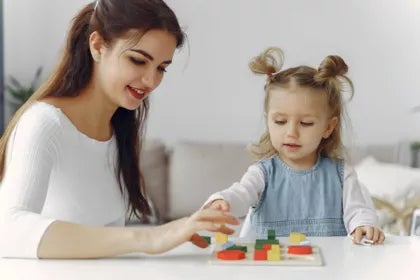
- Hands-on materials: Particularly relevant in Early Years and Primary Education, these include Montessori materials, logic blocks, materials for developing fine motor skills and resources for multi-sensory learning.
- Assessment tools: Standardised tests, observation scales, assessment rubrics and digital portfolios enable comprehensive monitoring of each pupil’s progress.
- Bibliographic and audiovisual resources: Therapeutic stories, specialised audiovisual material and adapted teaching resources are valuable tools for psycho-educational intervention.
Current trends in psycho-educational activities
Contemporary psycho-educational approaches incorporate new trends that respond to the demands of the 21st century:
Mindfulness and relaxation techniques
The incorporation of mindfulness practices into the classroom has been shown to have positive effects on students’ emotional regulation, concentration and general well-being.
Project-based learning
This methodology enables the integration of curriculum content with the development of cross-curricular skills, promoting more meaningful and practical learning.
Multiple intelligences
The recognition of diverse forms of intelligence has revolutionised educational psychology practices, promoting activities that take into account different ways of expressing and developing each student’s potential.
Neuroeducation
Advances in neuroscience applied to education have provided new insights into how the brain learns, influencing the design of activities that are more effective and better adapted to neurocognitive processes.
Practical implementation: specific examples
To illustrate the practical application of these principles, here are some examples of particularly effective educational activities:
- ‘ The Emotions Detective ’: An activity designed to develop emotional intelligence in primary school pupils. Pupils must identify emotions in different situations, analyse their causes and propose strategies for emotional regulation.
- “ Maths on the Move ”: Activities that combine physical activity with maths content, particularly effective for pupils with a kinesthetic learning style or attention difficulties.
- “Cooperative reading circles ”: A strategy that combines reading comprehension with the development of social skills, where each pupil takes on a specific role within the working group.
Your professional future begins with the right specialisation
Having analysed various psycho-pedagogical strategies and activities, you have probably realised something fundamental: modern psycho-pedagogy requires specialised training that goes beyond basic knowledge. If you have already taken your first steps as a teacher, now is the time to take the professional leap that will transform your career and, more importantly, the future of your students.
Why specialise in educational psychology?
Education in the 21st century faces unprecedented challenges. Classrooms are becoming increasingly diverse, educational needs more complex, and families are demanding highly qualified professionals who know how to respond to these realities. Good intentions are not enough; scientific knowledge, validated techniques and specialised tools are required.
Furthermore, career prospects in educational psychology have diversified significantly, offering opportunities in schools, specialist practices, public sector organisations and educational consultancy.
The UAX Master’s in Educational Psychology: Your gateway to professional excellence
The Official Master’s Degree in Educational Psychology at Alfonso X el Sabio University has been specifically designed for professionals like you, who understand that quality education requires training of the highest standard.
What will set you apart after completing this programme:
- Specialised knowledge: You will master the latest methodologies in neuroeducation, psychopedagogical assessment and the design of individualised interventions.
- Advanced skills: You will develop the skills to work with pupils with special educational needs, learning difficulties and giftedness.
- Holistic approach: You will understand learning processes from a multidisciplinary perspective that integrates psychology, pedagogy and neuroscience.
- Technological tools: You will learn to use the latest technologies applied to psycho-educational assessment and intervention.
We understand that you already have professional and personal commitments. That’s why our 100% online format allows you to:
- Study at your own pace, without giving up your current job
- Access up-to-date content from anywhere
- Take part in virtual classes with practising professionals
- Undertake professional placements that complement your experience
Your career future is just a click away.
Do it at UAX!
Sources:
- Castejón, J. L., González-Pumariega, S., & Cuetos, F. (2015). Development of reading competence: the effectiveness of a psycho-pedagogical intervention programme. Revista de Psicodidáctica, 20(2), 367–387.
- García, J. N., & González-Pienda, J. A. (2017). Handbook on learning difficulties: language, literacy and mathematics. Narcea Publishers.
- González-Valenzuela, M. J., & Martín-Ruiz, I. (2016). Early intervention in learning difficulties: psycho-educational programmes. Revista Española de Orientación y Psicopedagogía, 27(1), 8–24.
- López, M., & Bisquerra, R. (2018). Emotional Education: Programme for 3–6-Year-Olds. Wolters Kluwer.
- Martínez-Otero, V. (2019). Psychopedagogy of diversity in the classroom: intervention strategies. CCS Publishers.
- Monereo, C., & Solé, I. (2018). Psychopedagogical counselling: a professional and constructivist perspective. Alianza Publishers.
- Pérez, L., & Beltrán, J. (2017). Learning strategies: function and assessment. Síntesis.
- Rief, S., & Heimburge, J. (2020). How to teach all children in an inclusive classroom. Paidós.
- Vidal, J. G., & Manjón, D. G. (2019). Learning difficulties and psycho-educational intervention. EOS.