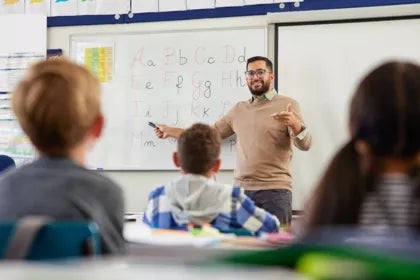





















Developmental psychology is a branch of psychology that studies the changes that occur in the human mind throughout life. Clearly, we are not all the same when we are born, nor as we grow up, passing through all the stages of development, until we reach the end of our lives. The fact is that, from the moment we are conceived until we die, we are subject to a continuous process of development or change.
In short, it is a journey through the life cycle, in which we evolve and develop as the individuals we are, with our strengths and our weaknesses, but always moving forward in life to become our ‘best selves’. As might be expected, development within the evolutionary process is linked both to education and to various factors—such as biological and environmental ones —which are intrinsically tied to the individual’s evolution and change as they acquire and gain experience and learning throughout their life cycle. Therefore, age, physical growth and neurological maturation are key aspects of evolutionary and developmental psychology.
As well as understanding the processes of human development from an evolutionary perspective, it is essential to consider how knowledge about how the brain functions can influence educational practices. Neuroeducation, an emerging discipline that combines neuroscience and education, offers innovative insights into how students learn and how we can optimise their teaching and learning process. Through programmes such as our Master’s in Neuroeducation , educators can explore strategies based on brain science to improve the effectiveness of their teaching and promote more meaningful learning. If you are interested in integrating advances in neuroscience into your teaching practice, we invite you to consider this exciting field of study as part of your professional development.
The theory of human development therefore posits that there are a multitude of variables that are decisive in an individual’s development, such as their socio-cultural environment, social interactions, their own personal experiences, or learning.
Gradually, as we mature and progress through life, we will acquire different skills and abilities, which will shape us into the people we are – as we have said before, ‘with our virtues and our flaws’. And this process of life and development does not come to an end until we reach the end of our days, that is, until ‘our life comes to an end’.
This process has been studied from the perspective of various disciplines over the years. One of these is evolutionary psychology, the main focus of today’s blog post.
Evolutionary psychology: why it is important
Evolutionary psychology is vital for understanding the many changes that occur in the human mind and behaviour during the continuous development we undergo from birth until death, as we have outlined above. Hence, we recognise the importance of evolutionary psychology at the different stages of development (prenatal, childhood, early childhood, middle childhood, adolescence, and early, middle and late adulthood).
How educational psychology helps
In the field of early intervention, educational psychologists must be qualified in the field of developmental psychology, in order to gain an in-depth understanding of the critical periods that occur in human development and, thus, to be able to create tailored programmes that help to stimulate learning, even in cases where there are issues that hinder it.

As for educational psychology support in later life, it helps experts to develop psychostimulation programmes that help improve concentration and memory.
Developmental psychology is, therefore, an increasingly important branch, having demonstrated its practical application when working with both children and adults.
Psycho-educational intervention helps to promote people’s holistic development. Hence, experts in psycho-education need to acquire in-depth knowledge in the field of developmental psychology, such as: understanding the critical periods of human development, how cognitive structures function at different stages of development, and how to design educational intervention programmes that serve to stimulate and compensate for any learning difficulties or developmental challenges a pupil may face.
In a previous post, we discussed the educational psychologist, a professional whose work focuses on the study of ‘a person in a learning situation’ of any age, assessing, diagnosing and helping those who face the greatest difficulties in the learning process. In short, we told you all about educational psychology and the work of an educational psychologist. And in this other post, we focused on the differences between educational psychology and educational psychology.
Would you like to steer your career towards educational psychology? If so, if you can see yourself working as an educational psychologist, you’ll need to study psychology and then take an online master’s degree in educational psychology. This postgraduate programme will equip you with the skills and abilities needed to take on this vital role, helping and guiding people through every stage of their development throughout their lives. Do you think this is your goal for the future?
Furthermore, if you want to discover the neuropsychological foundations of learning and understand the specific needs of each pupil to prevent the risk of social exclusion, you can gain the necessary qualifications through the Master’s in Special Education .