See all Online Master's Degrees in Health
See all Master's Degrees in Engineering
Most searched curriculums
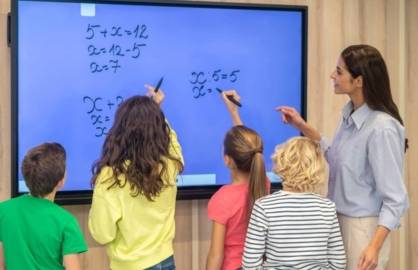
Transform the teaching of mathematics at all educational stages with innovative methodologies that motivate your students and make them enjoy learning. Master the use of ICT and educational trends, with a practical approach that can be adapted to the reality of the classroom. Specialise in "Early Childhood and Primary Education" or "Secondary and Baccalaureate" and take your subject to the next level. Improve your scale for the Teacher or Secondary School Civil Service Examinations. Limited places.
The Online Master’s in Mathematics Education prepares you to design and implement innovative teaching strategies, integrating digital tools, gamification and active learning methods to improve the teaching of key areas such as algebra, arithmetic, measurement, geometry, statistics and probability at various stages of education. You will learn how to overcome common difficulties in learning maths, fostering your students’ interest and showing them its real-world applications in everyday life and other subjects. Furthermore, you will learn how to create effective teaching resources and assess your pupils’ progress, becoming the professional that schools need to dispel the myth that maths is boring.
This officially recognised Master’s degree is based on a practical and flexible methodology that connects directly with the challenges of the real-world educational environment. Through case studies, projects and collaborative learning, students develop skills that they can immediately put into practice in their teaching. Our approach fosters a culture of co-creation and collaboration, promoting experiential learning. Furthermore, the flexibility of the online format allows you to balance your studies with your professional life, ensuring a learning experience tailored to your needs.
This officially recognised master’s degree will equip you to transform the teaching of mathematics, tailoring it to the needs of each student and educational stage. You will develop an innovative approach and create a project to improve the teaching of mathematics at a specific educational stage.
Learn to design, plan, execute and evaluate the teaching-learning process of Mathematics, adapting it to Infant and Primary Education or to Secondary and Baccalaureate.
Apply innovative approaches such as project-based learning and gamification to engage your students and make mathematics more dynamic and attractive.
Discover how to integrate digital technologies and resources (ICT) into mathematics teaching to enrich the educational experience.
Identifies and addresses common difficulties in learning Mathematics, using inclusive and personalised approaches for each student.
Motivate your students by integrating Mathematics with other disciplines, through a technological vision that fosters a more complete learning process connected to the real world.
Learn how to assess student progress with training strategies that are adapted to the needs and methodologies employed, ensuring effective learning.
Develops advanced competencies in educational leadership and critical thinking, essential to be an agent of educational change in mathematics education.
Choose the specialism that best suits your profile and maximise your impact in the classroom . Your specialism will be assigned based on the stage of education at which you teach (Early Years and Primary or Secondary and Sixth Form) and your qualifying qualification (Bachelor’s degree in Early Years/Primary Education or Master’s in Teaching). Furthermore, the teaching placements will be organised in accordance with these criteria, ensuring that your training is tailored to your professional profile. Each specialism within the online Master’s programme for maths teachers is worth 30 ECTS, allowing you to explore your area of interest in depth.

Enhance your teaching practice by understanding learning through the lens of neuroeducation. This micro-credential equips you to analyse students’ cognitive, emotional and behavioural processes, identify potential difficulties at an early stage, and apply evidence-based inclusive teaching strategies in the classroom.

Transform the way you work with generative artificial intelligence. This micro-credential empowers you to apply tools like ChatGPT, Copilot, and Gemini to analyze information, create content, and make decisions in real-world academic contexts, integrating solutions ethically and responsibly within the educational field.

Develop your potential in education through leadership and interpersonal skills. This microcredential provides you with the keys to managing teams, communicating effectively, and solving problems in real-world educational settings, combining personal leadership techniques with practical productivity and collaboration tools.
This master's degree for mathematics teachers is designed for teachers and professionals who are passionate about teaching mathematics and are looking to innovate and improve learning in their classrooms. Whether you are a practising teacher or a graduate in related areas, this programme will provide you with the tools you need to transform your teaching approach and make a difference in the mathematical development of your students.
Entry requirements:
To ensure students have the right level of knowledge and competencies, the entry profile will depend on the specialism you choose:
Specialisation in Mathematics Teaching in Early Childhood and Primary Education:
Specialisation in Mathematics Teaching in Secondary Education:
Master's Degree in Didactics in Mathematics
First Year
FIRST FOUR-MONTH PERIOD
| Code | Subjects | Character* | ECTS | ||
|---|---|---|---|---|---|
| SM150500 | Logical-mathematical thinking and difficulties in learning mathematics | OB | 6 | ||
Logical-mathematical thinking and difficulties in learning mathematicsCódigo: SM150500 Imprimir Course 1: First-semester module. Compulsory. 6 credits. Profesores
Objectives The aim of this module is to provide a knowledge base for understanding how our pupils learn and how we teach as teachers. The course analyses the stages of logical thinking development, as well as the mental processes involved in the construction of mathematical knowledge: attention, memory, reasoning, symbolic representation and problem-solving. Learning outcomes Competencies: RC1 Design educational intervention strategies for difficulties in learning mathematics, tailored to the specific needs of each pupil and educational stage RODS Develop effective communication, teamwork, analytical thinking, creativity and ethical leadership from a cross-curricular perspective, clearly inspired by democratic principles and values, as well as the Sustainable Development Goals, in order to conduct oneself with integrity in the professional sphere Knowledge: RK1 Distinguish between the stages of logical-mathematical thinking development and their implications for the teaching of mathematics at different educational stages RK2 Identify learning difficulties in mathematics and their educational implications Course content - Logical-mathematical thinking and its nature. Psychological and pedagogical characteristics. Implications of neuroscience. - Ethnomathematics: the impact of social, cultural and family context on the learning of mathematics. - Models of advanced mathematical thinking. Strategies for developing logical-mathematical thinking at different educational levels. - Difficulties in learning mathematics. Categorisation and educational implications. Advanced strategies for addressing these in the classroom. - Adaptations in the teaching of mathematics based on cognitive development. Teaching mathematics to pupils with special educational needs. - The relationship between mathematical thinking and computational thinking. Implications for the teaching and learning process. Training activities V1. Asynchronous lecture sessions: 15 hours V2.- Interactive classes (Synchronous) 22 hours V4a.- Self-guided exercises (asynchronous) 12 hours V4b.- Course forum (asynchronous) 5 hours V5. – Independent study, case studies, problem-solving or projects, and literature review: 88 hours V6.- Blended tutoring 5 hours V7.- Knowledge assessments (synchronous) 3 hours Assessment system and criteria SE1.- Assessment of practical activities 50% SE2.- Final knowledge assessments 50% |
|||||
| TOTAL: | 6 | ||||
SECOND FOUR-MONTH PERIOD
| Code | Subjects | Character* | ECTS | ||
|---|---|---|---|---|---|
| SM150501 | ICT applied to the teaching of mathematics | OB | 6 | ||
ICT applied to the teaching of mathematicsCódigo: SM150501 Imprimir Course 1. Second-term module. Compulsory. 6 credits. Profesores
Objectives The aim of this module is to develop students’ technological skills within the context of mathematics modules. Learning outcomes Skills or competences: RS3 To incorporate ICT coherently and in a justified manner into the teaching and learning processes of mathematics Course description - Development of technological skills by students within the context of mathematics courses. Information management. - The teaching of mathematics and its implications for the development of computing and robotics skills and competences: programming and resources. - Design, development and evaluation of technological resources for the teaching of mathematics. - Collaborative work in the maths classroom through ICT. - Analysis of available software and resources, and relevant success stories. Training activities V1. – Asynchronous lectures: 15 hours V2.- Interactive classes (synchronous) 15 hours V3.- Workshops 7 hours V4a.- Self-guided exercises (asynchronous) 8 hours V4b.- Course forum (asynchronous) 7 hours V5.- Independent study, case studies, problem-solving or projects, and literature review: 90 hours V6.- Blended tutoring 5 hours V7.- Knowledge tests (synchronous) 3h Assessment system and criteria SE1.- Assessment of practical activities 50% SE2.- Final knowledge assessments 50% |
|||||
| SM150502 | Advanced teaching skills and innovation in the classroom | OB | 6 | ||
Advanced teaching skills and innovation in the classroomCódigo: SM150502 Imprimir Course 1. Second-term module. Compulsory. 6 credits. Profesores
Objectives The aim of this module is to equip teachers with advanced classroom management techniques, covering discipline, social skills, effective communication and the learning environment. Learning Outcomes - The process of teaching and learning mathematics: learning errors and the persistence of prior misconceptions. Strategies to reinforce understanding and problem-solving skills. - Advanced classroom management techniques: discipline, social skills, effective communication and the learning environment. - Educational coaching in the maths classroom: positive psychology strategies and student motivation. - The reflective teacher. Evaluating outcomes and seeking improvements and solutions. - Educational innovation in the context of mathematics: trends, opportunities and evaluation of outcomes. - Case studies of successful innovation in mathematics teaching. Course content description Competencies: RC5 Propose, based on critical reflection, innovative teaching practices that promote better learning of mathematics among students RODS Develop effective communication, teamwork, analytical thinking, creativity and ethical leadership from a cross-curricular perspective, clearly inspired by democratic principles and values, as well as the Sustainable Development Goals, in order to conduct oneself with integrity in the professional sphere. Skills: RS4 To apply techniques appropriately to encourage student motivation and capture their attention in the context of teaching mathematics Training activities V1.- Asynchronous lectures 15 hours V2.- Interactive classes (synchronous) 15 hours V3.- Workshops 7 hours V4a.- Self-guided exercises Asynchronous 8 hours V4b.- Course forum (asynchronous) 7 hours V5. – Independent study, case studies, problem-solving or projects, and literature review: 90 hours V6.- Blended tutoring 5 hours V7.- Knowledge tests (synchronous) 3h Assessment system and criteria SE1.- Assessment of practical activities 50% SE2.- Final knowledge assessments 50% |
|||||
| SM150503 | The STEAM paradigm and the teaching of mathematics | OB | 6 | ||
The STEAM paradigm and the teaching of mathematicsCódigo: SM150503 Imprimir Course 1. Second-term module. Compulsory. 6 credits. Profesores
Objectives The aim of this module is to analyse the pedagogical approaches and areas of application of STEAM education, as well as multidisciplinary projects within the context of STEAM education. Learning Outcomes RODS To develop effective communication, teamwork, analytical thinking, creativity and ethical leadership from a cross-curricular perspective, clearly inspired by democratic principles and values, as well as the Sustainable Development Goals, in order to conduct oneself with integrity in the professional sphere Knowledge: RK4 Identify the characteristics of STEAM education and its applications in the teaching of mathematics Skills: RS5 Integrate, from the perspective of a mathematics teacher, the STEAM approach into the design and development of multidisciplinary educational projects Course content description - Pedagogical approaches and areas of application of STEAM education. Multidisciplinary projects in the context of STEAM education. The role of the mathematics subject. - Methodological and assessment adaptations for STEAM education. - The maker movement, programming, robotics and gamification within the STEAM framework. - The development of creativity, divergent thinking and entrepreneurial skills in the STEAM classroom. - Other relevant educational trends: Education for Sustainable Development, Universal Design for Learning, etc. - Case studies of successful STEAM education initiatives. Training activities V1. Asynchronous lecture sessions: 15 hours V2.- Interactive classes (synchronous) 15 hours V3.- Workshops: 7 hours V4a.- Self-guided exercises (asynchronous) 8 hours V4b.- Course forum (asynchronous) 7 hours V5.- Independent study, case studies, problem-solving or projects, and literature review: 90 hours V6.- Blended tutoring 5 hours V7.- Knowledge tests (synchronous) 3h Assessment system and criteria SE1.- Assessment of practical activities 50% SE2.- Final knowledge assessments 50% |
|||||
| SM150504 | Master’s Thesis | OB | 6 | ||
Master’s ThesisCódigo: SM150504 Imprimir Course 1. Second-term module. Compulsory. 6 credits. Profesores
Learning outcomes Competencies: RC1 Design educational intervention strategies for difficulties in learning mathematics, tailored to the specific needs of each pupil and educational stage RC2 Analyse the mathematics curriculum from an educational and pedagogical perspective RC3 Design educational strategies for teaching the different areas of mathematics, tailored to each stage of education and the needs of the student group RC4 Design formative assessment systems consistent with the methodology and activities carried out within the context of the mathematics course RC5 Propose, based on critical reflection, innovative teaching practices that promote better learning of mathematics among students RODS Develop effective communication, teamwork, analytical thinking, creativity and ethical leadership from a cross-curricular perspective, clearly inspired by democratic principles and values, as well as the Sustainable Development Goals, in order to conduct oneself with integrity in the professional sphere RTFM To develop an original and innovative project aimed at improving the teaching and learning processes in mathematics at a specific stage of education Knowledge: RK1 Distinguish between the stages of logical-mathematical thinking development and their implications for the teaching of mathematics at different educational stages RK2 Identify learning difficulties in mathematics and their educational implications RK3 Recognise the main existing models of mathematics teaching and their usefulness in designing the learning process for pupils RK4 Identify the characteristics of STEAM education and its applications in the teaching of mathematics Skills or competences: RS1 Integrate active methodologies into the teaching and learning processes of mathematics RS2 Create original teaching materials and learning resources for mathematics teaching, tailored to the curriculum to be taught and the chosen educational strategy RS3 Incorporate ICT into the teaching and learning processes in mathematics in a coherent and justified manner RS4 Apply techniques appropriately to encourage student motivation and capture their attention in the context of mathematics teaching RS5 Integrate, from the perspective of a mathematics teacher, the STEAM approach into the design and development of multidisciplinary educational projects" Description of the course content The Master’s Final Project (TFM) will focus on the design and development of a proposal for educational innovation in the context of teaching mathematics in Early Years Education, Primary Education, Secondary Education or Sixth Form, depending on the Master’s specialism chosen by the student. The MTh must demonstrate a comprehensive command of the learning outcomes covered in the various modules and a deep understanding of the teaching and learning processes in mathematics." Training activities V1. – Lectures 6 hours V6. Online tutorials 9 hours V8.- Preparation of the Master’s Thesis 133h V9. – Public oral defence: 2 hours " Assessment system and criteria SE3.- Assessment of the Master’s Thesis 50% SE4.- Defence and presentation of the Master’s Thesis before the assessment panel 50% |
|||||
| TOTAL: | 24 | ||||
ELECTIVE COURSES
| Code | Subjects | Character* | ECTS |
|---|---|---|---|
| N/A | Elective | OP | 30 |
| TOTAL: | 30 | ||
List of Elective Modules
FIRST FOUR-MONTH PERIOD
| Code | Subjects | Character* | ECTS | ||
|---|---|---|---|---|---|
| SM150530 | Curriculum, methodology and assessment in mathematics in Early Years and Primary Education | OP | 6 | ||
Curriculum, methodology and assessment in mathematics in Early Years and Primary EducationCódigo: SM150530 Imprimir Course 1. First-term module. Elective. 6 credits. Profesores
Objectives The aim of this module is to explore how to develop logical-mathematical thinking from an early age, laying the foundations for solid skills development and a positive relationship with this area of knowledge. To this end, the current LOMLOE curriculum will be examined, analysing how mathematics is integrated into the day-to-day life of the pre-school classroom and how it is structured through mathematical concepts in primary education. We will examine in depth how the principles of Universal Design for Learning (UDL) and advances in neuroscience help to create inclusive, playful and hands-on learning experiences that respect the different learning paces and styles of each child. Learning outcomes Competencies: RC2 Analyse, from an educational and pedagogical perspective, the mathematics curriculum Knowledge: RK3 Recognise the main existing models of mathematics teaching and their usefulness in designing the learning process for pupils Skills: RS1 Integrate active methodologies into the teaching and learning processes of mathematics Description of the content - The mathematics curriculum in Early Years and Primary Education: a didactic and critical analysis. Implications of the DUA. - Curriculum guidelines and models for the teaching and learning of mathematics in Early Years and Primary Education: NCTM, European models and Asian models. - Active methodologies for teaching mathematics in Early Years and Primary Education (flipped classroom, cooperative learning and gamification): applications, advantages, risks and case studies. Other innovative methodologies (Singapore method, ABN, Montessori, etc.). - Problem-solving. Types of problems: structured and unstructured problems. Applications in the teaching of mathematics in Early Years and Primary Education. - Assessment in mathematics in Early Years and Primary Education. Formative assessment. - Evaluation of outcomes and teaching programmes with a view to improvement. External assessments. Training activities V1. Asynchronous lectures: 15 hours V2.- Interactive classes (synchronous) 22 hours V4a.- Self-guided exercises (asynchronous) 12 hours V4b.- Course forum (asynchronous) 5 hours V5. – Independent study, case studies, problem-solving or projects, and literature review: 88 hours V6.- Blended tutoring 5 hours V7.- Knowledge assessments (synchronous) 3 hours Assessment system and criteria SE1.- Assessment of practical activities 50% SE2.- Final knowledge assessments 50% |
|||||
| SM150531 | Teaching Algebra, Arithmetic and Measurement in Early Years and Primary Education | OP | 6 | ||
Teaching Algebra, Arithmetic and Measurement in Early Years and Primary EducationCódigo: SM150531 Imprimir Course 1. First-term module. Elective. 6 credits. Profesores
Objectives The aim of this module is to help teachers convey knowledge of algebra, arithmetic and measurement more effectively to pupils, by applying techniques that enhance their understanding and make it easier for them to grasp this content. It also aims to help teachers adapt the way they convey this content to pupils, taking into account their diversity or tailoring it to pupils with special educational needs, in order to resolve any problems that may arise during their learning. Learning Outcomes Competencies: RC3 Design educational strategies for teaching the different areas of mathematics, tailored to each stage of education and the needs of the student group RC4 Design formative assessment systems consistent with the methodology and activities carried out within the context of the Mathematics course Course content - Natural, whole and rational numbers and their teaching. Teaching strategies in Secondary Education and Sixth Form, and associated difficulties. - Irrational and complex numbers and their teaching. Teaching strategies in secondary education and sixth form, and associated difficulties. - Algebra and its teaching. Teaching strategies in secondary education and sixth form, and associated difficulties. - Equations and systems of equations and their teaching. Teaching strategies in secondary education and sixth form, and associated difficulties. - Selection, design, development and evaluation of materials for teaching algebra and arithmetic in secondary and sixth-form education. Problems and games as educational resources. - Educational innovation in the teaching and learning of algebra and arithmetic in secondary education and sixth form. Training activities V1. – Asynchronous lectures: 15 hours V2.- Interactive classes (Synchronous) 22 hours V4a.- Self-guided exercises (asynchronous) 12 hours V4b.- Course forum (asynchronous) 5 hours V5. – Independent study, case studies, problem-solving or projects, and literature review: 88 hours V6.- Blended tutoring 5 hours V7.- Knowledge assessments (synchronous) 3 hours Assessment system and criteria SE1.- Assessment of practical activities 50% SE2.- Final knowledge assessments 50% |
|||||
| SM150532 | Teaching Geometry in Early Years and Primary Education | OP | 6 | ||
Teaching Geometry in Early Years and Primary EducationCódigo: SM150532 Imprimir Course 1. First-term module. Elective. 6 credits. Profesores
Objectives The main aim of this module is to equip Early Years and Primary School teachers with theoretical and pedagogical knowledge of geometry, providing them with the necessary tools to design, implement and evaluate teaching strategies that foster the development of spatial and geometric thinking in pupils. Firstly, the course examines the most relevant theoretical approaches to the teaching and learning of geometry (Piaget, Van Hiele and Duval), highlighting their contributions and the implications these have for planning the teaching and learning process. This enables an understanding of how geometric reasoning skills develop across different stages of education and how to adapt to pupils’ needs. Learning outcomes Competencies: RC3 Design educational strategies for teaching the different areas of mathematics, tailored to each stage of education and the needs of the student group RC4 Design formative assessment systems consistent with the methodology and activities carried out within the context of the Mathematics course Course content - Advanced mathematical thinking and its theoretical models: the most relevant theories and their impact on the teaching-learning process. - Mathematical analysis and its teaching: functions, limits, infinity, derivatives and integrals. Teaching strategies in Secondary Education and Sixth Form, and associated difficulties. - Theoretical and didactic approaches to the teaching of geometry. Implications for the design of the teaching-learning process. - Geometry and its teaching: plane geometry, solid geometry, analytical geometry and trigonometry. Teaching strategies in secondary education and sixth form, and associated difficulties. - Selection, design, development and evaluation of teaching materials for analysis and geometry in secondary education and sixth form. - Educational innovation in the teaching and learning of analysis and geometry in secondary education and sixth form. Training activities V1. Asynchronous lectures: 15 hours V2.- Interactive classes (Synchronous) 22 hours V4a.- Self-guided exercises (asynchronous) 12 hours V4b.- Course forum (asynchronous) 5 hours V5. – Independent study, case studies, problem-solving or projects, and literature review: 88 hours V6.- Blended tutoring 5 hours V7.- Knowledge assessments (synchronous) 3 hours Assessment system and criteria SE1.- Assessment of practical activities 50% SE2.- Final knowledge assessments 50% |
|||||
| SM150533 | Teaching Statistics and Probability in Early Years and Primary Education | OP | 6 | ||
Teaching Statistics and Probability in Early Years and Primary EducationCódigo: SM150533 Imprimir Course 1. First-term module. Elective. 6 credits. Profesores
Objectives The aim of this module is to provide future teachers with a sound, critical and applied understanding of the theoretical, methodological and pedagogical foundations linked to the teaching and learning of statistics and probability in the early stages of education. From a global and interdisciplinary perspective, the course addresses statistical literacy and probabilistic reasoning as essential skills for the holistic development of pupils, fostering the ability to interpret, analyse and communicate quantitative and qualitative information in real-world contexts. Learning outcomes Competencies: RC3 Design educational strategies for teaching different areas of mathematics, tailored to each stage of education and the needs of the student group RC4 Design formative assessment systems consistent with the methodology and activities carried out within the context of the Mathematics course Course content - Theoretical and pedagogical approaches to the teaching of statistics and probability. Statistical literacy and reasoning. - Statistical concepts and graphical representations, and their teaching. Teaching strategies in Early Years and Primary Education, and associated difficulties. - Concepts of probability and their teaching. Teaching strategies in Early Years and Primary Education and associated difficulties. - Integration of statistics and probability into classroom project work. - Selection, design, development and evaluation of teaching materials for statistics and probability in Early Years and Primary Education. - Educational innovation in the teaching and learning of statistics and probability in Early Years and Primary Education. Play as an educational resource. Training activities V1. Asynchronous lectures: 15 hours V2.- Interactive classes (synchronous) 22 hours V4a.- Self-guided exercises (asynchronous) 12 hours V4b.- Course forum (asynchronous) 5 hours V5. – Independent study, case studies, problem-solving or projects, and literature review: 88 hours V6.- Blended tutoring 5 hours V7.- Knowledge assessments (synchronous) 3 hours Assessment system and criteria SE1.- Assessment of practical activities 50% SE2.- Final knowledge assessments 50% |
|||||
| SM150535 | Curriculum, methodology and assessment of mathematics in secondary education and sixth form | OP | 6 | ||
Curriculum, methodology and assessment of mathematics in secondary education and sixth formCódigo: SM150535 Imprimir Course 1. First-term module. Elective. 6 credits. Profesores
Objectives The aim of this module is to analyse in depth the mathematics curriculum established by the current education law (LOMLOE), examining its structure, its pedagogical principles and its implications for teaching practice. The course will also examine how Universal Design for Learning (UDL) and the principles of neuroscience enable the creation of learning environments that are accessible to the full diversity of pupils in the classroom. Learning Outcomes Competencies: Competencies: RC2 Analyse the mathematics curriculum from an educational and pedagogical perspective Knowledge: RK3 Recognise the main existing models of mathematics teaching and their usefulness in designing the learning process for students Skills: RS1 Integrate active methodologies into the teaching and learning processes of mathematics Description of the content - The mathematics curriculum in Secondary Education and Sixth Form: a didactic and critical analysis. Implications of the DUA. - Curriculum guidelines and models for the teaching and learning of mathematics in secondary education and sixth form: NCTM, European models and Asian models. - Active methodologies for teaching mathematics in secondary education and sixth form (challenge-based learning, project-based learning, cooperative learning, the flipped classroom and gamification). - Problem-solving. Types of problems: structured and unstructured problems. Applications in the teaching of mathematics in secondary education and sixth form. - Assessment in mathematics in secondary and sixth-form education. Formative assessment. - Evaluation of outcomes and teaching programmes with a view to improvement. External assessments. Training activities V1. Asynchronous lectures: 15 hours V2.- Interactive classes (synchronous) 22 hours V4a.- Self-guided exercises (asynchronous) 12 hours V4b.- Course forum (asynchronous) 5 hours V5. – Independent study, case studies, problem-solving or projects, and literature review: 88 hours V6.- Blended tutoring 5 hours V7.- Knowledge assessments (synchronous) 3 hours Assessment system and criteria SE1.- Assessment of practical activities 50% SE2.- Final knowledge assessments 50% |
|||||
| SM150536 | Teaching Algebra and Arithmetic in Secondary Education and Sixth Form | OP | 6 | ||
Teaching Algebra and Arithmetic in Secondary Education and Sixth FormCódigo: SM150536 Imprimir Course 1. First-term module. Elective. 6 credits. Profesores
Objectives The aim of this module is to equip mathematics teachers with the tools to plan, deliver and assess the teaching of algebra and arithmetic in real classroom contexts at secondary and sixth-form levels. During the course, the main arithmetic and algebraic topics featured in the curriculum will be covered, with particular attention paid to the role played by real and complex numbers in the development of pupils’ mathematical thinking. The course The development of algebraic thinking will also be covered, from its earliest stages of formalisation through to processes of generalisation and modelling, as well as the solving of equations and systems of equations to foster and reasoning. Learning outcomes Competencies: RC3 Design educational strategies for teaching the different areas of mathematics, tailored to each stage of education and the needs of the student group RC4 Design formative assessment systems consistent with the methodology and activities carried out within the context of the Mathematics module Course content - Natural, whole and rational numbers and their teaching. Teaching strategies in Secondary Education and Sixth Form, and associated difficulties. - Irrational and complex numbers and their teaching. Teaching strategies in secondary education and sixth form, and associated difficulties. - Algebra and its teaching. Teaching strategies in secondary education and sixth form, and associated difficulties. - Equations and systems of equations and their teaching. Teaching strategies in Secondary Education and Sixth Form, and associated difficulties. - Selection, design, development and evaluation of materials for teaching algebra and arithmetic in secondary and sixth-form education. Problems and games as educational resources. - Educational innovation in the teaching and learning of algebra and arithmetic in secondary education and sixth form. Training activities V1. – Asynchronous lectures: 15 hours V2.- Interactive classes (Synchronous) 22 hours V4a.- Self-guided exercises (asynchronous) 12 hours V4b.- Course forum (asynchronous) 5 hours V5. – Independent study, case studies, problem-solving or projects, and literature review: 88 hours V6.- Blended tutoring 5 hours V7.- Knowledge assessments (synchronous) 3 hours Assessment system and criteria SE1.- Assessment of practical activities 50% SE2.- Final knowledge assessments 50% |
|||||
| SM150537 | Teaching Methods for Analysis and Geometry in Secondary Education and Sixth Form | OP | 6 | ||
Teaching Methods for Analysis and Geometry in Secondary Education and Sixth FormCódigo: SM150537 Imprimir Course 1. First-term module. Elective. 6 credits. Profesores
Objectives The aim of this module is to provide teachers with the conceptual and methodological tools necessary to plan, deliver and assess the teaching of mathematical analysis and geometry at secondary and sixth-form level, linking subject knowledge with teaching practice. During the course, the fundamental content of school-level analysis and geometry – functions, limits, infinity, derivatives, integrals, plane and solid geometry, analytical geometry and trigonometry – will be covered, with particular attention paid to and the most appropriate teaching strategies for overcoming them. Furthermore, the main theories and models of advanced mathematical thinking will be presented, along with their impact on the teaching and learning of these curriculum areas. Learning outcomes Competencies: RC3 Design educational strategies for teaching the different areas of mathematics, tailored to each stage of education and the needs of the student group RC4 Design formative assessment systems consistent with the methodology and activities carried out within the context of the Mathematics course Course content - Advanced mathematical thinking and its theoretical models: the most relevant theories and their impact on the teaching-learning process. - Mathematical analysis and its teaching: functions, limits, infinity, derivatives and integrals. Teaching strategies in Secondary Education and Sixth Form, and associated difficulties. - Theoretical and didactic approaches to the teaching of geometry. Implications for the design of the teaching-learning process. - Geometry and its teaching: plane geometry, solid geometry, analytical geometry and trigonometry. Teaching strategies in secondary education and sixth form, and associated difficulties. - Selection, design, development and evaluation of teaching materials for analysis and geometry in secondary education and sixth form. - Educational innovation in the teaching and learning of analysis and geometry in secondary education and sixth form. Training activities V1. Asynchronous lectures: 15 hours V2. Interactive classes – Synchronous – 22 hours V4a.- Self-guided exercises (asynchronous) 12 hours V4b.- Course forum (asynchronous) 5 hours V5. – Independent study, case studies, problem-solving or projects, and literature review: 88 hours V6.- Blended tutoring 5 hours V7.- Knowledge assessments (synchronous) 3 hours Assessment system and criteria SE1.- Assessment of practical activities 50% SE2.- Final knowledge assessments 50% |
|||||
| SM150538 | Teaching Statistics and Probability in Secondary and Sixth Form Education | OP | 6 | ||
Teaching Statistics and Probability in Secondary and Sixth Form EducationCódigo: SM150538 Imprimir Course 1. First-term module. Elective. 6 credits. Profesores
Objectives The aim of this module is to provide the theoretical and methodological foundations necessary for teaching statistics and probability at secondary and sixth-form level, addressing the concepts, learning difficulties, teaching strategies and resources specific to these branches of school mathematics. The course will cover both descriptive and inferential statistics, as well as probability and its distributions, with a focus on integrating this content into interdisciplinary projects and applying it to the analysis of social and scientific phenomena. Furthermore, it will explore the role of uncertainty, chance and variability in mathematical thinking, as well as the importance of developing statistical literacy in pupils. Learning outcomes Competencies: RC3 Design educational strategies for teaching the different areas of mathematics, tailored to each stage of education and the needs of the student group RC4 Design formative assessment systems consistent with the methodology and activities carried out within the context of the Mathematics module Course content - Theoretical and pedagogical approaches to the teaching of statistics and probability. The meanings of probability. - Statistics and its teaching. Teaching strategies in Secondary Education and Sixth Form, and associated difficulties. - Probability and distributions and their teaching. Teaching strategies in secondary education and sixth form, and associated difficulties. - Integrating statistics and probability into classroom project work. Statistics and probability in the social sciences. - Selection, design, development and evaluation of teaching materials for statistics and probability in secondary and sixth-form education. - Educational innovation in the teaching and learning of statistics and probability in secondary and sixth-form education. Training activities V1. Asynchronous lectures: 15 hours V2.- Interactive classes (synchronous) 22 hours V4a.- Self-guided exercises (asynchronous) 12 hours V4b.- Course forum (asynchronous) 5 hours V5. – Independent study, case studies, problem-solving or projects, and literature review: 88 hours V6.- Blended tutoring 5 hours V7.- Knowledge assessments (synchronous) 3 hours Assessment system and criteria SE1.- Assessment of practical activities 50% SE2.- Final knowledge assessments 50% |
|||||
| TOTAL: | 48 | ||||
SECOND FOUR-MONTH PERIOD
| Code | Subjects | Character* | ECTS | ||
|---|---|---|---|---|---|
| SM150534 | External Academic Placements in Early Years and Primary Education | OP | 6 | ||
External Academic Placements in Early Years and Primary EducationCódigo: SM150534 Imprimir Course 1. Second-term module. Elective. 6 credits. Profesores
Learning outcomes Competencies: RC1 Design educational intervention strategies for difficulties in learning mathematics, tailored to the specific needs of each pupil and educational stage RC2 Analyse the mathematics curriculum from an educational and pedagogical perspective RC3 Design educational strategies for teaching the different areas of mathematics, tailored to each stage of education and the needs of the student group RC4 Design formative assessment systems consistent with the methodology and activities carried out within the context of the mathematics course RC5 Propose, based on critical reflection, innovative teaching practices that promote better learning of mathematics among students RODS Develop effective communication, teamwork, analytical thinking, creativity and ethical leadership from a cross-curricular perspective, clearly inspired by democratic principles and values, as well as the Sustainable Development Goals, in order to conduct oneself with integrity in the professional sphere Knowledge: RK1 Distinguish between the stages of development of logical-mathematical thinking and their implications for the teaching of mathematics at different educational stages RK2 Identify learning difficulties in mathematics and their educational implications RK3 Recognise the main existing models of mathematics teaching and their usefulness in designing the learning process for pupils RK4 Identify the characteristics of STEAM education and its applications in the teaching of mathematics Skills or competences: RS1 Integrate active methodologies into the teaching and learning processes of mathematics RS2 Create original teaching materials and learning resources for mathematics teaching, tailored to the curriculum to be delivered and the chosen educational strategy RS3 Incorporate ICT into the teaching and learning processes in mathematics in a coherent and justified manner RS4 Apply techniques appropriately to encourage student motivation and capture their attention in the context of mathematics teaching RS5 Integrate, from the perspective of a mathematics teacher, the STEAM approach into the design and development of multidisciplinary educational projects" Description of the course content During the External Academic Placement, the student will attend an educational establishment, where they will be accompanied at all times by a tutor who is a teacher at that establishment. In the first phase, they will carry out a careful and critical observation of their tutor’s teaching practice. Subsequently, in a second phase, following their tutor’s guidance and under their supervision, they will teach mathematics in Early Years and/or Primary Education. This will enable them to apply the knowledge, competences and skills acquired in the other theoretical and practical modules of the Master’s programme. Following their placement at the school, the student will produce a final report in which they must address, in depth, at least the following aspects: 1. Identification of the school and a description of the activities carried out. 2. Identification of the conclusions reached during the observation process. 3. A detailed explanation of the teaching intervention carried out, including the teaching unit prepared and approved by their tutor. 4. An assessment of their experience during the teaching placement and the learning outcomes achieved. " Training activities V2. – Interactive classes (synchronous) 4 hours V6. Tutoring: 5 hours V5. – Independent study, case studies, problem-solving or projects, and literature review: 31 hours V10. External academic placement: 110 hours" Assessment system and criteria SE5.- Report by the external academic placement tutor 30% SE6.- Report by the academic supervisor of the external academic placement 30% SE7.- Assessment of the external academic placement report 40% |
|||||
| SM150539 | External Academic Placements in Secondary Education and Sixth Form | OP | 6 | ||
External Academic Placements in Secondary Education and Sixth FormCódigo: SM150539 Imprimir Course 1. Second-term module. Elective. 6 credits. Profesores
Learning outcomes Competencies: RC1 Design educational intervention strategies for difficulties in learning mathematics, tailored to the specific needs of each pupil and educational stage RC2 Analyse the mathematics curriculum from an educational and pedagogical perspective RC3 Design educational strategies for teaching the different areas of mathematics, tailored to each stage of education and the needs of the student group RC4 Design formative assessment systems consistent with the methodology and activities carried out within the context of the mathematics course RC5 Propose, based on critical reflection, innovative teaching practices that promote better learning of mathematics among students RODS Develop effective communication, teamwork, analytical thinking, creativity and ethical leadership from a cross-curricular perspective, clearly inspired by democratic principles and values, as well as the Sustainable Development Goals, in order to conduct oneself with integrity in the professional sphere Knowledge: RK1 Distinguish between the stages of development of logical-mathematical thinking and their implications for the teaching of mathematics at different educational levels RK2 Identify learning difficulties in mathematics and their educational implications RK3 Recognise the main existing models of mathematics teaching and their usefulness in designing the learning process for pupils RK4 Identify the characteristics of STEAM education and its applications in the teaching of mathematics Skills or competences: RS1 Integrate active methodologies into the teaching and learning processes of mathematics RS2 Create original teaching materials and learning resources for mathematics teaching, tailored to the curriculum to be taught and the chosen educational strategy RS3 Incorporate ICT into the teaching and learning processes in mathematics in a coherent and justified manner RS4 Apply techniques appropriately to encourage student motivation and capture their attention in the context of mathematics teaching RS5 Integrate, from the perspective of a mathematics teacher, the STEAM approach into the design and development of multidisciplinary educational projects" Description of the course content During the External Academic Placement, the student will attend an educational establishment, where they will be accompanied at all times by a tutor who is a teacher at that establishment. In the first phase, they will carry out a careful and critical observation of their tutor’s teaching practice. Subsequently, in a second phase, following their tutor’s guidance and under their supervision, they will teach mathematics in Early Years and/or Primary Education. This will enable them to apply the knowledge, competences and skills acquired in the other theoretical and practical modules of the Master’s programme. Following their placement at the school, the student will produce a final report in which they must address, in depth, at least the following aspects: 1. Identification of the school and a description of the activities carried out. 2. Identification of the conclusions reached during the observation process. 3. A detailed explanation of the teaching intervention carried out, including the teaching unit prepared and approved by their tutor. 4. An assessment of their placement experience and the learning outcomes achieved. " Training activities V2. – Interactive classes (synchronous) 4 hours V6. Tutoring: 5 hours V5. – Independent study, case studies, problem-solving or projects, and literature review: 31 hours V10. External academic placement: 110 hours" Assessment system and criteria SE5.- Report by the external academic placement tutor 30% SE6.- Report by the academic supervisor of the external academic placement 30% SE7.- Assessment of the external academic placement report 40% |
|||||
| TOTAL: | 12 | ||||
*Character: BT: Basic Training, Ob: Required, Op: Optional
Our degree is official, verified by the Council of Universities and fully valid in Spain, as well as in the European Higher Education Area.
It is recognised by the Education Systems of Latin America, being recognised and approved by the different Ministries of Education in Latin America:
SENESCYT, MEN (MinEducation), SEP, Mescyt, among others, automatically.
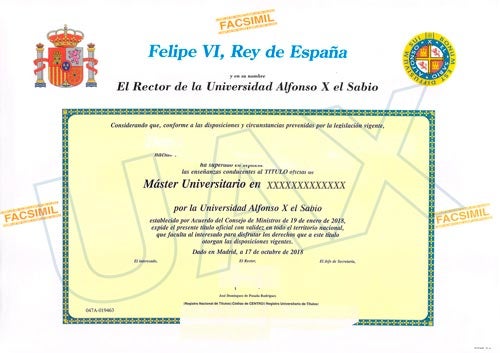
The online master's degree for Mathematics teachers includes 6 ECTS of internships, which is equivalent to 150 curricular hours (110 classroom hours at the centre). This internship will take place during the second term, giving you an immersive experience in an educational centre, in the stage corresponding to your specialisation. During this time, you will put into practice what you have learnt and you will be accompanied by a teaching tutor at the centre. In a first phase, you will observe and critically reflect on the teaching work of your tutor. Then, in a second phase, you will teach mathematics classes under your tutor's supervision, applying the skills acquired throughout the master's degree. Thanks to our partnerships with educational institutions, NGOs and public bodies, you will have access to real-world environments where you can make a difference.
We have agreements with more than 700 educational institutions, non-governmental organisations and public institutions such as:
If you have related professional experience, you will be able to validate the internship. Contact our advisors for a personalised study of ECTS recognition.
The flexibility of online learning, with opportunities to connect
Take your exams online wherever you are or, if you prefer, in person at our designated centres in Spain and Latin America, subject to availability and capacity.
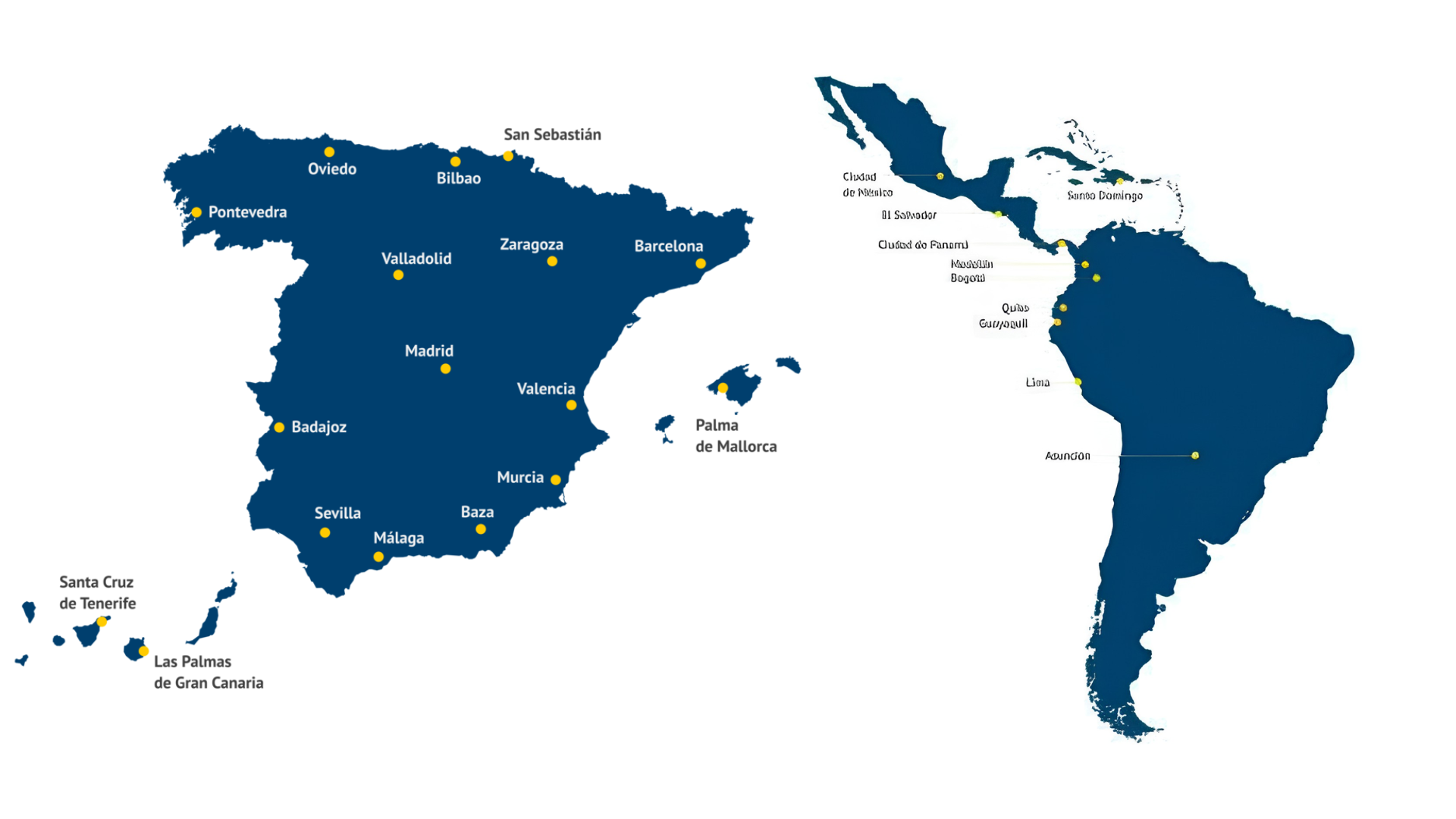
What’s more, as a student at UAX Online, you’ll have access to our Campus Hubs – a network of exclusive physical spaces where you can study, access libraries, work in co-working areas and connect with other students. Because studying online doesn’t mean studying alone.
Campus Hubs available in: Alcobendas, Alcorcón, Valencia San Vicente, Murcia, Barcelona, Málaga, Seville and Arganda.
Access is via your UAX student card, subject to availability and the opening hours of each centre.
Scholarships and financial support for studying at UAX
We know that studying is an investment. That’s why we want to remove financial barriers and make things easier for you. Fill in the form and let our advisers help you discover the scholarships, agreements and personalised financial support that best suit your situation.

Ministry of Education, Vocational Training and Sport
Find out about the scholarships and grants offered by the Ministry of Education, Vocational Training and Sport, categorised by type and level of education.

Attracting Pre-doctoral Research Talent
Financial support for outstanding students who wish to carry out innovative research and contribute to the advancement of knowledge in their disciplines.
If you’ve already decided to take the plunge, enrol early and benefit from a direct grant. It’s a way of rewarding your commitment and giving you a head start in planning your future.
Students from Ibero-America
This programme is aimed at Ibero-American citizens or foreign nationals legally resident in countries within the OEI’s sphere of influence. The scholarship covers a 50 per cent discount on the total tuition fees.

Students from Ecuador
This programme is aimed at citizens with Ecuadorian nationality and/or residence who wish to undertake an online master’s degree in Spain. The scholarship covers a 50 per cent discount on the total tuition fees.

2025, 2nd Edition
Grants for students on higher-level vocational training, undergraduate, postgraduate or master’s programmes enrolled at Spanish universities with a Santander agreement. A financial supplement to support you whilst undertaking your work placements.
If you graduated from UAX and are now thinking of studying for a new degree, we want to continue supporting you. That’s why we’re offering you a 10% discount on tuition fees.
If you have an immediate family member (up to second degree of kinship) enrolled at UAX, you can benefit from a 5 per cent discount on tuition fees. Because studying as a family is even better.
Studying for two degrees at the same time is a challenge, and we want to support you. If you’re already at UAX and enrol on a second degree programme, you’ll receive a grant towards your booking fee and tuition fees.
If you’d like to continue your studies with us and progress from vocational training to a bachelor’s degree, from one bachelor’s degree to another, or from a bachelor’s degree to a postgraduate degree, we’re here to support you with a grant covering up to 25 per cent of your tuition fees.
If you have a strong academic record, we would like to recognise your talent with a scholarship designed for new students. (Excludes the degree in Medicine).
*Terms and conditions to be published
If you’re a high-performance athlete, at UAX we want to help you balance your passion with your studies. We offer specific grants that can cover up to 50 per cent of your tuition fees.

The Online Master's Degree in Didactics of Mathematics trains you to face the challenges of mathematics teaching with an innovative vision. As a graduate, you will be able to play roles in the following areas:
It is important to note that the master's degree does not in itself qualify students to work in regulated professions; students must first have the corresponding university degree or master's degree.
El Máster Online en Didáctica de las Matemáticas va más allá de la habilitación para la docencia. Si ya cuentas con el Máster de Profesorado con especialidad en Matemáticas, este programa te permitirá profundizar en metodologías innovadoras como el aprendizaje basado en proyectos, la gamificación o el enfoque STEAM. Además, desarrollarás competencias avanzadas en evaluación formativa, estrategias didácticas y uso de herramientas digitales adaptadas a cada etapa educativa. También aprenderás a motivar a tus estudiantes, abordar dificultades de aprendizaje y conectar las Matemáticas con el mundo real, diferenciándote como un docente innovador y especializado en didáctica matemática. Te permitirá mejorar la didáctica en el aula y aumentar tu puntuación en el baremo de oposiciones.
The Online Master in Didactics of Mathematics offers high employability due to the growing demand for teachers in Spain. In the last decade, the number of teachers has grown by 10.9%, and the need for mathematics specialists is even greater.
In some competitive examinations, only 50% of the places offered are filled, reflecting the shortage of professionals in this area.
This makes the master's degree an option with excellent job opportunities in the field of education.
Through active methodologies such as gamification, project-based learning and the STEAM approach. It also incorporates the use of digital tools and strategies to address learning difficulties, ensuring dynamic and effective teaching.
No. Although the Master's Degree in Mathematics Teaching adds points in the competitive examinations, it does not in itself qualify students to exercise regulated professions; students must first have the corresponding University Degree or Master's Degree.
Yes, as long as you meet the prerequisites of a qualifying qualification. This master's degree improves your teaching profile and your score in competitive examinations, increasing your job opportunities in educational centres.
Sí. A través de metodologías innovadoras, el máster te capacita para hacer las matemáticas más atractivas y comprensibles, ayudándote a motivar a los estudiantes y mejorar su aprendizaje.
Other related qualifications

Master’s Degree in Teacher Training for Compulsory Secondary Education and Sixth Form
In collaboration with:

Start:
October
Length:
1 year

Master's Degree in Educational Technology and Digital Competences for Teachers - ICT (online)
In collaboration with:

Start:
October
Length:
9 months

Online Master's Degree in Leadership and Management of Educational Centres
In collaboration with:

Start:
October
Length:
9 months

Online Master's Degree in Educational Innovation
Start:
October
Length:
9 months

Master’s Degree in Educational Neuropsychology (Online)
In collaboration with:

Start:
October
Length:
9 months

Master’s Degree in Supporting Diversity and Inclusive Education (Online)
In collaboration with:

Start:
October
Length:
9 months

Master's Degree in Psychopedagogy (online)
In collaboration with:

Start:
October
Length:
9 months

Master’s Degree in Teaching Spanish as a Foreign Language (Online)
In collaboration with:

Start:
October
Length:
9 months

Online Master's Degree in Conflict Prevention and Mediation in Educational Settings
Start:
October
Length:
9 months

Online Master's Degree in Emotional Education and Pedagogical Accompaniment
Start:
October
Length:
9 months

Online Master's Degree in Research Methodologies in Education
Start:
October
Length:
9 months

Online Mentions for the Bachelor's Degree in Primary Education
Start:
October
Length:
9 months

Online Degree in Early Childhood Education
Start:
October
Length:
4 years
Online Degree in Primary Education
Start:
October
Length:
4 years

Online Degree in Pedagogy
Start:

October
Length:
4 courses
All fields are required
Enquiries, complaints and claims
We respond to the genuine needs of our students and staff, because we believe in the continuous improvement of our results. That is why we always want to hear whatever you have to say.
If you are already part of UAX, please visit the ‘Customer Service: complaints, suggestions and compliments’ section on thevirtual campus , logging in with your username and password.
You can view the various indicators via the following links:
Employability: View
Satisfaction results: View
Rates and indicators: View
Improvement measures implemented for the degree programme during the academic year: