
























Table of Contents
What is pedagogy and why are there so many different approaches?
What are the different types of pedagogy and what are their characteristics?
What are the key differences between the most important pedagogical approaches?
How do you choose the type of pedagogy that best suits your profile?
What training do you need to specialise in the types of pedagogy that interest you most?
What is pedagogy and why are there so many different approaches?
Pedagogy is the scientific discipline that studies education as a complex and multidimensional phenomenon. It is not a static field: it evolves alongside society, culture and scientific knowledge. As Touriñán (2019) points out, we can understand it as an integrating element between knowledge, society and culture, and its relationships with other fields of knowledge and with human beings.
It is precisely this richness that explains the existence of so many pedagogical approaches. Each type of pedagogy arises in response to a specific question: how does the brain learn? How can education transform society? How can we ensure that no student is left behind? Understanding these different approaches not only enriches your training but also enables you to develop a more reflective, flexible and effective teaching practice.
What are the different types of pedagogy and their characteristics?
Below, we will describe different types of pedagogy, covering the most relevant educational approaches and their distinctive characteristics. Understanding these pedagogical approaches will enable you to grasp the breadth and complexity of the educational field.
Psychological pedagogy
This approach draws on the knowledge and strategies of psychology to understand how people learn. It is useful for designing educational interventions that take into account the student’s emotional, developmental and cognitive state. Its influence is far-reaching: almost all other approaches incorporate, to a greater or lesser extent, principles of the psychology of learning.
Conceptual pedagogy
Conceptual pedagogy focuses on the development of conceptual thinking and a deep understanding of concepts. It promotes meaningful learning and the ability to apply knowledge to different contexts (Ausubel, Novak and Hanesian, 1978). This approach is essential for educators seeking a solid theoretical basis for their practice.
Cognitive pedagogy
Cognitive pedagogy is based on the principles of cognitive psychology to understand how people learn. It focuses on the mental processes involved in learning, such as memory, comprehension, problem-solving and reasoning (Sweller, 2011). This pedagogical approach seeks to understand internal mental processes and how teaching strategies can be adapted to improve pupils’ understanding.
Early Years Education
Early years education, one of the best-known types of pedagogy, specialises in the education of young children. It focuses on the child’s holistic development, taking into account their physical, emotional, social and cognitive needs. It lays the foundations upon which all subsequent learning is built; consequently, this approach requires specific and highly specialised training.
Descriptive pedagogy
Descriptive pedagogy analyses and documents educational phenomena from a broader perspective, taking into account the historical context and social relationships. Its aim is to understand educational processes without intervening directly in them, providing a basis for the development of other educational approaches. It is particularly useful for researchers and for those who wish to understand current educational practices within their context.
Critical pedagogy
Critical pedagogy is an educational approach that promotes reflection, critical awareness and transformative action amongst students. Paulo Freire is one of the leading figures in this pedagogical movement; he proposed a liberating pedagogy based on the development of critical consciousness, challenging existing power structures and inequalities, and promoting a dialogical form of education ( Freire, 1975).
Critical pedagogy promotes critical reflection and social transformation through education, empowering students to become agents of change. This approach encourages students to question and transform existing social and political structures.
Social pedagogy
Social pedagogy operates within social contexts to emphasise the importance of social interaction and learning, whilst promoting inclusion, cooperation, teamwork and community development.
It works with vulnerable groups and uses education as a tool for social transformation.
Normative pedagogy
Normative pedagogy is an educational approach that focuses on teaching the norms, values and behaviours expected within the educational context. Although it has not been referred to by the name ‘normative pedagogy’, we can see that sociologists such as Durkheim (2013) already considered that education should be a normative process that instils social cohesion and respect for the norms of society.
Music or instrumental pedagogy
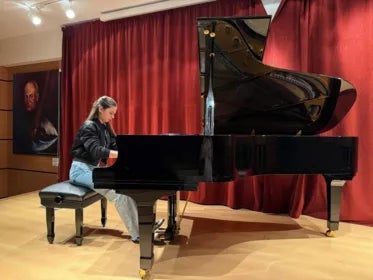
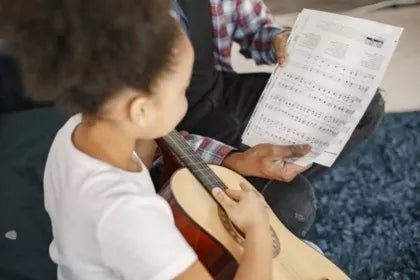
Music pedagogy, also known as instrumental pedagogy , focuses on the teaching and learning of music, particularly in the context of playing musical instruments. Its objectives include developing a deeper understanding of music, as well as providing the skills, knowledge and tools necessary for pupils to learn to play an instrument.
Digital pedagogy
Digital pedagogy integrates information and communication technologies (ICT) into the educational process. It uses digital tools to enrich learning and adapt it to the needs of the 21st century. Following on from digital pedagogy is the pedagogy of connectivity, which emphasises the importance of relationships and interconnection in learning. It encourages collaborative work and the creation of learning networks.
Green pedagogy
Green pedagogy is an educational approach that promotes environmental education and sustainability. It views nature as a learning space and fosters awareness of and respect for the environment from an early age, in line with the major global challenges of the 21st century.
Inclusive and gender-sensitive pedagogy
Inclusive pedagogy seeks to guarantee access to education for all pupils, regardless of their needs or differences. It promotes equal opportunities and the full participation of everyone in the educational process. Along these lines, we might also find gender-sensitive pedagogy, which analyses gender inequalities within the education system and promotes equality between men and women. It seeks to deconstruct stereotypes and foster gender equality.
Empathy-based Education
Empathy-based pedagogy is an educational approach that emphasises understanding and emotional connection. It fosters the development of social and emotional skills, as well as understanding and respect for others, thereby promoting a positive atmosphere of coexistence.
Emotional intelligence pedagogy
In line with the previous approach, we find that the pedagogy of emotional intelligence focuses on the development of emotional and social skills in pupils. It teaches pupils to recognise, understand and manage their emotions, as well as to interact effectively with others.
We will find that many of the learning theories and methodologies taught within the field of pedagogy follow some of these pedagogical approaches that have been explained previously. For this reason, we must be aware of the need to adopt a holistic view of education and to understand the implications and changes that are taking place and being studied both within pedagogy and in other closely related disciplines such as psychology and didactics.
What are the key differences between the most important pedagogical approaches?
The following table helps you to quickly visualise the differences between the most prominent types of pedagogy:
| Type of pedagogy | Main focus | Typical context |
| Cognitive | Mental processes of learning | Formal education, all stages |
| Early childhood | Holistic child development | Early years education (0–6 years) |
| Critical thinking | Social awareness and transformation | Secondary school, university, non-formal education |
| Social | Work with vulnerable groups | Non-formal and community education |
| Inclusive | Equal opportunities | All levels of education |
| Digital | Pedagogical integration of ICT | Digital environments and blended learning |
| Green | Sustainability and environmental education | Formal and non-formal education |
| Music | Music and instrument teaching | Conservatoires and arts education |
How do you choose the type of teaching approach that best suits your profile?
Choosing a teaching approach is not a definitive or irreversible decision. It is, rather, a process of self-discovery and ongoing reflection. To guide you, bear these criteria in mind:
- Identify your motivations. What drives you in education? Social justice, emotional development, technological innovation, the arts, or early childhood ? Identifying your passions will help you narrow down your options and find the approach that best aligns with your goals.
- Get to know your future students. Working with three-year-olds is not the same as working with adults returning to the workforce. The student profile largely determines the most appropriate approach.
- Consider the context. A state school, a youth centre, an online platform or a music college each require very different approaches to teaching. Also analyse the resources available, as some approaches require specific materials or a particular infrastructure.
- Talk to practising professionals. Speaking with experienced teachers who use different approaches will give you a real and invaluable insight into the day-to-day challenges of each model.
- Combine approaches. The most effective teachers rarely limit themselves to a single type of teaching method. It is more common to integrate elements from various approaches depending on the needs of the moment and the group .
What training do you need to specialise in the teaching methods that interest you most?
If you want not only to understand these approaches but also to apply them rigorously and in depth, you need a solid educational foundation. At UAX, you’ll find degree programmes designed to help you specialise in the area you’re most passionate about:
- If you’re interested in understanding how people learn and supporting their holistic development, the Bachelor’s Degree in Psychology could be the perfect starting point.
- If you want to become a teacher and learn how to apply teaching methods in the classroom at different stages of education, you can study the Bachelor’s Degree in Early Years Education and the Bachelor’s Degree in Primary Education.
- If you already have a basic qualification and wish to specialise, UAX also offers programmes such as the Master’s in Educational Psychology , which explores learning and educational difficulties in greater depth.
- The Master’s in Educational Neuropsychology will enable you to explore how the brain functions during learning and apply this knowledge in educational settings.
- The Master’s in Teacher Training offers comprehensive training for those interested in teaching, providing thorough preparation to work as a teacher at different educational levels. This programme focuses on developing the pedagogical and teaching skills needed to tackle current challenges in the field of education.
- The Master’s in Educational Technology (ICT Master’s) offers specialised training in the use of digital technologies applied to education. It covers topics such as the design of digital educational resources, the pedagogical use of online learning platforms and assessment using advanced technologies. This master’s programme provides the skills required to lead digital transformation in educational institutions.
- The Master’s in Supporting Diversity and Inclusive Education will enable you to acquire practical and theoretical tools to work with students of different abilities and backgrounds, promoting equitable and accessible education. Furthermore, it will prepare you to develop innovative and effective teaching strategies that foster integration in diverse classrooms.
- If you are passionate about music teaching, the Master’s in Instrumental Pedagogy at UAX is an excellent choice.
These programmes will not only provide you with the necessary knowledge and skills, but will also prepare you to make a real difference in people’s lives.
Conclusion
An understanding of different types of pedagogy and their application will help you grasp the teaching and learning process and the complexity that we as educators face. Choosing the pedagogical approach that best suits you at any given time requires reflection and analysis. Take your time to explore the different options, do your research and seek guidance if you need it. Remember that your choice will not only influence your career, but also the impact you will have on the lives of your students and the people you interact with.
References
Ausubel, D. P., Novak, J. D., and Hanesian, H. (1978). Educational Psychology: A Cognitive View ( 2nd ed.). Holt, Rinehart & Winston
Durkheim, E. (2013). Education and Sociology. Ediciones Península.
Freire, P. (1975). Pedagogy of the Oppressed. Siglo XXI.
Touriñán, J. M. (2019). Pedagogy, profession, knowledge and education: a meso-axiological approach to the relationship from the perspective of the discipline, the degree programme and the function of education. Tendencias Pedagógicas, 34, pp. 93–115. doi:10.15366/tp2019.34.008
Sweller, J. (2011). Cognitive load theory. In J. P. Mestre & B. H. Ross (Eds.), The psychology of learning and motivation: Cognition in education (pp. 37–76). Elsevier Academic Press. https://doi.org/10.1016/B978-0-12-387691-1.00002-8