




















Table of Contents
What is CAFYD and why does it offer such good career prospects?
What are the main career opportunities for CAFYD graduates?
What training and physical preparation programmes are available at CAFYD?
Can you work as a PE teacher with CAFYD?
What opportunities does sports management offer?
Which specialisations enhance career prospects for CAFYD graduates?
What is CAFYD and why does it offer such promising career prospects?
CAFYD stands for Physical Activity and Sport Sciences , a four-year university degree that combines knowledge of physiology, biomechanics, pedagogy, management and health applied to human movement and sporting performance.
Its main strength lies in its multidisciplinary nature. The curriculum does not prepare you for a single role, but rather to understand sport and physical activity from multiple perspectives: that of the coach, the manager, the teacher and the health professional. This breadth translates directly into career versatility.
The sport and wellbeing sector in Spain has been growing steadily for years. Greater public awareness of the benefits of exercise, the rise of personalised training and the sector’s increasing professionalisation have generated a constant demand for qualified professionals.
What are the main career opportunities for CAFYD graduates?
The career opportunities for CAFYD graduates are organised into five main categories, each with its own job profiles, working environments and prospects for professional development:
Category | Examples of roles |
| Training and physical conditioning | Personal trainer, fitness coach, sports coach |
| Teaching | PE teacher, sports academy instructor |
| Sports management | Facilities manager, club coach, municipal coordinator |
| Health and special populations | Therapeutic exercise specialist, health promoter |
| Research and academia | Sports science researcher, university lecturer |
Below, we explore each of these in detail.
What training and physical preparation profiles are available at CAFYD?
There are three distinct yet related profiles. What sets them apart is the context in which they work and the objectives they pursue.
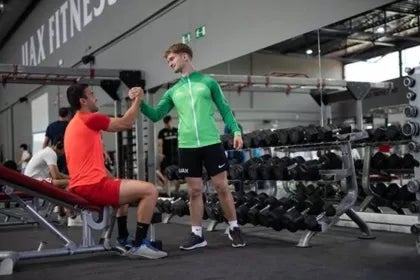
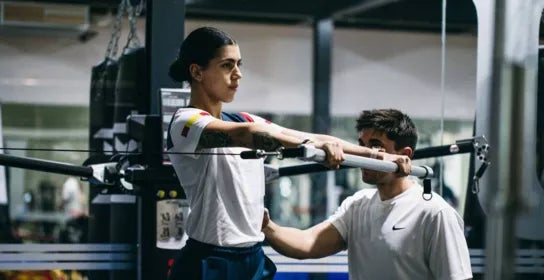
The personal trainer works with individual clients who are looking to improve their fitness, lose weight, build muscle, recover from an injury or simply adopt a more active lifestyle.
Their work begins before the first session: they carry out an initial assessment of the client and, based on this, design a personalised training programme. During each session, they supervise technique, correct form, adjust the loads and motivate the client. Between sessions, they monitor progress and adapt the plan according to how each individual responds. You can work in this role at gyms, training studios, health centres or on a self-employed basis. A niche area with particular growth potential is working with specific groups: people with chronic conditions such as diabetes, obesity or cardiovascular disease, older people, pregnant women or cancer patients.
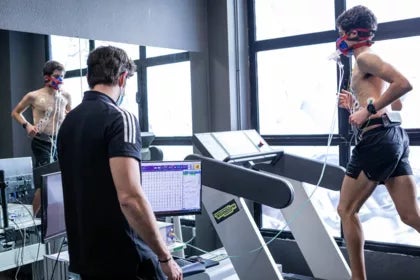
The sports coach focuses their work on sporting performance. They work with individual athletes or teams to optimise their physical condition throughout the season.
Their tasks include designing training programmes, carrying out regular physical assessment tests and working on strength, endurance, speed or coordination according to the demands of each sport. They collaborate closely with the coaching staff, the physiotherapist and the team doctor to manage fatigue and reduce the risk of injury.
The sports coach focuses their work on teaching and training a specific discipline with groups of athletes of different ages and levels. They plan sessions, design the technical and tactical progression of their athletes and assess their development throughout the season. They usually work in sports clubs, beginners’ schools, federations and municipal skills development programmes.
As for salaries, according to the Jobted platform, a salaried personal trainer earns an average of around €14,000 per year, whilst a self-employed personal trainer can earn over €17,000 per year with an established client base. A fitness coach has an average gross annual salary of around €28,600, although in elite sport the figures can be much higher.
Can you work as a PE teacher with a CAFYD degree?
Yes, and it is one of the most established career paths.
On a day-to-day basis, you’ll design and plan sessions focused on motor development, physical fitness and helping students adopt healthy habits. You’ll assess each pupil’s individual progress and adapt activities to different levels and needs, including pupils with disabilities or special educational needs , and you’ll work in coordination with the rest of the teaching team.
Beyond the lesson itself, the PE teacher often organises extracurricular activities and inter-school competitions, manages the school’s sports equipment and plays an active role in the life of the school or college. In many schools, they also act as sports coordinator, overseeing all the school’s physical activity programmes.
You can find this role in state, private and state-subsidised secondary schools, as well as in sports training academies, municipal sports schools or federated school sports programmes.
To teach at secondary and sixth-form level, you need to complete the Master’s Degree in Secondary Education specialising in Physical Education. This qualifying Master’s degree is the legal requirement for teaching in both state and private schools.
In the state education system, you must pass the competitive examinations to join the secondary school teaching staff. Job security and the conditions of civil service employment are its main attractions.
In private and state-subsidised private schools, access is more streamlined and direct, although working conditions depend on the collective agreement of each school.
What opportunities does sports management offer?
The sports manager is one of the lesser-known career paths for CAFYD graduates, but it offers very solid career prospects. It encompasses a wide range of roles:
- Director or coordinator of sports facilities: multi-sports centres, aquatic centres, fitness centres or private clubs.
- Municipal or regional sports officer: managing physical activity programmes in local councils and local authorities.
- Club and federation executive: strategic planning, human resources and financial management of the club.
- Sports events organiser: competitions, leagues, outdoor sports activities or school sports programmes.
What all these roles have in common is that they combine knowledge of sport with organisational, leadership and decision-making skills. For those who enjoy both sport and management, this is a career path that often brings great professional satisfaction. Supplementing the degree with training in business administration or public management can open the door to positions of greater responsibility.
Can a CAFYD graduate work in the health sector?
Yes, and it is one of the fields with the brightest prospects for the future. The prescription of physical exercise as a therapeutic tool is gaining increasing recognition within the healthcare system, and physical activity professionals are playing an increasingly important role in multidisciplinary healthcare teams.
Some of the career opportunities in this field include:
- Therapeutic exercise specialist: in physiotherapy clinics, rehabilitation hospitals or health centres, designing supervised exercise programmes for patients with specific conditions.
- Health programme coordinator: in companies, mutual insurance societies or insurance firms that promote healthy habits amongst their employees or policyholders.
- Professional in care homes: physical activity for older people is a rapidly expanding field, with a growing demand for specialists in gerontological exercise.
- Sports health research: in universities, university hospitals or performance laboratories, collaborating with medical and scientific teams.
In all these contexts, the role of the CAFYD professional is to design and supervise exercise-based interventions – something for which no other healthcare role is specifically trained.
What opportunities does the public sector offer beyond teaching?
In addition to competitive examinations for Physical Education teaching posts, the CAFYD degree provides access to other opportunities in the public sector that value or require this qualification:
- State security forces such as the National Police or the Civil Guard, where a CAFYD degree is particularly highly valued both for the physical entrance tests and for roles related to the force’s internal physical training.
- Firefighters: given the high physical demands of the selection processes, having an academic grounding in sports science is a real advantage.
- Municipal or regional sports officers, through competitive examinations organised by local councils and regional governments for the management and promotion of public sports programmes.
In all these cases, a degree in sports science is not a mandatory requirement, but it does provide a real competitive advantage over other candidates, particularly in the physical tests and in the merit assessment sections.
Which specialisations enhance career prospects for CAFYD graduates?
The bachelor’s degree provides the foundation, but specialisation is what makes the difference in an increasingly competitive market. Some of the most sought-after specialisations are:
- Master’s in High-Performance Sport : to work as a fitness coach in professional or elite sport.
- Master’s in Sports Physiotherapy : aimed at physiotherapists who wish to focus their career on the prevention, treatment and rehabilitation of sports-related injuries
- Master’s in Teaching: essential if your vocation is to teach at secondary and sixth-form level.
- Master’s in Sports Nutrition : designed to optimise nutrition and supplementation for athletes to improve their performance, recovery and long-term health.
- Master’s in Sports Psychology to address the mental aspects of sporting performance.
Continuing professional development is not optional in this sector. Scientific knowledge regarding training, recovery and health is advancing very rapidly, and the most sought-after professionals are those who keep themselves up to date.
In this regard, choosing a degree programme with a practical focus from the very first year – offering real access to facilities, partnerships with clubs and direct contact with the sector – makes a significant difference when entering the job market. The CAFYD degree at UAX, for example, combines sports performance laboratories with work placements at organisations within the sector from the very first years of the course.
Summary
Career prospects for CAFYD graduates are wide-ranging, diverse and offer strong employability. You can steer your career towards personal training or physical conditioning, where working with special populations and elite sport are in highest demand; towards teaching, with the Master’s in Teaching as a prerequisite for working in secondary education; towards sports management, a less well-known role but one experiencing notable growth in both the public and private sectors; or towards the health sector, where therapeutic exercise is becoming increasingly important within healthcare teams.
Specialisation is the factor that most influences career progression. Your bachelor’s degree provides a solid and versatile foundation, but it is master’s degrees, professional certifications and accumulated practical experience that determine the ceiling of each career. In a rapidly evolving sector that demands ever greater scientific rigour, receiving a good education from the outset makes all the difference.
Sources