First year
The first year of the CAFYD programme lays the foundations upon which you will build all your knowledge. During this year, you will focus on understanding the structure and functioning of the human body, as well as the basic principles of motor skills and behaviour. It is a crucial stage for acquiring the technical vocabulary and scientific grounding you will need in the years to come.
Team Sports I
This module immerses you fully in the practice of team sports such as football, handball and rugby. You will learn everything from the history and rules to the technical and tactical fundamentals of each discipline, developing skills such as passing, shooting and game strategies. Through a predominantly practical approach, you will master both individual and combined skills, preparing you for teaching and coaching.
Individual Sports
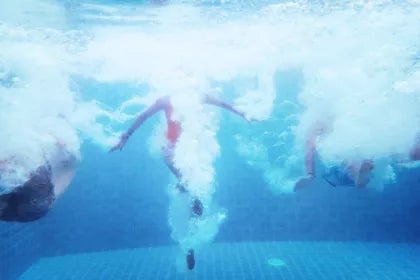
Here you will focus on disciplines where personal performance takes centre stage, such as athletics in all its forms, artistic gymnastics and swimming. You will study in depth the technical aspects, teaching methodology and specific rules of each discipline. The aim is for you to acquire the ability to analyse and correct sporting technique, applying the appropriate teaching progression for each level.
Professional Communication and Documentation
This module is key to learning how to convey your knowledge effectively and professionally within the sporting sphere. You will develop skills in both written communication —using precise vocabulary and impeccable writing—and oral communication, mastering presentation and negotiation techniques. In short, you will be trained to become a competent communicator, capable of drafting speeches and documents with the utmost rigour.
Applied IT
This module provides you with the essential digital tools to optimise your work in sports science. You will learn to manage information systems, search for and analyse data using filters and graphs, and format professional documents. You will master the creation of effective presentations and the integration of multimedia elements – key skills for presenting your projects and analyses.
Human Anatomy
Regarded as the foundation of everything, in this module you will study the structure and form of the human body through theoretical lectures and practical laboratory sessions. It is the module that enables you to understand the biological and mechanical fundamentals of human movement. Understanding the body at this level is essential for analysing movement, preventing injuries and progressing in the other modules of the degree programme.
Systematics and Exercise Kinesiology
This subject teaches you the language of physical exercise, enabling you to analyse and classify it with scientific precision. You will study movement from a mechanical, joint and muscular perspective, learning to represent each action graphically. Finally, you will link this analysis to improving physical fitness, understanding which exercises develop each ability and their effects on the body.
Combat Sports
In this module, you will be introduced to the fundamentals of judo, from its historical origins to its current practice. You will learn the essential skills and techniques of both standing combat (standing judo) and ground work (ground judo). The course is rounded off with a study of the rules, the refereeing system and the traditional forms known as katas.
Physical Expression and Dance
This course explores movement as a powerful tool for expression, communication and artistic creation. You will explore the history of dance and immerse yourself in its expressive, communicative and creative dimensions. The ultimate aim is for you to master the methodology and teaching styles so that you can design and lead your own body expression sessions.
Outdoor Physical Activities
The course moves beyond the classroom to take you into the natural world, where you will learn to navigate safely and confidently. You will gain practical skills in hiking, orienteering, climbing and risk management in the mountains. This module will equip you to design, plan and carry out activities in the natural environment, whilst mastering the necessary equipment and first aid.
Human Physiology
This core subject explains how our bodies work, from the cellular level right up to the major systems. Through lectures and laboratory sessions, you will analyse the body’s responses and adaptations (cardiovascular, respiratory and neuromuscular) to exercise. Understanding these processes provides the scientific basis for prescribing training programmes and assessing physical performance professionally.
Second year
In the second year of the CAFYD degree programme, your studies become more in-depth and specialised. You will build on the foundations you have laid to delve into the ‘why’ behind human movement through key modules such as Biomechanics and Exercise Physiology. This year balances advanced science with practical application in new sports and contexts, preparing you to understand performance and health from a much more comprehensive and professional perspective.
Biomechanics
This module applies the principles of physics to understand the mechanics of the human body. You will study everything from concepts of linear and angular dynamics to the mechanics of muscle contraction and how levers function within the body. The aim is to enable you to scientifically analyse the technique behind sporting movements such as jumps or running in order to optimise performance and prevent injuries.
Team Sports II
This course focuses on the technical and tactical aspects of two key sports: volleyball and basketball. For each, you will explore their history, technical fundamentals, rules and the most effective teaching methodologies. Through a predominantly practical approach, you will learn to plan and lead training sessions and manage resources in these disciplines.
Equipment-Based Sports
In this module, you will expand your motor skills repertoire through sports that require the use of an object or piece of equipment. You will learn the theoretical foundations of the game and master the technical and tactical fundamentals —both individual and team-based—of different disciplines. The aim is for you to achieve a level of autonomy that enables you to apply the rules and technical elements in real-life game and competition situations.
Exercise Physiology
Here, you will delve into the study of the human body’s responses and adaptations when subjected to physical activity. You will analyse how exercise affects the neuromuscular, cardiorespiratory, endocrine and immune systems at both functional and molecular levels. Understanding these processes is essential for prescribing training in a scientific manner and for grasping the foundations of health and sporting performance.
Basic Physical Education and Motor Games
This module focuses on the foundations of motor development and the fundamental role of play as an educational tool. You will learn to design and structure physical activity sessions, gaining an understanding of the development of motor behaviour, skills and perceptual abilities. You will be trained to use play as a teaching resource to develop basic physical abilities from early childhood.
Structure and Function of the Musculoskeletal System
This course provides a comprehensive and detailed analysis of the musculoskeletal system, the driving force behind all movement. You will study each body segment in detail ( upper and lower limbs, spine, pelvis), delving into the bones, joints and muscles that make them up. Mastering the biomechanics and function of each structure will enable you to carry out a precise analysis of human posture and movement.
Physical Activity and Sport for People with Disabilities
This module will provide you with the tools and knowledge to promote inclusion through sport. You will learn to identify the main types of disability and to design health-oriented physical activity programmes tailored to each person’s needs. The aim is to train you to become a professional capable of using exercise to improve quality of life and promote the integration of groups with special needs.
Communication in a Foreign Language I
This course is designed to help you develop the fluency needed to communicate in an international sporting environment. The course focuses on assessing and improving your four language skills: reading, listening, speaking and writing. Through continuous assessment, you will acquire the technical vocabulary and grammar you need to function professionally in another language.
Statistics
This module equips you with the skills required to research and analyse data in the field of sports science. You will learn to use statistical software, visualise data, test hypotheses and apply the appropriate tests to compare groups or identify correlations. It will equip you to clean up databases and interpret results – a crucial skill for research and evidence-based decision-making.
History of the Olympic Movement, Physical Activity and Sport
This course takes you on a journey through time to understand the origins and cultural evolution of sport. You will study sporting practice from the earliest civilisations, through Classical Greece and Ancient Rome, right up to the revival of the Olympic Games in the modern era under Pierre de Coubertin. You will gain a fundamental historical and theoretical perspective to understand the phenomenon of sport today.
Third year
The third year marks your transition from student to future professional, focusing on specialisation and the practical application of knowledge. You will explore crucial areas such as exercise prescription for health, the latest trends in fitness and sports nutrition. This year prepares you to work with rigour in a wide range of contexts, from teaching and advanced coaching to the legal and psychological aspects of sport.
Physical Activity and Health
This module focuses on the fundamental role of exercise in promoting health and managing chronic conditions. You will learn how to carry out preliminary assessments and prescribe physical activity safely and effectively for people with cardiovascular, metabolic or neurological conditions. Through a practical approach, you will master the design of fitness programmes aimed at improving quality of life.
Teaching Physical Activity and Sport I
This course provides you with the pedagogical and didactic foundations to become an effective teacher or coach. You will explore theories on how people learn motor skills and study different teaching styles and techniques. The aim is to equip you to plan, programme and evaluate training or physical education sessions, adapting them to the diversity of your students.
Sports Specialisation
This module allows you to gain in-depth, expert-level knowledge of a specific sport. You will study its history, rules and, above all, its advanced techniques and tactics in detail. The aim is for you to achieve comprehensive mastery of its specific skills and abilities so that you can apply them in high-performance settings.
New Trends in Fitness Training
This course brings you up to date with the cutting edge of the fitness sector, from the role of the personal and online trainer to the use of new technologies. You’ll discover and practise the latest wellness disciplines ( Pilates, hypopressive exercises) and fitness disciplines ( CrossFit, Hyrox, functional training, Animal Flow). You’ll prepare to become an innovative professional, capable of applying the most up-to-date methods such as occlusive training or variable-load training.
Sports Nutrition
A key module that explores the direct relationship between diet, health and athletic performance. You will study the role of macronutrients, micronutrients and hydration in sport, as well as the use of ergogenic aids. Through practical seminars, you will learn how to carry out nutritional assessments and plan dietary guidelines for strength, endurance and team athletes.
Theory and Practice of Sports Training
This is the core of the training programme, where you will learn to design programmes using scientific and methodological approaches. You will delve into training load variables and specific methods for developing strength, endurance, speed and flexibility. You will learn to systematise the entire training process, monitor training loads using technology and make decisions to maximise performance.
Sport and Recreation
This module explores physical activity beyond competition, focusing on leisure, free time and alternative sports. You will learn to apply different teaching styles in a recreational context and to design active leisure experiences. The course prepares you to work in professional fields such as municipal sports management or activity leadership in leisure organisations.
Psychology of Physical Activity and Sport
Here, you will analyse the mental and emotional factors that determine success and commitment to sport. You will study key psychological variables such as motivation, anxiety management, concentration, leadership and group cohesion. You will learn to apply psychological strategies to enhance performance and to intervene in areas such as injuries or sports-related exhaustion.
Sports Law
This module provides you with an overview of the legal and structural framework governing the world of sport in Spain and internationally. You will study the powers of public authorities, anti-doping regulations, the establishment of sports organisations and the responsibilities of CAFYD professionals. You will gain the knowledge to understand everything from disciplinary proceedings to employment relations, whilst protecting yourself against unauthorised practice.
Injury Prevention and First Aid
A vital course that equips you to respond to an emergency and, more importantly, to prevent one from occurring. You will learn how to administer Basic Life Support and use an AED, as well as how to manage the most common traumatic injuries in sport. Through functional assessments and knowledge of techniques such as eccentric training, you will learn to design effective prevention programmes.
Fourth year
The fourth year marks the culmination of your training and your launch into the professional world. In this final year, you will focus on advanced performance assessment, the management of sports organisations and the application of all your knowledge in a real-world work environment through external placements. It is the year to demonstrate your expertise, specialise in the areas you are most passionate about and consolidate your profile with your Final Year Project.
Functional Assessment of Physical and Sporting Performance
This module teaches you to measure, analyse and monitor sporting performance with scientific precision. Through laboratory practicals, you will learn to carry out tests to assess strength, jumping ability and endurance, using everything from progressive load tests to analyses of lactate thresholds and oxygen consumption. Mastering these techniques is essential for monitoring an athlete’s progress and making decisions based on objective data.
Master’s in Sport
This course takes your specialisation in sport to the highest level, focusing on the application of advanced concepts. You will delve deeper into complex technique and tactics, the expert interpretation of the rules, and the specific skills that define the elite in your sport. The aim is to achieve a masterful understanding that enables you to analyse, coach and innovate within your discipline.
Sports Planning and Management
This module takes you from the pitch to the office to train you as an effective manager of sports organisations. You will learn to develop strategic plans, draw up budgets, lead teams and apply management models that strive for quality and excellence. The course prepares you to take on leadership roles, equipping you with the ability to make strategic decisions and ensure the viability of any sports organisation.
External Academic Placements
This is your chance to apply everything you have learnt in a real-world working environment – your first major immersion in the profession. You will undertake a work placement at a company, club, educational institution or sports organisation, carrying out tasks under the supervision of a professional mentor. This experience is key to building confidence, creating your professional network and putting the knowledge acquired during the degree to good use.
Choreography and Physical Conditioning with Musical Accompaniment
A dynamic course that specialises you in the design and instruction of the most in-demand group exercise classes in the fitness sector. You’ll learn the basics of disciplines such as indoor cycling and step aerobics, and master the use of music as a working tool, from composition to editing. You will train to become a versatile and well-rounded instructor, capable of creating motivating choreographies and leading sessions safely and effectively.
Introduction to Research in Physical Activity and Sport Sciences
This module provides you with the tools to understand and carry out scientific research in our field. You will learn to formulate research questions, carry out literature reviews and distinguish between different types of studies, from descriptive studies to clinical trials. Mastering these concepts is an essential step towards completing your Final Year Project and keeping up to date throughout your career.
Final Year Project (FYP)
The Final Year Project (TFG) is the project that culminates your studies, in which you will demonstrate all the skills you have acquired. Under the supervision of a tutor, you will carry out a research project or an intervention project on a topic of your choice. This project, which you must defend before an examination board, is the final assessment that certifies your competence as a qualified professional.
This year consists of optional modules: a total of 16 credits must be completed.
Elective modules
Modules | Credits |
Analysis of Sports Strategy and Tactics | 4 ECTS credits |
Biomechanics of Sports Techniques | 4 ECTS credits |
Basic Concepts of Biochemistry | 4 ECTS credits |
Teaching Physical Activity and Sport II | 4 ECTS credits |
Sports Equipment and Facilities | 4 ECTS credits |
Nutrition | 4 ECTS credits |
Public health | 4 ECTS credits |
Physical activity in special populations | 4 ECTS credits |
Communication in a Foreign Language II | 4 ECTS credits |
Dietetics | 4 ECTS credits |
Organisation and Planning of Sports Training | 4 ECTS credits |
Promotion, Organisation and Development of Sporting Events | 4 ECTS credits |
Functional Recovery and Sports Rehabilitation | 4 ECTS credits |
Summary
The Bachelor’s Degree in Physical Activity and Sport Sciences (CAFYD) is much more than just a list of modules; it is a comprehensive and progressive educational journey. The curriculum is designed to transform you, taking you from the basic sciences of human movement in the first year, through in-depth scientific specialisation in the second and third years, and culminating in your launch into the professional world in the final year.
At every stage, rigorous theoretical knowledge is balanced with constant practical application, preparing you to confidently tackle the real-world challenges of the sector. By the end of the programme, you will not only have mastered the tools for assessing, planning and managing in the fields of health, performance, teaching and management, but you will also have developed the profile of a well-rounded, versatile professional grounded in scientific evidence. In short, the CAFYD degree at UAX turns you into a true expert in movement, ready to make your mark on the world of sport and health.
Sources: