




















Table of Contents
What is technology applied to sport?
How technology is changing sport forever
Why sports technology makes all the difference
Challenges and critical considerations
Emerging technologies that will shape the future
The future of sports technology
What is technology applied to sport?
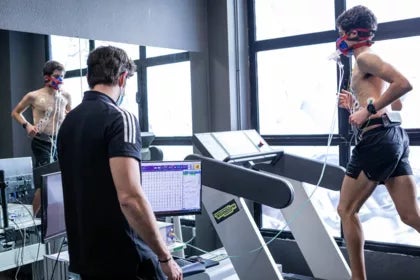
Technology applied to sport is much more than just flashy gadgets. It is a holistic approach that combines science, engineering and sporting expertise to achieve goals that were previously unthinkable.
“The true technological revolution in sport lies not in the sophistication of the devices, but in our ability to transform complex data into intelligent decisions that enhance human performance in a scientific, safe and sustainable way.”
When we talk about sports technology, we are referring to all the tools that use scientific principles to enhance our natural abilities.
This technological revolution is changing three fundamental aspects:
- Athletic performance no longer depends solely on natural talent. We can now pinpoint exactly which areas to improve and how to do so efficiently.
- Training methods have become smarter. Objective data replaces guesswork, enabling personalised training plans tailored to each athlete.
- The sporting experience has been enriched for both athletes and spectators, creating new ways to enjoy and understand sport.
The real magic happens when we stop relying solely on feelings or perceptions. Sports technology provides accurate and detailed information that enables decisions to be made based on real evidence.
How technology is changing sport forever
Artificial intelligence and machine learning
Artificial intelligence represents one of the most significant technological advances in sport over the last decade. AI enables the creation of training programmes that adapt in real time to each athlete’s needs and progress, thereby maximising their performance and minimising the risk of injury.
Wearable technology
In 2024, wearable technology once again topped the fitness trends, according to the American College of Sports Medicine’s ( ACSM) Global Fitness Trends Survey. These devices have evolved from simple step counters to sophisticated biometric analysis centres.
Modern wearables can monitor:
- Variable heart rate
- Oxygen saturation levels
- Sleep quality and stages
- Stress and recovery levels
- Biomechanical analysis of movement
- Activity-specific calorie expenditure
Virtual and augmented reality in training
New VR and AR technologies are revolutionising sports training with their unique capabilities.
Key benefits:
- Simulated environments: Perfectly replicate competition conditions
- Fatigue-free training: Repetitive practice of specific scenarios without physical strain
- Real-time data: Information superimposed directly into the athlete’s field of vision
Examples:
- Football: Penalties against virtual goalkeepers that replicate the movements of real opponents
- Skiing: Technical training on virtual slopes before tackling real mountain conditions
Big data and predictive analytics
The use of technology in sport has generated massive amounts of data which, when analysed correctly, provide invaluable insights. Professional teams use predictive algorithms to:
- Identify emerging talent based on performance metrics
- Predict the risk of injury weeks in advance
- Optimise tactical strategies according to the opponent’s strengths and weaknesses
- Plan personalised rest and recovery periods
Why sports technology makes all the difference
Summary table: Key benefits of sports technology
| Area of impact | Key benefit | Technology used | Measurable result |
|---|---|---|---|
| Performance | 15–25 per cent improvement in efficiency | Biomechanical sensors | Technical optimisation |
| Injury prevention | 30% reduction in injuries | Predictive AI | Early risk identification |
| Recovery | Accelerates recovery by 40 per cent | Smart cryotherapy | Reduced downtime |
| Tactical analysis | 95% accuracy in analysis | 360° cameras + AI | More effective strategies |
| Motivation | 60% increase in adherence | Gamification + apps | Greater consistency in training |
Challenges and critical considerations
Over-reliance on data
Over-reliance on data can lead to ‘analysis paralysis’, where athletes become so obsessed with the numbers that they lose touch with their body’s natural sensations.
Furthermore, the cost of these technologies can create access gaps, whereby only athletes with significant financial resources can benefit from the latest advances. This situation raises important questions about equity in sport.
The human factor remains fundamental
Despite all the technological advances, the human element remains irreplaceable. Technology for athletes should complement, not replace, experiential knowledge, a coach’s intuition and an athlete’s emotional understanding.
Emerging technologies that will shape the future
Nanotechnology in sports equipment
New technologies applied to physical activity and sport include nanoscale materials that could revolutionise sports equipment. Imagine trainers that automatically adapt to the running surface, or clothing that intelligently regulates your body temperature.
Biotechnology and genetic optimisation
Although still in the experimental stages, biotechnology promises to personalise training based on your specific genetic profile. This will make it possible to identify which types of exercise will be most effective for you, based on your genetic makeup.
The Internet of Things (IoT) in sport
Devices are expected to continue evolving, with improvements in sensor accuracy, integration with other technologies such as artificial intelligence, and greater personalisation of health and training recommendations.
The connected sports ecosystem will allow all your devices to ‘talk’ to one another, creating a holistic profile of your performance that is constantly updated.
Notable success stories
GPS systems in football: Comprehensive performance monitoring
Global Positioning Systems (GPS) in professional football represent one of the most successful applications of wearable technology in sport. These devices, weighing less than 25 grams, have become indispensable tools for optimising performance and preventing injuries.
Elite teams such as Manchester City and FC Barcelona have reported:
- A 25 per cent reduction in muscle injuries since the systematic implementation of GPS
- A 15 per cent improvement in training intensity without increasing the risk of injury
- A 20 per cent optimisation in the management of players’ playing time across multiple competitions

From the perspective of CAFYD training , these GPS systems exemplify how monitoring technology must be integrated with physiological and biomechanical knowledge to maximise its effectiveness.
VAR: A revolution in sports refereeing
The Video Assistant Referee (VAR) represents one of the most notable success stories of technology applied to sport in the last decade. Officially introduced by FIFA in 2018, VAR has radically transformed the accuracy and fairness of refereeing in professional football.

VAR has tackled and resolved several technical and human challenges:
- Review time: Reduced from an initial 90 seconds to an average of 45 seconds
- Specialised training: Over 3,000 certified VAR officials worldwide
- International standardisation: Uniform protocols applied in over 100 countries
- Cultural integration: 78 per cent acceptance rate among players and coaches, according to FIFA surveys
Hawk-Eye: Technological precision that revolutionised tennis
In tennis, the Hawk-Eye system is a prime example of how technology applied to sport can simultaneously enhance competitive fairness and generate invaluable strategic data. Officially implemented on the ATP and WTA tours since 2006, this system has transformed both umpiring and the technical and tactical analysis of professional tennis.

The effectiveness of Hawk-Eye has been extensively validated:
- 99.9 per cent accuracy in detecting balls in or out of the line
- A 95 per cent reduction in umpire disputes relating to line calls
- 92 per cent acceptance rate amongst professional players, according to ATP/WTA surveys
- Implemented at over 80 tournaments on the global professional circuit
Virtual reality in sports rehabilitation: Therapeutic innovation
Virtual reality applied to sports rehabilitation represents one of the most promising advances in technology for injury prevention and recovery. Systems such as CAREN (Computer Assisted Rehabilitation Environment) and similar platforms have revolutionised rehabilitation processes, combining technological immersion with therapeutic precision.
Professional teams and athletes have adopted this technology with outstanding results:
- Arsenal FC: Implementation of CAREN systems for the rehabilitation of knee injuries, reducing players’ time off by 28 per cent
- Phoenix Suns (NBA): Use of VR for ankle injury rehabilitation, achieving a 94 per cent successful return-to-play rate
- Paralympic athletes: Specific VR programmes that have improved compensatory techniques by 45 per cent

From the perspective of training in Physiotherapy and Sports Science , VR in rehabilitation requires:
- In-depth knowledge of biomechanics to interpret the data generated
- Gamification skills to maximise patient motivation
- An understanding of neuroplasticity to optimise motor relearning
The future of sports technology
Emerging trends for the coming years
Technological trends in sport point towards even greater integration between the physical and digital worlds. We expect to see:
- Digital twins of athletes that allow training sessions and competitions to be simulated virtually
- Brain-computer interfaces that monitor mental state and concentration in real time
- Advanced robotics for rehabilitation and assisted training
- Interactive holograms for immersive technical analysis
The democratisation of technology
One of the most promising aspects of technological developments in sport is their growing accessibility. Technologies that were once reserved for elite athletes are now within the reach of amateur sportspeople and fitness enthusiasts.
Ethical and regulatory considerations
The balance between innovation and fair play
The influence of technology on sport raises important ethical questions. To what extent can technology assist an athlete before compromising the natural essence of sport? Regulatory bodies face the challenge of setting limits that encourage innovation without compromising competitive integrity.
Privacy and data protection
With the massive amount of biometric and performance data being collected, protecting athletes’ privacy has become a key concern. It is essential to establish clear protocols regarding who can access this information and how it is used.
Implications for sports education
The shift towards personalised sports medicine and predictive training represents the next evolutionary step, where technology not only measures and analyses, but also anticipates and makes recommendations autonomously.
The evolution of technology in sport is completely redefining educational programmes in sports science. Future professionals must not only master the traditional principles of training, but also understand how to integrate and apply advanced technologies.
Academic programmes such as the BA in CAFYD , the Bachelor’s Degree in Physiotherapy or even the Double Degree in CAFYD and Physiotherapy , provide the theoretical and practical foundations needed to lead this transformation.
Do it at UAX!
Sources
- Funcas – “Technological Advances and the Future of Sport ” (2025)
- Founderz – “AI in sport: uses and applications”(2025)
- El Cronista – “SPORT TECH: AI now analyses and nurtures the next generation of football stars ” (2024)
- Anesma – “ The impact of artificial intelligence on sport: present and future”(2024)
- Mercado Fitness – “In 2024, wearables once again lead the way in fitness trends ” (2024)
- EDUSPORT – “ The influence of wearable technology on sporting performance and health ” (2024)
- American College of Sports Medicine (ACSM) – 2024 Global Fitness Trends Survey