






















Table of Contents
AI and Machine Learning: The driving force behind personalisation and efficiency
Low-Code and No-Code Platforms: Democratising Development
Agile Methodologies and DevOps: Synergy for Continuous Innovation
The Internet of Things (IoT) and Cloud Computing: Connectivity and Scalability
Minimalist Web Design and User Experience (UX): Less is More
Progressive Web Apps (PWAs) and Headless CMS: Innovation without boundaries
Emerging trends and future challenges
Impact on the labour market and the relevance of Higher Vocational Training in DAW
Understanding and embracing emerging trends in web development and design is key to staying at the cutting edge. It is not just about keeping up with technological innovations, but about anticipating the needs of users and the market. This perspective aligns perfectly with training in Web Application Development (DAW) , which equips professionals to lead projects in sectors as dynamic as the technology sector.
AI and Machine Learning: The driving force behind personalisation and efficiency
The integration of Artificial Intelligence (AI) and Machine Learning (ML) into web development not only enables the analysis of large volumes of data in real time, but also drives the creation of personalised experiences.
- Code optimisation and automation: AI-based tools already generate code snippets from textual descriptions, eliminating repetitive tasks and speeding up the development cycle.
- Generative content: Generative AI opens the door to the creation of original content—images, music and text—which has the potential to revolutionise the creative and advertising sectors.
This trend, as well as improving efficiency, increases the relevance of intelligent web applications, creating a demand for professionals capable of integrating these technologies into scalable and secure solutions.
Low-Code and No-Code Platforms: Democratising Development
The rise of low-code and no-code platforms is redefining who can develop web applications.
- Accessibility and speed: With intuitive graphical interfaces, these tools enable people without in-depth programming knowledge to create functional applications in a short space of time.
- Integration with Advanced Technologies: Combining these platforms with AI, cloud computing and other innovations facilitates the implementation of cutting-edge solutions, boosting business competitiveness.
This trend is particularly interesting for those starting their careers in DAW, as it allows them to focus on the strategic and creative aspects of development, whilst not losing sight of the need for a solid technical foundation.
Agile methodologies and DevOps: Synergy for continuous innovation
The adoption of agile methodologies and DevOps practices has become an essential standard for ensuring flexibility and quality in web development projects.
- Iteration and continuous improvement: Each sprint is an opportunity to gather feedback, refine processes and enhance the end-user experience.
- CI/CD automation: The integration of DevOps facilitates continuous delivery, reducing risks and accelerating the roll-out of updates.
This philosophy of collaborative and adaptive working is fundamental in today’s market, where speed and security in the implementation of solutions determine the success of any digital project.

The Internet of Things (IoT) and cloud computing: Connectivity and scalability
The interconnection of devices via the Internet of Things (IoT) and the rise of cloud computing are trends that are redefining the digital landscape:
- Big data management: The IoT generates an exponential amount of data, which requires web interfaces that enable seamless and personalised interaction with smart devices.
- Cloud scalability and security: The adoption of cloud solutions enables businesses to scale their applications according to demand, optimising resources and ensuring high security standards.
These innovations not only improve operational efficiency but also broaden the scope for web application development, opening up new opportunities in sectors as varied as home automation, healthcare and Industry 4.0.
Minimalist web design and user experience (UX): Less is more
The trend towards minimalist design focuses on simplicity and functionality, essential elements for improving the user experience:
- Clean and fast interfaces: Removing superfluous elements allows for intuitive navigation and faster loading times – critical factors for retaining users.
- User-centred approach: A design focused on experience and usability translates into greater satisfaction and loyalty, which is essential in an increasingly competitive market.
Minimalist design not only provides visual clarity but also reinforces the importance of a well-thought-out web architecture, where the user experience becomes the priority.
Progressive Web Apps (PWAs) and Headless CMS: Innovation without boundaries
Progressive Web Apps (PWAs) combine the accessibility of websites with the advanced functionalities of mobile apps:
- Performance and availability: They operate quickly and reliably, even under unstable network conditions, enabling offline access and improving user retention.
- Development flexibility: The use of scalable architectures and headless CMS systems allows content to be managed independently of the interface, facilitating distribution across multiple platforms (websites, mobile, IoT).
Modern frameworks such as Next.js and Nuxt.js are leading this revolution, optimising application speed and security, and providing an environment conducive to constant innovation.
Emerging trends and future challenges
In addition to the trends already mentioned, other emerging areas are on the horizon that will shape the future of web development:
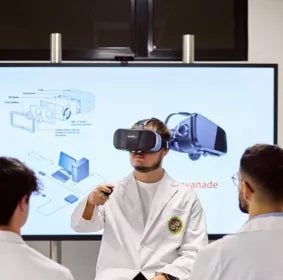
- Augmented Reality (AR) and Virtual Reality (VR): The integration of AR/VR into web experiences opens up new possibilities in sectors such as e-commerce, education and entertainment, offering immersive and personalised experiences.
- Microservices and Micro Frontends: The adoption of distributed architectures facilitates the scalability and maintenance of complex applications, enabling updates and improvements in a modular and efficient manner.
- Blockchain and Web3: The decentralisation and inherent security of blockchain technologies are beginning to make inroads into web development, creating opportunities in areas such as data protection and digital transactions.
Impact on the labour market and the relevance of Higher Vocational Training in DAW
Digital transformation is generating a growing demand for professionals with skills in the areas mentioned. The Higher Technical Qualification in Web Application Development (DAW) is positioned as a strategic qualification, as:
- Comprehensive skills: The qualification combines knowledge of programming, design, database management and cybersecurity, preparing you to tackle high-level projects.
- Adaptability to change: In the face of a constantly evolving labour market, having specialised training in Web Application Development (DAW) enables you to adapt quickly to new technologies and methodologies, making you a valuable asset in any team.
This programme not only opens the doors to a sector brimming with opportunities, but also enables you to play a leading role in creating innovative digital solutions that meet the demands of the future. Furthermore, a sister qualification such as the Higher Technician in Multi-platform Application Development can broaden your horizons beyond purely web-based development.
Conclusion
The landscape of web development and design is shaped by the convergence of advanced technologies, agile methodologies and a growing demand for personalised and secure experiences. Embracing these trends is not just a technological choice, but a strategy for standing out in a competitive job market. Training in DAW is the ideal path for those seeking to lead this digital revolution, combining technical skills with an innovative, user-centred vision.