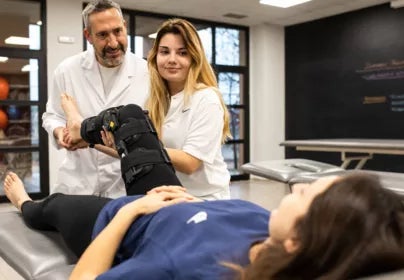























In a previous post, we looked at Podiatry , one of the 15 degree programmes with the best employment prospects according to U-Ranking. As in any other branch of healthcare, those training to become qualified podiatrists can, after obtaining their qualification, specialise in a specific area so they can practise in any clinic or healthcare centre.
Among the specialisms within podiatry , today we are focusing on sports podiatry, a specialism that is growing in popularity due to the significant rise in the number of people who have incorporated sport into their daily lives, as well as the large number of elite athletes who compete professionally in a particular sport.
It is clear that foot health is essential for everyone, whatever their age. Our feet bear the weight of our entire body and suffer more than their fair share due to the strain they are subjected to with every movement we make. They suffer when we walk, just as they do when we stand. Imagine the strain our feet are under when supporting our body weight whilst taking part in sport, particularly in high-intensity sports such as running.
If we neglect the special care our feet require, we may be at increased risk of certain conditions that can jeopardise our overall health, whilst also hindering our ability to participate effectively in sport. And, of course, they can lead to serious complications in our daily lives, even if we aren’t elite athletes.
What is sports podiatry? It is the branch of podiatry that deals with foot conditions and injuries caused by sporting activities. It focuses on balancing pressure and preventing excessive strain on athletes’ ligaments, muscles, tendons and joints, with the ultimate aim of preventing injuries.

Benefits for the athlete
Sports podiatry offers numerous benefits, including: improving performance and preventing a significant number of injuries related to gait, foot strike and running style, as each individual’s anatomical structure and biomechanical profile can predispose them to certain conditions.
For this reason, experts in sports medicine recognise the importance of sports podiatry for athletes’ optimal condition, making it a cornerstone of their care. As well as specialising in biomechanical assessment and personalised sports treatment, sports podiatry also relies on customised, specialised sports insoles, and on other aspects such as:
- Analysis of sporting movements.
- Postural assessments.
- Stretching and postural realignment programmes.
- Basic advice on footwear and injury prevention.
The podiatrist is, therefore, the healthcare professional qualified to carry out a proper biomechanical analysis of the gait to determine the causes that may lead to strain on the foot.
Injury prevention and performance enhancement
Sports podiatry is essential for injury prevention and improving sporting performance. Professionals in this field work to improve the foot health of people who play sport, enabling them to prevent and treat any problems that may arise with their feet. It is vital that athletes attend podiatry consultations for regular check-ups so that they can anticipate potential problems arising from sporting activity, which could even lead to more serious damage to other parts of their body.
What are the most common sports injuries? In general, the most common sports injuries are:
- Soft tissue injuries: for example, nail disorders, bursitis and hyperkeratosis.
- Among injuries to bony structures, overuse of the metatarsals (the area of the ball of the foot) is very common, causing localised pain on the sole of the foot. This tends to occur in athletes and people who take part in high-impact sports, who wear shoes with very thin soles; or in classical dancers who bear a lot of weight on their toes.
- Injuries can occur in the upper structures of the sole of the foot, depending on biomechanics and the way a person runs, walks or plays sport. These include, in particular, recurrent ankle sprains. Excessive pronation can lead to disorders affecting the knees, such as meniscus or patella problems, amongst others.
Would you like to help athletes prevent these and other injuries and improve their performance? Don’t hesitate – once you’ve completed your degree in Podiatry, specialise in sports podiatry. It is one of the professions in high demand in society, with a high employability rate for recent graduates. If you’re interested in this field, we recommend exploring courses related to the degree in physiotherapy.