What exactly are work placements on the CAFYD degree programme?
To begin with, it is essential that you understand that work placements on the CAFYD degree programme are simply another module in your curriculum. It is not an optional activity, but a compulsory and regulated learning experience, designed to enable you to apply, under supervision, all the theoretical knowledge and skills you have acquired in the classroom.
We can broadly distinguish between two types of work placements:
- Curricular Work Placements: these form part of your enrolment and carry ECTS credits and are essential for obtaining your degree. They are supervised by both an academic tutor from the university and a professional mentor at the company or organisation where you undertake them.
- Extracurricular work placements: these are voluntary and, although they are not part of the compulsory curriculum, they allow you to gain additional experience. They usually take place during non-term periods (such as the summer) and are also an excellent way to enhance your CV and explore different areas of the sector.
Essentially, work placements are your first real and direct contact with your chosen profession. It’s time to put the books aside for a moment and start ‘doing’.
Why are CAFYD work placements so important for your career?
It would be a big mistake to view work placements as merely a requirement. Their value goes far beyond the credits they award you. They are, in fact, one of the most important pillars of your training for many reasons:
- Applying theory to practice: you’ll discover how the concepts of physiology, biomechanics, training and management that you’re studying are applied in the day-to-day running of a sports centre, a high-performance club or an events company.
- Discovering your true calling: the field of Sports Science is incredibly broad. Work placements will allow you to ‘try out’ a specific sector and discover whether you’re truly passionate about sports management, personal training, injury rehabilitation or teaching.
- Develop soft skills: you’ll learn to work in a team, communicate effectively with clients and colleagues, solve problems on the fly and manage your time. These skills are just as important as your technical knowledge to any organisation.
- Build your first professional network: you’ll meet industry professionals who could become your mentors, future colleagues or even employers. Performing well during your work placement leaves a lasting impression.
- Significantly enhance your CV: a CV with relevant practical experience is infinitely more appealing to recruiters. An internship demonstrates initiative, ability and a real understanding of the workplace.
- The gateway to your first job: it’s not uncommon for a company to end up hiring a student who has proved their worth during their work placement. It’s the best job interview you could have!
In what sort of organisations and sectors can you undertake your CAFYD work placement?
One of the great advantages of the CAFYD degree is its versatility. The options for your work placement are as varied as the career paths offered by the degree. Below, we provide an in-depth breakdown of the main sectors where you can begin your career, detailing what you’ll do on a day-to-day basis, what skills you’ll develop and what kind of student is best suited to each.
1. Sports Performance: science at the service of champions
If your passion is competition and you’re obsessed with optimising every detail to take athletes to the next level, this is your world. Here, science, technology applied to sport and meticulous planning are the key tools.
- Where? Professional and amateur sports clubs(football, basketball, athletics, etc.), national or regional sports federations, high-performance centres (CARs), performance analysis laboratories, and private centres specialising in sports training.
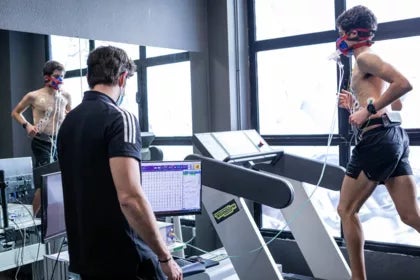
- Day-to-day tasks: as an intern, you’ll be right at the heart of the action. You’ll work directly with the fitness coach or performance analyst. Your tasks could include monitoring training load using GPS devices, measuring movement speed in the gym with encoders (VBT), collecting data from jump or speed tests, preparing equipment for sessions, helping to plan warm-ups and cool-downs, or even analysing match videos to extract tactical or technical data.
- Skills you will develop: you will become an expert in using cutting-edge sports technology. You will hone your data analysis skills to interpret complex metrics and translate them into useful information for the coach. You will develop effective and precise communication skills, both with the coaching staff and with the athletes. You will learn how to periodise training, understanding how to structure microcycles and mesocycles to achieve peak fitness at key moments in the season.
- Career prospects: this is the first step towards becoming a fitness coach, performance analyst, sports scientist, methodology specialist or assistant coach.
- Ideal student profile: analytical, methodical, curious and hard-working. You must be passionate about competition, feel comfortable working under pressure and have a constant desire to study and keep up to date with the latest scientific innovations.
2. Health, Fitness and Wellbeing: the driving force behind social change
This is the sector with the highest growth and demand for workers. Your aim here is not to create champions, but to improve the quality of life and health of the general population through physical exercise. The impact you can have on people’s lives is immense.
- Where? Large gym chains and fitness centres, boutique personal training or Pilates studios, wellness centres and spas, corporate health departments in large companies, physical exercise units in hospitals or clinics, and centres specialising in weight loss.
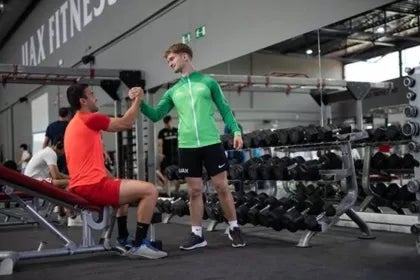
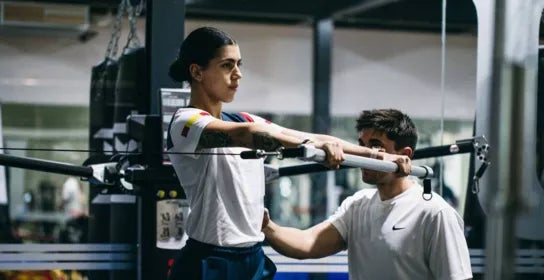
- Day-to-day tasks: your role will be very dynamic and social. You may start by supervising and assisting instructors in group classes (spinning, Zumba, Body Pump), before moving on to leading them yourself. You’ll carry out initial functional assessments on new clients, design personalised training programmes in the fitness studio, correct members’ technique, and act as the centre’s public face, answering queries and motivating people to commit to exercise.
- Skills you’ll develop: you’ll become a master of communication, empathy and motivation. You’ll learn to ‘sell’ the benefits of exercise and build relationships of trust with your clients. You’ll master the design of training programmes for a wide range of goals (muscle building, fat loss, improved posture, preparation for a fun run) and gain in-depth knowledge of how all the equipment in a fitness centre works.
- Career prospects: this is the direct route to becoming a personal trainer , a group exercise instructor, a fitness coordinator, a sports centre manager or an entrepreneur running your own training studio.
- Ideal student profile: outgoing, empathetic, with excellent social skills and a clear desire to help others. You must be patient, positive and able to make exercise fun and accessible for everyone.
3. Sports Management: the architect of the show
If you have leadership skills, are fascinated by organisation and are interested in the ‘behind-the-scenes’ side of sport, management is your playing field. Here, you don’t lift weights – you get projects off the ground.
- Where? Sports event organisers(races, tournaments, training camps), marketing or sponsorship departments at sports brands (such as Nike or Adidas), sports agent agencies, strategic consultancies in the sports sector, or in the management of federations and clubs.
- Day-to-day tasks: you’ll be the right-hand person to a project manager or a marketing director. You’ll be involved in the logistical planning of an event, liaising with suppliers and sorting out permits. You’ll create content calendars for a brand’s or event’s social media, carry out market research to identify new business opportunities, and help with securing and activating sponsorships , and assist with administrative and budgeting tasks.
- Skills you’ll develop: you’ll learn to manage projects from start to finish, mastering tools such as Trello or Asana. You’ll develop a strategic and business-oriented outlook, understanding how the sports industry functions as an economic driver. You’ll gain a grasp of the key concepts of digital marketing , corporate communications and public relations. You’ll improve your negotiation, organisational and problem-solving skills.
- Career prospects: this experience opens the door to roles such as event organiser, Sports Marketing Manager, sponsorship manager, sports agent or sports facilities manager.
- Ideal student profile: organised, decisive, proactive and creative. You must have a business mindset, excellent oral and written communication skills, and the ability to work as part of a team towards a common goal.
4. Education and Recreation: fostering a passion for movement
For those with a strong vocation for teaching and the conviction that sport is an irreplaceable tool for personal and social development. You will work mainly with children and young people, acting as their primary point of reference in the world of physical activity.
- Where? Primary and secondary schools(supporting the Physical Education department or extracurricular activities), school sports clubs, local councils (in their municipal sports programmes), leisure and recreation companies, and summer camps.
- Day-to-day tasks: your role will involve planning and leading psychomotor skills sessions for very young children, teaching the technical and tactical fundamentals of various sports to school-age children, organising in-house leagues or tournaments, and engaging groups through games and recreational activities. You will be responsible for instilling values such as respect, teamwork and fair play.
- Skills you will develop: you will specialise in pedagogy and teaching methods applied to sport. You will learn to manage groups of children and teenagers, capturing their attention and handling potential conflicts. You will develop boundless creativity in designing games and exercises that are both fun and educational. Patience, leadership and the ability to adapt will be your greatest strengths.
- Career prospects: this is the first step towards becoming a Physical Education teacher (by completing your training with the qualifying Master’s degree), a youth team coach, an after-school activities leader or a leisure and recreation coordinator.
- Ideal student profile: patient, energetic, responsible and with a strong passion for teaching. You must enjoy working with children and possess a great deal of imagination and a sense of humour.
5. Active Tourism and Nature: adventure as a career
This sector is for free spirits who cannot imagine sport without a natural setting. Combine your passion for physical activity with a love of the mountains, the sea or rivers, and make nature your workplace.
- Where? Adventure sports companies(rafting, canyoning, climbing, canoeing), ski resorts, surf schools, diving centres, hotel resorts with sports activity programmes, and companies offering guided hiking or mountain biking (MTB) tours.
- Day-to-day tasks: no two days will be the same. You might find yourself leading a hiking route, assisting as a second instructor on a beginner’s climbing course, preparing and checking safety equipment, or attending to customers at the base camp. Part of your job will also involve interpreting the natural environment and sharing your knowledge of the local flora, fauna and geography.
- Skills you’ll develop: you’ll acquire specific technical skills relevant to your chosen sport, as well as advanced knowledge of safety, navigation and first aid in the outdoors. If you work in a tourist area, you’ll significantly improve your language skills and customer service abilities in a multicultural setting. You’ll develop the ability to lead groups and make quick decisions in changing environments.
- Career prospects: you will be able to work as an active tourism guide, an adventure sports instructor, a ski resort technician or a sports activities coordinator in the hospitality sector.
- Ideal student profile: a passionate lover of nature and adventure. You must be a responsible person, physically fit, able to keep your cool in stressful situations and keen to work outdoors, often in changeable weather conditions.
6. Special Populations and Rehabilitation: exercise that heals and cares
An immensely rewarding field with a profound social impact. Here, physical exercise is not aimed at performance, but at restoring functionality, preventing falls, improving independence or alleviating the symptoms of a chronic condition. It represents the most clinical and care-oriented aspect of Sports Science.
- Where? Physiotherapy and rehabilitation centres(during the final phase of the process), day centres and care homes for older people, patient associations for specific conditions (Parkinson’s, multiple sclerosis, fibromyalgia), hospital cardiac or respiratory rehabilitation units, and centres for people with disabilities.
- Day-to-day tasks: you will work closely with physiotherapists, doctors and occupational therapists. Your role will involve designing and supervising personalised therapeutic exercise programmes, adapting exercises to each person’s limitations and needs, leading group classes in gentle exercise (such as Tai Chi or therapeutic Pilates), and monitoring patients’ progress.
- Skills you will develop: you will gain an in-depth understanding of the pathophysiology of various diseases and injuries, and of how exercise can act as a form of medicine. You will specialise in functional assessment and the prescription of therapeutic exercise. You will develop a great deal of empathy, patience and an exceptional ability to communicate with people who may be experiencing pain or frustration. Working in multidisciplinary teams will be a regular feature of your role.
- Career prospects: this is the path to becoming a sports and physical rehabilitation specialist, a specialist in exercise for health in chronic conditions, or a coach in active ageing programmes.
- Ideal student profile: highly vocationally driven, with great technical rigour and a deep sense of humanity. You must be patient, meticulous, a good listener and have a genuine interest in the field of health.
CAFYD placements at UAX: a commitment to practical excellence
At Alfonso X el Sabio University (UAX), we understand that work placements are at the heart of the CAFYD programme. That is why our model focuses on offering you an experience of the highest value:
- Partnerships with leading organisations: we have a network of over 8,900 partnerships with organisations, many of which are leaders in the sport and health sector, greatly increasing your chances of finding a placement that matches your ambitions.
- Personalised support: from day one, the UAX Careers department guides you in your search for work placements, helping you refine your CV and prepare for interviews, ensuring you find the best option for you.
- Unique learning model: our methodology is based on linking theory with practice from the outset, using state-of-the-art facilities such as the UAX Fitness Centre or our biomechanics laboratories, so that you start your external work placements with a solid foundation.
Summary
This article is a comprehensive guide to work placements on the Bachelor’s Degree in Physical Activity and Sport Sciences (CAFYD), presenting them as a fundamental and compulsory pillar of the student’s education. It details their importance as a bridge between theory and professional practice, enabling students to discover their vocation in various sectors such as performance, health or sports management, and playing a key role in developing skills, building a network of contacts and facilitating entry into the labour market. Furthermore, practical advice is offered on choosing the right organisation and making the most of the experience, positioning work placements as the true starting point for a professional career.
Sources